


Abstract
Metamorphosis is a critical bottleneck in the bivalve life cycle, usually associated with high mortality and asynchronous development under hatchery conditions. Synthetic chemical inducers are widely used to overcome these constraints. The neuroactive compounds epinephrine (EPI) and γ-aminobutyric acid (GABA) have been reported to be effective metamorphosis inducers in bivalve species. This study evaluated the inductive efficiency and toxicity of EPI and GABA in two economically important clam species, Venerupis corrugata and Ruditapes decussatus. Competent larvae were exposed to different concentrations (10−2, 10−4 and 10−6 M) for 24, 48 and 72 h. Metamorphic progression and mortality were assessed immediately after exposure and following a six-day post-exposure period. Both compounds induced metamorphosis following concentration–time and species-dependent responses, with narrow efficiency windows and pronounced delayed mortality at higher concentrations and/or longer exposure durations. In V. corrugata, the highest metamorphosis rates were obtained with both compounds at 10−6 M after 48 h. In contrast, R. decussatus required higher EPI concentrations (10−4 M for 48 h) for optimal induction, while GABA at 10−6 M was effective after 24 and 48 h. These findings highlight the need for post-exposure assessments and species-specific optimisation of chemical induction protocols to improve metamorphosis success and spat production in bivalve hatcheries.
Keywords:
bivalve larvae; metamorphosis induction; epinephrine; γ-aminobutyric acid; chemical cues; post-exposure effects; hatchery production Key Contribution:
This study provides the first evaluation of epinephrine- and GABA-induced metamorphosis in Ruditapes decussatus and Venerupis corrugata, demonstrating that post-exposure assessments are essential to distinguish effective induction from delayed mortality. By identifying species-specific concentration and exposure conditions, this work promotes practical guidance for optimising metamorphosis success in bivalve hatchery production.
1. Introduction
Bivalves have a complex life cycle, which encompasses a planktonic free-swimming larval stage followed by a benthic juvenile phase [1]. Prior to metamorphosis, larvae exhibit settlement-related behaviours, such as active swimming towards the substrate and crawling on its surface, before becoming physiologically able to undergo irreversible morphological transformations [2,3,4].
Settlement and metamorphosis, which usually occur concomitantly, are responsible for the transition from larvae to the juvenile stage and represent a critical step in the bivalve life cycle [5,6]. While settlement is a reversible behaviour process, metamorphosis is an irreversible morphogenetic event characterised by profound physiological and anatomical changes, including loss of larval-specific structures such as the velum, development of gills and feeding apparatus, reorganisation of internal organs, and production of the dissoconch [2,3,7]. These changes are tightly coordinated by regulated neuroendocrine signalling cascades that integrate environmental cues with larval physiological competence [1,8]. Under hatchery conditions, this transition constitutes one of the main production bottlenecks, due to high mortality rates and asynchronous development within larval cohorts [9].
Although competent larvae can be successfully reared under controlled conditions, the induction of settlement and metamorphosis often shows considerable variability and may result in inconsistent recruitment success. In European hatcheries producing Ruditapes decussatus and Venerupis corrugata, settlement success may fluctuate among production cycles depending on larval competence, rearing conditions and the effectiveness of settlement cues or induction protocols [10]. Previous studies on hatchery production of Ruditapes decussatus have shown that larval performance and settlement success are strongly influenced by culture conditions and larval quality [11,12,13]. More recently, research has emphasised the role of chemical cues and neuroactive compounds in regulating settlement and metamorphosis in bivalves [14]. Improving the understanding of metamorphosis induction mechanisms therefore remains an important objective for optimising hatchery protocols and increasing the reliability of seed production.
To overcome these constraints and improve metamorphosis success and synchronisation, hatcheries commonly employ synthetic chemical inducers, functional analogues of naturally occurring chemical cues [3,15,16]. A wide range of compounds has been tested for this purpose, many of which are inexpensive and readily available; however, their efficiency varies markedly among species and experimental conditions [14]. Among the most extensively studied neuroactive inducers are the amino acid derivative γ-aminobutyric acid (GABA) and the catecholamine epinephrine (EPI), which have been reported to promote settlement and/or metamorphosis in some bivalve species [14]. Epinephrine plays several biological roles acting as a neurotransmitter and a hormone [17] and is often characterised by rapid induction and relatively low toxicity [14]. Conversely, GABA acts as a neurotransmitter in both vertebrates and invertebrates [18], and its inductive effects are probably due to its structural similarity to a natural inducer [19]. Nevertheless, larval responses to these compounds are highly species-specific and strongly dependent on both concentration and exposure duration [9,17]. These signalling pathways most likely reflect evolutionary divergence in the regulation of larval metamorphosis across molluscan taxa [20].
The grooved carpet shell (Ruditapes decussatus) and pullet carpet shell (Venerupis corrugata) are two species with high commercial and ecological importance, widely distributed in coastal and estuarine waters across Europe, the Mediterranean and North Africa [21,22,23,24]. In the EU, among European native clams, only R. decussatus and V. corrugata are currently produced on an industrial scale in hatcheries [13,25]. There were reported sales of approximately 6000 tons of R. decussatus and 240 tons of V. corrugata in 2023 [26]. In this context and given the decline in natural recruitment and the increasing importance of controlled seed supply, hatchery production has become essential [13,25].
Considering the economic value of both species and their importance to bivalve aquaculture, improving metamorphosis success while reducing larval mortality would represent a significant advantage for hatchery production. Additionally, inappropriate concentrations or exposure periods may not only reduce metamorphosis success but also induce sublethal or lethal effects that compromise post-metamorphic survival. Therefore, the present study aimed to evaluate the effects of GABA and epinephrine as chemical inducers of larval metamorphosis in R. decussatus and V. corrugata, by determining optimal concentrations, assessing toxicity, and defining appropriate exposure durations, while explicitly distinguishing between responses observed during and after a post-exposure period.
2. Materials and Methods
2.1. Larval Culture
Veliger larvae of Venerupis corrugata (8 days post-fertilisation) and Ruditapes decussatus (14 days post-fertilisation) were obtained from Biomarinho Centre of Oceano Fresco S.A. (Nazaré, Portugal) and maintained at Molluscan Aquaculture Experimental Station of IPMA (EEMT–Tavira, Portugal). Larvae were cultured in filtered (0.35 µm) and UV-sterilised seawater (FSW; salinity 33) at a temperature of 21 ± 1 °C, at an initial density of 2 larvae mL−1 in 220 L tanks. Seawater was renewed every two days. Larvae were fed daily with a bispecific microalgal diet, consisting of Tisochrysis lutea and Chaetoceros calcitrans at 60:40 cell μL−1 ratio [27]. Larvae were considered competent for metamorphosis when they were retained on a 150 μm sieve in two consecutive sievings.
2.2. Chemical Treatments and Preparation of Stock Solutions
The inductive potential of epinephrine hydrochloride (EPI, Sigma-Aldrich, Darmstadt, Germany; CAS 329-63-5) and γ-aminobutyric acid (GABA, Sigma-Aldrich, Darmstadt, Germany; CAS 56-12-2) to induce metamorphosis in V. corrugata and R. decussatus larvae were evaluated at different concentrations. GABA was tested at 10−2, 10−4, and 10−6 M, whereas EPI was tested at 10−4 and 10−6 M, with filtered seawater used as a control group. Preliminary trials indicated that EPI at 10−2 M was toxic to larvae of both species. Stock solution of EPI (10−3 M) was dissolved in 0.005 M hydrochloric acid (HCl) to prevent oxidation [6]. Experimental concentrations were obtained by diluting the stock solutions of GABA (10−1 M) and EPI (10−3 M) with filtered seawater immediately prior to use.
2.3. Metamorphosis Induction Assays
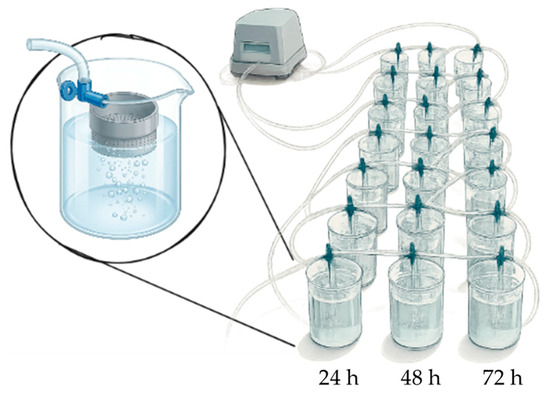
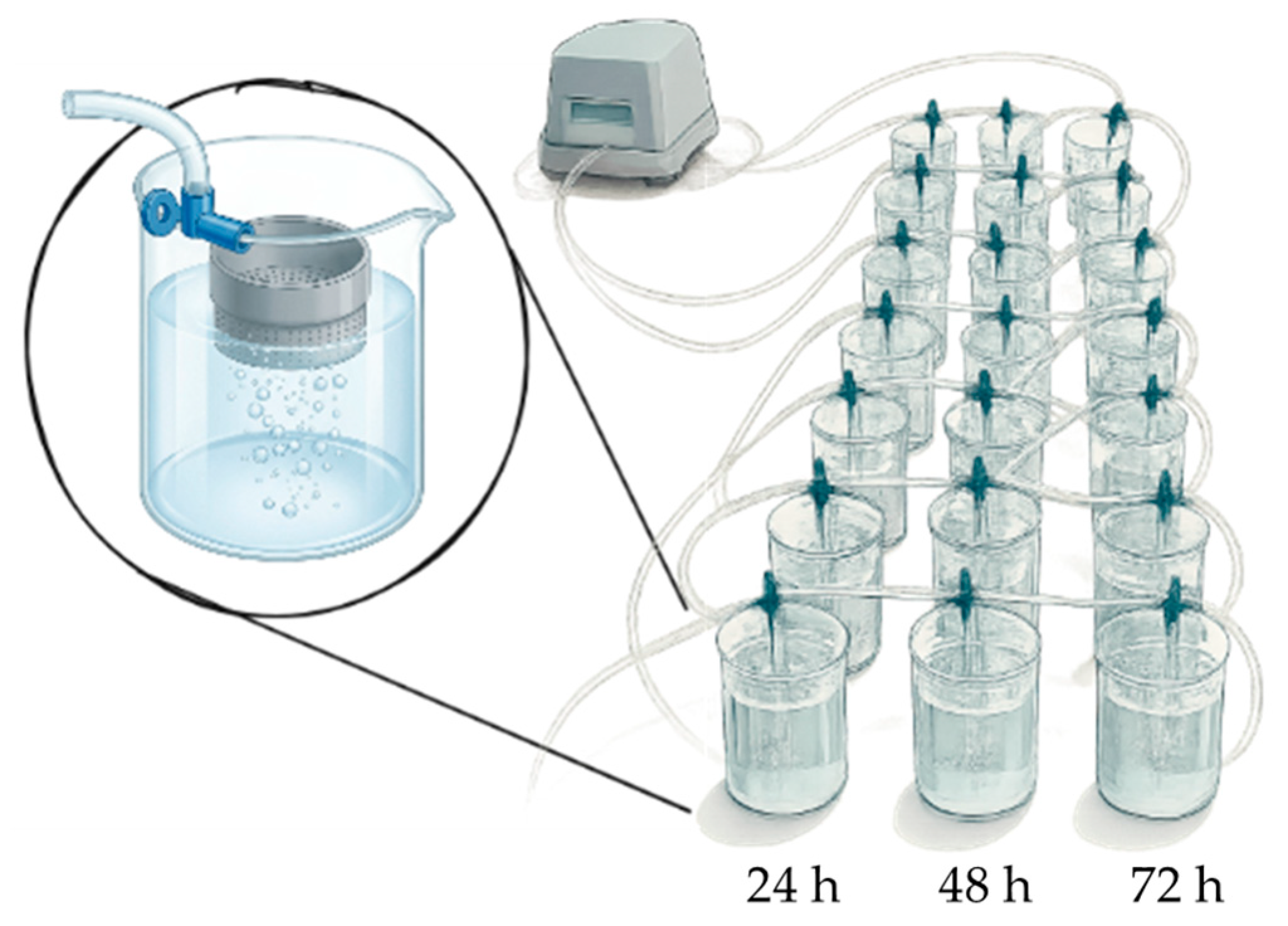
Metamorphosis induction experiments were conducted in 300 mL glass beakers, with one beaker assigned to each combination of chemical compound, concentration and exposure time. Prior to the start of the induction assays, three subsamples of 30 larvae were randomly collected and examined microscopically to characterise the initial distribution of developmental stages within the cohort (0 h). For each experimental trial, larvae originating from a single batch were used to minimise biological variability among treatments. All treatments within a given trial were therefore performed using larvae from the same cohort, ensuring that observed differences among treatments were attributable to experimental conditions rather than cohort variability. A schematic overview of the experimental design is presented in Figure 1. Each beaker contained a 150 μm mesh sieve holding approximately 1000 larvae (density of ~3 larvae mL−1). The sieve allowed water circulation while preventing larvae from escaping, and larvae remained inside the sieve throughout the entire experimental period, including both exposure and post-exposure phases. Beakers were under continuous aeration to ensure adequate oxygenation and a stable temperature (21 ± 1 °C for R. decussatus and 23 ± 1 °C for V. corrugata) and salinity (33). Larvae were exposed to the different concentrations of the inductive solutions for 24, 48 and 72 h, hereafter referred to as the exposure period (EP). The different EPs therefore represented experimental treatments corresponding to different exposure durations to the inductive compounds. At the end of each exposure period (EP), larvae were gently rinsed with filtered seawater, examined microscopically (see Section 2.4), and transferred to a clean beaker containing 300 mL of fresh filtered seawater for an additional post-exposure period (PEP) of 5, 4 and 3 days, respectively, resulting in a total experimental duration of six days. At the end of the PEP, larvae were again examined microscopically.
Figure 1.
Schematic representation of the experimental design. Each column represents a different exposure period (24, 48 and 72 h), whereas each row represents each experimental treatment [Control, EPI (10−6 M, 10−4 M), and GABA (10−6 M, 10−4 M, 10−2 M)].
Each experimental treatment (compound × concentration × exposure time) was conducted in a single glass beaker, which was considered the experimental unit. Larvae within each beaker were subsampled to assess developmental stage and mortality; these subsamples were used to improve estimation precision and did not represent independent biological replicates. Accordingly, statistical analyses were interpreted at the level of the experimental unit rather than individual larvae.
Despite this limitation, consistent and repeatable patterns were observed across concentrations, exposure periods, and species, with clear treatment-dependent trends. Therefore, interpretation focused on the magnitude and consistency of treatment effects across experimental conditions rather than on marginal differences in statistical significance.
Larvae of both species were considered competent for metamorphosis based on standard hatchery criteria, defined by consistent retention on a 150 μm sieve and the expression of settlement-related behaviours. Differences in larval age at the onset of the experiments (8 days post-fertilisation for V. corrugata and 14 days post-fertilisation for R. decussatus) reflect species-specific developmental rates and established hatchery practice, rather than experimental manipulation of competence. Accordingly, all comparisons and interpretations were conducted within species, and no direct inference was made based solely on larval age between species.
2.4. Assessment of Metamorphosis and Mortality
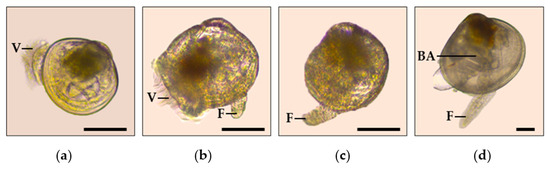
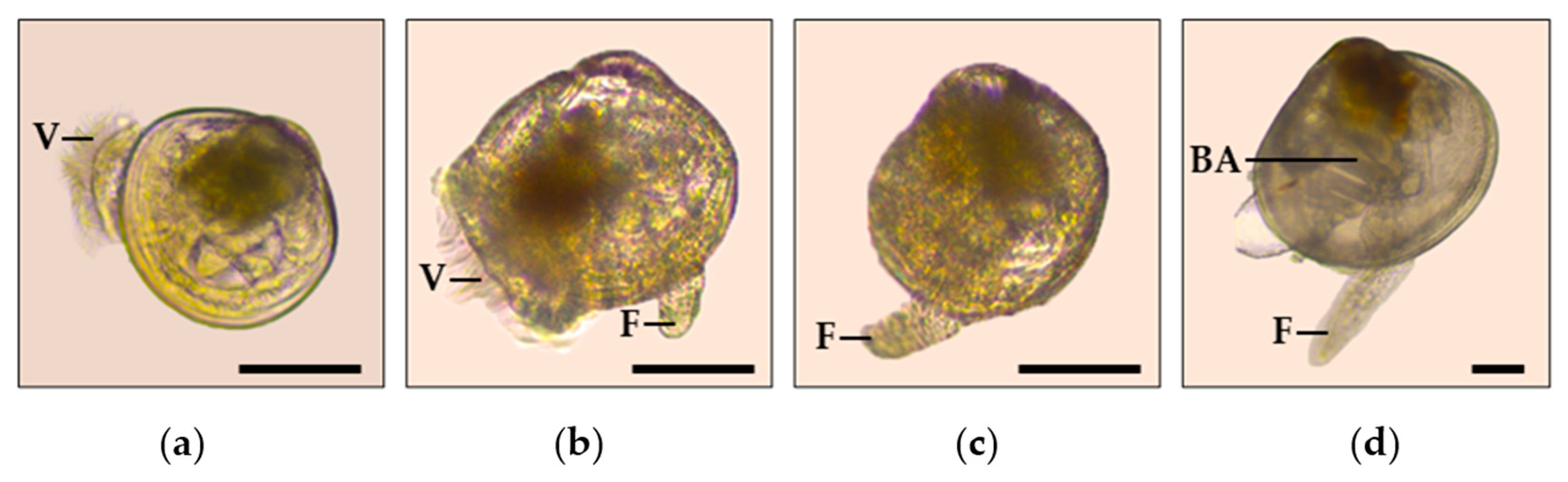
At the end of each exposure period (EP) and again after the post-exposure period (PEP), development and mortality were assessed microscopically. For each beaker, 3 subsamples of 30 larvae were randomly collected directly from the sieve after gentle rinsing with filtered seawater and analysed. After microscopic examination, larvae were returned to the corresponding experimental beaker. All larvae were subjected to the same rinsing and handling procedures during water exchange, ensuring consistent treatment across experimental units. Larvae were classified into four developmental stages based on the presence of key morphological structures: (i) velum, (ii) foot and velum, (iii) foot, or (iv) foot and branchial arches (Figure 2). Larvae were considered fully metamorphosed when they had lost its velum, actively used the foot to crawl, and developed branchial arches. Dead larvae were identified by the absence of movement and tissue degradation.
Figure 2.
Representative larval developmental stages classified according to the presence of key morphological structures: (a) velum (V); (b) foot (F) and velum (V); (c) foot (F); (d) foot (F) and branchial arches (BA) (fully metamorphosed). Scale bars represent 100 µm.
The percentage of developmental stages was calculated as the mean ratio of individuals in each stage relative to the total number of live larvae counted in each subsample. Mortality was calculated as the mean ratio between dead larvae and the total number of larvae counted in each subsample.
2.5. Data Analysis
All statistical analyses were performed using R version 4.4.1 software (R Foundation for Statistical Computing, Vienna, Austria). Analyses were conducted separately for each species using the percentages of fully metamorphosed larvae and mortality calculated for each experimental unit (beaker). These response variables were derived from microscopic assessments conducted at the end of each exposure period (EP) and after the post-exposure period (PEP). Percentages of fully metamorphosed larvae and mortality were analysed using the Aligned Rank Transform (ART) procedure, a non-parametric method suitable for factorial experimental designs [28]. Compound, concentration and exposure period were treated as fixed factors. Following ART, factorial analyses of variance (ANOVA) were performed on the aligned and ranked data. When significant effects were detected, post hoc comparisons were conducted using Tukey’s HSD test. Statistical significance was set as p < 0.05.
3. Results
3.1. Venerupis corrugata
3.1.1. Effects of Epinephrine and GABA at Different Concentrations and Exposure Periods (EPs)
Exposure to epinephrine and GABA induced concentration- and time-dependent changes in larval development of Venerupis corrugata, with distinct responses observed between the exposure period (EP) and the post-exposure period (PEP).
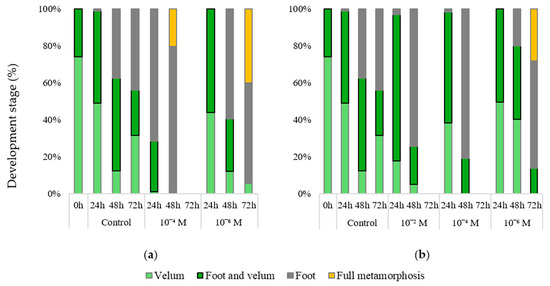
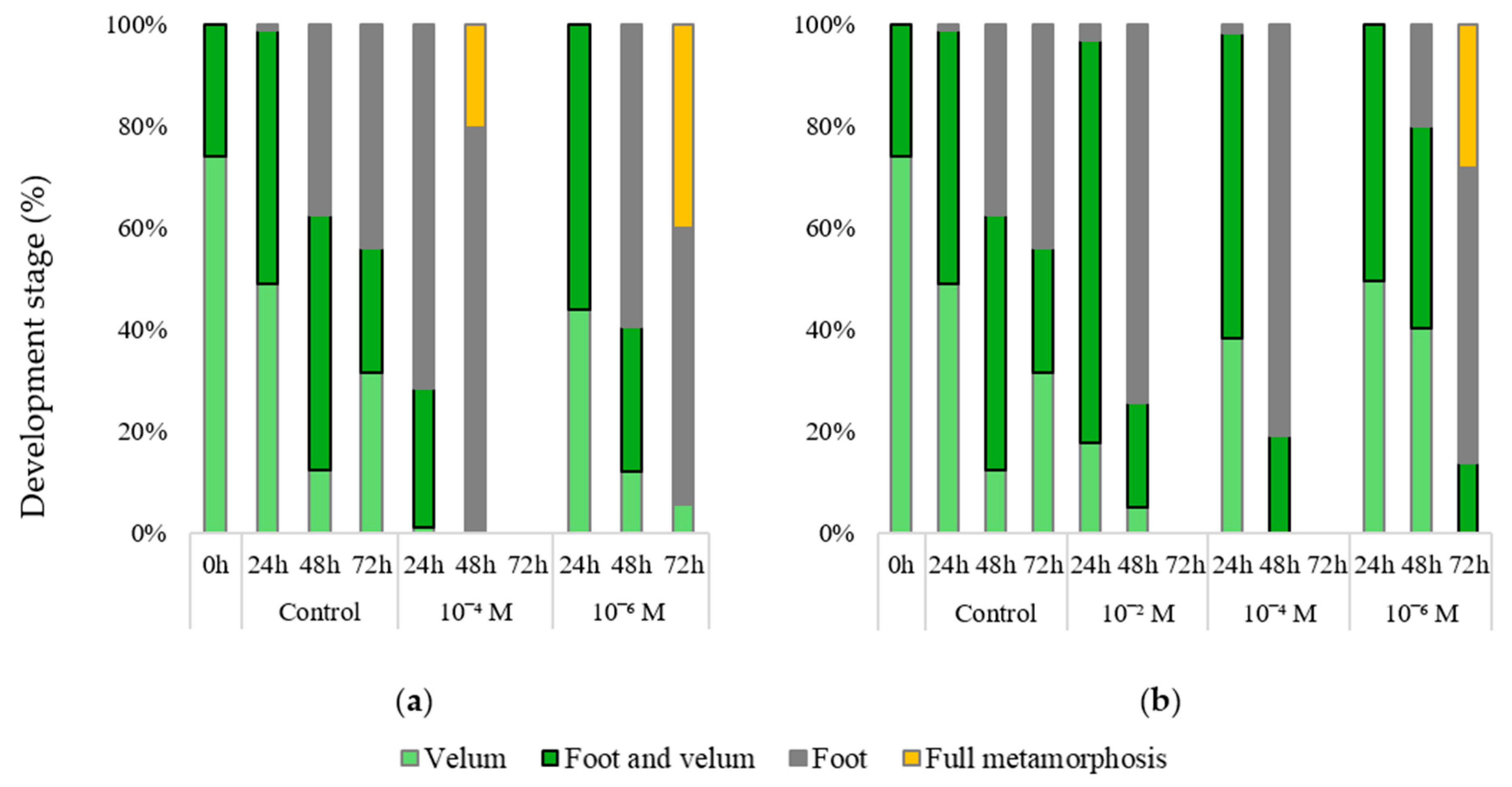
At the end of the EP, epinephrine (EPI) primarily affected the progression of larval developmental stages (Figure 3a). After 24 h of exposure, no larvae exhibited complete metamorphosis at any tested concentration. At 10−4 M, most of the larvae had lost the velum and developed a foot (72 ± 5%), while only 27 ± 4% retained both structures. In contrast, larvae exposed to EPI at 10−6 M displayed a developmental profile similar to the control, with individuals preserving only the velum (44 ± 10%) or both foot and velum (56 ± 10%). Mortality at this time was low across treatments (Table 1). After 48 h of exposure, larval development differed between concentrations. At 10−6 M EPI, 58 ± 17% of larvae had lost the velum, although no fully metamorphosed individuals were observed at this phase. In contrast, exposure to 10−4 M resulted in more advanced developmental stages, with some larvae (ranging from 0% to 25% among replicates) completing metamorphosis and no individuals preserving the velum. Mortality showed a clear concentration-dependent pattern after 48 h of exposure, remaining relatively low at 10−6 M (21 ± 18%) and increasing sharply at 10−4 M (82 ± 23%) (Table 1). After 72 h of exposure, larvae treated with EPI at 10−6 M showed further progression towards metamorphosis, with most individuals developing a foot (56 ± 18%) and 37 ± 11% completing metamorphosis. Mortality at this exposure duration increased markedly at 10−6 M (64 ± 15%) compared to the control (21 ± 5%), whereas, at 10−4 M, all larvae were dead (Table 1).
Figure 3.
Mean percentage of development stages (n = 3) at the beginning of experiment (0 h) and after exposure period (EP) of 24, 48 and 72 h of Venerupis corrugata larvae to epinephrine (EPI) (a) and γ-aminobutyric acid (GABA) (b) at concentrations of 10−4 and 10−6 M, and 10−2, 10−4 and 10−6 M, respectively.
Table 1.
Larval mortality rate (%) of Venerupis corrugata larvae (mean ± standard deviation, n = 3) after an exposure period (EP) of 24, 48 and 72 h to epinephrine (EPI) and γ-aminobutyric acid (GABA) at concentrations of 10−4 and 10−6 M, and 10−2, 10−4 and 10−6 M, respectively. n.a. = not applicable.
Exposure to GABA during EP produced concentration- and time-dependent effects on larval development and survival (Figure 3b). Larval development showed limited progression after 24 h, with most larvae at all tested concentrations exhibiting both foot and velum, similarly to the control (Figure 3b). After 48 h of exposure to GABA at 10−4 M, most larvae had lost the velum (81 ± 13%), although no fully metamorphosed individuals were observed. At the same exposure time, larvae treated with GABA at 10−6 M showed lower mortality than the control (Table 1). After 72 h exposure to GABA at 10−6 M, most larvae developed a foot, with 32 ± 24% undergoing metamorphosis (Figure 3b); however, mortality was higher than in the control. Exposure to GABA at 10−4 M or a higher concentration was lethal by the end of the exposure period (Table 1).
3.1.2. Post-Exposure Effects of Epinephrine and GABA at Different Concentrations (PEP)
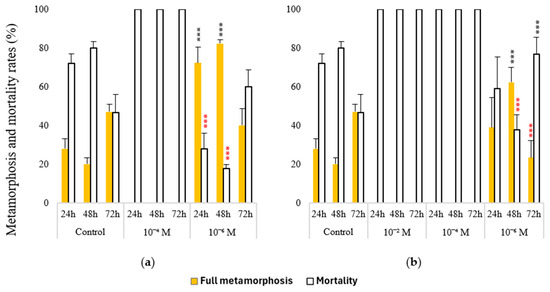
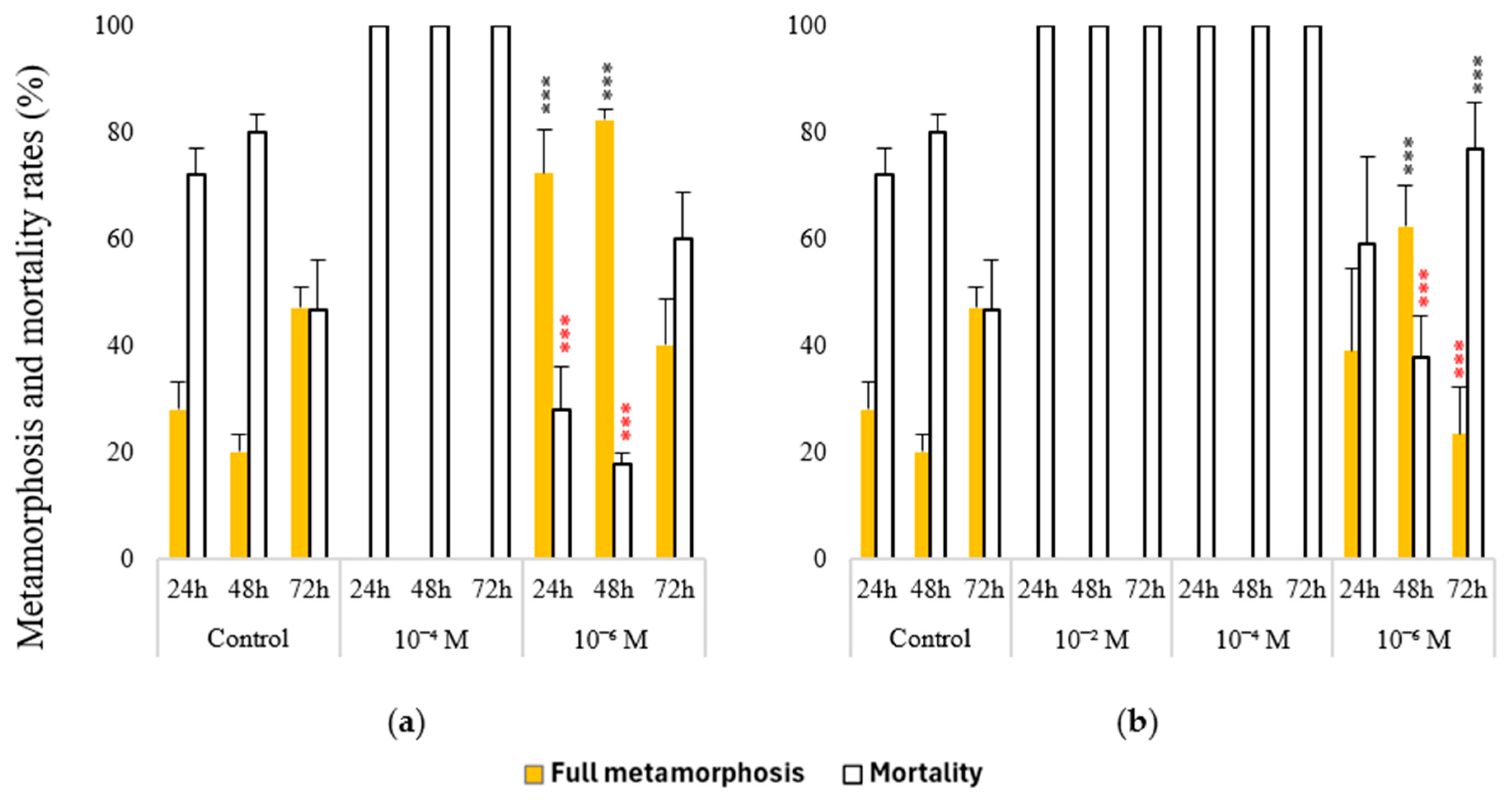
Larval responses of Venerupis corrugata to epinephrine after PEP showed significant differences among treatments (Figure 4a). Larvae previously exposed to EPI at 10−6 M for 24 h and 48 h exhibited significantly higher metamorphosis rates than the control, in which only 28 ± 5% and 20 ± 3% of larvae completed metamorphosis (ANOVA, F = 17.656, d.f. = 12, p < 0.001), reaching 72 ± 8% and 82 ± 2%, respectively. Mortality was significantly lower than in the control (ANOVA, F = 13.297, d.f. = 12, p < 0.001) (Figure 4a). Despite no significant differences in metamorphosis or mortality rates being detected between larvae exposed for 24 h and 48 h at 10−6 M, the 48 h exposure consistently resulted in higher metamorphosis and lower mortality. In contrast, exposure to EPI at 10−4 M resulted in complete mortality by the end of the PEP, precluding successful metamorphosis.
Figure 4.
Mean percentage of full metamorphosed and mortality after post-exposure (PEP) of 24, 48 and 72 h of Venerupis corrugata larvae to epinephrine (EPI) (a) and γ-aminobutyric acid (GABA) (b) at concentrations of 10−4, and 10−6 M and 10−2, 10−4, and 10−6 M, respectively (n = 3). Significant differences compared to respective control: p ≤ 0.001 (***); positive and negative differences are represented by black and red asterisks, respectively.
After PEP, exposure to GABA revealed clear differences in both metamorphosis success and mortality among treatments (Figure 4b). Larvae previously exposed to GABA at 10−6 M for 48 h exhibited the highest performance, with a significantly higher proportion of fully metamorphosed individuals (62 ± 8%) compared to the control, in which only 20 ± 3% of larvae completed metamorphosis (ANOVA, F = 17.656, d.f. = 12, p < 0.001). In parallel, mortality in larvae exposed to GABA at 10−6 M for 48 h was significantly lower (38 ± 8%) than that recorded in the control (80 ± 3%) (ANOVA, F = 13.297, d.f. = 12, p < 0.001) (Figure 4b). Shorter exposure to GABA at the same concentration (10−6 M for 24 h) did not result in significant differences in either metamorphosis or mortality rates relative to the control, indicating limited efficiency under these conditions. In contrast, extending exposure to GABA at 10−6 M to 72 h led to a significant reduction in metamorphosis success (23 ± 9%) (ANOVA, F = 17.656, d.f. = 12, p = 0.0008) and a significant increase in mortality (77 ± 9%) (ANOVA, F = 13.297, d.f. = 12, p < 0.001). Concentrations of 10−2 M and 10−4 M GABA were lethal after 72 h of exposure (Figure 4b).
When comparing larvae exposed to EPI after 24 h or 48 h at 10−6 M and those exposed to GABA for 48 h at 10−6 M, no significant differences in metamorphosis or mortality rates were detected. Nevertheless, the highest metamorphosis (82 ± 2%) and lowest mortality rates (18 ± 2%) were consistently observed after 48 h exposure to EPI at 10−6 M.
3.2. Ruditapes decussatus
3.2.1. Effects of Epinephrine and GABA at Different Concentrations and Exposure Periods (EPs)
Distinct developmental responses of Ruditapes decussatus larvae to epinephrine and GABA were observed across concentrations and exposure periods.
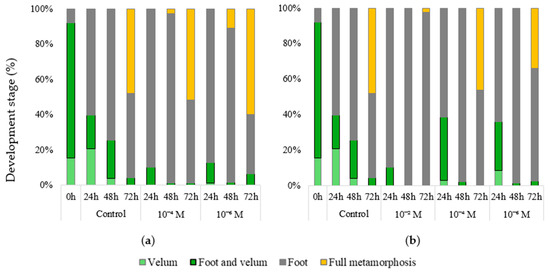
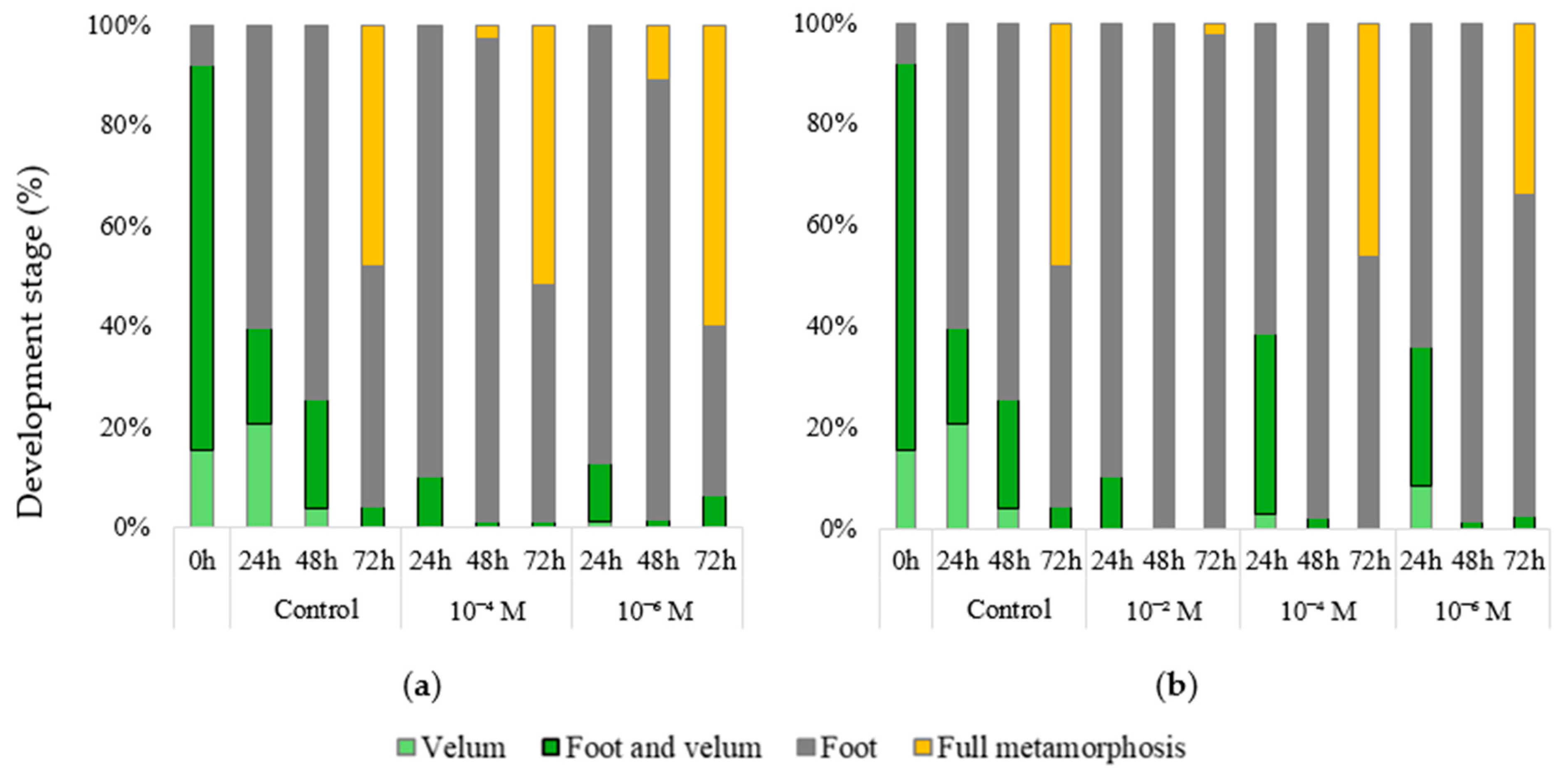
During EP, epinephrine (EPI) induced progressive changes in larval development that differed from those observed in Venerupis corrugata. After 24 h of exposure, a higher percentage of larvae had already lost the velum at both 10−4 M (90 ± 6%) and 10−6 M (87 ± 7%) compared to the control (60 ± 17%). After 48 h of exposure, only a small proportion of larvae completed metamorphosis at both 10−4 M (ranging between 0% and 8.7% among replicates) and 10−6 M (ranging between 0% and 33.3%), whereas no fully metamorphosed individuals were observed in the control (Figure 5a). Mortality at this time was higher in larvae exposed to EPI at 10−4 M (26 ± 7%) and 10−6 M (36 ± 5%) compared to the control, in which no mortality was recorded (Table 2). After 72 h of exposure, similar patterns of metamorphosis were observed across treatments, with 49 ± 25%, 64 ± 31% and 49 ± 3% of larvae completing metamorphosis in the 10−4 M, 10−6 M and control, respectively (Figure 5a). At the same time, the proportion of larvae with foot reached 44 ± 30%, 36 ± 23% and 49 ± 5% in the same respective treatments. Variability among subsamples within concentrations was high at this exposure time.
Figure 5.
Mean percentage of development stages (n = 3) at the beginning of experiment (0 h) and after exposure period (EP) of 24, 48 and 72 h of Ruditapes decussatus larvae to EPI (a) and GABA (b) at concentrations of 10−4 and 10−6 M, and 10−2, 10−4 and 10−6 M, respectively.
Table 2.
Larval mortality rate (%) of Ruditapes decussatus larvae (mean ± standard deviation, n = 3) after an exposure period (EP) of 24, 48 and 72 h to epinephrine (EPI) and γ-aminobutyric acid (GABA) at concentrations of 10−4 and 10−6 M, and 10−2, 10−4 and 10−6 M, respectively. n.a. = not applicable.
Larval responses to GABA during EP varied according to both concentration and exposure period (Figure 5b). After 24 h of exposure to GABA at 10−2 M, most larvae had already lost the velum (90 ± 4%) and exhibited lower mortality than the control (Table 2). In contrast, after 24 h of exposure to GABA at 10−4 M, a higher proportion of larvae exhibited both foot and velum (36 ± 19%) compared to the control (19 ± 11%) (Figure 5b). However, mortality was higher at this concentration (41 ± 22%) compared to the control, with only 18 ± 12% (Table 2). After 48 h of exposure to GABA at any concentration, most larvae had already lost the velum (10−2, 10−4 and 10−6 M with 100%, 98 ± 4%, 99 ± 3%, respectively; Figure 5b). Nevertheless, mortality was consistently higher (10−2, 10−4 and 10−6 M with 68 ± 4%, 46 ± 13%, 52 ± 7%, respectively) than the control, with no mortality (Table 2). After 72 h exposure, larvae treated with GABA 10−2 M exhibited fewer fully metamorphosed individuals (ranged from 0% and 7% among replicates) than the control (49 ± 3%) (Figure 5b), which also displayed the lowest mortality rate at this time point (29 ± 3%) (Table 2).
3.2.2. Post-Exposure Effects of Epinephrine and GABA at Different Concentrations (PEP)
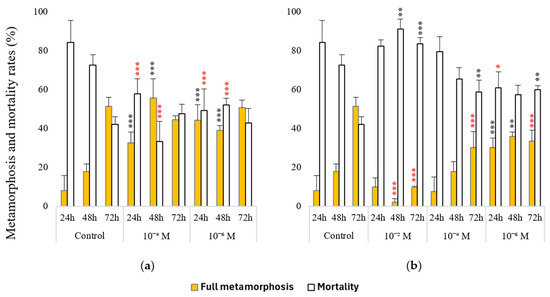
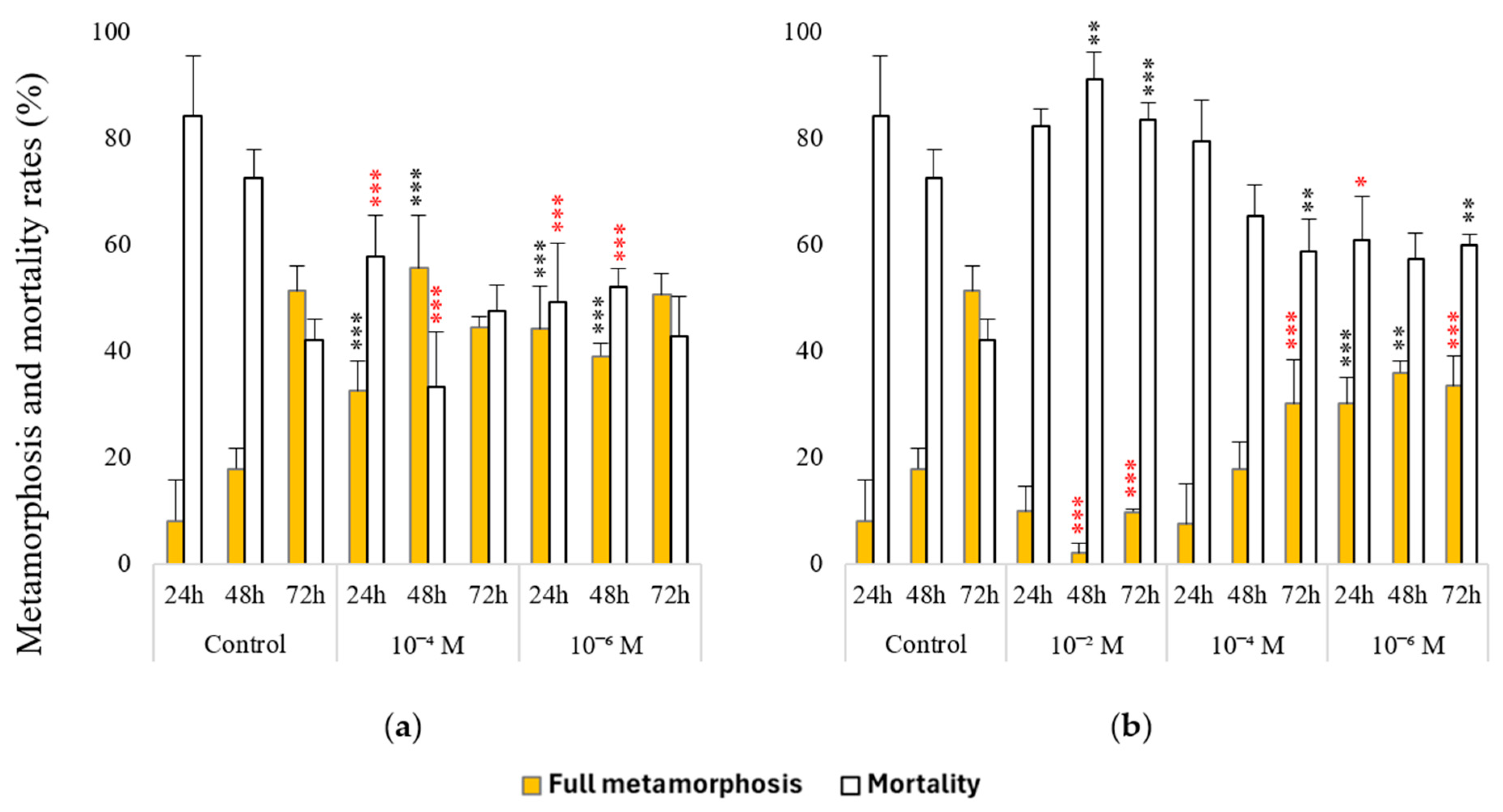
Post-exposure observations for epinephrine and GABA revealed a different pattern of larval development and mortality than those observed during EP. After PEP, larvae previously exposed to EPI at either 10−4 M or 10−6 M for 24 h or 48 h showed significantly higher metamorphosis rates than the respective controls (ANOVA, F = 8.211, d.f. = 6, p = 0.0003). No significant differences in the proportion of metamorphosed larvae were detected between these stimuli (Figure 6a). Nevertheless, exposure to EPI at 10−4 M resulted in the highest metamorphosis rate (56 ± 10%) and the lowest mortality (40 ± 10%) (Figure 6a). In contrast, exposure for 72 h at either concentration did not result in significant differences in metamorphosis or mortality rates relative to the control.
Figure 6.
Mean percentage of full metamorphosed and mortality post-exposure (PEP) of 24, 48 and 72 h of Ruditapes decussatus larvae to EPI (a) and GABA (b) at concentrations of 10−4, and 10−6 M and 10−2, 10−4, and 10−6 M, respectively (n = 3). Significant differences compared to respective control: p ≤ 0.05 (*), p ≤ 0.01 (**), and p ≤ 0.001 (***); positive and negative differences are represented by black and red asterisks, respectively.
In contrast, after PEP, only previously exposure to GABA at 10−6 M for shorter exposure durations, 24 h or 48 h, showed effective induction of full metamorphosis compared to the control, reaching rates of 30 ± 3% (ANOVA, F = 8.211, d.f. = 6, p = 0.001) and 36 ± 2% (ANOVA, F = 8.211, d.f. = 6, p = 0.005), respectively, with no significant differences between these exposure periods (Figure 6b). In contrast, extending exposure to GABA at 10−6 M to 72 h resulted in a significant lower metamorphosis rate (ANOVA, F = 8.211, d.f. = 6, p = 0.0003) than the control. No significant differences were observed between larvae exposed to GABA at 10−4 M for 24 h or 48 h and their respective controls. However, prolonged exposure (72 h) to this concentration led to a significant reduction in total metamorphosis rate compared to the control (ANOVA, F = 8.211, d.f. = 6, p < 0.001).
4. Discussion
This study highlights that the effectiveness of neuroactive compounds as inducers of larval metamorphosis in bivalves strongly depends on the interaction between compound type, concentration, exposure time, and species-specific sensitivity. Furthermore, early morphological responses observed during the exposure period (EP) do not necessarily predict successful metamorphosis and survival after exposure (PEP). By explicitly distinguishing between EP and PEP outcomes, our results emphasise delayed mortality and incomplete metamorphosis as key constraints in chemically induced metamorphosis, reinforcing the importance of post-exposure assessments when evaluating inductive success [1,29].
The use of neurotransmitters as chemical inducers of metamorphosis has been widely investigated in bivalves and other molluscs [14]. Neuroactive compounds, including catecholaminergic neurotransmitters such as epinephrine (EPI) and inhibitory modulators such as γ-aminobutyric acid (GABA), have been shown to promote metamorphosis in several bivalve species [3,6,30,31]. However, their efficiency varies markedly among species and depends on both concentration and exposure time, with larval physiological condition and methodological differences further influencing outcomes [8,16]. In this context, the present study demonstrates that both EPI and GABA can modulate metamorphosis in Venerupis corrugata and Ruditapes decussatus, although EPI consistently resulted in higher metamorphosis success and lower mortality than GABA, under optimal exposure conditions. These responses were clearly species-specific and highly dependent on the exposure conditions applied.
These contrasting outcomes are consistent with the distinct neurophysiological pathways through which EPI and GABA act. Epinephrine functions as a catecholaminergic neurotransmitter that binds to adrenergic G protein-coupled receptors, activating intracellular second-messenger cascades involved in regulating larval behaviour and morphogenesis [2,8,14,32]. In contrast, GABA primarily acts through inhibitory GABAergic pathways and is thought to induce metamorphosis indirectly by modulating neural network activity rather than by directly activating morphogenetic signalling cascades [14,33,34]. This mechanistic distinction likely underlies the higher metamorphosis rates and broader safety margin observed with EPI, whereas GABA displayed a narrower concentration window between effective induction and toxicity.
Distinct interspecific differences in sensitivity to both compounds were evident. In V. corrugata, the highest metamorphosis rate and lowest mortality were achieved at lower EPI concentrations (10−6 M) under short to intermediate exposure times, whereas higher concentrations or prolonged exposure rapidly became toxic. A 24 h exposure at this concentration yielded comparable outcomes to longer exposures, suggesting early activation or possible receptor saturation [8]. In contrast, R. decussatus responded optimally to higher EPI concentrations (10−4 M) particularly under intermediate exposure periods, indicating that this species may require a stronger stimulatory signal sustained over an appropriate time window to trigger successful metamorphic progression, with toxic effects only observed at very high concentrations (10−2 M). Such interspecific variation in optimal concentrations and exposure durations has been widely reported in bivalves, with effective EPI concentrations typically ranging from 10−6 M to 10−4 M and exposure times from 1 h to 48 h, and is generally attributed to differences in receptor expression, ligand affinity, or downstream signalling efficiency [20,31,35,36]. Comparable variability has also been documented for R. philippinarum, where reported optimal EPI concentrations range from 10−6 M to 10−4 M depending on experimental conditions and assessment timing [3,30,37], underscoring the importance of species-specific optimisation.
Importantly, previous studies in V. corrugata often assessed metamorphosis immediately after exposure, potentially overestimating induction success at higher concentrations (10−5–10−4 M) by overlooking delayed mortality [3]. By incorporating both exposure and post-exposure periods assessments, the present study demonstrates that while elevated concentrations or longer exposure times may initially accelerate velum loss and early morphological changes, they frequently result in increased mortality during the post-exposure period. For instance, although V. corrugata larvae exposed to EPI at 10−4 M for 24 and 48 h showed the rapid initiation of metamorphic traits during the exposure period, all individuals died thereafter, indicating acute toxicity. Similar discrepancies between early responses and long-term outcomes have been reported in other invertebrate larvae and are consistent with delayed mortality following chemical overstimulation [1,29,38], emphasising that early morphological changes alone do not reliably predict successful and viable metamorphosis.
Regarding GABA, metamorphic responses were generally weaker, more variable, and associated with higher mortality than those observed for EPI, indicating a narrower margin between effective induction and toxicity. In V. corrugata, significant metamorphosis was observed only at a low concentration (10−6 M) following an intermediate exposure duration (48 h), whereas shorter exposures were ineffective and higher concentrations were lethal. In R. decussatus, GABA at the same concentration induced metamorphosis after both 24 h and 48 h of exposure; however, prolonged exposure resulted in increased mortality, underscoring the strong dependence of GABA-induced responses on exposure time. Previous studies have reported highly variable responses to GABA among bivalves, with effective induction of settlement and metamorphosis following 48 h exposure to relatively high concentrations (10−5 M and 10−4 M) in Ostrea edulis [3,6] but limited or absent induction in O. angasi [9], Pteria penguin [39], Crassostrea virginica [40] and C. gigas [20]. In addition, García-Lavandeira et al. (2005) [3] reported that approximately 70% of R. philippinarum and V. corrugata larvae completed metamorphosis after 48 h exposure to 10−4 M GABA; however, differences in assessment timing, particularly the absence of post-exposure evaluation, likely account for discrepancies among studies.
These patterns are consistent with the role of GABA as an inhibitory neurotransmitter and neuromodulator that does not directly activate morphogenetic pathways but instead alters neural circuit activity and upstream excitatory signalling involved in the regulation of metamorphosis [8,33,34]. Consequently, effective induction by GABA appears to require a narrow temporal window in which neural modulation promotes coordinated developmental progression, whereas prolonged or excessive exposure may disrupt neurophysiological regulation, leading to incomplete metamorphosis or delayed mortality.
Variability in metamorphosis success and mortality among treatments may also be partly explained by differences in larval physiological condition and metamorphic competence at the time of exposure. Even within the same developmental stage, larvae may differ in energy reserves, neuroendocrine maturation, and responsiveness to inductive cues, which can result in asynchronous or incomplete metamorphosis. Such intrinsic heterogeneity likely contributed to the high variability observed among samples within the same treatment, particularly under prolonged exposure or near-toxic concentrations. Similar variability has been reported in other bivalve studies using neuroactive inducers and is considered a common feature of chemically induced metamorphosis [8,35].
Another important aspect to consider is the distinction between early morphological changes and successful completion of metamorphosis [40]. The rapid loss of larval structures, such as the velum, observed under higher concentrations or longer exposure times, may reflect chemical overstimulation rather than coordinated developmental progression. In particular, prolonged exposure to neuroactive compounds, such as GABA, may disrupt physiological regulation, ultimately leading to delayed mortality [3,38]. These sublethal effects emphasise that apparent induction at exposure period does not necessarily translate into viable post-metamorphic juveniles, reinforcing the importance of post-exposure assessments when evaluating the effectiveness of chemical inducers.
From an applied perspective, improving the reliability of metamorphosis induction remains an important challenge for hatchery production of Ruditapes decussatus and Venerupis corrugata. Variability in settlement and metamorphosis success can affect the predictability and efficiency of seed production [21,22]. Although hatcheries often rely on a combination of environmental cues and controlled rearing conditions to promote settlement and metamorphosis, the underlying physiological mechanisms remain only partially understood. In this context, experimental studies investigating the effects of neuroactive compounds can provide useful insights into the processes controlling larval metamorphosis. By identifying species-specific responses to concentration and exposure duration, the present study contributes to a better understanding of metamorphosis regulation and may help inform the development of more reliable induction approaches under hatchery conditions. Overall, this study highlights the importance of identifying optimal concentrations and exposure periods for chemical inducers of metamorphosis in a species-specific way. Fine-tuning these parameters is essential to maximise metamorphosis success while minimising larval mortality, thereby improving the reliability and efficiency of hatchery-based seed production. Although neuroactive compounds, such as epinephrine and GABA, can effectively modulate larval metamorphosis under controlled conditions, their relatively high cost, chemical instability, and potential environmental and regulatory constraints may limit their long-term application at commercial scale. Future research should therefore explore alternative or complementary approaches, including the use of metabolic precursors or naturally occurring cues, as well as large-scale validation under hatchery conditions. By providing a comparative assessment of exposure period and post-exposure outcomes in R. decussatus and V. corrugata, this study fills a critical gap in the literature and contributes to a more robust and realistic framework for the chemical induction of metamorphosis in bivalve aquaculture.
5. Conclusions
To our knowledge, this study represents the first experimental assessment of synthetic chemical inducers of larval metamorphosis in Ruditapes decussatus and the first to explicitly evaluate time-dependent effects during both exposure and post-exposure periods in R. decussatus and Venerupis corrugata. Overall, epinephrine and GABA were shown to act as effective inducers of larval metamorphosis in both species when applied at specific concentrations and exposure durations, although their efficiency and associated toxicity were strongly species- and regime-dependent. Epinephrine consistently promoted higher metamorphosis success and lower mortality than GABA under optimal conditions, emerging as the most effective inducer for both species. When appropriately optimised, these compounds have the potential to enhance metamorphosis success in hatchery conditions, thereby contributing to improve efficiency and sustainability of bivalve seed production.
Author Contributions
Conceptualization, B.N.G., A.R., S.J. and D.M.; methodology, B.N.G., A.R., S.J. and D.M.; formal analysis, B.N.G., A.R., S.J. and D.M.; investigation, B.N.G., A.R., S.J. and D.M.; resources, E.G. and A.C.; writing—original draft preparation, B.N.G. and A.R.; writing—review and editing, B.N.G., A.R., S.J., M.C., E.G., A.C. and D.M.; supervision, S.J. and D.M.; funding acquisition, S.J., E.G., A.C. and D.M. All authors have read and agreed to the published version of the manuscript.
Funding
This research was funded by the project Plano de Recuperação e Resiliência (PRR)-VERTICAL BIVALVES: “Pacto da Bioeconomia Azul” (RE-C05-i01.01).
Institutional Review Board Statement
The species used in our study (Ruditapes decussatus and Venerupis corrugata) are bivalve molluscs. Under the current legal and regulatory framework in Portugal, ethical approval is not required for research involving non-cephalopod molluscs. All experimental procedures were nevertheless conducted in accordance with good scientific practice, with efforts made to minimise handling time and any potential stress to the animals.
Data Availability Statement
The raw data supporting the conclusions of this article will be made available by the authors on request.
Acknowledgments
The authors would like to thank Oceano Fresco for providing the clam larvae. Thanks are also given to João Maurício Teixeira for maintaining the larvae until the competence stage. The authors have reviewed and edited the output and take full responsibility for the content of this publication.
Conflicts of Interest
The authors Eric Guévélou and Andreia Cruz were employed by the company Oceano Fresco. The remaining authors declare that the research was conducted in the absence of any commercial or financial relationships that could be construed as a potential conflict of interest. The authors declare that this study received funding from Plano de Recuperação e Resiliência (PRR)-VERTICAL BIVALVES: “Pacto da Bioeconomia Azul” (RE-C05-i01.01). The funder was not involved in the study design, collection, analysis, interpretation of data, the writing of this article or the decision to submit it for publication.
References
- Hadfield, M.; Paul, V. Natural Chemical Cues for Settlement and Metamorphosis of Marine-Invertebrate Larvae. In Marine Chemical Ecology; McClintock, J.B., Baker, B.J., Eds.; CRC Press: Boca Raton, FL, USA, 2001; ISBN 9781420036602. [Google Scholar]
- Bonar, D.B.; Coon, S.L.; Walch, M.; Weiner, R.M.; Fitt, W. Control of Oyster Settlement and Metamorphosis by Endogenous and Exogenous Chemical Cues. Bull. Mar. Sci. 1990, 46, 484–498. [Google Scholar]
- García-Lavandeira, M.; Silva, A.; Abad, M.; Pazos, A.J.; Sánchez, J.L.; Pérez-Parallé, M.L. Effects of GABA and Epinephrine on the Settlement and Metamorphosis of the Larvae of Four Species of Bivalve Molluscs. J. Exp. Mar. Biol. Ecol. 2005, 316, 149–156. [Google Scholar] [CrossRef] [Scilit]
- Harder, T.; Tebben, J.; Möller, M.; Schupp, P. Chemical Ecology of Marine Invertebrate Larval Settlement. In Chemical Ecology; Puglisi, M.P., Becerro, M.A., Eds.; CRC Press: Boca Raton, FL, USA, 2018; pp. 329–355. [Google Scholar]
- Bussarawit, S.; Cedhagen, T. Larvae of the Commercial Tropical Oyster Crassostrea belcheri (Sowerby) Are Induced to Settle by Pheromones from the Adults. Thail. Nat. Hist. Mus. J. 2012, 6, 75–87. [Google Scholar]
- Mesías-Gansbiller, C.; Silva, A.; Maneiro, V.; Pazos, A.; Sánchez, J.L.; Pérez-Parallé, M.L. Effects of Chemical Cues on Larval Settlement of the Flat Oyster (Ostrea edulis L.): A Hatchery Approach. Aquaculture 2013, 376–379, 85–89. [Google Scholar] [CrossRef] [Scilit]
- Mesías-Gansbiller, C.; Bendimerad, M.E.A.; Román, G.; Pazos, A.J.; Sánchez, J.L.; Pérez-Parallé, M.L. Settlement Behavior of Black Scallop Larvae (Chlamys varia, L.) in Response to GABA, Epinephrine and IBMX. J. Shellfish Res. 2008, 27, 261–264. [Google Scholar] [CrossRef] [Scilit]
- Joyce, A.; Vogeler, S. Molluscan Bivalve Settlement and Metamorphosis: Neuroendocrine Inducers and Morphogenetic Responses. Aquaculture 2018, 487, 64–82. [Google Scholar] [CrossRef] [Scilit]
- O’Connor, S.; Moltschaniwskyj, N.; O’Connor, W. Use of Neuroactive Catecholamines to Chemically Induce Metamorphosis of Hatchery-Reared Flat Oyster, Ostrea angasi, Larvae. Aquac. Res. 2009, 40, 1567–1577. [Google Scholar] [CrossRef] [Scilit]
- Matias, D.; Joaquim, S.; Matias, A.M.; Moura, P.; de Sousa, J.T.; Sobral, P.; Leitão, A. The Reproductive Cycle of the European Clam Ruditapes decussatus (L., 1758) in Two Portuguese Populations: Implications for Management and Aquaculture Programs. Aquaculture 2013, 406–407, 52–61. [Google Scholar] [CrossRef] [Scilit]
- Joaquim, S.; Matias, D.; Matias, A.M.; Leitão, A.; Soares, F.; Cabral, M.; Chícharo, L.; Gaspar, M.B. The Effect of Density in Larval Rearing of the Pullet Carpet Shell Venerupis corrugata (Gmelin, 1791) in a Recirculating Aquaculture System. Aquac. Res. 2016, 47, 1055–1066. [Google Scholar] [CrossRef] [Scilit]
- da Costa, F.; Cerviño-Otero, A.; Iglesias, Ó.; Cruz, A.; Guévélou, E. Hatchery Culture of European Clam Species (Family Veneridae). Aquac. Int. 2020, 28, 1675–1708. [Google Scholar] [CrossRef] [Scilit]
- Rato, A.; Joaquim, S.; Matias, D.; Hubbard, P.C. The Roles of Chemical Cues in the Life Cycle of Bivalves: Spawning, Settlement, and Metamorphosis. Rev. Aquac. 2025, 17, e13007. [Google Scholar] [CrossRef] [Scilit]
- Carroll, J.M.; Riddle, K.; Woods, K.E.; Finelli, C.M. Recruitment of the Eastern Oyster, Crassostrea virginica, in Response to Settlement Cues and Predation in North Carolina. J. Exp. Mar. Biol. Ecol. 2015, 463, 1–7. [Google Scholar] [CrossRef] [Scilit]
- Vogeler, S.; Wikfors, G.H.; Li, X.; Veilleux, D.; Miller-Ezzy, P.; Joyce, A. Larval Metamorphosis in Four Bivalve Species in Response to NMDA Receptor Ligands: The NMDA Receptor Pathway as Potential Regulator of Bivalve Transition to Spat. Aquaculture 2019, 511, 634173. [Google Scholar] [CrossRef] [Scilit]
- Le, D.V.; Young, T.; Alfaro, A.C.; Watts, E.; King, N. Effect of Neuroactive Compounds on Larval Metamorphosis of New Zealand Geoduck (Panopea zelandica). Aquac. Res. 2016, 48, 3080–3090. [Google Scholar] [CrossRef] [Scilit]
- Sánchez-Lazo, C.; Martínez-Pita, I. Induction of Settlement in Larvae of the Mussel Mytilus galloprovincialis Using Neuroactive Compounds. Aquaculture 2012, 344–349, 210–215. [Google Scholar] [CrossRef] [Scilit]
- Morse, A.N.C.; Morse, D.E. Recruitment and Metamorphosis of Haliotis Larvae Induced by Molecules Uniquely Available at the Surfaces of Crustose Red Algae. J. Exp. Mar. Biol. Ecol. 1984, 75, 191–215. [Google Scholar] [CrossRef] [Scilit]
- Beiras, R.; Widdows, J. Induction of Metamorphosis in Larvae of the Oyster Crassostrea gigas Using Neuroactive Compounds. Mar. Biol. 1995, 123, 327–334. [Google Scholar]
- Matias, D.; Joaquim, S.; Ramos, M.; Sobral, P.; Leitão, A. Biochemical Compounds’ Dynamics during Larval Development of the Carpet-Shell Clam Ruditapes decussatus (Linnaeus, 1758): Effects of Mono-Specific Diets and Starvation. Helgol. Mar. Res. 2011, 65, 369–379. [Google Scholar] [CrossRef] [Scilit]
- Joaquim, S.; Pereira, J.; Leitão, A.; Matias, D.; Chaves, R.; Guedes-Pinto, H.; Chícharo, L.; Gaspar, M. Genetic Diversity of Two Portuguese Populations of the Pullet Carpet Shell Venerupis senegalensis, Based on RAPD Markers: Contribution to a Sustainable Restocking Program. Helgol. Mar. Res. 2010, 64, 289–295. [Google Scholar] [CrossRef] [Scilit]
- de Sousa, J.T.; Matias, D.; Joaquim, S.; Ben-Hamadou, R.; Leitão, A. Growth Variation in Bivalves: New Insights into Growth, Physiology and Somatic Aneuploidy in the Carpet Shell Ruditapes decussatus. J. Exp. Mar. Biol. Ecol. 2011, 406, 46–53. [Google Scholar] [CrossRef] [Scilit]
- Cravo, A.; Pereira, C.; Gomes, T.; Cardoso, C.; Serafim, A.; Almeida, C.; Rocha, T.; Lopes, B.; Company, R.; Medeiros, A.; et al. A Multibiomarker Approach in the Clam Ruditapes decussatus to Assess the Impact of Pollution in the Ria Formosa Lagoon, South Coast of Portugal. Mar. Environ. Res. 2012, 75, 23–34. [Google Scholar] [CrossRef] [Scilit] [PubMed]
- Nielsen, R.; Guillen, J.; Virtanen, J. Economic Report on the EU Aquaculture (STECF-22-17); Publications Office of the European Union: Luxembourg, 2023; ISBN 9789276993179. [Google Scholar]
- European Commission: Eurostat. Production from Aquaculture Excluding Hatcheries and Nurseries (from 2008 Onwards). Available online: https://ec.europa.eu/eurostat/databrowser/view/fish_aq2a/default/table (accessed on 5 February 2026).
- Matias, D.; Ben-Hamadou, R.; Joaquim, S.; Matias, A.M.; Sobral, P.; Leitão, A. The Influence of Different Microalgal Diets on European Clam (Ruditapes decussatus, Linnaeus, 1758) Larvae Culture Performances. Aquac. Res. 2015, 46, 2527–2543. [Google Scholar] [CrossRef] [Scilit]
- Wobbrock, J.O.; Findlater, L.; Gergle, D.; Higgins, J.J. The Aligned Rank Transform for Nonparametric Factorial Analyses Using Only Anova Procedures. In Proceedings of the SIGCHI Conference on Human Factors in Computing Systems; Association for Computing Machinery: New York, NY, USA, 2011; pp. 143–146. [Google Scholar]
- Pechenik, J.A. On the Advantages and Disadvantages of Larval Stages in Benthic Marine Invertebrate Life Cycles. Mar. Ecol. Prog. Ser. 1999, 177, 269–297. [Google Scholar] [CrossRef] [Scilit]
- Sumin, L.; Zhenmin, B.; Hui, L.; Jianguang, F. Effect of Epinephrine on the Settlement and Metamorphosis of Manila Clam Larvae. J. Ocean Univ. China 2006, 5, 141–145. [Google Scholar] [CrossRef] [Scilit]
- Teh, C.P.; Zulfigar, Y.; Tan, S.H. Epinephrine and L-DOPA Promote Larval Settlement and Metamorphosis of the Tropical Oyster, Crassostrea iredalei (Faustino, 1932): An Oyster Hatchery Perspective. Aquaculture 2012, 338–341, 260–263. [Google Scholar] [CrossRef] [Scilit]
- Yang, B.; Qin, J.; Shi, B.; Han, G.; Chen, J.; Huang, H.; Ke, C. Molecular Characterization and Functional Analysis of Adrenergic like Receptor during Larval Metamorphosis in Crassostrea angulata. Aquaculture 2012, 366–367, 54–61. [Google Scholar] [CrossRef] [Scilit]
- Baloun, A.; Morse, D. Ionic Control of Settlement and Metamorphosis in Larval Haliotis rufescens (Gastropoda). Biol. Bull. 1984, 167, 124–138. [Google Scholar] [CrossRef] [Scilit]
- Rodriguez, S.R.; Ojeda, F.P.; Inestrosa, N.C. Settlement of Benthic Marine Invertebrates. Mar. Ecol. Prog. Ser. 1993, 97, 193–207. [Google Scholar] [CrossRef] [Scilit]
- Coon, S.L.; Bonar, D.B.; Weiner, R.M. Chemical Production of Cultchless Oyster Spat Using Epinephrine and Norepinephrine. Aquaculture 1986, 58, 255–262. [Google Scholar] [CrossRef] [Scilit]
- Zheng, Z.; Hao, R.; Xiong, X.; Jiao, Y.; Deng, Y.; Du, X. Developmental Characteristics of Pearl Oyster Pinctada fucata martensii: Insight into Key Molecular Events Related to Shell Formation, Settlement and Metamorphosis. BMC Genom. 2019, 20, 122. [Google Scholar] [CrossRef] [Scilit]
- Urrutia, P.M.; Okamoto, K.; Fusetani, N. Acetylcholine and Serotonin Induce Larval Metamorphosis of the Japanese Short-Neck Clam Ruditapes philippinarum. J. Shellfish Res. 2004, 23, 93–101. [Google Scholar]
- Almeda, R.; Rist, S.; Christensen, A.M.; Antoniou, E.; Parinos, C.; Olsson, M.; Young, C.M. Crude Oil and Its Burnt Residues Induce Metamorphosis in Marine Invertebrates. Environ. Sci. Technol. 2023, 57, 19304–19315. [Google Scholar] [CrossRef] [Scilit]
- Wassnig, M.; Southgate, P.C. Effects of Settlement Cues on Behaviour and Substrate Attachment of Hatchery Reared Winged Pearl Oyster (Pteria penguin) Larvae. Aquaculture 2012, 344–349, 216–222. [Google Scholar] [CrossRef] [Scilit]
- Grant, M.N.; Meritt, D.W.; Kimmel, D.G. Chemical Induction of Settlement Behavior in Larvae of the Eastern Oyster Crassostrea virginica (Gmelin). Aquaculture 2013, 402–403, 84–91. [Google Scholar] [CrossRef] [Scilit]
- Yang, J.L.; Li, S.H.; Li, Y.F.; Liu, Z.W.; Liang, X.; Bao, W.Y.; Li, J. Le Effects of Neuroactive Compounds, Ions and Organic Solvents on Larval Metamorphosis of the Mussel Mytilus coruscus. Aquaculture 2013, 396–399, 106–112. [Google Scholar] [CrossRef] [Scilit]

Disclaimer/Publisher’s Note: The statements, opinions and data contained in all publications are solely those of the individual author(s) and contributor(s) and not of MDPI and/or the editor(s). MDPI and/or the editor(s) disclaim responsibility for any injury to people or property resulting from any ideas, methods, instructions or products referred to in the content. |
© 2026 by the authors. Licensee MDPI, Basel, Switzerland. This article is an open access article distributed under the terms and conditions of the Creative Commons Attribution (CC BY) license.