


Abstract
This 90-day trial evaluated the integrated benefits of biofloc technology (BFT) in lined ponds for intensive Penaeus vannamei culture, comparing it with a conventional water-exchange (WE) system. The BFT system maintained favorable water quality with a 68.4% reduction in cumulative water exchange. Concentrations of toxic total ammonia–nitrogen (TAN) and nitrite–nitrogen (NO2−-N) were better controlled, and total suspended solids (TSS) stabilized within a beneficial range (150–200 mg L−1). Microbial analysis indicated that BFT significantly increased total bacterial abundance in both culture water and shrimp hepatopancreas while reducing the total Vibrio-to-bacteria ratio in culture water to below 6%, significantly lower than in the WE system (>18%). Moreover, BFT significantly lowered the loads of specific pathogens, acute hepatopancreatic necrosis disease (AHPND)-causing Vibrio parahaemolyticus, and Enterocytozoon hepatopenaei (EHP) in both culture water and shrimp hepatopancreas. Regarding production performance, BFT significantly enhanced shrimp survival rate (82.4% vs. 71.5%), yield (3460 vs. 2948 kg pond−1), and water productivity (0.85 vs. 0.28 kg m−3), while lowering the feed conversion ratio (1.16 vs. 1.33). In conclusion, BFT achieves stable water quality, effective pathogen suppression, and enhanced production efficiency through microbial regulation, offering a viable water-saving, environmentally sound, and disease-resilient strategy for intensive P. vannamei culture.
Keywords:
Biofloc technology; Penaeus vannamei; harmful nitrogen control; pathogen suppression; production performance; water-saving aquaculture Key Contribution:
This study provides a comprehensive evaluation of biofloc technology in lined ponds with intensive shrimp culture, demonstrating its integrated benefits in water conservation, pathogen suppression, and production enhancement.
1. Introduction
Global shrimp aquaculture faces significant challenges, including water scarcity, environmental pollution, and disease outbreaks, particularly in intensive farming systems [1]. The Pacific white shrimp (Penaeus vannamei) is one of the most economically important and widely cultured shrimp species worldwide, with production increasingly intensified to meet growing demand [2]. However, conventional intensive systems rely heavily on frequent and large-scale water exchange to maintain water quality, leading to substantial wastewater discharge, high nutrient loading, and subsequent eutrophication of surrounding waters [3,4]. Moreover, such water management often results in fluctuating water conditions, which can induce physiological stress in shrimp and increase susceptibility to pathogens [5]. Therefore, developing water-saving, environmentally sound, and efficient aquaculture technologies is imperative for the sustainable development of the shrimp aquaculture industry [6,7].
Biofloc technology (BFT) has emerged as a promising microbial-based approach for sustainable shrimp aquaculture [8,9]. By supplementing organic carbon sources such as molasses, BFT promotes the growth of heterotrophic bacteria, which form microbial aggregates (bioflocs) that contribute to water quality maintenance through microbial assimilation of toxic ammonia and nitrification processes [10,11]. These bioflocs also serve as a supplementary source of microbial protein, potentially improving feed utilization and reducing the feed conversion ratio (FCR) [12]. Previous studies have demonstrated that BFT systems can maintain stable water quality under limited or zero-water exchange conditions, thereby significantly reducing water consumption and effluent discharge [13,14].
While the role of BFT in nitrogen dynamics and water quality control is well documented [15,16], its ability to modulate microbial communities and suppress pathogenic bacteria under reduced water exchange remains less understood, particularly in large-scale lined pond systems. Vibrio spp. are common opportunistic pathogens in aquaculture, and their abundance is closely linked to shrimp health and disease outbreaks [17]. Additionally, specific pathogens such as acute hepatopancreatic necrosis disease (AHPND)-causing Vibrio parahaemolyticus and the microsporidian Enterocytozoon hepatopenaei (EHP) pose severe threats to shrimp production [18,19]. Although BFT systems have been suggested to inhibit pathogen proliferation through microbial competition, antagonism, and quorum sensing interference [20], systematic evaluations of their effects on Vibrio dynamics and specific pathogens like AHPND and EHP in both culture water and shrimp hepatopancreas remain limited.
In practice, lined ponds are widely used for intensive shrimp farming in coastal regions due to their seepage prevention and manageable design [21]. However, comparative studies between BFT systems and traditional water-exchange systems in such pond settings are scarce. It remains unclear whether BFT, while reducing water exchange, can effectively control harmful nitrogen compounds, maintain favorable water quality, mitigate shrimp health risks, and concomitantly suppress Vibrio and specific pathogens, thereby enhancing shrimp survival and production performance. A comprehensive full-cycle culture trial is therefore necessary to verify these integrated benefits.
Accordingly, this study conducted a 90-day culture trial of P. vannamei in lined intensive ponds to compare the production performance, harmful nitrogen control, and suppression of Vibrio and specific pathogens between a BFT system and a conventional water-exchange system. The specific objectives were to: (1) evaluate the dynamics of inorganic nitrogen compounds (TAN, NO2−-N, NO3−-N) and total suspended solids (TSS) in culture water; (2) monitor changes in total bacteria, Vibrio, and the total Vibrio-to-bacteria ratio in culture water and shrimp hepatopancreas; (3) quantify AHPND and EHP loads in both culture water and shrimp hepatopancreas; and (4) assess production parameters including harvest weight, survival, yield, FCR, and water productivity. The findings are expected to provide scientific evidence for adopting BFT in lined pond-based shrimp culture, contributing to water-saving, environmentally friendly, and disease-resilient aquaculture production.
2. Materials and Methods
2.1. Experimental Pond and System Preparation
The study was conducted in an intensive shrimp farm (E 116°1′9″, N 22°50′28″) on the coast of Guangdong Province, China. Six lined high-density ponds (each 30 m × 30 m, area 900 m2, average water depth 1.8 m, total water volume ≈ 1620 m3) were chosen in this trial. All ponds were constructed with high-density polyethylene (HDPE) liners to prevent seepage and equipped with central drainage systems. Each pond was provided with 4 waterwheel aerators at water surface (2.2 kW each) and sixty fine-bubble diffusers at the water bottom to maintain dissolved oxygen (DO) above 5.0 mg L−1. Water was sourced from sand-filtered and chlorinated seawater pumped from the adjacent bay.
2.2. Experimental Design and Shrimp Stocking
The experiment was designed as a completely randomized design with two treatments in triplicate ponds (n = 3): (1) Biofloc technology (BFT): It operated under low water exchange (0–10% daily) with a defined management protocol consisting of organic carbon supplementation and nitrifying biofloc inoculation triggered by specific water quality thresholds. Specifically, sugarcane molasses (purchased from Guangxi Sugar Co., Ltd., Nanning, China) was added when TAN exceeded 1 mg L−1 (based on 6 g carbon per g TAN [22]), and pre-cultured nitrifying biofloc was inoculated at a 1‰ ratio (v/v) once when NO2−-N exceeded 1 mg L−1 in the culture water [23]. These threshold-triggered interventions are integral components of the BFT management strategy. (2) Water-exchange (WE): It operated under conventional high water-exchange regime (0–20% daily) without organic carbon addition or nitrifying bacteria inoculation; water quality was managed solely through physical dilution via water exchange.
Ten-day-old specific pathogen-free (SPF) post-larvae (PL10) of P. vannamei (initial body weight 0.0053 ± 0.0018 g) were stocked in all ponds at a density of 278 individuals per square meter (approx. 250,000 individuals per pond). The culture period lasted for 90 days from October 2023 to January 2024.
2.3. Feeding Management and Water Quality Monitoring
The commercial shrimp feeds (Guangdong Guangxin Feed Co. Ltd., Maoming, Guangdong, China) containing 40.0% crude protein, 8.0% lipid, and 10% ash were used throughout the trial. Daily feeding rates were adjusted based on feeding tray observations for finishing each meal within 1.5 h. One feeding tray (circular shape, with a diameter of 80 cm) was installed per pond, placed in the central area covered by the automatic feeder’s operation range. The automatic feeder (Foshan Zhongyu Technology Co., Ltd., Foshan, Guangdong, China) was a wind-driven sprinkler-type feeder, and automated feed distribution occurs four times a day (07:00, 11:00, 15:00, and 19:00) with the same amount each time. Feeding adjustments were made based on tray observations after the 11:00 feeding (midday meal) as follows: if feed was completely consumed within 1 h, the next day’s feeding amount was increased by 10%; if feed was not fully consumed within 1 h but was finished within 1.5 h, the feeding amount remained unchanged; if feed remained after 1.5 h, the feeding amount was reduced by 20% for the next day. The amount of offered feeds was recorded daily for each pond throughout the trial.
Basic water quality parameters including temperature, salinity, DO, and pH were monitored daily at 10:00 using a multiparameter water quality meter (YSI Pro, Yellow Springs, OH, USA). Water samples were collected weekly from three fixed locations in each pond at a depth of 0.5 m and pooled for analysis. TAN, NO2−-N, NO3−-N, and TSS were measured following standard methods [24]. TAN, detected here, refers to the total ammonia nitrogen present as ammonia and ammonium.
2.4. Microbial Analysis and Pathogen Detection
On days 30, 60, and 90, water samples (50 mL) and hepatopancreas from 10 randomly collected shrimp per pond were collected for microbial analysis and pathogen detection. For each pond, the hepatopancreas samples from the 10 shrimp were pooled into a single composite sample, homogenized in sterile phosphate-buffered saline, and DNA was extracted using a DNeasy Blood & Tissue Kit (Qiagen, Hilden, Germany). Thus, for each time point, n = 3 composite samples per treatment were analyzed. For water samples, total genomic DNA was extracted using a FastDNA Spin Kit for Soil (MP Biomedicals, Irvine, CA, USA) following the manufacturer’s instructions.
The quantities of total bacteria (TB) and total Vibrio (TV) were determined by real-time quantitative PCR (qPCR) using a commercial detection kit (Xiamen Zhihui Lianfeng Biotech Co., Ltd., Xiamen, Fujian, China) according to the manufacturer’s protocol [25]. The 16S rRNA gene was targeted for total bacteria, and the rpoD gene was used for Vibrio quantification [26]. The PCR reactions were performed in a QuantStudio 5 Real-Time PCR System (Applied Biosystems, Waltham, MA, USA) with the following cycling conditions: 95 °C for 2 min, followed by 40 cycles of 94 °C for 10 s and 60 °C for 30 s. Standard curves were generated using serial dilutions of plasmid DNA containing the target genes. Results were expressed as gene copy numbers per milliliter of water. For pathogen detection, AHPND was detected by quantifying the pirA toxin gene, and EHP was detected by quantifying the 18S rRNA gene, using pathogen-specific qPCR kits (Xiamen Zhihui Lianfeng Biotech Co., Ltd., Xiamen, Fujian, China) following the manufacturer’s instructions. The detection limit of the qPCR assays was 101 copies per reaction, and the amplification efficiency ranged from 90% to 110%. The standard curve R2 was >0.99 for all assays. Each qPCR run included negative controls and a standard curve with known copy numbers. Pathogen loads were expressed as copy numbers per milliliter of water or per milligram of hepatopancreas tissue.
2.5. Production Performance Evaluation
At harvest, all shrimp were counted and collectively weighed to determine total yield. Survival rate was calculated as (final number/initial stocked number) × 100. Individual body weight was measured from 200 randomly collected shrimp per pond. Feed conversion ratio (FCR) was calculated as total feed offered (kg)/total shrimp biomass gained (kg). Water productivity was determined as total shrimp yield (kg)/total water used (m3), where total water used included initial filling and all water exchange during the trial. The total water exchange rate was calculated as the cumulative volume of exchanged water relative to the initial pond volume, expressed as a percentage.
2.6. Statistical Analysis
All data are presented as mean ± standard deviation (SD). Normality and homogeneity of variances were checked using Shapiro–Wilk and Levene’s tests, respectively. Water quality parameters, microbial quantities, and pathogen loads were analyzed using two-way repeated measures ANOVA with treatment as the between-subjects factor and time as the within-subjects (repeated) factor. The pond was treated as the experimental unit and the repeated subject across time. Mauchly’s test of sphericity was conducted, and where the assumption of sphericity was violated, Greenhouse–Geisser correction was applied to adjust the degrees of freedom. Production performance indicators were compared between treatments using independent samples t-tests. All statistical analyses were performed using SPSS 25.0 (IBM Corp.), and significance was set at p < 0.05.
3. Results
3.1. Daily Feeding and Water Exchange
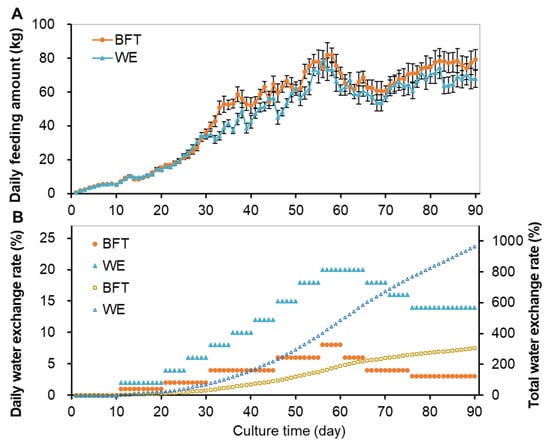
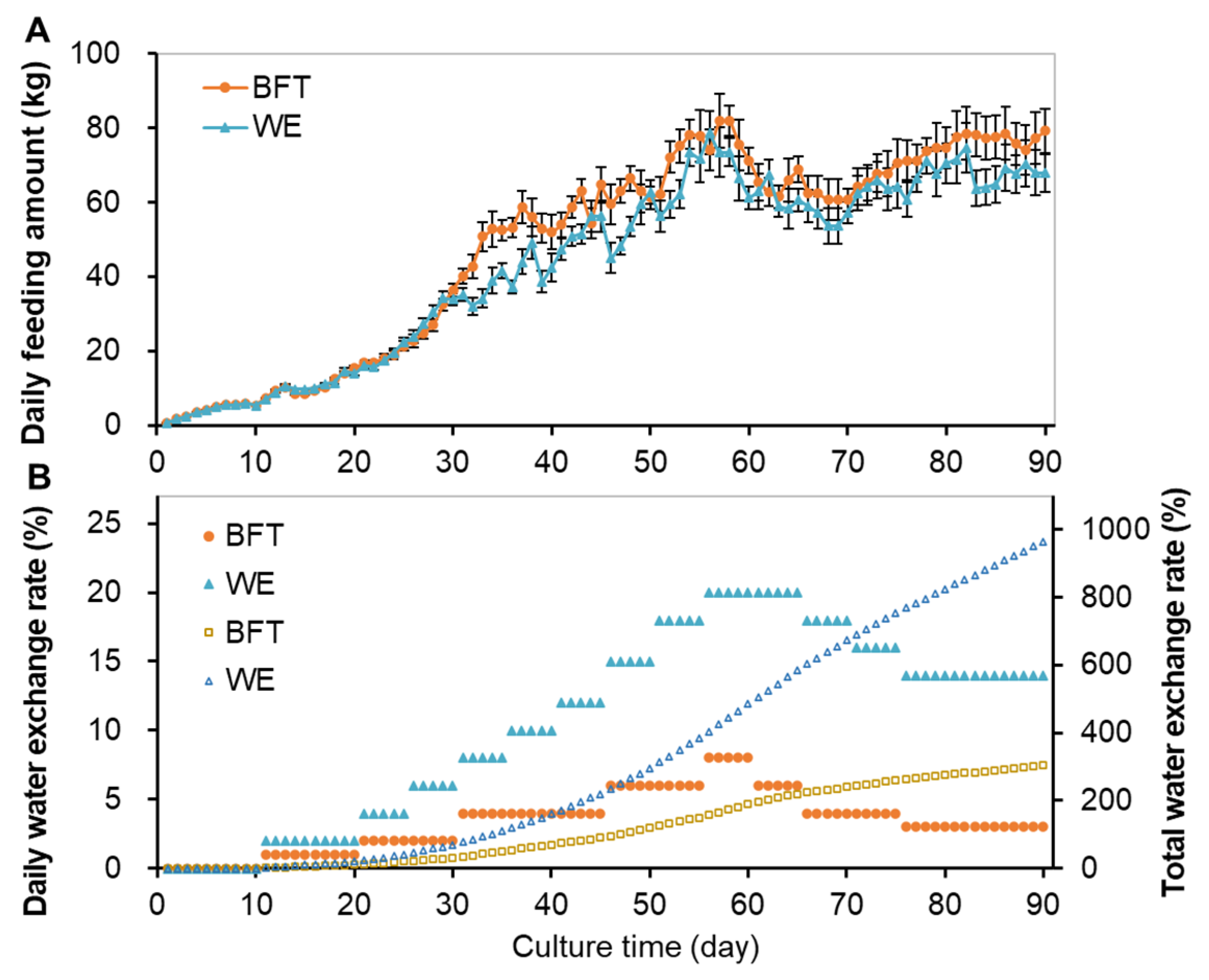
The dynamics of daily feeding and water exchange throughout the trial are shown in Figure 1. The daily feeding amounts and change patterns were similar in both systems, while the water exchange rates and change regimes differed markedly. The BFT system maintained a consistently low daily water exchange rate, with a maximum not exceeding 8%; while the WE system adopted a relatively high daily water exchange rate, reaching up to 20% around day 60. Cumulative water exchange in the BFT system (305%) was only 31.6% of that in the WE system (965%) by the end of the trial.
Figure 1.
Daily feeding amount (A) and water exchange rate (B) in ponds operated with biofloc technology (BFT) and water exchange (WE) during a 90-day trial of P. vannamei culture (means ± S.D., n = 3). BFT-total: total water exchange rate in BFT systems, WE-total: total water exchange rate in WE systems.
3.2. Water Quality Dynamics
3.2.1. Basic Water Quality Parameters
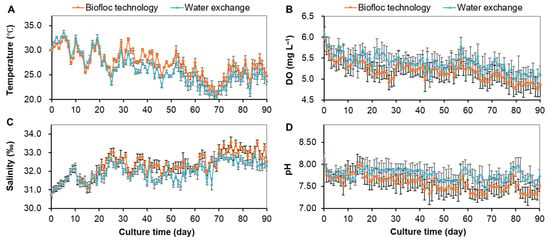
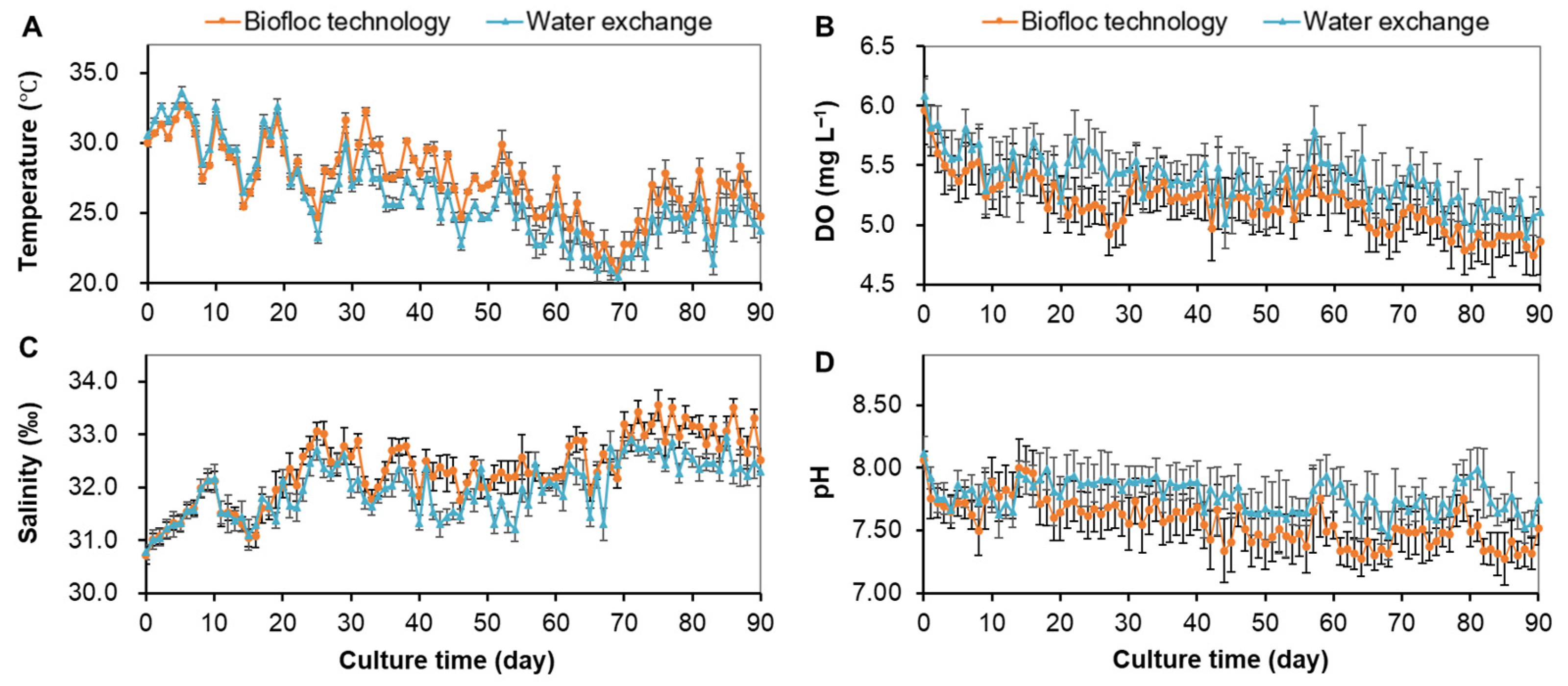
Water temperature (20.5–33.7 °C), salinity (30.7‰–33.6‰), DO (4.8–6.1 mg L−1), and pH (7.3–8.1) remained within optimal ranges for shrimp culture throughout the trial (Figure 2). No significant differences were observed in water temperature, DO, salinity, or pH between the two systems.
Figure 2.
Dynamics of basic water quality parameters in ponds operated with biofloc technology (BFT) and water exchange (WE) during a 90-day trial of P. vannamei culture (means ± S.D., n = 3). (A) temperature, (B) DO, (C) salinity, (D) pH.
3.2.2. Dynamics of TSS and Inorganic Nitrogen
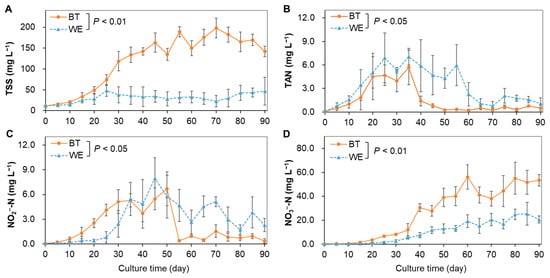
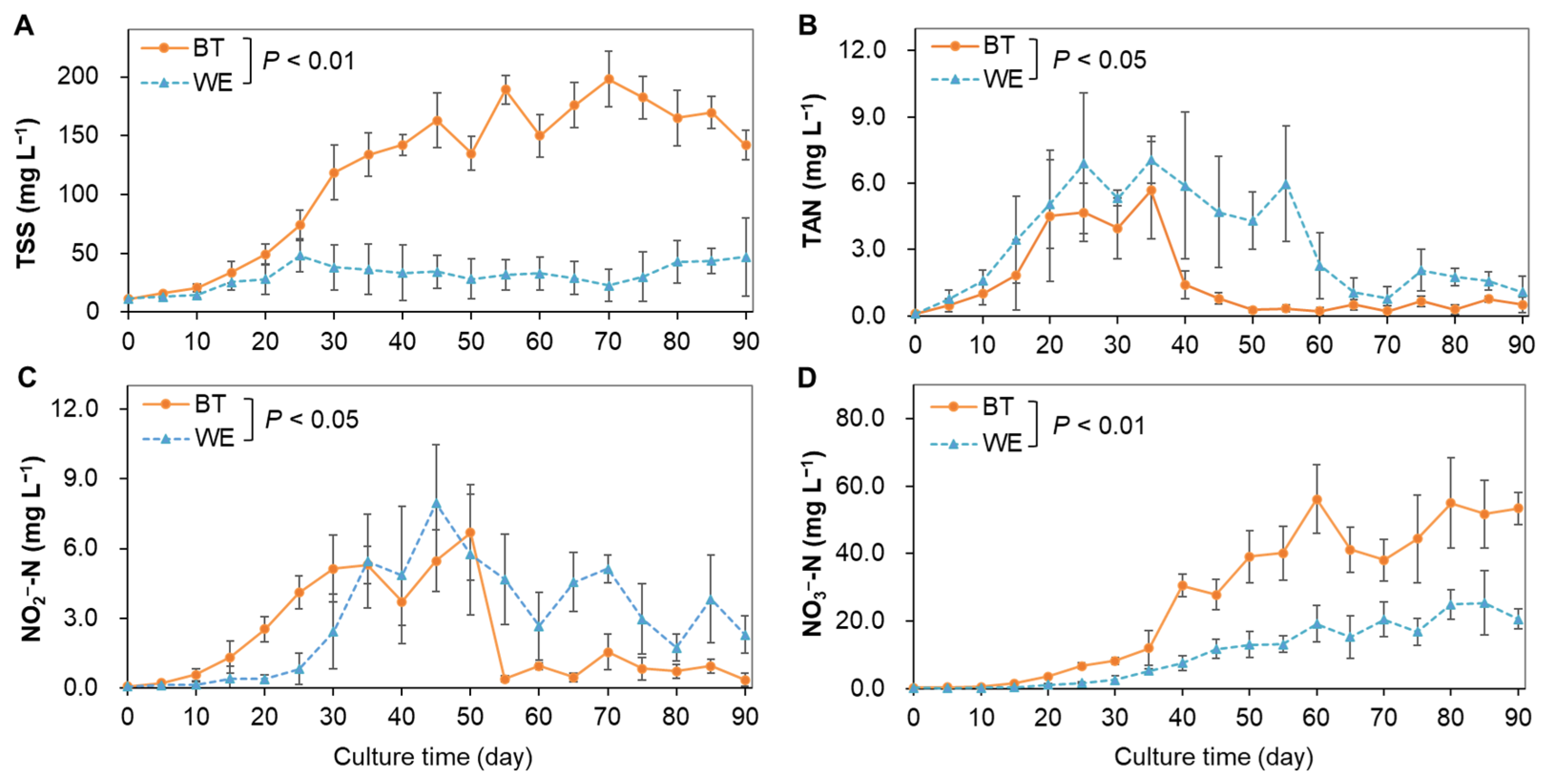
The dynamics of TSS and inorganic nitrogen in culture water are shown in Figure 3. TSS in BFT water increased gradually during the first 45 days and stabilized between 150–200 mg L−1 thereafter, whereas TSS in WE water remained below 50 mg L−1 throughout the trial (Figure 3A). Meanwhile, TAN concentrations increased gradually during the first 25 days and peaked at 5.6 mg L−1 in BFT water and 7.1 mg L−1 in WE water around day 35, and then they were consistently lower in BFT water than in WE water after day 40 (Figure 3B). NO2−-N concentrations also increased gradually during the first 35 days and peaked at 8.0 mg L−1 in WE water and 6.7 mg L−1 in BFT water on day 45 and day 50, respectively, and then they were consistently lower in BFT water than in WE water after day 55 (Figure 3C). In contrast, NO3−-N accumulated progressively in BFT water, reaching 53.5 mg L−1 by day 90, compared to only 20.6 mg L−1 in WE water (Figure 3D).
Figure 3.
Dynamics of TSS and inorganic nitrogen in ponds operated with biofloc technology (BFT) and water exchange (WE) during a 90-day trial of P. vannamei culture (means ± S.D., n = 3). (A) TSS, (B) TAN, (C) NO2−-N, (D) NO3−-N.
3.3. Microbial Dynamics in Culture Water and Shrimp Hepatopancreas
3.3.1. Total Vibrio, Bacteria, and Their Ratio
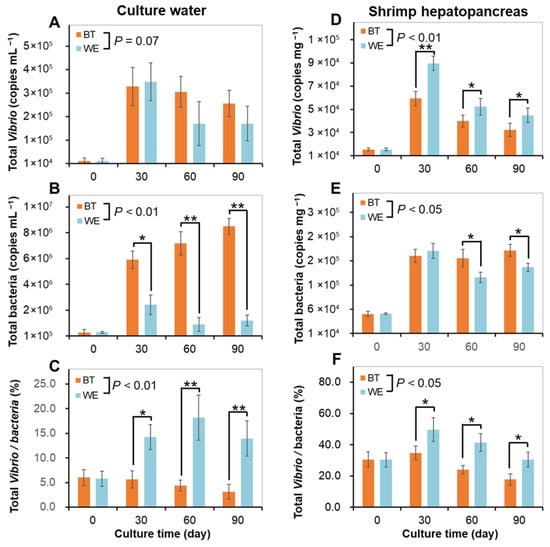
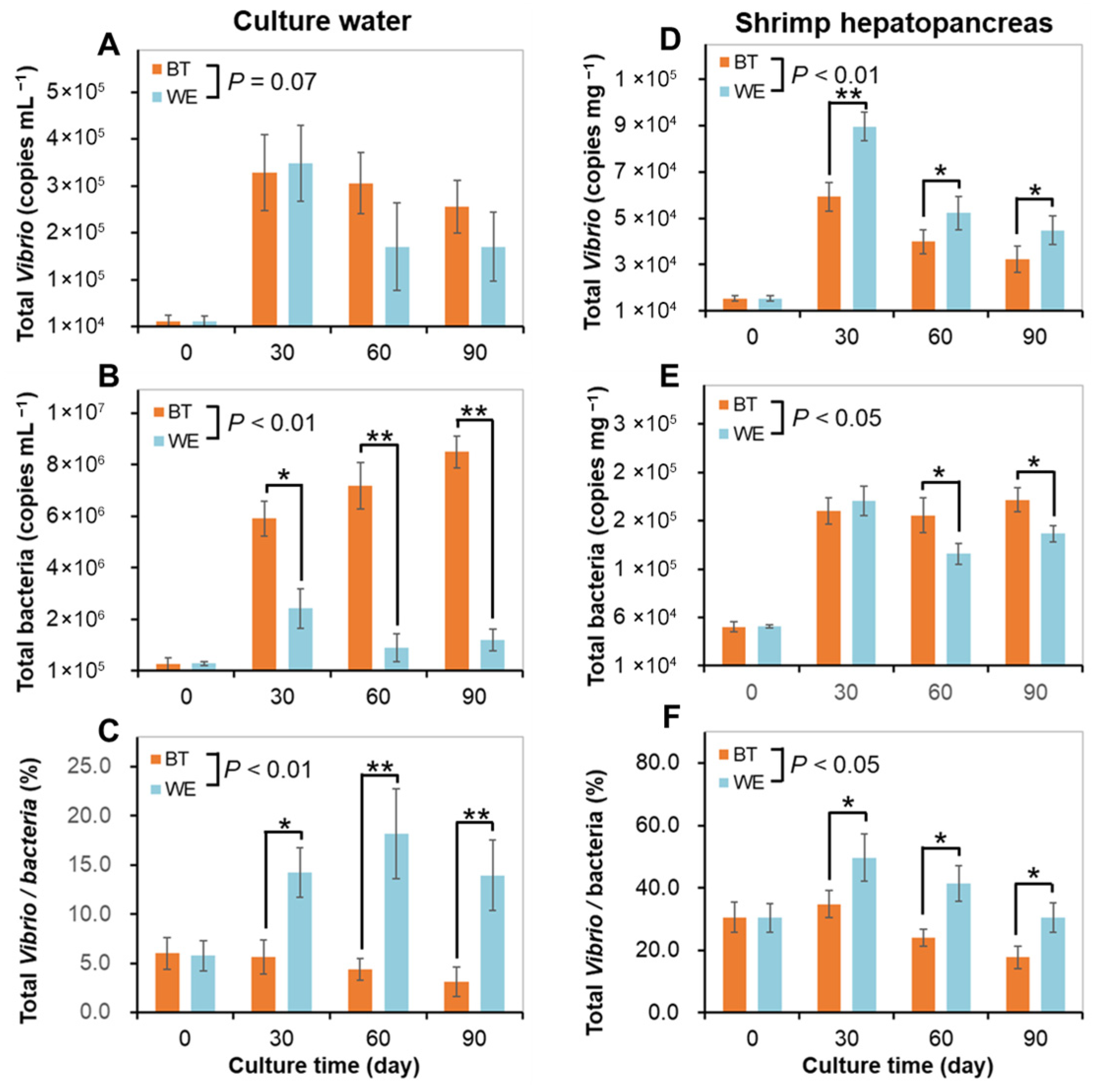
The bacterial dynamics in culture water and shrimp hepatopancreas are presented in Figure 4. While total Vibrio abundance in culture water was similar between the two systems (Figure 4A), total bacterial abundance was significantly higher in BFT water (Figure 4B). Consequently, the total Vibrio-to-bacteria ratio in BFT water remained below 6%, significantly lower than in the WE water (>18%) (Figure 4C). A similar suppression pattern was observed in shrimp hepatopancreas, where the BFT system exhibited a significantly lower total Vibrio-to-bacteria ratio (17.8–34.8%) compared to the WE system (30.4–49.7%) (Figure 4D–F).
Figure 4.
Quantity changes in total Vibrio and bacteria and their ratios in culture water and shrimp hepatopancreas in ponds operated with biofloc technology (BFT) and water exchange (WE) during a 90-day trial of P. vannamei culture (means ± S.D., n = 3). (A) total Vibrio abundance in culture water, (B) total bacteria abundance in culture water, (C) ratio of total Vibrio/bacteria in culture water, (D) total Vibrio abundance in shrimp hepatopancreas, (E) total bacteria abundance in shrimp hepatopancreas, (F) ratio of total Vibrio/bacteria in shrimp hepatopancreas. The asterisk (*) indicates significant difference between two systems (* p < 0.05, ** p < 0.01).
3.3.2. Pathogen Loads in Culture Water and Shrimp Hepatopancreas
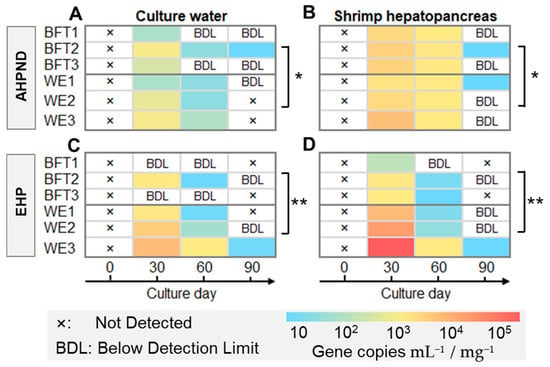
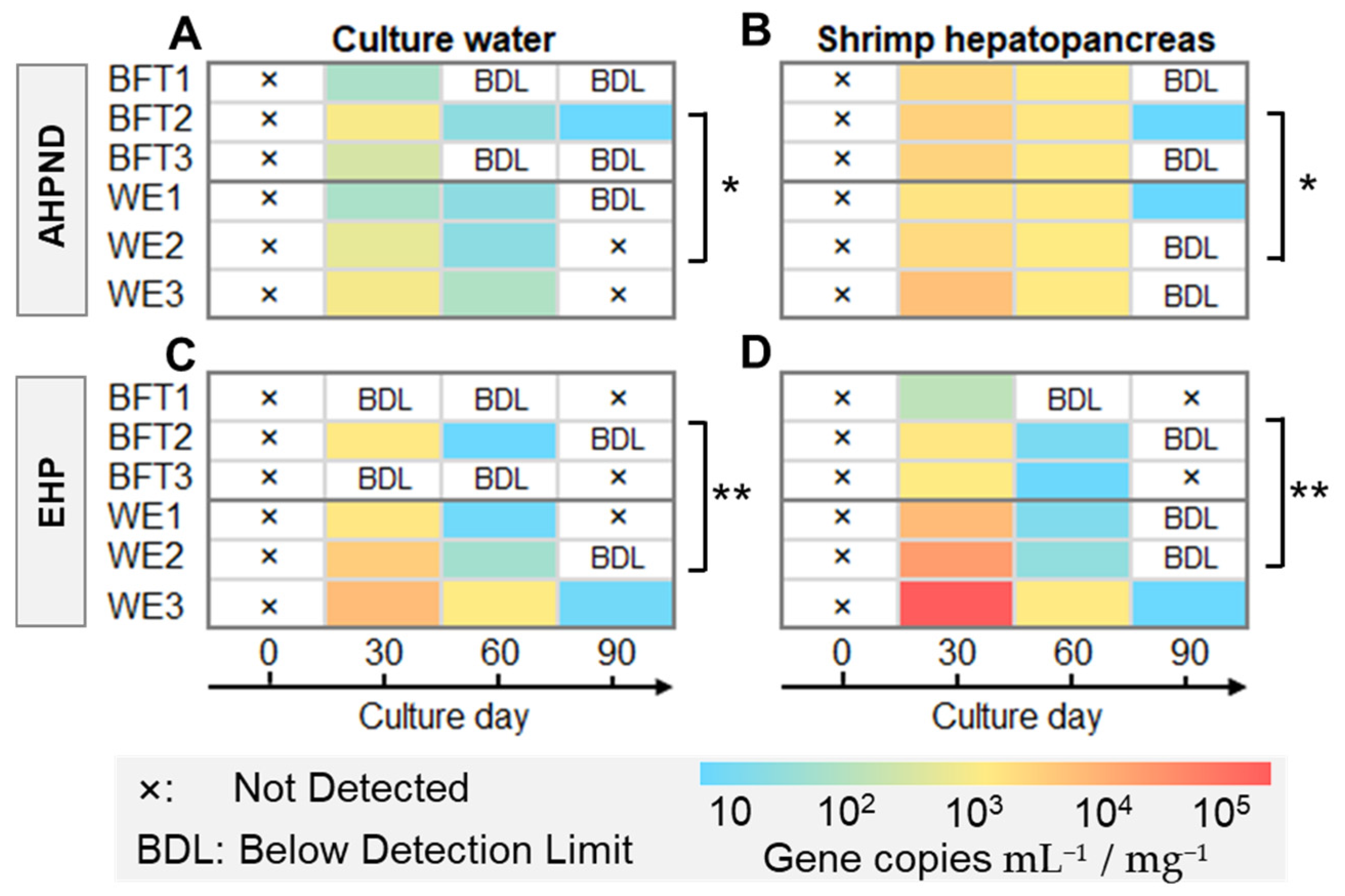
The quantitative changes in specific pathogens are shown in Figure 5. The quantities of AHPND and EHP in both culture water and shrimp hepatopancreas were significantly lower in the BFT system than in the WE system throughout the trial. Notably, the pirA gene of AHPND in culture water and shrimp hepatopancreas showed highest of 4.2 × 10² copies mL−1 and 7.4 × 10³ copies mg−1, respectively, while the 18S rRNA gene of EHP in culture water and shrimp hepatopancreas showed highest of 8.1 × 10³ copies mL−1 and 2.3 × 10⁵ copies mg−1, respectively, on day 30 of the trial in the WE system.
Figure 5.
Quantity changes in AHPND (pirA gene copies) and EHP (18S rRNA gene copies) in culture water and shrimp hepatopancreas in ponds operated with biofloc technology (BFT) and water exchange (WE) during a 90-day trial of P. vannamei culture (means ± S.D., n = 3). (A) pirA gene copies mL−1 in culture water, (B) pirA gene copies mg−1 in shrimp hepatopancreas, (C) EHP 18S rRNA gene copies mL−1 in culture water, (D) EHP 18S rRNA gene copies mg−1 in shrimp hepatopancreas. The asterisk (*) indicates significant difference between two systems (* p < 0.05, ** p < 0.01).
3.4. Shrimp Production Performance
The production performance of P. vannamei is summarized in Table 1. Although final harvest weight did not differ significantly between the two systems (16.8 vs. 16.5 g), BFT significantly improved shrimp survival rate (82.4% vs. 71.5%) and yield (3460 vs. 2948 kg pond−1). Moreover, BFT reduced the FCR by 12.8% (1.16 vs. 1.33) and dramatically increased water productivity by 203.6% (0.85 vs. 0.28 kg m−3). Importantly, the total water exchange rate in the BFT system was 68.4% lower than in the WE system (305% vs. 965%).
Table 1.
Production performance of P. vannamei in ponds operated with biofloc technology (BFT) and water exchange (WE) during a 90-day trial (means ± S.D., n = 3).
4. Discussion
The results of this 90-day trial demonstrate that BFT applied in large-scale lined ponds with minimal water exchange offers a superior alternative to conventional water exchange systems for intensive P. vannamei culture. The BFT system effectively integrated production enhancement, water quality control, and pathogen suppression, thereby addressing several critical constraints of intensive shrimp aquaculture.
4.1. Enhanced Shrimp Production Performance and Resource Efficiency
The significant improvements in survival rate (+15.2%), yield (+17.4%), and feed conversion ratio (−12.8%) in the BFT systems are of direct economic importance. These gains align with the established benefits of BFT, where bioflocs serve as an in situ source of microbial protein, improving nutrition and feed efficiency [22,27]. The stability of the BFT environment, characterized by more consistent inorganic nitrogen levels in the later culture phase, likely contributed to reduced physiological stress and higher survival [15,16]. The most profound advantage was in resource conservation: the BFT system achieved a 68.4% reduction in total water use and a 203.6% increase in water productivity. This underscores BFT’s potential to decouple intensive production from high water consumption and effluent discharge, a key requirement for sustainable and biosecure aquaculture in water-scarce regions [6,13].
4.2. Effective Control of Nitrogen Dynamics Through Microbial Processes
The water quality data elucidate the distinct nitrogen transformation pathways between the two systems. The conventional WE system mainly relied on physical dilution to manage toxic nitrogen, leading to higher observed peaks of TAN and NO2−-N. In contrast, the BFT system exhibited active microbe-driven nitrogen control. The lower concentrations of TAN and NO2−-N after day 40 in BFT system can be attributed to the dual action of heterotrophic assimilation and autotrophic nitrification promoted by the developed bioflocs in the culture water [16,22]. The progressive accumulation of NO3−-N to over 50 mg L−1 in the BFT system is a direct consequence of this closed-loop nitrification process, confirming the system’s functionality under minimal water exchange [22,27]. While nitrate is relatively non-toxic to shrimp, its accumulation in long-term, zero-discharge systems warrants attention [22,28]. In intensive ponds, nitrate concentrations above 100 mg L−1 have been associated with reduced growth and increased susceptibility to stress [29]. The maximum concentration observed in this study (53.5 mg L−1) remained below this threshold, but continued accumulation in extended culture cycles could approach concerning levels. Future research should explore strategies such as denitrification reactors, integrated multi-trophic aquaculture (IMTA) with macroalgae or filter-feeders, or periodic controlled dilution to prevent excessive nitrate buildup and enhance the environmental sustainability of BFT systems.
4.3. Suppression of Pathogenic Bacteria and Disease Risk
A key finding of this study is the demonstrable suppressive effect of BFT on pathogenic populations, extending from the culture water to the shrimp hepatopancreas. Although total Vibrio abundance in culture water was similar between two systems, the total Vibrio-to-bacteria ratio was drastically lower in the BFT water (<6% vs. >18%). This indicates a fundamental shift in microbial community structure, wherein beneficial bacteria outcompete Vibrio for ecological dominance, a recognized biocontrol mechanism in BFT [30,31]. It should be noted that the Vibrio-to-total bacteria ratio serves as an indirect ecological indicator of microbial community structure and competitive dynamics, rather than direct evidence of pathogen suppression. Nevertheless, the significantly lower ratio observed in BFT systems, combined with the reduced loads of specific pathogens, provides strong circumstantial evidence for a disease-suppressive microbial environment.
Regarding specific pathogens, the loads of AHPND-causing Vibrio parahaemolyticus (quantified as pirA toxin gene copies) and EHP (18S rRNA gene copies) were significantly lower in both the culture water and shrimp hepatopancreas of the BFT system compared to the WE system throughout the trial. This suggests that the BFT microbial community not only competes in the environment but may also inhibit pathogen colonization or proliferation within the host. Potential mechanisms include competitive exclusion, antagonism, and disruption of quorum sensing pathways essential for Vibrio virulence [31,32]. These mechanisms are inferred from previous studies [30,31] and were not directly measured in the present trial. Nevertheless, the observed reduction in pathogen loads is consistent with these proposed mechanisms and provides a plausible explanation for the improved shrimp survival in the BFT system.
It is important to acknowledge the methodological scope of this study. The qPCR-based approach effectively quantified total bacteria and Vibrio abundances, as well as specific pathogen gene copies, but it did not provide information on the full taxonomic composition of the microbial community. Future studies employing high-throughput sequencing could further elucidate the specific bacterial taxa and functional genes responsible for pathogen suppression in BFT systems. The reduced pathogen load, combined with the shift in microbial community structure, will provide a mechanistic explanation for the higher survival observed in the BFT system. These findings support the role of BFT as a disease-resilient aquaculture strategy.
4.4. Implications for Sustainable Intensification and Future Directions
This study provides robust evidence supporting BFT as a viable strategy for the sustainable intensification of shrimp farming in lined pond systems. By simultaneously improving production, conserving water, and enhancing disease resilience, BFT aligns with the principles of circular economy and reduced environmental impact [7]. For successful adoption, management protocols must address the inherent challenges of BFT, notably the control of TSS and nitrate accumulation [27,33]. Optimal TSS ranges (150–200 mg L−1 in this study) must be maintained to balance benefits against potential gill fouling and chronic effects [34].
From an economic perspective, BFT involves additional operational costs, including carbon source (molasses) supplementation and increased aeration for biofloc maintenance. However, these costs may be offset by reduced feed input (due to improved FCR), higher survival and yield, and substantial water savings (reducing pumping and treatment costs). In this study, the 12.8% reduction in FCR alone represents a significant cost saving, as feed typically accounts for 50–60% of variable costs in intensive shrimp farming. A comprehensive economic analysis comparing the net profitability of BFT versus conventional systems under commercial conditions is warranted to support farmer adoption. Future research should focus on integrating denitrification steps, optimizing carbon-to-nitrogen (C/N) input ratios for specific pond conditions, and conducting full economic analyses to evaluate profitability [35]. Furthermore, multi-season and multi-site trials are warranted to validate the robustness of these findings across different climatic and operational contexts.
5. Conclusions
In conclusion, this comparative study demonstrates that BFT is highly effective for intensive P. vannamei culture in lined ponds. Compared to a conventional water-exchange system, the BFT system with reduced water exchange significantly enhanced shrimp survival, yield, and feed efficiency while drastically improving water productivity. These production benefits were underpinned by the system’s superior ability to control toxic inorganic nitrogen compounds through enhanced microbial assimilation and nitrification. Furthermore, BFT created a suppressive microbial environment that reduced the relative abundance of Vibrio and lowered the load of specific pathogens (AHPND-causing V. parahaemolyticus and EHP) in both the culture water and shrimp, thereby mitigating disease risk. The findings strongly support the adoption of BFT as a sustainable intensification strategy that addresses the interconnected challenges of water use, effluent management, and disease control in modern shrimp aquaculture. Future work should aim to refine system management for long-term stability and assess its economic viability to facilitate widespread implementation.
Author Contributions
Conceptualization: W.X. and H.L.; Methodology: W.X., H.L. and Y.C.; Software: H.S., X.H. and K.Y.; Validation: W.X. and Y.C.; Formal analysis: S.L., X.H. and G.W.; Investigation: S.L., Y.L. and Y.X.; Resources: W.X. and H.L.; Data curation: W.X., H.L. and Y.C.; Writing—original draft preparation: S.L.; Writing—review and editing: W.X., H.L. and Y.C.; Visualization: H.S., X.H. and K.Y.; Supervision: W.X. and H.L.; Project administration: W.X. and Y.C.; Funding acquisition: W.X. and Y.C. All authors have read and agreed to the published version of the manuscript.
Funding
This research was funded by National Natural Science Foundation of China (NSFC 32373135), Natural Science Foundation of Guangdong Province (2023A1515011657), Southern Marine Science and Engineering Guangdong Laboratory (Zhuhai) (SML2024SP003), the earmarked fund for CARS-48, Innovative Team Building Project of Guangdong Modern Agricultural Industrial Technology System (2024CXTD25), and Central Public-interest Scientific Institution Basal Research Fund, CAFS (2023TD57).
Institutional Review Board Statement
The shrimp study protocol was approved by the Animal Ethics Committee of the South China Sea Fisheries Research Institute, Chinese Academy of Fishery Sciences (Approval No.: SCSFRI-2023910; Approval Date: 10 September 2023).
Data Availability Statement
Data will be made available on request.
Acknowledgments
The authors thank the staff of the experimental farm for their technical assistance during the trial.
Conflicts of Interest
The authors declare no conflicts of interest.
References
- Villarreal, H. Shrimp farming advances, challenges, and opportunities. J. World Aquac. Soc. 2023, 54, 1056–1059. [Google Scholar] [CrossRef] [Scilit]
- Emerenciano, M.G.C.; Rombenso, A.N.; Vieira, F.N.; Martins, M.A.; Coman, G.J.; Truong, H.H.; Noble, T.H.; Simon, C.J. Intensification of penaeid shrimp culture: An applied review of advances in production systems, nutrition and breeding. Animals 2022, 12, 236. [Google Scholar] [CrossRef] [Scilit] [PubMed]
- Chatvijitkul, S.; Boyd, C.E.; Davis, D.A.; McNevin, A.A. Pollution potential indicators for feed-based fish and shrimp culture. Aquaculture 2017, 477, 43–49. [Google Scholar] [CrossRef] [Scilit]
- Yang, P.; Lai, D.Y.F.; Jin, B.S.; Bastviken, D.; Tan, L.S.; Tong, C. Dynamics of dissolved nutrients in the aquaculture shrimp ponds of the Min River estuary, China: Concentrations, fluxes and environmental loads. Sci. Total Environ. 2017, 603–604, 256–267. [Google Scholar] [CrossRef] [Scilit]
- Millard, R.S.; Ellis, R.P.; Bateman, K.S.; Bickley, L.K.; Tyler, C.R.; van Aerle, R.; Santos, E.M. How do abiotic environmental conditions influence shrimp susceptibility to disease? A critical analysis focused on White Spot Disease. J. Invertebr. Pathol. 2021, 186, 107369. [Google Scholar] [CrossRef] [Scilit]
- Bossier, P.; Ekasari, J. Biofloc technology application in aquaculture to support sustainable development goals. Microb. Biotechnol. 2017, 10, 1012–1016. [Google Scholar] [CrossRef] [Scilit]
- Naylor, R.L.; Hardy, R.W.; Buschmann, A.H.; Bush, S.R.; Cao, L.; Klinger, D.H.; Little, D.C.; Lubchenco, J.; Shumway, S.E.; Troell, M. A 20-year retrospective review of global aquaculture. Nature 2021, 591, 551–563. [Google Scholar] [CrossRef] [Scilit] [PubMed]
- Avnimelech, Y. Biofloc Technology: A Practical Guide Book, 3rd ed.; The World Aquaculture Society: Baton Rouge, LA, USA, 2015. [Google Scholar]
- El-Sayed, A.F.M. Use of biofloc technology in shrimp aquaculture: A comprehensive review, with emphasis on the last decade. Rev. Aquac. 2021, 13, 676–705. [Google Scholar] [CrossRef] [Scilit]
- Kumar, V.S.; Pandey, P.K.; Anand, T.; Bhuvaneswari, R.; Kumar, S. Biofloc improves water, effluent quality and growth parameters of Penaeus vannamei in an intensive culture system. J. Environ. Manag. 2018, 215, 206–215. [Google Scholar] [CrossRef] [Scilit]
- Li, C.; Zhang, X.; Chen, Y.; Wang, Y.; Liu, Y.; Xu, W.J. Optimized utilization of organic carbon in aquaculture biofloc systems: A review. Fishes 2023, 8, 465. [Google Scholar] [CrossRef] [Scilit]
- Khanjani, M.H.; Mozanzadeh, M.T.; Sharifinia, M.; Emerenciano, M.G.C. Biofloc: A sustainable dietary supplement, nutritional value and functional properties. Aquaculture 2023, 562, 738757. [Google Scholar] [CrossRef] [Scilit]
- Samocha, T.M.; Prangnell, D.I.; Hanson, T.R.; Treece, G.D.; Morris, T.C.; Castro, L.F.; Staresinic, N. Design and Operation of Super Intensive, Biofloc-Dominated Systems for Indoor Production of the Pacific White Shrimp, Litopenaeus vannamei—The Texas A&M AgriLife Research Experience; The World Aquaculture Society: Baton Rouge, LA, USA, 2017. [Google Scholar]
- Yu, Y.B.; Choi, J.H.; Lee, J.H.; Jo, A.H.; Lee, J.W.; Choi, H.J.; Kang, Y.J.; Choi, C.Y.; Kang, J.C.; Lee, K.M.; et al. The use, application and efficacy of biofloc technology (BFT) in shrimp aquaculture industry: A review. Environ. Technol. Innov. 2024, 33, 103456. [Google Scholar] [CrossRef] [Scilit]
- Xu, W.J.; Morris, T.C.; Samocha, T.M. Effects of C/N ratio on biofloc development, water quality, and performance of Litopenaeus vannamei juveniles in a biofloc-based, high-density, zero-exchange, outdoor tank system. Aquaculture 2016, 453, 169–175. [Google Scholar] [CrossRef] [Scilit]
- Xu, W.J.; Xu, Y.; Su, H.C.; Hu, X.J.; Xu, Y.N.; Li, Z.J.; Wen, G.L.; Cao, Y.C. Production performance, inorganic nitrogen control and bacterial community characteristics in a controlled biofloc-based system for indoor and outdoor super-intensive culture of Litopenaeus vannamei. Aquaculture 2021, 531, 735749. [Google Scholar] [CrossRef] [Scilit]
- De Souza Valente, C.; Wan, A.H.L. Vibrio and major commercially important vibriosis diseases in decapod crustaceans. J. Invertebr. Pathol. 2021, 181, 107527. [Google Scholar] [CrossRef] [Scilit]
- Sun, M.; Yu, Y.; Li, S.; Liu, J.; Zhang, X.; Wang, Q. Integrated application of transcriptomics and metabolomics provides insights into acute hepatopancreatic necrosis disease resistance of Pacific white shrimp Litopenaeus vannamei. mSystems 2023, 8, e00067-23. [Google Scholar] [CrossRef] [Scilit] [PubMed]
- Tang, K.F.J.; Han, J.E.; Aranguren, L.F.; White-Noble, B.; Schmidt, M.M.; Piamsomboon, P.; Risdiana, E.; Hanggono, B. Dense populations of the microsporidian Enterocytozoon hepatopenaei (EHP) in feces of Penaeus vannamei exhibiting white feces syndrome and pathways of their transmission to healthy shrimp. J. Invertebr. Pathol. 2020, 177, 107497. [Google Scholar] [CrossRef] [Scilit] [PubMed]
- Abakari, G.; Wu, X.; He, X.; Fan, L.P.; Luo, G.Z. Bacteria in biofloc technology aquaculture systems: Roles and mediating factors. Rev. Aquac. 2022, 14, 1260–1284. [Google Scholar] [CrossRef] [Scilit]
- Chang, Z.Q.; Neori, A.; He, Y.Y.; Li, J.T.; Qiao, G.; Jiang, G.Z.; Shao, J.C. Development and current state of seawater shrimp farming, with an emphasis on integrated multi-trophic pond aquaculture farms, in China—A review. Rev. Aquac. 2020, 12, 2544–2558. [Google Scholar] [CrossRef] [Scilit]
- Xu, W.J.; Huang, F.; Zhao, Y.Z.; Su, H.C.; Hu, X.J.; Xu, Y.; Wen, G.L.; Cao, Y.C. Carbohydrate addition strategy affects nitrogen dynamics, budget and utilization, and its microbial mechanisms in biofloc-based Penaeus vannamei culture. Aquaculture 2024, 589, 740907. [Google Scholar] [CrossRef] [Scilit]
- Wu, J.Q.; Xu, W.J.; Xu, Y.; Su, H.C.; Hu, X.J.; Cao, Y.C.; Zhang, J.S.; Wen, G.L. Impact of organic carbons addition on the enrichment culture of nitrifying biofloc from aquaculture water: Process, efficiency, and microbial community. Microorganisms 2024, 12, 703. [Google Scholar] [CrossRef] [Scilit]
- APHA. Standard Methods for the Examination of Water and Wastewater, 20th ed.; American Public Health Association: Washington, DC, USA, 1998. [Google Scholar]
- Hu, X.; Cao, Y.; Zhao, X.; Su, H.; Wen, G.; Yang, Y. Effect of bacterial community succession on environmental factors during litter decomposition of the seaweed Gracilaria lemaneiformis. Mar. Pollut. Bull. 2023, 197, 115797. [Google Scholar] [CrossRef] [Scilit]
- Kim, K.I.; Won, K.M.; Lee, E.S.; Cho, M.; Jung, S.H.; Kim, M.S. Detection of Vibrio and ten Vibrio species in cage-cultured fish by multiplex polymerase chain reaction using house-keeping genes. Aquaculture 2019, 506, 417–423. [Google Scholar] [CrossRef] [Scilit]
- Luo, G.Z.; Xu, J.X.; Meng, H.Y. Nitrate accumulation in biofloc aquaculture systems. Aquaculture 2020, 520, 734675. [Google Scholar] [CrossRef] [Scilit]
- Xu, W.J.; Pan, L.Q.; Zhao, D.H.; Huang, J. Preliminary investigation into the contribution of bioflocs on protein nutrition of Litopenaeus vannamei fed with different dietary protein levels in zero-water exchange culture tanks. Aquaculture 2012, 350–353, 147–153. [Google Scholar] [CrossRef] [Scilit]
- Prates, E.; Okamoto, M.; Holanda, M.; Monserrat, J.M.; Slater, M.J.; Wasielesky, W. Determination of acute toxicity and evaluation of the chronic effect of nitrate on compensatory growth of Litopenaeus vannamei reared in a biofloc technology system. Aquaculture 2024, 587, 740856. [Google Scholar] [CrossRef] [Scilit]
- Copetti, F.; Gregoracci, G.B.; Vadstein, O.; Schveitzer, R. Management of biofloc concentrations as an ecological strategy for microbial control in intensive shrimp culture. Aquaculture 2021, 543, 736969. [Google Scholar] [CrossRef] [Scilit]
- Brito, L.O.; Chagas, A.M.; da Silva, E.P.; Soares, R.B.; Severi, W.; Gálvez, A.O. Water quality, Vibrio density and growth of Pacific white shrimp Litopenaeus vannamei (Boone) in an integrated biofloc system with red seaweed Gracilaria birdiae (Greville). Aquac. Res. 2016, 47, 940–950. [Google Scholar] [CrossRef] [Scilit]
- Xu, W.J.; Wen, G.L.; Su, H.C.; Xu, Y.; Hu, X.J.; Cao, Y.C. Effect of input C/N ratio on bacterial community of water biofloc and shrimp gut in a commercial zero-exchange system with intensive production of Penaeus vannamei. Microorganisms 2022, 10, 1060. [Google Scholar] [CrossRef] [Scilit] [PubMed]
- Abdel-Rahim, M.M.; Elhetawy, A.I.G.; Shawky, W.A.; El-Gamal, M.M.; Elebiary, E.H.; El-Sawy, M.A.; El-Greisy, Z.A. Enhancing Florida red tilapia aquaculture: Biofloc optimization improves water quality, pathogen bacterial control, fish health, immune response, and organ histopathology across varied groundwater salinities. Vet. Res. Commun. 2024, 48, 2989–3006. [Google Scholar] [CrossRef] [Scilit]
- Schveitzer, R.; Baccarat, R.F.C.; Gaona, C.A.P.; Wasielesky, W., Jr.; Arantes, R. Concentration of suspended solids in superintensive culture of the Pacific white shrimp Litopenaeus vannamei with biofloc technology (BFT): A review. Rev. Aquac. 2024, 16, 785–795. [Google Scholar] [CrossRef] [Scilit]
- Joffre, O.M.; Klerkx, L.; Khoa, T.N.D. Aquaculture innovation system analysis of transition to sustainable intensification in shrimp farming. Agron. Sustain. Dev. 2018, 38, 34. [Google Scholar] [CrossRef] [Scilit]

Disclaimer/Publisher’s Note: The statements, opinions and data contained in all publications are solely those of the individual author(s) and contributor(s) and not of MDPI and/or the editor(s). MDPI and/or the editor(s) disclaim responsibility for any injury to people or property resulting from any ideas, methods, instructions or products referred to in the content. |
© 2026 by the authors. Licensee MDPI, Basel, Switzerland. This article is an open access article distributed under the terms and conditions of the Creative Commons Attribution (CC BY) license.