


Abstract
This study investigates the effects of environmentally relevant concentrations of atrazine and fluoxetine, both individually and in combination, on aggressive behavior in male Betta splendens (B. splendens). Controlled behavioral assays were used to test the hypothesis that both individual and combined exposures would alter aggressive behavior, primarily by delaying the initiation of aggression and reducing the duration of specific displays. Twelve low-concentration (15 µg/L atrazine; 0.54 µg/L fluoxetine) and six high-concentration (30 µg/L atrazine; 1.08 µg/L fluoxetine) acute exposure trials were conducted. Latency to respond (LTR), broadside display (BSD), and frontal display (FD) were recorded over three days of male conspecific interactions. We analyzed the results using a negative binomial general linear model with day, atrazine, fluoxetine, and the interaction between the two compounds as predictors of the three behavioral responses. Results found that exposure to both compounds at either concentration significantly reduced aggressive behaviors compared to controls, increasing the latency to respond and decreasing broadside display and frontal display. For the low-concentration experiments, there were significant antagonistic effects from the interaction between fluoxetine and atrazine for all three behavioral responses (LTR p = 0.002, BSD p < 0.001, FD p < 0.001), with the combination of the two compounds showing a smaller impact than predicted by each singly. For the high-concentration experiments, there was a significant antagonistic interaction for BSD (p < 0.0001) and a marginally significant antagonistic interaction for LTR (p = 0.078). These findings suggest that these compounds can delay the onset and reduce the intensity of aggressive behaviors, underscoring the potential disruption of neurobehavioral pathways essential for survival, though the impact of these chemicals is altered by exposure conditions. This research highlights how environmental concentrations of common contaminants, especially in combination, may impair ecologically relevant behaviors in chemically impacted freshwater habitats.
Keywords:
aquatic; aggressive behavior; atrazine; fluoxetine; behavioral ecotoxicology; Betta splendens Key Contribution:
Overall, heightened latencies and decreased time displaying aggressive behaviors resulted from chemical exposure, potentially altering the natural behavioral tendencies of B. splendens.
1. Introduction
Herbicides and pharmaceuticals frequently enter aquatic ecosystems through natural and anthropogenic processes. These compounds can persist in surface waters at concentrations capable of altering physiological and behavioral traits essential for reproductive success and survival [1]. Although the effects of individual chemical exposures on behavior have been documented, the consequences of combined exposures remain poorly understood. This study aims to examine both the individual and combined effects of a common endocrine-disrupting compound (EDC), atrazine, and a pharmaceutical compound, fluoxetine, on aggression in male Betta splendens, exploring potential behavioral disruptions and their ecological implications.
Atrazine is a persistent, endocrine-disrupting triazine herbicide and one of the most widely used pesticides in the United States and globally [2,3,4]. Its high mobility allows it to move through air, soil, and water, where it can persist for 30–740 days [4,5,6]. Environmentally relevant concentrations in U.S. surface waters range from 2.2 to 22 µg/L, with agricultural areas reaching 19–194 µg/L [7,8,9]. Atrazine disrupts endocrine function in non-target species, leading to physiological, reproductive, and behavioral changes [10,11,12]. Exposures documented at both low and high levels have shown compromised fitness by increasing susceptibility to infection, altering gene expression and neuroendocrine function, decreasing testosterone, impairing gonadal development, and suppressing feeding behavior [13,14,15,16,17]. Additionally, atrazine can feminize exposed organisms by inducing the aromatization of testosterone to estradiol, resulting in decreased fertility, reduced mating behavior, and reproductive abnormalities [17,18,19]. Studies have documented that atrazine exposure affects multiple behaviors indicative of boldness and anxiety while also disrupting social interactions, including suppressed intrasexual aggression [1,20,21]. Together, these disruptions can impair courtship and other fitness-related activities, which emphasizes the importance of understanding how atrazine destabilizes normal ecological functioning in freshwater systems.
Fluoxetine (Prozac), a widely prescribed selective serotonin reuptake inhibitor (SSRI), ranks among the most frequently used pharmaceuticals in surface waters globally [22]. Fluoxetine treats mental health conditions by inhibiting the reuptake of serotonin, increasing its concentration in the extracellular fluid of the brain, and prolonging serotonergic neurotransmission [23,24,25,26]. Although it can be degraded by processes such as UV treatment, continuous input from sewage treatment contributes to its pseudo-persistence in aquatic systems [27,28]. Global surface-water concentrations range from 0.012 to 1.4 μg/L, with environmentally realistic levels (~1 μg/L) capable of significantly altering hormonal signals and causing documented changes to physiology, reproduction, and behavior [27,29,30]. Behavioral studies in B. splendens examining fluoxetine impacts have yielded mixed results. Some report increased aggressive displays, such as fin extensions and gill flaring, while others show reduced aggression, rapid retreat, and low-activity behaviors, including reduced exploration and hesitancy to approach conspecifics with prolonged, dose-dependent effects [22,31,32]. Fluoxetine’s environmental persistence, bioactive properties, and variable behavioral effects illustrate the need for further evaluation of its ecological risks.
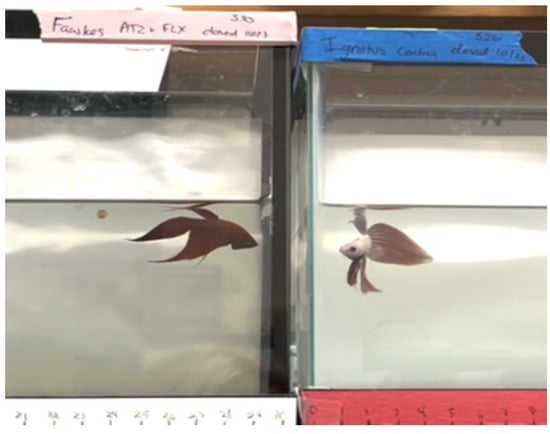
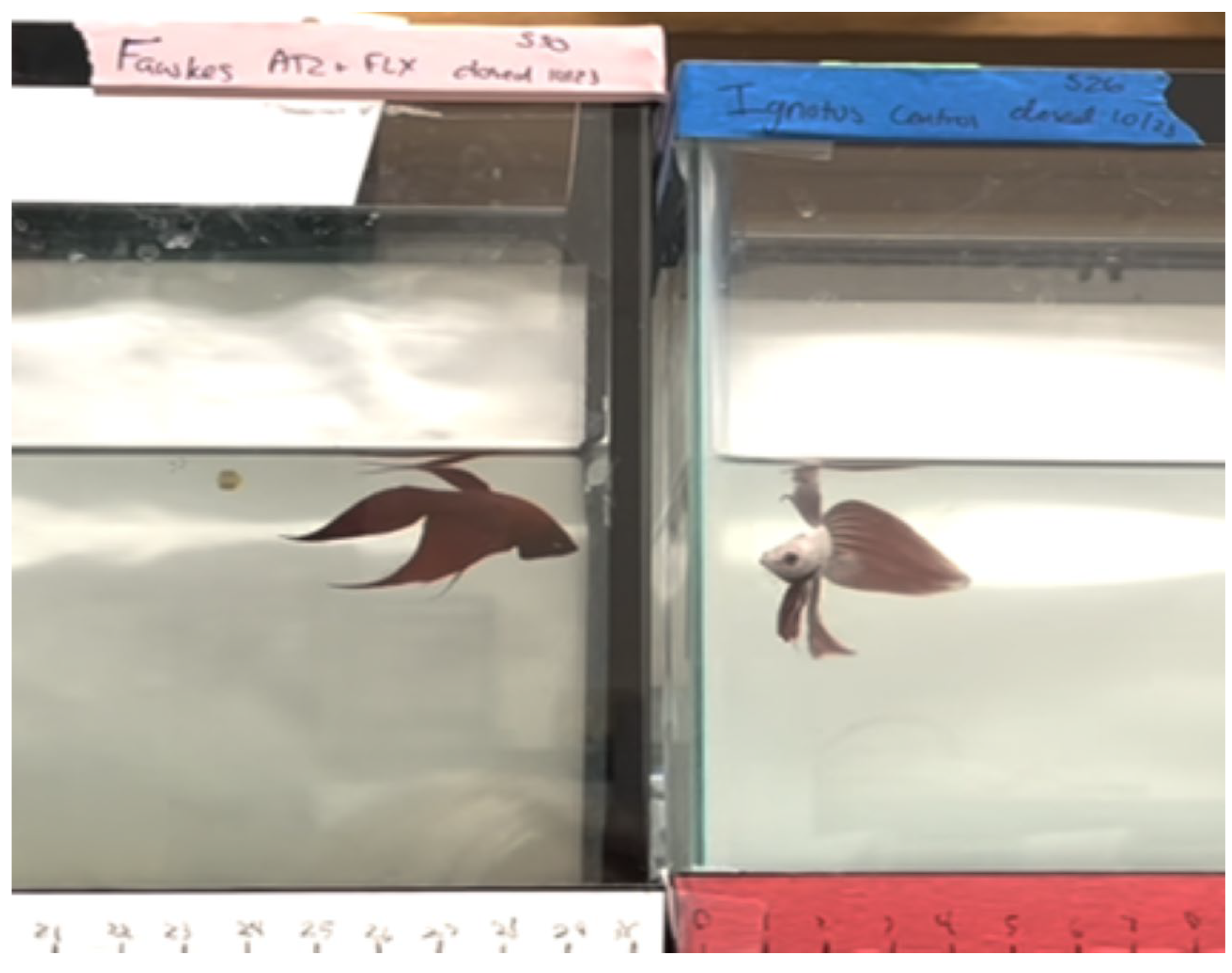
Several betta species, including the Siamese fighting fish (B. splendens), are native to Southeast Asia and thrive in a variety of inland water bodies [33,34]. Males exhibit pronounced aggression, a trait that drives key fitness components, including territory defense, nest building, and mating success [30,33,35]. Their sensitivity to visual and chemical cues, along with the repeatability of their aggressive behaviors, makes them valuable models for studying behavioral responses to environmental contaminants [36,37]. Male B. splendens display two primary aggressive behaviors. Broadside displays occur when the fish presents its lateral surface, spreads its fins, and generates tail-beat currents directed toward the opponent, whereas frontal displays occur when the fish faces an opponent and spreads the operculum (the gill-covering flap) to appear larger [38,39,40] (Figure 1). These movements, detectable via the lateral line system, convey information about an opponent’s strength and motivation [38,39,40].
Figure 1.
Agonistic display behaviors in male B. splendens. A photograph taken during the trial depicts frontal (left) and broadside (right) displays during dyadic interactions between conspecific males.
Researchers have proposed various frameworks for the sequence and selection of these displays. One hypothesis posits that individuals initiate high-risk frontal displays to rapidly signal readiness and deter escalation [39]. Alternatively, display choice may depend on context, preliminary assessment of opponents, and the value of contested resources, rather than following a fixed sequence [40]. These frameworks are important for interpreting how environmental stressors may alter normal agonistic behavior. In this study, these concepts are used to contextualize observed behavioral changes, although the sequence and selection of displays are not directly tested.
Despite increasing chemical inputs into freshwater systems, the cascading ecological consequences of combined atrazine and fluoxetine exposure on community and ecosystem interactions remain largely unexplored. While the individual effects of these chemicals on fish behavior have been documented, this study examines their combined influence on B. splendens aggression. This experiment found that exposure, both separately and in combination, alters aggressive behaviors, evidenced by increased latency to respond and changes in frontal display duration. These findings suggest that chemical interactions can influence key fitness-related behaviors, with potential implications for population dynamics in polluted ecosystems.
2. Materials and Methods
2.1. Fish Husbandry
This study comprised two experiments focusing on intrasexual aggressive interactions among male B. splendens. Conducted under acute low (12 experiments) and high (6 experiments) treatments, a total of 280 ornamental fish sourced from Petco were received and distributed appropriately among the fluoxetine-treated, atrazine-treated, atrazine-and-fluoxetine treated, and control groups. Fish were housed individually in 9600 mL glass “home” tanks (20.5 cm height, 15.5 cm width, 30.5 cm length) containing 5000 mL of conditioned water prepared by adding approximately 10 mL of NovAqua Plus to 11.4 L of dechlorinated water prior to distribution into tanks. Two sides of each tank were covered with blank paper to minimize visual stimulation. All fish underwent a seven-day acclimation period before treatment assignment. Following acclimation, fish were randomly assigned to weekly cohorts, each managed by one of four researchers, and tanks were clearly labeled to ensure consistent tracking of treatments and individual identity. Fish remained in their home tanks throughout the experimental period. Weekly water changes involved transferring fish to temporary holding containers, discarding and rinsing the tank, drying it, and refilling it with 5000 mL of freshly conditioned water. Experimental treatments were administered only during each fish’s designated testing week. Water quality parameters were maintained within standard husbandry ranges for B. splendens; however, daily measurements of temperature, pH, ammonia, and dissolved oxygen were not recorded (Figure 2).
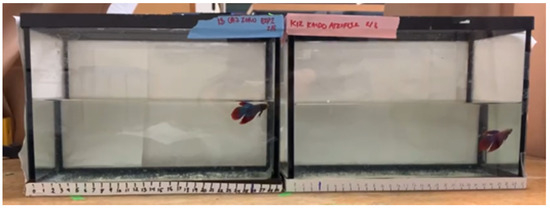
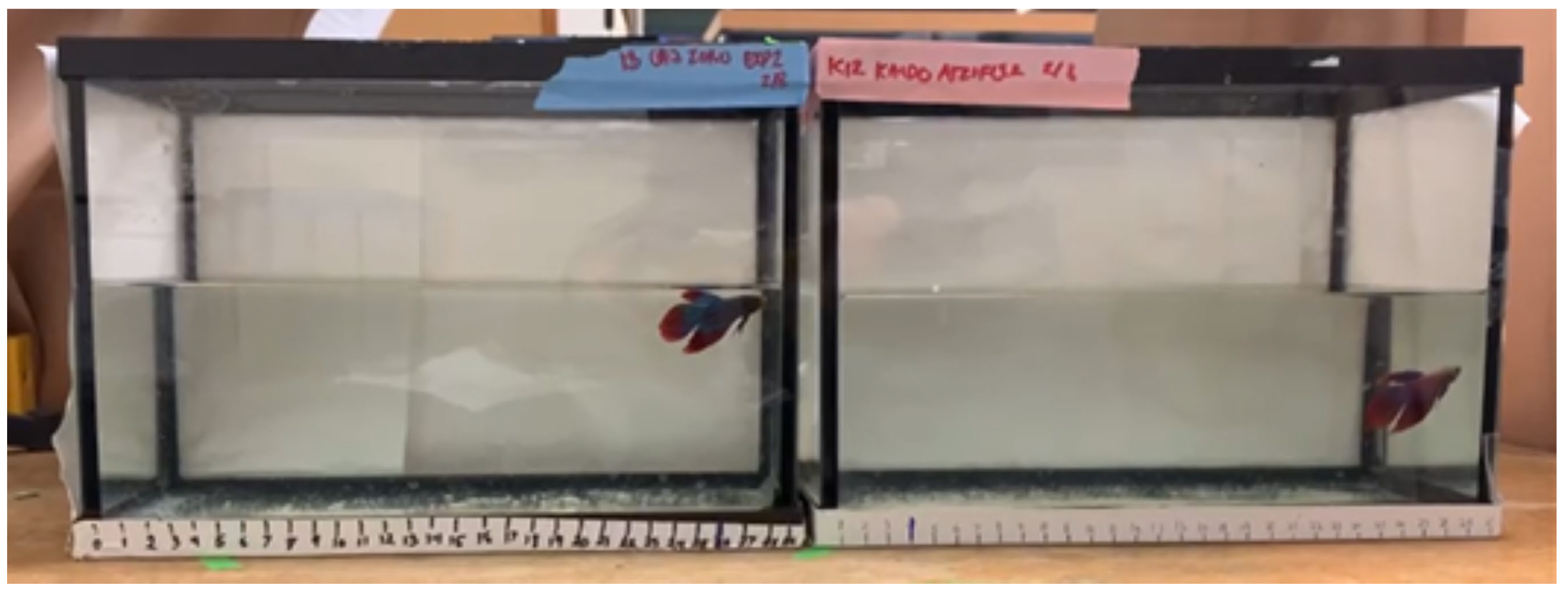
Figure 2.
Experimental setup and display zone. Experimental setup showing the standardized 4 cm display zone (used to quantify behavioral responses in control and treatment groups) marked along the bottom of each tank from the uncovered viewing window.
2.2. Chemical Preparation and Administration
The compounds in this study were purchased from Sigma-Aldrich. The preparation of chemical solutions followed a stepwise dilution process, beginning with stock solutions, progressing to intermediate dilutions, and finally to the concentrations used in the tanks. Fluoxetine (FLX) was prepared as a 1 mg/mL stock solution in distilled water and stored at 4 °C in light-resistant bottles. An intermediate solution of 2700 µg/L was then produced by diluting the stock with deionized water. This intermediate solution was the material administered to the tanks. To achieve the final treatment concentrations, 1 mL of the intermediate solution was added to 5000 mL of tank water to produce 0.54 µg/L FLX (low treatment), and 2 mL was added to produce 1.08 µg/L (high treatment). Atrazine (ATZ) was prepared by dissolving atrazine in ethanol to create a 75,000 µg/L stock solution, which was subsequently diluted with deionized water to form an intermediate solution. For ATZ treatments, tanks received 1 mL of the ATZ intermediate solution and an additional 1 mL of ethanol to ensure complete dispersion, producing a final concentration of 15 µg/L (low treatment). High ATZ treatments received 2 mL of the ATZ intermediate solution and 2 mL of ethanol, producing a final concentration of 30 µg/L. For combined treatments, tanks received 1 mL ATZ intermediate solution, 1 mL FLX intermediate solution, and 1 mL ethanol for low treatments, resulting in final concentrations of 15 µg/L ATZ + 0.54 µg/L FLX. High combined treatments received 2 mL ATZ intermediate solution, 2 mL FLX intermediate solution, and 2 mL ethanol, resulting in final concentrations of 30 µg/L ATZ + 1.08 µg/L FLX. As a result of ATZ solubility requirements, ATZ-only and mixture treatments contained slightly higher ethanol concentrations than control tanks. Control tanks received 1 mL of ethanol in the low treatment and 2 mL of ethanol in the high treatments, consistent with published work demonstrating that ethanol at these levels does not affect behavioral outcomes [41,42]. All dosing solutions were mixed thoroughly in tanks using treatment-specific nets. Fish were randomly assigned to one of four treatments: control, ATZ (15 or 30 µg/L), FLX (0.54 or 1.08 µg/L), or mixtures of each treatment pair.
In light of these concentration ranges, 2.2–22 µg/L atrazine in surface waters and 0.012–1.4 µg/L fluoxetine globally, the treatment levels selected in this study were chosen to represent realistic exposures [7,8,9,27,29,43,44,45]. A controlled two-fold increase between treatments was chosen to evaluate concentration-dependent behavioral responses [46,47,48].
All behavioral trials were conducted under stable, acute exposure conditions. Chemical exposures were initiated 24 h before the first behavioral trial. During each fish’s designated three-day testing period, treatment concentrations remained constant throughout behavioral observations. Weekly water changes were conducted outside of testing weeks as part of routine husbandry [46,47,48].
2.3. Exposure Design and Aggression Assays
Aggression trials began after one week of acclimation and 24 h following the initial dosing, during which all fish remained visually isolated. Behavioral assays were conducted over three consecutive days under stable exposure conditions. Each cohort consisted of three experimental fish, one exposed to atrazine, one to fluoxetine, and one to the combined treatment, randomly paired with a similarly sized control fish. Standardized procedures were used to measure body length and mass prior to testing. Fish ranged from 4 to 6 cm in standard length and 1–2 g in mass. While individual measurements were recorded for most fish, complete datasets were not available for all individuals.
For each trial, paired fish were placed in adjacent tanks positioned so that their uncovered sides faced one another across a removable opaque barrier. The behavioral observation area was defined as a 4 cm display zone, which was standardized across all tanks by marking a 4 cm distance along the bottom of each tank, measured inward from the uncovered viewing window. This boundary was indicated using removable tape placed externally beneath the tank to ensure consistent placement across identical tanks without introducing visual cues to the fish. Behaviors were recorded only when a fish entered this zone, rather than at the window itself. The display zone was outlined to identify where aggressive displays were quantified, including latency to response (LTR) and total duration of frontal (FD) and broadside displays (BSD). A more aggressive response would include a lower LTR and more time spent in BSD and FD.
When the barrier was removed, interactions were recorded for five minutes using an iPad or iPhone. Following each trial, tanks were repositioned to create new pairings 24 h later, ensuring that every control fish interacted once with each experimental fish over the three-day testing sequence. Fish received daily feedings of Aqueon Betta Food throughout acclimation and exposure (Figure 2).
2.4. Chemistry Analysis
After a week of acclimating to the contaminants, water samples were taken to assess the stability of the compounds and to verify the concentrations of atrazine and fluoxetine. Two 20 mL samples were collected from a combined solution of atrazine and fluoxetine. The first sample was taken before the weekly water change from previously tested individuals, and the second after the treatment preparation from new subjects. Both samples underwent solid-phase extraction (SPE) for concentration, followed by chromatographic analysis. Samples were concentrated using SPE cartridges and analyzed by high-performance liquid chromatography coupled with mass spectrometric detection (HPLC–MS) using standardized protocols for the detection of pharmaceuticals and personal care products (PPCPs) in natural waters [47]. Atrazine and fluoxetine were identified based on retention time and quantified using integrated peak areas.
2.5. Statistical Analysis
This study tests the null hypothesis that independent treatment exposure does not influence the aggressive behaviors of the B. splendens population, supporting instead the alternative hypothesis that chemical exposure does have an effect. Prior to analysis, a Shapiro–Wilk test showed that the response for all three behavioral variables was non-normal. Instead of an ANOVA, a negative binomial general linear model was created in RStudio v2025.09 to assess the impact of the interaction of the three independent categorical predictor variables (Day, Atrazine, Fluoxetine) and the interaction between Atrazine and Fluoxetine on the duration (s) of aggressive behavior (continuous, ratio-dependent variable) over three days. The inclusion of the interaction term allows the examination and classification of impacts of exposure to both compounds at once. This interaction was classified as either additive (no significant interaction term), synergistic (significant interaction term with a larger impact than expected based on results from single compound treatments), or antagonistic (significant interaction term with a smaller impact than expected based on results from single compound treatments). Data from the low-dose and high-dose experiments were analyzed separately, as these experiments were conducted at different times with different fish. Box plots were used to visualize data distributions, and interquartile ranges (IQR) were calculated in RStudio.
3. Results
3.1. Chemistry Analysis
Chemical analyses confirmed that both compounds remained stable in tank water. Measured concentrations were within 10% of nominal concentrations across treatments. This high stability reflects the environmental persistence of these non-degrading contaminants and verifies that subjects experienced consistent exposure concentrations throughout behavioral testing.
3.2. Latency to Respond
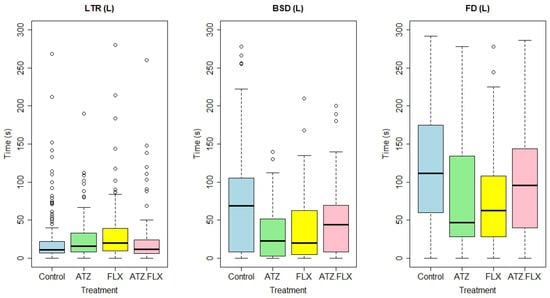
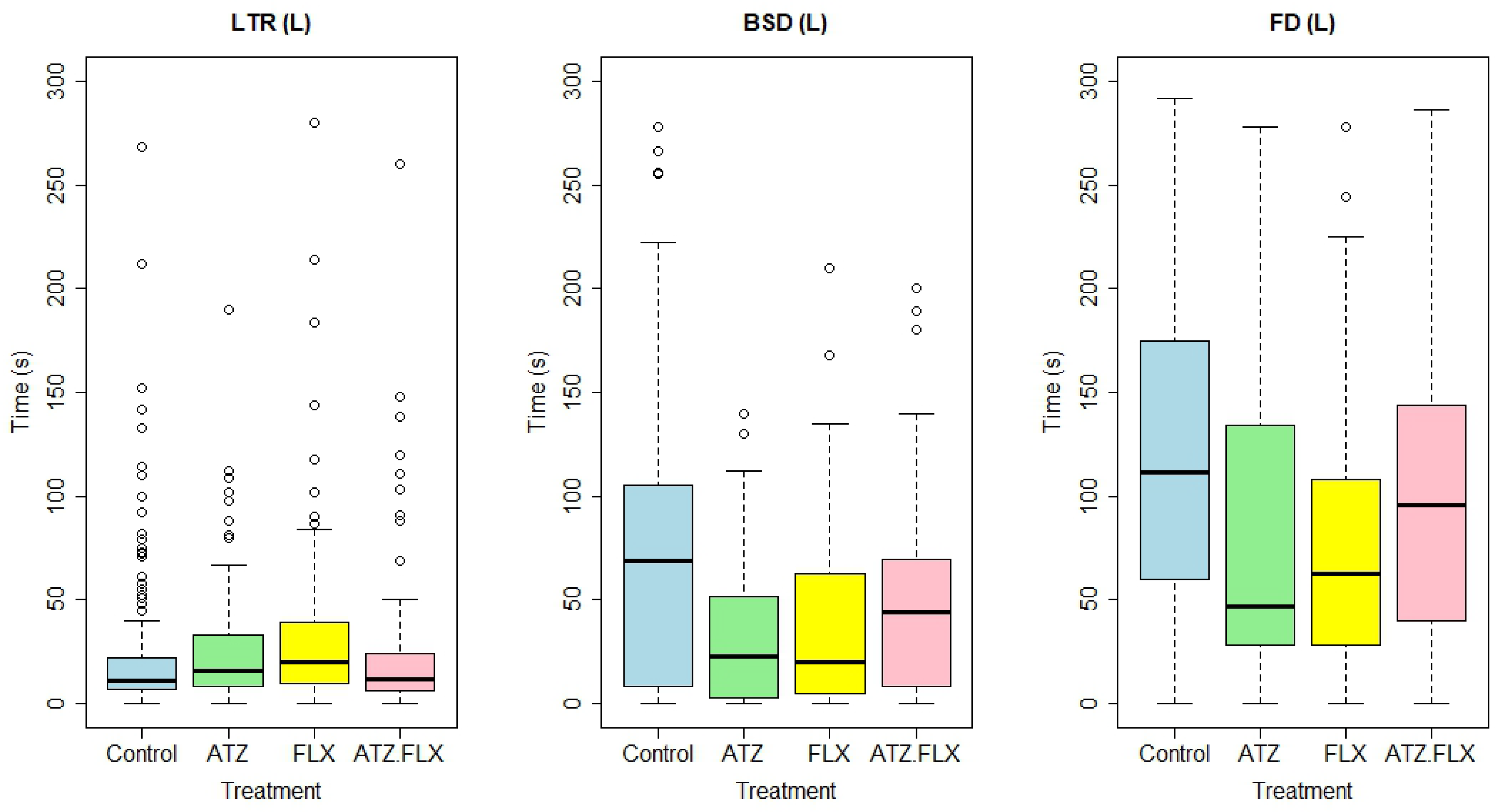
In the low-concentration experiments, both atrazine and fluoxetine significantly increased the LTR (p = 0.037 and p < 0.001, respectively, Table 1, Figure 3). The interaction between the two compounds showed a significant antagonistic effect (p = 0.002), with the impact of exposure to both compounds being significantly lower than the sum of the impacts of each compound individually. Median LTR values were elevated relative to controls (Control: 11 s; ATZ: 16 s; FLX: 20 s; ATZ + FLX: 12 s; Table S1), with relatively low variability across groups (IQR range: Control = 15 s; ATZ = 25 s; FLX = 29.5 s; ATZ + FLX = 18 s; Table S2).
Table 1.
Comparative effects of atrazine and fluoxetine on fish behavioral displays across three experimental days. Behavioral responses in low- (L) and high- (H) concentration treatments were evaluated relative to control groups. Treatments included atrazine (ATZ), fluoxetine (FLX), and the combined treatment (ATZ*FLX). Three behavioral endpoints were quantified: latency to respond (LTR), broadside display (BSD), and frontal display (FD). Statistical analyses were conducted using a generalized linear model with a negative binomial distribution to account for dispersion in the behavioral data. (p-value significance code: 0.001 “***”, 0.01 “**”, 0.05 “*”).
Figure 3.
Low-Exposure Experiments (L) Boxplots. The average duration (s) (y-axis) of treated fish responding to an untreated male rival when exposed to low concentrations of the treatments atrazine (ATZ), fluoxetine (FLX), atrazine and fluoxetine (ATZ:FLX), versus control data (x-axis) over 3 days of testing (n = 192). The three aggressive behaviors investigated were the latency to respond (left) (FLX (p < 0.001)), ATZ (p = 0.037) and ATZ:FLX (p = 0.002)), broadside display (middle) (FLX (p < 0.001), ATZ (p < 0.001) and ATZ:FLX (p < 0.001)), and frontal display (right) (FLX (p < 0.001), ATZ (p < 0.001) and ATZ:FLX (p < 0.001)). Boxplots show median, interquartile range (25th−75th percentile), whiskers extending to 1.5 × IQR, and individual outliers plotted as points beyond whiskers.
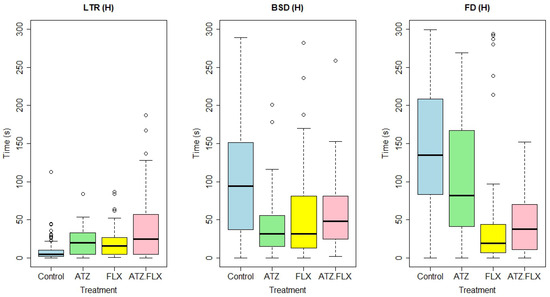
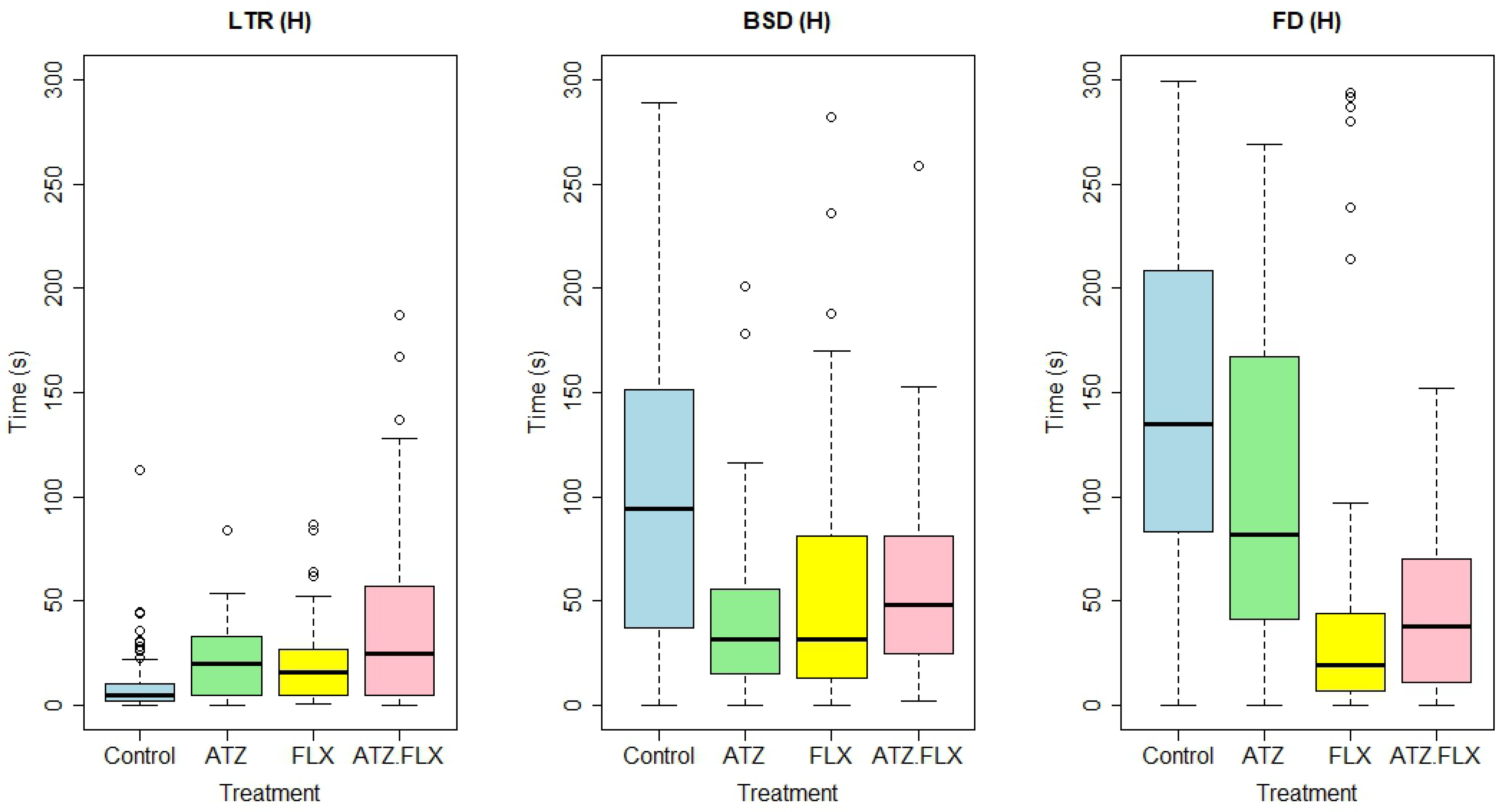
High-concentration experiments showed similar results, with longer LTR associated with exposure to atrazine (p < 0.0001) and fluoxetine (p < 0.0001, Table 1, Figure 4). There was a marginally significant antagonistic effect between atrazine and fluoxetine exposure (p = 0.078). Median latency values remained higher than controls (Control: 5 s; ATZ: 20 s; FLX: 16 s; ATZ + FLX: 25 s), with moderate variability across treatments (IQR values: Control = 8 s; ATZ = 28 s; FLX = 22 s; ATZ + FLX = 50.25 s; Table S2).
Figure 4.
High-Exposure Experiments (H) Boxplots. The average duration (s) (y-axis) of treated fish responding to an untreated male rival when administered high concentrations of the treatments atrazine (ATZ), fluoxetine (FLX), atrazine and fluoxetine (ATZ:FLX versus control data (x-axis) over 3 days of testing (n = 88). The three aggressive behaviors documented were the latency to respond (left) (FLX (p < 0.001)), ATZ (p < 0.001) and ATZ:FLX, broadside display (middle) (FLX (p < 0.001), ATZ (p < 0.001) and ATZ:FLX (p < 0.001)), and frontal display (right) (FLX (p < 0.001), ATZ (p = 0.041) and ATZ:FLX. Boxplots show median, interquartile range (25th−75th percentile), whiskers extending to 1.5 × IQR, and individual outliers plotted as points beyond whiskers.
3.3. Broadside Displays
In both the low-concentration and high-concentration experiments, broadside displays were significantly less common in fish exposed to atrazine (p < 0.0001, Figure 3; p < 0.001, Figure 4) and fluoxetine (p < 0.001). In both experiments, a statistically significant antagonistic interaction between the impacts of fluoxetine and atrazine was observed (p < 0.001).
In the low-concentration trials, median BSD duration decreased relative to controls (Control: 68.5 s; ATZ: 22.5 s; FLX: 20 s; ATZ + FLX: 44 s; Table S1). A similar pattern occurred at high concentrations (Control: 94 s; ATZ: 32 s; FLX: 31.5 s; ATZ + FLX: 48 s). Variability remained comparable across low (IQR values: Control = 97 s; ATZ = 48.5 s; FLX = 56.75 s; ATZ:FLX = 60.5 s; Table S2) and high (IQR values: Control = 114 s; ATZ = 41 s; FLX = 65.25 s; ATZ:FLX = 58.25 s; Table S2) experiments.
3.4. Frontal Displays
Fish exposed to both low and high-concentration exposures of atrazine ((L) p = 0.001, (H) p = 0.04, respectively) and fluoxetine ((L) p < 0.0001, (H) p < 0.0001 respectively) had a lower duration of FD. Low-concentration exposures showed a significant antagonistic interaction between atrazine and fluoxetine (p < 0.001), but there was not a significant interaction, and therefore an additive relationship between atrazine and fluoxetine, in the high-concentration experiment (p = 0.71). In the low concentration experiments, median broadside display values declined in all treatments relative to controls (Control = 111.5 s; ATZ = 46.5 s; FLX = 62.5 s; ATZ:FLX = 95.5 s), with variability in latency also relatively low across groups (IQR values: Control = 114.25 s; ATZ = 105.5 s; FLX = 77.25 s; ATZ:FLX = 102.75 s; Table S2). The high concentration median broadside display values were lower in all treatments compared with controls (Control = 135 s; ATZ = 82 s; FLX = 19 s; ATZ:FLX = 38 s), with variability in latency also relatively low across groups (IQR values: Control = 125 s; ATZ = 126 s; FLX = 36 s; ATZ:FLX = 58.25 s; Table S2).
4. Discussion
4.1. Behavioral Disruption
This study demonstrates that environmentally relevant concentrations of atrazine and fluoxetine significantly altered aggressive behavior in male B. splendens. Across both concentration regimes, exposure increased latency to respond (LTR) and reduced the duration of frontal (FD) and broadside displays (BSD). These findings indicate that both compounds disrupt aggression timing and escalation rather than eliminating aggressive capacity altogether.
Fluoxetine consistently produced strong main effects across endpoints, aligning with its mechanism as a selective serotonin reuptake inhibitor that elevates extracellular serotonin and suppresses rapid aggression initiation [24,25,26,31,32]. Serotonergic modulation is known to influence impulsivity and contest escalation in teleosts, and the prolonged LTR observed here supports this pathway-level interpretation.
Atrazine also significantly increased response latency and reduced display duration. Atrazine has been shown to disrupt steroidogenesis and neuroendocrine signaling, including reductions in testosterone and altered aromatase activity [13,14,15,16,17,19]. Because endocrine signaling regulates motivational state and social responsiveness, these disruptions likely contributed to the delayed and attenuated aggressive behaviors observed.
4.2. Antagonistic Interactions
A central finding of this study was the presence of significant antagonistic interactions between atrazine and fluoxetine, particularly at low concentrations where all three behavioral endpoints exhibited significant interaction terms. Rather than producing additive or synergistic suppression, the combined treatment resulted in smaller behavioral shifts than predicted from individual compound effects.
At high concentrations, antagonism persisted for BSD and was marginal for LTR, while FD showed an additive pattern. These results indicate that mixture effects are both behavior-specific and concentration-dependent. Antagonism may arise from interference between serotonergic and endocrine regulatory pathways, which converge on shared neural circuits governing aggression [13,14,15,16,17,24,25,26]. Similar non-additive interactions have been reported for mixtures of endocrine-disrupting chemicals and pharmaceuticals that target overlapping physiological systems [27,47,48]. These findings suggest that behavioral responses to contaminant mixtures cannot be reliably inferred from single-compound exposures alone.
4.3. Behavioral Specificity and Ecological Implications
Among the behaviors measured, latency to respond emerged as the most consistent and sensitive endpoint. LTR integrates sensory processing, motivational state, and neuroendocrine signaling prior to overt aggression, making it particularly responsive to sublethal disruption. In contrast, BSD and FD reflect escalation intensity, which showed greater variability but consistent overall reduction under exposure.
In territorial species such as B. splendens, rapid aggression initiation is critical for territory defense, dominance establishment, and mating success [35,40]. Even modest delays in response timing may reduce competitive success and alter social hierarchy formation. Reduced display duration may further diminish signaling strength during contests. Collectively, these changes suggest that environmentally realistic contaminant exposures could influence fitness-related behaviors in chemically impacted freshwater systems. Behavioral timing metrics, therefore, represent sensitive and ecologically meaningful indicators of contaminant stress, consistent with ecological risk frameworks emphasizing sublethal behavioral endpoints [46,48].
4.4. Limitations and Future Directions
Further research should clarify whether prolonged aggressive behavior is determined by exposure duration or by differences in behavioral display sequences. Although water quality was maintained under controlled laboratory conditions, future studies should incorporate routine measurement of physicochemical parameters to further exclude potential confounding effects on behavior. While fish were allowed a brief undisturbed interval prior to behavioral observation, future studies would benefit from incorporating a standardized acclimation period following tank repositioning to further minimize handling-related stress. Incorporating stronger experimental controls, including larger sample sizes, baseline aggression measurements to account for individual variability, temperature regulation, additional aggressive and physiological endpoints, and refined dosing protocols, will improve our understanding of the physiological and decision-making mechanisms by which chemical mixtures shape social behavior and ecosystem dynamics in freshwater fish.
5. Conclusions
This study demonstrates that exposure to environmentally relevant concentrations of atrazine and fluoxetine, alone and in combination, primarily alters the timing of aggressive behavior in B. splendens rather than its overall expression. Acute exposure consistently increased latency to initiate aggression and reduced the duration of frontal and broadside displays, indicating disruption of behavioral timing and escalation intensity rather than complete suppression of aggression. Significant antagonistic interactions, particularly at low concentrations, highlight that mixture effects are behavior-specific and cannot be predicted from single-compound responses. These findings underscore the importance of evaluating contaminant mixtures when assessing ecological risk. Because rapid aggression initiation and display intensity regulate territory defense, dominance hierarchies, and reproductive success across many taxa, contaminant-driven shifts in behavioral timing could reshape competitive dynamics and social structure in freshwater communities exposed to chemical mixtures.
Supplementary Materials
The following supporting information can be downloaded at: https://www.mdpi.com/article/10.3390/fishes11020126/s1, Table S1: A comparison of the median lengths of aggressive behavior (s) for both low- (L) and high- (H) concentration experiments (atrazine (ATZ), fluoxetine (FLX), ATZ + FLX, and control) observing three behaviors (latency to respond (LTR), frontal display (FD), and broadside display (BSD)) over three days. Medians were derived from 50% quartile (Q2) values in RStudio; Table S2: A comparison of the variability of time (s) spent engaged in three behaviors (s) (latency to respond (LTR), frontal display (FD), and broadside display (BSD)) for both low- (L) and high- (H) concentration experiments (atrazine (ATZ), fluoxetine (FLX), ATZ + FLX, and control) over three days. IQR values were calculated by subtracting the 25% quartile (Q1) from the 75% quartile (Q3) (Q3–Q1) using RStudio.
Author Contributions
Conceptualization, K.R.L., B.M. and S.G.; methodology, K.R.L. and J.D.; software, K.R.L. and W.G.M.; validation, K.R.L., D.M. and W.G.M.; formal analysis, K.R.L., D.M. and W.G.M.; investigation, K.R.L., S.G., B.M. and J.D.; resources, D.M.; data curation, K.R.L., D.M. and W.G.M.; writing—original draft preparation, K.R.L.; writing—review and editing, K.R.L., S.G., B.M., J.D., D.M. and W.G.M.; visualization, K.R.L., S.G., B.M. and J.D.; supervision, D.M.; project administration, D.M. All authors have read and agreed to the published version of the manuscript.
Funding
All forms of funding are internal and include no grant numbers or funds from external sources requiring references to the funder’s websites. Merrimack College had no role in the study design, data collection, analysis, decision to publish, or preparation of the manuscript.
Institutional Review Board Statement
The research methods presented were approved by the Institutional Animal Care and Use Committee of Merrimack College on 1 September 2019, approval code: 662 1RDM1019. All animal experiments comply with the National Institutes of Health guide for the care and use of Laboratory animals (NIH Publications No. 8023, revised 1978), with these guidelines followed.
Data Availability Statement
No new data were created and all data is available without restrictions. Database may be accessed at: https://www.overleaf.com/read/wnpbjkqbpyfd#53dccc (accessed on 13 February 2026).
Acknowledgments
We thank Merrimack undergraduate research students Carlos Viteri and Yasmin Davis for their determination and diligent assistance in data collection. We thank our lab coordinator, Thuy Tran, for her assistance in purchasing research materials and lab maintenance. Lastly, we thank Stephen Theberge for his assistance in conducting the chemistry analysis.
Conflicts of Interest
The authors declare no conflict of interest.
Abbreviations
The following abbreviations are used in this manuscript:
| EDCs | Endocrine Disrupting Compounds |
| ATZ | Atrazine |
| FLX | Fluoxetine |
| LTR | Latency to Respond |
| FD | Frontal Display |
| BSD | Broadside Display |
References
- MacLaren, R.D. Environmentally realistic atrazine exposure alters fish behavior. Water 2023, 15, 306. [Google Scholar] [CrossRef] [Scilit]
- Solomon, K.R.; Baker, D.B.; Richards, R.P.; Dixon, K.R.; Klaine, S.J.; La Point, T.W.; Kendall, R.J.; Weisskopf, C.P.; Giddings, J.M.; Giesy, J.P.; et al. Ecological risk assessment of atrazine in North American surface waters. Environ. Toxicol. Chem. 1996, 15, 31–76. [Google Scholar] [CrossRef]
- Van Dijk, H.F.G.; Guicherit, R. Atmospheric dispersion of current-use pesticides: Evidence from monitoring studies. Water Air Soil Pollut. 1999, 115, 21–70. [Google Scholar] [CrossRef] [Scilit]
- Comber, S.D. Abiotic persistence of atrazine and simazine in water. Pestic. Sci. 1999, 55, 696–702. [Google Scholar] [CrossRef]
- Thurman, E.M.; Cromwell, A.E. Atmospheric transport, deposition, and fate of triazine herbicides and metabolites in Isle Royale National Park. Environ. Sci. Technol. 2000, 34, 3079–3085. [Google Scholar] [CrossRef] [Scilit]
- Rohr, J.R.; McCoy, K.A. A qualitative meta-analysis reveals consistent effects of atrazine on freshwater fish and amphibians. Environ. Health Perspect. 2010, 118, 20–32. [Google Scholar] [CrossRef] [Scilit]
- Suzawa, M.; Ingraham, H.A. The herbicide atrazine activates endocrine gene networks via nonsteroidal NR5A nuclear receptors. PLoS ONE 2008, 3, e2117. [Google Scholar] [CrossRef] [Scilit]
- Oliveira, W.L.; Mota, T.F.M.; da Silva, A.P.; Oliveira, R.D.L.; Comelli, C.L.; Orlandini, N.D.; Zimmer, D.F.; de Oliveira, E.C.; de Castilhos Ghisi, N. Does atrazine increase animal mortality? A meta-analysis. Sci. Total Environ. 2024, 951, 175553. [Google Scholar] [CrossRef] [Scilit]
- US Environmental Protection Agency. Decision Documents for Atrazine; EPA: Washington, DC, USA, 2006. [Google Scholar]
- Deng, S.; Chen, C.; Wang, Y.; Liu, S.; Zhao, J.; Cao, B.; Jiang, D.; Jiang, Z.; Zhang, Y. Advances in understanding and mitigating Atrazine’s environmental and health impact: A comprehensive review. J. Environ. Manag. 2024, 365, 121530. [Google Scholar] [CrossRef] [Scilit]
- Quach, A.B.; Nguyen, V.H.; Kajitvichyanukul, P. Pyrolysis-modified sorbents for atrazine removal. Environ. Technol. Innov. 2022, 26, 102381. [Google Scholar]
- de Albuquerque, F.P.; de Oliveira, J.L.; Moschini-Carlos, V.; Fraceto, L.F. Atrazine impacts in aquatic environments. Sci. Total Environ. 2020, 700, 134868. [Google Scholar] [CrossRef] [Scilit] [PubMed]
- Hayes, T.B.; Khoury, V.; Narayan, A.; Nazir, M.; Park, A.; Brown, T.; Adame, L.; Chan, E.; Buchholz, D.; Stueve, T.; et al. Atrazine induces feminization in frogs. Proc. Natl. Acad. Sci. USA 2010, 107, 4612–4617. [Google Scholar] [CrossRef] [Scilit]
- Rohr, J.R.; Schotthoefer, A.M.; Raffel, T.R.; Carrick, H.J.; Halstead, N.; Hoverman, J.T.; Johnson, C.M.; Johnson, L.B.; Lieske, C.; Piwoni, M.D.; et al. Agrochemicals increase trematode infections in a declining amphibian species. Nature 2008, 455, 1235–1239. [Google Scholar] [CrossRef] [Scilit]
- Grzesiuk, M.; Gryglewicz, E.; Bentkowski, P.; Pijanowska, J. Fluoxetine effects on zooplankton and fish. Environ. Toxicol. Chem. 2023, 42, 385–392. [Google Scholar] [CrossRef] [Scilit]
- Oka, T.; Tooi, O.; Mitsui, N.; Miyahara, M.; Ohnishi, Y.; Takase, M.; Kashiwagi, A.; Shinkai, T.; Santo, N.; Iguchi, T.; et al. Atrazine effects on amphibian development. Aquat. Toxicol. 2008, 87, 215–226. [Google Scholar] [CrossRef] [Scilit]
- Pelli, M.; Connaughton, V.P. Chronic fluoxetine exposure alters survival and behavior in guppies. Chemosphere 2015, 139, 202–209. [Google Scholar] [CrossRef] [Scilit]
- Shenoy, K.; Crowley, P.H. Endocrine disruption of mating signals. Funct. Ecol. 2011, 25, 433–448. [Google Scholar] [CrossRef] [Scilit]
- Hayes, T.B.; Collins, A.; Lee, M.; Mendoza, M.; Noriega, N.; Stuart, A.A.; Vonk, A. Atrazine demasculinizes frogs at low doses. Proc. Natl. Acad. Sci. USA 2002, 99, 5476–5480. [Google Scholar] [CrossRef] [Scilit]
- Schmidel, A.J.; Assmann, K.L.; Werlang, C.C.; Bertoncello, K.T.; Francescon, F.; Rambo, C.L.; Beltrame, G.M.; Calegari, D.; Batista, C.B.; Blaser, R.E.; et al. Atrazine disrupts defensive behavior in zebrafish. Neurotoxicology Teratol. 2014, 44, 62–69. [Google Scholar] [CrossRef] [Scilit] [PubMed]
- Monvises, A.; Nuangsaeng, B.; Sriwattanarothai, N.; Panijpan, B. Siamese fighting fish overview. ScienceAsia 2009, 35, 8–16. [Google Scholar] [CrossRef]
- Correia, D.; Domingues, I.; Faria, M.; Oliveira, M. Fluoxetine effects in fish: A review. Sci. Total Environ. 2023, 857, 159486. [Google Scholar] [CrossRef] [Scilit] [PubMed]
- Saaristo, M.; McLennan, A.; Johnstone, C.P.; Clarke, B.O.; Wong, B.B.M. Fluoxetine alters antipredator behavior in fish. Aquat. Toxicol. 2017, 183, 38–45. [Google Scholar] [CrossRef] [Scilit]
- Fuller, R.W.; Wong, D.T.; Robertson, D.W. Fluoxetine pharmacology. Med. Res. Rev. 1991, 11, 17–34. [Google Scholar] [CrossRef] [Scilit]
- Daughton, C.G.; Ternes, T.A. Pharmaceuticals and personal care products in the environment. Environ. Health Perspect. 1999, 107, 907–938. [Google Scholar] [CrossRef]
- Guan, X.M.; McBride, W.J. Fluoxetine increases serotonin in the nucleus accumbens. Brain Res. Bull. 1988, 21, 43–46. [Google Scholar] [CrossRef] [Scilit] [PubMed]
- Christensen, A.M.; Markussen, B.; Baun, A.; Halling-Sørensen, B. Risk assessment of pharmaceuticals. Chemosphere 2009, 77, 351–358. [Google Scholar] [CrossRef] [Scilit]
- Marrone, R.L.; Pray, S.L.; Bridges, C.C. Norepinephrine and aggression in Betta splendens. Psychon. Sci. 1966, 5, 207–208. [Google Scholar] [CrossRef] [Scilit]
- Weinberger, J.; Klaper, R. Environmental fluoxetine alters fish behavior. Aquat. Toxicol. 2014, 151, 77–83. [Google Scholar] [CrossRef] [Scilit]
- Chu, A.; Wadhwa, R. Selective Serotonin Reuptake Inhibitors. In StatPearls; StatPearls Publishing: Treasure Island, FL, USA, 2023. [Google Scholar]
- Greene, S.M.; Szalda-Petree, A.D. Fluoxetine impacts aggression in Betta splendens. Behav. Process. 2022, 194, 104544. [Google Scholar] [CrossRef] [Scilit]
- Dzieweczynski, T.L.; Kane, J.L.; Campbell, B.A.; Lavin, L.E. Fluoxetine impacts boldness in Betta. Ecotoxicology 2016, 25, 69–79. [Google Scholar] [CrossRef] [Scilit] [PubMed]
- Lichak, M.R.; Barber, J.R.; Kwon, Y.M.; Francis, K.X.; Bendesky, A. Care and use of Betta splendens for research. Comp. Med. 2022, 72, 169–180. [Google Scholar] [CrossRef] [Scilit]
- Luchiari, A.C. Navigation and spatial learning in Betta splendens. Behav. Process. 2016, 124, 47–51. [Google Scholar] [CrossRef] [Scilit] [PubMed]
- Simpson, M.J.A. The aggressive display of the Siamese fighting fish, Betta splendens. Anim. Behav. Monogr. 1968, 1, 1–73. [Google Scholar] [CrossRef] [Scilit]
- Everett, C.P.; Norovich, A.L.; Burke, J.E.; Whiteway, M.R.; Villamayor, P.R.; Shih, P.Y.; Zhu, Y.; Paninski, L.; Bendesky, A. Neural mechanisms of visual communication during aggression in Betta splendens. Cell Rep. 2025, 44, 115208. [Google Scholar] [CrossRef] [Scilit]
- Butler, J.M.; Maruska, K.P. The lateral line system mediates aggressive interactions in fish. J. Exp. Biol. 2015, 218, 3284–3294. [Google Scholar] [CrossRef] [Scilit] [PubMed]
- Gorlick, D.L. Neural pathways underlying aggressive display in Betta splendens. Brain Behav. Evol. 1990, 36, 227–236. [Google Scholar] [CrossRef] [Scilit]
- Thompson, T.; Sturm, T. Conditioning of aggressive display in Siamese fighting fish. J. Exp. Anal. Behav. 1965, 8, 397–403. [Google Scholar] [CrossRef] [Scilit]
- Dzieweczynski, T.L.; Earley, R.L.; Green, T.M.; Rowland, W.J. Audience effects on male–male interactions in Betta splendens. Behav. Ecol. 2005, 16, 1025–1030. [Google Scholar] [CrossRef] [Scilit]
- Lin, J.; Tu, H.; Chen, S.W.; Liao, C.F.; Horng, J.L.; Wang, Y.H. Ethanol and dimethyl sulfoxide effects on zebrafish development and locomotor activity. Aquat. Toxicol. 2011, 104, 122–128. [Google Scholar]
- Wirbisky, S.E.; Weber, G.J.; Sepulveda, M.S.; Lin, T.L.; Jannasch, A.S.; Freeman, J.L. Transcriptome alterations following developmental atrazine exposure in zebrafish. Toxicol. Sci. 2013, 132, 458–466. [Google Scholar] [CrossRef] [Scilit]
- Dzieweczynski, T.L.; Hebert, O.L. Fluoxetine impacts aggressive behavior in male Betta splendens. Physiol. Behav. 2012, 107, 284–291. [Google Scholar] [CrossRef] [Scilit] [PubMed]
- Suter, G.W. Ecological Risk Assessment, 2nd ed.; CRC Press: Boca Raton, FL, USA, 2007. [Google Scholar]
- Brian, J.V.; Harris, C.A.; Scholze, M.; Backhaus, T.; Booy, P.; Lamoree, M.; Pojana, G.; Marcomini, A.; Sumpter, J.P. Evidence of estrogenic mixture effects in fish. Environ. Sci. Technol. 2005, 39, 4211–4219. [Google Scholar]
- Meyer, J.N.; Leung, M.C.K.; Rooney, J.P.; Sendoel, A.; Hengartner, M.O.; Kisby, G.E.; Bess, A.S. Mitochondria as a target of environmental toxicants. Environ. Toxicol. Chem. 2013, 32, 2317–2327. [Google Scholar] [CrossRef] [Scilit]
- US Environmental Protection Agency. Method 1694: Pharmaceuticals and Personal Care Products by HPLC/MS/MS; EPA: Washington, DC, USA, 2007. [Google Scholar]
- DeCourten, B.M.; Connon, R.E.; Brander, S.M. Multigenerational endocrine disruption effects in fish. Environ. Sci. Technol. 2020, 54, 12782–12794. [Google Scholar]

Disclaimer/Publisher’s Note: The statements, opinions and data contained in all publications are solely those of the individual author(s) and contributor(s) and not of MDPI and/or the editor(s). MDPI and/or the editor(s) disclaim responsibility for any injury to people or property resulting from any ideas, methods, instructions or products referred to in the content. |
© 2026 by the authors. Licensee MDPI, Basel, Switzerland. This article is an open access article distributed under the terms and conditions of the Creative Commons Attribution (CC BY) license.