


Abstract
Frozen mysid shrimp is the primary feed for farmed medicinal seahorses, yet no standardized storage duration exists, and whether storage-related feed changes affect the lipid-based medicinal quality of seahorses remains unknown. This study used targeted lipidomics to compare 98 lipid species across six lipid classes in three farmed seahorse species—Hippocampus erectus, H. abdominalis, and H. trimaculatus—fed mysid shrimp frozen for either 2 or 10 months. Prolonged storage did not cause a uniform decline in lipid quality; instead, each species exhibited a distinct response pattern. H. erectus showed compensatory increases in fatty acids, whereas phospholipids predominantly decreased; H. abdominalis exhibited broad attenuation across multiple lipid classes; and H. trimaculatus displayed an intermediate, class-dependent pattern. Notably, oxidized sterol derivatives declined consistently across all three species despite divergent fatty acid and phospholipid responses, suggesting that oxidized sterol derivatives may serve as candidate cross-species indicators of storage-related feed changes, although validation is required. Acylcarnitine profiles remained stable in H. erectus but decreased in the other two species, suggesting possible differences in lipid utilization among species. These preliminary results suggest that frozen-storage guidelines may need to be evaluated on a species-specific basis in future studies, with sterol monitoring as a candidate indicator for further evaluation.
Keywords:
seahorse; Hippocampus; frozen feed; lipidomics; sterol lipids; traditional Chinese medicine; species-specific quality control Key Contribution:
This study reveals that frozen feed storage duration produces species-specific, rather than uniform, lipidomic changes in farmed seahorses, and suggests oxidized sterol derivatives as a consistent, candidate cross-species indicator for monitoring feed-related quality loss. These preliminary findings suggest that species-specific storage limits may need to be evaluated in future studies for mysid shrimp feed, guided by sterol monitoring, to support further quality control research in farmed seahorses.
1. Introduction
Seahorses (genus Hippocampus), often hailed as the “ginseng of the sea,” are among the most valued animal-derived traditional Chinese medicines, with a documented clinical history dating back to the Shennong Bencao Jing (Divine Farmer’s Materia Medica). In traditional Chinese medicine theory, their core function is to “warm and tonify kidney yang,” and modern pharmacological studies have corroborated these claims by demonstrating anti-fatigue, anti-inflammatory, antioxidant, anti-tumor, and antibacterial activities [1,2]. Seahorses contain diverse bioactive components—including lipids, amino acids, bioactive peptides, glycoproteins, polysaccharides, and trace elements (zinc, selenium, etc.)—that exert multiple physiological regulatory effects [3,4,5,6,7]. Among these, the lipid fraction—particularly steroid compounds (e.g., cholesterol derivatives serving as sex hormone precursors), glycerophospholipids (e.g., phosphatidylcholine with membrane-stabilizing and anti-inflammatory properties), and n-3/n-6 polyunsaturated fatty acids (PUFA) such as eicosapentaenoic acid (EPA), docosahexaenoic acid (DHA), and arachidonic acid (ARA)—is recognized as the core material basis for the “kidney-tonifying and yang-strengthening” effects [3,4,5,6]. Consequently, the content and compositional ratio of these lipid species may contribute to quality grading and are relevant to the pharmacological properties of seahorse as a medicinal material, making them candidate chemical biomarkers for quality evaluation [7].
Since the 1990s, compounded pressures from habitat degradation, marine pollution, and chronic overfishing have caused a precipitous decline in global wild seahorse populations [8]. In 2004, all Hippocampus species were listed under CITES Appendix II, subjecting them to international trade quotas. In stark contrast to dwindling wild resources, the demand from the traditional Chinese medicine market has continued to grow rapidly, with domestic consumption in China increasing rapidly in recent years. This intensifying supply–demand imbalance has made large-scale artificial breeding not merely an economic choice but an inevitable pathway to secure medicinal material supply while alleviating pressure on wild stocks. Since the breakthrough in commercial-scale cultivation around 2015, China’s seahorse aquaculture industry has progressively shaped a diversified farming landscape dominated by the lined seahorse (H. erectus) and the big-belly seahorse (H. abdominalis), with the three-spot seahorse (H. trimaculatus) and the spotted seahorse (H. kuda) as secondary species [9]. Today, farmed seahorses have become the predominant source for the domestic medicinal market, placing quality control during cultivation at the forefront of efforts to improve product consistency.
Among the numerous technical bottlenecks constraining large-scale standardized seahorse aquaculture, feed quality control is particularly critical. Feed quality is also a critical determinant of growth, nutrient utilization, and flesh composition in cultured fish, with differences among commercial feeds producing measurable variation in both feed characteristics and animal performance [10]. Because seahorses are natural live-prey feeders and a mature artificial formulated feed system has yet to be developed, frozen mysid shrimp remains the primary long-term feed for pre-commercial and commercial-grade seahorses (body height > 8 cm) [9,11]. However, frozen storage is not a neutral preservation method—it induces complex, time-dependent changes in nutritional composition and lipid oxidation status, rather than following a simplistic “longer storage equals poorer quality” linear relationship [12]. Critically, no unified production protocol or frozen-storage duration standard currently exists in China for mysid feed. Key technical parameters—such as maximum safe storage time and appropriate temperature/humidity conditions—remain largely undefined, resulting in inconsistent feed quality across farming batches and constituting a hidden bottleneck that undermines both production stability and product quality consistency [13].
Existing research on frozen aquatic feeds has focused primarily on the deterioration mechanisms of the feed itself or on overt phenotypic responses of farmed animals, such as growth rate and survival following ingestion [14,15,16]. A deeper and more ecologically relevant question, however, has received surprisingly little attention: whether the frozen storage duration of feed can be transmitted through the food chain to affect the synthesis and accumulation of bioactive compounds—particularly lipid-based pharmacologically active substances—within the farmed animals themselves [17]. This gap is especially pronounced in the context of medicinal marine organism aquaculture. Importantly, our preliminary aquaculture observations have already provided initial evidence that feeding mysid shrimp of different frozen storage durations produces significant phenotypic differences in seahorses. Individuals fed freshly frozen mysids consistently outperformed those fed long-term frozen mysids across multiple health indicators, including feeding activity, body surface coloration, growth rate, survival, plasma immune parameters, and gut microbiota diversity [18]. These observations suggest that storage-related feed changes are biologically meaningful to the seahorses, but the molecular consequences for their medicinal lipid profiles remain entirely unexplored.
In recent years, targeted lipidomics has enabled simultaneous qualitative and quantitative analysis of hundreds of lipid molecular species across multiple major classes—including glycerophospholipids (GP), glycerolipids (GL), sphingolipids (SP), sterol lipids (ST), and fatty acyls (FA)—with high throughput and high sensitivity. Recent feeding studies have likewise demonstrated that dietary formulation can substantially modify tissue fatty acid composition and lipid nutritional indices in cultured fish, highlighting the sensitivity of fish lipid profiles to dietary inputs [19]. This technology offers a resolution far exceeding that of traditional “total lipid” or “fatty acid profile” measurements, and has been preliminarily applied to characterize lipid diversity and nutritional quality differences among seahorse species, indicating potential for medicinal quality evaluation [3]. In light of this, we propose the following hypothesis: the frozen storage duration of mysid feed alters the bioavailability of nutritional substrates and introduces varying levels of oxidized lipids, which, upon ingestion, modulate the synthesis and accumulation of lipid-based pharmacologically active components in the seahorse, ultimately producing distinct compositional profiles.
To test this hypothesis and to address the critical knowledge gap concerning how feed storage effects propagate to bioactive compounds within farmed medicinal animals, this study focuses on the three predominantly farmed seahorse species in China—H. erectus, H. abdominalis, and H. trimaculatus. Using targeted lipidomics, we systematically compared the lipid profiles of these three species after feeding on mysid shrimp subjected to short-term (2-month) versus long-term (10-month) frozen storage. Our specific aims were (1) to clarify, at the molecular level, the intrinsic relationship between mysid frozen-storage duration and the lipid-based medicinal quality of farmed seahorses; (2) to identify lipid classes or individual lipid species that consistently reflect storage-related quality changes across species; and (3) to provide preliminary insights that may inform future studies on species-specific storage-duration standards for frozen mysid feed, thereby supporting a comprehensive quality control system spanning the entire “from aquaculture to medicinal use” chain.
2. Materials and Methods
2.1. Experimental Design and Feeding Trial
Three farmed seahorse species—Hippocampus erectus (lined seahorse, 11–12 cm body height), H. abdominalis (big-belly seahorse, 12–13 cm), and H. trimaculatus (three-spot seahorse, 11–12 cm)—were obtained from commercial seahorse farms in Rizhao, Shandong Province (H. erectus and H. abdominalis) and Dongshan, Fujian Province (H. trimaculatus), respectively. Upon arrival at the Ninghai Experimental Base, East China Sea Fisheries Research Institute, Zhejiang Province, the seahorses were acclimatized for one week in plastic rearing tanks without feeding. During acclimatization, seawater salinity was maintained at 20‰ with continuous aeration. Rearing temperatures were maintained at 24–25 °C for H. erectus and H. trimaculatus using 500 W heaters, and at 16–17 °C for H. abdominalis using 100 W heaters (initial seawater temperature was 11–12 °C), following the species-specific optimal temperature ranges for commercial cultivation.
After acclimatization, 40 healthy individuals of each species with no external injuries and normal activity were selected and randomly divided into two dietary groups (n = 20 per group), each housed in a separate rearing tank. Group A (the 10-month storage group) was fed mysid shrimp frozen-stored for 10 months, whereas Group B (the 2-month storage group) was fed mysid shrimp frozen-stored for 2 months. The formal feeding trial lasted for 1 month (30 days). All six treatment groups (three species × two storage durations) started the formal feeding trial simultaneously after acclimation. Including the 1-week acclimation period, the total experimental period from arrival at the experimental base to final sampling was approximately 37 days (about 5 weeks). The preparation and storage of mysid shrimp are detailed in Section 2.2. Seahorses were fed three times daily at 07:00, 11:00, and 16:00. Feed was supplied to apparent satiation; two hours after feeding, residual feed and feces were removed by siphoning, and complete water exchange was performed every other day. Water temperature and quality parameters were maintained at the same levels as during acclimatization throughout the feeding trial. For each seahorse species, there was one tank per storage treatment. Therefore, the tank was the experimental unit, and the pooled samples described in Section 2.3 were analytical subsamples rather than independent biological replicates.
2.2. Mysid Shrimp Preparation and Storage Durations
Mysid shrimp (Neomysis sp.) were collected from brackish ponds (salinity 12‰) in Haiwan Town, Fengxian District, Shanghai, China, during nighttime hours using trawling gear. The mysids used for the two storage treatments were obtained from the same original brackish pond system but were collected on two separate occasions. The first collection was assigned to the 10-month storage group, and the second collection was assigned to the 2-month storage group. After each collection, live specimens were transported overnight via a live-aquatic-animal carrier vehicle to the Ninghai Experimental Base. Upon arrival, mysids were immediately pooled, drained of excess moisture, and rinsed several times with boiled and cooled seawater. They were then portioned into small containers at a mysid-to-water ratio of 7:3 (w/w) and stored at −20 °C until use. The fatty acid composition and lipid oxidation status of the mysid shrimp subjected to identical storage protocols were comprehensively characterized in our previous study [8]. In that study, ultra-performance liquid chromatography–tandem mass spectrometry (UPLC-MS/MS) was employed to quantify 52 free fatty acids, along with thiobarbituric acid reactive substances (TBARS), in fresh, 2-month-frozen, and 10-month-frozen mysid shrimp samples. These data are used here as supporting background information. However, because the two feed groups in the present trial were collected at different times, the previous characterization should not be interpreted as evidence that the two feeds originated from the same collection batch. Given that the formal feeding trial lasted for 1 month, the frozen storage duration of the two mysid collections increased synchronously with the experimental progression. For Group A, the mysid feed had been frozen for 9.5 months at the beginning of the feeding trial and 10.5 months at the end. For ease of description, the frozen storage duration of the mysid feed provided to Group A was averaged to 10 months; therefore, this group is uniformly designated as the 10-month storage group. Similarly, for Group B, the feed had been frozen for 1.5 months at the beginning and 2.5 months at the end of the trial, with an average of 2 months; this group is uniformly designated as the 2-month storage group. It should be noted that the 2-month and 10-month feeds were collected at different times from the same original brackish pond system. Therefore, storage duration was confounded with collection time and possible batch-to-batch variation in initial mysid composition. Consequently, the terms “2-month storage group” and “10-month storage group” are used as operational labels for the two feed treatments, and the observed differences cannot be attributed solely to frozen storage duration.
2.3. Sample Collection and Preparation
At the end of the feeding trial, nine seahorses were randomly selected from each species-by-storage treatment group and anesthetized in an ice–water mixture for 5 min. The specimens were thoroughly rinsed with ultrapure water and dried in an oven at 60 °C to constant weight. The nine dried seahorses from each group were divided into three pooled samples, with three individuals per pool, yielding three pooled samples per species-by-storage group. Each pooled sample was ground to a fine powder using an ultra-fine grinder, passed through a 60-mesh stainless-steel sieve, collected in sterile centrifuge tubes, and stored at −80 °C until lipidomics analysis. Because each species-by-storage treatment was housed in a single rearing tank, the three pooled samples per group were not independent biological replicates. The experimental unit was the tank, and the pooled samples served as analytical replicates for lipidomic measurements. The 60 °C drying procedure was applied uniformly to all samples; however, it may have influenced oxidation-sensitive lipids and should be considered when interpreting the absolute abundance of oxidized lipid species. The targeted lipidomics analysis covered six major lipid classes: glycerophospholipids (GP), glycerolipids (GL), sphingolipids (SP), acylcarnitines (AC), sterol lipids (ST), and fatty acyls (FA).
2.4. Lipid Extraction
Lipid extraction was performed using the butanol–methanol (1:1, v/v) single-phase method [20], which is a variant of the chloroform-free BUME extraction protocol validated for efficient recovery of sterols, glycerolipids, glycerophospholipids, and sphingolipids from animal tissues [21] as well as for adipose-rich tissues [22]. Frozen samples were thawed at 4 °C and thoroughly mixed by vortexing. An aliquot of 20 mg from each sample was transferred to a centrifuge tube, followed by the addition of 190 μL of butanol–methanol (1:1, v/v) containing 10 mM ammonium formate and 10 μL of internal standard solution. The internal standard mixture contained deuterated lipid standards representing each target lipid class (including PC (14:0/14:0)-d4, PE (14:0/14:0)-d4, and cholesterol-d7) at known concentrations. The mixture was vortexed for 30 s and sonicated at room temperature for 1 h. The samples were then centrifuged at 13,000× g for 10 min, and the supernatant was collected for subsequent LC–MS/MS analysis. All extraction procedures were performed on ice to minimize lipid degradation and oxidation.
2.5. LC-MS/MS Analysis
Chromatographic separation was performed using a Nexera X2 LC-30AD ultra-high-performance liquid chromatography (UHPLC) system (Shimadzu, Japan, purchased in Shanghai, China) equipped with an ACQUITY UPLC BEH HILIC column (130 Å, 1.7 μm, 2.1 × 100 mm; Waters, USA, purchased in Shanghai, China). The HILIC-based separation and targeted MS/MS detection followed the same platform previously validated for simultaneous profiling of complex lipids and polar metabolites [20]. Mobile phase A consisted of 50% acetonitrile containing 10 mM ammonium acetate (pH 8.0), and mobile phase B consisted of 100% acetonitrile. The gradient elution program was as follows: 0–0.1 min, 90% B; 0.1–5.0 min, 90–65% B; 5.0–5.3 min, 65–0% B; 5.3–7.2 min, 0% B; 7.2–7.4 min, 0–90% B; and 7.4–10.0 min, 90% B. The column temperature was maintained at 35 °C, the flow rate at 300 μL/min, and the injection volume was 6 μL.
Mass spectrometric analysis was performed using a Triple Quad 6500+ mass spectrometer (AB SCIEX, USA, purchased in Shanghai, China) in both positive- and negative-ion modes. The ion spray voltage was set to +5500 V and −4500 V in positive- and negative-ion modes, respectively. The source temperature was 400 °C, with ion source gas 1 and gas 2 set at 55 and 60 psi, respectively, curtain gas at 35 psi, and collision gas at 8. The declustering potential (DP) and collision energy (CE) were optimized for individual lipid species.
Chromatographic peak areas were extracted and integrated using Multiquant software (version 3.0.3; SCIEX, USA). Lipid identification and quantification were performed by comparing retention times with lipid standards, using the internal standard method. Sample concentration (X, ng·mg−1) was calculated as:
where R is the peak-area ratio of the analyte to the corresponding internal standard, MIS is the amount of internal standard added (ng), and M is the mass of sample used for extraction (mg).
2.6. Quality Control and Data Processing
Quality control (QC) samples were prepared by pooling equal volumes of supernatant from all extraction samples. QC samples were injected periodically throughout the analytical run (every 10 injections) to monitor instrument performance and data stability. Lipid species with a coefficient of variation (CV) > 30% in QC samples were excluded from subsequent analysis [23]. A total of 2105 lipid species were initially detected; after QC filtering, 98 species with QC-RSD < 30% were retained for statistical analysis. All quantified lipid data were normalized by internal standard recovery and sample dry weight prior to statistical analysis.
2.7. Statistical Analysis
All statistical analyses were performed using IBM SPSS Statistics 27 (IBM Corp., Armonk, NY, USA). Data are presented as mean ± standard deviation (SD). Normality of data distribution was assessed using the Shapiro–Wilk test, and homogeneity of variances was confirmed using Levene’s test. A two-way analysis of variance (ANOVA) was performed to evaluate the effects of seahorse species, mysid storage group (2-month vs. 10-month), and their interaction on the abundance of individual lipid species. When significant differences were detected, post hoc pairwise comparisons were performed using Tukey’s honestly significant difference (HSD) test. To control for false discovery rates arising from multiple comparisons across 98 lipid species, the Benjamini–Hochberg procedure was applied at a false discovery rate (FDR) of 0.05 as previously recommended for lipidomics and metabolomics data [24]. For visualization purposes, heatmap data were Z-score normalized before hierarchical clustering. However, because each species-by-storage treatment had only one rearing tank, tank effects were completely confounded with treatment effects. The three pooled samples per group were analytical subsamples from the same tank and were not independent biological replicates. Therefore, the ANOVA results should be interpreted as exploratory and descriptive rather than as formal tests of storage-duration effects at the experimental-unit level. Future studies with replicated tanks per treatment are required to establish robust treatment effects. Differences were considered statistically significant at p < 0.05 after FDR correction, but these results should be interpreted with caution because of the limited experimental replication.
3. Results
A total of 2105 lipid species were initially detected in cultured seahorse powder. After quality control filtering based on QC-RSD < 30%, 98 lipid species were retained for subsequent analysis. These 98 species comprised six lipid classes: fatty acids (FA, 8 species), glycerolipids (GL, 16 species), glycerophospholipids (GP, 38 species), sphingolipids (SP, 25 species), sterol lipids (ST, 5 species), and acylcarnitines (AC, 6 species). Quantitative data for all 98 species are systematically presented in the following sections.
3.1. Fatty Acid Composition and Oxidative Status of the Mysid Feed
Table S1 (based on data from [8]) presents the fatty acid composition and TBARS values of the 2-month and 10-month frozen mysid feed treatments used in this trial. These data are provided as background information; because the two feeds were collected at different times, they should not be interpreted as originating from the same collection batch. The TBARS values of the same feed samples are presented in Table S2. TBARS remained low in fresh (0.122 mg/100 g) and 2-month frozen mysids (0.225 mg/100 g), with no significant difference between these two groups, but increased sharply after 10 months of storage (1.247 mg/100 g, p < 0.01). This indicates that severe lipid oxidation occurred mainly during the late storage stage. Relative to fresh mysids, both frozen feed treatments showed substantial free fatty acid losses, but the pattern of change differed markedly between them. Rather than continuing to decline from 2 to 10 months, several free fatty acid classes rose sharply during this interval: C18:2 and C18:3 showed the largest gains (+153% and +388%, respectively), followed by C20:4 (+64%) and C20:3 (+77%) (p < 0.05 for all), while C14:0 nearly tripled. Free EPA, DHA, C18:1, C16:0, and C18:0 remained statistically unchanged between the two frozen time points.
3.2. Heatmap Analysis of Lipid Abundance Patterns
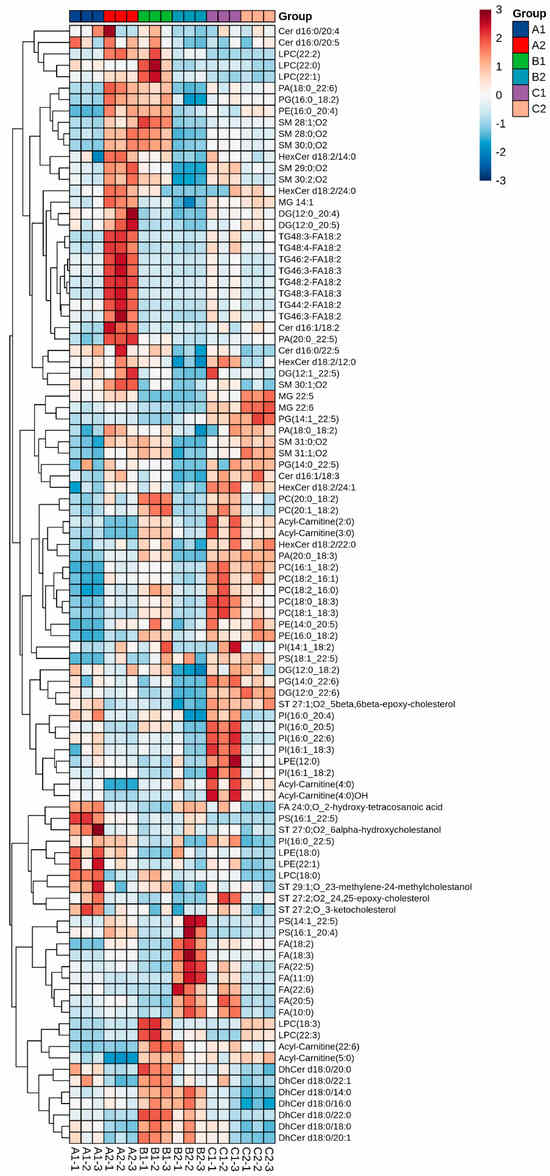
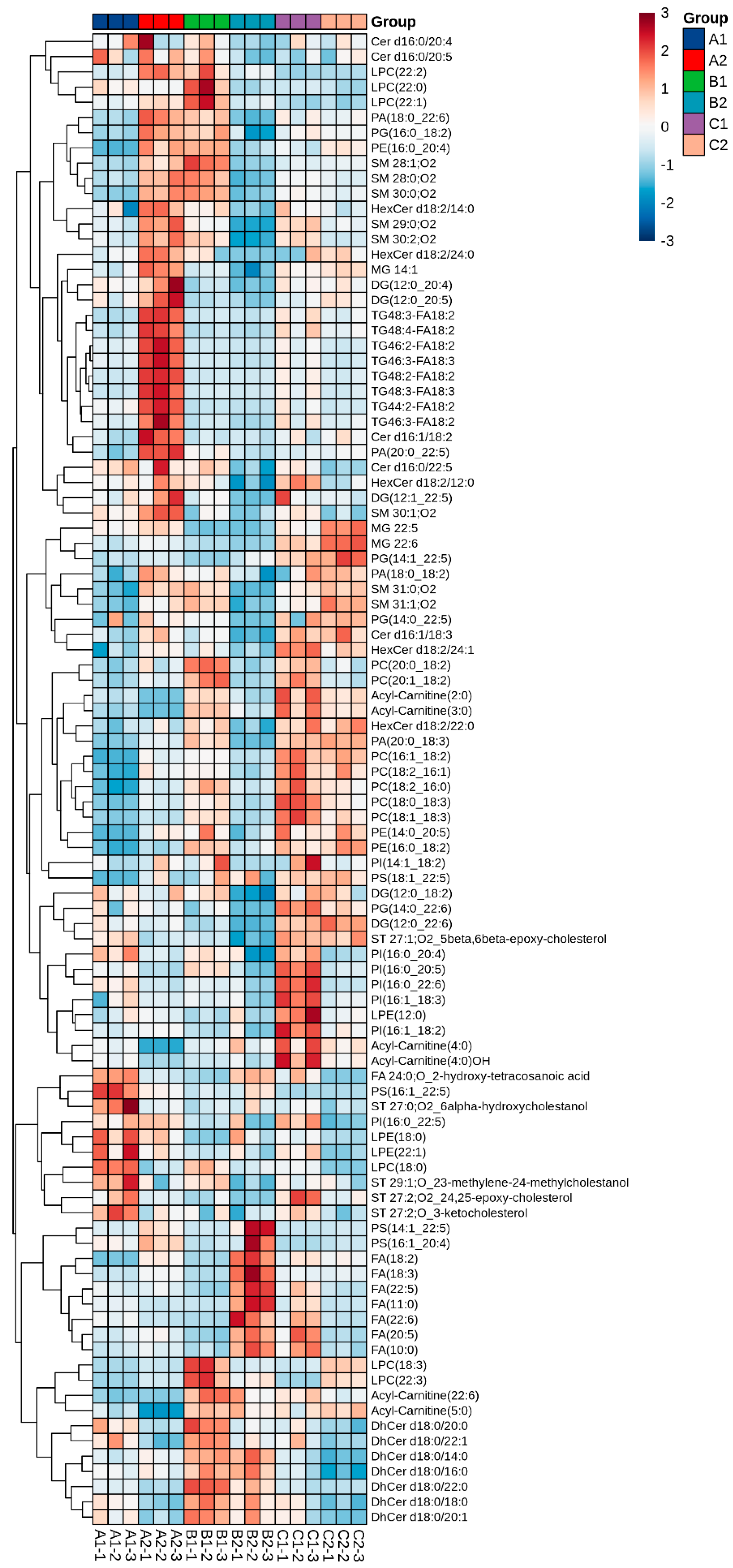
Quality control samples were injected every 10 injections throughout the analytical run, and their PCA score plots showed tight clustering (Supplementary Figure S1), indicating analytical repeatability of the pooled samples. Only lipid species with QC-RSD < 30% were retained for subsequent analysis, reducing the initial 2105 features to 98 reliable species. Hierarchical clustering heatmap analysis (Figure 1) was used for exploratory visualization of the relative abundance patterns of the 98 retained lipid species after Z-score normalization. The three analytical replicates within each group generally clustered together. Group-associated patterns were observed across multiple lipid classes. In H. trimaculatus, a cluster comprising several TG, DG, SM, and HexCer species showed relatively higher standardized abundances in the 10-month group than in the 2-month group. In H. erectus, differences between storage groups were observed for a cluster containing several fatty acids, whereas multiple glycerophospholipids and sphingolipids displayed contrasting abundance patterns. In H. abdominalis, differences between storage groups were observed for several glycerophospholipids, acylcarnitines, glycerolipids, and sphingolipids. However, because each species-by-storage treatment had only one tank, these heatmap patterns should be interpreted as exploratory and descriptive rather than as independent evidence of treatment effects.
Figure 1.
Heatmap of the 98 lipid species retained for focused analysis. Colors represent Z-score-normalized relative abundances, ranging from low (blue) to high (red). A1–C2 denote the six species-by-storage groups, with three pooled samples per group. Hierarchical clustering of lipid species is shown on the left.
3.3. Class-Specific PCA Reveals Differential Responses Across Lipid Categories
To explore storage-associated lipidomic patterns while reducing the influence of interspecific variation, PCA was performed separately for each species (colored by storage duration), in addition to a global PCA across all species (colored by species). The following sections present the PCA results and quantitative data for each of the six lipid classes.
3.4. Storage-Associated Alterations in Six Major Lipid Classes
3.4.1. Fatty Acids
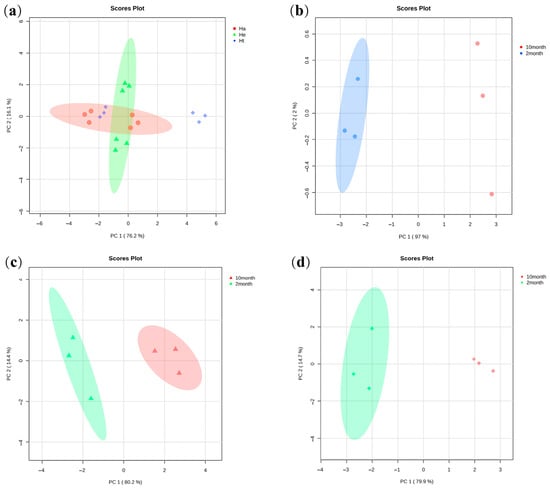
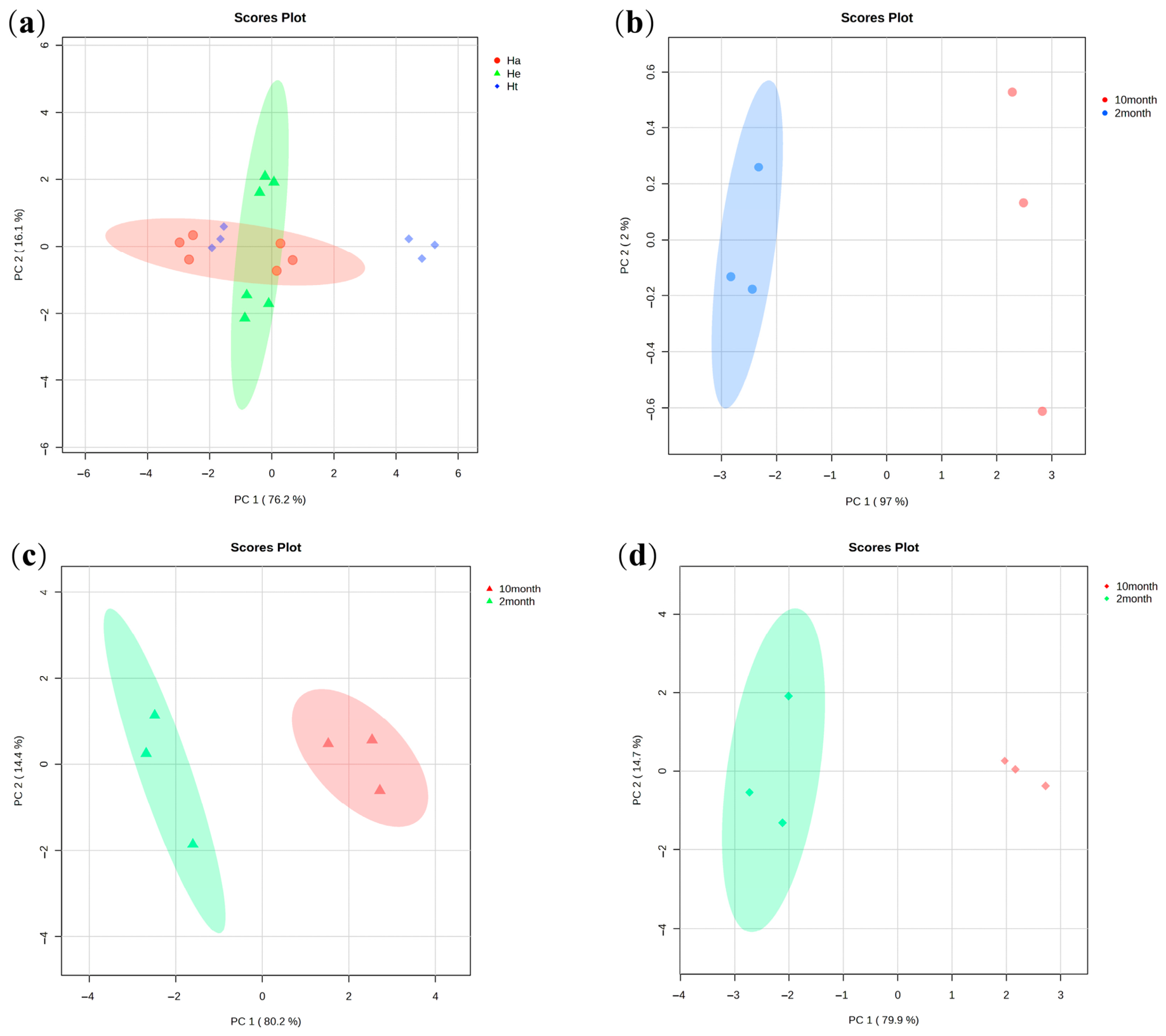
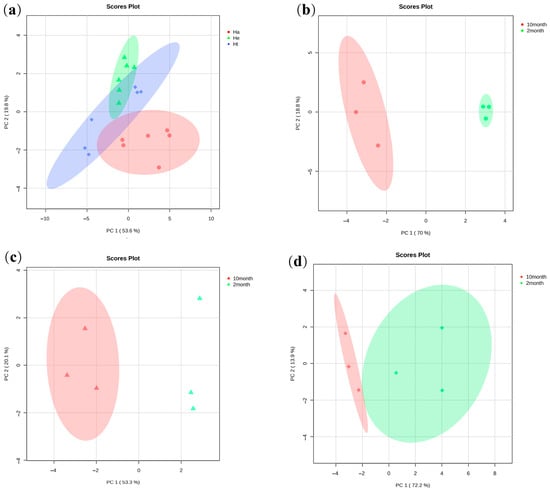
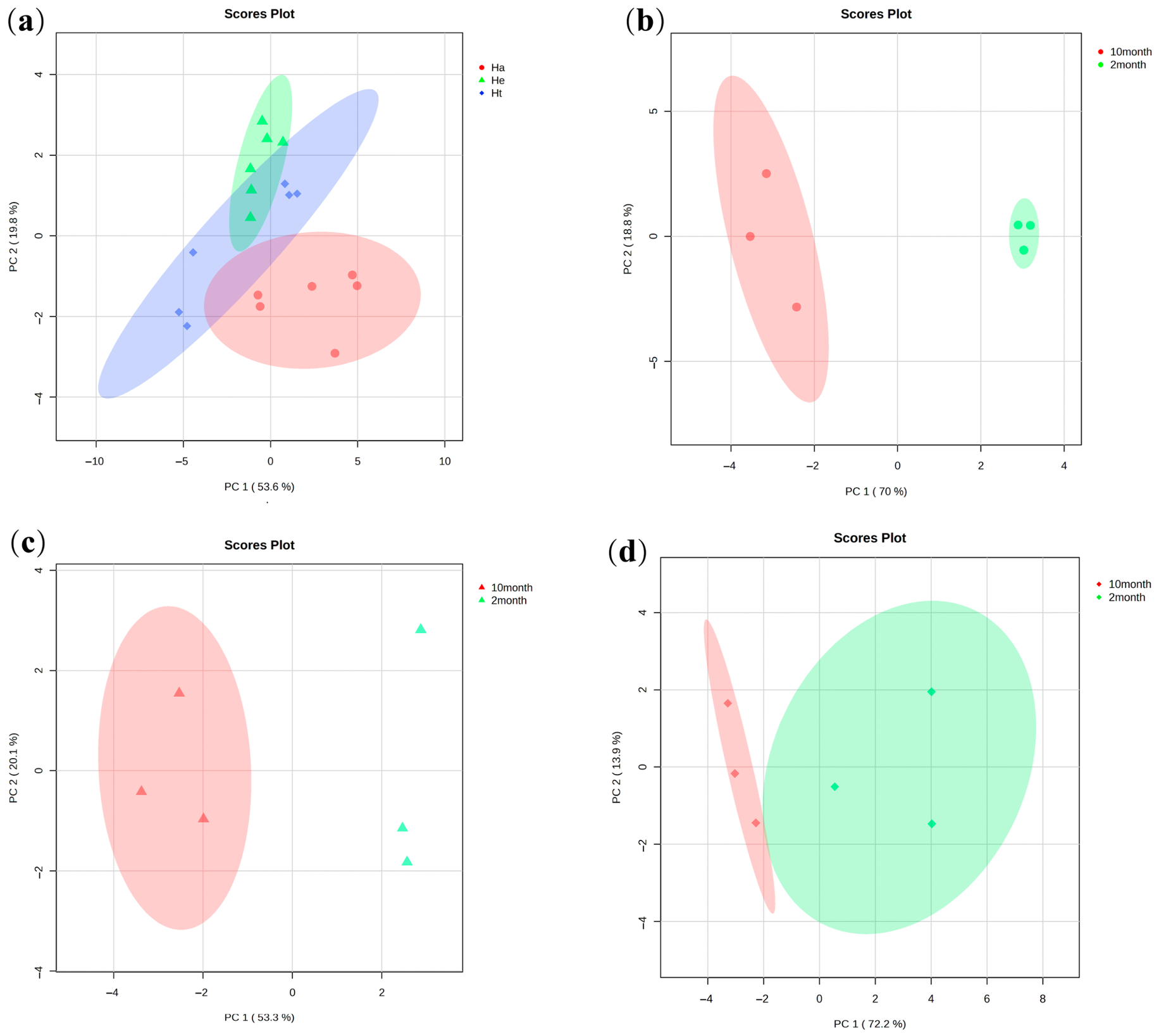
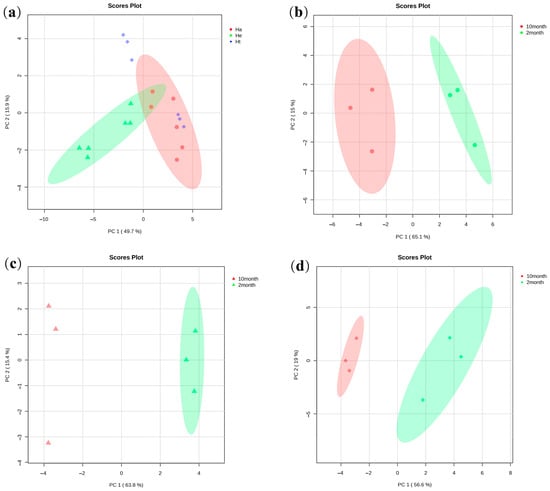
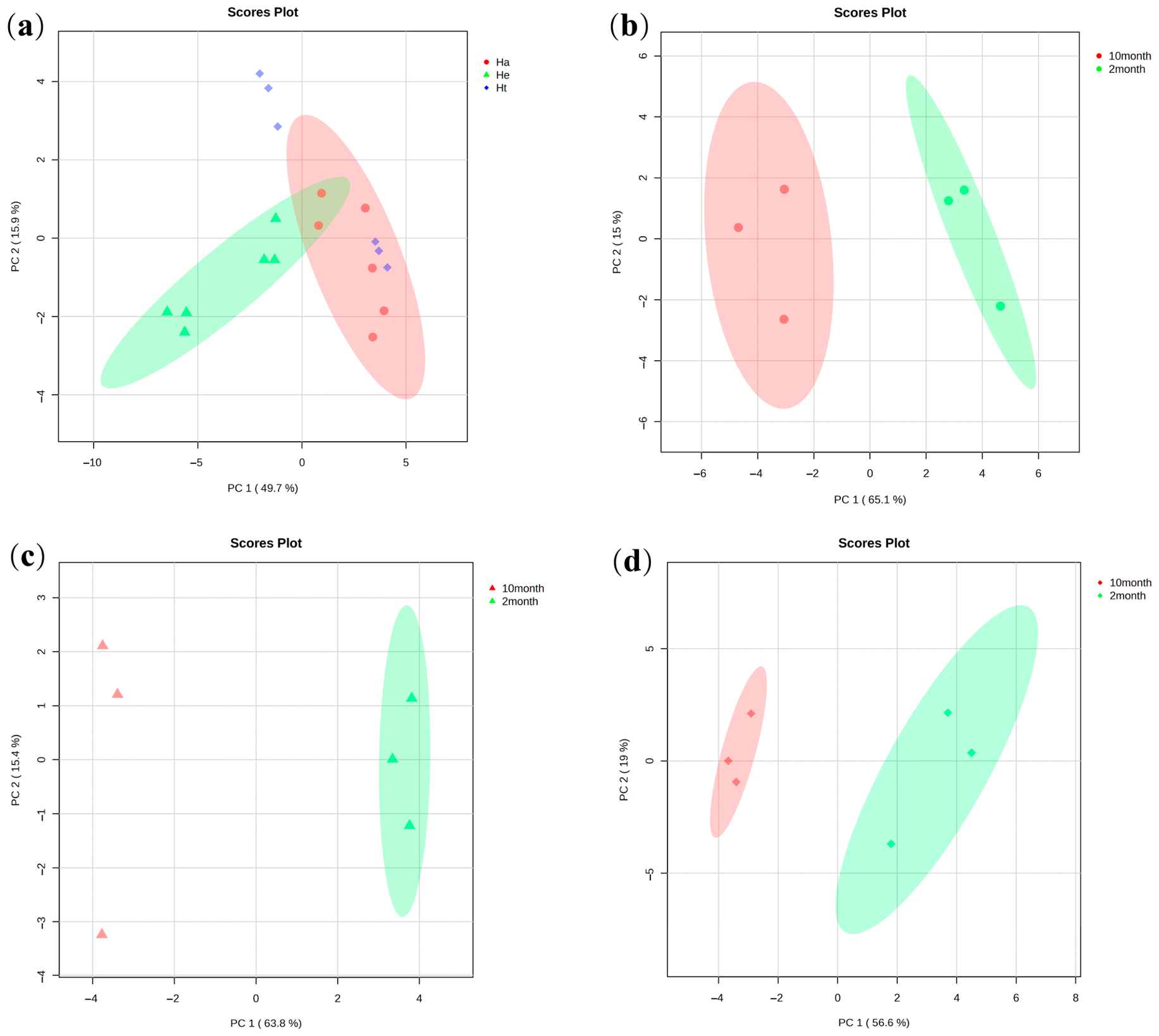
PCA of fatty acid profiles revealed distinct separation patterns both among species and between storage durations within each species (Figure 2a,b). The global PCA across all three species showed clear species-specific clustering (Figure 2a), indicating that the three seahorse species possess intrinsically different fatty acid compositions. When analyzed separately by species, PCA score plots colored by storage duration showed that H. trimaculatus exhibited the most pronounced separation between 2-month and 10-month storage groups (Figure 2b), whereas H. erectus showed moderate separation (Figure 2c), and H. abdominalis displayed the weakest separation (Figure 2d). This species-dependent pattern may indicate differences in fatty acid profiles among the three seahorse species under the two feed treatments. However, because rearing temperature and feed collection time differed among treatments, these patterns cannot be attributed solely to storage duration.
Figure 2.
PCA score plots of fatty acids (FA, 8 species). (a) Global PCA with samples colored by species (Ht, He, Ha). (b) Species-specific PCA for H. trimaculatus colored by storage duration. (c) Species-specific PCA for H. erectus colored by storage duration. (d) Species-specific PCA for H. abdominalis colored by storage duration.
Quantitative analysis of the pooled samples (Table 1) showed similar descriptive patterns. In H. trimaculatus, the C18 PUFAs FA (18:2) and FA (18:3) increased significantly in the 10-month group (6.2-fold and 2.9-fold, respectively), whereas the oxidized FA 24:0; O decreased significantly. No significant changes were observed for the long-chain PUFAs EPA, DPA, or DHA. In H. erectus, all eight measured fatty acids increased significantly in the 10-month group, with particularly pronounced elevations in FA (18:2) (5.3-fold), FA (18:3) (17.4-fold), and DHA (4.0-fold). By contrast, H. abdominalis showed significant decreases in EPA, DPA, DHA, the saturated FA (10:0) and FA (11:0), and 2-hydroxytetracosanoic acid after 10-month storage, while FA (18:2) and FA (18:3) remained unchanged. Arachidonic acid (FA 20:4) showed a species-dependent pattern. In H. erectus, FA (20:4) increased significantly in the 10-month group, whereas no significant changes were detected in H. trimaculatus or H. abdominalis. These differences should be interpreted cautiously because of the limited replication and confounding factors discussed in Section 4.5. In the present pooled samples, the long-chain PUFAs EPA, DPA, and DHA showed different patterns among the three species: they remained unchanged in H. trimaculatus, increased in H. erectus, and decreased in H. abdominalis in the 10-month group. These comparisons should be interpreted with caution because H. abdominalis was reared at a lower temperature and the two feeds were collected at different times.
Table 1.
Fatty acid contents in pooled samples of three seahorse species fed mysid shrimp with different frozen storage durations.
3.4.2. Glycerolipids
PCA of glycerolipid profiles revealed that interspecific differences were less pronounced than for fatty acids, while species-specific separation between storage durations remained evident (Figure 3a–d). The global PCA showed partial overlap among species (Figure 3a). When analyzed separately, H. trimaculatus again showed the clearest separation between storage groups (Figure 3b), whereas H. erectus and H. abdominalis displayed weaker separation (Figure 3c,d).
Figure 3.
PCA score plots of glycerolipids (GL, 16 species). (a) Global PCA colored by species. (b) H. trimaculatus colored by storage duration. (c) H. erectus colored by storage duration. (d) H. abdominalis colored by storage duration.
Quantitative analysis of the pooled samples (Table 2) showed similar descriptive patterns. In H. trimaculatus, the majority of measured glycerolipids—including DG (12:0_20:4), DG (12:0_20:5), all eight TG species, and all three MG species—were significantly higher in the 10-month group than in the 2-month group. By contrast, H. erectus showed either no significant changes or significant decreases (e.g., DG (12:0_18:2), DG (12:0_22:6), and MG 14:1) in the 10-month group. H. abdominalis displayed a mixed pattern: DG (12:0_22:6), MG 22:5, and MG 22:6 increased, while several TG species (TG44:2-FA18:2 through TG48:4-FA18:2) decreased significantly in the 10-month group. Among PUFA-containing glycerolipids, the ARA-containing DG (12:0_20:4) and EPA-containing DG (12:0_20:5) increased significantly only in H. trimaculatus, with no significant changes in the other two species. In contrast, the DHA-containing DG (12:0_22:6) remained unchanged in H. trimaculatus, decreased in H. erectus, and increased in H. abdominalis.
Table 2.
Glycerolipid contents in three seahorse species fed mysid shrimp with different frozen storage durations.
3.4.3. Glycerophospholipids
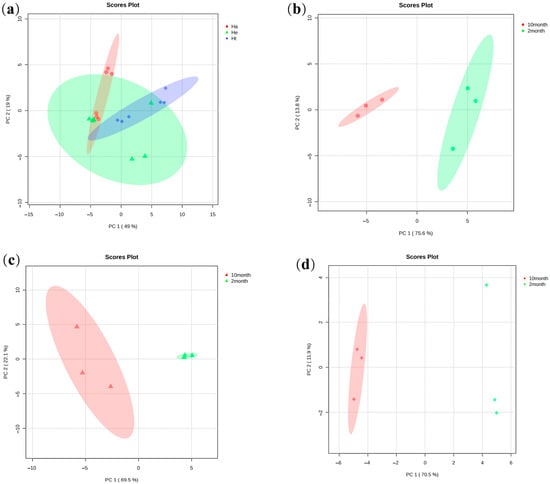
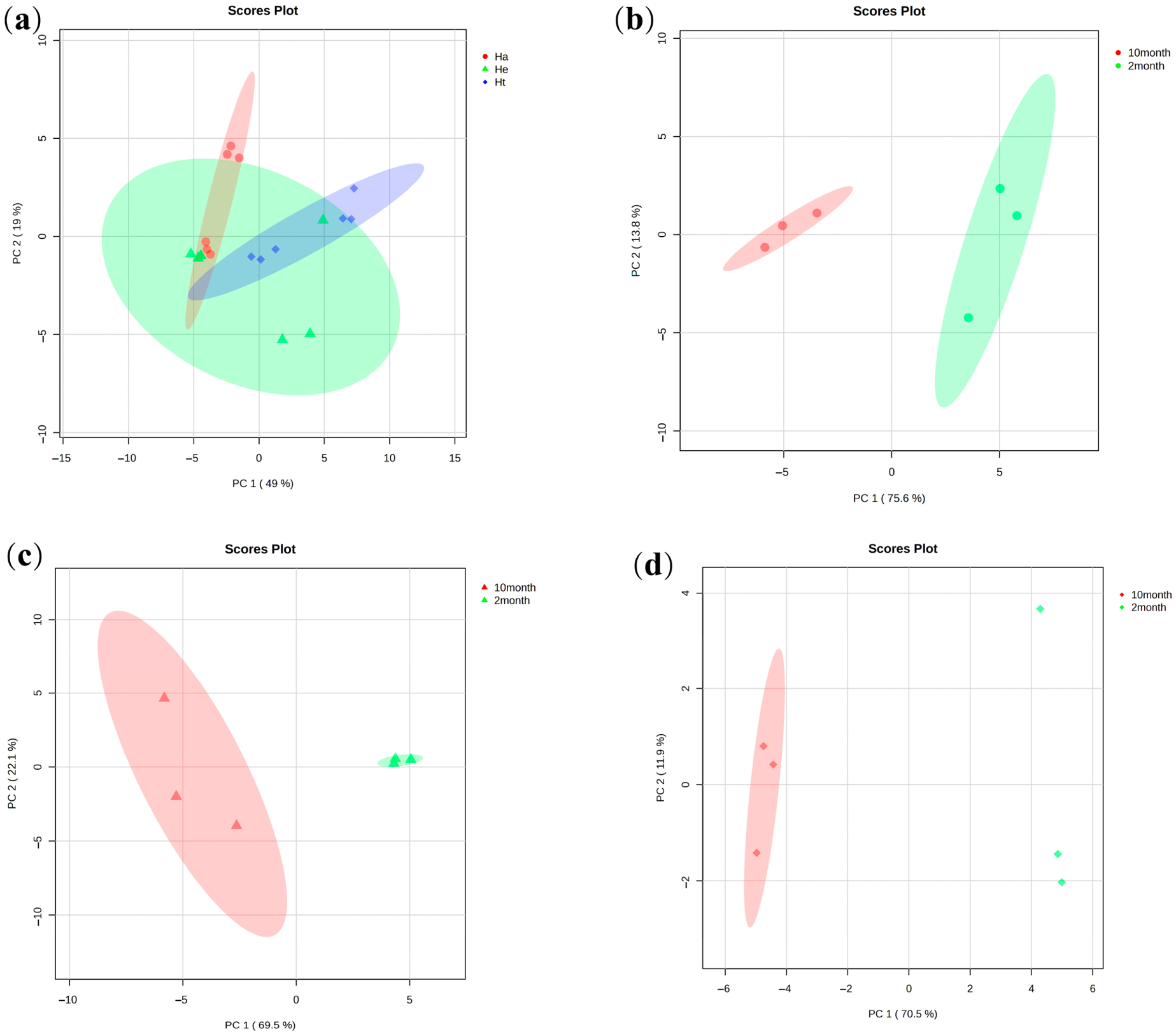
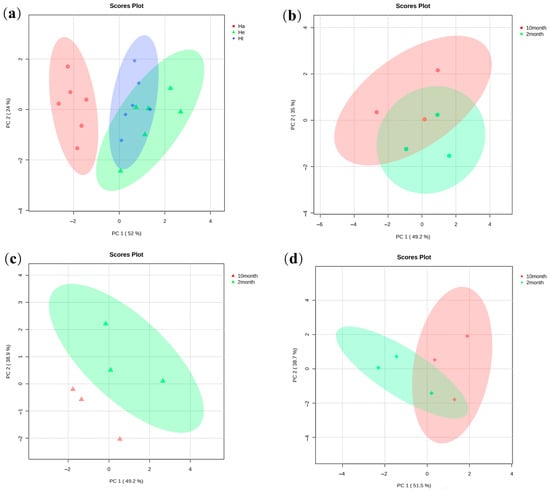
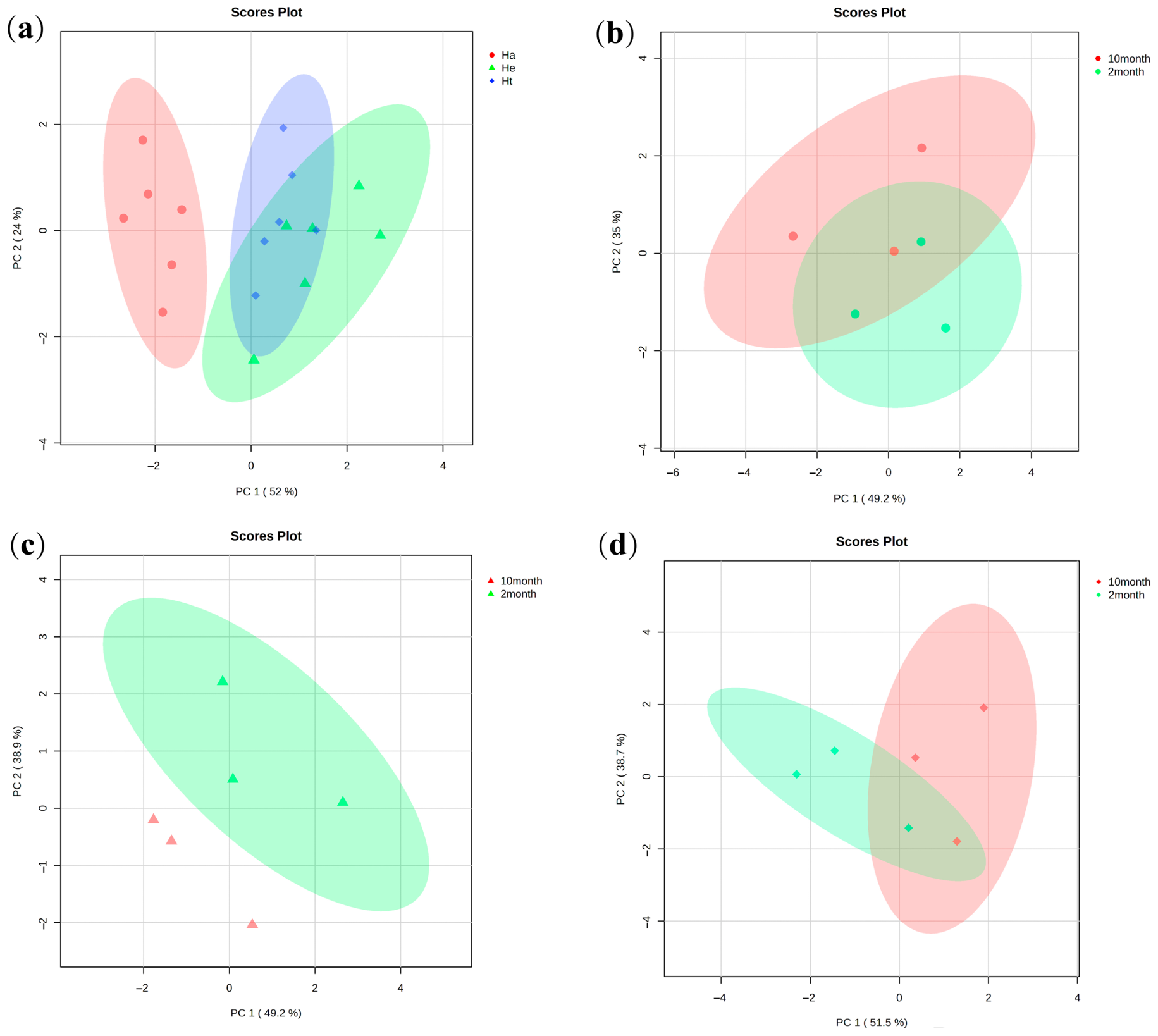
Glycerophospholipids exhibited the most complex and species-divergent responses (Figure 4a–d; Table 3). The global PCA showed clear species separation (Figure 4a). Species-specific PCA revealed that H. trimaculatus displayed moderate separation between storage groups (Figure 4b), whereas H. erectus showed weak separation (Figure 4c), and H. abdominalis exhibited intermediate separation (Figure 4d).
Figure 4.
PCA score plots of glycerophospholipids (GP, 38 species). (a) Global PCA colored by species. (b) H. trimaculatus colored by storage duration. (c) H. erectus colored by storage duration. (d) H. abdominalis colored by storage duration.
Table 3.
Glycerophospholipid contents in three seahorse species fed mysid shrimp with different frozen storage durations.
Quantitative analysis (Table 3) revealed the most striking contrast in phosphatidylcholine (PC) species: six of the seven measured PCs increased in H. trimaculatus, whereas all seven decreased in H. erectus, and four decreased in H. abdominalis. Because H. trimaculatus and H. erectus were reared at the same temperature, the opposite direction of PC changes may suggest possible species differences in membrane lipid remodeling. However, this interpretation remains speculative and requires functional validation. Among 20:4-containing glycerophospholipids, PI (16:0_20:4) increased in H. trimaculatus but decreased in both H. erectus and H. abdominalis; PE (16:0_20:4) increased in H. trimaculatus and H. abdominalis but decreased in H. erectus. PA (18:0_22:6) increased in both H. trimaculatus and H. erectus while remaining unchanged in H. abdominalis.
3.4.4. Sphingolipids
Sphingolipid PCA revealed distinct species separation in the global analysis (Figure 5a). Species-specific analysis showed that H. trimaculatus exhibited the strongest separation between storage groups (Figure 5b), whereas H. erectus and H. abdominalis displayed weaker separation (Figure 5c,d).
Figure 5.
PCA score plots of sphingolipids (SP, 25 species). (a) Global PCA colored by species. (b) H. trimaculatus colored by storage duration. (c) H. erectus colored by storage duration. (d) H. abdominalis colored by storage duration.
Quantitative analysis (Table 4) corroborated these findings. In H. trimaculatus, Cer d16:1/18:2, Cer d16:1/18:3, three HexCer species, and all eight SM species were higher in the 10-month group, whereas five DhCer species decreased. In H. erectus, no sphingolipid increased significantly; decreases were observed for multiple Cer, HexCer, DhCer, and seven of eight SM species. In H. abdominalis, decreases occurred in several Cer, HexCer, six DhCer, and three SM species, while SM 31:0; O2 and SM 31:1; O2 increased. At the class level, sphingomyelin (SM) showed the clearest contrast: all eight SMs increased in H. trimaculatus, seven decreased in H. erectus, and H. abdominalis displayed mixed responses (three decreased, two increased). The SM responses generally paralleled the PC responses within each species.
Table 4.
Sphingolipid contents in three seahorse species fed mysid shrimp with different frozen storage durations.
3.4.5. Sterol Lipids
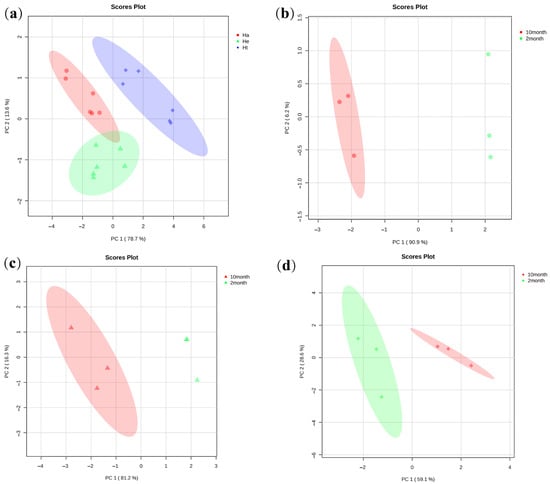
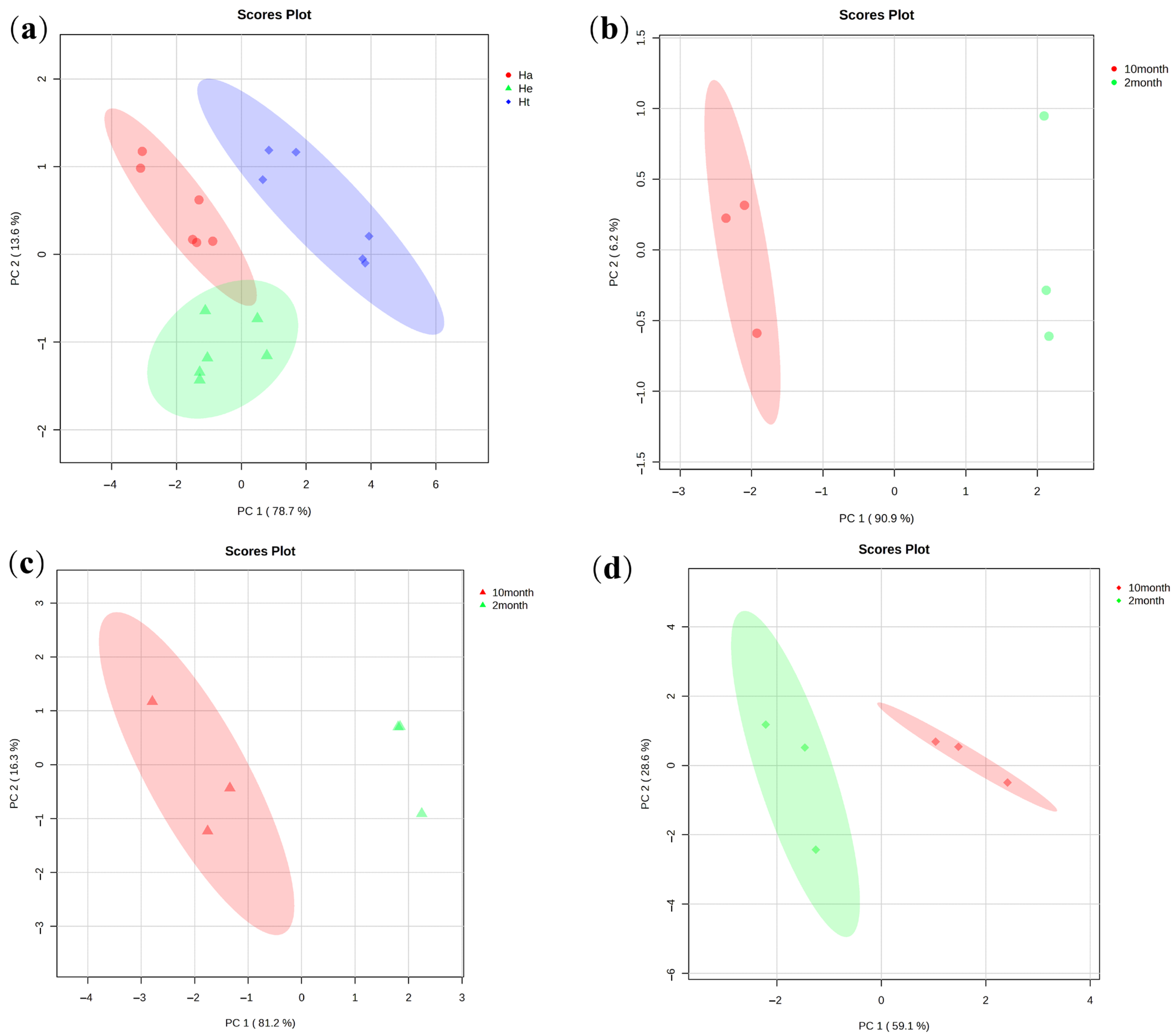
Sterol lipids showed the most consistent storage-associated decline across three species in the present dataset (Figure 6a–d; Table 5). The global PCA revealed species separation (Figure 6a). In species-specific PCA, across the three species showed some between storage groups (Figure 6b–d), with H. trimaculatus showing the most pronounced separation.
Figure 6.
PCA score plots of sterol lipids (ST, 5 species). (a) Global PCA colored by species. (b) H. trimaculatus colored by storage duration. (c) H. erectus colored by storage duration. (d) H. abdominalis colored by storage duration.
Table 5.
Sterol lipid contents in three seahorse species fed mysid shrimp with different frozen storage durations.
Quantitative analysis of the pooled samples (Table 5) showed that in H. trimaculatus, all five measured sterols—ST 27:0; O2, ST 27:1; O2, ST 27:2; O2, ST 27:2; O, and ST 29:1; O—decreased in the 10-month group. In H. erectus, ST 27:1; O2 and ST 29:1; O decreased, while the other three remained unchanged. In H. abdominalis, ST 27:2; O2 and ST 27:2; O decreased, with no significant changes in the remaining three. Notably, the first four sterols resolved by targeted analysis were oxidized cholesterol derivatives (e.g., epoxycholesterol and ketocholesterol), rather than native cholesterol. Their consistent decline across the three species in this dataset suggests that oxidized sterol derivatives may be candidate cross-species indicators of storage-associated feed changes. However, because only two storage durations were tested and no direct quantitative relationship between feed and tissue sterols was established, these compounds cannot yet be considered validated biomarkers of feed deterioration. A reduction in tissue sterol derivatives may reflect differences in dietary availability, absorption, metabolism, degradation, or tissue deposition rather than feed deterioration alone.
3.4.6. Acylcarnitines
Acylcarnitines showed the smallest magnitude of change among the six lipid classes examined (Figure 7a–d; Table 6). The global PCA showed moderate species separation (Figure 7a). Species-specific PCA revealed weak or no separation between storage groups across the three species (Figure 7b–d).
Figure 7.
PCA score plots of acylcarnitines (AC, 6 species). (a) Global PCA colored by species. (b) H. trimaculatus colored by storage duration. (c) H. erectus colored by storage duration. (d) H. abdominalis colored by storage duration.
Table 6.
Acylcarnitine contents in three seahorse species fed mysid shrimp with different frozen storage durations.
Quantitative analysis of the pooled samples (Table 6) showed that in H. trimaculatus, Acyl-Carnitine (4:0) OH and Acyl-Carnitine (5:0) decreased in the 10-month group, while the other four acylcarnitines remained unchanged. In H. erectus, none of the six acylcarnitines differed between storage groups. In H. abdominalis, Acyl-Carnitine (3:0), Acyl-Carnitine (4:0), and Acyl-Carnitine (4:0) OH decreased, while the remaining three showed no change. These patterns may indicate altered acylcarnitine metabolism under prolonged feed storage. However, acylcarnitine profiles are only indirect indicators and do not provide direct evidence of mitochondrial fatty acid β-oxidation capacity without functional measurements. Therefore, the present results should be interpreted as exploratory.
4. Discussion
This study tested the hypothesis that frozen storage duration of mysid feed can be transmitted through the food chain to influence the lipid-based medicinal quality of farmed seahorses, and that this influence is not a uniform decline but rather a species-specific metabolic response. Our targeted lipidomics data are consistent with this hypothesis, but should be interpreted cautiously. They reveal three main patterns that support this hypothesis and reveal three principal findings. First, prolonged frozen storage did not cause a simple, linear deterioration of lipid profiles; instead, each species exhibited a distinct response pattern. Second, among all lipid classes examined, oxidized sterol derivatives showed the most consistent decline across species, making them a more promising candidate indicator of feed storage deterioration than total fatty acids or phospholipids. Third, the marked interspecific differences in sensitivity to prolonged storage suggest that frozen storage duration limits should be species-specific rather than uniform.
4.1. Species-Associated Lipid Patterns and Possible Metabolic Differences
The present dataset revealed species-associated, rather than uniform, lipidomic patterns in response to the two feed treatments. In H. erectus, fatty acids generally increased while many glycerophospholipids decreased; in H. abdominalis, multiple lipid classes—including PUFAs, sterols, phospholipids, and acylcarnitines—showed broad declines; and H. trimaculatus displayed an intermediate pattern, with membrane and energy-storage lipids mostly increasing while sterols decreased. These patterns are based on pooled samples from a single tank per treatment and should therefore be regarded as exploratory. In addition, the two feed treatments were collected at different times, and H. abdominalis was reared at a lower temperature than the other two species. Consequently, the observed differences cannot be attributed solely to species-specific responses.
Nevertheless, because H. erectus and H. trimaculatus were maintained under identical thermal conditions (24–25 °C) yet frequently showed opposite directions of change—most notably in phosphatidylcholine (PC) and sphingomyelin (SM)—temperature alone may not fully explain the divergent patterns. This observation may point to possible intrinsic differences in lipid metabolic capacity among species, although functional validation is required. Teleost fishes vary substantially in their ability to retain, remodel, and endogenously synthesize long-chain PUFA via fatty acyl desaturase (Fads2) and elongase (Elovl) activities, and this capacity has been shown to differ even among closely related species [25,26]. Dietary lipid composition can also markedly influence tissue fatty acid profiles and broader lipid-related physiological responses in cultured fish [27]. Based on these considerations, we hypothesize that H. erectus may have a relatively greater capacity for PUFA conservation or de novo synthesis under the present conditions, whereas H. abdominalis may depend more directly on dietary supply and therefore be more vulnerable to PUFA loss. However, this interpretation remains speculative and requires direct measurements of enzyme activity, gene expression, and functional lipid metabolism.
The coordinated changes in PC and SM across species provide further clues. PC and SM are metabolically coupled through the sphingomyelin synthase (SMS) reaction, in which PC serves as the phosphocholine donor for SM synthesis, generating diacylglycerol (DAG) as a byproduct [28]. In H. trimaculatus, both PC and SM increased in parallel; in H. erectus, both decreased in parallel. This concordance may suggest coordinated regulation of a shared membrane-lipid synthesis pathway, rather than coincidental changes in two independent lipid classes. The fact that this pattern occurred between two species reared at identical temperatures supports the possibility of intrinsic species differences in membrane lipid remodeling, potentially mediated by phospholipases and acyltransferases [29]. However, because only two storage durations and one tank per treatment were used, these mechanistic inferences should be treated as hypotheses for future testing. Recent lipidomic research in Atlantic salmon has likewise demonstrated that dietary lipid sources can modify tissue phospholipid composition together with the expression of genes involved in lipid metabolism, highlighting the close interaction between dietary lipid supply and metabolic regulation [30].
The feed data help contextualize these tissue patterns. Free C18:2 and C18:3 in the mysids’ feed increased between 2 and 10 months of storage, as microbial and endogenous lipases gradually released these fatty acids from structural lipids [8]. By 10 months, the diet contained a larger pool of readily absorbable C18 polyunsaturated fatty acids, and these were the two fatty acids that increased in H. erectus and H. trimaculatus. This suggests the apparent increase in host fatty acids may largely reflect direct dietary transfer of lipolysis products, rather than enhanced endogenous synthesis. H. abdominalis is an exception: despite receiving the same feed treatment, it showed no increase in FA (18:2) or FA (18:3), which may point to reduced assimilation or faster disposal of the extra substrate in this species. However, because the two feeds were collected at different times, these comparisons should be interpreted cautiously.
The picture is different for long-chain n-3 PUFAs. Free EPA and DHA levels did not differ significantly between the 2- and 10-month feed treatments [8], so dietary supply of these two key fatty acids remained essentially constant. Yet EPA, DPA, and DHA increased in H. erectus, remained unchanged in H. trimaculatus, and decreased in H. abdominalis. Since the dietary input was similar across species, this divergence may reflect species-associated differences in retention, β-oxidation, membrane remodeling, or sensitivity to oxidative stress from the aged feed. This is a notable pattern in the present dataset, suggesting a possible host-driven response, but it does not establish causality and may be influenced by temperature and tank-level effects. Functional measurements of β-oxidation, enzyme activity, and oxidative stress markers are needed to test this hypothesis.
Overall, these findings suggest that the three seahorse species may differ in their lipid metabolic responses to the two feed treatments, but the present experimental design cannot separate species effects from temperature, feed collection time, and tank-level confounding. Future studies with replicated tanks, common thermal regimes, multiple storage time points, and functional assays are needed to determine whether these species-associated patterns reflect intrinsic metabolic differences or are driven by husbandry and feed-batch variation.
4.2. Sterol Lipids: Candidate Cross-Species Indicators of Storage-Associated Changes
An important consideration is that the 2-month frozen feed was not equivalent to fresh feed. Data from [8] show that C18:2, C18:3, C20:4, and C20:5 decreased substantially from fresh to 2 months, but were relatively stable or rebounded from 2 to 10 months. Thus, the present 2-month vs. 10-month comparison captures later-stage changes rather than the initial deterioration phase. The early loss of free fatty acids, together with the absence of a significant TBARS increase at 2 months, suggests that early deterioration was primarily associated with freeze-induced cell lysis, lipolysis, and leaching of water-soluble nutrients, rather than lipid oxidation. In contrast, the marked increase in TBARS and TVB-N at 10 months indicates that late-stage deterioration was dominated by lipid oxidation and microbial spoilage. Among the six lipid classes examined, sterol lipids showed the most consistent storage-associated decline across the three seahorse species in the present dataset. In H. trimaculatus, all five measured sterols decreased significantly in the 10-month group; in H. erectus and H. abdominalis, two of the five sterols decreased significantly in each species. Notably, the sterols resolved by targeted analysis were predominantly oxidized cholesterol derivatives—such as epoxycholesterol, ketocholesterol, and hydroxycholesterol—rather than native cholesterol. This cross-species consistency contrasts with the divergent responses observed for fatty acids, glycerolipids, and glycerophospholipids, and suggests that oxidized sterol derivatives may be useful candidate indicators of storage-associated feed changes.
We hypothesize that this pattern is largely related to the dietary origin of these compounds. Unlike fatty acids, which can be endogenously synthesized or remodeled, oxysterols in animal tissues are thought to be primarily derived from dietary cholesterol oxidation products [31,32]. Their tissue levels may therefore reflect, at least in part, the input from the feed. During prolonged frozen storage, cholesterol in mysid shrimp can undergo progressive oxidation, and the resulting oxysterols are themselves unstable secondary oxidation products that may undergo further degradation over time [33]. Consequently, the decline in tissue oxysterol levels with prolonged feed storage does not necessarily indicate a reduction in overall oxidative damage. Instead, it may reflect a shift in the oxidation-product profile—from primary oxysterols toward more degraded species that were not captured by our targeted panel. This interpretation is consistent with previous reports that oxysterol composition in frozen seafood changes dynamically with storage duration, with certain oxysterol species declining as storage progresses [33].
However, several alternative explanations must be considered. A reduction in tissue sterol derivatives may reflect differences in dietary availability, intestinal absorption, metabolic conversion, degradation, or tissue deposition rather than feed deterioration alone. Because the present study did not quantify oxysterols directly in the feed and did not measure their absorption or turnover in seahorse tissues, a direct quantitative relationship between feed sterol oxidation and tissue sterol profiles cannot be established. In addition, only two storage time points were tested, which does not define a temporal trajectory or a threshold at which lipid quality deteriorates. The 60 °C drying procedure used during sample preparation, although applied uniformly to all samples, may also have influenced the absolute abundance of oxidation-sensitive sterols and therefore complicates their interpretation as biomarkers of feed storage. Finally, because each species-by-storage treatment had only one tank, these sterol patterns should be considered exploratory and may be affected by tank-level pseudoreplication and confounding by feed collection time and rearing temperature.
These findings may have implications for medicinal quality assessment. Sterol lipids serve as precursor substrates for sex hormone synthesis and are considered relevant to the traditional pharmacological action of seahorses in “warming the kidney and strengthening yang” [34]. A decline in oxidized sterol derivatives could therefore be relevant to the medicinal quality of farmed seahorses. However, no pharmacological activity, bioavailability, or functional health-related endpoint was measured in this study. Consequently, changes in lipid composition should not be automatically interpreted as changes in medicinal efficacy or quality. The link between sterol profiles and medicinal quality remains inferential and requires direct pharmacological validation.
Despite these limitations, the cross-species consistency of the sterol decline makes these compounds promising candidates for further investigation. Because sterol changes were less divergent among species than fatty acid or phospholipid changes, they may be less confounded by species-specific metabolic compensation. However, before sterol monitoring can be recommended as a practical quality control tool, future studies must directly quantify oxysterols in stored feed, establish their dose–response relationship with tissue levels, evaluate absorption and metabolism, and validate the association with functional or pharmacological endpoints. With such validation, sterol lipid profiles—particularly oxidized cholesterol derivatives—could become a useful component of feed quality assessment in seahorse aquaculture.
4.3. Acylcarnitines Profiles: Possible Indications of Altered Lipid Utilization
Among the six lipid classes examined, acylcarnitines showed the smallest magnitude of change in the present dataset. The global PCA showed moderate species separation, whereas species-specific PCA revealed weak or no separation between storage groups across the three seahorse species. Quantitative analysis of the pooled samples showed that in H. trimaculatus, Acyl-Carnitine (4:0) OH and Acyl-Carnitine (5:0) decreased in the 10-month group, while the other four acylcarnitines remained unchanged. In H. erectus, none of the six acylcarnitines differed significantly between storage groups. In H. abdominalis, Acyl-Carnitine (3:0), Acyl-Carnitine (4:0), and Acyl-Carnitine (4:0) OH decreased, while the remaining three showed no significant change. These patterns may indicate differences in how the three seahorse species regulate lipid utilization under the two feed treatments, but they should be interpreted as exploratory.
Acylcarnitines are key intermediates of the carnitine shuttle system, which transports acyl groups into mitochondria for β-oxidation, and their profiles are commonly used as surrogate biomarkers of mitochondrial fatty acid oxidation flux [35]. However, acylcarnitine profiles are indirect indicators and do not provide direct evidence of mitochondrial fatty acid oxidation capacity without functional measurements of β-oxidation or mitochondrial activity. Therefore, the relative stability of acylcarnitine profiles in H. erectus—where no significant changes were detected—may be consistent with a possible preservation of core energy metabolism under the present conditions, but it cannot be interpreted as proof that mitochondrial function was maintained. Similarly, the decreases in several acylcarnitine species in H. trimaculatus and H. abdominalis may suggest that these two species were less able to maintain acylcarnitine homeostasis under prolonged feed storage, but this interpretation remains speculative.
The role of dietary lipid composition in energy metabolism is supported by recent work showing that dietary oleic acid can alter lipid deposition and energy utilization in Atlantic salmon, demonstrating that dietary fatty acid composition can influence pathways related to lipid storage and oxidation [30]. This is consistent with the possibility that the aged mysid feed may have influenced lipid utilization in the seahorses. However, because the two feed treatments were collected at different times and H. abdominalis was reared at a different temperature, the observed species-associated acylcarnitine patterns cannot be attributed solely to species differences or to storage duration. In addition, the present study did not measure carnitine palmitoyltransferase activity, β-oxidation flux, mitochondrial respiration, or expression of genes involved in fatty acid oxidation. Therefore, the acylcarnitine changes reported here should be regarded as possible indications of altered lipid utilization rather than as direct evidence of differences in energy metabolic resilience. Other general limitations are detailed in Section 4.5.
Future studies should combine targeted acylcarnitine profiling with functional measurements of mitochondrial fatty acid oxidation, enzyme activity, and gene expression in replicated tank designs with common thermal regimes and multiple storage time points. Such an approach would help determine whether the acylcarnitine patterns observed here reflect meaningful species-specific differences in lipid utilization or are primarily driven by confounding husbandry and feed-batch factors. At present, the acylcarnitine data provide exploratory evidence that the three seahorse species may differ in their metabolic responses to the two feed treatments, but they do not establish a causal link between frozen feed storage and mitochondrial fatty acid oxidation capacity.
4.4. Implications for Future Quality Monitoring and Research
The present findings may have implications for the management of frozen mysid feed in seahorse aquaculture, but they should be regarded as preliminary. Currently, no unified frozen-storage duration standard exists for mysid feed in China, and farming enterprises often rely on empirical practices with considerable batch-to-batch variability. Our exploratory results suggest that a one-size-fits-all storage limit may not be optimal for all seahorse species. However, species-specific storage limits cannot be established from the present design because each treatment had only one tank, the two feeds were collected at different times, and H. abdominalis was reared at a different temperature from the other two species. Therefore, the following considerations are intended to guide future research rather than to provide operational recommendations.
Under the present experimental conditions, H. abdominalis exhibited the broadest lipid changes, including declines in sterols, PUFAs, phospholipids, and several acylcarnitines. This broad attenuation may be related to its distinct lower-temperature rearing environment (16–17 °C versus 24–25 °C for the other two species), which could affect membrane lipid composition and oxidative stability [36,37,38]. Because temperature effects cannot be separated from species effects in this study, the greater sensitivity of H. abdominalis should be considered preliminary and requires validation under a common thermal regime. In contrast, H. erectus showed relatively stable energy-related and PUFA profiles, but its sterol precursors and most phospholipids still decreased, indicating that feed-associated changes were not absent in this species. H. trimaculatus occupied an intermediate position. These species-associated patterns are interesting, but they should not yet be translated into species-specific storage guidelines.
Quality monitoring should not rely solely on total lipid content or fatty acid profiles, because these measures can be confounded by species-specific metabolic compensation and by differences in feed intake, absorption, and tissue turnover. The cross-species consistency of the sterol decline observed here suggests that oxidized sterol derivatives may be promising candidate indicators for further evaluation. However, before sterol monitoring can be recommended as a practical quality control tool, several steps are needed. First, oxysterols should be quantified directly in stored feed at multiple time points to establish their formation and degradation kinetics. Second, the relationship between feed oxysterol levels and tissue sterol profiles should be validated through controlled feeding trials with replicated tanks. Third, the absorption, metabolism, and deposition of these compounds in seahorse tissues should be characterized. Fourth, the association between sterol changes and functional or pharmacological endpoints should be tested. Only after such validation could sterol lipid profiles—particularly oxidized cholesterol derivatives—be considered a reliable component of feed quality assessment.
Future studies should also incorporate replicated tanks per treatment, common thermal regimes across species, multiple storage time points, and different storage temperatures. A time-series design would help define the trajectory of lipid deterioration and identify potential thresholds. Combining targeted lipidomics with functional measurements of mitochondrial fatty acid oxidation, enzyme activity, gene expression, and pharmacological activity would further clarify whether the observed lipidomic changes have biological or medicinal relevance. In addition, the 60 °C drying procedure used for sample preparation, although standard for seahorse medicinal material processing, may influence oxidation-sensitive lipids; future work should evaluate alternative drying methods or include appropriate controls. Until such data are available, the present results should be interpreted as exploratory evidence that frozen feed storage is associated with species-associated lipid changes, rather than as a basis for establishing storage standards or quality control protocols.
Other general limitations of this study are detailed in Section 4.5.
4.5. Limitations and Future Directions
Several limitations of this study should be acknowledged. First, each species × storage-duration treatment was housed in a single rearing tank, and the three pooled samples per group were derived from fish within the same tank. Therefore, the experimental unit was the tank, not the pooled sample, and the statistical comparisons may be affected by tank-level pseudoreplication. The ANOVA results should be interpreted as exploratory and descriptive rather than as formal tests of storage-duration effects at the experimental-unit level. Second, the 2-month and 10-month feeds were collected at different times from the same original brackish pond system. Therefore, storage duration was confounded with collection time and possible batch-to-batch variation in initial mysid composition. Consequently, the observed lipidomic differences cannot be attributed solely to frozen storage duration. Third, H. abdominalis was reared at 16–17 °C, whereas H. erectus and H. trimaculatus were reared at 24–25 °C. Because temperature can strongly influence lipid metabolism, membrane lipid remodeling, fatty acid utilization, and energy metabolism, interspecific differences cannot be fully separated from temperature effects. In particular, the conclusion that H. abdominalis is the most sensitive species should be considered preliminary because this species was maintained under a different thermal regime. Fourth, only two storage time points (approximately 2 and 10 months) at a single storage temperature (−20 °C) were examined. This design does not establish a temporal trajectory or a threshold at which lipid quality deteriorates. A time-series design incorporating multiple intermediate time points and different storage temperatures would provide a more comprehensive picture. Fifth, the 2-month frozen feed was not a fresh control. According to our previous study [8], major losses of free fatty acids occurred between fresh and 2 months, and TBARS did not increase significantly until 10 months. Therefore, the present 2-month vs. 10-month design captures late-stage storage changes and does not define the early deterioration trajectory. Sixth, no functional measurements of mitochondrial β-oxidation or mitochondrial activity were performed. Acylcarnitine profiles are only indirect indicators and should not be interpreted as direct evidence of mitochondrial fatty acid oxidation capacity. In addition, growth performance (survival and weight gain) was not systematically assessed in this study because the primary objective was lipidomic profiling. Future studies should integrate growth, survival, and reproductive endpoints to link feed lipid changes to seahorse performance. Seventh, no pharmacological activity, bioavailability, or functional health-related endpoint was measured. Therefore, changes in lipid composition should not be automatically interpreted as changes in medicinal efficacy or quality. Eighth, the 60 °C drying procedure used for sample preparation, although standard for seahorse medicinal material processing and applied uniformly to all samples, may have introduced additional oxidation of labile lipids. This could influence the absolute abundance of oxidation-sensitive compounds and complicate their interpretation as biomarkers of feed storage. Ninth, the proposed sterol markers were not directly validated against feed oxidation indices or tissue absorption and metabolism. In addition, oxysterols were not directly measured in the feed, so the proposed sterol indicators require direct validation against feed oxysterol contents. A direct quantitative relationship between changes in the stored feed and subsequent changes in seahorse tissues was not established. Finally, the PCA and heatmap analyses are useful for describing overall lipidomic patterns, but group separation should not be interpreted as independent evidence of treatment effects in the presence of limited biological replication and tank-level pseudoreplication. Future studies should use replicated tanks per treatment, common thermal regimes, multiple storage time points, direct feed–tissue validation, and functional assays of lipid metabolism and pharmacological activity to confirm and extend the present findings.
5. Conclusions
This study provides preliminary evidence that frozen storage duration of mysid feed is associated with species-associated, rather than uniform, changes in the lipid profiles of farmed seahorses. Oxidized sterol derivatives showed the most consistent decline across the three species and may be candidate indicators for further evaluation. However, because each treatment had only one tank, the two feeds were collected at different times, and H. abdominalis was reared at a different temperature, species-specific storage limits cannot be established. These findings should be considered exploratory and hypothesis-generating. Future studies with replicated tanks, common thermal regimes, multiple storage time points, and direct feed–tissue validation are needed to determine whether sterol monitoring can serve as a practical quality control tool.
Supplementary Materials
The following supporting information can be downloaded at https://www.mdpi.com/article/10.3390/fishes11100580/s1, Figure S1: PCA score plot demonstrating QC sample clustering and instrument stability during the LC-MS/MS run; Table S1: Free fatty acid contents of mysids under different frozen storage durations; Table S2: TBARS values of fresh, 2-month frozen, and 10-month frozen mysid shrimp.
Author Contributions
Conceptualization, C.S. and Y.S.; methodology, Y.W. and Y.S.; software, T.L.; validation, T.L. and Y.W.; formal analysis, T.L. and P.G.; investigation, T.L., Y.W., P.G., S.Q., Y.S. and X.Z.; resources, C.W. and Y.R.; data curation, T.L., J.L. and S.L.; writing—original draft, T.L. and Y.W.; writing—review and editing, C.S. and J.L.; visualization, J.L. and T.L.; supervision, C.S.; project administration, Y.S.; funding acquisition, C.S. All authors have read and agreed to the published version of the manuscript.
Funding
This research was funded by the Central Public-Interest Scientific Institution Basal Research Fund, East China Sea Fisheries Research Institute of CAFS (2024QT02), and the Central Public-Interest Scientific Institution Basal Research Fund of CAFS (2023TD56).
Institutional Review Board Statement
The animal study protocol was approved by the Animal Care Welfare Committee of East China Sea Fisheries Research Institute, Chinese Academy of Fishery Sciences (protocol code 2026-18, date of approval: 22 March 2026). Experimental seahorses were anesthetized in an ice-water mixture for 5 min to minimize pain and distress prior to sampling and subsequent treatment.
Informed Consent Statement
Not applicable.
Data Availability Statement
The original contributions presented in this study are included in the article. Further inquiries can be directed to the corresponding author.
Conflicts of Interest
The authors declare no conflicts of interest.
Abbreviations
The following abbreviations are used in this manuscript:
| ARA | Arachidonic acid |
| AC | Acylcarnitines |
| CE | Collision energy |
| CITES | Convention on International Trade in Endangered Species of Wild Fauna and Flora |
| DAG | Diacylglycerol |
| DHA | Docosahexaenoic acid |
| DPA | Docosapentaenoic acid |
| DP | Declustering potential |
| EPA | Eicosapentaenoic acid |
| FA | Fatty acyls |
| FDR | False discovery rate |
| GL | Glycerolipids |
| GP | Glycerophospholipids |
| HexCer | Hexosylceramide |
| HSD | Honestly significant difference |
| LC–MS/MS | Liquid chromatography–tandem mass spectrometry |
| PC | Phosphatidylcholine |
| PCA | Principal component analysis |
| PUFA | Polyunsaturated fatty acids |
| QC | Quality control |
| SD | Standard deviation |
| SM | Sphingomyelin |
| SMS | Sphingomyelin synthase |
| SP | Sphingolipids |
| ST | Sterol lipids |
| TG | Triacylglycerol |
| UHPLC | Ultra-high-performance liquid chromatography |
References
- Conte, M.; Fontana, E.; Nebbioso, A.; Altucci, L. Marine-Derived Secondary Metabolites as Promising Epigenetic Bio-Compounds for Anticancer Therapy. Mar. Drugs 2021, 19, 15. [Google Scholar] [CrossRef] [Scilit] [PubMed]
- Kumaravel, K.; Ravichandran, S.; Balasubramanian, T.; Sonneschein, L. Seahorses–a source of traditional medicine. Nat. Prod. Res. 2012, 26, 2330–2334. [Google Scholar] [CrossRef] [Scilit] [PubMed]
- Ge, L.; Lu, W.; Wu, H.; Liang, J.; Liao, J.; Cheng, K.; Zeng, X.-x.; Wang, S.-w.; Wang, Z.; Mao, P. Functional lipid diversity and novel oxylipin identification for interspecies differentiation and nutritional assessment of commercial seahorse (Hippocampus) using untargeted and targeted lipidomics. Food Chem. 2025, 473, 143117. [Google Scholar] [CrossRef] [Scilit] [PubMed]
- Sedes, L.; Thirouard, L.; Maqdasy, S.; Garcia, M.; Caira, F.; Lobaccaro, J.-M.A.; Beaudoin, C.; Volle, D.H. Cholesterol: A gatekeeper of male fertility? Front. Endocrinol. 2018, 9, 369. [Google Scholar] [CrossRef] [Scilit] [PubMed]
- Lordan, R.; Tsoupras, A.; Zabetakis, I. Phospholipids of animal and marine origin: Structure, function, and anti-inflammatory properties. Molecules 2017, 22, 1964. [Google Scholar] [CrossRef] [Scilit] [PubMed]
- Wathes, D.C.; Abayasekara, D.R.E.; Aitken, R.J. Polyunsaturated fatty acids in male and female reproduction. Biol. Reprod. 2007, 77, 190–201. [Google Scholar] [CrossRef] [Scilit] [PubMed]
- Zhang, Z.; Zhang, X.; Wang, X.; Guo, X.; Yan, X.; Li, Z.; Li, W. Chemical constituents, pharmacological activities and quality evaluation methods of genus Hippocampus: A comprehensive review. Chin. Herb. Med. 2024, 16, 344–357. [Google Scholar] [CrossRef] [Scilit] [PubMed]
- Wang, Y.; Wu, C.; Xu, A.; Li, S.; Qin, S.; Gao, P.; Zhu, H.; Sui, Y.; Lin, T. From Cellular Lysis to Microbial Explosion: Elucidating the Temporal Degradation and Spoilage Mechanisms of Frozen Mysid Shrimp as Seahorse (Hippocampus spp.) Feed. Animals 2026, 16, 2325. [Google Scholar] [CrossRef] [Scilit] [PubMed]
- Koldewey, H.J.; Martin-Smith, K.M. A global review of seahorse aquaculture. Aquaculture 2010, 302, 131–152. [Google Scholar] [CrossRef] [Scilit]
- Dernekbasi, S.; Karadayi, B.T. Sustainable Insect Meal as a Fishmeal Alternative: 2. Impacts on Fillet Quality, Amino Acid Profile, and Nutritional Value in Nile Tilapia. Aquac. Stud. 2026, 26, 568–579. [Google Scholar] [CrossRef] [Scilit]
- Woods, C.M.C.; Valentino, F. Frozen mysids as an alternative to live Artemia in culturing seahorses Hippocampus abdominalis. Aquac. Res. 2003, 34, 757–763. [Google Scholar] [CrossRef] [Scilit]
- Bao, Y.; Ertbjerg, P.; Estévez, M.; Yuan, L.; Gao, R. Freezing of meat and aquatic food: Underlying mechanisms and implications on protein oxidation. Compr. Rev. Food Sci. Food Saf. 2021, 20, 5548–5569. [Google Scholar] [CrossRef] [Scilit] [PubMed]
- Liu, X.; Li, X.; Zhang, D.; Lin, T.; Li, S. Effects of different temperatures and diets on nutritional and bio-functional components in the juvenile lined seahorse (Hippocampus erectus). J. World Aquac. Soc. 2023, 54, 1386–1406. [Google Scholar] [CrossRef] [Scilit]
- Qiao, Z.; Yin, M.; Qi, X.; Li, Z.; Yu, Z.; Chen, M.; Xiao, T.; Wang, X. Freezing and storage on aquatic food: Underlying mechanisms and implications on quality deterioration. Food Sci. Technol. 2022, 42, e91322. [Google Scholar] [CrossRef] [Scilit]
- Hossen, M.N.; Das, M.; Sumi, K.R.; Hasan, M.T. Effect of Storage Time on Fish Feed Stored at Room Temperature and Low Temperature. Progress. Agric. 2013, 22, 115–122. [Google Scholar] [CrossRef] [Scilit]
- Laohabanjong, R.; Tantikitti, C.; Benjakul, S.; Supamattaya, K.; Boonyaratpalin, M. Lipid oxidation in fish meal stored under different conditions on growth, feed efficiency and hepatopancreatic cells of black tiger shrimp (Penaeus monodon). Aquaculture 2009, 286, 283–289. [Google Scholar] [CrossRef] [Scilit]
- Segade, Á.; Robaina, L.; Otero-Ferrer, F.; García Romero, J.; Molina Domínguez, L. Effects of the diet on seahorse (Hippocampus hippocampus) growth, body colour and biochemical composition. Aquac. Nutr. 2015, 21, 807–813. [Google Scholar] [CrossRef] [Scilit]
- Lin, T.; Liu, X.; Li, S.; Zhang, D.; Shen, F.; Jiang, K. Females increase reproductive investment when mated to less sexually attractive males in a serially monogamous fish. Sci. Rep. 2024, 14, 19020. [Google Scholar] [CrossRef] [Scilit] [PubMed]
- Torsabo, D.; Idris, N.; Iber, B.T.; Arome, A.G.; Chu, I.K.C.; Abduh, M.Y.; Noordin, N.M.; Azra, M.N.; Impellitteri, F.; Faggio, C.; et al. Effects of Dietary Phospholipids on Growth, Biochemical Composition, Fatty Acid Profiles, Blood Metrics, and Sex Steroid Hormone of Male Pangasius nasutus Broodstock. Aquac. Stud. 2025, 25, 47–63. [Google Scholar] [CrossRef] [Scilit]
- Medina, J.; van der Velpen, V.; Teav, T.; Guitton, Y.; Gallart-Ayala, H.; Ivanisevic, J. Single-Step Extraction Coupled with Targeted HILIC-MS/MS Approach for Comprehensive Analysis of Human Plasma Lipidome and Polar Metabolome. Metabolites 2020, 10, 495. [Google Scholar] [CrossRef] [Scilit] [PubMed]
- Löfgren, L.; Forsberg, G.B.; Ståhlman, M. The BUME method: A new rapid and simple chloroform-free method for total lipid extraction of animal tissue. Sci. Rep. 2016, 6, 27688. [Google Scholar] [CrossRef] [Scilit] [PubMed]
- Hicks, D.; Ryan, M.J.; Allahbam, A.; Barrett, L.W.; Lee, S.; Bartlett, B.; Ludewick, H.; Ward, N.C.; Loo, R.L.; Dwivedi, G.; et al. Evaluation of tissue-specific extraction protocols for comprehensive lipid profiling. Anal. Chim. Acta 2025, 1347, 343791. [Google Scholar] [CrossRef] [Scilit] [PubMed]
- Zhang, N.R.; Hatcher, N.G.; Ekroos, K.; Kedia, K.; Kandebo, M.; Marcus, J.N.; Smith, S.M.; Bateman, K.P.; Spellman, D.S. Validation of a multiplexed and targeted lipidomics assay for accurate quantification of lipidomes. J. Lipid Res. 2022, 63, 100218. [Google Scholar] [CrossRef] [Scilit] [PubMed]
- Benjamini, Y.; Hochberg, Y. Controlling the false discovery rate: A practical and powerful approach to multiple testing. J. R. Stat. Soc. Ser. B Methodol. 1995, 57, 289–300. [Google Scholar] [CrossRef] [Scilit]
- Lamarre, J.; Wilson, D.R. Short-term dietary changes are reflected in the cerebral content of adult ring-billed gulls. R. Soc. Open Sci. 2024, 11, 240616. [Google Scholar] [CrossRef] [Scilit] [PubMed]
- Costa Castro, L.F.; Tocher, D.R.; Monroig, O. Long-chain polyunsaturated fatty acid biosynthesis in chordates: Insights into the evolution of Fads and Elovl gene repertoire. Prog. Lipid Res. 2016, 62, 25–40. [Google Scholar] [CrossRef] [Scilit] [PubMed]
- Emam, M.; Yeo, J.; Colombo, S.M.; Guerra, N.; Eslamloo, K.; Caballero-Solares, A.; Rise, M.L.; Parrish, C.C. Lipidomic analysis of phospholipids and transcript expression of lipid metabolism genes in the liver and muscle of Atlantic salmon fed microbial oil and canola oil. Biochim. ET Biophys. Acta (BBA)-Mol. Cell Biol. Lipids 2026, 1871, 159723. [Google Scholar] [CrossRef] [Scilit] [PubMed]
- Huitema, K.; Van Den Dikkenberg, J.; Brouwers, J.F.; Holthuis, J. Identification of a family of animal sphingomyelin synthases. EMBO J. 2004, 23, 33–44. [Google Scholar] [CrossRef] [Scilit] [PubMed]
- Wang, B.; Tontonoz, P. Phospholipid Remodeling in Physiology and Disease. Annu. Rev. Physiol. 2019, 81, 165–188. [Google Scholar] [CrossRef] [Scilit] [PubMed]
- Yang, B.; Jago, M.K.; Mock, T.S.; Turchini, G.M.; Salini, M.J.; Smullen, R.P.; Francis, D.S. Energy modulation in Atlantic salmon: Oleic acid increases adipogenesis and energy deposition. Aquaculture 2026, 610, 742895. [Google Scholar] [CrossRef] [Scilit]
- Saldanha, T.; Benassi, M.d.T.; Bragagnolo, N. Fatty acid contents evolution and cholesterol oxides formation in Brazilian sardines (Sardinella brasiliensis) as a result of frozen storage followed by grilling. LWT-Food Sci. Technol. 2008, 41, 1301–1309. [Google Scholar] [CrossRef] [Scilit]
- Osada, K.; Kodama, T.; Yamada, K.; Nakamura, S.; Sugano, M. Dietary oxidized cholesterol modulates cholesterol metabolism and linoleic acid desaturation in rats fed high-cholesterol diets. Lipids 1998, 33, 757–764. [Google Scholar] [CrossRef] [Scilit] [PubMed]
- Scolari, M.; Luzzana, U.; Stefani, L.; Mentasti, T.; Moretti, V.M.; Valfrè, F.; López, C.; Hardy, R.W. Quantification of cholesterol oxidation products in commercial fish meals and their formation during storage. Aquac. Res. 2000, 31, 785–791. [Google Scholar] [CrossRef] [Scilit]
- Chen, L.; Wang, X.; Huang, B. The genus Hippocampus—A review on traditional medicinal uses, chemical constituents and pharmacological properties. J. Ethnopharmacol. 2015, 162, 104–111. [Google Scholar] [CrossRef] [Scilit] [PubMed]
- McGarry, J.D.; Brown, N.F. The Mitochondrial Carnitine Palmitoyltransferase System—From Concept to Molecular Analysis. Eur. J. Biochem. 1997, 244, 1–14. [Google Scholar] [CrossRef] [Scilit] [PubMed]
- Hazel, J.R. Effects of temperature on the structure and metabolism of cell membranes in fish. Am. J. Physiol.-Regul. Integr. Comp. Physiol. 1984, 246, R460–R470. [Google Scholar] [CrossRef] [Scilit] [PubMed]
- Farkas, T.; Fodor, E.; Kitajka, K.; Halver, J.E. Response of fish membranes to environmental temperature. Aquac. Res. 2001, 32, 645–655. [Google Scholar] [CrossRef] [Scilit]
- Zeis, B.; Buchen, I.; Wacker, A.; Martin-Creuzburg, D. Temperature-induced changes in body lipid composition affect vul-nerability to oxidative stress in Daphnia magna. Comp. Biochem. Physiol. Part B Biochem. Mol. Biol. 2019, 232, 101–107. [Google Scholar] [CrossRef] [Scilit] [PubMed]

Disclaimer/Publisher’s Note: The statements, opinions and data contained in all publications are solely those of the individual author(s) and contributor(s) and not of MDPI and/or the editor(s). MDPI and/or the editor(s) disclaim responsibility for any injury to people or property resulting from any ideas, methods, instructions or products referred to in the content. |
© 2026 by the authors. Licensee MDPI, Basel, Switzerland. This article is an open access article distributed under the terms and conditions of the Creative Commons Attribution (CC BY) license.