



Philosophies, Volume 8, Issue 1 (February 2023) – 15 articles
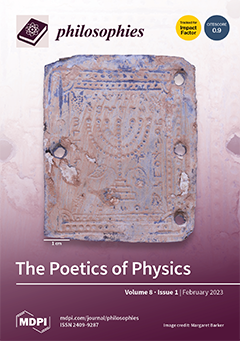
Cover Story (view full-size image):
The establishment of knowledge is challenging, since humans often make mistakes and certainty can never be secured. How then does science work? This topic evokes an image of an artefact bearing a script that was last used in 135 CE, but was commonly used prior to 500 BCE. We interpret this artefact as a physical mnemonic of an ancient view of knowledge (predating the Hellenic period), illuminated by a close discussion of the semantic development of the idea of “entropy” over the last 150 years. We conclude that how we know things is comparable for both poets and physicists. Mathematics is required to expose logical consequences, but words are required to illuminate meaning. Although poets relish ambiguity where scientists seek to minimise it, the very project of science depends on the understanding of the meaning of the world around us. In the end, reality is elusive. View this paper
- Issues are regarded as officially published after their release is announced to the table of contents alert mailing list.
- You may sign up for e-mail alerts to receive table of contents of newly released issues.
- PDF is the official format for papers published in both, html and pdf forms. To view the papers in pdf format, click on the "PDF Full-text" link, and use the free Adobe Reader to open them.
Previous Issue
Next Issue
