


Abstract
A spatial awareness is a fundamental aspect of dance, reflecting deep philosophical ideas and aesthetic values across different cultures. While existing studies often focus on theatrical or biomechanical analyses, few explore how material cultural artifacts, such as pottery and porcelain figurines, reveal spatial differences in dance. This study addresses this gap by comparing Chinese pottery figurines from the Neolithic to Tang dynasties with Western Meissen porcelain dancers from the 18th century onward, applying a three-dimensional framework of “Movement Scheduling Space—kinetic space—expressive space.” Drawing on Confucian principles of “Harmony between Heaven and Humanity” and Christian notions of transcendence, the research examines how cultural traditions shape the spatial expression in dance. The findings show that Chinese dance emphasizes inward, upper-body movements extending from two-dimensional to one-dimensional space, reflecting a centripetal, earthly orientation. In contrast, Western dance expands from two-dimensional to three-dimensional space, emphasizing outward, lower-body movements symbolizing transcendental aspirations. Additionally, Chinese dance focuses on subtle hand gestures, while Western dance highlights expressive foot movements. By integrating artifact-based analysis with cultural and philosophical interpretation, this study offers a fresh approach to comparative dance philosophy, providing valuable insights for the reinterpretation of traditional aesthetics in modern choreography.
1. Introduction
Dance, as an art of the body, is essentially the dynamic expression through bodily language by the dancer, conveying emotions and culture within time and space. Rudolf Laban, a foundational figure in modern dance movement analysis and notation [1], regarded “space” as the crucial environment in which the “effort”1 of movement is generated, arguing that the dynamic essence of dance is constituted by the interplay of time, force, and space [2]. Mary Wigman, a pioneer of modern dance, likewise emphasized that “time, space, and force”2 are the three essential elements of the art of dance, and that “space is the kingdom where the dancer’s actual activity unfolds”3 [3]. This theoretical framework provides a crucial foundation for analyzing the spatial consciousness of dance. However, current research mainly focuses on theater space or biomechanics analysis, with few scholars exploring the spatial consciousness differences between Eastern and Western dance through the lens of material cultural carriers (such as ceramic images). In particular, the application of ceramic images in dance history and cultural studies is relatively weak, especially lacking systematic comparative analysis from the spatial dimension.
As one of the earliest recording mediums for humans, images carry the direct expression of ancient people’s life and beliefs. In the ancient world, lacking digital technology, dance motifs on ceramics became crucial empirical materials for preserving dance forms. The painted dance motifs on Neolithic pottery in China (such as the dance-patterned pottery basin excavated from Datong County, Qinghai) and Han and Tang terracotta figurines, as well as the ballet porcelain figurines of Meissen ceramics from Europe, all freeze different cultural interpretations of dance space in unique artistic forms. The dance motifs on ancient Chinese painted pottery are often created with intaglio lines or mineral pigments, such as the black-painted technique on the Qinghai dance-patterned pottery basin, whose smooth lines echo the bodily rhythms in primitive sacrificial rituals. In contrast, the dance figures of Meissen porcelain rely on high-temperature firing techniques of European hard porcelain, with underglaze painting and three-dimensional shaping, giving the dancers’ postures more three-dimensional tension. These images are not only “living fossils” of dance history but also key codes for decoding the spatial consciousness and cultural concepts of both Eastern and Western cultures. However, there is still a lack of cross-cultural comparative studies on ceramic dance images, especially those with systematic analysis from the spatial dimension.
In recent years, academic circles have gradually paid attention to the relationship between material culture and bodily practice. For example, Zhang Tingjia (2024) [4] analyzed the aesthetic evolution of long-sleeved dance using Han dynasty dance images as research material; Du Landuo and Guo Hanfan (2024) [5] focused on the Han dynasty musical and dance figurines from Sichuan, exploring their artistic characteristics and the aesthetic consciousness of the Shu people4. F. Naerebout (2023) [6] explored the dance forms and ritual space in Greece through images and other material materials. However, existing studies are mostly limited to single cultures or historical periods, lacking systematic cross-temporal and cross-spatial comparisons. Based on this, this paper, in terms of methodology, for the first time takes ceramic images as core empirical materials, combining Laban’s “force effect” theory5 with François Delsarte’s system of action classification6, and constructs a three-dimensional analytical framework of “movement scheduling space—kinetic space—Expressive Space of Movemente”; theoretically, it breaks through the singular perspective of art studies, integrating Confucian “unity of heaven and man” (tian-ren-he-yi)7 thinking with Christian “aspiration for heaven” concepts, as well as the interaction between geographical environment and social structure, revealing the mechanism of cultural traditions shaping dance space consciousness. In terms of materials, it systematically compares Chinese terracotta figurines from the Neolithic period to the Tang dynasty with Meissen porcelain8 figurines from the 18th century onwards, filling the gap in cross-temporal and cross-regional dance image studies. China’s agricultural civilization’s dependence on land reinforced the “Active engagement in social life and secular affairs” (ru-shi)9 tendency, with centripetal dance movements being associated with the stability of settled societies. In contrast, the mobility of European maritime civilization and city-state competition fostered an outward-looking culture, with centrifugal movements implying a desire to explore unknown realms. Furthermore, the centralized management of the Han dynasty’s music and dance institutions led to the formalization of court dance, while the aristocratic patronage system of Western ballet encouraged breakthroughs in individual technique, with social power structures also shaping the differences in spatial expression.
This study focuses on the research question: what are the specific differences in Movement Scheduling Space10, kinetic space, and expressive space in ceramic dance images between Eastern and Western cultures? How do these differences reflect the Confucian “Active engagement in social life and secular affairs” spirit and the Christian pursuit of the “transcendent,” as well as the interactions of multiple factors such as geography and society? How does ceramics, as a material carrier, mediate between dance art and cultural concepts?
The study selects two types of samples: the first is typical ancient Chinese ceramics (such as the Qinghai dance-patterned painted pottery basin and Han-Tang musical-dance figurines), focusing on sacrificial and court dances. The second type is Meissen porcelain ballet figurines (such as Paul Scheurich’s “Russian Ballet” series), representing the aesthetic paradigm of Western classical dance. In this article, references to “Western dance” primarily denote spatial tendencies associated with late eighteenth- and nineteenth-century Western classical ballet, rather than Western dance practices as a whole. Through image analysis, this study examines three pairs of contrasting categories—“centripetal–centrifugal,”11 “extension–contraction,” and “hand dance–foot dance”—to reveal the distinctions in spatial consciousness between Eastern and Western dance. It should be noted that the centripetal–centrifugal distinction employed here refers to the external spatial orientation and visual force trajectory of movement, rather than to the internal biomechanical organization of the dancer’s body; in practices such as classical ballet, expansive centrifugal spatial expression is often supported by strong centripetal core control and axial stability. The theoretical and practical significance of this study lies in providing a dual “image–culture” perspective for dance history research, expanding the study of the relationship between material culture and bodily practice. Moreover, by comparing spatial consciousness, it offers historical reference for contemporary cross-cultural dance creation and teaching, promoting the modern transformation of traditional aesthetics.
2. Attachment Versus Withdrawal: Differential Patterns in Movement Scheduling Space
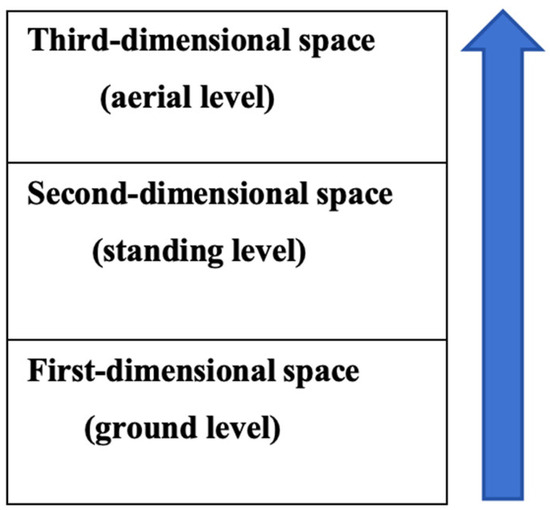
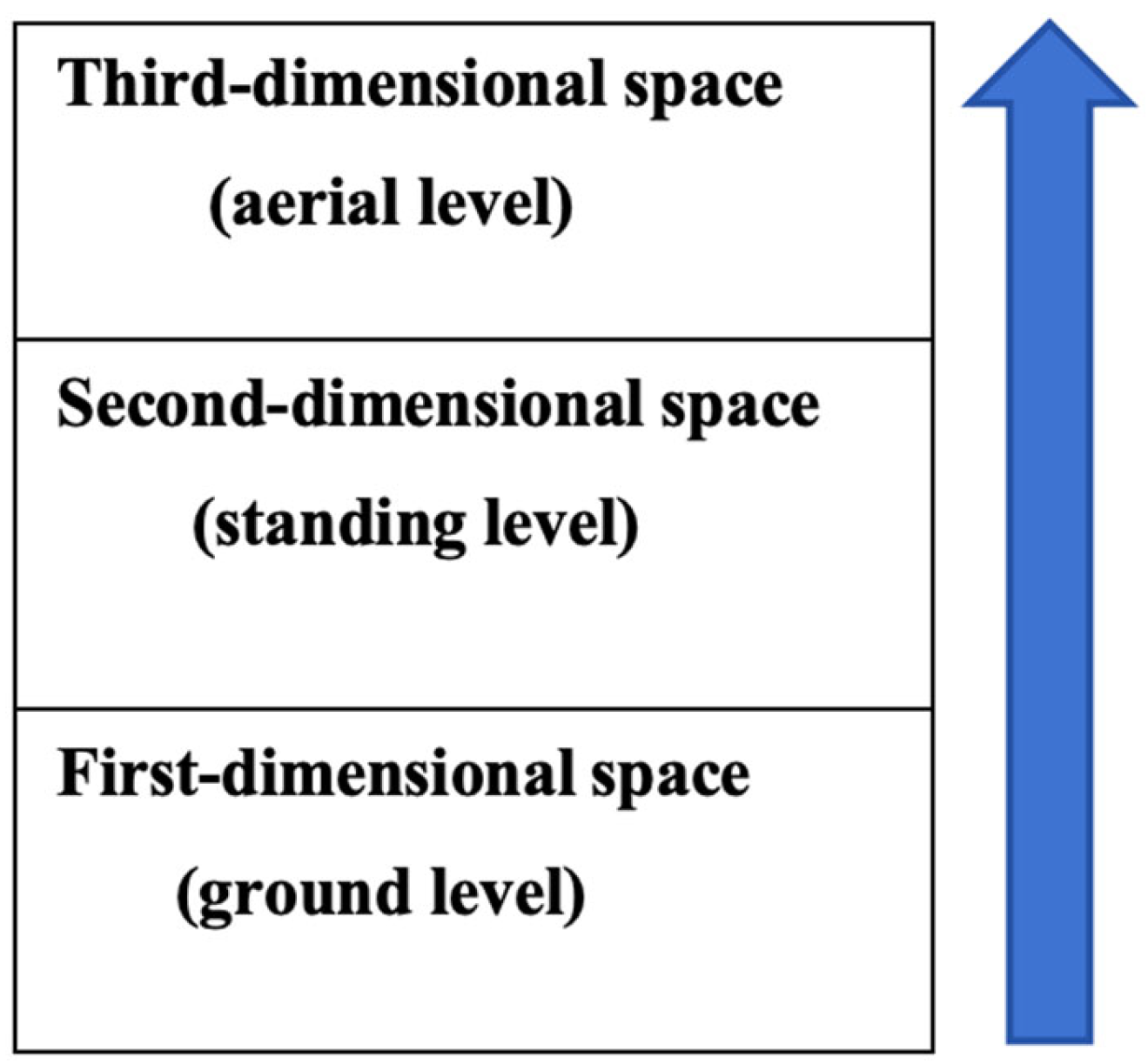
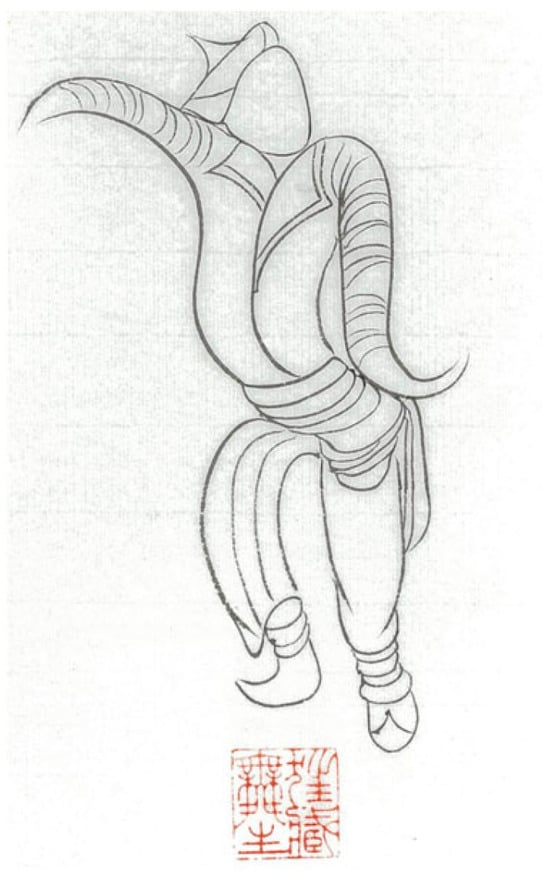
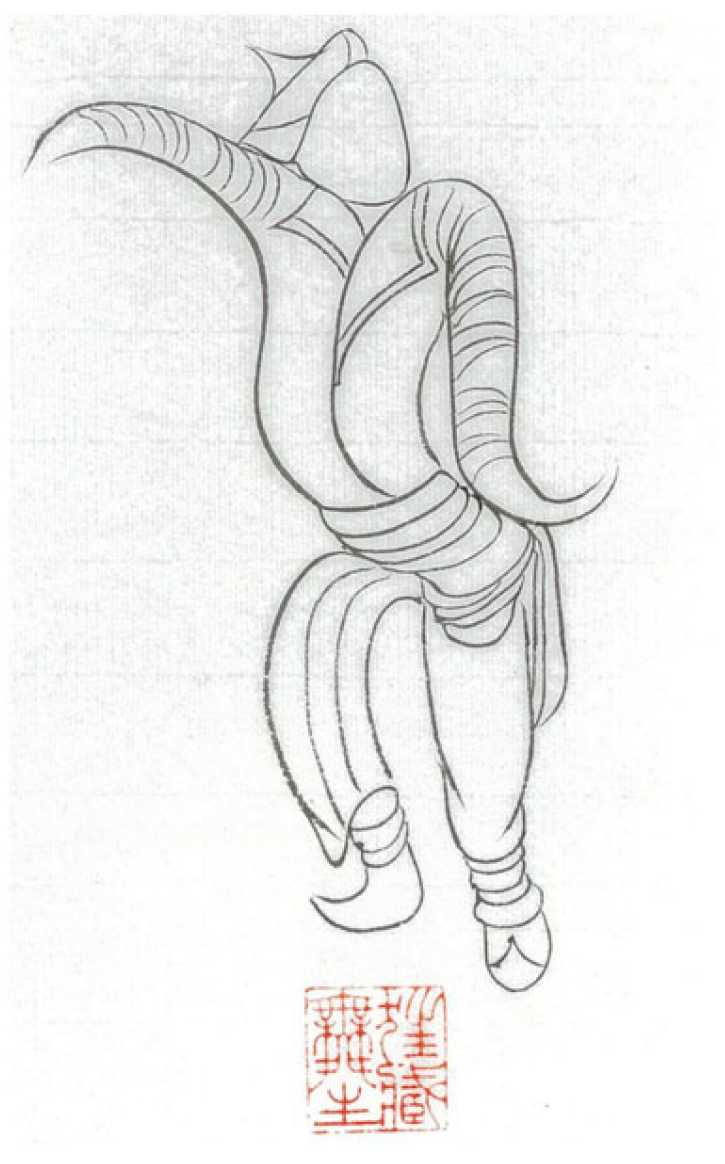
In geometry, one-dimensional space exists solely in human imagination and is inherently linear. Two-dimensional space is planar, and artistic forms such as painting and calligraphy manifest within this space. Three-dimensional space is volumetric, extending across length, width, and height; it constitutes the objective realm of bodily existence and movement, serving as the spatial stage for dance performance and presence. In other words, three-dimensional space functions as the “stage” upon which dance exists in the world. By segmenting this “stage” vertically from bottom to top, using the dancer’s contact with the ground as a reference, it can be classified into three spatial levels. The first-level space refers to the ground plane. Movements in this space generally do not rely on the feet as the primary support; instead, other parts of the body make direct contact with the ground, as in lying, prone, or kneeling positions. The second-level space represents the most commonly employed standing space, wherein the feet act as the primary support and the body maintains an upright posture, corresponding to medium-level movements. The third-level space denotes elevated movements, such as jumps or lifts, where parts of the body are not in contact with the ground (Figure 1). This classification is based not only on physical height but also implicitly conveys deeper cultural perceptions of space. Movements performed across different spatial levels exhibit distinct tension and aesthetic qualities, which in turn reflect underlying ideological and aesthetic orientations.
Figure 1.
Example of the three-dimensional division of dance movements (Self-drawn by the author).
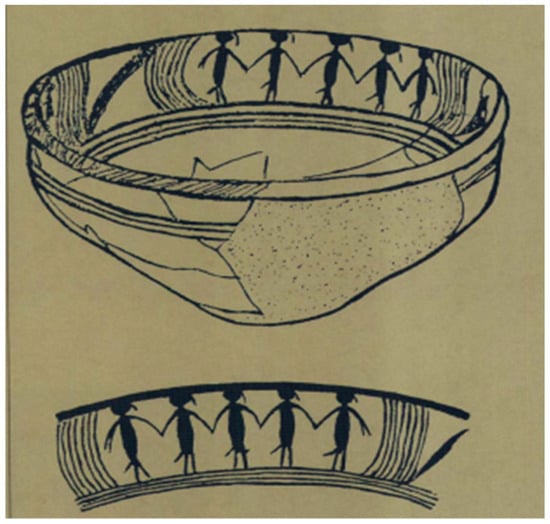
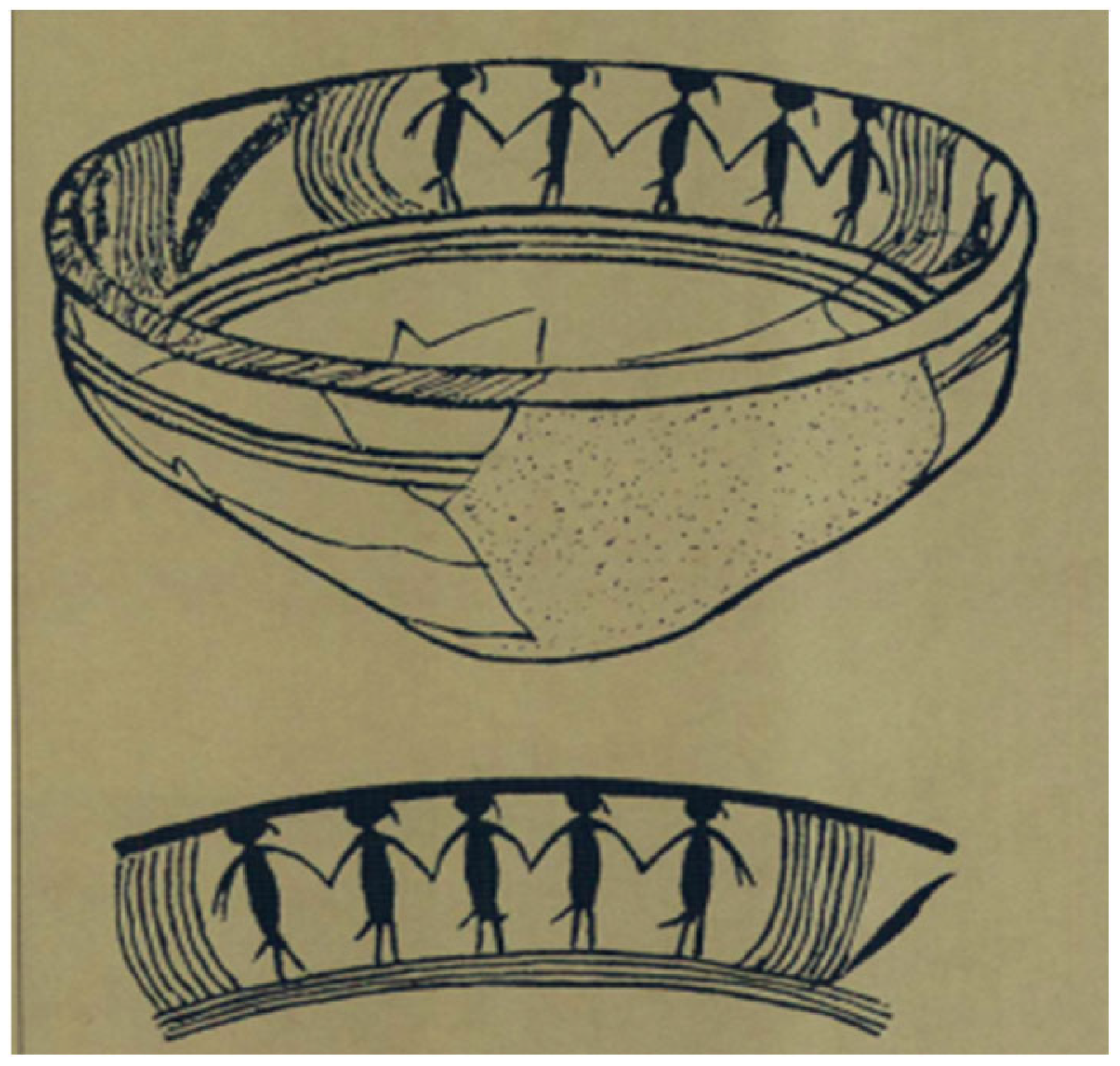
During the Neolithic period, early Chinese communities produced various ceramics adorned with decorative motifs, among which the dance patterns represent the earliest known dance imagery in China, playing a crucial role in tracing the origins and development of early Chinese dance. The dance-patterned painted pottery unearthed in 1973 from Datong County, Qinghai (Figure 2), due to its exceptional historical and artistic value, has been classified as one of China’s cultural relics “prohibited from leaving the country for exhibition.” The interior walls are decorated with three sets of dance images, each comprising five figures holding hands and moving in synchrony, forming a “linked-arm stepping dance” pattern, which corresponds to dance motifs found on other contemporaneous pottery. These depictions indicate that the dance movements recorded on early pottery primarily occur within the second-level space, and the “stepping” motion involves lowering the center of gravity of the legs. Consequently, the movement scheduling of early Chinese primitive dance is situated in the second-level space, with the posture extending downward toward the first-level space.
Figure 2.
Dance pattern colored pottery basin excavated in Datong County, Qinghai (New Period era) [9] (p. 3).
This typical pattern of movement scheduling continued into the Han and Tang dynasty pottery figurines. Ceramic dance figurines were funerary objects intended to substitute for living attendants in burial rites; consequently, their sculpted postures are vivid and lifelike, striving to replicate the appearance of living individuals. Influenced by Xunzi’s12 notion of “treating the dead as one would the living,” (shi-si-ru-shi-sheng)13 these burial dance figurines not only reflect the desire for the deceased to continue enjoying music and dance after death but also symbolize the tomb owner’s social status, identity, and wealth during life. Unlike the flat dance images found on Han dynasty pictorial bricks and stones, this form of dance imagery exists in three-dimensional space, viewable from all sides, possessing irreplaceable artistic value and serving as a critical empirical resource for contemporary study of ancient musical and dance practices.
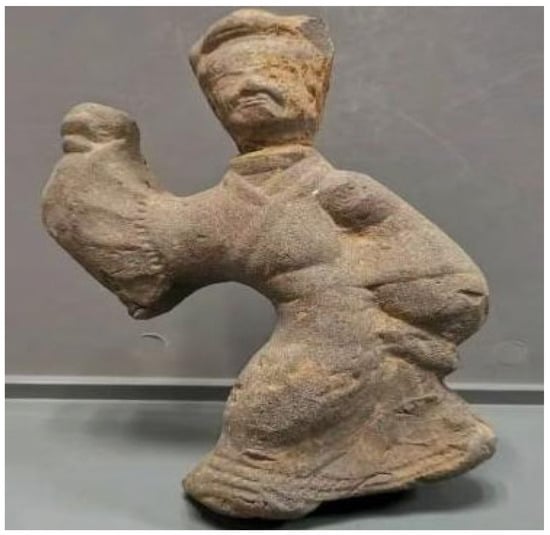
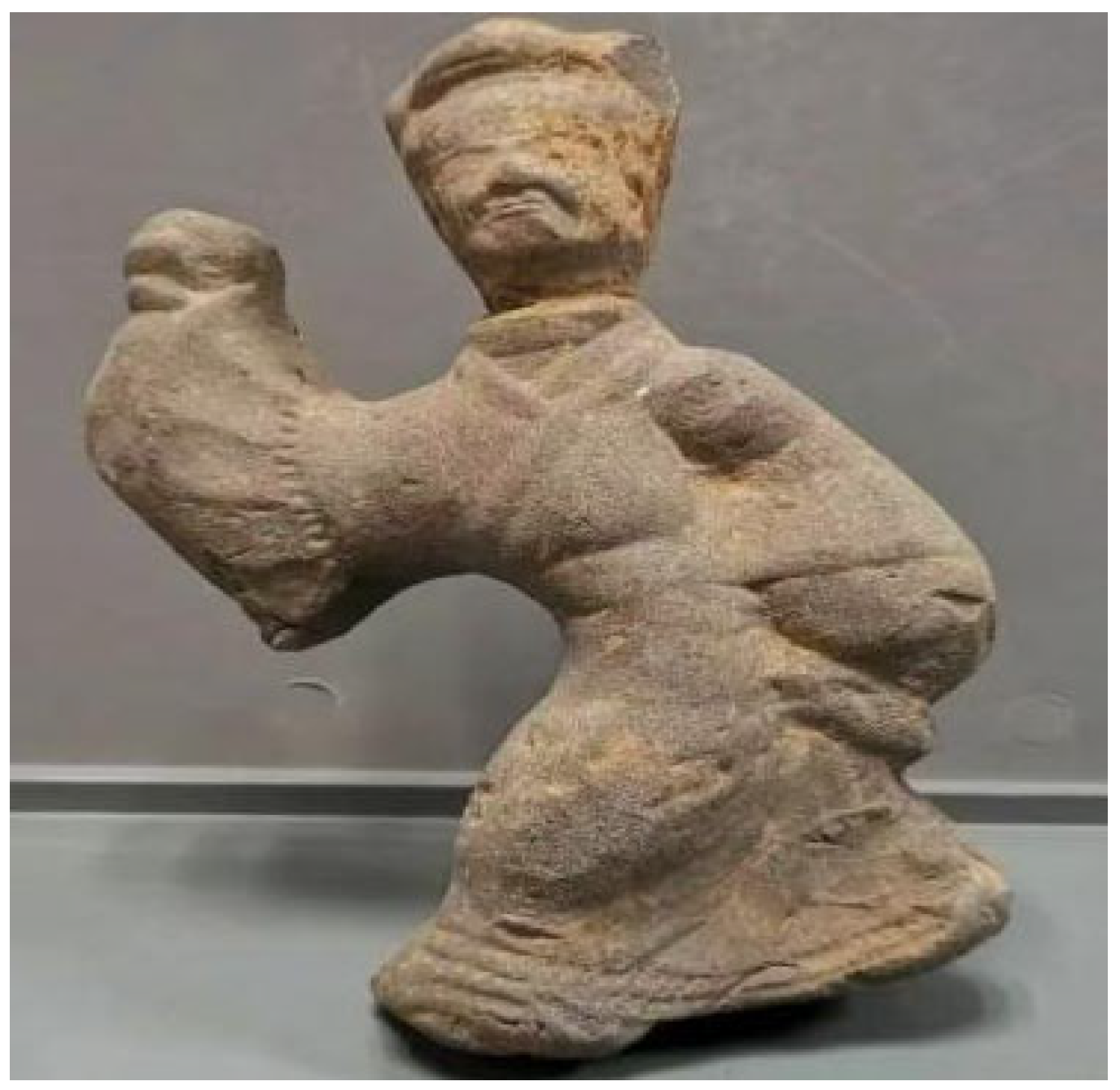
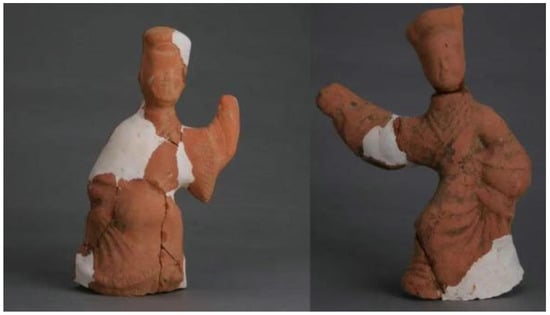
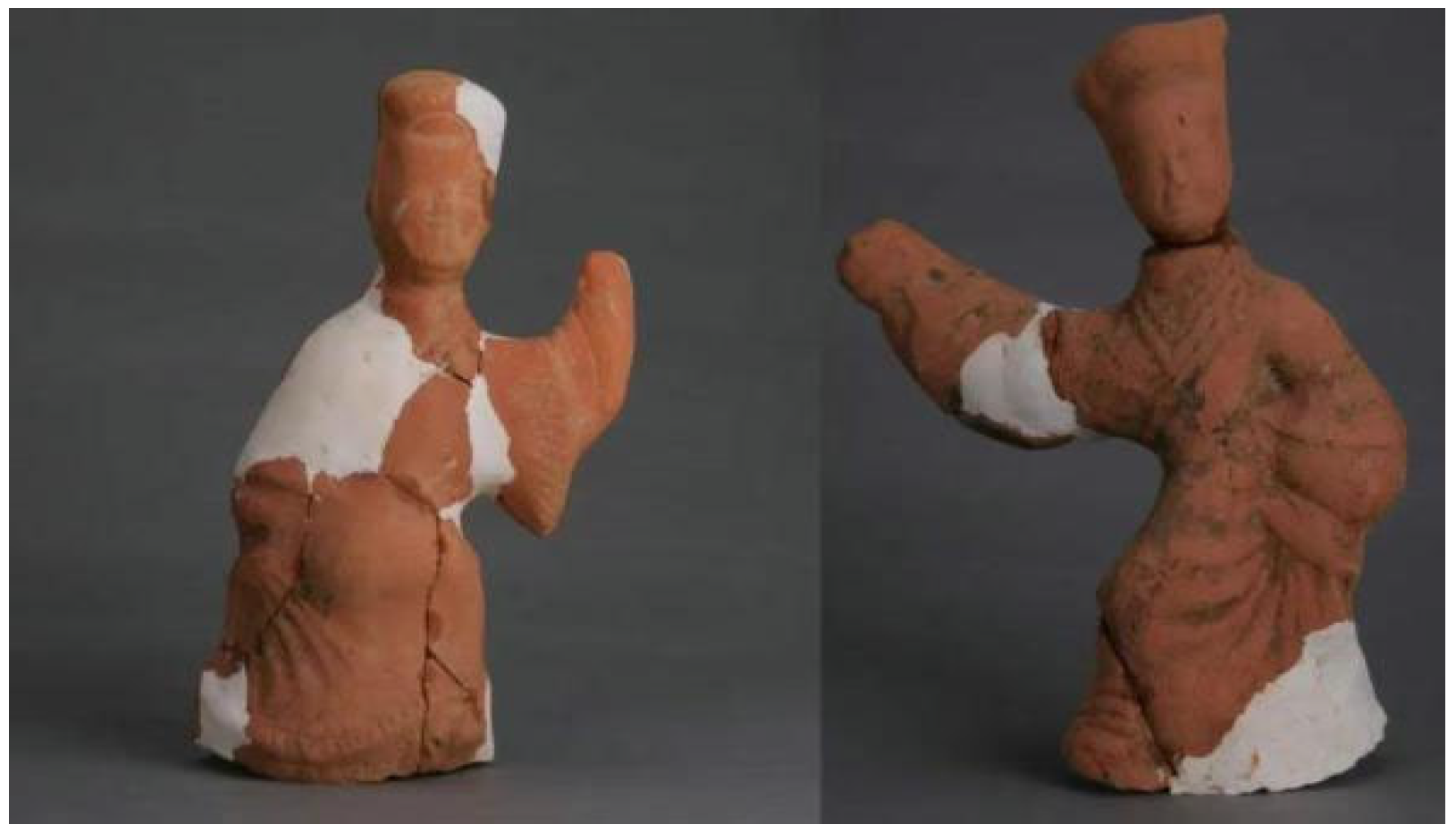
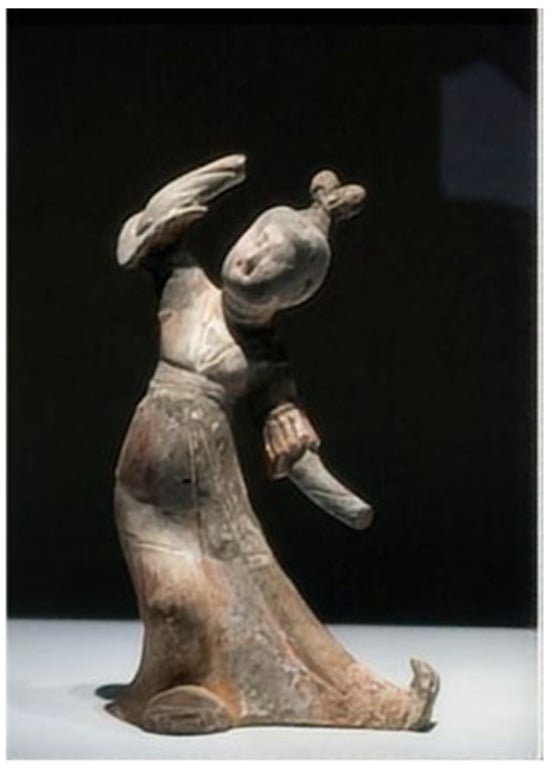
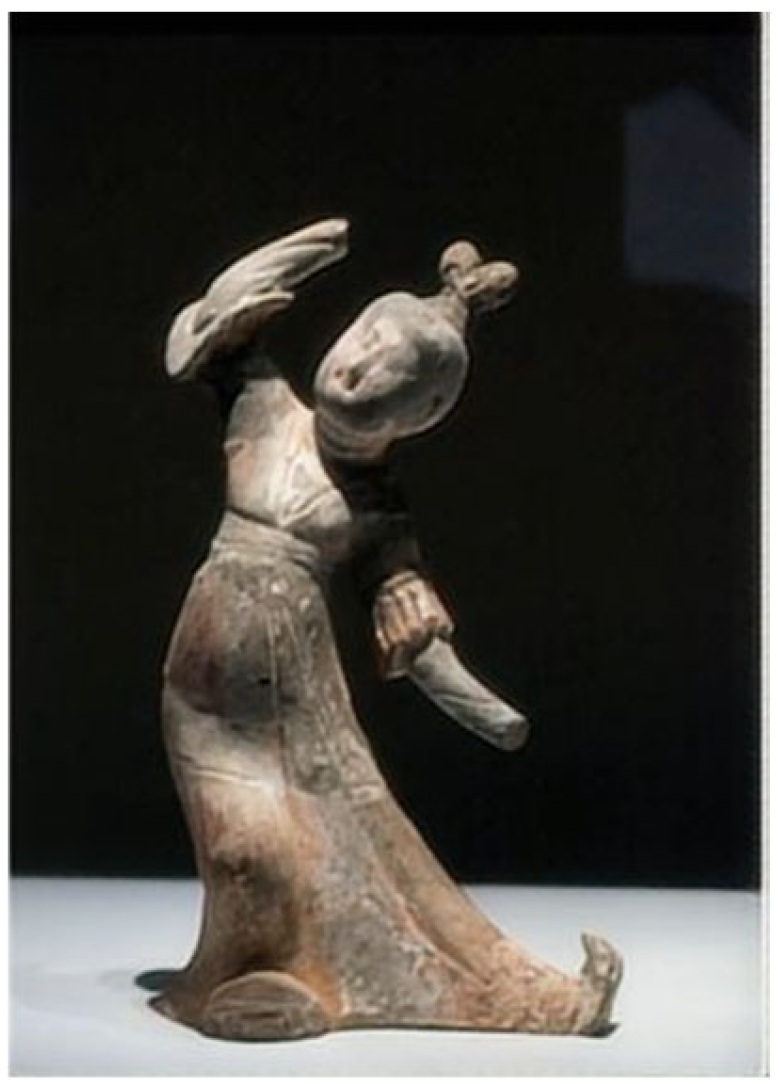
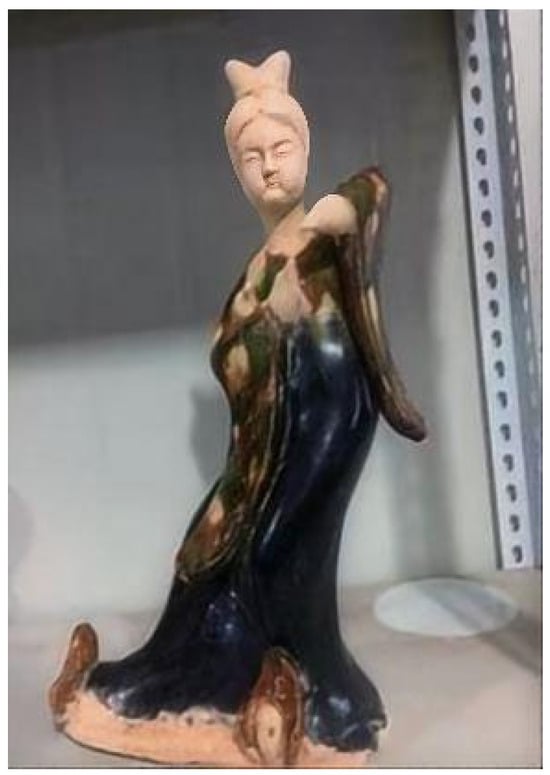
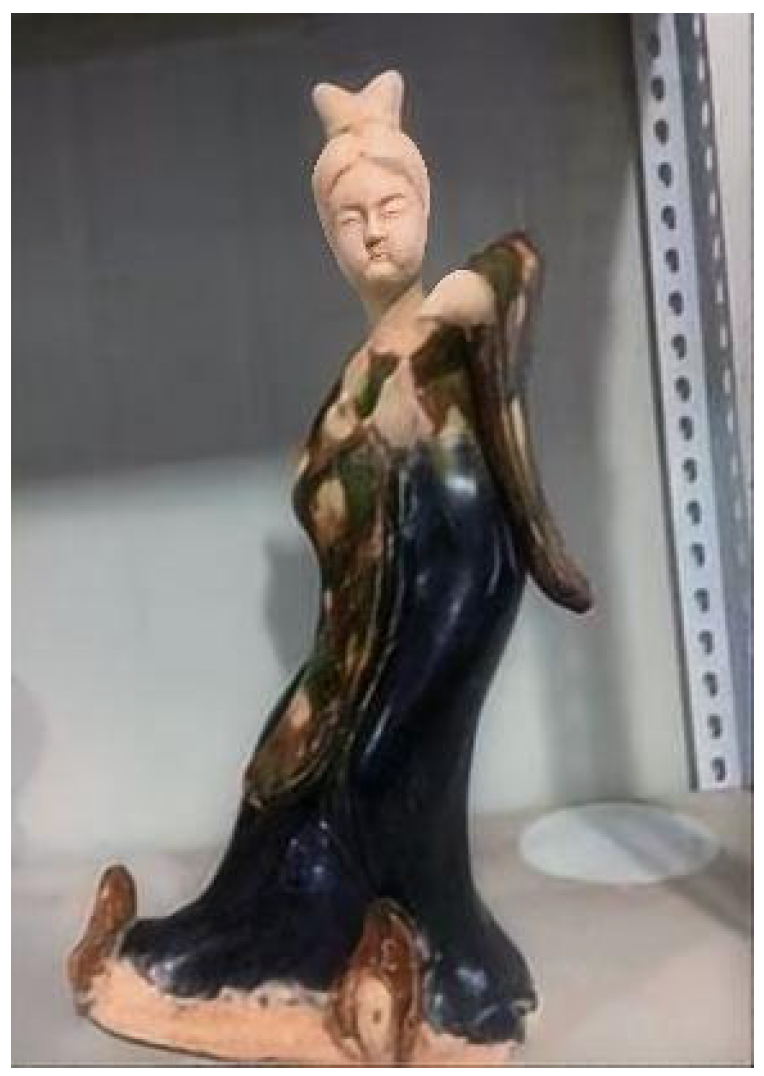
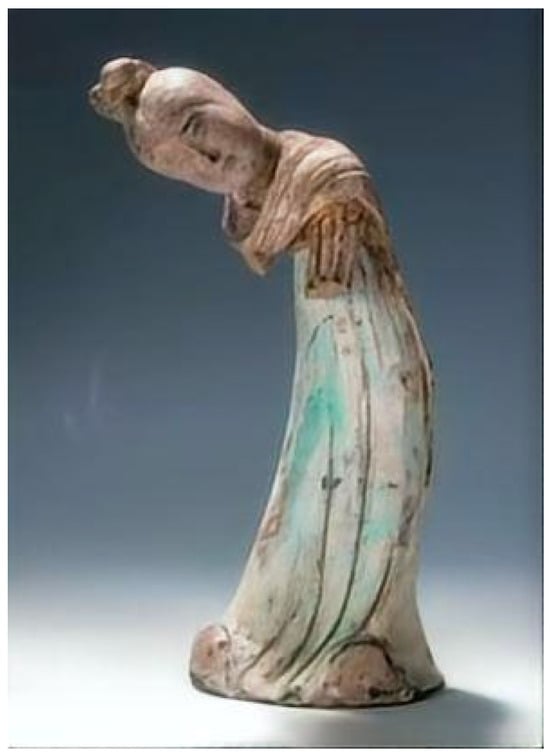
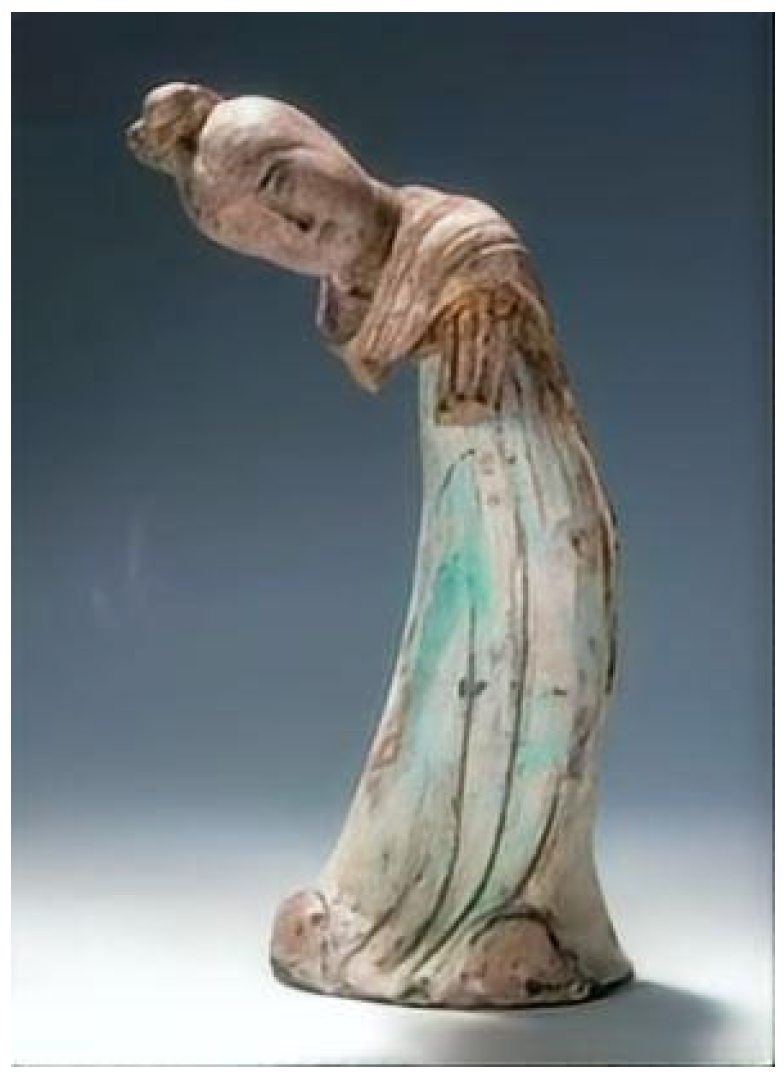
The Han dynasty, a renowned era of unification in Chinese history, witnessed prosperity across politics, military affairs, culture, and the economy, presenting a flourishing picture of national strength. The Qin dynasty’s unification consolidated the music and dance traditions of the “Seven States”14 within the capital. Building upon these foundations, the Han dynasty brought their development to a new height. Under Emperor Wu, the imperial Yuefu (Music Bureau)15 was established to oversee music and dance. Female performance troupes (nv-yue)16 expanded, the ruling elite indulged in music and dance, and a culture of spontaneous dancing spread widely among the populace. The Tang dynasty represented the pinnacle of music and dance in China. The migration and integration of diverse ethnic groups during the Wei, Jin, and Northern and Southern Dynasties facilitated frequent artistic exchanges, thereby laying the groundwork for the remarkable flourishing of dance in the Tang era. Consequently, the dances of the Han and Tang dynasties embodied the highest artistic achievements of ancient Chinese performance. The analysis of ceramic dance figurines from this period thus serves as a key lens through which the fundamental choreographic forms and aesthetic tendencies of ancient Chinese dance may be discerned. Figurines from the Han and Tang dynasties typically exhibit the posture of “raised sleeves and bent waist (qiao xiu zhe yao),”17 suggesting its popularity as one of the most favored poses in ancient dance. Despite variations in the direction and intensity of the raised sleeves or the curvature and angle of the bent waist, the choreographic space underlying these movements remained largely consistent. For instance, the gray pottery figurine unearthed from Tomb No. 2 at the Kazibao cemetery in Fengdu (Figure 3), the red pottery figurine from Tomb No. 12 at the Shanbao cemetery in Ranjialukou, Fengdu (Figure 4), and several Tang sancai (three-colored glazed)18 dance figurines (Figure 5, Figure 6 and Figure 7) all display trailing skirts that reach the ground. These works employ the second-dimensional space as their foundation, while movements such as squatting and leaning generate a dynamic oriented downward.
Figure 3.
Gray Terracotta Dancers (Eastern or later Han dynasty, 25–220) [10].
Figure 4.
Red Terracotta Dancers (Eastern or later Han dynasty, 25–220) [10].
Figure 5.
Tang Three-colored Terracotta Dancers [9] (p. 107).
Figure 6.
Tang Three-colored Terracotta Dancers [9] (p. 107).
Figure 7.
Tang Three-colored Terracotta Dancers [9] (p. 107).
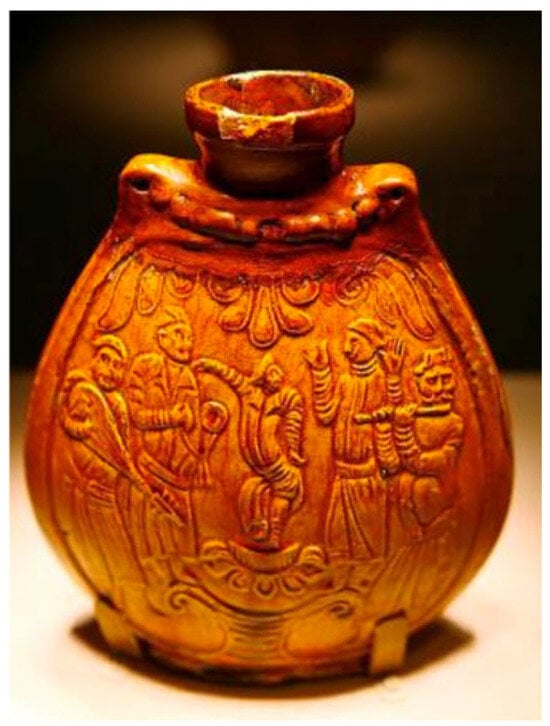
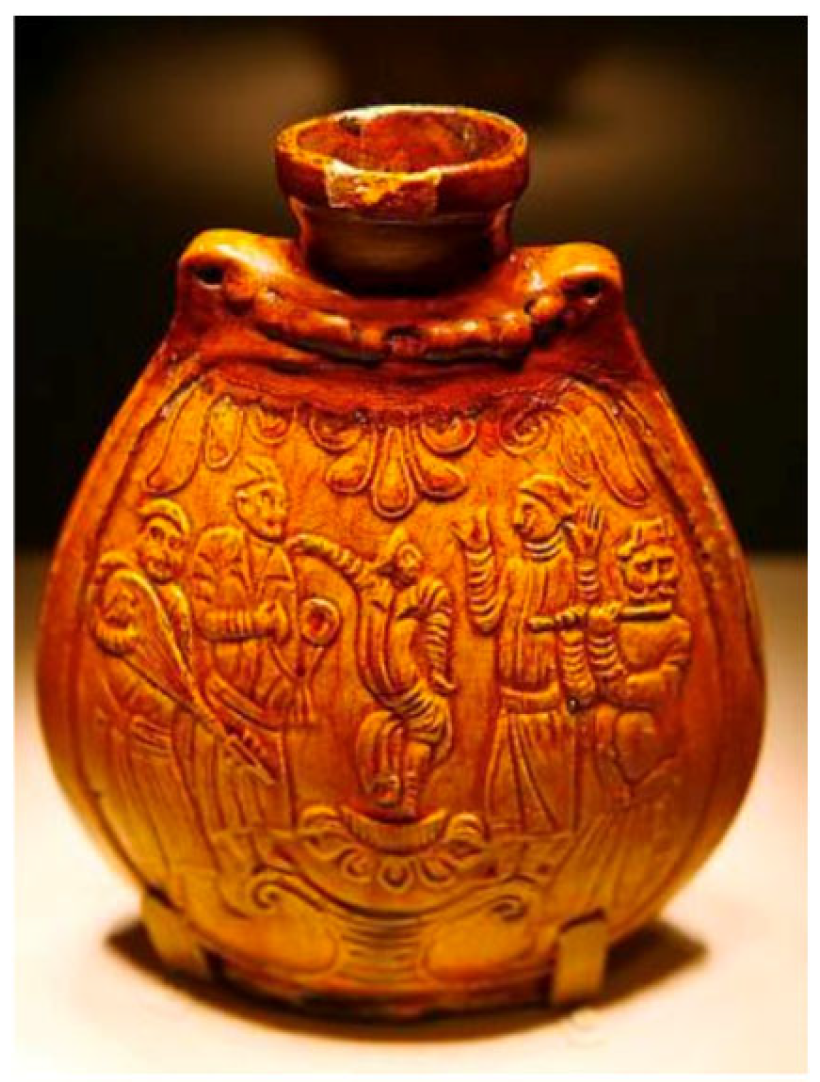
It is particularly noteworthy that the yellow-glazed Hu Teng dance ewer unearthed from the Northern Qi Fan Cui tomb in Anyang, Henan (Figure 8), while depicting Hu Teng dance postures (Figure 9) that break from the static inward-folded poses of Han and Tang dynasty figurines by presenting leaping and airborne movements, nevertheless follow an “ascend–descend” cyclical trajectory, ultimately returning to the ground. This cyclical motion subtly implies the agrarian civilization’s deep-seated reliance on the stability of the land and its rooted connection to settled agricultural life. This “earthward orientation” resonates with the Confucian entering-the-world (jian tu wei an)19 spirit—dance in this context functions not merely as a physical expression of the body, but also as an embodied celebration, affirmation, and maintenance of secular life, reflecting the intertwined relationship between corporeal artistry and social-cultural values in ancient China.
Figure 8.
A yellow-glazed ‘Huteng dance’ flat pot [11].
Figure 9.
‘Huteng dance’ posture [11].
The dance imagery depicted on these Chinese ceramics records representative movements of ancient Chinese dance, with the choreography’s spatial arrangement presented within the two-dimensional plane of the stage façade, while the center of gravity and posture of the movements extend from this two-dimensional space toward the one-dimensional ground plane. In contrast, the spatial arrangement of dance movements depicted on Western ceramics differs markedly from this pattern.
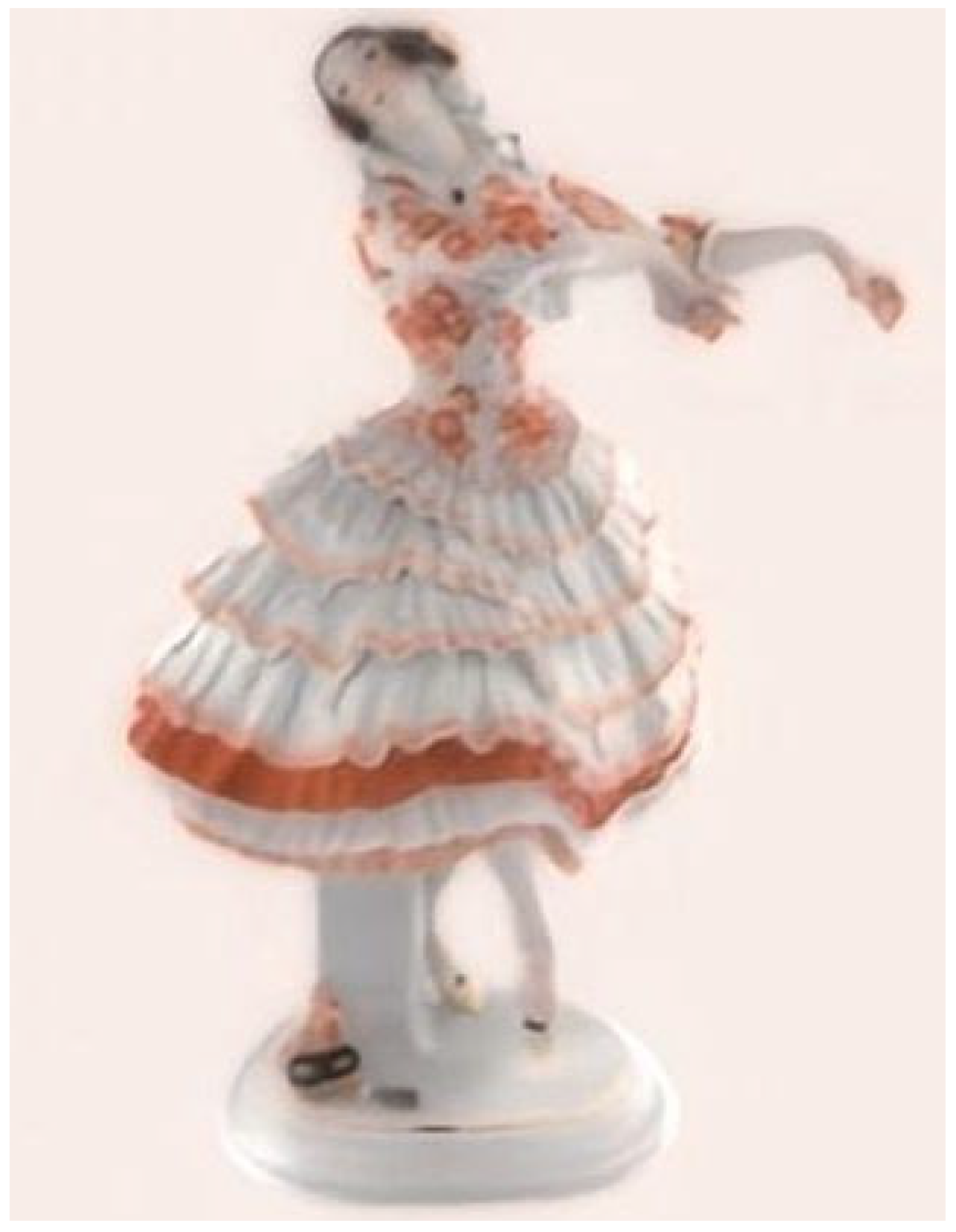
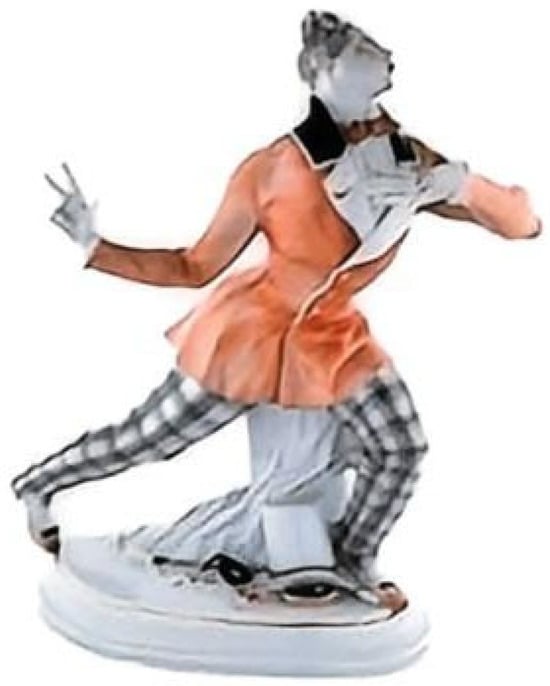
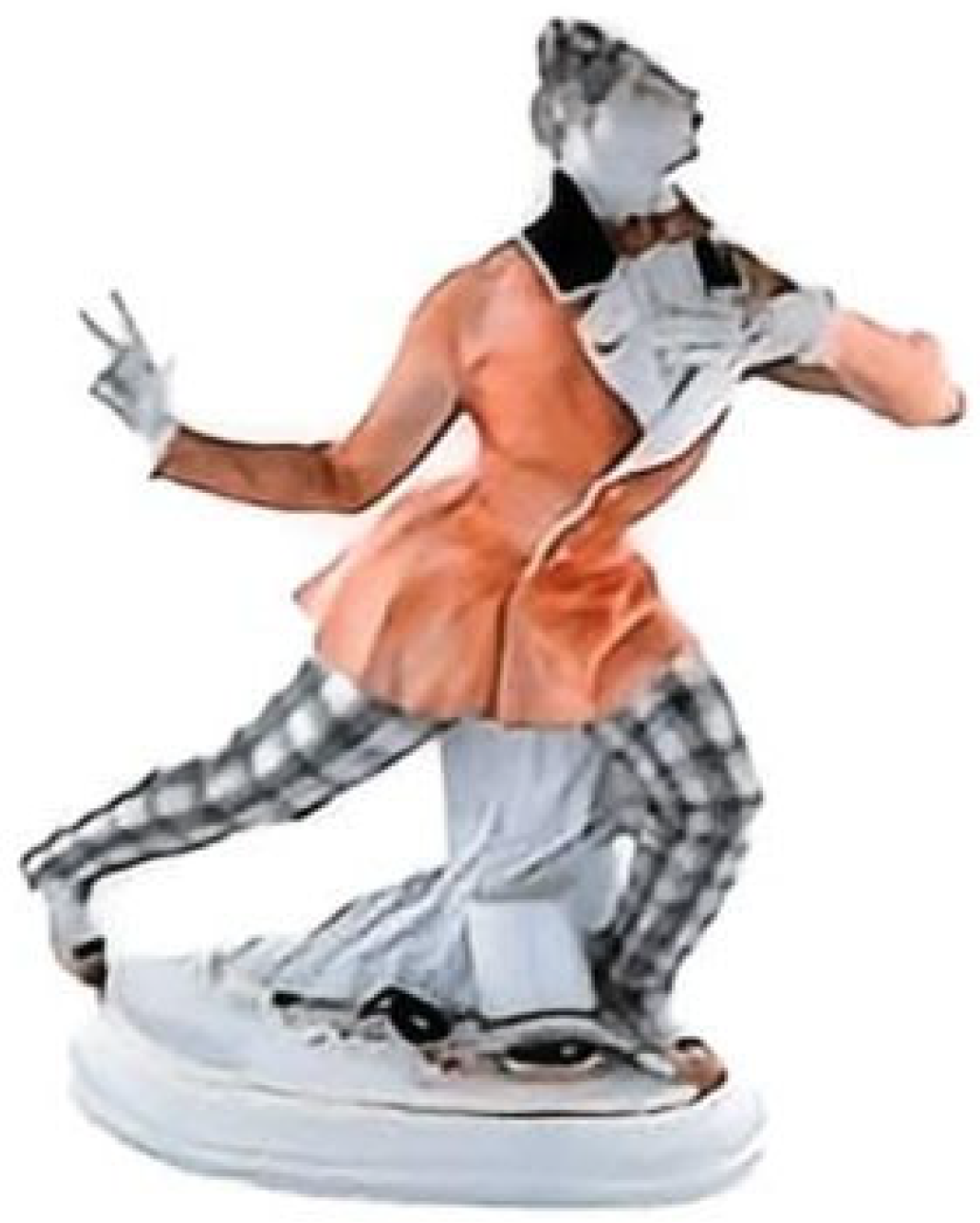
Over the past three centuries, Meissen porcelain, acclaimed as Europe’s foremost porcelain, has made a vivid and influential mark on the history of Western ceramics. Meissen porcelain has long been favored by Western markets, which means that its designs epitomize Western aesthetic preferences in porcelain art. The dance motifs and three-dimensional figurines depicted on these porcelains also, to some extent, reflect Western concepts of dance spatiality. Unlike the step movements on Chinese ceramic dance motifs and figurines, which emphasize heel-down grounding and a lowering of the center of gravity, the porcelain figurines in Meissen porcelain depict dancers with raised toes and upright torsos, extending the choreography’s spatial arrangement from two-dimensional to three-dimensional space. The dancers’ bodies climb upward like twisting vines, striving to defy gravity, symbolically reflecting the Christian cultural aspiration for the eternal “Kingdom of Heaven.” For example, in 1912, Paul Scheurich created the Russian Ballet series for Meissen porcelain, comprising five Russian dancers. One female dancer (Figure 10) wears a petal-shaped skirt, lifts her chest and head, stands partly on tiptoe, and displays an upwardly extended posture. Another male dancer (Figure 11), although with bent knees in a lunge-like position, still lifts his head and chest, with the overall posture rising upward. It should be noted that the figurines selected here, including Fokine’s Le Carnaval, belong to the Diaghilev era—a period marked by significant departures from earlier classical ballet conventions and by heightened stylistic experimentation. Indeed, contemporaneous works from the same period complicate any singular characterization of Western dance. Scheurich’s porcelain figure of Pavlova’s Dying Swan presents a low-level, inward-folding posture, while Nijinsky’s choreography for The Rite of Spring emphasizes agrarian groundedness and inward-turning movement. These examples underscore that centrifugal expansion represents a dominant but not universal spatial tendency within Western classical dance traditions.
Figure 10.
Russian Ballet [12].
Figure 11.
Russian Ballet [13].
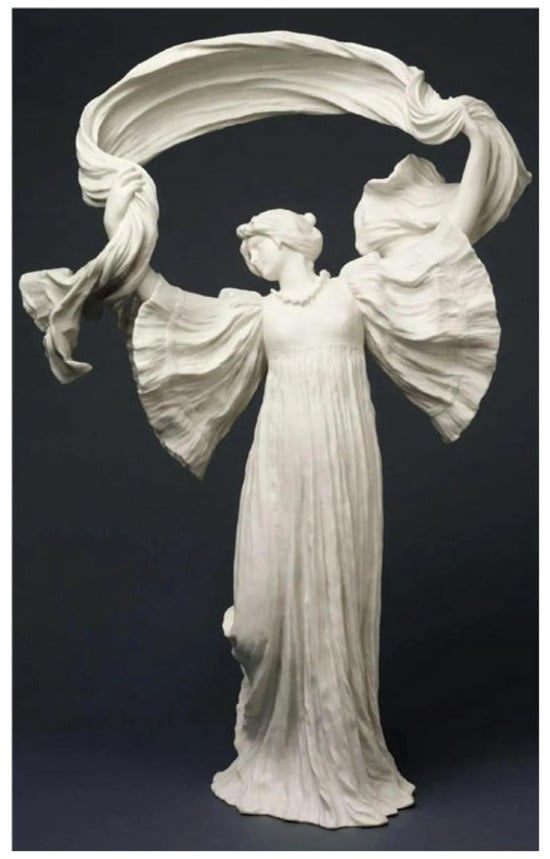
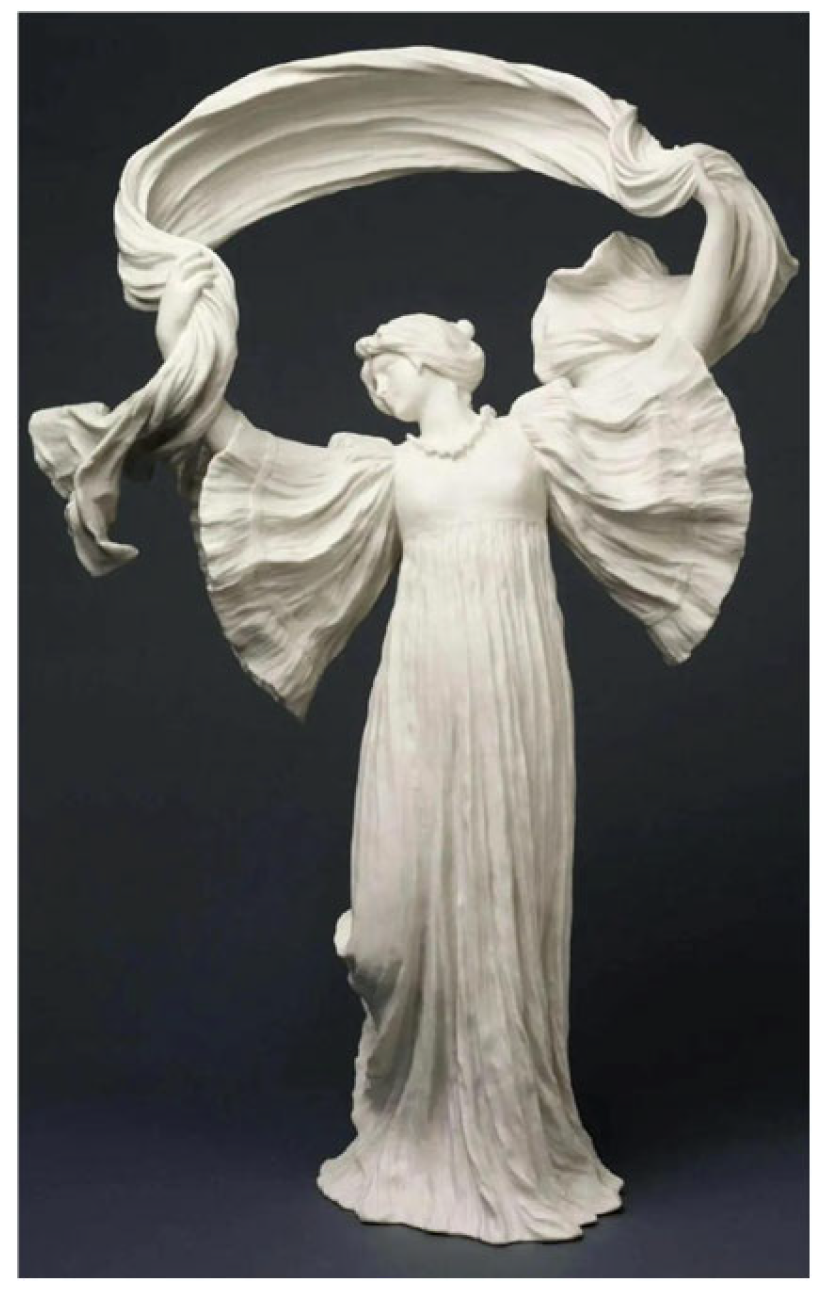
Further comparison can be made with the late 19th-century porcelain figurines of French sculptor Agathon Léonard, exemplified by The Ribbon Dancer (Figure 12). The modern dancers’ bodies, although not fully airborne, create a centrifugal tension through horizontal extension. This, combined with the vertical ascent of Meissen porcelain figurines, forms the Western tradition of “spatial outward projection” in dance. This difference in choreographic arrangement is rooted in the mobility inherent to European maritime civilization—city-state competition and overseas exploration fostered a desire to conquer external spaces, with dance serving as a metaphor for the body transcending physical limitations.
Figure 12.
Dancer with a streamer [14].
The differences in choreographic spatial arrangement between Chinese ceramic figurines and Western porcelain figurines are by no means the outcome of a single ideological factor; rather, they are the result of a convergence of geographical conditions, social structures, and technological practices. From a geographical perspective, Chinese dance imagery, shaped by the agrarian and sedentary lifestyle of the Yellow River basin, reinforced a collective consciousness of attachment to the land (an tu zhong qian)20, with the earthward orientation of dance movements serving as an embodied expression of land veneration. By contrast, in European dance traditions, the commercial networks along the Mediterranean coastline nurtured an ethos of mobility, with the airborne quality of dance movements implicitly conveying an exploratory impulse toward unknown territories. From a social structural standpoint, Chinese court dance during the Han dynasty, administered through the Yuefu system, underwent a process of standardization, as manifested in figurines frequently exhibiting the “raised sleeves and bent waist” (See note 17 above) posture, which restrained vertical spatial extension to some degree. In contrast, Western classical ballet, cultivated within aristocratic salons and public theaters, gradually developed techniques such as lifts and grand jumps, thereby expanding choreographic space into three dimensions. From a technological perspective, Chinese ceramic production, particularly the coiling construction method, imposed constraints on three-dimensional modeling, resulting in dance imagery that often appears planar or low-centered in form. By contrast, Western hard-paste porcelain techniques, especially mold-casting, favored sculptural modeling, enabling figurines to convey centrifugal tendencies in movement with greater precision.
The differences observed in the choreographic spatial arrangements represented in ceramic imagery should not be understood as the outcome of a single, uniform worldview but rather reflect historically situated tendencies in how Chinese and Western societies have conceptualized the relationship between the body, space, and the world. These divergences may be approached heuristically as embodying two contrasting cultural orientations: one emphasizing an “attachment to the secular world” and the other oriented toward forms of transcendence or symbolic departure from worldly existence. Such a distinction does not deny the multiplicity of philosophical traditions within each culture, but serves to highlight a dominant pattern relevant to the visual and spatial logic of the dance imagery examined here. The earthward-oriented and grounded movements frequently observed in Chinese dance imagery are closely associated with Confucian ethical thought among other intellectual and cultural influences and the agrarian ecological context of early imperial China. Within this framework, bodily orientation toward the ground resonates with longstanding emphases on self-cultivation, governance, and the harmonization of the social order (xiu-shen zhi-guo ping-tian-xia)21 as well as the principle of “Active engagement in social life and secular affairs” (rushi) (See note 9 above). Rather than implying an exclusive philosophical determination, these concepts provide one important lens through which the spatial groundedness of Chinese dance imagery may be interpreted. This orientation expresses a sustained concern for the lived world and its improvement through human effort, situating secular space as a meaningful cultural and existential reference point. In contrast, the lifted and airborne qualities characteristic of many Western dance traditions have often been interpreted in relation to Christian theological notions of transcendence, together with the expansive and outward-looking orientations fostered by maritime civilizations. Within Christian cultural discourse, orientation toward Heaven and the afterlife has historically played a significant role in shaping symbolic hierarchies between the earthly and the spiritual realms. It should be noted, however, that this transcendent orientation represents a historically influential tendency rather than a comprehensive or exclusive explanation for Western dance practices across all periods. Taken together, these observations suggest that dance space functions not merely as a configuration of physical dimensions, but as a historically embedded inscription of cultural values and philosophical orientations within the body. Through embodied artistic practice, spatial movement becomes a medium through which societies articulate, negotiate, and materialize their understandings of the world and humanity’s place within it.
3. Concentration Versus Expansion: Differential Patterns in Kinetic Space
The movement space of dance gestures refers to the physical range and energetic orientation occupied by the body in motion. The renowned 19th-century French dancer François Delsarte categorized movement into three modes: excentric, concentric, and normal [15]. With the body’s central axis as the reference point, excentric movements expand outward, away from the body’s center. Concentric movements contract inward, drawing toward the center. Normal movements remain centered, manifesting in stable postures and gestures. This tripartite classification provides a valuable theoretical tool for analyzing the spatial dynamics of dance. A comparison of movement trajectories in Chinese and Western ceramic imagery reveals a striking divergence between centripetal expression and centrifugal expression. Such differences arise not only from aesthetic preferences but also reflect the profound interplay between cultural paradigms and material technologies.
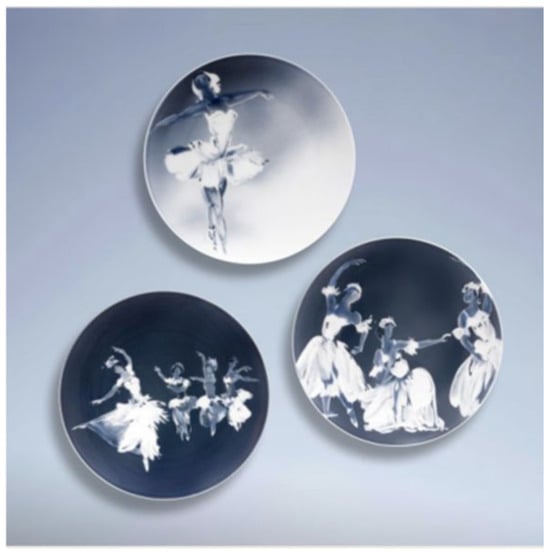
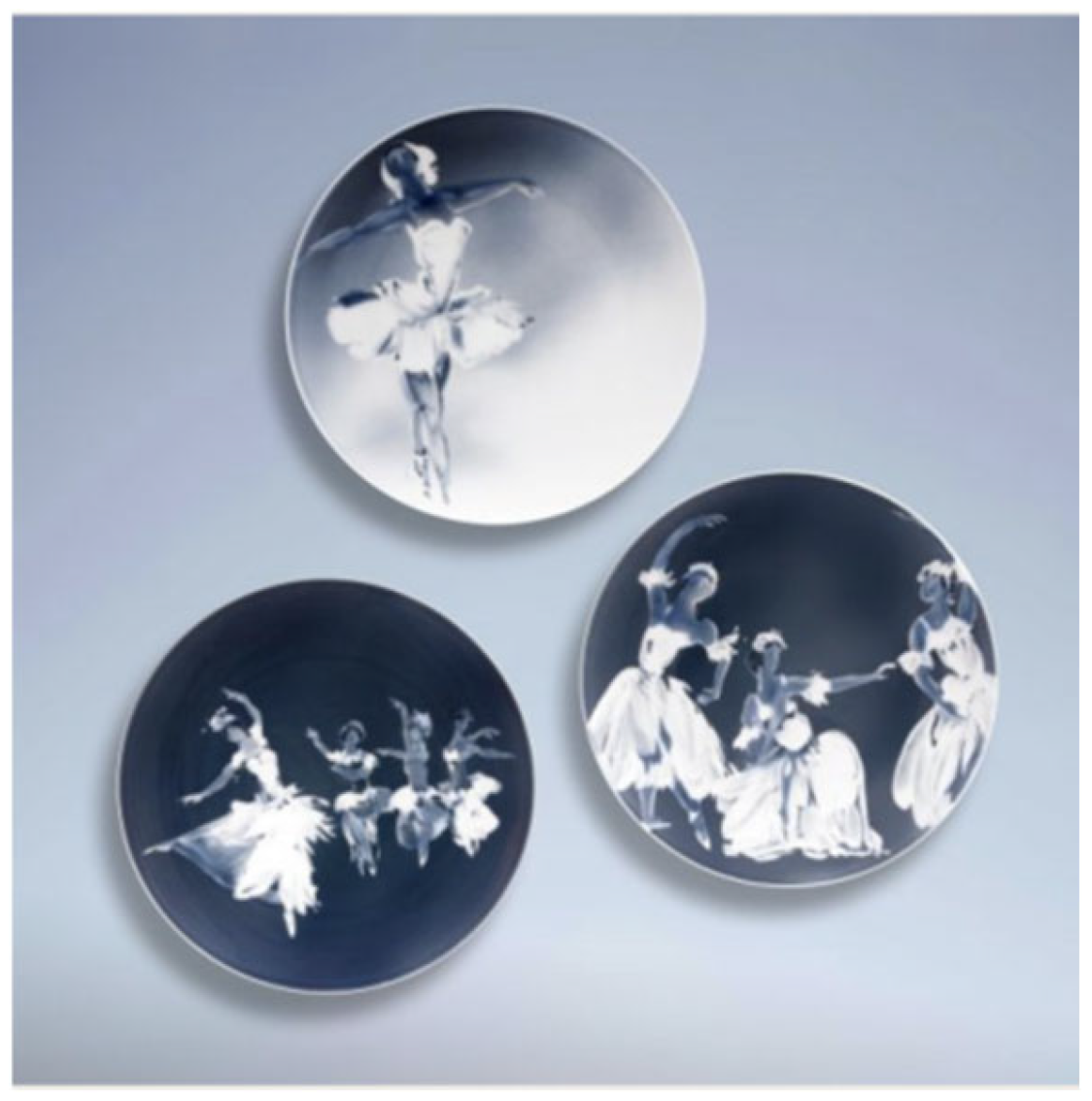
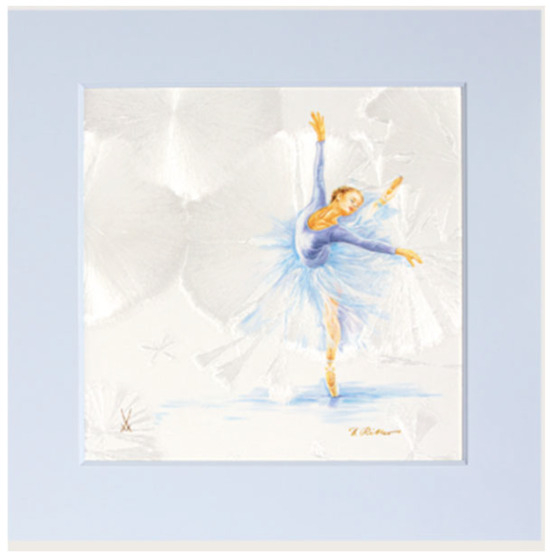
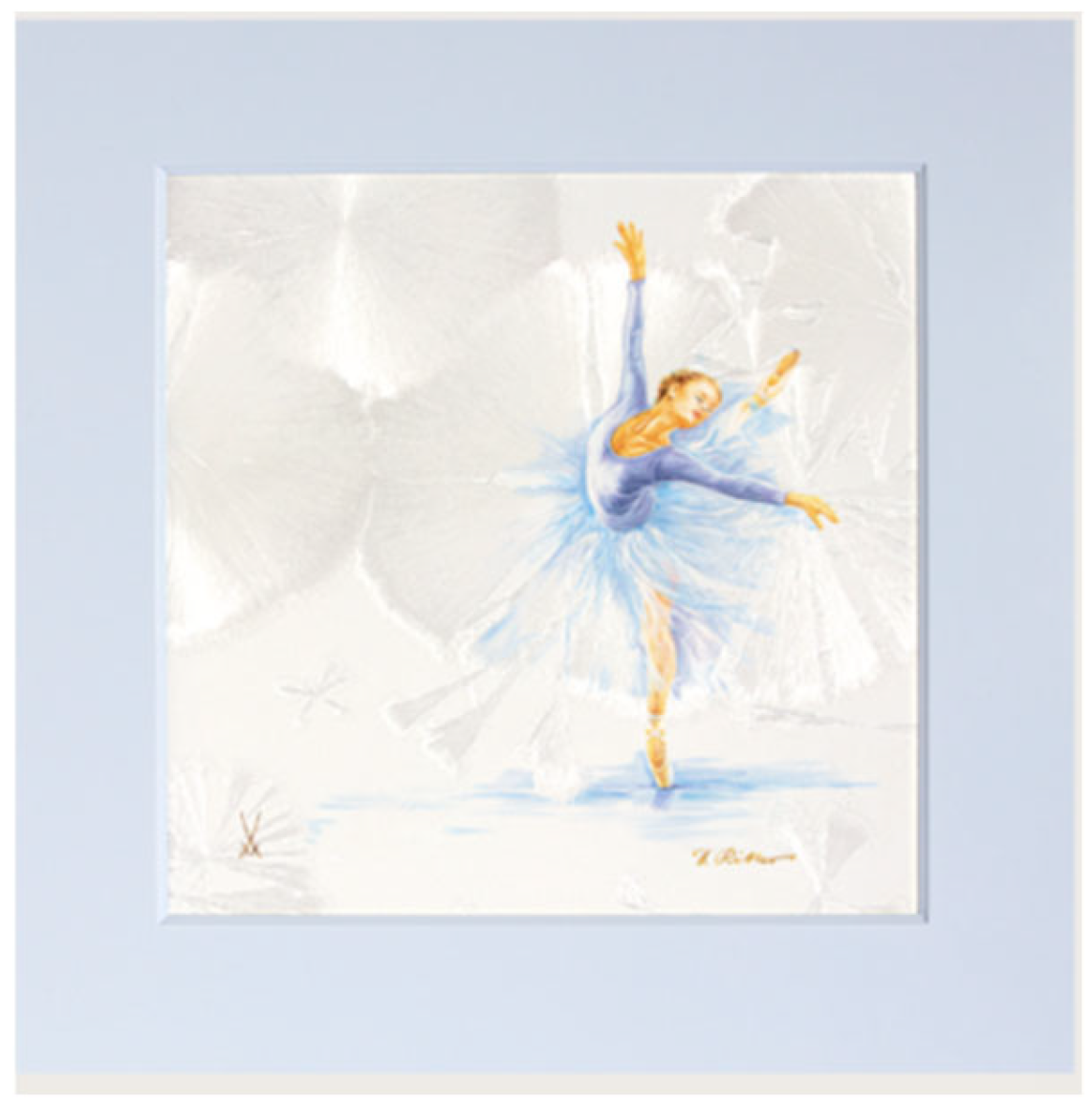
The dance images depicted on Meissen porcelain primarily exhibit an “excentric” movement space, with dancers’ limbs fully extended outward and the torso forming right or acute angles with the limbs, creating a radiating spatial tension. For instance, in a series of murals released by Meissen porcelain in 2019, the dancers stand upright with toes pointed, arms extended outward, and the overall movement demonstrates a state receding from the body’s center (Figure 13). In 2021, Horst Gottschaldt’s mural “INNOCENT DANCE” (Figure 14) uses the left toe as the main support point, with the right leg fully extended backward as high as possible, the left arm stretched forward, and the right arm extended skyward to the side-rear, forming a 90-degree right angle between the arms and torso.
Figure 13.
WALL-PLATE BALLET STUDY III [16].
Figure 14.
INNOCENT DANCE [17].
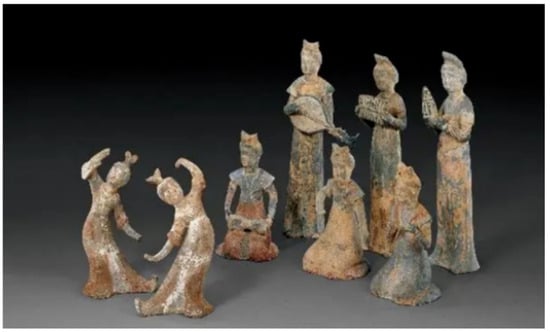
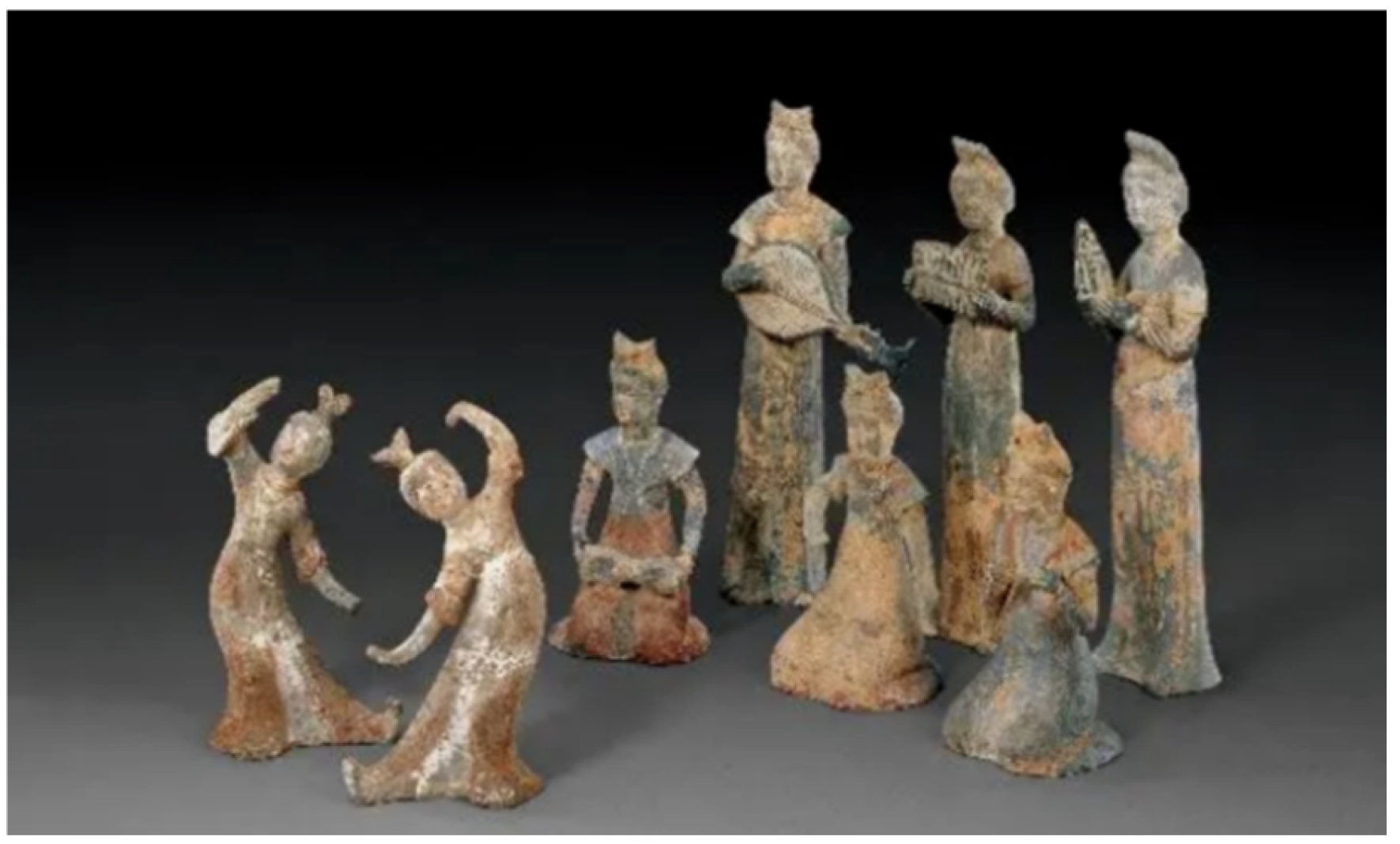
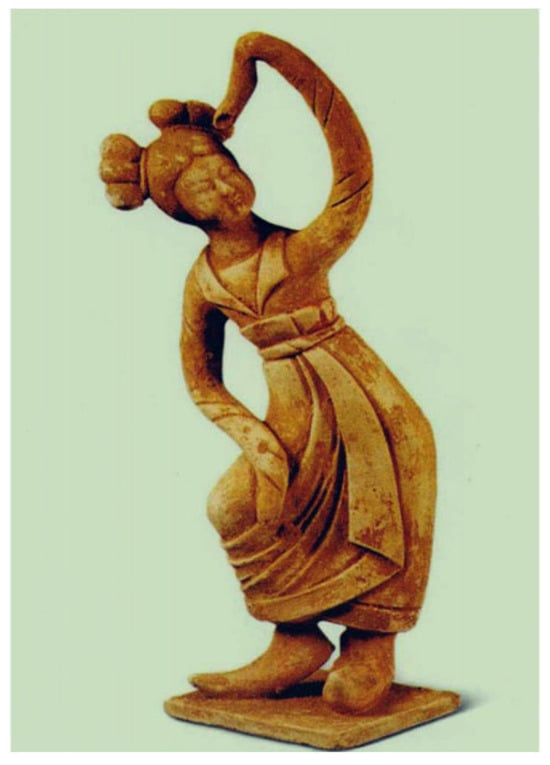
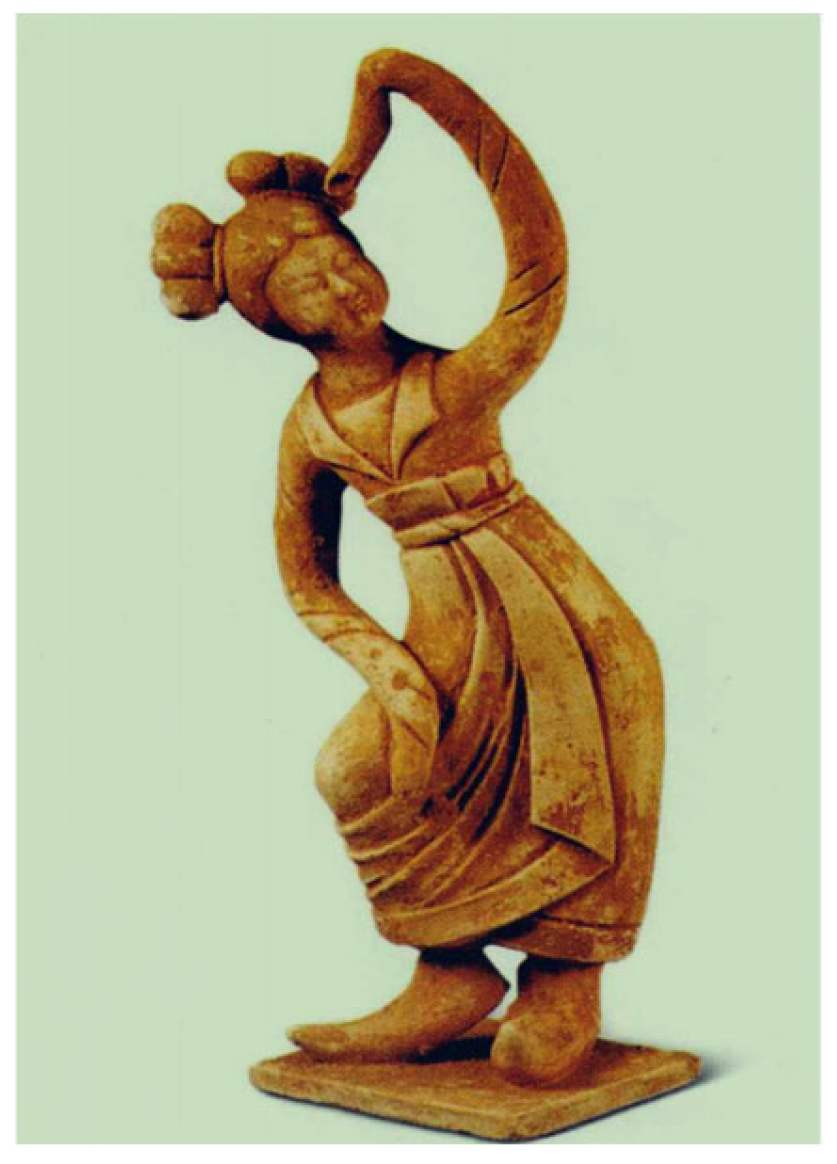
In contrast, the movement space reflected in Chinese terracotta figurines differs. The dancers’ torsos are slightly curved, with arms drawing inward toward the body’s axis, and the overall movement of raising the hand and stepping inward is characterized by a centripetal action. For example, a set of Tang Dynasty music and dance figurines (Figure 15) held by the Palace Museum. This set consists of eight figurines, two of which depict dancers. One hand is raised, but instead of forming a straight line, it bends inward toward the center, while the supporting leg bends toward the center and the other leg, though extended outward, has its heel touching the ground and its toes curving inward. This is a typical centripetal movement. Another example is a Tang Sancai dance figurine (Figure 16) unearthed from an archeological site, where the dancer is dressed in long, narrow sleeves. One arm is bent and raised, with the sleeve tilting toward the center, while the legs are bent in a cross-legged stance with the torso tilted, again frozen in a centripetal movement posture. Unlike the outwardly directed, centrifugal dance movements depicted on Western porcelain figurines, the terracotta figurines from China freeze dance poses that are inwardly directed, reflecting a centripetal movement.
Figure 15.
Tang Terracotta Dancers [9] (p. 105).
Figure 16.
Tang Three-colored Terracotta Dancers [9] (p. 108).
The differences in the movement spaces of dance depicted in Chinese and Western ceramics are also closely related to the cultural and aesthetic differences between the two regions. From a cultural perspective, Chinese culture has long been influenced by Confucian thought22, which, particularly in early imperial contexts, has emphasized values of collectivism and social harmony. Centripetal movements inherently embody a sense of “cohesion,” as actions converge towards the center, mirroring traditional values such as family reunification and national solidarity. In contrast, Western culture has often been characterized, within certain historical contexts, by a stronger emphasis on individual expression. The centrifugal movements extend outward, displaying the dancer’s strength, and reflecting the individual’s expansion into space and the release of personal identity. The outward extension of the dancer’s movements represents a latent pursuit of self-awareness and individual expression. In terms of aesthetic ideals, traditional Chinese aesthetics values subtle beauty. Ancient Chinese society, dominated by Confucian thought, promoted the “Doctrine of the Mean (zhong-yong zhi dao),”23 emphasizing moderation, balance, and restraint. It praised the concepts of “joy without excess, sorrow without harm (ai-er-bu-shang, le-er-bu-ying).”24 The restrained nature of centripetal movements aligns with the Confucian values of gentleness, self-discipline, and propriety, reflecting a parallel cultural and aesthetic structure. This philosophical outlook is reflected in Chinese aesthetics as a tendency to avoid extremes and flamboyance. This preference is embedded in the design of centripetal movements, where the force of the action is directed inward, restrained, and subtle. This resonates with the Chinese aesthetic preference for subtlety and elegance, embodying grace and poise without excess. The influence of ancient Greek culture on Western traditional aesthetics is profound. Since the Renaissance, Western humanism has emphasized individual liberation, and ancient Greek culture highly regarded the beauty of the human body, often showcasing muscle lines and proportions in artistic forms. Thus, centrifugal dance movements align with Western traditional aesthetics, which prioritize the beauty of the human body, where the dancer’s body extends outward, displaying the body’s lines and proportions in a direct and expressive manner. The assertiveness of centrifugal movements resonates with the direct celebration of human beauty, openly appreciating the physical form of the body. This emphasis reflects a broader Western conception of the body as a visible, autonomous entity whose form and proportion can be openly displayed, evaluated, and aesthetically admired. On the other hand, Western mainstream aesthetic ideals pursue grandeur and opulence. Historically, Western aristocracies and royal rule sought to showcase power, status, and wealth through lavish architecture, attire, and artworks. For instance, the Palace of Versailles in France is grand in scale, with exquisite gardens and luxurious interior decorations. This aesthetic preference for magnificence and luxury was propagated from the aristocratic elite to other social classes. Centrifugal movements, by contrast, are visually expansive and open, aligning with the Western mainstream dance aesthetic, which seeks grandeur and magnificence. This enables the audience to directly perceive the dancer’s body lines extending outward, creating a powerful visual impact. Moreover, Chinese court dance’s “raised sleeves and bent waist (qiao-xiu-zhe-yao)” (See note 17 above) had to adhere to ceremonial regulations that prescribed disciplined bodily comportment within court ritual contexts, resulting in a movement vocabulary that restricted excessive spatial expansion. Such regulation should be understood as a form of institutional and ritual discipline applied to performing bodies, rather than as an intrinsic gendered characteristic. This bodily restraint corresponds to a cultural understanding of the body as ethically regulated and socially situated, rather than as an object of autonomous display. In contrast, Western ballet’s techniques of “open, stretch, straighten, and stand” originated from the aristocracy’s admiration for an upright, noble posture. The centrifugal movements in ballet thus became a visual symbol of social status. Viewed in this light, differing choreographic spatial orientations can be understood as materializations of contrasting conceptions of the human body—one emphasizing ethical containment and social discipline, the other privileging visibility, elevation, and expressive projection. These contrasts are framed here as historically situated comparisons rather than as evidence of continuous or transhistorical cultural traits. Therefore, the differences in movement space in ceramic images should be understood as historically situated tendencies rather than fixed cultural essences, functioning not only as an intuitive manifestation of bodily language but also as a technical translation of cultural orientations encoded within physical expression.
4. Hand Movements and Foot Dancing: Differences in the Expressive Space of Movement
The Expressive Space of Movement can be broadly categorized into two primary dimensions: the external Expressive Space of Movement and the internal Expressive Space of Movement, each representing distinct aspects of how movement is experienced and perceived. The external Expressive Space of Movement primarily refers to the physical range in which a dancer’s body moves during a performance. This dimension focuses on the key body parts involved in the movement, with particular attention to how the limbs and torso occupy space in relation to one another and the surrounding environment. In contrast, the internal Expressive Space of Movement refers to the emotional and psychological space that the audience perceives through the movement. This is not merely the physical aspect of motion, but rather the feelings, moods, and emotional resonance that emerge from the gestures and expression of the dancer. By comparing the dance imagery found in both Chinese and Western ceramics, one can observe a clear distinction in the expressive approaches. Chinese dance tends to emphasize the subtle and graceful expression of “hand dance,” where the hands and arms convey emotional depth through restrained movements. On the other hand, Western dance tends to focus on the more pronounced and expansive “foot dance,” showcasing movements that are bold, expressive, and more outwardly directed. This fundamental difference in expressive movement not only arises from the varying emphasis on different body vocabulary, but it also reflects the profound interaction between cultural traditions and social functions. In essence, the space in which movement occurs is not just a physical phenomenon but is deeply intertwined with the societal and cultural context in which the dance is performed.
In the Han and Tang dynasty dance figurines, most dancers are depicted wearing floor-length skirts with wide hems, and their sleeve folds are rendered either through terracotta sculpting or painted wave-like patterns, which conceal the details of the lower limbs; yet, the hand gestures are employed to convey rich semantic and expressive meaning, emphasizing the upper body as the primary site of expressive communication within the Expressive Space of Movement. In contrast, dancers represented in Meissen porcelain reveal the movements of the lower limbs with clarity, deliberately highlighting leg strength. Although the skirts are elaborate, the ankles and tips of the feet remain exposed, and the musculature of the legs is accentuated through variations in glaze tone, effectively presenting iconic dance poses such as the “arabesque,” thereby directing the observer’s attention to the lower-body Expressive Space of Movement. This not only reflects the artistic focus of the ceramic creators in their depiction of movement, but also indirectly demonstrates differences in the physical Expressive Space of Movement manifested by dancers during performance. While Western dance has historical roots in social interaction and entertainment in some contexts, the Meissen porcelain figures specifically reflect ceremonial court traditions within palatial settings, where social hierarchy played a central role in choreography and the organization of ballet companies. Chinese dance prioritizes the movement of the upper limbs: the floor-length skirts of the figurines envelop the lower body, restricting leg motion; however, by concealing the feet and finer leg details, the long skirts guide the audience’s attention toward the upper body’s movements. At the same time, the elongated sleeves extend the lines of the arms, amplifying the visual impact and expressive form of hand gestures within the Expressive Space of Movement. In contrast, in the Western porcelain figurines examined here, the leg movements of Western porcelain figurines are fully exposed. This demonstrates a clear divergence in the externally visible Expressive Space of Movement between Chinese and Western dance as represented in ceramic imagery. In other words, within this specific visual corpus, Chinese dance tends to foreground upper-body movement, whereas the external Expressive Space of Movement in Western dance emphasizes whole-body three-dimensional spatial organization, in which lower-body propulsion, upper-limb articulation, and torso alignment are coordinated to generate expansive movement. This tendency should be understood as a dominant spatial orientation rather than an exclusive bodily focus. This distinction reflects differences in representational focus rather than an absolute absence of lower-body movement in Chinese dance traditions. In essence, the movement vocabulary of Chinese dance as encoded in these ceramic representations prioritizes what may be described as “hand dance,” whereas the movement vocabulary of Western dance in this material context places greater emphasis on “foot dance.” Such a contrast should be understood as a dominant visual tendency rather than a comprehensive characterization of all Chinese or Western dance forms, acknowledging the existence of counterexamples across historical periods and regional traditions.
This is closely related to the origins and functional purposes of Chinese and Western dance as represented in the ceramic imagery examined here. In the Han and Tang dynasty dance figurines, the Chinese traditional dances represented were often associated with practices such as “entertain the deities (yu shen)”25 and “entertain the master.”26 Within this visual corpus, most of the traditional dances recorded appear as ritual performances connected to worship or as court dances enacted within palatial settings, highlighting the ceremonial and hierarchical nature of the performance context. This does not preclude the existence of other social or entertainment functions of dance in Han–Tang China, such as banquet performances, which are less prominently represented in the selected ceramic materials. In contrast, Western dance in early modern European contexts is frequently documented as a form of social interaction and entertainment. In these contexts, lower-body footwork played a crucial role in guiding dance partners and maintaining rhythm and balance within social settings. Consequently, the precision and regulation of foot movements were of particular importance. This emphasis reflects the functional demands of social dancing rather than an exclusive origin of Western dance as entertainment. This emphasis on lower-limb control and accuracy has been continuously maintained and further reinforced throughout the historical development of Western dance, reflecting a culturally ingrained focus on the lower-body Expressive Space of Movement as a vehicle for both functional coordination and expressive elaboration.
From the perspective of traditional cultural concepts, Chinese culture has historically emphasized the cultivation of personal virtue and adherence to ritual norms, with Confucian thought regarding hand movements as an extension and embodiment of li (ritual propriety)27. The Zhou Li·Chun Qiu28 records that “the national students are instructed through music and dance (yi yue-wu jiao guo-zi),”29 underscoring the notion that hand gestures and postures are intrinsically linked to ethical order and social hierarchy. The “raised sleeves and bent waist” postures observed in Han and Tang dynasty court dance figurines had to comply with ritualized conventions such as “hands hanging respectfully” and “cupped-hand bows,” with the layered curves of the sleeves serving as a tangible manifestation of ritual propriety. Such “hand-centric” movements were not solely aesthetic expressions but also embodied instruments of power discipline—wide sleeves and long skirts restricted lower-limb mobility, compelling dancers to convey the Confucian moral principle of “self-restraint and ritual restoration” (ke-ji fu-li)30 through hand movements. In contrast, within Western cultural paradigms, the pursuit of a transcendent, ethereal afterlife encouraged dancers to rely on lower-limb strength to lift their bodies upward, creating an upright and soaring posture. In Christian cultural thought, the feet were symbolically regarded as “mundane fetters,” yet the pointe technique in ballet was recontextualized as a ritual of transcendence—through rigorous and often painful training, the human body was transformed into a form approaching the celestial. The pointe postures depicted in Meissen porcelain figurines not only demonstrate the physical limits of the human body but also metaphorically reflect Europe’s colonial-era ambitions for global exploration, with straightened toes cutting through space like a ship’s prow through waves, and high leg lifts evoking the measurement of uncharted continents.
From the perspective of artistic creation, the expressive space of movement also encompasses the emotions and aesthetic connotations embodied within the actions. In Han and Tang dynasty dance figurines, the center of gravity of the movements is low, extending from the two-dimensional vertical plane toward the one-dimensional ground plane, with a tendency to “gather inward,” characterizing concentric movements primarily executed through the upper limbs; this embodies an “inward-oriented”cultural and aesthetic orientation, presenting viewers with a moderated and inward-focused expressive space. Ritual gestures such as cupped-hand salutes, bows, and courtesies are predominantly performed through upper-body movements, and the humility and respect embedded in these actions are sublimated and artistically manifested within traditional Chinese dance. Such restraint should not be equated with a lack of expressiveness: as evidenced in early and medieval Chinese figurines, as well as later Kunqu and other dance–opera traditions, vivid facial expressions and nuanced gestural details contribute to a lively and emotionally resonant mode of expression that operates within, rather than against, an inward-oriented spatial framework. Conversely, in Western ceramic dance depictions, performers elevate their center of gravity as much as possible, extending movements from the two-dimensional vertical plane into three-dimensional space, often exhibiting an “outward-projecting” tendency indicative of excentric movements, with particular emphasis on footwork details; this “extroverted” national psychology conveys a broad and flamboyant expressive space to the audience.
The divergence in the Expressive Space of Movement between Chinese and Western dance is closely related to differing attitudes toward nature in the respective cultures. Human development inherently requires direct engagement with the natural environment; to a certain extent, the conquest and mastery of nature have historically been regarded as essential for the sustained progress of human societies. However, the processes by which humans have sought to engage with and “conquer” nature reveal distinct cultural approaches between East and West. Traditional Chinese culture advocates the principle of tian-ren he-yi (harmony between humanity and nature) (See note 7 above), emphasizing coexistence and balance with the natural world. In contrast, Western cultural traditions, shaped by geographical and environmental conditions, have historically emphasized expansionist actions aimed at external conquest, approaching nature with an attitude of conflict and opposition. These divergent attitudes toward nature are directly mirrored in the aesthetic sensibilities and choreographic design of dance: Chinese dance prioritizes the harmonious ideal of tian-ren he-yi, manifesting subtlety and restraint through bodily movements characterized by twisting, tilting, rounding, and curving, thereby cultivating a nuanced and inwardly focused sense of spatial expression. In contrast, Western dance often employs expansive lower-limb movements that strive to transcend the limitations of the two-dimensional plane, visually articulating an aspiration for personal freedom and self-realization.
5. Conclusions
The differences in dance spatial consciousness as represented in ceramic imagery should not be understood as the outcome of any single ideological or technical factor, but rather as the historically situated product of interwoven cultural orientations, material technologies, and social structures. As demonstrated in this study, ceramic dance figures operate as visual condensations in which bodily technique, representational convention, and cultural meaning intersect, revealing the complex entanglement of body, material practice, and value systems.
Within the spatial tendencies observed in the selected Han–Tang ceramic materials, Chinese dance imagery frequently presents an earth-oriented orientation and a relatively low spatial center. This tendency can be associated with agrarian value frameworks emphasizing settlement, stability, and worldly embeddedness, as well as with Confucian ethical discourses that prioritize moderation, self-regulation, and social order. At the same time, the coiling construction techniques characteristic of early ceramic production imposed formal constraints on three-dimensional modeling, reinforcing inward-oriented spatial compositions within the visual field. These spatial features should be understood as dominant representational tendencies within the examined corpus rather than as exhaustive characterizations of Chinese dance practices across periods.
By contrast, the Western porcelain ballet figurines analyzed in this study exhibit elevated postures and outward-extending spatial trajectories. These centrifugal spatial expressions reflect aesthetic ideals associated with Western classical ballet, shaped by Christian cosmology, humanist thought, and the social environments of early modern Europe. Advances in high-precision slip-casting techniques enabled porcelain figures to achieve heightened three-dimensional articulation, visually amplifying expansive gestures and spatial projection. Importantly, such centrifugal spatial expression operates at the level of external visual orientation and is fundamentally supported by strong internal bodily control, particularly in the axial stability and core regulation central to ballet technique.
Across the dimension of kinetic space, Chinese dance imagery tends toward inward-directed, centripetal movement patterns, characterized by contraction, concentration, and controlled bodily articulation. These kinetic qualities resonate with Confucian practices of self-restraint and ritual propriety while reflecting historically situated modes of bodily discipline. Western dance imagery, in contrast, emphasizes dynamic outward expansion, with kinetic trajectories that project openness, elevation, and spatial reach. These tendencies align with humanist valorizations of expressive individuality and the competitive, performative contexts of early modern European social life.
In terms of the Expressive Space of Movement, Chinese ceramic representations frequently foreground hand-oriented movement vocabularies, in which the articulation of sleeves and gestures transforms ritual discipline into refined visual expression. Western porcelain figures, by contrast, more often emphasize foot-oriented movement, with leg extension, jumps, and turns visually asserting control over three-dimensional space. Such distinctions reflect differences in representational focus rather than absolute divergences in embodied capability, and they should be understood within the material and historical specificity of the selected artifacts.
Taken together, these findings demonstrate that ceramics function not merely as “living fossils” of dance forms, but as intermediary material fields through which movement, technology, and cultural consciousness are jointly articulated. By adopting an interdisciplinary “ceramics–dance” perspective, this study shows how material culture mediates the historical inscription and reinterpretation of bodily practice. In doing so, it contributes a methodological framework for cross-cultural dance history and offers theoretical insight into how traditional aesthetic principles may be critically re-engaged within contemporary dance creation and pedagogy. Future research may further extend this approach through technical archeology and digital humanities, enabling dynamic analyses of ceramic dance imagery and deepening our understanding of how material carriers shape the transmission and reactivation of embodied cultural knowledge.
Author Contributions
Conceptualization, Q.X. and Q.Z.; methodology, Q.X.; software, Q.X.; validation, Q.X. and Q.Z.; formal analysis, Q.X.; investigation, Q.X.; resources, Q.X.; data curation, Q.X.; writing—original draft preparation, Q.X.; writing—review and editing, Q.X.; visualization, Q.X.; supervision, Q.Z.; project administration, Q.X. and Q.Z.; funding acquisition, Q.X. and Q.Z. All authors have read and agreed to the published version of the manuscript.
Funding
This research received no external funding.
Institutional Review Board Statement
Not applicable.
Informed Consent Statement
Not applicable.
Data Availability Statement
Data is contained within the article.
Conflicts of Interest
The authors declare no conflict of interest.
Notes
| 1. | The concept of “Effort,” proposed by Rudolf Laban, is a core component of his movement analysis system (Laban Movement Analysis, LMA). Laban argued that dance movement is not merely physical motion but a dynamic process shaped by four interrelated factors: time, space, weight/force, and flow. Effort analysis reveals the quality of movement, the direction of energy, and the dancer’s relationship to the environment, thus serving as a crucial theoretical tool for understanding spatial consciousness in dance. |
| 2. | “Time, space, and force” are the three fundamental dimensions of dance movement: time shapes rhythm and tempo; space concerns direction, pathways, and range; and force relates to the dynamics and energy of motion. Their interplay gives dance its dynamism and expressive power. |
| 3. | This statement comes from Mary Wigman’s The Language of Dance (p. 17), in the phrase “Of this trinity of elemental powers, it is space which is the realm of the dancer’s real activity, which belongs to him because he himself creates it [3].” The sentence emphasizes that space is not merely the setting where dance occurs but a dynamic domain that the dancer himself creates and shapes through movement. |
| 4. | “Shu people” refers to the ancient inhabitants of Shu (present-day Sichuan Basin and surrounding areas), known for their distinctive bronze culture, ritual practices, and traditions of music and dance. Major archeological sites such as Sanxingdui and Jinsha highlight the uniqueness of Shu culture. |
| 5. | The term force effect is used here in reference to Rudolf Laban’s theory of effort, in which movement quality is understood through the interaction of weight, space, time, and flow. In the present study, force effect denotes the visually inferred sense of bodily effort and directional intention conveyed by static representations of dance. |
| 6. | François Delsarte (1811–1871) developed a system of action classification dividing human movement into physical, mental, and emotional domains, positing that movement is the natural externalization of inner thought and feeling [7]. This framework had a profound impact on performing arts and dance in the late 19th century [8]. |
| 7. | “Harmony between Heaven and Humanity” (tian-ren he-yi) is an ancient Chinese philosophical concept emphasizing the unity and harmony between humans and nature, where human actions should follow natural laws. In arts, ritual, and bodily practices, it often manifests as the alignment of human activity with natural rhythms and spatial order. |
| 8. | Meissen porcelain is a type of hard-paste porcelain produced in the 18th century at the Meissen manufactory in Saxony, Germany, renowned for high-temperature firing, underglaze painting, and fine sculptural forms, commonly used for tableware, decorative objects, and artistic figurines. |
| 9. | “Active engagement in social life and secular affairs” (ru-shi) is a Chinese philosophical concept emphasizing active participation in social life and secular affairs, with its spirit reflected in social behavior, artistic creation, and bodily practices. |
| 10. | Movement Scheduling Space refers to the organization of bodily actions in time and space, including the implied sequencing, orientation, and structural arrangement of posture and limbs. The concept is employed to analyze how choreographic logic is suggested within fixed material forms such as ceramic figures. |
| 11. | The terms centripetal and centrifugal describe relative tendencies of movement and energy toward the body’s center or outward into surrounding space. They are used here as comparative descriptors to examine tendencies of bodily containment or spatial expansion in different cultural representations of dance. |
| 12. | Xunzi (ca. 310–235 BCE), an ancient Chinese Confucian thinker of the Warring States period, proposed that human nature is inherently inclined toward evil, emphasizing that moral cultivation requires education, ritual, and cultural practice. |
| 13. | “treating the dead as one would the living,” (shi-si-ru-shi-sheng) is a concept proposed by Xunzi, meaning that the dead should be treated with the same respect and solemnity as the living. It emphasizes ritual propriety and reverence toward the deceased, and it significantly influenced ancient Chinese funerary practices, including the production and arrangement of ceramic figurines. |
| 14. | The “Seven States” (Qiguo) refers to the seven principal feudal states of ancient China during the Warring States period, namely Qi, Chu, Yan, Han, Zhao, Wei, and Qin. Since Qin ultimately unified the remaining six, the term often specifically denotes Qi, Chu, Yan, Han, Zhao, and Wei. |
| 15. | The Yuefu (Music Bureau) was an official institution during the Han dynasty, responsible for collecting folk songs, composing court music, and organizing performances, especially prominent under Emperor Wu’s reign. |
| 16. | “performance troupes” (nv-yue) refers to women employed as musicians and dancers in court or aristocratic settings, particularly the performance troupes overseen by the Han dynasty Yuefu (Music Bureau). |
| 17. | A classical Chinese dance posture characterized by the lifting of sleeves and the bending of the waist. It is frequently depicted in Han and Tang dynasty dance figurines and regarded as one of the most iconic poses in ancient Chinese choreography, symbolizing elegance and expressive dynamism. |
| 18. | Glazed pottery figurines produced during the Tang dynasty (7th–10th centuries), decorated with the signature sancai (“three-color”) glaze technique. Tang sancai dance figurines often portray court dancers in vivid postures and attire, serving both as funerary objects and as reflections of the flourishing performing arts of the period. |
| 19. | Jian tu wei an (“establishing stability on the land”)—a concept in ancient Chinese Confucian thought, referring to achieving social order and stable life through settling down and establishing a secure relationship with the land. In the analysis of dance imagery, this principle is reflected in movements oriented toward the ground and returning to it, symbolizing the agrarian civilization’s reliance on land and stable living conditions. |
| 20. | An attachment to the land (an tu zhong qian) is a significant cultural concept in ancient Chinese agrarian society, referring to people’s deep emotional bond and collective attachment to their land, emphasizing stable settlement and the maintenance of their homes. In dance studies, this concept is manifested as the “earthward orientation” of movements, in which actions are directed toward the ground with lowered center of gravity, symbolizing attachment and respect for land and secular life. |
| 21. | Xiushen Zhiguo Ping Tianxia: A classical Confucian principle from ancient Chinese thought emphasizing the cultivation of the self (xiushen), governance of the state (zhiguo), and ultimately the achievement of peace and order in the realm or the world (ping tianxia). It represents a moral and political framework where personal virtue is inseparable from social responsibility, asserting that ethical self-cultivation is foundational to effective governance and societal harmony. |
| 22. | Confucianism is an important philosophical system in ancient China, originating from the teachings of Confucius (551–479 BCE) during the Spring and Autumn Period. Confucian thought emphasizes moral norms such as benevolence (ren), righteousness (yi), propriety (li), and wisdom (zhi), advocating for social harmony, familial ethics, personal cultivation, and the integration of governance. Confucianism advocates a process of “self-cultivation, family regulation, state governance, and world peace,” aiming to cultivate moral integrity and social responsibility, thereby achieving national stability and prosperity. The core concept of Confucianism is “benevolence,” which refers to kindness and compassion in human relationships. Confucianism has had a profound influence on Chinese traditional culture and social structure and holds significant cultural status in several East Asian countries, such as Korea, Japan, and Vietnam. |
| 23. | Doctrine of the Mean (zhong-yong zhi dao) is a chapter in the Confucian classic The Book of Rites (Liji), which emphasizes the philosophical principle of moderation, balance, and harmony. The doctrine advocates for pursuing moderation in all aspects of life, avoiding extremes, and achieving a state of inner peace and external harmony. It suggests that rationality and moral pursuit should maintain a balanced state, steering clear of either excess or deficiency. The Doctrine of the Mean encourages individuals to follow this principle in handling interpersonal relationships, state governance, and personal cultivation, promoting social stability and harmony. It is not only a moral guideline but also a philosophical thought aimed at helping people find equilibrium in the complexities of both social and personal life. |
| 24. | “Joy without excess, sorrow without harm” (ai-er-bu-shang, le-er-bu-ying) comes from the Doctrine of the Mean (Zhong-yong zhi dao), a key principle in Confucian thought concerning emotional expression. It emphasizes moderation, especially in the display of the two core emotions: sorrow and joy. The principle teaches that one should not allow sorrow to cause harm to one’s physical or mental health, and joy should not lead to indulgence or excess. This idea reflects the Confucian emphasis on the “Doctrine of the Mean,” which advocates for moderation and rationality in emotional regulation to achieve inner and outer harmony and balance. It seeks to avoid extreme emotional expressions, reminding people to approach the emotional fluctuations in life with reason and restraint. |
| 25. | Entertain the deities refers to traditional Chinese ritual dances performed in honor of gods, spirits, or ancestors, intended to express reverence, facilitate communication with the divine, and seek blessings or protection. These dances were an important part of religious and ceremonial life in ancient China. |
| 26. | Entertain the master refers to court dances performed for rulers, nobles, or elites in ancient China, designed to demonstrate respect, reinforce hierarchical relationships, and provide aesthetic enjoyment for the patrons. Such dances often reflected social status, authority, and political hierarchy. |
| 27. | Li (ritual propriety) is a central concept in Confucian philosophy, referring to the system of rites, etiquette, and prescribed behaviors that regulate social conduct, moral cultivation, and hierarchical order. |
| 28. | The Zhou Li·Chun Qiu is one of the ancient Confucian classical book of China. |
| 29. | Refers to the institutional practice in ancient ritual systems of educating young members of the state through music and dance. This approach emphasizes cultivating moral character and awareness of ritual propriety through bodily movements and rhythm, representing the practical implementation of Confucian educational philosophy. |
| 30. | Refers to the practice of self-restraint and control of one’s behavior to restore ritual propriety, a key aspect of personal cultivation in Confucian ethics. This concept emphasizes following ritual norms through self-discipline to achieve social harmony and the fulfillment of moral standards. |
References
- Preston-Dunlop, V. Rudolf Laban: An Extraordinary Life; Dance Books: London, UK, 1998. [Google Scholar]
- Yang, J.J. On the Transformation of “Space” in Dance Choreography. J. Beijing Dance Academy 2016, 103–107. Available online: https://kns.cnki.net/kcms2/article/abstract?v=Ks9d5KSMf4UYdGAzpic_-I0Pwpq1YijW3AC-C_13jtaRW0YCLW7eOBt49B-swMffFntlKtPtyO_eiycvKVyybnrraIzKTZwdXz4q1mEq5OdMW9YX2loPr72G2DKEunmUvK5Bto_vY0ha5RXuWpuVv451Pd-qjLLj-YPi4oG_dcareQVqqPb3hwkuRcPhDbbKSqidlWGsbJs&uniplatform=NZKPT&captchaId=9f2f7c89-d6b1-400c-a0f0-f663f94541bb (accessed on 12 September 2025).
- Wigman, M. The Language of Dance; Wesleyan University Press: Middletown, CT, USA, 1966; Available online: https://books.google.com/books/about/The_Language_of_Dance.html?id=ATWZvwEACAAJ (accessed on 12 September 2025).
- Zhang, T.J. A Study on the Aesthetic Evolution of the Long-Sleeve Dance in Han Dynasty Dance Imagery. Master’s Thesis, Beijing Dance Academy, Beijing, China, 2024. [Google Scholar]
- Du, L.; Guo, H.F. Interpretation of the form of Han Dynasty Music and Dance Figurines in Sichuan and Their Aesthetic Consciousness. J. Sichuan Univ. Natl. 2024, 33, 102–108. [Google Scholar]
- Naerebout, F. Attractive Performances: Ancient Greek Dance. In Three Preliminary Studies; Brill: Leiden, The Netherlands, 2023. [Google Scholar]
- Delsarte, F. The Art of Oratory: System of Delsarte. Project Gutenberg. Available online: https://www.gutenberg.org/files/12200/12200-h/12200-h.htm (accessed on 13 September 2025).
- Veder, R. The expressive efficiencies of American Delsarte and Mensendieck body culture. Mod./Mod. 2010, 17, 819–838. [Google Scholar] [CrossRef] [Scilit] [PubMed]
- Liu, E.B. Chinese Dance Relics Illustrated; Shanghai Music Publishing House: Shanghai, China, 2002. [Google Scholar]
- Wu, M.; Dai, S. Festive Music and Dance: A Brief Discussion on Han Dynasty Music and Dance Figurines. Available online: http://www.cqkaogu.com/gzdt/5366.jhtml (accessed on 13 September 2025).
- Liu, H.T. A Study on the Literature, History, and Form of Hu Teng Dance. Ph.D. Thesis, Chinese National Academy of Arts, Beijing, China, 2019. [Google Scholar]
- Manufactory MEISSEN Porcelain Manufactory. Female Dancer from the “Russian Ballet”. Available online: https://www.meissen.com/net/900584-73305-1.html (accessed on 13 September 2025).
- MEISSEN Porcelain Manufactory. Male Dancer from the “Russian Ballet”. Available online: https://www.meissen.com/net/900584-73303-1.html (accessed on 13 September 2025).
- Baidu News. Special Report on Meissen Porcelain Ballet-Themed Collections. Available online: https://mbd.baidu.com/newspage/data/dtlandingsuper?nid=dt_4154432015479105164&sourceFrom=search_a (accessed on 13 September 2025).
- Hart, H. Do You See What I See? The Impact of Delsarte on Silent Film Acting. Mime J. 2005, 23, 184–199. [Google Scholar] [CrossRef] [Scilit]
- MEISSEN Porcelain Manufactory. Wall-Plate: “Ballet Study III”. Available online: https://www.meissen.com/int/935774-10m05-1.html (accessed on 14 September 2025).
- MEISSEN Porcelain Manufactory. Innocent Dance. Available online: https://www.meissen.com/net/65c062-90756-1.html (accessed on 14 September 2025).
Disclaimer/Publisher’s Note: The statements, opinions and data contained in all publications are solely those of the individual author(s) and contributor(s) and not of MDPI and/or the editor(s). MDPI and/or the editor(s) disclaim responsibility for any injury to people or property resulting from any ideas, methods, instructions or products referred to in the content. |
© 2026 by the authors. Licensee MDPI, Basel, Switzerland. This article is an open access article distributed under the terms and conditions of the Creative Commons Attribution (CC BY) license.