


Abstract
Newborn screening helps identify sickle cell disorder (SCD) early and to promptly initiate effective measures. It is estimated that India accounts for approximately 16% of global annual births with SCD. Multiple reports of screening for SCD in India have emerged in the last decade. Our aim was to pool the birth prevalence of SCD and sickle cell trait (SCT). A systematic review of published evidence on nontargeted, universal screening for SCD or SCT in newborns was performed (16 studies). The pooled prevalence of SCD was 1100 per 100,000 (10 studies, 88,276 neonates, 95% CI: 432, 1768), while that of SCT was 9639 per 100,000 (7 studies, 72,702 neonates, 95% CI: 6283, 12,995) in endemic regions. Limited data exist from nonendemic regions. Only three studies had data on follow-up and confirmatory genetic diagnosis. Sparse data exist on cost-effectiveness, long-term follow-up, and the impact of early screening on mortality. Concerted ongoing efforts in the identification of the burden are needed. The needs of the hour are universalization of NBS, integration into existing health systems, and maintenance of birth cohorts with early introduction of penicillin prophylaxis, hydroxyurea, parental education, appropriate immunization, and continued follow-up by an experienced medical team.
1. Introduction
Sickle cell disease is the most common monogenic disorder in India [1], with inherent acute and chronic complications if undiagnosed and untreated. The Global Burden of Diseases (GBD) report on sickle cell disorders (SCDs) estimated approximately 82,500 births with sickle cell disorders (homozygous sickle cell, compound heterozygous HbS-thal, hemoglobin SC disease, compound heterozygous HbS-beta+) in India, with approximately 15,600 under-5 deaths attributable to these disorders, making them the 10th most common cause of under-5 mortality in the country [2]. They also found that India, along with the western and central parts of Africa, has the highest concentration of sickle cell disease disability burden. The prevalence of sickle cell trait (SCT) is as high as 35% in the endemic tribal population to nonexistent in other parts of the country [3]. The endemic regions in the country are South Gujarat, Maharashtra, Madhya Pradesh, Chhattisgarh, and western Odisha, with a smaller focus in Andhra Pradesh, Karnataka, northern Tamil Nadu, and Kerala [3].
The diagnosis and management of SCD have not been ideal in India due to regional, economic, and educational disparities. Targeted and protocolized follow-up exists only in pockets of high prevalence. National Family Health Survey 5 (NFHS-5) data show that the tribal population, which accounts for 8.6% of India’s population, has high under-5 mortality (52 per 1000 live births compared to 42 overall) and infant mortality (43 per 1000 live births versus 35.2 overall) [4]. The key reasons are a lack of systems for the early diagnosis of health issues, remote locations reducing access to good-quality healthcare services, an inequitable distribution of resources, and resistance to modern medical care.
Presently, under-5 mortality in India is 42 per 1000, and with current trends of improvement, it is unlikely that India will reach the SDG 2030 target (25 per 1000). Universal NBS is one of the tools to improve under-5 mortality. Early diagnosis of treatable disorders helps prevent progression and damage due to the disease. NBS helps in implementing preventive measures, providing opportunities for parental education, ensuring compliant follow-up, and helping reduce infant and child mortality.
The Indian health system is heterogeneous, with a complex mixture of government and private agencies [5]. It is a three-tier system (primary, secondary, tertiary) with individual states being primarily responsible. Often, due to constraints in the public setup, private centers must be relied upon. The newborn screening program in India is in its early stages, with only three states (Goa, Kerala, and Chandigarh) having state-run programs [6,7]. Although there is public medical consensus on the need to screen, no national strategy or direction exists to implement a national program. The challenges faced are lack of universal acceptance, low awareness, communication on reports and initiation of treatment, lack of robust follow-up, and quality control of laboratories conducting the tests [6]. In a highly populated country, the implementation of newborn screening and the creation of disease-specific birth cohorts, along with the provision of comprehensive preventive and therapeutic healthcare services for affected individuals, will help reduce disease-related morbidity and mortality.
It is heartening to see the significant leaps made in the last decade in India, particularly with targeted screening of babies born to mothers with sickle cell disorders [8,9] and those from endemic regions [10]. Universal newborn screening (NBS) is being implemented in parts of South Gujarat, Maharashtra, Madhya Pradesh, Chhattisgarh, Odisha, and Tripura. A screening of 18,003 babies conducted in 2018 identified 2944 as sickle cell carriers and 300 as having SCD [11]. The Indian Council of Medical Research (ICMR) is conducting a screening of 60 million people in 17 identified tribal-dominated states. Screening of 63,536 newborns conducted from 2019 to 2024 in endemic regions diagnosed 7275 babies (11.4 percent) as sickle cell carriers and 569 babies (0.9 percent) as SCD [12,13]. The increasing availability of high-performance liquid chromatography (HPLC) machines in the government sector makes them accessible for use in screening programs.
It is imperative to quantify the burden of SCD in newborns in our country (i.e., the birth prevalence). The quantity of effort required to eliminate the disease by 2047 will depend on the accurate assessment of the numbers of patients who need care. We collated all the published evidence on newborn screening conducted to identify SCD and SCT in India and pooled the birth prevalence data for these conditions.
2. Materials and Methods
2.1. Search Strategy and Selection Criteria
The protocol for this systematic review and meta-analysis was prospectively registered in the Open Science Framework database [14] and can be accessed at https://osf.io (accessed on 13 January 2026). We followed the PRISMA (Preferred Reporting Items for Systematic Reviews and Meta-Analyses) reporting guidelines [15].
We searched the PubMed, Embase, Scopus, and Web of Science databases from their inception until 7 November 2025. We designed our search strategy to identify all studies on newborn screening from India. We also searched for citations and reviewed the references of the eligible articles to identify additional studies. Gray literature and unpublished data were identified by searching Google, Google Scholar, government websites, dissertation websites (Shodhganga, open-access theses and dissertations) and preprints (medRxiv.org). We contacted researchers who were working on these topics. The search strategy is shown in Table A1.
2.2. Inclusion and Exclusion Criteria
All observational studies from India that assessed one or more of the three outcomes of interest, i.e., the prevalence of SCD or SCT, screen-positivity rates, or burden or cost, were included. A study was considered eligible for inclusion if it was a cross-sectional prevalence study (i.e., all neonates born or admitted to the unit or from a particular locality were screened for SCD). We excluded studies where the authors did not state the sample size and the number of subjects who tested positive, where targeted newborn screening was performed (i.e., babies born to mothers with SCD or SCT were screened), and studies where screening was performed beyond the neonatal period. Conference abstracts without formal publication, systematic reviews, meta-analyses, letters or correspondence without original data, guidelines, and multinational studies where separate data for Indian neonates could not be obtained were also excluded.
2.3. Outcomes
The primary outcome of interest was the prevalence of SCD. The diagnostic criteria used were the presence of very high levels of HbS (>90%) for homozygous sickle cell disease and HbS of 30–40% for the sickle cell trait. The secondary outcomes included burden in different settings (endemic and nonendemic, tribal, and nontribal), as well as the associated costs.
2.4. Data Handling
We exported the articles retrieved from the databases to Rayyan software [16]. After removing the duplicates, two reviewers (RPA and EAR) assessed the titles and abstracts for potentially eligible articles in a blinded manner, and any discrepancies were resolved by mutual discussion and involvement of the third reviewer (RPW). We retrieved full texts of eligible articles and extracted the following data: study identification details; study and population characteristics including study setting (tribal or nontribal), place of study (endemic or nonendemic), duration, study design (prospective or retrospective), inclusion and exclusion criteria, details of screening tests including the sampling method, analytical methods used (high-performance liquid chromatography (HPLC) or electrophoresis), and diagnostic criteria, details of confirmatory testing–sampling strategy for screen-positive neonates, and criteria for confirming the diagnosis of SCD, and data on follow-up. Duplication of the dataset was assumed when the study duration and place of study were similar or overlapping. Studies that were performed over the longest period were included.
2.5. Quality Assessment
Two reviewers independently assessed the quality of the included studies using the Joanna Briggs Institute tool for assessing the quality of prevalence studies (https://jbi.global/critical-appraisal-tools accessed on 13 January 2026). The quality was rated lower when the neonates were excluded inappropriately, the sampling strategy did not include consecutively born neonates, the sample size was inadequate (<4226, assuming 1 + 0.3% prevalence of SCD) [17], population characteristics were not described in detail, analytical methods used were inappropriate, or when the diagnostic criteria were not as per guidelines. The overall risk of bias for a study was rated high if at least one domain was at high risk of bias. We included all eligible studies in the meta-analysis, irrespective of quality.
2.6. Statistical Analysis
Since the prevalence of SCA is below 0.005 (approximately 0.001 to 0.002 in previous studies), the Freeman–Tukey double-arcsine transformation method was employed to stabilize the variance [18]. SCT has a prevalence above 0.005, and we used a random-effect model (DerSimonian and Laird method) to account for within-study and between-study variances [19]. The overall pooled prevalence was not estimated, as the prevalence rates for SCD and SCT varied widely in endemic versus nonendemic regions and tribal versus nontribal populations. The prevalence is reported as the number of cases per 100,000 population screened, in accordance with the GBD standards [2]. We used R statistical software (meta package) version 4.5.1 for Windows (Copyright (C) 2025 The R Foundation for Statistical Computing) for meta-analysis. Heterogeneity was assessed using Cochran’s Q, I2, τ2, and prediction intervals, as well as the variability of estimates across the studies in the forest plots and the variance of the pooled estimates [20]. We planned to assess publication bias using funnel plots, Doi plots, and the LFK index [21]. We planned a sensitivity analysis after excluding studies at high risk of bias.
3. Results
3.1. Search Results
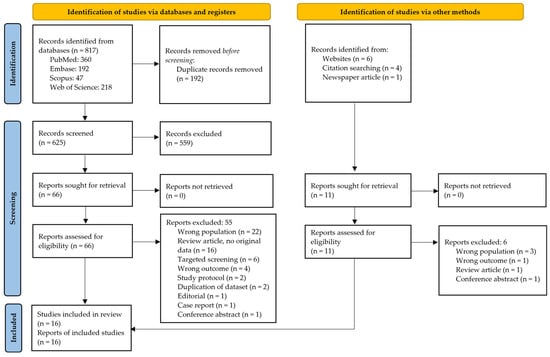
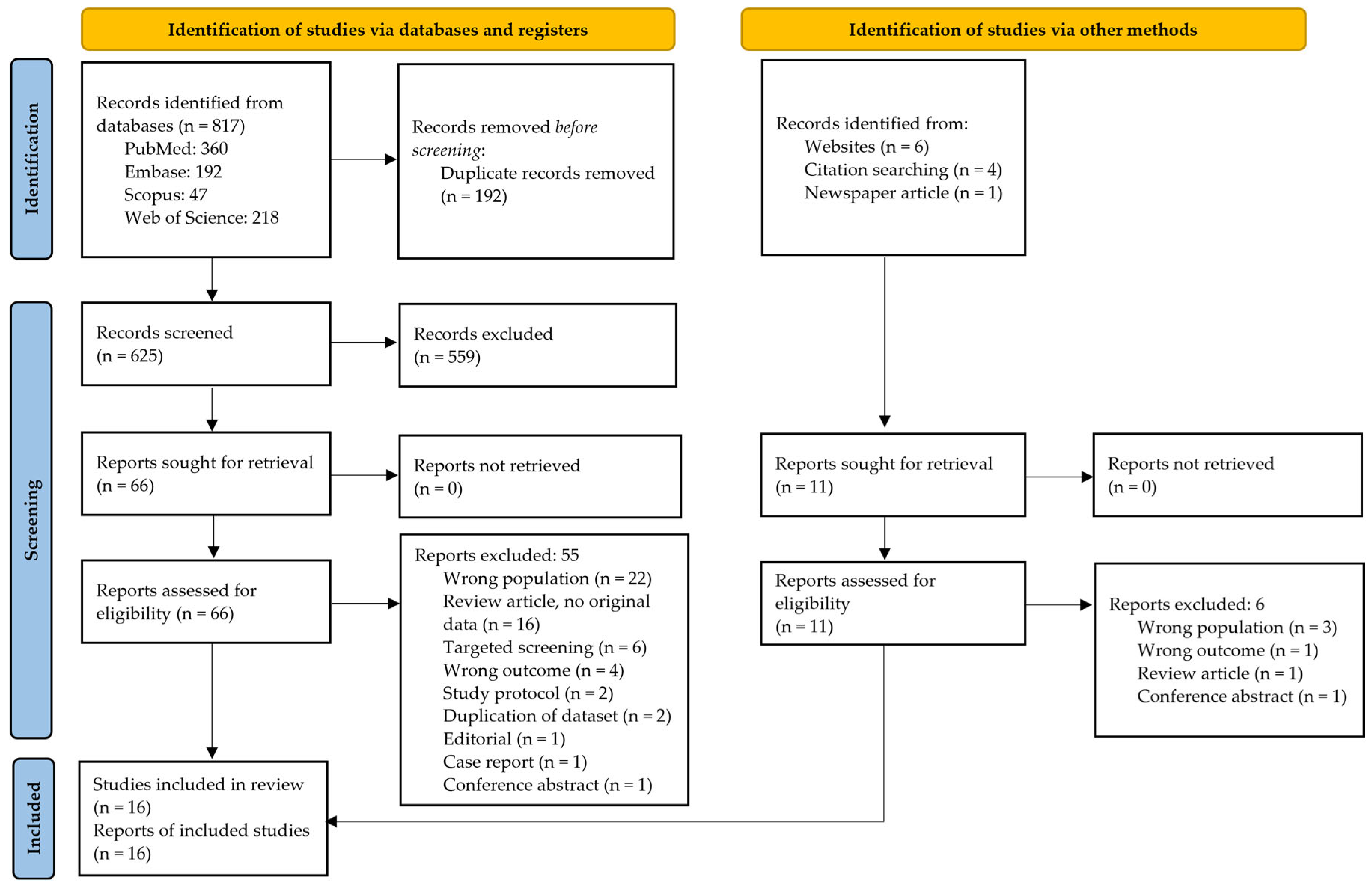
The database search yielded 625 unique titles. Ten additional titles were found through gray literature and citation searches. In sum, 77 full-text articles (66 from databases and 11 from other sources) were evaluated for eligibility, and 16 studies (11 from databases and 5 from other sources) were included in the meta-analysis [12,22,23,24,25,26,27,28,29,30,31,32,33,34,35,36]. The PRISMA flow diagram is shown in Figure 1. The excluded studies are shown in Table A2.
Figure 1.
PRISMA flow diagram.
3.2. Characteristics of Included Studies
Ten studies were conducted in endemic regions [12,23,24,25,26,28,32,34,35,36], and six were conducted in nonendemic regions [22,27,29,30,31,33]. The characteristics of the included studies are provided in Table 1. Most studies were conducted in the state of Maharashtra [24,26,32,33,36]. Other studies were from the states of Telangana [27,29], Tripura [30], Rajasthan [31], Odisha [23], Chhattisgarh [28], West Bengal [22], and Gujarat [24]. Three studies were conducted across different states [12,34,35]. Dried blood spot testing was the preferred method of sample collection [12,22,24,25,27,28,29,31,33,34,35,36], and HPLC was used for analysis in all studies. The HemoTypeSC assay was used in two studies. Confirmatory genetic testing was performed in only three studies [12,30,31]. Four studies reported the types of SCD. Sickle beta-thalassemia was reported in three studies (27 newborns), and HbS-HbD Punjab was reported in 1 newborn in one study. Follow-up data were mentioned in three studies [25,28,35]. Details on genetic diagnosis were available in four studies [25,30,31,35]. Treatment details were reported in four studies [25,28,31,35].
Table 1.
Characteristics of included studies.
3.3. Quality Assessment
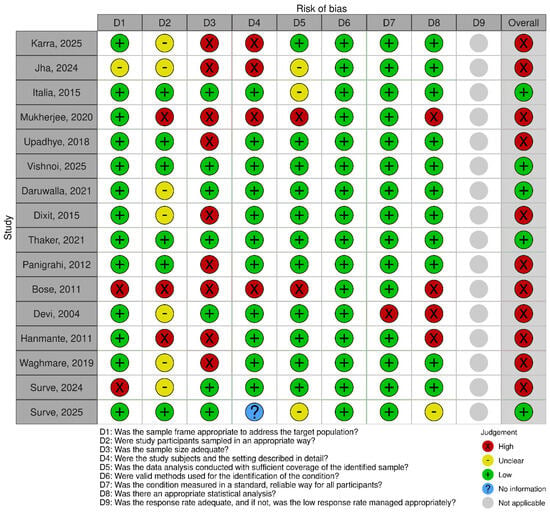
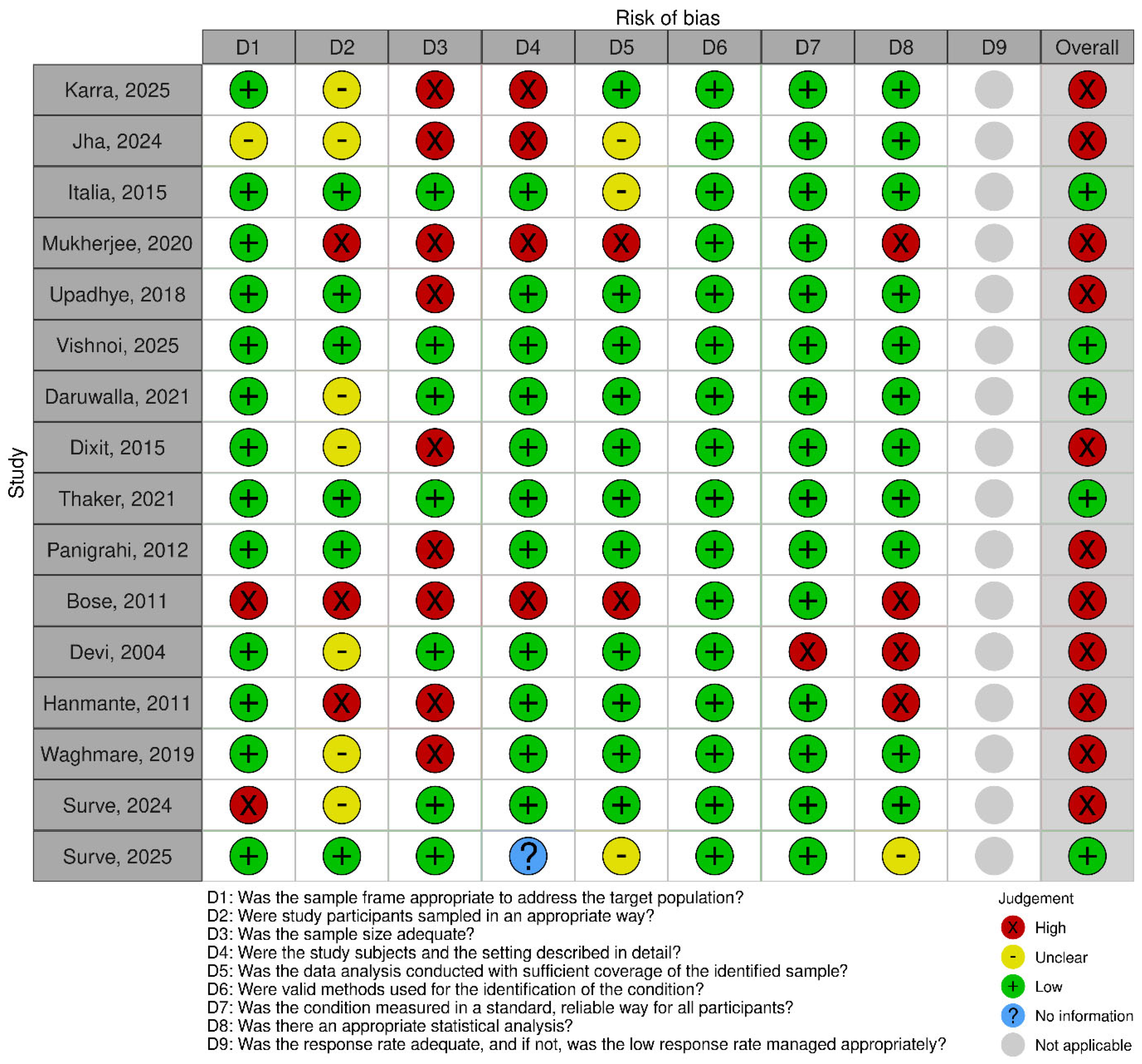
On quality assessment (Figure 2), five studies were identified to be at low risk of bias [9,12,25,33,35]. The primary reasons for increased risk of bias in other studies were inadequate sample size (n = 8 studies), inadequate description of study participants (n = 4), and inappropriate statistical analysis (n = 4).
Figure 2.
Quality assessment [13,22,23,24,25,26,27,28,29,30,31,32,33,34,35,36].
3.4. Meta-Analysis
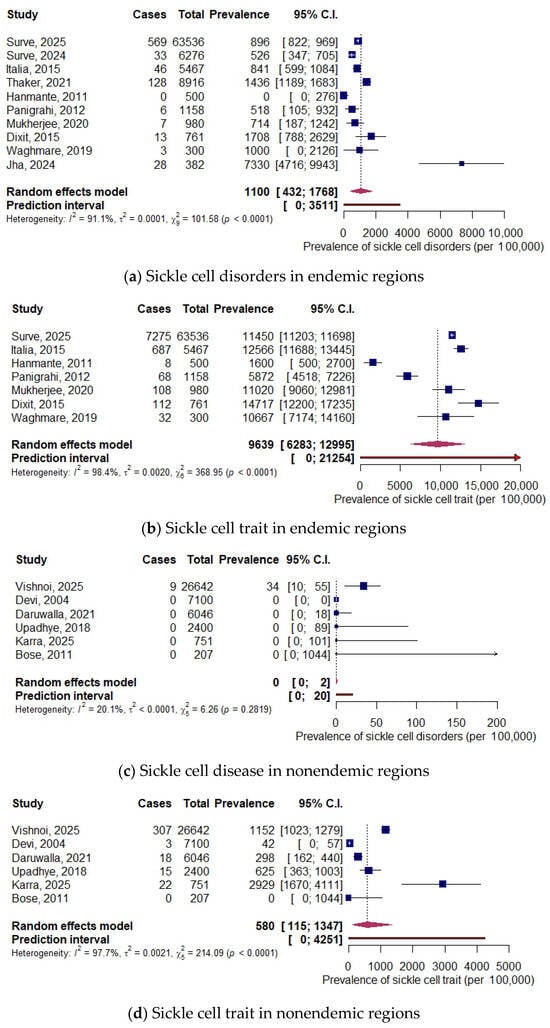
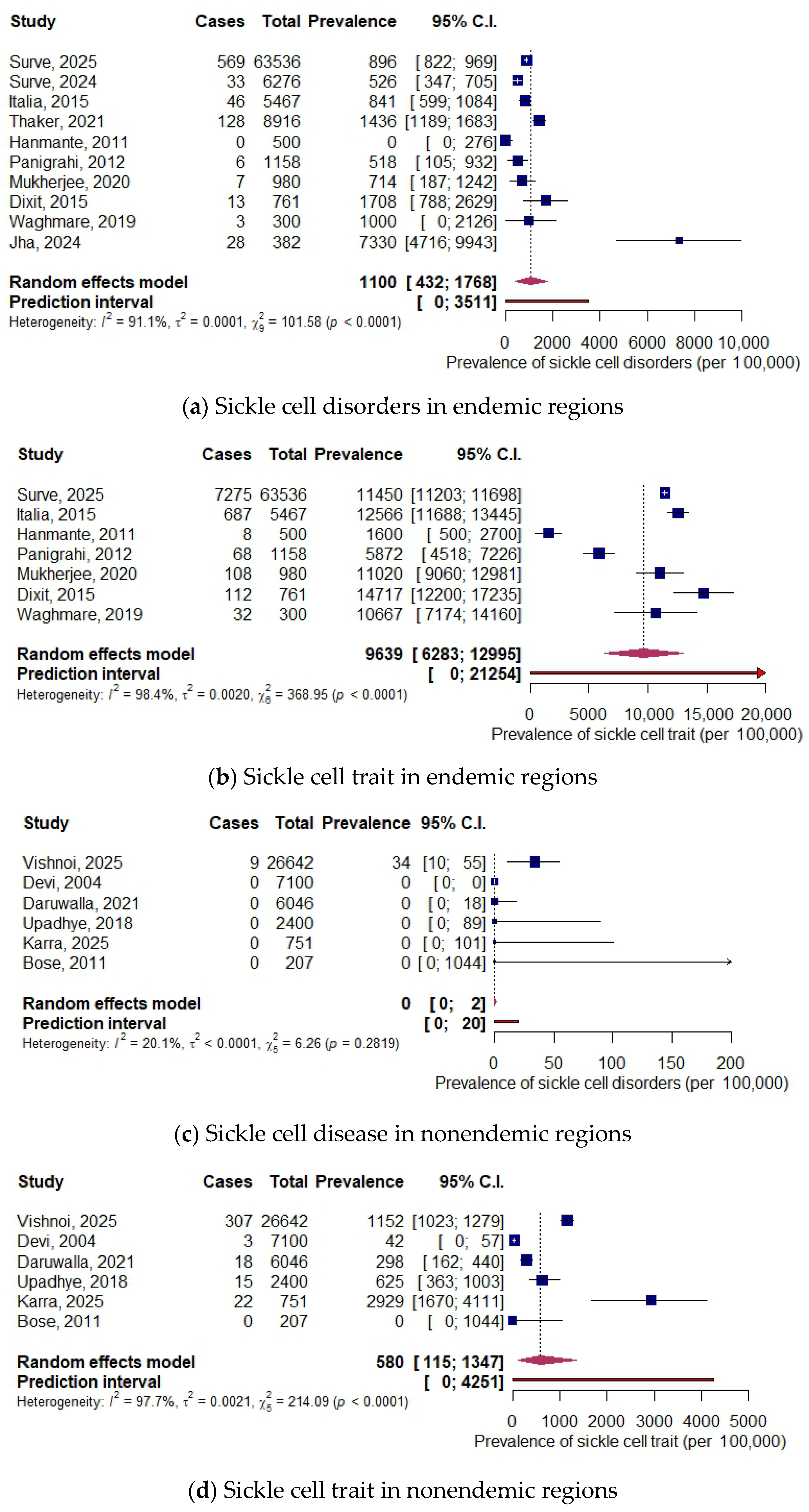
In endemic regions, the prevalence of SCD was 1100 per 100,000 neonates screened (10 studies, 88,276 neonates, 95% CI: 432, 1768), while that of SCT was 9639 per 100,000 neonates screened (7 studies, 72,702 neonates, 95% CI: 6283, 12,95). In nonendemic regions, the prevalence of SCD was close to 0 per 100,000 neonates screened (6 studies, 43,146 neonates, 95% CI: 0, 2), while that of SCT was 580 per 100,000 neonates screened (6 studies, 43,146 neonates, 95% CI: 115, 1347). The forest plots are shown in Figure 3.
Figure 3.
Forest plots for prevalence in endemic and nonendemic regions [13,22,23,24,25,26,27,28,29,30,31,32,33,34,35,36].
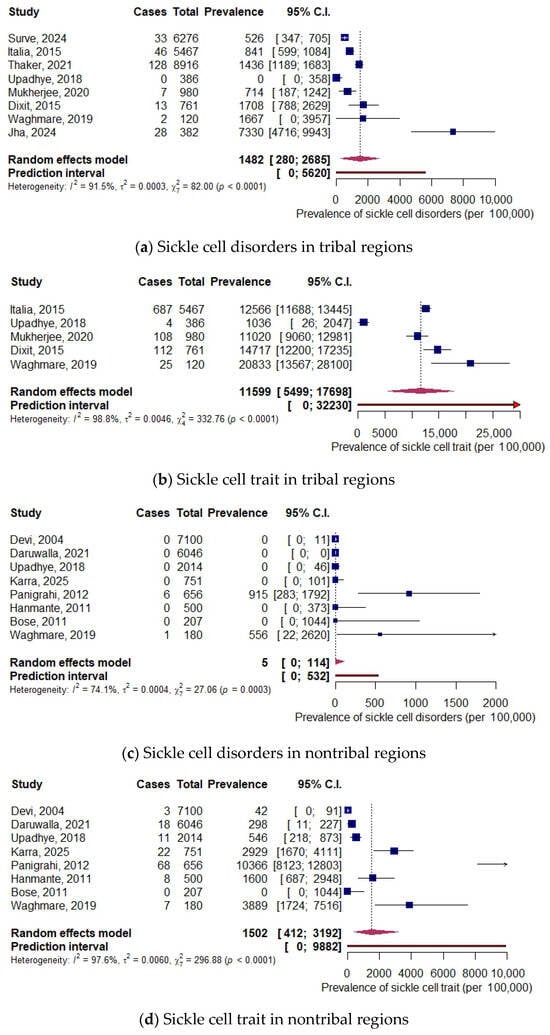
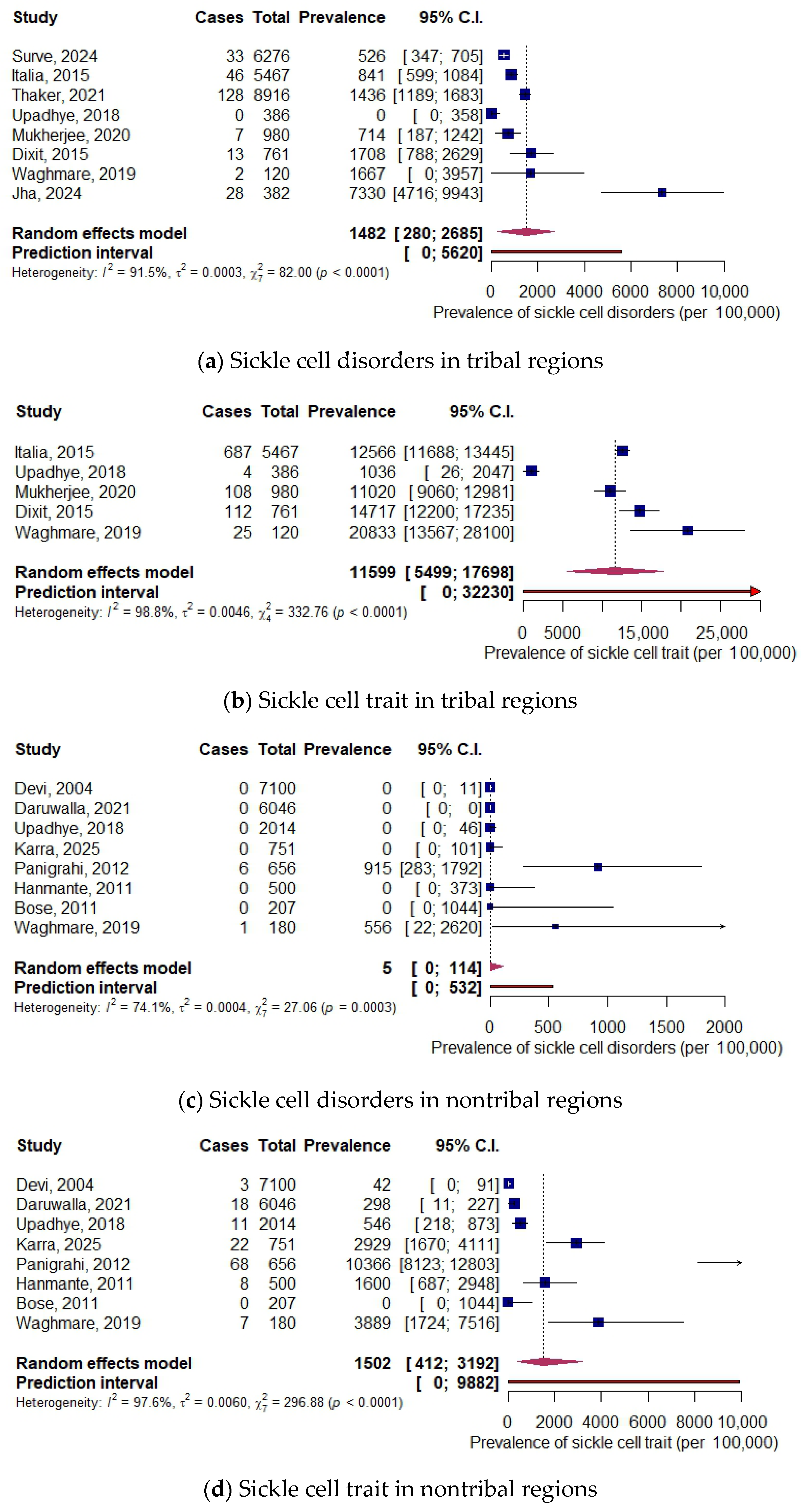
The tribal population had an SCD prevalence of 1482 per 100,000 neonates (8 studies, 23,288 neonates, 95% CI: 280, 2685) and an SCT prevalence of 11,599 per 100,000 neonates (5 studies, 7714 neonates, 95% CI: 5499, 17,698). The birth prevalence in nontribal regions was 5 per 100,000 neonates for SCD (8 studies, 17,454 neonates, 95% CI: 0, 114) and 1502 per 100,000 neonates for SCT (8 studies, 17,454 neonates, 95% CI: 412, 3192). The forest plots are shown in Figure 4.
Figure 4.
Forest plots for prevalence in tribal and nontribal populations [22,23,25,26,27,29,30,32,33,34,35,36].
The heterogeneity was low for SCD prevalence in nonendemic regions and high for other outcomes. We did not perform subgroup analysis, meta-regression, sensitivity analysis, or publication bias assessment due to the inadequate number of studies. We could not analyze the outcome of cost, as no study reported data on cost.
We extrapolated these data to estimated annual births in India in 2024 (based on a population estimate of 1.44 billion and a crude birth rate of 16 per 1000 population) [37]. Assuming that the tribal population constitutes 8.6% of the population [4], with a total fertility rate of 2.5 [38] for the tribal population and 2 for the nontribal population [4], there were likely 24.2 per 100,000 births in tribals and 206.2 per 100,000 births in the nontribal population. The number of newly born babies with sickle cell disorders is estimated to be approximately 35,800 in the tribal population and 1030 in nontribal populations (Table 2).
Table 2.
Estimation of sickle-cell disorder burden in tribal and nontribal populations.
4. Discussion
Our systematic review and meta-analysis summarizes the data on the birth prevalence of sickle cell disease in India. While endemic regions had a 1100 per 100,000 birth prevalence of sickle cell disorders and 9640 per 100,000 of sickle cell trait, the prevalence in nonendemic regions was negligible, with SCD prevalence close to ‘0’ and SCT prevalence of 580 per 100,000.
The effectiveness of NBS is proven in the history of medicine. Early diagnosis by NBS, vaccination against pneumococcal and Haemophilus influenzae, penicillin prophylaxis [39], and early introduction of hydroxyurea help prevent deaths and improve quality of life in children with SCD. Other benefits include prompt clinical intervention for infection, early education and awareness of parents about signs and symptoms of illness in early childhood, and prenatal diagnosis in subsequent pregnancies [40,41,42]. The universal NBS program also helps diagnose multiple life-threatening ailments in one go. NBS for sickle cell disorders was initiated in the USA in the 1960s and started with targeted population screening, evolving into identifying public health laboratories, conducting multicenter studies, trials on prophylactic penicillin use, and final recommendation of universal NBS in 1987. Since 2006, NBS has been universally implemented for common forms of SCD (HbSS, Hb SC, and Hb S/β thalassemia) in all states of the USA. The screening, reporting, and referral of other hemoglobinopathies, however, is widely variable across states [43].
The strong effect of NBS on reducing mortality in hemoglobinopathies was demonstrated in the US, where from 1975 to 1985, 84,663 newborns were screened, irrespective of ethnicity and background. They identified SCD in 1 in 951 births and significant thalassemia syndrome in 1 in 4233 newborns. Significantly, the overall mortality rate when sickle cell disease was diagnosed in the newborn period was only 1.8%, while it was 8% when diagnosed beyond 3 months of age [41]. In the USA, with the implementation of universal NBS for SCD and the initiation of penicillin prophylaxis, mortality has been reduced by 50% in affected children aged 1 to 4 years [41]. It was also noticed that overall life expectancy has increased from a median of 14.3 years to between 42 and 53 years in males and 46 and 58.5 years in females [41].
Efforts have been scaled up to establish NBSs for SCD in Africa since 2010. Sub-Saharan Africa accounts for 75% of the global prevalence of SCD. There is heterogeneity in practices: in some countries, sample collection occurs at the primary level and is transported to tertiary facilities, while in a few other countries, it is integrated into other national health programs, and in most states, services are available only in tertiary healthcare. It was observed that factors such as government ownership in the form of policy formulation and funding, involvement of healthcare stakeholders in policy formulation, acceptability of NBS among stakeholders, and integration of NCD into existing services were enablers for implementing NBS. They could also establish follow-up, facilitated by preexisting SCD clinics, obtain funding from industry partnerships, and create communication channels for tracing patients [44,45,46,47]. The barriers observed were lack of public awareness, low level of education of mothers, limited supply of diagnostic laboratory materials, epileptic electricity, lack of trained healthcare workers, low access to screening facilities, parental denial of positive results in apparently healthy infants, low accessibility to comprehensive care services, unsuccessful tracking due to wrong contact numbers, and delay in communication channels [45,46,47,48,49]. With global partnerships such as the establishment of a consortium on newborn screening in Africa (CONSA) program with the American Society of Hematology in 2017, increasing success has been achieved in Africa [50]. For India, lessons learnt from other countries where NBS programs are successful are paramount to establish its indigenous NBS program.
In India, concerted efforts to identify SCD-affected children in endemic regions have occurred in the last decade. Over the years, studies have evolved from single-center tertiary hospital-based studies [24,28] to multicentric network creation for screening [13,33,34]. The feasibility and utility of DBS for NBS of SCD is established well beyond doubt. Hence, NBS for SCD could be incorporated in states with ongoing NBS programs. The potential strengths that are identified from included studies in this analysis are (1) availability and use of HPLC, indirectly showing the availability of machines, consumables, and manpower for interpretation, (2) availability of clinics providing comprehensive care in a few endemic regions that can be created as a model to be applied in other regions [13,25], (3) availability of genetic studies for the diagnosis of hemoglobinopathy [9,31,35], (4) fair proportion of follow-up of 70% for confirmation of diagnosis [25,28,35], (5) education of family members [25,35], (6) use of genetic diagnosis for genetic counseling and antenatal diagnosis [35], and (7) use of mobile phones for follow-up and education [35]. The barriers that are globally felt are applicable to India as well, namely lack of public awareness, inconsistent funding, government policy not translating to grassroots changes, tertiary care-centered programs, and nonavailability in primary or secondary level healthcare, and poor channels of follow-up.
Early initiation of hydroxyurea (≤9 months of age) is proven to be safe and effective in the reduction of initial and recurrent episodes of pain, dactylitis, acute chest syndrome, and hospitalization [51]. Less dactylitis, as well as fewer hospitalizations and transfusions, were observed in asymptomatic infants treated with hydroxyurea. Long-term adherence to hydroxyurea effectively reduces the number of emergency department (ED) visits per year, hospital days per year, and the annual average hemoglobin concentration [52]. In studies included in this meta-analysis, one study reported the use of hydroxyurea [35]. A systematic review on the use of hydroxyurea in 3817 Indian patients with SCD (27 studies) showed that HU significantly increased HbF levels (10.9–77.3%), reduced veno-occlusive crisis frequency by 79–93%, and lowered transfusion needs by 50–85%. However, only one study analyzed in that review included children under 2 years of age [53]. Although the recommendation is to start hydroxyurea at 9 months of age, a conservative approach (initiation beyond 2 years of age) and inconsistency in initiating hydroxyurea were observed in India.
Introduction of point-of-care testing (POCT) is one of the key takeaways from the African experience. The most common and available POCTs, including HemoTypeSC, use a qualitative lateral flow immunoassay method to detect the presence of HbA, HbS, and HbC. This is a monoclonal antibody-based test with high accuracy in detecting HbA, HbS, and HbC antigens. Other available instruments are Sickle SCAN and HemeChip. The advantages of POCT are simplicity in performance and interpretation, low cost of device, no requirement of maintenance, electricity, or refrigeration, and the interpretation of test results being visual and qualitative. It is an attractive alternative that can be mass-implemented in low-resource countries at low project cost. The application of POCT in NBS has already been established [54,55,56]. Two studies included in this meta-analysis utilized HemoTypeSC and reported sensitivity and specificity of 98.1% and 99.1% for all possible phenotypes [13,34]. A pilot study looking at the operational feasibility of POCT with training and utilizing primary-level healthcare workers has shown promise in India [54].
The National Sickle Cell Elimination Program (NSCAEM) launched in 2023 aims to cover 70 million people in endemic districts and eliminate SCD by 2047 through improved awareness, early diagnosis, and initiation of prompt preventive care [57]. It is currently one of the flagship programs under the National Ministry of Health and Family Welfare. Although it is not targeted for screening newborn ages, early diagnosis is one of the positive takeaways. India, with its widely heterogeneous demographic characteristics, should initiate the NBS program for SCD tier wise. The strategies from other countries that can be adopted are strong policy advocacy from patient groups, ensuring government funding for the establishment and sustenance of programs, creating comprehensive care centers in nodal centers, using international collaborations, and implementing POCT in peripheral remote regions. The option is to begin with endemic districts with tribal populations, followed by less endemic districts and less affected states, leading to countrywide implementation of the model. Sparse data are currently available for cost-effectiveness newborn screening, genetic counseling, antenatal diagnosis, and POCT. The success of these programs in the USA and UK with significant reductions in mortality and morbidity is a great motivation for our country to support the comprehensive sickle cell program being proposed now [58,59,60].
Our analysis and previous studies indicate that the burden is high in endemic regions, while it is less studied in nonendemic regions. The strengths of this review are a comprehensive picture of birth prevalence across India and the inclusion of tribal/nontribal and endemic/nonendemic populations. However, the study is limited by heterogeneity in the sampling strategy, inadequate sample size, heterogeneity in inclusion criteria, and nonuniform operational definitions in the included studies. Data were not available from many states of the country.
5. Conclusions
The data from this analysis show the burden of SCD in India, mostly from endemic/tribal regions. There is an urgent need to quantify the problem in nonendemic/nontribal regions of our country. Establishing birth cohorts and providing comprehensive healthcare will help us understand the effect of early diagnosis on mortality. Universal NBS holds the key for early prompt holistic care.
Author Contributions
Conceptualization, E.A.R. and R.P.A.; methodology, R.P.A.; software, R.P.A.; validation, E.A.R. and R.P.A.; formal analysis, R.P.A.; investigation, E.A.R.; resources, R.P.A.; data curation, E.A.R. and R.P.W.; writing—original draft preparation, E.A.R.; writing—review and editing, R.P.A. and R.P.W.; visualization, E.A.R.; supervision, R.P.A.; project administration, R.P.A.; funding acquisition, not applicable. All authors have read and agreed to the published version of the manuscript.
Funding
This research received no external funding.
Institutional Review Board Statement
Not applicable.
Informed Consent Statement
Not applicable.
Data Availability Statement
The original contributions presented in this study are included in the Appendix A. Further inquiries can be directed to the corresponding author.
Conflicts of Interest
The authors declare no conflicts of interest.
Abbreviations
The following abbreviations are used in this manuscript.
| CBR | crude birth rate |
| CDFD | Centre for DNA Fingerprinting and Diagnostics |
| CRHCM | Centre for Research Management and Control of Hemoglobinopathies |
| DNA | deoxyribose nucleic acid |
| ED | emergency department |
| GBD | Global Burden of Disease |
| HPLC | high-performance liquid chromatography |
| NAWA | Nilgiris Adivasi Welfare Association |
| NBS | newborn screening |
| NFHS | National Family Health Survey |
| NIRTH | National Institute of Research in Tribal Health |
| NSCAEM | National Sickle Cell Elimination Program |
| PCR | polymerase chain reaction |
| POCT | point-of-care testing |
| PRISMA | Preferred Reporting Items for Systematic Reviews and Meta-Analyses |
| RFLP | restriction fragment length polymorphism |
| SCD | sickle cell disorder |
| SCT | sickle cell trait |
| SDG | Sustainable Development Goal |
| SEWA | Society for Education, Welfare and Action—Rural |
Appendix A
Table A1.
Search strategy for databases—sickle cell disease in India.
Table A2.
List of excluded studies.
References
- Venugopal, A.; Chandran, M.; Eruppakotte, N.; Kizhakkillach, S.; Breezevilla, S.C.; Vellingiri, B. Monogenic Diseases in India. Mutat. Res./Rev. Mutat. Res. 2018, 776, 23–31. [Google Scholar] [CrossRef] [Scilit]
- Thomson, A.M.; McHugh, T.A.; Oron, A.P.; Teply, C.; Lonberg, N.; Tella, V.V.; Wilner, L.B.; Fuller, K.; Hagins, H.; Aboagye, R.G.; et al. Global, Regional, and National Prevalence and Mortality Burden of Sickle Cell Disease, 2000–2021: A Systematic Analysis from the Global Burden of Disease Study 2021. Lancet Haematol. 2023, 10, e585–e599. [Google Scholar] [CrossRef] [Scilit]
- Hockham, C.; Bhatt, S.; Colah, R.; Mukherjee, M.B.; Penman, B.S.; Gupta, S.; Piel, F.B. The Spatial Epidemiology of Sickle-Cell Anaemia in India. Sci. Rep. 2018, 8, 17685. [Google Scholar] [CrossRef] [Scilit]
- International Institute for Population Sciences. National Family Health Survey (NFHS)-5, 2019–2021; International Institute for Population Sciences (IIPS) and ICF1: Mumbai, India, 2021; Volume 1. [Google Scholar]
- Kumar, A. The Transformation of The Indian Healthcare System. Cureus 2023, 15, e39079. [Google Scholar] [CrossRef] [Scilit]
- Mookken, T. Universal Implementation of Newborn Screening in India. IJNS 2020, 6, 24. [Google Scholar] [CrossRef] [Scilit]
- Kapoor, S.; Gupta, A.K.; Thelma, B.K. Charting the Course: Towards a Comprehensive Newborn Screening Program in India. Int. J. Neonatal Screen. 2024, 10, 43. [Google Scholar] [CrossRef] [Scilit]
- Jain, D.; Tokalwar, R.; Upadhye, D.; Colah, R.; Serjeant, G.R. Homozygous Sickle Cell Disease in Central India & Jamaica: A Comparison of Newborn Cohorts. Indian J. Med. Res. 2020, 151, 326–332. [Google Scholar] [CrossRef] [Scilit]
- Upadhye, D.; Jain, D.; Nadkarni, A.; Ghosh, K.; Colah, R. Red Cell Indices and Hemoglobin Profile of Newborn Babies with Both the Sickle Gene and Alpha Thalassaemia in Central India. Indian J. Hematol. Blood Transfus. 2019, 35, 109–113. [Google Scholar] [CrossRef] [Scilit]
- Dave, K.; Desai, S.; Italia, Y.; Mukherjee, M.B.; Mehta, P.; Desai, G. Newborn Screening and Clinical Profile of Children with Sickle Cell Disease in a Tribal Area of Gujarat. Indian Pediatr. 2022, 59, 230–233. [Google Scholar] [CrossRef] [Scilit]
- Colah, R.B.; Mehta, P.; Mukherjee, M.B. Newborn Screening for Sickle Cell Disease: Indian Experience. IJNS 2018, 4, 31. [Google Scholar] [CrossRef] [Scilit]
- Press Trust of India (PTI). Newborn Screening, Early Treatment Can Cut Sickle Cell Anaemia Mortality: ICMR Study. The Hindu, 22 June 2025.
- Surve, S.; Thakor, M.; Madkaikar, M.; Kaur, H.; Desai, S.; Shanmugam, R.; Mohanty, S.S.; Pandey, A.; Salomi Kerketta, A.; Dave, K.; et al. Protocol for a Multicentric Cohort Study on Neonatal Screening and Early Interventions for Sickle Cell Disease Among High-Prevalence States of India. Diagnostics 2025, 15, 730. [Google Scholar] [CrossRef] [Scilit]
- Prasad, R.; Rahiman, E.A. Birth Prevalence of Sickle Cell Disease in India—A Systematic Review and Meta-Analysis. Clin. Epidemiol. Glob. Health 2025, 28, 101678. [Google Scholar]
- Page, M.J.; McKenzie, J.E.; Bossuyt, P.M.; Boutron, I.; Hoffmann, T.C.; Mulrow, C.D.; Shamseer, L.; Tetzlaff, J.M.; Akl, E.A.; Brennan, S.E.; et al. The PRISMA 2020 Statement: An Updated Guideline for Reporting Systematic Reviews. Syst. Rev. 2021, 10, 89. [Google Scholar] [CrossRef] [Scilit]
- Rayyan—AI Powered Tool for Systematic Literature Reviews. 2021. Available online: https://www.rayyan.ai/ (accessed on 1 September 2023).
- Dhand, N.K.; Khatkar, M.S. Statulator: An Online Statistical Calculator. Sample Size Calculator for Estimating a Single Proportion 2014. Available online: http://statulator.com/SampleSize/ss1P.html (accessed on 2 January 2026).
- Abdulmajeed, J.; Chivese, T.; Doi, S.A.R. Overcoming Challenges in Prevalence Meta-Analysis: The Case for the Freeman-Tukey Transform. BMC Med. Res. Methodol. 2025, 25, 89. [Google Scholar] [CrossRef] [Scilit]
- DerSimonian, R.; Laird, N. Meta-Analysis in Clinical Trials Revisited. Contemp. Clin. Trials 2015, 45, 139–145. [Google Scholar] [CrossRef] [Scilit]
- Migliavaca, C.B.; Stein, C.; Colpani, V.; Barker, T.H.; Ziegelmann, P.K.; Munn, Z.; Falavigna, M.; Prevalence Estimates Reviews-Systematic Review Methodology Group (PERSyst). Meta-Analysis of Prevalence: I2 Statistic and How to Deal with Heterogeneity. Res. Synth. Methods 2022, 13, 363–367. [Google Scholar] [CrossRef] [Scilit]
- Borges Migliavaca, C.; Stein, C.; Colpani, V.; Barker, T.H.; Munn, Z.; Falavigna, M.; on behalf of the Prevalence Estimates Reviews—Systematic Review Methodology Group (PERSyst). How Are Systematic Reviews of Prevalence Conducted? A Methodological Study. BMC Med. Res. Methodol. 2020, 20, 96. [Google Scholar] [CrossRef] [Scilit]
- Bose, M.; Viswanathan, R.; Dasgupta, S.; Singh, A.K. Neonatal Screening for Hemoglobinopathies. Indian Pediatr. 2011, 48, 154–155. [Google Scholar]
- Dixit, S.; Sahu, P.; Kar, S.K.; Negi, S. Identification of the Hot-Spot Areas for Sickle Cell Disease Using Cord Blood Screening at a District Hospital: An Indian Perspective. J. Community Genet. 2015, 6, 383–387. [Google Scholar] [CrossRef] [Scilit]
- Hanmante, R.D.; Chopade, S.W.; Dhumure, K.S.; Shere, S.; Bindu, R.S. Neonatal Screening for Sickle Cell Disorders. Int. J. Recent Trends Sci. Technol. 2011, 1, 104–109. [Google Scholar]
- Italia, Y.; Krishnamurti, L.; Mehta, V.; Raicha, B.; Italia, K.; Mehta, P.; Ghosh, K.; Colah, R. Feasibility of a Newborn Screening and Follow-up Programme for Sickle Cell Disease among South Gujarat (India) Tribal Populations. J. Med. Screen. 2015, 22, 1–7. [Google Scholar] [CrossRef] [Scilit]
- Jha, R.K.; Kaple, M.; Ambad, R.S.; Dhok, A.; Anjankar, A. The Neonatal Screening for Sickle Cell Disease, Thalassemia, and G6PD Deficiency in Central India. J. Pharm. Bioallied Sci. 2024, 16, S4026–S4029. [Google Scholar] [CrossRef] [Scilit]
- Karra, M.L.; Rahiman, E.A.; Narahari, M.; Bhongir, A.V.; Rathod, G.; Shyamkrishnan, R.; Guduru, V.K.; Kagitapu, S.; Pyati, A.; Sampath, S. Unveiling the Burden of Sickle Cell Anemia: A Pilot Study Validating Dried Blood Spots for Newborn Screening. Indian J. Pediatr. 2025, 92, 405–408. [Google Scholar] [CrossRef] [Scilit]
- Panigrahi, S.; Patra, P.K.; Khodiar, P.K. Neonatal Screening of Sickle Cell Anemia: A Preliminary Report. Indian J. Pediatr. 2012, 79, 747–750. [Google Scholar] [CrossRef] [Scilit]
- Rama Devi, A.R.; Naushad, S.M. Newborn Screening in India. Indian J. Pediatr. 2004, 71, 157–160. [Google Scholar] [CrossRef] [Scilit]
- Upadhye, D.; Das, R.S.; Ray, J.; Acharjee, S.; Ghosh, K.; Colah, R.B.; Mukherjee, M.B. Newborn Screening for Hemoglobinopathies and Red Cell Enzymopathies in Tripura State: A Malaria-Endemic State in Northeast India. Hemoglobin 2018, 42, 43–46. [Google Scholar] [CrossRef] [Scilit]
- Vishnoi, A.; Jyani, R.; Sharma, A.; Poswal, L.; Goyal, S.; Swami, S.K.; Chauhan, N.K. Screening for Hemoglobinopathies: An Inceptive Experience of Centre of Excellence for Sickle Cell Disease. Indian Pediatr. 2025, 62, 832–835. [Google Scholar] [CrossRef] [Scilit]
- Waghmare, M.H.; Shrikhande, A.V. Newborn Screening for Hemoglobinopathies in Tertiary Care Centre in Central India. Int. J. Med. Sci. Curr. Res. 2019, 2, 85–92. [Google Scholar]
- Daruwalla, R.M.; Das Gupta, A.; Pawar, R. Screening of Dry Blood Spots from Newborns by Two High Performance Liquid Chromatography (HPLC) Systems: A Comparison of Their Ability to Diagnose Both Sickle and Non-Sickle Hemoglobinopathies. Indian J. Hematol. Blood Transfus. 2021, 37, 430–435. [Google Scholar] [CrossRef] [Scilit]
- Mukherjee, M.B.; Colah, R.B.; Mehta, P.R.; Shinde, N.; Jain, D.; Desai, S.; Dave, K.; Italia, Y.; Raicha, B.; Serrao, E. Multicenter Evaluation of HemoTypeSC as a Point-of-Care Sickle Cell Disease Rapid Diagnostic Test for Newborns and Adults Across India. Am. J. Clin. Pathol. 2020, 153, 82–87. [Google Scholar] [CrossRef] [Scilit]
- Thaker, P.; Colah, R.B.; Patel, J.; Raicha, B.; Mistry, A.; Mehta, V.; Italia, Y.; Desai, S.; Dave, K.; Shanmugam, R.; et al. Newborn Screening for Sickle Cell Disease Among Tribal Populations in the States of Gujarat and Madhya Pradesh in India: Evaluation and Outcome Over 6 Years. Front. Med. 2021, 8, 731884. [Google Scholar] [CrossRef] [Scilit]
- Surve, S.; Kulkarni, R.; Kore, Y.; Jain, A.; Salvi, N.; Bodaden, S.; Suryawanshi, D.; Hemgane, B.; Dhodi, P.; Chauhan, S.; et al. Identifying Early Iron Deficiency Anaemia in Sickle Cell Disease: Lessons Learnt from Newborn Sickle Cell Cohort in Tribal District, India. Indian Pract. 2024, 77, 11–14. [Google Scholar]
- World Bank Open Data. Available online: https://data.worldbank.org (accessed on 27 November 2025).
- Ministry of Health and Family Welfare. Tribal Health in India—Bridging the Gap and a Roadmap for the Future; Report of Expert committee on Tribal Health; Ministry of Health and Family Welfare, Ministry of Tribal Affairs, Government of India: New Delhi, India, 2018.
- Gaston, M.H.; Verter, J.I.; Woods, G.; Pegelow, C.; Kelleher, J.; Presbury, G.; Zarkowsky, H.; Vichinsky, E.; Iyer, R.; Lobel, J.S.; et al. Prophylaxis with Oral Penicillin in Children with Sickle Cell Anemia. N. Engl. J. Med. 1986, 314, 1593–1599. [Google Scholar] [CrossRef] [Scilit]
- Vichinsky, E.P. Comprehensive Care in Sickle Cell Disease: Its Impact on Morbidity and Mortality. Semin. Hematol. 1991, 28, 220–226. [Google Scholar] [PubMed]
- Vichinsky, E.; Hurst, D.; Earles, A.; Kleman, K.; Lubin, B. Newborn Screening for Sickle Cell Disease: Effect on Mortality. Pediatrics 1988, 81, 749–755. [Google Scholar] [CrossRef] [Scilit]
- Frempong, T.; Pearson, H.A. Newborn Screening Coupled with Comprehensive Follow-up Reduced Early Mortality of Sickle Cell Disease in Connecticut. Conn. Med. 2007, 71, 9–12. [Google Scholar] [PubMed]
- El-Haj, N.; Hoppe, C.C. Newborn Screening for SCD in the USA and Canada. IJNS 2018, 4, 36. [Google Scholar] [CrossRef] [Scilit]
- Nnodu, O.E.; Adegoke, S.A.; Ezenwosu, O.U.; Emodi, I.I.; Ugwu, N.I.; Ohiaeri, C.N.; Brown, B.J.; Olaniyi, J.A.; Isa, H.; Okeke, C.C.; et al. A Multi-Centre Survey of Acceptability of Newborn Screening for Sickle Cell Disease in Nigeria. Cureus 2018, 10, e2354. [Google Scholar] [CrossRef] [Scilit] [PubMed]
- Archer, N.M.; Inusa, B.; Makani, J.; Nkya, S.; Tshilolo, L.; Tubman, V.N.; McGann, P.T.; Ambrose, E.E.; Henrich, N.; Spector, J.; et al. Enablers and Barriers to Newborn Screening for Sickle Cell Disease in Africa: Results from a Qualitative Study Involving Programmes in Six Countries. BMJ Open 2022, 12, e057623. [Google Scholar] [CrossRef] [Scilit]
- Bukini, D.; Nkya, S.; McCurdy, S.; Mbekenga, C.; Manji, K.; Parker, M.; Makani, J. Perspectives on Building Sustainable Newborn Screening Programs for Sickle Cell Disease: Experience from Tanzania. IJNS 2021, 7, 12. [Google Scholar] [CrossRef] [Scilit]
- Segbefia, C.I.; Goka, B.; Welbeck, J.; Amegan-Aho, K.; Dwuma-Badu, D.; Rao, S.; Salifu, N.; Oppong, S.A.; Odei, E.; Ohene-Frempong, K.; et al. Implementing Newborn Screening for Sickle Cell Disease in Korle Bu Teaching Hospital, Accra: Results and Lessons Learned. Pediatr. Blood Cancer 2021, 68, e29068. [Google Scholar] [CrossRef] [Scilit]
- Nkya, S.; Mtei, L.; Soka, D.; Mdai, V.; Mwakale, P.B.; Mrosso, P.; Mchoropa, I.; Rwezaula, S.; Azayo, M.; Ulenga, N.; et al. Newborn Screening for Sickle Cell Disease: An Innovative Pilot Program to Improve Child Survival in Dar Es Salaam, Tanzania. Int. Health 2019, 11, 589–595. [Google Scholar] [CrossRef] [Scilit] [PubMed]
- McGann, P.T.; Ferris, M.G.; Ramamurthy, U.; Santos, B.; De Oliveira, V.; Bernardino, L.; Ware, R.E. A Prospective Newborn Screening and Treatment Program for Sickle Cell Anemia in Luanda, Angola. Am. J. Hematol. 2013, 88, 984–989. [Google Scholar] [CrossRef] [Scilit]
- Nnodu, O.E.; Okeke, C.O.; Isa, H.A. Newborn Screening Initiatives for Sickle Cell Disease in Africa. Hematology 2024, 2024, 227–233. [Google Scholar] [CrossRef] [Scilit]
- Schuchard, S.B.; Lissick, J.R.; Nickel, A.; Watson, D.; Moquist, K.L.; Blaylark, R.M.; Nelson, S.C. Hydroxyurea Use in Young Infants with Sickle Cell Disease. Pediatr. Blood Cancer 2019, 66, e27650. [Google Scholar] [CrossRef] [Scilit]
- George, P.; Kalmus, G.; Lane, P.A.; Lam, W.; Lipscomb, J.; Howard, D. Evaluating the Long-Term Benefits of Hydroxyurea in Pediatric Sickle Cell Anemia. Blood Adv. 2025, 9, 3585–3593. [Google Scholar] [CrossRef] [Scilit]
- Jain, D.; Sarvaiya, D.; Mehta, S.; Mohanasundaram, S.; Gogtay, J. The Indian Experience with Hydroxyurea in Sickle Cell Disease: A 25-Year Systematic Review. Indian J. Med. Res. 2025, 162, 28–43. [Google Scholar] [CrossRef] [Scilit] [PubMed]
- Thakor, M.; Gautam, J.K.; Panigrahi, A.; Garasiya, D.; Brhamnia, S.L.; Mohanty, S.S. Operational Feasibility of Point-of-Care Testing for Sickle Cell Disease in Resource-Limited Settings of Tribal Sub-Plan Region of India. Diagnostics 2025, 15, 348. [Google Scholar] [CrossRef] [Scilit]
- Adegoke, S.A.; Makalo, L.; Sallah, A.; Saine, H.; Joof, S.; Conteh, A.; Bah, R.; Camara Jammeh, A.F.; Bass, M.; Jallow, M.; et al. Point-of-Care Newborn Screening for Sickle Cell Disease at Selected Health Facilities in the Gambia. Hemoglobin 2024, 48, 169–174. [Google Scholar] [CrossRef] [Scilit]
- Steele, C.; Sinski, A.; Asibey, J.; Hardy-Dessources, M.; Elana, G.; Brennan, C.; Odame, I.; Hoppe, C.; Geisberg, M.; Serrao, E.; et al. Point-of-care Screening for Sickle Cell Disease in Low-resource Settings: A Multi-center Evaluation of HemoTypeSC, a Novel Rapid Test. Am. J. Hematol. 2019, 94, 39–45. [Google Scholar] [CrossRef] [Scilit]
- National Sickle Cell Anaemia Elimination Mission. Available online: https://sickle.nhm.gov.in/home/about (accessed on 5 December 2025).
- Therrell, B.L. Challenges and Opportunities in Establishing and Maintaining Newborn Screening Systems. Southeast. Asian J. Trop. Med. Public Health 2003, 34, 6–12. [Google Scholar]
- Streetly, A.; Latinovic, R.; Henthorn, J. Positive Screening and Carrier Results for the England-Wide Universal Newborn Sickle Cell Screening Programme by Ethnicity and Area for 2005–07. J. Clin. Pathol. 2010, 63, 626–629. [Google Scholar] [CrossRef] [Scilit] [PubMed]
- Serjeant, G.R.; Serjeant, B.E.; Mason, K.P.; Gardner, R.; Warren, L.; Gibson, F.; Coombs, M. Newborn Screening for Sickle Cell Disease in Jamaica: Logistics and Experience with Umbilical Cord Samples. J. Community Genet. 2017, 8, 17–22. [Google Scholar] [CrossRef] [Scilit] [PubMed]

Disclaimer/Publisher’s Note: The statements, opinions and data contained in all publications are solely those of the individual author(s) and contributor(s) and not of MDPI and/or the editor(s). MDPI and/or the editor(s) disclaim responsibility for any injury to people or property resulting from any ideas, methods, instructions or products referred to in the content. |
© 2026 by the authors. Published by MDPI on behalf of the International Society for Neonatal Screening. Licensee MDPI, Basel, Switzerland. This article is an open access article distributed under the terms and conditions of the Creative Commons Attribution (CC BY) license.