


Abstract
Pleural Mesothelioma (PM) is a rare, incurable malignancy of the pleura. Lung-sparing surgery, considered investigational, aims to prolong survival and improve quality of life (QOL). Beyond the standard quantitative measures used to determine successful surgical outcomes, an understanding of an individual’s perception of the impact surgery has had on their symptom burden and QOL has not been reported in the literature. The primary aim of this study was to explore the lived experience of dyspnea and QOL before and after lung-sparing surgery. The philosophical approach to this study was grounded in hermeneutical phenomenology. Participants underwent in-depth semi-structured interviews before and 3–4 months post-surgery, analyzed through Interpretive Phenomenological analysis. The analysis identified Group Experiential Themes (GETs) before and after surgery: Psychological (mind supports body), Physiological (body fighting, enduring, and adapting), Social (others sharing and supporting), and Existential (facing an uncertain future). The emotional impact of PM is multidimensional, involving time, internal psychological struggles, and coping with the diagnosis. The physical impact disrupts normal routines and interactions, while social interactions influence the perception of the illness experience. Facing PM disrupts normal bodily routines and interactions with the world. This study provides qualitative evidence that perceptions of dyspnea and QOL significantly impact the patient experience before and after surgery. The enriched understanding of living with mesothelioma and enduring lung-sparing surgery comes from the patients’ voices, highlighting the continuum of dyspnea and QOL influenced by various factors. Healthcare teams must consider patients’ physical, emotional, social, and existential experiences beyond measurable outcomes.
1. Background
Pleural Mesothelioma (PM) is a rare, incurable primary malignancy of the pleural space [1,2]. The most common symptoms experienced at the time of diagnosis include dyspnea, pain, fatigue, anorexia, early satiety and anxiety [3]. Treatment for PM includes multimodality therapies such as chemotherapy, immunotherapy, radiation therapy and surgery [4]. Lung-sparing surgery for PM is considered investigational and involves resection of the pleura, pericardium, and diaphragm, depending upon the extent of the disease [5]. While the primary goal of surgery is to prolong survival, the palliation of symptoms and improvement in quality of life (QOL) are taken into strong consideration when offering surgery as a treatment option [6]. Determining if these goals have been accomplished after surgery generally includes following overall and disease-free survival, measuring pulmonary function, obtaining radiographing imaging and administering QOL questionnaires. Beyond the standard quantitative measures used to determine a successful surgical outcome, an understanding of an individual’s perception of the impact surgery has had on their symptom burden and QOL has not been reported in the literature to date.
Although dyspnea has been identified as a significantly burdensome symptom experienced by PM patients, it has not been reported in the literature as a primary focus of research in PM, as it has with other diseases such as lung cancer and chronic obstructive pulmonary disease. However, dyspnea is the symptom that was reported to affect many PM patients, and it is associated with profound anxiety described with the terms “fighting for breath” and “gasping for air” [7,8]. Many PM patients report continuing to experience dyspnea after their non-surgical treatments had ended. Fears of “suffocating to death” and “drowning in fluid” were expressed by patients as negatively impacting their lived experience of dyspnea. High symptom burden, specifically pain, weakness, poor appetite, and dyspnea have been reported as the most prevalent symptoms experienced by PM patients [9]. Fears of uncontrolled pain and shortness of breath/suffocation were primarily reported by patients at the time of their initial diagnosis. This symptom burden evidence highlights the multidimensional complexity of the lived experience of dyspnea and the importance of gaining a better understanding of the patient experience in order to develop supportive strategies that will help patients manage this unpleasant symptom of their disease process and ultimately improve their QOL.
Lung-sparing surgery generally offers favorable QOL outcomes for patients with pleural mesothelioma when compared to more radical surgical approaches such as extrapleural pneumonectomy [10,11,12]. The global trend towards lung preservation is related to the associated survival benefits, improved lung function, and optimized QOL [13,14]. Longitudinal studies have shown that the QOL benefits of lung-sparing surgery are maintained over extended follow-up periods, contributing to overall patient satisfaction and functional independence [15]. Recent studies have shown that not only is lung-sparing surgery associated with improved QOL, but it also offers similar survival benefits when compared to lung-sacrificing approaches [14,16]. The MARS 2 study compared patients who underwent lung-sparing surgery combined with chemotherapy versus chemotherapy alone [17]. The results showed that over time, QOL in the surgery group improved, and in some cases, patients who underwent surgery regained or even exceeded pre-operative QOL levels, especially in physical functioning and symptom management [17]. However, overall QOL improvements were not significantly better when compared to the chemotherapy alone group. Beyond quantitatively measured QOL, there is no literature reporting the perceptions of QOL before and after lung-sparing surgery. While MARS 2 provided essential statistical data on QOL, it lacks the subjective details required to understand why patients may not perceive a significant improvement despite a successful surgical resection.
The primary aim of this study was to explore the lived experience of dyspnea and QOL of patients with PM who were treated with lung-sparing surgery.
2. Methods
2.1. Methodological and Theoretical Framework
The philosophical approach to this study was grounded in hermeneutical phenomenology. Hermeneutical phenomenology combines the interpretive focus of hermeneutics with the exploration of lived experiences and consciousness of phenomenology [18,19]. It recognizes the interplay between interpretation, understanding, and experience, highlighting how these elements are interconnected in the process of making meaning of the world. Maurice Merleau-Ponty was a 20th-century French philosopher whose phenomenological insights on embodiment, intersubjectivity, perception, and meaning have influenced hermeneutical phenomenology. The theoretical framework for this study is therefore grounded in Merleau-Ponty’s phenomenology of perception [20]. According to Merleau-Ponty, others, time, body and the world influence an individual’s perception of an experience and therefore should be respected and acknowledged when interpreting the meaning of a lived experience [20]. His philosophy emphasizes that our perceptions of the world are not just mental representations but are deeply intertwined with our bodily experiences and interactions with others [20]. According to Merleau-Ponty, our understanding of the world is fundamentally shaped by our bodily presence in it, and our interactions with others play a crucial role in shaping our perceptions of lived experiences [20]. Time, for Merleau-Ponty, is not just a linear progression but is a lived experience that is intimately connected to our bodily existence and how we engage with others and the world around us. His philosophy contributes to a deeper exploration of how our embodied existence and relational interactions shape our interpretations and understanding of the world, aligning with the core tenets of hermeneutical phenomenology [21].
The underpinning methodology for this study was Interpretive Phenomenological Analysis (IPA). IPA focuses on the detailed examination of personal lived experience, the meaning of the experience to participants and how participants make sense of and describe that experience [22,23]. In this way IPA follows Merleau-Ponty’s phenomenology which proposes, “the lived experience of being a body-in-the-world is an important part of understanding someone else’s perspective [23].” The IPA process recognizes the use of emotion and embodiment language and requires close attention to these experience descriptions to capture their meaning and essence in the analytic process. Hermeneutics is the theory of interpretation and IPA acknowledges the exploration of the meaning of the lived experience as an interpretive process on the part of the researcher and the participant [24]. IPA is idiographically committed to the detailed analysis of the lived experience of each individual such that these individual experiences have presence and there is a description of both convergence and divergence within the study sample and final analysis [25].
Investigating dyspnea and QOL from a hermeneutical phenomenological perspective offers a holistic perspective on human experience. In this way we emphasize the inseparable connections between the self, others, body, time, and the world, which enables us to interpret the meaning of the lived experience from a first-person perspective [25,26,27]. To gain an experiential understanding of dyspnea and QOL, this study was informed by the Theory of Unpleasant Symptoms (TOUS). The TOUS’s conceptual framework includes three major components: influential factors (physiological, psychological and situational), the symptom experience, and consequences (performance) [28,29]. The theory proposes that physiological, psychological and situational factors influence an individual’s vulnerability to or demonstration of an unpleasant symptom. An unpleasant symptom can vary in duration, intensity, quality and distress [28,29]. The consequences of the symptom experience are proposed to impact the performance of an individual with respect to physical performance, cognitive functioning, and functional status [30]. The theory takes a holistic approach to an individual’s symptom experience by recognizing the synergism and complexity of multiple unpleasant symptoms and their interrelatedness to each other as well as influencing factors and consequences [31,32,33]. In this way it fits well with a hermeneutic phenomenological study. The TOUS provides a comprehensive theoretical framework by which to gain a better understanding of the dyspnea experienced by pleural mesothelioma patients and its impact on QOL before and after lung-sparing surgery.
2.2. Study Design
A qualitative prospective longitudinal design was utilized to explore the perception of dyspnea and QOL before and after surgery. This qualitative research study informed the design and served as the foundation for a pilot mixed methods study. A central aim of this mixed methods analysis was to identify qualitatively derived themes described by pleural mesothelioma patients that influence their experience of living with PM, and to compare their experience of dyspnea with their quantitative QOL and dyspnea measures, before and three months after lung-sparing surgery. Qualitative and quantitative data were collected concurrently and analyzed independently before being merged to provide a comprehensive understanding of the lived experiences of dyspnea and QOL in patients with pleural mesothelioma (PM) undergoing lung-sparing surgery. The qualitative approach was dominant in this study, as the primary focus was on understanding the subjective experiences of patients and how these experiences compared to quantitative measures of dyspnea and QOL.
2.3. Participants and Setting
The study was approved by the Institutional Review Boards (IRBs) and both participating institutions (Protocol #22-8018; HP-00105468). Participants with pleural mesothelioma who were scheduled for lung-sparing surgery were recruited through purposive sampling between February 2023 and April 2024. The inclusion criteria included (1) diagnosis of pleural mesothelioma, (2) scheduled for lung-sparing surgery, (3) ≥18 years old, and (4) speaks and understands English.
A total of 8 participants were voluntarily enrolled into the study after obtaining written informed consent. The characteristics of the participants are summarized in Table 1. There were 6 males and 2 females, and all participants were Caucasian between the ages of 54 and 82. Tumor volumes, measured by displacement at the time of surgery, ranged from 100 to 700 mL. All phrenic nerves were spared and 63% of the participants required some degree of diaphragm resection. Pulmonary function tests were obtained before and after surgery.
Table 1.
The characteristics of the participants of the study according to age, gender, ethnicity, tumor volume, diaphragm resection and phrenic nerve preservation.
2.4. Data Collection
After obtaining informed consent, each participant was assigned a pseudonym and study number to maintain anonymity and confidentiality. Data was collected during two study visits for each participant, before surgery and 3–4 months after surgery. All participants completed the pre-operative study visit and 6 participants completed the post-operative study visit. Two participants died prior to study visit 2.
After completing the questionnaires, semi-structured in-depth interviews were conducted and recorded using the ZOOM platform. Participants were asked the following questions: (1) We are here today because you are living with mesothelioma—tell me about what it has been like for you and your family. (2) Tell me about how living with mesothelioma has affected your breathing. (3) Baseline/Study Visit 1—How do you anticipate your mesothelioma experience will change after your surgery? (4) 3–6 months/Study Visit 2—How has your experience of living with mesothelioma changed since your surgery? (5) Is there anything else you want to share about your experience of living with mesothelioma? At the conclusion of each interview, the recordings were uploaded and transcribed using NVivo Transcribe. Each transcription was then reviewed for transcription accuracy and completeness while listening to the recording.
This manuscript reports the qualitative analysis of participant interviews conducted as part of a larger longitudinal convergent mixed-methods study. Quantitative data, including pulmonary function testing and standardized measures of dyspnea and quality of life, were collected concurrently and analyzed separately in order to integrate objective outcomes with patient-reported experiences in a complementary mixed-methods analysis.
2.5. Data Analysis
Interpretive phenomenological analysis of the qualitative data was conducted according to the methodology described by Jonathan Smith et al. [22,23]. The analysis was therefore grounded in the interpretation and point of view of each individual experience and was conducted concurrently throughout the enrollment period. Each transcript was analyzed using the seven steps of IPA recommended by Smith et al. [22,23] These steps include: (1) reading transcripts and listening to audio recording, (2) exploratory notes, (3) constructing experiential statements, (4) searching for connections across experiential statements, (5) naming Personal Experiential Themes (PETs), (6) continuing individual-case IPA for all participants (steps 1–5), and (7) working with PETs to develop Group Experiential Themes (GETs). For more information about the analytical steps, their purpose and outputs, please refer to Table 2 [22,23].
Table 2.
Group Experiential Themes and Personal Experiential Themes derived from the Interpretive Phenomenological Analysis.
The IPA was primarily conducted by the PI of the study with ongoing review and validation by other study team members. Biweekly research team meetings were conducted to review the analysis progress and reach consensus on the interpretation and theme development. A detailed audit trail was maintained, documenting all steps of the analysis, including exploratory notes, personal and group experiential theme development, and researcher reflections. This audit trail supports the transparency and verification of the findings.
3. Results
The results of the Interpretive Phenomenological Analysis have been summarized in Table 2. The Group Experiential Themes (GET’s) before and after surgery have been merged and identified as Psychological: Mind supports body in the world; Physiological: Body fighting, enduring, adjusting and adapting in the world; Social: Others sharing and supporting body in the world; Existential: Facing an uncertain future of body living in the world. The GET’s are grounded in the psychological, physical, social and existential domains of the perception of QOL and the dyspnea experience. Further, the emerging GET’s connect to the theoretical framework of the study based on Merleau-Ponty’s Phenomenology of Perception. The perception of the lived experience of mesothelioma is grounded in how the illness is interpreted and lived by the body in the world and how the experience is connected to others in the world. Each GET is summarized individually and comparatively to gain an in-depth understanding of the longitudinal experience of the participants. Areas of convergence and divergence have been identified, adding to the rich and in-depth interpretation of the lived experience, before and after surgery.
3.1. Psychological: Mind Supports the Body in the World
The emotional impact a diagnosis of PM has on a person is multidimensional and involves elements of time, internal psychological struggles and learning to deal with the reality of the diagnosis. Facing a diagnosis of pleural mesothelioma while at the same time preparing for, enduring and recovering from a major surgery imposed psychological and emotional stress on each of the participants. Before surgery, participants expressed their struggles with the impact of the new reality they faced in living with mesothelioma and the mental strength they needed to accept and endure this threat to their body in the world and prepare for surgery.
“I do believe I have my head on straight and understand what I am facing. My eyes are open, although I want to close them sometimes.”(Eva)
“I had a lot of fear. And then I sort of felt scrambled, not really knowing what to do or what direction to take.”(Andrew)
Others expressed the interplay of their mind–body experience and how they were coping with the physical and psychological symptom experience. The lived experience of dyspnea highlights how a person must rely on their mental strength and resilience to manage and cope with the unpleasant experience of dyspnea. Participants described their need to keep their mind and body connected and on the same level to live in the world.
“I try to get my head straight and settled. I try to get my head on the same level as my body. I try to reconnect my head and my breathing so I can keep going on with my day. The trouble I have with my breathing makes me feel disconnected with everything, mostly my body.”(Carl)
Redefining normalcy and adjusting to the impact mesothelioma had on their ability to live a normal life was expressed by several of the participants. Living with mesothelioma had a profound psychological impact on all the participants. Several of the participants interpreted their experience of living with mesothelioma as not living at all and expressed the mental toll this perception took on their ability to live “normally” in the world. Living in fear of dyspnea and struggling to breathe broadly impacted participants’ ability to engage in their pre-mesothelioma life activities.
“…You know, it’s not living normal. You know, you could say, you know, it’s not a real life.”(George)
“So, what it’s (difficulty breathing) done to me, it’s, it’s stopped me from doing basically just about anything.”(Carl)
“A good day would be basically that I don’t have that fear of breathing and struggling.”(Carl)
After surgery, participants continued to express the psychological impact living with mesothelioma had on them and how the experience of surgery challenged their psychological resilience. The interplay of mind–body was more prominent after surgery for many of the participants’ lived experience of dyspnea. The experience of dyspnea evoked a broad range of psychological reactions including fear, focused concentration and exhaustion.
“That’s one thing about your breathing, you really have to think about it. To inhale and exhale through your mouth. And, I don’t know, it just serves my purpose. I’m feeling great.”(Eva)
“I’m walking every day, but I still, like, I still have a little bit of problems when I breathe. It still is hard to breathe sometimes and it makes me scared. But I walk every day for like a mile. I do it every day.”(Frank)
“I dread going down the stairs in my house, even though there’s not that many steps. It’s just exhausting thinking about it. Never mind doing it. And it gets to be exhausting, thinking and doing.”(Andrew)
After surgery, some participants described perceptions of altered emotional stability and a change in their personality. This shift suggests the profound emotional impact of living with mesothelioma and undergoing surgery.
“Everything seems to be emotional these days. It’s so true. I mean it’s the smallest thing, man, I’ll be in tears… I was a little more stoic, now not so much. Definitely not so much.”(Andrew)
Others described the critical aspect their mind–body connection played during their recovery from surgery. Maintaining a solid mental connection with what the body was enduring after surgery aided in the recovery process and overcoming the challenges associated with surgery.
“Over a period of time, I got through it. Mind over matter but the matter was really challenging for me. Never went through anything like this before.”(Brad)
3.2. Physical: Body Fighting, Enduring, Adjusting and Adapting in the World
The physical impact of living with mesothelioma can disrupt a person’s normal routine and interactions with the world as they know it and live in it. In the process of coming to terms with the diagnosis of mesothelioma and preparing for surgery, patients often fight against these changes in routine and deny both their existence and impact. The fight to preserve life and guard against physical disruption was shared by many of the participants. Before surgery, several participants expressed their resistance to allowing mesothelioma to impact their life despite acknowledging that it had already had a significant impact on their life.
“I just feel the same as I as I did before knowing what I have now, I mean, you know, like now I know that I have mesothelioma, but that hasn’t changed my priorities or how I feel in any way, I won’t let that happen to me……… I’m going to live my life like I did before I knew I had mesothelioma…… It hasn’t changed anything because I haven’t let it affect me in any way.”(Brad)
“It’s kind of taken over. Other than that, no real difference in my life since being diagnosed with mesothelioma. I won’t let it take over my life, I just won’t let it get in my way.”(Donna)
In the context of facing a life-threatening illness, the experience of the body being in a state of physical imbalance or discomfort can change a person’s perception and lived experience. Coughing and dyspnea were the most prominent physical symptoms experienced by the participants. Some of the participants acknowledged the unpleasant and disruptive nature of their symptom experience while at the same time emphasizing a general state of wellness.
“My cough is different. It’s a dry, annoying, persistent cough, which I realize now is a symptom of mesothelioma. But other than that, I don’t really have anything that bothers me physically.”(Eva)
“You get a tightness… that is where the mesothelioma is growing. And when I don’t feel that tightness with my breathing, I don’t feel anything. I feel pretty good.”(Carl)
Other participants shared their multidimensional dyspnea experience and how it persisted up until the time of surgery.
“Just talking was hard…. Everybody I talked to noticed it, too. You know, they would say to me that you always seem like you are out of breath. I still feel that way up to this day and I still feel short of breath, I feel like that all the time.”(George)
“You know, I was busy at work and going to work. And so it just became labored over time. It (breathing) has stopped me from going to work.”(Andrew)
After surgery, participants continued to experience the physical impact of living with mesothelioma combined with recovering from lung-sparing surgery, an extended hospital stay and the physical demands of the rehabilitative phase of their experience. Participants expressed resilience throughout the recovery phase by adjusting and adapting to how their bodies lived in the world. The physical experience of the recovery process centered upon managing delayed endurance and breathing difficulties.
“It was hard to do anything, including breathing. I had difficulty sleeping while I was in the hospital and after I went home… That was quite an adjustment and a big deal for me. And so it took a while for me to get through that.”(Brad)
“I feel like my life is starting to get back to normal. I pace myself with everything I do. I’m not used to doing that. So that’s a new experience for me… I’m used to just going full blast with cooking and everything I do. That has changed in my life as far as anything else changing.”(Eva)
“I don’t know when to stop. So, I’ve had to learn how to stop because of how the mesothelioma has affected me. But I got to say that probably the most aggravating thing is the running out of breath when I do something. I’m not used to that. So that’s probably the biggest downside of the whole thing. It’s not having enough energy or being able to keep up with myself to do something.”(George)
3.3. Social: Others Sharing and Supporting Body Living in the World
An individual’s interaction with others during an illness experience such as pleural mesothelioma can influence the perception of the lived experience for both the individual as well as others in their world. Support, care, understanding, or lack thereof from others can impact how we navigate and make sense of our lived experience of illness, highlighting the reciprocal relationship between individual embodied existence and social interactions. Before surgery, participants embraced the strength and support they received from family members and close friends. The perception of this support was that of a shared experience which provided them with a sense of peace and inner strength in that they were not facing living mesothelioma and preparing for surgery alone.
“They know the situation on my end and they work around it to make sure I am okay and that we are together. Mesothelioma has affected everyone’s life, not just mine really.”(Carl)
The findings highlight how illness not only affects our “lived body” and how we perceive ourselves and experience the world, but it also influences our relationships with others and the formation of our social identity. The interplay between embodied existence, social interactions, and identity within the context of illness underscores the complex and dynamic nature of human experience and relationality for the participants. Struggling to achieve a balance between giving and receiving support was expressed by several of the participants.
“I think it’s really devastated all of us. It’s not something we ever anticipated…… The last few weeks have really been difficult on me. It’s not so much about me. It’s about my family. I don’t think they’re dealing with it very well…… I’m more worried about them worrying about me more than I am about myself. It sounds crazy, but that’s just how it is.”(Eva)
“My family think I should be crippled with anxiety about having a incurable cancer. But I can’t let the anxiety get in front of me. I just can’t let that happen. So, they get very upset with me for not being more worried. Even though I really am, I can’t show them that side of me. It won’t help me and certainly won’t help them.”(Donna)
“But my wife, it has thrown her for a loop, you know, and she has been more upset than I have. It’s been harder on her than it’s been on me in truth. She is really having a hard time with the diagnosis. I feel like I need to be her strength and my strength. I’m going through it but so is she in a different and very real way. It’s really tough.”(Henry)
After surgery, all the participants acknowledged the importance of strong family support throughout their surgical experience and expressed unwavering gratitude for having had their family members by their side. For one individual, support from others in the world served as a motivation for living through the surgery and for continuing to endure the recovery from surgery. Others recognized the role their healthcare team played in having confidence and peace throughout the recovery process.
“I believe that I had the right people doing the right things for me. That belief gives me great peace and I have confidence in my future… that was very important and gave me peace of mind when things were hard during my recovery period, I had faith in my team and my family and my friends. They all stuck by me when I needed them. I’m grateful and believe that’s why I’m here today.”(Brad)
“Maybe I’m in a good place because of all the people that have let me know how important I am to them, you know, so I’m in a good place.”(Eva)
“When it’s my time to die, it’s my time to die, nobody can stop it when it’s time. Yeah. That’s how I live my life. That’s what I do in my life. Maybe my kids and my wife, they need me. That’s why I live and want to live.”(Frank)
3.4. Existential: Facing an Uncertain Future of Body Living in the World
According to some of the participants, facing a serious illness such as PM was disruptive to their individual normal bodily routines and interactions with the world. The symptoms of PM changed how some of the participants perceived their surroundings, capabilities and place in the world. This shift in perception challenged their previous understanding of themselves and required a re-evaluation of their identity and self-image. Facing the mortality associated with PM caused uncertainty about the future for many of the participants, prompting a re-evaluation of their values, priorities and goals in life. This uncertainty led many of the participants to reflect on what was truly important and gave their life meaning. Many of the participants expressed their struggles with balancing hope for the future with the reality of what they were facing in the present.
“I think that the most or biggest thing is it limits everything and limits me on what I could do, being the kind of person that I was. The kind of person I am now is not the kind of person I was before this hit me and my family… But this mesothelioma has limited the life I can live…”(Carl)
“Mesothelioma is…. this is a bit of a death sentence. I’m trying my very best not to see it that way. But when you look at what the information on the internet gives you, it’s out there, it’s completely devastating. I’m just determined that I am healing and will continue to heal. I won’t let this information get in my way. I can’t let it stop my healing.”(Eva)
Balancing hope and reality was commonly expressed by participants related to their expectations of surgery and the impact surgery would have on their future and ability to live what they perceived to be a normal life.
“I know it’s going to be a fight to get back to normal or whatever normal is going to be. So that’s the I’m worried about, how is going to be after the surgery.”(Henry)
“The sort of things that I’m feeling now that I’ll be able to have it all behind me. I just don’t want to feel like I do anymore…… But if I could come out of the surgery and not always feel shortness of breath. That’s all I want and am expecting. And I want to go further, live on. I’m not done yet… I just want to be a little comfortable for the rest of what I have left.”(Carl)
“The surgery, it will make me feel better, it will make a life for me again.”(Frank)
After surgery, participants expressed cautious optimism for their future while acknowledging the continued physical demands of recovering from surgery. Others expressed the need to come to terms with their new reality and acknowledged the disruptive impact living with PM has had and will continue to have on their being in the world.
“So I have to, I’ve had to come to grips with that and just do what I can for myself in the day, in the moment. And think more towards the moment and not further out.”(Andrew)
“I’m glad I did it, you know, and hopefully it’s going to prolong my life so I can be around more… the main thing that we’re thankful for so that, you know, we hopefully caught it early enough to where I will have some normalcy in life again.”(George)
“I think about my future now to where before I wasn’t so much thinking about it. I was thinking about months, and now I’m thinking I could squeeze years. So that’s huge.”(Andrew)
“So everything, you know, it’s had an effect of not being completely in control of my life anymore. Not being able to do what we wanted to do anymore. That’s put a strain, not really a strain but has it has knocked us for a loop.”(Henry)
4. Discussion
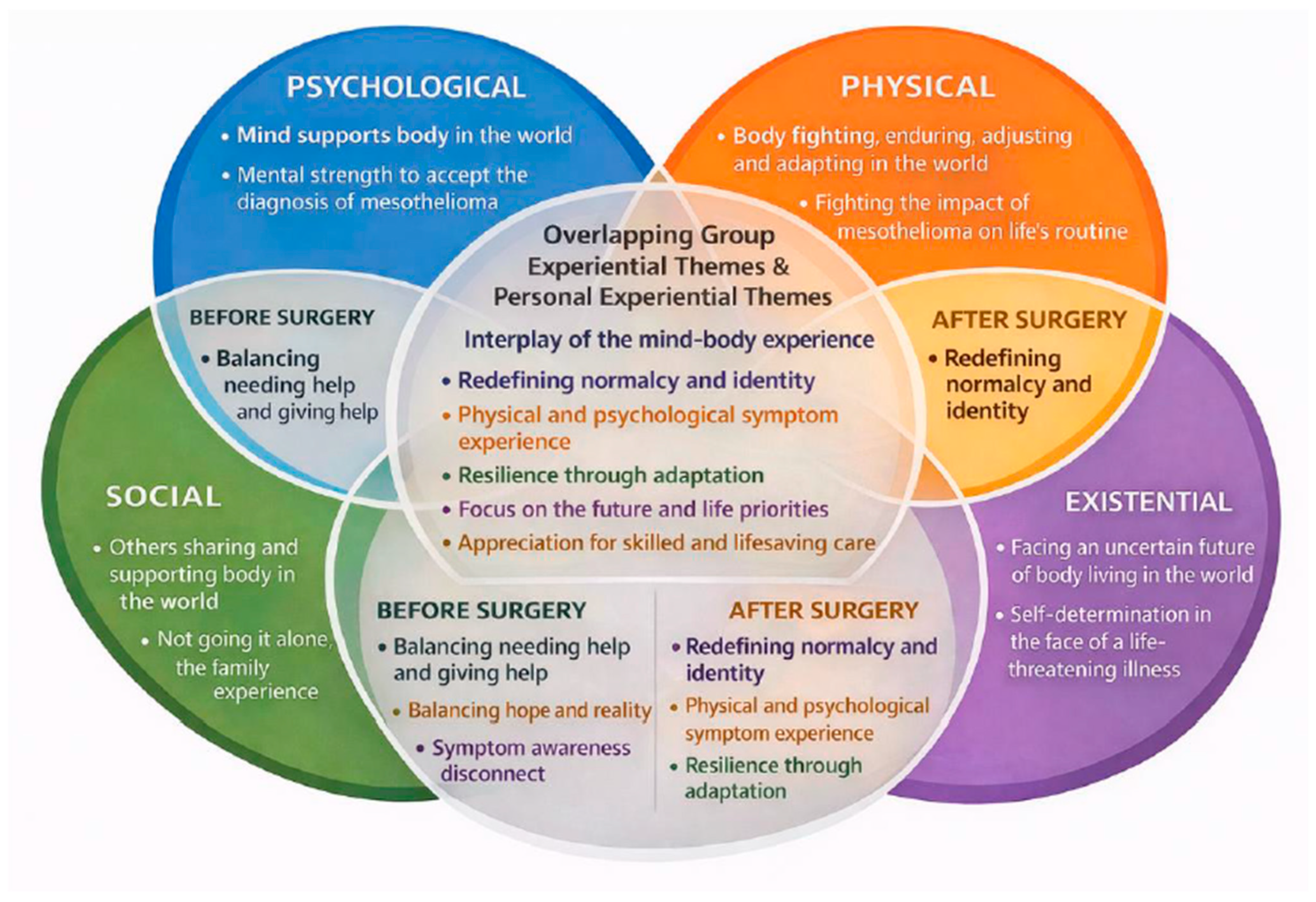
This study is the first to use a qualitative longitudinal design to gain an understanding of the lived experience of dyspnea and QOL for patients with PM, before and after lung-sparing surgery. It is also the first to describe the physiological, psychological, social and existential factors contributing to the perceptions of dyspnea and QOL before and after lung-sparing surgery for PM. The findings of this study consist of four group experiential themes: (1) mind supporting the body in the world, (2) body fighting, enduring, adjusting and adapting in the world, (3) others sharing and supporting the body in the world, and (4) facing an uncertain future of body living in the world. These group experiential themes identified during cross-case IPA were supported by the personal experiential themes identified during individual-case IPA. While the lived experiences of the individual participants had different elements described before and after surgery, there was a commonality to the overall experience that was more of an experiential continuum as opposed to two separate time point experiences (Figure 1). The emergent group experiential themes are aligned with the Theory of Unpleasant Symptoms’ contributory factors (physical, psychological, and social) and the outcome of the unpleasant symptom experience on quality of life. The group experiential themes further align with the key tenants of Merleau-Ponty’s Phenomenology of Perception: body, time, others and the world. The results of this study provide an in-depth understanding of the participants’ perception of dyspnea and its impact on their QOL. Beyond answering the research question, the results also provide an in-depth understanding of the multidimensional experience of living with pleural mesothelioma and undergoing lung-sparing surgery.
Figure 1.
Group experiential themes from cross-case IPA were supported by individual case analyses, reflecting a continuous experiential process across pre- and post-surgery rather than distinct timepoints.
4.1. Psychological: Mind Supports the Body in the World
The results of this study highlight the psychological aspects of living with mesothelioma including but not limited to the fear associated with being diagnosed with a life-threatening malignancy, anxiety about what treatments will be like, stress about how living with mesothelioma will change all aspects of life and worry about the future. It is difficult if not impossible to separate the psychological dimensions of the experience from the other dimensions as evidenced by the results of this study. The participants expressed wide ranges of emotions related to the impact living with mesothelioma and undergoing surgery was having on their physical self, their families, their identity and their future. This finding is similar to that reported in the meta-ethnographic review by Lond et al. where they described living with mesothelioma as a complex trauma. The complex traumatic experience of living with mesothelioma resulted in feelings of “anticipatory anxiety and profound emotional despair, alongside recurrent fears of pain and death, as well as concern for family, frustrations and social loss” [34]. These feelings of fear and anxiety were further exacerbated for participants in this study who were experiencing dyspnea, before and after surgery. In keeping with the TOUS, the participant descriptions of their perceptions of dyspnea demonstrate the reciprocal relationship between dyspnea and the psychological factors that contributed to the intensity, frequency, duration and quality of their dyspnea experience [28,29]. Our findings are supported by similar results in the COPD population in that the anxiety and fear related to perceptions of dyspnea have a negative predictive value related to outcomes in pulmonary rehabilitation participation [35,36]. The results of this study highlight the importance and interconnectedness of mental strength and well-being and the perception of dyspnea before and after surgery.
4.2. Physical: Body Fighting, Enduring, Adjusting and Adapting in the World
The results of this study provide an in-depth understanding of the impact living with mesothelioma has on the body and how it lives and functions in the world. The sudden and dramatic introduction of a life-threatening illness for the participants in this study resulted in the need for them to endure the associated unpleasant symptoms (dyspnea and coughing), adjust to the impact of these symptoms on their daily lives (quality of life) and adapt their present and future based on living with mesothelioma. This finding is supported by the work of Dr. Charmaz, “The Body, Identity and Self: Adapting to Impairment” [37]. In her study of the impact of living with serious illness, Dr. Charmaz attributes “adapting” as a coping mechanism used by individuals facing serious illnesses to live with the physical impairments and loss of normal body functions in the world. Dr. Charmaz defines adapting to illness as “altering life and self to accommodate to physical losses and to reunify body and self accordingly” [37]. All participants in this study experienced some level of physical disruption in their lives, before and after surgery. This disruption varied based on the individual’s life demands and symptom burden. Similar findings were reported in a longitudinal study of lung cancer patients treated with surgery where participants reported a loss of their familiar world, along with a loss of certainty and control [38]. This study makes a significant contribution to the existing literature on the physical impact mesothelioma and lung-sparing surgery have by shedding light on this impact from a first-person perspective. The results of this study highlight the depth and significance attributed by the participants to the physical aspects of the experience of living with mesothelioma and undergoing lung-sparing surgery.
4.3. Social: Others Sharing and Supporting During the Illness Experience
Merleau-Ponty viewed others as fellow travelers in life’s journey and is quoted as saying, “my own and other people’s paths intersect and engage each other like gears” [20]. The results of this study echo his view and similarly point to the interconnectedness of the relationship between the patient and their family members. Gaining an in-depth understanding of the critical role family support plays in the mesothelioma experience before and after surgery is an important finding of this study. The perception of not going through the experience alone and acknowledgment of the profound effects living with mesothelioma had on others resonated throughout many of the interviews. These findings are supported by the findings of several other studies that looked at the impact and importance of family support for patients with mesothelioma [39,40,41]. Families were viewed as not only providing support and care but as being the reason for living and enduring the surgical treatment of their mesothelioma. The support, understanding and accommodations from family members of those who suffered with dyspnea was attributed to having a palliative and calming effect on the unpleasant symptom experience. Further, families provided emotional support in coping with the diagnosis, facing and preparing for surgery, managing the disruptions in daily life, and helping to maintain QOL. This finding is similar to what was reported by Lond et al. in that family-based support often provided much-needed emotional support during a highly stressful and traumatic experience [34].
4.4. Existential: Facing an Uncertain Future of Body Living in the World
The most significant finding of this study was the existential effect living with mesothelioma, facing and enduring surgery, and coping with the symptom of dyspnea had on the participants. Living with a life-threatening illness such as mesothelioma unbalances the relationship between body and world, causing a profound existential disruption [42]. Toombs describes the five essential features of illness which include: loss of wholeness, loss of certainty, loss of control, loss of freedom to act and loss of the familiar world [43]. She further describes the feature of loss of control as an unpredictability where the patient is isolated from their familiar world and unable to engage in their normal life activities, causing the perception of an uncertain future. According to Toombs, these features are part of the illness experience, regardless of the disease, and therefore allow us to understand the illness experience beyond its clinical features which may vary amongst patients. Toombs states, “the eidetic characteristic of illness transcends the peculiarities and particularities of different disease states and constitute the meaning of illness-as-lived. They represent the experience of illness in its qualitative immediacy” [43]. The participants in this study described loss of control, loss of certainty, loss of normalcy, loss of identity and the perception of an uncertain future. These findings are similar to those experienced by adults living with advanced cancers with respect to the existential challenges related to confronting mortality and redefining their existence in relation to body, time, others and death [42]. In particular, the experience of dyspnea had a profound effect on participants’ ability to live and function in the world, including the loss of freedom to act. Similarly, in a study of the lived experience of persons living with mesothelioma, two of the main themes identified in their descriptive phenomenological analysis were uncertainty/worry about the future and adapting to a new norm [44].
4.5. Strengths/Limitations
A strength of this study is that the philosophical approach was grounded in hermeneutical phenomenology which combines the interpretive focus of hermeneutics with the exploration of lived experiences and consciousness of phenomenology. A further strength is the Interpretive Phenomenological Analysis of the qualitative data that was conducted according to the methodology described by Jonathan Smith, et al. [22,23]. The analysis was therefore grounded in the interpretation, analysis and point of view of each individual experience. Meticulous adherence was given to each stage of the IPA, staying close to the participants’ words and experiences throughout each stage of the analysis. This approach respects the individuality of each patient’s experience, acknowledging that dyspnea may be perceived and expressed differently by each person. Another strength of this study is the research team which included two content and qualitative research experts.
A limitation of this study is that the post-operative interview was at the 3–4-month time point after surgery. Each of the participants underwent adjuvant treatment which may have impacted their true experience of surgery and its impact on their dyspnea and quality of life. Future research designs will overcome this limitation by including additional longitudinal time points of study for up to a year or more. Another limitation of this study is related to pleural mesothelioma being a rare disease and the morbidity and mortality associated with lung-sparing surgery. Attrition secondary to mortality was an unavoidable and unfortunate limitation of this study. Despite the attrition, the sample size was sufficient to address the study aims. The participants in this study were all Caucasian which imposed a limitation regarding the intersubjectivity of the experience across different cultural backgrounds.
5. Conclusions
The results of this study provide valuable insight regarding the essence of the experience of living with mesothelioma, enduring lung-sparing surgery and coping with the symptom of dyspnea. This enriched understanding of the experience comes from the voice of the experiencer, not from the usual measures used to determine the success of surgery, mitigation of symptoms and optimization of QOL. The lived experience of dyspnea and QOL before and after lung-sparing surgery is a continuum that is influenced and impacted by physical, psychological, social and existential factors that vary for each individual but are most certainly present at some level. This study provides qualitative evidence that perceptions of dyspnea and QOL play an impactful role in the patient experience, before and after surgery. Healthcare teams must look beyond what is measurable and visible and consider what their patients are experiencing physically, emotionally, socially and existentially. It is by gaining this understanding and awareness of the true experience that we will be able to provide the comprehensive care pleural mesothelioma patients need before, during and after surgery.
Author Contributions
M.J.C.: conceptualization, research approach, method, data collection, analysis, interpretation and theme development, writing—original draft preparation, and resources. N.J.K., M.R., A.T., K.M.-D. and J.S.F.: conceptualization, research approach, validation, analysis interpretation and theme development, and writing—reviewing and editing. All authors have read and agreed to the published version of the manuscript.
Funding
Funding for this research was provided by Research Facilitation Awards from The Univeristy of Maryland School of Nursing Building Healthy Behaviors Across the Life Span (BBAL) Organized Research Center and the Doctoral Nursing Research Fund of Mary Regan, PhD, RN, University of Maryland School of Nursing.
Institutional Review Board Statement
This research was undertaken in partial fulfillment of the requirements for a larger PhD study that received ethics approval from the Temple-Fox Chase Cancer Center Institutional Review Board (IRB) (Protocol #22-8018) and the University of Maryland, Baltimore IRB (HP-00105468).
Informed Consent Statement
An “Evaluation to Sign Consent” form was completed prior to initiating the informed consent process. Participation in this research study was voluntary. All participants provided written informed consent before their interviews began. Participants were aware that they could withdraw consent at any time.
Data Availability Statement
The raw data supporting the conclusions of this article will be made available by the authors on request.
Acknowledgments
We would like to extend our heartfelt gratitude to the mesothelioma patients who participated in this qualitative research study. Their courage in sharing personal experiences and insights has been invaluable to our understanding of the challenges and triumphs faced before, during and after lung-sparing surgery. We would like to express our sincere gratitude to Ben Meehan, for his invaluable support in utilizing the NVivo qualitative data analysis platform for the interpretive phenomenological analysis of our study. His expertise and guidance were instrumental in navigating the complexities of the analysis, enabling us to derive meaningful insights from the participants’ experiences.
Conflicts of Interest
The authors declare no potential conflicts of interest with respect to the research, authorship, and/or publication of this article.
References
- Huang, J.; Chan, S.C.; Pang, W.S.; Chow, S.H.; Lok, V.; Zhang, L.; Lin, X.; Lucero-Prisno, D.E.; Xu, W.; Zheng, Z.-J.; et al. Global Incidence, Risk Factors, and Temporal Trends of Mesothelioma: A Population-Based Study. J. Thorac. Oncol. 2023, 18, 792–802. [Google Scholar] [CrossRef] [Scilit]
- Beebe-Dimmer, J.L.; Fryzek, J.P.; Yee, C.L.; Dalvi, T.B.; Garabrant, D.H.; Schwartz, A.G.; Gadgeel, S. Mesothelioma in the United States: A surveillance, epidemiology, and end results (SEER)—Medicare investigation of treatment patterns and overall survival. Clin. Epidemiol. 2016, 8, 743–750. [Google Scholar] [CrossRef] [Scilit]
- Amin, W.; Linkov, F.; Landsittel, D.P.; Silverstein, J.C.; Bshara, W.; Gaudioso, C.; Feldman, M.D.; Pass, H.I.; Melamed, J.; Friedberg, J.S. Factors influencing malignant mesothelioma survival: A retrospective review of the National Mesothelioma Virtual Bank cohort. F1000Research 2018, 7, 1184. [Google Scholar] [CrossRef] [Scilit]
- Tsao, A.S.; Lindwasser, O.W.; Adjei, A.A.; Adusumilli, P.S.; Beyers, M.L.; Blumenthal, G.M.; Bueno, R.; Burt, B.M.; Carbone, M.; Dahlberg, S.E.; et al. Current and Future Management of Malignant Mesothelioma: A Consensus Report from the National Cancer Institute Thoracic Malignancy Steering Committee, International Association for the Study of Lung Cancer, and Mesothelioma Applied Research Foundation. J. Thorac. Oncol. 2018, 13, 1655–1667. [Google Scholar] [CrossRef] [Scilit]
- Friedberg, J.S. The State of the Art in the Technical Performance of Lung-Sparing Operations for Malignant Pleural Mesothelioma. Semin. Thorac. Cardiovasc. Surg. 2013, 25, 125–143. [Google Scholar] [CrossRef] [Scilit] [PubMed]
- Verma, V.; Ahern, C.A.; Berlind, C.G.; Lindsay, W.D.; Sharma, S.; Shabason, J.; Culligan, M.J.; Grover, S.; Friedberg, J.S.; Simone, C.B. National Cancer Database Report on Pneumonectomy Versus Lung-Sparing Surgery for Malignant Pleural Mesothelioma. J. Thorac. Oncol. 2017, 12, 1704–1714. [Google Scholar] [CrossRef] [Scilit] [PubMed]
- Clayson, H.; Seymour, J.; Noble, B. Mesothelioma from the patient’s perspective. Hematol./Oncol. Clin. N. Am. 2005, 19, 1175–1190. [Google Scholar] [CrossRef] [Scilit]
- Moore, S.; Darlison, L.; Tod, A.M. Living with mesothelioma. A literature review. Eur. J. Cancer Care 2010, 19, 458–468. [Google Scholar] [CrossRef] [Scilit]
- Maguire, R.; Connaghan, J.; Arber, A.; Klepacz, N.; Blyth, K.G.; McPhelim, J.; Murray, P.; Rupani, H.; Chauhan, A.; Williams, P.; et al. Advanced symptom management system for patients with malignant pleural mesothelioma (ASyMSmeso): Mixed Methods study. J. Med. Internet Res. 2020, 22, e19180. [Google Scholar] [CrossRef] [Scilit] [PubMed]
- Taioli, E.; Wolf, A.; Schwartz, R.M.; Flores, R.M. Quality of life after surgery for pleural malignant mesothelioma methodological considerations. J. Community Support. Oncol. 2016, 14, 515–521. [Google Scholar] [CrossRef] [Scilit]
- Schwartz, R.M.; Watson, A.; Wolf, A.; Flores, R.; Taioli, E. The impact of surgical approach on quality of life for pleural malignant mesothelioma. Ann. Transl. Med. 2017, 5, 230. [Google Scholar] [CrossRef] [Scilit]
- Schwartz, R.M.; Lieberman-Cribbin, W.; Wolf, A.; Flores, R.M.; Taioli, E. Systematic review of quality of life following pleurectomy decortication and extrapleural pneumonectomy for malignant pleural mesothelioma. BMC Cancer 2018, 18, 1188. [Google Scholar] [CrossRef] [Scilit]
- Flores, R.M.; Pass, H.I.; Seshan, V.E.; Dycoco, J.; Zakowski, M.; Carbone, M.; Bains, M.S.; Rusch, V.W. Extrapleural pneumonectomy versus pleurectomy/decortication in the surgical management of malignant pleural mesothelioma: Results in 663 patients. J. Thorac. Cardiovasc. Surg. 2008, 135, 620–626.e3. [Google Scholar] [CrossRef] [Scilit]
- Tanaka, T.; Morishita, S.; Hashimoto, M.; Nakamichi, T.; Uchiyama, Y.; Hasegawa, S.; Domen, K. Physical function and health-related quality of life in the convalescent phase in surgically treated patients with malignant pleural mesothelioma. Support. Care Cancer 2019, 27, 4107–4113. [Google Scholar] [CrossRef] [Scilit]
- Jaradeh, M.; Vigneswaran, W.T. Treatment-associated quality of life in patients with malignant pleural mesothelioma. Shanghai Chest 2024, 8, 9. [Google Scholar] [CrossRef] [Scilit]
- Lauk, O.; Patella, M.; Neuer, T.; Inci, I.; Weder, W.; Opitz, I. Quality of Life Is Not Deteriorated After Extrapleural Pneumonectomy vs. (Extended) Pleurectomy/Decortication in Patients with Malignant Pleural Mesothelioma. Front. Surg. 2021, 8, 766033. [Google Scholar] [CrossRef] [Scilit] [PubMed]
- Lim, E.; Waller, D.; Lau, K.; Steele, J.; Pope, A.; Ali, C.; Bilancia, R.; Keni, M.; Popat, S.; O’Brien, M.; et al. Extended pleurectomy decortication and chemotherapy versus chemotherapy alone for pleural mesothelioma (MARS 2): A phase 3 randomised controlled trial. Lancet Respir. Med. 2024, 12, 457–466. [Google Scholar] [CrossRef] [Scilit] [PubMed]
- Crist, J.; Tanner, C. Interpretation/Analysis Methods in Hermeneutical Interpretive Phenomenology. Nurs. Res. 2003, 52, 202–205. [Google Scholar] [CrossRef] [Scilit]
- Lauterbach, A.A. Hermeneutic phenomenological interviewing: Going beyond semi-structured formats to help participants revisit experience. Qual. Rep. 2018, 23, 2883–2898. [Google Scholar] [CrossRef] [Scilit]
- Merleau-Ponty, M. Phenomenology of Perception, 1st ed.; Routledge & Kegan Paul: London, UK, 1962. [Google Scholar]
- Thomas, S.P.; Pollio, H.R. Listening to Patients: A phenomenological Approach to Nursing Research and Practice, 1st ed.; Springer Publishing Company, Inc.: New York, NY, USA, 2002. [Google Scholar]
- Smith, J.A.; Larkin, M.; Flowers, P. Interpretative Phenomenological Analysis: Theory, Methods and Research, 2nd ed.; SAGE Publications, Ltd.: London, UK, 2022. [Google Scholar]
- Smith, J.A.; Nizza, I.E. Essentials of Interpretative Phenomenological Analysis, 1st ed.; American Psychological Association: Washington, DC, USA, 2022. [Google Scholar] [CrossRef] [Scilit]
- Smith, J.A. Interpretative phenomenological analysis: Getting at lived experience. J. Posit. Psychol. 2017, 12, 303–304. [Google Scholar] [CrossRef] [Scilit]
- Peat, G.; Rodriguez, A.; Smith, J. Interpretive phenomenological analysis applied to healthcare research. Evid. Based Nurs. 2019, 22, 7–9. [Google Scholar] [CrossRef] [Scilit]
- Smith, J.A. Evaluating the contribution of interpretative phenomenological analysis. Health Psychol. Rev. 2011, 5, 9–27. [Google Scholar] [CrossRef] [Scilit]
- Conroy, S.A.; Dphil, M. A pathway for interpretive phenomenology. Int. J. Qual. Methods 2003, 2, 36–62. [Google Scholar] [CrossRef] [Scilit]
- Lenz, E.; Suppe, F.; Gift, A.; Pugh, L.C.; Miligan, R.A. Collaborative Development of Middle-Range Nursing Theories: Toward a Theory of Unpleasant Symptoms. Adv. Nurs. Sci. 1995, 17, 1–13. [Google Scholar] [CrossRef] [Scilit] [PubMed]
- Lenz, E.; Pugh, L.; Milligan, R.; Gift, A.; Suppe, F. The Middle-Range Theory of Unpleasant Symptoms: An Update. Adv. Nurs. Sci. 1997, 19, 14–27. [Google Scholar] [CrossRef] [Scilit]
- Gift, A.; Pugh, L. Dyspnea and Fatigue. Nurs. Clin. N. Am. 1993, 28, 373–384. [Google Scholar] [CrossRef] [Scilit]
- Gift, A. Dyspnea. Nurs. Clin. N. Am. 1995, 25, 955–965. [Google Scholar] [CrossRef] [Scilit]
- Miaskowski, C.; Barsevick, A.; Berger, A.; Casagrande, R.; Grady, P.A.; Jacobsen, P.; Kutner, J.; Patrick, D.; Zimmerman, L.; Xiao, C.; et al. Advancing symptom science through symptom cluster research: Expert panel proceedings and recommendations. J. Natl. Cancer Inst. 2017, 109, djw253. [Google Scholar] [CrossRef] [Scilit] [PubMed]
- Lee, S.E.; Vincent, C.; Finnegan, L. An analysis and evaluation of the theory of unpleasant symptoms. Adv. Nurs. Sci. 2017, 40, E16–E39. [Google Scholar] [CrossRef] [Scilit]
- Lond, B.; Quincey, K.; Apps, L.; Darlison, L.; Williamson, I. The experience of living with mesothelioma: A meta-ethnographic review and synthesis of the qualitative literature. Health Psychol. 2022, 41, 343–355. [Google Scholar] [CrossRef] [Scilit]
- Simonÿ, C.; Andersen, I.C.; Bodtger, U.; Birkelund, R. Breathing through a troubled life—A phenomenological-hermeneutic study of chronic obstructive pulmonary disease patients’ lived experiences during the course of pulmonary rehabilitation. Int. J. Qual. Stud. Health Well-Being 2019, 14, 1647401. [Google Scholar] [CrossRef] [Scilit] [PubMed]
- Janssens, T.; De Peuter, S.; Stans, L.; Verleden, G.; Troosters, T.; Decramer, M.; Van den Bergh, O. Dyspnea perception in COPD: Association between anxiety, dyspnea-related fear, and dyspnea in a pulmonary rehabilitation program. Chest 2011, 140, 618–625. [Google Scholar] [CrossRef] [Scilit]
- Charmaz, K. The Body, Identity, and Self: Adapting to Impairment. Sociol. Q. 1995, 36, 657–680. [Google Scholar] [CrossRef] [Scilit]
- Missel, M.; Pedersen, J.H.; Hendriksen, C.; Tewes, M.; Adamsen, L. Regaining familiarity with own body after treatment for operable lung cancer—A qualitative longitudinal exploration. Eur. J. Cancer Care 2016, 25, 1076–1090. [Google Scholar] [CrossRef] [Scilit]
- Sherborne, V.; Tod, A.; Taylor, B. The Psychological Effects of Mesothelioma in the UK Military Context From the Carer’s Perspective: A Qualitative Study. Illn. Crisis Loss 2022, 32, 171–191. [Google Scholar] [CrossRef] [Scilit]
- Sherborne, V.; Seymour, J.; Taylor, B.; Tod, A. What are the psychological effects of mesothelioma on patients and their carers? A scoping review. Psychooncology 2020, 29, 1464–1473. [Google Scholar] [CrossRef] [Scilit]
- Prusak, A.; van der Zwan, J.M.; Aarts, M.J.; Arber, A.; Cornelissen, R.; Burgers, S.; Duijts, S.F.A. The psychosocial impact of living with mesothelioma: Experiences and needs of patients and their carers regarding supportive care. Eur. J. Cancer Care 2021, 30, e13498. [Google Scholar] [CrossRef] [Scilit]
- Tarbi, E.C.; Meghani, S.H. A concept analysis of the existential experience of adults with advanced cancer. Nurs. Outlook 2019, 67, 540–557. [Google Scholar] [CrossRef] [Scilit]
- Toombs, S.K. The Meaning of Illness: A Phenomenological Approach to the Patient-Physician Relationship. J. Med. Philos. Forum Bioeth. Philos. Med. 1987, 12, 219–240. [Google Scholar] [CrossRef] [Scilit] [PubMed]
- Walker, S.L.; Crist, J.D.; Shea, K.; Holland, S.; Cacchione, P.Z. The Lived Experience of Persons with Malignant Pleural Mesothelioma in the United States. Cancer Nurs. 2021, 44, E90–E98. [Google Scholar] [CrossRef] [Scilit]

Disclaimer/Publisher’s Note: The statements, opinions and data contained in all publications are solely those of the individual author(s) and contributor(s) and not of MDPI and/or the editor(s). MDPI and/or the editor(s) disclaim responsibility for any injury to people or property resulting from any ideas, methods, instructions or products referred to in the content. |
© 2026 by the authors. Published by MDPI on behalf of the JMMS. Licensee MDPI, Basel, Switzerland. This article is an open access article distributed under the terms and conditions of the Creative Commons Attribution (CC BY) license.