
Emergence of Longitudinal Queues in Group Navigation: An Interpretable Approach via Projective Simulation

Abstract
1. Introduction
2. Model and Evaluation Indicators
2.1. Projective Simulation Model
2.2. Details of the Proposed Model
- •
- Universality of Self-Organization: We aim to identify the fundamental interaction rules that allow a group to achieve ordered navigation without relying on individual specialization;
- •
- Minimal Cognitive Load: We aim to demonstrate that a shared, low-complexity strategy based on a discretized state space is sufficient to drive the emergence of longitudinal queues.
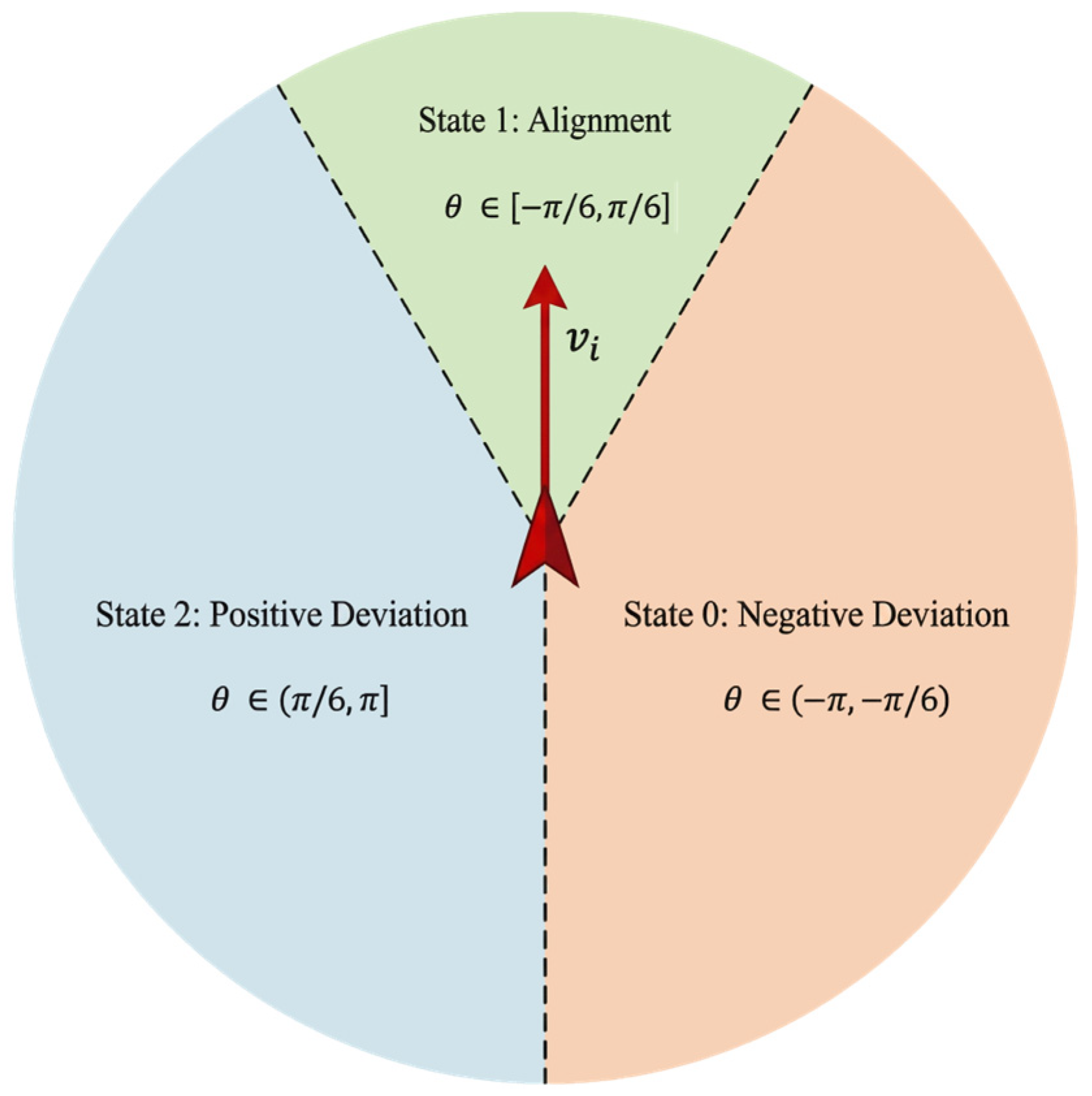
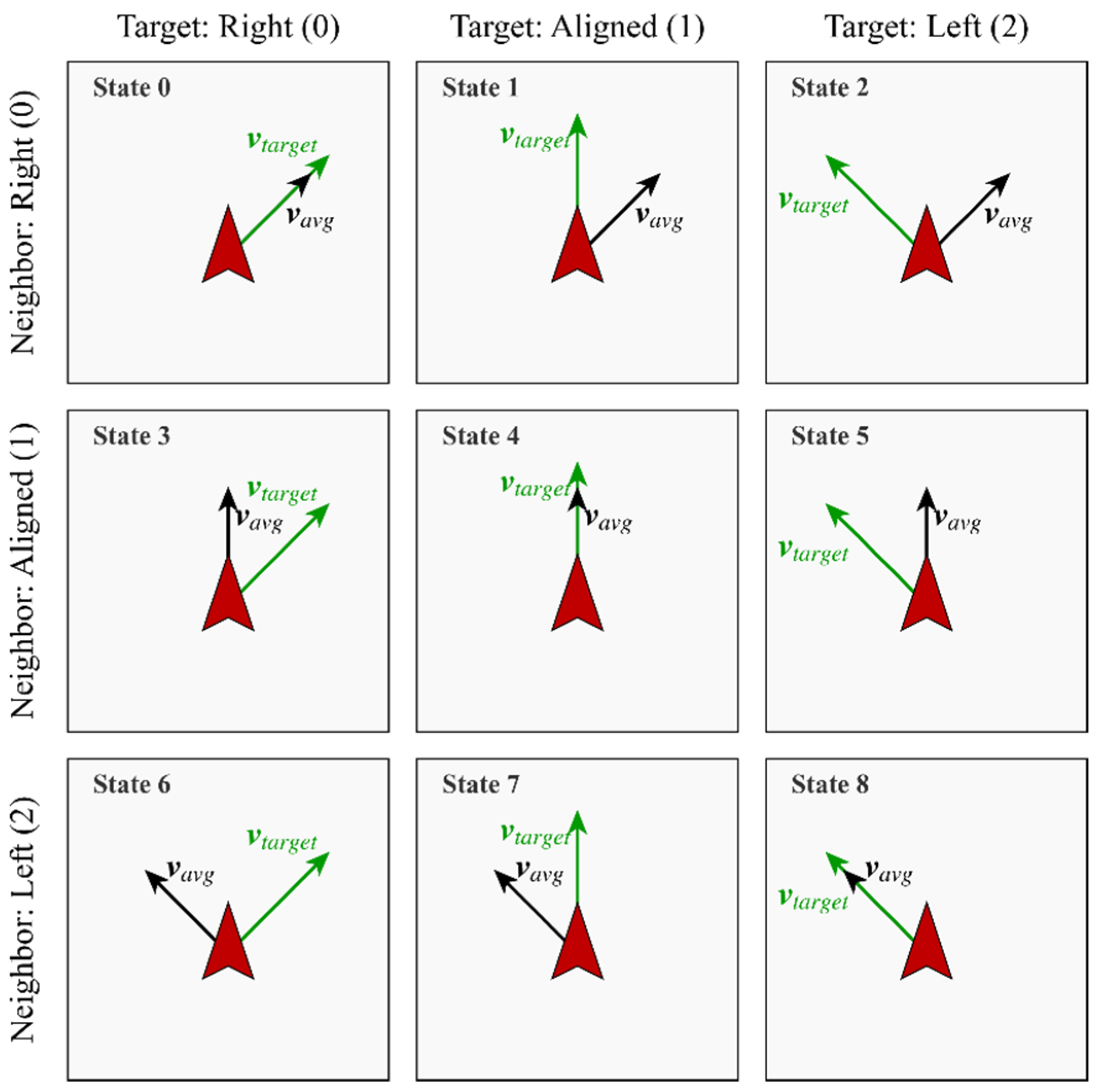
2.2.1. State Space
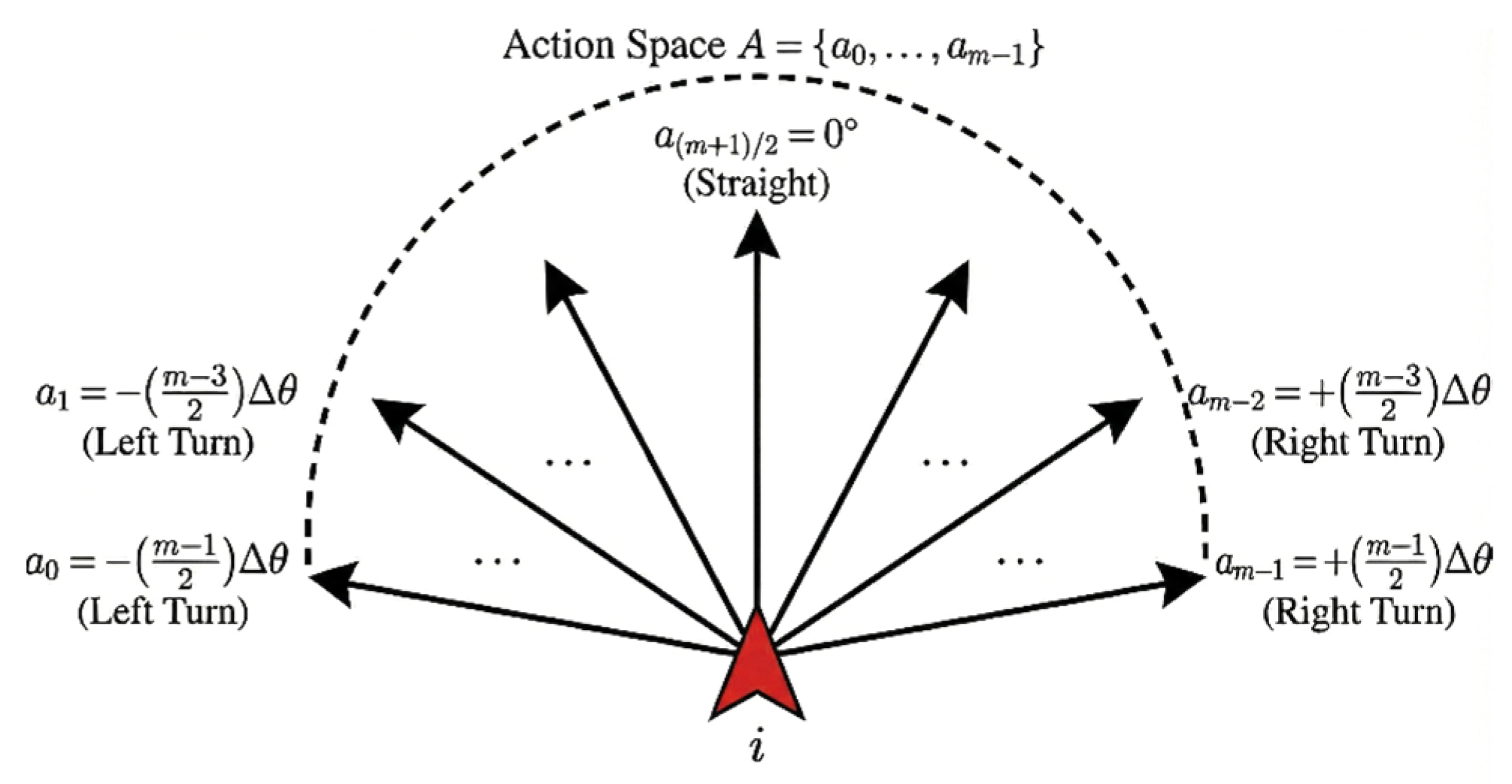
2.2.2. Action Space
2.2.3. Reward Function
2.3. Evaluation Indicators
3. Numerical Simulation and Results
3.1. Simulation Setup
3.2. Emergence and Micro-Mechanisms of Collective Queue Formation
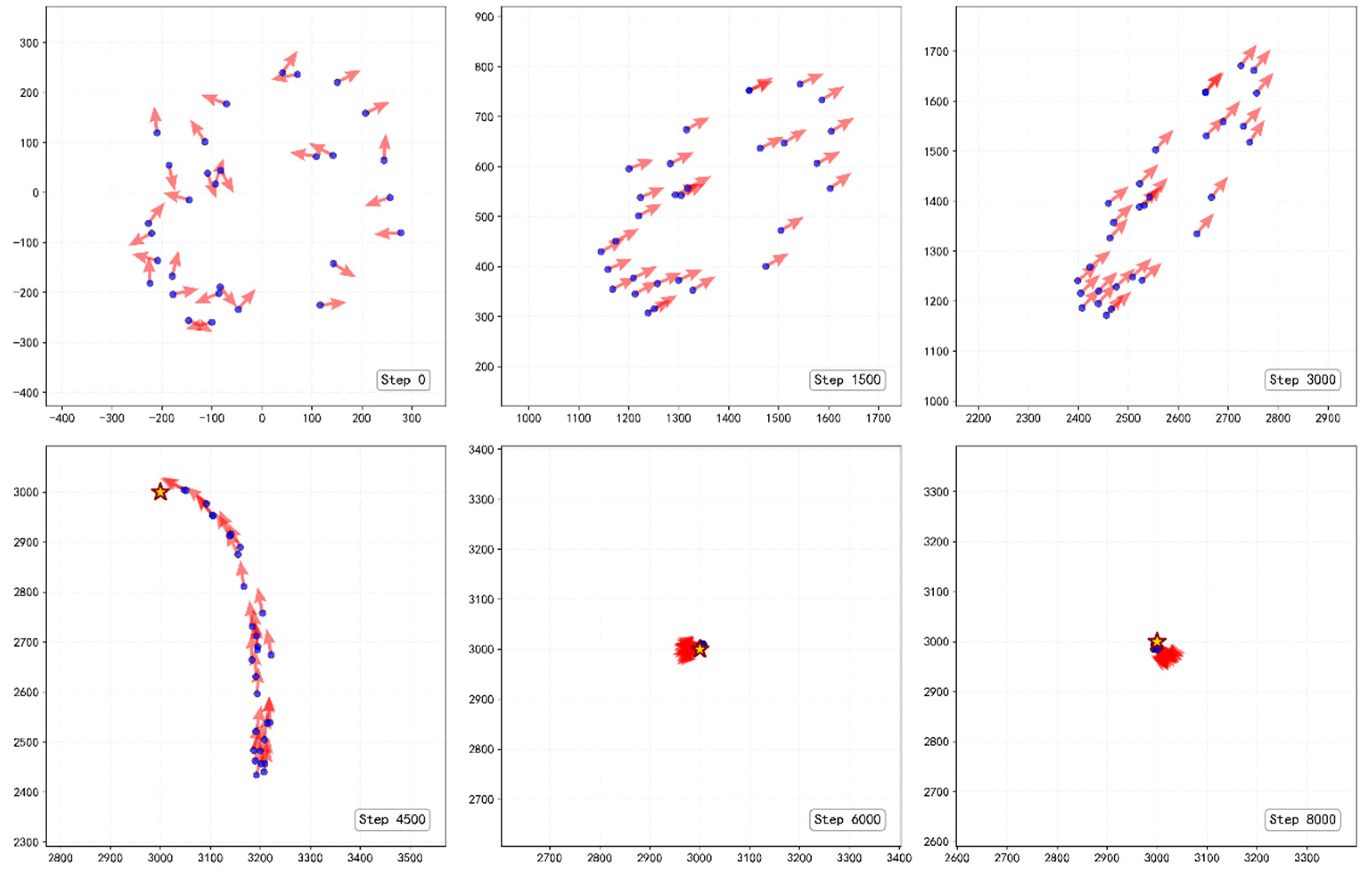
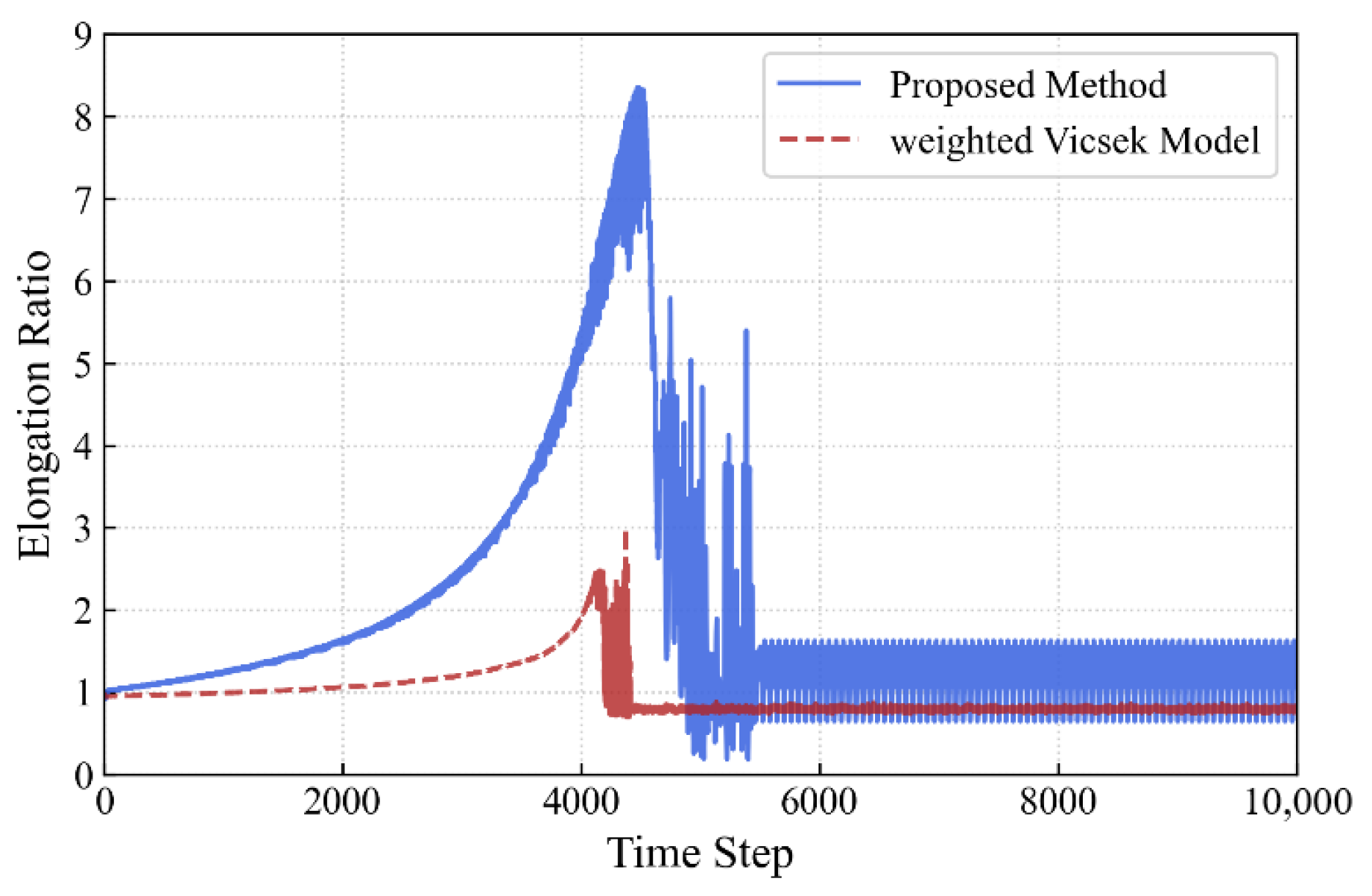
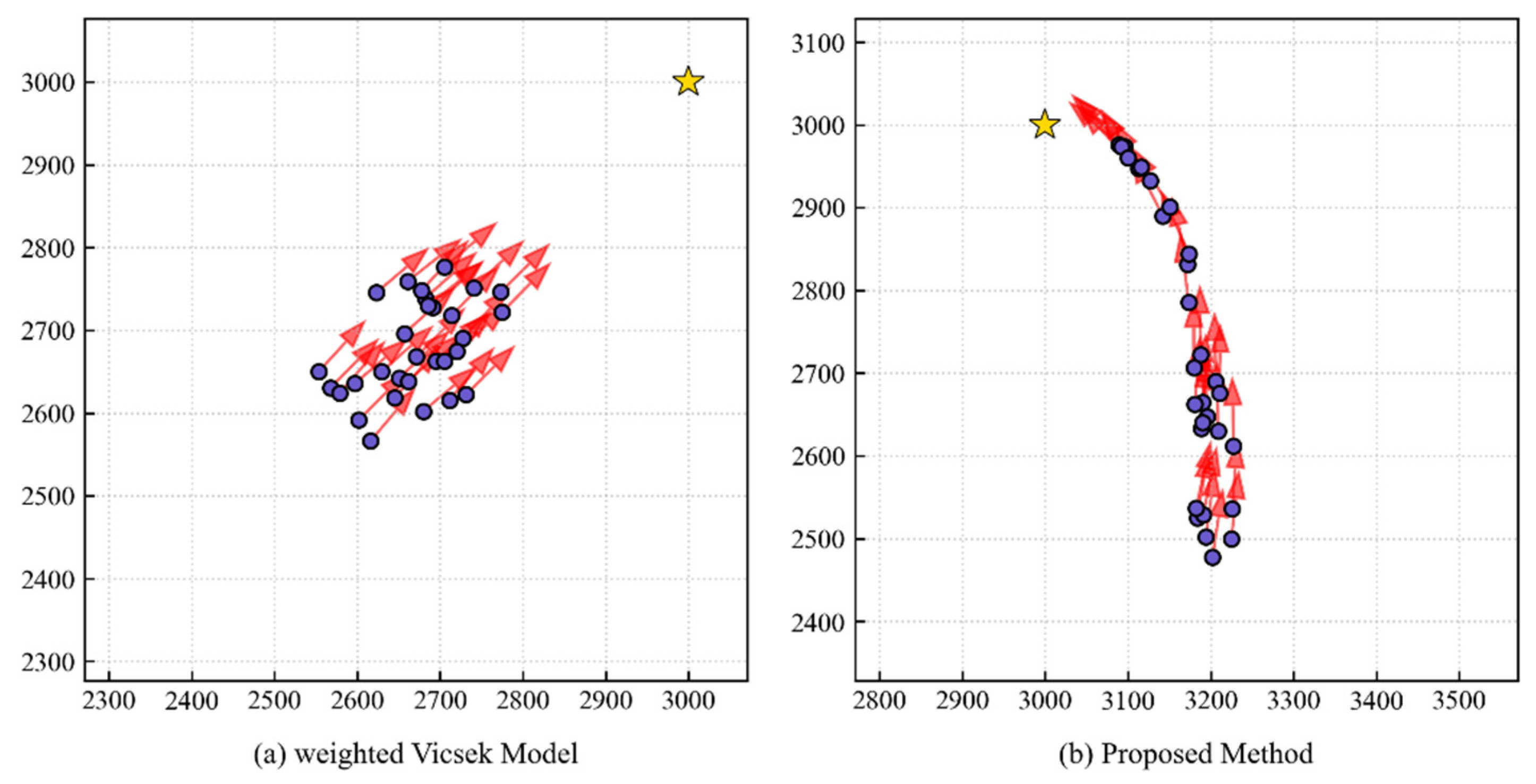
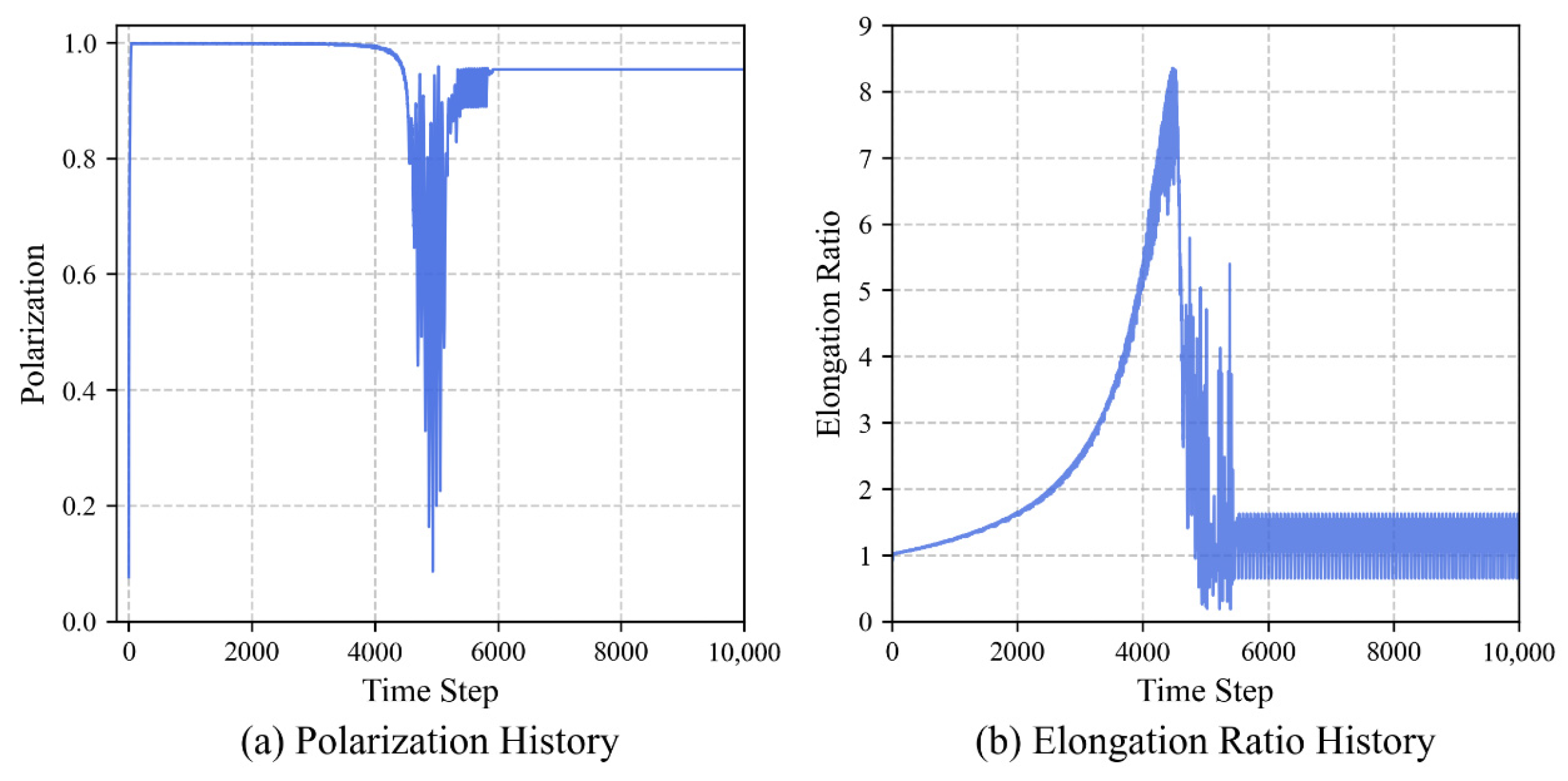
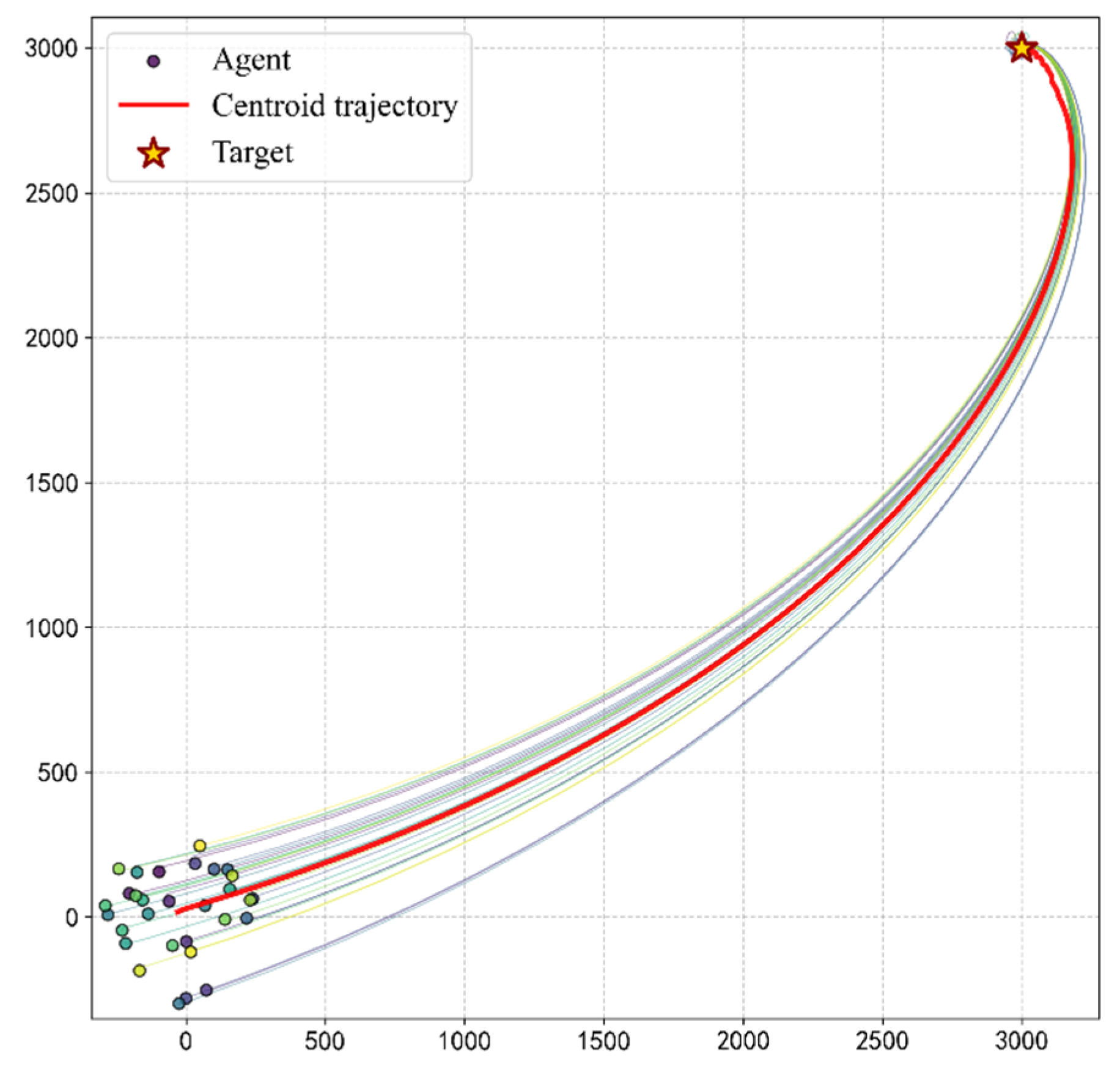
3.2.1. Macroscopic Emergence of Longitudinal Queues
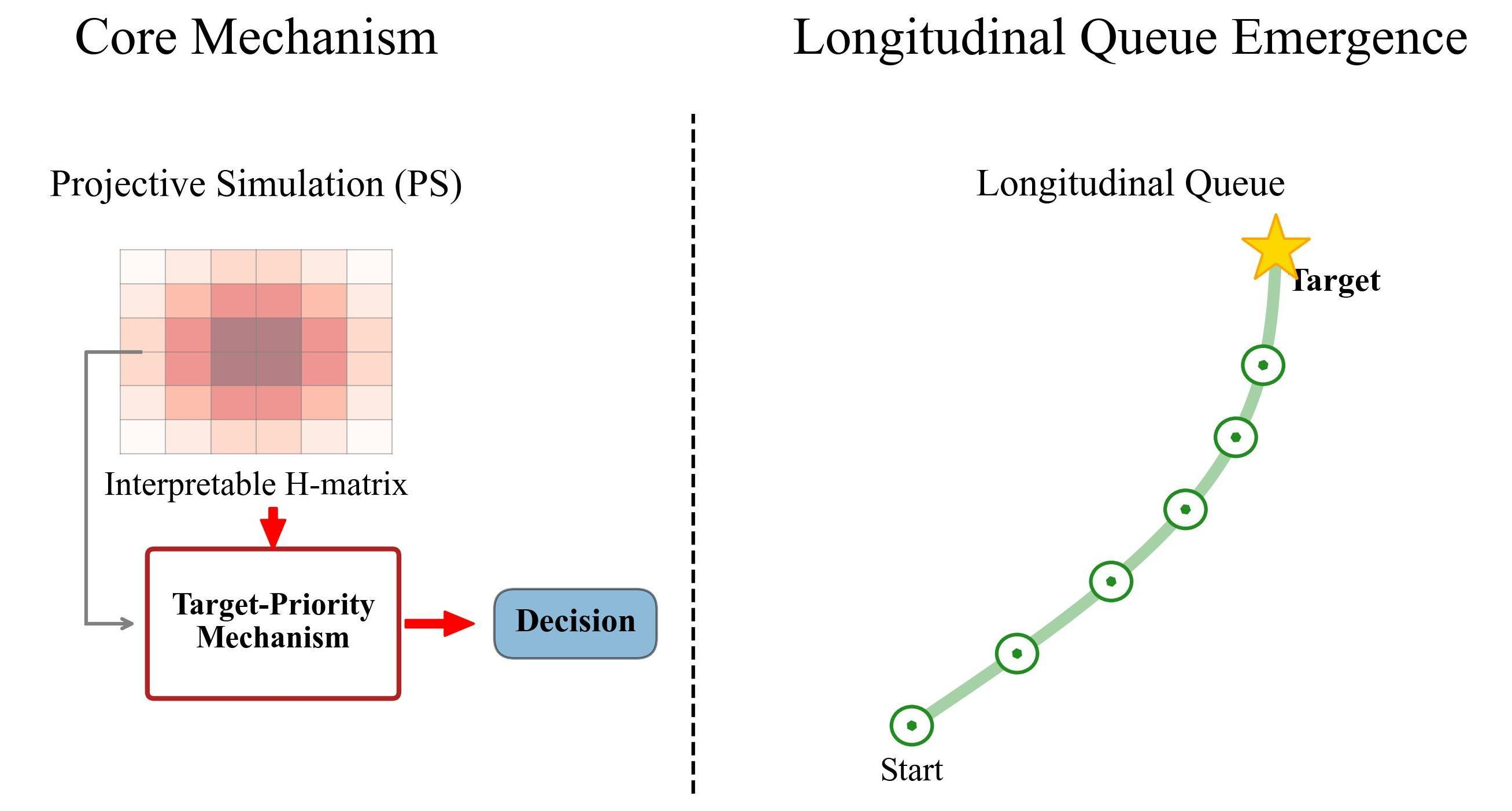
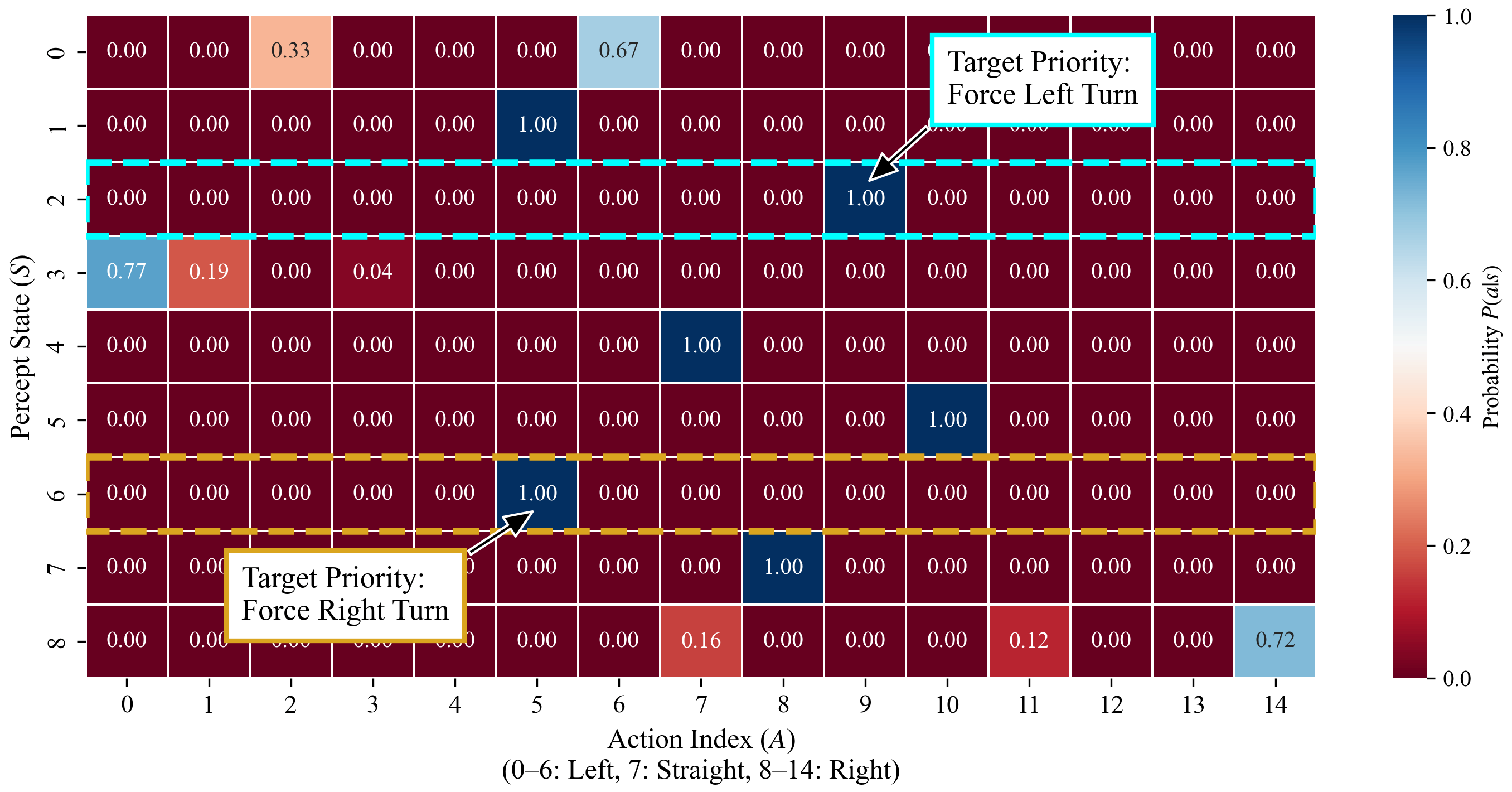
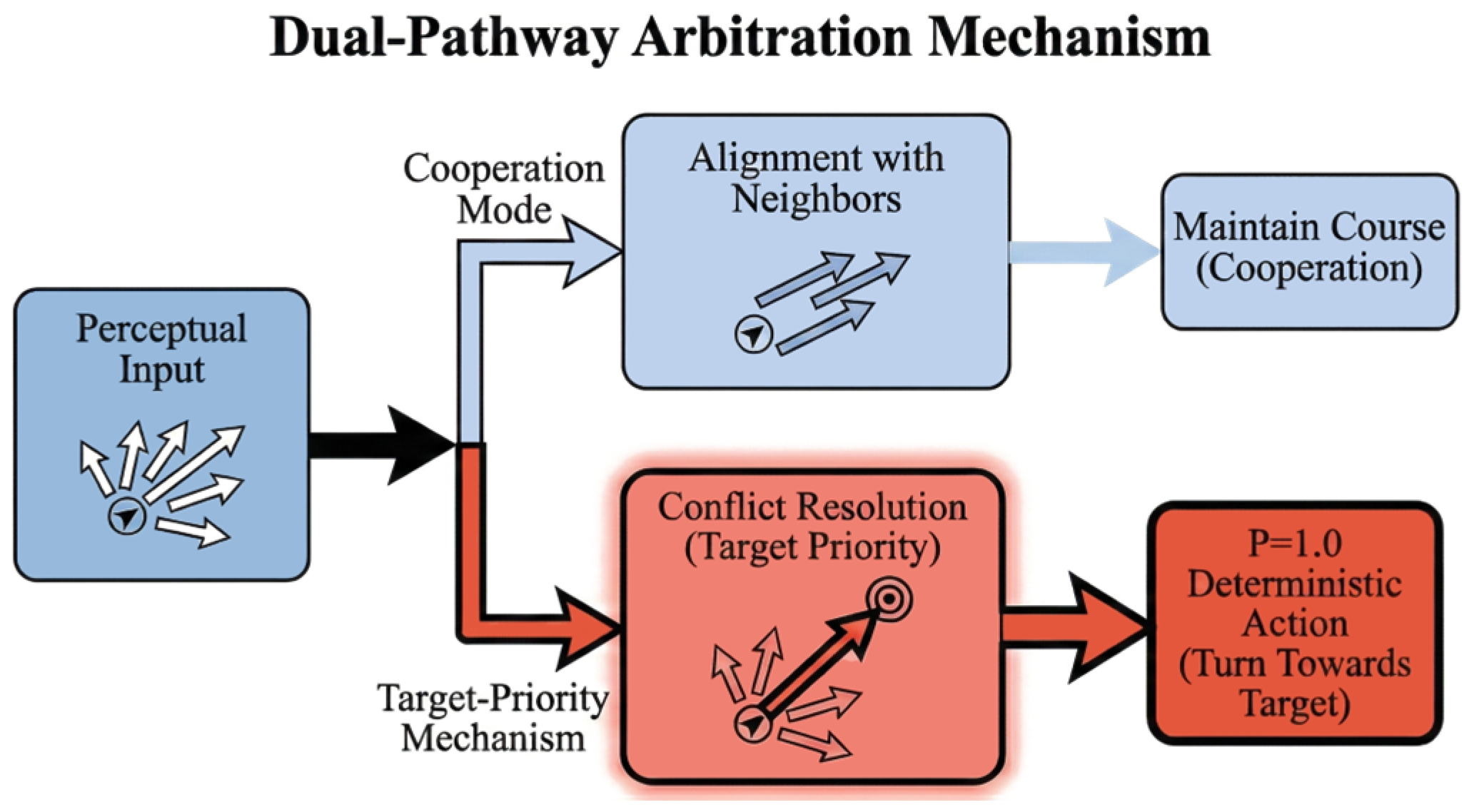
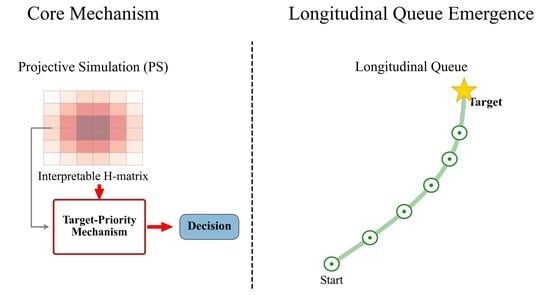
3.2.2. Microscopic Decision Logic: The Target-Priority Mechanism
- •
- Conflict Scenario 1 (State 2): Neighbors are on the right (requiring a right turn for alignment), but the target is on the left (requiring a left turn toward the target). The strategy matrix indicates that the individual selects Action 9 (a left turn) with a probability of 1, prioritizing the target orientation;
- •
- Conflict Scenario 2 (State 6): Neighbors are on the left (requiring a left turn for alignment), but the target is on the right (requiring a right turn toward the target). The individual primarily selects Action 5 (a right turn) with a probability of 1, similarly prioritizing the target direction.
3.3. Comparative Analysis
3.3.1. Comparison with Rule-Based Benchmark Models
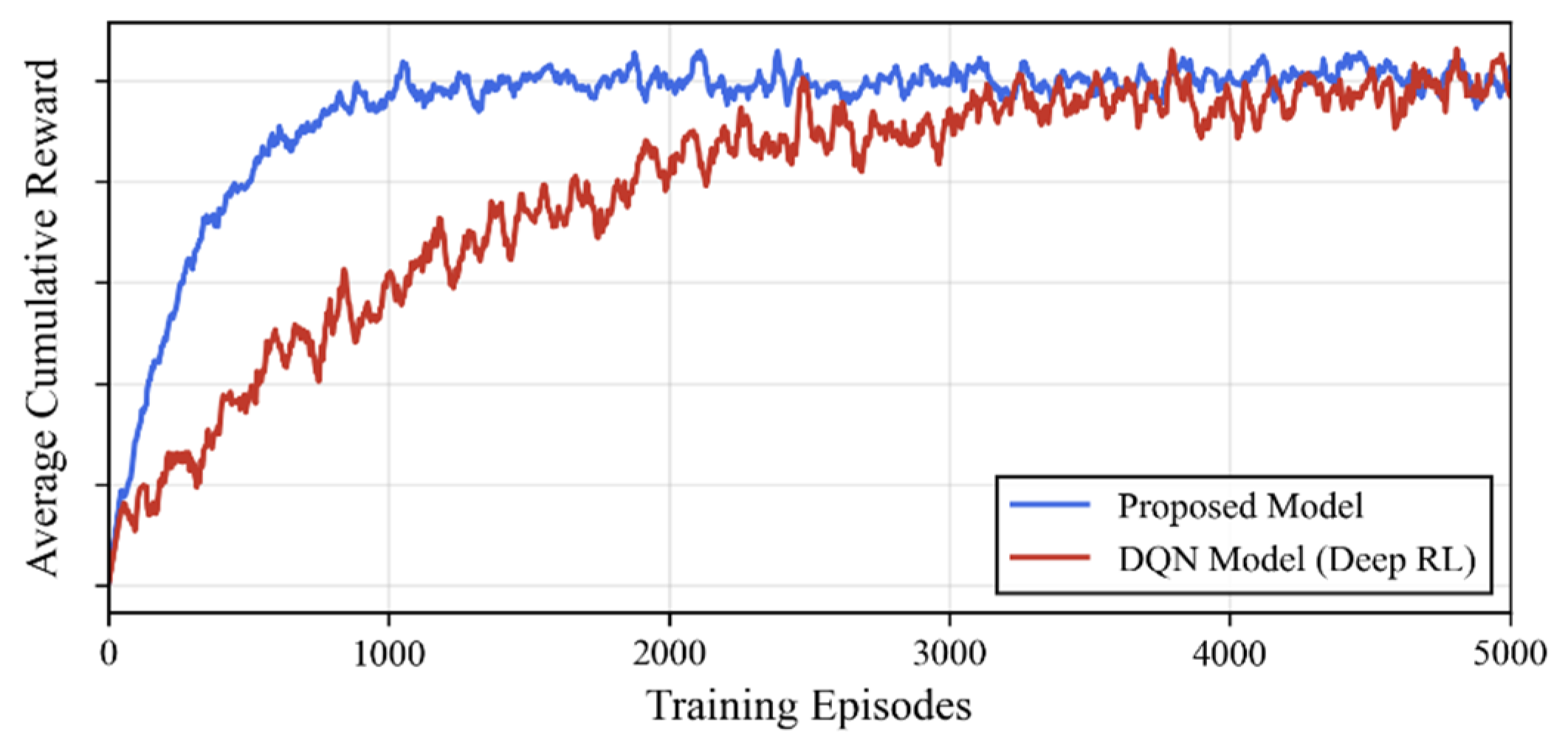
3.3.2. Comparison of Performance and Interpretability with Deep Reinforcement Learning (DQN)
3.4. Parameter Sensitivity Analysis
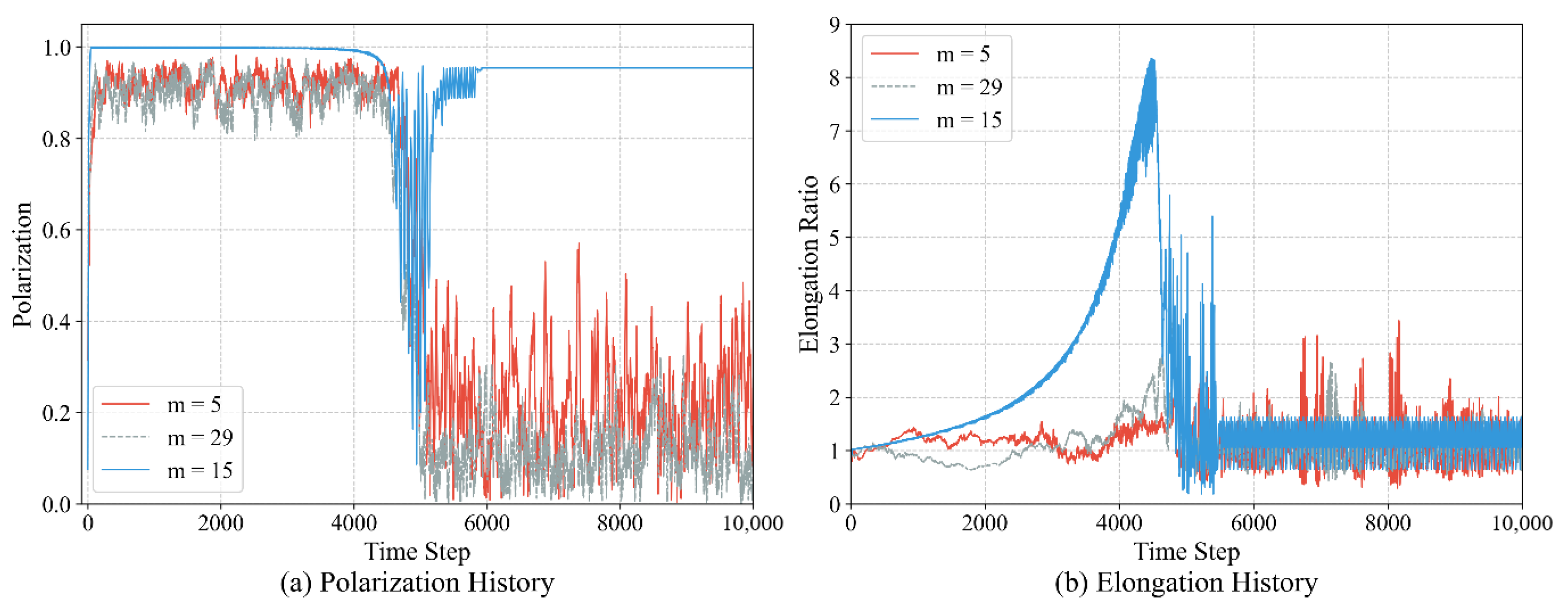
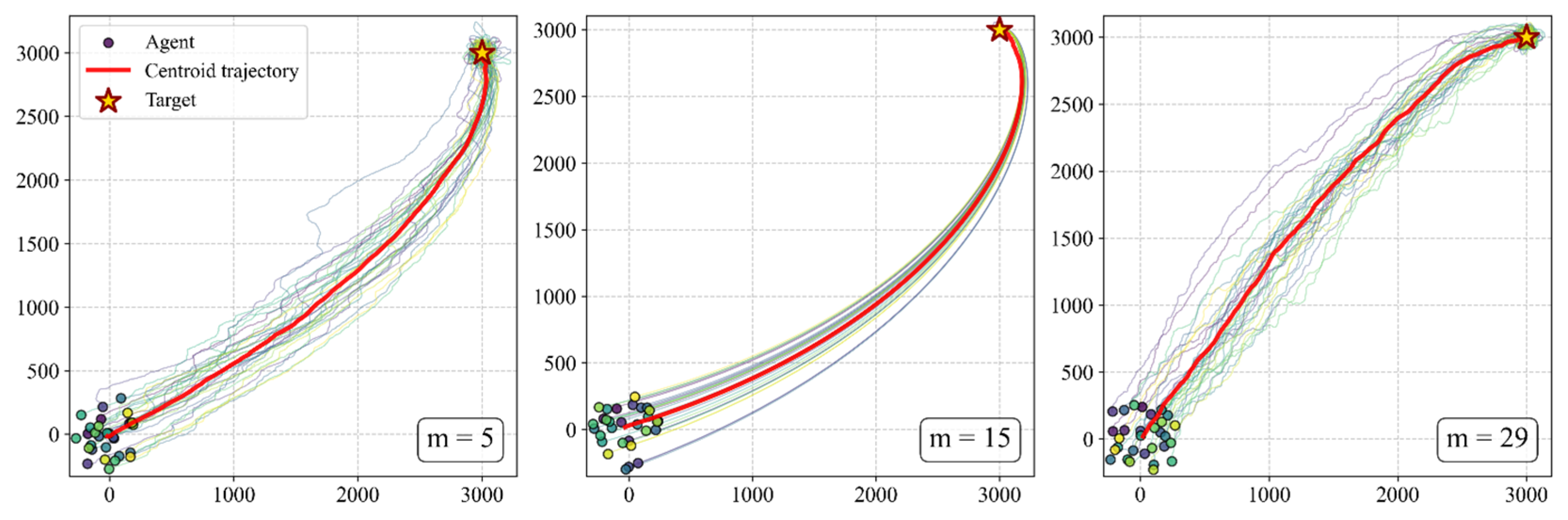
3.4.1. Influence of Action Granularity
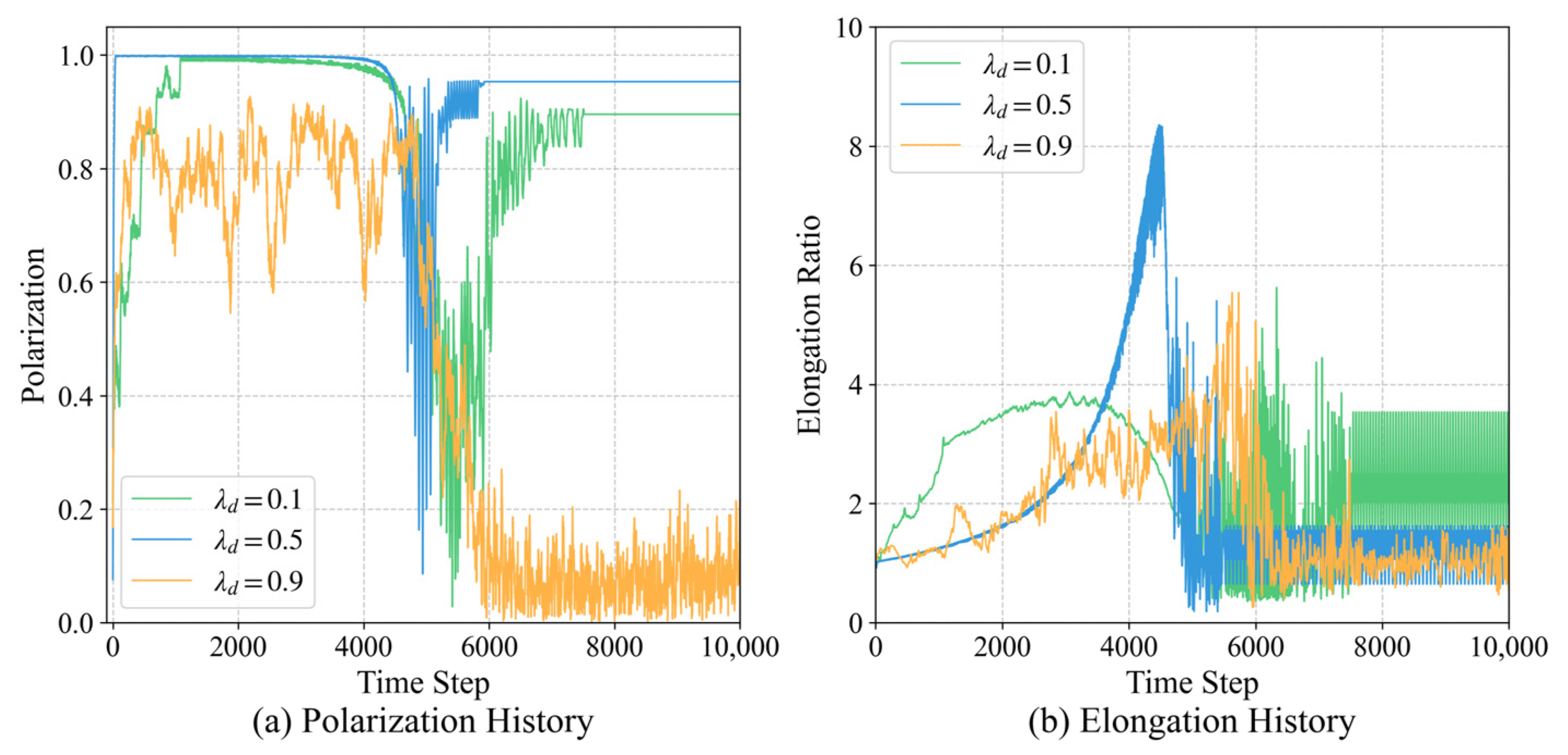
3.4.2. Sensitivity Analysis of Reward Weights
3.5. Robustness, Generalization, and Scalability Analysis
3.5.1. Robustness Under Environmental Noise
3.5.2. Generalization to Dynamic Target Tracking
3.5.3. Generalization to Coordinate Independence
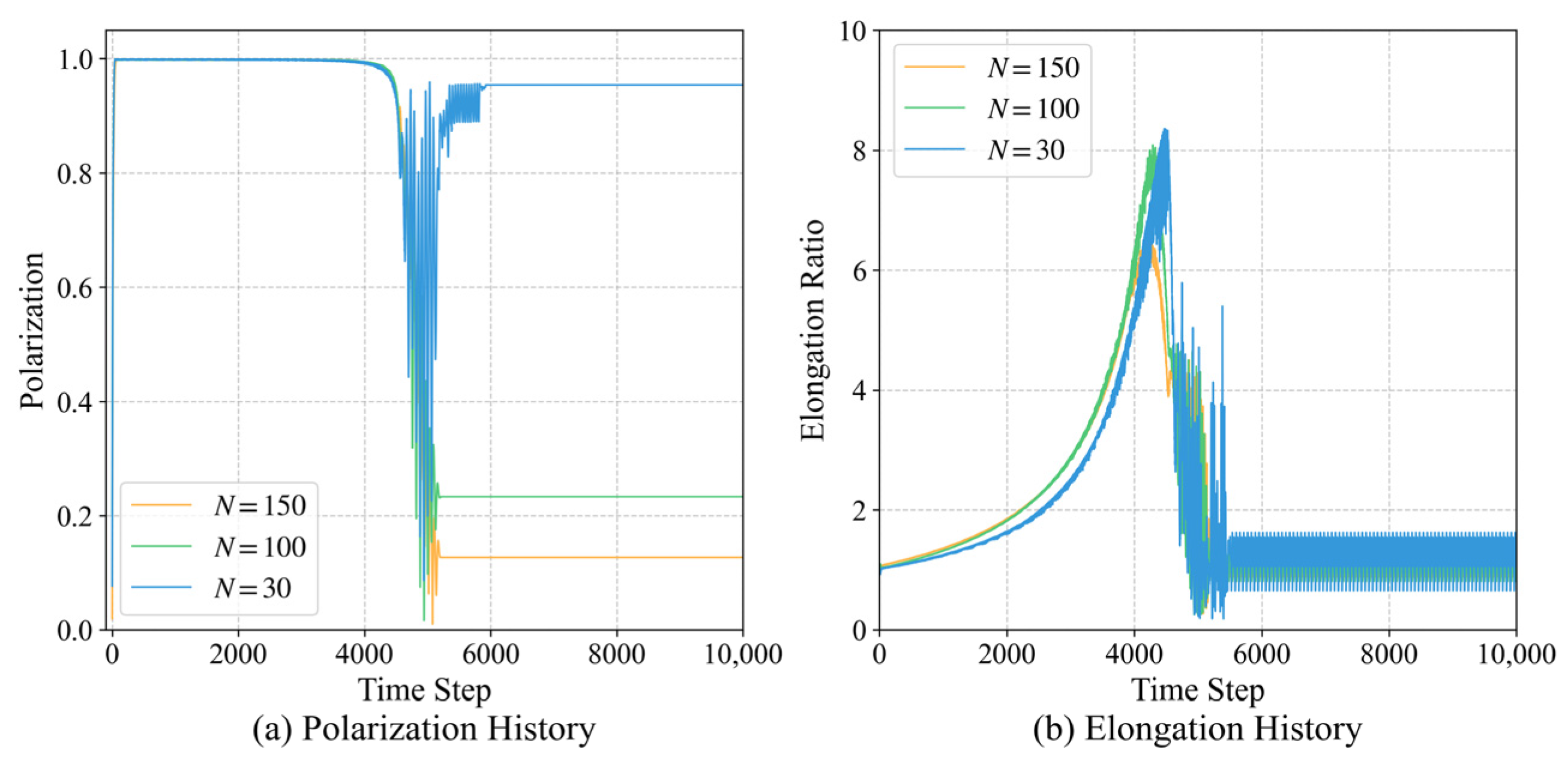
3.5.4. Scalability to Larger Groups
3.6. Minimal Cognitive Load and Biological Rationality
4. Conclusions
Author Contributions
Funding
Institutional Review Board Statement
Informed Consent Statement
Data Availability Statement
Conflicts of Interest
References
- Vicsek, T.; Zafeiris, A. Collective motion. Phys. Rep. 2012, 517, 71–140. [Google Scholar] [CrossRef] [Scilit]
- Couzin, I.D.; Krause, J. Self-organization and collective behavior in vertebrates. Adv. Stud. Behav. 2003, 32, 1–75. [Google Scholar] [CrossRef] [Scilit]
- Reynolds, A.M.; McIvor, G.E.; Thornton, A.; Yang, P.; Ouellette, N.T. Stochastic modelling of bird flocks: Accounting for the cohesiveness of collective motion. J. R. Soc. Interface 2022, 19, 20210745. [Google Scholar] [CrossRef] [Scilit]
- Papadopoulou, M.; Hildenbrandt, H.; Sankey, D.W.E.; Portugal, S.J.; Hemelrijk, C.K. Emergence of splits and collective turns in pigeon flocks under predation. R. Soc. Open Sci. 2022, 9, 211898. [Google Scholar] [CrossRef] [Scilit]
- Chen, X.; Dong, X.; Be’er, A.; Swinney, H.L.; Zhang, H.P. Scale-invariant correlations in dynamic bacterial clusters. Phys. Rev. Lett. 2012, 108, 148101. [Google Scholar] [CrossRef] [Scilit]
- Sumino, Y.; Nagai, K.H.; Shitaka, Y.; Tanaka, D.; Yoshikawa, K.; Chate, H.; Oiwa, K. Large-scale vortex lattice emerging from collectively moving microtubules. Nature 2012, 483, 448–452. [Google Scholar] [CrossRef] [Scilit]
- Lee, R.M.; Losert, W. Dynamics phenotyping across length and time scales in collective cell migration. Semin. Cell Dev. Biol. 2019, 93, 69–76. [Google Scholar] [CrossRef] [Scilit] [PubMed]
- Buhl, J.; Sumpter, D.J.T.; Couzin, I.D.; Hale, J.J.; Despland, E.; Miller, E.R.; Simpson, S.J. From Disorder to Order in Marching Locusts. Science 2006, 312, 1402–1406. [Google Scholar] [CrossRef] [Scilit]
- Lopez, U.; Gautrais, J.; Couzin, I.D.; Theraulaz, G. From behavioural analyses to models of collective motion in fish schools. Interface Focus 2012, 2, 693–707. [Google Scholar] [CrossRef] [Scilit] [PubMed]
- Herbert-Read, J.E.; Perna, A.; Mann, R.P.; Schaerf, T.M.; Sumpter, D.J.T.; Ward, A.J.W. Inferring the rules of interaction of shoaling fish. Proc. Natl. Acad. Sci. USA 2011, 108, 18726–18731. [Google Scholar] [CrossRef] [Scilit]
- Costanzo, A.; Hildenbrandt, H.; Hemelrijk, C.K. Causes of variation of darkness in flocks of starlings, a computational model. Swarm Intell. 2022, 16, 91–105. [Google Scholar] [CrossRef] [Scilit]
- Brambilla, M.; Ferrante, E.; Birattari, M.; Dorigo, M. Swarm robotics: A review from the swarm engineering perspective. Swarm Intell. 2013, 7, 1–41. [Google Scholar] [CrossRef] [Scilit]
- Berdahl, A.; Torney, C.J.; Ioannou, C.C.; Faria, J.J.; Couzin, I.D. Emergent Sensing of Complex Environments by Mobile Animal Groups. Science 2013, 339, 574–576. [Google Scholar] [CrossRef] [Scilit] [PubMed]
- Wang, Z.; Edgecombe, G.D.; Hou, J.-b. Function of flow wakes for queuing trilobites: Positioning rather than drag reduction—Criteria for drag force assessment in palaeontological CFD simulations. Palaeogeogr. Palaeoclimatol. Palaeoecol. 2024, 646, 112239. [Google Scholar] [CrossRef] [Scilit]
- Newbolt, J.W.; Lewis, N.; Bleu, M.; Wu, J.; Mavroyiakoumou, C.; Ramananarivo, S.; Ristroph, L. Flow interactions lead to self-organized flight formations disrupted by self-amplifying waves. Nat. Commun. 2024, 15, 3462. [Google Scholar] [CrossRef] [Scilit] [PubMed]
- Herrnkind, W. Queuing Behavior of Spiny Lobsters. Science 1969, 164, 1425–1427. [Google Scholar] [CrossRef] [Scilit]
- Bill, R.G.; Herrnkind, W.F. Drag Reduction by Formation Movement in Spiny Lobsters. Science 1976, 193, 1146–1148. [Google Scholar] [CrossRef] [Scilit]
- Couzin, I.D.; Franks, N.R. Self-organized lane formation and optimized traffic flow in army ants. Proc. R. Soc. B 2003, 270, 139–146. [Google Scholar] [CrossRef] [Scilit]
- Detrain, C.; Deneubourg, J.-L. Collective Decision-Making and Foraging Patterns in Ants and Honeybees. Adv. Insect Physiol. 2008, 35, 123–173. [Google Scholar] [CrossRef] [Scilit]
- Weihs, D. Hydromechanics of Fish Schooling. Nature 1973, 241, 290–291. [Google Scholar] [CrossRef] [Scilit]
- Trenchard, H.; Perc, M. Energy saving mechanisms, collective behavior and the variation range hypothesis in biological systems: A review. Biosystems 2016, 147, 40–66. [Google Scholar] [CrossRef] [Scilit]
- Vicsek, T.; Czirók, A.; Ben-Jacob, E.; Cohen, I.; Shochet, O. Novel type of phase transition in a system of self-driven particles. Phys. Rev. Lett. 1995, 75, 1226–1229. [Google Scholar] [CrossRef] [Scilit]
- Reynolds, C. Flocks, herds and schools: A distributed behavioral model. Comput. Graph. 1987, 21, 25–34. [Google Scholar] [CrossRef] [Scilit]
- Couzin, I.D.; Krause, J.; James, R.; Ruxton, G.D.; Franks, N.R. Collective memory and spatial sorting in animal groups. J. Theor. Biol. 2002, 218, 1–11. [Google Scholar] [CrossRef] [Scilit]
- Caprini, L.; Löwen, H. Flocking without Alignment Interactions in Attractive Active Brownian Particles. Phys. Rev. Lett. 2023, 130, 148202. [Google Scholar] [CrossRef] [Scilit] [PubMed]
- Osat, S.; Golestanian, R. Non-reciprocal multifarious self-organization. Nat. Nanotechnol. 2023, 18, 79–85. [Google Scholar] [CrossRef] [Scilit] [PubMed]
- Zhang, Z.; Garcia-Millan, R. Entropy production of nonreciprocal interactions. Phys. Rev. Res. 2023, 5, L022033. [Google Scholar] [CrossRef] [Scilit]
- Chen, P.; Wang, F.; Liu, S.; Yu, Y.; Yue, S.; Song, Y.; Lin, Y. Modeling Collective Behavior for Fish School with Deep Q-Networks. IEEE Access 2023, 11, 36630–36641. [Google Scholar] [CrossRef] [Scilit]
- Mnih, V.; Kavukcuoglu, K.; Silver, D.; Rusu, A.A.; Veness, J.; Bellemare, M.G.; Graves, A.; Riedmiller, M.; Fidjeland, A.K.; Ostrovski, G.; et al. Human-level control through deep reinforcement learning. Nature 2015, 518, 529–533. [Google Scholar] [CrossRef] [Scilit]
- Wang, X.; Cheng, J.; Wang, L. A reinforcement learning-based predator-prey model. Ecol. Complex. 2020, 42, 100815. [Google Scholar] [CrossRef] [Scilit]
- Durve, M.; Peruani, F.; Celani, A. Learning to flock through reinforcement. Phys. Rev. E 2020, 102, 012601. [Google Scholar] [CrossRef] [Scilit] [PubMed]
- Costa, T.; Laan, A.; Heras, F.J.H.; de Polavieja, G.G. Automated Discovery of Local Rules for Desired Collective-Level Behavior Through Reinforcement Learning. Front. Phys. 2020, 8, 2020. [Google Scholar] [CrossRef] [Scilit]
- Wang, X.; Liu, S.; Yu, Y.; Yue, S.; Liu, Y.; Zhang, F.; Lin, Y. Modeling collective motion for fish schooling via multi-agent reinforcement learning. Ecol. Modell. 2023, 477, 110259. [Google Scholar] [CrossRef] [Scilit]
- López-Incera, A.; Ried, K.; Müller, T.; Briegel, H.J. Development of swarm behavior in artificial learning agents that adapt to different foraging environments. PLoS ONE 2020, 15, e0243628. [Google Scholar] [CrossRef] [Scilit]
- Barredo Arrieta, A.; Díaz-Rodríguez, N.; Del Ser, J.; Bennetot, A.; Tabik, S.; Barbado, A.; Garcia, S.; Gil-Lopez, S.; Molina, D.; Benjamins, R.; et al. Explainable Artificial Intelligence (XAI): Concepts, taxonomies, opportunities and challenges toward responsible AI. Inf. Fusion 2020, 58, 82–115. [Google Scholar] [CrossRef] [Scilit]
- Milani, S.; Topin, N.; Veloso, M.; Fang, F. Explainable Reinforcement Learning: A Survey and Comparative Review. ACM Comput. Surv. 2024, 56, 168. [Google Scholar] [CrossRef] [Scilit]
- Briegel, H.J.; De las Cuevas, G. Projective simulation for artificial intelligence. Sci. Rep. 2012, 2, 400. [Google Scholar] [CrossRef] [Scilit] [PubMed]
- Melnikov, A.A.; Makmal, A.; Dunjko, V.; Briegel, H.J. Projective simulation with generalization. Sci. Rep. 2017, 7, 14430. [Google Scholar] [CrossRef] [Scilit]
- Ried, K.; Müller, T.; Briegel, H.J. Modelling collective motion based on the principle of agency: General framework and the case of marching locusts. PLoS ONE 2019, 14, e0212044. [Google Scholar] [CrossRef] [Scilit]
- Freedman, D.J.; Riesenhuber, M.; Poggio, T.; Miller, E.K. Categorical Representation of Visual Stimuli in the Primate Prefrontal Cortex. Science 2001, 291, 312–316. [Google Scholar] [CrossRef] [Scilit]
- Roubieu, F.L.; Serres, J.R.; Colonnier, F.; Franceschini, N.; Viollet, S.; Ruffier, F. A biomimetic vision-based hovercraft accounts for bees’ complex behaviour in various corridors. Bioinspiration Biomim. 2014, 9, 036003. [Google Scholar] [CrossRef] [Scilit]
- Srinivasan, M.V.; Zhang, S.-W. Visual Navigation in Flying Insects. Int. Rev. Neurobiol. 2000, 44, 67–92. [Google Scholar] [CrossRef] [Scilit] [PubMed]
- Ballerini, M.; Calbibbo, N.; Candeleir, R.; Cavagna, A.; Cisbani, E.; Giardina, I.; Lecomte, V.; Orlandi, A.; Parisi, G.; Procaccini, A.; et al. Interaction ruling animal collective behavior depends on topological rather than metric distance: Evidence from a field study. Proc. Natl. Acad. Sci. USA 2008, 105, 1232–1237. [Google Scholar] [CrossRef] [Scilit]
- Fusi, S.; Miller, E.K.; Rigotti, M. Why neurons mix: High dimensionality for higher cognition. Curr. Opin. Neurobiol. 2016, 37, 66–74. [Google Scholar] [CrossRef] [Scilit]
- Shannon, C.E. A mathematical theory of communication. Bell Syst. Tech. J. 1948, 27, 379–423. [Google Scholar] [CrossRef] [Scilit]
- Shea, J.; Stark, H. Emergent collective behavior of cohesive, aligning particles. Eur. Phys. J. E 2025, 48, 22. [Google Scholar] [CrossRef] [Scilit] [PubMed]
- Wang, X.; Yu, X.; Fang, X. A half-cooperative strategy based Deep Q-network algorithm for multi-agent dynamic target hunting. Rob. Auton. Syst. 2026, 199, 105368. [Google Scholar] [CrossRef] [Scilit]
- Yang, Q.; Gu, H.; Yu, D.; Li, B. Adaptive risk-aware reinforcement learning for safe navigation of unmanned systems. Pattern Recognit. 2026, 173, 112900. [Google Scholar] [CrossRef] [Scilit]
- Chittka, L.; Niven, J. Are Bigger Brains Better? Curr. Biol. 2009, 19, R995–R1008. [Google Scholar] [CrossRef] [Scilit]
- Niven, J.E.; Laughlin, S.B. Energy limitation as a selective pressure on the evolution of sensory systems. J. Exp. Biol. 2008, 211, 1792–1804. [Google Scholar] [CrossRef] [Scilit]
- Davidson, J.D.; Sosna, M.M.G.; Twomey, C.R.; Sridhar, V.H.; Leblanc, S.P.; Couzin, I.D. Collective detection based on visual information in animal groups. J. R. Soc. Interface 2021, 18, 20210142. [Google Scholar] [CrossRef] [Scilit] [PubMed]
- Berdahl, A.M.; Kao, A.B.; Flack, A.; Westley, P.A.H.; Codling, E.A.; Couzin, I.D.; Dell, A.I.; Biro, D. Collective animal navigation and migratory culture: From theoretical models to empirical evidence. Phil. Trans. R. Soc. B 2018, 373, 20170009. [Google Scholar] [CrossRef] [Scilit] [PubMed]







| Parameter | Symbol | Value |
|---|---|---|
| Initial Distribution Radius | - | 300 |
| Target Position | (3000, 3000) | |
| Group Size | N | 30 |
| Individual Speed | - | 1 |
| Topological Neighbors | - | 6 |
| Action Space Size | m | 15 |
| Steering Unit | 2 | |
| Independent Runs | - | 30 |
| Training Episodes | - | 5000 |
| Max Time Steps | - | 10,000 |
| Glow Parameter | 0.1 | |
| Reward Coeff. (Distance) | 0.5 | |
| Reward Coeff. (Orientation) | 0.5 |
| Metric | PS Model (Proposed) | DQN Model (Deep RL) |
|---|---|---|
| Success Rate | 100% | 100% |
| Max Elongation | 8.31 | 8.12 |
| Convergence Episodes | ~1000 | ~3000 |
| Parameters | 135 | >5000 |
| Interpretability | High (Transparent Matrix) | Low (Black-box Network) |
| Rule Extraction | Direct Readout | Requires Extra Algorithms |
| Number of Actions | Steering Unit | Avg. Certainty | Avg. Entropy | Avg. Polarization | Max. Elongation |
|---|---|---|---|---|---|
| 5 | 7° | 0.70 | 0.98 | 0.56 | 3.43 |
| 11 | 3° | 0.78 | 0.82 | 0.82 | 7.51 |
| 15 | 2° | 0.91 | 0.33 | 0.95 | 8.31 |
| 19 | 1.5° | 0.82 | 0.59 | 0.60 | 7.32 |
| 29 | 1° | 0.39 | 2.22 | 0.49 | 3.41 |
| Reward Coeff. (Distance) | Reward Coeff. (Orientation) | Avg. Certainty | Avg. Entropy | Avg. Polarization | Max. Elongation |
|---|---|---|---|---|---|
| 0.1 | 0.9 | 0.88 | 0.44 | 0.85 | 3.96 |
| 0.3 | 0.7 | 0.86 | 0.53 | 0.85 | 3.85 |
| 0.5 | 0.5 | 0. 91 | 0.33 | 0.95 | 8.31 |
| 0.7 | 0.3 | 0.87 | 0.44 | 0.87 | 2.37 |
| 0.9 | 0.1 | 0.74 | 0.82 | 0.46 | 5.21 |
Disclaimer/Publisher’s Note: The statements, opinions and data contained in all publications are solely those of the individual author(s) and contributor(s) and not of MDPI and/or the editor(s). MDPI and/or the editor(s) disclaim responsibility for any injury to people or property resulting from any ideas, methods, instructions or products referred to in the content. |
© 2026 by the authors. Licensee MDPI, Basel, Switzerland. This article is an open access article distributed under the terms and conditions of the Creative Commons Attribution (CC BY) license.
Share and Cite
Kong, D.; Xue, K.; Wang, P.; Xu, Z. Emergence of Longitudinal Queues in Group Navigation: An Interpretable Approach via Projective Simulation. Biomimetics 2026, 11, 201. https://doi.org/10.3390/biomimetics11030201
Kong D, Xue K, Wang P, Xu Z. Emergence of Longitudinal Queues in Group Navigation: An Interpretable Approach via Projective Simulation. Biomimetics. 2026; 11(3):201. https://doi.org/10.3390/biomimetics11030201
Chicago/Turabian StyleKong, Decheng, Kai Xue, Ping Wang, and Zeyu Xu. 2026. "Emergence of Longitudinal Queues in Group Navigation: An Interpretable Approach via Projective Simulation" Biomimetics 11, no. 3: 201. https://doi.org/10.3390/biomimetics11030201
APA StyleKong, D., Xue, K., Wang, P., & Xu, Z. (2026). Emergence of Longitudinal Queues in Group Navigation: An Interpretable Approach via Projective Simulation. Biomimetics, 11(3), 201. https://doi.org/10.3390/biomimetics11030201