


Abstract
Recent advances in archeogenetics offer vital biological data to complement traditional anthropological approaches. This study presents a global archeobiological and arcaheogenetics study, focused on the mitochondrial DNA (mtDNA) analysis of five individuals from the 7th-century CE church and subsequent medieval phases at El Rebollar (El Boalo, Madrid) to reconstruct population dynamics and maternal lineages. Hypervariable regions I and II were analyzed from three high-status sarcophagi adults and two subsequent perinatals. Results reveal a highly diverse population mosaic: adults harbored distinct lineages, including European haplogroups H2a2 and T1a, alongside a remarkable trans-Mediterranean signal (haplogroup L3h2) linked to the Horn of Africa. Conversely, both perinatals shared the autochthonous Iberian haplogroup HV0, confirming long-term demographic resilience of the local substrate. Pop-wide comparative analyses (AMOVA and FST distances) show significant micro-regional genetic discontinuity, isolating El Boalo from immediate peninsular neighbors while aligning it with cosmopolitan mixed sites (Pla de l’Horta, Girona) and Central Europe, but discarding direct Eastern European (Viminacium) Gothic flows. We conclude that El Rebollar’s profile reflects the accumulation and fixation of ancestral gene flows during the 5th and 6th centuries CE, challenging traditional paradigms of Late Antique rural isolation in central Iberia.
1. Introduction
1.1. Archeogenetics Applied to Late Antique Populations: An Unresolved Issue
Genetic analysis has become an indispensable tool for studying ancient populations, complementing traditional archeology and addressing complex historical questions through an interdisciplinary approach. Ancient DNA (aDNA) provides empirical evidence that can confirm, refine, or even reshape established archeological interpretations. Crucially, the power of archeogenetics does not lie in replacing material evidence but in establishing a reciprocal dialogue where genomic data and archeological, funerary, and stratigraphical contexts mutually validate and contextualize each other (e.g., Amorim et al. 2018; Olalde et al. 2019).
Specifically, archeogenetics reveals biological data that rarely leave a trace in the material record:
- Kinship ties: Identifying biological relationships among individuals within burial contexts (Gomes et al., 2015a; Palomo-Díez et al. 2024; Fernández Tudela et al. 2025; Dzehverovic et al. 2023; Fontani et al. 2025; Krzewińska et al. 2026).
- Biogeographical origin: Tracking genetic lineages to reconstruct mobility patterns and migration routes (Fernández et al. 2014; Palomo-Díez et al. 2023a; Płoszaj et al. 2017; Gomes et al. 2023; Fontani et al. 2025; Martiniano et al. 2016).
- Phenotype and health: Characterizing physical traits (such as eye or skin pigmentation) and mapping genetic predispositions to diseases (Krause-Kyora et al. 2018; Parker et al. 2023; Palomo-Díez et al. 2023b; Romeyer-Dherbey et al. 2026).
These contributions are essential for understanding the Late Antique period (5th–7th centuries CE)—a time of profound demographic and social transformations following the decline of the Western Roman Empire. In this paper, we present the archeogenetic findings from the 7th-century CE site of El Rebollar (El Boalo, Madrid), contextualizing them within the broader genetic framework of Late Antique Iberia and Europe.
1.2. The Archeological Context of the DNA Samples from El Rebollar (El Boalo)
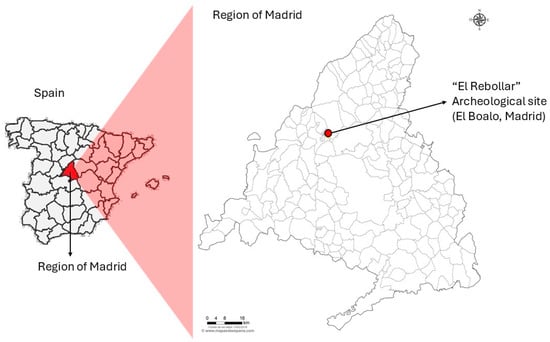
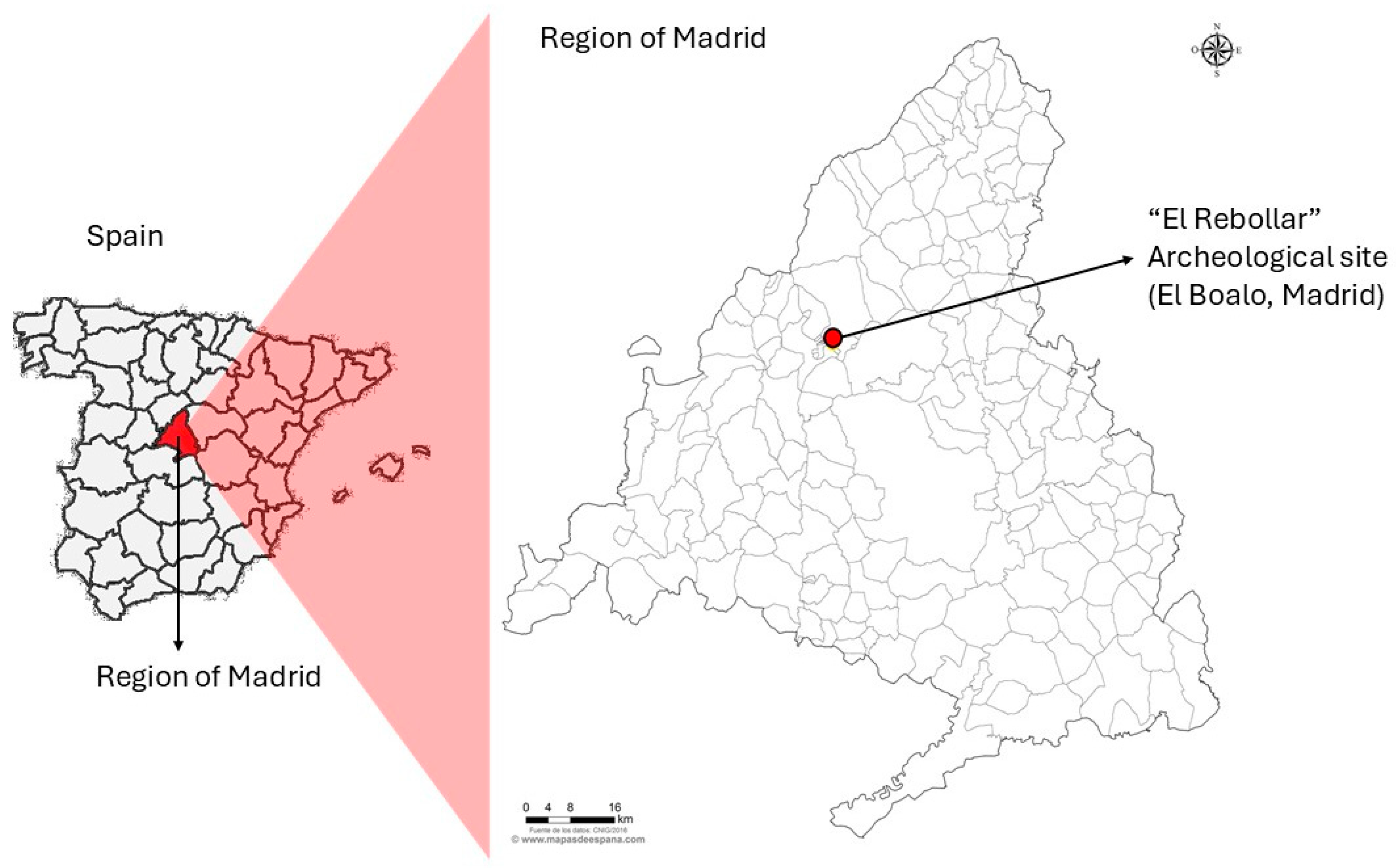
Excavations at El Rebollar since 2018 provide a key context for applying archeogenetic analysis to Late Antique populations (7th–8th centuries CE) in the Sierra de Guadarrama (Madrid, Spain) (Figure 1). From a regional perspective, the complex forms part of the broader landscape of Late Antique burial sites in central Iberia, where the interment of individuals inside ecclesiastical structures reflects the growing Early Medieval association between places of worship and privileged mortuary spaces (Salido Domínguez et al. 2024; Salido Domínguez and Gómez Osuna 2024). Because the analyzed samples originate from sealed burials inside a 7th-century CE church, they offer precise empirical data to reconstruct the local population history.
Figure 1.
Geographical location of the El Rebollar archeological site, in El Boalo (Madrid, Spain). Author: Archeological Team of El Rebollar.
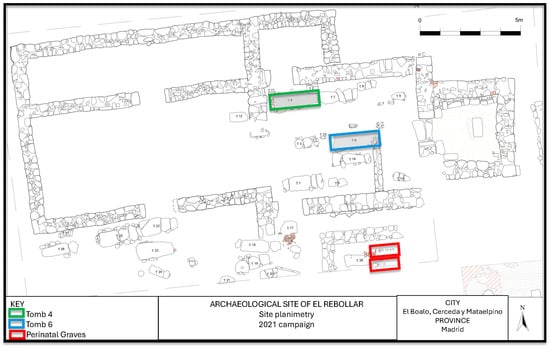
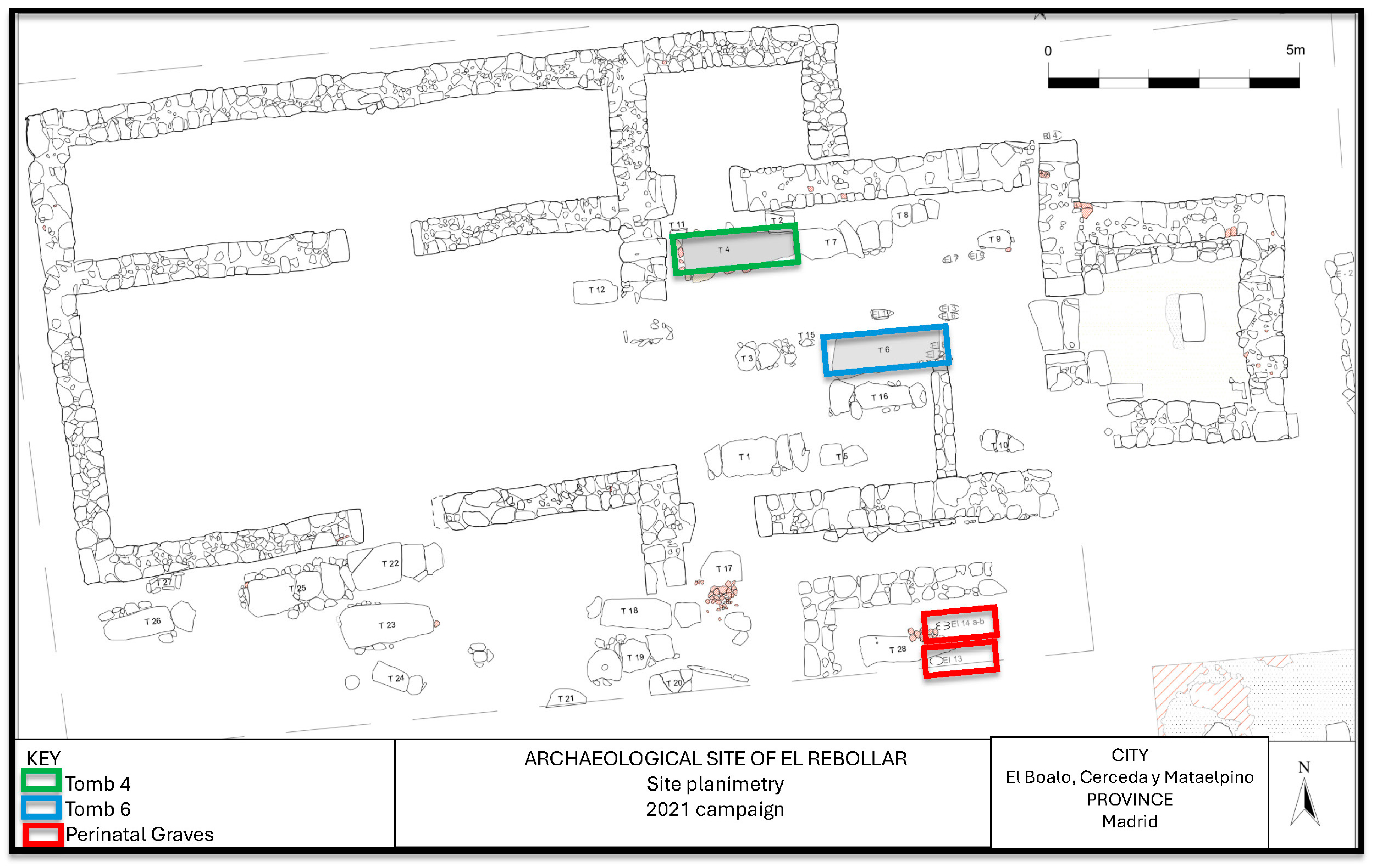
The site features a single-nave church (9.14 × 7.6 m) with a square eastern apse (5 × 4.1 m), a northern annex, and entrances to the south, north, and west (Figure 2). The stratigraphic sequence identifies four main occupational phases:
Figure 2.
Plan view of the El Rebollar site (El Boalo, Madrid, Spain). Tomb 4 is marked in green, Tomb 6 is marked in blue and the perinatal inhumations are marked in red. Author: Archeological Team of El Rebollar.
- Phase 1 (Mid-7th–Early 8th c. CE): Construction and initial use (with a minor modification in Phase 1b), followed by abandonment and sparse 9th-century CE activity.
- Phase 2 (Late 14th–Early 15th c. CE): Late medieval reconstruction.
- Phase 3 (Late 15th–Early 16th c. CE): Modern-period renovations.
- Phase 4 (17th c. CE onward): Reuse as a meeting space prior to definitive abandonment.
Despite the archeological clarity of the architectural sequence, key questions regarding the human group buried within the Phase 1 church remain open:
- Do the individuals buried in this privileged ecclesial space represent a close kin group (a local elite or founding family) or a broader cross-section of the local rural community?
- Does spatial proximity, grave goods, and the sequential reuse of high-status sarcophagi (e.g., Tombs No. 4 and No. 6) correspond to direct biological kinship or rather to affinal, social, or status-related ties?
- Is there genetic continuity between the individuals associated with the early construction phase and those buried in subsequent burials?
- How does this community relate biologically to coeval Visigothic-period populations across the Iberian Peninsula or Europe?
By analyzing the mitochondrial DNA of these individuals, this study directly addresses these unresolved questions, bridging the gap between architectural context and biological reality.
1.3. Funerary Context and Studied Tombs
The church nave contained 13 Late Antique graves arranged in four rows along an east–west orientation (head to the west). Most were stone-slab cist graves, but two finely carved granite sarcophagi (Tombs No. 4 and No. 6) stood out due to their superior preservation, lack of sediment, and associated grave goods.
Genetic analyses were performed on three individuals from these two sarcophagi to evaluate potential kinship ties and shared lineages:
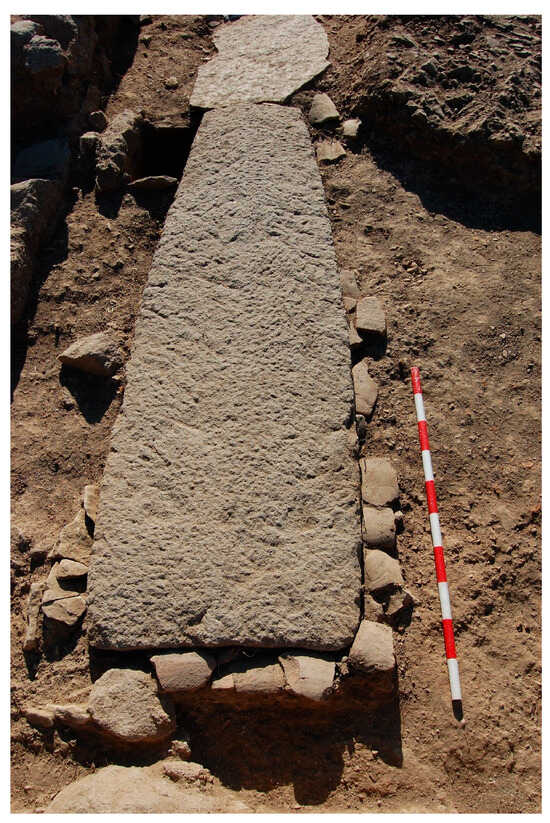
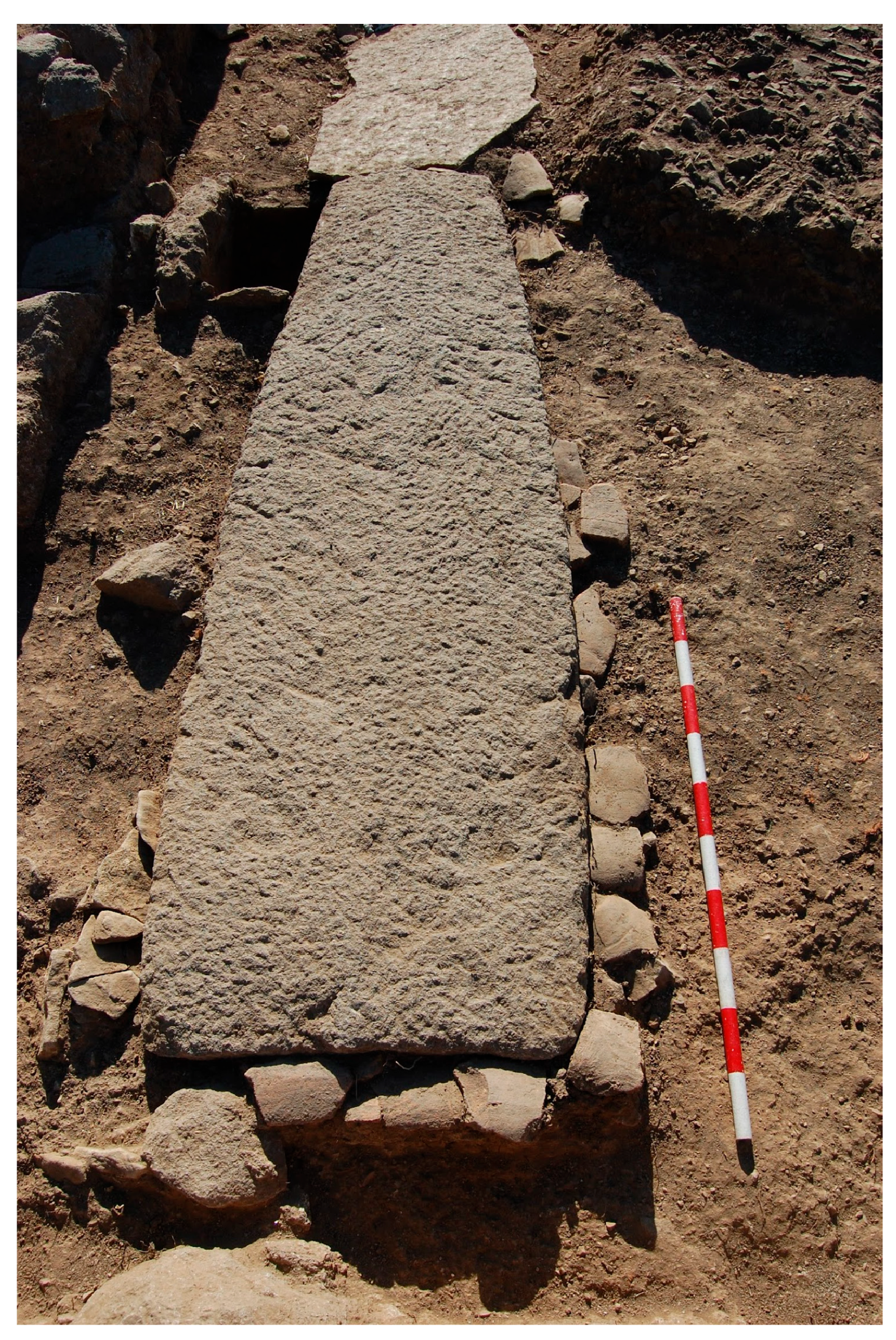
- Tomb No. 4 (Figure 3)
- ○
- Location: Northwest corner of the nave.
- ○
- Characteristics: A high-quality granite sarcophagus featuring a carved gabled lid (220 × 70–50 cm) sealed with limestone chips and tile fragments.
- ○
- Interior: Measures 1.96 m in length with semicircular ear-like projections carved into the head corners.
- ○
- Contents: Contains two individuals selected for DNA analysis.
- Tomb No. 6 (Figure 4)
- ○
- Location: Center-east of the nave, near the chancel dividing wall.
- ○
- Characteristics: A large, roughly hewn granite slab cover (210 × 85–75 cm) sealed with small stones and roof tiles.
- ○
- Contents and Context: Contains a single adult male (Boalo 19) buried in a supine extended position with his right arm over the abdomen and left hand under the femur.
- ○
- Grave Goods: Associated with two rings currently under study.
Figure 3.
View of tomb number 4. Author: Archeological Team of El Rebollar.
Figure 4.
Individual 19, inhumed in tomb number 6. Author: Archeological Team of El Rebollar.
The location of all the graves on the site plan can be seen in Figure 5.
Figure 5.
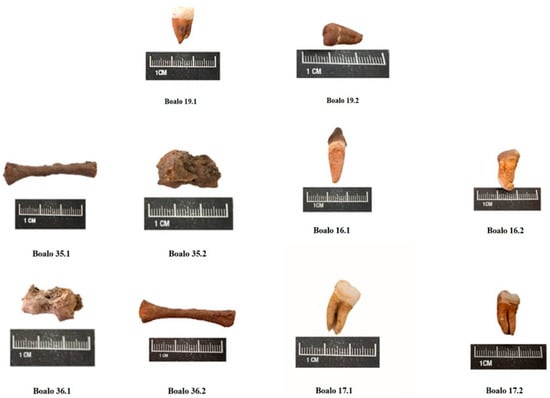
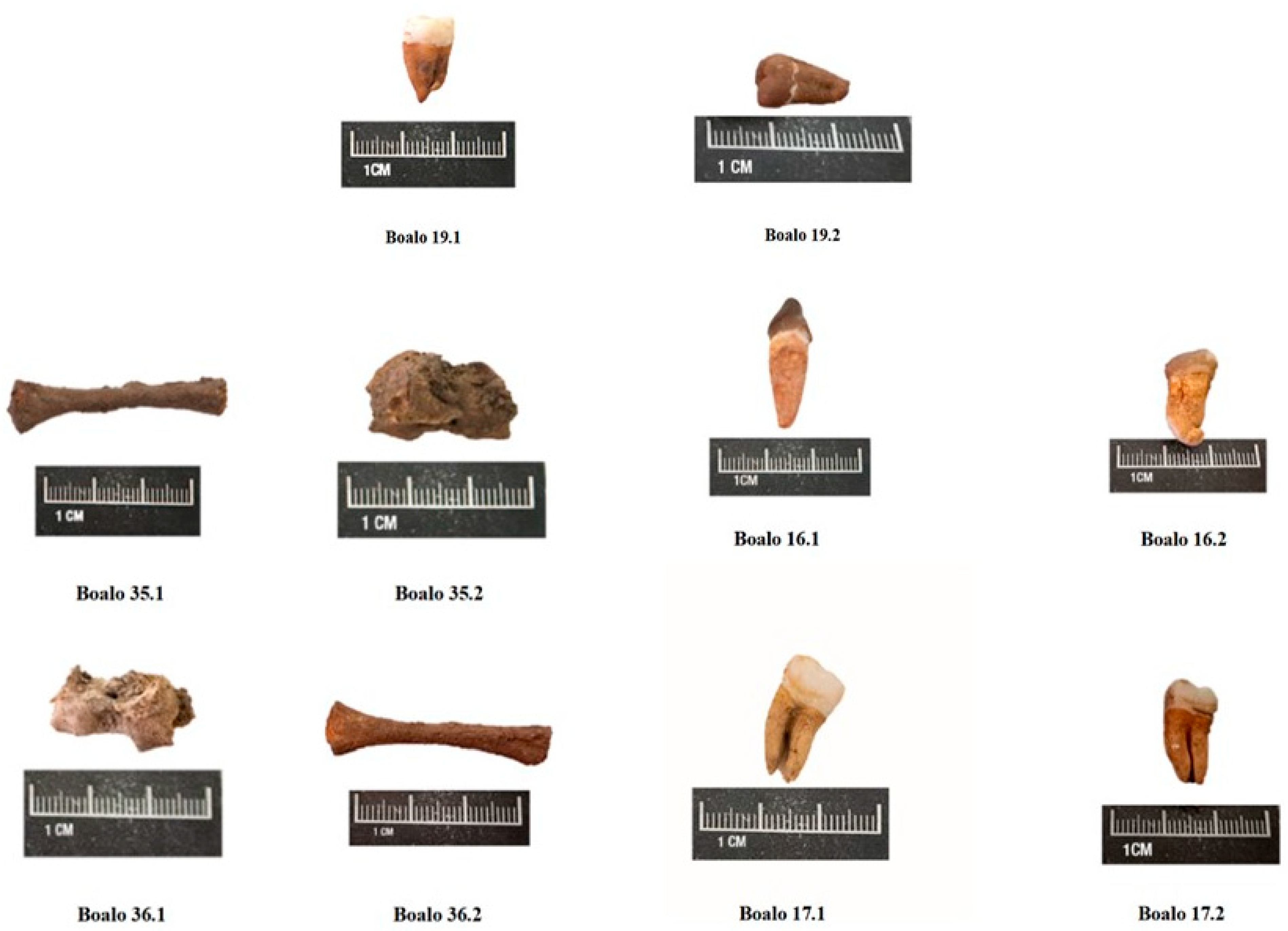
Samples selected for the aDNA analysis.
- Perinatal Tomb
- ○
- Location and Context: In addition to the sarcophagi, an exceptional double burial context containing two perinatal individuals was documented within the site’s funerary area.
- ○
- Significance: The presence of two perinatals buried together presents a key opportunity to investigate biological close or lineage kinship.
1.4. Objectives of the Study
The overarching goal of this research is to apply archeogenetic analysis to the 5 individuals exhumed from the Late Antique population of El Rebollar to resolve specific historical and biological questions. Specifically, this study aims to:
- Assess close kinship relationships: Evaluate direct biological kinship among individuals buried together in shared funerary contexts (including both the adult/child sarcophagi and the double perinatal burial).
- Trace lineage kinship: Reconstruct uniparental lineages (maternal and paternal) to establish deeper family lines and genealogical connections among the buried population.
- Evaluate dietary and metabolic predispositions: Analyze genetic markers associated with food intolerances, with a specific focus on lactose persistence/intolerance, to better understand metabolic adaptive traits and diet.
- Conduct comparative biogeographical origin analysis: Compare the genomic profiles of these individuals with coeval Late Antique populations across Iberia and Europe to determine their ancestral origins and genetic affinities with neighboring groups.
2. Methodology
The analytical process began with appropriate sample selection for the DNA analysis. This selection was carried out at the LAPP, an anthropological analysis was also performed to determine the biological profile of each individual. It was possible to collect two dental samples from all adult individuals; however, in the case of perinatal individuals, two bone samples were selected from each (Table 1 and Figure 5), specifically one sample from the petrous portion of the temporal bone and one from the right humerus. Table 1 summarizes the information relating to the selected samples.
Table 1.
Sample selected summary.
The recovery of biomolecules from Late Antique skeletal remains in Central Iberia faces notable preservation challenges driven by regional taphonomic conditions. In the Sierra de Guadarrama region, soil characteristics—characterized by acidic to neutral pH levels, combined with seasonal fluctuations in humidity and temperature—accelerate post-mortem bone diagenesis and ancient DNA (aDNA) degradation.
Notably, the physical integrity and macroscopic appearance of the collected skeletal elements (specifically petrous temporal bones and intact tooth roots) were exceptionally good, displaying no external signs of erosion, surface damage, or structural decay. However, microscopic and biomolecular assessment revealed that macroscopic skeletal preservation did not directly correlate with endogenous DNA preservation. Despite their pristine external appearance, some samples exhibited advanced diagenetic degradation and low endogenous DNA yields.
To overcome these preservation constraints, sampling was strictly restricted to high-density skeletal elements (petrous bones and molar roots) following stringent decontamination protocols. Given that extensive diagenetic fragmentation prevented uniform high-coverage nuclear genome recovery across all individuals, targeted mitochondrial DNA (mtDNA) sequencing was prioritized as the most robust approach to guarantee reliable, unambiguous haplogroup assignment and complete sequence coverage.
Following the selection of samples, the dental and/or bone samples were recorded and photographed, in accordance with the internal Standard Operating Procedure (SOP-1) of the Critical DNA Laboratory (LABCRI) within the Department of Forensic Medicine, Psychiatry and Pathology at the Faculty of Medicine, Complutense University of Madrid (UCM) (Gomes et al. 2025). Photographs of the selected samples can be seen in Figure 5.
Subsequently, all samples underwent surface cleaning and ultraviolet irradiation of the dental and/or bone samples, in accordance with LABCRI’s internal PNT-2 protocol.
A non-destructive DNA extraction method was used to extract DNA from the samples, in accordance with the protocol by Gomes, Palomo-Díez and colleagues (Gomes et al. 2015b). In this way, the samples are preserved following DNA extraction. However, it should be noted at this point that an advanced degree of internal degradation of the bone material was detected in some of the samples, particularly the long bones selected from the perinatal individuals (Boalo 36.2 and Boalo 35.1).
Once the DNA extracts had been obtained, nuclear genetic material was quantified using real-time PCR, with the Quantifiler Trio™ kit (Applied Biosystems™/Thermo Fisher Scientific, Foster City, CA, USA) and in accordance with the manufacturer’s instructions (Thermo Fisher Scientific (n.d.)). Quantifiler™ HP and Trio DNA Quantification Kits user guide (Pub. No. 4485354). Life Technologies Ltd. (Thermo Fisher Scientific, Waltham, MA, USA). In addition, the total DNA obtained was quantified using non-specific quantification via Qubit™ 1X dsDNA High Sensitivity (HS) (Thermo Fisher Scientific, Waltham, MA, USA), carried out at the Genomics Research Center (CAI) at the Madrid Science Park, on the UCM campus, located within the Faculty of Biology of the same university.
Although the real-time PCR results indicated that the nuclear DNA content of the samples was very low, analysis of autosomal STR (short tandem repeat) markers was carried out in an attempt to establish close kinship relationships. At least two amplifications of autosomal and Y-chromosome STR markers were carried out, using genetic kits GlobalFiler IQC (Applied Biosystems™, Thermo Fisher ScientificTM, Waltham, MA, USA) and YFiler Plus (Applied Biosystems™, Thermo Fisher ScientificTM, Waltham, MA, USA), respectively. Two amplifications of X-chromosome InDels (insertion and deletion polymorphisms) were also performed in accordance with Pereira et al. (2009).
In regard to mitochondrial DNA (mtDNA), the analysis involved the study of the HV1 and HV2 regions. To this end, PCR amplification was carried out on two short overlapping fragments of the Hypervariable Region I of mtDNA (HVI), specifically from position 16,105 to position 16,399, as well as the amplification of two further overlapping fragments of the Hypervariable Region II (HVII), specifically from position 50 to position 408. Amplification was carried out using the QIAGEN® Multiplex PCR Kit (QIAGEN, Hilden, Germany) and the primers designed by Fernández (2005) and Martínez-Labarga and Richards (1999).
Throughout the entire experimental procedure, the authenticity criteria established by LABCRI.
Both the analysis of fragments (STRs and InDels) and the sequencing were carried out at the Genomics Unit of the CAI (Research Support Center) for Biological Techniques at the Madrid Science Park. All of these were performed using an Applied Biosystems 3730 sequencer (Applied Biosystems, Foster City, CA, USA).
In the analysis of autosomal and Y-chromosome STRs, as well as X-chromosome InDels, the results were analyzed using GeneMapper® v6 software (Thermo Fisher Scientific, Waltham, MA, USA) at the Genomics Unit of the CAI for Biological Techniques.
Regarding the objective of evaluating dietary and metabolic predispositions, the amplification of the rs182549 genetic marker, associated with lactose intolerance, was also performed in order to determine whether the individuals studied were tolerant to milk consumption. For this purpose, the Qiagen Multiplex PCR Kit (QIAGEN, Hilden, Germany) was used, employing primers designed by Phillips and Fondevila (Phillips et al. 2007; Fondevila et al. 2013).
As for the mtDNA sequences, these were analyzed using Mutation Surveyor® V 4.0.9 software (SoftGenetics, State College, PA, USA); each was compared with the rCRS (Cambridge consensus sequence) reference sequence (Anderson et al. 1981; Andrews et al. 1999). In this way, the haplotype corresponding to each sequence obtained could be established. For each individual, at least eight independent PCR sequences were obtained: four for Hypervariable Region I and four for Hypervariable Region II. From these sequences, consensus haplotypes were established for each individual; only those polymorphisms for which the results were replicated in at least two independent PCRs were accepted. This ensures that the results are intrinsic to the sample and are not due to the presence of exogenous DNA or molecular damage caused by the age of the samples.
Once the mtDNA haplotypes had been established, haplogroup (HG) assignment was carried out using the EMPOP database and its mitochondrial HG assignment tool (Parson and Dür 2007; van Oven and Kayser 2009).
To provide a phylogeographical context for the lineages analyzed and to assess the genetic relationships between the El Boalo individuals and other populations, a bioinformatic and population genetics study was carried out, structured around the following operational phases:
- Firstly, a search was carried out to identify and select control data from coeval (Middle Ages) and comparative populations using the AmtDB (Ancient mtDNA database) (Ehler et al. 2019). Table 2 shows the selected populations and their characteristics. The selection criterion was to choose all populations from the AmtDB database that were contemporary with the individuals from El Boalo; to this end, the corresponding chronological period was selected from the database.
Table 2.
List of populations used for the archeogenetic population study.
- Once the comparison groups had been selected, their corresponding mitochondrial haplotypes were downloaded; the molecular data were consolidated and encoded in the input format required by the Arlequin (version 3.5.2.2) genetic analysis software.
- Using this integrated dataset, a Molecular Analysis of Variance (AMOVA) was run in Arlequin (Version 3.5.2.2) to assess the structure and distribution of genetic diversity within and between the populations studied. In parallel, the pairwise genetic distance matrix (FST) was calculated using random permutations to establish the degree of differentiation and interconnection between populations at the maternal lineage level.
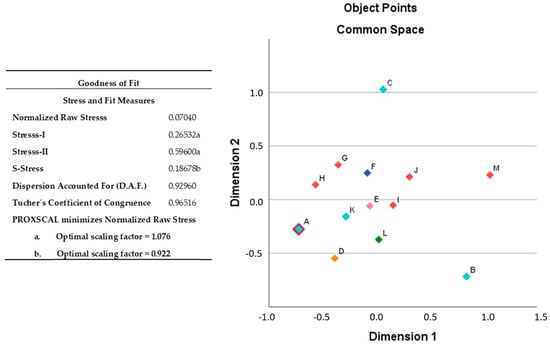
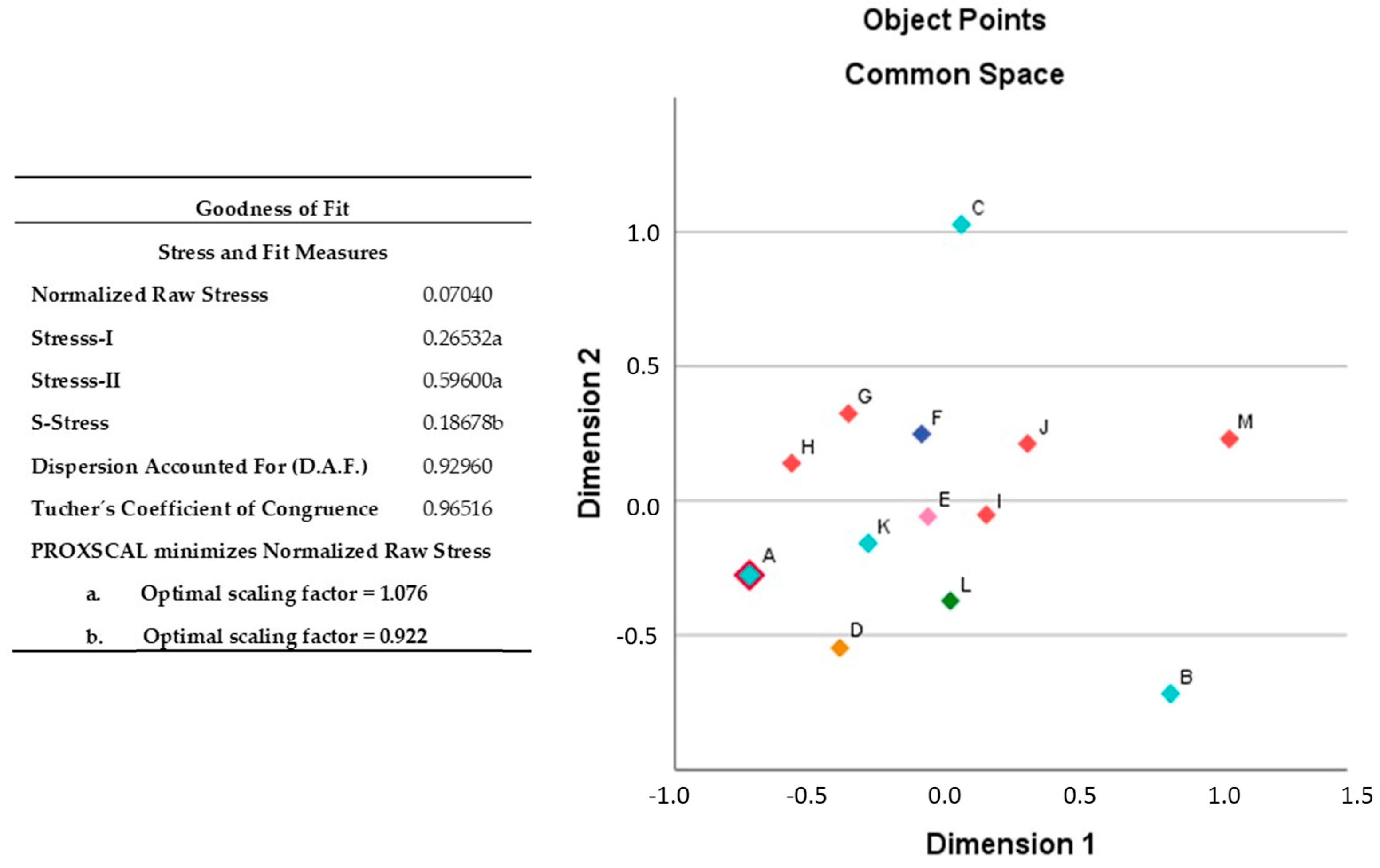
- The resulting metric distance matrix served as the basis for two complementary spatial representation analyses: Multidimensional Scaling (MDS): The FST values were exported to the statistical software SPSS (IBM SPSS Statistics 24), where a dimensionality reduction analysis was performed using the PROXCAL algorithm (Proximity Multidimensional Scaling). To ensure the suitability of the metric and the fidelity of the two-dimensional projection with respect to the original matrix, the goodness-of-fit indices—Stress (standard and corrected)—and the distance loss function (DAF) were systematically monitored and reported.
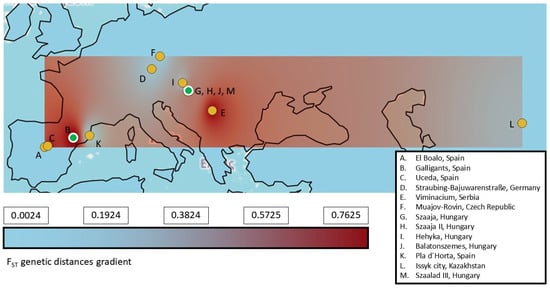
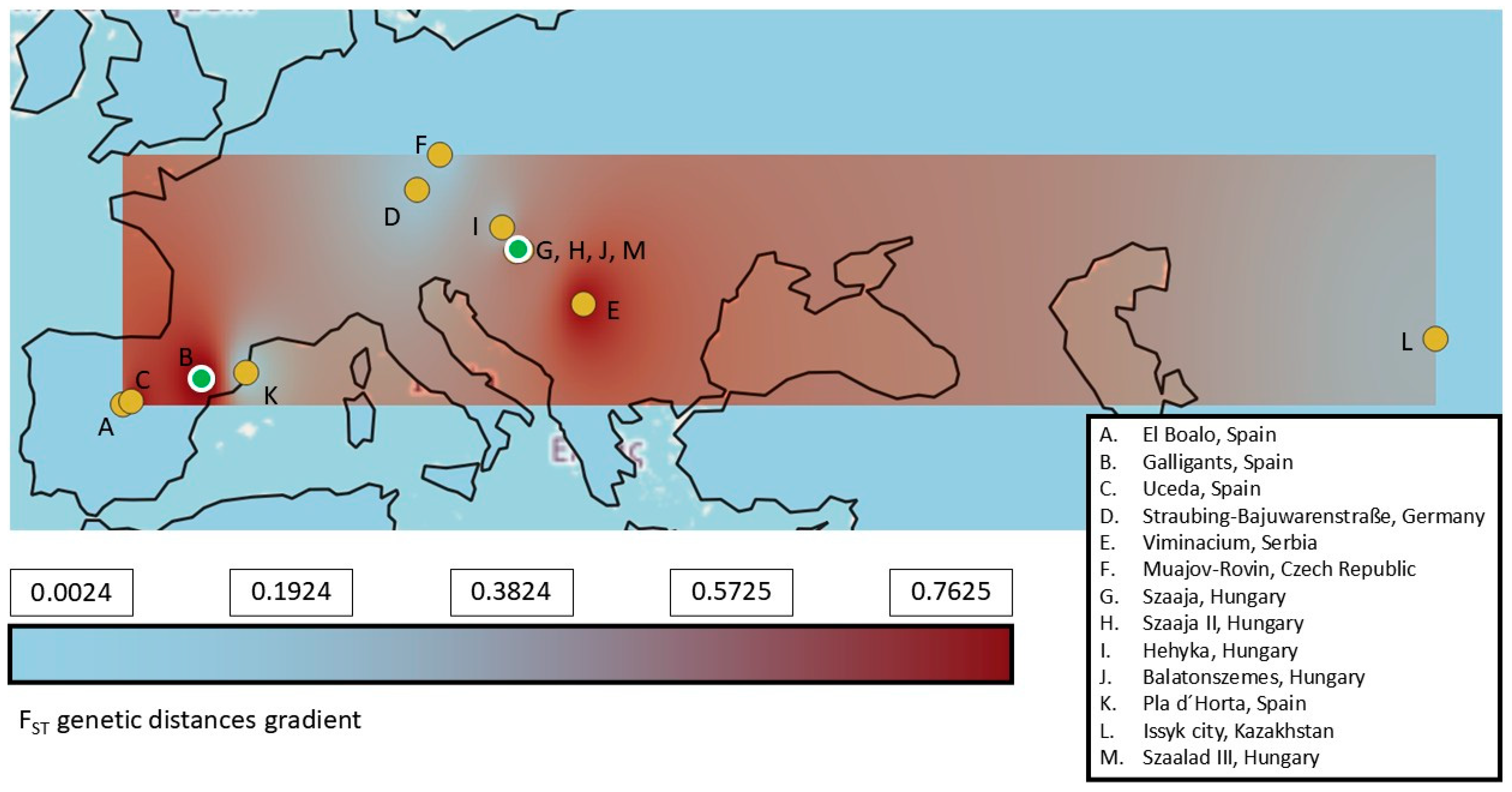
- Genetic Mapping (QGIS v3.44): Finally, with the aim of geographically mapping the differentiation coefficients, the same distance matrix (FST) was integrated into a Geographic Information System using QGIS v3.44. This enabled the generation of genetic distance maps at a spatial scale, facilitating the visualization of molecular gradients and the historical-demographic interpretation of settlement patterns in the region.
3. Results
3.1. Bioarcheological and Anthropological Study
Table 3 shows the C14 dating results.
Table 3.
C14 dating information and archeological data. Author: Archeological Team of El Rebollar.
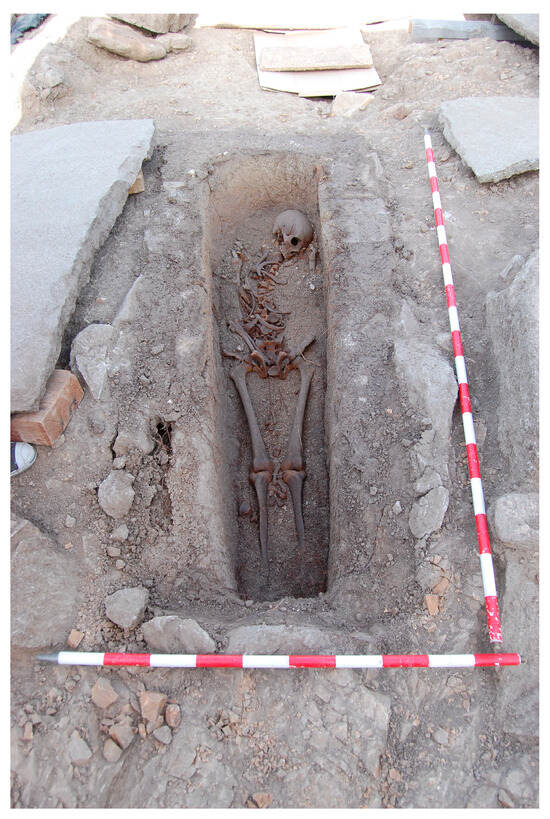
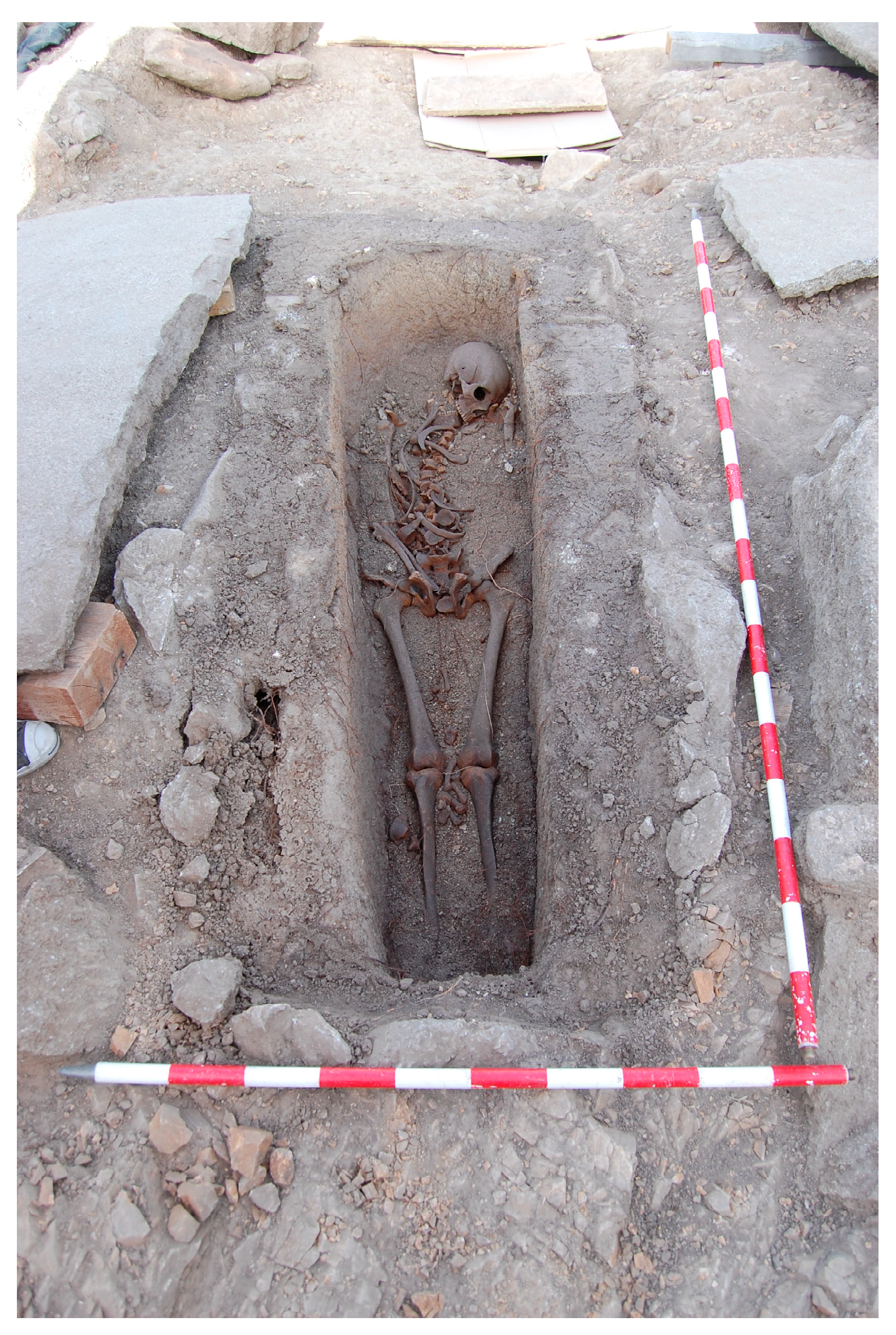
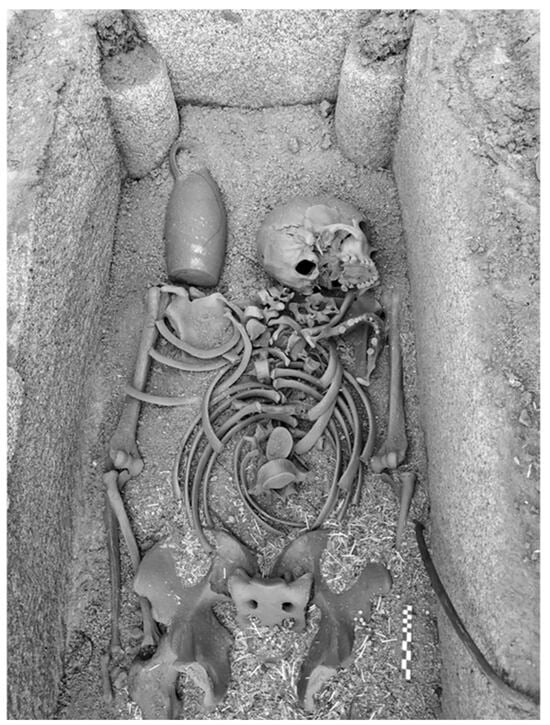
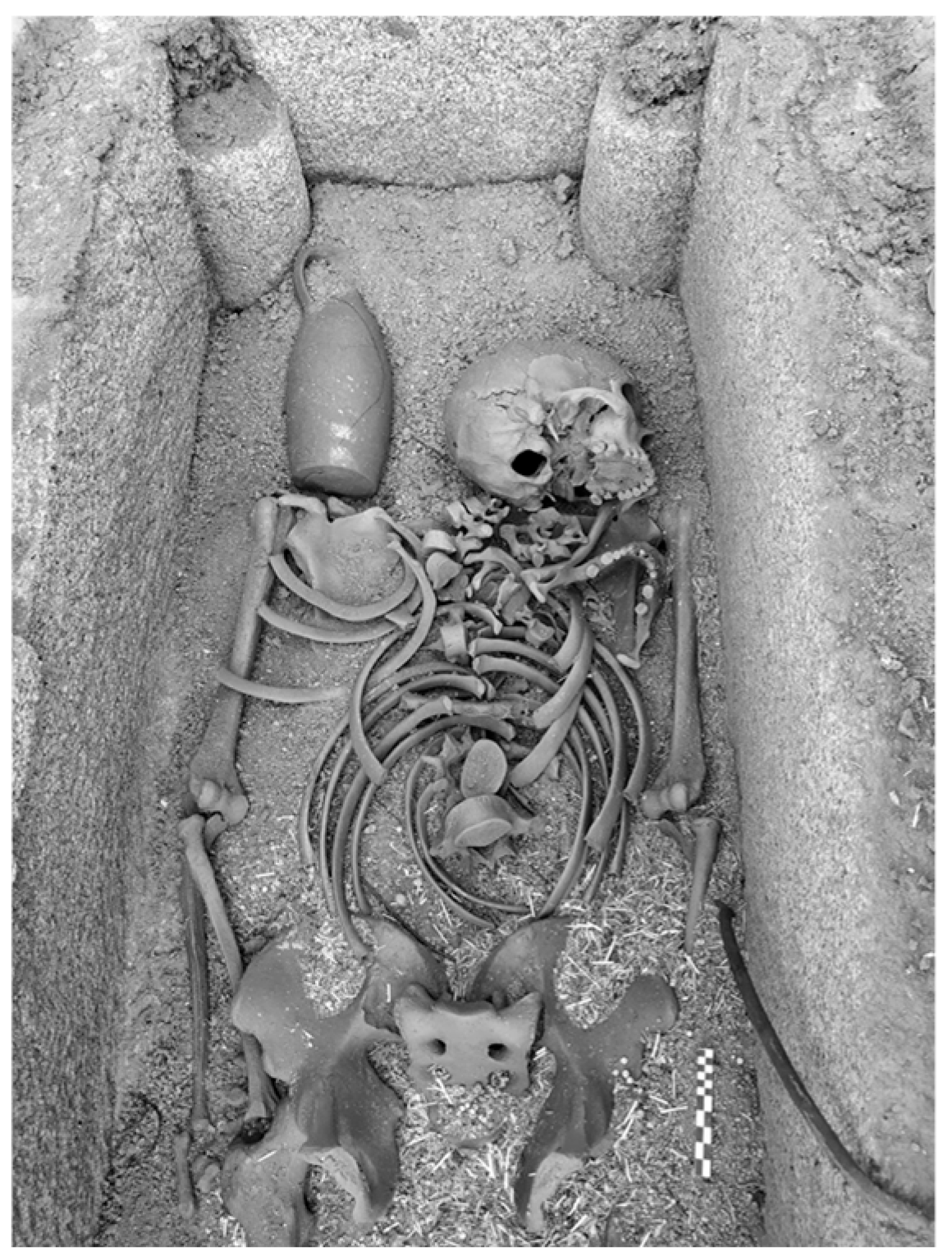
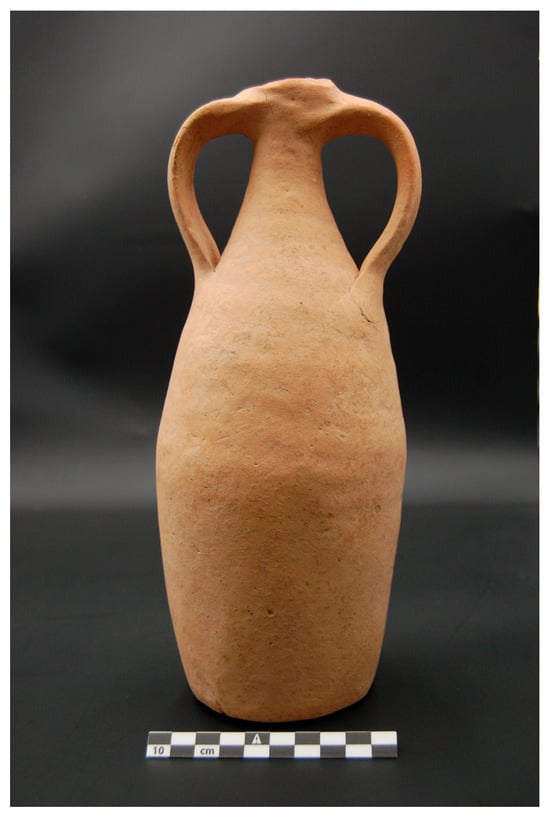
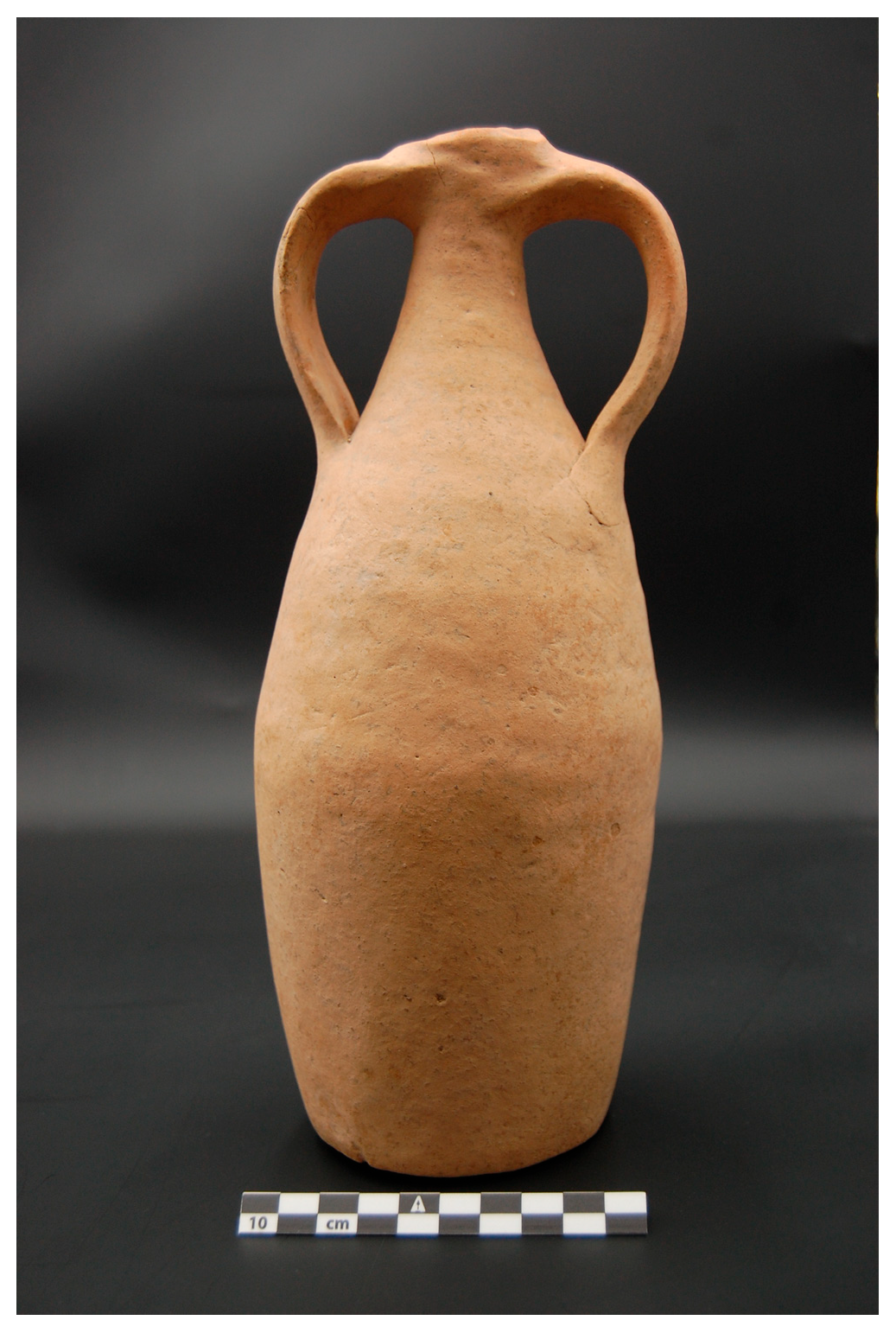
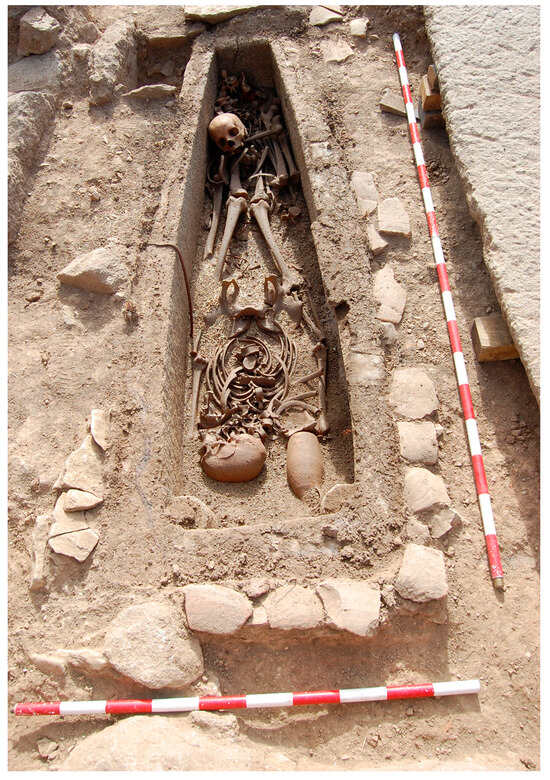
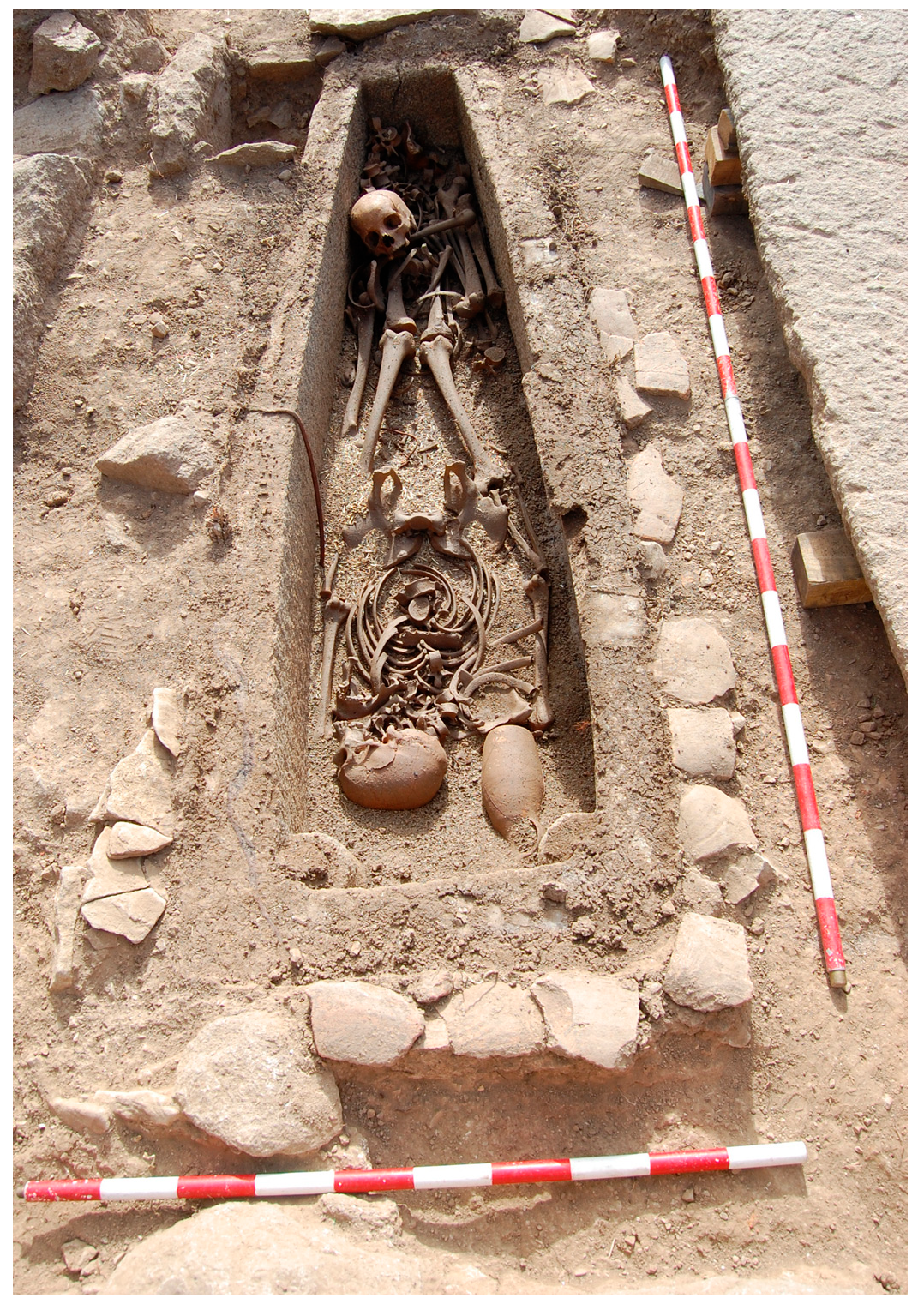
Regarding tomb number 4, the two individuals interred inside the sarcophagus were anthropologically determined as men. The adult individual (Figure 6) (designated Boalo 16) was found in a supine position, fully extended, with an estimated height of 1.71 m, according to the anthropological study (del Olmo Lianes et al. 2022). He was accompanied by a double-handled bottle (Salido Domínguez et al. 2024) (Figure 7). The other individual, Boalo 17, a juvenile with an estimated age of 15 years ± 3 years, was recovered above the lower section of the first individual (Figure 8).
Figure 6.
Individual 16 of Tomb number 4. Author: Archeological Team of El Rebollar.
Figure 7.
Double-handled bottle found in Tomb 4. Author: Archeological Team of El Rebollar.
Figure 8.
Individual 17 in Tomb number 4. Author: Archeological Team of El Rebollar.
For its part, what is known as Tomb 6 contained the skeletal remains of another man, according to the anthropological analysis, who was buried with two rings featuring Late Antique-style decoration.
Finally, in regard to the newborns found outside the church, from an anthropological perspective, it has only been possible to conclude that they are two perinatal individuals whose sex could not be determined.
3.2. Archeogenetic Analysis
The results of the nuclear DNA quantification and total DNA quantification obtained following extraction from the selected samples are presented in Table 4.
Table 4.
DNA quantification results. Real-time PCR nuclear DNA quantity results are summarized in the third column. Performed by the Quantifiler Trio® kit (Thermo Fisher Scientific, Waltham, MA, USA). Total DNA quantity results obtained by Qubit fluorometry are summarized in the fourth column.
Although sufficient quantities of this nuclear genetic material (Table 4) were not detected during the quantification of nuclear DNA using quantitative PCR, an analysis of autosomal STR markers was carried out with the aim of verifying whether it was possible to obtain any results. However, none of the samples analyzed provided valid information, and consequently no autosomal STR profiles were obtained.
Similarly, the analysis of X-InDels also yielded no results, confirming the absence of nuclear material suitable for this type of study.
Finally, the results obtained from the mtDNA analysis are set out in Table 5, constituting the only line of investigation that provided information from the samples analyzed. These data have enabled us to determine that the two perinatal individuals share the same maternal lineage; they may therefore be related through this lineage, both belonging to the mitochondrial haplogroup HV0. The remaining individuals (16, 17 and 19) do not share a maternal lineage in any case; they therefore have different origins as regards their maternal family lines, although some form of kinship through the paternal lineage cannot be ruled out. Individual 16 belongs to the mitochondrial haplogroup H2a2, individual 17 to the mitochondrial haplogroup L3h2 and individual 19 to the mitochondrial haplogroup T1a.
Table 5.
Assignment of mitochondrial haplotypes and haplogroups for each individual by two databases: EMPOP (modern population) and AmtDB (ancient human populations). * The 16270T mutation in individual Boalo 19 is indicated as ‘private’, meaning that it is a mutation specific to and characteristic of that individual and is not characteristic of a population as such.
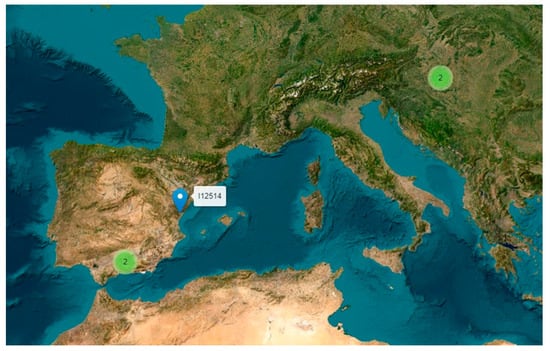
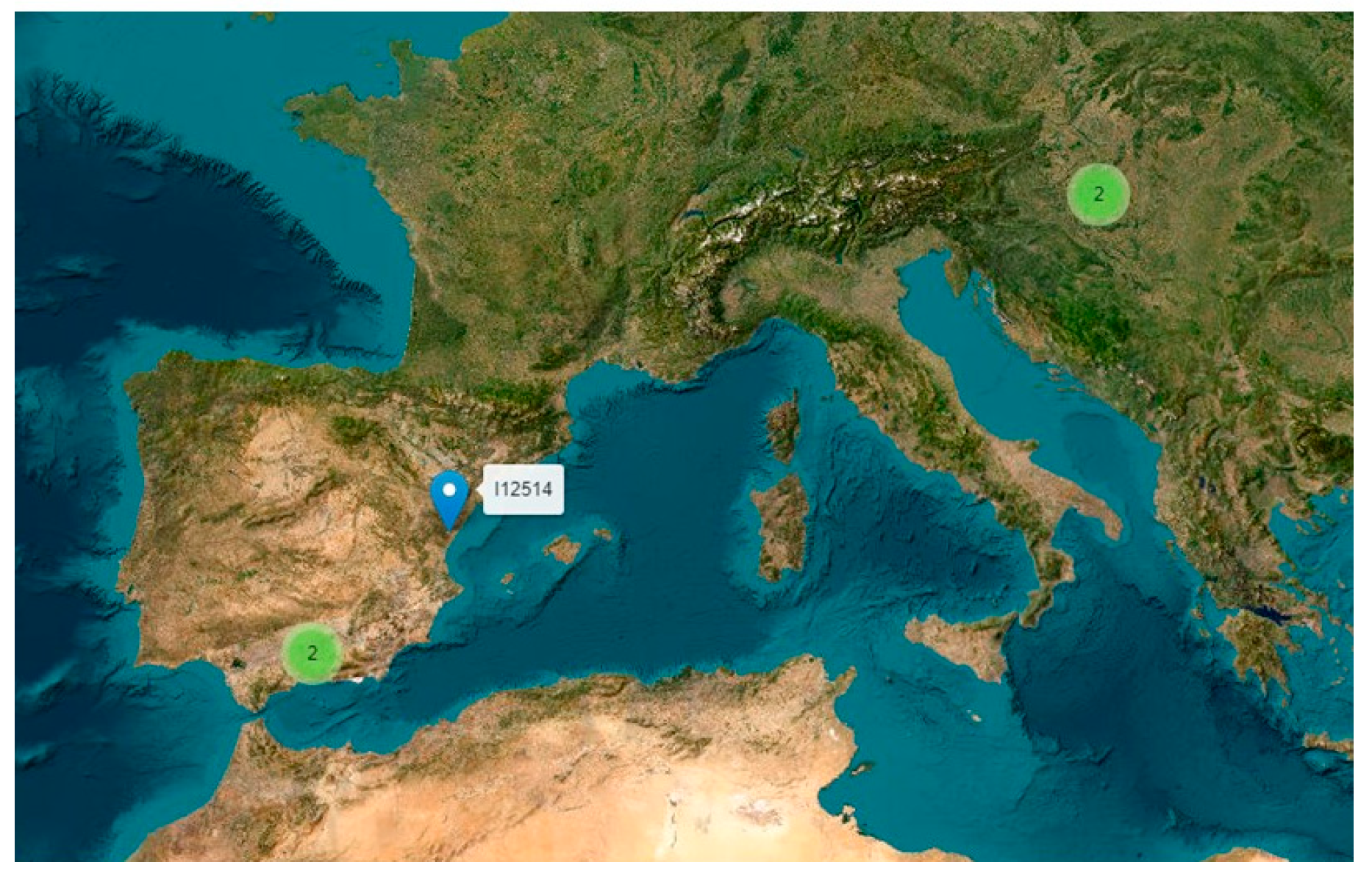
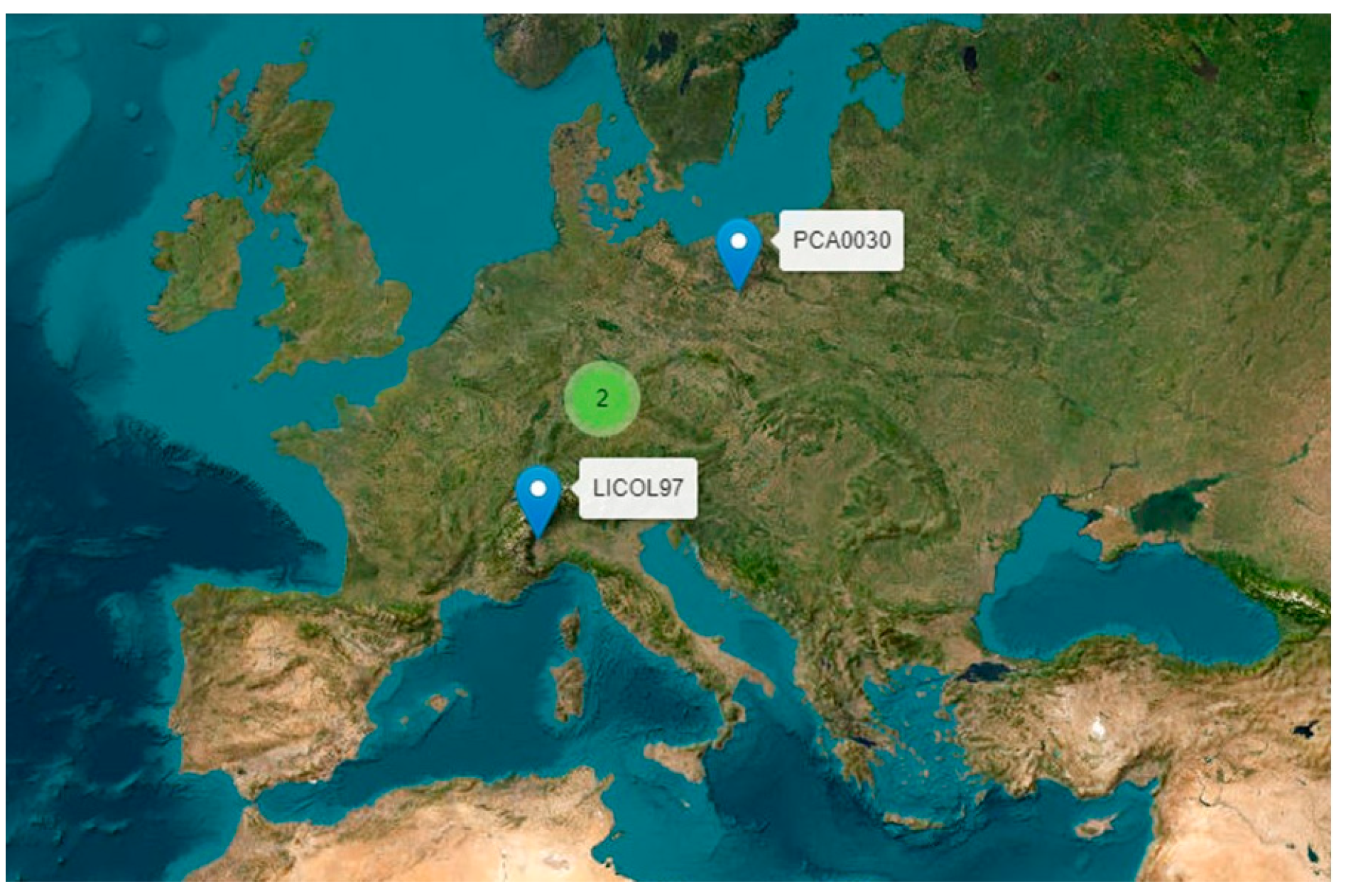
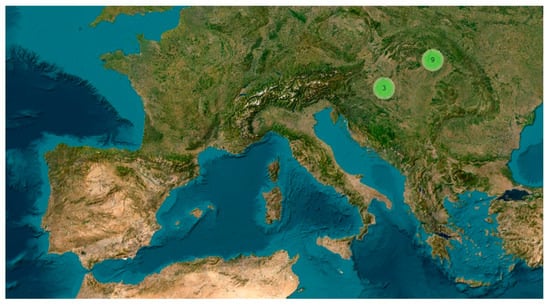
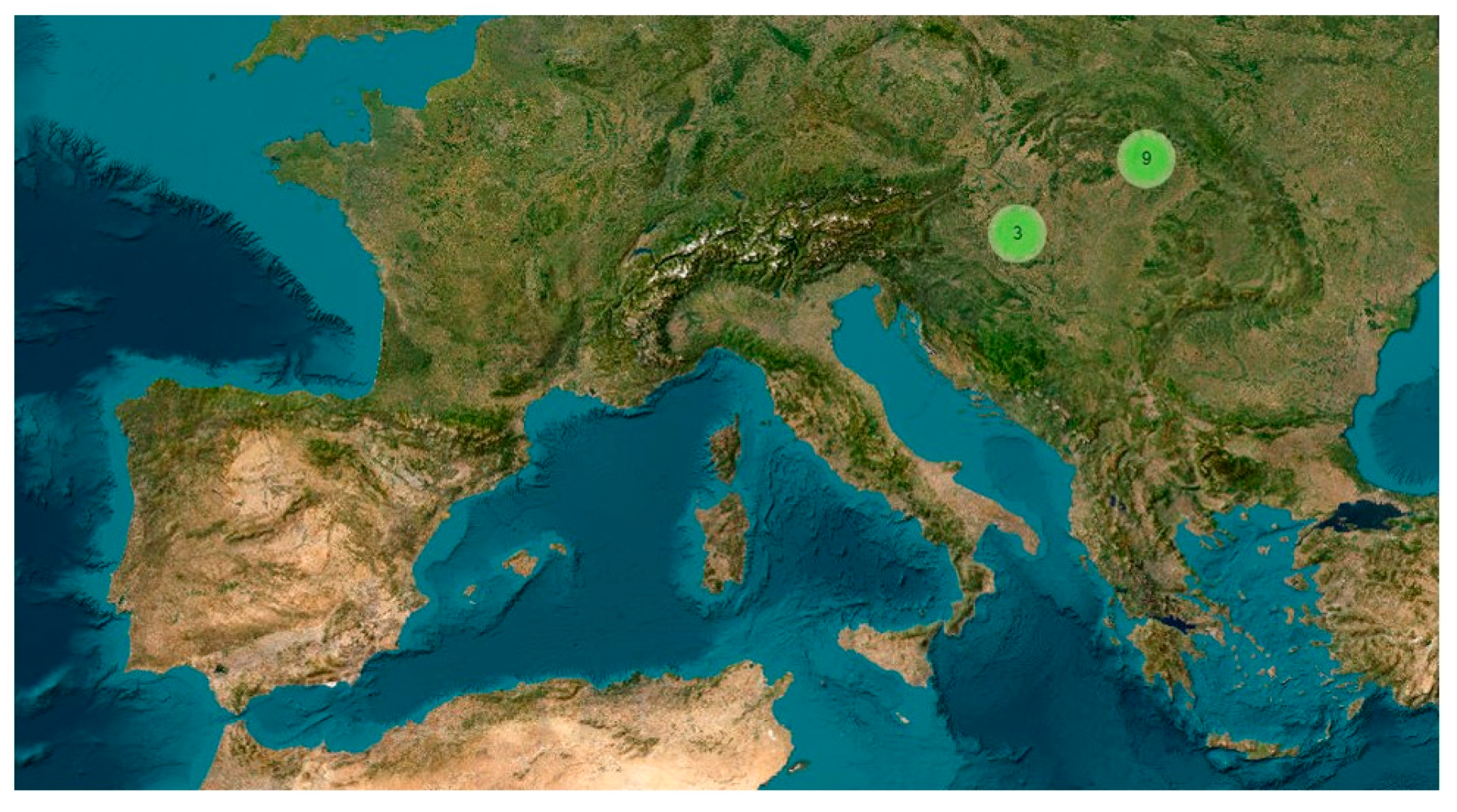
These data allow us to reconstruct dispersal patterns of maternal lineages. Figure 9, Figure 10 and Figure 11 show, respectively, the point locations of individuals carrying the HV0, H2a2 and T1a lineages during the Middle Ages, based on the AmtDB database. The juvenile individual from grave 4 (Individual 17) is highly likely to belong to the mitochondrial haplogroup L3h2, which has not been recorded in the AmtDB aDNA database, as this haplogroup is not typically European but typically African. Consequently, there are no records in the AmtDB database regarding its distribution during the Middle Ages.
Figure 9.
Point locations of individuals with the HV0 lineage during the Middle Ages according to the AmtDB database. The blue point indicates the location of one individual, and its ID number.
Figure 10.
Point locations of individuals with the H2a2 lineage during the Middle Ages according to the AmtDB database. The blue point indicates the location of one individual, and its ID number.
Figure 11.
Point locations of individuals with the T1 lineage during the Middle Ages according to the AmtDB database.
A comparative population study was carried out between the El Boalo individuals and coeval European populations from the Late Antique and Early Medieval periods. To this end, all available data were downloaded from the public amtDB database, limiting the search to the chronological range of the analyzed remains. To this control dataset were added molecular profiles from two other benchmark studies from the Iberian Peninsula: on the one hand, samples from the Monastery of Sant Pere de Galligants site (Girona), dating from Late Antiquity and the Middle Ages (Gomes et al. 2025); and, secondly, data from the medieval site at Uceda (Guadalajara) (Gomes et al. 2015a). This sampling strategy enabled the establishment of a uniform geographical and temporal framework to robustly compare the distribution of the maternal lineages studied. Genetic data were obtained from 132 individuals to carry out the population biogeographical study. The data from these 132 individuals were organized for processing using the Arlequin software (v3.5.2.2); Table 2 shows the structure used:
The 132 individuals from the 12 sites used for the comparison were organized into a TXT file for the analysis of AMOVA and genetic distances (FST) using Arlequin (v3.5.2.2). This organization was carried out while maintaining the groups formed by each of the 12 sites, plus the El Boalo group.
Table 6 shows the output of the results obtained following the AMOVA analysis:
Table 6.
AMOVA design and results. (Weir and Cockerham 1984; Excoffier et al. 1992; Weir 1996).
Analysis of Molecular Variance (AMOVA) revealed that 47.01% of genetic variability is due to differences between populations, while the remaining 52.99% is attributed to diversity within populations. The overall fixation index was highly significant (F_ST = 0.47006; p < 0.00000), indicating marked genetic structuring and differentiation between the Late Antique and Medieval communities analyzed at the level of maternal lineages.
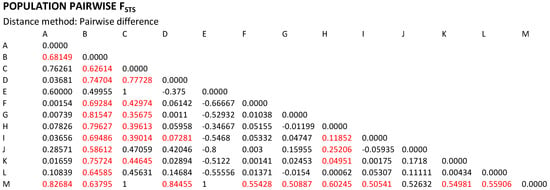
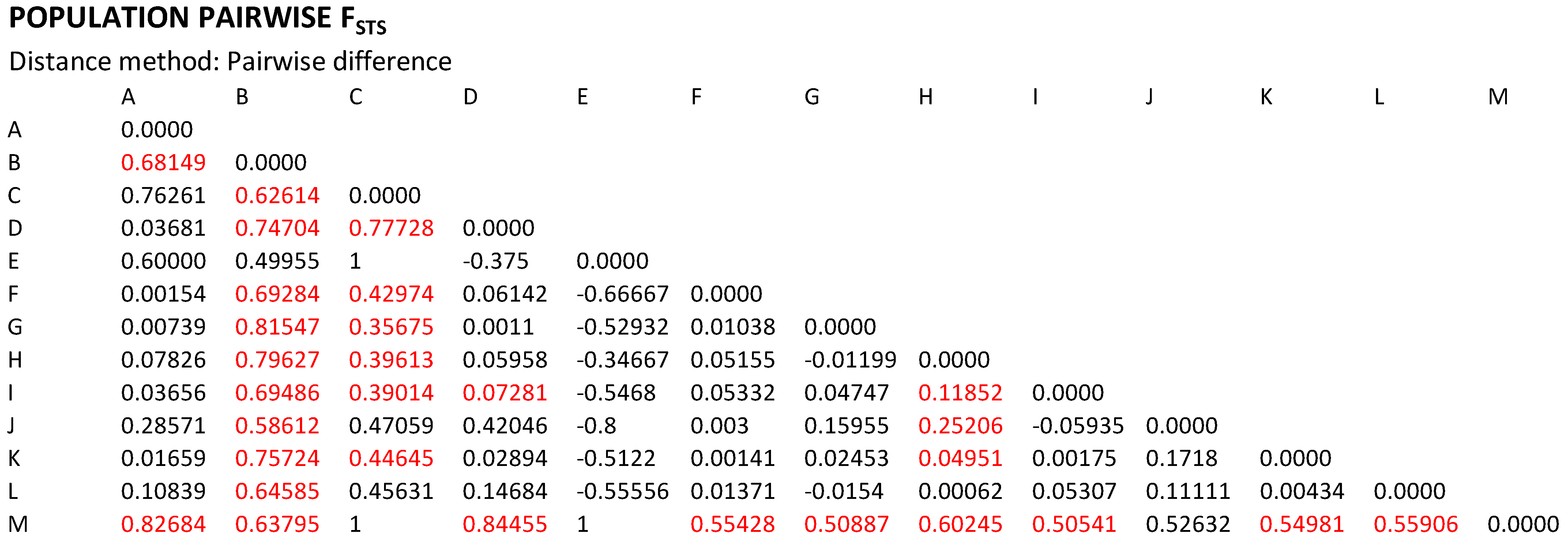
The FST genetic distance matrix obtained is shown in Figure 12.
Figure 12.
FST genetic distance matrix obtained using the Arlequin software (v3.5.2.2). The statistically significant FST distances detected are marked in bold red letters. The populations are represented by the letters established in Table 2.
The plot resulting from the MDS analysis carried out using the FST genetic distance matrix is shown in Figure 13.
Figure 13.
Results of the MDS analysis (Proxscal). The El Boalo population is represented by the letter A, in blue with a red border. The sites located on the Iberian Peninsula are shown in light blue (B: Galligannts; C: Uceda; K: Roman villa at Pla d’l’Horta). The German site at Straubing is shown in yellow and marked with the letter D. The letter E, in pink, represents the Serbian site at Viminaciu. The letter F, in dark blue, represents the Czech site at Uaiov, Újov-Roviny. The Hungarian sites are shown in orange, with the following letters: G and H: Szádecsné or Szada; I: Hegykö; J: Balatonszemes; and M: Szabadszállas. Finally, the letter L in green represents the settlement at the Issyk necropolis in Kazakhstan.
Finally, the representation of genetic distances on the map, using QGIS v3.44 software, is shown in Figure 14. This figure shows a gradient in which the more intense shades of red represent an increase in the genetic distance (FST); in other words, the more intense the red color, the greater the genetic distance between that population and El Boalo, while those regions with less intense red coloration are the ones that are genetically closest to the inhabitants of El Boalo.
Figure 14.
FST genetic distance gradient. Darker shades of red indicate greater genetic distance from the El Boalo population, while regions with a lighter (bluish) coloration are those with the smallest genetic distances from the El Boalo population. The letters represent each of the sites studied: A: El Boalo, Spain; B: Galligants, Spain; C: Uceda, Spain; D: Straubing-Bajuwarenstraße, Germany; E: Viminacium, Serbia; F: Muajov-Rovin, Czech Republic; G: Szaaja, Hungary; H: Szaaja, Hungary; I: Hehyka, Hungary; J: Balatonszemes, Hungary; K: Pla d’Horta, Spain; L: Issyk City, Kazakhstan; M: Szaalad, Hungary. Galligants (B) and Szaalad III (M) are marked with green points because they are the two sites that show statistically significant FSTS distances relative to El Boalo (A).
4. Discussion
4.1. Methodological Considerations, Skeletal Preservation, and Scope of Genetic Analyses
A fundamental prerequisite for interpreting the funerary context at El Rebollar is evaluating the osteological and biomolecular preservation state of the recovered human remains.
From an osteological perspective, macroscopic skeletal preservation across the site is exceptionally high. This is best illustrated in the sealed, sediment-free sarcophagi (Tombs No. 4 and No. 6) (Figure 3, Figure 4, Figure 6 and Figure 8), where delicate anatomical structures—like an ossified hyoid cartilage—were recovered intact.
In sharp contrast to this macro-level preservation, biomolecular preservation at the molecular level proved highly degraded. Endogenous nuclear DNA quantification yielded extremely poor results (Table 5), preventing the recovery of autosomal, X, or Y-chromosome markers.
This molecular degradation is primarily attributable to local edaphic factors, specifically the highly acidic, granite-derived soils of the Sierra de Guadarrama, which accelerate the hydrolytic and oxidative depurinization of double-stranded nuclear DNA over time (Lindahl 1993; Pruvost et al. 2007). This biomolecular constraint directly impacts the original objectives of this study: On one hand, close kinship analysis. Assessing immediate first-degree biological relationships (e.g., parent–child, full siblings) between co-buried individuals (Boalo 16 and 17 in Tomb No. 4; Boalo 35 and 36) requires high-coverage autosomal or X-chromosome short tandem repeats (STRs) or single nucleotide polymorphisms (SNPs). Due to nuclear DNA degradation, these markers could not be amplified. On the other hand, dietary and metabolic predispositions determined by targeting functional nuclear loci—specifically the LCT gene enhancer region (rs4988235) associated with lactase persistence/lactose intolerance—failed to amplify, precluding direct genomic evaluation of metabolic traits.
Despite the lack of nuclear DNA, extranuclear mitochondrial DNA (mtDNA) was successfully retrieved. Owing to its extremely high cellular copy number (1000–10,000 copies per cell compared to 2 copies of nuclear DNA), full hypervariable regions I and II (HVR-I/HVR-II) were amplified, enabling definitive haplogroup assignments for all individuals. Consequently, our discussion focuses exclusively on the successfully resolved objectives: lineage-based maternal kinship among joint interments and a comparative biogeographical population analysis.
4.2. Lineage Kinship and Socio-Genealogical Interpretation of Joint Burials
Mitochondrial haplogroup determination for the 7th-century CE individuals revealed distinct maternal lineages across the site: Individual Boalo 16 (adult, Tomb No. 4) belongs to haplogroup H2a2, individual Boalo 17 (juvenile, Tomb No. 4) to haplogroup L3h2, individual Boalo 19 (adult, Tomb No. 6) to haplogroup T1a, and the two perinatal individuals from the later occupational phases share haplogroup HV0.
In Tomb No. 4, the radiocarbon estimations (Table 3) and the relative spatial position of the skeletons indicate that the younger individual (Boalo 17) may have been buried first and subsequently moved to lie at the feet of the adult (Boalo 16) during a grave reopening, aligning with documented early medieval practices of respectful relocation for previous occupants. Mitochondrial DNA analysis provides an empirical test for the nature of this shared space. The identification of completely distinct maternal lineages—H2a2 in the adult (Boalo 16) and L3h2 in the juvenile (Boalo 17)—categorically rules out any direct maternal kinship (such as a mother-child relationship or full maternal siblingship). This biological disconnect between two individuals buried sequentially or jointly in an elite sarcophagus challenges the assumption that shared monumental tombs were restricted to nuclear maternal family lines. Since the discussion is strictly limited to maternal lineages, these results indicate that access to high-status funerary space was governed by broader social structures. The co-burial of maternally unrelated individuals likely points to marital (affinal) alliances, adoptive bonds (Paulissian 1999; Rosettenstein 2003; Hugh 2009; Bisha 2015; Vromans 2017), or patronage and fosterage relationships within local rural estates. For individual Boalo 17 (Grave 4), the identification of haplogroup L3h2 is particularly striking. Search queries within the EMPOP database confirm its highest current prevalence in the Horn of Africa, with virtually no occurrences in historical western European baselines, strongly supporting a trans-Mediterranean African origin.
Finally, regarding the other collective burial, the perinatals tomb, the presence of haplogroup HV0 in both individuals from later occupational phases provides a key demographic and genealogical baseline. On one hand, because both neonates share the exact same mitochondrial lineage, a close maternal relationship cannot be ruled out. While mtDNA alone cannot definitively prove full siblingship, there is a strong possibility that both infants were biologically linked through their maternal line—either as full or maternal half-siblings born to the same mother or through a close kinship tie between their mothers (e.g., maternal aunts/cousins).
On the other hand, as an autochthonous lineage deeply rooted in the Iberian Peninsula since prehistoric times, the identification of HV0 in these neonates confirms long-term maternal biological continuity at the site (Gomes et al. 2023), establishing that El Rebollar functioned as a stable, demographically active settlement.
Regarding the spatial layout and biological profile of the two perinatal individuals, their interment immediately outside the church structure aligns with well-documented Late Antique and early medieval mortuary practices regarding unbaptized infants (Quirós Castillo 2009).
From a genetic perspective, while some sub-lineages of haplogroup HV0 have been documented in historical Iberian Sephardic gene pools as a result of long-term local maternal incorporation, HV0 primarily represents a deeply rooted autochthonous Iberian lineage dating back to the Last Glacial Maximum (Gomes et al. 2023). Therefore, its presence in these neonates reflects local maternal continuity in the Guadarrama region rather than a distinct non-Christian ethnic group, reinforcing that the exclusion of these infants from the inner church space was driven by baptismal status rather than biological or religious marginalization. Furthermore, the recurrence of HV0 in the two perinatals mirrors patterns observed in prehistoric and historical Iberian contexts—such as Phoenician- and Roman-period burials at Gadir (Cádiz)—where HV0 reflects a persistent indigenous Iberian background rather than a newly introduced migratory lineage (Gomes et al. 2023).
Synthesizing these biological data at the community scale reveals important insights into the social organization and kinship dynamics at El Rebollar. The spatial distribution of mitochondrial lineages across the site indicates that access to both privileged sarcophagi (e.g., Tomb No. 4) and peripheral burial grounds was not governed by strict matrilineal inheritance. Instead, the co-existence of autochthonous maternal lineages (HV0) with distinct non-local haplotypes (H2a2, T1a, L3h2) within the same funerary space suggests a flexible, multi-lineage community structure. This biological configuration aligns with patrilocal or bilocal post-marital residence strategies typical of Late Antique rural networks, where female exogamy facilitated the integration of diverse genetic backgrounds into local landholding structures. Furthermore, the interment of maternally unrelated individuals within high-status monuments demonstrates that social cohesion and funerary privileges in this Sierra de Guadarrama community were mediated by a combination of biological relatedness, affinal (marital) ties, and broader socio-political alliances (such as patronage or fosterage), rather than exclusive nuclear family descent.
4.3. Analysis of the Results Obtained from the Comparative Population Study Using AMOVA, FST Distances, MDS, and Gradient Maps
At the phylogeographic level, spatial analyses reveal a scenario of great historical interest. Contrary to what would be expected based on strict geographic proximity, the cartographic representation of FST distances using QGIS (Figure 14) shows that the El Boalo site (A, in Figure 14) exhibits notable genetic differentiation from contemporary populations on the Iberian Peninsula, while the Uceda (C) and Galligants (B) sites are encompassed within a gradient of deep red, indicating high genetic distances. This marked micro-regional discontinuity challenges the assumption of a uniform biological profile in the interior of the peninsula.
This biological uniqueness of El Boalo is qualified by the observation of a greater affinity (lighter shades) with the population of Pla de l’Horta in Girona (K). This finding is highly suggestive, as recent archeogenetic literature defines Pla de l’Horta as a site characterized by notable demographic heterogeneity, where local lineages coexisted with contributions from the Eastern Mediterranean and North Africa (Olalde et al. 2019). The statistical proximity to this mixed profile, combined with the presence in El Boalo of the African haplogroup L3h2 and the Central European haplogroup T1a, suggests that the community of the Sierra de Guadarrama in the 7th century CE did not fit the pattern of an endogamous rural settlement. On the contrary, the data support the hypothesis of a multi-ethnic and dynamic population enclave, capable of integrating individuals of very diverse biogeographic origins into high-status social and funerary structures.
A comparison with the coeval European population landscape provides extraordinary insight into the demographic nature of El Boalo. An analysis of the geographic gradient of FST distances (Figure 14) reveals a phenomenon of great historical significance: while the Iberian Pen-insula itself appears largely isolated, the gradient becomes significantly less pronounced (shorter genetic distance) as it extends toward Central Europe, specifically toward the Straubing site in Germany (D) and the Hegykő site in Hungary (I). This pattern aligns with broad paleogenomic studies across Post-Roman Europe showing how long-distance mobility networks and Central European genetic inputs reshaped local early medieval communities (Amorim et al. 2018; Gretzinger et al. 2022). This transcontinental affinity is explained by the molecular signature of its adults, who share lineages such as H2a2 (Boalo 16) and, most notably, T1a (Individual 19), a marker closely linked to the expansive demographic dynamics of Central and Northeastern Europe.
In contrast, El Boalo forms a sharp genetic barrier (shades of deep red) with Eastern Europe, showing its greatest differentiation from the Serbian site of Viminacium (E). Genetically, this pattern rules out any direct maternal link or flow with the contingent of Gothic migrants who settled in the Balkan region during the 4th century and who assimilated Sarmatian or steppe-type biological components. Consequently, El Boalo’s mitochondrial connection with the rest of the continent is strictly Central-Western European in nature.
From a historical and chronological perspective, it is crucial to clarify that the genetic distinctiveness observed in El Boalo during the 7th century CE should not necessarily be interpreted as reflecting synchronous or first-generation migratory flows. The simultaneous presence of lineages of Central European (T1a) and North African (L3h2) ancestry more plausibly reflects the accumulation and establishment of foreign genetic contributions that occurred in earlier periods. During the 5th and 6th centuries CE, the Iberian Peninsula underwent profound demographic shifts linked to the Visigothic/Suebi settlement and the connectivity networks of the late antique Mediterranean. El Rebollar, situated at a strategic crossing point at the foot of the Sierra de Guadarrama, would have served as a hub for receiving and integrating these migrating populations. Over the generations, these non-native lineages took root locally, becoming fully integrated into the social fabric and among the elites who sponsored the construction of the place of worship. Thus, the molecular data do not paint a static picture but rather reflect the cumulative result of a deeply diverse, dynamic, and assimilated community genealogy over time.
In conclusion, the methodological approach used (AMOVA + MDS + QGIS) confirms that the rural community of El Boalo constituted a unique and strongly differentiated biological enclave within the late-antique peninsular landscape. The AMOVA results show that a significant 47.01% of genetic variation is attributable to differences between populations, supported by a highly significant overall fixation index (FST = 0.47006; p < 0.00000). While an FST value of this magnitude is exceptionally high for human groups, it must be interpreted as a methodological artifact reflecting the inevitable sampling constraints of early medieval datasets. This marked differentiation does not represent deep biological divergence in a macro-regional sense; rather, it is a consequence of studying highly restricted archeological windows. In these small, localized samples, stochastic evolutionary processes—such as genetic drift, founder effects, and localized maternal endogamy—are heavily amplified, artificially inflating the inter-population variance in software-based calculations (e.g., Arlequin). These quantitative values, combined with the distances mapped in QGIS, demonstrate a marked genetic discontinuity at the micro-regional level, positioning El Boalo as a population distinct from its immediate geographic neighbors, such as Uceda. Far from conforming to the pattern of a static rural settlement, its mixed molecular profile defines the community of El Rebollar as a dynamic, multi-ethnic settlement, sensitive to long-distance connectivity networks and cross-border migratory flows that effectively shaped the molecular map of medieval Europe.
4.4. El Rebollar Within the Late Antique Iberian Genomic Landscape: Admixture, Continuity, and Micro-Regional Diversity
To properly evaluate the historical weight of the biomolecular findings from El Rebollar, the local mitochondrial markers must be contextualized within the broader paleogenomic landscape of the Late Antique Iberian Peninsula. Before establishing direct comparisons, a crucial methodological distinction must be emphasized. While comparative genomic syntheses (e.g., Olalde et al. 2019; Carrión et al. 2024) primarily rely on high-resolution autosomal data to model genome-wide ancestry proportions—such as Central and Northern European (CNE), North African, or Eastern Mediterranean components—the results from El Boalo are strictly restricted to uniparental mitochondrial lineages due to the taphonomic degradation of nuclear DNA. Rather than presenting a limitation, these distinct proxies are complementary: while autosomal models measure broad population admixture over time, maternal haplotypes provide a high-resolution, unblended window into the specific genealogical origins and maternal continuity of local communities.
When mapped against the published genomic dataset for Late Antique Iberia, the biological profile of El Rebollar aligns with a growing body of evidence demonstrating complex demographic mobility well before and during the early medieval period. Archeogenetic studies confirm that Central and Northern European (CNE) genetic inputs were present in the Iberian Peninsula prior to the traditional 5th-century Migration Period. For instance, individual I29631 from ancient Tarraco (dated to the early 3rd century CE) exhibits approximately 97% CNE-like autosomal ancestry (Carrión et al. 2024). Similarly, the elite female burial from the mansio Ildum at Hostalot (Castellón, late 4th–early 5th century CE) revealed a genetic profile closely related to modern Central European populations (e.g., Czechs and Hungarians), standing markedly apart from coeval Hispano-Roman baselines (García Borja et al. 2021).
Further evidence of non-local demographic integration appears at the 4th–8th century CE site of Pla de l’Horta in Girona. There, autosomal modeling reveals CNE-like signals ranging between 27% and 86% across multiple individuals, coexisting alongside the Asian mtDNA haplogroup C4a1a (Olalde et al. 2019; Carrión et al. 2024). Crucially, none of the individuals analyzed at Pla de l’Horta can be modeled as pure, unmixed CNE migrants; instead, they show varying degrees of local Iberian Iron Age ancestry (12–61%), proving that incoming groups rapidly intermixed with the autochthonous Hispano-Roman population. Furthermore, 21 individuals from the same site lack CNE signals altogether, displaying local, North African (up to 30%), or Eastern Mediterranean (up to 50%) ancestries (Carrión et al. 2024). It is precisely this highly syncretic, multi-ethnic structure that statistically aligns the molecular baseline of El Boalo with Pla de l’Horta.
A similar demographic dynamic is documented in the 5th-century Suebi-period necropolis of Los Blanes in Emerita Augusta (actual Mérida, Spain). Out of 20 analyzed individuals from high-status contexts, 11 display prominent CNE-like ancestry (ranging from 50% to 100%), a component virtually absent in the preceding local Roman phases (Carrión et al. 2024). Historically associated with the Suebi migration across Gaul, this group also includes individuals harboring Central Asian/Sarmatian ancestry (29–50%), consistent with historical accounts of the joint arrival of Suebi and Alans in the early 5th century CE (Olalde et al. 2019; Carrión et al. 2024). Yet, alongside these migrant profiles, the Los Blanes necropolis reveals individuals displaying unmixed local Iberian ancestry and persistent North African genetic lineages spanning both the Roman and Suebi periods.
Synthesizing this peninsular background reveals that by the 7th century CE, total population replacement had not occurred anywhere in Iberia. Instead, the regional genomic landscape was defined by the coexistence, gradual admixture, and local persistence of Hispano-Roman substrates alongside integrated Central European, Trans-Mediterranean, and North African lineages. Within this macro-regional framework, the archeogenetic data from El Rebollar provide vital micro-regional resolution. The presence of Central European (T1a), Trans-Mediterranean African (L3h2), pan-European (H2a2), and autochthonous Iberian (HV0) maternal lineages within a single rural church context demonstrates that long-distance mobility networks actively reshaped rural mountain communities, transforming El Rebollar into a dynamic, highly structured, and multi-ethnic biological enclave in the heart of the Sierra de Guadarrama.
5. Conclusions
The interdisciplinary bioarcheological and paleogenomic investigation of the 7th-century CE rural church and necropolis of El Rebollar (El Boalo, Madrid) provides key insights into the social, genetic, and demographic structure of Late Antique communities in central Iberia. By combining high-resolution osteological analysis, radiocarbon dating, and mitochondrial hypervariable region profiling, this study yields three main conclusions:
- Biomolecular Taphonomy and Methodological Scope: Despite high macroscopic skeletal preservation in sealed sarcophagi, highly acidic granite-derived soils caused severe nuclear DNA degradation. Nevertheless, the successful retrieval of complete mitochondrial hypervariable regions (HVR-I/HVR-II) provided an unblended, high-resolution maternal window into local genealogical structures, overcoming taphonomic constraints.
- Social Kinship over Biological Continuity in Elite Spaces: Mitochondrial analysis of the co-buried individuals in the monumental Tomb No. 4 categorically excludes direct maternal kinship (mother-child or maternal siblingship), as Boalo 16 belongs to haplogroup H2a2 and Boalo 17 to L3h2. Furthermore, neither shows a maternal relationship with the occupant of Tomb No. 6 (Boalo 19, haplogroup T1a). These results demonstrate that access to privileged intramural funerary space was governed by social, affinal, adoptive, or patronage ties rather than strictly matrilineal family lineage. Regarding the perinatal tomb, it is not possible to discard a maternal kinship between the two inhumed individuals.
- El Rebollar as a Dynamic Micro-Regional “Molecular Island”: Population genetics analyses reveal marked micro-regional genetic differentiation from neighboring Iberian sites (e.g., Uceda), alongside statistical affinity with heterogeneous Late Antique necropolises like Pla de l’Horta (Girona). Rather than an endogamous mountain settlement, El Rebollar hosted a multi-ethnic community where non-local lineages—Central European (T1a), Trans-Mediterranean African (L3h2), and pan-European (H2a2)—coexisted with deep local maternal continuity represented by the autochthonous Iberian lineage HV0 in perinatal individuals.
In summary, the archeogenetic evidence from El Rebollar demonstrates that 7th-century rural communities in the Iberian interior were fully integrated into macro-regional demographic dynamics. Rather than experiencing total population replacement or remaining biologically isolated, these communities developed through the gradual assimilation of allochthonous genetic lineages into a resilient local Hispano-Roman substrate.
Author Contributions
Conceptualization, J.S.-D. and S.P.-D.; methodology, S.P.-D., C.G., C.L.-M., A.G.M., O.C.M., R.G.O. and E.G.A.; software, S.P.-D. and C.G.; validation, S.P.-D. and C.G.; formal analysis, S.P.-D., C.G. and A.G.M.; investigation, J.S.-D., S.P.-D., C.G. and A.G.M.; resources, J.S.-D. and S.P.-D.; visualization, J.S.-D. and S.P.-D.; supervision, S.P.-D.; project administration, J.S.-D. and S.P.-D.; funding acquisition, J.S.-D. and S.P.-D. All authors have read and agreed to the published version of the manuscript.
Funding
The genetic analysis conducted on bone and/or dental samples from selected individuals at the El Rebollar site was made possible thanks to funding from the PALARQ Foundation, through the project titled “aDNA at the El Rebollar Archaeological Site: Study of kinship relationships and genetic profiles (El Boalo, Madrid),” led by J.S.-D. and S.P.-D. This study was made possible by funding from European Project ArcheOpenLab: Archaeological Citizen Science Project de CIVIS, led by J.S.-D. and Project 20250314, led also by J.S.-D., “ARQUEOVIRTUAM Citizen Science Project: Archaeology and Digital Humanities,” part of the 7th edition of the Program for the Promotion of Knowledge Transfer. Additional financial and institutional support was provided by the Directorate-General for Cultural Heritage of the Community of Madrid, the El Boalo City Council, and the Universidad Autónoma de Madrid.
Institutional Review Board Statement
Not applicable.
Informed Consent Statement
Not applicable.
Data Availability Statement
All the information is included in the article. However, for more information, please contact the corresponding author.
Acknowledgments
We would like to publicly express our gratitude to all the students, volunteers, and researchers who have participated in the four archaeological excavation campaigns carried out to date at El Rebollar (El Boalo). We would also like to express our gratitude for the support provided by the General Directorate of Cultural Heritage of the Community of Madrid, Municipal Councils of El Boalo, Cerceda, and Mataelpino, and the Universidad Autónoma of Madrid, which have funded the excavation, conservation, restoration, and knowledge transfer efforts.
Conflicts of Interest
The authors declare no conflict of interest.
Abbreviations
The following abbreviations are used in this manuscript:
| aDNA | Ancient DNA |
| AMOVA | Analysis of Molecular Variance |
| AmtDB | Ancient mtDNA Database |
| CE | Common Era |
| FST | Fixation Index |
| HG | Haplogroup |
| InDels | Insertion and Deletion polymorphisms |
| LABCRI | Critical DNA Laboratory |
| LAPP | Laboratory of Past Populations |
| MDS | Multidimensional Scaling |
| mtDNA | Mitochondrial DNA |
| PROXCAL | Proximity Multidimensional Scaling |
| rCRS | Revised Cambridge Reference Sequence |
| SNPs | Single Nucleotide Polymorphisms |
| STRs | Short Tandem Repeats |
| UCM | Universidad Complutense de Madrid |
References
- Amorim, Carlos Eduardo G., Stefania Vai, Cosimo Posth, Alessandra Modi, István Koncz, Susanne Hakenbeck, Maria Cristina La Rocca, Balazs Mende, Dean Bobo, Walter Pohl, and et al. 2018. Understanding 6th-Century Barbarian Social Organization and Migration through Paleogenomics. Nature Communications 9: 3547. [Google Scholar] [CrossRef] [Scilit] [PubMed]
- Anderson, Stephen, Alan T. Bankier, Bart G. Barrell, M. H. L. de Bruijn, Alan R. Coulson, Jacques Drouin, Ian C. Eperon, Donald P. Nierlich, Bruce A. Roe, Frederick Sanger, and et al. 1981. Sequence and organization of the human mitochondrial genome. Nature 290: 457–65. [Google Scholar] [CrossRef] [Scilit] [PubMed]
- Andrews, Richard M., Iwona Kubacka, Patrick F. Chinnery, Robert N. Lightowlers, Douglass M. Turnbull, and Neil Howell. 1999. Reanalysis and revision of the Cambridge reference sequence for human mitochondrial DNA. Nature Genetics 23: 147–48. [Google Scholar] [CrossRef] [Scilit] [PubMed]
- Bisha, Eugena. 2015. Adoption in Ancient Times. European Science Review 9–10: 172–73. [Google Scholar] [CrossRef] [Scilit]
- Carrión, Pablo, Iñigo Olalde, José A. Jiménez-Arenas, Natalia Coromina, David Vivó, Josep M. Vergès, Antoni Costa, Daniel Botella, Macarena Bustamante-Álvarez, Javier Heras-Mora, and et al. 2024. Disparate demographic impacts of the Roman Colonization and the Migration Period in the Iberian Peninsula. bioRxiv. [Google Scholar] [CrossRef] [Scilit]
- de Barros Damgaard, Peter, Nina Marchi, Simon Rasmussen, Michaël Peyrot, Gabriel Renaud, Thorfinn Korneliussen, J. Víctor Moreno-Mayar, Mikkel Winther Pedersen, Amy Goldberg, Emma Usmanova, and et al. 2018. 137 ancient human genomes from across the Eurasian steppes. Nature 557: 369–74, Correction in 2018, Nature 563: E16. [Google Scholar] [CrossRef] [Scilit] [PubMed]
- del Olmo Lianes, Irene, Alicia Alonso García, Nieves Candelas González, María Molina Moreno, Danielle M. Doe, Josefina Rascón Pérez, Manuel Campo Martín, Óscar Cambra Moo, and Armando González Martín. 2022. Análisis antropológico de los enterramientos de la iglesia tardoantigua de El Rebollar (El Boalo, Madrid). In Iglesias Tardoantiguas en el Centro Peninsular (Siglos V–VIII). Madrid: Ediciones La Ergástula, pp. 127–32. [Google Scholar]
- Dzehverovic, Mirela, Belma Jusic, Amela Pilav, Tamara Lukic, and Jasmina Cakar. 2023. Kinship analysis of skeletal remains from the Middle Ages. Forensic Science International: Genetics 63: 102829. [Google Scholar] [CrossRef] [Scilit] [PubMed]
- Ehler, Edvard, Jiří Novotný, Anna Juras, Maciej Chyleński, Ondřej Moravčík, and Jan Pačes. 2019. AmtDB: A database of ancient human mitochondrial genomes. Nucleic Acids Research 47: D29–D32. [Google Scholar] [CrossRef] [Scilit] [PubMed]
- Excoffier, Laurent, Peter E. Smouse, and Joseph M. Quattro. 1992. Analysis of molecular variance inferred from metric distances among DNA haplotypes: Application to human mitochondrial DNA restriction data. Genetics 131: 479–91. [Google Scholar] [CrossRef] [Scilit]
- Fernández, Eva. 2005. Polimorfismos de ADN Mitocondrial en Poblaciones Antiguas de la Cuenca Mediterránea. Ph.D. dissertation, The University of Barcelona, Barcelona, Spain, December 16. [Google Scholar]
- Fernández, Eva, Alejandro Pérez-Pérez, Cristina Gamba, Eva Prats, Pedro Cuesta, Josep Anfruns, Miquel Molist, Eduardo Arroyo-Pardo, and Daniel Turbón. 2014. Ancient DNA analysis of 8000 B.C. Near Eastern farmers supports an early Neolithic pioneer maritime colonization of mainland Europe through Cyprus and the Aegean Islands. PLoS Genetics 10: e1004401. [Google Scholar] [CrossRef] [Scilit] [PubMed]
- Fernández Tudela, Ainhoa, Sara Palomo Díez, and Cláudia Lopes Gomes. 2025. El papel de la genética en las relaciones familiares durante la antigüedad tardía. In Las ciencias sociales en los desafíos contemporáneos. La dimensión humana en perspectiva. Edited by Joaquín Vidal López. Madrid: Dykinson, pp. 242–68. [Google Scholar]
- Fondevila, Manuel, Christother Phillips, Cristina Santos, Ana Freire Aradas, Peter M. Vallone, John M. Butler, María Victoria Lareu, and Ángel Carracedo. 2013. Revision of the SNPforID 34-plex forensic ancestry test: Assay enhancements, standard reference sample genotypes and extended population studies. Forensic Science International: Genetics 7: 63–74. [Google Scholar] [CrossRef] [Scilit] [PubMed]
- Fontani, Francesca, Francesco Larocca, Elisabetta Cilli, Roberto Iacovera, Adam J. Andrews, Andrea Latorre, Francesca Arena, Rosario Veneziano, Luigi Calcagnile, Gianluca Quarta, and et al. 2025. Archaeogenetics reconstructs demography and extreme parental consanguinity in a Bronze Age community from Southern Italy. Communications Biology 8: 1766. [Google Scholar] [CrossRef] [Scilit] [PubMed]
- García Borja, Pablo, Marta Blasco Martín, Paz Calduch Bardoll, Pablo Carrión Quilis, Víctor Chaos López, Magí Espinach i Briansó, Carles Lalueza Fox, Íñigo Olalde Marquínez, Joan Enric Palmer Broch, Guillermo Pascual Berlanga, and et al. 2021. La inhumación tardoantigua del Hostalot-Ildum (Vilanova d’Alcolea, Castelló). Nuevas aportaciones. Quaderns de prehistòria i arqueologia de Castelló 39: 165–88. [Google Scholar]
- Gomes, Cláudia, Carlos González Wagner, Manuel Calero-Fresneda, Sara Palomo-Díez, César López-Matayoshi, Inês Nogueiro, Ana María López-Parra, Elena Labajo González, Bernardo Perea Pérez, José María Gener Basallote, and et al. 2023. Maternal Lineages during the Roman Empire, in the Ancient City of Gadir (Cádiz, Spain): The Search for a Phoenician Identity. Genealogy 7: 27. [Google Scholar] [CrossRef] [Scilit]
- Gomes, Cláudia, Maribel Fuertes, Sara Palomo-Díez, César López Matayoshi, Ana María Lopez Parra, Elena Labajo González, Bernardo Perea Pérez, Eduardo Arroyo-Pardo, and María Eulàlia Subirà. 2025. A multidisciplinary investigation on the collective identity and social perspective of a medieval Islamic necropolis (eighth–tenth centuries) in Girona (modern Spain). Mediterranean Historical Review 40: 117–40. [Google Scholar] [CrossRef] [Scilit]
- Gomes, Cláudia, Sara Palomo-Díez, Enrique Dorado-Fernández, Elisa Ruíz-Mediavilla, Concepción Magaña-Loarte, Ildefonso Ramírez-González, Ana María López-Parra, Carlos Baeza-Richer, Juan Gibaja, and Eduardo Arroyo-Pardo. 2015a. A maternity case with human remains from a XIII-XIV century burial in Uceda, Guadalajara, Central Spain. Forensic Science International: Genetics Supplement Series 5: e10–e12. [Google Scholar] [CrossRef] [Scilit]
- Gomes, Cláudia, Sara Palomo-Díez, Jordi Roig, Ana María López-Parra, Carlos Baeza-Richer, Ángel Esparza-Arroyo, Juan Gibaja, and Eduardo Arroyo-Pardo. 2015b. Nondestructive extraction DNA method from bones or teeth, true or false? Forensic Science International: Genetics Supplement Series 5: e279–e282. [Google Scholar] [CrossRef] [Scilit]
- Gretzinger, Joscha, Duncan Sayer, Pierre Justeau, Eveline Altena, Maria Pala, Katharina Dulias, Ceiridwen J. Edwards, Susanne Jodoin, Laura Lacher, Susanna Sabin, and et al. 2022. The Anglo-Saxon migration and the formation of the early English gene pool. Nature 610: 112–19, Correction in 2022, Nature 611: E3. [Google Scholar] [CrossRef] [Scilit] [PubMed]
- Hugh, Lindsay. 2009. Adoption in the Roman World. Cambridge: Cambridge University. [Google Scholar]
- Krause-Kyora, Ben, Marcel Nutsua, Lisa Boehme, Federica Pierini, Dorthe Dangvard Pedersen, Sabin-Christin Kornell, Dmitriy Drichel, Marion Bonazzi, Lena Möbus, Peter Tarp, and et al. 2018. Ancient DNA study reveals HLA susceptibility locus for leprosy in medieval Europeans. Nature Communications 9: 1569. [Google Scholar] [CrossRef] [Scilit] [PubMed]
- Krzewińska, Maja, Anna Kjellström, Reyhan Yaka, Ricardo Rodríguez-Varela, Zoé Pochon, Veronica Kempe Lagerholm, Charlotte Hedenstierna-Jonson, Torun Zachrisson, Natalija Kashuba, Victoria Sobrado, and et al. 2026. Equal in death: Ancient genomic analysis of children’s early Christian burials. Science Advances 12: eaeb8588. [Google Scholar] [CrossRef] [Scilit] [PubMed]
- Lindahl, Tomas. 1993. Instability and decay of the primary structure of DNA. Nature 362: 709–15. [Google Scholar] [CrossRef] [Scilit] [PubMed]
- Martiniano, Rui, Anwen Caffell, Malin Holst, Kurt Hunter-Mann, Janet Montgomery, Gundula Müldner, Russell L. McLaughlin, Matthew D. Teasdale, Wouter van Rheenen, Jan H. Veldink, and et al. 2016. Genomic signals of migration and continuity in Britain before the Anglo-Saxons. Nature Communications 7: 10326. [Google Scholar] [CrossRef] [Scilit] [PubMed]
- Martínez-Labarga, Cristina, and Olga Richards. 1999. La utilización del DNA antiguo en la investigación de la historia evolutiva humana. Revista Española de Antropología Biológica 20: 195–213. [Google Scholar]
- Olalde, Iñigo, Swapan Mallick, Nick Patterson, Nadin Rohland, Vanessa Villalba-Mouco, Marina Silva, Katharina Dulias, Ceiridwen J. Edwards, Francesca Gandini, Maria Pala, and et al. 2019. The genomic history of the Iberian Peninsula over the past 8000 years. Science 363: 1230–34. [Google Scholar] [CrossRef] [Scilit] [PubMed]
- Palomo-Díez, Sara, Ángel Esparza-Arroyo, Cláudia Gomes, Olga Rickards, Elena Labajo-González, Bernardo Perea-Pérez, Cristina Martínez-Labarga, and Eduardo Arroyo-Pardo. 2024. Family History in the Iberian Peninsula during Chalcolithic and Bronze Age: An Interpretation through the Genetic Analysis of Plural Burials. Genealogy 8: 25. [Google Scholar] [CrossRef] [Scilit]
- Palomo-Díez, Sara, Ángel Esparza-Arroyo, Olga Rickards, Cristina Martínez-Labarga, and Eduardo Arroyo-Pardo. 2023a. How Mitochondrial DNA Can Write Pre-History: Kinship and Culture in Duero Basin (Spain) during Chalcolithic and Bronze Age. Genealogy 7: 51. [Google Scholar] [CrossRef] [Scilit]
- Palomo-Díez, Sara, Cláudia Gomes, María Sonia Fondevila, Ángel Esparza-Arroyo, Ana María López-Parra, María Victoria Lareu, Eduardo Arroyo-Pardo, and Juan Francisco Pastor. 2023b. Genetics Unveil the Genealogical Ancestry and Physical Appearance of an Unknown Historical Figure: Lady Leonor of Castile (Spain) (1256–1275). Genealogy 7: 28. [Google Scholar] [CrossRef] [Scilit]
- Parker, James, Megan O’Brien, Kieren J. Mitchell, and Laura S. Weyrich. 2023. Human-associated microbiota in skeletal remains: A systematic review. International Journal of Legal Medicine 137: 1537–51. [Google Scholar] [CrossRef] [Scilit] [PubMed]
- Parson, Walther, and Alexander Dür. 2007. EMPOP—A forensic mtDNA database. Forensic Science International: Genetics 1: 88–92. [Google Scholar] [CrossRef] [Scilit] [PubMed]
- Paulissian, Robert. 1999. Adoption in Ancient Assyria and Babylonia. Journal of Assyrian Academic Studies 13: 5–34. [Google Scholar]
- Pereira, Rui, Christopher Phillips, Cláudia Alves, Antonio Amorim, Ángel Carracedo, and Leonor Gusmão. 2009. A new multiplex for human identification using insertion/deletion polymorphisms. Electrophoresis 30: 3682–90. [Google Scholar] [CrossRef] [Scilit] [PubMed]
- Phillips, Christopher, Antonio Salas, Juan José Sánchez, Manuel Fondevila, Antonio Gómez-Tato, José Álvarez-Dios, Marta Calaza, Mercedes Casares de Cal, David Ballard, María Victoria Lareu, and et al. 2007. Inferring ancestral origin using a single multiplex assay of ancestry-informative marker SNPs. Forensic Science International: Genetics 1: 273–80. [Google Scholar] [CrossRef] [Scilit] [PubMed]
- Płoszaj, Tomasz, Krystyna Jędrychowska-Dańska, Alicja Zamerska, Alicja Drozd-Lipińska, Dariusz Poliński, Andrzej Janowski, and Henryk Witas. 2017. Ancient DNA analysis might suggest external origin of individuals from chamber graves placed in medieval cemetery in Pień, Central Poland. Anthropologischer Anzeiger 74: 319–37. [Google Scholar] [CrossRef] [Scilit] [PubMed]
- Pruvost, Melanie, Reinhard Schwarz, Virginia Bessa Correia, Sophie Champlot, Séverine Braguier, Nicolas Morel, Yolanda Fernández-Jalvo, Thierry Grange, and Eva-Maria Geigl. 2007. Freshly excavated fossil bones are best for ancient DNA prediction. Proceedings of the National Academy of Sciences of the United States of America 104: 739–44. [Google Scholar] [CrossRef] [Scilit] [PubMed]
- Quirós Castillo, Juan Antonio. 2009. The Archaeology of Early Medieval Villages in Europe. Documentos de Arqueología e Historia 1. Bilbao: Universidad del País Vasco. [Google Scholar]
- Romeyer-Dherbey, Joanna H., Amke Caliebe, Onur Özer, Natalia A. da Silva, Natalia M. Mejía, Dirk A. Myburgh, Katharina Fuchs, Dorthe D. Pedersen, Jesper Boldsen, Lone A. Larsen, and et al. 2026. Ancient DNA study provides clues to leprosy susceptibility in medieval Europe. Genome Biology 27: 4. [Google Scholar] [CrossRef] [Scilit] [PubMed]
- Rosettenstein, David. 2003. Trans-Racial Adoption in the United States and the Impact of Considerations Relating to Minority Population Groups on International Adoptions in the United States. International Journal of Law and the Family 9: 131–54. [Google Scholar]
- Salido Domínguez, Javier, Lidia Vargas Moreno, Rosario Gómez Osuna, Elvira García Aragón, and Joaquín Barrio Martín. 2024. Las botellas de dos asas tardoantiguas T15.5: A propósito del ajuar funerario de la tumba 4 de la iglesia de El Rebollar (El Boalo). Archivo Español de Arqueología 97: e709. [Google Scholar] [CrossRef] [Scilit]
- Salido Domínguez, Jesús R., and Rosario Gómez Osuna. 2024. La iglesia visigoda de El Rebollar (El Boalo). Un centro de culto milenario en la sierra madrileña. Alcalá de Henares: Museo Arqueológico y Paleontológico de la Comunidad de Madrid. [Google Scholar]
- Thermo Fisher Scientific. n.d. Quantifiler™ HP and Trio DNA Quantification Kits User Guide. Pub. No. 4485354. Waltham: Thermo Fisher Scientific.
- Vai, Stefania, Andrea Brunelli, Alessandra Modi, Francesca Tassi, Chiara Vergata, Elena Pilli, Martina Lari, Roberta Rosa Susca, Caterina Giostra, Luisella Pejrani Baricco, and et al. 2019. A genetic perspective on Longobard-Era migrations. European Journal of Human Genetics 27: 647–56. [Google Scholar] [CrossRef] [Scilit] [PubMed]
- van Oven, Mannis, and Manfred Kayser. 2009. Updated comprehensive phylogenetic tree of global human mitochondrial DNA variation. Human Mutation 30: E386–E394. [Google Scholar] [CrossRef] [Scilit] [PubMed]
- Veeramah, Krishna R., Andreas Rott, Melanie Groß, Lucy van Dorp, Saioa López, Karola Kirsanow, Christian Sell, Jens Blöcher, Daniel Wegmann, Vivian Link, and et al. 2018. Population genomic analysis of elongated skulls reveals extensive female-biased immigration in Early Medieval Bavaria. Proceedings of the National Academy of Sciences of the United States of America 115: 3494–99. [Google Scholar] [CrossRef] [Scilit] [PubMed]
- Vromans, Annelore. 2017. “And He Shall Be My Son!” Adoption in the Aramaic Papyri from Elephantine. Master’s thesis, Leiden University, Leiden, The Netherlands. [Google Scholar]
- Weir, Bruce S. 1996. Genetic Data Analysis II: Methods for Discrete Population Genetic Data, 2nd ed. Sunderland: Sinauer Associates, Inc. ISBN 978-0878939022. [Google Scholar]
- Weir, Bruce S., and C. Clark Cockerham. 1984. Estimating F-statistics for the analysis of population structure. Evolution 38: 1358–70. [Google Scholar] [CrossRef] [Scilit] [PubMed]

Disclaimer/Publisher’s Note: The statements, opinions and data contained in all publications are solely those of the individual author(s) and contributor(s) and not of MDPI and/or the editor(s). MDPI and/or the editor(s) disclaim responsibility for any injury to people or property resulting from any ideas, methods, instructions or products referred to in the content. |
© 2026 by the authors. Licensee MDPI, Basel, Switzerland. This article is an open access article distributed under the terms and conditions of the Creative Commons Attribution (CC BY) license.