


Abstract
Behavioral traps are accident-inducing operational pitfalls aviators may encounter as a result of poor decision making. The Federal Aviation Administration (FAA) identifies the existence of twelve of these negative pilot behaviors. These are: Peer Pressure; Get-There-Itis; Loss of Situational Awareness; Descent Below the Minimum En Route Altitude (MEA); Mind Set; Duck-Under Syndrome; Getting Behind the Aircraft; Continuing Visual Flight Rules (VFR) into Instrument Conditions; Scud Running; Operating Without Adequate Fuel Reserves; Flying Outside the Envelope; and Neglect of Flight Planning, Preflight Inspections, and Checklists. The purpose of this paper was to study the nature of their occurrence in the airline domain. Four Subject Matter Experts (SMEs) analyzed 34 National Transportation Safety Board (NTSB) accident reports. The SMEs were able to identify many pilot actions that were representative of the behavioral traps. Behavioral traps were found in all accidents with Loss of Situational Awareness and Neglect of Flight Planning, Preflight Inspections, and Checklists dominant. Various themes began to emerge, which played important roles in many accidents. These themes included Crew Resource Management (CRM) issues, airline management and fatigue. The findings of this study indicated that behavioral traps were prevalent in airline accidents including habitual noncompliance by pilots. Attitude management training is recommended.
1. Introduction
Three out of four aviation accidents result from human error [1]. Behavioral traps are operational pitfalls aviators fall prey to as a result of bad decision making and inappropriate conduct. Many Aviation Safety Reporting System (ASRS) reports include a statement on the lessons learned after an aviation incident. The following are examples of some of those pilot testimonials that illustrate the presence of behavioral traps:
- Aircraft are machines subject to malfunction and we pilots who operate them are humans subject to human error. As a pilot who plans on remaining on the line, I have learned a valuable lesson—monitor the auto-flight system like a hawk.
- I was making a rushed approach to land. I have learned that when I am rushed is when I really need to take the time for the checklist.
- We thought we had a pretty good handle on our fuel state. Another minute or two of fuel and we would have made it safely to the airfield.
- I blame the mistake on simple overconfidence. Experience, it seems, is no replacement for doing one’s homework.
Behavioral traps affect aviation flight safety. Even pilots with a considerable amount of experience may fall prey to them and are more likely to accept flights with greater risks, use less available cockpit resources and, in general, are more prone to bad decisions.
The following section defines behavioral traps, hazardous attitudes and cognitive biases. This explanation is preceded by the hazardous attitudes. Similar to cognitive biases and behavioral traps in that they also affect decision making, hazardous attitudes are first introduced to the novice pilot before learning behavioral traps. Finally, because the very presence of these unsafe behaviors is caused by a breakdown of team dynamics in the cockpit, a brief discussion of Crew Resource Management (CRM) is included.
1.1. Defining Behavioral Traps and Other Decision Making Fallibilities
Unsafe pilot behaviors have been part of the FAA literature since the foundations of Aeronautical Decision Making (ADM) [2]. ADM is defined by the FAA [2] as a “systematic approach to the mental process used by pilots to consistently determine the best course of action for a given set of circumstances.” For many future pilots, the concept of hazardous attitudes is their first exposure to the factors that affect decision making and judgment. Table 1 describes the five hazardous attitudes and provides the recommended antidote to counteract the thought. Before discussing behavioral traps, it is appropriate to take a look at the five classical hazardous attitudes, which have received more attention by scholars and the FAA. Similar to the behavioral traps, these attitudes also affect decision making: Macho, Anti-authority, Impulsivity, Resignation, and Invulnerability [3]. These attitudes go hand-in-hand with the twelve behavioral traps described in the FAA’s [1] Risk Management Handbook.
Table 1.
Overview of hazardous attitudes with the appropriate antidote [3].
The hazardous attitudes share commonalities with the behavioral traps. Refer to Table 2 for a summary of the behavioral traps as defined by the FAA. It is likely that at some point in their careers, veteran aviators may have fallen prey to, or have been tempted by, one or more of these tendencies in their flying professions [1].
Table 2.
Overview of behavioral traps as defined by the FAA [4].
As indicated earlier, behavioral traps and hazardous attitudes share some commonalities. For example, an individual experiencing Anti-authority could fall under the behavioral trap of Duck-Under Syndrome or Neglect of Flight Planning, Preflight Inspections, and Checklists. An aviator exhibiting Macho might experience the behavioral trap known as Flying Outside the Envelope. Scud Running and Operating Without Adequate Fuel Reserves are indicative of the hazardous attitude known as Invulnerability. The behavioral traps known as Mind Set and Get-There-Itis are signs of a pilot affected by Impulsivity. Lastly, Getting Behind the Aircraft and Peer Pressure both characterize pilots with the hazardous attitude identified as Resignation.
Cognitive biases can also distort decision making and lead to an aviation disaster [5]. There are certain pilot cognitive biases that may affect the safety of flight. Dismukes, Berman and Loukopoulos [6] analyzed 19 major U.S. accidents between 1991 and 2000 in which the NTSB identified crew error as a causal factor. Various common cognitive bias themes emerged from this study; nine accidents were the result of, or influenced by, plan continuation bias, a tendency to remain fixed on the pre-determined course of action or destination. They [6] also noticed that crews succumbed to increasing workload and were unable to perform tasks well once the flight demands intensified. This could be related to confirmation bias, a tendency to focus on information that confirms our beliefs when too much information is available. Finally, four out of the 19 accidents showed that pilots deviated from explicit guidance or SOPs. The pilot cognitive biases and operational errors found during this [6] study resemble the FAA behavioral traps.
1.2. Crew Resource Management and Behavioral Traps
CRM is an FAA-mandated professional training provided by air carriers to assist captains and first officers in their use of all resources (e.g., human, hardware and software). CRM is the epitome or ultimate expression of teamwork between flight crewmembers prior, during and after a flight. Good CRM practices are predicated on following checklists, Standard Operating Procedures (SOPs), conducting good preflight action, maintaining open communication and engaging in proper flight planning to prepare for unexpected events during flight. Initially, the concept was known as cockpit resource management; however, CRM programs evolved to include flight attendants, maintenance personnel, dispatchers and others [7]. The current definition includes all groups routinely working together with the flight crew who are involved in the decision making processes required for the safe operation of the flight.
CRM training is one way to address the challenge of improving the human/machine relationship—by using checklists, resources and written procedures—and accompanying interpersonal activities [1]. Advisory Circular 120-51e [8] is the official FAA manuscript that provides guidance to air carriers on implementing CRM training. The major topics within a typical CRM training program are: (a) communications processes; (b) decision behaviors; (c) team building and maintenance; (d) workload management; (e) and situation awareness. Unfortunately, the FAA does not provide specific guidelines towards attitude management training, nor does it provide much information to counteract the hazardous attitudes, behavioral traps or the various cognitive biases pilots are usually confronted with. Attitude management is defined by the FAA [1] as “the ability to recognize hazardous attitudes in oneself and the willingness to modify them as necessary through the application of an appropriate antidote thought.”
The most recent generation of CRM focused on Threat and Error Management (TEM) [9]. During TEM, aircrews apply risk management strategies to avoid, trap, and mitigate errors [10]. However, for pilots, recognizing self-attitudes or personality threats that are hazardous to flight safety is not easy, albeit a necessary task during CRM.
1.3. Aims and Objectives
This research sought to reveal the presence of behavioral traps in the U.S. Title 14 of the Code of Federal Regulations (CFR) Part 121 airline domain. The study led to a greater understanding of how behavioral traps affect team dynamics in the cockpit and a specific understanding of how behavioral traps affect aeronautical decision making and ultimately flight safety. In addition, knowledge of these behavioral traps in crews can influence portions of CRM training to include hazardous behavior identification and modification techniques.
Several studies [6] have suggested the presence of many unsafe pilot attitudes during airplane accidents that impair judgment. However, no published study had examined the presence of behavioral traps within crew operated flights. Instead, studies concerning unsafe pilot behavior have been mostly limited to the single-pilot and/or the General Aviation (GA) domain. Whether it is behavioral traps or other decision making imperfections (e.g., hazardous attitudes, cognitive biases), it is important to continue to explore the limitations of human performance so that appropriate safety interventions may be revised (i.e., CRM) or, if necessary, devised anew.
2. Materials and Methods
This study utilized archival research methods to explore the behavioral traps contributing to flight crew accidents. This research drew from the population of 34 NTSB U.S. Aviation Accident Reports (AARs) and factual reports attributed to flight crew error from 1991 to 2013. The reports were used to explore exclusively commercial Part 121 flight crew-related accidents. Purposive, also known as judgmental, sampling was used to study only those NTSB accident reports where flight crew error was a causal factor.
There are various reasons for selecting the time frame specified. First, beyond 1991, the NTSB has consistently generated factual reports in its analysis of aviation accidents. Second, the years 1991 to 2013 were selected because the vast majority of the factual reports had already been upgraded from preliminary to final status. The accident reports were downloaded from Embry-Riddle Aeronautical University’s website collection of NTSB AARs. Third, beginning in 1991, CRM training had been established successfully at most U.S. airlines and was maturing [9]. An analysis of behavioral traps during this period, albeit to a very limited degree, (indirectly) highlighted successes or shortcomings with such a training program.
2.1. Sources of Data
The data collected from the NTSB had to conform to the following criteria: U.S. 14 CFR Part 121 airline accidents that were partly or wholly attributed to flight crew error. In addition, the accident must have involved death, serious injury or substantial damage to the aircraft. Excluded from consideration were accidents with undetermined causes and those that were attributed to sabotage, suicide or criminal activity such as hijacking. Accidents attributed to maintenance issues are only included if improper crew decisions contributed to the accident.
2.2. Data Collection
A team composed of four Certified Flight Instructors (CFIs) served as Subject Matter Experts (SMEs) and coded the data. Furthermore, these SMEs also had an Airline Transport Pilot (ATP) certificate. The possession of a flight instructor certificate and an ATP certificate ensured that all SMEs have (1) been exposed to commercial operations and (2) taught the concepts of hazardous attitudes and behavioral traps to students. All SMEs became thoroughly familiar with the behavioral traps by receiving the necessary instruction on these unsafe pilot behaviors before the data were coded and analyzed. Familiarization training and evaluation sessions included case studies with examples of behavioral trap categorization techniques. After training, the aircraft accidents were randomly assigned to the SMEs such that at least two different SMEs independently analyzed each accident.
The SMEs used a subset of the FAA-defined list of behavioral traps (see Table 2) to classify the unsafe pilot behaviors. In the past, Jeppesen [11] had categorized the list of behavioral traps among: (1) General Aviation (GA); (2) instrument-rated; and (3) commercial pilots. Because U.S. Part 121 airline flights are conducted under Instrument Flight Rules (IFR), this study used the commercial and instrument behavioral traps. For ease of understanding and because of the similarities in their definitions, the behavioral traps of Descent Below the Minimum En Route Altitude (MEA) and Duck-Under Syndrome were merged into a new one called Unauthorized Descent Below an IFR Altitude. Likewise, this study will follow the Jeppesen [11] recommendation to combine the behavioral traps of Loss of Positional/Situational Awareness with Getting Behind the Aircraft. This combination resulted in the behavioral trap called Loss of Situational Awareness. In summary, the following list of behavioral traps was studied: (1) Peer Pressure; (2) Get-There-Itis; (3) Unauthorized Descent Below an IFR Altitude; (4) Loss of Situational Awareness; and (5) Neglect of Flight Planning, Preflight Inspections, and Checklists. Having said this, the SMEs were alerted to lookout for the presence of other GA or VFR behavioral traps such as Flying Outside the Envelope. Table 3 illustrates the behavioral traps under consideration.
Table 3.
Justification for inclusion or exclusion of behavioral traps for this study. GA, General Aviation.
Using the narrative data obtained from the NTSB as the first step in the analysis, the SMEs used the AARs and Factual Reports to assemble a chain of events for each accident. It was necessary for both SMEs to agree on what constituted an event, the sequence of events, the pilot actions associated with those events and how the events affected decision making and CRM. Next, the SMEs examined the reports for evidence of pilot actions related to behavioral traps. Again, both SMEs had to agree on what constituted a pilot action and if that action was reflective of a behavioral trap. Any incongruities among the SMEs were dealt with through integrative sessions. These sessions allowed ideas and notes to be cross-compared with the other SME that shared the same NTSB report. This final act led to new observations and/or linkages, which resulted in revisions in the data collection process.
The goal of this research project was to discover what behavioral traps may exist in the Part 121 accident world and how they manifest. Although the behavioral traps were used as a priori codes, the coding process of the SMEs included the thorough review of each NTSB report for key text identifying operational errors that led to the behavioral traps themselves. The NTSB reports were independently coded and subsequently cross-checked to develop consistency in coding (inter-rater consensus). The coded text passages within the NTSB document, although done manually by the pilot experts, was subsequently entered into a qualitative data analysis software called QSR NVivo.
2.3. Treatment of the Data
The treatment of the data included descriptive statistics demonstrating the prevalence of each behavioral trap across the aviation accidents and the most prominent contributing factors, as well. However, with NVivo, the data transitioned beyond descriptions of the coded text to an analysis of associations, comparisons and pattern identifications. Comparing and contrasting the data may reveal systems, relationships and processes that could not be discovered in the manual coding stage. When investigating relational patterns, the researchers explore specific connections between pairs of codes in the data, some by building a data narrative and others by examining relationships between categories within the data [12].
2.4. Reliability and Validity of the Data
To assess the quality of the qualitative portion of a study, researchers may employ four tests named: credibility, dependability, transferability and compatibility [13]. Some of these tests were more applicable to this archival design than others.
Credibility refers to accuracy; the descriptions of the events or aviation accidents and antecedents must be plausible and recognizable. Credibility was achieved by including other investigators in the study, namely the SMEs.
Dependability is more suited to interviews or observational research and refers to the extent to which another researcher, with similar training and rapport with participants, makes the same observations. Although not entirely applicable to archival studies, the SMEs still cross-checked their coding process against each other and, in similar fashion, gained dependability.
Transferability refers to the generalizability of the study findings to other settings, populations and context. This test of quality is usually one weakness of studies involving qualitative methods; however, sufficient details regarding methodology procedures allow readers to assess this. Transferability is akin to external validity. The interpretations and conclusions of this study could be applicable to most U.S. air carrier environments, resulting in good external validity [14].
Finally, confirmability refers to the objectivity of the data or how much another researcher agrees with the meaning of the data. This was achieved by three methods: (1) a team (all SMEs) coded and categorized the narratives of the NTSB reports; (2) the SMEs had a coding scheme from which to work (i.e., the subset of FAA list of behavioral traps); and (3) inter-coder consensus: the SMEs reconciled any differences found during the coding process by comparing their work against each other.
The behavioral traps are well-defined and well-known FAA terms. The NTSB accident reports offered an accessible account that included facts, findings of causal factors and recommendations. The focus of this research was on the human (pilot) experience as recorded by the NTSB accounts; the archives provided deep insights that were not possible with quantitative methods. The SMEs all had similar backgrounds as professional pilots and flight instructors and were exposed, through flight experience and professional training, to the concepts of unsafe behaviors by pilots.
3. Results
3.1. Descriptive Statistics
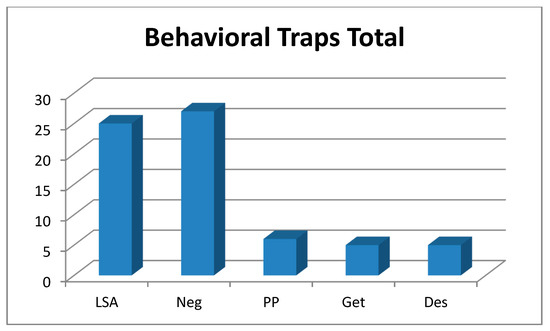
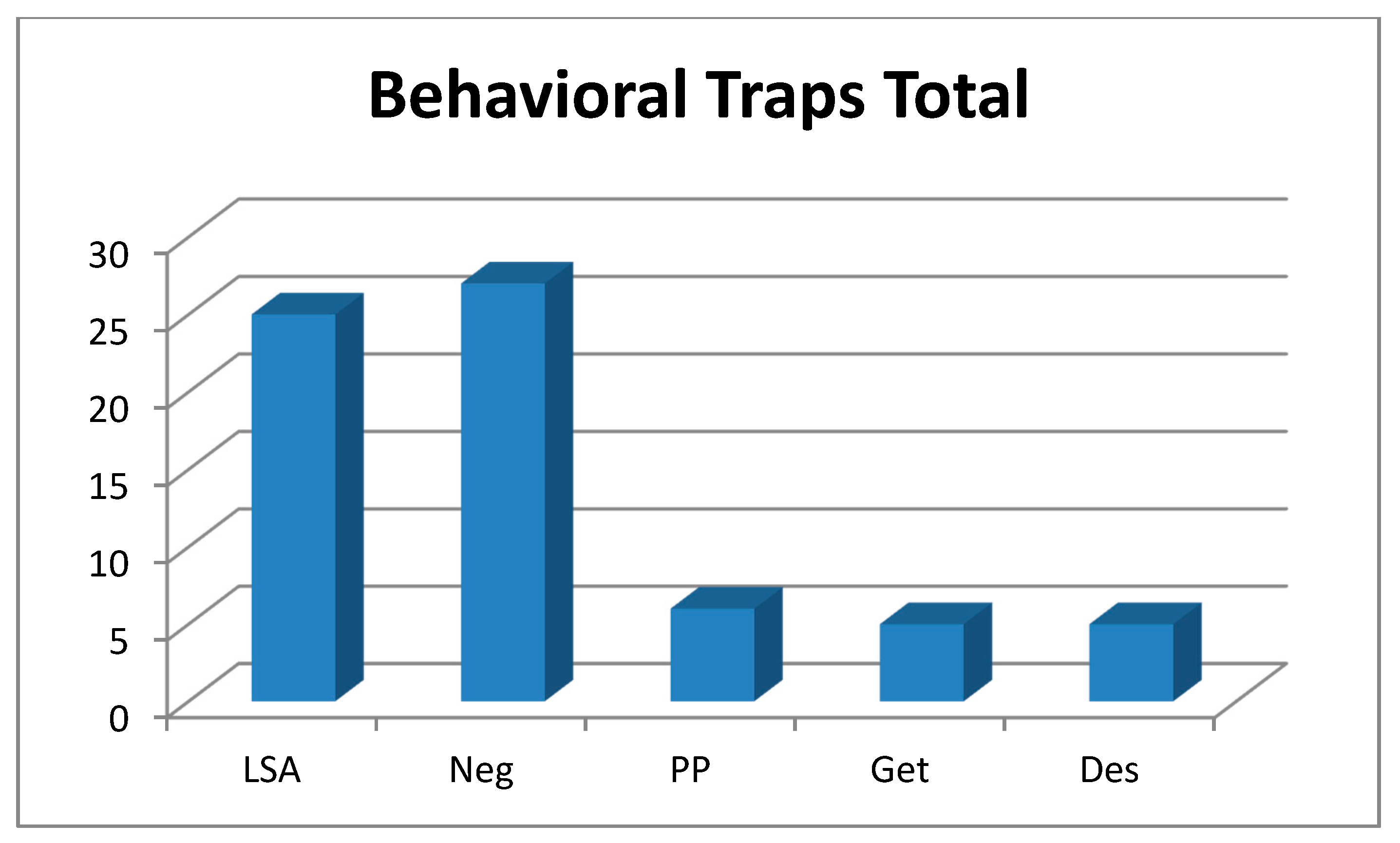
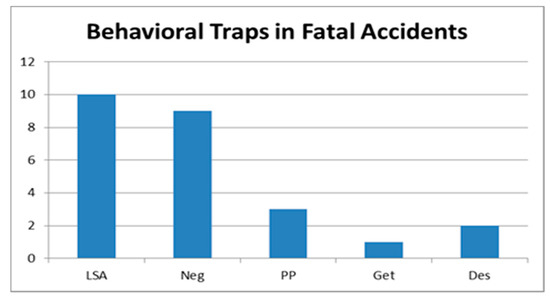
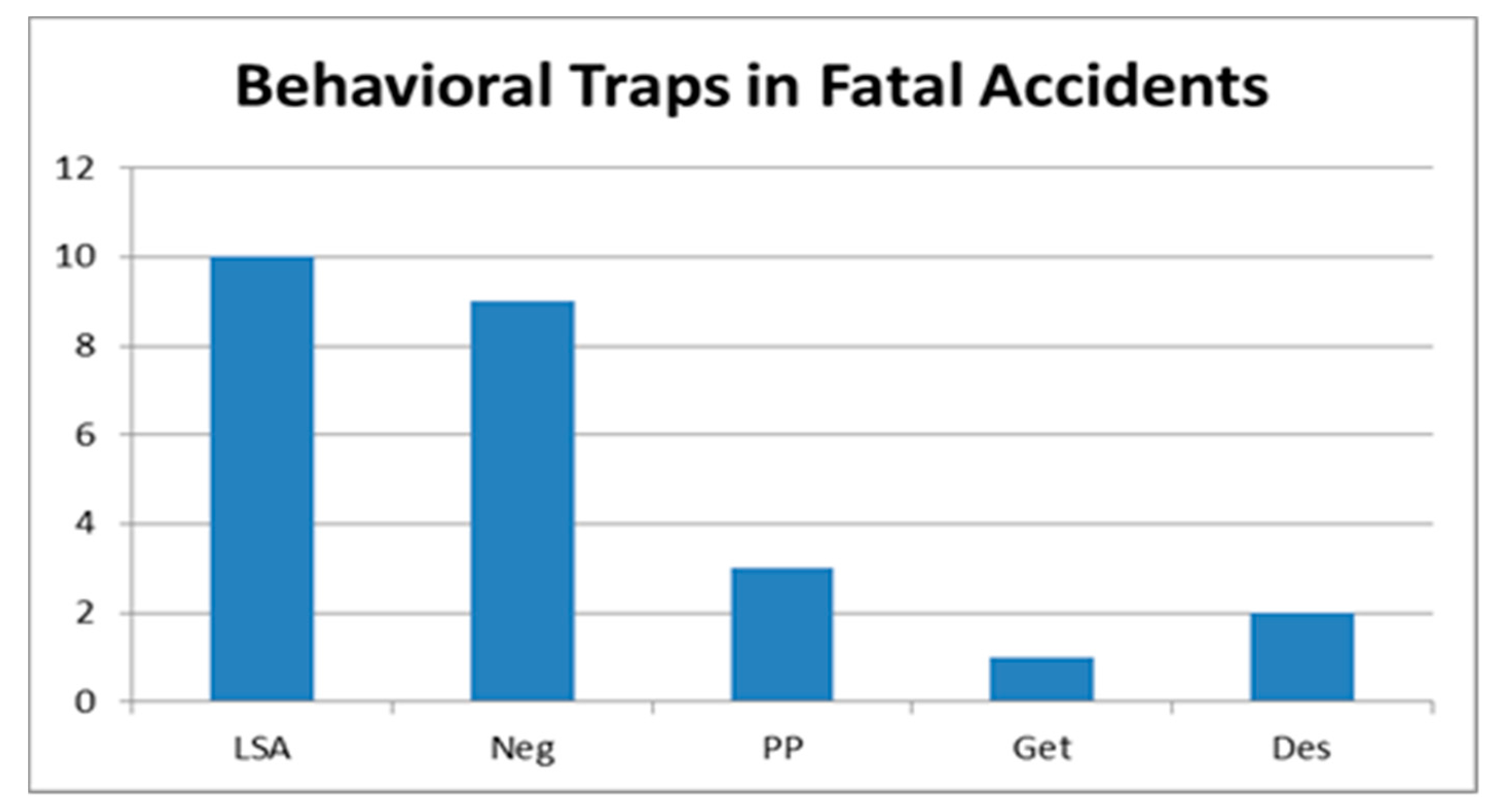
As described in the previous section, for each case, the assigned SMEs determined which behavioral traps were present. Every SME found a minimum of one behavioral trap and a maximum of four throughout the analysis. The average number of behavioral traps was two with a standard deviation of 0.60. In addition, during the coding process, the researcher asked the SMEs to identify actions representative of the behavioral traps and any contributing factors that may have influenced the outcome of the flight. Figure 1 shows the frequency with which the behavioral traps were present in all the aviation accidents. Figure 2 displays the most prevalent traps in fatal accidents. Please use the following descriptors for understanding: LSA = Loss of Situational Awareness, Neg = Neglect of Flight Planning, Preflight Inspections, and Checklists, PP = Peer Pressure, Get = Get-There-Itis, Des = Unauthorized Descent Below an IFR Altitude.
Figure 1.
Frequency count of all behavioral traps found. LSA = Loss of Situational Awareness, Neg = Neglect of Flight Planning, Preflight Inspections, and Checklists, PP = Peer Pressure, Get = Get-There-Itis, Des = Unauthorized Descent Below an IFR Altitude.
Figure 2.
Behavioral traps in fatal accidents only.
The behavioral traps of Loss of Situational Awareness and Neglect of Flight Planning, Preflight Inspections, and Checklists were overwhelmingly dominant, even throughout the fatal accidents. Peer Pressure, Get-There-Itis and Descent Below an IFR Altitude were each found in six accident reports or fewer. The prominence of Loss of Situational Awareness in fatal accidents is unsurprising given that it has been well established that situational awareness is often implicated in aviation accidents.
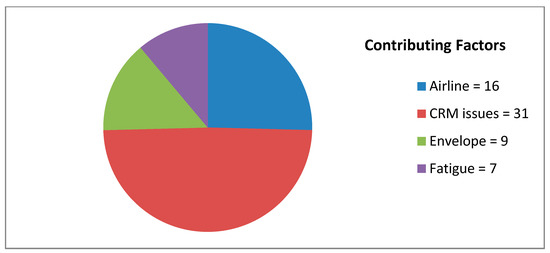
Aviation accidents are generally the result of a series of simultaneous or consecutive circumstances that each add operational risk; seldom is a single isolated cause identified. During the analysis of the coding process performed by the SMEs, various themes began to emerge, which played significant roles in many accidents. These topics were airline management, CRM issues, fatigue and a former behavioral trap called Flying Outside the Envelope. This latter trap was left out of the current study due to Jeppesen’s [11] categorization of the behavioral traps among commercial, instrument-rated and general aviation pilots. However, during training, the SMEs were alerted to the existence of all behavioral traps and were told to flag them if they saw their presence among Part 121 pilots. Figure 3 shows the distribution of these contributory factors. For ease of understanding, please observe the following: Airline = airline management issues, CRM issues = lack or poor practice of Crew Resource Management, Envelope = the behavioral trap called Flying Outside the Envelope and Fatigue = accidents where fatigue was a contributing factor.
Figure 3.
Other contributing factors in connection with the Part 121 accidents. CRM, Crew Resource Management.
3.2. Qualitative Data
The following section describes, in comprehensive fashion, how each unsafe behavior is manifested within pilots of the aviation accidents. For the sake of avoiding the repetition of similar pilot actions, only the most representative examples (i.e., NTSB report passages) are illustrated for the top two behavioral traps found, as well as for the remaining traps of Peer Pressure, Unauthorized Descent Below an IFR Altitude and Get-There-Itis. Because an unexpected trap had a presence in Part 121 accidents, results are also shown for the additional behavioral trap of Flying Outside the Envelope. The pilot actions representative of the behavioral traps are illustrated using tables that are immediately followed by word frequency queries called tags or word clouds.
A tag or word cloud is a visual representation of textual data highlighting the importance of the most commonly-used words within a source (e.g., document, interview). Each cloud shows the most frequently-used words by increasing its font size and placing those words nearer the center of the cloud. Word or tag clouds are very useful for quickly perceiving the most prominent term and its relative prominence compared to others used within a source. The relative font size indicates which words were coded most commonly throughout the sources. This last action was performed to investigate common or emerging themes within the traps themselves and the contributory factors that arose when the SMEs began to analyze the data.
3.3. The Top Behavioral Traps
Neglect of Flight Planning, Preflight Inspections, and Checklists was found in 27 (79%) of 34 cases. A closer examination of this behavioral trap reveals that more than one action is being accounted for. Any occasion where the pilot would deliberately or unconsciously bypass a procedure, checklist, inspection or flight planning process, the SME team would code this behavior under this node within NVivo. Table 4 lists illustrations of pilot actions that exemplify Neglect of Flight Planning, Preflight Inspections, and Checklists found in the aviation accidents.
Table 4.
Examples of Neglect of Flight Planning, Preflight Inspections, and Checklists.
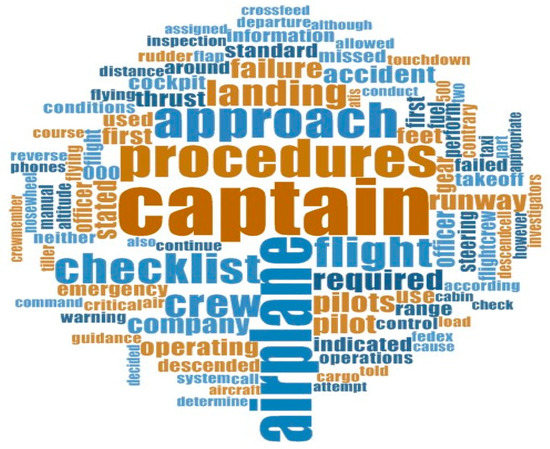
Figure 4 shows a frequency query tag cloud illustrating the prominence of specific words within the sources analyzed: NTSB AARs and NTSB factual reports. The most frequently-used words for this behavioral trap were captain, airplane, procedures, approach and checklist. Because this behavioral trap takes more than one action into consideration, the most frequently-used words align well with the concept or behavioral trap itself. The word captain might signal that he/she is the flight crewmember that is initiating or prompting the behavioral trap. The word airplane might be used in connection to airplane procedures or airplane checklists, which are also top words found in the query. Finally, the inclusion of the word approach might suggest that it is during the approach and landing phase where most of the manifestations of this trap are occurring.
Figure 4.
Tag cloud helps visualize the word query for Neglect of Flight Planning, Preflight Inspections, and Checklists.
Peer Pressure was found in 6 (18%) of 34 cases. Peers are important social components of life. However, friends, colleagues, and associates may cloud judgment. The desire to conform to others, to be accepted, and to be right are fundamental needs of human beings. Peer Pressure can be obvious or subtle, verbal or non-verbal, intentional or unintentional, and its origin may be personnel or organizational [15,16,17,18,19,20]. Peer Pressure is a behavioral trap that affects decision making. Table 5 lists illustrations of pilot actions that Peer Pressure.
Table 5.
Examples of Peer Pressure.
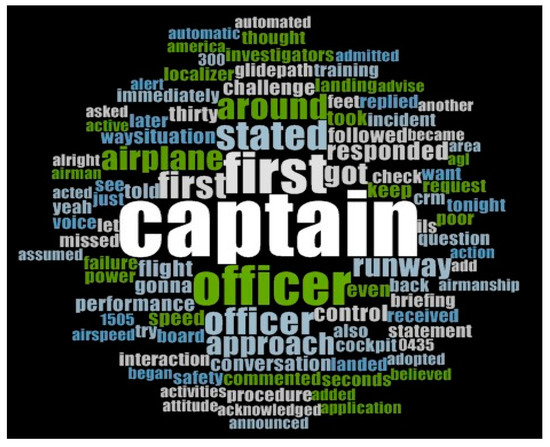
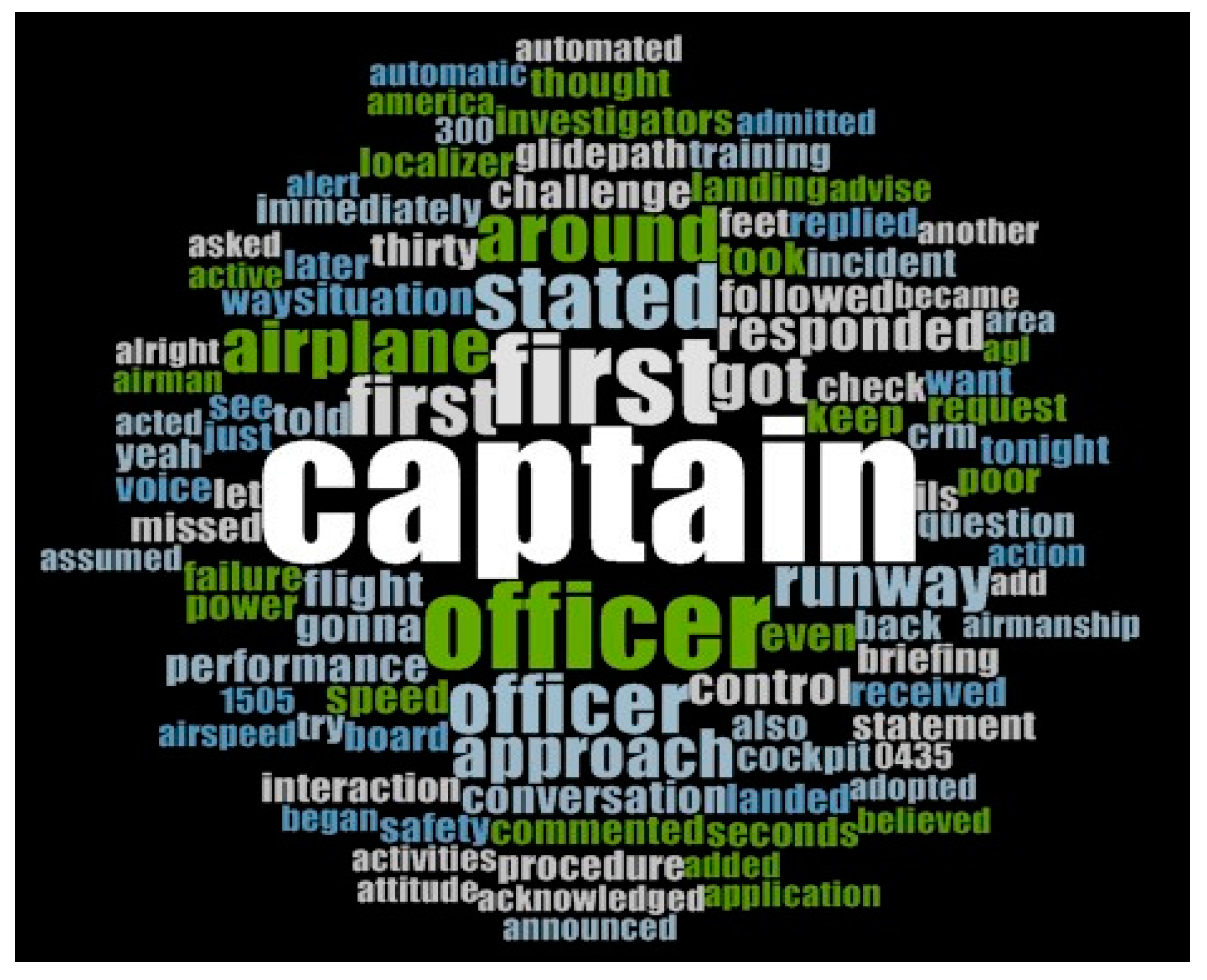
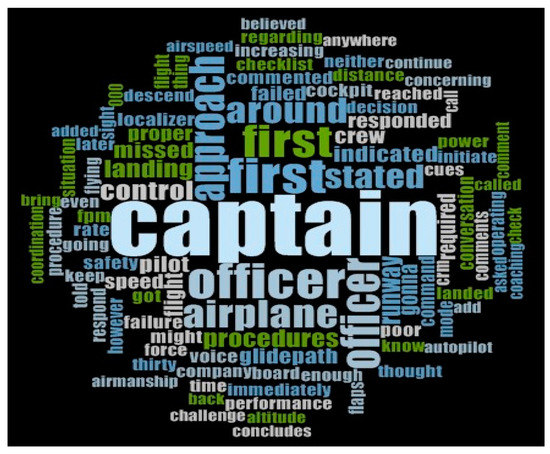
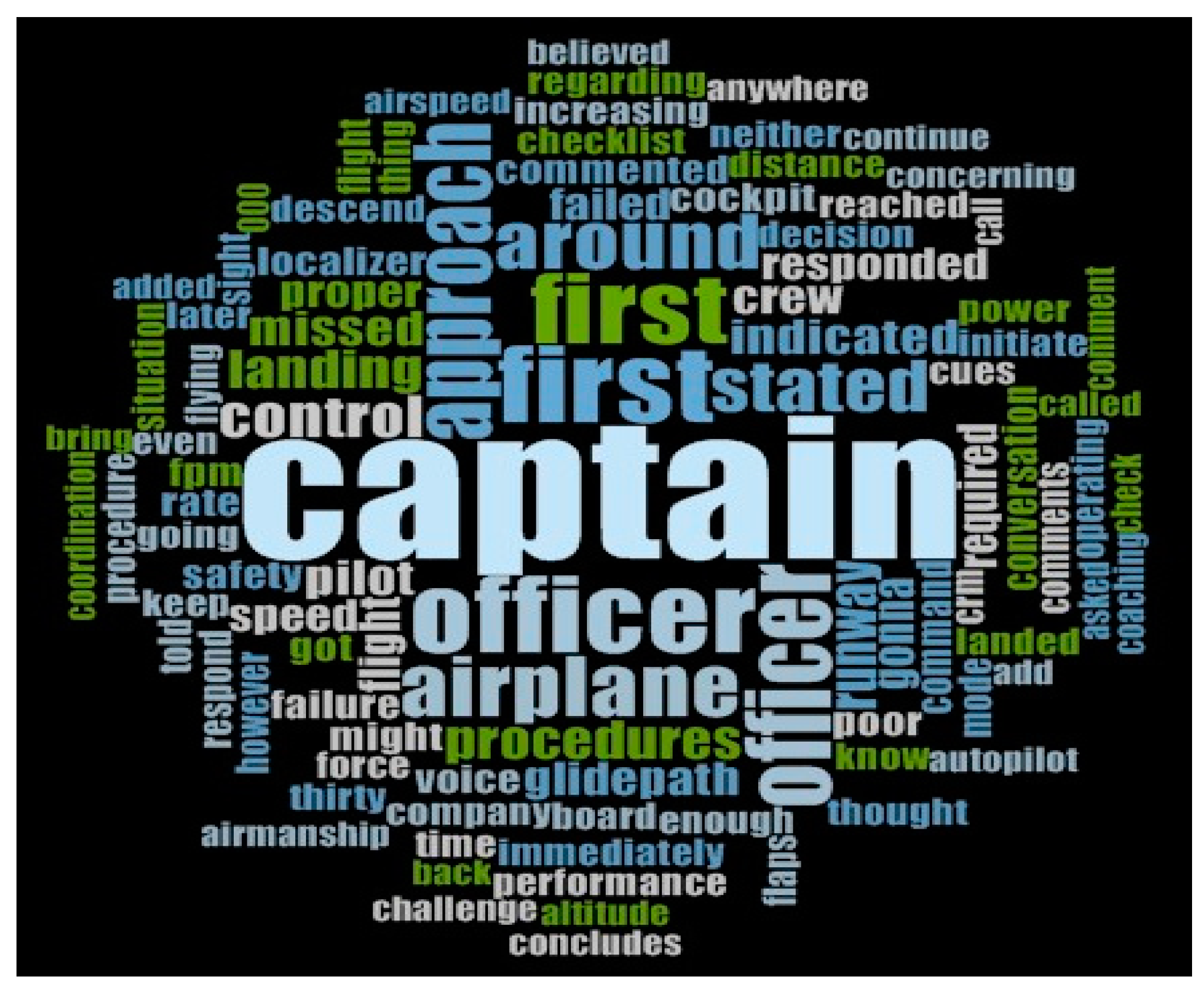
Figure 5 shows a frequency query tag cloud illustrating the prominence of specific words within the sources analyzed. For Peer Pressure, the most frequently-coded words were captain, first, officer, stated and airplane. Once again, captain was one of the top words. As previously mentioned, the word captain might signal that he/she is the flight crewmember that is initiating or prompting the behavioral trap. However, captains might also be pressured by their first officer colleague. Because there is a relationship developing between these two crewmembers, it is not surprising that any instance of Peer Pressure will result in manifestations by the captain or first officer, hence the top two words found. The inclusion of the word stated must be due to the fact that any example of Peer Pressure begins or ends with a verbal statement by one of these flight crewmembers. The result is an action that changes the airplane’s status; hence, the word airplane.
Figure 5.
Tag cloud helps visualize word query for Peer Pressure.
Get-There-Itis is known in some textbooks and official FAA documents as Get-Home-Itis. During Get-There-Itis, the pilot’s pressure comes from within (i.e., him/herself), and the obstinacy is specifically related to arriving at the destination. Table 6 lists the several illustrative instances of Get-There-Itis. This behavioral trap was found in five (15%) of 34 cases.
Table 6.
Examples of Get-There-Itis.
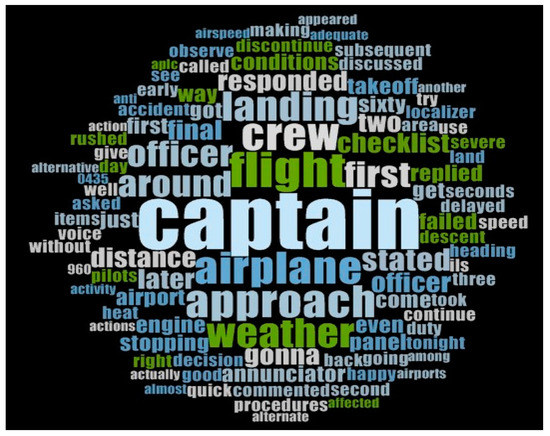
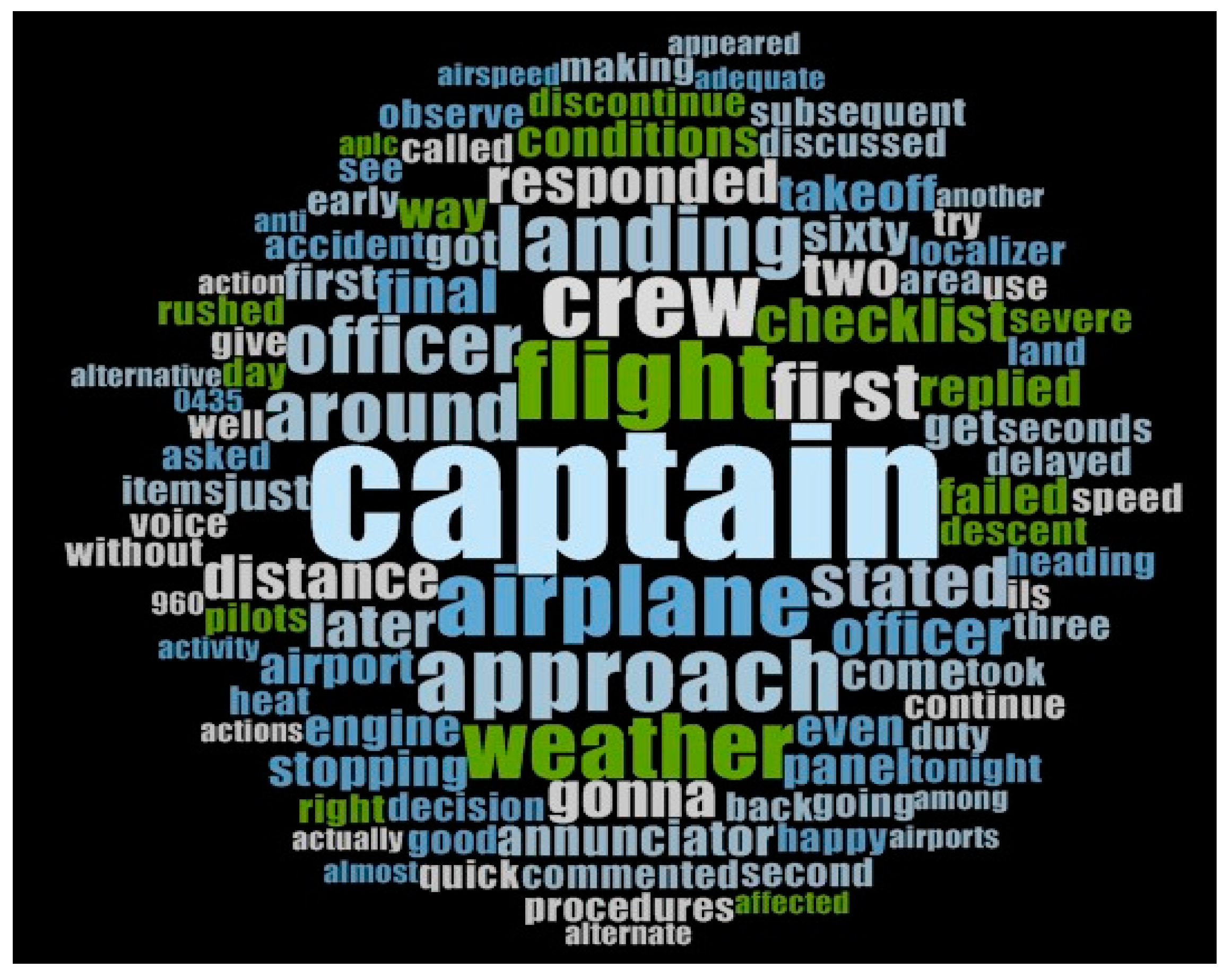
Passages such as “we got to get there over quick, the pilots appeared to [be] rushed, man we’re almost the speed of heat here, crew ignored the present weather and continued the approach, and finally, the captain fixated on landing the airplane with disregard for any alternative course” are all signs of Get-there-Itis. Figure 6 shows that the most frequently-coded words for this behavioral trap were captain, flight, airplane, crew, approach, weather and landing. The stubbornness of reaching the destination airport at all costs, even if this means disregarding the weather conditions, by both crew members resulted in the inclusion of the words captain, weather and crew. It seems as it is during the approach and landing phase where this behavioral trap is most routinely manifested; hence, the words approach and landing.
Figure 6.
Word frequency tag cloud for Get-There-Itis.
Unauthorized Descent Below an IFR Altitude was found in five (15%) of 34 reports. A combination of the previously-named behavioral traps Descent Below the MEA and Duck-Under Syndrome, the concept is evidenced when a pilot descends below minimum altitudes during the en route phase of flight or during the approach stage before obtaining visual contact with the environment, either due to a belief that there is a built-in margin of error in every approach procedure or a refusal to admit that the landing cannot be safely accomplished and a missed approach must be initiated. Table 7 highlights several illustrations of pilot actions that exemplify the behavioral trap known as Unauthorized Descent Below an IFR Altitude.
Table 7.
Examples of Unauthorized Descent Below an IFR Altitude.
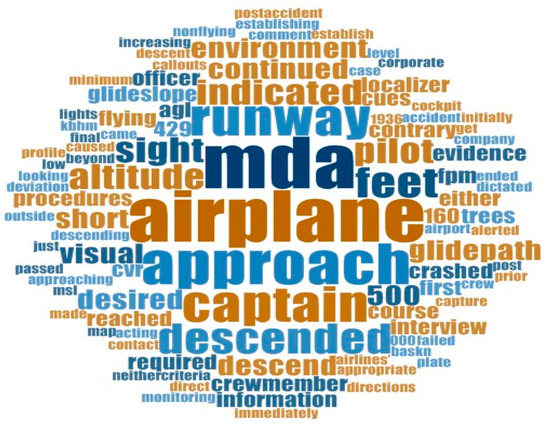
Descending below the glide path, glideslope or minimum descent altitude (MDA) without establishing visual contact with the airport environment are all examples of Unauthorized Descent below an IFR Altitude. Figure 7 demonstrates the most frequently coded words within this behavioral trap. These words were airplane, MDA, approach, captain, descended and runway. Because the crew commands the airplane to an altitude that is dangerously low, it is not surprising to see the word airplane among the most frequently-found words. As with the previous behavioral traps, the word captain appears once again within the most common words. It is the captain that has the final authority as to the operation of the flight. The appearance of the word descended is no surprise considering that the nature of the trap itself is a descent below an altitude. Because the objective of the crew is to make visual contact with the runway or airport environment, it not surprising to see the word runway among the top words in this query. Finally, MDA stands for minimum descent altitude. This altitude was repeatedly descended through without adequate visual contact with the runway; hence, MDA as one of the most common words.
Figure 7.
Word frequency tag cloud for Unauthorized Descent Below an IFR Altitude.
Loss of Situational Awareness was found in 25 (74%) of 34 cases. The FAA [1] explains that, in extreme cases, when a pilot gets behind the aircraft, a loss of positional or situational awareness may result. The pilot may not know the aircraft’s geographical location, or may be unable to recognize deteriorating circumstances. Coding this behavior under this node within NVivo involved recognizing any signs of spatial, geographic, operational or procedural disorientation. Situational awareness includes the full appreciation of not only the aircraft’s physical position in space and time, but the correct procedures and the ability to plan appropriate responses to the real aircraft situation. Table 8 shows some of the most illustrative examples of Loss of Situational Awareness.
Table 8.
Examples of Loss of Situational Awareness.
Phrases such as doubt, positional uncertainty, failure to detect, I don’t know why, I don’t know what’s going on and did not recall doing are all examples of not being aware. The tag cloud represented by Figure 8 shows that the most frequently-coded words during the analysis were captain, airplane, approach, first and officer. These words have also frequently appeared as the most common words with the previous behavioral traps. Once again, it seems as though it is during the approach and landing phase where crew confusion regarding the airplane status is mostly being exemplified.
Figure 8.
Word frequency tag cloud for Loss of Situational Awareness.
Flying Outside the Envelope can range from the pilot assuming an inappropriate level of performance capability of a particular aircraft, intentionally exceeding aircraft limits assuming there is a margin of safety built into the aircraft or an overestimation of the pilot’s flying skills that causes the flight to exceed the aircraft’s structural and/or aerodynamic limits. In any case, the pilot allows or causes the aircraft to exceed its design limitations. See Table 9 for the occurrences of this behavioral trap, which was found in seven (21%) of 34 accidents.
Table 9.
Examples of Flying Outside the Envelope.
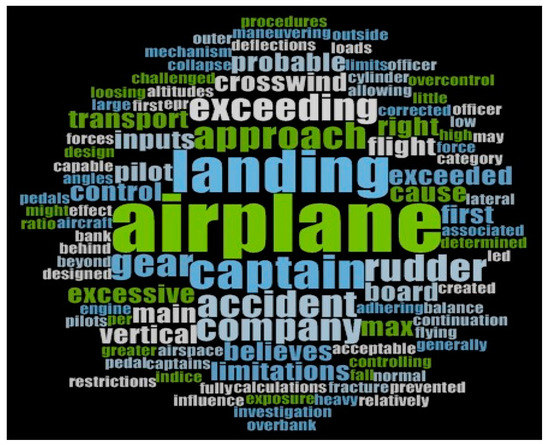
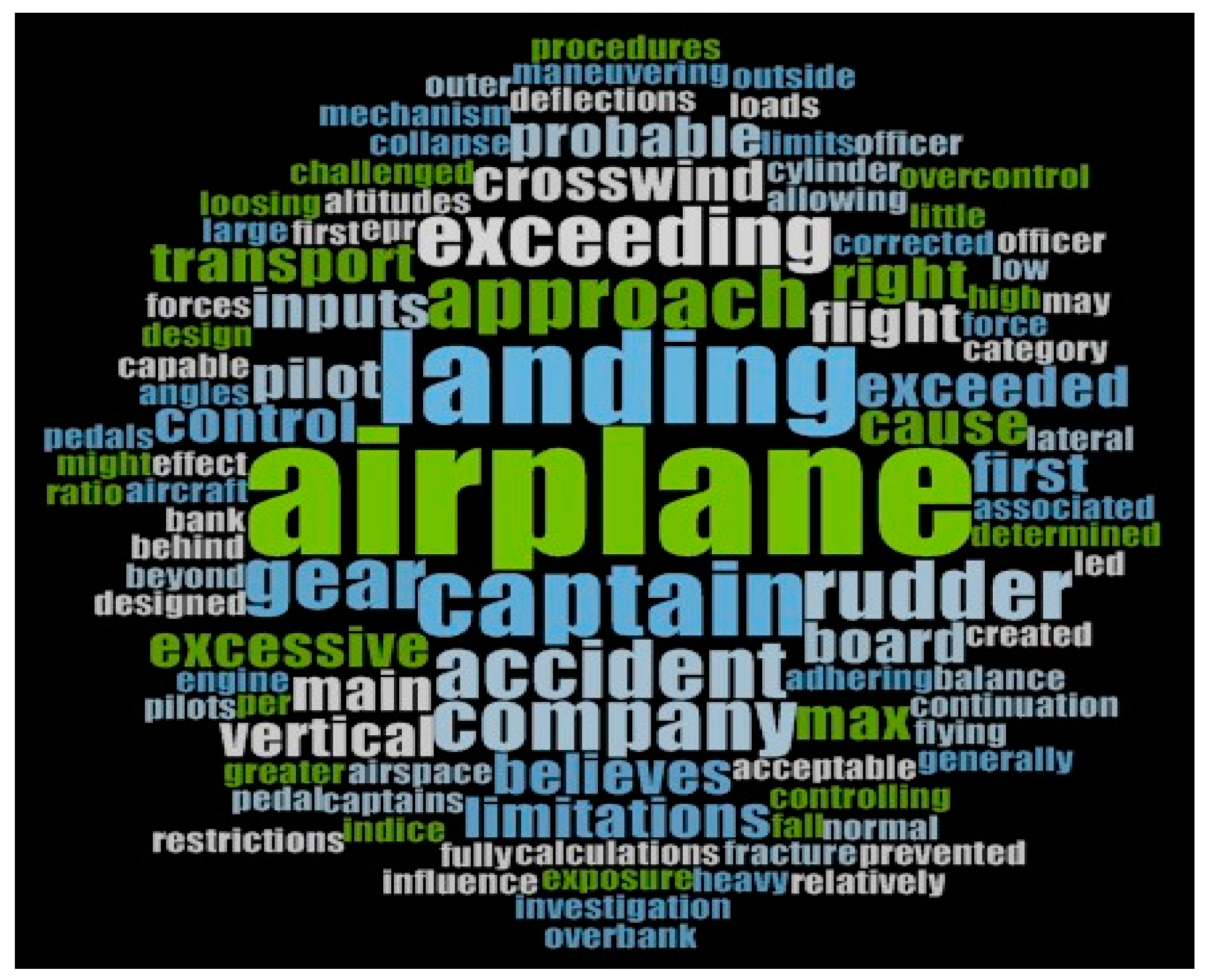
Table 9 reveals that there were many ways that a crew exceeded airplane design limits. This was exemplified by excessive rudder inputs, operations beyond the company’s maximum crosswind limit, too much landing force on only one main landing gear and operations past the acceptable weight and balance limitations. Figure 9 shows us the word frequency tag cloud for this behavioral trap. The most commonly-found words were airplane, landing, captain, accident, approach, company and exceeding. Because two of these accidents occurred during the approach and landing phase, it is not surprising to see both terms in the list of most frequently-used words. In order to operate outside of the envelope, a company or manufacturer limit must have been exceeded. Hence, the words company and exceeded. Finally, it should be no surprise that these actions all resulted in an accident. Therefore, the query also provided the word accident as one of the top words.
Figure 9.
Tag cloud for Flying Outside the Envelope.
3.4. Additional Contributing Factors Such as Airline Management, CRM Issues, and Fatigue
During the analysis, the SMEs discovered that many accidents were also the result of factors outside of the five behavioral traps under study. These factors included airline management, CRM issues and fatigue. Airline management causes are shown in Table 10. CRM issues are shown in Table 11. Examples of fatigue are presented in Table 12. A word frequency query within NVivo explored these issues further. Thus, Figure 10, Figure 11 and Figure 12 display the word frequency tag clouds for each contributing factor, respectively.
Table 10.
Examples of airline management as a contributing factor.
Table 11.
Examples of CRM issues as contributing factors.
Table 12.
Examples of fatigue as a contributing factor.
Figure 10.
Tag cloud for airline management contributing factors.
Figure 11.
Word frequency tag cloud for CRM issues.
Figure 12.
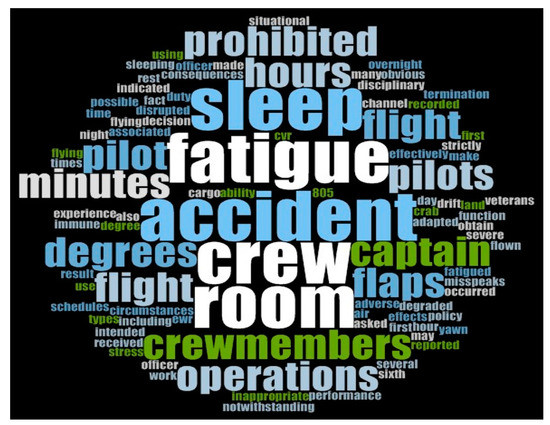
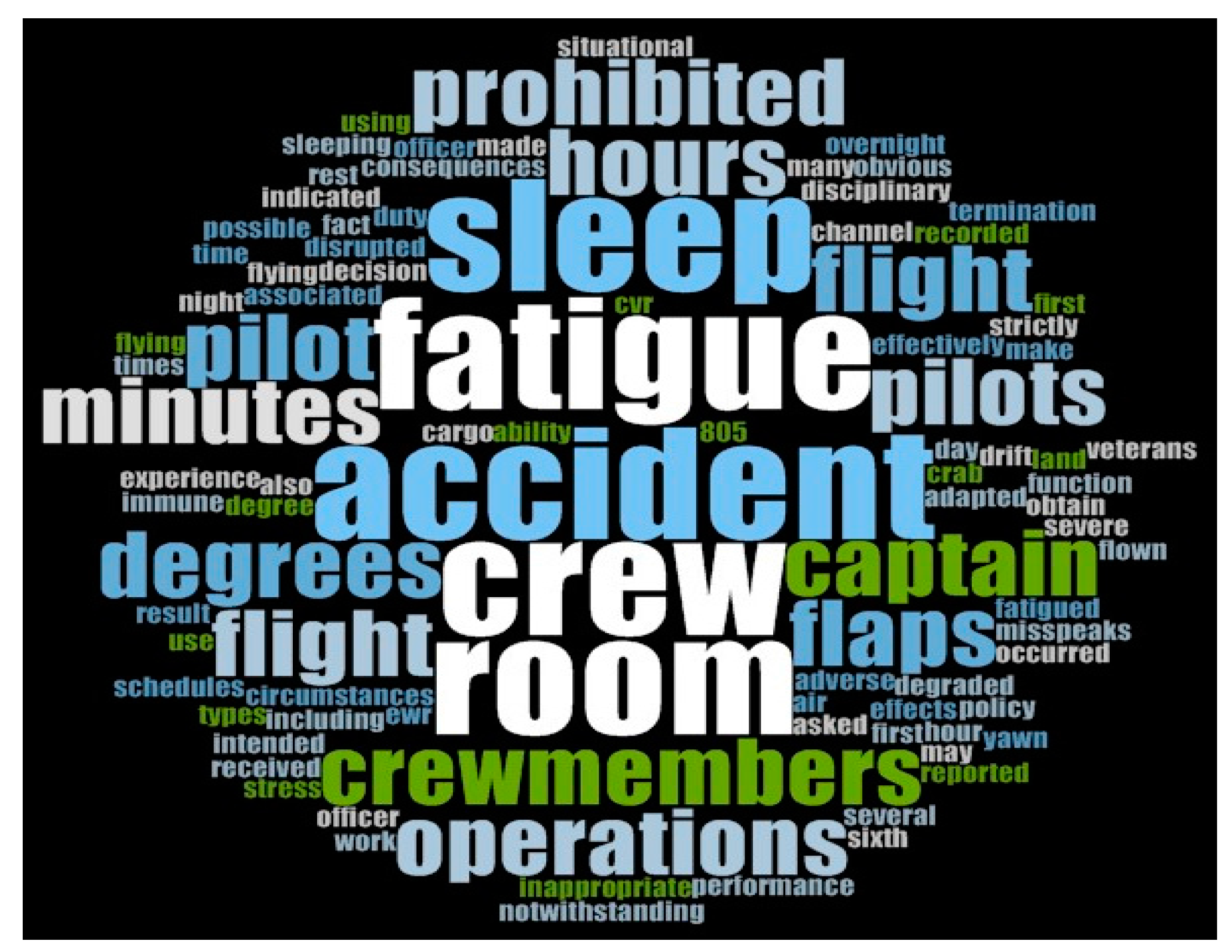
Tag cloud for fatigue as a contributing factor.
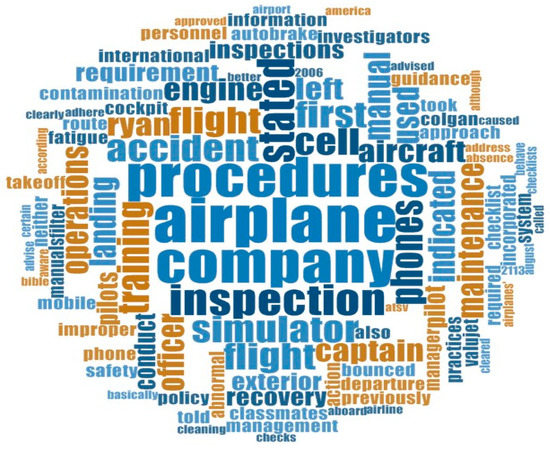
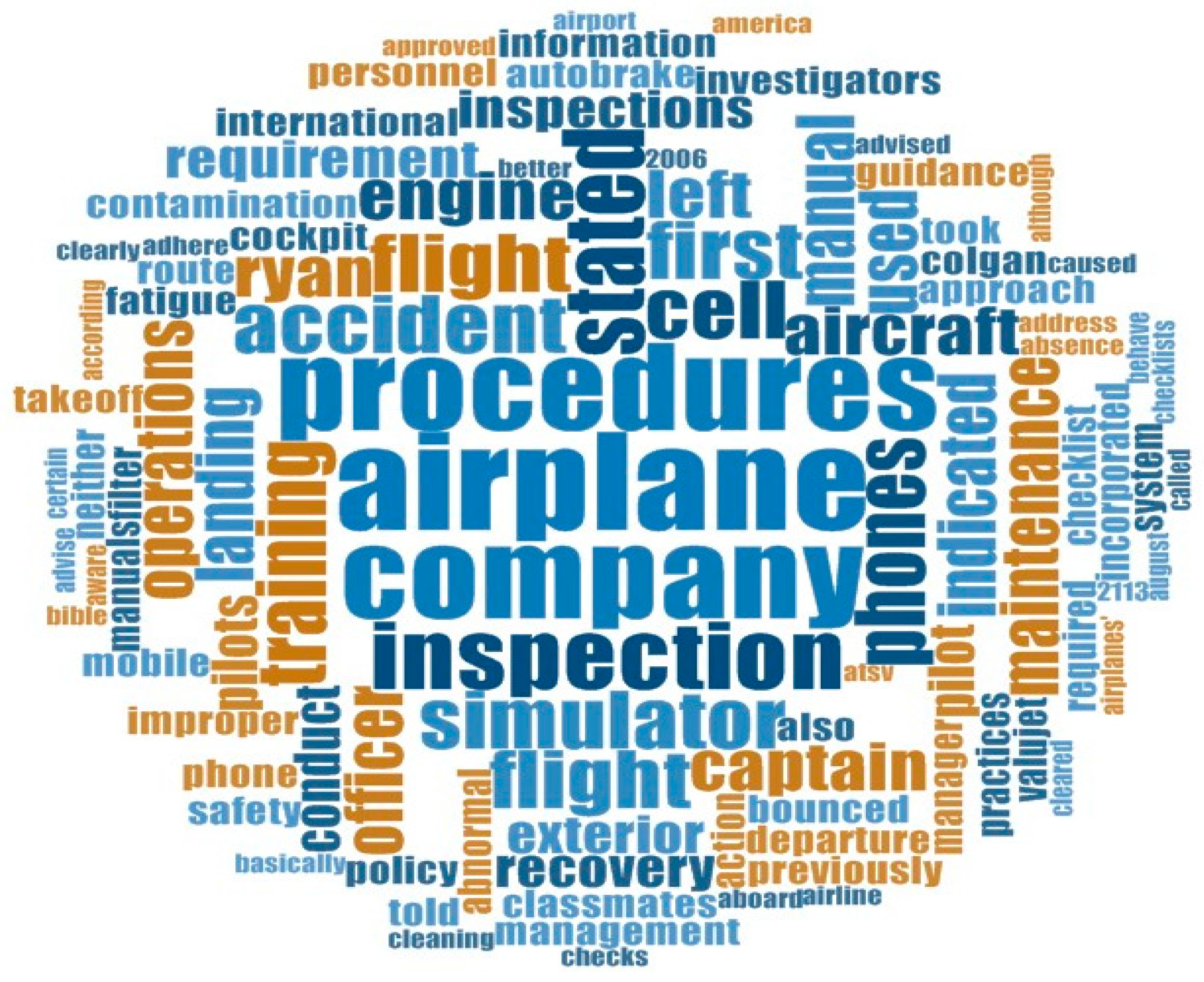
Passages such as “the airplane was dispatched to ANC with left engine thrust reverser inoperative, the company did not teach its pilots bounced landing recovery techniques, Maintenance personnel use of an inappropriate manual engine star procedure, and use the QRH instead of the manual” are all indications of airline management operational deficiencies that contributed to many airplane accidents. James Reason [21] created the term organizational accident to allude to those aviation mishaps that were caused by latent failures within the organization. These organizational errors when left alone and unattended to, may lead to a catastrophic event such as an accident.
The most commonly-used words found in the word frequency query for airline management issues were airplane, procedures, company and inspection. Many company management issues, such as lack of, or bad, procedures and inspections, may lead to the airplane experiencing a catastrophic event such as the aviation accident; hence the inclusion of the words company, procedures, inspections, and airplane.
The very existence of behavioral traps signals a breakdown in CRM. When crews fail to recognize, do not monitor, exchange flight controls abruptly, fail to communicate on their situation and are unable to manage their workload, a lack of CRM is present. In some of these passages, the reader may detect a sense of urgency or emotional intensification such as when expletives are used or when abnormal discussions are present.
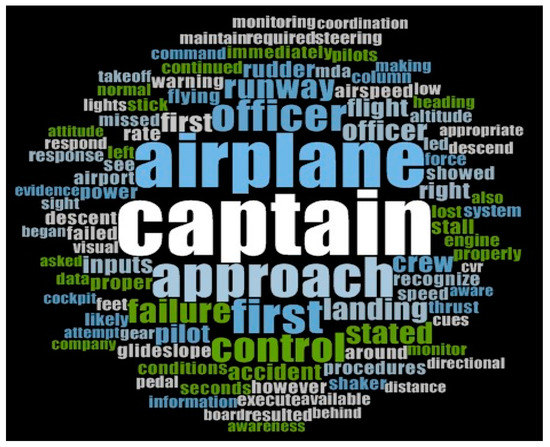
The words most commonly coded within CRM issues were captain, first, officer, airplane and approach. Unsurprisingly, these words have come up again as the most frequently-used words. Given that CRM is an issue of team dynamics inside the cockpit, the words airplane, first, officer and captain were expected. The word approach, once again, might indicate a pattern of CRM breakdown in the busiest, and arguably most critical, phase of flight, that is the approach and landing stage.
All these NTSB excerpts signal a lack of proper sleep or operations outside of a normal sleep schedule. Other signs of fatigue could be simple misspeaks, as when talking over the radio or discernable yawns on the CVR. According to the FAA [1], a fatigued aviator cannot perform at a level corresponding with the operational requirements, and the fatigue itself can be as incapacitating as drug use.
The most commonly-coded words within fatigue were accident, fatigue, sleep, crew and room. Some the excerpts from Table 12 clearly show pilots suffering from fatigue and using the crew room to sleep or get adequate rest.
4. Discussion
Neglect of Flight Planning, Preflight Inspections and Checklists was the most widespread behavioral trap. This unsafe behavior was identified in 79% of the accidents studied. Loss of Situational Awareness came in a close second place with representation in 74%. Peer Pressure was found in 18% of accidents, while the traps of Get-There-Itis and Unauthorized Descent Below an IFR Altitude were both present in 15% of the accidents.
4.1. Neglect of Flight Planning, Preflight Inspections, and Checklists
A review of the NTSB excerpts presented in the Results Section confirms many prior discoveries in that pilots, even air carrier aviators, might have a general disregard for rules or procedures and underutilize many resources at their disposal [6,15,16,17]. The findings of this study also align with [18], where willful violations were present in 35% of regular air carrier flights observed, and the study conducted by Velazquez, Peck and Sestak [19], where Neglect of Flight Planning, Preflight Inspections, and Checklists was the most dominant trap.
If airline flight operations are so highly scripted [6], why are pilots unwilling to follow rules and established procedures? An explanation is that Part 121 pilots may experience a phenomenon called habitual noncompliance [15]. Highly qualified pilots who routinely fly together under repetitive circumstances may constantly betray their own Flight Operations Manual (FOM) processes. The NTSB and Goglia [15] advocate the installation of cockpit cameras to help ensure that pilots conduct themselves under established protocols [16].
4.2. Loss of Situational Awareness
The leading behavioral trap in fatal accidents was Loss of Situational Awareness. This is not surprising because the concept involves more than knowledge of the aircraft’s geographical or spatial position. It also comprises the pilot’s consciousness of the different elements affecting the overall status of the aircraft. These elements include weather, aircraft condition, crewmember state and mission or flight progress. If passengers are being transported, they also form part of the expansive definition of situational awareness [4]. Thus, any sign of spatial, geographic, operational or procedural disorientation would be coded under Loss of Situational Awareness. As opposed to the previous behavioral trap of Neglect of Flight Planning, Preflight Inspections and Checklists under Loss of Situational Awareness, the crew may not be cognizant of danger. Sadly, this may explain it being the leading prevalence of behavioral traps under fatal accidents.
4.3. Peer Pressure
Human beings have a natural desire to conform to others, to be accepted [20]. As stated earlier, Peer Pressure can be verbal, or non-verbal, obvious or subtle, intentional or unintentional, and its origin may be personnel or organizational [20]. In all but one case examined during this study, it was the captain of the flight who was the source of Peer Pressure for the first officer. A look at all the word frequency queries associated with the behavioral traps studied revealed that the word captain is within the top five most commonly-found words. This finding suggests that first officers are automatically disengaging or suppressing their own arguments for the sake of acceptance. This lack of assertiveness is further explained in a following section. Finally, although there were instances of managerial factors that contributed to the accidents, no overwhelming evidence was found that airlines provided organizational pressure to crews of the ill-fated flights.
4.4. Get-There-Itis
As mentioned earlier, as the flight progresses, the pilots’ desire to continue gets stronger [6,20]. This tendency was exemplified in Table 10 where four out of five cases of Get-There-Itis occurred during the approach and landing phase. This finding confirms what Dismukes et al. [6] called plan continuation bias, a failure of the crew to “discontinue an approach when it becomes inappropriate or dangerous to do so.” Interestingly, the word frequency tag cloud for Get-There-Itis, and for five out of the six behavioral traps studied, suggests that behavioral traps occur mostly in the approach and landing phase of the flight because the words approach and/or landing appear as top common words. This is not surprising considering that the majority of aviation accidents, including commercial, occur during the approach and landing phase of flight.
4.5. Unauthorized Descent below an IFR Altitude
A look at Figure 9 reveals that the word MDA or Minimum Descent Altitude was among the most frequently found within the documented sources. This finding initiated a search back into the NTSB excerpts found in Table 11 to find out whether or not all instances of Descending Below an IFR Altitude were indeed associated with non-precision approaches or approaches where no vertical guidance is available. The conclusion was a resounding yes. All cases of this behavioral trap were associated with non-precision approaches. These types of instrument approaches add complexity to the approach and landing phase of the flight, more so if the approach was originally a precision approach, and due to technological difficulties, the crew was left with a different approach at the last minute.
4.6. CRM Issues
The third overall factor contributing to the accidents was lack of CRM practices. This finding is not surprising considering the most prevalent behavioral trap across all cases was Neglect of Flight Planning, Preflight Inspections, and Checklists. In addition, there was the presence of other CRM-rescinding traps such as Peer Pressure, Unauthorized Descent Below an IFR Altitude, Get-There-Itis and the additional discovered trap of Flying Outside the Envelope.
CRM is the epitome or ultimate expression of teamwork between flight crewmembers prior to, during and after a flight. Good CRM practices are predicated on the following checklists, SOPs, conducting good preflight action and engaging in proper flight planning to prepare for unexpected events during the flight. However, as seen throughout this study, crews are falling under habitual noncompliance, and first officers are demonstrating a lack of assertiveness. Broome [21] believes pilots are rejecting CRM. Is it time to refresh or revamp CRM training?
Though CRM has evolved through many generations to the point that crews today are aware that the best strategy is to manage threats and errors, it looks as if CRM training lacks an important component called attitude management training. Attitude management is defined as “the ability to recognize hazardous attitudes in oneself and the willingness to modify them as necessary” [3]. Unfortunately, the FAA CRM training guidance [8] does not provide any direction on attitude management training, nor does it provide much information about hazardous attitudes, behavioral traps or the various cognitive biases with which pilots are confronted. The FAA has recently published a Notice of Proposed Rulemaking (NPRM) to increase airline pilot professionalism and ensure pilots adhere to SOPs. With this new NPRM, now would be a logical moment to define and introduce attitude management training as a formal component to CRM training.
Line-Oriented Flight Training (LOFT) has been the preferred CRM training method for years. However, the results of this study confirm many findings [6,22] suggesting that this scenario-based training tool may not be applied effectively and continuously. Dismukes et al. [6] cites inadequate knowledge or experience provided by training and/or guidance as a factor in 37% of NTSB accidents between 1991 and 2001. In other words, pilots were not given adequate instruction about problems known by some of the sectors of the industry to exist or, “found themselves in challenging situations for which they had received training, but the experience received from that training was of inadequate fidelity to the actual situation, inadequately detailed, or incomplete” [6].
5. Conclusions and Recommendations
5.1. Conclusions
This paper accomplished many firsts and contributed considerably to the understanding of how negative behaviors (specifically behavioral traps) are present in airline operations. No published study had tackled behavioral traps in air carrier operations until now. Secondly, this paper revises Jeppesen’s [11] categorization of behavioral traps among GA, instrument-rated and commercial pilots. For example, it was discovered that the behavioral trap of Flying Outside the Envelope is not exclusive to GA pilots; airline pilots also exceed airplane operational tolerances. Finally, the study also makes public how flight crews might be practicing CRM and tells the story of the captains’ preeminence. A look at all the word frequency queries associated with the behavioral traps revealed that the word captain is within the top five most commonly-found words. Could it be that captains are overpowering their fellow first officers? Are today’s captains still being overly dominant? If so, how effective is CRM if it is evident that first officers are automatically disengaging or suppressing their own arguments for the sake of acceptance?
As indicated earlier, Flying Outside the Envelope should be included in the commercial category of behavioral traps [11] among commercial, instrument-rated and GA pilots due to its presence in 21% of accidents analyzed. With the exception of Peer Pressure, all other behavioral traps mainly occur in the approach and landing phase of flight. This finding coincides with the phase of flight responsible for the majority of commercial aviation accidents. Finally, Unauthorized Descent Below an IFR Altitude was completely related to non-precision approaches or instrument approaches without vertical guidance in the approach design. These instrument approaches add a level of complexity to the operation as opposed to those precision approaches where an electronic vertical guidance is available.
5.2. Recommendations
5.2.1. Recommendations for Further Study
Because this study focused on U.S. 14 CFR Part 121 crew-related accidents, any future studies can focus on Part 135 commercial and air taxi operators. In addition, while the information contained in the National Aeronautics and Space Administration’s ASRS accounts is self-reported by the pilots, valuable information can be retrieved from these incident reports to continue to understand unsafe pilot behaviors, whether they are defined as hazardous attitudes or behavioral traps.
Because Neglect of Flight Planning, Preflight Inspections, and Checklists was the top behavioral trap, additional research should focus on the reasons for customary noncompliance and pilot motivation. While the NTSB and Goglia [15] are advocating for cockpit cameras to be installed in air carrier operations, perhaps a better approach would be to scientifically review the flight data recorders. This assessment should be routinely accomplished by airlines in a non-punitive way [16].
5.2.2. Recommendations for Industry
The creation of CRM and alike programs does not always guarantee the absence of unsafe pilot behaviors [23,24,25,26,27]. However, effective crew performance depends on both technical proficiency and interpersonal skills. One of the main objectives behind the FAA’s CRM training has always been to focus on crew member attitude and effectual teamwork. Because the FAA believes attitudes can be changed or modified through training [1], from the standpoint of accident prevention, education and training focused on the top behavioral traps would likely prove to have the highest payoff. This recommendation is especially true considering that Neglect of Flight Planning, Preflight Inspections and Checklists is the prevailing trap. Additional focus should be placed on: (1) the captain’s authority and ability to identify and mediate unsafe behaviors; (2) the first officer’s ability to be assertive and combat Peer Pressure; and (3) the approach and landing phase. The lack of first officer assertiveness and preeminence of the captains should be addressed in training and even investigated in future studies. This former action could be done through cognitive debiasing training and/or scenario-based training during LOFT sessions where additional focus is on the interpersonal skills of flight crewmembers.
Many behavioral traps exist in airline operation. The understanding of pilot attitudes and their role in team dynamics or impact on CRM requires further study. Finally, attitude management training is recommended as an added component in CRM training.
Acknowledgments
The author of this research project wishes to express gratitude to the following airline transport pilots who contributed their expertise to the data collection portion of this study. These individuals were: Kevin Roman, Oswart Mora, Omar Carle, and Pablo Ortiz.
Conflicts of Interest
The author declares no conflict of interest.
References
- Federal Aviation Administration (FAA). Risk Management Handbook; Government Printing Office: Washington, DC, USA, 2009.
- Federal Aviation Administration (FAA). Aeronautical Decision Making (Advisory Circular 60-22); Government Printing Office: Washington, DC, USA, 1991.
- Sanderson, J. Private Pilot; Englewood, CO, USA, 2013. [Google Scholar]
- Federal Aviation Administration (FAA). Aviation Instructor’s Handbook; Government Printing Office: Washington, DC, USA, 2008.
- Murata, A.; Nakamura, T.; Karwowski, W. Influence of Cognitive Biases in Distorting Decision Making and Leading to Critical Unfavorable Incidents. Safety 2015, 1, 44–58. [Google Scholar] [CrossRef] [Scilit]
- Dismukes, R.K.; Berman, B.A.; Loukopoulos, L.D. The Limits of Expertise: Rethinking Pilot Error and the Causes of Airline Accidents; Ashgate Publishing Limited: Aldershot, UK, 2007. [Google Scholar]
- Block, E.E.; Sabin, E.J.; Patankar, M.S. The structure of safety climate for accident free flight crews. Int. J. Appl. Aviat. Stud. 2007, 7, 46–59. [Google Scholar]
- Federal Aviation Administration (FAA). Crew Resource Management Training (Advisory Circular AC 120-51e); Government Printing Office: Washington, DC, USA, 2004.
- Helmreich, R.L.; Merritt, A.C.; Wilhelm, J.A. The evolution of crew resource management training in commercial aviation. Int. J. Aviat. Psychol. 1999, 9, 19–32. [Google Scholar] [CrossRef] [Scilit] [PubMed]
- Velazquez, J.; Bier, N. SMS and CRM: Parallels and opposites in their evolution. J. Aviat./Aerosp. Educ. Res. 2015, 24, 55–78. [Google Scholar] [CrossRef] [Scilit]
- Jeppesen. Flight Instructor; JeppDirect: Englewood, CO, USA, 2014. [Google Scholar]
- Bazeley, P. Qualitative Data Analysis: Practical Strategies; Sage: Thousand Oaks, CA, USA, 2013. [Google Scholar]
- Lincoln, Y.S.; Guba, E.G. Naturalistic Inquiry; Sage: Beverly Hills, CA, USA, 1985. [Google Scholar]
- Creswell, J.W. Educational Research: Planning, Conducting, and Evaluating Quantitative and Qualitative Research; Pearson Education, Inc.: Upper Saddle River, NJ, USA, 2005. [Google Scholar]
- Goglia, J. Torqued: Is Gulfstream IV Crash Corporate Aviation’s Wakeup Call? Available online: http://www.ainonline.com/aviation-news/blogs/torqued-gulfstream-iv-crash-corporate-aviations-wakeup-call (accessed on 1 December 2015).
- Rapp, R. Bedford and the Normalization of Deviance. Available online: http://www.rapp.org/archives/2015/12/normalization-of-deviance/ (accessed on 12 December 2015).
- Veillette, P.R. Watching and waning. Bus. Commer. Aviat. 2006, 98, 60–63. [Google Scholar]
- Klinect, J.R.; Wilhelm, J.A.; Helmreich, R.L. Threat and error management: Data from line operations safety audits (LOSA). In Proceedings of the 10th International Symposium on Aviation Psychology; The Ohio State University: Columbus, OH, USA, 2001. [Google Scholar]
- Velazquez, J.; Peck, A.G.; Sestak, T. Behavioral traps in crew-related aviation accidents. In Proceedings of the 18th International Symposium on Aviation Psychology; Wright State University: Dayton, OH, USA, May 2015; pp. 372–377. [Google Scholar]
- Kern, T. Flight Discipline; McGraw-Hill Professional: Columbus, OH, USA, 1998. [Google Scholar]
- Broome, D.P. Accident reduction through crew resource management. J. Aviat./Aeros. Educ. Res. 2011, 20, 13–21. [Google Scholar] [CrossRef] [Scilit]
- Wagener, F.; Ison, D.C. Crew resource management application in commercial aviation. J. Aviat. Technol. Eng. 2014, 3, 2–13. [Google Scholar] [CrossRef] [Scilit]
- Cook, J.S. Analysis of Hazardous Pilot Behaviors and Causal Factors in Part 121 and Part 135 Aircraft Accidents and Incidents. Master’s Thesis, Retrieved from ProQuest Dissertations and Theses database, (UMI No. 1409570). Arizona State University, Tempe, AZ, USA, 2002. [Google Scholar]
- Mosier, K.L.; Fischer, U.; Cunningham, K.; Munc, A.; Reich, K.; Tomko, L.; Orasanu, J. Aviation decision making issues and outcomes: Evidence from ASRS and NTSB reports. In Proceedings of the Human Factors and Ergonomics Society Annual Meeting; Sage: Los Angeles, CA, USA, October 2012; pp. 1794–1798. [Google Scholar] [CrossRef] [Scilit]
- Shappell, S.; Detwiler, C.; Holcomb, K.; Hackworth, C.; Boquet, A.; Wiegmann, D.A. Human error and commercial aviation accidents: An analysis using the human factors and classification system. Hum. Factors J. Hum. Factors Ergon. Soc. 2007, 49, 227–242. [Google Scholar] [CrossRef] [Scilit] [PubMed]
- Wetmore, M.; Lu, C. The effects of hazardous attitudes on crew resource management skills. Int. J. Appl. Aviat. Stud. 2006, 6, 165–182. [Google Scholar]
- Reason, J. Human Error; Cambridge University Press: Cambridge, UK, 1990. [Google Scholar]

© 2018 by the author. Licensee MDPI, Basel, Switzerland. This article is an open access article distributed under the terms and conditions of the Creative Commons Attribution (CC BY) license (http://creativecommons.org/licenses/by/4.0/).