Article

Innovative Multi-View Strategies for AI-Assisted Breast Cancer Detection in Mammography

Science and Innovation Center “Artificial Intelligence”, Astana IT University, Astana 010000, Kazakhstan
*
Authors to whom correspondence should be addressed.
J. Imaging 2025, 11(8), 247; https://doi.org/10.3390/jimaging11080247

Submission received: 19 June 2025 / Revised: 13 July 2025 / Accepted: 16 July 2025 / Published: 22 July 2025
(This article belongs to the Section Medical Imaging)

Abstract

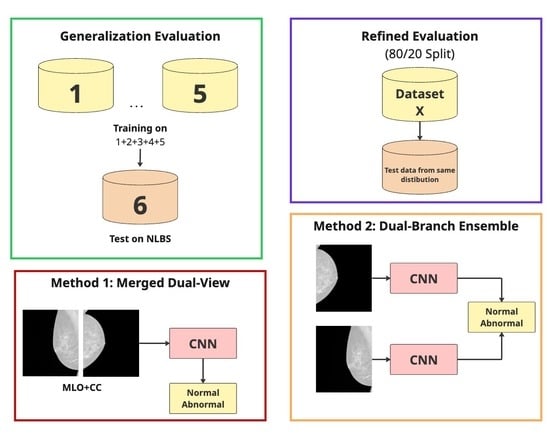
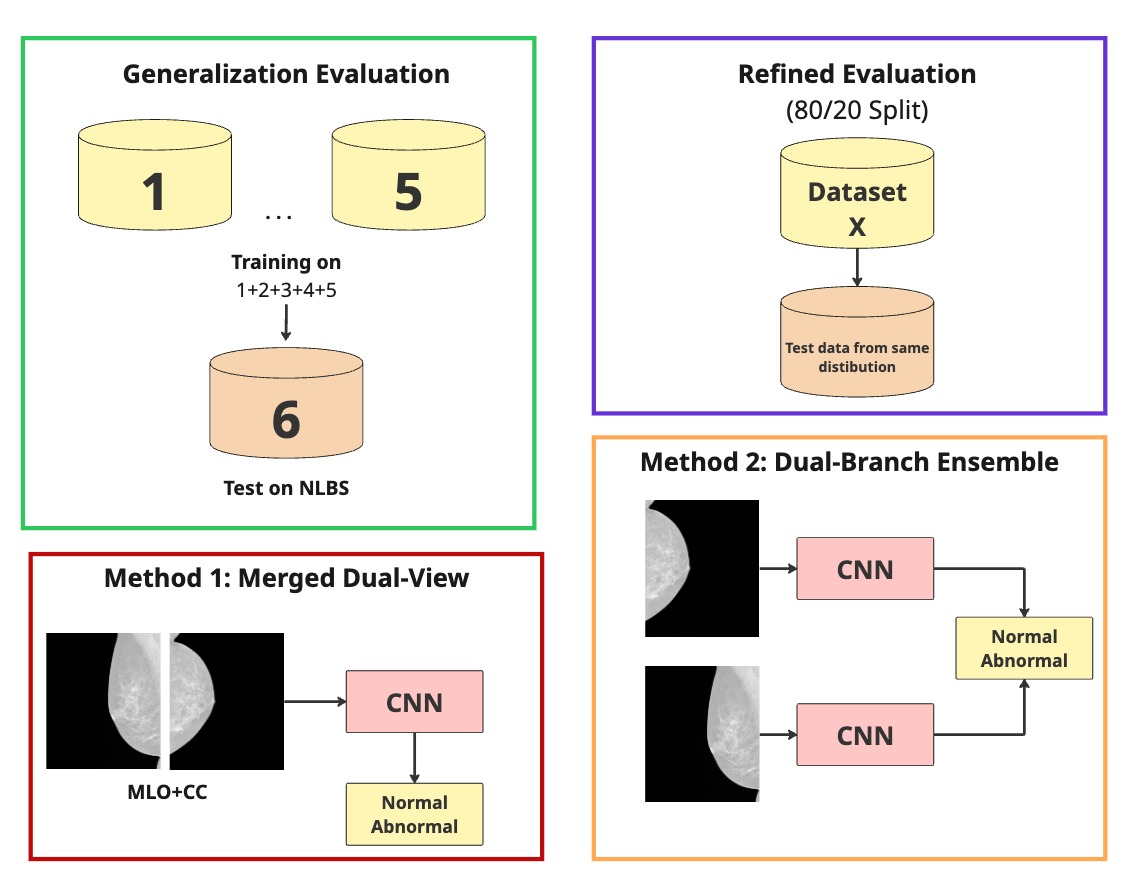
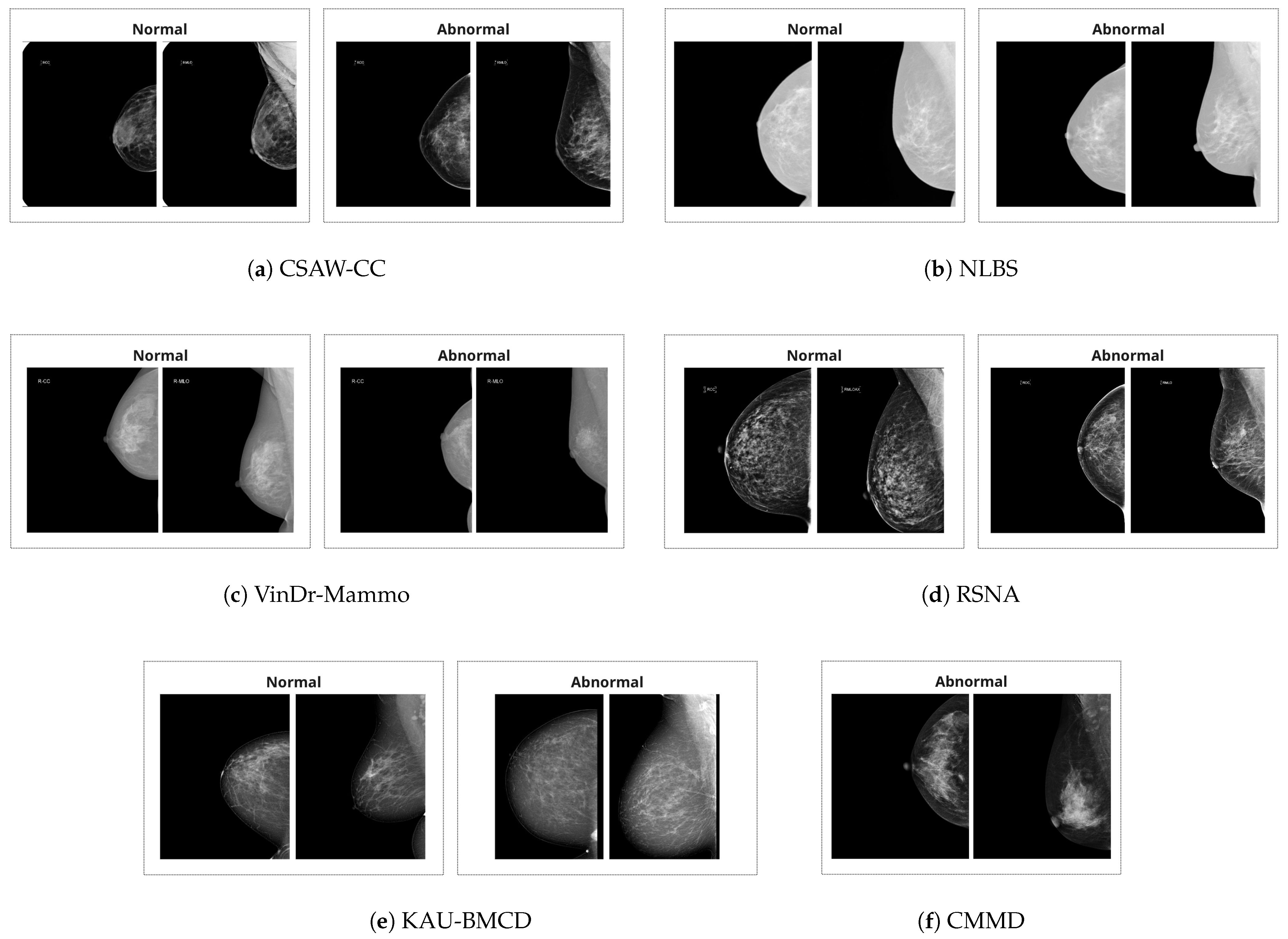
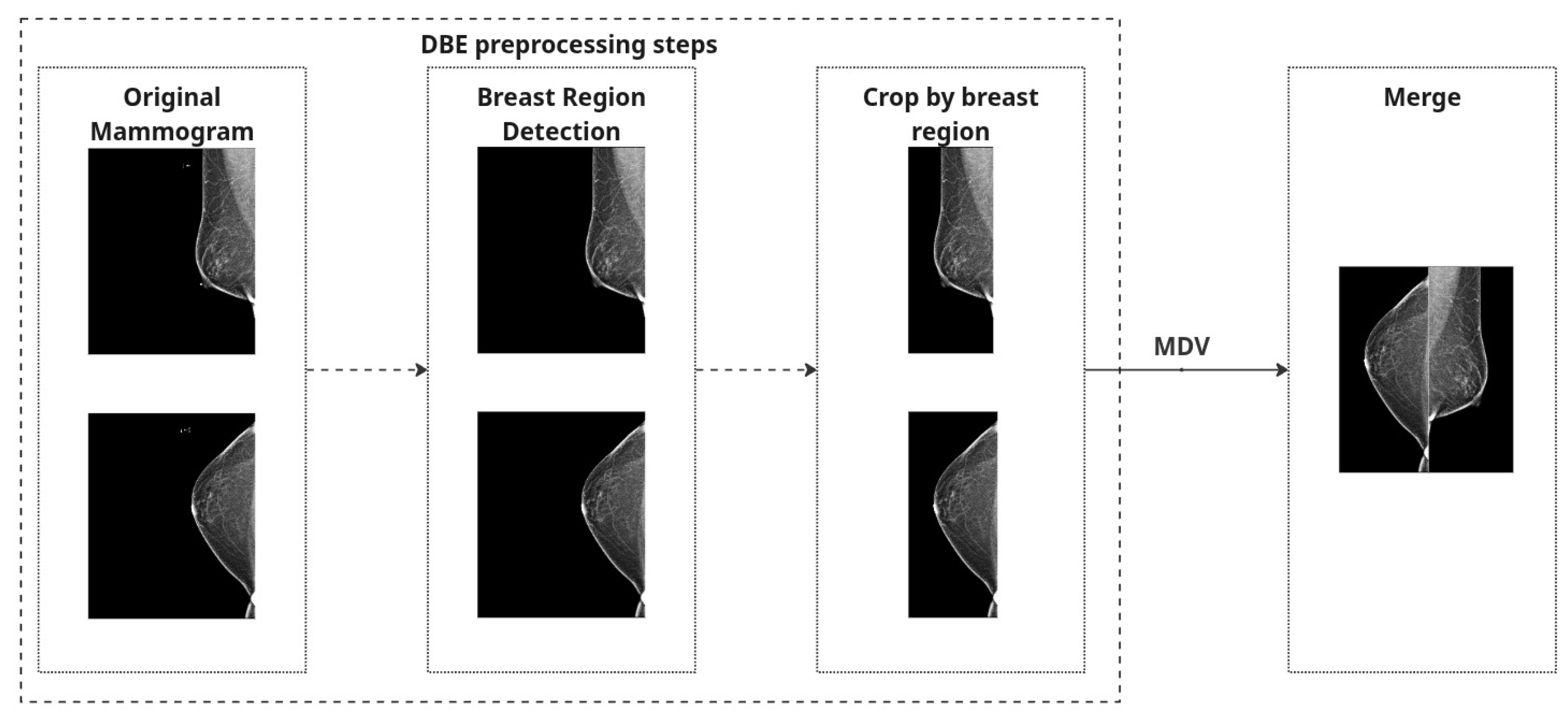
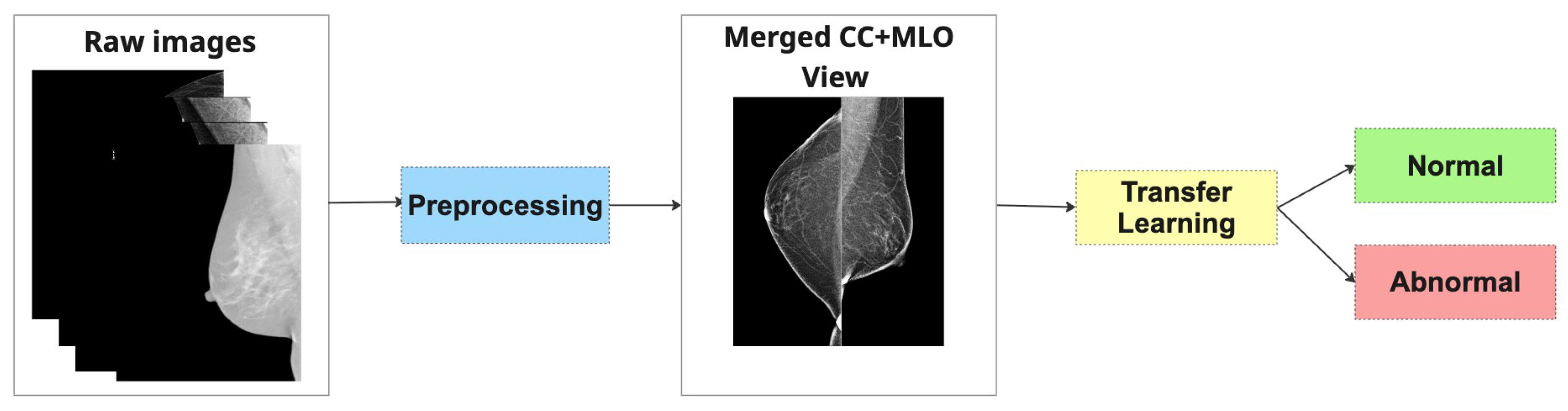
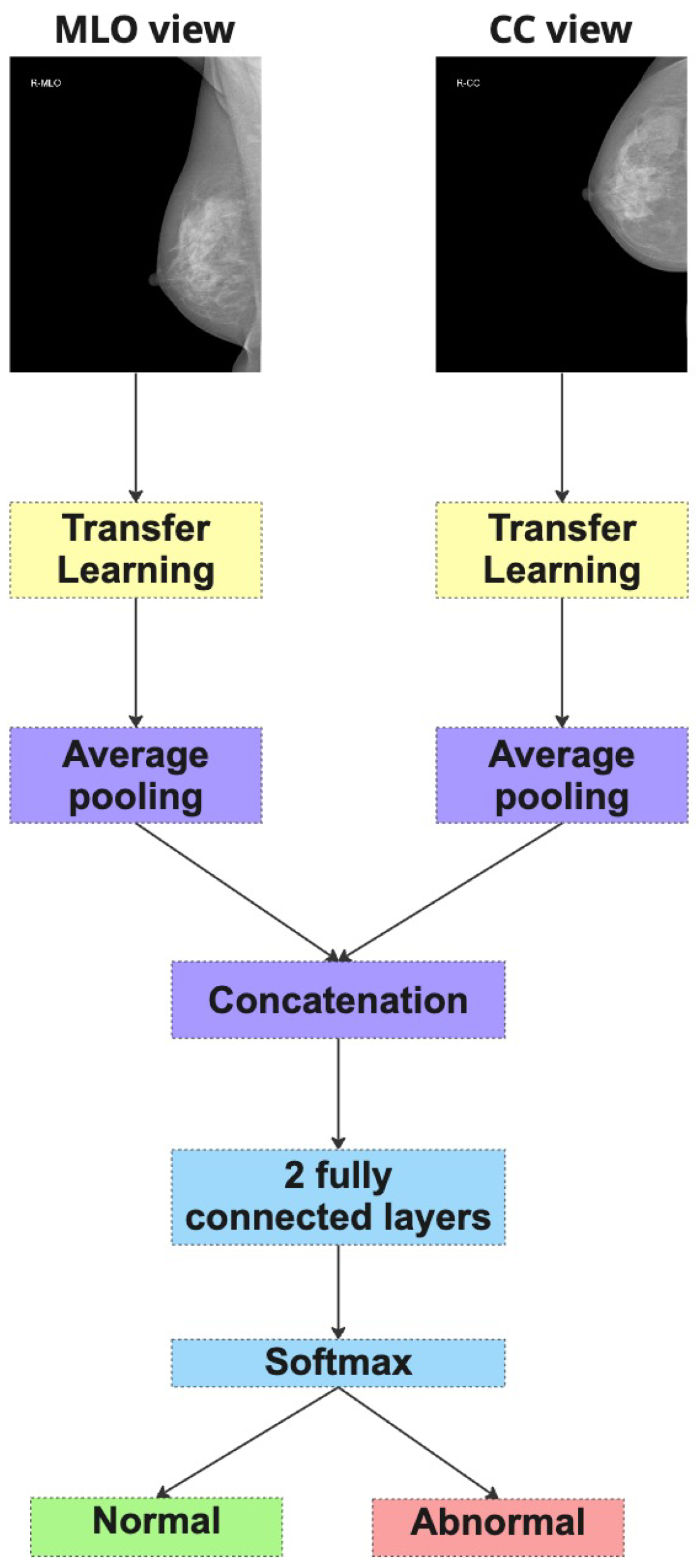
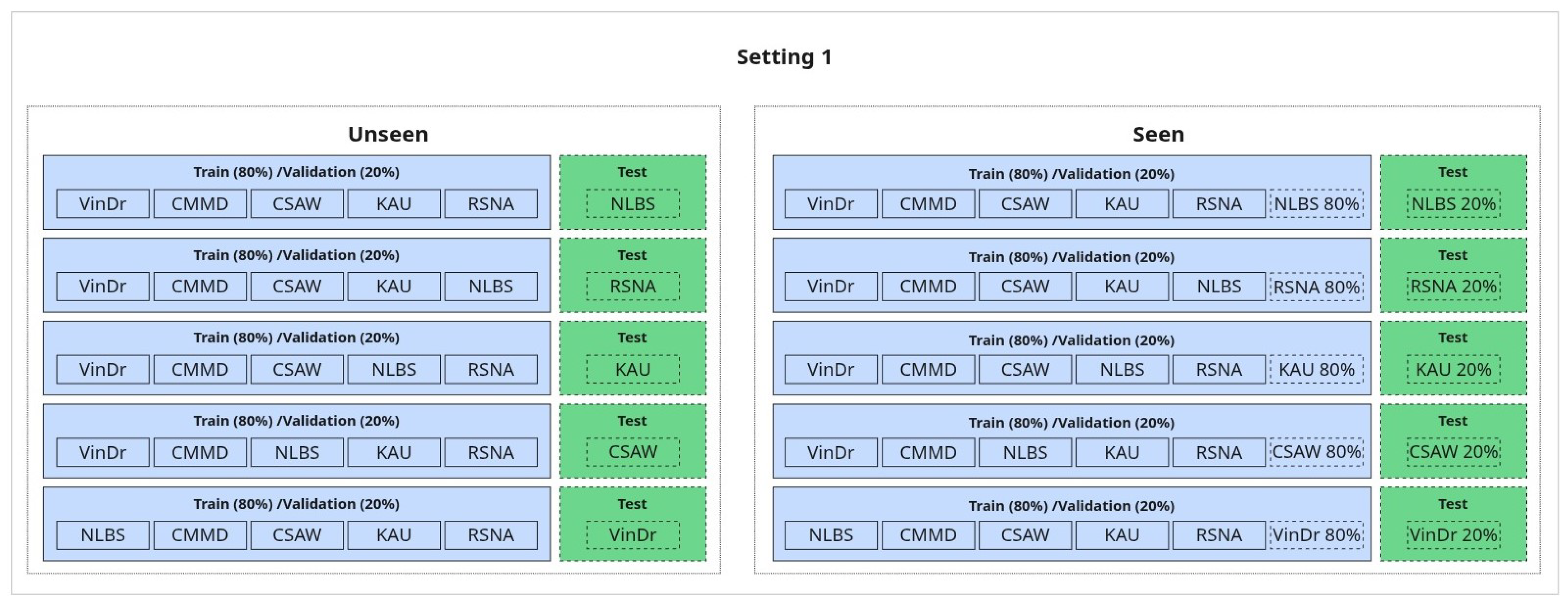
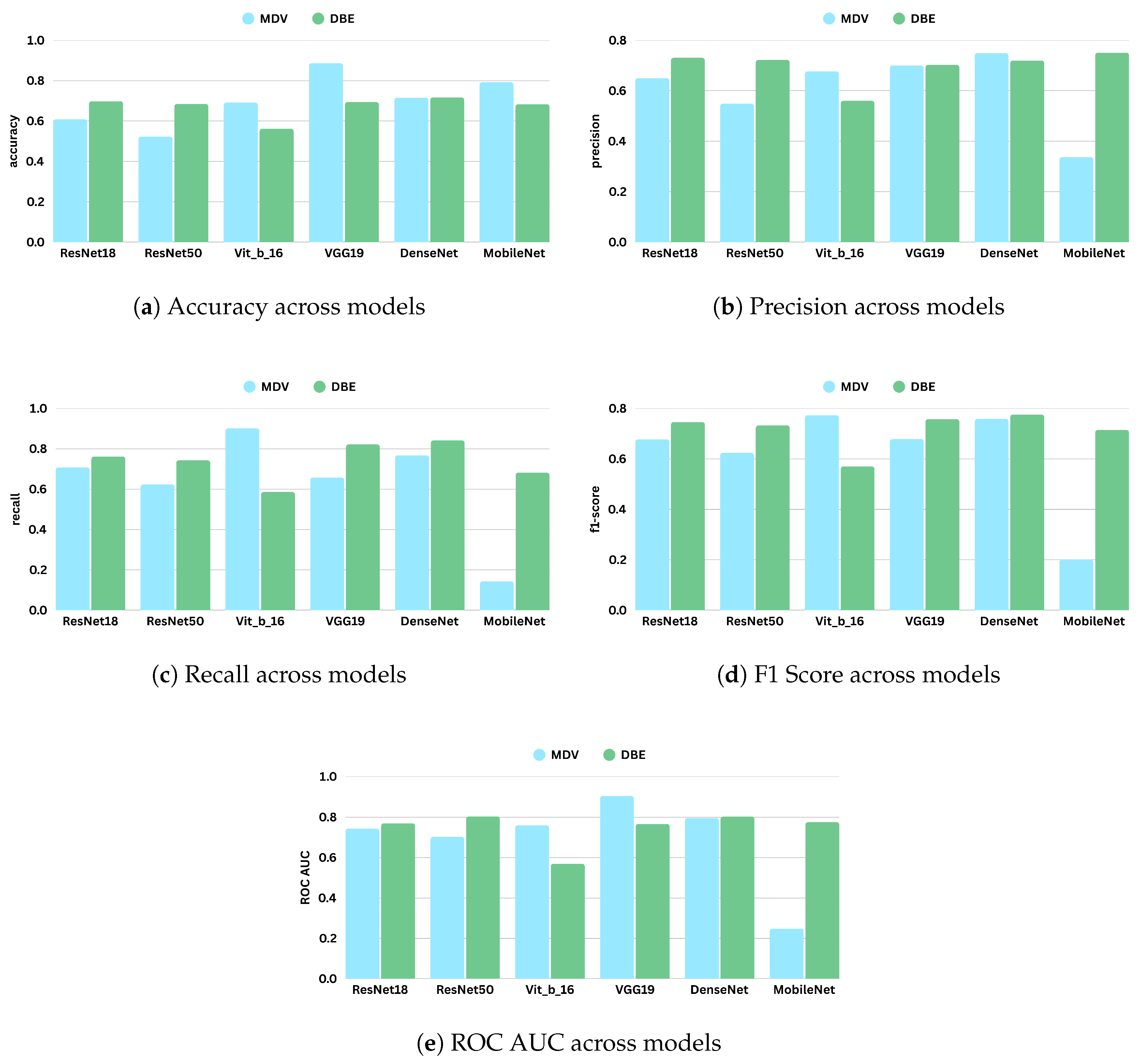
Mammography is the main method for early detection of breast cancer, which is still a major global health concern. However, inter-reader variability and the inherent difficulty of interpreting subtle radiographic features frequently limit the accuracy of diagnosis. A thorough assessment of deep convolutional neural networks (CNNs) for automated mammogram classification is presented in this work, along with the introduction of two innovative multi-view integration techniques: Dual-Branch Ensemble (DBE) and Merged Dual-View (MDV). By setting aside two datasets for out-of-sample testing, we evaluate the generalizability of the model using six different mammography datasets that represent various populations and imaging systems. We compare a number of cutting-edge architectures on both individual and combined datasets, including ResNet, DenseNet, EfficientNet, MobileNet, Vision Transformers, and VGG19. Both MDV and DBE strategies improve classification performance, according to experimental results. VGG19 and DenseNet both obtained high ROC AUC scores of 0.9051 and 0.7960 under the MDV approach. DenseNet demonstrated strong performance in the DBE setting, achieving a ROC AUC of 0.8033, while ResNet50 recorded a ROC AUC of 0.8042. These enhancements demonstrate how beneficial multi-view fusion is for boosting model robustness. The impact of domain shift is further highlighted by generalization tests, which emphasize the need for diverse datasets in training. These results offer practical advice for improving CNN architectures and integration tactics, which will aid in the creation of trustworthy, broadly applicable AI-assisted breast cancer screening tools.
Keywords: deep learning; mammography; breast cancer; computer-aided diagnosis (CADx); medical image analysis deep learning; mammography; breast cancer; computer-aided diagnosis (CADx); medical image analysis
Graphical Abstract