


Abstract
Recycling of lithium-ion batteries (LIBs) remains challenging due to high energy requirements, losses of key elements like lithium, and the heterogeneity of waste streams arising from different cathode chemistries. This study evaluates multiple recycling methods for LIBs black mass (BM), to recover critical raw materials and other valuable components. Three types of BM including nickel–manganese–cobalt (NMC), lithium iron phosphate (LFP) and a heterogeneous mixture of cell phones and laptops (HL; German: Handy/Laptops), were treated using froth flotation, pyrometallurgy, and biohydrometallurgy and their respective recovery efficiencies were assessed. The flotation results revealed that the HL sample had the lowest mis-recovery of non-ferrous metals into the froth product (around 10%), leading to further flotation only for HL. During screening, 94–99% of iron, phosphorus, and carbon in LFP-type BM were recovered in the fine fraction (<45 µm), while 92–99% of lithium, cobalt, manganese, nickel, and carbon in NMC-type BM were recovered in the same fraction. During precipitation, 99% of iron and 100% of phosphorus were recovered from LFP bioleachates at pH 3, while ~97–100% of dissolved cobalt, manganese, and nickel were recovered from NMC bioleachates. These findings confirm that no single recycling method is optimal for all battery chemistries.
1. Introduction
The global demand for lithium ion batteries (LIBs) is rising rapidly, with projections indicating a 14-fold increase by 2030, driven by the expansion of renewable energy storage systems and electric mobility [1,2]. While this growth supports the transition toward low-carbon energy systems, it also raises significant environmental concerns, as LIB production involves energy- and material-intensive processes that contribute to water and air pollution, as well as hazardous waste generation [3,4,5,6,7,8,9]. Moreover, growing use of LIBs is expected to generate millions of tons of waste annually, with electric vehicle batteries alone contributing around 2 million tons per year by 2030 [3,7,10,11]. This hazardous waste contains toxic and flammable substances, including fluorinated salts and heavy metals, making its proper management essential to prevent adverse impacts on both human health and the environment [7,12,13,14,15].
Given the environmental concerns and challenges associated with LIB production and waste management, recycling offers a viable solution to reduce resource extraction and pollution [16,17]. However, to be truly effective, recycling systems must rely on well-designed, efficient, and environmentally sustainable processes that align with circular economy principles [3,18].
In response to these challenges, the European Commission has introduced Regulation (EU) 2023/1542 [19], aimed at improving recycling efficiency and material recovery from waste batteries, particularly those containing critical raw materials (CRMs). This regulation establishes standardized methodologies for calculating recycling efficiency and material recovery rates, ensuring fair competition and high-quality recycling practices across the European Union (EU). It sets a recycling efficiency target of 65% for lithium-based batteries by 2025, increasing to 70% by average weight by 2030. In addition, material recovery targets are set at 90% for cobalt, copper, and nickel and 50% for lithium by 2027, with further increases to 95% for cobalt, copper, and nickel and 80% for lithium by 2031 [19].
In addition to establishing recycling efficiency and material recovery targets, Regulation (EU) 2023/1542 places a strong emphasis on traceability and transparency throughout the battery life cycle, notably through the introduction of a Digital Product Passport (DPP) for certain categories of batteries. This passport, applied in the form of a QR code to batteries exceeding a 2-kWh capacity threshold, is designed to provide standardized and accessible information on battery composition, origin of materials, carbon footprint, and end-of-life management, thereby supporting compliance with recycling and material recovery obligations and facilitating more efficient reuse and recycling processes.
Although existing strategies pursue common objectives such as improving recycling efficiency, increasing material recovery, promoting resource efficiency, and fostering innovation, a persistent disconnect remains between strategic ambitions and operational realities. This gap highlights the need for more integrated approaches that address not only technological challenges but also material, institutional, and cultural dimensions of LIB recycling systems [16].
Meeting these ambitious regulatory targets requires advanced recycling technologies capable of recovering critical materials efficiently. The recycling of LIB waste involves a complex value chain, including reverse logistics, pre-treatment, and metallurgical processing [20]. In practice, LIBs are recycled using thermal, chemical, or physical methods, which can be categorized into three main technological approaches: pyrometallurgy, hydrometallurgy, and direct (functional) recycling [3,21,22]. Among these, pyrometallurgical and hydrometallurgical routes are currently the most established at industrial scale [23], often used in combination to maximize the recovery of valuable secondary raw materials [24,25]. Biohydrometallurgy has been investigated as a complementary approach for LIB recycling [8]. Potential advantages reported in the literature include operation at comparatively low temperatures, in situ generation of leaching agents, and reduced handling and transportation of concentrated chemical reagents [26]. However, the overall environmental performance of bio-based processes depends on factors such as energy and reagent demand, aeration, residence time, downstream processing, and the achievable recovery and product quality. These environmental implications were not quantitatively assessed in the present study.
In parallel with metallurgical developments, physical separation techniques such as froth flotation have been investigated for enhancing material selectivity. Originally developed for the beneficiation of low-grade ores, froth flotation has been applied to separate graphite from LIB-type BM, enabling its reuse as a secondary raw material, although its application remains less widespread than other separation techniques [23]. In the present study, ion exchange was investigated to transfer dissolved lithium from flotation liquors into a more concentrated secondary stream. The experiments assessed lithium removal and zeolite regeneration at batch scale. Reuse of the treated process water and the associated potential reduction in wastewater generation were not evaluated. To the best of our knowledge, this represents the first application of an ion-exchange-based approach for the treatment of froth flotation liquors.
Conducted within the FuLIBatteR project, the present study investigates complementary process modules comprising flotation, magnetic separation, pyrometallurgical pre-treatment, (bio-)leaching, refining, and metal recovery. The objective is to assess the suitability, strengths, and limitations of the investigated approaches and to compare their recovery and separation performance and resulting product streams for selected NMC-type and LFP-type BM and the HL sorting fraction. Because the individual modules were investigated under different operating conditions and at different scales, the proposed linkages represent potential process integration rather than continuously operated recycling routes. Environmental impacts, carbon footprint, economic viability, regulatory compliance of complete process chains, and industrial feasibility were outside the scope of the present study.
2. Results and Discussion
While parts of the experimental results presented in this section have been previously reported by members of the FuLIBatteR consortium, the present study integrates these individual process steps and complements them with new experimental data to provide a comprehensive evaluation of the overall recycling route.
2.1. Screening
Table 1, Table 2 and Table 3 indicate the analysis of elemental distribution across the particle size fractions received after sieving. According to these tables aluminum and copper are predominantly concentrated in the coarser fractions (>45 μm). For all investigated BM samples, approximately 41–49% of the aluminum and 36–60% of the copper were recovered in the >45 μm fraction. This can be attributed to residues of current collector foils in the coarser fractions, primarily composed of aluminum and copper. The valuable metals contained in the coarse fraction (>45 µm) are not lost, as this fraction can be added to the non-ferrous metal concentrates for further processing. In contrast, the carbon content in the coarse fractions remained relatively low, ranging from about 4–6% across all samples, which corresponds to 1–2% recovery rate. In the case of LFP-type BM, which mainly consists of the elements iron and phosphorus next to graphite, 4.4% of iron and 5.6% of phosphate are transferred to the coarse fraction. Overall, the study of the recovery rates of elements in all samples at both fractions confirms that more than 90–95% of the elements of interest are concentrated in the finer fractions <45 μm.
Table 1.
Balance of screening NMC-type BM with a mesh size of 45 µm; metal content with X-ray fluorescence (XRF), carbon with laboratory equipment corporation combustion analysis (LECO), and lithium with inductively coupled plasma optical emission spectroscopy (ICP-OES).
Table 2.
Balance of screening LFP-type BM with a mesh size of 45 µm; metal content with XRF, carbon with LECO, and lithium with ICP-OES.
Table 3.
Balance of screening the HL sorting fraction with a mesh size of 45 µm; metal content with XRF, carbon with LECO, and lithium with ICP-OES.
2.2. Treatment of NMC-Type BM and the HL Sorting Fraction
2.2.1. Froth Flotation
The NMC sample initially showed comparatively high mis-recoveries of cobalt + manganese + nickel into the froth product (approximately 30 wt.%), indicating limited selectivity for carbon enrichment.
However, a second NMC sample provided by the same partner and intended to undergo comparable thermal pre-treatment showed substantially lower mis-recoveries of approximately 8 wt.%. This corresponds to an improvement in selectivity of around 38% compared to the initial NMC sample and demonstrates that efficient graphite separation by flotation is, in principle, achievable for NMC-type BM.
At the same time, the pronounced difference between the two NMC samples highlights the sensitivity of flotation performance to upstream treatment conditions, material history, or variations in the generated BM. Since the second NMC sample became available only at a late stage of the project, additional cleaner-stage flotation experiments could not be carried out within the remaining project timeframe. Among the investigated materials, the HL sample consistently exhibited low non-ferrous metal mis-recoveries of approximately 10 wt.% and therefore provided the most consistent basis for the subsequent cleaner-stage flotation tests. The HL material is an operator-defined, portable-device-derived sorting fraction containing predominantly older, cobalt-rich cathode chemistries, including NMC and LCO. To improve readability and avoid repetition, only results for HL sorting fraction are presented in the following sections, while the complete NMC dataset is reported by Rieger et al. [23].
These recovery values correspond to a concentration containing about 85% carbon in the froth product. Accordingly, subsequent investigations involving cleaner stages for graphite production were conducted exclusively using the HL sorting fraction.
Another objective of the flotation process is the production of a carbon concentrate intended for application in the refractory industry. To meet the required specification of carbon content exceeding 90% and considering the results obtained from the rougher and scavenger flotation stages, the addition of a cleaner stage for further enrichment of carbon is required. The outcomes of the test, including a cleaner stage, are summarized in Table 4.
Table 4.
Results for production of carbon concentrate for refractory industry using HL sorting fraction.
The results of the multi-stage flotation process show that during the initial rougher and scavenger stages the non-ferrous metals cobalt + manganese + nickel, as well as aluminum and copper, are primarily recovered, with recoveries of approximately 85%, 95%, and 80%, respectively. In contrast, only about 5% of the total initial carbon reports to this non-ferrous metal concentrate. Consequently, around 96% of the carbon is recovered in the carbon pre-concentrate, resulting in an enrichment of the carbon content from an initial 38 wt.% to approximately 85 wt.%. The remaining fraction mainly consists of cobalt + manganese + nickel, originating from the cathode active material. The subsequent cleaner stage further increases the carbon content in the carbon concentrate to approximately 91 wt.%, while the carbon recovery decreases by about 9% to 87%. The remaining impurities (cobalt + manganese + nickel) are again largely attributed to cathode active material, of which approximately 10% is finally recovered in the carbon concentrate and is therefore lost from the non-ferrous metal stream. The intermediate concentrate exhibits a slight enrichment in carbon content together with a depletion of cobalt + manganese + nickel relative to the feed. Therefore, it may be advantageous to combine this intermediate product with the non-ferrous metal concentrate to increase the overall recovery of cobalt, manganese, and nickel in this fraction. The lithium balance indicates that approximately 43% of the lithium dissolves into the process water. The remaining 57% is distributed among the various flotation products, with the largest share (36%) reporting to the non-ferrous metal concentrate. It is also evident that the lowest lithium content is achieved in the carbon concentrate, at approximately 1 wt.% which corresponds to a recovery of approx. 8%.
2.2.2. Wet High Gradient Magnetic Separation
An additional optimization test demonstrates that further cleaner stages as well as the application of wet high-gradient magnetic separation (WHGMS) can lead to an increased enrichment of carbon in the carbon product. The results of this experiment are presented in Table 5.
Table 5.
Carbon concentrate production with additional Wet-High-Gradient-Magnetic-Separation.
Table 5 demonstrates that aluminum, copper and cobalt + manganese + nickel are largely recovered in the non-ferrous metal concentrate during the initial flotation stages, with recoveries ranging from approximately 80% to 93%. By applying two additional cleaner stages, the carbon content in the carbon pre-concentrate can be increased to about 97%. This indicates that further cleaner stages effectively enhance the enrichment of carbon in the concentrate. The intermediate flotation concentrate also shows a slight enrichment in carbon together with a minor depletion of cobalt + manganese + nickel relative to the feed. However, it is again feasible to combine this intermediate concentrate with the non-ferrous metal concentrate to improve the overall recovery of the valuable metals.
During the WHGMS treatment, cobalt + manganese + nickel are enriched in the magnetic product (intermediate magnetic concentrate) obtained from the carbon pre-concentrate. However, the carbon content of this fraction remains relatively high at approximately 75 wt.%, which is significantly higher than in the initial feed. Due to the low mass yield of this intermediate fraction, it may also be advantageous to combine it with the non-ferrous metal concentrate to further increase the recovery of the metals. Ultimately, a carbon concentrate with a carbon content of approximately 99 wt.% can be obtained at a carbon recovery of about 67%. The results show that WHGMS can also be effectively applied for further enrichment of carbon.
2.2.3. Ion-Exchange Loop Stripping
Froth flotation liquors obtained from the processing of the HL sorting fraction were analyzed for their lithium content, revealing lithium concentrations of 1278 mg/L. Speciation analysis indicated that lithium was predominantly present in dissolved form as lithium carbonate (>90%), with minor concentration of lithium fluoride (<10%).
Based on the identified lithium concentrations and speciation in the flotation liquors, an ion-exchange approach was considered for lithium removal and recovery. The experiments demonstrated that synthetic zeolites A and X are well suited for lithium removal, achieving removal efficiencies between 45% and 51% depending on the Z/L ratio. Regeneration of lithium-loaded zeolites was performed using NaCl solutions at two different concentrations (5000 mg/L (Na+) and 20,000 mg/L (Na+)), demonstrating that lithium recovery is feasible, with regeneration efficiencies exceeding 75%. Further optimization and improvement of these values appear realistically achievable through further adjustment of the Z/L ratio and the implementation of column-based operation instead of batch processing. Overall, the results suggest that this approach enables the generation of concentrated lithium solutions, which may subsequently be used for the precipitation of high-purity lithium compounds.
2.2.4. High-Temperature Reductive Smelting
Thermal treatment of synthetic BM in an inductive smelting furnace resulted in the formation of distinct product phases, including a metallic alloy, magnetic and weakly magnetic powder fractions, and volatile components captured in the gas treatment system. This thermal transformation significantly altered the physicochemical properties of the material, particularly by converting metal oxides into metallic phases. As a result, a substantial improvement in metal dissolution during subsequent bioleaching was observed. These results demonstrate that pyrometallurgical treatment as an intermediate step plays a crucial role in enhancing the accessibility of valuable metals, increasing total material recovery rates and facilitating efficient downstream hydrometallurgical processing. Wiszniewski et al. [27] conducted thermal processing of the prepared BM samples in a batch-type smelter reactor. Each experimental run was performed with a feed mass of 400 g. After treatment, the reactor products were separated and classified according to physical appearance and magnetic behavior. The resulting material streams consisted of 205.0 g of a metallic alloy phase, 7.2 g of fine magnetic powder fraction, 3.5 g of weakly magnetic powder fraction, being slag, and dissolved components collected in the gas scrubbing system. Solid products were recovered from the reactor vessel, whereas volatile species were captured downstream [27]. This can be attributed to the fact that, in addition to material purity and chemical composition, particle size distribution and structural properties significantly influence the production of high-quality cathode active material.
The metallic alloys obtained from the smelter trials were further conditioned to enable efficient downstream recovery routes since it constitutes an advantageous basis for downstream (bio)hydrometallurgical processes, as most impurities are already eliminated [28]. To facilitate efficient leaching in these downstream processes, particle size reduction is required. Owing to the distinct mechanical properties, a suitable grinding method needs to be selected for the alloy. Due to its high ductility, the NMC-type alloy required controlled mechanical abrasion for particle size reduction. This approach enabled the production of fine metallic flakes without introducing secondary contamination and proved suitable for laboratory-scale investigations where ductile materials are involved.
Following size reduction, the NMC alloy was fractionated using a vibratory sieve system into three particle size classes: >250 µm, 250–100 µm, and <100 µm. For subsequent biohydrometallurgical experiments, only the fractions smaller than 250 µm were selected.
To control the particle size, alloys underwent a post-treatment procedure and therefore, magnetic behavior of the processed powders was evaluated during particle size analysis in aqueous suspension [27]. The results indicated that NMC-type material exhibited strong magnetic characteristics and remained at the liquid surface.
Additionally, elemental characterization of the processed fractions was performed by ICP-OES. Analyses were conducted for the NMC fractions below 250 µm and below 100 µm. Due to minor variation in chemistry of the named two size fractions mean values are used for recovery rates. Moreover, it is assumed that mechanical treatment had no influence on chemical composition, correspondingly the analyzed contents are used for the total mass of recovered alloy phase.
Table 6 shows the ICP-OES analysis of synthetic NMC-type-derived alloy fractions following pyrometallurgical and mechanical treatment. In this table minor deviations from full mass closure are attributed to analytical uncertainty and the presence of trace constituents below the detection limit of the ICP-OES method.
Table 6.
ICP-OES analysis of synthetic NMC-type-derived alloy fractions following pyrometallurgical and mechanical treatment [28].
Recovery rates above 100% result from surface oxidation of alloy during cooling, causing an overestimated mass of this fraction as well as minor variations in chemical composition. Nevertheless, the results show that the target elements cobalt, manganese and nickel are transferred to the alloy. Unfortunately, parts of aluminum and all of the copper and iron from the input are found in the metal phase. Thus, under applied conditions only the separation of lithium and aluminum, to some extent, is possible by pyrometallurgy.
2.2.5. Bioleaching
Using an experimental design based on response surface methodology, the effects of temperature, pulp density, and H2O2 concentration were investigated on the leaching efficiency of cobalt, manganese, nickel and lithium [29]. At the optimum levels of 55 °C, pulp density of 7.5%, and 4.4% H2O2 (v/v), 24% cobalt, 21% manganese, 32% nickel and 82% lithium were solubilized within 5 min. Lithium was solubilized independently of H2O2 concentration whereas the remaining metals required a reducing agent to be reduced to their more soluble form. The low leaching efficiency rates for cobalt, manganese and nickel were partially due to the low level of acidity of the biolixiviant used, as the sulfate concentration was merely around 0.27 mol/L, and the alkaline nature of the NMC material. Furthermore, a metal loss due to adsorptive properties of the carbon within the NMC material was postulated. Lalropuia et al. [30] performed two-step direct bioleaching of 1% (w/v) of NMC using adapted and non-adapted enrichment cultures where a complete dissolution of aluminum, cobalt, manganese, nickel and lithium was achieved by the adapted enrichment culture, indicating that the adaptation greatly improved the leaching performance of the culture.
2.2.6. Electrowinning and Precipitation
Metal concentrations of the target cathode elements (cobalt, manganese, nickel and lithium) in the remaining solution were measured with ICP-OES and are shown in Table 7. Copper was not considered in the table, as it is not relevant to the CRM obtained from NMCs in this study. Furthermore, the recovery rates of NMC materials from batteries following each electrowinning and lithium precipitation method are shown in this table. A significant recovery of cobalt, manganese and nickel was achieved while lithium stayed mostly in solution due to its negative reduction potential. Cobalt and nickel were deposited on the cathode, where XRF analysis revealed 93% of cobalt and 7% of nickel. Manganese was plated on the mixed metal oxide (IrO2-Ta2O5) titanium anode, together with residual cobalt. The anode was then treated with biogenic sulfuric acid to remove the metals, followed by manganese precipitation with sodium hydroxide resulting in a powder with 62.3% manganese, 23% cobalt and 14.7% nickel. Lithium was precipitated from the remaining electrowinning solution by precipitation with saturated Na2CO3 solution, recovering 40% of left-over lithium as lithium carbonate. The potential for reusing Li2CO3 is largely determined by its purity. For battery-grade applications, a purity of at least 99.5% is required, as specified in the Non-Ferrous Metal Industry Standard of The People’s Republic of China, Battery Grade Lithium Carbonate, YS/T 582-2023, 2023 [31]. In contrast, applications in the glass, ceramics, and cement industries typically impose lower purity requirements, allowing the use of Li2CO3 with a broader range of quality specifications.
Table 7.
Metal concentrations of input and output fractions of material recovery by electrowinning and precipitation as well as recovery rates [29].
The work by Baniasadi et al. [29] demonstrates a promising step towards a closed-loop system of selective recovery of critical metals from LIBs.
2.2.7. Metal Precipitation After Combination of Bioleaching and Pyrometallurgy
The adapted enrichment culture (see Section 3) was further used for a two-step bioleaching experiment using pyrometallurgically treated and untreated synthetic BMs at pulp densities of 1 and 10% (w/v). Pyrometallurgical pre-treatment greatly improved the metal dissolution from synthetic NMC during bioleaching, achieving 100% recovery of cobalt, manganese and nickel at 1% pulp density. This enhancement is attributed to the reduction in stable metal oxides (cobalt, manganese, nickel) to more readily dissolvable forms. The limited recovery observed for untreated NMC is attributed to the presence of these metals predominantly as stable metal oxides in less soluble oxidation states, which restrict their dissolution under the applied bioleaching conditions [27,28].
However, increasing the pulp density to 10% (w/v) resulted in a substantial decline in leaching efficiency, with metal recovery dropping below 20%, most likely due to microbial inhibition and mass transfer limitations at higher solid loadings. Table 8 summarizes the influence of pyrometallurgical pre-treatment on the bioleaching efficiency of the investigated synthetic BM [30].
Table 8.
Pre-treatment effect on the leaching efficiency of CRMs from synthetic NMC-type BM [30].
Wiszniewski et al. [27] described the metal precipitation in the downstream stage after high-temperature reductive smelting and bioleaching. The precipitation was performed by incrementally adjusting the pH of the metal-laden leachate to pH 8 and pH 10 using sodium hydroxide. After precipitation, the suspension was centrifuged and sampled. According to Table 9 at pH 8 94% of cobalt, 27% of manganese and 91% of nickel co-precipitated, leading to a decrease in the metal concentration of 2285 mg/L for cobalt, 535 mg/L for manganese and 14,318 mg/L for nickel, forming a Ni-rich precipitate contaminated with cobalt and manganese. At pH 10 the accumulated manganese precipitation reached up to 95%, while the accumulated cobalt and nickel precipitation reached 100%.
Table 9.
Recovery rates of CRMs cobalt, nickel and manganese by increased pH values from pyrometallurgically pre-treated and bioleachates at 1% pulp density.
2.2.8. Combination of Bioleaching and Graphite Flotation
The following section presents new experimental data for the combination of bioleaching and graphite flotation. The HL sample used in froth flotation was then combined with bioleaching for further investigation. The graphite flotation of the HL material resulted in a graphite-rich fraction with detectable major contaminations of copper, cobalt and nickel, requiring refining prior to further use. Hydrometallurgical-based purification processes using sulfuric acid are commonly applied to remove graphite impurities [32,33,34].
Results of leaching experiments are shown in Figure 1, demonstrating a rapid increase in metal concentration within 60 min, with the rate of solubilization leveling off thereafter. The analysis of the solid residue revealed an increased carbon content and an evident decrease in copper, cobalt and nickel aligning with the results gathered from the liquid samples.
Figure 1.
Results of leaching experiment with biolixiviant using a pulp density of 100,000 mg/L. (A) Co and Ni concentration in leachate over time. (B) Mass concentration comparison of C, Co, Cu, and Ni in original graphite-enriched flotation product and in solid leaching residue.
In Table 10 the final concentrations of selected elements found in the solid analysis of the leaching residue are listed. To further evaluate the quality of the recovered graphite, the electrochemical performance and graphite structure compared to commercial graphite would have to be determined. Its potential reuse depends largely on its purity, crystallinity, particle morphology, and residual metal contamination. The higher the quality of the recovered graphite, the greater its economic value and the wider the range of possible applications. High-quality graphite can potentially be regenerated and reused as an anode material in new LIBs, thereby supporting a closed-loop recycling approach and reducing the demand for virgin graphite [35]. In case of insufficient graphite quality required for LIB anodes, graphite can be used as a reductant for metals in pyrometallurgical processes or find use as a foundry material [34]. Olutogun et al. found a carbon content of 96% of a purified graphite recovered from a flotation of LIB anodes, further concluding no negative impacts on material performance and cyclic stability [36]. Natarajan et al. investigated a green chemistry approach of using a mild organic acid to purify the graphite fraction of spent LIBs, reporting structural integrity of the regenerated graphite and delithiation capacities comparable to commercial graphite [37].
Table 10.
Chemical analysis of solid leaching residue.
2.2.9. Metal-Binding Peptide Beneficiation
Metal-binding peptide beneficiation was tested using a 1:10 diluted NMC leachate adjusted to pH 6.0. The diluted leachate contained 157 mg L−1 Li, 195 mg L−1 Mn, 279 mg L−1 Co and 52 mg L−1 Ni. Thus, Co, Mn and Li were present at substantially higher concentrations than Ni, with approximately five times more Co, four times more Mn and three times more Li than Ni in the solution.
All tested peptide-functionalized materials showed measurable metal biosorption from the NMC leachate. In general, Co biosorption was higher than Ni biosorption for Pep_1, Pep_2 and Pep_4, whereas Pep_3 showed only low overall metal uptake and Pep_5, representing the control material, showed pronounced Ni biosorption. The highest Co biosorption among the peptide-functionalized materials was observed for Pep_4, followed by Pep_1 and Pep_2. Besides Co and Ni, Mn and Li were also removed from the leachate to a measurable extent, indicating that biosorption was not fully selective under the tested leachate conditions. With the use of ethylenediaminetetraacetic acid (EDTA) 100% of bound metals could get removed.
2.2.10. Best Recycling Route for the Recovery of CRMs from NMC-Type BM and the HL Sorting Fraction
Figure 2 presents an assessment of recycling pathways for NMC materials and indicates the best recycling route for the recovery of CRMs following traffic lights logic.
Figure 2.
Schematic overview of FuLIBatteR pathways for NMC-type BM and the HL sorting fraction. Traffic-light colors indicate qualitative route suitability within the investigated process framework: green = experimentally demonstrated with favorable performance and no fundamental limitation under the investigated conditions; yellow = technically or conceptually suitable but subject to relevant limitations or incomplete validation; red = unsuitable or not applicable under the investigated conditions, or experimentally insufficient for selective recovery. Dashed arrows indicate proposed integration options that were not fully validated as complete experimental routes within this study.
For both NMC-type BM and the HL sorting fraction, screening at 45 µm proved to be an effective pre-treatment step. More than 90% of the valuable elements in NMC-type BM and approximately 80–98% of the target elements in the HL sorting fraction were concentrated in the fine fraction, while substantial portions of aluminum and copper associated with current collector residues were removed in the coarse fraction. Therefore, screening not only serves as particle size conditioning but also provides an initial upgrading step prior to downstream processing.
For HL sorting fraction, froth flotation proved to be the most effective technology for carbon recovery. The process produced a carbon pre-concentrate containing approximately 85 wt.% carbon at a carbon recovery of around 96%, while simultaneously concentrating cobalt, manganese, nickel, aluminum and copper in the non-ferrous metal concentrate. Additional cleaner stages and wet high-gradient magnetic separation further increased the carbon content to approximately 99 wt.%, although at the expense of carbon recovery. Subsequent bioleaching of the graphite-rich fraction reduced residual metallic impurities and increased the carbon content from 92.4 wt.% to 96.3 wt.%. Although the suitability of the recovered graphite for battery-grade applications was not evaluated, its use as a secondary carbon source in MgO–C refractory bricks was successfully demonstrated within the project.
In contrast, flotation was less suitable for NMC-type BM due to the comparatively high mis-recovery of cathode-active materials into the carbon-rich fraction. For this chemistry, pyrometallurgical treatment followed by biohydrometallurgical processing represented the most promising recovery route. Pyrometallurgical treatment transferred more than 90% of cobalt, manganese and nickel into a metallic alloy phase while simultaneously separating lithium from the alloy. The resulting alloy exhibited substantially improved bioleaching performance compared with untreated BM, enabling complete dissolution of cobalt, manganese and nickel under optimized conditions. Subsequent electrowinning and precipitation achieved recoveries approaching 100% for these transition metals.
A key finding of this study is the strong synergistic effect between pyrometallurgical pre-treatment and subsequent biohydrometallurgical processing. While direct bioleaching of untreated NMC-type BM resulted in limited dissolution of cobalt, manganese and nickel, pyrometallurgical treatment fundamentally altered the accessibility of these metals. By transferring the transition metals into a metallic alloy phase and reducing stable metal oxides, subsequent bioleaching achieved complete dissolution of cobalt, manganese and nickel under optimized conditions. Compared with untreated material, this corresponds to an increase from less than 40% cobalt recovery, less than 20% manganese recovery and less than 10% nickel recovery to approximately 100% dissolution for all three elements. The results therefore demonstrate that pyrometallurgy should not only be regarded as a stand-alone recovery technology but also as an enabling pre-treatment step that substantially enhances downstream biohydrometallurgical performance.
An important observation of the investigated pathways concerns the behavior of lithium. Unlike cobalt, nickel and manganese, lithium does not primarily report to metallic or hydrometallurgical concentrate streams. Instead, lithium follows different pathways depending on its chemical form. During flotation, water-soluble lithium compounds dissolve into the process water, where approximately 43–48% of the total lithium inventory was found. The batch experiments achieved lithium removal efficiencies of 45–51% and zeolite regeneration efficiencies exceeding 75%. These results provide a laboratory-scale proof of concept for transferring lithium from dilute flotation liquors into a more concentrated secondary stream. Further research on continuous column operation is recommended and considered promising, but improved recovery and the subsequent production of lithium compounds of defined purity require experimental validation.
During pyrometallurgical treatment, lithium is transferred into a volatile fraction and may subsequently be recovered via off-gas treatment. The results therefore identify two distinct lithium-bearing streams arising from flotation and pyrometallurgical treatment. Combining these streams may be promising for increasing overall lithium recovery; however, the achievable total recovery was not determined because the respective process modules were not operated as an integrated route.
Within the investigated NMC-type BM and HL sorting fraction, the observed differences in flotation performance demonstrate that the preferred process configuration depends not only on cathode composition but also on the specific BM composition and upstream treatment history. The HL sorting fraction provided the most consistent basis for a graphite-focused route comprising flotation, cleaner flotation, wet high-gradient magnetic separation, and graphite purification. For the investigated NMC-type material, reductive pyrometallurgical treatment followed by biohydrometallurgical processing represented the most promising route for cobalt, nickel, and manganese recovery. These results should therefore be interpreted as material- and recovery-target-dependent variants within the jointly assessed NMC/HL group rather than as fundamentally separate chemistry-specific pathways.
In contrast to conventional metal recovery technologies such as chemical precipitation and electrowinning, bio-based recovery technologies are also available. Among these approaches, metal-binding peptides have attracted attention due to their high selectivity and durability. In recent study, Sieber et al. [38] identified peptides with specific affinities for cobalt or nickel binding. Specific nickel- and cobalt-binding peptide sequences identified by phage display screening demonstrated strong metal-binding affinities, indicating their potential use for selective enrichment or polishing of bioleachates. However, the approach remains sensitive to process conditions, especially pH, metal speciation and the presence of competing ions. Therefore, metal-binding peptide beneficiation was assessed as conditionally suitable within the investigated process framework. It can contribute to selective downstream recovery but requires further optimization before being implemented as a robust process module for complex battery-derived leachates. A summary of the investigated technology modules for CRM recovery from NMC-type BM and the HL sorting fraction is available in the Supplementary Materials (Table S1).
2.3. Treatment of LFP-Type BM
2.3.1. Froth Flotation
According to Rieger et al. [23], flotation tests conducted on LFP samples were unsuccessful due to the non-dispersibility of the material in water as froth flotation relies on differences in surface hydrophobicity to separate dispersed materials. Froth flotation is mainly based on differences in surface wettability (i.e., hydrophobicity/hydrophilicity), which govern the selective attachment of particles to air bubbles. Graphite naturally exhibits hydrophobic properties, meaning that its surface repels water and preferentially interacts with air bubbles. Meanwhile, in practical applications, the surface characteristics of spent LFP particles may exhibit increased hydrophobicity and become less hydrophilic (in contrast to pristine LFP) during battery operation and recycling processes. As a result, in LFP-type battery waste the main components often exhibit flotation behavior closer to graphite, hindering selective separation and reducing the wettability contrast between the two components. Hence, the insufficient difference in surface properties leads to poor bubble–particle selectivity and limits the efficiency of flotation separation [39]. Consequently, alternative approaches such as pyrometallurgical or hydrometallurgical treatments are considered more effective for the recovery of valuable elements from LFP-type BMs.
2.3.2. Ion Exchange Loop Stripping
Due to unsuccessful froth flotation of LFP-type BM, ion-exchange loop stripping for Li recovery of froth flotation water has not been conducted.
2.3.3. High-Temperature Reductive Smelting
During the pyrometallurgical process of 400 g of synthetic LFP-type BM, as outlined before, the reactor products were separated following the treatment based on their physical appearance and magnetic properties, resulting in 140.1 g of iron fraction as well as 7.0 g of magnetic and 41.0 g of spars magnetic powder. Since the downstream biohydrometallurgy depends on enhanced surfaces to achieve efficient leaching process, the LFP-type alloy fractured readily and was therefore reduced in size by ball milling, yielding a powder with particle sizes predominantly below 50 µm.
As for magnetic behavior, investigations revealed that the LFP-type powder showed no magnetic response, in contrast to NMC-type materials which displayed strong magnetic behavior that remained at the liquid surface. This difference suggests a potential physical separation route for mixed cathode materials prior to chemical leaching, which is of relevance for selective metal recovery.
ICP-OES analysis was conducted for the LFP powders, shown in Table 11 highlighting an Fe-rich phase with significant phosphorus content and minor impurities such as aluminum and copper. Lithium is present only in trace amounts which is typical after pyrometallurgical processing. Nevertheless, it should be noted that under the selected smelter conditions phosphorus is only transferred to the gas phase in a minor extent. Thus, the resulting iron phase is accompanied by a high phosphorus content of 22 wt.%.
Table 11.
ICP-OES analysis of synthetic LFP-type-derived alloy fractions following pyrometallurgical and mechanical treatment [28].
2.3.4. Bioleaching and Precipitation
Regarding the biohydrometallurgical process, after integrating with pyrometallurgy, the results showed that in contrast to synthetic NMC, for synthetic LFP, the leaching efficiency of metals were similar in treated and untreated BMs as LFP mostly consists of lithium iron phosphate and contain no or only traces of non-ferrous metal oxides in both 1% and 10% pulp densities. This can be attributed to the different phase chemistry of LFP, which mainly consists of lithium iron phosphate and contains no or only traces of non-ferrous metal oxides. Direct bioleaching of LFP nevertheless showed high lithium leaching efficiencies under low-pulp-density conditions, whereas Fe and P recovery remained affected by precipitation and phase-stability effects. Therefore, further pH control and downstream separation steps are required to obtain recoverable Fe- and P-containing products [27]. Furthermore, the selective metal precipitation of the leachate from bioleaching of pyrometallurgically treated LFP at different pH was examined and shown in Table 12. The lixiviants pH increased from 1.8 to 6 by the addition of NaOH. Setting the pH to 2 caused the co-precipitation of copper, iron, and phosphorus with respective precipitation efficiencies of 36%, 82%, and 100%. This resulted in a significant decrease in iron and phosphorus concentrations, while the copper concentration decreased more moderately. Further increasing the pH to 3 caused an increase in accumulated iron precipitation up to 99%, while copper concentrations remained stable. Therefore, high proportions of iron (99%) and phosphorus (100%) were precipitated, while moderate proportions of copper co-precipitated simultaneously. However, reusing iron and phosphorus in the form of FePO4 as a precursor for battery production requires high purity, therefore further research is needed for quality improvement.
Table 12.
Precipitation of materials from LFP-type BM at different pH values [27].
2.3.5. Most Promising Recycling Route for the Recovery of CRMs from LFP-Type BM
Figure 3 presents an assessment of recycling pathways for LFP materials and illustrates the percentage of CRM at each pathway.
Figure 3.
Schematic overview of FuLIBatteR pathways for LFP-type LIBs. Traffic-light colors indicate qualitative route suitability within the investigated process framework: green = experimentally demonstrated with favorable performance and no fundamental limitation under the investigated conditions; yellow = technically or conceptually suitable but subject to relevant limitations or incomplete validation; red = unsuitable or not applicable under the investigated conditions, or experimentally insufficient for selective recovery. Dashed arrows indicate proposed integration options that were not fully validated as complete experimental routes within this study.
In contrast to NMC-type BM, the recovery of critical materials from LFP batteries has received increasing attention in recent years, yet comparatively few studies have demonstrated integrated recycling routes beyond laboratory scale. Within the FuLIBatteR project, the smelting pyrometallurgical treatment was investigated in a pilot-scale reactor, while the downstream (bio)hydrometallurgical processing and precipitation steps were investigated at laboratory scale. The results show that iron can be concentrated in an iron-rich alloy phase, while lithium and phosphorus can be transferred into volatile fractions and potentially recovered through off-gas treatment. Subsequent leaching and precipitation enabled the recovery of iron- and phosphorus-containing products. However, the complete process chain was not operated or validated as a continuous integrated recycling line. The findings therefore demonstrate the technical feasibility of the pilot-scale smelting treatment and the potential compatibility of the investigated downstream modules, but do not establish industrial feasibility. Further integrated testing, scale-up, and product-quality assessment are required. A summary of the investigated technology modules for CRM recovery from LFP-type BM is available in the Supplementary Materials (Table S2).
2.4. Comparative Assessment of NMC/HL and LFP Recycling Routes
The results demonstrate that no individual recycling technology is capable of selectively recovering all valuable components contained in lithium-ion battery BM. Instead, the investigated technologies should be regarded as complementary process modules targeting different material fractions and element groups. Consequently, the most suitable recycling route depends on the BM composition and the desired recovery targets.
Screening at 45 µm was an effective pre-treatment step for both the NMC/HL and LFP material groups. Beyond screening, however, the suitability of the investigated downstream processes differed substantially. Within the NMC/HL group, material composition and recovery targets resulted in a graphite-focused branch investigated primarily with the HL sorting fraction and a metal-recovery branch investigated with NMC-type BM. Flotation was unsuitable for the investigated LFP-type BM under the applied conditions.
Reductive pyrometallurgical pre-treatment substantially improved the subsequent bioleaching performance of NMC-type material, whereas no comparable improvement was observed for LFP-type material. The pyrometallurgically treated materials also differed in their magnetic behavior: the NMC-derived alloy showed strong magnetic characteristics, while the LFP-derived powder showed no measurable magnetic response. These differences illustrate the need for chemistry- and material-specific combinations of complementary process modules.
This comparison is qualitative and is based on the results obtained within the present study. Because the process modules were investigated at different scales, using different materials and operating conditions, the reported values should not be interpreted as a standardized quantitative ranking. Formal numerical technology readiness levels were not assigned; instead, the experimentally demonstrated development status of each pathway is reported. Environmental and economic performance were not assessed; consequently, the comparison does not support conclusions regarding carbon footprint, overall sustainability, economic viability, or industrial feasibility. Table 13 indicates the qualitative comparison of the investigated NMC/HL and LFP recycling pathway variants.
Table 13.
Qualitative comparison of the investigated NMC/HL and LFP recycling pathway variants.
3. Materials and Methods
This section outlines the experimental procedures, input materials, and characterization techniques employed in this study. To evaluate and compare different recycling pathways for different LIB waste, three recycling methods were investigated: A dedicated pre-treatment process with focus on froth flotation in combination with ion-exchange stripping, a pyrometallurgical route with reductive induction smelting at the core, and a biohydrometallurgical path including direct bioleaching with adapted enriched cultures and the evaluation of indirect bioleaching with separately produced biogenic lixiviants as a complementary integration option prior to selective precipitation. Each method is presented by detailing the specific experimental setup, materials used, and analytical techniques applied to assess the efficiency and outcomes of each process. To enable comparability among results, all researchers did their experiments with the same thermally pre-treated BM samples provided by an industrial partner independently of the LIB type, if not stated otherwise. All samples are a blend of anode and cathode material:
NMC: Batches containing NMC cathodes and graphite anodes, derived from industrial batteries and the automotive sector.
LFP: Samples consisting of LFP cathodes combined with graphite anodes, derived from industrial batteries and the automotive sector.
HL: Operator-defined sorting fraction derived predominantly from small portable devices, such as mobile phones and laptops. It contains a heterogeneous mixture of older, cobalt-rich cathode chemistries, including NMC and LCO, combined with graphite anodes. The fraction is sorted separately by the plant operator because its elevated cobalt content increases its economic recovery value.
The HL fraction is an operator-defined sorting category rather than a distinct cathode chemistry. Owing to its cobalt-rich composition and corresponding recovery targets, it was evaluated together with NMC-type BM, whereas LFP-type BM was assessed separately because of its fundamentally different chemical and metallurgical characteristics.
The elemental compositions of the investigated BM samples were determined by ICP-OES, ICP-MS, and total carbon analysis. Results, representing new experimental data, are summarized in Table 14.
Table 14.
Elemental composition of the investigated BM samples in wt.% of dry mass.
3.1. Assessment of Best Recycling Route
To compare the investigated recycling pathways for different LIB waste streams, a qualitative suitability assessment was performed. The results are presented as a traffic-light system indicating the overall applicability of a given process route to a specific battery waste type. The rating considers the experimental findings obtained throughout this study, including the technical feasibility of the individual process steps, the observed recovery and separation performance for target materials, and the quality of the resulting product streams. The recycling success of each experiment is assessed by a dedicated material recovery rate for the elements of interest (carbon, cobalt, lithium, manganese, nickel, iron and phosphorus), given in Equation (1). The material recovery rate Rx of the element X is calculated by the ratio of element X content wout,X in wt.% of the output mass fraction fm in % and the element X content of the input win,X in wt.%.
The traffic-light classification was based on a qualitative, evidence-based assessment rather than on universal numerical thresholds. Three aspects were considered jointly: (i) experimentally demonstrated technical feasibility, (ii) recovery or separation performance for the relevant target materials, and (iii) the quality and usability of the resulting product streams. Green indicates that the process step was experimentally demonstrated and showed favorable performance without a fundamental limitation under the investigated conditions. Yellow indicates technical or conceptual suitability but also relevant limitations, such as incomplete validation, reduced recovery or selectivity, insufficient product quality, increased process complexity, or limited data availability. Red indicates that the process was unsuitable or not applicable under the investigated conditions, or that experimental results showed insufficient recovery or selective separation. Because the investigated technologies differed in their objectives, process maturity, and available performance indicators, fixed quantitative thresholds were not applied. The classification therefore represents the relative suitability and strength of evidence within the scope of this study and should not be interpreted as a universal technology ranking or as evidence of industrial-scale performance.
The individual process modules were investigated at different levels of technological maturity. Unless explicitly stated otherwise, the experiments were conducted on a laboratory scale, predominantly in batch operation. The pyrometallurgical smelting treatment was performed in a pilot-scale reactor. Although selected outputs from individual process steps were used as inputs for subsequent experiments, the complete process chains shown in Figure 2 and Figure 3 were not operated or validated as continuous integrated recycling lines. The figures, therefore, combine experimentally investigated process steps with conceptual integration options. They demonstrate technical compatibility and potential process linkages within the scope of the study but do not establish industrial feasibility.
3.2. Screening
Before the experiments, the BM samples were subjected to particle size analysis and screening to evaluate the distribution of elements across different size fractions and to ensure an appropriate flotation process. Since the efficiency of froth flotation strongly depends on particle size [40,41], the material was separated into different size fractions, with particular focus on the 45 μm cut size used for the subsequent screening step. Since the pyrometallurgical processing required a lower aluminum and copper content for the tests, screening of the samples at 45 µm prior to flotation is sought to be additionally advantageous for the downstream process.
3.3. Froth Flotation
The froth flotation technique was employed to recover graphite from BM obtained from LIBs. The primary aim of the process was to separate a carbon-rich fraction (froth product) from a carbon-poor fraction (cell product), thereby enabling assessment of graphite recovery efficiency. The recovered carbon-rich fraction was repurposed as an alternative carbon source for the fabrication of magnesia–carbon (MgO–C) refractory bricks. Within refractory manufacturing, carbon plays a vital role in the production of MgO–C bricks, which are used in steelmaking operations [23]. The carbon-depleted non-ferrous metal concentrate will be subject to subsequent pyrometallurgical treatment.
For this purpose, NMC-type BM, LFP-type BM, and the HL sorting fraction were used in flotation experiments:
Flotation reagents were employed to optimize the purity and recovery of the graphite fraction. Graphite present in the BM is inherently hydrophobic and therefore preferentially reports to the froth phase during flotation. To further enhance this behavior and improve process selectivity, surfactant-based reagents were applied [23].
To initiate froth formation for material recovery, the dry BM was mixed with deionized water to create a suspension in an aqueous medium. Following flotation, the mass recovery into the froth product was analyzed for each sample to evaluate process effectiveness. The flotation test consisted of a rougher stage followed by two subsequent scavenger stages and a final cleaner stage. During the rougher and scavenger stages, three froth products and one cell product were generated. Reagent dosages of 200 ppm lignin sulfonate (L, Pionera™ DP-750, Borregaard, Sarpsborg, Norway) as a dispersing agent, 900 ppm diesel oil (D) as a collector, and 55 ppm pine oil (P, FLOTANOL™ 7026, Clariant Mining Solutions, Muttenz, Switzerland) as a frother were applied. The cell product obtained from these stages is referred to as the non-ferrous metal concentrate. The three froth products generated in the rougher and scavenger stages were combined for further processing and are referred to as the carbon pre-concentrate. This combined product was subsequently subjected to a cleaner flotation stage. In the cleaner stage, additional reagents were added, including 100 ppm lignin sulfonate, 325 ppm diesel oil, and 18 ppm pine oil.
Diesel oil served as a collector to strengthen the hydrophobic character of graphite particles and promote their attachment to rising air bubbles. Pine oil was used as a frother to generate and stabilize the froth phase, enabling efficient transport of hydrophobic particles to the surface. Lignin sulfonate functioned as a dispersing agent to reduce particle agglomeration and limit the entrainment of gangue minerals, thereby improving separation efficiency.
As a result of the cleaner stage, the final carbon concentrate was obtained as the froth product, while an intermediate concentrate was recovered as the cell product. The BM derived from thermally pre-treated end-of-life LIBs contains the water-soluble lithium salts Li2CO3 and LiF, which dissolve into the process water during flotation [42]. These components are referred to as water soluble. The mass recovery of the water-soluble fraction was determined from the mass loss, calculated as the difference between the initial sample mass and the total recovered product mass. The lithium content of the water-soluble fraction was determined by a separate elution experiment in which the BM sample was repeatedly treated with an excess of deionized water relative to the solubility of the lithium salts. The resulting eluate was completely evaporated, and the lithium content of the remaining solid residue was determined by ICP-OES analysis. During the rougher and scavenger stages, a solids concentration of 10 wt.% was applied. Under these conditions, an excess of water was present, ensuring that all water-soluble lithium salts were expected to dissolve into the process water.
The flotation procedure follows the previously described test for the production of a carbon concentrate intended for the refractory industry. However, in this experiment the froth product obtained from the first cleaner stage is subsequently subjected to two additional cleaner stages. In this multi-stage flotation scheme, a total dosage of 500 ppm lignin sulfonate, 1875 ppm diesel oil, and 75 ppm pine oil are applied. The cell products generated in the three cleaner stages are combined and referred to as the intermediate flotation concentrate. The froth product from the final cleaner stage is defined as the carbon pre-concentrate, which serves as the feed material for the WHGMS.
3.4. Wet High-Gradient Magnetic Separation
For the WHGMS process, a background magnetic induction of 0.8 T is applied using a matrix with a wire diameter of 1 mm (Eriez, expanded metal matrix). Additionally, 300 ppm lignin sulfonate is added as a dispersing agent. The non-magnetic fraction corresponds to the carbon concentrate, whereas the magnetic fraction is referred to as the intermediate magnetic concentrate. The flotation test is conducted at an initial solid content of 10 wt.%. Under these conditions, an excess of water is present, ensuring that all water-soluble lithium salts dissolve into the process water and are therefore referred to as water soluble. The mass recovery of the water-soluble fraction is determined by mass balance (initial sample mass minus recovered product mass), while the lithium content is derived from the previously described elution test.
3.5. Ion-Exchange Loop Stripping
In order to recover dissolved lithium from froth flotation wastewater, an ion-exchange-based process was applied. The liquors were contacted for 24 h with different zeolite types (natural clinoptilolite; zeolites A and X) at two zeolite-to-liquid ratios (Z/L = 0.04 & 0.08), following an adapted procedure described in Stocker et al. [43] for the determination of cation exchange capacities of zeolites.
3.6. High-Temperature Reductive Smelting
For pyrometallurgical process, synthetic BM was employed for both LFP and NMC chemistries to closely replicate the composition of BM derived from spent LIBs. Spent batteries exhibit significant variability in impurity content, which can strongly influence reduction behavior and metal distribution. Moreover, real batteries contain electrolytes, polymeric separators, binders and metallic current collectors that introduce additional side reactions and gas evolution at elevated temperatures. These complexities hinder mechanistic interpretation of high-temperature processes. Therefore, synthetic materials with well-defined stoichiometry similar to the real BM are preferred in this study [27]. To simulate real BM more accurately, high-purity (>99%) analytical-grade cathode materials were blended with amorphous carbon powder, representing the anode. Additionally, aluminum and copper powders were included to emulate the current collector foils. As such, experimental results obtained using synthetic BM are considered valid and representative when appropriate pre-treatment is assumed.
Table 15 presents the chemical composition of the investigated synthetic LFP and NMC cathode materials. Based on these compositions, representative BM models were prepared for the experimental work of this study [28].
Table 15.
Chemical composition of used synthetic BM for high-temperature reductive trials arising from cathode active materials and fixed additions of aluminum, carbon and copper [34].
The pyrometallurgical experiments reported in this study were conducted as 400 g batch trials using an inductively heated reactor based on smelting concept. The reactor was operated at temperatures of up to 1500 °C to promote carbothermic reduction and the transfer of volatile lithium- and phosphorus-containing species into the off-gas system. Off-gas was collected through an alumina tube and treated to recover these components. After cooling to ambient temperature (approximately 24 h), the solid products including metal alloy, magnetic fraction, and slag were separated by sieving (<0.5 mm) and magnetic separation using a neodymium magnet. The alloy fraction was crushed using a titanium-jaw crusher, followed by further sieving and magnetic separation to obtain a purified alloy. This fraction was then ground to the required particle size for subsequent biohydrometallurgical leaching. As lithium is not retained in the slag phase under the operating conditions, the slag was not analyzed.
Equation (2) shows the calculation methodology of material recovery rate Rx of element X in % based on Regulation (EU) 2025/606 [44], calculated by the ratio of mass of element X in the output fraction mout,X in g and the mass of element X in the input min,X in g.
3.7. Biohydrometallurgy
Biohydrometallurgical processing was investigated as another recycling approach for metal recovery from LIB materials. Baniasadi et al. [29] described an indirect leaching approach using a biolixiviant generated by Acidithiobacillus thiooxidans. The resulting bioleachate was further processed as described in Section 3.8. For DoE and parameter optimization a Central Composite Design-Response-Surface Methodology was used.
Lalropuia et al. [30] investigated a direct biohydrometallurgical approach. Suitable microorganisms were investigated therefore sediment samples taken from an acidic mine lake were cultivated in a basalt salt medium supplemented with iron and sulfur. The enriched culture was dominated by A. thiooxidans and Alicyclobacillus disulfidooxidans and was employed for direct bioleaching of NMC BM. Experiments were performed in triplicates and standard deviations were calculated. As a high concentration of heavy metals could inhibit these microorganisms, the culture was adapted to elevated concentrations through a three steps adaptation experiment with increasing metal levels after each stage.
For graphite purification experiments, the biolixiviant used in the leaching tests was produced by cultivating A. thiooxidans in a double-jacketed stirred-tank reactor (Schmizo AG, Oftringen, Switzerland). The culture was grown in a basal salt medium prepared according to Frueholz et al. [45] without yeast supplementation and containing 20 g L−1 elemental sulfur and the cultivation temperature was set to 30 °C. The cultivation period was 14 days, and an inoculum size of 10% (v/v) was used to start off the cultivation cycle. At the end of cultivation, the biolixiviant was sterile filtered, yielding an approximate sulfate concentration of 0.7 mol/L.
Bioleaching experiments were conducted using cathode materials in both pre-treated and untreated forms, as well as graphite-enriched flotation products derived from BM. Leaching tests with graphite-enriched flotation products were performed with a reactor equipped with a motor stirrer (Heidolph, Schwabach, Germany) operating at 200 rpm. The reactor was loaded with 0.5 L of biolixiviant and a solid concentration of 100,000 mg/L. Experiments were carried out at room temperature under continuous agitation.
3.8. Electrowinning and Precipitation
Dissolved metals need to be selectively recovered from the leachates. In that regard, Baniasadi et al. [29] applied a combined electrowinning and precipitation approach to recover cobalt, manganese, nickel, and lithium from previously leached NMC-type BM. For the electrowinning, two different cathode materials, stainless steel and carbon felt, were tested with a synthetic solution containing the mentioned metals ten times more concentrated than in the leachate. The stainless-steel cathode provided better current efficiencies and a more practical recovery of the deposited metal alloy and was therefore used in the next stage for the metal recovery from the real bioleachate. Optimal operation parameters included current density of 5 mA/cm2, cathode surface of 10 cm2, pH of 4, and the addition of 14 g L−1 of boric acid. The electrowinning experiment was run for 4 h at room temperature and agitation. The precipitation was performed by incrementally adjusting the pH of the metal-laden leachate to pH 8 and pH 10 using sodium hydroxide. After precipitation, the suspension was centrifuged and sampled.
3.9. Metal-Binding Peptides
Metal-binding peptide beneficiation was considered for NMC-type BM as a selective downstream recovery step for dissolved transition metals from biohydrometallurgical process solutions. The approach is based on four short, sequence-defined peptides (Pep_1 to Pep_4) with affinity toward specific metal ions, particularly nickel and cobalt which were identified previously by Sieber et al. [38]. The hexahistidine peptide (Pep_5) was used as a reference peptide.
For each experiment, 5 mg of TentaGel® MB resin (Rapp Polymere GmbH, Tübingen, Germany) were functionalized with peptide followed by an incubation with 1 mL of metal-containing solution. Peptide-functionalized materials were tested in parallel with non-functionalized TentaGel resin as a control to account for unspecific metal binding by the carrier material.
Six metal solutions were investigated: single-metal Ni solutions containing 1 mM Ni, corresponding to 58.69 mg L−1, at pH 6.0 and pH 7.5; single-metal Co solutions containing 1 mM Co, corresponding to 58.93 mg L−1, at pH 6.0 and pH 7.5; a mixed Ni/Co solution containing 1 mM of each metal at pH 6.0; and a real leachate solution diluted 1:10 and adjusted to pH 6.0. All samples were incubated overnight to allow metal binding to the peptide-functionalized resin.
After biosorption, the remaining metal concentration in the liquid phase was determined by ICP-MS. Subsequently, bound metals were desorbed from the beads by overnight incubation with EDTA. The EDTA eluates were also analyzed by ICP-MS to quantify the metal fraction released from the peptide-functionalized material and the control resin.
4. Conclusions
This study compared complementary recycling modules for NMC-type and LFP-type black masses and an operator-defined HL sorting fraction containing older, cobalt-rich portable-device chemistries. No single technology selectively recovered all valuable components.
Not all recycling routes can be applied under identical conditions to all investigated materials. Hence, recovery values obtained for a particular process should not be interpreted as evidence of the superiority of that recycling route, but rather as an indication of its suitability for a specific battery chemistry and recovery objective.
Screening at 45 µm was an effective pre-treatment for all investigated materials, while the preferred downstream configuration depended on composition and recovery targets.
Within the jointly assessed NMC/HL group, the HL sorting fraction provided the most consistent basis for a graphite-focused route. Flotation achieved approximately 96% carbon recovery at about 85 wt.% carbon, and additional purification increased the carbon content to as much as 99 wt.%. The recovered graphite was successfully tested as a secondary carbon source for MgO–C refractories, although battery-grade quality was not assessed. For the investigated NMC-type material, reductive pyrometallurgical pre-treatment strongly improved subsequent bioleaching of cobalt, manganese, and nickel. Because the pyrometallurgical trials used synthetic BM, transferability to heterogeneous industrial material requires validation.
For synthetic NMC-type BM, the combination of pyrometallurgical and biohydrometallurgical treatment emerged as the most promising recovery route. Pyrometallurgical treatment effectively concentrated cobalt, manganese, and nickel into a metallic alloy while simultaneously transferring lithium into a volatile recovery stream. A key finding of this work is the strong synergistic effect between pyrometallurgical pre-treatment and subsequent bioleaching.
Pyrometallurgical processing fundamentally altered the accessibility of transition metals and increased bioleaching efficiencies. These findings demonstrate that pyrometallurgy should not only be considered a stand-alone recovery technology but also an enabling process step that substantially enhances downstream biohydrometallurgical performance. However further research is required to evaluate the transferability of the observed results to real-world BM streams, which exhibit greater compositional heterogeneity and contain additional constituents such as electrolyte residues, binders, separators, and process-related contaminants.
The smelting treatment was investigated in a pilot-scale reactor, whereas downstream leaching and precipitation were evaluated at laboratory scale. Pyrometallurgical pre-treatment did not substantially improve LFP bioleaching, in contrast to NMC-type material. The differing magnetic behavior of the treated NMC and LFP materials indicates a potentially useful separation criterion, but its selectivity and practical applicability require further study. The complete LFP route was not operated as a continuous integrated process and therefore does not establish industrial feasibility.
The ion-exchange batch experiments provide a promising proof of concept for transferring dissolved lithium from flotation liquors into a more concentrated secondary stream. A separate lithium-bearing volatile stream was generated during pyrometallurgical treatment. Continuous ion-exchange operation, off-gas recovery, product purity, and the overall recovery achievable by combining these streams remain to be demonstrated experimentally.
Future work should evaluate the proposed process combinations through integrated trials, life cycle assessment, and techno-economic assessment. Such evaluations should consider energy and reagent demand, direct emissions, water and wastewater management, product quality, recovery yields, and scale-up requirements. Only on this basis can the environmental and economic performance and industrial feasibility of the investigated recycling routes be compared. Accurate battery identification and sorting, potentially supported by the Digital Battery Passport, remain important for selecting material-specific recycling configurations.
The main contribution and novelty of this work is the development of a chemistry-oriented framework that integrates experimentally investigated recycling process modules and supports the selection of appropriate recycling pathways based on battery chemistry and recovery objectives. By clearly distinguishing experimentally validated process steps from conceptual process linkages, this study provides a structured basis for future optimization and validation of integrated recycling strategies.
Supplementary Materials
The following supporting information can be downloaded at: https://www.mdpi.com/article/10.3390/recycling11080142/s1, Table S1. Summary of the investigated technology modules for CRM recovery from NMC-type BM and the HL sorting fraction, Table S2. Summary of the investigated technology modules for CRM recovery from LFP-type BM.
Author Contributions
Conceptualization, P.S., S.L. and L.S.; methodology, P.S. and S.L.; validation, L.L., S.S. (Stephan Stuhr), R.F., A.S., S.S. (Sabine Spiess) and M.E.; formal analysis, P.S.; investigation, L.L., R.F., A.S. and B.R.; resources, S.S. (Stephan Stuhr) and M.E.; data curation, L.L., S.S. (Stephan Stuhr), R.F., A.S., S.S. (Sabine Spiess) and M.E.; writing—original draft preparation, P.S. and B.R.; writing—review and editing, P.S., S.L., L.L., S.S. (Stephan Stuhr), L.S., R.F., A.S., S.S. (Sabine Spiess), M.E. and B.R.; visualization, P.S., S.L., L.S., R.F. and B.R.; supervision, R.P., S.L. and L.S.; project administration, P.S., J.R. and S.S. (Sabine Spiess); funding acquisition, J.R. and S.L. All authors have read and agreed to the published version of the manuscript.
Funding
This research was funded by the Austrian Research Promotion Agency (grant number 888343/FO999888343).
Data Availability Statement
The original contributions presented in this study are included in the article/Supplementary Materials. Further inquiries can be directed to the corresponding author.
Acknowledgments
The authors gratefully acknowledge the funding support of K1-MET GmbH, the metallurgical competence center. The Module FuLIBatteR is supported by COMET (Competence Center for Excellent Technologies), the Austrian program for competence centers. COMET is funded by the Federal Ministry for Innovation, Mobility, and Infrastructure, the Federal Ministry for Economy, Energy, and Tourism, the Federal States of Upper Austria and Styria as well as the Styrian Business Promotion Agency (SFG). Furthermore, Upper Austrian Research GmbH continuously supports the module. Besides the public funding from COMET, this research project is partially financed by the company partners Audi, BRAIN Biotech, Ebner Industrieofenbau, RHI Magnesita, Saubermacher, TÜV SÜD Landesgesellschaft Österreich, VTU Engineering, and voestalpine High-Performance Metals, and the scientific partners acib, BOKU University, Coventry University, Technical University of Leoben, and UVR-FIA.
Conflicts of Interest
Parinaz Seifollahzadeh, Bettina Rutrecht, Stefanie Lesiak, Lalropuia Lalropuia, Lukas Schmidt, Rebeka Frueholz, Anna Sieber, Sabine Spiess, and Johannes Rieger are employees of K1-MET GmbH; Stephan Stuhr is an employee of UVR-FIA GmbH. Markus Ellersdorfer and Roland Pomberger are employees of Technical University of Leoben. The companies/funding bodies mentioned in the Acknowledgments above but being no co-authors of the current manuscript had no role in the design of the study; in the collection, analyses, or interpretation of data; in the writing of the manuscript; or in the decision to publish the results. There are no conflicts of interest.
References
- Fleischmann, J.; Hanicke, M.; Horetsky, E.; Ibrahim, D.; Jautelat, S.; Linder, M.; Schaufuss, P.; Torscht, L.; van de Rijt, A. Battery 2030: Resilient, Sustainable, and Circular; McKinsey Co.: New York, NY, USA, 2023; p. 16. [Google Scholar]
- Muon, R. European Commission and the Use of Scientific Knowledge: An Empirical Study on Sustainable Battery Regulation of the EU Green Deal. Master’s Thesis, Leiden University, Leiden, The Netherlands, 2023. [Google Scholar]
- Meshram, P.; Mishra, A.; Sahu, R. Environmental impact of spent lithium ion batteries and green recycling perspectives by organic acids—A review. Chemosphere 2020, 242, 125291. [Google Scholar] [CrossRef] [Scilit] [PubMed]
- Richa, K.; Babbitt, C.W.; Gaustad, G.; Wang, X. A future perspective on lithium-ion battery waste flows from electric vehicles. Resour. Conserv. Recycl. 2014, 83, 63–76. [Google Scholar] [CrossRef] [Scilit]
- Ellingsen, L.A.-W.; Hung, C.R.; Strømman, A.H. Identifying key assumptions and differences in life cycle assessment studies of lithium-ion traction batteries with focus on greenhouse gas emissions. Transp. Res. Part D Transp. Environ. 2017, 55, 82–90. [Google Scholar] [CrossRef] [Scilit]
- Lybbert, M.; Ghaemi, Z.; Balaji, A.K.; Warren, R. Integrating life cycle assessment and electrochemical modeling to study the effects of cell design and operating conditions on the environmental impacts of lithium-ion batteries. Renew. Sustain. Energy Rev. 2021, 144, 111004. [Google Scholar] [CrossRef] [Scilit]
- Melin, H.E.; Rajaeifar, M.A.; Ku, A.Y.; Kendall, A.; Harper, G.; Heidrich, O. Global implications of the EU battery regulation. Science 2021, 373, 384–387. [Google Scholar] [CrossRef] [Scilit] [PubMed]
- Or, T.; Gourley, S.W.D.; Kaliyappan, K.; Yu, A.; Chen, Z. Recycling of mixed cathode lithium-ion batteries for electric vehicles: Current status and future outlook. Carbon Energy 2020, 2, 6–43. [Google Scholar] [CrossRef] [Scilit]
- Xu, C.; Dai, Q.; Gaines, L.; Hu, M.; Tukker, A.; Steubing, B. Future material demand for automotive lithium-based batteries. Commun. Mater. 2020, 1, 99. [Google Scholar] [CrossRef] [Scilit]
- Larouche, F.; Tedjar, F.; Amouzegar, K.; Houlachi, G.; Bouchard, P.; Demopoulos, G.P.; Zaghib, K. Progress and status of hydrometallurgical and direct recycling of Li-ion batteries and beyond. Materials 2020, 13, 801. [Google Scholar] [CrossRef] [Scilit] [PubMed]
- Alliance, G.B. A Framework for the Safe and Efficient Global Movement of Batteries, Línea. 2021. Available online: https://www3.weforum.org/docs/WEF_Battery_Alliance_Opportunity_Statement_2021.pdf (accessed on 30 July 2026).
- Christensen, P.A.; Anderson, P.A.; Harper, G.D.J.; Lambert, S.M.; Mrozik, W.; Rajaeifar, M.A.; Wise, M.S.; Heidrich, O. Risk management over the life cycle of lithium-ion batteries in electric vehicles. Renew. Sustain. Energy Rev. 2021, 148, 111240. [Google Scholar]
- Shekhar, A.R.; Parekh, M.H.; Pol, V.G. Worldwide ubiquitous utilization of lithium-ion batteries: What we have done, are doing, and could do safely once they are dead? J. Power Sources 2022, 523, 231015. [Google Scholar] [CrossRef] [Scilit]
- Mejame, P.P.M.; Jung, D.-Y.; Lee, H.; Lee, D.S.; Lim, S.-R. Effect of technological developments for smartphone lithium battery on metal-derived resource depletion and toxicity potentials. Resour. Conserv. Recycl. 2020, 158, 104797. [Google Scholar] [CrossRef] [Scilit]
- Liang, Z.; Cai, C.; Peng, G.; Hu, J.; Hou, H.; Liu, B.; Liang, S.; Xiao, K.; Yuan, S.; Yang, J. Hydrometallurgical recovery of spent lithium ion batteries: Environmental strategies and sustainability evaluation. ACS Sustain. Chem. Eng. 2021, 9, 5750–5767. [Google Scholar] [CrossRef] [Scilit]
- Ducoli, S.; Fahimi, A.; Mousa, E.; Ye, G.; Federici, S.; Frontera, P.; Bontempi, E. ESCAPE approach for the sustainability evaluation of spent lithium-ion batteries recovery: Dataset of 33 available technologies. Data Brief 2022, 42, 108018. [Google Scholar] [CrossRef] [Scilit] [PubMed]
- Domingues, A.M.; de Souza, R.G.; Ometto, A.R.; Mancini, S.D.; Padoan, F.C.D.S.M.; da Silva, J.R.A. Life Cycle Assessment of Scenarios for End-Of-Life Management of Lithium-Ion Batteries from Smartphones and Laptops. Detritus 2023, 25, 33–53. [Google Scholar] [CrossRef] [Scilit]
- Nature Energy. Recycle spent batteries. Nat. Energy 2019, 4, 253. [Google Scholar] [CrossRef] [Scilit]
- European Parliament and Council of the European Union. Consolidated text: Regulation (EU) 2023/1542 of the European Parliament and of the Council of 12 July 2023 Concerning Batteries and Waste Batteries, Amending Directive 2008/98/EC and Regulation (EU) 2019/1020 and Repealing Directive 2006/66/EC. 2024. Available online: https://eur-lex.europa.eu/legal-content/EN/TXT/?uri=CELEX%3A02023R1542-20250731 (accessed on 30 July 2026).
- Werner, D.; Peuker, U.A.; Mütze, T. Recycling chain for spent lithium-ion batteries. Metals 2020, 10, 316. [Google Scholar] [CrossRef] [Scilit]
- Sommerville, R.; Shaw-Stewart, J.; Goodship, V.; Rowson, N.; Kendrick, E. A review of physical processes used in the safe recycling of lithium ion batteries. Sustain. Mater. Technol. 2020, 25, e00197. [Google Scholar] [CrossRef] [Scilit]
- Harper, G.; Sommerville, R.; Kendrick, E.; Driscoll, L.; Slater, P.; Stolkin, R.; Walton, A.; Christensen, P.; Heidrich, O.; Lambert, S. Recycling lithium-ion batteries from electric vehicles. Nature 2019, 575, 75–86. [Google Scholar] [CrossRef] [Scilit] [PubMed]
- Rieger, J.; Stuhr, S.; Rutrecht, B.; Morgenbesser, S.; Nigl, T.; Arnberger, A.; Kunanz, H.; Lesiak, S. Graphite Separation from Lithium-Ion Battery Black Mass Using Froth Flotation and Quality Evaluation for Reuse as a Secondary Raw Material Including Non-Battery Applications. Recycling 2025, 10, 5387–5416. [Google Scholar]
- Winslow, K.M.; Laux, S.J.; Townsend, T.G. A review on the growing concern and potential management strategies of waste lithium-ion batteries. Resour. Conserv. Recycl. 2018, 129, 263–277. [Google Scholar] [CrossRef] [Scilit]
- Pinegar, H.; Smith, Y.R. Recycling of end-of-life lithium-ion batteries, Part II: Laboratory-scale research developments in mechanical, thermal, and leaching treatments. J. Sustain. Metall. 2020, 6, 142–160. [Google Scholar] [CrossRef] [Scilit]
- Kremser, K.; Maltschnig, M.; Schön, H.; Jandric, A.; Gajdosik, M.; Vaculovic, T.; Kucera, J.; Guebitz, G.M. Optimized biogenic sulfuric acid production and application in the treatment of waste incineration residues. Waste Manag. 2022, 144, 182–190. [Google Scholar] [CrossRef] [Scilit] [PubMed]
- Wiszniewski, L.; Lalropuia, L.; Spiess, S.; Presoly, P.; Kremser, K.; Doschek-Held, K.; Guebitz, G.M.; Raonic, Z. Integrating pyro-and biohydrometallurgy in a green closed-loop lithium-ion battery recycling approach. J. Environ. Chem. Eng. 2025, 13, 116811. [Google Scholar] [CrossRef] [Scilit]
- Wiszniewski, L. Multidisciplinary Development of a Novel Pyrometallurgical Recycling Approach for Lithium-Ion Batteries. Doctoral Thesis, Technical University of Leoben, Leoben, Austria, 2025. [Google Scholar]
- Baniasadi, M.; Upvan, K.; Pourhossein, F.; Graves, J.E.; Latvyte, E.; Farnaud, S. Towards a circular economy in lithium ion battery recycling by integrating microbial processes with electrowinning and precipitation for sustainable metal recovery. J. Environ. Manag. 2025, 395, 127891. [Google Scholar] [CrossRef] [Scilit] [PubMed]
- Lalropuia, L.; Kucera, J.; Rassy, W.Y.; Pakostova, E.; Schild, D.; Mandl, M.; Kremser, K.; Guebitz, G.M. Metal recovery from spent lithium-ion batteries via two-step bioleaching using adapted chemolithotrophs from an acidic mine pit lake. Front. Microbiol. 2024, 15, 1347072. [Google Scholar] [CrossRef] [Scilit] [PubMed]
- Pérez-Vázquez, J.; Serrano, R.; Grindlay, G.; Gras, L.; Mora, J. Innovations in battery material quality control: Microwave-sustained inductively coupled atmospheric-pressure plasma optical emission spectroscopy (MICAP OES) for elemental analysis. J. Anal. At. Spectrom. 2025, 40, 3172–3183. [Google Scholar] [CrossRef] [Scilit]
- Roy, J.J.; Tang, E.J.J.; Do, M.P.; Cao, B.; Srinivasan, M. Closed-loop graphite recycling from spent lithium-ion batteries through bioleaching, ACS Sustain. Chem. Eng. 2023, 11, 6567–6577. [Google Scholar] [CrossRef] [Scilit]
- Muguruza-Sánchez, A.; Sananes-Israel, S.; Moliner, E.; Contreras, E.; Landa-Medrano, I.; Palomares, V.; de Meatza, I. Direct recycling of graphite from spent batteries and production scraps for the development of a circular and sustainable economy. J. Power Sources Adv. 2025, 36, 100191. [Google Scholar] [CrossRef] [Scilit]
- Bondoc, M.J.C.; Jorolan, J.H.; Eom, H.-S.; Lee, G.-G.; Alorro, R.D. Advances in Graphite Recycling from Spent Lithium-Ion Batteries: Towards Sustainable Resource Utilization. Minerals 2025, 15, 832. [Google Scholar] [CrossRef] [Scilit]
- Peng, J.; Maslek, S.; Sharma, N. Spent graphite from lithium-ion batteries: Re-use and the impact of ball milling for re-use. RSC Sustain. 2024, 2, 1418–1430. [Google Scholar] [CrossRef] [Scilit]
- Olutogun, M.; Vanderbruggen, A.; Frey, C.; Rudolph, M.; Bresser, D.; Passerini, S. Recycled graphite for more sustainable lithium-ion batteries. Carbon Energy 2024, 6, e483. [Google Scholar] [CrossRef] [Scilit]
- Natarajan, S.; Mae, T.; Teah, H.Y.; Sakurai, H.; Noda, S. Environmentally friendly regeneration of graphite from spent lithium-ion batteries for sustainable anode material reuse. J. Mater. Chem. A 2025, 13, 4984–4993. [Google Scholar] [CrossRef] [Scilit]
- Sieber, A.; Kalampaka, A.; Matys, S.; Lederer, F.; Kremser, K.; Ribitsch, D.; Guebitz, G.M. Phage display screening for highly specific nickel-and cobalt-binding peptides for bio-recovery of metals. Waste Manag. 2025, 208, 115145. [Google Scholar] [CrossRef] [Scilit] [PubMed]
- Chi, X.; Chen, Q.; Wang, Z.; Li, H.; Feng, Y.; Chen, G.; Zhong, S.; Weng, W.; Cai, J.; Zeng, G. Selective depression and flotation recovery of spent lithium iron phosphate cathode materials. Colloids Surf. A Physicochem. Eng. Asp. 2025, 733, 139255. [Google Scholar] [CrossRef] [Scilit]
- Ma, X.; Wang, H.; Xie, W.; Zhang, G.; Wang, J.; Ye, C.; Hao, J.; He, Y. Research progress in froth flotation for recycling of spent lithium-ion batteries. Miner. Eng. 2025, 227, 109275. [Google Scholar] [CrossRef] [Scilit]
- Rinne, T.; Araya-Gómez, N.; Serna-Guerrero, R. A study on the effect of particle size on Li-ion battery recycling via flotation and perspectives on selective flocculation. Batteries 2023, 9, 68. [Google Scholar] [CrossRef] [Scilit]
- Salces, A.M.; Bremerstein, I.; Rudolph, M.; Vanderbruggen, A. Joint recovery of graphite and lithium metal oxides from spent lithium-ion batteries using froth flotation and investigation on process water re-use. Miner. Eng. 2022, 184, 107670. [Google Scholar] [CrossRef] [Scilit]
- Stocker, K.; Ellersdorfer, M.; Lehner, M.; Raith, J.G. Characterization and utilization of natural zeolites in technical applications. BHM Berg-Hüttenmänn. Monatshefte 2017, 162, 142–147. [Google Scholar] [CrossRef] [Scilit]
- European Union. Commission Delegated Regulation (EU) 2025/606 of 21 March 2025 Supplementing Regulation (EU) 2023/1542 of the European Parliament and of the Council by Establishing the Methodology for Calculation and Verification of Rates for Recycling Efficiency and Recovery of Materials from Waste Batteries, and the Format for the Documentation; European Union: Brussels, Belgium, 2025. [Google Scholar]
- Frueholz, R.; Spiess, S.; Eisbacher-Lubensky, J.; Habermaier, C.; Guebitz, G.M.; Mueller, J.; Haberbauer, M. Zn recovery from steel mill EAF dusts: A two-step biotechnological approach. Resour. Conserv. Recycl. Adv. 2025, 27, 200278. [Google Scholar] [CrossRef] [Scilit]
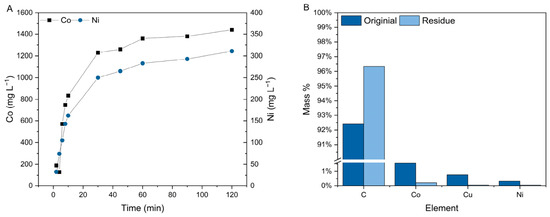
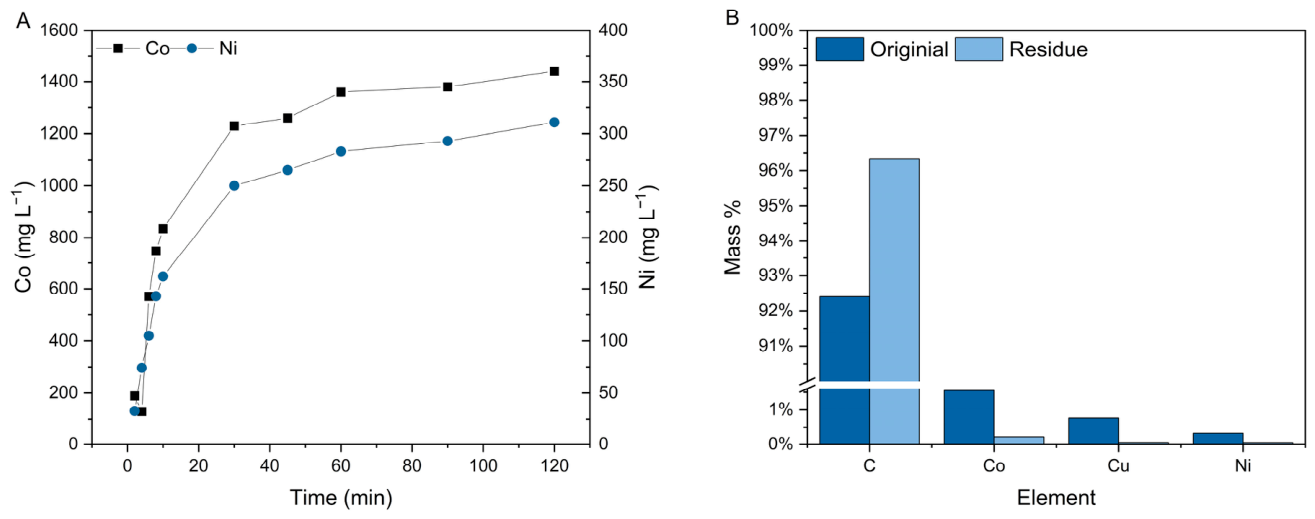
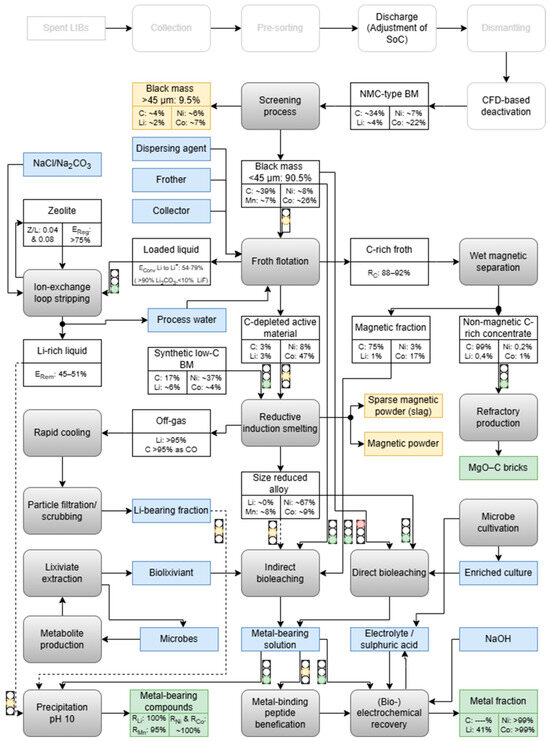
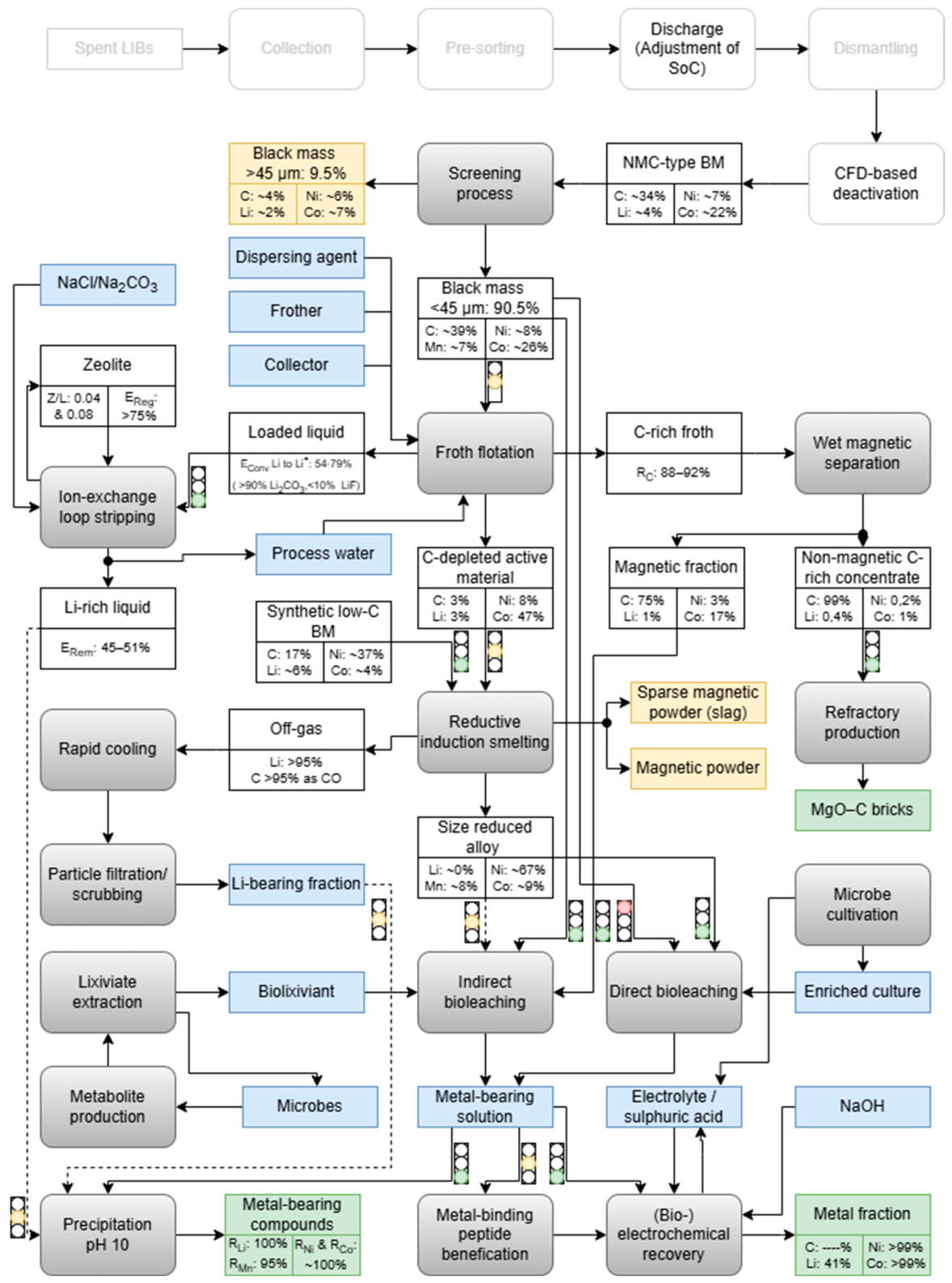
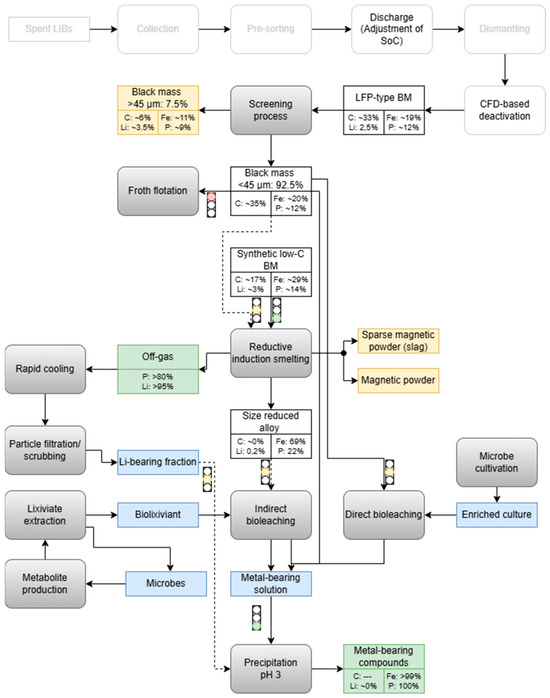
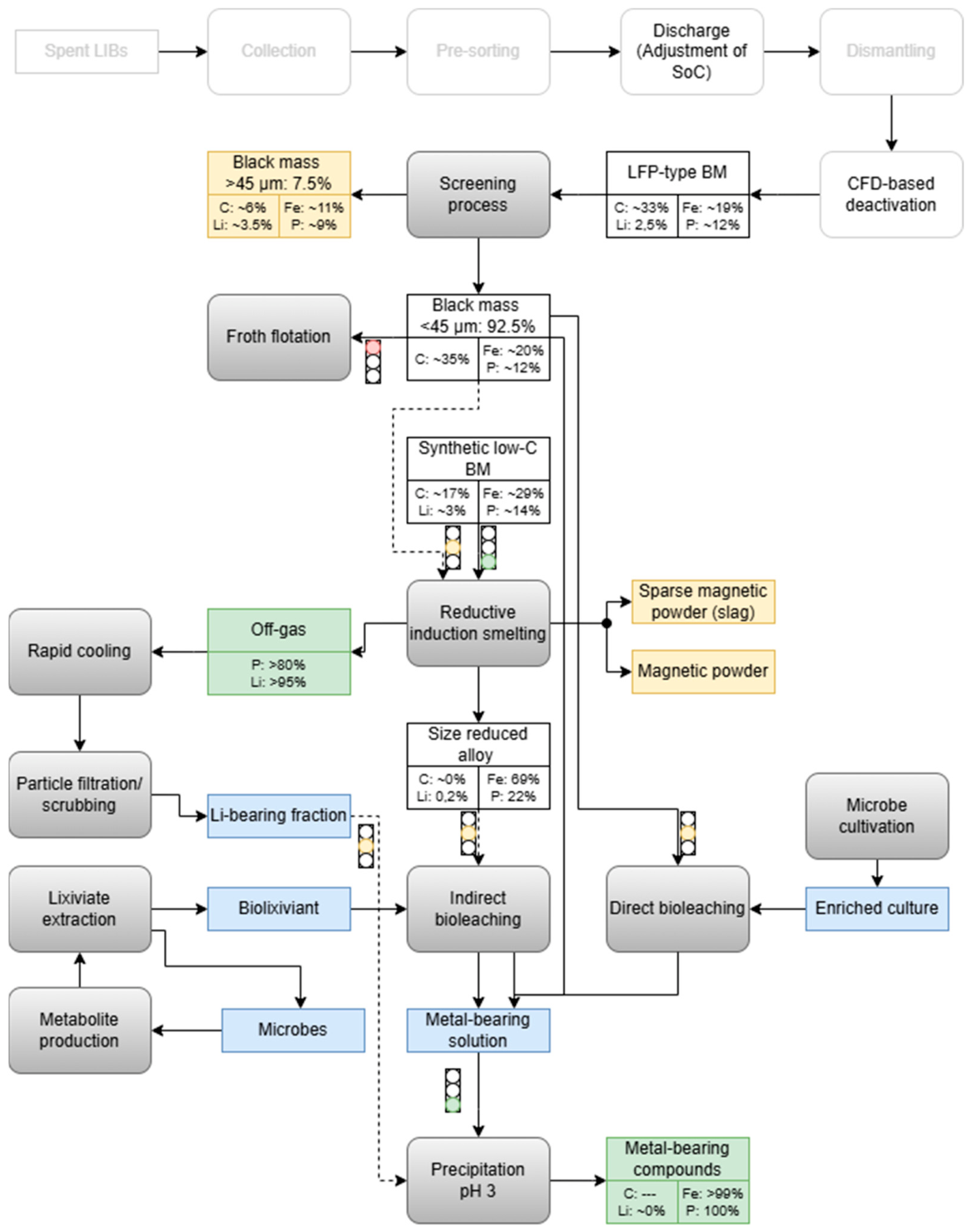

Disclaimer/Publisher’s Note: The statements, opinions and data contained in all publications are solely those of the individual author(s) and contributor(s) and not of MDPI and/or the editor(s). MDPI and/or the editor(s) disclaim responsibility for any injury to people or property resulting from any ideas, methods, instructions or products referred to in the content. |
© 2026 by the authors. Licensee MDPI, Basel, Switzerland. This article is an open access article distributed under the terms and conditions of the Creative Commons Attribution (CC BY) license.