


Abstract
The rapid growth of renewable energy sources, particularly solar and wind power, has increased the demand for efficient and reliable battery energy storage systems (BESSs) to address intermittency, enhance grid stability, and improve energy management. In recent years, artificial intelligence (AI) has emerged as a transformative technology for optimizing the operation, control, monitoring, and maintenance of battery storage systems. This review provides a comprehensive overview of AI-driven BESS technologies for renewable energy applications. The study examines recent advances in machine learning, deep learning, reinforcement learning, and hybrid intelligent algorithms applied to battery state estimation, energy management, fault diagnosis, predictive maintenance, thermal management, and lifetime prediction. Furthermore, the integration of AI-based BESSs with photovoltaic systems, wind farms, microgrids, and smart grids is critically analyzed. The review highlights the advantages of AI techniques in improving system efficiency, reliability, adaptability, and decision-making capabilities under uncertain operating conditions. Current challenges, including data quality, model interpretability, computational requirements, cybersecurity concerns, and real-time implementation issues, are also discussed. Finally, emerging research directions such as digital twins, explainable artificial intelligence, federated learning, and edge intelligence are explored to provide insights into the future development of intelligent battery storage systems. This review aims to serve as a valuable reference for researchers, engineers, and practitioners working at the intersection of artificial intelligence, battery technologies, and renewable energy systems.
1. Introduction
The global energy landscape is undergoing a profound transformation as renewable energy (RE) sources (RESs), particularly solar photovoltaic (PV) and wind energy (WE), continue to expand at an unprecedented pace [1]. This transition is driven not only by the urgent need to mitigate climate change and greenhouse gas emissions but also by the growing concerns surrounding fossil-fuel depletion, energy security, and the long-term sustainability of conventional power generation [2]. Over the past decade, global investment and deployment of renewable technologies have increased substantially, with solar PV and wind power accounting for a dominant share of newly installed electricity-generation capacity [3]. However, unlike conventional generation, RESs are inherently intermittent, variable, and weather-dependent. The resulting uncertainty and power fluctuations pose significant challenges to power-system operation, stability, reliability, and flexibility, particularly as the penetration level of renewable generation continues to increase [4].
Battery energy storage systems (BESSs) have consequently emerged as a key enabling technology for overcoming the temporal mismatch between renewable generation and electricity demand [5]. By absorbing surplus electricity during periods of high renewable generation and releasing it when generation is insufficient or demand is elevated, BESSs can provide a broad range of grid services, including energy balancing, peak shaving, frequency regulation, voltage support, load shifting, and resilience enhancement [6]. Among currently available storage technologies, lithium-ion batteries have gained a dominant position because of their high energy density, long cycle life, fast dynamic response, and steadily declining cost [7]. Nevertheless, the rapid deployment of BESSs has brought a new generation of challenges involving battery degradation, thermal behavior, safety, state estimation, maintenance, lifetime prediction, and real-time operational optimization [8]. These challenges become particularly complex when batteries operate under highly variable renewable generation and dynamic grid conditions, creating a strong need for more intelligent and adaptive management approaches.
The convergence of RE, electric vehicles (EVs), advanced power electronics, and digital intelligence is therefore creating new opportunities for improving the flexibility and reliability of modern energy systems. Several recent studies illustrate this evolution from different perspectives. Kumaoka et al. [9] investigated the minimum PV capacity required for solar-powered EV charging stations while considering route reassignment for clinic shuttle services in Japan. Their results highlighted the importance of BESS integration in compensating for solar intermittency, maintaining reliable charging services, and reducing the required PV capacity. Although the study did not introduce a dedicated battery control algorithm, its energy management framework coordinated PV generation, battery storage, and EV charging demand through optimal scheduling. Similarly, Dinanta et al. [10] developed a spatial allocation model for EV charging infrastructure in Indonesia’s new capital city. Their study showed that integrating BESSs into charging infrastructure can alleviate grid congestion, enhance charging reliability, and facilitate RE integration. The primary contribution, however, was infrastructure planning rather than battery-level control, with Geographic Information System (GIS)-based planning and optimization serving as the main methodological tools.
Beyond physical infrastructure, digital intelligence and secure information exchange are becoming increasingly important components of future energy systems. Raghavendra [11] proposed a hybrid Artificial Intelligence (AI) and Blockchain architecture for secure and efficient digital transactions in EV ecosystems. Although the study primarily addressed cybersecurity and transaction management, its AI-based decision-making and Blockchain-enabled decentralized architecture could support BESS-assisted charging infrastructures through secure energy trading and intelligent charging coordination. In contrast, Do et al. [12] focused directly on power conversion and proposed a novel P–Q control structure for an interleaved full-bridge converter used in multifunctional single-phase AC battery applications. In this case, the BESS served as a central component for regulating active and reactive power exchange with the AC grid, thereby improving voltage regulation, power quality, and energy balancing. The interleaved full-bridge DC–AC converter enabled accurate bidirectional power-flow control and enhanced battery utilization under dynamic operating conditions.
The role of intelligent data-driven technologies is further demonstrated by Gangaiah et al. [13], who investigated the integration of AI and Big Data for real-time decision support in EV ecosystems. Their findings demonstrated that AI-driven predictive analytics can enhance battery management, charging scheduling, and energy optimization. Although the study did not develop a converter-level battery controller, its AI-based decision-support framework can be interpreted as a high-level energy management layer for BESS operation based on Big Data analytics and machine learning (ML). Duong et al. [14], meanwhile, examined the penetration of EV charging stations and RE sources in distribution networks with the objective of reducing energy losses and improving voltage profiles. Their results indicated that the integration of BESSs with renewable sources can smooth power fluctuations, reduce network losses, and improve voltage stability. The study relied primarily on optimization-based planning and energy management rather than a dedicated battery control algorithm. At the charging-interface level, Seleem et al. [15] developed a dual-stage unified power factor (UPF) DC fast charger for plug-in EVs. The proposed power-electronic architecture achieved high charging efficiency and improved input-current quality. Although BESS integration was not the primary focus, coupling such high-performance charging systems with BESSs could further reduce grid stress, support peak shaving, and increase charging flexibility. In the cybersecurity domain, Ramesh [16] proposed a Blockchain-based secure digital identity management framework for EV charging networks. While the study concentrated on authentication, privacy, and secure user identification, its Blockchain architecture could facilitate trusted access to BESS-supported charging infrastructure and secure energy transactions among EVs, charging stations, and the grid. Because its focus was digital identity management, no dedicated battery control strategy was implemented. Similarly, Kumar [17] investigated IoT-driven predictive analytics for analyzing EV usage patterns in digital societies. By combining real-time sensing, connected devices, and predictive analytics, such a framework can support BESS energy management through demand forecasting, battery-utilization optimization, and peak-load reduction. Nevertheless, the proposed approach relied on IoT and predictive analytics rather than a dedicated battery control algorithm.
While these studies demonstrate the growing convergence between BESSs, RE, EVs, power electronics, and intelligent digital technologies, more advanced control approaches have increasingly focused on directly improving the dynamic behavior of RE-based storage systems. Debdouche et al. [18] proposed a robust integral backstepping control strategy for a microgrid (MG)-connected PV system incorporating a BESS through a multifunctional voltage source inverter. The BESS compensated for PV intermittency, maintained DC-link voltage stability, and improved power quality under changing operating conditions. The proposed architecture combined integral backstepping control with direct power control based on space vector modulation, achieving robust disturbance rejection, improved dynamic response, and efficient bidirectional power exchange. Similarly, Belhadj Djilali et al. [19] developed a PV-battery-diesel hybrid system employing a fuzzy logic (FL)-based Perturb and Observe (FLP&O) maximum power point tracking algorithm integrated with an energy management strategy. In this configuration, the BESS ensured continuous power availability, reduced diesel-generator operation, and increased RE utilization. The combined FLP&O and intelligent energy management strategy coordinated power sharing among the PV array, battery, and diesel generator, thereby improving system efficiency and operational reliability.
The transition toward intelligent and coordinated energy management is also evident in the work of Roopa [20], who introduced a multi-layer learning architecture for optimal power sharing between EVs and MGs. The proposed AI-based framework enables coordinated operation between EV batteries and stationary BESSs, with the potential to improve power sharing, reduce operating costs, and enhance grid flexibility. Although the study did not introduce a converter-level battery controller, its multi-layer ML architecture provided a high-level decision-making and energy management mechanism. Boutaghane et al. [21] further investigated advanced control strategies for improving the effectiveness and efficiency of hybrid power systems incorporating BESSs. Their results demonstrated that optimized BESS control can improve energy management, system stability, and RE utilization while reducing power fluctuations and enhancing dynamic performance. At the converter-control level, Bouziane et al. [22] developed a robust Type-2 FL control strategy for a MG-connected PV system equipped with a BESS through a multifunctional voltage source inverter. The BESS was used to stabilize power exchange, mitigate RE fluctuations, and support voltage regulation. By combining Type-2 FL control with direct power control, the proposed approach improved robustness against parameter uncertainties and external disturbances while enhancing the dynamic performance and reliability of the PV-BESS MG.
Despite the progress achieved by conventional and advanced control approaches, traditional battery management strategies remain largely dependent on physics-based models and conventional control techniques [23]. Although such methods can provide reliable performance under well-defined operating conditions, their effectiveness may deteriorate when batteries are exposed to highly nonlinear, dynamic, uncertain, and rapidly changing operating environments associated with RE systems [24]. The increasing availability of large-scale operational datasets, high-resolution sensing technologies, cloud-computing infrastructure, and high-performance computational platforms has therefore created a favorable environment for the development of AI-driven BESSs capable of learning from complex operating data and adapting to changing conditions [25].
AI has consequently emerged as a powerful paradigm for transforming battery monitoring, diagnostics, prognostics, control, and optimization [26]. Unlike purely model-based approaches, AI methods can extract hidden patterns and nonlinear relationships from large volumes of operational data, predict future system behavior, and support increasingly autonomous decision-making [27]. Over the past decade, substantial research has focused on integrating ML, deep learning (DL), reinforcement learning (RL), and hybrid intelligent algorithms into battery management systems (BMSs), energy management systems (EMSs), and RE control frameworks [28]. This transition from predominantly model-driven approaches toward data-driven and hybrid intelligence is particularly promising for BESSs, where battery states and operating conditions can vary significantly over time.
Among AI techniques, ML has demonstrated strong capabilities in addressing a wide range of battery-management challenges. Supervised learning algorithms, including Support Vector Machines (SVMs), Random Forests (RFs), Extreme Gradient Boosting (XGBoost), and Gaussian Process Regression (GPR), have been successfully applied to state-of-charge (SOC) estimation, state-of-health (SOH) prediction, fault diagnosis, and remaining useful life (RUL) forecasting [29,30]. A major advantage of these methods is their ability to learn complex nonlinear relationships between measurable battery variables and internal battery states without requiring highly detailed electrochemical models [31,32]. This capability makes ML particularly attractive for practical BMS applications where computational efficiency, adaptability, and reliable state estimation are essential.
The emergence of DL has further expanded the capabilities of intelligent battery systems. Deep neural network architectures, including Artificial Neural Networks (ANNs), Convolutional Neural Networks (CNNs), Recurrent Neural Networks (RNNs), Long Short-Term Memory (LSTM) networks, and more recently Transformer-based models, have demonstrated strong performance in battery diagnostics and prognostics [33,34,35,36,37]. Their ability to learn hierarchical representations from large-scale temporal and multidimensional datasets enables them to capture complex degradation patterns, thermal dynamics, and operational characteristics that may be difficult to represent using conventional analytical approaches. As a result, DL has become increasingly important for high-accuracy prediction and condition monitoring in advanced BESS applications.
In parallel, RL has attracted growing attention as a promising approach for intelligent battery energy management [38]. Unlike supervised learning, which generally requires labeled training data, RL enables an autonomous agent to learn control policies through interactions with its operating environment. This characteristic is particularly valuable for RE systems, where generation, demand, electricity prices, and battery states can change continuously and unpredictably [39]. Recent studies have demonstrated the potential of RL for battery scheduling, MG energy management, charging optimization, and grid-support services, highlighting its ability to address sequential decision-making problems under dynamic operating conditions [40,41,42].
The integration of AI-driven BESSs with RE infrastructures is therefore emerging as a critical research direction. In PV-based systems, AI methods are increasingly being applied to solar-power forecasting, battery scheduling, maximum self-consumption optimization, energy management, and predictive maintenance [43]. In WE systems, AI-based approaches support WE forecasting, storage dispatch optimization, uncertainty management, and grid-balancing operations. The coordinated integration of RESs, BESSs, and intelligent algorithms offers the potential to transform conventional energy-storage systems into adaptive and predictive assets capable of responding to changing generation, demand, and grid conditions [44]. Such integration is expected to become increasingly important in future smart grids, distributed energy systems, and sustainable energy communities.
Another major development is the emergence of digital twin (DT) technology as an advanced framework for intelligent battery management [45,46,47]. A DT provides a virtual representation of a physical battery by integrating real-time operational measurements with physics-based models, data-driven methods, and AI algorithms [48]. By continuously synchronizing the virtual and physical domains, DTs can support real-time condition monitoring, fault detection, predictive maintenance, degradation assessment, and lifetime optimization throughout the battery lifecycle [49]. The combination of DTs with ML and cloud-computing technologies further expands the possibilities for intelligent BMSs, enabling continuous data-driven assessment and improved coordination between battery operation and RE resources [50].
Nevertheless, the rapid development of AI-driven BESSs does not eliminate existing challenges; rather, it introduces new technical and methodological questions. AI models often require large quantities of high-quality data for effective training, validation, and generalization [51]. In practice, battery datasets may be limited in size, affected by measurement noise and missing data, or generated under operating conditions that do not adequately represent real-world applications. Moreover, many advanced DL models remain difficult to interpret, which can limit the ability of engineers and system operators to understand and trust their predictions and decisions [52]. Other unresolved issues include cybersecurity risks, computational complexity, real-time implementation constraints, model transferability, data privacy, and the absence of standardized benchmarking procedures for comparing AI-based battery solutions.
In this context, Explainable AI (XAI) has emerged as a promising paradigm for improving the transparency and interpretability of intelligent battery systems [53,54]. XAI methods seek to provide meaningful explanations of the factors underlying model predictions and decisions, thereby reducing the opacity associated with complex ML and DL models [55,56]. For BMS applications, improved interpretability can be particularly important because battery-related decisions may directly affect safety, reliability, performance, and lifetime. Integrating XAI into BMSs can therefore contribute to greater user trust, improved diagnostic confidence, enhanced reliability, and broader industrial acceptance of AI-driven battery technologies [53,56].
At the same time, several emerging AI paradigms are expected to shape the next generation of intelligent battery systems. Federated learning can enable collaborative model development across distributed datasets without requiring direct sharing of sensitive operational data, while edge AI can move computational intelligence closer to battery-management devices and support low-latency, real-time decision-making [57,58]. In addition, physics-informed machine learning (PINNs and related physics-informed approaches) offers a promising means of combining the flexibility of data-driven models with fundamental physical and electrochemical knowledge. Such hybrid approaches may improve model accuracy, physical consistency, robustness, and generalization, particularly when available battery datasets are limited or heterogeneous [59,60].
Despite the substantial progress reported across AI-based battery monitoring, control, energy management, digital twins, and predictive maintenance, the literature remains highly fragmented across technologies, application levels, AI methodologies, and validation approaches. A comprehensive and systematic synthesis is therefore needed to clarify how different AI techniques contribute to the various functions of BESSs, identify methodological and technological trends, assess current limitations, and reveal the research gaps that continue to restrict large-scale deployment. Accordingly, this review provides a systematic assessment of AI-driven BESSs for RE applications, covering recent developments in ML, DL, RL, DTs, predictive maintenance, and intelligent energy management. Particular emphasis is placed on the interaction between AI techniques, BMS functions, RE integration, emerging intelligent technologies, and the practical challenges that will shape the evolution of next-generation energy-storage systems [61,62,63,64].
The remainder of this review is organized as follows. Section 2 presents the systematic literature review methodology, including the PRISMA 2020 framework and study-selection process. Section 3 provides an overview of battery energy storage technologies and examines their role in RE systems. Section 4 discusses the principal AI techniques employed in battery-related applications. Section 5 reviews AI-based BMSs, including intelligent state estimation, diagnostics, and prognostics. Section 6 analyzes intelligent energy management strategies for RE integration. Section 7 examines DT technologies and AI-enabled predictive maintenance. Section 8 discusses the major challenges, limitations, and research gaps identified in the literature. Finally, Section 9 presents future research directions and the main conclusions of the review.
2. Methodology: Systematic Literature Review
This study adopts a Systematic Literature Review (SLR) methodology to identify, evaluate, classify, and synthesize the existing scientific literature on AI-driven BESSs for RE applications. The review was structured in accordance with the PRISMA 2020 reporting framework to ensure a transparent and reproducible process for study identification, screening, eligibility assessment, and inclusion.
The methodological scope was defined to capture the increasing convergence of AI, battery energy storage, renewable-energy integration, and intelligent energy management. In particular, the review considered ML, DL, RL, evolutionary and metaheuristic optimization, hybrid AI approaches, DTs, explainable artificial intelligence (XAI), predictive maintenance, BMSs, and intelligent EMSs. The reviewed literature demonstrates that these approaches are increasingly being applied to battery state estimation, degradation and remaining useful life prediction, fault diagnosis, thermal management, energy management, power control, storage sizing, and predictive maintenance.
The review consisted of five principal stages: (i) definition of the review scope and research questions, (ii) systematic literature search, (iii) application of predefined inclusion and exclusion criteria, (iv) title/abstract screening and full-text eligibility assessment, and (v) data extraction, quality assessment, and thematic synthesis [65]. The overall study-selection process is presented in the PRISMA 2020 flow diagram in Figure 1.
Figure 1.
PRISMA 2020 flow diagram illustrating the identification, screening, eligibility assessment, and inclusion of studies in the systematic literature review.
2.1. Review Scope and Research Questions
The review investigates the state of research on AI-enabled BESSs and their integration with RE systems and intelligent energy infrastructures. The scope encompasses both direct applications of AI to BESS operation and closely related applications that provide essential technologies for intelligent battery management, including SOC and SOH estimation, RUL prediction, fault diagnosis, thermal management, degradation assessment, predictive maintenance, energy forecasting, optimal storage sizing, energy management, charging/discharging optimization, and power control.
Particular attention was given to applications in PV, wind, hybrid RE systems, MGs, smart grids, RE-based EV charging systems, and battery energy storage infrastructures. The review also considered emerging digital-twin and AI-integrated architectures for monitoring, diagnosis, prognostics, and lifecycle optimization.
The review was guided by the following research questions:
- RQ1: What AI techniques are currently employed in BESSs and battery-based energy storage systems associated with RE applications?
- RQ2: What BESS-related functions are addressed using AI-based approaches, including SOC/SOH estimation, RUL prediction, fault diagnosis, degradation prediction, thermal management, energy management, forecasting, optimization, power control, and predictive maintenance?
- RQ3: What are the main characteristics, advantages, limitations, and application domains of ML, DL, RL, digital twins, XAI, evolutionary/metaheuristic algorithms, and hybrid AI approaches for intelligent BESS operation?
- RQ4: What datasets, experimental platforms, simulation environments, battery technologies, RE configurations, validation procedures, and performance indicators are used in AI-driven BESS research?
- RQ5: What methodological, technological, and practical research gaps remain regarding the reliability, explainability, generalization, computational efficiency, real-time implementation, safety, and scalability of AI-enabled BESSs?
These research questions were subsequently used to define the literature-search strategy, eligibility criteria, data-extraction framework, quality-assessment procedure, and thematic synthesis.
2.2. Literature Search Strategy
A systematic search was conducted to identify scientific publications addressing AI-enabled battery energy storage and its application in RE and intelligent energy systems. The search strategy targeted major scientific databases and digital libraries, including Scopus, Web of Science, IEEE Xplore, ScienceDirect, and SpringerLink. The search period was designed to capture recent developments while retaining relevant earlier studies that established foundational methodologies for AI-based battery management and energy storage.
Although particular emphasis was placed on recent literature published during 2023–2026, earlier studies were retained when they provided important methodological foundations or benchmark approaches directly relevant to the research questions. This approach is justified by the presence of influential earlier contributions addressing battery capacity estimation, battery prognostics, RUL prediction, and AI-based energy-storage applications. Consequently, the review does not treat publication year alone as a sufficient exclusion criterion when an earlier study provides a fundamental methodological contribution to the field.
The search strategy was structured around four principal keyword groups:
Artificial intelligence and computational methods:
“artificial intelligence”, “AI”, “machine learning”, “ML”, “deep learning”, “DL”, “reinforcement learning”, “RL”, “neural network”, “CNN”, “LSTM”, “transformer”, “evolutionary algorithm”, “particle swarm optimization”, “metaheuristic”, “digital twin”, and “explainable AI”.
Battery energy storage:
“battery energy storage system”, “BESS”, “battery storage”, “lithium-ion battery”, “battery management system”, and “BMS”.
Renewable-energy and energy-system applications:
“renewable energy”, “renewable energy system”, “solar PV”, “photovoltaic”, “wind energy”, “hybrid renewable energy”, “microgrid”, “smart grid”, and “energy storage”.
Battery and energy-management functions:
“state of charge”, “SOC estimation”, “state of health”, “SOH estimation”, “remaining useful life”, “RUL prediction”, “fault diagnosis”, “thermal management”, “degradation prediction”, “energy management”, “energy forecasting”, “predictive maintenance”, “charging optimization”, “discharging optimization”, and “power control”.
A general Boolean search structure was formulated as:
(“artificial intelligence” OR “machine learning” OR “deep learning” OR “reinforcement learning” OR “digital twin” OR “explainable AI” OR “evolutionary algorithm” OR “metaheuristic”) AND (“battery energy storage system” OR “BESS” OR “battery storage” OR “battery management system”) AND (“renewable energy” OR “solar PV” OR “photovoltaic” OR “wind energy” OR “microgrid” OR “smart grid”).
Additional combinations were used to capture studies focusing on specific BESS functions, including SOC/SOH estimation, RUL prediction, fault diagnosis, thermal management, predictive maintenance, and intelligent energy management. The search syntax was adapted to the requirements of each database.
The relevance of this search structure is supported by the breadth of recent studies in the collected literature, covering AI-based battery health prediction, fault diagnosis, RUL prediction, digital-twin-based battery management, and AI-based energy management and optimization.
Following the database searches, the retrieved records were consolidated into a unified reference database. Duplicate records were identified and removed before title and abstract screening. The numbers of records retrieved, duplicates removed, records screened, full-text articles assessed, and studies included were documented according to the PRISMA 2020 framework.
2.3. Inclusion and Exclusion Criteria
Predefined inclusion and exclusion criteria were established to ensure consistency, relevance, and methodological rigor during study selection. A publication was considered eligible when it satisfied the following criteria:
Inclusion criteria
- It investigated BESSs, battery-based energy storage, lithium-ion battery systems, or closely related battery-storage applications.
- It addressed RE systems or energy infrastructures associated with RE integration, including PV, wind, hybrid RE systems, microgrids, smart grids, and RE-based EV applications.
- It employed, evaluated, or substantially discussed an AI or intelligent computational method, including ML, DL, RL, neural networks, evolutionary algorithms, metaheuristic optimization, hybrid AI, digital twins, or XAI.
- It addressed at least one relevant battery or energy-system function, such as SOC estimation, SOH estimation, RUL prediction, degradation prediction, fault detection/diagnosis, thermal management, predictive maintenance, energy management, energy forecasting, charging/discharging optimization, storage sizing, or power control.
- It provided sufficient methodological, computational, experimental, or simulation information to permit assessment of the reported approach.
- It was published as a peer-reviewed journal article or peer-reviewed conference paper, where inclusion as a primary study was required.
- It was sufficiently relevant to at least one of the predefined research questions.
Exclusion criteria
Studies were excluded when they:
- Were unrelated to battery energy storage, battery management, or RE applications.
- Did not employ or meaningfully discuss AI, intelligent computational methods, or AI-enabled technologies.
- Focused exclusively on battery chemistry, electrode/material development, or electrochemical characterization without a relevant AI, BMS, energy-management, or storage-system component.
- Addressed AI applications unrelated to battery storage or RE systems.
- Did not provide sufficient scientific or methodological information for meaningful assessment.
- Were editorials, commentaries, abstracts, theses, dissertations, technical reports, or other non-peer-reviewed publications when the publication type was outside the predefined eligibility scope.
- Were duplicate or substantially overlapping publications.
- Did not establish a meaningful relationship between the AI methodology and battery/storage-system functionality.
- Fell outside the predefined scope of the review.
The eligibility criteria were applied consistently during the title/abstract screening and full-text assessment stages. Particular attention was given to maintaining a clear distinction between studies focusing directly on AI-driven BESS applications and studies in which AI was used only in peripheral or unrelated aspects of the energy system.
2.4. Study Selection Process
The study-selection procedure followed the four principal stages of the PRISMA 2020 framework: identification, screening, eligibility, and inclusion.
During the identification stage, records were retrieved from the selected scientific databases using the predefined combinations of AI-, battery-, RE-, and energy-management-related keywords. All records were exported to a unified reference database, where duplicate records were identified and removed.
During the screening stage, titles and abstracts were examined against the predefined eligibility criteria. Records were excluded when they were clearly unrelated to AI-driven BESSs, battery management, RE integration, or the defined research questions.
During the eligibility stage, the full texts of potentially relevant publications were assessed. Full-text records were excluded when they failed to satisfy the eligibility criteria, lacked sufficient technical or methodological information, focused on unrelated battery applications, or did not establish a meaningful relationship between AI techniques and BESS or RE applications.
During the inclusion stage, publications satisfying the predefined criteria were retained for detailed data extraction, quality assessment, and qualitative synthesis.
The final selection process is summarized in the PRISMA 2020 flow diagram shown in Figure 1. The numerical values in the diagram should correspond exactly to the final database-search records and should not be estimated or inferred from the number of references currently listed in the manuscript.
For the figure you uploaded, the boxes should therefore be populated using the actual values:
- Records identified from databases: [612]
- Duplicate records removed: [87]
- Records screened: [528]
- Records excluded: [230]
- Reports sought for retrieval: [298]
- Reports not retrieved: [18]
- Reports assessed for eligibility: [280]
- Not directly related to the review objectives: [38]
- Studies included in the systematic review: [205]
2.5. Quality Assessment
A predefined quality-assessment framework was used to evaluate the methodological and technical robustness of the included studies. This assessment was particularly important because the reviewed literature employs heterogeneous datasets, battery configurations, AI architectures, experimental platforms, and validation strategies.
The quality assessment considered the clarity of research objectives, methodological transparency, description of datasets and experimental conditions, AI-model development, validation procedures, comparison with baseline methods, reporting of performance indicators, and discussion of limitations.
Each included study was assessed according to six criteria:
- QA1: Are the research objectives and application context clearly defined?
- QA2: Is the AI methodology and model architecture sufficiently described?
- QA3: Are the dataset, battery characteristics, operating conditions, experimental platform, or simulation environment adequately described?
- QA4: Is the proposed AI approach appropriately validated using quantitative performance indicators?
- QA5: Is the proposed method compared with conventional, benchmark, or alternative approaches where appropriate?
- QA6: Are the assumptions, limitations, generalization capability, and applicability of the proposed approach adequately discussed?
The quality-assessment procedure was particularly relevant for studies involving SOC/SOH estimation, RUL prediction, fault diagnosis, and predictive maintenance, where differences in datasets, operating conditions, battery aging profiles, and validation procedures can significantly influence reported performance.
Studies providing limited methodological information were not automatically excluded solely because of a lower quality score. Instead, their methodological limitations were considered when interpreting and comparing their findings.
2.6. Data Extraction and Analysis
A structured data-extraction framework was developed to systematically characterize the included literature. For each study, the following information was extracted where available:
- publication year;
- geographical or application context;
- renewable-energy technology;
- battery technology and chemistry;
- BESS configuration;
- application domain;
- AI methodology;
- AI architecture or algorithm;
- battery-management function;
- energy-management or control strategy;
- optimization technique;
- dataset characteristics and source;
- input and output variables;
- experimental or simulation platform;
- training and validation procedures;
- baseline or benchmark methods;
- performance indicators;
- reported computational requirements;
- major findings;
- limitations and identified future research directions.
Particular attention was given to the major functional categories emerging from the literature:
- Battery state estimation, including SOC and SOH estimation.
- Battery degradation and RUL prediction, including deep learning, attention mechanisms, evolutionary optimization, and uncertainty-aware approaches.
- Fault detection and diagnosis, including machine-learning-based fault detection, convolutional neural networks, model-constrained deep learning, and sensor-fusion approaches.
- Battery thermal management, including phase-change-material-based systems and AI- and physics-informed optimization approaches.
- Digital-twin-enabled battery management and predictive maintenance, including DT-based monitoring, battery modeling, prognostics, fleet management, and lifecycle optimization.
- Intelligent energy management and optimization, including reinforcement learning, multi-agent RL, PSO-based approaches, evolutionary optimization, and hybrid AI methods for MGs and RE systems.
- Renewable-energy (RE) forecasting and grid-level applications, including AI-based energy forecasting, demand management, MG control, and RE optimization.
The extracted evidence was subsequently organized according to the research questions and synthesized thematically. This allowed the review to identify dominant AI methodologies, emerging technological trends, application areas, battery-management functions, validation practices, and relationships between AI methods and BESS operating requirements.
A qualitative comparative analysis was then conducted to examine the relative strengths and limitations of ML, DL, RL, DTs, evolutionary/metaheuristic algorithms, XAI, and hybrid AI approaches. Particular attention was given to data requirements, computational complexity, interpretability, uncertainty quantification, generalization, robustness, real-time implementation, scalability, and experimental validation.
Finally, the synthesis was used to identify major research gaps and unresolved challenges in AI-driven BESS research. Particular emphasis was placed on the need for generalizable datasets, standardized validation protocols, uncertainty-aware models, explainable AI, real-time edge/cloud implementation, integration of digital twins with BMS and EMS, reliable fault diagnosis, degradation-aware energy management, and experimentally validated intelligent control strategies. These issues are consistently highlighted across recent studies addressing AI-based battery management, DTs, predictive maintenance, and intelligent energy management.
3. Battery Energy Storage Technologies and Their Role in RE Systems
The increasing penetration of RESs, particularly solar PV and WE, has created both opportunities and operational challenges for modern power systems. While RESs contribute to decarbonization and energy diversification, their inherent intermittency and variability can lead to fluctuations in power generation, thereby affecting power quality, grid stability, and supply reliability [66]. Consequently, energy storage has become an important enabling technology for increasing the flexibility of power systems and facilitating the reliable integration of renewable generation [67].
Among the different energy storage options, BESSs have attracted particular attention because of their fast dynamic response, modularity, scalability, and increasingly competitive costs [68]. Their technical flexibility allows them to support a wide range of applications, including energy arbitrage, frequency regulation, voltage support, peak shaving, load leveling, renewable-energy smoothing, and backup power supply [69]. These capabilities make BESSs particularly suitable for compensating for short-term fluctuations in renewable generation and improving the controllability and reliability of RE-based power systems.
However, the suitability of a BESS cannot be assessed solely on the basis of its response speed or cost. Battery chemistry and system configuration strongly influence energy and power density, efficiency, cycle life, safety, degradation behavior, and operating requirements. Thus, there is no universally optimal battery technology for all RE applications; rather, technology selection depends on the required power-to-energy ratio, operating profile, environmental conditions, lifetime requirements, and economic constraints. This diversity has also increased the need for advanced battery-management and control strategies capable of adapting storage operation to changing conditions.
Recent developments in battery technologies, power electronics, sensing, digitalization, and artificial intelligence (AI) are further changing the role of BESSs from conventional storage units toward increasingly intelligent and actively managed energy systems. AI-based methods are being investigated for functions such as state estimation, degradation prediction, fault diagnosis, energy management, and charging/discharging optimization. Nevertheless, challenges related to data availability, model generalization, computational requirements, interpretability, and experimental validation remain important barriers to large-scale deployment of intelligent BESSs.
Accordingly, this section first examines the principal battery storage technologies used in RE applications and then considers their operational characteristics, advantages, limitations, and application requirements. This technological context provides the basis for subsequently evaluating how AI methods can address the monitoring, management, optimization, and reliability challenges associated with different BESS technologies.
3.1. Overview of BESSs
A BESS is an electrochemical energy-storage system that converts electrical energy into chemical energy during charging and subsequently converts the stored energy back into electrical energy during discharge. However, a practical BESS extends beyond the electrochemical cells themselves and integrates several interconnected subsystems that determine its performance, safety, controllability, and operational lifetime [70]. These typically include:
- Battery modules and packs, which constitute the electrochemical energy-storage unit;
- Battery Management System (BMS), responsible for monitoring and managing battery states and operating limits;
- Power Conversion System (PCS), which controls bidirectional power exchange between the battery and the electrical network;
- Thermal Management System (TMS), which maintains the battery within an appropriate temperature range;
- Monitoring and communication units, which enable data acquisition, supervision, coordination, and communication with higher-level energy-management and control systems.
The interaction among these subsystems is particularly important in RE applications because renewable generation and load conditions can vary rapidly. Consequently, BESS performance depends not only on the electrochemical characteristics of the battery but also on the effectiveness of monitoring, thermal management, power conversion, and control strategies. This integrated perspective is essential when assessing the potential contribution of AI, since intelligent algorithms can operate across several BESS functions rather than being limited to battery-level prediction or estimation tasks.
Figure 2 illustrates the general architecture of a modern BESS integrated with RESs.
Figure 2.
Architecture of a RE-based power system incorporating battery energy.
The suitability of a battery technology for RE applications depends on a combination of electrochemical, technical, economic, and environmental characteristics rather than on a single performance indicator. Commonly reported criteria include energy density, power density, round-trip efficiency, cycle life, depth of discharge (DoD), response time, safety, cost, and environmental impact [71]. These parameters are closely interrelated and often involve trade-offs. For example, technologies offering high energy density may not necessarily provide the highest safety or lifetime, while low-cost technologies may be disadvantaged by lower efficiency or shorter cycle life. Therefore, battery selection should be considered in relation to the specific requirements of the RE application, including the duration and frequency of energy exchange, required response speed, operating environment, and expected lifetime.
3.2. Major Battery Technologies for RE Applications
Different battery technologies have been developed to address the diverse requirements of RE storage. Among them, lithium-ion and lead-acid batteries have been extensively deployed, although they differ considerably in terms of performance, cost, lifetime, safety, and application suitability. The following subsections summarize their main characteristics and discuss the conditions under which each technology is most appropriate.
3.2.1. Lithium-Ion Batteries
Lithium-ion batteries (LIBs) have become the dominant battery technology in many energy-storage applications and are increasingly used for RE integration [72]. Their widespread adoption is primarily associated with their high energy density, high efficiency, relatively long cycle life, low self-discharge, and rapid response. These characteristics allow LIB-based BESSs to accommodate frequent and rapid variations in both renewable generation and electrical demand, making them suitable for grid-scale storage, electric vehicles (EVs), smart grids, and MGs [73].
At the cell level, a LIB consists mainly of a cathode, an anode, an electrolyte, and a separator. Different combinations of electrode materials produce distinct battery chemistries and, consequently, different performance and safety characteristics. Common cathode chemistries include lithium iron phosphate (LFP), nickel manganese cobalt (NMC), and nickel cobalt aluminum (NCA), while graphite remains a widely used anode material. Emerging materials, including silicon-based anodes, are also being investigated to increase energy-storage capacity. Thus, the term LIB encompasses a range of chemistries rather than a single technology, and their performance should therefore be evaluated according to the specific chemistry and operating conditions.
Among the chemistries relevant to RE applications, LFP, NMC, and NCA present different advantages and limitations [74]. LFP is generally associated with high thermal stability, good safety, long cycle life, and relatively low cost. These characteristics make it particularly attractive for stationary BESS applications, where durability and safety may be more important than achieving the maximum possible energy density. Its principal disadvantage is its comparatively lower energy density, which can increase the required physical size of the storage system.
NMC chemistry generally provides a higher energy density while maintaining good power capability, making it attractive where space and performance are important considerations. However, its use of relatively costly materials and its comparatively lower thermal stability introduce economic and safety considerations that require appropriate battery protection and thermal-management strategies. NCA chemistry can provide very high energy density and is therefore advantageous where minimizing system size and weight is important. Conversely, its comparatively greater sensitivity to thermal conditions increases the importance of effective monitoring, protection, and thermal management.
Overall, LIBs provide a combination of high efficiency, rapid response, relatively high energy density, and technological maturity that is well suited to the dynamic requirements of RE systems. Their characteristics make them particularly effective for applications such as frequency regulation, RE smoothing, peak shaving, load shifting, and short-duration energy management. Nevertheless, degradation, thermal behavior, safety, and cost remain important considerations, particularly under intensive cycling. These challenges also provide a strong motivation for advanced BMS and AI-based methods for state estimation, degradation prediction, thermal management, and optimal operation.
3.2.2. Lead-Acid Batteries
Lead-acid batteries represent one of the most mature rechargeable battery technologies and have historically played an important role in backup power and small-scale RE systems. Their continued use is mainly associated with relatively low initial cost, established manufacturing processes, operational reliability, and well-developed recycling infrastructure. These advantages can make lead-acid technology economically attractive for applications with moderate cycling requirements and where system cost is a primary consideration.
However, their lower energy density, relatively limited usable depth of discharge, and shorter cycle life compared with modern lithium-ion technologies constrain their suitability for applications involving frequent and deep charge–discharge cycles. Their round-trip efficiency is also generally lower than that of LIB systems. Consequently, although lead-acid batteries remain relevant in specific stationary and backup applications, their role in high-cycling RE storage has progressively been challenged by lithium-ion technologies, which generally offer higher efficiency, greater energy density, and longer cycle life [75].
The comparison between LIB and lead-acid technologies therefore illustrates an important point for RE applications: no battery technology is optimal under all operating conditions. The appropriate choice depends on the required combination of cost, efficiency, lifetime, power response, safety, and energy capacity. This technology-dependent behavior is particularly relevant to intelligent BESS operation, since AI-based monitoring and control strategies must account for the specific degradation mechanisms, operating constraints, and performance characteristics of the underlying battery chemistry.
3.2.3. Sodium-Ion Batteries
Sodium-ion batteries have emerged as promising alternatives to lithium-ion batteries, particularly for stationary energy storage applications. Their main advantages include the abundance and relatively low cost of sodium resources, improved sustainability, and enhanced supply-chain security [76]. However, their lower energy density and the relatively immature manufacturing ecosystem remain important limitations. Recent technological developments have improved the performance and commercialization prospects of sodium-ion batteries, making them increasingly attractive for RE storage applications where cost, resource availability, and sustainability are important considerations [77].
3.2.4. Solid-State Batteries
Solid-state batteries replace conventional liquid electrolytes with solid electrolytes, offering the potential for improved safety, higher energy density, and longer service life [78]. The absence of flammable liquid electrolytes can reduce fire risks, while solid-state architectures may enable the use of high-capacity electrode materials. Nevertheless, their widespread commercialization is still constrained by manufacturing complexity, high production costs, and challenges associated with interface stability between the solid electrolyte and electrodes. Despite these challenges, continued advances in materials and manufacturing technologies are expected to increase the applicability of solid-state batteries in future RE storage systems.
3.2.5. Flow Batteries
Flow batteries store energy in liquid electrolytes held in external tanks and include technologies such as vanadium redox flow batteries (VRFBs), zinc-bromine batteries, and iron-chromium batteries. Their principal advantages are long cycle life, high tolerance to deep discharge, and the ability to independently scale power and energy capacity, making them particularly suitable for long-duration RE storage [79]. However, their relatively low energy density, larger physical footprint, and higher system complexity can increase installation requirements and overall costs. Nevertheless, flow batteries are promising for utility-scale RE applications where long-duration operation, frequent cycling, and extended service life are required [80].
3.3. Comparative Analysis of Battery Technologies
Table 1 presents a comparison of major battery technologies used in energy storage applications based on key performance indicators, including energy density, round-trip efficiency, cycle life, safety, cost, and typical applications. This comparison was based on references [81,82,83,84,85,86,87,88,89]. LIBs offer high energy density and excellent efficiency (90–98%), making them widely used in grid energy storage, EVs, and MGs. Lead-acid batteries are characterized by low cost and high safety but have lower energy density and shorter cycle life, which limits their use mainly to backup power and UPS systems. Sodium-ion batteries provide a balanced combination of moderate energy density, good efficiency, and low cost, making them suitable for stationary energy storage. Solid-state batteries represent an emerging technology with very high energy density, outstanding safety, and a cycle life exceeding 10,000 cycles, although their current cost remains relatively high. Flow batteries, while having low energy density, offer exceptional safety and very long cycle life, making them particularly attractive for long-duration and grid-scale energy storage applications.
Table 1.
Comparison of major battery technologies for energy storage applications [81,82,83,84,85,86,87,88,89].
Recent studies have conducted comprehensive comparisons of battery and energy storage technologies for modern energy systems and MGs. Sebbagh et al. (2026) in [90] provided an extensive review of next-generation battery technologies, highlighting that LIBs remain the dominant solution due to their high energy density, superior round-trip efficiency, and technological maturity. The study also emphasized the growing potential of sodium-ion and solid-state batteries as promising alternatives, owing to their improved safety characteristics, long cycle life, and reduced dependence on critical raw materials. Furthermore, the authors identified solid-state batteries as a key candidate for future large-scale energy storage and electric mobility applications despite their current high manufacturing costs. In a comparative analysis of energy storage technologies for MGs, Chehab et al. (2023) in [91] evaluated various storage options based on technical, economic, and operational criteria. Their findings revealed that LIBs offer the best overall balance between efficiency, energy density, and response time, making them particularly suitable for microgrid applications. In contrast, lead-acid batteries were recognized for their low investment cost but were limited by shorter lifespan and lower energy density. The study also highlighted the advantages of flow batteries for long-duration energy storage due to their excellent scalability, high safety, and extended cycle life, although their relatively high capital cost remains a challenge. Overall, both studies concluded that the selection of an energy storage technology depends strongly on application requirements, including storage duration, cost constraints, safety considerations, and system flexibility.
3.4. Role of BESSs in RE Integration
The integration of BESSs has become an important strategy for addressing the operational challenges associated with increasing RE penetration. The literature broadly agrees that the main value of BESSs lies not only in storing electrical energy but also in providing flexibility that can compensate for the temporal mismatch between renewable generation, electricity demand, and grid operating requirements [92]. However, the effectiveness of storage depends strongly on the battery technology, system configuration, operating strategy, and characteristics of the RE resource. Thus, BESS applications should be considered as complementary functions rather than independent services.
3.4.1. Mitigation of RE Intermittency
The variability of solar and wind generation is one of the principal challenges limiting the predictable operation of RE-based power systems [92]. BESSs can reduce this variability by absorbing surplus electricity during periods of high renewable generation and supplying it when generation falls below demand. This energy-shifting capability can reduce the temporal mismatch between RE production and consumption and improve the controllability and reliability of renewable-based systems.
Nevertheless, storage does not eliminate renewable intermittency; rather, its effectiveness is constrained by available energy capacity, SOC, charging and discharging power limits, and degradation. Consequently, an important research challenge is to determine how storage capacity and operating strategies should be optimized for different renewable-generation profiles and forecasting uncertainties. This has motivated increasing interest in predictive and AI-based energy-management strategies capable of anticipating both renewable generation and future load conditions.
3.4.2. Frequency Regulation
BESSs can also provide rapid frequency-support services in power systems with high penetration of inverter-based renewable resources. The reduction in conventional synchronous generation can decrease available system inertia and increase the sensitivity of grid frequency to disturbances [92]. Because batteries can change their active-power output within very short response times, they are well suited to fast frequency response, primary frequency control, and secondary regulation.
The literature generally recognizes this rapid-response capability as one of the major advantages of BESSs. However, frequent participation in frequency regulation can increase battery cycling and accelerate degradation. This creates a fundamental trade-off between providing grid-support services and preserving battery lifetime. Effective control strategies must therefore consider both grid requirements and battery degradation, rather than optimizing frequency response independently of battery health.
3.4.3. Voltage Support
High penetration of distributed renewable generation can also introduce voltage deviations and power-quality challenges, particularly in distribution networks. BESSs can contribute to voltage regulation through coordinated active- and reactive-power control, thereby compensating for local variations in generation and demand. Their rapid controllability allows voltage deviations to be addressed faster than would be possible through some conventional network-control mechanisms.
However, the effectiveness of BESS-based voltage support depends on network topology, inverter capability, battery operating limits, and the location of the storage unit. Therefore, the benefits reported for one network configuration cannot necessarily be generalized to other systems. Future studies should place greater emphasis on coordinated control between BESSs, renewable generators, and existing voltage-regulation equipment under realistic distribution-network conditions.
3.4.4. Peak Shaving and Load Leveling
BESSs can reduce peak electricity demand by charging during periods of low demand or high renewable availability and discharging during peak-demand periods [93]. Peak shaving can reduce reliance on expensive peak-generation resources, while load leveling can improve the utilization of existing generation and network infrastructure [94]. These applications are particularly relevant when electricity prices vary substantially over time or when network constraints limit the ability to increase generation or transmission capacity.
The economic value of these services, however, depends on the relationship between electricity tariffs, storage efficiency, battery degradation, and system investment costs. Consequently, optimal operation requires a balance between short-term economic benefits and the long-term cost associated with battery aging. This consideration has encouraged the development of optimization and learning-based energy-management approaches that can simultaneously account for electricity prices, renewable availability, load profiles, and battery health.
3.4.5. Renewable Energy Curtailment Reduction
RE curtailment occurs when available renewable generation cannot be fully utilized because of insufficient demand or limitations in transmission and distribution capacity [95]. By absorbing excess generation and releasing it at a later time, BESSs can reduce curtailment and increase the effective utilization of renewable resources. This function becomes increasingly important as the share of variable renewable generation increases and periods of surplus generation become more frequent.
Nevertheless, storage is not always the most economical solution for curtailment reduction. Its effectiveness depends on the duration and magnitude of surplus generation, storage capacity, grid constraints, and the cost of alternative flexibility measures. Therefore, future research should evaluate BESSs alongside other flexibility options rather than assuming that additional storage capacity alone will provide an optimal solution.
3.5. BESSs in Microgrids and Smart Grids
The increasing deployment of MGs and smart grids has expanded the role of BESSs from conventional energy storage toward multifunctional flexibility assets [96]. In MGs, BESSs can balance local generation and demand, facilitate the integration of distributed RE resources, support islanded operation, and contribute to system restoration and resilience. These functions are particularly important when renewable generation constitutes a substantial proportion of local electricity supply.
In smart-grid environments, the role of BESSs becomes broader because storage can interact with demand-response programs, distributed energy resources, electricity markets, and network-management systems. The integration of advanced sensing, communication technologies, cloud computing, and the IoTs has further enabled more coordinated and data-driven operation of storage assets [97,98,99,100]. AI-based approaches are increasingly being explored to improve forecasting, state estimation, energy management, predictive maintenance, and real-time decision-making.
Despite these developments, the transition from conventional to intelligent BESSs remains incomplete. Many AI-based solutions are still evaluated using limited datasets or simulation environments, which can make it difficult to assess their robustness under changing operating conditions [95,98,100]. Consequently, future research should place greater emphasis on standardized datasets, real-time and hardware-in-the-loop validation, explainability, and the ability of AI models to generalize across different battery chemistries and operating environments.
3.6. Current Challenges and Future Perspectives
Despite substantial technological progress, several challenges continue to restrict the reliable and economically sustainable deployment of BESSs. Battery degradation and aging progressively affect capacity and power capability, while thermal runaway and other safety-related phenomena remain important concerns [101,102,103]. Economic barriers, recycling requirements, environmental impacts, and dependence on critical raw materials further complicate large-scale deployment. In parallel, accurate estimation of battery states such as SOC and SOH remains challenging under dynamic operating conditions. The increasing digitalization and remote connectivity of BESSs also introduce cybersecurity and data-security concerns.
Emerging battery technologies may address some of these limitations, although their commercial and technical maturity varies. Solid-state and sodium-ion batteries are being investigated as potential alternatives because of their prospects for improved safety, resource availability, cost, and performance. At the system level, DTs and AI-enabled BMSs offer additional opportunities for more accurate state estimation, fault diagnosis, predictive maintenance, degradation management, and operational optimization. However, important questions remain regarding the reliability, interpretability, computational requirements, and transferability of these intelligent approaches. These unresolved issues indicate that future progress will depend not only on developing more accurate AI models but also on integrating them with physically informed battery models, robust control strategies, and experimentally validated BMS architectures [104,105,106].
Overall, the reviewed literature suggests that the central research challenge is no longer simply how to increase BESS capacity, but how to operate heterogeneous storage technologies intelligently while balancing grid performance, economic value, battery degradation, safety, and sustainability [95,105,106]. This perspective leads to several important research questions: How can AI models generalize across battery chemistries, temperatures, aging states, and operating profiles? How can physical knowledge and safety constraints be incorporated into data-driven models without compromising computational efficiency? What validation strategies are required to demonstrate the reliability of AI-based BMSs under realistic long-term operating conditions? And how can intelligent BESS operation simultaneously optimize grid services, economic performance, battery lifetime, and safety? Addressing these questions requires a systematic examination of the AI methodologies currently being applied to battery systems, their reported performance, validation practices, advantages, and limitations. Accordingly, the following section classifies the principal AI techniques employed in battery applications and critically examines their roles in BESS monitoring, estimation, diagnosis, control, and optimization.
4. Artificial Intelligence Techniques Employed in Battery Applications
The increasing deployment of BESSs in RE systems has created a growing need for intelligent methods capable of addressing the nonlinear, time-varying, and uncertain behavior of batteries. In particular, accurate monitoring, state estimation, diagnosis, control, and optimization have become increasingly important as batteries are exposed to dynamic charging and discharging profiles and diverse operating conditions [107,108]. Conventional battery-management approaches are primarily based on electrochemical models, equivalent-circuit models, and model-based estimation techniques [107,108,109]. These approaches provide important physical interpretability and can perform effectively under well-defined operating conditions; however, their accuracy may decrease when battery behavior becomes strongly nonlinear or when operating conditions differ from those assumed during model development [108,110].
The emergence of AI has therefore introduced an alternative paradigm based on learning patterns directly from experimental, operational, or simulated data. AI methods can approximate complex battery behavior without requiring a complete mathematical description of the underlying electrochemical processes and have consequently been investigated for state estimation, fault diagnosis, degradation prediction, energy management, and control [95,107,108]. Their increasing adoption has been further supported by the availability of battery datasets and advances in cloud computing, IoT, and edge-computing technologies, which facilitate continuous data acquisition and increasingly decentralized BMS implementation [97,98,99].
However, the literature does not indicate that AI methods universally outperform conventional model-based approaches. Their effectiveness is strongly dependent on data quality, operating conditions, model architecture, computational resources, and validation procedures [108,110,111]. Data-driven models may achieve high accuracy within the conditions represented in their training datasets but can exhibit reduced generalization when applied to different temperatures, aging levels, battery chemistries, or operating profiles. Conversely, physics-based approaches generally provide greater physical interpretability but may require detailed parameter identification and can become computationally demanding for complex battery models. These complementary characteristics have consequently encouraged increasing interest in hybrid approaches that combine physical knowledge with data-driven learning.
Based on their methodological characteristics and applications reported in the literature, AI techniques employed in battery systems can be broadly grouped into the following categories:
Machine Learning (ML): Data-driven methods used for tasks such as SOC/SOH estimation, fault diagnosis, degradation prediction, and performance modeling.
Deep Learning (DL): Neural-network-based approaches capable of learning complex nonlinear relationships from large and multidimensional battery datasets.
Reinforcement Learning (RL): Decision-making approaches in which an agent learns optimal charging, discharging, energy-management, or control policies through interaction with the battery or energy system.
Evolutionary and Metaheuristic Algorithms: Optimization techniques used to identify model parameters, optimize operating strategies, and solve complex nonlinear battery-management problems.
Hybrid AI Approaches: Methods that combine different AI techniques or integrate AI with electrochemical, equivalent-circuit, or other physics-based models to exploit their complementary advantages.
Explainable Artificial Intelligence (XAI): Methods designed to improve the interpretability and transparency of AI-based battery predictions and decisions, which is particularly relevant for safety-critical BMS applications.
Digital-Twin (DT)-Based Intelligence: Approaches that combine continuously updated virtual representations of batteries or BESSs with data analytics and AI to support monitoring, prediction, diagnosis, and optimization.
These categories should not be regarded as mutually exclusive. Recent research increasingly combines multiple approaches—for example, DL with optimization algorithms, RL with predictive models, or AI with physics-based battery models—to address limitations associated with individual techniques. This trend reflects a broader shift in battery research from isolated prediction models toward integrated and intelligent BMS architectures.
Figure 3 presents the taxonomy of AI techniques employed in battery applications and provides a framework for comparing their respective capabilities, application domains, and limitations. The following sections examine these AI paradigms in greater detail, with particular emphasis on their applications in BESSs for RE systems, reported performance, validation practices, and the remaining research gaps.
Figure 3.
Taxonomy of AI techniques and their applications in battery systems.
4.1. ML Techniques
Machine Learning (ML) is one of the most extensively investigated branches of artificial intelligence for battery state estimation, diagnostics, prognostics, fault detection, and energy-management applications [112,113,114,115]. In contrast to conventional physics-based approaches, which rely on explicit representations of electrochemical or electrical battery behavior, ML methods learn relationships between measured variables and target battery states from experimental, operational, or simulated data. Common input variables include voltage, current, temperature, charging/discharging rate, impedance-related characteristics, and historical operating conditions, whereas the outputs may include SOC, SOH, remaining useful life (RUL), capacity degradation, or fault conditions [113,114,115,116,117].
A consistent finding across the literature is that ML methods can effectively capture nonlinear relationships between battery measurements and internal states that are difficult to describe using simplified equivalent-circuit models. This capability is particularly relevant because battery behavior varies with temperature, aging, load profile, charging/discharging rate, and operating history [112,114]. Several studies have therefore reported promising results for ML-based SOC and SOH estimation as well as fault diagnosis and degradation prediction [116,117]. However, the literature also indicates that reported accuracy should be interpreted with caution. ML performance depends strongly on the quality, size, diversity, and representativeness of the training data, as well as on the experimental conditions under which the model is developed and validated [113,114,115,116,117]. Models trained under restricted laboratory conditions may perform well within the range of conditions represented in the training dataset but can experience reduced accuracy when applied to different temperatures, aging states, battery chemistries, or operating profiles. Thus, an important point of agreement in recent research is that predictive accuracy alone is insufficient to demonstrate the practical robustness of an ML-based BMS; cross-condition validation and assessment of model generalization are equally important.
At the same time, the literature reveals an ongoing trade-off between model complexity, predictive performance, data requirements, and practical implementability. More complex learning architectures may provide greater flexibility for representing nonlinear battery behavior, but they can also require larger datasets, more extensive hyperparameter optimization, and greater computational resources. Conversely, relatively simple ML models can offer advantages in terms of training requirements and implementation cost, particularly when the available dataset is limited [115,116,117]. These differences suggest that there is no universally optimal ML algorithm for battery applications. Instead, algorithm selection should depend on the target task, available measurements, dataset characteristics, required computational resources, and the operating environment of the BESS.
From a methodological perspective, ML approaches used in battery applications can broadly be classified into supervised and unsupervised learning. Supervised learning is primarily used when sufficiently reliable labeled data are available and is widely applied to quantitative state estimation, degradation prediction, and fault classification [113,114,115]. Unsupervised learning, in contrast, can identify patterns, operating regimes, clusters, or abnormal behavior without requiring predefined labels, making it attractive for applications where obtaining reliable fault or degradation labels is difficult or expensive. However, the interpretation and validation of unsupervised results can be more challenging because the identified patterns do not necessarily correspond directly to physically meaningful battery states. This distinction highlights the importance of combining data-driven results with physical knowledge and experimentally validated battery behavior.
4.1.1. Supervised Learning
Supervised learning establishes a mapping between input measurements and predefined target variables using labeled datasets [113,114,115]. In battery applications, the input features may include voltage, current, temperature, impedance-related parameters, and historical measurements, whereas target variables commonly represent SOC, SOH, capacity, RUL, or fault categories. The performance of supervised learning is therefore influenced not only by the choice of algorithm but also by the reliability of the target labels, the feature representation, the operating conditions covered by the dataset, and the validation strategy [113,114,115,116,117].
The literature includes a wide range of supervised learning methods, among which SVMs, RFs, Extreme Gradient Boosting (XGBoost), and GPR have been investigated for battery estimation, diagnostics, and prognostics [116,117]. Although these methods share the general advantage of learning nonlinear relationships from data, their strengths and limitations differ considerably. Consequently, comparisons among them should consider not only prediction accuracy but also data requirements, robustness to changing operating conditions, computational complexity, interpretability, and suitability for real-time BMS implementation.
Support Vector Machines (SVMs). SVMs have attracted attention in battery applications because kernel functions allow them to model nonlinear relationships while controlling model complexity through regularization. Studies have applied SVM-based approaches to SOC estimation, SOH prediction, fault diagnosis, and battery classification, with results indicating that SVMs can provide reliable predictions when appropriately selected features and hyperparameters are used [116,117]. An additional advantage reported in the literature is their suitability for relatively small or moderate-sized datasets, which is relevant to battery studies where obtaining extensive, high-quality labeled data can be expensive and time-consuming.
However, the reported advantages of SVMs should be considered alongside several limitations. Their performance is sensitive to the selection of the kernel function, regularization parameters, and other hyperparameters, and inappropriate parameter selection can reduce generalization performance [116,117]. Furthermore, kernel-based implementations may become computationally demanding as the number of training samples increases. This limitation becomes increasingly relevant for large BESS installations that continuously generate high-frequency measurements. Therefore, while SVMs can be attractive for applications involving moderate datasets and well-defined operating conditions, their scalability and real-time implementation requirements require further consideration when they are deployed in large-scale BESS environments.
More broadly, the evidence from supervised-learning studies suggests that the principal research issue is shifting from achieving high prediction accuracy under controlled conditions toward demonstrating robustness under realistic and previously unseen operating conditions. Future studies should therefore place greater emphasis on cross-temperature and cross-aging validation, transferability between battery chemistries and cells, uncertainty quantification, computational efficiency, and experimental validation at the BESS level. Such evaluation would provide a more meaningful basis for comparing supervised-learning algorithms and determining whether their reported laboratory performance can be translated into reliable real-world BMS applications.
Random Forest (RF). RF is an ensemble-learning approach that combines multiple decision trees to produce more robust predictions than individual trees. In battery applications, RF has been investigated for SOH estimation, degradation assessment, fault diagnosis, and prognostic tasks. Recent reviews indicate that RF can effectively handle multiple battery-related features and nonlinear relationships while offering a useful balance between prediction accuracy and computational complexity [32,37,52,57,63,110]. Its ensemble structure can also reduce the overfitting tendency associated with individual decision trees and provide useful feature-importance information for battery health assessment [32,52]. RF can therefore be particularly attractive when battery datasets contain multiple interacting variables and complex operating conditions. Nevertheless, increasing the number and depth of trees increases computational and memory requirements, while the resulting ensemble is less transparent than an individual decision tree. Consequently, although RF can provide reliable predictive performance, its application in safety-critical BMSs should be accompanied by appropriate validation and, where possible, feature-importance or explainability analysis [53,55,56].
Extreme Gradient Boosting (XGBoost). XGBoost is a boosting-based ensemble algorithm that constructs a sequence of decision trees, with subsequent trees progressively correcting the errors of previous learners. Its ability to capture nonlinear relationships and complex interactions between battery variables has made it increasingly relevant to battery health analytics. Recent studies have demonstrated the applicability of XGBoost to SOH estimation and RUL prediction, including hybrid frameworks that combine XGBoost with feature-selection or filtering techniques [38,113]. Comparative investigations also indicate that XGBoost can provide competitive predictive performance for battery degradation and lifetime estimation when appropriate input features and hyperparameters are selected [38,40]. Compared with conventional tree-based approaches, its regularization and boosting mechanisms can provide high predictive accuracy while helping to control overfitting. However, high predictive accuracy does not necessarily imply strong physical interpretability. Furthermore, model performance may deteriorate when the training dataset does not adequately represent variations in temperature, operating profiles, battery chemistry, or aging conditions. Thus, XGBoost should be considered a powerful data-driven tool whose reliability depends strongly on the quality and representativeness of the training data [52,57,63].
Gaussian Process Regression (GPR). GPR differs from conventional deterministic regression methods because it provides a probabilistic representation of the relationship between input variables and the predicted battery state. This characteristic is particularly valuable for battery prognostics because uncertainty is inherently associated with degradation measurements and future-life prediction. Richardson et al. [30] demonstrated the use of GPR for battery SOH forecasting and showed its capability for both short- and long-term prediction, including RUL forecasting. An important advantage of GPR is its ability to provide a prediction together with an associated measure of uncertainty, thereby enabling uncertainty to be explicitly considered in battery prognostics and health-management decisions [30,52]. Moreover, appropriate kernel selection and the incorporation of prior information can improve the representation of complex degradation behavior [30]. However, conventional GPR involves computational operations on covariance matrices whose cost increases substantially with dataset size. This can limit its scalability for large battery datasets and motivates the use of sparse or approximate GPR implementations when large-scale BESS datasets are considered [30,52].
Overall, supervised ML methods demonstrate that there is no universally superior algorithm for all battery applications. SVM-based approaches can be advantageous when robust nonlinear regression or classification is required, particularly when the available dataset is relatively limited [32,57]. RF and XGBoost are generally attractive for heterogeneous tabular datasets and complex nonlinear feature interactions, whereas GPR provides an additional advantage when probabilistic prediction and uncertainty quantification are important [30,52]. The selection of an algorithm should therefore be based not only on prediction accuracy but also on dataset size, computational requirements, uncertainty quantification, interpretability, operating conditions, and the intended real-time application [53,57,63]. Moreover, comparisons based solely on conventional accuracy metrics such as RMSE or MAE may be insufficient because strong performance on a particular laboratory dataset does not necessarily guarantee generalization to field-deployed BESSs.
An important development in recent ML-based battery research is therefore the transition from isolated prediction models toward more robust and transferable frameworks. Recent studies increasingly emphasize validation across different operating and environmental conditions, heterogeneous datasets, multiple battery cells, and changes in aging behavior [36,52,57,63]. Such considerations are particularly important for large-scale BESSs, where battery-to-battery variability and changing operating conditions can substantially affect model performance. Recent work on machine-learning-based battery health prediction and fault diagnosis further highlights the importance of robust validation and generalization under varying conditions [36,112,113,114]. Consequently, future BMS-oriented ML frameworks should move beyond single-dataset accuracy optimization toward cross-condition validation, uncertainty-aware prediction, interpretability, and reliable deployment under distribution shifts [52,53,57].
4.1.2. Unsupervised Learning
Unlike supervised learning, unsupervised learning does not require predefined target labels and instead seeks to identify inherent structures, relationships, or abnormal patterns within datasets [113,114,115]. This characteristic is particularly relevant to BESS applications because obtaining reliable labels for battery faults, degradation stages, and abnormal operating conditions can be costly, time-consuming, and sometimes impractical. The increasing availability of unlabeled operational data from battery-monitoring systems therefore provides an important opportunity for unsupervised methods to identify operating regimes, group similar battery behaviors, detect anomalies, and support exploratory analysis [113,114,115].
Among the commonly used unsupervised techniques, clustering methods such as K-Means, hierarchical clustering, and Density-Based Spatial Clustering of Applications with Noise (DBSCAN) have been investigated for identifying similarities among cells, operating conditions, and degradation patterns [32,52,57,110,112]. K-Means is computationally relatively simple and can be effective when the underlying data can be represented by a predefined number of compact clusters. However, its requirement to specify the number of clusters in advance and its sensitivity to cluster initialization can limit its suitability for complex battery datasets. Hierarchical clustering provides a more flexible representation of relationships among observations by constructing a hierarchy of clusters, although its computational requirements may become significant as dataset size increases. DBSCAN offers a different advantage because it does not require the number of clusters to be specified beforehand and can identify irregularly shaped clusters while treating isolated observations as potential anomalies [32,52,57,110,112]. These characteristics make DBSCAN attractive for battery anomaly detection; however, its performance depends strongly on density-related parameters and may deteriorate when different operating regimes exhibit substantially different data densities.
The literature therefore suggests that clustering methods can provide useful information for battery grouping and anomaly identification, but their effectiveness is strongly dependent on the structure of the underlying data and the physical meaning assigned to the resulting clusters. For example, a statistically distinct cluster does not necessarily correspond to a distinct degradation mechanism or fault condition. Changes in temperature, load profile, charging rate, or operating regime may produce data distributions that resemble degradation-related changes. Consequently, clustering results should not be interpreted solely on the basis of statistical separation; they require validation against physical battery behavior or independent experimental evidence. This represents an important limitation of purely data-driven unsupervised approaches and remains a relevant research gap in the development of reliable BESS diagnostic systems.
Principal Component Analysis (PCA) represents another widely used unsupervised technique and is primarily employed for dimensionality reduction and feature extraction [26,32,57,84]. BESS monitoring systems can generate large numbers of correlated variables, including voltage, current, temperature, impedance-related characteristics, and temporal features. PCA transforms these variables into a smaller set of orthogonal principal components while retaining a substantial proportion of the variance present in the original data. This can reduce computational requirements, facilitate visualization, and provide more compact feature representations for subsequent ML models. PCA has consequently been used to identify dominant patterns in battery data and to support the detection of abnormal or degradation-related behavior [26,32,57,84].
However, PCA also illustrates an important trade-off associated with unsupervised dimensionality-reduction methods. Because PCA is fundamentally a linear transformation, the principal components maximize statistical variance rather than explicitly representing physically meaningful electrochemical processes. Consequently, a component explaining a large proportion of the variance is not necessarily the component most relevant to battery degradation or fault development. Nonlinear relationships may also be inadequately represented by conventional PCA, particularly under strongly varying operating conditions. These limitations have motivated interest in nonlinear dimensionality-reduction and representation-learning methods, although their additional complexity raises questions regarding interpretability, computational requirements, and validation.
A key contribution of unsupervised learning to intelligent BESS operation is therefore its ability to discover patterns that may not be known in advance rather than directly predicting a predefined battery state. This capability is particularly valuable for anomaly detection, early fault identification, battery grouping, operating-regime identification, feature extraction, and exploratory analysis [53,55,57,110,112,113]. At the same time, the absence of predefined labels creates a fundamental validation challenge: it can be difficult to determine whether an automatically detected cluster or anomaly corresponds to a physically meaningful battery condition. This issue distinguishes unsupervised learning from supervised approaches, for which prediction errors can generally be quantified against known target values. Accordingly, recent research increasingly favors combining unsupervised learning with expert knowledge, physics-based models, or subsequent supervised-learning stages to improve the physical interpretation and reliability of detected patterns [53,55,57,110,112,113].
From a state-of-the-art perspective, the growing availability of high-frequency operational data creates considerable opportunities for unsupervised BESS monitoring. Nevertheless, several research questions remain unresolved. How can genuine degradation or fault signatures be distinguished from changes caused by temperature, load, charging strategy, and other normal operating variations? How should anomaly-detection thresholds be defined when battery behavior changes continuously with aging? To what extent can an unsupervised model trained on one battery chemistry, cell design, or BESS configuration be transferred to another? And what level of independent experimental validation is required before an automatically detected anomaly can be used to trigger safety-critical BMS actions? Addressing these questions will require evaluation frameworks that consider not only detection accuracy but also false-alarm rates, robustness to changing operating conditions, transferability, physical interpretability, and computational efficiency.
A promising future direction is therefore the development of hybrid monitoring frameworks in which unsupervised algorithms continuously analyze battery data and identify potential abnormalities, while supervised or physics-informed models subsequently estimate their severity, determine their probable causes, and support appropriate BMS decisions [32,57,60,84,113]. Such architectures could exploit the ability of unsupervised learning to detect previously unknown patterns while retaining the quantitative prediction and physical interpretability provided by complementary models. However, the practical effectiveness of these hybrid approaches still requires validation using long-term operational datasets and realistic BESS conditions rather than relying exclusively on controlled laboratory experiments.
Overall, the literature indicates that supervised and unsupervised ML methods provide complementary capabilities for intelligent BESS management. Supervised learning is generally advantageous when reliable labeled datasets and clearly defined prediction targets are available, whereas unsupervised learning is particularly valuable when the objective is to discover hidden structures or abnormal behaviors in large volumes of unlabeled operational data. The evidence also suggests that neither approach should be evaluated solely according to isolated accuracy metrics. Future ML-based BESS research should place greater emphasis on transferability, uncertainty awareness, interpretability, computational efficiency, robustness to changing operating conditions, and experimental validation. These requirements provide a strong motivation for the development of more advanced approaches, including deep learning, reinforcement learning, hybrid and physics-informed AI, explainable AI, and digital-twin-based intelligence, which are examined in the following sections [36,37,38,39,40,41,42,52,53,54,55,56,57,58,59,60,63,84,85,103,107,108,113].
Table 2 presents a comparative analysis of supervised machine learning techniques for battery state diagnosis and future prediction.
Table 2.
Comparative analysis of supervised machine learning techniques for battery diagnostics and prognostics.
4.2. DL Techniques
Deep Learning (DL) represents an advanced branch of machine learning that uses multi-layer neural-network architectures to learn hierarchical representations from complex datasets [118,119,120]. In battery applications, DL methods can extract informative features directly from raw or minimally processed measurements, including voltage, current, temperature, charging/discharging profiles, and historical operating data. This capability is particularly relevant to BESSs because battery behavior is nonlinear, time-dependent, and affected by operating conditions, aging mechanisms, and environmental factors. Consequently, DL has become an important research direction for SOC and SOH estimation, degradation and RUL prediction, fault diagnosis, battery modeling, and intelligent energy management [118,119,120,121,122].
A recurring finding in the literature is that DL can achieve high predictive accuracy when sufficient training data are available and the training and testing conditions are appropriately represented [118,119,120,121,122]. Compared with conventional ML methods, DL can reduce the dependence on manually engineered features and can learn complex relationships from high-dimensional and sequential battery measurements. However, the literature does not support the conclusion that increasing model depth or architectural complexity necessarily leads to superior practical performance. DL models generally require larger and more diverse datasets, greater computational resources, and careful hyperparameter optimization than many conventional ML approaches. Their performance can also deteriorate when the testing conditions differ substantially from those represented during training [119,120]. Thus, the main methodological issue is not simply whether DL can achieve high accuracy, but whether the resulting models remain reliable, transferable, computationally feasible, and interpretable under realistic BESS operating conditions.
The increasing application of DL is closely associated with the availability of high-resolution battery data generated by BMSs, experimental cycling platforms, electric vehicles, and RE storage systems. Nevertheless, differences in dataset composition, battery chemistry, temperature range, cycling protocol, aging state, and validation strategy make direct comparisons between reported DL results difficult. Consequently, an important gap in the literature is the absence of sufficiently standardized evaluation conditions for determining whether one DL architecture consistently outperforms another across different battery applications. This limitation is particularly important because reported improvements in prediction accuracy may reflect differences in datasets or experimental protocols rather than inherent advantages of a specific architecture.
4.2.1. Artificial Neural Networks
Artificial Neural Networks (ANNs) represent one of the earliest neural-network architectures applied to battery systems. ANNs consist of interconnected neurons arranged in input, hidden, and output layers and can approximate nonlinear relationships between measured battery variables and target parameters [121,122]. Their flexible structure has enabled applications including SOC and SOH estimation, temperature prediction, degradation modeling, and charging optimization.
The principal advantage of ANN-based models is their ability to represent nonlinear battery behavior without requiring a complete mathematical description of the underlying electrochemical processes. This is useful when relationships among voltage, current, temperature, and internal battery states are difficult to formulate analytically [11,13,25,34]. Studies have therefore demonstrated the feasibility of ANN-based estimation and prediction for several battery-management tasks. However, the reported performance is highly dependent on training-data quality, feature selection, ANN architecture, and the range of operating conditions represented in the dataset [35,60].
A key limitation is that ANN models may provide high accuracy within their training domain while exhibiting reduced generalization when exposed to operating conditions not represented during model development. Increasing network complexity may also increase computational requirements without producing proportional improvements in practical performance. Therefore, ANNs remain useful for relatively well-defined nonlinear mapping problems, but their suitability for real-time BMS implementation should be assessed together with data requirements, computational cost, and cross-condition validation rather than prediction accuracy alone.
4.2.2. Convolutional Neural Networks
Convolutional Neural Networks (CNNs) were originally developed for spatial pattern recognition but have increasingly been adapted to battery applications through the representation of electrical, thermal, or temporal measurements in forms suitable for convolutional processing [123]. CNNs can automatically extract local features from voltage, current, temperature, and other sensor signals, reducing the dependence on manually designed features.
Battery-oriented studies have investigated CNNs for fault diagnosis, battery health monitoring, feature extraction, and condition classification [123,124]. Their principal advantage is the ability to identify discriminative local patterns that may be difficult to characterize using manually selected features. This is particularly relevant to fault diagnosis, where subtle changes in electrical or thermal signals may precede clearly observable abnormal behavior [124]. However, the effectiveness of CNN-based approaches depends strongly on how battery time-series data are transformed into model inputs.
Unlike recurrent architectures, conventional CNNs are not specifically designed to retain information over arbitrarily long temporal horizons. Their ability to capture battery history therefore depends on the convolutional receptive field and network architecture. Temporal convolution, multi-scale convolution, and hybrid CNN-based models can extend the effective temporal range, but these modifications may increase architectural complexity [125]. Consequently, the literature suggests that CNNs are particularly attractive when local feature extraction is important, whereas tasks dominated by long-term temporal dependencies may benefit from recurrent or attention-based architectures.
4.2.3. Recurrent Neural Networks
Recurrent Neural Networks (RNNs) were developed for sequential learning problems in which the current output depends on both the current input and information from previous time steps [126]. This property makes RNNs particularly relevant to battery systems because SOC, thermal behavior, degradation, and other battery states evolve as a function of historical operating conditions.
RNN-based models have been investigated for dynamic battery modeling, SOC and SOH estimation, capacity degradation prediction, and time-dependent fault diagnosis. Their principal contribution compared with feedforward networks is their ability to incorporate temporal information into the prediction process. However, conventional RNNs are affected by vanishing and exploding gradient problems, which can make learning long-term dependencies difficult [126,127]. This limitation is particularly relevant to battery prognostics because degradation mechanisms may evolve over hundreds or thousands of charge–discharge cycles. The limitations of conventional RNNs therefore motivated the development and wider adoption of gated recurrent architectures, particularly LSTM and GRU networks.
4.2.4. Long Short-Term Memory Networks
Long Short-Term Memory (LSTM) networks extend conventional RNNs through memory cells and gating mechanisms that regulate the retention and removal of information over time [127]. This architecture makes LSTMs particularly suitable for battery datasets in which the current state depends on a long history of charging, discharging, temperature, load, and aging conditions.
LSTM models have been widely investigated for SOC and SOH estimation, RUL prediction, capacity degradation forecasting, and online battery-health monitoring [128]. Their ability to model long-term temporal dependencies provides a potential advantage over conventional feedforward and recurrent architectures, particularly for degradation-related tasks in which cumulative operating history is important. However, the literature also indicates that the apparent advantages of LSTMs are strongly dependent on the dataset and validation conditions. A model trained under a particular temperature range, charging protocol, battery chemistry, or aging trajectory may not maintain the same accuracy under different conditions.
LSTMs also generally require substantial sequential datasets and can involve greater computational and memory requirements than simpler neural architectures. Consequently, the central question is not whether LSTM models can achieve high accuracy, but whether their additional complexity provides sufficient practical benefit to justify their computational and data requirements. Cross-cell, cross-temperature, cross-aging, and cross-chemistry validation is therefore necessary to establish the robustness of LSTM-based BMS applications.
4.2.5. Gated Recurrent Units
Gated Recurrent Units (GRUs) provide a simplified recurrent architecture that retains the ability to model temporal dependencies while using fewer gating mechanisms than LSTMs. This architectural simplification can reduce the number of trainable parameters and, in some cases, lower training and inference requirements.
GRUs have been investigated for battery lifetime prediction, SOH estimation, degradation modeling, and online health monitoring [59]. Their principal attraction is the potential to achieve a favorable balance between temporal modeling capability and computational complexity, which is particularly relevant to embedded BMS platforms with constrained memory and processing resources. However, the literature does not indicate that GRUs consistently outperform LSTMs or other DL architectures. Their relative performance depends on sequence length, dataset size, battery chemistry, feature representation, and model configuration [122].
Therefore, the choice between GRU and LSTM should be based on systematic benchmarking rather than architectural preference. In particular, future comparisons should evaluate prediction accuracy together with inference time, memory consumption, robustness to changing operating conditions, and the amount of training data required. Such evaluation is important for determining whether the computational advantages of GRUs translate into meaningful benefits for real-time BMS deployment.
4.2.6. Transformer Models
Transformer architectures represent a more recent development in DL for sequential and time-series modeling. Unlike recurrent networks, Transformers rely primarily on self-attention mechanisms to model relationships between different elements of a sequence, allowing them to capture long-range dependencies while supporting highly parallelized training [114]. These characteristics have generated increasing interest in battery applications involving long historical sequences and multiple interacting variables.
Recent battery-oriented research has investigated Transformer-based models for long-term degradation prediction, SOH and RUL estimation, multivariable forecasting, and intelligent energy-management applications [121]. Their ability to relate information from different points in a sequence can be advantageous when battery degradation and state evolution depend on complex interactions among voltage, current, temperature, load profile, and historical aging conditions. Attention mechanisms may also provide information about which portions of an input sequence contribute strongly to a prediction. However, attention weights should not automatically be interpreted as complete explanations of model decisions; additional explainability analysis is required when interpretability is important.
Despite their potential, Transformers introduce important practical challenges. Their computational and memory requirements can become substantial for long sequences and large datasets, which may restrict direct deployment on resource-constrained BMS hardware. In addition, their performance may depend strongly on access to sufficiently large and diverse training datasets. These limitations have motivated research into lightweight Transformers, efficient attention mechanisms, attention-based hybrid architectures, and edge-oriented implementations [60,122].
The current evidence therefore suggests that Transformers should not simply be viewed as replacements for recurrent architectures. Their principal potential lies in applications where long-range dependencies and multivariable interactions are important, whereas their computational and data requirements may limit their suitability for some embedded BMS applications. Determining whether their additional complexity produces meaningful improvements over LSTM, GRU, CNN, or hybrid alternatives remains an open comparative research question.
4.2.7. Comparative Assessment and Research Gaps
The evolution from ANN and CNN architectures toward recurrent, gated, and attention-based models reflects a progressive effort to address increasingly complex characteristics of battery data. ANNs provide flexible nonlinear mapping, CNNs offer automated extraction of local patterns, RNNs explicitly incorporate temporal information, and LSTM and GRU architectures improve the representation of longer-term dependencies. Transformers extend this capability through attention-based modeling of long-range relationships and multivariable time-series data [118,119,120,121,122,123,124,125,126,127,128].
However, the reviewed literature does not establish a universally superior DL architecture for battery applications. Reported performance depends strongly on the target task, battery chemistry, dataset size, operating conditions, aging level, input representation, validation strategy, and computational environment. Consequently, comparisons based solely on metrics such as RMSE, MAE, or prediction accuracy can provide an incomplete picture of practical suitability. A model that achieves the lowest error on a particular laboratory dataset may not necessarily provide the best solution when evaluated under different temperatures, aging conditions, battery chemistries, or real-time constraints.
This observation identifies several important gaps in current DL research. First, cross-condition and cross-chemistry validation remains insufficient in many studies. Second, the computational cost and memory requirements of increasingly complex models are not always evaluated alongside prediction performance. Third, model uncertainty and interpretability remain important concerns for safety-critical BMS applications. Finally, many reported results are obtained under controlled laboratory conditions, leaving uncertainty regarding long-term performance in commercial-scale BESSs exposed to variable environmental and operational conditions.
Future research should therefore move beyond the development of increasingly complex neural architectures and focus on reliable deployment. Important research questions include: How can DL models maintain accuracy when battery chemistry, aging state, temperature, or operating profile changes? Can transfer learning or domain adaptation reduce the amount of new data required when a model is applied to a different battery system? How can physics-based constraints be incorporated into DL models to improve generalization and physical consistency? What level of uncertainty quantification and explainability is required before DL predictions can support safety-critical BMS decisions? And how can high-performance models be compressed or redesigned for real-time implementation on resource-constrained BMS hardware?
These questions motivate increasing interest in physics-informed learning, transfer learning, explainable AI, uncertainty-aware modeling, hybrid architectures, and lightweight edge-oriented DL [119,120,122]. Accordingly, the future development of DL-based BESS applications is likely to depend not only on improving predictive accuracy, but also on establishing standardized validation procedures, improving transferability, reducing computational requirements, and demonstrating reliable performance under realistic long-term operating conditions.
To complement the detailed discussion of DL architectures presented above, Table 3 summarizes the principal characteristics, representative battery applications, strengths, and limitations of ANN, CNN, RNN, LSTM, GRU, and Transformer-based approaches. The comparison emphasizes that model selection should be determined by the characteristics of the battery data and the intended BMS task rather than by architectural complexity alone. In particular, temporal modeling capability, data requirements, computational complexity, uncertainty, interpretability, generalization, and real-time implementation should be considered alongside conventional prediction-accuracy metrics. This perspective provides a more meaningful basis for assessing the practical value of DL techniques in BESS applications.
Table 3.
Comparative analysis of deep learning architectures for battery applications.
4.3. Reinforcement Learning for Battery Applications
Reinforcement Learning (RL) has emerged as an increasingly investigated AI paradigm for battery applications because it formulates battery operation as a sequential decision-making problem in which an agent learns a policy through interaction with a dynamic environment [129]. Unlike supervised learning, which learns from predefined input-output pairs, RL evaluates the consequences of its actions through a reward signal. In BESS applications, the environment may represent the battery, RES, power grid, or energy-management system, while the agent determines actions such as charging power, discharging power, operating mode, or energy dispatch. The decision process is commonly represented through the state, action, reward, and policy, with the objective of maximizing cumulative reward over time. Figure 4 illustrates the general RL framework for battery energy management.
Figure 4.
Basic RL framework for battery EMSs.
The particular relevance of RL to BESS operation arises from the long-term consequences of short-term control decisions. For example, increasing charging or discharging power may improve immediate energy-management performance but can also increase losses, thermal stress, or degradation and consequently reduce future battery availability. RL provides a framework in which such competing objectives can be incorporated into a reward function, allowing the learned policy to account simultaneously for operational cost, renewable-energy utilization, battery degradation, and grid requirements [127,129]. This capability has made RL particularly attractive for BESSs integrated with renewable-energy systems, where generation, demand, electricity prices, and grid conditions vary continuously.
However, the literature does not establish that RL is universally superior to conventional optimization or model-based control. Its reported performance depends strongly on the formulation of the state and action spaces, reward function, battery and system models, training environment, and evaluation horizon. In particular, reward design represents a critical methodological issue because an inappropriate weighting of competing objectives may lead the agent to optimize short-term performance at the expense of battery lifetime, safety, or long-term economic value. Therefore, the main research challenge is increasingly shifting from demonstrating that RL can learn an effective policy toward establishing whether the learned policy remains safe, robust, transferable, and computationally feasible under conditions that differ from those used during training.
4.3.1. Battery Charging Optimization
Battery charging optimization is one of the most investigated applications of RL in battery systems. Conventional charging strategies often rely on predefined rules, fixed charging profiles, or optimization models whose performance depends on assumed operating conditions [130,131]. RL-based methods provide an alternative by learning charging policies from interactions with the battery or from simulated and historical environments. The state representation may include SOC, temperature, voltage, charging current, historical operating information, and battery-health indicators, whereas the action may represent charging current, charging power, or charging mode.
Previous studies have demonstrated the potential of RL to balance competing charging objectives by incorporating charging time, energy efficiency, temperature, and degradation-related costs into the reward function [130,131]. This is particularly attractive when charging conditions vary over time or when a fixed charging strategy cannot adequately account for battery state and environmental conditions. Nevertheless, reported improvements should be interpreted in relation to the training environment and reward formulation. A charging policy optimized primarily for short charging time, for example, may increase thermal stress or degradation if these effects are not adequately represented in the reward function.
A further limitation concerns exploration. Unlike conventional optimization performed offline, RL normally requires the agent to explore alternative actions in order to improve its policy. Unconstrained exploration is clearly inappropriate for physical batteries because unsafe charging or discharging actions may cause excessive temperature, overvoltage, accelerated degradation, or other hazardous conditions. Consequently, much of the practical value of RL depends on the availability of reliable simulation environments, historical operational datasets, digital twins, or safety-constrained learning mechanisms that can reduce the need for unrestricted exploration on physical systems.
An important research gap therefore concerns the transfer of charging policies learned in simulation or under laboratory conditions to real batteries. Differences between simulated and real battery dynamics, sensor noise, parameter uncertainty, aging behavior, and environmental conditions can result in a mismatch between the learned policy and actual system behavior. Future studies should consequently evaluate RL charging strategies under changing battery-health conditions and realistic operating constraints rather than relying solely on fixed simulation scenarios.
4.3.2. Reinforcement Learning for Energy Management Systems
Beyond individual charging decisions, RL has considerable potential for BESS-EMSs, particularly in RE applications [132]. The EMS must continuously determine whether the battery should charge, discharge, or remain idle while considering renewable generation, load demand, electricity prices, SOC constraints, battery degradation, and grid requirements. Because each decision affects the storage capacity and available flexibility at subsequent time steps, the problem naturally corresponds to sequential decision-making.
Several RL algorithms have been investigated for BESS energy management, including Q-Learning, Deep Q-Networks (DQN), Deep Deterministic Policy Gradient (DDPG), and Proximal Policy Optimization (PPO). Q-Learning provides a relatively simple formulation for problems with discrete states and actions, but its scalability can become limited as the state and action spaces increase. DQN extends value-based learning through neural-network approximators and can handle higher-dimensional state representations, although its conventional formulation remains more suitable for discrete actions. For continuous battery-control variables such as charging and discharging power, actor–critic and policy-gradient approaches such as DDPG and PPO provide more flexible formulations [127].
The literature indicates that one of the main advantages of RL-based EMSs is their ability to optimize multiple objectives within a single decision-making framework. Reward functions can incorporate electricity cost, RE utilization, battery degradation, power losses, peak demand, and grid-support requirements. This provides a potential advantage over simple rule-based strategies when system conditions vary significantly over time. However, reported performance differences among RL studies are difficult to interpret directly because studies frequently use different battery models, renewable-generation profiles, electricity-price assumptions, reward formulations, training horizons, and evaluation criteria.
This lack of methodological consistency represents an important limitation in the current literature. An RL controller that achieves a lower operating cost in one simulation environment cannot necessarily be considered superior to another controller evaluated under different renewable profiles or battery degradation assumptions. In addition, many studies emphasize economic or energy-management objectives while treating battery degradation and uncertainty as simplified constraints. More comprehensive evaluation should therefore consider operational cost, RE utilization, battery degradation, constraint violations, computational requirements, and robustness under unseen operating conditions simultaneously [40,41].
Future research should place greater emphasis on standardized benchmark environments and datasets that enable meaningful comparisons among RL algorithms. Experimental validation should also complement simulation-based evaluation, particularly for long-term battery operation where the consequences of repeated control decisions cannot be captured adequately by short simulation horizons.
4.3.3. Reinforcement Learning for Microgrid Control
Microgrids (MGs) represent another important application domain for RL because they combine multiple distributed energy resources and operate under highly variable and uncertain conditions [133,134,135]. A typical RE MG may include photovoltaic generation, wind turbines, BESSs, controllable loads, electric vehicles, and conventional generators. Coordinating these components requires sequential decisions involving power dispatch, energy storage, demand response, and grid interaction.
In grid-connected operation, RL can be applied to battery dispatch, RE utilization, peak shaving, demand response, and ancillary-service provision. During islanded operation, the control problem becomes more demanding because the microgrid must continuously maintain the balance between generation and demand while respecting battery and system constraints [133,134]. RL is attractive in this context because it can learn adaptive policies without requiring an explicit analytical solution for every possible combination of renewable generation, load, and battery conditions.
Nevertheless, the increased complexity of MG environments also introduces additional challenges. Larger state and action spaces can increase training time and computational requirements, while interactions among multiple energy resources can make policy convergence more difficult. Moreover, a policy that performs adequately in one microgrid configuration may not transfer directly to another configuration with different generation capacities, load profiles, battery characteristics, or grid constraints [40,41]. These issues become particularly important for multi-agent RL, where several agents may independently control distributed resources but must coordinate their actions to achieve system-level objectives.
Multi-agent RL therefore represents a promising direction, but its practical deployment raises unresolved questions concerning coordination, communication requirements, stability, scalability, and safety. Future research should determine whether decentralized learning can provide measurable advantages over centralized optimization and whether learned policies can remain robust when individual resources or communication conditions change.
4.3.4. Critical Assessment and Future Research Directions
Overall, the reviewed literature indicates that RL provides a promising framework for intelligent BESS control because it can formulate battery operation as a long-term sequential optimization problem rather than relying exclusively on predefined control rules. Its strongest potential lies in applications where multiple objectives must be considered simultaneously, particularly when BESSs interact with variable renewable generation, changing electricity prices, flexible loads, and grid-support requirements [127,130,131,132,133,134,135].
However, several unresolved issues limit the transition of RL from research prototypes to reliable BESS deployment. First, reward functions must adequately represent competing objectives such as operating cost, renewable-energy utilization, degradation, safety, and grid performance. Second, policies learned in simulation may suffer from model-to-real discrepancies when deployed on physical batteries. Third, unrestricted exploration is unsuitable for safety-critical battery systems, creating a need for constrained or safe-learning mechanisms. Fourth, the generalization of RL policies across different battery chemistries, aging states, system configurations, and environmental conditions remains insufficiently established. Finally, the computational requirements associated with training and real-time policy execution can be significant, particularly for complex MG and multi-agent applications.
These limitations lead to several important research questions. How can RL policies be transferred reliably from simulated environments to real BESSs while accounting for model uncertainty and battery aging? How should reward functions be designed to balance short-term economic objectives against long-term degradation and safety? To what extent can an RL controller trained on one battery chemistry or operating profile generalize to another? What safety constraints are required to prevent unacceptable control actions during exploration and policy execution? And can offline, model-based, constrained, or multi-agent RL provide improved robustness without imposing prohibitive computational requirements?
Future research should therefore move toward safety-constrained and uncertainty-aware RL, offline and model-based learning, transfer learning, and hybrid frameworks that integrate physical battery models with data-driven decision-making [41,127]. Digital twins may also provide a useful intermediate environment in which RL policies can be trained and evaluated under diverse operating scenarios before deployment on physical BESSs. Ultimately, the practical value of RL should be assessed not only by improvements in operating cost or energy efficiency, but by its ability to provide reliable, safe, transferable, and computationally feasible control over the entire battery lifetime. Such requirements are essential for moving RL-based BESS control from simulation-oriented studies toward experimentally validated real-time applications.
4.4. Evolutionary and Metaheuristic Algorithms
Evolutionary and metaheuristic algorithms have been increasingly investigated for BESS design, parameter identification, control optimization, and energy-management problems because these applications frequently involve nonlinear objective functions, multiple constraints, and conflicting objectives [136,137,138,139,140,141]. Unlike conventional gradient-based methods, metaheuristic algorithms generally do not require differentiable objective functions and can therefore be applied to complex battery models and mixed discrete–continuous optimization problems. Their role in intelligent battery systems is consequently complementary to that of ML and DL: whereas learning algorithms primarily identify patterns or predictive relationships from data, metaheuristic methods search for suitable solutions within complex optimization spaces.
Among the most frequently investigated approaches are Genetic Algorithms (GAs), Particle Swarm Optimization (PSO), Ant Colony Optimization (ACO), and Differential Evolution (DE). The literature generally agrees that these methods are particularly useful when the optimization landscape is nonlinear, multimodal, or difficult to solve analytically. However, the reported advantages should be interpreted in relation to computational cost, convergence behavior, and the complexity of the objective-function evaluation.
4.4.1. Genetic Algorithms
GAs are population-based optimization methods inspired by natural selection. Candidate solutions are iteratively modified through selection, crossover, and mutation, allowing the algorithm to explore a large solution space [136,137]. In BESS applications, GAs have been investigated for battery sizing, parameter identification, controller tuning, scheduling, and energy-management optimization.
A key advantage reported in the literature is the ability of GAs to handle multiple and conflicting objectives without requiring gradient information. This is particularly relevant when BESS optimization simultaneously considers investment cost, RE utilization, battery degradation, power losses, and operational constraints. Nevertheless, the broad search capability of GAs can require a large number of objective-function evaluations. When each evaluation involves a detailed electrochemical or dynamic battery model, the resulting computational burden can become significant [136,137].
This limitation raises an important distinction between offline optimization and real-time optimization. GAs may be practical when battery sizing or controller parameters are determined offline, but their computational requirements may limit their direct application to fast real-time BMS decisions. Therefore, future research should investigate reduced-order battery models, surrogate models, parallel computation, and adaptive evolutionary strategies that preserve optimization quality while reducing computational requirements.
4.4.2. Particle Swarm Optimization
PSO has also been widely applied to battery-related optimization because of its relatively simple implementation and limited number of algorithmic parameters [138]. PSO has been used for battery-model parameter identification, SOC estimation, charging-strategy optimization, and controller tuning.
The main reported advantage of PSO is its ability to efficiently search nonlinear optimization spaces without requiring gradient information. However, its performance is sensitive to parameter settings and the characteristics of the optimization landscape. Premature convergence may occur when the population becomes concentrated around a local optimum, particularly in highly multimodal problems [138].
Consequently, the literature does not support the assumption that PSO is inherently superior to other metaheuristic methods. Its effectiveness depends on the optimization problem, parameter configuration, population size, stopping criteria, and computational budget. Hybrid PSO approaches that incorporate adaptive parameters or local-search mechanisms may therefore provide a more robust alternative, although their additional complexity should be justified through comparison with simpler baselines.
4.4.3. Ant Colony Optimization and Differential Evolution
ACO has been applied mainly to scheduling and combinatorial optimization problems involving BESSs and distributed energy resources [139]. Its collective-search mechanism allows promising solution paths to be reinforced progressively. However, its computational efficiency may decrease as the dimensionality of continuous optimization problems increases, limiting its attractiveness for computationally intensive real-time applications.
DE, in contrast, is particularly suited to continuous optimization and has been investigated for battery-model parameter estimation, controller tuning, and hybrid optimization frameworks [140,141]. Its vector-based mutation and crossover mechanism provides an effective balance between exploration and exploitation for a range of nonlinear optimization problems. Nevertheless, as with other population-based algorithms, computational requirements can become substantial when the optimization must be repeatedly performed using detailed battery simulations.
Taken together, these studies indicate that no single metaheuristic algorithm can be considered universally optimal for BESS applications. The choice among GA, PSO, ACO, DE, and related approaches should depend on the dimensionality of the problem, the number and type of constraints, the computational budget, and whether optimization is performed offline or in real time.
4.4.4. Critical Assessment and Research Gaps
The reviewed literature suggests that evolutionary and metaheuristic algorithms are most valuable when conventional optimization becomes difficult because of nonlinearities, multimodal search spaces, conflicting objectives, or nondifferentiable constraints [136,137,138,139,140,141]. Their main contribution is therefore optimization rather than learning itself. This distinction is important when comparing them with ML and DL methods.
An increasingly common research direction is the integration of metaheuristic algorithms with data-driven models. For example, PSO or GA can be used to optimize ML hyperparameters, select informative features, identify battery-model parameters, or tune BMS controllers. Such hybridization can improve optimization flexibility, but it also introduces additional computational layers and does not necessarily guarantee improved generalization.
Several questions remain unresolved. How much of the reported improvement results from the optimization algorithm itself and how much results from better parameter tuning? Under what conditions does a complex metaheuristic outperform simpler optimization methods? Can computationally expensive global-search methods satisfy the response-time requirements of real-time BMS and EMS applications? Furthermore, comparisons across studies remain difficult because different datasets, battery models, objective functions, and stopping criteria are often employed.
Future work should therefore move beyond reporting isolated improvements in objective-function values and focus on standardized benchmarking, computational complexity, robustness, repeatability, and real-time feasibility. Particular attention should also be given to adaptive and hybrid optimization strategies capable of exploiting the advantages of metaheuristic search without introducing prohibitive computational costs.
4.5. Hybrid AI Approaches
Hybrid AI approaches have emerged as an important research direction because different computational techniques provide complementary capabilities [137,139]. Rather than assuming that a single algorithm can simultaneously provide accurate prediction, physical consistency, temporal modeling, optimization, and decision-making, hybrid frameworks attempt to combine these capabilities within a common architecture.
The literature generally supports the potential of hybridization, particularly for battery problems in which nonlinear behavior, temporal dependence, limited measurements, and physical constraints coexist. However, the increasing complexity of hybrid architectures also raises an important question: does the additional complexity provide a measurable benefit over simpler models? This question remains insufficiently addressed in many battery studies.
4.5.1. ML/DL–Metaheuristic Hybrid Models
One widely investigated strategy combines ANNs or other ML models with metaheuristic optimization. ANN–PSO and related frameworks, for example, use PSO to optimize network parameters, hyperparameters, or feature-selection processes [137,139]. Such approaches have been applied to SOC and SOH estimation, degradation prediction, and battery parameter identification.
The potential advantage is that optimization can reduce dependence on manually selected model parameters and may improve predictive performance. However, the additional optimization stage increases computational requirements and may introduce another source of sensitivity to algorithm settings. Moreover, improved performance on a specific dataset does not necessarily imply improved generalization to different temperatures, battery chemistries, or aging conditions.
Therefore, the key issue is not whether hybrid optimization can improve prediction accuracy under a particular experimental setting, but whether the improvement remains statistically and physically meaningful under independent operating conditions.
4.5.2. Hybrid Deep-Learning Architectures
Another important direction is the combination of different DL architectures. CNN–LSTM models, for example, combine local feature extraction with temporal sequence modeling. CNN layers can identify characteristic patterns in voltage, current, and temperature signals, whereas LSTM layers can capture their temporal evolution.
This architecture is particularly relevant to battery degradation and SOH/RUL prediction because battery health is affected by both instantaneous measurements and accumulated operating history. More recently, attention mechanisms and Transformer-based structures have been incorporated into hybrid architectures to capture longer-range temporal relationships.
However, increased architectural sophistication does not necessarily translate into improved practical performance. The comparison of CNN, LSTM, GRU, and Transformer-based models can be strongly affected by dataset size, preprocessing, sequence length, training strategy, and evaluation methodology. Consequently, future studies should compare hybrid architectures against carefully tuned simpler baselines under identical datasets and validation procedures.
4.5.3. Deep Reinforcement Learning
The combination of reinforcement learning and deep learning represents another important hybrid paradigm. ANNs can approximate value functions or policies in high-dimensional battery-control problems, enabling RL to address more complex BESS and EMS environments.
Deep RL has particular potential for adaptive energy management because it can incorporate renewable generation, load demand, electricity prices, SOC, and battery-health information into sequential control decisions. Nevertheless, the practical limitations identified for RL remain: training can be computationally intensive, reward design is critical, and unrestricted exploration is unsuitable for physical battery systems.
Thus, the current research challenge is not simply to develop more sophisticated deep-RL architectures, but to establish whether they can provide safe, transferable, and computationally feasible policies under realistic BESS conditions.
4.5.4. Physics-Informed Hybrid AI
Physics-informed hybrid approaches represent one of the most promising directions because they attempt to combine the generalization and interpretability of physical models with the flexibility of data-driven learning [20,26,32]. In these frameworks, electrochemical, thermal, or equivalent-circuit knowledge can be incorporated into ML/DL models through physical constraints, model structures, or physics-based features.
This approach may be particularly beneficial when experimental datasets are limited or when purely data-driven models produce physically implausible predictions. Conversely, ML models can compensate for modeling errors associated with simplified physical representations and capture complex behaviors that are difficult to formulate analytically.
Despite this potential, important questions remain regarding how physical knowledge should be incorporated, how the relative contributions of physics and data should be quantified, and whether physics-informed models consistently outperform purely data-driven approaches across different battery chemistries and aging conditions [20,26,32].
4.5.5. Critical Assessment and Research Gaps
Overall, the evidence suggests that the principal value of hybrid AI does not arise simply from combining a larger number of algorithms. A hybrid architecture is useful only when the combined components address complementary limitations and produce a measurable improvement in accuracy, robustness, interpretability, uncertainty estimation, or computational efficiency.
A major gap in the current literature is therefore the limited use of systematic ablation studies and standardized comparisons. In many cases, a hybrid model is compared with a weak baseline rather than with carefully optimized individual components. This makes it difficult to determine whether the observed improvement originates from genuine complementarity or simply from increased model capacity.
Future research should consequently emphasize fair benchmarking, independent validation, uncertainty quantification, computational-cost analysis, and physics-based validation. These requirements are particularly important before hybrid AI models can be considered suitable for safety-critical BMS applications [44,45,142].
4.6. Explainable Artificial Intelligence
The increasing use of complex ML and DL models in battery management has created a corresponding need for methods that can explain their predictions and decisions [142,143]. This requirement is particularly important in BESS applications because AI outputs may influence decisions concerning battery health, fault detection, thermal safety, RUL, and maintenance.
The central motivation for XAI is therefore not simply to make AI models easier to understand, but to determine whether their predictions are physically plausible, diagnostically useful, and sufficiently trustworthy for engineering decision-making.
4.6.1. XAI Methods for Battery Applications
XAI approaches include model-agnostic and model-specific methods. SHAP, for example, estimates the contribution of individual input variables to a model prediction, while LIME provides local approximations of complex model behavior around individual observations [142,143]. Feature-importance methods provide a more global interpretation, whereas attention mechanisms can identify portions of sequential data that receive greater weight in an attention-based model.
These methods have been investigated for SOC/SOH estimation, RUL prediction, fault diagnosis, and degradation analysis. Their potential value is particularly evident when an AI model produces an unexpected prediction. An explanation based on voltage, temperature, current, or other measurements may help engineers determine whether the prediction is associated with a physically meaningful operating condition or with a data artifact.
However, an important distinction must be made between model explanation and physical explanation. An XAI method may accurately describe how a model uses its inputs without demonstrating that the model has learned the underlying electrochemical mechanism. Therefore, feature importance alone should not be interpreted as proof of causality or physical validity.
4.6.2. Limitations and Research Gaps
The literature indicates that XAI itself introduces several unresolved methodological issues [142,143]. Different explanation methods can produce different interpretations for the same prediction, and local explanations may not necessarily describe global model behavior. Moreover, explanations may be sensitive to input perturbations, model architecture, or the selected interpretation method.
For battery applications, the most important unresolved question is therefore not simply “Can the AI model be explained?”, but rather “Is the explanation stable, physically plausible, and useful to battery engineers?”
Future research should consequently evaluate XAI methods according to explanation consistency, robustness, physical plausibility, and usefulness in engineering decision-making. Combining XAI with physics-informed AI may be particularly promising because explanations can be evaluated against established electrochemical, thermal, and degradation knowledge.
4.7. Digital Twin-Driven Intelligence
Digital Twin (DT) technology has emerged as an important framework for integrating physical battery models, real-time measurements, communication infrastructure, and AI [144,145,146]. A battery DT can be viewed as a continuously updated virtual representation of a physical battery or BESS that uses operational data to reflect changes in system condition.
Unlike a conventional static simulation model, a DT is intended to maintain an ongoing connection between the physical and virtual systems. This characteristic creates opportunities for continuous state estimation, degradation monitoring, predictive maintenance, virtual testing, and intelligent control.
4.7.1. Architecture and Role of AI
A typical battery DT integrates sensing and communication systems, data-processing layers, physics-based models, and AI algorithms. Measurements such as voltage, current, temperature, SOC, and operating history can be transmitted from the physical battery to the virtual representation. Physics-based models provide information regarding expected electrochemical and thermal behavior, while ML and DL methods can identify nonlinear relationships, estimate difficult-to-measure states, and detect deviations from expected behavior [144,145,146].
The resulting architecture provides an important advantage: AI is no longer required to operate solely on isolated datasets. Instead, the DT can provide a continuously updated environment in which predictions and control decisions are informed by the current estimated condition of the physical battery.
4.7.2. Predictive Maintenance and Lifecycle Management
Predictive maintenance is one of the most important applications of DT-driven intelligence. By continuously comparing measured behavior with expected battery behavior, the DT can identify deviations that may indicate degradation or developing faults. AI models can subsequently estimate SOH, predict RUL, and support decisions concerning maintenance, replacement, or operational derating.
This approach could potentially improve availability and reduce unnecessary maintenance compared with fixed maintenance schedules. However, reliable predictive maintenance depends on the accuracy of both the virtual model and the AI component. A systematic error in the DT may be propagated into the AI prediction and ultimately result in an inappropriate maintenance or control decision.
4.7.3. Digital Twins as Environments for Intelligent Control
DTs also offer an important opportunity for the development and testing of intelligent control strategies. New charging strategies, optimization methods, and RL policies can be evaluated within the virtual environment before being deployed on physical batteries. This is particularly valuable for RL because exploration can be performed without exposing physical batteries to potentially unsafe actions.
However, the usefulness of a DT as a training environment depends on the degree to which the virtual system represents the real battery. Model-to-real discrepancies can arise from parameter uncertainty, sensor noise, aging, thermal effects, environmental variations, and incomplete measurements. Consequently, a highly sophisticated AI model trained on an inaccurate DT may still produce unreliable decisions.
4.7.4. Challenges and Research Gaps
Several barriers currently limit large-scale deployment of battery DTs. First, maintaining synchronization between the physical and virtual systems requires reliable sensing, communication, and data-processing infrastructure. Second, increasing model fidelity can significantly increase computational requirements, creating a trade-off between accuracy and real-time feasibility. Third, battery aging and changing operating conditions can gradually reduce the validity of a DT if its parameters are not continuously updated [144,145,146].
Cybersecurity and data integrity represent additional concerns because DTs depend on continuous information exchange between physical assets and digital infrastructure. Incorrect or manipulated data could therefore propagate into diagnostic or control decisions.
These limitations lead to several important research questions: How frequently should a battery DT be updated as the battery ages? How can uncertainty in measurements and model parameters be propagated into AI predictions? What level of DT fidelity is required for safe real-time BMS operation? How can DTs remain transferable across different battery chemistries and system configurations? And how can cybersecurity be integrated into the DT architecture without imposing excessive communication and computational overhead?
Future research should therefore focus on real-time and adaptive DTs, uncertainty-aware modeling, physics-informed AI, standardized architectures, cybersecurity, and long-term experimental validation [50,61,82]. Particular attention should be given to closing the gap between laboratory-scale DT demonstrations and industrial-scale BESS deployment.
4.7.5. Overall Perspective
Taken together, the literature suggests that DT-driven intelligence could provide an integrating framework for many of the AI techniques discussed in the preceding sections. ML and DL can provide prediction and diagnosis, metaheuristic algorithms can support optimization, RL can provide adaptive decision-making, XAI can improve interpretability, and the DT can provide the continuously updated virtual environment in which these capabilities interact.
However, this integration should not be interpreted as evidence that DT-based intelligent BMSs are already mature. The main unresolved issue is the reliable coupling of physical battery behavior, real-time data, AI models, and control decisions over the entire battery lifecycle. Progress will therefore depend less on adding increasingly sophisticated algorithms and more on demonstrating that integrated architectures remain accurate, safe, explainable, computationally feasible, and transferable under realistic long-term operating conditions.
4.8. Comparative Analysis of AI Techniques
Table 4 summarizes the principal AI techniques reviewed in this section according to their main battery applications, advantages, and limitations. The comparison indicates that no single AI technique can be considered universally optimal for battery applications. Instead, the suitability of each method depends on the characteristics of the battery-management task, data availability, operating conditions, computational resources, and requirements for interpretability and real-time implementation.
Table 4.
Comparison of AI techniques used in battery applications.
Conventional ML methods, including SVM, RF, and XGBoost, remain relevant for SOC/SOH estimation, fault diagnosis, and battery prognostics, particularly when structured datasets and engineered features are available [147,148,149]. SVMs can provide effective nonlinear prediction with relatively limited datasets, whereas RF and XGBoost are attractive for nonlinear relationships in structured data. However, their performance remains dependent on feature quality, hyperparameter selection, and the representativeness of the training data. Consequently, their relatively modest computational requirements do not eliminate the broader challenge of generalization across different battery chemistries, temperatures, aging levels, and operating profiles.
DL architectures provide greater flexibility for learning complex representations from battery measurements. ANNs are suitable for nonlinear mapping problems, while CNNs can automatically extract local features from measurement signals. Recurrent architectures, particularly LSTM and GRU networks, are more appropriate when temporal dependencies are important, such as in degradation, SOC, SOH, and RUL estimation. Transformer-based models extend this capability to long-range and multivariable temporal relationships [147,148,149]. Nevertheless, the increasing complexity of DL architectures is accompanied by higher data, computational, and validation requirements. Therefore, higher predictive accuracy reported for a particular DL architecture should not automatically be interpreted as evidence of general superiority over simpler ML methods.
RL differs from ML and DL primarily in its focus on sequential decision-making rather than prediction. Its potential is particularly relevant to BESS energy management, charging control, and microgrid operation, where current decisions influence future battery states and system performance. However, RL introduces additional challenges related to reward-function design, training stability, safe exploration, and transfer from simulation to physical systems. Therefore, although RL offers an attractive framework for adaptive control, its practical deployment requires stronger safety constraints and experimental validation than are typically required for offline prediction models.
Evolutionary and metaheuristic algorithms, such as PSO and GA, provide complementary optimization capabilities. They can be used for parameter identification, controller tuning, battery sizing, scheduling, and optimization of AI models. Their ability to address nonlinear and constrained optimization problems is advantageous; however, repeated objective-function evaluations can result in substantial computational costs. Their practical value therefore depends on the complexity of the optimization problem and the required response time.
Hybrid AI approaches attempt to combine these complementary capabilities. For example, hybrid architectures can integrate feature extraction and temporal learning, combine AI models with metaheuristic optimization, or incorporate physics-based battery knowledge into data-driven models. Such approaches may improve robustness and generalization when the individual components address complementary limitations [148,149,150]. However, hybridization also increases model complexity, and the addition of multiple algorithms should not itself be considered evidence of improved performance. Rigorous comparisons against simpler baseline models are therefore necessary to determine whether the additional complexity provides a meaningful benefit.
Overall, the reviewed literature suggests that the selection of an AI technique should be formulated as a task-dependent trade-off rather than a competition based solely on prediction accuracy. For example, relatively lightweight ML models may remain attractive for resource-constrained BMS applications, DL architectures may be preferable for complex temporal prediction problems, RL may be more suitable for adaptive control and energy management, and metaheuristic methods may provide useful optimization capabilities. Hybrid frameworks may offer broader functionality, but their additional computational and implementation requirements must be justified by measurable improvements in performance and robustness.
An important issue emerging from the literature is that reported performance comparisons are often difficult to generalize because studies use different battery chemistries, datasets, operating conditions, prediction horizons, performance metrics, and validation procedures [151,152]. Consequently, the apparent superiority of one AI technique over another may reflect differences in experimental design rather than intrinsic algorithmic superiority. Future studies should therefore place greater emphasis on standardized datasets, cross-condition and cross-chemistry validation, uncertainty quantification, computational-cost reporting, and experimental or field validation. These aspects are particularly important for safety-critical applications such as fault detection, SOH estimation, and RUL prediction [153,154,155,156,157].
The comparative evidence therefore points toward a transition from algorithm-centered development toward application- and system-centered AI design. Future intelligent BESS architectures are likely to combine predictive models, adaptive control, optimization, physical knowledge, and explainability according to the requirements of the specific application. This perspective provides the basis for examining the remaining challenges associated with AI-based BESS deployment, including generalization, data availability, interpretability, computational efficiency, safety, and real-time implementation.
To further synthesize the evidence discussed in Section 4.1, Section 4.2, Section 4.3, Section 4.4, Section 4.5, Section 4.6 and Section 4.7, Table 5 provides a cross-comparison of the major AI approaches according to their roles in BESS applications, data requirements, temporal modeling capability, interpretability, computational demand, real-time suitability, and key research challenges. Unlike Table 4, which compares individual algorithms, Table 5 focuses on the broader methodological trade-offs among ML, DL, RL, metaheuristic, hybrid AI, XAI, and DT-enabled approaches. The comparison highlights that no single AI approach can simultaneously satisfy all requirements of intelligent BESS operation. Instead, the appropriate choice depends on the specific application and on the required balance among prediction accuracy, data availability, computational efficiency, interpretability, safety, and generalization. These trade-offs also reveal several persistent research priorities, including cross-condition validation, transferability across battery chemistries and aging states, safe AI-based control, physically consistent explainability, computationally efficient deployment, and long-term experimental validation.
Table 5.
Cross-comparison of AI approaches for intelligent BESS applications.
Overall, the comparative analysis indicates a clear shift from algorithm-specific development toward task-oriented and integrated AI architectures. ML and DL remain primarily valuable for prediction and diagnosis, RL for adaptive decision-making, and metaheuristic methods for complex optimization. Hybrid AI, XAI, and DT-enabled frameworks extend these capabilities by combining complementary functions and addressing limitations related to generalization, interpretability, and system-level integration. However, the increasing complexity of these architectures also creates additional requirements for data, computation, validation, and safety. Future research should therefore prioritize demonstrable improvements over simpler baselines rather than assuming that greater model complexity necessarily results in superior BESS performance.
5. AI-Based BMSs
The BMS is a critical component of modern BESSs because it coordinates battery monitoring, protection, state estimation, control, and operational management to maintain safe and reliable operation [158]. The increasing deployment of BESSs in RE systems, EVs, microgrids, and smart grids has placed additional demands on BMSs, particularly because batteries operate under highly variable electrical, thermal, and environmental conditions. Battery aging, nonlinear behavior, cell-to-cell variability, sensor uncertainty, and changing operating profiles can further complicate accurate monitoring and decision-making.
Conventional BMSs commonly employ equivalent-circuit or electrochemical models, Kalman-filter-based estimation, threshold-based protection, and rule-based control strategies [158,159]. These approaches remain important because they provide physical interpretability and can be implemented with relatively predictable computational requirements. However, their performance depends on model assumptions, parameter identification, and the operating conditions for which the models are developed. Under highly dynamic conditions, model mismatch, aging, temperature variations, and uncertainties in measurements can reduce the accuracy of state estimation and fault diagnosis. The literature therefore increasingly investigates AI-based approaches as complementary tools rather than as universal replacements for conventional BMS methods.
AI-based BMSs integrate ML, DL, RL, XAI, DTs, and hybrid or physics-informed approaches to address different BMS functions, including SOC and SOH estimation, RUL prediction, fault diagnosis, thermal management, charging optimization, and energy management [158,159,160]. The principal potential of AI lies in its ability to learn complex relationships from operational data and to identify patterns that may be difficult to capture using predefined mathematical models. DL approaches, for example, can learn nonlinear and temporal relationships from battery measurements, whereas RL can formulate battery operation as a sequential decision-making problem. DT-enabled BMSs can further provide a continuously updated virtual representation of the battery through the integration of physical models, real-time measurements, and AI-based analytics.
However, the literature does not establish that AI-based BMSs are inherently superior to conventional model-based BMSs. Their effectiveness depends strongly on data quality, training conditions, battery chemistry, aging state, sensor configuration, model architecture, and validation methodology. A model that achieves high accuracy under controlled laboratory conditions may exhibit substantially lower performance when applied to different temperatures, degradation levels, operating profiles, or battery chemistries. In addition, the computational requirements, lack of interpretability of some AI models, uncertainty in predictions, and cybersecurity risks associated with connected BMS architectures remain important barriers to practical deployment [158,159,160]. These issues are particularly significant for safety-critical applications, where prediction accuracy alone is insufficient to demonstrate operational reliability.
An important research direction is therefore the development of hybrid AI-based BMS architectures that combine the physical interpretability of conventional battery models with the adaptive capabilities of data-driven methods. Such architectures can use physics-based models to constrain AI predictions, while ML or DL models compensate for modeling errors and capture complex behaviors that are difficult to represent analytically. Similarly, XAI methods can provide additional information about AI predictions, while DTs can support continuous monitoring, virtual testing, predictive maintenance, and lifecycle management. The potential advantage of these integrated approaches, however, must be demonstrated through consistent benchmarking against conventional BMS strategies rather than assumed from architectural complexity alone.
Several research questions remain open. These include how AI-based BMS models can be transferred reliably across battery chemistries and aging conditions, how uncertainty can be quantified during real-time state estimation and fault diagnosis, how AI decisions can be validated against physical battery behavior, and how computationally demanding models can be implemented on resource-constrained BMS hardware. Further questions concern the minimum amount and diversity of data required for reliable model training, the long-term stability of continuously learning models, and the cybersecurity and safety implications of AI-enabled remote BMS architectures. Addressing these issues will require standardized datasets, common evaluation protocols, cross-condition validation, and long-term experimental and field testing.
Figure 5 illustrates the general architecture of an AI-enabled BMS, showing the interaction among battery measurements, data acquisition, AI-based state estimation and diagnosis, decision-making, control, and feedback to the physical battery system. The following sections examine the principal applications of AI-based BMSs, with particular emphasis on state estimation, fault diagnosis, prognostics, thermal management, charging optimization, and energy-management functions.
Figure 5.
General architecture of an AI-enabled BMS.
5.1. Architecture of AI-Based BMSs
A modern AI-based BMS can be viewed as an interconnected architecture comprising data acquisition, data processing, intelligence, and decision-making layers [160,161,162]. This architecture reflects the transition from conventional monitoring-oriented BMSs toward systems capable of prediction, diagnosis, and adaptive control.
5.1.1. Data Acquisition Layer
The data acquisition layer provides the measurements required by AI-based BMS functions, including cell and pack voltage, current, temperature, operating history, and, where available, impedance-related and environmental variables [161]. The literature consistently identifies data quality as a fundamental determinant of AI performance. Sensor noise, missing measurements, sampling-rate differences, and insufficient coverage of operating conditions can propagate through the subsequent processing and learning stages, limiting model robustness and generalization. Therefore, increasing the quantity of collected data alone does not necessarily improve BMS intelligence; the representativeness, reliability, and diversity of the data are equally important.
5.1.2. Data Processing Layer
The data processing layer transforms raw measurements into suitable inputs for AI models through filtering, normalization, feature extraction, dimensionality reduction, and data-quality assessment [61,82]. These procedures are particularly important for battery applications because measurements collected under different operating conditions may exhibit substantial variability. Although preprocessing can improve model stability and reduce computational requirements, excessive feature engineering or inappropriate preprocessing may remove physically meaningful information. An important research direction is therefore the development of automated preprocessing strategies that preserve degradation-related and fault-related signatures while remaining computationally feasible for real-time BMS implementation.
5.1.3. Intelligence Layer
The intelligence layer constitutes the analytical core of the AI-based BMS [162]. Depending on the application, it may incorporate ML, DL, RL, hybrid AI, physics-informed models, or digital-twin technologies. The literature demonstrates that different techniques are advantageous for different BMS functions: supervised ML is commonly used for state estimation and classification, DL is increasingly employed for complex temporal prediction and prognostics, RL is particularly relevant to sequential control, and hybrid approaches seek to combine complementary capabilities [163,164,165,166,167,168,169,170,171]. No single architecture can therefore be regarded as universally optimal. Model selection must account for the target BMS function, available data, computational resources, uncertainty requirements, and deployment environment.
5.1.4. Decision-Making Layer
The decision-making layer translates estimated states, predicted degradation, diagnostic information, and optimization results into operational actions [162]. These may include charging-current adjustment, discharge scheduling, thermal-control actions, fault alarms, maintenance recommendations, or energy dispatch decisions. A key distinction from conventional BMSs is that AI can potentially enable adaptive decisions based on predicted future battery conditions rather than solely on instantaneous measurements. However, safety constraints must remain explicit because an accurate prediction does not necessarily imply that an AI-generated control action is safe. This consideration is particularly important for RL and other adaptive control approaches.
5.2. AI-Based SOC Estimation
5.2.1. Importance of SOC Estimation
The SOC represents the amount of energy currently available in a battery relative to its nominal capacity and is one of the most important parameters monitored by a BMS [163,164]. Accurate SOC estimation is essential for effective energy management, appropriate charging and discharging strategies, battery protection, and reliable system operation. However, SOC cannot be measured directly using a conventional sensor and must instead be estimated from measurable electrical and environmental variables. The estimation process is particularly challenging because battery behavior is nonlinear and strongly influenced by factors such as current, temperature, aging, operating history, and battery chemistry. Therefore, accurate SOC estimation requires robust methods capable of capturing the complex relationships between these variables.
5.2.2. Machine Learning-Based SOC Estimation
Machine learning techniques have demonstrated considerable potential for improving SOC estimation accuracy while reducing reliance on detailed electrochemical battery models [165]. Commonly investigated approaches include SVM, random forests (RF), XGBoost, and GPR. These data-driven methods can learn nonlinear relationships between measured battery parameters and SOC and can adapt to different operating conditions when appropriately trained. Their main advantages include high estimation accuracy, flexibility under varying operating conditions, and reduced dependence on predefined physical battery models. Nevertheless, the effectiveness of ML-based SOC estimation is strongly dependent on the availability, quality, diversity, and representativeness of the training datasets. Inadequate or biased datasets may limit model generalization when the battery operates under conditions that were not sufficiently represented during training.
5.2.3. Deep Learning-Based SOC Estimation
Deep learning has emerged as an increasingly important approach for SOC estimation because of its ability to automatically extract complex features and capture nonlinear and temporal relationships from large battery datasets [166]. Commonly investigated architectures include ANNs, LSTM networks, GRUs, and, more recently, Transformer-based models. Among these approaches, LSTM networks are particularly suitable for battery applications because their recurrent architecture enables them to capture long-term temporal dependencies in sequential operating data. Similarly, GRUs provide a computationally efficient alternative for modeling temporal battery behavior, while Transformer architectures offer promising capabilities for learning long-range dependencies through attention mechanisms. Recent studies have reported SOC estimation errors below 2%, highlighting the potential of deep learning techniques for achieving high estimation accuracy under practical operating conditions [166]. However, their practical deployment still requires sufficiently representative datasets, appropriate model validation, and consideration of computational requirements for real-time BMS implementation.
5.3. AI-Based SOH Estimation
5.3.1. Definition of SOH
The SOH is a key indicator of battery degradation and represents the current condition of a battery relative to its initial or reference condition [167]. Accurate SOH estimation is essential for predictive maintenance, battery lifetime assessment, safety management, and economic optimization of battery energy storage systems. Battery aging is a complex process influenced by several operating and environmental factors, including temperature, charging patterns, depth of discharge, and cycling frequency. These factors can cause irreversible changes in the electrochemical characteristics of the battery, resulting in gradual capacity loss and increased internal resistance. Therefore, reliable SOH estimation enables the BMS to monitor degradation and support appropriate operational and maintenance decisions throughout the battery lifetime.
5.3.2. Machine Learning Approaches
Machine learning (ML) techniques provide effective data-driven approaches for identifying battery degradation patterns from historical and real-time operational data [168]. Commonly applied methods include RF, Support Vector Regression, Gradient Boosting, and Gaussian Process Models. These algorithms can capture nonlinear relationships between measurable battery parameters and degradation indicators without requiring detailed electrochemical models. Their relatively strong performance and moderate computational requirements make them suitable for SOH estimation, particularly when medium-scale datasets are available. However, their accuracy depends on the quality and representativeness of the training data and their ability to account for variations in operating conditions and aging mechanisms.
5.3.3. Deep Learning Approaches
Deep learning (DL) techniques have further enhanced the capability of AI-based SOH estimation by enabling the automatic extraction of complex degradation-related features from large and multidimensional battery datasets [166]. Commonly investigated architectures include CNNs, LSTM networks, CNN-LSTM hybrid models, and Transformer-based architectures. CNNs can effectively extract local features from battery signals, while LSTM networks are particularly suitable for capturing temporal degradation patterns. Hybrid and Transformer-based models can further exploit both spatial and long-term temporal dependencies in battery operating data. Consequently, DL-based approaches can provide highly accurate SOH predictions under complex and varying operating conditions, although their implementation generally requires sufficiently large and representative datasets.
5.4. Remaining Useful Life Prediction
5.4.1. Importance of RUL Prediction
Remaining useful life (RUL) represents the estimated remaining operating time or number of charge–discharge cycles before a battery reaches a predefined end-of-life threshold [169]. Accurate RUL prediction is an important component of intelligent battery management because it provides information about the expected future condition of the battery. Reliable RUL estimates support predictive maintenance planning, asset management, cost reduction, and reliability improvement. By anticipating battery degradation and remaining operational capability, BMSs can schedule maintenance or replacement activities before significant performance deterioration or unexpected failure occurs.
5.4.2. AI-Based RUL Prediction Methods
Machine learning and deep learning techniques have become increasingly important approaches for battery RUL prediction because of their ability to learn complex degradation trajectories from historical operational data [170,171]. Frequently employed methods include LSTM networks, GRU models, Bayesian learning approaches, ensemble learning algorithms, and Transformer architectures. These methods can identify temporal patterns and nonlinear relationships associated with battery degradation and subsequently estimate the remaining useful life under changing operating conditions. In particular, recurrent and attention-based architectures can capture long-term dependencies in degradation trajectories, while Bayesian and ensemble approaches can provide additional information regarding prediction uncertainty. As a result, AI-driven RUL prediction can provide adaptive estimates throughout the battery lifecycle and support more effective maintenance and operational planning.
5.5. AI-Based Fault Diagnosis
5.5.1. Importance of Battery Fault Diagnosis
Battery faults can result in capacity loss, performance degradation, accelerated aging, and, in severe cases, thermal runaway and other safety incidents [172]. Consequently, early and accurate fault detection is a critical function of modern BMSs. Conventional monitoring methods may detect faults only after significant deviations in measurable parameters have occurred, whereas AI-based diagnostic approaches can analyze complex patterns in electrical, thermal, and operational data to identify abnormal behavior at an earlier stage. Early fault diagnosis therefore provides an opportunity to initiate corrective actions and prevent minor abnormalities from developing into severe failures.
5.5.2. Types of Battery Faults
Battery systems can experience a wide range of electrical, thermal, and sensing faults during operation [173]. Common faults include internal and external short circuits, sensor failures, cell imbalance, overcharging, over-discharging, and abnormal thermal behavior. These faults can significantly affect battery performance and may compromise system safety if they remain undetected. The complexity of battery fault mechanisms and the interactions between electrical and thermal variables make automated diagnostic techniques particularly valuable for identifying abnormal operating conditions.
5.5.3. AI Techniques for Fault Diagnosis
Artificial intelligence (AI) significantly enhances battery fault diagnosis by enabling the identification of complex and subtle fault signatures within large volumes of monitoring data [34,37]. Frequently employed techniques include SVMs, Random Forests, DNNs, CNNs, autoencoders, and anomaly detection models. These approaches can learn the characteristic patterns associated with normal and abnormal battery operation and distinguish between different fault types. In particular, anomaly detection and deep learning methods can identify deviations from normal operating behavior even when explicit fault models are unavailable. Consequently, AI-based diagnostic systems can detect early-stage abnormalities and provide warnings before they develop into severe battery failures, thereby improving system safety and reliability [94,142,143].
5.6. AI-Based Thermal Management Systems
5.6.1. Importance of Thermal Management
Battery temperature has a strong influence on electrochemical performance, operational safety, service life, and charging efficiency [174]. Both excessively high and low temperatures can adversely affect battery behavior, while elevated temperatures can accelerate degradation and increase the risk of thermal runaway. Effective thermal management is therefore essential for maintaining batteries within their recommended operating temperature range and ensuring safe and efficient operation. In large-scale BESSs, where numerous cells operate simultaneously under variable electrical loads, thermal management becomes particularly important because temperature differences between cells can contribute to uneven aging and performance degradation.
5.6.2. AI for Temperature Prediction
Machine learning and deep learning techniques can be used to predict battery temperature evolution based on electrical and environmental measurements [175]. Relevant input variables may include battery voltage, current, ambient temperature, and other operating conditions. Commonly investigated approaches include ANNs, LSTM networks, CNNs, and hybrid deep learning models. These models can learn the nonlinear relationships between battery operating conditions and temperature response, enabling accurate prediction of future thermal behavior. Such predictive capabilities allow the BMS to identify potentially unsafe temperature trends before critical limits are reached and consequently enable proactive thermal management strategies.
5.6.3. Intelligent Cooling Optimization
Beyond temperature prediction, AI techniques can be employed to optimize battery cooling strategies according to real-time operating conditions. Intelligent control algorithms can dynamically adjust fan speeds, cooling-fluid circulation rates, and thermal balancing strategies to maintain suitable temperature distributions while minimizing the energy consumed by the thermal management system [34,36,37]. By continuously adapting cooling actions to battery operating conditions, AI-based thermal management can improve cooling efficiency, reduce unnecessary auxiliary energy consumption, and maintain battery temperatures within safe operating limits. This integration of predictive modeling and intelligent control can therefore contribute to improved battery safety, performance, and lifetime.
5.7. AI-Based Charging and Discharging Optimization
Charging strategy optimization is one of the most important applications of AI in BMSs, particularly because charging conditions have a direct impact on battery degradation, efficiency, and operational lifetime. AI-based charging strategies aim to minimize degradation, reduce charging time, improve energy efficiency, and extend battery service life. RL and DRL techniques have demonstrated considerable potential for this purpose because they can learn adaptive charging policies through interactions with the battery and adjust the charging process according to changing operating conditions. These approaches can account for factors such as battery temperature, state of charge, charging current, and degradation state when determining appropriate charging actions. Similarly, AI-based discharge management can optimize battery utilization by determining suitable discharge profiles and energy dispatch strategies, particularly in RE systems where generation and demand can vary significantly. Consequently, intelligent charging and discharging control can improve battery performance while reducing degradation and enhancing the overall efficiency of energy storage systems.
5.8. Digital Twin-Enabled BMSs
Digital twins (DTs) have recently emerged as a promising paradigm for advanced battery management and monitoring [175]. A battery digital twin combines the physical battery system with real-time sensor measurements, physics-based models, and AI algorithms to create a dynamic virtual representation of the battery. By continuously updating the digital representation using real-time operational data, DT-enabled BMSs can provide comprehensive information about battery condition and behavior throughout its operational lifetime. This approach enables continuous health monitoring, predictive maintenance, virtual testing, fault diagnosis, and battery lifetime optimization. Furthermore, integrating digital twins with AI allows the BMS to continuously learn from new operating data and adapt its predictions and control strategies accordingly. Such self-learning capabilities can facilitate autonomous decision-making and improve the reliability, flexibility, and efficiency of BMSs, particularly in large-scale and complex energy storage applications.
5.9. Explainable AI in BMSs
Although advanced AI models can achieve high predictive accuracy, their black-box nature can present a significant barrier to their adoption in safety-critical and industrial battery applications [176]. XAI addresses this limitation by providing interpretable information about how AI models generate their predictions and decisions. Common XAI techniques include SHapley Additive exPlanations (SHAP), Local Interpretable Model-Agnostic Explanations (LIME), attention mechanisms, and feature-importance analysis. The integration of XAI into BMSs can improve the transparency and interpretability of AI-based predictions, allowing engineers and operators to better understand the factors contributing to estimated battery states, detected faults, or recommended control actions. This increased transparency can enhance user confidence, facilitate safety validation and regulatory compliance, and support more reliable decision-making. Therefore, XAI represents an important complementary technology for enabling the safe and trustworthy deployment of advanced AI-based BMSs.
5.10. Comparative Analysis of AI-Based BMS Functions
Table 6 summarizes the major applications of AI in modern BMS, highlighting the techniques employed, their objectives, and the associated benefits. AI-based approaches have significantly enhanced the capabilities of BMSs by enabling accurate estimation of key battery parameters such as SOC, SOH, and RUL. ML and DL models, including ANNs, LSTM networks, CNNs, and XGBoost, have demonstrated superior performance in battery monitoring and prognostics compared with conventional model-based methods. In addition, AI techniques play a crucial role in fault diagnosis and thermal management by identifying abnormal operating conditions and predicting temperature evolution, thereby improving system safety and reliability. RL method has emerged as an effective tool for optimizing charging strategies and reducing battery degradation through adaptive decision-making. More recently, DT technologies integrating AI and physics-based models have enabled real-time virtual monitoring and predictive maintenance of battery systems. Furthermore, explainable AI methods such as SHAP and LIME are increasingly being adopted to enhance model transparency and user confidence, addressing one of the major challenges associated with advanced AI-driven BMSs. Overall, AI technologies are transforming battery management by improving operational efficiency, extending battery lifetime, and supporting the development of intelligent and autonomous energy storage systems.
Table 6.
Comparative analysis of AI-based BMS functions, reported capabilities, limitations, and research needs.
5.11. Current Challenges and Research Gaps
Despite the substantial progress reported in AI-based BMSs, the literature indicates that several technical and practical barriers continue to limit their reliable deployment in real-world BESS applications [177]. A recurring finding across recent studies is that the performance of AI models is strongly dependent on the quality and representativeness of the training data. Battery datasets are often collected under specific laboratory conditions and may cover a limited range of temperatures, load profiles, aging states, battery chemistries, or operating regimes. Consequently, a model that achieves high accuracy within a particular experimental dataset may not necessarily maintain the same performance when applied to batteries or operating conditions that were not represented during training. This generalization problem represents one of the most important unresolved issues in AI-based BMS development.
Data availability is closely related to another challenge: the difficulty of obtaining sufficiently diverse and accurately labeled datasets. Measurements from practical BMSs may contain noise, missing values, sensor errors, sampling inconsistencies, and class imbalance, particularly for fault-diagnosis applications in which genuine failure events are relatively rare. Although data preprocessing and data augmentation can partially address these limitations, artificially generated or highly controlled data cannot always reproduce the complexity of real battery degradation and fault evolution. This raises an important research question: to what extent can AI models trained on laboratory or simulated datasets be trusted when deployed in heterogeneous real-world BESS environments? Addressing this question requires broader datasets, cross-cell validation, and systematic evaluation under unseen operating conditions.
Another major challenge concerns the trade-off between model accuracy and computational complexity. Increasingly sophisticated DL and Transformer-based models may provide improved representation of nonlinear and temporal battery behavior, but their memory and computational requirements can be difficult to accommodate on embedded BMS hardware. Conversely, lightweight models may be easier to deploy in real time but can sacrifice predictive capability or flexibility. Therefore, the most accurate model is not necessarily the most appropriate BMS solution. Future evaluations should consider accuracy, inference time, memory consumption, energy consumption, robustness, and uncertainty simultaneously, rather than relying primarily on conventional prediction-error metrics.
Safety and reliability constitute a further unresolved issue, particularly for AI-based control and fault-diagnosis applications. Prediction errors in SOC, SOH, temperature, or RUL estimation may propagate into subsequent control decisions and potentially affect battery safety. This concern is especially relevant to RL-based BMSs because exploration and policy adaptation can generate actions that have not been sufficiently validated on physical batteries. Consequently, safe RL, uncertainty-aware decision-making, constraint-aware learning, and hardware-in-the-loop validation are important research requirements before adaptive AI controllers can be widely deployed.
Interpretability and explainability also remain significant challenges. Although XAI methods such as SHAP, LIME, and attention-based approaches can provide information about the factors associated with AI predictions [142,143], an explanation generated by an XAI method does not necessarily establish that the underlying prediction is physically correct. This distinction is particularly important for safety-critical BMS applications. Future research should therefore move beyond merely adding an explanation layer and instead investigate physically consistent and experimentally verifiable explanations.
Finally, the literature remains fragmented in terms of datasets, evaluation protocols, battery chemistries, performance metrics, and experimental conditions. This makes direct comparison between published AI-BMS models difficult and can lead to apparently superior results that are primarily attributable to differences in datasets or test conditions rather than genuine algorithmic advantages. The development of standardized benchmarks, open datasets, common evaluation protocols, and long-term experimental validation is therefore essential for establishing meaningful progress in the field.
Taken together, these challenges suggest that the central research problem is no longer simply how to obtain higher AI prediction accuracy. Rather, the key challenge is how to develop AI-based BMSs that remain accurate, uncertainty-aware, interpretable, computationally efficient, safe, and transferable across different batteries and operating environments.
5.12. Research Gaps and Future Directions
The challenges identified above point toward several research directions that are likely to shape the next generation of AI-based BMSs. Rather than pursuing increasingly complex models solely to improve prediction accuracy, future research is expected to emphasize generalization, physical consistency, uncertainty quantification, computational efficiency, safety, and real-world validation.
One promising direction is the development of physics-informed machine learning and hybrid physics–AI models. These approaches seek to combine the adaptability of data-driven learning with established electrochemical, thermal, and electrical relationships. By incorporating physical constraints into the learning process, such models may reduce the dependence on large labeled datasets and improve generalization under previously unseen operating conditions. However, the extent to which physics-informed constraints consistently improve performance remains dependent on the accuracy and level of abstraction of the underlying physical model. Further comparative studies against purely data-driven and conventional model-based approaches are therefore required.
Transfer learning and domain adaptation represent another important research direction. Because battery datasets collected from one chemistry, cell design, or operating profile may not adequately represent another, methods capable of transferring learned knowledge between related domains could substantially reduce data requirements. Nevertheless, effective transfer requires careful treatment of differences in battery chemistry, sensor configuration, aging behavior, and operating conditions. Future studies should therefore evaluate transferability using independent cells and datasets rather than relying solely on random train–test splits from the same experimental population.
Federated learning may provide an additional solution to the data-availability problem by allowing models to learn from multiple battery systems without requiring all raw operational data to be transferred to a central server. This could be particularly relevant for distributed BESS fleets and connected energy-storage infrastructures. However, differences between participating systems can create statistical heterogeneity, while communication requirements, privacy protection, and model synchronization introduce additional challenges. Thus, the practical value of federated learning for BMSs requires validation under realistic heterogeneous battery fleets rather than only simulated datasets.
The deployment of edge AI and lightweight architectures is also likely to become increasingly important. Performing inference directly on BMS hardware can reduce communication latency and dependence on cloud infrastructure, which is advantageous for safety-critical and time-sensitive applications. Model compression, pruning, quantization, knowledge distillation, and efficient neural architectures may therefore provide a pathway toward deploying advanced AI models under limited computational and memory resources. An important research gap, however, is the lack of systematic comparisons between model accuracy and actual hardware-level energy and latency requirements.
Digital twins and AI are expected to become increasingly interconnected in future BMS architectures. A continuously updated digital twin can provide a virtual environment for state estimation, degradation prediction, fault diagnosis, controller testing, and RL training [85,86]. This combination could reduce the risks associated with direct experimentation on physical batteries and enable more continuous adaptation throughout the battery lifecycle. Nevertheless, the usefulness of a digital twin depends on the fidelity and synchronization of the virtual and physical systems. Long-term validation under real operating conditions is therefore required to determine whether AI-enhanced digital twins can maintain reliable predictions as batteries age.
Another important direction is the development of safe, uncertainty-aware, and explainable AI. Future BMSs should ideally provide not only a predicted SOC, SOH, RUL, or fault class, but also an estimate of the confidence or uncertainty associated with that prediction. Such information could enable the BMS to distinguish between reliable predictions and situations in which human intervention or conservative control is required. Similarly, XAI methods should be evaluated according to their consistency, physical plausibility, and usefulness to engineers rather than simply their ability to generate visual or numerical explanations [142,143].
Finally, standardized benchmarking and long-term experimental validation should become central components of future AI-BMS research. Studies should report not only accuracy metrics but also computational requirements, uncertainty, robustness to sensor noise, cross-condition performance, inference time, and degradation over extended operating periods. Validation across different battery chemistries, cell manufacturers, aging states, and realistic BESS operating profiles would provide substantially stronger evidence of practical applicability than performance demonstrated on a single laboratory dataset.
Overall, the future of AI-based BMSs is likely to depend less on the development of increasingly complex standalone algorithms and more on the integration of data-driven learning, physical knowledge, uncertainty quantification, explainability, edge computing, digital twins, and safe adaptive control. The most important unresolved question is therefore not whether AI can outperform conventional BMS methods under controlled conditions, but whether AI can deliver reliable, interpretable, safe, and computationally efficient performance across the diversity of conditions encountered throughout the operational lifetime of real BESSs. Addressing this question will be essential for translating the substantial research progress reported in the literature into dependable industrial-scale deployment.
6. Intelligent Energy Management Strategies for Renewable Energy Integration
The increasing penetration of renewable energy sources (RESs), particularly solar photovoltaic (PV) and wind energy (WE), has increased the operational complexity of modern power systems because renewable generation is inherently variable and uncertain [178,179]. When combined with fluctuating electricity demand and limited energy-storage capacity, these characteristics can lead to power imbalances, RE curtailment, voltage and frequency variations, and increased operational uncertainty. BESSs can mitigate some of these challenges by decoupling energy generation from consumption and providing temporal flexibility. However, the effectiveness of BESS operation depends strongly on the quality of the energy management strategy used to determine when and how the storage system should be charged, discharged, or reserved for future operation.
Conventional energy management strategies include rule-based control, deterministic optimization, mathematical programming, and model-based predictive control. These approaches remain attractive because their decision-making mechanisms are generally transparent and can incorporate explicit operational constraints. Nevertheless, their effectiveness may deteriorate when renewable generation, electricity prices, load demand, and battery conditions deviate substantially from the assumptions used during controller design. In contrast, AI-based approaches can learn complex relationships from historical and real-time data and can adapt decision-making to changing operating conditions [177,180]. However, the literature does not establish that AI is universally superior to conventional optimization. Reported improvements depend strongly on the selected objective function, renewable-generation profile, battery model, prediction horizon, electricity-market assumptions, and evaluation methodology.
Recent research has therefore increasingly focused on intelligent EMS frameworks that combine prediction, optimization, and adaptive control rather than relying on a single AI technique. ML and DL models can forecast renewable generation, load demand, electricity prices, and battery states; RL can subsequently use these predictions or directly interact with the energy environment to determine control actions; and evolutionary or metaheuristic algorithms can optimize complex scheduling and multi-objective formulations. Digital twins and hybrid physics–AI models provide additional opportunities for virtual testing, predictive operation, and improved model adaptability. The integration of these approaches is particularly relevant for BESS-assisted RE systems because energy-management decisions involve competing objectives, including renewable-energy utilization, operating cost, battery degradation, power quality, and grid-support requirements.
Despite these developments, several questions remain unresolved. First, many AI-based EMS studies are evaluated using simulations or historical datasets, which may not fully capture real-time communication delays, forecasting errors, battery degradation, and unexpected operating events. Second, comparisons between AI and conventional optimization methods are often difficult because studies use different datasets, objective functions, constraints, and performance indicators. Third, increasing algorithmic complexity may improve optimization performance while simultaneously increasing computational requirements and reducing interpretability. Finally, AI-based controllers must operate within strict safety and battery constraints, meaning that a theoretically optimal policy may not necessarily be an appropriate practical control strategy.
Accordingly, this section reviews intelligent EMS strategies according to their principal functions and methodological characteristics, with particular emphasis on RE forecasting, BESS scheduling, optimization, reinforcement-learning-based control, multi-objective energy management, and hybrid AI frameworks. The discussion focuses not only on reported performance improvements but also on the assumptions underlying these results, limitations of existing approaches, areas of agreement and continuing debate, and research gaps that must be addressed to achieve reliable AI-enabled energy management for real-world RE systems.
6.1. Role of EMSs in Renewable Energy Integration
An EMS acts as the supervisory coordination layer between renewable generation, BESSs, electrical loads, and the utility grid. Its primary function is to determine the temporal allocation of generated and stored energy while satisfying operational, technical, and economic constraints [180]. In RE-integrated systems, EMS decisions may include whether surplus renewable generation should be stored, curtailed, exported to the grid, or used to supply flexible loads, as well as when stored energy should be discharged to satisfy demand or provide grid-support services (see Figure 6).
Figure 6.
Architecture of an AI-based renewable EMS for PV, wind, battery storage, and grid integration.
The objectives of EMS operation are inherently multi-dimensional. Maximizing RE utilization may conflict with minimizing battery degradation, while reducing electricity cost may require maintaining sufficient storage reserves for future periods of high demand or low renewable generation. Similarly, maximizing battery utilization does not necessarily maximize system-level economic performance because frequent charging and discharging can accelerate degradation. Consequently, an effective EMS must consider both the short-term operational objective and the long-term consequences of energy-management decisions.
Traditional rule-based strategies can provide simple and computationally efficient solutions, particularly for small-scale systems with well-defined operating conditions. However, their performance can depend strongly on manually selected thresholds and predefined operating rules. Mathematical optimization methods can provide more systematic solutions by explicitly incorporating technical and economic constraints, but their performance depends on the accuracy of the underlying models and forecasts. AI-based EMSs attempt to address some of these limitations by learning relationships between system states and optimal or near-optimal decisions [177,180].
The literature increasingly supports the use of AI for situations characterized by uncertainty, nonlinear interactions, and sequential decision-making. ML and DL approaches are particularly useful for forecasting renewable generation, demand, prices, and battery states, whereas RL provides a framework for learning adaptive control policies. Nevertheless, the relative advantage of these approaches depends on the application. For example, a forecasting model with high prediction accuracy may not necessarily produce lower operating costs if its errors occur at critical decision periods. Similarly, an RL controller may outperform a rule-based strategy in simulation while remaining difficult to validate under real-world conditions because of safety constraints and differences between the training environment and the physical system.
Therefore, the role of AI in RE-integrated EMSs should not be viewed simply as replacing conventional energy-management methods. A more promising direction is the development of hybrid supervisory architectures in which physical constraints and optimization methods provide safety and feasibility, while AI contributes prediction, adaptation, and decision support. Such architectures may provide a more practical balance between performance, computational efficiency, interpretability, and robustness.
6.2. AI in RE Forecasting
Accurate RE forecasting is a critical component of intelligent EMSs because the intermittent nature of renewable generation introduces significant uncertainty into power system operation [177]. Since RE output is strongly influenced by changing weather and environmental conditions, forecasting errors can affect energy scheduling, battery utilization, power dispatch, and overall system reliability. AI techniques provide effective tools for addressing these uncertainties by learning complex nonlinear relationships between historical generation data, environmental conditions, and future RE output. Consequently, AI-based forecasting can support more efficient coordination between renewable generation, energy storage, and electricity demand.
6.2.1. Solar Power Forecasting
Solar power generation is highly dependent on environmental conditions, particularly solar irradiance, ambient temperature, cloud coverage, and atmospheric conditions. The rapid and nonlinear variations in these parameters make accurate solar power forecasting challenging, especially over short time horizons. AI-based approaches have demonstrated strong forecasting capabilities compared with conventional statistical methods because of their ability to capture nonlinear relationships and temporal dependencies within meteorological and historical generation data. Commonly employed techniques include ANNs, LSTM networks, CNNs, SVR, and more recently, Transformer-based architectures [142,143]. LSTM models are particularly effective in capturing temporal dependencies in sequential solar generation data, whereas CNNs can extract relevant patterns from multidimensional input data. Transformer architectures provide an additional advantage in modeling long-range dependencies through attention mechanisms. Accurate solar power forecasting enables more effective battery scheduling and energy dispatch by allowing BESSs to anticipate periods of high or low renewable generation, thereby improving energy utilization, reducing operational uncertainty, and enhancing the overall efficiency of RE systems [52,53,55].
6.2.2. Wind Power Forecasting
Wind energy (WE) forecasting is inherently challenging because wind patterns exhibit highly nonlinear, stochastic, and rapidly changing behavior [181]. Accurate forecasting requires the prediction of several variables, including wind speed, wind direction, and turbine output power, which are strongly influenced by atmospheric and meteorological conditions. AI techniques have therefore been increasingly employed to capture the complex relationships between historical wind data, environmental variables, and future power generation. Commonly used approaches include DNNs, LSTM networks, RNNs, and hybrid machine learning models. These methods can effectively capture nonlinear relationships and temporal dependencies in WE data, thereby improving forecasting accuracy. More accurate WE forecasts reduce operational uncertainty and enable EMSs to make more effective generation, storage, and dispatch decisions.
6.2.3. Load Demand Forecasting
Accurate electricity demand forecasting is essential for maintaining an appropriate balance between power generation and consumption and for ensuring efficient operation of RE systems [182]. AI-based forecasting techniques can support short-term, medium-term, and long-term load demand prediction by learning patterns from historical consumption data and relevant environmental and operational variables. The resulting forecasts provide EMSs with information about expected future demand, enabling them to optimize battery charging and discharging schedules, coordinate renewable generation with electricity consumption, and improve power dispatch decisions. Consequently, accurate load forecasting can reduce energy imbalances, improve system efficiency, and enhance the integration of variable RE resources.
6.3. AI-Based Battery Scheduling Strategies
Battery scheduling is one of the most important functions of intelligent EMSs because it determines how and when the battery should be charged or discharged to achieve optimal system performance. An effective scheduling strategy must consider several dynamic factors, including renewable generation forecasts, electricity prices, battery SOC, load demand, and grid operating constraints [183]. By simultaneously considering these factors, AI-based scheduling approaches can determine charging and discharging actions that maximize RE utilization, reduce operational costs, minimize unnecessary battery degradation, and maintain reliable system operation. This capability is particularly important in RE systems where both generation and electricity demand can vary significantly over time.
6.3.1. ML-Based Scheduling
Machine learning (ML) algorithms can learn battery operating patterns and energy management strategies from historical operational data, providing data-driven solutions for battery scheduling [184]. ML-based approaches can be applied to several energy management tasks, including peak shaving, load shifting, energy arbitrage, and maximization of RE self-consumption. Commonly investigated techniques include RF, SVMs, and gradient boosting algorithms. These methods can identify relationships between renewable generation, load demand, electricity prices, and battery operating conditions and use this information to determine appropriate battery operating strategies. However, their effectiveness depends strongly on the availability and representativeness of historical datasets and their ability to adapt to changes in system operating conditions.
6.3.2. DL-Based Scheduling
Deep learning (DL) models provide enhanced decision-making capabilities for battery scheduling in highly dynamic RE environments [185]. Their ability to process large volumes of sequential data makes them suitable for applications such as multi-step energy forecasting, battery dispatch optimization, and demand-side management. In particular, LSTM networks can capture long-term temporal dependencies in renewable generation and load profiles, while Transformer architectures can model complex temporal relationships through attention mechanisms. By integrating these forecasting and learning capabilities into EMSs, DL-based scheduling approaches can dynamically adapt battery charging and discharging decisions to variations in renewable generation, electricity demand, and grid conditions.
6.4. Reinforcement Learning for Energy Management
Reinforcement learning (RL) has emerged as a promising approach for intelligent energy management because it enables an agent to learn optimal control policies through continuous interaction with the operating environment [186]. Unlike supervised learning methods, which generally require labeled input-output datasets, RL learns by evaluating the consequences of its actions and receiving feedback through a predefined reward function. In the context of RE and battery management, the RL framework typically consists of a state space describing the current system condition, an action space representing available control decisions, and a reward function that quantifies the quality of those decisions. The agent seeks to optimize its policy by maximizing the cumulative reward over time. This framework allows RL-based EMSs to adapt battery charging and discharging strategies to changing renewable generation, load demand, electricity prices, SOC, and grid conditions, making RL particularly suitable for complex and dynamic energy management applications.
Figure 7 presents the reinforcement learning framework for RE management.
Figure 7.
Reinforcement learning framework for RE management.
6.4.1. Battery Energy Storage Control
Reinforcement learning provides an effective framework for autonomous battery management under uncertain and continuously changing operating conditions [187]. An RL agent can dynamically determine the appropriate charging power, discharging power, and energy dispatch decisions according to the current state of the battery and the surrounding energy system. The reward function is designed to guide the agent toward operating strategies that achieve multiple objectives, including maximizing economic benefits, minimizing battery degradation, increasing RE utilization, and maintaining grid stability. By continuously interacting with the energy system and updating its control policy, RL-based battery controllers can adapt their decisions to variations in renewable generation, load demand, battery SOC, and other operating conditions.
6.4.2. Microgrid Energy Management
Reinforcement learning-based controllers have demonstrated considerable potential for energy management in MGs, including both grid-connected and islanded operating modes and systems involving multiple energy sources [188]. The ability of RL agents to learn directly from system interactions enables them to adapt their control strategies to changing generation, demand, and grid conditions without relying entirely on predefined control rules. This adaptability, combined with online learning capability and robustness to operational uncertainties, makes RL particularly attractive for complex MG environments. RL-based controllers can coordinate RE sources, BESSs, conventional generators, and flexible loads to improve energy balance, reduce operating costs, and enhance the reliability of MG operation.
6.4.3. Deep Reinforcement Learning
Deep reinforcement learning (DRL) combines the decision-making capabilities of RL with the representation and feature-extraction capabilities of deep neural networks [189]. This combination enables RL agents to handle high-dimensional state and action spaces that may be difficult to manage using conventional RL approaches. Commonly employed DRL algorithms include Deep Q-Networks (DQN), Deep Deterministic Policy Gradient (DDPG), Twin Delayed Deep Deterministic Policy Gradient (TD3), and Proximal Policy Optimization (PPO). These algorithms have demonstrated promising performance in complex RE systems and smart grid applications by enabling adaptive control and optimization under dynamic and uncertain operating conditions [190].
6.5. Genetic Algorithm Methods
GAs are population-based optimization methods that have been investigated for several RE-integrated energy-management problems, including energy scheduling, BESS sizing, and system planning [190]. Their principal advantage is their ability to explore large and nonlinear search spaces without requiring differentiable objective functions. This makes GAs suitable for multi-objective EMS problems involving conflicting objectives such as operating cost, RE utilization, battery degradation, and system reliability.
However, the literature also indicates an important trade-off between global search capability and computational efficiency. GAs generally require repeated evaluation of a population of candidate solutions, and the computational burden can become substantial when each evaluation involves a detailed battery, microgrid, or power-system simulation. Their performance is also influenced by population size, crossover and mutation parameters, and the formulation of the objective function. Consequently, although GAs can provide high-quality solutions for offline planning and scheduling, their suitability for fast real-time EMS applications is less established.
A further limitation is the difficulty of comparing GA-based EMS studies because different studies employ different objective functions, constraints, renewable-generation profiles, battery models, and optimization horizons. Therefore, future research should focus on standardized benchmarks and computationally efficient multi-objective GA formulations that explicitly account for battery degradation and uncertainty in renewable generation.
6.6. Particle Swarm Optimization
PSO is another population-based optimization method that has been applied to BESS dispatch, hybrid RE systems, energy scheduling, and economic EMS problems [191,192,193]. PSO searches the solution space by updating candidate solutions according to both individual and collective search information. Its relatively simple formulation and small number of algorithmic operators make it attractive for optimization problems with continuous decision variables.
Compared with GAs, PSO can provide relatively rapid convergence in some optimization problems; however, this advantage is not universal and depends strongly on the optimization landscape and parameter settings. Premature convergence may occur when particles become concentrated around locally optimal solutions, particularly in highly nonlinear or multimodal EMS problems. Moreover, repeated optimization can become computationally demanding when detailed battery degradation or power-system models are incorporated into the objective function.
Thus, the current evidence suggests that PSO is particularly attractive for parameter tuning, sizing, and offline or supervisory optimization, whereas its direct use for high-frequency real-time control requires further investigation. Future studies should therefore evaluate PSO using realistic computational constraints and compare it against alternative optimization and learning-based methods under common operating scenarios.
6.7. Hybrid Optimization Frameworks
Hybrid optimization frameworks combine AI models with optimization algorithms to exploit complementary capabilities [192,193,194,195]. Examples include ANN–PSO, LSTM–GA, RL–PSO, and digital-twin-assisted optimization. In these frameworks, ML or DL models can provide predictions or learned representations, while optimization algorithms determine operating decisions according to system objectives and constraints.
The principal advantage of hybridization is that it can address limitations that arise when either learning or optimization is used independently. For example, an AI model can forecast renewable generation or battery behavior, while an optimization algorithm uses these predictions to determine charging, discharging, or dispatch schedules. Nevertheless, hybridization also increases model complexity, computational requirements, and the number of parameters that must be validated. Importantly, combining two techniques does not inherently guarantee superior performance.
Therefore, the value of hybrid AI should be demonstrated through fair comparisons with simpler baseline methods, rather than solely through improvements over a single conventional approach. Important research questions include whether the additional computational complexity produces meaningful system-level benefits, whether hybrid models remain robust under forecasting errors, and whether their performance can be maintained when transferred from simulation to real BESS and microgrid environments.
6.8. Intelligent Energy Management in Microgrids
Microgrids (MGs) represent an important application domain for AI-based EMSs because they integrate multiple distributed energy resources and operate under highly variable conditions [196]. A typical MG may include solar PV systems, wind turbines, BESSs, diesel generators, and flexible electrical loads. The EMS coordinates these components to maintain energy balance while optimizing the overall operation of the MG. Key objectives include minimizing operating costs, maximizing RE utilization, enhancing system reliability, and reducing emissions. AI-based EMSs can continuously adapt control and scheduling decisions to changes in renewable generation, load demand, battery condition, and grid operating conditions, thereby improving the flexibility and resilience of MG operation.
6.9. Smart Grid Integration
The transition toward smart grids has accelerated the development and deployment of intelligent EMSs [197]. Modern smart grids integrate advanced metering infrastructure, IoT devices, distributed energy resources, communication networks, and AI technologies to enable more responsive and coordinated power system operation. AI-driven EMSs can support demand response programs by adapting energy consumption to system conditions and can facilitate energy trading and grid flexibility services through optimized generation and storage scheduling [198]. In addition, the integration of electric vehicles and vehicle-to-grid (V2G) technologies enables electric vehicles to function as flexible energy resources that can exchange power with the grid when appropriate. Collectively, these capabilities improve the efficiency, flexibility, reliability, and resilience of future power systems with high penetration of distributed and RE resources [199].
6.10. DT-Assisted Energy Management
Digital twin (DT) technology is increasingly being integrated into advanced energy management frameworks to provide dynamic and data-driven representations of physical energy systems [175]. A DT combines real-time measurements, physics-based models, and AI algorithms to continuously replicate and monitor the operational behavior of the physical system. By integrating these information sources, DT-enabled EMSs can support predictive control, scenario analysis, fault diagnosis, and asset optimization. The virtual representation allows different operating scenarios and control strategies to be evaluated before their implementation in the physical system, thereby reducing operational risks and improving decision-making. Consequently, DTs enable more proactive and adaptive energy management by providing continuous insight into system conditions and supporting data-driven control decisions.
6.11. Economic and Environmental Benefits
The implementation of AI-driven EMSs can provide significant economic and environmental benefits for RE systems [172,173]. From an economic perspective, intelligent energy management can reduce electricity costs by optimizing energy consumption, battery charging and discharging, and power exchange with the grid. It can also improve energy arbitrage revenues by identifying favorable periods for electricity purchase and storage and reduce maintenance expenses through predictive monitoring and optimized asset utilization. Furthermore, improved battery utilization can enhance the effective use of installed storage capacity and potentially extend battery service life.
From an environmental perspective, AI-enabled EMSs can facilitate higher penetration of RE by improving the coordination between variable renewable generation, energy storage, and electricity demand. Increased utilization of renewable resources can reduce dependence on fossil-fuel-based generation and consequently decrease greenhouse gas emissions. More efficient energy utilization and optimized storage operation can also contribute to improved overall energy sustainability. Therefore, intelligent energy management represents an important technological enabler for the transition toward more efficient, low-carbon, and sustainable energy systems.
6.12. Current Challenges
Despite the significant progress in AI-enabled energy management, several challenges continue to hinder its widespread deployment. Forecasting uncertainties remain a fundamental challenge because renewable generation and electricity demand are strongly affected by variable environmental and operational conditions. In addition, limitations in data quality, including incomplete, noisy, or inconsistent datasets, can negatively affect the performance and reliability of AI models. The computational complexity of advanced AI algorithms can also create difficulties for real-time implementation, particularly in systems with limited computational resources. Furthermore, the increasing connectivity of EMSs introduces cybersecurity risks that may compromise data integrity, system operation, and grid security. The lack of standardized evaluation frameworks makes it difficult to compare AI-based EMS approaches consistently across different applications, while real-time implementation and scalability remain important concerns for large and highly distributed energy systems. Addressing these challenges is essential for achieving reliable, secure, scalable, and economically viable AI-enabled energy management [93,97].
6.13. Future Research Directions
Future research on AI-enabled energy management is expected to focus on improving intelligence, adaptability, privacy, computational efficiency, and operational autonomy. XAI can enhance the transparency and interpretability of AI-based energy management decisions, which is particularly important for safety-critical and highly regulated applications. Federated learning may enable multiple energy systems to collaboratively develop AI models without directly sharing sensitive operational data, while edge intelligence can support low-latency decision-making by processing information closer to the point of energy consumption or generation. Physics-informed machine learning can further improve model generalization by incorporating physical knowledge into data-driven approaches [99,106].
Multi-agent RL is another promising direction for coordinating multiple distributed energy resources and interacting energy management agents. In parallel, DTs can provide continuously updated virtual representations of energy assets and support predictive control, fault detection, and system optimization. The development of autonomous energy communities and transactive energy systems may further enable distributed participants to coordinate energy generation, consumption, storage, and trading through intelligent and decentralized mechanisms. Collectively, these emerging technologies are expected to enhance the intelligence, adaptability, resilience, and sustainability of RE systems and support the development of more decentralized and autonomous future energy infrastructures [70].
Intelligent EMSs play a crucial role in enabling the large-scale integration of RESs. AI techniques, including ML, DL, RL, and advanced optimization algorithms, provide powerful tools for forecasting, scheduling, dispatch optimization, and decision-making. By improving RE utilization, reducing operational costs, enhancing battery lifetime, and supporting grid stability, AI-driven EMSs are becoming indispensable components of modern RE infrastructures. As digitalization and AI technologies continue to evolve, intelligent energy management will remain a key research and development area for achieving sustainable and resilient energy systems [173,176].
6.14. Comparative Analysis and Research Gaps
The literature reviewed in this section demonstrates that AI-based EMSs provide complementary capabilities for RE integration rather than a universally superior solution. ML and DL methods are primarily valuable for forecasting and data-driven prediction, whereas RL and DRL are particularly suited to sequential decision-making and adaptive control. Evolutionary and metaheuristic methods, including GA and PSO, provide flexible optimization capabilities for sizing, scheduling, and parameter tuning, while hybrid approaches seek to combine prediction, optimization, and control within a unified framework. DT-assisted approaches further extend these capabilities by providing continuously updated virtual representations of physical energy assets.
However, the comparison of published studies remains challenging because performance is strongly affected by differences in datasets, renewable-generation profiles, battery models, objective functions, optimization horizons, and evaluation metrics. Moreover, many AI-based EMS studies remain dependent on simulations or historical datasets, with relatively limited validation under long-term real-world operating conditions. Important unresolved issues therefore include cross-condition generalization, uncertainty-aware decision-making, computational efficiency, battery-degradation modeling, cybersecurity, explainability, and safe real-time deployment.
Table 7 summarizes the principal characteristics of the AI approaches discussed in this section and highlights their respective roles, data requirements, adaptability, computational demands, limitations, and research priorities. The comparison indicates that future progress should not be evaluated solely according to prediction accuracy or optimization cost. Instead, AI-based EMSs should be assessed at the system level, considering renewable-energy utilization, battery degradation, economic performance, reliability, safety, computational efficiency, and robustness under realistic operating conditions.
Table 7.
Comparative analysis of AI-based intelligent energy management strategies for RE-integrated BESSs.
Table 7 highlights that the different AI approaches provide complementary rather than interchangeable capabilities in intelligent EMSs. ML and DL methods are particularly suitable for forecasting and data-driven prediction, whereas RL and DRL are more appropriate for sequential control and adaptive energy management. Metaheuristic methods provide effective optimization capabilities but may face computational limitations in real-time applications. Hybrid AI frameworks offer greater flexibility by combining complementary approaches, although this benefit is accompanied by increased model complexity and data requirements. Overall, the comparison indicates that future EMS development should prioritize generalization, uncertainty awareness, computational efficiency, safety, and real-world validation rather than prediction or optimization accuracy alone.
7. Digital Twins and Predictive Maintenance Technologies
The rapid advancement of BESSs and RE infrastructures has increased the need for intelligent monitoring and maintenance solutions capable of ensuring high reliability, safety, and operational efficiency. In this context, DT technology has emerged as a transformative approach for creating virtual representations of physical battery systems that continuously interact with real-time operational data. By integrating sensor measurements, physics-based models, AI algorithms, and cloud computing platforms, DTs enable accurate simulation, monitoring, diagnostics, and performance prediction throughout the battery lifecycle [175]. One of the most promising applications of DTs is predictive maintenance, which aims to anticipate potential failures and degradation mechanisms before they occur. Unlike traditional maintenance strategies, which are either corrective or time-based, predictive maintenance leverages data-driven intelligence to estimate battery health, detect anomalies, predict RUL, and optimize maintenance scheduling. Recent advances in ML, DL, and hybrid AI models have significantly enhanced the capabilities of DT-enabled predictive maintenance systems, allowing operators to reduce downtime, minimize maintenance costs, improve safety, and extend battery lifetime [170,171]. Furthermore, the combination of DTs with IoT technologies, edge computing, and explainable AI is paving the way for autonomous and self-adaptive battery management frameworks. Consequently, DTs and predictive maintenance technologies are expected to play a crucial role in the future development of intelligent, resilient, and sustainable RE systems.
7.1. Fundamentals of Digital Twin Technology
Digital twin (DT) technology has emerged as one of the most promising innovations in Industry 4.0 and intelligent energy systems. A DT can be defined as a virtual representation of a physical asset that continuously exchanges information with its real-world counterpart through sensors, communication networks, and data processing platforms [193]. By integrating real-time operational data, physical models, simulation tools, and AI algorithms, the DT provides a comprehensive understanding of system behavior throughout its lifecycle [194].
In BESSs, DTs enable continuous synchronization between physical batteries and their virtual models. This capability facilitates real-time monitoring, performance analysis, anomaly detection, and predictive decision-making. Unlike conventional simulation models, DTs continuously evolve based on operational data, allowing them to accurately reflect the actual state of the battery under varying environmental and operating conditions [175].
The architecture of a battery DT typically comprises four interconnected layers. The physical layer represents the battery cells, modules, and packs that constitute the real-world asset. The data acquisition layer encompasses the sensors and communication systems responsible for collecting and transmitting operational information from the physical battery. The digital modeling layer incorporates physics-based and AI-driven models to reproduce and analyze the battery’s behavior in the virtual environment. Finally, the decision-support layer applies optimization, diagnostic, and control techniques to support intelligent decision-making and system management. The integration of these layers enables the development of intelligent battery systems capable of continuous self-monitoring, accurate state assessment, and adaptive management.
7.2. Digital Twins for BESSs
BESSs operate under highly dynamic conditions characterized by variations in temperature, charging and discharging rates, load profiles, and battery degradation mechanisms. These variations can significantly affect battery performance and reliability, making accurate monitoring, state estimation, and operational management challenging [195,200]. In this context, DTs provide a promising framework for representing the behavior of physical battery systems through continuously updated virtual models. A DT can integrate electrochemical battery models, equivalent circuit models, thermal models, AI-based algorithms, and real-time sensor measurements to provide a comprehensive representation of the battery’s operating condition. By combining model-based and data-driven approaches, DTs can support real-time monitoring, virtual performance evaluation, and degradation assessment throughout the operational lifetime of BESSs. Several important applications of DTs in battery systems have been reported in recent years.
7.2.1. Real-Time Monitoring
Real-time monitoring is one of the fundamental applications of DTs in BESSs. Through the continuous integration of sensor measurements with the virtual representation of the physical battery, DTs can provide real-time information on critical battery parameters, including the SOC, SOH, internal resistance, cell temperature, and voltage imbalance [175]. The continuous assessment of these parameters enables the digital twin to track changes in battery operating conditions and identify deviations from expected behavior. Such deviations may indicate abnormal operating conditions, cell-level inconsistencies, or early signs of degradation. Consequently, DT-based monitoring can assist operators in maintaining BESSs within appropriate operating conditions while facilitating the early detection of abnormal behavior and supporting more reliable system operation.
7.2.2. Virtual Performance Evaluation
In addition to real-time monitoring, DTs enable the virtual evaluation of BESS performance under a wide range of operating conditions without directly interrupting or exposing the physical system to potentially unfavorable scenarios [201]. The virtual representation can be used to investigate battery responses to different charging and discharging profiles, including fast-charging scenarios, extreme temperature conditions, high-power demand events, and fluctuations in RE generation. Such virtual experiments provide an opportunity to evaluate the potential impact of different operating scenarios before their implementation in the physical BESS. This capability can support operational planning, performance optimization, and informed decision-making while reducing the risks associated with direct testing under demanding operating conditions.
7.2.3. Battery Degradation Modeling
Battery degradation modeling represents another important application of DTs, particularly for estimating long-term battery performance and lifetime [175,201]. Battery aging is influenced by several interacting factors, including cycling frequency, depth of discharge, charging protocols, and environmental conditions. Because these factors can vary considerably during BESS operation, accurately tracking degradation requires continuous assessment of the battery’s operational history and current condition. DTs can address this challenge by continuously incorporating updated operational data into degradation models, allowing the evolution of battery health and performance loss to be tracked over time. This dynamic updating capability can improve the estimation of battery lifetime and provide valuable information for operational planning, maintenance decisions, and the effective management of BESSs throughout their service life.
7.3. AI-Driven Predictive Maintenance
Predictive maintenance has become an important research area in battery management because of its potential to improve system reliability, reduce unexpected failures, and minimize operational and maintenance costs [202]. Conventional maintenance strategies generally rely on corrective or preventive approaches. Corrective maintenance is performed after a failure has occurred, whereas preventive maintenance is typically conducted according to predefined time intervals or operating conditions. Although these approaches can contribute to system reliability, they may also result in unnecessary maintenance interventions or may fail to identify unexpected degradation and failures at an early stage. These limitations have encouraged the development of more condition-aware maintenance strategies based on continuous battery monitoring and prediction.
AI-driven predictive maintenance provides a promising approach by combining real-time monitoring with data-driven health assessment and failure prediction. In such frameworks, AI algorithms can analyze historical and real-time battery data to identify degradation patterns, detect abnormal operating behavior, and estimate the future evolution of battery health. The predictive maintenance process generally involves several interconnected stages, beginning with data acquisition from the BESS and its monitoring system, followed by feature extraction and health assessment. The extracted information can then be used by AI models to identify degradation trends and predict potential failures or future changes in battery condition [34,37]. The resulting predictions can subsequently support maintenance scheduling based on the actual and expected condition of the battery rather than relying solely on predefined maintenance intervals.
By continuously analyzing battery operating data, AI-based approaches can identify patterns that may indicate accelerated degradation or the early development of a fault before a critical failure occurs. This predictive capability provides operators with an opportunity to take corrective or preventive actions at an appropriate stage, potentially reducing unexpected downtime and extending the useful operating life of the battery system. Furthermore, the integration of health assessment, failure prediction, and maintenance scheduling allows predictive maintenance to become an integral component of BESS lifecycle management. Overall, the combination of AI-based data analysis with continuous battery monitoring offers a pathway toward more reliable, condition-based, and cost-effective maintenance of BESSs.
7.4. Remaining Useful Life Prediction
Remaining useful life (RUL) prediction is one of the most important tasks in battery predictive maintenance because it provides an estimate of the remaining operational capability of a battery [171]. RUL generally represents the estimated remaining time or number of charge–discharge cycles before the battery reaches a predefined end-of-life threshold [169,170,171]. Accurate RUL prediction enables maintenance activities to be planned before significant degradation or failure occurs, thereby reducing maintenance costs, improving operational reliability, enhancing asset management, and increasing battery safety. Reliable RUL estimation is therefore essential for optimizing battery utilization and avoiding unexpected interruptions in energy storage systems.
7.4.1. Machine Learning Approaches
Several machine learning (ML) algorithms have been applied to battery RUL prediction, including SVR, RF, gradient boosting machines, and Gaussian process regression [170,171,203]. These data-driven approaches can identify degradation patterns and nonlinear relationships from historical battery datasets and use them to estimate future degradation trajectories. Their effectiveness, however, depends strongly on the quality, diversity, and representativeness of the available training data. Models trained using datasets obtained under limited operating conditions may have reduced generalization capability when applied to batteries operating under different temperatures, load profiles, charging strategies, or aging conditions.
7.4.2. Deep Learning Approaches
Deep learning (DL) methods have demonstrated significant potential for improving battery prognostics and RUL prediction because of their ability to learn complex nonlinear degradation patterns directly from large datasets [170]. Commonly employed architectures include LSTM networks, GRUs, CNNs, and Transformer networks. LSTM-based models are particularly suitable for RUL prediction because battery degradation is inherently a time-dependent process and LSTM architectures can capture long-term temporal dependencies in sequential battery data. CNNs can extract representative features from battery signals, while Transformer-based models provide promising capabilities for modeling long-range dependencies through attention mechanisms.
7.4.3. Hybrid Approaches
Hybrid RUL prediction approaches combine physics-based degradation models with ML and DL techniques to exploit the complementary advantages of model-based and data-driven methods. Physics-based models provide information about the underlying degradation mechanisms, while AI models can learn complex relationships that may be difficult to represent using simplified physical models. The combination of these approaches can improve prediction accuracy, robustness, and generalization under varying operating conditions. Hybrid frameworks are therefore particularly promising for practical battery prognostics where both physical consistency and adaptability to real-world data are required [142,149].
Table 8 provides a comparative analysis of the principal AI and digital twin approaches employed in battery prognostics and predictive maintenance. The comparison considers their main applications, data requirements, temporal modeling capabilities, interpretability, computational demand, and suitability for real-time implementation. Conventional ML methods generally provide relatively low computational requirements and can perform effectively with moderate-sized datasets, whereas DL approaches offer stronger capabilities for extracting complex temporal degradation patterns at the expense of higher data and computational requirements. Hybrid AI approaches provide a means of combining data-driven learning with physical battery knowledge, potentially improving robustness and generalization under varying operating conditions. Digital twin-based approaches extend these capabilities by integrating real-time measurements, physics-based models, and AI-driven analytics to support continuous monitoring, diagnosis, prognostics, and maintenance decision-making.
Table 8.
Comparative analysis of AI and digital twin approaches for battery prognostics and predictive maintenance.
As shown in Table 8, no single approach is universally optimal for battery predictive maintenance. The selection of an appropriate method depends on the available data, required prediction horizon, computational resources, model interpretability, and deployment environment. In particular, hybrid AI and DT-based frameworks offer promising solutions for practical BESS applications because they can combine predictive capability with physical consistency and continuous condition monitoring.
7.5. Fault Detection and Diagnostics
Battery faults can significantly affect system performance, safety, and operational reliability [172,173]. Common failure modes include internal short circuits, thermal runaway, cell imbalance, sensor failures, overcharging, and over-discharging. If these conditions are not detected at an early stage, they may accelerate battery degradation and, in severe cases, lead to catastrophic failures. Early fault detection is therefore a critical function of advanced BMSs, enabling corrective actions to be initiated before abnormal conditions develop into serious safety or performance problems.
7.5.1. AI-Based Fault Detection
Artificial intelligence techniques have significantly enhanced battery fault detection and diagnostic capabilities by enabling the identification of complex patterns associated with abnormal operating conditions [172]. Commonly employed approaches include ANNs, SVMs, Random Forests, autoencoders, and CNNs. These models can learn characteristic relationships between electrical, thermal, and operational variables and identify subtle fault signatures that may be difficult to detect using conventional threshold-based monitoring methods. AI-based diagnosis can therefore improve the sensitivity and timeliness of fault detection while supporting the classification of different fault types.
7.5.2. Anomaly Detection
Anomaly detection provides an alternative approach for identifying abnormal battery behavior by detecting deviations from established patterns of normal operation [173]. Common methods include principal component analysis (PCA), Isolation Forest, variational autoencoders (VAEs), and deep autoencoders. These techniques can identify abnormal observations without necessarily requiring extensive labeled fault datasets, which is particularly valuable because severe battery faults are relatively rare and difficult to reproduce experimentally. By detecting deviations at an early stage, anomaly detection methods can support warning systems and enable preventive actions before abnormal conditions develop into major battery failures.
7.6. Digital Twin-Assisted Fault Management
The integration of DTs with AI provides an advanced framework for battery fault management and condition monitoring [175]. A DT continuously compares the measured behavior of the physical battery with its predicted behavior obtained from physics-based and AI-driven models. Significant discrepancies between the actual and predicted responses may indicate sensor malfunctions, accelerated degradation, abnormal operating conditions, or potential safety hazards. This continuous comparison enables more accurate and timely diagnosis than approaches based solely on fixed monitoring thresholds. DT-assisted fault management can consequently reduce fault detection time and false alarms while improving operational safety and maintenance planning. Furthermore, continuous updating of the digital representation allows the diagnostic model to adapt to changes in battery condition throughout its operational lifetime.
7.7. Integration of IoT and Edge Computing
The effectiveness of DTs and predictive maintenance systems depends strongly on the availability of reliable operational data and sufficient computational capabilities. IoT technologies facilitate real-time sensing, wireless communication, and remote monitoring of battery systems, enabling continuous acquisition and transmission of electrical, thermal, and environmental information [204]. Edge computing complements IoT architectures by processing data locally and close to the physical battery system rather than transferring all information to remote cloud platforms. This distributed architecture can reduce communication latency, improve cybersecurity, enable faster real-time decision-making, and reduce dependence on cloud infrastructure. The integration of IoT, edge computing, AI, and DT technologies therefore provides a foundation for developing next-generation intelligent battery systems capable of continuous monitoring, predictive diagnostics, and autonomous operation.
7.8. Economic and Operational Benefits
The integration of DTs and predictive maintenance technologies can provide substantial economic, operational, and environmental benefits for BESSs [205]. From an economic perspective, predictive maintenance can reduce maintenance costs and operational expenses by identifying degradation and potential failures before they result in costly breakdowns. More effective battery monitoring and control can also improve battery utilization and potentially extend its operational lifetime, increasing the economic value of the installed storage capacity.
Operationally, these technologies can improve system reliability and safety while reducing unexpected downtime and improving overall energy efficiency. Continuous monitoring and predictive fault detection enable maintenance activities to be scheduled according to the actual condition of the battery rather than fixed maintenance intervals. From an environmental perspective, extending battery lifetime can reduce the frequency of battery replacement and associated waste, while improved resource utilization can contribute to greater sustainability. Collectively, these benefits can enhance the technical and economic viability of RE projects incorporating battery energy storage.
7.9. Current Challenges
Despite the considerable progress in AI-, DT-, and predictive-maintenance-based battery management, several challenges continue to limit large-scale industrial adoption. Data-related challenges include the limited availability of comprehensive degradation datasets, inconsistencies in data quality, and inaccuracies associated with battery sensors. These limitations can reduce the reliability and generalization capability of predictive models. Modeling challenges also remain significant because battery behavior is highly nonlinear and depends on multiple interacting factors, while model uncertainty and scalability can complicate deployment across different battery chemistries and system sizes.
Computational requirements represent another important challenge, particularly for advanced AI and DT frameworks that must process large volumes of data and provide predictions in real time. High processing requirements may limit implementation on resource-constrained BMS hardware. In addition, the increasing connectivity of battery systems introduces cybersecurity challenges related to data privacy, communication vulnerabilities, unauthorized access, and protection of digital infrastructure. Addressing these data, modeling, computational, and cybersecurity challenges is essential for achieving reliable, scalable, and secure industrial deployment of intelligent battery management technologies.
7.10. Future Research Directions
Future research is expected to focus on developing more accurate, interpretable, autonomous, and computationally efficient battery prognostics and maintenance frameworks. XAI can improve the interpretability of AI-based predictions and provide engineers with greater insight into the factors influencing RUL estimates and fault detection decisions. Physics-informed neural networks (PINNs) represent another promising direction because they incorporate physical knowledge into neural network models, potentially improving prediction accuracy and generalization while reducing dependence on extensive datasets.
Federated learning can enable collaborative model training across multiple battery systems while reducing the need to share sensitive operational data. Edge AI can further support real-time prediction and diagnosis by moving computationally intensive tasks closer to the battery system. In addition, autonomous digital twins could continuously update their models based on real-time operating data and provide increasingly independent diagnostic and maintenance decisions. Self-healing battery systems and multi-agent predictive maintenance frameworks represent further emerging directions in which intelligent systems could autonomously coordinate monitoring, fault response, and maintenance activities across multiple battery assets. Collectively, these technologies are expected to improve prediction accuracy, model interpretability, operational autonomy, safety, and reliability, thereby supporting the development of more intelligent and sustainable BESSs.
DTs and predictive maintenance technologies are transforming the management of BESSs. By integrating real-time monitoring, AI, physics-based models, IoT infrastructures, and advanced analytics, these technologies provide unprecedented capabilities for battery diagnostics, prognostics, fault management, and lifetime optimization. The combination of DTs and AI-driven predictive maintenance not only improves operational reliability and safety but also contributes to reducing costs and enhancing the sustainability of RE systems. As battery deployments continue to expand worldwide, DT-enabled intelligent maintenance frameworks are expected to become essential components of future energy storage infrastructures.
8. Current Challenges and Research Gaps
Despite the remarkable progress achieved in the development of AI-driven BESSs for RE applications, several technical, economic, and operational challenges continue to hinder their large-scale deployment and practical implementation. One of the primary challenges is the limited availability of high-quality, publicly accessible battery datasets covering diverse operating conditions, degradation mechanisms, and environmental factors. Most AI models require extensive training data to achieve reliable performance, yet many existing datasets are either proprietary, incomplete, or collected under laboratory conditions that do not accurately represent real-world operation. Furthermore, battery degradation is influenced by numerous interacting variables, including temperature, charging/discharging rates, depth of discharge, and aging phenomena, making the development of universally applicable AI models particularly challenging.
Another significant research gap concerns the generalization capability of AI algorithms. Many ML and DL models demonstrate excellent performance when evaluated on specific datasets but experience substantial accuracy degradation when applied to different battery chemistries, operating conditions, or application scenarios. This limitation raises concerns regarding the robustness and scalability of current AI-based battery management solutions. Additionally, advanced DL architectures such as Long Short-Term Memory (LSTM) networks, Transformers, and Deep Reinforcement Learning (DRL) frameworks often require considerable computational resources, which may limit their deployment in real-time embedded BMSs with constrained hardware capabilities.
Model interpretability and transparency also remain critical challenges. Although complex AI models can provide highly accurate predictions for SOC, SOH, and RUL, their black-box nature often prevents operators and engineers from understanding the underlying decision-making process. Consequently, the integration of XAI techniques has become an important research direction aimed at improving model transparency, trustworthiness, and industrial acceptance.
From an operational perspective, cybersecurity and data privacy issues represent growing concerns as battery systems become increasingly connected through IoT platforms, cloud computing infrastructures, and DT environments. Unauthorized access, data manipulation, and cyberattacks may compromise the reliability and safety of intelligent energy storage systems. Therefore, secure communication protocols, federated learning frameworks, and privacy-preserving AI methodologies require further investigation.
Moreover, the integration of AI-based BMSs with RESs introduces additional challenges related to uncertainty management, renewable generation forecasting, and multi-objective optimization. Existing energy management frameworks often focus on a limited number of objectives, such as economic optimization or battery lifetime extension, while neglecting broader aspects including grid stability, environmental impact, resilience, and user preferences. Developing holistic and adaptive optimization strategies capable of simultaneously addressing multiple objectives remains an open research problem.
Table 9 summarizes the major challenges and research gaps identified in the development of AI-driven BESSs for RE applications. The challenges extend beyond prediction accuracy and include data availability, model generalization, computational efficiency, interpretability, cybersecurity, uncertainty management, digital twin synchronization, and benchmarking. Addressing these limitations requires a shift from isolated algorithm development toward more robust, transferable, physically consistent, secure, and application-oriented AI frameworks.
Table 9.
Major challenges, research gaps, and recommended research directions for AI-driven BESSs.
The comparison highlights that the major research gaps are strongly interconnected. For example, limited data availability affects model generalization, while increasing model complexity can improve predictive performance but restrict real-time deployment. Similarly, the integration of AI with DTs can enhance adaptability and monitoring capabilities but introduces additional requirements for synchronization, computational resources, and cybersecurity. Therefore, future research should prioritize integrated solutions rather than optimizing individual AI models in isolation.
DT technology, despite its significant potential, still faces several limitations regarding model accuracy, real-time synchronization, computational complexity, and lifecycle management. Future research should focus on developing autonomous DTs capable of self-learning, self-updating, and adaptive decision-making under dynamic operating conditions. Similarly, Physics-Informed ML (PIML) and PINNs have emerged as promising approaches for combining electrochemical knowledge with data-driven intelligence, yet their application to battery systems remains relatively unexplored.
Finally, there is a lack of standardized benchmarking frameworks and evaluation protocols continues to hinder the fair comparison of AI-based battery management solutions. Establishing common datasets, performance metrics, testing procedures, and validation methodologies would significantly facilitate technology assessment and accelerate industrial adoption. Therefore, future research efforts should prioritize the development of robust, interpretable, secure, and computationally efficient AI frameworks capable of supporting the next generation of intelligent BESSs for RE applications.
9. Future Research Directions and Conclusions
9.1. Future Research Directions
The rapid evolution of BESSs, RE technologies, and AI is creating unprecedented opportunities for the development of next-generation intelligent energy systems. Although significant progress has been achieved in recent years, several research directions remain open and are expected to shape future developments in this field.
One of the most promising directions is the integration of PIML and PINNs into BMSs. Traditional data-driven models often require large amounts of training data and may suffer from poor generalization capabilities. By incorporating electrochemical and thermodynamic knowledge into AI algorithms, physics-informed approaches can improve prediction accuracy, robustness, and interpretability while reducing data requirements.
Another important research area involves the development of XAI for battery applications. Although DL models have demonstrated remarkable performance in SOC, SOH, fault diagnosis, and RUL prediction, their black-box nature remains a major obstacle to industrial adoption. Future studies should focus on designing transparent AI frameworks capable of providing interpretable and trustworthy predictions for operators and decision-makers.
The convergence of DT technology, IoT, and Edge AI is also expected to revolutionize battery monitoring and control. Future DTs should evolve from passive monitoring tools into autonomous decision-support systems capable of self-learning, self-adaptation, and real-time optimization. Edge AI solutions will further enable low-latency processing and decentralized intelligence, reducing communication requirements and improving cybersecurity.
In addition, Federated Learning (FL) represents a promising solution to address data privacy and cybersecurity concerns. Battery data are often distributed across multiple devices, facilities, and organizations, making centralized data collection difficult. Federated learning allows collaborative model training without sharing raw data, thereby preserving privacy while benefiting from large-scale distributed learning.
Another emerging research direction is the application of DRL and Multi-Agent Reinforcement Learning (MARL) for intelligent energy management. These approaches can support autonomous decision-making in complex environments involving RESs, battery storage systems, EVs, and smart grids. Future energy management frameworks are expected to evolve toward self-organizing and adaptive architectures capable of responding to dynamic operating conditions in real time.
Furthermore, increasing attention is being devoted to the development of sustainable and environmentally friendly battery technologies, including sodium-ion batteries, solid-state batteries, lithium-sulfur batteries, and advanced recycling processes. Future AI-based BMSs must be adapted to the specific characteristics of these emerging technologies while supporting circular economy objectives and lifecycle sustainability assessments.
Finally, establishing ‘standardized benchmarking frameworks’, open-access datasets, and unified evaluation metrics remains essential for accelerating technological development and facilitating objective comparisons among different AI methodologies. Collaborative efforts between academia, industry, and regulatory organizations will play a critical role in achieving these goals.
9.2. Conclusions
BESSs have become indispensable components of modern RE infrastructures, providing the flexibility and reliability required to accommodate the increasing penetration of intermittent RESs. At the same time, AI has emerged as a transformative technology capable of addressing many of the challenges associated with battery monitoring, diagnostics, prognostics, control, and optimization.
This review has presented a comprehensive overview of AI-driven BESSs for RE applications. First, the major battery technologies and their role in RE integration were discussed, highlighting their contributions to energy balancing, peak shaving, frequency regulation, and grid stability. Subsequently, the main AI techniques employed in battery applications were reviewed, including ML, DL, RL, evolutionary optimization algorithms, and hybrid intelligent approaches.
The review further examined recent advances in AI-based BMSs, focusing on SOC estimation, SOH assessment, RUL prediction, fault diagnosis, thermal management, and charging optimization. Intelligent energy management strategies for RE systems were also analyzed, demonstrating how AI can enhance forecasting accuracy, optimize battery scheduling, improve MG operation, and support smart grid functionalities.
Particular attention was devoted to DT technologies and predictive maintenance frameworks, which represent key enablers of next-generation intelligent battery systems. By combining real-time monitoring, physics-based models, and AI algorithms, DTs provide unprecedented capabilities for battery diagnostics, prognostics, and lifecycle optimization. The review also identified several current challenges and research gaps, including data scarcity, model generalization, computational complexity, interpretability issues, cybersecurity concerns, and the lack of standardized evaluation methodologies.
Overall, AI should not be considered a universal replacement for conventional battery models and control strategies. Its practical value depends on the quality of available data, physical consistency, model generalization, computational efficiency, safety, and validation under realistic operating conditions. The most promising future direction is therefore not the adoption of increasingly complex AI models alone, but the development of integrated and trustworthy frameworks that combine physical battery knowledge, data-driven intelligence, digital twins, edge computing, and secure decision-making. Such developments could enable BESSs to evolve from passively monitored storage assets into adaptive, predictive, and increasingly autonomous components of future RE infrastructures.
Author Contributions
Conceptualization, H.B. and N.B.; methodology, H.B.; software, H.B.; validation, H.B. and N.B.; formal analysis, H.B. and N.B.; investigation, H.B. and N.B.; resources, H.B.; data curation, H.B.; writing—original draft preparation, H.B.; writing—review and editing, H.B. and N.B.; visualization, H.B. and N.B.; supervision, H.B. and N.B.; project administration, H.B.; funding acquisition, H.B. and N.B. All authors have read and agreed to the published version of the manuscript.
Funding
The research was partially supported by the PubArt program of the National University of Science and Technology, POLITEHNICA Bucharest, the Experimental—Demonstration project PN-IV-P7-7.1-PED-2024-0567 (Improving the Fuel Cell Hybrid Electric Vehicle Drivetrain by Implementing a Novel Optimal Real-Time Power Management Strategy), contract no. 58PED, 2024-2025, and the project “The Effect of Low-Quality Power Supplies and Current Ripples on Water-Electrolysis-Based Hydrogen Production Systems (RippEly)”, funded by the Clean Energy Transition Partnership (CETP-FP-2024-00436) and co-funded by the UEFISCDI, project number COFUND-RippEly-1, No 145⁄2025.
Data Availability Statement
Data will be made available on request. For requesting data, please write to the corresponding author.
Conflicts of Interest
The authors declare no conflicts of interest.
Abbreviations
The following abbreviations are used in this manuscript:
| BESS | Battery energy storage system |
| PV | Photovoltaic |
| ML | Machine learning |
| BMS | Battery management system |
| EMS | Energy management system |
| EV | Electric vehicle |
| SOH | State-of-health |
| RUL | Remaining useful life |
| ANN | Artificial neural network |
| CNN | Convolutional neural network |
| MG | Microgrid |
| TMS | Thermal management system |
| NMC | Nickel manganese cobalt |
| VRFB | Vanadium redox flow battery |
| RF | Random forest |
| DDPG | Deep deterministic policy gradient |
| PPO | Proximal Policy Optimization |
| AI | Artificial intelligence |
| SVM | Support vector machine |
| DL | Deep learning |
| RL | Reinforcement learning |
| XGBoost | Extreme gradient boosting |
| UPF | Unified power factor |
| SOC | State-of-charge |
| LSTM | Long short-term memory |
| RNN | Recurrent neural network |
| DT | Digital twin |
| XAI | Explainable artificial intelligence |
| PCS | Power conversion system |
| LFP | Lithium iron phosphate |
| NCA | Nickel cobalt aluminum |
| GPR | Gaussian process regression |
| PCA | Principal component analysis |
| WE | Wind energy |
References
- Natarajan, K.; Hussaini, M.; Kar, S.; Arunachalam, K.P.; Chavan, P.; Baskaran, S. Enhanced power quality in solar PV-based unified active power filters using a high-gain Boost-Luo converter with intelligent control. Int. J. Smart Grid (ijSmartGrid) 2026, 10, 73–84. [Google Scholar] [CrossRef] [Scilit]
- Wang, L.; Zhu, F.; Wang, H. Optimizing renewable energy use with advanced predictive models under changing weather conditions. Int. J. Renew. Energy Res. (IJRER) 2025, 15, 658–674. [Google Scholar] [CrossRef] [Scilit]
- Elaraby, E.E. A multi-objective VAR planning approach considering seasonal variations of wind power and solar PV. Int. J. Renew. Energy Res. (IJRER) 2025, 15, 139–151. [Google Scholar] [CrossRef] [Scilit]
- Wulfran, F.M.; Reagan, J.J.M.; Serge, R.D.N.; Saatong, K.T. A technical analysis of a grid-connected hybrid renewable energy system under meteorological constraints for a timely energy management. Int. J. Smart Grid (ijSmartGrid) 2023, 7, 53–60. [Google Scholar] [CrossRef] [Scilit]
- Ramdeo, N.S.; Boodlal, D.; Alexander, D.; Maharaj, R. Design and optimization of a renewable energy system for an industrial building in Trinidad and Tobago. Int. J. Renew. Energy Res. (IJRER) 2023, 13, 979–997. [Google Scholar] [CrossRef] [Scilit]
- Yousefzadeh, M.; Najafi, H.R.; Eliasi, H. State-space modeling and small-signal stability analysis of an independent microgrid with multiple distributed generation resources. Int. J. Smart Grid (ijSmartGrid) 2024, 8, 1–11. [Google Scholar] [CrossRef] [Scilit]
- El Mezdi, K.; El Magri, A.; El Myasse, I.; Elaadouli, N.; Bahatti, L. Enhancing energy flow management for a hybrid grid-connected photovoltaic battery energy storage system. Int. J. Renew. Energy Res. (IJRER) 2025, 15, 226–233. [Google Scholar] [CrossRef] [Scilit]
- Srilakshmi, K.; Gadameedhi, S.; Santhosh, D.T.; Yashaswini, N.; Valluri, N.; Reddy, J.G.P.; Kumar, N.M.G.; Anil Naik, D. Design and performance analysis of fuzzy based hybrid controller for grid connected solar-battery unified power quality conditioner. Int. J. Renew. Energy Res. (IJRER) 2023, 13, 1–13. [Google Scholar] [CrossRef] [Scilit]
- Kumaoka, K.; Morikawa, H.; Matsui, N.; Choi, J.; Mizuno, Y. Minimum required PV capacity for solar-powered EV charging: A case study of route reassignment for clinic shuttle services in Japan. Int. J. Renew. Energy Res. (IJRER) 2026, 16, 404–420. [Google Scholar] [CrossRef] [Scilit]
- Dinanta, G.P.; Setyaningrum, N.; Ghandarum, L.; Syamroni, A.W.; Windaru, A.; Yogisworo, D.; Kurniasari, A. Spatial allocation model for vehicle charging infrastructure with case of Indonesia New Capital City. Int. J. Renew. Energy Res. (IJRER) 2026, 16, 429–442. [Google Scholar] [CrossRef] [Scilit]
- Raghavendra, P. A hybrid AI-blockchain architecture for secure and efficient electric vehicle digital transactions. Int. J. Digit. 2026, 1, 93–101. [Google Scholar] [CrossRef] [Scilit]
- Do, T.A.; Nguyen, Q.D.; Vu, P. A novel P-Q control structure for interleaved full bridge converter in a multifunctional single-phase AC battery application. Int. J. Renew. Energy Res. (IJRER) 2026, 16, 239–252. [Google Scholar] [CrossRef] [Scilit]
- Gangaiah, P.; Swathi, A.; Roopa, R. AI and big data integration for real-time decision support in electric vehicle ecosystems. Int. J. Digit. 2026, 1, 10–17. [Google Scholar] [CrossRef] [Scilit]
- Duong, M.Q.; Le, T.M.C.; Trinh, T.H. Penetration levels of electric vehicle charging stations and renewable energy sources in distribution power systems for the energy loss reduction and voltage improvement. Int. J. Renew. Energy Res. (IJRER) 2026, 16, 47–55. [Google Scholar] [CrossRef] [Scilit]
- Seleem, M.; Atia, Y.; Abou-Zalam, B.; Abd-Elhaleem, S. A UPF DC fast charger for plug-in electric vehicles based on dual-stage configuration. Int. J. Renew. Energy Res. (IJRER) 2026, 16, 15–31. [Google Scholar] [CrossRef] [Scilit]
- Ramesh, T.R.K.T. Blockchain-based secure digital identity management for electric vehicle charging networks. Int. J. Digit. 2026, 1, 77–84. [Google Scholar] [CrossRef] [Scilit]
- Kumar, N. IoT-driven predictive analytics for electric vehicle usage patterns in digital societies. Int. J. Digit. 2026, 1, 18–25. [Google Scholar] [CrossRef] [Scilit]
- Debdouche, N.; Zarour, L.; Benbouhenni, H.; Mehazzem, F.; Deffaf, B. Robust integral backstepping control microgrid connected photovoltaic system with battery energy storage through multi-functional voltage source inverter using direct power control SVM strategies. Energy Rep. 2023, 10, 565–580. [Google Scholar] [CrossRef] [Scilit]
- Belhadj Djilali, A.; Yahdou, A.; Bounadja, E.; Benbouhenni, H. Fuzzy logic based-perturb and observe control with energy management for photovoltaic-battery and diesel hybrid system. Arab. J. Sci. Eng. 2025, 50, 5439–5461. [Google Scholar] [CrossRef] [Scilit]
- Roopa, R. A multi-layer learning architecture for optimal power sharing between electric vehicles and microgrids. Int. J. Digit. 2026, 1, 26–33. [Google Scholar] [CrossRef] [Scilit]
- Bhongade, S.; Patel, D.; Singh, A.; Mandloi, R.S. Optimizing load frequency control of micro-grid using Black Widow optimization algorithm. Int. J. Smart Grid (ijSmartGrid) 2024, 8, 53–62. [Google Scholar] [CrossRef] [Scilit]
- Maroua, B.; Zarour, L.; Benbouhenni, H.; Mehazzem, F.; Debdouche, N.; Colak, I. Robust type 2 fuzzy logic control microgrid-connected photovoltaic system with battery energy storage through multi-functional voltage source inverter using direct power control. Energy Rep. 2024, 11, 3117–3134. [Google Scholar] [CrossRef] [Scilit]
- Zahra, M.M.A.; Sharif, H.; Karam, M.A.A.; Mohammed, N.Q.; Ali, A.A.; Tariq, H.T.; Mohammed, M.Q.M. Battery charging monitoring system using PZEM-004T sensor and DC voltage sensor. Int. J. Renew. Energy Res. (IJRER) 2023, 13, 666–672. [Google Scholar] [CrossRef] [Scilit]
- Gaddameedhi, S.; Sagar, E.V.; Susheela, N. Performance investigation of PV battery integrated parallel operated inverter in standalone mode. Int. J. Renew. Energy Res. (IJRER) 2024, 14, 70–81. [Google Scholar] [CrossRef] [Scilit]
- Datta, U.; Kalam, A.; Shi, J. A review of key functionalities of battery energy storage system in renewable energy integrated power systems. Energy Storage 2021, 3, e224. [Google Scholar] [CrossRef] [Scilit]
- Ren, Z.; Du, C. A review of machine learning state-of-charge and state-of-health estimation algorithms for lithium-ion batteries. Energy Rep. 2023, 9, 2993–3021. [Google Scholar] [CrossRef] [Scilit]
- Mahesh Kumar, N. Distributed intelligence for coordinated electric vehicle control in decentralized microgrids. Int. J. Digit. 2026, 1, 68–76. [Google Scholar] [CrossRef] [Scilit]
- Pandey, N.K.; Pachauri, R.K.; Choudhary, S.; Thanikanti, S.B. Frequency locked loop-based control algorithm with enhanced second-order generalized integrator for PV-battery integrated system to improve power quality. Int. J. Renew. Energy Res. (IJRER) 2024, 14, 155–165. [Google Scholar] [CrossRef] [Scilit]
- Kumar, S.K.A. Machine learning models for behavioral adaptation and demand forecasting of EV users in smart grids. Int. J. Environ. Soc. Econ. Sustain. 2026, 1, 65–72. [Google Scholar] [CrossRef] [Scilit]
- Richardson, R.R.; Osborne, M.A.; Howey, D.A. Gaussian process regression for forecasting battery state of health. J. Power Sources 2017, 357, 209–219. [Google Scholar] [CrossRef] [Scilit]
- Li, X.; Wang, Z.; Zhang, L.; Zou, C.; Dorrell, D.G. State-of-health estimation for Li-ion batteries by combining incremental capacity analysis with Gaussian process regression. Energy 2019, 177, 95–105. [Google Scholar] [CrossRef] [Scilit]
- Sui, X.; He, S.; Vilsen, S.B.; Meng, J.; Teodorescu, R.; Stroe, D.-I. A review of non-probabilistic machine learning-based state of health estimation techniques for lithium-ion battery. Appl. Energy 2021, 300, 117346. [Google Scholar] [CrossRef] [Scilit]
- Chemali, E.; Kollmeyer, P.J.; Preindl, M.; Ahmed, R.; Emadi, A. Long short-term memory networks for accurate state-of-charge estimation of Li-ion batteries. IEEE Trans. Ind. Electron. 2018, 65, 6730–6739. [Google Scholar] [CrossRef] [Scilit]
- Zhang, Y.; Xiong, R.; He, H.; Pecht, M. Long short-term memory recurrent neural network for remaining useful life prediction of lithium-ion batteries. IEEE Trans. Veh. Technol. 2018, 67, 5695–5705. [Google Scholar] [CrossRef] [Scilit]
- Wang, Z.; Feng, G.; Zhen, D.; Gu, F.; Ball, A. Deep Learning-Based Fault Diagnosis for Lithium-Ion Batteries: A Review. IEEE Access 2022, 10, 10312–10335. [Google Scholar] [CrossRef] [Scilit]
- Liu, C.; Li, H.; Li, K.; Wu, Y.; Lv, B. Deep Learning for State of Health Estimation of Lithium-Ion Batteries in Electric Vehicles: A Systematic Review. Energies 2025, 18, 1463. [Google Scholar] [CrossRef] [Scilit]
- Giuliano, A.; Wu, Y.; Yawney, J.; Gadsden, S.A. Transformer-Based Transfer Learning for Battery State-of-Health Estimation. Energies 2025, 18, 5439. [Google Scholar] [CrossRef] [Scilit]
- Li, M.; Yang, F.; Tsui, K.L. Deep Reinforcement Learning-Based Energy Management for Battery Energy Storage Systems. Appl. Energy 2023, 341, 121017. [Google Scholar]
- Hosseini, E.; Horrillo-Quintero, P.; Carrasco-Gonzalez, D.; García-Triviño, P.; Sarrias-Mena, R.; García-Vázquez, C.A.; Fernández-Ramírez, L.M. Reinforcement learning-based energy management system for lithium-ion battery storage in multilevel microgrid. J. Energy Storage 2025, 109, 115114. [Google Scholar] [CrossRef] [Scilit]
- Mohammed, A.; Abdullah, B.M.; Shubbar, A.; Zhang, Q.; Aldhaibani, O.; Cullen, J.; Salih, A. Deep Reinforcement Learning for Battery Energy Storage Optimization and Residential Decarbonization in Grid-Deficient Environments: An Iraqi Case Study. Energies 2026, 19, 1233. [Google Scholar] [CrossRef] [Scilit]
- Rehman, A.U.; Sanjari, M.J.; Lu, J.; Du, B. Reinforcement learning for battery-integrated energy systems control: A comprehensive review. In Proceedings of the 2025 IEEE PES 35th Australasian Universities Power Engineering Conference (AUPEC), Brisbane, Australia, 29 September–2 October 2025; pp. 1–5. [Google Scholar] [CrossRef] [Scilit]
- Wu, J.; Li, S.; Yu, Y.; Guan, Y.; Wei, B.; Chen, Z. Deep reinforcement learning-based multi-objective energy management system for microgrids under flexible energy market. Appl. Energy 2026, 406, 127223. [Google Scholar] [CrossRef] [Scilit]
- Martinez-Zapata, K.D.; Ospina-Acero, D.; Granada-Torres, J.J.; Muñoz-Galeano, N.; Gaviria-Gómez, N.; Botero-Vega, J.F.; Gutiérrez-Betancur, S.A. Data-Driven Load Forecasting in Microgrids: Integrating External Factors for Efficient Control and Decision-Making. Energies 2026, 19, 555. [Google Scholar] [CrossRef] [Scilit]
- Shukla, G.; Shukla, A.K.; Shukla, K.N.; Dixit, S. Synergizing artificial intelligence and battery energy storage systems for a sustainable clean energy transition. J. Energy Storage 2026, 149, 120343. [Google Scholar] [CrossRef] [Scilit]
- Shoukat, M.U.; Yan, L.; Du, C.; Mair Raza, M.U.; Adeel, M.; Khan, T. Application of digital twin in smart battery electric vehicle: Industry 4.0. In Proceedings of the 2022 International Conference on IT and Industrial Technologies (ICIT), Chiniot, Pakistan, 3–4 October 2022; pp. 1–7. [Google Scholar] [CrossRef] [Scilit]
- Li, W.; Rentemeister, M.; Badeda, J.; Jöst, D.; Schulte, D.; Sauer, D.U. Digital Twin for Battery Systems: Cloud Battery Management System with Online State Estimation and Lifetime Prediction. J. Energy Storage 2020, 30, 101557. [Google Scholar] [CrossRef] [Scilit]
- Li, H.; Kaleem, M.B.; Chiu, I.-J.; Gao, D.; Peng, J. A digital twin model for the battery management systems of electric vehicles. In Proceedings of the 2021 IEEE 23rd International Conference on High Performance Computing & Communications; 7th International Conference on Data Science & Systems; 19th International Conference on Smart City; 7th International Conference on Dependability in Sensor, Cloud & Big Data Systems & Application (HPCC/DSS/SmartCity/DependSys), Haikou, China, 17–19 December 2021; pp. 1100–1107. [Google Scholar] [CrossRef] [Scilit]
- Kim, S.; Lee, H.; Lim, J.; Park, J.; Lee, Y.M. Digital Twin Battery Modeling and Simulations: A New Analysis and Design Tool for Rechargeable Batteries. ACS Energy Lett. 2024, 9, 5225–5239. [Google Scholar] [CrossRef] [Scilit]
- Fu, K.; Hamacher, T.; Perić, V.S. Development of Self-Adaptive Digital Twin for Battery Monitoring and Management System. Electr. Power Syst. Res. 2024, 234, 110698. [Google Scholar] [CrossRef] [Scilit]
- Chen, Z.; Shen, S.; Mi, C. Battery Digital Twin Technology for Next-Generation Energy Storage Systems. J. Energy Storage 2025, 91, 112467. [Google Scholar] [CrossRef] [Scilit]
- Ma, S.; Flanigan, K.A.; Bergés, M. State-of-the-Art Review: The Use of Digital Twins to Support Artificial Intelligence-Guided Predictive Maintenance. arXiv 2024, arXiv:2406.13117. [Google Scholar]
- Yang, K.; Wang, S.; Zhou, L.; Fernandez, C.; Blaabjerg, F. A Critical Review of AI-Based Battery Remaining Useful Life Prediction for Energy Storage Systems. Batteries 2025, 11, 376. [Google Scholar] [CrossRef] [Scilit]
- Zhang, X.; Wang, Y.; He, H. Explainable Artificial Intelligence for Battery Management Systems: Challenges and Opportunities. Batteries 2024, 10, 145. [Google Scholar]
- Hossen, M.S.; Sarker, M.T.; Ramasamy, G.; Eng Eng, N. Physics-informed and explainable machine learning for state-of-health estimation of second-life lithium-ion batteries under sparse cycling. Batteries 2026, 12, 149. [Google Scholar] [CrossRef] [Scilit]
- Chan, H.T.J.; Rubeša-Zrim, J.; Pichler, F.; Salihi, A.; Mourad, A.; Šimić, I.; Časni, K.; Veas, E. Explainable Artificial Intelligence for State of Charge Estimation of Lithium-Ion Batteries. Appl. Sci. 2025, 15, 5078. [Google Scholar] [CrossRef] [Scilit]
- Joshi, S.K.; Dubey, O.; Dwivedi, P.; Hemachandran, K.; Rodriguez, R.V.; Rege, M. LIME-based explainable AI approach for battery health monitoring. In Proceedings of the 2025 IEEE Conference on Artificial Intelligence (CAI), Santa Clara, CA, USA, 5–7 May 2025; pp. 1449–1454. [Google Scholar] [CrossRef] [Scilit]
- Navidi, S.; Thelen, A.; Li, T.; Hu, C. Physics-Informed Machine Learning for Battery Degradation Diagnostics: A Comparison of State-of-the-Art Methods. Energy Storage Mater. 2024, 68, 103343. [Google Scholar] [CrossRef] [Scilit]
- Sun, W.; Xiong, R.; Tian, J. Federated Learning for Battery Health Management: A Review. Energy AI 2024, 15, 100345. [Google Scholar]
- Ding, Y.; Zhu, J.; Liu, Y.; Ning, D.; Qin, M. Integrated Framework of LSTM and Physical-Informed Neural Network for Lithium-Ion Battery Degradation Modeling and Prediction. AI 2025, 6, 149. [Google Scholar] [CrossRef] [Scilit]
- Wang, F.; Zhai, Z.; Zhao, Z.; Di, Y.; Chen, X. Physics-informed neural network for lithium-ion battery degradation stable modeling and prognosis. Nat. Commun. 2024, 15, 4332. [Google Scholar] [CrossRef] [Scilit] [PubMed]
- Madani, S.S.; Shabeer, Y.; Fowler, M.; Panchal, S.; Ziebert, C.; Chaoui, H.; Allard, F. Digital twin technologies for battery systems: Advancements, applications, and future directions. Front. Battery Electrochem. 2026, 5, 1764210. [Google Scholar] [CrossRef] [Scilit]
- Li, D.; Nan, J.; Burke, A.F.; Zhao, J. Battery Prognostics and Health Management: AI and Big Data. World Electr. Veh. J. 2025, 16, 10. [Google Scholar] [CrossRef] [Scilit]
- Ding, T.; von Jouanne, A.; Dong, L.; Fang, X.; Fang, T.; Rivas, P.; Yokochi, A. A Review of AI Applications in Lithium-Ion Batteries: From State-of-Health Estimations to Prognostics. Energies 2026, 19, 562. [Google Scholar] [CrossRef] [Scilit]
- Rathnavel, P.; Maheswari, M.; Nandhini, V.; Jeyakarthika, R.; Shamini, S. AI-driven battery management system for electric charging infrastructure in electric vehicle. In Proceedings of the 2025 11th International Conference on Electrical Energy Systems (ICEES), Chennai, India, 21–23 August 2025; pp. 114–120. [Google Scholar] [CrossRef] [Scilit]
- Page, M.J.; McKenzie, J.E.; Bossuyt, P.M.; Boutron, I.; Hoffmann, T.C.; Mulrow, C.D.; Shamseer, L.; Tetzlaff, J.M.; Akl, E.A.; Brennan, S.E.; et al. The PRISMA 2020 Statement: An Updated Guideline for Reporting Systematic Reviews. BMJ 2021, 372, n71. [Google Scholar] [CrossRef] [Scilit] [PubMed]
- Zishan, F. Investigating the reliability and optimal capacity of microgrid electricity storage systems with the aim of reducing costs. Int. J. Smart Grid (ijSmartGrid) 2024, 8, 140–154. [Google Scholar] [CrossRef] [Scilit]
- Duan, F.; Eslami, M.; Khajehzadeh, M.; Basem, A.; Jasim, D.J.; Palani, S. Optimization of a photovoltaic/wind/battery energy-based microgrid in distribution network using machine learning and fuzzy multi-objective improved Kepler optimizer algorithms. Sci. Rep. 2024, 14, 13354. [Google Scholar] [CrossRef] [Scilit] [PubMed]
- Kilic, A. Analysis of charging systems for electric vehicle. Int. J. Smart Grid (ijSmartGrid) 2023, 7, 168–177. [Google Scholar] [CrossRef] [Scilit]
- Lekbir Mihramane, R.; Ech-Charqaouy, S.S.; Boulezhar, A.; Ech-Charqaouy, N.; Ech-Charqaouy, A. CTDE multi-agent deep Q-network for grid-interactive energy management of a Saharan microgrid. Int. J. Smart Grid (ijSmartGrid) 2026, 10, 120–140. [Google Scholar] [CrossRef] [Scilit]
- Suresh, V.; Gowthami, K.; Ganesh, B.; Kumar, B.N.; Kumar, K.A. Fuel cell fed EV motor using novel high gain Landsman converter with energy management system. Int. J. Smart Grid (ijSmartGrid) 2025, 9, 146–157. [Google Scholar] [CrossRef] [Scilit]
- Fatoki, O.; Mohammed, H.; Parupelli, S.K.; Mathew, A.; Kaur, M.; Rehmat, A.; Muhammed, S.; Bastakoti, B.P.; Desai, S. Review of Recent Advances in Lithium-Ion Batteries: Sources, Extraction Methods, and Industrial Uses. Batteries 2025, 11, 433. [Google Scholar] [CrossRef] [Scilit]
- Anggraeni, D.; Sudiarto, B.; Kurniawan, F.; Priambodo, P.S. Lithium-ion battery modelling and adaptive extended Kalman filter implementation for BMS application software development. Int. J. Renew. Energy Res. (IJRER) 2023, 13, 412–422. [Google Scholar] [CrossRef] [Scilit]
- Gaddipati, G.R.; Kuthuri, N.R. Enhanced lithium-ion battery model for estimation of degraded capacity and SoC using sigma point Kalman filter. Int. J. Renew. Energy Res. (IJRER) 2023, 13, 857–870. [Google Scholar] [CrossRef]
- Avinash, D.H.; Rammohan, A. A comprehensive review on advanced fault detection techniques of lithium-ion battery packs in electric vehicle applications. Int. J. Renew. Energy Res. (IJRER) 2023, 13, 925–943. [Google Scholar] [CrossRef] [Scilit]
- Budiman, A.S.; Fajarna, R.; Asrol, M.; Mozar, F.S.; Harito, C.; Pardamean, B.; Speaks, D.; Djuana, E. Estimation of Lead Acid Battery Degradation—A Model for the Optimization of Battery Energy Storage System Using Machine Learning. Electrochem 2025, 6, 33. [Google Scholar] [CrossRef] [Scilit]
- Machín, A.; Márquez, F. Sodium-Ion Batteries: Advances, Challenges, and Roadmap to Commercialization. Batteries 2026, 12, 131. [Google Scholar] [CrossRef] [Scilit]
- Bača, P.; Libich, J.; Gazdošová, S.; Polkorab, J. Sodium-Ion Batteries: Applications and Properties. Batteries 2025, 11, 61. [Google Scholar] [CrossRef] [Scilit]
- Natesan, K.; Prabhu, S. Recent trends in lithium-ion battery—A critical review. Int. J. Renew. Energy Res. (IJRER) 2022, 12, 1506–1519. [Google Scholar] [CrossRef] [Scilit]
- Sun, J.; Guo, Z.; Pan, L.; Fan, X.; Wei, L.; Zhao, T. Redox flow batteries and their stack-scale flow fields. Carbon Neutrality 2023, 2, 30. [Google Scholar] [CrossRef] [Scilit]
- Wang, Z.; Guo, Z.; Wang, T.; Li, Y.; Sun, J.; Shen, J.; Ren, J.; Xu, X.; Li, J.; Lei, Y.; et al. Balanced-state electrolytes overcome crossover in vanadium redox flow batteries. Nat. Commun. 2026, 17, 4470. [Google Scholar] [CrossRef] [Scilit] [PubMed]
- Ungurean, L.; Cârstoiu, G.; Micea, M.V.; Groza, V. Battery State of Health Estimation: A Structured Review of Models, Methods and Commercial Devices. Int. J. Energy Res. 2017, 41, 151–181. [Google Scholar] [CrossRef] [Scilit]
- Severson, K.A.; Attia, P.M.; Jin, N.; Perkins, N.; Jiang, B.; Yang, Z.; Chen, M.H.; Aykol, M.; Herring, P.K.; Fraggedakis, D.; et al. Data-Driven Prediction of Battery Cycle Life Before Capacity Degradation. Nat. Energy 2019, 4, 383–391. [Google Scholar] [CrossRef] [Scilit]
- Zhao, R.; Liu, J.; Gu, J. Simulation and Experimental Study on Lithium-Ion Battery Short-Circuit. Appl. Energy 2016, 173, 29–39. [Google Scholar] [CrossRef] [Scilit]
- Li, Y.; Feng, X.; Ouyang, M. Machine Learning for Battery Safety Monitoring and Thermal Runaway Prediction: A Review. Energy Storage Mater. 2023, 55, 570–592. [Google Scholar]
- Zhang, T.; Xie, X.; Xie, X.; Xie, X.; Luo, M. Artificial intelligence-driven methods for energy storage innovation and intelligent management. J. Energy Storage 2026, 157, 121602. [Google Scholar] [CrossRef] [Scilit]
- Du, D.; Wan, C.; Xie, J.; Zhao, Y.; Chen, C. Data-driven closed-loop decision support system for renewable energy management in smart grids with integrated forecasting, optimization, and storage modeling. Sci. Rep. 2026, 16, 19668. [Google Scholar] [CrossRef] [Scilit] [PubMed]
- Liu, M.; Wang, Y.; Li, J.; Yang, K.; Guo, S. AI-assisted digital twin modeling technology for lithium-ion batteries. Energy 2025, 331, 137016. [Google Scholar] [CrossRef] [Scilit]
- Aghazadeh Ardebili, A.; Zappatore, M.; Ramadan, A.I.H.A.; Longo, A.; Ficarella, A. Digital twins of smart energy systems: A systematic literature review on enablers, design, management and computational challenges. Energy Inform. 2024, 7, 94. [Google Scholar] [CrossRef] [Scilit]
- Satpathy, P.R.; Ramachandaramurthy, V.K. Digital twins in energy and power systems: Architectures, applications, enabling tools, and actionable roadmap for utility-scale implementation. Appl. Energy 2026, 420, 128129. [Google Scholar] [CrossRef] [Scilit]
- Sebbagh, T.; Manfo, T.A.; Şahin, M.E. Advances in Battery Technologies for Next-Generation Energy Storage Systems. Electronics 2026, 15, 690. [Google Scholar] [CrossRef] [Scilit]
- Chehab, M.H.; Ben Salah, C.; Falama, R.Z.; Tlija, M.; Rabhi, A. Comparative analysis of energy storage technologies for microgrids. Int. Trans. Electr. Energy Syst. 2023, 2023, 6679740. [Google Scholar] [CrossRef] [Scilit]
- Mihramane, R.L.; Ech-Charqaouy, S.S.; Saifaoui, D.; Ech-Charqaouy, N.; Ech-Charqaouy, A. Management and optimization of a renewable energy hybrid system integrated into a microgrid, considering constraints related to voltage stability and service continuity. Int. J. Renew. Energy Res. (IJRER) 2025, 15, 213–225. [Google Scholar] [CrossRef] [Scilit]
- Rana, M.M.; Atef, M.; Sarkar, M.R.; Uddin, M.; Shafiullah, G. A Review on Peak Load Shaving in Microgrid—Potential Benefits, Challenges, and Future Trend. Energies 2022, 15, 2278. [Google Scholar] [CrossRef] [Scilit]
- Yang, Y.; Li, H.; Aichhorn, A.; Zheng, J.; Greenleaf, M. Sizing Strategy of Distributed Battery Storage System with High Penetration of Photovoltaic for Voltage Regulation and Peak Load Shaving. IEEE Trans. Smart Grid 2014, 5, 982–991. [Google Scholar] [CrossRef] [Scilit]
- Stergiou, K.; Karakasidis, T. Optimizing Renewable Energy Systems Placement Through Advanced Deep Learning and Evolutionary Algorithms. Appl. Sci. 2024, 14, 10795. [Google Scholar] [CrossRef] [Scilit]
- Sreerama Kumar, R.; Altiobi, N.M. Battery Energy Storage Optimization in Distribution Power Systems with Distributed Renewable Energy Resources. Int. J. Renew. Energy Res. (IJRER) 2025, 15, 470–477. [Google Scholar] [CrossRef] [Scilit]
- Zhu, T.; Wang, H.; Cao, Z.; Xi, J.; Wen, Y. Towards Intelligent Battery Management via a Five-Tier Digital Twin Framework. arXiv 2025, arXiv:2509.02366. [Google Scholar]
- Tian, J.; Xiong, R.; Shen, W.; Lu, J. Digital Twin in Battery Management Systems: Concepts, Applications, and Future Trends. Energies 2024, 17, 2456. [Google Scholar] [CrossRef] [Scilit]
- Hassan, M. Artificial intelligence powered intelligent energy management framework for hydrogen storage and dispatch in smart microgrids. Sci. Rep. 2025, 15, 40394. [Google Scholar] [CrossRef] [Scilit] [PubMed]
- Wang, W.; Wang, J.; Tian, J.; Lu, J.; Xiong, R. Application of digital twin in smart battery management systems. Chin. J. Mech. Eng. 2021, 34, 57. [Google Scholar] [CrossRef] [Scilit]
- Nasiri, M.; Hadim, H. Thermal management of Li-ion batteries using phase change materials: Recent advances and future challenges. J. Energy Storage 2025, 111, 115440. [Google Scholar] [CrossRef] [Scilit]
- Liu, Z.; Jiang, Y.; Li, Y.; Wang, P. Physics-Informed Machine Learning for Battery Pack Thermal Management. arXiv 2024, arXiv:2411.09915. [Google Scholar]
- Nandakishora, Y.; Khayum, N.; Patra, C.; Kumar, P.; Sharma, A.; Ansu, A.K. AI-driven approaches in battery thermal management systems for prediction and multi-objective optimization: A comprehensive literature review. Discov. Mech. Eng. 2026, 5, 53. [Google Scholar] [CrossRef] [Scilit]
- Sbarra, R.G.; Pasquali, M.; Coppotelli, G.; Gaudenzi, P.; di Ienno, D.; Ciancarelli, C.; Picci, N. Digital Twins for Space Battery Management Systems: A Comprehensive Review of Different Approaches for Predictive Maintenance and Monitoring. Energies 2025, 18, 5858. [Google Scholar] [CrossRef] [Scilit]
- Nair, P.; Vakharia, V.; Shah, M.; Kumar, Y.; Woźniak, M.; Shafi, J.; Ijaz, M.F. AI-driven digital twin model for reliable lithium-ion battery discharge capacity predictions. Int. J. Intell. Syst. 2024, 2024, 8185044. [Google Scholar] [CrossRef] [Scilit]
- Li, Y.; Kang, L.; Wang, X.; Xie, D.; Wang, S. State of Health Prediction of Lithium-Ion Batteries Based on Dual-Time-Scale Self-Supervised Learning. Batteries 2025, 11, 302. [Google Scholar] [CrossRef] [Scilit]
- Poliak, M.; Frej, D.; Łagowski, P.; Jaśkiewicz, J. A Systematic Review of Computational and Data-Driven Approaches for Energy-Efficient Battery Management in Electrified Vehicles. Appl. Sci. 2026, 16, 618. [Google Scholar] [CrossRef] [Scilit]
- Kumar, P.; Tanveer, M.; Park, K.; Raouf, I.; Kim, H.S. A systematic review of prognostics and health management in mobility batteries. Int. J. Precis. Eng. Manuf.-Green Technol. 2026, 13, 257–280. [Google Scholar] [CrossRef] [Scilit]
- Farmann, A.; Waag, W.; Sauer, D.U. Critical Review of On-Board Capacity Estimation Techniques for Lithium-Ion Batteries in Electric and Hybrid Electric Vehicles. J. Power Sources 2020, 281, 114–130. [Google Scholar]
- Samanta, A.; Chowdhuri, S.; Williamson, S.S. Machine Learning-Based Data-Driven Fault Detection/Diagnosis of Lithium-Ion Battery: A Critical Review. Electronics 2021, 10, 1309. [Google Scholar] [CrossRef] [Scilit]
- Safavi, V.; Mohammadi Vaniar, A.; Bazmohammadi, N.; Vasquez, J.C.; Guerrero, J.M. Battery Remaining Useful Life Prediction Using Machine Learning Models: A Comparative Study. Information 2024, 15, 124. [Google Scholar] [CrossRef] [Scilit]
- Kamboj, R.K.; Singh, M.; Singh, A.; Bala, A. An intelligent fault detection (IFD) system for lithium-ion battery using machine learning approach. Sci. Rep. 2025, 15, 32190. [Google Scholar] [CrossRef] [Scilit] [PubMed]
- Cao, R.; Zhang, Z.; Shi, R.; Lu, J.; Zheng, Y.; Sun, Y.; Liu, X.; Yang, S. Model-constrained deep learning for online fault diagnosis in Li-ion batteries over stochastic conditions. Nat. Commun. 2025, 16, 1651. [Google Scholar] [CrossRef] [Scilit] [PubMed]
- Rahman, T.; Deb, N.; Moniruzzaman, M.; Mengash, H.A.; Jizat, N.M.; Rahman, A.A.M.; Al-Bawri, S.S. Deep learning-based battery health prediction for enhancing electric vehicle performance. Sci. Rep. 2026, 16, 9871. [Google Scholar] [CrossRef] [Scilit] [PubMed]
- Said, N.; Mansouri, M.; Al Hmouz, R.; Khedher, A. Deep Learning Techniques for Fault Diagnosis in Interconnected Systems: A Comprehensive Review and Future Directions. Appl. Sci. 2025, 15, 6263. [Google Scholar] [CrossRef] [Scilit]
- Chakole, N.; Remamany, K.P.; Mohan, G.; Sasirekha, P.; Kumar, N.M.G.; Kumar, C.R.; Shunmugasundaram, M.; Alagarsamy, M.; Ganthia, B.P. Optimal energy management for hybrid PV-wind-battery microgrids through Markov decision processes technique. Int. J. Smart Grid (ijSmartGrid) 2025, 9, 127–145. [Google Scholar] [CrossRef] [Scilit]
- Zulkifli, S.A. Implementation of virtual synchronous motor control using EV battery’s SOC for single-stage converter during battery charging. Int. J. Renew. Energy Res. (IJRER) 2025, 15, 30–41. [Google Scholar] [CrossRef] [Scilit]
- Bao, X.; Chen, L.; Liu, G.; Zhu, M. State-of-Charge Estimation of Lithium-Ion Battery Based on Convolutional Neural Network Combined with Unscented Kalman Filter. Batteries 2024, 10, 198. [Google Scholar] [CrossRef] [Scilit]
- Mu, D.; Wang, S. Estimation of state of charge of lithium-ion batteries based on wide and deep neural network model. Math. Probl. Eng. 2021, 2021, 2643092. [Google Scholar] [CrossRef] [Scilit]
- Li, F.; Yang, D.; Li, J.; Wang, S.; Wu, C.; Li, M.; Li, C.; Han, P.; Qian, H. Remaining Useful Life Estimation of Lithium-Ion Batteries Using Alpha Evolutionary Algorithm-Optimized Deep Learning. Batteries 2025, 11, 385. [Google Scholar] [CrossRef] [Scilit]
- Wesley, B.J.; Babu, G.S.; Kumar, P.S. LSTM-ANN controllers based grid connected hybrid PV-wind-battery power supply system. Int. J. Renew. Energy Res. (IJRER) 2025, 15, 234–242. [Google Scholar] [CrossRef] [Scilit]
- Guguloth, M.B.; Babu, G.S.; Sagar, E.V. An artificial intelligent hybrid controller for solar and battery fed five-level UPQC for power quality improvement. Int. J. Renew. Energy Res. (IJRER) 2024, 14, 1–13. [Google Scholar] [CrossRef] [Scilit]
- Ramdan, A.; Zilvan, V.; Rizki Yuliani, A.; Pardede, H.; Hadiana, A.; Suryawati, E.; Nur Ihsan, C.; Yuwana, R.S.; Rozie, A.F.; Sugiarto, B. Lithium-Ion Battery Life Prediction Using Gated Convolutional Neural Network with Convolutional Block Attention Module. J. King Saud Univ. Eng. Sci. 2025, 37, 27. [Google Scholar] [CrossRef] [Scilit]
- Sharma, S.; Panigrahi, B.K. Aging Responsive State of Charge Prediction of Lithium-Ion Battery Using Attention Mechanism Based Convolutional Neural Networks. IEEE Trans. Ind. Appl. 2024, 60, 7342–7355. [Google Scholar] [CrossRef] [Scilit]
- Chemali, E.; Kollmeyer, P.J.; Preindl, M.; Fahmy, Y.; Emadi, A. A Convolutional Neural Network Approach for Estimation of Li-Ion Battery State of Health from Charge Profiles. Energies 2022, 15, 1185. [Google Scholar] [CrossRef] [Scilit]
- Olatomiwa, L.; Mekhilef, S.; Huda, A.S.N.; Sanusi, K. Techno-economic analysis of hybrid PV-diesel-battery and PV-wind-diesel-battery power systems for mobile BTS: The way forward for rural development. Energy Sci. Eng. 2015, 3, 271–285. [Google Scholar] [CrossRef] [Scilit]
- Rajaram, A.; Padmavathi, K.; Srivardhan Kumar, C.; Karthik, A.; Sivasankari, K. Enhancing energy forecasting in combined cycle power plants using a hybrid ConvLSTM and FC neural network model. Int. J. Renew. Energy Res. (IJRER) 2024, 14, 111–126. [Google Scholar] [CrossRef] [Scilit]
- Chandrika, V.S.; Kumar, N.M.G.; Kamesh, V.V.; Shobanadevi, A.; Maheswari, V.; Sekar, K.; Logeswaran, T.; Rajaram, A. Advanced LSTM-based time series forecasting for enhanced energy consumption management in electric power systems. Int. J. Renew. Energy Res. (IJRER) 2024, 14, 127–139. [Google Scholar] [CrossRef] [Scilit]
- Zekrifa, D.M.S.; Dharma Prakash, R.; Dhanalakshmi, M.; Puviarasi, R.; Sundar Ganesh, C.S.; Samson Isaac, J.; Duraipandy, P.; Rajaram, A. Optimized controller design for renewable energy systems by using deep reinforcement learning technique. Int. J. Renew. Energy Res. (IJRER) 2024, 14, 101–110. [Google Scholar] [CrossRef] [Scilit]
- Tee, W.H.; Qaid, K.A.; Gan, C.K.; Keek, J.S.; Sardi, J. Sizing of battery energy storage system: A multi-objective optimization approach in DIgSILENT PowerFactory. Int. J. Renew. Energy Res. (IJRER) 2023, 13, 1604–1613. [Google Scholar] [CrossRef] [Scilit]
- Boutaghane, K.; Benbouhenni, H.; Bennecib, N.; Colak, I.; Elbarbary, Z.M.S.; Al-Gahtani, S.F. Using new control strategies to improve the effectiveness and efficiency of the hybrid power system based on the battery storage system. Sci. Rep. 2025, 15, 4730. [Google Scholar] [CrossRef] [Scilit] [PubMed]
- Coteli, R.; Caglayan, R.Z.; Kayisli, K. Energy management based on supertwisting sliding mode in the standalone photovoltaic power system with battery backup. Int. J. Smart Grid (ijSmartGrid) 2024, 8, 191–198. [Google Scholar] [CrossRef] [Scilit]
- Khan, I.; Malik, S.A.; Daraz, A.; Bareer, B. Enhanced load frequency regulation in microgrids with renewable energy sources and electric vehicles. Sci. Rep. 2025, 15, 26634. [Google Scholar] [CrossRef] [Scilit] [PubMed]
- Raghavendra, L.; Parthasarathy, L. Analysis of power quality in microgrid systems with renewable energy integration utilizing multi-signal discrete wavelet transform. Int. J. Renew. Energy Res. (IJRER) 2024, 14, 794–803. [Google Scholar] [CrossRef]
- Rao, V.A.; Babu, G.S.; Kumar, P.S.; Pothula, J.; Reddy, M.M.; Sai Thrinath, B.V.; Vangalapudi, R.; Gowri, N.V. Construct and performance investigation of a hybrid ANFIS controlled islanded micro-grid. Int. J. Renew. Energy Res. (IJRER) 2025, 15, 161–171. [Google Scholar] [CrossRef] [Scilit]
- Khumprom, P.; Yodo, N. A data-driven predictive prognostic model for lithium-ion batteries based on a deep learning algorithm. Energies 2019, 12, 660. [Google Scholar] [CrossRef] [Scilit]
- Chen, S.; Fang, X. Remaining useful life prediction of lithium-ion batteries via spatial attention TLSTM and dilated CNN with evolutionary optimization. Sci. Rep. 2025, 15, 32340. [Google Scholar] [CrossRef] [Scilit] [PubMed]
- Alamin, K.S.S.; Chen, Y.; Macii, E.; Poncino, M.; Vinco, S. A machine learning-based digital twin for electric vehicle battery modeling. In Proceedings of the 2022 IEEE International Conference on Omni-Layer Intelligent Systems (COINS), Barcelona, Spain, 1–3 August 2022; pp. 1–6. [Google Scholar] [CrossRef] [Scilit]
- Wang, M.-H.; Hong, J.-X.; Lu, S.-D. Fault diagnosis of lithium battery modules via symmetrized dot pattern and convolutional neural networks. Sensors 2025, 25, 94. [Google Scholar] [CrossRef] [Scilit] [PubMed]
- Mariasiu, F.; Szabo, I.; Mariasiu, G.E. AI-driven thermal management optimization for lithium-ion battery packs: A surrogate model approach to cell spacing design. Batteries 2026, 12, 86. [Google Scholar] [CrossRef] [Scilit]
- Devi, B.; Kumar, V.S. Machine learning-based approach for predicting battery remaining useful life (RUL): A data-driven methodology. In Proceedings of the 2023 International Conference on Self Sustainable Artificial Intelligence Systems (ICSSAS), Erode, India, 18–20 October 2023; pp. 385–390. [Google Scholar] [CrossRef] [Scilit]
- Srilakshmi, K.; Rao, S.P.C.; Deepika, G.; Sai Thrinath, B.V.; Ramadevi, A.; Gaddamedi, S.; Dushanth Kumar, K.; Palanivelu, A. Performance analysis of artificial intelligence controller for PV and battery connected UPQC. Int. J. Renew. Energy Res. (IJRER) 2023, 13, 155–170. [Google Scholar] [CrossRef] [Scilit]
- Sivarajan, S.; Sundarsingh Jebaseelan, S.D. A hybrid CNN-RNN based energy consumption forecasting for smart grids in industries. Int. J. Renew. Energy Res. (IJRER) 2025, 15, 172–180. [Google Scholar] [CrossRef] [Scilit]
- Adu-Kankam, K.O.; Camarinha-Matos, L.M. Delegating the cognitive household digital twins in energy ecosystems. Int. J. Smart Grid (ijSmartGrid) 2022, 6, 92–109. [Google Scholar] [CrossRef] [Scilit]
- Jafari, S.; Byun, Y.-C. Prediction of the battery state using the digital twin framework based on the battery management system. IEEE Access 2022, 10, 124685–124696. [Google Scholar] [CrossRef] [Scilit]
- Sghiri, A.; Gallab, M.; Merzouk, S.; Assoul, S. Leveraging Digital Twins for Enhancing Building Energy Efficiency: A Literature Review of Applications, Technologies, and Challenges. Buildings 2025, 15, 498. [Google Scholar] [CrossRef] [Scilit]
- Liu, K.; Shang, Y.; Ouyang, Q.; Widanage, W.D. A Data-Driven Approach with Uncertainty Quantification for Predicting Future Capacities and Remaining Useful Life of Lithium-Ion Battery. IEEE Trans. Ind. Electron. 2021, 68, 3170–3180. [Google Scholar] [CrossRef] [Scilit]
- Zhang, Z.; Liu, X.; Dong, X.; Jiang, P.; Zhang, R.; Zhang, C.; Shao, J.; Xie, Y.; Zhang, Y.; Liu, X.; et al. A Hybrid RUL Prediction Framework for Lithium-Ion Batteries Based on EEMD and KAN-LSTM. Batteries 2025, 11, 348. [Google Scholar] [CrossRef] [Scilit]
- Liu, Z.; Fu, K.; Liao, J.; Stimming, U.; Guo, D.; Zhang, Y. Data-Driven Health Prognostics of NMC Lithium-Ion Batteries via Impedance Spectroscopy Using a Hybrid CNN-BiLSTM Model. Sensors 2026, 26, 2492. [Google Scholar] [CrossRef] [Scilit] [PubMed]
- Rasheed, M.B.; Llamazares, Á.; Gutiérrez-Moreno, R.; Ocaña, M.; Revenga, P. A digital twin framework for industrial battery fleet management: A unified multi-signal ensemble approach with uncertainty quantification. Appl. Energy 2026, 413, 127741. [Google Scholar] [CrossRef] [Scilit]
- Hu, X.; Jiang, J.; Cao, D.; Egardt, B. Battery Health Prognosis for Electric Vehicles Using Sample Entropy and Sparse Bayesian Predictive Modeling. IEEE Trans. Ind. Electron. 2016, 63, 2645–2656. [Google Scholar] [CrossRef] [Scilit]
- Ma, S.; Flanigan, K.A.; Bergés, M. State-of-the-art review and synthesis: A requirement-based roadmap for standardized predictive maintenance automation using digital twin technologies. Adv. Eng. Inform. 2024, 62, 102800. [Google Scholar] [CrossRef] [Scilit]
- van Dinter, R.; Tekinerdogan, B.; Catal, C. Predictive maintenance using digital twins: A systematic literature review. Inf. Softw. Technol. 2022, 151, 107008. [Google Scholar] [CrossRef] [Scilit]
- Omoloja, Y.O.; Ogunwa, T.; Marian, R.M.; Chahl, J. A Critical Analysis and Roadmap for the Development and Implementation of Predictive Maintenance Digital Twins. Appl. Syst. Innov. 2026, 9, 123. [Google Scholar] [CrossRef] [Scilit]
- Ba, L.; Tangour, F.; El Abbassi, I.; Absi, R. Analysis of Digital Twin Applications in Energy Efficiency: A Systematic Review. Sustainability 2025, 17, 3560. [Google Scholar] [CrossRef] [Scilit]
- Khan, T.; Khan, U.; Khan, A.; Mollan, C.; Morkvenaite-Vilkonciene, I.; Pandey, V. Data-Driven Digital Twin Framework for Predictive Maintenance of Smart Manufacturing Systems. Machines 2025, 13, 481. [Google Scholar] [CrossRef] [Scilit]
- Mehdipour, S.; Habibzadeh, A.; Esmi, N.; Heravi, P.; Mirsaraee, M.; Shahbahrami, A.; Javanmardi, Z. Integrating digital twins, data management and artificial intelligence for predictive maintenance in aviation: A comprehensive review. Digit. Twins Appl. 2026, 3, e70029. [Google Scholar] [CrossRef] [Scilit]
- Madani, S.S.; Shabeer, Y.; Fowler, M.; Panchal, S.; Chaoui, H.; Mekhilef, S.; Dou, S.X.; See, K. Artificial Intelligence and Digital Twin Technologies for Intelligent Lithium-Ion Battery Management Systems: A Comprehensive Review of State Estimation, Lifecycle Optimization, and Cloud-Edge Integration. Batteries 2025, 11, 298. [Google Scholar] [CrossRef] [Scilit]
- Ghazali, A.K.; Aziz, N.A.A.; Hassan, M.K. Advanced Algorithms in Battery Management Systems for Electric Vehicles: A Comprehensive Review. Symmetry 2025, 17, 321. [Google Scholar] [CrossRef] [Scilit]
- Jain, N.; Sharma, S.; Thakur, V.; Nutakki, M.; Mandava, S. Prediction and analysis of household energy consumption integrated with renewable energy sources using machine learning algorithms in energy management. Int. J. Renew. Energy Res. (IJRER) 2024, 14, 354–362. [Google Scholar] [CrossRef] [Scilit]
- Sivaprakasam, P.; Suresh, K.; Raju, S.S.; Powl, S.J. Advanced IoT-driven battery management system for electric vehicles integrated with renewable energy. In Proceedings of the 2024 International Conference on Power, Energy, Control and Transmission Systems (ICPECTS), Chennai, India, 8–9 October 2024; pp. 1–7. [Google Scholar] [CrossRef] [Scilit]
- Dafhalla, A.K.Y.; Gasmalla, T.A.A.; Filali, A.; Sid Ahmed, N.M.O.; Adam, T.; Elobaid, M.E.; Gopinat, S.C.B. AI-driven routing and layered architectures for intelligent ICT in nanosensor networked systems. iScience 2026, 29, 114626. [Google Scholar] [CrossRef] [Scilit] [PubMed]
- Hassan, F.; El-Bably, M.; Mubarak, R.I. State of charge (SoC) accurate estimation using different models of LSTM. World Electr. Veh. J. 2025, 16, 572. [Google Scholar] [CrossRef] [Scilit]
- Khallouf, K.N.; Benbouhenni, H.; Elbarbary, Z.M.S.; Laid, Z. Fractional-order predictive direct power control for hybrid power systems based on shunt active power filters. Electr. Eng. 2026, 108, 257. [Google Scholar] [CrossRef] [Scilit]
- Ezugwu, E.O.; Bhattacharya, I.; Ayomide, A.I.; Antony Dhason, M.V. State of Charge (SoC) Estimation with Electrochemical Impedance Spectroscopy (EIS) Data Using Different Ensemble Machine Learning Algorithms. Electronics 2025, 14, 4423. [Google Scholar] [CrossRef] [Scilit]
- Lin, S.-L. Deep learning-based state of charge estimation for electric vehicle batteries: Overcoming technological bottlenecks. Heliyon 2024, 10, e35780. [Google Scholar] [CrossRef] [Scilit] [PubMed]
- Li, M.; Xu, W.; Zhang, S.; Liu, L.; Hussain, A.; Hu, E.; Zhang, J.; Mao, Z.; Chen, Z. State of Health Estimation and Battery Management: A Review of Health Indicators, Models and Machine Learning. Materials 2025, 18, 145. [Google Scholar] [CrossRef] [Scilit] [PubMed]
- Duan, Y.; Xu, Z.; Chen, H.; Wang, Y. Novel machine learning approach for enhanced smart grid power use and price prediction using advanced shark smell-tuned flexible support vector machine. Sci. Rep. 2025, 15, 20909. [Google Scholar] [CrossRef] [Scilit] [PubMed]
- Wang, D.; Yang, F.; Tsui, K.L.; Zhou, Q. Remaining Useful Life Prediction of Lithium-Ion Batteries Based on Spherical Cubature Particle Filter. IEEE Trans. Instrum. Meas. 2016, 65, 1282–1291. [Google Scholar] [CrossRef] [Scilit]
- Wu, F.; Wu, Q.; Tan, Y.; Xu, X. Remaining Useful Life Prediction Based on Deep Learning: A Survey. Sensors 2024, 24, 3454. [Google Scholar] [CrossRef] [Scilit] [PubMed]
- Wang, C.; Jiang, W.; Shi, L.; Zhang, L. Rolling bearing remaining useful life prediction using deep learning based on high-quality representation. Sci. Rep. 2025, 15, 8228. [Google Scholar] [CrossRef] [Scilit] [PubMed]
- Kim, K.-T.; Lee, H.-J.; Park, J.-H.; Bere, G.; Ochoa, J.J.; Kim, T. Artificial Intelligence-Based Hardware Fault Detection for Battery Balancing Circuits. In Proceedings of the 2021 IEEE Energy Conversion Congress and Exposition (ECCE), Vancouver, BC, Canada, 10–14 October 2021; pp. 1387–1392. [Google Scholar] [CrossRef] [Scilit]
- Liu, K.; Zhao, S.; Wang, Y.; Li, K.; Wang, J.; Sun, Y.; Wu, Q.; Peng, Q. Advanced fault diagnosis in batteries: Insights into fault mechanisms, sensor fusion, and artificial intelligence. Adv. Appl. Energy 2025, 20, 100247. [Google Scholar] [CrossRef] [Scilit]
- Wang, T.; Liu, H.; Wang, W.; Jiang, W.; Xu, Y.; Zhu, S.; Sheng, Q. Advances in Thermal Management of Lithium-Ion Batteries: Causes of Thermal Runaway and Mitigation Strategies. Processes 2025, 13, 2499. [Google Scholar] [CrossRef] [Scilit]
- Njoku, J.N.; Nkoro, E.C.; Medina, R.M.; Nwakanma, C.I.; Lee, J.-M.; Kim, D.-S. Leveraging digital twin technology for battery management: A case study review. IEEE Access 2025, 13, 21382–21412. [Google Scholar] [CrossRef] [Scilit]
- Jafari, S.; Son, S.-Y. AI-driven battery intelligence for energy management in electric vehicles: Strategies to enhance safety, performance, and lifetime—A review. Appl. Energy 2026, 415, 127927. [Google Scholar] [CrossRef] [Scilit]
- Lipu, M.S.H.; Miah, M.S.; Jamal, T.; Rahman, T.; Ansari, S.; Rahman, M.S.; Ashique, R.H.; Shihavuddin, A.S.M.; Shakib, M.N. Artificial Intelligence Approaches for Advanced Battery Management System in Electric Vehicle Applications: A Statistical Analysis towards Future Research Opportunities. Vehicles 2024, 6, 22–70. [Google Scholar] [CrossRef] [Scilit]
- Khan, S.; Mazhar, T.; Shahzad, T.; Waheed, W.; Waheed, A.; Saeed, M.M.; Hamam, H. Optimizing deep neural network architectures for renewable energy forecasting. Discov. Sustain. 2024, 5, 394. [Google Scholar] [CrossRef] [Scilit]
- Hrayshat, E. Techno-economic analysis of an autonomous hybrid PV-biomass-battery power system. Int. J. Renew. Energy Res. (IJRER) 2025, 15, 675–684. [Google Scholar] [CrossRef] [Scilit]
- Lee, S.; Seon, J.; Hwang, B.; Kim, S.; Sun, Y.; Kim, J. Recent Trends and Issues of Energy Management Systems Using Machine Learning. Energies 2024, 17, 624. [Google Scholar] [CrossRef] [Scilit]
- Ozyesil, M.; Tembelo, H. Financial modeling for renewable energy projects: Risk and return analysis of wind and solar energy investments. Int. J. Renew. Energy Res. (IJRER) 2025, 15, 736–742. [Google Scholar] [CrossRef] [Scilit]
- Nasri, S.; Mnassri, A.; Mansouri, N.; Lashab, A.; Vasquez, J.C.; Cherif, A. Route-Aware AI-Assisted Fault Diagnosis and Fault-Tolerant Energy Management for Hybrid Hydrogen Electric Vehicles: SIL and PIL Validation. Actuators 2026, 15, 126. [Google Scholar] [CrossRef] [Scilit]
- Li, Y.; Abdel-Monem, M.; Gopalakrishnan, R.; Berecibar, M.; Nanini-Maury, E.; Omar, N.; Van den Bossche, P.; Van Mierlo, J. A Quick On-Line State of Health Estimation Method for Li-Ion Batteries with incremental Capacity Curves Processed by Gaussian Filter. J. Power Sources 2018, 373, 40–53. [Google Scholar] [CrossRef] [Scilit]
- Al-Rahamneh, A.; Izco, I.; Serrano-Hernandez, A.; Faulin, J. Machine Learning-Based State-of-Health Estimation of Battery Management Systems Using Experimental and Simulation Data. Mathematics 2025, 13, 2247. [Google Scholar] [CrossRef] [Scilit]
- Jung, S.-W.; An, Y.-Y.; Suh, B.; Park, Y.; Kim, J.; Kim, K.-I. Multi-Agent Deep Reinforcement Learning for Scheduling of Energy Storage System in Microgrids. Mathematics 2025, 13, 1999. [Google Scholar] [CrossRef] [Scilit]
- Chen, N.; Zhang, H.; Xie, H.; Song, G.; Zhang, Y.; Yang, W.; Yuan, J.; Chen, Z.; Shi, X. Advances in reinforcement learning for enhancing scheduling of hydrogen-integrated energy systems. Adv. Appl. Energy 2026, 21, 100264. [Google Scholar] [CrossRef] [Scilit]
- Zhao, Y.; Wen, S.; Zhao, Q.; Zhang, B.; Huang, Y. Deep Reinforcement Learning-Based Energy Management Strategy for Green Ships Considering Photovoltaic Uncertainty. J. Mar. Sci. Eng. 2025, 13, 565. [Google Scholar] [CrossRef] [Scilit]
- Zakaria, M.; Seif, M.S.; Mehanna, M.A. Energy management of MG considering the emission and degradation costs using a CAP-SA optimization. Int. J. Renew. Energy Res. (IJRER) 2022, 12, 1452–1462. [Google Scholar] [CrossRef] [Scilit]
- Terven, J. Deep reinforcement learning: A chronological overview and methods. AI 2025, 6, 46. [Google Scholar] [CrossRef] [Scilit]
- Zhao, Y.; Li, H.; Wan, C.; Du, D.; Chen, B. Microgrid Energy Management Considering Energy Storage Degradation Cost. Batteries 2025, 11, 169. [Google Scholar] [CrossRef] [Scilit]
- Ghias-Nodoushan, A.; Sedighi-Anaraki, A.; Jannesar, M.R.; Saeedi-Sourck, H. Optimizing Solar Farm Interconnection Networks Using Graph Theory and Metaheuristic Algorithms with Economic and Reliability Analysis. Sci. Rep. 2025, 15, 33114. [Google Scholar] [CrossRef] [Scilit] [PubMed]
- Kiran, P.; Menon, A.S. A Hybrid PPO–PSO Reinforcement Learning Framework for Adaptive Demand-Side Energy Management. Discov. Artif. Intell. 2026, 6, 695. [Google Scholar] [CrossRef] [Scilit]
- Shen, H.; Zhou, W.; Wang, J.; Jin, H.; Wu, Y.; Wang, J.; Liu, J. A Novel ANN-PSO Method for Optimizing a Small-Signal Equivalent Model of a Dual-Field-Plate GaN HEMT. Micromachines 2024, 15, 1437. [Google Scholar] [CrossRef] [Scilit] [PubMed]
- Abualigah, L. Particle Swarm Optimization: Advances, Applications, and Experimental Insights. Comput. Mater. Contin. 2025, 82, 1539–1592. [Google Scholar] [CrossRef] [Scilit]
- Hou, B.; Zhou, Y.; Liu, R.; Zhang, H. PSO-LSTM-Based Ultra-Short-Term Load Forecasting Study for Solar Heating System. Energies 2025, 18, 6254. [Google Scholar] [CrossRef] [Scilit]
- Hossain, M.S.; Mahmood, H. Intelligent energy management of a microgrid using reinforcement learning. In Proceedings of the 2024 IEEE Power & Energy Society General Meeting (PESGM), Seattle, WA, USA, 21–25 July 2024; pp. 1–5. [Google Scholar] [CrossRef] [Scilit]
- Lu, W.-M.; Le, T.-T. From Technology to Strategy: The Evolving Role of Smart Grids and Microgrids in Sustainable Energy Management. Energies 2025, 18, 4609. [Google Scholar] [CrossRef] [Scilit]
- Aggarwal, M.; Gopal, G.; Kumar, N. Examining the fundamentals of digital twin technology and its agricultural implications. In Digital Twin Technology for Sustainable Agriculture; Srivastav, A.L., Kumar, N., Zinicovscaia, I., Eds.; Springer: Singapore, 2026. [Google Scholar] [CrossRef] [Scilit]
- Kumar, V.; Ujjwal. Fundamentals of digital twins. In Digital Twins and ESG; Mondal, S., Kumar, A., Khan, M., Eds.; Wiley: Hoboken, NJ, USA, 2026. [Google Scholar] [CrossRef] [Scilit]
- Salaorni, D.; Bianchi, F.; Colnago, S.; Barisione, A.; Trovò, F.; Restelli, M. A novel digital twin for battery energy storage systems in micro-grids. J. Energy Storage 2025, 132, 117745. [Google Scholar] [CrossRef] [Scilit]
- Fantozzi, I.C.; Santolamazza, A.; Loy, G.; Schiraldi, M.M. Digital Twins: Strategic Guide to Utilize Digital Twins to Improve Operational Efficiency in Industry 4.0. Future Internet 2025, 17, 41. [Google Scholar] [CrossRef] [Scilit]
- Cavus, M.; Dissanayake, D.; Bell, M. Next Generation of Electric Vehicles: AI-Driven Approaches for Predictive Maintenance and Battery Management. Energies 2025, 18, 1041. [Google Scholar] [CrossRef] [Scilit]
- Wang, F.; Liu, A.; Qu, C.; Xiong, R.; Chen, L. A Deep-Learning Method for Remaining Useful Life Prediction of Power Machinery via Dual-Attention Mechanism. Sensors 2025, 25, 497. [Google Scholar] [CrossRef] [Scilit] [PubMed]
- AlQaryouti, J.; Alhamdi, M.J.M.; Rahebi, J.; Ramos-Hernanz, J.A.; Lopez-Guede, J.M. A Systematic Review of IoT and Edge Computing Applications for the Monitoring and Control of Renewable Energy Systems in Smart Grid and Smart City Environments. Smart Cities 2026, 9, 92. [Google Scholar] [CrossRef] [Scilit]
- Werbińska-Wojciechowska, S.; Giel, R.; Winiarska, K. Digital Twin Approach for Operation and Maintenance of Transportation System—Systematic Review. Sensors 2024, 24, 6069. [Google Scholar] [CrossRef] [Scilit] [PubMed]
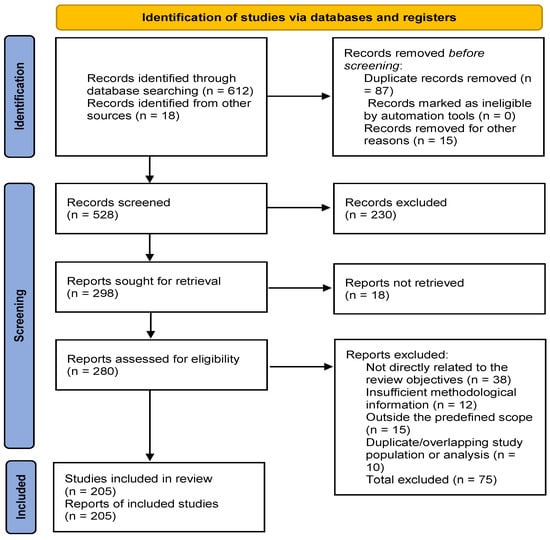
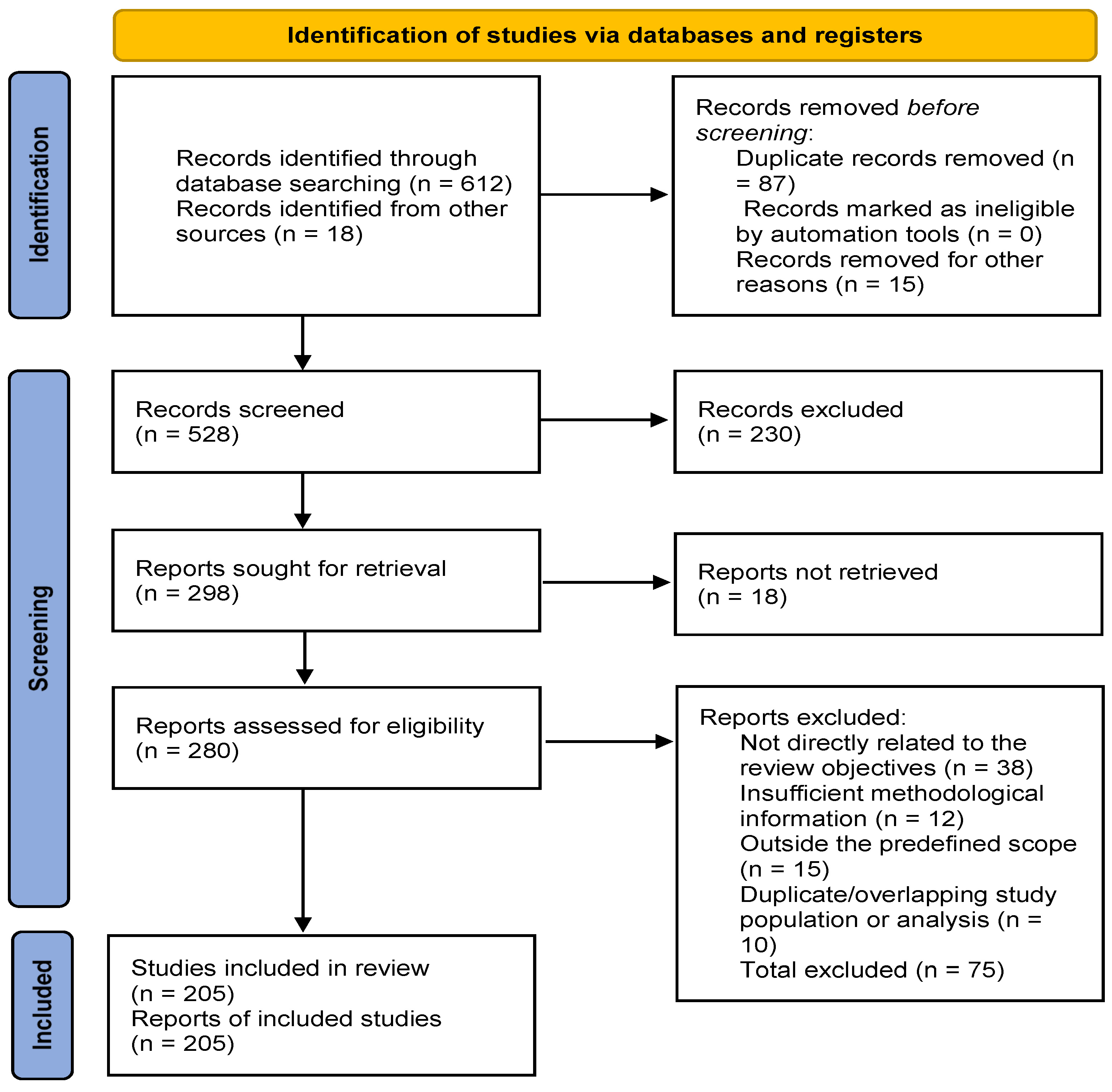
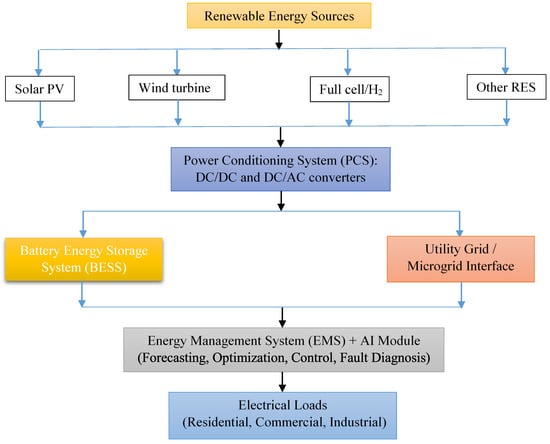
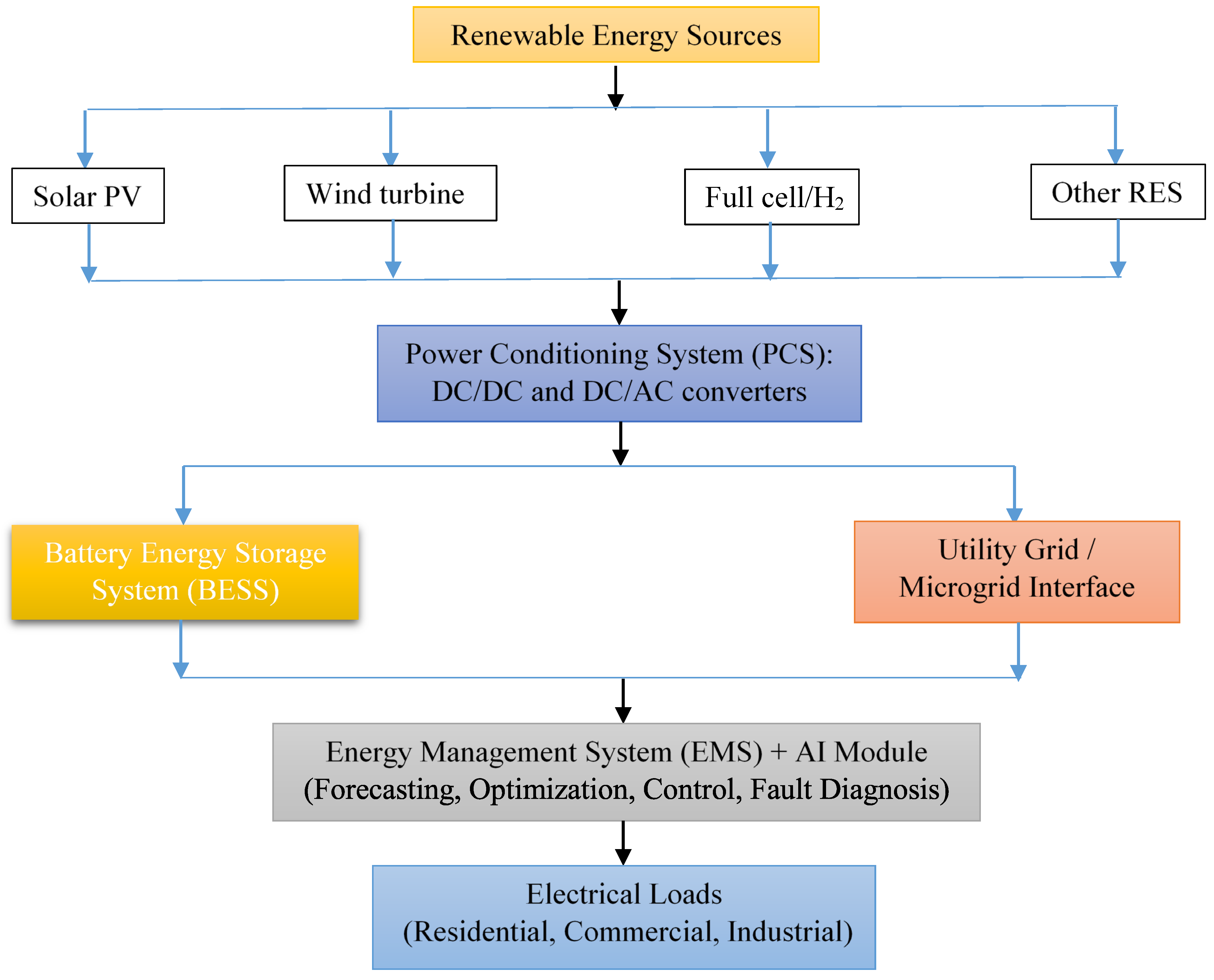
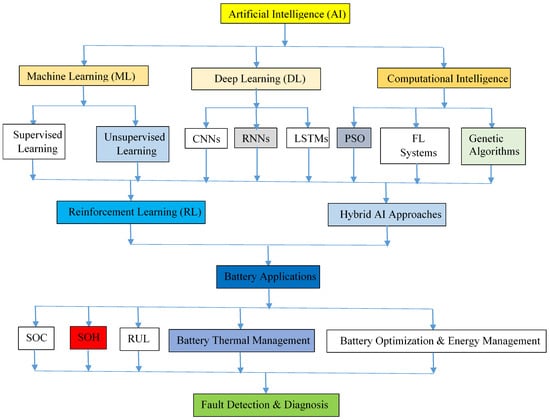
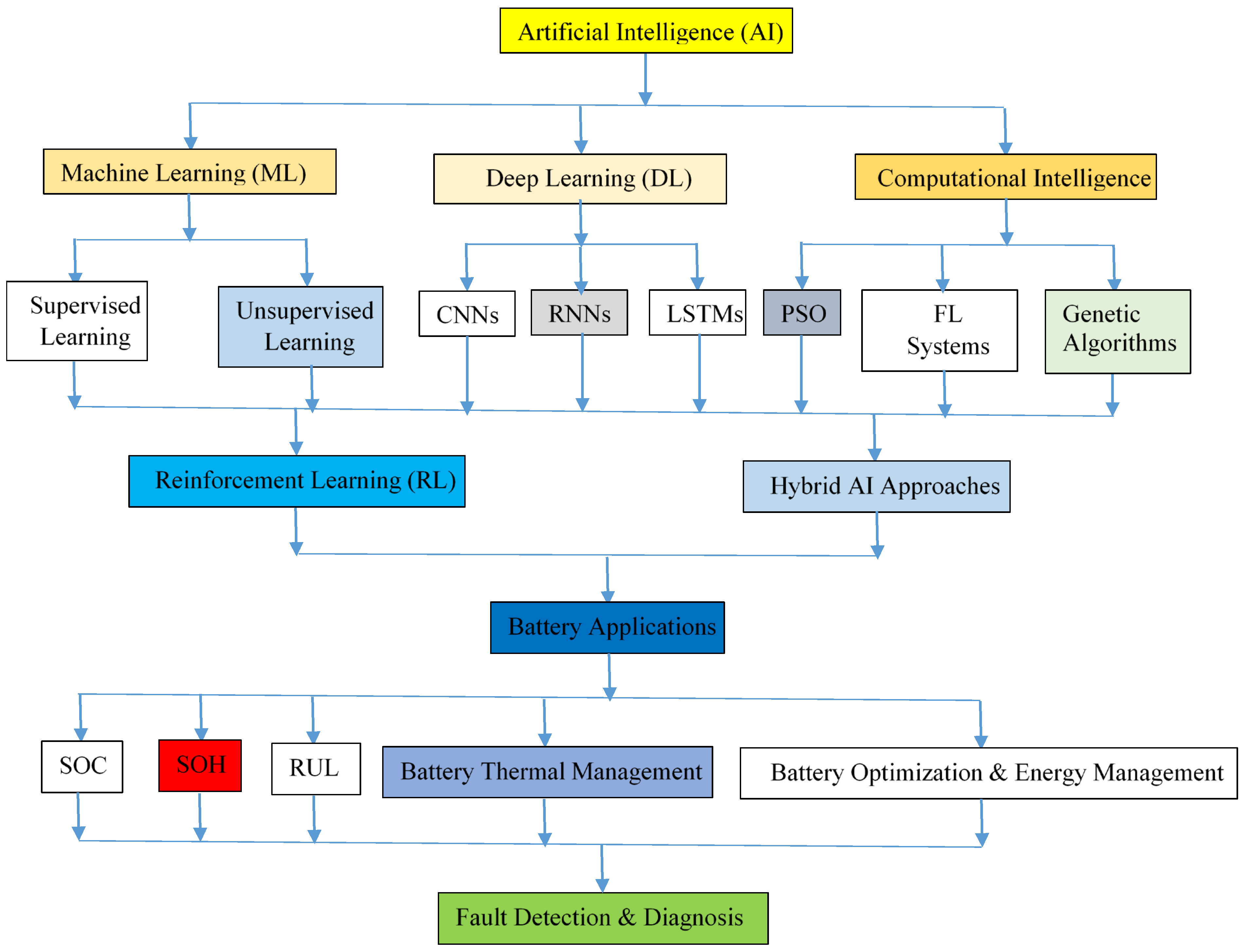
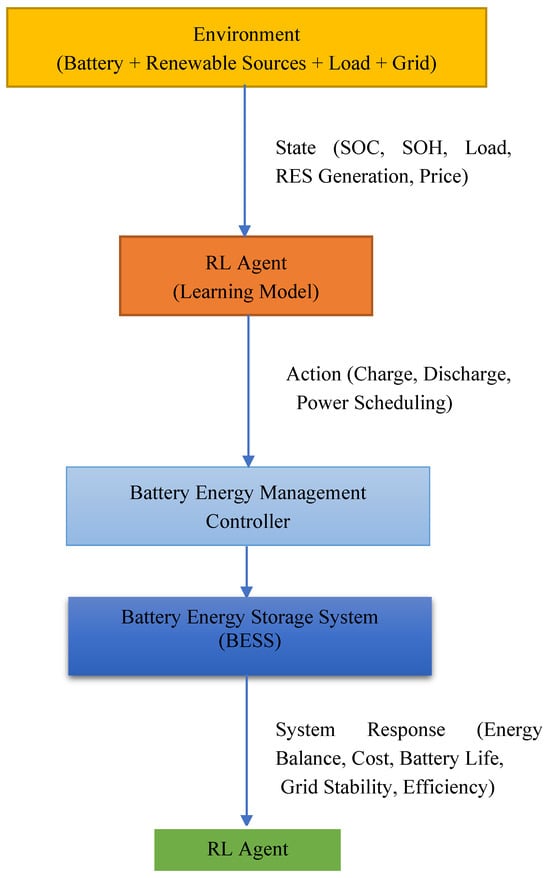
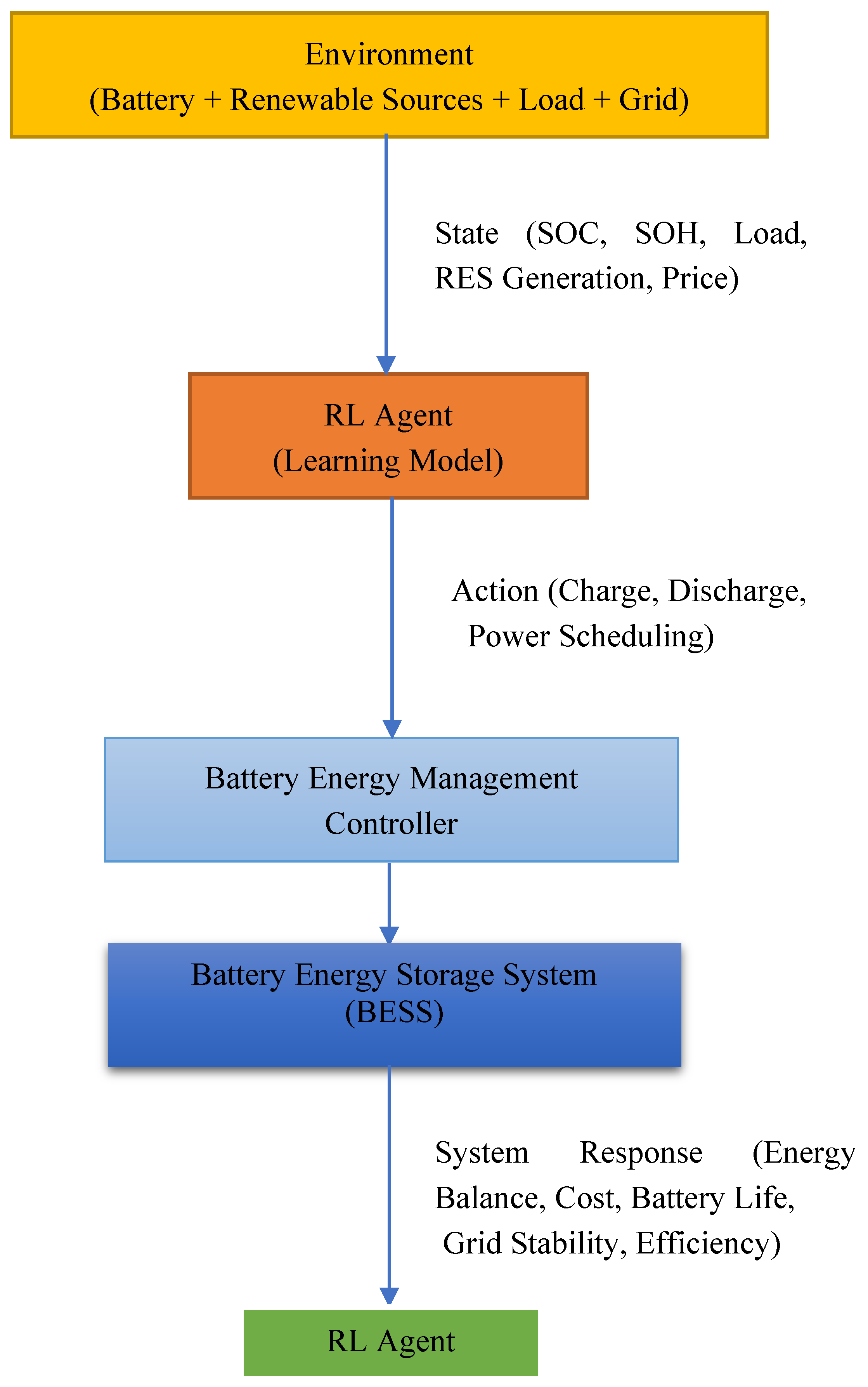
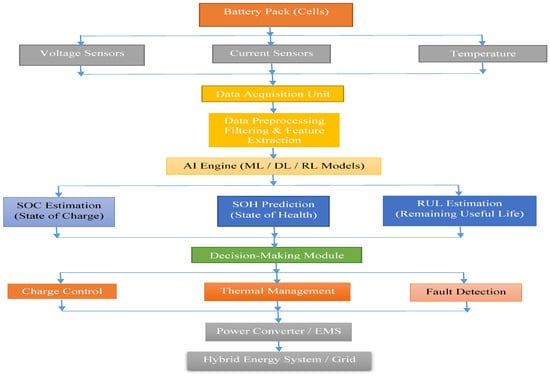
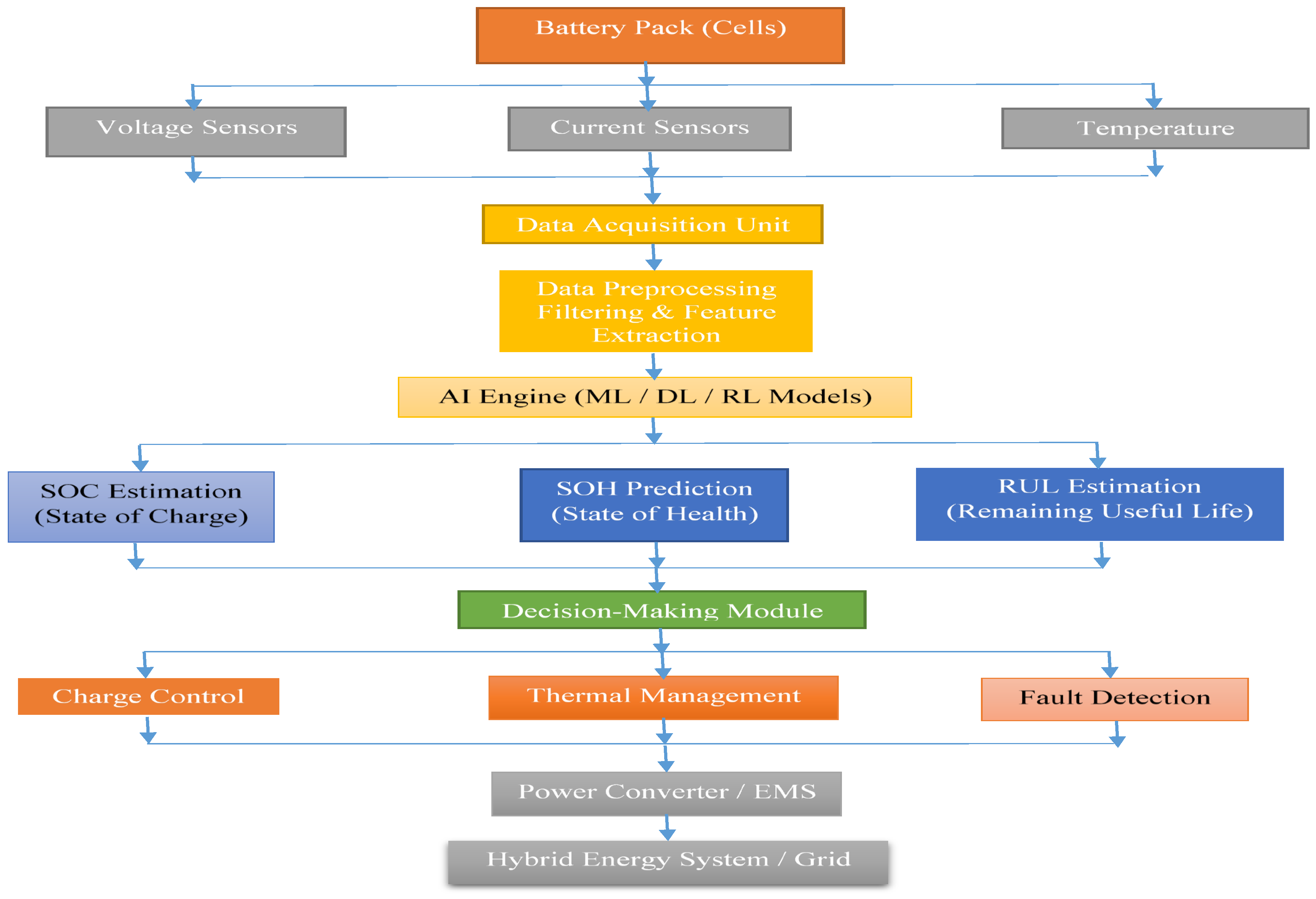
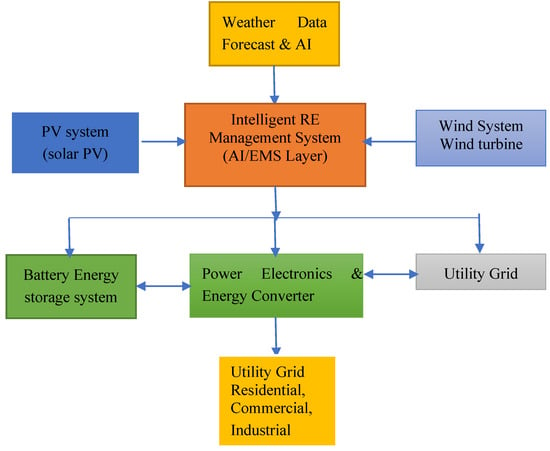
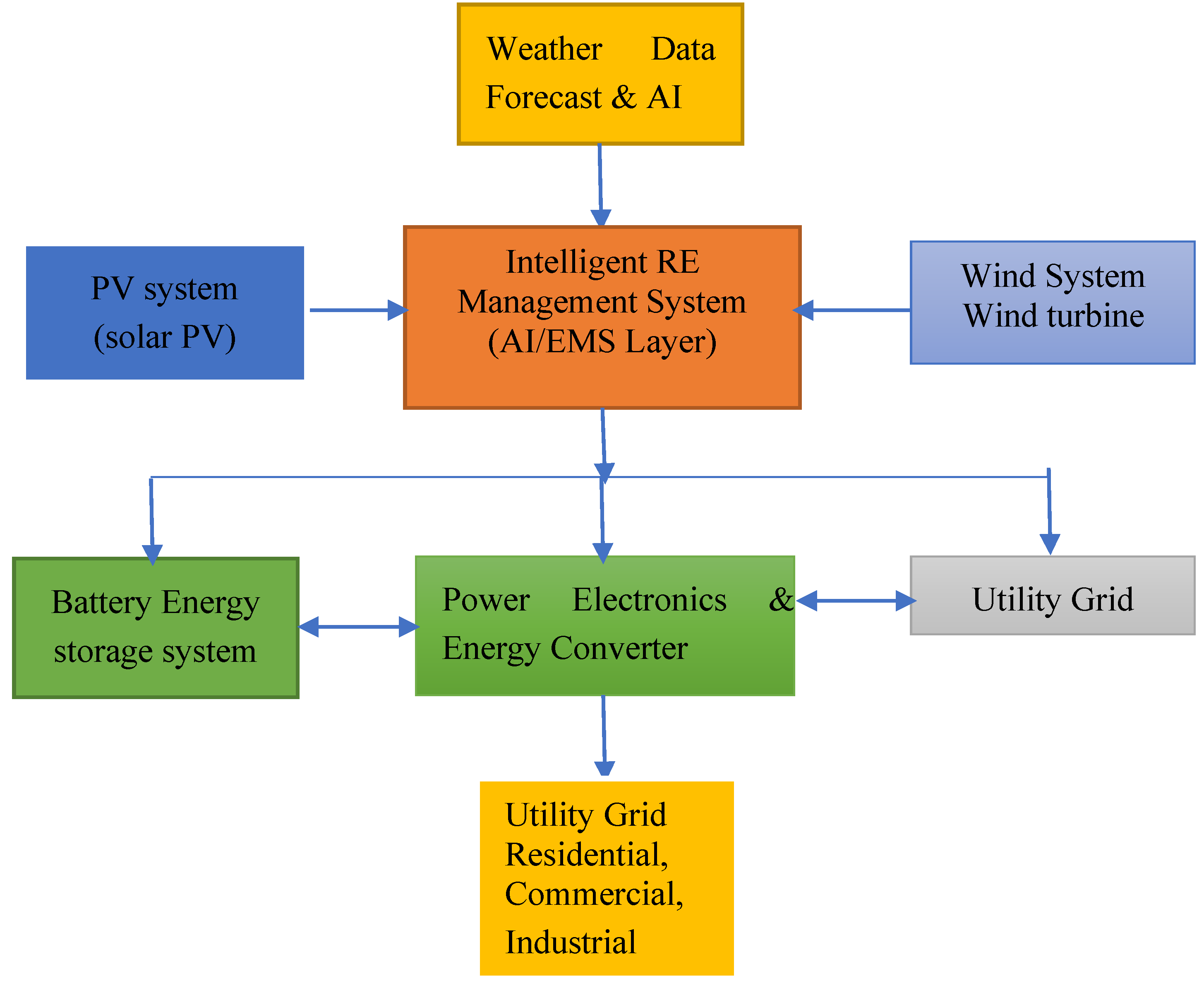
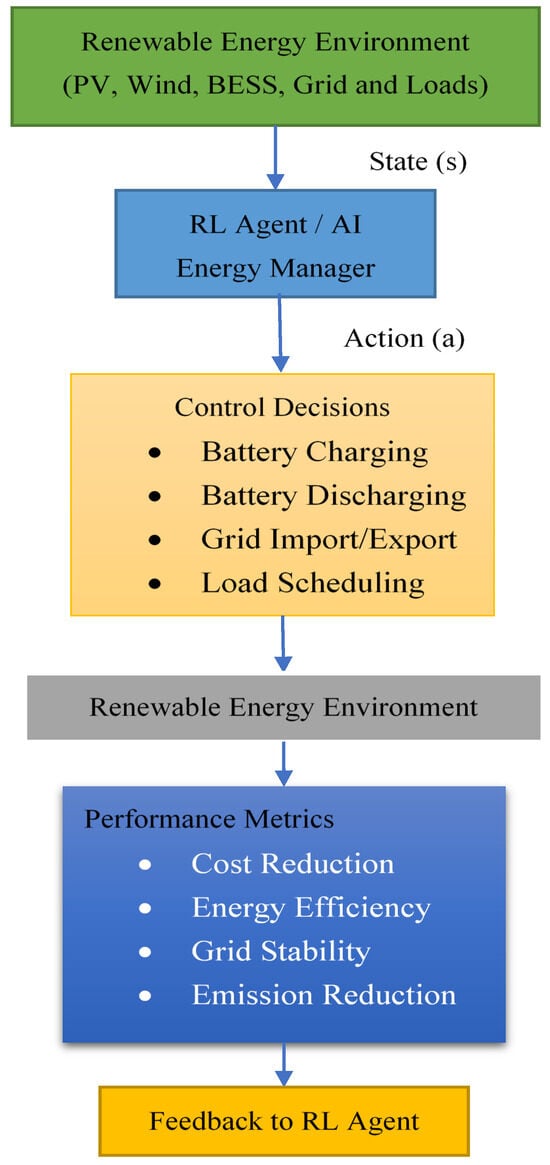
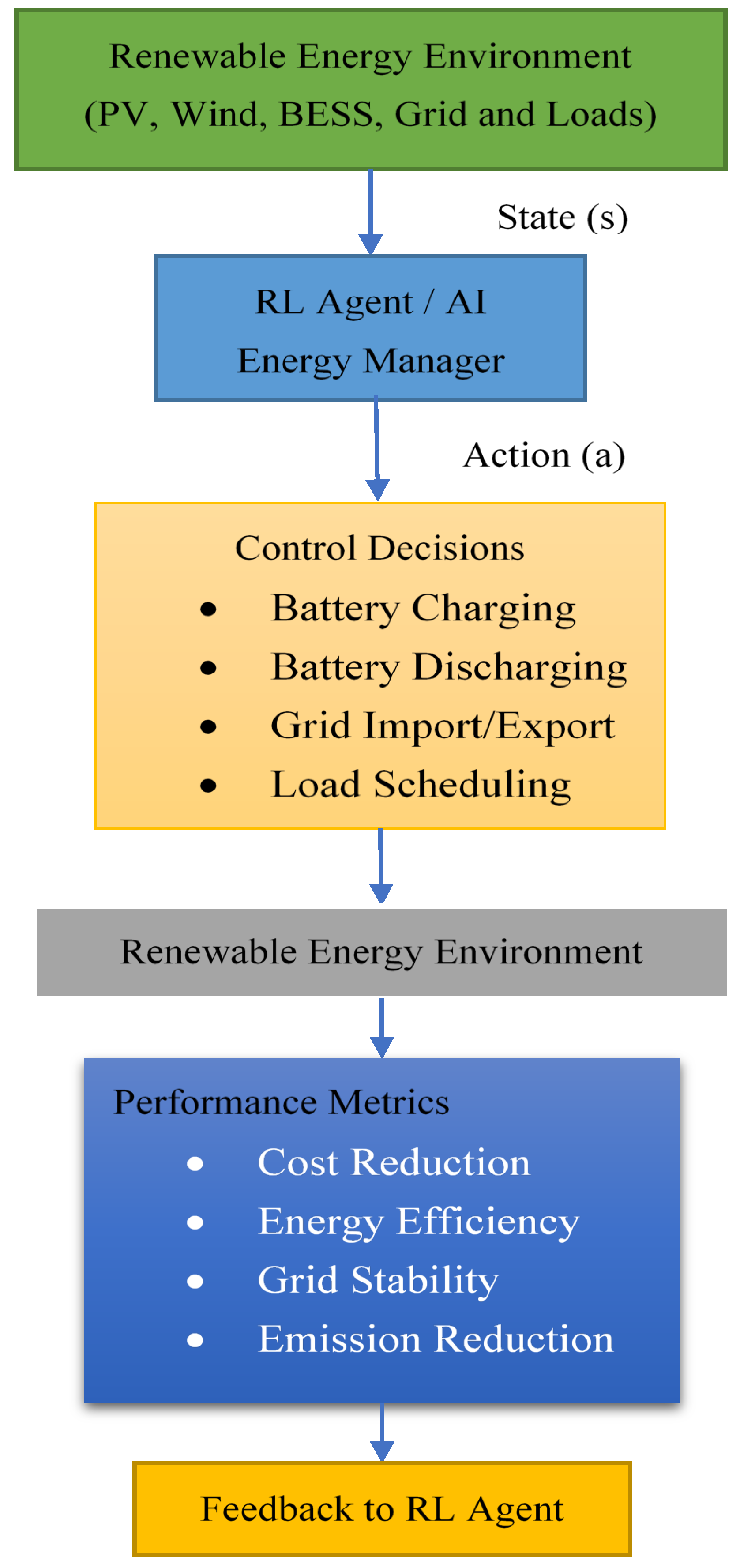

Disclaimer/Publisher’s Note: The statements, opinions and data contained in all publications are solely those of the individual author(s) and contributor(s) and not of MDPI and/or the editor(s). MDPI and/or the editor(s) disclaim responsibility for any injury to people or property resulting from any ideas, methods, instructions or products referred to in the content. |
© 2026 by the authors. Licensee MDPI, Basel, Switzerland. This article is an open access article distributed under the terms and conditions of the Creative Commons Attribution (CC BY) license.