


Highlights
What are the main findings?
- ‘Zhonglü’ (aerenchyma-forming) and ‘Yalü’ (non-forming) exhibit distinct waterlogging responses in luffa hypocotyls.
- RNA-seq linked aerenchyma formation to auxin and jasmonic acid (JA) signaling pathways.
- NPA (auxin transport inhibitor) and MeJA treatments synergistically induced aerenchyma via coordinated regulation of ARF18, IAA32, GH3.17, and TIFY9.
What is the implication of the main finding?
- Identifies core hormonal regulatory nodes governing aerenchyma development in luffa, providing candidate targets for breeding waterlogging-tolerant varieties.
Abstract
Waterlogging stress is a major abiotic stressor that severely constrains crop growth and productivity. Aerenchyma provides intercellular air spaces to transport oxygen to the root, which is essential for survival under waterlogged conditions. However, the mechanism underlying the response to waterlogging and aerenchyma formation in luffa remains poorly understood. In this study, we identified distinct phenotypic responses between two cultivars: ‘Zhonglü’ exhibited aerenchyma formation in the hypocotyl under waterlogging, whereas ‘Yalü’ did not. Transcriptome profiling of ‘Zhonglü’ revealed differentially expressed genes linked to plant hormone signal transduction, including fifteen auxin-related and two jasmonate-related genes, which may be involved in waterlogging-induced aerenchyma formation and are proposed as candidate regulators. Furthermore, exogenous application of 5 μmol/L N-1-naphthylphthalamic acid (NPA) and 20 μmol/L methyl jasmonate (MeJA) significantly enhanced aerenchyma formation. Notably, these treatments uncovered a regulatory node wherein NPA-disrupted auxin transport and jasmonate signaling converge to coordinately fine-tune the expression of ARF18, IAA32, GH3.17 and TIFY9 genes in the hypocotyl. Taken together, this study definitely advances our knowledge of the morphological and transcriptomic responses of Luffa under waterlogging stress and sheds new lights on its adaptive mechanisms.
1. Introduction
Water is essential for the normal growth of plants. However, an excess of water in the soil is harmful to plants as it results in oxygen deficiency around the root zone and can easily lead to waterlogging stress [1,2]. Flooding stress is one of the most widespread abiotic stressors affecting plants during their lifespan [3]. Flooding involves two major stressors: submergence, which occurs when the entire plant (roots and shoots) is under water, and waterlogging, which occurs when only the root zone of the plant is flooded [4]. The excess water content in the soil replaces the gas spaces surrounding the roots and shoots, causing oxygen deprivation in plants [5]. The low oxygen levels caused by waterlogging suppress various essential physiological activities, adversely affect growth, and eventually lead to yield loss or even complete harvest failure [6,7,8,9].
Plants can adapt to waterlogging-induced low-oxygen conditions in the soil through morphological, anatomical, and metabolic responses. The major morphological adaptations to the roots of dryland plant species under oxygen-deficient conditions include aerenchyma formation, adventitious rooting, and the regulation of internode elongation [10,11,12,13]. It is now widely recognized that adventitious roots and aerenchyma formation play key roles in plant flooding tolerance [14].
Aerenchyma is a specialized tissue in stems and roots containing air chambers that facilitate internal oxygen diffusion under flooding [15,16]. It most often originates from the cortical parenchyma, with developmental mode and parent layer varying among species. Two structural types are recognized: schizogenous, where cells separate without lysis, and lysigenous, where programmed cell death and cortical cell dissolution generate cavities [15,17,18]. Additionally, aerenchyma can be divided into two categories: inducible and constitutive. In upland crops (e.g., maize, wheat, barley, tomato), lysigenous aerenchyma is absent aerobically and induced only under oxygen deficiency [8,11,19,20,21]; in wetland species such as rice (Oryza sativa), lysigenous lacunae form constitutively in roots but are further enhanced by hypoxia [16,22]. In herbaceous dicots, including Luffa cylindrica, aerenchyma typically initiates in the outer cortex of the hypocotyl (the non-woody “bark” region beneath the epidermis), rather than from vascular or pith tissues, representing an inducible type that mitigates oxygen deficit. How this localized cortical acclimation is regulated under hypoxia remains poorly characterized and is the focus of the present study.
Several studies have demonstrated that aerenchyma formation is controlled by plant hormones. Ethylene is a primary driver of lysigenous aerenchyma in cereals: flooding-triggered ethylene accumulates via ACS/ACO induction, promoting ROS production and programmed cortical cell death, even under aerobic conditions with exogenous treatment [8,11,13,21,23,24,25,26,27]. Auxin modulates both root architecture and cortical remodeling; in rice, auxin signaling through AUX/IAA13–ARF pathways controls constitutive and hypoxia-enhanced lysigenous lacunae, with iaa13mutants suppressing apex aerenchyma [28,29]. In other contexts, auxin gradients or transport inhibition can generate schizogenous-like cavities by altering cortical cell separation and wall loosening [30,31,32,33]. Thus, auxin and ethylene can converge on the same tissue type (lysigenous) via ROS/cell-death modules, or act divergently depending on organ and species. Adventitious roots in response to waterlogging often develop aerenchyma connected to the shoot, enhancing gas diffusivity along the root [34,35]. Previous studies have also shown that auxin regulates adventitious root formation by modulating JA homeostasis through auxin-inducible Gretchen Hagen 3 (GH3)-like proteins [36].
Luffa (Luffa cylindrica L.), a widely cultivated Cucurbitaceous vegetable in subtropical and tropical Asia, is valued both as an edible crop and for its dried fibrous vascular skeleton, which is used industrially as natural scrubbers and biomaterials. It typically requires soil moisture levels exceeding 70%. Unlike bitter melon (Momordica charantia), luffa exhibits notable flood tolerance; however, the morphological adaptations underlying this resilience is still limited [37]. In particular, whether polar auxin transport and jasmonate signaling coordinate aerenchyma formation in the hypocotyl is unclear. The present study therefore compared two contrasting cultivars and integrated anatomical observation, hormone treatments, and transcriptomic analysis to identify candidate genes and hormonal pathways potentially involved in luffa’s flooding adaptation.
2. Materials and Methods
2.1. Plant Material and Waterlogging Stress Treatment
Luffa (Luffa cylindrica L.) seedlings were used in this study. Two loofah cultivars were used: ‘Yalü’ (YL), obtained from Guangdong Kenong Vegetable Seed Company (Guangzhou, China), and ‘Zhonglü’ (ZL) (heat-tolerant and waterlogging-tolerant), from Shouguang Hongwei Seed Company (Shouguang, China). Seeds were soaked in deionized water at room temperature for 8 h and germinated in the dark at 30 °C. Germinated seeds were sown in plug trays filled with a substrate of vermiculite: perlite: peat (1:1:3, v/v/v) and grown in a growth chamber (Yiheng, Shanghai, China) with 75% relative humidity, with a 28 °C/18 °C light/dark temperature, 16 h/ 8 h photoperiod, and 280–300 μmol m−2 s−1 light intensity. At the two-leaf stage, seedlings were transferred to plastic containers and subjected to waterlogging for 7 or 14 d, with the water level maintained 2 cm above the soil surface.
2.2. Relative Root Metabolic Activity (TTC Assay)
Relative root activity was estimated using the triphenyl tetrazolium chloride (TTC) reduction method [38]. Briefly, 0.5 g fresh root tips (taproots or adventitious roots) were incubated in 5 mL of 0.4% (w/v) TTC solution in 0.05 M phosphate buffer (pH 7.0) at 37 °C in darkness for 6 h. Formazan produced by mitochondrial dehydrogenase activity was extracted with 5 mL ethyl acetate by vigorous shaking, and the absorbance was measured at 485 nm using a spectrophotometer. Root activity was expressed as formazan content per gram fresh weight (mg g−1 FW) or as relative activity normalized to the control.
2.3. Anatomical Observation of Aerenchyma in Hypocotyls
Under both waterlogged and normal growth conditions, the basal sections of the hypocotyls were harvested. Cross-sections were promptly cut using an Manual Plant Microtome MTH-1 (MTH-1) plant slicer (Nippon Medical & Chemical Instruments Co., Ltd., Osaka, Japan) and stained with Toluidine blue (TBO). The process of aerenchyma formation was observed under Olympus BX53 optical microscope (Olympus Corporation, Tokyo, Japan) equipped with a digital camera. The formation time and morphological characteristics of aerenchyma were recorded and photographed on days 0, 4, 7 and 14 of waterlogging.
2.4. NPA and MeJA Treatment
To evaluate the effects of NPA (the auxin transport inhibitor) and Methyl Jasmonate (MeJA), each plant was sprayed with different concentration of NPA and MeJA (5, 20, 50 and 100 μmol/L). Control plants were subjected to waterlogging without NPA or MeJA treatment. At least six plants were used for each treatment. The formation time and morphological characteristics of adventitious root primordia and aerenchyma were recorded and photographed on days 0, 4, 7 and 14 of waterlogging.
2.5. Transcriptome Analysis
Total RNA was isolated from hypocotyls of ZL at 7 d of waterlogging treatment and normal condition growth, with three biological replicates. cDNA libraries were sequenced using NovaSeq 6000 platform (Illumina, San Diego, CA, USA). Raw reads were processed by removing adapter sequences and low-quality reads. Gene expression levels were estimated using the fragments per kilobase of transcript per million mapped reads (FPKM) method. Genes with an adjusted p-value < 0.05 and |log2foldchange| > 1 were classified as differentially expressed.
2.6. RNA Extraction and Quantitative (q) RT-PCR Analysis
Total RNA was extracted from hypocotyl tissues using Trizol. First-strand cDNA was synthesized using the HiScript 1st Strand cDNA Synthesis Kit according to the manufacturer’s protocol (Vazyme, Nanjing, China). Primers were designed using the online software Primer3.0 (https://primer3.ut.ee/), and actin was used as the internal reference gene. A 10 μL reaction mixture containing cDNA, specific primers, and FastStart Universal SYBR Green Master Mix (Vazyme, Nanjing, China) was prepared in 96-well plates and analyzed using a Q225MX Real-Time PCR System (Kubo Technology, Beijing, China). The reactions were conducted as follows: 95 °C for 10 s, followed by 40 cycles of 95 °C for 15 s, and annealing at 52 °C for 30 s. Each experiment was independently repeated in triplicate. The relative expression level was calculated using the 2−ΔΔCT method as described previously [39]. All primers are listed in Table S1.
2.7. Data Analysis and Graph Processing
Data were analyzed and visualized using GraphPad Prism 9 software. Images were processed using Adobe Photoshop CC 2018 software.
3. Results
3.1. Morphological Changes and Aerenchyma Formation in ‘Yalü’ (YL) and ‘Zhonglü’ (ZL) Following Waterlogging Stress
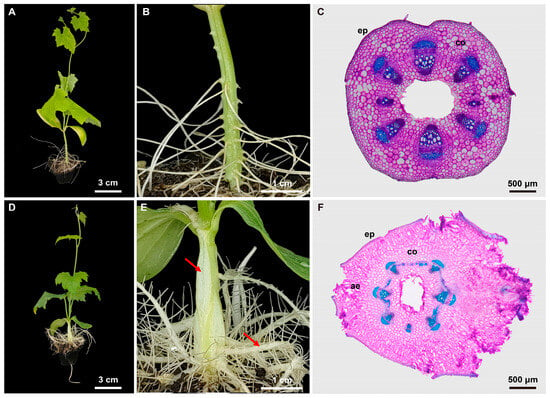
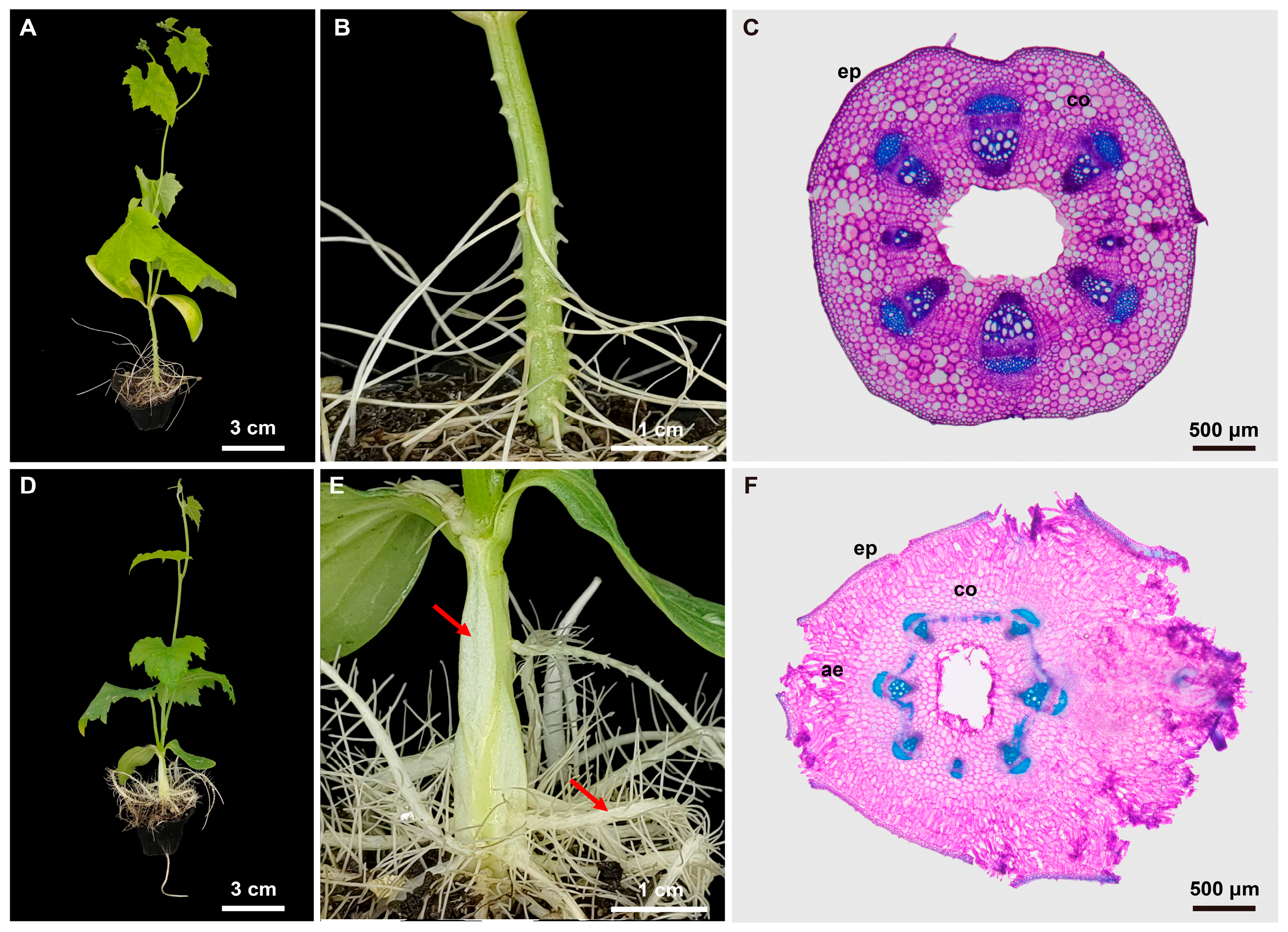
After 14 d of waterlogging, adventitious roots emerged above the soil surface in the waterlogged plants ‘YL’ and ‘ZL’ (Figure 1A,B,D,E). These newly developed adventitious roots, originating from the base of the hypocotyl, became a considerable part of the root system (Figure 1B,E). Compared to ‘YL’, wide slits were observed on the submerged parts of the hypocotyl in waterlogged plants of ‘ZL’, and similar slits were also present on the surface of the adventitious root surface (Figure 1E). Additionally, lateral roots were observed on the adventitious roots of ‘ZL’ (Figure 1E). In contrast, morphological changes such as aerenchyma formation were not observed in the hypocotyl of waterlogged plants ‘YL’, where cortical cells remained closely arranged (Figure 1C). However, in the hypocotyls of waterlogged plants ‘ZL’, the cortical cells elongated radially, and the gas spaces between the cells expanded, while the inner cortical cells remained intact (Figure 1F).
Figure 1.
Morphological and anatomical comparison of ‘Yalü’ (YL) and ‘Zhonglü’ (ZL) after 14 days of waterlogging. (A,D) Whole-plant phenotypes of YL and ZL after 14 days of waterlogging. (B,E) Close-up views showing adventitious root emergence on the submerged hypocotyl. (C,F) Transverse fresh sections of hypocotyls cut 5–10 mm above the soil surface. Arrows indicate wide epidermal slits on the hypocotyl and adventitious root surfaces. Scale bars are shown in each panel. Abbreviations: ep, epidermis; co, cortex; ae, aerenchyma zone.
3.2. Root Activity Measurement in ‘YL’ and ‘ZL’ Following Waterlogging Stress
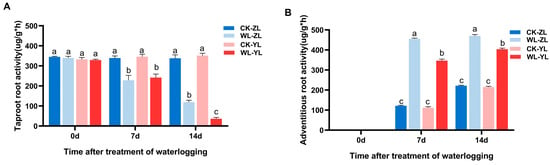
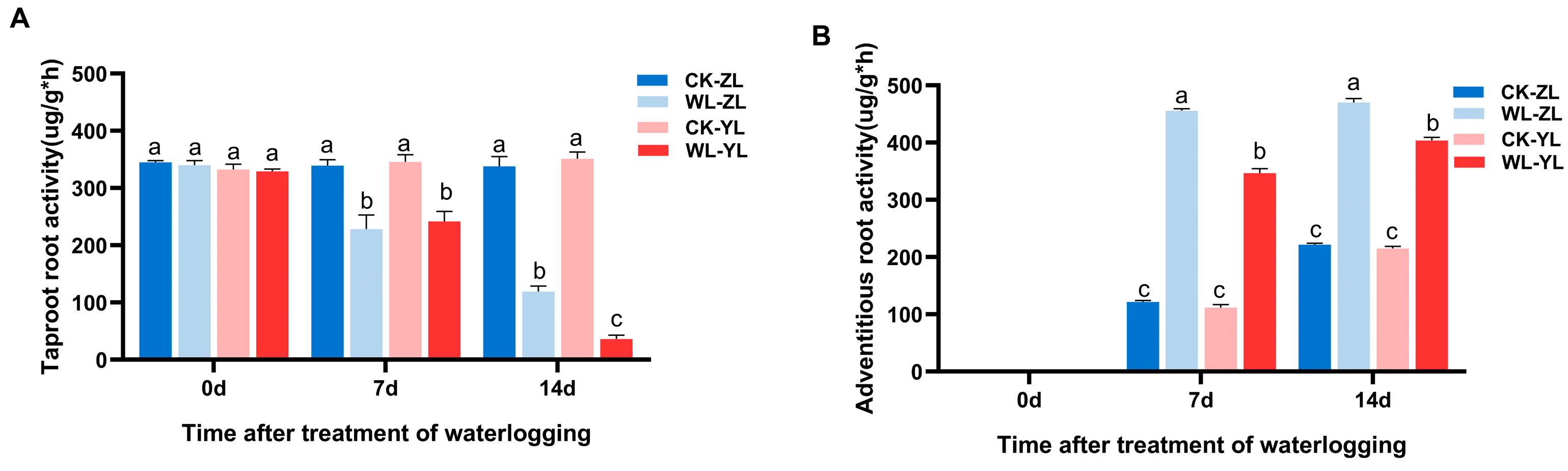
Here, we compared the root activity of the taproots and adventitious roots in ‘YL’ and ‘ZL’ at 0, 7 and 14 days of waterlogging stress. ‘ZL’ maintained higher root activity compared to ‘YL’ under waterlogging, indicating better physiological tolerance. There was no significant difference in taproot root activity between the control group and the waterlogged group at 0 d. In ‘ZL’, taproot activity showed a slight but significant decrease at 7 d and a sharp decline to approximately 50% of the initial level by 14 d. In contrast, ‘YL’ exhibited a more rapid and drastic reduction in taproot activity, dropping significantly below the control level as early as 7 d and reaching the lowest value at 14 d (Figure 2A). A similar trend was observed for adventitious root activity (Figure 2B). Waterlogging induced a significant increase in adventitious root activity in ‘ZL’ at 7 d, followed by a slight decrease at 14 d, though it remained above the control level. Conversely, ‘YL’ showed a transient increase at 7 d, but the activity plummeted at 14 d, falling below the initial baseline. Notably, the adventitious root activity of ‘ZL’ was consistently higher than that of ‘YL’ at both 7 and 14 d post-treatment, suggesting a more robust adaptive capacity for root plasticity in ‘ZL’. We speculate that this is due to the aerenchym formation in ‘ZL’. Thus, ‘ZL’ was more tolerant to waterlogging than ‘YL’.
Figure 2.
Relative root metabolic activity of two luffa cultivars under waterlogging. Taproots (A) and adventitious roots (B) of ‘Yalü’ (YL) and ‘Zhonglü’ (ZL) under no-waterlogging (CK) and 14 d waterlogging (WL). No-waterlogging of Zhonglü (CK-ZL), Waterlogging of Zhonglü (WL-ZL), No-waterlogging of Yalü (CK-YL), Waterlogging of Yalü (WL-YL). Data are means ± SD (n = 3 biological replicates). Different lowercase letters indicate significant differences among treatments determined by two-way ANOVA with Tukey’s post hoc test (p < 0.05).
3.3. Transcriptome Analysis of ‘ZL’ at 7 d of Waterlogging Stress
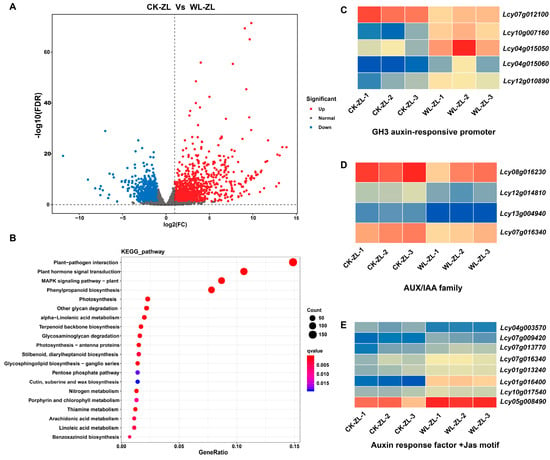
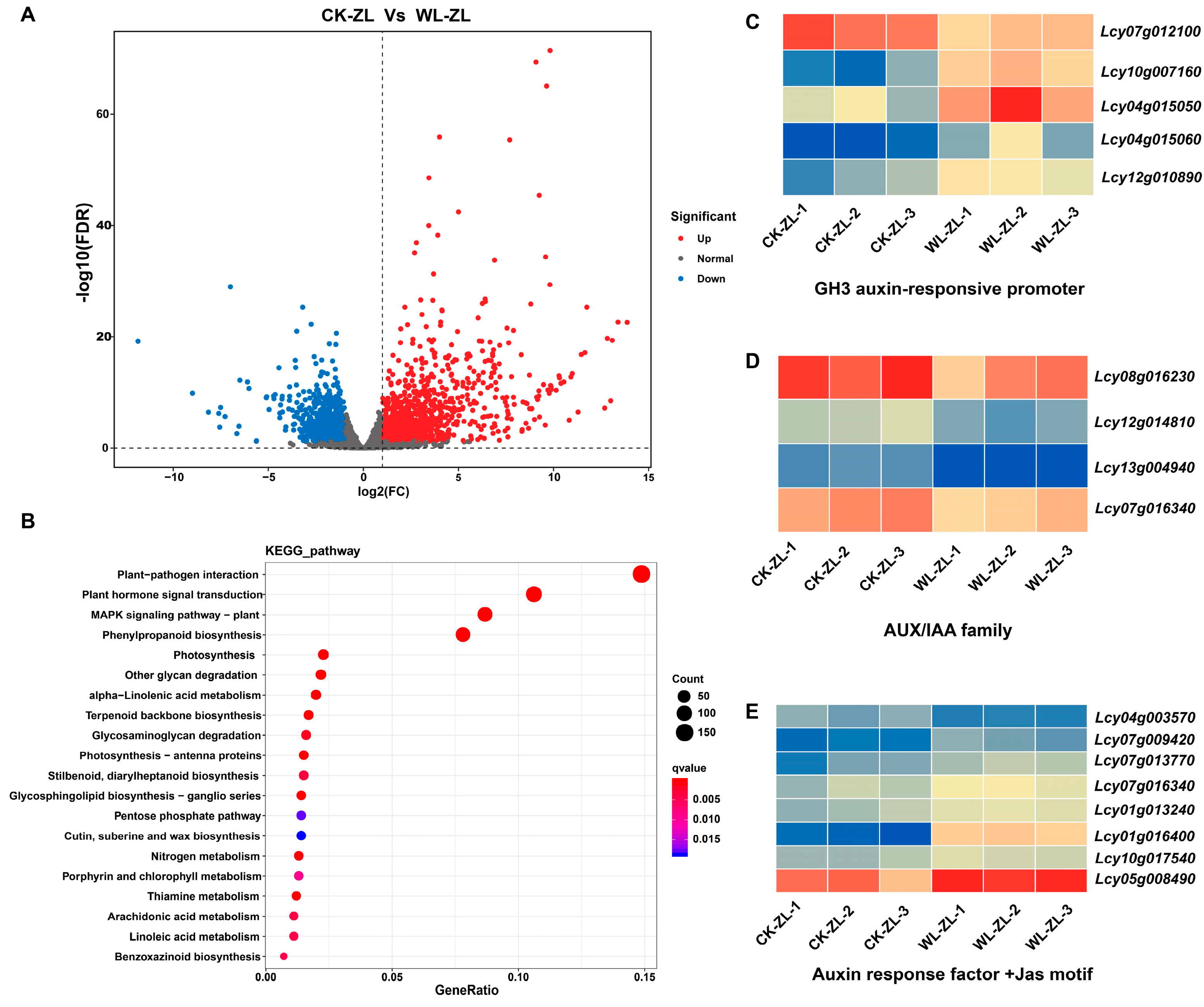
In the experiment, we found that the ‘ZL’ variety had formed obvious aerenchyma at 14 d of waterlogging. To investigate the regulatory mechanisms of aerenchyma formation under waterlogging stress, transcriptome analysis was carried out to identify putative target genes. Whole roots of the waterlogged plants (ZWL1, ZWL2, and ZWL3) and the non-waterlogged plants (ZCK1, ZCK2, and ZCK3) were harvested for transcriptome analysis. Differentially expressed genes (DEGs) were identified using the criteria q-value < 0.05 and |log2(fold change)| > 0.5. As a result, a total of 2863 DEGs were identified, including 1525 upregulated genes and 1338 downregulated genes in the comparison of ZCK versus ZWL (Figure 3A). KEGG enrichment analysis revealed that the DEGs were significantly enriched in 20 pathways. These pathways include plant–pathogen interaction, plant hormone signal transduction, MAPK signaling pathway, phenylpropanoid biosynthesis, photosynthesis, other glycan degradation, alpha-Linolenic acid metabolism, and terpenoid backbone biosynthesis (Figure 3B). A total of 109 genes were related to the plant hormone signal transduction pathway, accounting for 10.53% of the total annotated genes (Figure S1 and Table S2). We identified 15 genes related to auxin and 2 genes related to Jasmonic acid, including GH3 auxin-responsive promoter, AUX/IAA family, auxin response factor and Jas motif (Figure 3C–E).
Figure 3.
Transcriptome analysis of ‘Zhonglü’ luffa hypocotyls to 7 d of waterlogging. Plants under non-waterlogged control (CK-ZL) vs. waterlogged treatment (WL-ZL); ZL, ‘Zhonglü’. (A) Volcano plot of differentially expressed genes (DEGs). Points in red indicate upregulated genes, blue indicate downregulated genes, and gray indicate non-significant genes (padj < 0.05). (B) KEGG pathway enrichment of DEGs; the x-axis shows the −log10(q-value) and the number of annotated genes per pathway. (C–E) Heatmaps showing expression patterns of plant hormone signal transduction-related genes, including auxin- and jasmonate-responsive candidates. Gene IDs are listed on the y-axis; sample codes are given on the x-axis. Color scale represents normalized FPKM/TPM values (log2 scale).
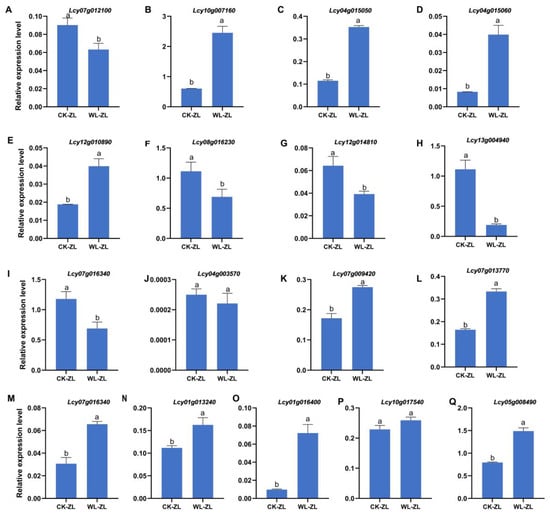
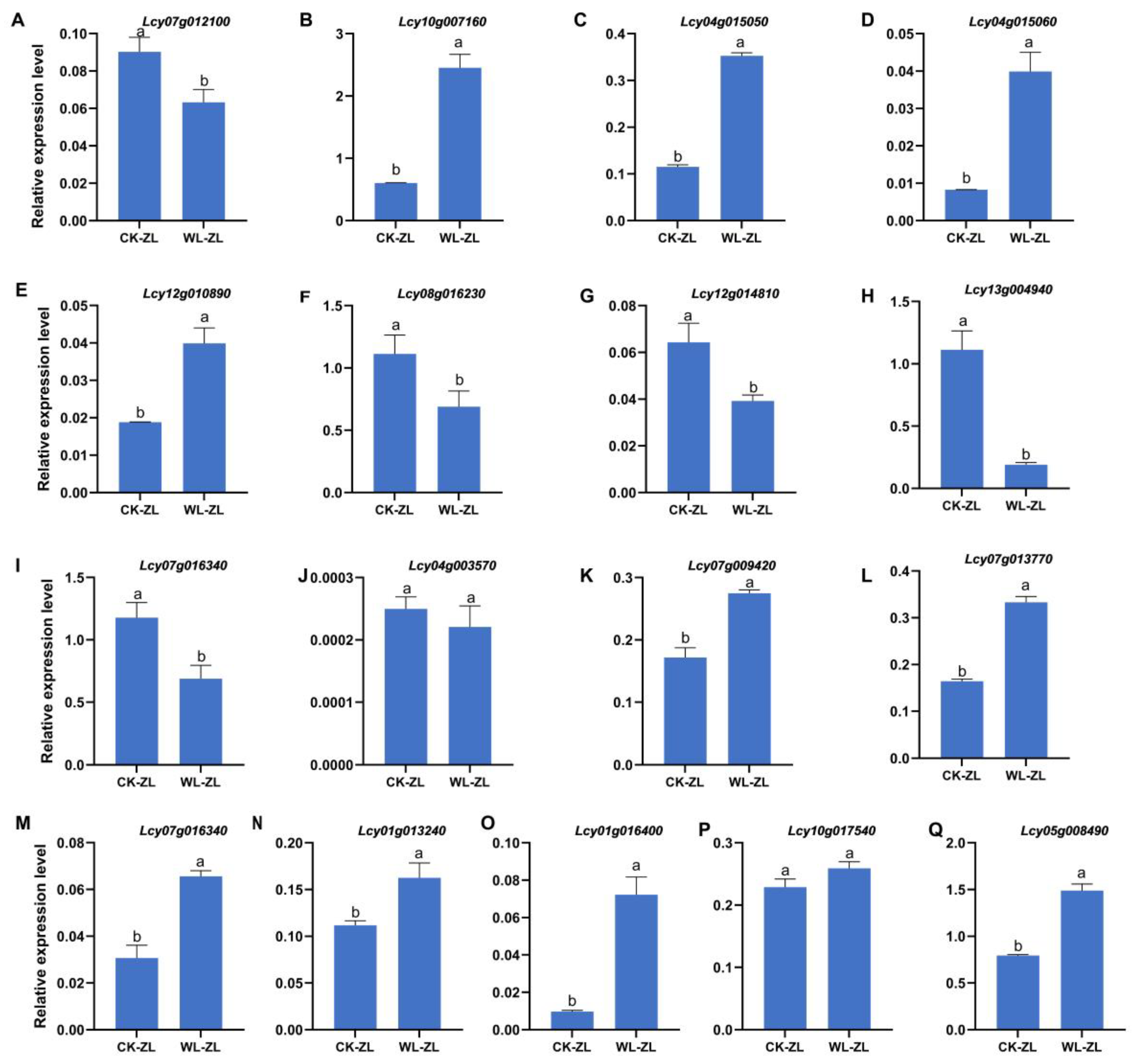
We collected the hypocotyl of non-waterlogged plants (CK-ZL) and waterlogged plants (WL-ZL) after 7 d of waterlogging to validate gene expression using RT-qPCR analysis. Among the four GH3 auxin-responsive promoter genes, expression was up-regulated in ZL under waterlogging treatment. Similarly, four Aux/IAA genes were down-regulated in WL-ZL, consistent with the transcriptome analysis (Figure 4A–Q).
Figure 4.
Validation of transcriptome data by qRT-PCR. Relative expression levels of selected hormone-related genes in hypocotyls of ‘Zhonglü’ (ZL) under non-waterlogged control (CK-ZL) and 7 d waterlogging (WL-ZL). Values are means ± SD (n = 3 biological replicates). Different lowercase letters indicate significant differences among treatments (p < 0.05).
3.4. Effects of NPA and MeJA Application on Aerenchyma Formation Under Waterlogging Stress
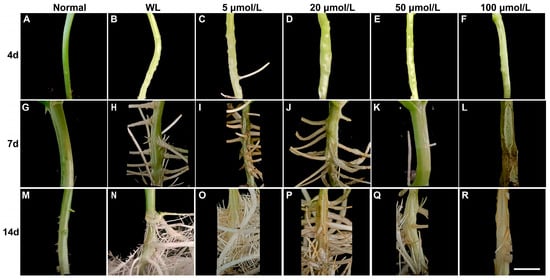
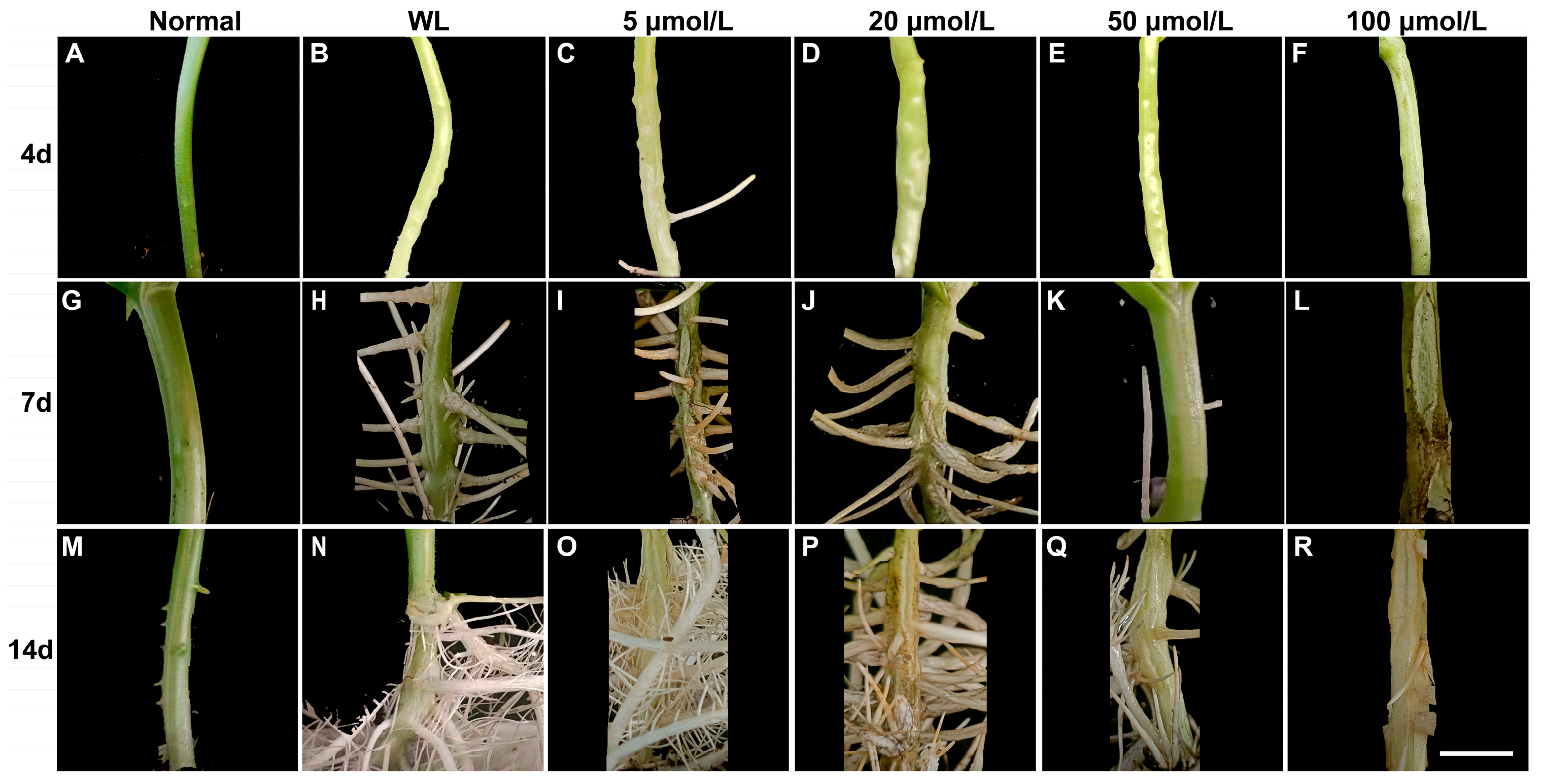
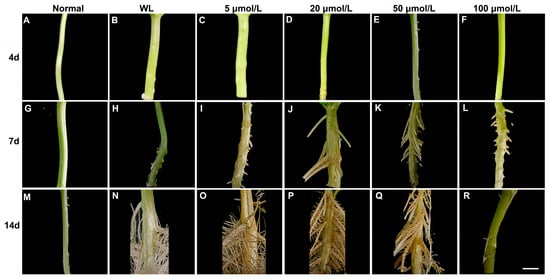
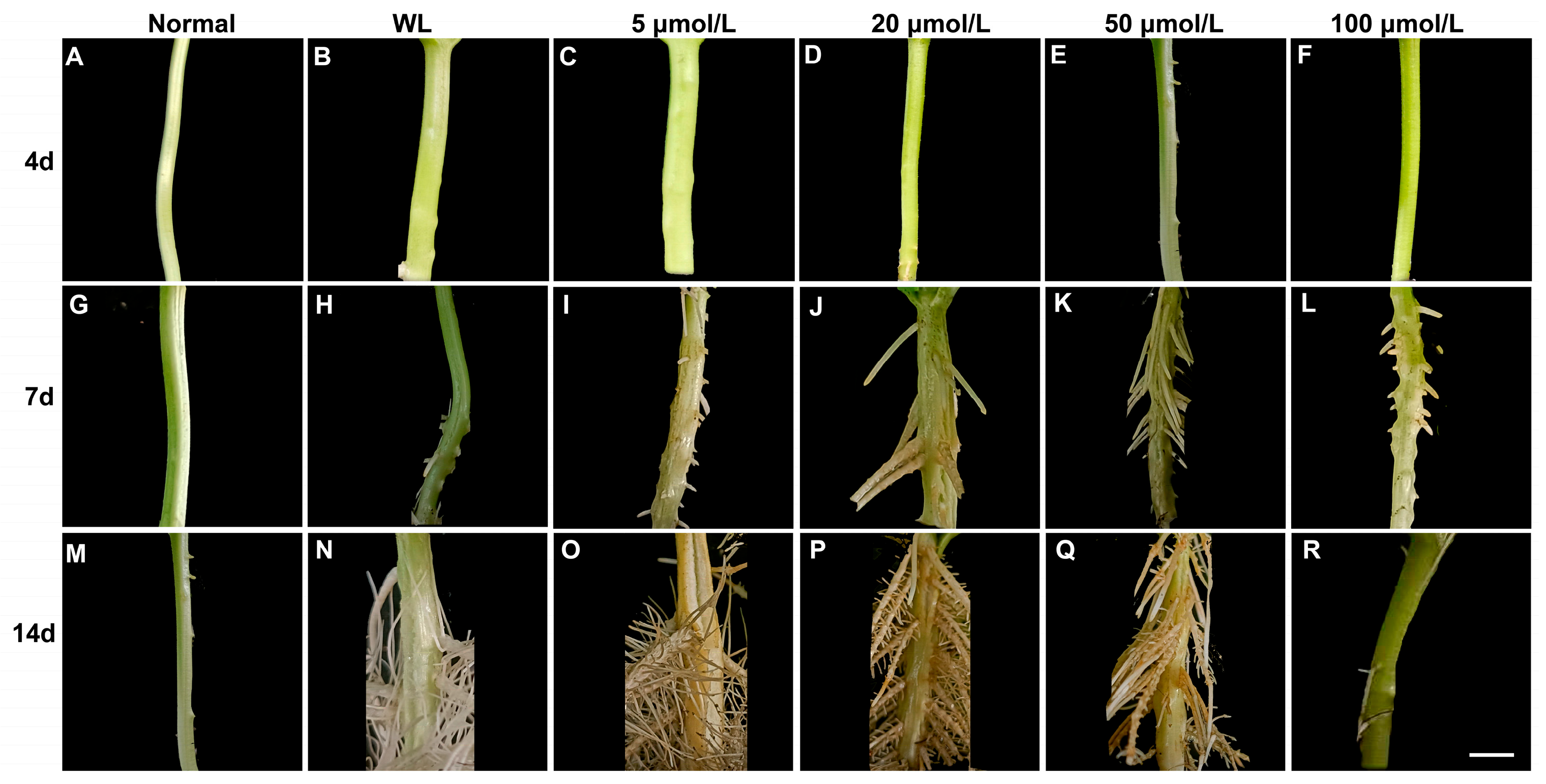
Based on the results of transcriptomic analysis, we found that auxin- and JA-related pathway are involved in waterlogging stress. We thus evaluated the effects of NPA and MeJA on aerenchyma formation in ZL under waterlogging treatment. Five concentrations of NPA and MeJA solutions (0, 5, 20, 50 and 100 μmol/L) were prepared. Phenotypic observations revealed that adventitious root primordia appeared in hypocotyls treated with 0, 5, 20 μmol/L NPA and MeJA after 4 d of waterlogging stress (Figure 5B–D and Figure 6B–D). After 7 d and 14 d of waterlogging, adventitious roots elongated, and slits were observed on submerge parts of the hypocotyls (Figure 5H–J,N–P and Figure 6H–J,N–P). However, higher concentrations (50 and 100 μmol/L) of NPA and MeJA significantly inhibited adventitious root growth (Figure 5K,L,Q,R and Figure 6K,L,R). Compared to the control group, leaves turned yellow and cotyledons curled after 4 d of treatment with NPA and MeJA (Figures S2 and S3). Under low concentration (0, 5, 20 μmol/L) of NPA treatment, there was no significant difference in plant activity (Figure S2). However, leaves yellowed, and cotyledons curled when both waterlogging and high concentrations (50 or 100 μmol/L) of MeJA were both applied (Figure S3).
Figure 5.
Morphological responses of ‘Zhonglü’ (ZL) hypocotyls to waterlogging with different NPA concentrations. Whole-seedling views taken at 4, 7, and 14 d. Columns indicate treatments: (A–F) 4 d, (G–L) 7 d, (M–R) 14 d. Treatments: Normal, non-waterlogged control; WL, waterlogging alone; WL + 5, 20, 50, 100 μmol/L NPA (N-1-naphthylphthalamic acid). Scale bar = 1 cm.
Figure 6.
Morphological responses of ‘Zhonglü’ (ZL) hypocotyls to waterlogging with different MeJA concentrations. Whole-seedling views taken at 4, 7, and 14 d. Columns indicate treatments: (A–F) 4 d, (G–L) 7 d, (M–R) 14 d. Treatments: Normal, non-waterlogged control; WL, waterlogging alone; WL + 5, 20, 50, 100 μmol/L MeJA (methyl jasmonate). Bar = 1 cm.
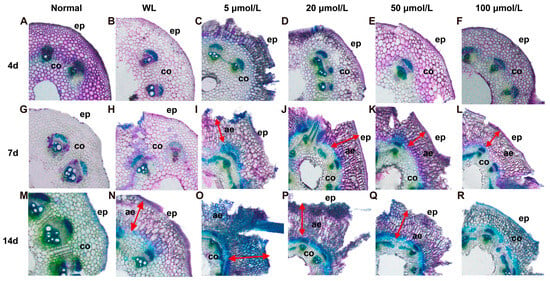
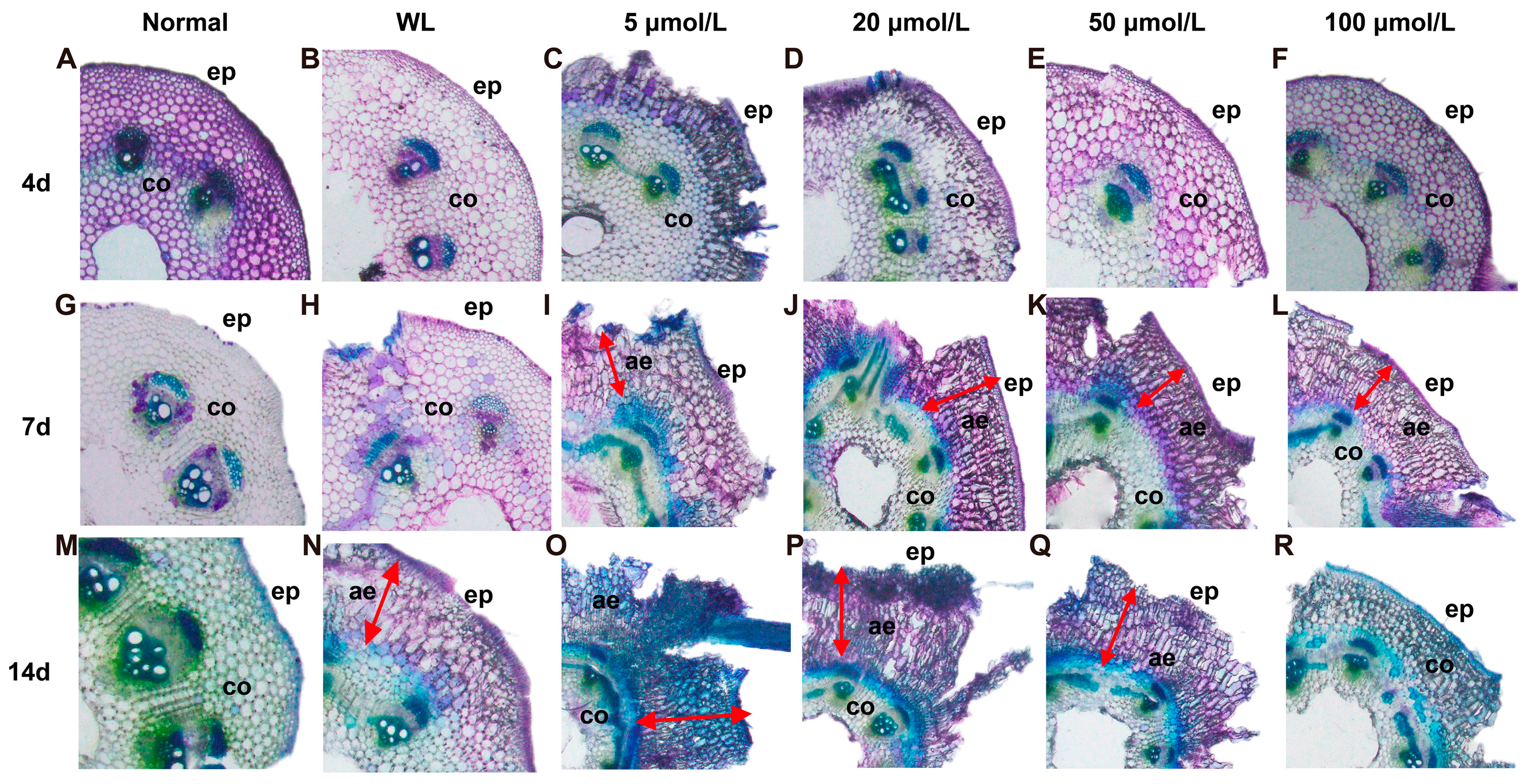
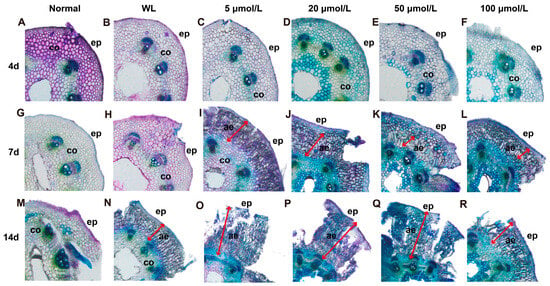
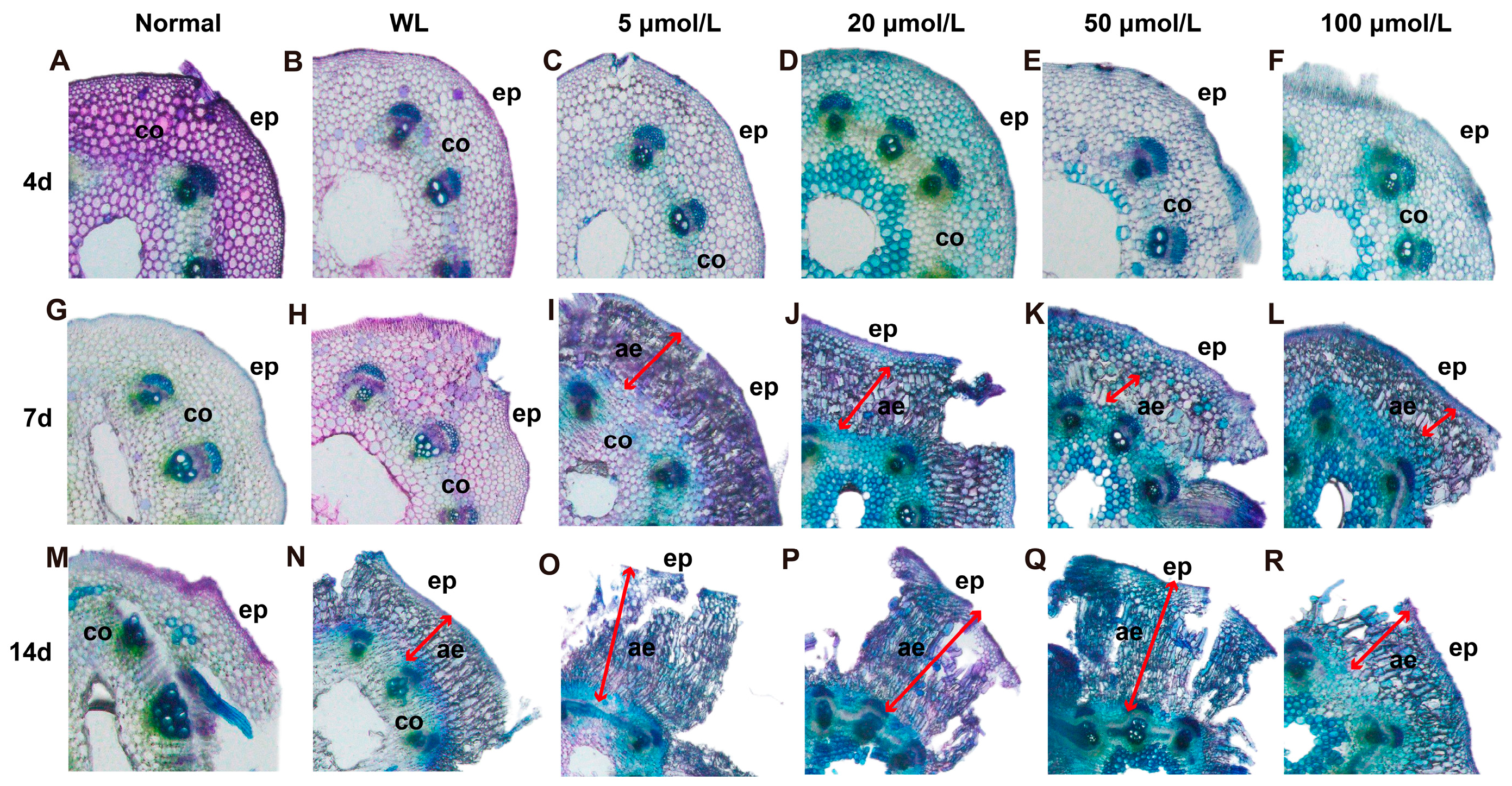
In non-waterlogged plants, aerenchyma formation was not observed in the hypocotyl and cortical cells were tightly packed (Figure 7A,G,M). Exogenous application of NPA and MeJA resulted in more prominent aerenchyma formation, as shown in the cross-sections of the hypocotyl, compared to WL alone (Figure 7 and Figure 8). Between 7 and 14 d of waterlogging, cortical cells in the outer hypocotyl expanded radially and, in places, appeared to increase in number, suggesting localized periclinal divisions before the coalescence of intercellular spaces into aerenchyma cavities (Figure 7H–L,N–R and Figure 8H–L,N–R). Furthermore, cortical cells began to expand significantly at 4d with 5 μmol/L NPA treatment (Figure 6C). These findings revealed that aerenchyma formation was promoted by NPA treatment, with 5 μmol/L being the optimal concentration. As shown in Figure 8, MeJA promoted aerenchyma formation more rapidly than the control, with the maximum aerenchyma formation occurring at a concentration of 20 μmol/L MeJA. Collectively, these results indicate that NPA and MeJA may play distinct roles in aerenchyma formation.
Figure 7.
Histological changes in ‘Zhonglü’ (ZL) hypocotyls under waterlogging with different NPA concentrations. Transverse hand sections taken at 4, 7, and 14 d. Columns indicate treatments: (A–F) 4 d, (G–L) 7 d, (M–R) 14 d. Treatments: Normal, non-waterlogged control; WL, waterlogging alone; WL + 5, 20, 50, 100 μmol/L NPA (N-1-naphthylphthalamic acid). Arrows point to aerenchyma zones. Abbreviations: ep, epidermis; co, cortex; ae, aerenchyma zone.
Figure 8.
Histological changes in ‘Zhonglü’ (ZL) hypocotyls under waterlogging with different MeJA concentrations. Transverse hand sections taken at 4, 7, and 14 d. Columns indicate treatments: (A–F) 4 d, (G–L) 7 d, (M–R) 14 d. Treatments: Normal, non-waterlogged control; WL, waterlogging alone; WL + 5, 20, 50, 100 μmol/L MeJA. Arrows point to aerenchyma zones. Abbreviations: ep, epidermis; co, cortex; ae, aerenchyma zone.
3.5. Finding and Examining the Candidate Genes Involved in Aerenchyma Formation in Response to NPA and MeJA
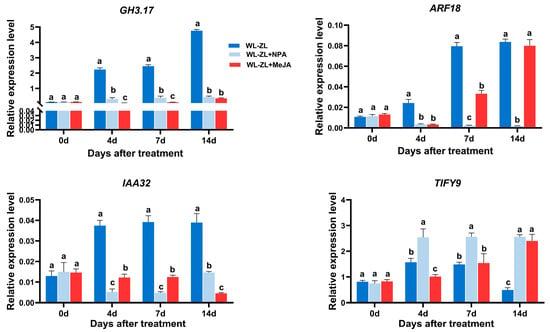
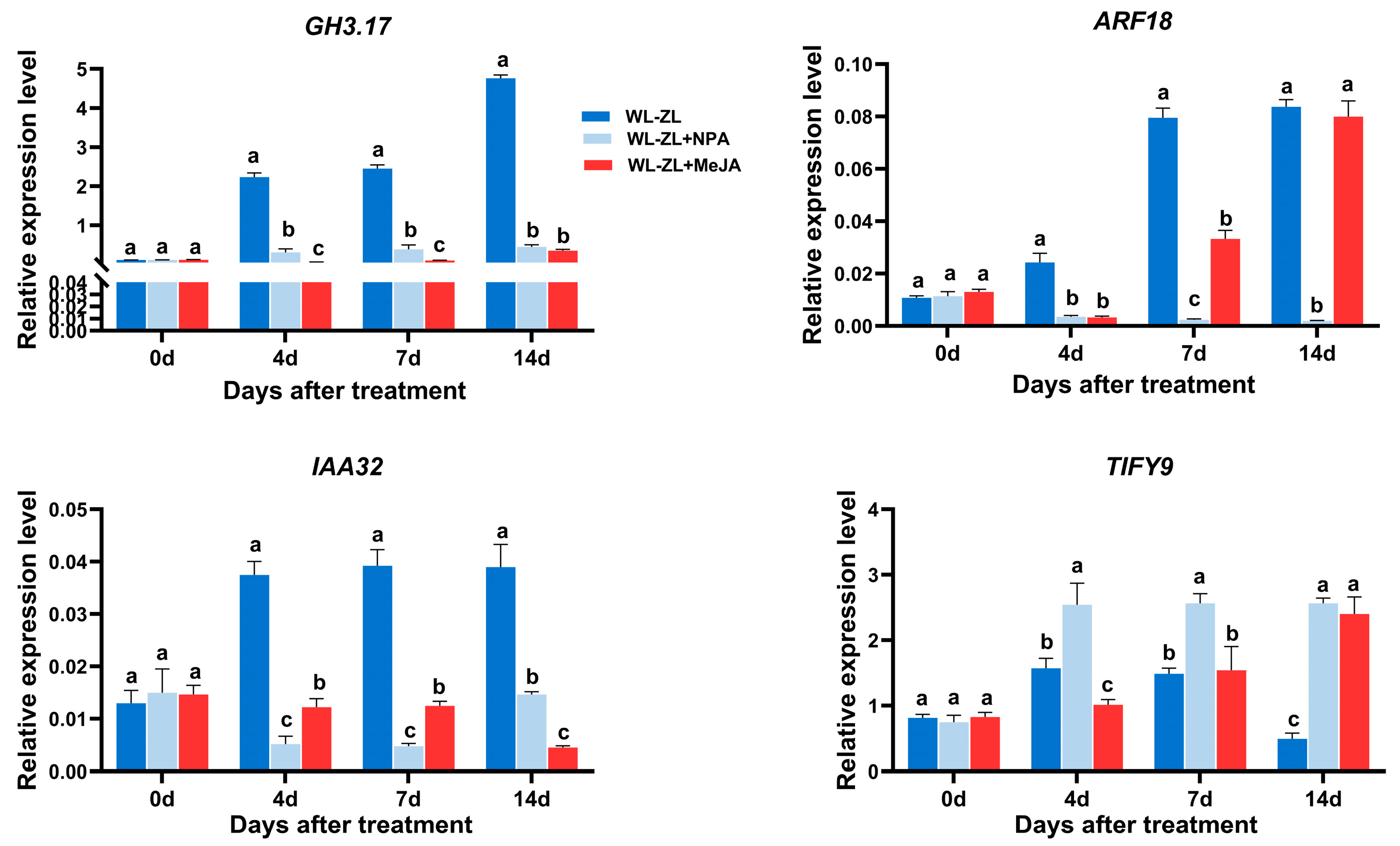
To elucidate the expression profiles of candidate genes involved in aerenchyma formation under NPA and MeJA treatments, hypocotyl samples were collected from waterlogged plants (‘WL-ZL’) and treated groups (‘WL-ZL+NPA’, ‘WL-ZL+MeJA’) at 0-, 4-, 7-, and 14 days post-treatment (dpt). RT-qPCR analysis was performed on four key genes: Lcy10g007160(GH3.17), Lcy13g004940(IAA32), Lcy01g016400(ARF18), and Lcy05g008490(TIFY9). Compared to the waterlogged control (WL-ZL), GH3.17 expression was significantly downregulated in both treatment groups. Genes associated with auxin signaling exhibited distinct temporal dynamics. ARF18 and IAA32 were upregulated in WL-ZL but were markedly suppressed in the WL-ZL+NPA group. Specifically, in the WL-ZL+MeJA group, ARF18 expression was transiently downregulated at 4 dpt, followed by a gradual recovery to baseline levels. Similarly, IAA32 expression was significantly lower in both treatment groups compared to the control. TIFY9 encodes a TIFY family transcription regulator containing the conserved TIF[F/Y]XG motif, involved in jasmonate signaling. The gene expression of TIFY9 was elevated in the WL-ZL+NPA group at 4 dpt and subsequently stabilized at levels higher than those in WL-ZL. In the WL-ZL+MeJA group, TIFY9 expression increased steadily throughout the experimental period (Figure 9). Collectively, these findings support a model wherein NPA-mediated disruption of auxin transport and MeJA-induced signaling converge to fine-tune the expression of ARF, IAA, and TIFY genes, thereby orchestrating the aerenchyma formation of luffa hypocotyls under hypoxia.
Figure 9.
Expression patterns of candidate hormone-related genes under NPA and MeJA treatments. Relative expression of GH3.17 (Gretchen Hagen 3 conjugating enzyme), IAA32 (indole-3-acetic acid-induced protein 32), ARF18 (auxin response factor 18), and TIFY9 (jasmonate-associated TIFY transcription factor) in ‘Zhonglü’ (ZL) hypocotyls under: waterlogging alone (WL-ZL), waterlogging with 5 μmol/L NPA (WL-ZL+NPA), and waterlogging with 20 μmol/L MeJA (WL-ZL+MeJA) at 0, 4, 7, and 14 d. Data are means ± SD (n = 3 biological replicates). Different lowercase letters indicate significant differences among treatments at the same time point (two-way ANOVA, Tukey, p < 0.05).
4. Discussion
Waterlogging influences crop biomass growth rate and yield [12,40,41,42]. Plants can acclimate to waterlogging-induced low-oxygen conditions in the soil through morphological, anatomical, and metabolic responses. The major morphological responses of roots to oxygen-deficient conditions include aerenchyma formation, adventitious rooting, and regulation of internode elongation [11]. It is now widely recognized that adventitious roots and aerenchyma formation play key roles in plant flooding tolerance [2,43]. So far, studies on aerenchyma formation have mainly focused on rice (Oryza sativa) [44,45], maize (Zea mays) [46,47], and wheat (Triticum aestivum) [48], while fewer studies have been conducted on luffa.
Waterlogged luffa seedlings exhibited a composite flooding syndrome combining hypocotyl aerenchyma, epidermal slits, and profuse adventitious roots. In ‘Zhonglü’ (ZL), wide cortical lacunae co-occurred with longitudinal slits on the hypocotyl surface, while ‘Yalü’ (YL) produced mainly adventitious roots with minimal cortical remodeling (Figure 1). The slits are not lenticels sensu stricto, as luffa hypocotyls lack secondary growth; instead, they likely represent sub-epidermal openings associated with radial expansion of the outer cortex, and, together with floating adventitious roots, may serve as atmospheric oxygen entry points when water rises. Floating adventitious roots bearing aerenchyma have similarly been noted in the flood-tolerant legume Sesbania aculeata, underscoring a convergent wetland trait across taxa. If the slits on the hypocotyl are submerged due to rising water levels, floating adventitious roots may play a critical role in allowing atmospheric oxygen to enter.
Although luffa is an annual upland vegetable crop, it responds to waterlogging by forming aerenchyma in the hypocotyl and newly developed adventitious roots. This aerenchyma is neither schizogenous nor lysigenous but is instead produced by radial elongation of cortical cells (Figure 1). These observations align with Shimamura et al. (2007), who first described expansigeny in Luffa cylindrica—aerenchyma initiated by radial elongation of cortical cells rather than classic schizogenous separation or rapid programmed lysis [49]. Our histology confirms this mode: cavities form by cortical cell enlargement and subsequent space coalescence, not by mid-cortex cell death as in cereals. Much research has focused on the regulation of lysigenous aerenchyma formation. In rice, aerenchyma formation begins with the programmed cell death of the mid-cortex and is induced by ethylene or nutrient shortage in maize [50,51]. In contrast, the physiological process of elongated cortical aerenchyma formation remain unknown. Thus, there are likely fundamental physiological differences between lysigenous aerenchyma and elongated cortical aerenchyma.
Plant hormones mediate complex signaling in response to waterlogging stress [6]. Auxin is a common regulator of aerenchyma formation. In maize roots, exogenous natural auxin treatment increases aerenchyma formation. Constitutive aerenchyma formation is regulated through auxin/indole-3-acetic acid proteins (AUX/IAAs; IAAs)- and auxin response factor (ARF)-dependent auxin signaling [28]. The increased level of aerenchyma formation in the apical part of the roots under low-oxygen conditions is reduced in the iaa13 mutant, where the dominant-negative IAA13 protein suppresses auxin signaling at the apical parts [28,29,45]. During constitutive aerenchyma formation in rice roots, the auxin transport inhibitor NPA completely blocks cortical cell death [28,45]. Auxin also regulates adventitious root formation by modulating jasmonate homeostasis through auxin-inducible Gretchen Hagen 3 (GH3)-like proteins [36,52]. In this study, the differentially expressed genes (DEGs) were primarily enriched in plant hormone signal transduction, including 15 genes related to auxin and 2 genes related to Jasmonic acid. Constitutive aerenchyma formation in rice roots is also regulated by auxin signaling [28]. Among these, four GH3 auxin-responsive promoter genes were up-regulated in ZL under waterlogging treatment, while four Aux/IAA genes were down-regulated in WL-ZL (Figure 3 and Figure 4). Exogenous application of NPA and MeJA resulted in more prominent aerenchyma formation of hypocotyl compared to waterlogging alone (Figure 7 and Figure 8). However, high concentration of NPA and MeJA significantly inhibited adventitious root growth (Figure 5 and Figure 6), consistent with the conclusion previously reported [53,54]. This result contrasts with the inhibition of aerenchyma formation by NPA in rice, suggesting that aerenchyma formation in luffa may involve different regulatory mechanisms.
It is important to emphasize that waterlogging induced a composite seedling syndrome in luffa, in which hypocotyl aerenchyma formation co-occurred with profuse adventitious and lateral root emergence. NPA and MeJA modestly enhanced aerenchyma in the responsive cultivar ‘Zhonglü’ only under concurrent flooding, and were tested here as exploratory modulators rather than universal triggers. It suggests that polar auxin transport and jasmonate signaling act as candidate nodes within a broader, genotype-dependent hormonal network. Other phytohormones—particularly ethylene, gibberellins, and cytokinins—are likely involved, especially given the muted cortical response of ‘Yalü’. Future comparative screens combining ‘Zhonglü’ and ‘Yalü’ with multi-hormone treatments and higher-resolution histology will be essential to disentangle organ-specific pathways.
Under waterlogging stress (WL-ZL), the upregulation of IAA32 and ARF18 likely reflects the plant’s endogenous effort to modulate auxin sensitivity and promote cell fate transition for aerenchyma formation. However, the application of NPA (WL-ZL+NPA) significantly suppressed the expression of these ARF genes (Figure 9). This aligns with the known function of NPA as an auxin transport inhibitor, which disrupts the polar auxin transport necessary for maintaining the auxin gradient required for ARF activation. Consequently, the suppression of ARF18 and IAA32 in NPA-treated plants suggests that proper auxin signaling, rather than merely the presence of auxin, is critical for the transcriptional regulation of aerenchyma development.
Furthermore, the expression patterns of GH3.17 and TIFY9 highlight the interplay between auxin and jasmonic acid. GH3.17, which encodes an enzyme involved in conjugating amino acids to auxin, was downregulated in both NPA and MeJA treatments (Figure 9). This downregulation may serve to maintain higher levels of free auxin, potentially synergizing with the jasmonate signaling to enhance aerenchyma formation. Interestingly, TIFY9, a key component of the jasmonate signaling pathway, exhibited a sustained increase in the WL-ZL+MeJA treatment. This suggests that MeJA directly reinforces its own signaling cascade to drive the morphological changes associated with waterlogging adaptation. Overall, these results delineate a regulatory model in which the combined action of NPA-mediated auxin transport blockade and jasmonate signaling synergistically modulates ARF, IAA, and TIFY expression to govern aerenchyma development under hypoxic conditions. It must be emphasized that the DEGs identified here (ARF18, IAA32, GH3, TIFY9) were derived from whole hypocotyls and therefore represent candidates associated with a composite waterlogging phenotype (aerenchyma and adventitious roots), not definitive regulators of cortical lacunae per se. Spatial or single-cell resolution, combined with multi-hormone screens across ‘Zhonglü’ and ‘Yalü’, will be required to assign cell-type-specific roles.
5. Conclusions
In summary, waterlogging induced contrasting responses in two luffa cultivars: ‘Zhonglü’ formed aerenchyma in the hypocotyl cortex together with profuse adventitious roots, whereas ‘Yalü’ was not. Transcriptomic profiling highlighted auxin- and jasmonate-associated DEGs, including ARF18, IAA32, GH3, and TIFY9, which are proposed here as candidate genes potentially linking hormonal pathways in aerenchyma development. Exogenous application of 5 μmol/L NPA and 20 μmol/L MeJA modestly enhanced aerenchyma formation in ‘Zhonglü’ under flooded conditions, suggesting that polar auxin transport and jasmonate-related signaling modulate this trait. Anatomical evidence indicates aerenchyma may contribute to internal oxygen diffusion within the hypocotyl, though the full pathway network requires tissue-specific validation. However, the detailed processes involved in the formation of epidermal slits in the hypocotyl and adventitious root were not investigated in this study, so further research is needed.
Supplementary Materials
The following supporting information can be downloaded at: https://www.mdpi.com/article/10.3390/horticulturae12091116/s1, Figure S1. KEGG pathway classification graph. Figure S2. Morphological responses of ‘Zhonglü’ (ZL) hypocotyls to waterlogging with different NPA concentrations. Figure S3. Morphological responses of ‘Zhonglü’ (ZL) hypocotyls to waterlogging with different MeJA concentrations. Table S1. List of primers for qRT-PCR. Table S2. List of DEGs of plant hormone signal transduction pathway. Table S3. List of DEGs related to auxin and Jasmonic acid pathway.
Author Contributions
All authors contributed to the conceptualization and design of the study. T.X., Writing—original draft, Investigation, Validation. Z.Y., Validation, Data curation. J.Z. and Y.C., Investigation, Validation, Formal analysis. Y.H., Methodology. X.C., Writing—review and editing. X.Q., Writing—review and editing, Funding acquisition, Conceptualization. Q.X., Writing—review and editing, Methodology, Conceptualization. All authors have read and agreed to the published version of the manuscript.
Funding
This research was financially supported by Jiangsu Province University Students Innovation and Entrepreneurship Training Program, China (202311117141Y).
Data Availability Statement
The original contributions presented in this study are included in the article and Supplementary Materials. Further inquiries can be directed to the corresponding author.
Conflicts of Interest
The authors declare no conflicts of interest.
References
- Bailey-Serres, J.; Fukao, T.; Gibbs, D.J.; Holdsworth, M.J.; Lee, S.C.; Licausi, F.; Perata, P.; Voesenek, L.A.; van Dongen, J.T. Making sense of low oxygen sensing. Trends Plant Sci. 2012, 17, 129–138. [Google Scholar] [CrossRef] [Scilit]
- Bailey-Serres, J.; Lee, S.C.; Brinton, E. Waterproofing crops: Effective flooding survival strategies. Plant Physiol. 2012, 160, 1698–1709. [Google Scholar] [CrossRef] [Scilit]
- Jackson, M.B.; Colmer, T.D. Response and adaptation by plants to flooding stress. Ann. Bot. 2005, 96, 501–505. [Google Scholar] [CrossRef] [Scilit]
- Sasidharan, R.; Bailey-Serres, J.; Ashikari, M.; Atwell, B.J.; Colmer, T.D.; Fagerstedt, K.; Fukao, T.; Geigenberger, P.; Hebelstrup, K.H.; Hill, R.D.; et al. Community recommendations on terminology and procedures used in flooding and low oxygen stress research. New Phytol. 2017, 214, 1403–1407. [Google Scholar] [CrossRef] [Scilit]
- Drew, M.C. OXYGEN DEFICIENCY AND ROOT METABOLISM: Injury and Acclimation Under Hypoxia and Anoxia. Annu. Rev. Plant Biol. 1997, 48, 223–250. [Google Scholar] [CrossRef] [Scilit]
- Pan, J.; Sharif, R.; Xu, X.; Chen, X. Mechanisms of Waterlogging Tolerance in Plants: Research Progress and Prospects. Front. Plant Sci. 2020, 11, 627331. [Google Scholar] [CrossRef] [Scilit]
- Pan, R.; Han, H.; Medison, M.B.; Abou-Elwafa, S.F.; Liu, Y.; Yang, X.; Zhang, W. Aerenchyma formation in the root of leaf-vegetable sweet potato: Programmed cell death initiated by ethylene-mediated H2O2 accumulation. Physiol. Plant. 2021, 173, 2361–2375. [Google Scholar] [CrossRef] [Scilit]
- Yamauchi, T.; Colmer, T.D.; Pedersen, O.; Nakazono, M. Regulation of Root Traits for Internal Aeration and Tolerance to Soil Waterlogging-Flooding Stress. Plant Physiol. 2018, 176, 1118–1130. [Google Scholar] [CrossRef] [Scilit]
- Zhou, W.; Chen, F.; Meng, Y.; Chandrasekaran, U.; Luo, X.; Yang, W.; Shu, K. Plant waterlogging/flooding stress responses: From seed germination to maturation. Plant Physiol. Biochem. 2020, 148, 228–236. [Google Scholar] [CrossRef] [Scilit]
- Hattori, Y.; Nagai, K.; Furukawa, S.; Song, X.J.; Kawano, R.; Sakakibara, H.; Wu, J.; Matsumoto, T.; Yoshimura, A.; Kitano, H.; et al. The ethylene response factors SNORKEL1 and SNORKEL2 allow rice to adapt to deep water. Nature 2009, 460, 1026–1030. [Google Scholar] [CrossRef] [Scilit]
- Pedersen, O.; Sauter, M.; Colmer, T.D.; Nakazono, M. Regulation of root adaptive anatomical and morphological traits during low soil oxygen. New Phytol. 2021, 229, 42–49. [Google Scholar] [CrossRef] [Scilit]
- Qi, X.; Li, Q.; Ma, X.; Qian, C.; Wang, H.; Ren, N.; Shen, C.; Huang, S.; Xu, X.; Xu, Q.; et al. Waterlogging-induced adventitious root formation in cucumber is regulated by ethylene and auxin through reactive oxygen species signalling. Plant Cell Environ. 2019, 42, 1458–1470. [Google Scholar] [CrossRef] [Scilit]
- Yamauchi, T.; Yoshioka, M.; Fukazawa, A.; Mori, H.; Nishizawa, N.K.; Tsutsumi, N.; Yoshioka, H.; Nakazono, M. An NADPH Oxidase RBOH Functions in Rice Roots during Lysigenous Aerenchyma Formation under Oxygen-Deficient Conditions. Plant Cell 2017, 29, 775–790. [Google Scholar] [CrossRef] [Scilit]
- Colmer, T.D.; Flowers, T.J.; Munns, R. Use of wild relatives to improve salt tolerance in wheat. J. Exp. Bot. 2006, 57, 1059–1078. [Google Scholar] [CrossRef] [Scilit]
- Leite, D.C.C.; Grandis, A.; Tavares, E.Q.P.; Piovezani, A.R.; Pattathil, S.; Avci, U.; Rossini, A.; Cambler, A.; De Souza, A.P.; Hahn, M.G.; et al. Cell wall changes during the formation of aerenchyma in sugarcane roots. Ann. Bot. 2017, 120, 693–708. [Google Scholar] [CrossRef] [Scilit]
- Colmer, T.D.; Cox, M.C.; Voesenek, L.A. Root aeration in rice (Oryza sativa): Evaluation of oxygen, carbon dioxide, and ethylene as possible regulators of root acclimatizations. New Phytol. 2006, 170, 767–777. [Google Scholar] [CrossRef] [Scilit]
- Rajhi, I.; Yamauchi, T.; Takahashi, H.; Nishiuchi, S.; Shiono, K.; Watanabe, R.; Mliki, A.; Nagamura, Y.; Tsutsumi, N.; Nishizawa, N.K.; et al. Identification of genes expressed in maize root cortical cells during lysigenous aerenchyma formation using laser microdissection and microarray analyses. New Phytol. 2011, 190, 351–368. [Google Scholar] [CrossRef] [Scilit]
- Yamauchi, T.; Nakazono, M. Mechanisms of lysigenous aerenchyma formation under abiotic stress. Trends Plant Sci. 2022, 27, 13–15. [Google Scholar] [CrossRef] [Scilit]
- Colmer, T.D.; Voesenek, L. Flooding tolerance: Suites of plant traits in variable environments. Funct. Plant Biol. 2009, 36, 665–681. [Google Scholar] [CrossRef] [Scilit] [PubMed]
- Gong, F.; Takahashi, H.; Omori, F.; Wang, W.; Mano, Y.; Nakazono, M. QTLs for constitutive aerenchyma from Zea nicaraguensis improve tolerance of maize to root-zone oxygen deficiency. J. Exp. Bot. 2019, 70, 6475–6487. [Google Scholar] [CrossRef] [Scilit]
- Voesenek, L.; Bailey-Serres, J. Flood adaptive traits and processes: An overview. New Phytol. 2015, 206, 57–73. [Google Scholar] [CrossRef] [Scilit]
- Shiono, K.; Ogawa, S.; Yamazaki, S.; Isoda, H.; Fujimura, T.; Nakazono, M.; Colmer, T.D. Contrasting dynamics of radial O2-loss barrier induction and aerenchyma formation in rice roots of two lengths. Ann. Bot. 2011, 107, 89–99. [Google Scholar] [CrossRef] [Scilit]
- Hartman, S.; Liu, Z.; van Veen, H.; Vicente, J.; Reinen, E.; Martopawiro, S.; Zhang, H.; van Dongen, N.; Bosman, F.; Bassel, G.W.; et al. Ethylene-mediated nitric oxide depletion pre-adapts plants to hypoxia stress. Nat. Commun. 2019, 10, 4020. [Google Scholar] [CrossRef] [Scilit]
- Hartman, S.; Sasidharan, R.; Voesenek, L. The role of ethylene in metabolic acclimations to low oxygen. New Phytol. 2021, 229, 64–70. [Google Scholar] [CrossRef] [Scilit]
- Sasidharan, R.; Hartman, S.; Liu, Z.; Martopawiro, S.; Sajeev, N.; van Veen, H.; Yeung, E.; Voesenek, L. Signal Dynamics and Interactions during Flooding Stress. Plant Physiol. 2018, 176, 1106–1117. [Google Scholar] [CrossRef] [Scilit]
- Yamauchi, T.; Shiono, K.; Nagano, M.; Fukazawa, A.; Ando, M.; Takamure, I.; Mori, H.; Nishizawa, N.K.; Kawai-Yamada, M.; Tsutsumi, N.; et al. Ethylene Biosynthesis Is Promoted by Very-Long-Chain Fatty Acids during Lysigenous Aerenchyma Formation in Rice Roots. Plant Physiol. 2015, 169, 180–193. [Google Scholar] [CrossRef] [Scilit]
- Steffens, B.; Geske, T.; Sauter, M. Aerenchyma formation in the rice stem and its promotion by H2O2. New Phytol. 2011, 190, 369–378. [Google Scholar] [CrossRef] [Scilit]
- Yamauchi, T.; Tanaka, A.; Inahashi, H.; Nishizawa, N.K.; Tsutsumi, N.; Inukai, Y.; Nakazono, M. Fine control of aerenchyma and lateral root development through AUX/IAA- and ARF-dependent auxin signaling. Proc. Natl. Acad. Sci. USA 2019, 116, 20770–20775. [Google Scholar] [CrossRef] [Scilit]
- Inahashi, H.; Shelley, I.J.; Yamauchi, T.; Nishiuchi, S.; Takahashi-Nosaka, M.; Matsunami, M.; Ogawa, A.; Noda, Y.; Inukai, Y. OsPIN2, which encodes a member of the auxin efflux carrier proteins, is involved in root elongation growth and lateral root formation patterns via the regulation of auxin distribution in rice. Physiol. Plant. 2018, 164, 216–225. [Google Scholar] [CrossRef] [Scilit]
- Kawai, T.; Shibata, K.; Akahoshi, R.; Nishiuchi, S.; Takahashi, H.; Nakazono, M.; Kojima, T.; Nosaka-Takahashi, M.; Sato, Y.; Toyoda, A.; et al. WUSCHEL-related homeobox family genes in rice control lateral root primordium size. Proc. Natl. Acad. Sci. USA 2022, 119, e2101846119. [Google Scholar] [CrossRef] [Scilit]
- Kitomi, Y.; Hanzawa, E.; Kuya, N.; Inoue, H.; Hara, N.; Kawai, S.; Kanno, N.; Endo, M.; Sugimoto, K.; Yamazaki, T.; et al. Root angle modifications by the DRO1 homolog improve rice yields in saline paddy fields. Proc. Natl. Acad. Sci. USA 2020, 117, 21242–21250. [Google Scholar] [CrossRef] [Scilit]
- Lucob-Agustin, N.; Kawai, T.; Takahashi-Nosaka, M.; Kano-Nakata, M.; Wainaina, C.M.; Hasegawa, T.; Inari-Ikeda, M.; Sato, M.; Tsuji, H.; Yamauchi, A.; et al. WEG1, which encodes a cell wall hydroxyproline-rich glycoprotein, is essential for parental root elongation controlling lateral root formation in rice. Physiol. Plant. 2020, 169, 214–227. [Google Scholar] [CrossRef] [Scilit]
- Xing, Y.; Wang, N.; Zhang, T.; Zhang, Q.; Du, D.; Chen, X.; Lu, X.; Zhang, Y.; Zhu, M.; Liu, M.; et al. SHORT-ROOT 1 is critical to cell division and tracheary element development in rice roots. Plant J. 2021, 105, 1179–1191. [Google Scholar] [CrossRef] [Scilit]
- Sauter, M. Root responses to flooding. Curr. Opin. Plant Biol. 2013, 16, 282–286. [Google Scholar] [CrossRef] [Scilit]
- Steffens, B.; Rasmussen, A. The Physiology of Adventitious Roots. Plant Physiol. 2016, 170, 603–617. [Google Scholar] [CrossRef] [Scilit]
- Gutierrez, L.; Mongelard, G.; Flokova, K.; Pacurar, D.I.; Novak, O.; Staswick, P.; Kowalczyk, M.; Pacurar, M.; Demailly, H.; Geiss, G.; et al. Auxin controls Arabidopsis adventitious root initiation by regulating jasmonic acid homeostasis. Plant Cell 2012, 24, 2515–2527. [Google Scholar] [CrossRef] [Scilit]
- Peng, Y.Q.; Zhu, J.; Li, W.J.; Gao, W.; Shen, R.Y.; Meng, L.J. Effects of grafting on root growth, anaerobic respiration enzyme activity and aerenchyma of bitter melon under waterlogging stress. Sci. Hortic. 2020, 261, 108977. [Google Scholar] [CrossRef] [Scilit]
- Steponkus, P.L.; Lanphear, F.O. Refinement of the triphenyl tetrazolium chloride method of determining cold injury. Plant. Physiol. 1967, 42, 1423–1426. [Google Scholar] [CrossRef] [Scilit]
- Livak, K.J.; Schmittgen, T.D. Analysis of relative gene expression data using real-time quantitative PCR and the 2−ΔΔCT Method. Methods 2001, 25, 402–408. [Google Scholar] [CrossRef] [Scilit]
- Liu, K.; Harrison, M.T.; Yan, H.; Liu, L.; Meinke, H.; Hoogenboom, G.; Wang, B.; Peng, B.; Guan, K.; Jaegermeyr, J.; et al. Silver lining to a climate crisis in multiple prospects for alleviating crop waterlogging under future climates. Nat. Commun. 2023, 14, 765. [Google Scholar] [CrossRef] [Scilit]
- Geng, R.; Xu, M.; Xu, L.; Yan, G.; Cai, G. Biological Mechanisms of Waterlogging Tolerance in Plants. Plant Cell Environ. 2026, 49, 685–699. [Google Scholar] [CrossRef] [Scilit]
- Xu, Z.; Ye, L.; Shen, Q.; Zhang, G. Advances in the study of waterlogging tolerance in plants. J. Integr. Agric. 2024, 23, 2877–2897. [Google Scholar] [CrossRef] [Scilit]
- Zhang, Q.; Huber, H.; Beljaars, S.J.M.; Birnbaum, D.; de Best, S.; de Kroon, H.; Visser, E.J.W. Benefits of flooding-induced aquatic adventitious roots depend on the duration of submergence: Linking plant performance to root functioning. Ann. Bot. 2017, 120, 171–180. [Google Scholar] [CrossRef] [Scilit]
- Yamauchi, T.; Tanaka, A.; Mori, H.; Takamure, I.; Kato, K.; Nakazono, M. Ethylene-dependent aerenchyma formation in adventitious roots is regulated differently in rice and maize. Plant Cell Environ. 2016, 39, 2145–2157. [Google Scholar] [CrossRef] [Scilit]
- Yamauchi, T.; Tanaka, A.; Tsutsumi, N.; Inukai, Y.; Nakazono, M. A Role for Auxin in Ethylene-Dependent Inducible Aerenchyma Formation in Rice Roots. Plants 2020, 9, 610. [Google Scholar] [CrossRef] [Scilit]
- Yamauchi, T.; Rajhi, I.; Nakazono, M. Lysigenous aerenchyma formation in maize root is confined to cortical cells by regulation of genes related to generation and scavenging of reactive oxygen species. Plant Signal. Behav. 2011, 6, 759–761. [Google Scholar] [CrossRef] [Scilit]
- Yamauchi, T.; Nakazono, M. Modeling-based age-dependent analysis reveals the net patterns of ethylene-dependent and -independent aerenchyma formation in rice and maize roots. Plant Sci. 2022, 321, 111340. [Google Scholar] [CrossRef] [Scilit]
- Wany, A.; Gupta, K.J. Reactive oxygen species, nitric oxide production and antioxidant gene expression during development of aerenchyma formation in wheat. Plant Signal. Behav. 2018, 13, e1428515. [Google Scholar] [CrossRef] [Scilit]
- Shimamura, S.; Yoshida, S.; Mochizuki, T. Cortical Aerenchyma formation in hypocotyl and adventitious roots of Luffa cylindrica subjected to soil flooding. Ann. Bot. 2007, 100, 1431–1439. [Google Scholar] [CrossRef] [Scilit]
- Fan, M.; Zhu, J.; Richards, C.; Brown, K.M.; Lynch, J.P. Physiological roles for aerenchyma in phosphorus-stressed roots. Funct. Plant Biol. 2003, 30, 493–506. [Google Scholar] [CrossRef] [Scilit]
- Gunawardena, A.H.; Pearce, D.M.; Jackson, M.B.; Hawes, C.R.; Evans, D.E. Characterisation of programmed cell death during aerenchyma formation induced by ethylene or hypoxia in roots of maize (Zea mays L.). Planta 2001, 212, 205–214. [Google Scholar] [CrossRef] [Scilit]
- Vidoz, M.L.; Loreti, E.; Mensuali, A.; Alpi, A.; Perata, P. Hormonal interplay during adventitious root formation in flooded tomato plants. Plant J. 2010, 63, 551–562. [Google Scholar] [CrossRef] [Scilit]
- Qi, X.; Li, Q.; Shen, J.; Qian, C.; Xu, X.; Xu, Q.; Chen, X. Sugar enhances waterlogging-induced adventitious root formation in cucumber by promoting auxin transport and signalling. Plant Cell Environ. 2020, 43, 1545–1557. [Google Scholar] [CrossRef] [Scilit]
- Pan, J.; Sohail, H.; Sharif, R.; Hu, Q.; Song, J.; Qi, X.; Chen, X.; Xu, X. Cucumber JASMONATE ZIM-DOMAIN 8 interaction with transcription factor MYB6 impairs waterlogging-triggered adventitious rooting. Plant Physiol. 2024, 197, kiae351. [Google Scholar] [CrossRef] [Scilit]
Disclaimer/Publisher’s Note: The statements, opinions and data contained in all publications are solely those of the individual author(s) and contributor(s) and not of MDPI and/or the editor(s). MDPI and/or the editor(s) disclaim responsibility for any injury to people or property resulting from any ideas, methods, instructions or products referred to in the content. |
© 2026 by the authors. Licensee MDPI, Basel, Switzerland. This article is an open access article distributed under the terms and conditions of the Creative Commons Attribution (CC BY) license.