


Highlights
What are the main findings?
- Ultrasound-assisted hydrodistillation processing increased essential oil yield by up to 29.58%, with optimal extraction achieved using 1 cm biomass, 150 W ultrasonic power, and 85 min distillation.
- Oregano, thyme, sage, and lemon balm essential oils completely inhibited Botrytis cinerea in vitro, while lavender essential oil showed concentration-dependent antifungal activity.
- A combined essential oil formulation significantly reduced gray mold incidence, disease severity, and grape weight loss, with the 2% treatment providing the highest biocontrol efficacy.
What are the implications of the main findings?
- The proposed UAHD-derived essential oil formulation represents a sustainable biocontrol strategy for regulating Botrytis cinerea development while preserving grape quality.
- Integrating optimized green extraction with plant-based bioformulations supports environmentally friendly disease management and reduces reliance on synthetic fungicides in viticulture.
Abstract
Botrytis cinerea is a major fungal pathogen of grapevine responsible for gray mold, causing significant economic losses worldwide. Under specific environmental conditions, controlled development of Botrytis cinerea may lead to “noble rot,” a quality-enhancing attribute of premium wines; however, the same fungus can rapidly develop into destructive gray mold, causing significant grape losses. Consequently, the challenge is not necessarily the complete eradication of the pathogen, but the regulation of its development to prevent uncontrolled disease progression while preserving grape quality. The present study investigated the potential of using essential oils extracted from selected aromatic plants using ultrasound-assisted hydrodistillation (UAHD) as eco-friendly biocontrol agents against Botrytis cinerea. The extraction process was optimized by evaluating the effects of biomass particle size, ultrasonic power, and distillation time on essential oil yield. Antifungal activity was assessed through in vitro poisoned food and disk diffusion assays and validated in vivo on artificially inoculated grape berries by evaluating disease incidence, disease severity, treatment efficacy, and weight loss. Ultrasound pretreatment increased essential oil yield by up to 29.58% compared with conventional hydrodistillation, with optimal conditions achieved using 1 cm biomass, 150 W ultrasonic power, and 85 min distillation. Oregano, thyme, sage, and lemon balm essential oils achieved 100% inhibition of Botrytis cinerea mycelial growth at the tested concentrations, whereas lavender essential oil showed 95.03% inhibition at 0.125% and complete inhibition at 0.25%. In vivo, essential oil formulations markedly reduced gray mold development, with the 2.0% formulation providing the highest treatment efficacy and the lowest disease severity. These findings show that UAHD-derived essential oils represent promising sustainable alternatives for the management of Botrytis cinerea in viticulture. However, these findings represent preliminary evidence obtained under controlled in vitro conditions, necessitating further validation in real-world applications.
1. Introduction
Grapevine (Vitis vinifera L.) is one of the most economically important horticultural crops worldwide, supporting both the fresh fruit and wine industries. Grape production is severely affected by fungal diseases, among which gray mold caused by Botrytis cinerea is one of the most destructive. The pathogen infects flowers, leaves, and berries, causing substantial yield losses, deterioration of fruit quality, and significant economic damage during both pre- and postharvest stages [1].
Botrytis cinerea is a necrotrophic fungal pathogen that infects many plants, including grapevine, causing gray mold by destroying plant tissues and utilizing them as a nutrient source. By evaluating grape berries at various stages of infection, prior research [2,3] demonstrated that Botrytis cinerea triggers a robust activation of the grapevine’s defense systems; however, these induced counter-measures remain inadequate to prevent successful colonization by the pathogen [2].
Under controlled environmental conditions, Botrytis cinerea may induce the development of noble rot, a desirable process in the production of premium sweet wines. Controlled botrytization enhances the accumulation of sugars and characteristic aroma compounds, contributing to the distinctive sensory profile of botrytized wines, while only minor changes have been reported in some red wine styles [3]. However, Botrytis cinerea also poses a major risk in viticulture because environmental fluctuations can rapidly shift noble rot toward destructive gray mold. Uncontrolled fungal development promotes berry decay, alters wine aroma through the formation of undesirable volatile compounds, and produces laccases that negatively affect wine color, aroma, and clarity. Since infection may remain asymptomatic during its early stages and spread rapidly, preventing this transition represents a major challenge for maintaining grape quality and yield [4]. Other studies [5,6] demonstrated the detrimental effects of Botrytis cinerea infection on Champagne wines and sparkling wines.
Gray mold management relies primarily on repeated applications of synthetic fungicides. However, the emergence of resistant pathogen populations, increasing environmental concerns, regulatory restrictions, and consumer demand for residue-free products have stimulated the search for sustainable disease management strategies. Plant-derived extracts represent a promising alternative for the control of Botrytis cinerea, owing to their antifungal properties and their ability to inhibit mycelial growth and spore germination. Essential oils are widely used in agriculture as biopesticides due to their insecticidal, fungicidal, and repellent properties. They exert their biological activity by inhibiting feeding, suppressing growth, increasing the mortality of various pests [1,2,3], disrupting some insect nervous system and damaging the cellular membranes of pathogenic microorganisms [7].
Several essential oils, including oregano (Origanum vulgare) [8,9], sage (Salvia officinalis) [10,11], lavender (Lavandula angustifolia) [12,13,14], lemon balm (Melissa officinalis) [15], and thyme (Thymus vulgaris) [16], have demonstrated significant antifungal activity against Botrytis cinerea and other phytopathogenic fungi. Their biological activity has been primarily attributed to bioactive terpenes and phenolic compounds, such as thymol, carvacrol, linalool, camphor, and citral, which interfere with fungal cell membranes and inhibit mycelial growth.
Despite the growing interest in natural alternatives to synthetic fungicides, important knowledge gaps remain regarding the optimization of essential oil extraction and their subsequent application against Botrytis cinerea. In particular, limited information is available on the optimization of ultrasound-assisted hydrodistillation (UAHD) parameters for efficient essential oil production from aromatic plant species and on the antifungal performance of the resulting oils and their formulations against gray mold. Therefore, further investigation is needed to establish optimized extraction conditions and to evaluate the efficacy of essential oil-based formulations for suppressing Botrytis cinerea development under controlled conditions.
Therefore, the aim of this study was to evaluate the potential of essential oils extracted by ultrasound-assisted hydrodistillation (UAHD) as sustainable biocontrol agents against Botrytis cinerea in viticulture. The research focuses on regulating fungal development to prevent the transition from beneficial noble rot to destructive gray mold under unfavorable environmental conditions. The experimental approach combined UAHD optimization, in vitro antifungal screening, and in vivo validation on grape berries by assessing disease incidence, disease severity, treatment efficacy, and weight loss. The experimental design framework is illustrated schematically in Figure 1.
Figure 1.
The experimental framework for assessing the biocontrol potential of volatile plant extracts against Botrytis cinerea-induced grape rot.
The novelty of this study lies in integrating the optimization of ultrasound-assisted hydrodistillation (UAHD) with the biological evaluation of essential oil formulations against Botrytis cinerea. While previous studies have mainly addressed extraction efficiency or the antifungal activity of individual essential oils, the present work integrates process optimization, in vitro screening, and in vivo evaluation on grape berries to investigate the potential of a multi-component essential oil formulation for suppressing gray mold. The results provide a laboratory-based proof of concept for the potential use of plant-derived essential oil formulations as an alternative approach to Botrytis cinerea suppression. However, further studies under vineyard conditions are required to evaluate the stability, efficacy, and practical applicability of these formulations under variable environmental conditions.
2. Materials and Methods
2.1. Plant Material and Fungal Isolate Culture
The fungal strain of Botrytis cinerea (ICDPP-BC-02) was obtained from the Microorganism Collection of the Laboratory of Bioproducts for Plant Protection within the ICDPP (Bucharest, Romania, 44.4828° N, 26.0792° E). The strain was initially isolated from grapes ‘Negru de Drăgășani’ grape variety (Drăgășani, Vâlcea County, Romania). The identification of the strain was carried out based on macro- and microscopic morphological characteristics, complemented by phenotypic analysis of the metabolic profile using the Biolog Gen III MicroPlate ™ system (Biolog, Inc., Hayward, CA, USA). Prior to the antifungal experiments, the pathogenicity of the Botrytis cinerea isolate was verified by inoculating healthy grape berries under the same incubation conditions used in the bioassays. Characteristic gray mold symptoms developed within the expected incubation period, confirming the pathogenicity and aggressiveness of the isolate. The pathogen was maintained on potato dextrose agar (PDA) at 4 °C and periodically subcultured to preserve culture viability. Conidia were harvested from actively growing cultures and suspended in sterile distilled water containing 0.01% Tween 80.
The aromatic plants used in this study originated from experimental crops established within the National Institute of Research–Development for Machines and Installations Designed for Agriculture and Food Industry (INMA Bucharest, Romania). They consisted of the Romanian cultivars ‘Codreanca’ (Lavandula angustifolia), ‘Citronela’ (Melissa officinalis), ‘De Răsărit’ (Salvia officinalis), and ‘Aroma’ (Thymus vulgaris), together with a new experimental material of Origanum vulgare. The plants were harvested between the months of May–June, by cutting the aerial parts at an approximate distance of 10–15 cm above the soil surface to ensure sample uniformity and avoid soil contamination. Immediately after harvest, the raw biomass was carefully sorted to remove any damaged tissues or foreign matter. The plant material was then cut and chopped into uniform segments of approximately 1 and 2 cm in length using a laboratory mill to optimize the exposed surface area. To ensure a stable and reproducible moisture content prior to extraction, the chopped biomass was subjected to a controlled thermal drying process in a laboratory convective oven at a constant temperature of 40 °C, until a constant weight was achieved, yielding a final residual moisture content of approximately 8%. The five aromatic plant species included in this study (Lavandula angustifolia, Melissa officinalis, Salvia officinalis L., Origanum vulgare and Thymus vulgaris) were selected based on previously published studies reporting significant antifungal activity against Botrytis cinerea and other phytopathogenic fungi, as well as on their high content of bioactive compounds with documented antimicrobial properties. In addition, these species are widely cultivated, commercially available, and represent important sources of essential oils with potential applications in sustainable plant protection.
The full factorial experimental design was independently applied to each of the five aromatic plant species. For each species, all combinations of the investigated UAHD parameters were evaluated, and the essential oil yield was determined separately. Consequently, the optimization procedure was performed individually for each plant material rather than using a common optimization protocol.
2.2. Ultrasound-Assisted Hydrodistillation (UAHD)
The extraction of essential oils from the selected medicinal plants was performed using a hybrid ultrasound-assisted hydrodistillation (UAHD) technique, characterized by a sequential two-step process: ultrasound pretreatment followed by thermal distillation.
2.2.1. Pretreatment of Plant Material via Ultrasound Treatment
For each experimental test, 100 g of dried plant material was chopped to a homogenous particle size and placed inside a round-bottom flask. Distilled water was added at a specific solid-to-liquid ratio of 1:10, w/v. The mixture was subjected to ultrasound pretreatment to disrupt the plant cell walls and glandular trichomes containing the volatile fractions. The ultrasound treatment was delivered using an ultrasonic processor probe under the following optimized processing parameters. The experimental factors tested in the study are shown in Table 1.
Table 1.
Experimental factors and levels used for ultrasound-assisted hydrodistillation (UAHD).
2.2.2. Hydrodistillation Processing of Medicinal Plants
Essential oils were obtained via steam distillation using a pilot-scale extraction system equipped with an external electric steam generator. For each batch, the plant material was uniformly loaded onto a perforated stainless-steel grid to ensure consistent steam distribution. Saturated steam was introduced at 1.5 bar and 105–110 °C, with a flow rate of 2.0 kg/h per kilogram of plant material. The steam passing through the plant matrix released the volatile compounds, which were subsequently condensed in a vertical shell-and-tube condenser using countercurrent cooling water maintained at 25 °C to minimize thermal and volatilization losses. The condensed liquid was collected in a Florentine vessel, allowing the essential oil to separate spontaneously from the aqueous hydrosol layer due to density differentials and immiscibility. The extraction process was maintained for a total duration of 90 min from the appearance of the first distillate drop. Finally, the isolated essential oil fraction was decanted, dried over anhydrous sodium sulfate (Na2SO4) to eliminate residual micro-moisture, and stored in airtight amber glass vials at 4 °C until further chemical characterization and in vitro and in vivo antifungal bioassays. The complete setup is composed of an ultrasound generator (Hielscher UP400St, Hielscher Ultrasonics GmbH, Teltow, Germany) (Figure 2a) and hydrodistillation equipment (HD231 unit, experimental model produced by INMA Bucharest, Romania) (Figure 2b), equipped with a steam generator, an extraction vessel and a cooling vessel with a water coil (Figure 2c).
Figure 2.
A schematic diagram of the ultrasound-assisted hydrodistillation (UAHD) setup: (a) ultrasonic pretreatment stage; (b) hydrodistillation unit; (c) steam condensation and cooling system.
Plant material was harvested from experimental field plots established in 2024 and 2025 at the National Institute of Research–Development for Machines and Installations Designed for Agriculture and Food Industry (Bucharest, Romania, 44.4828° N, 26.0772° E), as shown in Figure 3.
Figure 3.
INMA Bucharest experimental cultivation infrastructure used as the source of plant material for the present study (44.4828° N, 26.0772° E).
The 2025 agricultural year was marked by severe hydric stress, with cumulative precipitation reaching 380–420 mm (a 25–30% deficit relative to multi-annual mean) and over 35 days exceeding 35 °C during the critical June–August crop development window. The plants were cultivated under the pedoclimatic conditions specific to southern Romania, on fertile loamy soils with good drainage, suitable for the cultivation of medicinal and aromatic plants. Standard agronomic practices were applied throughout the growing season, including conventional soil preparation, balanced fertilization, mechanical and manual weed control, and supplementary irrigation when required to prevent severe water stress. No synthetic plant growth regulators were applied. Plant harvesting was performed at the phenological stage recommended for maximum essential oil accumulation, namely full flowering for Lavandula angustifolia, Origanum vulgare, and Thymus vulgaris, the beginning of flowering for Melissa officinalis, and full vegetative development to early flowering for Salvia officinalis. Following harvest, the plant material was air-dried under shade at ambient temperature until a constant moisture content was reached prior to ultrasound-assisted hydrodistillation.
2.2.3. Chemical Profiling and Compositional Analysis of Extracted Essential Oils
The extracted essential oils were transferred to amber glass vials, sealed, and stored at 4 °C until chemical analysis and bioassays. All analyses were performed within 7 days of extraction to minimize compositional changes. Before the chemical evaluation, a literature review was conducted to select specific target plants and identify the volatile constituents with proven antifungal activity against Botrytis cinerea (Table 2). These key compounds were then utilized as analytical markers to evaluate the chemical profiles of the essential oils extracted using the proposed method.
Table 2.
Main chemical constituents and reported antifungal compounds of selected essential oils.
The chemical profile of the obtained essential oils was qualitatively and quantitatively evaluated using gas chromatography–mass spectrometry (Agilent 8890 gas chromatography system equipped with Agilent 5977C mass selective detector—Agilent Technologies, Santa Clara, CA, USA). The relative percentage of each volatile constituent was determined via peak area normalization calculated directly from the total ion chromatogram (TIC), assuming an equal detector response factor for all components. Compound identification was comprehensively performed by comparing their mass spectra with those stored in commercial libraries (NIST). This information provides chemical context for the observed antifungal responses; however, the present study does not establish a direct causal relationship between the concentration of individual constituents and antifungal efficacy, as such a relationship would require dedicated chemical profiling and compound–activity analysis.
2.2.4. Experimental Design for UAHD Optimization Process
The optimization of ultrasound-assisted hydrodistillation (UAHD) was performed using a full factorial experimental design. Three independent factors were investigated: biomass particle size (two levels: 1 cm and 2 cm), ultrasonic power (three levels: 100, 150 and 200 W), and distillation time (three levels: 45, 50 and 85 min). In addition, a control treatment corresponding to conventional hydrodistillation without ultrasound was included as a reference. This control was not considered a level of the ultrasonic power factor in the factorial design. Therefore, the experimental design consisted of 18 factorial treatment combinations (2 × 3 × 3) plus 1 control experiment, resulting in a total of 19 experimental runs. Each treatment was independently repeated three times using freshly prepared plant material. For the optimization experiment, essential oil yield was analyzed using a three-factor factorial ANOVA, considering biomass particle size, ultrasonic power and distillation time as fixed effects. The interaction terms between factors (particle size × ultrasonic power, particle size × distillation time, ultrasonic power × distillation time, and the three-way interaction) were also evaluated. When significant effects were detected, mean separation was performed using Tukey’s HSD test (p < 0.05).
2.3. In Vitro Antifungal Activity Assays
The two assays were selected to characterize complementary aspects of the antifungal activity of the essential oils rather than to provide interchangeable measurements. The poisoned food technique was used to assess the inhibitory capacity of the oils under controlled direct-exposure conditions, in which the tested concentration was incorporated throughout the PDA medium and the developing fungal mycelium was continuously exposed to the treatment. This approach therefore provides an estimate of the ability of the essential oil to suppress radial mycelial growth when an effective concentration is maintained in the growth substrate. The disk diffusion assay was included to evaluate the antifungal response under a spatially heterogeneous exposure regime. In this configuration, the essential oil is applied from a localized source and its biological effect depends on the release, radial diffusion, and, for volatile constituents, evaporation of the active compounds from the impregnated disk. Consequently, the resulting inhibition reflects not only antifungal potency but also the capacity of the oil constituents to reach and remain at inhibitory concentrations within the surrounding agar. This distinction is particularly relevant for essential oils because their physicochemical properties, including volatility and differential diffusion of individual constituents, may substantially influence the apparent inhibition response. Using both approaches therefore enabled the study to distinguish between antifungal activity under sustained direct exposure and antifungal performance under diffusion-dependent exposure conditions. The comparison was considered particularly relevant for identifying essential oils whose inhibitory activity was maintained over time and those for which apparent inhibition decreased as a consequence of changes in exposure conditions.
2.3.1. Poisoned Food Evaluation Method
Using the poisoned food technique, the essential oils were evaluated at different concentrations. Lemon balm and sage essential oils were tested at concentrations of 0.25%, 0.5%, and 1.0%, whereas thyme, oregano, and lavender essential oils were evaluated at lower concentrations of 0.0625%, 0.125%, and 0.25%. The selection of these concentrations was based on preliminary results and evidence from the literature, which indicates a more pronounced antifungal activity for thyme and oregano essential oils, primarily due to their high content of phenolic compounds, such as thymol and carvacrol [27,28]. In addition, preliminary assays showed that lavender essential oil strongly inhibited the mycelial growth of Botrytis cinerea at a concentration of 0.25%. Therefore, lower concentrations were further evaluated to better characterize the dose–response relationship. The essential oils were incorporated into 150 mL graduated vessels containing 100 mL of potato dextrose agar (PDA) cooled to approximately 45–50 °C. To ensure uniform dispersion of the essential oils in the medium, the nonionic surfactant Tween 80 (0.01%, v/v) was added. After the addition of the essential oils and Tween 80, the medium was homogenized by gentle magnetic stirring for approximately 2 min at 45–50 °C to ensure uniform dispersion of the essential oils while avoiding air bubble formation. The homogenized medium was then aseptically dispensed into 90 mm diameter Petri dishes (20 mL per dish), with four replicates per treatment.
A positive control was also included using Botrefin (Finchimica S.p.A., Manerbio, Italy), a commercial fungicide containing cyprodinil (375 g/kg) and fludioxonil (250 g/kg), which is commonly used for the control of gray mold in grapevine. Approximately 1 h after the culture medium had solidified, a single PDA plug (5.5 mm in diameter), excised with a sterile cork borer from the actively growing margin of a 7-day-old Botrytis cinerea colony, was aseptically transferred to the center of each Petri dish using a sterile inoculating loop. Immediately after inoculation, the Petri dishes were sealed with Parafilm and incubated in a thermostatically controlled incubator (IT 160, April Electronic, Bucharest, Romania) under a natural photoperiod at 22 ± 1 °C for 7 days.
Fungal growth was evaluated by measuring two perpendicular colony diameters using a digital caliper at the predetermined incubation intervals. The mean colony diameter was calculated for each replicate after subtracting the diameter of the initial mycelial plug. Mycelial growth inhibition was expressed as a percentage relative to the untreated control according to the corresponding equation. Each treatment consisted of four independent replicates.
2.3.2. Impregnated Disk Method
The antifungal activity of lemon balm, sage, thyme, oregano, and lavender essential oils was also evaluated using the essential oil-impregnated disk diffusion method. The essential oils were tested at concentrations of 10%, 20%, and 50% (v/v). Working solutions were prepared in sterile 10% dimethyl sulfoxide (DMSO) supplemented with Tween 80 (0.1%). The negative control consisted of sterile filter paper disks impregnated with the DMSO/Tween 80 solution prepared in sterile distilled water, without the addition of essential oil. The positive control consisted of filter paper disks impregnated with a Botrefin fungicide solution. In each Petri dish inoculated as described above, four sterile filter paper disks were aseptically placed at equal distances from the inoculum. Each disk was subsequently impregnated with 10 µL of the corresponding treatment solution. To ensure homogeneous application, the diluted essential oil solution was continuously mixed during pipetting onto the filter paper disks. Immediately after treatment application, the Petri dishes were sealed with Parafilm® and incubated under the same conditions described above.
Colony diameter was measured for 4 and 7 days, along two perpendicular axes, and the mean value was used for subsequent analyses. Mycelial growth inhibition (MGI) was calculated relative to the untreated control according to the following equation:
where Dm is the mean colony diameter of the control and Dp is the mean colony diameter of the treated sample. The initial diameter of the inoculum plug (5.5 mm) was subtracted from all measured colony diameters prior to the calculation of mycelial growth and the percentage of inhibition.
2.4. In Vivo Biocontrol Trials on Grape Berries
2.4.1. Preparation of Essential Oil Bio-Formulations
The essential oil bio-solution was prepared by blending equal volumes of all the extracted essential oils to ensure a homogeneous mixture. This approach was selected to evaluate the overall antifungal performance of the combined formulation while ensuring an equal contribution of each essential oil. The study did not investigate synergistic, additive, or antagonistic interactions among the individual components, which remain the subject of future research. This combined formulation was then diluted to different percentage concentrations to evaluate its efficacy during plant application. To overcome the hydrophobic nature of the extracted essential oils and ensure uniform dispersion in an aqueous medium, stable emulsions were prepared. The essential oil obtained via ultrasound-assisted hydrodistillation (UAHD) were dissolved in sterile distilled water containing Tween 80 (0.05% v/v) as a surfactant/emulsifier. Four distinct concentrations of the bio-solution were prepared for the treatments: 0.25%, 0.50%, 1.0%, and 2.0% (v/v). The control treatment consisted of sterile distilled water supplemented solely with 0.05% Tween 80, ensuring that the emulsifier had no confounding antifungal effect. All formulations were vigorously shaken using a vortex mixer immediately prior to application.
2.4.2. Plant Material, Controlled Inoculation, and Experimental Layout
Experiments were conducted using grape berries of the Romanian wine grape cultivar ‘Negru de Drăgășani’ (Vitis vinifera L. cv. ‘Negru de Drăgășani’), developed at the Drăgășani Research and Development Station for Viticulture and Vinification (Drăgășani, Vâlcea County, Romania, 44.6548° N, 24.2586° E). This cultivar is characterized by medium-to-high vegetative vigor, good winter hardiness (tolerating temperatures down to −22 °C), and stable agronomic performance. The clusters are medium to large (16–20 cm in length; 220–350 g), conical to cylindrical–conical, and moderately compact. The berries are medium-sized (2.5–3.5 g), ovoid, with a thick, resistant skin of dark purple to blue-black color covered by a dense waxy bloom (pruina). The flesh is juicy, unpigmented, and has a balanced sensory profile. At technological maturity, the cultivar exhibits a high sugar accumulation capacity (200–235 g/L total sugars; 20–22.5 °Brix) combined with balanced titratable acidity. It is well established that grapevine cultivars differ in their susceptibility to Botrytis cinerea owing to differences in berry morphology, skin thickness, cuticular characteristics, cluster compactness, and berry composition.
Healthy, uniform grape berries, free from visual defects or prior infections, were selected for the experiment. Before inoculation, the grapes were surface-sterilized by immersion in a 1% sodium hypochlorite solution for 2 min, rinsed three times with sterile distilled water, and allowed to air-dry under a laminar flow hood. To verify the effectiveness of the surface sterilization procedure, a subset of sterilized grape berries was incubated under the same experimental conditions without artificial inoculation. No fungal growth or gray mold symptoms were observed throughout the incubation period, confirming the effectiveness of the surface sterilization and excluding contamination by naturally occurring epiphytic microorganisms.
A completely randomized experimental design was implemented, consisting of 5 distinct groups:
- Control: Inoculated with Botrytis cinerea, then treated with sterile water/Tween 80.
- Treatment 1 (T1): Inoculated with Botrytis cinerea, then treated with 0.25% essential oil bio-solution.
- Treatment 2 (T2): Inoculated with Botrytis cinerea, then treated with 0.50% essential oil bio-solution.
- Treatment 3 (T3): Inoculated with Botrytis cinerea, then treated with 1.0% essential oil bio-solution.
- Treatment 4 (T4): Inoculated with Botrytis cinerea, then treated with 2.0% essential oil bio-solution.
Each treatment group contained 3 replicates, with each replicate consisting of a plastic casserole containing individual grape berries. Controlled inoculation was performed by wounding each berry (approx. 1 mm deep) using a sterile needle, followed by the application of 10 µL calibrated Botrytis cinerea spore suspension (adjusted to 1 × 10⁵ spores/mL using a Thoma hemocytometer). The bio-solutions (Control and T1–T4) were applied 2 h after inoculation via homogeneous spraying.
2.4.3. Incubation and Disease Assessment
Each treatment consisted of three independent biological replicates (grape bunches) arranged in a completely randomized design. From each grape bunch were selected 30 berries per replicate, resulting in a total of 90 experimental units per treatment. The replicate was considered the experimental unit for statistical analysis. This experimental layout is consistent with previous laboratory studies evaluating postharvest control of Botrytis cinerea on grape berries and provided sufficient statistical power to detect treatment effects while minimizing biological variability under controlled conditions. To ensure high methodological rigor and eliminate potential systemic bias during the setup, grape berries were selected based on uniform size, color, and physical integrity, discarding any mechanically damaged or overripe fruit. Prior to inoculation, the detached berries were subjected to a standardized surface sterilization procedure (using a 1% sodium hypochlorite solution for 1 min, followed by three consecutive rinses with sterile distilled water) to eliminate any native epiphytic microflora that could confound the antimicrobial or antifungal efficacy. Randomization was used to assign the specific treatment blocks within the growth chamber, thereby mitigating spatial confounding factors such as micro-environmental fluctuations in relative humidity or temperature.
Following treatment, the grape-containing casseroles were sealed to maintain a high relative humidity (90–95%), which is critical for Botrytis cinerea pathogenesis. The casseroles were incubated in complete darkness at a constant temperature of 20 °C for a total duration of 14 days (Figure 4).
Figure 4.
Inoculation with Botrytis cinerea and placing grapes in pots for further testing.
Disease development was monitored throughout the incubation period. Disease incidence and disease severity were assessed using standard phytopathological evaluation procedures based on the grading system proposed by Horsfall and Barratt [29]. Treatment efficacy was calculated according to the Abbott [30], which is widely accepted for quantifying the effectiveness of disease control treatments relative to the untreated control. At the end of the 14 days, the following phytopathological parameters were evaluated for each treatment group:
- Disease Incidence (%) was determined to quantify the percentage of infected berries within each treated grape bunch. It was calculated using the following equation:where n is the number of berries showing visible symptoms of Botrytis cinerea infection and N is the total number of berries evaluated per grape bunch.
- Disease Severity (%) was assessed to determine the total surface area of the grape bunch affected by fungal mycelium and sporulation. It was evaluated using a visual scale (0 to 5, depending on the percentage of the berry surface covered by gray mold mycelium).
- Treatment Efficacy (E, %) was determined based on the calculated disease severity values using Abbott’s formula:where is the mean disease severity of the untreated control group and is the mean disease severity of the specific treatment variant.
- Weight Loss (WL) assesses tissue degradation and moisture loss induced by the progressive rot of Botrytis cinerea, grape bunches were weighed on day 0 (immediately before incubation) and subsequently on day 7 and day 14. The physiological weight loss was expressed as a percentage relative to the initial mass, using the following formula:
2.4.4. Statistical Analyses
Statistical analyses were performed using Microsoft Excel 365 (Microsoft Corp., Redmond, WA, USA). Prior to parametric analysis, data distributions were evaluated for normality using the Chi-Square goodness-of-fit test, and the homogeneity of variances was verified using Hartley’s test. When the assumptions of parametric analysis were satisfied, differences among treatments were assessed using one-way analysis of variance (ANOVA). Treatment means were compared using Tukey’s Honestly Significant Difference (HSD) post hoc multiple comparison test, calculated using the critical values of the range distribution. The significance threshold was adopted at a p-value of less than 0.05. Results are expressed as mean ± standard deviation (SD) of three independent biological replicates. Mean separation is denoted using lowercase letters, where different letters indicate statistically significant differences.
For the disk diffusion assay, the effect of essential oil concentration (10%, 20%, and 50%) was analyzed separately for each essential oil at each evaluation period (7 and 14 days). When significant differences were detected, treatment means were compared using Tukey’s Honestly Significant Difference (HSD) post hoc test at a significance level of p < 0.05.
For the poisoned food technique, one-way ANOVA was applied to compare the effect of concentration within each essential oil whenever variability among treatments was observed. Essential oils that produced complete inhibition of fungal growth at all tested concentrations were not subjected to multiple comparison analysis because the absence of within-group variability precluded meaningful statistical discrimination.
Each treatment consisted of three independent biological replicates, and each replicate was considered an experimental unit for statistical analysis. The results are expressed as mean ± standard deviation (SD). Means followed by the same lowercase letter are not significantly different according to Tukey’s HSD test (p < 0.05), whereas different letters indicate statistically significant differences. The letter “a” denotes the highest antifungal efficacy, while subsequent letters (b, c, etc.) indicate progressively lower levels of efficacy.
Treatments resulting in complete inhibition of mycelial growth in all experimental replicates were not subjected to statistical comparison because the absence of within-treatment variability resulted in identical responses across replicates and therefore did not allow for meaningful discrimination among treatments using the applied mean comparison procedure.
To evaluate the optimization of the UAHD process, quantitative data gathered from the 19 experimental treatments (18 UAHD setups and 1 conventional control) were statistically processed based on a full factorial design framework. The experimental matrix was constructed using three factors: particle size (2 levels), ultrasonic power (3 levels), and extraction time (3 levels). Given that each treatment was independently replicated three times, the final statistical analysis was executed on a dataset of 57 individual runs. The variance within the triplicates was utilized to estimate the pure experimental error, ensuring the reliability of the predictive models.
For the in vivo bio-formulation trials on grape berries, a one-way ANOVA model was applied separately for each evaluation period (7 and 14 days post treatment), considering the essential oil concentration (Control, 0.25%, 0.50%, 1.0%, and 2.0%) as the independent factor. When significant differences were detected by the F-test, treatment means were compared using Tukey’s Honestly Significant Difference (HSD) post hoc multiple comparison test. The significance threshold was adopted at a p-value of less than 0.05 (p < 0.05). Results are expressed as the mean standard deviation (SD) of three independent biological replicates. Mean separation is denoted in figures and tables using lowercase letters; values followed by the same letter within the same evaluation period are not significantly different according to Tukey’s HSD test, whereas different letters indicate statistically significant differences.
3. Results
3.1. Process Optimization of Ultrasound Parameters for Enhanced Essential Oil Yield
The comparative effects of biomass shredding size (1 cm vs. 2 cm), ultrasonic power (100–200 W), and extraction duration (45–85 min) on the essential oil yield are summarized in Table 3.
Table 3.
Influence of shredding size and ultrasonic pretreatment parameters on essential oil yield and process variance compared to traditional hydrodistillation.
For the process optimization experiment, essential oil yield was analyzed using a three-factor factorial ANOVA, considering biomass particle size, ultrasonic power and distillation time as fixed effects. The interaction terms between factors (particle size × ultrasonic power, particle size × distillation time, ultrasonic power × distillation time, and the three-way interaction) were also evaluated. When significant effects were detected, mean separation was performed using Tukey’s HSD test (p < 0.05).
Three-way factorial ANOVA demonstrated that biomass particle size, ultrasonic power and distillation time all significantly affected essential oil yield (p < 0.001). Significant interaction effects were also observed between particle size and ultrasonic power (p = 0.018), as well as between ultrasonic power and distillation time (p = 0.011), indicating that the response to ultrasound depended on both biomass size and extraction duration. The interaction between particle size and distillation time was not statistically significant (p = 0.087), while the three-way interaction showed only a minor effect (p = 0.094). The data are centralized in Table 4.
Table 4.
Three-way factorial ANOVA for process optimization experiment.
The major chemical constituents of interest identified in the extracted essential oils are presented in Table 5.
Table 5.
Major chemical constituents of extracted essential oils.
The investigated essential oils exhibited distinct chemical profiles characterized by different classes of bioactive compounds, previously reported to possess antifungal properties against Botrytis cinerea. These compositional differences may have contributed to the variability in antifungal activity observed among the tested essential oils. However, the relationship between chemical composition and biological efficacy was not directly established in the present study.
3.2. In Vitro Efficacy of Essential Oils Against Botrytis cinerea
The two complementary in vitro assays revealed distinct patterns of antifungal response, supporting the rationale for their combined use. The poisoned food technique primarily characterized the inhibitory capacity of the essential oils under sustained direct exposure, whereas the disk diffusion assay provided information on the ability of the oils to express antifungal activity following release and diffusion from a localized source. Consequently, differences between the two assays were interpreted as reflecting differences in exposure conditions rather than as conflicting estimates of antifungal activity. Mycelial growth and growth inhibition of Botrytis cinerea in response to essential oil treatments determined via poisoned food technique is presented in Table 6.
Table 6.
Mycelial growth and growth inhibition of Botrytis cinerea in response to essential oil treatments determined via poisoned food technique, 6 days after inoculation.
One-way ANOVA performed for Lavandula angustifolia showed a highly significant effect of concentration on mycelial growth (p < 0.001). Tukey’s HSD test confirmed that each concentration differed significantly from the others. All remaining essential oils completely inhibited fungal growth at every concentration tested; therefore, no additional statistical comparison was meaningful due to the absence of within-group variability.
Using the poisoned food technique, all tested essential oils completely inhibited the mycelial growth of Botrytis cinerea at all concentrations tested after 6 days of incubation. In contrast, lavender essential oil exhibited a concentration-dependent antifungal effect, with mycelial growth inhibition increasing from 15.65% at a concentration of 0.0625% to 95.03% at 0.125% (Figure 5). Mycelial growth and growth inhibition of Botrytis cinerea are presented in Table 7. The differences in inhibitory responses observed between the poisoned food and disk diffusion assays should be interpreted in relation to the specific characteristics of each methodology. Essential oils are volatile and their antifungal activity may vary substantially with concentration, exposure conditions, diffusion behavior, and contact with the fungal mycelium. Therefore, the inhibition values obtained from the two assays should not be directly compared on the basis of concentration alone, but rather considered as complementary evidence of antifungal activity. Direct comparisons with commercial fungicides were likewise avoided.
Figure 5.
Growth inhibition of Botrytis cinerea in response to essential oil treatments determined via poisoned food technique.
Table 7.
Mycelial growth inhibition of Botrytis cinerea in response to essential oil treatments using the disk diffusion technique, 4 and 7 days after inoculation.
When using the disk diffusion technique, several essential oils exhibited higher levels of mycelial growth inhibition than the positive control under the tested conditions; these differences should not be interpreted as evidence of superior efficacy over the commercial fungicide, given that the concentrations and exposure parameters were not equivalent. The essential oils were tested at high concentrations; therefore, a direct efficacy comparison with commercial chemical fungicides cannot be drawn.
The statistical significance of the differences observed in Table 7 was evaluated by ANOVA followed by Tukey’s HSD test, and the results are presented in Table 8, comparing concentrations (10%, 20%, and 50%) within each essential oil. Results are presented separately for the two evaluation periods (7 and 14 days).
Table 8.
Statistical analysis of the efficacy of volatile oils for different concentrations for 4 and 7 days, using the impregnated disk method.
One-way ANOVA was performed separately for each essential oil using concentration as the independent factor. This approach evaluated whether increasing concentration improves antifungal activity at both 4 and 7 days. Means followed by the same lowercase letter within the same essential oil and evaluation period are not significantly different according to Tukey’s HSD test (p < 0.05). Different letters indicate significant differences among concentrations.
Using the essential oil-impregnated filter paper disk assay, the results revealed marked differences among the tested essential oils and the concentrations evaluated. At 4 days post-inoculation, most essential oils exhibited high antifungal activity, with complete inhibition of mycelial growth observed for lemon balm, oregano, thyme, sage, and lavender essential oils at concentrations of 20% and 50%.
By 7 days post inoculation, clear differences among the essential oils had become evident. Oregano essential oil exhibited the highest antifungal activity, maintaining mycelial growth inhibition above 97% at all concentrations tested. The antifungal activity of lemon balm essential oil was concentration-dependent. At a concentration of 10%, mycelial growth was completely inhibited during the first 4 days of incubation; however, evaluation after 7 days revealed the resumption of fungal growth, with inhibition decreasing to 41.50%. This response suggests a temporary fungistatic effect at this concentration. In contrast, concentrations of 20% and 50% maintained complete inhibition of mycelial growth throughout the experimental period.
For thyme and sage essential oils, the antifungal effect was also concentration-dependent, with the highest activity observed at the 50% concentration, where mycelial growth inhibition exceeded 95.71%. Lavender essential oil exhibited only weak antifungal activity at concentrations of 10% and 20%. This behavior may be attributed to the high volatility of its major constituents, particularly linalool and linalyl acetate, which may have reduced the persistence of the active compounds during the incubation period.
Compared with the positive control, oregano, lemon balm, thyme, and sage essential oils at the highest concentrations tested showed greater inhibition than the reference treatment under the concentrations and laboratory conditions evaluated in this study. The volatile oils efficiency at different concentrations for 4 and 7 days, using the impregnated disk method is presented in Figure 6.
Figure 6.
The efficacy of volatile oils at different concentrations for 4 and 7 days, using the impregnated disk method.
3.3. In Vivo Suppression of Gray Mold on Grape Berries
The visual observations presented in Figure 7 are consistent with the quantitative assessments of disease incidence, disease severity, treatment efficacy, and physiological weight loss described in Figure 7, Figure 8, Figure 9 and Figure 10 (corresponding to Table 9). The in vivo results presented in this study were obtained exclusively using the cultivar ‘Negru de Drăgășani’. Since grapevine cultivars differ in their susceptibility to Botrytis cinerea as a consequence of differences in berry morphology, skin thickness, cuticular properties, and cluster architecture, the magnitude of disease development and treatment efficacy may vary among cultivars. Therefore, the present findings should be interpreted within the context of the investigated cultivar, while further studies including grapevine cultivars with contrasting levels of susceptibility are warranted.
Figure 7.
Evolution of Botrytis cinerea on grapes after using the treatment solution at different concentrations.
Figure 8.
The effect of different concentrations of the essential oil bio-solution on gray mold development in grape clusters inoculated with Botrytis cinerea: (a) disease incidence and (b) disease severity.
Figure 9.
Treatment efficiency against Botrytis cinerea on grape clusters treated with different concentrations of essential oil bio-solution (at 7 and 14 days post treatment).
Figure 10.
Weight loss evaluation on grape clusters treated with different concentrations of essential oil bio-solution (at 7 and 14 days post treatment).
The visual evolution of Botrytis cinerea infection on grape berries treated with different concentrations of the essential oil formulation is presented in Figure 7.
In the untreated control, fungal colonization progressed rapidly, with extensive mycelial development and tissue maceration observed after 14 days. In contrast, grape berries treated with the essential oil formulations exhibited a clear reduction in disease progression, characterized by smaller lesions and limited mycelial growth. At the highest tested concentrations, fungal growth remained largely confined to the artificial inoculation site, whereas the surrounding healthy tissues showed little or no evidence of secondary colonization. These observations indicate that the bioformulations did not completely prevent the establishment of infection following artificial inoculation but effectively restricted pathogen expansion within the berry tissues.
The quantitative assessments of disease incidence, disease severity, and treatment efficacy discussed in Figure 8, Figure 9 and Figure 10.
A disease incidence above 30% was considered indicative of substantial disease development, reflecting an increased risk of progressive gray mold development and associated deterioration of grape condition during the experimental period. Disease incidence decreased progressively with increasing essential oil concentration at both evaluation times, indicating a concentration-dependent reduction in disease development. While the untreated control and the 0.25% treatment exceeded the critical threshold of 30% disease incidence after 14 days, indicating an unacceptable level of infection for high-quality winemaking, concentrations of 1% and 2% maintained disease incidence close to or below this threshold. Notably, the 2% treatment remained within the acceptable range even after 14 days, suggesting that higher essential oil concentrations are capable of substantially limiting pathogen spread and preserving grape quality under the experimental conditions. A similar trend was observed for disease severity, which increased over time in all treatments but declined markedly with increasing essential oil concentration. Disease severity remained well above the critical threshold in the untreated control and in the lower concentration treatments, whereas applications of 1% and particularly 2% resulted in substantially reduced lesion development. The low severity values obtained at the highest concentration indicate that the essential oil formulations effectively restricted fungal colonization after infection had been established, thereby reducing tissue damage and maintaining grape quality within acceptable limits.
The efficiency increased proportionally with essential oil concentration but declined slightly between 7 and 14 days, possibly reflecting a gradual reduction in antifungal activity over time. According to the adopted classification, treatments at 0.25% and 0.5% showed poor to moderate efficacy, remaining below the 70% threshold considered effective for disease control. In contrast, the 1% treatment approached the effectiveness threshold after 14 days and showed good efficacy at 7 days, whereas the 2% concentration maintained high efficacy throughout the evaluation period, indicating greater suppression of Botrytis cinerea development under the tested conditions. Weight loss closely followed disease development and decreased with increasing treatment concentration. The untreated control exceeded the predefined threshold for excessive weight loss after 14 days, coinciding with the highest level of disease development. Conversely, grapes treated with the 1% and 2% essential oil formulations exhibited substantially lower weight losses, indicating reduced deterioration during the evaluation period. These findings indicate that limiting fungal development also contributed to preserving berry integrity and reducing moisture loss, two factors of particular importance for maintaining grape quality during postharvest storage. One-way ANOVA also showed a highly significant effect of treatment concentration on disease incidence, disease severity, treatment efficacy, and weight loss and Tukey’s HSD test confirmed significant differences among all treatment concentrations (Table 9).
The assessment showed that treatment with essential oil mixtures effectively limited the development of symptoms caused by Botrytis cinerea at different rates. Although all grape berries were artificially inoculated through wounding, disease development remained localized around the inoculation site, with no characteristic spread of gray mold to the adjacent tissues. In most grape berries, mycelial growth and lesion development were confined to the inoculation site, whereas the remaining fruit surface retained a healthy appearance without visible signs of secondary colonization. These observations suggest that the essential oil mixtures did not completely prevent infection at the artificial wound site but significantly restricted pathogen development and its subsequent spread into the healthy tissues of the grape berries.
4. Discussion
4.1. Efficiency of Ultrasound-Assisted Hydrodistillation for Enhanced Essential Oil Recovery
The integration of ultrasound pretreatment prior to steam distillation addresses the main limitations of conventional hydrodistillation, notably long extraction times and thermal degradation risks. The improved extraction efficiency observed under UAHD conditions may be attributed to acoustic cavitation, which is considered to promote disruption of plant cell structures and enhance mass transfer of intracellular volatile compounds, as reported in previous studies. The shorter extraction times achieved by UAHD may contribute to reducing the exposure of volatile constituents to prolonged heating, potentially limiting the degradation of thermolabile compounds. However, this hypothesis was not directly investigated in the present study.
The reduction in biomass particle size from 2 cm to 1 cm generally improved essential oil recovery under the investigated UAHD conditions. This observation is consistent with the established role of increased specific surface area in facilitating the release and transfer of volatile compounds during extraction. The influence of ultrasonic power was not linear, indicating that extraction performance depends on the interaction between ultrasound intensity and the operating conditions. Under the evaluated conditions, 150 W provided the most favorable extraction performance, whereas increasing the power to 200 W did not result in a further improvement in essential oil recovery. This behavior can be interpreted in the context of the established effects of acoustic cavitation, whereby excessive ultrasound intensity may alter the efficiency of energy transfer and induce localized thermal and mechanical effects that can influence volatile compound release. An important outcome of this study is that UAHD enabled the recovery of comparable essential oil yields using substantially shorter extraction times than the conventional hydrodistillation protocol. Although the conventional extraction was performed for 120 min and the UAHD treatments for 45–85 min, the latter were intentionally selected to evaluate the ability of ultrasound to accelerate the extraction process. Therefore, the results demonstrate the potential of UAHD to improve extraction efficiency while reducing processing time. However, direct comparisons between the two extraction methods should be interpreted within the context of their different extraction durations, and future studies should evaluate both techniques under identical extraction times to quantify the specific contribution of ultrasound to extraction efficiency.
4.2. Antifungal Potential of Tested Essential Oils In Vitro: Correlation with Chemical Composition and Comparison with Previous Studies
Lesion morphology suggests that Botrytis cinerea infection remained largely localized to the inoculation site, without the characteristic radial progression of rot or abundant sporulation observed in untreated tissues. The most likely explanation is the inhibitory effect of the essential oil formulation on fungal development under the experimental conditions. The localized appearance of the lesions may also be consistent with a subsequent contribution of the berry’s natural physiological defense and wound response mechanisms; however, this interpretation remains a hypothesis, as no physiological or molecular analyses were performed to directly assess host defense activation. Therefore, the observed localized lesions are interpreted primarily as an indication of restricted fungal development rather than as direct evidence of induced berry defense or tissue healing.
The obtained results demonstrate the strong antifungal potential of the tested essential oils against Botrytis cinerea, even at low concentrations. Oregano and thyme essential oils completely inhibited mycelial growth (100% inhibition) at concentrations as low as 0.0625%, indicating that this concentration was sufficient to suppress the vegetative growth of the fungus under the experimental conditions employed. This finding was further supported by the appearance of the Petri dishes, in which no radial fungal growth was observed compared with the negative control. These results are consistent with those reported by [31], who achieved complete inhibition of Botrytis cinerea growth using oregano essential oil at 0.1% (v/v) and thyme essential oil at 0.25% (v/v), as well as with the findings of [32], who reported complete inhibition with oregano essential oil at a concentration of 0.02 μL/mL.
Furthermore, ref. [24] confirmed that oregano and thyme essential oils exhibit the lowest effective concentrations and the strongest antifungal activity among the essential oils evaluated. In contrast, lavender essential oil displayed a concentration-dependent response, with mycelial growth inhibition increasing from 15.65% at 0.0625% to 95.03% at 0.125%, reaching complete inhibition (100%) at 0.25%. These findings are comparable to those reported by [28], who determined a minimum inhibitory concentration (MIC) of 181.82 μL/L for lavender essential oil, substantially higher than the values reported for oregano (22.73 μL/L) and thyme (45.45 μL/L), indicating the comparatively lower antifungal efficacy of lavender essential oil. Lemon balm and sage essential oils also achieved complete inhibition at a concentration of 0.25%. Although small whitish structures were occasionally observed in the vicinity of the inoculum, they exhibited no radial growth and, therefore, did not influence colony diameter measurements.
The results obtained using the filter paper disk assay demonstrated that the antifungal activity of the essential oils was influenced by both the applied concentration and the incubation period. Oregano essential oil exhibited the highest antifungal efficacy, maintaining complete inhibition of mycelial growth at concentrations of 20% and 50% even after 7 days of incubation, while inhibition remained very high (97.79%) at 10%. A similar, although slightly less pronounced, response was observed for thyme essential oil, which achieved complete inhibition at 50% and 95.45% inhibition at 20% after 7 days. These findings are consistent with those reported by [33], who demonstrated that oregano essential oil completely inhibited the growth of Botrytis cinerea at 12.8 μg/mL under direct contact conditions and at only 0.2 μg/mL in the vapor phase. In contrast, lavender essential oil required approximately two-fold higher concentrations to achieve complete inhibition (25.6 μg/mL under direct contact conditions and 1.6 μg/mL in the vapor phase), further confirming the antifungal efficacy of essential oils rich in carvacrol and thymol compared with those rich in linalool.
The antifungal activity of the investigated essential oils was strongly influenced by both concentration and incubation time, indicating that prolonged inhibition depends on maintaining an effective concentration of bioactive volatile compounds. While lavender, sage, and lemon balm essential oils initially suppressed fungal growth, their efficacy decreased during incubation, suggesting that at lower concentrations their activity was predominantly fungistatic rather than fungicidal. This reduction in activity is likely associated with the gradual volatilization and depletion of active constituents over time, allowing for partial recovery of fungal growth.
In contrast, oregano essential oil maintained sustained antifungal activity throughout the incubation period, highlighting its greater persistence under the experimental conditions. This behavior is consistent with previous studies reporting that Origanum vulgare and Thymus vulgaris essential oils exhibit strong activity against Botrytis cinerea, mainly due to phenolic monoterpenes such as carvacrol and thymol, which disrupt fungal cell membranes, alter cell wall integrity, and impair mitochondrial function [34]. The lower activity observed for sage essential oil compared with oregano is also consistent with previous reports [35]. Differences among studies are likely attributable to variations in essential oil chemical composition, botanical origin, extraction procedures, and experimental conditions, all of which are known to influence antifungal performance [36].
The distinct response patterns observed between the poisoned food and disk diffusion assays reinforce the complementary nature of the two experimental approaches. In the poisoned food assay, the essential oils were distributed throughout the PDA medium, providing sustained exposure of the fungal mycelium to the nominal treatment concentration. Under these conditions, the measured inhibition primarily reflects the capacity of the oil to suppress mycelial development when an effective concentration is maintained in the growth substrate. In contrast, the disk diffusion assay introduced an additional physicochemical component, because the active constituents had to be released from a localized source and subsequently diffuse through the agar. The apparent inhibition was therefore influenced by concentration gradients, the differential mobility of individual constituents, and progressive volatilization during incubation. The lower or declining inhibition observed for some oils in the disk diffusion assay should consequently not be interpreted as evidence of intrinsically lower antifungal potency, but rather as a response to a different exposure regime. This distinction is particularly important for essential oils, whose biological activity depends on both chemical composition and the physicochemical behavior of their volatile constituents. Essential oils rich in phenolic monoterpenes, such as carvacrol and thymol, generally exhibited the strongest inhibitory effects, whereas oils characterized by higher proportions of oxygenated monoterpenes or aldehydes showed moderate but still significant antifungal activity.
The different responses observed between the poisoned food and disk diffusion assays highlight the strong influence of the exposure methodology on the apparent antifungal activity of essential oils. In the poisoned food assay, the oils are incorporated directly into the growth medium, allowing the fungal mycelium to remain in continuous contact with the active compounds and potentially resulting in effective inhibition at lower concentrations. In contrast, in the disk diffusion assay, the active compounds must diffuse from the impregnated disk into the surrounding medium, while their high volatility may also contribute to progressive loss during incubation. Consequently, higher oil concentrations may be required to maintain an effective antifungal exposure in the diffusion assay. Thus, complete inhibition observed in the poisoned food assay should not be interpreted as evidence of equivalent or persistent efficacy under other exposure conditions, but rather as activity specific to the tested methodology.
4.3. Antifungal Efficacy of Essential Oils on Grape Berries Under Preliminary In Vivo Conditions
The preliminary in vivo assays demonstrated that the essential oil formulations retained antifungal activity on grape berries, although the magnitude of the response differed among treatments. Statistical analysis indicated that the application of the essential oil bio-formulation significantly reduced the development of Botrytis cinerea in a concentration-dependent manner, with highly significant effects (p < 0.001) observed at both 7 and 14 days post treatment. Under the controlled experimental conditions, the maximum tested concentration (2.00% essential oil) produced the highest observed treatment efficacy, exceeding 92% at the end of the monitoring period, while also reducing disease incidence, severity, and weight loss compared with the untreated control, as indicated by the statistical differences identified by Tukey’s HSD test.
These findings indicate that the antifungal activity observed in vitro can also be expressed on grape berries under controlled experimental conditions. However, the present results should be considered preliminary and laboratory-based, as factors such as fruit-surface properties, natural waxes, moisture, volatility of essential oil constituents, and environmental variability may affect treatment performance under practical or field conditions. Further studies under vineyard conditions are therefore required to determine the stability, efficacy, and practical applicability of the formulations. However, as the present experiments were conducted under controlled laboratory conditions, further studies are required to evaluate formulation stability, persistence, possible phytotoxic effects, and efficacy under commercial storage and vineyard conditions.
Plant-derived essential oils are unlikely to completely replace conventional fungicides in the short term, but they may represent valuable components of integrated disease management strategies, contributing to a reduced use of synthetic fungicides and supporting more sustainable grape production.
The antifungal activity observed in the present study is consistent with previous reports demonstrating the effectiveness of plant-derived essential oils against Botrytis cinerea. Oregano essential oil showed the most persistent inhibitory effect, in agreement with studies reporting complete inhibition of mycelial growth and spore germination, mainly attributed to the presence of carvacrol and thymol [37,38,39]. The antifungal activity of Salvia officinalis, Lavandula angustifolia, and Melissa officinalis was also consistent with the literature [39,40,41,42,43,44,45].
Grapevine cultivars exhibit varying degrees of susceptibility to Botrytis cinerea, driven by specific morpho-anatomical traits such as exocarp thickness, cuticular properties, epicuticular wax composition, and cluster compactness [46]. In the present study, the in vivo antifungal activity of essential oil formulations was evaluated exclusively using berries from the ‘Negru de Drăgășani’ cultivar. Consequently, the interpretation of the results must account for the specific biological characteristics of this genotype.
4.4. Sustainability and Environmental Implications
The proposed approach contributes to the development of more sustainable plant protection strategies by combining an energy-efficient extraction technology with naturally derived antifungal compounds. Ultrasound-assisted hydrodistillation (UAHD) improved essential oil recovery, while reducing extraction time compared with conventional hydrodistillation, thereby increasing process efficiency and potentially lowering the energy demand associated with essential oil production.
The use of plant-derived essential oils as biocontrol agents represents a promising alternative to conventional synthetic fungicides in viticulture. Their natural origin, biodegradability, and complex chemical composition reduce the likelihood of long-term environmental persistence and may decrease the selection pressure for fungicide-resistant pathogen populations. Furthermore, replacing or partially substituting synthetic fungicides with botanical formulations could contribute to lowering chemical inputs in vineyards, supporting environmentally friendly crop protection practices. From a circular bioeconomy perspective, the cultivation of aromatic and medicinal plants for essential oil production offers additional opportunities for the valorization of agricultural biomass and the development of renewable bio-based products [47].
4.5. Limitations and Future Perspectives
The findings of the present work should be strictly regarded as a preliminary laboratory evaluation. While the in vitro and in vivo results demonstrate a clear antifungal potential of the UAHD-extracted essential oils, several limitations must be acknowledged. First, the in vivo experiments were conducted under controlled laboratory conditions (constant temperature and relative humidity), which do not fully replicate the dynamic and fluctuating environments of commercial storage facilities or supply chains. Second, the study focused on single-strain inoculations of Botrytis cinerea, thereby bypassing the complex microbial consortia and potential competitive interactions present on fruit surfaces in real-world scenarios. While the hybrid extraction method proved highly efficient at a bench scale, optimization of the process economics and energy efficiency at a pilot or industrial scale has yet to be performed. Consequently, caution should be exercised when extrapolating these bench-scale outcomes to macro-scale commercial applications without further validation.
Another limitation is primarily associated with the high volatility of essential oil constituents, which are susceptible to rapid evaporation and environmental degradation (e.g., solar radiation, wind, temperature fluctuations, and rainfall), thereby reducing their persistence on the plant surface and limiting the duration of their protective activity. Future research should therefore focus on the development of advanced delivery systems capable of improving the stability, adhesion, and controlled release of essential oils under field conditions. In particular, encapsulation technologies based on nano- and microcarriers represent a promising strategy for protecting volatile bioactive compounds against premature degradation, prolonging their antifungal activity, reducing application frequency, and ultimately enhancing the practical effectiveness of essential oil-based biopesticides for sustainable viticulture.
The Botrytis cinerea isolate used in the experiments was identified based on its origin and morphological characteristics, but molecular identification was not performed. Therefore, molecular confirmation of the isolate was beyond the scope of the present study and represents an aspect that should be addressed in future investigations. Second, the antifungal activity of the essential oil formulations was evaluated under controlled in vitro and in vivo laboratory conditions and therefore does not directly demonstrate field efficacy or commercial applicability. Further studies involving molecular characterization of the fungal isolate and evaluation under vineyard conditions are required to confirm the reproducibility, stability, and practical relevance of the observed antifungal effects.
Despite the compelling in vitro and in vivo efficacy demonstrated by these essential oils, their transition from laboratory-scale experiments to large-scale commercial application still poses significant technical challenges. To overcome limitations such as rapid volatilization, chemical instability, and strong organoleptic impacts on the treated fruit, future research must focus on advanced formulation strategies. Implementing controlled release systems, such as nanoencapsulation, polymeric coatings, or active biodegradable packaging, could protect the volatile constituents from premature degradation and ensure prolonged fungicidal activity. Furthermore, comprehensive field validation and pilot-scale trials in commercial storage facilities are crucial to evaluate their performance under variable environmental conditions. Addressing these formulation and logistical barriers will be a decisive step toward establishing these essential oils as viable, eco-friendly alternatives in integrated pest management programs for postharvest crop protection.
5. Conclusions
The UAHD process was optimized with respect to essential oil yield, and the extracts obtained under these conditions were subsequently evaluated for their antifungal activity against Botrytis cinerea. Although the optimized extraction conditions provided oils with promising biological activity, further studies are required to establish the relationship between extraction parameters, chemical composition, and antifungal efficacy. The integration of ultrasound pretreatment significantly improved extraction efficiency and reduced processing time compared with conventional hydrodistillation, with the highest essential oil yield achieved using a biomass particle size of 1 cm, an ultrasonic power of 150 W, and an extraction time of 85 min.
The in vitro assays revealed a strong antifungal activity of the tested essential oils. Oregano (Origanum vulgare) and thyme (Thymus vulgaris) exhibited the highest efficacy, completely inhibiting mycelial growth at very low concentrations, while lemon balm (Melissa officinalis) and sage (Salvia officinalis) also showed complete inhibition under the tested conditions. Lavender oil displayed a concentration-dependent response, indicating a lower but still relevant antifungal potential.
The essential oil formulations effectively suppressed the development of gray mold symptoms and reduced disease severity following artificial inoculation with Botrytis cinerea. Under the experimental conditions employed, involving artificial wound inoculation with a high concentration of Botrytis cinerea conidia, complete prevention of infection would not be expected. Therefore, the observed effects should be interpreted as the suppression of disease progression and restriction of pathogen development rather than complete protection against infection. These findings demonstrate the potential of the investigated essential oil formulations as sustainable tools for gray mold management in grapes, while further validation under field conditions is required. Although infection was not entirely prevented at the artificial inoculation site, disease progression remained localized and lesion expansion was markedly reduced, indicating effective suppression of pathogen development.
Overall, the results demonstrate the potential of UAHD-derived essential oils as promising plant-based alternatives for the suppression of Botrytis cinerea under controlled laboratory conditions. Since the experiments were performed using the ‘Negru de Drăgășani’ grape cultivar, the observed treatment efficacy should be interpreted within the context of this cultivar, as grapevine varieties differ in their susceptibility to gray mold. Moreover, considering that essential oil composition may vary according to plant genotype, cultivation practices, and environmental conditions, further studies should include comprehensive chemical characterization, formulation optimization, phytotoxicity assessment, and validation under vineyard conditions using grape cultivars with different levels of susceptibility to Botrytis cinerea.
Author Contributions
Conceptualization F.N.; A.-M.T.; C.F.; I.V. and N.-V.V.; methodology, F.N.; A.-M.T.; C.F.; I.V. and N.-V.V.; validation, F.N.; A.-M.T.; C.F.; I.V. and N.-V.V.; formal analysis, F.N.; A.-M.T.; C.F.; I.V.; S.D. and N.-V.V.; investigation, F.N.; A.-M.T.; and C.F.; resources, C.F.; data curation, C.F.; writing—original draft preparation, F.N.; A.-M.T. and C.F.; writing—review and editing, F.N.; A.-M.T. and C.F.; visualization, F.N.; A.-M.T. and C.F.; supervision, F.N.; A.-M.T. and C.F.; project administration, F.N.; A.-M.T. and C.F.; funding acquisition, N.-V.V. All authors have read and agreed to the published version of the manuscript.
Funding
This research was funded by The Ministry of Education and Research Project PN-IV-P6-6.1-CoEx-2024-0025. Innovative strategies for ensuring nutritional security by stimulating the exploitation of sustainable protein resources PROfutureFOOD and Project PN 23 04 02 01, Contract no.: 9N/01.01.2023 SUSTAIN–DIGI-AGRI, Innovative biofertilizer production technology used to restore soil biodiversity and reduce the effects of drought on agricultural lands.
Data Availability Statement
The original contributions presented in this study are included in the article. Further inquiries can be directed to the corresponding author.
Conflicts of Interest
The authors declare no conflicts of interest.
References
- Kesraoui, S.; Andrés, M.F.; Berrocal-Lobo, M.; Soudani, S.; Gonzalez-Coloma, A. Direct and Indirect Effects of Essential Oils for Sustainable Crop Protection. Plants 2022, 11, 2144. [Google Scholar] [CrossRef] [Scilit]
- Akter, M.I.; Arifunnahar, M.; Hossain, M.A.; Alim, M.; Taj, H.E.F. Antifeedant and repellent effects of four botanical oils against fall army worm, Spodoptera frugiperda on maize under laboratory condition. Ann. Bangladesh Agric. 2024, 28, 157–165. [Google Scholar] [CrossRef] [Scilit]
- Tăbărașu, A.-M.; Nenciu, F.; Anghelache, D.-N.; Vlăduț, V.-N.; Găgeanu, I. Hybrid Percolation Ultrasound Method for Extracting Bioactive Compounds from Urtica dioica and Salvia officinalis. Agriculture 2024, 14, 1561. [Google Scholar] [CrossRef] [Scilit]
- Campos, E.V.R.; Proença, P.L.F.; Oliveira, J.L.; Bakshi, M.; Abhilash, P.C.; Fraceto, L.F. Use of botanical insecticides for sustainable agriculture: Future perspectives. Ecol. Indic. 2019, 105, 483–495. [Google Scholar] [CrossRef] [Scilit]
- Gupta, I.; Singh, R.; Muthusamy, S.; Sharma, M.; Grewal, K.; Singh, H.P.; Batish, D.R. Plant Essential Oils as Biopesticides: Applications, Mechanisms, Innovations, and Constraints. Plants 2023, 12, 2916. [Google Scholar] [CrossRef] [Scilit] [PubMed]
- Váczy, K.Z.; Otto, M.; Gomba-Tóth, A.; Geiger, A.; Golen, R.; Hegyi-Kaló, J.; Cels, T.; Geml, J.; Zsófi, Z.; Hegyi, Á.I. Botrytis cinerea causes different plant responses in grape (Vitis vinifera) berries during noble and grey rot: Diverse metabolism versus simple defence. Front. Plant Sci. 2024, 15, 1433161. [Google Scholar] [CrossRef] [Scilit] [PubMed]
- Miclea, R.; Suciu, L.; Puia, C. The Use of Plant Extracts to Inhibit the Growth of Gray Rot Caused by Botrytis cinerea Pers. on Grapes. Bull. Univ. Agric. Sci. Vet. Med. Cluj-Napoca Agric. 2013, 70, 445–446. [Google Scholar] [CrossRef] [Scilit] [PubMed]
- Azzolini, M.; Tosi, E.; Faccio, S.; Lorenzini, M.; Torriani, S.; Zapparoli, G. Selection of Botrytis cinerea and Saccharomyces cerevisiae strains for the improvement and valorization of Italian passito style wines. FEMS Yeast Res. 2013, 13, 540–552. [Google Scholar] [CrossRef] [Scilit] [PubMed]
- Kelly, J.; Inglis, D.; Dowling, L.; Pickering, G. Impact of Botrytis cinerea-infected grapes on quality parameters of red wine made from withered grapes. Aust. J. Grape Wine Res. 2022, 28, 439–449. [Google Scholar] [CrossRef] [Scilit]
- Thakur, N.S.; Thakur, A.; Joschi, V.K.; Sharma, S.K. Botrytized Wines: A Review. Int. J. Food Ferment. Technol. 2018, 8, 1–13. [Google Scholar] [CrossRef] [Scilit]
- Jacometti, M.A.; Wratten, S.D.; Walter, M. Review: Alternatives to synthetic fungicides for Botrytis cinerea management in vineyards. Aust. J. Grape Wine Res. 2010, 16, 154–172. [Google Scholar] [CrossRef] [Scilit]
- Jiang, L.; Qiu, Y.; Dumlao, M.C.; Donald, W.A.; Steel, C.C.; Schmidtke, L.M. Detection and prediction of Botrytis cinerea infection levels in wine grapes using volatile analysis. Food Chem. 2023, 421, 136120. [Google Scholar] [CrossRef] [Scilit] [PubMed]
- Santos, H.; Augusto, C.; Reis, P.; Rego, C.; Figueiredo, A.C.; Fortes, A.M. Volatile Metabolism of Wine Grape Trincadeira: Impact of Infection with Botrytis cinerea. Plants 2022, 11, 141. [Google Scholar] [CrossRef] [Scilit] [PubMed]
- Cilindre, C.; Castro, A.J.; Clément, C.; Jeandet, P.; Marchal, R. Influence of Botrytis cinerea infection on Champagne wine proteins (characterized by two-dimensional electrophoresis/immunodetection) and wine foaming properties. Food Chem. 2007, 103, 139–149. [Google Scholar] [CrossRef] [Scilit]
- Hong, Y.-S.; Cilindre, C.; Liger-Belair, G.; Jeandet, P.; Hertkorn, N.; Schmitt-Kopplin, P. Metabolic Influence of Botrytis cinerea Infection in Champagne Base Wine. J. Agric. Food Chem. 2011, 59, 7237–7245. [Google Scholar] [CrossRef] [Scilit] [PubMed]
- Marchal, R.; Salmon, T.; Gonzalez, R.; Kemp, B.; Vrigneau, C.; Williams, P.; Doco, T. Impact of Botrytis cinerea Contamination on the Characteristics and Foamability of Yeast Macromolecules Released during the Alcoholic Fermentation of a Model Grape Juice. Molecules 2020, 25, 472. [Google Scholar] [CrossRef] [Scilit] [PubMed]
- Leyva-López, N.; Gutiérrez-Grijalva, E.P.; Vazquez-Olivo, G.; Heredia, J.B. Essential Oils of Oregano: Biological Activity beyond Their Antimicrobial Properties. Molecules 2017, 22, 989. [Google Scholar] [CrossRef] [Scilit] [PubMed]
- Lombrea, A.; Antal, D.; Ardelean, F.; Avram, S.; Pavel, I.Z.; Vlaia, L.; Mut, A.-M.; Diaconeasa, Z.; Dehelean, C.A.; Soica, C.; et al. A Recent Insight Regarding the Phytochemistry and Bioactivity of Origanum vulgare L. Essential Oil. Int. J. Mol. Sci. 2020, 21, 9653. [Google Scholar] [CrossRef] [Scilit] [PubMed]
- Soltani, S.; Shakeri, A.; Iranshahi, M.; Boozari, M. A Review of the Phytochemistry and Antimicrobial Properties of Origanum vulgare L. and Subspecies. Iran. J. Pharm. Res. 2021, 20, 268–285. [Google Scholar] [CrossRef] [Scilit] [PubMed]
- Bhaskara Reddy, M.V.; Angers, P.; Gosselin, A.; Arul, J. Characterization and use of essential oil from Thymus vulgaris against Botrytis cinerea and Rhizopus stolonifer in strawberry fruits. Phytochemistry 1998, 47, 1515–1520. [Google Scholar] [CrossRef] [Scilit]
- Gebel, M.P.; Magurno, F. Assessment of the antifungal potential of the essential oil from Thymus vulgaris against Botrytis cinerea causative agent of postharvest grey mold on strawberry fruits. Columella-J. Agric. Environ. Sci. 2014, 1, 17–24. [Google Scholar] [CrossRef] [Scilit]
- Uwineza, P.A.; Urbaniak, M.; Bryła, M.; Stępie’n, Ł.; Modrzewska, M.; Wa’skiewicz, A. In Vitro Effects of Lemon Balm Extracts in Reducing the Growth and Mycotoxins Biosynthesis of Fusarium culmorum and F. proliferatum. Toxins 2022, 14, 355. [Google Scholar] [CrossRef] [Scilit] [PubMed]
- Rus, C.F.; Pop, G.; Alexa, E.; Șumălan, R.M.; Copolovici, D.M. Antifungal activity and chemical composition of Salvia officinalis l. essential oil. Res. J. Agric. Sci. 2015, 47, 186. [Google Scholar]
- Rabilu, S.A.; Agyemang, E.D.; Farkas, B. Antifungal activity of Salvia officinalis subsp. lavandulifolia and Salvia officinalis subsp. major aqueous extracts against Botrytis cinerea. J. Cent. Eur. Agric. 2021, 22, 420–428. [Google Scholar] [CrossRef] [Scilit]
- Constantinescu, E.; Nițu (Năstase), S.; Boruz, V.; Ștefan, I.O. Lavender (Lavandula angustifolia Mill.)—Medicinal alternative species in the structure of crops in agricultural farms, in the context of climate change. Ann. Univ. Craiova-Agric. Mont. Cadastre Ser. 2022, 52, 87–94. [Google Scholar] [CrossRef] [Scilit]
- Denkova, Z.; Goranov, B.; Blazheva, D.; Tomova, T.; Teneva, D.; Denkova-Kostova, R.; Slavchev, A.; Pagán, R.; Degraeve, P.; Kostov, G. Chemical Composition and Antimicrobial Activity of Lavender (Lavandula angustifolia Mill.), Peppermint (Mentha piperita L.), Raspberry Seed (Rubus idaeus L.), and Ylang-Ylang (Cananga odorata (Lam.) Essential Oils—Towards Hurdle Technologies in the Production of Chocolate Mousse. Appl. Sci. 2023, 13, 11281. [Google Scholar] [CrossRef] [Scilit]
- Hou, H.; Zhang, X.; Zhao, T.; Zhou, L. Effects of Origanum vulgare essential oil and its two main components, carvacrol and thymol, on the plant pathogen Botrytis cinerea. PeerJ 2020, 14, e9626. [Google Scholar] [CrossRef] [Scilit] [PubMed] [PubMed Central]
- Álvarez-García, S.; Moumni, M.; Romanazzi, G. Antifungal activity of volatile organic compounds from essential oils against the postharvest pathogens Botrytis cinerea, Monilinia fructicola, Monilinia fructigena, and Monilinia laxa. Front. Plant Sci. 2023, 4, 1274770. [Google Scholar] [CrossRef] [Scilit] [PubMed] [PubMed Central]
- Horsfall, J.G.; Barratt, R.W. An Improved Grading System for Measuring Plant Diseases. Phytopathology 1945, 35, 655. [Google Scholar]
- Abbott, W.S. A Method of Computing the Effectiveness of an Insecticide. J. Econ. Entomol. 1925, 18, 265–267. [Google Scholar] [CrossRef] [Scilit]
- Daferera, D.J.; Ziogas, B.N.; Polissiou, M.G. The effectiveness of plant essential oils on the growth of Botrytis cinerea, Fusarium sp. and Clavibacter michiganensis subsp. michiganensis. Crop Prot. 2023, 22, 39–44. [Google Scholar]
- Vitoratos, A.; Bilalis, D.; Karkanis, A.; Efthimiadou, A. Antifungal Activity of Plant Essential Oils Against Botrytis cinerea, Penicillium italicum and Penicillium digitatum. Not. Bot. Horti Agrobot. Cluj-Napoca 2013, 41, 86–92. [Google Scholar] [CrossRef] [Scilit]
- Fincheira, P.; Jofré, I.; Espinoza, J.; Levío-Raimán, M.; Tortella, G.; Oliveira, H.C.; Diez, M.C.; Quiroz, A.; Rubilar, O. The efficient activity of plant essential oils for inhibiting Botrytis cinerea and Penicillium expansum: Mechanistic insights into antifungal activity. Microbiol. Res. 2023, 277, 127486. [Google Scholar] [CrossRef] [Scilit] [PubMed]
- Soylu, E.M.; Kurt, Ș.; Soylu, S. In vitro and in vivo antifungal activities of the essential oils of various plants against tomato grey mould disease agent Botrytis cinerea. Int. J. Food Microbiol. 2010, 143, 183–189. [Google Scholar] [CrossRef] [Scilit] [PubMed]
- Samara, R.; Qubbaj, T.; Scott, I.; Mcdowell, T. Effect of plant essential oils on the growth of Botrytis cinerea Pers.: Fr., Penicillium italicum Wehmer, and P. digitatum (Pers.) Sacc., diseases. J. Plant Prot. Res. 2021, 61, 324–336. [Google Scholar] [CrossRef] [Scilit]
- Nenciu, F.; Fatu, V.; Arsenoaia, V.; Persu, C.; Voicea, I.; Vladut, N.-V.; Matache, M.G.; Gageanu, I.; Marin, E.; Biris, S.-S.; et al. Bioactive Compounds Extraction Using a Hybrid Ultrasound and High-Pressure Technology for Sustainable Farming Systems. Agriculture 2023, 13, 899. [Google Scholar] [CrossRef] [Scilit]
- Burggraf, A.; Rienth, M. Origanum vulgare essential oil vapour impedes Botrytis cinerea development on grapevine (Vitis vinifera) fruit. Phytopathol. Mediterr. 2020, 59, 331–344. [Google Scholar] [CrossRef] [Scilit]
- Banani, H.; Olivieri, L.; Santoro, K.; Garibaldi, A.; Gullino, M.L.; Spadaro, D. Thyme and Savory Essential Oil Efficacy and Induction of Resistance against Botrytis cinerea through Priming of Defense Responses in Apple. Foods 2018, 7, 11. [Google Scholar] [CrossRef] [Scilit] [PubMed]
- De-Montijo-Prieto, S.; Razola-Díaz, M.d.C.; Gómez-Caravaca, A.M.; Guerra-Hernandez, E.J.; Jiménez-Valera, M.; Garcia-Villanova, B.; Ruiz-Bravo, A.; Verardo, V. Essential Oils from Fruit and Vegetables, Aromatic Herbs, and Spices: Composition, Antioxidant, and Antimicrobial Activities. Biology 2021, 10, 1091. [Google Scholar] [CrossRef] [Scilit] [PubMed]
- El Ouadi, Y.; Manssouri, M.; Bouyanzer, A.; Majidi, L.; Lahhit, N.; Bendaif, H.; Costa, J.; Chetouani, A.; Elmsellem, H.; Hammouti, B. Essential oil composition and antifungal activity of Salvia officinalis originating from North-East Morocco, against postharvest phytopathogenic fungi in apples. Pharma Chem. 2015, 7, 95–102. [Google Scholar]
- Grgić, S.; Siber, T.; Ćosić, D.; Vrandečić, K.; Petrović, E.; Ćosić, J. The effect of essential oils on mycelial growth and sporulation of Botrytis cinerea. In Proceedings of the XV International Scientific Agricultural Symposium “Agrosym 2024”, Jahorina, Bosnia and Herzegovina, 10–13 October 2024. [Google Scholar]
- Chafiki, S.; Oukarroum, A.; Qessaoui, R.; El Assri, S.; Alouani, M.; Lahchimi, H.; El Arroussi, H.; Bouharroud, R. Study of Lavandula dentata, Salvia rosmarinus, and Cymbopogon citratus essential oils profile and antifungal activity of their mixture against the gray mold Botrytis cinerea. Front. Plant Sci. 2025, 16, 1694585. [Google Scholar] [CrossRef] [Scilit] [PubMed]
- Tančinová, D.; Mašková, Z.; Mendelová, A.; Foltinová, D.; Barboráková, Z.; Medo, J. Antifungal Activities of Essential Oils in Vapor Phase against Botrytis cinerea and Their Potential to Control Postharvest Strawberry Gray Mold. Foods 2022, 11, 2945. [Google Scholar] [CrossRef] [Scilit] [PubMed]
- El Ouadi, Y.; Manssouri, M.; Bouyanzer, A.; Majidi, L.; Bendaif, H.; Elmsellem, H.; Sahariati, M.A.; Melhaoui, A.; Hammouti, B. Essential oil composition and antifungal activity of Melissa officinalis originating from north-Est Morocco, against postharvest phytopathogenic fungi in apples. Microb. Pathog. 2017, 107, 321–326. [Google Scholar] [CrossRef] [Scilit] [PubMed]
- Walter, M.; Jaspers, M.V.; Eade, K.; Frampton, C.M.; Stewart, A. Control of Botrytis cinerea in grape using thyme oil. Australas. Plant Pathol. 2001, 30, 21–25. [Google Scholar]
- Gabler, F.M.; Smilanick, J.L.; Mansour, M.; Ramming, D.W.; Mackey, B.E. Correlations of Morphological, Anatomical, and Chemical Features of Grape Berries with Resistance to Botrytis cinerea. Phytopathology 2003, 93, 1263–1273. [Google Scholar] [CrossRef] [Scilit] [PubMed]
- Oncescu, T.-A.; Persu, I.C.; Bostina, S.; Biris, S.S.; Vilceleanu, M.-V.; Nenciu, F.; Matache, M.-G.; Tarnita, D. Comparative Analysis of Vibration Impact on Operator Safety for Diesel and Electric Agricultural Tractors. AgriEngineering 2025, 7, 40. [Google Scholar] [CrossRef] [Scilit]
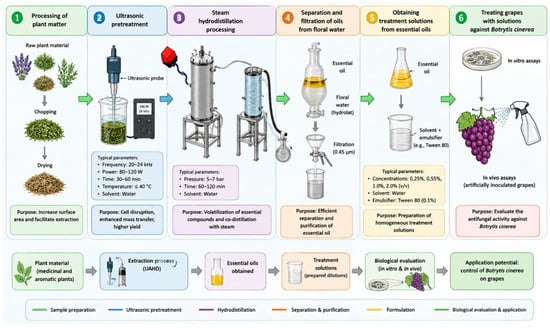
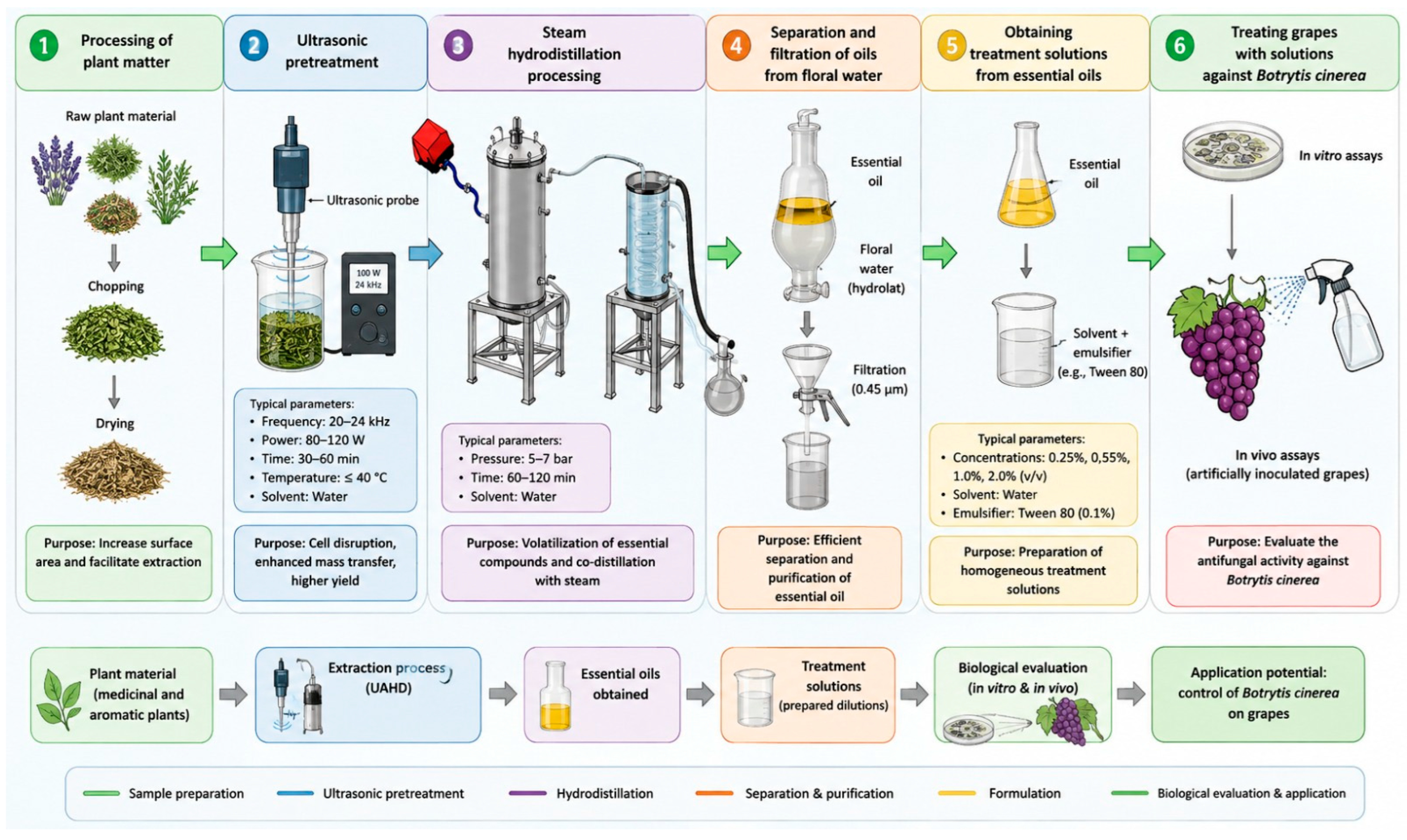
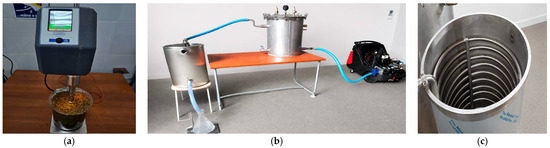
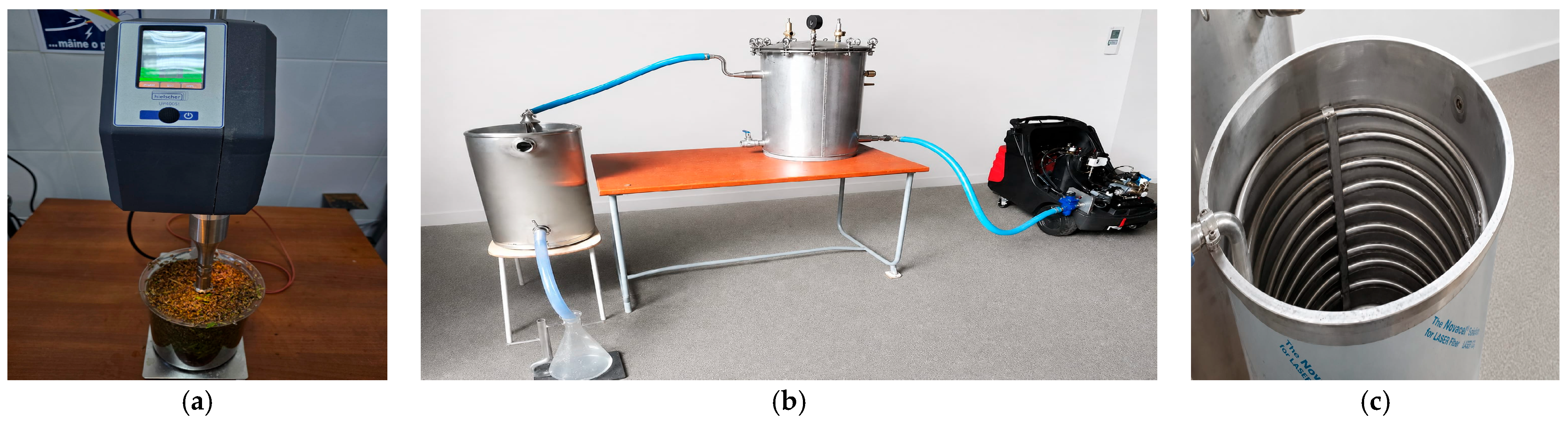
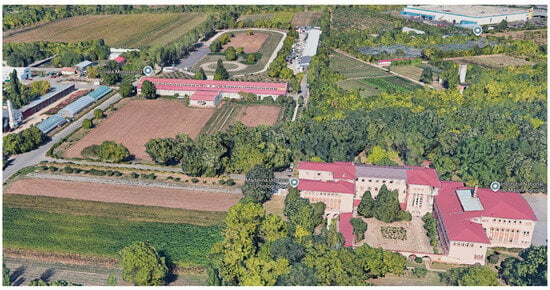
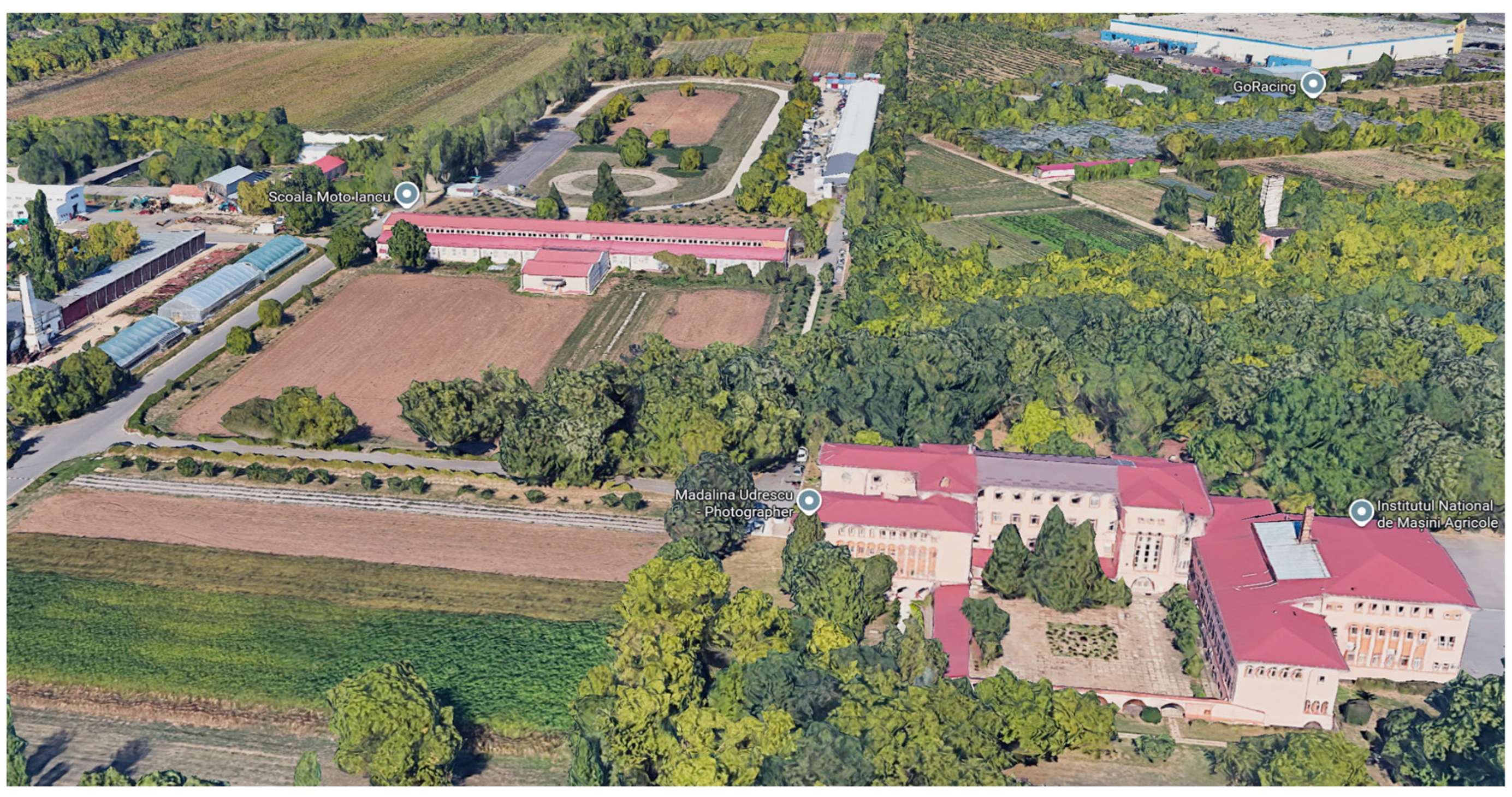
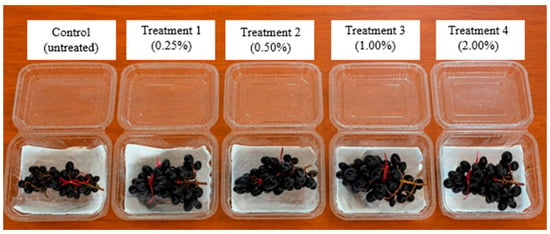
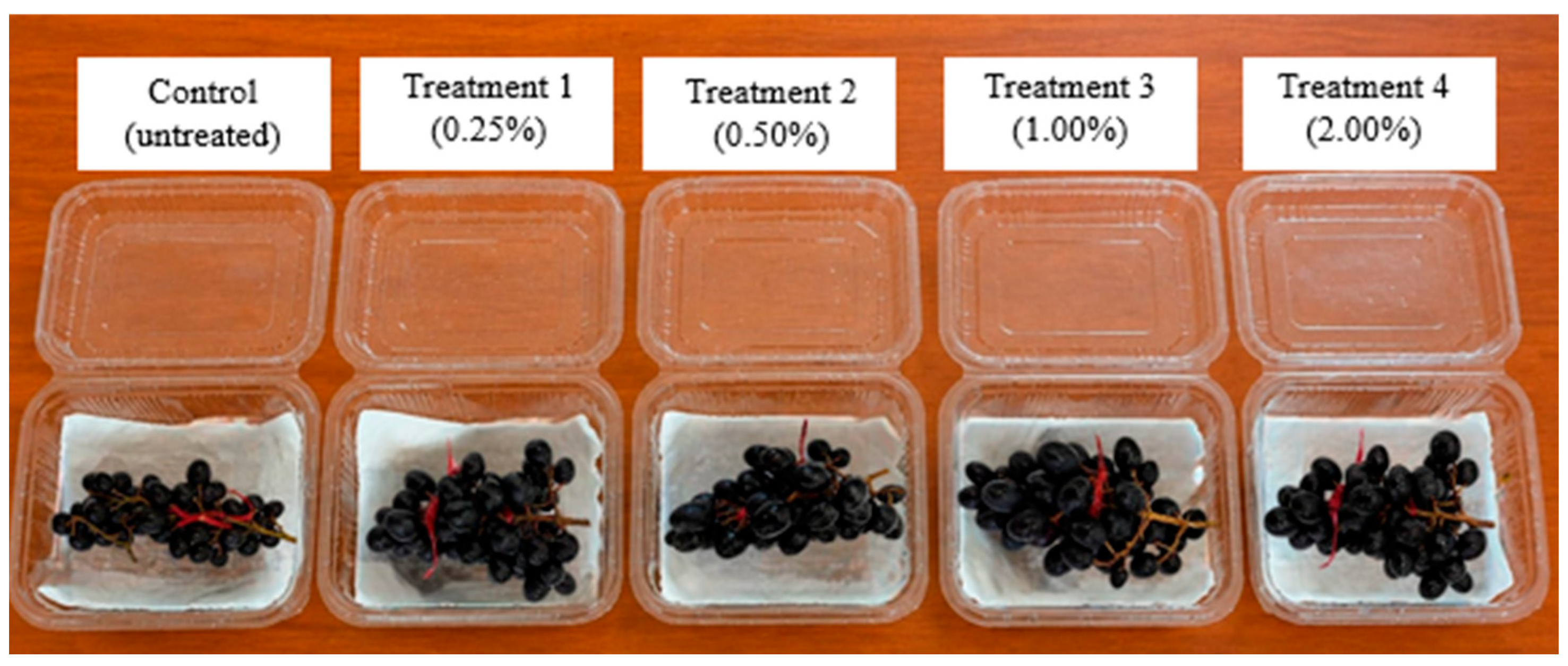
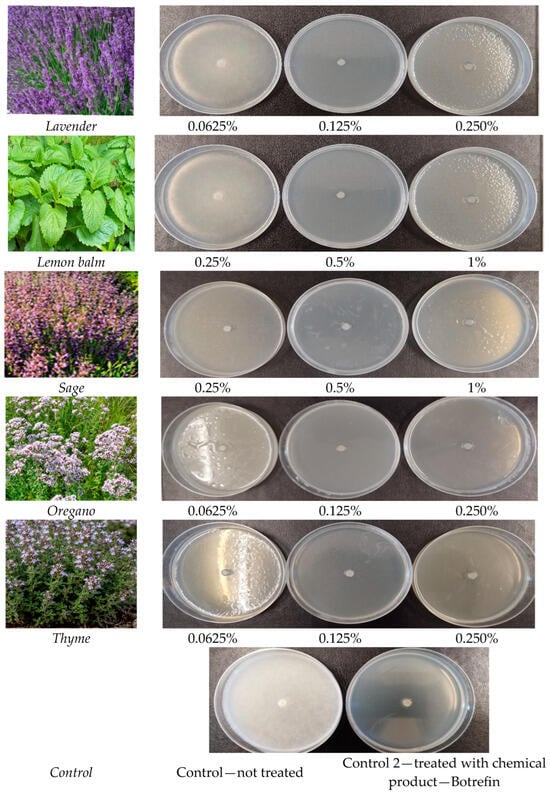
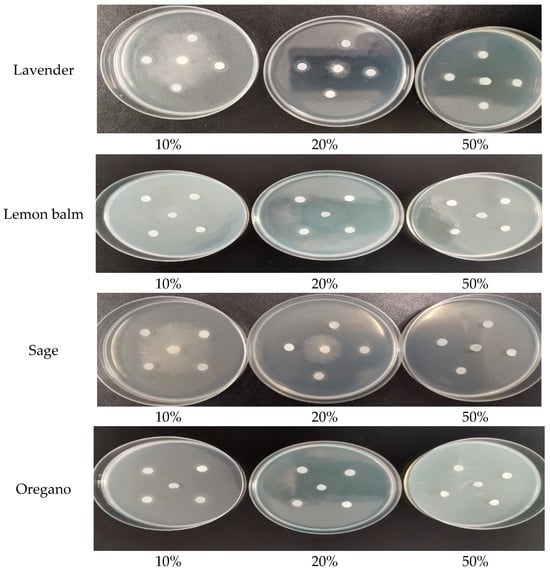
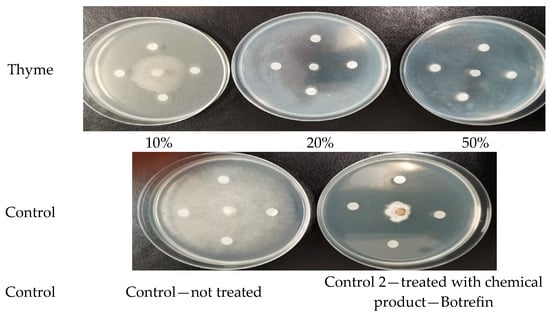
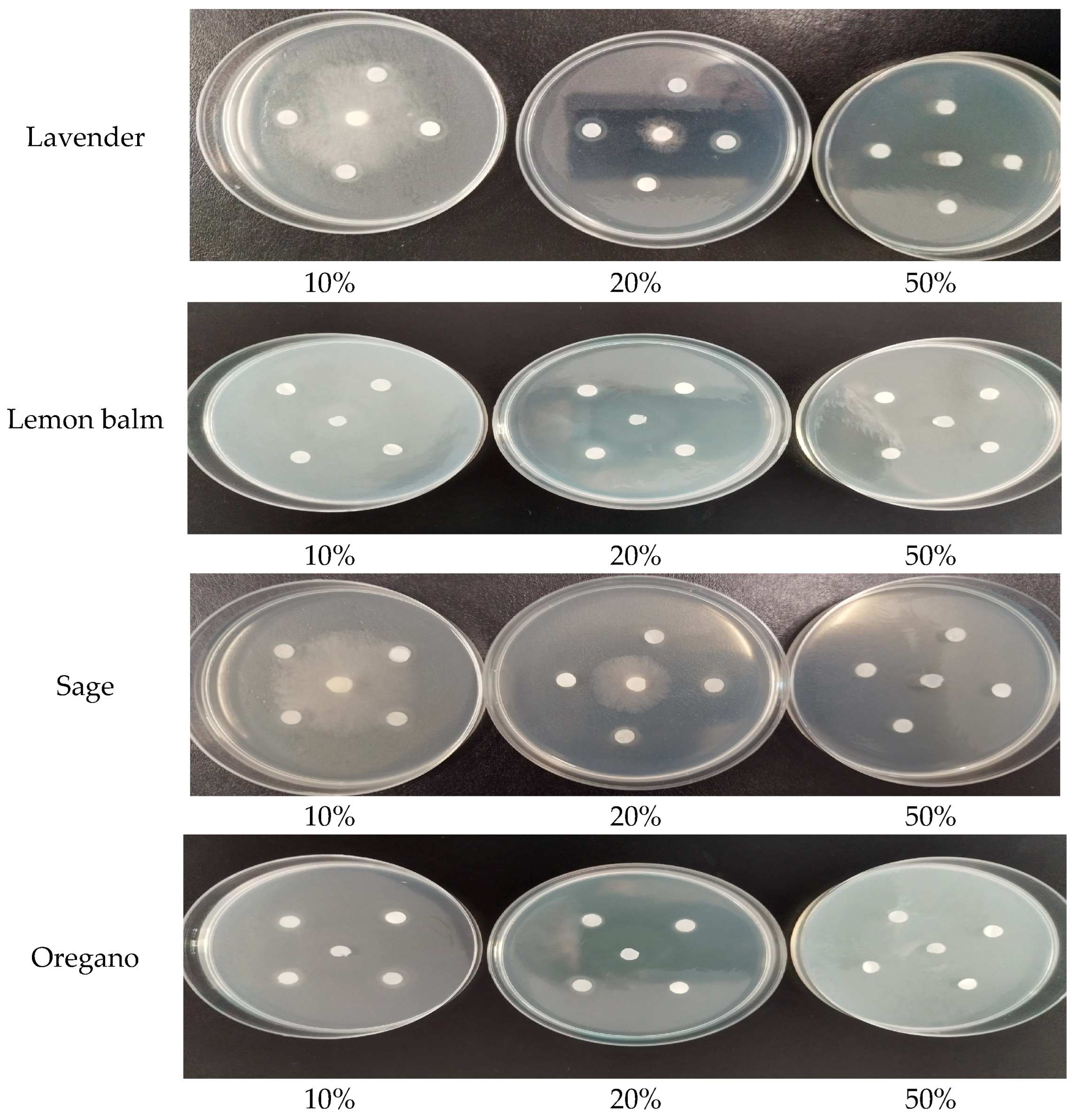
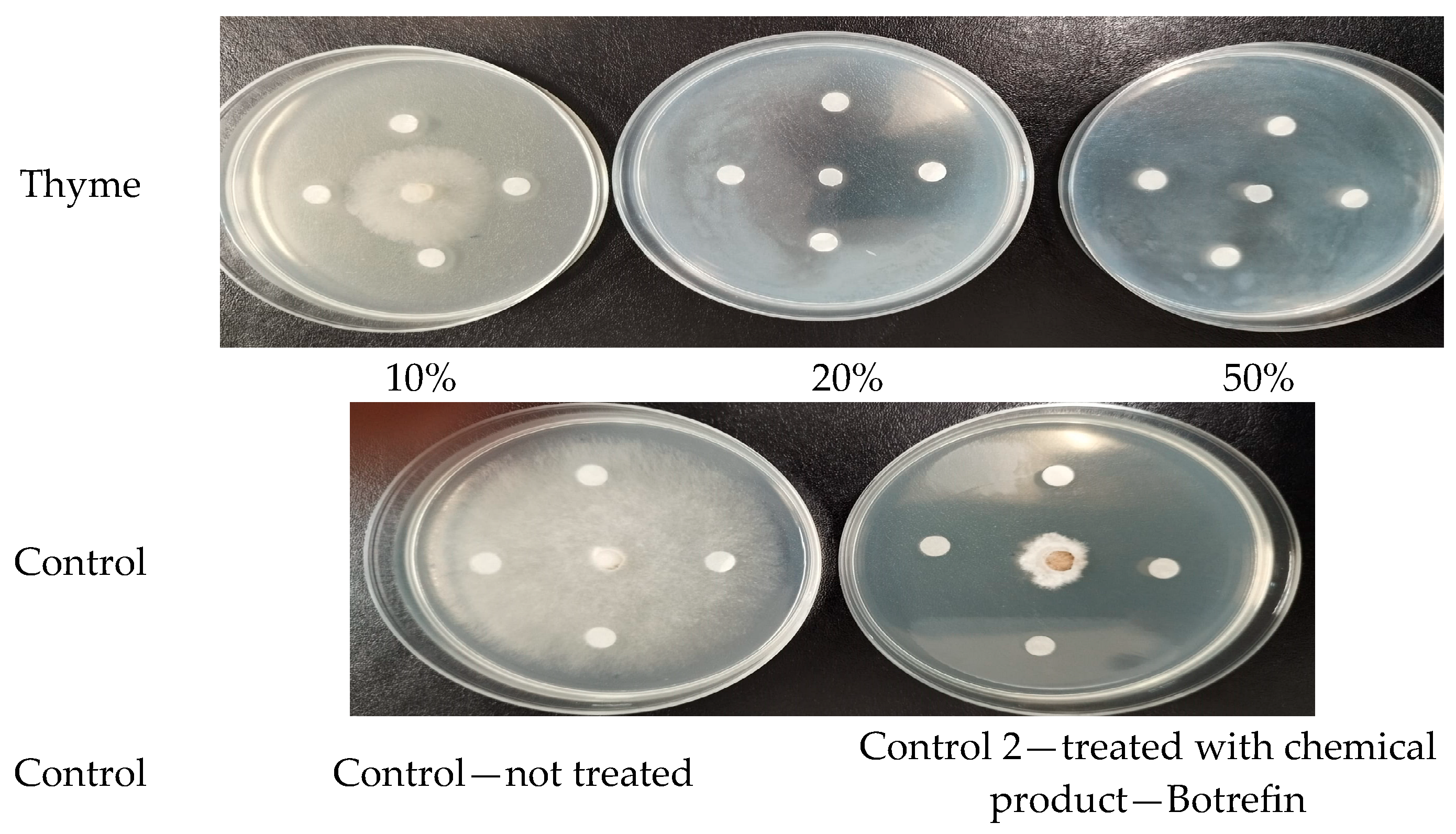
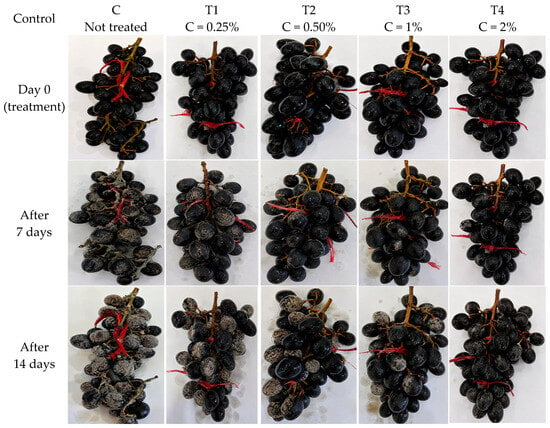
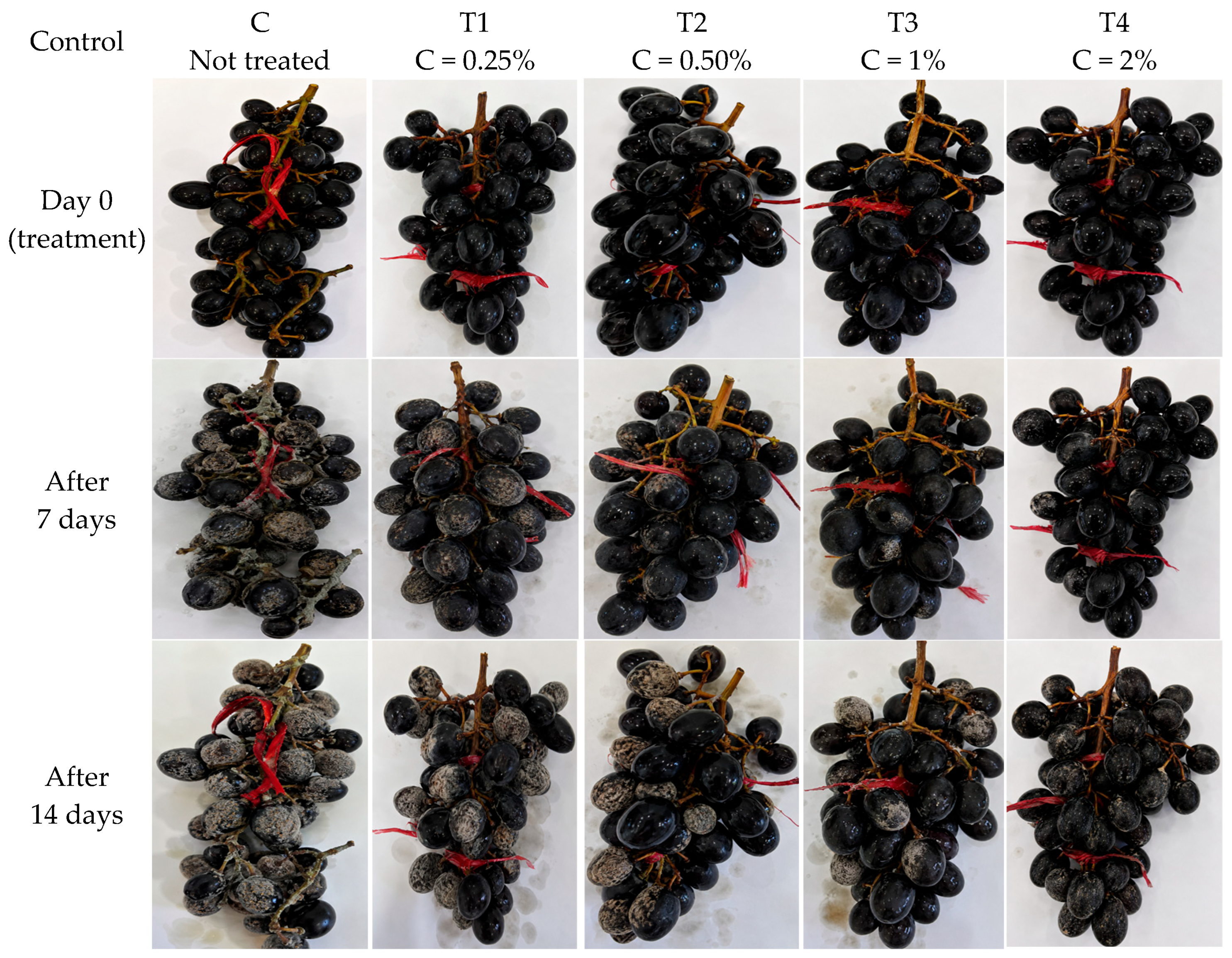
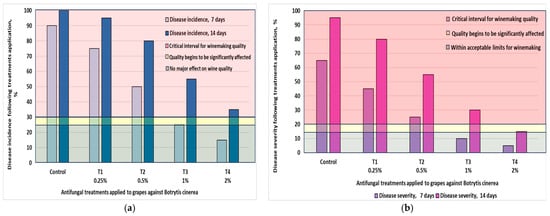
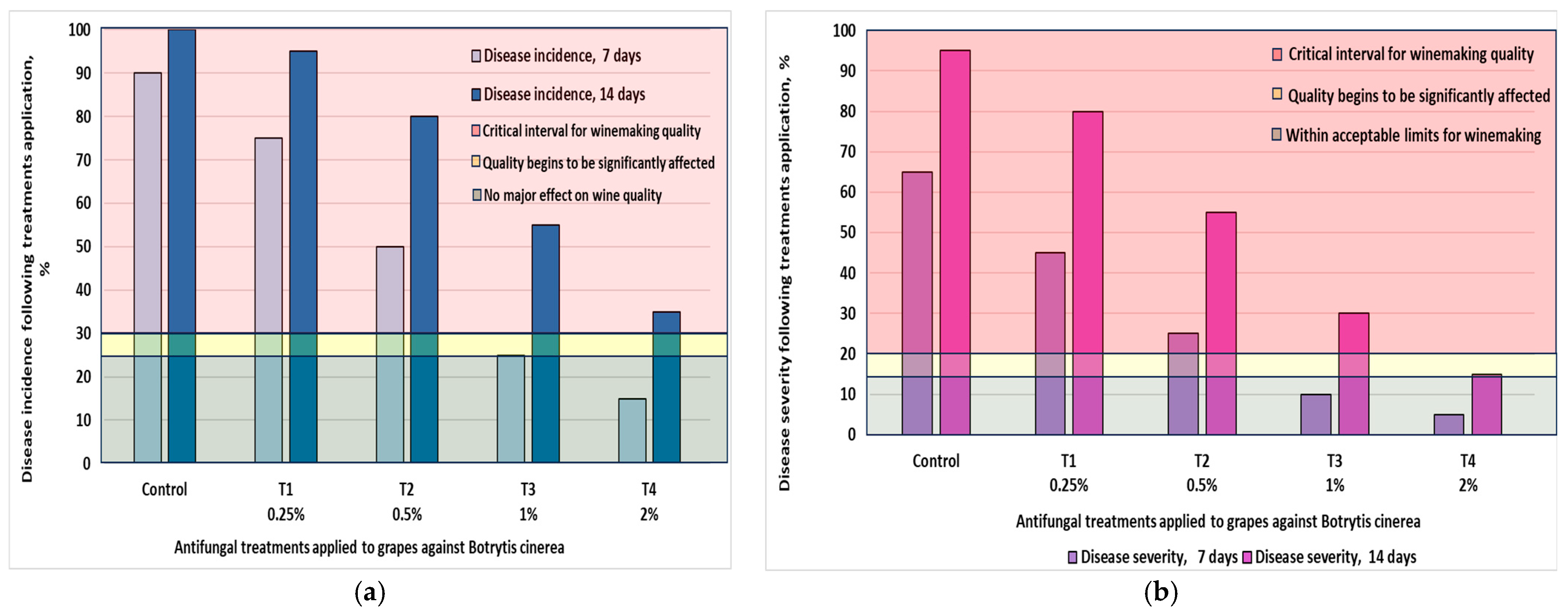
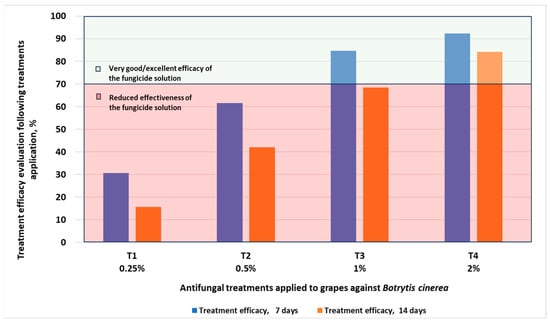
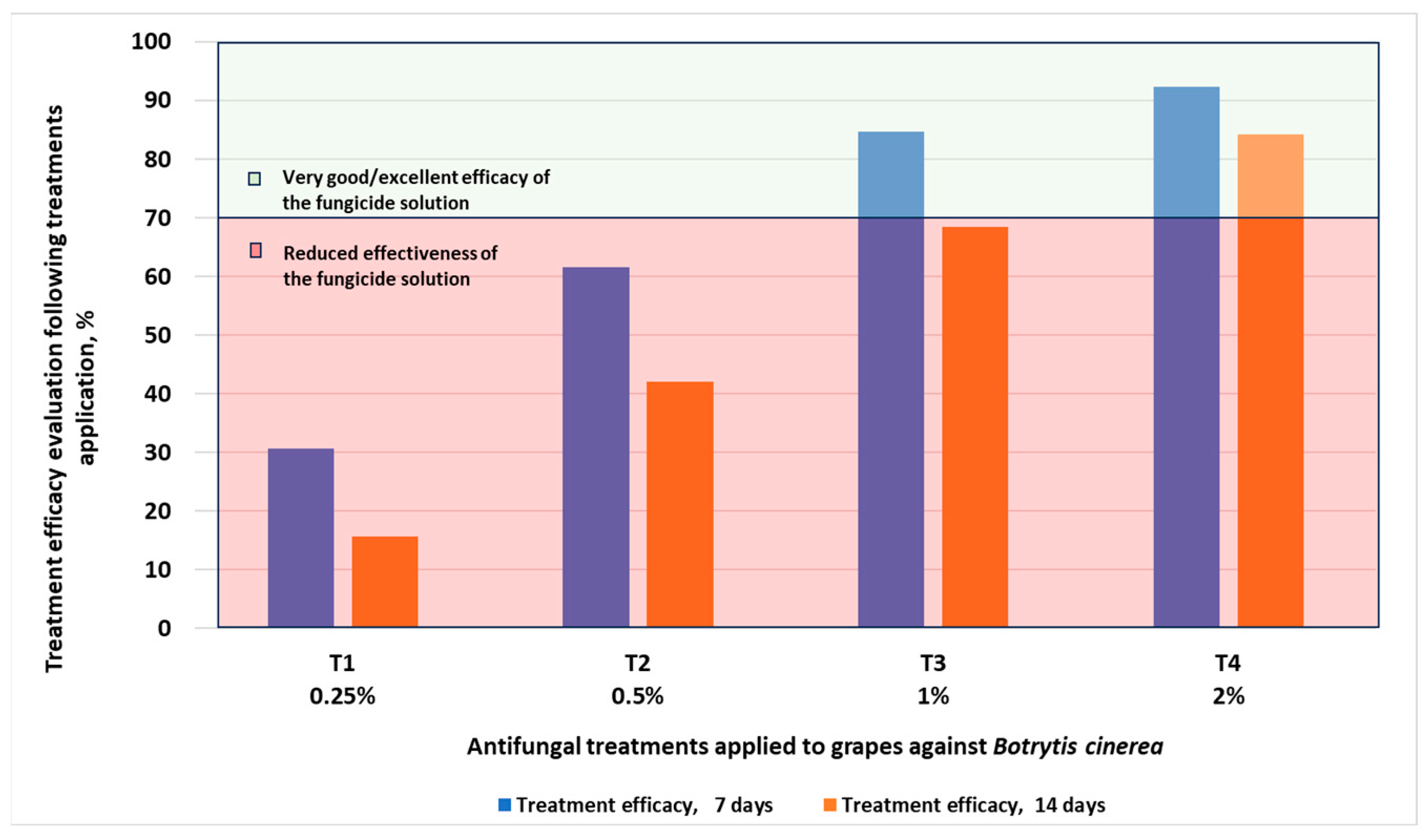
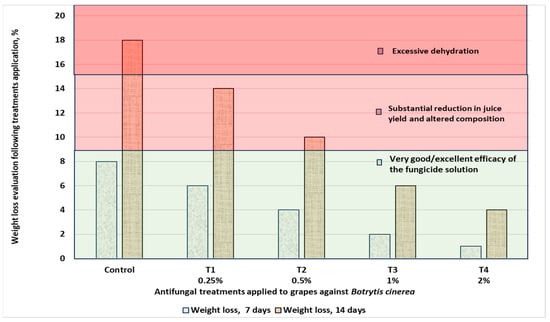
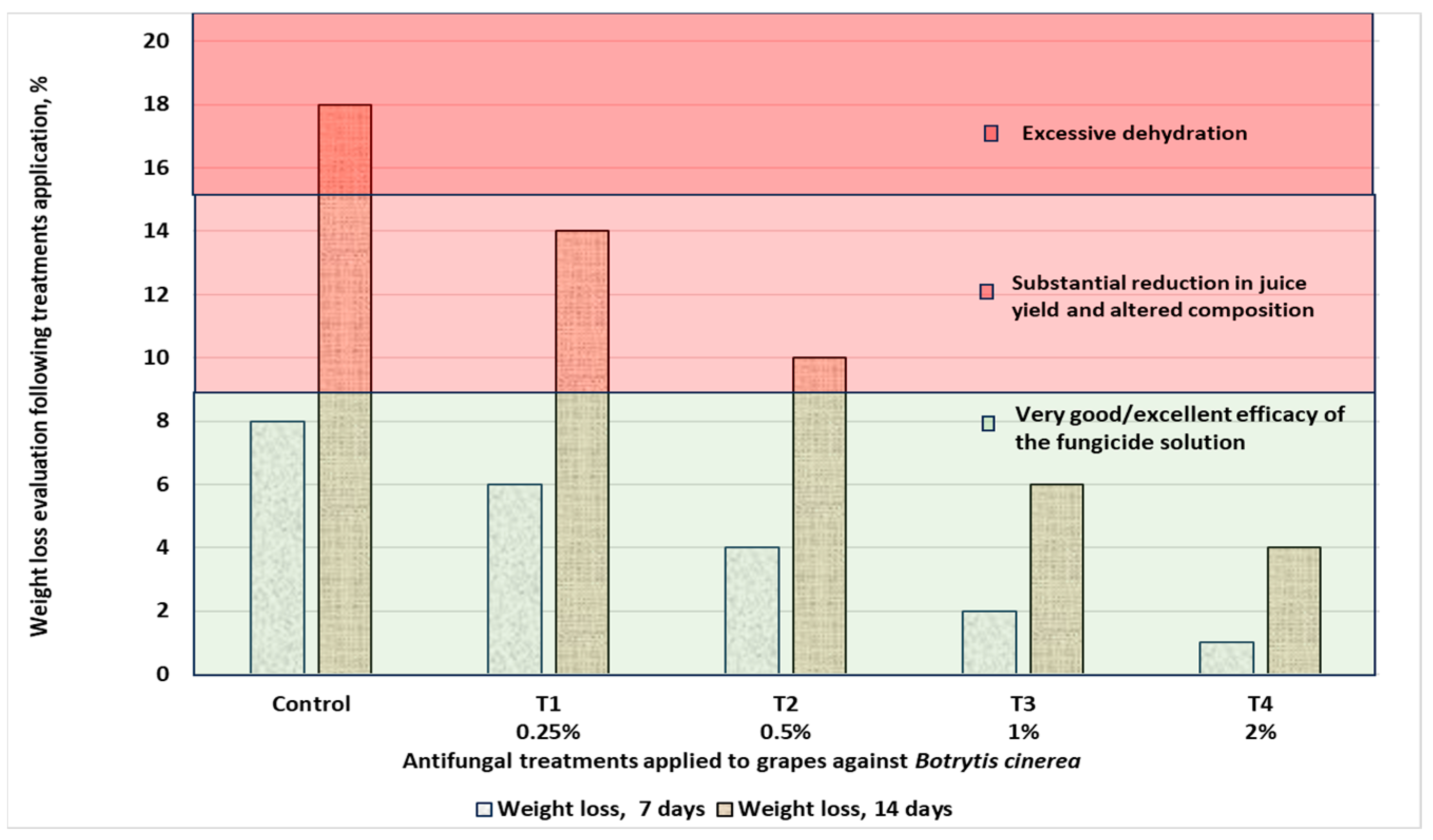

Disclaimer/Publisher’s Note: The statements, opinions and data contained in all publications are solely those of the individual author(s) and contributor(s) and not of MDPI and/or the editor(s). MDPI and/or the editor(s) disclaim responsibility for any injury to people or property resulting from any ideas, methods, instructions or products referred to in the content. |
© 2026 by the authors. Licensee MDPI, Basel, Switzerland. This article is an open access article distributed under the terms and conditions of the Creative Commons Attribution (CC BY) license.