


Abstract
Understanding the genetic control of earliness-related traits is essential for developing early maturing cucumber varieties and hybrids. The present investigation was undertaken to elucidate the nature of gene action governing the node at which the first female flower appears (NFFF) and days to first fruit picking (DFFP) using generation mean analysis in two reciprocal crosses, PBRK-11 × Punjab Naveen and Punjab Naveen × PBRK-11. Six basic generations, namely P1, P2, F1, F2, BC1P1 and BC1P2, were evaluated for both traits. The results revealed sufficient genetic variability among the generations for both traits. For NFFF, additive gene action was predominant in the cross PBRK-11 × Punjab Naveen, whereas its reciprocal cross Punjab Naveen × PBRK-11 exhibited significant dominance effects along with duplicate type of epistasis, indicating the influence of non-additive gene action. The contrasting behaviour of the reciprocal crosses suggested a possible reciprocal cross effect for NFFF; however, this effect cannot be attributed to maternal or cytoplasmic inheritance without further validation. In contrast, the DFFP trait was mainly governed by dominance gene action with duplicate type of epistatic interactions in both reciprocal crosses, indicating no clear reciprocal difference for this trait. The estimates of dominance ratio indicated partial to complete dominance for NFFF and over-dominance for DFFP. Significant negative heterosis for DFFP over better-parent indicated the superiority of hybrids for early fruit development, whereas contrasting heterotic responses for NFFF suggested limited direct exploitation of heterosis for NFFF. The predominance of non-additive gene effects and duplicate epistasis indicates that selection for earliness would be more effective in later segregating generations. Overall, the findings indicate that hybridization followed by selection in advanced generations would be an effective breeding strategy for developing early maturing cucumber varieties.
1. Introduction
Cucumber (Cucumis sativus L.) is an important warm-season vegetable crop that thrives well under both open-field and protected conditions. It is considered indigenous to India and is likely to have originated in the foothills of the Himalayan region. It is one of the earliest cultivated vegetables with a relatively small genome size of approximately 367 Mbp, making it an important crop for genomic studies in the Cucurbitaceae family [1]. Globally, cucumber is cultivated on a large scale, with an annual production of about 87.844 million tonnes from an area of 2.268 million hectares [2]. In India, it occupies an area of 0.148 million hectares with a production of 2.111 million tonnes [3]. Therefore, genetic improvement of cucumber for traits affecting productivity, adaptability and market advantage remains an important breeding objective.
In cucumber cultivation, earliness is an important agronomic trait as it enables farmers to harvest fruits earlier, obtain higher market prices and potentially grow additional crops within the same season. Several morphological traits are commonly used as indicators of earliness in cucumber. Among these, the node at which the first female flower appears and days to first fruit picking are considered key traits determining early fruit production. A lower node number for the first female flower indicates early female flowering, which may contribute to early fruit set and higher early yield. Similarly, fewer days to first fruit picking indicate earlier maturity and faster crop development. Therefore, developing early maturing varieties and hybrids is an important objective in cucumber breeding programmes. Previous studies have shown considerable genetic variation for earliness-related traits in cucumber. Dhall et al. [4] reported that the hybrids D-20 × Punjab Naveen and D-20 × Pusa Uday produced female flowers at lower nodes, which is a desirable trait for early yield, whereas Punjab Naveen × Pant Kheera-1 and CMVR-1 × JLG were among the earliest maturing hybrids. Similarly, Jat et al. [5] reported that PPC-2 exhibited desirable general combining ability effects for traits such as days to first female flower anthesis, days to fruit set from the opening of the first female flower and yield per plant.
The success of any crop improvement programme largely depends on understanding the genetic control of economically important traits. Knowledge of gene action helps breeders select suitable breeding strategies, such as direct selection in segregating generations or exploitation of heterosis through hybrid development. Hayman [6] introduced the concept of generation mean analysis, which is a widely used biometrical approach for estimating additive, dominance and epistatic gene effects. In contrast to classical Mendelian approaches, generation mean analysis provides a more reliable estimation of genotypic values across generations. It also helps in estimating additive, dominance and epistatic gene effects more precisely [7]. When quantitative traits such as earliness are studied, segregating populations may sometimes be incorrectly forced to fit Mendelian ratios, whereas statistical parameters such as skewness and kurtosis cannot accurately determine the number of genes controlling these traits [8].
The most commonly used approach in generation mean analysis involves the evaluation of six basic generations: two parents (P1 and P2), F1, F2 and two backcross generations (BC1P1 and BC1P2). This approach enables estimation of the relative contribution of additive and dominance effects, along with non-allelic genetic interactions, and is therefore more informative than analysis based on a single generation [9]. In cucumber, Tiwari et al. [10] used Hayman’s approach in the crosses CRC 8 × Pusa Uday and CHC 2 × DC 1 and reported the presence of epistatic interactions for earliness-related traits. Kumari et al. [11] reported that the node at which the first female flower appears and days to first fruit set were mainly governed by dominance gene action. In contrast, Kaur [12] reported a duplicate type of epistasis for the node at which the first female flower appears in the cross Gy-14 × Pusa Uday and for days to first fruit harvest in the crosses Gy-14 × Pusa Uday, Gy-14 × Punjab Naveen, and Gy-14 × Pant Kheera. These findings indicate that the genetic control of earliness-related traits may vary with the parental lines used, highlighting the need to study gene action in specific cross combinations intended for breeding programs [13]. Therefore, the present study was undertaken to determine the gene action governing two key earliness-related traits, namely the node at which the first female flower appears and days to first fruit picking, in two reciprocal cucumber crosses, PBRK-11 × Punjab Naveen and Punjab Naveen × PBRK-11, using six-generation mean analysis.
2. Materials and Methods
2.1. Plant Materials
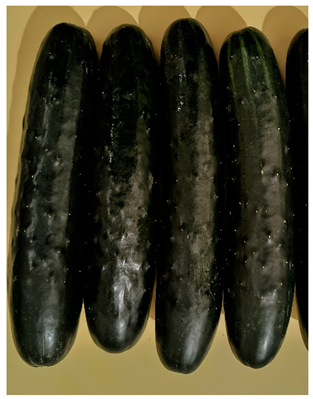
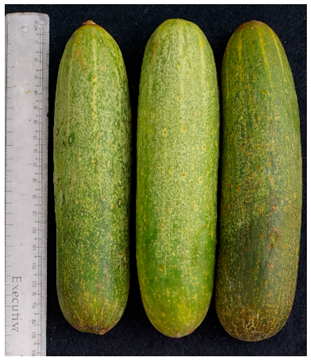
The experimental material comprised two cucumber genotypes, PBRK-11 and Punjab Naveen, selected from the cucumber germplasm collection maintained at the Department of Vegetable Science, Punjab Agricultural University, Ludhiana, India. PBRK-11 is predominantly gynoecious and parthenocarpic, whereas Punjab Naveen is monoecious. The salient characteristics of both parents are presented in Table 1.
Table 1.
List of parents with salient characteristics.
2.2. Experimental Site, Climate and Soil Conditions
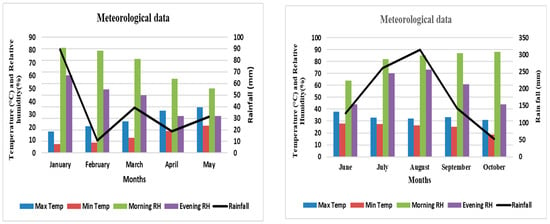
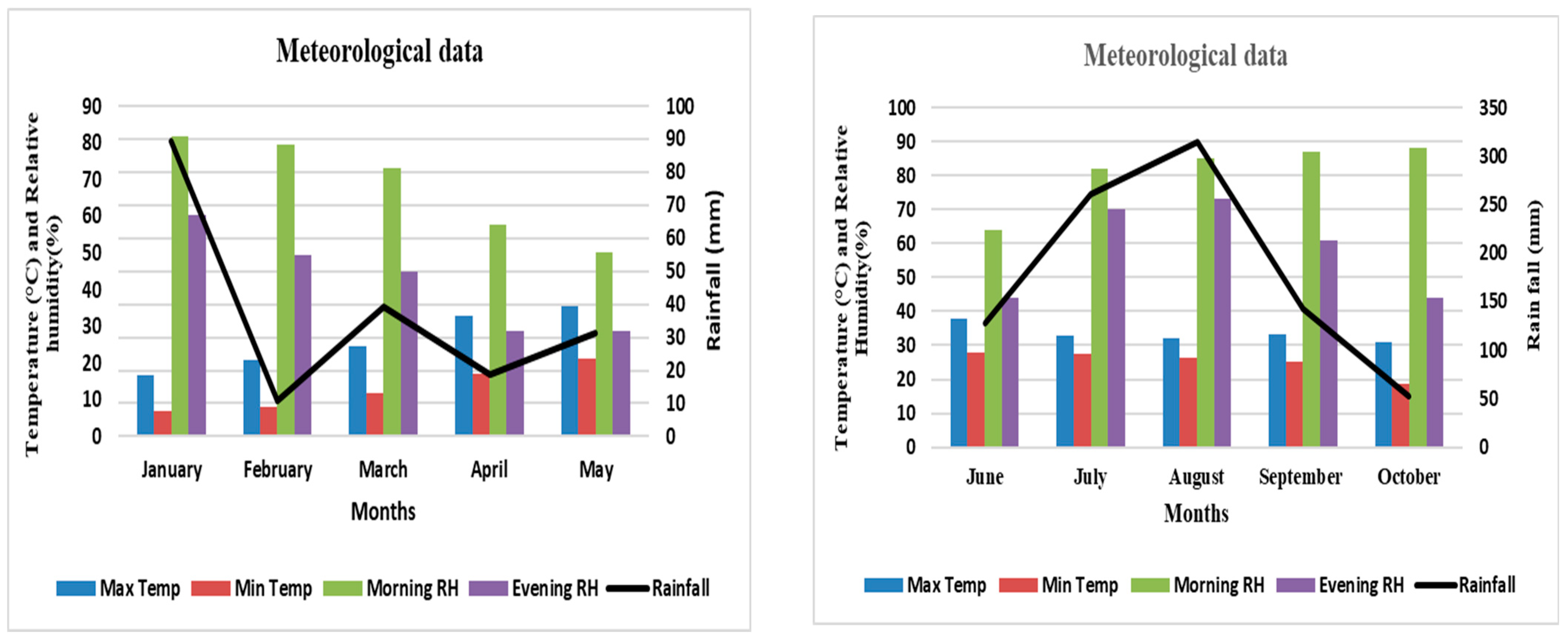
The present investigation was carried out at the Vegetable Research Farm, Punjab Agricultural University, Ludhiana, Punjab, India. The experimental site is located at 30°54′ N latitude and 75°48′ E longitude, at an elevation of 247 m above mean sea level. The region has a subtropical climate, characterized by hot summers with desiccating winds during April–June and cold winters with occasional ground frost during December–January. The average annual rainfall of the area is approximately 700 mm, most of which is received during July–September. Mean monthly weather data during the course of the investigation are presented in Figure 1. The soil of the experimental site was sandy loam to sandy clay loam in texture with soil pH 7.2, which is near neutral, while electrical conductivity was 0.230 dS m−1, indicating non-saline conditions. Organic carbon was 2.6 g kg−1. The available nitrogen fractions, Ammonium and nitrate, were 14.00 kg ha−1 and 25.67 kg ha−1, respectively. Available phosphorus and potassium were 44.00 kg ha−1 and 117.60 kg ha−1, respectively.
Figure 1.
Mean monthly weather data during the course of investigation from January to October 2025.
2.3. Development of F1 Crosses
Seeds of PBRK-11 and Punjab Naveen were sown during the last week of January 2024 in pro-trays filled with a growing medium containing cocopeat, vermiculite, and perlite in a 3:1:1 ratio with one seed sown per plug. To protect the young seedlings from frost, the trays were covered with a polythene sheet. The seedlings were transplanted at the end of February 2024 in a poly-net house at a spacing of 60 cm × 40 cm [14]. Crosses were made in both directions to obtain reciprocal F1 hybrids, namely PBRK-11 × Punjab Naveen and Punjab Naveen × PBRK-11. Since PBRK-11 is predominantly gynoecious, male flower induction was done by spraying silver thiosulphate at 200 ppm twice; first at the 2–3 leaf stage and again one week after the first application, following the method described by Nagar et al. [15]. Selfed seeds of both parents and seeds of the F1 hybrids were extracted from mature ripe fruits in June 2024, dried properly and stored under ambient conditions at room temperature until further evaluation.
2.4. Development of F2 and Backcross Generations
Seeds of the F1 hybrids and their respective parents were sown in September 2024 in pro-trays containing cocopeat, vermiculite and perlite in a 3:1:1 ratio, with one seed sown per plug. The seedlings were transplanted in the poly-net house at the end of September 2024 at a spacing of 60 cm × 40 cm [14]. The F1 plants of each reciprocal cross were selfed to produce the F2 generation. In addition, F1 plants were backcrossed with both parental genotypes (P1 and P2) to develop the backcross generations, namely BC1P1 and BC1P2. Seeds of the F2 and backcross generations (BC1P1 and BC1P2) were harvested from mature ripe fruits in January 2025. Subsequently, seeds of the six basic generations, namely P1, P2, F1, F2, BC1P1 and BC1P2, were sown in February 2025 for evaluation of earliness-related traits. For clarity, P1 and P2 were assigned according to the direction of each reciprocal cross. In the cross PBRK-11 × Punjab Naveen, P1 denotes PBRK-11 and P2 denotes Punjab Naveen. In the reciprocal cross Punjab Naveen × PBRK-11, P1 denotes Punjab Naveen, and P2 denotes PBRK-11. Accordingly, BC1P1 refers to the backcross of the respective F1 hybrid with its P1 parent, whereas BC1P2 refers to the backcross of the respective F1 hybrid with its P2 parent.
2.5. Experimental Design and Observations Recorded
The six generations of each reciprocal cross were evaluated in a poly-net house using a randomized complete block design with three replications. Observations were recorded on individual plants for two earliness-related traits: node at which first female flower appears (NFFF) and days to first fruit picking (DFFP). For each reciprocal cross, observations were recorded from 10 plants each of P1 and P2, and F1; 30 plants each of BC1P1 and BC1P2; and 70 plants of the F2 generation. The number of plants evaluated in each generation was decided considering the genetic nature of the generations included in generation mean analysis. The non-segregating generations, namely P1, P2 and F1, are genetically more uniform and therefore required comparatively fewer plants for estimation of generation means. In contrast, the F2 and backcross generations are segregating generations and are expected to show greater genetic variability due to recombination and segregation of alleles. Therefore, larger population sizes were maintained for these generations, particularly for the F2 generation to obtain more reliable estimates of generation mean and standard error estimates. However, no separate power analysis was conducted to determine the sample size. NFFF was recorded as the node number on the main vine at which the first female flower appeared. DFFP was recorded as the number of days from sowing to the first fruit harvest from each plant.
2.6. Statistical Analysis and Generation Mean Analysis
Generation mean analysis was performed to determine the inheritance pattern and nature of gene action governing earliness-related traits using the six basic generations, namely P1, P2, F1, F2, BC1P1 and BC1P2. The analysis was carried out following the procedures described by Mather [16], Jinks and Jones [17] and Hayman [18]. Data were recorded on individual plants and generation means were calculated for each replication. Analysis of variance was performed to assess the presence of genetic variability among generations. The pooled generation means were then used for generation mean analysis. Generation means were compared using analysis of variance followed by Tukey’s honestly significant difference test at p ≤ 0.05. The multiple comparison test was performed separately for each trait and reciprocal cross. The presence of epistasis was tested using the A, B, C and D scaling tests proposed by Mather [16] and Hayman and Mather [18]. Significance of any of the scaling tests was considered evidence for the presence of non-allelic gene interactions. When the scaling tests were non-significant, the additive-dominance model was tested using the three-parameter joint scaling model, which included the mean effect [m], additive effect [d] and dominance effect [h] [19]. The adequacy of this model was assessed using the chi-square test. A non-significant chi-square value indicated that the additive-dominance model was adequate for explaining the observed generation means.
When the additive-dominance model was inadequate, as indicated by significant scaling tests and/or a significant chi-square value, the six-parameter model was used. This model included the mean effect [m], additive effect [d], dominance effect [h], additive × additive interaction [i], additive × dominance interaction [j], and dominance × dominance interaction [l], as described by Mather and Jinks [20]. The significance of each genetic parameter was tested using the t-test. The type of epistasis was inferred from the signs of the dominance [h] and dominance × dominance [l] effects. Opposite signs of [h] and [l] indicated duplicate epistasis, whereas similar signs indicated complementary epistasis. Because the six-parameter model is a saturated model when all six generations are used, a separate goodness-of-fit test for model adequacy could not be performed when all six parameters were estimated.
The significance of six generations within each cross for all the studied traits was tested using analysis of variance (ANOVA) followed by mean estimates and a comparison using SPSS software (Ver. 22) using Tukey’s honestly significant difference method (IBM Corp., Armonk, NY, USA).
2.7. Estimation of Dominance Ratio
The dominance ratio for the F1 and F2 generations was estimated following the method proposed by Fonseca and Patterson [21]. For the F1 generation, the dominance ratio (DR1) was calculated as follows:
DR1 = (F1 − MP)/(P1 − MP)
Similarly, for the F2 generation, the dominance ratio (DR2) was calculated as follows:
where DR represents the dominance ratio, F1 and F2 are the mean values of the F1 and F2 generations, respectively, P1 is the mean of parent 1, and MP denotes the mid-parent mean. In reciprocal crosses, the sign of the dominance ratio is dependent on the parental designation used in the calculation. Therefore, the sign was interpreted with respect to the designated P1 parent for each cross, whereas the magnitude of the ratio was used to classify the type of gene action. A dominance ratio of 0 indicates the absence of dominance and suggests additive gene action. Values between −1 and +1 indicate partial dominance, whereas values equal to −1 or +1 indicate complete dominance. Values greater than +1 or less than −1 indicate over-dominance.
DR2 = (F2 − MP)/(P1 − MP)
2.8. Estimation of Heterosis and Heterobeltiosis
Mid-parent heterosis and better-parent heterosis or heterobeltiosis were estimated following the procedure described by Fonseca and Patterson [21].
Mid-parent heterosis was calculated as follows:
Better-parent heterosis was calculated as follows:
where HMP denotes mid-parent heterosis, HBP denotes better-parent heterosis (heterobeltiosis), F1 is the mean of the F1 generation, MP is the average of the two parental means, and BP is the mean value of the better-parent. For both NFFF and DFFP, negative heterosis was considered desirable because lower values indicate earlier flowering and earlier fruit picking.
The significance of mid-parent heterosis and heterobeltiosis was tested using the t-test. The standard error (SE) for mid-parent heterosis was calculated as follows:
The standard error for better-parent heterosis was calculated as follows:
where VP1 and VP2 represent the variances of parent 1 and parent 2, respectively, VF1 is the variance of the F1 generation, and VBP is the variance of the better-parent.
The t-values for HMP and HBP were calculated as follows:
where SE(HMP) and SE(HBP) are the standard errors of the mid-parent heterosis and better-parent heterosis, respectively.
The sign and magnitude of heterosis values were used to determine the direction and extent of hybrid performance relative to the parental mean or better-parent. Positive heterosis values suggested that dominance is oriented towards the parents with higher trait expression, whereas negative heterosis values indicated dominance in the direction of the parents with lower trait expression. In the present study, negative heterosis was desirable for both earliness-related traits because reduced node number and fewer days to first fruit picking are associated with early maturity. This method thus provides a quantitative measure of hybrid performance relative to its parents and helps in understanding the nature of gene action governing the trait.
2.9. Estimation of Inbreeding Depression
Inbreeding depression (ID), which represents the reduction in fitness of progeny due to decreased heterozygosity resulting from consanguineous mating, was calculated according to the procedure described by Kempthorne [22]. It was calculated using the following formula:
where F1 is the mean value of the F1 generation, and F2 is the mean value of the F2 generation.
Inbreeding depression ID (%) = [(F1 − F2)/F1] × 100
3. Results
3.1. Mean Performance of Earliness-Related Traits for Six Basic Generations
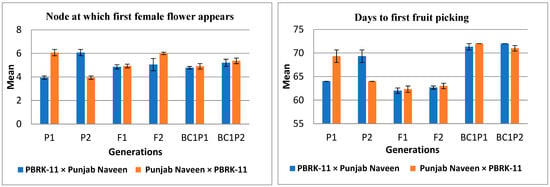
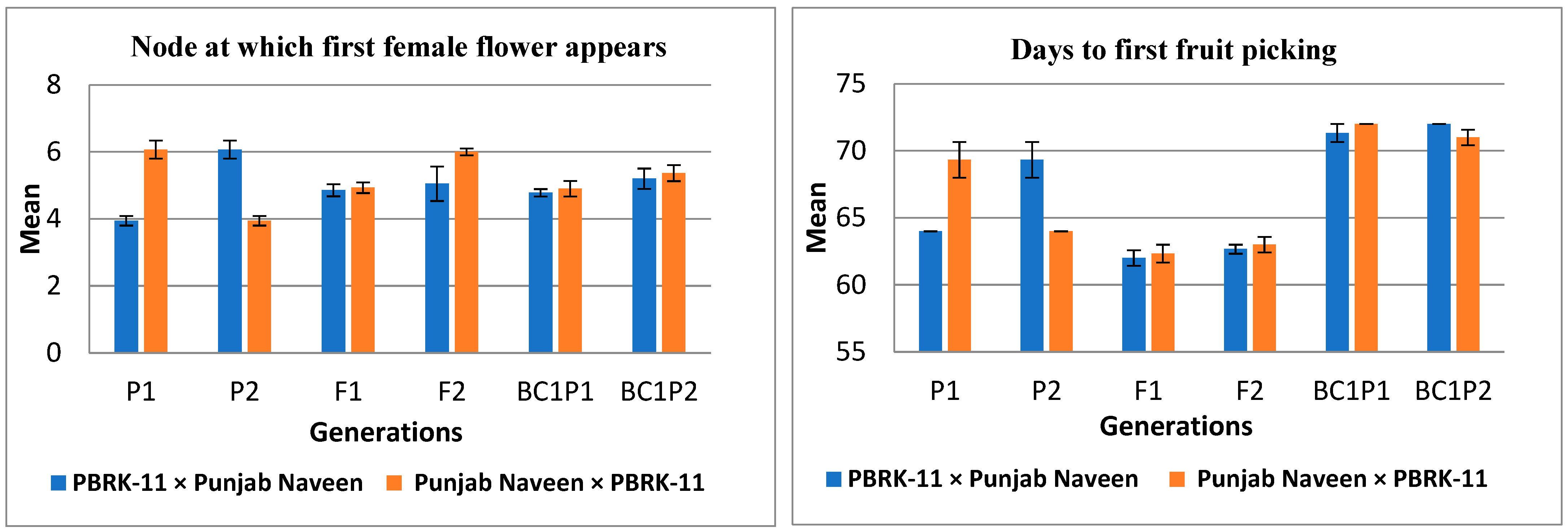
The mean performance of the six basic generations, namely P1, P2, F1, F2, BC1P1 and BC1P2, for the node at which the first female flower appears (NFFF) and days to first fruit picking (DFFP) in the two reciprocal crosses (PBRK-11 × Punjab Naveen and Punjab Naveen × PBRK-11) is presented in Table 2 and illustrated in Figure 2. Significant differences among generations were observed for both traits, and multiple comparison groups are indicated by lowercase letters in Table 2.
Table 2.
Mean performance of six basic generations for earliness-related traits in reciprocal cucumber crosses.
Figure 2.
Mean performance of six basic generations for node at which first female flower appears (NFFF) and days to first fruit picking (DFFP) in the crosses PBRK-11 × Punjab Naveen and Punjab Naveen × PBRK-11. Error bars represent standard errors of the mean.
For NFFF, PBRK-11 recorded a lower mean value than Punjab Naveen. In the cross PBRK-11 × Punjab Naveen, the F1 mean was 4.86, which was slightly lower than the mid-parent value of 5.01 but higher than PBRK-11. The F2 generation recorded a mean value of 5.05. The BC1P1 and BC1P2 generations recorded mean values of 4.78 and 5.20, respectively. In the reciprocal cross Punjab Naveen × PBRK-11, the F1 mean for NFFF was 4.93, which was slightly lower than the mid-parent value but higher than PBRK-11. The F2 generation recorded a mean value of 6.00, while BC1P1 and BC1P2 recorded mean values of 4.90 and 5.37, respectively.
For DFFP, PBRK-11 recorded a lower mean value than Punjab Naveen. In the cross PBRK-11 × Punjab Naveen, the F1 mean was 62.00 days, which was lower than the mid-parent value of 66.67 days and both parental means. The F2 generation recorded a mean value of 62.67 days. The BC1P1 and BC1P2 generations recorded mean values of 71.33 and 72.00 days, respectively. In the reciprocal cross Punjab Naveen × PBRK-11, the F1 mean for DFFP was 62.33 days, which was also lower than the mid-parent value and both parental means. The F2 generation recorded a mean value of 63.00 days, while BC1P1 and BC1P2 recorded mean values of 72.00 and 71.00 days, respectively.
3.2. Gene Action
The results of scaling tests, joint scaling tests and estimates of gene effects for NFFF and DFFP are presented in Table 3. For NFFF in the cross PBRK-11 × Punjab Naveen, the scaling test analysis revealed that none of the scaling components (A, B, C and D) were significant. The chi-square value obtained from the three-parameter joint scaling model was also non-significant. In the best-fit joint scaling model, the additive component [d] was significant and higher in magnitude, whereas the dominance component [h] was non-significant. In the reciprocal cross Punjab Naveen × PBRK-11, all four scaling components, A, B, C and D, were significant for NFFF. In addition, the chi-square value of the three-parameter joint scaling model was also significant; therefore, the six-parameter model was used. In this model, the additive × dominance component [j] was non-significant and was excluded from the final model. The reduced five-parameter model revealed significant additive × additive [i] and dominance × dominance [l] interactions. The dominance [h] and dominance × dominance [l] components had opposite signs.
Table 3.
Estimates of gene effects based on scaling test and joint scaling test in best fit model for earliness-related traits in reciprocal cucumber crosses.
For DFFP in the cross PBRK-11 × Punjab Naveen, all four scaling components, A, B, C and D, were significant. The chi-square value of the three-parameter joint scaling model was also significant. Therefore, the six-parameter model was used. In the best-fit joint scaling model, both additive [d] and dominance [h] effects were significant, with the dominance effect showing a higher magnitude than the additive effect. In the six-parameter model of the joint scaling test, all three epistatic interaction components, namely additive × additive [i], additive × dominance [j], and dominance × dominance [l], were significant; therefore, the adequacy of the best-fit model could not be evaluated. Among these, additive × dominance [j] interaction showed the highest magnitude. The dominance [h] and dominance × dominance [l] components had opposite signs. However, in the reciprocal cross Punjab Naveen × PBRK-11, all four scaling components were significant for DFFP. In addition, the chi-square value of the three-parameter joint scaling model was also significant. In the best-fit joint scaling model, both additive [d] and dominance [h] effects were significant. However, dominance effects showed higher magnitude than additive effects. In the six-parameter model of the joint scaling test, all three epistatic interaction components [i], [j] and [l] were significant, and therefore the adequacy of the best-fit model could not be evaluated. Among the epistatic interactions, additive × dominance [j] exhibited the highest magnitude. The dominance [h] and dominance × dominance [l] components had opposite signs.
3.3. Dominance Ratio and Heterosis
The estimates of mid-parent heterosis, better-parent heterosis, dominance ratio and inbreeding depression for NFFF and DFFP are presented in Table 4.
Table 4.
Heterosis (mid-parent and better-parent), dominance ratio and inbreeding depression for earliness-related traits in reciprocal crosses.
For NFFF in the cross PBRK-11 × Punjab Naveen, non-significant negative mid-parent heterosis (−2.72%) and significant positive better-parent heterosis (+23.85%) were observed. The dominance ratios for the F1 and F2 generations were 0.13 and −0.10, respectively. In the reciprocal cross Punjab Naveen × PBRK-11, non-significant negative mid-parent heterosis (−1.31%) and significant positive better-parent heterosis (+25.64%) were also recorded for NFFF. The dominance ratios for the F1 and F2 generations were −0.06 and 0.97, respectively.
For DFFP, the cross combination PBRK-11 × Punjab Naveen showed non-significant negative mid-parent heterosis (−7.00%) and significant negative better-parent heterosis (−3.13%). The dominance ratios for the F1 and F2 generations were 1.75 and 1.50, respectively. Similarly, the reciprocal cross Punjab Naveen × PBRK-11 exhibited non-significant negative mid-parent heterosis (−6.50%) and significant negative better-parent heterosis (−2.61%). The dominance ratios for the F1 and F2 generations were −1.63 and −1.38, respectively.
3.4. Inbreeding Depression
The estimates of inbreeding depression for NFFF and DFFP are presented in Table 4. For NFFF, negative inbreeding depression was observed in both crosses, with values of −4.97% in PBRK-11 × Punjab Naveen and −22.45% in Punjab Naveen × PBRK-11. For DFFP, negative inbreeding depression was also observed in both crosses, with values of −1.07% in PBRK-11 × Punjab Naveen and −1.08% in Punjab Naveen × PBRK-11.
4. Discussion
4.1. Generation Mean Performance and Parental Contribution to Earliness
Significant differences were observed between the parental lines and in both the crosses, PBRK-11 × Punjab Naveen and Punjab Naveen × PBRK-11 for NFFF, indicating the presence of sufficient genetic variability for this trait. The standard errors presented in Table 2 should be interpreted in relation to both unequal sample sizes and within-generation variability. Since the F2 and backcross generations are segregating populations, they are likely to exhibit greater phenotypic variation than the genetically uniform P1, P2 and F1 generations, which may influence the precision of generation mean estimates. The generation mean pattern for NFFF suggested partial dominance of alleles contributing to later female flowering, along with segregation of alleles affecting the position of the node at which the first female appears. In PBRK-11 × Punjab Naveen and Punjab Naveen × PBRK-11, relatively higher node expression in segregating and backcross generations involving late flowering parental background may indicate contribution of alleles for female flower formation at higher nodes, while minor deviations between the reciprocal crosses may also reflect minor gene interactions or environmental influence. Overall, the results indicated that improvement for earliness through reduction in node number would require effective selection in segregating generations. This finding is in harmony with that of Kaur [12].
Significant differences between the parental lines in both crosses also indicated the presence of genetic variability for DFFP. In PBRK-11 × Punjab Naveen and Punjab Naveen × PBRK-11, the lower values of the F1 generation suggested the contribution of dominance effects towards earliness, particularly from PBRK-11. The increase in DFFP in the segregating generations may be attributed to segregation and recombination of alleles governing early fruit picking. In the cross PBRK-11 × Punjab Naveen and its reciprocal cross Punjab Naveen × PBRK-11, the contrasting backcross response for DFFP suggested differential contribution of early and late maturity alleles depending on the recurrent parental background. The results indicated that earliness for this trait can be effectively improved through selection and PBRK-11 may serve as a useful donor parent for transferring early maturity into late maturing genotypes. These findings for NFFF and DFFP are in partial agreement with Sinha [23].
4.2. Reciprocal Differences and Duplicate Epistasis
The inheritance of earliness-related traits exhibited differential genetic control between reciprocal crosses, indicating that the direction of crossing may influence the expression of these traits. However, these reciprocal differences should be interpreted cautiously. The present comparison of two reciprocal crosses does not clearly distinguish true maternal or cytoplasmic effects from other possible factors, such as nuclear × cytoplasmic interactions, gametic effects or cross-specific gene interactions. Therefore, further validation through reciprocal backcross generations, cytoplasmic substitution lines or recurrent backcrossing approaches would be necessary to confirm the involvement of maternal or cytoplasmic inheritance. For NFFF, the contrasting gene action observed between PBRK-11 × Punjab Naveen and Punjab Naveen × PBRK-11 suggested that the inheritance of this trait was influenced by cross direction and parental genetic background. The predominance of additive gene action in PBRK-11 × Punjab Naveen indicated the presence of fixable genetic variance and scope for improvement through direct selection. In contrast, the greater influence of dominance and duplicate epistasis in the reciprocal cross Punjab Naveen × PBRK-11 suggested that non-additive gene effects may mask favourable alleles and reduce the efficiency of early generation selection. This contrasting inheritance pattern may also be associated with the distinct sex expression background of the two parents. PBRK-11 is predominantly gynoecious and parthenocarpic, whereas Punjab Naveen is monoecious. Thus, the two parents differ not only in earliness but also in their genetic background for female flower production. Earlier work on cucumber flowering traits using contrasting parental lines DC-83 and DC-48 reported wide variation for NFFF among contrasting parents and segregation generations, supporting the influence of parental genetic background on the inheritance of female flowering traits [24]. Since NFFF is closely related to female floral differentiation and sex expression in cucumber, its inheritance may be influenced by the sex expression background of the parents. Therefore, the additive gene action observed in one cross and dominance with duplicate epistasis observed in the reciprocal cross may reflect interaction between earliness-related loci and genes controlling gynoecy and monoecy. However, the present study did not include direct genotyping of sex determination loci; therefore, this relationship should be considered a possible explanation requiring further molecular validation. This interpretation is further supported by recent genetic analysis of cucumber flowering time, which reported that first female flowering time is governed by additive, dominance and epistatic gene effects along with polygenic components and that its expression is influenced by environmental conditions [25].
For DFFP, the predominance of non-additive gene effects and duplicate epistasis in both reciprocal crosses indicated a complex genetic architecture for early fruit picking. Since DFFP involves several sequential developmental processes, including floral initiation, fruit set, fruit growth and harvestable maturity, its inheritance may be more strongly influenced by dominance and epistatic interactions than NFFF. The predominance of duplicate epistasis further suggested reduced predictability of selection response in early segregating generations. Therefore, exploitation of heterosis or selection in advanced generations would be more appropriate for improving this trait. The present findings are in partial agreement with Sinha [23], who reported significant epistatic interactions for earliness-related traits in several cucumber crosses, although no epistasis was observed for days to first fruit picking. Similarly, Kaur [12] and Jat [26] reported duplicate epistasis for the node at which the first female flower appears and days to first fruit picking in multiple crosses, supporting the role of non-allelic interactions in the inheritance of earliness-related traits in cucumber. Similar findings were reported by Rathod et al. [27], who observed duplicate epistasis for days to first female flower in bitter gourd. The present findings are also in partial agreement with the observations of Lohani et al. [28], who reported both duplicate and complementary epistasis for days to first female flowering, suggesting the involvement of non-additive gene action in the inheritance of earliness-related traits in muskmelon. As the evaluation was done under poly-net house conditions at a single experimental location, the observed gene action, reciprocal differences and epistatic interactions should be interpreted within the environmental conditions of the present study. Since earliness-related traits are influenced by photothermal conditions, multi-year and multi-location evaluation would further confirm the stability and wider applicability of these genetic conclusions.
4.3. Dominance Behaviour and Heterotic Response
The estimates of dominance ratio and heterosis revealed differential gene action for the studied traits across generations. For NFFF, the dominance ratios suggested partial to nearly complete dominance, indicating the predominance of alleles contributing to delayed flowering. In contrast, DFFP showed over-dominance, suggesting that heterozygous combinations contributed favourably to early fruit picking. The contrasting dominance behaviour of NFFF and DFFP may be associated with their different physiological basis. NFFF mainly reflects female floral differentiation and sex expression on the main vine. Therefore, it may involve relatively more fixable genetic effects. In contrast, DFFP is a broader developmental trait involving floral initiation, fruit set, fruit growth and harvestable maturity. These sequential developmental processes may explain the stronger contribution of dominance and over-dominance effects for DFFP. Thus, although both traits are related to earliness, they represent different developmental phases and may therefore differ in their genetic control. The simultaneous occurrence of duplicate epistasis and negative heterosis for earliness is not contradictory. Duplicate epistasis, indicated by opposite signs of [h] and [l], suggests opposing dominance and dominance × dominance effects, which may mask favourable allelic combinations in segregating generations. However, favourable heterozygous combinations in the F1 generation may still express dominance or over-dominance toward reduced NFFF and DFFP, resulting in desirable negative heterosis. Thus, duplicate epistasis may permit heterotic expression in F1 hybrids. However, it may reduce the predictability of fixing such earliness in segregating generations. Therefore, under such genetic control, exploitation of heterosis or selection in advanced generations would be more appropriate for improvement. The present findings are in agreement with those of Sinha [23], who reported significant non-additive gene action for earliness-related traits in cucumber. Kaur [12] also observed the predominance of duplicate epistasis for the node at which the first female flower appears and days to first fruit picking, thereby supporting the role of gene interactions in the inheritance of these traits. Similar results were reported by Devi et al. [29], in which generation mean analysis of earliness traits in cucumber revealed the involvement of dominance and epistatic gene effects, indicating the importance of non-additive genetic components in the inheritance of earliness-related traits.
The expression of heterosis and heterobeltiosis for NFFF and DFFP revealed contrasting trends in the studied crosses. In both PBRK-11 × Punjab Naveen and its reciprocal, negative mid-parent heterosis but positive heterobeltiosis for NFFF suggested that the hybrids flowered earlier than the parental mean but not earlier than the better-parent. Therefore, direct exploitation of heterosis for reducing NFFF may be limited, although the presence of variability indicates scope for selection in later generations. In contrast, both the crosses showed desirable negative heterosis and heterobeltiosis for DFFP, indicating that the hybrids required fewer days to first fruit picking than both the parental mean and better-parent. Since fewer days to first picking are associated with early harvest, these results highlight the potential of the studied crosses for developing early-maturing hybrids and for selecting superior transgressive segregants in subsequent generations. The findings further indicate substantial genetic diversity among the parental lines, suggesting the possibility of developing early-maturing cucumber varieties within a relatively limited number of breeding cycles, as also suggested by Batte et al. [30]. Jat [26] also reported significant negative heterosis for NFFF and DFFP over better-parent. The role of heterosis in improving cucumber earliness has also been supported by Bisht et al. [31], who reported desirable heterotic responses for earliness-related traits, including early female flowering and early harvest. This supports the present finding that negative heterosis for DFFP can be exploited for developing early cucumber hybrids.
4.4. Inbreeding Depression and Loss of Earliness
The estimates of inbreeding depression further supported the role of dominance effects and allele segregation in the inheritance of earliness-related traits. Inbreeding depression generally results from reduced heterozygosity and the expression of less favourable gene combinations in segregating generations, as described by Kempthorne [22]. In the present study, the reduction in earliness from F1 to F2 may be attributed not only to reduced heterozygosity but also to segregation and recombination of favourable additive alleles in the F2 population. Thus, the decline in F2 performance was influenced by both loss of heterozygous advantage and redistribution of additive genetic effects among segregating individuals.
For NFFF, the greater loss of earliness in Punjab Naveen × PBRK-11 indicated that this reciprocal cross was more affected by segregation of alleles contributing to female flower appearance at higher nodes. This further supports the influence of cross direction and parental genetic background on the expression of NFFF. For DFFP, the comparatively low magnitude of inbreeding depression suggested that the reduction in earliness from F1 to F2 was comparatively small, although the direction of change still indicated some loss of heterozygous advantage for early fruit picking. The occurrence of inbreeding depression, particularly along with significant dominance and epistatic effects, supports the involvement of non-additive gene action in the inheritance of earliness-related traits. These results suggest that selection for stable earliness should not be confined to early segregating generations. Instead, selection may be more effective in advanced generations, when recombination and selfing help expose and fix favourable alleles. Similar involvement of non-additive gene action, duplicate epistasis and heterotic response for earliness-related traits in cucumber has been reported by Kaur [12], Sinha [23] and Jat [26]. Since the present findings are based on two parental genotypes and two earliness-related traits, further validation using more diverse genetic backgrounds would strengthen the breeding implications of the study.
5. Conclusions
Generation mean analysis of earliness-related traits, namely days to first fruit picking and node at which the first female flower appears, was carried out along with an assessment of reciprocal cross effects on the inheritance of these traits. Days to first fruit picking was mainly controlled by dominant gene action with duplicate epistasis, and no clear reciprocal difference was observed for this trait. However, for the node at which the first female flower appears, contrasting gene action between reciprocal crosses suggested a possible reciprocal cross effect, with dominance effects and duplicate-type epistasis in one cross and additive gene action in the reciprocal cross. Significant negative heterosis over better-parent for DFFP suggested the superiority of hybrids for early fruit picking, whereas contrasting heterotic responses for NFFF indicated limited scope for direct heterosis exploitation. The predominance of non-additive gene action and duplicate epistasis suggested that breeding strategies should be trait-specific. For NFFF, selection for lower node number may be effective in cross combinations showing additive gene action, while the direction of crossing and choice of female parent should be considered where reciprocal differences are observed. For DFFP, significant negative heterosis over better-parent along with over-dominance and duplicate epistasis, indicates the potential use of F1 hybrids for early fruit picking. However, for developing stable early maturing pure lines, selection should preferably be delayed to advanced segregation generations, from F4 or later, when recombination and selfing may help expose and fix favourable earliness alleles.
Author Contributions
Conceptualisation, R.K.D.; methodology, R.K.D. and M.S.; software, M.S. and G.K.; validation, R.K.D. and M.S.; formal analysis, M.S. and G.K.; investigation, R.K.D.; resources, R.K.D.; data curation, M.S. and G.K.; writing—original draft preparation, M.S.; writing—review and editing, M.S. and R.K.D.; supervision, R.K.D.; project administration, R.K.D.; funding acquisition, R.K.D. All authors have read and agreed to the published version of the manuscript.
Funding
The work is supported by the Ministry of Science and Technology, Department of Biotechnology, Government of India under the Scheme “Centre of Excellence—Development and Integration of Advanced Genomic Technologies for Targeted Breeding” (No: BT/Ag/CoE/PAU-GSKIG/2020-21).
Data Availability Statement
The original contributions presented in this study are included in the article. Further inquiries can be directed to the corresponding author.
Acknowledgments
The research work was carried out with the support of Punjab Agricultural University, Ludhiana.
Conflicts of Interest
The authors declare no conflicts of interest.
References
- Dhall, R.K.; Kaur, H.; Manchanda, P.; Eshanee. Genetics and marker-assisted breeding for sex expression in cucumber. Front. Genet. 2023, 14, 1180083. [Google Scholar] [CrossRef] [Scilit] [PubMed]
- FAOSTAT. Food and Agriculture Organization of the United Nations (FAO). 2024. Available online: https://www.fao.org/faostat/en/#data (accessed on 15 July 2024).
- Indiastat. Indiastat Database. Available online: http://www.indiastat.com (accessed on 20 August 2024).
- Dhall, R.K.; Hegde, S.N.; Singathiya, P. Heterotic potential and combining ability for yield and quality attributes in slicing cucumber (Cucumis sativus L.). Sci. Rep. 2025, 15, 43937. [Google Scholar] [CrossRef] [Scilit] [PubMed]
- Jat, G.S.; Munshi, A.D.; Behera, T.K.; Tomar, B.S. Combining ability estimation of gynoecious and monoecious hybrids for yield and earliness in cucumber (Cucumis sativus L.). Indian J. Agric. Sci. 2016, 86, 399–403. [Google Scholar] [CrossRef] [Scilit]
- Hayman, B.I. The separation of epistatic from additive and dominance variation in generation means. Heredity 1958, 12, 371–390. [Google Scholar] [CrossRef] [Scilit]
- Kearsey, M.J.; Pooni, H.S. The Genetical Analysis of Quantitative Traits; Chapman & Hall: London, UK, 1996. [Google Scholar]
- Owusu, E.Y.; Kusi, F.; Kena, A.W.; Akromah, R.; Attamah, P.; Awuku, F.J.; Mensah, G.; Lamini, S.; Zakaria, M. Genetic control of earliness in cowpea (Vigna unguiculata (L.) Walp). Heliyon 2022, 8, e09852. [Google Scholar] [CrossRef] [Scilit] [PubMed]
- Mather, K.; Jinks, J.L. Biometrical Genetics, 3rd ed.; Chapman and Hall: London, UK, 1982. [Google Scholar]
- Tiwari, J.K.; Munshi, A.D.; Kumar, R.; Sharma, R.K.; Bhat, J.S.; Sureja, A.K. Gene effects for fruit yield and its component traits in cucumber (Cucumis sativus L.) using generation means. Indian J. Agric. Sci. 2011, 81, 894–897. [Google Scholar]
- Kumari, R.; Kumar, R.; Kumar, R.; Chauhan, A. Generation mean analysis of unadapted landraces and wild relatives of cucumber (Cucumis sativus L.) for earliness and downy mildew. Genetika 2024, 56, 283–293. [Google Scholar] [CrossRef] [Scilit]
- Kaur, T. Inheritance of Gynoecium, Yield and Quality Traits of Cucumber (Cucumis sativus L.). Master’s Thesis, Punjab Agricultural University, Ludhiana, India, 2019. [Google Scholar]
- Takeda, S.; Matsuoka, M. Genetic approaches to crop improvement: Responding to environmental and population changes. Nat. Rev. Genet. 2008, 9, 444–457. [Google Scholar] [CrossRef] [Scilit] [PubMed]
- Biwalkar, N.; Sharda, R.; Dhatt, A.S.; Dhillon, T.S.; Dhall, R.K.; Jindal, S.K.; Dhillon, N.K.; Kaur, S. Vegetable Production in Naturally Ventilated Greenhouses; Punjab Agricultural University: Ludhiana, India, 2022; p. 54. [Google Scholar]
- Nagar, S.; Maurya, I.B.; Aravindakshan, K.; Singh, B.; Singh, J. Production of staminate flower through silver ion containing compounds in gynoecious cucumber. Prog. Hort. 2014, 46, 335–338. [Google Scholar]
- Mather, K. Biometrical Genetics; Dover Publications, Inc.: New York, NY, USA, 1949. [Google Scholar]
- Jinks, J.L.; Jones, R.M. Estimation of the components of heterosis. Genetics 1958, 43, 223–234. [Google Scholar] [CrossRef] [Scilit] [PubMed]
- Hayman, B.I.; Mather, K. The description of genetic interaction in continuous variation. Biometrics 1955, 11, 69–82. [Google Scholar] [CrossRef] [Scilit]
- Cavalli, L.L. An analysis of linkage in quantitative inheritance. In Quantitative Inheritance; Reeve, E.C.R., Waddington, C.H., Eds.; HMSO: London, UK, 1952; pp. 135–144. [Google Scholar]
- Mather, K.; Jinks, J.L. Experiments and concepts. In Biometrical Genetics: The Study of Continuous Variation; Springer: Boston, MA, USA, 1971; pp. 351–376. [Google Scholar]
- Fonseca, S.; Patterson, F.L. Hybrid vigor in a seven-parent diallel cross in common winter wheat (Triticum aestivum L.). Crop Sci. 1968, 8, 85–88. [Google Scholar] [CrossRef] [Scilit]
- Kempthorne, O. An Introduction to Genetic Statistics; John Wiley and Sons: New York, NY, USA, 1957. [Google Scholar]
- Sinha, A. Inheritance of Gynoecy, Parthenocarpy and Yield in Cucumber (Cucumis sativus L.). Ph.D. Thesis, Bihar Agricultural University, Sabour, India, 2023. [Google Scholar]
- Pradeepkumara, N.; Parkash, C.; Dey, S.S.; Bhatia, R.; Shekharappa, N.; Munshi, A.D.; Behera, T.K.; Bhattacharya, R.C.; Talukdar, A.; Tomar, B.S. Molecular mapping of flowering traits revealed a major QTL, qDFFF3.3.1, associated with early maturity in cucumber (Cucumis sativus L.). BMC Plant Biol. 2026, 26, 83. [Google Scholar]
- Hu, K.; Lin, Y.; Linghu, S.; Zhang, F.; Sheng, Y.; Li, D.; Liu, H. Genetic analysis and candidate gene mining of flowering time in cucumber under low-light stress. Veg. Res. 2025, 5, e017. [Google Scholar] [CrossRef] [Scilit]
- Jat, G.S. Inheritance of Gynoecy, Parthenocarpy and Yield-Related Traits in Indian Cucumber. Ph.D. Thesis, Division of Vegetable Science, ICAR-Indian Agricultural Research Institute, New Delhi, India, 2016. [Google Scholar]
- Rathod, V.; Behera, T.K.; Munshi, A.D.; Jat, G.S.; Vinod, V.; Gaikwad, A.B. Genetic analysis for yield and its attributes in bitter gourd (Momordica charantia L.). Indian J. Agric. Sci. 2021, 91, 68–73. [Google Scholar] [CrossRef] [Scilit]
- Lohani, M.; Sarkar, M.; Chaudhari, B.N.; Jadav, N.K.; Aklade, S.A.; Singh, D.K. Determination of breeding approaches for improvement of economic traits in Indian muskmelon (Cucumis melo L.) through assessment of gene action. Electron. J. Plant Breed. 2025, 16, 154–165. [Google Scholar] [CrossRef]
- Devi, S.; Munshi, A.D.; Dey, S.S.; Behera, T.K.; Bhardwaj, C.; Gaikwad, K.; Bhowmik, A.; Nagar, A. Generation mean analysis of earliness and fruit yield related traits in cucumber. Indian J. Hortic. 2023, 80, 37–43. [Google Scholar] [CrossRef] [Scilit]
- Batte, M.; Nyine, M.; Uwimana, B.; Swennen, R.; Akech, V.; Brown, A.; Ortiz, R. Significant progressive heterobeltiosis in banana crossbreeding. BMC Plant Biol. 2020, 20, 489. [Google Scholar] [CrossRef] [Scilit] [PubMed]
- Bisht, Y.S.; Singh, D.K.; Bhatt, R.; Rawat, A.S.; Kumar, M.; Singh, S.S.; Bisht, C. Exploitation of heterosis and combining ability in cucumber (Cucumis sativus) for earliness and yield contributing traits. Indian J. Agric. Sci. 2025, 95, 1387–1392. [Google Scholar] [CrossRef] [Scilit]

Disclaimer/Publisher’s Note: The statements, opinions and data contained in all publications are solely those of the individual author(s) and contributor(s) and not of MDPI and/or the editor(s). MDPI and/or the editor(s) disclaim responsibility for any injury to people or property resulting from any ideas, methods, instructions or products referred to in the content. |
© 2026 by the authors. Licensee MDPI, Basel, Switzerland. This article is an open access article distributed under the terms and conditions of the Creative Commons Attribution (CC BY) license.