


Abstract
Trypophloeus binodulus is a bark beetle present in mature poplar plantations that damages the bark of healthy trees and is currently expanding, posing a risk to these crops and impacting their economic profitability, since there is currently no early detection method or control strategy for this pest. This study was carried out in the province of León in three experimental plots affected by this pest, located in Villasabariego, Villoria de Órbigo, and Turcia to evaluate the effectiveness of different combinations of primary and secondary kairomonal compounds in different trap types. Moreover, the capture results obtained during 20 and 22 weeks in 2023 and 2024 years, respectively, of the field trial made it possible to determine that the most effective lure for monitoring and controlling T. binodulus is Ethanol + Salicylaldehyde, since its synergistic effect enhances its attractiveness. Also, the results confirmed that ESCOLITRAP® traps are the most effective under field conditions. These results identify an effective method for monitoring the pest, which could be a promising candidate for adoption by poplar growers, enabling progress toward sustainable management through semiochemical compounds.
1. Introduction
Poplars, belong to the genus Populus. Together with willows (Salix), they were traditionally included in the Salicaceae family; however, the currently accepted broader concept of this family includes up to 55 genera [1]. Most Populus species are dioecious, except Populus lasiocarpa Oliv.: male trees produce dense catkins and female trees produce longer, less dense catkins. Flowering occurs before leaf flush, favoring wind pollination, and leaves are simple, alternate, often polymorphic, and deciduous [1,2].
Poplars have historically been cultivated in riparian zones and other areas with reliable water availability, often near rural settlements, because their rapid growth and strong resprouting capacity ensured a steady supply of firewood and timber, although firewood use was abandoned decades ago. Their current success largely stems from high yields in short rotations, typically 12–20 years in the Duero basin (average of ~15 years), together with their easy hybridization to meet industrial needs and the efficient large-scale vegetative propagation of selected hybrids [3].
Market prospects remain favorable due to rising demand and increasing value, making poplar a profitable forestry crop. Its wood is appreciated for lightness, stability, mechanical strength, and whiteness. Despite its relatively low density, it shows good physical–mechanical performance; as a diffuse-porous hardwood with uniform vessel diameters across the growth ring, it is well suited to veneer production. Its porosity also facilitates industrial gluing, and its ivory-white color makes staining straightforward when needed [4].
At the same time, modern clonal cultivation has increased yield and quality but can facilitate the emergence and spread of pests and diseases adapted to poplar biology, potentially causing serious economic losses. To mitigate this, resistance traits are incorporated into breeding programs and large monoclonal plantations are increasingly avoided in favor of clone diversification, since many harmful organisms are genotype-specific and diversified stands reduce overall vulnerability [1]. In this context, sanitary problems are typically divided into diseases, physiological or structural damage caused by abiotic or biotic agents such as fungi, bacteria, viruses, or nematodes, and pests, mainly insects, that cause mechanical damage [5]. Poplar pests can be grouped by the type of damage they cause (defoliators, miners, sap-suckers, and borers) and by the periods when plantations are most susceptible.
This work focuses on a bark beetle pest, Trypophloeus spp., which is present in poplar plantations, appears to be expanding, and may threaten productivity and profitability. The genus Trypophloeus (Coleoptera: Curculionidae: Scolytinae) includes several species, such as T. klimeschi, T. populi, T. asperatus, T. granulatus, and T. rybinskii [6]. With regard to the genus Trypophloeus, responsible for the pest addressed in this study, it should be noted that from 2004 up to the most recent meeting of the International Poplar Commission, it has been recorded as a damaging agent exclusively in Croatia, where this genus is considered a secondary pest of the genus Populus, causing damage in years with severe late spring frosts, when poplars are weakened by low temperatures. Additionally, this species has been documented in Populus plantations in Fennoscandia [7]. However, despite not being cited by the International Commission, this pest was detected in China in 2003, in Xinjiang province, from where it has continued to spread across the northwest of the country, affecting plantations of P. alba var. pyramidalis [8,9,10].
In Spain, this pest is not recognized by the National Poplar Commission as a damaging pest in poplar stands [11,12]. However, previously, in the study carried out by Lombardero [13] in Galicia, which identified the bark beetle species associated with each plant family and species, the genus Trypophloeus was associated with the genus Populus. Specifically, the species T. spiculatus was identified on trunks and thick branches of specimens of P. nigra. At present, insects of the genus Trypophloeus are present and cause damage in poplar plantations located in the province of León.
Regarding the behavior of this genus, it has been observed that females locate suitable host sites and initiate gallery construction, often in rough bark areas or lenticels; mating occurs on the bark surface, after which the female builds a maternal gallery. Eggs are oblong, translucent white, and laid close to the epidermal layer, where solar heat can favor incubation [14,15]. Larvae then excavate distinct larval galleries that widen as they develop through three instars, pupate in chambers at gallery ends, and emerge as adults through exit holes. Females are slightly larger than males [14,15].
The life cycle begins with oviposition; larvae overwinter, with later instars more cold-tolerant [14]. The genus may show two generations per year with two population peaks: adults from the first generation emerge from mid-May, peaking from late May to mid-June, while the second-generation peak occurs in August; overwintering begins around late September or early October depending on climatic conditions in North America and China [14,16]. Trypophloeus spp. attacks Populus and damages living bark. Reported symptoms include galleries (roughly 4 mm–1.5 cm long) from the lower trunk to branches, heavy sap exudation in summer, and a characteristic dark brown trunk coloration. Later, bark near galleries turns orange, foliage dies, and if untreated, tree death can occur within 3–10 weeks of the initial attack [17].
Many scolytines are secondary pests associated with weakened stands, and only a minority colonize healthy trees. Beyond gallery damage, bark beetles can facilitate entry of other pathogens and sometimes vector pathogenic fungi [18,19]. In China, T. klimeschi has shown high specialization for P. alba var. pyramidalis and has spread rapidly since its first detection in 2003 in Xinjiang, causing substantial economic and ecological impacts in regions where this poplar is widely used for reforestation and green belts [8]. In Spain, the Trypophloeus pest appears to preferentially affect certain Populus clones—especially USA 184/411, Beaupré, Unal, and Raspalje—leading to economic losses and reduced availability of high-quality wood [17].
Historically, chemical control has been widely used against forest pests (such as Fenitrothion, an organophosphate insecticide, currently banned in our country), but repeated applications have affected beneficial fauna and the environment and may promote resistance [20]. Current policy emphasizes integrated pest management and prioritizes non-chemical methods whenever possible; within the EU, Directive 2009/128/EC and its national implementation (Royal Decree 1311/2012, of 14 September, which establishes the framework for action in Spain for the sustainable use of plant protection products authorized in the Register of Plant Protection Products of the Spanish Ministry of Agriculture, Fisheries and Food, Government of Spain) require sustainable pesticide use and the selection of products that are effective yet minimize risks to human health and the environment [21]. Alternatives include biochemical or microbial biopesticides, which are often highly specific and generally lower risk; these may include lures and other signaling or regulatory compounds [22].
Semiochemical-based approaches are also relevant: semiochemicals are species-specific signals that modify insect behavior and can be used to detect pests, monitor activity and flight periods, and reduce populations via mass trapping, mating disruption, or repellency. They are considered a strong alternative to conventional chemical plant protection products [23]. For bark beetles, management commonly relies on monitoring through baited traps (often with aggregation pheromones), supported by silvicultural measures, and complemented by chemical or biological control when needed, as well as quarantine regulations [23,24].
For Trypophloeus spp., no specific control protocol is established. A reported option combines systemic products, inhalation, and oils, applied directly at the attacked area early in the infestation; however, this requires fast and careful tree-by-tree treatment, making it costly per hectare and impractical for large plantations [17]. Therefore, this study adopts a more sustainable strategy based on host kairomones and trapping to evaluate feasibility for monitoring and control. Previous trials tested combinations of primary (Ethanol) and secondary (salicylaldehyde and methyl benzoate) kairomonal compounds [25]. Building on those results, the present work proposes “compound optimization” by focusing on the best-performing kairomones and assessing their effectiveness across different trap types under field conditions.
Kairomones are chemical substances (semiochemicals) emitted by an organism (Populus spp. in our case) that benefit the receiver of another species (Trypophloeus spp.) but harm the emitter (Populus spp.). In trials conducted in previous years, different combinations of primary kairomonal compounds (Ethanol) and secondary compounds (salicylaldehyde and methyl benzoate) had been evaluated [25]. For this reason, the attractive capacity of the kairomonal compounds that had previously yielded the best individual results was selected for futher study (compound optimization). Thus, when planning the development of the present study, it was decided to evaluate the effectiveness of different combinations of primary and secondary kairomonal compounds, and of different trap types (to determine which type of trap would be most effective for capturing Trypophloeus spp.: an interception trap for broader forest beetles, including ragweed and large wood-boring beetles, such as CROSSTRAP®, or a trap more focused on small wood-boring beetles and ragweed bark beetles, such as ESCOLITRAP®), through field trials.
2. Materials and Methods
2.1. Experimental Plots
This experiment was carried out over a period of five months (from May to September) in 2023 and 2024 in three uniformly planted poplar plantations (experimental plots) located near the towns of Villasabariego (42°30′49.05″ N, 5°23′25.11″ W), Villoria de Órbigo (42°25′7.15″ N, 5°52′50.33″ W) and Turcia (42°31′39.34″ N, 5°52′19.70″ W). All villages belong to the province of León, Castilla y León, Spain. The mean age of the poplars was 12 years, the mean stand density was 5 × 5 m, and the mean diameter was 30–45 cm. The test plots were surrounded by other poplars plots. The traps were deployed in the poplar plantations in the experimental plots of Villasabariego, Villoria de Órbigo and Turcia from 10 May to 26 September in 2023 year, and from 17 May to 18 September, in 2024.
2.2. Trap Types and Distribution
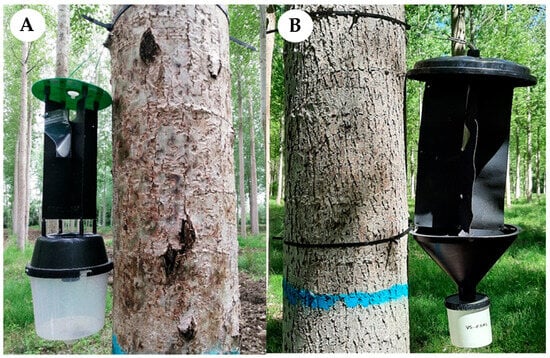
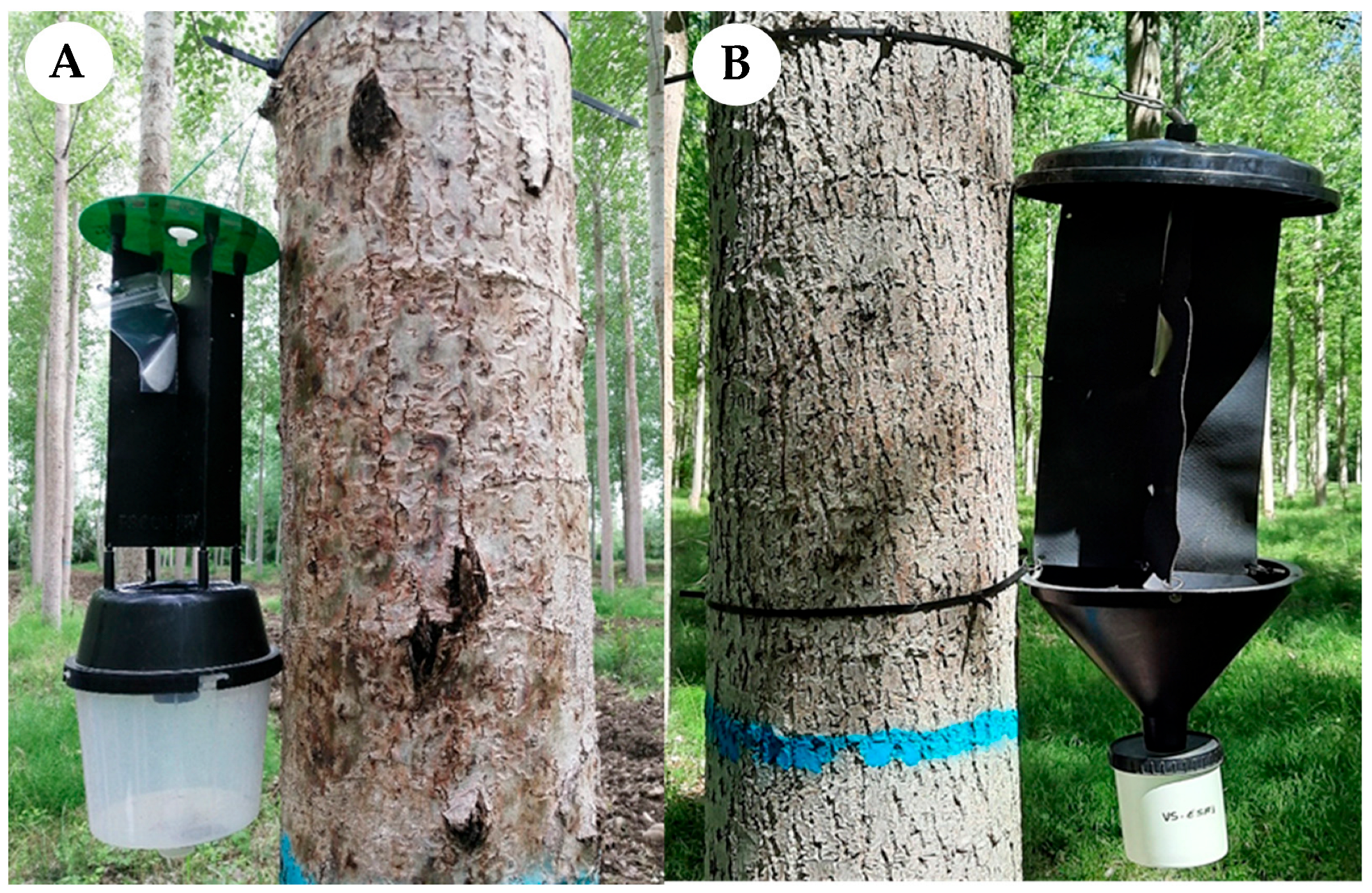
Two different commercial trap types were used in the field trial to assess their effectiveness against this pest under field conditions. The traps selected were the interception traps ESCOLITRAP® and CROSSTRAP®, both supplied by ‘ECONEX Agricultural Health S.L. (Pheromones and Traps), El Siscar, Spain’ (Figure 1).
Figure 1.
Trap types used and evaluated in the field trial. (A) ESCOLITRAP® and (B) CROSSTRAP® installed in the experimental plots.
ESCOLITRAP® traps are specifically designed for the capture of xylophagous insects, particularly scolytine beetles. These traps consist of a cover supporting two rigid interception panels attached to a funnel that directs captured insects into a collecting container. The panels include openings for the placement of lures. Except for the green cover, all other trap components are black [26].
In contrast, CROSSTRAP® traps are designed for the capture of coleopteran insects. They consist of a polypropylene cover with a central hanging device to facilitate installation, two reinforced PVC interception panels, and a polypropylene funnel connected to a collecting container at its base. To improve trap durability and reduce the risk of breakage under field conditions, the lower ends of the panels are mechanically fixed to the funnel, while the upper ends are attached to the cover by means of four springs. These springs act as dynamic suspension elements, reducing the mechanical stress caused by wind. In addition, the panels, funnel, and collecting container are coated with a slippery surface treatment that enhances capture efficiency and prevents insect escape. The collector is of the dry type and includes a stainless-steel mesh base that allows rainwater drainage and ventilation, thereby facilitating the collection of live insects [27].
2.3. Lures Evaluated in Trap Types
In the field trial, two semiochemical compounds with kairomonal activity, as well as their combination, were used as lures. Accordingly, three distinct lure treatments were deployed within each block of the three experimental plots in order to assess their attractiveness.
One of the lures tested was absolute Ethanol (E), (Ethanol absolute; VWR Chemicals Prolabo, Fontenay-sous-Bois, France), a primary kairomonal compound, at a concentration of 99.97%. Ethanol is among the most widely used lures for the monitoring and control of scolytine beetles because of its strong attractive effect [28].
The second lure was Salicylaldehyde (SA; 98%, Sigma-Aldrich, Madrid, Spain), a secondary kairomonal compound, applied at 100 mg per vial. This compound was selected because it was the volatile compound detected in the highest proportion in the plant material analyzed under laboratory conditions, and because Trypophloeus binodulus showed a response to this semiochemical volatile [25].
Finally, a combined treatment consisting of Ethanol (E) + Salicylaldehyde (SA) was included in order to evaluate a possible synergistic effect between both compounds.
The Ethanol dispensers used in the field consisted of low-density polyethylene bags (95 mm × 60 mm × 50 μm), pressure-sealed and containing a cotton plug impregnated with 1 mL of Ethanol. These dispensers were suspended from the upper part of the trap using plastic-coated wire. To maintain an adequate Ethanol release rate, the dispensers were replaced every two weeks. This methodology has been previously applied successfully in other field trials [25,29].
In contrast, the Salicylaldehyde dispensers (Sigma-Aldrich, 95% purity), each containing 100 mg of the compound, consisted of low-density polyethylene tubes (8 mm × 30 mm) sealed by heat. These dispensers exhibited zero-order release kinetics, ensuring a constant and continuous emission over time and a prolonged period of activity. Consequently, replacement was not necessary during the experimental period.
2.4. Field Trapping
For the field trial, both trap types were installed in blocks within the three experimental plots, with each block corresponding to poplar clones susceptible to attack by T. binodulus. Traps were mounted directly on trees at a height of 2 m above ground level, a position considered suitable for proper trap functioning and efficient sample collection. ESCOLITRAP® traps were attached to the upper part of the tree using cable ties, whereas CROSSTRAP® traps were suspended from the upper part and additionally secured at the lower section of the panels to minimize oscillation caused by wind.
Every trap type was divided into three blocks (one in the I-214 clone, one in the USA 184/411 clone and, one in the Unal clone) in the experimental plots of Villasabariego and Villoria de Órbigo and, two blocks (one in the I-214 clone and one in the USA 184/411 clone) in the experimental plot of Turcia. Each block had an area of 0.4 ha (20 m length × 20 m width). One block contained three trap–lure combinations (trap–Ethanol, trap–Ethanol + Salicylaldehyde and, trap-Salicylaldehyde). Three replicates per trap–lure combination were conducted, thus totaling 27 traps in Villasabariego and Villoria de Órbigo experimental plots and 18 traps in Turcia experimental plot. All the traps inside within each block were randomly distributed. Trap position was changed every two weeks in rotation. All traps were visited once a week (from May to September) every year. Unbaited traps were not used as controls because preliminary trials showed that these types of unbaited traps were ineffective at capturing these bark beetles.
The lures were hung directly from the holes made for this purpose in the paddles of traps. Lures were attached to the trap at the highest point, and live insects were trapped in the collector at the base. Ethanol plastic bags were replaced every two weeks. Captured insects were transferred from the trap collector to 50 mL jars using a brush. The beetles were then taken to the Plant Diseases and Pests Laboratory of the University of León, where insects from each treatment and plot were identified and counted with the aid of a magnifying glass.
2.5. Statistical Analysis
The normality of the data was tested using the Kolmogorov–Smirnov test (sample size > 50), and homoscedasticity was verified prior to conducting the statistical analyses.
Captures as a function of plot and trap type: A General Linear Model (GLM) was fitted for each experimental plot evaluated in this study, using weekly T. binodulus captures and trap type (ESCOLITRAP® or CROSSTRAP®) as fixed factors, followed by a one-way ANOVA. Also, a GLM was fitted for each trap type evaluated in the field trial, using weekly T. binodulus captures and experimental plot as fixed factors, followed by a one-way ANOVA. Significant differences (p ≤ 0.05) in captures among experimental plots and trap types were assessed by mean comparisons using the LSD (Least Significant Difference) post hoc test.
Captures as a function of trap type and lure used: A GLM was fitted for each experimental plot and trap type included in the field trial, using T. binodulus captures and the lures tested as fixed factors, followed by a one-way ANOVA. Also, a GLM was fitted for each experimental plot and lure evaluated, using weekly T. binodulus captures and trap type as fixed factors, followed by a one-way ANOVA. Significant differences (p ≤ 0.05) in captures among lures and trap types were assessed by mean comparisons using the LSD post hoc test.
Captures as a function of clone and lure: A GLM was fitted for each plot, trap type, and susceptible clone evaluated, using weekly captures and lures as fixed factors, followed by a one-way ANOVA. Also, a GLM was fitted for each experimental plot, trap type, and lure evaluated, using weekly captures and the clones tested as fixed factors, followed by a one-way ANOVA. Significant differences (p ≤ 0.05) in captures among lures and clones were assessed by mean comparisons using the LSD post hoc test.
All analyses were conducted using SPSS software, version 25 (IBM Corp., Armonk, NY, USA).
3. Results
3.1. Captures as a Function of Experimental Plot and Trap Type
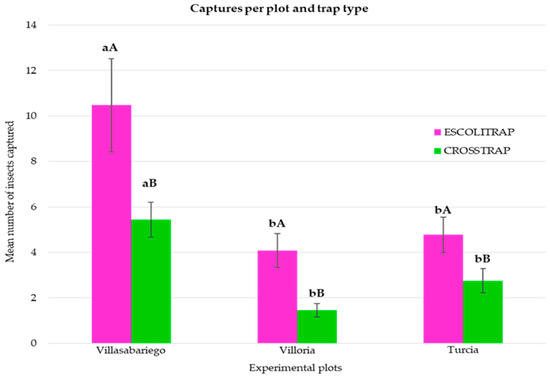
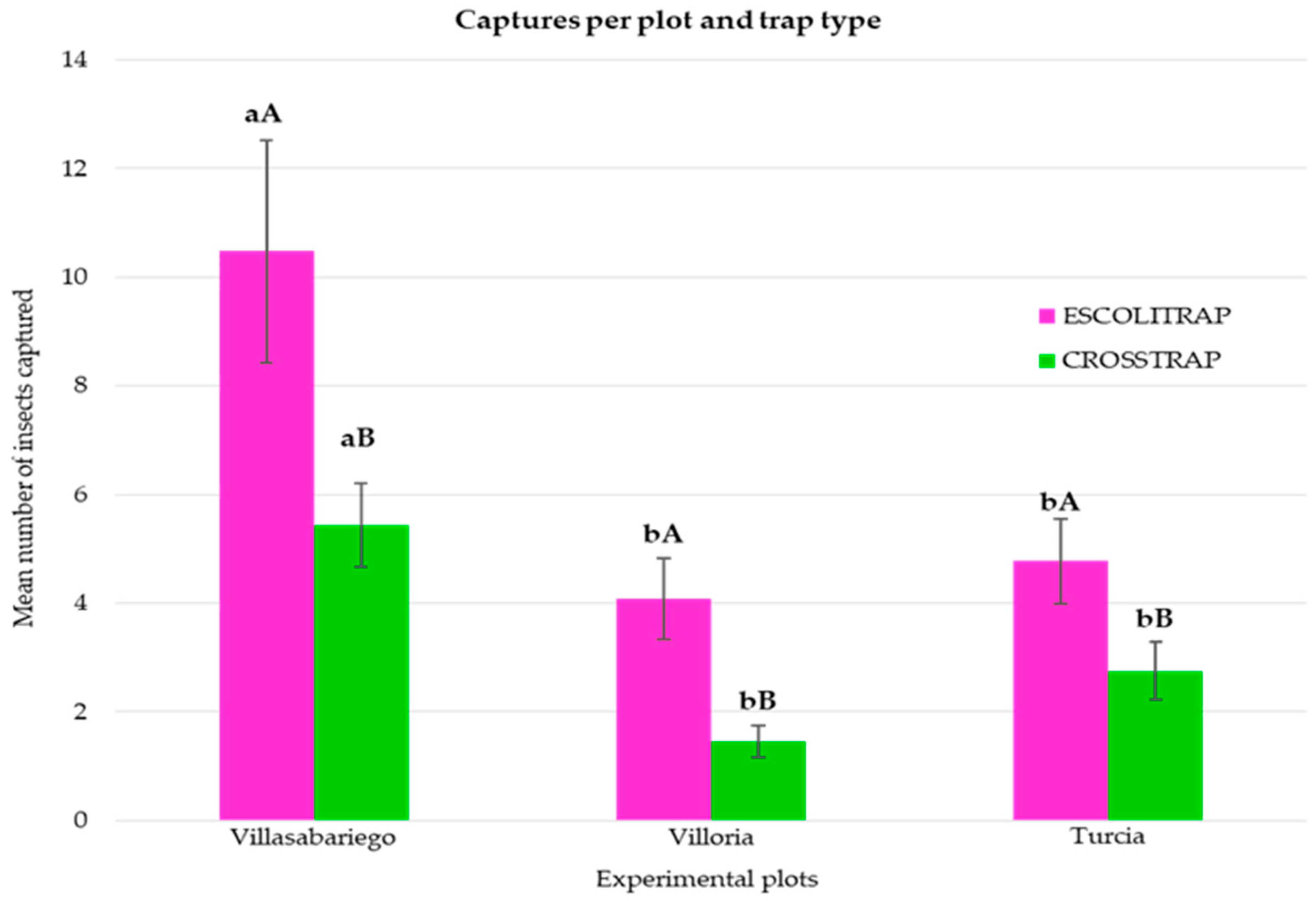
When weekly T. binodulus captures were analyzed as a function of trap type across the different experimental plots included in the study (Figure 2), significant differences were observed for both trap types between captures recorded in the Villasabariego plot and those recorded in the Villoria de Órbigo and Turcia plots. In ESCOLITRAP® traps, the number of captures was significantly higher in the Villasabariego plot (F = 6.911; df = 2, 771; p ≤ 0.001) than in the Villoria de Órbigo and Turcia experimental plots. A similar pattern was observed for CROSSTRAP® traps, in which captures in the Villasabariego plot were also significantly higher (F = 13.687; df = 2, 1005; p ≤ 0.001) than in the other plots.
Figure 2.
Mean captures obtained in each plot as a function of trap type (ESCOLITRAP® or CROSSTRAP®). Different lowercase letters indicate significant differences in captures within the same trap type among the different experimental plots (LSD test, p ≤ 0.05). Different uppercase letters indicate significant differences between trap types within the same experimental plot (LSD test, p ≤ 0.05).
On the other hand, when captures recorded by the different trap types were compared within each experimental plot, significant differences were found in the three experimental plots. In Villasabariego, captures in ESCOLITRAP® traps were significantly higher (F = 6.837; df = 1, 634; p = 0.009) than those in CROSSTRAP® traps. In Villoria de Órbigo, captures in ESCOLITRAP® traps were significantly higher (F = 13.741; df = 1, 634; p ≤ 0.001) than those in CROSSTRAP® traps. The same pattern was observed in Turcia, where captures in ESCOLITRAP® traps were also significantly higher (F = 4.568; df = 1, 508; p = 0.033) than those obtained in CROSSTRAP® traps (Figure 2).
3.2. Captures by Experimental Plots as a Function of Trap Type and Lure
3.2.1. Villasabariego Experimental Plot
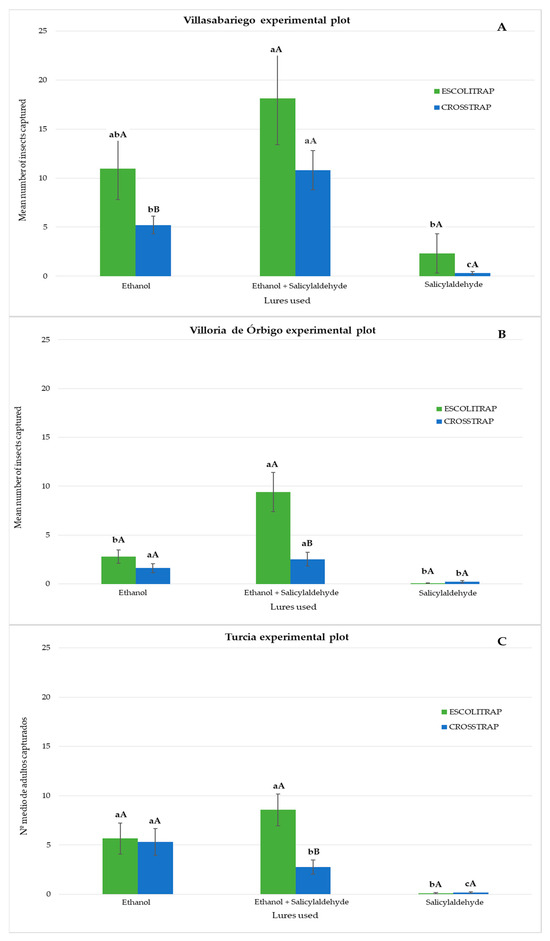
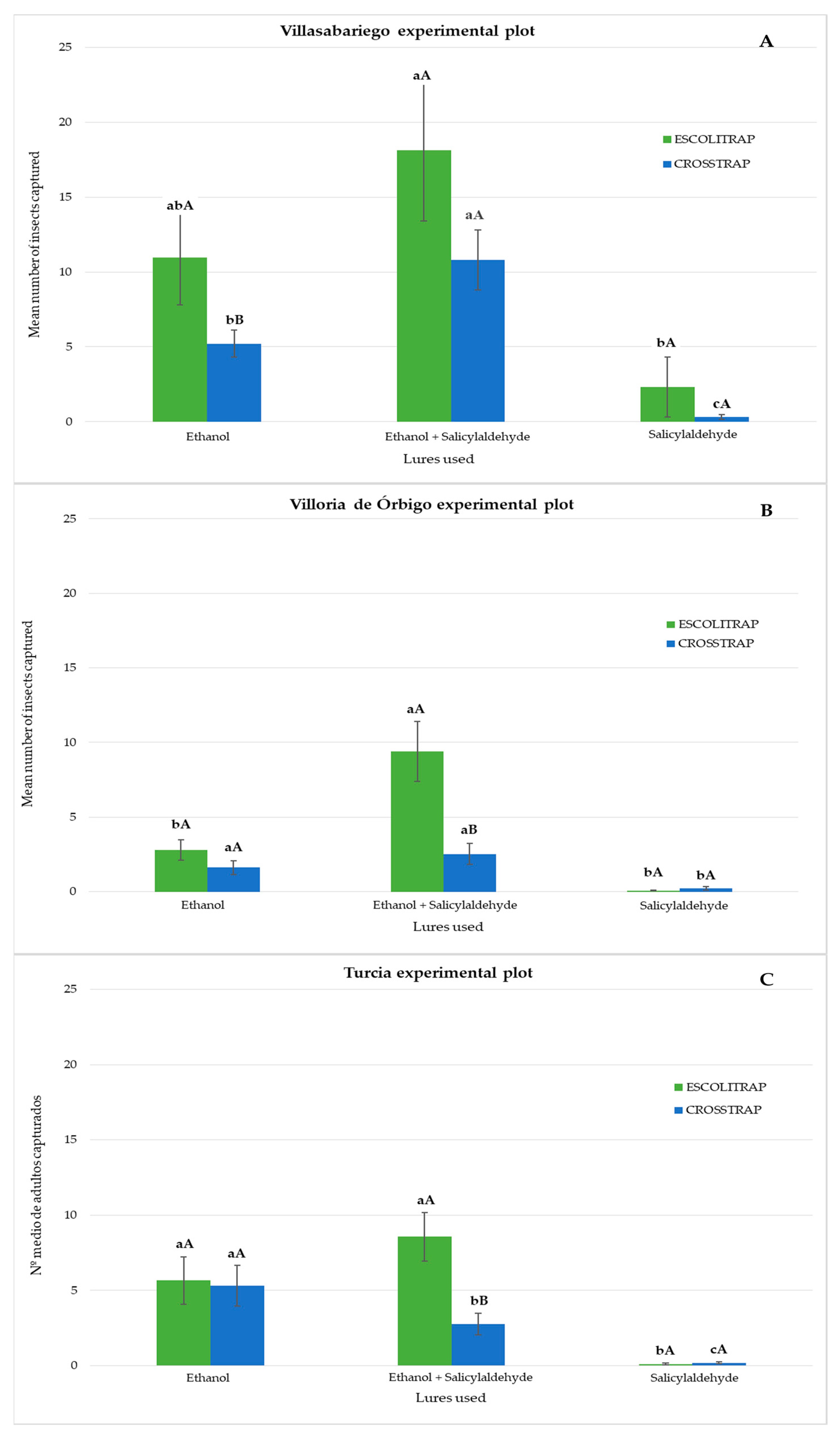
When the captures recorded in ESCOLITRAP® traps were analyzed, significant differences were found between Ethanol + Salicylaldehyde and Salicylaldehyde, with captures obtained using Ethanol + Salicylaldehyde lure being significantly higher (F = 5.164; df = 2, 255; p = 0.006). In contrast, Ethanol did not show significant differences with respect to the other lures. In CROSSTRAP® traps, captures obtained with the three lures showed significant differences (F = 16.899; df = 2, 375; p ≤ 0.001), with captures being significantly higher for Ethanol + Salicylaldehyde than for the other lures.
When lure effectiveness was compared for each trap type, significant differences (F = 4.128; df = 1, 210; p = 0.043) in captures were found only between trap types baited with Ethanol (Figure 3A).
Figure 3.
(A) Villasabariego, (B) Villoria de Órbigo and (C) Turcia. Mean captures obtained for each lure according to trap type (ESCOLITRAP® and CROSSTRAP®). Different lowercase letters indicate significant differences among lures within the same trap type (LSD test, p ≤ 0.05). Different uppercase letters indicate significant differences between trap types for the same lures (LSD test, p ≤ 0.05).
3.2.2. Villoria de Órbigo Experimental Plot
In the captures obtained with ESCOLITRAP® traps, significant differences were observed between Ethanol + Salicylaldehyde and the other lures used, with captures being significantly higher for Ethanol + Salicylaldehyde lure (F = 15.194; df = 2, 255; p ≤ 0.001). In CROSSTRAP® traps, significant differences (F = 5.553; df = 2, 375; p = 0.004) were observed between Ethanol + Salicylaldehyde and Ethanol with the other lure used (Salicylaldehyde).
When the captures obtained for each lure were compared according to trap type, captures with Ethanol + Salicylaldehyde were significantly higher in ESCOLITRAP® traps (F = 13.361; df = 1, 210; p ≤ 0.001). In contrast to this lure, no significant differences between trap types were observed for Ethanol and Salicylaldehyde (Figure 3B).
3.2.3. Turcia Experimental Plot
In ESCOLITRAP® traps, significant differences were observed between the captures recorded with Ethanol + Salicylaldehyde and Ethanol (F = 10.906; df = 2, 255; p ≤ 0.001) with respect to Salicylaldehyde lure, with captures being significantly higher for Ethanol + Salicylaldehyde lure. In CROSSTRAP® traps, captures obtained with the Ethanol lure were significantly higher (F = 8.474; df = 2, 249; p ≤ 0.001) than those obtained with the other lures.
Regarding lures, captures were significantly higher with Ethanol + Salicylaldehyde in ESCOLITRAP® traps (F = 10.535; df = 1, 168; p ≤ 0.001) (see Figure 3C).
3.3. Captures by Experimental Plot and Trap Type as a Function of the Clones and Lures Used
3.3.1. Villasabariego Experimental Plot (CROSSTRAP® Traps)
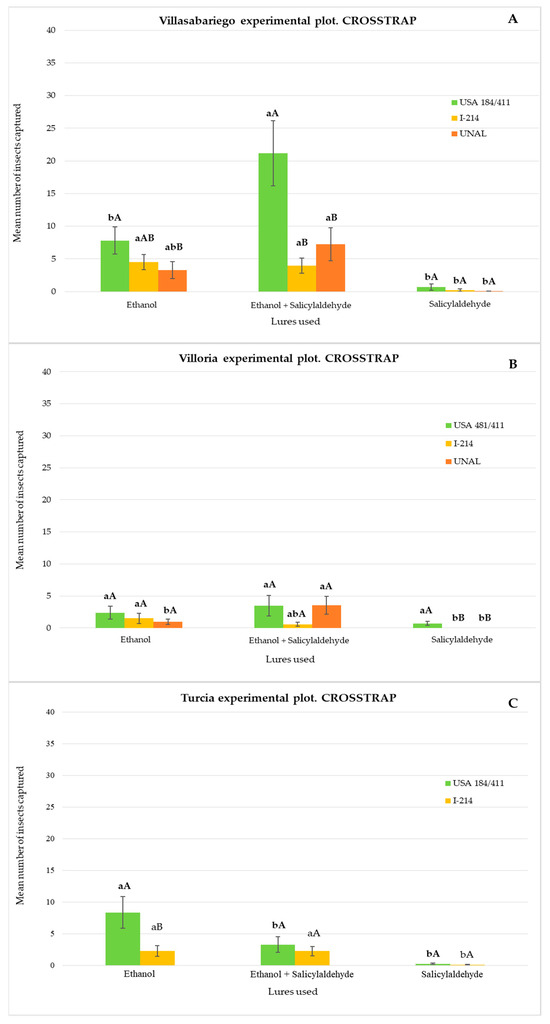
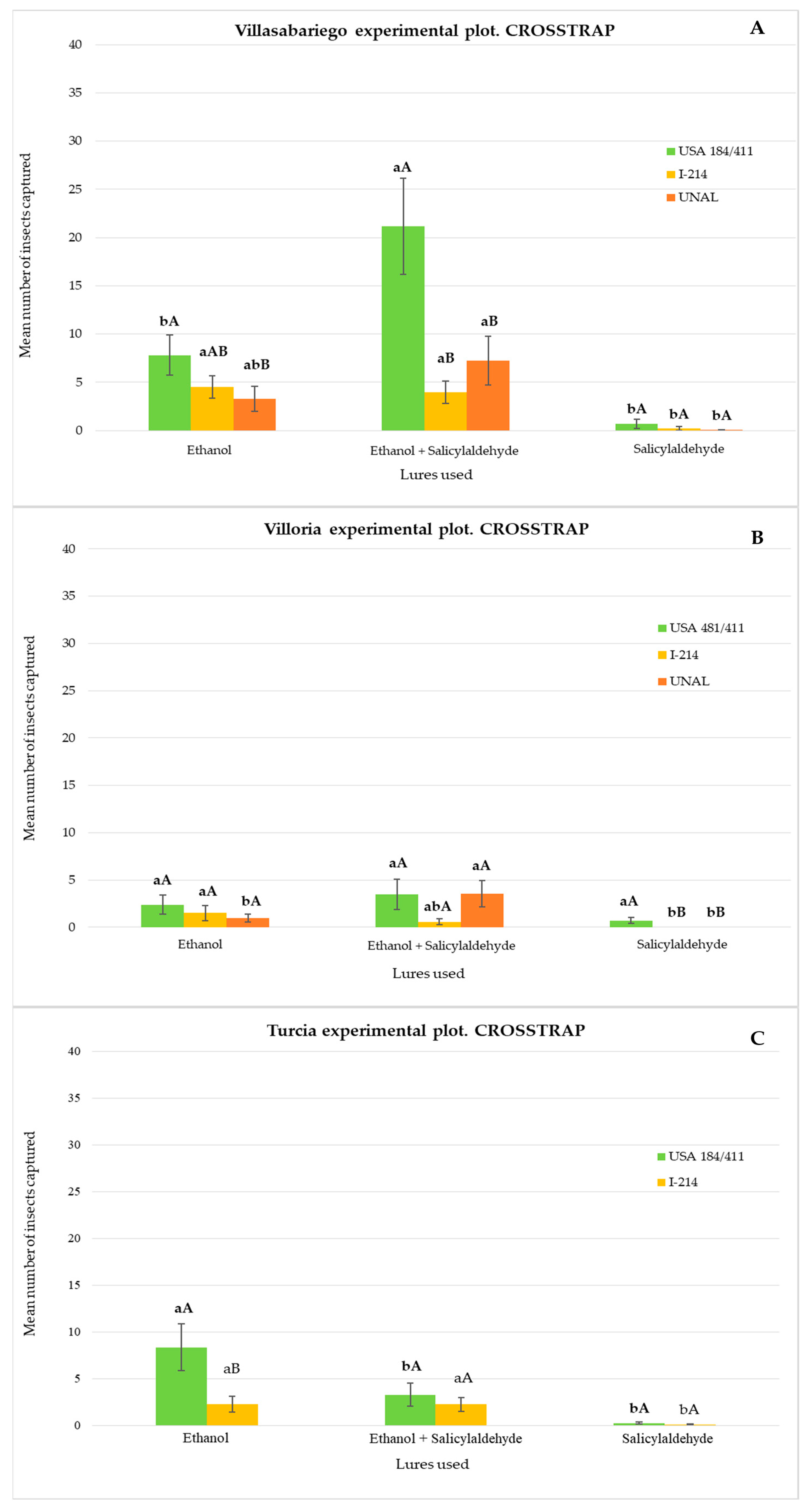
When the captures recorded in these traps were analyzed for each of the clones included in this plot, it was possible to determine the effectiveness of each lure according to clone (Figure 4A). In the clone USA 184/411, captures were significantly higher with the Ethanol + Salicylaldehyde lure (F = 10.905; df = 2, 123; p ≤ 0.001) than those obtained with the other lures. In the clone Unal, captures recorded with Ethanol + Salicylaldehyde were significantly higher (F = 4.910; df = 2, 123; p = 0.009) than those obtained with Salicylaldehyde, with no significant differences between either of these lures and Ethanol. In contrast to the previous two clones, in clone I-214 captures were significantly higher with Ethanol and Ethanol + Salicylaldehyde (F = 6.162; df = 2, 123; p = 0.003) than with Salicylaldehyde.
Figure 4.
Mean captures obtained in: (A) Villasabariego, (B) Villoria de Órbigo and (C) Turcia experimental plots with CROSSTRAP® traps. Different lowercase letters indicate significant differences among the lures used within the same clone (LSD test, p ≤ 0.05). Different uppercase letters indicate significant differences among clones within the same lure (LSD test, p ≤ 0.05).
With respect to the lures, their effectiveness was also analyzed within the different clones (Figure 4A). When captures recorded with Ethanol + Salicylaldehyde were examined, significant differences were observed among clones (F = 7.602; df = 2, 123; p ≤ 0.001), with captures being significantly higher in clone USA 184/411 than in clones I-214 and Unal. When captures recorded with Ethanol were examined, significant differences were observed among clones (F = 2.254; df = 2, 123; p = 0.042), with captures being significantly higher in clone USA 184/411 than in clone Unal. By contrast, no significant differences were observed among the three clones for captures recorded with Salicylaldehyde.
3.3.2. Villoria de Órbigo Experimental Plot (CROSSTRAP® Traps)
When captures in these traps were analyzed by clone, it was possible to determine the effectiveness of each lure (Figure 4B). Significant differences were observed only in clone Unal, for which captures were significantly higher with Ethanol + Salicylaldehyde (F = 4.874; df = 2, 123; p = 0.009) than with Ethanol and Salicylaldehyde. In clone I-214, for which captures were significantly higher with Ethanol (F = 2.276; df = 2, 123; p = 0.037) than Salicylaldehyde, although neither of these lures differed significantly from the captures recorded with Ethanol + Salicylaldehyde.
With respect to lures, their effectiveness was also analyzed within the different clones (Figure 4B). Captures with Salicylaldehyde were significantly higher in clone USA 184/411 (F = 4.859; df = 2, 123; p = 0.009).
3.3.3. Turcia Experimental Plot (CROSSTRAP® Traps)
Lure effectiveness was assessed across clones (Figure 4C). Within clone USA 184/411, captures were significantly higher with Ethanol (F = 6.471; df = 2, 123; p = 0.002) than with the other lures. In clone I-214, captures were significantly higher with Ethanol and Ethanol + Salicylaldehyde (F = 3.737; df = 2, 123; p = 0.027) than with Salicylaldehyde.
With regard to the analysis of lures among clones (Figure 4C), captures with Ethanol were significantly higher in the clone USA 184/411 (F = 5.290; df = 1, 82; p = 0.024) than in clone I-214.
3.3.4. Villasabariego Experimental Plot (ESCOLITRAP® Traps)
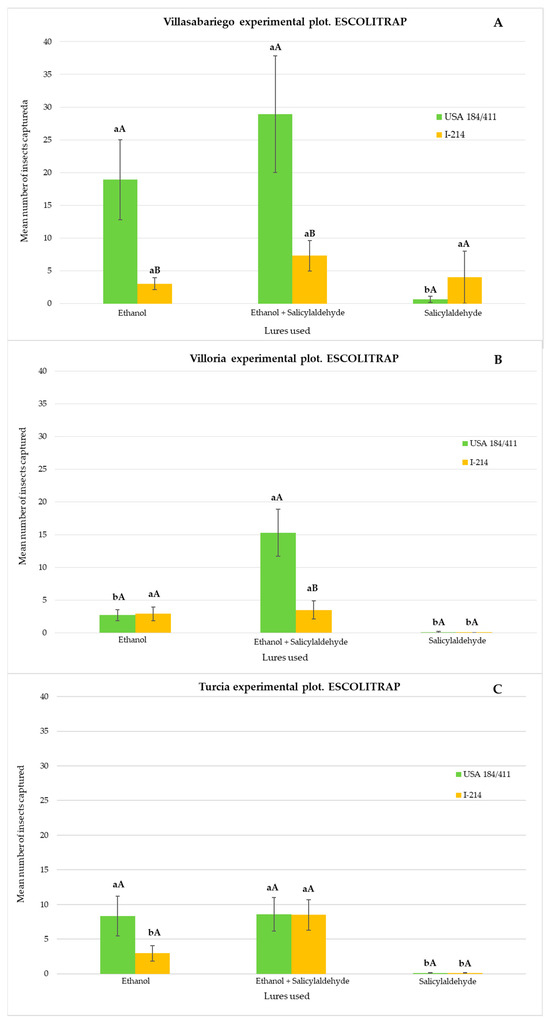
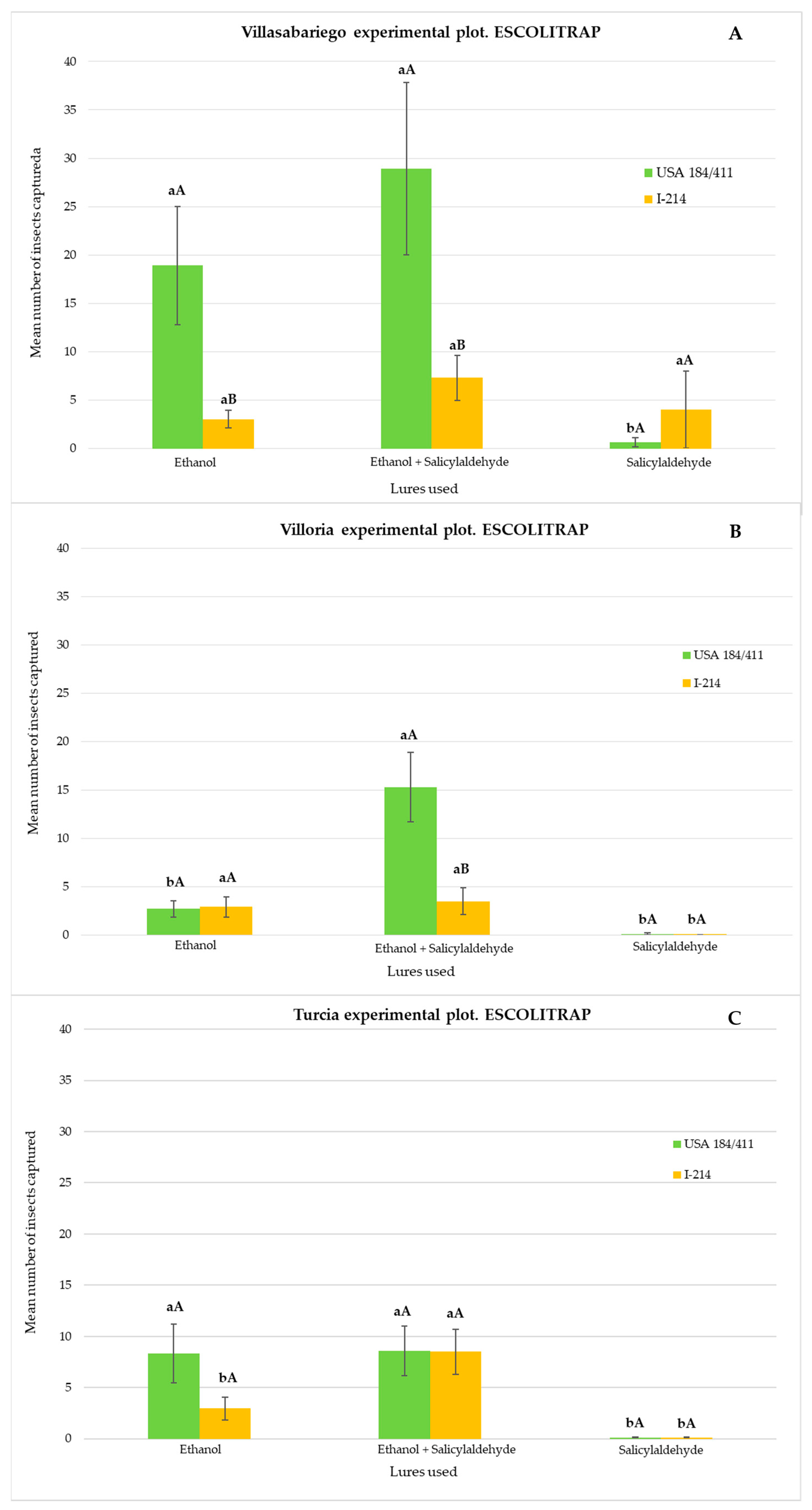
When the captures recorded in these traps were examined for each of the clones under study in this plot, it was possible to determine the effectiveness of each lure according to clone (Figure 5A). Analysis of the results obtained for clone USA 184/411 showed that captures were significantly higher for the Ethanol + Salicylaldehyde and Ethanol lure (F = 5.311; df = 2, 126; p = 0.006) than for Salicylaldehyde. In contrast, no significant differences were observed in clone I-214.
Figure 5.
Mean captures obtained in: (A) Villasabariego, (B) Villoria de Órbigo and (C) Turcia experimental plots with ESCOLITRAP® traps. Different lowercase letters indicate significant differences among the lures used within the same clone (LSD test, p ≤ 0.05). Different uppercase letters indicate significant differences among clones within the same lure (LSD test, p ≤ 0.05).
The effectiveness of lures was also analyzed across the different clones. (Figure 5A). With Ethanol, captures were significantly higher in clone USA 184/411 (F = 6.664; df = 1, 84; p = 0.012). The same pattern was observed for Ethanol + Salicylaldehyde, for which captures were also significantly higher in clone USA 184/411 (F = 5.533; df = 1, 84; p = 0.021).
3.3.5. Villoria de Órbigo Experimental Plot (ESCOLITRAP® Traps)
Analysis of trap captures by clone revealed the effectiveness of each lure (Figure 5B). Within clone USA 184/411, captures were significantly higher with Ethanol + Salicylaldehyde (F = 14.399; df = 2, 126; p ≤ 0.001) than those obtained with the other lures. In clone I-214, captures with Ethanol and Ethanol + Salicylaldehyde were significantly higher (F = 3.502; df = 2, 126; p = 0.033) than those obtained with Salicylaldehyde.
With respect to lures, Ethanol + Salicylaldehyde was the only lure that showed a significant difference between the two clones analyzed (F = 9.391; df = 1, 84; p = 0.003), with captures being significantly higher in clone USA 184/411(Figure 5B).
3.3.6. Turcia Experimental Plot (ESCOLITRAP® Traps)
Based on the analysis of captures recorded for each clone, the effectiveness of each lure was determined (Figure 5C). In clone USA 184/411, captures were significantly higher with Ethanol + Salicylaldehyde and Ethanol (F = 4.928; df = 2, 126; p = 0.009) than those obtained with Salicylaldehyde. In clone I-214, captures were significantly higher with Ethanol + Salicylaldehyde (F = 9.089; df = 2, 126; p ≤ 0.001) than those obtained with Ethanol and Salicylaldehyde lures.
Regarding the lures, no significant differences were observed among the clones (Figure 5C).
4. Discussion
Regarding the use of kairomonal compounds for the control of Trypophloeus spp. in China, studies have been conducted to identify volatile compounds produced by the host tree, P. alba var. pyramidalis, that may act as lures for T. klimeschi, the species responsible for the damage [8]. Among the compounds identified, methyl benzoate stands out; this compound was also identified in high amounts together with Salicylaldehyde in the laboratory bioassays carried out with plant material collected from the study plots. However, a previous study in two of the three plots (Villasabariego and Villoria de Órbigo) showed that methyl benzoate has a low attractive capacity, even when combined with Ethanol (Ethanol + methyl benzoate), whereas the catches recorded with Ethanol + Salicylaldehyde were significantly higher [25,30]. This has made it possible to determine the attractive response of this species and the synergistic effect between both compounds.
In previous studies on Tomicus destruens (Coleoptera: Curculionidae), a species in the same family as Trypophloeus spp. that affects pine stands (mainly of P. pinaster, P. halepensis, P. radiata, and P. pinea) the efficacy of volatile compounds produced by the host tree, specifically α-pinene and Ethanol, has been analyzed, and these were evaluated individually and jointly. As a result of these studies, it was determined that α-pinene alone has a lower attractive capacity, since a significantly lower number of captures was recorded than with Ethanol + α-pinene, whose combination produced a strong synergistic effect and proved highly effective. On the other hand, this species was also attracted by Ethanol, with a high mean number of captures [31]. The same has been observed in the present study. Based on the results obtained when analyzing the captures recorded during the 42 weeks of the field study in the three plots, it can be stated, regardless of the type of trap used, that catches in Salicylaldehyde-baited traps were significantly lower than in traps baited with the combination of Ethanol and Salicylaldehyde. This allows us to state that Salicylaldehyde by itself has a low attractive capacity, and that there is a synergistic effect with Ethanol, which translates into a greater attractive capacity, making it highly effective. This is further supported by the observation that captures obtained with the combined attractants exceeded the sum of those obtained with each attractant separately, confirming a synergistic interaction between them [32]. With regard to the catches recorded with Ethanol, it should be highlighted that in most of the blocks analyzed there was no significant difference compared with the catches recorded with Ethanol + Salicylaldehyde.
To better interpret the effectiveness of the trapping system evaluated in this study, it is important to consider the commercial trap types commonly used in bark beetle monitoring and control. Previous studies have shown that trap design can strongly influence capture rates, particularly for species of the genus Trypophloeus. In this context, comparing different interception systems under field conditions provides valuable information for assessing their practical performance and suitability for pest management programs. As for the types of traps used for the control of bark beetles, window, multi-funnel, or interception traps are mainly used [24]. More specifically, for the control of species of the genus Trypophloeus, multi-funnel traps consisting of six funnels aligned vertically have been used in other field trials [8,33]. Unlike previous studies, this field trial employed CROSSTRAP® and ESCOLITRAP® interception traps. When analyzing the catches obtained in each plot according to trap type, it can be confirmed that both traps represent a new alternative for the control of bark beetles that has not been studied until now. However, it should be noted that ESCOLITRAP® traps are significantly more effective than CROSSTRAP® traps in the case of T. binodulus, as they result in higher capture rates.
In light of the results obtained in the field trial, it would be of interest to test other amounts of Ethanol that would reduce trap maintenance by extending the time between replacements of this compound in the field, which is currently two weeks with the quantity used. The aim would be to reduce costs and make it easier for poplar growers to implement this lure as an effective method for monitoring and controlling the pest.
5. Conclusions
Analysis of trap captures showed that ESCOLITRAP® traps are significantly more effective than CROSSTRAP® traps.
Evaluation of kairomonal compounds confirmed a synergistic effect between Salicylaldehyde and Ethanol, enhancing their attractiveness. It has been determined that Salicylaldehyde used alone as a lure has low attractiveness, with captures significantly lower than those obtained in combination with Ethanol.
These results indicate that the use of ESCOLITRAP® traps in combination with Ethanol and Salicylaldehyde as a lure represents an effective method and a potential candidate for monitoring this pest in poplar plantations.
Author Contributions
Conceptualization and methodology, C.V.-V., L.D.-S. and L.R.-M.; English correction, P.A.C., A.O. and Á.R.-G.; Investigation and writing, C.V.-V., L.R.-M. and L.D.-S.; Revise and editing and Supervision, P.A.C., A.O. and Á.R.-G. All authors have read and agreed to the published version of the manuscript.
Funding
This research received no external funding.
Data Availability Statement
The raw data supporting the conclusions of this article will be made available by the authors on request.
Acknowledgments
The authors would like to thank Miloš Knížek from the Forestry and Game Management Research Institute (Czechia) and Åke Lindelöw for the identification of Trypophloeus binodulus. We also acknowledge the RALBAR grant, for the opportunity to bring poplar cultivation and the importance of monitoring and controlling forest pests closer to the population of rural communities. To the companies Bosques y Ríos and Garnica Plywood and to the University Research Group in Engineering and Sustainable Agriculture (GUIIAS) of the University of León. To the Plant Pests and Diseases Laboratory of the University of León, located in the School of Agricultural and Forestry Engineering (León Campus), for having been able to use all its facilities to perform all the experiments described in this manuscript.
Conflicts of Interest
The authors declare no conflicts of interest.
References
- Rueda, J.; García Caballero, J.L.; Cuevas, Y.; García Jiménez, C.; Villar, C. Cultivo de Chopos en Castilla y León; Junta de Castilla y León, Consejería de Fomento y Medio Ambiente: Valladolid, Spain, 2019. [Google Scholar]
- Padró Simarro, A.; Orensanz García, J. El Chopo y su Cultivo; Ministerio de Agricultura, Pesca y Alimentación: Madrid, Spain, 1987. [Google Scholar]
- Rueda, J.; Padró, A.; Grau, J.M.; Sixto, H.; Villar, C.; García Caballero, J.L.; Martínez Sierra, F.; Prada, M.A.; Garavilla, V.; de Lucas, A.; et al. Clones de Chopos del Catálogo Nacional de Materiales de Base; Junta de Castilla y León, Consejería de Fomento y Medio Ambiente: Valladolid, Spain, 2016. [Google Scholar]
- Hernanz Arroyo, G. La industria del chopo en España. Paper Knowl. Toward Media Hist. Doc. 2001, 232, 419–434. [Google Scholar]
- Caballero, P.; Murillo, J. Protección de Cultivos: Conceptos Actuales y Fuentes de Información; Universidad Pública de Navarra: Pamplona, Spain, 2003. [Google Scholar]
- European and Mediterranean Plant Protection Organization. Trypophloeus EPPO Global Database. 1998. Available online: https://gd.eppo.int/taxon/1TRYOG (accessed on 12 October 2023).
- Lindelöw, Å.; Kvamme, T. Trypophloeus dejevi (Stark, 1936) (Coleoptera: Curculionidae), a new bark beetle species in Norway and Finland. Nor. J. Entomol. 2013, 60, 90–94. [Google Scholar]
- Gao, G.; Dai, L.; Gao, J.; Wang, J.; Chen, H. Electroantennogram, behavioural responses, and field trapping of Trypophloeus klimeschi (Coleoptera: Curculionidae: Scolytinae) to eight host volatiles. Can. Entomol. 2019, 151, 236–250. [Google Scholar] [CrossRef] [Scilit]
- Comisión Nacional del Chopo. Actividades Relativas al Cultivo y la Utilización del Álamo y del Sauce, Período 2004–2007; Comisión Internacional del Álamo: Beijing, China, 2008. [Google Scholar]
- Organización de las Naciones Unidas para la Alimentación y la Agricultura. The International Commission on Poplars and Other Fast-Growing Trees Sustaining People and the Environment (IPC); FAO: Rome, Italy, 2021. [Google Scholar]
- Comisión Nacional del Chopo. Actividades Relativas al Cultivo y la Utilización del Álamo y del Sauce, Período 2012–2015; Comisión Internacional del Álamo: Berlin, Germany, 2016. [Google Scholar]
- Comisión Nacional del Chopo. Actividades Relativas al Cultivo y la Utilización del Álamo y el Sauce, Período 2016–2019; Comisión Internacional del Álamo: Rome, Italy, 2020. [Google Scholar]
- Lombardero, M.J. Plantas huésped y escolítidos (Col.: Scolytidae) en Galicia (noroeste de la Península Ibérica). Bol. Sanid. Veg. Plagas 1995, 21, 357–370. [Google Scholar]
- Petty, J.L. Bionomics of two aspen bark beetles, Trypophloeus populi and Procryphalus mucronatus (Coleoptera: Scolytidae). West. N. Am. Nat. 1977, 37, 105–127. [Google Scholar]
- Furniss, M.M. Biology of Trypophloeus striatulus (Coleoptera: Scolytidae) in feltleaf willow in interior Alaska. Environ. Entomol. 2004, 33, 21–27. [Google Scholar] [CrossRef] [Scilit]
- Gao, G.; Gao, J.; Hao, C.; Dai, L.; Chen, H. Biodiversity and activity of gut fungal communities across the life history of Trypophloeus klimeschi (Coleoptera: Curculionidae: Scolytinae). Int. J. Mol. Sci. 2018, 19, 2010. [Google Scholar] [CrossRef] [Scilit]
- Garnica. El Escarabajo Trypophloeus sp. (Bark Beetle), un mal Enemigo para los Chopos. 2019. Available online: https://www.garnica.one/blog/el-escarabajo-trypophloeus-sp-bark-beetle-un-mal.html (accessed on 12 May 2023).
- Soto, A.; Orengo, L.; Estrela, A. Estudio de poblaciones de insectos escolítidos (Coleoptera: Scolytidae) en las masas de Pinus halepensis Miller del Parque Natural del Montgó (Alicante). Bol. Sanid. Veg. Plagas 2002, 28, 445–456. [Google Scholar]
- Ipinza Carmona, R. Bases para la simulación del comportamiento de los escolítidos en plantaciones de Pinus radiata D. Don. In Modelos Forestales; Ipinza Carmona, R., Peters Nario, R., Loewe Muñoz, V., Eds.; IUFRO y FILIAL CORFO: Santiago de Chile, Chile, 1992; pp. 51–88. [Google Scholar]
- Ruiz Portero, C.; Barranco, P.; de la Peña, J.; Cabello, T. Bioensayo con entomopatógenos para el control de escolítidos plagas forestales (Col.: Scolytidae). Bol. Sanid. Veg. Plagas 2002, 28, 367–373. [Google Scholar]
- Ministerio de Agricultura y Pesca, Alimentación y Medio Ambiente. Guía de Gestión Integrada de Plagas: Frondosas; Ministerio de Agricultura y Pesca, Alimentación y Medio Ambiente: Madrid, Spain, 2017. [Google Scholar]
- Nava Pérez, E.; García Gutiérrez, C.; Camacho Báez, J.R.; Vázquez Montoya, E.L. Bioplaguicidas: Una opción para el control biológico de plagas. Ra Ximhai 2012, 8, 17–29. [Google Scholar] [CrossRef] [Scilit]
- Komala, G.; Reddy Manda, R.; Seram, D. Role of semiochemicals in integrated pest management. Int. J. Entomol. Res. 2021, 6, 247–253. [Google Scholar]
- López Romero, S.; Ochoa Romón, P.; Iturrondobeitia Bilbao, J.C.; Goldarazena Lafuente, A. Los Escolítidos de las Coníferas del País Vasco: Guía Práctica para su Identificación y Control; Servicio Central de Publicaciones del Gobierno Vasco: Vitoria-Gasteiz, Spain, 2007. [Google Scholar]
- Ortiz, A.; Ruiz-Martos, L.; Bruno, A.; Vega-Valdés, C.; Díez-Presa, E.; Delgado-Salán, L.; Mínguez-Bermejo, D.; Casquero, P.A.; Rodríguez-González, Á. Salicylic Aldehyde and Its Potential Use in Semiochemical-Based Pest Control Strategies Against Trypophloeus binodulus. Insects 2024, 15, 964. [Google Scholar] [CrossRef] [Scilit] [PubMed]
- ECONEX. CROSSTRAP®. 2026. Available online: https://www.e-econex.net/es/trampas-para-insectos/crosstrap-mini-con-colector-seco-con-deslizante-43.html (accessed on 3 June 2023).
- ECONEX. ESCOLITRAP®. 2026. Available online: https://www.e-econex.net/es/trampas-para-insectos/escolitrap-478.html (accessed on 3 June 2023).
- Soares Gusmão, R.; Peres Filho, O.; Dorval, A.; Dias de Souza, M.; Arcanjo do Nascimento, D. Use of Ethanol in the collector recipiente of Ethanolic traps as attractive bait for Scolytinae (Coleoptera: Curculionidae) in eucalyptus stands in region of Cerrado. IDESIA 2020, 38, 99–104. [Google Scholar] [CrossRef] [Scilit]
- Rodríguez González, Á.; Sánchez Maíllo, E.; Peláez, H.J.; González Núñez, M.; Hall, D.R.; Casquero, P.A. Field evaluation of 3-hydroxy-2-hexanone and Ethanol as lures for the cerambycid beetle pest of vineyards, Xylotrechus arvicola. Pest Manag. Sci. 2017, 73, 1598–1603. [Google Scholar] [CrossRef] [Scilit] [PubMed]
- Mínguez Bermejo, D. Evaluación en Campo de Potenciales Compuestos Cairomonales para el Control de Trypophloeus spp. en Plantaciones de Populus spp. Bachelor’s Thesis, Universidad de León, León, Spain, 2022. [Google Scholar]
- Gallego, D.; Galián, J.; Diez, J.J.; Pajares, J.A. Kairomonal responses of Tomicus destruens (Col., Scolytidae) to host volatiles α-pinene and Ethanol. J. Appl. Entomol. 2008, 132, 654–662. [Google Scholar] [CrossRef] [Scilit]
- Reisenman, C.E.; Lei, H.; Guerenstein, P.G.; Hildebrand, J.G. Neuroethology of Olfactory-Guided Behavior and Its Potential Application in the Control of Harmful Insects. Front. Physiol. 2016, 7, 271. [Google Scholar] [CrossRef] [Scilit] [PubMed]
- Ning, H.; Tang, M.; Chen, H. Mapping invasion potential of the pest from central Asia, Trypophloeus klimeschi (Coleoptera: Curculionidae: Scolytinae), in the shelter forests of northwest China. Insects 2021, 12, 242. [Google Scholar] [CrossRef] [Scilit] [PubMed]
Disclaimer/Publisher’s Note: The statements, opinions and data contained in all publications are solely those of the individual author(s) and contributor(s) and not of MDPI and/or the editor(s). MDPI and/or the editor(s) disclaim responsibility for any injury to people or property resulting from any ideas, methods, instructions or products referred to in the content. |
© 2026 by the authors. Licensee MDPI, Basel, Switzerland. This article is an open access article distributed under the terms and conditions of the Creative Commons Attribution (CC BY) license.