


Abstract
Trifoliate orange (Poncirus trifoliata L.) is one of the most widely utilized rootstocks in citrus production; however, it exhibits a relatively high sensitivity to salt stress. When cultivated in salinized soil, it frequently develops nutrient uptake disorders, leaf chlorosis, as well as reduced fruit yield and quality. To enhance the salt stress tolerance of citrus plants, this study investigated the effects of Trichoderma harzianum inoculation on the growth and response mechanisms of citrus seedlings under salt stress conditions. The results showed that salt stress significantly inhibited the growth of citrus seedlings, while T. harzianum inoculation effectively alleviated the inhibitory effect. After treatment with T. harzianum, the plant height, stem diameter, leaf number, and biomass of citrus seedlings increased significantly. The net photosynthetic rate, stomatal conductance, intercellular CO2 concentration, transpiration rate, and chlorophyll content were significantly increased by T. harzianum inoculation. Meanwhile, T. harzianum inoculation increased the content of nitrogen, phosphorus, calcium, magnesium, zinc, and copper, and decreased sodium content in citrus seedlings. In addition, T. harzianum inoculation significantly up-regulated the expression of stress-responsive genes such as SOSs, PIPs, TIP1, TIP4, and TIP9. In conclusion, T. harzianum inoculation improved the salt stress tolerance of citrus seedlings through increasing photosynthetic efficiency, promoting nutrient absorption, sodium efflux, and water utilization via up-regulating the expression of SOSs and aquaporin genes.
1. Introduction
Trifoliate orange (Poncirus trifoliata L.) serves as one of the most extensively utilized rootstocks in citrus production. Trifoliate orange rootstock enhanced the cold resistance of citrus, advanced the fruit maturity period, and improved the fruit quality [1]. However, it was highly sensitive to salt stress, with citrus scions frequently exhibiting leaf chlorosis, deterioration in fruit quality and yield, and premature tree senescence [2]. In recent years, due to global climate change and unsustainable agricultural irrigation, soil salinization has become increasingly serious. In the coastal citrus-growing regions of China, the soil salt content can reach as high as 0.3%. Soil salinity in citrus orchards under long-term rain-sheltered cultivation reaches levels as high as 0.6% [3]. Salt stress has emerged as one of the major abiotic stress factors restricting the growth and development of citrus [4,5]. Therefore, it is of great significance to explore effective strategies to enhance citrus stress resistance and productivity.
Salt stress has multiple adverse effects on crop growth and development. Firstly, high salt content in the soil reduces soil water potential, causing osmotic stress and making it difficult for plant roots to absorb water and mineral elements from the soil [6]. Secondly, excessive sodium and chloride caused toxicity to plant cells, which directly damaged cell structures and interfered with enzyme activities [7]. Salt stress induces excessive accumulation of reactive oxygen species (ROS) by interfering with the normal metabolism of plant cells. These highly oxidizing ROS molecules induce oxidative damage to key biological macromolecules, including DNA, proteins, lipids, and pigments, which consequently impairs cellular structure and function [8]. To cope with salt stress, plants have developed a series of complex physiological and molecular adaptation mechanisms, including the biosynthesis of osmotic regulators, the activation of the antioxidant enzyme system, and the regulation of stress-responsive gene expression [9]. The salt overly sensitive (SOS) signal transduction pathway plays a crucial regulatory role in maintaining sodium ion homeostasis during plant salt stress responses [10,11]. Aquaporins (AQPs), especially plasma membrane intrinsic protein (PIPs) and tonoplast intrinsic protein (TIPs), play a crucial role in regulating water uptake by crop roots [12]. Overexpression of MusaPIP2;6 in transgenic banana plants enhances salt tolerance by increasing photosynthetic efficiency and reducing membrane damage [13]. However, as a crop sensitive to salt stress, trifoliate orange has limited salt resistance, so it is necessary to use exogenous means to enhance its salt resistance.
In recent years, the utilization of beneficial microorganisms to enhance plant stress resistance has emerged as a focal point in agricultural production and research [14]. T. harzianum is a biocontrol agent extensively utilized in agriculture [15,16]. The inoculation of T. harzianum promoted plant growth and development and increased the tolerance to both biotic and abiotic stresses [15]. The symbiosis between plants and T. harzianum improved the tolerance of plants to salt stress by regulating plant hormone balance, strengthening the antioxidant defense system, altering root morphology, and improving the nutrient absorption efficiency [17]. For example, T. harzianum improved the photosynthetic pigment content and gas exchange parameters of watermelon plants, enhanced photosynthesis, increased the morphological parameters of the aboveground and underground parts of watermelon seedlings, and alleviated the growth inhibition of watermelon under salt stress [18]. In addition, T. harzianum also induced the antioxidant capacity in cucumbers, reduced the accumulation of ROS under salt stress, and thus mitigated the oxidative damage [19].
Although previous research has confirmed the important role of T. harzianum in enhancing plant salt tolerance, its application in citrus remains relatively unexplored. It is still unknown whether inoculation with T. harzianum enhanced salt tolerance in citrus through the regulation of photosynthesis, nutrient uptake, and ion homeostasis. This study investigates the impacts of T. harzianum inoculation on citrus plants under salt stress, with a focus on growth, photosynthetic efficiency, nutrient uptake, and the expression of salt stress-responsive genes.
2. Materials and Methods
2.1. Materials and Treatments
Trifoliate orange seeds were collected from the Zhejiang Citrus Research Institute (28.64 N, 121.16 E). Seeds were soaked in a 1 M NaOH solution for 10 min to remove the pectin. Subsequently, the seeds were immersed in 1% NaClO for 10 min for surface disinfection. Finally, they were rinsed 3 to 5 times with distilled water. The seeds were subsequently sown in sterilized (121 °C and 0.11 MPa for 2 h) vermiculite and cultivated in a growth chamber (Ruihua, Wuhan, China) in April 2024. Two-month-old seedlings were transplanted in 35 cm (diameter) × 40 cm (height) plastic pots in June 2024. The experiment was conducted in a greenhouse with natural light. The substrate for transplanting was composed of a mixture of sand, loess and peat in a volume ratio of 1:1:1 and sterilized at 121 °C and 0.11 MPa for 2 h. The nutrient parameters of the substrate were as follows: pH 6.26, alkali-hydrolyzable nitrogen 81.2 mg/kg, available phosphorus 12.02 mg/kg, available potassium 94.78 mg/kg, organic matter 38 g/kg, total phosphorus 0.3 g/kg, total potassium 19.2 g/kg, total nitrogen 3.6 g/kg, and soluble salt 0.15%. The medium was sterilized at 121 °C and 0.11 MPa for 2 h. The T. harzianum (TH) strain utilized in this experiment was a commercial microbial preparation (Aijia Bilogy Co., Ltd., Harbin, China), containing viable bacterial counts as high as 2 × 10⁸ CFU per gram.
A 2 × 3 two-factor experimental design was employed. The first factor was the T. harzianum inoculation. The second factor was salt stress, with three gradients (0, 50, and 100 mM) of NaCl treatments. There was a total of 6 treatments (CK: control, TH: T. harzianum, S50: 50 mM salt stress, TH-S50: T. harzianum + 50 mM salt stress, S100: 100 mM salt stress, TH-S100: T. harzianum + 100 mM salt stress). Each treatment was conducted in three biological replicates, with three pots per replicate and five seedlings per pot. One-hundred grams of T. harzianum agent was dissolved in 50 L of deionized water. T. harzianum solution (1 L/pot) was irrigated 7 days after seedling transplantation, once a week for 3 times. After 4 weeks of transplanting, the seedlings were irrigated with different concentrations of NaCl solution (1 L/pot) once a week for 6 times.
2.2. Sample Collection and Physiological Index Determination
Three months after transplanting (September 2024), the leaf photosynthetic parameters, including net photosynthetic rate (Pn), stomatal conductance (Gs), intercellular CO2 concentration (Ci), and transpiration rate (Tr), were measured using a portable photosynthesis system analyzer (LI-COR 6400, Lincoln, NE, USA) between 9:00 and 11:00 a.m. on a sunny day. The relative chlorophyll content was measured using a portable chlorophyll meter (SPAD-502 PLUS, Konica Minolta, Tokyo, Japan). The plant height, stem diameter, and leaf number were measured and counted. The dry weight of the citrus plant was measured with an electronic balance after being dried to a constant weight in an oven (65 °C for 3 days). The seeding vigor index = (stem thick/plant height + underground dry weight/aboveground dry weight) × total dry weight. The root was scanned by a root scanner (MICROTEK ScanMaker i800 plus, Microtek, Shanghai, China), and the root architecture parameters were obtained using the LA-S plant root analysis system (Wanshen, Hangzhou, China). The total length, projected area, surface area, and root volume of the roots were analyzed. The main root length and the number of lateral roots were counted manually. The 5th–6th functional leaves below the top were collected for the determination of mineral element content. The leaf nitrogen content was detected using an Automatic Kjeldahl Azotometer (Kjeltec 8200, FOSS, Copenhagen, Denmark). The contents of leaf phosphorus, potassium, calcium, magnesium, sulphur, iron, copper, zinc, boron, and sodium were detected by using an inductively coupled plasma emission spectrometer (Vista-MPX, Varian, Palo Alto, CA, USA) [20]. The samples for gene expression analysis were rapidly frozen in liquid nitrogen and then stored at −80 °C for later RNA extraction.
2.3. RNA Extraction and Gene Expression Analysis
The total RNA of citrus leaf samples was extracted using an ultra-pure total RNA extraction kit (Simgen, Hangzhou, China) according to the instructions. The purity and integrity of RNA were assessed using an ultra-micro spectrophotometer (Thermo Scientific NANODROP ONEC, Waltham, MA, USA) and agarose (1%) gel electrophoresis. The RNA was reverse transcribed into cDNA using TRUEscript RT MasterMix (Aidlab, Beijing, China). The PIPs, TIPs, and SOSs gene sequences were downloaded from the Citrus Genomics website (http://citrus.hzau.edu.cn/, accessed on 4 June 2024). The primers were designed using the online tool Primer3 Plus (https://www.primer3plus.com/, accessed on 4 June 2024), and the primer sequences are listed in Table S1. β-actin was used as the reference gene for real-time fluorescence quantitative PCR (qRT-PCR) analysis. qRT-PCR was performed in the CFX96 PCR Detection System (Bio-Rad, Hercules, CA, USA) using the SYBR Green PCR Master Mix (Aidlab, Beijing, China). The relative expression of genes was analyzed using the 2−ΔΔCt method [21], and three biological experimental repeats were performed.
2.4. Data Analysis
All data in tables and figures are expressed as the mean ± standard error (SE). Statistical analyses were performed using the ANOVA procedure of SAS 8.1 software (SAS Institute Inc., Cary, NC, USA), and Duncan’s multiple comparison method was used for significant differences analysis.
3. Results
3.1. Effects of T. harzianum Inoculation on the Growth of Citrus Seedlings Under Salt Stress
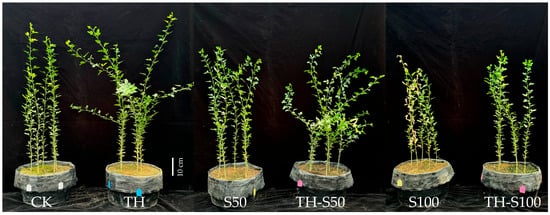
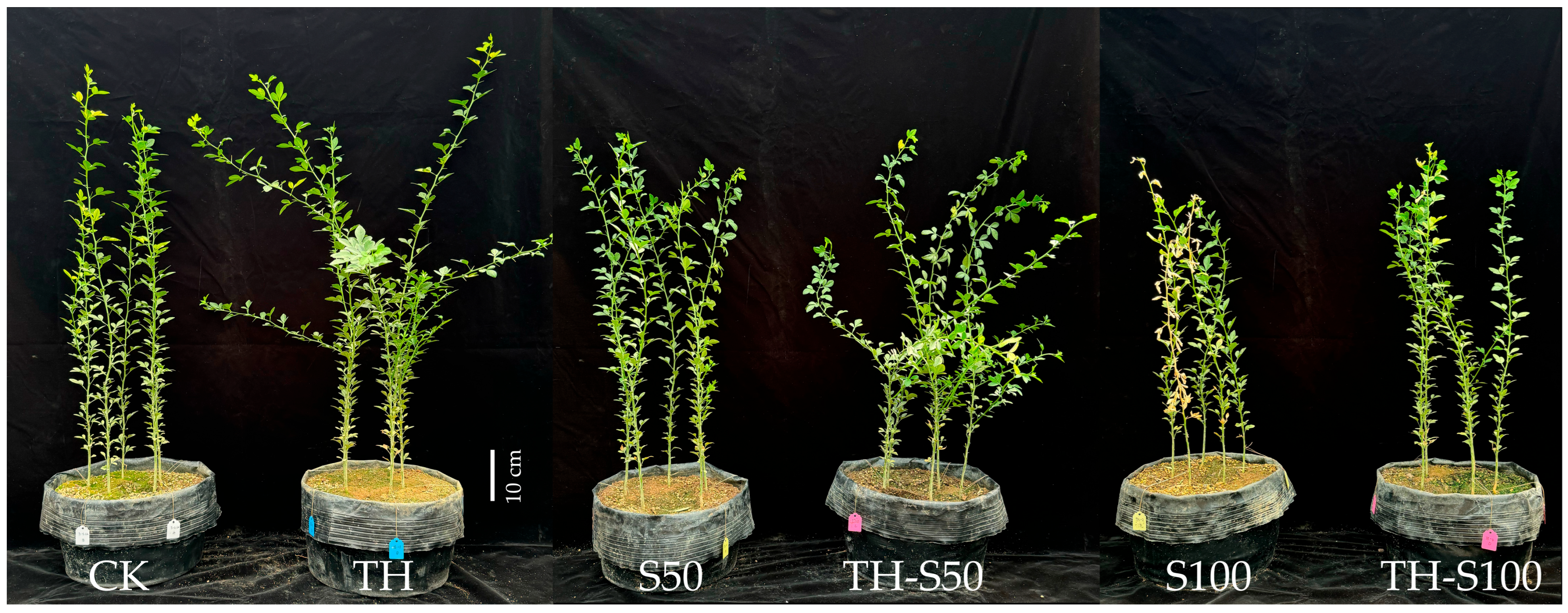
Under 0 mM NaCl stress, inoculation with T. harzianum can promote the growth of citrus seedlings. Compared with CK, the height, stem diameter, and leaf number of citrus plants inoculated with T. harzianum increased by 10.73%, 10.00%, and 28.37%, respectively. Salt stress significantly inhibits the growth of citrus plants. S100 citrus seedlings exhibited severe symptoms, including leaf chlorosis and necrosis, whereas T. harzianum inoculation significantly ameliorated the salt stress symptoms (Figure 1). Compared with CK, the plant height, stem diameter, and leaf number of S50 decreased by 5.57%, 12.76%, and 7.21%, respectively. Under S100 conditions, the plant height, stem diameter, and leaf number decreased by 21.18%, 22.19%, and 37.98%, respectively. Under salt stress, inoculation with T. harzianum was able to partially alleviate the inhibitory effects of salt stress on citrus growth. Compared with S50, the plant height, stem diameter, and leaf number of citrus plants of the TH-S50 treatment increased 9.14%, 11.00%, and 15.03%, respectively. Compared with S100, the plant height, stem diameter, and leaf number of the TH-S100 treatment increased 14.12%, 12.00%, and 52.71% (Table 1).
Figure 1.
The growth of six-month-old citrus seedlings inoculated with T. harzianum under salt stress. CK: control, TH: T. harzianum inoculation, S50: 50 mM salt stress, TH-S50: T. harzianum inoculation + 50 mM salt stress, S100: 100 mM salt stress, TH-S100: T. harzianum inoculation + 100 mM salt stress. The white line represents the 10 cm.
Table 1.
Growth parameters of citrus seedlings inoculated with T. harzianum under salt stress. CK: control, TH: T. harzianum inoculation, S50: 50 mM salt stress, TH-S50: T. harzianum inoculation + 50 mM salt stress, S100: 100 mM salt stress, TH-S100: T. harzianum inoculation + 100 mM salt stress. Data (mean ± SE, n = 3) followed by different letters indicate significant differences among treatments at the 0.05 level.
Salt stress significantly reduced the biomass of citrus plants. Compared with CK, the aboveground dry weight, underground dry weight, and seedling vigor index of the S50 treatment decreased by 12.21%, 15.00%, and 16.29%, respectively. Under the S100 treatment, the aboveground dry weight, underground dry weight, and seedling vigor index of plants decreased by 51.15%, 42.50%, and 41.75%, respectively. Inoculation with T. harzianum effectively mitigated the adverse effects of salt stress on citrus biomass. Compared with S50, the aboveground dry weight, underground dry weight, and seedling vigor index of plants in the TH-S50 treatment increased by 38.26%, 11.76%, and 11.60%, respectively. Compared with S100, the aboveground dry weight, underground dry weight, and strong seedling index of plants of the TH-S100 treatment increased by 42.19%, 30.43%, and 29.03%, respectively (Table 1).
3.2. Effects of T. harzianum Inoculation on the Root Architecture of Citrus Seedlings Under Salt Stress
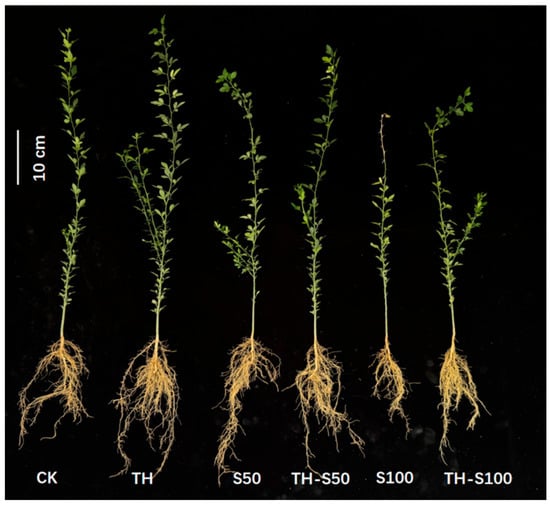
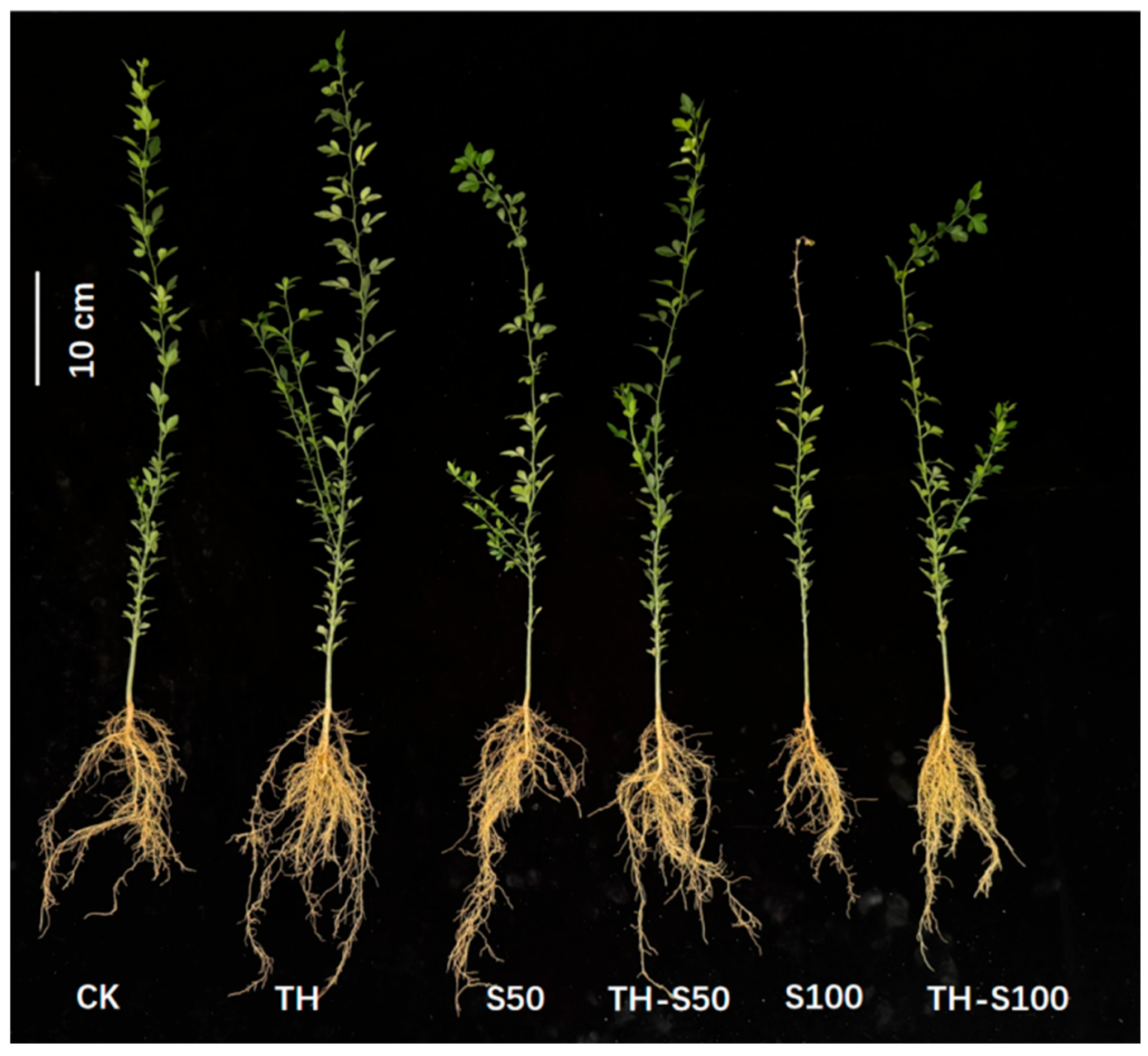
Salinity stress severely suppresses the growth and development of citrus roots (Figure 2). Compared with CK, the number of lateral roots and root volume was significantly decreased by 10.91% and 15.98%, respectively. The lateral roots, total root length, root projection area, root surface area, and root volume of S100 were significantly decreased by 30.07%, 38.75%, 46.05%, 42.56%, and 51.89%, respectively. T. harzianum inoculation was able to alleviate the inhibition of salt stress on the growth and development of citrus roots. Compared with S50 and S100, the T. harzianum inoculation significantly increased the number of lateral roots, total root length, root projection area, root surface area, and root volume of TH-S50 and TH-S100 were significantly increased (Table 2).
Figure 2.
Root morphology of six-month-old citrus seedlings inoculated with T. harzianum under salt stress. CK: control, TH: T. harzianum inoculation, S50: 50 mM salt stress, TH-S50: T. harzianum inoculation + 50 mM salt stress, S100: 100 mM salt stress, TH-S100: T. harzianum inoculation + 100 mM salt stress. The white line represents the 10 cm.
Table 2.
Root architecture parameter of citrus seedlings inoculated with T. harzianum under salt stress. CK: control, TH: T. harzianum inoculation, S50: 50 mM salt stress, TH-S50: T. harzianum inoculation + 50 mM salt stress, S100: 100 mM salt stress, TH-S100: T. harzianum inoculation + 100 mM salt stress. Data (mean ± SE, n = 3) followed by different letters indicate significant differences among treatments at the 0.05 level.
3.3. Effects of T. harzianum Inoculation on Photosynthesis and Chlorophyll of Citrus Seedlings Under Salt Stress
Salt stress significantly inhibits both photosynthetic activity and chlorophyll accumulation in citrus plants. Compared with CK, the net photosynthetic rate (Pn), stomatal conductance (Gs), intercellular CO2 concentration (Ci), transpiration rate (Ts), and SPAD of citrus seedlings under 50 and 100 mM NaCl treatment were significantly decreased. T. harzianum inoculation effectively mitigated the inhibitory effects of salt stress on photosynthesis and chlorophyll accumulation in citrus plants. Compared with S50, the Pn, Gs, Ci, Tr, and SPAD significantly increased by 17.71%, 46.21%, 12.23%, 5.31%, and 9.97%, respectively. Compared with S100, the Pn, Gs, Ci, and SPAD significantly increased by 27.99%, 49.63%, 12.79%, and 11.27%, respectively (Table 3).
Table 3.
Photosynthesis parameters and chlorophyll contents of citrus seedlings under salt stress. CK: control, TH: T. harzianum inoculation, S50: 50 mM salt stress, TH-S50: T. harzianum inoculation + 50 mM salt stress, S100: 100 mM salt stress, TH-S100: T. harzianum inoculation + 100 mM salt stress. Data (mean ± SE, n = 3) followed by different letters indicate significant differences among treatments at the 0.05 level.
3.4. Effects of T. harzianum Inoculation on Mineral Elements of Citrus Seedlings Under Salt Stress
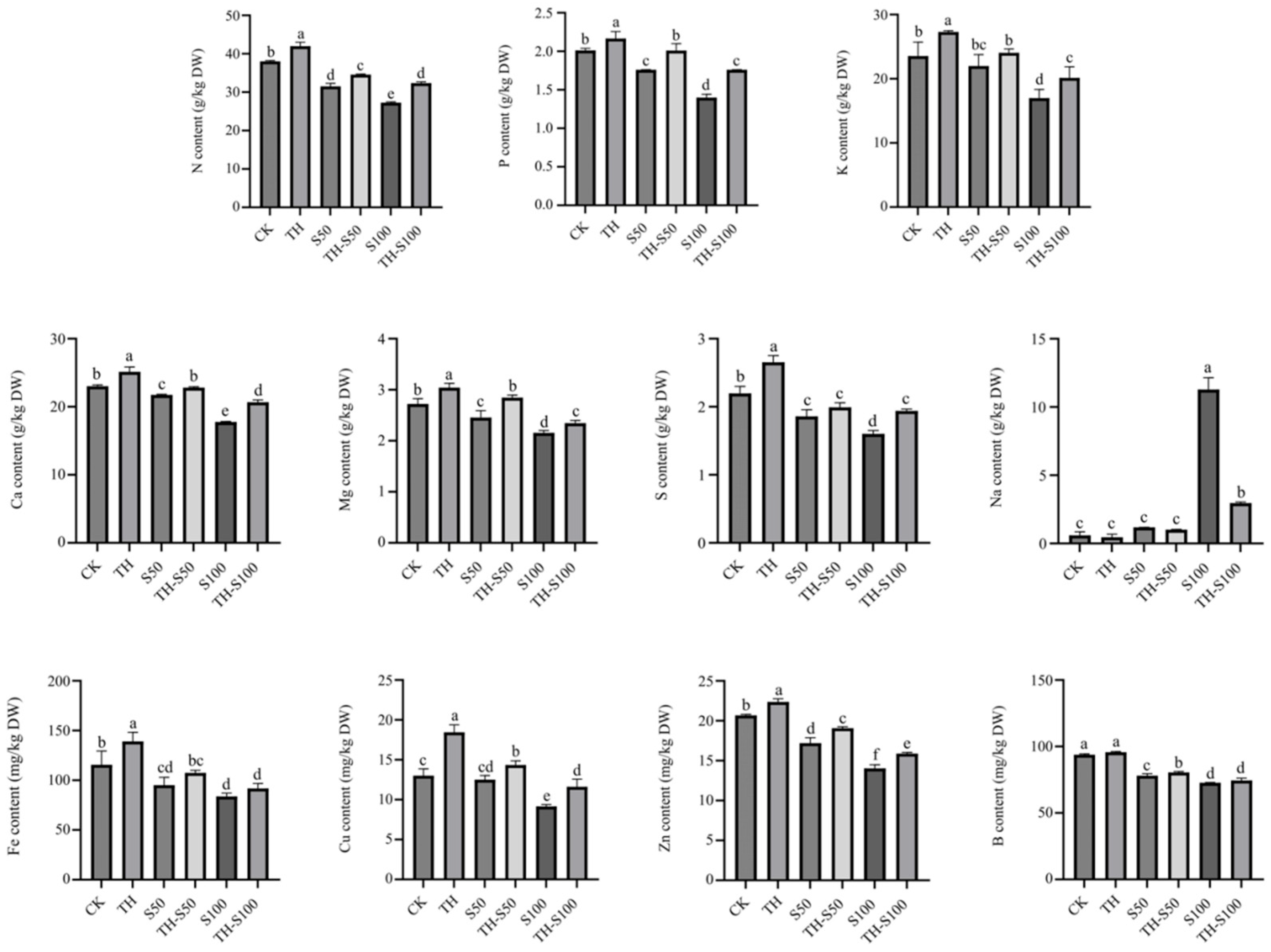
Salt stress significantly inhibits the absorption of mineral nutrients in citrus. As the intensity of salt stress increased, the absorption of nitrogen, phosphorus, potassium, calcium, magnesium, sulfur, iron, copper, zinc, and boron by citrus seedlings was markedly reduced. T. harzianum inoculation effectively promoted the absorption of mineral nutrients in citrus seedlings. Under 0 mM NaCl stress, the contents of nitrogen, phosphorus, potassium, calcium, magnesium, sulfur, iron, copper, and zinc in the leaves of citrus seedlings inoculated with T. harzianum were significantly higher than those of the control. Under salt stress, T. harzianum inoculation partially alleviated the inhibitory effects of salt stress on nutrient uptake in citrus seedlings. The contents of nitrogen, phosphorus, calcium, magnesium, copper, zinc, and boron in TH-S50 and TH-S100 were significantly higher than those in S50 and S100. Meanwhile, T. harzianum inoculation significantly reduced the sodium content in leaves under 100 mM salt stress (Figure 3).
Figure 3.
Mineral element content of citrus seedlings inoculated with T. harzianum under salt stress. CK: control, TH: T. harzianum inoculation, S50: 50 mM salt stress, TH-S50: T. harzianum inoculation + 50 mM salt stress, S100: 100 mM salt stress, TH-S100: T. harzianum inoculation + 100 mM salt stress. Data (mean ± SE, n = 3) followed by different letters on the bar indicate significant differences among treatments at the 0.05 level.
3.5. Effects of T. harzianum Inoculation on the Relative Expression of SOS Genes of Citrus Seedlings Under Salt Stress
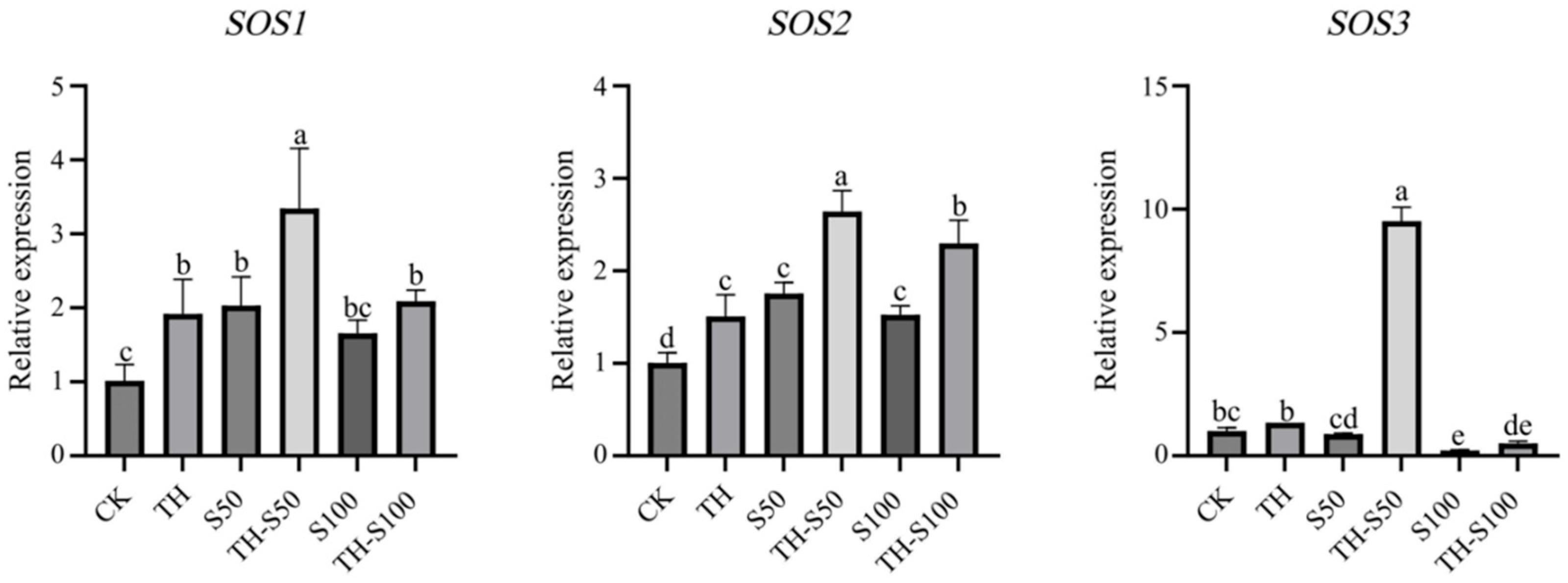
T. harzianum inoculation and salt stress significantly induce the expression of SOS1 and SOS2. Compared with CK, the expression of SOS1 and SOS2 in TH treatment was up-regulated 1.89 and 1.50 times, respectively. Under salt stress, T. harzianum inoculation significantly induced the expression of SOS2. Compared with the S50 and S100, the expression of SOS2 in citrus under TH-S50 and TH-S100 treatments was up-regulated, 1.50 and 1.51 times, respectively (Figure 4).
Figure 4.
The relative expression levels of SOS genes of citrus seedlings inoculated with TH under salt stress. CK: control, TH: T. harzianum inoculation, S50: 50 mM salt stress, TH-S50: T. harzianum inoculation + 50 mM salt stress, S100: 100 mM salt stress, TH-S100: T. harzianum inoculation + 100 mM salt stress. Data (mean ± SE, n = 3) followed by different letters on the bar indicate significant differences among treatments at the 0.05 level.
3.6. Effects of T. harzianum Inoculation on the Relative Expression of Aquaporin Genes of Citrus Seedlings Under Salt Stress
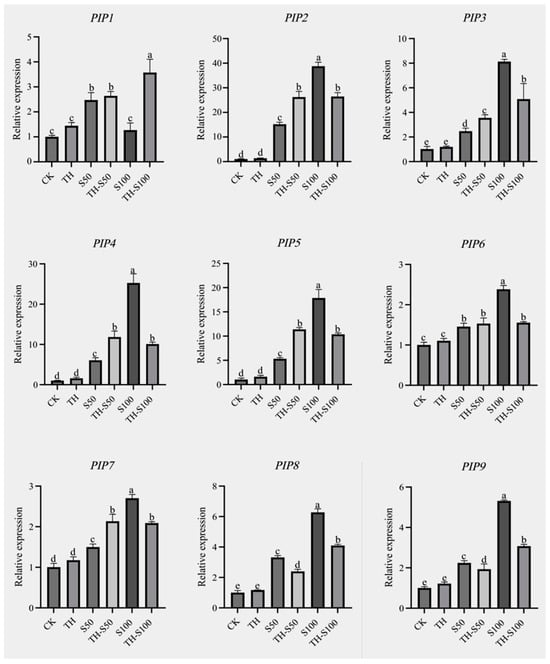
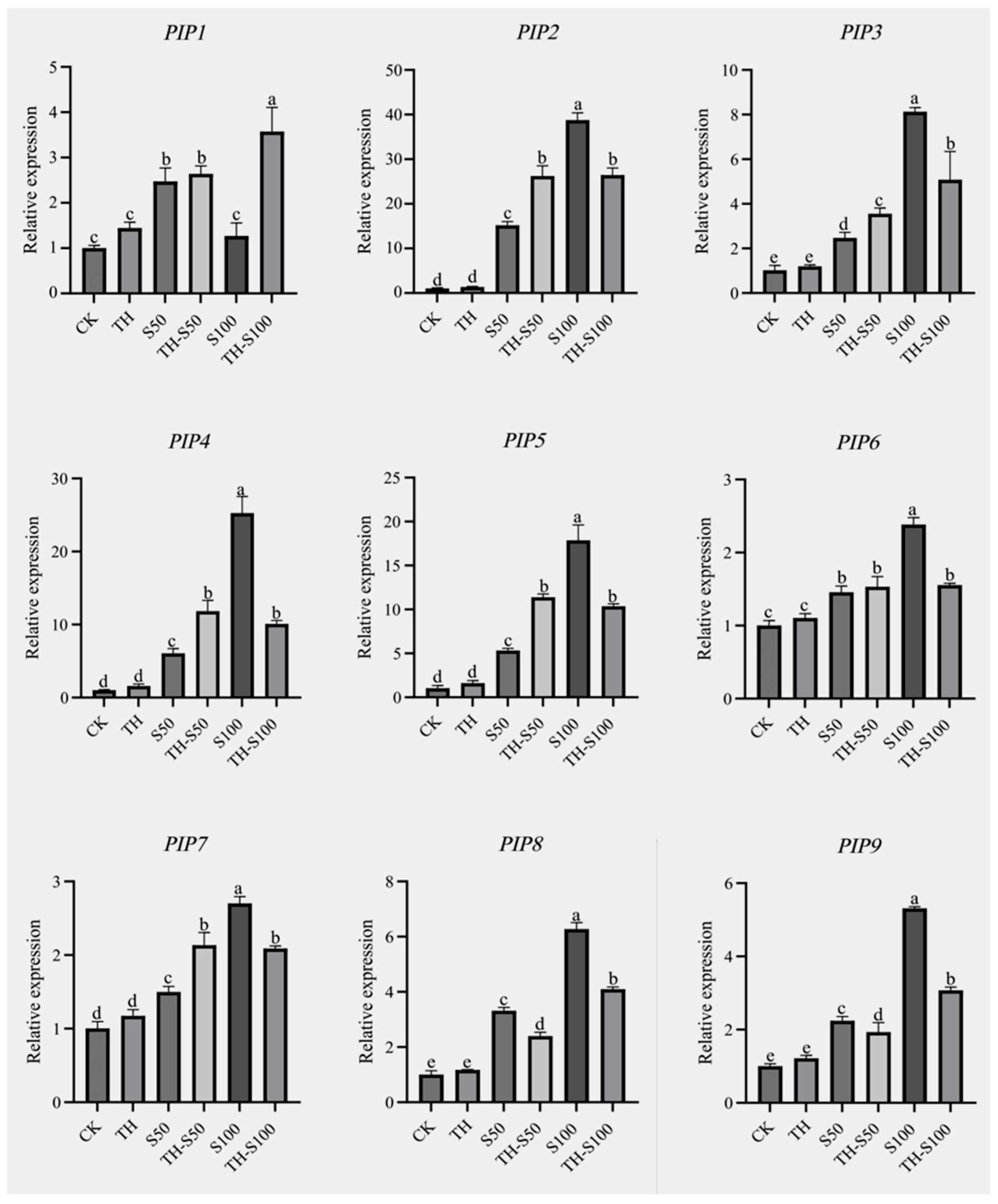
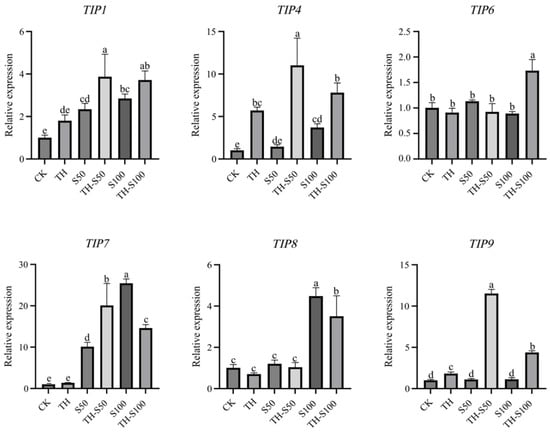
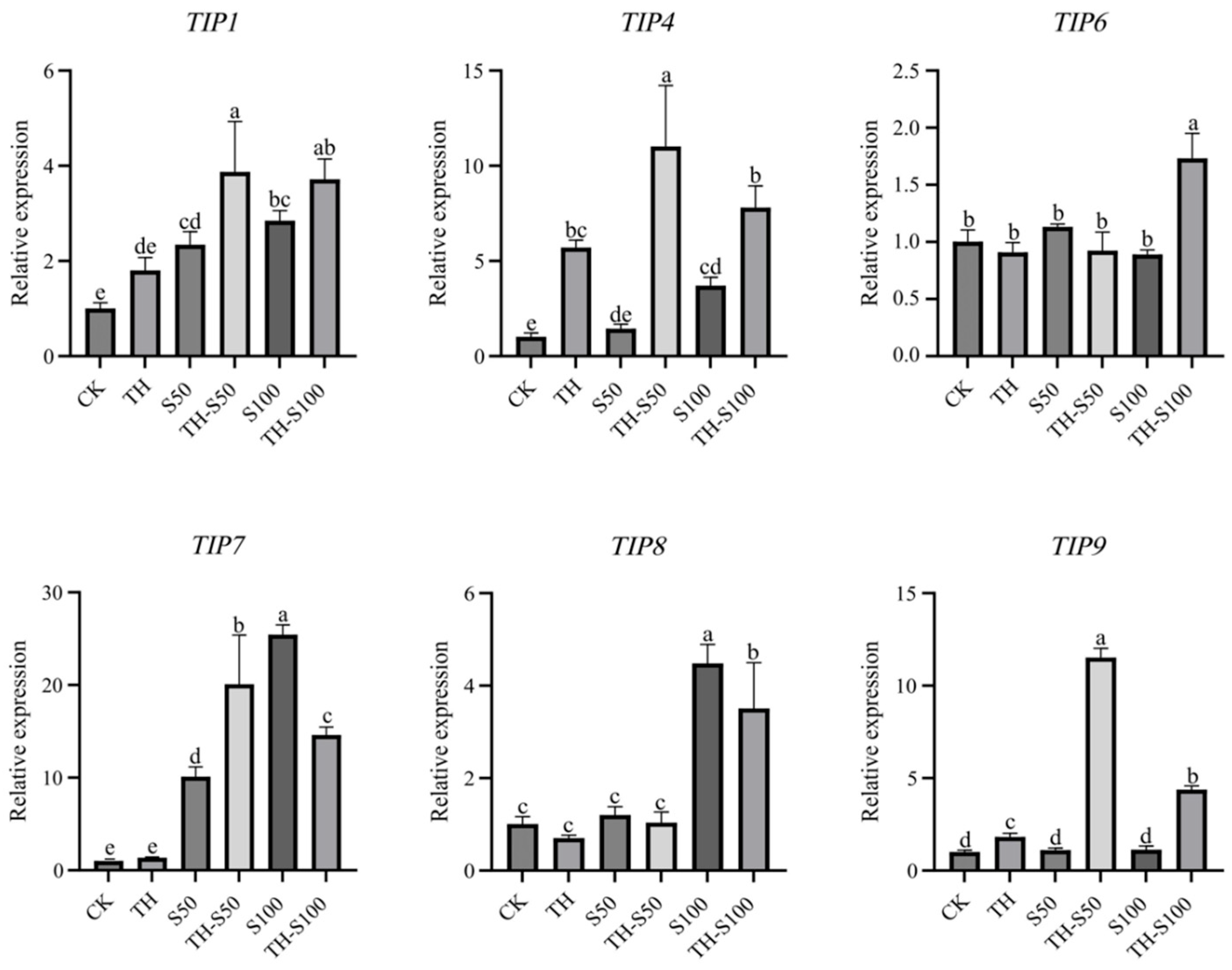
Under 0 mM NaCl stress, the inoculation of T. harzianum exhibits no significant effect on the expression of the PIP gene family in citrus plants. The expression of the PIP gene family was closely associated with salt stress. Under S50 and S100 treatments, except for PIP1, the expression of the other eight PIP genes was significantly up-regulated. Compared with S50, TH-S50 treatment significantly up-regulated PIP2, PIP3, PIP4, PIP5 and PIP7, and down-regulated PIP8 and PIP9. Compared with S100, TH-S100 treatment significantly up-regulated PIP1, and down-regulated PIP2, PIP3, PIP4, PIP5, PIP6, PIP7, PIP8, and PIP9 (Figure 5). The expression of TIP1, TIP4, and TIP9 genes was significantly up-regulated after inoculation with T. harzianum (Figure 6).
Figure 5.
The relative expression of PIP genes of citrus seedlings inoculated with T. harzianum under salt stress. CK: control, TH: T. harzianum inoculation, S50: 50 mM salt stress, TH-S50: T. harzianum inoculation + 50 mM salt stress, S100: 100 mM salt stress, TH-S100: T. harzianum inoculation + 100 mM salt stress. Data (mean ± SE, n = 3) followed by different letters on the bar indicate significant differences among treatments at the 0.05 level.
Figure 6.
The relative expression of TIP genes of citrus seedlings inoculated with T. harzianum under salt stress. CK: control, TH: T. harzianum inoculation, S50: 50 mM salt stress, TH-S50: T. harzianum inoculation + 50 mM salt stress, S100: 100 mM salt stress, TH-S100: T. harzianum inoculation + 100 mM salt stress. Data (mean ± SE, n = 3) followed by different letters on the bar indicate significant differences among treatments at the 0.05 level.
4. Discussion
Salt stress has become a major factor restricting global agricultural productivity and crop quality in recent years. Citrus exhibits a high sensitivity to salt stress, particularly when grafted onto P. trifoliata rootstock [1]. Prolonged rain-sheltered cultivation led to marked secondary salinization in citrus orchards, which significantly impaired fruit yield and quality [3]. In this study, salt stress treatment severely inhibited the growth of citrus seedlings. The biomass, photosynthetic efficiency, and nutrient absorption of citrus seedlings under salt stress treatment were significantly lower than those of the control. Plants evolved a series of salt-tolerance mechanisms during long-term evolution, among which microbial interactions played a key role in enhancing salt tolerance [22]. Trichoderma fungi were able to form stable and beneficial symbioses with plants, promoting root growth, enhancing nutrient uptake, and improving plant tolerance to abiotic stress [16]. For instance, Trichoderma biofertilizer increased the biomass and yield of Bupleurum chinense by 127.70% and 58.82%, respectively [23]. After fifteen days of inoculation with Trichoderma atroviride LZ42, the aerial and root dry weights of tomatoes increased by 37.03% and 31.25%, respectively [24]. In this study, the plant height, stem diameter, leaf number, dry matter weight, and root biomass of inoculated citrus seedlings were significantly higher than those of non-inoculated treatments. The growth-promoting effect might be attributed to the stimulation of plant hormone synthesis by T. harzianum. Studies on tomato plants demonstrated a 1.8-fold increase in IAA content following T. harzianum inoculation [25].
Salt stress-induced physiological drought, nutrient absorption disorders, and ion toxicity seriously hindered the photosynthesis of citrus [26]. In this study, the net photosynthetic rate, stomatal conductance, intercellular carbon dioxide concentration, and transpiration rate of citrus seedlings treated with 50 mM and 100 mM NaCl were significantly lower than those of the control. As a plant biostimulant, Trichoderma promotes plant growth and stimulates cell proliferation through the production of indole-3-acetic acid (IAA), thereby improving crop tolerance to both biotic and abiotic stresses [27,28]. Trichoderma inoculation effectively mitigated the inhibitory effects of salt stress on photosynthesis in wheat [29], wolfberry [30], and watermelon [18]. Meanwhile, the extensive mycelium of Trichoderma expanded the absorption area of the root system and enhanced water and nutrient absorption [31]. In this study, the contents of nitrogen, phosphorus, calcium, magnesium, copper, and zinc in T. harzianum inoculated citrus seedlings were significantly higher than those in non-inoculated treatments. Interestingly, our findings also revealed that under 100 mM salt stress conditions, citrus seedlings inoculated with T. harzianum exhibited a significantly reduced sodium accumulation in their leaves compared to non-inoculated seedlings. These results indicated that T. harzianum inoculation may regulate the mineral nutrition uptake and sodium efflux in citrus under salt stress.
The salt overly sensitive (SOS) signaling pathway, which mediates sodium extrusion, plays a critical role in regulating plant responses to salt stress [11,32]. This pathway, involving the SOS1, SOS2, and SOS3 proteins, functions as a key mechanism for sodium efflux and the maintenance of ionic homeostasis [33]. Substantial research demonstrated that microorganisms inoculation enhanced crop salt tolerance through modulation of the SOS signaling pathway. For instance, inoculation with arbuscular mycorrhizal fungi enhanced the salt tolerance of maize [34], citrus [3], and tomato [35,36] by up-regulating the SOS genes. In this study, the expression levels of SOS1 and SOS2 in citrus seedlings inoculated with T. harzianum under salt-stressed conditions were significantly up-regulated. Under 50 mM NaCl stress, the expression level of SOS3 in citrus seedlings inoculated with T. harzianum was significantly up-regulated. Studies in Arabidopsis also found that inoculation with T. harzianum enhanced the salt tolerance of Arabidopsis Salt Overly Sensitive 1 Mutant [37]. This finding suggests that T. harzianum inoculation could improve salt tolerance in citrus through the regulation of SOS gene expression.
Aquaporins are channel proteins widely distributed across biological membranes, responsible for the efficient and selective transport of water molecules, glycerol, carbon dioxide, ammonia, and metalloids [12]. Aquaporins play a pivotal role in plant water homeostasis, osmotic regulation, and stress response [12]. Overexpression of the aquaporin protein significantly improved salt stress tolerance of transgenic soybean [38]. Overexpression of TdPIP2;1 enhanced salt tolerance in transgenic durum wheat [39]. In addition, the application of beneficial microorganisms markedly enhanced plant salt tolerance by modulating aquaporin expression [3,35,40]. In this study, the transcriptional expression of eight PIP and three TIP genes in citrus seedlings under salt stress was induced by the inoculation of T. harzianum. These findings demonstrate that under salt stress, inoculation with T. harzianum upregulated the expression of aquaporin genes in citrus, leading to enhanced membrane water permeability, improved water transport, and consequently increased salt tolerance in citrus seedlings.
5. Conclusions
In this study, T. harzianum inoculation increased citrus leaves’ chlorophyll content and photosynthetic efficiency, nutrient absorption, and promoted citrus seedling growth. T. harzianum inoculation enhanced citrus salt tolerance via up-regulating SOS2, PIP2, PIP3, PIP4, PIP5, PIP7, TIP1, TIP4, and TIP9 expression. T. harzianum shows potential as a microbial agent to enhance citrus growth and improve salt stress tolerance. However, the molecular mechanism by which T. harzianum promotes the growth of citrus and regulates the SOS signaling pathway in citrus still requires further research. Nevertheless, the molecular mechanisms underlying the promotion of citrus growth by T. harzianum and its regulation of the SOS signaling pathway in citrus remain to be fully elucidated.
Supplementary Materials
The following supporting information can be downloaded at: https://www.mdpi.com/article/10.3390/horticulturae12020233/s1, Table S1: Specific primer sequences of genes used for qRT-PCR.
Author Contributions
Conceptualization, L.J.; methodology, L.J. and M.Z., data curation and statistical analysis, M.Z.; investigation, M.Z.; writing—original draft preparation, M.Z. and L.J.; writing—review and editing, M.Z., P.W., X.L. and L.J.; supervision, L.J. All authors have read and agreed to the published version of the manuscript.
Funding
This research was funded by the National Key Research and Development Program (2024YFD2300804) and Taizhou Science and Technology Project (24nya15).
Institutional Review Board Statement
Not applicable.
Informed Consent Statement
Not applicable.
Data Availability Statement
The original contributions presented in this study are included in the article/Supplementary Materials. Further inquiries can be directed to the corresponding author.
Conflicts of Interest
The authors declare no conflicts of interest.
References
- Wang, P.; Liu, F.; Sun, Y.; Liu, X.; Jin, L. Physiological and Molecular Insights into Citrus Rootstock–Scion Interactions: Compatibility, Signaling, and Impact on Growth, Fruit Quality and Stress Responses. Horticulturae 2025, 11, 1110. [Google Scholar] [CrossRef] [Scilit]
- Wei, T.; Wang, Y.; Liu, J. Comparative transcriptome analysis reveals synergistic and disparate defense pathways in the leaves and roots of trifoliate orange (Poncirus trifoliata) autotetraploids with enhanced salt tolerance. Hortic. Res. 2020, 7, 88. [Google Scholar] [CrossRef] [Scilit]
- Lu, Q.; Jin, L.; Wang, P.; Liu, F.; Huang, B.; Wen, M.; Wu, S. Effects of Interaction of Protein Hydrolysate and Arbuscular Mycorrhizal Fungi Effects on Citrus Growth and Expressions of Stress-Responsive Genes (Aquaporins and SOSs) under Salt Stress. J. Fungi 2023, 9, 983. [Google Scholar] [CrossRef] [Scilit]
- Moreno-Lora, A.; Calero-Velázquez, R.; Arenas-Arenas, F.J. Physiological Responses of New Citrus Rootstocks to Salinity Stress Induced by Increasing Sodium and Chloride Concentrations in the Irrigation Solution. J. Soil Sci. Plant Nutr. 2025, 25, 7868–7877. [Google Scholar] [CrossRef] [Scilit]
- Marathe, R.A.; Murkute, A.A.; Kolwadkar, J.; Deshpande, C.P. Salinity tolerance potential of Citrus (Citrus spp.) rootstock genotypes. Indian J. Agric. Sci. 2022, 92, 1311–1315. [Google Scholar] [CrossRef] [Scilit]
- Joshi, S.; Nath, J.; Singh, A.K.; Pareek, A.; Joshi, R. Ion transporters and their regulatory signal transduction mechanisms for salinity tolerance in plants. Physiol. Plant. 2022, 174, e13702. [Google Scholar] [CrossRef] [Scilit] [PubMed]
- Colin, L.; Ruhnow, F.; Zhu, J.; Zhao, C.; Zhao, Y.; Persson, S. The cell biology of primary cell walls during salt stress. Plant Cell 2023, 35, 201–217. [Google Scholar] [CrossRef] [Scilit]
- Yang, Y.; Guo, Y. Unraveling salt stress signaling in plants. J. Integr. Plant Biol. 2018, 60, 796–804. [Google Scholar] [CrossRef] [Scilit]
- van Zelm, E.; Zhang, Y.; Testerink, C. Salt tolerance mechanisms of plants. Annu. Rev. Plant Biol. 2020, 71, 403–433. [Google Scholar] [CrossRef] [Scilit]
- Ma, L.; Liu, X.; Lv, W.; Yang, Y. Molecular Mechanisms of Plant Responses to Salt Stress. Front. Plant Sci. 2022, 13, 934877. [Google Scholar] [CrossRef] [Scilit]
- Ali, A.; Petrov, V.; Yun, D.; Gechev, T. Revisiting plant salt tolerance: Novel components of the SOS pathway. Trends Plant Sci. 2023, 28, 1060–1069. [Google Scholar] [CrossRef] [Scilit]
- Maurel, C.; Boursiac, Y.; Luu, D.; Santoni, V.; Shahzad, Z.; Verdoucq, L. Aquaporins in plants. Physiol. Rev. 2015, 95, 1321–1358. [Google Scholar] [CrossRef] [Scilit]
- Sreedharan, S.; Shekhawat, U.K.S.; Ganapathi, T.R. Constitutive and stress-inducible overexpression of a native aquaporin gene (MusaPIP2;6) in transgenic banana plants signals its pivotal role in salt tolerance. Plant Mol. Biol. 2015, 88, 41–52. [Google Scholar] [CrossRef] [Scilit] [PubMed]
- Koza, N.A.; Adedayo, A.A.; Babalola, O.O.; Kappo, A.P. Microorganisms in Plant Growth and Development: Roles in Abiotic Stress Tolerance and Secondary Metabolites Secretion. Microorganisms 2022, 10, 1528. [Google Scholar] [CrossRef] [Scilit]
- Natsiopoulos, D.; Topalidou, E.; Mantzoukas, S.; Eliopoulos, P.A. Endophytic Trichoderma: Potential and Prospects for Plant Health Management. Pathogens 2024, 13, 548. [Google Scholar] [CrossRef] [Scilit] [PubMed]
- Harman, G.E.; Howell, C.R.; Viterbo, A.; Chet, I.; Lorito, M. Trichoderma species-opportunistic, avirulent plant symbionts. Nat. Rev. Microbiol. 2004, 2, 43–56. [Google Scholar] [CrossRef] [Scilit]
- Geng, Y.; Chen, S.; Lv, P.; Li, Y.; Li, J.; Jiang, F.; Wu, Z.; Shen, Q.; Zhou, R. Positive Role of Trichoderma harzianum in Increasing Plant Tolerance to Abiotic Stresses: A Review. Antioxidants 2025, 14, 807. [Google Scholar] [CrossRef] [Scilit] [PubMed]
- Ghani, M.I.; Yi, B.; Rehmani, M.S.; Wei, X.; Siddiqui, J.A.; Fan, R.; Liu, Y.; El-Sheikh, M.A.; Chen, X.; Ahmad, P. Potential of melatonin and Trichoderma harzianum inoculation in ameliorating salt toxicity in watermelon: Insights into antioxidant system, leaf ultrastructure, and gene regulation. Plant Physiol. Biochem. 2024, 211, 108639. [Google Scholar] [CrossRef] [Scilit]
- Zhang, F.; Wang, Y.; Liu, C.; Chen, F.; Ge, H.; Tian, F.; Yang, T.; Ma, K.; Zhang, Y. Trichoderma harzianum mitigates salt stress in cucumber via multiple responses. Ecotoxicol. Environ. Saf. 2019, 170, 436–445. [Google Scholar] [CrossRef] [Scilit]
- Jin, L.; Liu, Y.; Du, W.; Fu, L.; Hussain, S.B.; Peng, S. Physiological and transcriptional analysis reveals pathways involved in iron deficiency chlorosis in fragrant citrus. Tree Genet. Genomes 2017, 13, 51. [Google Scholar] [CrossRef] [Scilit]
- Livak, K.J.; Schmittgen, T.D. Analysis of relative gene expression data using real-time quantitative PCR and the 2−ΔΔCT Method. Methods 2001, 25, 402–408. [Google Scholar] [CrossRef] [Scilit]
- Zhang, M.; Li, X.; Wang, X.; Feng, J.; Zhu, S. Potassium fulvic acid alleviates salt stress of citrus by regulating rhizosphere microbial community, osmotic substances and enzyme activities. Front. Plant Sci. 2023, 14, 1161469. [Google Scholar] [CrossRef] [Scilit]
- Liu, L.; Xu, Y.; Cao, H.; Fan, Y.; Du, K.; Bu, X.; Gao, D. Effects of Trichoderma harzianum biofertilizer on growth, yield, and quality of Bupleurum chinense. Plant Direct 2022, 6, e461. [Google Scholar] [CrossRef] [Scilit]
- Rao, Y.; Zeng, L.; Jiang, H.; Mei, L.; Wang, Y. Trichoderma atroviride LZ42 releases volatile organic compounds promoting plant growth and suppressing Fusarium wilt disease in tomato seedlings. BMC Microbiol. 2022, 22, 88. [Google Scholar] [CrossRef] [Scilit]
- Mona, S.A.; Hashem, A.; Abd Allah, E.F.; Alqarawi, A.A.; Soliman, D.W.K.; Wirth, S.; Egamberdieva, D. Increased resistance of drought by Trichoderma harzianum fungal treatment correlates with increased secondary metabolites and proline content. J. Integr. Agric. 2017, 16, 1751–1757. [Google Scholar] [CrossRef] [Scilit]
- Vives-Peris, V.; López-Climent, M.F.; Moliner-Sabater, M.; Gómez-Cadenas, A.; Pérez-Clemente, R.M. Morphological, physiological, and molecular scion traits are determinant for salt-stress tolerance of grafted citrus plants. Front. Plant Sci. 2023, 14, 1145625. [Google Scholar] [CrossRef] [Scilit] [PubMed]
- Chen, X.; Lu, Y.; Liu, X.; Gu, Y.; Li, F. Trichoderma: Dual Roles in Biocontrol and Plant Growth Promotion. Microorganisms 2025, 13, 1840. [Google Scholar] [CrossRef] [Scilit]
- Druzhinina, I.S.; Seidl-Seiboth, V.; Herrera-Estrella, A.; Horwitz, B.A.; Kenerley, C.M.; Monte, E.; Mukherjee, P.K.; Zeilinger, S.; Grigoriev, I.V.; Kubicek, C.P. Trichoderma: The genomics of opportunistic success. Nat. Rev. Microbiol. 2011, 9, 749–759, Erratum in Nat. Rev. Microbiol. 2011, 9, 896. https://doi.org/10.1038/nrmicro2689. [Google Scholar] [CrossRef] [Scilit] [PubMed]
- Oljira, A.M.; Hussain, T.; Waghmode, T.R.; Zhao, H.; Sun, H.; Liu, X.; Wang, X.; Liu, B. Trichoderma Enhances Net Photosynthesis, Water Use Efficiency, and Growth of Wheat (Triticum aestivum L.) under Salt Stress. Microorganisms 2020, 8, 1565. [Google Scholar] [CrossRef] [Scilit]
- Yan, K.; Chi, G.; Zhu, M.; Sun, H.; Yu, S.; Li, Y.; Wang, Z.; Hu, J.; Chen, X. Trichoderma asperellum benefits nitrogen acquisition and K+/Na+ homeostasis in wolfberry under salt stress via activation of root plasma membrane H+-ATPase. Tree Physiol. 2025, 45, tpaf139. [Google Scholar] [CrossRef] [Scilit] [PubMed]
- Woo, S.L.; Hermosa, R.; Lorito, M.; Monte, E. Trichoderma: A multipurpose, plant-beneficial microorganism for eco-sustainable agriculture. Nat. Rev. Microbiol. 2023, 21, 312–326. [Google Scholar] [CrossRef] [Scilit]
- Cha, J.Y.; Kim, J.; Jeong, S.Y.; Shin, G.I.; Ji, M.G.; Hwang, J.W.; Khaleda, L.; Liao, X.; Ahn, G.; Park, H.J.; et al. The Na+/H+ antiporter SALT OVERLY SENSITIVE 1 regulates salt compensation of circadian rhythms by stabilizing GIGANTEA in Arabidopsis. Proc. Natl. Acad. Sci. USA 2022, 119, e2087692177. [Google Scholar] [CrossRef] [Scilit]
- Zhu, J. Salt and drought stress signal transduction in plants. Annu. Rev. Plant Biol. 2002, 53, 247–273. [Google Scholar] [CrossRef] [Scilit]
- Selvakumar, G.; Shagol, C.C.; Kim, K.; Han, S.; Sa, T. Spore associated bacteria regulates maize root K+/Na+ ion homeostasis to promote salinity tolerance during arbuscular mycorrhizal symbiosis. Bmc Plant Biol. 2018, 18, 109. [Google Scholar] [CrossRef] [Scilit]
- Liang, S.; Li, Q.; Liu, M.; Hashem, A.; Al-Arjani, A.F.; Alenazi, M.M.; Abd Allah, E.F.; Muthuramalingam, P.; Wu, Q. Mycorrhizal effects on growth and expressions of stress-responsive genes (aquaporins and SOSs) of tomato under salt stress. J. Fungi 2022, 8, 1305. [Google Scholar] [CrossRef] [Scilit] [PubMed]
- Marqués-Gálvez, J.E.; Giovannini, L.; Del Boccio, P.; Sillo, F.; Zampieri, E.; Pagliarani, C.; Chitarra, W.; De Rose, S.; Vita, F.; Balestrini, R. Arbuscular Mycorrhiza Induce the Regulation of Ca2+, ROS, and SOS Pathways Under Salt Stress in Tomato Roots. Physiol. Plant. 2025, 177, e70610. [Google Scholar] [CrossRef] [Scilit] [PubMed]
- Gandhi, A.; Reichelt, M.; Goyal, D.; Vadassery, J.; Oelmüller, R. Trichoderma harzianum Protects the Arabidopsis Salt Overly Sensitive 1 Mutant Against Salt Stress. J. Plant Growth Regul. 2025, 44, 7019–7039. [Google Scholar] [CrossRef] [Scilit]
- Li, F.; Ni, H.; Yan, W.; Xie, Y.; Liu, X.; Tan, X.; Zhang, L.; Zhang, S. Overexpression of an aquaporin protein from Aspergillus glaucus confers salt tolerance in transgenic soybean. Transgenic Res. 2021, 30, 727–737. [Google Scholar] [CrossRef] [Scilit]
- Ayadi, M.; Brini, F.; Masmoudi, K. Overexpression of a wheat aquaporin gene, TdPIP2;1, enhances salt and drought tolerance in transgenic durum wheat cv. Maali. Int. J. Mol. Sci. 2019, 20, 2389. [Google Scholar] [CrossRef] [Scilit]
- Aroca, R.; Porcel, R.; Ruiz-Lozano, J.M. How does arbuscular mycorrhizal symbiosis regulate root hydraulic properties and plasma membrane aquaporins in Phaseolus vulgaris under drought, cold or salinity stresses? New Phytol. 2007, 173, 808–816. [Google Scholar] [CrossRef] [Scilit] [PubMed]

Disclaimer/Publisher’s Note: The statements, opinions and data contained in all publications are solely those of the individual author(s) and contributor(s) and not of MDPI and/or the editor(s). MDPI and/or the editor(s) disclaim responsibility for any injury to people or property resulting from any ideas, methods, instructions or products referred to in the content. |
© 2026 by the authors. Licensee MDPI, Basel, Switzerland. This article is an open access article distributed under the terms and conditions of the Creative Commons Attribution (CC BY) license.