


Abstract
WRKY transcription factors serve as key regulators in plants, playing important roles in growth and development, secondary metabolism, and stress responses. Here, a comprehensive genome-wide analysis identified 58 WRKY genes (LcWRKYs) in litchi for the first time. All LcWRKY proteins were predicted to be hydrophilic and localized in the nucleus. Phylogenetic analysis classified them into three major groups (Groups I, II, and III), with a pronounced expansion of Group II, which contained 42 members divided into five subgroups. Members within the same phylogenetic clade exhibited highly similar exon–intron structures and conserved motif compositions, indicating strong evolutionary conservation. LcWRKYs were unevenly distributed across the litchi chromosomes, with chromosome 3 showing the highest gene density. Collinearity analysis suggested that both segmental and tandem duplications contributed to the evolutionary expansion of this family. Notably, promoter cis-acting element analysis revealed that LcWRKYs are enriched with light-responsive, hormone-responsive (e.g., ABA, MeJA, SA), and stress-responsive elements, suggesting their potential involvement in integrating light signaling, hormonal pathways, and environmental stress responses. Integrative expression analysis further revealed that multiple LcWRKYs were significantly up-regulated during the middle and late stages of fruit development in cultivars such as ‘Feizixiao’ and ‘Nuomici’. Consistent with these patterns, qRT-PCR validation demonstrated a pronounced induction of four representative genes (LITCHI004628.m1, LITCHI018082.m1, LITCHI021964.m1, and LITCHI030932.m1) at 40 days post-anthesis, followed by gene-specific expression trajectories at later stages, indicating their potential involvement in regulating fruit development, particularly during the mid-developmental stage. Altogether, the results of this study provide insight into the expansion and potential functional diversification of WRKY transcription factors in litchi and identify candidate regulators associated with fruit development, offering valuable targets for future functional studies and genetic improvement.
1. Introduction
Transcription factors (TFs) are central regulators of gene expression in plants. By specifically recognizing and binding to cis-acting elements in the promoter regions of target genes, TFs coordinate a wide range of biological processes, including plant growth and development, metabolic regulation, and responses to environmental cues [1]. Among the numerous TF families identified in plants, the WRKY family is one of the most widespread and extensive. Its defining feature is the highly conserved WRKY domain, which is approximately 60 amino acids in length and consists of a conserved heptapeptide sequence WRKYGQK at the N-terminus and a zinc-finger motif at the C-terminus [2]. Accumulating evidence demonstrates that WRKY transcription factors participate extensively in nearly all stages of plant growth and development, such as in biomass accumulation, secondary metabolite biosynthesis, floral organ formation, and fruit ripening. In addition, WRKY proteins play critical regulatory roles in plant responses to both biotic stresses, including fungal and bacterial infections, and abiotic stresses, such as drought, low temperature, and heat [3]. Collectively, these findings indicate that WRKY transcription factors act as important regulatory hubs, integrating endogenous developmental programs with external stress response pathways in plants [4,5,6].
The rapid advancement of high-throughput sequencing technologies and the continuous reduction in sequencing costs have led to the successful assembly of complete genome sequences for an increasing number of plant species. This progress provides a solid data foundation for the genome-wide identification and functional analysis of WRKY gene families [7]. Since WRKY genes were first identified in sweet potato (Ipomoea batatas) [8], researchers have subsequently conducted systematic identification of the WRKY family in model or important crop species such as Arabidopsis thaliana, rice, and cotton. These studies have revealed patterns of its expansion through gene duplication during evolution and the establishment of functional specificity across different species [9,10,11,12,13,14,15,16,17]. Notably, recent research in fruit biology has increasingly highlighted the roles of WRKY transcription factors. Studies on various fruits, including strawberry, jujube, banana, and pepper, have shown that the expression of specific WRKY genes exhibits stage-specific patterns during development or can be induced by hormone signals (e.g., ABA, ethylene) and stress cues. These WRKY genes further regulate fruit ripening, softening, color formation, and quality-related metabolic pathways, suggesting that the WRKY family occupies a significant position within the regulatory networks governing fruit development and ripening [18,19,20,21,22,23].
Litchi (Litchi chinensis) is an evergreen fruit tree belonging to the Sapindaceae family and Litchi genus [24]. It is primarily distributed in southern China, including Hainan, Guangdong, Guangxi, and Fujian Provinces, and is highly valued for its unique flavor, rich nutritional content, and significant economic importance [25]. Studies have shown that transcription factors play crucial roles in regulating fruit development. Although the functions of certain transcription factor families in litchi, such as NAC and bZIP, have been partially reported, and analysis by Zhang et al. revealed that LcWRKY members exhibit significant responses to downy mildew stress [6,26,27], systematic research on the WRKY transcription factor family during litchi fruit development remains largely unexplored. Therefore, systematically elucidating the expression patterns and functional mechanisms of WRKY genes across different developmental stages of litchi fruit holds significant importance for refining the transcriptional regulatory network underlying fruit development and identifying key candidate genes for quality improvement.
Therefore, this study aims to address this gap by conducting, for the first time in litchi, a genome-wide systematic identification and expression analysis of the WRKY transcription factor family, with a focus on its potential regulatory roles during fruit development. Specifically, we intend to comprehensively identify members of the litchi WRKY family using bioinformatic approaches. Subsequently, we will analyze their physicochemical properties, phylogenetic relationships, gene structures, conserved motifs, chromosomal distributions, gene duplication events, and promoter cis-acting elements to reveal the evolutionary characteristics and potential functional clues of this family. Furthermore, by integrating transcriptomic data from litchi fruits at different developmental stages, we will analyze the expression patterns of LcWRKY genes and validate key candidate genes using qRT-PCR. This aims to elucidate the spatiotemporal expression dynamics of the WRKY family during litchi fruit development and to identify key candidate genes potentially involved in regulating this process. The anticipated results of this study are expected to deepen our understanding of the evolution and functional diversity of plant WRKY families, provide new insights into the transcriptional regulatory network underlying litchi fruit development, and offer valuable gene resources and a theoretical foundation for molecular-assisted breeding and genetic improvement in litchi.
2. Materials and Methods
2.1. Genome-Wide Identification and Physicochemical Analysis of the Litchi WRKY Gene Family
To identify WRKY genes in litchi, we downloaded the ‘Feizixiao’ genome data, GFF3 annotation file, and protein sequences from the NCBI database (Project ID: PRJNA747875) [28]. We performed BLASTp 2.6.0 (protein–protein basic local alignment search tool) analysis using the protein sequences of Arabidopsis thaliana WRKY (AtWRKY) genes obtained from the TAIR database (https://www.arabidopsis.org, accessed on 19 November 2025) as queries, with an e-value threshold of 1.0 × 10⁻¹⁰. The hidden Markov model (HMM) for the WRKY conserved domain (PF03106) was downloaded from InterPro (https://www.ebi.ac.uk/interpro/, accessed on 20 November 2025). We then used the Simple HMM Search plugin in TBtools to screen for litchi WRKY genes and the Fasta Extract plugin (recommended) to extract the corresponding protein sequences. The WRKY protein sequences were further validated using the Conserved Domain Database (CDD) from NCBI (https://www.ncbi.nlm.nih.gov/Structure/bwrpsb/bwrpsb.cgi, accessed on 19 November 2025) with the search parameters included an E-value threshold of 0.01 and minimum domain coverage of 50% to ensure high-confidence WRKY domain identification, ultimately identifying 58 WRKY genes in litchi. The physicochemical properties of the identified litchi WRKY transcription factors—including amino acid number, relative molecular weight, isoelectric point (pI), hydrophobicity/hydrophilicity, aliphatic index, and instability index—were analyzed in detail using the ProtParam tool on the ExPASy online platform [29]. Furthermore, subcellular localization was predicted based on the amino acid sequences of the litchi WRKY transcription factors using the Plant-mPLoc module within the Cell-PLoc 2.0 software [30].
2.2. Phylogenetic Analysis and Protein Structure Prediction of the Litchi WRKY Gene Family
A phylogenetic tree was constructed using the Maximum Likelihood (ML) method in MEGA 12.0 software [31] with 1000 bootstrap replicates. The Jones–Taylor–Thornton (JTT) model was selected, and other parameters were set to default options and classified the litchi WRKY genes based on the grouping scheme of the Arabidopsis WRKY gene family [32]. Subsequently, the generated tree was exported and visualized using the online tool ITOL (https://itol.embl.de/, accessed on 21 November 2025) and classified the litchi WRKY genes based on the grouping scheme of the Arabidopsis WRKY gene family. The secondary structures of the litchi WRKY proteins were predicted using the SOPMA online server (https://npsa-prabi.ibcp.fr/cgi-bin/npsa_automat.pl?page=npsa%20_sopma.html, accessed on 23 November 2025). The results were organized, and a stacked bar chart was generated using Microsoft Excel 2019. Furthermore, the tertiary structures of the litchi WRKY transcription factors were modeled using the SWISS-MODEL tool (https://beta.swissmodel.expasy.org/, accessed on 23 November 2025) available on the ExPASy online platform [29].
2.3. Chromosomal Localization, Conserved Motif/Domain, and Gene Structure Analysis of the Litchi WRKY Gene Family
Based on the annotation information of litchi WRKY genes and the litchi GFF file, TBtools (v2.0) [33] software was used to map the chromosomal localization of litchi WRKY genes. The conserved motifs of LcWRKY proteins were identified using the online tool MEME (https://meme-suite.org/meme/tools/meme, version 5.5.9, accessed on 26 November 2025) with E-value threshold 0.05, and zoops (zero or one occurrence per sequence) distribution. The relevant parameters were set as follows in the analysis: number of repetitions = any; maximum number of motifs = 10; optimum width of motifs = 6 to 50. The protein sequences of the LcWRKY gene family were submitted to the Batch CD-Search webpage https://www.ncbi.nlm.nih.gov/Structure/bwrpsb/bwrpsb.cgi, accessed on 26 November 2025) for online analysis to obtain domain information. The Gene Structure View (Advanced) function in TBtools was then employed to generate a comprehensive visualization. This involved importing the phylogenetic tree file in .nwk format, the MEME results in .xml format, the genome annotation file in GFF format, and the Batch CD-Search results file.
2.4. Analysis of Intraspecific Collinearity and Interspecific Gene Duplication in the Litchi WRKY Gene Family
The chromosomal location map of litchi WRKY genes was plotted using TBtools [33]. To assess the evolutionary selection pressure acting on the LcWRKY gene family, the ratio of nonsynonymous to synonymous substitution rates (Ka/Ks) between gene pairs was calculated with TBtools [33]. Using the synteny analysis function on the Sapindaceae website [34], the collinearity results were initially calculated via MCscanX (v1.0.0) [35] to identify the duplication and loss events of WRKY genes in litchi and its related species (Dimocarpus longan, Nephelium lappaceum, Xanthoceras sorbifolium, Acer yangbiense, and Sapindus mukorossi). Subsequently, TBtools was employed to generate the synteny maps [33].
2.5. Cis-Regulatory Element Analysis of the Litchi WRKY Gene Family
The promoter sequences (2000 bp upstream of the transcription start site) of the litchi WRKY genes were extracted using TBtools (v2.0) [33]. These sequences were then submitted to the online database PlantCARE (https://bioinformatics.psb.ugent.be/webtools/plantcare/html/, accessed on 23 November 2025) for cis-regulatory element prediction. The resulting data were collated, filtered, and subsequently visualized.
2.6. Protein–Protein Interaction Network Analysis of the Litchi WRKY Gene Family
Using the STRING database (https://string-db.org/, accessed on 23 November 2025), a protein–protein interaction (PPI) network for litchi WRKY proteins was constructed using Arabidopsis thaliana WRKY (AtWRKY) proteins as templates. The minimum required interaction score was set to ≥0.400, while other parameters retained their default settings. The resulting data were imported into Cytoscape software (v3.10.4) for network analysis using the “Analyze Network” function. Node colors were adjusted via “Fill Color,” and node sizes were regulated through “Continuous Mapping.” Finally, set a color hierarchy for all data according to Degree values (≥20, 19–17, 17–15, 14–13, 12–10, <10), where genes with Degree values greater than 12 are defined as hub genes.
2.7. Expression Pattern Analysis of Litchi WRKY Genes in Different Tissues and Developmental Stages
To analyze the expression patterns of WRKY genes in litchi, we collected their expression data across various tissues including carpopodium, aril, seed, pericarp, ovary, sterile stamens, leaf, stamens, stigma, female flower, male flower, and fruitlet (Project ID: PRJNA747875) [28]. Additionally, transcriptome data of the pericarp at 13, 26, 40, 47, 55, 62, and 69 day post-anthesis (DPA) and the aril at 55, 62, and 69 DPA from the ‘Nuomici’ and ‘Huaizhi’ cultivars, totaling 483 GB, were obtained (Project ID: PRJNA681070) [36]. Transcriptome data of ‘Huaizhi’ at four fruit development stages (30, 60, 75, and 85 DPA) (Project ID: PRJNA883943), comprising 72 GB, were also collected [37]. Furthermore, transcriptome data of the pulp of ‘Feizixiao’ litchi at 35, 63, and 69 DPA, totaling 61 GB, were included (Project ID: PRJNA906072) [38]. Given the variations in experimental design, sequencing platforms, and data processing methods across different research projects, this study did not perform direct quantitative comparisons of data between projects. Therefore, expression-level analyses were limited to within each respective dataset.
To obtain high quality clean reads, the reads were further filtered using Fastp (v1.0) to remove “dirty” data, including low-quality reads, adaptor sequences, and rRNA reads [39]. Clean data were obtained by removing reads containing adapters, poly-N sequences, and low-quality reads from the raw data. The Q30 and GC content of the clean data were then calculated and evaluated. The clean paired-end reads were aligned to the reference genome using Hisat (v2.1.0) [40]. Read counts and FPKM-normalized gene expression levels were obtained using Stringtie [41]. We compared the FPKM values in the pericarp or aril at different developmental stages and identified differentially expressed genes (DEGs) based on a more than two-fold change (FDR < 0.01, log2FC > 1 or <−1). For visualization, FPKM values were used to generate heatmaps through the TBtools Heatmap function, and differentially expressed genes were visualized using EVenn (http://www.ehbio.com/test/venn/, accessed on 20 November 2025) [42]. The gene-level count matrices and the analysis scripts used in this study have been made publicly available in a Figshare repository and can be accessed at: https://figshare.com/s/75191bcd1e8e15616fb3, accessed on 20 January 2026.
2.8. Validation by Quantitative Real-Time PCR
Total RNA was extracted from Nuomici fruit samples collected at 20, 40, and 60 days post-anthesis, which had been stored at −80 °C in the laboratory. cDNA was synthesized from the extracted RNA, followed by gDNA removal. The resulting cDNA served as the template for quantitative PCR (qPCR) experiments. Each reaction mixture (20 μL total volume) contained 10 μL of ArtiCanATM SYBR qPCR Mix, 0.4 μL of forward and reverse primers each, 1 μL of template cDNA, 0.4 μL of 50× ROX Reference Dye I/II, and 7.8 μL of ddH2O. The parameters of the qPCR program were set as follows: initial denaturation at 95 °C for 1 min, followed by 40 cycles of denaturation at 95 °C for 10 s, annealing at 60 °C for 20 s, and extension at 72 °C for 15 s. After the experiment, the run data were collected, and the relative expression levels of the genes across three biological replicates were calculated using the 2−ΔΔCt method, with 20 DPA as the reference point and the EF-1α gene as the internal control [43], one-way ANOVA was employed with the significance threshold set at p < 0.05; the assumptions of ANOVA (normality and homogeneity of variances) were confirmed via the Shapiro–Wilk test and Levene’s test, respectively. The sequences of the primers used for qRT-PCR are provided in Table S1.
3. Results
3.1. Identification and Physicochemical Characterization of WRKY Gene Family Members in Litchi
Through systematic physicochemical analysis of the 58 identified WRKY gene family members in litchi, significant variations in protein characteristics were observed (Table S2). The amino acid (aa) lengths ranged from 130 aa (LITCHI004628.m1) to 1117 aa (LITCHI012818.m1). The relative molecular weights (Mr) spanned from 15,214.11 Da (LITCHI004628.m1) to 126,245.66 Da (LITCHI012818.m1), while the isoelectric points (pI) varied between 4.63 (LITCHI012821.m1) and 9.74 (LITCHI004628.m1). Among these proteins, 32 were acidic, 17 alkaline, and 9 neutral. The instability index (II) ranged from 37.95 (LITCHI030932.m1) to 57.61 (LITCHI028587.m1), and the aliphatic index values fell between 58.64 (LITCHI029600.m1) and 61.76 (LITCHI030932.m1). The grand average of hydropathicity (GRAVY) scores for all proteins were negative, ranging from −0.803 (LITCHI014338.m1) to −0.231 (LITCHI012814.m1), confirming the hydrophilic nature of all identified WRKY proteins. Additionally, subcellular localization prediction analysis revealed that the litchi WRKY proteins were localized in the nucleus.
3.2. Phylogenetic Analysis and Protein Structure Prediction of Litchi WRKY Genes
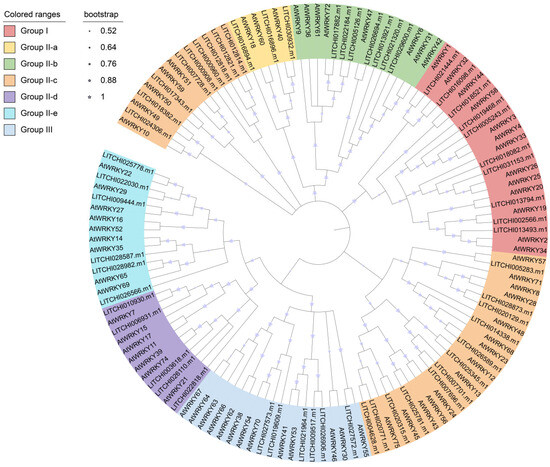
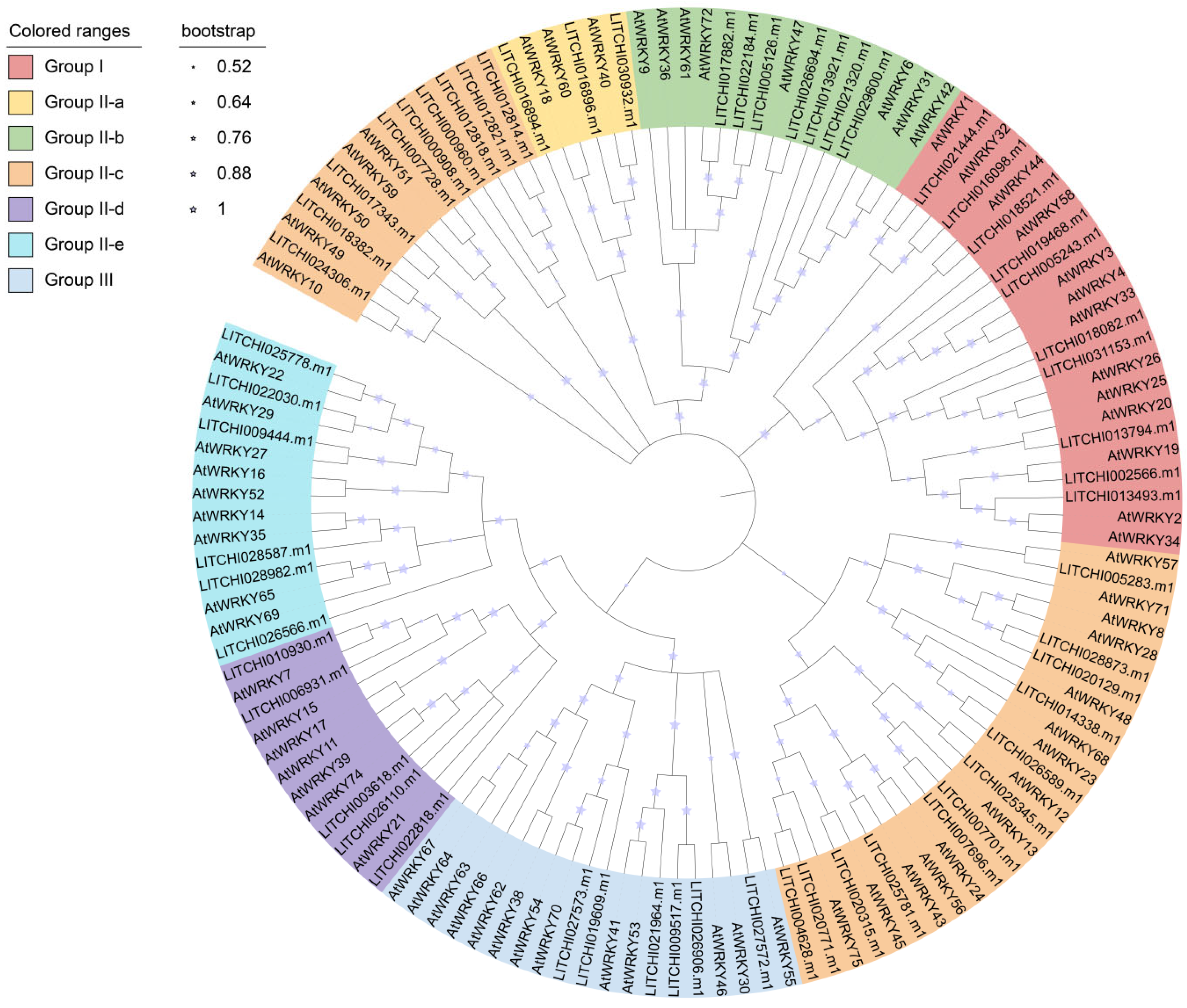
A phylogenetic tree was constructed based on the amino acid sequence homology between litchi and Arabidopsis WRKY gene families (Figure 1). The results show that litchi WRKY proteins could be classified into three main groups (Group I, II, and III), which is consistent with the classification system of Arabidopsis. Among them, Group II could be further divided into five subgroups: II-a, II-b, II-c, II-d, and II-e. In terms of member distribution, Group I contained 10 members; Group II 42 (with subgroups II-a, II-b, II-c, II-d, and II-e containing 3, 7, 21, 5, and 6 members, respectively) and Group III 6.
Figure 1.
Phylogenetic analysis of litchi and Arabidopsis WRKY proteins. Seven major clades are indicated with different colored areas: I, II-a, II-b, II-c, II-d, and II-e and III. The asterisk on a node indicates the level of support.
To further elucidate the structural characteristics of litchi WRKY proteins, secondary and tertiary structure predictions were performed for all 58 members. The secondary structure prediction results (Figures S1 and S2) indicate that all WRKY proteins are composed of four structural elements: alpha-helices, extended strands, beta-turns, and random coils. Among these, alpha-helices and random coils accounted for the highest proportion, while beta-turns were the least represented. Tertiary structure analysis revealed that members within the same evolutionary group shared high similarity in spatial conformation. These results, from a structural perspective, reflect the conservation of the litchi WRKY gene family during evolution and provide a structural basis for understanding their functional stability.
3.3. Chromosomal Localization and Gene Structure Analysis of Litchi WRKY Genes
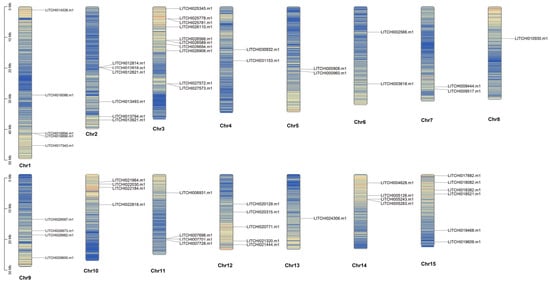
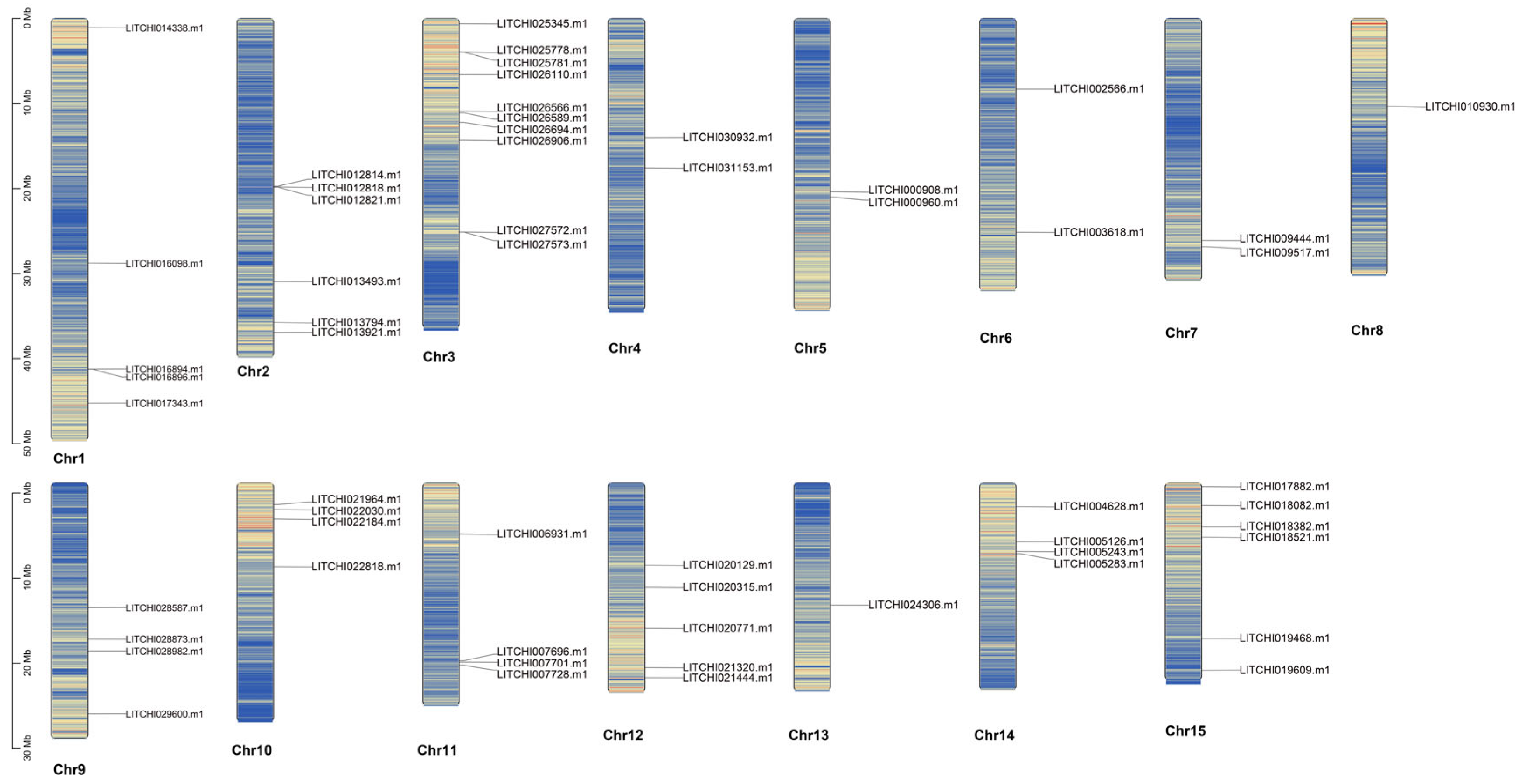
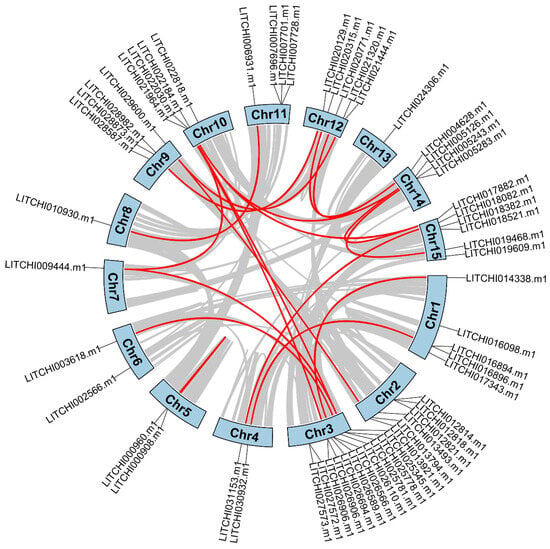
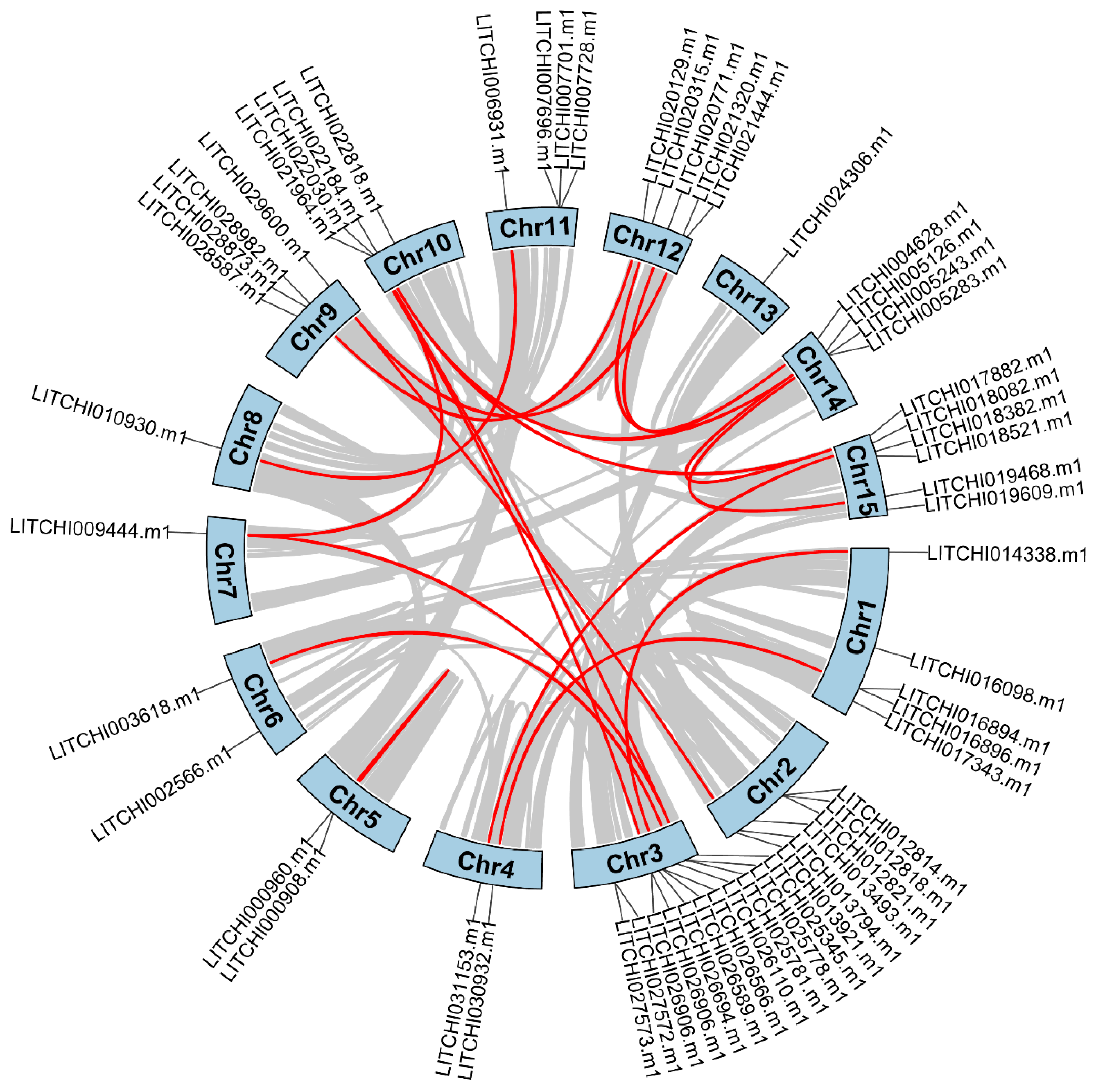
Chromosomal localization analysis revealed that the 58 litchi WRKY genes were unevenly distributed across 15 chromosomes (Figure 2). Chromosome 3 exhibited the highest gene density, harboring 10 WRKY genes, while chromosome 8 contained the fewest, with only one gene.
Figure 2.
Chromosomal localization of litchi WRKY genes.
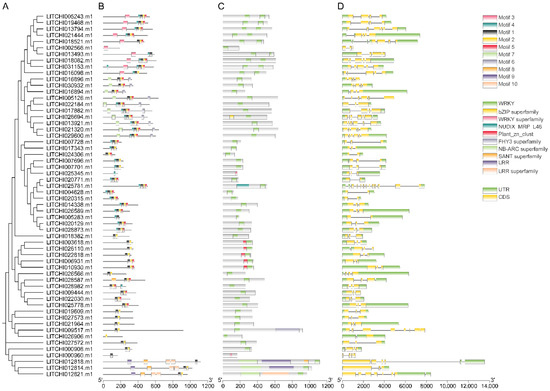
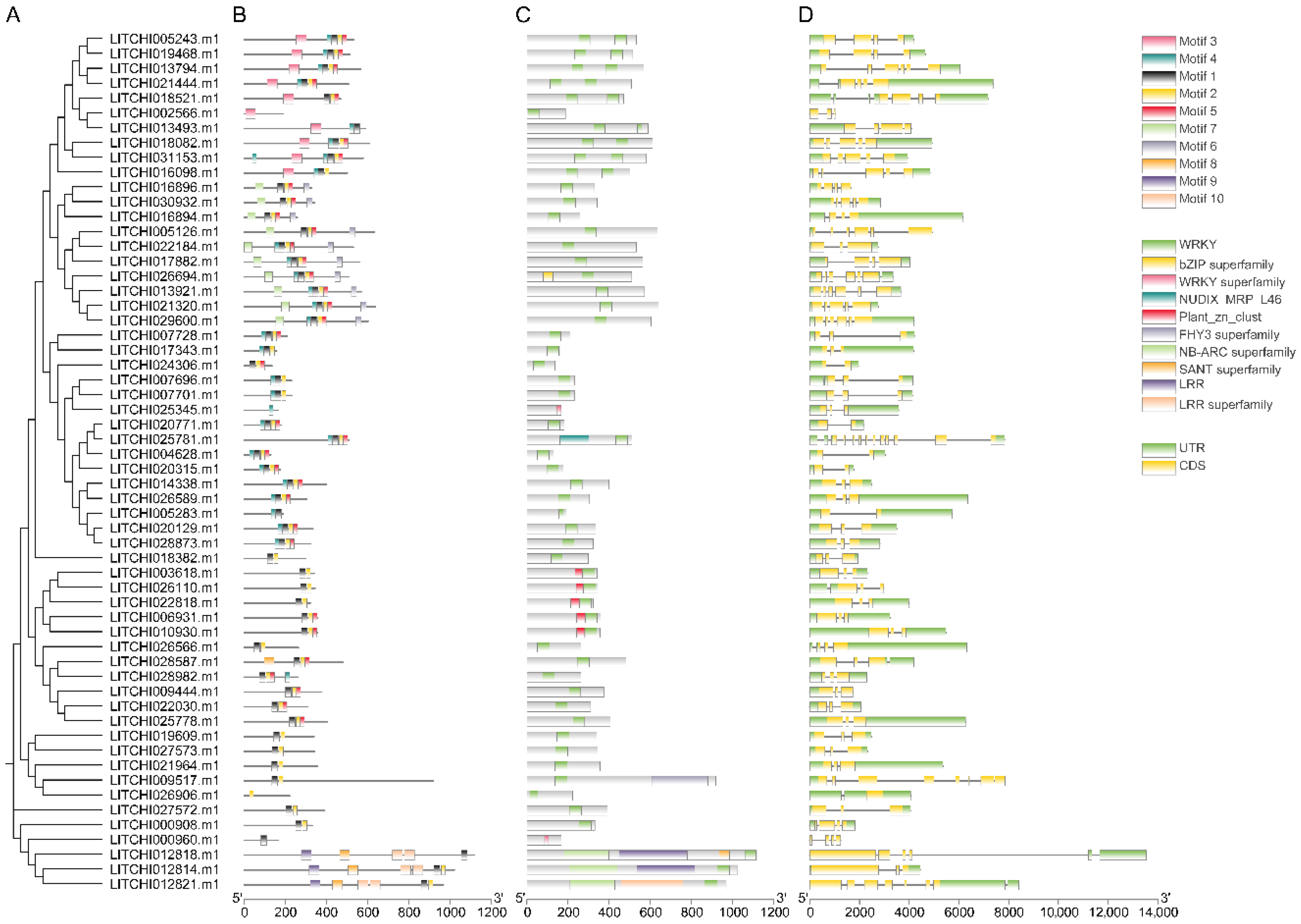
To investigate the structural characteristics and evolutionary relationships within the litchi WRKY gene family, conserved motifs, conserved domains, and gene structures were further analyzed in conjunction with the phylogenetic tree (Figure 3). Conserved motif analysis showed that most family members contained motif 1, and different evolutionary clades exhibited distinct motif compositions (Figure 3B). For instance, motif 3 was exclusively present in Group I members, and motif 6 was only distributed in subgroups II-a and II-b, while subgroup II-c contained motifs 8, 9, and 10. These clade-specific motifs may be associated with functional divergence among the branches. Conserved domain analysis confirmed that all 58 litchi WRKY proteins contain the characteristic WRKY or WRKY superfamily domain (Figure 3C and Figure S3, and Table S3), further supporting the high functional conservation within this family.
Figure 3.
Analysis of the (A) phylogenetic tree, (B) conserved motifs, (C) conserved domains, and (D) gene structures of litchi WRKY genes.
Gene structure analysis indicated that the number of exons in litchi WRKY genes ranged from 3 to 11, with LITCHI025781.m1 possessing the highest number (11 exons; Figure 3D). A few members lacked identifiable UTR regions. Notably, members within the same phylogenetic group or subgroup exhibited similar exon–intron structures, which is consistent with the distribution patterns of conserved motifs. This similarity suggests that these members may possess related biological functions arising from their shared evolutionary history.
3.4. Analysis of Intraspecific Collinearity and Interspecific Duplication Events of Litchi WRKY Genes
To investigate the evolutionary trajectory of the litchi WRKY gene family, we analyzed gene duplication events within the litchi genome and performed cross-species collinearity comparisons (Figure 4 and Figures S4–S7). The results revealed 18 pairs of segmentally duplicated genes and 1 pair of tandemly duplicated genes (LITCHI027572.m1 and LITCHI027573.m1) located on chromosome 3 (Figure 4), indicating that segmental duplication serves as the primary mechanism for the expansion of this gene family.
Figure 4.
Intraspecific collinearity analysis of litchi WRKY genes. The grey line represents all collinear regions in the entire litchi genome, and the red line represents the LcWRKY gene pair with replication events.
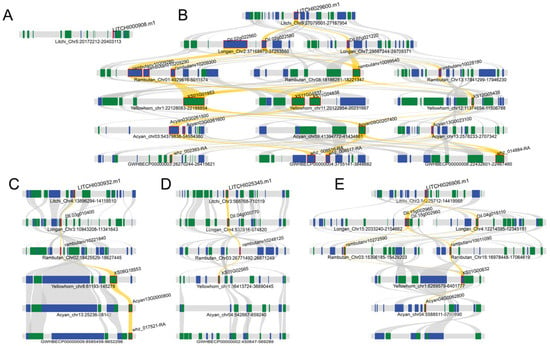
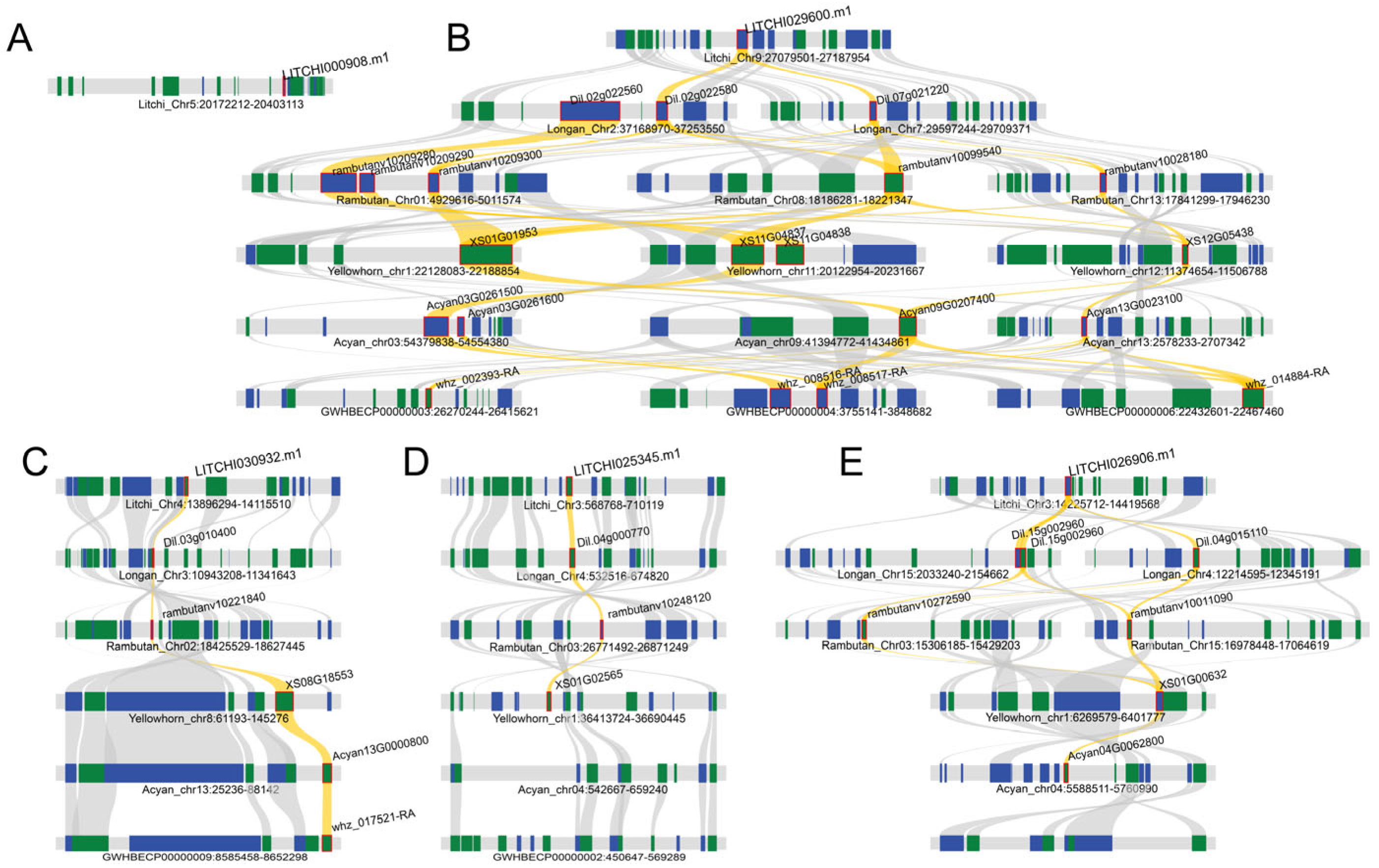
Comparative genomic analyses between litchi and its related species (D. longan, N. lappaceum, X. sorbifolium, A. yangbiense, and S. mukorossi) suggested potential dynamics of retention and loss of WRKY genes across different evolutionary clades (Figure 5A–E and Figures S5–S7). For instance, the litchi WRKY genes LITCHI000908.m1 and LITCHI012821.m1 showed no syntenic relationships with other Sapindaceae species, indicating species-specific characteristics (Figure 5A and Figure S4). In contrast, genes such as LITCHI029600.m1 and LITCHI030932.m1 exhibited syntenic conservation in multiple related species, including D. longan and N. lappaceum, suggesting strong evolutionary conservation (Figure 5B,C, Figures S5 and S6). Furthermore, genes such as LITCHI025345.m1 and LITCHI026906.m1 displayed synteny between litchi and early-diverging species like A. yangbiense or S. mukorossi, but appeared to have been lost in later-evolving species (Figure 5D,E and Figure S7). Altogether, these results highlight the functional diversification and selective retention of the WRKY gene family during species differentiation and adaptive evolution in litchi and its close relatives.
Figure 5.
Duplication and loss events of the litchi WRKY gene. The red boxes indicate the locations of WRKY genes, while the yellow lines represent gene collinearity. The litchi WRKY gene is (A) is unique to litchi; (B) duplicated among species; (C) conserved among species and is a single copy (D) duplicated among some species and lost among others; and (E) conserved among some species, is a single copy, and is lost among some species. Grey line indicates all collinear regions in the entire litchi genome, and red line represents the litchi WRKY gene pair with replication events. Red boxes indicate the locations of WRKY genes, while yellow lines represent gene collinearity.
3.5. Analysis of Cis-Acting Elements in Litchi WRKY Genes
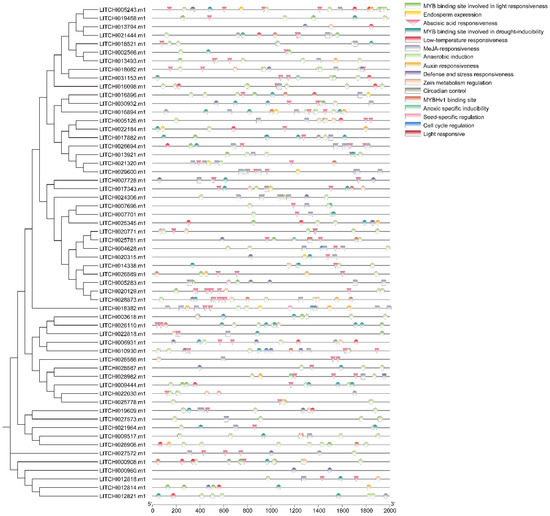
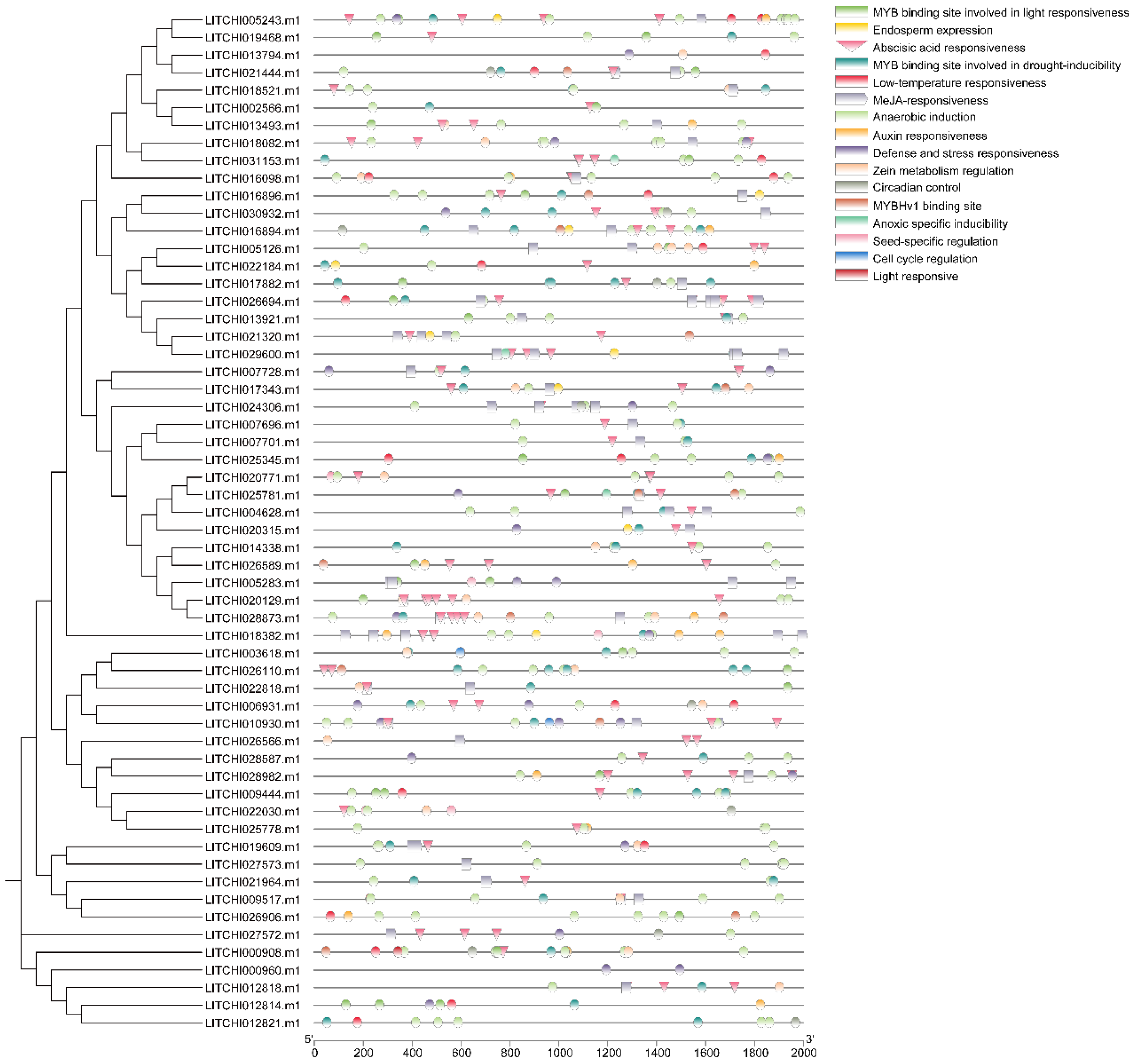
To explore the potential functions of litchi WRKY genes in response to abiotic stress, a systematic analysis of cis-acting elements in their promoter regions was conducted (Figure 6 and Table S4). The results showed that, in addition to core promoter elements (such as CAAT-box and TATA-box) and enhancers, the promoter regions of litchi WRKY genes are enriched with various cis-acting elements associated with responses to abiotic stress and growth regulation. These include methyl jasmonate (MeJA)-responsive elements (CGTCA-motif, TGACG-motif), light-responsive elements (G-box, I-box, LAMP-element, GT1-motif), low-temperature-responsive elements (LTR), MYB binding sites (MBS) related to drought induction, anaerobic induction elements (ARE), and gibberellin-responsive elements (GARE-motif, TATC-box, P-box), among others. These findings suggest that litchi WRKY genes may be broadly involved in stress response pathways mediated by methyl jasmonate and abscisic acid signaling, and play diverse biological roles in processes such as light signaling, low temperature, drought, and hormonal regulation. This highlights their significance in plant adaptation to environmental changes and the regulation of growth and development.
Figure 6.
Distribution of cis-acting elements in the promoter region of the litchi WRKY gene.
3.6. Interaction Network Analysis of Litchi WRKY Proteins
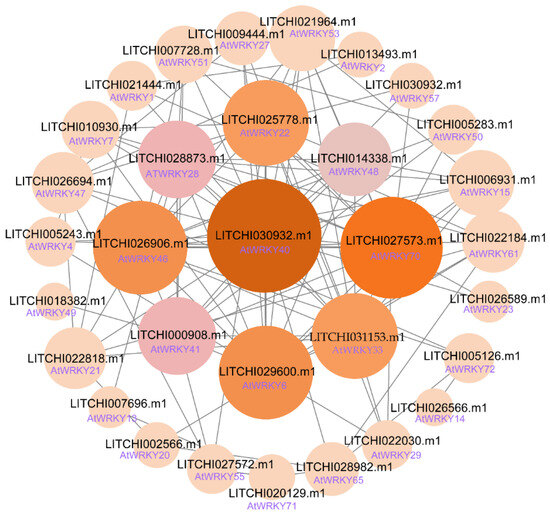
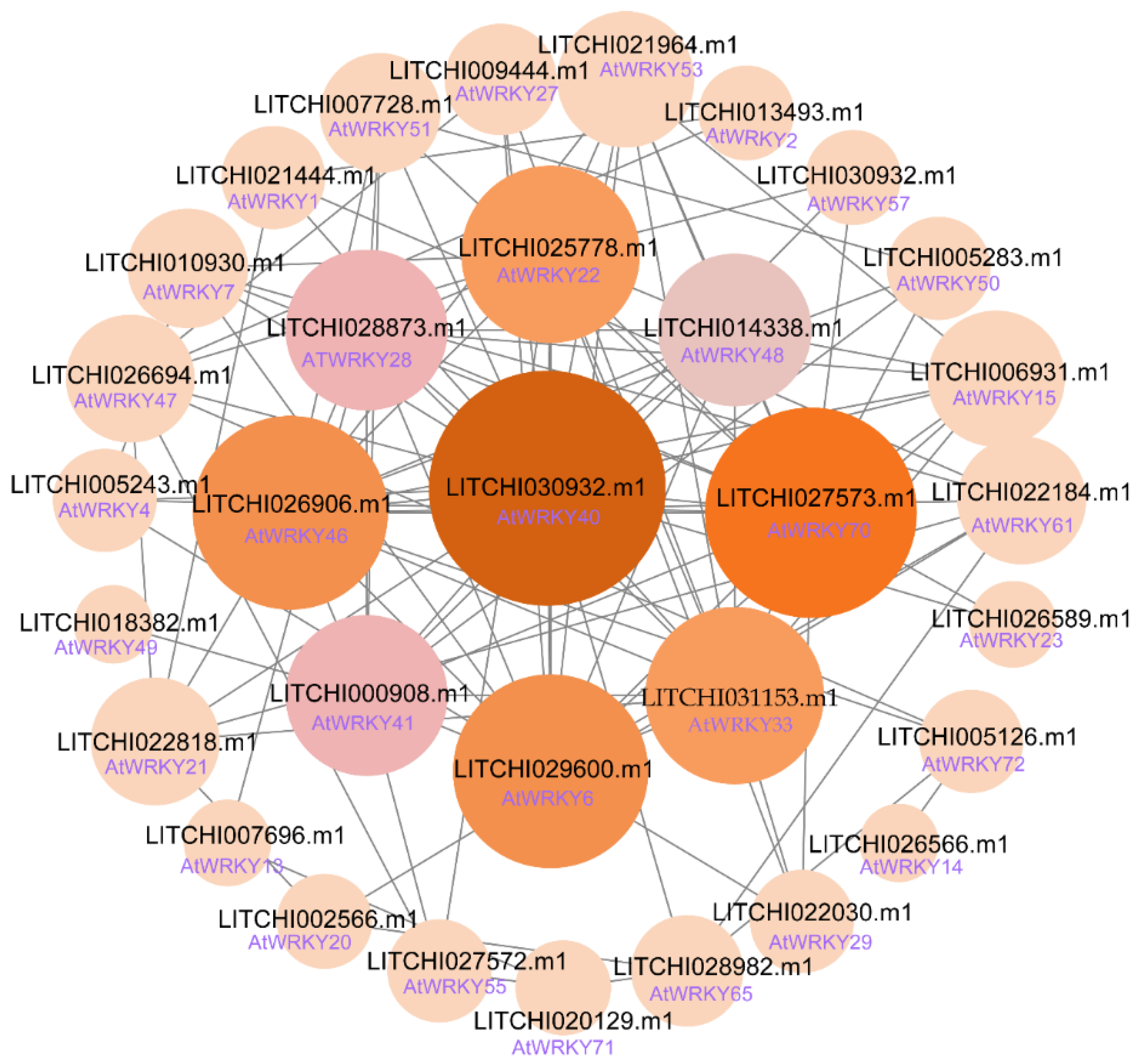
To gain deeper insights into the potential regulatory mechanisms of litchi WRKY proteins, an interaction network was constructed for litchi WRKY proteins (Figure 7). The results revealed that litchi WRKY proteins with high sequence homology to key Arabidopsis regulators-LITCHI025778.m1, LITCHI026906.m1, LITCHI027573.m1, LITCHI029600.m1, LITCHI030932.m1, and LITCHI031153.m1-occupied central nodes in the interaction network, indicating that they may serve as key regulatory hubs in litchi. Furthermore, members such as LITCHI000908.m1, LITCHI014338.m1, and LITCHI028873.m1 were predicted to interact with multiple proteins, suggesting that the litchi WRKY family may form complex transcriptional regulatory complexes and collaboratively participate in the regulation of multiple biological processes.
Figure 7.
The protein interaction network of the WRKY protein from litchi. The color of the protein represents the strength of the interaction, the darker the color, the stronger the interaction.
3.7. Expression Analysis of Litchi WRKY Genes in Different Tissues and During Fruit Development
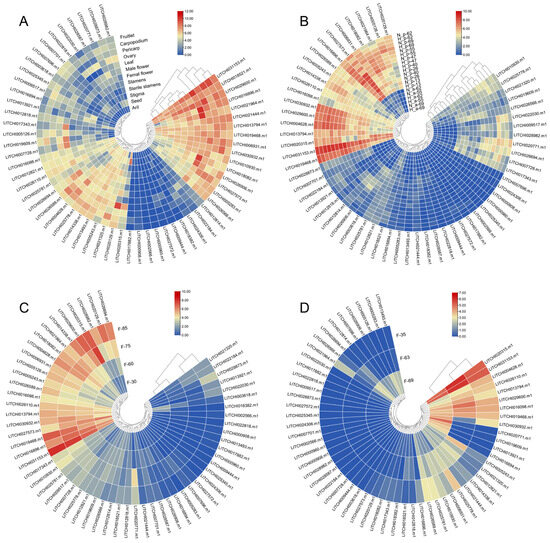
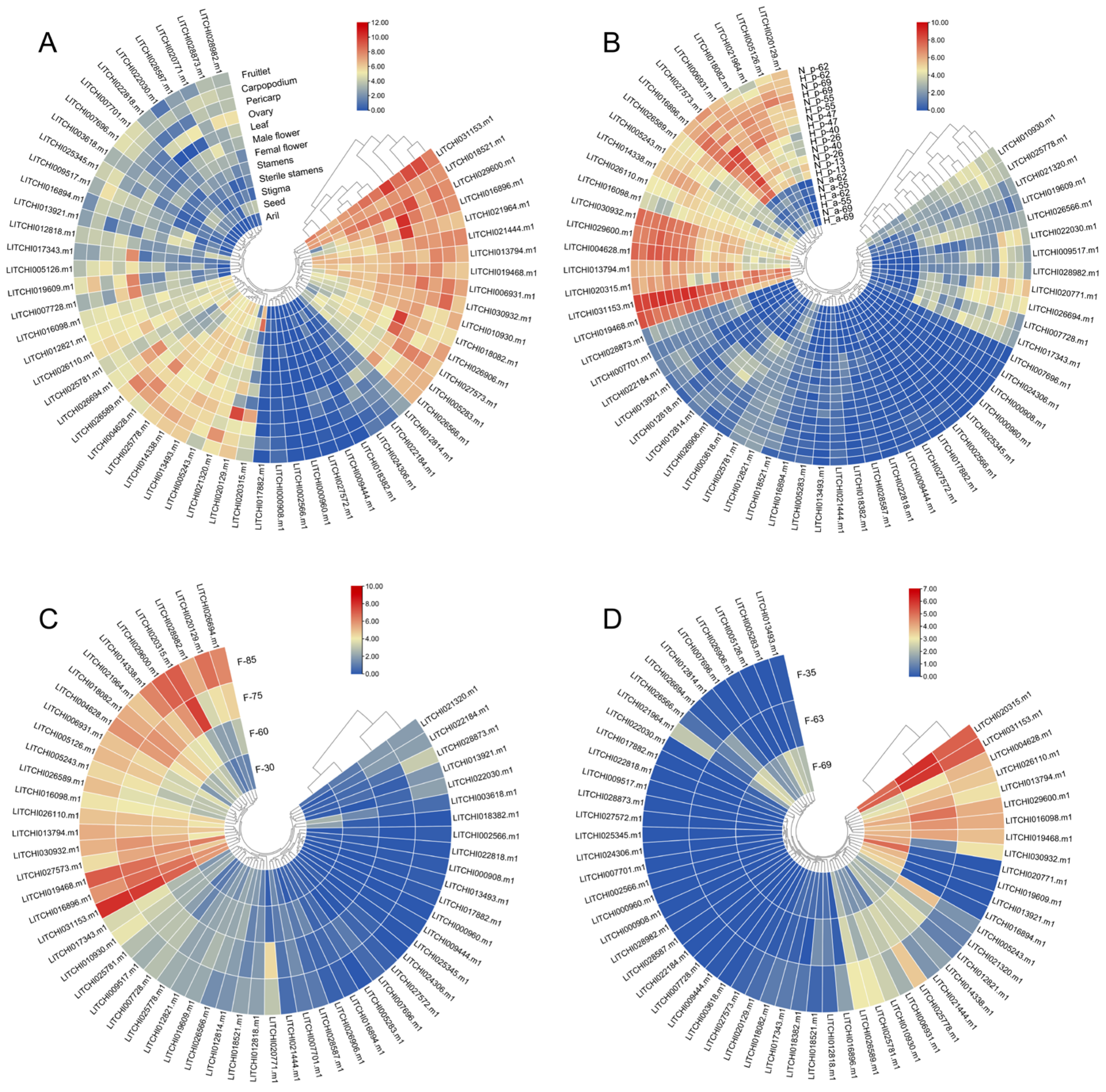
To elucidate the expression patterns and potential functions of litchi WRKY genes during growth and development, we systematically analyzed the expression profiles of family members across different tissues, developmental stages, and cultivars (Figure 8). The results indicated that WRKY genes are widely expressed in various litchi tissues, albeit with notable differences in expression levels (Figure 8A). Among them, LITCHI031153.m1, LITCHI018521.m1, and LITCHI029600.m1 maintained relatively high expression levels across all examined tissues, suggesting that these genes may be involved in regulating fundamental growth and developmental processes in litchi.
Figure 8.
Tissue pattern expression analysis of the WRKY gene family in litchi. Expression analysis of WRKY genes (A) in the litchi carpopodium, aril, seed, pericarp, ovary, sterile stamens, leaf, stamens, stigma, femal flower, male flower and fruitlet; (B) in the pericarp and aril of Nuomici and Huaizhi at different post-flowering developmental stages; (C) in litchi pericarp of different stages after flowering, and (D) in the litchi “Feizixiao” of different stages after flowering.
Further analysis revealed that multiple WRKY genes exhibited stage-specific high expression during key phases of fruit development. In the pulp and peel of ‘Nuomici’ and ‘Huaizhi’ cultivars, genes such as LITCHI019468.m1 and LITCHI031153.m1 showed higher expression levels. Meanwhile, LITCHI004628.m1, LITCHI021964.m1, LITCHI018082.m1, and LITCHI030932.m1 were significantly up-regulated in the peel during the middle to late stages of fruit development (Figure 8B). During peel development, the expression levels of LITCHI016896.m1, LITCHI031153.m1, and LITCHI019468.m1 remained consistently higher than those of other WRKY genes. LITCHI030932.m1 was highly expressed in the early stage, whereas LITCHI004628.m1 and LITCHI021964.m1 showed markedly enhanced expression during the middle and late stages (Figure 8C). Notably, during the sugar decline process in the fruit of the ‘Feizixiao’ cultivar, genes such as LITCHI020315.m1, LITCHI031153.m1, and LITCHI004628.m1 maintained high expression levels (Figure 8D). This suggests that these genes may be involved in regulating sugar accumulation or metabolism-related processes in the fruit, and their specific functions warrant further experimental validation.
3.8. Analysis of WRKY Gene Expression Regulation at Different Stages of Litchi Fruit Development
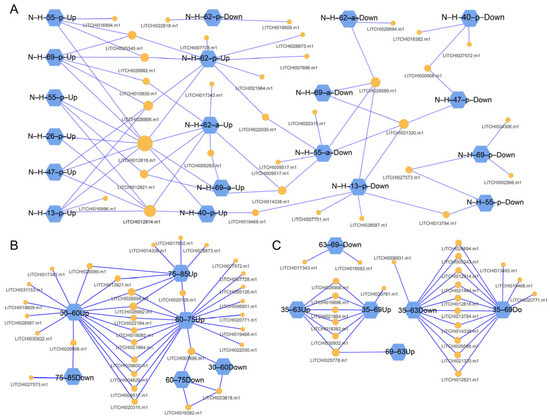
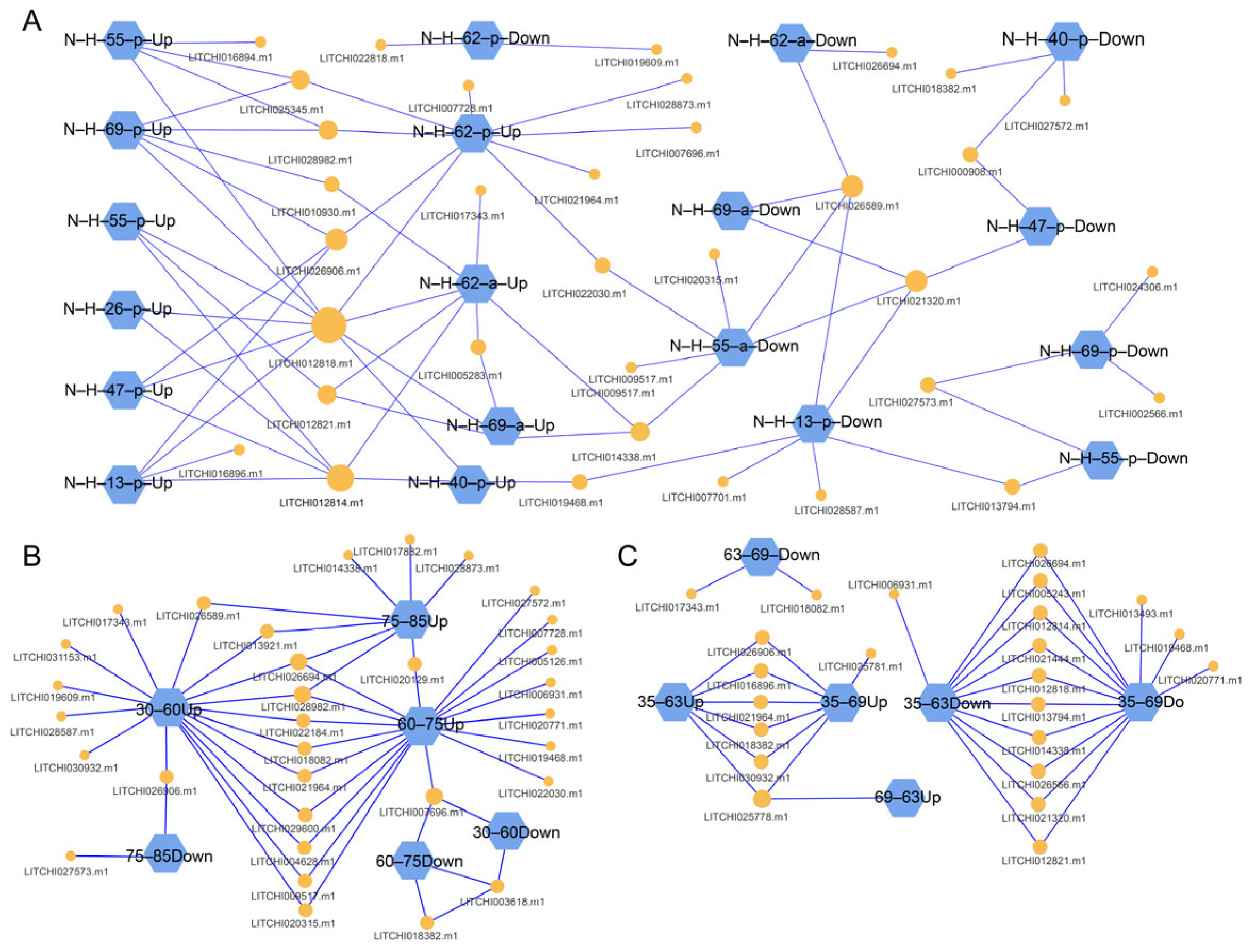
To further elucidate the regulatory functions of WRKY transcription factors during litchi fruit development, this study systematically analyzed the expression dynamics of WRKY genes at key time points—13, 26, 40, 47, 55, 62, and 69 day post-anthesis (DPA)—in the peel and aril of the ‘Nuomici’ and ‘Huaizhi’ cultivars (Figure 9A and Table S5). The results revealed distinct stage-specific and tissue-specific expression patterns of WRKY genes. Notably, LITCHI012818.m1 showed continuous up-regulation in both peel and aril across all examined developmental stages, suggesting its potential role in sustained regulation throughout fruit development. Concurrently, LITCHI012814.m1 exhibited an up-regulated trend in the peel from 13 to 47 DPA and in the aril from 55 to 62 DPA, indicating its possible involvement in early fruit development. Additionally, LITCHI006416.m1 displayed a down-regulated expression pattern in the peel during the early stages (13–40 DPA), implying that its regulatory role may differ in the initial phase of fruit development.
Figure 9.
Up- and downregulated expressions of WRKY genes in different litchi cultivars, tissues, and flowering stages. The differential expression of WRKY genes (A) in the pericarp and aril of Nuomici and Huaizhi in different post-anthesis stages, (B) during litchi pericarp development at 30–60, 60–75, and 75–85 DPA, and (C) in the Feizixiao cultivar 35–63, 35–69, and 63–69 DPA. “N” represents the cultivars Nuomici, “H” represents the cultivars Huaizhi, “a” represents aril, and “p” represents pericarp. The numbers indicate DPA. “Up” indicates upregulated expression and “Down” indicates downregulated expression.
Analysis of consecutive developmental stages in litchi peel (30–60, 60–75, and 75–85 DPA) (Figure 9B and Table S6) identified LITCHI026694.m1 and LITCHI028982.m1 as consistently up-regulated across all three periods. Meanwhile, LITCHI004628.m1, LITCHI018082.m1, and LITCHI021964.m1 were significantly up-regulated during both 30–60 and 60–75 DPA, highlighting their likely important roles in the regulatory network of mid-to-late fruit development.
Further investigation into the sugar decline process in the pulp of the ‘Feizixiao’ cultivar (35–63, 35–69, and 63–69 DPA) (Figure 9C and Table S7) showed that LITCHI025778.m1 was up-regulated in all three comparative periods. LITCHI021964.m1 and LITCHI030932.m1 also exhibited up-regulated expression patterns during 35–63 and 35–69 DPA. These expression dynamics suggest that WRKY genes may play crucial roles in the formation of fruit quality during late maturation, potentially through the fine-tuned regulation of sugar metabolism or flavor compound accumulation.
3.9. qRT-PCR Validation of Litchi WRKY Gene Expression
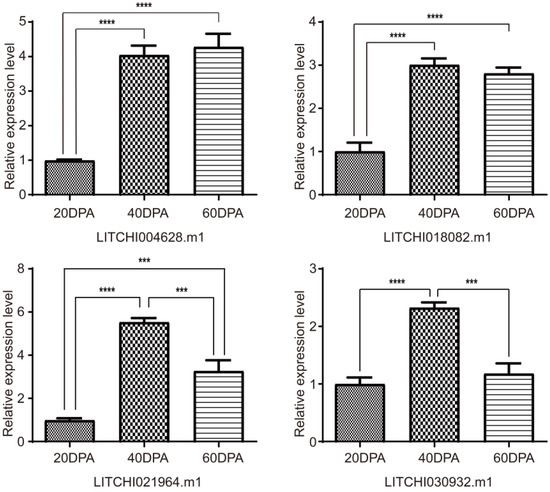
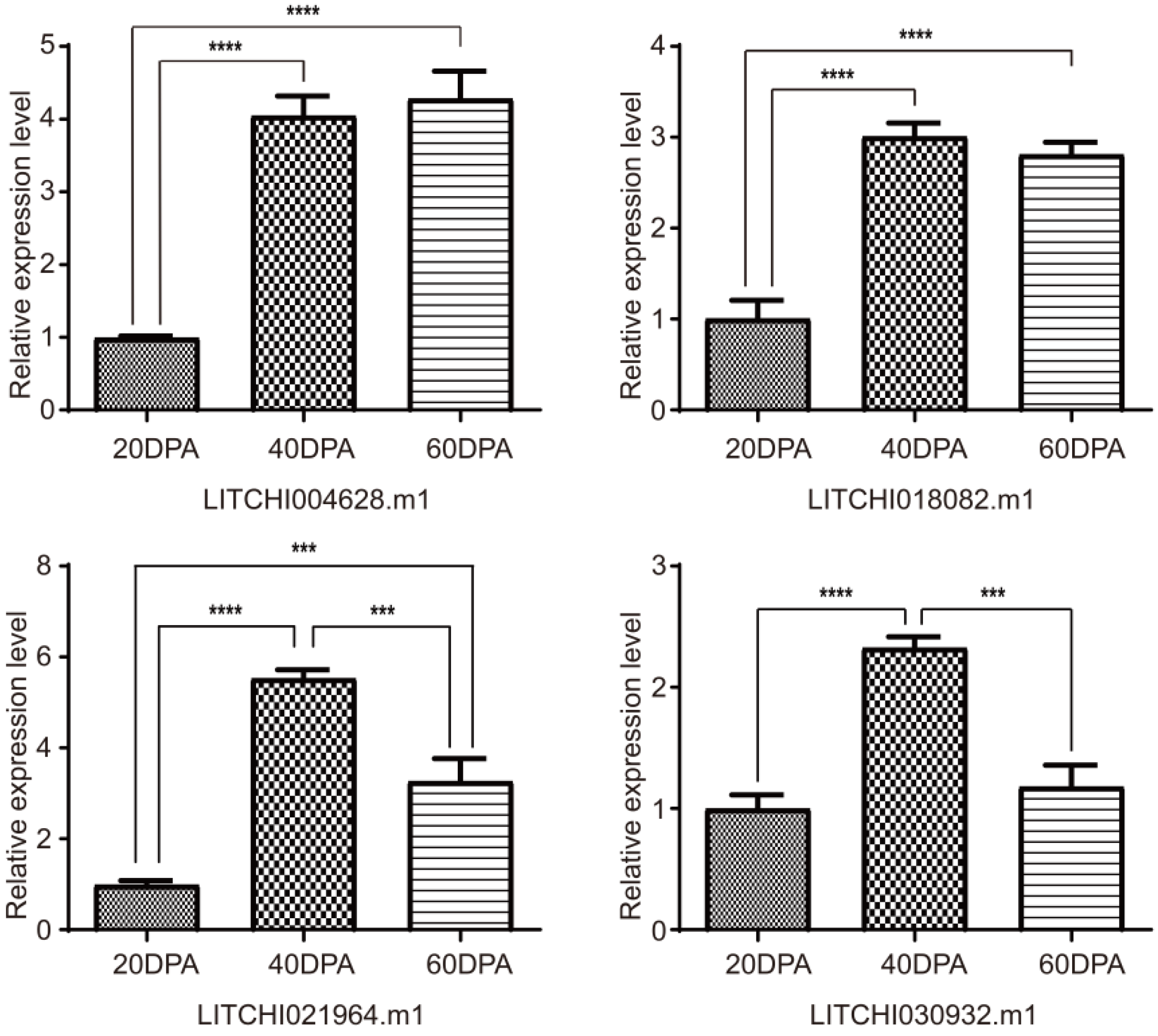
Based on candidate genes identified from previous transcriptome analyses showing differential expression at key stages of fruit development, four WRKY genes (LITCHI004628.m1, LITCHI018082.m1, LITCHI021964.m1, and LITCHI030932.m1) were selected for further validation, as they were hypothesized to be involved in the regulation of litchi fruit development. To examine their expression dynamics, transcript levels of these genes were analyzed by qRT-PCR in fruit samples collected at 20, 40, and 60 days post-anthesis (Figure 10). All four genes were expressed throughout the 20–60 dpa developmental period, with a marked increase in expression observed at 40 DPA. Among them, LITCHI004628.m1 and LITCHI018082.m1 both exhibited extremely significant differences (p < 0.001) in relative expression levels at 40 DPA and 60 DPA compared to 20 DPA, while no significant difference was observed between 40 DPA and 60 DPA. For LITCHI021964.m1 and LITCHI030932.m1, the relative expression levels at 40 DPA showed extremely significant differences (p < 0.001) compared to both 20 DPA and 60 DPA, with a significant decrease from 40 DPA to 60 DPA. Additionally, LITCHI021964.m1 also displayed an extremely significant difference between 20 DPA and 60 DPA, with higher relative expression at 60 DPA compared to 20 DPA. Overall, the consistent up-regulation of these four WRKY genes at 40 DPA indicates their potential involvement in regulatory processes during the middle to late stages of litchi fruit development. The distinct expression patterns observed, particularly the stage-specific decline in LITCHI030932.m1 at 60 DPA, suggest functional divergence among these WRKY members, with possible roles in coordinating developmental transitions such as fruit maturation and nutrient accumulation.
Figure 10.
Fluorescence quantification of WRKY gene expression in litchi. Asterisks indicate significant differences based on one-way ANOVA (*** p < 0.001; **** p < 0.0001).
4. Discussion
WRKY proteins represent one of the largest transcription factor families in plants and are extensively involved in a wide range of biological processes such as growth and development, secondary metabolism, biomass accumulation, and responses to both biotic and abiotic stresses, where they often play dual regulatory roles. With advances in sequencing technologies and the reduction in associated costs, an increasing number of species genomes have been sequenced, providing rich datasets for systematic studies on the WRKY gene family in woody plants [7]. To date, WRKY gene family members have been identified in numerous species, including safflower [44], kiwifruit (Actinidia chinensis) [45], tea plant [46], oil palm [47], apple [48], Masson pine (Pinus massoniana) [49], Xanthoceras sorbifolium [50], strawberry [51], Shandong maple [52], and maize [53]. In this study, based on the litchi genome data, we carried out for the first time a systematic bioinformatics analysis and preliminary functional exploration of the WRKY gene family in litchi.
Physicochemical analysis of the 58 litchi WRKY proteins revealed that all of them are hydrophilic. Subcellular localization prediction revealed that all identified litchi WRKY members are localized in the nucleus, which is consistent with the characteristic function of WRKY transcription factors in gene regulation within the nucleus and aligns with previous reports on species such as safflower [44], cucumber [54], sesame [55], and maize [13].
Phylogenetic analysis revealed that the litchi WRKY genes can be divided into three main groups—Groups I, II, and III, where Group II comprises 42 WRKY proteins and can be further subdivided into five subgroups. This classification is consistent with the system established in Arabidopsis, indicating a high degree of evolutionary conservation within the WRKY family [2]. Group II comprises 42 WRKY proteins, which, based on variations in protein sequences, can be further categorized into five subgroups. This aligns with findings in species such as maize, suggesting that Group II may play a significant role in the expansion of the WRKY gene family [44,52,53]. Secondary structure analysis showed that these proteins are primarily composed of α-helices and random coils, both of which play crucial roles in maintaining protein structural stability [56].
Chromosomal localization analysis revealed that the 58 LcWRKY genes are unevenly distributed across 15 chromosomes, with the highest density observed on chromosome 3 (10 genes). This uneven distribution may be associated with the non-random occurrence of gene duplication events on chromosomes, a phenomenon also reported in species such as rice and poplar [11,57]. Gene structure and conserved motif analyses further indicated that members within the same evolutionary clade share similar exon-intron structures and motif compositions, suggesting functional conservation during evolution—a common feature in gene families [44,58]. Additionally, 10 conserved motifs were identified among the 58 litchi WRKY genes. Gene structure analysis showed that the number of exons varies specifically among different subgroups, ranging from 3 to 11, with most genes containing 3–4 exons. This indicates a certain degree of exon number specificity across different subgroups of litchi WRKY genes [12,13]. Moreover, these findings are consistent with the view that the number of exons and introns in gene structures influences the adaptive potential and developmental processes in plants [59]. Further motif analysis, combined with conserved domain examination, confirmed that all members contain the WRKY conserved domain, with most also harboring motif 1, further supporting the functional conservation of this gene family [57,60,61,62].
In the evolution of large gene families, gene duplication events—including segmental duplication and tandem duplication—are considered key drivers for the expansion of gene families in angiosperms [63]. Intraspecific collinearity analysis of the litchi WRKY genome revealed that the litchi WRKY gene family has undergone both segmental duplication and tandem duplication during its evolution (Figure 4), a pattern similar to the expansion mechanisms observed in the WRKY gene families of rice [11], cotton [12], peach [64], carrot [61], and other plants. Furthermore, comparative genomic analyses with related species such as D. longan and N. lappaceum, (Figure 5A–E) suggested dynamic gene duplication and loss events within this family during species differentiation, which is consistent with previous findings regarding the evolutionary conservation and diversity observed in other gene families in litchi, including MADS-box and bZIP [26,65].
In this study, promoter sequences for cis-element analysis were operationally defined as the 2000 bp region upstream of the currently annotated transcription start site (TSS). We acknowledge that this approach does not account for potential alternative TSSs, as high-confidence, experimentally validated TSS data for litchi are not yet available. Analysis of promoter cis-acting elements revealed that, in addition to abundant light-responsive elements, the promoter regions of LcWRKY genes were highly enriched with various hormone-responsive elements, particularly those responding to abscisic acid (ABA) and methyl jasmonate (MeJA), such as ABRE and CGTCA/TGACG motifs (Figure 6). This finding strongly suggests that ABA and JA signaling pathways may play central roles in regulating the expression of LcWRKY genes. Notably, integrating our transcriptomic data, several LcWRKY genes (e.g., LITCHI030932.m1) that were significantly expressed during the mid-to-late stages of fruit development (such as flesh expansion and ripening) also contained dense clusters of ABRE and MeJA-responsive elements in their promoter regions (Figure 8). This implies that LcWRKY genes may drive gene expression programs related to fruit ripening (e.g., sugar accumulation, pigment synthesis) or stress adaptation, which aligns with known paradigms in species like Arabidopsis and tomato where WRKY transcription factors integrate hormone signals to regulate development and stress responses [66,67,68].
To further validate this, a potential interaction network for litchi WRKYs was constructed based on Arabidopsis homologous information (Figure 7). The analysis showed that genes such as LITCHI030932.m1, LITCHI027573.m1, and LITCHI026906.m1 exhibited high homology with key regulators known to participate in ABA signaling in Arabidopsis (e.g., AtWRKY40, AtWRKY46) and occupied central hub positions within the network. As previously documented, AtWRKY40 is an important component of the ABA signaling pathway and plays a core role in seed maturation, fruit development, and drought response [69]. Therefore, we speculate that LITCHI030932.m1 may perform analogous functions in litchi, likely through conserved ABA signaling modules, during fruit development (particularly in ripening regulation) and stress adaptation. Future studies could integrate more motif databases (e.g., PLACE, JASPAR-PLANT) and employ enrichment analyses with FDR correction and controlled background to rigorously assess statistical significance and effect sizes.
By analyzing the differential expression (up- or down-regulation) of WRKY genes during fruit and peel development at various stages after flowering in different litchi cultivars (Figure 9), we observed that LITCHI012818.m1 exhibited sustained up-regulation in both the peel and aril of ‘Nuomici’ and ‘Huaizhi’ cultivars at 13, 26, 40, 47, 55, 62, and 69 days after flowering. Similarly, this gene also showed a down-regulated expression pattern during the 75–85 DPA fruit development stage in the ‘Feizixiao’ cultivar. LITCHI004628.m1 and LITCHI018082.m1 were continuously up-regulated during the 30–60 and 60–75 DPA periods, while LITCHI021964.m1 and LITCHI030932.m1 showed up-regulated expression at 35–63 and 35–69 DPA in ‘Feizixiao’. These results indicate that WRKY genes play a role in fruit development. Similar regulatory functions of WRKY genes in fruit development have been observed in other fruit trees. For instance, in Chinese bayberry (Myrica rubra), members of the WRKY-Ib subfamily, MrWRKY30 and MrWRKY32, are significantly up-regulated during early fruit development, suggesting their primary involvement in early-stage regulation [70]. In strawberry (Fragaria vesca), the gene FvWRKY42 is also highly expressed during early fruit development and is associated with fruit cell expansion and early defense processes [71]. In apple (Malus domestica), studies have shown that MdWRKY70L remains highly expressed during late fruit development (from peel maturation to senescence) and is regulated via phosphorylation through the MAPK pathway, thereby participating in physiological changes in the later stages of fruit ripening [72]. Subsequent qRT-PCR experiments have further verified that the relative expression levels of LITCHI004628.m1, LITCHI018082.m1, and LITCHI021964.m1 were significantly upregulated during the mid to late stages of fruit development, while LITCHI030932.m1 exhibited its highest expression at the mid-development stage, suggesting the important regulatory potential of WRKY genes during litchi fruit development. Future functional validation of such candidate genes could involve conducting hormone treatment experiments (e.g., exogenous ABA/MeJA and their inhibitors) in litchi tissue. Combined with time-resolved expression analysis (qRT-PCR) and assays of transcriptional regulatory activity, this would clarify their specific responses to hormonal signals and their downstream regulatory networks. Consequently, the mechanisms by which LcWRKY integrates ABA/JA signaling to coordinate litchi fruit development and quality formation could be elucidated at the molecular level.
5. Conclusions
In this study, we conducted a genome-wide identification and comprehensive analysis of the WRKY transcription factor family in litchi were conducted. Fifty-eight WRKY genes were identified, all encoding hydrophilic proteins with conserved WRKY domains and predicted nuclear localization. Phylogenetic and structural analyses revealed that Group II represents the most expanded clade and likely played a central role in the evolutionary diversification of the WRKY family in litchi. Gene structure and motif analyses revealed a tendency toward structural conservation within clades, while chromosomal distribution appeared uneven. Synteny analysis supported the hypothesis that both segment and tandem duplication may have jointly driven the evolutionary expansion of this family, which might have undergone dynamic changes during species differentiation. Promoter analysis suggested the presence of light-, hormone-, and stress-responsive elements, possibly supporting a role in environmental signal integration. Protein interaction predictions further indicated that certain members might participate in conserved regulatory pathways. Expression analyses demonstrated that multiple WRKY genes (e.g., LITCHI030932.m1) were up-regulated during fruit development, implying their potential involvement in fruit quality formation. These findings provide a theoretical basis for further investigation into the roles of WRKY genes in litchi.
Supplementary Materials
The following supporting information can be downloaded at: https://www.mdpi.com/article/10.3390/horticulturae12020223/s1, Figure S1: Stacked column chart of secondary structure content for litchi WRKY transcription factors; Figure S2: Tertiary Protein Structure of LitchiWRKYTranscription Factors; Figure S3: Conserved motifs of LcWRKY protein sequences; Figure S4: Multiple duplications of LcWRKY genes across species; Figure S5: Single duplication of LcWRKY genes across six species; Figure S6: Multiple duplications of LcWRKY genes across species; Figure S7: Duplication of LcWRKY genes within the Sapindaceae family; Table S1: Primers and primer sequences required for the experiment; Table S2: Identification of Members of the WRKY Gene Family in Litchi; Table S3: Regular expressions of conserved motifs from WRKY proteins in litchi; Table S4: The cis-acting elements of WRKY genes in litchi; Table S5: Differential expression of WRKY genes in the pericarp and aril of Nuomici and Huaizha at different post-anthesis stages; Table S6: Differential expression of WRKY genes during litchi pericarp development at 30–60 days, 60–75 days, and 75–85 days after flowering; Table S7: Differential expression of WRKY genes in the Feizixiao cultivar during 35–63 days, 35–69 days, and 63–69 days after flowering.
Author Contributions
Conceptualization, C.S. and Z.C.; methodology, C.S., Y.Z. and Z.C.; investigation, J.W.; data curation, J.W., M.Y. and Y.Z.; writing—original draft preparation, J.W.; writing—review and editing, L.O., Z.C. and C.S.; funding acquisition, L.O., G.L. and C.S. All authors have read and agreed to the published version of the manuscript.
Funding
This work was financially supported by the Maoming Science and Technology Project (MMSZX2025005), Guangdong Provincial Science and Technology Plan Project (2021B0707010003), Guangdong Provincial Rural Revitalization Science and Technology Project “Maoming Tropical Characteristic Crop Germplasm Resource Exploration and Biobreeding Technology Innovation Center” (2021S0074), Guangdong Provincial Science and Technology Plan Project—Major Special Project + Task List/Science and Technology Support for the “Hundred-Thousand-Million” Project Special Project (2021S0065) and the Projects of Talents Recruitment of Guangdong University of Petrochemical Technology (2019rc112).
Data Availability Statement
The data is publicly available. The raw data from different tissues in NCBI with BioProject: PRJNA747875; BioProject: PRJNA681070; BioProject: PRJNA883943 and BioProject: PRJNA906072. Sequences of the primers used for qRT-PCR are provided in Table S7. The data source is indicated in the text.
Conflicts of Interest
The authors declare no conflict of interest.
References
- Yanagisawa, S. Transcription factors in plants: Physiological functions and regulation of expression. J. Plant Res. 1998, 111, 363–371. [Google Scholar] [CrossRef] [Scilit]
- Chen, X.; Li, C.; Wang, H.; Guo, Z. WRKY transcription factors: Evolution, binding, and action. Phytopathol. Res. 2019, 1, 13. [Google Scholar] [CrossRef] [Scilit]
- Cataldo, E.; Puccioni, S.; Eichmeier, A.; Natale, R.; Gori, M.; Biricolti, S.; Mattii, G.B. Effect of zeolite and irrigation treatments on grapevine leaves, an interdisciplinary approach. Plant Soil 2025, 508, 1007–1026. [Google Scholar] [CrossRef] [Scilit]
- Rushton, P.J.; Somssich, I.E.; Ringler, P.; Shen, Q.J. WRKY transcription factors. Trends Plant Sci. 2010, 15, 247–258. [Google Scholar] [CrossRef] [Scilit] [PubMed]
- Wang, H.; Chen, W.; Xu, Z.; Chen, M.; Yu, D. Functions of WRKYs in plant growth and development. Trends Plant Sci. 2023, 28, 630–645. [Google Scholar] [CrossRef] [Scilit] [PubMed]
- Yang, L.; Fang, S.; Liu, L.; Zhao, L.; Chen, W.; Li, X.; Xu, Z.; Chen, S.; Wang, H.; Yu, D. WRKY transcription factors: Hubs for regulating plant growth and stress responses. J. Integr. Plant Biol. 2025, 67, 488–509. [Google Scholar] [CrossRef] [Scilit]
- Long, L.; Gu, L.; Wang, S.; Cai, H.; Wu, J.; Wang, J.; Yang, M. Progress in the understanding of WRKY transcription factors in woody plants. Int. J. Biol. Macromol. 2023, 242, 124379. [Google Scholar] [CrossRef] [Scilit]
- Ishiguro, S.; Nakamura, K. Characterization of a cDNA encoding a novel DNA-binding protein, SPF1, that recognizes SP8 sequences in the 5′ upstream regions of genes coding for sporamin and β-amylase from sweet potato. Mol. Gen. Genet. MGG 1994, 244, 563–571. [Google Scholar] [CrossRef] [Scilit]
- Wang, H.; Xu, Q.; Kong, Y.-H.; Chen, Y.; Duan, J.-Y.; Wu, W.-H.; Chen, Y.-F. Arabidopsis WRKY45 transcription factor activates PHOSPHATE TRANSPORTER1; 1 expression in response to phosphate starvation. Plant Physiol. 2014, 164, 2020–2029. [Google Scholar] [CrossRef] [Scilit]
- Di, P.; Wang, P.; Yan, M.; Han, P.; Huang, X.; Yin, L.; Yan, Y.; Xu, Y.; Wang, Y. Genome-wide characterization and analysis of WRKY transcription factors in Panax ginseng. BMC Genom. 2021, 22, 834. [Google Scholar] [CrossRef] [Scilit]
- Ross, C.A.; Liu, Y.; Shen, Q.J. The WRKY gene family in rice (Oryza sativa). J. Integr. Plant Biol. 2007, 49, 827–842. [Google Scholar] [CrossRef] [Scilit]
- Dou, L.; Zhang, X.; Pang, C.; Song, M.; Wei, H.; Fan, S.; Yu, S. Genome-wide analysis of the WRKY gene family in cotton. Mol. Genet. Genom. 2014, 289, 1103–1121. [Google Scholar] [CrossRef] [Scilit] [PubMed]
- Wei, K.-F.; Chen, J.; Chen, Y.-F.; Wu, L.-J.; Xie, D.-X. Molecular phylogenetic and expression analysis of the complete WRKY transcription factor family in maize. DNA Res. 2012, 19, 153–164. [Google Scholar] [CrossRef] [Scilit] [PubMed]
- Rushton, P.J.; Macdonald, H.; Huttly, A.K.; Lazarus, C.M.; Hooley, R. Members of a new family of DNA-binding proteins bind to a conserved cis-element in the promoters of α-Amy2 genes. Plant Mol. Biol. 1995, 29, 691–702. [Google Scholar] [CrossRef] [Scilit]
- Sun, C.; Palmqvist, S.; Olsson, H.; Borén, M.; Ahlandsberg, S.; Jansson, C. A novel WRKY transcription factor, SUSIBA2, participates in sugar signaling in barley by binding to the sugar-responsive elements of the iso1 promoter. Plant Cell 2003, 15, 2076–2092. [Google Scholar] [CrossRef] [Scilit]
- Rushton, P.J.; Torres, J.T.; Parniske, M.; Wernert, P.; Hahlbrock, K.; Somssich, I. Interaction of elicitor-induced DNA-binding proteins with elicitor response elements in the promoters of parsley PR1 genes. EMBO J. 1996, 15, 5690–5700. [Google Scholar] [CrossRef] [Scilit]
- Lambais, M.R. In silico differential display of defense-related expressed sequence tags from sugarcane tissues infected with diazotrophic endophytes. Genet. Mol. Biol. 2001, 24, 103–111. [Google Scholar] [CrossRef] [Scilit]
- Rehman, S.; Bahadur, S.; Xia, W. Unlocking nature’s secrets: The pivotal role of WRKY transcription factors in plant flowering and fruit development. Plant Sci. 2024, 346, 112150. [Google Scholar] [CrossRef] [Scilit]
- Zhou, H.; Li, Y.; Zhang, Q.; Ren, S.; Shen, Y.; Qin, L.; Xing, Y. Genome-wide analysis of the expression of WRKY family genes in different developmental stages of wild strawberry (Fragaria vesca) fruit. PLoS ONE 2016, 11, e0154312. [Google Scholar] [CrossRef] [Scilit]
- Gupta, O.P.; Deshmukh, R.; Kumar, A.; Singh, S.K.; Sharma, P.; Ram, S.; Singh, G.P. From gene to biomolecular networks: A review of evidences for understanding complex biological function in plants. Curr. Opin. Biotechnol. 2022, 74, 66–74. [Google Scholar] [CrossRef] [Scilit]
- Xue, C.; Li, H.; Liu, Z.; Wang, L.; Zhao, Y.; Wei, X.; Fang, H.; Liu, M.; Zhao, J. Genome-wide analysis of the WRKY gene family and their positive responses to phytoplasma invasion in Chinese jujube. BMC Genom. 2019, 20, 464. [Google Scholar] [CrossRef] [Scilit] [PubMed]
- Grunewald, W.; De Smet, I.; De Rybel, B.; Robert, H.S.; Van De Cotte, B.; Willemsen, V.; Gheysen, G.; Weijers, D.; Friml, J.; Beeckman, T. Tightly controlled WRKY23 expression mediates Arabidopsis embryo development. EMBO Rep. 2013, 14, 1136–1142. [Google Scholar] [CrossRef] [Scilit] [PubMed]
- Cheng, Y.; JalalAhammed, G.; Yu, J.; Yao, Z.; Ruan, M.; Ye, Q.; Li, Z.; Wang, R.; Feng, K.; Zhou, G. Putative WRKYs associated with regulation of fruit ripening revealed by detailed expression analysis of the WRKY gene family in pepper. Sci. Rep. 2016, 6, 39000. [Google Scholar] [CrossRef] [Scilit]
- Jiang, G.; Lin, S.; Wen, L.; Jiang, Y.; Zhao, M.; Chen, F.; Prasad, K.N.; Duan, X.; Yang, B. Identification of a novel phenolic compound in litchi (Litchi chinensis Sonn.) pericarp and bioactivity evaluation. Food Chem. 2013, 136, 563–568. [Google Scholar] [CrossRef] [Scilit]
- Zhao, L.; Wang, K.; Wang, K.; Zhu, J.; Hu, Z. Nutrient components, health benefits, and safety of litchi (Litchi chinensis Sonn.): A review. Compr. Rev. Food Sci. Food Saf. 2020, 19, 2139–2163. [Google Scholar] [CrossRef] [Scilit] [PubMed]
- Liu, J.; Wu, J.; Silaiyiman, S.; Ouyang, L.; Cao, Z.; Shen, C. Comparative Genomics Reveals Gene Duplication and Evolution in 26 Aurantioideae Species. Horticulturae 2025, 11, 209. [Google Scholar] [CrossRef] [Scilit]
- Liu, H.; Jiang, Y.; Wen, Y.; Tan, Z.; Shi, F.; Chen, J.; Cai, C.; Yan, Q.; Ou, L. Identification and expression analysis of WRKY superfamily genes under lychee downy blight stress in lychee. Agron. J. 2023, 115, 2489–2505. [Google Scholar] [CrossRef] [Scilit]
- Hu, G.; Feng, J.; Xiang, X.; Wang, J.; Salojärvi, J.; Liu, C.; Wu, Z.; Zhang, J.; Liang, X.; Jiang, Z.; et al. Two divergent haplotypes from a highly heterozygous lychee genome suggest independent domestication events for early and late-maturing cultivars. Nat. Genet. 2022, 54, 73–83. [Google Scholar] [CrossRef] [Scilit]
- Artimo, P.; Jonnalagedda, M.; Arnold, K.; Baratin, D.; Csardi, G.; De Castro, E.; Duvaud, S.; Flegel, V.; Fortier, A.; Gasteiger, E. ExPASy: SIB bioinformatics resource portal. Nucleic Acids Res. 2012, 40, W597–W603. [Google Scholar] [CrossRef] [Scilit]
- Chou, K.-C.; Shen, H.-B. Cell-PLoc 2.0: An improved package of web-servers for predicting subcellular localization of proteins in various organisms. Nat. Sci. 2010, 2, 1090–1103. [Google Scholar] [CrossRef]
- Kumar, S.; Stecher, G.; Suleski, M.; Sanderford, M.; Sharma, S.; Tamura, K. MEGA12: Molecular Evolutionary Genetic Analysis Version 12 for Adaptive and Green Computing. Mol. Biol. Evol. 2024, 41, msae263. [Google Scholar] [CrossRef] [Scilit]
- Zhang, Y.; Wang, L. The WRKY transcription factor superfamily: Its origin in eukaryotes and expansion in plants. BMC Evol. Biol. 2005, 5, 1. [Google Scholar] [CrossRef] [Scilit] [PubMed]
- Chen, C.; Chen, H.; Zhang, Y.; Thomas, H.R.; Frank, M.H.; He, Y.; Xia, R. TBtools: An Integrative Toolkit Developed for Interactive Analyses of Big Biological Data. Mol. Plant 2020, 13, 1194–1202. [Google Scholar] [CrossRef] [Scilit] [PubMed]
- Li, J.; Chen, C.; Zeng, Z.; Wu, F.; Feng, J.; Liu, B.; Mai, Y.; Chu, X.; Wei, W.; Li, X.; et al. SapBase: A central portal for functional and comparative genomics of Sapindaceae species. J. Integr. Plant Biol. 2024, 66, 1561–1570. [Google Scholar] [CrossRef] [Scilit] [PubMed]
- Wang, Y.; Tang, H.; DeBarry, J.D.; Tan, X.; Li, J.; Wang, X.; Lee, T.-h.; Jin, H.; Marler, B.; Guo, H. MCScanX: A toolkit for detection and evolutionary analysis of gene synteny and collinearity. Nucleic Acids Res. 2012, 40, e49. [Google Scholar] [CrossRef] [Scilit]
- Wang, J.; Wu, X.F.; Tang, Y.; Li, J.G.; Zhao, M.L. RNA-Seq Provides New Insights into the Molecular Events Involved in “Ball-Skin versus Bladder Effect” on Fruit Cracking in Litchi. Int. J. Mol. Sci. 2021, 22, 454. [Google Scholar] [CrossRef] [Scilit]
- Zhong, R.; Wei, J.; Liu, B.; Luo, H.; Zhang, Z.; Pang, X.; Fang, F. Metabolite and transcriptome profiles of proanthocyanidin biosynthesis in the development of litchi fruit. Int. J. Mol. Sci. 2022, 24, 532. [Google Scholar] [CrossRef] [Scilit]
- Peng, J.; Du, J.; Wuqiang, M.; Chen, T.; Shui, X.; Liao, H.; Lin, X.; Zhou, K. Transcriptomics-based analysis of the causes of sugar receding in Feizixiao litchi (Litchi chinensis Sonn.) pulp. Front. Plant Sci. 2022, 13, 1083753. [Google Scholar] [CrossRef] [Scilit]
- Chen, S.; Zhou, Y.; Chen, Y.; Gu, J. fastp: An ultra-fast all-in-one FASTQ preprocessor. Bioinformatics 2018, 34, i884–i890. [Google Scholar] [CrossRef] [Scilit]
- Kim, D.; Langmead, B.; Salzberg, S.L. HISAT: A fast spliced aligner with low memory requirements. Nat. Methods 2015, 12, 357–360. [Google Scholar] [CrossRef] [Scilit]
- Pertea, M.; Pertea, G.M.; Antonescu, C.M.; Chang, T.C.; Mendell, J.T.; Salzberg, S.L. StringTie enables improved reconstruction of a transcriptome from RNA-seq reads. Nat. Biotechnol. 2015, 33, 290–295. [Google Scholar] [CrossRef] [Scilit] [PubMed]
- Yang, M.; Chen, T.; Liu, Y.X.; Huang, L. Visualizing set relationships: EVenn’s comprehensive approach to Venn diagrams. Imeta 2024, 3, e184. [Google Scholar] [CrossRef] [Scilit] [PubMed]
- Zhong, H.Y.; Chen, J.W.; Li, C.Q.; Chen, L.; Wu, J.Y.; Chen, J.Y.; Lu, W.J.; Li, J.G. Selection of reliable reference genes for expression studies by reverse transcription quantitative real-time PCR in litchi under different experimental conditions. Plant Cell Rep. 2011, 30, 641–653. [Google Scholar] [CrossRef] [Scilit] [PubMed]
- Song, X.; Hou, X.; Zeng, Y.; Jia, D.; Li, Q.; Gu, Y.; Miao, H. Genome-wide identification and comprehensive analysis of WRKY transcription factor family in safflower during drought stress. Sci. Rep. 2023, 13, 16955. [Google Scholar] [CrossRef] [Scilit]
- Jing, Z.; Liu, Z. Genome-wide identification of WRKY transcription factors in kiwifruit (Actinidia spp.) and analysis of WRKY expression in responses to biotic and abiotic stresses. Genes Genom. 2018, 40, 429–446. [Google Scholar] [CrossRef] [Scilit]
- Wang, P.; Yue, C.; Chen, D.; Zheng, Y.; Zhang, Q.; Yang, J.; Ye, N. Genome-wide identification of WRKY family genes and their response to abiotic stresses in tea plant (Camellia sinensis). Genes Genom. 2019, 41, 17–33. [Google Scholar] [CrossRef] [Scilit]
- Zhou, L.x.; Cao, H.x. Genome-wide identification and analysis foroil palm WRKY transcription factors. Guihaia 2020, 40, 977–987. [Google Scholar] [CrossRef]
- Qin, Y.; Yu, H.; Cheng, S.; Liu, Z.; Yu, C.; Zhang, X.; Su, X.; Huang, J.; Shi, S.; Zou, Y. Genome-wide analysis of the WRKY gene family in Malus domestica and the role of MdWRKY70L in response to drought and salt stresses. Genes 2022, 13, 1068. [Google Scholar] [CrossRef] [Scilit]
- Sun, S.; Chen, H.; Yang, Z.; Lu, J.; Wu, D.; Luo, Q.; Jia, J.; Tan, J. Identification of WRKY transcription factor family genes in Pinus massoniana Lamb. and their expression patterns and functions in response to drought stress. BMC Plant Biol. 2022, 22, 424. [Google Scholar] [CrossRef] [Scilit]
- Liu, Z.; Saiyinduleng; Chang, Q.; Cheng, C.; Zheng, Z.; Yu, S. Identification of yellowhorn (Xanthoceras sorbifolium) WRKY transcription factor family and analysis of abiotic stress response model. J. For. Res. 2021, 32, 987–1004. [Google Scholar] [CrossRef] [Scilit]
- Li, Y.; Li, X.; Wei, J.; Cai, K.; Zhang, H.; Ge, L.; Ren, Z.; Zhao, C.; Zhao, X. Genome-Wide Identification and Analysis of the WRKY Gene Family and Cold Stress Response in Acer truncatum. Genes 2021, 12, 1867. [Google Scholar] [CrossRef] [Scilit] [PubMed]
- Ayoub Khan, M.; Dongru, K.; Yifei, W.; Ying, W.; Penghui, A.; Zicheng, W. Characterization of WRKY Gene Family in Whole-Genome and Exploration of Flowering Improvement Genes in Chrysanthemum lavandulifolium. Front. Plant Sci. 2022, 13, 861193. [Google Scholar] [CrossRef] [Scilit] [PubMed]
- Hu, W.; Ren, Q.; Chen, Y.; Xu, G.; Qian, Y. Genome-wide identification and analysis of WRKY gene family in maize provide insights into regulatory network in response to abiotic stresses. BMC Plant Biol. 2021, 21, 427. [Google Scholar] [CrossRef] [Scilit] [PubMed]
- Ling, J.; Jiang, W.; Zhang, Y.; Yu, H.; Mao, Z.; Gu, X.; Huang, S.; Xie, B. Genome-wide analysis of WRKY gene family in Cucumis sativus. BMC Genom. 2011, 12, 471. [Google Scholar] [CrossRef] [Scilit]
- Li, D.; Liu, P.; Yu, J.; Wang, L.; Dossa, K.; Zhang, Y.; Zhou, R.; Wei, X.; Zhang, X. Genome-wide analysis of WRKY gene family in the sesame genome and identification of the WRKY genes involved in responses to abiotic stresses. BMC Plant Biol. 2017, 17, 152. [Google Scholar] [CrossRef] [Scilit]
- Villegas, V.; Viguera, A.R.; Avilés, F.X.; Serrano, L. Stabilization of proteins by rational design of α-helix stability using helix/coil transition theory. Fold. Des. 1996, 1, 29–34. [Google Scholar] [CrossRef] [Scilit]
- He, H.; Dong, Q.; Shao, Y.; Jiang, H.; Zhu, S.; Cheng, B.; Xiang, Y. Genome-wide survey and characterization of the WRKY gene family in Populus trichocarpa. Plant Cell Rep. 2012, 31, 1199–1217. [Google Scholar] [CrossRef] [Scilit]
- Waqas, M.; Azhar, M.T.; Rana, I.A.; Azeem, F.; Ali, M.A.; Nawaz, M.A.; Chung, G.; Atif, R.M. Genome-wide identification and expression analyses of WRKY transcription factor family members from chickpea (Cicer arietinum L.) reveal their role in abiotic stress-responses. Genes Genom. 2019, 41, 467–481. [Google Scholar] [CrossRef] [Scilit]
- Zhu, M.; Yan, B.; Hu, Y.; Cui, Z.; Wang, X. Genome-wide identification and phylogenetic analysis of rice FTIP gene family. Genomics 2020, 112, 3803–3814. [Google Scholar] [CrossRef] [Scilit]
- Eulgem, T.; Rushton, P.J.; Robatzek, S.; Somssich, I.E. The WRKY superfamily of plant transcription factors. Trends Plant Sci. 2000, 5, 199–206. [Google Scholar] [CrossRef] [Scilit]
- Li, M.-Y.; Xu, Z.-S.; Tian, C.; Huang, Y.; Wang, F.; Xiong, A.-S. Genomic identification of WRKY transcription factors in carrot (Daucus carota) and analysis of evolution and homologous groups for plants. Sci. Rep. 2016, 6, 23101. [Google Scholar] [CrossRef] [Scilit] [PubMed]
- Zhou, Q.Y.; Tian, A.G.; Zou, H.F.; Xie, Z.M.; Lei, G.; Huang, J.; Wang, C.M.; Wang, H.W.; Zhang, J.S.; Chen, S.Y. Soybean WRKY-type transcription factor genes, GmWRKY13, GmWRKY21, and GmWRKY54, confer differential tolerance to abiotic stresses in transgenic Arabidopsis plants. Plant Biotechnol. J. 2008, 6, 486–503. [Google Scholar] [CrossRef] [Scilit] [PubMed]
- Jamsheer, K.M.; Mannully, C.T.; Gopan, N.; Laxmi, A. Comprehensive Evolutionary and Expression Analysis of FCS-Like Zinc finger Gene Family Yields Insights into Their Origin, Expansion and Divergence. PLoS One 2015, 10, e0134328. [Google Scholar] [CrossRef] [Scilit] [PubMed]
- Chen, M.; Tan, Q.; Sun, M.; Li, D.; Fu, X.; Chen, X.; Xiao, W.; Li, L.; Gao, D. Genome-wide identification of WRKY family genes in peach and analysis of WRKY expression during bud dormancy. Mol. Genet. Genom. 2016, 291, 1319–1332. [Google Scholar] [CrossRef] [Scilit]
- Liu, J.; Silaiyiman, S.; Wu, J.; Ouyang, L.; Cao, Z.; Shen, C. Comprehensive Genome-Wide Investigation and Transcriptional Regulation of the bZIP Gene Family in Litchi Fruit Development. Plants 2025, 14, 1453. [Google Scholar] [CrossRef] [Scilit]
- Guan, Y.; Meng, X.; Khanna, R.; LaMontagne, E.; Liu, Y.; Zhang, S. Phosphorylation of a WRKY transcription factor by MAPKs is required for pollen development and function in Arabidopsis. PLoS Genet. 2014, 10, e1004384. [Google Scholar] [CrossRef] [Scilit]
- Chen, N.; Lv, L.; Duan, L.; Wu, J.; Shao, Q.; Li, X.; Lu, Q. A WRKY transcription factor, SlWRKY75, positively regulates tomato (Solanum lycopersicum L.) resistance to Ralstonia solanacearum. Front. Plant Sci. 2025, 16, 1704937. [Google Scholar] [CrossRef] [Scilit]
- Wang, C.T.; Ru, J.N.; Liu, Y.W.; Yang, J.F.; Li, M.; Xu, Z.S.; Fu, J.D. The Maize WRKY Transcription Factor ZmWRKY40 Confers Drought Resistance in Transgenic Arabidopsis. Int. J. Mol. Sci. 2018, 19, 2580. [Google Scholar] [CrossRef] [Scilit]
- Shang, Y.; Yan, L.; Liu, Z.Q.; Cao, Z.; Mei, C.; Xin, Q.; Wu, F.Q.; Wang, X.F.; Du, S.Y.; Jiang, T.; et al. The Mg-chelatase H subunit of Arabidopsis antagonizes a group of WRKY transcription repressors to relieve ABA-responsive genes of inhibition. Plant Cell 2010, 22, 1909–1935. [Google Scholar] [CrossRef] [Scilit]
- Fan, X.; Chen, M.; Zhang, H.; Liu, Y.; Yang, M.; Ye, C.; Gu, H.; Xu, K.; Wu, B. Systematic identification and analysis of WRKY transcription factors reveals the role of MrWRKY14 in Myrica rubra. Front. Plant Sci. 2025, 16, 1602750. [Google Scholar] [CrossRef] [Scilit]
- Wei, W.; Cui, M.-Y.; Hu, Y.; Gao, K.; Xie, Y.-G.; Jiang, Y.; Feng, J.-Y. Ectopic expression of FvWRKY42, a WRKY transcription factor from the diploid woodland strawberry (Fragaria vesca), enhances resistance to powdery mildew, improves osmotic stress resistance, and increases abscisic acid sensitivity in Arabidopsis. Plant Sci. 2018, 275, 60–74. [Google Scholar] [CrossRef] [Scilit]
- Wang, H.; Feng, Y.; Zhang, S.; Sun, L.; Yan, P.; Feng, Y.; Zhao, Z. Phosphorylation of MdWRKY70L by MdMPK6/02G mediates reactive oxygen accumulation to regulate apple fruit senescence. Plant Biotechnol. J. 2025, 23, 2386–2399. [Google Scholar] [CrossRef] [Scilit]
Disclaimer/Publisher’s Note: The statements, opinions and data contained in all publications are solely those of the individual author(s) and contributor(s) and not of MDPI and/or the editor(s). MDPI and/or the editor(s) disclaim responsibility for any injury to people or property resulting from any ideas, methods, instructions or products referred to in the content. |
© 2026 by the authors. Licensee MDPI, Basel, Switzerland. This article is an open access article distributed under the terms and conditions of the Creative Commons Attribution (CC BY) license.