


Abstract
This study examined clonal variation in Vitis vinifera L. cv. ‘Merzifon Karası’, a Turkish wine grape. Thirty-two clones were evaluated for key growth and enological characteristics, including cluster structure, berry attributes, yield components, millerandage index, and berry skin color. Considerable variability was observed in cluster weight (95.8–254.1 g), berry weight (0.64–3.06 g), and millerandage index (1.35–9.77), highlighting the importance of clonal selection for optimizing fruit set, cluster compactness, and overall vineyard performance. Promising clones, such as F13/29, K11/27, and H20/24, combined high yield, well-formed clusters, and low millerandage indices, whereas clone K13/10 exhibited exceptional uniformity in fruit set, achieving the lowest millerandage index. Incorporating berry skin color characteristics further identified K11/27, F13/29, and K13/10 as particularly favorable for both productivity and winemaking quality due to their dark berries, consistent fruit set, and well-formed clusters. These findings illustrate the potential of targeted clonal selection to enhance sustainable viticulture and improve fruit quality in ‘Merzifon Karası’.
1. Introduction
One of the most ancient, domesticated plants, with cultivation evidence tracing back nearly 6000 years, is the wine grape (Vitis vinifera L.) [1,2]. Archaeological findings suggest that domestication originated in South Caucasus, Northeast Anatolia, and the Caspian Sea regions.
The genus Vitis belongs to the Vitaceae family, encompassing approximately 16 genera and 950 species, and is well known for its economic importance as the source of wine, grapes, and raisins [3,4,5]. Modern viticulture boasts nearly 13,000 grapevine cultivars globally, with about 1400 cultivars native to Türkiye. However, only around 30 cultivars are widely cultivated for commercial purposes [6]. The National Grapevine Collection Vineyard was established in Tekirdağ, Türkiye, in 1965. It conserves over 1600 grape genotypes and is an important resource for breeding and research [7,8].
Viticulture plays an important role in agricultural economies, particularly in regions where local cultivars with unique genetic characteristics are cultivated. Clonal selection is an important method for improving grapevines. It helps identify and propagate clones with better yield, fruit quality, disease resistance, and adaptability [9,10]. This process directly contributes to sustainable viticulture and the competitiveness of grape and wine industries.
Local cultivars often combine unique qualities with certain limitations, such as low yield potential, reduced disease tolerance, or irregular berry set [11]. Clonal selection offers an effective means to overcome these challenges by isolating and propagating superior variants. Vitis vinifera cv. ‘Merzifon Karası’, native to the Merzifon district of northern Türkiye, is considered a cultivar of regional significance with potential for high-quality wine. Despite its traditional cultivation for generations, its production has declined in recent decades due to factors such as phylloxera infestation and reduced interest in viticulture [12].
This late-ripening cultivar, typically harvested in mid-October, is characterized by conical clusters and dark purple berries with thin skins, high sugar content, and an average berry weight of 2–3 g [11,13]. Despite these favorable characteristics, ‘Merzifon Karası’ often suffers from poor berry set and a high incidence of small, seedless berries, a phenomenon known as millerandage [14]. Millerandage means having small or seedless berries in a cluster and strongly affects yield and fruit quality [15]. This disorder negatively influences cluster morphology, reduces fresh market appeal, and alters fermentation dynamics in winemaking [16,17]. This condition may also result from unfavorable environmental factors during flowering (low temperatures, high humidity), nutritional imbalances such as boron deficiency, viral infections, or genetic predisposition [18,19]. Recent studies show that climate change, especially temperature changes, may increase millerandage [17,20,21]. Identifying clones with reduced susceptibility to millerandage, and desirable berry and cluster characteristics, is therefore essential for sustainable vineyard performance [20]. Moreover, grapevine genetics studies indicate that millerandage is partially under genetic control [22]. Therefore, selecting clones with lower genetic susceptibility, along with favorable berry and cluster structures, is crucial for sustainable vineyard performance [23].
Clonal selection not only enhances yield and fruit quality while capturing the existing genetic variation within a cultivar. Mutations, environment, and diseases may cause variation within a cultivar [24,25]. Systematic evaluation of these variabilities enables the identification of promising clones with improved berry set, berry quality, and stress tolerance [26,27]. These efforts are important for local grape cultivars as they help conserve germplasm and support region-specific viticulture [28,29].
In this context, the present study investigated 32 clones of ‘Merzifon Karası’ under field conditions in Bafra, Türkiye during the 2022 and 2024 growing seasons. Clones were characterized by morphological features, phenological development, yield performance, and millerandage index. The objective was to identify promising clones with reduced susceptibility to millerandage and favorable cluster structure. By combining growth assessments and quality analyses, this study aims to support the genetic improvement and sustainable cultivation of ‘Merzifon Karası’, while also contributing to the conservation of this important Turkish grape cultivar.
2. Materials and Methods
2.1. Plant Material
This study was conducted during the 2022 and 2024 growing seasons in a vineyard established in 2016 at the Bafra Agricultural Research and Practice Center, Faculty of Agriculture, Ondokuz Mayıs University (41.5618° N, 35.8677° E). The experimental site is located in central Bafra, within the Kızılırmak Delta, approximately 20 km from the Black Sea and 50 km from the provincial center of Samsun, at an elevation of 20 m above sea level on an alluvial plain formed by river sediments. The region is characterized by mild climatic conditions typical of the central Black Sea Region. A total of 32 candidate clones were selected during the first stage of a clonal selection program conducted between 2010 and 2013 from 2.658 vines in original old vineyards of the ‘Merzifon Karası’ cultivar in the Merzifon district, Türkiye. The clonal selection vineyard was established on the ‘1103 Paulsen’ rootstock. Vines were planted at a spacing of 3.0 × 1.5 m, trained to a double cordon system with an 80 cm trunk height, and arranged in a randomized complete block design with three replicates, each consisting of four vines. In the spring–summer season of 2023, prolonged and intense rainfall created highly favorable conditions for fungal diseases, leading to a severe outbreak of downy mildew (Plasmopara viticola) and the complete loss of yield in that season. Therefore, evaluations were conducted to the 2022 and 2024 growing seasons. The plant material consisted of 32 clonal candidates of the grapevine cultivar ‘Merzifon Karası’ (Vitis vinifera L.), characterized by high basal bud fertility and suitability for short pruning. All vines were of uniform age (6 and 8 years in 2022 and 2024, respectively) and were managed under standardized vineyard practices. To ensure consistent fruit load and data comparability, a standardized cluster thinning protocol was applied to all vines: during fruit set (BBCH 71), clusters were retained at a ratio of approximately one cluster per shoot, with approximately 25~30 clusters per vine, depending on vine vigor. This standardization minimized the confounding effects of variable crop load on berry and cluster development.
The research vineyard was irrigated using a drip irrigation system. Spring pruning was performed as spur pruning, retaining two to three buds. Following spring pruning, a commercial Bordeaux mixture (HEKTAŞ, Gebze, Türkiye), formulated as a wettable powder (WP) and containing 20% active copper, was applied. After budbreak, a disease management program targeting powdery mildew and downy mildew was implemented based on prevailing weather conditions.
2.2. Cluster Characteristics Assessments
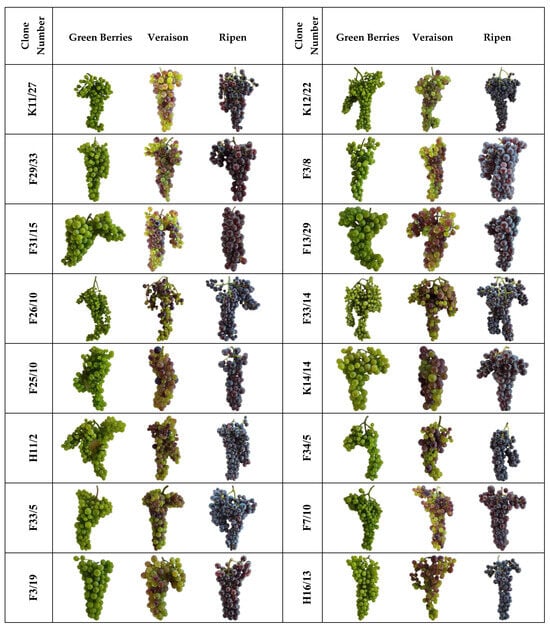
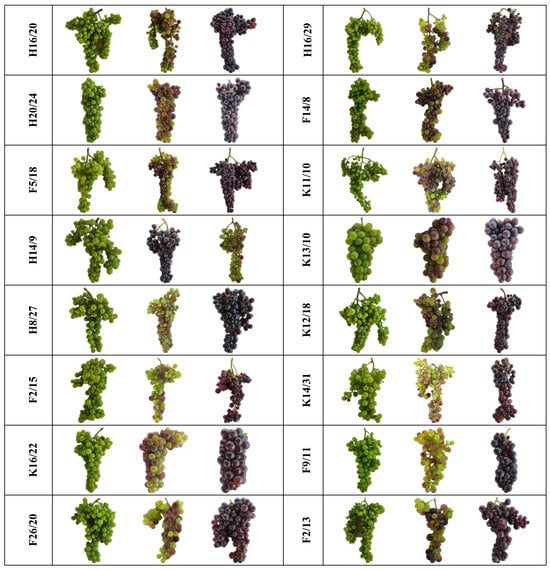
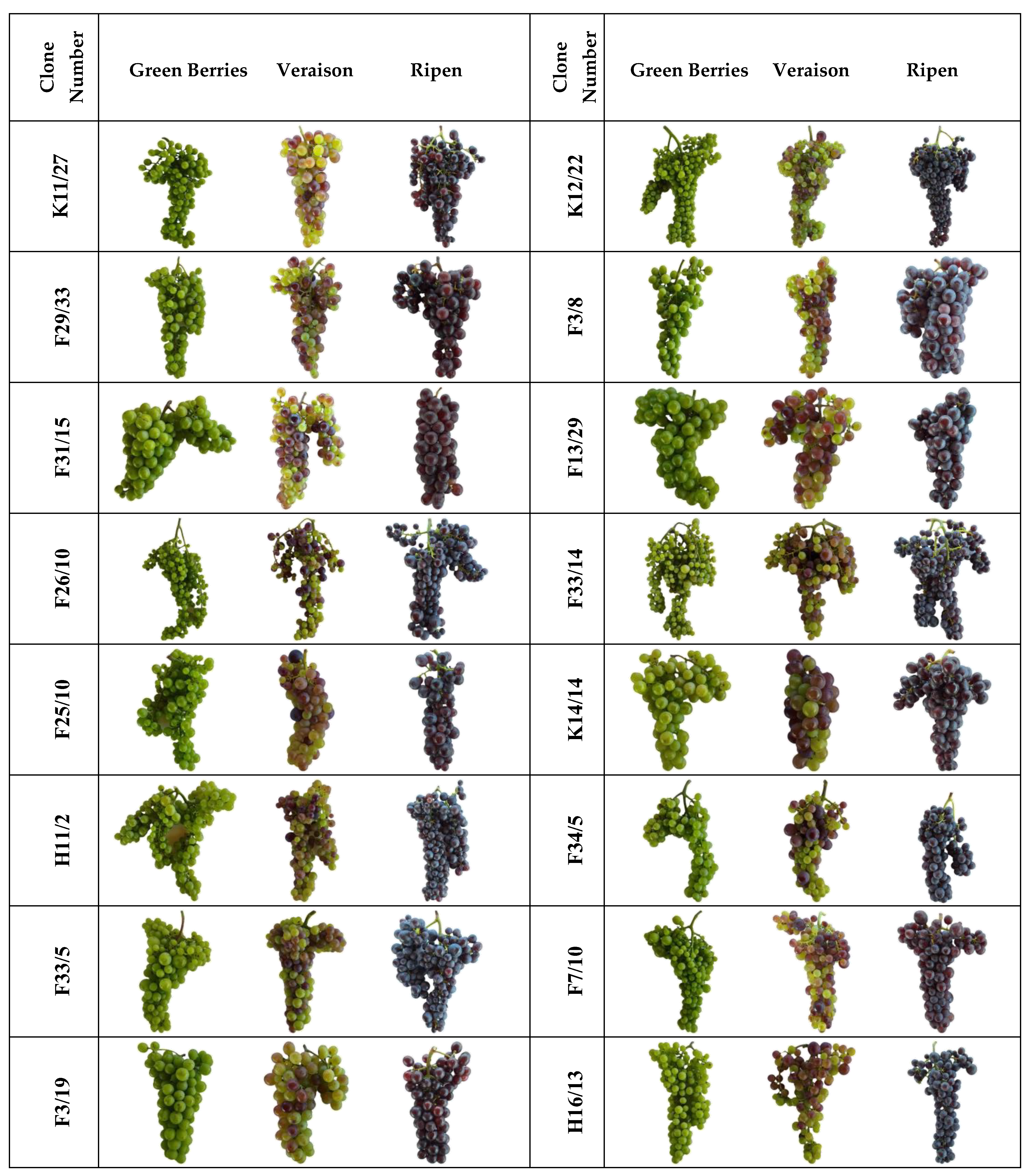
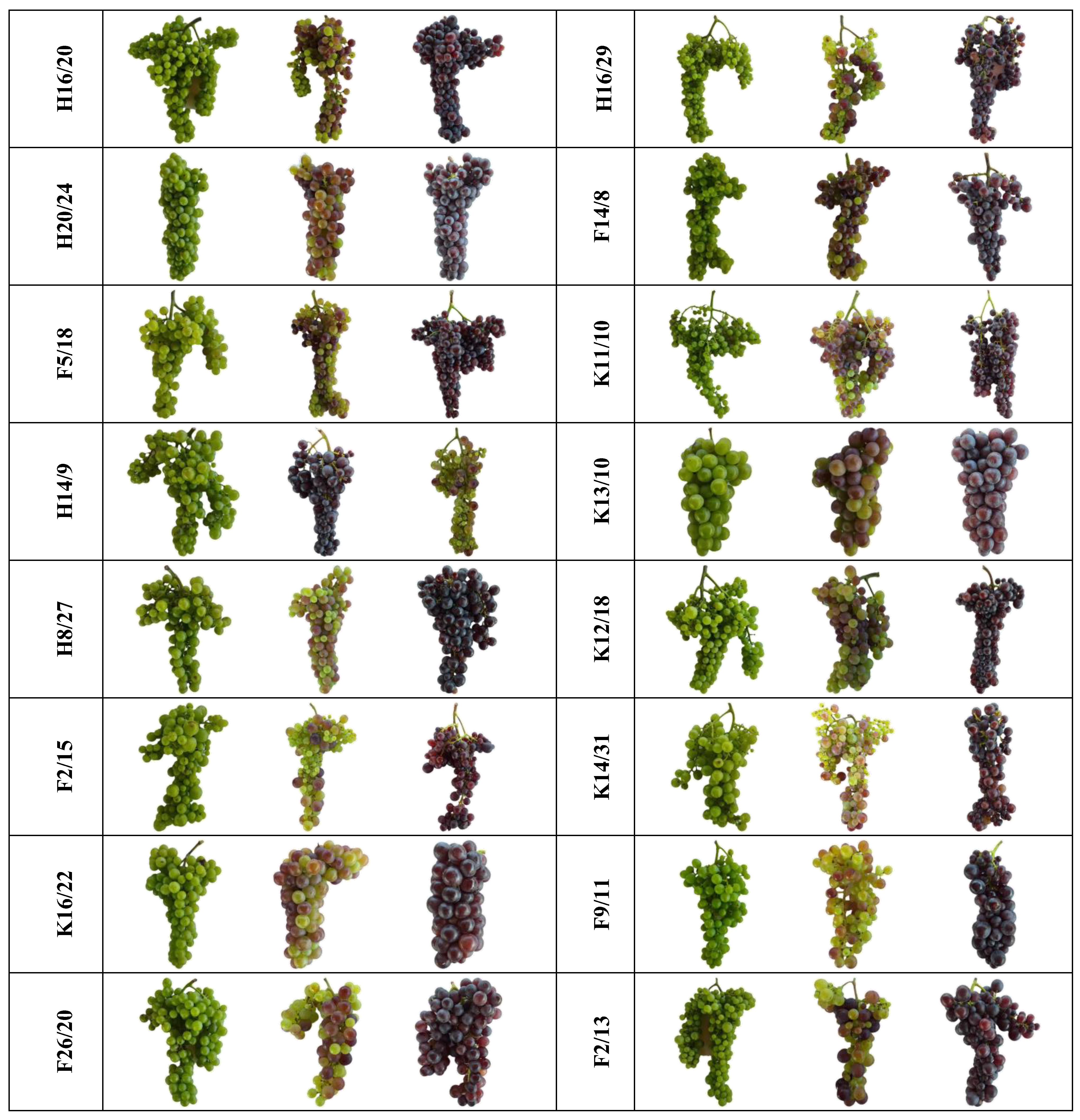
At harvest, yield, cluster and berry morphology, and juice quality parameters were assessed (Figure 1). The measurements included yield per vine (kg), average cluster weight (g), average berry weight (g), total soluble solids content (TSS, °Brix), titratable acidity (TA, g L−1 tartaric acid), must yields (mL 100 g−1) and juice pH.
Figure 1.
Visual comparison of cluster morphology for 32 ‘Merzifon Karası’ clones at three phenological stages (green, veraison, and ripening).
For yield and cluster morphology, the average cluster weight was obtained by weighing individual clusters and calculating the mean value per vine. Yield per vine was estimated by multiplying average cluster weight by the number of clusters per vine. For detailed cluster characterization, three clusters were randomly selected from the first ten shoots of each vine replicate (30 clusters per clone). Each cluster was weighed using a digital scale, while cluster length and width (cm) were measured at the longest and widest points with a ruler. Cluster compactness was visually estimated using a standardized density scale.
For each clone and replicate, 100 berries were randomly sampled from the top, middle, and lateral positions of 10 clusters. Individual berry weights were recorded, and mean values calculated following methods by Amerine and Cruess [30]. Berry dimensions (length and width, mm) were measured using a digital caliper. Additionally, the total weight of 100 berries per clone was recorded to complement these data. Seeded and seedless berries were counted to assess berry type distribution. Seed length and width were measured on a representative sample of seeds randomly selected from each clone using a digital caliper with 0.01 mm precision. Seed weight was determined as the average weight of individual seeds using an analytical balance with 0.001 g sensitivity. Vine yield (kg vine−1) was determined by harvesting all clusters at commercial maturity, weighing them using a digital scale, and recording the total weight per vine. Leaf area (cm2) was calculated non-destructively according to Elsner and Jubb [31] using the formula:
where W is leaf width and L represents leaf length.
Leaf area = −1.41 + 0.527 × W2 + 0.254 × L2
For juice analysis, berry samples were transported to the laboratory, destemmed, and crushed. Juice was extracted by pressing through cheesecloth. The TSS was measured with a digital refractometer (Atago Pocket PAL-1, Tokyo, Japan) and expressed as °Brix. Juice pH was determined using a calibrated glass electrode pH meter (Eutech EcoScan, Thermo Fisher Scientific, Waltham, MA, USA) on 10 mL juice obtained from randomly selected berries, following Ough and Amerine [32]. Titratable acidity was measured by diluting 5 mL of juice to 50 mL with water, adding phenolphthalein, and titrating with 0.1 N NaOH until a pink color appeared. Results were expressed as g tartaric acid L−1. Berry must yield was determined according to the OIV descriptor 233 [33]. Must yield (mL 100 g−1 berries) was determined by crushing berries without pedicels and measuring the extracted juice volume. Must yield was then classified on a 1–5 scale: 1 = very little (<50 mL), 2 = little (50–65 mL), 3 = medium (66–75 mL), 4 = high (76–90 mL), and 5 = very high (>90 mL).
Berry skin color was measured with a Minolta CR-400 colorimeter (Konica Minolta Sensing, Osaka, Japan). The device was calibrated with a white plate before use. For each clone, 30 berries were analyzed, with color readings taken at three equidistant points around the equatorial region. Color was expressed using L (brightness), a* (green to red), and b* (blue to yellow) values [34].
2.3. Millerandage Index
The Millerandage Index (MI) was calculated as the percentage of seedless or shot berries in a cluster. Berries were classified as normal (seeded), seedless, or shot (small and poorly developed). Six vines per clone were evaluated, with five clusters from each vine. Seeded, seedless, and live green ovaries (LGOs) were counted. The MI was calculated following Collins and Dry [35] equation:
Millerandage Index = 10 − (SB × 10)/(SB + SLB + LGOs)
(SB is the number of seeded berries per cluster, SLB is the number of seedless berries per cluster, and LGOs is the number of live green ovaries per cluster).
(SB is the number of seeded berries per cluster, SLB is the number of seedless berries per cluster, and LGOs is the number of live green ovaries per cluster).
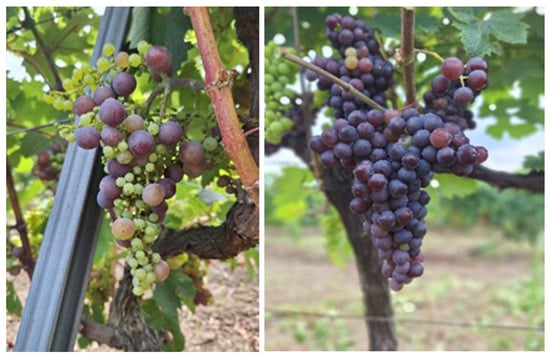
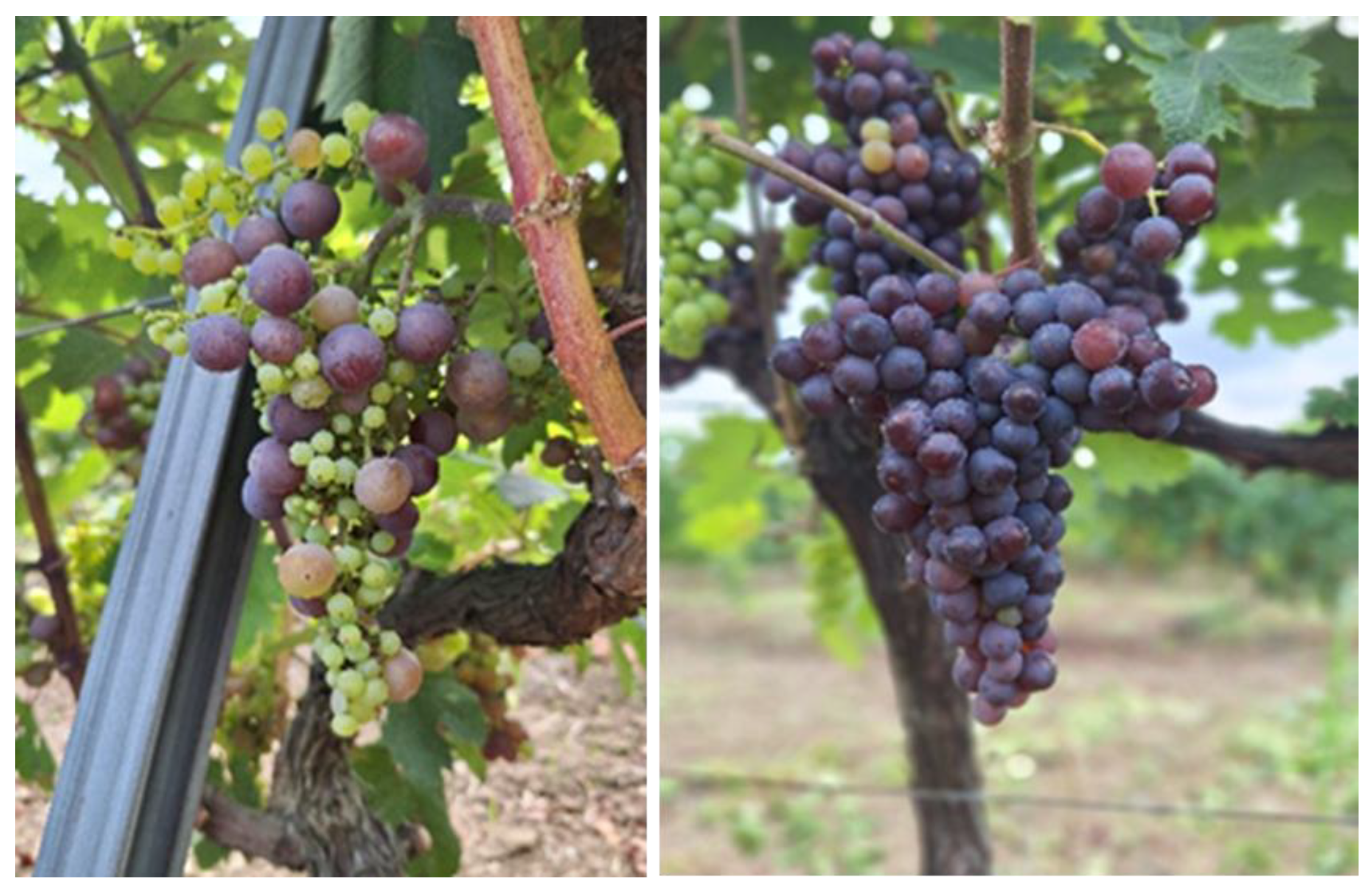
A higher MI value indicated a greater degree of millerandage and reduced fruit set uniformity, while lower values reflect improved berry development and more consistent fruit set (Figure 2).
Figure 2.
Grape cluster showing millerandage (left) and a cluster having perfect berry set (right).
2.4. Soil Properties and Climatic Data of the Experimental Area
Soil samples from the trial vineyard had 55.35% silt and 33.73% clay, with 10.28% calcareous content. The pH was 8.03, indicating slightly alkaline soil. The detailed soil properties of the experimental area are presented in Table 1.
Table 1.
Soil properties of the experimental site in central Bafra, in the Kızılırmak Delta of Türkiye.
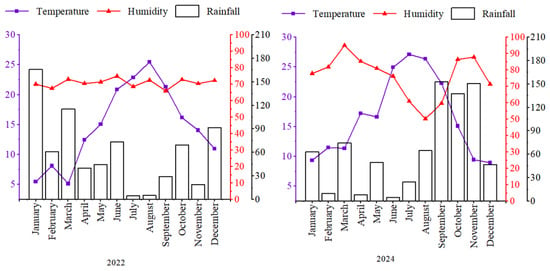
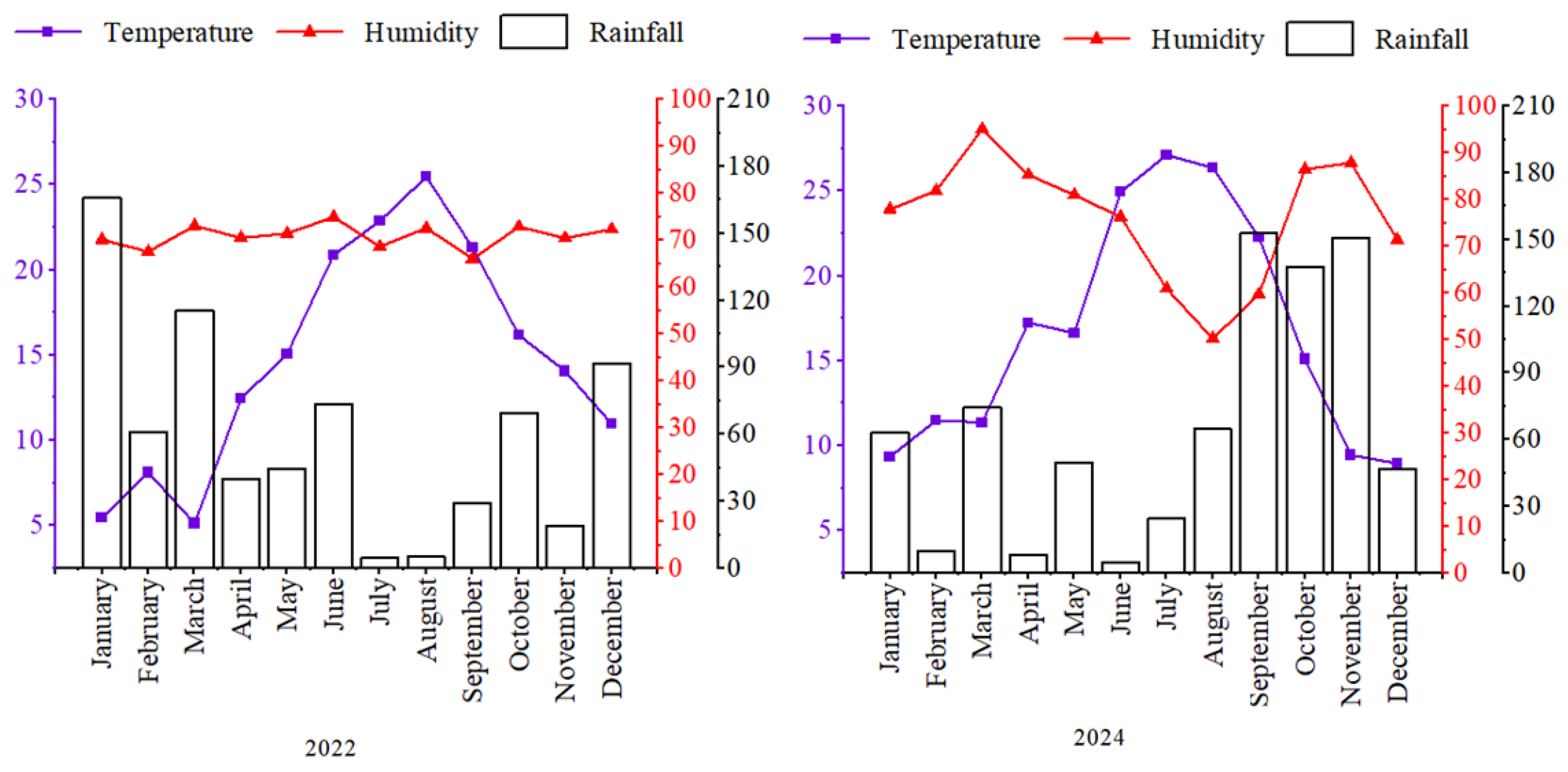
Climatic data from the Turkish Meteorological Service were used to study temperature, humidity, and rainfall in the study area [36]. These data helped assess how the environment affected grapevine growth, fruit development, and millerandage during 2022 and 2024 (Figure 3). In 2022, the average temperature was about 5 °C in January. The average temperature rose to 25.5 °C in July and then decreased in autumn and winter. Humidity stayed mostly between 65% and 75%, with the lowest level in February. Rainfall was high in January and March, low in July and August, and increased in June and December. In 2024, temperatures averaged 9 °C in January and 26–27 °C in July and August. Humidity varied more, with high humidity around 90% in March and low values near 50% in the summer. Rainfall was irregular, decreasing in the first quarter but increasing in September, October, and November. Compared to 2022, the 2024 climate had higher summer temperatures, more humidity changes, and more autumn rainfall, showing a more variable climate.
Figure 3.
Monthly climate data for 2022 and 2024 at the experimental site in central Bafra, in the Kızılırmak Delta of Türkiye.
2.5. Data Analysis
Data were analyzed using one-way analysis of variance (ANOVA) in SPSS version 21.0 (IBM, Armonk, NY, USA), and mean comparisons were performed using Duncan’s multiple range test at a significance level of p < 0.05, where appropriate. Phenotypic data obtained in 2022 and 2024 were initially analyzed separately to assess year-specific effects and clonal differences within each growing season. Following these preliminary analyses, data from both years were evaluated using two-year mean values in order to minimize the influence of interannual environmental variability. Pooling the data increased statistical power, resulting in four replicates per clone (n = 4 per clone; three replicates × two years). When year effects were found to be significant, year was incorporated into the statistical model as a blocking factor to maintain the biological interpretation of clonal variability Pearson correlation analysis was applied to examine the relationships and strength of associations among variables. To determine the grouping of clones based on cluster specifications, yield, and quality characteristics, hierarchical clustering (Ward method) and K-means clustering were performed in OriginLab 2024 (OriginLab Corp. Northampton, MA USA). All statistical analyses and data visualizations were carried out using SPSS 21 and OriginLab 2024 to ensure accuracy and consistency of results.
3. Results and Discussion
3.1. Climatic Conditions and Their Influence on Clonal Performance
Climatic conditions differed markedly between the 2022 and 2024 growing seasons, particularly during the critical berry development and ripening phases (August to October). In 2024, cumulative precipitation during this period was substantially higher (approximately 355.4 mm) than in 2022 (approximately 104.2 mm), representing an approximately threefold increase. Additionally, average temperatures during berry ripening were slightly higher in 2024 (21.3 °C) than in 2022 (21.0 °C). These climatic variations had potential implications for fruit development, as higher moisture availability can influence berry size, sugar accumulation, and secondary metabolite synthesis. However, despite these environmental differences, the clonal ranking for key traits such as cluster weight, berry weight, and millerandage index remained consistent across both years (Pearson correlation coefficients r = 0.82–0.91, p < 0.001), suggesting that the observed phenotypic variability is predominantly genotype-driven rather than environment-dependent. This finding supports the robustness of clonal selection criteria and indicates that superior clones maintain their performance advantages across varying climatic conditions. Nevertheless, some traits, such as titratable acidity and pH, showed moderate year-to-year variation, likely reflecting the direct influence of precipitation and temperature on organic acid metabolism during ripening. These observations underscore the importance of multi-year evaluations in clonal selection programs to distinguish stable genetic traits from environmentally induced variation.
3.2. Cluster, Must, and Berry Characteristics
‘Merzifon Karası’ clones differed significantly for cluster and berry characteristics indicating a broad genetic and phenotypic diversity within the clones (Table 2). Clones H20/24, F13/29, F3/19, K13/10, and K16/22 showed superior cluster and berry characteristics among the investigated parameters, while clones H16/20, K12/22, F26/10, and F33/14 exhibited smaller berries (<1 g) with shorter berry dimensions. Cluster weight showed substantial variation among the clones, ranging from 95.83 g (F7/10) to 254.07 g (H20/24). Similarly, relatively large clusters were produced by F13/29 (251.89 g) and F3/19 (244.98 g), whereas F7/10 was characterized by the smallest clusters.
Table 2.
Cluster, must, and berry characteristics of ‘Merzifon Karası’ clones in central Bafra, in the Kızılırmak Delta of Türkiye.
The longest clusters (170.80 mm, 163.60 mm, and 163.20 mm) belonged to K11/10, F33/14, and H11/2, respectively, whereas the shortest clusters (91.15 mm and 105.35 mm) were recorded in K13/10 and K16/22. The widest clusters (127.25 mm and 116.40 mm) were in K11/27 and H20/24, while the narrowest (73.75 mm and 78.80 mm) were observed in F7/10 and F26/20. In general, longer clusters tended to be wider, although some clones produced long but relatively narrow clusters. These results indicate notable morphological differences among ‘Merzifon Karası’ clones in terms of cluster size, which could affect grape yield and quality. Similarly, Atak et al. [37] reported that significant differences in cluster compactness and berry size may occur among different clones.
Clones K16/22 and K13/10 produced the largest berries, while K12/22 and H16/20 had the smallest. Clones F3/19, F3/8, and F31/15 had long berries, while K12/22, H16/20, and F33/14 had small, round berries. These characteristics, related to berry set and millerandage tendency, may negatively impact cluster compactness and reduce processing yield. Researchers have reported that cluster architecture, influenced by berry set and millerandage tendency, may adversely affect cluster compactness, thereby reducing processing yield [20,38,39]. Calderón et al. [40] reported that millerandage, characterized by uneven berry size and seedlessness, varied among ‘Malbec’ grape clones and affected berry set rate, often reducing yield but potentially increasing wine complexity. Based on measurements of berry width and length, clones K16/22 and F3/19, exhibited uniform berry morphology and had the highest values. Peduncle length varied from 19.05 mm (K16/22) to 34.42 mm (H14/9), while pedicel width ranged from 3.99 mm (F13/29) to 6.71 mm (F9/11), suggesting differences in cluster architecture that may influence susceptibility to shattering or disease. Clones with larger, more elongated berries and optimal pedicel lengths (K16/22, K13/10, F3/19) may be suitable for both fresh consumption and winemaking, while clones with smaller berries could be more suitable for certain processing applications. In this context, Xiu et al. [41] conducted a clonal selection study on the grape cultivar ‘Long Yan’, which revealed significant variation among selected clones in terms of yield, berry size, and pomological taste attributes. The authors indicated that these phenotypic differences enabled the identification of clones suitable for both fresh consumption and winemaking purposes. This diversity reflects both the clonal genetic background and environmental factors influencing berry development. Marković et al. [42] reported significant morphological and chemical differences among ‘Žilavka’ clones in cluster and berry weight, seed weight, and sugar content, highlighting the impact of clonal variation on grape yield and wine quality. Other researchers have also reported variation in berry length, width, and weight among clones of some grape cultivars [43,44]. The berry weight in wine grape varieties is considered an important parameter in determining wine quality. As berry weight increases, the surface area to volume ratio of the berries decreases, which can negatively affect the concentration of phenolic compounds within the berries [45].
Must yield values also exhibited a wide range, from 51.90% (F5/18) to 75.70% (F13/29). According to OIV 233 classification, must yield was high in clone F13/29, low in clones F2/13, K14/31, K13/10, H16/29, F33/5, and F5/18, while the remaining clones were categorized as medium. In a similar study, Tahmaz [46] reported must yield values ranging from 29.8% to 75.4% in ‘Kalecik Karası’ clones.
Soluble solids and pH also differed, affecting taste and quality. The highest soluble solid content (TSS) was measured in F9/11 (23.99%), followed by F25/10 (22.81%), whereas the lowest TSS occurred in K11/10 (20.48%). Titratable acidity varied between 0.90 g 100 g−1 (H20/24) and 1.23 g 100 g−1 (K12/22), while pH ranged from 2.75 (K12/22) to 3.20 (K13/10). Berry weight varied from 0.64 g (H16/20) to 3.06 g (K16/22). Clones such as H20/24, K13/10, and K14/14 exhibited a favorable sugar–acid balance, underscoring their potential suitability for both table and wine grape production. Aslan et al. [47] stated that significant differences could occur among ‘Horoz Karası’ grape clones in terms of berry weight (3.16–7.30 g), cluster weight (288–666 g), and yield (3.2–23.2 kg per vine) in their clonal selection study. Comparable findings have also been reported in previous studies [48,49]. Mejía-Correal et al. [50] reported that TSS tended to increase as titratable acidity decreased, indicating a negative correlation during grape maturation. These findings highlight the dynamic balance between sugar and acid content as essential markers of fruit quality and maturity in grapes. Importantly, the pH values obtained in the current study remained within the acceptable range for winemaking (<3.2), further supporting the potential of these clones for quality wine production. Similarly, soluble solids and acidity ranges reported by Cangi and Demir [51] and Dünya and Dardeniz [52] align with the present results. The observed variation likely reflects both genetic differences among clones and environmental influences, including vineyard location, altitude, and climatic conditions [53,54].
3.3. Seed, Berry Skin Color, Leaf, and Yield
‘Merzifon Karası’ clones differed significantly for berry characteristics that included the number of seeded and seedless berries, seed size, and seed weight (Table 3). Clones K11/27, F13/29, and H20/24 produced a higher number of seeded berries, whereas K12/22, F33/14, and H16/20 mostly clustered with seedless berries. Clones H16/20 and F33/14 exhibited both a high proportion of seedless berries and elevated millerandage indices, whereas K11/27 and F13/29 were distinguished by higher proportions of seeded berries (84.90% and 75.95%, respectively). Clones such as F3/8, F3/19, and K16/22 had a more balanced distribution of both seeded and seedless berries. These differences indicate strong genetic diversity among clones. Many researchers have stated that grapes with more seeded berries may be more suitable for traditional wine production, as phenolic compounds from seeds can improve wine quality [55,56,57,58]. Yaşasın et al. [59] stated that the presence of seedless berries negatively affected yield and processing efficiency in wine grape cultivars, as these berries contribute significantly less juice compared to fully developed berries. Furthermore, the presence of seeds is essential for wine quality, since tannins are major phenolic compounds influencing color, astringency, and aging potential and are mainly derived from seeds and skins [60,61]. These results emphasize the importance of grape seeds and show that a targeted clonal selection can help improve both yield and quality in viticulture.
Table 3.
Seed and leaf characteristics, berry skin color, and yield of ‘Merzifon Karası’ clones grown in central Bafra, in the Kızılırmak Delta of Türkiye during 2022 and 2024.
Significant differences in seed morphology were also observed among the examined clones (Table 3). Seed length ranged from 5.46 mm in K12/22 to 7.00 mm in K16/22, with the longest seeds recorded in K16/22, K14/14, F3/19, and H16/29. Seed width ranged from 4.10 mm in K12/22 to 4.98 mm in H8/27, with the broadest seeds in H8/27, F25/10, F31/15, and K14/14. Seed weight ranged from 30.86 g in K12/22 to 65.12 g in H16/29, with the heaviest seeds in H16/29, H8/27, F3/19, and K16/22. Notably, K16/22 combined both the greatest seed length and substantial mass, while K12/22 and H16/20 consistently had the smallest and lightest seeds. These differences highlight the genetic and phenotypic diversity of clones, with potential implications for clonal selection for grape quality, and production efficiency. Clones H16/29, H8/27, F3/19, and K16/22 emerged as promising candidates for further evaluation due to their superior seed characteristics. Previous studies have also reported variation in grape seed morphology. Alonso et al. [62] identified seed length, width, weight, and number per berry as key characteristics differentiating ‘Albariño’ clones, with consistent variation across years and environments, supporting their use in clonal selection. Abiri et al. [63] observed significant morphological diversity among 55 grape cultivars, emphasizing its relevance for breeding and cultivar identification. Cervantes et al. [64] reported substantial variation in seed dimensions among major Spanish grapevine cultivars, underscoring the utility of seed morphology for distinguishing cultivars. Such information is critical for breeding programs aiming to improve berry and seed characteristics.
Leaf length ranged from 10.32 cm in F9/11 to 12.32 cm in F3/19 and H16/20 (Table 3). The largest leaf area was recorded in H16/20 (162.79 cm2), followed by F29/33, K12/22, and F3/19, while F9/11 had the smallest leaf area (123.73 cm2). Yield per vine varied significantly among clones, with the highest values in F13/29 (6.81 kg vine−1) and K11/27 (6.32 kg vine−1), and the lowest in F26/20 (0.62 kg vine−1), F34/5 (1.18 kg vine−1) and H11/2 (1.86 kg vine−1). Medium yields were observed in K12/18 (4.31 kg vine−1), F3/19 (3.79 kg vine−1), and K16/22 (3.11 kg vine−1). Superior yields in F13/29 and K11/27 were associated with relatively high leaf area, suggesting more efficient canopy structures supporting reproductive growth. These findings align with Kliewer and Dokoozlian [65], who demonstrated that optimal leaf area-to-fruit weight ratios influence fruit ripening, sugar accumulation, and berry color. Low-yielding clones such as F26/20 and F9/11 displayed limited vegetative and reproductive performance, indicating less favorable canopy-to-yield ratios. Some clones, including K12/18 and F3/19, had intermediate yields despite favorable leaf areas, highlighting the contribution of additional factors such as bud fertility, cluster structure, and source–sink dynamics to overall reproductive performance [66,67].
Berry skin color also varied significantly (Table 3). The L* values ranged from 18.23 (K12/22) to 36.54 (H14/9), with the brightest berries in H14/9, F33/5, and F25/10, and the darkest in K12/22 and K11/27. Redness (a*) ranged from 6.41 (F26/20) to 11.15 (F9/11), while yellowness/greenness (b*) ranged from 3.78 (H16/20) to 7.65 (F31/15). Clones F9/11 and F31/15 displayed the most intense color attributes, whereas K12/22, K11/27, and H16/20 had the lowest color intensities. These results underscore the genetic variability in berry skin color, with implications for breeding programs targeting improved coloration and wine quality. Comparable observations were reported by Yaşasın et al. [68], Demirkeser [43], and Bozkurt et al. [69], highlighting the influence of genetic background and pigment composition on L*, a*, and b* values. Alonso et al. [62] emphasized the importance of in situ evaluations across multiple seasons and environments to ensure phenotypic stability before clone selection.
3.4. Millerandage and Green Berries (LGOs)
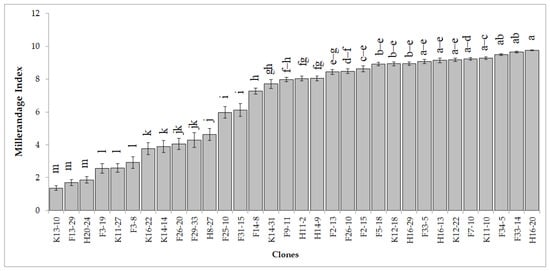
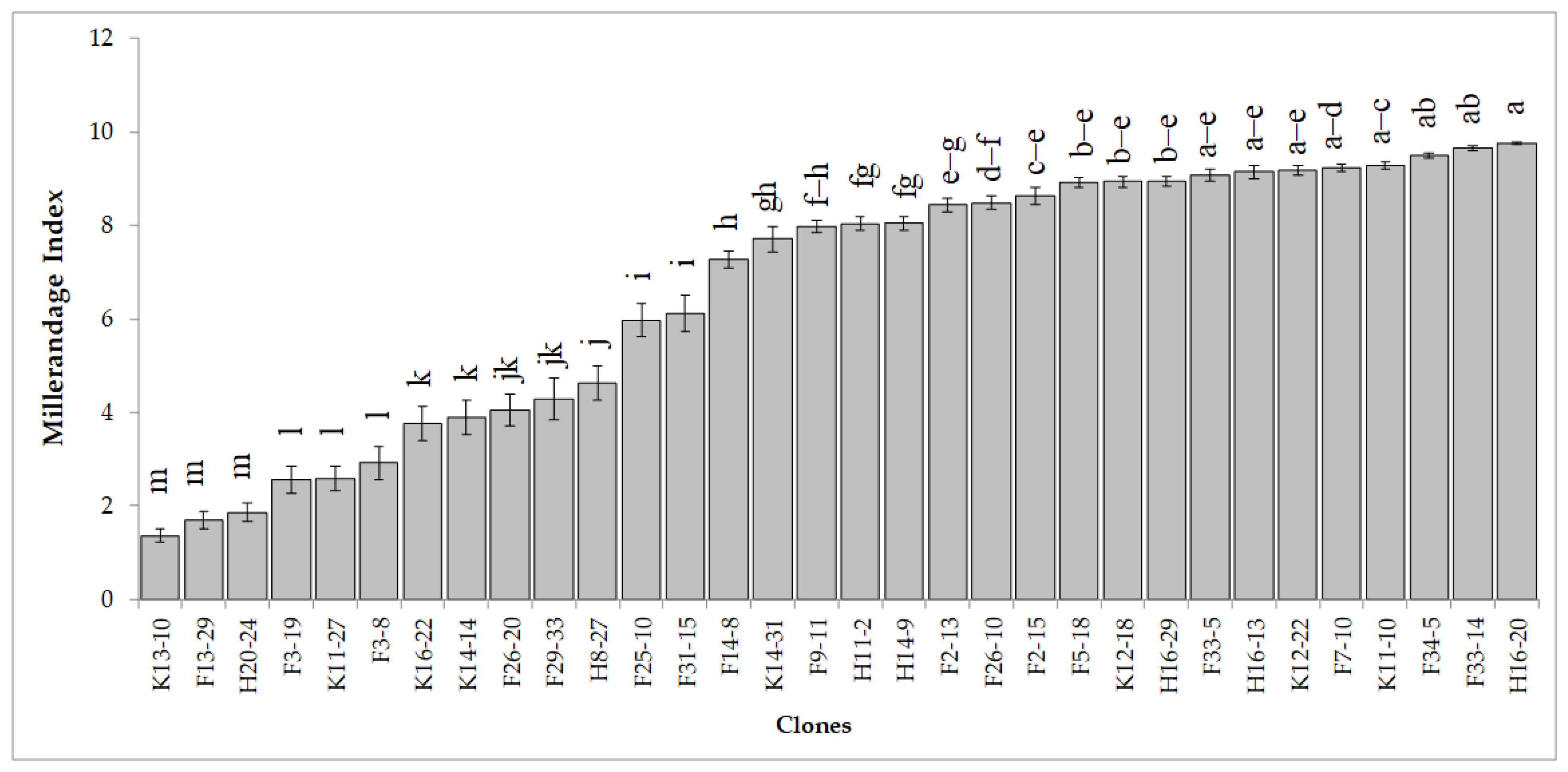
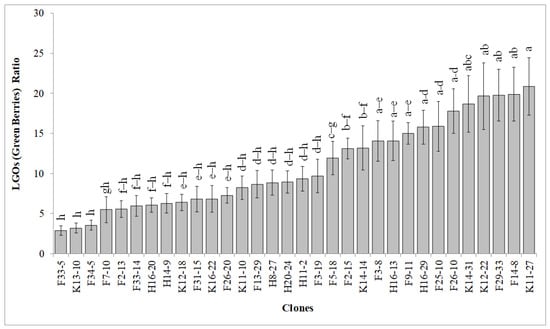
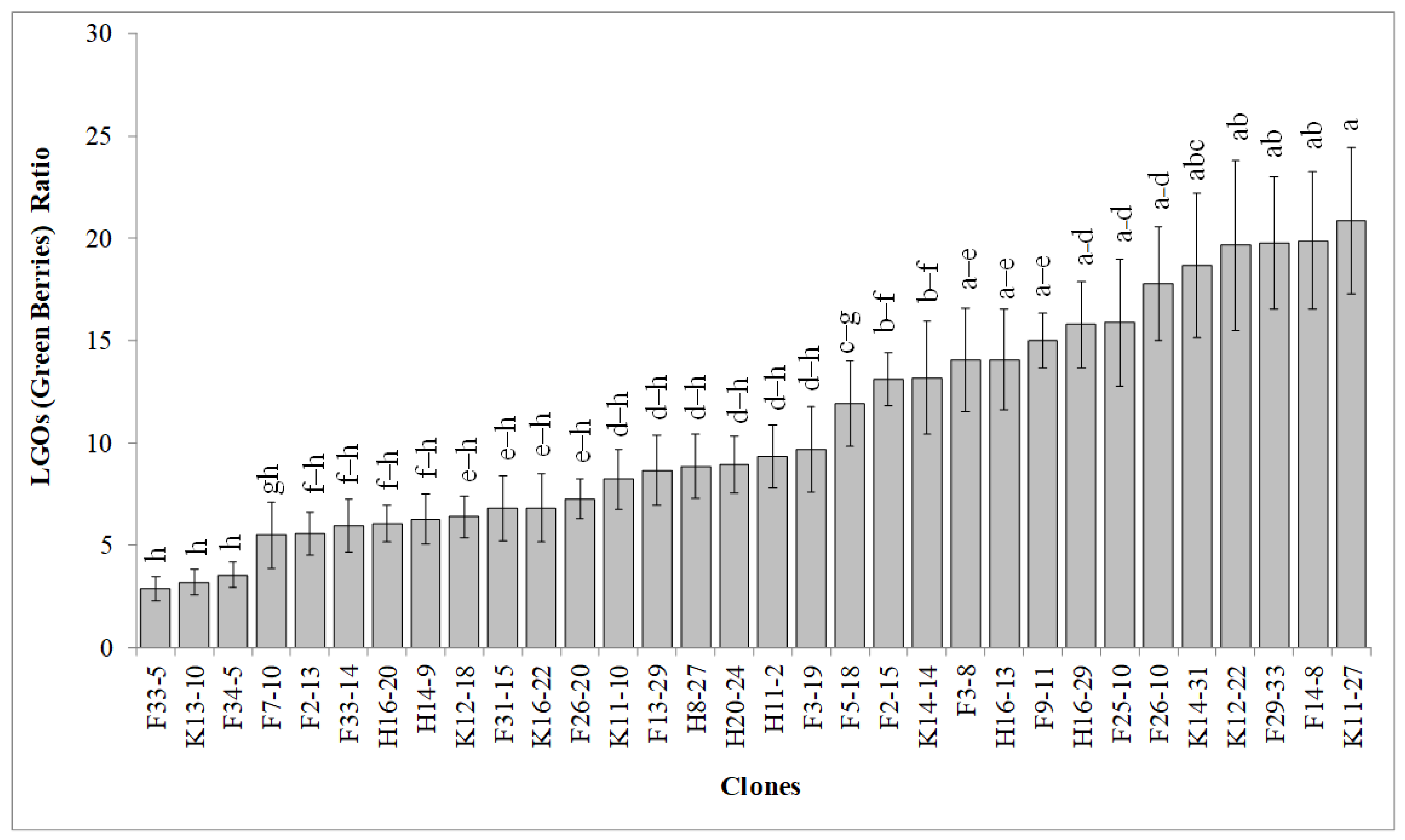
‘Merzifon Karası’ clones differed for LGO (%) and Millerandage Index (Figure 4 and Figure 5). The Millerandage Index ranged from 1.35 to 9.77 among the clones (Figure 4). Considering the contrasting climatic conditions of the 2022 and 2024 growing seasons, particularly during the flowering period, clones K13/10, H20/24, and F13/29 consistently exhibited Millerandage Index (MI) values below 2.0. This stable performance under different temperature, humidity, and rainfall patterns indicates superior berry set capacity and low sensitivity to unfavorable environmental conditions. Therefore, these clones can be considered the most desirable candidates for clonal selection in terms of fruit set uniformity and reproductive stability. The lowest values were found in K13/10 (1.35), F13/29 (1.69), and H20/24 (1.85), which exhibited homogeneous berry development and balanced cluster structures. In contrast, clones H16/20 (9.77), F33/14 (9.66), F34/5 (9.50), and F33/5 (9.07) had the highest MI values, characterized by mixed berry sizes and irregular growth. The LGO values varied among clones, ranging from 2.87% to 20.87% (Figure 5). Among the clones, the lowest LGO values were observed in F33/5 (2.87%), K13/10 (3.20%), and F34/5 (3.55%), all of which exhibited compact cluster structures and perfect berry set. In contrast, the highest LGO values occurred in K11/27 (20.87%), F29/33 (19.78%), and F14/8 (19.88%), which had loose and more open clusters. The number of LGOs is a critical factor influencing fruit set, as highlighted by Friend et al. [70], who reported that high LGO values were associated with poor fruit set, affecting berry and cluster development. The occurrence of seedless berries and millerandage is also linked to reduced yield components. These results indicate considerable variation among clones in seeded and seedless berry formation. Millerandage reflects clusters containing berries of different sizes. Spellman [71] reported that millerandage reduced grape yield because smaller berries produced less juice, posing economic challenges. Cahurel [72] noted that grapes affected by sweet millerandage tend to have elevated sugar and anthocyanin levels, similar pH values, and slightly reduced total acidity. Overall, inadequate berry set reduces cluster compactness, fruit development, and yield potential.
Figure 4.
Millerandage index of the ‘Merzifon Karası’ clones grown in central Bafra, in the Kızılırmak Delta of Türkiye during 2022 and 2024. Columns followed by the same letter are not significantly different at p ≤ 0.05.
Figure 5.
LGOs (green berries) of the ‘Merzifon Karası’ clones grown in central Bafra, in the Kızılırmak Delta of Türkiye during 2022 and 2024. Columns followed by the same letter are not significantly different at p ≤ 0.05.
The Millerandage Index is influenced by genetics, environment, and physiology. Environmental stresses during flowering, such as cold, rain, or strong wind, can increase the Millerandage Index by reducing fertilization [20]. Sensitive cultivars like ‘Ezerfurtu’ and ‘Napoca’ exhibited high rates (>35%), whereas tolerant cultivars like ‘Pinot Noir’ and ‘Pinot Gris’ had rates below 1%. Genetic differences among clones also affect millerandage. Calderón et al. [40] observed substantial variation in fruit set and Millerandage Index among ‘Malbec’ clones, with lower fruit set correlating with higher numbers of small or seedless berries. Zinelabidine et al. [22] reported that genetic alterations can reduce pollen or ovule quality, increasing the millerandage index. Sugar availability and plant hormones influence millerandage index as well. Limited sugar movement during flowering improves fruit set and reduces millerandage [73], while hormonal differences (abscisic acid, jasmonic acid, and indole-3-acetic acid) also affect berry size and millerandage [21]. This highlights the interplay between sugars, hormones, and environment in normal berry development.
Some berries develop normally with seeds, while others remain small or seedless. Higher index values indicate poor fertilization or irregular berry growth, often caused by incomplete fertilization or post-fertilization flower damage [74]. This represents the proportion of small or seedless berries relative to the total number of berries [18,21], serving as a measure of reproductive success and the effects of genotype and environmental conditions on fruit set. Millerandage showed significant inter-cultivar differences but remained relatively stable across seasons, highlighting substantial genetic and phenotypic diversity [39]. For instance, ‘Kalecik Karası’ is highly sensitive cultivar, with MI values ranging from 30% to 47% [75]. This affects both yield and wine quality, as small seedless berries produce less juice and contain lower tannin levels, with seeds contributing approximately 60% of wine tannins [15].
Clones exhibiting both low LGO and low MI values showed the best combination of compact cluster structure and homogeneous berry size. Clones K13/10, F13/29, H20/24, and F3/19 were identified as the most favorable genotypes (Figure 4 and Figure 5). Specifically, K13/10 (3.20% LGO and 1.35 Millerandage) had the lowest values and the most stable performance. In summary, clones with low LGO and low MI stand out for balanced berry development, tight cluster structure, and high market quality.
3.5. Leaf Morphology and Yield Correlation
Differences in leaf size and yield among the ‘Merzifon Karası’ clones reflected the genetic diversity within the population (Table 3). Leaf length and area are critical for photosynthesis, providing energy for berry growth. In this study, clones H16/20 and F3/19 had larger leaves, which likely enhanced photosynthetic capacity and supported berry development, whereas clones F9/11 and F26/20 had smaller leaves, potentially limiting photosynthesis and reducing yield.
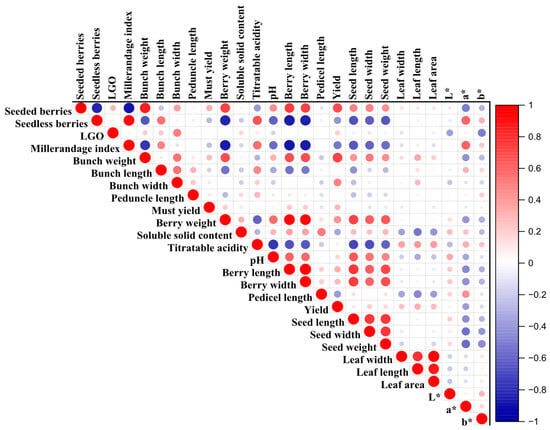
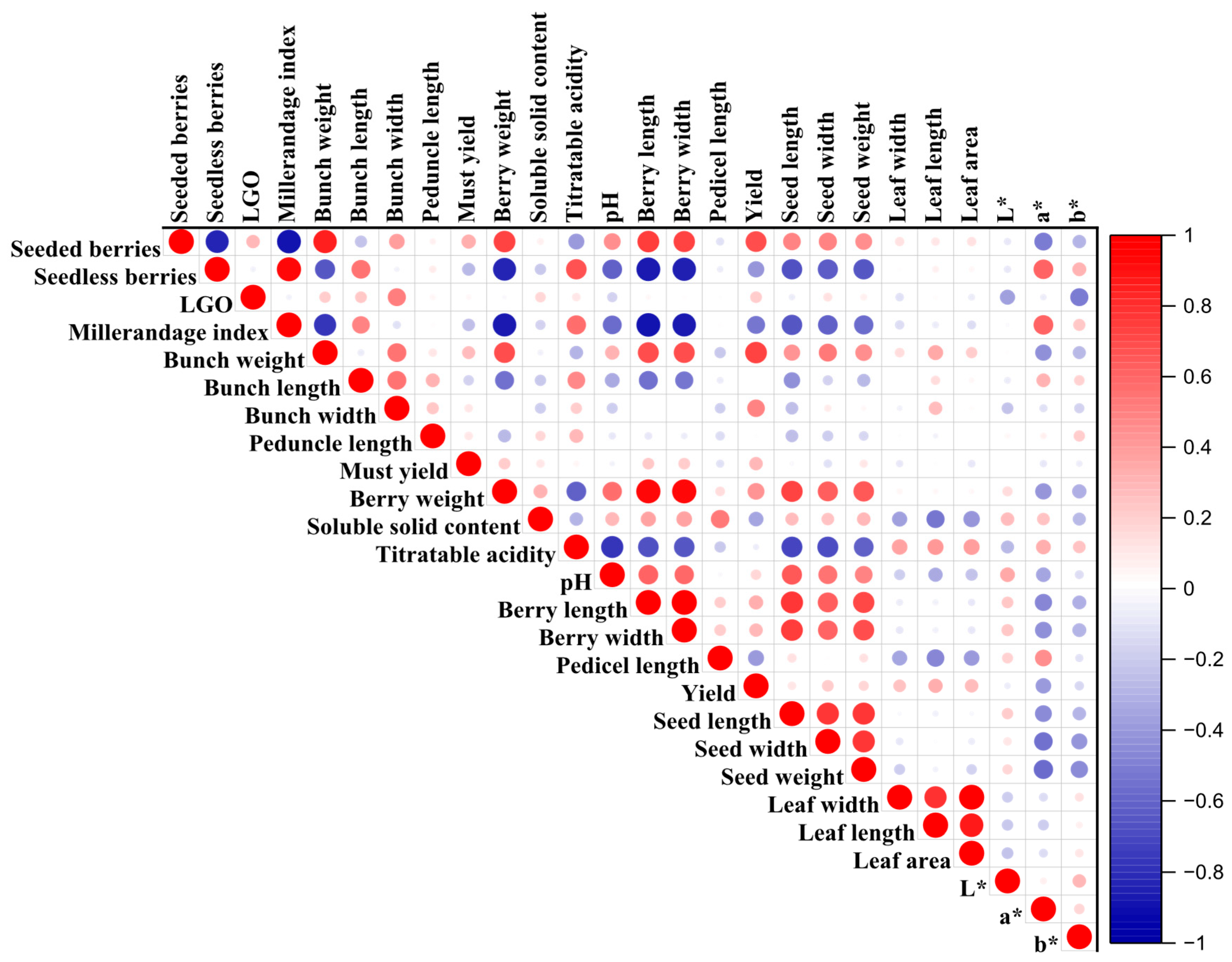
Correlation analysis revealed clear interrelationships between leaf morphology and yield-related parameters (Figure 6). Leaf length, width, and area were positively associated with vine yield, suggesting that larger leaves contribute to improved fruit growth [76,77]. Additionally, the number of seeded berries correlated strongly with cluster weight, length, and width, indicating that seed development influences cluster structure and berry growth. Berry weight was also positively related to cluster size and total soluble solids (TSS), reflecting the interplay between berry enlargement and sugar accumulation during ripening [78]. Expectedly, TSS was negatively correlated with titratable acidity, while pH showed a positive correlation with TSS, illustrating the balance between sugar accumulation and acid degradation.
Figure 6.
Correlation analysis among morphological, yield, berry, cluster, seed, and chemical characteristics of the ‘Merzifon Karası’ clones, highlighting the genetic and phenotypic heterogeneity within the population grown in central Bafra, in the Kızılırmak Delta of Türkiye during 2022 and 2024. L* = lightness; a* = red/green scale; b* = yellow/blue scale.
Seed characteristics, including length, width, and weight, were closely associated with berry weight, emphasizing their role in berry enlargement through hormonal regulation [79,80] (Figure 6). Cluster morphology parameters such as weight, length, and width were strongly interrelated, confirming their reliability as indicators of cluster size [81,82].
In this study, the findings suggested that leaf morphology significantly affected photosynthetic capacity and resource allocation, which in turn influenced cluster and berry development. Clones with larger leaves, such as H16/20 and F3/19, demonstrated higher yield potential, while smaller-leafed clones, including F9/11 and F26/20, showed reduced productivity. This emphasizes the importance of considering leaf characteristics in clonal selection for improved grape production and quality.
3.6. PCA and K-Means Clustering
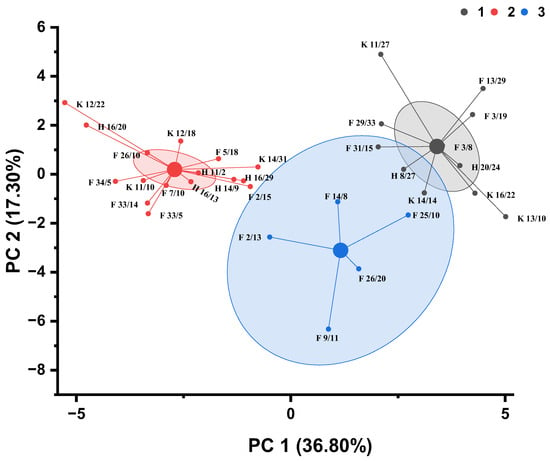
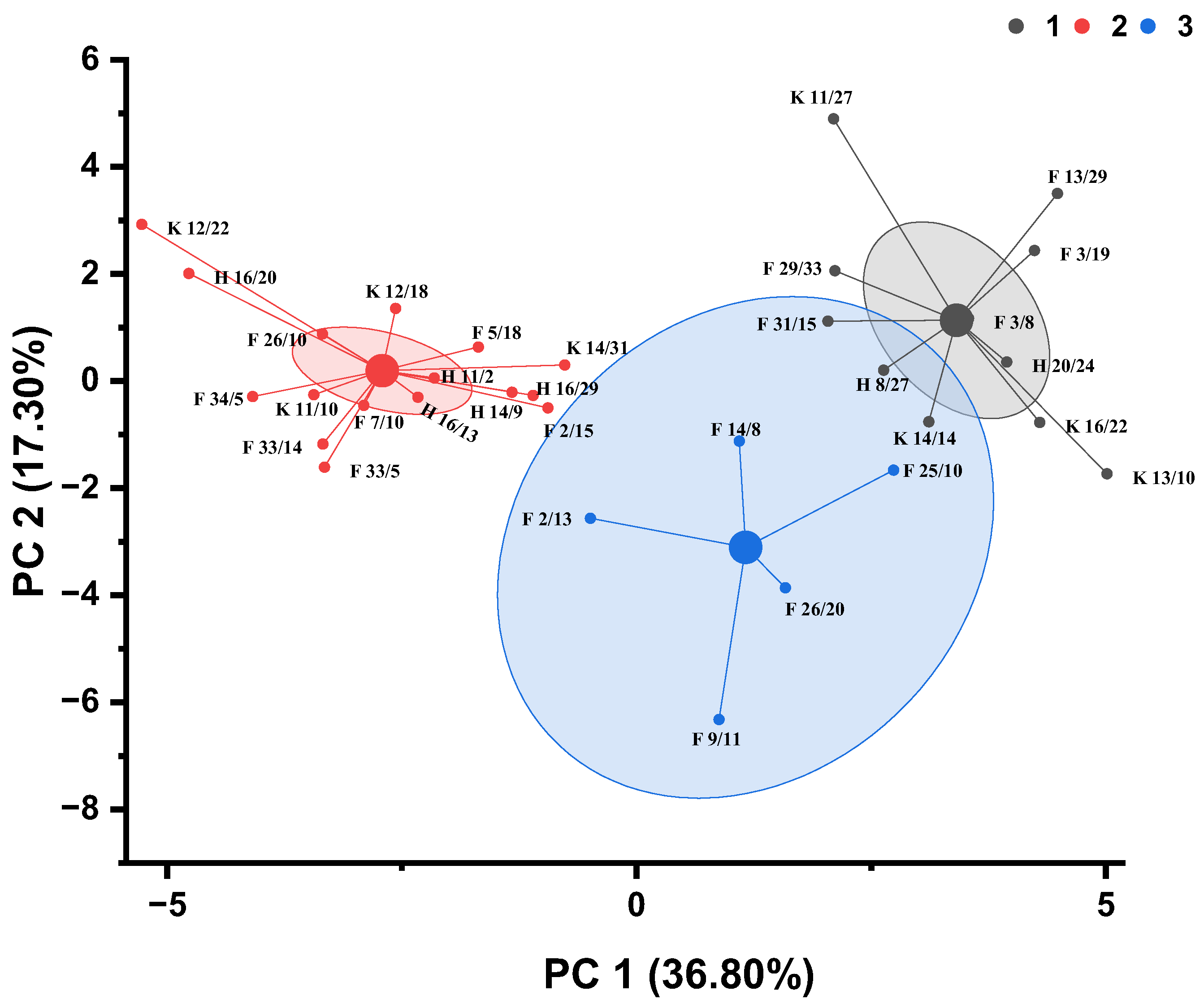
The K-Means clustering analysis based on yield and quality parameters was conducted using the morphological and chemical characteristics of the evaluated ‘Merzifon Karası’ clones. The resulting PCA (principal component analysis) biplot (Figure 7) revealed the presence of three distinct clusters, which together explained 54.1% of the total variance (PC1 36.8%; PC2 17.3%). Cluster 1 (black, upper right quadrant) included clones with positive scores on PC1 and PC2, including clones such as F3/8, K11/27, and F13/29. These clones showed good yield and quality. They had large berries, well-formed clusters, and good chemical features.
Figure 7.
PCA biplot showing the distribution of grapevine clones based on morphological and chemical characteristics. Clones were grouped according to yield and quality parameters using K-Means clustering analysis. The shaded regions represent the dispersion (confidence ellipses) of the clusters obtained from the K-means analysis.
Therefore, these clones are considered to have high commercial potential due to their superior growth and production characteristics. Cluster 2 (red) included clones mainly associated with negative PC1 scores, such as K12/22, F26/10, and F5/18, which showed moderate to low performance in yield and quality. Some variability and weaknesses were noted within this group, indicating that these clones require careful evaluation for regional adaptation and cultivation strategies. Cluster 3 (blue) comprised clones with negative PC2 scores, including F14/8, F9/11, and F26/20. This group displayed distinct yield and quality patterns and differed in appearance from the other clusters, potentially including clones with lower productivity but superior product quality, or those possessing unique growth or cultivation advantages. The results show clear differences among the clones and successful grouping based on appearance and chemical contents. In addition, this clustering analysis provided a valuable framework for grapevine breeding programs, offering guidance for targeted clone selection and supporting the adaptation of genotypes to specific cultivation conditions.
4. Conclusions
This study provides clear evidence of significant clonal variability in Vitis vinifera cv. ‘Merzifon Karası’, a native Turkish wine grape of notable enological and cultural importance. Among the 32 evaluated clones, F13/29, K11/27, and H20/24 performed best in the field. They had high yields, well-developed clusters and berries, and low millerandage indices. Clone K13/10 also emerged as promising due to its minimal millerandage, demonstrating exceptional uniformity in fruit set despite its moderate cluster size. In contrast, clones such as H16/20 and F33/14 showed elevated millerandage and reduced cluster uniformity, emphasizing the need for careful selection to mitigate irregular fruit set and ensure stable yields. Considering both yield and berry skin color, the most promising clones were K11/27, F13/29, and K13/10. These clones had dark berries, consistent fruit set, and well-formed clusters. These findings underscore the critical role of the millerandage index as a selection criterion and confirm that clonal selection can simultaneously enhance productivity and fruit quality. The results show that the clonal selection of ‘Merzifon Karası’ contributes to sustainable viticulture, enhances economic potential, and supports the preservation of local viticultural resources. Future studies including molecular and sensory analyses across multiple sites will verify the stability of key characteristics and promote the use of promising clones in commercial vineyards.
Author Contributions
Conceptualization, K.B. and B.K.; methodology, K.B. and B.K.; software, K.B. and B.K.; formal analysis, K.B. and B.K.; investigation, K.B. and B.K.; resources, K.B. and B.K.; data curation, K.B., B.K. and H.H.-V.; writing—original draft preparation, K.B., B.K. and H.H.-V.; writing, reviewing and editing, K.B., B.K. and H.H.-V.; visualization, K.B.; supervision, B.K.; project administration, B.K. All authors have read and agreed to the published version of the manuscript.
Funding
This research received no external funding.
Informed Consent Statement
Not applicable.
Data Availability Statement
Data is contained within the article.
Acknowledgments
This article is based on the master’s thesis of Kevser Bayram.
Conflicts of Interest
The authors declare no conflicts of interest. The funders had no role in the design of this study, data collection, analyses, interpretation of the data, writing of the manuscript, or decision to publish the results.
Abbreviations
The following abbreviations are used in this manuscript:
| L | Leaf length |
| W | Leaf width |
| OIV | Organisation Internationale de la Vigne |
| MI | Millerandage Index |
| LGOs | Live green ovaries |
| SB | number of seeded berries per cluster |
| SLB | number of seedless berries per cluster |
References
- McGovern, P.; Jalabadze, M.; Batiuk, S.; Callahan, M.P.; Smith, K.E.; Hall, G.R.; Lordkipanidze, D. Early Neolithic wine of Georgia in the South Caucasus. Proc. Natl. Acad. Sci. USA 2017, 114, E10309–E10318. [Google Scholar] [CrossRef] [Scilit]
- Sağlam, H.; Çalkan Sağlam, Ö. A historical review on Turkish viticulture; the importance of viticulture genetic resources. Selcuk J. Agric. Food Sci. 2018, 32, 601–606. (In Turkish) [Google Scholar] [CrossRef] [Scilit]
- Wen, J. Vitaceae. In The Families and Genera of Vascular Plants; Kubitzki, K., Ed.; Springer: Berlin/Heidelberg, Germany, 2007; Volume 9, pp. 467–479. [Google Scholar]
- Gerrath, J.; Posluszny, U.; Melville, L.H. Taming the Wild Grape: Botany and Horticulture in the Vitaceae; Springer International Publishing: Cham, Switzerland, 2015. [Google Scholar]
- Wen, J.; Lu, L.-M.; Nie, Z.-L.; Liu, X.-Q.; Zhang, N.; Ickert-Bond, S.; Gerrath, J.; Manchester, S.R.; Boggan, J.; Chen, Z.-D. A new phylogenetic tribal classification of the grape family (Vitaceae). J. Syst. Evol. 2018, 56, 262–272. [Google Scholar] [CrossRef] [Scilit]
- Ünal, M.S. Determination of some characteristics of grape varieties grown in Şırnak region. ÇOMU J. Agric. Fac. 2020, 8, 277–287. (In Turkish) [Google Scholar] [CrossRef] [Scilit]
- Uzun, H.I.; Bayir, A. Distribution of wild and cultivated grapes in Türkiye. Not. Sci. Biol. 2010, 2, 83–87. [Google Scholar] [CrossRef] [Scilit]
- İşçi, B.; Altındişli, A. Genetic potential of grapevine in Türkiye. Anadolu J. AARI 2023, 34, 9–25. [Google Scholar] [CrossRef] [Scilit]
- Hajdu, E.; Korac, N.; Cindric, P.; Ivanisevic, D.; Medic, M. The importance of clonal selection of grapevine and the role of selected clones in production of healthy propagating stocks. Int. J. Hortic. Sci. 2011, 17, 15–24. [Google Scholar] [CrossRef] [Scilit]
- Farkas, E.A.; Jahnke, G.; Szőke, B.; Deák, T.; Oláh, R.; Oláh, K.; Nyitrainé Sárdy, D.Á. Clonal selection of autochthonous grape varieties in Badacsony, Hungary. Horticulturae 2023, 9, 994. [Google Scholar] [CrossRef] [Scilit]
- Odabaş, F.; Köse, B.; Çelik, H. Ampelographic characters of some grape varieties grown in Merzifon, Amasya. In Proceedings of the 5th Symposium on Viticulture and Enology of Türkiye, Nevşehir, Türkiye, 5–9 October 2002; (In Turkish) Available online: https://scholar.google.com/scholar?hl=tr&as_sdt=0%2C5&q=AMASYAiLiMERZiFONILCESiNDEYETISTtRiLENBAZI+UzUMCESITLERiNiNAMPELOGRAFiKOzELLiKLERiNiN+BELiRLENMESiUzERiNEBiRARASTJRMA&btnG (accessed on 15 October 2025).
- Köse, B.; Çelik, H.; Onur, B. Studies on viticulture in Merzifon district and its developments. Anadolu J. Agric. Sci. 2011, 26, 169–175. (In Turkish) [Google Scholar]
- Kurt, G.; Çalı, İ.Ö. Anatomy and pollen properties of Merzifon black grape variety (Vitis vinifera L.). KSU J. Agric. Nat. 2022, 25, 641–648. (In Turkish) [Google Scholar] [CrossRef] [Scilit]
- Köse, B.; Çelik, H.; Karabulut, B. Determination of callusing performance and vine sapling characteristics on different rootstocks of ‘Merzifon Karası’ grape variety (Vitis vinifera L.). Anadolu J. Agric. Sci. 2015, 30, 87–94. Available online: https://izlik.org/JA44FM34XE (accessed on 15 October 2025).
- Jackson, D.I.; Lombard, P.B. Environmental and management practices affecting grape composition and wine quality—A review. Am. J. Enol. Vitic. 1993, 44, 409–430. [Google Scholar] [CrossRef] [Scilit]
- Kidman, C.M.; Dry, P.R.; McCarthy, M.G.; Collins, C. Effect of rootstock on nutrition, pollination and fertilisation in ‘Shiraz’ (Vitis vinifera L.). Vitis 2014, 53, 139–145. [Google Scholar] [CrossRef]
- Pagay, V.; Collins, C. Effects of timing and intensity of elevated temperatures on reproductive development of field-grown Shiraz grapevines. OENO One 2017, 51, 1066. [Google Scholar] [CrossRef] [Scilit]
- Dry, P.R.; Longbottom, M.L.; McLoughlin, S.; Johnson, T.E.; Collins, C. Classification of reproductive performance of ten winegrape varieties. Aust. J. Grape Wine Res. 2010, 16, 47–55. [Google Scholar] [CrossRef] [Scilit]
- Neethling, E.; Petitjean, T.; Quénol, H.; Barbeau, G. Assessing local climate vulnerability and winegrowers adaptive processes in the context of climate change. Mitig. Adapt. Strateg. Glob. Change 2017, 22, 777–803. [Google Scholar] [CrossRef] [Scilit]
- Muntean, M.D.; Tomoiagă, L.L.; Răcoare, H.S.; Sîrbu, A.D.; Giurcă, I.S.; Chedea, V.S.; Comșa, M. Millerandage—One of the grapevine cultivation challenges in the climate change context. Horticulturae 2025, 11, 165. [Google Scholar] [CrossRef] [Scilit]
- Grimplet, J.; Ibáñez, S.; Baroja, E.; Tello, J.; Ibáñez, J. Phenotypic, hormonal, and genomic variation among Vitis vinifera clones with different cluster compactness and reproductive performance. Front. Plant Sci. 2019, 9, 1917. [Google Scholar] [CrossRef] [Scilit]
- Zinelabidine, L.H.; Torres Pérez, R.; Grimplet, J.; Baroja, E.; Ibáñez, S.; Carbonell Bejerano, P.; Martínez Zapater, J.M.; Ibáñez, J.; Tello, J. Genetic variation and association analyses identify genes linked to fruit set related traits in grapevine. Plant Sci. 2021, 306, 110875. [Google Scholar] [CrossRef] [Scilit]
- Kara, Z.; Öz, M.H.; Sabır, A.; Yazar, K.; Doğan, O.; Khaleel Khaleel, A.J.; Omar, A.I.; Demirtaş, M.N.; Önder, S.; Güngör Savaş, N.; et al. Clonal preselection in grape (Vitis vinifera L.) varieties of Ekşi Kara and Gök Üzüm. Selcuk J. Agric. Food Sci. 2023, 37, 444–456. [Google Scholar] [CrossRef] [Scilit]
- Olmo, H.P. Somatic mutation in the vinifera grape. III. The Seedless Emperor. J. Hered. 1940, 31, 211–213. [Google Scholar] [CrossRef] [Scilit]
- Levadoux, L. La sélection et l’hybridation de la vigne. Ann. École Natl. Agric. 1951, 28, 9–195. [Google Scholar]
- Callipo, P.; Schmidt, M.; Strack, T.; Robinson, H.; Vasudevan, A.; Voss-Fels, K.P. Harnessing clonal diversity in grapevine: From genomic insights to modern breeding applications. Theor. Appl. Genet. 2025, 138, 196. [Google Scholar] [CrossRef] [Scilit]
- Butiuc-Keul, A.; Coste, A. Biotechnologies and strategies for grapevine improvement. Horticulturae 2023, 9, 62. [Google Scholar] [CrossRef] [Scilit]
- Fideghelli, C.; Engel, P. Biodiversity and local genetic resources: From knowledge to exploitation. Acta Hortic. 2008, 817, 295–310. [Google Scholar] [CrossRef] [Scilit]
- Palombi, M.A.; Alba, V.; Ammoniaci, M.; Bevilacqua, N.; Caputo, A.R.; Carraro, R.; Zombardo, A. Preserving, improving and rediscovering: The role of the research centre of viticulture and enology in safeguarding grapevine genetic resources in Italy. Genet. Resour. 2024, S2, 29–40. [Google Scholar] [CrossRef] [Scilit]
- Amerine, M.A.; Cruess, W.V. The Technology of Wine Making; Avi Publishing Co.: Westport, CT, USA, 1960. [Google Scholar]
- Elsner, E.A.; Jubb, G.L. Leaf area estimation of Concord grape leaves from simple linear measurements. Am. J. Enol. Vitic. 1988, 39, 95–97. [Google Scholar] [CrossRef] [Scilit]
- Ough, C.S.; Amerine, M.A. Methods for Analysis of Musts and Wines, 2nd ed.; John Wiley & Sons: New York, NY, USA, 1988; ISBN 978-0471627579. [Google Scholar]
- OIV. 2nd Edition of the OIV Descriptor List for Grape Varieties and Vitis Species; Organisation Internationale de la Vigne et du Vin: Paris, France, 2009. [Google Scholar]
- McGuire, R.G. Reporting of objective color measurements. HortScience 1992, 27, 1254–1255. [Google Scholar] [CrossRef] [Scilit]
- Collins, C.; Dry, P.R. Response of fruit set and other yield components to shoot topping and 2-chloroethyltrimethyl-ammonium chloride application. Aust. J. Grape Wine Res. 2009, 15, 256–267. [Google Scholar] [CrossRef] [Scilit]
- TMS. Turkish Meteorological Service Climatic Data for the Study Area; General Directorate of Meteorology: Ankara, Türkiye, 2025. Available online: https://www.mgm.gov.tr (accessed on 15 October 2025).
- Atak, A.; Kahraman, K.A.; Söylemezoğlu, G. Ampelographic identification and comparison of some table grape (Vitis vinifera L.) clones. N. Z. J. Crop Hortic. Sci. 2014, 42, 256–268. [Google Scholar] [CrossRef] [Scilit]
- Ibáñez, S.; Grimplet, J.; Baroja, E.; Hernaiz, S.; Ibáñez, J. Characterization of the reproductive performance of a collection of grapevine cultivars. Acta Hortic. 2019, 1248, 383–390. [Google Scholar] [CrossRef] [Scilit]
- Ibáñez, J.; Baroja, E.; Grimplet, J.; Ibáñez, S. Cultivated grapevine displays a great diversity for reproductive performance variables. Crop Breed. Genet. Genom. 2019, 2, e200003. [Google Scholar] [CrossRef] [Scilit]
- Calderón, L.; van Houten, S.; Muñoz, C.; Oroño, T.; Bree, L.; Bergamin, D.; Sola, C.; Segura, D.; Carrillo, N.; Gómez-Talquenca, S.; et al. Natural genetic variation for fruit set rate within Malbec grapevine (Vitis vinifera L.) clones. BMC Plant Biol. 2025, 25, 606. [Google Scholar] [CrossRef] [Scilit]
- Xiu, D.; Wu, D.; Zhang, G.; Xu, G.; Lu, Z.; Wang, S.; Lu, M. Clonal selections of ‘Long Yan’ grapevine, Vitis vinifera. Acta Hortic. Sin. 1991, 18, 121–125. [Google Scholar]
- Marković, N.; Pržić, Z.; Popadić, M. Comparative analysis of potential clones of the Žilavka variety in the region of Herzegovina, subregions of the middle Neretva and Trebišnjica. In Proceedings of the XII International Symposium on Agricultural Sciences AgroReS; Book of Proceedings; University of Banja Luka: Banja Luka, Bosnia and Herzegovina, 2023; Volume 12, pp. 113–120, 113. [Google Scholar] [CrossRef] [Scilit]
- Demirkeser, Ö. Determination of Phenological Periods, Yield and Quality Characteristics of Some Wine Grape Varieties Grown in Belen District of Hatay. Master’s Thesis, Mustafa Kemal University, Hatay, Türkiye, 2018. (In Turkish) Available online: https://scholar.google.com/scholar?hl=tr&0%2C5&q=Hatay%27%C4%B1n+belen+il%C3%A7esinde+yeti%C5%9Ftirilen+baz%C4%B1+%C5%9Farapl%C4%B1k+%C3%BCz%C3%BCm+%C3%A7e%C5%9Fitlerinde+fenolojik+d%C3%B6nemler+ile+verim+ve+kalite+%C3%B6zelliklerinin+belirlenmesi&btnG (accessed on 15 October 2025).
- Kokargül, R.; Çöçen, E.; Koç, H.; Sarıtepe, Y. Phenological, pomological and ampelographic properties of ‘Kureyş’ (Vitis vinifera L.) grape cultivar. Int. J. East. Medit. Agric. Res. 2020, 3, 17–30. (In Turkish) [Google Scholar]
- Bucelli, P.; Costantini, E.A.C.; Storchi, P. It is possible to predict Sangiovese wine quality through a limited number of variables measured on the vines. OENO One 2010, 44, 207–218. [Google Scholar] [CrossRef] [Scilit]
- Tahmaz, H. Evaluation of Growth, Yield and Quality Performances of Clone Candidates of Kalecik Karası Grape Cultivar. Master’s Thesis, Ankara University, Ankara, Türkiye, 2009. Available online: https://scholar.google.com/scholar?hl=tr&as_sdt=0%2C5&q=Kalecik+karas%C4%B1+%C3%BCz%C3%BCm+%C3%A7e%C5%9Fidi+klon+adaylar%C4%B1n%C4%B1n+geli%C5%9Fme%2C+verim+ve+%C3%BCr%C3%BCn+kalitesi+y%C3%B6n%C3%BCyle+de%C4%9Ferlendirilmesi+&btnG (accessed on 15 October 2025).
- Aslan, K.A.; Yağcı, A.; Sarpkaya, K.; Atlı, H.S. Clonal selection in the ‘Horozkarası’ grape cultivar (phase I). Bahçe 2018, 47, 343–353. (In Turkish). Available online: https://scholar.google.com/scholar?hl=tr&as_sdt=0%2C5&q=Horozkaras%C4%B1+%C3%9Cz%C3%BCm+%C3%87e%C5%9Fidinde+Klon+Seleksiyonu+%281.+A%C5%9Fama%29&btnG (accessed on 15 October 2025).
- Hamie, N.; Nacouzi, D.; Choker, M.; Salameh, M.; Darwiche, L.; El Kayal, W. Maturity assessment of different table grape cultivars grown at six different altitudes in Lebanon. Plants 2023, 12, 3237. [Google Scholar] [CrossRef] [Scilit]
- Ren, Y.; Sadeghnezhad, E.; Leng, X.; Pei, D.; Dong, T.; Zhang, P.; Fang, J. Assessment of ‘Cabernet Sauvignon’ grape quality from half-véraison to maturity for grapevines grown in different regions. Int. J. Mol. Sci. 2023, 24, 4670. [Google Scholar] [CrossRef] [Scilit] [PubMed]
- Mejía Correal, K.B.; Marcelo, V.; Sanz Ablanedo, E.; Rodríguez Pérez, J.R. Total soluble solids in grape must estimation using VIS–NIR–SWIR reflectance measured in fresh berries. Agronomy 2023, 13, 2275. [Google Scholar] [CrossRef] [Scilit]
- Cangi, R.; Demir, E. Investigation of the performance of some grape cultivars grown in Mecitözü (Çorum) ecological conditions. Turk. J. Agric. Food Sci. Technol. 2020, 8, 166–173. (In Turkish) [Google Scholar] [CrossRef] [Scilit]
- Dünya, Ç.A.; Dardeniz, A. Determination of cluster and berry characteristics and maturity criteria of some table grape varieties. ÇOMU J. Agric. Fac. 2023, 11, 31–45. (In Turkish) [Google Scholar] [CrossRef] [Scilit]
- Pagliarani, C.; Boccacci, P.; Chitarra, W.; Cosentino, E.; Sandri, M.; Perrone, I.; Mori, A.; Cuozzo, D.; Nerva, L.; Rossato, M.; et al. Distinct metabolic signals underlie clone-by-environment interplay in ‘Nebbiolo’ grapes over ripening. Front. Plant Sci. 2019, 10, 1575. [Google Scholar] [CrossRef] [Scilit]
- Van Houten, S.; Muñoz, C.; Bree, L.; Bergamín, D.; Sola, C.; Lijavetzky, D. Natural genetic variation for grapevine phenology as a tool for climate change adaptation. Appl. Sci. 2020, 10, 5573. [Google Scholar] [CrossRef] [Scilit]
- Mendoza, A.L.P.; López Roca, J.M.; Martínez Romero, D.; García, E.; Gómez Plaza, E. Balancing phenolic maturity and alcohol content: The impact of seed removal on red wines. OENO One 2025, 59, 123–138. [Google Scholar] [CrossRef] [Scilit]
- Bautista-Ortín, A.B.; Gómez-Plaza, E.; Pérez, J.; Ortega, M.; Moya-Plana, P. Grape seed removal: Effect on phenolics, chromatic and organoleptic characteristics of red wine. J. Sci. Food Agric. 2014, 94, 34–47. [Google Scholar] [CrossRef] [Scilit]
- Oszmianski, J.; Romeyer, F.M.; Sapis, J.C.; Macheix, J.J. Grape seed phenolics: Extraction as affected by some conditions occurring during wine processing. Am. J. Enol. Vitic. 1986, 37, 7–14. [Google Scholar] [CrossRef] [Scilit]
- Jagatić Korenika, A.-M.; Kozina, B.; Preiner, D.; Tomaz, I.; Volarević, J.; Jeromel, A. The effect of seed removal and extraction time on the phenolic profile of Plavac Mali wine. Appl. Sci. 2023, 13, 5411. [Google Scholar] [CrossRef] [Scilit]
- Şehit, A.; Kunter, B.; Ceylan, A.; Barel, M. Physiological and molecular investigation of the millerandage problem in ‘Kalecik Karası’ (Vitis vinifera L.). Vitis 2025, 64, 8. [Google Scholar] [CrossRef]
- Kennedy, J.A. Grape and wine phenolics: Observations and recent findings. Cienc. Investig. Agrar. 2008, 35, 77–90. [Google Scholar] [CrossRef] [Scilit]
- Bindon, K.A.; McCarthy, M.G.; Smith, P.A. Development of wine colour and non-bleachable pigments during the fermentation and ageing of (Vitis vinifera L. cv. Cabernet Sauvignon) wines differing in anthocyanin and tannin concentration. LWT Food Sci. Technol. 2014, 59, 923–932. [Google Scholar] [CrossRef] [Scilit]
- Alonso, S.B.; Boso, S.; Santiago, J.L.; Martínez, M.C.; Gago, P.; Fernández, E. Characteristics of grapevine (Vitis vinifera L.) ‘Albariño’ clones resulting from two clonal selections. HortScience 2007, 42, 97–100. [Google Scholar] [CrossRef] [Scilit]
- Abiri, K.; Rezaei, M.; Tahanian, H.; Heidari, P.; Khadivi, A. Morphological and pomological variability of a grape (Vitis vinifera L.) germplasm collection. Sci. Hortic. 2020, 266, 109285. [Google Scholar] [CrossRef] [Scilit]
- Cervantes, E.; Martín-Gómez, J.J.; Espinosa-Roldán, F.E.; Muñoz-Organero, G.; Tocino, Á.; Cabello-Saenz de Santamaria, F. Seed morphology in key Spanish grapevine cultivars. Agronomy 2021, 11, 734. [Google Scholar] [CrossRef] [Scilit]
- Kliewer, W.M.; Dokoozlian, N.K. Leaf area/crop weight ratios of grapevines: Influence on fruit composition and wine quality. Am. J. Enol. Vitic. 2005, 56, 170–181. [Google Scholar] [CrossRef] [Scilit]
- VanWallendael, A.; Soltani, A.; Emery, N.C.; Peixoto, M.M.; Olsen, J.; Lowry, D.B. A molecular view of plant local adaptation: Incorporating stress-response networks. Annu. Rev. Plant Biol. 2019, 70, 559–583. [Google Scholar] [CrossRef] [Scilit]
- Pastore, C.; Zenoni, S.; Tornielli, G.B.; Allegro, G.; Dal Santo, S.; Valentini, G.; Filippetti, I. Increasing the source/sink ratio in Vitis vinifera (cv. Sangiovese) induces extensive transcriptome reprogramming and modifies berry ripening. BMC Genom. 2011, 12, 631. [Google Scholar] [CrossRef] [Scilit]
- Yaşasın, A.S.; Açıkbaş, B.; Uysal Seçkin, G.; Zobar, D.; Ergönül, O.; Kiracı, M.A. The effect of some chemical applications on the quality properties of ‘Tekirdağ Çekirdeksizi’. Bahçe 2023, 52, 367–374. (In Turkish). Available online: https://scholar.google.com/scholar?hl=tr&as_sdt=0%2C5&q=The+effect+of+some+chemical+applications+on+the+quality+properties+of+%E2%80%98Tekirda%C4%9F+%C3%87ekirdeksizi%E2%80%99.+Bah%C3%A7e+2023%2C+52%2C+367%E2%80%93374&btnG (accessed on 15 October 2025).
- Bozkurt, A.; Kalkan, N.N.; Altun, O.T.; Yağcı, A.; Kaya, Ö.; Geçim, T.; Albayrak, S. Determination of some physical and chemical quality characteristics of different grape cultivars under Erzincan conditions. Acad. J. Agric. 2024, 13, 41–50. (In Turkish) [Google Scholar] [CrossRef] [Scilit]
- Friend, A.P.; Trought, M.C.; Creasy, G.L. The influence of seed weight on the development and growth of berries and live green ovaries in Vitis vinifera L. cvs. Pinot Noir and Cabernet Sauvignon. Aust. J. Grape Wine Res. 2009, 15, 166–174. [Google Scholar] [CrossRef] [Scilit]
- Spellman, G. Wine, weather and climate. Weather 1999, 54, 230–239. [Google Scholar] [CrossRef] [Scilit]
- Cahurel, J.Y. Effect of ‘millerandage’ on grape quality: The case of Gamay noir à jus blanc. Progrès Agric. Vitic. 1999, 161, 161–162. [Google Scholar]
- Carrillo, N.; Piccoli, P.; Gallusci, P.; Guardabrazo, M.S.; Berli, F. Limiting carbohydrates to trunk and roots improves bud fruitfulness, fruit set and yield in cv. Malbec. OENO One 2022, 56, 7105. [Google Scholar] [CrossRef] [Scilit]
- Keller, M. Managing grapevines to optimise fruit development in a challenging environment: A climate change primer for viticulturists. Aust. J. Grape Wine Res. 2010, 16, 56–69. [Google Scholar] [CrossRef] [Scilit]
- Şehit, A. Effects of Different Rootstocks on Flowering and Berry Set Performance in ‘Kalecik Karası’ and ‘Narince’ Grape Cultivars (Vitis vinifera L.). Ph.D. Thesis, Ankara University, Ankara, Türkiye, 2023. Available online: https://scholar.google.com/scholar?hl=tr&as_sdt=0%2C5&q=Kalecik+Karas%C4%B1+ve+Narince+%C3%9Cz%C3%BCm+%C3%87e%C5%9Fitlerinde+%28Vitis+Vinifera+L.%29+%C3%87I%C3%A7eklenme+ve+Tane+Tutum+Performans%C4%B1na+Farkl%C4%B1+Ana%C3%A7lar%C4%B1n+Etkisi+%C3%9Czerinde+Ara%C5%9Ft%C4%B1rmalar&btnG (accessed on 15 October 2025).
- Su, L.; Tao, W.; Sun, Y.; Shan, Y.; Wang, Q. Mathematical models of leaf area index and yield for grapevines grown in the Turpan area, Xinjiang, China. Agronomy 2022, 12, 988. [Google Scholar] [CrossRef] [Scilit]
- Chitwood, D.H.; Ranjan, A.; Martinez, C.C.; Headland, L.R.; Thiem, T.; Kumar, R.; Sinha, N.R. A modern ampelography: A genetic basis for leaf shape and venation patterning in grape. Plant Physiol. 2014, 164, 259–272. [Google Scholar] [CrossRef] [Scilit]
- Assefa, M.K.; Creasy, G.L.; Hofmann, R.W.; Parker, A. Changes in total soluble solids concentration, fruit acidity, and yeast assimilable nitrogen in response to altered leaf area to fruit weight ratio in Pinot noir. OENO One 2024, 58, 8225. [Google Scholar] [CrossRef] [Scilit]
- Cabezas, J.A.; Cervera, M.T.; Ruiz-García, L.; Carreño, J.; Martínez-Zapater, J.M. A genetic analysis of seed and berry weight in grapevine. Genome 2006, 49, 1572–1585. [Google Scholar] [CrossRef] [Scilit]
- Böttcher, C.; Davies, C. Hormonal control of grape berry development and ripening. In The Biochemistry of the Grape Berry; Bentham Science Publishers: Sharjah, United Arab Emirates, 2012; Volume 1, pp. 194–217. [Google Scholar] [CrossRef] [Scilit]
- Lopes, C.; Cadima, J. Grapevine bunch weight estimation using image-based features: Comparing the predictive performance of number of visible berries and bunch area. OENO One 2021, 55, 209–226. [Google Scholar] [CrossRef] [Scilit]
- Poblete-Echeverria, C.; Berry, A.; Venter, T.; Velez, S.; Pavez, M.I.G.; Iñiguez, R. Morphological image analysis for estimating grape bunch weight under different irrigation regimes in Cabernet Sauvignon. OENO One 2025, 59, 9309. [Google Scholar] [CrossRef] [Scilit]

Disclaimer/Publisher’s Note: The statements, opinions and data contained in all publications are solely those of the individual author(s) and contributor(s) and not of MDPI and/or the editor(s). MDPI and/or the editor(s) disclaim responsibility for any injury to people or property resulting from any ideas, methods, instructions or products referred to in the content. |
© 2026 by the authors. Licensee MDPI, Basel, Switzerland. This article is an open access article distributed under the terms and conditions of the Creative Commons Attribution (CC BY) license.