


Abstract
Harvest maturity, as indicated by red surface coloration, is an important determinant of postharvest quality in jujube (Ziziphus jujuba Mill.). ‘Bokjo’ jujube fruit were harvested at three coloration stages, stage 1 (≤10% red surface), stage 2 (40–60%), and stage 3 (≥90%), and stored at 3 ± 1 °C for 8 weeks. Stage 1 and stage 2 fruit continued to develop red coloration during storage. The color difference (ΔE*ab) between stage 2 and stage 3 fruit decreased from 28.3 at harvest to 8.4 at week 8, whereas a substantial color difference remained between stage 1 and stage 3 fruit (ΔE*ab = 20.1). However, soluble solids content remained relatively stable during storage and was lower in stage 1 (21–23 °Brix) and stage 2 (23–26 °Brix) than in stage 3 fruit (29–32 °Brix). Stage 3 fruit showed the highest incidence of postharvest disorders, with cracking reaching 60% at week 4 and soft rot reaching 40% at week 8, whereas the incidence of these disorders remained at or below 15% in stages 1 and 2. Stage 1 fruit exhibited the highest flavonoid and phenolic contents and DPPH radical-scavenging activity but also showed the greatest weight loss (3.4%) and shriveling incidence (35%) at week 8. These findings suggest that harvesting at stage 2 may provide a favorable balance between fruit appearance and storage stability during extended cold storage.
1. Introduction
The jujube (Ziziphus jujuba Mill.) is a fruit species belonging to the family Rhamnaceae and is widely cultivated in temperate and subtropical regions, including Asia, Europe, and Australia [1,2,3]. It has gained increasing attention due to its high nutritional value and diverse health-promoting properties. Jujube fruits are rich in essential minerals (Na, Mg, Ca, K, Fe, and P), free sugars such as glucose and fructose, and various amino acids, including proline, aspartic acid, glutamic acid, and leucine [4,5,6,7,8,9]. In addition, they contain abundant bioactive compounds such as polyphenols, flavonoids, and saponins, which contribute to their antioxidant [9,10], anti-inflammatory [11,12,13], and health-promoting properties [14,15,16,17]. These characteristics highlight their potential applications in functional foods and nutraceutical industries.
Despite their high nutritional and commercial value, the distribution of fresh jujube fruit remains limited due to its relatively short postharvest shelf life and susceptibility to quality deterioration during storage. Previous research has explored various postharvest management strategies to maintain the quality and extend the storage life of fresh jujube fruit [18]. Physiological and biochemical changes such as moisture loss, respiration, and enzymatic activity accelerate postharvest senescence, resulting in shriveling, softening, and decay [16]. Fresh jujube has a high moisture content of approximately 60–77% [19,20], which makes the fruit susceptible to water loss and shriveling during storage. Among the determinants of postharvest behavior, harvest maturity is an important factor influencing storage stability and quality retention [21,22]. During maturation, jujube fruit undergo marked compositional changes: moisture, vitamin C, and phenolic contents decrease, whereas soluble sugars increase [23,24]. Fruit surface coloration is closely associated with ripening progression and serves as a practical index of harvest maturity. Conventionally, jujube fruit is harvested when more than 80% of the fruit surface has attained red coloration; however, fruit at this stage often exhibit poor storage stability and increased susceptibility to postharvest disorders [22]. In contrast, fruit harvested at earlier coloration stages may have a longer storage life, although their initial sensory quality may be lower [22].
Previous studies have reported changes in physicochemical characteristics and bioactive compounds during jujube fruit development and postharvest storage [5,10,21]. Zhang et al. [24] reported that the semi-red stage was an appropriate harvest stage for preserving bioactive compounds in jujube; however, their evaluation focused on fruit characteristics at harvest. Information remains limited regarding how harvest maturity stages, defined by the proportion of red surface coloration, influence subsequent color development, quality deterioration, and bioactive compound retention under the same cold storage conditions. In particular, CIELAB color parameters and total color difference (ΔE*ab) can provide a quantitative assessment of postharvest color development and help determine the extent to which fruit harvested at earlier maturity stages approaches the color characteristics of more mature fruit.
Therefore, this study evaluated the effects of three harvest maturity stages, defined by red surface coloration, on the postharvest quality of ‘Bokjo’ jujube fruit during 8 weeks of cold storage at 3 ± 1 °C. Changes in fruit color, total color difference (ΔE*ab), physical quality attributes, soluble solids content, and postharvest disorders were assessed. In addition, changes in chlorophylls, carotenoids, total flavonoid and phenolic contents, and DPPH radical-scavenging activity were investigated. Together, these analyses aimed to identify a suitable harvest maturity stage that balances fruit appearance, storage stability, and bioactive compound retention during prolonged cold storage.
2. Materials and Methods
2.1. Plant Materials and Storage Conditions
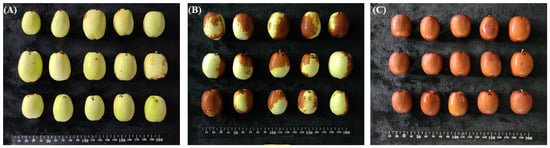
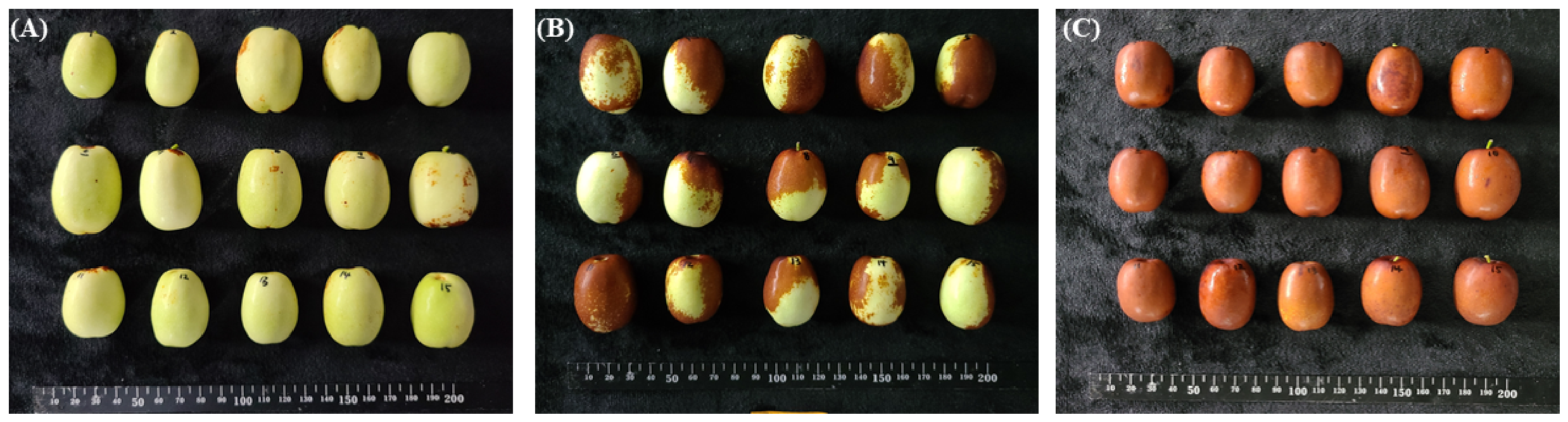
Jujube (Ziziphus jujuba Mill.) ‘Bokjo’ fruit were harvested from a commercial orchard in Boeun, Chungcheongbuk-do, Republic of Korea, in early October 2022 and classified into three coloration stages based on the proportion of red-pigmented surface area: stage 1 (≤10%), stage 2 (40–60%), and stage 3 (≥90%) (Figure 1). Fruit were selected for uniformity of size and absence of physical damage or visible defects. The harvested fruit were placed in perforated PET containers (DA-801; Dana Co., Ltd., Gwangju, Republic of Korea) and stored at 3 ± 1 °C and 85–90% relative humidity (RH) for 8 weeks in darkness under ambient atmospheric conditions, without modified atmosphere packaging. A storage temperature of 3 ± 1 °C was selected because it is commonly used for the cold storage of fresh jujube fruit in Korean commercial practice and avoids the risk of freezing injury [25].
Figure 1.
Jujube fruit classified into three coloration stages based on the proportion of red epicarp coloration: (A) stage 1, ≤10%; (B) stage 2, 40–60%; (C) stage 3, ≥90%.
Fruit quality and biochemical characteristics were evaluated at 2-week intervals (0, 2, 4, 6, and 8 weeks of storage) for each harvest maturity stage. At each sampling time, 15 fruits per maturity stage were used for color measurements (Section 2.2). Of these, 10 fruits were subsequently used for firmness measurements, followed by soluble solids content (SSC) determination. Thus, color, firmness, and SSC were measured sequentially on the same fruit. A separate set of 10 fruits was used for moisture content determination, while another 20 fruits were used to assess the incidence of storage disorders. Weight loss was monitored using four containers per maturity stage, each containing approximately 30 fruits. The same four containers were repeatedly weighed throughout the 8-week storage period.
In total, approximately 435 fruits per maturity stage (approximately 1300 fruits in total) were used for physical quality measurements and weight-loss monitoring. For biochemical analyses, fruit samples collected following physical quality measurements were pooled for each maturity stage and sampling time point, freeze-dried, and ground into a fine powder. Approximately 10 g of freeze-dried powder was prepared for each maturity stage and sampling time point and used for pigment, flavonoid, phenolic, and DPPH assays (Section 2.4 and Section 2.5). Three separate portions of the same pooled freeze-dried powder were independently weighed, extracted, and analyzed. These measurements represented technical replicates rather than independent biological replicates.
2.2. Measurement of Fruit Color Characteristics
Fruit surface color was measured using a Minolta Chroma Meter (Model CR-400; Konica Minolta Optics, Osaka, Japan) on 15 randomly selected fruits per coloration stage at each sampling point. Three points were randomly selected in the equatorial region of each fruit, regardless of surface coloration (green or red), and the mean value was used for analysis. Color was expressed as CIE L* (lightness), a* (red–green chromaticity), and b* (yellow–blue chromaticity) values. The total color difference (ΔE*ab) was calculated from the mean L*, a*, and b* values as ΔE*ab = √[(ΔL*)2 + (Δa*)2 + (Δb*)2], using either stage 3 fruit at the same sampling time or the same stage at harvest (week 0) as the reference. Color differences were interpreted according to Mokrzycki and Tatol [26]: ΔE*ab < 1, not noticeable; 1–2, noticeable only by an experienced observer; 2–3.5, noticeable by an inexperienced observer; 3.5–5, a clear difference; and >5, perceived as two different colors.
2.3. Measurement of Quality Attributes
Fruit firmness was measured at the equatorial region of intact fruit with the peel using a rheometer (CR-3000EX-S, Sun Scientific Co., Tokyo, Japan) equipped with a 5 mm diameter cylindrical probe, on 10 fruits per harvest maturity stage at each sampling time (n = 10). The probe penetrated the fruit tissue to a depth of 5 mm at a speed of 2.0 mm s−1, and firmness was expressed as the maximum force (N) recorded during penetration.
Fruit weight was measured using four replicate containers per harvest maturity stage (n = 4) at 2-week intervals (0, 2, 4, 6, and 8 weeks of storage) using a digital scale (CUX6300HX; CAS Co., Ltd., Yangju, Republic of Korea). Weight loss (%) was calculated for each container as [(initial weight − weight at sampling)/initial weight] × 100.
Moisture content (%) was determined from the fresh and dry weights of 10 fruit per harvest maturity stage (n = 10). Fruit samples were dried in a forced-air drying oven at 65–70 °C for 3 days until a constant weight was reached to determine their dry weights [20,27]. A relatively low drying temperature was applied to prevent thermal degradation of sugars in the sugar-rich jujube tissue. Moisture content was calculated as follows: Moisture content (%) = [(fresh weight − dry weight)/fresh weight] × 100.
Respiration was evaluated based on headspace CO2 concentration. Three fruits were placed in a 0.5 L airtight container and held at 25 ± 1 °C for 2 h. The CO2 concentration in the container headspace was then measured using a gas analyzer (CheckMate 3; PBI Dansensor, Ringsted, Denmark). Six replicate containers (three fruit each) were measured for each harvest maturity stage at each sampling time (n = 6), and the results were expressed as CO2 concentration (%).
Total soluble solids content (SSC, %Brix) was measured in 10 fruit per harvest maturity stage at each sampling time (n = 10) using a refractometer (PR-301a, ATAGO Co., Tokyo, Japan) after crushing the central portion of the pulp with a V-shaped blade to extract juice.
Fruit disorders were visually assessed based on the following criteria: shriveling, visible wrinkling of the fruit surface; soft rot, localized softening and breakdown of fruit tissue; cracking, visible splitting of the fruit skin; and decay, visible signs of fungal or other microbial deterioration. The incidence of each disorder was expressed as the percentage of affected fruit among the 20 fruits examined for each harvest maturity stage at each sampling time. Because the incidence data were obtained from a single group of 20 fruit per harvest maturity stage at each sampling time, without independent replicate groups, the results were presented descriptively, and no statistical comparisons were performed.
The number of fruits used varied among measurements according to the requirements of each analytical procedure. Color, firmness, and SSC were measured sequentially on the same fruit, in that order. Firmness and SSC were measured immediately after the fruit were removed from cold storage, without equilibration to room temperature. Each parameter was evaluated separately, and the results were interpreted collectively to characterize changes in postharvest quality during cold storage.
2.4. Extraction and Quantification of Bioactive Compounds
2.4.1. Pigment Extraction (Chlorophyll and Carotenoid)
Freeze-dried fruit powder (0.2 g) was homogenized in 20 mL of 80% (v/v) acetone in darkness for 2 h using an orbital shaker (SH30; FINEPCR, Gunpo, Republic of Korea), then filtered through No. 51 filter paper (Hyundai Micro, Seoul, Republic of Korea). Total chlorophyll and total carotenoid contents were determined spectrophotometrically (Epoch 2; Agilent Technologies, Santa Clara, CA, USA) at 662, 645, and 470 nm according to the methods of Lichtenthaler [28] and Win et al. [29], respectively. The contents of total chlorophyll and total carotenoids were expressed as mg g−1 dry weight (DW).
2.4.2. Flavonoid Quantification
Total flavonoid content was determined using the colorimetric method of Zhishen et al. [30]. Briefly, 1 mL of the 80% acetone extract (Section 2.4.1) was mixed with 4 mL of distilled water and 0.3 mL of 5% NaNO2, and the mixture was allowed to react at room temperature for 5 min. Subsequently, 0.3 mL of 10% AlCl3 was added, followed by incubation for 6 min. The reaction was terminated by the addition of 2.4 mL of 1 M NaOH and 2.4 mL of distilled water, and the mixture was vortexed. Absorbance was measured at 510 nm, and total flavonoid content was calculated from a catechin calibration curve (Sigma-Aldrich, St. Louis, MO, USA), expressed as mg catechin equivalents per gram dry weight (mg CE g−1 DW).
2.4.3. Phenolic Extraction and Quantification
Freeze-dried powder (0.2 g) was homogenized in 20 mL of acidified methanol (methanol:concentrated HCl = 99:1, v/v) in darkness for 1 h using an orbital shaker, then centrifuged at 3000× g and 10 °C for 20 min. The supernatant was used for total phenolic determination by the Folin–Ciocalteu method [31]. Briefly, 0.1 mL of extract was combined with 0.1 mL of methanol and 0.1 mL of Folin–Ciocalteu reagent (Sigma-Aldrich), vortexed, and incubated at room temperature in darkness for 6 min. Then 0.7 mL of 20% (w/v) Na2CO3 was added, and the mixture was further incubated at room temperature for 1 h. The mixture was centrifuged at 13,500× g and 4 °C for 3 min, and absorbance of the supernatant was measured at 735 nm. Total phenolic content was calculated from a gallic acid calibration curve and expressed as mg gallic acid equivalents per gram dry weight (mg GAE g−1 DW).
2.5. Measurement of Antioxidant Activity
Antioxidant activity was evaluated by the 2,2-diphenyl-1-picrylhydrazyl (DPPH) radical scavenging assay according to Stoilova et al. [32]. Freeze-dried powder (0.2 g) was extracted with 20 mL of 100% methanol in darkness for 1 h, then filtered. For the assay, 0.1 mL of filtrate was combined with 1 mL of 0.3 mM DPPH in methanol, vortexed, and incubated in darkness at room temperature for 30 min. Absorbance was recorded at 517 nm. DPPH radical-scavenging activity (%) was calculated as [(control − sample)/control] × 100, where control is the absorbance of the DPPH solution without extract.
2.6. Statistical Analysis
Data are presented as mean ± standard deviation (SD). For physical quality parameters, differences among the three maturity stages were analyzed separately at each storage time point using one-way analysis of variance (ANOVA), followed by Tukey’s honestly significant difference (HSD) test at p < 0.05. Statistical analyses were performed using GraphPad Prism version 10 (GraphPad Software, San Diego, CA, USA).
For pigment contents, total flavonoid and phenolic contents, and DPPH radical-scavenging activity, three technical replicates were obtained from a single pooled freeze-dried sample for each maturity stage and sampling time point. Therefore, these results are presented as mean ± SD for descriptive comparison only, and no inferential statistical tests were performed.
3. Results
3.1. Changes in Fruit Color of Jujube During Cold Storage
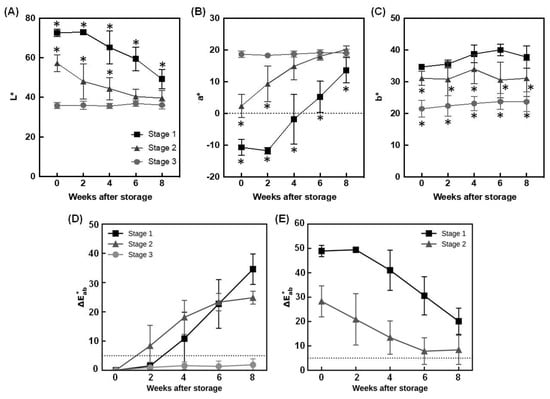
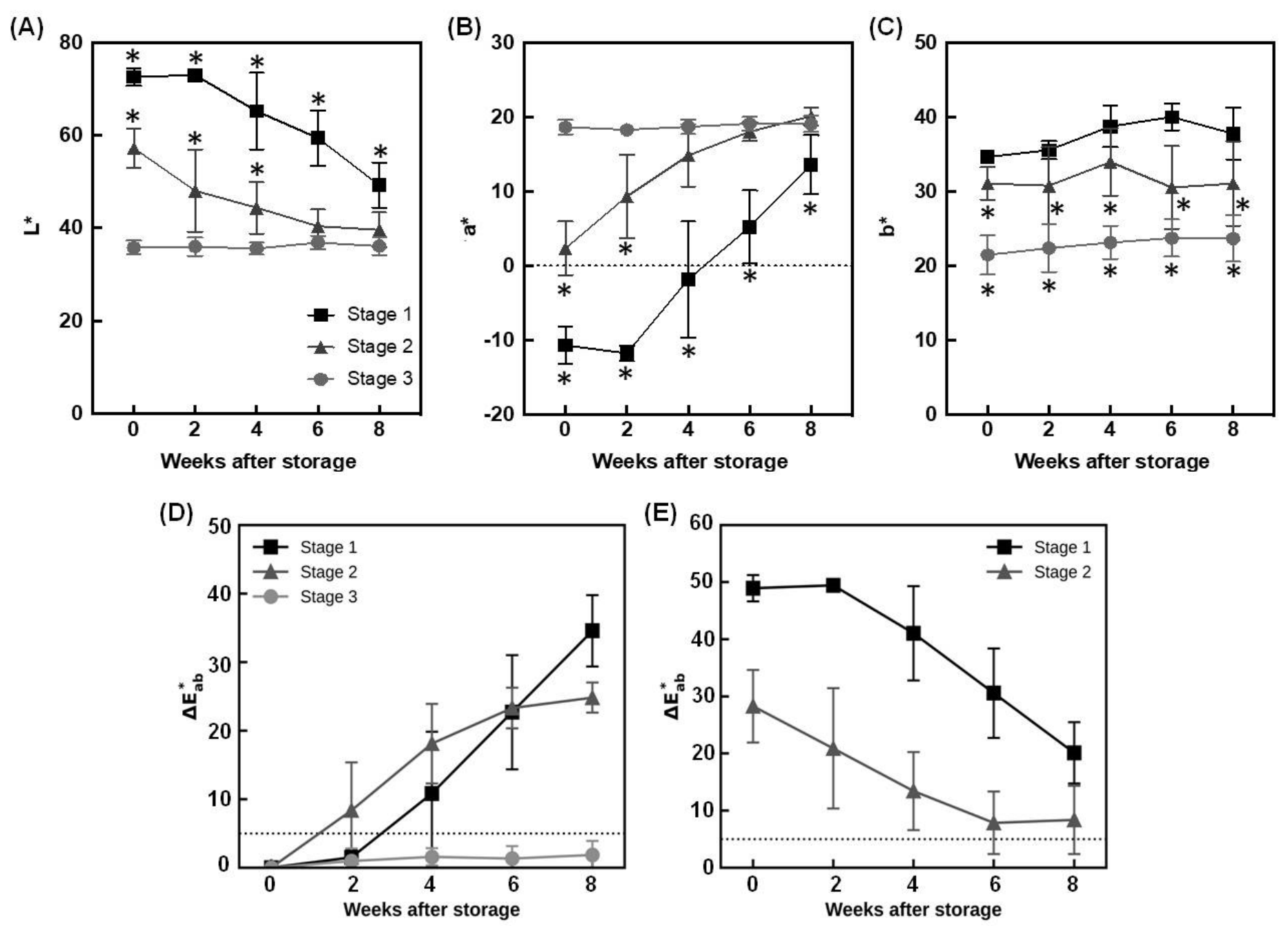
During 8 weeks of storage, L* (lightness) values decreased gradually in stage 1 and stage 2 fruit; from week 6 onward, stage 2 fruit had reached L* values similar to those of stage 3 fruit, whereas stage 3 fruit showed little change throughout storage (Figure 2A–C). The a* value (redness) increased gradually in stage 1 and stage 2 fruit during storage, and from week 4 onward the a* value of stage 2 fruit was comparable to that of stage 3 fruit. In contrast, stage 1 fruit still showed significantly higher L* and lower a* values than stage 3 fruit at week 8. The b* value (yellowness) was consistently highest in stage 1, followed by stage 2 and stage 3, with only minor fluctuation within each stage over the storage period. The total color difference further indicated whether these changes would be visible (Figure 2D,E). ΔE*ab between stage 2 and stage 3 fruit decreased from 28.3 at harvest to 7.8–8.4 at weeks 6–8, mainly because the a* and L* values of stage 2 fruit approached those of stage 3 fruit. However, this difference remained above the threshold of visual perceptibility (ΔE*ab > 5), largely because of the higher b* values of stage 2 fruit. Stage 1 fruit remained clearly distinguishable from stage 3 fruit throughout storage (ΔE*ab = 20.1 at week 8). Relative to harvest, ΔE*ab at week 8 reached 34.6 in stage 1 fruit and 24.8 in stage 2 fruit (Figure 2D), indicating clearly visible color changes during storage. In contrast, the color of stage 3 fruit was stable during storage, with ΔE*ab relative to harvest not exceeding 1.9, a difference noticeable only by an experienced observer.
Figure 2.
Changes in color of jujube fruit harvested at three coloration stages during storage at 3 ± 1 °C: (A) L*, (B) a*, and (C) b* values, and total color difference (ΔE*ab) relative to (D) the same stage at harvest (week 0) and (E) stage 3 fruit at the same sampling time. Data in (A–C) are presented as means ± SD. Color values are expressed in the CIE L*a*b* color space. Asterisks indicate significant differences from stage 3 at the corresponding storage time point (p < 0.05), based on one-way ANOVA followed by Tukey’s HSD test (n = 15). In (D,E), symbols indicate ΔE*ab calculated from the mean L*, a*, and b* values, error bars indicate the SD of ΔE*ab calculated for individual fruit.
3.2. Changes in Quality Attributes of Jujube During Cold Storage
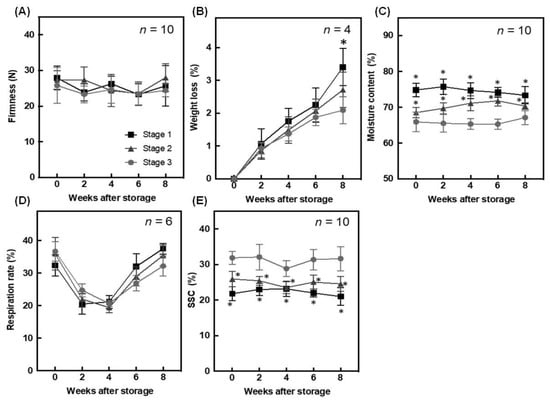
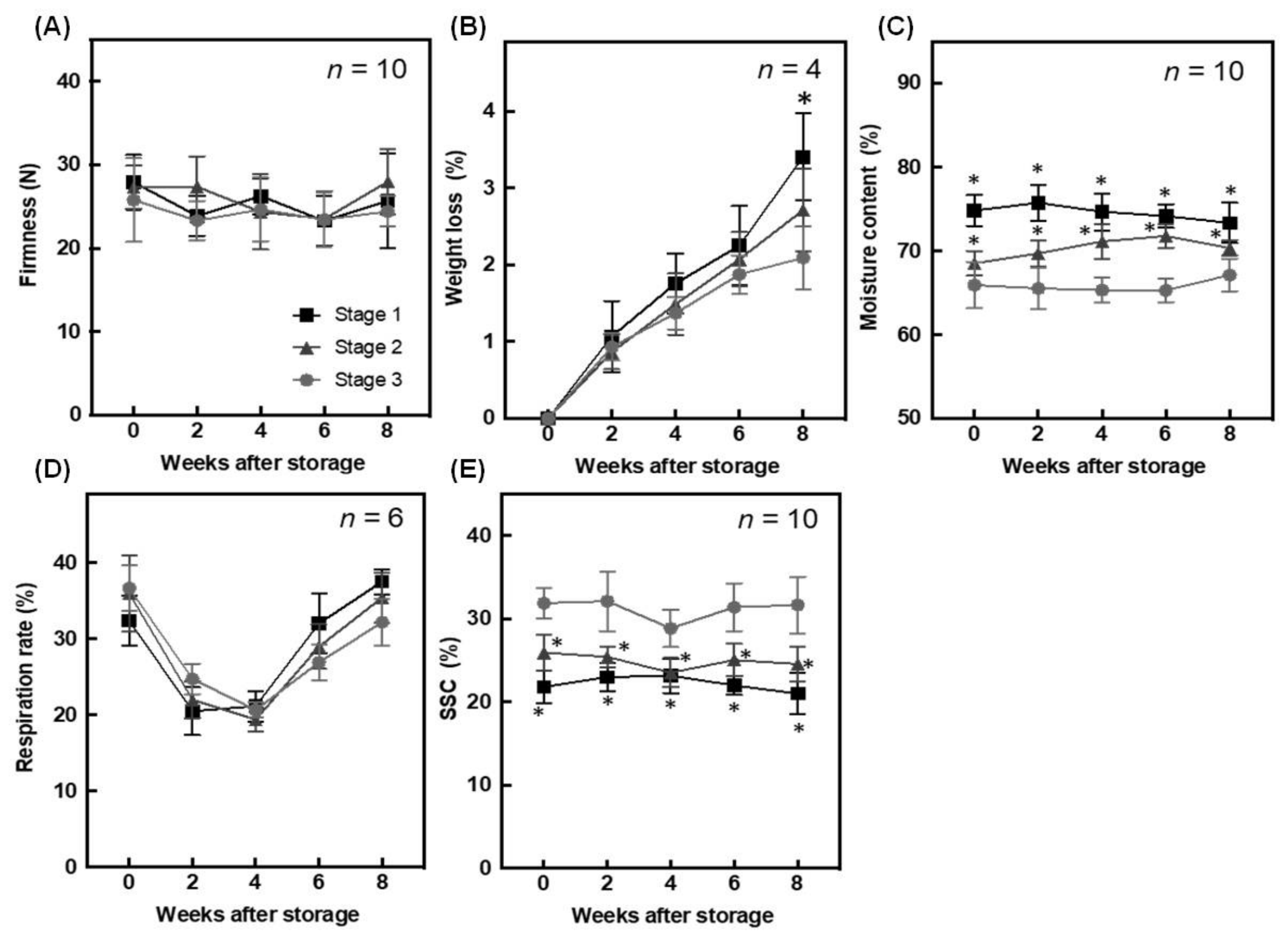
We evaluated changes in firmness, weight loss, moisture content, respiration rate, total soluble solids content, and appearance of jujube fruit during storage according to coloration stage at harvest (Figure 3). Fruit firmness showed no consistent differences among coloration stages and remained relatively stable throughout the 8-week storage period. Weight loss increased steadily in all stages during storage and was greatest in stage 1 fruit, reaching 3.4% at week 8, which was significantly higher than that of stage 3 fruit (2.1%). Moisture content followed the order of stage 1 (73–76%) > stage 2 (68–72%) > stage 3 (65–67%) and remained relatively stable within each stage during storage. The respiration rate decreased similarly in all stages until week 4 and then increased markedly, returning to levels comparable to those at harvest by week 8. Total soluble solids content differed markedly among coloration stages but remained relatively constant during storage, at approximately 29–32%Brix in stage 3, 23–26%Brix in stage 2, and 21–23%Brix in stage 1; stage 1 and stage 2 fruit remained significantly lower than stage 3 fruit at all sampling points.
Figure 3.
Changes in postharvest quality characteristics of jujube fruit harvested at three maturity stages during cold storage at 3 ± 1 °C. (A) Fruit firmness, (B) weight loss, (C) moisture content, (D) respiration rate, and (E) soluble solids content (SSC). Sample sizes differed according to the measurement: n = 10 individual fruit for firmness, moisture content, and SSC; n = 4 replicate containers for weight loss; and n = 6 for respiration rate. Data are presented as mean ± standard deviation (SD). Asterisks indicate significant differences from stage 3 at the corresponding storage time point (p < 0.05), based on one-way ANOVA followed by Tukey’s HSD test.
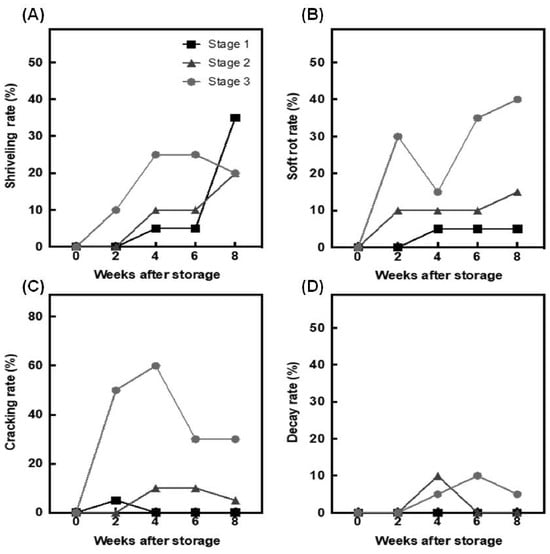
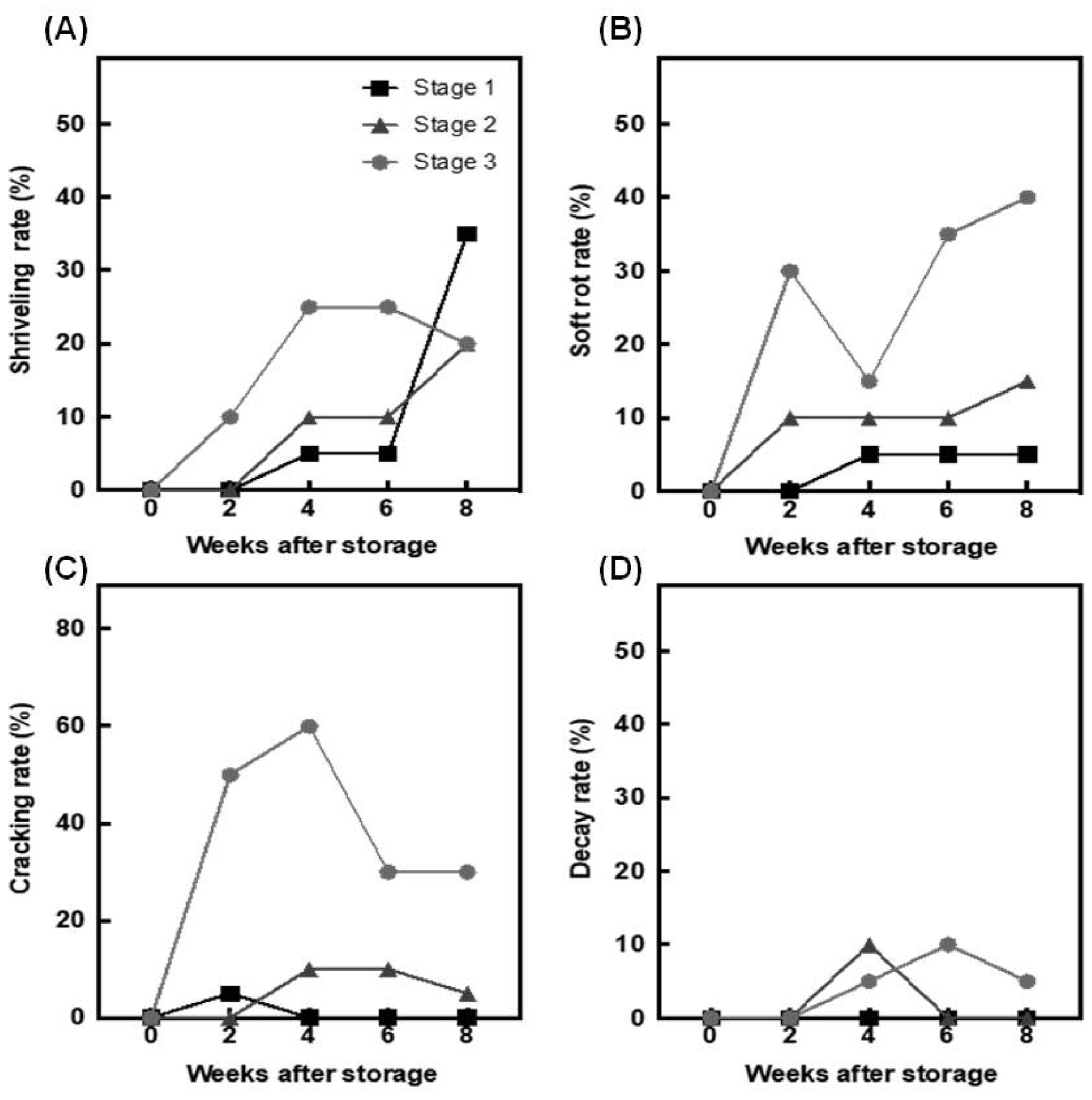
Visual assessment of physiological and pathological disorders showed that soft rot and cracking developed earliest and most severely in stage 3 fruit, appearing from week 2, with cracking peaking at 60% at week 4 and soft rot reaching 40% at week 8, whereas these disorders remained minimal (≤15%) in stage 1 and stage 2 fruit throughout storage. Shriveling was also higher in stage 3 than in stage 1 and stage 2 through week 6, but stage 1 fruit showed a sharp increase in shriveling by week 8 (35%), exceeding stage 3 (20%) at the final sampling point. Decay incidence remained low (≤10%) in all stages throughout storage (Figure 4). Disorder incidence was evaluated descriptively, and no statistical comparisons were performed among the three coloration stages.
Figure 4.
Incidence of (A) shriveling, (B) soft rot, (C) cracking, and (D) decay in jujube fruit harvested at three coloration stages during storage at 3 ± 1 °C (n = 20). Data are presented descriptively, and no statistical significance tests were performed for disorder incidence.
3.3. Changes in Bioactive Compounds of Jujube During Cold Storage
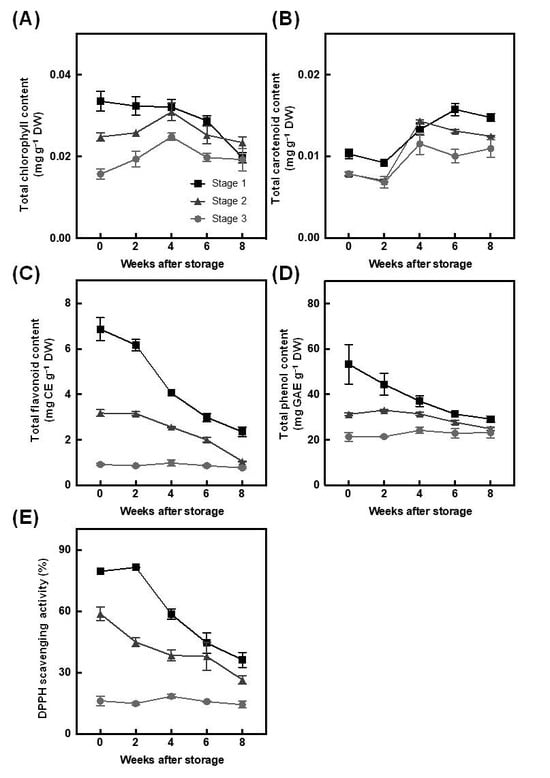
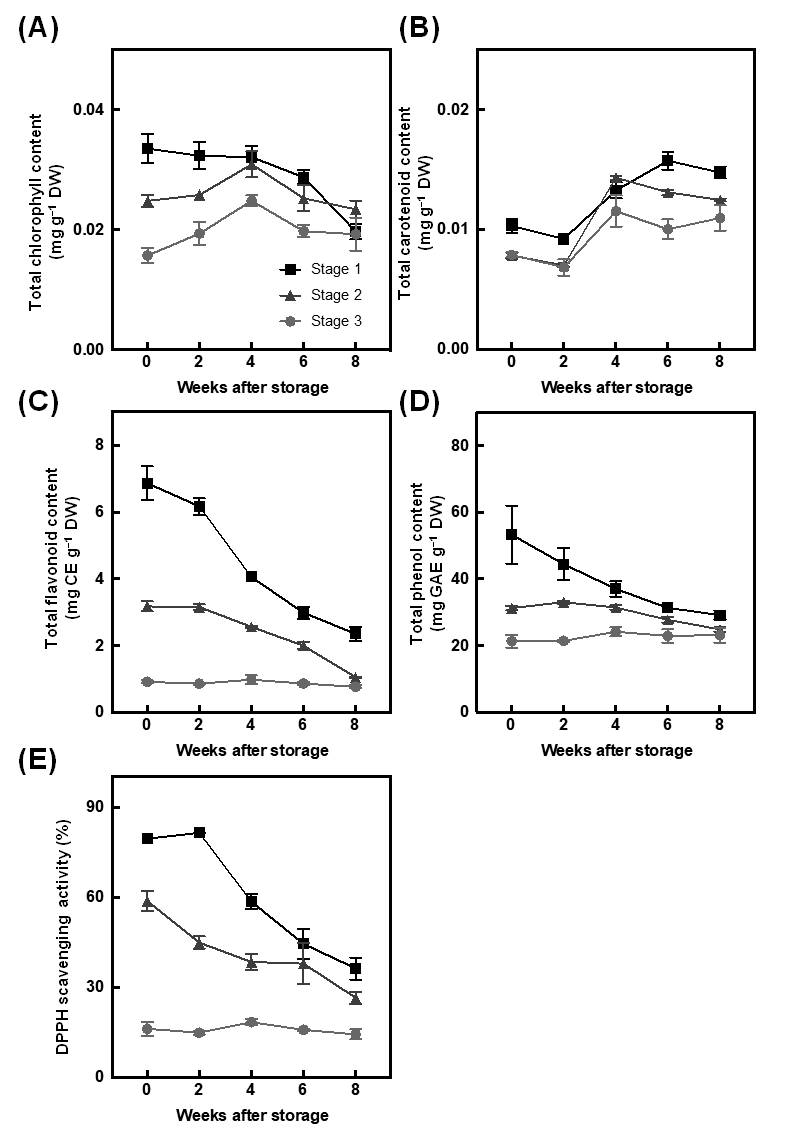
Total chlorophyll, carotenoids, flavonoids, phenolics, and antioxidant activity were evaluated to determine the influence of coloration stage at harvest on changes in bioactive compounds during storage. At harvest, total chlorophyll content was highest in stage 1, followed by stages 2 and 3 (Figure 5). During storage, chlorophyll content in stage 1 declined gradually and converged with stage 2 and stage 3 levels by week 8, whereas stage 2 and stage 3 fruit showed a slight increase up to week 4 followed by a modest decline. Total carotenoid content was highest in stage 1 at harvest; in all stages it decreased slightly at week 2, increased markedly by week 4, and remained above initial levels thereafter, with stage 1 fruit generally showing the highest values. Total flavonoid and phenolic contents and DPPH radical-scavenging activity were all highest in stage 1 at harvest, followed by stage 2 and stage 3, and declined progressively in stage 1 and stage 2 fruit during storage. By week 8, stage 2 fruit had declined to levels close to those of stage 3 fruit, whereas stage 1 fruit still showed higher mean values for all three parameters; in contrast, these parameters remained comparatively stable in stage 3 fruit throughout storage.
Figure 5.
Changes in (A) total chlorophyll content, (B) total carotenoid content, (C) total flavonoid content, (D) total phenolic content, and (E) DPPH scavenging activity of jujube fruit harvested at three coloration stages during storage at 3 ± 1 °C. Data are presented as means ± SD (n = 3 independent extractions from the same pooled freeze-dried powder; technical replicates).
4. Discussion
4.1. Postharvest Color Development of Jujube During Cold Storage
Jujube fruit is conventionally harvested once more than 80% of the surface has developed red coloration (corresponding approximately to stage 3 in this study), typically in early to mid-October, but such fruit generally has a short postharvest shelf life and must be consumed soon after harvest [25]. In contrast, fruit harvested with little or no coloration (stage 1) has been reported to have an advantage in storability [22], and the degree of surface coloration is known to correlate with fruit ripeness [33,34]. In the present study, the L* and a* values of stage 1 and stage 2 fruit progressively approached those of stage 3 fruit during cold storage, indicating that the fruit became darker and developed a redder appearance after harvest. Stage 2 fruit approached the color of stage 3 fruit from week 6 onward; however, ΔE*ab values of 7.8–8.4 indicate that the difference remained visually perceptible, mainly owing to the higher b* values of stage 2 fruit (Figure 2E). Previous studies have reported that changes in jujube fruit coloration during development are associated with variations in pigment composition, including chlorophylls, carotenoids, and anthocyanins [33]. Chlorophyll degradation may contribute to the loss of green coloration, whereas changes in carotenoid and anthocyanin contents may influence fruit surface coloration. In addition, changes in lignin biosynthesis and related gene expression have been reported during pericarp pigmentation in winter jujube [34], suggesting that coloration is associated with multiple metabolic processes.
In the present study, total chlorophyll content in stage 1 fruit decreased, whereas total carotenoid content generally increased during cold storage (Figure 5). However, anthocyanins, individual carotenoids, enzyme activities, and gene expression associated with pigment metabolism were not investigated. Therefore, the specific contributions of individual pigments and associated metabolic pathways to the observed color changes could not be determined. Further studies are needed to clarify the relationship between pigment metabolism and surface color development in jujube fruit during cold storage.
4.2. Effects of Harvest Coloration Stage on Postharvest Quality
The minimal change in firmness across all coloration stages may be associated with reduced activities of cell-wall-degrading enzymes, such as polygalacturonase and β-galactosidase, under low-temperature storage conditions [35]. The comparatively greater weight loss in stage 1 fruit may partly reflect differences in initial moisture status and water-loss characteristics among coloration stages (Figure 3). The higher moisture content of less mature fruit is consistent with previous reports that moisture content decreases as jujube fruit matures [23]. Headspace CO2 concentration (respiration rate) decreased in all three harvest maturity stages until week 4 and subsequently increased, approaching initial levels by week 8. This increase may be associated with fruit senescence and the development of postharvest disorders (Figure 4). The similar trends observed across the three stages suggest that harvest maturity had a limited influence on changes in headspace CO2 concentration during cold storage. SSC remained relatively stable across all three harvest maturity stages during cold storage. Although stage 1 and stage 2 fruit continued to develop a redder appearance, their SSC values remained lower than those of stage 3 fruit. These findings suggest that postharvest color development under cold storage conditions was not accompanied by a corresponding increase in soluble solids content. This contrasts with Woo et al. [36], who reported an increase in SSC during low-temperature storage. Our results suggest that postharvest pericarp coloration can proceed independently of sugar accumulation; further work on the relationship between coloration and underlying maturation mechanisms is warranted.
In the present study, stage 3 fruit showed a higher incidence of soft rot and cracking than stage 1 and stage 2 fruit, with both disorders appearing as early as week 2 and increasing during storage (Figure 4). These results suggest that fruit harvested at a more advanced maturity stage may be more susceptible to postharvest disorders during cold storage. However, the physiological and structural mechanisms underlying these differences require further investigation. In contrast, stage 1 and stage 2 fruit showed lower incidences of soft rot and cracking during most of the storage period. However, shriveling increased markedly by week 8, consistent with their greater cumulative weight loss (Figure 3 and Figure 4). These findings suggest that fruit harvested at earlier maturity stages may be more suitable for prolonged cold storage because of their lower susceptibility to soft rot and cracking. Nevertheless, their relatively low soluble solids content and increased shriveling during extended storage should also be considered. Stage 3 fruit, despite its more advanced coloration, was more susceptible to soft rot and cracking during storage.
4.3. Effects of Harvest Coloration Stage on Bioactive Compounds
The decline in flavonoid, phenolic, and antioxidant-related compounds with increasing fruit coloration is consistent with previous reports that chlorophyll, phenolics, and flavonoids decrease as jujube fruit matures and develops red coloration [33]. Jujube fruit with a lower degree of red surface coloration has similarly been reported to exhibit higher antioxidant activity and contain higher levels of vitamin C and phenolic compounds than fruit with a higher degree of red surface coloration [10,37]. In the present study, fruit harvested at earlier coloration stages showed a progressive decline in flavonoid and phenolic contents and DPPH scavenging activity during cold storage, reflecting continued postharvest maturation-related changes. By week 8, the values of stage 2 fruit had approached those of stage 3 fruit, whereas stage 1 fruit maintained higher mean values than stage 3 fruit throughout the 8-week storage period. This suggests that the earliest-harvested fruit may retain a relative advantage in bioactive compounds even after extended cold storage, although this advantage narrowed over time. Because these analyses were based on technical replicates from pooled samples, these differences should be interpreted with caution and confirmed in future studies using independent biological replicates. Zhang et al. [24] similarly proposed the semi-red stage as the most appropriate harvest stage for preserving bioactive compounds at harvest. Our results extend this observation: during cold storage, the bioactive advantage of stage 2 fruit over stage 3 fruit gradually disappeared, whereas its lower incidence of soft rot and cracking was maintained. The overall increase in total carotenoid content across all coloration stages, in contrast to the general decline in other bioactive compounds, suggests that carotenoid accumulation followed a different temporal pattern from the declines observed in flavonoids, phenolics, and antioxidant activity during postharvest storage.
5. Conclusions
Harvest maturity stage influenced the postharvest quality and bioactive compound characteristics of jujube fruit during 8 weeks of cold storage at 3 ± 1 °C. Stage 1 fruit showed greater weight loss and shriveling but retained relatively high flavonoid and phenolic contents and antioxidant activity. In contrast, stage 3 fruit had higher soluble solids content but was more susceptible to soft rot and cracking during storage. Stage 2 fruit (40–60% red surface coloration) developed red coloration approaching that of stage 3 fruit (ΔE*ab = 8.4 at week 8) while showing lower incidences of soft rot and cracking. However, its flavonoid and phenolic contents and antioxidant activity approached stage 3 levels by week 8. These findings suggest that stage 2 may be a promising harvest maturity stage for prolonged cold storage, providing a balance between fruit appearance and storage stability. However, the optimal harvest stage should be selected according to the intended storage duration and quality requirements.
Author Contributions
Conceptualization, C.-W.K. and H.J.E.; methodology, C.-W.K. and U.L.; formal analysis, C.-W.K. and Y.K.; investigation, C.-W.K., Y.K. and U.L.; data curation, C.-W.K. and Y.K.; writing—original draft preparation, C.-W.K. and Y.K.; writing—review and editing, H.J.E.; visualization, C.-W.K. and Y.K.; supervision, H.J.E. All authors have read and agreed to the published version of the manuscript.
Funding
This research was funded by the National Institute of Forest Science, grant number FP0802-2022-02-2026.
Institutional Review Board Statement
Not applicable.
Informed Consent Statement
Not applicable.
Data Availability Statement
The raw data supporting the conclusions of this article will be made available by the authors on request.
Conflicts of Interest
The authors declare no conflicts of interest.
References
- Ji, X.; Peng, Q.; Yuan, Y.; Shen, J.; Xie, X.; Wang, M. Isolation, structures and bioactivities of the polysaccharides from jujube fruit (Ziziphus jujuba Mill.): A review. Food Chem. 2017, 227, 349–357. [Google Scholar] [CrossRef] [Scilit] [PubMed]
- Liu, M.; Wang, J.; Wang, L.; Liu, P.; Zhao, J.; Zhao, Z.; Yao, S.; Stănică, F.; Liu, Z.; Wang, L.; et al. The historical and current research progress on jujube—A superfruit for the future. Hortic. Res. 2020, 7, 119. [Google Scholar] [CrossRef] [Scilit] [PubMed]
- Lu, Y.; Bao, T.; Mo, J.; Ni, J.; Chen, W. Research advances in bioactive components and health benefits of jujube (Ziziphus jujuba Mill.) fruit. J. Zhejiang Univ. Sci. B 2021, 22, 431–449. [Google Scholar] [CrossRef] [Scilit] [PubMed]
- Pareek, S. Nutritional composition of jujube fruit. Emir. J. Food Agric. 2013, 25, 463–470. Available online: https://ejfa.me/index.php/journal/article/download/965/695 (accessed on 3 October 2026). [CrossRef] [Scilit]
- Choi, K.S. Changes in physiological and chemical characteristics of jujube fruits var. Bokjo during maturity and postharvest ripening. Inst. Resour. Dev. 1990, 9, 47–53. [Google Scholar]
- Choi, S.Y.; Yoon, B.-R.; Kim, S.S. Characteristics and nutritional compositions of two jujube varieties cultivated in Korea. Korean J. Food Preserv. 2016, 23, 127–130. [Google Scholar] [CrossRef] [Scilit]
- Park, Y.; Kim, J.S.; Jung, J.Y.; Ha, S.Y.; Park, J.H.; Yang, J.K. Effect of tree age and tree growth on jujube (Ziziphus jujuba var. inermis) fruit yield. J. Agric. Life Sci. 2017, 51, 15–21. [Google Scholar] [CrossRef] [Scilit]
- Kim, C.W.; Na, M.H.; Park, H.; Lee, U. Fructification, fruit characteristics, and yield according to tree age of jujube tree (Ziziphus jujuba var. inermis) ‘Hwangsil’. J. Korean Soc. For. Sci. 2021, 110, 601–609. Available online: https://www.kci.go.kr/kciportal/landing/article.kci?arti_id=ART002198843 (accessed on 3 October 2026). [CrossRef] [Scilit]
- Kim, I.H.; Jeong, C.H.; Park, S.J.; Shim, K.H. Nutritional components and antioxidative activities of jujube (Ziziphus jujuba) fruit and leaf. Korean J. Food Preserv. 2011, 18, 341–348. [Google Scholar] [CrossRef] [Scilit]
- Hong, J.Y.; Nam, H.S.; Shin, S.R. Changes on the antioxidant activities of extracts from Ziziphus jujuba Miller fruits during maturation. Korean J. Food Preserv. 2010, 17, 712–719. [Google Scholar]
- Pawlowska, A.M.; Camangi, F.; Bader, A.; Braca, A. Flavonoids of Zizyphus jujuba L. and Zizyphus spina-christi (L.) Willd. (Rhamnaceae) fruits. Food Chem. 2009, 112, 858–862. [Google Scholar] [CrossRef] [Scilit]
- Chen, J.; Maiwulanjiang, M.; Lam, K.Y.C.; Zhang, W.L.; Zhan, J.Y.X.; Lam, C.T.W.; Xu, S.L.; Zhu, K.Y.; Yao, P.; Lau, D.T.W.; et al. A standardized extract of the fruit of Ziziphus jujuba (jujube) induces neuronal differentiation of cultured PC12 cells: A signaling mediated by protein kinase A. J. Agric. Food Chem. 2014, 62, 1890–1897. [Google Scholar] [CrossRef] [Scilit] [PubMed]
- Fu, Q.; Yuan, H.M.; Chen, J.; Shi, J.Y. Dammarane-type saponins from Ziziphus jujuba and their inhibitory effects against TNF-α release in LPS-induced RAW 264.7 macrophages. Phytochem. Lett. 2016, 16, 169–173. [Google Scholar] [CrossRef] [Scilit]
- Cheng, G.; Bai, Y.; Zhao, Y.; Tao, J.; Liu, Y.; Tu, G.; Ma, L.; Liao, N.; Xu, X. Flavonoids from Ziziphus jujuba Mill. var. spinosa. Tetrahedron 2000, 56, 8915–8920. [Google Scholar] [CrossRef] [Scilit]
- Bai, L.; Zhang, H.; Liu, Q.; Zhao, Y.; Cui, X.; Guo, S.; Zhang, L.; Ho, C.T.; Bai, N. Chemical characterization of the main bioactive constituents from fruits of Ziziphus jujuba. Food Funct. 2016, 7, 2870–2877. [Google Scholar] [CrossRef] [Scilit] [PubMed]
- Gao, Q.H.; Wu, C.S.; Wang, M. The jujube (Ziziphus jujuba Mill.) fruit: A review of current knowledge of fruit composition and health benefits. J. Agric. Food Chem. 2013, 61, 3351–3363. [Google Scholar] [CrossRef] [Scilit] [PubMed]
- Liu, G.; Liu, X.; Zhang, Y.; Zhang, F.; Wei, T.; Yang, M.; Wang, K.; Wang, Y.; Liu, N.; Cheng, H.; et al. Hepatoprotective effects of polysaccharides extracted from Ziziphus jujuba cv. Huanghetanzao. Int. J. Biol. Macromol. 2015, 76, 169–175. [Google Scholar] [CrossRef] [Scilit] [PubMed]
- Dou, J.-F.; Kou, X.-H.; Wu, C.-E.; Fan, G.-J.; Li, T.-T.; Li, X.-J.; Zhou, D.-D.; Yan, Z.-C.; Zhu, J.-P. Recent advances and development of postharvest management research for fresh jujube fruit: A review. Sci. Hortic. 2023, 309, 111769. [Google Scholar] [CrossRef] [Scilit]
- Liu, Q.; Yu, C.; Ma, Y.; Zhang, H.; Yan, L.; Fan, S. Prediction of key quality parameters in hot air-dried jujubes based on hyperspectral imaging. Foods 2025, 14, 1855. [Google Scholar] [CrossRef] [Scilit] [PubMed]
- Keles, H.; Yildiz, A.K.; Aksüt, B.; Bakoğlu, N.; Güney, M.; Kafkas, N.E. Effects of hot-air drying temperature on biochemical quality, drying kinetics, and predictive modeling of Ziziphus jujuba fruits. Molecules 2026, 31, 2903. [Google Scholar] [CrossRef] [Scilit] [PubMed]
- Chen, J.; Chan, P.H.; Lam, C.T.W.; Li, Z.; Lam, K.Y.C.; Yao, P.; Dong, T.T.X.; Lin, H.; Lam, H.; Tsim, K.W.K. Fruit of Ziziphus jujuba (jujube) at two stages of maturity: Distinction by metabolic profiling and biological assessment. J. Agric. Food Chem. 2015, 63, 739–744. [Google Scholar] [CrossRef] [Scilit] [PubMed]
- An, D.S.; Lee, D.S. Effect of maturity and storage temperature on preservation of fresh jujube. Korean J. Food Sci. Technol. 1997, 29, 758–763. [Google Scholar]
- Huang, J.; Heyduck, R.; Richins, R.D.; VanLeeuwen, D.; O’Connell, M.A.; Yao, S. Jujube cultivar vitamin C profile and nutrient dynamics during maturation. HortScience 2017, 52, 859–867. [Google Scholar] [CrossRef] [Scilit]
- Zhang, Q.; Wang, L.; Wang, Z.; Liu, Z.; Zhao, Z.; Zhou, G.; Liu, M.; Liu, P. Variations of the nutritional composition of jujube fruit (Ziziphus jujuba Mill.) during maturation stages. Int. J. Food Prop. 2020, 23, 1066–1081. [Google Scholar] [CrossRef] [Scilit]
- Song, J.; Lee, K.S.; Kang, H.A.; Chang, K.S. Storage stability of fresh jujube fruits (Zizyphus jujuba Miller). Korean J. Food Sci. Technol. 1998, 30, 272–277. [Google Scholar]
- Mokrzycki, W.S.; Tatol, M. Colour difference ΔE—A survey. Mach. Graph. Vis. 2011, 20, 383–411. [Google Scholar]
- Polatci, H.; Taşova, M.; Şin, B. Effects of pre-treatments on drying kinetics and energy consumption, heat-mass transfer coefficients, micro-structure of jujube (Zizyphus jujuba L.) fruit. Food Sci. Technol. 2022, 42, e15721. [Google Scholar] [CrossRef] [Scilit]
- Lichtenthaler, H.K. Chlorophylls and carotenoids: Pigments of photosynthetic biomembranes. Methods Enzymol. 1987, 148, 350–382. [Google Scholar] [CrossRef] [Scilit]
- Win, N.M.; Yoo, J.; Lwin, H.P.; Lee, E.J.; Kang, I.K.; Lee, J. Effects of 1-methylcyclopropene and aminoethoxyvinylglycine treatments on fruit quality and antioxidant metabolites in cold-stored ‘Sangjudungsi’ persimmons. Hortic. Environ. Biotechnol. 2021, 62, 891–905. [Google Scholar] [CrossRef] [Scilit]
- Zhishen, J.; Mengcheng, T.; Jianming, W. The determination of flavonoid contents in mulberry and their scavenging effects on superoxide radicals. Food Chem. 1999, 64, 555–559. [Google Scholar] [CrossRef] [Scilit]
- Singleton, V.L.; Orthofer, R.; Lamuela-Raventós, R.M. Analysis of total phenols and other oxidation substrates and antioxidants by means of Folin–Ciocalteu reagent. Methods Enzymol. 1999, 299, 152–178. [Google Scholar] [CrossRef] [Scilit]
- Stoilova, I.; Krastanov, A.; Stoyanova, A.; Denev, P.; Gargova, S. Antioxidant activity of a ginger extract (Zingiber officinale). Food Chem. 2007, 102, 764–770. [Google Scholar] [CrossRef] [Scilit]
- Shi, Q.; Zhang, Z.; Su, J.; Zhou, J.; Li, X. Comparative analysis of pigments, phenolics, and antioxidant activity of Chinese jujube (Ziziphus jujuba Mill.) during fruit development. Molecules 2018, 23, 1917. [Google Scholar] [CrossRef] [Scilit] [PubMed]
- Zhang, Q.; Wang, L.; Wang, Z.; Zhang, R.; Liu, P.; Liu, M.; Liu, Z.; Zhao, Z.; Wang, L.; Chen, X.; et al. The regulation of cell wall lignification and lignin biosynthesis during pigmentation of winter jujube. Hortic. Res. 2021, 8, 238. [Google Scholar] [CrossRef] [Scilit] [PubMed]
- Son, M.A.; Seo, C.H.; Kim, M.H.; Shin, S.Y.; Kim, N.J.; Kim, K.S. Changes in the cell wall components and cell wall-degrading enzyme activities of jujube fruits during maturation. Korean J. Food Preserv. 1995, 2, 185–193. [Google Scholar]
- Woo, K.S.; Son, S.I.; Jeong, H.S.; Lee, J.; Lee, H.B. Effects of grape fruit stem extracts treatment on the storage property of fresh jujube (Ziziphus jujuba Miller). J. Korean Soc. Food Sci. Nutr. 2006, 35, 192–198. [Google Scholar] [CrossRef] [Scilit]
- Park, Y.; Kim, J.H. Antioxidant activity, total phenolics, vitamin C and sugar content during fruit ripening of different jujube cultivars. Korean J. Plant Res. 2016, 29, 539–546. [Google Scholar] [CrossRef] [Scilit]
Disclaimer/Publisher’s Note: The statements, opinions and data contained in all publications are solely those of the individual author(s) and contributor(s) and not of MDPI and/or the editor(s). MDPI and/or the editor(s) disclaim responsibility for any injury to people or property resulting from any ideas, methods, instructions or products referred to in the content. |
© 2026 by the authors. Licensee MDPI, Basel, Switzerland. This article is an open access article distributed under the terms and conditions of the Creative Commons Attribution (CC BY) license.