


Abstract
Gloeostereum incarnatum is a traditional edible medicinal mushroom grown in China, mainly using woody sawdust substrates. This study evaluated the partial replacement of Quercus spp. sawdust with Hemiptelea davidii sawdust at five levels (0%, 20%, 40%, 60%, and 80%; designated C0, C20, C40, C60, and C80, respectively). Substrate properties were assessed in all treatments, while fruiting performance and quality were evaluated in C0, C20, and C40. Increasing H. davidii substitution raised the substrate C/N ratio from 37.68 to 42.24. The treatment with a 40% substitution ratio of H. davidii sawdust exhibited the highest CMCase activity (26.76 U/mL) and a relatively balanced lignocellulose degradation pattern, with cellulose, hemicellulose, and lignin degradation rates of 15.50%, 20.93%, and 5.43%, respectively. Compared with C0, C40 increased biological efficiency by 38.6%, reaching 65.13%, and produced fruiting bodies with higher crude protein and total sugar contents and lower crude fat content. Substrate substitution also altered moisture content, pH, extracellular enzyme activity, and lignocellulose degradation. Overall, locally available H. davidii sawdust can partially replace Quercus sawdust in G. incarnatum cultivation, offering a strategy for the high-value utilization of local woody residues. C40 favored yield and selected nutritional traits, whereas C20 showed higher levels of several bioactive components.
1. Introduction
Gloeostereum incarnatum S. Ito & S. Imai is a traditional, edible medicinal mushroom in China, characterized by substantial nutritional and functional value. Previous studies have demonstrated that G. incarnatum can be successfully domesticated and artificially cultivated. Genomic analysis has revealed abundant carbohydrate-active enzyme-related genes, which is consistent with its adaptation to woody substrates [1]. Its fruiting bodies contain sugars, proteins, amino acids, fatty acids, and mineral elements [2], while various bioactive compounds, including polysaccharides and sesquiterpenes, have also been identified [3,4,5]. In particular, water-soluble polysaccharides isolated from G. incarnatum show anti-colon cancer activity in a mouse model [5]. These nutritional and functional characteristics highlight the potential of G. incarnatum as a cultivated edible medicinal mushroom.
Despite its nutritional and functional potential, the cultivation and production of G. incarnatum remain less developed than those of major commercial mushrooms such as Lentinula edodes and Pleurotus spp. Artificial domestication and cultivation of G. incarnatum have been achieved, and breeding studies have demonstrated the feasibility of improving its production performance [6]. China has a large edible mushroom industry, with a total production of 44.199 million tons and an output value of 420.707 billion yuan in 2024, according to the annual statistics released by the China Edible Fungi Association. This large-scale production highlights the importance of improving production efficiency and product quality in the cultivation of edible and medicinal mushrooms with further development potential. Therefore, for G. incarnatum, improving fruiting body yield while maintaining or enhancing nutritional and functional characteristics is important for further utilization and cultivation development.
The cultivation substrate is a major factor that determines mushroom growth, fruiting, and productivity. Wood-decaying mushrooms primarily use lignocellulosic materials as carbon and energy sources, and their composition varies considerably among plant species. Cellulose, hemicellulose, and lignin are the major structural components of lignocellulosic substrates, and their relative proportions can affect substrate properties, nutrient availability, and fungal degradation processes [7]. Consequently, differences in substrate composition can influence mycelial development, biological efficiency, yield, and the quality of harvested mushrooms [7,8,9]. In particular, the type and proportion of woody materials used in sawdust-based cultivation can alter the physicochemical characteristics and nutrient availability of the substrate, thereby affecting both the productivity and nutritional composition of the fruiting bodies [9]. A recent review emphasized that mushroom growth, yield, and nutritional composition are closely associated with the substrate used and the corresponding cultivation system [9]. Thus, regulating the composition of woody substrates is a potential strategy to improve the productivity and quality of G. incarnatum.
Hemiptelea davidii (Hance) Planch. is a common woody species of the family Ulmaceae found in the Horqin region, Inner Mongolia, China, where it exhibits strong environmental adaptability and sand-fixing capacity, and thus represents an abundant and readily available woody resource [10]. However, the local utilization of H. davidii remains largely limited to traditional uses, such as the manufacture of farm tools or firewood, and a large-scale, high-value utilization industry has not yet been established. Consequently, substantial amounts of sawdust generated from pruning and harvesting remain underutilized and lack effective disposal pathways. Developing H. davidii sawdust as a cultivation substrate for edible mushrooms may overcome the limitations of its traditional utilization, representing an important pathway for the high-value utilization of H. davidii woody resources and providing a feasible strategy for the resource-oriented disposal of local sawdust waste.
More importantly, H. davidii has been recognized as a medicinal plant, and its heartwood contains flavonoids and other biologically active compounds, including kaempferol, taxifolin glycosides, and quercetin glycosides, some of which exhibit strong free radical-scavenging activities [11]. Previous studies have shown that cultivation substrate composition can influence the accumulation of bioactive compounds and nutritional components in mushroom fruiting bodies. For example, different cultivation substrates affect bioactive compound accumulation in Pleurotus floridanus [12]. In addition, the type and chemical composition of cultivation substrates can affect substrate utilization, fungal growth, and yield in wood-decaying mushrooms [13], suggesting that the incorporation of H. davidii sawdust may also influence the production performance of G. incarnatum. Notably, Sanghuangporus mongolicus has been isolated from H. davidii in the Horqin Sandy Land and successfully domesticated and induced to form fruiting bodies [14], further supporting the potential of H. davidii as a locally available woody resource for mushroom cultivation.
In this study, H. davidii sawdust was used to progressively replace conventional oak (Quercus spp.) sawdust at substitution levels of 0, 20, 40, 60, and 80%, designated C0, C20, C40, C60, and C80, respectively. The effects of the different substitution levels on the physicochemical properties of the substrate, extracellular enzyme activity, and lignocellulose degradation were systematically evaluated. Mycelial colonization, fruiting performance, agronomic traits, and yield were determined, and the nutritional and bioactive components of the fruiting bodies were subsequently analyzed for treatments that produced suitable fruiting bodies. The primary objective of this study was to determine a suitable level of H. davidii sawdust substitution for efficient indoor or protected cultivation of G. incarnatum, with the aim of achieving a favorable balance between production performance and fruiting body nutritional quality. These findings may provide a practical basis for developing high-yield and high-quality cultivation substrates for G. incarnatum and promote the value-added utilization of locally abundant H. davidii woody resources.
2. Materials and Methods
2.1. Materials
Gloeostereum incarnatum strain R71 was collected from the Lianhuashan area of Changchun City, Jilin Province, China, preserved and provided by the Sanjiang Fungal Industry Collaborative Innovation Center, Jilin Agricultural University.
The substrate materials, Hemiptelea davidii sawdust, Quercus spp. sawdust, wheat bran, and soybean meal, were provided by the Edible Fungus Science and Technology Backyard in Naiman Banner, Inner Mongolia, China, and the Fungal Research Center of Jilin Agricultural University. Polypropylene cultivation bags measuring 17 × 35 × 0.005 cm were used.
The potato dextrose agar (PDA) medium consisted of potatoes (200 g/L), glucose (20 g/L), agar (20 g/L), and distilled water to a final volume of 1 L, without pH adjustment. It was used for the routine maintenance and subculturing of G. incarnatum strain R71. The liquid spawn medium contained glucose (25 g/L), yeast extract (6 g/L), KH2PO4 (1 g/L), MgSO4 (0.5 g/L), and distilled water to a final volume of 1 L. The pH was adjusted to 10 based on our previous experimental results. This medium was used for liquid spawn preparation, and the resulting liquid spawn was subsequently inoculated into the substrate-filled cultivation bags.
2.2. Determination of C/N Ratio and Formulation Design
All the raw materials were ground and passed through a 60-mesh sieve. The total carbon content of the cultivation substrates was determined using the potassium dichromate oxidation method [15], while total nitrogen content was determined using the Kjeldahl method according to Nelson and Sommers [16]. Three analytical replicates were performed for each treatment. The carbon-to-nitrogen (C/N) ratio was calculated as the ratio of total carbon to total nitrogen. For each raw material, its contribution to the total carbon or nitrogen content was determined based on its mass percentage in the formulation and its corresponding carbon or nitrogen content. Lime and gypsum were excluded from the C/N calculation.
Quercus sawdust was progressively replaced with H. davidii sawdust at five concentrations: C0 (0% H. davidii + 80% Quercus spp.), C20 (20% + 60%), C40 (40% + 40%), C60 (60% + 20%), and C80 (80% + 0%). Wheat bran, soybean meal, lime, and gypsum were maintained at 15%, 3%, 1%, and 1%, respectively, in all the formulations. Lime and gypsum were excluded from C/N calculations. The C/N ratio of each substrate was calculated from the weighed carbon and nitrogen contents of the individual components.
2.3. Liquid Spawn Preparation and Bag Cultivation
The liquid culture medium was dispensed into 500 mL Erlenmeyer flasks and sterilized at 121 °C for 30 min. After cooling, the medium was inoculated with the fungal culture at approximately 5% (v/v) and incubated at 25 °C and 160 rpm for 15 d. Before substrate preparation, the initial moisture contents of the H. davidii and Quercus spp. sawdust were determined using the oven-drying method and were 3.80 ± 0.36% and 7.37 ± 0.21%, respectively, on a wet-weight basis. The sawdust was soaked in water for 24 h and then drained. Subsequently, the pre-soaked sawdust was combined with the other substrate components, which were weighed according to the respective cultivation formulations (Table 1), and thoroughly mixed to obtain the cultivation substrates.
Table 1.
Formulation of cultivation substrates (%).
The prepared substrates were adjusted to the required moisture content, thoroughly mixed, and packed into polypropylene bags at 900 g per bag. The bags were sterilized at 121 °C for 2 h and cooled to room temperature before inoculation. Each bag was inoculated with 20 mL of liquid spawn. The inoculated bags were incubated at 25 ± 3 °C and 50–65% relative humidity in the dark, with 0.5 h of ventilation per day. After complete mycelial colonization, the bags were subjected to low-temperature post-ripening for 3–5 d and then transferred to a fruiting room. V-shaped cuts were made along the sides of the bags, and fruiting was conducted at 17–22 °C and 75–85% relative humidity under diffuse light. After primordium formation, the relative humidity was increased to 85–95%. Fruiting bodies were harvested when the margins began to curl inward, and the spores began to discharge.
2.4. Monitoring of Mycelial Colonization and Changes in Substrate Moisture and pH
The substrate was sampled immediately before inoculation, and this sampling point was designated Day 0. Samples were collected at 5-day intervals after inoculation. Mycelial colonization was monitored periodically by recording the time required for mycelia to reach approximately half of the substrate bag and completely colonize the bag. For moisture determination, a 10 g substrate sample was collected from a 6 cm-wide section centered on the inoculation hole and dried at 60 °C to constant weight. Moisture content was calculated as [(wet weight − dry weight)/wet weight] × 100%. For pH determination, the substrate was mixed with deionized water at a ratio of 1:5 (w/v), shaken at 25 °C and 150 rpm for 90 min, filtered through two layers of gauze, and centrifuged at 9000 rpm for 15 min using a centrifuge (TGL-16M, Xiangyi Instrument Co., Ltd., Changsha, China). The pH of the supernatant was measured using a calibrated pH meter.
2.5. Determination of Extracellular Enzyme Activities
The sampling schedule was the same as that used for moisture and pH measurements, with the pre-inoculation substrate on the day of inoculation designated Day 0 and subsequent sampling performed at 5-day intervals. Three bags were randomly selected for each treatment at each sampling time point.
A 6 cm-wide section centered on the inoculation hole was collected from each bag and thoroughly mixed, and 20 g of the substrate was weighed. Deionized water was added at a ratio of 1:5 (w/v), followed by shaking at 25 °C and 150 rpm for 90 min. The extract was filtered through two layers of gauze and centrifuged at 9000 rpm for 15 min using a centrifuge (TGL-16M, Xiangyi Instrument Co., Ltd., Changsha, China). The resulting supernatant was used as a crude enzyme extract.
Laccase activity was determined using 2,2′-azino-bis (3-ethylbenzothiazoline-6-sulfonic acid) (ABTS) as the substrate according to Bourbonnais and Paice [17]. The reaction mixture contained 0.5 mmol/L ABTS, 0.1 mol/L sodium acetate buffer (pH 4.5), and crude enzyme extract, and the absorbance change was monitored at 420 nm. Under these conditions, 1 U was defined as the amount of enzyme required to oxidize 1 nmol of ABTS per minute, and the activity was expressed as U/mL. Cellulase (endo-β-1,4-glucanase) activity was determined using CMC-Na as the substrate by the DNS method according to Miller, with absorbance measured at 540 nm [18]. Under these conditions, 1 U was defined as the amount of enzyme required to release 1 mg of reducing sugar (glucose equivalent) per hour, and the activity was expressed as U/mL. α-Amylase activity was determined using soluble starch as the substrate by the DNS/iodine method, with the reducing sugar reaction quantified using the DNS procedure described by Miller and absorbance measured at 660 nm [18]. Under these conditions, 1 U was defined as the amount of enzyme required to produce 10 mg of reducing sugar per 100 mL of enzyme solution in 30 min, and the activity was expressed as U/mL. The neutral protease activity was determined according to SB/T 10317-1999, using a microplate reader (SpectraMax ABS Plus, Molecular Devices, San Jose, CA, USA) [19]. Under these conditions, 1 U was defined as the amount of enzyme required to release 1 μg of tyrosine per minute, and activity was expressed as U/mL. As the definition of 1 U differed among the enzymes, the U values of the different enzymes were not directly comparable. Comparisons were made only for the same enzymes across the treatments.
2.6. Determination of Soluble Nutrients in Substrate Bags
The substrate sampling schedule was similar to that used for the extracellular enzyme analysis. The pre-inoculation substrate collected on the day of inoculation was designated as Day 0, followed by sampling at 5-day intervals.
Total sugar content was determined using the phenol–sulfuric acid colorimetric method described by DuBois et al., with absorbance measured at 490 nm [20]. The reducing sugar content was determined using the DNS method according to Miller, with the absorbance measured at 540 nm [18]. Soluble protein content was determined using the Coomassie Brilliant Blue G-250 method according to the Bradford method, with absorbance measured at 595 nm [21]. Three replicates were analyzed for each treatment at each sampling time point.
2.7. Determination of Substrate Bag Matrix Degradation Rates
Before inoculation and after harvest, 20 g of the substrate was collected from three bags per treatment. Samples were dried at 80 °C to constant weight, ground, passed through a 40-mesh sieve, and stored in sealed bags. The cellulose, hemicellulose, and lignin contents were determined using the detergent fiber method based on neutral detergent fiber (NDF), acid detergent fiber (ADF), and acid detergent lignin (ADL) analyses according to GB/T 20806-2022, NY/T 1459-2022, and GB/T 20805-2025, respectively [22,23,24]. The hemicellulose and cellulose contents were calculated from the differences between NDF and ADF and between ADF and ADL, respectively. Each sample was measured in triplicate.
The degradation rate of each structural component was calculated as:
where C0 is the content (%) of a component (cellulose/hemicellulose/lignin) in the initial substrate bag, and C1 is the content (%) of the same component in the substrate bag after harvest.
Degradation rate (%) = [(C0 − C1)/C0] × 100
2.8. Agronomic Traits and Biological Efficiency
After maturation, 10 fruiting bodies were randomly selected from each treatment group, and their lengths, widths, thicknesses, and individual fresh weights were measured. All mature fruiting bodies from each cultivation bag were harvested and immediately weighed to determine total fresh weight. The harvested fruiting bodies were subsequently dried at 65 °C to constant weight to determine the total dry weight. Biological efficiency (BE) was calculated as follows: BE (%) = [total fresh weight of fruiting bodies/dry weight of substrate] × 100.
2.9. Nutritional and Bioactive Components
Fruiting body samples were prepared as fresh or dried materials according to the requirements of each assay. Fresh samples were used for the determination of ash, total sugars, polysaccharides, total phenols, total flavonoids, amino acid composition, and fatty acid composition. Dried samples were used for the determination of crude protein, crude fat, total dietary fiber, total alkaloids, and total terpenoids. Before analysis, all dried samples were ground and passed through a 60-mesh sieve to obtain homogeneous powders. Three biological replicates were used for each treatment in all determinations.
The crude protein, crude fat, and total dietary fiber were determined according to GB 5009.5-2025, GB 5009.6-2025, and GB 5009.88-2023, respectively, using a Kjeldahl nitrogen analyzer (KN520, Jinan Alva Instrument Co., Ltd., Jinan, China), a Soxhlet extractor (SOX606, Jinan Hanon Instruments Co., Ltd., Jinan, China), and a crude fiber analyzer (FT-900, Shanghai Zhiyue Scientific Instrument Co., Ltd., Shanghai, China), respectively [25,26,27]. Ash content was determined using a muffle furnace (YTH-4-10, Shaoxing Supe Instrument Co., Ltd., Shaoxing, China). Total sugar content was determined according to GB/T 15672-2009 [28]. Total fatty acid content was determined according to GB 5009.168-2016 using the hydrolysis-extraction method [29]. Fatty acid composition was subsequently analyzed using a gas chromatograph (7890A, Agilent Technologies, Santa Clara, CA, USA), with 37 fatty acids identified and quantified using a mixed fatty acid standard (Sigma-Aldrich, St. Louis, MO, USA). Amino acid composition was determined using an automatic amino acid analyzer (L-8900, Hitachi Analytical Instruments (Shanghai) Co., Ltd., Shanghai, China) according to GB 5009.124-2016, and 17 amino acids were detected [30]. The total flavonoid content was determined using the aluminum chloride colorimetric method described by Yao et al. [31]. Total alkaloid content was determined using the bromocresol green (BCG) colorimetric method, according to Shamsa et al. [32]. Total phenols were determined using the Folin–Ciocalteu colorimetric method, according to Singleton and Rossi [33]. Total terpenoid content was determined using the vanillin–perchloric acid colorimetric method with slight modifications, using ursolic acid as the reference standard, according to a previously reported spectrophotometric method [34]. Polysaccharide content was determined using the phenol–sulfuric acid colorimetric method described by DuBois et al. [20].
2.10. Statistical Analysis
Data are presented as mean ± standard deviation (SD) based on three biological replicates (n = 3). One-way analysis of variance (ANOVA) was performed using DPS software (Version 9.50), followed by Fisher’s least significant difference (LSD) test at p < 0.05. Principal component analysis (PCA), hierarchical clustering heatmap analysis, and Pearson’s correlation analysis were performed using Origin 2021 software (OriginLab Corporation, Northampton, MA, USA). The cultivation bag was considered as the experimental unit for bag-level measurements.
3. Results
3.1. Substrate Composition and C/N Ratio
The total carbon and nitrogen contents of the substrates are listed in Supplementary Table S1. The total carbon and nitrogen contents of Hemiptelea davidii sawdust were 49.17 ± 0.23% and 0.62 ± 0.01%, respectively. In contrast, Quercus spp. sawdust contained 47.64 ± 0.52% total carbon and 0.75 ± 0.01% total nitrogen. Thus, H. davidii sawdust had a higher carbon content but lower nitrogen content than Quercus spp. sawdust. When the auxiliary materials were kept constant, the progressive replacement of Quercus spp. sawdust with H. davidii sawdust increased the C/N ratio of the substrate. The C/N ratios were 37.68, 38.75, 39.86, 41.02, and 42.24 for C0, C20, C40, C60, and C80, respectively. These results indicate a gradual increase in the substrate C/N ratio with increasing H. davidii sawdust substitution.
3.2. Mycelial Colonization and Changes in Substrate Moisture Content and pH
Representative images of the substrate bags at the half-bag and full-bag colonization stages for each treatment are shown in Supplementary Figure S1. At approximately 15 days, half-bag colonization was achieved, accompanied by rapid mycelial expansion and relatively high metabolic activity. After full colonization at 22–25 days, the mycelial biomass reached its maximum, growth stabilized, and the culture gradually transitioned to the subsequent stage. Colonization progression was similar among the treatments, indicating that the substitution level of H. davidii sawdust had a limited effect on the vegetative growth stage.
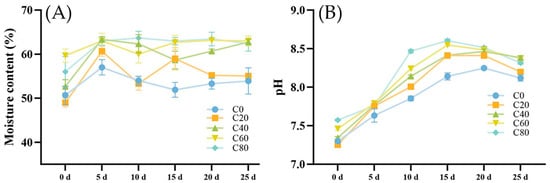
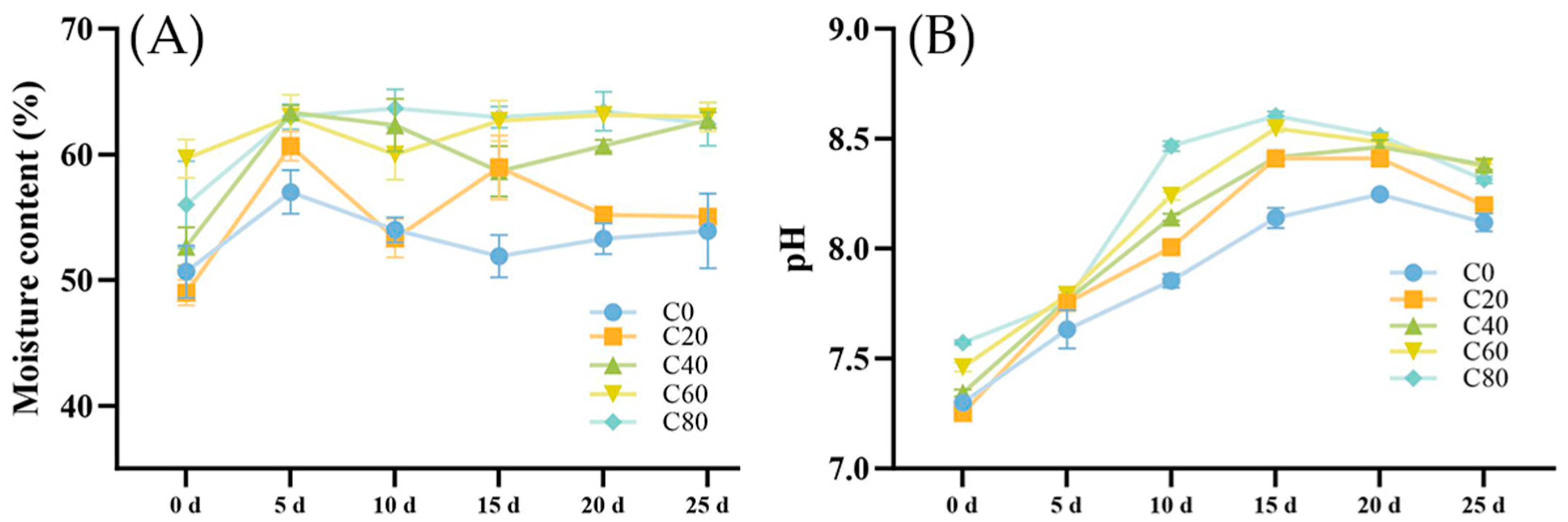
The substrate moisture content generally first increased and then stabilized during cultivation (Figure 1A). The moisture content increased markedly on day 5, which was mainly attributed to the water introduced by the liquid spawn. Thereafter, the moisture content tended to stabilize, suggesting that water absorption, evaporation, and retention in the substrate gradually reached a relative equilibrium. During the later cultivation stages, C0 and C20 exhibited comparable moisture contents, whereas the moisture contents of C40, C60, and C80 remained consistently higher than those of C0 and C20.
Figure 1.
Changes in substrate moisture content (A) and pH (B) during mycelial growth.
The substrate pH generally first increased, peaked at 15–20 days, and then slightly declined or approached a plateau (Figure 1B). The initial pH ranged from 7.2 to 7.6 and generally increased with increasing H. davidii substitution. The pH increase during the early cultivation stage coincided with rapid mycelial colonization, whereas the pH decreased slightly near or after full colonization. Following full colonization, the pH values of C0 and C20 were lower than those of C40, C60, and C80, with pH values in C60 and C80 exceeding 8.5 at 15–20 days.
3.3. Extracellular Enzyme Activities
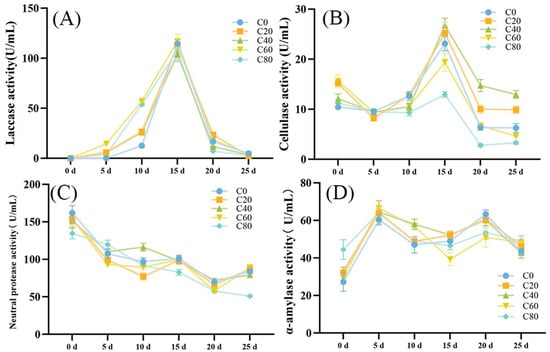
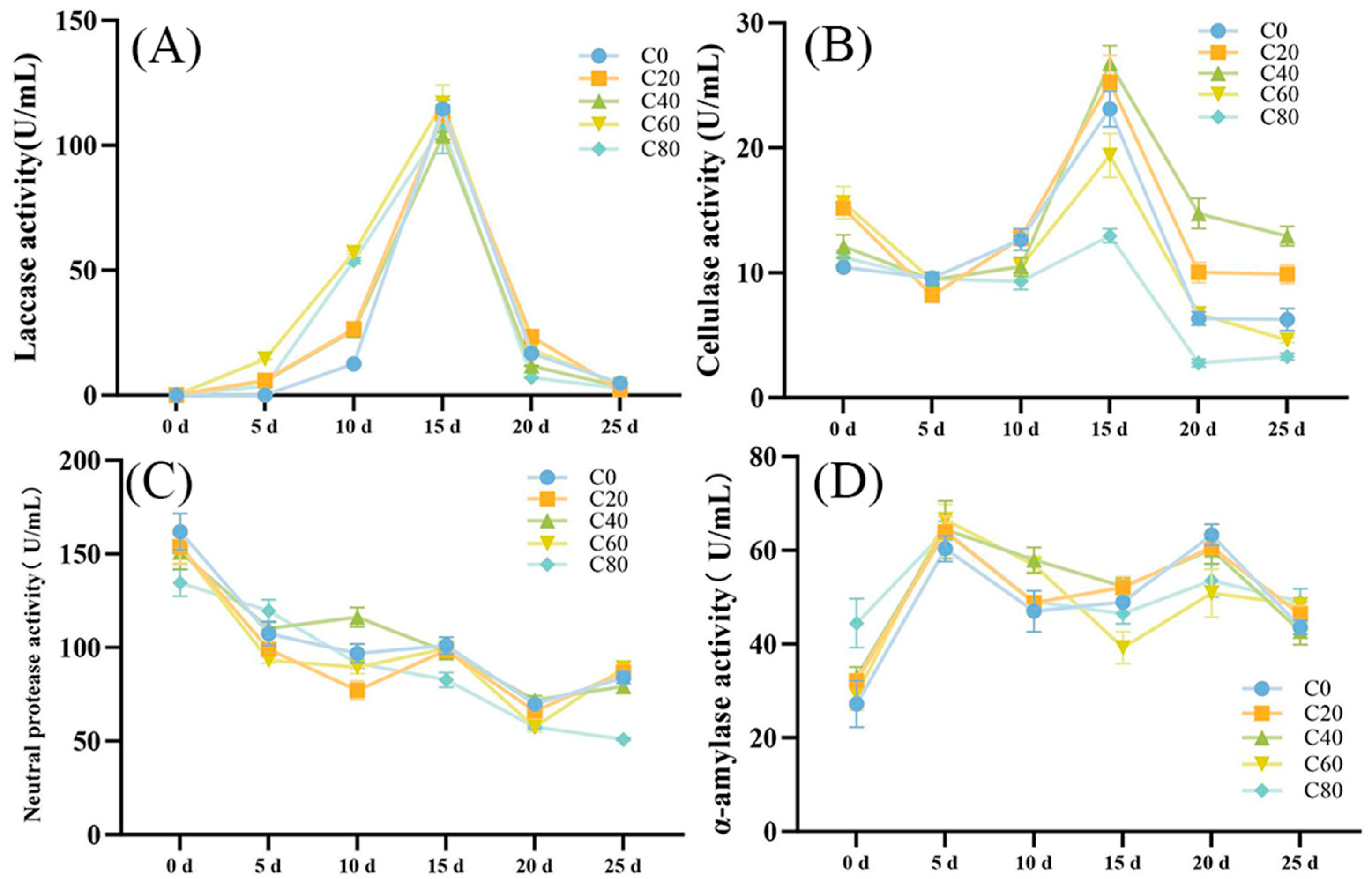
Laccase, carboxymethyl cellulase, neutral protease, and α-amylase are associated with the degradation or utilization of lignin, cellulose, proteins, and starch, respectively, and their activity changes can reflect the ability of mycelia to utilize the corresponding substrates and their metabolic stage [8]. Their activity dynamics during the dark cultivation of mycelia are shown in Figure 2A–D.
Figure 2.
Dynamics of extracellular enzyme activities during mycelial growth: laccase (A), cellulase (B), neutral protease (C), and α-amylase (D). Note: Activities are expressed in U/mL; 1 U is defined specifically for each enzyme, as described in Section 2.5. The U values were not directly comparable among the different enzymes.
Laccase and cellulase activities are shown in Figure 2A and Figure 2B, respectively. The activities of both enzymes first increased and then decreased, peaking at approximately 15 days in all treatments. At this time, the substrate bags were in the half-bag colonization stage. At the peak, laccase activity was 114.56, 112.39, 103.85, 116.93, and 107.55 U/mL in the C0, C20, C40, C60, and C80 treatments, respectively, with no significant differences among the treatments (p > 0.05). In contrast, cellulase activity differed among the treatments at the peak stage. C40 exhibited the highest activity (26.76 U/mL), which was 15.8% higher than that of C0 (23.11 U/mL). The cellulase activities of C20, C60, and C80 were 25.26, 19.38, and 13.27 U/mL, respectively.
The neutral protease activity generally decreased with increasing cultivation time (Figure 2C). After day 10, as readily available nitrogen sources decreased and mycelial growth shifted from rapid expansion to stable colonization, the demand for protease secretion decreased, and the decline in activity slowed and remained low. From day 0 to day 25, the decreases in C0, C20, C40, C60, and C80 were 46.76%, 42.31%, 46.42%, 40.39%, and 60.20%, respectively. C80 showed the largest decrease, C60 showed the smallest decrease, and C40 exhibited a decrease similar to that of C0.
α-Amylase activity showed a bimodal pattern (Figure 2D), corresponding to the mycelial colonization stage and the mycelial saturation stage. During the colonization stage, mycelia rapidly colonized the substrate, and the demand for readily available starch carbon sources increased, with the first peak appearing on day 5; thereafter, the activity decreased and remained at 42.19–58.82 U/mL from day 10 to 15. During the mycelial saturation stage, mycelia fully colonized the substrate, possibly involving the utilization of residual starch or metabolic adjustment. The second peak appeared on day 20, after which the activity decreased again on day 25. Compared to C0, C40 was approximately 18.7% and 4.8% higher on days 10 and 15, respectively, indicating that C40 had a relatively strong starch degradation capacity in the middle stage.
Overall, C40 exhibited the highest carboxymethyl cellulase activity at the peak stage and higher α-amylase activities than C0 on days 10 and 15. C60 and C80 showed lower carboxymethyl cellulase activity than C40 during the corresponding cultivation stages.
3.4. Soluble Nutrient Dynamics in Substrate Bags
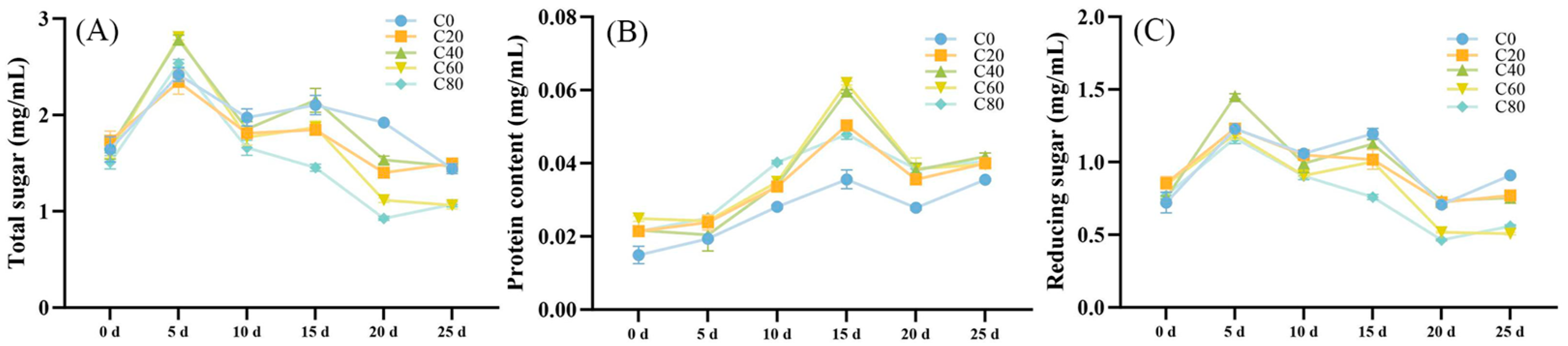
The changes in total sugar, soluble protein, and reducing sugar content are shown in Figure 3A–C, respectively. These indicators reflect the availability of readily utilizable carbon and nitrogen sources in the substrate, and are closely related to mycelial colonization and metabolic activity.
Figure 3.
Changes in soluble nutrients in substrate bags during cultivation: Total sugars (A), soluble protein (B), and reducing sugar (C).
The total sugar content generally increased during the early cultivation stage, followed by a decrease and subsequent stabilization (Figure 3A). The increase on day 5 was primarily associated with the introduction of liquid spawn. Thereafter, the total sugar content gradually decreased and remained relatively stable from day 20 to 25. At 20–25 days, total sugar content ranged from 1.40 to 1.54 mg/mL in C0, C20, and C40, and from 0.93 to 1.12 mg/mL in C60 and C80.
The soluble protein content showed a single peak during cultivation (Figure 3B), with a maximum occurring at approximately 15 days. The soluble protein content in C40 was 0.0596 mg/mL compared to 0.0356 mg/mL in C0, corresponding to an increase of 67.4%. After day 20, the soluble protein content decreased and subsequently increased slightly on day 25.
The reducing sugar content increased after inoculation and reached a maximum on day 5, followed by an overall decline during subsequent cultivation (Figure 3C). The low values observed on day 0 represent a pre-inoculated substrate. On day 5, the reducing sugar content reached 1.23 mg/mL in C0 and 1.45 mg/mL for C40. Thereafter, reducing sugar content generally decreased, reaching 0.71 and 0.73 mg/mL in C0 and C40, respectively, at day 20. A slight increase was observed in some treatments on day 25.
Overall, the total sugar, soluble protein, and reducing sugar contents showed distinct temporal patterns during cultivation, with the magnitude of these changes varying among the substitution treatments.
3.5. Lignocellulose Degradation
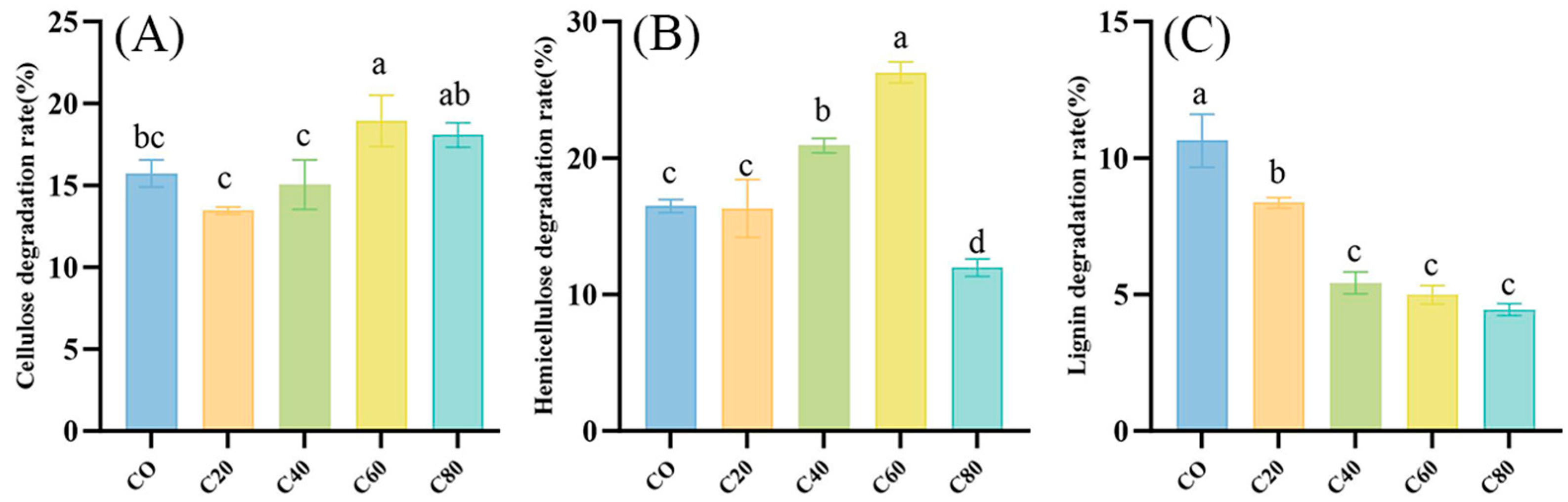
With increasing H. davidii sawdust substitution, the degradation patterns of cellulose, hemicellulose, and lignin differed among the treatments (Figure 4). The cellulose degradation rate did not differ significantly among C0, C20, and C40. With a further increase in the substitution level, the cellulose degradation rates of C60 and C80 increased significantly, with C60 showing the highest value (18.94%), which was significantly higher than those of C0, C20, and C40; C80 also remained at a relatively high level. The rate of hemicellulose degradation initially increased and then decreased. It was significantly higher in C40 than in C0 and C20, and reached its highest in C60 (26.28%), after which it decreased markedly to 11.98% in C80. The lignin degradation rate decreased with increasing H. davidii sawdust substitution. C0 showed the highest value (10.64%), followed by C20 and C40 (5.43%), whereas the values in C60 and C80 were comparable to those in C40.
Figure 4.
Degradation rates of cellulose (A), hemicellulose (B), and lignin (C) after cultivation. Note: The error bars indicate the standard error of the mean. Values not connected by the same letter are significantly different (p < 0.05).
Overall, the three lignocellulosic components exhibited distinct degradation patterns across different substitution treatments. In C40, the cellulose degradation rate was comparable to those in C0 and C20, whereas the hemicellulose degradation rate was significantly enhanced relative to these two treatments, accompanied by a lower lignin degradation rate. This pattern indicates a different balance of cellulose, hemicellulose, and lignin utilization in C40.
3.6. Fruiting Transition, Agronomic Traits, and Biological Efficiency
During the fruiting stage, C0, C20, C40, and C60 produced fruiting bodies, whereas C80 failed to form primordia and did not fruit. Representative fruiting body images of the C0, C20, C40, and C60 treatments are shown in Supplementary Figure S2.
Among the three normal fruiting treatments, C40 exhibited a clear advantage in terms of yield. The individual fresh weight and biological efficiency of C40 were significantly higher than those of C0 and C20 (p < 0.05), with a biological efficiency of 65.13%, approximately 38.6% higher than that of C0. Fruiting body morphology was significantly longer in C40 than in C0 and C20, whereas fruiting body width did not differ significantly between C0 and C20. Its thickness was greater than that of C20 and comparable to that of C0. Compared to C0, C20 showed no significant differences in length, but its thickness was significantly lower (7.13 mm vs. 9.61 mm, p < 0.05). Individual fresh weight and biological efficiency were slightly higher than those of C0 by approximately 3.2% and 4.4%, respectively; however, the differences were not significant (p > 0.05; Table 2).
Table 2.
Agronomic traits and biological efficiency of G. incarnatum fruiting bodies.
3.7. Nutritional and Bioactive Components of Fruiting Bodies
Although C60 produced fruiting bodies, its agronomic traits and biological efficiency were significantly lower than those of the control (C0) (p < 0.05; Table 2), indicating its inferior cultivation performance. Therefore, subsequent nutritional and bioactive component analyses were conducted only on the fruiting bodies of C0, C20, and C40. The results are presented in Table 3 and Table 4, respectively.
Table 3.
Nutritional components of G. incarnatum fruiting bodies.
Table 4.
Bioactive components of G. incarnatum fruiting bodies.
With increasing H. davidii sawdust substitution, the nutritional composition of the fruiting bodies changed significantly. On a dry-weight basis, crude protein content increased significantly with increasing H. davidii sawdust substitution, from 4.640 g/100 g in C0 to 42.872 g/100 g in C40 (p < 0.05). In contrast, crude fat content decreased significantly from 7.850 to 5.075 g/100 g (p < 0.05). The ash content was highest in C20 (1.255%), which was significantly higher than that in C0 and C40. Total dietary fiber did not differ significantly among treatments, ranging from 36.404 to 37.677 g/100 g. Total sugar content increased from 10.878 mg/g in C0 to 14.231 mg/g in C40, with C20 and C40 showing significantly higher values than C0 (p < 0.05).
The bioactive components responded differently to increasing H. davidii sawdust substitution. The polysaccharide, total alkaloid, and total flavonoid contents were significantly higher in C20 and C40 than in C0, whereas the total phenol content was the highest in C20 and was significantly higher than that in C0 and C40 (p < 0.05). The total terpenoid content did not differ significantly among the treatments, ranging from 2.266 to 2.799 mg/g. For total phenol content, C40 showed a slightly higher value than C0, although the difference was not statistically significant (p > 0.05).
3.8. Amino Acid and Fatty Acid Composition of Fruiting Bodies
The amino acid and fatty acid composition of the fruiting bodies of C0, C20, and C40 are shown in Table 5 and Table 6, respectively.
Table 5.
Amino acid composition of G. incarnatum fruiting bodies (mg/g).
Table 6.
Fatty acid composition of G. incarnatum fruiting bodies (g/100 g).
Seventeen amino acids were detected in the fruiting bodies. Total amino acid content first increased and then decreased with increasing H. davidii sawdust substitution, reaching 31.73 mg/g in C20 and decreasing to 25.30 mg/g in C40. Compared with C0, the total amino acid content increased by approximately 12.4% in C20 but decreased by approximately 10.4% in C40. Arginine (Arg) and proline (Pro) showed similar changes, with higher content in C20 than in C0 and C40. Therefore, amino acid accumulation responded differently to the substitution level.
A total of 37 fatty acids were analyzed, and the major fatty acids detected are listed in Table 6. The compounds detected included saturated fatty acids (C16:0 and C18:0), monounsaturated fatty acids (C16:1 and C18:1n9c), and polyunsaturated fatty acids (C18:2n6c and C18:3n3). Compared to C0, the total fatty acid content of C40 was significantly lower by approximately 16.2% (p < 0.05). In contrast, C20 showed a significantly higher total fatty acid content than C0, representing an increase of approximately 21.0%, with higher linoleic and oleic acid contents.
3.9. Integrated Multivariate Analysis and Correlation Analysis
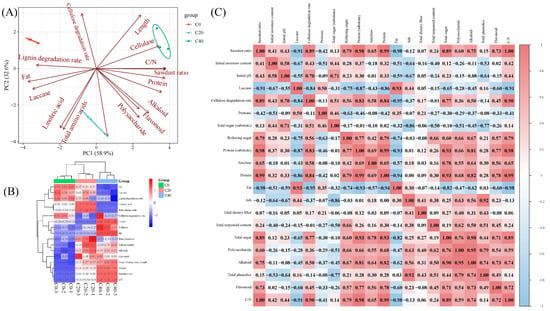
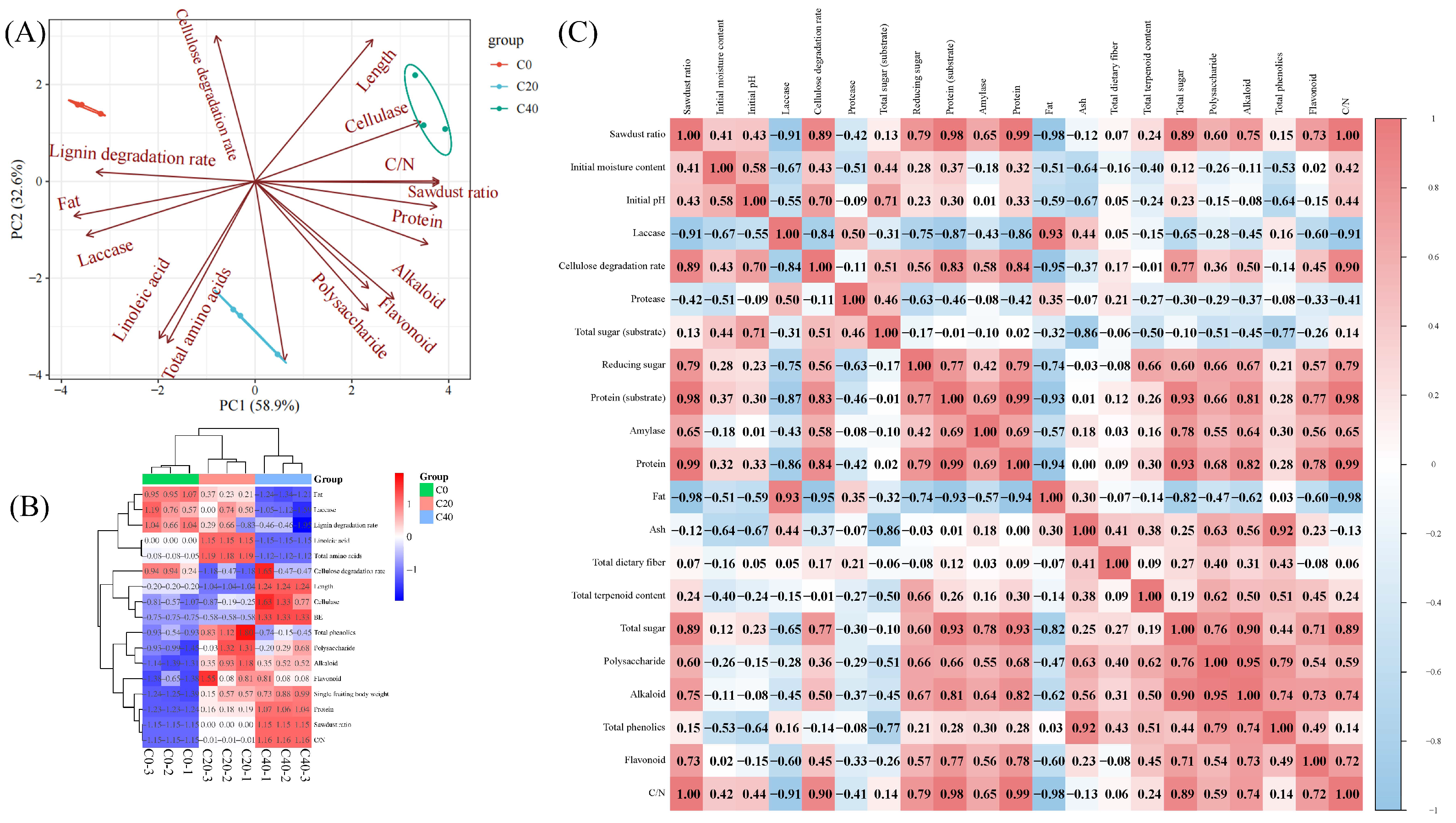
The results of principal component analysis (PCA), hierarchical clustering heatmap, and Pearson correlation analysis are shown in Figure 5. The first two principal components, PC1 and PC2, accounted for 58.9% and 32.6% of the total variance, respectively, with a cumulative contribution of 91.5% (Figure 5A). The score plot showed a clear separation of C0, C20, and C40 along the PC1–PC2 axes. C40 was located at the positive end of PC1 and closely associated with fruiting body length, cellulase activity, C/N ratio, sawdust substitution ratio, crude protein, total alkaloids, total flavonoids, and polysaccharides. C0 was located at the negative end of PC1 and associated with crude fat, laccase activity, lignin degradation rate, linoleic acid, and total amino acids. C20 was located at the negative end of PC2 and was closely related to total amino acids, linoleic acid, and laccase activity.
Figure 5.
Integrated multivariate analysis of fruiting-body traits: PCA score and loading plots (A), hierarchical clustering heatmap (B), and Pearson correlation heatmap (C).
The hierarchical clustering heatmap further revealed the distribution patterns of the measured indicators at C0, C20, and C40 (Figure 5B). C0, C20, and C40 clustered into distinct groups, indicating that the overall characteristics of the fruiting body and substrate indicators differed markedly among the substitution levels. C40 exhibited higher cellulase activity, fruiting body length, biological efficiency, crude protein content, sawdust substitution ratio, C/N ratio, polysaccharides and total alkaloids. C20 had the highest values of linoleic acid, total amino acids, and total phenolics. C0 showed higher crude fat content, laccase activity, and lignin degradation.
The Pearson correlation analysis is shown in Figure 5C. With increasing H. davidii sawdust substitution ratio, the C/N ratio, crude protein, cellulose degradation rate, total sugars, reducing sugars, total alkaloids, total flavonoids, and polysaccharides were positively correlated with the substitution ratio, whereas crude fat and laccase activities were negatively correlated with the substitution ratio. Consequently, the above positively correlated indicators were generally higher in the C40 treatment, whereas crude fat and laccase activities were lower. Total phenolics showed a weak correlation with the substitution ratio (r = 0.15), indicating that total phenolics were relatively less affected by the substitution ratio, and that the higher total phenolics in C20 may have been related to other factors. Crude protein was positively correlated with the C/N ratio, total sugars, cellulose degradation rate, polysaccharides, total alkaloids, and total flavonoids, and negatively correlated with crude fat and laccase activity. Polysaccharides were positively correlated with total alkaloids, phenolics, and flavonoids. Overall, the multivariate analyses revealed distinct associations between substitution levels and the measured cultivation and fruiting-body quality traits, with C20 and C40 exhibiting different nutritional and biochemical profiles.
4. Discussion
4.1. Hemiptelea davidii Sawdust Substitution Modified the Substrate Environment During Cultivation
Replacing Quercus spp. sawdust with Hemiptelea davidii sawdust progressively increased the substrate C/N ratio, reflecting changes in the carbon–nitrogen balance of the cultivation substrate. The C/N ratio is an important factor affecting mycelial growth, fruiting, and nutrient accumulation in cultivated mushrooms; however, its effects are species- and formulation-dependent [13,35,36,37]. Recent studies have shown that changing the proportion or type of lignocellulosic material can alter the C/N ratio and consequently affect mushroom yield and nutritional characteristics [38,39]. Despite the differences in substrate C/N ratios, mycelial colonization was broadly comparable among treatments, suggesting that the substitution of H. davidii sawdust had limited effects on vegetative growth.
Increasing H. davidii substitution altered substrate moisture and pH, with higher substitution levels generally associated with greater moisture retention and higher pH. Substrate moisture is important for mycelial growth and extracellular enzyme activity, while excessive water content can alter gas exchange and substrate structure [40,41]. These physicochemical changes may therefore influence substrate degradation and nutrient utilization, ultimately affecting fruiting performance. However, the poor fruiting performance at high substitution levels cannot be attributed to any single factor, as the C/N ratio, moisture content, pH, and substrate composition changed simultaneously. Therefore, the effects of increased H. davidii sawdust substitution on the growth and fruiting of G. incarnatum are likely associated with the combined effects of multiple substrate properties.
4.2. Extracellular Enzyme Activities and Lignocellulose Degradation Reflected Stage-Dependent Substrate Utilization
The activities of extracellular enzymes varied markedly during cultivation, reflecting changes in the enzymatic requirements for substrate utilization at different growth stages. Laccases and cellulolytic enzymes are important components of the extracellular enzymatic system used by wood-decaying fungi to access lignocellulosic carbon sources [8,17]. Previous studies have shown that substrate composition can influence ligninolytic enzyme activity and degradation of structural carbohydrates during mushroom cultivation [41,42]. Among the enzymes examined, CMCase showed the highest activity at the same stage, with C40 exhibiting the highest CMCase activity among the treatments. The higher cellulolytic activity of C40, together with the relatively high availability of soluble nutrients, suggests that moderate substitution may have favored cellulose degradation and nutrient release during mycelial colonization. Changes in the substrate composition may influence carbon-source utilization by G. incarnatum, thereby regulating the expression and secretion of lignocellulose-degrading enzymes. The differences in extracellular enzyme activities among treatments may reflect substrate-responsive and metabolic regulatory processes, although the specific molecular mechanisms remain to be elucidated.
Extracellular enzyme activity alone could not explain the final fruiting performance among treatments. Despite its extensive cellulose and hemicellulose degradation, C60 showed poorer fruiting performance and biological efficiency, whereas C80 failed to form normal primordia despite substantial cellulose degradation. Similar results have been reported in Auricularia heimuer, where substrate composition and lignocellulose characteristics were associated with agronomic traits, but high substrate degradation did not necessarily correspond to the highest overall production [37]. These findings suggest that the extensive degradation of structural carbohydrates should not be interpreted as an independent indicator of successful reproductive development.
The comparatively favorable fruiting performance of C40 may therefore be associated with a more balanced pattern of substrate utilization, rather than maximizing the degradation of any individual component. The cellulose degradation rate was not significantly different from those of C0 and C20, whereas hemicellulose degradation was enhanced and lignin degradation remained relatively low. A similar decoupling between substrate degradation and mushroom productivity has been reported in studies using alternative lignocellulosic substrates [42,43]. Thus, the relationship between enzyme activity, substrate degradation, and yield appears to depend on the coordination of multiple substrate utilization processes rather than on the magnitude of the activity of a single enzyme.
4.3. Moderate H. davidii Substitution Improved Production Performance and Altered Nutritional Composition
Among the treatments that produced normal fruiting bodies, C40 achieved the highest individual fresh weight and biological efficiency. Similar responses have been reported in other cultivated mushrooms, where partial replacement of conventional sawdust with alternative lignocellulosic materials maintained or improved yield and biological efficiency [38,44]. For example, the use of post-harvest Chenopodium formosanum stems as a partial substitute for sawdust maintained the biological efficiency of Pleurotus sajor-caju at a level comparable to that of the commercial control [45]. Similarly, agricultural and forest residues have been used to replace 50% of conventional sawdust in the cultivation of Lentinus sajor-caju and three Pleurotus species, demonstrating the feasibility of using locally available biomass in mushroom production [46].
The response to H. davidii sawdust substitution was not proportional to the substitution level. Partial replacement of conventional sawdust has been reported to improve productivity and biological efficiency in Pleurotus ostreatus, whereas excessive substitution resulted in less favorable performance [38]. Likewise, the partial replacement of Quercus sawdust with fruit tree pruning residues improved the yield of Lentinus edodes and altered its protein, polysaccharide, and amino acid composition [47].
In addition to yield-related traits, H. davidii sawdust substitution also affected the proximate nutritional composition of G. incarnatum fruiting bodies, with distinct responses at different substitution levels. C40 showed a more favorable profile in terms of crude protein and total sugar contents, whereas C20 was more favorable for total phenolic accumulation. Previous studies have shown that substrate composition can affect the nutritional composition of mushroom fruiting bodies by altering carbon and nitrogen availability, nutrient accessibility, and substrate bioconversion [47,48], consistent with the associations observed between substitution level and nutritional traits in the present study.
Previous studies using rice straw, sugarcane bagasse, fruit tree pruning residues, and other alternative lignocellulosic materials have similarly shown that intermediate substitution levels can provide more favorable cultivation performance, whereas excessive substitution may reduce yield [38,47,49,50]. Overall, the partial replacement of Quercus sawdust with an appropriate proportion of H. davidii sawdust represents a feasible approach to improving G. incarnatum cultivation performance while utilizing locally available woody residues.
4.4. H. davidii Substitution Was Associated with Changes in Bioactive Components and Amino and Fatty Acid Profiles
The responses of bioactive components to H. davidii sawdust substitution varied among component groups and did not fully correspond to changes in yield and proximate nutritional composition. C20 showed relatively high levels of several bioactive components, whereas the total terpenoid content did not differ significantly among C0, C20, and C40. Similar substrate-dependent changes in the functional compounds have been reported in other cultivated mushrooms. Different cultivation substrates affect the accumulation of bioactive compounds in Pleurotus floridanus and alter the composition and content of triterpenoids in Ganoderma lucidum [12,51]. Different biosubstrates have also been shown to affect polysaccharide accumulation and the expression of genes associated with polysaccharide biosynthesis in Auricularia heimuer [42]. These findings suggest that H. davidii sawdust substitution may affect the accumulation of individual bioactive components through substrate-dependent responses, rather than eliciting a uniform dose-dependent change.
Changes in amino acid and fatty acid contents further illustrate the differential responses of nutritional components to substrate substitution. Although C40 showed the highest crude protein content, its total amino acid content was the lowest among the three treatments. Similarly, changes in crude fat content did not fully correspond to those in total fatty acid content. Previous studies have shown that the cultivation substrate composition can affect the amino acid and fatty acid contents of mushroom fruiting bodies [52,53]. These discrepancies may partly be attributed to differences in the fresh- and dry-sample bases used for analysis.
Although H. davidii contains various secondary metabolites, including flavonoids and phenolic compounds [11], the increased accumulation of functional components in fruiting bodies does not necessarily indicate their direct uptake and transfer from the substrate. The observed changes in polysaccharides, phenolics, flavonoids, and alkaloids may instead be associated with altered substrate degradation, nutrient utilization, and fungal metabolic responses following substrate substitution. However, the present study did not trace the origin of these compounds or investigate the related metabolic pathways; therefore, the possible contribution of H. davidii-derived compounds to their accumulation in fruiting bodies remains unclear.
4.5. Integrated Response to H. davidii Substitution and Implications for Cultivation
The combined results indicate that H. davidii sawdust substitution elicited a nonlinear response in G. incarnatum cultivation. C40 provided the most favorable balance between yield and selected nutritional traits, whereas C20 favored the accumulation of several bioactive components. The poor fruiting performance of C60 and the failure of C80 to produce primordia further indicate that extensive substrate degradation or mycelial colonization does not necessarily translate into successful fruiting. Overall, the responses of cultivation performance and fruiting-body quality varied among substitution levels.
The use of alternative woody materials and agricultural residues as partial substitutes for conventional sawdust has received increasing attention in mushroom cultivation as a means of expanding the available lignocellulosic resources and reducing dependence on conventional substrates [36,50]. However, the effects of alternative substrates are strongly dependent on mushroom species, strain, substrate formulation, and substitution level. Different alternative substrates produced distinct responses in terms of yield and nutritional quality in Pleurotus, Lentinula, and Auricularia species [38,39,49,54]. Therefore, the favorable performance of C40 should be interpreted in the context of the specific strain, substrate formulation, and cultivation conditions used in this study, rather than as a universal optimum for G. incarnatum cultivation.
Overall, partial replacement of Quercus sawdust with an appropriate proportion of H. davidii sawdust offers a feasible approach to improving G. incarnatum cultivation performance while modifying fruiting-body nutritional and functional composition. Because H. davidii branches are regularly pruned in the local area each year, this material is readily available and has substantially lower raw-material acquisition costs than Quercus sawdust. However, owing to the relatively hard texture of H. davidii wood, appropriate particle size should be ensured during substrate preparation, avoiding excessively large particles, and the sawdust should be thoroughly soaked before use. Although PCA, hierarchical clustering, and correlation analyses revealed associations among the measured variables, they cannot establish causal relationships. The effects of H. davidii substitution on microbial communities, metabolic pathways, and production stability were not directly examined in this study, warranting further investigation.
5. Conclusions
This study evaluated the effects of replacing Quercus spp. sawdust with Hemiptelea davidii sawdust on substrate properties, fruiting performance, yield, and fruiting-body quality in Gloeostereum incarnatum, with the substrate C/N ratio increasing from 37.68 to 42.24 as the substitution level increased. Among the treatments, C40 achieved the highest individual fresh weight and biological efficiency (65.13%), with its biological efficiency significantly higher than those of C0 and C20, highlighting its advantage in improving yield. C40 also produced fruiting bodies with higher crude protein and total sugar contents and lower crude fat content, indicating improvements in selected nutritional characteristics. In contrast, C20 favored the accumulation of several bioactive components, including polysaccharides, total alkaloids, total phenolics, and total flavonoids. Although C60 was capable of fruiting, its agronomic traits and yield were significantly lower than those of C0, C20, and C40, whereas C80 completed substrate colonization but failed to produce primordia. Overall, under the cultivation conditions and substrate formulations evaluated in this study, replacing 40% of Quercus spp. sawdust with H. davidii sawdust was the most favorable option for improving yield and biological efficiency, whereas a 20% substitution level was more suitable for the accumulation of secondary metabolites. Further studies on substrate microbial communities, metabolic pathways, and large-scale cultivation are needed to clarify the biological responses to H. davidii substitution and evaluate its application under production conditions.
Supplementary Materials
The following supporting information can be downloaded at https://www.mdpi.com/article/10.3390/horticulturae12111434/s1: Figure S1: Representative images of mycelial colonization of Gloeostereum incarnatum under different Hemiptelea davidii sawdust substitution levels; Figure S2: Fruiting of Gloeostereum incarnatum under different Hemiptelea davidii sawdust substitution levels; Table S1: Carbon and total nitrogen contents of the substrate materials used for Gloeostereum incarnatum cultivation.
Author Contributions
Conceptualization, W.Y. and E.T.; methodology, W.Y., G.D. and E.T.; investigation, W.Y. and G.D.; formal analysis, W.Y. and G.D.; data curation, W.Y. and S.C.; writing—original draft preparation, W.Y. and E.T.; writing—review and editing, W.Y. and E.T. All authors have read and agreed to the published version of the manuscript.
Funding
This research was funded by the Sanjiang Laboratory Project (SJ2025006-8).
Data Availability Statement
The data supporting the findings of this study are available in the article and its Supplementary Materials. Further inquiries can be directed to the corresponding author.
Acknowledgments
The authors sincerely thank the Sanjiang Laboratory Project for financial support. We also gratefully acknowledge Xiao Li for providing the Gloeostereum incarnatum strain and experimental site for this study.
Conflicts of Interest
The authors declare no conflicts of interest.
Abbreviations
The following abbreviations are used in this manuscript:
| ABTS | 2,2′-Azino-bis (3-ethylbenzothiazoline-6-sulfonic acid) |
| ADF | Acid Detergent Fiber |
| ADL | Acid Detergent Lignin |
| ANOVA | Analysis of Variance |
| BE | Biological Efficiency |
| C/N | Carbon-to-Nitrogen Ratio |
| CMCase | Carboxymethyl Cellulase |
| DNS | 3,5-Dinitrosalicylic Acid |
| LSD | Least Significant Difference |
| NDF | Neutral Detergent Fiber |
| PCA | Principal Component Analysis |
| PDA | Potato Dextrose Agar |
| SD | Standard Deviation |
| DW | Dry Weight |
| FW | Fresh Weight |
References
- Jiang, W.-Z.; Yao, F.-J.; Fang, M.; Lu, L.-X.; Zhang, Y.-M.; Wang, P.; Meng, J.-J.; Lu, J.; Ma, X.-X.; He, Q.; et al. Analysis of the genome sequence of strain GiC-126 of Gloeostereum incarnatum with genetic linkage map. Mycobiology 2021, 49, 406–420. [Google Scholar] [CrossRef] [Scilit] [PubMed]
- Li, X.; Liu, X.; Zhang, Y.; Zhang, Y.; Liu, S.; Zhang, N.; Li, Y.; Wang, D. Protective effect of Gloeostereum incarnatum on ulcerative colitis via modulation of Nrf2/NF-κB signaling in C57BL/6 mice. Mol. Med. Rep. 2020, 22, 3418–3428. [Google Scholar] [CrossRef] [Scilit] [PubMed]
- Asai, R.; Mitsuhashi, S.; Shigetomi, K.; Miyamoto, T.; Ubukata, M. Absolute configurations of (−)-hirsutanol A and (−)-hirsutanol C produced by Gloeostereum incarnatum. J. Antibiot. 2011, 64, 693–696. [Google Scholar] [CrossRef] [Scilit] [PubMed]
- Bunbamrung, N.; Intaraudom, C.; Dramae, A.; Boonyuen, N.; Veeranondha, S.; Rachtawee, P.; Pittayakhajonwut, P. Antimicrobial activity of illudalane and alliacane sesquiterpenes from the mushroom Gloeostereum incarnatum BCC41461. Phytochem. Lett. 2017, 20, 274–281. [Google Scholar] [CrossRef] [Scilit]
- He, J.; Yang, A.; Zhao, X.; Liu, Y.; Liu, S.; Wang, D. Anti-colon cancer activity of water-soluble polysaccharides extracted from Gloeostereum incarnatum via Wnt/β-catenin signaling pathway. Food Sci. Hum. Wellness 2021, 10, 460–470. [Google Scholar] [CrossRef] [Scilit]
- Yu, Y.; Yao, F. Hybrid cultivar “Jirou 1” cross-breeding of Gloeostereum incarnatum. Acta Edulis Fungi 2016, 23, 18–22. (In Chinese) [Google Scholar]
- Grimm, D.; Wösten, H.A.B. Mushroom cultivation in the circular economy. Appl. Microbiol. Biotechnol. 2018, 102, 7795–7803. [Google Scholar] [CrossRef] [Scilit] [PubMed]
- Jeon, S.M.; Ka, K.H. Mycelial growth and extracellular enzyme activities of wood-decaying mushroom strains on solid media. Korean J. Mycol. 2014, 42, 40–49. [Google Scholar] [CrossRef] [Scilit]
- Timm, T.G.; Arantes, M.S.T.; de Oliveira, E.H.S.; Tavares, L.B.B.; Mathias, Á.L.; da Silva, V.R.; Helm, C.V. Substrate effects on the growth, yield, and nutritional composition of edible mushrooms. Adv. Appl. Microbiol. 2025, 130, 159–190. [Google Scholar] [CrossRef] [Scilit] [PubMed]
- Liu, Y.; Li, Y.; Feng, S.; Yan, S.; Wang, J.; Huang, Y.; Yang, M. Complete chloroplast genome structure of four Ulmus species and Hemiptelea davidii and comparative analysis within Ulmaceae species. Sci. Rep. 2022, 12, 15953. [Google Scholar] [CrossRef] [Scilit] [PubMed]
- Chang, B.S.; Kwon, Y.S.; Kim, C.M. The chemical structures and their antioxidant activity of the components isolated from the heartwood of Hemiptelea davidii. Korean J. Pharmacogn. 2004, 35, 80–87. [Google Scholar]
- Karpagavalli, S.; Manisha, R.; Mageshwari, S.; Sowbharnika, M. Influence of growth substrates on bioactive compounds and yield of oyster mushroom (Pleurotus florida). Sci. Hortic. 2024, 329, 112959. [Google Scholar] [CrossRef] [Scilit]
- Suwannarach, N.; Kumla, J.; Zhao, Y.; Kakumyan, P. Impact of cultivation substrate and microbial community on improving mushroom productivity: A review. Biology 2022, 11, 569. [Google Scholar] [CrossRef] [Scilit] [PubMed]
- Wu, S.; Bao, H.; Bau, T. Biological characteristics and domestication of Sanghuangporus mongolicus. Mycosystema 2025, 44, 250119. (In Chinese) [Google Scholar]
- Shaw, K. Determination of organic carbon in soil and plant material. J. Soil Sci. 1959, 10, 316–326. [Google Scholar] [CrossRef] [Scilit]
- Nelson, D.W.; Sommers, L.E. Determination of total nitrogen in plant material. Agron. J. 1973, 65, 109–112. [Google Scholar] [CrossRef] [Scilit]
- Bourbonnais, R.; Paice, M.G. Oxidation of non-phenolic substrates: An expanded role for laccase in lignin biodegradation. FEBS Lett. 1990, 267, 99–102. [Google Scholar] [CrossRef] [Scilit] [PubMed]
- Miller, G.L. Use of dinitrosalicylic acid reagent for determination of reducing sugar. Anal. Chem. 1959, 31, 426–428. [Google Scholar] [CrossRef] [Scilit]
- SB/T 10317-1999; Determination of Proteinase Activity. China Standards Press: Beijing, China, 1999. (In Chinese)
- DuBois, M.; Gilles, K.A.; Hamilton, J.K.; Rebers, P.A.; Smith, F. Colorimetric method for determination of sugars and related substances. Anal. Chem. 1956, 28, 350–356. [Google Scholar] [CrossRef] [Scilit]
- Bradford, M.M. A rapid and sensitive method for the quantitation of microgram quantities of protein utilizing the principle of protein-dye binding. Anal. Biochem. 1976, 72, 248–254. [Google Scholar] [CrossRef] [PubMed]
- GB/T 20806-2022; Determination of Neutral Detergent Fiber (NDF) in Feeds. China Standards Press: Beijing, China, 2022. (In Chinese)
- NY/T 1459-2022; Determination of Acid Detergent Fiber (ADF) in Feeds. China Agriculture Press: Beijing, China, 2022. (In Chinese)
- GB/T 20805-2025; Determination of Acid Detergent Lignin (ADL) in Feeds. China Standards Press: Beijing, China, 2025. (In Chinese)
- GB 5009.5-2025; National Food Safety Standard—Determination of Protein in Foods. China Standards Press: Beijing, China, 2025. (In Chinese)
- GB 5009.6-2025; National Food Safety Standard—Determination of Fat in Foods. China Standards Press: Beijing, China, 2025. (In Chinese)
- GB 5009.88-2023; National Food Safety Standard—Determination of Dietary Fiber in Foods. China Standards Press: Beijing, China, 2023. (In Chinese)
- GB/T 15672-2009; Determination of Total Saccharide in Edible Mushroom. China Standards Press: Beijing, China, 2009. (In Chinese)
- GB 5009.168-2016; National Food Safety Standard—Determination of Fatty Acids in Foods. China Standards Press: Beijing, China, 2016. (In Chinese)
- GB 5009.124-2016; National Food Safety Standard—Determination of Amino Acids in Foods. China Standards Press: Beijing, China, 2016. (In Chinese)
- Yao, F.; Gao, H.; Yin, C.-M.; Shi, D.-F.; Fan, X.-Z. Effect of different cooking methods on the bioactive components, color, texture, microstructure, and volatiles of Shiitake mushrooms. Foods 2023, 12, 2573. [Google Scholar] [CrossRef] [Scilit] [PubMed]
- Shamsa, F.; Monsef, H.; Ghamooshi, R.; Verdian-rizi, M. Spectrophotometric determination of total alkaloids in some Iranian medicinal plants. Thai J. Pharm. Sci. 2008, 32, 17–20. [Google Scholar] [CrossRef] [Scilit]
- Singleton, V.L.; Rossi, J.A. Colorimetry of total phenolics with phosphomolybdic-phosphotungstic acid reagents. Am. J. Enol. Vitic. 1965, 16, 144–158. [Google Scholar] [CrossRef] [Scilit]
- Yang, M.-Q.; Xu, F.-Q.; Liu, J.-Q. Determination of total terpenoids in Herba Siegesbeckiae by ultraviolet spectrophotometry. J. Anhui Tradit. Chin. Med. Coll. 2008, 2, 46–47. (In Chinese) [Google Scholar]
- Han, J.; Sun, R.; Huang, C.; Xie, H.; Gao, X.; Yao, Q.; Yang, P.; Li, J.; Gong, Z. Effects of different carbon and nitrogen ratios on yield, nutritional value, and amino acid contents of Flammulina velutipes. Life 2024, 14, 598. [Google Scholar] [CrossRef] [Scilit] [PubMed]
- Dong, H.R.; Jiang, N.; Zhang, D.; Li, Y.; Zhou, F.; Li, Z.-P.; Li, Q.-Z.; Tan, Q.; Zhang, M.-Y.; Yu, H.-L. Research progress and prospect of substrate alternatives for edible fungi based on the “cycle production of plants, animals, and fungi”. J. Fungi 2025, 11, 790. [Google Scholar] [CrossRef] [Scilit] [PubMed]
- Xu, A.; Yang, D.; Jacob, M.S.; Qian, K.; Yang, X.; Zhang, B.; Li, X. Comprehensive evaluation of agronomic traits and mineral elements of Auricularia heimuer cultivated on corncob substrates. Sci. Hortic. 2023, 314, 111942. [Google Scholar] [CrossRef] [Scilit]
- Costa, A.F.P.; Steffen, G.P.K.; Steffen, R.B.; Portela, V.O.; Santana, N.A.; dos Santos Richards, N.S.P.; Jacques, R.J.S. The use of rice husk in the substrate composition increases Pleurotus ostreatus mushroom production and quality. Sci. Hortic. 2023, 321, 112372. [Google Scholar] [CrossRef] [Scilit]
- Desisa, B.; Muleta, D.; Dejene, T.; Jida, M.; Goshu, A.; Negi, T.; Martin-Pinto, P. Utilization of local agro-industrial by-products based substrates to enhance production and dietary value of mushroom (P. ostreatus) in Ethiopia. World J. Microbiol. Biotechnol. 2024, 40, 277. [Google Scholar] [CrossRef] [Scilit] [PubMed]
- De Mastro, F.; Traversa, A.; Matarrese, F.; Cocozza, C.; Brunetti, G. Influence of growing substrate preparation on the biological efficiency of Pleurotus ostreatus. Horticulturae 2023, 9, 439. [Google Scholar] [CrossRef] [Scilit]
- Xu, S.; Wang, F.; Fu, Y.; Li, D.; Sun, X.; Li, C.; Song, B.; Li, Y. Effects of mixed agro-residues (corn crop waste) on lignin-degrading enzyme activities, growth, and quality of Lentinula edodes. RSC Adv. 2020, 10, 9798–9807. [Google Scholar] [CrossRef] [Scilit] [PubMed]
- Lu, L.; Shan, X.; Yao, F.; Li, X.; Fang, M.; Ma, X.; Meng, J.; Qu, S.; Zhou, Z.; Lu, J. Effects of different bio-substrate treatments on polysaccharide synthesis and bioactivity of Auricularia heimuer. Sci. Hortic. 2025, 352, 114439. [Google Scholar] [CrossRef] [Scilit]
- Jahedi, A.; Salehi, M.; Goltapeh, E.M.; Safaie, N. Multilayer perceptron-genetic algorithm as a promising tool for modeling cultivation substrate of Auricularia cornea Native to Iran. PLoS ONE 2023, 18, e0281982. [Google Scholar] [CrossRef] [Scilit] [PubMed]
- Diamantis, I.; Dedousi, M.; Melanouri, E.M.; Dalaka, E.; Antonopoulou, P.; Adelfopoulou, A.; Papanikolaou, S.; Politis, I.; Theodorou, G.; Diamantopoulou, P. Impact of spent mushroom substrate combined with hydroponic leafy vegetable roots on Pleurotus citrinopileatus productivity and fruit bodies biological properties. Microorganisms 2024, 12, 1807. [Google Scholar] [CrossRef] [Scilit] [PubMed]
- Hung, T.-H.; Ong, W.-A.; Li, W.-S.; Chao, Y.-Y.; Chang, P.P. Djulis (Chenopodium formosanum) Stems as sustainable sawdust alternative for Pleurotus sajor-caju cultivation: A feasibility study. Agriculture 2025, 15, 1878. [Google Scholar] [CrossRef] [Scilit]
- Xayyavong, O.; Sysouphanthong, P.; Jatuwong, K.; Lumyong, S.; Aiduang, W. From burning problem to growing value: Development of sustainable mushroom substrates for cost reduction and yield enhancement. J. Fungi 2026, 12, 661. [Google Scholar] [CrossRef] [Scilit] [PubMed]
- Zhang, Y.; Li, Q.; Duan, L.; Ding, J.; Li, Y.; Wang, Y.; Xu, H.; Qin, B. Effects of different orchard tree pruning residues on the yield and nutrient composition of Lentinus edodes. Front. Nutr. 2024, 11, 1477586. [Google Scholar] [CrossRef] [Scilit] [PubMed]
- Atila, F.; Cetin, M. Bioconversion of lavender oil extraction wastes through cultivation of Pleurotus eryngii var. ferulae: Its effects on yield, nutritional content and antioxidant capacity of the mushroom. Biocatal. Agric. Biotechnol. 2024, 58, 103138. [Google Scholar] [CrossRef] [Scilit]
- Zied, D.C.; Silva, B.D.; Caitano, C.E.C.; Vieira Junior, W.G.; da Silva Freitas, M.A.; Teixeira, P.A.G.; Pardo-Giménez, A. Use of eucalyptus charcoal waste in the formulation of substrate for the cultivation of two strains (LED 20/11 and LED 20/12) of Lentinula edodes. Agronomy 2024, 14, 811. [Google Scholar] [CrossRef] [Scilit]
- De, A.; Mridha, D.; Roychowdhury, T.; Bandyopadhyay, B.; Panja, A.S. Substrate level optimization for better yield of oyster mushroom (Pleurotus ostreatus) production, using different ratio of rice straw and sugarcane bagasse. World J. Microbiol. Biotechnol. 2023, 39, 270. [Google Scholar] [CrossRef] [Scilit] [PubMed]
- Luo, G.; Pan, Z.; Liu, Z.; Cheng, W.; Yu, T. Influence of cultivation substrate on antioxidant activities and triterpenoid profiles of the fruiting body of Ganoderma lucidum. Front. Nutr. 2024, 11, 1329579. [Google Scholar] [CrossRef] [Scilit] [PubMed]
- Thakur, A.; Pandey, K.K.; Kharka, K.; Borker, S.S.; Kumar, B.; Bhatt, A.; Kumar, R. Comparative analysis of substrate components, nutritive value, ergosterol distribution, and vitamin D2 enrichment in Shiitake mushrooms cultivated on wood substrates. J. Food Compos. Anal. 2024, 134, 106508. [Google Scholar] [CrossRef] [Scilit]
- Da Rocha, E.M.; Ávila, S.; de Lima, J.J.; Silva, R.S.A.; de Andrade, L.E.P.; Bacila, D.M.; Mathias, A.L.; Jorge, R.M.M. Araucaria angustifolia seed coat waste reduction through its utilization in substrate diversification for Pleurotus djamor production. Sci. Hortic. 2024, 330, 113060. [Google Scholar] [CrossRef] [Scilit]
- Paswal, S.; Kakraliya, S.S.; Fogawat, V. Effect of Different Substrates on Nutritional Composition of Shiitake Mushroom (Lentinula edodes). Arch. Curr. Res. Int. 2024, 24, 156–161. [Google Scholar] [CrossRef] [Scilit]

Disclaimer/Publisher’s Note: The statements, opinions and data contained in all publications are solely those of the individual author(s) and contributor(s) and not of MDPI and/or the editor(s). MDPI and/or the editor(s) disclaim responsibility for any injury to people or property resulting from any ideas, methods, instructions or products referred to in the content. |
© 2026 by the authors. Licensee MDPI, Basel, Switzerland. This article is an open access article distributed under the terms and conditions of the Creative Commons Attribution (CC BY) license.