


Highlights
What are the main findings?
- •
- Diatomaceous earth and bat granular enabled effective lettuce seed pelleting.
- •
- Gum arabic and Streptomyces sp. crude extract enhanced growth and phytochemicals.
What are the implications of the main findings?
- •
- Desiccant-assisted cold storage can minimize deterioration of pelleted lettuce seeds.
- •
- The proposed pelleting system provides a practical strategy for improving lettuce seed production and storage.
Abstract
This study developed a seed pelleting method using natural and bio-based materials and an effective post-pelleting storage strategy to improve the performance of small-sized seeds with limited internal nutrient reserves. Lettuce (Lactuca sativa L.) was used as a model crop. Organic filler materials consisting of diatomaceous earth (DE) combined with bat granular (DE+BG) and DE combined with solid vermicompost (DE+SVC) were evaluated. Furthermore, binding solutions were prepared from gum arabic supplemented with Streptomyces sp. crude extract at 0, 5, 50, and 500 ppm. Non-pelleted seeds were the control. The optimal natural- and bio-based pelleting formulation was subsequently stored with activated clay as a moisture-adsorbing material under ambient and cold conditions for 6 months. Results found that the DE+BG contained higher macronutrient levels (N 2.7%, P2O5 1.4%, K2O 1.0%) than DE+SVC and significantly improved shoot growth under both laboratory and greenhouse conditions without affecting germination. The binders combined with the 500 ppm crude extract significantly enhanced seedling vigor, photosynthetic performance, phytochemicals, and increased biomass accumulation (p < 0.05) in the plant. Importantly, packaging the seed pelleted with activated clay and storing it under cold conditions effectively maintains seed germination and seedling performance during storage. These findings demonstrate a novel integrated natural- and bio-based pelleting and storage approach that enhances early seedling growth and preserves seed quality during storage.
1. Introduction
Lettuce (Lactuca sativa L.) is one of the most widely consumed leafy vegetables worldwide and is highly valued by health-conscious consumers because of its nutritional quality and fresh-market demand. According to data from the Department of Agricultural Extension (DOAE), the cultivated area of lettuce in Thailand increased from 2800 ha in 2022 to 3700 ha in 2025, representing an approximately 32.1% increase and reflecting the expansion of lettuce production in the country. During the same period, the value of imported lettuce seeds increased from 24.5 to 35.1 million baht [1]. The concurrent increases in lettuce cultivation area and seed import value suggest growing demand for lettuce seed and indicate the continued importance of imported seed in supporting lettuce production in Thailand. However, the small size and lightweight nature of lettuce seeds present challenges for handling and uniform crop establishment. These characteristics can make accurate seed placement difficult and may contribute to uneven emergence and non-uniform crop development. Therefore, improving the physical characteristics and handling properties of lettuce seeds is an important strategy for production systems in which precision sowing and uniform emergence are critical [2].
Seed pelleting is a widely used seed-enhancement technology that increases seed size, improves shape uniformity, and facilitates mechanical sowing [3,4]. Beyond improving handling performance, pelleting materials can function as carriers for nutrients, biological agents, and other functional additives that promote seedling establishment. Previous studies have demonstrated that mineral fillers, including calcium sulfate, can be successfully used for lettuce seed pelleting [5]. However, commercial pelleted seeds are typically formulated using inert mineral fillers together with synthetic polymer binders such as polyvinyl acetate, polyvinyl alcohol, and hydroxypropyl methylcellulose. In addition, fungicides and insecticides are commonly incorporated into pelleting layers to protect seeds against seed- and soil-borne pathogens during germination [6]. Although these formulations perform effectively under conventional production systems, their reliance on synthetic materials limits their compatibility with organic production principles.
Microbial-derived bioactive compounds have emerged as promising components of sustainable crop-production systems because they may promote plant growth and contribute to biological protection against plant pathogens [7]. Among these microorganisms, Streptomyces sp. is one of the producers of structurally diverse secondary metabolites with antimicrobial and plant-growth-promoting activities [8]. Compared with the application of living microbial inoculants, microbial crude extracts may provide a more readily formulated source of bioactive compounds because their activity does not depend on maintaining viable microbial populations during formulation, transportation, and application [9]. These characteristics make microbial extracts potentially suitable for incorporation into seed-enhancement formulations. However, information remains limited on their incorporation into seed-pelleting systems, particularly when combined with seed pelleting, and on the resulting effects on seed quality, seedling establishment, plant growth, and storage stability.
Previous studies have investigated the incorporation of bio-based biostimulants into seed-coating to enhance plant performance. In broccoli, seed coatings containing vermicompost and soy protein-based biostimulants, with diatomaceous earth as a coating material, have been reported to improve seedling and plant growth and nutrient acquisition under greenhouse conditions [10,11]. However, the potential of nutrient-containing mineral and organic materials, such as diatomaceous earth combined with bat-derived organic material, as pelleting fillers in conjunction with microbial bioactive extracts has not been investigated. Hence, further research is needed to determine whether combining an appropriate pelleting matrix with a microbial-derived bioactive extract can improve lettuce seedling establishment and subsequent plant growth.
Another important consideration is storage stability, as inappropriate pelleting formulations can increase moisture retention around seeds, thereby promoting fungal contamination and accelerating seed deterioration during storage. To minimize moisture-related deterioration, commercial storage systems often rely on desiccants such as silica gel, clay minerals, calcium oxide, and calcium chloride to maintain seed viability [12]. Developing pelleting formulations that simultaneously improve sowing performance and preserve seed quality during storage remains an important challenge for seed production. Therefore, this study aimed to develop and evaluate lettuce seed pelleting using natural- and bio-based formulations for lettuce by incorporating nutrient-containing filler materials and Streptomyces sp. crude extract as a functional additive. Specifically, the study evaluated the physical characteristics and quality of pelleting, seed germination and seedling establishment, seedling and plant growth, physiological response, and quality changes in the pelleted seed under different storage conditions.
2. Materials and Methods
2.1. Experimental Materials
Lettuce (Lactuca sativa L.) seeds were purchased from the Rajamangala University of Technology Lanna (18.36° N, 99.59° E), Lampang, Thailand. Filler materials included diatomaceous earth (DE) as obtained from CERESInter Co., Ltd., Bangkok, Thailand, solid vermicompost (SVC) fertilizer as purchased from the Thai Worm Farm (Om Noi, Thailand), and bat granular (BG) fertilizer as procured from TPIPL (Bangkok, Thailand). Gum arabic (acacia) was obtained from KemAus (Cloisters Cherrybrook, NSW, Australia). A rotary drum seed pelleting machine was a laboratory-scale seed pelleting machine (KSC-01, CERESInter Co., Ltd., Bangkok, Thailand). All experiments were conducted at Suranaree University of Technology, Nakhon Ratchasima Province, Thailand (14.8712° N, 102.0218° E).
2.2. Preparation of the Streptomyces sp. WPN38 Crude Extract
To produce the crude extract, Streptomyces sp. WPN38 (exhibiting 100% 16S rRNA gene similarity to Streptomyces rochei) was cultured using submerged fermentation. An inoculum culture of strain WPN38 was prepared in ISP2 broth (composition per liter: 5.0 g peptone, 3.0 g yeast extract, 3.0 g malt extract, 10.0 g dextrose, pH 6.2) and incubated at 37 °C for 3 days. The inoculum was subsequently transferred at 1% (v/v) into a 1 L Erlenmeyer flask containing 400 mL of ISP2 broth and incubated at 37 °C for 7 days. After incubation, the culture broth was centrifuged at 4 °C, 9000 rpm for 10 min. The supernatant was filtered using filter paper (Whatman, GE Healthcare, Little Chalfont, UK) to obtain a cell-free culture. The cell-free filtrate was then extracted with an equal volume of ethyl acetate at a ratio of 1:1 (v/v). The ethyl acetate phase was collected and evaporated under reduced pressure at 45 °C using a rotary evaporator (Buchi R-215, BÜCHI Labortechnik AG, Flawil, Switzerland) to remove the solvent. The resulting crude extract from strain WPN38 was an oily brown substance, which was stored in airtight amber vials at 4 °C in the dark prior to formulation.
2.3. Experimental Operations
For each operating cycle, a 0.5 g subsample from a single seed batch was placed in a laboratory-scale pelleting machine. The filler material was then added incrementally, while the binder solution was sprayed intermittently onto the seeds at 5 min intervals. Thus, six filler-addition and binder-spraying events were performed during each 30 min pelleting cycle. The total amounts applied per operating cycle were 50 g of filler material and 50 mL of binder solution. The pelleted seeds were subsequently dried at 35 °C for 2 ± 1 h until their moisture content decreased to 10 ± 1%. The dried pellets were then separated and cleaned using a sieve with a 2.75 mm aperture before further seed-quality analyses.
This study consisted of three experiments. In the first experiment, the filler materials were optimized for use in lettuce seed. They were prepared by mixing raw materials at different formulations, including DE+BG and DE+SVC, at 75:25 and 40:60, based on mass, respectively. Non-pelleted seeds were used as a control group. Afterwards, the DE+BG and DE+SVC filler mixtures were dried at 100 °C for 8 h in a hot air oven, ground into powder using a mortar, and sieved through a 106 µm stainless-steel mesh. The seed pelleting operation for each treatment was performed as described above. In this experiment, a 5% (w/v) gum arabic (GA) solution was used as the binder, based on our previous study [13]. In the second experiment, the optimum filler material formulation from the first trial was collected. The binder solution was combined with 5% GA (w/v) and the crude extract of Streptomyces sp. at different concentrations. The extract was verified to be completely cell-free, and all application concentrations (0, 5, 50, and 500 ppm) refer to the dry weight of this total crude extract dissolved in the binder solution. The non-pelleted seed was a control group. Seed pelleting for each treatment was performed as described above. In the last experiment, the most effective lettuce seed pelleting formulation identified in Experiments 1 and 2 was the treatment containing DE+BG used as the filler material and the 500 ppm Streptomyces sp. crude extract used as the binder solution. A separate lettuce seed lot was used to prepare a larger batch of pelleted seeds using the selected formulation and the same pelleting procedure described above. All four packaging and storage treatments originated from the same seed lot. Two hundred pelleted seeds per replication were packed in 30 mL square polyethylene (PE) plastic containers that were white, opaque, and sealed with screw caps fitted with an aluminum foil foam liner. The pelleted seeds were allocated to two packaging conditions (with or without 1 g of activated clay desiccant) and two storage temperatures (10 ± 5 °C and 30 ± 5 °C). Initial germination testing (0 months) was initiated 15 days after the pelleting and treatment procedures to establish baseline seed quality. Subsequent germination assessments were conducted after 3 and 6 months of storage. The seed lot used in the storage experiment differed from that used in the preceding pelleting experiments.
2.4. Parameter Analysis
2.4.1. Physical and Chemical Properties of the Pelleted Materials
The nutrient compositions of the pelleting materials were analyzed by Central Laboratory (Thailand) Co., Ltd., Bangkok, Thailand (2025) using validated in-house methods (TE-CH-471 for N, TE-CH-470 for P2O5, and TE-CH-469 for K2O), in accordance with the standard procedures for organic fertilizer analysis (B.E. 2551). The DE+BG and DE+SVC formulations were analyzed for total nitrogen (N), total phosphate (P2O5), and total potassium (K2O). The pH and electrical conductivity (EC) of the DE+BG and DE+SVC formulations were measured before pelleting to assess the chemical properties and potential phytotoxicity of the filler materials. Measurements were performed at 25 °C using a multiparameter pH/EC meter (HI-6522-02 Series, Hanna Instruments B.V., Nieuwegein, The Netherlands). After pelleting, the physical properties of the pelleted seeds were evaluated based on pellet mass increase and pellet disintegration time. Briefly, 100 pelleted seeds from each replication were weighed to determine pellet mass. The pelleted seeds were then placed on moistened towel paper, and the pellet disintegration time was recorded as the time required for the pellets to lose their structural integrity following water absorption.
2.4.2. Laboratory Condition Test
The germination percentage (G%) of pelleted seeds from each treatment was evaluated using the between-paper (BP) method, with a slight modification in which moistened sponge layers were incorporated between the paper layers to help maintain moisture throughout the germination test. Fifty pelleted seeds per replication were placed between moistened sponge layers, with the sponge layers positioned between moistened paper layers, inside a transparent plastic box. The boxes were then placed in a seed germination chamber maintained at a constant temperature of 20 °C. A normal seedling was defined as one exhibiting a well-developed primary root and shoot. Normal seedlings were counted daily, and the final germination percentage was determined on day 7 after sowing, according to the International Seed Testing Association [14]. Germination percentage was calculated using the following formula:
The number of newly germinated normal seedlings was recorded daily for seven consecutive days after sowing. Seedlings were classified as normal based on the development of essential structures, including a well-developed primary root and shoot. The germination index (GI) and mean germination time (MGT) were calculated using the following equations:
where Ni represents the number of newly germinated normal seedlings recorded on day (i), and Ti represents the days after test initiation (1–7 days). Higher GI values indicate faster and/or greater germination, whereas lower MGT values indicate faster development of normal seedlings.
Among un-germinated seeds were evaluated a viability of embryonic axis. The moistened seeds were stained in 0.5% tetrazolium salt (TZ-test) solution at 35 °C for 3 h. Evaluation of seed viability and non-viability of the embryonic axis among treatments was performed under a microscope. Embryonic axis in the viability had a uniform reddish pigmentation and structural integrity, while the non-viability seed displayed irregular pigmentation with different color regions and less uniformity.
Additionally, seedling growth performance was evaluated. Two sets of 25 pelleted seeds per replication were prepared for different assessments. Both sets were tested under the same conditions as those used for the germination percentage (G%) test, except that the seeds were exposed in darkness for 7 days. For the first set, after 7 days of incubation, the root and shoot lengths of each normal seedling were measured separately using a ruler. The measurements of all normal seedlings within each replication were recorded, and the mean seedling length was calculated for each replication to calculate the seedling vigor index (SVI). After measuring seedling length, the seedlings were collected and dried in a hot-air oven at 80 °C for 24 h until a constant weight was obtained. The dried seedlings were then weighed to determine seedling dry weight. Mean seedling dry mass (MSDM) was determined by dividing the total dry mass of normal seedlings by the number of normal seedlings included in the measurement. The resulting values were expressed as milligrams per seedling (mg seedling−1):
For the second set, the 7-day-old seedlings were used for root morphological analysis. The seedlings were gently cleaned with distilled water to remove any adhering materials before scanning. The cleaned roots were carefully spread out on the scanner tray to minimize overlapping and ensure that individual roots were clearly visible. Seedlings were scanned with an Epson scanner, and the scanned root/seedling images were analyzed using WinRHIZO software (version 2013e; Regent Instruments Inc., Quebec, QC, Canada) to obtain measurement data.
2.4.3. Greenhouse Conditions Test
The greenhouse experiment was conducted from September to November 2024 under local greenhouse conditions. The daytime greenhouse air temperature ranged from 28 to 32 °C, with an average of approximately 30 °C, and a relative humidity of approximately 75%. The soil used in the experiment was loam soil with a pH of 7 ± 1 and an electrical conductivity (EC) of 0.31 mS cm−1, measured at 25 °C using a multiparameter pH/EC meter. The nutrient status of the soil was not analyzed before the experiment. Ten-day-old seedlings were transplanted individually into plastic planting pots measuring 6 inches in top diameter × 4.8 inches in height, with a 4.5-inch-diameter base. For the greenhouse experiment, 25 independent pots (one plant per pot) were established per treatment. Plant growth parameters were repeatedly measured on the same plants at 30, 35, and 45 days after transplanting (DAT). Measurements collected at individual sampling times were analyzed separately, as appropriate.
For each treatment, 20 independent plant pots were selected for plant growth parameters such as shoot length, plant width, number of leaves, and SPAD values and leaf gas-exchange measurements. SPAD values were measured using a SPAD-502Plus chlorophyll meter (Konica Minolta, Tokyo, Japan). At the final harvest (45 DAT), the plants were harvested to determine fresh and dry weights. Fresh weight was recorded immediately after harvest. The plant samples were subsequently dried in a hot-air oven at 80 °C for 24 h until a constant weight was obtained and then weighed to determine dry weight. Leaf samples collected at each sampling time were immediately frozen in liquid nitrogen and stored at −20 °C until further analysis of leaf pigments and phytochemical contents. Leaf gas-exchange parameters, including net photosynthetic rate (Pr), transpiration rate (Tr), stomatal conductance (gs), and intercellular CO2 concentration (Ci), were measured at 30 and 45 days after transplanting (DAT) using a portable photosynthesis system (LI-6800; LI-COR Biosciences, Lincoln, NE, USA). Measurements were conducted between approximately 08:50 and 12:18 h using an LI-6800 LED light source with a red-to-blue light ratio of 90:10 and a photosynthetic photon flux density (PPFD) of 1000 µmol m−2 s−1. The reference CO2 concentration and chamber flow rate were set at 400 µmol mol−1 and 500 µmol s−1, respectively. The mean leaf temperature during measurements was 28.0 °C, and the recorded chamber relative humidity was 28.56%. Measurements were performed using a 1 × 3 cm chamber aperture (3 cm2). One healthy, fully expanded outer leaf was selected from each plant by counting three leaves upward from the lower part of the plant and selecting the next leaf. Measurements were taken near the middle of the leaf blade, approximately 2 cm from the leaf tip, while avoiding the midrib.
For each treatment and sampling time, there were 5 independent plant pots in the greenhouse cultivation for measurement of total phenolic and chlorophyll contents. The total phenolic content was analyzed using the Folin–Ciocalteu assay. Two grams of fresh seedlings were homogenized with 20 mL of 90% (v/v) methanol containing HCl (90:10, v/v). For the reaction mixture, 0.2 mL of solution was mixed with 2.6 mL of distilled water, 2 mL of 7% (w/v) sodium carbonate, and 0.2 mL of the Folin–Ciocalteu reagent. The mixed solution was incubated at 30 °C for 90 min. The reaction was measured using a spectrophotometer at 745 nm. The absorbance was compared with values obtained from the gallic acid calibration curve (5-point, 20–100 mg L−1) and reported as mg gallic acid equivalents per g fresh weight (mg GAE g−1 FW).
The chlorophyll content was followed from Moran [15] with slight modifications. Fresh leaf samples (0.5 g) were ground under liquid N2 and mixed with 20 mL of N,N-dimethylformamide. The mixture was then allowed to stand in the dark at 4 °C overnight. Afterwards, it was filtered using Whatman No.1. The absorbance of the solution was measured using a spectrophotometer (Genesys 10s vis, Thermo Fisher Scientific, Waltham, MA, USA) at wavelengths of 664 and 647 nm. The values obtained were then calculated using the following equations:
where OD represents optical density.
Chlorophyll a (µg mL−1) = [(12.64 OD664) − (2.99 OD647)]
Chlorophyll b (µg mL−1) = [(–5.6 OD664) + (23.26 OD647)]
To convert the units from µg mL−1 to mg 100 g−1 FW (fresh weight), the following formulas were used:
Chlorophyll a (mg 100 g−1 FW) = [(chlorophyll a in µg mL−1) × 20 × (100/0.5) × (1/1000)]
Chlorophyll b (mg 100 g−1 FW) = [(chlorophyll b in µg mL−1) × 20 × (100/0.5) × (1/1000)]
2.5. Statistical Analysis
All experiments were arranged in completely randomized designs (CRDs). Experiments 1 and 2 were analyzed using one-way analysis of variance (ANOVA), with four independent replications per treatment. The seed storage experiment followed a 2 × 2 factorial CRD with four independent replications per treatment combination, comprising packaging condition (with or without activated clay) and two storage temperatures. Independent containers were assigned to each sampling time (0, 3, and 6 months). Two-way ANOVA was performed separately at each sampling time to evaluate the main effects and interaction of packaging condition and storage temperature. Percentage data were arcsine square-root transformed where appropriate. Treatment means were compared using Tukey’s HSD test at p < 0.05. All statistical analyses were performed using IBM SPSS Statistics version 29 (IBM Corp., Armonk, NY, USA).
3. Results
3.1. Effect of Organic Filler Materials for Seed Pelleting on Germination and Plant Growth Performance
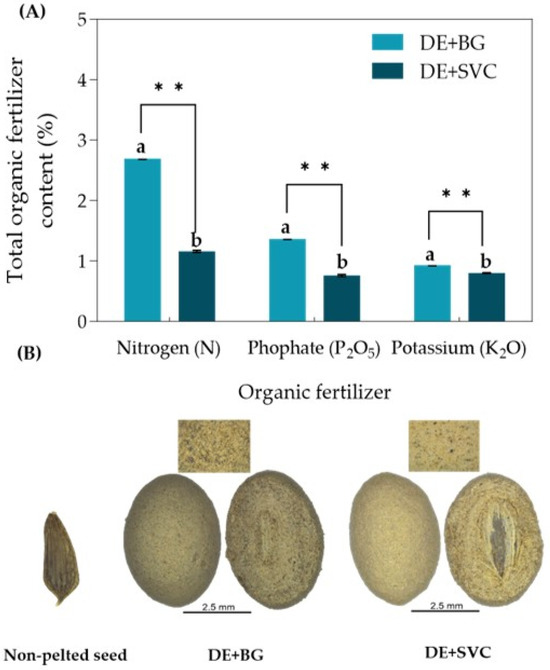
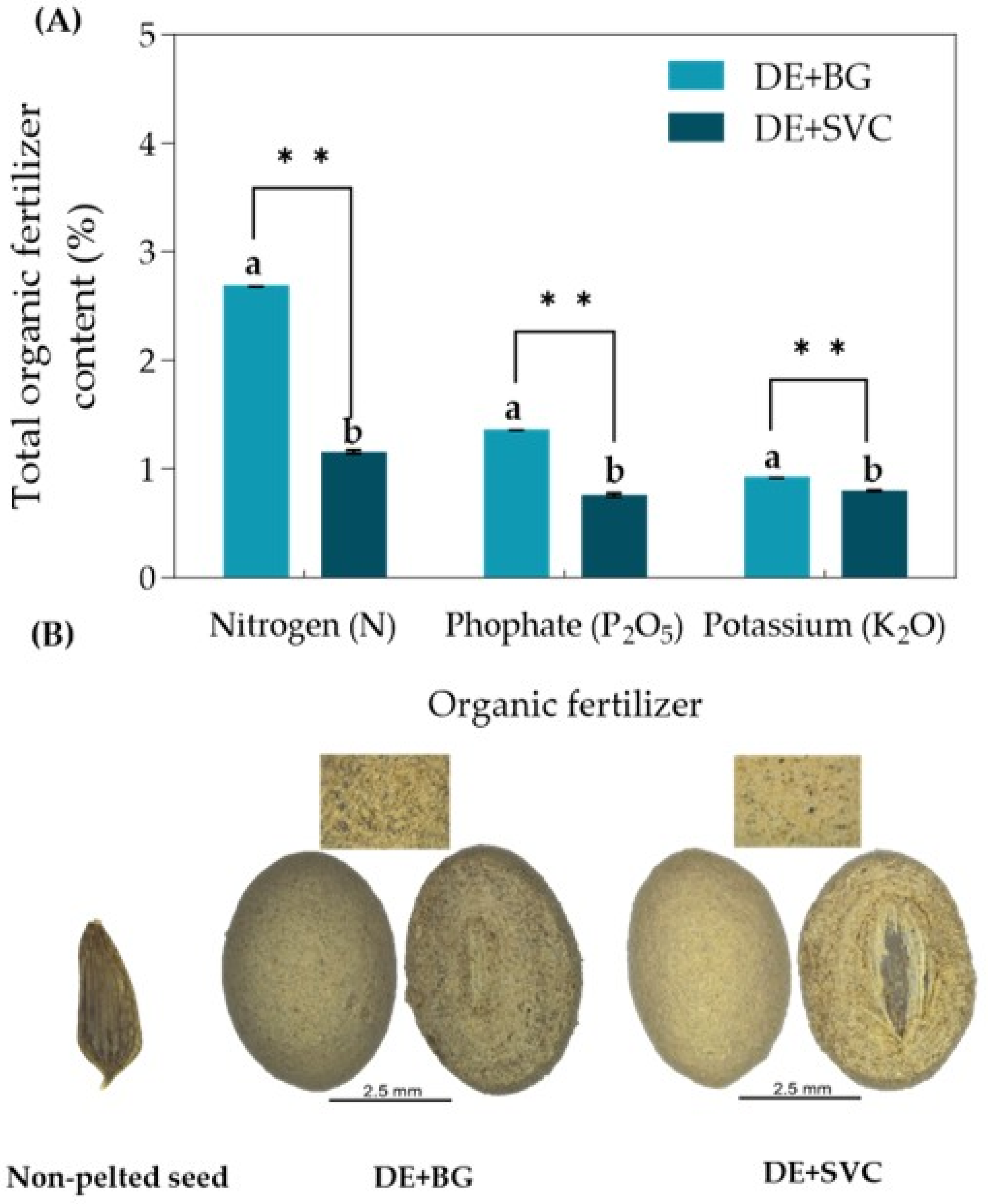
Two organic filler formulations were developed for seed pelleting by combining diatomaceous earth (DE) with bat granular (BG) and solid vermicompost (SVC) at ratios of 75:25 and 40:60, respectively. The pH and EC values for both filler material treatments were 6.67 and 6.26, and 2.88 and 4.97 mS cm−1, respectively. Nutrient analysis revealed that DE+BG contained higher levels of total nitrogen (N 2.7%), phosphate (P2O5 1.4%), and potassium (K2O 1.0%), compared to the DE+SVC formulation (N 1.2%, P2O5 0.8%, and K2O 0.8%, respectively) (Figure 1A).
Figure 1.
Total organic fertilizer contents (A) and appearance of the seed pellets (B) with non-pelleted seed, pelleted diatomaceous earth (DE)+bat granular (BG), and pelleted DE + solid vermicompost (SVC). Letters a–b and thesymbol of ** (p ≤ 0.01) within each group are a highly significant difference among treatments, according to Tukey’s HSD Test.
Seed pelleting significantly increased the 100-seed weight compared with that of non-pelleted seeds (0.10 g). The 100-seed weights of seeds pelleted with DE+BG and DE+SVC were 1.11 and 1.44 g, respectively, representing 11.1- and 14.4-fold increases relative to non-pelleted seeds. The average time of the pelleted loss of structural integrity in water was 4.5 s for DE+BG and 5.2 s for DE+SVC. Distinct differences in pellet morphology were also observed (Figure 1B). DE+BG coatings appeared darker with rougher surfaces, whereas DE+SVC coatings were smoother and yellowish, which likely contributed to their slightly longer pellet disintegration time.
No significant differences (p > 0.05) in germination percentage (G%) were observed among treatments, although pelleted seeds showed a slightly lower trend (84.5–92.5%) compared with the control (Table 1). Similarly, germination index (GI) remained unchanged across treatments (10.5–10.8). However, mean germination time (MGT) was slightly longer in pelleted seeds (4.1–4.2 days) than in non-pelleted seeds (3.8 days).
Table 1.
Percentage of seed germination (G%) and speed of germination (germination index; GI and mean germination time; MGT) of the pelleted lettuce seeds with different organic filler materials (BG and SVC) and different concentrations of microbial crude extract (0, 5, 50, and 500 ppm) in the binder for seed pelleting.
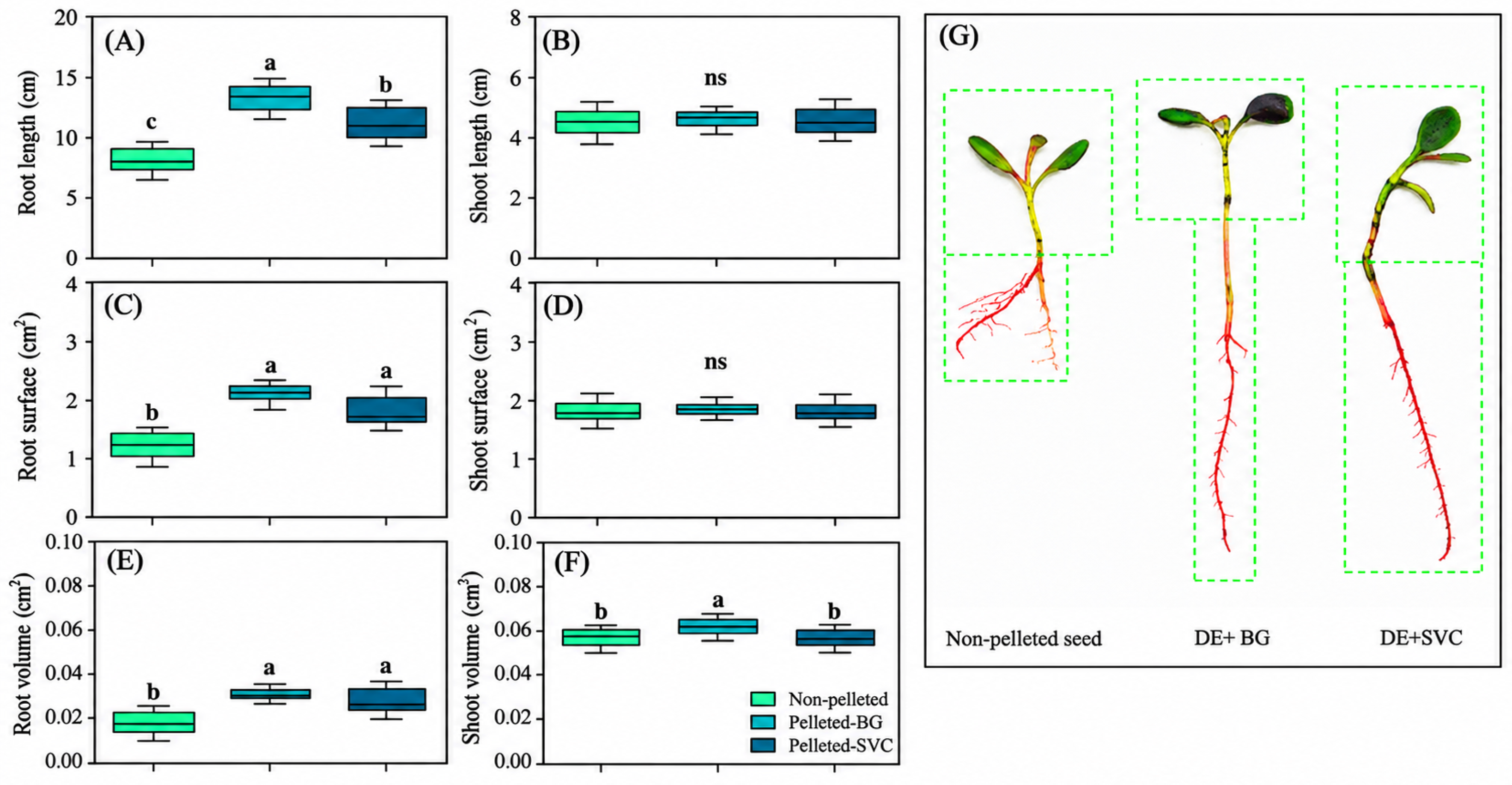
Seedling imaging at 7 days after germination revealed clear differences in early vigor (Figure 2G). Seeds pelleted with the DE+BG formulation produced the most vigorous seedlings, with significantly greater root length and shoot volume (Figure 2A,F). Root surface area and volume were also higher in both pelleting formulations than in the control (Figure 2C,E), whereas shoot length and surface area did not differ significantly among treatments (Figure 2B,D).
Figure 2.
Root and shoot growth for 7 days, including length (A,B), surface (C,D), volume (E,F), and scanned images (G) with non-pelleted seed, pelleted diatomaceous earth (DE) + bat granular (BG), and pelleted DE+ solid vermicompost (SVC). Different letters (a–c) indicate significant differences among treatments (p < 0.05), whereas ‘ns’ indicates no significant difference (p > 0.05), according to Tukey’s HSD Test.
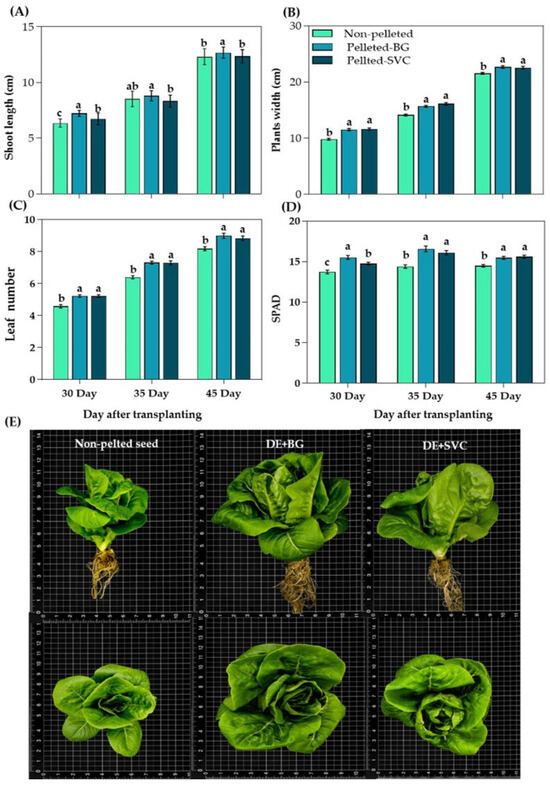
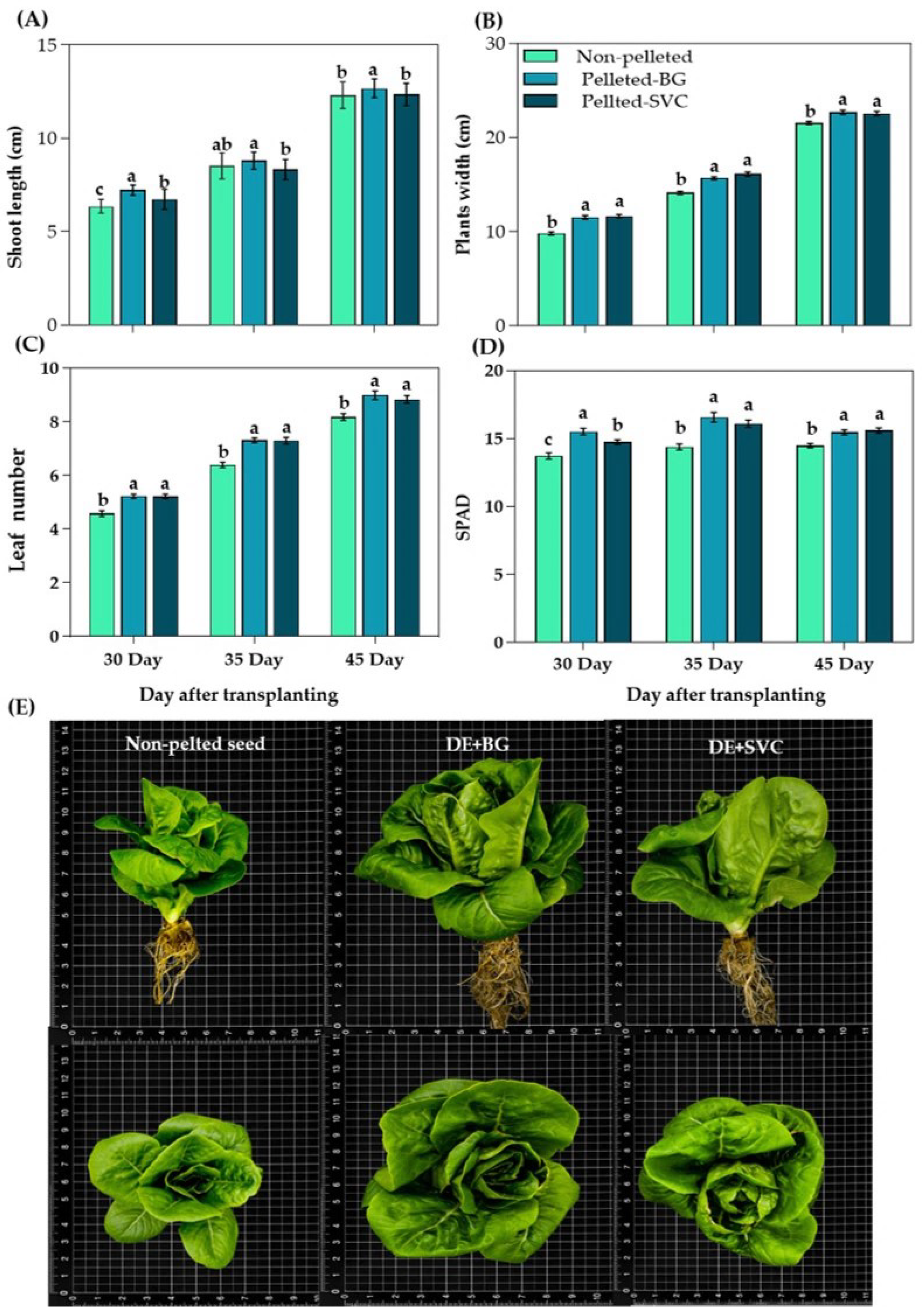
Under greenhouse conditions, plants derived from pelleted seeds showed improved vegetative growth compared with the control. Both formulations increased canopy width, leaf number, and SPAD values throughout the growth period (Figure 3B–D). Notably, DE+BG consistently produced greater shoot length at all sampling stages and higher SPAD values, particularly at 30 days after transplanting (DAT) (Figure 3A–D). Visual observations confirmed that plants from pelleted seeds were more vigorous and larger than those from non-pelleted seeds (Figure 3E).
Figure 3.
Shoot length (A), plant width (B), leaf number (C), SPAD (D), and characteristics of plant growth (E) with non-pelleted seed, pelleted diatomaceous earth (DE) + bat granular (BG), and pelleted DE+ solid vermicompost (SVC). Letters a–c within each group indicate a significant difference among treatments (p < 0.05), according to Tukey’s HSD Test.
3.2. Effect of Binder Combined with the Microbial Crude Extract for Seed Pelleting on Seed Germination and Plant Growth Performance
Microbial crude extract at concentrations of 0, 5, 50, and 500 ppm was incorporated into the optimized DE+BG pelleting formulation. Germination percentage differed significantly among treatments (p < 0.05) (Table 1). Seeds pelleted with 500 ppm crude extract showed the highest germination (98.5%), although this value was not significantly different from the non-pelleted control (98.0%). The germination index was also higher in the 500 ppm treatment, while mean germination time remained comparable to the control.
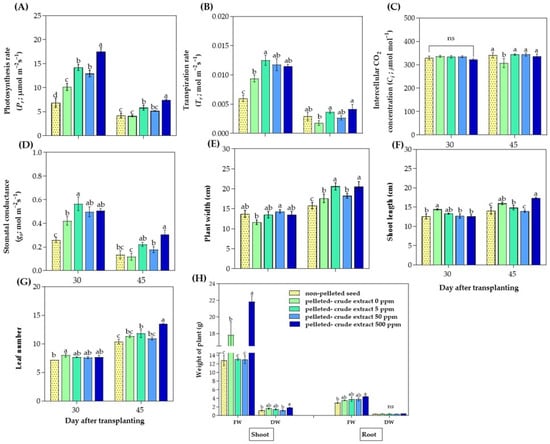
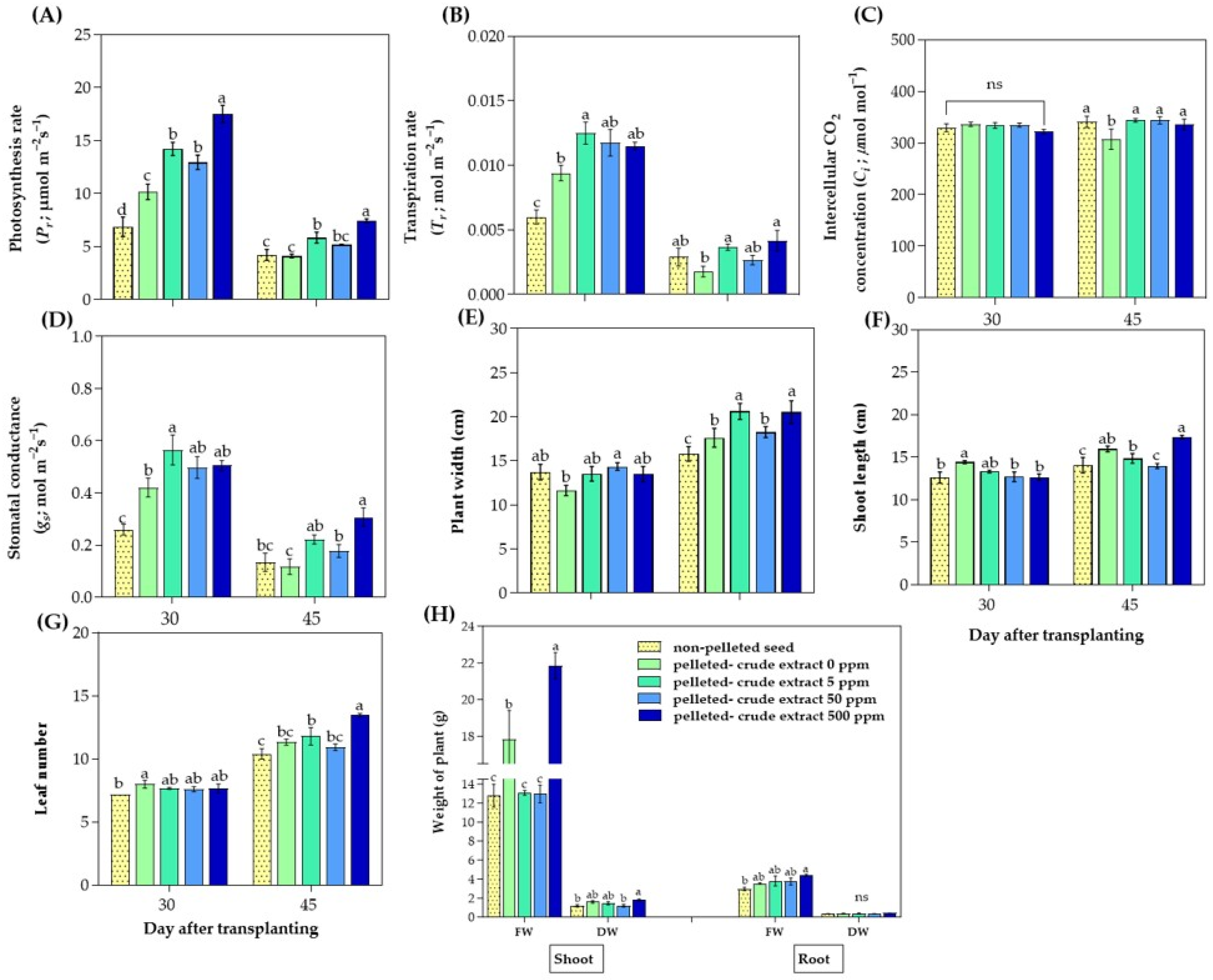
Photosynthetic parameters, including photosynthetic rate (Pr), transpiration rate (Tr), and stomatal conductance (gs), were highest at 30 DAT and declined slightly by 45 DAT (Figure 4A,B,D). These parameters were significantly enhanced in plants derived from pelleted seeds treated with microbial extract compared with the control. The highest Pr values were consistently observed in the 500 ppm treatment at both stages of the sampling. Similarly, increases in Tr and gs indicated improved gas-exchange capacity and stomatal activity in pelleted treatments. In contrast, intercellular CO2 concentration (Ci) remained unchanged across treatments (Figure 4C).
Figure 4.
Photosynthesis rate; Pr (A), transpiration rate; Tr (B), intercellular CO2 concentration; Ci (C), and stomatal conductance; gs (D), plant width (E), shoot length (F), leaf number (G) of the plants at 30 and 45 days after transplanting, and the weight of shoot and root both fresh (FW) and dried (DW) at 45 days after transplanting (H), with non-pelleted seed, pelleted- crude extract at 0, 5, 50, and 500 ppm, respectively. Different letters (a–d) indicate significant differences among treatments (p < 0.05), whereas ‘ns’ indicates no significant difference (p > 0.05), according to Tukey’s HSD Test.
Vegetative growth parameters, including canopy width, shoot length, and leaf number, were improved in plants derived from pelleted seeds containing microbial extract at both sampling times (Figure 4E–G). At 30 DAT, moderate increases were observed across treatments (5–500 ppm), whereas at 45 DAT the 500 ppm treatment showed significantly greater growth than the control (p < 0.05). Biomass measurements at 45 DAT supported these findings, as both shoot and root fresh and dry weights were highest in the 500 ppm treatment, except for root dry weight, which did not differ significantly among treatments (Figure 4H).
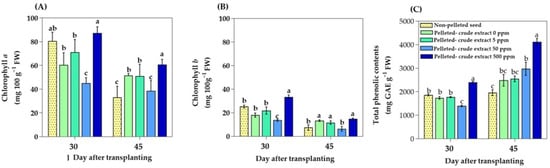
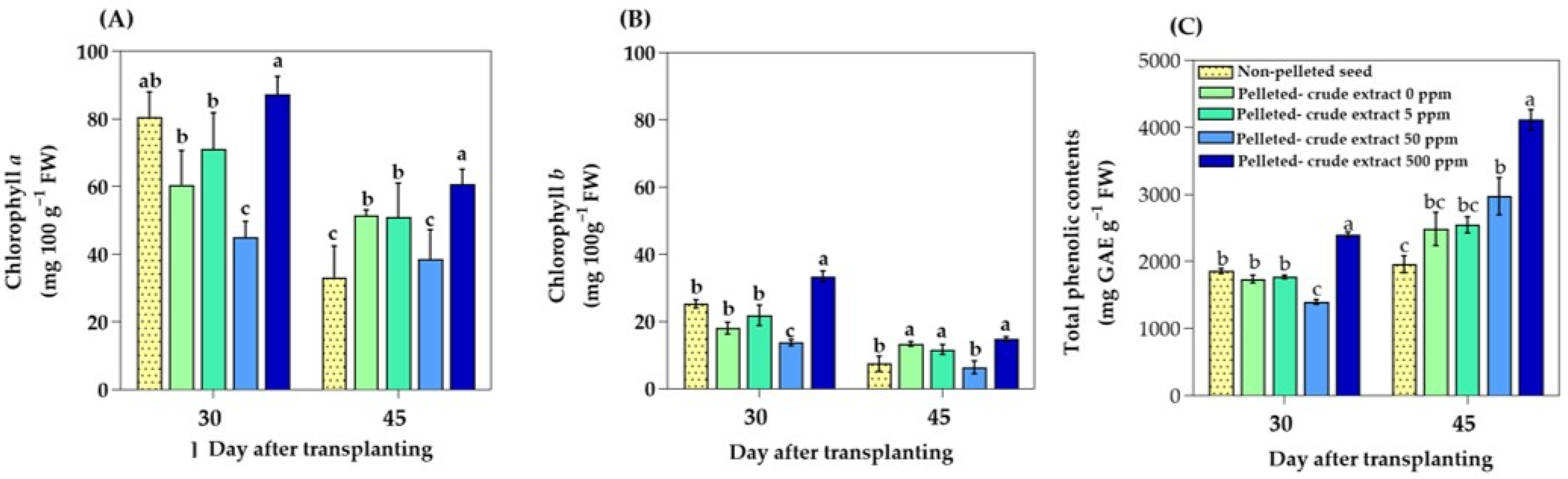
Total chlorophyll content and total phenolic content (TPC) were significantly affected by pelleting with microbial extract (Figure 5). At 30 DAT, moderate concentrations (5–50 ppm) increased chlorophyll a and chlorophyll b relative to the control. By 45 DAT, the highest chlorophyll contents were observed in the 500 ppm treatment (Figure 5A,B). TPC also increased significantly with extract concentration and exceeded control levels by more than 50% at 45 DAT in the 500 ppm treatment (Figure 5C).
Figure 5.
Chlorophyll a (A), chlorophyll b (B), and total phenolic content (C), of the plants at 30 and 45 days after transplanting with non-pelleted seed, pelleted-crude extract at 0, 5, 50, and 500 ppm, respectively. Letters a–c within each group indicate a significant difference among treatments (p < 0.05), according to Tukey’s HSD Test.
3.3. Effect of Storage Conditions of the Pelleted Seed on Quality and Growth Performance
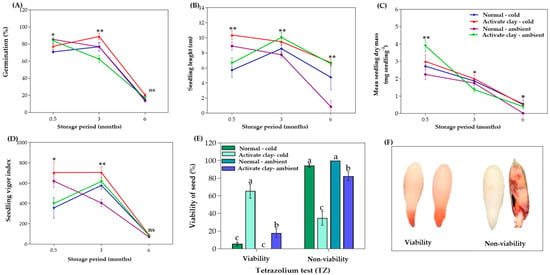
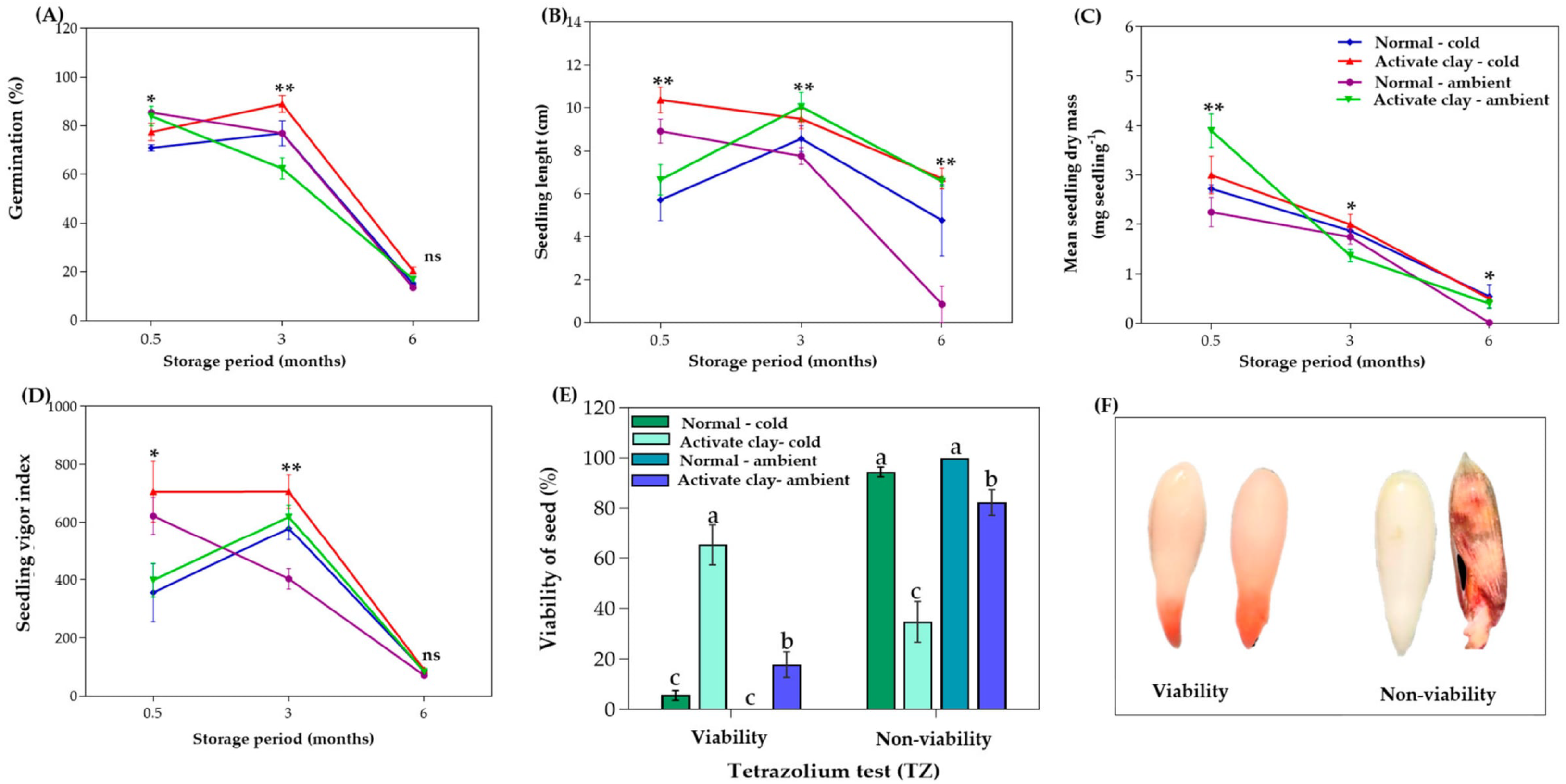
At the initial assessment (0 months), conducted 15 days after the pelleting and treatment procedures, germination percentages ranged from 71% to 85% among the storage treatments. All four storage treatments originated from the same seed lot, allowing changes in germination to be evaluated within the storage experiment. The initial assessment was considered the baseline (0 months), whereas subsequent measurements at 3 and 6 months represented seed quality after the corresponding storage periods (Figure 6A). Under ambient conditions, pelleted seeds packaged with or without activated clay maintained higher germination percentages than those stored under cold conditions. However, after 3 months, seeds packaged with activated clay under cold storage showed the highest germination (89%). In contrast, seeds stored without protective packaging exhibited the lowest germination.
Figure 6.
Seed germination (A), seedling length (B), mean seedling dry mass (C), and seedling vigor index (D), seed viability/ non–viability (E), and embryonic axis morphology (F) in the pelleted seed during storage for 6 months. Letters a–c within each group is a significant difference among treatments (p < 0.05). Symbols of * (p < 0.05) for significant, ** (p ≤ 0.01) for highly significant, and ns (p > 0.05) for not significant, according to Tukey’s HSD Test.
Seedling growth parameters followed trends like germination percentage (Figure 6B–D). Seeds packaged with activated clay under both ambient and cold conditions consistently maintained higher seedling length, mean seedling dry mass, and seedling vigor index than seeds stored without protective materials. After 6 months of storage, seed vigor declined across all treatments. Tetrazolium staining confirmed differences in embryonic axis viability among storage treatments (Figure 6F). Seeds classified as viable showed uniform reddish staining, indicating active dehydrogenase activity and preserved respiration. In contrast, non-viable seeds exhibited irregular or faint staining associated with tissue deterioration. Quantitative analysis showed that seeds packaged with activated clay, particularly under cold storage, maintained significantly higher viability (>65%) than seeds stored without protective materials (Figure 6E).
4. Discussion
The properties of pelleting materials are critical determinants of seed germination performance [5,16]. In this study, both DE+BG and DE+SVC formulations maintained germination percentage and germination index comparable to the non-pelleted control (Table 1). This could be confirmed that the developed organic filler materials did not impose toxic effects on lettuce seeds. Although the percentage of seed germination was unchanged, seedlings derived from pelleted seeds, particularly those treated with DE+BG, showed improved early vigor compared with the control and the DE+SVC treatment (Figure 2). Nitrogen availability also plays a regulatory role in phytohormone balance and early developmental signaling during germination and vegetative growth [17]. Additionally, under greenhouse conditions, these early advantages are translated into sustained vegetative growth improvements, including greater shoot elongation, leaf number, canopy width, and SPAD values (Figure 3). The higher N, P2O5, and K2O concentrations measured in the DE+BG formulation indicate that this pelleting material contained a greater nutrient load than the other formulations (Figure 1A). This greater nutrient content may have contributed to the enhanced early biomass accumulation and seedling growth observed in this treatment. However, nutrient release from the pelleting materials and subsequent nutrient uptake by the plants were not evaluated in the present study; therefore, a direct relationship between the nutrient content of the pelleting materials and plant nutrient uptake cannot be confirmed. Nevertheless, in prior studies, the incorporation of bioactive materials into the filler and binder components may have contributed to the observed differences in seedling growth performance, potentially through improved nutrient availability [10,11].
The combination of pelleting binder with microbial crude extract from Streptomyces sp. enhanced seedling growth without negatively affecting seed germination. Seeds pelleted with microbial extract, particularly at 500 ppm, showed improved germination consistency, plant height, leaf number, and biomass accumulation compared with non-pelleted seeds (Figure 4). In this study, the crude extract of Streptomyces sp. treatment was associated with enhanced plant growth. The application of the crude extract may be associated with the diverse bioactive potential of Streptomyces sp., according to genome analysis of S. chiangmaiensis TA4-1 identified several predicted biosynthetic gene clusters for secondary metabolites, including siderophores, polyketides, terpenes, and non-ribosomal peptides [8]. However, these predictions do not confirm the presence of these metabolites in the crude extract used in the present study. Thus, the observed growth-promoting effects may reflect the activity of bioactive compounds in the extract, and further investigation is needed to identify the compounds responsible. Additionally, the enhanced vegetative growth observed in lettuce plants derived from seeds pelleted with Streptomyces sp. crude extract was accompanied by improvements in leaf gas-exchange performance (Figure 4). Compared with the control, the microbial extract treatments increased net photosynthetic rate (Pr), transpiration rate (Tr), and stomatal conductance (gs), suggesting greater photosynthetic CO2 assimilation and stomatal gas exchange under the measurement conditions [18]. Meanwhile, intercellular CO2 concentration (Ci) remained relatively stable or slightly decreased despite the increased net photosynthetic rate, indicating that CO2 assimilation and stomatal conductance responded differently to the treatments [19]. These findings suggest that seed pelleting with microbial crude extract may contribute to improved physiological performance and vegetative growth in lettuce. However, the observed gas-exchange responses alone do not establish changes in the biochemical capacity for carbon fixation or identify the underlying regulatory mechanisms.
Enhancing chlorophyll and total phenolic content following application of the Streptomyces sp. crude extract (Figure 5), might be suggested that the treatment may have influenced physiological and metabolic processes associated with plant development [20]. At 30 DAT, the stimulatory response was more apparent at moderate extract concentrations (5–50 ppm), whereas the highest chlorophyll contents were observed at 500 ppm by 45 DAT, indicating that the response varied with both extract concentration and plant age. Such responses are consistent with the reported plant growth-promoting potential of Streptomyces, which can involve bioactive compounds, phytohormones, nutrient-related processes, and other secondary metabolites that influence plant growth and development [21,22]. The marked increase in TPC at 45 DAT, particularly at 500 ppm, may indicate stimulation of phenolic metabolism. Phenolic compounds are among the bioactive compounds of the plant defense systems [23], and their accumulation can be influenced by biostimulant treatments. Further investigation of antioxidant responses and metabolite profiles would help clarify the physiological effects of the Streptomyces sp. crude extract.
The relatively stable germination and seedling performance during the first 3 months of storage, followed by a more pronounced decline after 6 months (Figure 6A–D), indicated progressive deterioration of the pelleted seeds during storage. Seed longevity is strongly influenced by storage temperature, moisture conditions, and the surrounding atmosphere, with lower temperature and reduced moisture generally favoring the maintenance of seed viability [24]. In the present study, packaging with activated clay maintained higher germination, seedling growth, and vigor than storage without protective material, particularly under cold storage (Figure 6A–D). This response may be associated with the capacity of the packaging system to provide a more favorable storage microenvironment, although moisture conditions within the packages were not directly monitored. Relatedly, tetrazolium staining indicated that pelleted seeds packaged with activated clay and stored under cold conditions maintained higher embryonic axis viability after storage. In contrast, irregular or reduced staining suggested lower tissue viability in seeds subjected to less favorable storage conditions. (Figure 6E,F). More uniform staining patterns suggested a greater proportion of viable embryonic tissues, whereas irregular or reduced staining indicated lower tissue viability [25]. Although seed deterioration might be associated with lipid peroxidation and membrane disruption [26,27], these physiological processes cannot be directly inferred from tetrazolium staining. Therefore, the observed staining patterns primarily provide evidence of differences in tissue viability among storage treatments.
5. Conclusions
Seed pelleting with the organic filler material of the DE+BG formulation combined with the microbial crude extract at 500 ppm enhanced germination performance and seedling growth of lettuce in laboratory and greenhouse settings. These results do support microbial-based seed pelleting as a sustainable and efficient approach to enhance germination uniformity and the vigor of lettuce seedlings in the organic vegetable growing system. Future research is needed to elucidate the underlying physiological and molecular mechanisms associated with the observed improvements in lettuce growth, particularly in fields, to enhance their application in sustainable farming.
Author Contributions
Conceptualization, S.K., W.P., S.A. and N.N.; methodology, S.K. and W.P.; software, S.K. and W.P.; validation, S.K. and W.P.; formal analysis, S.K. and W.P.; investigation, S.K. and W.P.; resources, N.N., S.K., and W.P.; data curation, S.K. and W.P.; writing—original draft preparation, W.P.; writing—review and editing, W.P.; visualization, W.P.; supervision, W.P.; project administration, W.P.; funding acquisition, W.P. All authors have read and agreed to the published version of the manuscript.
Funding
This research was funded by the Thailand Science Research and Innovation (TSRI), Suranaree University of Technology, grant number No. FF3-302-68-12-108(B).
Data Availability Statement
The data presented in this study are available on request from the corresponding author.
Acknowledgments
This research project was made possible through the generous support of the Research Support Fund (OROG Fund) and the Faculty of Suranaree University of Technology. We extend our sincere gratitude to the farmers in Nakhon Ratchasima for their collaboration and to our fellow researchers for their valuable guidance and expertise. Their contributions and cooperation were instrumental in the successful completion of this research.
Conflicts of Interest
The authors declare no conflicts of interest.
References
- Department of Agricultural Extension (DOAE). Lettuce (Lactuca sativa) Production Report, Vegetable Group, Agricultural Production Information System, Ministry of Agriculture and Cooperatives: Bangkok, Thailand. Available online: https://production.doae.go.th/service/data-state-location/index? (accessed on 7 September 2026).
- Japimai, W. Development of an Appropriate Lettuce Seed Production Model for the Khao Kho Area, Phetchabun Province. Master’s Thesis, Suranaree University of Technology, Nakhon Ratchasima, Thailand, 2018. [Google Scholar]
- Taylor, A.G.; Allen, P.S.; Bennett, M.A.; Bradford, K.J.; Burris, J.S.; Misra, M.K. Seed enhancements. Seed Sci. Res. 1998, 8, 245–256. [Google Scholar] [CrossRef] [Scilit]
- Kangsopa, J.; Hynes, R.K.; Siri, B. Lettuce seeds pelleting: A new bilayer matrix for lettuce (Lactuca sativa) seeds. Seed Sci. Technol. 2018, 46, 521–531. [Google Scholar] [CrossRef] [Scilit]
- Afzal, I.; Javed, T.; Amirkhani, M.; Taylor, A.G. Modern seed technology: Seed coating delivery systems for enhancing seed and crop performance. Agriculture 2020, 10, 526. [Google Scholar] [CrossRef] [Scilit]
- Taylor, A.G.; Hoepting, C.A.; Nault, B.A.; Lorbeer, J.W.; McDonald, M.R. Onion seed treatment and coating technologies. Acta Hortic. 2008, 782, 129–134. [Google Scholar] [CrossRef] [Scilit]
- Fadiji, A.E.; Xiong, C.; Egidi, E.; Singh, B.K. Formulation challenges associated with microbial biofertilizers in sustainable agriculture and paths forward. J. Sustain. Agric. Environ. 2024, 3, e70006. [Google Scholar] [CrossRef] [Scilit]
- Yasawong, M.; Rosyidah, A.; Songngamsuk, T.; Phatcharaharikarn, M.; Ganta, P.; Chanthasena, P.; Chudapongse, N.; Santapan, N.; Srisakvarangkool, W.; Kerdtoob, S. First draft genome sequence data of TA4-1, the type strain of Gram-positive bacterium Streptomyces chiangmaiensis. Data Brief. 2024, 55, 110611. [Google Scholar] [CrossRef] [Scilit] [PubMed]
- Khan, A.; Singh, A.V.; Gautam, S.S.; Agarwal, A.; Punetha, A.; Upadhayay, V.K.; Kukreti, B.; Bundela, V.; Jugran, A.K.; Goel, R. Microbial bioformulation: A microbial assisted biostimulating fertilization technique for sustainable agriculture. Front. Plant Sci. 2023, 14, 1270039. [Google Scholar] [CrossRef] [Scilit] [PubMed]
- Amirkhani, M.; Mayton, H.S.; Netravali, A.N.; Taylor, A.G. A seed coating delivery system for bio-based biostimulants to enhance plant growth. Sustainability 2019, 11, 5304. [Google Scholar] [CrossRef] [Scilit]
- Amirkhani, M.; Mayton, H.S.; Netravali, A.; Huang, W.; Taylor, A.G. Investigation of soy protein-based biostimulant seed coating for broccoli seedling and plant growth enhancement. HortScience 2016, 51, 1121–1126. [Google Scholar] [CrossRef] [Scilit]
- Gaikwad, K.K.; Singh, S.; Ajji, A. Moisture absorbers for food packaging applications. Environ. Chem. Lett. 2019, 17, 609–628. [Google Scholar] [CrossRef] [Scilit]
- Pola, W.; Aiamla-Or, S. Seedling growth and systemic uptake of liquid vermicompost-coated seeds in organic pumpkin (Cucurbita sp.). Horticulturae 2025, 11, 58. [Google Scholar] [CrossRef] [Scilit]
- ISTA. International Rules for Seed Testing; ISTA: Bassersdorf, Switzerland, 2021. [Google Scholar]
- Moran, R. Formulae for determination of chlorophyllous pigments extracted with N,N-dimethylformamide. Plant Physiol. 1982, 69, 1376–1381. [Google Scholar] [CrossRef] [Scilit] [PubMed]
- Pedrini, S.; Merritt, D.J.; Stevens, J.; Dixon, K. Seed Coating: Science or Marketing Spin? Trends Plant Sci. 2017, 22, 106–116. [Google Scholar] [CrossRef] [Scilit]
- Osuna, D.; Prieto, P.; Aguilar, M. Control of seed germination and plant development by carbon and nitrogen availability. Front. Plant Sci. 2015, 6, 1023. [Google Scholar] [CrossRef] [Scilit] [PubMed]
- Lv, Y.; Gu, L.; Man, R.; Liu, X.; Xu, J. Response of stomatal conductance, transpiration, and photosynthesis to light and CO2 for rice leaves with different appearance days. Front. Plant Sci. 2024, 15, 1397948. [Google Scholar] [CrossRef] [Scilit] [PubMed]
- Ethier, G.J.; Livingston, N.J.; Harrison, D.L.; Black, T.A.; Moran, J.A. Low stomatal and internal conductance to CO2 versus Rubisco deactivation as determinants of the photosynthetic decline of ageing evergreen leaves. Plant Cell Environ. 2006, 29, 2168–2184. [Google Scholar] [CrossRef] [Scilit] [PubMed]
- Taiz, L.; Zeiger, E.; Møller, I.M.; Murphy, A. Plant Physiology and Development, 6th ed.; Sinauer Associates: Sunderland, MA, USA, 2015. [Google Scholar]
- Olanrewaju, O.S.; Babalola, O.O. Streptomyces: Implications and interactions in plant growth promotion. Appl. Microbiol. Biotechnol. 2019, 103, 1179–1188. [Google Scholar] [CrossRef] [Scilit] [PubMed]
- Sousa, J.A.J.; Olivares, F.L. Plant growth promotion by streptomycetes: Ecophysiology, mechanisms and applications. Chem. Biol. Technol. Agric. 2016, 3, 24. [Google Scholar] [CrossRef] [Scilit]
- Hasanuzzaman, M.; Bhuyan, M.H.M.B.; Zulfiqar, F.; Raza, A.; Mohsin, S.M.; Mahmud, J.A.; Fujita, M.; Fotopoulos, V. Reactive oxygen species and antioxidant defense in plants under abiotic stress: Revisiting the crucial role of a universal defense regulator. Antioxidants 2020, 9, 681. [Google Scholar] [CrossRef] [Scilit] [PubMed]
- Nadarajan, J.; Walters, C.; Pritchard, H.W.; Ballesteros, D.; Colville, L. Seed Longevity—The Evolution of Knowledge and a Conceptual Framework. Plants 2023, 12, 471. [Google Scholar] [CrossRef] [Scilit] [PubMed]
- Costa, M.A.; Shimizu, E.S.C.; Leão, N.V.M.; Pinheiro, H.A. Seed quality evaluation by tetrazolium staining of Parkia multijuga Benth. Agric. Sci. 2018, 9, 577–586. [Google Scholar] [CrossRef]
- Copeland, L.O.; McDonald, M.B. Principles of Seed Science and Technology, 4th ed.; Springer: New York, NY, USA, 2001. [Google Scholar]
- Rajjou, L.; Debeaujon, I. Seed longevity: Survival and maintenance of high germination ability of dry seeds. Comptes Rendus Biol. 2008, 331, 796–805. [Google Scholar] [CrossRef] [Scilit] [PubMed]

Disclaimer/Publisher’s Note: The statements, opinions and data contained in all publications are solely those of the individual author(s) and contributor(s) and not of MDPI and/or the editor(s). MDPI and/or the editor(s) disclaim responsibility for any injury to people or property resulting from any ideas, methods, instructions or products referred to in the content. |
© 2026 by the authors. Licensee MDPI, Basel, Switzerland. This article is an open access article distributed under the terms and conditions of the Creative Commons Attribution (CC BY) license.