Abstract
A patent portfolio focusing on sensors for the measurement of fruit properties was generated and analyzed with the aim of contributing to a better understanding of the trends in the development and application of sensors intended for measuring fruit properties and their changes. A patent portfolio of 189 patents, utility models and patent applications was formed. Three groups of patents were identified: (i) sensor-based measurement of individual parameters, (ii) multisensor solutions for the simultaneous monitoring of multiple relevant aspects and (iii) solutions integrating sensor-derived data with artificial intelligence tools and techniques. The analysis of the patent portfolio pointed out the main driving forces of technology strengthening in the field of fruit property measurement. The development of sensing technologies enables the real-time, rapid and cost-effective determination of ever-increasing and more sophisticated sets of fruit properties and environmental conditions. Solutions integrating different sensing technologies into multisensor systems for monitoring fruit quality, ripening or freshness as holistic concepts opens avenues for the introduction of a new approach to fresh produce management. Increasing numbers of solutions introducing the application of artificial intelligence tools such as computer vision, machine learning and deep learning into the fresh produce supply chain contribute to the possibilities of substituting human decision-making at points of relevance for fresh produce management with optimal evidence-based solutions.
1. Introduction
The development of sensing technology and smart sensors and their implementation in production systems provide added value to any production system [1]. Thus, the development of sensing technologies is the driving force of the industrial transition toward Industry 4.0, and further to Industry 5.0 [2]. Sensors are irreplaceable tools for automatic data acquisition. Sensors enable the real-time measurement and collection of data which, via further data processing, analysis and modeling, support evidence-based decisions and provide directions for optimization and long-term improvements [3]. The development and implementation of sensors within any food system can enable advanced detection of diverse indicators of safety, quality and degradation, and thus prevent and/or reduce losses and extend produce shelf life [4]. The implementation of sensors in fresh fruit supply chains can replace most conventional laboratory methods for the direct measurement of fruit and environment properties with remote, rapid and nondestructive methods, providing real-time data availability at acceptable costs [5]. Thus, the development of sensors is a central driving force for innovation, not only for the fresh produce supply chain but also for other industries. The development of sensors is the backbone of a megatrend described as “the smart concept” [2]. Industrial equipment and their networks being equipped with different sensors represents a new concept of the economy described as a sensor economy, or, in short, the sensorconomy [6].
Integrating sensors into fresh produce supply chains leads to the creation of comprehensive databases capturing dynamic changes in fruit quality and safety, influenced by environmental conditions and treatments [7]. Databases serve as valuable resources for leveraging artificial intelligence tools to model fruit processes accurately, as is the case postharvest [8]. Through harnessing the power of computer vision, machine learning and deep learning, these insights have the potential to empower data-driven decision making across fresh produce supply chains. In this way, the combination of sensing technologies and data modeling contributes to further increases in the shelf life, quality and safety of the products and the automation of support processes [9]. Therefore, information on technology strengthening in the field of sensors for the measurement of fruit properties is of upmost interest.
Patent portfolio analysis, including the identification of the underlying trends, portfolio structure and patent contents, is a powerful tool for the assessment of the technological strength of an industrial sector [10]. Insights into innovation trends and the technical feasibility of commercial devices based on the analysis of patent portfolios is already available in several emerging technological fields [11], for example, nano-sensors [12], fuel cell vehicles [13], new space missions [14] and blockchain technologies in the food supply chain [15].
In our recent research, we already performed patent portfolio analysis for the application of sensors at the postharvest stage of fresh produce processing [16]. Latent-Dirichlet-allocation-based topic modeling clearly pointed out three directions of sensor applications in fresh produce processing postharvest: (i) sensors supporting the automation of fruit handling, (ii) sensors enabling fruit storage monitoring and, (iii) sensors intended for monitoring fruit properties and their changes. The obtained results pointed out the diversity of sensing solutions intended for monitoring fruit properties, including the ones intended for the sensor-based measurement of individual parameters, multisensor solutions for simultaneously monitoring multiple relevant aspects, as well as solutions integrating sensor-derived data with artificial intelligence tools and techniques [16]. Although the general trends and structure of the patent portfolio were identified, individual sensing solutions intended for the postharvest monitoring of fruit properties and their changes were not analyzed and discussed in detail, although necessary for the identification of development trends within this currently fast-developing field.
With the aim of contributing to a better understanding of the trends in the development and application of sensors intended for measuring fruit properties and their changes, in the present research, we provide a deep and insightful analysis of the upgraded and refined patent portfolio in the field of sensor-based measurement of fruit properties.
2. Materials and Methods
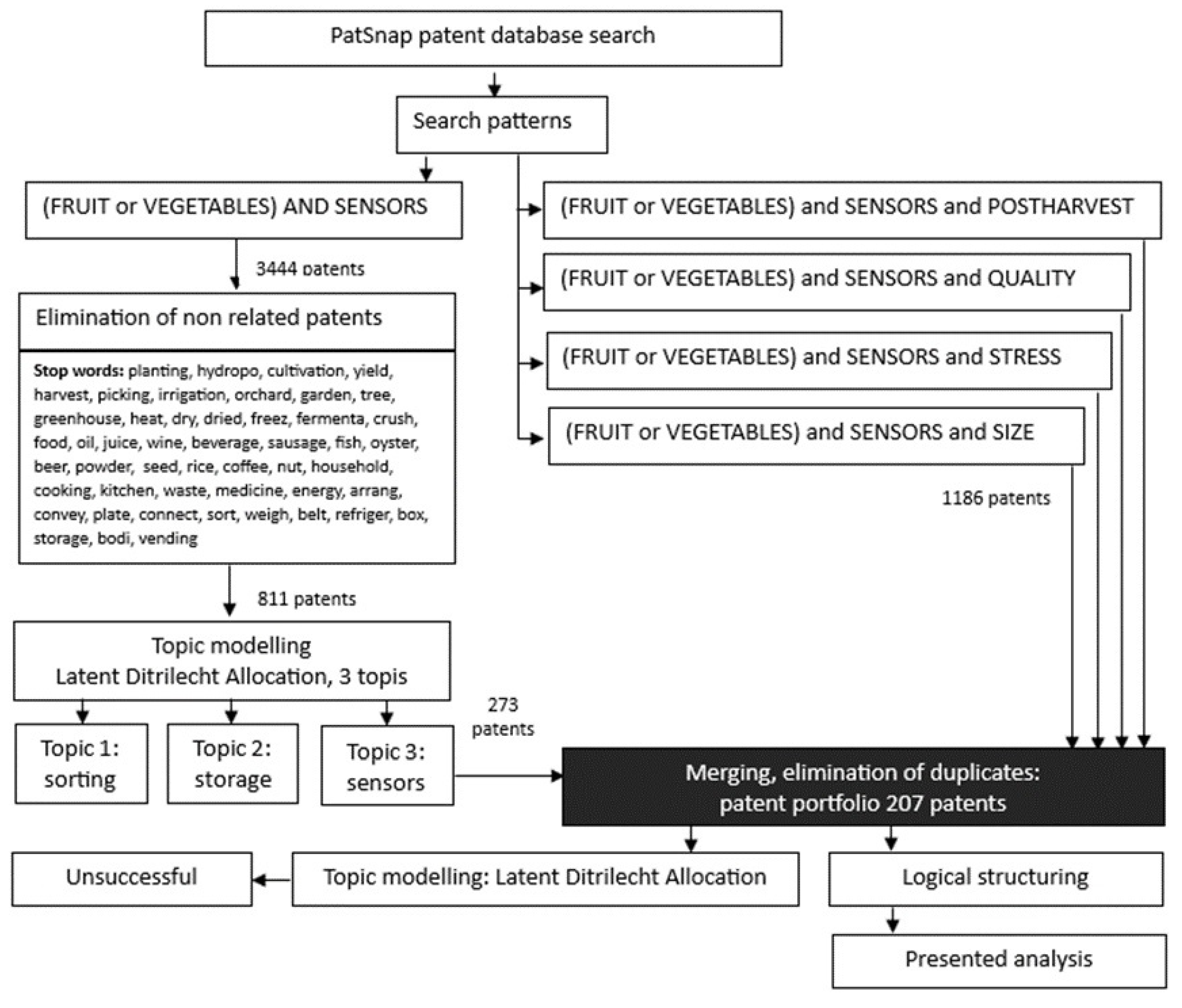
A portfolio of patents focusing on fruit property testing sensors was generated in May 2023 by searching for titles and abstracts in PatSnap [17], using two diverse multistep approaches for extraction and refinement (Figure 1). Patents from the same simple family were represented in the patent portfolio only once using the patent with the earliest application date. In the first approach, the searching of the patent database was performed in a manner which resulted in very wide coverage, resulting in a database which was subsequently subjected to further refinement using computer-based techniques, as presented in our previous work [16]. This patent portfolio was further manually refined in order to exclude patents not directly related to the topic of interest. In the second approach, which was applied to upgrade the patent portfolio obtained via computer-based techniques, the patent database search was narrowed in the search phase by including the following additional search words: “postharvest”, “quality”, “stress”, and “size”. The obtained database was then refined manually. No limit regarding the observed period was applied. The obtained patent portfolios were merged and duplicates were removed. The final patent portfolio consisted of 189 documents with 67 approved patents, 33 utility models, and 89 patent applications submitted in recent years, with the first patent approved in 2000.
Figure 1.
Scheme of patent portfolio extraction.
The obtained patent portfolio was further divided into three groups that were defined based on findings from our previous research [16]: (i) sensor-based measurement of individual parameters, (ii) multisensor solutions for simultaneous monitoring of multiple relevant aspects, and (iii) solutions integrating sensor-derived data with artificial intelligence tools and techniques. Computer-based topic modelling using latent Dirichlet allocation was attempted, but due to the huge diversity of patents it was unsuccessful.
The characterization of trends in the patent portfolio included analyses of application trends by year, the distribution of patents across patenting authorities, the most frequently used IPC codes and simple family size. The groups of patents that were formed were compared in terms of document types, patenting trends and patenting authorities. Patents within each group were further structured, and the content of patents was systematically analyzed.
3. Results and Discussion
3.1. Patent Portfolio Characterization
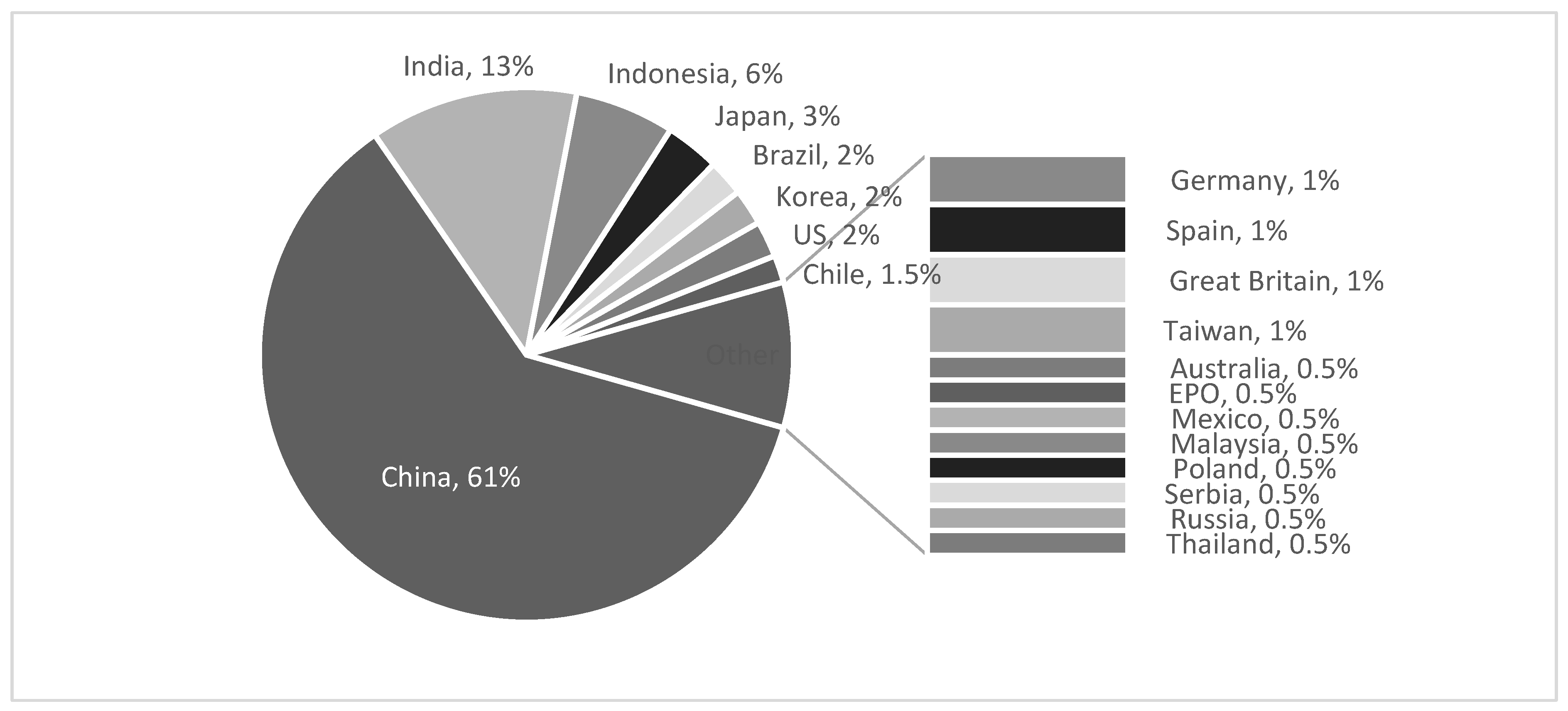
The patent applications in the analyzed patent portfolio were submitted to 20 different patenting authorities. China was in the lead, with more than 60% of patents originating from this country (Figure 2). The remaining regions with high numbers of patents in the field of sensor-based measurement of fruit properties were Asia (India, 13%; Indonesia, 6%; Japan and South Korea, 3%) and the Americas (including the US, Brazil and Chile). European countries were represented in the patent portfolio with shares of less than 2% (Germany, Spain and Great Britain) and less than 1% (Poland, Serbia and Russia).
Figure 2.
Distribution of patents from analyzed portfolio across patenting authorities.
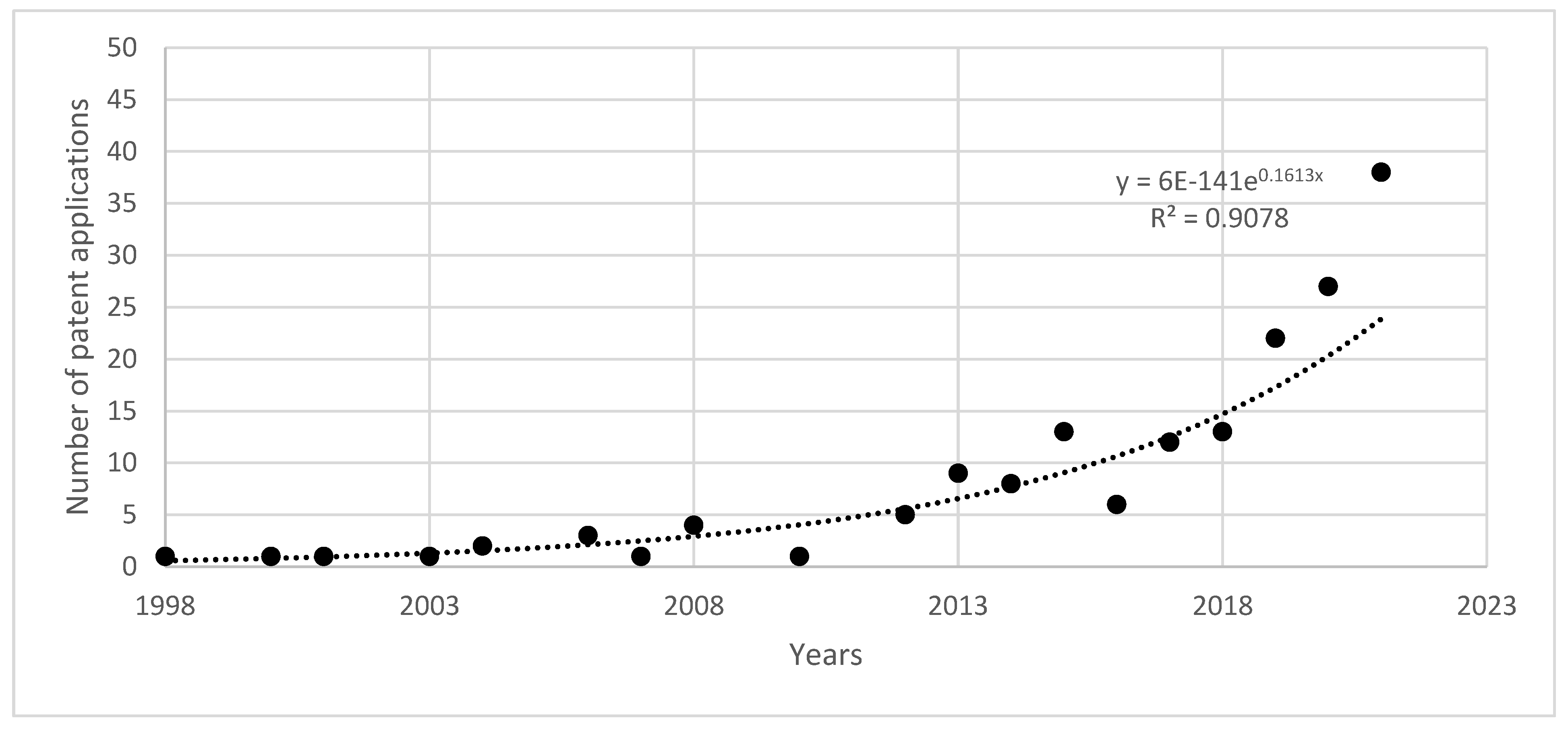
The first patent in our portfolio was from 1998. The number of patents per year remained fewer than 10 until 2015. From 2015 until 2018, the number of patents slightly increased, and a significant increase was noted from 2018 on (Figure 3). Data regarding the number of patents in 2022 (43) and 2023 (1) were not included, since these figures, due to the latency of the patenting process and the inclusion of data in patent databases, are still increasing and are not final.
Figure 3.
Number of applications per year.
An overview of the most frequently used IPC codes is provided in Table 1. The most frequently used IPC code to describe inventions in the analyzed patent portfolio is G01N21 (investigating or analyzing materials via optical means, i.e., using sub-millimeter waves, infrared, visible or ultraviolet light). This IPC code was used in roughly one third (32%) of the analyzed patents, indicating that the sensing devices that were most frequently used to test fruit properties were based on optical technologies. For a significant number of patents (30%), IPC code G01N33 (investigating or analyzing materials via specific methods not covered by groups) was used, from which no conclusions could be made about the sensing technology. IPC code G01N27 (investigating or analyzing materials via electric, electrochemical or magnetic means) was used for more than 20% of patents, IPC code G01N3 (investigating strength properties of solid materials via the application of mechanical stress) for 8.5% of patents, and IPC code G01N29 (investigating or analyzing materials via ultrasonic, sonic, or infrasonic waves) for 7.5% of patents in the analyzed portfolio. It is obvious that there was no specific IPC code directly related to the use of sensors for the measurement of fruit properties. This poses a challenge for potential users of such innovations in terms of searching patents quickly and efficiently. However, the structure of IPC codes shows that optical, electric, mechanical and sonic sensing technologies account for almost 70% of patented inventions in the field of developing sensors for testing fruit properties, while all other sensing technologies account for roughly 30%.
Table 1.
Most frequently used IPC codes (https://ipcpub.wipo.int [accessed on 25 November 2023]).
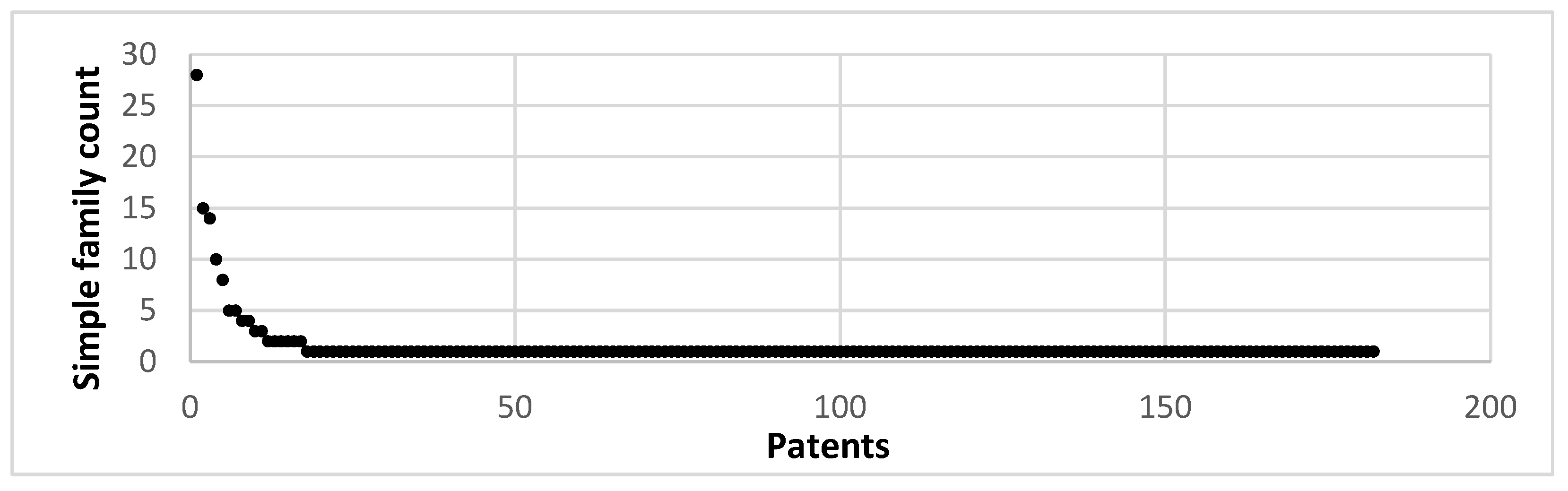
The number of patents from the analyzed portfolio expressed as simple family size (Figure 4) shows that the vast majority of patent applications were submitted to only one patenting authority. However, there were several patents with a large family size, meaning that they were submitted to more than one patenting authority.
Figure 4.
Patents with simple family size from analyzed patent portfolio.
Patents with a simple family size of five or more are presented in Table 2. An interesting observation is that among the patents with large simple family size, although the majority come from China, there were no patents from this country. The most valuable patents originated from different countries and in different years.
Table 2.
Patents with largest simple family size.
3.2. Structuring of Patent Portfolio
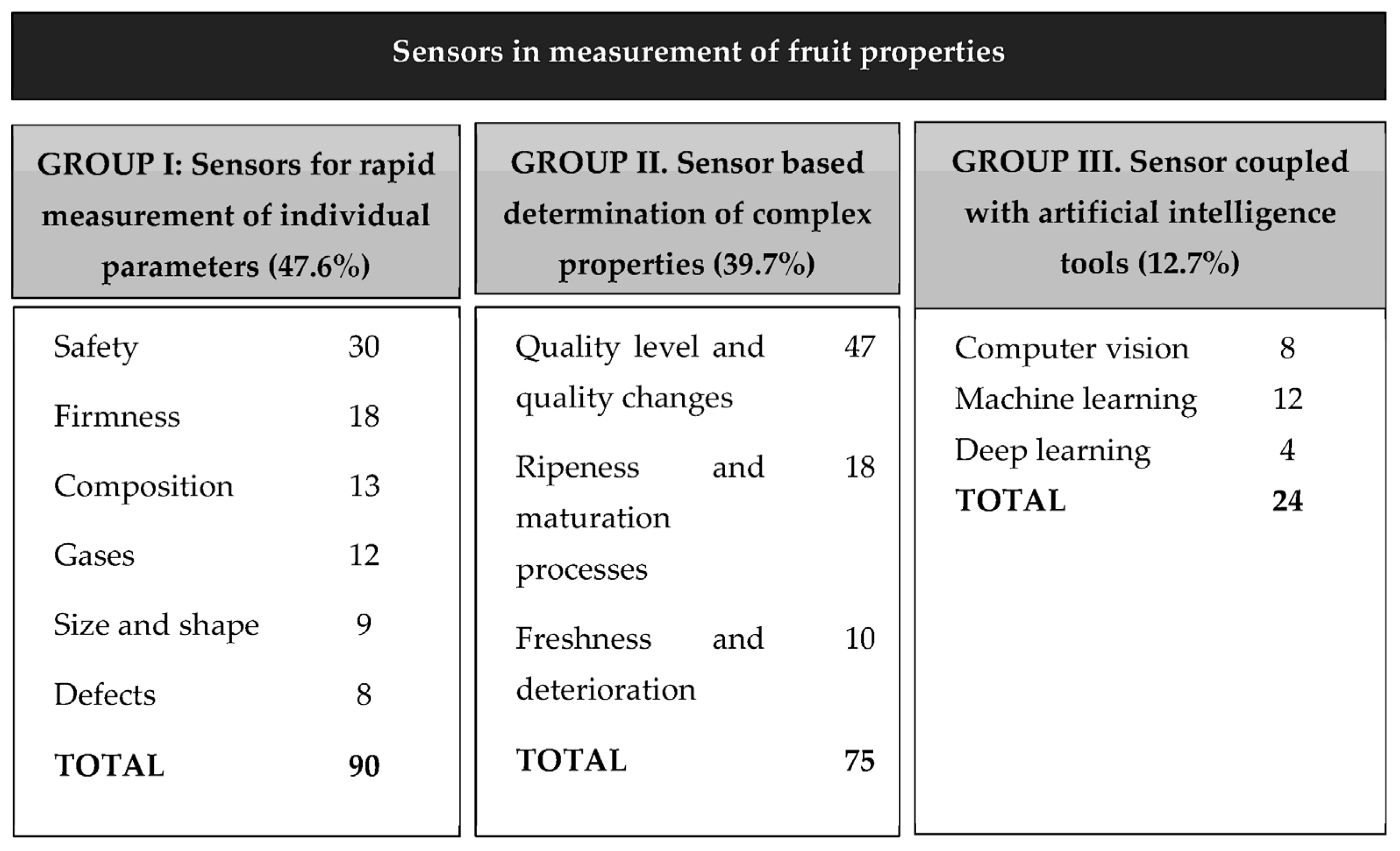
Patent abstracts within each of the three pre-defined groups (sensor-based measurement of individual parameters, multisensor solutions for simultaneous monitoring of multiple relevant aspects and solutions integrating sensor-derived data with artificial intelligence tools and techniques) were carefully analyzed, and subgroups of patents disclosing sensing technologies developed for similar purposes were formed (Figure 4).
The first group included patents in which sensors or devices for rapid measurement of individual properties common in the analysis of fruits were disclosed. Represented parameters for characterizing fruit or its storage environment included: measurement of physical properties (size, dimensions, shape, weight), measurement of firmness/hardness, presence of visible or hidden defects (bruises, moldy core), analysis of fruit composition (moisture, sugar, acids, other constituents), safety parameters (pesticides, heavy metals, pathogens) and the composition of the gaseous phase surrounding fruit (respiration gases, ethylene, ethanol, volatiles). When developing sensors for measuring individual parameters, it is expected that values responding to values obtained via conventional, standardized, routine analytical methods will be obtained. Thus, it is of utmost importance to calibrate the sensors in this group and validate the results [18].
The second identified group comprised patents in which multiple signals from one or more sensors were used together with powerful computing to characterize the condition (quality level, ripeness, freshness) of fruit or its ongoing processes (maturation, quality deterioration) as complex properties in real-time. In this way, novel indicators of condition or processes were derived, enabling and introducing a quite different approach to fruit management [19].
The third group included patents that combined sensor-derived data with advanced data processing tools, and introduced artificial intelligence tools (such as computer vision, machine learning and deep learning) into the management of fresh produce. These innovations pave the way for automated data-driven management [20,21,22].
Patent applications intended for the analysis of commonly used fruit properties such as size, firmness, defects or safety, or for the determination of the composition of the atmosphere surrounding fruits (Group I; Figure 5) account for almost half (47.6%) of the identified patent portfolio. Within this group, the most numerous patents were those that disclosed the use of sensors for analyzing fruit safety (33%), followed by those disclosing inventions for determining fruit firmness (20%), while inventions for analyzing fruit and the surrounding atmospheric composition, determining size and shape and for identifying defects accounted for a smaller percentage of patents.
Figure 5.
Structure of patent portfolio (shares).
Patents intended for the determination of fruit quality, maturity or freshness in general (Group II; Figure 5) and based on complex parameters derived from an analysis of measured sensor responses, accounted for a significant share of the identified patent portfolio (39.7%). Devices and sensors for identifying quality levels or quality changes were disclosed in the majority of patents, accounting for more than 60% of the total number of patents in this group. Ripening-related solutions were represented in almost 35% of the patent portfolio, while sensor-based solutions related to freshness were represented the least.
Patents in which artificial intelligence tools such as machine learning or deep learning were coupled with sensor-based measurement accounted for a smaller share of the patent portfolio (12.7%).
3.3. Patent Portfolio Characterization
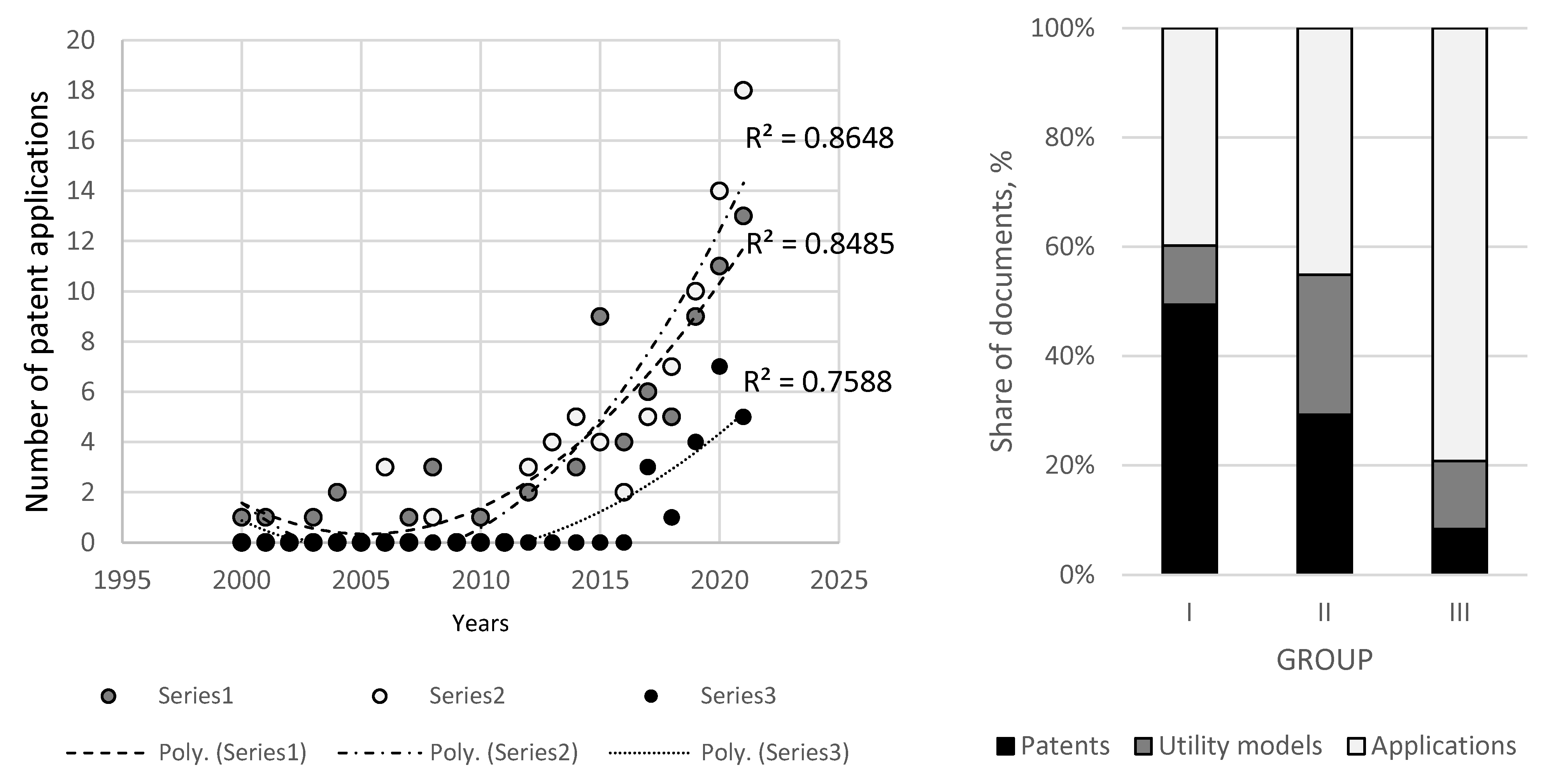
In Group I, related to sensors for rapid measurement of individual parameters, patenting activity started in 2000 and is characterized by several applications per year until 2015, when the number of patents started to increase more rapidly (Figure 6, left). Patenting of inventions in which (multiple) sensors were used for determining complex properties (Group II) started later, in 2005, but there has been more of an increasing trend over the past few years compared to sensors for determining individual parameters. Patents related to the application of sensors coupled with artificial intelligence tools (Group III) started to emerge after 2015, and since then the number of such patent applications has increased.
Figure 6.
Comparison of identified groups via patenting trends (right) and structure of documents (left). Group I: sensors for rapid measurement of individual parameters; Group II: sensor-based determination of complex properties; Group III: sensors coupled with artificial intelligence tools.
The share of patents, utility models and patent applications within identified groups also differed (Figure 6, right). The group of patents that included sensors for determining individual parameters accounted for a much larger share than utility models, while the group in which sensor-based data were used to describe complex properties with utility models have approximately the same share as patents. Notably, in the group related to the use of artificial intelligence tools for processing sensor-based data, most of the patent applications were quite new and still waiting for approval; there is a quite low number of already approved patents and utility models.
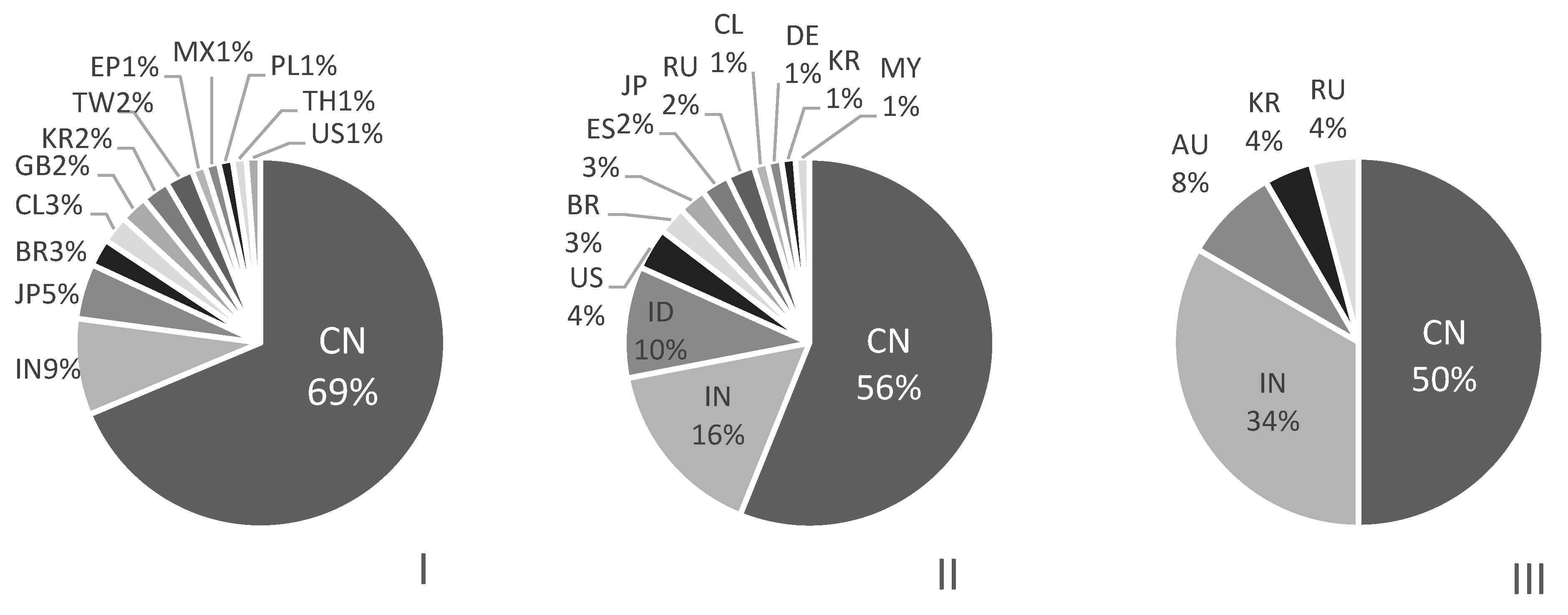
Regarding patenting authorities, in all three groups the highest number of patents originated from China (Figure 7). However, there was a larger share of patents from China (69%) in Group I (sensors for determining individual parameters) than in Group II (sensor-based modeling of complex parameters) (56%), while the share in Group III (artificial intelligence-based processing of sensor data) was even smaller (50%). The second country with a large share of patents was India, with opposite trends between groups and the largest share in the group of patents related to the use of artificial intelligence. Patenting authorities in other countries have much smaller shares.
Figure 7.
Comparison of identified groups via share of patenting authorities. Group I: sensors for rapid measurement of individual parameters; Group II: sensor-based determination of complex properties; Group III: sensors coupled with artificial intelligence tools.
3.4. Analysis of Patent Portfolio via Identified Groups
3.4.1. Group I: Sensors for the Measurement of Individual Parameters
This group comprised patents disclosing sensors for the detection or measurement of (a) fruit safety parameters, (b) fruit firmness, (c) fruit composition, (d) fruit damage, (e) fruit size and shape and (f) gaseous phase surrounding or produced by the fruit.
(a) Fruit safety: hazardous compounds from the environment, including heavy metals and residues from inputs for agricultural production such as pesticides increase public concern related to health risks, with agricultural production positioned as a source and the most critical stage for transmitting food safety problems along the supply chain [23]. Mitigating the risks of chemical hazards such as pesticides, heavy metals and microbial pathogens requires rapid screening methods [24].
In the observed portfolio, a significant number of patents focused on pesticide and heavy metal detection (Table 3). Patents related to pesticide detection employed various sensors, including aptamer sensors, molecularly imprinted electrochemical sensors, fluorescent array sensors, ratio fluorescence sensors, photonic crystal sensors and sensors based on nanomaterials. The methods of detection included electrochemical, fluorescence, photonic crystal and adhesive tape methods.
Table 3.
Analysis of patents disclosing sensors for measurement of individual properties for fruit safety analysis.
In contrast to traditional food safety approaches, some inventions in the portfolio were designed to be handheld. Additionally, some patents described the sensor production process, with their intended use for various devices.
(b) Fruit firmness: one of the properties characterizing changes in fruit is the loss of firmness [25]. Nondestructive methods of measuring fruit firmness have gained popularity in recent years, as they allow fruit quality to be assessed without causing damage [26]. Nondestructive fruit firmness sensors have the potential to determine ripeness and quality objectively and efficiently [27].
Patented inventions related to fruit firmness testing are numerous, and include both destructive and nondestructive methods (Table 4). Some patents revealed innovations in firmness testing through traditional destructive approaches, while the majority explored nondestructive methods. Nondestructive methods involve various sensors, including acoustic vibration sensors, piezoelectric beam sensors and multisensor solutions. Two patented inventions incorporated flexible finger sensors. Some patents in this domain described components of firmness testing devices without specifying the type of sensor, enabling the devices to be upgraded with any firmness sensor solution. These patents addressed firmness measurement for specific fruits such as apples, pears, kiwis, watermelons and spherical fruits and vegetables in general.
Table 4.
Analysis of patents for measuring individual properties disclosing sensors for fruit firmness analysis.
(c) Fruit composition: timely and accurate information on fruit composition is relevant in several aspects. Fruit composition determines its maturity and related storability [28,29], nutritive profile [30], acceptability for consumers [31] and its value as raw material for processing [32]. Information regarding changes in the composition of metabolites during fruit processes provides valuable input for fresh fruit supply chain optimization [33].
Patents in the domain of fruit composition testing primarily utilized near-infrared spectroscopy (NIRS) and multispectral imaging for nondestructive measurement of the sugar content in various fruits, including oranges, apples and others (Table 5). Inventions aimed at detecting sugar in fruits encompassed those designed for measuring its content in oranges as well as fruit in general. The analyzed patent portfolio also encompassed inventions for determining several compounds that were important for fruit production, management or processing. Examples included waxberry fruit acidity testing, electrochemical sensors for detecting indoleacetic acid and salicylic acid in tomatoes, ascorbic acid estimation in fruits, immunosensors for detecting capsaicin in peppers and molecularly imprinted electrochemically modified electrodes for measuring gibberellin and detecting nitrate and moisture content in fruits.
Table 5.
Analysis of patents measuring individual properties disclosing sensors for fruit composition analysis.
(d) Fruit defects: mechanical injuries occur during production, harvesting, handling and postharvest stages in fruit supply chains, and internal physical or pest-related damage highly influences the market value and storability of fruit [34]. The development of nondestructive measurement techniques for assessing fruit damage can help in quality evaluation and in preventing economic losses [35].
Inventions related to fruit damage testing utilized a variety of sensors, including acoustic, time-resolved fluorescence spectroscopy, machine vision, microwave and thermal sensors (Table 6). These patented innovations included devices for detecting frostbite in apples, defects in fruit appearance, defects in fruits and vegetables and decay. Notably, all damage assessment inventions employed nondestructive methods, allowing for multiple measurements on a single fruit and enabling the monitoring of damage development. The use of acoustic and machine vision sensors was demonstrated in apple-related applications, while microwave and thermal sensors were designed for more general fruit and vegetable testing.
Table 6.
Analysis of patents for measuring individual properties disclosing sensors for fruit defect detection.
(e) Fruit size and shape: the ability to assess and detect fruit size and shape in real-time for bulk quantities of fruit is crucial to maximize market value [36] and is indispensable for efficient fruit grading and packaging [37].
All patented inventions for fruit assessment were nondestructive (Table 7). A laser sensor-based solution involved the measurement of distances and the creation of 3D models. A color sensor-based solution assessed fruit appearance using advanced color analysis. A weight sensor-based solution indirectly estimated size based on weight. A spectrometer-based solution analyzed the reflected light spectrum for size and quality evaluation, while a camera-based solution captured images for automated size and shape analysis. Displacement sensor-based solutions measured position variations to evaluate fruit size and shape. The relevance of these sensors varied based on the specific type of fruit. For example, a weight sensor was commonly used for pomelos, as their size and weight are closely related. A color sensor was well-suited for tangerines, for which color is a critical indicator of quality. Grapes, on the other hand, benefited from camera technology due to their small size and the need for bulk assessment. Laser sensors and displacement sensors were applied to various fruits to capture detailed shape variations. All disclosed sensing technologies facilitated quality control and ensured consistent standards across fruit types.
Table 7.
Analysis of patents for measuring individual properties disclosing sensors for fruit size and shape measurement.
(f) Analysis of composition of gases: an analysis of the gas composition in the environment where fruit is stored or the gases produced by fruit can provide comprehensive insight into fruit processes including ripening [38], respiration [39] and quality deterioration [40,41], and enable precise implementation of various postharvest measures [42] and treatments [43]. A range of specialized devices and methods for the detection of ethylene and other gases have been patented.
Ethylene sensors were featured in several patents, including one that introduced a method and device for measuring ethylene concentration in fruit samples, another that described a portable ethylene-detecting instrument for enhanced convenience in ethylene level monitoring, one that presented an ethylene gas sensor and a method for efficient detection, one focusing on selective detection with a gas sensor that can identify acetylene and ethylene, and one that utilized a nano-sized composite film for ethylene detection (Table 8). Conversely, there were patents that focused on methods for detecting multiple gases with broader applications. One patent described a semiconductor gas sensor and a gas sensing method that can detect various gases, such as hydrogen, carbon monoxide and nitrogen dioxide. Another introduced a gas sensor designed to detect a range of gases including methane, propane and butane, while another presented a comprehensive gas sensor system that can detect various gases including carbon dioxide, methane and propane.
Table 8.
Analysis of patents for measuring individual properties disclosing sensors for the analysis of gases.
3.4.2. Group II. Sensor Based Determination of Complex Properties
This group comprised patents disclosing sensor-based solutions that enable the assessment of complex fruit properties such as (a) changes in fruit quality, (b) ripeness and maturation processes and (c) freshness and deterioration.
(a) Fruit quality is a multifaceted attribute that is unique to each fruit, and even each cultivar, which requires the evaluation of various parameters to determine overall desirability [44]. Quality is a critical attribute influencing consumer acceptance. Fruit quality is assessed based on parameters such as size and shape, uniformity [36], firmness [25], absence of visible or hidden defects [35], skin and flesh color [45], taste, flavor and aroma [41], soluble solid content, acidity, pH and other aspects to do with nutritive value, storability and processing properties. Assessing fruit properties along the supply chain enables suppliers to deliver high-quality, safe produce to consumers [46].
Patents targeting the complex assessment of fruit quality rely on two approaches. The first approach involves the use of sensing techniques that provide signals based on which aspects of fruit quality are being assessed (Table 9). Most of the disclosed inventions were based on optical methods. Patents included methods for measuring the near-infrared spectral area, visible light area or a combination of both. Patents in this group included the use of laser light sources, electroluminescent diodes or other light sources. Data obtained at different wavelengths were further processed to obtain values related to internal fruit quality, in some cases expressed as a combination of common quality parameters such as firmness or brix, and in other cases, in the form of indices such as a maturity index or fruit grading criteria for example, good/bad or ripe/not ripe. In addition to spectroscopic methods, approaches using color, acoustic or vibration sensors for quality assessment were also disclosed, but the number of patents describing such solutions was much lower.
Table 9.
Analysis of patents disclosing inventions for determining complex properties of quality.
The second group of sensor-based solutions for complex quality assessment were solutions that integrated multiple sensors for measuring different fruit properties that operated on different sensing principles. The combinations of sensors in the disclosed inventions were quite diverse and included, for example, (i) spectrograph, light source, photoelectric sensor and camera; (ii) CCD camera and position sensor; (iii) weighing sensors, three-dimensional camera, laser projector and color sensor; (iv) gas sensor array and visual sensor; (v) camera and multiple sensors; (vi) gas sensor array and Raman spectrometer; (vii) hardness, sugar and spectrophotometric detection modules; and (viii) color and pesticide residue detection units. Integrating different cameras, such as a three-dimensional camera and CCD camera, enabled the determination of diverse quality parameters through further processing of obtained images. Solutions that integrated gas sensors or nondestructive sensor-based measurement of firmness related to quality were disclosed in a number of patents.
Patents intended for the detection of quality as a complex set of fruit properties disclosed solutions with different purposes, including a multisensor solution integrated into conveying or grading devices, or devices used to determine fruit quality in the field or at harvest, and multisensor-based stand-alone devices for fruit quality testing; some patents disclosed evidence regarding the possibility of determining fruit quality using multiple sensors. Some patents in this group disclosed portable or hand-held devices with integrated optical sensors, while others disclosed devices intended to be integrated into conveyer lines and fruit classification/grading equipment. Some indicated the possibility of attaching devices to vehicles such as drones, tractors, crawlers and other vehicles or integrating sensors into wearable gloves and other ways to facilitate operation. Some inventions were related to improvements regarding temperature correction of measurement performance.
(b) Fruit ripening and maturation involves various physical and chemical changes that affect the quality and shelf life of fruit. Physical changes include changes in color, texture and composition. In the case of ripening, similar to quality, there have been attempts to generalize ripeness or maturity based on the response of sensor-based measurements. Most disclosed inventions were intended for detecting fruit ripeness based on diverse sensor-based measurements and transforming the obtained results into information regarding ripeness through various mathematical modeling approaches. Sensors used for measuring signals used to predict ripeness include electronic noses, ultrasonic sensors, sound sensors, resonance frequency sensors, photoelectric sensors for ethylene respiration gases and volatiles and sensors for color and shape (Table 10). The majority of disclosed inventions were intended for general application to determine fruit ripeness, but there were also inventions developed for specific fruits, such as the sound-based determination of ripeness of melons and watermelons, color expression-based determination of apple ripeness by shape and color, a stereoscopic vision system for determining the ripeness of bananas at harvest and temperature and gas composition based determination of the ripeness of bagged bananas.
Table 10.
Analysis of patents for determining complex properties disclosing inventions for fruit ripening and maturation analysis.
Some inventions were related to monitoring fruit maturation in orchards and determining optimal harvest times. Disclosed solutions included combinations of sensors measuring different ripening-related parameters such as relative humidity and temperature, combined with an electronic nose device or a bioelectric sensor to measure sugar, polyphenol and chlorophyl. Other solutions were based on measuring ethylene release and use ultrasonic sensors.
There were also solutions for monitoring the maturation process of fruit in the supply chain. Sensing solutions used for data measuring included color sensing using RGB sensors and different combinations of gas composition measuring sensors. Data processing methods included simple utilization of preprogrammed thresholds, mixed signal analytical models or machine learning algorithms.
The most sophisticated solutions included gas or image analysis for the purpose of management of fruit processes such as the ethylene quantity needed for maturation or the reduction of electricity consumption.
(c) Fruit freshness is a holistic attribute that integrates a complex assessment of how recently the fruit was harvested and how well its properties have been preserved. Loss of freshness is perceived as spoilage, rotting, loss of turgor, development of an unpleasant odor, loss of firmness etc. Preserving the freshness of fruits and vegetables depends on several factors, including temperature, humidity and ethylene concentration [47]. Loss of freshness can be quantified by parameters including visual properties, intensity of respiration or the synthesis of volatile compounds characterizing postharvest processes [41].
The first group of inventions intended for characterizing freshness comprised different constructions and integrations of multiple sensors that acquired data on the environmental conditions in which fruit was stored and used formulas or mathematical models to transform the measured data into information that can be used to assess fruit freshness or predict remaining shelf life (Table 11). Patents in this group often included the specific postharvest purpose for such inventions, such as integrating them into fruit grading equipment in order to separate fruit that has lost freshness from the rest or providing information about lots in which rotten fruits were present and their location.
Table 11.
Analysis of patents for determining complex properties disclosing inventions for freshness detection.
The second group of inventions included sensors for detecting the composition of volatiles such as ethanol, color-sensitive odor components, conjugated hydrocarbons and esters. The relationships between detected odor compounds and freshness indicators such as rotting were determined through experimental investigations of these parameters with different volatile compound concentrations or measurements at different points. Some patents specified the purpose of postharvest measurement, such as alerting users to rotten fruits and vegetables.
3.4.3. Group III. Sensor Coupled with Artificial Intelligence
Artificial intelligence involves the use of computers to simulate behaviors characterizing human intelligence such as learning and decision-making [48]. A prerequisite for developing AI solutions is the existence of big datasets. The introduction and wide application of sensor-based fruit measurement has led to the creation of multidimensional databases, paving the way for the development of artificial intelligence solutions for fruit handling and management.
An analysis of patents related to the use of sensors for measuring fruit properties revealed that the artificial intelligence related solutions included those based on (a) computer vision, (b) machine learning and (c) deep learning.
(a) Computer vision applications refers to the processing of images obtained from cameras to derive conclusions in order to identify the properties of observed objects, similar to the processing of inputs through human eyes by the brain. In addition, the development of multispectral, hyperspectral, three-dimensional and other types of cameras enable even more sophisticated inputs to be obtained which are processed via computer vision techniques into information about the observed object [49].
In some patents in the identified portfolio, computer vision techniques were used to pre-process images obtained from RGB visual sensors, lasers, color infrared sensors, cameras, multispectral devices or even photographs taken with hand-held mobile equipment (Table 12). Machine learning and deep learning techniques were commonly used to further process the data obtained via computer vision techniques. However, the inputs for machine learning and deep learning applications were not limited to data from preprocessed images; data obtained from multiple sensor devices and networks were also used as inputs for artificial intelligence-based models.
Table 12.
Analysis of patents disclosing inventions in which sensors were coupled with artificial intelligence tools.
(b) Machine learning involves probability theory, statistics, approximation theory, convex analysis, algorithm complexity theory and other disciplines to optimize the performance of computers when simulating human learning behaviors to acquire new knowledge and reorganize existing knowledge structures, with the aim of continuously improving the performance by establishing a learning system for specific tasks [50].
Within the observed patent portfolio, machine learning was used, for example, to derive information on fruit odor from data obtained via micro-electromechanical gas sensors, cuticle permeability from data obtained via image processing, and spongy tissue from data obtained via electrochemical and laser-based sensors (Table 12). Machine learning was also used for predicting fruit ripening patterns. As an input for machine learning-based prediction of ripening based on gas composition, diverse data obtained from multisensor networks and image processing were used. Machine learning was also used to develop applications for the nondestructive prediction of sugar content in fruit based on data from sensors that recorded fruit and environmental properties.
(c) Deep learning is an advanced approach that can be used for solving the problem of processing multilayered big datasets. Deep learning uses artificial neural networks to achieve multilayer perceptrons within multiple hidden layers in datasets to discover the characteristics of data distribution by forming higher-level attributes through combinations of low-level features [51]. Deep learning was used in the studied patent portfolio to predict fruit ripeness from color-based and ethanol release measurements and to distinguish between naturally and artificially ripened fruits (Table 12).
The disclosed inventions were developed with the intention of substituting human decision-making at relevant points in order to manage fresh produce supply chains, such as determining optimal harvest time, classifying fruits optimally, performing fruit phenotyping, predicting fruit quality, supporting fruit traceability, identifying individual fruits with deteriorated quality and assessing how fruit can be stored and transported.
Applying artificial intelligence-based models to the management of fresh produce supplies also implies solutions for data acquisition and processing through cloud computing or by integrating the whole system with the user’s mobile phone.

3.5. Limitations
Regarding the present research, several limitations should be kept in mind: (i) the lag period in the patenting process and the appearance of patents in searchable databases meant that results related to the most recent period were still changing. (ii) The analysis was performed on a still-emerging innovation and the most relevant patent applications submitted in the most recent period pending patent approval were included in the analysis, but some of them might not be approved, or the novelty of some patents might be challenged in court. Nevertheless, the very clear trends presented here will not be affected to a significant extent. (iv) Since the inventor and owner of a patent may come from any country, not necessarily the one where the patent application is submitted, the distribution of the origin of inventions may be somewhat different than the distribution of patenting authorities presented in the manuscript.
4. Conclusions
From a snapshot of patenting activities in the field of new sensing technologies being developed for measuring fruit properties of fresh produce, it can be concluded that advances in this area have the potential to substantially change the landscape for the development of this technology in general.
Sensing technologies enable real-time, rapid and cost-effective determination of ever-increasing and more sophisticated sets of fruit properties and environmental conditions. The development and availability of sensing technology solutions for determining more comprehensive and sophisticated parameters will undoubtedly result in the development of sorting, packaging and storage solutions and change the practices of monitoring fruit processes, produce quality parameters and safety and environmental aspects and contribute to the availability of more comprehensive datasets.
Solutions that integrate different sensing technologies in multisensor systems for monitoring fruit quality, ripening, or freshness as a holistic concept opens avenues for introducing a new approach to fresh produce management. Acquiring a larger data pool, enabled via sensing technologies and their integration into a wireless multisensor network, is a way to open new frontiers in processing data obtained through the sensor-based measurement of fruit properties. Data acquisition and processing enhance our ability to optimize, plan and control the processes in fruit supply chains and to prevent undesired spoilage, contamination or decay, including the utilization of data acquired for predicting fruit processes, thus providing a solid base for their improvement. Such inventions support the transformation of fresh produce supply chains in line with Industry 4.0 objectives to introduce evidence-based decision-making and to interconnect machinery and data analytics.
Increasing the number of solutions introducing the use of artificial intelligence tools such as computer vision, machine learning and deep learning in fresh produce supply chain management will enhance the possibility of substituting human decision making at relevant points for fresh produce. These trends will result in conforming fresh produce supply chain management to the objectives of Industry 5.0 in order to leverage the creativity of human experts in collaboration with efficient, intelligent and accurate machines.
Author Contributions
Conceptualization and Experimental Design: J.M., D.K., Ž.K., G.O. and S.S.; Statistical analyses: D.K.; Results analysis and Data curation: J.M., D.K. and Ž.K.; Writing—Original Draft Preparation: Ž.K. and D.K.; Writing—Review & Editing: Ž.K., J.M., A.B., R.K., D.U.S. and M.Đ.; Supervision: D.K., G.O. and S.S. All authors have read and agreed to the published version of the manuscript.
Funding
This research was funded by the Ministry of Education, Science and Technological Development of the Republic of Serbia (under Grants: 451-03-47/2023-01/200222; 451-03-47/2023-01/200358; 451-03-47/2023-01/200156) and the project prediction of the shelf life of fresh products depending on the conditions in the supply chain: an artificial intelligence-based approach funded by the Secretariat of Higher Education and Research of Vojvodina Province under Grant 142-451-3146/2023-01/01.
Data Availability Statement
Data will be made available on request.
Conflicts of Interest
The authors declare no conflict of interest.
References
- Pang, Z.; Chen, Q.; Han, W.; Zheng, L. Value-centric design of the internet-of-things solution for food supply chain: Value creation, sensor portfolio and information fusion. Inf. Syst. Front. 2015, 17, 289–319. [Google Scholar] [CrossRef]
- Schütze, A.; Helwig, N.; Schneider, T. Sensors 4.0—Smart sensors and measurement technology enable Industry 4.0. J. Sens. Sens. Syst. 2018, 7, 359–371. [Google Scholar] [CrossRef]
- Lezoche, M.; Hernandez, J.E.; Díaz, M.D.M.E.A.; Panetto, H.; Kacprzyk, J. Agri-food 4.0: A survey of the supply chains and technologies for the future agriculture. Comput. Ind. 2020, 117, 103187. [Google Scholar] [CrossRef]
- Guruswamy, S.; Pojić, M.; Subramanian, J.; Mastilović, J.; Sarang, S.; Subbanagounder, A.; Jeoti, V. Toward Better Food Security Using Concepts from Industry 5.0. Sensors 2022, 22, 8377. [Google Scholar] [CrossRef] [PubMed]
- Jagtap, S.; Duong, L.; Trollman, H.; Bader, F.; Garcia-Garcia, G.; Skouteris, G.; Rahimifard, S. IoT technologies in the food supply chain. In Food Technology Disruptions; Charis, M.G., Ed.; Academic Press: Cambridge, MA, USA; Elsevier Inc.: Amsterdam, The Netherlands, 2021; pp. 175–211. [Google Scholar]
- Weichhart, G.; Molina, A.; Chen, D.; Whitman, L.E.; Vernadat, F. Challenges and current developments for sensing, smart and sustainable enterprise systems. Comput. Ind. 2016, 79, 34–46. [Google Scholar] [CrossRef]
- Jin, C.; Bouzembrak, Y.; Zhou, J.; Liang, Q.; Van Den Bulk, L.M.; Gavai, A.; Marvin, H.J. Big Data in food safety—A review. Curr. Opin. Food Sci. 2020, 36, 24–32. [Google Scholar] [CrossRef]
- Singh, A.; Vaidya, G.; Jagota, V.; Darko, D.A.; Agarwal, R.K.; Debnath, S.; Potrich, E. Recent advancement in postharvest loss mitigation and quality management of fruits and vegetables using machine learning frameworks. J. Food Qual. 2022, 2022, 6447282. [Google Scholar] [CrossRef]
- He, J.; Chen, K.; Pan, X.; Zhai, J.; Lin, X. Advanced biosensing technologies for monitoring of agriculture pests and diseases: A review. J. Semicond. 2023, 44, 023104. [Google Scholar] [CrossRef]
- Zhang, S.; Ding, K.; Liu, W.; Zhang, H. A patent portfolio-based approach for identifying technological threat from competitors. Technol. Anal. Strateg. Manag. 2022, 34, 1153–1169. [Google Scholar] [CrossRef]
- Li, S.; Zhang, X.; Xu, H.; Fang, S.; Garces, E.; Daim, T. Measuring strategic technological strength: Patent portfolio model. Technol. Forecast. Soc. Chang. 2020, 157, 120119. [Google Scholar] [CrossRef]
- Ki, W.; Kim, K. Generating information relation matrix using semantic patent mining for technology planning: A case of nano-sensor. IEEE Access 2017, 5, 26783–26797. [Google Scholar] [CrossRef]
- Shi, X.; Cai, L.; Song, H. Discovering potential technology opportunities for fuel cell vehicle firms: A multi-level patent portfolio-based approach. Sustainability 2019, 11, 6381. [Google Scholar] [CrossRef]
- Garzaniti, N.; Tekic, Z.; Kukolj, D.; Golkar, A. Review of technology trends in new space missions using a patent analytics approach. Prog. Aerosp. Sci. 2021, 125, 100727. [Google Scholar] [CrossRef]
- Mastilović, J.; Kukolj, D.; Kevrešan, Ž.; Ostojić, G.; Kovač, R.; Đerić, M.; Samek, D.U. Emerging Perspectives of Blockchains in Food Supply Chain Traceability Based on Patent Analysis. Foods 2023, 12, 1036. [Google Scholar] [CrossRef] [PubMed]
- Mastilović, J.; Kevrešan, Ž.; Kukolj, D.; Kovač, R.; Ubiparip Samek, D.; Stankovski, S.; Ostojić, G.; Đerić, M. Sensors in postharvest technologies: Evidence from patent portfolio analysis. Postharvest Biol. Technol. 2024, 208, 112628. [Google Scholar] [CrossRef]
- PatSnap. Available online: www.patsnap.com (accessed on 26 May 2023).
- Poddar, S.; Kumar, V.; Kumar, A. A comprehensive overview of inertial sensor calibration techniques. J. Dyn. Syst. Meas. Control. Trans. ASME 2017, 139, 011006. [Google Scholar] [CrossRef]
- Saeys, W.; Do Trong, N.N.; Van Beers, R.; Nicolaï, B.M. Multivariate calibration of spectroscopic sensors for postharvest quality evaluation: A review. Postharvest Biol. Technol. 2019, 158, 110981. [Google Scholar] [CrossRef]
- Yue, X.Q.; Shang, Z.Y.; Yang, J.Y.; Huang, L.; Wang, Y.Q. A smart data-driven rapid method to recognize the strawberry maturity. IPA 2020, 7, 575–584. [Google Scholar] [CrossRef]
- Kollia, I.; Stevenson, J.; Kollias, S. Ai-enabled efficient and safe food supply chain. Electronics 2021, 10, 1223. [Google Scholar] [CrossRef]
- Xiao, X.; Li, M. Fusion of data-driven model and mechanistic model for kiwifruit flesh firmness prediction. Comput. Electron. Agric. 2021, 193, 106651. [Google Scholar] [CrossRef]
- Hu, X.; Chen, F.; Wang, P.; Chen, Z. The Importance of Food Safety for Fruits and Vegetables. In Food Safety in China: Science, Technology, Management and Regulation; John Wiley & Sons Ltd.: London, UK, 2017; pp. 489–501. [Google Scholar]
- Shenashen, M.A.; Emran, M.Y.; El Sabagh, A.; Selim, M.M.; Elmarakbi, A.; El-Safty, S.A. Progress in sensory devices of pesticides, pathogens, coronavirus, and chemical additives and hazards in food assessment: Food safety concerns. Prog. Mater. Sci. 2022, 124, 100866. [Google Scholar] [CrossRef]
- Chen, H.; Cao, S.; Fang, X.; Mu, H.; Yang, H.; Wang, X.; Gao, H. Changes in fruit firmness, cell wall composition and cell wall degrading enzymes in postharvest blueberries during storage. Sci. Hortic. 2015, 188, 44–48. [Google Scholar] [CrossRef]
- Khalifa, S.; Komarizadeh, M.H.; Tousi, B. Usage of fruit response to both force and forced vibration applied to assess fruit firmness-a review. Aust. J. Crop. Sci. 2011, 5, 516–522. [Google Scholar]
- Fathizadeh, Z.; Aboonajmi, M.; Beygi, S.R.H. Nondestructive firmness prediction of apple fruit using acoustic vibration response. Sci. Hortic. 2020, 262, 109073. [Google Scholar] [CrossRef]
- Kamol, S.I.; Howlader, J.; Sutra Dhar, G.C.; Aklimuzzaman, M. Effect of different stages of maturity and postharvest treatments on quality and storability of pineapple. JBAU 2014, 12, 251–260. [Google Scholar] [CrossRef]
- Getinet, H.; Workneh, T.S.; Woldetsadik, K. Effect of maturity stages, variety and storage environment on sugar content of tomato stored in multiple pads evaporative cooler. AJB 2011, 10, 18481–18492. [Google Scholar] [CrossRef]
- Vincente, A.R.; Manganaris, G.A.; Ortiz, C.M.; Sozzi, G.O.; Crisosto, C.H. Nutritional quality of fruits and vegetables. In Postharvest Handling, 3rd ed.; Academic Press: Cambridge, MA, USA; Elsevier: Amsterdam, The Netherlands, 2014; pp. 69–122. [Google Scholar]
- Ubiparip, S.D.N.; Bajić, A.R.; Pezo, L.L.; Kovač, R.M.; Mastilović, J.S.; Zoranović, T.S.; Vlahović, B.I. Exploring consumer preferences and factors associated with vegetable consumption. Food Feed. Res. 2021, 48, 57–68. [Google Scholar] [CrossRef]
- Tylewicz, U.; Tappi, S.; Nowacka, M.; Wiktor, A. Safety, quality, and processing of fruits and vegetables. Foods 2019, 8, 569. [Google Scholar] [CrossRef]
- Mastilović, J.; Kevrešan, Ž.; Milović, M.; Kovač, R.; Milić, B.; Magazin, N.; Kalajdžić, J. Effects of ripening stage and postharvest treatment on apricot (Prunus armeniaca L.) cv. NS4 delivered to the consumers. J. Food Process. Preserv. 2022, 46, e16399. [Google Scholar] [CrossRef]
- Ahmad, M.S.; Nayyer, M.A.; Aftab, A.; Nayak, B.; Siddiqui, M.W. Quality prerequisites of fruits for storage and marketing. J. Postharvest Technol. 2014, 2, 107–123. [Google Scholar]
- Opara, U.L.; Pathare, P.B. Bruise damage measurement and analysis of fresh horticultural produce—A review. Postharvest Biol. Technol. 2014, 91, 9–24. [Google Scholar] [CrossRef]
- Satpute, M.R.; Jagdale, S.M. Color, size, volume, shape and texture feature extraction techniques for fruits: A review. Int. Res. J. Eng. Technol. 2016, 3, 703–708. [Google Scholar]
- Moreda, G.P.; Ortiz-Cañavate, J.; García-Ramos, F.J.; Ruiz-Altisent, M. Non-destructive technologies for fruit and vegetable size determination—A review. J. Food Eng. 2009, 92, 119–136. [Google Scholar] [CrossRef]
- Barry, C.S.; Giovannoni, J.J. Ethylene and fruit ripening. J. Plant Growth Regul. 2007, 26, 143–159. [Google Scholar] [CrossRef]
- Løkke, M.M.; Seefeldt, H.F.; Edwards, G.; Green, O. Novel wireless sensor system for monitoring oxygen, temperature and respiration rate of horticultural crops post-harvest. Sensors 2011, 11, 8456–8468. [Google Scholar] [CrossRef] [PubMed]
- Pesis, E. The role of the anaerobic metabolites, acetaldehyde and ethanol, in fruit ripening, enhancement of fruit quality and fruit deterioration. Postharvest Biol. Technol. 2005, 37, 1–19. [Google Scholar] [CrossRef]
- Pott, D.M.; Vallarino, J.G.; Osorio, S. Metabolite changes during postharvest storage: Effects on fruit quality traits. Metabolites 2020, 10, 187. [Google Scholar] [CrossRef] [PubMed]
- Falagán, N.; Terry, L.A. Recent advances in controlled and modified atmosphere of fresh produce. Johns. Matthey Technol. Rev. 2018, 62, 107–117. [Google Scholar] [CrossRef]
- Maduwanthi, S.D.T.; Marapana, R.A.U.J. Induced ripening agents and their effect on fruit quality of banana. Int. J. Food Sci. 2019, 2019, 2520179. [Google Scholar] [CrossRef]
- Ubiparip Samek, D.; Pezo, L.; Mastilović, J.; Kovač, R.; Zoranović, T.; Vlahović, B. Modelling fruit and vegetable consumption in Serbia. Food Feed. Res. 2022, 49, 127–137. [Google Scholar] [CrossRef]
- Kleih, A.K.; Sparke, K. Visual marketing: The importance and consumer recognition of fruit brands in supermarket fruit displays. Food Qual. Pref. 2021, 93, 104263. [Google Scholar] [CrossRef]
- Raimbekov, Z.; Syzdykbayeva, B.; Rakhmetulina, A.; Rakhmetulina, Z.; Abylaikhanova, T.; Ordabayeva, M.; Doltes, L. The Impact of Agri-Food Supply Channels on the Efficiency and Links in Supply Chains. Economies 2023, 11, 206. [Google Scholar] [CrossRef]
- Ahmad, M.S.; Siddiqui, M.W.; Ahmad, M.S.; Siddiqui, M.W. Factors affecting postharvest quality of fresh fruits. In Postharvest Quality Assurance of Fruits: Practical Approaches for Developing Countries; Springer International Publishing: Cham, Switzerland, 2015; pp. 7–32. [Google Scholar] [CrossRef]
- Zhang, C.; Lu, Y. Study on artificial intelligence: The state of the art and future prospects. J. Ind. Inform. Integr. 2021, 23, 100224. [Google Scholar] [CrossRef]
- Tian, H.; Wang, T.; Liu, Y.; Qiao, X.; Li, Y. Computer vision technology in agricultural automation—A review. IPA 2020, 7, 1–19. [Google Scholar] [CrossRef]
- Lu, L.; Xu, L.; Xu, B.; Li, G.; Cai, H. Fog computing approach for music cognition system based on machine learning algorithm. IEEE Trans. Comput. Soc. Syst. 2018, 5, 1142–1151. [Google Scholar] [CrossRef]
- Zhang, S.; Yao, L.; Sun, A.; Tay, Y. Deep learning based recommender system: A survey and new perspectives. ACM Comput. Surv. 2019, 52, 1–38. [Google Scholar] [CrossRef]
Disclaimer/Publisher’s Note: The statements, opinions and data contained in all publications are solely those of the individual author(s) and contributor(s) and not of MDPI and/or the editor(s). MDPI and/or the editor(s) disclaim responsibility for any injury to people or property resulting from any ideas, methods, instructions or products referred to in the content. |
© 2023 by the authors. Licensee MDPI, Basel, Switzerland. This article is an open access article distributed under the terms and conditions of the Creative Commons Attribution (CC BY) license (https://creativecommons.org/licenses/by/4.0/).