


Abstract
Marine macroalgae and terrestrial halophytes represent a structurally distinct class of feed resources that can be produced without the arable land, fresh water, and synthetic fertilizer inputs required by conventional protein crops. Their direct incorporation into animal diets is, however, constrained by a convergent set of physical and toxicological barriers—viscous polysaccharides, lignocellulosic recalcitrance, anti-nutritional secondary metabolites, and accumulated heavy metals and halogens—that collectively impede practical use. Microbial fermentation can transform some of these barriers into functional resources through enzymatic deconstruction, catabolite conversion, and biosorption—a duality described here as the Barrier–Resource Duality. This critical narrative review synthesizes findings from publications across fermentation microbiology, animal nutrition, food safety, life cycle assessment, and regulatory science. The review analyzes cell-wall architectures of Chlorophyta, Rhodophyta, and Ochrophyta alongside the lignocellulosic matrix of terrestrial halophytes, maps the requisite carbohydrate-active enzyme families and polysaccharide-utilization loci, and evaluates the postbiotic mechanisms—TLR/NF-κB, histone deacetylase inhibition, and metabolite-mediated immunomodulation—by which fermentation-derived compounds may exert host benefit. The evidence base is assessed through a critical narrative synthesis that identifies knowledge gaps across five areas: (i) the absence of co-fermentation studies combining seaweeds and halophytes despite predicted substrate complementarity; (ii) the lack of pilot-scale fermentation data (no study exceeds 500 L); (iii) the single-study dependency of core in vivo efficacy claims; (iv) the absence of validated analytical methods for postbiotic quantification; and (v) the lack of a dedicated regulatory category for fermented marine biomass. It concludes that the field, while mechanistically rich, remains at Technology Readiness Level 2 (technology concept formulated), and that coordinated pilot-scale consortia, multi-institutional replication initiatives, and regulatory pathway design are prerequisites for commercial translation.
1. Introduction
1.1. The Feed-Protein Paradox
The global livestock and aquaculture sectors face a structural protein deficit. Global population growth toward 9.7 billion by 2050, combined with rising per capita meat consumption, is projected to increase demand for animal-source proteins by 50–70% [1]. Terrestrial protein crops occupy over 70% of global agricultural land and contribute to deforestation in biodiverse regions, and soybean cultivation, which supplies approximately 65% of global protein meal, is associated with land-use change emissions of 2.5–3.5 t CO2-eq per tonne of protein and imposes a freshwater footprint of 1500–3500 L per kg of protein [2,3]. Fishmeal, the nutritional benchmark ingredient in aquaculture feeds, derives from reduction fisheries that have reached their maximum sustainable yield [4]; production has plateaued at approximately 5 Mt per annum, while aquaculture output continues to expand at 5–8% annually [1,5]. The aquaculture sector alone is projected to require an additional 50 Mt of feed by 2050, a demand that cannot be met by current protein sources [2]. This widening gap between supply and demand constitutes a structural deficit that threatens both food security and marine ecosystem stability [6,7].
This structural deficit means that the most attractive alternative proteins would ideally (i) not compete for arable land or freshwater, (ii) match or exceed incumbent protein quality, and (iii) deliver a lower environmental footprint per tonne of product. Marine macroalgae and terrestrial halophytes are among the biomass classes that could satisfy these criteria—they grow on non-arable land and in seawater, reach crude protein levels of about 6–47% DM depending on species (brown algae 6–15%, green and red algae up to 47%), and have been estimated to carry a negative-to-low carbon footprint (−0.6 to +0.9 t CO2-eq/t DM) [2,8,9]. Still, their direct inclusion in animal diets is blocked by the physical and toxicological barriers detailed in Section 3. Microbial fermentation is one enabling technology that may convert this poorly accessible biomass into a functional feed ingredient by degrading some of those barriers. Alternative protein sources in poultry and pig nutrition have been systematically compared, with seaweeds identified as among the most promising candidates [10]. The quest for locally available aquafeed ingredients has motivated exploration of both seaweed and halophyte resources in tropical and subtropical regions [11]. Alternative dietary protein sources for farmed tilapia have been extensively reviewed, confirming that novel ingredients can partially replace fishmeal without compromising growth [12].
1.2. Seaweed and Halophyte Resources
Marine macroalgae (seaweeds) require no arable land, freshwater, or synthetic fertilizers. They serve as nutrient bio-remediators, absorbing dissolved nitrogen and phosphorus while fixing carbon dioxide via photosynthesis [13,14]. Global seaweed cultivation reached 36.5 Mt (wet weight) in 2022, with seaweed aquaculture accounting for 97% of production [15]. Seaweeds comprise three phyla—Chlorophyta (green seaweeds), Rhodophyta (red seaweeds), and Ochrophyta (brown seaweeds)—each with distinct cell wall chemistry, polysaccharide composition, and nutritional value [13,14].
The reported global cultivation figure of 36.5 Mt masks substantial variability across species and regions. Over 95% of this production is concentrated in a small number of warm-water species (Saccharina japonica, Eucheuma spp., Gracilaria spp.) farmed intensively in Japan, China, Indonesia, and the Philippines [9]. For the species most relevant to European and North American feed applications (Saccharina latissima, Alaria esculenta, Laminaria digitata), commercial-scale cultivation is nascent, with reported yields of 10–25 t fresh weight/ha contrasted against modeling projections of 50–100 t fresh weight/ha that have not been validated at operational scale [8,16].
What is more, proximate composition varies with harvest season: protein content in temperate brown seaweeds fluctuates by ±40% across the growing season (peaking in late winter/early spring, declining through summer), while carbohydrate and iodine content vary inversely [13,14]. No published study has examined how seasonal nutrient variability in the feedstock propagates through fermentation to affect the nutritional consistency of the final product. This represents a practical obstacle to commercial adoption: feed manufacturers require consistent nutrient specifications, and a ±40% range in protein content between batches is incompatible with least-cost diet formulation unless compensated by blending with standard protein sources.
We still do not know whether seasonal variation in feedstock nutrient content is dampened or amplified by fermentation—a basic question that should have been answered before the first feeding trial, not after. Addressing this gap requires a multi-season study design: harvesting the same seaweed species at monthly intervals across a full growing cycle, fermenting each harvest under standardized conditions, and measuring the nutrient composition of both feedstock and product.
Terrestrial halophytes (Suaeda spp., Salicornia spp., Atriplex spp., Kochia spp.) thrive in saline soils (EC 4–15 dS/m) and can be irrigated with seawater or brackish water [17]. Over 950 million hectares of land are affected by salinization globally, representing a potential resource base for halophytic forage production [17]. Halophytes on these lands provide a restoration pathway while generating biomass containing 12–22% crude protein (CP) without competing with conventional crops for freshwater [17]. Early foundational studies demonstrated that Salicornia bigelovii could serve as a partial feed ingredient for growing lambs [18]. Follow-up studies extended this approach to other halophyte species and livestock models [19,20,21,22].
1.3. Fermentation as Enabling Technology
Despite their potential, raw seaweeds and halophytes exhibit physical and toxicological barriers that limit their direct use. Seaweeds contain viscous non-starch polysaccharides (NSPs), such as alginate, carrageenan, and ulvan, that encapsulate intracellular nutrients and increase intestinal digesta viscosity, reducing apparent protein digestibility [13,14]. Halophytes feature lignified cellulose–hemicellulose matrices that resist endogenous enzymatic cleavage [17]. Both biomass classes accumulate anti-nutritional factors (condensed tannins, oxalates, saponins) and toxic heavy metals (Cd, Pb, inorganic As) alongside hyper-concentrated iodine [23,24].
Fermentation provides a biochemical route around these constraints. Microbial consortia—principally Bacillus spp. and filamentous fungi, which secrete diverse CAZymes and proteases, together with LAB and yeasts, which contribute acidification, proteolysis and bacteriocins but limited polysaccharide depolymerization—degrade cell walls, release encapsulated nutrients, degrade anti-nutritional factors, and biosorb heavy metals [25,26]. Seaweeds as a fermentation substrate present both opportunities and processing challenges that are distinct from terrestrial feedstocks [26]. The methane-mitigating role of seaweed in ruminant diets has been reviewed comprehensively and evaluated across multiple studies, with brown seaweeds specifically assessed for rumen fermentation modulation [27,28,29,30]; these effects concern largely unfermented biomass, and fermentation-specific methane-mitigation evidence remains limited. This review critically synthesizes the current evidence on seaweed and halophyte fermentation for animal feed, identifies critical knowledge gaps, and outlines priority research directions.
1.4. Review Methodology
This review employed a critical narrative synthesis rather than a systematic review or meta-analysis; its purpose is to map and critique the evidence base, not to pool effect sizes. Literature was surveyed across fermentation microbiology, animal nutrition, food safety, life-cycle assessment, and regulatory-science databases (Web of Science, Scopus, and PubMed), using search terms combining ‘seaweed’/‘macroalgae’/‘halophyte’ with ‘fermentation’/‘solid-state fermentation’/‘postbiotic’/‘feed’. Screening was performed by the authors with the assistance of Zotero (Version 9.0, Corporation for Digital Scholar, Vienna, Virginia, United States, 2026) literature-management tooling, and all factual claims and citation DOIs were verified against the primary records. Searches were conducted between January 2026 and June 2026 and covered all publication years available in each database up to the final search date. The full search strategy combined three concept blocks with AND: (i) substrate—“seaweed” OR “macroalga” OR “halophyte” OR specific genera (Ulva, Laminaria/Saccharina, Gracilaria, Ascophyllum, Sargassum, Salicornia, Suaeda, Atriplex); (ii) process—“ferment” OR “solid-state fermentation” OR “submerged fermentation” OR “ensil” OR “lactic acid bacteria” OR “postbiotic” OR “CAZyme” OR “alginate lyase”; and (iii) application—“feed” OR “aquafeed” OR “animal nutrition” OR “livestock” OR “aquaculture” OR “ruminant”. No date or document-type filters were applied at the database level. Records were assessed in two stages, each independently by two authors. At the title-and-abstract stage, records were included if they reported fermentation or ensiling of macroalgae or halophytes, or the composition, safety, or feeding performance of such fermented products, in the context of terrestrial livestock or aquaculture feed; they were excluded if they (i) addressed human food or nutraceutical applications without a feed-relevant endpoint; (ii) concerned unicellular microalgae rather than macroalgae; (iii) used only chemical or enzymatic hydrolysis without microbial fermentation; (iv) targeted biogas, bioethanol, or other biofuel production; or (v) were not published in English. At the full-text stage, records were retained if they reported at least one extractable outcome relevant to the review questions (substrate composition, fermentation conditions, product composition, fate of anti-nutritional factors or contaminants, in vivo performance, or regulatory status); conference abstracts, non-peer-reviewed preprints, and records whose full text could not be retrieved were excluded. Disagreements between the two screening authors were resolved by discussion, with a third author acting as arbiter where consensus could not be reached.
Limitations: the synthesis is non-systematic and scoped to English-language publications; it does not pool effect sizes, and no formal risk-of-bias tool was applied. Systematic Review Centre for Laboratory Animal Experimentation (SYRCLE), for example, was designed to assess risk of bias in animal experiments and is not suitable to in vitro fermentation or microbiology studies; it is therefore not applied as a quantitative score in this review [31]. Because this is a narrative rather than a systematic review, no PRISMA flow diagram was constructed and the numbers of records identified, screened, and excluded at each stage were not logged quantitatively; inter-rater agreement was therefore not expressed as a κ statistic. The criteria above are stated so that the scope and boundaries of the evidence base can be judged, not so that the search can be reproduced record-for-record.
As illustrated in Figure 1, feedstocks (left panel) undergo initial physical or chemical pretreatment, followed by fermentation via solid-state fermentation (SSF), submerged fermentation (SmF), or ensiling. These fermentation processes are inoculated with marine-derived bacteria, fungi, or lactic acid bacteria. The resultant products include oligosaccharides, bioactive peptides, free amino acids, short-chain fatty acids (SCFAs), γ-aminobutyric acid (GABA), vitamin B12, exopolysaccharides, biosorbed metals with reduced bioaccessibility, and enzymes. Representative target animal classes are presented in the right panel. Bottlenecks related to mass transfer, salinity, and scale-up are discussed in Section 8.3, while the predominance of single-study evidence is addressed in Section 10.6.
Figure 1.
Overview of the fermented-seaweed/halophyte feed value chain—from marine biomass barriers to fermentation-enabled functional resources (Barrier–Resource Duality concept). Recalcitrant substrate barriers (structural polysaccharides, antinutritional secondary metabolites, heavy metals and halogens) are converted through enzymatic and microbial transformation into value-added functional products (postbiotics, improved nutritional profile, and enhanced feed acceptability).
2. Macromolecular Chemistry and Nutritional Profiles
2.1. Phylum-Specific Polysaccharides
The evolutionary divergence of green, red, and brown seaweeds from a common ancestor ~1.5 billion years ago produced carbohydrate architectures with no structural homology to terrestrial plant cell walls [13]. This has direct practical consequences: each phylum’s polysaccharide backbone evolved under marine selection pressures—high ionic strength, constant hydration, and grazing by marine herbivores with specific enzymatic arsenals—and requires phylum-specific CAZymes for depolymerization [32,33]. No single microbial inoculum or enzyme cocktail can efficiently hydrolyze polysaccharides from all three phyla simultaneously, a constraint governing all fermentation system designs (Section 4). Chlorophyta (green seaweeds) synthesize ulvan, a sulfated rhamnogalacturonan containing rhamnose 3-sulfate, glucuronic acid, iduronic acid, and xylose [9,13]. The ulvan backbone consists of repeating disaccharide units with variable sulfation patterns influencing gelling properties and enzymatic susceptibility [34]. Rhodophyta (red seaweeds) contain sulfated galactans—primarily carrageenan (κ-, ι-, λ-carrageenan) and agarose—which form ion-dependent gel networks [9,13]. Carrageenan content ranges from 30% to 80% of dry weight depending on species and extraction conditions [35].
Brown algae (class Phaeophyceae, phylum Ochrophyta) produce alginate (15–45% DM), a linear copolymer of β-D-mannuronate (M) and α-L-guluronate (G) in homopolymeric M- and G-blocks interspersed with alternating MG regions [14,36]. The M/G ratio varies across species and within thalli, from 0.3 in stipes to 2.5 in blades [33]. Brown seaweeds also contain fucoidan, a sulfated L-fucose-rich heteropolysaccharide (2–10% DM), and laminarin, a β-1,3/1,6-glucan (up to 35% DM) [35,36]. Fucoidan has been associated with immunomodulatory and prebiotic activities, though structure–activity relationships remain incompletely defined [37].
Beyond these major components, red seaweeds contain floridean starch (amylopectin-like α-glucan) and green seaweeds accumulate starch-like polysaccharides and sulfated rhamnans [34]. The glycosidic linkage patterns—the (1→4)-linked α-L-guluronate/β-D-mannuronate residues of alginate, α-1,3/β-1,4 in carrageenan, and iduronic acid-containing ulvan—require specialized CAZymes absent from terrestrial digestive systems [33,36]. Table 1 summarizes the phylum-specific polysaccharides, abundances, and requisite CAZymes.
Table 1.
Phylum-specific polysaccharides in seaweeds and halophytes: structures, abundance, and enzymatic susceptibility.
Terrestrial halophytes show a lignocellulosic structure typical of land plants, with hemicelluloses (principally glucuronoarabinoxylans) and cellulose microfibrils encased in pectin and lignin [17]. Their lignin content (2–8% DM) is lower than that of conventional glycophytic forages but still limits digestibility [17]. Atriplex species contain relatively more cellulose (25–35% DM) while Salicornia species contain more hemicellulose (20–30% DM), differences that affect their suitability as fermentation substrates [17].
As illustrated in Figure 2, for each group, the upper box lists the major structural polysaccharides and their typical dry-matter abundance; the lower box lists the carbohydrate-active enzyme (CAZyme) families required for depolymerization. Effective degradation of algal cell walls generally requires marine-derived starters harbouring polysaccharide-utilization loci (PULs) or halophilic fungi adapted to high-salt matrices (Section 4.2, Section 10.3).
Figure 2.
Substrate to CAZyme schematic for the three major seaweed groups (Chlorophyta, Rhodophyta, and Ochrophyta, class Phaeophyceae—the brown algae) and halophytes. Each feedstock is linked to its dominant cell-wall polysaccharides and the requisite carbohydrate-active enzyme (CAZy) families required for their depolymerization during solid-state or submerged fermentation.
2.2. Nutritional Profiles and Amino Acid Composition
Chlorophyta and Rhodophyta contain the highest protein among macroalgae groups, with CP up to 30–47% DM [9]. Their essential amino acid pattern is broadly comparable to soybean meal for several amino acids, although lysine is generally lower and typically first-limiting [9,13,14]. Dawczynski et al. characterized the amino acid composition of edible seaweeds, reporting that aspartic and glutamic acids constitute 22–44% of total amino acids across 34 seaweed products [38]. Similar profiles were confirmed for Ulva lactuca and Durvillaea antarctica by Ortiz et al., who documented dietary fiber, amino acid, fatty acid, and tocopherol contents [39]. The nutritional composition of Gracilaria changii was reported as 12.5% protein, 62.8% fiber, with favorable mineral profiles [40].
But the standardized ileal digestibility (SID) coefficients—the standard metric for amino acid bioavailability in monogastric nutrition—have not been reported for any fermented seaweed protein. Available data for raw seaweeds suggest SID values of 55–75% for most essential amino acids in swine (compared to >85% for soybean meal) [14]. Fermentation is expected to improve digestibility through cell wall disruption and protease-mediated protein hydrolysis, but quantitative SID values for fermented products are absent from the literature. This gap is the single most important barrier to practical monogastric feed formulation with fermented seaweed proteins. Table 2 provides a comparative nutritional overview of seaweeds, halophytes, and conventional feed proteins. The nutritional value of seaweed products for broiler chickens has been evaluated, confirming that processing significantly affects protein availability [41].
Table 2.
Comparative nutritional profile of seaweeds, halophytes, and conventional feed proteins.
What is missing from the current evidence base is a clear demonstration that fermentation consistently improves the nutritional value of seaweed biomass across species, seasons, and process conditions. Ochrophyta contain lower protein (6–15% DM) but provide aspartic and glutamic acids, which account for up to 44% of their total amino acid pool [38]. Halophytes such as Atriplex contain 15–22% CP, though a substantial portion is non-protein nitrogen (NPN), including glycine betaine and free proline accumulated as osmoprotectants [17]. The NPN fraction can constitute 15–30% of total nitrogen in halophytes [17]. No published feeding trial using fermented halophyte biomass has distinguished NPN from true protein in diet formulation for monogastric species.
Marine macroalgae contain low total lipids (1–5% DM) but are rich in long-chain polyunsaturated fatty acids, especially eicosapentaenoic acid (EPA, C20:5n–3) in brown algae and arachidonic acid (AA, C20:4n–6) in red algae [38,39]. The fatty acid composition and health-related properties of seaweeds have been reviewed, noting the potential cardiovascular benefits of EPA and docosahexaenoic acid (DHA, C22:6n–3) in marine algal lipids [43]. The chemical composition of Gracilaria salicornia and Ulva lactuca as potential food sources has been characterized, showing favorable mineral and amino acid profiles [42].
2.3. Potential Complementarity for Co-Fermentation
The chemical differences between seaweeds and halophytes suggest a possible complementarity strategy for co-fermentation. Seaweeds lack lignin but are highly viscous and require specific polysaccharide lyases [25,33]. Halophytes provide a structural fiber matrix that may prevent seaweed alginate gels from collapsing during processing, maintaining bed porosity for gas exchange in SSF [17]. It should be noted, however, that compositional diversity does not automatically imply complementarity; this idea is therefore presented as a working hypothesis rather than an established strategy (Section 4.3).
Nutritional complementarity is also apparent: seaweeds are rich in omega–3 LC-PUFAs and iodine, whereas halophytes provide omega–6 fatty acids and Ca, Mg and K; neither substrate is a dependable lysine source (Table 2) [17,39]. The mineral content of seaweeds has been characterized by Bocanegra et al., who noted high contents of Ca (1000–10,000 mg/kg DM), Mg (500–3000 mg/kg DM), and I (up to 22,000 mg/kg DM in brown algae) [43]. The practical question emerging from this analysis is whether blending seaweeds (high in viscous NSPs and iodine) with halophytes (high in lignocellulose and low in iodine) could produce a more balanced fermentation substrate than either alone. This question directly tests the proposed Barrier–Resource Duality framework (Section 3.1): if the structural barriers of each substrate type are complementary rather than additive, co-fermentation could transform both barrier sets simultaneously into functional resources. To date, no empirical studies have evaluated co-fermentation of marine macroalgae and terrestrial halophytes together—a critical knowledge gap discussed further in Section 10. The overarching conclusion from Section 2 is that the compositional diversity of seaweeds and halophytes is not a problem to be averaged away but a design resource to be exploited through targeted substrate blending.
3. Anti-Nutritional Barriers
3.1. The Barrier–Resource Duality: A Proposed Conceptual Framework
A central concept in marine biomass valorization is the Barrier–Resource Duality (a proposed conceptual framework rather than an established principle): the complex polymers, secondary metabolites, and accumulated trace elements that limit direct use of raw seaweeds and halophytes in animal feeds can, in principle, be converted by targeted fermentation into functional resources [9,13]. This proposed conceptual framework is organized around three testable hypotheses: (i) reducing structural recalcitrance releases functional oligosaccharides with reported prebiotic and immunomodulatory activities (evidence reviewed in Section 5); (ii) anti-nutritional factors are degraded into bioactive metabolites (e.g., condensed tannins to phenolic monomers exhibiting antioxidant activity); and (iii) toxic heavy metals are biosorbed into non-bioavailable complexes through microbial cell wall coordination. Each hypothesis generates a testable prediction: Hypothesis (i) predicts that polysaccharide depolymerization products (AOS, carrageenan-OS, ulvan-OS) from seaweed fermentation will show dose-dependent prebiotic activity in monogastric models correlated with oligosaccharide degree of polymerization (DP 2–12). Hypothesis (ii) predicts that condensed tannin concentrations will decrease by ≥50% during halophyte fermentation and the resulting phenolic monomer profile will exhibit higher in vitro antioxidant capacity (ORAC, DPPH) than unfermented biomass. Hypothesis (iii) predicts that LAB-fermented seaweed will show 35–75% reduction in bioaccessible heavy metal fractions (measured by in vitro gastrointestinal simulation) compared to unfermented controls. None of these predictions has been tested in a published study, representing a unified experimental agenda for the field.
The proposed Barrier–Resource Duality framework distinguishes this from prior work treating barriers and products as separate domains. Unlike the biorefinery concept—an engineering framework for sequential extraction—the Barrier–Resource Duality is proposed as a hypothesis-generating mechanistic framework organized around directed transformation: the barrier itself becomes the resource through enzymatic conversion. Table 3 maps each recalcitrant factor to its transformation mechanism, resulting product, and evidence base.
Table 3.
The proposed Barrier–Resource Duality framework: mapping of recalcitrant factors, transformation mechanisms, and value-added products.
3.2. Marine Gel Recalcitrance
Alginate (15–45% DM in Phaeophyceae) forms stable, insoluble gel networks with divalent cations (Ca2+, Mg2+) via the “egg-box” conformation, where guluronate residues coordinate Ca2+ between adjacent alginate chains [14,33]. In the monogastric digestive tract, these gels increase digesta viscosity, which coats nutrients and inhibits endogenous digestive enzymes [14]. The observed 18–25% depression in nutrient digestibility is most plausibly viscosity- or bulk-mediated rather than intact egg-box gel encapsulation per se; the cited swine study does not separate these two mechanisms. The functional properties depend critically on the M/G ratio: alginate lyases of families PL5 and PL7 show overlapping but differential preferences for M- and G-blocks; most characterized PL7 enzymes are polymannuronate (M-block)-specific, whereas G-block-specific lyases are comparatively rare and distributed across several families (PL5, PL14, PL15, PL17) [33,36].
The rheological consequences of alginate in animal diets are severe. Apparent protein digestibility in swine fed 5% raw brown seaweed has been reported to decrease by 18–25% compared to isonitrogenous controls, an effect often attributed to physical encapsulation of protein within the alginate matrix [14], although that study did not separate gel encapsulation from viscosity- or bulk-mediated mechanisms. Red algal galactans (carrageenan, agarose) form rigid gels that resist mammalian enzymology. κ-carrageenan forms a strong gel with K+ ions, ι-carrageenan forms an elastic gel with Ca2+, and λ-carrageenan remains nongelling but highly viscous [35]. The digestibility of sulfated polysaccharide from Ascophyllum nodosum has been found to be low in monogastrics, supporting the need for pre-treatment [48]. Green algal ulvan, with its complex heteropolymeric structure of rhamnose, glucuronic acid, iduronic acid, and xylose with variable sulfation, presents an additional challenge: its degradation requires marine-derived microbial starter cultures that produce specific PL24/25/28 lyases [36]. No published study has systematically compared fermentation outcomes across seaweeds with different M/G ratios, representing a notable knowledge gap. Given that M/G ratio varies from 0.3 in stipes to 2.5 in blades within the same species, future studies should report the M/G ratio of the algal tissue used, as this parameter substantially affects alginate lyase susceptibility and, consequently, the efficiency of fermentation-driven nutrient release.
Marine fungal enzymes have been identified as potential degraders of diverse seaweed cell walls, offering an alternative enzymatic toolkit for marine biomass processing [49]. The marine fungus Paradendryphiella salina produces a minimal set of CAZymes, including a PL7 alginate lyase, as an adaptation strategy for brown algae degradation [50]. Genomic analysis of polysaccharide-degrading marine bacteria has revealed the breadth and specificity of marine CAZyme systems [51,52].
3.3. Halophyte Lignocellulose and Secondary Metabolites
Terrestrial halophytes contain lignin (2–8% DM) and ester-linked phenolic networks restricting access to cellulose and hemicellulose [17]. The lignocellulosic matrix resists hydrolysis through three mechanisms: (i) physical shielding of cellulose microfibrils by lignin; (ii) non-productive binding of hydrolytic enzymes to lignin surfaces; and (iii) inhibition by phenolic monomers released during hydrolysis [17].
Condensed tannins (3–8% DM in Atriplex spp.) bind dietary proteins and digestive enzymes, reducing protein digestibility by up to 30% in ruminants [17,44]. At moderate concentrations (2–4% DM), though, they can protect dietary proteins from rumen degradation, increasing by-pass protein flow to the small intestine—an example of the barrier–resource duality [44]. Tannins as alternatives to in-feed antibiotics have been reviewed, noting antimicrobial, anti-parasitic, and antioxidant activities [44].
Oxalates (2–6% DM in Salicornia spp.) chelate dietary Ca and Mg, increasing urolithiasis risk [17]. Saponins and lectins disrupt intestinal cell membrane permeability and can cause hemolysis at high doses [14]. Ensiling halophytes with LAB inoculants can reduce oxalate content by 30–50% [53]. Fermentation and ensilage of halophyte species (Suaeda salsa [54], Alhagi maurorum [55]) has been demonstrated. Comparative in vitro evaluation of halophytic forages (Prosopis, Acacia, Atriplex) shows variable digestibility [56].
3.4. Halogen Overload and Toxic Heavy Metals
Brown macroalgae accumulate iodine across a wide range of about 500–22,000 mg/kg DM, with kelps typically 1500–8000, exceeding the NRC maximum tolerable level for cattle and sheep (50 mg I/kg DM) at inclusion rates as low as 0.5–2% for high-iodine kelps; the NRC poultry value is 300 mg/kg [23,24]. The EFSA dietary exposure assessment confirmed that moderate consumption of unprocessed brown seaweeds leads to iodine intakes exceeding the tolerable upper intake level [24], particularly in humans. Low-level seaweed supplementation improves iodine status in iodine-insufficient humans, but the same principle creates a dosing challenge in animal feed: levels sufficient for nutritional benefit (0.5–2 mg I/kg feed) are separated from toxic levels (50+ mg I/kg feed) by a factor of roughly 25–100 for cattle and sheep and 150–600 for poultry [57]. A systematic review identified thyroid dysfunction and autoimmune thyroiditis as primary risks from excessive iodine intake [58].
Heavy metals accumulate in macroalgae to species- and element-specific extents; this reflects ligand-specific coordination chemistry (carboxyl, sulfate, sulfhydryl and phenolic donors) and element-specific uptake; no single stability series applies, and arsenic is accumulated as the phosphate analogue arsenate rather than the Irving-Williams stability series, which applies only to divalent first-row transition metals and does not include Hg, Pb or Cd [23]. Inorganic arsenic (iAs) has been reported at up to about 10–100 mg/kg DM in certain Sargassum species (notably hijiki, S. fusiforme), where inorganic arsenic frequently constitutes a substantial and sometimes predominant fraction of total arsenic—the reason Directive 2002/32/EC singles out Hizikia fusiforme for iAs determination; genus-wide typical iAs concentrations are substantially lower and require species-specific speciation [23]. Comparative assessment of food safety regulations for As, Cd, Pb, Hg, and I in macroalgae used as food and feed in China and Europe revealed divergent maximum limits and monitoring protocols, complicating international trade [23].
LAB biosorption of heavy metals is well characterized. Carboxyl and phosphate groups on peptidoglycan and teichoic acid layers bind divalent cations through ion exchange and coordination [45,46]. Lactobacillus plantarum strains from marine environments showed up to 90% Pb2+ and 75% Cd2+ removal from aqueous solution in batch experiments [45,46]. Biosorption of heavy metals by LAB has been reviewed as a bioremediation strategy [59]. LAB strains have been screened for heavy metal tolerance [60,61], and the role of cyclic di-AMP in LAB heavy metal tolerance has been identified [62]. Bioremediation of heavy metals from aquatic environments by LAB has been reviewed [63].
Capsular polysaccharides were demonstrated to be crucial for aqueous Pb(II) biosorption by Limosilactobacillus fermentum, identifying a specific molecular mechanism beyond the general peptidoglycan/teichoic acid model [64].
It is not yet clear whether LAB biosorption of heavy metals during fermentation achieves sufficient reduction to meet regulatory thresholds for all relevant elements (As, Cd, Pb, Hg, I) in all of the animal species considered in the cited studies.
Fermentation-assisted counter-current washing reduced total iodine by 55–72% for Saccharina latissima in a single study [47]. Iodine reduction and retention of nutrients upon washing has been further investigated [65]. Heavy metal speciation during fermentation remains undercharacterized: inorganic arsenic (As5+) undergoes reduction to arsenite (As3+) under anaerobic conditions, which is ~10-fold more toxic and more water-soluble, potentially increasing bioaccessibility [23]. Speciation analysis (HPLC-ICP-MS) before and after fermentation has not been reported for any seaweed-heavy metal combination. Black soldier fly larvae grown on seaweed-enriched media have been investigated for heavy metal management [66].
This gap is particularly concerning for inorganic arsenic (iAs), which undergoes reduction from As5+ to As3+ under anaerobic fermentation conditions. Since As3+ is approximately 10-fold more toxic than As5+, fermentation could theoretically increase the toxic potency of the product even as total arsenic concentration decreases through biosorption. Speciation analysis should be a mandatory component of any safety assessment for fermented seaweed products containing measurable iAs.
4. Fermentation Modalities
4.1. Solid-State and Submerged Fermentation
Solid-state fermentation (SSF) can be applied to marine substrates, whose high water-holding capacity (typically 3.5–8.2 g water/g DM across seaweed phyla, rising to 5–10 g/g DM for alginate-rich brown seaweeds) is a liability: beds must be run at 60–75% moisture (wet basis; approximately 1.5–3.0 g water/g DM) to preserve porosity, leaving a narrow operating margin before the bed collapses [25,26]. Submerged fermentation (SmF) produces soluble postbiotic enzymes and processes halophytic extracts [25]. Throughout this section, statements resting on direct experimental evidence are distinguished, where relevant, from extrapolations from terrestrial systems and from untested engineering hypotheses.
Biotechnological upcycling of Laminaria japonica processing waste through Lactiplantibacillus plantarum fermentation released bioactive peptides and oligosaccharides, demonstrating valorization of seaweed processing streams [67].
A recent investigation of solid-state fermentation of red seaweed (Pyropia spp.) with lactic acid bacteria demonstrated protein enrichment and bioactive peptide generation, expanding the SSF evidence base to rhodophyte substrates [68].
Three mass transfer constraints specific to seaweed SSF have not been experimentally characterized: (i) alginate gel matrices collapse under static conditions, reducing bed porosity and limiting oxygen transfer in aerobic phases; (ii) high water-holding capacity creates moisture gradients favoring surface microbial growth at the expense of uniform colonization; and (iii) gas exchange is impeded by surface gel layer formation, potentially creating anaerobic microenvironments even during aerated operation [25,26].
The 5–10 g water/g DM range applies specifically to alginate-rich brown seaweeds and may overstate values for green and red species (e.g., Ulva, Gracilaria); the only cross-phylum study reported seaweed water-holding capacity spans 3.5–8.2 g/g DM [26].
Regarding engineering parameters, no published study reports quantitative oxygen transfer rate (OTR) or volumetric oxygen transfer coefficient (kLa) values for seaweed SSF systems. Terrestrial SSF of wheat bran typically achieves kLa of 50–150 h−1 in forced-aeration systems [26,69]. The high viscosity of alginate gels and biomass bed compressibility are expected to reduce kLa by at least an order of magnitude in seaweed SSF, but this remains unmeasured. Similarly, heat removal—already the dominant engineering challenge in SSF due to high metabolic heat generation (~500–800 kcal per kg dry substrate consumed) and poor thermal conductivity—is exacerbated by the gel-forming nature of seaweed substrates that further impedes convective and evaporative cooling [25]. No study has modeled or measured temperature gradients in a seaweed SSF bed at 100 L scale or above. The pulsed-SSF approach (intermittent aeration cycles) has shown promise for terrestrial lignocellulosic substrates but has not been tested on seaweed matrices [26]. Given that kLa, temperature gradient, and moisture distribution are the three parameters determining SSF scale-up feasibility, their systematic measurement for representative seaweed substrates should precede any pilot-scale investment.
Two-stage SSF processes have been proposed to address these limitations: an initial aerobic phase for fungal lignocellulolytic and protease expression, followed by an anaerobic LAB phase for organic acid and functional peptide production [25]. This sequential strategy has been reported in a single study from one research group without independent replication and requires confirmation. Table 4 compares SSF and SmF across key operational parameters. The use of seaweed species—red, green, and brown—as substrates for SSF has been systematically compared, with green seaweeds showing the highest protein enrichment and enzyme production in the single study available [25].
A critical limitation of two-stage seaweed SSF is fungal salt tolerance. The proposed aerobic phase relies primarily on white-rot fungi (Phanerochaete chrysosporium, Pleurotus ostreatus, Trametes versicolor) and filamentous fungi (Aspergillus niger, Aspergillus oryzae, Trichoderma reesei) [17,25]. None of these species are halophiles; their growth and enzyme secretion are markedly suppressed above about 1.5% NaCl and are fully inhibited at 2–4% NaCl, substantially lower than the residual salinity of unwashed seaweed biomass (3–8% NaCl) [25]. Seaweed substrates carry residual salinity of 3–8% NaCl after harvest (higher for intertidal species), meaning unwashed seaweed would inhibit the very fungal starter cultures proposed for the aerobic phase. The one published study that achieved fungal growth on seaweed SSF used pre-washed biomass with salinity reduced to <2% NaCl [25]. This washing step reduces total solids yield by 10–20% (through soluble organic matter loss) and generates a saline wastewater stream requiring treatment. Halotolerant or halophilic fungi (Wallemia spp., Hortaea werneckii, certain marine-derived Aspergillus strains) represent a potential alternative, but their performance on unwashed, high-salinity seaweed substrates has not been evaluated to our knowledge, unreported for any species. Any marine-derived fungal starter (e.g., Wallemia, Hortaea werneckii) must be excluded if toxigenic or clinically pathogenic, because Wallemia spp. produce walleminol mycotoxins and Hortaea werneckii is a reported human opportunist. Until salt-tolerant fungal strains are identified or reliable de-salting methods are validated at pilot scale, the fungal SSF route for unwashed seaweed biomass remains speculative. Fermentation of Gelidium corneum by-product through SSF has been investigated for valorization of red seaweed processing residues [70]. Brown seaweed solid-state fermentation for alginate lyase production has been demonstrated at laboratory scale [71]. Solid-state anaerobic fermentation of crayweed (Phyllospora comosa) biomass for feed applications has been explored [72].
LAB silage inoculants for seaweed preservation have been the subject of increasing attention. The potential of using LAB as inoculant for seaweed silage has been reviewed [73]. Improving fermentation of Saccharina latissima and Alaria esculenta silages with LAB additives has been reported [74]. Preservation of Porphyra umbilicalis and Saccharina latissima as silages for ruminants has been evaluated, showing that ensiling preserves nutrients effectively [75]. The effect of ensiling on the nutritional composition and fermentation characteristics of brown seaweeds as a ruminant feed ingredient has been described [76]. Different ensiling methods for Saccharina latissima preservation have been compared [77]. The characteristics, antioxidant capacity, bacterial community, and metabolomic profiles of fermented seaweeds have been characterized [67,78].
Table 4.
Comparison of solid-state and submerged fermentation for seaweed and halophyte substrates.
Table 5 consolidates the operating conditions reported across these fermentation studies, and Table 6 synthesizes the compositional attributes actually documented for the fermented products. Together, the two tables show that “fermented seaweed/halophyte biomass” is not a homogeneous category: full proximate, mineral, residual anti-nutritional-factor, microbial, and water-activity (aw)profiles are reported in a minority of studies, so any cross-study comparison must be qualified by substrate identity, inoculum, and the endpoints actually measured.
Table 5.
Comparative fermentation operating conditions across the cited seaweed and halophyte studies.
Table 6.
Documented compositional attributes of fermented seaweed/halophyte biomass reported in the included studies, by substrate group.
4.2. CAZyme and Polysaccharide Utilization Loci
Marine CAZymes represent evolutionarily distinct catalytic machinery compared to terrestrial homologs, supported by structural and phylogenetic evidence [32,33]. The key difference is substrate stereochemistry: alginate contains α-L-guluronate (G)—a sugar acid with L-configuration absent in terrestrial polysaccharides; carrageenan has α-1,3/β-1,4 alternating linkages between D-galactose and 3,6-anhydro-D-galactose; and ulvan contains L-iduronic acid. These configurations require active site architectures with different enantioselectivity than endo-β-1,4-xylanases and cellulases optimized for terrestrial β-1,4-glucan backbones [32,33]. Marine bacteria (Zobellia galactanivorans, Formosa agariphila, Pseudoalteromonas carrageenovora) have co-evolved with algal polysaccharides, producing CAZyme families without terrestrial equivalent [32]. Alginate lyases (PL5/7) are a paradigm: no land plant produces polyuronates with alginate’s stereochemistry, so terrestrial lineages rarely carry alginate lyases, although PL5, PL7, PL15 and PL17 occur in some soil bacteria [33]. The three-dimensional structures and catalytic mechanisms of alginate lyases have been characterized in detail [85,86,87].
Polysaccharide Utilization Loci (PULs) in marine Bacteroidetes are organized around algal polysaccharides, whereas terrestrial Bacteroidetes PULs target xylan, cellulose, and pectin [32,36]. The diverse and extensive plant polysaccharide degradative apparatuses of the rumen microbiome have been characterized, showing PULs specialized for terrestrial fiber degradation but lacking marine polysaccharide specificity [88]. A CAZyme-rich genome of a novel rhodophyte-associated carrageenolytic marine bacterium has been sequenced, revealing an expanded repertoire of GH16 and GH82 carrageenases [89]. Genomic analysis of Planctomycetes inhabiting Porphyra umbilicalis blades revealed multiple sulfatase and glycoside hydrolase genes adapted to red algal cell walls [90]. Deep-sea bacterium Flammeovirga pacifica WPAGA1 possesses a complex polysaccharide-degrading enzyme system including multiple alginate lyases and fucoidanases [91]. Cross-habitat distribution of Bacillus communities with hydrolytic enzyme capacities has been documented in marine environments [92].
The specific CAZyme families relevant to seaweed–halophyte fermentation include:
Glycosyl Hydrolases (GHs): GH10 and GH11 endo-β-1,4-xylanases degrade halophytic hemicellulose; GH16 and GH82 endo-carrageenases depolymerize sulfated galactans [32,33]. The application range of κ-carrageenase OUC-FaKC16A has been expanded for the preparation of neo-κ-carrageenobiose [93]. GH107 fucoidanases from marine bacteria degrade the fucose-rich backbone of fucoidan [37].
Polysaccharide Lyases (PLs): PL5 (M-M/M-G cleavage) and PL7 (G-G/G-M cleavage) alginate lyases depolymerize alginate via β-elimination [33,36]. PL24, PL25, and PL28 degrade ulvan [36]. Structure-function relationships of AOS from different lyase families have been systematically characterized [94]. A new PL6 alginate lyase (Aly94) was recently cloned from a marine bacterium, expanding the characterized PL family repertoire for alginate depolymerization beyond the previously documented PL5 and PL7 families [95].
Carbohydrate Esterases (CEs): CE1, CE3, and CE15 de-acetylate hemicellulose [32]; sulfate removal is instead catalysed by polysaccharide sulfatases (see below).
Auxiliary Activities (AAs): AA9 lytic polysaccharide monooxygenases disrupt crystalline cellulose in halophytes through oxidative cleavage [32,33] (Figure 2).
Sulfatases: Polysaccharide-specific sulfatases (S1 glycosulfatase family) remove sulfate groups from carrageenan and fucoidan, a prerequisite for complete backbone degradation [36,89].
The finding that horizontal gene transfer of a marine bacterial porphyranase enabled gut microbiota in Japanese individuals to digest red seaweed polysaccharides underscores the biotechnological potential of marine CAZyme systems [32]. The practical implication for fermentation is that terrestrial fermentation inocula may be limited in their ability to degrade marine polysaccharides without marine-derived starter cultures or enzyme supplementation [33,49,50].
In a recent comprehensive mapping study, microbial carrageenan foraging pathways were shown to be widely distributed across global marine microbiomes, revealing previously unrecognized diversity in carrageenan-degrading bacterial lineages [96]. The distribution of microbial carrageenan foraging pathways reveals a widespread but taxonomically structured distribution, with implications for selecting starter cultures for red seaweed fermentation [96].
4.3. Co-Fermentation as an Unexplored Research Direction
To date, no empirical studies have evaluated the co-fermentation of marine macroalgae and terrestrial halophytes. This gap reflects structural disciplinary barriers rather than a simple technical oversight. The evidence reviewed in Section 2.3 suggests synergies: seaweeds provide polysaccharides that require PL families; halophytes provide lignocellulose requiring GH10/11 xylanases and fungal laccases; the combined enzyme system might degrade both substrate types more efficiently than either alone [17,25]. At least three explanatory hypotheses for this research gap are proposed: (i) disciplinary silos—marine biologists study seaweeds while agronomists study halophytes, with little cross-citation between the literatures [9,14,17]; (ii) funding path dependency—national programs prioritize single-substrate valorization; and (iii) experimental complexity—co-fermentation introduces substrate × microbe × condition interactions requiring larger experimental designs [13,25].
Whether co-fermentation of seaweeds and halophytes produces synergistic effects is an open question that no published study has attempted to answer, despite the intuitive chemical rationale.
The practical significance of this gap is substantial. If co-fermentation were to produce a nutritionally balanced, safe product from a mixed marine–terrestrial substrate blend, the environmental footprint per tonne of feed could be reduced through shared processing infrastructure. The quantitative metabolic modeling required to predict co-fermentation outcomes at scale has not been attempted for these substrate combinations.
A minimal experimental design to test the co-fermentation hypothesis would involve a 2 × 2 factorial arrangement (seaweed alone, halophyte alone, seaweed + halophyte, and a conventional terrestrial substrate control) with triplicate fermentation vessels per treatment, measuring at minimum: (i) substrate degradation kinetics (DM loss, polysaccharide disappearance); (ii) microbial community dynamics (16S rRNA sequencing); (iii) fermentation end-products (SCFA, ammonia, pH, lactate); and (iv) nutritional value (crude protein, lipid fractions, mineral content). This design would generate the first empirical evidence on whether co-fermentation produces synergistic effects.
5. Postbiotic Mechanisms: From Compounds to Mode of Action
5.1. ISAPP Definition and Marine Postbiotics
The International Scientific Association for Probiotics and Prebiotics (ISAPP) defined a postbiotic as “a preparation of inanimate microorganisms and/or their components that confers a health benefit on the host” [97]. Vinderola et al. refined this, emphasizing deliberate inactivation and documented health benefit in the target host [98]. Frequently asked questions about the ISAPP definition were addressed subsequently [99]. Postbiotics in the medical field under the ISAPP definition have been discussed including regulatory and marketing considerations [100]. The postbiotic potential of microalgae has also been proposed [101].
In seaweed and halophyte fermentation, bioactivity arises from both substrate-derived fragments (alginate oligosaccharides, sulfated oligomers) and microbial metabolites (short-chain fatty acids, GABA, exopolysaccharides) [35,36]. Per ISAPP, only inanimate preparations (microorganisms and/or their components) conferring a demonstrated benefit in the target host qualify as postbiotics; live fermented biomass and its metabolites are more precisely termed postbiotic-like or fermentation-derived bioactive fractions. Critically, the ISAPP definition requires that the health benefit be demonstrated in the target host. For fermented seaweed postbiotics in livestock and aquaculture, the evidentiary bar has not been met for any specific compound: no compound has been isolated from a fermented seaweed matrix, characterized structurally by 2D NMR, and shown to confer a health benefit in the target host species in a dose–response study [35,97].
5.2. Mechanism I: Cell-Signaling Pathways (TLR, NF-κB, Nrf2)
Alginate lyase depolymerization yields unsaturated alginate oligosaccharides (AOS, DP 2–12, MW < 1.2 kDa) that resist gastric digestion. AOS have been reported to activate TLR4-mediated NF-κB and Nrf2 signaling in murine macrophage cell lines, with associated upregulation of mucosal IgA secretion—however, this finding is limited to murine cell models and has not been validated in any target livestock species [35,36,102]. The biological activities of AOS have been extensively reviewed: they exhibit antioxidant, anti-inflammatory, antimicrobial, and prebiotic effects in various model systems [35,94]. The preparation, biological activities, and applications of AOS in livestock and poultry have been reviewed [103].
But several caveats apply to extrapolating these findings to livestock species:
Species-specific TLR4 biology. Chicken TLR4 does not function as a direct LPS sensor—chickens rely on TLR4/TLR2 heterodimers with structurally distinct MD-2/CD14 accessory proteins [35]. In teleost fish, TLR4 is structurally and functionally distinct and does not recognize LPS [104]. The AOS-TLR4 signaling mechanism identified in murine cell lines therefore cannot be extrapolated to poultry or fish without species-specific validation.
Fish immunology: IgT, not IgA. Teleost fish do not produce IgA. Instead, they use immunoglobulin T (IgT) as the primary mucosal immunoglobulin [105]. The AOS-mediated sIgA upregulation reported in murine models has no direct mechanistic counterpart in fish; IgT responses to dietary AOS have not been studied.
Prebiotic effects. AOS have been shown to selectively stimulate the growth of bifidobacteria and lactobacilli in vitro, and to modulate gut microbiota composition in animal models [35,103]. In vitro fermentation of Bangia fusco-purpurea polysaccharide by human gut microbiota demonstrated prebiotic potential [106]. Seaweed polysaccharides as potential prebiotics have been reviewed comprehensively [107]. The health effects of seaweed polysaccharides via gut microbiota modulation have been characterized in recent reviews [108]. Alginate oligosaccharides have been shown to modulate gut microbiota in vitro, with bifidogenic effects [109]. Beneficial effects of three brown seaweed polysaccharides on gut microbiota and their modulation of the gut–brain axis have been demonstrated [110]. Table 7 summarizes the postbiotic compounds and their documented modes of action.
Table 7.
Postbiotic-like and fermentation-derived compounds reported in fermented seaweed and halophyte systems: mode of action and evidence.
5.3. Mechanism II: Metabolite Signaling (SCFA, GABA, Vitamin B12)
Fermentation-derived acetate, propionate, and butyrate (reported range: 50–200 mmol/kg) enter intestinal epithelial cells via monocarboxylate transporter 1 (MCT1) and inhibit histone deacetylases, suppressing inflammatory cytokine expression (IL-1β, IL-6, TNF-α) [35,97]. Fermented seaweed diets have been associated with increased hindgut butyrate in vivo, but butyrate is not a lactic-acid-bacteria end-product; any butyrate measured in the feed itself requires identification of the producing organism, while halophyte fermentation tends to favor propionate, suggesting substrate-dependent SCFA profiles [35]. This substrate-dependent SCFA profile mirrors the disciplinary silo problem documented in Section 10.5: seaweed studies and halophyte studies are conducted by separate research communities that rarely cross-cite or cross-compare, meaning the observed SCFA differences could reflect methodological variation (inoculum, duration, analytical method) rather than genuine substrate effects. LAB-fermented wheat bran has been shown to enhance growth and health in fish as an economic feed ingredient [79]. The effect of dietary pea fiber on the microbial community and fermentation patterns has been characterized in pigs [113].
To make substrate-dependent SCFA differences interpretable rather than artefactual, a minimum reporting standard for SCFA studies is needed: a full substrate mass balance (input dry matter versus recovered product and losses); inoculum identity and load (CFU g−1); fermentation duration and pH/time curves; SCFA quantification by GC–FID or ion chromatography with an internal standard; and separate reporting of branched-chain fatty acids (BCFAs) from straight-chain acetate/propionate/butyrate, because BCFAs reflect branched-chain amino-acid fermentation rather than the profile relevant to epithelial HDAC inhibition. Adopting this standard would let genuine substrate effects be distinguished from methodological variation.
Gamma-aminobutyric acid (GABA). Microbial glutamate decarboxylase (GAD) converts free glutamic acid to GABA (reported range: 500–2000 mg/kg DM) [78,114]. The upper end of this range (2000 mg/kg) has been reported in a single study of Lactobacillus-fermented seaweed and requires replication. GABA concentrations from published studies derive from HPLC-based methods following pre-column derivatization with o-phthaldialdehyde (OPA), whose derivatives are unstable (half-life < 30 min at room temperature). LC-MS/MS with stable isotope dilution (SID-LC-MS/MS) has not been applied in any seaweed fermentation study for GABA quantification.
Vitamin B12 (cobalamin) enrichment has been reported in Ulva species fermented with Propionibacterium sp. or Pseudomonas sp., which possess the complete biosynthetic pathway for cobalamin [35]. Reported enrichments of 10–50 μg/kg DM have been measured by microbiological assay using Lactobacillus leichmannii, which detects all corrinoids, including inactive pseudo-B12 analogues. LC-MS/MS confirmation of bona fide cobalamin has not been reported for any fermented seaweed product.
5.4. Analytical Chemistry Limitations
An AOAC Official Method (2026) has been established for bromoform quantification in seaweed, oil, and animal feed by GC-MS/MS, representing the first validated regulatory-grade analytical method for any seaweed-derived feed compound [115].
Three specific analytical limitations should be acknowledged. First, GABA concentrations require corroboration by mass spectrometric methods—current HPLC-based approaches with OPA derivatization cannot distinguish GABA from co-eluting amino acids or ensure quantitative recovery [78,114]. Second, reported cobalamin enrichment from Ulva fermentation has been measured exclusively by microbiological assay, which detects all corrinoids including inactive pseudo-B12 analogues (common in photosynthetic organisms). LC-MS/MS with stable isotope dilution is required to confirm bona fide cobalamin [35]. Third, no open-access reference materials exist for any seaweed-derived postbiotic compound, preventing inter-laboratory method validation. The methylation-GC-MS/FID-based glycosidic linkage analysis of unfractionated polysaccharides from seaweeds has been advanced as a method for structural characterization [116]. Metabolomic analysis of the seaweed Asparagopsis taxiformis has been conducted to characterize its bioactive metabolite profile [117].
6. In Vivo Evidence
Most outcomes derive from single studies. Each finding is annotated: “Single study” (one trial), “Multiple trials, same group” (≥2 studies, same lab), “Multiple trials, independent” (≥2 independent groups). Interpret single-study findings as hypothesis-generating.
Monogastric-specific limitations. The following additional constraints apply to swine and poultry studies reviewed in this section: (i) all reported feeding levels represent single data points without dose–response characterization; (ii) standardized ileal digestibility (SID) and net energy (NE) values—the foundation of precision diet formulation—have not been reported for any fermented seaweed product; (iii) gastrointestinal immune mechanism claims (e.g., AOS-TLR4-IgA) are extrapolated from murine models and lack species-specific validation in chickens, whose TLR4 does not function as a direct LPS sensor; (iv) Ca:P ratio interactions with high-Ca seaweed additions have not been evaluated in any poultry trial; and (v) no long-term feeding study (>12 weeks) has been conducted for laying hens or breeding stock. These limitations mean that the existing findings should be considered hypothesis-generating.
16S rRNA resolution: Nearly all microbiome studies use 16S rRNA amplicon sequencing (V3–V4), resolving only to genus level—insufficient to distinguish species- or strain-level differences. Functional mechanisms (CAZyme utilization, butyrate production) are inferred from taxonomy rather than directly measured. Shotgun metagenomics has not been applied to any fermented seaweed feeding trial.
Shotgun metagenomics would provide species-level resolution, enable functional gene annotation (CAZyme profiling, butyrate kinase detection), and allow metagenome-assembled genome reconstruction. The absence of such data means that correlations between specific taxa and fermentation outcomes are at best genus-level hypotheses.
6.1. Swine: Gut Health and Antimicrobial Reduction
Weaned piglets fed 2.5% fermented brown seaweed showed improved gut health and reduced post-weaning diarrhea (PWD), with upregulated tight junction protein (ZO-1 and occludin) expression and increased villus height-to-crypt depth ratio [82,118]. However, no dose–response data exist: the single reported 2.5% DM level represents a single data point, not an optimum. For swine, dose–response studies spanning at least three inclusion levels (0, 1.5, 3.0, 4.5% DM) with intermediate measurement points (days 7, 14, 28) are needed to establish the therapeutic window and detect potential non-linear effects.
A critical gap is the absence of standardized ileal digestibility (SID) coefficients for fermented seaweed protein—the standard metric for amino acid bioavailability in monogastric diet formulation. For raw seaweeds, SID values of 55–75% have been reported (vs. >85% for soybean meal) [14], but the effect of fermentation on ileal digestibility has not been quantified. Net energy (NE) values are also absent, meaning precision feeding is impossible and diets must be formulated with crude total amino acid values that overestimate bioavailable supply. Determining SID coefficients for the most promising products should be the highest analytical priority for swine nutrition on this topic, ahead of further growth trials.
For the swine and poultry nutrition communities, the single highest-impact contribution would be a coordinated multi-laboratory determination of SID coefficients for the most promising fermented seaweed products (e.g., LAB-fermented Saccharina latissima or Ulva lactuca at 2.5% DM) using standardized protocols appropriate to the metric (e.g., ileal digesta collection with endogenous-loss correction in broilers for poultry SID, and ileal cannulation in swine). This recommendation should take priority over additional growth performance trials, which cannot inform feed formulation without accompanying digestibility data. Table 8 summarizes the in vivo feeding trials reviewed here; several entries (for example the Asparagopsis methane trials, purified-oligosaccharide and raw-seaweed comparisons) employed unfermented or purified materials and should not be read as evidence for fermented products.
Table 8.
Summary of in vivo feeding trials with fermented seaweed and halophyte biomass.
6.2. Poultry: Feed Efficiency and Immune Modulation
Ca/P interactions: Seaweeds contain high Ca (1000–10,000 mg/kg DM) largely bound in cell wall alginate gels, while halophyte P includes substantial phytate-bound P (30–50% of total P) requiring exogenous phytase [17]. Poultry diets use tight Ca:P ratios (1.2–1.5:1), and Ca-rich seaweed additions without adjustment could disrupt this balance [128]. No published trial has reported Ca:P ratios in fermented seaweed diets or evaluated compatibility with supplemental phytase. Future trials should report total and available P, Ca:P ratios, and phytase status as standard parameters.
In broiler chickens, a brown-seaweed product (unfermented; 1.0% DM) has been associated with improved feed efficiency and increased intestinal IgA secretion [118,119]. The IgA upregulation attributed to AOS-mediated TLR4 activation is speculative because chicken TLR4 does not function as a direct LPS sensor [119]; alternative pathways include SCFA-mediated HDAC inhibition and flagellin-TLR5 signaling. A systematic review of dietary seaweed in broilers noted moderate improvements in weight gain but substantial heterogeneity (I2 > 70%) [128]. No publication bias assessment was reported, and the meta-analysis of dairy seaweed studies [129] likewise omitted I2 values for methane estimates and meta-regression, meaning pooled effect sizes may conflate different species, inclusion levels, and diets. Brown seaweed effects on broilers under heat stress have been evaluated, showing partial amelioration of performance decline [119]. (The full species-specific TLR4/IgT divergence is developed in Section 5.2).
In laying hens, fermented seaweed has been associated with improved eggshell quality and reduced yolk cholesterol in one study [130], requiring independent replication.
6.3. Aquaculture: Off-Flavor Mitigation and Omega-3 Constraints
EPA/DHA enrichment: Measured EPA + DHA content (Table 2: 5–45 g/100 g FA) must be interpreted in context of total lipid: at 1–5% DM lipid, even the most favorable red seaweeds contribute only roughly 0.5–15 g EPA + DHA per kg DM (red seaweeds 1.5–13.5 g/kg; brown 1–15 g/kg). A typical aquafeed target for functional omega-3 enrichment is 15–30 g/kg feed, which is impossible with seaweed lipids alone at practical inclusion levels (<20% DM). Claims of “omega-3 enrichment” refer to improvements relative to unsupplemented plant-based diets, not functional enrichment comparable to fish oil.
Geosmin and 2-methylisoborneol (2-MIB) are semi-volatile cyclic alcohols produced by cyanobacteria and actinomycetes that accumulate in lipid-rich tissues of freshwater fish, causing muddy off-flavors [131,132,133,134]. A critical immunological distinction is that teleosts use immunoglobulin T (IgT) rather than IgA as the primary mucosal immunoglobulin [104]. Postbiotic mechanisms proposed through mucosal IgA upregulation (e.g., AOS-mediated TLR4 signaling) cannot be extrapolated to fish without demonstrating IgT involvement—the IgT system operates through different B-cell subtypes and secretory component interactions [104]. (The full species-specific TLR4/IgT/IgA divergence is developed in Section 5.2).
Non-immune mechanisms for off-flavor reduction should also be considered: alginate oligosaccharides (AOS) and other fermentation-derived oligomers may directly adsorb geosmin and 2-MIB through hydrophobic interactions, alter gill and intestinal epithelial permeability to reduce compound uptake, or modulate the branchial and renal excretion pathways of these volatile compounds. These alternative pathways have been hypothesized in the literature but remain untested in fermented seaweed contexts.
Supplementation with 3.0% fermented seaweed containing alginate and carrageenan oligomers reduced muscle geosmin and 2-MIB levels by >90% in a single catfish study requiring independent confirmation [133,134]. If validated, this could eliminate the need for freshwater depuration phases, which cause weight losses of up to 15% and operational costs of $0.20–0.50/kg fish [133]. Crustaceans lack immunoglobulins entirely and rely on the innate prophenoloxidase (proPO) cascade rather than the IgT-based mucosal immunity of teleosts [105]; immuno-nutritional inferences should therefore not be pooled across these taxa.
The following studies combine crustacean (shrimp) and teleost fish (salmon, seabream, seabass) species, which differ fundamentally in immune system organization, lipid metabolism, and off-flavor compound accumulation mechanisms. Readers should interpret results separately by taxonomic group rather than as a unified body of evidence.
In Pacific white shrimp, 2–4% fermented Ulva meal improved weight gain and Vibrio parahaemolyticus resistance in a single study [123]. Atlantic salmon fed alginate oligosaccharides showed altered intestinal microbiota (increased Lactobacillus, decreased Photobacterium) in a single study [125]. Gilthead seabream maintained growth at 10–20% DM Ulva lactuca [126], and European seabass fed Gracilaria gracilis with AOS showed improved feed utilization [127].
6.4. Ruminants: Methane Mitigation
Asparagopsis taxiformis (unfermented biomass; 0.5% DM) reduced enteric methane emissions by 38% in grazing beef cattle in a single controlled study [122]. In vitro reductions exceeding 96% have been reported under dose-dependent conditions with A. taxiformis supplementation [121,122]. The methane mitigation mechanism involves bromoform (CHBr3) acting as a structural analog of the Ni-cofactor F430 in methyl-coenzyme M reductase (MCR), competitively binding to the active site and blocking the terminal step of methanogenesis [121,122,135]. The microbiome-informed study of the mechanistic basis of methane inhibition by A. taxiformis in dairy cattle confirmed that bromoform specifically targets methanogens without broadly disrupting the rumen bacterial community [136]. Brown seaweeds other than Asparagopsis have also demonstrated methane reduction potential in rumen simulation systems, though with lower efficacy (10–30% reduction) [137]. New temperate seaweed targets for mitigation of ruminant methane emissions have been investigated [138]. The temperate seaweeds Himanthalia elongata and Fucus vesiculosus significantly reduced methane in vitro [139]. The anti-methanogenic potential of seaweeds and their impact on feed fermentation and rumen microbiota have been reviewed [140]. The methane reduction potential of brown seaweeds and their influence on nutrient degradation and microbiota composition has been characterized in the rumen simulation technique [137].
Several critical limitations must be noted. First, bromoform is an IARC Group 2B carcinogen [135]. Second, the NOAEL for bromoform transfer to milk (~33 mg CHBr3/kg DMI) is comparable to the therapeutic dose (~49.8 mg/kg DMI), the ranges overlap within a factor of only 1.5, indicating a narrow therapeutic window that warrants caution in dose setting [80,81]. Third, Asparagopsis cultivation carries a carbon footprint of +0.8 to +1.5 t CO2-eq/t DM that must be subtracted from methane credits [135]. Fourth, palatability reduction at >0.5% DM may reduce dry matter intake [80,81]. A recent controlled study confirmed that Asparagopsis taxiformis supplementation quantitatively depressed dry matter intake (approximately 8–12%) and milk production in dairy cows, reinforcing the narrow therapeutic window concern [141]. Fifth, methanogen adaptation to bromoform has not been evaluated in any published study. The single-enzyme target (MCR F430) is historically vulnerable to resistance [135,136]. Horizontal gene transfer of MCR operons and sequence variation in the F430-binding pocket across Methanobrevibacter strains suggest variable bromoform sensitivity could exist [136]. No long-term (>12 weeks) feeding study has monitored methane emissions weekly to detect recovery from inhibition. In vitro serial passage experiments with stepwise bromoform increases—standard for probing resistance—have not been reported. If adaptation occurs, the economic case weakens substantially. The field urgently needs long-term feeding trials with weekly methane measurement and metagenomic tracking of MCR allele frequencies. Recent evidence partially addresses this gap: a 2026 metagenomic study of dairy cows fed Asparagopsis taxiformis revealed that methane reduction is mediated by altered vitamin B12-dependent methanogenesis precursor pathways, providing the first microbiome-informed mechanistic analysis of sustained methane suppression [142]. However, it remains unknown whether the methanogen adaptation observed in continuous culture experiments will occur in commercial-scale rumen systems, and if it does, on what timescale. Such long-term studies should include weekly methane measurement, metagenomic tracking of MCR allele frequencies, and parallel in vitro sensitivity assays to detect shifts in bromoform minimum inhibitory concentration against rumen methanogens. A 16-week crossover design with 4-week washout periods would allow detection of both adaptation and reversibility. This narrow therapeutic window, combined with the absence of long-term methanogen adaptation data, should be explicitly flagged as a risk factor for commercial adoption. The apparent digestibility of the basal diet when Asparagopsis is included has also been neglected: whether digestibility is affected independently of the observed intake depression at 1.0% DM has not been separately evaluated, precluding accurate ration formulation. The interaction between Asparagopsis inclusion level and basal diet digestibility should be systematically evaluated using total faecal collection or indigestible marker methods across at least three inclusion levels (0, 0.25, 0.5, 1.0% DM), with separate measurement of fiber, protein, and lipid digestibility coefficients. Notably, the milk-transfer NOAEL (~33 mg CHBr3/kg DMI) and the derived therapeutic window are extrapolated from in vitro and short-term in vivo kinetic data; confirmatory full-lactation in vivo dose–response studies in dairy cattle remain lacking and should precede commercial dose setting.
Post-harvest stability is a further constraint: in freeze-dried Asparagopsis biomass, bromoform loss reached 74% at 40 °C, 53% at 25 °C [143,144], and 6% at 4 °C over 24 weeks, whereas oil-based formulations retained bromoform far better. These data argue for oil-immersion stabilization in feed supply chains; bromoform stability after fermentation has not been evaluated.
7. Safety and Regulatory Frameworks
7.1. Heavy Metal and Halogen Safety
Heavy metals (Cd, Pb, Hg) and inorganic arsenic pose safety risks in macroalgae cultivated in industrialized near-shore regions [23,24]. During fermentation, LAB mitigate these risks via three mechanisms: (i) biosorption—carboxyl and phosphate groups on peptidoglycan and teichoic acid layers bind divalent cations [45,46,145]; (ii) biotransformation—principally methylation of inorganic arsenic to methylated species (MMA, DMA), although the net effect on toxicity during fermentation is unresolved, because reduction of As5+ to As3+ increases toxicity approximately 10-fold (Section 3.4) and the trivalent methylated intermediates formed en route are themselves highly toxic [45]; and (iii) physical separation—post-fermentation centrifugation isolates metal-microbe complexes, reducing bioavailable heavy metals by 35–60% (batch lab estimates; not validated at pilot scale) [45,145]. Of these three, only biosorption and physical separation are supported by measurements in model systems; the biotransformation route is retained here as a reported mechanism whose net effect on toxicity is unresolved and may in fact be adverse, and it should not be relied upon as a detoxification pathway (Section 3.4).
Adopt HPLC-ICP-MS arsenic speciation (iAs5+, iAs3+, MMA, DMA, AsB) as the field standard for fermented-seaweed safety assessment, because total-As metrics alone cannot map fermentation-driven iAs-organic shifts [23,45]. For authentic, matrix-correct quantification, species-specific isotope-dilution LC-MS/MS (SID-LC-MS/MS) should be established as the gold-standard benchmark, extending the method already recommended for GABA in Section 5.4 [146].
LAB cell wall components—teichoic acids, lipoteichoic acids, peptidoglycan—provide carboxyl, phosphate, and hydroxyl groups that coordinate metal ions [46]. Biosorption of heavy metals by LAB for detoxification has been reviewed [59,147,148,149].
Iodine toxicity remains a primary concern for brown seaweeds. Direct ingestion of unprocessed kelp by laying hens can transfer iodine to egg yolks at levels exceeding human daily recommended intakes [23,24]. Fermentation-assisted counter-current washing reduces total iodine by 55–72% for Saccharina latissima [47]. Iodine reduction and retention of nutrients upon washing of seaweeds has been further studied [65]. The nutritional composition, bioactive potential, and in vitro rumen fermentation of seaweeds have been characterized, including their mineral safety profiles [150]. Table 9 compiles the heavy-metal and halogen concentrations against their safety thresholds.
Table 9.
Heavy metal and halogen concentrations in marine macroalgae: safety thresholds and fermentation effects.
7.2. Comparative Regulatory Analysis
This comparative regulatory analysis (CJEU/GMO) is forward-looking and speculative: it maps opportunities and regulatory scenarios rather than findings supported by the fermentation evidence base [151,152].
EFSA published an external scientific report (2025) containing a formal risk assessment of Asparagopsis and bromoform as feed additives for ruminants, establishing the first regulatory-grade safety evaluation for any seaweed-derived methane mitigation product [153].
The commercialization of fermented seaweed feed ingredients is constrained by the absence of a harmonized regulatory category for fermented marine biomass and its postbiotic-like fractions. Five distinct regulatory systems currently govern this space, with no mutual recognition between them:
European Union: The EU’s Novel Food Regulation (EU 2015/2283) [154] covers human food rather than animal feed, creating a regulatory gap for feed applications [23,135]. This distinction is consequential: a fermented seaweed product could be authorized as a novel food for human consumption yet remain unregulated for animal feed, or vice versa—there is no mechanism for mutual recognition of safety data between the two regulatory tracks. Feed additives fall under Regulation (EC) 1831/2003 [155], which requires a full dossier submission to EFSA, including efficacy, safety, and environmental risk assessment—a process that typically requires 2–4 years and costs €0.5–2 million per application. The EFSA Panel on Contaminants has published a risk assessment on the presence of heavy metals and iodine in seaweeds used as food and feed [24]. Many seaweed products nevertheless enter the EU market as feed materials under Regulation (EC) 767/2009 [156] without a full additive dossier; whether fermentation alters this classification is unresolved. No fermented seaweed product has completed the additive authorization process for animal feed.
Implications of the CJEU GMO ruling for fermented seaweed: The Court of Justice of the European Union (CJEU) ruling of July 2018 (Case C-528/16) [157] determined that organisms obtained by directed mutagenesis techniques (including CRISPR-Cas9 and other new genomic techniques) are subject to the GMO Directive 2001/18/EC [158]—the same regulatory framework that applies to transgenic organisms [23]. This ruling has indirect but significant implications for seaweed fermentation: (i) if genetically modified marine microorganisms (e.g., engineered Zobellia galactanivorans with enhanced CAZyme production) are used as starter cultures for fermentation, the resulting biomass would likely fall under GMO labeling requirements; (ii) the ruling creates uncertainty for any Asparagopsis strain improved through mutagenesis for higher bromoform content—such strains might be classified as GMOs, restricting their cultivation and use in the EU; and (iii) the EU’s strict GMO traceability requirements (Regulation (EC) 1830/2003) [159] would apply to the supply chain, adding compliance costs that are not currently included in any techno-economic model for fermented seaweed feed. These implications have not been discussed in the seaweed fermentation literature, representing a regulatory blind spot that should be addressed before strain development investments are made. A case study on Norwegian commercial harvesting and production of Saccharina latissima has documented the practical food safety considerations [160].
United States: The FDA Center for Veterinary Medicine (CVM) regulates feed ingredients under the Federal Food, Drug, and Cosmetic Act. Novel ingredients require either a Food Additive Petition (FAP) or generally recognized as safe (GRAS) notification. A novel fermented product may follow an AAFCO ingredient definition (often <2 years) or GRAS notification if a feed material, or a Food Additive Petition if a feed additive; commonly quoted industry estimates of 1–5 years and $200,000–$500,000 per ingredient are illustrative, not guaranteed [161]. No fermented seaweed postbiotic has achieved AAFCO ingredient definition.
Japan: Japan’s Feed Safety Law (Act on Safety Assurance and Quality Improvement of Feeds) requires pre-market approval for new feed additives. The Ministry of Agriculture, Forestry and Fisheries (MAFF) publishes a list of officially approved feed additives, but the list has no dedicated postbiotic category [135]. Seaweed-derived products could theoretically be approved under existing additive categories, but no application for a fermented seaweed postbiotic has been submitted. The Japanese regulatory pathway is, in practice, untested for this product class.
China: China’s Ministry of Agriculture and Rural Affairs (MARA) publishes feed additive catalogs under GB/T standards. Seaweed-based feed additives are not currently listed in China’s national Feed Additive Catalog; GB/T 22141-2018 [162] sets general requirements for blended feed additives but is not itself the catalog. They therefore cannot be legally marketed as feed additives in China without individual approval [23]. The regulatory pathway for seaweed-derived additives remains ambiguous, and the recent reform of China’s feed additive approval system has not clarified the status of fermentation-derived products [23].
New Zealand: The New Zealand regulatory context for Asparagopsis as a methane mitigation compound is the most advanced globally, with health and regulatory considerations formally assessed and published [163]. New Zealand’s Environmental Protection Authority has evaluated bromoform as a veterinary medicine active ingredient, creating a potential precedent for a regulatory pathway specific to seaweed-derived methane mitigation products—but this pathway applies only to Asparagopsis and bromoform, not to the broader class of fermented seaweed feed ingredients.
The limitations of feeding red seaweed Asparagopsis for enteric methane mitigation have been reviewed from a graduate student literature review perspective [164]. Seaweed as a feed additive to mitigate enteric methane emissions in ruminants has been reviewed, identifying opportunities and challenges for industrial application [165]. Enteric methane mitigation strategies using Asparagopsis taxiformis supplementation and potential algal alternatives have been comprehensively reviewed [166]. Cultivation opportunities for Asparagopsis species have been critically evaluated for commercial scalability, though no commercial-scale seaweed cultivation facility currently supplies biomass specifically for methane mitigation [167].
7.3. Mycotoxin Risk and HACCP Framework
A mycotoxin risk dimension absent from the current literature concerns the susceptibility of sun-dried seaweed to toxigenic fungi, particularly in tropical production regions that account for 97% of global seaweed biomass [9]. Seaweeds harvested in Southeast Asia and East Africa are commonly sun-dried on open racks or ground surfaces for 2–7 days, reaching moisture contents of 15–25%—well within the range that supports growth of Fusarium spp., Aspergillus spp., and Penicillium spp. [9,24]. Fusarium species, in particular, are documented contaminants of dried plant materials in tropical environments and produce trichothecenes (deoxynivalenol, T-2 toxin) and fumonisins under warm (25–30 °C), humid (>85% RH) conditions that prevail during tropical sun-drying [24].
A survey of mycotoxin contamination in commercial dried seaweed products from Chinese markets detected quantifiable levels of aflatoxins and ochratoxin A in a subset of samples, providing the first direct evidence that partially addresses the mycotoxin knowledge gap identified in this review [168].
No published study has surveyed mycotoxin contamination in sun-dried seaweeds intended for feed use, nor has any study examined the fate of mycotoxins during fermentation. This is a critical gap because fermentation can either degrade mycotoxins (e.g., LAB-mediated enzymatic detoxification of deoxynivalenol to de-epoxy-DON) or partition them into the residual solids [24,46].
Water activity (aw) as a critical control point: The most effective mycotoxin prevention strategy for fermented seaweed is moisture management during drying and storage. Fusarium growth is inhibited at aw < 0.87, Aspergillus flavus at aw < 0.78, and most xerophilic fungi at aw < 0.70 [24]. Seaweeds dried to aw < 0.65 and stored in moisture-barrier packaging inhibits essentially all xerophilic fungi (Xeromyces bisporus grows to about 0.61) and prevents aflatoxin formation, but does not destroy toxins already present. However, no published study has specified aw targets for dried seaweed destined for fermentation, and the aw of typical sun-dried tropical seaweed products has not been reported. A Hazard Analysis Critical Control Point (HACCP) framework for fermented seaweed feed production should identify sun-drying and storage as Critical Control Points (CCPs), with aw monitoring as the primary control measure. The absence of such a framework in the current literature—and the absence of any published mycotoxin survey for feed-grade seaweeds—constitutes a food safety blind spot that should be prioritized ahead of efficacy research. A targeted mycotoxin survey of sun-dried tropical seaweeds (n ≥ 100 samples across major producing regions) using multi-mycotoxin LC-MS/MS methods would address this gap and inform HACCP critical limit setting.
8. Life Cycle Assessment and Economics
8.1. Carbon Footprint and Environmental Efficiency
Seaweed cultivation requires no land or freshwater and sequesters carbon, giving raw seaweeds a reported negative GWP of up to −1.65 t CO2-eq/t DM in some LCA studies [8,169], subject to the sequestration-accounting caveat noted below. After accounting for processing and fermentation, the net carbon footprint ranges from −0.6 to +0.9 t CO2-eq/t DM, significantly lower than soybean meal (+2.5 to +3.5) and fishmeal (+4.0 to +6.0) [8,169,170] (multiple studies, independent groups). This per-tonne-DM advantage partly reflects co-benefits (land/water avoided) rather than protein efficiency; on a protein-normalized basis, the comparison is highly sensitive to crude protein content and can reverse for low-protein brown seaweeds (6–15% CP); no protein-basis LCA for fermented seaweed has been published (the protein-adjusted figures in Table 10 are cost, not carbon, metrics).
Caveats: marine carbon sequestration often uses open-ocean phytoplankton values, not near-shore macroalgae [170,171]; N2O emissions from cultivation are unaccounted for [170]; drying energy is modeled as solar though industrial operations need mechanical drying [171]. Fewer than 15 LCA studies exist for seaweed cultivation and processing [8,169,170,172,173].
Critical data gaps: Three missing categories prevent reliable comparison with incumbent proteins. (1) No LCA includes metered fermentation energy (sterilization, aeration, agitation, temperature); all models use generic “bioprocessing” values from terrestrial sugar-based substrates [25,170]. (2) No model incorporates ±40% seasonal protein variation in temperate species [13,14]; the functional unit (1 t protein) is calculated from a single compositional snapshot. (3) The indigestible fiber fraction (15–30% of DM intake) and its manure emissions are entirely unaccounted for [8,170]. No published LCA includes formal sensitivity or Monte Carlo analysis; the cited range represents scenario variation, not statistically propagated uncertainty.
The cascading biorefinery approach (Section 8.2) proposes sequential extraction of high-value co-products before fermentation. However, published mass balances are incomplete: a representative 1 t DM brown seaweed would yield ~150–300 kg alginate, 20–100 kg fucoidan, 50–200 kg laminarin, and 200–400 kg residual fiber—but these are derived from averages, not a single validated pilot stream [172,174].
Table 10.
Life cycle assessment and economic comparison of protein sources for animal feed.
8.2. Economic Viability and Production Costs
This economic analysis is forward-looking and speculative: the cost and parity figures are scenario estimates, not validated commercial data, and should be read as targets rather than realized economics.
Patent landscape: A preliminary WIPO PATENTSCOPE search (October 2024) for (fermented OR fermentation) AND (seaweed OR macroalga) AND (feed) yields < 30 patent families, vs. >200 for insect meal feed [175]. Most relate to silage preservation or methane mitigation, not bioconversion. No patent covers seaweed–halophyte co-fermentation. This thin patent estate may limit private-sector investment [174].
The thin patent landscape presents both a risk (limited private investment incentive) and an opportunity (freedom to operate for academic groups and small-to-medium enterprises exploring co-fermentation). Joint academic–industry patent pools could consolidate foundational IP while maintaining open access for research purposes.
TRL 2–7 funding pathway: The transition from TRL 2 to TRL 4 is typically funded by academic grants; reaching TRL 5–7 would require translational vehicles (EIC Transition, USDA SBIR) or industry co-investment, though a realistic near-term target for fermented seaweed feed is TRL 4–5 [13,175]. Most published research is from TRL 1–2 academic projects with no identified translational pipeline. The insect meal sector succeeded through IPIFF (International Platform of Insects for Food and Feed), which coordinated regulatory and funding strategy across 40+ stakeholders [175]. An equivalent consortium for fermented seaweed feed—IPSFF—could serve the same function. By way of illustration, a 3-year, €3–5 million pre-competitive consortium is proposed here as one possible vehicle for TRL 3–5 validation of a single seaweed species; the cost and duration figures are order-of-magnitude estimates inferred from comparable agri-food translation programs, not from a costed seaweed-specific proposal.
Cost components: Estimated production cost is approximately $400–650/t DM at pilot scale, based on modeled component ranges—estimated biomass feedstock ($50–200/t DM), transport and preprocessing ($30–80/t DM), fermentation ($120–250/t DM, the largest single component, driven mainly by sterilization energy), drying ($80–180/t DM), and packaging ($40–60/t DM)—which in sum span a wider $320–770 band and are order-of-magnitude estimates rather than a closed cost build-up [8,13,174]. At 10,000 t/year, cost reduction to $300–450/t DM is projected through scale economies [174].
The first open-access dataset from a combined life cycle assessment and techno-economic analysis of Saccharina latissima nearshore cultivation provides metered inventory data that partially addresses the ‘no metered fermentation energy’ gap identified in this review [177].
A cascading biorefinery approach—extracting high-value biomolecules and hydrocolloids first, then fermenting residual fibers—could offset 15–25% of total cost through co-product sales, though this is modeled rather than measured at pilot scale [174]. Protein-adjusted cost ($/t CP) shifts the comparison: fermented seaweed costs about $1333–3611/t CP—substantially above soybean meal ($900–1364/t CP) at current yields, with the lower bound assuming an optimistic crude protein content [104,174].
8.3. The Scale-Up of Production
The transition from laboratory-scale (1–100 L) to pilot-scale (100–10,000 L) to commercial-scale (>10,000 L) faces challenges specific to each stage. None of the 9 in vivo trials reviewed in Section 6 used fermented biomass produced at pilot scale (>500 L), and only three of the nine employed fermented rather than unfermented biomass. Historical analogy: insect meal spent 15 years (2005–2020) before reaching commercial TRL 7–8 [2,175]; seaweed fermentation is at approximately year 5 of an analogous trajectory [13]. This analogy is illustrative rather than predictive: the two sectors differ in substrate recalcitrance, regulatory starting position, and the degree of engineering scale-up required.
At pilot scale, oxygen transfer, heat removal, and mixing homogeneity become critical—all well-studied in terrestrial fermentation but not validated for seaweed substrates with their unique rheology (high viscosity, gel-forming capacity, non-Newtonian flow behavior) [13,25]. At commercial scale, challenges shift to consistent biomass supply and seasonal variation in seaweed composition, up to ±40% in protein content across harvest seasons (high versus commodity feeds, though standard proximate analysis plus blending absorbs batch variation) [13,14].
The trajectory for seaweed fermentation is wider than for insect meal or single-cell protein because the substrate itself presents more severe mass transfer limitations. For insect meal, the bottleneck was regulatory approval and consumer acceptance, not fermentation engineering. For seaweed fermentation, both the biological barrier (substrate recalcitrance) and the engineering barrier (unique rheology) must be solved simultaneously, and neither has been demonstrated at pilot scale.
A dedicated pilot-scale initiative at 5000–10,000 L would require an estimated $2–5 million investment—modest by agricultural biotechnology standards but beyond the scope of typical academic research grants [13,25].
Following the Horizon 2020 TRL definitions, fermented seaweed–halophyte feed is currently at TRL 2 (technology concept formulated)—basic principles have been observed but no integrated system validation has occurred [9,13]. The use of seaweeds in animal feed has been reviewed in terms of current status, challenges, and opportunities, confirming the TRL 2 assessment [178]. This assignment shows no integrated system validation in the reviewed literature, not a formal TRL audit. It is the authors’ assessment against Horizon 2020 definitions.
9. Machine Learning Opportunities for Fermentation Optimization
This machine learning section is forward-looking and speculative: the opportunities described are research directions, not validated fermentation outcomes.
Designing multi-species fermentation systems involves large combinatorial spaces (substrate × microbe × condition permutations). Despite enthusiasm for ML-driven bioprocess optimization, three barriers prevent effective application.
First, data poverty: Total published fermentation datasets for seaweed systems comprise <500 independent data points [13,25]. Gaussian process regression typically requires >1000 points for reliable estimates. No open-access repository for seaweed fermentation parameters exists [13,14]. Any ML model trained on current data would overfit to specific experimental conditions and have no predictive value outside this narrow range—a structural data scarcity problem that better algorithms alone cannot fully resolve. For ML applications, the community should agree on a standard validation protocol: (i) leave-one-study-out cross-validation; (ii) reporting of both R-squared and RMSE on held-out studies; and (iii) explicit statement of the applicability domain beyond which predictions are unreliable. The data are distributed across >50 studies using different substrates, inocula, conditions, and outcome metrics, making the effective sample size for any given substrate–microbe–condition combination vanishingly small. No ML model has been successfully applied to seaweed fermentation prediction.
Second, representation gaps: No standardized feature encoding exists for seaweed composition. Existing ontologies do not cover polysaccharide-specific properties (sulfation patterns, uronic acid ratios, M/G ratios, gel viscosity) [13,33]. Halophyte descriptors for tannin, oxalate, and lignocellulose content are similarly absent [17].
Third, transfer failure: Protein language models (ESM-2, ProtBERT) are trained on terrestrial proteomes; marine CAZyme sequences share <40% similarity with characterized data [32,33,49]. Existing models cannot predict marine CAZyme activity without fine-tuning on marine datasets that do not yet exist at a sufficient scale [179,180,181].
The most valuable ML contribution would be an open-access data repository for seaweed fermentation parameters, establishing FAIR data principles for future ML applications (5–10 year horizon) [182].
Additionally, the community should consider a coordinated data generation initiative—a “Fermentation Data Challenge”—analogous to the Critical Assessment of Structure Prediction (CASP) competitions, where participating laboratories ferment a standardized seaweed substrate under a shared protocol and deposit all process data (pH, temperature, kLa, substrate composition, enzyme activity, product yield) in a common repository. This would rapidly expand the training data available for ML applications while enabling direct cross-study comparison.
10. Synthesis and Insights
This review frames fermentation not as a downstream processing step but as the central enabling technology determining both nutritional value and safety of marine biomass feeds. Six insights emerge from the evidence synthesized across Section 1, Section 2, Section 3, Section 4, Section 5, Section 6, Section 7, Section 8 and Section 9.
A distinguishing feature of this review is the proposal of the Barrier–Resource Duality as a testable framework, in contrast to the largely descriptive biorefinery concept. This framework generates specific, falsifiable hypotheses that can be evaluated through targeted experiments: for each barrier identified (Section 3), the predicted transformation product and its functional outcome are specified, enabling direct experimental validation of the framework itself.
10.1. Co-Fermentation as a Proposed Research Direction
To our knowledge, this is the first review to identify seaweed–halophyte co-fermentation as a promising but untested research direction; the complementarity hypothesis (Section 2.3) has not been tested.
The strongest evidence exists for single-substrate fermentation; co-fermentation synergy remains a critical knowledge gap; investigating it is proposed here as a hypothesis to be tested, rather than as an established priority that should pre-empt further single-substrate optimization. The chemical and structural complementarity between seaweeds and halophytes (Section 2.3) provides a rationale, yet no empirical studies have tested this hypothesis. In the absence of any direct experimental evidence, the complementarity rationale should be read as a hypothesis generating a testable prediction—not as a basis for re-ordering research investment away from single-substrate work. This gap reflects structural barriers in the research ecosystem—the seaweed–halophyte field sits at the intersection of at least five disciplines (phycology, fermentation microbiology, animal nutrition, biochemical engineering, food safety regulation), each with separate conferences, journals, and funding streams [9,13,14,17]. Addressing this structural barrier may require dedicated interdisciplinary funding mechanisms that explicitly require co-substrate evaluation.
10.2. Barrier–Resource Duality as a Proposed Unifying Framework
This review describes the Barrier–Resource Duality in seaweed–halophyte feed bioconversion, systematically mapping each anti-nutritional factor to a specific fermentation strategy and product outcome.
The Barrier–Resource Duality (Section 3.1) provides a systematic framework for designing fermentation strategies from biomass constraints. Unlike the biorefinery concept (an engineering framework organized around sequential extraction), the Barrier–Resource Duality is proposed as a hypothesis-generating mechanistic framework organized around transformation: the barrier itself becomes the resource through enzymatic conversion [9,13]. This framework generates testable hypotheses—for example, predicting that oxalate degradation by oxalate decarboxylase yields formate and CO2, which could serve as carbon sources for targeted methanogen inhibition in ruminant applications [17,44]. The proposed duality framework could be systematically tested by comparing fermentation outcomes from the same substrate with and without targeted enzyme supplementation designed to transform specific barriers.
10.3. Marine CAZymes Are Evolutionary Specialists
This review synthesizes evidence that marine CAZyme families (PL5/7/14/24/25) have no efficient or abundant terrestrial equivalents, establishing that marine biomass fermentation requires marine-derived inocula for efficient depolymerization.
Marine CAZymes evolved under high-salt, high-pressure, low-temperature conditions that produced catalytic domains distinct from terrestrial homologs [32,33]. Alginate lyases (PL5/7) have no terrestrial equivalent; PUL organization in marine Bacteroidetes reflects co-evolution with algal polysaccharides [32,33]. The practical implication is that terrestrial fermentation inocula cannot efficiently degrade marine polysaccharides without marine-derived starter cultures or supplemental marine CAZymes [33,49,50]. Demonstrating this limitation experimentally—by comparing marine versus terrestrial inocula on identical seaweed substrates—would constitute a high-impact contribution that could redirect both industrial and research efforts.
10.4. Disciplinary Silos Explain the Research Gap
The seaweed–halophyte fermentation literature is fragmented across disciplines that rarely cite each other. Phycologists publish in the Journal of Applied Phycology; animal nutritionists in the Journal of Animal Science; fermentation engineers in Bioresource Technology. These literatures show minimal cross-citation [9,13,14,17]. The problem is not that cross-disciplinary research is impossible but that the current incentive structure favors single-discipline, single-substrate, single-species studies. Journal editors and funding agencies could address this gap by explicitly encouraging cross-citation, co-authored reviews, and multi-substrate experimental designs.
10.5. Lessons from Analogous Technology Trajectories
Three historical trajectories inform the development path for fermented seaweed feeds:
Silage history (1940s–present): The transition from “preservation only” to “functional silage” with inoculants and targeted enzymes took 40 years (1950–1990) [76,183]. Seaweed fermentation may be compressed by modern omics tools, LAB selection, and process control technologies not available during silage’s early development.
Insect meal trajectory (2005–2020): Insect meal faced the same barriers: no regulatory framework, variable composition, scaling challenges, and consumer acceptance issues. Breakthrough came from EFSA’s 2015 risk profile and subsequent EU authorisations (2017 for aquaculture, 2021 for poultry and pigs), industry consortium formation (2018, IPIFF), and cost parity at approximately $1500/t by 2023 [2,175,184].
Single-cell protein (1960s–present): The unicellular protein boom of the 1960s–1980s (BP’s Toprina, ICI’s Pruteen) failed because of petroleum price volatility, regulatory delays, and soybean price collapse [13,34]. Key lesson: economic viability depends on the conventional protein price floor.
Synthesis: Successful novel feed transitions require three conditions: (i) a clear regulatory pathway with defined safety requirements; (ii) industry consortium co-investment in shared pilot-scale infrastructure; and (iii) cost parity with incumbent proteins at commercial scale. Seaweed fermentation currently lacks all three conditions.
10.6. Pilot-Scale Validation Is the Critical Bottleneck
This scale-up discussion is forward-looking and speculative: the TRL targets and bottleneck analysis describe a desired trajectory, not a demonstrated one.
The evidence synthesized in this review converges on a single priority: pilot-scale fermentation validation for seaweed and halophyte substrates. Of the hundreds of papers examined, none report fermentation at >500 L scale or feeding trials using biomass produced at pilot scale. The field has generated extensive in vitro and laboratory-scale data, but the transition to production-scale operations involves unanswered engineering questions: (i) heat and mass transfer in viscous seaweed slurries; (ii) oxygen transfer rates during aerobic phases; (iii) microbial stability and contamination control in continuous operations; and (iv) energy balance of drying versus ensiling for preservation.
A focused pilot-scale initiative—perhaps modeled on the insect meal consortium approach—that validates fermentation at 5000–10,000 L scale, conducts feeding trials with the produced biomass, and publishes all process and performance data openly could, as an illustrative scenario, advance the field from TRL 2 toward TRL 4–5 over an estimated 5–10 years, contingent on sustained translational funding; this range is a judgment based on the analogous trajectories described in Section 10.5 and is not a forecast.
A practical model for such a consortium already exists: the European Innovation Partnership for Agricultural Productivity and Sustainability (EIP-AGRI) operational groups fund multi-stakeholder pilot projects of 2 to 3 years. The insect meal sector consortium IPIFF (founded 2018, now over 40 members) provides a template for an International Platform for Seaweed Fermented Feed (IPSFF) that could coordinate biomass sourcing, shared fermentation infrastructure, feeding trials, and regulatory engagement.
11. Research Priorities
Based on the evidence synthesized above, nine specific research priorities are proposed, organized by urgency and impact. Table 11 summarizes these priorities with estimated timelines and expected impact on Technology Readiness Level (Figure 3). All timelines, TRL targets, and investment figures in this section are illustrative planning scenarios, not validated forecasts.
Figure 3.
Technology-readiness roadmap for fermented seaweed and halophyte feed. The trajectory from TRL 2 (technology concept formulated) to TRL 4–5 (validated component and feeding trial) is plotted alongside the research-priority timeline and comparative feed benchmarks described in Section 11. (a) Research priorities. Horizontal bars show the trajectory of nine priorities from the current state (mostly TRL 2) toward their target TRL. Bar length indicates the estimated time to reach the target (years from present). Colors group priorities by theme: blue = data, methods and infrastructure; green = pilot scale and process validation; orange = safety and environmental fate; purple = regulatory harmonization. Color circles at year 0 mark the current TRL of each priority. P1–P9 correspond to the numbered priorities in Table 11; (b) Comparative feed benchmarks. Ranges for three environmental metrics are shown for fermented seaweed and three conventional feed ingredients. Fermented seaweed values are approximations or pilot estimates; fishmeal land and freshwater use are ~0 because they derive from capture fisheries. Data are the ranges reported in Table 10.
1. Establish an open-access fermentation data repository for seaweed and halophyte parameters (Section 9). Estimated timeline: 1–2 years; impact: enables ML applications.
2. Conduct pilot-scale fermentation validation at 5000–10,000 L for one seaweed and one halophyte species (Section 10.6). Timeline: 5–10 years (illustrative; see Section 10.6); impact: moves field from TRL 2 to TRL 4–5.
3. Design and execute co-fermentation experiments for mixed seaweed–halophyte substrates (Section 10.1). Timeline: 1–2 years; impact: tests the fundamental complementarity hypothesis.
4. Validate single-study findings through multi-center replication, focusing on geosmin reduction, B12 synthesis, and two-stage SSF (Section 10.4). Timeline: 2–3 years; impact: establishes evidence base reliability.
5. Determine SID coefficients for fermented seaweed protein using standard monogastric protocols (Section 2.2). Timeline: 1–2 years; impact: enables precise diet formulation.
6. Characterize bromoform environmental fate, including soil mobility, plant uptake, and groundwater contamination potential (Section 7.2). Timeline: 2–3 years; impact: addresses regulatory data gap.
7. Develop and validate LC-MS/MS methods for GABA, cobalamin, and other postbiotic compounds in fermented seaweed matrices (Section 5.4). Timeline: 1–2 years; impact: replaces indirect microbiological and HPLC methods.
8. Quantify heavy metal speciation changes during fermentation using HPLC-ICP-MS (Section 7.1). Timeline: 1–2 years; impact: resolves the As3+ toxicity uncertainty.
9. Create a regulatory harmonization proposal for fermented marine biomass feed ingredients (Section 7.3). Timeline: 3–5 years; impact: enables commercialization across jurisdictions. Given the 3 to 5 year timeline, work on this priority should begin immediately, leveraging the Codex Code of Practice on Good Animal Feeding (CXC 54–2004) [185]. A preliminary regulatory mapping exercise comparing the five jurisdictions has been published and should be updated as new guidance emerges.
Table 11.
Research priorities for advancing fermented seaweed and halophyte feed ingredients.
12. Conclusions
The evidence synthesized in this review suggests that microbial fermentation may help convert selected chemical and structural barriers in marine macroalgae and halophytes into potentially useful feed-related products, although the consistency, safety, and animal-level relevance of these transformations remain insufficiently validated. Within the proposed Barrier–Resource Duality framework (Section 3), the review documents the following: complex polysaccharides are reduced to oligosaccharides with reported prebiotic and immunomodulatory activities; marine lactic acid bacteria can biosorb heavy metals and degrade anti-nutritional factors; and Asparagopsis supplementation reduces enteric methane in multiple dairy trials (50–67%), with a single grazing-beef study reporting 38%. Evidence for methane reduction by Asparagopsis supplementation should be interpreted separately from evidence for fermented seaweed feed ingredients, because most methane-mitigation studies concern unfermented biomass and bromoform-mediated effects. For commercial recommendations, however, the evidence remains too thin: core in vivo claims rest on single studies; aquaculture applications lack species-specific validation of mucosal immune mechanisms (IgT versus IgA); and standardized ileal digestibility and net-energy coefficients do not exist for any fermented seaweed product, preventing translation into least-cost diet formulation.
Beyond the evidence itself, no validated engineering parameters exist for scale-up, and disciplinary fragmentation continues to block the co-fermentation experiments needed to test the substrate-complementarity hypothesis. The field remains at Technology Readiness Level 2; historical trajectories from analogous fields—silage, insect meal, single-cell protein—suggest a 15–20 year development horizon; this range is presented as an illustrative, analogy-based scenario rather than a forecast, and it remains contingent on coordinated investment and regulatory support.
The most urgent priorities are as follows: (i) pilot-scale fermentation validation at 5000–10,000 L; (ii) multi-center replication of single-study findings; (iii) validated LC-MS/MS methods for postbiotic quantification; and (iv) co-fermentation experiments testing the substrate-complementarity hypothesis. Addressing these through coordinated interdisciplinary consortia could, if the underlying evidence base is first strengthened, move the field toward TRL 4–5 and establish whether fermented marine biomass can meaningfully contribute to sustainable animal feed. The scientific case for fermented seaweed and halophyte feed ingredients rests, at present, on a limited and largely single-study evidence base: the mechanistic rationale is coherent and the compositional and safety challenges are well defined, but no claim in this review should be read as a basis for commercial or policy recommendation until pilot-scale fermentation, multi-center replication, and validated analytical methods have been delivered.
Author Contributions
Conceptualization, N.J., Y.Z., X.Z. and M.I.; software, Y.Z., N.J. and X.Z.; validation, Y.Z., N.J. and X.Z.; formal analysis, Y.Z., N.J. and X.Z.; resources, Y.Z., X.Z. and N.J.; data curation, Y.Z., X.Z. and N.J.; writing—original draft preparation, Y.Z. and N.J.; writing—review and editing, N.J., X.Z. and M.I.; visualization, Y.Z., X.Z. and N.J.; supervision, M.I. and X.Z.; project administration, X.Z. and M.I. All authors have read and agreed to the published version of the manuscript.
Funding
This research was funded by the International Science and Technology Cooperation Platform Project of Beijing Academy of Agricultural and Forestry Sciences, grant number GHPT2026–16; the Beijing Academy of Agriculture and Forestry Sciences Special Fund for Innovation Ability, grant no. KJCX20230215; and the National Engineering Research Center for Freshwaters, grant no. PT2026–19.
Institutional Review Board Statement
Not applicable.
Informed Consent Statement
Not applicable.
Data Availability Statement
No new data were created or analyzed in this study. Data sharing is not applicable to this article.
Acknowledgments
We thank the website www.home-for-researchers.com (accessed on 21 July 2026) for grammar and plagiarism detection services.
Conflicts of Interest
The authors declare no conflicts of interest.
Abbreviations
The following abbreviations are used in this manuscript:
| AA | arachidonic acid (also Auxiliary Activity) |
| 2-MIB | 2-methylisoborneol |
| AAFCO | Association of American Feed Control Officials |
| AMPs | antimicrobial peptides |
| AOS | alginate oligosaccharides |
| BCFAs | branched-chain fatty acids |
| CAZymes | carbohydrate-active enzymes |
| CCPs | Critical Control Points |
| CE | Carbohydrate Esterase |
| CHBr3 | bromoform |
| CJEU | Court of Justice of the European Union |
| CP | crude protein |
| CVM | Center for Veterinary Medicine |
| DHA | docosahexaenoic acid |
| DM | dry matter |
| DMI | dry matter intake |
| DP | degree of polymerization |
| EC | electrical conductivity |
| EFSA | European Food Safety Authority |
| EPA | eicosapentaenoic acid |
| EPS | exopolysaccharides |
| EU | European Union |
| FAIR | Findable, Accessible, Interoperable, Reusable |
| FCR | feed conversion ratio |
| FDA | Food and Drug Administration |
| GABA | gamma-aminobutyric acid |
| GAD | glutamate decarboxylase |
| GC-MS | gas chromatography–mass spectrometry |
| GH | Glycosyl Hydrolase |
| GMO | genetically modified organism |
| GRAS | generally recognized as safe |
| GWP | global warming potential |
| HACCP | Hazard Analysis Critical Control Point |
| HDAC | histone deacetylase |
| HPLC | high-performance liquid chromatography |
| HPLC-ICP-MS | high-performance liquid chromatography–inductively coupled plasma mass spectrometry |
| ICP | inductively coupled plasma |
| IgA | immunoglobulin A |
| IgT | immunoglobulin T |
| IL-1β | interleukin-1 beta |
| IL-6 | interleukin-6 |
| IMTA | Integrated Multi-Trophic Aquaculture |
| IPIFF | International Platform of Insects for Food and Feed |
| ISAPP | International Scientific Association for Probiotics and Prebiotics |
| kLa | volumetric oxygen transfer coefficient |
| LAB | lactic acid bacteria |
| LC-MS/MS | liquid chromatography-tandem mass spectrometry |
| LC-PUFA | long-chain polyunsaturated fatty acids |
| LCA | life cycle assessment |
| LPS | lipopolysaccharide |
| M/G | mannuronate/guluronate ratio |
| MAFF | Ministry of Agriculture, Forestry and Fisheries |
| MAPK | mitogen-activated protein kinase |
| MARA | Ministry of Agriculture and Rural Affairs |
| MCR | methyl-coenzyme M reductase |
| MCT1 | monocarboxylate transporter 1 |
| ML | machine learning |
| MW | molecular weight |
| NE | net energy |
| NF-κB | nuclear factor kappa-light-chain-enhancer of activated B cells |
| NOAEL | no-observed-adverse-effect level |
| NPN | non-protein nitrogen |
| NR | not reported |
| NRC | National Research Council |
| Nrf2 | nuclear factor erythroid 2-related factor 2 |
| NSPs | non-starch polysaccharides |
| OPA | o-phthaldialdehyde |
| OTR | oxygen transfer rate |
| PL | Polysaccharide Lyase |
| PUL | Polysaccharide Utilization Locus |
| PULs | Polysaccharide Utilization Loci |
| PWD | post-weaning diarrhea |
| SCFA | short-chain fatty acid |
| SID | standardized ileal digestibility |
| SmF | submerged fermentation |
| SSF | solid-state fermentation |
| SYRCLE | Systematic Review Centre for Laboratory Animal Experimentation |
| TLR | Toll-like receptor |
| TLR4 | Toll-like receptor 4 |
| TLR5 | Toll-like receptor 5 |
| TNF-α | tumor necrosis factor alpha |
| TRL | Technology Readiness Level |
| WIPO | World Intellectual Property Organization |
| ZO-1 | zonula occludens-1 |
References
- Naylor, R.L.; Hardy, R.W.; Buschmann, A.H.; Bush, S.R.; Cao, L.; Klinger, D.H.; Little, D.C.; Lubchenco, J.; Shumway, S.E.; Troell, M. A 20-Year Retrospective Review of Global Aquaculture. Nature 2021, 591, 551–563. [Google Scholar] [CrossRef] [Scilit] [PubMed]
- Hua, K.; Cobcroft, J.M.; Cole, A.; Condon, K.; Jerry, D.R.; Mangott, A.; Praeger, C.; Vucko, M.J.; Zeng, C.; Zenger, K.; et al. The Future of Aquatic Protein: Implications for Protein Sources in Aquaculture Diets. One Earth 2019, 1, 316–329. [Google Scholar] [CrossRef] [Scilit]
- Ercin, A.E.; Aldaya, M.M.; Hoekstra, A.Y. The Water Footprint of Soy Milk and Soy Burger and Equivalent Animal Products. Ecol. Indic. 2012, 18, 392–402. [Google Scholar] [CrossRef] [Scilit]
- Naylor, R.L.; Goldburg, R.J.; Primavera, J.H.; Kautsky, N.; Beveridge, M.C.M.; Clay, J.; Folke, C.; Lubchenco, J.; Mooney, H.; Troell, M. Effect of Aquaculture on World Fish Supplies. Nature 2000, 405, 1017–1024. [Google Scholar] [CrossRef] [Scilit] [PubMed]
- Directorate General for Maritime Affairs and Fisheries (European Commission); EUMOFA. Fishmeal and Fish Oil: Production and Trade Flows in the EU; Publications Office of the European Union: Luxembourg, 2025. [Google Scholar] [CrossRef]
- Zhao, K.; Gaines, S.D.; García Molinos, J.; Du, J.; Wang, H.; Zhang, M.; Xu, J. Aquaculture Coupled with Trade is Sustaining Growth and Improving Stability in Global Aquatic Food Supply. Aquaculture 2026, 613, 743460. [Google Scholar] [CrossRef] [Scilit]
- Galanakis, C.M.; Daskalakis, M.Ι.; Galanakis, I.; Gallo, A.; Marino, E.A.E.; Chalkidou, A.; Agrafioti, E. A Systematic Framework for Understanding Food Security Drivers and Their Interactions. Discov. Food 2025, 5, 178. [Google Scholar] [CrossRef] [Scilit]
- Seghetta, M.; Romeo, D.; D’Este, M.; Alvarado-Morales, M.; Angelidaki, I.; Bastianoni, S.; Thomsen, M. Seaweed as Innovative Feedstock for Energy and Feed—Evaluating the Impacts through a Life Cycle Assessment. J. Clean. Prod. 2017, 150, 1–15. [Google Scholar] [CrossRef] [Scilit]
- Morais, T.; Inácio, A.; Coutinho, T.; Ministro, M.; Cotas, J.; Pereira, L.; Bahcevandziev, K. Seaweed Potential in the Animal Feed: A Review. J. Mar. Sci. Eng. 2020, 8, 559. [Google Scholar] [CrossRef] [Scilit]
- Čumplík, L.; Zálešáková, D.; Novotný, J.; Kudlová, L.; Pavlata, L.; Šťastník, O. Alternative Protein Sources in Poultry and Pig Nutrition—A Review. J. Anim. Physiol. Anim. Nutr. 2026, 110, 351–367. [Google Scholar] [CrossRef] [Scilit] [PubMed]
- Teves, J.F.C.; Ragaza, J.A. The Quest for Indigenous Aquafeed Ingredients: A Review. Rev. Aquac. 2016, 8, 154–171. [Google Scholar] [CrossRef] [Scilit]
- El-Sayed, A.-F.M. Alternative Dietary Protein Sources for Farmed Tilapia, Oreochromis Spp. Aquaculture 1999, 179, 149–168. [Google Scholar] [CrossRef] [Scilit]
- Wan, A.H.L.; Davies, S.J.; Soler-Vila, A.; Fitzgerald, R.; Johnson, M.P. Macroalgae as a Sustainable Aquafeed Ingredient. Rev. Aquac. 2019, 11, 458–492. [Google Scholar] [CrossRef] [Scilit]
- Makkar, H.P.S.; Tran, G.; Heuzé, V.; Giger-Reverdin, S.; Lessire, M.; Lebas, F.; Ankers, P. Seaweeds for Livestock Diets: A Review. Anim. Feed Sci. Technol. 2016, 212, 1–17. [Google Scholar] [CrossRef] [Scilit]
- Cai, J. Global Status of Seaweed Production, Trade and Utilization. In Seaweed Innovation Forum Belize; FAO: Rome, Italy, 2021. [Google Scholar]
- van Oirschot, R.; Thomas, J.-B.E.; Gröndahl, F.; Fortuin, K.P.J.; Brandenburg, W.; Potting, J. Explorative Environmental Life Cycle Assessment for System Design of Seaweed Cultivation and Drying. Algal Res. 2017, 27, 43–54. [Google Scholar] [CrossRef] [Scilit]
- Hasnain, M.; Abideen, Z.; Ali, F.; Hasanuzzaman, M.; El-Keblawy, A. Potential of Halophytes as Sustainable Fodder Production by Using Saline Resources: A Review of Current Knowledge and Future Directions. Plants 2023, 12, 2150. [Google Scholar] [CrossRef] [Scilit] [PubMed]
- Kraidees, M.S.; Abouheif, M.A.; Al-Saiady, M.Y.; Tag-Eldin, A.; Metwally, H. The Effect of Dietary Inclusion of Halophyte Salicornia bigelovii Torr on Growth Performance and Carcass Characteristics of Lambs. Anim. Feed Sci. Technol. 1998, 76, 149–159. [Google Scholar] [CrossRef] [Scilit]
- Ahmed, M.H.; Elghandour, M.M.Y.; Salem, A.Z.M.; Zeweil, H.S.; Kholif, A.E.; Klieve, A.V.; Abdelrassol, A.M.A. Influence of Trichoderma reesei or Saccharomyces cerevisiae on Performance, Ruminal Fermentation, Carcass Characteristics and Blood Biochemistry of Lambs Fed Atriplex nummularia and Acacia saligna Mixture. Livest. Sci. 2015, 180, 90–97. [Google Scholar] [CrossRef] [Scilit]
- Alsersy, H.; Salem, A.Z.M.; Borhami, B.E.; Olivares, J.; Gado, H.M.; Mariezcurrena, M.D.; Yacuot, M.H.; Kholif, A.E.; El-Adawy, M.; Hernandez, S.R. Effect of Mediterranean Saltbush (Atriplex halimus) Ensilaging with Two Developed Enzyme Cocktails on Feed Intake, Nutrient Digestibility and Ruminal Fermentation in Sheep. Anim. Sci. J. 2015, 86, 51–58. [Google Scholar] [CrossRef] [Scilit] [PubMed]
- Riasi, A.; Mesgaran, M.D.; Ster, M.D.; Moreno, M.J.R. Effects of Two Halophytic Plants (Kochia and Atriplex) on Digestibility, Fermentation and Protein Synthesis by Ruminal Microbes Maintained in Continuous Culture. Asian-Australas. J. Anim. Sci. 2012, 25, 642–647. [Google Scholar] [CrossRef] [Scilit] [PubMed]
- Costa, M.; Cardoso, C.; Afonso, C.; Bandarra, N.M.; Prates, J.A.M. Current Knowledge and Future Perspectives of the Use of Seaweeds for Livestock Production and Meat Quality: A Systematic Review. J. Anim. Physiol. Anim. Nutr. 2021, 105, 1075–1102. [Google Scholar] [CrossRef] [Scilit] [PubMed]
- Guo, Y.; Lundebye, A.-K.; Li, N.; Ergon, Å.; Pang, S.; Jiang, Y.; Zhu, W.; Zhao, Y.; Li, X.; Yao, L.; et al. Comparative Assessment of Food Safety Regulations and Standards for Arsenic, Cadmium, Lead, Mercury and Iodine in Macroalgae Used as Food and Feed in China and Europe. Trends Food Sci. Technol. 2023, 141, 104204. [Google Scholar] [CrossRef] [Scilit]
- European Food Safety Authority (EFSA); Dujardin, B.; Ferreira de Sousa, R.; Gómez Ruiz, J.Á. Dietary Exposure to Heavy Metals and Iodine Intake via Consumption of Seaweeds and Halophytes in the European Population. EFSA J. 2023, 21, e07798. [Google Scholar] [CrossRef] [Scilit] [PubMed]
- Ferreira, M.; Salgado, J.; Fernandes, H.; Peres, H.; Belo, I. Potential of Red, Green and Brown Seaweeds as Substrates for Solid State Fermentation to Increase Their Nutritional Value and to Produce Enzymes. Foods 2022, 11, 3864. [Google Scholar] [CrossRef] [Scilit] [PubMed]
- Monteiro, P.; Lomartire, S.; Cotas, J.; Pacheco, D.; Marques, J.C.; Pereira, L.; Gonçalves, A.M.M. Seaweeds as a Fermentation Substrate: A Challenge for the Food Processing Industry. Processes 2021, 9, 1953. [Google Scholar] [CrossRef] [Scilit]
- Cheong, K.-L.; Zhang, Y.; Li, Z.; Li, T.; Ou, Y.; Shen, J.; Zhong, S.; Tan, K. Role of Polysaccharides from Marine Seaweed as Feed Additives for Methane Mitigation in Ruminants: A Critical Review. Polymers 2023, 15, 3153. [Google Scholar] [CrossRef] [Scilit] [PubMed]
- Min, B.R.; Parker, D.; Brauer, D.; Waldrip, H.; Lockard, C.; Hales, K.; Akbay, A.; Augyte, S. The Role of Seaweed as a Potential Dietary Supplementation for Enteric Methane Mitigation in Ruminants: Challenges and Opportunities. Anim. Nutr. 2021, 7, 1371–1387. [Google Scholar] [CrossRef] [Scilit] [PubMed]
- Ahmed, E.; Batbekh, B.; Fukuma, N.; Hanada, M.; Nishida, T. Evaluation of Different Brown Seaweeds as Feed and Feed Additives Regarding Rumen Fermentation and Methane Mitigation. Fermentation 2022, 8, 504. [Google Scholar] [CrossRef] [Scilit]
- Wanapat, M.; Prachumchai, R.; Dagaew, G.; Matra, M.; Phupaboon, S.; Sommai, S.; Suriyapha, C. Potential Use of Seaweed as a Dietary Supplement to Mitigate Enteric Methane Emission in Ruminants. Sci. Total Environ. 2024, 931, 173015. [Google Scholar] [CrossRef] [Scilit] [PubMed]
- Hooijmans, C.R.; Rovers, M.M.; De Vries, R.B.; Leenaars, M.; Ritskes-Hoitinga, M.; Langendam, M.W. SYRCLE’s Risk of Bias Tool for Animal Studies. BMC Med. Res. Methodol. 2014, 14, 43. [Google Scholar] [CrossRef] [Scilit] [PubMed]
- Gobet, A.; Barbeyron, T.; Matard-Mann, M.; Magdelenat, G.; Vallenet, D.; Duchaud, E.; Michel, G. Evolutionary Evidence of Algal Polysaccharide Degradation Acquisition by Pseudoalteromonas carrageenovora 9T to Adapt to Macroalgal Niches. Front. Microbiol. 2018, 9, 2740. [Google Scholar] [CrossRef] [Scilit] [PubMed]
- Xu, F.; Wang, P.; Zhang, Y.-Z.; Chen, X.-L. Diversity of Three-Dimensional Structures and Catalytic Mechanisms of Alginate Lyases. Appl. Environ. Microbiol. 2018, 84, e02040-17. [Google Scholar] [CrossRef] [Scilit] [PubMed]
- Bleakley, S.; Hayes, M. Algal Proteins: Extraction, Application, and Challenges Concerning Production. Foods 2017, 6, 33. [Google Scholar] [CrossRef] [Scilit] [PubMed]
- Liu, J.; Yang, S.; Li, X.; Yan, Q.; Reaney, M.J.T.; Jiang, Z. Alginate Oligosaccharides: Production, Biological Activities, and Potential Applications. Compr. Rev. Food Sci. Food Saf. 2019, 18, 1859–1881. [Google Scholar] [CrossRef] [Scilit] [PubMed]
- Mrudulakumari Vasudevan, U.; Lee, O.K.; Lee, E.Y. Alginate Derived Functional Oligosaccharides: Recent Developments, Barriers, and Future Outlooks. Carbohydr. Polym. 2021, 267, 118158. [Google Scholar] [CrossRef] [Scilit] [PubMed]
- Wijesekara, T.; Huang, R.; Wong, I.N.; Xu, B. Insights into Immunoregulatory Effects of Bioactive Polysaccharides Derived from Seaweeds through Gut Microbiota. Food Biosci. 2024, 58, 103800. [Google Scholar] [CrossRef] [Scilit]
- Dawczynski, C.; Schubert, R.; Jahreis, G. Amino Acids, Fatty Acids, and Dietary Fibre in Edible Seaweed Products. Food Chem. 2007, 103, 891–899. [Google Scholar] [CrossRef] [Scilit]
- Ortiz, J.; Romero, N.; Robert, P.; Araya, J.; Lopez-Hernández, J.; Bozzo, C.; Navarrete, E.; Osorio, A.; Rios, A. Dietary Fiber, Amino Acid, Fatty Acid and Tocopherol Contents of the Edible Seaweeds Ulva lactuca and Durvillaea antarctica. Food Chem. 2006, 99, 98–104. [Google Scholar] [CrossRef] [Scilit]
- Norziah, M.H.; Ching, C.Y. Nutritional Composition of Edible Seaweed Gracilaria changgi. Food Chem. 2000, 68, 69–76. [Google Scholar] [CrossRef] [Scilit]
- Bikker, P.; Stokvis, L.; van Krimpen, M.M.; van Wikselaar, P.G.; Cone, J.W. Evaluation of Seaweeds from Marine Waters in Northwestern Europe for Application in Animal Nutrition. Anim. Feed Sci. Technol. 2020, 263, 114460. [Google Scholar] [CrossRef] [Scilit]
- Tabarsa, M.; Rezaei, M.; Ramezanpour, Z.; Waaland, J.R. Chemical Compositions of the Marine Algae Gracilaria salicornia (Rhodophyta) and Ulva lactuca (Chlorophyta) as a Potential Food Source. J. Sci. Food Agric. 2012, 92, 2500–2506. [Google Scholar] [CrossRef] [Scilit] [PubMed]
- Bocanegra, A.; Bastida, S.; Benedí, J.; Ródenas, S.; Sánchez-Muniz, F.J. Characteristics and Nutritional and Cardiovascular-Health Properties of Seaweeds. J. Med. Food 2009, 12, 236–258. [Google Scholar] [CrossRef] [Scilit] [PubMed]
- Huang, Q.; Liu, X.; Zhao, G.; Hu, T.; Wang, Y. Potential and Challenges of Tannins as an Alternative to In-Feed Antibiotics for Farm Animal Production. Anim. Nutr. 2018, 4, 137–150. [Google Scholar] [CrossRef] [Scilit] [PubMed]
- Ameen, F.A.; Hamdan, A.M.; El-Naggar, M.Y. Assessment of the Heavy Metal Bioremediation Efficiency of the Novel Marine Lactic Acid Bacterium, Lactobacillus plantarum MF042018. Sci. Rep. 2020, 10, 314. [Google Scholar] [CrossRef] [Scilit] [PubMed]
- Kinoshita, H.; Sohma, Y.; Ohtake, F.; Ishida, M.; Kawai, Y.; Kitazawa, H.; Saito, T.; Kimura, K. Biosorption of Heavy Metals by Lactic Acid Bacteria and Identification of Mercury Binding Protein. Res. Microbiol. 2013, 164, 701–709. [Google Scholar] [CrossRef] [Scilit] [PubMed]
- Krook, J.L.; Duinker, A.; Larssen, W.E.; Birkeland, I.M.; Skeie, S.; Horn, S.J.; Stévant, P. Approaches for Reducing the Iodine Content of the Brown Seaweed Saccharina latissima—Effects on Sensory Properties. J. Appl. Phycol. 2024, 36, 783–796. [Google Scholar] [CrossRef] [Scilit]
- Chen, L.; Xu, W.; Chen, D.; Chen, G.; Liu, J.; Zeng, X.; Shao, R.; Zhu, H. Digestibility of Sulfated Polysaccharide from the Brown Seaweed Ascophyllum nodosum and Its Effect on the Human Gut Microbiota In Vitro. Int. J. Biol. Macromol. 2018, 112, 1055–1061. [Google Scholar] [CrossRef] [Scilit] [PubMed]
- Doval, R.L.; Timmermans, K.; de Vries, R.P. Marine Fungal Enzymes as Potential Degraders of the Diverse Seaweed Cell-Walls. Biotechnol. Adv. 2025, 83, 108653. [Google Scholar] [CrossRef] [Scilit] [PubMed]
- Pilgaard, B.; Wilkens, C.; Herbst, F.-A.; Vuillemin, M.; Rhein-Knudsen, N.; Meyer, A.S.; Lange, L. Proteomic Enzyme Analysis of the Marine Fungus Paradendryphiella salina Reveals Alginate Lyase as a Minimal Adaptation Strategy for Brown Algae Degradation. Sci. Rep. 2019, 9, 12338. [Google Scholar] [CrossRef] [Scilit] [PubMed]
- Liu, X.; Zhao, W.; Li, Y.; Sun, Z.; Lu, C.; Sun, L. Genome Analysis of a Polysaccharide-Degrading Bacterium Microbulbifer Sp. HZ11 and Degradation of Alginate. Mar. Drugs 2024, 22, 569. [Google Scholar] [CrossRef] [Scilit] [PubMed]
- Huang, H.; Zheng, Z.; Zou, X.; Wang, Z.; Gao, R.; Zhu, J.; Hu, Y.; Bao, S. Genome Analysis of a Novel Polysaccharide-Degrading Bacterium Paenibacillus algicola and Determination of Alginate Lyases. Mar. Drugs 2022, 20, 388. [Google Scholar] [CrossRef] [Scilit] [PubMed]
- El Shaer, H.M.; Squires, V.R. Halophytic and Salt-Tolerant Feedstuffs: Impacts on Nutrition, Physiology and Reproduction of Livestock; CRC Press: Boca Raton, FL, USA, 2015. [Google Scholar] [CrossRef] [Scilit]
- Xu, J.; Zhao, X.; Wang, Z.; Jiang, J.; Yin, S.; Sha, R. Study on the Fermentation Process of Suaeda salsa silage. Pratacultural Sci. 2024, 41, 1729–1735. [Google Scholar]
- Kazemi, M.; Valizadeh, R. Can Alhaji maurorum as a Halophyte Plant be Ensiled with Molasses and Saccharomyces cerevisiae well? AMB Express 2023, 13, 28. [Google Scholar] [CrossRef] [Scilit] [PubMed]
- Soltan, Y.; Morsy, A.; Sallam, S.; Louvandini, H.; Abdalla, A. Comparative In Vitro Evaluation of Forage Legumes (Prosopis, Acacia, Atriplex, and Leucaena) on Ruminal Fermentation and Methanogenesis. J. Anim. Feed Sci. 2012, 21, 759–772. [Google Scholar] [CrossRef] [Scilit]
- Combet, E.; Ma, Z.F.; Cousins, F.; Thompson, B.; Lean, M.E.J. Low-Level Seaweed Supplementation Improves Iodine Status in Iodine-Insufficient Women. Br. J. Nutr. 2014, 112, 753–761. [Google Scholar] [CrossRef] [Scilit] [PubMed]
- Blikra, M.J.; Aakre, I.; Rigutto-Farebrother, J. Consequences of Acute and Long-Term Excessive Iodine Intake: A Literature Review Focusing on Seaweed as a Potential Dietary Iodine Source. Compr. Rev. Food Sci. Food Saf. 2024, 23, e70037. [Google Scholar] [CrossRef] [Scilit] [PubMed]
- Kinoshita, H. Biosorption of Heavy Metals by Lactic Acid Bacteria for Detoxification. In Methods in Molecular Biology; Springer Nature: Berlin/Heidelberg, Germany, 2024; pp. 201–212. [Google Scholar] [CrossRef] [Scilit] [PubMed]
- Beglari, S.; Khodagholi, F.; Gholami Pourbadie, H.; Iranbakhsh, A.; Rohani, M. Biosorption and Bioaccumulation of Nickel by Probiotic Lactic Acid Bacteria Isolated from Human Feces. Bioremediation J. 2023, 27, 453–464. [Google Scholar] [CrossRef] [Scilit]
- Hameed, M.; Shakir, H.A.; Mushtaq, M.; Gul, Z.; Javed, S.; Arshad, N. A Comparative Study on Heavy Metal (Cadmium) Tolerance and Biosorption Capacity of Locally Isolated Lactic Acid Bacteria. Bioremediation J. 2025, 29, 59–70. [Google Scholar] [CrossRef] [Scilit]
- Wang, Y.; Han, J.; Ren, Q.; Liu, Z.; Zhang, X.; Wu, Z. The Involvement of Lactic Acid Bacteria and Their Exopolysaccharides in the Biosorption and Detoxication of Heavy Metals in the Gut. Biol. Trace Elem. Res. 2024, 202, 671–684. [Google Scholar] [CrossRef] [Scilit] [PubMed]
- Sundaramanickam, A.; Awasthi, S.; Patel, V. Bioremediation of Heavy Metals from Aquatic Environments by Lactic Acid Bacteria. In Lactic Acid Bacteria as Cell Factories; Woodhead Publishing: Amsterdam, The Netherlands, 2023; pp. 389–399. [Google Scholar] [CrossRef] [Scilit]
- Yu, W.; Wang, Y.; Han, J.; Hu, D.; Zhao, C.; Liu, Z.; Wu, Z. Capsular Polysaccharides Are Crucial for the Biosorption of Aqueous Pb(II) Ions by Limosilactobacillus fermentum B44 In Vitro. Biol. Trace Elem. Res. 2025, 203, 5857–5872. [Google Scholar] [CrossRef] [Scilit] [PubMed]
- Stévant, P.; Wirenfeldt, C.B.; Stangeland, J.; Cohen, D.; Sloth, J.J.; Holdt, S.L.; Duinker, A. Iodine Reduction and Retention of Nutrients and Flavour-Active Compounds upon Warm Seawater Treatment of the Kelps Alaria esculenta and Saccharina latissima. Algal Res. 2025, 86, 103969. [Google Scholar] [CrossRef] [Scilit]
- Biancarosa, I.; Liland, N.S.; Biemans, D.; Araujo, P.; Bruckner, C.G.; Waagbø, R.; Torstensen, B.E.; Lock, E.; Amlund, H. Uptake of Heavy Metals and Arsenic in Black Soldier Fly (Hermetia illucens) Larvae Grown on Seaweed-enriched Media. J. Sci. Food Agric. 2018, 98, 2176–2183. [Google Scholar] [CrossRef] [Scilit] [PubMed]
- Wu, J.; Lin, H.; Lin, R.; Jin, R.; Liang, D.; Ren, Z.; Weng, W.; Yang, S. Biotechnological Upcycling of Laminaria japonica Processing Waste via Lactiplantibacillus plantarum Fermentation: Release and formation of Antioxidant and Tyrosinase-Inhibitory Compounds. Food Chem. 2026, 509, 148518. [Google Scholar] [CrossRef] [Scilit] [PubMed]
- Luo, J.; Ye, C.; Wen, Y.; Bao, Y.; Quek, S.Y. Investigation of Solid-State Fermentation of Red Seaweed (Pyropia spp.) with Lactic Acid Bacteria: Effects on Protein Profile and In Vitro Digestibility. Food Chem. 2025, 469, 142667. [Google Scholar] [CrossRef] [Scilit] [PubMed]
- Thibault, J.; Pouliot, K.; Agosin, E.; Pérez-Correa, R. Reassessment of the Estimation of Dissolved Oxygen Concentration Profile and KLa in Solid-State fermentation. Process Biochem. 2000, 36, 9–18. [Google Scholar] [CrossRef] [Scilit]
- Ferreira, M.; Salgado, J.M.; Peres, H.; Belo, I. Valorization of Gelidium corneum By-Product through Solid-State Fermentation. Food Bioprod. Process. 2024, 146, 205–212. [Google Scholar] [CrossRef] [Scilit]
- Petchimuthu, R.; Venkatesh, S.; Kannan, S.; Balakrishnan, V. Solid-State Fermentation of Brown Seaweeds for the Production of Alginate Lyase Using Marine Bacterium Enterobacter tabaci RAU2C. Folia Microbiol. 2024, 69, 1083–1093. [Google Scholar] [CrossRef] [Scilit] [PubMed]
- Somasundaram, T.C.; Mock, T.S.; Callahan, D.L.; Francis, D.S. Solid-State Anaerobic Fermentation of Crayweed (Phyllospora comosa) Biomass for Nutrient Stabilisation. Algal Res. 2025, 85, 103845. [Google Scholar] [CrossRef] [Scilit]
- Mala, A.; Bhassu, S.; Taufek, N.M.; Sadali, N.M.; Wang, S.; Mohamed, E.; Nor, A.M. Review: Potential of Using Lactic Acid Bacteria as Inoculant for Seaweed Silage towards Sustainable Aquaculture. Aquac. Rep. 2023, 28, 101440. [Google Scholar] [CrossRef] [Scilit]
- Yen, Y.; Weisbjerg, M.R.; Rautenberger, R.; Fečkaninová, A.; Novoa-Garrido, M. Improving Fermentation of Saccharina latissima and Alaria esculenta Silages with Additives for Preserving Biomass and Antioxidants. J. Appl. Phycol. 2022, 34, 625–636. [Google Scholar] [CrossRef] [Scilit]
- Novoa-Garrido, M.; Marcos, C.N.; Travieso, M.D.C.; Alcaide, E.M.; Larsen, M.; Weisbjerg, M.R. Preserving Porphyra umbilicalis and Saccharina latissima as Silages for Ruminant Feeding. Animals 2020, 10, 1957. [Google Scholar] [CrossRef] [Scilit] [PubMed]
- Campbell, M.; Ortuño, J.; Ford, L.; Davies, D.R.; Koidis, A.; Walsh, P.J.; Theodoridou, K. The Effect of Ensiling on the Nutritional Composition and Fermentation Characteristics of Brown Seaweeds as a Ruminant Feed Ingredient. Animals 2020, 10, 1019. [Google Scholar] [CrossRef] [Scilit] [PubMed]
- Navarro Marcos, C.; de Evan Rozada, T.; Carro Travieso, M.D.; Novoa-Garrido, M.; Yen, Y.; Fernández-Yepes, J.E.; Molina-Alcaide, E. Evaluation of Different Ensiling Methods for Saccharina latissima Preservation: Influence on Chemical Composition and In Vitro Ruminal Fermentation. Arch. Anim. Nutr. 2023, 77, 308–322. [Google Scholar] [CrossRef] [Scilit] [PubMed]
- Guo, Y.; Huang, R.; Niu, Y.; Zhang, P.; Li, Y.; Zhang, W. Chemical Characteristics, Antioxidant Capacity, Bacterial Community, and Metabolite Composition of Mulberry Silage Ensiling with Lactic Acid Bacteria. Front. Microbiol. 2024, 15, 1363256. [Google Scholar] [CrossRef] [Scilit] [PubMed]
- Flefil, N.S.; Ezzat, A.; Aboseif, A.M.; Negm El-Dein, A. Lactobacillus-Fermented Wheat Bran, as an Economic Fish Feed Ingredient, Enhanced Dephytinization, Micronutrients Bioavailability, and Tilapia Performance in a Biofloc System. Biocatal. Agric. Biotechnol. 2022, 45, 102521. [Google Scholar] [CrossRef] [Scilit]
- Angellotti, M.; Lindberg, M.; Ramin, M.; Krizsan, S.J.; Danielsson, R. Asparagopsis Taxiformis Supplementation to Mitigate Enteric Methane Emissions in Dairy Cows—Effects on Performance and Metabolism. J. Dairy Sci. 2025, 108, 2503–2516. [Google Scholar] [CrossRef] [Scilit] [PubMed]
- Muizelaar, W.; Groot, M.; van Duinkerken, G.; Peters, R.; Dijkstra, J. Safety and Transfer Study: Transfer of Bromoform Present in Asparagopsis Taxiformis to Milk and Urine of Lactating Dairy Cows. Foods 2021, 10, 584. [Google Scholar] [CrossRef] [Scilit] [PubMed]
- Bonde, C.S.; Drøhse, F.B.; Büdeyri Gökgöz, N.; Krych, L.; Nielsen, D.S.; Petersen, H.H.; Matthiesen, R.; Pedersen, N.R.; Geldhof, P.; Williams, A.R.; et al. Dietary Supplementation with Fermented Rapeseed and Seaweed Modulates Parasite Infections and Gut Microbiota in Outdoor Pigs. Front. Vet. Sci. 2025, 12, 1565686. [Google Scholar] [CrossRef] [Scilit] [PubMed]
- Kalaiselvan, P.; Devi, N.C.; Deepti, M.; Devi, A.A.; Akamad, K.; Dheeran, P.; Debbarma, S.; Vadivel, D.; Rajesh, D. Solid-State Fermentation—A Sustainable Future Technology in Aquafeeds? Front. Mar. Sci. 2025, 12, 1669719. [Google Scholar] [CrossRef] [Scilit]
- Ang, C.-Y.; Yong, A.S.K.; Azad, S.A.; Lim, L.-S.; Zuldin, W.H.; Lal, M.T.M. Valorization of Macroalgae through Fermentation for Aquafeed Production: A Review. Fermentation 2021, 7, 304. [Google Scholar] [CrossRef] [Scilit]
- Liu, R.; Xu, B.; Yu, S.; Zhang, J.; Sun, H.; Liu, C.; Lu, F.; Pan, Q.; Zhang, X. Integrated Transcriptomic and Proteomic Analyses of the Interaction Between Chicken Synovial Fibroblasts and Mycoplasma synoviae. Front. Microbiol. 2020, 11, 576. [Google Scholar] [CrossRef] [Scilit] [PubMed]
- Wong, T.Y.; Preston, L.A.; Schiller, N.L. Alginate Lyase: Review of Major Sources and Enzyme Characteristics, Structure-Function Analysis, Biological Roles, and Applications. Annu. Rev. Microbiol. 2000, 54, 289–340. [Google Scholar] [CrossRef] [Scilit] [PubMed]
- Cheng, D.; Jiang, C.; Xu, J.; Liu, Z.; Mao, X. Characteristics and Applications of Alginate Lyases: A review. Int. J. Biol. Macromol. 2020, 164, 1304–1320. [Google Scholar] [CrossRef] [Scilit] [PubMed]
- Accetto, T.; Avguštin, G. The Diverse and Extensive Plant Polysaccharide Degradative Apparatuses of the Rumen and Hindgut Prevotella species: A Factor in Their Ubiquity? Syst. Appl. Microbiol. 2019, 42, 107–116. [Google Scholar] [CrossRef] [Scilit] [PubMed]
- Boncan, D.A.T.; David, A.M.E.; Lluisma, A.O. A CAZyme-Rich Genome of a Taxonomically Novel Rhodophyte-Associated Carrageenolytic Marine Bacterium. Mar. Biotechnol. 2018, 20, 685–705. [Google Scholar] [CrossRef] [Scilit] [PubMed]
- Kim, J.W.; Brawley, S.H.; Prochnik, S.; Chovatia, M.; Grimwood, J.; Jenkins, J.; LaButti, K.; Mavromatis, K.; Nolan, M.; Zane, M.; et al. Genome Analysis of Planctomycetes Inhabiting Blades of the Red Alga Porphyra umbilicalis. PLoS ONE 2016, 11, e0151883. [Google Scholar] [CrossRef] [Scilit] [PubMed]
- Gao, B.; Jin, M.; Li, L.; Qu, W.; Zeng, R. Genome Sequencing Reveals the Complex Polysaccharide-Degrading Ability of Novel Deep-Sea Bacterium Flammeovirga pacifica WPAGA1. Front. Microbiol. 2017, 8, 600. [Google Scholar] [CrossRef] [Scilit] [PubMed]
- Ren, W.; Li, P.; Wang, X.; Che, Y.; Long, H.; Zhang, X.; Cai, X.; Huang, A.; Zeng, Y.; Xie, Z. Cross-Habitat Distribution Pattern of Bacillus Communities and Their Capacities of Producing Industrial Hydrolytic Enzymes in Paracel Islands: Habitat-Dependent Differential Contributions of the Environment. J. Environ. Manag. 2022, 323, 116252. [Google Scholar] [CrossRef] [Scilit] [PubMed]
- Jiang, C.; Secundo, F.; Mao, X. Expanding the Application Range of the K-Carrageenase OUC-FaKC16A When Preparing Oligosaccharides from κ-Carrageenan and Furcellaran. Mar. Life Sci. Technol. 2023, 5, 387–399. [Google Scholar] [CrossRef] [Scilit] [PubMed]
- Lu, S.; Na, K.; Wei, J.; Zhang, L.; Guo, X. Alginate Oligosaccharides: The Structure-Function Relationships and The Directional Preparation for Application. Carbohydr. Polym. 2022, 284, 119225. [Google Scholar] [CrossRef] [Scilit] [PubMed]
- Wu, C.; Zeng, B.; Ning, Z.; Wang, W.; Wang, Y.; Zhang, Q.; Lu, D. Cloning and Characterization of a PL6 Alginate Lyase Aly94 from the Marine Bacteria. Mol. Biotechnol. 2026, 68, 3158–3170. [Google Scholar] [CrossRef] [Scilit] [PubMed]
- Tingley, J.P.; Andersen, T.O.; Mihalynuk, L.G.; Xing, X.; Low, K.E.; Whiteside, D.P.; Altshuler, I.; Jujihara, N.; Shearer, A.Y.; Klassen, L.; et al. Distribution of Microbial Carrageenan Foraging Pathways Reveals A Widespread Latent Trait within the Ruminant Intestinal Microbiome. Nat. Commun. 2026, 17, 4237. [Google Scholar] [CrossRef] [Scilit] [PubMed]
- Salminen, S.; Collado, M.C.; Endo, A.; Hill, C.; Lebeer, S.; Quigley, E.M.M.; Sanders, M.E.; Shamir, R.; Swann, J.R.; Szajewska, H.; et al. The International Scientific Association of Probiotics and Prebiotics (ISAPP) Consensus Statement on the Definition and Scope of Postbiotics. Nat. Rev. Gastroenterol. Hepatol. 2021, 18, 649–667. [Google Scholar] [CrossRef] [Scilit] [PubMed]
- Vinderola, G.; Sanders, M.E.; Salminen, S. The Concept of Postbiotics. Foods 2022, 11, 1077. [Google Scholar] [CrossRef] [Scilit] [PubMed]
- Vinderola, G.; Sanders, M.E.; Cunningham, M.; Hill, C. Frequently Asked Questions about the ISAPP Postbiotic Definition. Front. Microbiol. 2024, 14, 1324565. [Google Scholar] [CrossRef] [Scilit] [PubMed]
- Vinderola, G.; Druart, C.; Gosálbez, L.; Salminen, S.; Vinot, N.; Lebeer, S. Postbiotics in the Medical Field under the Perspective of the ISAPP Definition: Scientific, Regulatory, and Marketing Considerations. Front. Pharmacol. 2023, 14, 1239745. [Google Scholar] [CrossRef] [Scilit] [PubMed]
- Martelli, F.; Nicolotti, C.; Bottari, B. The Postbiotic Potential of Microalgae. Food Front. 2025, 6, 1701–1714. [Google Scholar] [CrossRef] [Scilit]
- Wang, M.; Chen, L.; Zhang, Z. Potential Applications of Alginate Oligosaccharides for Biomedicine—A Mini Review. Carbohydr. Polym. 2021, 271, 118408. [Google Scholar] [CrossRef] [Scilit] [PubMed]
- Liu, M.; Liu, L.; Zhang, H.; Yi, B.; Everaert, N. Alginate Oligosaccharides Preparation, Biological Activities and Their Application in Livestock and Poultry. J. Integr. Agric. 2021, 20, 24–34. [Google Scholar] [CrossRef] [Scilit]
- Lall, S.P.; Kaushik, S.J. Nutrition and Metabolism of Minerals in Fish. Animals 2021, 11, 2711. [Google Scholar] [CrossRef] [Scilit] [PubMed]
- Zhang, Y.-A.; Salinas, I.; Li, J.; Parra, D.; Bjork, S.; Xu, Z.; LaPatra, S.E.; Bartholomew, J.; Sunyer, J.O. IgT, a Primitive Immunoglobulin Class Specialized in Mucosal Immunity. Nat. Immunol. 2010, 11, 827–835. [Google Scholar] [CrossRef] [Scilit] [PubMed]
- Zheng, M.; Zheng, Y.; Zhang, Y.; Zhu, Y.; Yang, Y.; Oda, T.; Ni, H.; Jiang, Z. In Vitro Fermentation of Bangia fusco-purpurea Polysaccharide by Human Gut Microbiota and the Protective Effects of the Resultant Products on Caco-2 Cells from Lipopolysaccharide-Induced Injury. Int. J. Biol. Macromol. 2022, 222, 818–829. [Google Scholar] [CrossRef] [Scilit] [PubMed]
- Lin, Q.; Zhong, L.; Zeng, M.; Kraithong, S.; Xia, X.; Kuang, W.; Wang, Q.; Huang, R. Seaweed Polysaccharides as Potential Prebiotics: Rationale, Factors, Prebiotic Activity Manifestations, Gut Health Mechanisms and Extraintestinal Impacts. Trends Food Sci. Technol. 2025, 163, 105202. [Google Scholar] [CrossRef] [Scilit]
- Karagöz, M.F.; Ünaldı, B.Ö.; Buhurcu, C.A.; Şen, N.; Aydoğdu, G.S.; Demirci, K.Ş.; Gündüz, Z.G.; Güler, M.S.; Ağagündüz, D.; Coreta-Gomes, F. Seaweed Polysaccharides and Their Potential Health Effects via Gut Microbiota Modulation. Carbohydr. Polym. 2026, 373, 124621. [Google Scholar] [CrossRef] [Scilit] [PubMed]
- Bouillon, G.; Gåserød, O.; Krych, Ł.; Castro-Mejía, J.L.; Kot, W.; Saarinen, M.T.; Ouwehand, A.C.; Nielsen, D.S.; Rattray, F.P. Modulating the Gut Microbiota with Alginate Oligosaccharides In Vitro. Nutraceuticals 2022, 3, 26–38. [Google Scholar] [CrossRef] [Scilit]
- You, L.; Gong, Y.; Li, L.; Hu, X.; Brennan, C.; Kulikouskaya, V. Beneficial Effects of Three Brown Seaweed Polysaccharides on Gut Microbiota and Their Structural Characteristics: An Overview. Int. J. Food Sci. Technol. 2020, 55, 1199–1206. [Google Scholar] [CrossRef] [Scilit]
- Reski, S.; Mahata, M.E.; Rizal, Y.; Dewi, Y.L. Alginate Oligosaccharides Derived from Tropical Brown Seaweeds as Sustainable Alternatives to Antibiotic Growth Promoters in Poultry Nutrition: Functional Mechanisms and Production Perspectives. Vet. World 2026, 19, 224–263. [Google Scholar] [CrossRef] [Scilit] [PubMed]
- Almosa, I.; Bashir, S.; Sneddon, A.A. Scottish Seaweeds as Sustainable Sources of Micronutrients: Mineral Composition, Vitamin B12 Content, and Safety Assessment. Food Sci. Nutr. 2026, 14, e71988. [Google Scholar] [CrossRef] [Scilit] [PubMed]
- Luo, Y.; Chen, H.; Yu, B.; He, J.; Zheng, P.; Mao, X.; Yu, J.; Luo, J.; Huang, Z.; Chen, D. Dietary Pea Fibre Alters the Microbial Community and Fermentation with Increase in Fibre Degradation-associated Bacterial Groups in the Colon of Pigs. J. Anim. Physiol. Anim. Nutr. 2018, 102, e254–e261. [Google Scholar] [CrossRef] [Scilit] [PubMed]
- Somekawa, N.; Sekine, T.; Hamada-Sato, N. Inhibition of Blood Pressure Elevation in GABA-enriched Hidakakombu Fermented with Lactiplantibacillus plantarum 002 Protected Addition of Trehalose. Int. J. Food Sci. Technol. 2024, 59, 1572–1579. [Google Scholar] [CrossRef] [Scilit]
- Taheri, S.; Tan, S.H.; Jadhav, A.; Burgess, R.B.S.; Aylward, G.; Labaf, S. Determination of Bromoform in Seaweed, Oil, and Animal Feed by GC-MS/MS: AOAC Official Method 2026.01, First Action. J. AOAC Int. 2026, qsag061. [Google Scholar] [CrossRef] [Scilit] [PubMed]
- Bajwa, B.; Xing, X.; Terry, S.A.; Gruninger, R.J.; Abbott, D.W. Methylation-GC-MS/FID-Based Glycosidic Linkage Analysis of Unfractionated Polysaccharides in Red Seaweeds. Mar. Drugs 2024, 22, 192. [Google Scholar] [CrossRef] [Scilit] [PubMed]
- Xu, Z.-Y.; Liu, C.-H.; Chen, B.; Liu, L.-L.; Lo, J.-L.; Kuo, C.-H.; Chiu, K. Metabolomic Analysis of Methane-Reducing Seaweed Asparagopsis taxiformis for Sustainable Production in Taiwan. Sci. Total Environ. 2025, 971, 179045. [Google Scholar] [CrossRef] [Scilit] [PubMed]
- Zhu, X.; Tao, L.; Liu, H.; Yang, G. Effects of Fermented Feed on Growth Performance, Immune Organ Indices, Serum Biochemical Parameters, Cecal Odorous Compound Production, and the Microbiota Community in Broilers. Poult. Sci. 2023, 102, 102629. [Google Scholar] [CrossRef] [Scilit] [PubMed]
- Akinyemi, F.; Adewole, D. Effects of Brown Seaweed Products on Growth Performance, Plasma Biochemistry, Immune Response, and Antioxidant Capacity of Broiler Chickens Challenged with Heat Stress. Poult. Sci. 2022, 101, 102215. [Google Scholar] [CrossRef] [Scilit] [PubMed]
- Abu Hafsa, S.H.; Abd-Ellatif, S.; Farag, M.E.E.; Ali Breakaa, M.; Abdel Razik, E.S.; Hassan, A.A. Effects of Fermented and Non-fermented Green Seaweed Supplementation on Performance, Caecal Bacterial Population, and Blood Constituents of Japanese Quails. J. Worlds Poult. Res. 2024, 14, 369–381. [Google Scholar] [CrossRef] [Scilit]
- Roque, B.M.; Brooke, C.G.; Ladau, J.; Polley, T.; Marsh, L.J.; Najafi, N.; Pandey, P.; Singh, L.; Kinley, R.; Salwen, J.K.; et al. Effect of the Macroalgae Asparagopsis taxiformis on Methane Production and Rumen Microbiome Assemblage. Anim. Microbiome 2019, 1, 3. [Google Scholar] [CrossRef] [Scilit] [PubMed]
- Roque, B.M.; Venegas, M.; Kinley, R.D.; de Nys, R.; Duarte, T.L.; Yang, X.; Kebreab, E. Red Seaweed (Asparagopsis taxiformis) Supplementation Reduces Enteric Methane by over 80 Percent in Beef Steers. PLoS ONE 2021, 16, e0247820. [Google Scholar] [CrossRef] [Scilit] [PubMed]
- Chen, G.; Liu, B.; Chen, J.; Liu, H.; Tan, B.; Dong, X.; Yang, Q.; Chi, S.; Zhang, S.; Yao, M. Supplementing Sulfate-Based Alginate Polysaccharide Improves Pacific White Shrimp (Litopenaeus vannamei) Fed Fishmeal Replacement with Cottonseed Protein Concentrate: Effects on Growth, Intestinal Health, and Disease Resistance. Aquac. Nutr. 2022, 2022, 1–21. [Google Scholar] [CrossRef] [Scilit]
- Zaghloul, E.H.; Mustafa, F.H.A.; Hassan, S.A.H.; Abbas, E.M.; Sharawy, Z.Z.; Ashour, M. A Probiotic Fermented Ulva fasciata Biological Extract Feed Supplement Improves Litopenaeus vannamei’s Growth Performance, Gut Bacteria, and Immunity-Related Gene Expression. Probiotics Antimicrob. Proteins 2026, 18, 2476–2490. [Google Scholar] [CrossRef] [Scilit] [PubMed]
- Gupta, S.; Lokesh, J.; Abdelhafiz, Y.; Siriyappagouder, P.; Pierre, R.; Sørensen, M.; Fernandes, J.M.O.; Kiron, V. Macroalga-Derived Alginate Oligosaccharide Alters Intestinal Bacteria of Atlantic Salmon. Front. Microbiol. 2019, 10, 2037. [Google Scholar] [CrossRef] [Scilit] [PubMed]
- Shpigel, M.; Guttman, L.; Shauli, L.; Odintsov, V.; Ben-Ezra, D.; Harpaz, S. Ulva lactuca from an Integrated Multi-Trophic Aquaculture (IMTA) Biofilter System as a Protein Supplement in Gilthead Seabream (Sparus aurata) Diet. Aquaculture 2017, 481, 112–118. [Google Scholar] [CrossRef] [Scilit]
- Valente, L.M.P.; Batista, S.; Ribeiro, C.; Pereira, R.; Oliveira, B.; Garrido, I.; Baião, L.F.; Tulli, F.; Messina, M.; Pierre, R.; et al. Physical Processing or Supplementation of Feeds with Phytogenic Compounds, Alginate Oligosaccharide or Nucleotides as Methods to Improve the Utilization of Gracilaria gracilis by Juvenile European Seabass (Dicentrarchus labrax). Aquaculture 2021, 530, 735914. [Google Scholar] [CrossRef] [Scilit]
- Andri, F.; Dono, N.D.; Sasongko, H.; Zuprizal, Z. The Effects of Dietary Seaweed Inclusion on Growth Performance of Broiler Chickens: A Systematic Review and Meta-Analysis. F1000Research 2020, 9, 1087. [Google Scholar] [CrossRef] [Scilit] [PubMed]
- Orzuna-Orzuna, J.F.; Lara-Bueno, A.; Mendoza-Martínez, G.D.; Miranda-Romero, L.A.; Vázquez Silva, G.; de la Torre-Hernández, M.E.; Sánchez-López, N.; Hernández-García, P.A. Meta-Analysis of Dietary Supplementation with Seaweed in Dairy Cows: Milk Yield and Composition, Nutrient Digestibility, Rumen Fermentation, and Enteric Methane Emissions. Dairy 2024, 5, 464–479. [Google Scholar] [CrossRef] [Scilit]
- Choi, Y.; Lee, E.C.; Na, Y.; Lee, S.R. Effects of Dietary Supplementation with Fermented and Non-Fermented Brown Algae by-Products on Laying Performance, Egg Quality, and Blood Profile in Laying Hens. Asian-Australas. J. Anim. Sci. 2018, 31, 1654–1659. [Google Scholar] [CrossRef] [Scilit] [PubMed]
- Noguera, P.M.; Egiddi, M.; Södergren, J.; da Silva, M.R.; Beauchamp, J.; Petersen, M.A.; Buettner, A.; Jørgensen, N.O.G. More than Just Geosmin and 2-methylisoborneol? Off-flavours Associated with Recirculating Aquaculture Systems. Rev. Aquac. 2024, 16, 2034–2063. [Google Scholar] [CrossRef] [Scilit]
- Abd El-Hack, M.E.; El-Saadony, M.T.; Elbestawy, A.R.; Ellakany, H.F.; Abaza, S.S.; Geneedy, A.M.; Salem, H.M.; Taha, A.E.; Swelum, A.A.; Omer, F.A.; et al. Undesirable Odour Substances (Geosmin and 2-Methylisoborneol) in Water Environment: Sources, Impacts and Removal Strategies. Mar. Pollut. Bull. 2022, 178, 113579. [Google Scholar] [CrossRef] [Scilit] [PubMed]
- Lindholm-Lehto, P.C.; Vielma, J. Controlling of Geosmin and 2-methylisoborneol Induced Off-Flavours in Recirculating Aquaculture System Farmed Fish—A Review. Aquac. Res. 2019, 50, 9–28. [Google Scholar] [CrossRef] [Scilit]
- Azaria, S.; van Rijn, J. Off-Flavor Compounds in Recirculating Aquaculture Systems (RAS): Production and Removal Processes. Aquac. Eng. 2018, 83, 57–64. [Google Scholar] [CrossRef] [Scilit]
- Glasson, C.R.K.; Kinley, R.D.; de Nys, R.; King, N.; Adams, S.L.; Packer, M.A.; Svenson, J.; Eason, C.T.; Magnusson, M. Benefits and Risks of Including the Bromoform Containing Seaweed Asparagopsis in Feed for the Reduction of Methane Production from Ruminants. Algal Res. 2022, 64, 102673. [Google Scholar] [CrossRef] [Scilit]
- Indugu, N.; Narayan, K.; Stefenoni, H.A.; Hennessy, M.L.; Vecchiarelli, B.; Bender, J.S.; Shah, R.; Dai, G.; Garapati, S.; Yarish, C.; et al. Microbiome-Informed Study of the Mechanistic Basis of Methane Inhibition by Asparagopsis taxiformis in Dairy Cattle. mBio 2024, 15, e00782-24. [Google Scholar] [CrossRef] [Scilit] [PubMed]
- Künzel, S.; Yergaliyev, T.; Wild, K.J.; Philippi, H.; Petursdottir, A.H.; Gunnlaugsdottir, H.; Reynolds, C.K.; Humphries, D.J.; Camarinha-Silva, A.; Rodehutscord, M. Methane Reduction Potential of Brown Seaweeds and Their Influence on Nutrient Degradation and Microbiota Composition in a Rumen Simulation Technique. Front. Microbiol. 2022, 13, 889618. [Google Scholar] [CrossRef] [Scilit] [PubMed]
- Mihaila, A.A.; Glasson, C.R.K.; Lawton, R.; Muetzel, S.; Molano, G.; Magnusson, M. New Temperate Seaweed Targets for Mitigation of Ruminant Methane Emissions: An In Vitro Assessment. Appl. Phycol. 2022, 3, 274–284. [Google Scholar] [CrossRef] [Scilit]
- Barnes, K.; Hayes, M.; Miller, F.; Yanez-Ruiz, D.; Jimenez, E.; Dillon, L.; Campbell, E.; McCarron, P.; Pickup, J.; Huws, S.; et al. Temperate Seaweeds Himanthalia elongata and Fucus vesiculosus Significantly Reduce Rumen Methane Emissions In Vitro Due to Their High Phlorotannin Content. J. Sci. Food Agric. 2025, 105, 7522–7534. [Google Scholar] [CrossRef] [Scilit] [PubMed]
- Malik, P.K.; Kolte, A.P.; Trivedi, S.; Tamilmani, G.; Mohapatra, A.; Vaswani, S.; Belevendran, J.; Sahoo, A.; Gopalakrishnan, A.; Bhatta, R. Anti-Methanogenic Potential of Seaweeds and Impact on Feed Fermentation and Rumen Microbiome In Vitro. Microorganisms 2025, 13, 123. [Google Scholar] [CrossRef] [Scilit] [PubMed]
- Wasson, D.E.; Stefenoni, H.; Cueva, S.F.; Brown, M.; Melgar, A.; Räisänen, S.E.; Silvestre, T.; Yarish, C.; Hristov, A.N. The Macroalga Asparagopsis taxiformis Decreases Dry Matter Intake and Milk Production in Dairy Cows. J. Dairy Sci. 2026, 109, 3914–3927. [Google Scholar] [CrossRef] [Scilit] [PubMed]
- Lawther, K.; Dimonaco, N.J.; Donnelly, P.; Guinguina, A.; Krizsan, S.J.; Huws, S.A. Dietary Inclusion of Asparagopsis taxiformis Significantly Reduces Methane Emissions in Dairy Cows by Mechanistically Altering Vitamin B12-Dependent and Other Methanogenesis Precursor Pathways. Microbiome 2026, 14, 171. [Google Scholar] [CrossRef] [Scilit] [PubMed]
- Tan, S.; Harris, J.; Roque, B.M.; Askew, S.; Kinley, R.D. Shelf-Life Stability of Asparagopsis bromoform in Oil and Freeze-Dried Powder. J. Appl. Phycol. 2023, 35, 291–299. [Google Scholar] [CrossRef] [Scilit]
- Magnusson, M.; Vucko, M.J.; Neoh, T.L.; De Nys, R. Using Oil Immersion to Deliver A Naturally-Derived, Stable Bromoform Product from the Red Seaweed Asparagopsis taxiformis. Algal Res. 2020, 51, 102065. [Google Scholar] [CrossRef] [Scilit]
- Elsanhoty, R.M.; Al-Turki, I.A.; Ramadan, M.F. Application of Lactic Acid Bacteria in Removing Heavy Metals and Aflatoxin B1 from Contaminated Water. Water Sci. Technol. 2016, 74, 625–638. [Google Scholar] [CrossRef] [Scilit] [PubMed]
- Zazzeroni, R.; Homan, A.; Thain, E. Determination of -Aminobutyric Acid in Food Matrices by Isotope Dilution Hydrophilic Interaction Chromatography Coupled to Mass Spectrometry. J. Chromatogr. Sci. 2009, 47, 564–568. [Google Scholar] [CrossRef] [Scilit] [PubMed]
- Beglari, S.; Fereshteh, S.; Milani, M.; Rezaie, N.; Rohani, M. Lactoremediation: Heavy Metals Elimination from the Gastrointestinal Tract by Lactic Acid Bacteria. Food Biosci. 2023, 56, 103202. [Google Scholar] [CrossRef] [Scilit]
- Lin, D.; Ji, R.; Wang, D.; Xiao, M.; Zhao, J.; Zou, J.; Li, Y.; Qin, T.; Xing, B.; Chen, Y.; et al. The Research Progress in Mechanism and Influence of Biosorption between Lactic Acid Bacteria and Pb(II): A Review. Crit. Rev. Food Sci. Nutr. 2019, 59, 395–410. [Google Scholar] [CrossRef] [Scilit] [PubMed]
- Mostafidi, M.; Sanjabi, M.R.; Mojgani, N.; Eskandari, S.; Arbabi Bidgoli, S. Heavy Metal Bioremediation Potential of Autochthonous Lactic Acid Bacteria for Use in Edible Leafy Vegetables. J. Food Qual. 2023, 2023, 8730676. [Google Scholar] [CrossRef] [Scilit]
- Sucitra, L.S.; Zain, M.; Agustin, F.; Marlida, Y.; Despal, D.; Utami, B.V.; Asmairicen, S. Nutritional Composition, Bioactive Potential, and In Vitro Rumen Fermentation of Tropical Brown (Sargassum binderi) and Green (Kappaphycus striatum) Seaweeds as Functional Feed Additives for Ruminants. Vet. World 2025, 18, 3335–3351. [Google Scholar] [CrossRef] [Scilit] [PubMed]
- EFSA Panel on Additives and Products or Substances used in Animal Feed (FEEDAP); Rychen, G.; Aquilina, G.; Azimonti, G.; Bampidis, V.; de Lourdes Bastos, M.; Bories, G.; Chesson, A.; Cocconcelli, P.S.; Flachowsky, G.; et al. Guidance on the Assessment of the Safety of Feed Additives for the Target Species. EFSA J. 2017, 15, e05021. [Google Scholar] [CrossRef] [Scilit] [PubMed]
- EFSA Panel on Additives and Products or Substances used in Animal Feed (FEEDAP); Rychen, G.; Aquilina, G.; Azimonti, G.; Bampidis, V.; de Lourdes Bastos, M.; Bories, G.; Chesson, A.; Cocconcelli, P.S.; Flachowsky, G.; et al. Guidance on the Characterisation of Microorganisms Used as Feed Additives or as Production Organisms. EFSA J. 2018, 16, e05206. [Google Scholar] [CrossRef] [Scilit] [PubMed]
- Biesterbos, J.W.H.; den Braver, M.W.; Sijm, D.T.H.M. Risks of Bromoform by Adding Seaweed of the Genus Asparagopsis to Feed for Ruminants. Food Risk Assess Eur. 2025, 3, 0072E. [Google Scholar] [CrossRef] [Scilit]
- Regulation (EU) 2015/2283; Regulation (EU) 2015/2283 of the European Parliament and of the Council. Publications Office of the European Union: Luxembourg, 2015.
- Regulation (EC) No 1831/2003; Regulation (EC) No 1831/2003 of the European Parliament and of the Council. Publications Office of the European Union: Luxembourg, 2003.
- Regulation (EC) No 767/2009; Regulation (EC) No 767/2009 of the European Parliament and of the Council. Publications Office of the European Union: Luxembourg, 2009.
- Case C-528/16; Confédération Paysanne and Others v Premier Ministre and Ministre de l’Agriculture, de l’Agroalimentaire et de la Forêt. Court of Justice of the European Union: Luxembourg, 2018.
- Directive 2001/18/EC; Directive 2001/18/EC of the European Parliament and of the Council. Publications Office of the European Union: Luxembourg, 2001.
- Regulation (EC) No 1830/2003; Regulation (EC) No 1830/2003 of the European Parliament and of the Council. Publications Office of the European Union: Luxembourg, 2003.
- Banach, J.L.; Hoffmans, Y.; Faassen, E.J. A Case Study on Norwegian Commercial Harvesting and Production of Saccharina latissima (Part 1): Effect of Processing Seaweed on Chemical Hazards, Allergens, and Microbiological Hazards. Food Control 2024, 162, 110461. [Google Scholar] [CrossRef] [Scilit]
- Lähteenmäki-Uutela, A.; Rahikainen, M.; Camarena-Gómez, M.T.; Piiparinen, J.; Spilling, K.; Yang, B. European Union Legislation on Macroalgae Products. Aquac. Int. 2021, 29, 487–509. [Google Scholar] [CrossRef] [Scilit]
- GB/T 22141-2018; General Requirements for Acidifiers as Blended Feed Additives. Standards Press of China: Beijing, China, 2018.
- Eason, C.T.; Fennessy, P.F. Methane Reduction, Health and Regulatory Considerations Regarding Asparagopsis and Bromoform for Ruminants. N. Z. J. Agric. Res. 2025, 68, 1–30. [Google Scholar] [CrossRef] [Scilit]
- Ahmad, I.; Rawnsley, R.P.; Bowman, J.P.; Omede, A.A. Graduate Student Literature Review: Limitations in Feeding Red Seaweed Asparagopsis Species for Enteric Methane Mitigation in Ruminants. J. Dairy Sci. 2025, 108, 13270–13288. [Google Scholar] [CrossRef] [Scilit] [PubMed]
- Liu, Y.; Zhou, M.; Diao, Q.; Ma, T.; Tu, Y. Seaweed as a Feed Additive to Mitigate Enteric Methane Emissions in Ruminants: Opportunities and Challenges. J. Integr. Agric. 2025, 24, 1327–1341. [Google Scholar] [CrossRef] [Scilit]
- Wasson, D.E.; Yarish, C.; Hristov, A.N. Enteric Methane Mitigation through Asparagopsis taxiformis Supplementation and Potential Algal Alternatives. Front. Anim. Sci. 2022, 3, 999338. [Google Scholar] [CrossRef] [Scilit]
- Camer-Pesci, B.; Laird, D.W.; van Keulen, M.; Vadiveloo, A.; Chalmers, M.; Moheimani, N.R. Opportunities of Asparagopsis Sp. Cultivation to Reduce Methanogenesis in Ruminants: A Critical Review. Algal Res. 2023, 76, 103308. [Google Scholar] [CrossRef] [Scilit]
- Li, Y.; Sun, M.; Mao, X.; You, Y.; Gao, Y.; Yang, J.; Wu, Y. Mycotoxins Contaminant in Kelp: A Neglected Dietary Exposure Pathway. Toxins 2018, 10, 481. [Google Scholar] [CrossRef] [Scilit] [PubMed]
- Thomas, J.-B.E.; Xu, V.W.; Krizsan, S.J.; Aasen, I.M.; Oliveira, A.; Ramos, H.; Tyedmers, P.; Hayes, M.; Gröndahl, F. Seaweed as a Climate Fix for Meat and Dairy Production: An LCA Perspective. Sci. Rep. 2025, 15, 32597. [Google Scholar] [CrossRef] [Scilit] [PubMed]
- Zhang, X.; Boderskov, T.; Bruhn, A.; Thomsen, M. Blue Growth and Bioextraction Potentials of Danish Saccharina latissima Aquaculture—A Model of Eco-Industrial Production Systems Mitigating Marine Eutrophication and Climate Change. Algal Res. 2022, 64, 102686. [Google Scholar] [CrossRef] [Scilit]
- Li, J.; Bergman, K.; Thomas, J.-B.E.; Gao, Y.; Gröndahl, F. Life Cycle Assessment of a Large Commercial Kelp Farm in Shandong, China. Sci. Total Environ. 2023, 903, 166861. [Google Scholar] [CrossRef] [Scilit] [PubMed]
- Chaurasiya, S.; Preuss, N.; You, F. Life Cycle Assessment of Seaweed-Based Biorefineries: Environmental Impacts, Hotspots, and Pathways for a Circular Bioeconomy. RSC Sustain. 2026, 4, 2011–2041. [Google Scholar] [CrossRef] [Scilit]
- Czyrnek-Delêtre, M.M.; Rocca, S.; Agostini, A.; Giuntoli, J.; Murphy, J.D. Life Cycle Assessment of Seaweed Biomethane, Generated from Seaweed Sourced from Integrated Multi-Trophic Aquaculture in Temperate Oceanic Climates. Appl. Energy 2017, 196, 34–50. [Google Scholar] [CrossRef] [Scilit]
- Zhang, X.; Thomsen, M. Techno-Economic and Environmental Assessment of Novel Biorefinery Designs for Sequential Extraction of High-Value Biomolecules from Brown Macroalgae Laminaria digitata, Fucus vesiculosus, and Saccharina latissima. Algal Res. 2021, 60, 102499. [Google Scholar] [CrossRef] [Scilit]
- Macusi, E.D.; Cayacay, M.A.; Borazon, E.Q.; Sales, A.C.; Habib, A.; Fadli, N.; Santos, M.D. Protein Fishmeal Replacement in Aquaculture: A Systematic Review and Implications on Growth and Adoption Viability. Sustainability 2023, 15, 12500. [Google Scholar] [CrossRef] [Scilit]
- Commission Regulation (EU) 2021/1372; Commission Regulation (EU) 2021/1372 of 17 August 2021 Amending Annex IV to Regulation (EC) No 999/2001 of the European Parliament and of the Council as Regards the Prohibition to Feed Non-Ruminant Farmed Animals, Other than Fur Animals, with Protein Derived from Animals. Publications Office of the European Union: Luxembourg, 2021.
- Sainz de la Maza Larrea, A.; Chakraborty, M.; Boderskov, T.; Nielsen, M.M.; Bruhn, A.; Thomsen, M. Dataset from the Life Cycle Assessment and Techno-Economic Analysis of Net and Longline Nearshore Saccharina latissima Cultivation Systems. Data Brief 2026, 66, 112742. [Google Scholar] [CrossRef] [Scilit] [PubMed]
- Mahrose, K.M.; Michalak, I. Seaweeds for Animal Feed, Current Status, Challenges, and Opportunities. In Sustainable Global Resources of Seaweeds Volume 1; Springer International Publishing: Cham, Switzerland, 2022; pp. 357–379. [Google Scholar] [CrossRef] [Scilit]
- Kündgen, M.; Jogler, C.; Kallscheuer, N. Substrate Utilization and Secondary Metabolite Biosynthesis in the Phylum Planctomycetota. Appl. Microbiol. Biotechnol. 2025, 109, 123. [Google Scholar] [CrossRef] [Scilit] [PubMed]
- Lozada, M.; Dionisi, H.M. Insights into Putative Alginate Lyases from Epipelagic and Mesopelagic Communities of the Global Ocean. Sci. Rep. 2025, 15, 8111. [Google Scholar] [CrossRef] [Scilit] [PubMed]
- Cai, G.; Wu, Y.; Chen, Z.; Yang, X.; Jiang, X.; Wang, Q.; Cai, R.; Wang, H. Host-Driven Evolution Shapes the Polysaccharide Utilization Profiles of Alga-Associated Flavobacteriaceae. Microbiome 2026, 14, 79. [Google Scholar] [CrossRef] [Scilit] [PubMed]
- Ibrahim, R.A.; Aizam, N.A.H.; Liew, H.J.; Din, N.S.; Mubarak, A. Sustainable Aquafeed Development: Incorporating Select Fruit Wastes into Zebrafish Diets Using Mathematical Model-Based Approach. Saudi J. Biol. Sci. 2023, 30, 103834. [Google Scholar] [CrossRef] [Scilit] [PubMed]
- Okoye, C.O.; Wang, Y.; Gao, L.; Wu, Y.; Li, X.; Sun, J.; Jiang, J. The Performance of Lactic Acid Bacteria in Silage Production: A Review of Modern Biotechnology for Silage Improvement. Microbiol. Res. 2023, 266, 127212. [Google Scholar] [CrossRef] [Scilit] [PubMed]
- Gold, M.; Tomberlin, J.K.; Diener, S.; Zurbrügg, C.; Mathys, A. Decomposition of Biowaste Macronutrients, Microbes, and Chemicals in Black Soldier Fly Larval Treatment: A Review. Waste Manag. 2018, 82, 302–318. [Google Scholar] [CrossRef] [Scilit] [PubMed]
- CXC 54-2004; Code of Practice on Good Animal Feeding. FAO/WHO Codex Alimentarius: Rome, Italy, 2004.
- Posman, K.M.; Iacono, G.; Cartisano, C.M.; Morrison, S.Y.; Emerson, D.; Price, N.N.; Archer, S.D. The Antimethanogenic Efficacy and Fate of Bromoform and Its Transformation Products in Rumen Fluid. Sci. Rep. 2025, 15, 25171. [Google Scholar] [CrossRef] [Scilit] [PubMed]
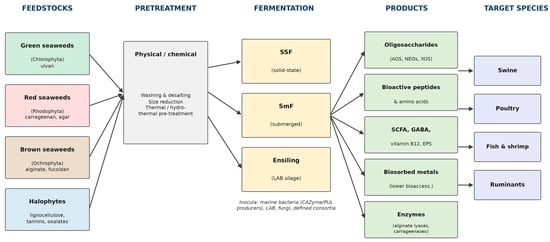
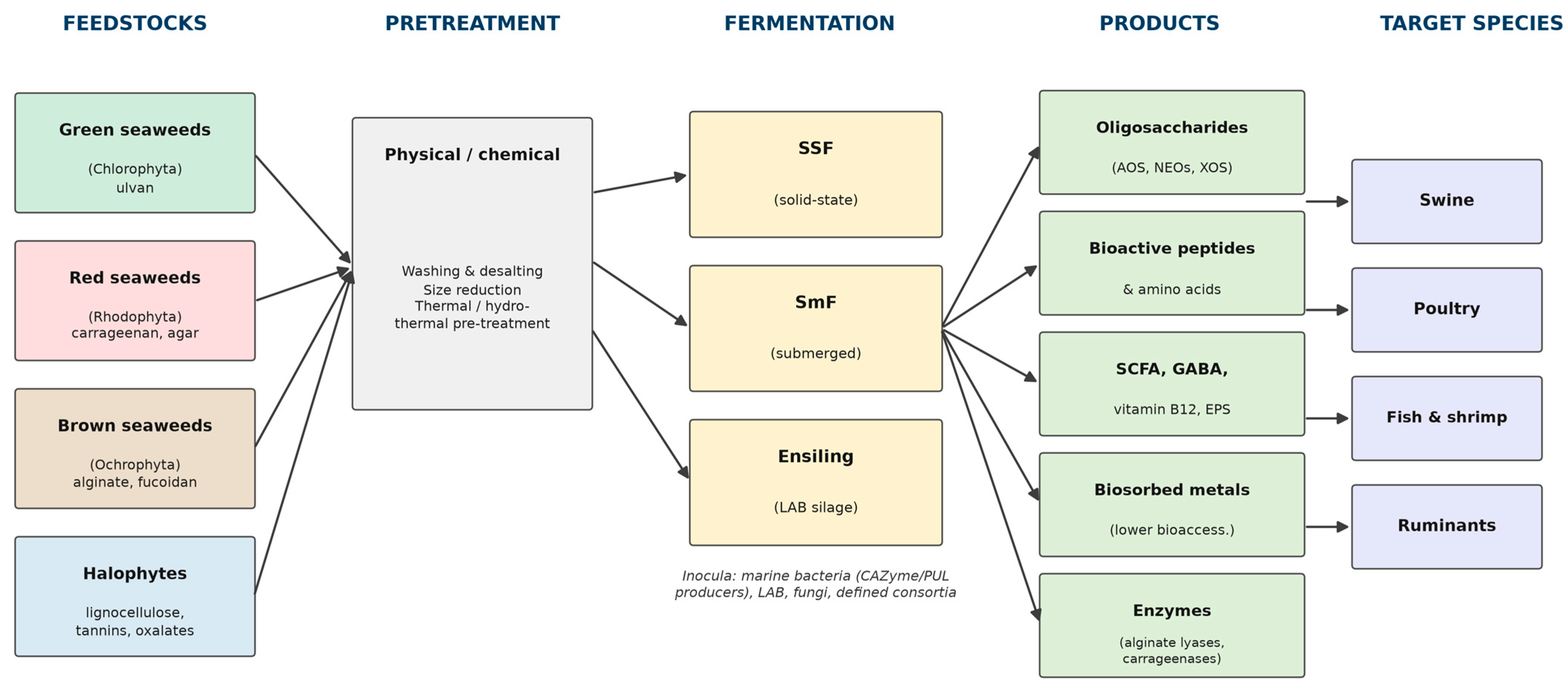
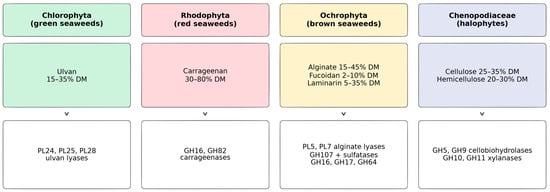
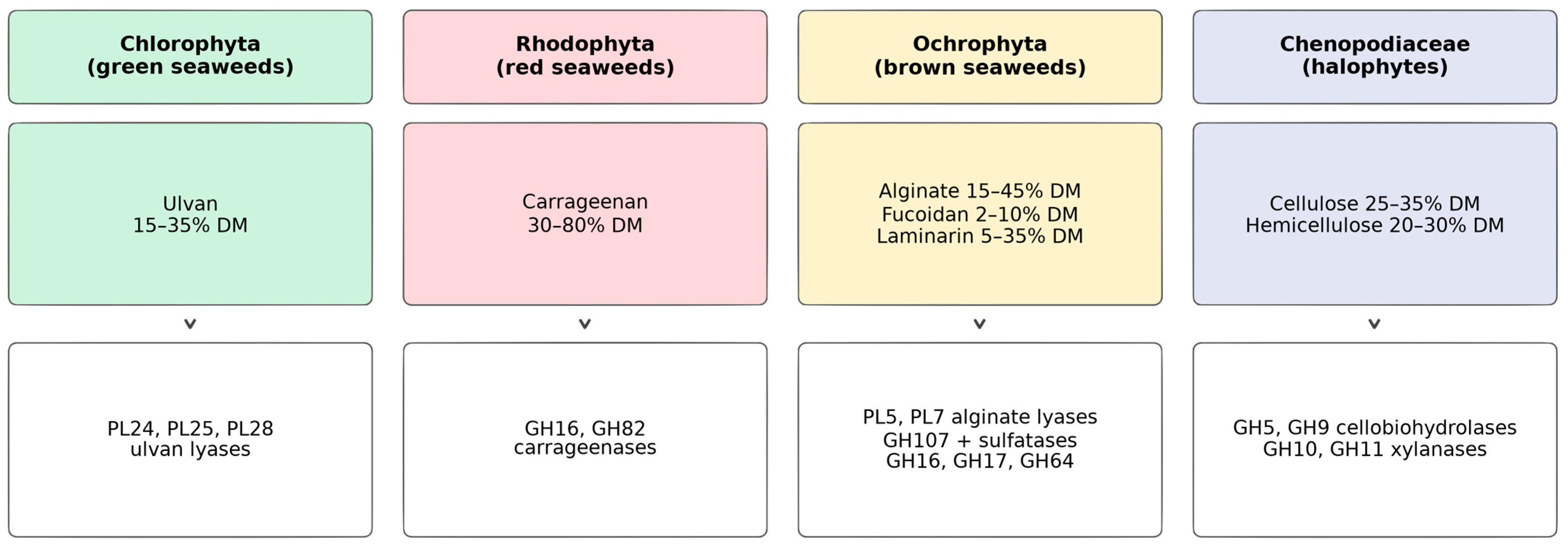
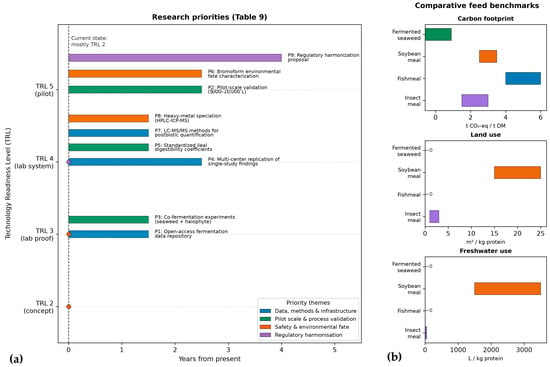
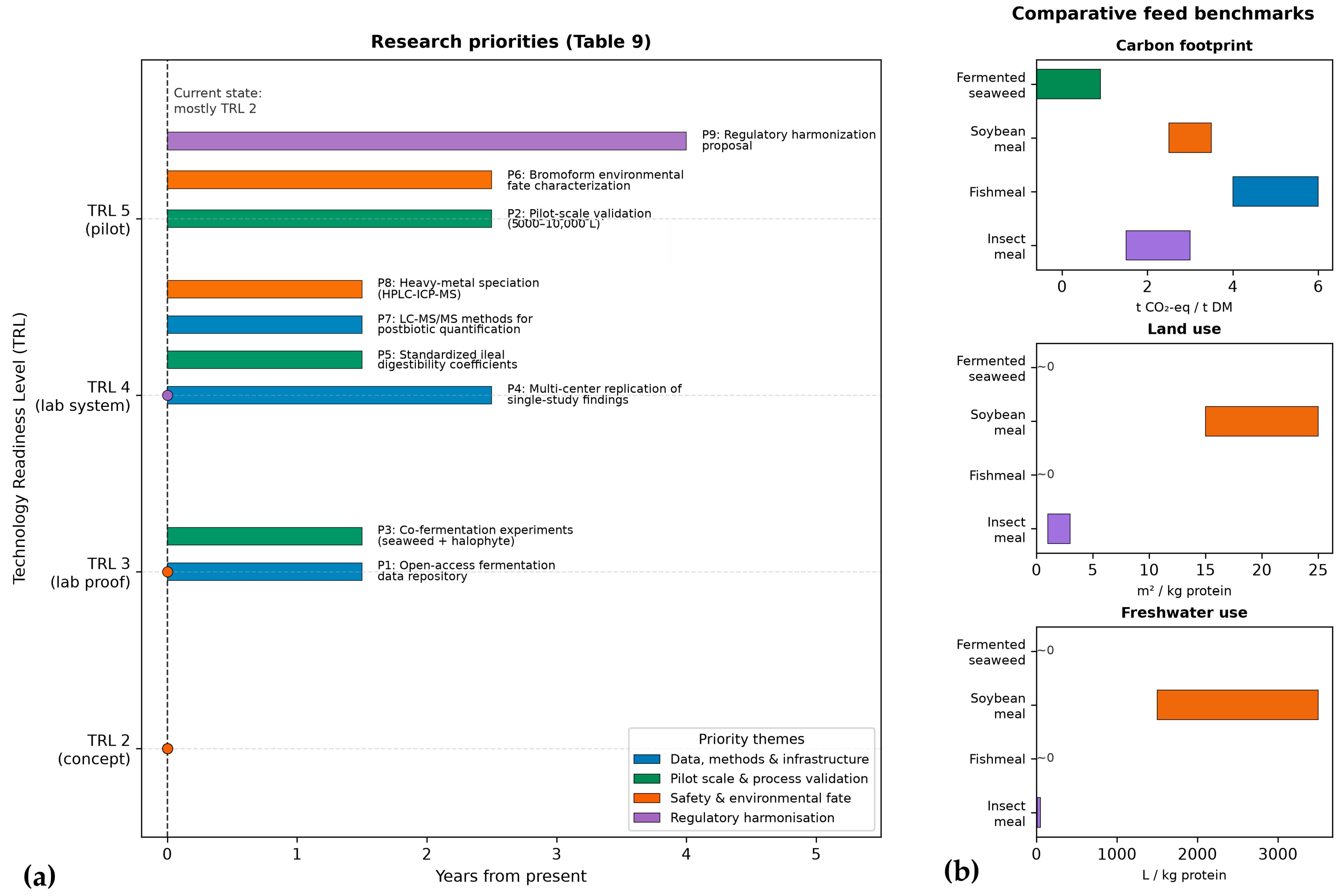

Disclaimer/Publisher’s Note: The statements, opinions and data contained in all publications are solely those of the individual author(s) and contributor(s) and not of MDPI and/or the editor(s). MDPI and/or the editor(s) disclaim responsibility for any injury to people or property resulting from any ideas, methods, instructions or products referred to in the content. |
© 2026 by the authors. Licensee MDPI, Basel, Switzerland. This article is an open access article distributed under the terms and conditions of the Creative Commons Attribution (CC BY) license.