


Abstract
In this study, an economic evaluation of butyric acid (HBu) production from wheat straw (WS) was performed using two processes: separate hydrolysis, fermentation and recovery (SHFR) and simultaneous saccharification, fermentation and recovery (SSFR). Recovery of HBu from the fermentation broth was performed by adsorption onto XAD-4 resin, followed by extraction into methanol and subsequent separation of HBu from methanol through distillation. The analysis was conducted for a grass-rooted plant with a capacity of 40 × 103 MT·yr−1 (40 × 103 metric tons·year−1). The direct fixed capital (DFC) costs for the SHFR and SSFR processes were estimated at $80.00 × 10⁶ and $43.33 × 10⁶, respectively. The lower DFC cost for the SSFR process was due to the integration of wheat straw saccharification, fermentation and recovery into a single reactor. The annual operating costs for the SHFR and SSFR processes were $40.52 × 10⁶ and $30.99 × 10⁶, respectively. The profitability analysis indicated that HBu from WS using the SSFR process could be sold for $0.91·kg−1 compared to $2.51·kg−1 for HBu produced from corn. These estimates were based on a WS purchase price of $100·MT−1. The current selling price of petroleum-based HBu is $1.39·kg−1 to $2.27·kg−1.
1. Introduction
Butyric acid can be produced from renewable biomass such as WS, CS (corn stover) and other lignocellulosic materials. However, there are some challenges that still need to be addressed, including developing novel microorganisms that can utilize both hexose and pentose sugars (glucose, xylose, arabinose, mannose, and galactose) simultaneously. These sugars are the major components of lignocellulosic biomass and include glucose and xylose. The total concentration of arabinose, mannose and galactose is low, usually 2 g·L−1 or lower. To avoid environmental pollution, these sugars should also be used, as streams containing them cannot be discharged into the environment. In this direction, wild-type strains have been developed or mutated, including Saccharomyces cerevisiae, Zymomonas mobilis and Escherichia coli [1,2,3,4,5,6,7,8], which can use both glucose and xylose for the production of ethanol. Another challenge is that few microorganisms can hydrolyze plant polymers and release adequate amounts of the major sugars (glucose and xylose). Although attempts in this direction are continuing, major success has not yet been realized, in particular for HBu production. There are some microorganisms that can utilize all the cellulosic sugars, including glucose, xylose, arabinose, mannose and galactose [9,10]. However, this is not applicable for HBu-fermenting strains. Although these microorganisms can use cellulosic sugars, they do not hydrolyze fibrous cellulosic materials into industrially preferred sugar concentrations.
Butyric acid (HBu) is an important short-chain fatty acid (C4) that has numerous applications in the aviation fuel, food, feed, pharmaceutical and cosmetic industries [11,12]. HBu maintains a healthy gut barrier and vascular endothelium in humans [13] and helps alleviate defecation disorders and gut inflammation [14]. It can be produced by the microbiome in the human large intestine by metabolizing dietary components. HBu is naturally present in dairy products in small amounts and can also be produced through the fermentation of glucose, xylose, their mixtures, or cellulosic hydrolysates [15,16]. The main microbial strains that can produce HBu in industrially preferred concentrations include Clostridium tyrobutyricum NRRL67062 and C. tyrobutyricum ATCC 25755. As indicated in the previous article, the C. tyrobutyricum NRRL 67062 strain can produce a high concentration of HBu (up to 58 g·L−1) from glucose. Though it is a robust strain with a high growth rate and can utilize corn steep liquor (CSL) as an economical nutrient source, it cannot utilize pentose sugars as carbon sources. Another advantage of this strain is that it results in a high acid yield, usually of the order of 0.40–0.45 g acids·g−1 sugar. The strain C. tyrobutyricum ATCC 25755 has an advantage in sugar utilization because of its ability to metabolize xylose, a pentose sugar. This strain can use glucose and xylose simultaneously [17].
There are several product recovery technologies that can be applied to recover fermentation products such as butyric acid. Some of these techniques include adsorption, pervaporation, reverse osmosis, liquid–liquid extraction and supercritical CO2 extraction [12,17,18,19,20,21,22,23,24]. Of these techniques, liquid–liquid extraction, adsorption, reverse osmosis, and supercritical CO2 extraction are the prominent ones [18,20,21,23,24]. Adsorption is a novel technique that results in fast adsorption and does not pose any health hazards, and it has been applied to butyric acid recovery [17].
The objective of this study was to evaluate the economics of HBu production from cellulosic biomass such as WS. In this regard, we have developed two novel technologies: the development of a high-productivity bioreactor (compared to batch reactors) and energy-efficient recovery of HBu. The use of these technologies is expected to reduce the selling price of HBu. The current selling price of HBu obtained from petrochemicals is $1.39–2.27 kg−1. As mentioned above, these butyric acid-producing strains cannot hydrolyze cellulosic biomass. In recent years, we have developed a pretreatment method for WS, CS, and SSB (sweet sorghum bagasse) that does not require any chemicals and is therefore environmentally friendly. In the present study, WS was pretreated using this method and subsequently hydrolyzed with industrial enzymes. This pretreatment method does not require any chemicals such as alkali or acid and hence is environmentally friendly. Agricultural biomass and water are heated to 190 °C for <1 min, and under these processing conditions, threshold levels of microbial toxic chemicals are not generated [25,26]. Two integrated approaches of hydrolysis and fermentation were evaluated: separate hydrolysis, fermentation and recovery (SHFR) and simultaneous saccharification, fermentation and recovery (SSFR). These novel technologies were employed to assess the process economics of HBu production from WS and to compare the resulting selling price with that reported for glucose-based production (glucose derived from corn), which has been published elsewhere [27]. In the corn or glucose bioconversion study [27], a high HBu-yielding strain was used (NRRL 67062), while in the WS bioconversion article, ATCC 25755 was employed.
2. Materials and Methods
2.1. Microbial Strain, Substrate, Bioconversion Process, Plant Size and Product Recovery
For HBu production in this process, Clostridium tyrobutyricum ATCC 25755 would be used because it can use glucose and xylose simultaneously. This strain can produce up to 44 g·L−1 of total acids from a mixture of glucose and xylose or WS hydrolysate [17]. The yield of HAB (total acids; HAc—acetic acid, HBu—butyric acid, and HAB both acetic and butyric acids) was considered to be 0.40 to 0.44 g acids·g−1 sugar. Although most of this study involves the use of WS, the use of CS has also been considered. A hot water pretreatment of the biomass would be performed at 190 °C for zero min (as soon as the temperature reaches 190 °C, cooling would be initiated). Cellulolytic enzymes (cellulase, β-glucosidase and xylanase) would be used for WS hydrolysis because C. tyrobutyricum cannot hydrolyze cellulosic biomass, including WS or CS, to sugars. The plant would be located in the Midwest region of the United States, where wheat and corn are produced in large quantities. It is assumed that the microbial strain would ferment corn stover hydrolysate (CSH) as efficiently as it ferments WS hydrolysate (WSH) [28]. The product would be recovered by adsorption onto XAD-4 [17,23], followed by extraction into methanol. HBu and HAc would be recovered from methanol (methanol’s boiling point is 65 °C) by distillation. For fermentation, corn steep liquor (CSL) and urea would be used as nitrogen and nutrient sources. CSL is a co-product of wet corn milling and is economically favorable. For these studies, the fermentation rate or productivity was 2.0 g·L−1·h−1 at a dilution rate of 0.1 h−1 and the rate of product recovery was 1159 g·L−1·h−1. This rate of removal is based on our previous studies [17]. Based on this study, it was considered that 160 g·L−1 of biomass (WS in the present case) would result in 97–99 g·L−1 of sugars upon hydrolysis, which would produce about 43.0–44.0 g·L−1 of acids. In this mixture of acids, the concentration of HBu is major. For this study, two programs were used (SuperPro Designer 12 and Microsoft Excel; Microsoft 365 Apps for Enterprise), and the HAB yield of 0.4011 was fitted using Excel. HBu yield of 0.322 g·g−1 and HAc yield of 0.0793 g·g−1 were also fitted. The selectivity of HBu and HAc was 0.802 and 0.198, respectively, and sugar conversion was 100%. If there are any discrepancies in the amounts of acids or economic calculations ($), they are due to rounding up the numbers. The material balance for the production of acids is provided in Table 1.
Table 1.
Material balance of butyric acid production from wheat straw.
2.2. Financial Details & Assumptions
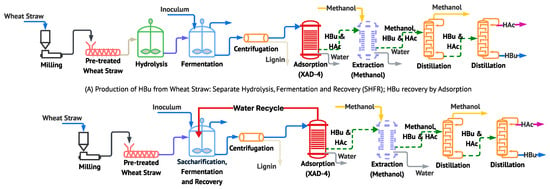
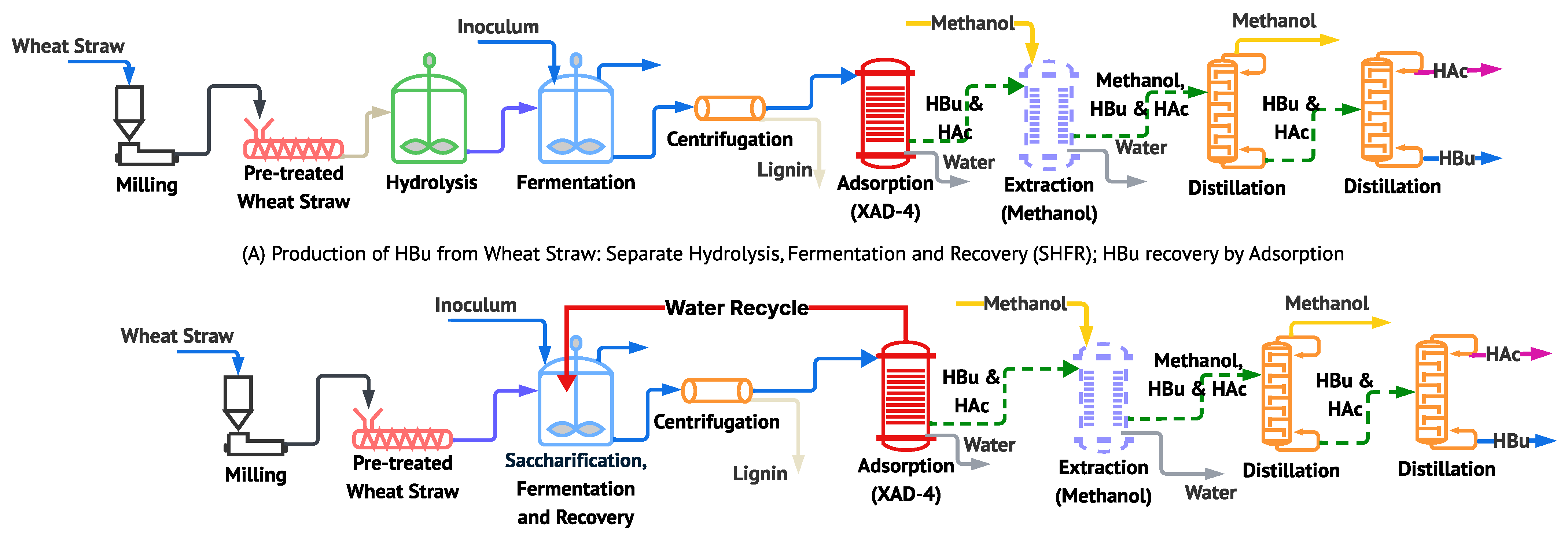
The size of the plant would be 40 × 103 metric tons·year−1 (MT·yr−1 or 40 × 106 kg·yr−1) of HBu. It was considered that WS would be purchased for $100 MT−1 ($0.10 kg−1), and this price is inclusive of transportation to the plant. The cost of WS was in the range of $35–120 MT−1 for sensitivity analysis. All other parameters have been provided in the previous paper [27]. SuperPro Designer (version 12) was used to design the plant. All the co-products, such as acetic acid, lignin and gases (CO2 & H2; fermentation co-products) would be sold for credit. Schematic flow diagrams of the production of butyric acid by SHFR and SSFR are presented in Figure 1A,B. This is a grassroots or greenfield plant, which means that the construction would require site development as opposed to annexation to an existing plant. A grassroots plant requires more financial capital than an annexation. In the reactor, the temperature, pH, cocktail enzyme loading and solid concentration were 35 °C, 6.0, 36 mL·L−1 and 160 g·L−1, respectively. The cost year was 2024–2025, the currency was United States dollars (US$), and annual operating days were 350 year−1. Taxes on the profit were 40%, and depreciation was 15%. The target return is after taxes. Resin was replaced annually.
Figure 1.
Schematic flow diagrams of HBu production from WS. HBu recovery would be performed by the energy-efficient technique “adsorption,” followed by extraction into methanol. From methanol (boiling point 65 °C), HAc (boiling point 119 °C) and HBu (boiling point 164 °C) would be recovered by distillation. (A): SHFR, and (B): SSFR.
3. Results and Discussion
Purchase equipment costs were estimated for the two different processes called SHFR and SSFR. The purchased equipment cost for the SHFR process was $13.16 × 10⁶ (Table 2), and for SSFR, it was $7.07 × 10⁶ (Table 3). The reason for the reduced purchased equipment cost for the SSFR process was that saccharification, fermentation and recovery were performed in one reactor. From the equipment cost, the total plant direct cost (TPDC) for the two processes, SHFR and SSFR, was $43.48 × 10⁶ and $23.55 × 10⁶, respectively (Table 4). In general, the TPDC includes yard improvement, buildings, electrical costs, installation, etc. As shown in this table, various costs for building the SSFR plant are approximately half of those for the SHFR plant. For the SHFR process, the costs of installation, process piping, instrumentation, buildings and auxiliary facilities were $5.59 × 10⁶, $4.61 × 10⁶, $5.26 × 10⁶, $5.92 × 10⁶, and $5.26 × 10⁶, respectively. The total plant indirect costs (TPIC; TPIC includes engineering and construction) for the SHFR plant were $10.87 × 10⁶ and $15.22 × 10⁶, respectively. The sum of these two costs for this plant was $26.09 × 10⁶. This sum for the SSFR plant was $14.13 × 10⁶. The total plant costs for the SHFR and SSFR processes were $69.56 × 10⁶ and $37.68 × 10⁶, respectively. The contractor’s fee and contingency (CFC) for the SHFR plant were $3.48 × 10⁶ and $6.96 × 10⁶, respectively, which totaled $10.43 × 10⁶. For the SSFR process, this total was $5.65 × 10⁶. The direct fixed capital (DFC) for the two plants (SHFR and SSFR) was $80.00 × 10⁶ and $43.33 × 10⁶, respectively. This decrease in DFC corresponds to approximately 45.84%, as predicted by the model under the stated assumptions. These DFCs (SHFR and SSFR) are higher than the DFCs obtained in the corn fermentation plant (distillation $73.96 × 10⁶ and adsorption $43.91 × 10⁶) [27]. Higher DFCs are because the SHFR and SSFR processes require pretreatment reactors to operate at high temperatures (190 °C).
Table 2.
Equipment cost for production of HBu from WS using the SHFR process. Plant capacity 40 × 103 MT·yr−1.
Table 3.
Equipment cost for the production of HBu from WS in a SSFR process. Plant capacity: 40 × 103 MT·yr−1.
Table 4.
Fixed capital estimate for the production of HBu from WS in the SHFR and SSFR processes. Plant capacity: 40 × 103 MT·yr−1.
Table 5 shows the annual operating cost for HBu production from WS. The annual operating costs for the two processes (SHFR and SSFR) are $40.52 × 10⁶ and $30.99 × 10⁶, respectively. The labor costs for the SHFR and SSFR processes are $4.68 × 10⁶ and $2.39 × 10⁶, respectively. The facility costs for the two WS processes are $15.05 × 10⁶ (SHFR) and $8.15 × 10⁶ (SSFR). Laboratory/QC/QA costs for the WS plant are $701,000 (SHFR) and $358,000 (SSFR). For the corn plant, these two amounts are $37.67 × 10⁶ (distillation) and $31.83 × 10⁶ (adsorption) [27]. For this study, the cost of WS was taken as $100 MT−1. It is suggested that this cost is on the higher side and WS can be obtained for approximately $35–100 MT−1. It should be noted that during the past two decades, intensive research and development have reduced the cost of cellulolytic enzymes to $0.50 kg−1 [29]. For this study, the SuperPro Designer software program used an enzyme cost of $0.57 kg−1 (Table 6). Considering the inflation during recent years, it is viewed that this enzyme cost is appropriate. The costs of other materials were also selected and used by the SuperPro Designer program (Table 6). There are two methods of presenting enzyme costs: (i) calculating the per kg cost of butyric acid production, as presented here; and (ii) expressing the cost as $·kg−1 of enzyme. It should be noted that recent advances in enzymatic hydrolysis have reduced cellulase enzyme cost by 76% using a combination of oxidation and enzyme [30]. In another report, using Cellic CTEC3 (enhanced enzyme cocktail), its cost has been reduced further [31].
Table 5.
Annual operating cost for HBu production from WS using SHFR and SSFR processes for a plant capacity of 40 × 103 MT·yr−1. Recovery by adsorption using XAD-4 adsorbent resin.
Table 6.
Details of raw materials’ costs and byproducts’ prices for HBu production by SHFR and SSFR processes. Plant capacity: 40 × 103 MT·yr−1.
Utilities costs for the production of HBu from WS are presented in Table 7. The standard power would cost $610 × 103 for the SHFR plant and $264 × 103 for the SSFR plant. Cooling water would cost $266 × 103 for the SHFR plant and $2611 for the SSFR plant. Total utilities costs for the two plants (SHFR & SSFR) would be $1.38 × 10⁶ and $437 × 103, respectively. For the corn plant, the total utilities costs would be $47.38 × 10⁶ (distillation) and $5.91 × 10⁶ (adsorption) [27]. These amounts are much higher than those for the WS plant. For the corn plant, these amounts are high due to the requirement of large amounts of steam and cooling water.
Table 7.
Utilities cost for the production of HBu from WS: product separation using adsorbent resin XAD-4. Plant capacity: 40 × 103 MT·yr−1.
Table 8 presents a profitability analysis of HBu production from WS. For this plant, the total investment would be $87.10 × 10⁶. Unlike the corn fermentation plant, this plant would require corn steep liquor (CSL) and urea as nutrient and nitrogen sources. The corn fermentation plant does not require the purchase of CSL from an external source, as it is generated in the plant [32]. It would also require cellulase, β-glucosidase and xylanase enzymes to hydrolyze WS. The total cost of enzymes, CSL, XAD-4 resin, methanol, phosphate and sodium hydroxide (to control pH during HBu fermentation) would be $28.05 × 10⁶ yr−1 (Table 8). Acetic acid, lignin and gases (CO2 & H2) would be sold, and the amount from their sale was calculated to be $22.34 × 10⁶ yr−1. Profit on the investment was calculated to be $10.45 × 10⁶ and taxes on profit (40%) were calculated to be $4.18 × 10⁶. Depreciation was $13.07 × 10⁶ and interest on investment was $6.10 × 10⁶. Based on these data, the selling price of HBu was calculated to be $1.57 kg−1 (Table 8). This price is much lower than that obtained from corn ($2.51 kg−1) [27]. It should be noted that HBu from WS can be sold for a much lower price than HBu from corn. Although the WS plant results in a higher total investment ($87.10 × 10⁶), the HBu selling price is still projected to be less than that of corn. Under the best-case scenario, HBu could be sold for $1.57 kg−1 (SHFR process) and $0.91·kg−1 (SSFR process) if lignin is sold for $0.10 kg−1, WS is purchased for $35 MT−1, cellulolytic enzymes are purchased for $0.57 kg−1, and acetic acid is sold for $0.77 kg−1 (for credit). In this study, credits for HAc, lignin and gases (CO2 + H2) have been taken into account. It should be noted that recovery of these co-products does not require additional capital and would be sold without further purification. Further purification would require more capital and would make it a different, larger project, which is beyond the scope of this study. Since the quality of these coproducts may be low, a low selling price for lignin and gases has been assumed.
Table 8.
Profitability analysis of HBu production from WS using the SHFR process. Plant capacity: 40 × 103 MT·yr−1. Recovery by adsorption employing XAD-4 resin.
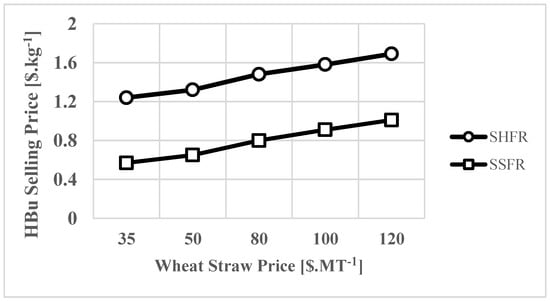
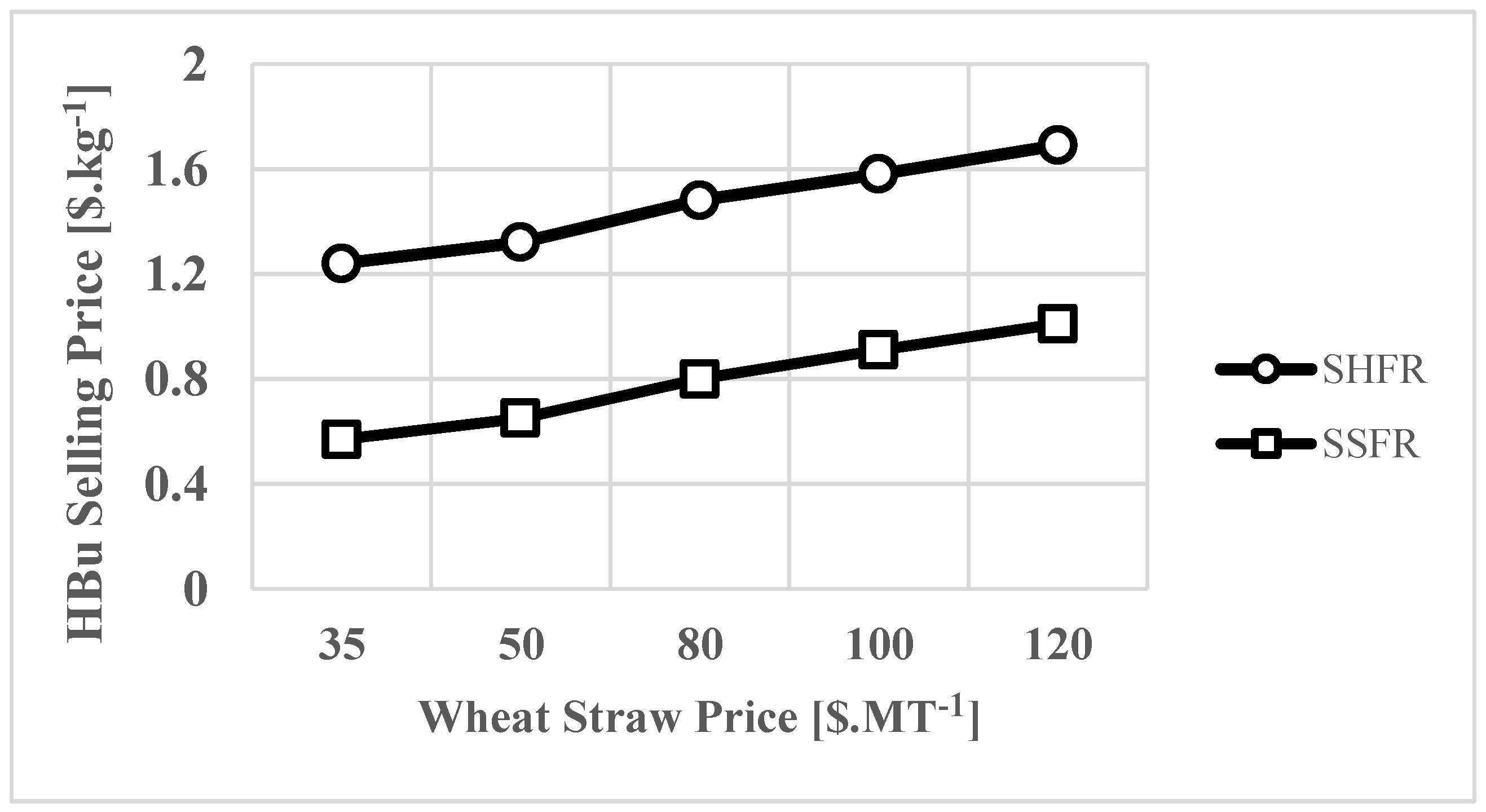
The cost of agricultural residues or feedstock, WS in this case, affects the selling price of HBu the most. Our previous studies on the production of ethanol and butanol from agricultural biomass support this correlation. A lower price of agricultural biomass results in a lower selling price for HBu, ethanol and butanol. For this reason, we selected WS or CS for these studies, because WS or CS can be purchased for $35–100 MT−1. The effect of WS purchase price on HBu selling price is shown in Figure 2. At a WS purchase price of $35 MT−1, HBu obtained from the SSFR fermentation process can be sold for $0.57 kg−1. It is possible that WS purchase price rises to $100 MT−1. In that case, the selling price of HBu would be $0.91 kg−1 (Table 9). It is interesting to note that HBu produced by the SSFR process is $0.66 kg−1 ($1.57 minus $0.91) cheaper than that produced by the SHFR process (Figure 2). Although the maximum WS purchase price was anticipated to be $100 MT−1, its effect on the HBu price has been shown if it rises to $120 MT−1 in this figure.
Figure 2.
Effect of WS prices on HBu’s selling price. A comparison is performed for HBu’s production by SHFR and SSFR processes.
Table 9.
Profitability analysis of HBu production from WS using the SSFR process. Plant capacity: 40 × 103 MT·yr−1. Recovery by adsorption employing XAD-4 resin.
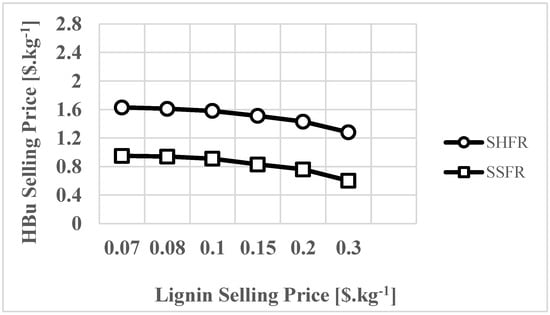
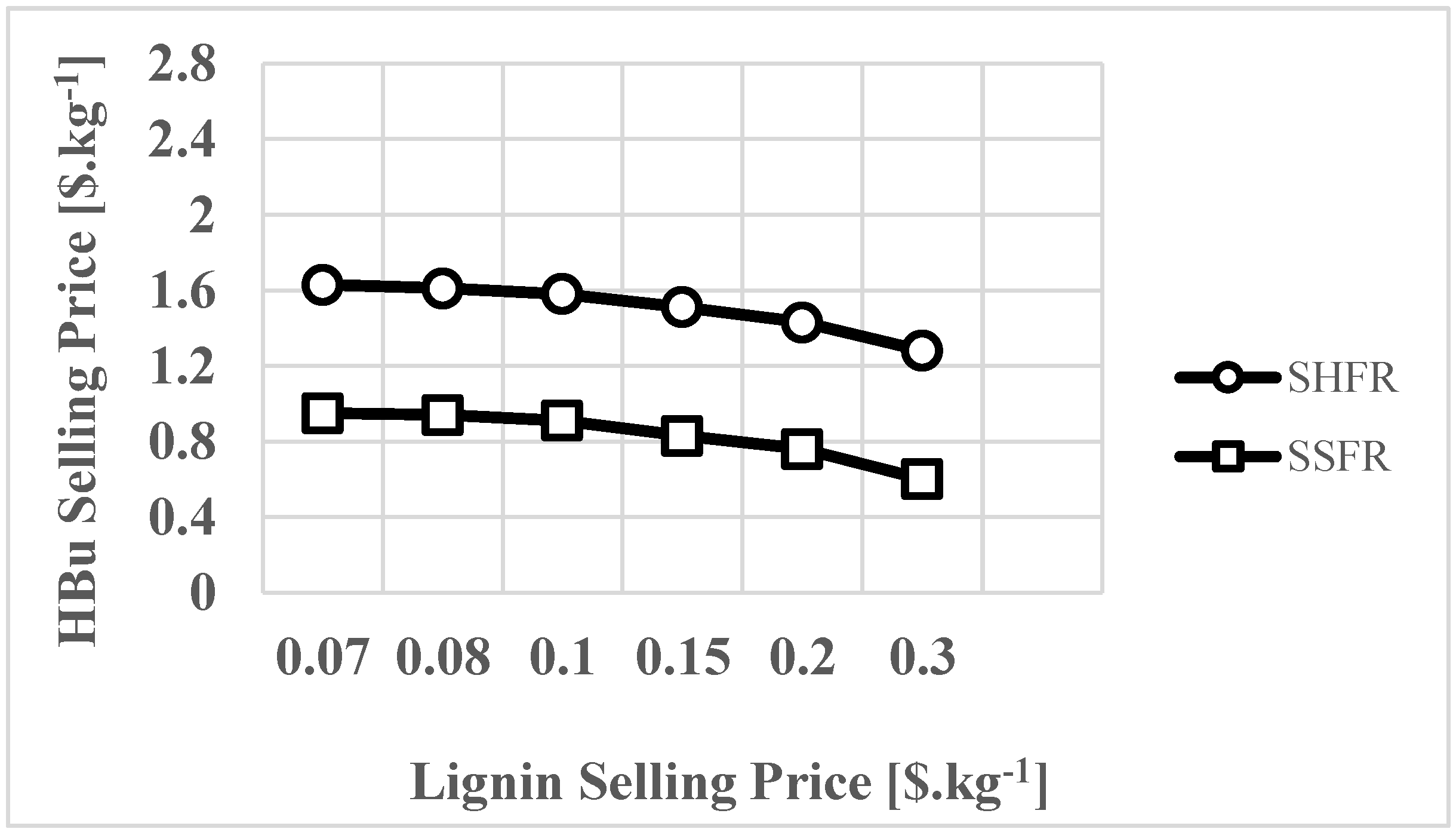
During the process of producing HBu from WS, a significant amount of lignin is produced. In our previous paper, DDGS (distillers’ dry grains and solubles) were produced [27] because we used corn as a feedstock. In the present case, where WS was used, a significant amount of lignin was produced. Lignin is a phenolic chemical that lacks nutritive value and hence cannot be used as animal feed. In recent years, lignin has been used as an energy source and has been burned to produce heat. More recently, studies have suggested that lignin can be converted into aviation fuel [33]. In the current study, it was considered that lignin would have a market and could be sold for $0.07–0.30 kg−1 and used either as a fuel source or as an aviation fuel feedstock. Conversion or bioconversion to aviation fuel would require additional capital costs, and hence, this route was not preferred. The effect of lignin’s selling price on HBu price is presented in Figure 3. However, further research either in the aviation fuel arena or in other applications may be conducted, and that may determine its future price. Opening markets for the use of aviation fuel would decrease the selling price of HBu. However, at a lignin selling price of $0.07 kg−1, the SHFR process would result in an HBu selling price of $1.63 kg−1. In contrast, a lignin selling price of $0.20 kg−1 with the SHFR process would result in an HBu selling price of $1.43 kg−1. As seen in the above scenarios, the application of the SSFR process results in significantly lower HBu prices.
Figure 3.
Effect of lignin’s selling price on HBu price. WS price was considered to be $100 MT−1.
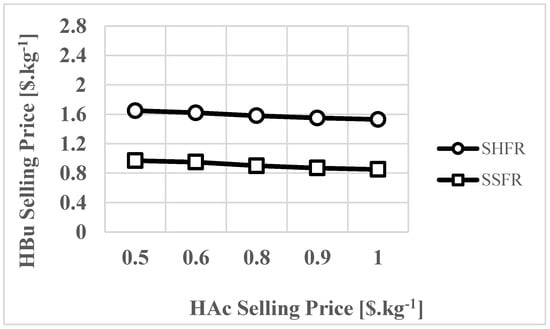
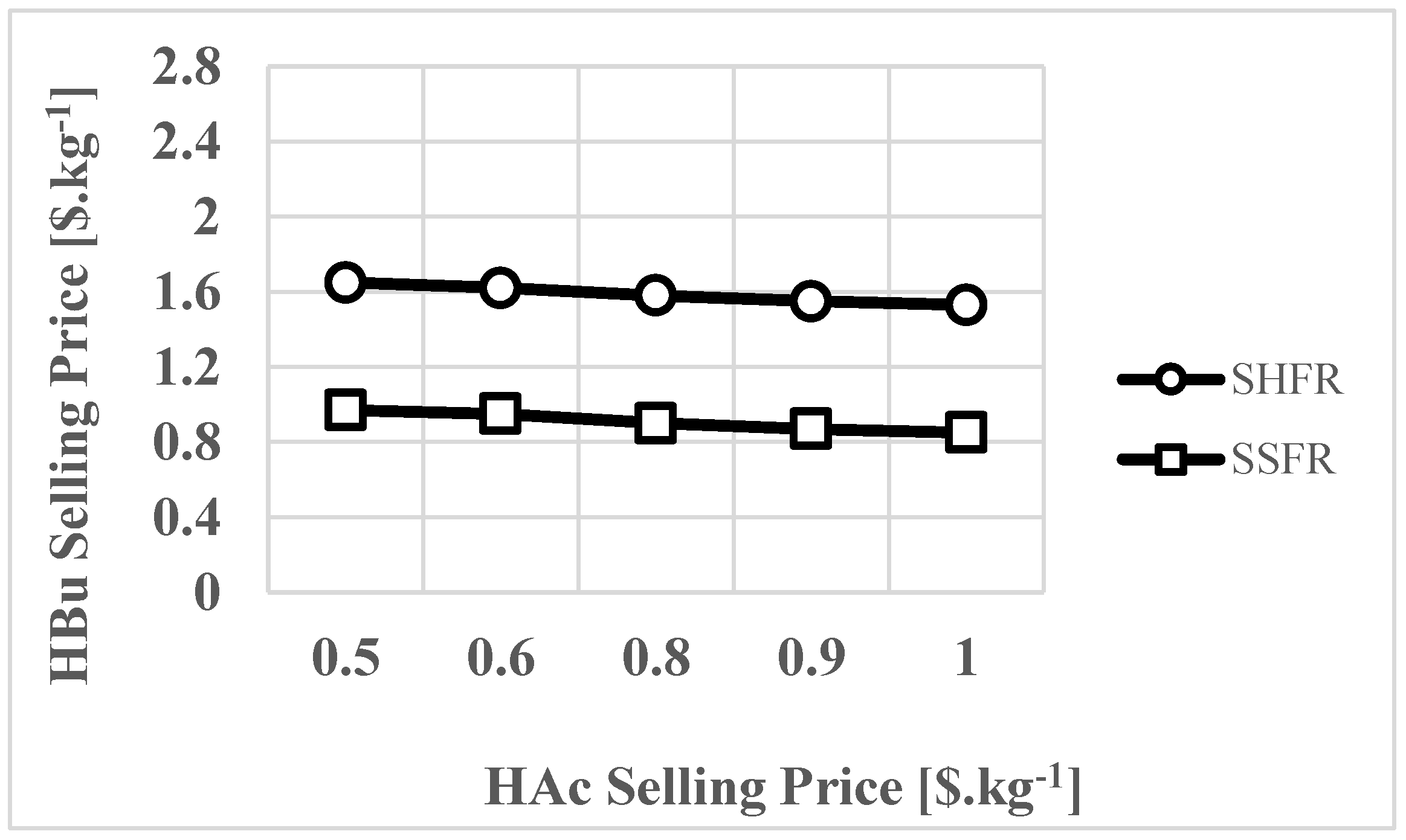
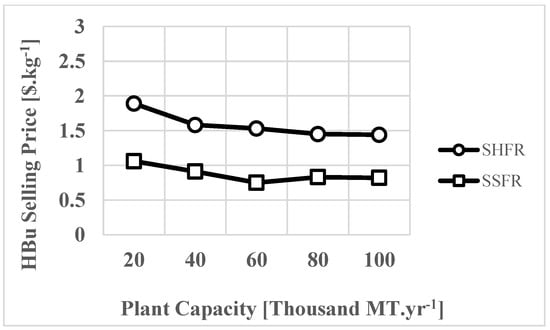
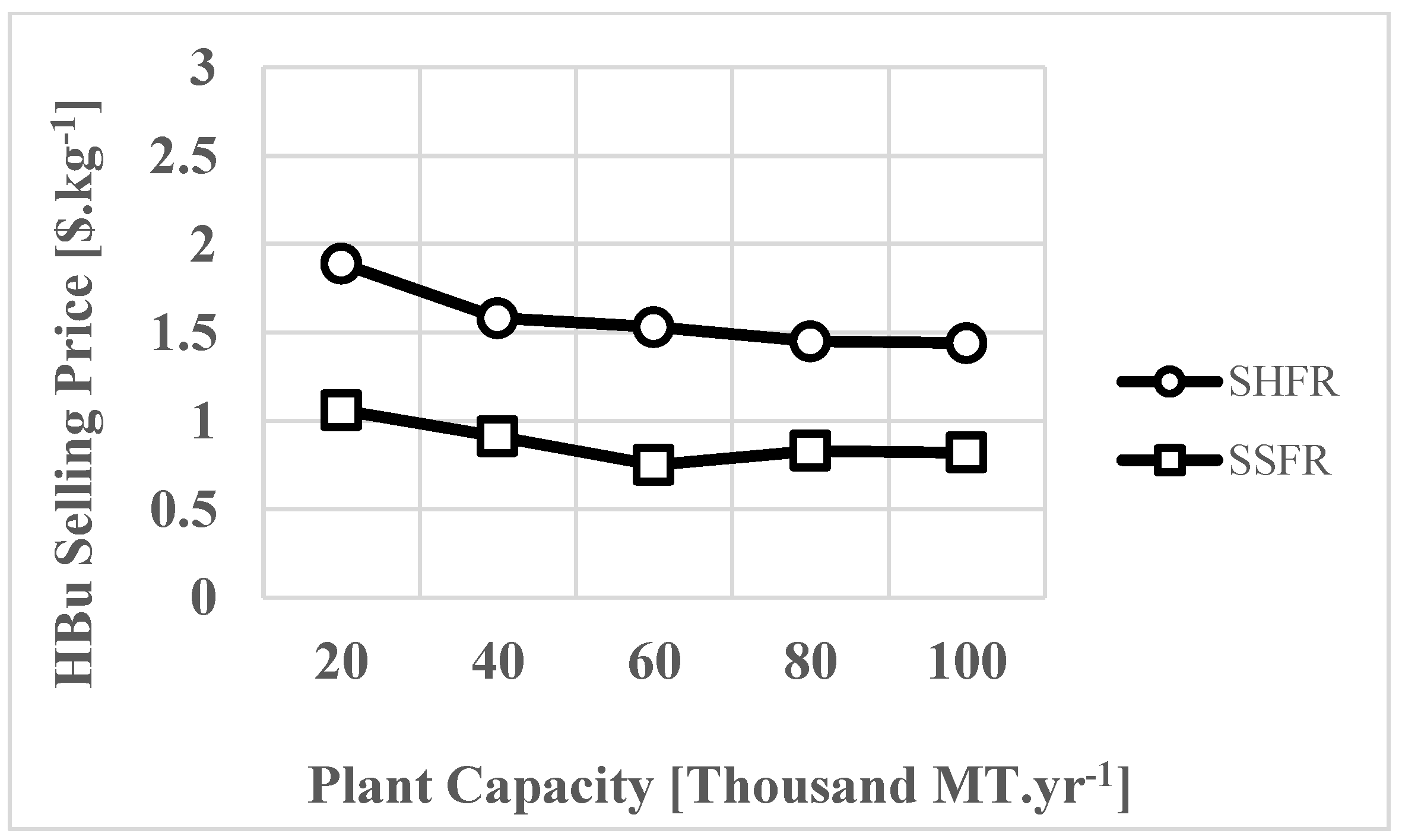
Similar to the above studies, we also evaluated the impact of the selling price of HAc on the selling price of HBu. The HAc selling price range was considered to be between $0.50 kg−1 and $1.00 kg−1. At a HAc selling price of $0.50 kg−1, HBu would be sold for $1.65 kg−1 (SHFR process). For the same process, a selling price of HAc at $1.00 kg−1 would result in an HBu selling price of $1.53 kg−1. Within the same price range of HAc, the SSFR process would result in an HBu selling price range of $0.85 kg−1 to $0.97 kg−1 (Figure 4). This plant (40 × 103 MT·yr−1) for the production of HBu from WS is relatively small. For this reason, we calculated the effect of plant size on HBu price (Figure 5). A SHFR plant with a capacity of 20 × 106 kg·yr−1 would result in a selling price of HBu of $1.89 kg−1. A larger SHFR HBu plant size of 100 × 103 MT·yr−1 would result in lower selling prices for HBu of $1.43 kg−1 (see Supplementary Material). Tables S1 and S2 present data on equipment costs for 100 × 103 MT·yr−1 HBu plants for SHFR and SSFR processes, respectively. Table S3 shows a fixed capital estimate for these plants. Tables S4 and S5 show cost estimations for HBu production for SHFR and SSFR plants (100 × 103 MT·yr−1), respectively. A 20–100 × 103 MT·yr−1 SSFR plant would result in HBu selling prices of $1.06 kg −1 to $0.81 kg−1 (Figure 5). From an economic point of view, the SSFR process is more attractive than the SHFR. Also, the production of HBu from WS is competitive with the corn fermentation plant. Under the best-case scenario, HBu produced from WS by the SSFR process can be sold for $0.26 kg−1 (Table 10). Without lignin and gas credit, the SHFR and SSFR produced HBu would be sold for $1.96 kg−1 and $1.29 kg−1, respectively. If no credit is taken for Hac, these selling prices would increase to $2.15 kg−1 (SHFR) and $1.48 kg−1 (SSFR).
Figure 4.
Effect of HAc price on HBu selling price for a plant with a capacity of $40 × 103 MT·yr−1.
Figure 5.
Effect of larger plants on HBu selling price. Two different processes (SHFR and SSFR) and plants of various sizes (20 × 103 MT·yr−1 to 100 × 103 MT·yr−1) were considered.
Table 10.
Best-case scenario for the production of HBu from WS. Plant size: 40 × 103 MT·yr−1. HBu production by the SSFR process.
There are a number of reports on the economic evaluation of butyric acid production from agricultural biomass under various assumptions and conditions [34,35,36,37]. Since the conditions are different, it is difficult to compare the HBu selling prices. Baroi et al. [35] reported a butyric acid selling price of $3.50 to $3.95 for a plant with a capacity of 10,000 tons per year. This capacity is 4- to 10-fold lower than our plant’s capacity. Our study suggests that a lower capacity plant results in a higher selling price. In another paper, Kang et al. reported a minimum selling price of $ 1.57 kg−1 [34]. In a study on the production of HBu from lignocellulosic biomass and sugarcane molasses, Phasha et al. [37] reported a selling price of $1.935 kg−1. Furthermore, in a small-scale plant’s technoeconomic study on HBu production from wheat straw, the HBu selling price was reported to be $2.97 kg−1 [36]. As indicated above, smaller-scale plants result in higher selling prices. Our lower prices are due to larger capacity plants, high productivity, process integration and credit for co-products. The objective behind these studies was to compare the selling prices of HBu produced from WS under various conditions. This objective has been achieved.
4. Industrial Implementation Challenges and Future Perspective
Commercial or industrial implementation of HBu from agricultural biomass presents a number of challenges, such as collection and transport of bulky biomass residues from farmlands to industrial sites, its pretreatment at 190 °C in pressurized reactors, hydrolysis using enzymes, and simultaneous product recovery. Though laboratory-scale membrane cell recycle reactor productivities using clean sugar solutions are high (1.89–2.93 g·L−1·h−1), achieving similar results in continuous large-scale reactors using biomass hydrolysates as feedstocks, may be difficult. This may be due to the possibility of membrane fouling. It is emphasized that membrane cleaning solutions containing enzymes are available; however, they add to the cost of production. It is noteworthy that these operations have been successful in laboratory-scale reactors. The reader is advised that in traditional laboratory-scale non-cell recycle batch reactors, productivities of the order of 0.25–0.35 g·L−1·h−1 are obtained. Such low productivities would result in high HBu selling prices.
Another challenge mentioned above is the pretreatment of biomass at high temperatures, which would require large amounts of energy. It is advised that continuous pretreatment reactors be used. Furthermore, heat should be captured and recycled in the plant. Separation of lignin and capture of gases on a large scale may face additional challenges. In this study, removal of lignin and its conversion to aviation fuel is a possibility. Initial studies on the conversion of lignin to aviation biofuel are encouraging. Currently, lignin is burned and converted to heat energy. In this process, large amounts of gases (CO2 and H2) are produced. These gases should be captured and separated using gas separation membrane techniques. Separation of gases using synthetic polymeric membranes such as cellulose acetate is a well-established technology. In addition to cellulosic membranes, ceramic membranes can be used for this purpose. Gases diffuse through the membranes based on their size or diffusivity. After separation, hydrogen can be an excellent source of energy, and CO2 can be converted into biochemicals. There are encouraging studies in these directions.
5. Conclusions
In this study, an economic evaluation of HBu production from WS was performed for a plant with a capacity of 40 × 103 MT·yr−1. Two processes—separate hydrolysis, fermentation and recovery (SHFR) and simultaneous saccharification, fermentation and recovery (SSFR)—were considered. For these two processes, the direct fixed capital costs (DFCs) for SHFR and SSFR were $80.00 × 10⁶ and $43.33 × 10⁶, respectively. The lower DFC for the SSFR process was attributed to the integration of saccharification and fermentation of WS in a single reactor. The annual operating costs for the SHFR and SSFR processes were $40.52 × 10⁶ and $30.99 × 10⁶, respectively. The utilities costs for the two processes were $1.38 × 10⁶ and $436 × 103, respectively. The profitability analysis suggests that HBu from WS (SHFR process) could be sold for $1.57·kg−1 compared to $2.51·kg−1 for HBu from corn. These estimates were based on a grass-rooted plant and a WS purchase price of $100·MT−1. In addition, the impacts of WS purchase price, lignin and acetic acid selling price were evaluated. It is projected that HBu produced from WS using the SSFR process could be sold for $0.91·kg−1. Without any credit for HAc, lignin and gases, the selling prices of HBu produced by the SHFR and SSFR processes would be $2.15 kg−1 and $1.48 kg−1, respectively.
Supplementary Materials
The following supporting information can be downloaded at: https://www.mdpi.com/article/10.3390/fermentation12110532/s1, Table S1: Equipment cost for the production of HBu from WS for SHFR plant of capacity 100 × 103 MT·yr−1; Table S2: Equipment cost for the production of HBu from WS for SSFR plant of capacity 100 × 103 MT·yr−1; Table S3: Fixed Capital Estimate Summary for SHFR and SSFR processes for production of HBu from WS for plant capacity of 100 × 103 MT·yr−1; Table S4: Profitability of HBu production from WS in a SHFR process for a plant of capacity of 100 × 103 MT·yr−1; Table S5: Profitability of HBu production from WS in a SSFR process for a plant of 100 × 103 MT·yr−1 capacity.
Author Contributions
N.Q.: Conception, data analysis and manuscript preparation; S.M.: SuperPro Designing program operation; Z.L., M.S., R.D.A. and M.A.J.: Data and manuscript review; T.C.E.: Manuscript preparation and review; R.E.H. and V.S.: Supervision and manuscript review. All authors have read and agreed to the published version of the manuscript.
Funding
Financial support was provided by the United States Department of Agriculture, Agricultural Research Service (CRIS Number: 2255-22600-008-000-D).
Institutional Review Board Statement
Not applicable.
Informed Consent Statement
Not applicable.
Data Availability Statement
The original contributions presented in this study are included in the article/Supplementary Material. Further inquiries can be directed to the corresponding author.
Acknowledgments
No AI was used for the purposes of generating text, data or graphics; study design; data collection; and analyses or interpretation of data in the writing of the manuscript. The authors have reviewed and edited the output and take full responsibility for the content of this publication. Mention of trade names or commercial products in this article is solely for the purpose of providing scientific information and does not imply recommendation or endorsement by the United States Department of Agriculture or the University of Illinois. USDA is an equal opportunity provider and employer.
Conflicts of Interest
The authors declare no conflict of interests.
References
- Dien, B.S.; Nichols, N.N.; O’Bryan, P.J.; Bothast, R.J. Development of new ethanologenic Escherichia coli strains for fermentation of lignocellulosic biomass. Appl. Biochem. Biotechnol. 2000, 84–86, 181–196. [Google Scholar] [CrossRef] [Scilit]
- Hahn-Hägerdal, B.; Galbe, M.; Gorwa-Grauslund, M.F.; Liden, G.; Zacchi, G. Bio-ethanol-the fuel of tomorrow from the residues of today. Trends Biotechnol. 2006, 24, 549–556. [Google Scholar] [CrossRef] [Scilit]
- Bera, A.K.; Ho, N.W.Y.; Khan, A.; Sedlak, M. A genetic overhaul of Saccharomyces cerevisiae 424A(LNH-ST) to improve xylose fermentation. J. Ind. Microbiol. Biotechnol. 2011, 38, 617–626. [Google Scholar] [CrossRef] [Scilit]
- Ho, N.W.; Chen, Z.; Brainard, A.P. Genetically engineered Saccharomyces yeast capable of effective co-fermentation of glucose and xylose. Appl. Environ. Microbiol. 1998, 64, 1852–1859. [Google Scholar] [CrossRef] [Scilit]
- Ho, N.W.; Chen, Z.; Brainard, A.P.; Sedlak, M. Successful design and development of genetically engineered Saccharomyces yeasts for effective fermentation of glucose and xylose from cellulosic biomass to fuel ethanol. Adv. Biochem. Eng. Biotechnol. 1999, 65, 163–192. [Google Scholar] [CrossRef] [Scilit]
- York, S.W.; Ingram, L.O. Soy-based medium for ethanol production by Escherichia coli KO11. J. Ind. Microbiol. 1996, 16, 374–376. [Google Scholar] [CrossRef] [Scilit]
- Krishnan, M.S.; Blanco, M.; Shattuk, C.K.; Nghiem, N.P.; Davison, B.H. Ethanol production form glucose and xylose by immobilized Zymomonas mobilis CP4(pZB5). Appl. Biochem. Biotechnol. 2000, 84–86, 525–541. [Google Scholar] [CrossRef] [Scilit]
- Lawford, H.G.; Rousseau, J.D.; Mohagheghi, A.; McMillan, J.D. Continuous culture studies of xylose-fermenting Zymomonas mobilis. Appl. Biochem. Biotechnol. 1998, 70–72, 353–367. [Google Scholar] [CrossRef] [Scilit]
- Zverlov, V.V.; Berezina, O.; Velikodvorskaya, G.A.; Schwarz, W.H. Bacterial acetone and butanol production by industrial fermentation in the Soviet Union: Use of hydrolyzed agricultural waste for biorefinery. Appl. Microbiol. Biotechnol. 2006, 71, 587–597. [Google Scholar] [CrossRef] [Scilit]
- Ezeji, T.C.; Blaschek, H.P. Fermentation of dried distillers’ grains and solubles (DDGS) hydrolysates to solvents and value-added products by solventogenic clostridia. Bioresour. Technol. 2008, 99, 5232–5242. [Google Scholar] [CrossRef] [Scilit]
- Jiang, L.; Wang, J.; Liang, S.; Cai, J.; Xu, J.; Cen, P.; Yang, S.; Li, S. Enhanced butyric acid tolerance and bioproduction by Clostridium tyrobutyricum immobilized in a fibrous bed bioreactor. Biotechnol. Bioeng. 2010, 108, 31–40. [Google Scholar] [CrossRef] [Scilit]
- Wu, Z.; Yang, S.-T. Extractive fermentation for butyric acid production from glucose by Clostridium tyrobutyricum. Biotechnol. Bioeng. 2003, 82, 93–102. [Google Scholar] [CrossRef] [Scilit]
- Stø, K.; Valeur, J.; Ueland, T.; Malmstrøm, G.H.; Bjerkeli, V.; Trøseid, M.; Hov, J.R.; Holm, K.; Vestad, B.; Halvorsen, B.; et al. Fecal level of butyric acid, a microbiome-derived metabolite, is increased in patients with severe carotid atherosclerosis. Sci. Rep. 2022, 12, 22378. [Google Scholar] [CrossRef] [Scilit]
- Pituch, A.; Walkowiak, J.; Banaszkiewicz, A. Butyric acid in functional constipation. Prz. Gastroenterol. 2013, 8, 295–298. [Google Scholar] [CrossRef] [Scilit]
- Luo, G.; Zhang, L.; Chen, T.; Yuan, W.; Geng, Y. Butyric acid fermentation in xylose and glucose by Clostridium tyrobutyricum. BioResources 2017, 12, 2930–2940. [Google Scholar] [CrossRef] [Scilit]
- Huang, J.; Dai, H.; Yan, R.; Wang, P. Butyric acid production from recycled waste paper by immobilized Clostridium tyrobutyricum in a fibrous-bed bioreactor. J. Chem. Technol. Biotechnol. 2016, 91, 1048–1054. [Google Scholar] [CrossRef] [Scilit]
- Qureshi, N.; Ashby, R.D.; Nichols, N.N.; Hector, R. Novel technologies for butyric acid fermentation: Use of cellulosic biomass, rapid bioreactor and efficient product recovery. Fermentation 2024, 10, 142. [Google Scholar] [CrossRef] [Scilit]
- Faisal, A.; Zarebaska, A.; Saremi, P.; Korelskiy, D.; Ohlin, L.; Rova, U.; Hedlund, J.; Grahn, M. MFI zeolite as adsorbent for selective recovery of hydrocarbons from ABE fermentation broths. Adsorption 2013, 20, 465–470. [Google Scholar] [CrossRef] [Scilit]
- Zaman, N.K.; Law, J.Y.; Chai, P.V.; Rohani, R.; Mohammad, A.W. Recovery of organic acids from fermentation broth using nanofiltration technologies: A review. J. Phys. Sci. 2017, 28, 85–109. [Google Scholar] [CrossRef] [Scilit]
- Chun, J.; Choi, O.; Sang, B.-I. Enhanced extraction of butyric acid under high-pressure CO2 conditions to integrate chemical catalysis for value-added chemicals and biofuels. Biotechnol. Biofuels 2018, 11, 119. [Google Scholar] [CrossRef] [Scilit]
- Oh, H.W.; Lee, S.C.; Woo, H.C.; Kim, Y.-H. Energy-efficient recovery of fermented butyric acid using octyl acetate extraction. Biotechnol. Biofuels Bioprod. 2022, 15, 46. [Google Scholar] [CrossRef] [Scilit]
- Fu, H.; Wang, X.; Sun, Y.; Yan, L.; Shen, J.; Wang, J.; Yang, S.-T.; Xiu, Z. Effects of salting-out and salting out extraction on the separation of butyric acid. Sep. Purif. Technol. 2017, 180, 44–50. [Google Scholar] [CrossRef] [Scilit]
- Groot, W.J.; van der Lans, R.G.J.M.; Luyben, K. Technologies for butanol recovery integrated with fermentations. Process Biochem. 1992, 27, 61–75. [Google Scholar] [CrossRef] [Scilit]
- Maddox, I.S. The acetone-butanol-ethanol fermentation: Recent progress in Technology. Biotechnol. Genet. Eng. Rev. 1989, 7, 189–220. [Google Scholar] [CrossRef] [Scilit]
- Qureshi, N.; Saha, B.C.; Klasson, K.T.; Liu, S. Butanol production from sweet sorghum bagasse with high solids content: Part I-Comparison of liquid hot water pretreatment with dilute sulfuric acid. Biotechnol. Prog. 2018, 34, 960–966. [Google Scholar] [CrossRef] [Scilit]
- Chen, W.-H.; Nizetic, S.; Sirohi, R.; Huang, G.; Luque, R.; Papadopoulos, A.M.; Sakthivel, R.; Nguyen, X.P.; Hoang, A.T. Liquid hot water as sustainable biomass pretreatment technique for bioenergy production: A review. Bioresour. Technol. 2022, 344, 126207. [Google Scholar] [CrossRef] [Scilit]
- Qureshi, N.; Mishra, S.; Liu, Z.; Hector, R.; Ezeji, T.C.; Ashby, R.D.; Jackson, M.; Singh, V. Butyric acid production from corn: Economics of fermentative production of a novel biobased chemical. J. Ind. Microbiol. Biotechnol. 2026, 53, kuag009. [Google Scholar] [CrossRef] [Scilit]
- Osazuwa, C.; Olaniyi, O.; Akinyele, B.; Akinyosoye, F.A. Evaluation of different pretreatment methods on bioconversion of wheat straw and corn stover. J. Food Saf. Hyg. 2021, 7, 202–214. [Google Scholar] [CrossRef] [Scilit]
- Geiver, L. Novozymes: Enzyme cost drops to 50 cents. Biomass Magazine, 16 February 2010. Available online: https://biomassmagazine.com/articles/novozymes-enzyme-cost-drops-to-50-cents-6373 (accessed on 4 November 2026).
- Wang, L.; Bu, Y.; Sun, L.; Chen, H. A sequential combination of advanced oxidation and enzymatic hydrolysis reduces the enzymatic dosage for lignocellulosic degradation. Renew. Energy 2023, 211, 617–625. [Google Scholar] [CrossRef] [Scilit]
- Anon. 2026. Available online: https://www.zauba.com/import-cellic-hs-code.html (accessed on 27 October 2026).
- Jones, D.T.; Woods, D.R. Acetone-butanol fermentation revisited. Microbiol. Rev. 1986, 50, 484–524. [Google Scholar] [CrossRef]
- Zhang, L.; Butler, T.L.; Yang, B. Recent trends, opportunities and challenges of sustainable aviation fuel. In Green Energy to Sustainability: Strategies for Global Industries; Vertes, A.A., Qureshi, N., Blaschek, H.P., Yukawa, H., Eds.; Wiley: Hoboken, NJ, USA, 2020; pp. 85–110. [Google Scholar] [CrossRef] [Scilit]
- Kang, C.; Liu, J.J.; Woo, N.; Won, W. Process design for the sustainable production of butyric acid using techno-economic analysis and life cycle assessment. ACS Sustain. Chem. Eng. 2023, 11, 4430–4440. [Google Scholar] [CrossRef] [Scilit]
- Baroi, G.N.; Gavala, H.N.; Westermann, P.; Skiadas, I.V. Fermentative production of butyric acid from wheat straw: Economic evaluation. Ind. Crops Prod. 2017, 104, 68–80. [Google Scholar] [CrossRef] [Scilit]
- Suazo, A.; Tapia, F.; Aroca, G.; Quintero, J. Techno-economic and life cycle assessment of a small-scale integrated biorefinery for butyric-acid production in Chile. Fermentation 2023, 10, 1. [Google Scholar] [CrossRef] [Scilit]
- Phasha, M.J.; Petersen, A.M.; Görgens, J.F. The production of muconic acid and butyric acid from sugarcane molasses and lignocelluloses: A techno-economic comparison of biorefinery scenarios. Ind. Crops Prod. 2025, 236, 121875. [Google Scholar] [CrossRef] [Scilit]

Disclaimer/Publisher’s Note: The statements, opinions and data contained in all publications are solely those of the individual author(s) and contributor(s) and not of MDPI and/or the editor(s). MDPI and/or the editor(s) disclaim responsibility for any injury to people or property resulting from any ideas, methods, instructions or products referred to in the content. |
© 2026 by the authors. Licensee MDPI, Basel, Switzerland. This article is an open access article distributed under the terms and conditions of the Creative Commons Attribution (CC BY) license.