


Abstract
Carbon quantum dots (CQDs) exhibit multiple antibacterial mechanisms, making them more effective than conventional antibiotics, which typically act through a single mode of action. These mechanisms include membrane disruption, biofilm inhibition, reactive oxygen species (ROS) generation, and photodynamic (PDT) or photothermal (PTT) effects under light irradiation. Extensive research has been conducted to reinforce these mechanisms and improve the antibacterial performance of CQDs, aiming to reduce required CQD dosages and combat bacterial resistance. This review systematically summarizes structural and functional design strategies reported since 2020. We categorized these strategies into selecting antibacterial molecules as precursors, controlling particle size, surface modification, doping with non-metal and metal elements, and forming functional composites to enable light activation, synergetic effects, and multifunctionality. For each category, we provide representative CQD examples, in terms of their preparation, physicochemical properties contributing to antibacterial performance, and possible structure–activity relationships. Finally, the review highlights limitations and proposes future research directions for developing antibacterial CQDs for clinical translation.
1. Introduction
Carbon quantum dots (CQDs) are small, carbon-based nanomaterials with sizes typically less than 10 nm. Their excellent photoluminescence, high biocompatibility, chemical stability, and low toxicity [1] have found increasing applications in bioimaging, drug delivery, sensing, photocatalysis, and optoelectronic devices. In addition, CQDs are particularly suitable for antibacterial applications due to a combination of physicochemical properties and mechanisms of action [2].
First, unlike traditional antibacterial agents, CQDs are generally biocompatible and show low toxicity to human cells [3,4]. Bacterial cells are more susceptible to damage from CQDs because of thinner membranes and a lack of complex repair mechanisms. Comparatively, mammalian cells are protected by thick, cholesterol-dense membranes, which also contain repair mechanisms such as antioxidant defense systems to further protect against the functionalized CQDs [5]. Therefore, there is theoretical basis for using low concentrations of CQDs to interfere with bacteria whilst leaving human cells undisturbed. Second, CQD surfaces contain abundant functional groups (e.g., –OH, –COOH, –NH2, and C=O), which can interact with bacterial membranes, leading to membrane damage and cell death [6]. These groups also interfere with biofilms, thereby disrupting their integrity and preventing bacterial adhesion [7]. In addition, the ultrasmall size of CQDs facilitates cellular penetration, allowing them to enter cells and interact with and damage intracellular components such as DNA and proteins [8]. CQDs can also generate reactive oxygen species (ROS), such as singlet oxygen (1O2), superoxide anions (O2−), hydroxyl radicals(•OH), and hydrogen peroxide (H2O2), either inside or outside the cell. These ROS cause oxidative stress in bacteria, damaging proteins, DNA, and lipids and preventing biofilm development, playing a pivotal role in antibacterial activity [7,9,10]. Some CQDs with high light absorption efficiency and suitable bandgap or energy-level alignment can cause photodynamic effects (PDT), which enhance ROS generation under light irradiation [11]. In addition, some CQDs convert absorbed light into localized heat through non-radiative relaxation, producing photothermal (PTT) effects. The increased temperature can disrupt membranes, denature proteins, or cause thermal ablation [12]. These light-activated mechanisms extend the applications of CQDs for phototherapy-based antibacterial strategies [13].
The above-mentioned antibacterial mechanisms can act synergistically to enhance the antibacterial efficacy of CQDs. For example, Zhao et al. synthesized fluorescent CQDs from quaternized chitosan (QSC) and ethylenediamine (EDA) via a simple one-step hydrothermal method. The obtained QCS-EDA-CQDs exhibited strong antibacterial activity against Staphylococcus aureus (S. aureus). As shown in Figure 1, their surface was rich in quaternary ammonium groups, providing a strong positive charge for electrostatic interactions with negatively charged bacterial membranes. These CQDs also demonstrated ability to inhibit the formation of biofilm, damage proteins, and alter the secondary structure of DNA, ultimately leading to bacteria death. Additionally, under visible light, QCS-EDA-CQDs could generate singlet oxygen, contributing to antibacterial effects through PDT [14].
Figure 1.
Multiple mechanisms involved in the antibacterial activity of QCS-EDA-CQDs against S. aureus. Adapted from [14], Dove Medical Press, 2022.
These multiple synergistic mechanisms induced by a single material (QCS-EDA-CQDs) eliminate the need for combination antibiotic therapies that are often required by conventional antibiotics to achieve broad-spectrum activity. Recent studies have further sought to enhance the antibacterial performance of CQDs through structural and functional design strategies, which can reduce the required dosage, improve drug safety, and help mitigate antibiotic resistance.
Despite the growing interest in antibacterial CQDs, an updated, systematic review of the strategies to enhance their antibacterial properties has been lacking. This article fills this gap by summarizing the latest developments after 2020. As shown in Figure 2, we categorized the reported strategies into five groups: using antibacterial molecules as precursors, tuning particle size, modifying the surface, doping with heteroatoms, and constructing functional composites. For each category, representative CQD examples are presented, with emphasis on the physicochemical properties underpinning antibacterial efficacy, and the possible structure–activity relationships that govern their performance. In addition, we discuss the current challenges and outline future research directions to guide the rational design of more effective, targeted, and application-specific antibacterial CQD systems.
Figure 2.
Five main strategies to enhance the antibacterial properties of CQDs.
2. Synthesis and Evaluation Methods for Antibacterial CQDs
2.1. Synthesis Methods for Antibacterial CQDs
CQDs are generally synthesized using either top-down or bottom-up approaches. Top-down methods involve breaking down larger carbon materials, such as graphite or carbon nanotubes, into nanoscale particles through laser ablation, electrochemical oxidation, or chemical oxidation. However, these methods are less commonly used for preparing antibacterial CQDs because they provide limited control over particle size and surface functional groups, which are important factors influencing antibacterial activity. In addition, top-down methods often require harsh reaction conditions, expensive equipment, and complicated purification processes. In contrast, bottom-up approaches construct CQDs from small molecular or biomass precursors through carbonization and polymerization processes. Common methods include hydrothermal synthesis, microwave-assisted synthesis, pyrolysis, and solvothermal treatment. These methods are more suitable for synthesizing antibacterial CQDs as they generally involve simple processes, allow for the use of environmentally friendly precursors, and can achieve easy control of size, surface chemistry, and heteroatom doping [1].
2.2. Evaluation Methods for the Antibacterial Properties of CQDs
The antibacterial properties of CQDs are typically assessed through agar diffusion assays, minimum inhibitory concentration (MIC) measurements, bacterial growth curves, and colony-forming unit (CFU) counting tests. The bacterial viability is evaluated by fluorescence imaging and live/dead bacterial staining [15].
To study the mechanisms underlying the antibacterial activities of CQDs, especially under light irradiation, various ROS detection assays have been employed, including using 2′,7′-dichlorofluorescin diacetate (DCFH-DA) assays for total ROS [16], dihydroethidium (DHE) [17] or nitroblue tetrazolium (NBT) assays [18] for superoxide (O2•−), and Fenton reaction assays for hydroxyl radicals (•OH) [19].
Biofilm inhibition is commonly evaluated using crystal violet staining assays and confocal laser scanning microscopy (CLSM). Electron microscopy techniques, including scanning electron microscopy (SEM) and transmission electron microscopy (TEM), are frequently employed to observe bacterial membrane damage and biofilm structure and thickness. Extracellular polymeric substance (EPS) quantification is performed by measuring polysaccharides using the phenol–sulfuric acid assay and proteins using the Bradford assay after EPS extraction from biofilms. Furthermore, biofilm-associated gene expression is analyzed using quantitative real-time PCR (qRT-PCR), targeting key genes to investigate transcriptional regulation following CQD treatment [20].
In vivo antibacterial efficacy is generally evaluated using mouse or rat wound infection models through bacterial counting from wound swabs, wound size measurement, body weight monitoring, and histological analysis of major organs using hematoxylin and eosin (H&E) and Masson’s trichrome staining [21,22].
3. Strategies to Enhance Antibacterial Properties
3.1. Using Antibacterial Molecules as Precursors
3.1.1. Using Antibiotics as Precursors
One of the advantages of CQDs is that they can be prepared from various carbon-containing precursors via simple procedures [23]. Thus, traditional antibiotics have been used to synthesize CQDs, aiming to combine the intrinsic antibacterial activity of the precursor and the nanoscale features of CQDs [24]. For example, ampicillin (AMP) is a β-lactam antibiotic molecule, containing C, O, N, and S. It has been used as the sole precursor for the synthesis of N- and S-co-doped CQDs with high quantum yield and strong fluorescence emission. Under visible light irradiation, the as-prepared CQDs could simultaneously inhibit Gram-positive bacteria (S. aureus and Listeria monocytogenes (L. monocytogenes)) but not Gram-negative bacteria (Escherichia coli (E. coli) and Salmonella). The photocatalytic antibacterial activity of CQDs involves the generation of ROS under visible light, which disrupts the membranes of Gram-positive bacteria due to their simpler, more permeable cell walls. This leads to increased membrane permeability, leakage of cellular contents, and cell death, while Gram-negative bacteria like E. coli exhibit resistance due to their protective outer membrane [25]. Liang et al. synthesized CQDs using levofloxacin alone, and the resulting CQDs demonstrated antibacterial activity against both Gram-positive and Gram-negative bacteria from extracellular to intracellular levels, as the CQDs were readily internalized by the bacteria and enhanced intracellular ROS generation without the need for additional light or oxidants [26]. Antibiotics-derived CQDs can also exert antibacterial effects by inhibiting biofilm formation and disrupting established biofilms. Amine-functionalized CQDs were synthesized via a hydrothermal method from gentamicin and imipenem precursors and applied to Pseudomonas aeruginosa (P. aeruginosa) biofilms. This treatment achieved a 75.7–89.3% reduction in biofilm biomass and decreased viable bacterial counts by 3.2–4.4 log10 CFU/mL, accompanied by downregulation of biofilm-related genes such as pellicle polysaccharide biosynthesis protein A (pelA) and polysaccharide synthesis locus A (pslA) [27].
Wu et al. reviewed the recent progress on antibacterial CQDs prepared from commercially available small molecule antibiotic drugs, including their synthesis methods, biocompatibility and antimicrobial activity [28]. Conventional antibiotics generally kill bacteria through a single-target mechanism, such as inhibiting the synthesis of the cell wall, proteins, or nucleic acids, or disrupting membrane or metabolic functions. CQDs prepared from conventional antibiotics inherit part of the parent compound’s antibacterial functionality while offering nanoscale characteristics. The small size and abundant surface functional groups of CQDs induce additional pathways to promote cellular uptake and strengthen interactions with bacterial membranes, which reduce or delay the bacterial resistance associated with the parent antimicrobial agents. Therefore, converting traditional antibiotics into CQDs not only preserves their intrinsic bioactivity but also modifies their action mechanisms. Given that many antibiotics rapidly lose efficacy due to resistance development, CQDs may offer an advantage by bypassing conventional bacterial metabolic targets and reducing the likelihood of resistance emergence, which is particularly attractive for clinical and surgical applications [29].
3.1.2. Using Natural or Synthetic Molecules with Antibacterial Functions
In addition to antibiotic drugs, some natural or synthetic molecules with antibacterial functions have been combined with conventional carbon sources for CQD synthesis. For instance, curcumin and ethylenediamine were used together to prepare CQDs via a hydrothermal method. Curcumin shows broad-spectrum antimicrobial activity against a variety of Gram-positive and Gram-negative bacteria. However, its low water solubility and poor bioavailability limit its clinical use. Curcumin-derived CQDs can enhance the water solubility and stability of raw curcumin and maintain its strong, broad-spectrum antibacterial activity. The antibacterial performance of these CQDs is superior compared with conventional antibiotics like chloramphenicol and sulfadiazine; more importantly, they can effectively inhibit drug-resistant strains, such as methicillin-resistant S. aureus (MRSA), and the mechanisms involve ROS generation and bacterial membrane disruption [30]. Polyethyleneimine (PEI) exhibits strong antibacterial activity due to its high density of positively charged amine groups [31], which interact with negatively charged bacterial membranes, leading to membrane disruption and cell death; however, its relatively high cytotoxicity toward mammalian cells limits its direct biomedical applications. Demirci et al. prepared N-doped CQDs using PEI and citric acid (CA). The obtained CQDs were found to inhibit the growth of both Gram-negative and Gram-positive bacteria with no noted toxicity to mammalian cells in vitro [32].
The synthesis of the above-mentioned CQDs is carried out via a hydrothermal method requiring a high temperature (180–250 °C) and a long rection time (3–12 h). In a recent study, a rapid and eco-friendly synthesis of yellow-emission CQDs (YCQDs) has been reported using ascorbic acid (AA) and cetylpyridinium chloride monohydrate (CPC), completed in 30 min at 80 °C. CPC exhibits strong broad-spectrum antibacterial activity by disrupting bacterial cell membranes through its cationic surfactant structure, while AA is a naturally occurring antioxidant compound and contributes to microbial inhibition by generating ROS and disrupting bacterial metabolic processes. As shown in Figure 3, the obtained YCQDs are small in size and can be efficiently internalized by MRSA and E. coli. In addition, hydrophobic interactions, oxidative stress, and electrostatic forces also contribute to the strong antibacterial effects of YCQDs [33].
Figure 3.
Rapid and eco-friendly synthesis of yellow-emission CQDs (YCQDs) from ascorbic acid and cetylpyridinium chloride monohydrate at 80 °C for 30 min. The resulting YCQDs are small, fluorescent, and efficiently internalized by bacteria, exhibiting strong antibacterial activity.
Table 1 summarizes examples of CQDs derived from molecules with intrinsic antibacterial activity, although these precursors are not conventional antibiotics. Notably, some precursors, such as curcumin, lysine, and arginine, exhibit mild antibacterial effects. After conversion into CQDs, their antibacterial efficacy is significantly enhanced, suggesting that the nanoscale carbonization and surface functionalization reactions involved in CQD synthesis play a crucial role in amplifying antibacterial performance.
Table 1.
CQDs prepared from precursors with intrinsic antibacterial functions (non-antibiotic molecules) and their corresponding antibacterial efficacy.
3.1.3. CQDs Derived from Traditional Chinese Medicine (TCM)
TCM provides abundant, renewable, and bioactive phytochemical precursors for CQD synthesis, and their intrinsic therapeutic functionality can be inherited by the resulting nanomaterials. Recently, increasing attention has been focused on TCM-derived antibacterial CQDs.
As reported by Wang et al., CQDs derived from Artemisia argyi exhibited strong and selective antibacterial activity against Gram-negative bacteria, achieving nearly complete bacterial inactivation at 150 mg/mL. Their antibacterial mechanism was associated with the inhibition of LpxC, a key enzyme involved in lipid A biosynthesis, which is an essential component of lipopolysaccharide in the outer membrane of Gram-negative bacteria [38].
In addition, CQDs derived from Isatis tinctoria residue and doped with iron (Fe-CQDs) exhibited peroxidase-like nanozyme activity, enabling catalytic ROS generation that effectively killed both Gram-positive and Gram-negative bacteria with high antibacterial efficiency and good biocompatibility [39].
More recently, six types of CQDs were developed from herbal precursors through a solvothermal method at 200 °C for 6 h. Interestingly, the CQDs derived from a proportional mixture of five herbs (honeysuckle:chrysanthemum:dandelion:Viola philippica:Semiaquilegia adoxoides = 2.5:1:1:1:1) exhibited the most effective antibacterial activity against S. aureus and MRSA. The CQDs were further incorporated into hydrogels composed of oxidized sodium alginate (OSA) and carboxymethyl chitosan (CMCS). In vivo MRSA-infected wound model experiments demonstrated that the CQDs/hydrogel system exhibited antibacterial, anti-inflammatory, and pro-angiogenic effects and could promote wound healing, epithelial regeneration, and collagen deposition. By day 10, wounds treated with the CQDs/hydrogel were almost completely healed (~98.2%) with visible formation of new skin tissue, whereas the wound healing rates in the control, hydrogel, and CQDs groups were approximately 75.1%, 81.3%, and 90.1%, respectively [40].
3.2. Control of the Size of CQDs
The size threshold is important for the clearance of CQDs from the body. Various research has identified that a size of 5.5 nm or smaller allows for effective renal clearance [41]. Within this size range, the antibacterial activity of CQDs generally increases as particle size decreases. Sun et al. carbonized chlorhexidine gluconate (CG) to prepare CGCQDs via a simple solvothermal process. The resulting CGCQDs were subsequently fractioned into three size groups using membranes with different molecular weight cut-offs. Thus, small (s-CGCQDs, ≈2.0 nm), medium (m-CGCQDs, ≈3.9 nm), and large (l-CGCQDs, ≈5.3 nm) CGCQDs were obtained with similar chemical compositions. All CGCQDs possess strong positive charges (zeta potential ≈ +34 mV), which can disrupt bacterial membrane permeability and integrity and inhibit the growth of both E. coli and S. aureus. Notably, the smallest s-CGCQDs demonstrated the highest antibacterial activity, and the antibacterial activity decreased as the particle size of the CQDs increased. Compared to larger CQDs, s-CGCQDs likely enhanced cellular uptake and induced stronger interaction with bacterial membranes. Moreover, they were capable of damaging plasmid DNA, possibly through binding with surface polar functional groups on their diminutive carbon cores [42]. The results underscore the significance of particle size in designing non-ROS-based antimicrobial carbon nanomaterials.
However, this general size–activity trend does not apply to extremely small CQDs. Du et al. synthesized four types of vitamin C-derived CQDs (VCQDs) with different average sizes (VCQDs-1 to VCQDs-4: 1.27, 2.92, 3.56, and 4.41 nm) via a one-step electrochemical method. By controlling the oxidation reaction times, these VCQDs share the same chemical composition but differ in particle size. The antibacterial activity of these VCQDs strongly depends on their sizes, and the relationship is linear except for VCQDs-1 (average diameter = 1.27 nm). Despite their smallest size, VCQDs-1 show the weakest antibacterial effect. These very small VCQDs can diffuse into bacterial cells more readily, but they do not produce enough ROS as the interplay between crystal structure, surface chemistry, aggregation, and overall stability plays a more important role than size itself. The exact reason for the reduced ROS generation from VCQDs-1 remains unclear. Larger VCQDs (2–5 nm) followed the general size–activity trend. VCQDs-2 (average size: 2.92 nm) provide the best balance between cellular uptake and ROS stimulation, leading to the strongest antibacterial activity [43]. This work enhances the understanding of how the size of CQDs influences antibacterial properties and offers guidance for tailoring particle size to achieve maximum efficiency.
3.3. Surface Modification
As highlighted in many reviews [44,45,46], appropriate surface modification can significantly enhance the antibacterial properties of CQDs. Such modifications, introduced either during or after synthesis, can tailor surface charge, hydrophilicity, and targeting ability, which are key factors influencing bacterial interaction and overall antimicrobial efficacy (Figure 4).
Figure 4.
Surface modification to tailor surface charge, hydrophilicity, and targeting ability of CQDs.
3.3.1. Surface Charge Modification
Quaternized CQDs are a class of surface-modified CQDs functionalized with quaternary ammonium groups, positively charged moieties known for their strong antimicrobial activity. These CQDs can have stronger electrostatic interaction with negatively charged bacterial membranes, disrupting the membrane and causing bacterial death [47]. Quaternized CQDs often exhibit improved water solubility and strong fluorescence, making them promising candidates for antibacterial applications, particularly in biomedical and environmental fields [48]. Quaternized CQDs can be prepared by either direct synthesis using quaternary ammonium compounds (QACs) as precursors or post-synthetic surface modification of pre-formed CQDs with QACs. Researchers have used various QACs for these purposes, including diallyldimethylammonium chloride (DDA), 2,3-epoxypropyltrimethylammonium chloride (GTA) [49], and cocamidopropyl betaine (CAB-35) [50].
Betaine is a zwitterionic compound containing a positively charged quaternary ammonium group and a negatively charged carboxylate group. Although it is not classified as a typical QAC, betaine has been used, together with biomass-derived polysaccharides, as a precursor for CQD synthesis through a one-step hydrothermal method. The resulting PAPBCDs achieved antibacterial efficiencies of 99.38% against Gram-negative bacteria and 90.80% against Gram-positive bacteria. Importantly, PAPBCDs effectively eliminated S. aureus infections in vivo in mouse wound models and alleviated bacteria-induced immune responses during the inflammatory phase, confirming that these multifunctional CQDs not only exhibit antibacterial activities but also promote tissue regeneration [51].
In addition to QACs and betaine, other N-containing compounds with a high density of amine groups can also introduce positive charges to CQDs. Unlike the permanent positive charge of quaternized CQDs, the surface charge of these amine-modified CQDs is highly pH-dependent. Under neutral pH conditions, the primary, secondary, and tertiary amines on CQD surfaces can be easily protonated, leading to the positive charge of CQDs. For instance, polyethylenimine (PEI)-functionalized CQDs often show strong positive surface charges at a neutral pH [52]. Polyethene polyamine (PEPA) has also been employed to prepare positively charged CQDs (PC-CQDs) via a simple one-pot method. The resulting PC-CQDs possessed antibacterial activity against a broad range of bacteria, including Gram-positive, Gram-negative, and drug-resistant strains. Mechanistic studies revealed that the functionalization with –NH2 and –NH groups enhance the adhesion of PC-CQDs to bacterial cell membranes. Furthermore, the internalization of PC-CQDs led to conformational alterations in bacterial genes and induced ROS generation in the bacteria [53]. Ye et al. employed p-phenylenediamine as the sole precursor in a solvothermal method, which functioned both as the carbon source and the origin for the functional groups. The antibacterial activity of the obtained CQDs was tested against S. aureus and E. coli, with the minimum bactericidal concentrations of 2 and 30 μg/mL, respectively [54].
The magnitude of positive surface charge on CQDs has a significant impact on their antibacterial properties. A series of cationic CQDs were synthesized using tartaric acid and m-aminophenol as precursors. By increasing the contents of pyridine N and pyrrolic N in CQDs, the surface charges of these CQDs were tuned from +4.5 ± 0.42 mV to +33.2 ± 0.99 mV. The CQDs with the highest zeta potentials (+33.2 ± 0.99 mV) could selectively kill Gram-positive bacteria at a concentration of 250 μg/mL, and the antibacterial efficiency reached approximately >99%. These CQDs with positive surface charge selectively absorb on the cell walls of S. aureus via electrostatic interaction and then disturb their physiological metabolism, eventually leading to bacterial death. This study reinforces the concept that stronger positive surface charge enhances the antimicrobial activity of CQDs [55].
3.3.2. Surface Hydrophilicity Modification
Hydrophobic CQDs tend to interact with the phospholipid bilayers of membranes and be internalized into the cytoplasm. However, their poor dispersion in aqueous media limits their bioavailability. In contrast, hydrophilic CQDs can be easily dispersed in water and are more accessible to bacteria. Therefore, amphiphilic CQDs that possess both hydrophilic and hydrophobic characteristics often exhibit superior antibacterial performance. Li et al. prepared amphiphilic CQDs via a pyrolysis method using hydrophobic tryptophan and hydrophilic lysine or arginine as precursors. The resulting CQDs exhibited strong antibacterial activity by rapidly disrupting bacterial membranes through a combination of electrostatic interactions from cationic residues and membrane fusion driven by hydrophobic groups [56]. In another study, amphiphilic CQDs were synthesized from Ginkgo leaves using a solvothermal method followed by extraction. These CQDs exhibited potent antibacterial activity against MRSA, with an MIC of 250 μg/mL. They completely eradicated 1 × 10⁶ MRSA cells at a concentration of 750 μg/mL within 240 min, and the inhibition was dose-dependent. The antibacterial effects were attributed to multiple mechanisms, including membrane disruption, induction of oxidative stress, and inhibition of key antioxidant and respiratory enzymes [57]. To facilitate the assessment of the amphiphilicity of various kinds of CQDs, Chen et al. developed a method using hydrophilic–lipophilic balance (HLB) values and found that the cellular uptake efficiency of CQDs is closely related to their HLBs, and CQDs with an HLB value of around 6.4 can cross cell membranes more easily and rapidly [58].
Sviridova et al. reported a simple method to functionalize CQDs with tetraalkylammonium (TAA) groups of different lengths (C2, C4, C9, and C12) via diazonium chemistry. The resulting CQDs exhibited varied hydrophobicity depending on alkyl chain length. Among them, C9-modified CQDs (CQDs-C9) showed the highest antibacterial activity against S. aureus and E. coli, achieving MICs of 3.09 ± 1.10 and 7.93 ± 0.17 µg/mL, respectively. TEM analysis confirmed that CQDs-C9-treated bacteria exhibited severe cell deformation, membrane damage and intracellular leakage. In contrast, untreated bacteria and those treated with pristine CQDs retained intact cell morphology with smooth membranes. These results demonstrate that the appropriate hydrophobicity of CQDs-C9 enhances the penetration of bacterial cell walls, leading to structural disruption and cell lysis in both Gram-positive and Gram-negative bacteria. Furthermore, CQDs-C9 exhibited potent antibiofilm activity against both S. aureus and E. coli. Complete inhibition of S. aureus biofilms was achieved within 6 h at 64 μg/mL and within 2 h at 128 μg/mL. For E. coli, more than 60% reduction in biofilm biomass was observed after 6 h at 128 μg/mL [59].
3.3.3. Surface Targeting Modification
Specific ligands, such as aptamers, antibodies, or small organic molecules, have been widely used to functionalize CQD surfaces to achieve selective targeting for bacterial detection and imaging [60,61,62,63]. More recently, this target strategy has been extended to antimicrobial therapy. Qie et al. designed and synthesized bacteria-affinitive photothermal CQDs (BAPTCQDs) specifically targeting MurD ligase (an essential enzyme involved in peptidoglycan biosynthesis). The chiral surface features of BAPTCQDs could mimic D-glutamic acid and interfere with MurD activity, thereby disrupting bacterial cell wall formation. Owing to their targeted bacterial binding, BAPTCQDs achieve over 99% antibacterial efficiency while exhibiting minimal cytotoxicity toward human cell lines, thereby minimizing off-target effects and improving safety [64].
CQDs can be engineered to disrupt the EPS of biofilms by introducing surface-targeted functionalities. Sawant et al. prepared CQDs using cellulase as the precursor, leveraging its intrinsic enzymatic activity to degrade polysaccharides that are key components of the biofilm EPS. Compared with CQDs prepared from conventional precursors such as albumin and citric acid, the cellulase-derived CQDs showed the most pronounced antibiofilm effects, particularly in reducing biofilm biomass, weakening biofilm integrity, and inducing biofilm dispersal. These results underscore that targeting biofilm EPS through CQDs with enzymatic functionality markedly enhances antibiofilm efficacy and represents a promising strategy for biofilm control [65].
3.4. Doping
Recently, heteroatom doping has emerged as an effective strategy to tailor the physicochemical properties of CQDs. Both metal and non-metal atoms have been incorporated into CQDs. This approach can modulate the CQDs’ chemical composition and electronic structure, thereby enhancing their intrinsic properties, including antibacterial properties [66,67].
3.4.1. Non-Metal Doping
Among various non-metal dopants, nitrogen is the most commonly used because it increases electron cloud density, alters electronic energy levels, and boosts radiative transitions and quantum yield of the pristine CQDs [68]. N-doped CQDs (N-CQDs) also demonstrate photostability, excellent biocompatibility, and versatile surface characteristics [69,70,71].
In addition to N doping, boric acid-functionalized CQDs (B-CQDs) were synthesized by a hydrothermal method. Although these B-CQDs possess negatively charged surfaces, the boric acid groups on the CQD surface can form covalent bonds with the cis-diol groups of the polysaccharide in the bacterial cell wall, resulting in the accumulation of B-CQDs on the bacterial surface. B-CQDs were also observed in bacterial cells and induced significant damage to the DNA double helix. The minimum bactericidal concentration of B-CQDs against E. coli was 12.5 μg/mL, presenting strong bactericidal activity. Moreover, they showed low cytotoxicity, underscoring their potential as a novel, safe, and effective antimicrobial agent [72].
The antibacterial activity of CQDs can be further enhanced by co-doping different non-metal elements. For example, N-, S-, and B-doped CQDs (N-, NS-, and NB-CQDs) synthesized via a hydrothermal method exhibited tunable fluorescence, positive surface charge, and strong antibacterial activity, particularly N- and NB-CQDs, which effectively inhibited E. coli and Klebsiella pneumoniae (K. pneumoniae) through ROS generation and membrane disruption. These doped CQDs also demonstrated excellent free radical scavenging ability and good biocompatibility, suggesting their potential for bacterial elimination in biomedical applications [73]. In another study, amphiphilic CQDs were synthesized using citric acid and a silane coupling agent, incorporating nitrogen and silicon into their structure. Compared with undoped CQDs, the N/Si-co-doped CQDs could inhibit bacterial growth and biofilm formation more effectively due to increased ROS generation. They also maintained excellent biocompatibility with low cytotoxicity and hemolysis [74]. Hua et al. synthesized highly fluorescent N, F-doped CQDs with tunable multicolor emission. These CQDs could effectively kill E. coli and S. aureus through distinct mechanisms. In E. coli, they disrupted cell proliferation, genetic information transfer, and metabolism, whereas in S. aureus, they inhibited quorum sensing, thereby suppressing biofilm formation, DNA replication, and cell division [75].
3.4.2. Metal Doping
Compared to non-metal dopants, metal atoms typically possess larger atomic size and more free electrons, offering greater electron-donating/accepting capability. Therefore, doping metal atoms into CQDs is particularly favorable for enhancing ROS generation and photo-activated PDT and PTT effects [76].
Liu et al. fabricated copper-doped CQDs (Cu-CQDs) with enhanced catalytic activity, including catalase-like and peroxidase (POD)-like functions. These Cu-CQDs effectively mimicked POD-like enzyme activity by converting excess endogenous H2O2 into ROS, thereby amplifying oxidative stress within bacterial cells [77]. Similarly, other metal-doped CQDs, such as Fe-CQDs [78] and Co-CQDs [79], also exhibited strong antibacterial effects against E. coli, S. aureus, and Streptococcus mutans (S. mutans) by generating high levels of ROS. Chitosan (CS)-grafted Fe-CQDs, acting as artificial nano-enzymes, efficiently catalyze •OH production, leading to successful biofilm eradication and potent antibacterial activity against both Gram-positive S. aureus and Gram-negative P. aeruginosa biofilms [80]. In another report, Xia et al. developed ruthenium-doped CQDs (Ru-CQDs) as a novel, antibiotic-free treatment for MRSA wound infections. Synthesized via a hydrothermal method, the Ru-CQDs are uniform nanoparticles (~2.7 nm) capable of generating singlet oxygen under light exposure due to their photodynamic antibacterial activity. They exhibited strong, light-activated antibacterial effects in vitro, achieving 99.9% MRSA reduction at 100 μg/mL within 10 min. The antibacterial action is attributed to both extracellular and intracellular ROS generation, leading to membrane disruption. The Ru-CQDs exhibited excellent biocompatibility and notably accelerated wound healing in MRSA-infected rabbit models, demonstrating their potential as an effective photodynamic antibacterial treatment [81].
Boronic acid CQDs (BACQDs) were synthesized from phenylboronic acid via a hydrothermal method. Subsequently, gallium was introduced into BACQDs using an ultrasonic-assisted approach. Compared to undoped BACQDs, the Ga-BACQDs exhibited superior antibacterial activity against both S. epidermidis (Figure 5A) and E. coli (Figure 5B). They could prevent biofilm-associated infections at concentrations as low as 2.5 mg/mL (Figure 5C) [82].
Figure 5.
Antibacterial assay with BACQDs and Ga-BACQDs against (A) S. epidermidis and (B) E. coli. GM represents the culture well treated with antibiotic gentamicin (positive control). (C) Bright-field microscopy images of crystal violet-stained biofilm (S. epidermidis). Ga-BACQDs effectively inhibited bacterial biofilm formation on well surfaces at concentrations of 1 mg/mL and higher. Reproduced from [82], American Chemical Society, 2025.
To compare the effectiveness of various metal dopants, Jeong et al. selected Fe, Zn, Mn, Ni, and Co to dope CQDs, and their antibacterial activities against both E. coli (Gram negative) and S. aureus (Gram positive) bacteria were assessed. All metal-doped CQDs exhibited antibacterial effects, with Gram-negative bacteria being more susceptible than Gram-positive strains and Mn-CQDs showing the highest efficacy. The antibacterial mechanism involved a synergistic combination of membrane targeting, oxidative stress, and enhanced binding due to charge effects [83].
However, the use of metal-doped CQDs raises safety concerns due to possible metal ion leaching. Released metal ions can induce dose-dependent toxicity in mammalian cells, as evidenced by the higher cytotoxicity of metal-doped CQDs compared with undoped CQDs [84]. This trade-off between antibacterial efficacy and biocompatibility highlights the need to carefully assess metal leaching and associated toxicity when using metal-doped CQDs as antibacterial agents.
3.4.3. Hybrid Metal and Non-Metal Doping
Combining metal and non-metal heteroatoms in CQDs may synergistically promote ROS generation, increase positive surface charge for stronger bacterial membrane interaction, and induce light-activated bactericidal effects. Nitrogen-doped CQDs have been functionalized with Cu (Cu/N-CQDs), showing strong antibacterial activity against E. coli and S. epidermidis under 365 nm photoirradiation. The antimicrobial effect is attributed to enhanced ROS generation, particularly hydroxyl radicals, due to their prolonged photoluminescence lifetimes. The minimal Cu content (1.09 wt. %) did not induce toxicity risks, highlighting the potential of Cu/N-CQDs as effective light-activated antibacterial agents [85]. Tang et al. synthesized a series of environmental-friendly and functional CQDs doped with metallic zinc and non-metallic nitrogen. The Zn-N-CQDs showed effective antibacterial activity, achieving inhibition rates of 90% against E. coli and 89% against S. aureus. Importantly, they also demonstrated excellent corrosion inhibition performance, with a peak impedance modulus of 4727 Ω·cm2 and 95.52% inhibition efficiency, attributed to their strong physical and chemical adsorption at the solution/metal interface [86]. In addition, hybrid metal and non-metal doping can also significantly inhibit the formation of biofilms. Histidine-derived zinc-doped N-doped CQDs (Zn-NCQDs) were prepared by a hydrothermal method. Compared with N-doped CQDs, Zn-NCQDs caused much more severe biofilm damage when their concentration exceeded 50 μg/mL. A similar trend was observed for S. aureus biofilms, where Zn-NCQDs again showed noticeably stronger inhibitory effects [87].
In another study, CQDs co-doped with cobalt and nitrogen (CoNCDs) were synthesized from EDTA–Na and Co(NO3)2·6H2O via a calcination method in a nitrogen atmosphere. CoNCDs could function as a nanozyme with oxidase-like activity, capable of catalyzing the production of singlet oxygen from ambient O2, without requiring light or the addition of H2O2. In vitro studies suggested that the antibacterial mechanism involved DNA damage and effective biofilm disruption. More importantly, CoNCDs demonstrated promising in vivo therapeutic effects in an acute peritonitis model, as evidenced by bacterial colonies recovered from the peritoneal cavity of mice. In the PBS group, the bacterial colonies did not decrease after treatment and reached a maximum on day 5. In contrast, CoNCD treatment gradually reduced bacterial colonies over time. Although no significant reduction was observed on the first day, the CoNCDs-0.1 mg group showed a clear decrease by day 2. The CoNCDs-0.3 mg group exhibited even stronger antibacterial activity, with bacterial colonies decreasing by nearly three orders of magnitude after 48 h compared with the initial count. This study represents a successful example of utilizing CQDs for antimicrobial treatment through injection [88].
3.5. Forming Composites
To further enhance the antibacterial performance of CQDs, they are often integrated with other materials to form composites. These CQDs-based composites have received significant attention due to their ability to provide synergistic antibacterial action, enhance PDI and PDT effects, and enable multifunctional properties.
3.5.1. Inducing Synergetic Antibacterial Actions
CQDs have been incorporated with other antibacterial materials to induce synergetic effects. For example, the combined use of CQDs with tetracycline has significantly increased their antibacterial efficacy against E. coli [89]. In this study, one-sixth the MIC of tetracycline paired with 0.75 μg/mL CQDs markedly reduced bacterial growth compared to either treatment alone. Such findings highlight the promising role of CQDs-based composites in reducing the dosage of conventional antibiotics, overcoming antimicrobial resistance and achieving higher antibacterial efficacy.
Zhao et al. synthesized yellow-green-fluorescent and high-quantum-yield CQDs (4-ACQDs), which showed broad-spectrum antibacterial activity and good biocompatibility for cell imaging but limited antibiofilm effects against S. aureus. By coupling 4-ACQDs with lysozyme (LZM) to form a CQDs-LZM complex, both antibacterial and antibiofilm performance were significantly enhanced, achieving an MIC of 5 μg/mL and a biofilm elimination rate of 76%, highlighting the synergic effect in combating pathogenic bacteria [90].
The strong antibacterial efficacy of CQDs relies on their small particle size. However, they tend to agglomerate to minimize surface energy, which reduces their effective surface area and diminishes antibacterial performance. To avoid this, CQDs have been successfully immobilized within chitosan microbeads using a crosslinking agent. The chitosan-based matrices maintain the dispersion and structural integrity of CQDs. Importantly, the inherent mucoadhesive properties of chitosan can prolong the retention of CQDs and achieve a more sustained antibacterial effect [91].
3.5.2. Enhancing PDI and PDT Effects
Some CQDs have intrinsic PDI effects. For example, Nie et al. synthesized CQDs capable of acting as a photosensitizer to kill S. aureus and E. coli. using citric acid and 1,5-diaminonaphthalene as carbon sources [92]. However, the photoactivated antibacterial effects of CQDs can be further enhanced through the construction of CQD-based composites.
For instance, CQDs-WO3 composites exhibited significantly improved antibacterial performance compared with either CQDs or WO3 alone, achieving up to 98% inhibition against S. aureus under light conditions. The high electron mobility of CQDs and the strong photocatalytic activity of WO3 collectively improved visible-light absorption and mitigated charge recombination, leading to a more efficient generation of superoxide (·O2−) and hydroxyl (·OH) radicals. These ROS are the main drivers of bacterial cell damage [93].
Shangguan et al. prepared cationic bPEI25000-CQDs using citric acid and branched PEI through a hydrothermal method, achieving strong antibacterial activity against E. coli with good biocompatibility. These CQDs were further combined with a PDT drug (5-aminolevulinic acid, 5-ALA), forming ALA-bPEI25000-CQDs with significantly enhanced antibacterial effects under light exposure. Compared with bPEI25000-CQDs and 5-ALA, the bacterial survival rate was significantly reduced by the ALA-bPEI25000-CQD-induced PDT effect (Figure 6). The improved efficacy is attributed to surface charge-related membrane disruption, increased ROS generation, and enhanced cellular uptake of 5-ALA [94].
Figure 6.
Enhanced antibacterial activity against E. coli based on cationic CQDs assembling with a PDT drug (5-ALA). Reproduced from [94], American Chemical Society, 2025.
Near-infrared (NIR)-emitting Cu-doped CQDs (Cu-RCQDs) were synthesized from citric acid, urea, and cupric chloride dihydrate (CuCl2·2H2O) in a dimethylsulfoxide (DMSO) solvent via a solvothermal method. Then, cocoamidopropyl betaine (CAB-35) molecules were covalently conjugated with Cu-RCQDs via a carboxyl–amine reaction. Upon 808 nm laser irradiation, the combined effects of hyperthermia and ROS generation could kill 99.36% E. coli and 99.98% S. aureus. In vivo assessments demonstrated that this approach also accelerated the wound healing process. Notably, wounds treated with Cu-RCQDs-CAB-35 in conjunction with 808 nm irradiation healed within 14 days, with a wound closure rate of 96%, outperforming the PBS + Laser, Cu-RCQDs, and RCQDs-CAB-35 + Laser control groups [95].
3.5.3. Inducing Multifunctionality
CQDs have been incorporated into various matrices, such as chitosan, cellulose, gelatin, polyvinyl alcohol, and poly(lactic-co-glycolic acid) to enable multifunctionalities [96,97,98,99]. Chekini et al. developed a hydrogel composed of antibacterial CQDs and cellulose nanocrystals (CNCs) capable of capturing Fe3+ ions from the surrounding environment. Upon binding with Fe3+, the fluorescence of the CQDs was quenched due to complexation, and a complete loss of fluorescence indicated saturation of binding sites. This composite hydrogel presents a “smart” material for wound dressing applications as it combines antibacterial activity, fluorescence-based monitoring, biocompatibility with human cell lines, and 3D printability [100].
In another study, curcumin-derived CQDs (CurCD) were combined with a protease-responsive gelatin hydrogel to sustain and control release of the CQDs at the wound site because the gelatin matrix gradually degraded in response to wound-associated proteases. The hydrogel exhibited excellent biocompatibility due to the absence of chemical crosslinkers, while also supporting fibroblast and endothelial cell proliferation. This integrated platform enhanced multiple stages of wound healing, including cell migration, tissue proliferation, and angiogenesis. In vivo studies showed faster wound closure, improved blood vessel formation, and complete epithelial restoration compared with controls [101].
For a more detailed overview of recent advances in antimicrobial CQDs-based composites, see [102].
4. Rational Design Strategies
The strategies discussed above can be employed rationally to achieve optimal antibacterial performance. For example, using appropriate antibiotics as carbon sources for CQD synthesis can partially retain their antimicrobial functionality. During synthesis, introducing heteroatoms as doping elements can modulate the bandgap of the CQDs and promote catalytic oxidation, producing more ROS to kill bacteria. This can be complemented by controlling particle size to optimize cellular uptake. Surface modification of the CQDs can facilitate more efficient electron transfer and strengthen the interactions with bacterial membranes. Moreover, incorporating CQDs into functional composites can trigger multiple antibacterial pathways (PDT, PTT, etc.). Applying these strategies rationally can achieve synergistic effects to maximize antibacterial performance and minimize toxicity to mammalian cells. However, the above optimization involves a large number of experiments. A recent study has applied machine learning (ML) techniques to explore the relationships between physicochemical features of CQDs and their antibacterial performance. By training models on data available in the literature, ML can accelerate the discovery of effective CQD formulations and identify key parameters associated with antibacterial activity, thereby reducing reliance on experimentation [103].
Among the five strategies, size control is primarily achieved by adjusting the reaction time or tuning the cutoff molecular weight during purification. The remaining strategies rely on selecting suitable chemicals for CQD synthesis and forming functional composites after CQD synthesis. Table 2 summarizes examples of these chemicals and highlights the most important antibacterial mechanisms that are enhanced.
Table 2.
Examples of precursor and composite material selection and the key enhancement mechanisms.
5. Summary and Outlook
Unlike traditional antibiotics and metal-based antibacterial agents, CQDs offer low cytotoxicity and environmental risk for biomedical and ecological applications. Their antibacterial activity is attributed to their ultra-small size, excellent water dispersibility, rich surface functionalities, and photoactive properties. These features cause multiple mechanisms, including disruption of bacterial membranes, inhibition and degradation of biofilms, generation of ROS, and photoactivation effects such as PDT and PTT. CQDs can be readily synthesized and easily modified in the laboratory to enhance their antibacterial performance. They are also relatively simple and cost-effective to produce, offering clear economic advantages compared with antibiotics, which often require many years of development and optimization.
Many strategies have been developed since 2020 to enhance the antibacterial properties of CQDs. However, variations in bacterial strains, culture conditions, concentration metrics, light irradiation parameters, and evaluation methods often lead to inconsistent results in the literature. To directly compare the antibacterial performance of CQDs prepared from different labs, there is a pressing need to standardize characterization and testing protocols. The establishment of large, standardized datasets will allow for systematic correlation of the physicochemical properties of CQDs with their antibacterial performance, facilitating the development of robust quantitative structure–activity relationships (QSARs). These efforts will help identify key structural descriptors governing antimicrobial activity and provide a stronger foundation for data-driven design. In addition, more accurate predictive models should be developed to guide the rational design of CQDs with enhanced antibacterial performance. The integration of computational approaches, including ML, molecular simulations, and data-driven material discovery, can help predict structural parameters with minimum experimental trial-and-error processes, thereby accelerating the discovery of highly efficient antibacterial CQDs.
There is strong potential to develop multifunctional CQDs that combine antimicrobial activity with additional biomedical capabilities, such as imaging, drug delivery, and biosensing. The intrinsic fluorescence of CQDs makes them suitable for real-time tracking and imaging, while their tunable surface chemistry allows for the conjugation or loading of therapeutic agents. Integrating antibacterial action with diagnostic and therapeutic functions can create theragnostic platforms for detecting bacterial infections, delivering targeted treatments, and monitoring therapeutic responses simultaneously.
Despite promising laboratory results, a significant research gap exists between laboratory studies and practical applications, particularly concerning scalability, long-term biocompatibility, and stability of CQDs under real-world conditions. Green CQD synthesis using renewable carbon sources should be further developed to support sustainable development. Biomass-derived precursors, including agricultural residues, plant extracts, and food waste, offer environmentally friendly alternatives to conventional chemical reagents. In addition, mild synthesis conditions require minimal energy input and involve limited purification or post-processing steps, which can reduce environmental impact and production costs, thereby facilitating industrial scalability.
Funding
This research received no external funding.
Data Availability Statement
No new data were created or analyzed in this study.
Conflicts of Interest
The authors declare that they have no conflicts of interest or competing interests.
References
- Ozyurt, D.; Al Kobaisi, M.; Hocking, R.K.; Fox, B. Properties, synthesis, and applications of carbon dots: A review. Carbon Trends 2023, 12, 100276. [Google Scholar] [CrossRef] [Scilit]
- Wang, S.; Wang, D.; Wang, G.; Zhang, M.; Sun, Y.; Ding, J. Antibacterial carbon dots. Mater. Today Bio 2024, 30, 101383. [Google Scholar] [CrossRef] [Scilit]
- Magalhães, C.M.; Ribeiro, E.; Fernandes, S.; Esteves da Silva, J.; Vale, N.; Pinto da Silva, L. Safety evaluation of carbon dots in UM-UC-5 and A549 cells for biomedical applications. Cancers 2024, 16, 3332. [Google Scholar] [CrossRef] [Scilit]
- Atabaev, T.S.; Askar, D.; Baranchiyeva, Z.; Zhainsabayeva, B.A.; Elebessov, T.; Kang, M.S.; Duisenbayeva, B.; Mun, E.A.; Pham, T.T.; Han, D.W. Biocompatible and low cost iodine doped carbon dots as a bifunctional fluorescent and radiocontrast agent for X ray CT imaging. Mater. Adv. 2024, 5, 9000–9006. [Google Scholar] [CrossRef] [Scilit]
- Sun, Y.; Zhang, M.; Bhandari, B.; Yang, C. Recent development of carbon quantum dots: Biological toxicity, antibacterial properties and application in foods. Food Rev. Int. 2022, 38, 1513–1532. [Google Scholar] [CrossRef] [Scilit]
- Zhao, W.B.; Liu, K.K.; Wang, Y.; Li, F.K.; Guo, R.; Song, S.Y.; Shan, C.X. Antibacterial carbon dots: Mechanisms, design, and applications. Adv. Healthc. Mater. 2023, 12, 2300324. [Google Scholar] [CrossRef] [Scilit] [PubMed]
- Lysenko, V.; Kuznietsova, H.; Dziubenko, N.; Byelinska, I.; Zaderko, A.; Lysenko, T.; Skryshevsky, V. Application of carbon dots as antibacterial agents: A mini review. BioNanoScience 2024, 14, 1819–1831. [Google Scholar] [CrossRef] [Scilit]
- Truskewycz, A.; Yin, H.; Halberg, N.; Lai, D.T.H.; Ball, A.S.; Truong, V.K.; Rybicka, A.M.; Cole, I. Carbon dot therapeutic platforms: Administration, distribution, metabolism, excretion, toxicity, and therapeutic potential. Small 2022, 18, 2106342. [Google Scholar] [CrossRef] [Scilit] [PubMed]
- Dong, C.; Wang, Y.; Chen, T.; Ren, W.; Gao, C.; Ma, X.; Gao, X.; Wu, A. Carbon dots in the pathological microenvironment: ROS producers or scavengers? Adv. Healthc. Mater. 2024, 13, 2402108. [Google Scholar] [CrossRef] [Scilit] [PubMed]
- Amal, N.M.; Shiddiq, M.; Armynah, B.; Tahir, D. High reactive oxygen species produced from fluorescence carbon dots for anticancer and photodynamic therapies: A review. Luminescence 2022, 37, 2006–2017. [Google Scholar] [CrossRef] [Scilit]
- Sun, L.; Zhao, Y.; Peng, H.; Zhou, J.; Zhang, Q.; Yan, J.; Liu, Y.; Guo, S.; Wu, X.; Li, B. Carbon dots as a novel photosensitizer for photodynamic therapy of cancer and bacterial infectious diseases: Recent advances. J. Nanobiotechnol. 2024, 22, 210. [Google Scholar] [CrossRef] [Scilit]
- Balou, S.; Shandilya, P.; Priye, A. Carbon dots for photothermal applications. Front. Chem. 2022, 10, 1023602. [Google Scholar] [CrossRef] [Scilit]
- He, L.; Li, Z.; Gu, M.; Li, Y.; Yi, C.; Jiang, M.; Yu, X.; Xu, L. Intelligent carbon dots with switchable photo-activated oxidase-mimicking activity and pH-responsive antioxidant activity adaptive to the wound microenvironment for selective antibacterial therapy. Adv. Sci. 2024, 11, 2406681. [Google Scholar] [CrossRef] [Scilit] [PubMed]
- Zhao, D.; Zhang, R.; Liu, X.; Li, X.; Xu, M.; Huang, X.; Xiao, X. Screening of chitosan derivatives-carbon dots based on antibacterial activity and application in anti-Staphylococcus aureus biofilm. Int. J. Nanomed. 2022, 17, 937–952. [Google Scholar] [CrossRef] [Scilit] [PubMed]
- Hossain, T.J. Methods for screening and evaluation of antimicrobial activity: A review of protocols, advantages, and limitations. Eur. J. Microbiol. Immunol. 2024, 14, 97–115. [Google Scholar] [CrossRef] [Scilit] [PubMed]
- Wang, J.J.; He, T.T.; Chen, L.; Xu, G.Z.; Dong, S.L.; Zhao, Y.; Zheng, H.M.; Liu, Y.; Zeng, Q.H. Antibacterial efficiency of the curcumin-mediated photodynamic inactivation coupled with L-arginine against Vibrio parahaemolyticus and its application on shrimp. Int. J. Food Microbiol. 2024, 411, 110539. [Google Scholar] [CrossRef] [Scilit] [PubMed]
- Gao, F.; Shao, T.; Yu, Y.; Xiong, Y.; Yang, L. Surface-bound reactive oxygen species generating nanozymes for selective antibacterial action. Nat. Commun. 2021, 12, 745. [Google Scholar] [CrossRef] [Scilit]
- Suksri, K.; Semprasert, N.; Limjindaporn, T.; Yenchitsomanus, P.; Kooptiwoot, S.; Kooptiwut, S. Cytoprotective effect of genistein against dexamethasone-induced pancreatic β-cell apoptosis. Sci. Rep. 2022, 12, 12950. [Google Scholar] [CrossRef] [Scilit]
- Meng, Y.Y.; Zhu, H.Y.; Li, X.Y.; Zhao, S.; Ma, K.; Li, T.T. Antimicrobial activity of carbon dots against aquatic spoilage bacteria synthesized from banana peel waste. Food Chem. X 2025, 27, 102375. [Google Scholar] [CrossRef] [Scilit]
- Atacan, K.; Güy, N.; Özacar, M. Recent advances in photocatalytic coatings for antimicrobial surfaces. Curr. Opin. Chem. Eng. 2022, 36, 100777. [Google Scholar] [CrossRef] [Scilit]
- Truskewycz, A.; Choi, B.; Pedersen, L.; Han, J.H.; MacGregor, M.; Halberg, N. Cobalt-doped carbon quantum dots work synergistically with weak acetic acid to eliminate antimicrobial-resistant bacterial infections. ACS Nano 2025, 19, 33103–33117. [Google Scholar] [CrossRef] [Scilit]
- Li, P.; Liu, S.; Yang, X.; Du, S.; Tang, W.; Cao, W.; Zhou, J.; Gong, X.; Xing, X. Low-drug resistance carbon quantum dots decorated injectable self-healing hydrogel with potent antibiofilm property and cutaneous wound healing. Chem. Eng. J. 2021, 403, 126387. [Google Scholar] [CrossRef] [Scilit]
- Chen, W.; Yin, H.; Cole, I.; Houshyar, S.; Wang, L. Carbon dots derived from non-biomass waste: Methods, applications, and future perspectives. Molecules 2024, 29, 2441. [Google Scholar] [CrossRef] [Scilit] [PubMed]
- Li, P.; Sun, L.; Xue, S.; Qu, D.; Li, A.; Wang, X.; Sun, Z. Recent advances of carbon dots as new antimicrobial agents. SmartMat 2022, 3, 226–248. [Google Scholar] [CrossRef] [Scilit]
- Gao, Z.; Yang, D.; Wan, Y.; Yang, Y. One-step synthesis of carbon dots for selective bacterial inactivation and bacterial differentiation. Anal. Bioanal. Chem. 2020, 412, 871–880. [Google Scholar] [CrossRef] [Scilit] [PubMed]
- Liang, J.; Li, W.; Chen, J.; Huang, X.; Liu, Y.; Zhang, X.; Shu, W.; Lei, B.; Zhang, H. Antibacterial activity and synergetic mechanism of carbon dots against gram-positive and-negative bacteria. ACS Appl. Bio Mater. 2021, 4, 6937–6945. [Google Scholar] [CrossRef] [Scilit]
- Shiralizadeh, S.; Farmany, A.; Shokoohizadeh, L.; Pourhajibagher, M.; Alikhani, M.Y.; Bahador, A. Enhancing antimicrobial efficacy against Pseudomonas aeruginosa biofilm through carbon dot-mediated photodynamic inactivation. AMB. Express 2024, 14, 108. [Google Scholar] [CrossRef] [Scilit] [PubMed]
- Wu, Y.; He, M.; Kong, H.; Li, Z.H.; Li, R.; Qu, Y.; Zhang, E. Recent progress of antibacterial carbon dots prepared from marketed small molecule antibacterial drugs. ChemMedChem 2025, 20, e202500248. [Google Scholar] [CrossRef] [Scilit]
- Zhu, Y.; Lei, Q.; Nan, X.; Fu, L.; Huang, Q.; Zhang, H.; Lin, X. Carbon dots: Multidimensional analysis of antibacterial performance. Carbon Trends 2026, 22, 100606. [Google Scholar] [CrossRef] [Scilit]
- Miao, H.; Wang, P.; Wu, J.; Li, X.; Du, Y.; Yan, H.; You, Q.; Dong, W.; Li, L. Highly efficient and broad-spectrum antibacterial carbon dots combat antibiotic resistance. Talanta 2025, 281, 126926. [Google Scholar] [CrossRef] [Scilit]
- Cui, T.; Fan, Y.; Liu, Y.; Ding, Y.; Li, X.; Cheng, G.; Cheng, J. Synthesizing carbon quantum dots via hydrothermal reaction to produce efficient antibacterial and antibiofilm nanomaterials. Foods 2024, 13, 58. [Google Scholar] [CrossRef] [Scilit] [PubMed]
- Demirci, S.; McNally, A.B.; Ayyala, R.S.; Lawson, L.B.; Sahiner, N. Synthesis and characterization of nitrogen-doped carbon dots as fluorescent nanoprobes with antimicrobial properties and skin permeability. J. Drug Deliv. Sci. Technol. 2020, 59, 101889. [Google Scholar] [CrossRef] [Scilit]
- Wang, B.; Yang, P.; Zhou, G.; Shi, Q.; Xie, X. Low temperature synthesis of yellow-green emission carbon dots with excellent antibacterial activity for Escherichia coli and Methicillin-resistant Staphylococcus aureus. Surf. Interfaces 2025, 72, 107056. [Google Scholar] [CrossRef] [Scilit]
- Shen, F.; Lu, Z.; Yan, K.; Luo, K.; Pei, S.; Xiang, P. Synthesis and properties of carbon quantum dots as an antimicrobial agent and detection of ciprofloxacin. Sci. Rep. 2025, 15, 28535. [Google Scholar] [CrossRef] [Scilit]
- Li, P.; Han, F.; Cao, W.; Zhang, G.; Li, J.; Zhou, J.; Gong, X.; Turnbull, G.; Shu, W.; Xia, L.; et al. Carbon quantum dots derived from lysine and arginine simultaneously scavenge bacteria and promote tissue repair. Appl. Mater. Today 2020, 19, 100601. [Google Scholar] [CrossRef] [Scilit]
- Vijayan, V.N.; Kannan, K.; Sadhukhan, S. Tannic acid-derived carbon dots with antibacterial activity for detection of 5-nitroimidazole antibiotics. ACS Appl. Nano Mater. 2025, 8, 20300–20313. [Google Scholar] [CrossRef] [Scilit]
- Pandey, A.; Devkota, A.; Yadegari, Z.; Dumenyo, K.; Taheri, A. Antibacterial properties of citric acid/β-alanine carbon dots against Gram-negative bacteria. Nanomaterials 2021, 11, 2012. [Google Scholar] [CrossRef] [Scilit]
- Wang, H.; Zhang, M.; Ma, Y.; Wang, B.; Shao, M.; Huang, H.; Liu, Y.; Kang, Z. Selective inactivation of Gram-negative bacteria by carbon dots derived from natural biomass: Artemisia argyi leaves. J. Mater. Chem. B 2020, 8, 2666–2672. [Google Scholar] [CrossRef] [Scilit]
- Hou, X.R.; Ao, D.G.; Ga, L.; Ai, J. Chinese herbal residue-derived carbon dots: A dual-functional material that combines efficient antibacterial properties and significantly enhances enzyme activity. J. Photochem. Photobiol. A Chem. 2026, 473, 116849. [Google Scholar] [CrossRef] [Scilit]
- Lu, S.L.; Chen, Z.Z.; Tu, H.Y.; Liu, H.X.; Liu, Y.; Chen, S.Y.; Cai, D.Y.; Liu, C.; Zhang, X.Y.; Zou, G.Q.; et al. Multifunctional carbon quantum dots decorated self-healing hydrogel for highly effective treatment of superbug infected wounds. Chem. Eng. J. 2024, 480, 148218. [Google Scholar] [CrossRef] [Scilit]
- Azmi, F.; Xu, X.; Duong, H.; Ye, P.; Chen, T.; Li, H.; Chen, J.; Ardekani, S.M.; Dehghani, A.; Zheng, G.; et al. Renal clearable sucrose carbon dots for doxorubicin delivery to treat renal carcinoma. Nanoscale Adv. 2025, 7, 2751–2760. [Google Scholar] [CrossRef] [Scilit] [PubMed]
- Sun, B.; Wu, F.; Zhang, Q.; Chu, X.; Wang, Z.; Huang, X.; Li, J.; Yao, C.; Zhou, N.; Shen, J. Insight into the effect of particle size distribution differences on the antibacterial activity of carbon dots. J. Colloid Interface Sci. 2021, 584, 505–519. [Google Scholar] [CrossRef] [Scilit]
- Du, X.; Zhang, M.; Ma, Y.; Wang, X.; Liu, Y.; Huang, H.; Kang, Z. Size-dependent antibacterial of carbon dots by selective absorption and differential oxidative stress of bacteria. J. Colloid Interface Sci. 2023, 634, 44–53. [Google Scholar] [CrossRef] [Scilit] [PubMed]
- Fang, M.; Lin, L.; Zheng, M.; Liu, W.; Lin, R. Antibacterial functionalized carbon dots and their application in bacterial infections and inflammation. J. Mater. Chem. B 2023, 11, 9386–9403. [Google Scholar] [CrossRef] [Scilit]
- Khan, S.S.; Ullah, I.; Ullah, S.; An, R.; Xu, H.; Nie, K.; Liu, C.; Liu, L. Recent advances in the surface functionalization of nanomaterials for antimicrobial applications. Materials 2021, 14, 6932. [Google Scholar] [CrossRef] [Scilit] [PubMed]
- Li, Z.; Ye, B.; Fang, J.; Li, M.; Xiong, Y.; Xiong, P.; Zhou, Y.; Guo, Z.; Zhong, H.; Liu, Z. Engineering the functional surface of carbon dots for antibacterial, bacterial bioimaging and sensing applications. New J. Chem. 2024, 48, 6020–6038. [Google Scholar] [CrossRef] [Scilit]
- Zhao, C.; Wang, X.; Yu, L.; Wu, L.; Hao, X.; Liu, Q.; Lin, L.; Huang, Z.; Ruan, Z.; Weng, S.; et al. Quaternized carbon quantum dots with broad-spectrum antibacterial activity for the treatment of wounds infected with mixed bacteria. Acta Biomater. 2022, 138, 528–544. [Google Scholar] [CrossRef] [Scilit] [PubMed]
- Yao, Y.; Ye, Z.; Zhang, Y.; Wang, Y.; Yu, C. Quaternary ammonium compounds and their composites in antimicrobial applications. Adv. Mater. Interfaces 2024, 11, e202300946. [Google Scholar] [CrossRef] [Scilit]
- Zhao, C.; Wu, L.; Wang, X.; Weng, S.; Ruan, Z.; Liu, Q.; Lin, L.; Lin, X. Quaternary ammonium carbon quantum dots as an antimicrobial agent against gram-positive bacteria for the treatment of MRSA-infected pneumonia in mice. Carbon 2020, 163, 70–84. [Google Scholar] [CrossRef] [Scilit]
- Chu, X.; Zhang, P.; Wang, Y.; Sun, B.; Liu, Y.; Zhang, Q.; Feng, W.; Li, Z.; Li, K.; Zhou, N.; et al. Near-infrared carbon dot-based platform for bioimaging and photothermal/photodynamic/quaternary ammonium triple synergistic sterilization triggered by a single NIR light source. Carbon 2021, 176, 126–138. [Google Scholar] [CrossRef] [Scilit]
- Lv, J.; Tian, H.; Pan, L.; Chen, Z.H.; Li, M.T.; Ghiladi, R.A.; Qin, Z.Y.; Yin, X.Q. Biomass derived carbon dots with antibacterial and anti-inflammatory properties for the treatment of wound healing. Chem. Eng. Sci. 2024, 295, 120084. [Google Scholar] [CrossRef] [Scilit]
- Qu, X.; Gao, C.; Fu, L.; Chu, Y.; Wang, J.-H.; Qiu, H.; Chen, J. Positively charged carbon dots with antibacterial and antioxidant dual activities for promoting infected wound healing. ACS Appl. Mater. Interfaces 2023, 15, 18608–18619. [Google Scholar] [CrossRef] [Scilit]
- Hao, X.; Huang, L.; Zhao, C.; Chen, S.; Lin, W.; Lin, Y.; Zhang, L.; Sun, A.; Miao, C.; Lin, X.; et al. Antibacterial activity of positively charged carbon quantum dots without detectable resistance for wound healing with mixed bacteria infection. Mater. Sci. Eng. C 2021, 123, 111971. [Google Scholar] [CrossRef] [Scilit] [PubMed]
- Ye, Z.; Li, G.; Lei, J.; Liu, M.; Jin, Y.; Li, B. One-step and one-precursor hydrothermal synthesis of carbon dots with superior antibacterial activity. ACS Appl. Bio Mater. 2020, 3, 7095–7102. [Google Scholar] [CrossRef] [Scilit] [PubMed]
- Wang, H.; Lu, F.; Ma, C.; Ma, Y.; Zhang, M.; Wang, B.; Zhang, Y.; Liu, Y.; Huang, H.; Kang, Z. Carbon dots with positive surface charge from tartaric acid and m-aminophenol for selective killing of Gram-positive bacteria. J. Mater. Chem. B 2021, 9, 125–130. [Google Scholar] [CrossRef] [Scilit]
- Li, P.; Yu, M.; Ke, X.; Gong, X.; Li, Z.; Xing, X. Cytocompatible amphipathic carbon quantum dots as potent membrane-active antibacterial agents with low drug resistance and effective inhibition of biofilm formation. ACS Appl. Bio Mater. 2022, 5, 3290–3299. [Google Scholar] [CrossRef] [Scilit]
- Li, P.; Zhao, G.; Meng, L.; Wei, J.; Chen, J.; Xu, Y.; Zhang, D.; Ke, X.; Li, Z. Ginkgo leaf derived amphiphilic and biocompatible carbon dots for sterilization and MRSA biofilm destruction. Process Biochem. 2025, 154, 172–183. [Google Scholar] [CrossRef] [Scilit]
- Chen, J.; Zhang, X.; Zhang, Y.; Wang, W.; Li, S.; Wang, Y.; Hu, M.; Liu, L.; Bi, H. Understanding the capsanthin tails in regulating the hydrophilic–lipophilic balance of carbon dots for a rapid crossing cell membrane. Langmuir 2017, 33, 10259–10270. [Google Scholar] [CrossRef] [Scilit]
- Sviridova, E.; Barras, A.; Addad, A.; Plotnikov, E.; Di Martino, A.; Deresmes, D.; Nikiforova, K.; Trusova, M.; Szunerits, S.; Guselnikova, O.; et al. Surface modification of carbon dots with tetraalkylammonium moieties for fine tuning their antibacterial activity. Biomater. Adv. 2022, 134, 112697. [Google Scholar] [CrossRef] [Scilit]
- Davodabadi, F.; Mirinejad, S.; Fathi-Karkan, S.; Majidpour, M.; Ajalli, N.; Sheervalilou, R.; Sargazi, S.; Rozmus, D.; Rahdar, A.; Diez-Pascual, A.M. Aptamer-functionalized quantum dots as theranostic nanotools against cancer and bacterial infections: A comprehensive overview of recent trends. Biotechnol. Prog. 2023, 39, e3366. [Google Scholar] [CrossRef] [Scilit]
- Sande, M.G.; Çaykara, T.; Silva, C.J.; Rodrigues, L.R. New solutions to capture and enrich bacteria from complex samples. Med. Microbiol. Immunol. 2020, 209, 335–341. [Google Scholar] [CrossRef] [Scilit] [PubMed]
- Singh, R.; Srinivas, S.P.; Kumawat, M.; Daima, H.K. Ligand-based surface engineering of nanomaterials: Trends, challenges, and biomedical perspectives. OpenNano 2024, 15, 100194. [Google Scholar] [CrossRef] [Scilit]
- Lin, L.; Fang, M.; Liu, W.; Zheng, M.; Lin, R. Recent advances and perspectives of functionalized carbon dots in bacteria sensing. Mikrochim. Acta 2023, 190, 363. [Google Scholar] [CrossRef] [Scilit]
- Qie, X.; Zan, M.; Gui, P.; Chen, H.; Wang, J.; Lin, K.; Mei, Q.; Ge, M.; Zhang, Z.; Tang, Y.; et al. Design, synthesis, and application of carbon dots with synergistic antibacterial activity. Front. Bioeng. Biotechnol. 2022, 10, 894100. [Google Scholar] [CrossRef] [Scilit] [PubMed]
- Sawant, V.; Faleke, H.; Bhattarai, B.; Strickland, S.; Pappas, D.; Christopher, G.F. Evaluating antibiofilm efficacy of carbon dots against Pseudomonas aeruginosa based on precursor molecule selection. Colloids Surf. B Biointerfaces 2025, 254, 114811. [Google Scholar] [CrossRef] [Scilit]
- Miao, S.; Liang, K.; Zhu, J.; Yang, B.; Zhao, D.; Kong, B. Hetero-atom-doped carbon dots: Doping strategies, properties and applications. Nano Today 2020, 33, 100879. [Google Scholar] [CrossRef] [Scilit]
- Chen, W.; Ball, A.S.; Cole, I.; Yin, H. Metal-doped carbon dots as Fenton-like catalysts and their applications in pollutant degradation and sensing. Sustainability 2025, 17, 3642. [Google Scholar] [CrossRef] [Scilit]
- Mohammed, S.J.; Sidiq, M.K.; Najmuldeen, H.H.; Kayani, K.F.; Kader, D.A.; Aziz, S.B. A comprehensive review on nitrogen-doped carbon dots for antibacterial applications. J. Environ. Chem. Eng. 2024, 12, 114444. [Google Scholar] [CrossRef] [Scilit]
- Ezati, P.; Rhim, J.-W.; Molaei, R.; Priyadarshi, R.; Roy, S.; Min, S.; Kim, Y.H.; Lee, S.-G.; Han, S. Preparation and characterization of B, S, and N-doped glucose carbon dots: Antibacterial, antifungal, and antioxidant activity. Sustain. Mater. Technol. 2022, 32, e00397. [Google Scholar] [CrossRef] [Scilit]
- Zhang, X.-T.; Lin, S.; Wang, X.-Y.; Guo, H.-L.; Cong, Y.-Y.; He, X.; Zhang, C.-F.; Yuan, C.-S. Construction of a one-stop N-doped negatively charged carbon dot nanoplatform with antibacterial and anti-inflammatory dual activities for wound infection based on biocompatibility. J. Colloid Interface Sci. 2025, 677, 1061–1074. [Google Scholar] [CrossRef] [Scilit]
- Ma, Y.; Zhang, M.; Wang, H.; Wang, B.; Huang, H.; Liu, Y.; Kang, Z. N-doped carbon dots derived from leaves with low toxicity via damaging cytomembrane for broad-spectrum antibacterial activity. Mater. Today Commun. 2020, 24, 101222. [Google Scholar] [CrossRef] [Scilit]
- Zhao, L.; Ma, Y.; Sun, Z.; Zhang, X.; Liu, M. Boric acid-functionalized carbon dots as a high-performance antibacterial agent against Escherichia coli. Langmuir 2023, 39, 18302–18310. [Google Scholar] [CrossRef] [Scilit] [PubMed]
- Saravanan, A.; Das, P.; Maruthapandi, M.; Aryal, S.; Michaeli, S.; Mastai, Y.; Luong, J.H.T.; Gedanken, A. Heteroatom co-doping (N, NS, NB) on carbon dots and their antibacterial and antioxidant properties. Surf. Interfaces 2024, 46, 103857. [Google Scholar] [CrossRef] [Scilit]
- Xue, B.X.; Liu, J.; Guo, J.Q.; Zhang, L.; An, M.W.; Zhang, J. Antibacterial behavior and mechanism of nitrogen, silicon-doped amphiphilic carbon dots. Mater. Express 2024, 14, 993–1001. [Google Scholar] [CrossRef] [Scilit]
- Hua, J.; Hua, P.; Qin, K. Highly fluorescent N, F co-doped carbon dots with tunable light emission for multicolor bio-labeling and antibacterial applications. J. Hazard. Mater. 2023, 459, 132331. [Google Scholar] [CrossRef] [Scilit]
- Lopez-Cantu, D.O.; González-González, R.B.; Melchor-Martínez, E.M.; Hernández Martínez, S.A.; Araújo, R.G.; Parra-Arroyo, L.; Sosa-Hernández, J.E.; Parra-Saldívar, R.; Iqbal, H.M.N. Enzyme-mimicking capacities of carbon-dots nanozymes: Properties, catalytic mechanism, and applications—A review. Int. J. Biol. Macromol. 2022, 194, 676–687. [Google Scholar] [CrossRef] [Scilit]
- Liu, M.; Huang, L.; Xu, X.; Wei, X.; Yang, X.; Li, X.; Wang, B.; Xu, Y.; Li, L.; Yang, Z. Copper doped carbon dots for addressing bacterial biofilm formation, wound infection, and tooth staining. ACS Nano 2022, 16, 9479–9497. [Google Scholar] [CrossRef] [Scilit]
- Li, L.; Wang, D.; Ren, L.; Wang, T.; Tan, X.; Cui, F.; Li, T.; Li, J. Chitosan-chelated carbon dots-based nanozyme of extreme stability with super peroxidase activity and antibacterial ability for wound healing. Int. J. Biol. Macromol. 2024, 258, 129098. [Google Scholar] [CrossRef] [Scilit]
- Truskewycz, A.; Choi, B.; Pedersen, L.; Han, J.; Halberg, N. Acetic acid induces osmotic imbalances in drug-resistant bacteria synergistically enhancing cobalt-doped carbon quantum dots bactericidal efficiency. bioRxiv 2024. [Google Scholar] [CrossRef] [Scilit]
- Pan, T.; Chen, H.; Gao, X.; Wu, Z.; Ye, Y.; Shen, Y. Engineering efficient artificial nanozyme based on chitosan grafted Fe-doped-carbon dots for bacteria biofilm eradication. J. Hazard. Mater. 2022, 435, 128996. [Google Scholar] [CrossRef] [Scilit]
- Xia, W.; Shan, J.; Lutsenko, V.; Cheng, Z.; Liu, Y.; Xu, J.; Yu, S.; Peng, Z.; Yuan, H.; Hu, W. Inactivation of antibiotic resistant bacteria by ruthenium-doped carbon dots capable of photodynamic generation of intracellular and extracellular reactive oxygen species. Biomater. Adv. 2025, 176, 214344. [Google Scholar] [CrossRef] [Scilit] [PubMed]
- Radha, R.; Fawad, A.; Ravindran, S.; Boltaev, G.; Philip, S.; Al-Sayah, M.H. Enhanced antimicrobial and biofilm-disrupting properties of gallium-doped carbon dots. ACS Omega 2025, 10, 27559–27574. [Google Scholar] [CrossRef] [Scilit] [PubMed]
- Jeong, H.; Jo, S.; Yang, S.; Lee, S.; Surendran, S.; Nguyen, D.N.; Baeck, U.; Kim, J.K.; Sim, U.; Shin, S. Determination of the antibacterial activity of various metal-doped carbon quantum dots. Carbon Lett. 2024, 34, 2183–2193. [Google Scholar] [CrossRef] [Scilit]
- Mishra, J.; Suryawanshi, T.; Redkar, N.; Das, R.K.; Saxena, S.; Majumder, A.; Kondabagil, K.; Shukla, S. Toxicological effects of metal-doped carbon quantum dots. ChemSusChem 2025, 18, e202402056. [Google Scholar] [CrossRef] [Scilit]
- Nichols, F.; Lu, J.E.; Mercado, R.; Rojas-Andrade, M.D.; Ning, S.; Azhar, Z.; Sandhu, J.; Cazares, R.; Saltikov, C.; Chen, S. Antibacterial activity of nitrogen-doped carbon dots enhanced by atomic dispersion of copper. Langmuir 2020, 36, 11629–11636. [Google Scholar] [CrossRef] [Scilit]
- Tang, Z.; Huang, W.; Guo, C.; Zhong, H.; Liu, L.; Zhang, P.; Tan, T.; Zou, M.; Zheng, S.; Ye, X.; et al. Zinc and nitrogen co-doped carbon dots as green and efficient anticorrosion and antibacterial inhibitors. Surf. Interfaces 2025, 67, 106615. [Google Scholar] [CrossRef] [Scilit]
- Kumar, V.B.; Lahava, M.; Gazit, E. Preventing biofilm formation and eradicating pathogenic bacteria by Zn-doped histidine-derived carbon quantum dots. J. Mater. Chem. B 2024, 12, 2855–2868. [Google Scholar] [CrossRef] [Scilit]
- Dong, W.P.; Xu, L.Y.; Chen, M.T.; Jiang, T.; Su, L.; Ma, J.L.; Chen, C.P.; Zhang, G.S. Co-, N-doped carbon dot nanozymes based on an untriggered ROS generation approach for anti-biofilm activities and in vivo anti-bacterial treatment. J. Mater. Chem. B 2024, 12, 1052–1063. [Google Scholar] [CrossRef] [Scilit]
- Tiwari, D.K.; Jha, G.; Tiwari, M.; Kerkar, S.; Das, S.; Gobre, V.V. Synergistic antibacterial potential and cell surface topology study of carbon nanodots and tetracycline against E. coli. Front. Bioeng. Biotechnol. 2021, 9, 626276. [Google Scholar] [CrossRef] [Scilit]
- Zhao, D.; Li, X.; Xu, M.; Jiao, Y.; Liu, H.; Xiao, X.; Zhao, H. Preparations of antibacterial yellow-green-fluorescent carbon dots and carbon dots-lysozyme complex and their applications in bacterial imaging and bacteria/biofilm inhibition/clearance. Int. J. Biol. Macromol. 2023, 231, 123303. [Google Scholar] [CrossRef] [Scilit]
- Ghaibullah, Y.N.; Foto, E.; Ozdemir, N.; Foto, F.Z.; Arslan, G.; Sargin, I. Antibacterial potentials of carbon dots immobilized on chitosan and glass surfaces. Int. J. Biol. Macromol. 2024, 257, 128586. [Google Scholar] [CrossRef] [Scilit]
- Nie, X.; Jiang, C.; Wu, S.; Chen, W.; Lv, P.; Wang, Q.; Liu, J.; Narh, C.; Cao, X.; Ghiladi, R.A.; et al. Carbon quantum dots: A bright future as photosensitizers for in vitro antibacterial photodynamic inactivation. J. Photochem. Photobiol. B 2020, 206, 111864. [Google Scholar] [CrossRef] [Scilit] [PubMed]
- Wang, Q.; Wen, G.; Yang, Z.; Guo, Q.; Zhang, B.; Nie, Y.; Wang, D. Preparation and study of CQDs-WO3 composites with enhanced photocatalytic antimicrobial properties and degradation of dyes. Biochem. Eng. J. 2025, 217, 109670. [Google Scholar] [CrossRef] [Scilit]
- Shangguan, J.; Wu, Z.; Qiao, C.; Zhang, Y.; Li, L.; Li, Q.; Gao, Y.; Yan, H.; Liu, W. Enhanced antibacterial activity against Escherichia coli based on cationic carbon dots assembling with 5-aminolevulinic acid. ACS Omega 2024, 9, 7034–7042. [Google Scholar] [CrossRef] [Scilit] [PubMed]
- Chu, X.; Zhang, P.; Liu, Y.; Sun, B.; Huang, X.; Zhou, N.; Shen, J.; Meng, N. A multifunctional carbon dot-based nanoplatform for bioimaging and quaternary ammonium salt/photothermal synergistic antibacterial therapy. J. Mater. Chem. B 2022, 10, 2865–2874. [Google Scholar] [CrossRef] [Scilit]
- Yan, F.; Zou, Y.; Wang, M.; Mu, X.; Yang, N.; Chen, L. Chitosan-functionalized carbon dots with intrinsic antibacterial activity and enhanced wound healing performance. ACS Omega 2021, 6, 22004–22014. [Google Scholar]
- Wang, L.; Liu, X.; Qi, P.; Sun, J.; Jiang, S.; Li, H.; Gu, X.; Zhang, S. Enhancing the thermostability, UV shielding and antimicrobial activity of transparent chitosan film by carbon quantum dots containing N/P. Carbohydr. Polym. 2022, 278, 118957. [Google Scholar] [CrossRef] [Scilit]
- Zhao, L.; Zhang, M.; Mujumdar, A.S.; Adhikari, B.; Wang, H. Preparation of a novel carbon dot/polyvinyl alcohol composite film and its application in food preservation. ACS Appl. Mater. Interfaces 2022, 14, 37528–37539. [Google Scholar] [CrossRef] [Scilit]
- Huang, L.; Li, Y.; Du, Y.; Zhang, Y.; Wang, X.; Ding, Y.; Yang, X. Carbon dot-embedded PLGA nanoparticles for chemo-photothermal synergistic antibacterial therapy. J. Colloid Interface Sci. 2020, 577, 66–76. [Google Scholar] [CrossRef] [Scilit]
- Chekini, M.; Krivoshapkina, E.; Shkodenko, L.; Koshel, E.; Shestovskaya, M.; Dukhinova, M.; Kheiri, S.; Khuu, N.; Kumacheva, E. Nanocolloidal hydrogel with sensing and antibacterial activities governed by iron ion sequestration. Chem. Mater. 2020, 32, 10066–10075. [Google Scholar] [CrossRef] [Scilit]
- Sharma, A.; Panwar, V.; Salaria, N.; Ghosh, D. Protease-responsive hydrogel, cross-linked with bioactive curcumin-derived carbon dots, encourage faster wound closure. Biomater. Adv. 2022, 139, 212978. [Google Scholar] [CrossRef] [Scilit]
- Huang, S.; Song, Y.; Zhang, J.R.; Chen, X.; Zhu, J.J. Antibacterial carbon dots-based composites. Small 2023, 19, e2207385. [Google Scholar] [CrossRef] [Scilit]
- Bian, X.; Zhang, Y.; Li, J.; Chen, Q.; Wang, M.; Liu, H.; Zhou, Y. Machine learning tools to assist the synthesis of antibacterial carbon dots by predicting antibacterial performance from physicochemical features. Int. J. Nanomed. 2024, 19, 5213–5226. [Google Scholar] [CrossRef] [Scilit]
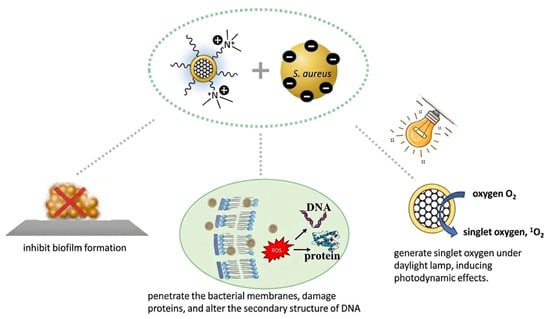
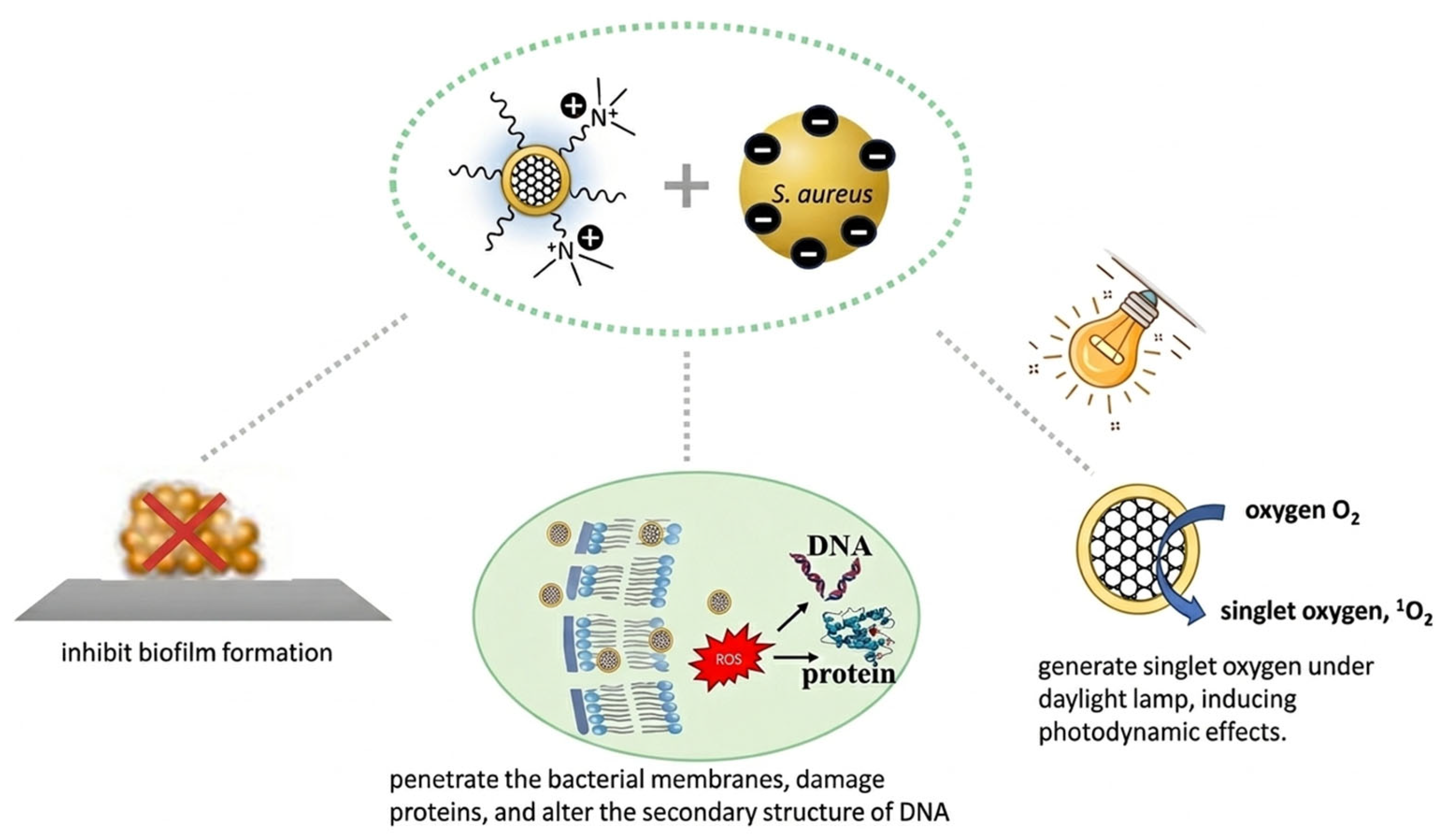
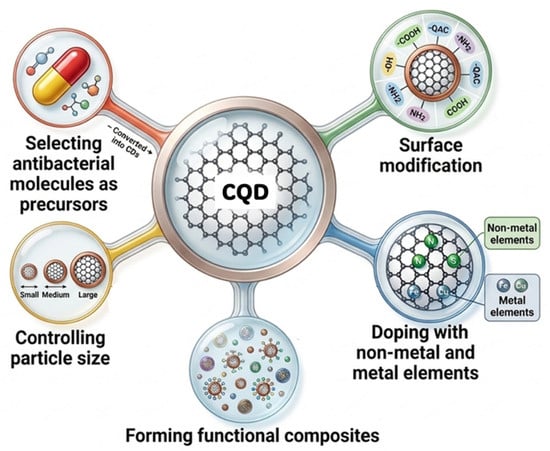
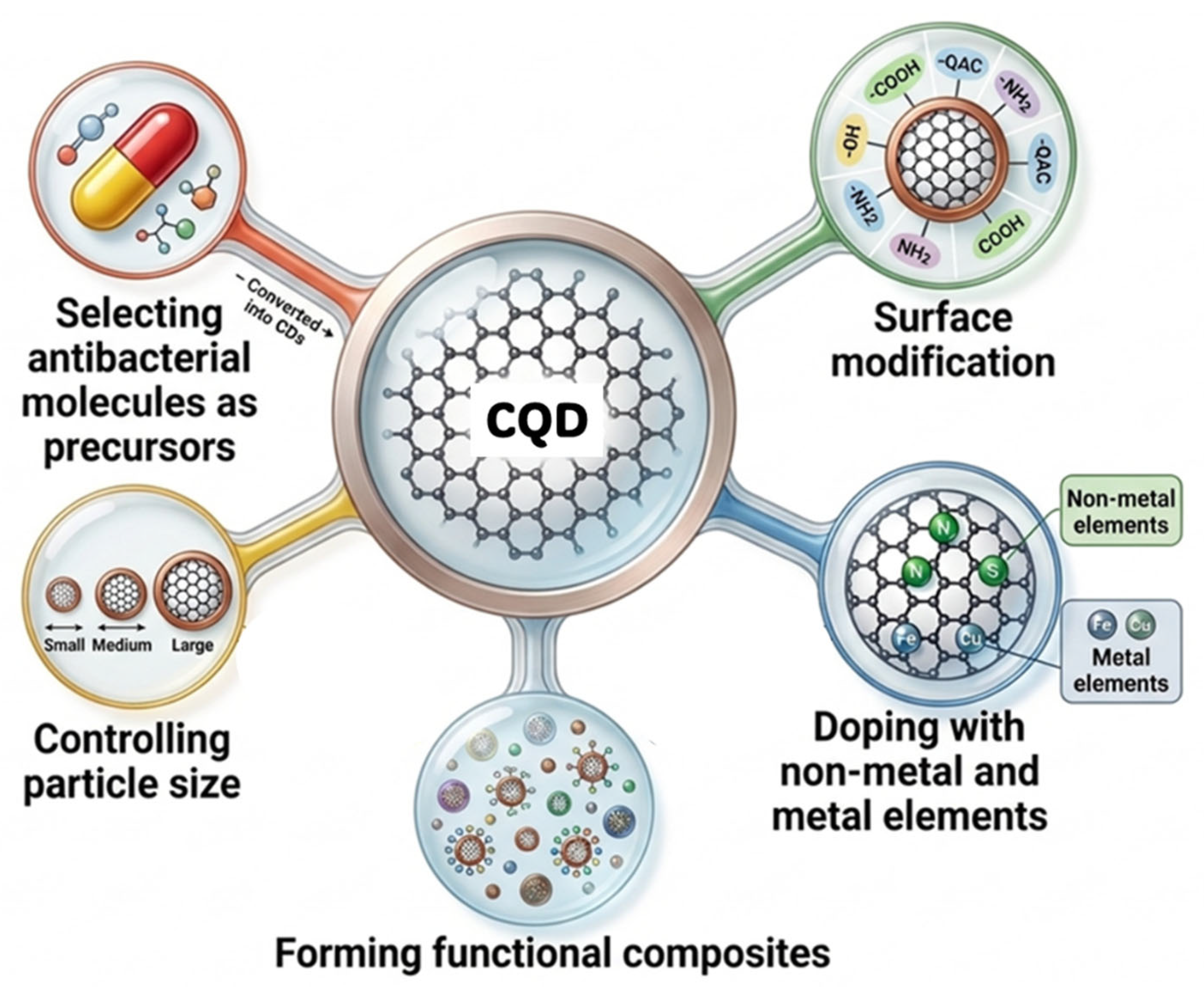
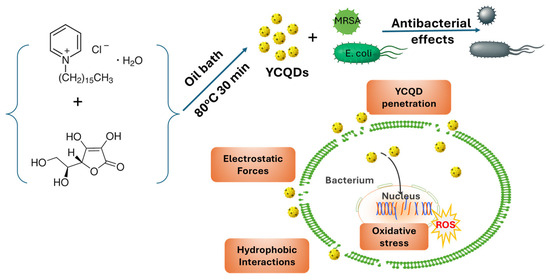
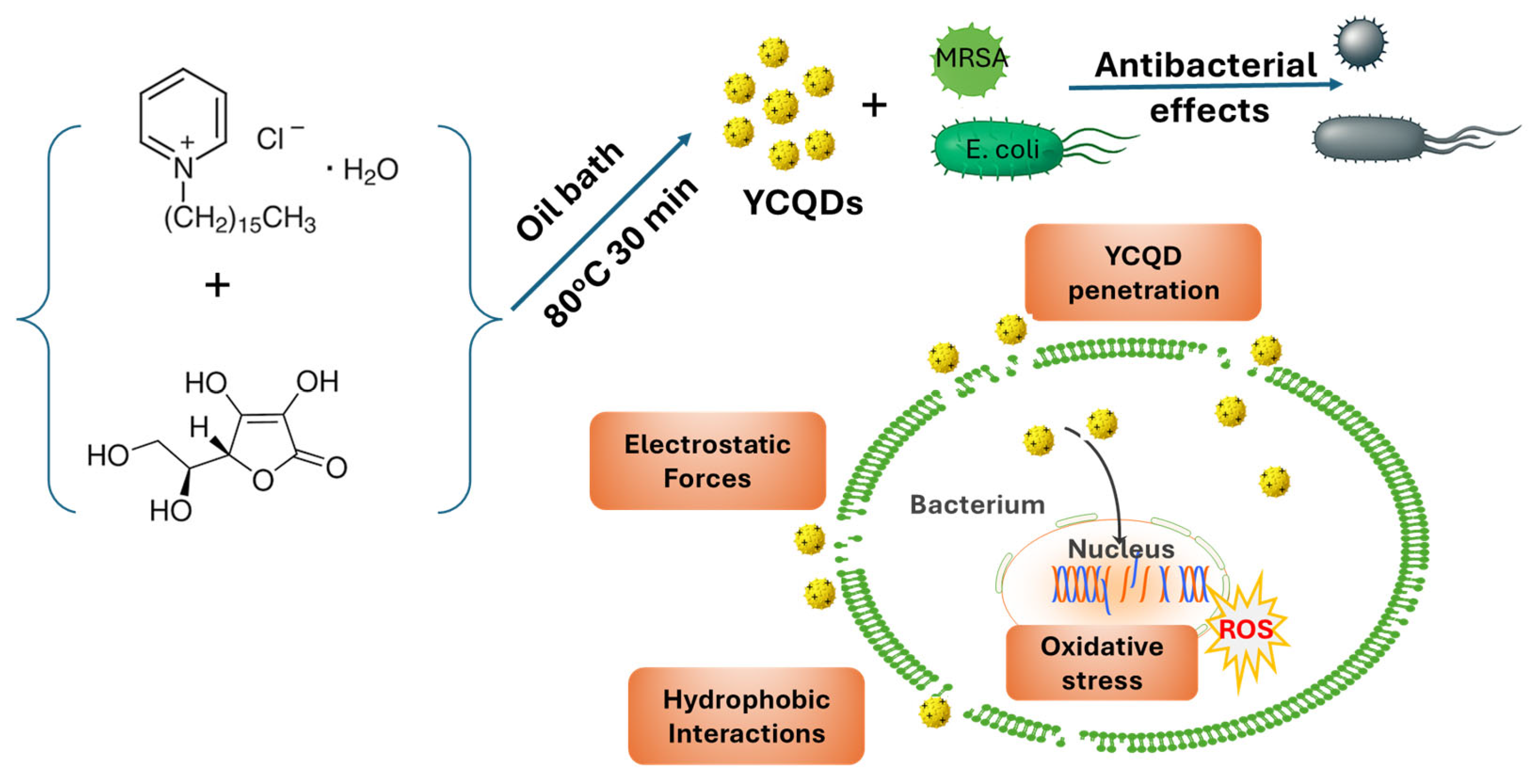
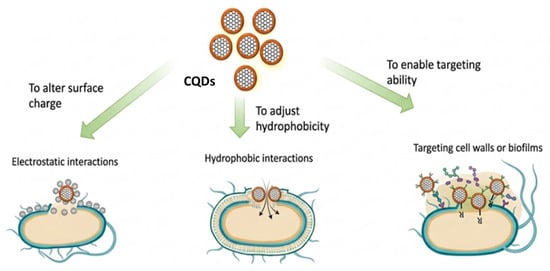
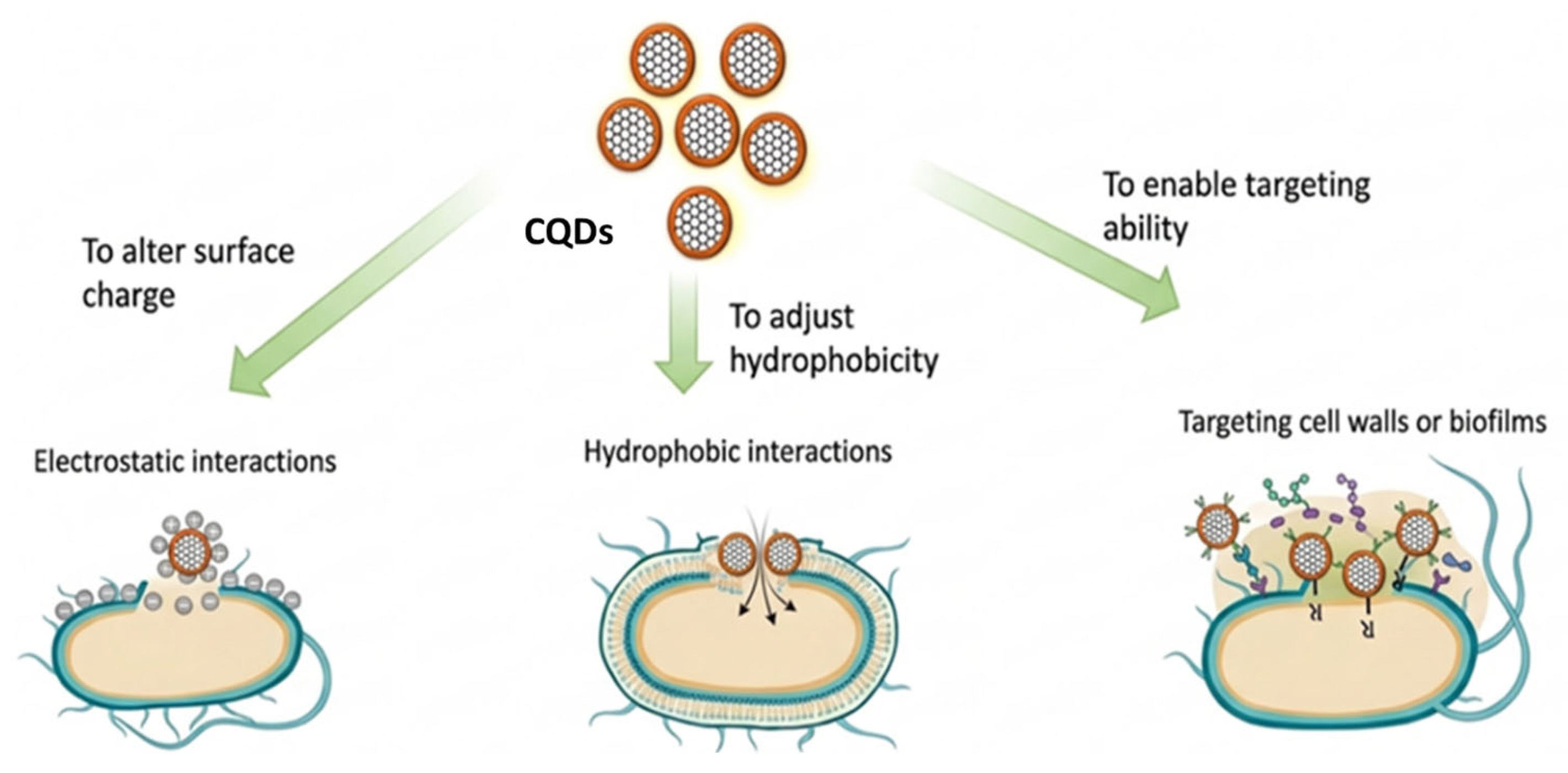
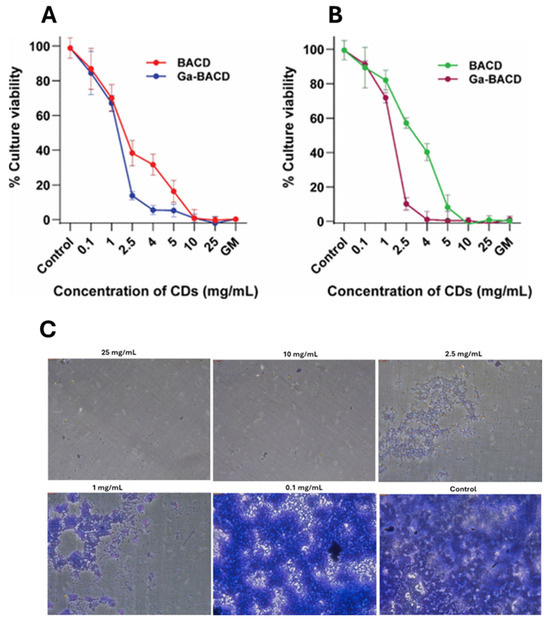
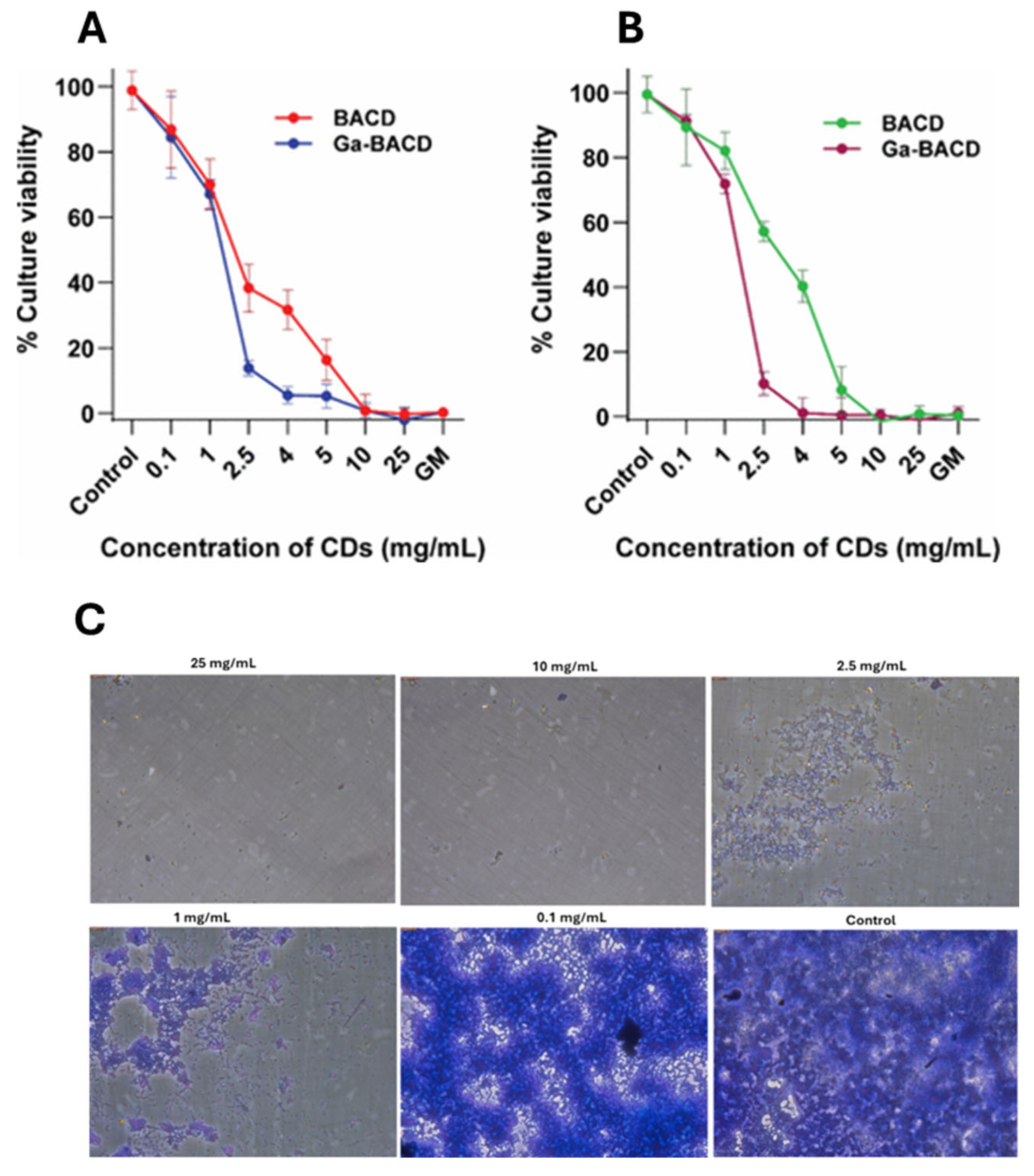
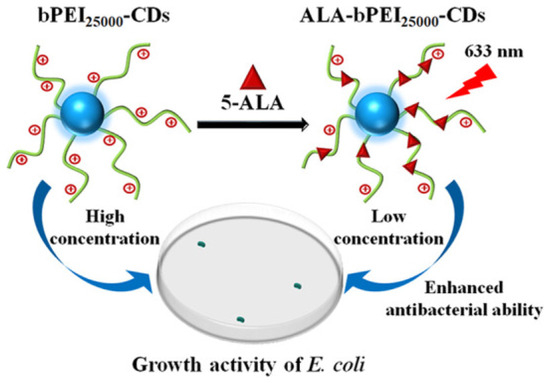
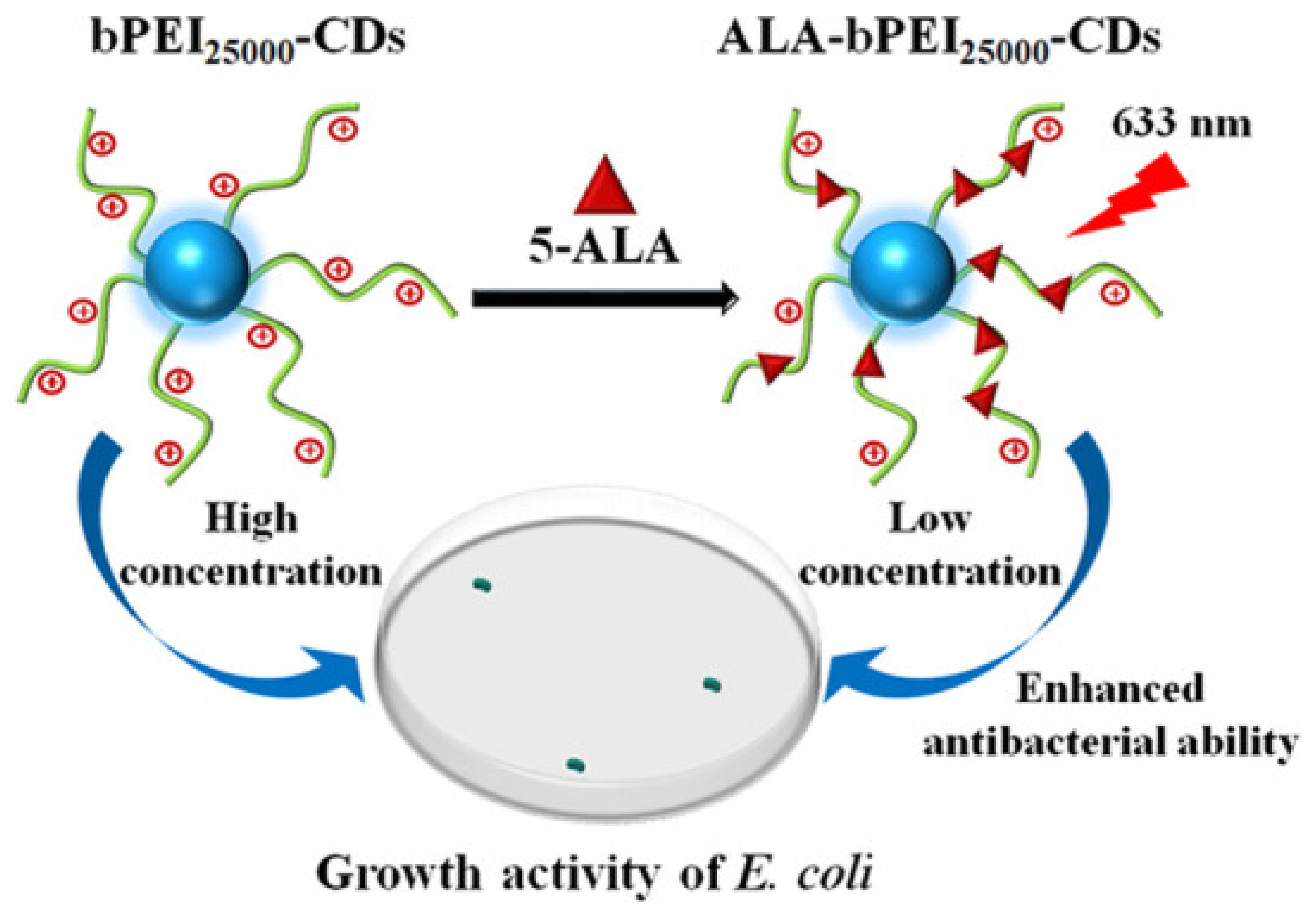

Disclaimer/Publisher’s Note: The statements, opinions and data contained in all publications are solely those of the individual author(s) and contributor(s) and not of MDPI and/or the editor(s). MDPI and/or the editor(s) disclaim responsibility for any injury to people or property resulting from any ideas, methods, instructions or products referred to in the content. |
© 2026 by the authors. Licensee MDPI, Basel, Switzerland. This article is an open access article distributed under the terms and conditions of the Creative Commons Attribution (CC BY) license.