


Abstract
Laboratory experiments and numerical modeling are essential tools for understanding the performance of engineered tsunami mitigation measures, enabling controlled investigation of complex hydrodynamic processes that are difficult to capture in real events. This review critically evaluates current research on key structural countermeasures, seawalls, breakwaters, and water-filled canals, focusing on findings from physical modeling and computational simulations. Evidence from numerical and laboratory studies demonstrates that properly designed mitigation structures can reduce tsunami wave energy, delay inland inundation, and decrease forces on downstream infrastructure. The effectiveness of these measures is strongly influenced by structural geometry, placement, and maintenance, as well as by accurate representation of flow dynamics in experiments and simulations. Despite significant advances, important gaps remain, including the validation of numerical models against high-fidelity experiments, the assessment of extreme events, and the evaluation of hybrid or integrated strategies combining multiple mitigation measures. This review identifies these gaps and highlights research priorities aimed at improving predictive capabilities, optimizing structural designs, and supporting the development of reliable, scalable, and context-specific tsunami mitigation solutions.
1. Introduction
Tsunamis are rare but extremely destructive natural hazards that pose significant risks to coastal communities worldwide [1]. Triggered primarily by undersea earthquakes, landslides, or volcanic eruptions, these waves can propagate across entire ocean basins, striking coastlines with little warning [2]. Major events, such as the 2004 Indian Ocean Tsunami and the 2011 Great East Japan Tsunami, have demonstrated the catastrophic potential of these phenomena, causing tens of thousands of fatalities, displacing millions, and inflicting severe damage on infrastructure, transportation networks, and coastal settlements [3].
The high vulnerability of coastal regions underscores the urgent need for effective mitigation strategies. Beyond immediate human and economic losses, tsunamis can have long-term social and environmental impacts, including disruption of essential services, erosion of coastlines, and contamination of freshwater resources [4]. These challenges highlight the importance of understanding tsunami–structure interactions through controlled laboratory experiments and numerical modeling, which provide critical insights for designing resilient coastal protection systems capable of reducing wave energy, delaying inland inundation, and safeguarding critical infrastructure [5].
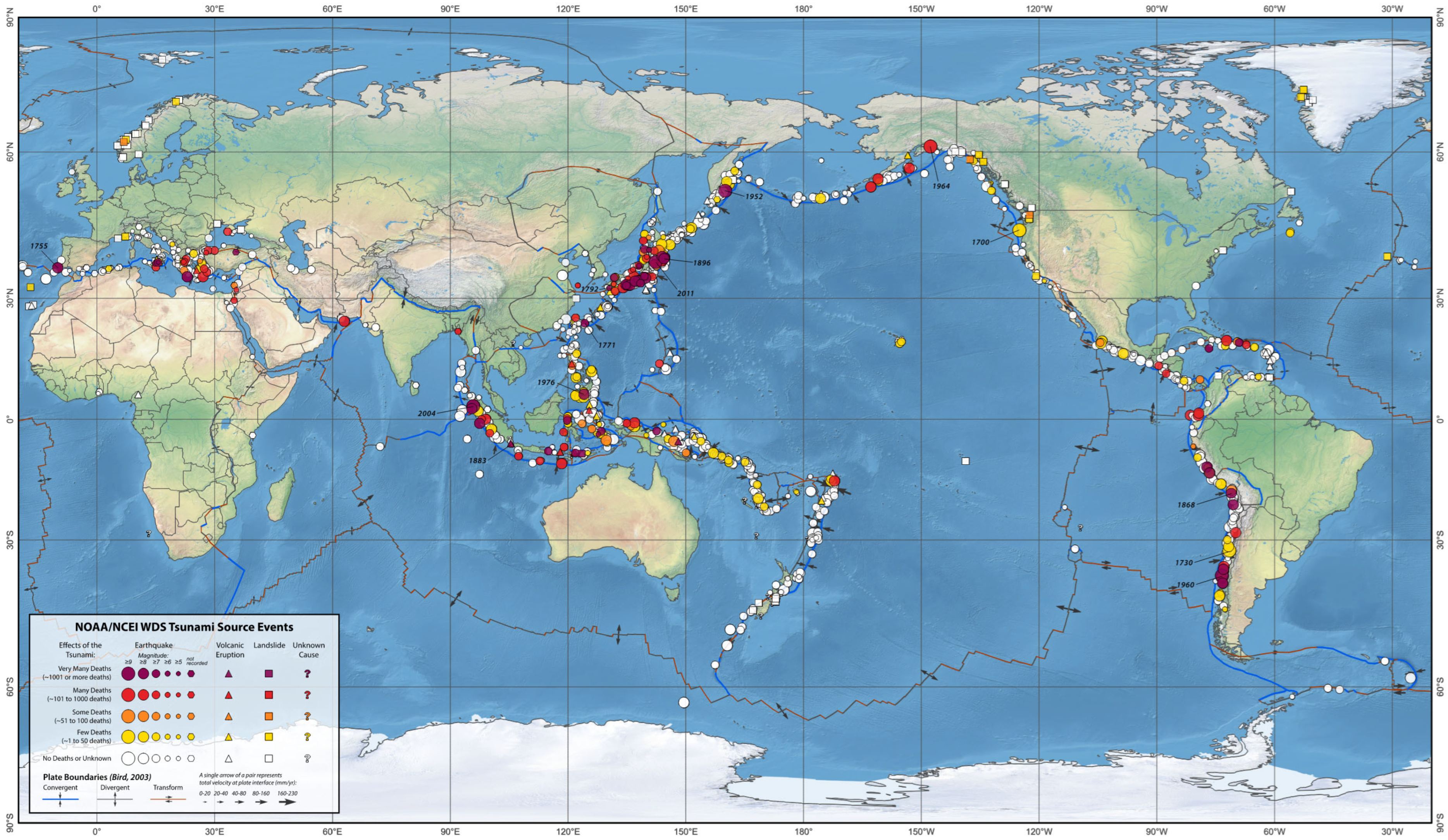
As shown in Figure 1, many countries around the world have experienced devastating tsunami events in recent decades [6]. These events highlight the widespread geographic vulnerability to tsunami hazards, particularly in seismically active coastal regions.
Figure 1.
Global tsunami source map produced by NOAA’s NCEI, WDS for Geophysics, and the International Tsunami Information Center (ITIC), based on the Global Historical Tsunami Database (1610 B.C.–A.D. 2023) [6].
Since engineered tsunami mitigation measures play a central role in protecting coastal infrastructure, understanding their hydrodynamic performance through controlled investigations has become increasingly important. Laboratory experiments and numerical modeling provide essential tools for analyzing complex tsunami–structure interactions that are difficult to observe directly in real events. These approaches allow researchers to evaluate wave transformation, energy dissipation, overtopping, turbulence, and scouring under a wide range of controlled conditions [7].
Laboratory studies have enabled detailed observation of flow behavior around seawalls, breakwaters, and water-filled canals, revealing mechanisms that govern energy attenuation, force distribution, and downstream impacts. Complementarily, numerical simulations, ranging from depth-averaged models to fully three-dimensional CFD analyses, offer flexibility to explore parameter spaces beyond the practical limits of physical experiments, including extreme tsunami scenarios and variations in structural geometry, placement, and boundary conditions. Despite advances, uncertainties remain due to scaling effects in laboratory setups, model assumptions, and limited validation with real-world or benchmark datasets. Integrating experimental and computational findings is therefore essential to improve predictive accuracy and inform the design of resilient coastal infrastructure [8].
This review critically examines the current state of laboratory and numerical studies on seawalls, breakwaters, and water-filled canals as tsunami countermeasures. It aims to synthesize the latest findings, evaluate methodological strengths and limitations, and identify research gaps, thereby supporting the development of more reliable, scalable, and context-specific tsunami mitigation strategies.
1.1. Background on Engineered Tsunami Mitigation Measures
Tsunami risk reduction involves a combination of structural and non-structural approaches aimed at protecting coastal communities and infrastructure. Non-structural strategies include early-warning systems, land-use planning, evacuation routes, and ecological buffers such as mangroves or dunes [1,9,10,11]. These measures primarily focus on preparedness, risk reduction, and enhancing community resilience by reducing exposure to tsunami hazards [12,13,14].
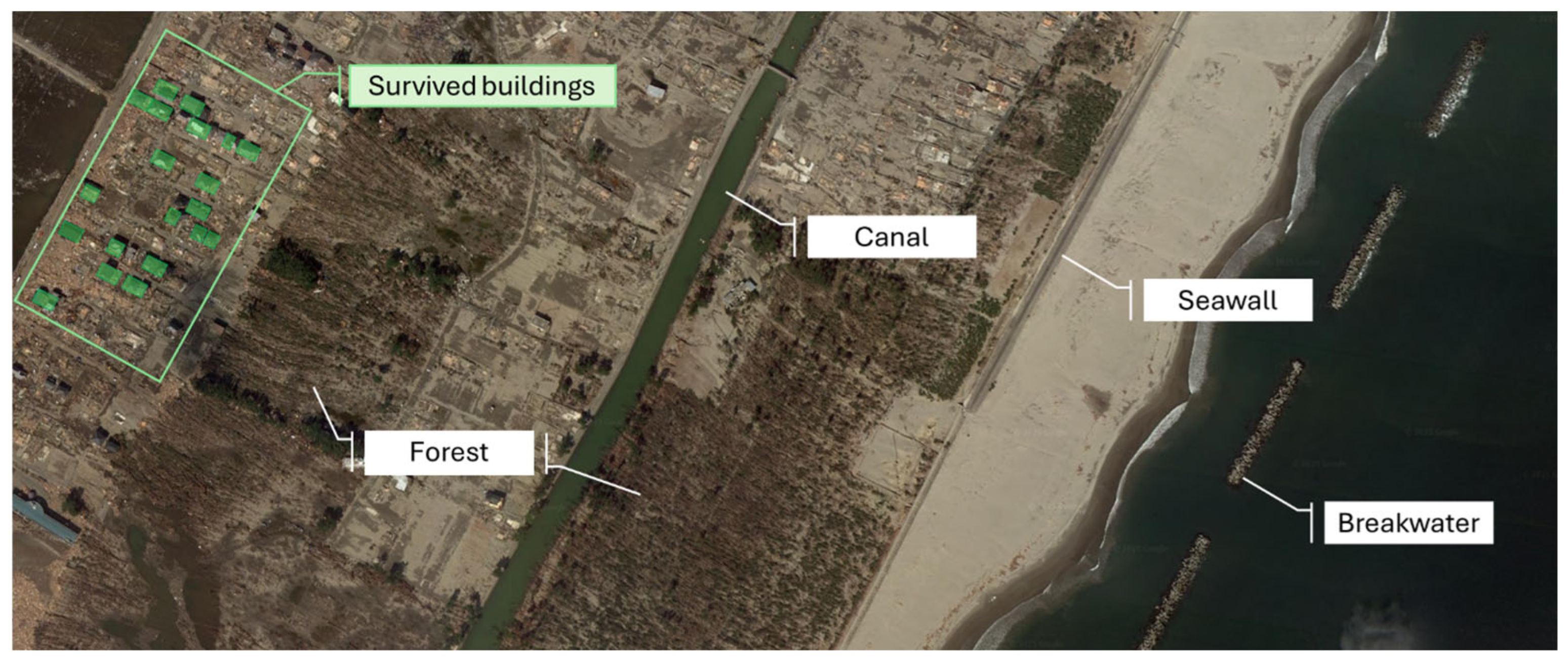
Figure 2 presents a satellite image taken after the Tohoku Tsunami, capturing a coastal area in Sendai, Japan, one of the most severely affected regions.
Figure 2.
Satellite image of the coastal region in Sendai, Japan, showing structures that withstood the 2011 Japan Tsunami behind various tsunami mitigation countermeasures (Source: Google Earth).
This image reveals a combination of tsunami mitigation countermeasures, including seawalls, breakwaters, green belts, and canals. These elements were strategically designed to dissipate tsunami wave energy, delay inland inundation, and protect critical infrastructure from catastrophic failure. In addition, the image highlights several buildings that withstood the destructive forces of the tsunami, providing valuable insight into the performance of various structural and non-structural mitigation measures.
In contrast, engineered tsunami mitigation measures have been developed to reduce the destructive impacts of tsunami waves on coastal regions by modifying wave propagation, dissipating energy, and protecting critical infrastructure. Traditional countermeasures, such as seawalls and breakwaters, have been widely implemented in tsunami-prone countries, particularly Japan, to provide a first line of coastal defense [15]. These structures are designed to reduce wave height, delay inland inundation, and shield populated areas and essential facilities from direct hydrodynamic forces [16,17,18]. More recently, alternative strategies such as water-filled canals have emerged as innovative solutions capable of dissipating bore energy and reducing loads on downstream structures through controlled flow redirection [19,20,21].
Despite their long history of application, the fundamental hydrodynamic mechanisms governing the performance of these structures remain complex. Processes such as bore formation, wave breaking, overtopping, turbulence generation, and local scouring involve strong nonlinearities that are challenging to capture using simplified analytical models [15,22]. As a result, laboratory experiments and numerical modeling have become essential tools for investigating how these mitigation measures interact with incoming tsunami waves under controlled and repeatable conditions [23,24,25].
Laboratory studies provide valuable insights into small-scale hydrodynamics, pressure distributions, turbulence structures, and failure modes [26,27,28], while numerical simulations enable the examination of a broader parameter space, including extreme scenarios that are impractical or unsafe to reproduce experimentally [29,30,31]. Together, these approaches have advanced our understanding of the capabilities and limitations of structural countermeasures; however, significant uncertainties remain due to scaling limitations, model sensitivity, simplified geometries, and limited validation datasets [32,33].
This background highlights the importance of a focused technical review that synthesizes the findings of numerical and experimental studies to better characterize the performance of engineered tsunami mitigation structures. Such an approach is essential for improving design methodologies, refining predictive models, and supporting the development of more effective, scalable, and resilient coastal protection systems [34,35,36].
It should be noted that while Japan provides valuable lessons in tsunami mitigation due to its extensive experience with frequent tsunami events and large-scale coastal protection infrastructure, such approaches may not be directly applicable to all tsunami-prone regions. In many developing countries, limited financial resources and lower tsunami recurrence frequency require more context-specific and cost-effective strategies. These may include strengthening early-warning and evacuation systems, implementing land-use planning, preserving natural coastal buffers, and developing hybrid solutions that combine local engineering practices with nature-based approaches. Future research should therefore consider not only the hydraulic effectiveness of mitigation measures but also their economic feasibility and adaptability to local environmental and socioeconomic conditions.
1.2. Objectives and Scope of This Review
While numerous studies have examined the interaction of tsunami-like bores and structures located on coastal areas, the technical understanding of how engineered mitigation measures perform under controlled laboratory conditions and detailed numerical simulations remains incomplete. Although experimental and numerical research has advanced significantly in recent decades, substantial knowledge gaps persist regarding the hydrodynamic processes governing energy dissipation, bore transformation, overtopping, and downstream effects. These gaps highlight the need for a focused assessment of laboratory and computational studies to better evaluate the capabilities and limitations of structural mitigation strategies. This paper constitutes the second part of a review series and complements Part I by extending the assessment from field-based observations to laboratory experiments and numerical investigations of tsunami mitigation measures [37].
The objective of this review is to provide an in-depth evaluation of numerical modeling and laboratory experiments investigating the performance of seawalls, breakwaters, and water-filled canals as engineered tsunami mitigation measures. By synthesizing findings from high-resolution experiments and computational studies, this review aims to clarify current understanding of structure–tsunami interactions, assess the reliability and limitations of existing modeling approaches, and identify discrepancies between numerical predictions and laboratory observations. Ultimately, this review seeks to outline critical research needs required to improve predictive accuracy, enhance design methodologies, and support the development of more reliable tsunami mitigation systems.
The scope of this review encompasses numerical and experimental studies that directly analyze hydrodynamic processes relevant to tsunami mitigation, including bore propagation, turbulence generation, flow–structure interaction, overtopping behavior, scouring, and downstream force reduction. Emphasis is placed on studies that evaluate the effectiveness of structural countermeasures rather than solely focusing on loading mechanisms acting on the structures. This review highlights innovative directions aimed at bridging the gap between experimental observations and numerical predictions, contributing to enhanced reliability, scalability, and applicability of tsunami mitigation measures in practical engineering design.
2. Experimental and Numerical Assessment of Engineered Tsunami Mitigation Measures
Coastal communities face increasing risks from tsunamis, which can result in catastrophic loss of life and severe damage to infrastructure [38]. In response, various engineered mitigation strategies have been implemented or proposed globally to reduce tsunami impacts [39,40]. While a wide range of structural and non-structural approaches exist, this study focuses exclusively on the structural countermeasures of seawalls, breakwaters, and water-filled canals due to their direct hydraulic interaction with tsunami bores and their prominence in both practical applications and academic research. Seawalls function as vertical or sloped barriers that reflect and block incoming waves [41], breakwaters dissipate wave energy offshore before it reaches vulnerable shorelines, and water-filled canals or trenches aim to attenuate bore momentum through flow diversion and energy absorption [20]. Evaluating the performance of these systems is critical for enhancing coastal resilience and informing the development of future design guidelines. To this end, this section provides an in-depth assessment of their effectiveness based on three complementary methodologies: post-tsunami field surveys, laboratory experiments, and numerical modeling studies.
2.1. Experimental Investigations
Laboratory experiments enable detailed study of tsunami–structure interaction under controlled and repeatable conditions. Using wave flumes, basins, and scaled physical models, researchers have explored force generation, wave reflection and transmission, overtopping, and scour effects associated with various mitigation measures [42]. Research on tsunami loading began with the experimental work of Stoker (1957) [43], who investigated the impact of tsunami waves on vertical walls, which his study concluded with a proposed equation for estimating tsunami-induced loads.
2.1.1. Seawall Experimental Studies
Seawalls are among the most commonly implemented structural measures for tsunami protection, capable of either fully shielding coastal communities or delaying inundation to allow for evacuation [44]. Cross (1967) was one of the first researchers to study tsunami forces on a vertical seawall [45]. Their experiments showed that the shape of the tsunami bore front, the forces, and the pressure matched well with what theory had predicted. This showed that lab experiments can be a reliable way to check the accuracy of theoretical models. While seawalls are often designed to withstand tsunami inundation without overtopping, thereby protecting the structures located behind them, many experimental studies have focused solely on the forces exerted on the seawalls themselves, without considering any downstream structures. However, some recent investigations have explored scenarios involving low-height seawalls or partially protected areas, where overtopping occurs, allowing the tsunami bore to impact structures behind the seawalls.
Al-Faesly et al. (2012, 2016) conducted a series of experimental tests to evaluate the effectiveness of low-height, high-stiffness mitigation walls in reducing tsunami bore-induced impulsive forces and moments on structures [41,46]. The walls were not intended to prevent inundation, but to dissipate a significant portion of the incoming bore energy and delay the impact, providing critical evacuation time. Six different wall designs, including vertical, inclined, curved, and wave-return walls, were tested at two upstream distances from a structural model using three impoundment depths. Parameters such as wall height, angle, shape, and location were varied. The results showed that walls placed closer to the structure reduced base shear by up to 20%, though they could increase overturning moments. Curved walls proved most effective in simultaneously reducing both base shear and overturning moments, whereas inclined walls at farther distances increased impact loads.
Rahman et al. (2014) conducted an experimental study to assess the effectiveness of sea walls, both solid and perforated, in mitigating tsunami forces on coastal buildings [47]. By varying wall height, type, and distance from a model structure, the study showed that taller sea walls (8 cm) placed closer to buildings significantly reduced impact forces, achieving up to 41% force reduction, compared to 27% for shorter walls (4 cm). Perforated walls, with 26% openings, performed nearly as effectively as solid ones (35% reduction), while offering advantages such as lower construction cost and better drainage of overtopped water, which helps reduce residual forces.
McGovern et al. (2023) studied the effects of tsunami-induced forces and overtopping over vertical seawalls to address limitations in current design codes, which often overestimate impulsive loads from bore-like waves [27]. Using a 100 m flume and Froude-scaled pneumatic wave generation, they tested two vertical seawall configurations under various wave scenarios. They found that long-period tsunami waves primarily exert hydrostatic forces, typically not exceeding 1.2 times the static load. However, when short waves broke, they produced impulsive forces reaching up to 25 times the hydrostatic force. Additionally, overtopping volumes were more closely related to the duration of inundation rather than wave height, and standard wind–wave models significantly underestimated the volume of tsunami overtopping.
Zhang et al. (2023) studied how partial seawalls affect tsunami forces on coastal buildings [48]. Using experiments in a large wave basin, they tested different wall lengths and wave types, like breaking and non-breaking waves, under runup and inundation scenarios. They found that seawalls can either protect or worsen the situation depending on their placement. When walls ended right before a structure, wave energy focused around the wall’s edge, increasing force. But full coverage by the wall reduced the forces by up to 90%. Breaking waves caused short, high-force impacts, while non-breaking waves caused longer-lasting pressures. Even buildings behind the first row could get hit hard due to redirected water. Table 1 summarizes the selected studies and highlights their findings and remarks.
Table 1.
Summary of selected experimental studies on seawalls as tsunami mitigation countermeasure.
2.1.2. Breakwater Physical Modeling
Breakwater experiments explore both submerged and rubble mound types. Rubble mound breakwaters, modeled with scaled stones or artificial porous blocks, dissipate wave energy through flow within the porous media. Breakwater porosity, slope angle, and crest freeboard significantly influence their energy dissipation capacity and stability under tsunami loads. Submerged breakwaters can help control wave breaking. Wave height reductions depend on submergence depth, demonstrating their value in wave attenuation with minimal visual impact. Failure modes such as block displacement and overturning have been studied to optimize rubble mound block sizes and armor layers.
Hanzawa and Matsumoto (2015) conducted a comprehensive physical modeling study to evaluate the effectiveness and stability of detached breakwaters made of wave-dissipating concrete blocks (Tetrapods) under tsunami wave conditions [17]. Using a 30 m wave flume, experiments were carried out to assess tsunami wave run-up reduction, wave pressure, and the structural stability of breakwaters under solitary wave attacks. The study compared ordinary and submerged breakwater configurations under varying wave heights and water depths. The results showed that detached breakwaters significantly reduced wave run-up (by up to 90%) and wave pressures (by up to 60%), even when partially damaged. Damage to the Tetrapods was more severe at the rear slope, especially in shallow water, with landslide-type failure observed. Increasing Tetrapod mass and fixing the first rear row improved breakwater stability.
Mikami et al. (2015) investigated the effects of detached breakwaters on tsunami attacks around coastal dykes through both field observations from the 2011 Tohoku Earthquake and laboratory experiments using a 1:50 scale tsunami basin [49]. Field data from five locations revealed that coastal dyke damage varied depending on whether the dyke was situated behind a breakwater body or an opening. Laboratory tests supported these findings, demonstrating that when the detached breakwater parameter (distance from shoreline to breakwater divided by opening length) was small, wave velocity behind the breakwater was reduced, but not behind the opening. This non-uniform velocity distribution suggests localized variations in tsunami mitigation effectiveness. The study concludes that while detached breakwaters can reduce tsunami forces locally, their design must consider opening configuration to ensure uniform protection along coastal dykes.
Muhammad and Tanaka (2019) examined the tsunami energy dissipation efficiency of a hybrid defense system composed of a sea embankment followed by a coastal forest using 1:100 scale flume experiments [50]. The study tested both single-layer (SLM) and double-layer (DLM) vegetation models under supercritical flow conditions. The results demonstrated that the hybrid system significantly reduced tsunami energy: by up to 70% with DLMs (especially with denser submerged layers), and by up to 60% with SLMs. Hydraulic jumps played a key role in energy reduction, with their formation and location influenced by forest porosity and flow intensity. Denser forests triggered jumps further upstream, reducing velocity and improving flow resistance. This study highlights the superior performance of DLMs in tsunami mitigation.
Xu et al. (2024) explored the tsunami mitigation capacity of seawall-integrated trapezoidal breakwaters in protecting coastal bridge piers through both laboratory experiments and numerical simulations [51]. The study used a dam-break wave flume to simulate tsunami bore impacts and evaluated the effects of seawall height, perforation, and spacing on the hydrodynamic forces experienced by bridge piers. The results showed that higher seawalls significantly reduced the forces transmitted to piers but experienced larger direct loads themselves. The pressure on the seawall was greatest at mid-height and decreased toward the crest. Moreover, an optimal spacing of 1 m between the breakwater and pier was found to maximize force attenuation. These findings underscore the balance required between protective efficiency and structural loading in designing integrated coastal defenses. Table 2 summarizes the selected experimental studies on breakwaters as tsunami mitigation countermeasure and highlights their findings and remarks.
Table 2.
Summary of selected experimental studies on breakwaters as tsunami mitigation countermeasure.
2.1.3. Experimental Evaluation of Canals
Recent laboratory investigations have focused on the use of rectangular water-filled canals positioned seaward of coastal infrastructure to reduce tsunami impact forces. These canals are typically shallow and wide that interrupt the incoming tsunami bore. The presence of such canals changes the flow field, reducing bore front velocity which leads to exerted force reduction on structures located behind the canal. Furthermore, canals can delay the arrival time of the bore, providing additional warning and reaction time for evacuation or closure of floodgates. The effectiveness of this type of tsunami mitigation measure depends on canal geometry and tsunami characteristics.
The experimental study by Oshiro et al. (2015) examined the combined effects of water-filled canals and coastal vegetation on tsunami mitigation [52]. Their findings demonstrated that canals can significantly modify tsunami hydrodynamics by reducing front velocities by up to 25% and delaying wave arrival times. Through dam-break wave experiments, they observed that wider (50 cm) and deeper (10 cm) canals were particularly effective in dissipating tsunami energy, although they slightly increased downstream inundation depths due to flow concentration effects. Their study also showed that canals can generate isolated reflected waves upstream and temporarily trap and decelerate the tsunami front within the canal. Reduced effectiveness was observed in shallower canals (5 cm depth), primarily due to an increased likelihood of overtopping. As the tsunami bore front enters the canal, it is violently washed up and reflected by the downstream edge, remaining temporarily contained within the canal. However, in shallow canals, the bore front is less restrained and tends to overtop the downstream edge, continuing its propagation beyond the canal.
The experimental study by Rahman et al. (2016) evaluated the tsunami mitigation effectiveness of rectangular canals using a 1:100 Froude-scaled laboratory flume setup [53]. The study compared various canal widths (25 cm and 50 cm) and depths (5 cm and 10 cm) under dam-break-induced tsunami bores with incident wave heights ranging from 2.3 cm to 5.1 cm. The results demonstrated that canals delay tsunami arrival time, reduce maximum inundation depth, flow velocity, and specific energy. Notably, the 50 cm wide and 10 cm deep canal reduced the bore front velocity by approximately 30% and achieved a greater delay effect than vertical seawalls of equivalent height. However, canals with lower depth (5 cm) were less effective. These findings underscore the potential of geometrically optimized canals as effective structural mitigation measures comparable to traditional seawalls.
Watanabe et al. (2016) conducted laboratory experiments to investigate the tsunami reduction effect of Teizan Canal, inspired by observations during the 2011 Tohoku Tsunami [54]. Using both a tsunami basin and a wave flume, the study examined how canal depth, wave height, and waveform influence overflow reduction. The tsunami basin experiments revealed that the canal significantly reduced overflow, with reduction rates varying by wave type (35.7% to 59.2%), and demonstrated that deeper canals diminished this effect. Additionally, the study highlighted the role of waveform duration in overflow dynamics, not just wave height. Wave flume experiments, employing PIV analysis, visualized fluid motion and energy loss near the canal inflow, revealing vortices and complex flow patterns. While the study provides valuable insights, the authors acknowledge limitations due to simplified canal conditions and call for further research to address real-world complexities. The findings underscore the potential of canals in tsunami mitigation but emphasize the need for more comprehensive modeling to inform practical applications.
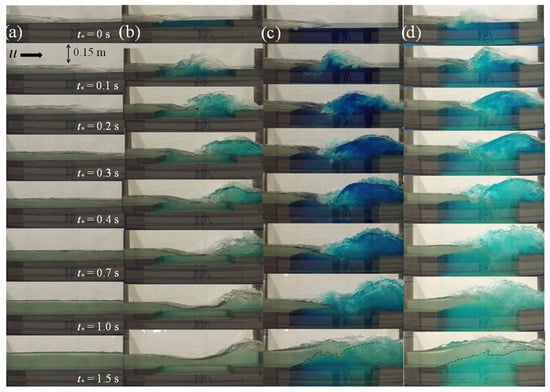
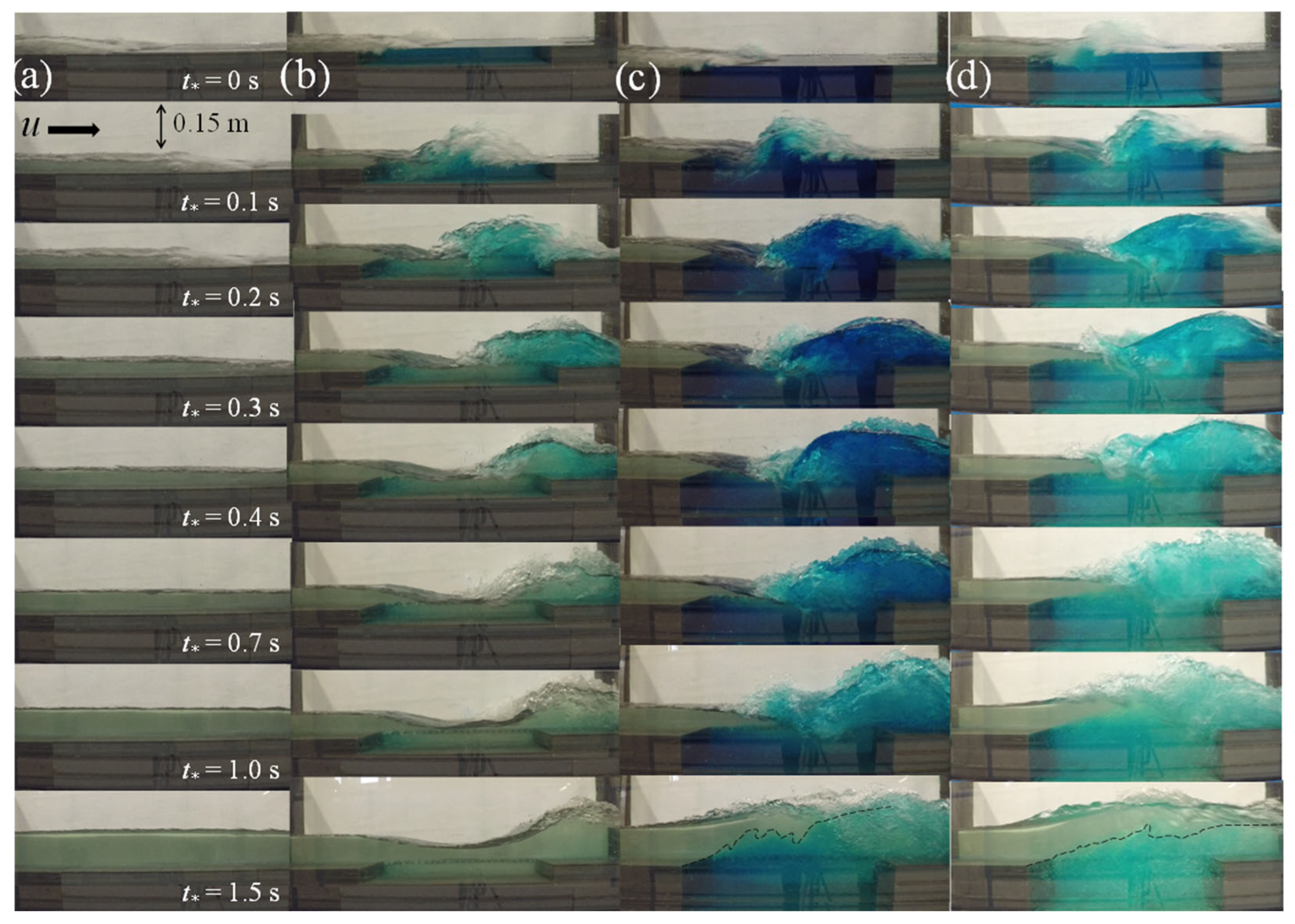
Elsheikh et al. (2020) experimentally investigates the effects of rectangular canals on the hydrodynamics of dam-break-induced tsunami-like surges, focusing on surge height and velocity changes upstream and downstream of the canal [55]. They tested three canal depths (0.05 m, 0.10 m, 0.15 m) and three widths (0.60 m, 1.60 m, 3.0 m) under varying impoundment depths (0.20 m, 0.30 m, 0.40 m). The results showed that upstream surge heights increased by up to 40% for narrow canals and smaller impoundments, while downstream surge heights rose by 10–50%, with minimal changes observed for a canal width-to-depth ratio of 20. Surge velocities downstream of the canal decayed by 40–60%, attributed to bed friction and momentum dissipation. The study highlights the potential of canals to mitigate tsunami impacts by reducing flow velocities, though their effectiveness depends on geometry and initial wave conditions. While no downstream structures were included to assess the exerted forces, the measurements of velocity and bore depth offer valuable insights for optimizing engineered tsunami mitigation strategies (Figure 3).
Figure 3.
Effects of canal depth on tsunami bore propagation with different canal depth of (a) no canal, (b) depth of 5 cm, (c) depth of 10 cm, and (d) depth of 15 cm, t∗ is the bore arrival time to the canal [55].
Arefi et al. (2025) conducted an experimental study to assess the effectiveness of rectangular water-filled canals in mitigating tsunami-like bore forces exerted on a structural column [20]. Unlike previous studies, which focused solely on flow characteristics or upstream wave behavior, this study uniquely placed a structural column downstream of the canal and directly measured the horizontal force exerted on it. Using a Froude-scaled (1:10) flume with dam-break generated bores and varying canal geometries, the study recorded time histories of bore depth and impact force on the column. The results showed that wider and deeper canals significantly reduced the bore front velocity and decreased the peak horizontal force by more than 25%. Despite some limitations related to flume size, the findings demonstrated that water-filled canals can effectively dissipate tsunami bore energy and reduce forces on nearshore infrastructure, making them a promising and economical structural mitigation solution. Table 3 summarizes selected experimental studies and their key findings and remarks.
Table 3.
Summary of selected experimental studies on canals as tsunami mitigation countermeasure.
2.2. Numerical Modeling Studies
Numerical simulations are essential for capturing the complex and nonlinear interactions between tsunami waves and mitigation structures. Advanced computational tools allow for parametric studies that can incorporate realistic bathymetry, complex geometries, and transient wave conditions.
2.2.1. Performance of Seawalls Through Numerical Simulation
Numerical studies have simulated seawalls with varying heights, slopes, and material properties to investigate flow impact and overtopping. The higher seawalls reduce wave overtopping but increase reflected wave energy, potentially intensifying local scour [56].
Hsiao and Lin (2010) investigated tsunami-like solitary wave interactions with impermeable trapezoidal seawalls on a 1:20 sloping beach using both laboratory experiments and the COBRAS numerical model (a RANS-based solver with k–ε turbulence closure) [57]. Three wave-structure interaction types were observed, ranging from direct bore impacts to overtopping and collapse behind the seawall. The study found that dynamic wave forces peaked during run-up and overtopping stages, especially under high wave nonlinearity and low freeboard conditions. The COBRAS model closely matched experimental results, demonstrating its capability in capturing free-surface dynamics, turbulence, and pressure evolution in coastal defenses subjected to extreme wave action.
Sarjamee et al. (2017) used Large Eddy Simulation (LES) in OpenFOAM to assess how small-scale mitigation walls affect tsunami-induced forces on coastal structures [29]. Their study compared LES with traditional RANS turbulence models and found that LES more accurately captured impulsive bore forces and run-up behaviors. Through validated dam-break bore simulations, they tested the effects of curved and inclined low-height walls placed upstream of a square column. A curved wall located three times the column diameter upstream reduced hydrodynamic forces by approximately 30%, while the same wall at one diameter upstream increased impact forces due to flow accumulation. Inclined walls performed poorly, intensifying forces through a launching mechanism.
Huang et al. (2022) assessed the performance of seawalls in mitigating tsunami impacts using the nonhydrostatic wave model NHWAVE, focusing on more realistic tsunami-like waves derived from the 2011 Japan tsunami [58]. The study demonstrated that tsunami-like waves have significantly greater energy, overtopping volume, and reflection potential compared to solitary waves. Through a series of numerical experiments, the authors examined how variables such as wave height, water depth, seawall side slope, and beach slope influence wave runup, overtopping, and reflection. The results showed that tsunami-like waves cause more severe hydrodynamic loads, leading to greater potential for damage and secondary hazards, particularly if wave reflection is not properly accounted for.
Triatmadja et al. (2025) investigated the performance of tsunami seawalls of varying heights using Smoothed Particle Hydrodynamics (SPH) simulations via the DualSPHysics model [59]. Tsunami waves were generated through a dam-break mechanism in a flume and assessed the effectiveness of seawalls with height-to-water-depth ratios (Hw/Ho) of 0.33, 0.50, and 0.67. The results showed that seawalls with Hw/Ho ≥ 0.50 effectively reduced tsunami wave velocities by 72–100%, delayed overtopping, and dissipated wave energy through turbulence. In contrast, low walls (Hw/Ho = 0.33) occasionally increased downstream velocities post-overtopping due to energy concentration, potentially intensifying inland damage. The study concludes that seawalls must be carefully designed with a minimum height ratio of 0.50 to balance performance, safety, and cost, particularly in resource-limited but tsunami-prone regions. Table 4 summarizes selected studies and their key findings.
Table 4.
Summary of selected numerical studies on seawalls as tsunami mitigation countermeasure.
2.2.2. Evaluating Breakwater Effectiveness Using Numerical Modeling
In numerical simulations of breakwaters and their role in tsunami energy dissipation, rubble mound porosity is shown to significantly reduce transmitted wave energy. Additionally, submerged breakwaters must be carefully designed with an optimized crest submergence depth to maximize wave breaking and enhance energy attenuation [60].
Takagi and Bricker (2014) assessed the performance of general-purpose breakwaters in Ishinomaki City during the 2011 Great East Japan Tsunami, focusing on their role in reducing tsunami inundation and building damage [16]. Using GIS building data and 2D shallow water numerical simulations, the study compared a residential area without breakwaters, where 87% of buildings were destroyed, to a neighboring industrial zone shielded by breakwaters, which saw only 25% damage. However, the modeling showed that breakwaters did not significantly reduce water levels or flow velocities due to wide openings that allowed tsunami energy to rapidly flood the port. Simulations using higher Manning’s roughness values (n = 0.30) matched observed inundation more accurately than traditional values (n = 0.06), emphasizing the role of surface complexity and debris. The study concludes that general breakwaters, unless modified with closures or elevated crests, offer limited tsunami protection.
Wei and Dalrymple (2016) numerically assessed the effectiveness of breakwaters and service road bridges in mitigating tsunami-induced forces on coastal bridge superstructures using the Smoothed Particle Hydrodynamics (SPH) model GPUSPH [30]. Validated against laboratory experiments, the model evaluated both horizontal and vertical force reduction under various configurations. Rubble mound and caisson breakwaters reduced tsunami forces by up to 58% when placed at an optimal distance—approximately 8 times the water depth or 13 times the tsunami height—upstream of the bridge. However, breakwaters themselves were vulnerable to failure due to high hydrodynamic loads and seabed scouring, posing additional risks from debris. Comparatively, parallel service bridges offered 36–50% force reduction but often failed under extreme conditions. The SPH model accurately captured initial impact forces but had limitations in simulating high-frequency responses due to its single-phase fluid assumption. This study underscores the need to balance structural durability and mitigation performance in tsunami-prone bridge design.
Xue et al. (2022) proposed a novel tri-semicircle submerged breakwater to protect coastal bridges from extreme wave events [61]. Using OpenFOAM-based numerical simulations, the study compared this modular design to conventional trapezoidal breakwaters in terms of wave force reduction on T-girder bridge decks. Horizontal force reductions ranged from 31.4% to 71.6%, and vertical force reductions from 26% to 38.3%, far exceeding those of trapezoidal breakwaters. The force mitigation was attributed to enhanced flow separation and eddy dissipation, which minimized overtopping and velocity near the bridge.
Wu et al. (2025) proposed and evaluated a hybrid tsunami mitigation system combining a semicircular breakwater with an L-shaped fairing to reduce hydrodynamic forces on T-girder coastal bridges [31]. Using two-dimensional RANS simulations with the k–ε turbulence model, the study tested the performance of the system under various wave heights and breakwater-bridge spacings. The results revealed that the combined system significantly reduced both horizontal (up to 55%) and vertical (up to 34.2%) tsunami-induced forces, outperforming conventional breakwater types and standalone fairings. The force reduction improved with increased spacing between the breakwater and the girder. Table 5 summarizes selected studies and their key findings.
Table 5.
Summary of selected numerical studies on breakwater as tsunami mitigation countermeasure.
2.2.3. Numerical Investigation of Canal Performance Under Tsunami Loads
Recent numerical modeling studies have focused on the performance of water-filled canals as tsunami mitigation elements. Studies show that canals act as hydraulic dampers, dispersing wave energy via complex flow patterns.
Dao et al. (2013) conducted a numerical study to assess the effectiveness of the Kita-Teizan Canal, a shore-parallel canal along the Sendai Coast, in mitigating tsunami impacts during the 2011 Great East Japan Earthquake and Tsunami [62]. Given the limitations of shallow water equations in capturing wave breaking and nearshore turbulence, a two-dimensional RANS-based model of NEWFLUME developed by Lin and Liu (1998a, b) was employed [63,64]. Although the study did not consider any downstream structures to directly evaluate the canal’s influence on tsunami forces acting on them, the analysis of tsunami energy and depth-averaged velocity indicated that the canal reduced tsunami energy and delayed the wave’s arrival time compared to a scenario without the canal. The canal was particularly effective during small tsunami events, with offshore wave heights of 3 to 4 m, reducing the potential damage to residential infrastructure by approximately 3 to 4 percent.
Rahman et al. (2017) performed both experimental and numerical modeling to assess the effectiveness of perpendicular water-filled canals as tsunami mitigation measures [19]. They used the improved Moving Particle Semi-Implicit (MPS) method to simulate dam-break type bores representing tsunami-like waves. They considered several canal configurations with varying widths (25–50 cm) and depths (5–10 cm) and validated the numerical results with flume experiments. Their results showed that canals alone can delay tsunami arrival time, reduce bore velocity by up to 48%, and partially reflect wave energy, although inundation depth was not significantly reduced. The numerical simulations captured the splash, reflection, and energy dissipation phenomena observed in the experiments with reasonable accuracy. Furthermore, when a canal was combined with a dune, the combined countermeasure significantly reduced both inundation depth and flow velocity, highlighting the importance of integrated strategies.
Hashimoto et al. (2018, 2019) performed studies to evaluate the tsunami mitigation effects of existing and proposed canals along the Sendai Bay coast in Miyagi Prefecture, Japan [65,66]. They focused on the Teizan and Kitakami Canals, using a 2D finite difference shallow water model to simulate the 2011 Tohoku tsunami. The canals were found to reduce tsunami arrival time, flow velocity, and inundation depth, and to effectively drain tsunami backflow, especially in the Iwanuma and Yamoto areas. Different configurations such as canal widening and levee heightening were examined, with the combination proving most effective in reducing flooding extent and energy. They explored the feasibility of constructing a new canal in the Watari and Yamamoto areas, south of the Abukuma River where no canals currently exist. The proposed canal (36 m wide, 3.7 m high) was evaluated under the same tsunami scenario using a similar 2D model. The results showed that the new canal significantly delayed tsunami arrival (by up to 196 s), and reduced inundation depth (up to 1 m), run-up speed, flow velocity, and flooded area/volume (by 1.46 km2 and 1.4 million m3, respectively). Their studies support the use of shore-parallel canals as effective components in multi-layered tsunami defense systems, though they are limited by the two-dimensional nature of the analysis and assumptions of structural integrity.
Elsheikh et al. (2022a, b) conducted a detailed numerical and experimental investigation into the mitigation performance of rectangular water-filled canals subjected to tsunami-like turbulent bores generated by a dam-break setup [67,68]. Their study explored the influence of canal depth and orientation on bore hydrodynamics, including specific momentum, energy dissipation, and vortex dynamics. Three impoundment depths (0.2, 0.3, and 0.4 m) and three canal depths (0.05, 0.10, and 0.15 m) were analyzed using OpenFOAM-based 3D multi-phase modeling. Turbulence was modeled using the k-ε family, with the standard model showing the best agreement. Their results showed that deeper canals significantly reduced the maximum specific momentum and mean flow energy by enhancing turbulence and air entrainment. As canal depth increased, energy dissipation became more effective, and the bore jet stream became shorter and less intense. Vortex eyes formed near the upstream edge of the canal, with their downstream movement and dissipation depending on canal depth. Orientation also played a role, while all canal angles reduced momentum downstream, a 45° orientation caused the highest localized energy and momentum but led to greater dissipation further downstream due to increased turbulence.
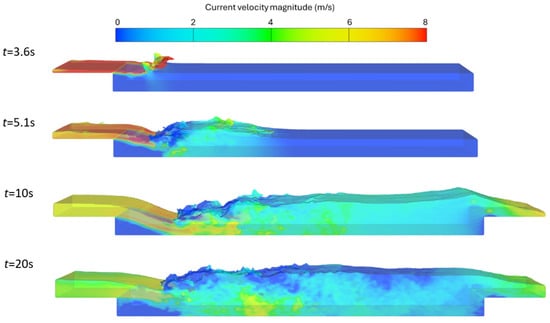
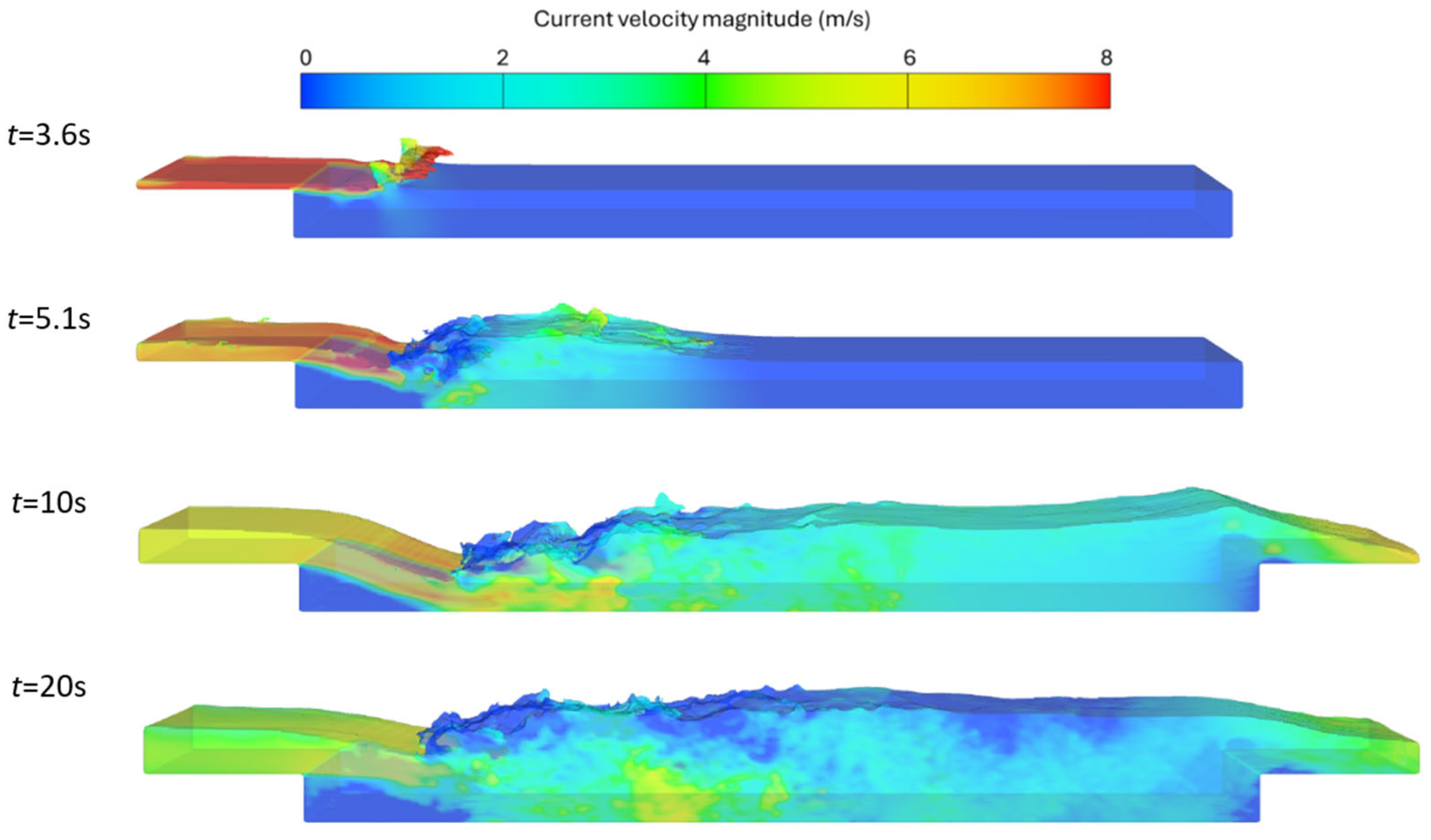
Arefi et al. (under review) conducted a numerical investigation using FLOW-3D to evaluate the effectiveness of rectangular water-filled canals in mitigating tsunami-like bore forces on a downstream column [8]. Between different turbulence models, Large Eddy Simulation (LES) was selected as providing the best match to the experimental data. The model was calibrated using flume experiments and further extended to full-scale simulations to eliminate scaling effects and better represent real tsunami dynamics. Various canal depths (0.5–4.5 m) and widths (10–40 m) were tested. Their results demonstrated that the presence of the canal significantly reduced the initial impact force, with up to 40% reduction for a 4.5 m deep and 40 m wide canal. Their study found that canal width had a greater influence on force reduction than depth, although a threshold was observed beyond which further increases in either dimension yielded minimal additional benefit. The bore front velocity was notably reduced after canal passage, with a substantial change in flow regime and turbulence characteristics contributing to energy dissipation (Figure 4). Table 6 summarizes selected studies and their key findings.
Figure 4.
Interaction of tsunami bore with water-filled canal [8].
Table 6.
Summary of selected numerical studies on canals as tsunami mitigation countermeasure.
3. Discussion and Conclusions
This review has examined the state of numerical and experimental research focused on evaluating the performance of key structural tsunami mitigation measures, including seawalls, breakwaters, and water-filled canals. By analyzing laboratory experiments and numerical simulations across a wide range of configurations, tsunami conditions, and modeling approaches, this study provides a consolidated overview of current capabilities, limitations, and methodological challenges in predicting tsunami–structure interactions with presence of mitigation countermeasures.
Laboratory experiments remain a critical tool for reproducing complex hydrodynamic processes such as bore formation, overtopping, and turbulence near structures. Experimental studies have demonstrated that structure geometry, relative freeboard, and local bathymetry significantly shape flow transformation and downstream impacts. However, laboratory setups are often constrained by scale effects, limited sensor resolution, and simplified boundary conditions, which can restrict the transferability of results to real-world coastal environments. These limitations underscore the importance of complementary numerical modeling.
Numerical simulations, ranging from depth-averaged shallow-water models to fully three-dimensional CFD tools, offer flexibility for exploring broader parameter spaces and extreme conditions that are difficult to reproduce experimentally. Recent advances in turbulence modeling, surface tracking, and high-resolution mesh refinement have improved predictive accuracy for bore dynamics, overtopping, and pressure distribution on structures. Nevertheless, the numerical results remain highly sensitive to model assumptions, mesh design, turbulence closure, and boundary condition selection. Validation is still a major challenge due to limited high-quality field data and the scarcity of well-controlled benchmark experiments that capture three-dimensional effects.
Both numerical and experimental studies consistently show that seawalls and breakwaters can reduce incident wave energy and modify inundation patterns, but their performance deteriorates sharply under extreme events when overtopping, and structural instability become dominant failure mechanisms. Water-filled canals, although supported by promising numerical and laboratory evidence, require further research to understand scale effects, transient flow interactions, and their performance when combined with natural or hybrid systems. Despite significant progress in numerical and experimental techniques, several research gaps persist:
- Field validation of experimental and numerical results is limited, reducing confidence in their applicability to real-world conditions.
- The influence of mitigation structures on downstream infrastructure is often neglected in design and simulation.
- Optimization studies are needed to determine ideal dimensions, placements, and configurations under varying tsunami conditions.
- Hybrid systems that combine structural and non-structural elements require further investigation to evaluate their synergistic performance and reliability.
- There is no unified global standard for the design of these measures and their effects on reducing tsunami energy.
- Geomorphological factors like sediment transport, erosion, and local bathymetry are frequently oversimplified in modeling.
- More studies are needed to investigate the effects of structural mitigation countermeasures on scouring and debris impact on downstream buildings and infrastructure.
- More real-world performance data from post-tsunami investigations is needed to refine models and enhance design practices.
Future research should leverage high-fidelity CFD modeling in combination with large-scale experiments to better capture three-dimensional turbulence, and structure-induced flow transformations. Multi-model comparisons and standardization of experimental protocols would greatly enhance the reliability and interoperability of datasets.
Ultimately, a stronger integration of numerical and experimental approaches, supported by systematic validation and coordinated benchmark studies, will significantly advance the reliability of design guidelines for structural tsunami mitigation. By improving predictive accuracy and reducing methodological uncertainties, the field can move toward the development of more effective, scalable, and context-specific strategies for coastal protection.
Author Contributions
R.A. conducted the literature review and analysis and drafted this manuscript. I.N. and A.M. contributed to the conceptualization of the study, supervised the work, and provided substantial revisions. All authors have read and agreed to the published version of the manuscript.
Funding
This research was supported in part by the NSERC Discovery Grants individually held by Ioan Nistor and Abdolmajid Mohammadian.
Institutional Review Board Statement
Not applicable.
Informed Consent Statement
Not applicable.
Data Availability Statement
All data generated or analyzed during this study are available from the corresponding author upon reasonable request.
Conflicts of Interest
The authors declare no conflicts of interest.
References
- Goltz, J.D.; Yamori, K. Tsunami Preparedness and Mitigation Strategies. In Oxford Research Encyclopedia of Natural Hazard Science; Oxford University Press: Oxford, UK, 2020. [Google Scholar] [CrossRef] [Scilit]
- Dias, F.; Dutykh, D.; O’Brien, L.; Renzi, E.; Stefanakis, T. On the modelling of tsunami generation and tsunami inundation. Procedia IUTAM 2014, 10, 338–355. [Google Scholar] [CrossRef] [Scilit]
- Inagaki, N.; Nishida, Y.; Mikami, T.; Nakamura, R.; Nistor, I.; Soltanpour, M.; Goseberg, N.; Shibayama, T. Field survey of the 2024 Noto Peninsula Earthquake and Tsunami in Japan: Characteristics of damage patterns to coastal communities. Ocean Eng. 2025, 316, 119765. [Google Scholar] [CrossRef] [Scilit]
- Chock, G.; Robertson, I.N.; Kriebel, D.L.; Francis, M.; Nistor, I. Tohoku, Japan, Earthquake and Tsunami of 2011: Performance of Structures Under Tsunami Loads; American Society of Civil Engineers: Reston, VA, USA, 2013. [Google Scholar]
- Rao, B.R. Buckingham Canal saved people in Andhra Pradesh (India) from the tsunami of 26 December 2004. Curr. Sci. 2005, 89, 12–13. [Google Scholar]
- NOAA National Centers for Environmental Information (NCEI); World Data Service for Geophysics; International Tsunami Information Center. Global Historical Tsunami Database and Source Map. 2023. Available online: https://www.ngdc.noaa.gov/hazard/tsu_db.shtml (accessed on 8 August 2026).
- Adityawan, M.B.; Tanaka, H.; Lin, P. Boundary layer approach in the modeling of breaking solitary wave runup. Coast. Eng. 2013, 73, 167–177. [Google Scholar] [CrossRef] [Scilit]
- Arefi, R.; Mohammadian, A.; Nistor, I. Numerical Analysis of Tsunami Bore–Induced Forces on Structures: Evaluating the Mitigation Potential of a Water-Filled Canal. Preprint 2026. [Google Scholar] [CrossRef] [Scilit] [PubMed]
- Ferreira, M.A.; Oliveira, C.S.; Francisco, R. Tsunami risk mitigation: The role of evacuation routes, preparedness and urban planning. Nat. Hazards 2025, 121, 6719–6751. [Google Scholar] [CrossRef] [Scilit]
- Takabatake, T.; Esteban, M.; Nistor, I.; Shibayama, T.; Nishizaki, S. Effectiveness of hard and soft tsunami countermeasures on loss of life under different population scenarios. Int. J. Disaster Risk Reduct. 2020, 45, 101491. [Google Scholar] [CrossRef] [Scilit]
- Sozdinler, C.O.; Yalçıner, A.C.; Zaytsev, A.; Suppasri, A.; Imamura, F. Investigation of Hydrodynamic Parameters and the Effects of Breakwaters during the 2011 Great East Japan Tsunami in Kamaishi Bay. Pure Appl. Geophys. 2015, 172, 3473–3491. [Google Scholar] [CrossRef] [Scilit]
- UNISDR (United Nations International Strategy for Disaster Reduction). Sendai Framework for Disaster Risk Reduction; UNISDR: Geneva, Switzerland, 2015; pp. 2015–2030. [Google Scholar]
- Suppasri, A.; Goto, K.; Muhari, A.; Ranasinghe, P.; Riyaz, M.; Affan, M.; Mas, E.; Yasuda, M.; Imamura, F. A Decade After the 2004 Indian Ocean Tsunami: The Progress in Disaster Preparedness and Future Challenges in Indonesia, Sri Lanka, Thailand and the Maldives. Pure Appl. Geophys. 2015, 172, 3313–3341. [Google Scholar] [CrossRef] [Scilit]
- Suppasri, A.; Shuto, N.; Imamura, F.; Koshimura, S.; Mas, E.; Yalciner, A.C. Lessons Learned from the 2011 Great East Japan Tsunami: Performance of Tsunami Countermeasures, Coastal Buildings, and Tsunami Evacuation in Japan. Pure Appl. Geophys. 2013, 170, 993–1018. [Google Scholar] [CrossRef] [Scilit]
- Oetjen, J.; Sundar, V.; Venkatachalam, S.; Reicherter, K.; Engel, M.; Schüttrumpf, H.; Sannasiraj, S.A. A comprehensive review on structural tsunami countermeasures. Nat. Hazards 2022, 113, 1419–1449. [Google Scholar] [CrossRef] [Scilit]
- Takagi, H.; Bricker, J.D. Assessment of the effectiveness of general breakwaters in reducing Tsunami inundation in Ishinomaki. Coast. Eng. J. 2014, 56, 1450018-1–1450018-21. [Google Scholar] [CrossRef] [Scilit]
- Hanzawa, M.; Matsumoto, A. Stability and disaster mitigation effect of wave-dissipating concrete blocks of detached breakwaters against tsunami waves. In Handbook of Coastal Disaster Mitigation for Engineers and Planners; Esteban, M., Takagi, H., Shibayama, T., Eds.; Elsevier: Amsterdam, The Netherlands, 2015; pp. 325–347. [Google Scholar] [CrossRef] [Scilit]
- Miguel, E.; Ravindra, J.; Takahito, M.; Izumi, M.; Tomoya, S.; Danh, T.N.; Koichiro, O.; Akira, O.; Yusuke, M.; Mizuho, K.; et al. Stability of breakwater armor units against tsunami attacks. J. Waterw. Port Coast. Ocean Eng. 2014, 140, 188–198. [Google Scholar] [CrossRef] [Scilit]
- Rahman, M.M.; Schaab, C.; Nakaza, E. Experimental and Numerical Modeling of Tsunami Mitigation by Canals. J. Waterw. Port Coast. Ocean Eng. 2017, 143, 04016012. [Google Scholar] [CrossRef] [Scilit]
- Arefi, R.; Nistor, I.; Mohammadian, A.; Elsheikh, N. Effects of a rectangular water-filled canal on bore induced horizontal force exerted on a nearshore structure. Nat. Hazards 2025, 121, 23197–23237. [Google Scholar] [CrossRef] [Scilit]
- Niimi, T.; Kawasaki, K.; Mabuchi, Y.; Nagayama, T.; Tsuji, T.; Ohya, T.; Matsuda, K. Tsunami attenuation effect of the Teizan Canal: Numerical study. Coast. Eng. J. Jpn. Soc. Civ. Eng. 2012, 68, I_1251–I_1255. [Google Scholar] [CrossRef] [Scilit] [PubMed][Green Version]
- Nistor, I.; Jazaeri, S.A.; Kim, J.; de Risi, R.; Goda, K.; Gusman, A. Tsunami effects on built environment. In Probabilistic Tsunami Hazard and Risk Analysis: Towards Disaster Risk Reduction and Resilience; Elsevier: Amsterdam, The Netherlands, 2025; pp. 121–156. [Google Scholar] [CrossRef] [Scilit]
- Nouri, Y.; Nistor, I.; Palermo, D.; Cornett, A. Experimental investigation of tsunami impact on free standing structures. Coast. Eng. J. 2010, 52, 43–70. [Google Scholar] [CrossRef] [Scilit]
- Ghodoosipour, B.; Stolle, J.; Nistor, I.; Mohammadian, A.; Goseberg, N. Experimental study on extreme hydrodynamic loading on pipelines. Part 1: Flow hydrodynamics. J. Mar. Sci. Eng. 2019, 7, 251. [Google Scholar] [CrossRef] [Scilit]
- Kihara, N.; Arikawa, T.; Asai, T.; Hasebe, M.; Ikeya, T.; Inoue, S.; Kaida, H.; Matsutomi, H.; Nakano, Y.; Okuda, Y.; et al. A Physical Model of Tsunami Inundation and Wave Pressures for an Idealized Coastal Industrial Site. Coast. Eng. 2021, 169, 103970. [Google Scholar] [CrossRef] [Scilit]
- Shafiei, S.; Melville, B.W.; Shamseldin, A.Y. Experimental investigation of tsunami bore impact force and pressure on a square prism. Coast. Eng. 2016, 110, 1–16. [Google Scholar] [CrossRef] [Scilit]
- McGovern, D.J.; Allsop, W.; Rossetto, T.; Chandler, I. Large-scale experiments on tsunami inundation and overtopping forces at vertical sea walls. Coast. Eng. 2023, 179, 104222. [Google Scholar] [CrossRef] [Scilit]
- Ma, L.; Karmpadakis, I. Tsunami-induced loads on coastal structures: Experimental investigation and prediction. Ocean Eng. 2025, 336, 121762. [Google Scholar] [CrossRef] [Scilit]
- Sarjamee, S.; Nistor, I.; Mohammadian, A. Numerical Investigation of the Influence of Extreme Hydrodynamic Forces on the Geometry of Structures Using OpenFOAM. Nat. Hazards 2017, 87, 213–235. [Google Scholar] [CrossRef] [Scilit]
- Wei, Z.; Dalrymple, R.A. Numerical study on mitigating tsunami force on bridges by an SPH model. J. Ocean Eng. Mar. Energy 2016, 2, 365–380. [Google Scholar] [CrossRef] [Scilit]
- Wu, Q.; Xu, G.; Leng, S.; Chen, S.; Shen, L.; Xue, S. Mitigating tsunami forces on T-shaped girder bridges: Numerical analysis of a novel breakwater-fairing combination. Structures 2025, 74, 108583. [Google Scholar] [CrossRef] [Scilit]
- Harish, S.; Sriram, V.; Schüttrumpf, H.; Sannasiraj, S.A. Flow-structure interference effects with the surrounding structure in the choked quasi-steady condition of tsunami: Comparison with traditional obstruction approach. Appl. Ocean Res. 2022, 126, 103255. [Google Scholar] [CrossRef] [Scilit]
- Moris, J.P.; Kennedy, A.B.; Westerink, J.J. Tsunami wave run-up load reduction inside a building array. Coast. Eng. 2021, 169, 103910. [Google Scholar] [CrossRef] [Scilit]
- Reis, C.; Lopes, M.; Baptista, M.A.; Clain, S. Towards an integrated framework for the risk assessment of coastal structures exposed to earthquake and tsunami hazards. Resilient Cities Struct. 2022, 1, 57–75. [Google Scholar] [CrossRef] [Scilit]
- Chock, G.Y.K. Design for Tsunami Loads and Effects in the ASCE 7-16 Standard. J. Struct. Eng. 2016, 142, 04016093. [Google Scholar] [CrossRef] [Scilit]
- Applied Technology Council, National Earthquake Hazards Reduction Program (US); National Tsunami Hazard Mitigation Program (US). Guidelines for Design of Structure for Vertical Evacuation from Tsunamis, 3rd ed.; FEMA P-646; Federal Emergency Management Agency: Redwood, CA, USA, 2019.
- Arefi, R.; Nistor, I.; Mohammadian, A. Effectiveness of Engineered Tsunami Mitigation Measures: A Review of Current Approaches and Research Needs, Part I: Field Surveys. Fluids 2026, 11, 188. [Google Scholar] [CrossRef] [Scilit]
- Nistor, I.; Palermo, D.; Nouri, Y.; Murty, T.; Saatcioglu, M. Tsunami-induced forces on structures. In Handbook of Coastal and Ocean Engineering; World Scientific Publishing Co.: Singapore, 2009; pp. 261–286. [Google Scholar] [CrossRef] [Scilit]
- Yeh, H.; Sato, S.; Tajima, Y. Tsunami impacts on coastal infrastructure and lessons learned from recent events. Pure Appl. Geophys. 2013, 170, 1187–1200. [Google Scholar]
- Suppasri, A.; Mas, E.; Charvet, I.; Gunasekera, R.; Imai, K.; Fukutani, Y.; Abe, Y.; Imamura, F. Building damage characteristics based on surveyed data and fragility curves of the 2011 Great East Japan tsunami. Nat. Hazards 2013, 66, 319–341. [Google Scholar] [CrossRef] [Scilit]
- Al-Faesly, T.Q. Extreme Hydrodynamic Loading on Near-Shore Structures. Doctoral Dissertation, University of Ottawa, Ottawa, ON, Canada, 2016. [Google Scholar]
- Kantardgi, I.G.; Akulinin, A.N. Physical Modeling of Tsunami Waves Impact on Shore Structures. Fundam. Appl. Hydrophys. 2017, 10, 78–90. [Google Scholar]
- Stoker, J.J. Water Waves: The Mathematical Theory with Applications; Interscience: New York, NY, USA, 1957. [Google Scholar]
- Samarasekara, R.S.M.; Sasaki, J.; Esteban, M.; Matsuda, H. Assessment of the co-benefits of structures in coastal areas for tsunami mitigation and improving community resilience in Sri Lanka. Int. J. Disaster Risk Red. 2017, 23, 80–92. [Google Scholar] [CrossRef] [Scilit]
- Cross, R.H. Tsunami surge forces. J. Wtrvys. Harb. Div. ASCE 1967, 93, 201–231. [Google Scholar] [CrossRef] [Scilit]
- Al-Faesly, T.; Palermo, D.; Nistor, I.; Cornett, A. Experimental Modeling of Extreme Hydrodynamic Forces on Structural Models. Int. J. Prot. Struct. 2012, 3, 477–505. [Google Scholar] [CrossRef] [Scilit]
- Rahman, S.; Akib, S.; Khan, M.T.R.; Shirazi, S.M. Experimental study on tsunami risk reduction on coastal building fronted by sea wall. Sci. World J. 2014, 2014, 729357. [Google Scholar] [CrossRef] [Scilit] [PubMed]
- Zhang, Z.; Kennedy, A.B.; Moris, J.P. Tsunami Wave Loading on a Structural Array behind a Partial Wall. Coast. Eng. 2023, 179, 104244. [Google Scholar] [CrossRef] [Scilit]
- Mikami, T.; Kinoshita, M.; Matsuba, S.; Watanabe, S.; Shibayama, T. Detached Breakwaters Effects on Tsunamis around Coastal Dykes. Procedia Eng. 2015, 116, 422–427. [Google Scholar] [CrossRef] [Scilit][Green Version]
- Muhammad, R.A.H.; Tanaka, N. Energy Reduction of a Tsunami Current through a Hybrid Defense System Comprising a Sea Embankment Followed by a Coastal Forest. Geosciences 2019, 9, 247. [Google Scholar] [CrossRef] [Scilit]
- Xu, G.; Wu, Q.; Jiang, Z.; Ma, N.; Xue, S.; Yao, C.; Yang, J. Enhancing Tsunami Resilience for Coastal Bridge Piers through Seawall-Integrated Breakwaters: An Experimental Study. Ocean Eng. 2024, 310, 118744. [Google Scholar] [CrossRef] [Scilit]
- Oshiro, T.; Nakaza, E.; Inagaki, K.; Rahman, M.M.; Egashira, S. Effect of canal and vegetation on tsunami disaster mitigation. J. Jpn. Soc. Civ. Eng. Ser. B2 (Coast. Eng.) 2015, 71, L187–L192. [Google Scholar] [CrossRef] [Scilit] [PubMed][Green Version]
- Rahman, M.; Nakaza, E.; Inagaki, K.; Tanaka, S.; Schaab, C. Research on the Tsunami Disaster Prevention Effect of Canals. Proc. Civ. Eng. Soc. B2 (Coast. Eng.) 2016, 72, 62–70. (In Japanese) [Google Scholar]
- Watanabe, S.; Mikami, T.; Shibayama, T. Laboratory Study on Tsunami Reduction Effect of Teizan Canal. In Proceedings of the 6th International Conference on the Application of Physical Modelling in Coastal and Port Engineering and Science (CoastLab16), Ottawa, ON, Canada, 10–13 May 2016. [Google Scholar]
- Elsheikh, N.; Azimi, A.H.; Nistor, I.; Mohammadian, A. Experimental Investigations of Hydraulic Surges Passing over a Rectangular Canal. J. Earthq. Tsunami 2020, 14, 2040004. [Google Scholar] [CrossRef] [Scilit]
- Pinto, F.; Rosa-Santos, P.; Lara, J.L.; Ramos, V. Scour near low-crested breakwaters: Review and technical challenges. Appl. Ocean Res. 2025, 158, 104582. [Google Scholar] [CrossRef] [Scilit]
- Hsiao, S.-C.; Lin, T.-C. Tsunami-like solitary waves impinging and overtopping an impermeable seawall: Experiment and RANS modeling. Coast. Eng. 2010, 57, 1–18. [Google Scholar] [CrossRef] [Scilit]
- Huang, J.X.; Qu, K.; Li, X.H.; Lan, G.Y. Performance Evaluation of Seawalls in Mitigating a Real-World Tsunami Wave Using a Nonhydrostatic Numerical Wave Model. J. Mar. Sci. Eng. 2022, 10, 796. [Google Scholar] [CrossRef] [Scilit]
- Triatmadja, R.; Benazir, B.; Tahalele, M.; Kuswandi, K.; Pratomo, A. Impact of tsunamis on buildings in array layouts as macro roughness: Lessons from the 2018 Anak Krakatau event through DualSPHysics modeling. Nat. Hazards 2025, 121, 9679–9704. [Google Scholar] [CrossRef] [Scilit]
- Guler, H.G.; Baykal, C.; Arikawa, T.; Yalciner, A.C. Numerical Assessment of Tsunami Attack on a Rubble Mound Breakwater Using OpenFOAM®. Appl. Ocean Res. 2018, 72, 76–91. [Google Scholar] [CrossRef] [Scilit]
- Xue, S.; Xu, Y.; Xu, G.; Wang, J.; Chen, Q. A novel tri-semicircle shaped submerged breakwater for mitigating wave loads on coastal bridges part I: Efficacy. Ocean Eng. 2022, 245, 110462. [Google Scholar] [CrossRef] [Scilit]
- Dao, N.; Adityawan, M.; Tanaka, H. Sensitivity Analysis of Shore-Parallel Canal for Tsunami Wave Energy Reduction. J. Jpn. Soc. Civ. Eng. Ser. B3 (Ocean Eng.) 2013, 69, I_401–I_406. [Google Scholar] [CrossRef] [Scilit] [PubMed]
- Lin, P.; Liu, P.L.-F. A numerical study of breaking waves in the surf zone. J. Fluid Mech. 1998, 359, 239–326. [Google Scholar] [CrossRef] [Scilit]
- Lin, P.; Liu, P.L.-F. Turbulence transport, vorticity dynamics, and solute mixing under plunging breaking waves in surf zone. J. Geophys. Res. 1998, 103, 15677–15694. [Google Scholar] [CrossRef] [Scilit]
- Hashimoto, K.; Suzuki, Y.; Tanaka, H. Reduction Effect of Tsunami Disaster by a New Canal in the Southern Area of Abukuma River Along Sendai Coast. J. Jpn. Soc. Civ. Eng. Ser. B2 (Coast. Eng.) 2018, 74, I_211–I_216. [Google Scholar] [CrossRef] [Scilit] [PubMed]
- Hashimoto, K.; Onodera, M.; Tanaka, H. Promotion of Drainage Processing of Tsunami Return Flow in the Southern Area of Abukuma River Along Sendai Coast. J. Jpn. Soc. Civ. Eng. Ser. B2 (Coast. Eng.) 2019, 75, I_409–I_414. [Google Scholar] [CrossRef] [Scilit] [PubMed]
- Elsheikh, N.; Nistor, I.; Azimi, A.H.; Mohammadian, A. Tsunami-Induced Bore Propagating over a Canal, Part I: Laboratory Experiments and Numerical Validation. Fluids 2022, 7, 213. [Google Scholar] [CrossRef] [Scilit]
- Elsheikh, N.; Azimi, A.H.; Nistor, I.; Mohammadian, A. Tsunami-Induced Bores Propagating over a Canal, Part II: Numerical Experiments Using the Standard k-ε Turbulence Model. Fluids 2022, 7, 214. [Google Scholar] [CrossRef] [Scilit]

Disclaimer/Publisher’s Note: The statements, opinions and data contained in all publications are solely those of the individual author(s) and contributor(s) and not of MDPI and/or the editor(s). MDPI and/or the editor(s) disclaim responsibility for any injury to people or property resulting from any ideas, methods, instructions or products referred to in the content. |
© 2026 by the authors. Licensee MDPI, Basel, Switzerland. This article is an open access article distributed under the terms and conditions of the Creative Commons Attribution (CC BY) license.