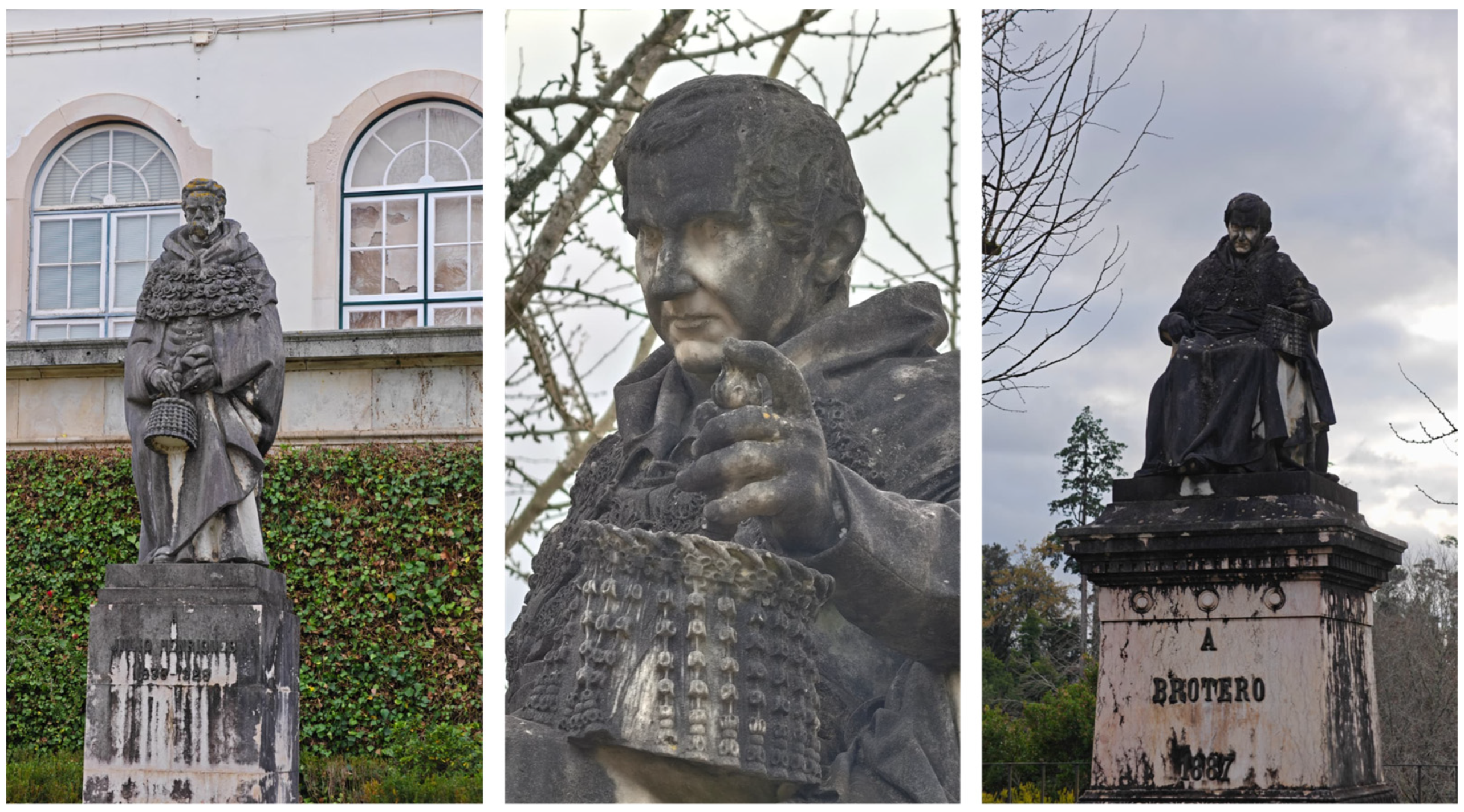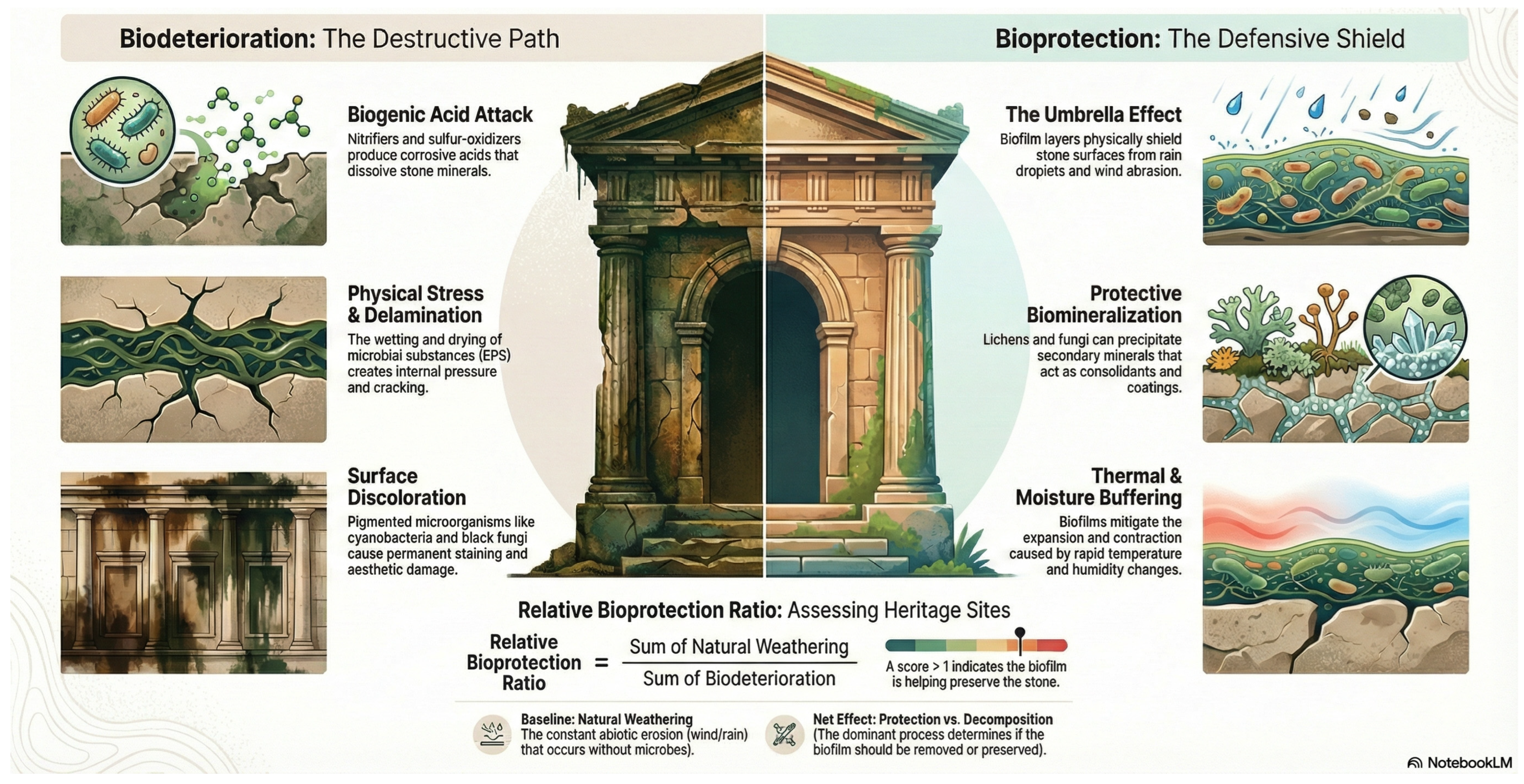

Fungi and Stone Heritage Conservation: Friend, Foe, or a Bit of Both



Abstract
1. Introduction
2. Biological Colonization and Its Impact on Stone Decay
3. The Role of Fungi in Stone Biodeterioration
3.1. Aesthetic Deterioration
3.2. Biophysical Deterioration
3.3. Biochemical Deterioration
3.4. Fungal-Induced Mineralization
4. Fungi: A Double-Edged Role
5. Bioprotection—A Multidimensional Approach to Heritage Conservation
5.1. The Umbrella Effect
5.2. Biocleaning
5.3. Bioconsolidation
5.4. Aesthetics in Perspective
5.5. Biocontrol Agents
6. Charting New Directions in Stone Conservation
Author Contributions
Funding
Institutional Review Board Statement
Informed Consent Statement
Data Availability Statement
Conflicts of Interest
Abbreviations
| LED | Light-emitting diode |
| EPS | Extracellular polymeric substances |
| MCF | Microcolonial Fungi |
| UK | United Kingdom |
| MICP | Microbially induced calcium carbonate precipitation |
| RIF | Rock-inhabiting fungi |
References
- Griffin, P.S.; Indictor, N.; Koestler, R.J. The Biodeterioration of Stone: A Review of Deterioration Mechanisms, Conservation Case Histories, and Treatment. Int. Biodeterior. 1991, 28, 187–207. [Google Scholar] [CrossRef]
- Gaylarde, C.; Ribas Silva, M.; Warscheid, T. Microbial Impact on Building Materials: An Overview. Mater. Struct. 2003, 36, 342–352. [Google Scholar] [CrossRef]
- McNamara, C.J.; Mitchell, R. Microbial Deterioration of Historic Stone. Front. Ecol. Environ. 2005, 3, 445–451. [Google Scholar] [CrossRef]
- Mohammadi, P.; Krumbein, W.E. Biodeterioration of Ancient Stone Materials from the Persepolis Monuments (Iran). Aerobiologia 2008, 24, 27–33. [Google Scholar] [CrossRef]
- Sterflinger, K. Fungi: Their Role in Deterioration of Cultural Heritage. Fungal Biol. Rev. 2010, 24, 47–55. [Google Scholar] [CrossRef]
- Dakal, T.C.; Cameotra, S.S. Microbially Induced Deterioration of Architectural Heritages: Routes and Mechanisms Involved. Environ. Sci. Eur. 2012, 24, 36. [Google Scholar] [CrossRef]
- Gadd, G.M. Fungi, Rocks, and Minerals. Elements 2017, 13, 171–176. [Google Scholar] [CrossRef]
- Trovão, J.; Portugal, A.; Soares, F.; Paiva, D.S.; Mesquita, N.; Coelho, C.; Pinheiro, A.C.; Catarino, L.; Gil, F.; Tiago, I. Fungal Diversity and Distribution across Distinct Biodeterioration Phenomena in Limestone Walls of the Old Cathedral of Coimbra, UNESCO World Heritage Site. Int. Biodeterior. Biodegrad. 2019, 142, 91–102. [Google Scholar] [CrossRef]
- Trovão, J.; Gil, F.; Catarino, L.; Soares, F.; Tiago, I.; Portugal, A. Analysis of Fungal Deterioration Phenomena in the First Portuguese King Tomb Using a Multi-Analytical Approach. Int. Biodeterior. Biodegrad. 2020, 149, 104933. [Google Scholar] [CrossRef]
- Paiva, D.S.; Fernandes, L.; Trovão, J.; Mesquita, N.; Tiago, I.; Portugal, A. Uncovering the Fungal Diversity Colonizing Limestone Walls of a Forgotten Monument in the Central Region of Portugal by High-Throughput Sequencing and Culture-Based Methods. Appl. Sci. 2022, 12, 10650. [Google Scholar] [CrossRef]
- Paiva, D.S.; Fernandes, L.; Trovão, J.; Pereira, E.; Mesquita, N.; Tiago, I.; Gil, F.; Portugal, A. Black Mold on a White Limestone: The Role of Stachybotrys Chartarum in Stone Heritage Deterioration. npj Herit. Sci. 2025, 13, 29. [Google Scholar] [CrossRef]
- Carter, N.E.A.; Viles, H.A. Bioprotection Explored: The Story of a Little Known Earth Surface Process. Geomorphology 2005, 67, 273–281. [Google Scholar] [CrossRef]
- McIlroy de la Rosa, J.P.; Warke, P.A.; Smith, B.J. The Effects of Lichen Cover upon the Rate of Solutional Weathering of Limestone. Geomorphology 2014, 220, 81–92. [Google Scholar] [CrossRef]
- Fernandes, P. Applied Microbiology and Biotechnology in the Conservation of Stone Cultural Heritage Materials. Appl. Microbiol. Biotechnol. 2006, 73, 291–296. [Google Scholar] [CrossRef]
- Cappitelli, F. Biocleaning of Cultural Heritage Surfaces. Open Conf. Proc. J. 2016, 7, 65–69. [Google Scholar] [CrossRef]
- Joseph, E.; Junier, P. Metabolic Processes Applied to Endangered Metal and Wood Heritage Objects: Call a Microbial Plumber! N. Biotechnol. 2020, 56, 21–26. [Google Scholar] [CrossRef]
- Wang, J.; Ersan, Y.C.; Boon, N.; De Belie, N. Application of Microorganisms in Concrete: A Promising Sustainable Strategy to Improve Concrete Durability. Appl. Microbiol. Biotechnol. 2016, 100, 2993–3007. [Google Scholar] [CrossRef]
- Shraddha, G.; Darshan, M. Microbially Induced Calcite Precipitation through Urolytic Organisms—A Review. Int. J. Life Sci. 2019, 7, 133–139. [Google Scholar]
- Warscheid, T.; Braams, J. Biodeterioration of Stone: A Review. Int. Biodeterior. Biodegrad. 2000, 46, 343–368. [Google Scholar] [CrossRef]
- Guillitte, O. Bioreceptivity: A New Concept for Building Ecology Studies. Sci. Total Environ. 1995, 167, 215–220. [Google Scholar] [CrossRef]
- Gadd, G.M. Geomicrobiology of the Built Environment. Nat. Microbiol. 2017, 2, 16275. [Google Scholar] [CrossRef] [PubMed]
- Cutler, N.; Viles, H. Eukaryotic Microorganisms and Stone Biodeterioration. Geomicrobiol. J. 2010, 27, 630–646. [Google Scholar] [CrossRef]
- Zhang, G.; Gong, C.; Gu, J.; Katayama, Y.; Someya, T.; Gu, J.-D. Biochemical Reactions and Mechanisms Involved in the Biodeterioration of Stone World Cultural Heritage under the Tropical Climate Conditions. Int. Biodeterior. Biodegrad. 2019, 143, 104723. [Google Scholar] [CrossRef]
- Gadd, G.M.; Dyer, T.D. Bioprotection of the Built Environment and Cultural Heritage. Microb. Biotechnol. 2017, 10, 1152–1156. [Google Scholar] [CrossRef]
- Favero-Longo, S.E.; Viles, H.A. A Review of the Nature, Role and Control of Lithobionts on Stone Cultural Heritage: Weighing-up and Managing Biodeterioration and Bioprotection. World J. Microbiol. Biotechnol. 2020, 36, 100. [Google Scholar] [CrossRef]
- Liu, X.; Qian, Y.; Wu, F.; Wang, Y.; Wang, W.; Gu, J.-D. Biofilms on Stone Monuments: Biodeterioration or Bioprotection? Trends Microbiol. 2022, 30, 816–819. [Google Scholar] [CrossRef]
- Pinna, D. Biofilms and Lichens on Stone Monuments: Do They Damage or Protect? Front. Microbiol. 2014, 5, 133. [Google Scholar] [CrossRef] [PubMed]
- Saiz-Jimenez, C. Biodeterioration of Stone in Historic Buildings and Monuments. In Mycotoxins, Wood Decay, Plant Stress, Biocorrosion, and General Biodeterioration; Springer: Boston, MA, USA, 1994; pp. 587–604. [Google Scholar]
- Gorbushina, A.A. Life on the Rocks. Environ. Microbiol. 2007, 9, 1613–1631. [Google Scholar] [CrossRef]
- Scheerer, S.; Ortega-Morales, O.; Gaylarde, C. Chapter 5 Microbial Deterioration of Stone Monuments—An Updated Overview. Adv. Appl. Microbiol. 2009, 66, 97–139. [Google Scholar]
- Liu, X.; Koestler, R.J.; Warscheid, T.; Katayama, Y.; Gu, J.-D. Microbial Deterioration and Sustainable Conservation of Stone Monuments and Buildings. Nat. Sustain. 2020, 3, 991–1004. [Google Scholar] [CrossRef]
- Pinna, D. Microbial Growth and Its Effects on Inorganic Heritage Materials. In Microorganisms in the Deterioration and Preservation of Cultural Heritage; Springer International Publishing: Cham, Switzerland, 2021; pp. 3–35. [Google Scholar]
- Deacon, J.W. Fungal Biology, 4th ed.; John Wiley & Sons: Hoboken, NJ, USA, 2006. [Google Scholar]
- Selbmann, L.; De Hoog, G.S.; Mazzaglia, A.; Friedmann, E.I.; Onofri, S. Fungi at the Edge of Life: Cryptoendolithic Black Fungi from Antarctic Desert. Stud. Mycol. 2005, 51, 1–32. [Google Scholar]
- Selbmann, L.; Zucconi, L.; Isola, D.; Onofri, S. Rock Black Fungi: Excellence in the Extremes, from the Antarctic to Space. Curr. Genet. 2015, 61, 335–345. [Google Scholar] [CrossRef] [PubMed]
- Sterflinger, K. Black Yeasts and Meristematic Fungi: Ecology, Diversity and Identification. In Biodiversity and Ecophysiology of Yeasts; Springer: Berlin/Heidelberg, Germany, 2006; pp. 501–514. [Google Scholar]
- Sterflinger, K. Fungi as Geologic Agents. Geomicrobiol. J. 2000, 17, 97–124. [Google Scholar] [CrossRef]
- Sterflinger, K.; Piñar, G. Microbial Deterioration of Cultural Heritage and Works of Art—Tilting at Windmills? Appl. Microbiol. Biotechnol. 2013, 97, 9637–9646. [Google Scholar] [CrossRef]
- Gadd, G.M. Geomycology: Biogeochemical Transformations of Rocks, Minerals, Metals and Radionuclides by Fungi, Bioweathering and Bioremediation. Mycol. Res. 2007, 111, 3–49. [Google Scholar] [CrossRef] [PubMed]
- Gadd, G.M. Mycotransformation of Organic and Inorganic Substrates. Mycologist 2004, 18, 60–70. [Google Scholar] [CrossRef]
- De Leo, F.; Urzì, C. Microfungi from Deteriorated Materials of Cultural. In Fungi from Different Substrates; CRC Press: Boca Raton, FL, USA, 2014; pp. 144–158. [Google Scholar]
- Burford, E.P.; Kierans, M.; Gadd, G.M. Geomycology: Fungi in Mineral Substrata. Mycologist 2003, 17, 98–107. [Google Scholar] [CrossRef]
- Gadd, G.M. Metals, Minerals and Microbes: Geomicrobiology and Bioremediation. Microbiology 2010, 156, 609–643. [Google Scholar] [CrossRef]
- Gómez-Alarcón, G.; Muñoz, M.L.; Flores, M. Excretion of Organic Acids by Fungal Strains Isolated from Decayed Sandstone. Int. Biodeterior. Biodegrad. 1994, 34, 169–180. [Google Scholar] [CrossRef]
- Gadd, G.M.; Raven, J.A. Geomicrobiology of Eukaryotic Microorganisms. Geomicrobiol. J. 2010, 27, 491–519. [Google Scholar] [CrossRef]
- De Leo, F.; Marchetta, A.; Urzì, C. Black Fungi on Stone-Built Heritage: Current Knowledge and Future Outlook. Appl. Sci. 2022, 12, 3969. [Google Scholar] [CrossRef]
- Selbmann, L.; de Hoog, G.S.; Zucconi, L.; Isola, D.; Onofri, S. Black Yeasts in Cold Habitats. In Cold-Adapted Yeasts; Springer: Berlin/Heidelberg, Germany, 2014; pp. 173–189. [Google Scholar]
- Butinar, L.; Sonjak, S.; Zalar, P.; Plemenitaš, A.; Gunde-Cimerman, N. Melanized Halophilic Fungi Are Eukaryotic Members of Microbial Communities in Hypersaline Waters of Solar Salterns. Bot. Mar. 2005, 48, 73–79. [Google Scholar] [CrossRef]
- Zakharova, K.; Tesei, D.; Marzban, G.; Dijksterhuis, J.; Wyatt, T.; Sterflinger, K. Microcolonial Fungi on Rocks: A Life in Constant Drought? Mycopathologia 2013, 175, 537–547. [Google Scholar] [CrossRef]
- Gorbushina, A.A.; Whitehead, K.; Dornieden, T.; Niesse, A.; Schulte, A.; Hedges, J.I. Black Fungal Colonies as Units of Survival: Hyphal Mycosporines Synthesized by Rock-Dwelling Microcolonial Fungi. Can. J. Bot. 2003, 81, 131–138. [Google Scholar] [CrossRef]
- Gostinčar, C.; Grube, M.; De Hoog, S.; Zalar, P.; Gunde-Cimerman, N. Extremotolerance in Fungi: Evolution on the Edge. FEMS Microbiol. Ecol. 2010, 71, 2–11. [Google Scholar] [CrossRef]
- Pinna, D.; Salvadori, O. Biological Growth on Italian Monuments Restored with Organic or Carbonatic Compounds. In Of Microbes and Art: The Role of Microbial Communities in the Degradation and Protection of Cultural Heritage; Plenum Publishers: New York, NY, USA, 1999; pp. 149–154. [Google Scholar]
- Favero-Longo, S.E.; Gazzano, C.; Girlanda, M.; Castelli, D.; Tretiach, M.; Baiocchi, C.; Piervittori, R. Physical and Chemical Deterioration of Silicate and Carbonate Rocks by Meristematic Microcolonial Fungi and Endolithic Lichens (Chaetothyriomycetidae). Geomicrobiol. J. 2011, 28, 732–744. [Google Scholar] [CrossRef]
- Breitenbach, R.; Silbernagl, D.; Toepel, J.; Sturm, H.; Broughton, W.J.; Sassaki, G.L.; Gorbushina, A.A. Corrosive Extracellular Polysaccharides of the Rock-Inhabiting Model Fungus Knufia Petricola. Extremophiles 2018, 22, 165–175. [Google Scholar] [CrossRef]
- Lombardozzi, V.; Castrignanò, T.; D’Antonio, M.; Casanova Municchia, A.; Caneva, G. An Interactive Database for an Ecological Analysis of Stone Biopitting. Int. Biodeterior. Biodegrad. 2012, 73, 8–15. [Google Scholar] [CrossRef]
- Tonon, C.; Breitenbach, R.; Voigt, O.; Turci, F.; Gorbushina, A.A.; Favero-Longo, S.E. Hyphal Morphology and Substrate Porosity—Rather than Melanization—Drive Penetration of Black Fungi into Carbonate Substrates. J. Cult. Herit. 2021, 48, 244–253. [Google Scholar] [CrossRef]
- Onofri, S.; Zucconi, L.; Isola, D.; Selbmann, L. Rock-Inhabiting Fungi and Their Role in Deterioration of Stone Monuments in the Mediterranean Area. Plant Biosyst.-Int. J. Deal. All Asp. Plant Biol. 2014, 148, 384–391. [Google Scholar] [CrossRef]
- Isola, D.; Selbmann, L.; de Hoog, G.S.; Fenice, M.; Onofri, S.; Prenafeta-Boldú, F.X.; Zucconi, L. Isolation and Screening of Black Fungi as Degraders of Volatile Aromatic Hydrocarbons. Mycopathologia 2013, 175, 369–379. [Google Scholar] [CrossRef]
- Silverman, M.P. Chapter 7.2 Biological and Organic Chemical Decomposition of Silicates. Stud. Environ. Sci. 1979, 3, 445–465. [Google Scholar]
- Hoffland, E.; Kuyper, T.W.; Wallander, H.; Plassard, C.; Gorbushina, A.A.; Haselwandter, K.; Holmström, S.; Landeweert, R.; Lundström, U.S.; Rosling, A. The Role of Fungi in Weathering. Front. Ecol. Environ. 2004, 2, 258–264. [Google Scholar] [CrossRef]
- Papida, S.; Murphy, W.; May, E. Enhancement of Physical Weathering of Building Stones by Microbial Populations. Int. Biodeterior. Biodegrad. 2000, 46, 305–317. [Google Scholar] [CrossRef]
- Crispim, C.A.; Gaylarde, P.M.; Gaylarde, C.C. Algal and Cyanobacterial Biofilms on Calcareous Historic Buildings. Curr. Microbiol. 2003, 46, 79–82. [Google Scholar] [CrossRef] [PubMed]
- Fomina, M.; Burford, E.P.; Hillier, S.; Kierans, M.; Gadd, G.M. Rock-Building Fungi. Geomicrobiol. J. 2010, 27, 624–629. [Google Scholar] [CrossRef]
- Gadd, G.M.; Bahri-Esfahani, J.; Li, Q.; Rhee, Y.J.; Wei, Z.; Fomina, M.; Liang, X. Oxalate Production by Fungi: Significance in Geomycology, Biodeterioration and Bioremediation. Fungal Biol. Rev. 2014, 28, 36–55. [Google Scholar] [CrossRef]
- Ortega-Morales, B.O.; Narváez-Zapata, J.; Reyes-Estebanez, M.; Quintana, P.; De la Rosa-García, S.; Del, C.; Bullen, H.; Gómez-Cornelio, S.; Chan-Bacab, M.J. Bioweathering Potential of Cultivable Fungi Associated with Semi-Arid Surface Microhabitats of Mayan Buildings. Front. Microbiol. 2016, 7, 201. [Google Scholar] [CrossRef] [PubMed]
- Li, Z.; Liu, L.; Lu, X.; Ji, J.; Chen, J. Analysis of the Talaromyces Flavus Exometabolome Reveals the Complex Responses of the Fungus to Minerals. Geochim. Cosmochim. Acta 2021, 298, 70–86. [Google Scholar] [CrossRef]
- Salvadori, O.; Municchia, A.C. The Role of Fungi and Lichens in the Biodeterioration of Stone Monuments. Open Conf. Proc. J. 2016, 7, 39–54. [Google Scholar] [CrossRef]
- Gadd, G.M.; Sayer, J.A. Fungal Transformations of Metals and Metalloids. In Environmental Microbe-Metal Interactions; ASM Press: Washington, DC, USA, 2000; pp. 237–256. [Google Scholar]
- Caneva, G.; Nugari, M.P.; Salvadori, O. Plant Biology for Cultural Heritage: Biodeterioration and Conservation; Getty Publications: Los Angeles, CA, USA, 2008. [Google Scholar]
- Totsche, K.U.; Rennert, T.; Gerzabek, M.H.; Kögel-Knabner, I.; Smalla, K.; Spiteller, M.; Vogel, H. Biogeochemical Interfaces in Soil: The Interdisciplinary Challenge for Soil Science. J. Plant Nutr. Soil Sci. 2010, 173, 88–99. [Google Scholar] [CrossRef]
- Pinna, D. Coping with Biological Growth on Stone Heritage Objects; Apple Academic Press: Toronto, ON, Canada; Waretown, NJ, USA, 2017. [Google Scholar]
- Krumbein, W.E. Zur Frage Der Biologischen Verwitterung: Einfluß Der Mikroflora Auf Die Bausteinverwitterung Und Ihre Abhängigkeit von Edaphischen Faktoren. Z. Allg. Mikrobiol. 1968, 8, 107–117. [Google Scholar] [CrossRef]
- Gadd, G.M.; Fomina, M.; Pinzari, F. Fungal Biodeterioration and Preservation of Cultural Heritage, Artwork, and Historical Artifacts: Extremophily and Adaptation. Microbiol. Mol. Biol. Rev. 2024, 88, e0020022. [Google Scholar] [CrossRef]
- de los Ríos, A.; Cámara, B.; del Cura, M.Á.G.; Rico, V.J.; Galván, V.; Ascaso, C. Deteriorating Effects of Lichen and Microbial Colonization of Carbonate Building Rocks in the Romanesque Churches of Segovia (Spain). Sci. Total Environ. 2009, 407, 1123–1134. [Google Scholar] [CrossRef] [PubMed]
- Price, C.A.; Doehne, E. Stone Conservation: An Overview of Current Research, 2nd ed.; Getty Conservation Institute: Los Angeles, CA, USA, 2011. [Google Scholar]
- Bartolini, M.; Nugari, M.P. Resistance to Biodeterioration of Some Products Used for Rising Damp Barrier. In Protection and Conservation of the Cultural Heritage of the Mediterranean Cities; Swets & Zeitlinger: Lisse, The Netherlands, 2002; pp. 397–400. [Google Scholar]
- Caneva, G.; Salvadori, O.; Ricci, S.; Ceschin, S. Ecological Analysis and Biodeterioration Processes over Time at the Hieroglyphic Stairway in the Copàn (Honduras) Archaeological Site. Plant Biosyst.-Int. J. Deal. All Asp. Plant Biol. 2005, 139, 295–310. [Google Scholar] [CrossRef]
- Altieri, A.; Pinna, D. Prevention of Biodeterioration in Outdoor Environments. In Plant Biology for Cultural Heritage: Biodeterioration and Conservation; Getty Conservation Institute: Los Angeles, CA, USA, 2008; pp. 197–198. [Google Scholar]
- Wessel, D.P. Case Study: Field Observations on the Effectiveness of Zinc Strips to Control Biocolonization of Stone. In Biocolonization of Stone: Control and Preventive Methods: Proceedings from the MCI Workshop Series; Smithsonian Institution Scholarly Press: Washington, DC, USA, 2011; Volume 2, pp. 109–112. [Google Scholar]
- Webster, A.; May, E. Bioremediation of Weathered-Building Stone Surfaces. Trends Biotechnol. 2006, 24, 255–260. [Google Scholar] [CrossRef]
- Pinna, D.; Salvadori, B.; Galeotti, M. Monitoring the Performance of Innovative and Traditional Biocides Mixed with Consolidants and Water-Repellents for the Prevention of Biological Growth on Stone. Sci. Total Environ. 2012, 423, 132–141. [Google Scholar] [CrossRef]
- Aldoasri, M.; Darwish, S.; Adam, M.; Elmarzugi, N.; Ahmed, S. Protecting of Marble Stone Facades of Historic Buildings Using Multifunctional TiO2 Nanocoatings. Sustainability 2017, 9, 2002. [Google Scholar] [CrossRef]
- Tyagi, P.; Verma, R.K.; Jain, N. Fungal Degradation of Cultural Heritage Monuments and Management Options. Curr. Sci. 2021, 121, 1553. [Google Scholar] [CrossRef]
- Kigawa, R.; Sano, C.; Kiyuna, T.; Tazato, N.; Sugiyama, J.; Takatori, K.; Kumeda, Y.; Morii, M.; Hayakawa, N.; Kawanobe, W. New Measure to Control Microorganisms in Kitora Tumulus: Effects of Intermittent UV Irradiation (2009). Sci. Conserv. 2010, 49, e264. [Google Scholar]
- De Lucca, A.J.; Carter-Wientjes, C.; Williams, K.A.; Bhatnagar, D. Blue Light (470 Nm) Effectively Inhibits Bacterial and Fungal Growth. Lett. Appl. Microbiol. 2012, 55, 460–466. [Google Scholar] [CrossRef]
- Allsopp, D.; Seal, K.J.; Gaylarde, C.C. Introduction to Biodeterioration; Cambridge University Press: Cambridge UK, 2004. [Google Scholar]
- Cappitelli, F.; Cattò, C.; Villa, F. The Control of Cultural Heritage Microbial Deterioration. Microorganisms 2020, 8, 1542. [Google Scholar] [CrossRef] [PubMed]
- Sterflinger, K.; Sert, H.B. Biodeterioration of Buildings and Works of Art: Practical Implications on Restoration Practice. In Proceedings of the Heritage, Weathering & Conservation: Proceedings of the International Conference on Heritage, Weathering and Conservation; Taylor & Francis: Abingdon, UK, 2006; pp. 299–304. [Google Scholar]
- Rodrigues, J.D.; Anjos, M.V.; Charola, A.E. Recolonization of Marble Sculptures in a Garden Environment. In Biocolonization of Stone: Control and Preventive Methods; Charola, A.E., McNamara, C., Koestler, R.J., Eds.; Smithsonian Institution Scholarly Press: Washington, DC, USA, 2011; pp. 71–85. [Google Scholar]
- Charola, A.E.; Anjos, M.V.; Rodrigues, J.D.; Barreiro, A. Developing a Maintenance Plan for the Stone Sculptures and Decorative Elements in the Gardens of the National Palace of Queluz, Portugal./Zur Aufstellung Eines Planes Für Den Unterhalt Der Steinskulpturen Und Der Dekorativen Elemente in Den Gärten Des Nationalpalastes von Queluz, Portugal. Restor. Build. Monum. 2007, 13, 377–388. [Google Scholar] [CrossRef]
- Rodriguez-Navarro, C.; Rodriguez-Gallego, M.; Ben Chekroun, K.; Gonzalez-Muñoz, M.T. Conservation of Ornamental Stone by Myxococcus xanthus-Induced Carbonate Biomineralization. Appl. Environ. Microbiol. 2003, 69, 2182–2193. [Google Scholar] [CrossRef]
- Rodriguez-Navarro, C.; González-Muñoz, M.T.; Jimenez-Lopez, C.; Rodriguez-Gallego, M. Bioprotection. In Encyclopedia of Geobiology; Springer: Berlin/Heidelberg, Germany, 2011; pp. 185–189. [Google Scholar]
- Douglas-Jones, R.; Hughes, J.J.; Jones, S.; Yarrow, T. Science, Value and Material Decay in the Conservation of Historic Environments. J. Cult. Herit. 2016, 21, 823–833. [Google Scholar] [CrossRef]
- Pinna, D.; Galeotti, M.; Perito, B.; Daly, G.; Salvadori, B. In Situ Long-Term Monitoring of Recolonization by Fungi and Lichens after Innovative and Traditional Conservative Treatments of Archaeological Stones in Fiesole (Italy). Int. Biodeterior. Biodegrad. 2018, 132, 49–58. [Google Scholar] [CrossRef]
- Ranalli, G.; Bosch-Roig, P.; Crudele, S.; Rampazzi, L.; Corti, C.; Zanardini, E. Dry Biocleaning of Artwork: An Innovative Methodology for Cultural Heritage Recovery? Microb. Cell 2021, 8, 91–105. [Google Scholar] [CrossRef]
- Martin-Sanchez, P.M.; Nováková, A.; Bastian, F.; Alabouvette, C.; Saiz-Jimenez, C. Use of Biocides for the Control of Fungal Outbreaks in Subterranean Environments: The Case of the Lascaux Cave in France. Environ. Sci. Technol. 2012, 46, 3762–3770. [Google Scholar] [CrossRef]
- Wu, F.; Gu, J.-D.; Li, J.; Feng, H.; Wang, W. Microbial Colonization and Protective Management of Wall Paintings. Cult. Herit. Microbiol. Recent Dev. 2022, 1, 57–84. [Google Scholar]
- Scheerer, S. Microbial Biodeterioration of Outdoor Stone Monuments: Assessment Methods and Control Strategies. Ph.D. Thesis, Cardiff University, Cardiff, UK, 2008. [Google Scholar]
- Ortega-Morales, B.O.; Gaylarde, C.C. Bioconservation of Historic Stone Buildings—An Updated Review. Appl. Sci. 2021, 11, 5695. [Google Scholar] [CrossRef]
- Warscheid, T. The Evaluation of Biodeterioration Processes on Cultural Objects and Approaches for Their Effective Control. In Art, Biology, and Conservation: Biodeterioration of Works of Art; Metropolitan Museum of Art: New York, NY, USA, 2003; pp. 14–27. [Google Scholar]
- Ariño, X.; Ortega-Calvo, J.J.; Gomez-Bolea, A.; Saiz-Jimenez, C. Lichen Colonization of the Roman Pavement at Baelo Claudia (Cadiz, Spain): Biodeterioration vs. Bioprotection. Sci. Total Environ. 1995, 167, 353–363. [Google Scholar] [CrossRef]
- Mottershead, D.; Lucas, G. The Role of Lichens in Inhibiting Erosion of a Soluble Rock. Lichenologist 2000, 32, 601–609. [Google Scholar] [CrossRef]
- Özvan, A.; Dinçer, İ.; Akın, M.; Oyan, V.; Tapan, M. Experimental Studies on Ignimbrite and the Effect of Lichens and Capillarity on the Deterioration of Seljuk Gravestones. Eng. Geol. 2015, 185, 81–95. [Google Scholar] [CrossRef]
- Carballal, R.; Paz-Bermúdez, G.; Sánchez-Biezma, M.J.; Prieto, B. Lichen Colonization of Coastal Churches in Galicia: Biodeterioration Implications. Int. Biodeterior. Biodegrad. 2001, 47, 157–163. [Google Scholar] [CrossRef]
- Bungartz, F.; Garvie, L.A.J.; Nash, T.H. Anatomy of the Endolithic Sonoran Desert Lichen Verrucaria rubrocincta Breuss: Implications for Biodeterioration and Biomineralization. Lichenol. 2004, 36, 55–73. [Google Scholar] [CrossRef]
- Garcia-Vallès, M.; Topal, T.; Vendrell-Saz, M. Lichenic Growth as a Factor in the Physical Deterioration or Protection of Cappadocian Monuments. Environ. Geol. 2003, 43, 776–781. [Google Scholar] [CrossRef]
- Carter, N.E.A.; Viles, H.A. Experimental Investigations into the Interactions between Moisture, Rock Surface Temperatures and an Epilithic Lichen Cover in the Bioprotection of Limestone. Build. Environ. 2003, 38, 1225–1234. [Google Scholar] [CrossRef]
- Wendler, E.; Prasartset, C. Lichen Growth on Old Khmer-Style Sandstone Monuments in Thailand: Damage Factor or Shelter? In Proceedings of the Triennial meeting (12th), Lyon, France, 29 August–3 September 1999; Preprints. Volume 2, pp. 750–754. [Google Scholar]
- Zhao, J.; Csetenyi, L.; Gadd, G.M. Fungal-Induced CaCO3 and SrCO3 Precipitation: A Potential Strategy for Bioprotection of Concrete. Sci. Total Environ. 2022, 816, 151501. [Google Scholar] [CrossRef] [PubMed]
- Taylor-George, S.; Palmer, F.; Staley, J.T.; Borns, D.J.; Curtiss, B.; Adams, J.B. Fungi and Bacteria Involved in Desert Varnish Formation. Microb. Ecol. 1983, 9, 227–245. [Google Scholar] [CrossRef]
- Dorn, R.I. 4.5 Rock Coatings. In Treatise on Geomorphology; Elsevier: Amsterdam, The Netherlands, 2013; pp. 70–97. [Google Scholar]
- Parchert, K.J.; Spilde, M.N.; Porras-Alfaro, A.; Nyberg, A.M.; Northup, D.E. Fungal Communities Associated with Rock Varnish in Black Canyon, New Mexico: Casual Inhabitants or Essential Partners? Geomicrobiol. J. 2012, 29, 752–766. [Google Scholar] [CrossRef]
- Viles, H.A.; Goudie, A.S. Biofilms and Case Hardening on Sandstones from Al-Quwayra, Jordan. Earth Surf. Process Landf. 2004, 29, 1473–1485. [Google Scholar] [CrossRef]
- Guglielmin, M.; Favero-Longo, S.E.; Cannone, N.; Piervittori, R.; Strini, A. Role of Lichens in Granite Weathering in Cold and Arid Environments of Continental Antarctica. Geol. Soc. Lond. Spec. Publ. 2011, 354, 195–204. [Google Scholar] [CrossRef]
- Lee, M.R.; Parsons, I. Biomechanical and Biochemical Weathering of Lichen-Encrusted Granite: Textural Controls on Organic–Mineral Interactions and Deposition of Silica-Rich Layers. Chem. Geol. 1999, 161, 385–397. [Google Scholar] [CrossRef]
- Souza-Egipsy, V.; Wierzchos, J.; Sancho, C.; Belmonte, A.; Ascaso, C. Role of Biological Soil Crust Cover in Bioweathering and Protection of Sandstones in a Semi-arid Landscape (Torrollones de Gabarda, Huesca, Spain). Earth Surf. Process Landf. 2004, 29, 1651–1661. [Google Scholar] [CrossRef]
- Rampazzi, L. Calcium Oxalate Films on Works of Art: A Review. J. Cult. Herit. 2019, 40, 195–214. [Google Scholar] [CrossRef]
- Bartoli, F.; Municchia, A.C.; Futagami, Y.; Kashiwadani, H.; Moon, K.H.; Caneva, G. Biological Colonization Patterns on the Ruins of Angkor Temples (Cambodia) in the Biodeterioration vs Bioprotection Debate. Int. Biodeterior. Biodegrad. 2014, 96, 157–165. [Google Scholar] [CrossRef]
- Garvie, L.A.J.; Knauth, L.P.; Bungartz, F.; Klonowski, S.; Nash, T.H. Life in Extreme Environments: Survival Strategy of the Endolithic Desert Lichen Verrucaria rubrocincta. Naturwissenschaften 2008, 95, 705–712. [Google Scholar] [CrossRef]
- Toreno, G.; Isola, D.; Meloni, P.; Carcangiu, G.; Selbmann, L.; Onofri, S.; Caneva, G.; Zucconi, L. Biological Colonization on Stone Monuments: A New Low Impact Cleaning Method. J. Cult. Herit. 2018, 30, 100–109. [Google Scholar] [CrossRef]
- Ranalli, G.; Zanardini, E. Biocleaning on Cultural Heritage: New Frontiers of Microbial Biotechnologies. J. Appl. Microbiol. 2021, 131, 583–603. [Google Scholar] [CrossRef]
- Bosch-Roig, P.; Lustrato, G.; Zanardini, E.; Ranalli, G. Biocleaning of Cultural Heritage Stone Surfaces and Frescoes: Which Delivery System Can Be the Most Appropriate? Ann. Microbiol. 2015, 65, 1227–1241. [Google Scholar] [CrossRef]
- Bosch-Roig, P.; Ranalli, G. The Safety of Biocleaning Technologies for Cultural Heritage. Front. Microbiol. 2014, 5, 155. [Google Scholar] [CrossRef]
- Wheeler, G. Alkoxysilanes and the Consolidation of Stone; Getty Publications: Los Angeles, CA, USA, 2005. [Google Scholar]
- Negri, A.; Nervo, M.; Di Marcello, S.; Castelli, D. Consolidation and Adhesion of Pictorial Layers on a Stone Substrate. The Study Case of the Virgin with the Child from Palazzo Madama, in Turin. Coatings 2021, 11, 624. [Google Scholar] [CrossRef]
- Jroundi, F.; Schiro, M.; Ruiz-Agudo, E.; Elert, K.; Martín-Sánchez, I.; González-Muñoz, M.T.; Rodriguez-Navarro, C. Protection and Consolidation of Stone Heritage by Self-Inoculation with Indigenous Carbonatogenic Bacterial Communities. Nat. Commun. 2017, 8, 279. [Google Scholar] [CrossRef]
- Li, T.; Hu, Y.; Zhang, B.; Yang, X. Role of Fungi in the Formation of Patinas on Feilaifeng Limestone, China. Microb. Ecol. 2018, 76, 352–361. [Google Scholar] [CrossRef]
- Jin, C.; Yu, R.; Shui, Z. Fungi: A Neglected Candidate for the Application of Self-Healing Concrete. Front. Built Environ. 2018, 4, 62. [Google Scholar] [CrossRef]
- Luo, J.; Chen, X.; Crump, J.; Zhou, H.; Davies, D.G.; Zhou, G.; Zhang, N.; Jin, C. Interactions of Fungi with Concrete: Significant Importance for Bio-Based Self-Healing Concrete. Constr. Build. Mater. 2018, 164, 275–285. [Google Scholar] [CrossRef]
- Menon, R.R.; Luo, J.; Chen, X.; Zhou, H.; Liu, Z.; Zhou, G.; Zhang, N.; Jin, C. Screening of Fungi for Potential Application of Self-Healing Concrete. Sci. Rep. 2019, 9, 2075. [Google Scholar] [CrossRef]
- De Muynck, W.; De Belie, N.; Verstraete, W. Microbial Carbonate Precipitation in Construction Materials: A Review. Ecol. Eng. 2010, 36, 118–136. [Google Scholar] [CrossRef]
- Hager, M.D.; Greil, P.; Leyens, C.; van der Zwaag, S.; Schubert, U.S. Self-Healing Materials. Adv. Mater. 2010, 22, 5424–5430. [Google Scholar] [CrossRef]
- Jonkers, H.M.; Thijssen, A.; Muyzer, G.; Copuroglu, O.; Schlangen, E. Application of Bacteria as Self-Healing Agent for the Development of Sustainable Concrete. Ecol. Eng. 2010, 36, 230–235. [Google Scholar] [CrossRef]
- Dhami, N.K.; Reddy, M.S.; Mukherjee, A. Biomineralization of Calcium Carbonates and Their Engineered Applications: A Review. Front. Microbiol. 2013, 4, 314. [Google Scholar] [CrossRef]
- Seifan, M.; Samani, A.K.; Berenjian, A. Bioconcrete: Next Generation of Self-Healing Concrete. Appl. Microbiol. Biotechnol. 2016, 100, 2591–2602. [Google Scholar] [CrossRef]
- Kumari, D.; Qian, X.-Y.; Pan, X.; Achal, V.; Li, Q.; Gadd, G.M. Microbially-Induced Carbonate Precipitation for Immobilization of Toxic Metals. Adv. Appl. Microbiol. 2016, 94, 79–108. [Google Scholar]
- Phillips, A.J.; Gerlach, R.; Lauchnor, E.; Mitchell, A.C.; Cunningham, A.B.; Spangler, L. Engineered Applications of Ureolytic Biomineralization: A Review. Biofouling 2013, 29, 715–733. [Google Scholar] [CrossRef]
- Ramachandran, S.K.; Ramakrishnan, V.; Bang, S.S. Remediation of Concrete Using Microorganisms. ACI Mater. J. 2001, 98, 3–9. [Google Scholar] [CrossRef] [PubMed]
- Van Tittelboom, K.; De Belie, N.; De Muynck, W.; Verstraete, W. Use of Bacteria to Repair Cracks in Concrete. Cem. Concr. Res. 2010, 40, 157–166. [Google Scholar] [CrossRef]
- Tiano, P.; Biagiotti, L.; Mastromei, G. Bacterial Bio-Mediated Calcite Precipitation for Monumental Stones Conservation: Methods of Evaluation. J. Microbiol. Methods 1999, 36, 139–145. [Google Scholar] [CrossRef] [PubMed]
- Fang, C.; Kumari, D.; Zhu, X.; Achal, V. Role of Fungal-Mediated Mineralization in Biocementation of Sand and Its Improved Compressive Strength. Int. Biodeterior. Biodegrad. 2018, 133, 216–220. [Google Scholar] [CrossRef]
- Pasquale, V.; Fiore, S.; Hlayem, D.; Lettino, A.; Huertas, F.J.; Chianese, E.; Dumontet, S. Biomineralization of Carbonates Induced by the Fungi Paecilomyces Inflatus and Plectosphaerella Cucumerina. Int. Biodeterior. Biodegrad. 2019, 140, 57–66. [Google Scholar] [CrossRef]
- Zhao, J.; Dyer, T.; Csetenyi, L.; Jones, R.; Gadd, G.M. Fungal Colonization and Biomineralization for Bioprotection of Concrete. J. Clean. Prod. 2022, 330, 129793. [Google Scholar] [CrossRef]
- Del Monte, M.; Sabbioni, C.; Zappia, G. The Origin of Calcium Oxalates on Historical Buildings, Monuments and Natural Outcrops. Sci. Total Environ. 1987, 67, 17–39. [Google Scholar] [CrossRef]
- Verrecchia, E.P.; Dumont, J.-L.; Rolko, K.E. Do Fungi Building Limestones Exist in Semi-Arid Regions? Sci. Nat. 1990, 77, 584–586. [Google Scholar] [CrossRef]
- Savković, Ž.; Unković, N.; Stupar, M.; Franković, M.; Jovanović, M.; Erić, S.; Šarić, K.; Stanković, S.; Dimkić, I.; Vukojević, J.; et al. Diversity and Biodeteriorative Potential of Fungal Dwellers on Ancient Stone Stela. Int. Biodeterior. Biodegrad. 2016, 115, 212–223. [Google Scholar] [CrossRef]
- Ruibal, C.; Platas, G.; Bills, G.F. Isolation and Characterization of Melanized Fungi from Limestone Formations in Mallorca. Mycol. Prog. 2005, 4, 23–38. [Google Scholar] [CrossRef]
- Ruibal, C.; Platas, G.; Bills, G.F. High Diversity and Morphological Convergence among Melanised Fungi from Rock Formations in the Central Mountain System of Spain. Persoonia-Mol. Phylogeny Evol. Fungi 2008, 21, 93–110. [Google Scholar] [CrossRef] [PubMed]
- Sun, W.; Su, L.; Yang, S.; Sun, J.; Liu, B.; Fu, R.; Wu, B.; Liu, X.; Cai, L.; Guo, L.; et al. Unveiling the Hidden Diversity of Rock-Inhabiting Fungi: Chaetothyriales from China. J. Fungi 2020, 6, 187. [Google Scholar] [CrossRef] [PubMed]
- Paiva, D.S.; Fernandes, L.; Pereira, E.; Mesquita, N.; Tiago, I.; Trovão, J.; Portugal, A. Unearthing Limestone Fungal Diversity: Description of Seven Novel Species from Portugal. Fungal Syst. Evol. 2025, 15, 47–78. [Google Scholar] [CrossRef]
- Paiva, D.S.; Trovão, J.; Fernandes, L.; Mesquita, N.; Tiago, I.; Portugal, A. Expanding the Microcolonial Black Fungi Aeminiaceae Family: Saxispiralis Lemnorum Gen. et Sp. Nov. (Mycosphaerellales), Isolated from Deteriorated Limestone in the Lemos Pantheon, Portugal. J. Fungi 2023, 9, 916. [Google Scholar] [CrossRef]
- Trovão, J.; Soares, F.; Paiva, D.S.; Tiago, I.; Portugal, A. Circumfusicillium Cavernae Gen. et Sp. Nov. (Bionectriaceae, Hypocreales) Isolated from a Hypogean Roman Cryptoporticus. J. Fungi 2022, 8, 837. [Google Scholar] [CrossRef]
- Sterflinger, K.; De Baere, R.; de Hoog, G.S.; De Wachter, R.; Krumbein, W.E.; Haase, G. Coniosporium Perforans and C. Apollinis, Two New Rock-Inhabiting Fungi Isolated from Marble in the Sanctuary of Delos (Cyclades, Greece). Antonie Leeuwenhoek 1997, 72, 349–363. [Google Scholar] [CrossRef]
- Wollenzien, U.; de Hoog, G.S.; Krumbein, W.; Uijthof, J.M.J. Sarcinomyces Petricola, a New Microcolonial Fungus from Marble in the Mediterranean Basin. Antonie Leeuwenhoek 1997, 71, 281–288. [Google Scholar] [CrossRef] [PubMed]
- Bogomolova, E.V.; Minter, D.W. A New Microcolonial Rock-Inhabiting Fungus from Marble in Chersonesos (Crimea, Ukraine). Mycotaxon 2003, 86, 195–204. [Google Scholar] [CrossRef]
- De Leo, F.; Urzì, C.; Hoog, S. Two Coniosporium Species from Rock Surfaces. Stud. Mycol. 1999, 1999, 70–79. [Google Scholar]
- De Leo, F.; Urzì, C.; de Hoog, G.S. A New Meristematic Fungus, Pseudotaeniolina Globosa. Antonie Leeuwenhoek 2003, 83, 351–360. [Google Scholar] [CrossRef]
- Bills, G.; Collado, J.; Ruibal, C.; Peláez, F.; Platas, G. Hormonema Carpetanum Sp. Nov., a New Lineage of Dothideaceous Black Yeasts from Spain. Stud. Mycol. 2004, 50, 149–157. [Google Scholar]
- Isola, D.; Zucconi, L.; Onofri, S.; Caneva, G.; de Hoog, G.S.; Selbmann, L. Extremotolerant Rock Inhabiting Black Fungi from Italian Monumental Sites. Fungal Divers. 2016, 76, 75–96. [Google Scholar] [CrossRef]
- Trovão, J.; Soares, F.; Tiago, I.; Portugal, A. Talaromyces Saxoxalicus Sp. Nov., Isolated from the Limestone Walls of the Old Cathedral of Coimbra, Portugal. Int. J. Syst. Evol. Microbiol. 2021, 71, 005175. [Google Scholar] [CrossRef]
- Trovão, J.; Tiago, I.; Soares, F.; Paiva, D.S.; Mesquita, N.; Coelho, C.; Catarino, L.; Gil, F.; Portugal, A. Description of Aeminiaceae Fam. Nov., Aeminium Gen. Nov. and Aeminium Ludgeri Sp. Nov. (Capnodiales), Isolated from a Biodeteriorated Art-Piece in the Old Cathedral of Coimbra, Portugal. MycoKeys 2019, 45, 57–73. [Google Scholar] [CrossRef]
- Crous, P.W.; Osieck, E.R.; Jurjevi, Ž.; Boers, J.; Van Iperen, A.L.; Starink-Willemse, M.; Dima, B.; Balashov, S.; Bulgakov, T.S.; Johnston, P.R.; et al. Fungal Planet Description Sheets: 1284–1382. Persoonia-Mol. Phylogeny Evol. Fungi 2021, 47, 178–374. [Google Scholar] [CrossRef] [PubMed]
- Crous, P.W.; Osieck, E.R.; Shivas, R.G.; Tan, Y.P.; Bishop-Hurley, S.L.; Esteve-Raventós, F.; Larsson, E.; Luangsa-Ard, J.J.; Pancorbo, F.; Balashov, S.; et al. Fungal Planet Description Sheets: 1478–1549. Persoonia-Mol. Phylogeny Evol. Fungi 2023, 50, 158–310. [Google Scholar] [CrossRef]
- Nascimbene, J.; Salvadori, O.; Nimis, P.L. Monitoring Lichen Recolonization on a Restored Calcareous Statue. Sci. Total Environ. 2009, 407, 2420–2426. [Google Scholar] [CrossRef] [PubMed]
- Gerken, A.R.; Morrison, W.R. Pest Management in the Postharvest Agricultural Supply Chain Under Climate Change. Front. Agron. 2022, 4, 918845. [Google Scholar] [CrossRef]
- Pinzari, F.; Montanari, M.; Colaizzi, P. Moulds and Insects Affecting Libraries and Archives, Ecological and Applied Issues: The Use of Entomopathogenic Fungi to Control Library Infestations; IOBC-Global: Zürich, Switzerland, 2011. [Google Scholar]


Disclaimer/Publisher’s Note: The statements, opinions and data contained in all publications are solely those of the individual author(s) and contributor(s) and not of MDPI and/or the editor(s). MDPI and/or the editor(s) disclaim responsibility for any injury to people or property resulting from any ideas, methods, instructions or products referred to in the content. |
© 2026 by the authors. Licensee MDPI, Basel, Switzerland. This article is an open access article distributed under the terms and conditions of the Creative Commons Attribution (CC BY) license.
Share and Cite
Paiva, D.S.; Fernandes, L.; Portugal, A. Fungi and Stone Heritage Conservation: Friend, Foe, or a Bit of Both. J. Fungi 2026, 12, 128. https://doi.org/10.3390/jof12020128
Paiva DS, Fernandes L, Portugal A. Fungi and Stone Heritage Conservation: Friend, Foe, or a Bit of Both. Journal of Fungi. 2026; 12(2):128. https://doi.org/10.3390/jof12020128
Chicago/Turabian StylePaiva, Diana S., Luís Fernandes, and António Portugal. 2026. "Fungi and Stone Heritage Conservation: Friend, Foe, or a Bit of Both" Journal of Fungi 12, no. 2: 128. https://doi.org/10.3390/jof12020128
APA StylePaiva, D. S., Fernandes, L., & Portugal, A. (2026). Fungi and Stone Heritage Conservation: Friend, Foe, or a Bit of Both. Journal of Fungi, 12(2), 128. https://doi.org/10.3390/jof12020128