
Review

Well-Known and Novel Behavioural Risk Factors for Heart Failure

1
Department of Environmental Health, Occupational Medicine and Epidemiology, Wroclaw Medical University, Mikulicza-Radeckiego 7, 50-345 Wrocław, Poland
2
Lower Silesian Mental Health Centre, J. C. Korzeniowskiego 18, 50-226 Wrocław, Poland
3
Department of Biological Principles of Physical Activity, Wroclaw University of Health and Sport Sciences, I. J. Paderewskiego 35, 51-612 Wrocław, Poland
*
Author to whom correspondence should be addressed.
J. Cardiovasc. Dev. Dis. 2026, 13(5), 211; https://doi.org/10.3390/jcdd13050211
Submission received: 11 March 2026 / Revised: 11 May 2026 / Accepted: 12 May 2026 / Published: 14 May 2026

Abstract

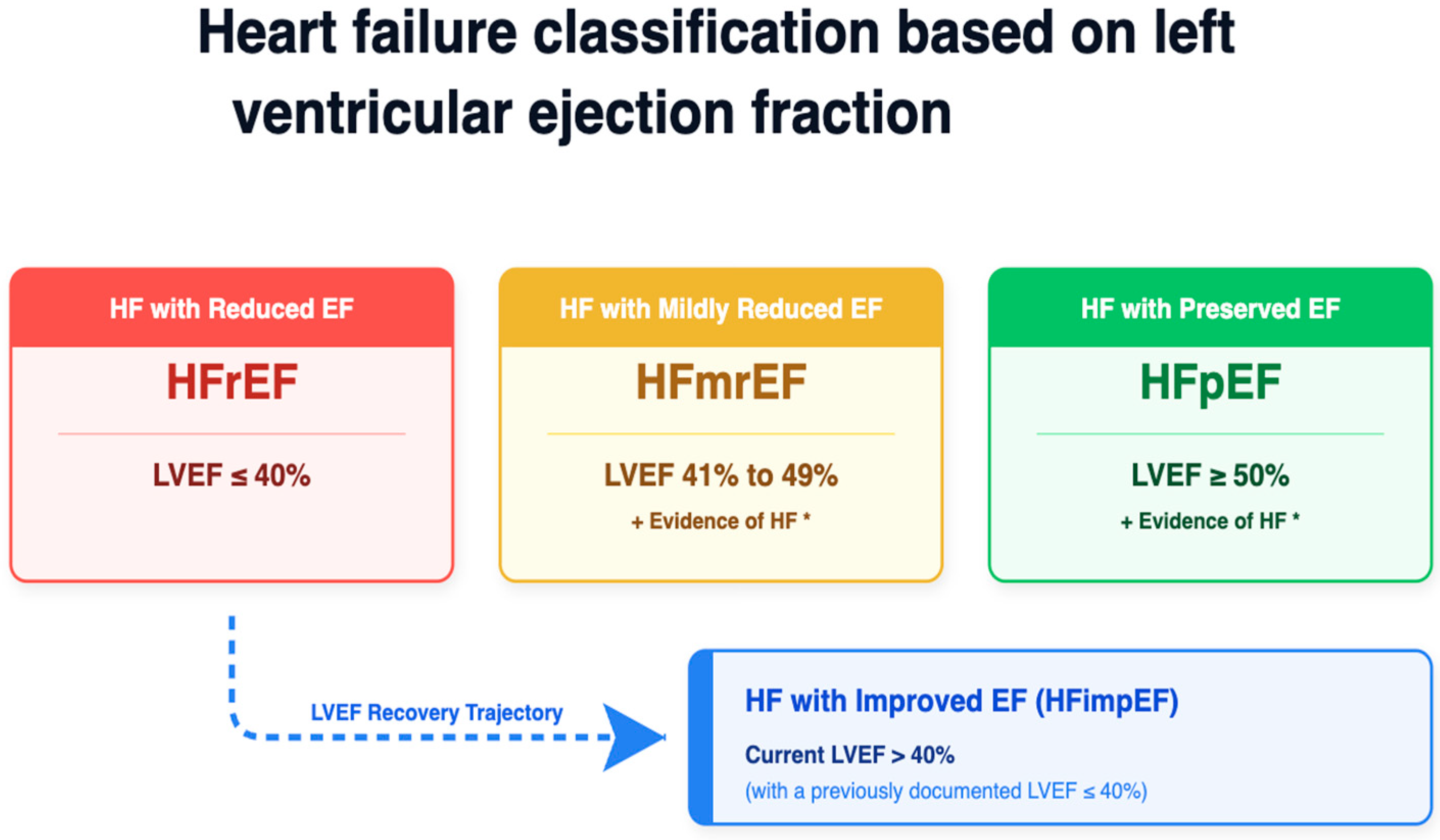
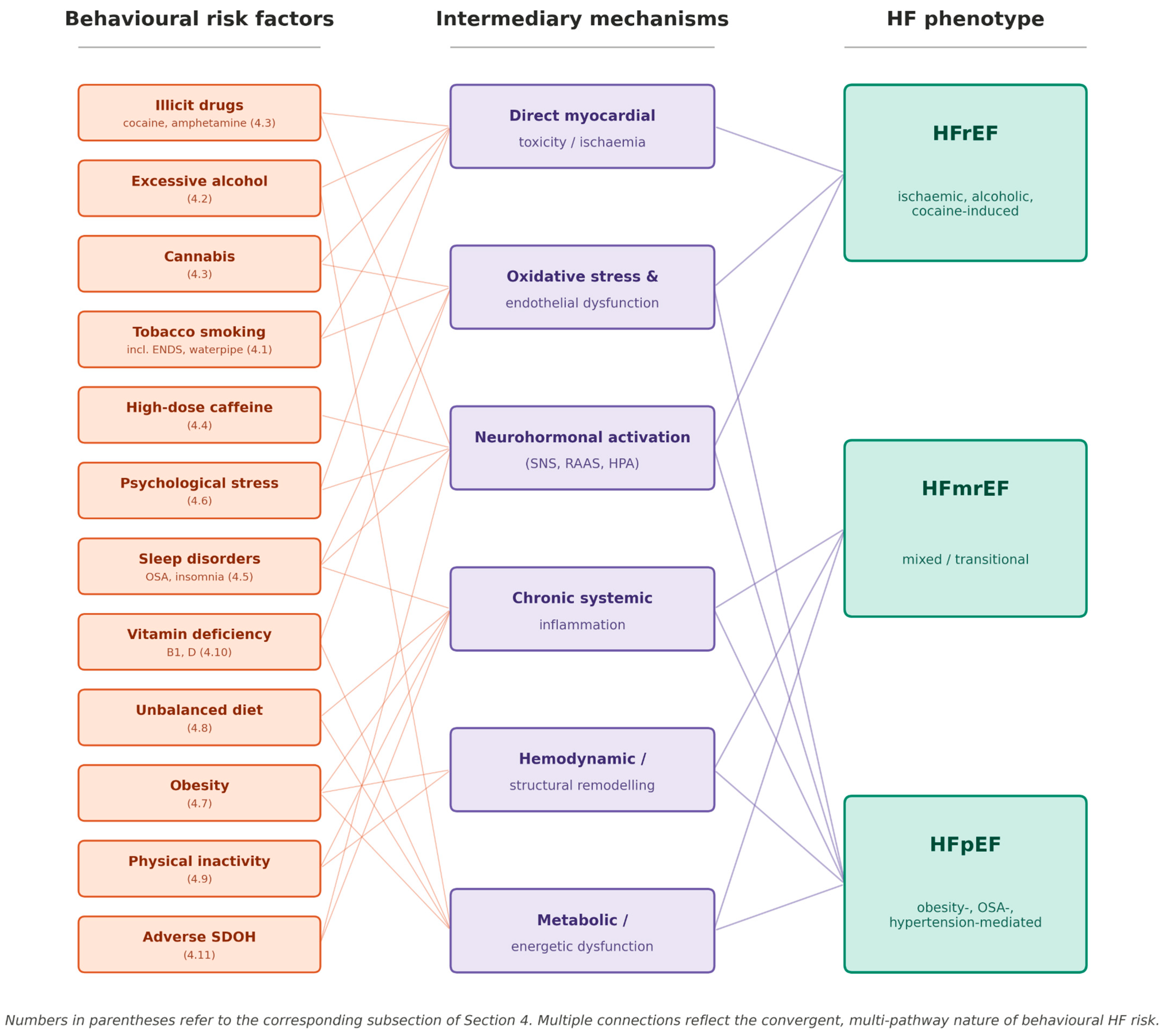
Heart failure (HF) is a clinical syndrome characterized by structural or functional cardiac abnormalities that impair ventricular filling or ejection, leading to inadequate systemic perfusion and elevated intracardiac pressures. Current epidemiological estimations declare approximately 26 million patients affected worldwide are living with HF. While ischemic heart disease remains the primary etiology, there is a wide range of behavioural factors that significantly influence disease onset and progression. This review focuses on the evidence for established risk factors, including smoking, excessive alcohol consumption, obesity, physical inactivity, poor diet, sleep disorders, and psychological stress. Furthermore, we discuss other novel determinants such as electronic nicotine delivery systems (ENDS), cannabis, high-dose caffeine, and psychostimulants. The basic mechanistic pathways, including endothelial dysfunction, oxidative stress, neurohormonal activation, and direct myocardial toxicity, are also pointed out and reviewed in this paper. The aim of this study is to integrate epidemiological data with pathophysiological insights to identify priority targets for primary prevention and highlight areas for future research.
Keywords: heart failure (HF); heart failure risk factors; behavioural HF risk factors heart failure (HF); heart failure risk factors; behavioural HF risk factors