


Abstract
Background: The aging brain is more vulnerable to many medical drugs, including antibiotics. In geriatrics, the differentiation between symptoms of the infection and adverse effects of the antibiotic therapy can be difficult. Whereas most other drugs are prescribed as lifelong or very long treatments, antibiotics are the drug class most frequently initiated by the largest number of different medical specialties. Since the geriatric rule “start low, go slow” does not apply for antibiotics, the risk of immediate side effects as a consequence of exposure of a geriatric patient to the full drug dose is relatively high. Method: For this narrative review we searched PUBMED using defined search terms. Results: Age, impaired renal function, and a reduced cognitive reserve are the strongest individual predictors of central nervous toxicity of antibiotics. Antibiotic-associated encephalopathy can be divided into three different forms, which partly overlap: (1) hallucinations and delusions starting within hours to days after the first dose (predominantly associated with fluoroquinolones and macrolides, rarely with sulfamethoxazole/trimethoprim or other antibiotics); (2) myoclonus and epileptic seizures starting within hours to days after the first dose (mainly caused by cephalosporines, penicillins, and carbapenems); (3) vertigo, nystagmus and ataxia caused by metronidazole and optical neuropathy, vertigo, mental obtundation and epileptic seizures as a consequence of the functional antagonism of isoniazid and vitamin B6. Conclusions: The contribution of antibiotics to the development of delirium, myoclonus and epileptic seizures is likely underestimated. Renal failure and neurological or psychiatric abnormalities prior to infection are the main predisposing factors for antibiotic-associated encephalopathy in old age.
1. Introduction
Antibiotics belong to the most frequently prescribed drugs worldwide. In general, antibiotics are well tolerated. Among other adverse events, they can cause antibiotic-associated encephalopathies (AAE) [1,2,3,4]. Diagnosis of AAE is difficult, because (a) severe infections can cause septic encephalopathy or septic-embolic or septic-metastatic encephalitis and (b) in critically ill patients, metabolic encephalopathies can occur. Both conditions can resemble AAE [5].
As a consequence of immunosenescence, geriatric patients are highly susceptible to infections [6]. AAE is particularly relevant in aging populations due to an increased need for antibiotics. At the same time, AAE is harder to diagnose in this population because of the higher incidence of central nervous system (CNS) dysfunction from several causes unrelated to antibiotics.
We undertook this review to examine the incidence, risk factors and outcome of AAE and to help to identify AAE in geriatric clinical practice.
2. Materials and Methods
For this narrative review, we performed a PUBMED search on 17 May 2026, with the following search terms: 1. “antibiotic(s) associated encephalopathy” (n = 5338) and [“geriatric” (n = 67) or “old age” (n = 91)]; 2. “Seizure(s)” and “antibiotic*” (n =1671) and [“geriatric*” (n = 16) or “old age” (n = 52)]. Thereafter, all publications retrieved were assessed by one of the authors with respect to their utility for this narrative review.
In the following weeks, additional PUBMED searches were performed using the names of individual antibiotics and the search terms “adverse effects”, “encephalopathy”, “seizure(s)”, “delirium”, “psychosis” or “toxicity” or “pharmacokinetics”. Additional PUBMED searches were performed to assess the relevance of drug interactions promoting or mimicking AAE in old patients.
3. Results
The true incidence of AAE is unknown. Generally, severe CNS adverse reactions induced by antibiotics are estimated to occur at a frequency below 1% [4,7]. In a large retrospective multicenter Korean study evaluating in-patients receiving antibiotics, the incidence of AAE was 1.0% [8]. In a retrospective study, 12 out of 117 (10%) patients with status epilepticus had a temporal association with antibiotic administration [9].
AAE probably is under-recognized, because mild forms may have nonspecific clinical symptoms. The differential diagnosis between sepsis-associated encephalopathy and AAE can be difficult. The United States Food and Drug Administration Adverse Event Reporting System (FAERS), a publicly available database containing adverse event reports, medication error reports. and product quality complaints resulting in adverse events, identified from January 2004 to December 2024, i.e., in 21 years, a total of 13,698 patients with AAE. FAERS relies on spontaneous reporting and contains adverse event reports from manufacturers as required by regulation and reports received directly from consumers and healthcare professionals. Reporting bias, notoriety bias and confounding by indication have to be considered when interpreting these data. The five most frequently listed antibiotics were metronidazole (1464), levofloxacin (1447), ciprofloxacin (1290), ertapenem (825), and imipenem/cilastatin (788 cases). The reported proportion of AAE strongly increased with age [4,7]. Approx. 40% of all cases reported in FAERS were 65 years and older (in 17% age was not specified) [4]. According to the reported proportions, sex did not constitute a risk factor for AAE [4,10].
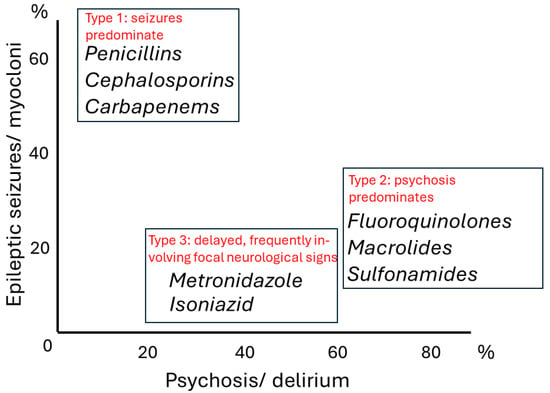
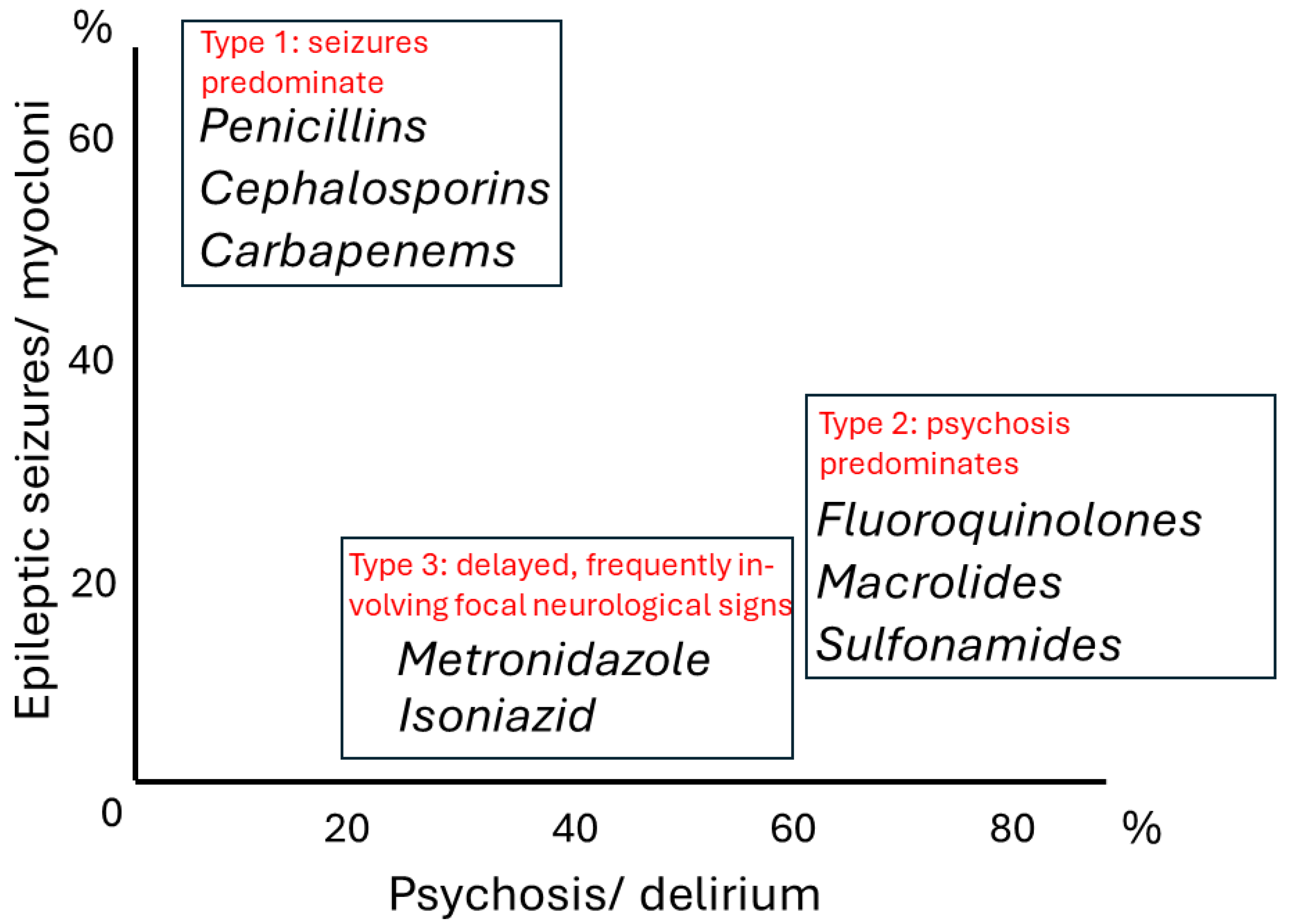
AAE is not a homogeneous syndrome [11]. Generally, AAE is divided into three types depending on the prevailing symptoms (Type 1: myoclonus or epileptic seizures; Type 2: psychosis including delirium; Type 3: delayed, often with focal neurological signs [3,4]) (Figure 1). There is considerable overlap between Type 1 and Type 2: β-lactam antibiotics usually inducing seizures less frequently cause psychosis, and fluoroquinolones, typically inducing hallucinations and psychosis, less frequently can also cause epileptic seizures.
Figure 1.
Types of antibiotic-associated encephalopathy (AAE). (1) Seizures predominate. (2) Psychosis, delirium and hallucinations predominate. (3) Delayed development of focal neurological signs associated with metronidazole; delayed optic neuropathy, psychosis and seizures caused by the functional antagonism of isoniazid on vitamin B6 metabolism. The percentages do not represent the absolute risks among treated patients but the frequency of symptoms in patients diagnosed with the respective type of AAE [3,4].
3.1. Types of Antibiotic-Associated Encephalopathy (AAE)
3.1.1. Type 1: Myoclonus and Epileptic Seizures Predominate
The typical adverse CNS effects of β-lactam antibiotics are myoclonus and epileptic seizures [12]. Central nervous system pathology, neurological diseases, history of epilepsy or seizures, and critical illness together with increased age increases the susceptibility to seizure development as a consequence of antibiotic therapy [12].
In the aforementioned retrospective study, the antibiotics administered in relation to a status epilepticus (8× convulsive status epilepticus, 4× non-convulsive status epilepticus) were the β-lactam antibiotics ceftazidime (n = 5), amoxycillin/clavulanic acid (n = 2), piperacillin (n = 2), cefepime (n = 1) and the fluoroquinolones levofloxacin (n = 3), ofloxacin (n = 1), and ciprofloxacin (n = 2) alone or in combinations. Five of these patients had hepatic (42%) and six renal (50%) failure; in the patients with renal failure, the observed dose of the antibiotic was higher than the dose adjusted according to the renal function [9].
Cefepime is considered the β-lactam antibiotic most frequently associated with epileptic seizures and altered mental status. In a systematic review on 135 patients experiencing cefepime-associated neurotoxicity, the majority were elderly (median 69 years), had renal dysfunction (80%), and required intensive care (81%). Many patients with sufficient information available (48%) received cefepime regimens excessive for their reported renal function. However, 26% were dosed appropriately, and another 26% could not be assessed because of incomplete information. Among the 26% of patients experiencing neurotoxicity and considered to be dosed appropriately for renal function, seven patients had measured serum concentrations, and all were elevated (≥20 mg/L) [13]. All 135 patients had altered mental status, and reduced consciousness was reported in 47% of cases. Other frequent clinical findings were myoclonus (n = 57, 42%), confusion (n = 57, 42%), aphasia (n = 20, 15%), seizures (n = 17, 13%), and agitation (n = 15, 11%). All patients who received an electroencephalogram (98 patients, 73%) showed abnormalities (25% non-convulsive status epilepticus, 7% myoclonic status epilepticus, 40% triphasic waves, 39% focal sharp waves) [13].
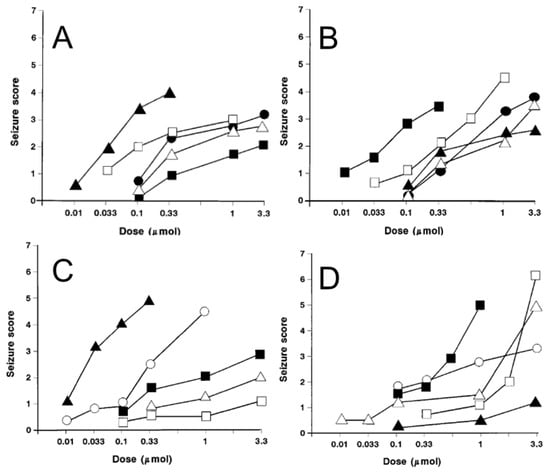
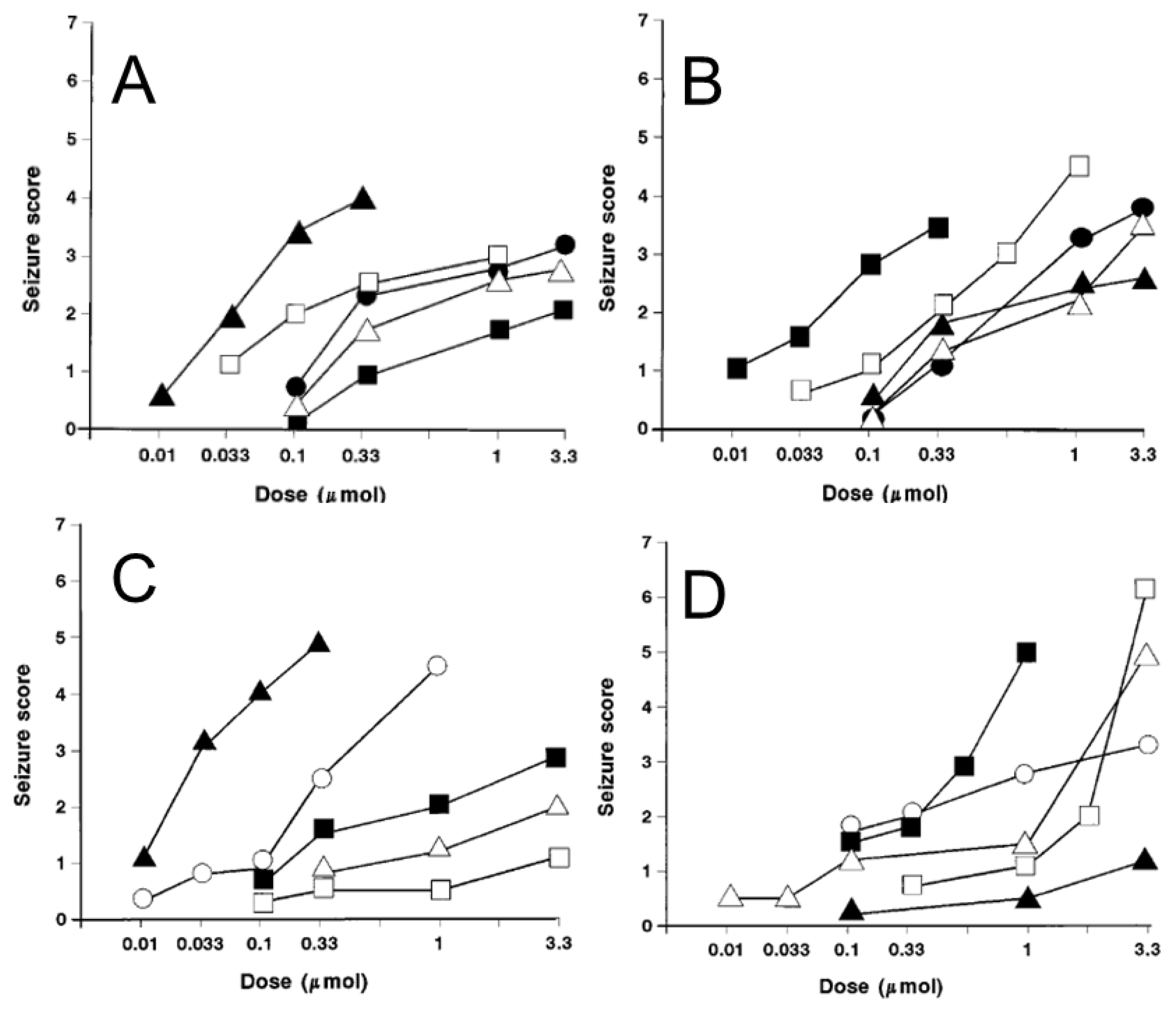
The convulsant action of β-lactam antibiotics has been related to the reduction in the release of GABA from nerve terminals or to the concentration-dependent competitive inhibition of ϒ-aminobutyric acid (GABA) binding to its receptor sites [13,14]. In experimental rats after intracerebroventricular administration, cefazolin was the most powerful epileptogenic antibiotic among the compounds tested. It was approximately three times more potent than benzylpenicillin in generating a response and much more potent than other cephalosporins, such as ceftriaxone, cefoperazone, and cefamandole. Very low epileptogenic activity was observed with equimolar doses of cefixime in this model. Cefotaxime and ceftizoxime also had low pro-convulsive activity at low concentrations. At high concentrations of 3.3 μmol/L (approx. 1.50 mg/L and 1.27 mg/L), cefotaxime and ceftizoxime also had strong epileptogenic activity in the intracerebroventricular rat model [14]. In rats, the carbapenem imipenem was more potent than meropenem in inducing epileptic seizures, its convulsant potency being similar to those of ceftezole and benzylpenicillin. The monobactam aztreonam possessed convulsant properties more potent than those of cefoperazone and cefamandole. In this model, cefepime, amoxicillin/clavulanate and flucloxacillin were not tested [14]. Based on this publication and more recent data [15,16], the French Societies of Pharmacology and Therapeutics and Anaesthesia and Intensive Care Medicine published a list of the relative pro-convulsive activity of β-lactam antibiotics, using penicillin G (=100) as the reference compound [17] (Table 1). Table 1 and Figure 2 suggest that cefazolin, cefepime, penicillin G and imipenem should be used with caution in geriatric patients, and doses should be strictly adjusted to renal function. For cefepime, penicillin G and imipenem less pro-convulsive alternative compounds are available. Apart from a few case reports mainly in patients with impaired renal function (e.g., [18]), intravenous cefazolin in humans does not appear to have a high risk of inducing epileptic seizures. In a large randomized trial analyzing infections caused by methicillin-susceptible Staphylococcus aureus, cefazolin was equally effective, but less nephrotoxic than the anti-staphylococcal penicillins flucloxacillin or cloxacillin [19]. In geriatric patients, the possibly higher risk of epileptic seizures with cefazolin must be balanced against the increased risk of renal failure with (flu)cloxacillin. For β-lactam antibiotics with high pro-convulsive activity, dose adjustment to the renal function and therapeutic drug monitoring (TDM) is of particular importance to avoid drug toxicity.
Table 1.
Pro-convulsive activity of several β-lactam antibiotics frequently used in the care of older people compared with penicillin G (modified from Guilhaumou and co-workers [17], reproduced under the terms of the Creative Commons Attribution 4.0 International License (http://creativecommons.org/licenses/by/4.0/, 22 October 2026) with kind permission of Springer Nature, Heidelberg, Germany).
Figure 2.
Dose–response curves of seizure intensity score determined from behavioral changes after intracerebroventricular injection of β-lactam antibiotics in rats (de Sarro and co-workers [14]), reproduced with kind permission of the American Society for Microbiology, Washington, DC, USA. (A) Filled triangles—benzylpenicillin; open squares—aztreonam; open triangles—amoxicillin; filled circles—ampicillin; filled squares—sulbenicillin. (B) Open squares—azlocillin; open triangles—piperacillin; filled squares—imipenem; filled triangles—mezlocillin; filled circles—meropenem. (C) Filled triangles—cefazolin; open circles—cefoperazone; open triangles—cefuroxime; open squares—cephradine; filled squares—Ro 23-9424 (fused compound containing fleroxacin combined with desacetylcefotaxime). (D) Filled squares—ceftriaxone; open circles—ceftazidime; open triangles—cefotaxime; open squares—ceftizoxime; filled triangles—cefixime.
The pro-convulsive activity of the individual compounds was established by expert consensus considering animal and clinical data [14,15,16].
3.1.2. Type 2: Psychosis Predominates
As a consequence of the CNS excitatory effects of fluoroquinolones, elderly patients should be monitored carefully for such symptoms. Probably many signs of possible adverse reactions, such as confusion, weakness, loss of appetite, tremor or depression, are often mistakenly attributed to old age and remain unreported [20].
A review evaluating FAERS data identified 15 antibiotics associated with a significantly increased odds of psychosis (OR = 1.67–9.48), including fluoroquinolones, macrolides, cephalosporins, doxycycline and penicillins. The proportion of adverse drug reports referring to psychosis as a consequence of treatment with antibiotics ranged from 0.3 to 3.8%. The antibiotics with the greatest increased odds of psychosis were the macrolide clarithromycin, the fluoroquinolones ciprofloxacin and levofloxacin and the nitroimidazole metronidazole [10]. These drugs are characterized by a moderate to high lipophilicity and readily enter the brain and CSF [21,22,23]. The free fluoroquinolone concentrations in the cerebral extracellular fluid are close to the respective free concentrations in CSF [24].
Fluoroquinolone-induced psychosis involves the inhibition of GABA receptors and the activation of glutaminergic N-methyl-D-aspartate (NMDA) receptors [25]. Fluoroquinolones also can cause peripheral neuropathy [26]. In a univariate analysis, the risk factor with the highest link to encephalopathy and peripheral neuropathy was age > 60 years, reported in 69.5% of the cases, followed by renal failure [27]. In a study among US veterans (mean age 71.5 years, range 22–95), psychosis including delirium occurred in 3.6% of ciprofloxacin-treated (n = 14/391), 4.5% of moxifloxacin--treated (n = 9/200), and 0% of levofloxacin-treated patients (n = 0/40) [28]. In a retrospective pharmacovigilance study using FAERS data from Q1 2004 to Q4 2023 (84,777 reports associated with fluoroquinolones), ciprofloxacin was most frequently linked to depression and suicidal thoughts, whereas moxifloxacin “showed a robust correlation with delirium”. The risk of the individual neuropsychiatric adverse drug reactions varied by age group: affective disorders were more prevalent in adults under 65, psychosis and delirium most frequent in those over 65 [29]. In patients receiving a fluoroquinolone, a 10-year increase in age was associated with a 1.8-fold greater likelihood of psychosis [28]. In addition to age, a history of neurologic or psychiatric disorders increased the AAE incidence of ciprofloxacin [30].
Which of the frequently used fluoroquinolones has the highest risk of inducing psychosis is still unclear. In a Czech retrospective study in a nephrological department (high prevalence of patients with impaired renal function), the overall incidence of neurological adverse drug reactions for ciprofloxacin was 3.6%. No neurological adverse drug reactions occurred in patients ≤70 years [30]. In the absence of meningeal inflammation, ofloxacin and levofloxacin enter the brain more readily than ciprofloxacin and moxifloxacin [21,22,23,31,32]. Ofloxacin in relation to its low prescription rate has been reported a high frequency of CNS adverse effects. Levofloxacin, the antibacterially active L-isomer of ofloxacin, is considered safer, but in a recent Spanish review appeared the second most frequent (after ciprofloxacin) fluroquinolone involved in CNS adverse effects [33]. The inhibitory effects of the fluoroquinolones on [3H]muscimol binding to GABA receptors on synaptic plasma membranes of mouse brains were most pronounced with prulifloxacin and norfloxacin followed by ciprofloxacin, enoxacin, gatifloxacin, ofloxacin, tosufloxacin, lomefloxacin, levofloxacin, sparfloxacin, pazufloxacin and fleroxacin [34].
Compared with fluoroquinolones, clarithromycin and metronidazole, the association with psychosis was low with sulfamethoxazole/trimethoprim, nitrofurantoin, doxycycline, azithromycin, erythromycin, cefuroxime, ceftriaxone and cephalexin. No significant disproportionality concerning psychosis was reported for tetracycline, penicillin, piperacillin, meropenem, vancomycin, ceftriaxone or aminoglycosides [10] (Table 2).
Table 2.
Odds ratios for psychosis adverse drug reactions for individual antibiotics and antibiotic classes, relative to minocycline according to the United States (US) Federal Drug Administration (FDA) Adverse Event Reporting System (FAERS) (according to Essali & Miller [10], reproduced with kind permission of Elsevier B.V., Amsterdam, The Netherlands).
3.1.3. Type 3: Delayed Toxicity, Often Focal Neurological Signs Predominate
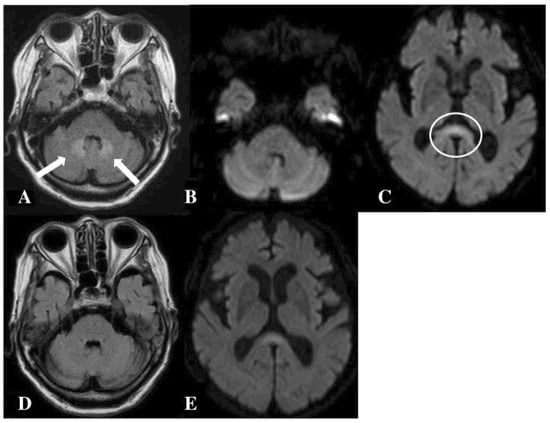
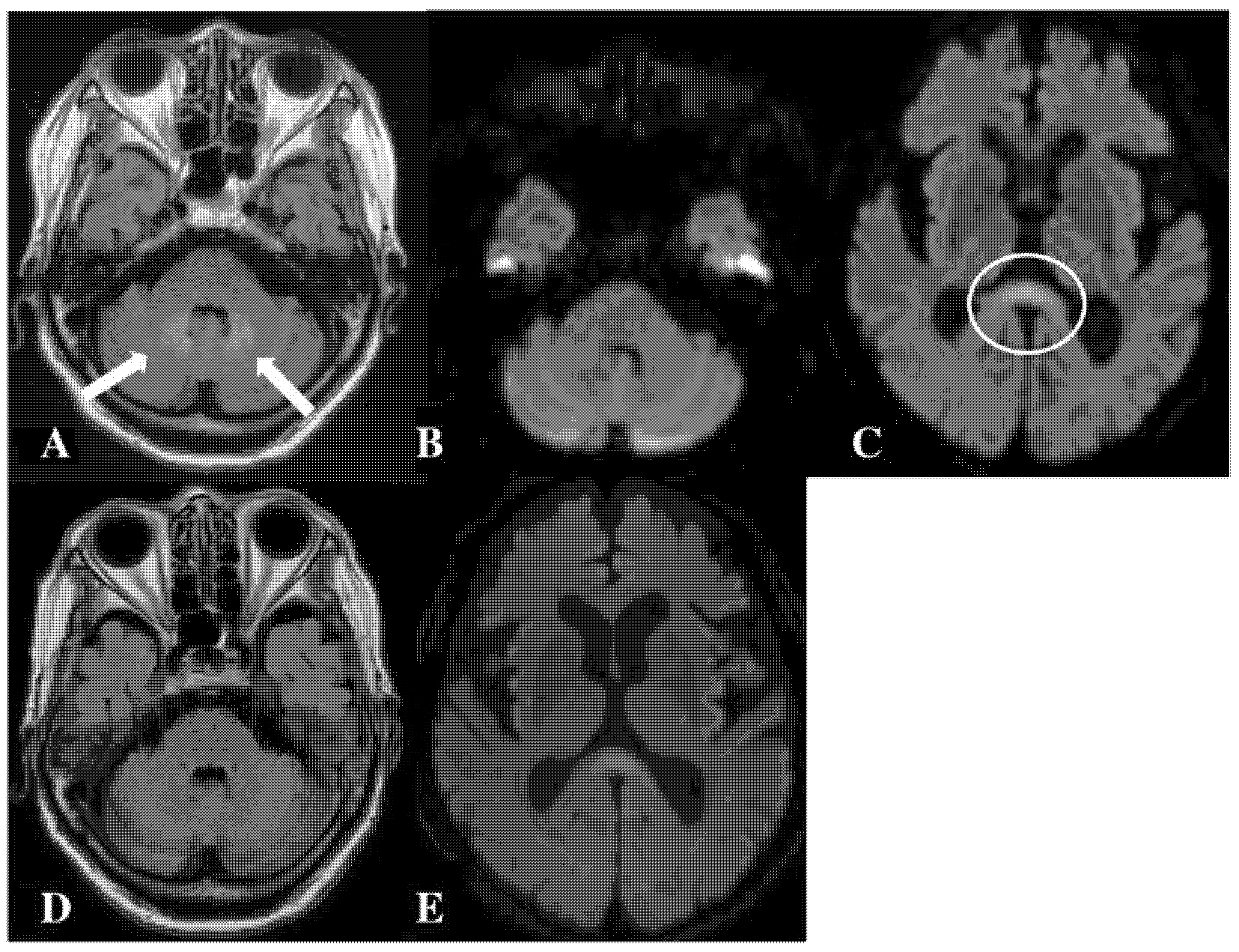
The prototype of this form of antibiotics-associated encephalopathy is caused by metronidazole. Metronidazole occasionally can affect the cerebellum, causing ataxia, dysmetria in finger-to-nose and heel-to-knee tests, gait instability, dizziness, vertigo and spontaneous nystagmus and producing typical MRI findings in the cerebellar dentate nuclei (Figure 3). The MRI findings resemble images found in Wernicke‘s encephalopathy [35,36]. Neurotoxicity of metronidazole also can manifest as peripheral neuropathy, epileptic seizures and headache [35,36]. Termination of metronidazole treatment can but not always does result in rapid clinical improvement and resolution of signal changes (Figure 3). The incidence of metronidazole-induced encephalopathy is unknown. Metronidazole can cause a disulfiram-like reaction when consumed together with alcohol. The interaction of metronidazole and alcohol occurs with unclear frequency, and, when it occurs, it manifests with varying severity [37]. The mechanism of this interaction is unknown. Early studies suggested an inhibition of the alcohol dehydrogenase in the liver by metronidazole or its metabolites. Recent studies were unable to confirm this mechanism [37].
Figure 3.
Cerebral magnetic resonance imaging of a patient with metronidazole-induced encephalopathy. (A) T2-weighted fluid-attenuated inversion recovery (FLAIR) imaging performed at 4 days after the onset of symptoms: hyperintense areas in the bilateral cerebellar dentate nuclei (white arrows). (B) Diffusion-weighted imaging (DWI) also performed 4 days after onset of symptoms: almost normal intensity in the bilateral basal dentate nuclei. (C) DWI recorded 4 days after the onset of symptoms revealed a hyperintense T2 signal compatible with cytotoxic edema in the posterior commissure (white circle). (D) Fourteen days after stopping oral metronidazole, the abnormal findings on T2-weighted FLAIR imaging had completely disappeared. (E) Fourteen days after stopping metronidazole, the signal intensities in the posterior commissure on DWI had almost disappeared (Mizuta and co-workers [36], reproduced under the terms of the Creative Commons Attribution 4.0 International License (http://creativecommons.org/licenses/by/4.0/, 22 October 2026) with kind permission of Springer Nature, Heidelberg, Germany).
Among the traditional compounds of first-line antituberculosis therapy, isoniazid is most often associated with nervous system adverse effects. Peripheral neuropathy is most common followed by psychosis, seizures and optical neuropathy [38]. Since isoniazid interferes with the endogenous vitamin B6 metabolism by inactivation of pyridoxal phosphate, the active form of vitamin B6, patients receiving isoniazid should receive vitamin B6 supplementation (e.g., 50–100 mg/day) to reduce these adverse effects.
4. Discussion
Here, we present the most frequent types of injury of antibiotics to the CNS and their high relevance for the geriatric patient. The main limitations of our study are that a) despite many published retrospective studies and case reports, the true incidence of AAE still is unknown; b) study selection was done without predefined inclusion criteria; and c) our search string may have biased our results towards selected AAE as some search terms were quite specific. At the same time, we may have missed some cases, e.g., by using “seizure(s)” and not also “epileptic” or “epilepsy”.
In order to identify the true incidence of AAE, population-based prospective studies with clear diagnostic criteria will be necessary. Less potent, but much easier to be performed would be a case-control study comparing the initiation of antibiotic therapy with the initiation of a drug without any biological plausible mechanism for delirium or epileptic seizures, such as metamizole (dipyrone), using a control group matched on age, comorbidity, and setting (in-patient or out-patient, intensive care unit [ICU]).
Antibiotics can roughly be divided into time- and concentration-dependent drugs. For time-dependent drugs (e.g., β-lactam antibiotics, glycopeptides) the pharmacodynamic goal is to maximize the time that free (unbound) drug concentrations spend above the minimum inhibitory concentration (MIC). For concentration-dependent antibiotics (e.g., aminoglycosides, fluoroquinolones) maximizing the free peak-to-MIC ratio ensures rapid bacterial killing. Time- and concentration-dependent antibiotics require different dosing strategies [39]: time-dependent antibiotics require frequent dosing or even a continuous infusion to optimize time above the MIC, whereas concentration-dependent antibiotics have a strong post-antibiotic effect and require large doses less frequently (e.g., 1× daily).
Pharmacodynamically, β-lactams as time-dependent antibiotics are suitable for old people because of their low general toxicity. By frequent dosing and prolonged infusions, high peak concentrations can be avoided without compromising their antibiotic effect. Conversely, fluoroquinolones require high peak concentrations for an optimum bactericidal activity [40]. Avoidance of high peak concentrations could compromise the antibacterial activity of fluoroquinolones. Since in general the risk to induce psychosis incl. delirium by fluoroquinolones is higher than the risk to induce myoclonus or epileptic seizures by β-lactam antibiotics, several lists of potential inadequate drugs for older people suggest the restriction of the use of fluoroquinolones: the FORTA lists recommends not to use ciprofloxacin in old patients and to administer other fluoroquinolones with caution [41], and the PRISCUS list classifies all fluoroquinolones as potentially inadequate [42]. As a consequence of the unique pharmacokinetic and pharmocodynamic properties of fluoroquinolones, a complete ban of these compounds appears not realistic in geriatric medicine. Because of their high bioavailability, these drugs are established in the long-term and oral treatment of osteoarticular infections including diabetic foot osteomyelitis and joint septic arthritis [43]. Fluoroquinolones in geriatric medicine, however, should be used with great caution. Urinary and respiratory tract infections in geriatric patients should not be treated by fluoroquinolones, as long as less toxic options are available.
The data presented show that age, impaired renal function and a history of neurologic or psychiatric disorders are the strongest indicators of a high risk to develop AAE. Antibiotic therapy aims at attaining rapidly antibacterial plasma and tissue concentrations while avoiding neurotoxicity. For most of the antibiotics used in geriatrics, the elucidation of the true renal function is the clue to avoid toxicity.
In clinical practice, the assessment of renal function poses severe problems: (a) The determination of the creatinine clearance is cumbersome and requires the 24 h collection of urine. (b) Formulae for the estimation of the glomerular filtration rate (GFR) using the plasma creatinine concentration require the presence of a steady state. These formulae overestimate the GFR during worsening of renal function and underestimate GFR during the resolution of renal failure. (c) In patients with reduced muscle mass, e.g., in frail patients, these formulae overestimate and in persons with a large muscle mass underestimate the true GFR. Cystatin C is a proteinase inhibitor synthesized by eukaryotic cells at a relatively constant rate. It is eliminated from the body exclusively by glomerular filtration, then completely reabsorbed and metabolized by tubular cells. Tubular secretion or re-entry of cystatin C into the bloodstream do not occur. For these reasons, the plasma concentration of cystatin C is the most reliable routine parameter to estimate GFR. Because the GFR estimated by plasma creatinine strongly depends on the muscle mass, and the GFR estimated by cystatin C is independent of the muscle mass, the discrepancy of the GFR estimated by cystatin C and creatinine plasma concentrations has been used as an indicator of frailty [44,45]. Estimating renal function by plasma cystatin C instead of plasma creatinine can help to identify patients at risk of renal function overestimation and subsequent antibiotic overdosing. However, the cystatin C plasma concentrations can be decreased by hypothyroidism and increased by steroid treatment, cigarette smoking, chronic inflammation, obesity and hyperthyroidism. Equations combining plasma creatinine and cystatin C can improve the accuracy of GFR estimation, especially in patients with a moderate impairment of renal function, including older patients [46]. We suggest to determine cystatin C in geriatric patients with an apparently reduced muscle mass or extended hospitalization or ICU stay [47].
In geriatric patients with difficult-to-treat infections, therapeutic drug monitoring (TDM) probably is useful, although without robust clinical data for patient-related outcomes so far. For TDM in intensive care patients, the following suggestions with relevance to geriatric patients have been proposed [17]: (1) Since geriatric patients frequently have low plasma albumin concentrations, plasma albumin must be determined in every patient in order to estimate the unbound (“free”) fraction of the antibiotic. (2) To exert a maximum bactericidal effect, the free plasma concentration of β-lactam antibiotics should lie between four and eight times the MIC of the causative bacteria for 100% of the dosing interval. (3) In order to avoid toxicity, the free plasma concentrations of β-lactam antibiotics must not exceed eight times the MIC. Guilhaumou and co-workers [17] provide absolute concentration thresholds considering the unbound fraction of the antibiotic and 8× the epidemiological cut-off values (ECOFF) of susceptible bacteria (except for ceftazidime and Pseudomonas aeruginosa). We are of the opinion that for antibiotics there are no absolute concentration thresholds for toxicity. Toxicity does not only depend on the drug and the free drug concentration, but also on the cognitive reserve or epileptogenic foci of the patient treated with the respective antibiotic. Therefore, when the causative pathogen is highly susceptible, effective free drug concentrations can be reached at concentrations substantially lower than those given as toxicity limits by intensive care specialists [17]. In order to further reduce the toxicity of β-lactam antibiotics in old vulnerable persons, we advocate to use the true MIC of the causative pathogen [48] instead of the ECOFF for the adjustment of the free plasma concentrations to four to eight times the MIC. (4) In order to avoid high peak concentrations, β-lactam antibiotics in critically ill patients should be administered as prolonged infusion. A continuous infusion offering some benefit in critically ill intensive care patients [49], in geriatric patients outside of an ICU to us does not appear feasible. (5) Whenever β-lactam antibiotic-induced toxicity is suspected, the antibiotic plasma concentration should be determined. (6) Steady state or trough concentrations of frequently used antibiotics considered appropriate for intensive care units have been published [17]. Further research is necessary, whether these relatively high concentrations also can be used in geriatric patients. (7) Also in patients with renal failure, the first antibiotic dose(s) should be full dose(s) in order to rapidly achieve therapeutic drug concentrations [50].
Worldwide, a high percentage of the elderly population is exposed to polypharmacy [51]. Therefore, drug interactions between antibiotics and other compounds must be considered. Linezolid seldomly causes a serotoninergic syndrome, particularly when co-administered with other serotoninergic drugs. In a recent study using FAERS data, citalopram, fentanyl, sertraline, escitalopram and tramadol were the most frequently serotonergic agents co-administered with linezolid in cases of serotonin syndrome [52]. In a Canadian retrospective population-based study, co-administration of linezolid and antidepressants, however, did not significantly increase the risk of a serotonin syndrome [53]. Carbapenem co-administration with valproate causes a strong decline in valproate plasma concentrations. In a retrospective study in patients prescribed valproate for its antiepileptic properties, seizures occurred after carbapenem administration in 46.3% of the cases [54]. Clarithromycin interacts with a variety of drugs: it can both decrease and increase the concentrations of other drugs, and other drugs can influence clarithromycin plasma concentrations [55]. In a Danish population-based retrospective study of hospitalized patients, among anti-infectives, meropenem–valproic acid, domperidone–fluconazole, imipramine–terbinafine, agomelatine–ciprofloxacin and clarithromycin–quetiapine were associated with elevated mortality [56]. In total, 62% of patients receiving discouraged drug pairs were 65 years and older. Therefore, physicians caring for older patients must remain vigilant for these and other drug interactions potentially promoting or mimicking AAE [53,54,55,56].
5. Conclusions
Age, impaired renal function and pre-existing neurological or psychiatric diseases are the strongest indicators of a high risk to develop antibiotics-associated encephalopathy. In frail patients, the estimation of renal function should not rely on plasma creatinine alone, but should employ a procedure independent of the muscle mass, e.g., cystatin C. With time-dependent, in particular β-lactam antibiotics, short dosing intervals and prolonged infusions should be chosen. Fluoroquinolones should be used with caution and only with mandatory indication. Also in geriatric patients, the first antibiotic dose should be a full dose in order to achieve a rapid bactericidal effect.
Author Contributions
Conceptualization, M.D. and R.N.; methodology, R.N.; validation, J.S. and J.B.; investigation, M.D., J.S., J.B. and R.N.; data curation, M.D. and J.S.; writing—original draft preparation, M.D. and R.N.; writing—review and editing, J.S. and J.B.; visualization, J.S.; supervision, R.N.; project administration, J.S. All authors have read and agreed to the published version of the manuscript.
Funding
This work was supported by German Society of Geriatrics, Berlin, Germany.
Institutional Review Board Statement
Not applicable.
Informed Consent Statement
Not applicable.
Data Availability Statement
No new data were created or analyzed in this study. Data sharing is not applicable to this article.
Conflicts of Interest
The authors declare no conflicts of interest.
Abbreviations
The following abbreviations are used in this manuscript:
| AAE | antibiotic-associated encephalopathies |
| CNS | central nervous system |
| CSF | cerebrospinal fluid |
| FAERS | United States Food and Drug Administration Adverse Event Reporting System |
| FORTA | Fit for The Aged |
| GABA | ϒ-aminobutyric acid |
| GFR | glomerular filtration rate |
| ICU | intensive care unit |
| MIC | minimum inhibitory concentration |
| NMDA | N-methyl-D-aspartate |
| PRISCUS | potentially inappropriate medications in the elderly |
| TDM | therapeutic drug monitoring |
References
- Arulkumaran, N.; Routledge, M.; Schlebusch, S.; Lipman, J.; Morris, A.C. Antimicrobial-associated harm in critical care: A narrative review. Intensive Care Med. 2020, 46, 225–235. [Google Scholar] [CrossRef] [Scilit] [PubMed]
- Bangert, M.K.; Hasbun, R. Neurological and psychiatric adverse effects of antimicrobials. CNS Drugs 2019, 33, 727–753. [Google Scholar] [CrossRef] [Scilit] [PubMed]
- Bhattacharyya, S.; Darby, R.R.; Raibagkar, P.; Castro, L.N.G.; Berkowitz, A.L. Antibiotic-associated encephalopathy. Neurology 2016, 86, 963–971, Correction in Neurology 2016, 86, 2116. https://doi.org/10.1212/WNL.0000000000002754. [Google Scholar] [CrossRef] [Scilit] [PubMed]
- Wang, H.; Jiang, H.; Yang, H.; Tang, J.; Zhang, J. Antibiotic-associated encephalopathy: A retrospective pharmacovigilance study based on 21 years of data from the US FDA Adverse Event Reporting System. Medicine 2026, 105, e48395. [Google Scholar] [CrossRef] [Scilit] [PubMed]
- Tauber, S.C.; Djukic, M.; Gossner, J.; Eiffert, H.; Brück, W.; Nau, R. Sepsis-associated encephalopathy and septic encephalitis: An update. Expert Rev. Anti Infect. Ther. 2021, 19, 215–231. [Google Scholar] [CrossRef] [Scilit]
- Theodorakis, N.; Feretzakis, G.; Hitas, C.; Kreouzi, M.; Kalantzi, S.; Spyridaki, A.; Kollia, Z.; Verykios, V.S.; Nikolaou, M. Immunosenescence: How Aging Increases Susceptibility to Bacterial Infections and Virulence Factors. Microorganisms 2024, 12, 2052. [Google Scholar] [CrossRef] [Scilit] [PubMed]
- Mattappalil, A.; Mergenhagen, K.A. Neurotoxicity with antimicrobials in the elderly: A review. Clin. Ther. 2014, 36, 1489–1511.e4. [Google Scholar] [CrossRef] [Scilit] [PubMed]
- Kim, J.H.; Kim, T.; Kim, W.; Kim, S.H.; Hong, Y.J.; Lim, E.; Bae, D.W.; Noh, S.M.; Lee, J. The incidence and predictors of antibiotic-associated encephalopathy: A multicenter hospital-based study. Sci. Rep. 2024, 14, 8747. [Google Scholar] [CrossRef] [Scilit] [PubMed]
- Misra, U.K.; Kalita, J.; Chandra, S.; Nair, P.P. Association of antibiotics with status epilepticus. Neurol. Sci. 2013, 34, 327–331. [Google Scholar] [CrossRef] [Scilit] [PubMed]
- Essali, N.; Miller, B.J. Psychosis as an adverse effect of antibiotics. Brain Behav. Immun. Health 2020, 9, 100148. [Google Scholar] [CrossRef] [Scilit] [PubMed]
- Radkowski, P.; Oszytko, J.; Sobolewski, K.; Trachte, F.; Onichimowski, D.; Majewska, M. The Effect of Antibiotics on the Nervous System: Importance for Anesthesiology and Intensive Care. Antibiotics 2025, 14, 622. [Google Scholar] [CrossRef] [Scilit] [PubMed]
- Wanleenuwat, P.; Suntharampillai, N.; Iwanowski, P. Antibiotic-induced epileptic seizures: Mechanisms of action and clinical considerations. Seizure 2020, 81, 167–174. [Google Scholar] [CrossRef] [Scilit] [PubMed]
- Payne, L.E.; Gagnon, D.J.; Riker, R.R.; Seder, D.B.; Glisic, E.K.; Morris, J.G.; Fraser, G.L. Cefepime-induced neurotoxicity: A systematic review. Crit. Care 2017, 21, 276. [Google Scholar] [CrossRef] [Scilit] [PubMed]
- De Sarro, A.; Ammendola, D.; Zappala, M.; Grasso, S.; De Sarro, G.B. Relationship between structure and convulsant properties of some beta-lactam antibiotics following intracerebroventricular microinjection in rats. Antimicrob. Agents Chemother. 1995, 39, 232–237. [Google Scholar] [CrossRef] [Scilit] [PubMed]
- Deshayes, S.; Coquerel, A.; Verdon, R. Neurological adverse effects attributable to β-lactam antibiotics: A literature review. Drug Saf. 2017, 40, 1171–1198. [Google Scholar] [CrossRef] [Scilit] [PubMed]
- Sugimoto, M.; Uchida, I.; Mashimo, T.; Yamazaki, S.; Hatano, K.; Ikeda, F.; Mochizuki, Y.; Terai, T.; Matsuoka, N. Evidence for the involvement of GABAA receptor blockade in convulsions induced by cephalosporins. Neuropharmacology 2003, 45, 304–314. [Google Scholar] [CrossRef] [Scilit] [PubMed]
- Guilhaumou, R.; Benaboud, S.; Bennis, Y.; Dahyot-Fizelier, C.; Dailly, E.; Gandia, P.; Goutelle, S.; Lefeuvre, S.; Mongardon, N.; Roger, C.; et al. Optimization of the treatment with beta-lactam antibiotics in critically ill patients-guidelines from the French Society of Pharmacology and Therapeutics (Societe Francaise de Pharmacologie et Therapeutique-SFPT) and the French Society of Anaesthesia and Intensive Care Medicine (Societe Francaise d’Anesthesie et Reanimation-SFAR). Crit. Care 2019, 23, 104. [Google Scholar] [CrossRef] [Scilit] [PubMed]
- Hasegawa, K.; Yamamoto, K.; Yamamoto, Y.; Okamoto, I.; Nakano, M.; Ogawa, Y. Cefazolin-induced seizures in a haemodialysis patient with elevated serum and cerebrospinal fluid concentrations: A case report. J. Antimicrob. Chemother. 2026, 81, dkaf373. [Google Scholar] [CrossRef] [Scilit] [PubMed]
- Staphylococcus aureus Network Adaptive Platform (SNAP) Trial Group; Lee, T.C.; Barina, L.A.; Walls, G.; Goodman, A.L.; Yahav, D.; Cheng, M.P.; Bonten, M.; Bowen, A.C.; Boyles, T.; et al. Cefazolin for Methicillin-Susceptible Staphylococcus aureus Bacteremia. N. Engl. J. Med. 2026, 394, 2329–2339. [Google Scholar] [CrossRef] [Scilit] [PubMed]
- Stahlmann, R.; Lode, H. Safety considerations of fluoroquinolones in the elderly: An update. Drugs Aging 2010, 27, 193–209. [Google Scholar] [CrossRef] [Scilit] [PubMed]
- Nau, R.; Sörgel, F.; Eiffert, H. Penetration of drugs through the blood-cerebrospinal fluid/blood-brain barrier for treatment of central nervous system infections. Clin. Microbiol. Rev. 2010, 23, 858–883. [Google Scholar] [CrossRef] [Scilit] [PubMed]
- Nau, R.; Prange, H.W.; Martell, J.; Sharifi, S.; Kolenda, H.; Bircher, J. Penetration of ciprofloxacin into the cerebrospinal fluid of patients with uninflamed meninges. J. Antimicrob. Chemother. 1990, 25, 965–973. [Google Scholar] [CrossRef] [Scilit] [PubMed]
- Nau, R.; Kinzig, M.; Dreyhaupt, T.; Kolenda, H.; Sörgel, F.; Prange, H.W. Kinetics of ofloxacin and its metabolites in cerebrospinal fluid after a single intravenous infusion of 400 milligrams of ofloxacin. Antimicrob. Agents Chemother. 1994, 38, 1849–1853. [Google Scholar] [CrossRef] [Scilit] [PubMed]
- Mariager, T.; Terkelsen, J.H.; Bue, M.; Öbrink-Hansen, K.; Nau, R.; Bjarkam, C.R.; Nielsen, H.; Bodilsen, J. Continuous evaluation of single-dose moxifloxacin concentrations in brain extracellular fluid, cerebrospinal fluid, and plasma: A novel porcine model. J. Antimicrob. Chemother. 2024, 79, 1313–1319. [Google Scholar] [CrossRef] [Scilit] [PubMed]
- Grill, M.F.; Maganti, R.K. Neurotoxic effects associated with antibiotic use: Management considerations. Br. J. Clin. Pharmacol. 2011, 72, 381–393. [Google Scholar] [CrossRef] [Scilit] [PubMed]
- Anwar, A.I.; Lu, L.; Plaisance, C.J.; Daniel, C.P.; Flanagan, C.J.; Wenger, D.M.; McGregor, D.; Varrassi, G.; Kaye, A.M.; Ahmadzadeh, S.; et al. Fluoroquinolones: Neurological Complications and Side Effects in Clinical Practice. Cureus 2024, 16, e54565. [Google Scholar] [CrossRef] [Scilit] [PubMed]
- Scavone, C.; Mascolo, A.; Ruggiero, R.; Sportiello, L.; Rafaniello, C.; Berrino, L.; Capuano, A. Quinolones-induced musculoskeletal, neurological, and psychiatric ADRs: A pharmacovigilance study based on data From the Italian spontaneous reporting system. Front. Pharmacol. 2020, 11, 428. [Google Scholar] [CrossRef] [Scilit] [PubMed]
- Sellick, J.; Mergenhagen, K.; Morris, L.; Feuz, L.; Horey, A.; Risbood, V.; Wojciechowski, A.; Ruh, C.; Bednarczyk, E.; Conway, E.; et al. Fluoroquinolone-Related Neuropsychiatric Events in Hospitalized Veterans. Psychosomatics 2018, 59, 259–266. [Google Scholar] [CrossRef] [Scilit] [PubMed]
- Xie, W.L.; Ge, M.L.; Chen, D.; Chen, G.Q.; Mei, Y.X.; Lai, Y.J. Psychiatric disorders associated with fluoroquinolones: A pharmacovigilance analysis of the FDA adverse event reporting system database. Front. Pharmacol. 2024, 15, 1435923. [Google Scholar] [CrossRef] [Scilit] [PubMed]
- Hartinger, J.M.; Dvorackova, E.; Myslivecek, M.; Hruskova, Z.; Satny, M.; Zlatohlavek, L.; Krizova, J.; Sima, M.; Tesar, V.; Slanar, O. The frequency of, and predisposing risk factors for, ciprofloxacin-induced neuro-psychiatric adverse drug reactions. Bratisl. Lek. Listy 2023, 124, 779–782. [Google Scholar] [CrossRef] [Scilit] [PubMed]
- Pea, F.; Pavan, F.; Nascimben, E.; Benetton, C.; Scotton, P.G.; Vaglia, A.; Furlanut, M. Levofloxacin disposition in cerebrospinal fluid in patients with external ventriculostomy. Antimicrob. Agents Chemother. 2003, 47, 3104–3108. [Google Scholar] [CrossRef] [Scilit] [PubMed]
- Kanellakopoulou, K.; Pagoulatou, A.; Stroumpoulis, K.; Vafiadou, M.; Kranidioti, H.; Giamarellou, H.; Giamarellos-Bourboulis, E.J. Pharmacokinetics of moxifloxacin in non-inflamed cerebrospinal fluid of humans: Implication for a bactericidal effect. J. Antimicrob. Chemother. 2008, 61, 1328–1331. [Google Scholar] [CrossRef] [Scilit] [PubMed]
- Palma-Alvarez, R.F.; Duque-Yemail, J.; Ros-Cucurull, E.; Robles-Martínez, M.; Perea-Ortueta, M.; Grau-López, L.; Ramos-Quiroga, J.A. Quinolone-induced psychosis: An updated review. Actas Esp. Psiquiatr. 2020, 48, 126–137. [Google Scholar] [PubMed]
- Kim, J.; Ohtani, H.; Tsujimoto, M.; Sawada, Y. Quantitative comparison of the convulsive activity of combinations of twelve fluoroquinolones with five nonsteroidal antiinflammatory agents. Drug Metab. Pharmacokinet. 2009, 24, 167–174. [Google Scholar] [CrossRef] [Scilit] [PubMed]
- Sørensen, C.G.; Karlsson, W.K.; Amin, F.M.; Lindelof, M. Metronidazole-induced encephalopathy: A systematic review. J. Neurol. 2020, 267, 1–13. [Google Scholar] [CrossRef] [Scilit] [PubMed]
- Mizuta, K.; Sonohata, M.; Nozaki, O.; Kobatake, T.; Nakayama, D.; Morimoto, T.; Mawatari, M. Metronidazole-induced encephalopathy in a patient with pyogenic spondylitis: A case report. BMC Musculoskelet. Disord. 2018, 19, 336. [Google Scholar] [CrossRef] [Scilit] [PubMed]
- Mergenhagen, K.A.; Wattengel, B.A.; Skelly, M.K.; Clark, C.M.; Russo, T.A. Fact versus Fiction: A Review of the Evidence behind Alcohol and Antibiotic Interactions. Antimicrob. Agents Chemother. 2020, 64, e02167-19. [Google Scholar] [CrossRef] [Scilit] [PubMed]
- Kass, J.S.; Shandera, W.X. Nervous system effects of antituberculosis therapy. CNS Drugs 2010, 24, 655–667. [Google Scholar] [CrossRef] [Scilit] [PubMed]
- Eyler, R.F.; Shvets, K. Clinical Pharmacology of Antibiotics. Clin. J. Am. Soc. Nephrol. 2019, 14, 1080–1090. [Google Scholar] [CrossRef] [Scilit] [PubMed]
- Andes, D.; Anon, J.; Jacobs, M.R.; Craig, W.A. Application of pharmacokinetics and pharmacodynamics to antimicrobial therapy of respiratory tract infections. Clin. Lab. Med. 2004, 24, 477–502. [Google Scholar] [CrossRef] [Scilit] [PubMed]
- Pazan, F.; Weiss, C.; Wehling, M.; FORTA. The FORTA (Fit for the Aged) List 2024: Fifth Version of a Validated Clinical Aid for Improved Pharmacotherapy in Older Adults. Drugs Aging 2025, 42, 1197–1199. [Google Scholar] [CrossRef] [Scilit] [PubMed]
- Mann, N.K.; Mathes, T.; Sönnichsen, A.; Pieper, D.; Klager, E.; Moussa, M.; Thürmann, P.A. Potentially Inadequate Medications in the Elderly: PRISCUS 2.0. Dtsch. Arztebl. Int. 2023, 120, 3–10. [Google Scholar] [CrossRef] [Scilit] [PubMed]
- Cortés-Penfield, N.; Beekmann, S.E.; Polgreen, P.M.; Ryan, K.; Marschall, J.; Sekar, P. Variation in North American Infectious Disease Specialists’ Practice Regarding Oral and Suppressive Antibiotics for Adult Osteoarticular Infections: Results of an Emerging Infections Network (EIN) Survey. Open Forum Infect. Dis. 2024, 11, ofae280. [Google Scholar] [CrossRef] [Scilit] [PubMed]
- Jacobs, A.; Benraad, C.; Wetzels, J.; Rikkert, M.O.; Kramers, C. Clinical Relevance of Differences in Glomerular Filtration Rate Estimations in Frail Older People by Creatinine- vs. Cystatin C-Based Formulae. Drugs Aging 2017, 34, 445–452. [Google Scholar] [CrossRef] [Scilit] [PubMed]
- Potok, O.A.; Katz, R.; Bansal, N.; Langlo, K.A.; Hallan, S.I. Using the Difference Between Estimated Glomerular Filtration Rate by Cystatin C and Creatinine to Improve Mortality Risk Prediction in Elderly Patients with CKD in the HUNT Study. Kidney Med. 2025, 8, 101129. [Google Scholar] [CrossRef] [Scilit] [PubMed]
- Spencer, S.; Desborough, R.; Bhandari, S. Should Cystatin C eGFR Become Routine Clinical Practice? Biomolecules 2023, 13, 1075. [Google Scholar] [CrossRef] [Scilit] [PubMed]
- Ibe, Y.; Ishigo, T.; Aigami, T.; Fujii, S.; Fukudo, M. Effect of discrepancy in estimated renal function on vancomycin area under the blood concentration-time curve: A retrospective cohort study comparing serum creatinine and serum cystatin C. Int. J. Clin. Pharm. 2025, 47, 1458–1466. [Google Scholar] [CrossRef] [Scilit] [PubMed]
- Nau, R.; Seele, J.; Reichard, U.; Sörgel, F. Antibacterial therapy in central nervous system infections–breakpoints versus minimal inhibitory concentrations related to body fluid levels. Infection 2026, 54, 75–81. [Google Scholar] [CrossRef] [Scilit] [PubMed]
- Dulhunty, J.M.; Brett, S.J.; De Waele, J.J.; Rajbhandari, D.; Billot, L.; Cotta, M.O.; Davis, J.S.; Finfer, S.; Hammond, N.E.; Knowles, S.; et al. Continuous vs Intermittent β-Lactam Antibiotic Infusions in Critically Ill Patients with Sepsis: The BLING III Randomized Clinical Trial. JAMA 2024, 332, 629–637. [Google Scholar] [CrossRef] [Scilit] [PubMed]
- Crass, R.L.; Rodvold, K.A.; Mueller, B.A.; Pai, M.P. Renal Dosing of Antibiotics: Are We Jumping the Gun? Clin. Infect. Dis. 2019, 68, 1596–1602. [Google Scholar] [CrossRef] [Scilit] [PubMed]
- Wang, Z.; Liu, T.; Su, Q.; Luo, H.; Lou, L.; Zhao, L.; Kang, X.; Pan, Y.; Nie, Y. Prevalence of Polypharmacy in Elderly Population Worldwide: A Systematic Review and Meta-Analysis. Pharmacoepidemiol. Drug Saf. 2024, 33, e5880. [Google Scholar] [CrossRef] [Scilit] [PubMed]
- Gatti, M.; Raschi, E.; De Ponti, F. Serotonin syndrome by drug interactions with linezolid: Clues from pharmacovigilance-pharmacokinetic/pharmacodynamic analysis. Eur. J. Clin. Pharmacol. 2021, 77, 233–239. [Google Scholar] [CrossRef] [Scilit] [PubMed]
- Bai, A.D.; McKenna, S.; Wise, H.; Loeb, M.; Gill, S.S. Association of Linezolid with Risk of Serotonin Syndrome in Patients Receiving Antidepressants. JAMA Netw. Open 2022, 5, e2247426. [Google Scholar] [CrossRef] [Scilit] [PubMed]
- Petrucelli, N.; Hayes, B.D.; Shelat, N.; Elshaboury, R.H.; Pearson, J.C.; Koehl, J.L. Evaluating Clinical Sequelae of the Carbapenem-Valproate Interaction: A Retrospective Analysis. Open Forum Infect. Dis. 2024, 11, ofae130. [Google Scholar] [CrossRef] [Scilit] [PubMed]
- Hines, L.E.; Murphy, J.E. Potentially harmful drug-drug interactions in the elderly: A review. Am. J. Geriatr. Pharmacother. 2011, 9, 364–377. [Google Scholar] [CrossRef] [Scilit] [PubMed]
- Leal Rodríguez, C.; Kaas-Hansen, B.S.; Eriksson, R.; Biel, J.H.; Belling, K.G.; Andersen, S.E.; Brunak, S. Drug interactions in hospital prescriptions in Denmark: Prevalence and associations with adverse outcomes. Pharmacoepidemiol. Drug Saf. 2022, 31, 632–642. [Google Scholar] [CrossRef] [Scilit] [PubMed]

Disclaimer/Publisher’s Note: The statements, opinions and data contained in all publications are solely those of the individual author(s) and contributor(s) and not of MDPI and/or the editor(s). MDPI and/or the editor(s) disclaim responsibility for any injury to people or property resulting from any ideas, methods, instructions or products referred to in the content. |
© 2026 by the authors. Licensee MDPI, Basel, Switzerland. This article is an open access article distributed under the terms and conditions of the Creative Commons Attribution (CC BY) license.