


Abstract
Background: As populations age, maintaining health and function in later life has become a public-health concern, and diet is among the most accessible strategies to support it. This narrative review examines the evidence on the Mediterranean diet and healthy ageing, assesses its strength across domains, and integrates data on mechanisms, outcomes, and determinants of adherence. Methods: PubMed and Scopus were searched for English-language literature published from the beginning of 2020 to June 2026, including observational studies, meta-analyses, randomised trials, and reviews, with foundational earlier sources retained where relevant. Results: Higher adherence was consistently associated with better cognitive, physical, and cardiometabolic outcomes, supported by biologically plausible mechanisms. The evidence was weakest for sarcopenia and successful ageing, consistent but mostly observational for cognition and frailty, and strongest in the cardiometabolic domain, where randomised trials exist. Socioeconomic, cultural, and age-related factors shaped adherence in older adults, meaning those most likely to benefit often face the greatest challenges. Most of the evidence was observational, which limits causal inference, and varying definitions and populations largely confined to Mediterranean regions limit generalisability. Conclusions: The Mediterranean diet is a low-risk, well-justified component of a healthy-ageing approach, provided its promotion is equitable and its claims remain proportionate to the evidence.
1. Introduction
Because the global population is ageing, maintaining health and function in later life has become one of the key public health issues of this century. All parts of the world are seeing an increase in the percentage of older adults, which can be attributed to longer survival past age 60 in some places and lower child mortality in others [1]. By 2050, China alone is expected to have 395 million people over 65 [2]. The majority of the burden in later life is caused by non-communicable diseases, and over half of older adults have two or more chronic conditions. Multimorbidity increases vulnerability and the need for care by contributing to frailty and loss of independence. As a result, the World Health Organization (WHO) has made healthy ageing a global priority [1]. Healthy ageing, according to the WHO, is the process of developing and maintaining the functional ability that enables wellbeing in older age rather than the absence of disease. This ability is based on an individual’s intrinsic capacity, which is a combination of their physical and mental abilities. Although intrinsic capacity decreases on average with age, there is considerable variability between people, so chronological age alone is a poor measure of how a person is ageing. The environment in which a person lives also affects their functional ability because the same capacity allows for varying degrees of engagement based on the support that is provided [1]. Healthy ageing therefore involves cognitive, physical, and cardiometabolic domains that interact rather than operate separately, and cannot be reduced to a single disease outcome. Some of these factors, such as health behaviours, can be modified [1], and diet is one of the most accessible to change. The Mediterranean diet (MedDiet), supported by large prospective cohorts [3] and a landmark randomised trial [4], is the most extensively researched dietary pattern in this context. Related patterns such as DASH (Dietary Approaches to Stop Hypertension) and MIND (Mediterranean-DASH Intervention for Neurodegenerative Delay) are sometimes discussed alongside it, but they are measured differently and should not be treated as equivalent to Mediterranean adherence [5,6,7,8].
The MedDiet is associated with lower rates of coronary heart disease, longer life expectancy, better glycaemic control, slower age-related cognitive decline, lower cancer incidence, and reduced all-cause mortality [9]. Because its potential effects arise from the combination of foods and their interaction, it is investigated as a complete dietary pattern rather than as a list of individual nutrients [9]. Most research on the relationship between the MedDiet and ageing has focused on specific outcomes, such as cognition, frailty, and cardiometabolic health. These outcomes are less often considered together in the context of the multidimensional nature of healthy ageing, yet this is where the pattern’s significance for ageing well becomes most evident. Most of the evidence is observational and varies in strength between domains, which calls for critical evaluation rather than simple confirmation. Broad overviews of the diet’s benefits already exist [10]. This review takes a more critical approach: it analyses how strong the data are in each domain, examines what affects whether older adults can realistically follow the diet, and places these findings within the WHO framework of healthy ageing [1]. The review first outlines the mechanisms proposed to explain the effects of the MedDiet and the outcomes reported across domains of ageing, and then considers the determinants of adherence in older adults, the limitations of the current evidence, and the implications for public health. The conceptual framework of this review is summarised in Figure 1.
Figure 1.
Conceptual framework of the review: determinants of Mediterranean diet adherence, proposed biological mechanisms, and healthy ageing outcomes.
2. Materials and Methods
This article is a narrative review of the literature on the MedDiet and healthy ageing. The literature search was exploratory and iterative rather than based on a predefined search strategy. PubMed was searched as the main database, with Scopus as an additional source, for studies published between the beginning of 2020 and June 2026. Scopus was searched with the same core terms. The exact Scopus search strings were not recorded, and this search contributed one additional article. Searches were carried out between March and June 2026. The main PubMed search used the string (mediterranean diet) AND (older adults). Results were sorted by publication date, most recent first, and screened by title. Abstracts of potentially relevant articles were read, and those that remained relevant were read in full and collected. Screening and study selection were performed by one author (D.S.), and the selected literature was reviewed by a second author (D.J.). After an initial set of about 40 articles had been read, the structure of the review was defined. Further searches were carried out for each section, combining the core terms with topic-specific terms such as cognition, dementia, frailty, sarcopenia, physical function, cardiometabolic health, and dietary adherence. Additional targeted searches were carried out during writing when specific gaps were identified, and further articles were found by checking the reference lists of included articles. The search strings used for the section-specific and targeted searches, and the numbers of records retrieved, were not recorded. When the main search was re-run during revision (16 October 2026), using the same publication period (1 January 2020 to 30 June 2026) but no language filter, it returned 2964 records and contained 44 of the 53 included articles published in this period; the remaining nine, on topics such as alcohol, protein requirements, and the cost of the diet, had been identified through targeted searches or reference lists. This overlap shows that the main search string captured most of the included articles, but it does not demonstrate that the search was complete.
There is no universally agreed age threshold for defining older adults. The WHO commonly applies 60 years and over for demographic reporting, while its healthy ageing framework emphasises that chronological age alone poorly reflects the ageing process, since intrinsic capacity varies considerably between individuals of the same age [1]. In this review, older adults were therefore defined as people aged 60 years and over, but this limit was not used as a strict exclusion criterion. The age ranges of the included studies varied considerably, from samples restricted to adults over 65 to cohorts spanning middle age and later life. This heterogeneity is discussed later as a limitation of the evidence base.
Articles on older adults were considered. Studies that included younger or middle-aged adults in addition to older participants were retained in two cases: (1) when they addressed outcomes that develop over many years, such as dementia and cardiovascular disease, for which diet in midlife is relevant to health in later life; and (2) when evidence from studies restricted to older adults was limited for that outcome. Where a finding comes mainly from middle-aged participants, this is stated in the corresponding section. Studies conducted only in children or adolescents and articles not published in English were excluded. The review draws on randomised controlled trials (RCTs), observational studies (cohort and cross-sectional), systematic reviews and meta-analyses, and narrative reviews, as well as guidelines, policy documents, and study protocols where relevant, covering the mechanisms of the diet, health outcomes, and determinants of adherence. When several sources addressed the same outcome, all were considered, and more recent publications were preferred. In interpreting the evidence, more weight was given to RCTs and to systematic reviews and meta-analyses than to individual observational studies. Foundational sources published before 2020 were included where relevant, such as the WHO framework on healthy ageing, key early studies of the MedDiet, and studies on how adherence and ageing outcomes are measured. Key findings were organised by theme, following the structure of this review: mechanisms, outcomes, determinants of adherence, limitations, and public health implications.
3. Biological Mechanisms Linking the Mediterranean Diet to Healthy Ageing
The associations between the MedDiet and ageing are biologically plausible, and several mechanisms have been proposed to explain them. These mechanisms are closely interconnected: inflammation, the gut microbiome, endothelial function and metabolic regulation directly or indirectly influence one another, and the evidence for this comes mainly from biomarkers and observational studies. However, an association between MedDiet adherence and a biomarker does not show that this pathway explains the outcomes described in Section 4, and few studies have tested this directly. The mechanisms below should therefore be read as possible explanations rather than proven causal pathways.
3.1. Anti-Inflammatory and Antioxidant Effects
A central mechanism suggested for the MedDiet is its capacity to reduce oxidative stress and the chronic low-grade inflammation that accompanies ageing, often termed ‘inflammageing’. This condition is characterised by increased levels of several proteins and pro-inflammatory cytokines (e.g., interleukin-6 (IL-6), tumour necrosis factor (TNF), C-reactive protein (CRP)). Inflammageing is associated with higher morbidity and mortality in older adults. Oxidative stress, an excess of reactive oxygen species (ROS) relative to antioxidant defences, contributes to cell damage and to age-related diseases such as cardiovascular disease (CVD), neurodegenerative disease and cancer [8,11]. The MedDiet is thought to reduce oxidative stress through its high antioxidant capacity, driven by a high intake of fruits, vegetables, whole grains and legumes; moderate intake of dairy, poultry, fish and wine; and low intake of red meat, with olive oil as the main source of fat. A balanced intake of polyunsaturated fatty acids (PUFA), monounsaturated fatty acids (MUFA) and saturated fatty acids is associated with less DNA damage and increased activity of enzymes involved in ROS detoxification. Reductions in IL-6, TNF-α and CRP and in pro-inflammatory adipokines such as leptin, together with higher adiponectin and interleukin-10, have been reported. It is important to recognise the synergistic activity of the overall dietary pattern rather than focusing on a single nutrient [8,11]. However, a large portion of this evidence comes from cross-sectional studies, which cannot establish causation, because the association may be confounded by unmeasured lifestyle factors such as physical activity, and its direction may be reversed (better health enabling adherence) [8].
3.2. Cardiometabolic Regulation
The MedDiet has also been associated with improvements in blood pressure, insulin sensitivity, lipid profiles, and ectopic fat deposition through cardiometabolic pathways. Higher adherence to the MedDiet has been associated with a more favourable lipid profile, including lower total cholesterol, low-density lipoprotein cholesterol and triglycerides, and higher high-density lipoprotein cholesterol, with favourable changes in the number and size of lipoprotein subfractions [12]. In addition to its effects on lipoproteins, a low glycaemic-index MedDiet has been associated with lower daily glycaemia and glycaemic variability in adults at risk of type 2 diabetes and/or CVDs. This may be partly explained by MUFA from olive oil, which may also improve insulin sensitivity [13]. In addition, a dietary pattern rich in unsaturated fatty acids, protein and fibre has been shown to significantly reduce intrahepatic lipids, a form of ectopic fat, independently of weight loss. This appears to be partly explained by increased lipolysis with a MUFA-enriched diet and decreased hepatic lipogenesis with PUFA, leading to less visceral fat accumulation. The difference from the control group was significant only among participants who adhered to the diet [14]. Taken together, high adherence to the MedDiet is associated with a less atherogenic profile and lower cardiometabolic risk, possibly owing to its high content of unsaturated fatty acids, fibre, polyphenols, and micronutrients [12]. This is consistent with the observation that, despite its high fat content, the MedDiet is not associated with weight gain, because the fat is mainly unsaturated, and that an energy-restricted MedDiet leads to weight loss similar to that of a low-fat diet. This suggests that fat quality, rather than quantity, drives the benefit [9]. However, most of these data come from short-term trials in selected populations that also included middle-aged adults, so caution is needed before generalising these findings to the wider older population [13,14].
3.3. The Gut Microbiome and the Gut–Brain Axis
The gut microbiome has been proposed as a mediator of the effects of the MedDiet, particularly through the production of short-chain fatty acids (SCFAs). SCFAs, such as butyrate, are produced when gut bacteria ferment dietary fibre and polyphenols, which are abundant in the MedDiet. However, in most observational studies, greater adherence was not linked to increased microbial diversity, but to a higher proportion of SCFA-producing bacteria [15]. Frailty is connected with lower faecal levels of butyrate, and an inverse relationship has been found between gut microbial production of butyrate and appendicular lean mass in people at risk of sarcopenia [15]. In contrast, fit centenarians had higher faecal levels of SCFAs than older adults aged 60–70 [15]. These metabolites are thought to support the intestinal barrier by nourishing its epithelium and to help reduce systemic inflammation [15,16]. Intervention data reinforce this: in a 1-year PREDIMED-Plus (Prevención con Dieta Mediterránea-Plus) RCT, an energy-reduced MedDiet with physical activity altered the composition of the gut microbiota and shifted it towards SCFA-producing taxa along with cardiometabolic improvements. However, the shift was not uniform—some genera decreased while others increased [17]. The microbiome may also influence cognition through the gut–brain axis, but the evidence is conflicting. Some studies support such a connection. For example, increased virgin olive oil intake (addition of 10 g/day) has been associated with a more diverse microbiome and better preserved cognitive function in older adults [18]. Nonetheless, other research has not found a clear association between microbiota and cognitive health, despite beneficial dietary patterns [19]. These findings suggest that although a biological connection is plausible, the microbiome–cognition pathway still requires further investigation, and it may also be shaped by other, as yet unidentified, factors [19].
3.4. Endothelial Function and Vascular Health
Endothelial function is an early indicator of cardiovascular health at the vascular level, and adherence to a MedDiet has been shown to improve it, but individual responses vary significantly. Physiologically, nitric oxide (NO) is produced by endothelial nitric oxide synthase and diffuses into vascular smooth muscle cells to support vasodilation and maintain blood flow. NO is an essential molecule for both endothelial function and general cardiovascular health because of its anti-inflammatory and antithrombotic properties. As people age, endothelial dysfunction tends to develop. With ageing, NO production and bioavailability decline, partly because of increased oxidative stress [20]. Endothelial function is usually measured using brachial artery flow-mediated dilation, which measures the percentage change in arterial diameter in response to increased blood flow [20,21]. A meta-analysis of trials in adults suggests that the MedDiet may target key mechanisms underlying the improvement of endothelial function with beneficial effects observed in healthy individuals and those at increased risk of CVDs, with no difference in effect by age [21]. As previously mentioned, the MedDiet is rich in plant-based foods, olive oil, fatty fish and nuts, which contain bioactive molecules such as polyphenols, L-arginine and nitrates that may reduce oxidative stress and support NO production, thereby leading to vasodilation [21]. However, rather than being influenced only by diet, the endothelial response is shaped by a variety of individual characteristics, such as baseline endothelial function, comorbidities, menopausal state, and adherence to both diet and medication. This variability makes it difficult both to standardise dietary recommendations at the population level and to select which factors to include in future research, since not all of them can be captured within a single study [20].
3.5. Epigenetic Regulation and Biological Ageing
Finally, studies using metabolomic, telomeric, and epigenetic indicators have linked the MedDiet to the pace of biological ageing, that is, the rate at which the body ages at the cellular level independently of chronological age. Biological ageing involves several interconnected processes, including genomic instability, telomere attrition, and epigenetic changes [22]. Some of these characteristics can be determined using markers such as DNA methylation and telomere length. GrimAge and PhenoAge are examples of second-generation “epigenetic clocks”, and DunedinPACE is a third-generation clock; these tools predict the rate of ageing or mortality [22,23]. In the Melbourne Collaborative Cohort Study (n = 1041; mean age 57 at baseline), higher diet quality, including the Mediterranean Diet Score (MDS; a 0–9 score based on nine dietary components, described in Section 7.2), was associated cross-sectionally with lower GrimAge/PhenoAge acceleration, but longitudinal associations were weaker. The same study also showed that people who maintained a healthy weight throughout adulthood had the lowest epigenetic age [23]. These associations are thought to reflect the anti-inflammatory and antioxidant properties of the diet, which may limit DNA damage and slow telomere shortening. However, this is still a developing field; the majority of the evidence is cross-sectional or derived from animal models, ageing markers are not yet standardised, and results are occasionally conflicting, making it premature to draw causal conclusions [22].
4. The Mediterranean Diet and Outcomes of Healthy Ageing
Because healthy ageing develops across several interacting domains, the role of the MedDiet must be assessed separately for each domain, as the strength of the evidence varies substantially between them.
4.1. Cognitive Ageing
Maintaining cognitive function in later life is a major public health concern, and dietary patterns, especially the MedDiet, have been widely studied as one of the modifiable factors that may influence it. According to a recent meta-analysis, following the MedDiet more closely is associated with better cognition overall and is linked to a lower risk of dementia, Alzheimer’s disease, and cognitive decline. The pooled estimates indicate an 11–30% lower risk of age-related cognitive disorders [24]. These associations are further supported by individual cohort studies and trials. For example, in the UK Biobank cohort study of over 131,000 adults aged 40–69 years at baseline, higher adherence to the MedDiet (assessed with the Mediterranean Diet Adherence Screener [MEDAS]) was associated with a lower incidence of dementia (hazard ratio [HR] 0.79, 95% confidence interval [CI] 0.67–0.93) [7]. In contrast, a higher pro-inflammatory diet score was associated with increased risk (HR 1.3, 95% CI 1.1–1.5). Evidence for the MIND diet, a related but distinct dietary pattern that combines elements of the MedDiet and DASH, points in the same direction, but it should be read alongside rather than as part of the MedDiet evidence. In the same cohort, higher MIND adherence was associated with a lower incidence of dementia (HR 0.73, 95% CI 0.62–0.86) and a lower risk of mild cognitive impairment [7]. Similarly, a larger synthesis of three cohorts of middle-aged and older adults and a meta-analysis of over 224,000 participants found that higher MIND diet adherence was associated with an approximately 17% lower risk of dementia [6]. Another study, in people aged 20–80 years, examined whether higher adherence to the MedDiet was associated with less accumulation of white matter hyperintensity (WMH). WMH is a marker of cerebral small vessel disease and is associated with faster cognitive decline in older adults. In this longitudinal study, magnetic resonance imaging findings showed that greater adherence to a higher-quality diet, such as the MedDiet, was linked to a smaller increase in WMH over time, although this association was found only in the youngest age group and not in the older participants [25]. Using a more objective approach, a Mediterranean diet metabolomic score (MDMS) based on serum biomarkers of MedDiet food groups was developed, and a higher MDMS was associated with a lower risk of cognitive decline over a 12-year follow-up in older adults free of cognitive impairment at baseline. This approach reduces the risk of misreporting associated with self-reported adherence [26]. Beyond observational data, intervention evidence points in the same direction. In the MedEx-UK feasibility RCT (n = 104; 57–76 years), participants receiving MedDiet and/or physical activity support showed improvements in global cognition and memory at 24 weeks. However, cognition was only a secondary outcome, and the trial took place during the COVID-19 pandemic, when lockdown conditions may have limited the primary behaviour-change outcomes themselves. Both factors mean these results require confirmation in an adequately powered trial [27]. Despite this broadly consistent picture, two cautions apply. First, randomised evidence on cognition is limited. Among the more recent studies included in this review, the only RCT was a small feasibility trial. Earlier, a sub-study of the PREDIMED trial found better cognitive function after about four years in participants allocated to a MedDiet supplemented with extra-virgin olive oil or nuts than in those on a low-fat control diet [28]. However, cognition was a secondary outcome, assessed in a subsample of participants at high cardiovascular risk.
4.2. Physical Function, Frailty, and Sarcopenia
Beyond cognition, following a MedDiet has been linked to better physical function and a lower risk of frailty; however, the evidence for sarcopenia in particular is currently weaker. A dose–response meta-analysis found that higher adherence to the MedDiet was associated with a lower risk of frailty and pre-frailty in older adults. Risk was linearly lower with every 2-point increase in the MDS (0–9 scale). The certainty of this evidence was rated as high by the authors of that meta-analysis, using the Grading of Recommendations, Assessment, Development and Evaluations (GRADE) approach in both cohort and cross-sectional studies: per 2-point increase in MDS, frailty risk was 14% lower in cohorts (relative risk [RR] 0.86, 95% CI 0.80–0.93) and 21% lower in cross-sectional studies (odds ratio [OR] 0.79, 95% CI 0.65–0.95; I2 up to 82%) [29]. A different systematic review and meta-analysis reached the same conclusion and attributed this association to the anti-inflammatory components of the MedDiet [30]. These findings apply to particular aspects of physical function such as walking speed and muscle strength. In terms of physical performance, greater adherence to the MedDiet has been linked to improved walking speed and musculoskeletal function, particularly in the lower limbs; however, correlations with hand grip strength and mobility have not been found [31]. A similar trend has been reported elsewhere [32], with modest or inconsistent associations with overall performance but a more consistent association with lower-limb function. However, the data for sarcopenia are limited and inconsistent: the majority of studies are observational, there are few intervention trials, and results are difficult to compare because there is no consensus on the definition of sarcopenia [32,33]. Taken together, these findings show a clear asymmetry in the strength of the evidence: dose–response data rated as high certainty in that meta-analysis [29] indicate the link between MedDiet adherence and frailty, while the evidence supporting an association with sarcopenia is still scarce and inconclusive [33]. The majority of the data for these outcomes are observational, and RCTs have not established causality [30]. Intervention data are still scarce, but an RCT that combined yoga and a MedDiet improved functional ability, including strength, balance, and walking speed, in older adults compared with control subjects [34]. However, the combined design makes it difficult to attribute the effect to diet alone. The cardiometabolic effects of the MedDiet, on the other hand, rest on stronger evidence.
4.3. Cardiometabolic Health
Because large randomised trials are available, the cardiometabolic domain provides the strongest causal evidence for the MedDiet. According to a meta-analysis of four RCTs (n = 10,054; mean age 57 years), the MedDiet reduced major adverse cardiovascular events (OR 0.52, 95% CI 0.32–0.84) and lowered rates of myocardial infarction (OR 0.62, 95% CI 0.41–0.92) and stroke (OR 0.63, 95% CI 0.48–0.87) [35]. Among these, the PREDIMED trial—the largest of the four—found that in people at high cardiovascular risk, allocation to a MedDiet supplemented with either extra-virgin olive oil or nuts, without calorie restriction, reduced major cardiovascular events by about 30% over five years [4]. Beyond cardiovascular disease, an umbrella review of systematic reviews and meta-analyses in adults found that following the MedDiet is linked to a reduced risk of type 2 diabetes [36]. Dietary patterns—including the MedDiet, DASH, and other high-quality diets—were more consistently related to lower risk than individual nutrients. This suggests that the overall dietary pattern matters more than specific nutrients, with fibre being the notable exception among individual components. In both high-risk and healthy individuals, the combination of physical activity and a balanced dietary pattern was associated with the greatest risk reduction [36]. In the Canadian Longitudinal Study on Ageing (n = 25,377; aged 45–85 at baseline), higher MedDiet scores were associated with lower blood pressure over up to nine years of follow-up; in fully adjusted models, each one-point increase in adherence was associated with reductions of 0.058 mmHg in diastolic and 0.052 mmHg in systolic blood pressure [37]. Evidence from a mid-life female cohort outside the Mediterranean region adds a further distinction: in a 17-year follow-up of Australian women, higher diet quality, including the MedDiet, was associated with lower all-cause mortality, but no associations were observed with CVD or dementia. This is the opposite pattern to that of the meta-analysis of RCTs, which reported no statistically significant reduction in all-cause mortality (OR 0.77, 95% CI 0.51–1.15) despite significant reductions in cardiovascular events [35,38]. This meta-analysis draws in part on CORDIOPREV, a seven-year trial in 1002 patients with established coronary heart disease (mean age 59.5 years), in which multivariable-adjusted hazard ratios for major cardiovascular events across different models ranged from 0.719 (95% CI 0.541–0.957) to 0.753 (95% CI 0.568–0.998) in favour of the MedDiet; this effect was more evident in men (HR 0.669, 95% CI 0.489–0.915) than in women, for whom no difference was found [39]. A Cochrane review reached the same conclusion. Based largely on the PREDIMED trial, it found no significant difference in mortality between the MedDiet and a low-fat diet (CVD mortality HR 0.81, 95% CI 0.50–1.32; total mortality HR 1.0, 95% CI 0.81–1.24), rating this evidence as low quality [40]. However, an older-adult-specific meta-analysis pooling both randomised and observational studies in adults with a mean age over 60 found significantly lower all-cause mortality (HR 0.77, 95% CI 0.70–0.83) and cardiovascular mortality (HR 0.73, 95% CI 0.64–0.84), suggesting that the absence of a significant RCT-only mortality signal may reflect limited statistical power rather than a true absence of effect [41]. This distinction does not undermine the evidence; rather, it reflects differences in study design and the outcomes measured. Observational cohorts track long-term survival but cannot establish causation, whereas RCTs capture disease events over defined follow-up periods. These trials conducted to date were powered to detect composite cardiovascular endpoints, not mortality specifically, and had follow-up periods of 2–7 years, which are better suited to detecting cardiovascular events than the longer-term differences in mortality. Although its impact on overall mortality remains unclear, the cardiometabolic domain currently offers the most reliable and empirically supported evidence that the MedDiet is linked to improved cardiovascular and metabolic outcomes.
4.4. Successful Ageing, Quality of Life, and Longevity
At the broadest level, following the MedDiet has been related to successful ageing—a multidimensional concept that takes into account social, mental, and physical functioning in addition to age. A comparison of the ATTICA and MEDIS epidemiological studies revealed that middle-aged and older adults who followed the MedDiet more closely had a higher chance of ageing successfully [42]. This association was further supported in a cross-sectional study of 883 middle-aged and older adults in southern Italy, where successful ageing was measured using a Successful Ageing Index. Participants with the highest adherence were more likely to age successfully. Each 1-point increase in the adherence score was associated with a 10% higher chance of successful ageing (OR 1.10, 95% CI 1.03–1.17) [43]. However, studies define successful ageing differently, from self-reported measures to objective composite indices, which makes direct comparison difficult, as the two studies above illustrate. Longevity has also been linked to following the MedDiet, regardless of other health and lifestyle factors. A two-point higher adherence score was associated with lower overall mortality in a large Greek prospective cohort [3]. This lower mortality may not depend on adherence alone. Greater dietary diversity was related to lower mortality in a PREDIMED sub-study of older Spanish adults at high cardiovascular risk, with each additional food species associated with lower risk. Because dietary diversity correlated only moderately with MedDiet adherence, these results suggest that food variety, and not only adherence, matters for longevity [44]. The MedDiet remains one of the most extensively studied dietary models of longevity. It shares with other long-lived populations—such as those in the so-called Blue Zones (Sardinia, Ikaria, Okinawa, Nicoya, and Loma Linda)—a common foundation of mostly plant-based, minimally processed foods, suggesting that longevity is associated with this shared dietary pattern rather than with the MedDiet specifically [45]. Taken together, adherence to a MedDiet is consistently linked to better overall ageing outcomes; nevertheless, this evidence is still observational and limited by heterogeneous outcome definitions. The evidence across the domains discussed in this section is summarised in Table 1. Whether or not older adults can and do follow the diet will determine whether these associations translate into population-level benefits.
Table 1.
Summary of the evidence on the Mediterranean diet and healthy ageing, by domain.
5. Determinants of Mediterranean Diet Adherence in Older Adults
Whatever the potential benefits of the MedDiet, they can only be realised if older adults follow it; adherence is best viewed as a physiologically and socially conditioned routine, rather than simply a personal decision.
5.1. Socioeconomic and Educational Determinants
Adherence to the MedDiet is not uniform across the population. In a cohort of Spanish adults aged 60 and over, only 23.7% showed high adherence, and—contrary to what is often assumed—educational level was not significantly associated with adherence; the authors note, however, that older adults with lower income may still struggle to afford Mediterranean foods [46]. This contrasts with findings in general adult populations, where income and education are among the most commonly cited socioeconomic correlates of adherence [47,48]. Affordability is a key issue there too: the high cost of typical Mediterranean foods such as fish, nuts, and extra-virgin olive oil has been identified as an obstacle to adherence [48]. In these broader samples, income appears particularly important, with the impact of education diminishing once income is taken into account [47]. Although the relative importance of income and education varies between studies, both are generally found to be strong socioeconomic correlates. Even though these differences are regularly reported, the direction of causality and the exact underlying mechanisms remain uncertain because the evidence is almost entirely cross-sectional [47,48]. Nonetheless, adherence cannot be fully explained by material resources alone, because dietary behaviour is also influenced by cultural, social, and cognitive factors.
5.2. Social, Cultural, and Behavioural Determinants
Beyond material resources, adherence is shaped by cultural knowledge, social interaction, and awareness of the diet–health relationship. People who grow up with strong culinary traditions are more likely to maintain their dietary habits, which are partly passed down through family and cultural background, as reported in a nationally representative survey of the Italian population [47]. These patterns are also influenced by national dietary culture, with populations in Mediterranean countries showing greater adherence than those in non-Mediterranean ones [49]. Several studies indicate that understanding the diet–health relationship is one of the best predictors of adherence [47,48]. In a multinational survey of adults, adherence was higher in older age groups [48]. Higher adherence is also associated with social interaction and shared meals [48]. Greater social involvement predicts stronger adherence to the overall pattern, rather than to specific foods [50]. Awareness, cultural background, and social engagement are the strongest predictors of adherence, and they are largely outside individual control. This suggests that adherence depends more on the social and cultural environment than on personal motivation, and that public health initiatives that focus only on individual choice are unlikely to be sufficient [47].
5.3. Age-Specific Barriers in Older Adults
When the MedDiet is studied in younger groups, the additional age-specific obstacles faced by older adults are easily overlooked. Age-related physiological changes present challenges for older adults. Declining taste and smell, together with chewing and swallowing difficulties, can reduce appetite, narrow dietary variety, and lead to monotonous eating [10]. This phenomenon—sometimes called the ‘anorexia of ageing’—increases the risk of malnutrition in later life [51,52]. Tooth loss and wearing dentures have also been linked to lower intake of foods central to the MedDiet, such as fruit, vegetables, and nuts, in a longitudinal study of older adults [53]. These obstacles have further implications. The older adults who are most likely to benefit from the MedDiet, those who are frail, isolated, or living with multiple medical conditions, are often the least able to follow it, as the very problems that the diet could help to alleviate also make it difficult to adopt. As a result, the associations reported in studies may not be equally realised in practice, with the most vulnerable people benefiting the least. The NU-AGE trial (n = 1141; aged 65–80 years) showed that a Mediterranean-like diet could be successfully adopted by older adults living independently, through dietary counselling and free food provision [54]. However, the participants were healthy and well-educated, and the authors themselves note that this limits how far the findings apply to more frail or less advantaged older adults [54]. Evidence from care homes and other institutional settings remains rare. This gap between potential and application is itself a reason for caution when interpreting the data.
6. Challenges and Limitations of the Current Evidence
The main limitation of the current evidence is that most of it is observational, which makes it difficult to interpret associations as causal.
6.1. Predominance of Observational Evidence and the Problem of Causal Inference
Randomised evidence with hard clinical outcomes remains scarce despite decades of research; only four qualifying studies were identified in a recent meta-analysis [35]. According to an umbrella review of 60 systematic reviews, the majority of syntheses were based on observational studies, and randomised evidence was primarily available for whole-lifestyle interventions rather than dietary patterns or individual foods. Observational study designs remain subject to residual confounding, since those who adhere to the MedDiet often share other positive health behaviours, and to reverse causation, as declining health may itself alter dietary intake. Furthermore, most reviews in this field have been evaluated as having low methodological quality, and more positive results have been reported than would be expected, suggesting that studies showing no effect are less likely to be published [36]. Even the currently available RCTs have limitations: follow-up is usually brief in comparison to the ageing timeline, and dietary interventions cannot be blinded [35]. This applies even to the landmark PREDIMED study, whose original report was retracted and republished after errors in randomisation were detected at several centres, although re-analysis supported the primary findings [4]. In addition to study design limitations, differences in the definition and measurement of the diet itself further limit comparability between studies.
6.2. Heterogeneity in Defining and Measuring the Mediterranean Diet
Comparability across studies is challenged by the many different ways in which the MedDiet is defined and adherence is measured. Instruments based on different logics are used to quantify adherence: screener-based instruments apply fixed, absolute criteria, while population-based scores categorise individuals according to the median intake of their own cohort [3,12]. This distinction directly affects comparability. A level of consumption classified as high adherence in a Mediterranean cohort may correspond to a very different absolute intake elsewhere, for example in Northern Europe, because relative ratings are anchored to the sampled population. As a result, high adherence does not always indicate the same thing across different studies. The definition of individual components also contributes to variability. For example, some scores use the ratio of monounsaturated to saturated fat as a proxy for olive oil intake, which is appropriate in settings where olive oil is the primary source but not elsewhere [3]. Reliance on self-reported dietary assessment adds recall and social desirability bias. This matters particularly when findings from different studies are combined into a single estimate, which assumes that they are measuring the same construct. Since the methods differ in what they classify as high adherence, such combined estimates should be interpreted with caution.
6.3. Heterogeneity in Outcome Definitions
A parallel issue affects the outcomes themselves, especially multidimensional conceptions of successful and healthy ageing. Unlike a single measurement such as blood pressure, healthy and successful ageing comprises several components—physical, cognitive, and social—and studies combine them in different ways [42,43]. This changes the results. The inverse association was present with all definitions in a meta-analysis of frailty, although its extent varied according to the assessment method used [29]. The tools are based on different definitions of frailty. Some define it by physical symptoms such as weak grip and slow walking, while others quantify the number of health problems a person has. The individuals identified by these two methods are not usually the same [55]. Some studies ask participants how well they are ageing, while others measure it with tests. Although both are reported as the same outcome, the two approaches do not always agree [56]. These differences make it challenging to compare the effect’s magnitude, but they do not call its existence into question: the inverse association was consistent across all definitions, and the certainty of the evidence was rated as high by the authors [29].
6.4. Generalisability and Limitations of This Review
Finally, the transferability of the evidence is limited by the populations in which it was generated. Most of the evidence comes from Mediterranean and other European settings. Even a multinational survey that included ten countries drew seven of them from the Mediterranean region, with the rest from neighbouring countries [48]. Where the diet has been studied outside this region, findings have been less consistent. In a large Australian cohort of women, higher diet quality was linked to lower overall mortality, but there was no association with cardiovascular disease or dementia; the authors attribute this, in part, to the single-sex group and the relatively young age of participants, rather than to a lack of effect [38]. There is also uneven representation of older adults. Only a small proportion of the multinational sample consisted of participants over 55 years old, and people with limited internet access are typically excluded from online recruitment [48]. Beyond numbers, the older population is very diverse; findings from active, independent older adults do not necessarily translate to those who are frail or require care [10]. Since participation is typically voluntary, participants often have a pre-existing interest in nutrition and health, which may not reflect the general population. These limitations are directly related to the determinants described previously. The MedDiet is more than just a list of foods; it is also a set of social and culinary traditions. When its characteristic foods are expensive or unfamiliar, both adherence and transferability of findings become uncertain [10]. Some of the studies discussed above include younger and middle-aged as well as older participants, which makes it harder to apply the findings specifically to older populations [6,7,13,14,21,23,25,35,36,37,38,39,42,43,47,48,57]. These limitations call for caution, but they do not undermine a body of evidence that is consistent in direction. The task is to translate it responsibly into public-health practice.
There are methodological issues with this review as well. Since it is a narrative rather than a systematic review, formal criteria for research selection and quality evaluation were not used, studies were not screened independently by two authors, the search was exploratory, the search strings were not recorded, and the search was not carried out in accordance with a pre-registered methodology. Relevant material in other databases or languages may have been missed, because only English-language papers from two databases were included. These characteristics are common to narrative reviews and reflect their goal of integrating data across several domains rather than answering a single, narrowly defined question. However, this means that rather than being a comprehensive analysis of the literature, the synthesis offered here should be interpreted as an overview.
7. Public-Health Implications
Despite these limitations, many studies point in the same direction, the associations are biologically plausible, and the diet carries few known risks. With some cautions, this is sufficient to support public health recommendations.
7.1. The Mediterranean Diet as a Strategy for Healthy Ageing
The MedDiet is a reasonable candidate for promotion at the population level, as it is a whole way of eating rather than a single nutrient, and it is associated with multiple aspects of ageing simultaneously. Rather than focusing on a single risk factor, it is relevant to cognitive, physical, and cardiometabolic health together [10]. This is particularly important in later life, when other approaches have downsides: severe calorie restriction increases the risk of sarcopenia, and pharmaceutical and surgical alternatives are less suitable for older adults, given the higher risk of complications and limited evidence in this age group [58]. Dietary intervention is complementary to, not a substitute for, pharmacological prevention. The MedDiet has few known adverse effects and does not require significant restrictions [58]. Because it does not involve calorie counting or the elimination of food groups, the MedDiet may be easier to maintain over the long term than more restrictive approaches. It is also rooted in well-known culinary and social traditions, which support its acceptability [10,58]. These characteristics align with the WHO framework of healthy ageing, which defines it as preserving functional ability rather than the absence of disease, and emphasises behaviours that protect intrinsic capacity [1].
Some cautions apply for specific groups of older adults. Mendelian randomisation evidence from the UK Biobank (n = 371,463; mean age 57) suggests that alcohol consumption at any level may increase cardiovascular risk, with each standard-deviation increase in genetically predicted intake associated with a 1.3-fold higher risk of hypertension and a 1.4-fold higher risk of coronary artery disease [57]. In a 12-year cohort of over 135,000 older drinkers, high-risk drinking was associated with higher all-cause mortality (HR 1.33, 95% CI 1.24–1.42), and even low-risk drinking was associated with higher mortality among those who were frail or socioeconomically disadvantaged. A preference for wine and drinking with meals, both features of the traditional MedDiet, were associated with a smaller excess risk [59]. Alcohol intake should therefore not be started or increased in order to follow the MedDiet more closely. Adequate protein intake must also be ensured in frail individuals, with guidelines recommending at least 1.0 g/kg/day, rising to 1.2–1.5 g/kg/day in illness or frailty [52]. Cost also remains a real barrier to adherence for many people [48]. Nut allergy is a further consideration, since nuts are a core component of the diet, although substitution with other foods such as avocado is possible [58].
How strongly the diet is promoted should match the strength of the evidence. Rather than being a proven intervention on its own, the MedDiet is best presented as a component of a broader healthy-ageing strategy that is supported by consistent but primarily observational data. Evidence that the MedDiet is associated with better health in older adults is not the same as evidence that promoting it at the population level is effective, feasible, cost-effective, and equitable; for older adults, this second type of evidence is still limited. The quality of both types of evidence depends directly on how adherence itself is measured.
7.2. Assessing Adherence to the Mediterranean Diet
Since adherence is central to whether these strategies succeed in practice, the way it is measured strongly shapes the evidence. The MDS is an indicator of adherence to a traditional MedDiet. It uses a scoring system from 0 to 9 based on nine items, with the cut-off point set at the population median, stratified by sex. If a participant consumes a “good” food (e.g., fruits, vegetables, nuts, legumes, fish, cereals) at or above the median, they receive one point. For non-recommended foods (e.g., meat, poultry, and dairy), the scoring system is reversed, and participants who consume these items at or above the median receive zero points. One point is also awarded for a monounsaturated-to-saturated fat ratio above the median and for moderate alcohol intake (10–50 g/day for men and 5–25 g/day for women). Because the cut-offs are based on each population’s median intake, adherence scores are relative, and not an absolute standard [3]. The second widely used instrument is the MEDAS, developed in the PREDIMED trial. It is a 14-item dietary questionnaire designed for rapid assessment in clinical and intervention settings, and its results can be used to tailor individual dietary advice. In the PREDIMED trial, MEDAS scores were grouped as ≤7, 8–9, and ≥10 points (of a maximum of 14), with ≤7 indicating the lowest and 8–9, ≥10 the higher adherence [60]. Both instruments rely on self-reported dietary intake, which is subject to measurement error. As MDS uses population-based cut-offs while MEDAS uses absolute criteria, a ‘high adherence’ classification is not comparable across studies. However, to assess whether self-reported adherence reflects measurable biological change, MEDAS scores have been compared with objective biomarkers measured by nuclear magnetic resonance [12]. It has been shown that higher adherence to the MedDiet is related to better lipoprotein profiles, lower inflammation, and improved biomarkers of diabetes risk. This evidence shows that MEDAS scores are associated with objective lipoprotein and inflammatory biomarkers in high-cardiovascular-risk Spanish adults within the PREDIMED trial, providing convergent, but not criterion, validity for the screener [12].
7.3. Intervention and Behaviour-Change Strategies
Converting dietary recommendations into lasting adherence in older adults requires structured support for behavioural change. Simply providing dietary advice is not enough. Successful interventions use techniques that are theoretically grounded and clearly structured, such as setting personal goals, self-monitoring and problem-solving [27,61]. The MedEx-UK behaviour change trial, conducted in older adults at high cardiovascular risk, achieved a significant increase in MedDiet adherence over a 24-week period, and most of that adherence was maintained once the intervention ended. The trial also stands out for its approach of providing food vouchers, addressing the problem of high cost and supporting participants with tangible resources rather than knowledge alone. Moreover, combining diet and physical activity has been associated with preservation of bone and muscle mass and better cognition, but it is not always feasible. In the same trial, physical activity did not increase significantly [27]. In contrast, another study reported that the uptake was high when structured, supervised sessions were provided rather than advice alone [34]. This illustrates the importance of the human factor and face-to-face contact. Support of this kind also appears sustainable over longer periods. A three-year programme combining a calorie-reduced MedDiet with physical activity and behavioural support maintained adherence in older adults with metabolic syndrome, indicating that structured support can sustain dietary change even when the diet is applied in a restricted form for clinical reasons [61]. All of these examples share a common characteristic—targeting specific barriers rather than only providing motivation. This is especially important because, in a multinational survey of adults, the strongest determinants of adherence were awareness and social participation [48], and these are the factors that interventions can directly address. However, whether such benefits reach everyone equally depends on how adaptable the diet is across different cultural and socioeconomic contexts.
A similar idea underlies the HORUS (Health Outcomes from Raised Urban Settings) programme, a community-based intervention being evaluated in three European cities—Rijeka, Rotterdam, and Valencia—that targets people at risk of non-communicable disease in disadvantaged neighbourhoods. Rather than following a fixed programme, each site adapts its activities to local conditions. Participants receive a joint lifestyle plan covering diet and physical activity, built together with a professional, and carried out through activities such as walking groups and cooking workshops that make use of what is already available locally [62]. Only the study protocol has been published so far, so no outcome data are yet available. This kind of local adaptation may help adherence strategies reach disadvantaged populations, not just people who already have the means to act on general advice.
7.4. Adaptation, Equity, and the Food Environment
If its benefits are to be shared equally, the MedDiet must be flexible enough to accommodate diverse cultural and economic contexts, rather than presented as a fixed, region-specific ideal. Adherence patterns vary considerably between countries, reflecting established national food traditions [49]. Therefore, rather than importing a particular regional menu, promoting the diet requires turning its principles into familiar, locally available food [10]. Instead of promoting the diet under a regional label, it would be more practical to incorporate these principles into national dietary guidelines. This is because official guidance can highlight less processed foods without requiring specific Mediterranean ingredients [58]. Cost is a barrier even within the Mediterranean region itself. Characteristic foods such as extra-virgin olive oil, fish, and nuts are considerably more expensive than commonly used substitutes, and high prices are among the most frequently reported obstacles to adherence [48]. This helps explain why adherence is decreasing even in the countries where the pattern originated, and why the barrier is greater where these foods must be imported [10]. Promotion should therefore recognise that adherence does not depend on the most expensive versions of these foods, because partial adherence to Mediterranean principles is still associated with some health benefits [58]. The problem is more severe in areas where dietary change is moving in the opposite direction, as rapidly ageing populations outside Europe consume more fat, sugar, and salt [2]. Cost or limited availability cannot be addressed by advice alone [48]. Policies that change which foods are affordable and accessible—subsidies, clearer labelling, and the food served in hospitals and care facilities—are therefore needed alongside individual advice [10,58]. Wider adoption of Mediterranean principles has been associated with reduced long-term costs to health systems, according to a recent systematic review of economic evaluations not specific to older populations [63], which is another economic reason for such interventions. There is a practical risk here, however: the same review found that greater adherence is often linked to higher food costs, and more broadly, adherence is increasing mainly among people who are wealthier, better educated, and already in better health [10,63]. If promotion is based only on individual decision-making, it may benefit those groups most and widen rather than close the gap.
8. Conclusions
Current evidence supports the MedDiet as a low-risk eating pattern linked to several aspects of healthy ageing, although the strength of this support varies between domains. Higher adherence to the MedDiet is consistently associated with better outcomes across multiple indicators of ageing, such as cardiometabolic health, physical function, and cognition. These relationships are biologically plausible, with numerous mechanisms pointing in the same direction, including anti-inflammatory and antioxidant effects, cardiometabolic modulation, gut microbiota changes, improved endothelial function, and slower biological ageing. This consistency, however, does not mean the evidence is equally strong in every domain. It is strongest in the cardiometabolic domain, where the effect has been confirmed in RCTs. For cognition and frailty, the findings are consistent but largely observational, although supported by consistent dose–response observational data for frailty. For sarcopenia and successful ageing, intervention data are scarce and definitions vary most. Future research should prioritise long-term trials in older and non-Mediterranean populations, objective measures of adherence such as dietary biomarkers, and standardised definitions of both the diet and ageing outcomes. The MedDiet is a legitimate component of a broader strategy for healthy ageing, focused on preserving functional ability, but only if its advantages reach those who stand to gain the most. Whether the MedDiet contributes to healthy ageing at the population level will depend less on what the evidence shows than on whether those who could benefit most are able to follow it.
Author Contributions
Conceptualization: D.S. and V.V.; methodology: D.S., T.R. and D.J.; formal analysis: D.J. and D.R.; investigation: D.J. and D.S.; resources: V.V. and T.R.; data curation: D.J., D.R. and D.S.; writing—original draft preparation: D.S. and D.R.; writing—review and editing: V.V. and T.R.; supervision: V.V. and T.R.; project administration: D.J. and V.V.; funding acquisition: V.V. and T.R. All authors have read and agreed to the published version of the manuscript.
Funding
The research presented in this article was developed within the framework of the Health Outcomes from Raised Urban Settings (HORUS) project (Grant No. 101136516), which is financed by the European Commission, European Health and Digital Executive Agency (HADEA), type of action: HORIZON Research and Innovation Actions, call: HORIZON-HLTH-2023-DISEASE-03, topic: HORIZON-HLTH-2023-DISEASE-03-03—Interventions in city environments to reduce risk of non-communicable disease.
Institutional Review Board Statement
Not applicable. This study is a review based on previously published literature and did not involve human participants, human data or animals; therefore, ethical review and approval were not required.
Informed Consent Statement
Not applicable. This study did not involve human participants.
Data Availability Statement
No new data were created or analysed in this study. Data sharing is not applicable to this article, as it is a review based on previously published sources, which are cited throughout and listed in the References.
Conflicts of Interest
The authors declare no conflicts of interest.
Abbreviations
The following abbreviations are used in this manuscript:
| CI | Confidence Interval |
| CRP | C-Reactive Protein |
| CVD | Cardiovascular Disease |
| DASH | Dietary Approaches to Stop Hypertension |
| GRADE | Grading of Recommendations, Assessment, Development and Evaluations |
| HORUS | Health Outcomes from Raised Urban Settings |
| HR | Hazard Ratio |
| IL-6 | Interleukin-6 |
| MDMS | Mediterranean Diet Metabolomic Score |
| MDS | Mediterranean Diet Score |
| MEDAS | Mediterranean Diet Adherence Screener |
| MedDiet | Mediterranean Diet |
| MIND | Mediterranean-DASH Intervention for Neurodegenerative Delay |
| MUFA | Monounsaturated Fatty Acids |
| NO | Nitric Oxide |
| OR | Odds Ratio |
| PREDIMED | Prevención con Dieta Mediterránea |
| PUFA | Polyunsaturated Fatty Acids |
| RCT | Randomised Controlled Trial |
| ROS | Reactive Oxygen Species |
| RR | Relative Risk |
| SCFA | Short-Chain Fatty Acids |
| TNF | Tumour Necrosis Factor |
| WHO | World Health Organization |
| WMH | White Matter Hyperintensity |
References
- Beard, J.R.; Officer, A.; De Carvalho, I.A.; Sadana, R.; Pot, A.M.; Michel, J.-P.; Lloyd-Sherlock, P.; Epping-Jordan, J.E.; Peeters, G.M.E.E.; Mahanani, W.R.; et al. The World Report on Ageing and Health: A Policy Framework for Healthy Ageing. Lancet 2016, 387, 2145–2154. [Google Scholar] [CrossRef] [Scilit] [PubMed]
- Chen, X.; Giles, J.; Yao, Y.; Yip, W.; Meng, Q.; Berkman, L.; Chen, H.; Chen, X.; Feng, J.; Feng, Z.; et al. The Path to Healthy Ageing in China: A Peking University–Lancet Commission. Lancet 2022, 400, 1967–2006. [Google Scholar] [CrossRef] [Scilit] [PubMed]
- Trichopoulou, A.; Costacou, T.; Bamia, C.; Trichopoulos, D. Adherence to a Mediterranean Diet and Survival in a Greek Population. N. Engl. J. Med. 2003, 348, 2599–2608. [Google Scholar] [CrossRef] [Scilit] [PubMed]
- Estruch, R.; Ros, E.; Salas-Salvadó, J.; Covas, M.-I.; Corella, D.; Arós, F.; Gómez-Gracia, E.; Ruiz-Gutiérrez, V.; Fiol, M.; Lapetra, J.; et al. Primary Prevention of Cardiovascular Disease with a Mediterranean Diet Supplemented with Extra-Virgin Olive Oil or Nuts. N. Engl. J. Med. 2018, 378, e34. [Google Scholar] [CrossRef] [Scilit] [PubMed]
- Van Soest, A.P.; Beers, S.; Van De Rest, O.; De Groot, L.C. The Mediterranean-Dietary Approaches to Stop Hypertension Intervention for Neurodegenerative Delay (MIND) Diet for the Aging Brain: A Systematic Review. Adv. Nutr. 2024, 15, 100184. [Google Scholar] [CrossRef] [Scilit] [PubMed]
- Chen, H.; Dhana, K.; Huang, Y.; Huang, L.; Tao, Y.; Liu, X.; Melo Van Lent, D.; Zheng, Y.; Ascherio, A.; Willett, W.; et al. Association of the Mediterranean Dietary Approaches to Stop Hypertension Intervention for Neurodegenerative Delay (MIND) Diet with the Risk of Dementia. JAMA Psychiatry 2023, 80, 630–638. [Google Scholar] [CrossRef] [Scilit] [PubMed]
- Youn, J.; Kwon, Y.-J.; Lee, Y.-J.; Heo, S.-J.; Lee, J.-W. Association of Mediterranean, High-Quality, and Anti-Inflammatory Diet with Dementia in UK Biobank Cohort. J. Nutr. Health Aging 2025, 29, 100564. [Google Scholar] [CrossRef] [Scilit] [PubMed]
- Aleksandrova, K.; Koelman, L.; Rodrigues, C.E. Dietary Patterns and Biomarkers of Oxidative Stress and Inflammation: A Systematic Review of Observational and Intervention Studies. Redox Biol. 2021, 42, 101869. [Google Scholar] [CrossRef] [Scilit] [PubMed]
- Estruch, R.; Ros, E. The Role of the Mediterranean Diet on Weight Loss and Obesity-Related Diseases. Rev. Endocr. Metab. Disord. 2020, 21, 315–327. [Google Scholar] [CrossRef] [Scilit] [PubMed]
- Cianciabella, M.; Predieri, S.; Tamburino, R.; Medoro, C.; Volpe, R.; Maggi, S. Health-Promoting Potential of the Mediterranean Diet and Challenges for Its Application in Aging Populations. Nutrients 2025, 17, 3675. [Google Scholar] [CrossRef] [Scilit] [PubMed]
- Bellanti, F.; Lo Buglio, A.; Dobrakowski, M.; Kasperczyk, A.; Kasperczyk, S.; Serviddio, G.; Vendemiale, G. Adherence to Mediterranean Diet and Biomarkers of Redox Balance and Inflammation in Old Patients Hospitalized in Internal Medicine. Nutrients 2024, 16, 3359. [Google Scholar] [CrossRef] [Scilit] [PubMed]
- Paz-Graniel, I.; García-Gavilán, J.F.; Ros, E.; Connelly, M.A.; Babio, N.; Mantzoros, C.S.; Salas-Salvadó, J. Adherence to the Mediterranean Diet and Nuclear Magnetic Resonance Spectroscopy Biomarkers in Older Individuals at High Cardiovascular Disease Risk: Cross-Sectional and Longitudinal Analyses. Am. J. Clin. Nutr. 2024, 119, 108–116. [Google Scholar] [CrossRef] [Scilit] [PubMed]
- Bergia, R.E.; Giacco, R.; Hjorth, T.; Biskup, I.; Zhu, W.; Costabile, G.; Vitale, M.; Campbell, W.W.; Landberg, R.; Riccardi, G. Differential Glycemic Effects of Low- versus High-Glycemic Index Mediterranean-Style Eating Patterns in Adults at Risk for Type 2 Diabetes: The MEDGI-Carb Randomized Controlled Trial. Nutrients 2022, 14, 706. [Google Scholar] [CrossRef] [Scilit] [PubMed]
- Wernicke, C.; Pohrt, A.; Pletsch-Borba, L.; Apostolopoulou, K.; Hornemann, S.; Meyer, N.; Machann, J.; Gerbracht, C.; Tacke, F.; Pfeiffer, A.F.; et al. Effect of Unsaturated Fat and Protein Intake on Liver Fat in People at Risk of Unhealthy Aging: 1-Year Results of a Randomized Controlled Trial. Am. J. Clin. Nutr. 2023, 117, 785–793. [Google Scholar] [CrossRef] [Scilit] [PubMed]
- Ticinesi, A.; Nouvenne, A.; Cerundolo, N.; Parise, A.; Mena, P.; Meschi, T. The Interaction between Mediterranean Diet and Intestinal Microbiome: Relevance for Preventive Strategies against Frailty in Older Individuals. Aging Clin. Exp. Res. 2024, 36, 58. [Google Scholar] [CrossRef] [Scilit] [PubMed]
- Maldonado-Contreras, A.; Noel, S.E.; Ward, D.V.; Velez, M.; Mangano, K.M. Associations between Diet, the Gut Microbiome, and Short-Chain Fatty Acid Production among Older Caribbean Latino Adults. J. Acad. Nutr. Diet. 2020, 120, 2047–2060.e6. [Google Scholar] [CrossRef] [Scilit] [PubMed]
- Muralidharan, J.; Moreno-Indias, I.; Bulló, M.; Lopez, J.V.; Corella, D.; Castañer, O.; Vidal, J.; Atzeni, A.; Fernandez-García, J.C.; Torres-Collado, L.; et al. Effect on Gut Microbiota of a 1-y Lifestyle Intervention with Mediterranean Diet Compared with Energy-Reduced Mediterranean Diet and Physical Activity Promotion: PREDIMED-Plus Study. Am. J. Clin. Nutr. 2021, 114, 1148–1158. [Google Scholar] [CrossRef] [Scilit] [PubMed]
- Ni, J.; Nishi, S.K.; Babio, N.; Belzer, C.; Vioque, J.; Corella, D.; Hernando-Redondo, J.; Vidal, J.; Moreno-Indias, I.; Compañ-Gabucio, L.; et al. Total and Different Types of Olive Oil Consumption, Gut Microbiota, and Cognitive Function Changes in Older Adults. Microbiome 2026, 14, 68. [Google Scholar] [CrossRef] [Scilit] [PubMed]
- Van Soest, A.P.M.; Hermes, G.D.A.; Berendsen, A.A.M.; Van De Rest, O.; Zoetendal, E.G.; Fuentes, S.; Santoro, A.; Franceschi, C.; De Groot, L.C.P.G.M.; De Vos, W.M. Associations between Pro- and Anti-Inflammatory Gastro-Intestinal Microbiota, Diet, and Cognitive Functioning in Dutch Healthy Older Adults: The NU-AGE Study. Nutrients 2020, 12, 3471. [Google Scholar] [CrossRef] [Scilit] [PubMed]
- Woolf, E.; Redman, L. Exploring Individual Factors Affecting Endothelial Function Response Variability in Aging: Implications for Precision Nutrition. Nutrients 2025, 17, 2285. [Google Scholar] [CrossRef] [Scilit] [PubMed]
- Shannon, O.M.; Mendes, I.; Köchl, C.; Mazidi, M.; Ashor, A.W.; Rubele, S.; Minihane, A.-M.; Mathers, J.C.; Siervo, M. Mediterranean Diet Increases Endothelial Function in Adults: A Systematic Review and Meta-Analysis of Randomized Controlled Trials. J. Nutr. 2020, 150, 1151–1159. [Google Scholar] [CrossRef] [Scilit] [PubMed]
- Siopis, G.; Porter, J. Contribution of Biological Age–Predictive Biomarkers to Nutrition Research: A Systematic Review of the Current Evidence and Implications for Future Research and Clinical Practice. Adv. Nutr. 2022, 13, 1930–1946. [Google Scholar] [CrossRef] [Scilit] [PubMed]
- Li, D.L.; Hodge, A.M.; Cribb, L.; Southey, M.C.; Giles, G.G.; Milne, R.L.; Dugué, P.-A. Body Size, Diet Quality, and Epigenetic Aging: Cross-Sectional and Longitudinal Analyses. J. Gerontol. Ser. A Biol. Sci. Med. Sci. 2024, 79, glae026. [Google Scholar] [CrossRef] [Scilit] [PubMed]
- Fekete, M.; Varga, P.; Ungvari, Z.; Fekete, J.T.; Buda, A.; Szappanos, Á.; Lehoczki, A.; Mózes, N.; Grosso, G.; Godos, J.; et al. The Role of the Mediterranean Diet in Reducing the Risk of Cognitive Impairement, Dementia, and Alzheimer’s Disease: A Meta-Analysis. GeroScience 2025, 47, 3111–3130. [Google Scholar] [CrossRef] [Scilit] [PubMed]
- Song, S.; Gaynor, A.M.; Cruz, E.; Lee, S.; Gazes, Y.; Habeck, C.; Stern, Y.; Gu, Y. Mediterranean Diet and White Matter Hyperintensity Change over Time in Cognitively Intact Adults. Nutrients 2022, 14, 3664. [Google Scholar] [CrossRef] [Scilit] [PubMed]
- Tor-Roca, A.; Sánchez-Pla, A.; Korosi, A.; Pallàs, M.; Lucassen, P.J.; Castellano-Escuder, P.; Aigner, L.; González-Domínguez, R.; Manach, C.; Carmona, F.; et al. A Mediterranean Diet-Based Metabolomic Score and Cognitive Decline in Older Adults: A Case–Control Analysis Nested within the Three-City Cohort Study. Mol. Nutr. Food Res. 2024, 68, 2300271. [Google Scholar] [CrossRef] [Scilit] [PubMed]
- Jennings, A.; Shannon, O.M.; Gillings, R.; Lee, V.; Elsworthy, R.; Bundy, R.; Rao, G.; Hanson, S.; Hardeman, W.; Paddick, S.-M.; et al. Effectiveness and Feasibility of a Theory-Informed Intervention to Improve Mediterranean Diet Adherence, Physical Activity and Cognition in Older Adults at Risk of Dementia: The MedEx-UK Randomised Controlled Trial. BMC Med. 2024, 22, 600. [Google Scholar] [CrossRef] [Scilit] [PubMed]
- Valls-Pedret, C.; Sala-Vila, A.; Serra-Mir, M.; Corella, D.; De La Torre, R.; Martínez-González, M.Á.; Martínez-Lapiscina, E.H.; Fitó, M.; Pérez-Heras, A.; Salas-Salvadó, J.; et al. Mediterranean Diet and Age-Related Cognitive Decline: A Randomized Clinical Trial. JAMA Intern. Med. 2015, 175, 1094. [Google Scholar] [CrossRef] [Scilit] [PubMed]
- Poursalehi, D.; Lotfi, K.; Saneei, P. Adherence to the Mediterranean Diet and Risk of Frailty and Pre-Frailty in Elderly Adults: A Systematic Review and Dose-Response Meta-Analysis with GRADE Assessment. Ageing Res. Rev. 2023, 87, 101903. [Google Scholar] [CrossRef] [Scilit] [PubMed]
- Dominguez, L.J.; Donat-Vargas, C.; Sayon-Orea, C.; Barberia-Latasa, M.; Veronese, N.; Rey-Garcia, J.; Rodríguez-Artalejo, F.; Guallar-Castillón, P.; Martínez-González, M.À.; Barbagallo, M. Rationale of the Association between Mediterranean Diet and the Risk of Frailty in Older Adults and Systematic Review and Meta-Analysis. Exp. Gerontol. 2023, 177, 112180. [Google Scholar] [CrossRef] [Scilit] [PubMed]
- Coelho-Júnior, H.J.; Trichopoulou, A.; Panza, F. Cross-Sectional and Longitudinal Associations between Adherence to Mediterranean Diet with Physical Performance and Cognitive Function in Older Adults: A Systematic Review and Meta-Analysis. Ageing Res. Rev. 2021, 70, 101395. [Google Scholar] [CrossRef] [Scilit] [PubMed]
- Granic, A.; Sayer, A.A.; Cooper, R.; Robinson, S.M. Nutrition in the Prevention and Treatment of Skeletal Muscle Ageing and Sarcopenia: A Single Nutrient, a Whole Food and a Whole Diet Approach. Proc. Nutr. Soc. 2025, 84, 340–355. [Google Scholar] [CrossRef] [Scilit] [PubMed]
- Dominguez, L.J.; Veronese, N.; Smith, L.; Ragusa, F.S.; Schirò, P.; Di Bella, G.; Barbagallo, M. Associations Between Adherence to the Mediterranean Diet and Incident Sarcopenia in Prospective Cohort Studies. Nutrients 2025, 17, 313. [Google Scholar] [CrossRef] [Scilit] [PubMed]
- Carcelén-Fraile, M.D.C.; Martín-Baute, M.R.; Ledesma-Cerrato, M.I.; Castellote-Caballero, Y.; González-Martín, A.M.; Hita-Contreras, F.; Cano-Sánchez, J.; Aibar-Almazán, A. Effects of a Yoga Program Combined with a Mediterranean Diet on Nutritional Status and Functional Capacity in Community-Dwelling Older Adults: A Randomized Controlled Clinical Trial. Nutrients 2024, 16, 1601. [Google Scholar] [CrossRef] [Scilit] [PubMed]
- Sebastian, S.A.; Padda, I.; Johal, G. Long-Term Impact of Mediterranean Diet on Cardiovascular Disease Prevention: A Systematic Review and Meta-Analysis of Randomized Controlled Trials. Curr. Probl. Cardiol. 2024, 49, 102509. [Google Scholar] [CrossRef] [Scilit] [PubMed]
- Toi, P.L.; Anothaisintawee, T.; Chaikledkaew, U.; Briones, J.R.; Reutrakul, S.; Thakkinstian, A. Preventive Role of Diet Interventions and Dietary Factors in Type 2 Diabetes Mellitus: An Umbrella Review. Nutrients 2020, 12, 2722. [Google Scholar] [CrossRef] [Scilit] [PubMed]
- Vahid, F.; Wilk, P.; Bohn, T. Longitudinal Effects of Diet Quality on Healthy Aging—Focus on Cardiometabolic Health: Findings from the Canadian Longitudinal Study on Aging (CLSA). Aging Clin. Exp. Res. 2025, 37, 157. [Google Scholar] [CrossRef] [Scilit] [PubMed]
- McKenzie, B.L.; Cavenagh, D.; Collins, C.; Harris, K.; Woodward, M. Diet Quality Indices, All-Cause Mortality, Cardiovascular Disease, and Dementia—Outcomes from the Australian Longitudinal Study on Women’s Health. J. Nutr. 2025, 155, 1508–1519. [Google Scholar] [CrossRef] [Scilit] [PubMed]
- Delgado-Lista, J.; Alcala-Diaz, J.F.; Torres-Peña, J.D.; Quintana-Navarro, G.M.; Fuentes, F.; Garcia-Rios, A.; Ortiz-Morales, A.M.; Gonzalez-Requero, A.I.; Perez-Caballero, A.I.; Yubero-Serrano, E.M.; et al. Long-Term Secondary Prevention of Cardiovascular Disease with a Mediterranean Diet and a Low-Fat Diet (CORDIOPREV): A Randomised Controlled Trial. Lancet 2022, 399, 1876–1885. [Google Scholar] [CrossRef] [Scilit] [PubMed]
- Rees, K.; Takeda, A.; Martin, N.; Ellis, L.; Wijesekara, D.; Vepa, A.; Das, A.; Hartley, L.; Stranges, S. Mediterranean-Style Diet for the Primary and Secondary Prevention of Cardiovascular Disease. Cochrane Database Syst. Rev. 2019, 3, CD009825. [Google Scholar] [CrossRef] [Scilit] [PubMed]
- Furbatto, M.; Lelli, D.; Antonelli Incalzi, R.; Pedone, C. Mediterranean Diet in Older Adults: Cardiovascular Outcomes and Mortality from Observational and Interventional Studies—A Systematic Review and Meta-Analysis. Nutrients 2024, 16, 3947. [Google Scholar] [CrossRef] [Scilit] [PubMed]
- Foscolou, A.; D’Cunha, N.M.; Naumovski, N.; Tyrovolas, S.; Chrysohoou, C.; Rallidis, L.; Polychronopoulos, E.; Matalas, A.-L.; Sidossis, L.S.; Panagiotakos, D. The Association between the Level of Adherence to the Mediterranean Diet and Successful Aging: An Analysis of the ATTICA and MEDIS (MEDiterranean Islands Study) Epidemiological Studies. Arch. Gerontol. Geriatr. 2020, 89, 104044. [Google Scholar] [CrossRef] [Scilit] [PubMed]
- Godos, J.; Grosso, G.; Ferri, R.; Caraci, F.; Lanza, G.; Al-Qahtani, W.H.; Caruso, G.; Castellano, S. Mediterranean Diet, Mental Health, Cognitive Status, Quality of Life, and Successful Aging in Southern Italian Older Adults. Exp. Gerontol. 2023, 175, 112143. [Google Scholar] [CrossRef] [Scilit] [PubMed]
- Shyam, S.; Babio, N.; Paz-Graniel, I.; Martínez-González, M.A.; Sorlí, J.V.; Estruch, R.; Ros, E.; Tojal-Sierra, L.; Gómez-Gracia, E.; Fiol, M.; et al. Food Biodiversity and Mortality in Older Mediterranean Adults with High Cardiovascular Risk. Sci. Total Environ. 2025, 987, 179807. [Google Scholar] [CrossRef] [Scilit] [PubMed]
- Frias-Toral, E.; Reytor-González, C.; Annunziata, G.; Verde, L.; Jimenez-Flores, E.; Sen, K.; Galasso, M.; Muscogiuri, G.; Simancas-Racines, D.; Dalamaga, M.; et al. Nutrition and Longevity—Diet in Centenarians. J. Transl. Med. 2026, 24, 299. [Google Scholar] [CrossRef] [Scilit] [PubMed]
- Navarro-Martínez, R.; Mafla-España, M.A.; Cauli, O. Mediterranean Diet Adherence in Community-Dwelling Older Adults in Spain: Social Determinants Related to the Family. Nutrients 2022, 14, 5141. [Google Scholar] [CrossRef] [Scilit] [PubMed]
- Lenzi, F.R.; De Falco, C.C.; Cavagnuolo, M.; Esposito, V.; Iazzetta, F. Toward an Integrated Model of Dietary Behavior: Social Determinants and Adherence to the Mediterranean Diet. PLoS ONE 2025, 20, e0328853. [Google Scholar] [CrossRef] [Scilit] [PubMed]
- Ammar, A.; Boujelbane, M.A.; Salem, A.; Trabelsi, K.; Bouaziz, B.; Kerkeni, M.; Masmoudi, L.; Heydenreich, J.; Schallhorn, C.; Müller, G.; et al. Exploring Determinants of Mediterranean Lifestyle Adherence: Findings from the Multinational MEDIET4ALL e-Survey Across Ten Mediterranean and Neighboring Countries. Nutrients 2025, 17, 2280. [Google Scholar] [CrossRef] [Scilit] [PubMed]
- Juber, J.; Montez De Sousa, Í.R.; Kreher, J.; Rademacher, C.; Brombach, C. Cross-National Survey About Nutrition and Nutrition Communication Among Older Adults Aged 60 Years and Above. Nutrients 2025, 17, 315. [Google Scholar] [CrossRef] [Scilit] [PubMed]
- Mamalaki, E.; Anastasiou, C.A.; Kosmidis, M.H.; Dardiotis, E.; Hadjigeorgiou, G.M.; Sakka, P.; Scarmeas, N.; Yannakoulia, M. Social Life Characteristics in Relation to Adherence to the Mediterranean Diet in Older Adults: Findings from the Hellenic Longitudinal Investigation of Aging and Diet (HELIAD) Study. Public Health Nutr. 2020, 23, 439–445. [Google Scholar] [CrossRef] [Scilit] [PubMed]
- Landi, F.; Calvani, R.; Tosato, M.; Martone, A.; Ortolani, E.; Savera, G.; Sisto, A.; Marzetti, E. Anorexia of Aging: Risk Factors, Consequences, and Potential Treatments. Nutrients 2016, 8, 69. [Google Scholar] [CrossRef] [Scilit] [PubMed]
- Volkert, D.; Beck, A.M.; Cederholm, T.; Cruz-Jentoft, A.; Hooper, L.; Kiesswetter, E.; Maggio, M.; Raynaud-Simon, A.; Sieber, C.; Sobotka, L.; et al. ESPEN Practical Guideline: Clinical Nutrition and Hydration in Geriatrics. Clin. Nutr. 2022, 41, 958–989. [Google Scholar] [CrossRef] [Scilit] [PubMed]
- Logan, D.; McEvoy, C.T.; McKenna, G.; Kee, F.; Linden, G.; Woodside, J.V. Association between Oral Health Status and Future Dietary Intake and Diet Quality in Older Men: The PRIME Study. J. Dent. 2020, 92, 103265. [Google Scholar] [CrossRef] [Scilit] [PubMed]
- Berendsen, A.A.M.; Van De Rest, O.; Feskens, E.J.M.; Santoro, A.; Ostan, R.; Pietruszka, B.; Brzozowska, A.; Stelmaszczyk-Kusz, A.; Jennings, A.; Gillings, R.; et al. Changes in Dietary Intake and Adherence to the NU-AGE Diet Following a One-Year Dietary Intervention among European Older Adults—Results of the NU-AGE Randomized Trial. Nutrients 2018, 10, 1905. [Google Scholar] [CrossRef] [Scilit] [PubMed]
- Aguayo, G.A.; Donneau, A.-F.; Vaillant, M.T.; Schritz, A.; Franco, O.H.; Stranges, S.; Malisoux, L.; Guillaume, M.; Witte, D.R. Agreement Between 35 Published Frailty Scores in the General Population. Am. J. Epidemiol. 2017, 186, 420–434. [Google Scholar] [CrossRef] [Scilit] [PubMed]
- Strawbridge, W.J.; Wallhagen, M.I.; Cohen, R.D. Successful Aging and Well-Being: Self-Rated Compared with Rowe and Kahn. Gerontologist 2002, 42, 727–733. [Google Scholar] [CrossRef] [Scilit] [PubMed]
- Biddinger, K.J.; Emdin, C.A.; Haas, M.E.; Wang, M.; Hindy, G.; Ellinor, P.T.; Kathiresan, S.; Khera, A.V.; Aragam, K.G. Association of Habitual Alcohol Intake with Risk of Cardiovascular Disease. JAMA Netw. Open 2022, 5, e223849. [Google Scholar] [CrossRef] [Scilit] [PubMed]
- Hanna, A.M.R. Solving the Obesity Crisis in Older Adults with the Mediterranean Diet: Policy Brief. J. Nutr. Health Aging 2023, 27, 966–971. [Google Scholar] [CrossRef] [Scilit] [PubMed]
- Ortolá, R.; Sotos-Prieto, M.; García-Esquinas, E.; Galán, I.; Rodríguez-Artalejo, F. Alcohol Consumption Patterns and Mortality Among Older Adults with Health-Related or Socioeconomic Risk Factors. JAMA Netw. Open 2024, 7, e2424495. [Google Scholar] [CrossRef] [Scilit] [PubMed]
- Martínez-González, M.A.; García-Arellano, A.; Toledo, E.; Salas-Salvadó, J.; Buil-Cosiales, P.; Corella, D.; Covas, M.I.; Schröder, H.; Arós, F.; Gómez-Gracia, E.; et al. A 14-Item Mediterranean Diet Assessment Tool and Obesity Indexes among High-Risk Subjects: The PREDIMED Trial. PLoS ONE 2012, 7, e43134. [Google Scholar] [CrossRef] [Scilit] [PubMed]
- Vázquez-Lorente, H.; García-Gavilán, J.F.; Shyam, S.; Konieczna, J.; Martínez, J.A.; Martín-Sánchez, V.; Fitó, M.; Ruiz-Canela, M.; Paz-Graniel, I.; Curto, A.; et al. Mediterranean Diet, Physical Activity, and Bone Health in Older Adults: A Secondary Analysis of a Randomized Clinical Trial. JAMA Netw. Open 2025, 8, e253710. [Google Scholar] [CrossRef] [Scilit] [PubMed]
- Bally, E.L.S.; Şencan, I.M.M.; Vasiljev, V.; Juraga, D.; Pelechá, M.; Doñate-Martínez, A.; Gow, R.; Costa-Ruiz, B.; Gallego-Valadés, A.; Alhambra-Borras, T.; et al. A Community-Based Programme to Reduce Non-Communicable Disease Risk among Persons Living in Disadvantaged Neighbourhoods in Three European Countries: Protocol for a Controlled Trial. BMC Public Health 2026, 26, 1369. [Google Scholar] [CrossRef] [Scilit] [PubMed]
- Morsella, A.; Veronese, N.; Gianfredi, V.; Limongi, F.; Saverio Ragusa, F.; Nucci, D.; Maggi, S.; Silano, M.; Randazzo, C.; Romiti, G.F.; et al. Economic Evaluations of the Mediterranean Diet: A Systematic Review. Nutrition 2026, 148, 113183. [Google Scholar] [CrossRef] [Scilit] [PubMed]
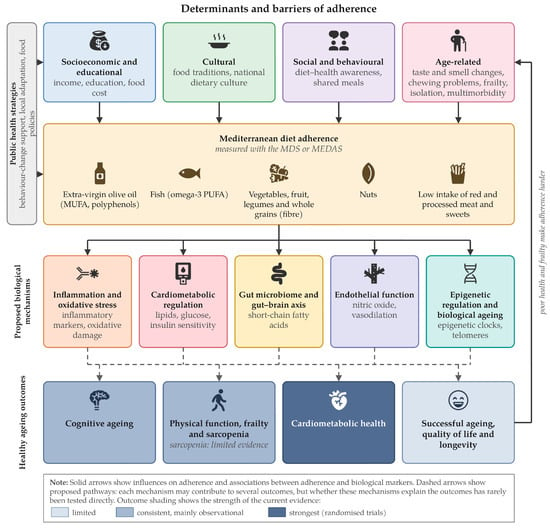
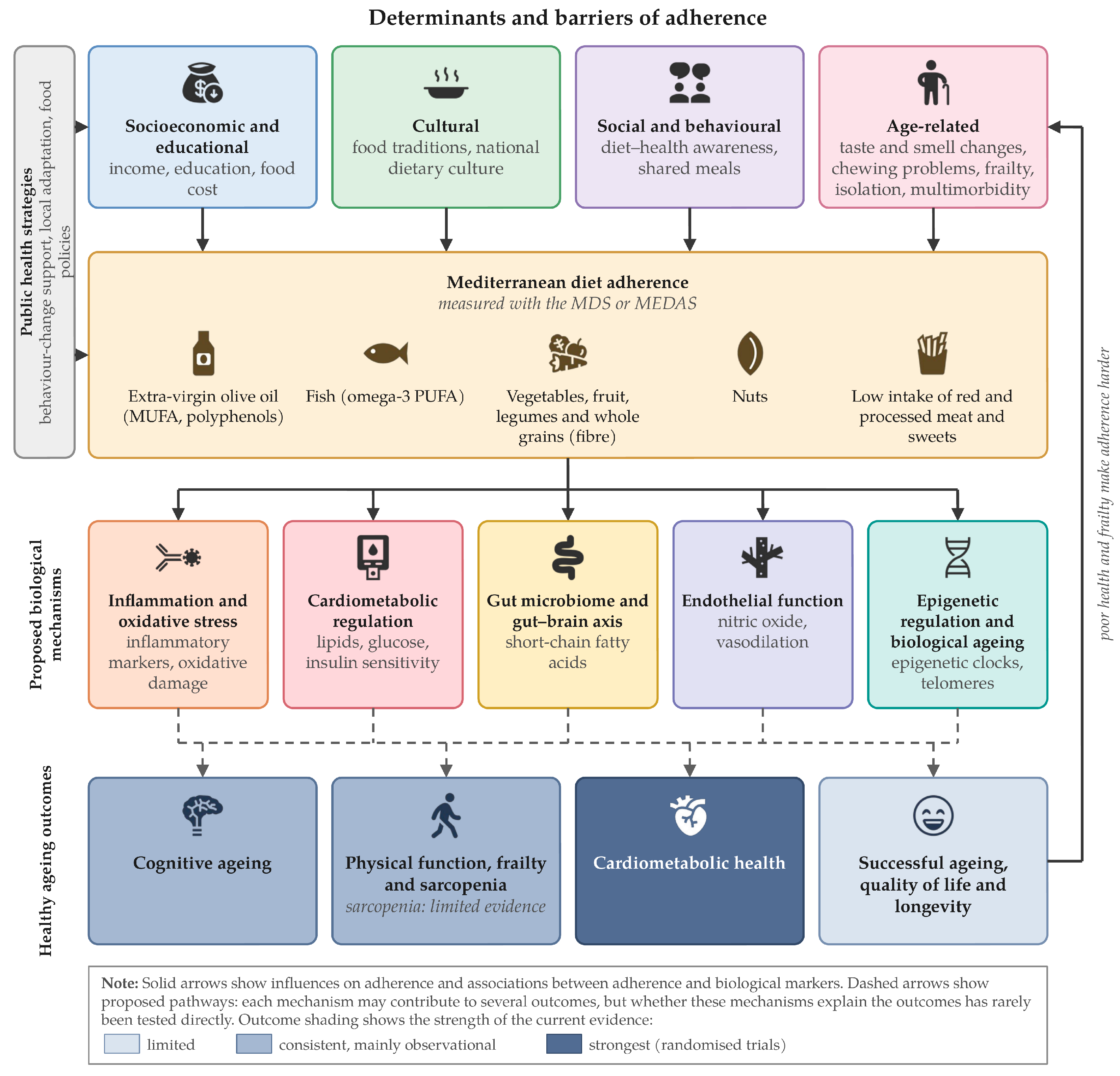

Disclaimer/Publisher’s Note: The statements, opinions and data contained in all publications are solely those of the individual author(s) and contributor(s) and not of MDPI and/or the editor(s). MDPI and/or the editor(s) disclaim responsibility for any injury to people or property resulting from any ideas, methods, instructions or products referred to in the content. |
© 2026 by the authors. Licensee MDPI, Basel, Switzerland. This article is an open access article distributed under the terms and conditions of the Creative Commons Attribution (CC BY) license.