


Simple Summary
The present study aimed to investigate the epidemiological characteristics of Bartonella spp., Rickettsia spp., and Piroplasm in Melophagus ovinus populations in Qinghai Province, China. A total of 433 M. ovinus specimens were collected from the Haixi and Hainan prefectures and randomly divided into 84 pools for the detection of these pathogens using specific PCR methods. The results showed that 68 pools tested positive for Bartonella spp., and 18 pools were positive for Rickettsia spp. Further molecular analysis identified these pathogens as Bartonella melophagi and Rickettsia conorii, respectively. However, no Piroplasm DNA was detected in any of the pools. Overall, this study for the first time confirmed the prevalence of B. melophagi and R. conorii among M. ovinus specimens collected from Qinghai Province, China.
Abstract
Vector-borne pathogens, predominantly transmitted through arthropod vectors, present a major threat to both livestock production and public health. Melophagus ovinus is a significant disease vector widely distributed across various pastoral regions in China. However, there has been limited research on the prevalence of vector-borne pathogens within M. ovinus populations in Qinghai Province, China. In this study, a total of 433 M. ovinus specimens were collected from Haixi and Hainan prefectures in Qinghai Province between 2024 and 2025. After identifying the parasites via morphological and molecular approaches, the specimens were grouped into 84 pools and tested for the presence of three vector-borne pathogens using PCR techniques. The findings indicated that all collected specimens exhibited morphological features consistent with M. ovinus, and the 18S rRNA gene sequences of the selected parasites (n = 7) demonstrated sequence similarities ranging from 99.1% to 100% relative to reference M. ovinus strains. Among the 84 M. ovinus pools analyzed, 68 tested positive for Bartonella spp. DNA; subsequent genetic characterization identified these isolates (n = 15) as Bartonella melophagi. Additionally, Rickettsia spp. DNA was detected in 18 pools (21.43%), genetic characterization based on the OmpA gene (n = 6) identified all as Rickettsia conorii. No DNA from Babesia spp. or Theileria spp. was detected in any of the pool. Collectively, this investigation elucidates the epidemiological characteristics of three vector-borne pathogens among M. ovinus populations in Qinghai, China, and provides the first evidence of a high prevalence of both B. melophagi and R. conorii, emphasizing the necessity for targeted prevention and control measures.
1. Introduction
Melophagus ovinus, classified within the order Diptera and the family Hippoboscidae, is an ectoparasitic species that exclusively infests the external surface of sheep [1]. M. ovinus acts as a hematophagous parasites on sheep, leading to anemia, weight loss, and impaired growth and development. Additionally, these parasites induce pruritus and skin inflammation, which provoke sheep to rub and bite affected areas, resulting in wool loss and skin lesions. These pathological effects significantly reduce the commercial value of wool and sheepskin products [2]. Of greater concern, M. ovinus functions as a vector for zoonotic pathogens, including species of Bartonella, Anaplasma, and Rickettsia, thereby posing a significant threat to both animal and human health [2,3].
Rickettsia spp. classified within the family Rickettsiaceae and the order Rickettsiales, are intracellular parasitic Gram-negative bacteria that can infect a variety of mammalian hosts, including humans, and are associated with diverse clinical manifestations [4,5]. In China, Rickettsia strains transmitted by M. ovinus include R. massiliae, R. sibirica, R. conorii, and R. parkeri [6,7,8]. Bartonella spp. belong to a genus of Gram-negative, aerobic bacteria that can infect various mammalian species, including goat, cattle, rodents, and humans [9]. In humans, Bartonella spp. infections can result in diseases including cat scratch disease, trench fever, oroya fever, and sometimes severe neurological disorders, with clinical presentations largely dependent on the specific species of the pathogen involved [10]. Several Bartonella species have been identified in these hosts, including B. grahamii, B. elizabethae, and B. tribocorum, etc. [11]. Piroplasms consist of the genera Babesia and Theileria, which infect red blood cells and vascular endothelial cells in susceptible animals, leading to clinical signs such as high fever, anemia, and swollen lymph nodes [12,13].
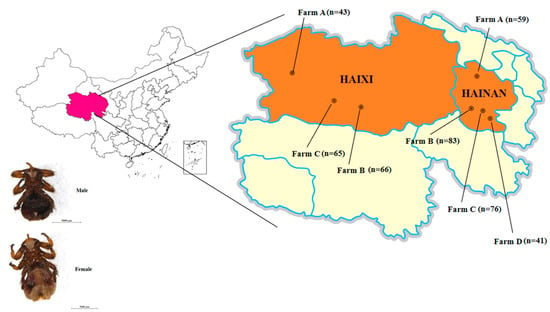
Qinghai Province, situated in western China, occupies a prominent position in the northeastern sector of the Qinghai–Tibet Plateau (Figure 1). This region is characterized by a highly developed livestock farming industry; however, the widespread occurrence of vector-borne diseases impedes the sustainable growth of this industry which are mainly transmitted by arthropod, including ticks and M. ovinus. A variety of vector-borne pathogens, including Rickettsia spp., Theileria spp., and Brucella spp., have been confirmed as prevalent within tick populations in Qinghai Province [14,15,16]. However, comprehensive investigations into the vector-borne pathogens transmitted specifically by M. ovinus populations in this region remain limited. Only Zhang et al. shown that Anaplasma ovis, A, bovis, A. phagocytophilum, and T. ovis, but not Babesia spp., Rickettsia spp., and Borrelia spp. were found in M. ovinus populations in Qinghai Province [4]. However, whether Rickettsia spp. and Brucella spp. are prevalent in M. ovinus species remains to be explored. In this study, a total of 433 M. ovinus samples were collected from Qinghai Province during the period of 2024 to 2025. Species identification was conducted through morphological analysis and 18S rRNA sequencing. Genomic DNA extracted from the M. ovinus samples was subjected to PCR assays targeting Bartonella spp., Rickettsia spp., and Piroplasms to assess the prevalence and species diversity of these pathogens.
Figure 1.
Sample collection sites of M. ovinus in Qinghai Province of China.
2. Materials and Methods
2.1. Sample Collection and Morphological Identification
A total of 433 M. ovinus isolates were collected from the surface of Tibetan sheep in selected pastoral regions of Haixi and Hainan Prefectures, Qinghai Province, during the period from June to September in 2024 and 2025. Of these, 174 specimens were obtained from three pastures in Haixi Prefecture, while 259 were collected from four sheep farms in Hainan Prefecture (Figure 1). These collected samples were cleansed of surface dust using clean water, subsequently placed in sterile 50 mL centrifuge tubes with 75% ethanol solution for preservation. Next, these samples were transported under low temperature conditions to Yangtze University. Individual M. ovinus specimen was rinsed with sterile distilled water to remove residual contaminants, surface moisture was absorbed, and specimens were observed under a stereomicroscope. Detailed morphological features, including reproductive pores, valve plates, setae bearing limbs, and the anal sulcus, were carefully examined and photographed. The sex and developmental stage were identified following the methodology established in a previous study [17].
2.2. DNA Genome Extraction and Molecular Identification
These M. ovinus samples were repeatedly rinsed with sterile distilled water to remove residual surface alcohol. The specimen was individually transferred to a mortar, and a small quantity of liquid nitrogen was introduced prior to comprehensive grinding. Approximately 30 mg of the homogenized sample was collected for genomic DNA extraction using the TIANamp Blood DNA Kit (Tiangen Biotech, Beijing, China) following the manufacturer’s instructions. The extracted DNA genome was dissolved in 50 μL of Tris-EDTA buffer and stored at −20 °C for preservation.
For the molecular identification of M. ovinus, targeted PCR assays were performed to amplify the 18S rRNA gene utilizing one pair of specific primer, as detailed in Table 1. In brief, PCR volume (50 μL) contained of 25 μL of 2 × Rapid Taq Master Mix (Vazyme Biotech, Nanjing, China), 1.0 μL of each primer (10 µM), 2.0 μL of template DNA, and 21 μL of RNA-free water. The amplification conditions were set as follows: 94 °C for 5 min; 35 cycles of 94 °C for 30 s, 55 °C for 30 s, and 72 °C for 30 s; followed by 72 °C for 7 min. Following gel electrophoresis, the representative positive PCR products (n = 7) were purified and subsequently submitted to BGI Genomics (Shenzhen, China) for sequencing.
Table 1.
Detailed information of the primers used in this study, including their target genes, sequence details, PCR product sizes, purposes, and references.
2.3. Species-Specific Pcr for Detecting Vector-Borne Pathogens
In this study, all 433 M. ovinus samples were randomly grouped into 84 pools with each pool containing 4 to 6 samples (Table 2). To guarantee that each pool corresponded to a single epidemiological unit, specimens collected from the same location and on the same date were grouped together. Pooling was performed randomly only within these groups, not between different sites or collection dates. For each pool, specimens were combined and grouped together in liquid nitrogen, and approximately 30 mg of the homogenized powder was used for genomic DNA extraction following the same procedures as described in Section 2.2. Subsequently, targeted PCR assays were conducted to detect the presence of DNA from three vector-borne pathogens in the collected M. ovinus specimens. As detailed in Table 1, these PCR protocols specifically amplified the OmpA gene for Rickettsia spp., the gltA gene for Bartonella spp., and the 18S rRNA gene for Piroplasma, respectively. In brief, the PCR system and reaction conditions were consistent with those targeting M. ovinus genome, with the exception of the annealing temperature, which varied for certain pathogens (Table 1). Following gel electrophoresis, the representative positive PCR products were purified and subsequently submitted to BGI Genomics (Shenzhen, China) for sequencing.
Table 2.
Pooled positive rate of Bartonella spp. and Rickettsia spp. among M. ovinus specimens collected from Qinghai Province.
2.4. Bioinformatics Analysis
The nucleotide sequences of these representative strains were retrieved from the GenBank database. Comparative genetic analyses between the acquired sequences and their respective reference sequences were performed utilizing DNAStar software version 7.10. Phylogenetic trees were constructed using MEGA version 11.0 software, utilizing the Neighbor-Joining (NJ) method as described in prior research [22].
2.5. Statistics Analysis
The combined detection rate and its associated 95% confidence intervals (95% CI) for the three vector-borne pathogens analyzed in this study were calculated utilizing the epidemiological calculator EpiTools. The influence of multiple potential risk factors, such as geographic location, gender, and breeding system, on the pooled detection rates of these pathogens was evaluated using the Chi-square test implemented in SPSS version 24.0 (SPSS Inc., Chicago, IL, USA). Statistical significance was established at a threshold of p < 0.05.
3. Results
3.1. Morphological and Molecular Identification of M. ovinus
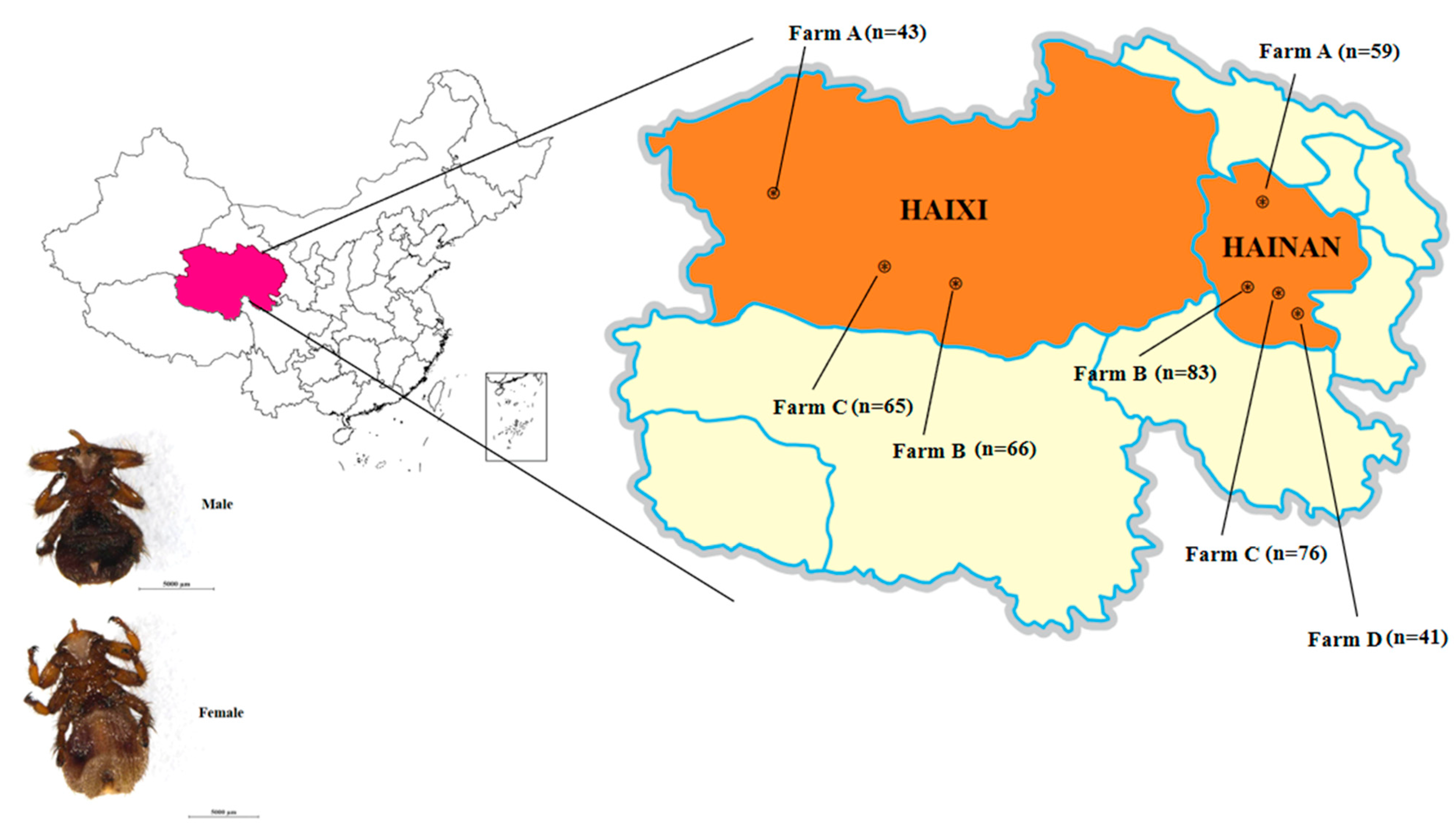
A total of 433 sheep keds were obtained from the exterior of seven sheep flocks located in Haixi Prefecture (n = 3) and Hainan Prefecture (n = 4) within Qinghai Province of China. Based on their morphological features, all specimens were identified as M. ovinus, comprising 187 males and 246 females (Figure 1). Furthermore, seven representative specimens (GenBank accession no. PZ728753–PZ728759) were randomly chosen from seven distinct flocks for subsequent molecular identification. The amplified 18S rRNA gene sequences obtained from the genomes of these specimens measured 575–578 bp in length. Sequence similarity analysis revealed that these strains exhibited a nucleotide sequence similarity ranging from 99.1% to 99.8% when compared with M. ovinus strains deposited in the GenBank database, while they showed reduced sequence identity (<95.8%) relative to other reference strains. Additional phylogenetic analysis classified them as M. ovinus, since these strains clustered together with M. ovinus strains from the GenBank database into a single clade, which was distinctly separated from other parasites (Figure 2).
Figure 2.
Phylogenetic tree based on the 18S rRNA gene sequence of M. ovinus strains collected in this study and reference strains was constructed using the NJ method based on the Kimura 2-parameter model, implemented in version 11.0 software. The robustness of the tree topology was evaluated through a bootstrap analysis with 1000 replicates.
3.2. Molecular Detection Results of Three Vector-Borne Pathogen Species
As shown in Table 2, molecular analysis revealed that 74 pools tested positive for the presence of at least one vector-borne pathogen, corresponding to an average pooled detection rate of 88.10% (74/84, 95%CI: 81.18–95.02). Moreover, 68 (80.95%, 95%CI: 72.95–89.35) pools from all investigated farms were positive for Bartonella spp. While only 18 (21.43%, 95%CI: 12.65–30.21) pools from two farms tested positive for Rickettsia spp. Co-infection with Bartonella spp. and Rickettsia spp. were only detected in 8 pools. However, the DNA of Piroplasma species was not detected in any of the pools.
Next, we examined the influence of potential risk factors, such as geographic region, gender, and breeding type, on the pooled detection rates of vector-borne pathogens in M. ovinus specimens collected from Qinghai Province. The results indicated that Rickettsia spp. infection was exclusively identified in Haixi Prefecture, with no cases detected in Hainan Prefecture. Conversely, the detection rates of Bartonella spp. infection did not exhibit a statistically significant difference between the two regions. The pooled detection rates of these two pathogens did not exhibit significant differences between male and female subjects (p > 0.05); however, their pooled prevalence was markedly higher in free-range farms compared to large-scale farming operations (p < 0.05).
3.3. Genetic Diversity and Phylogenetic Characterization of Bartonella Species Strains
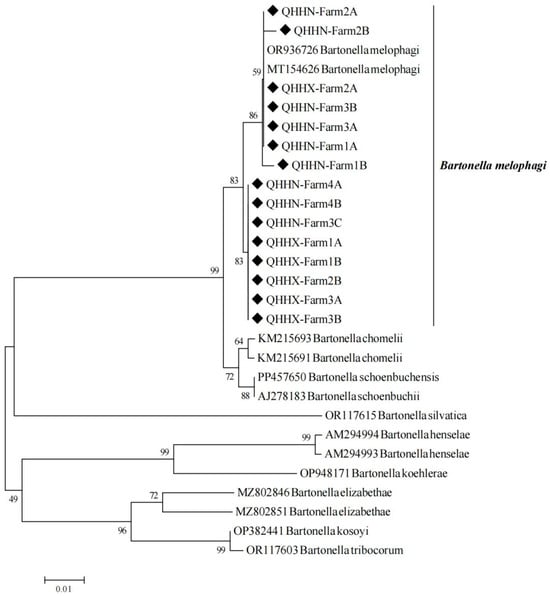
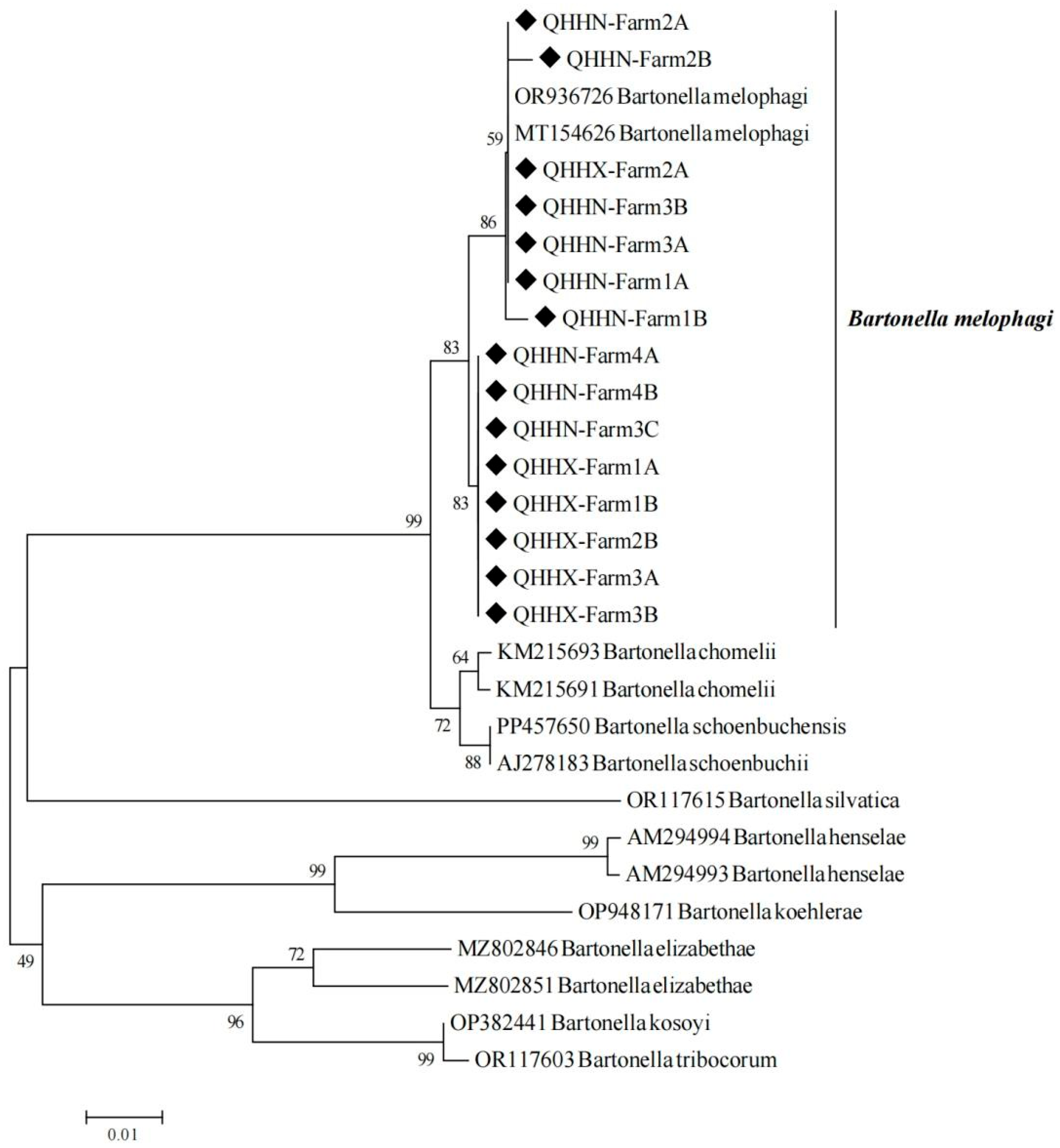
To further explore the genetic characteristics of the identified Bartonella spp. strains, gltA gene sequences were successfully obtained from 15 Bartonella spp. strains, each comprising 327 bp in length (GenBank accession no. PZ740155–PZ740169). Notably, These sequences showed a nucleotide similarity of 99.1% to 100% among themselves, and displayed 99.4% to 100% similarity when compared to the reference Bartonella melophagi strains (GenBank accession no. MT154626 and OR936726). In contrast, sequence similarity with other Bartonella spp. strains, including B. chomelii, B. henselae, B. wilsonii, and others, ranged from 85.0% to 98.5%. Moreover, a phylogenetic tree was generated utilizing the NJ method implemented in MEGA 11.0 version software, using the gltA gene sequences of Bartonella spp. strains. As illustrated in Figure 3, all Bartonella spp. strains isolated in this study clustered within a single clade alongside the B. melophagi reference strains obtained from the GenBank database. This clade was clearly separate from the branches linked to other Bartonella species due to its distinct clustering.
Figure 3.
Phylogenetic tree based on the gltA gene sequence of B. melophagi strains collected in this study and reference strains was constructed using the NJ method based on the Kimura 2-parameter model, implemented in version 11.0 software. The robustness of the tree topology was evaluated through a bootstrap analysis with 1000 replicates.
3.4. Genetic Diversity and Phylogenetic Characterization of Rickettsia Species Strains
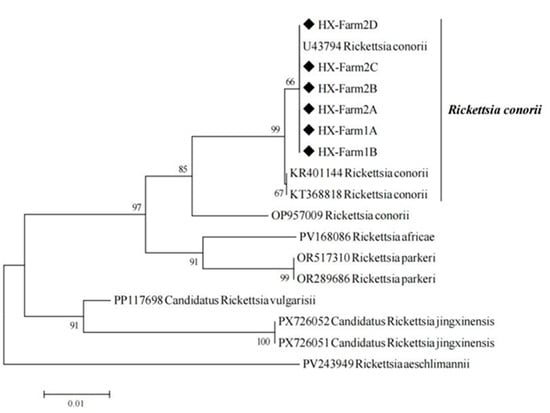
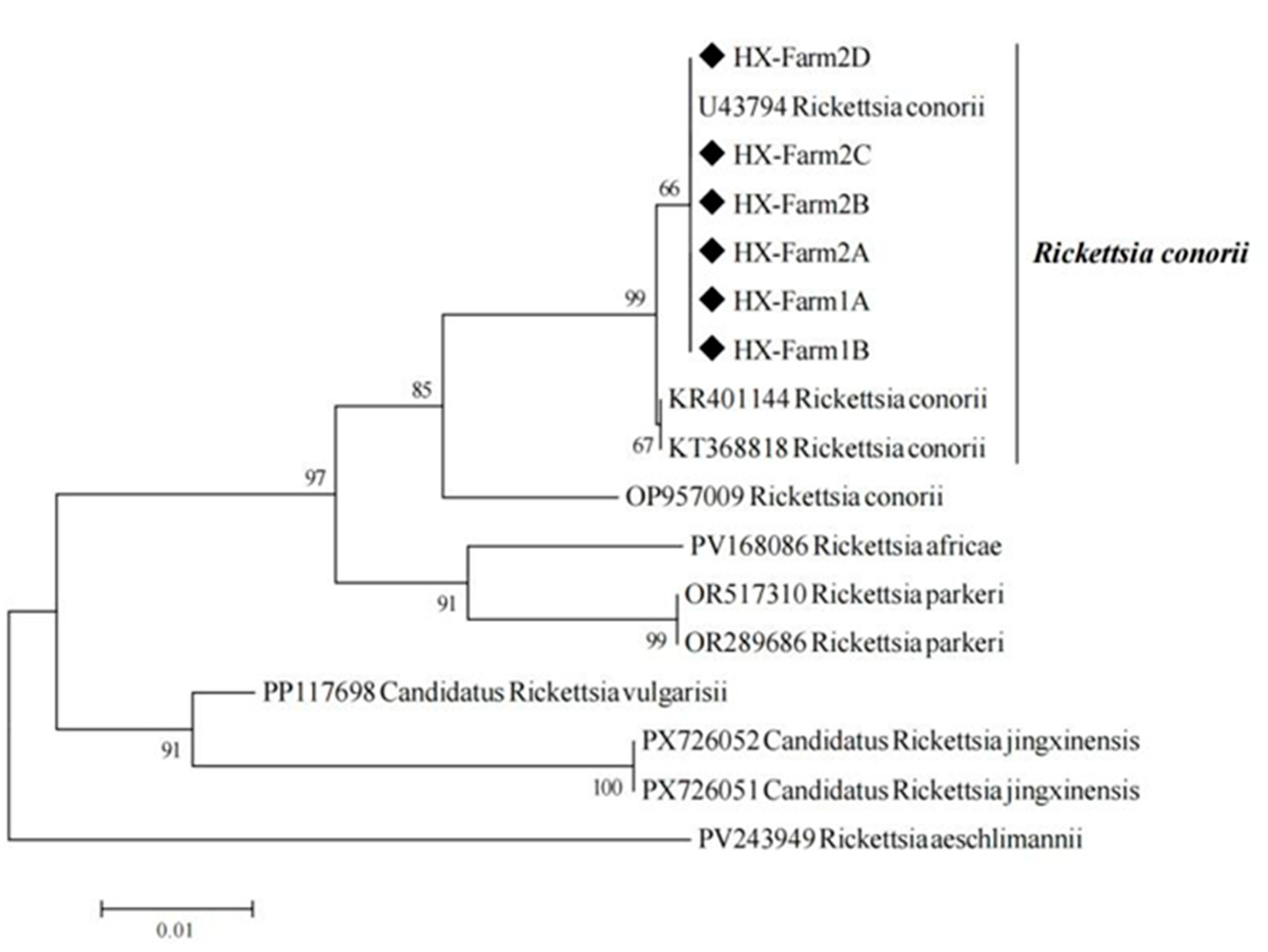
A total of six OmpA gene sequences, each comprising 569 bp, were successfully sequenced from Rickettsia spp. strains in this study (GenBank accession no. PZ737684–PZ737689). Remarkably, these sequences demonstrated complete nucleotide identity with a reference Rickettsia conorii strain (GenBank accession no. U43794), and shared 96.4% to 98.4% sequence identity with other R. conorii strains. In contrast, they displayed lower sequence similarity (less than 96.0%) when compared to strains of other Rickettsia species. Similarly, the six Rickettsia strains identified in this study were clustered together with the reference R. conorii strains, and were distinctly separated from the branches of other Rickettsia species (Figure 4).
Figure 4.
Phylogenetic tree based on the OmpA gene sequence of R. conorii strains collected in this study and reference strains was constructed using the NJ method based on the Kimura 2-parameter model, implemented in version 11.0 software. The robustness of the tree topology was evaluated through a bootstrap analysis with 1000 replicates.
4. Discussion
M. ovinus has been prevalent in regions such as Xizang, Xinjiang, Qinghai, Inner Mongolia and Gansu across China, significantly impeding the advancement of the country’s sheep industry [1,19,20]. Although there have been no documented cases of M. ovinus biting humans, the diverse array of pathogens which harbor presents potential threats to human health [21]. In previous research, M. ovinus has been documented to carry Anaplasma species in Qinghai Province [3], as well as Rickettsia and Anaplasma species in Xinjiang [8].
Rickettsia spp. constitute a prevalent zoonotic pathogen and are acknowledged as important agents of vector-borne infectious diseases. This genus can be harbored by both M. ovinus and ticks, and is widely distributed across China, including in Qinghai Province [16]. However, a prior investigation reported the absence of Rickettsia spp. positive cases detected in M. ovinus samples collected from Qinghai Province [3]. The present investigation verified the prevalence of Rickettsia spp. within M. ovinus populations in Qinghai Province. The overall pooled positive rate of this genus was determined to be 21.43% (18 out of 84 pools), while which was only detected in Haixi Prefecture. Subsequent genetic analysis targeting the OmpA gene of Rickettsia spp. showed that all sequenced samples (n = 6) were identified as R. conorii. Previous study has documented that the prevalence of R. principis, R. jingxinensis, R. raoultii, R. barbariae, and R. mamionii have been detected in tick samples collected from Qinghai Province [22]. However, the occurrence of R. conorii in this region has not been previously reported. It is noteworthy that R. conorii has been detected in several Chinese provinces, including Xinjiang, Yunnan, and Shandong [23], and the clinical symptoms of R. conorii infection in human are characterized by fever, rash, and flu-like manifestations [23]. In this context, there is an urgent need for additional research to elucidate the transmission dynamics and public health implications of R. conorii in Qinghai. Furthermore, experimental investigations into vector competence and pathogenicity are essential for evaluating the potential risks posed by emerging rickettsial infections in this area.
Bartonella spp. are implicated in a range of infectious diseases, including cat scratch disease, endocarditis, trench fever, and Carrion’s disease [11]. In the current study, Bartonella spp. were identified in M. ovinus samples collected from Qinghai Province, exhibiting an average pooled positivity of 80.95% (68 out of 84 pools). A recent investigation reported a 100% (214/214) prevalence of Bartonella spp. in M. ovinus specimens from Xinjiang [1]. These results collectively suggest that Bartonella spp. are extensively distributed within M. ovinus populations across various regions of China, which may due to the symbiotic relationship between Bartonella spp. and M. ovinus [24]. Further genetic analysis focusing on the gltA gene revealed that all 15 Bartonella spp. isolates in this study were identified as B. melophagi, indicating that B. melophag was the most common in the studied areas. The high prevalence of B. melophag in M. ovinus has been documented in other regions, including Poland (88.63%, 694/783) [25], the Czech Republic (100.0%) [26], and China (100.0%, 17/17) [27]. Moreover, B. melophagi has been identified in yaks within Qinghai Province, with a pooled positive rate of 30.1% (246/818) [28]. When considered alongside previously documented human cases manifesting cardiovascular symptoms [29], these data collectively highlight that B. melophagi is not simply an incidental animal-associated bacterium. Instead, it represents a broadly distributed and unrecognized zoonotic pathogen with significant implications for public health.
It is important to note that no Piroplasma DNA was detected in any of the pools, which does not necessarily indicate that this species is absent from M. ovinus specimens or goats in the studied areas. Piroplasma (Theileria ovis) has been identified in M. ovinus samples collected from Qinghai Province [3]. And various Theileria species are commonly found in goat populations across different regions of Qinghai Province [30]. These negative results probably stem from the limited sampling range and small sample size. Future research should increase the sampling regions and number of samples, as well as use more sensitive molecular tests to better determine the local prevalence.
This study presents several limitations. Geographically, the sampling was confined to only two prefectures within Qinghai Province, which may restrict the applicability of the results to other regions. From a methodological perspective, the use of pooled specimens precluded the determination of individual infection rates and may have led to an underestimation of pathogen prevalence. Furthermore, the PCR-based detection method identified pathogen DNA exclusively, without accompanying serological confirmation or bacterial isolation, thereby precluding differentiation between active infections and the presence of non-viable DNA or contamination. Crucially, the lack of paired host blood samples and vector competence assays renders the inferred role of M. ovinus in pathogen transmission suggestive rather than definitive. Future research should incorporate more extensive geographic sampling, individual specimen analysis, and experimental transmission studies to robustly establish the vectorial capacity of M. ovinus and its implications for public health.
5. Conclusions
This study presents the first comprehensive evidence of the prevalence and genetic characterization of B. melophagi and R. conorii in M. ovinus specimens collected from Qinghai Province, China. The elevated detection rates of these pathogens suggest that M. ovinus may be involved in the transmission of these zoonotic bacterial agents within this geographic area. The results offer critical baseline information for evaluating potential disease risks and underscore the imperative for continuous monitoring and the development of effective intervention strategies to protect both animal and human health in pastoral environments.
Author Contributions
M.Z.: Writing—original draft, Writing—review and editing, Data collection, Methodology; P.Z.: Writing—original draft, Writing—review and editing; X.Y.: Data collection, Formal analysis; S.Z.: Data collection; P.Y.: Data collection; Y.Z.: Writing—original draft, Writing—review and editing; L.T.: Writing—original draft, Writing—review and editing, Funding; J.Y.: Validation, Supervision, Writing—review and editing, Funding. All authors have read and agreed to the published version of the manuscript.
Funding
This research was supported by the Central Guidance on Local Science and Technology Development Fund, China (Grant No. 202507AC040017), Yunnan Provincial Department of Science and Technology Rural Revitalization Science and Technology Special Project (Grant No. 202604BI090001), the Open Project of Yunnan Provincial Key Laboratory of Tropical and Subtropical Animal Viral Diseases (Grant No. 2025RW001), and the General Administration of Customs Technology Project (Grant No. 2025HK027).
Institutional Review Board Statement
This study involved only the collection of external parasites and did not include any experimental procedures on live animals. Therefore, institutional review board approval was not required.
Informed Consent Statement
Not applicable.
Data Availability Statement
The original contributions presented in this study are included in the article. Further inquiries can be directed to the corresponding authors.
Conflicts of Interest
The authors declare no conflicts of interest.
References
- Huang, K.; Zhang, X.; Xiong, N.; Sun, L.; Zhao, X.; Zhou, K.; Wu, J. First metagenomic sequencing for the analysis of microbial community populations of adults and pupae of Melophagus ovinus in Xinjiang, China. Front. Vet. Sci. 2024, 11, 1462772. [Google Scholar] [CrossRef] [Scilit] [PubMed]
- Liu, Y.; Ma, Y.; Tian, H.; Yang, B.; Han, W.; Zhao, W.; Chai, H.; Zhang, Z.; Wang, L.; Chen, L.; et al. First determination of DNA virus and some additional bacteria from Melophagus ovinus (sheep ked) in Tibet, China. Front. Microbiol. 2022, 13, 988136. [Google Scholar] [CrossRef] [Scilit] [PubMed]
- Zhang, Q.; Wang, Y.; Li, Y.; Han, S.; Wang, B.; Yuan, G.; Zhang, P.; Yang, Z.; Wang, S.; Chen, J.; et al. Vector-Borne Pathogens with Veterinary and Public Health Significance in Melophagus ovinus (Sheep Ked) from the Qinghai-Tibet Plateau. Pathogens 2021, 10, 249. [Google Scholar] [CrossRef] [Scilit] [PubMed]
- Walker, D.H.; Ismail, N. Emerging and re-emerging rickettsioses: Endothelial cell infection and early disease events. Nat. Rev. Microbiol. 2008, 6, 375–386. [Google Scholar] [CrossRef] [Scilit] [PubMed]
- Ly, N.; Guzman, A.A.; Engström, P.; Burke, T.P. Innate immune responses to Rickettsia: Emerging themes and contrasts between species. Curr. Opin. Microbiol. 2026, 91, 102754. [Google Scholar] [CrossRef] [Scilit] [PubMed]
- Liu, D.; Wang, Y.; Zhang, H.; Liu, Z.; Wureli, H.; Wang, S.; Tu, C.; Chen, C. First report of Rickettsia raoultii and R. slovaca in Melophagus ovinus, the sheep ked. Parasit. Vectors 2016, 9, 600. [Google Scholar] [CrossRef] [Scilit] [PubMed][Green Version]
- Liu, G.; Zhao, S.; Tan, W.; Hornok, S.; Yuan, W.; Mi, L.; Wang, S.; Liu, Z.; Zhang, Y.; Hazihan, W.; et al. Rickettsiae in red fox (Vulpes vulpes), marbled polecat (Vormela peregusna) and their ticks in northwestern China. Parasit. Vectors 2021, 14, 204. [Google Scholar] [CrossRef] [Scilit] [PubMed]
- Li, S.; Zhang, L.; Li, Z.; Song, H.; Que, Z.; Zhao, S.; Li, Y.; Guo, Y.; Wu, J. Detection of Rickettsia spp. and Anaplasma ovis in Melophagus ovinus from southern Xinjiang, China. Med. Vet. Entomol. 2023, 37, 865–870. [Google Scholar] [CrossRef] [Scilit] [PubMed]
- Jones, B.P.; Wawman, D.C.; Johnson, N. Detection of Bartonella schoenbuchensis and a novel sigmavirus within the microbiome of deer keds (Lipoptena cervi) from the United Kingdom. Parasit. Vectors 2026, 19, 89. [Google Scholar] [CrossRef] [Scilit] [PubMed]
- Billeter, S.A. A Review of Bartonella Infections in California-Implications for Public and Veterinary Health. J. Med. Entomol. 2022, 59, 1154–1163. [Google Scholar] [CrossRef] [Scilit] [PubMed]
- Krügel, M.; Król, N.; Kempf, V.A.J.; Pfeffer, M.; Obiegala, A. Emerging rodent-associated Bartonella: A threat for human health? Parasit. Vectors 2022, 15, 113. [Google Scholar] [CrossRef] [Scilit] [PubMed]
- Woods, K.; Perry, C.; Brühlmann, F.; Olias, P. Theileria’s Strategies and Effector Mechanisms for Host Cell Transformation: From Invasion to Immortalization. Front. Cell Dev. Biol. 2021, 9, 662805. [Google Scholar] [CrossRef] [Scilit] [PubMed]
- Schnittger, L.; Ganzinelli, S.; Bhoora, R.; Omondi, D.; Nijhof, A.M.; Florin-Christensen, M. The Piroplasmida Babesia, Cytauxzoon, and Theileria in farm and companion animals: Species compilation, molecular phylogeny, and evolutionary insights. Parasitol. Res. 2022, 121, 1207–1245. [Google Scholar] [CrossRef] [Scilit] [PubMed]
- Chen, Q.; Li, Z.; Kang, M.; Hu, G.; Cai, J.; Li, J.; Han, X.; Chen, C.; He, S.; Hu, X.; et al. Molecular identification of tick (Acari: Ixodidae) and tick-borne pathogens from Przewalski’s gazelle (Procapra Przewalskii) and Tibetan sheep (Ovis aries) in Qinghai Lake National Nature Reserve, China. Heliyon 2024, 10, e40205. [Google Scholar] [CrossRef] [Scilit] [PubMed]
- Han, Y.; Li, Z.; Fu, Y.; Liu, J.; Jia, D.; Li, C.; Yin, H.; Lei, M. Genetic diversity of Theileria species identified from questing and parasitic ticks in selected areas in Qinghai, China. Vet. Res. Commun. 2026, 50, 132. [Google Scholar] [CrossRef] [Scilit] [PubMed]
- Zhang, D.; Ma, Y.; Zhao, X.; Yang, H.; Li, X.; Wang, G.; Hu, Y.; Tang, S.; Li, R.; Li, S.; et al. Molecular Detection and Identification of Bacterial Pathogens in Qinghai Province, China. Pathogens 2026, 15, 305. [Google Scholar] [CrossRef] [Scilit] [PubMed]
- Kumsa, B.; Socolovschi, C.; Parola, P.; Rolain, J.; Raoult, D. Molecular detection of Acinetobacter species in lice and keds of domestic animals in Oromia Regional State, Ethiopia. PLoS ONE 2012, 7, e52377. [Google Scholar] [CrossRef] [Scilit] [PubMed]
- Duan, D.Y.; Wang, Y.Q.; Chen, T.Y. Morphological and Molecular Identification of Melophagus ovinus. Acta Vet. Zootech. Sin. 2017, 48, 2181–2188. (In Chinese) [Google Scholar] [CrossRef]
- Maurin, M.; Raoult, D. Bartonella (Rochalimaea) quintana infections. Clin. Microbiol. Rev. 1996, 9, 273–292. [Google Scholar] [CrossRef] [PubMed] [PubMed Central]
- Roux, V.; Fournier, P.E.; Raoult, D. Differentiation of spotted fever group rickettsiae by sequencing and analysis of restriction fragment length polymorphism of PCR-amplified DNA of the gene encoding the protein rOmpA. J. Clin. Microbiol. 1996, 34, 2058–2065. [Google Scholar] [CrossRef] [Scilit] [PubMed] [PubMed Central]
- Vascellari, M.; Ravagnan, S.; Carminato, A.; Cazzin, S.; Carli, E.; Da Rold, G.; Lucchese, L.; Natale, A.; Otranto, D.; Capelli, G. Exposure to vector-borne pathogens in candidate blood donor and free-roaming dogs of northeast Italy. Parasit. Vectors 2016, 9, 369. [Google Scholar] [CrossRef] [Scilit] [PubMed] [PubMed Central]
- Duan, Y.; Liu, N.; Tan, L.; Gao, L.; Zhu, G.; Tao, Z.; Liu, B.; Wang, A.; Yao, J. Isolation and biological characterization of a variant pseudorabies virus strain from goats in Yunnan Province, China. Vet. Res. Commun. 2025, 49, 149. [Google Scholar] [CrossRef] [Scilit] [PubMed]
- Tang, J.; Li, F.; Cheng, T.; Duan, D.; Liu, G. Comparative analyses of the mitochondrial genome of the sheep ked Melophagus ovinus (Diptera: Hippoboscidae) from different geographical origins in China. Parasitol. Res. 2018, 117, 2677–2683. [Google Scholar] [CrossRef] [Scilit] [PubMed]
- Li, L.; Xie, H.; Li, Z.; Tang, W.; Zhang, C.; Qi, X.; Luo, R.; Chui, W.; Kui, J.; Huang, F. Complete Mitochondrial Genome of Melophagus ovinus from Qinghai-Tibet Plateau Provides Evidence for D-Loop Length Polymorphism. Genes 2026, 17, 689. [Google Scholar] [CrossRef] [Scilit] [PubMed]
- Werszko, J.; Asman, M.; Witecka, J.; Steiner-Bogdaszewska, Ż.; Szewczyk, T.; Kuryło, G.; Wilamowski, K.; Karbowiak, G. The role of sheep ked (Melophagus ovinus) as potential vector of protozoa and bacterial pathogens. Sci. Rep. 2021, 11, 15468. [Google Scholar] [CrossRef] [Scilit] [PubMed]
- Luo, C.; Song, Y.; Xia, L.; Liu, M.; Feng, H.; Xiao, L.; Xu, M.; Cai, X.; Cui, J.; Xiang, R.; et al. Molecular epidemiological study on tick-borne pathogens in Qinghai Province, Northwestern China. Biosaf. Health 2024, 6, 361–368. [Google Scholar] [CrossRef] [Scilit] [PubMed]
- Xu, N.; Liu, H.; Qu, C.; Wen, S.; Zou, W.; Chang, C.; Wang, G. The presence of foci of Rickettsia conorii infection in China. Infect. Med. 2023, 2, 334–337. [Google Scholar] [CrossRef] [Scilit] [PubMed]
- Halos, L.; Jamal, T.; Maillard, R.; Girard, B.; Guillot, J.; Chomel, B.; Vayssier-Taussat, M.; Boulouis, H.J. Role of Hippoboscidae flies as potential vectors of Bartonella spp. infecting wild and domestic ruminants. Appl. Env. Microbiol. 2004, 70, 6302–6305. [Google Scholar] [CrossRef] [Scilit] [PubMed]
- Kumsa, B.; Parola, P.; Raoult, D.; Socolovschi, C. Bartonella melophagi in Melophagus ovinus (sheep ked) collected from sheep in northern Oromia, Ethiopia. Comp. Immunol. Microbiol. Infect. Dis. 2014, 37, 69–76. [Google Scholar] [CrossRef] [Scilit] [PubMed]
- Rudolf, I.; Betášová, L.; Bischof, V.; Venclíková, K.; Blažejová, H.; Mendel, J.; Hubálek, Z.; Kosoy, M. Molecular survey of arthropod-borne pathogens in sheep keds (Melophagus ovinus), Central Europe. Parasitol. Res. 2016, 115, 3679–3682. [Google Scholar] [CrossRef] [Scilit] [PubMed]

Disclaimer/Publisher’s Note: The statements, opinions and data contained in all publications are solely those of the individual author(s) and contributor(s) and not of MDPI and/or the editor(s). MDPI and/or the editor(s) disclaim responsibility for any injury to people or property resulting from any ideas, methods, instructions or products referred to in the content. |
© 2026 by the authors. Licensee MDPI, Basel, Switzerland. This article is an open access article distributed under the terms and conditions of the Creative Commons Attribution (CC BY) license.