


Simple Summary
Brucellosis imposes heavy economic burdens on livestock and poses a persistent zoonotic threat. Although infection rarely causes death, it commonly triggers abortion and stillbirth; however, the genomic and immunological drivers of this variable clinical outcome are largely unknown. This review brings together scattered findings from genetics, genomics, and transcriptomics to explain how both the animal host and the bacterium shape disease outcome. We highlight practical advances most relevant to veterinary practice: genetic markers that may contribute to breeding programs after independent validation to produce naturally resistant cattle, goats, sheep, and buffalo, and gene-expression signatures that may sharpen diagnosis and disease staging. We also clarify why antimicrobial resistance in Brucella may involve regulatory, metabolic, and chromosomal mechanisms that are not fully captured by classical acquired resistance-gene databases. By identifying where current evidence is strong, weak, or missing, this work offers researchers and practitioners key research priorities for advancing genetics-informed disease control, improving animal welfare, and reducing zoonotic transmission.
Abstract
Brucellosis remains among the most widespread global zoonoses, yet its genetic architecture—spanning host susceptibility and pathogen virulence—is increasingly being investigated. Advances in whole-genome sequencing, transposon mutagenesis, CRISPR screening, and machine learning-driven transcriptomics have accelerated marker discovery on both sides of the host–pathogen interface, although most signatures remain at discovery or early-validation stages. In hosts, polymorphisms in innate immune receptors (TLR2, TLR5, VDR), cytokine regulators (TNF, CTLA4), and novel candidates such as ASAP1 are linked to differential susceptibility in humans and livestock. In Brucella, functional genomics shows that virulence relies on interconnected regulatory circuits that control the type IV secretion system, lipopolysaccharide biosynthesis, and stress responses, with gene essentiality shifting according to the host immune context. Antimicrobial resistance may involve unconventional mechanisms, including metabolic and regulatory adaptation, that are not fully explained by classical resistance-gene paradigms and may implicate metabolic reprogramming and ribosomal modulation. This review synthesizes these converging lines of evidence, highlights key gaps—chiefly the scarcity of functional validation for host associations and limited multi-omics integration—and proposes a roadmap for translating genetic markers toward future diagnostic refinement and therapeutic target discovery, urging a shift from descriptive cataloging toward mechanistic and clinical validation.
1. Introduction
Brucellosis is a globally significant zoonosis caused by facultative intracellular bacteria of the genus Brucella, widely distributed across Central Asia, the Middle East, the Mediterranean, Africa, South America, and parts of Eastern Europe, with Kazakhstan a significant hotspot [1,2]. Reported figures of roughly 500,000 notified human cases per year almost certainly understate the true burden due to widespread under-ascertainment and misdiagnosis; a recent modeling study that accounted for under-reporting estimated the actual global incidence at approximately 1.6–2.1 million new human cases each year [3]. The disease also causes devastating reproductive losses in livestock worldwide [4]. In humans, the infection typically presents after an incubation period of 2–4 weeks (ranging from several days to several months) with undulant fever, night sweats, fatigue, malaise, weight loss, headache, arthralgia, and myalgia [4]. Because these features are non-specific and mimic many febrile illnesses, the disease is frequently misdiagnosed; untreated infection may progress to a chronic, relapsing course with focal complications—most commonly osteoarticular disease (sacroiliitis, spondylitis, arthritis), but also neurobrucellosis, hepatosplenic involvement, and endocarditis, the leading cause of brucellosis-related death [4].
The genus Brucella comprises small, Gram-negative, non-motile coccobacilli that survive and replicate within host phagocytes [5,6]. Brucella species are classically differentiated by their preferred animal reservoirs: B. melitensis (sheep and goats), B. abortus (cattle), B. suis (swine), and B. canis (dogs) account for most human brucellosis cases, with B. melitensis being the most virulent in humans. Additional species, including B. ovis, B. neotomae, and the marine-associated B. ceti and B. pinnipedialis, expand the genus, while their highly conserved genomes complicate species-level discrimination and underscore the value of molecular characterization [7,8]. Among these, B. melitensis and B. abortus merit particular emphasis, as they account for the majority of livestock and human brucellosis and impose the heaviest economic burden. They likewise remain the most comprehensively characterized members of the genus at the genetic, genomic, and transcriptomic levels, whereas comparable evidence for the remaining species is sparse.
Transmission to humans occurs through several overlapping routes (Figure 1). The most common is consumption of unpasteurized milk and dairy products such as soft cheeses, while direct contact with infected animals, their birth products, blood, or secretions allows entry through skin abrasions and mucous membranes [9]. Inhalation of contaminated aerosols is an important route in barns, abattoirs, and diagnostic laboratories, where brucellosis ranks among the most frequently reported laboratory-acquired infections; human-to-human spread is rare [10,11]. Consequently, the highest burden falls on occupationally exposed groups—farmers, herders, veterinarians, slaughterhouse workers, and laboratory personnel—as well as on consumers of raw dairy products and residents of endemic regions [4].
Figure 1.
Transmission routes of brucellosis from infected livestock to high-burden human populations. Infected livestock transmit Brucella to humans through three main routes. Ingestion (the most common route) occurs via consumption of unpasteurized/raw dairy products such as milk and soft cheese. Direct contact with animal birth products, blood, secretions, or via skin abrasions and mucous membranes poses an occupational risk to farmers, herders, veterinarians, and slaughterhouse workers. Inhalation of airborne aerosols in barns, abattoirs, and diagnostic laboratories affects laboratory and abattoir personnel, with laboratory-acquired infections being among the most frequently reported. These routes converge on high-burden groups, including farmers, herders, veterinarians, laboratory staff, raw-dairy consumers, and residents of endemic regions. Human-to-human transmission is rare and does not significantly contribute to disease burden. The figure is an original schematic created by the authors using BioRender.com.
The persistence of brucellosis in both animal and human populations is largely attributable to the failure or incomplete implementation of national and regional eradication programs. A fundamental barrier to eradication is the economic impact of test-and-slaughter policies, in which confirmed seropositive animals must be culled, resulting in substantial losses for smallholder and commercial producers alike. In regions where compensation schemes are inadequate or absent, these economic pressures discourage reporting and compliance, perpetuating reservoir populations. In this context, a genomic understanding of host–pathogen interactions offer a critical pathway toward more targeted and economically viable control strategies—including the identification of host genetic resistance markers, the development of improved vaccines, and the characterization of pathogen virulence determinants that drive persistence and immune evasion. The variable course of infection and the differing outcomes across hosts are increasingly attributed to genetic factors on both sides of the host–pathogen interface: polymorphisms that shape host susceptibility and resistance, and genomic determinants that govern Brucella virulence, persistence, and antimicrobial response. Advances in whole-genome sequencing, functional genomics, and transcriptomics now enable systematic dissection of these determinants. This review therefore aims to synthesize current evidence on the genetic basis of brucellosis by (i) examining host genetic markers of susceptibility and resistance in humans and livestock, (ii) appraising transcriptomic signatures proposed as diagnostic biomarkers, (iii) summarizing pathogen virulence architectures, regulatory networks, and their interaction with host molecular machinery, (iv) evaluating antimicrobial resistance and its unconventional mechanisms, treatment challenges, and the genomic epidemiology of circulating strains, and (v) identifying key gaps and translational priorities for genetics-informed diagnosis, vaccine design, and control. Throughout, we foreground the veterinary and One Health dimensions: we prioritize evidence from cattle, goats, sheep, and buffalo, and we treat human data primarily as mechanistic context, whose findings require species-specific validation before they can inform veterinary practice.
2. Literature Search Methodology
This article is a narrative review and is reported with attention to the transparency principles of the SANRA (Scale for the Assessment of Narrative Review Articles) guidance; it is not a systematic review and was not registered as such. The aim was to synthesize and critically appraise, rather than exhaustively enumerate, the genetic determinants of brucellosis on both the host and pathogen sides.
Literature was identified by searching PubMed, Scopus, Web of Science and Google Scholar for records published between January 2015 and June 2026, with seminal earlier work included where relevant. Search terms combined the concepts of brucellosis and Brucella with genetic, genomic and functional descriptors, using Boolean strings such as (“brucellosis” OR “Brucella”) AND (“genetic susceptibility” OR “polymorphism” OR “GWAS” OR “transcriptomic” OR “virulence gene” OR “antimicrobial resistance” OR “non-coding RNA” OR “functional genomics”). Reference lists of retrieved articles were screened to identify additional sources.
Peer-reviewed original studies and reviews reporting host genetic markers, transcriptomic signatures, pathogen virulence and regulatory determinants, or antimicrobial-resistance mechanisms in brucellosis met the inclusion criteria. Non-English records without an English abstract, conference abstracts without full data, and studies unrelated to genetic determinants were excluded. Because this is a narrative synthesis, no formal risk-of-bias scoring was applied; instead, the strength of evidence for each marker is appraised qualitatively throughout the text and summarized using a structured evidence-grading scheme (Table 1), graded from association-only findings through to field or clinical validation.
Table 1.
Evidence-grading scheme used in this review to appraise host and pathogen genetic markers, from association-only findings to translational readiness.
3. The Genetic Complexity of Brucellosis: Why Genetics Matters Now
Despite decades of research, fundamental questions persist: why do some individuals clear infection while others progress to chronicity? Why do genetically similar Brucella strains exhibit variable virulence in different hosts? And why is AMR emerging in a genus that historically carried no classical resistance determinants? The answers to these questions are increasingly being sought at the genetic level, driven by the convergence of affordable sequencing technologies, computational biology, and functional genomic tools.
The past five years have witnessed substantial recent growth in the identification of brucellosis-associated genetic markers. On the host side, candidate gene studies and genome-wide association analyses have implicated polymorphisms in innate immune receptors, cytokine genes, and immunomodulatory molecules in differential susceptibility across humans, goats, cattle, sheep, and buffalo [12,13,14]; however, most candidate-gene studies are constrained by small sample sizes, single-population designs, and a lack of independent replication, which limits the reliability of reported effect sizes. On the pathogen side, transposon sequencing (Tn-seq, TraDIS), CRISPR screens, and comparative genomics have moved beyond cataloging virulence genes to interrogating their context-dependent essentiality [15,16,17]. Meanwhile, transcriptomic profiling combined with machine learning has generated candidate diagnostic biomarker panels with promising clinical performance [18,19,20]; however, many of these studies reuse the same public datasets for both model training and internal validation without independent external cohorts, raising concerns about overfitting and limited generalizability.
Yet this burgeoning literature is fragmented across host species, Brucella species, and methodological platforms, making it difficult to discern which findings represent robust, translatable markers versus statistical associations lacking biological plausibility. This review aims to impose analytical coherence on this landscape. Rather than cataloging individual studies, we organize the evidence thematically—host susceptibility determinants, transcriptomic diagnostic signatures, pathogen virulence architectures, resistance mechanisms, and non-coding RNA regulators—and critically evaluate the strength of evidence, mechanistic depth, and translational potential at each level. We conclude by identifying the most consequential gaps and proposing priorities for the next phase of research.
4. Host Genetic Determinants of Susceptibility and Resistance
4.1. Human Genetic Associations
Human genetic studies of brucellosis susceptibility have relied primarily on candidate-gene approaches targeting the innate immune pathway. Mahmoudi et al. [12] reported associations between vitamin D receptor (VDR) polymorphisms and brucellosis risk, with the ApaI aa genotype conferring 53-fold and the FokI ff genotype 37-fold increased odds of disease [12]; these estimates derive from a single case–control study and should be interpreted with caution pending reporting of sample size, genotype frequencies and confidence intervals. The TNF -238 promoter polymorphism (rs361525) represents a more conservative and potentially prognostic association, pending independent validation, since the minor A allele independently predicted brucellar spondylodiscitis after adjustment for host variables [21]. No comparable effect was observed for TLR4 polymorphisms, underscoring both the selectivity of genetic effects and the limitation of testing only a few loci. A critical limitation across these studies is the absence of functional validation: statistical associations, however significant, do not establish causation. The field needs reporter assays, gene-edited cell lines, and ex vivo studies showing that risk alleles alter protein expression, ligand binding, or downstream signaling during Brucella infection. Without such evidence, their translational value remains speculative.
Multiple meta-analyses have further clarified the landscape of cytokine gene polymorphisms in human brucellosis. Zafari et al. [22] identified IL-4 (rs2243250) and IL-18 (rs1946519) mutant alleles as susceptibility markers, while IFN-gamma UTR5644, TGF-beta rs1800470/rs1800471, TNF-alpha rs1800629, and IL-10 rs1800872 showed protective associations [22]. Similarly, Fu et al. [23] linked the TGF-beta1 codon 25 GG genotype to increased risk but found no association for IL-6, IL-10, or TGF-beta1 codon 10 polymorphisms [23]. In Iranian cohorts, Sepanjnia et al. [24] found the TGF-beta1 +868 TT genotype and TT/GG diplotype conferred susceptibility [24], and Eskandari-Nasab et al. [25] identified the IFN-gamma +874 AA genotype as a risk factor [25]. Lou et al. [26] provided rare functional validation: TNFAIP3 TT > A variants (rs148314165/rs200820567) protected against brucellosis (OR = 0.34) via reduced TNFAIP3 expression, enhanced NF-κB signaling, and elevated IL-10, IL-6, and IL-1beta production in Brucella abortus-stimulated monocytes—showing that variants linked to autoimmune disease risk can paradoxically protect against intracellular pathogens [26].
TNF and IL1B consistently emerge as central early-response genes in macrophages during Brucella infection, upregulated and enriched in immune pathways under Bcl3 regulation [27]. It should be noted that these transcriptional responses reflect infection-induced expression rather than inherited susceptibility, and the two should not be conflated. IFN signaling is a key molecular signature of active brucellosis [28], with IFN-related genes downregulated after successful treatment [29].
4.2. Livestock Genetic Markers: Toward Marker-Assisted Selection
Two caveats frame this livestock evidence. First, associations reported in humans cannot be extrapolated directly to animals: Brucella host responses are species-specific, and reservoir species, infecting doses, and immune architecture differ across hosts. Second, none of the markers below is yet ready for routine marker-assisted selection, and each requires independent replication and field validation in the target breed before it could be used in breeding programs. In livestock species, the translational goal differs fundamentally: rather than individual risk prediction, the objective is to identify genetic variants that can be incorporated into breeding programs for disease resistance only after replication and field validation. Here, the evidence base is broader but methodologically heterogeneous. In Shaanbei white cashmere goats, ASAP1 insertion/deletion polymorphisms at the P2 and P7 loci are significantly associated with Brucella resistance, with resistant haplotypes (Hap3, Hap5) showing higher ASAP1 expression and more rapid pro-inflammatory cytokine activation upon LPS stimulation [30]. This study is notable for moving beyond genotype–phenotype association to demonstrate a plausible functional mechanism. In contrast, CTLA4 InDel polymorphisms were associated with increased susceptibility to brucellosis under codominant and dominant genetic models, consistent with CTLA4’s established role as a negative regulator of T-cell activation [31]. This association marks a correlation rather than a demonstrated causal effect, yet it aligns with the biological expectation that impaired down-regulation of T-cell responses shapes host control of intracellular Brucella. Importantly, the null result for TNF and PTPRT InDels in the same goat breed reported by Zhang et al. underscores that not all immune gene polymorphisms influence brucellosis outcomes. Such negative findings are as informative as positive associations for refining candidate gene selection, since they help exclude loci that carry no measurable effect and focus attention on markers with genuine discriminatory value [32].
The sole genome-wide association study in goats identified a significantly associated locus on chromosomes 15 and 23, including candidate immune-related genes, such as ZAP70, IL2RB, and NAIP [14]. While the GWAS design offers unbiased genomic coverage, the modest sample size limits statistical power, and the study does not report genomic inflation factors, correction for population structure, or genome-wide significance thresholds, nor has the association been independently replicated. In Italian Mediterranean buffalo, a TLR2 coding variant (c.374T) in exon 2 was associated with brucellosis resistance (OR = 0.61), supported by in silico predictions of altered protein activity [13]. This finding aligns with TLR2’s known role in recognizing Brucella lipoproteins (Omp10, Omp16, Omp19), providing mechanistic coherence. In sheep, a whole-genome sequencing approach in an F2 population identified 205 candidate SNPs enriched in adherens junction and Hippo signaling pathways [33], revealing that brucellosis resistance may involve mechanisms of cell adhesion and tissue integrity beyond classical immunity. Collectively, epigenetic modifications add another dimension: TLR5 promoter methylation levels were significantly higher in healthy than in Brucella-infected Saanen goats, independent of underlying SNP genotypes; however, whether these methylation differences were adjusted for cell-type composition, infection stage, age, environmental exposure, or production status was not reported [34].
In cattle, Prakash et al. evaluated 20 SNPs across cytokine and innate immunity genes, identifying significant associations at SLC11A1 (+1066 C/G), TLR1 (+1446 C/A, +1380 G/A), and TLR4 (+399 C/T), with the TLR4 CT genotype conferring notably high susceptibility [35]. Gene expression studies in infected cattle have provided additional mechanistic context: Priyanka et al. [36] documented a shift from Th1- to Th2-dominant cytokine profiles during chronic bovine brucellosis, with enhanced IFN-gamma, IL-1beta, and IL-6 alongside reduced TNF-alpha and IL-4 [36], while Im et al. [33] showed that recombinant B. abortus proteins selectively induced IL-6, IL-12p40, and IFN-gamma in bovine PBMCs without triggering apoptosis [37].
In goats, additional candidate gene studies have expanded the repertoire of resistance-associated loci. Hasenauer et al. [38] linked TNF rs668920841 and an IFNGR1-proximal microsatellite (BMS2753) to susceptibility, while a heterozygous genotype at microsatellite INRA111 near VRK2 was associated with resistance [38]. Rossi et al. identified IRF3-540 (rs660531540) as a functional resistance determinant, with the deletion extending an upstream open reading frame and potentially reducing translation efficiency [39], and Rossi et al. provided the first evidence linking PTPRT intron 8 polymorphisms to brucellosis resistance, with the TTCCT haplotype conferring strong protection [40]. Functional studies in goat models have also revealed novel mechanisms: Wang C et al. [18] demonstrated that BLOS1 overexpression promotes NF-κB /TLR4 activation, autophagy-mediated bacterial clearance, and intestinal microbiota remodeling following Brucella LPS challenge [18], while Gemini et al. characterized stage-specific immune signatures distinguishing persistent from latent infection, with persistent infection showing elevated pro-inflammatory responses and latent infection characterized by IL-10 upregulation and antioxidant defense activation [41].
This observation suggests that brucellosis susceptibility is determined not only by DNA sequence variation but also, potentially, by epigenetic states that may be environmentally modifiable—a finding with implications for both diagnostics and husbandry interventions (Table 2).
Table 2.
Host genetic markers associated with susceptibility and resistance to brucellosis across species.
5. Transcriptomic Signatures as Diagnostic Biomarkers
The application of transcriptomic profiling to brucellosis diagnostics represents one of the most rapidly advancing areas in the field. Multiple independent studies have leveraged public gene expression datasets—predominantly GSE69597—along with machine-learning feature-selection algorithms to identify hub gene signatures that distinguish patients with brucellosis from healthy controls and, in some cases, acute from chronic disease. Consistently, Wang et al. [42] identified six hub genes (RTP5, KIF19, CDKN2A, RCAN2, GLB1L3, and IL12RB2) using LASSO, Gaussian mixture models, and SVM-RFE, with individual AUC values ranging from 0.735 to 0.781 (indicating moderate to good, rather than clinically definitive, discrimination) [42]. Furthermore, Yuan et al. [19], analyzing the same dataset but filtered through 1793 immune-related genes, identified four candidates (RFX5, FYN, IL12RB2, and LGR6), with IL12RB2 and FYN validated by qRT-PCR in independent clinical cohorts. The convergence on IL12RB2 across these independent analyses supports further investigation of IL12RB2: as a subunit of the IL-12 receptor driving Th1 differentiation and IFN-γ production, its dysregulation directly reflects the central immunological axis disrupted during brucellosis [19]. Similarly, Hu et al. [20] identified CDK1, MAPK11, and PDIA3 through gradient boosting and random forest models, with validation in 88 patients by flow cytometry, RT-qPCR, and Western blot [20]. Wang et al. [43] took a different angle by focusing on prosaposin-related genes, identifying SKAP2, EIF2B1, PRKAB1, IRF8, and RPN1, achieving an AUC of 0.844 and validating by qPCR in an independent cohort [43].
Several patterns emerge from these studies. First, the heavy reliance on a single public dataset (GSE69597) raises concerns about overfitting and dataset-specific biases; independent multi-center validation cohorts are essential before any signature can be considered clinically robust. Second, while machine learning algorithms excel at feature selection, they are agnostic to biological mechanisms—a gene may be diagnostically useful without being pathogenically relevant. Third, the diversity of identified gene panels across studies that use the same dataset but different analytical pipelines illustrate how sensitive feature selection is to algorithmic choices and pre-filtering strategies. This is not necessarily a weakness—different pipelines may capture complementary aspects of the transcriptomic response—but it complicates the path toward a consensus diagnostic panel. It should be stressed that these signatures are discovery-stage research markers rather than established diagnostic tests, and that panels derived from human cohorts cannot be assumed to translate to cattle, goats, sheep, or buffalo, where the transcriptomic response to Brucella may differ substantially and require dedicated species-specific validation.
Disease staging represents a particularly valuable application. Çağan et al. proposed that directional changes in ABI3, CLEC12B, PPP2R4, DDIT4L, PIAS4, and IDO were candidate markers for distinguishing acute brucellosis from treatment response and potentially indicating chronic progression [44]. The single-cell RNA sequencing atlas of Wang et al. [45]—encompassing 290,369 cells from 35 individuals, including 29 brucellosis patients across acute (n = 10), sub-acute (n = 9), and chronic (n = 10) phases plus six healthy donors—provides the most granular view yet, identifying S100A8/A9-associated inflammatory signatures in acute disease and LAG3/CTLA4-mediated T-cell exhaustion in chronicity. This resolution reveals cell-type-specific mechanisms that are invisible to bulk transcriptomics and positions single-cell approaches as a promising avenue for biomarker discovery. It should be emphasized that none of the transcriptomic signatures discussed above constitutes a validated diagnostic test; all require prospective, multi-center validation before clinical use [45].
In livestock, gene expression studies have focused on understanding pathogenesis rather than on diagnostics themselves. Mabrouk et al. [46] demonstrated concurrent NOD2 upregulation and TLR9 downregulation in chronically infected cattle, suggesting that Brucella actively suppresses endosomal DNA recognition while triggering compensatory cytoplasmic sensing [46]. Elsayed et al. [47] documented comprehensive immune gene dysregulation in naturally infected Shami goats, with upregulation of innate immune receptors (TLR1, TLR9, CARD15, IRF3) alongside downregulation of antioxidant defenses (GPX1, NQO1, Nrf2), suggesting that oxidative stress vulnerability may compound immune dysfunction during infection [47].
Earlier transcriptomic analyses provided foundational insights into host–pathogen gene expression dynamics. Hop et al. employed dual RNA-seq to profile intracellular B. abortus and murine macrophages simultaneously, revealing that over 25% of bacterial genes were upregulated during intracellular growth, primarily those involved in secretion and protein biosynthesis, while host macrophages mounted robust pro-inflammatory responses through TNF, IL-1β, IL-6, and NF-κB signaling [48]. At the post-transcriptional level, Rong et al. demonstrated that CD14 knockdown in B. melitensis-infected macrophages altered miRNA expression profiles, with upregulation of miR-199a-3p and miR-183-5p leading to downregulation of the E3 ubiquitin ligase Cbl-b, implicating miRNA-mediated regulation as an additional layer of control in host–pathogen interactions [49].
6. Pathogen-Side Genetic Determinants: From Catalogs to Context-Dependent Essentiality
6.1. The Core Virulence Architecture
Comparative genomic studies across hundreds of Brucella isolates consistently identify two pillar systems: the type IV secretion system (T4SS, virB operon) and lipopolysaccharide (LPS) biosynthesis machinery. These are near-universally conserved, with 42 VFDB virulence genes present in >99% of 275 B. melitensis genomes [50]. Studies from India [51], Tunisia [52,53], Kazakhstan [1], Greece [54], and China [55] consistently report the conservation of these core virulence determinants, reinforcing their essentiality and supporting their prioritization for further investigation of vaccines and antimicrobial targets. Notably, the preliminary in silico analysis by Özgen et al. [56] identified VirB5 (extracellular) and VirB7 (outer membrane) as subunit vaccine candidates based on subcellular localization, while lpxC’s strong connectivity in protein interaction networks highlights it as a potential antimicrobial target [56].
However, this apparent conservation masks biologically significant variation. The virB10 gene—encoding a critical T4SS component—shows high variability among B. abortus strains [57] and was consistently absent from three B. abortus strains on the Qinghai–Tibet Plateau, along with bmaA and btpB [58]. This triple-gene absence in a geographically defined lineage raises the hypothesis that these strains may represent attenuated variants or may have evolved alternative virulence mechanisms adapted to high-altitude hosts, although this remains unproven. SNP analysis further reveals species-specific mutation patterns: BetB, PrpA, and MviN polymorphisms occur exclusively in B. melitensis, while Ure mutations are restricted to B. abortus [1,50], suggesting species-specific evolutionary pressures on virulence gene function.
Although B. melitensis is classically associated with small ruminants (sheep and goats), there is accumulating evidence of its detection in cattle and water buffaloes in endemic regions, most notably in the Middle East, the Mediterranean basin, and South and Southeast Asia [11,59,60,61,62]. In cattle, B. melitensis has been isolated in mixed-farming systems where small ruminants and bovines share grazing areas or housing, suggesting inter-species transmission facilitated by close contact [11,60,63,64]. In water buffaloes (Bubalus bubalis), serological and culture-confirmed infections with B. melitensis have been reported in countries where buffalo husbandry and small ruminant farming frequently overlap [65,66]. In wildlife, spillover of B. melitensis from domestic small ruminants to Iberian ibex (Capra pyrenaica) and other wild ungulates has been well documented in parts of Europe and Africa, raising concerns about a wildlife reservoir that could impede eradication [67,68,69,70]. These observations support the plausibility of a sustained “close cycle” of B. melitensis transmission across multiple sympatric host species. The genomic characterization of B. melitensis strains isolated from non-classical hosts, and their comparison with small ruminant-derived strains using whole-genome sequencing and phylogenomic analyses, would help clarify the directionality of transmission and assess the risk these strains pose to human infection. Host-specific genomic adaptations in strains recovered from cattle or wildlife—if identified—would have significant implications for understanding host tropism and for the design of cross-reactive vaccine strategies.
Regional virulence gene prevalence studies have substantiated the conservation of core determinants while revealing host-association-specific variation. Hashemifar et al. found that seven key virulence genes (btpA, btpB, virB5, vceC, bpe275, bspB, virB2) were present in 100% of Iranian Brucella isolates, while prpA and betB showed differential distribution between human and animal sources [71]. Similarly, Naseri et al. reported 100% prevalence of ten virulence-associated genes across 57 B. melitensis clinical isolates from Iran, including the intracellular pathogenesis-related genes virB, znuA, and wbkA [72].
Beyond cataloging, functional characterization has revealed novel virulence determinants. Tian et al. [56] identified vhpA (bab_RS22045) as a small, highly conserved gene essential for B. abortus virulence in mice by regulating downstream gene networks, with functional specificity demonstrated by the failure of homologs from Sinorhizobium meliloti and Agrobacterium tumefaciens to restore virulence [73]. Jung et al. [57] showed that mutation of the ABC transporter permease BruAb2_1031 enhanced intracellular survival by suppressing host cytokine and apoptosis responses [74], and Zhou D et al. [58] demonstrated that deletion of outer membrane protein Omp16 in B. suis upregulated 52 immune-related genes including IL-6, IL-12beta, CCL2, and CCL22 in macrophages, indicating that Omp16 functions to actively suppress proinflammatory signaling during infection [75]. Consistent with this theme of active immune modulation, the T4SS effectors BPE005, BPE275, and BPE123 induce Th1/Th2 cytokine responses without triggering host–cell apoptosis [76], while the LuxR-family transcriptional regulator VjbR directly controls genes required for early intracellular survival [77].
On the translational front, proteomic analyses identified PGLYRP2, F2, and GSN as high-performance biomarkers distinguishing acute from chronic brucellosis [78]. Genomic surveillance in Egypt identified vaccine-associated B. abortus strains and putative AMR determinants (e.g., ErmC, TetK, reported as database annotations whose functional status, chromosomal versus mobile-element origin, and possible contaminant nature remain unconfirmed) in B. melitensis [79], whereas field isolates from South Africa exhibited high multiple antibiotic resistance (MAR) indices, with doxycycline and tetracycline resistance observed in goat and sheep isolates [80].
6.2. Functional Genomics: Context-Dependent Essentiality
The most conceptually significant advance in pathogen-side genetics is the demonstration that Brucella gene essentiality is not fixed but context-dependent. Potemberg et al. [67] showed that LPS biosynthesis genes essential for lung survival in wild-type mice become dispensable in IL-17RA-deficient mice, while fatty acid β-oxidation genes (fadA, fadJ) are no longer required in asthmatic mice. This finding fundamentally reframes our understanding: the virulence gene repertoire is not a static toolkit but a dynamic system whose functional requirements are dictated by the host immune environment [81]. Barbieux et al. [14] extended this concept through Tn-seq in mouse spleens and lungs, identifying 87 genes essential in both organs, 170 spleen-specific genes, and 48 lung-specific genes, with trpD essential only in lungs and znuA only in spleens [15].
TraDIS screening by Jiang et al. identified 374 genes essential for macrophage survival, with functional validation confirming roles for membrane genes (cydDC), metabolic genes (ptsP), and regulatory genes (BME_RS00125) [16]. The CRISPR screen by Xu et al. approached the same question from the host side, identifying DEFB103B and other host genes whose knockout alters intracellular Brucella fate—thereby establishing that intracellular survival depends on joint host and pathogen genetic factors [17].
6.3. Regulatory Networks Governing Virulence
A rapidly expanding body of work is mapping the transcriptional regulatory networks that coordinate the expression of Brucella virulence genes. These regulators can be organized into three functional tiers: global transcriptional regulators, stress-response regulators, and regulators of virulence-associated metabolism and trafficking. At the broadest level, transcriptional architecture is dominated by MucR, an H-NS-like global silencer that occupies 546 ChIP-seq binding peaks and represses adhesins and quorum-sensing regulators until dedicated counter-silencers relieve this repression [82].
A second tier is dedicated to sensing host-imposed stress. GntR8 directly activates clpP to mount oxidative-stress defense, and its deletion attenuates both macrophage survival and virulence in mice [83]. Metal availability, in turn, is monitored by Fur4 and Mur—redundant, metal-dependent repressors of the virB operon—which compete with the transcriptional activators IHF, HutC, MdrA, and VjbR to couple intracellular metal limitation to finely tuned T4SS expression during intracellular infection [84].
A third-tier tunes virulence-associated metabolic and trafficking programs. BvtR governs nitrogen metabolism and siderophore biosynthesis and is required for full virulence in mice [85], whereas DeoR1 modulates the intracellular-trafficking genes essential for pathogenesis [86]. Collectively, these studies reveal a multi-layered regulatory architecture in which virulence gene expression is not constitutive but exquisitely tuned to environmental cues—a sophistication that may underlie Brucella’s remarkable capacity for chronic persistence (Table 3).
Table 3.
Key Brucella pathogen genes associated with virulence, intracellular survival, AMR, and regulatory functions.
7. Antimicrobial Resistance in Brucella: Metabolic Architectures, Surveillance Gaps, and Clinical Failure
Perhaps the most intellectually challenging area in Brucella genetics is AMR, which defies the paradigms established in other bacterial pathogens. Classical AMR genes—acquired β-lactamases, aminoglycoside-modifying enzymes, mobile resistance elements—are often not detected in Brucella genomes, even when phenotypic resistance is observed [2,51,52,53]. The detection of database-annotated determinants such as ErmC and TetK in B. melitensis (Section 6) does not contradict this general pattern, as their functional significance, genomic context, and possible contaminant origin remain unverified. Instead, resistance appears to operate through metabolic and regulatory mechanisms that alter the intracellular environment.
Three recent discoveries exemplify this unconventional architecture. Geng et al. [65] demonstrated that hflX, encoding a ribosome-associated GTPase, mediates rifampicin resistance through coordinated regulation of RNA polymerase subunits (rpoA, rpoB, rpoC) and sigma factors (rpoD, rpoH), without altering cell envelope integrity [87]. Conversely, Yuan et al. [88] showed that STPK deletion in B. melitensis increases rifampicin resistance (assessed by broth microdilution) by upregulating glutathione synthesis and decreasing NADPH oxidase activity in an in vitro macrophage infection model, thereby enhancing antioxidant capacity against rifampicin-induced reactive oxygen species. These two findings—one gene whose loss increases susceptibility, another whose loss increases resistance, both affecting the same antibiotic—illustrate the complexity of resistance circuitry in Brucella [88]. Yang et al. [89] identified yet another mechanism: the glycoside hydrolase GH25, characterized in clinical B. melitensis isolates by combining gene-deletion mutagenesis with metabolomic profiling, mediates trimethoprim-sulfamethoxazole resistance through altered energy metabolism and protein interactions with XylF, with high-MIC and low-MIC isolates activating distinct metabolic pathways under antibiotic pressure [89].
The universal presence of efflux-related genes (mprF, bepC–G) across all sequenced isolates, regardless of resistance phenotype [53,90,91], suggests that efflux pump genes are baseline genomic features that may nonetheless require expression, regulation or mutation data to interpret their contribution to phenotypic resistance, rather than acquired determinants alone. The observation that mutations in rpoB, gyrA, and folP occur in both resistant and susceptible isolates [91,92] further undermines simple genotype–phenotype correlations and argues for a multifactorial, systems-level understanding of Brucella AMR that integrates transcriptomic and proteomic data. Interpretation of the studies discussed here is further constrained by heterogeneous susceptibility-testing methods; where reported, phenotypic resistance was assessed by broth microdilution or Etest and interpreted against CLSI/EUCAST breakpoints (or, in their absence, epidemiological cut-off values), and all live-culture work requires biosafety level 3 containment. Reported MIC ranges and the specific interpretive criteria applied are inconsistently documented across the studies reviewed, limiting direct comparability of resistance phenotypes. Standardized MIC methods, defined breakpoints and consistent reporting are needed before genotype–phenotype correlations can be established. Accordingly, the resistance mechanisms described here should be regarded as biologically informative rather than diagnostically actionable: none is yet validated for predicting clinical resistance, and Brucella genotype cannot at present be used to guide antimicrobial treatment.
Although Brucella species are not classically considered high-priority AMR pathogens, the emergence of reduced susceptibility to first-line agents (doxycycline, rifampicin, and trimethoprim-sulfamethoxazole) in clinical and veterinary isolates warrants attention [93,94]. Antibiotic pressure arising from both human therapeutic use and, critically, from the widespread prophylactic and therapeutic use of tetracyclines and sulfonamides in livestock production systems, represents a plausible driver of resistance evolution in Brucella populations circulating at the livestock–human interface [65,95]. Whole-genome sequencing studies have identified mutations in rpoB (associated with rifampicin resistance) and upregulation of efflux pumps as potential mechanisms of reduced susceptibility in human isolates [91,96].
In low-prevalence countries—including many high-income northern European nations, North America, and Australia—brucellosis is predominantly encountered as an imported or travel-associated infection, and isolates from these settings are infrequently subjected to systematic AMR surveillance or genomic characterization [9,53,97,98]. This represents a significant gap in our understanding, as travelers and migrants from highly endemic regions may carry strains with distinct resistance profiles that are not captured by surveillance systems focused on endemic countries [99,100].
Of particular clinical concern are cases of therapeutic failure in human brucellosis, which may result from non-compliance with prolonged treatment regimens, reinfection, relapse due to intracellular persistence of Brucella, or genuine AMR. Genomic studies of human clinical isolates from cases of relapse or treatment failure have the potential to distinguish between these mechanisms and identify actionable determinants of resistance. At present, such studies remain limited in number and geographic scope, and prospective collection and sequencing of clinical isolates from treatment-failure cases should be considered a research priority.
8. Non-Coding RNA Regulators and Host–Pathogen Crosstalk
An emerging frontier in brucellosis genetics involves non-coding RNAs—both host long non-coding RNAs (lncRNAs) and bacterial antisense RNAs—as regulators of host–pathogen interaction. Liu G et al. demonstrated that Brucella outer membrane protein Omp19 reprograms the host lncRNA landscape, with 645 differentially expressed lncRNAs identified. Among these, MIR99AHG functions as a positive regulator of inflammation, upregulating IL-1β, IL-6, IL-8, IFN-α, IFN-β, and TNF-α while suppressing IL-10 [101]. Kodori et al. reviewed broader evidence implicating IFNG-AS1 and NLRP3-associated lncRNAs as upregulated during brucellosis, with Gm28309 downregulated in a manner that facilitates immunosuppression and bacterial survival [102].
On the pathogen side, Munoz-Bucio et al. identified asRNA_0067, a cis-encoded antisense RNA whose expression is induced by intraphagocytic stressors and whose deletion reduces virB2 transcription and bacterial survival. This finding reveals a previously unsuspected layer of post-transcriptional regulation governing T4SS expression within the host [103]. From the host innate immune sensing perspective, Gomes et al. (74) demonstrated that ZBP1 acts as a cytosolic DNA sensor contributing to IFN-β expression during B. abortus infection, working redundantly with the STING pathway [104].
The functional consequences of pathogen effectors on host cell signaling are being increasingly resolved. Khonsari et al. showed that OMP10 modulates BCAP31, CASP8, and IL1B to orchestrate ER stress, apoptotic priming, and inflammatory signaling [105]. Wu et al. identified the TYROBP–SQSTM1–NF-κB axis as a key signaling pathway in macrophage responses to Brucella LPS [106]. Zhao et al. identified glutaminase (Gls) as a critical NF-κB target gene that regulates M1/M2 macrophage polarization switching during infection [107]. Meanwhile, the identification of novel T4SS effectors RS15060 and RS10635 [108], alongside the functional characterization of BPE005, BPE275, and BPE123 as Th1/Th2 cytokine inducers [86], continues to expand the catalog of molecular mediators at the host–pathogen interface. Hu et al. further demonstrated that Brucella spondylitis is driven by CXCL8/CCL3/CCL4L2 via TLR4 signaling, thereby distinguishing it molecularly from tuberculous spondylitis, which is mediated by HLA-DRB genes and T-cell differentiation pathways [109].
9. Integrative Perspectives and Outstanding Questions
This review reveals a field at an inflection point. The descriptive phase—identifying which genes are differentially expressed, polymorphic, essential, or associated with disease—has been remarkably productive. However, several critical gaps impede the translation of genetic catalogs into clinical and veterinary applications.
A central limitation is the mechanistic gap, as the vast majority of host genetic associations lack functional validation. Statistical significance in a case–control study does not explain how a polymorphism alters protein function, immune cell behavior, or infection outcome. The field requires the systematic integration of genetic association with CRISPR-based functional studies in relevant cell types, as exemplified by the ASAP1 haplotype-function correlation in goat PBMCs [30] and the CRISPR screen that identified DEFB103B’s role in autophagy-mediated bacterial clearance [17]. Compounding this is a validation gap: transcriptomic biomarker studies overwhelmingly derive from a single dataset (GSE69597), and even those with independent qPCR validation use small cohorts (16–88 patients). Multi-center, prospective validation studies with standardized protocols are therefore essential, and the diagnostic panels identified to date should be tested against existing serological and culture-based diagnostics in head-to-head comparisons across endemic settings with varying Brucella species, disease stages, and co-morbidities.
Equally pressing is the integration gap, as host and pathogen genetics are almost exclusively studied in isolation. The demonstration that host immune status determines which Brucella genes are essential [81] argues powerfully for integrated host–pathogen genetic analyses—dual RNA-seq, matched host genotyping and pathogen sequencing from the same clinical samples, and systems biology approaches that model the genetic dialogue between organisms. Closely related is the AMR prediction gap, where the disconnection between genotype and resistance phenotype in Brucella demands new predictive frameworks. Classical AMR gene databases are insufficient (though not without value) for this genus; instead, metabolic network models integrating transcriptomic, proteomic, and metabolomic data may be required to predict resistance phenotypes from genomic sequences. The discoveries of hflX [87], STPK [88], and GH25 [89] as mediators of resistance suggest that Brucella AMR operates through metabolic reprogramming rather than through target modification or drug inactivation—a paradigm that requires entirely different surveillance tools.
Further constraining the field is the species-specificity gap, as most transcriptomic and host genetic studies have been conducted in humans or goats, with cattle, buffalo, and sheep comparatively underrepresented. The divergent transcriptomic responses observed between genetically selected and unselected Holstein cattle [110]—suggesting that dairy production selection may have compromised anti-Brucella immunity—highlight that genetic background profoundly shapes host response and that findings from one species or breed cannot be uncritically extrapolated to another. Finally, a gap in non-coding RNA research persists: while the identification of lncRNAs (MIR99AHG, IFNG-AS1) and antisense RNAs (asRNA_0067) as regulators of brucellosis pathogenesis is exciting, functional characterization remains superficial. Loss-of-function studies in relevant infection models—not merely overexpression in cell lines—are needed to establish whether these non-coding RNAs represent viable therapeutic targets or merely correlated markers.
Limitations of the evidence base. Beyond these thematic gaps, several constraints temper the strength of the evidence synthesized here. Many host-genetic associations rest on single case–control studies with modest sample sizes, incomplete reporting of effect sizes and confidence intervals, and limited correction for population structure, so independent replication is frequently lacking. The reported associations are overwhelmingly statistical, with only a minority (for example, ASAP1, TNFAIP3, and IRF3) supported by functional experiments. Transcriptomic biomarker studies depend heavily on a single public dataset (GSE69597) and small validation cohorts, raising the risk of overfitting. Veterinary evidence is unevenly distributed across species, with goats and cattle better characterized than sheep, buffalo, dogs, and wildlife, and a bias toward publishing positive associations is likely. These limitations should be weighed when interpreting any individual marker and explain why most findings remain at the discovery stage.
10. Conclusions
The genetic determinants of brucellosis span a remarkable range—from single nucleotide polymorphisms in host immune receptors to global regulatory circuits in the pathogen, from protein-coding virulence genes to non-coding RNA regulators. The convergence of high-throughput sequencing, functional genomics, and computational biology has transformed this from a data-poor to a data-rich field in under a decade. Yet the transition from descriptive genetics to mechanistic understanding and clinical application remains incomplete. We propose that the most impactful next steps are threefold. First, multi-center prospective studies validating transcriptomic diagnostic panels (particularly IL12RB2-centered signatures) against current diagnostic standards in diverse endemic settings. Second, systematic functional validation of host genetic associations using gene-edited primary cells and organoid models infected with clinically relevant Brucella strains. Third, integrated dual RNA-seq studies of matched host–pathogen pairs to map the genetic co-dependencies that determine infection outcome. The ultimate vision is a precision medicine framework for brucellosis: one in which host genotyping informs individual risk assessment, transcriptomic profiling guides diagnosis and staging, pathogen genomics predicts antimicrobial susceptibility, and both inform rational vaccine design. Discovery tools are increasingly available; the major challenge is now validation, standardization and implementation, together with the clinical and translational infrastructure to deploy them. For veterinary medicine specifically, this remains a field of marker discovery rather than field-ready application: at present no host genetic marker, transcriptomic signature, or resistance determinant is validated for routine use in animal breeding, surveillance, diagnosis, or treatment, and each will require independent, species-specific, and field-level validation before it can responsibly inform veterinary practice or control programs.
Author Contributions
Conceptualization, project administration and preparation: M.Z.K., A.Q., M.T. and F.A.A.; writing—original draft: M.Z.K. and A.Q., methodology, validation, formal analysis, investigation, resources, data curation, writing—review and editing: I.F.H., F.M.A., M.Z.K., A.Q., M.T., F.A.A. and K.J.A.; supervision: M.Z.K. and F.A.A.; funding acquisition: F.A.A. All authors have read and agreed to the published version of the manuscript.
Funding
The researchers would like to thank the Deanship of Graduate Studies and Scientific Research at Qassim University (www.qu.edu.sa) for financial support (QU-APC-2026).
Institutional Review Board Statement
Not applicable.
Informed Consent Statement
Not applicable.
Data Availability Statement
No new data were created or analyzed in this study. Data sharing is not applicable to this article.
Acknowledgments
During the preparation of this manuscript, the authors used ChatGPT-5 solely to improve the language and readability of the text. The authors reviewed and edited all AI-generated output and take full responsibility for the content of this publication.
Conflicts of Interest
The authors declare no conflicts of interest.
References
- Daugaliyeva, A.; Daugaliyeva, S.; Abutalip, A.; Adambayeva, A.; Kydyr, N.; Peletto, S. Study of epidemiological and molecular characteristics of Brucella strains circulating in Kazakhstan. Vet. Res. Commun. 2025, 49, 156. [Google Scholar] [CrossRef] [Scilit] [PubMed]
- Dadar, M.; Al-Khaza’leh, J.; Fakhri, Y.; Akar, K.; Ali, S.; Shahali, Y. Human brucellosis and associated risk factors in the Middle East region: A comprehensive systematic review, meta-analysis, and meta-regression. Heliyon 2024, 10, e34324. [Google Scholar] [CrossRef] [Scilit] [PubMed]
- Laine, C.G.; Johnson, V.E.; Scott, H.M.; Arenas-Gamboa, A.M. Global Estimate of Human Brucellosis Incidence. Emerg. Infect. Dis. 2023, 29, 1789–1797. [Google Scholar] [CrossRef] [Scilit] [PubMed]
- Khan, M.Z.; Zahoor, M. An Overview of Brucellosis in Cattle and Humans, and its Serological and Molecular Diagnosis in Control Strategies. Trop. Med. Infect. Dis. 2018, 3, 65. [Google Scholar] [CrossRef] [Scilit] [PubMed]
- Qiangsheng, F.; Xiaoqin, H.; Tong, L.; Wenyun, G.; Yuejuan, S. Brucella cultures characteristics, clinical characteristics, and infection biomarkers of human Brucellosis. J. Infect. Public Health 2023, 16, 303–309. [Google Scholar] [CrossRef] [Scilit] [PubMed]
- Jiao, H.; Zhou, Z.; Li, B.; Xiao, Y.; Li, M.; Zeng, H.; Guo, X.; Gu, G. The Mechanism of Facultative Intracellular Parasitism of Brucella. Int. J. Mol. Sci. 2021, 22, 3673. [Google Scholar] [CrossRef] [Scilit] [PubMed]
- Ghssein, G.; Ezzeddine, Z.; Tokajian, S.; Khoury, C.A.; Kobeissy, H.; Ibrahim, J.N.; Iskandar, C.; Hassan, H.F. Brucellosis: Bacteriology, pathogenesis, epidemiology and role of the metallophores in virulence: A review. Front. Cell. Infect. Microbiol. 2025, 15, 1621230. [Google Scholar] [CrossRef] [Scilit] [PubMed]
- Occhialini, A.; Hofreuter, D.; Ufermann, C.M.; Al Dahouk, S.; Köhler, S. The Retrospective on Atypical Brucella Species Leads to Novel Definitions. Microorganisms 2022, 10, 813. [Google Scholar] [CrossRef] [Scilit] [PubMed]
- Qureshi, K.A.; Parvez, A.; Fahmy, N.A.; Abdel Hady, B.H.; Kumar, S.; Ganguly, A.; Atiya, A.; Elhassan, G.O.; Alfadly, S.O.; Parkkila, S.; et al. Brucellosis: Epidemiology, pathogenesis, diagnosis and treatment-a comprehensive review. Ann. Med. 2023, 55, 2295398. [Google Scholar] [CrossRef] [Scilit] [PubMed]
- Tuon, F.F.; Gondolfo, R.B.; Cerchiari, N. Human-to-human transmission of Brucella—A systematic review. Trop. Med. Int. Health 2017, 22, 539–546. [Google Scholar] [CrossRef] [Scilit] [PubMed]
- Khan, M.; Usman, T.; Sadique, U.; Qureshi, M.; Hassan, M.; Shahid, M.; Khan, A.; Pakhtunkhwa, K.; Bhutto, S. Molecular Characterization of Brucella abortus and Brucella melitensis in Cattle and Humans at the North West of Pakistan. Pak. Vet. J. 2017, 37, 360–363. [Google Scholar]
- Mahmoudi, H.; Keramat, F.; Saidijam, M.; Mohammadi, Y.; Khodavirdipour, A.; Alikhani, M.Y. Polymorphisms in vitamin D receptor genes and its relation with susceptibility to brucellosis: A case-control study. Mol. Biol. Rep. 2023, 50, 2077–2083. [Google Scholar] [CrossRef] [Scilit] [PubMed]
- Fulgione, A.; Gentile, A.; Iovane, V.; Peretti, V.; Montone, A.M.I.; Pauciullo, A.; Capparelli, R. TLR2 c.374C>T variant linked to natural resistance against brucellosis in Italian Mediterranean river buffalo. BMC Vet. Res. 2025, 21, 625. [Google Scholar] [CrossRef] [Scilit] [PubMed]
- Sallam, A.M.; Abou-Souliman, I.; Reyer, H.; Wimmers, K.; Rabee, A.E. New insights into the genetic predisposition of brucellosis and its effect on the gut and vaginal microbiota in goats. Sci. Rep. 2023, 13, 20086. [Google Scholar] [CrossRef] [Scilit] [PubMed]
- Barbieux, E.; Potemberg, G.; Stubbe, F.X.; Fraikin, A.; Poncin, K.; Reboul, A.; Rouma, T.; Zúñiga-Ripa, A.; De Bolle, X.; Muraille, E. Genome-wide analysis of Brucella melitensis growth in spleen of infected mice allows rational selection of new vaccine candidates. PLoS Pathog. 2024, 20, e1012459. [Google Scholar] [CrossRef] [Scilit] [PubMed]
- Jiang, Z.; Gao, J.; Liu, M.; Sun, X.; Qi, F.; Shao, W.; Nan, W.; Chang, L.; Zhang, K.; Yan, X.; et al. Comprehensive genomic identification of essential genes required for Brucella melitensis intracellular survival during macrophage infection. Sci. Rep. 2026, 16, 15520. [Google Scholar] [CrossRef] [Scilit] [PubMed]
- Xu, H.; Lu, J.; Huang, F.; Zhang, Q.; Liu, S.; Chen, Z.; Li, S. A genome-wide CRISPR screen identified host genes essential for intracellular Brucella survival. Microbiol. Spectr. 2024, 12, e0338323. [Google Scholar] [CrossRef] [Scilit] [PubMed]
- Wang, C.; Liu, X.; Wan, S.; Xie, F.; Dai, J.; Chen, W.; Qu, L.; Zhang, L.; Li, N.; Du, X.; et al. BLOS1 overexpression enhances goat immune response to Brucella LPS through augmented autophagy with associated gut microbiota remodeling. Vet. J. 2026, 318, 106706. [Google Scholar] [CrossRef] [Scilit] [PubMed]
- Yuan, J.; Ding, Y.; Zhao, J.; Ma, L.; Ding, X. Integrated bioinformatics and machine learning deciphering IL12RB2 and FYN as key immune biomarkers in brucellosis. Int. Immunopharmacol. 2026, 173, 116268. [Google Scholar] [CrossRef] [Scilit] [PubMed]
- Hu, X.; Li, Y.; Zhao, J.; Muhedaner, Y.; Yang, K.; Dong, M.; Aihemaijiang, M.; Lei, S.; Sun, J. Exploring the molecular mechanisms and immune cell responses in brucellosis: Insights from gene expression profiles and immune cell scores. PLoS ONE 2025, 20, e0330840. [Google Scholar] [CrossRef] [Scilit] [PubMed]
- Giannitsioti, E.; Stefos, A.; Damoraki, G.; Georgiadou, S.; Pavlaki, M.; Giamarellos-Bourboulis, E.J.; Dalekos, G. TLR4 and TNF-α single nucleotide polymorphisms in patients with brucellosis: Association with infection complications. Eur. J. Intern. Med. 2025, 131, 121–124. [Google Scholar] [CrossRef] [Scilit] [PubMed]
- Zafari, P.; Zarifian, A.; Alizadeh-Navaei, R.; Taghadosi, M.; Rafiei, A. Association between polymorphisms of cytokine genes and brucellosis: A comprehensive systematic review and meta-analysis. Cytokine 2020, 127, 154949. [Google Scholar] [CrossRef] [Scilit] [PubMed]
- Fu, J.; He, H.Y.; Ojha, S.C.; Shi, H.; Sun, C.F.; Deng, C.L.; Sheng, Y.J. Association of IL-6, IL-10 and TGF-β1 gene polymorphisms with brucellosis: A systematic review with meta-analysis. Microb. Pathog. 2019, 135, 103640. [Google Scholar] [CrossRef] [Scilit] [PubMed]
- Sepanjnia, A.; Eskandari-Nasab, E.; Moghadampour, M.; Tahmasebi, A.; Dahmardeh, F. TGFβ1 genetic variants are associated with an increased risk of acute brucellosis. Infect. Dis. 2015, 47, 458–464. [Google Scholar] [CrossRef] [Scilit] [PubMed]
- Eskandari-Nasab, E.; Moghadampour, M.; Hasani, S.S.; Hadadi-fishani, M.; Mirghanizadeh-Bafghi, S.A.; Asadi-Saghandi, A.; Zare, F.; Sadeghi-Kalani, B.; Ghazali-bina, M. Relationship between γ-interferon gene polymorphisms and susceptibility to brucellosis infection. Microbiol. Immunol. 2013, 57, 785–791. [Google Scholar] [CrossRef] [Scilit] [PubMed]
- Lou, L.; Bao, W.; Liu, X.; Song, H.; Wang, Y.; Zhang, K.; Gao, W.; Li, H.; Tu, Z.; Wang, S. An Autoimmune Disease-Associated Risk Variant in the TNFAIP3 Gene Plays a Protective Role in Brucellosis That Is Mediated by the NF-κB Signaling Pathway. J. Clin. Microbiol. 2018, 56, e01363-17. [Google Scholar] [CrossRef] [Scilit] [PubMed]
- Yang, X.; Chen, Q. Integrative Transcriptomic Profiling Identifies TNF and IL1B as Candidate Key Early-Response Genes in Macrophages Infected with Smooth Brucella Using a Comprehensive Bioinformatic Approach. Biology 2025, 14, 579. [Google Scholar] [CrossRef] [Scilit] [PubMed]
- Al-Rahman Riyadh, H.; Abdullah, F.A.; Al-Saad, K.M. Expression of IL1β Gene in the Placentas from Humans and Cows during Brucella Infection. Arch. Razi Inst. 2022, 77, 1575–1586. [Google Scholar] [CrossRef] [Scilit] [PubMed]
- Mitroulis, I.; Chrysanthopoulou, A.; Divolis, G.; Ioannidis, C.; Ntinopoulou, M.; Tasis, A.; Konstantinidis, T.; Antoniadou, C.; Soteriou, N.; Lallas, G.; et al. A gene expression map of host immune response in human brucellosis. Front. Immunol. 2022, 13, 951232. [Google Scholar] [CrossRef] [Scilit] [PubMed]
- Liu, X.; Wang, C.; Ren, X.; Ren, Z.; Li, Y.; Liu, W.; Li, R.; Song, X.; Li, H.; Zhang, L.; et al. ASAP1 gene InDel variants are associated with enhanced goat resistance against Brucella infection. Anim. Biosci. 2026, 39, 250722. [Google Scholar] [CrossRef] [Scilit] [PubMed]
- Wang, C.; Liu, X.; Ren, Z.; Du, X.; Li, N.; Song, X.; Wu, W.; Qu, L.; Zhu, H.; Hua, J. The Goat Cytotoxic T Lymphocyte-Associated Antigen-4 Gene: mRNA Expression and Association Analysis of Insertion/Deletion Variants with the Risk of Brucellosis. Int. J. Mol. Sci. 2024, 25, 10948. [Google Scholar] [CrossRef] [Scilit] [PubMed]
- Zhang, Z.; Wang, C.; Ju, M.; Ren, Z.; Liu, X.; Li, Y.; Du, X.; Li, R.; Liu, W.; Zhu, H. Detection of genetic variants in TNF and PTPRT genes in goats and correlation with the risk of brucellosis infections. Cytokine 2025, 190, 156913. [Google Scholar] [CrossRef] [Scilit] [PubMed]
- Li, X.; Wu, Q.; Zhang, X.; Li, C.; Zhang, D.; Li, G.; Zhang, Y.; Zhao, Y.; Shi, Z.; Wang, W.; et al. Whole-Genome Resequencing to Study Brucellosis Susceptibility in Sheep. Front. Genet. 2021, 12, 653927. [Google Scholar] [CrossRef] [Scilit] [PubMed]
- Wang, X.; Zhang, X.; Lu, T.; Niu, L.; Wang, L.; Zhan, S.; Guo, J.; Cao, J.; Li, L.I.; Zhang, H. Nucleotide Variants in TheTLR5 Gene and Promoter Methylation with A Susceptibility to Brucellosis in Chinese Goats. Folia Biol. 2022, 70, 55–66. [Google Scholar] [CrossRef] [Scilit]
- Prakash, O.; Kumar, A.; Sonwane, A.; Rathore, R.; Singh, R.V.; Chauhan, A.; Kumar, P.; Renjith, R.; Yadav, R.; Bhaladhare, A.; et al. Polymorphism of cytokine and innate immunity genes associated with bovine brucellosis in cattle. Mol. Biol. Rep. 2014, 41, 2815–2825. [Google Scholar] [CrossRef] [Scilit] [PubMed]
- Priyanka; Shringi, B.N.; Choudhary, O.P.; Kashyap, S.K. Expression profiling of cytokine-related genes in Brucella abortus infected cattle. Biol. Rhythm Res. 2021, 52, 654–665. [Google Scholar] [CrossRef] [Scilit]
- Im, Y.B.; Jung, M.; Shin, M.K.; Kim, S.; Yoo, H.S. Expression of cytokine and apoptosis-related genes in bovine peripheral blood mononuclear cells stimulated with Brucella abortus recombinant proteins. Vet. Res. 2016, 47, 30. [Google Scholar] [CrossRef] [Scilit] [PubMed]
- Hasenauer, F.C.; Rossi, U.A.; Caffaro, M.E.; Raschia, M.A.; Maurizio, E.; Poli, M.A.; Rossetti, C.A. Association of TNF rs668920841 and INRA111 polymorphisms with caprine brucellosis: A case-control study of candidate genes involved in innate immunity. Genomics 2020, 112, 3925–3932. [Google Scholar] [CrossRef] [Scilit] [PubMed]
- Rossi, U.A.; Hasenauer, F.C.; Caffaro, M.E.; Raschia, M.A.; Maurizio, E.; Cortez, H.S.; Neumann, R.D.; Poli, M.A.; Rossetti, C.A. Association of an IRF3 putative functional uORF variant with resistance to Brucella infection: A candidate gene based analysis of InDel polymorphisms in goats. Cytokine 2019, 115, 109–115. [Google Scholar] [CrossRef] [Scilit] [PubMed]
- Rossi, U.A.; Hasenauer, F.C.; Caffaro, M.E.; Neumann, R.; Salatin, A.; Poli, M.A.; Rossetti, C.A. A haplotype at intron 8 of PTPRT gene is associated with resistance to Brucella infection in Argentinian creole goats. Vet. Microbiol. 2017, 207, 133–137. [Google Scholar] [CrossRef] [Scilit] [PubMed]
- Gemini, S.; Gururaj, K.; Singh, S.V. Transcription profile and system biology of Brucella-infected versus non-infected caprines in shedders and non-shedders vis-à-vis direct and indirect diagnostic assays. Small Rumin. Res. 2026, 260, 107789. [Google Scholar] [CrossRef] [Scilit]
- Wang, R.; He, J.; Li, X.; Shi, Y.; Duan, H.; Ding, H. Comprehensive analysis of molecular immunological characteristics and potential biomarkers in brucellosis. Front. Immunol. 2026, 17, 1614025. [Google Scholar] [CrossRef] [Scilit] [PubMed]
- Wang, X.; Fei, Q.C.; Zhang, L.; Mao, X.R.; Ma, Z.M.; Ma, L.N.; Ding, X.C. Bioinformatic analysis of brucellosis and construction of a diagnostic model based on key genes. Sci. Rep. 2025, 15, 34717. [Google Scholar] [CrossRef] [Scilit] [PubMed]
- Çağan, E.; Kızmaz, M.A.; Akalın, E.H.; Oral, H.B.; Tezcan, G.; Budak, F. New biological markers in diagnosis and follow-up of brucellosis cases. Diagn. Microbiol. Infect. Dis. 2025, 111, 116587. [Google Scholar] [CrossRef] [Scilit] [PubMed]
- Wang, Y.; Yang, S.; Han, B.; Du, X.; Sun, H.; Du, Y.; Liu, Y.; Lu, P.; Di, J.; Luu, L.D.W.; et al. Single-cell landscape revealed immune characteristics associated with disease phases in brucellosis patients. Imeta 2024, 3, e226. [Google Scholar] [CrossRef] [Scilit] [PubMed]
- Mabrouk, D.M.; El-Diasty, M.; Abdel-Aziem, S.H. Integrated in vivo and in silico analysis of immune gene expression in cattle infected with Brucella abortus. Sci. Rep. 2026, 16, 2604. [Google Scholar] [CrossRef] [Scilit] [PubMed]
- Elsayed, A.A.; Sallam, A.M. Nucleotide sequence variants, gene expression and serum profile of immune and antioxidant markers associated with brucellosis resistance/susceptibility in Shami goat. Ir. Vet. J. 2025, 78, 2. [Google Scholar] [CrossRef] [Scilit] [PubMed]
- Hop, H.T.; Arayan, L.T.; Reyes, A.W.B.; Huy, T.X.N.; Min, W.; Lee, H.J.; Son, J.S.; Kim, S. Simultaneous RNA-seq based transcriptional profiling of intracellular Brucella abortus and B. abortus-infected murine macrophages. Microb. Pathog. 2017, 113, 57–67. [Google Scholar] [CrossRef] [Scilit] [PubMed]
- Rong, H.; Jiao, H.; Hao, Y.; Pang, F.; Li, G.; Peng, D.; Li, Y.; Wang, Y.; Zhang, H.; Fan, Q.; et al. CD14 gene silencing alters the microRNA expression profile of RAW264.7 cells stimulated by Brucella melitensis infection. Innate Immun. 2017, 23, 424–431. [Google Scholar] [CrossRef] [Scilit] [PubMed]
- Rabinowitz, P.; Zilberman, B.; Motro, Y.; Roberts, M.C.; Greninger, A.; Nesher, L.; Ben-Shimol, S.; Yagel, Y.; Gdalevich, M.; Sagi, O.; et al. Whole Genome Sequence Analysis of Brucella melitensis Phylogeny and Virulence Factors. Microbiol. Res. 2021, 12, 698–710. [Google Scholar] [CrossRef] [Scilit]
- Ayoub, H.; Kumar, M.S.; Mehta, R.; Sethuraj, S.E.; Thomas, P.; Dhanze, H.; Dubey, M.; Salih, H.M.; Chandrashekaraiah, G.B.; Cull, C.A.; et al. Genomic insights into Brucella melitensis in India: Stability of ST8 and the role of virulence genes in regional adaptations. Microbiol. Spectr. 2025, 13, e0264724. [Google Scholar] [CrossRef] [Scilit] [PubMed]
- Ben Abdallah, I.; Kopprio, G.; Béjaoui, A.; Köhler, S.; Guesmi, K.; Kalthoum, S.; Gatz, J.; Arfaoui, A.; Lachtar, M.; Hajlaoui, H.; et al. Hybrid Whole Genomes of Brucella melitensis from Tunisian Animal Isolates: Virulence Factors, Antimicrobial Susceptibility, and Phylogeny. Microorganisms 2025, 13, 1651. [Google Scholar] [CrossRef] [Scilit] [PubMed]
- Ksibi, B.; Smaoui, F.; Ben Ayed, N.; Guetat, M.; Mezghani, S.; Ktari, S.; Mahjoubi, F.; Ben Jemaa, M.; Karray, H.; Hammami, A. Genomic analysis of Brucella melitensis isolates recovered from humans in south Tunisia over 35 years between 1988 and 2022. BMC Microbiol. 2025, 25, 98. [Google Scholar] [CrossRef] [Scilit] [PubMed]
- Papaparaskevas, J.; Procopiou, A.; Routsias, J.; Vrioni, G.; Tsakris, A. Detection of Virulence-Associated Genes among Brucella melitensis and Brucella abortus Clinical Isolates in Greece, 2001–2022. Pathogens 2023, 12, 1274. [Google Scholar] [CrossRef] [Scilit] [PubMed]
- Zhu, L.; Zhang, C.; Liang, C.; Peng, L.; Yan, H.; Liang, X.; Xu, Y. Molecular epidemiological characteristics of osteoarthritis-associated Brucella melitensis in China: Evidence from whole-genome sequencing-based analysis. Ann. Clin. Microbiol. Antimicrob. 2024, 23, 18. [Google Scholar] [CrossRef] [Scilit] [PubMed]
- Özgen, A.; Yalçın, S. Comparative in silico characterization of virulence factors in major Brucella species reveals potential targets for vaccine and drug target discovery. Vet. World 2026, 19, 1564–1580. [Google Scholar] [CrossRef] [Scilit] [PubMed]
- Anbazhagan, S.; Himani, K.M.; Karthikeyan, R.; Prakasan, L.; Dinesh, M.; Nair, S.S.; Lalsiamthara, J.; Abhishek; Ramachandra, S.G.; Chaturvedi, V.K.; et al. Comparative genomics of Brucella abortus and Brucella melitensis unravels the gene sharing, virulence factors and SNP diversity among the standard, vaccine and field strains. Int. Microbiol. 2024, 27, 101–111. [Google Scholar] [CrossRef] [Scilit] [PubMed]
- Cao, X.; Yang, Q.; Xue, H.; Xu, L.; Liu, Z.; He, J.; Shang, Y.; Li, Z.; Liu, Z. Identification and Genome Phylogenetic Analysis of Three Brucella abortus Strains From Sheep, Yak, and Cow in Qinghai, China. Transbound. Emerg. Dis. 2026, 2026, 7831968. [Google Scholar] [CrossRef] [Scilit] [PubMed]
- Demirpence, M.; Saytekin, A.M.; Sareyyupoglu, B.; Esendal, O.M. Isolation and characterisation of Brucella melitensis by bacteriological and molecular methods from livestock in North Cyprus. Vet. Med. 2022, 67, 497–509. [Google Scholar] [CrossRef] [Scilit] [PubMed]
- Ali, B.; Naeem, M.; Ullah, S.; Manzoor, H.; Asif, M.; Mahmood, N.; Kanwal, A.; Bourhia, M.; Dauelbait, M.; Dawoud, T.M.; et al. Molecular detection, seasonality, epidemiology and effect of Brucella melitensis infection on the hematological profile of cattle breeds. Sci. Rep. 2025, 15, 11842. [Google Scholar] [CrossRef] [Scilit] [PubMed]
- Aliyev, J.; Alakbarova, M.; Garayusifova, A.; Omarov, A.; Aliyeva, S.; Fretin, D.; Godfroid, J. Identification and molecular characterization of Brucella abortus and Brucella melitensis isolated from milk in cattle in Azerbaijan. BMC Vet. Res. 2022, 18, 71. [Google Scholar] [CrossRef] [Scilit] [PubMed]
- Lounes, N.; Melzer, F.; Sayour, A.E.; Maamar, H.T.; Rahal, K.; Benamrouche, N.; Lazri, M.; Bouyoucef, A.; Hendam, A.; Neubauer, H.; et al. Identification, geographic distribution and risk factors of Brucella abortus and Brucella melitensis infection in cattle in Algeria. Vet. Microbiol. 2021, 254, 109004. [Google Scholar] [CrossRef] [Scilit] [PubMed]
- Ullah, I.; Naz, S.; Khattak, U.S.; Saeed, M.; Akbar, N.U.; Rauf, S. Prevalence and associated risk factors of Brucella abortus and Brucella melitensis in humans and cattle populations: A comprehensive study. Comp. Immunol. Microbiol. Infect. Dis. 2024, 115, 102276. [Google Scholar] [CrossRef] [Scilit] [PubMed]
- Gonuguntla, H.N.; Surendra, K.; Prasad, A.; Sarangi, L.N.; Rana, S.K.; Manasa, G.; Muthappa, P.N.; Harikumar, A.V.; Sharma, G.K. Brucella melitensis: Divergence Among Indian Strains and Genetic Characterization of a Strain Isolated from Cattle. Indian J. Microbiol. 2023, 63, 272–280. [Google Scholar] [CrossRef] [Scilit] [PubMed]
- Khan, A.U.; Melzer, F.; Sayour, A.E.; Shell, W.S.; Linde, J.; Abdel-Glil, M.; El-Soally, S.; Elschner, M.C.; Sayour, H.E.M.; Ramadan, E.S.; et al. Whole-Genome Sequencing for Tracing the Genetic Diversity of Brucella abortus and Brucella melitensis Isolated from Livestock in Egypt. Pathogens 2021, 10, 759. [Google Scholar] [CrossRef] [Scilit] [PubMed]
- Menshawy, A.M.S.; Vicente, A.F.; Hegazy, Y.M.; Djokic, V.; Hamdy, M.E.R.; Freddi, L.; Elbauomy, E.M.; Sayour, A.E.; Ponsart, C.; Abdel-Hamid, N.H. Animal Brucellosis in Egypt: Review on Evolution, Epidemiological Situation, Prevalent Brucella Strains, Genetic Diversity, and Assessment of Implemented National Control Measures. Microorganisms 2025, 13, 170. [Google Scholar] [CrossRef] [Scilit] [PubMed]
- Garin-Bastuji, B.; Hars, J.; Drapeau, A.; Cherfa, M.A.; Game, Y.; Le Horgne, J.M.; Rautureau, S.; Maucci, E.; Pasquier, J.J.; Jay, M.; et al. Reemergence of Brucella melitensis in wildlife, France. Emerg. Infect. Dis. 2014, 20, 1570–1571. [Google Scholar] [CrossRef] [Scilit] [PubMed]
- Mick, V.; Le Carrou, G.; Corde, Y.; Game, Y.; Jay, M.; Garin-Bastuji, B. Brucella melitensis in France: Persistence in wildlife and probable spillover from Alpine ibex to domestic animals. PLoS ONE 2014, 9, e94168. [Google Scholar] [CrossRef] [Scilit] [PubMed]
- Rossi, L.; Tizzani, P.; Rambozzi, L.; Moroni, B.; Meneguz, P.G. Sanitary Emergencies at the Wild/Domestic Caprines Interface in Europe. Animals 2019, 9, 922. [Google Scholar] [CrossRef] [Scilit] [PubMed]
- Sambu, R.M.; Mathew, C.; Nonga, H.E.; Lukambagire, A.S.; Yapi, R.B.; Akoko, J.; Fokou, G.; Keyyu, J.D.; Bonfoh, B.; Kazwala, R.R. Circulating Brucella species in wild animals of the Serengeti ecosystem, Tanzania. One Health Outlook 2021, 3, 15. [Google Scholar] [CrossRef] [Scilit] [PubMed]
- Hashemifar, I.; Yadegar, A.; Jazi, F.M.; Amirmozafari, N. Molecular prevalence of putative virulence-associated genes in Brucella melitensis and Brucella abortus isolates from human and livestock specimens in Iran. Microb. Pathog. 2017, 105, 334–339. [Google Scholar] [CrossRef] [Scilit] [PubMed]
- Naseri, Z.M.; Alikhani, M.Y.P.; Hashemi, S.H.M.; Kamarehei, F.; Arabestani, M.R.P. Prevalence of the Most Common Virulence-Associated Genes among Brucella Melitensis Isolates from Human Blood Cultures in Hamadan Province, West of Iran. Iran. J. Med. Sci. 2016, 41, 422–429. [Google Scholar]
- Tian, M.; Lian, Z.; Bao, Y.; Bao, S.; Yin, Y.; Li, P.; Ding, C.; Wang, S.; Li, T.; Qi, J.; et al. Identification of a novel, small, conserved hypothetical protein involved in Brucella abortus virulence by modifying the expression of multiple genes. Transbound. Emerg. Dis. 2019, 66, 349–362. [Google Scholar] [CrossRef] [Scilit] [PubMed]
- Jung, M.; Shim, S.; Im, Y.B.; Park, W.B.; Yoo, H.S. Global gene-expression profiles of intracellular survival of the BruAb2_1031 gene mutated Brucella abortus in professional phagocytes, RAW 264.7 cells. BMC Microbiol. 2018, 18, 82. [Google Scholar] [CrossRef] [Scilit] [PubMed]
- Zhou, D.; Zhi, F.; Fang, J.; Zheng, W.; Li, J.; Zhang, G.; Chen, L.; Jin, Y.; Wang, A. RNA-Seq Analysis Reveals the Role of Omp16 in Brucella-Infected RAW264.7 Cells. Front. Vet. Sci. 2021, 8, 646839. [Google Scholar] [CrossRef] [Scilit] [PubMed]
- Li, Z.; Wang, S.; Han, J.; Shi, C.; Xi, L.; Cui, Y.; Zhang, H. Expression of cytokine and Apoptosis-Associated genes in mice bone Marrow-Derived Macrophages stimulated with Brucella recombinant type IV secretion effectors. Cytokine 2024, 182, 156711. [Google Scholar] [CrossRef] [Scilit] [PubMed]
- Kleinman, C.L.; Sycz, G.; Bonomi, H.R.; Rodríguez, R.M.; Zorreguieta, A.; Sieira, R. ChIP-seq analysis of the LuxR-type regulator VjbR reveals novel insights into the Brucella virulence gene expression network. Nucleic Acids Res. 2017, 45, 5757–5769. [Google Scholar] [CrossRef] [Scilit] [PubMed]
- Yang, Y.; Qiao, K.; Yu, Y.; Zong, Y.; Liu, C.; Li, Y. Unravelling potential biomarkers for acute and chronic brucellosis through proteomic and bioinformatic approaches. Front. Cell. Infect. Microbiol. 2023, 13, 1216176. [Google Scholar] [CrossRef] [Scilit] [PubMed]
- Elrashedy, A.; Nayel, M.; Salama, A.; Zaghawa, A.; Abdelsalam, N.R.; Hasan, M.E. Phylogenetic Analysis and Comparative Genomics of Brucella abortus and Brucella melitensis Strains in Egypt. J. Mol. Evol. 2024, 92, 338–357. [Google Scholar] [CrossRef] [Scilit] [PubMed]
- Manafe, R.P.; Bhembe-Magadaza, N.L.; Green, E. Antibiogram Screening and Detection of Virulence-Associated Genes in Brucella Species Acquired from Cattle in South Africa’s Eastern Cape Province. Int. J. Environ. Res. Public Health 2022, 19, 2813. [Google Scholar] [CrossRef] [Scilit] [PubMed]
- Potemberg, G.; Demars, A.; Barbieux, E.; Reboul, A.; Stubbe, F.X.; Galia, M.; Lagneaux, M.; Comein, A.; Denis, O.; Pérez-Morga, D.; et al. Genome-wide analysis of Brucella melitensis genes required throughout intranasal infection in mice. PLoS Pathog. 2022, 18, e1010621. [Google Scholar] [CrossRef] [Scilit] [PubMed]
- Barton, I.S.; Ren, Z.; Cribb, C.B.; Pitzer, J.E.; Baglivo, I.; Martin, D.W.; Wang, X.; Roop, R.M., 2nd. Brucella MucR acts as an H-NS-like protein to silence virulence genes and structure the nucleoid. mBio 2023, 14, e0220123. [Google Scholar] [CrossRef] [Scilit] [PubMed]
- Li, S.; Han, K.; Peng, X.; Wang, N.; Ning, W.; Ge, S.; Xu, L.; Ding, J.; Zhang, X.; Yang, X. Deletion of the GntR8 transcriptional regulator impairs Brucella abortus intracellular survival and virulence by modulating stress response genes. Front. Immunol. 2025, 16, 1698057. [Google Scholar] [CrossRef] [Scilit] [PubMed]
- Amato, G.E.; Pascua, T.; Ramis, L.Y.; Bialer, M.G.; Zorreguieta, A.; Sieira, R. A previously uncharacterized Fur-family metalloregulator integrates iron- and manganese-sensing to control virulence gene regulatory networks in Brucella. Sci. Rep. 2025, 15, 44910. [Google Scholar] [CrossRef] [Scilit] [PubMed]
- Tian, M.; Li, Z.; Qu, J.; Fang, T.; Yin, Y.; Zuo, D.; Abdelgawad, H.A.; Hu, H.; Wang, S.; Qi, J.; et al. The novel LysR-family transcriptional regulator BvtR is involved in the resistance of Brucella abortus to nitrosative stress, detergents and virulence through the genetic regulation of diverse pathways. Vet. Microbiol. 2022, 267, 109393. [Google Scholar] [CrossRef] [Scilit] [PubMed]
- Li, Z.; Wang, S.; Li, Q.; Lin, Q.; Zhang, C.; Xi, L.; Cui, Y.; Dai, Y.; Yin, S.; Zhang, Y.; et al. RNA-seq reveals the important role of transcriptional regulator DeoR1 in regulating Brucella abortus various pathways. J. Proteomics 2024, 309, 105297. [Google Scholar] [CrossRef] [Scilit] [PubMed]
- Geng, H.; Qi, M.; Su, M.; Zhi, F.; Chu, Y. HflX mediates rifampicin resistance in Brucella by downregulating the expression of RNA polymerase-associated genes. Front. Microbiol. 2026, 17, 1823866. [Google Scholar] [CrossRef] [Scilit] [PubMed]
- Yuan, Y.; Ning, W.; Chen, J.; Li, J.; Xue, T.; An, C.; Mao, L.; Zhang, G.; Zhou, S.; Ding, J.; et al. Serine/threonine protein kinase mediates rifampicin resistance in Brucella melitensis through interacting with ribosomal protein RpsD and affecting antioxidant capacity. mSystems 2025, 10, e0110924. [Google Scholar] [CrossRef] [Scilit] [PubMed]
- Yang, X.; Ning, W.; Yuan, Y.; Hou, X.; Ge, S.; Jiang, H.; Peng, X.; Xue, T.; Zhao, H.; Kan, B.; et al. Novel metabolic adaptation driven by glycoside hydrolase family 25 protein contributes to increasing trimethoprim-sulfamethoxazole resistance in clinical human Brucella melitensis isolates in China. Antimicrob. Agents Chemother. 2026, 70, e0128425. [Google Scholar] [CrossRef] [Scilit] [PubMed]
- Dadar, M.; Alamian, S.; Brangsch, H.; Elbadawy, M.; Elkharsawi, A.R.; Neubauer, H.; Wareth, G. Determination of Virulence-Associated Genes and Antimicrobial Resistance Profiles in Brucella Isolates Recovered from Humans and Animals in Iran Using NGS Technology. Pathogens 2023, 12, 82. [Google Scholar] [CrossRef] [Scilit] [PubMed]
- Ayoub, H.; Kumar, M.S.; Mehta, R.; Thomas, P.; Dubey, M.; Dhanze, H.; Ajantha, G.S.; Bhilegaonkar, K.N.; Salih, H.M.; Cull, C.A.; et al. Exploring genetic determinants of antimicrobial resistance in Brucella melitensis strains of human and animal origin from India. Front. Microbiol. 2024, 15, 1474957. [Google Scholar] [CrossRef] [Scilit] [PubMed]
- Pereira, C.R.; Kato, R.B.; Araújo, F.A.; da Silva, A.L.; dos Santos, R.G.; de Jesus Sousa, T.; Neia, R.C.; da Silva, S.B.; Williamson, C.H.D.; Gillece, J.; et al. Genomic investigation of antimicrobial resistance in Brucella abortus strains isolated from cattle in Brazil. Gene Rep. 2023, 31, 101777. [Google Scholar] [CrossRef] [Scilit]
- Yang, X.; Wu, T.; Liu, W.; Tian, G.; Zhao, H.; Piao, D.; Jiang, H.; Wu, Q. Cell membrane components of Brucella melitensis play important roles in the resistance of low-level rifampicin. PLoS Negl. Trop. Dis. 2020, 14, e0008888. [Google Scholar] [CrossRef] [Scilit] [PubMed]
- Yang, X.; Piao, D.; Mao, L.; Pang, B.; Zhao, H.; Tian, G.; Jiang, H.; Kan, B. Whole-genome sequencing of rough Brucella melitensis in China provides insights into its genetic features. Emerg. Microbes Infect. 2020, 9, 2147–2156. [Google Scholar] [CrossRef] [Scilit] [PubMed]
- Liu, Z.G.; Cao, X.A.; Wang, M.; Piao, D.R.; Zhao, H.Y.; Cui, B.Y.; Jiang, H.; Li, Z.J. Whole-Genome Sequencing of a Brucella melitensis Strain (BMWS93) Isolated from a Bank Clerk and Exhibiting Complete Resistance to Rifampin. Microbiol. Resour. Announc. 2019, 8, e01645-18. [Google Scholar] [CrossRef] [Scilit] [PubMed]
- Johansen, T.B.; Scheffer, L.; Jensen, V.K.; Bohlin, J.; Feruglio, S.L. Whole-genome sequencing and antimicrobial resistance in Brucella melitensis from a Norwegian perspective. Sci. Rep. 2018, 8, 8538. [Google Scholar] [CrossRef] [Scilit] [PubMed]
- Tut, G. Brucella’s Emerging Threat: A Global Systematic Review and Meta-Analysis Revealing Temporal, Geographic and Species-Specific Patterns of Antimicrobial Resistance. Vet. Med. Int. 2026, 2026, 8689240. [Google Scholar] [CrossRef] [Scilit] [PubMed]
- Oreiby, A.; Khalifa, H.O.; Abdelhamid, M.A.A.; Borham, M.; Seada, A.S.; Fereig, R.M.; Barigye, R.; Ameni, G.; Willingham, A.L.; Hegazy, Y. A Comprehensive Meta-Analysis on Antimicrobial Resistance Patterns of the Two Major Brucella species in Mediterranean Basin Countries. Transbound. Emerg. Dis. 2025, 2025, 2502968. [Google Scholar] [CrossRef] [Scilit] [PubMed]
- Yang, F.; Li, X.; Yu, B.; Lou, Z.; Zhao, W.; Lin, D.; Zhao, H.; Ding, X.; Lu, J.; Yang, X.; et al. Genomic and spatial heterogeneity of Brucella melitensis underscores latent brucellosis risks in non-endemic zones in Southwest China. Commun. Biol. 2025, 8, 1824. [Google Scholar] [CrossRef] [Scilit] [PubMed]
- Brangsch, H.; Sandalakis, V.; Babetsa, M.; Boukouvala, E.; Ntoula, A.; Makridaki, E.; Christidou, A.; Psaroulaki, A.; Akar, K.; Gürbilek, S.E.; et al. Genotype diversity of brucellosis agents isolated from humans and animals in Greece based on whole-genome sequencing. BMC Infect. Dis. 2023, 23, 529. [Google Scholar] [CrossRef] [Scilit] [PubMed]
- Liu, G.; Wei, X.; Zhang, S.; Xu, X.; Cui, Y.; Guo, H.; Liang, G.; Zhao, Y.; Wu, B.; Zhao, S.; et al. Cellular lncRNA reprogramming induced by Brucella Omp19 and functional analysis of inflammation-related lncRNA MIR99AHG. Microb. Pathog. 2026, 216, 108491. [Google Scholar] [CrossRef] [Scilit] [PubMed]
- Kodori, M.; Abavisani, M.; Fathizadeh, H.; Khaledi, M.; Haddadi, M.H.; Aziziraftar, S.K.; Neamati, F.; Sahebkar, A. Investigation of LncRNAs Expression as a Potential Biomarker in the Diagnosis and Treatment of Human Brucellosis. Curr. Bioinform. 2024, 19, 103–118. [Google Scholar] [CrossRef] [Scilit]
- Muñoz-Bucio, A.; Arellano-Reynoso, B.; Sangari, F.J.; Sieira, R.; Thébault, P.; Espitia, C.; García Lobo, J.M.; Seoane, A.; Suárez-Güemes, F. Increased Brucella abortus asRNA_0067 expression under intraphagocytic stressors is associated with enhanced virB2 transcription. Arch. Microbiol. 2024, 206, 285. [Google Scholar] [CrossRef] [Scilit] [PubMed]
- Gomes, M.T.R.; Guimarães, E.S.; Oliveira, S.C. ZBP1 senses Brucella abortus DNA triggering type I interferon signaling pathway and unfolded protein response activation. Front. Immunol. 2024, 15, 1511949. [Google Scholar] [CrossRef] [Scilit] [PubMed]
- Khonsari, Y.N.; Habibi, R.; Alami, F.; Mustafa, R.M.; Varkiani, M.M.; Banimahdidehkordi, A.; Fekri, M.; Asl, H.B.; Moosavi, M.; Heidari-Soureshjani, E. Brucella abortus outer membrane protein modulates host immunity via B-cell receptor-associated protein. AMB. Express 2026, 16, 65. [Google Scholar] [CrossRef] [Scilit] [PubMed]
- Wu, W.; Chen, W.; Wan, S.; Luo, X.; Yang, D.; Wang, C.; Zhu, H.; Yu, H.; Li, N.; Hua, J. TYROBP modulates NFκB phosphorylation and SQSTM1 expression in macrophages during Brucella Abortus LPS infection. Res. Vet. Sci. 2025, 193, 105750. [Google Scholar] [CrossRef] [Scilit] [PubMed]
- Zhao, T.; Zhang, Z.; Li, Y.; Sun, Z.; Liu, L.; Deng, X.; Guo, J.; Zhu, D.; Cao, S.; Chai, Y.; et al. Brucella abortus modulates macrophage polarization and inflammatory response by targeting glutaminases through the NF-κB signaling pathway. Front. Immunol. 2023, 14, 1180837. [Google Scholar] [CrossRef] [Scilit] [PubMed]
- Yin, Y.; Tian, M.; Zhang, G.; Hu, H.; Ding, C.; Yu, S. Identification of Brucella RS15060 as a novel type IV secretion system effector associated with bacterial virulence. Vet. Res. 2024, 55, 168. [Google Scholar] [CrossRef] [Scilit] [PubMed]
- Hu, W.; Han, N.; Liu, Y.; Zhang, F.; Wusiman, A.; Huang, Y. The regulating markers for Brucella spondylitis and tuberculous spondylitis. BMC Infect. Dis. 2025, 25, 1209. [Google Scholar] [CrossRef] [Scilit] [PubMed]
- Sarlo Davila, K.M.; Boggiatto, P.; Olsen, S.; Lippolis, J.D.; Crooker, B.A.; Putz, E.J. Effect of selection genotype on immune response to Brucella abortus RB51 in Holstein cattle. Anim. Genet. 2024, 55, 47–54. [Google Scholar] [CrossRef] [Scilit] [PubMed]
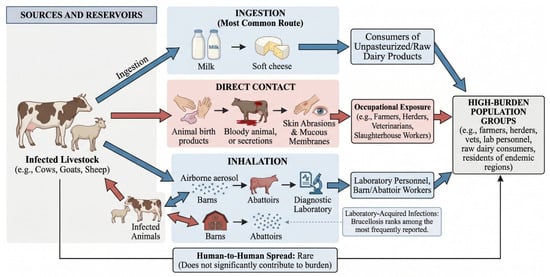
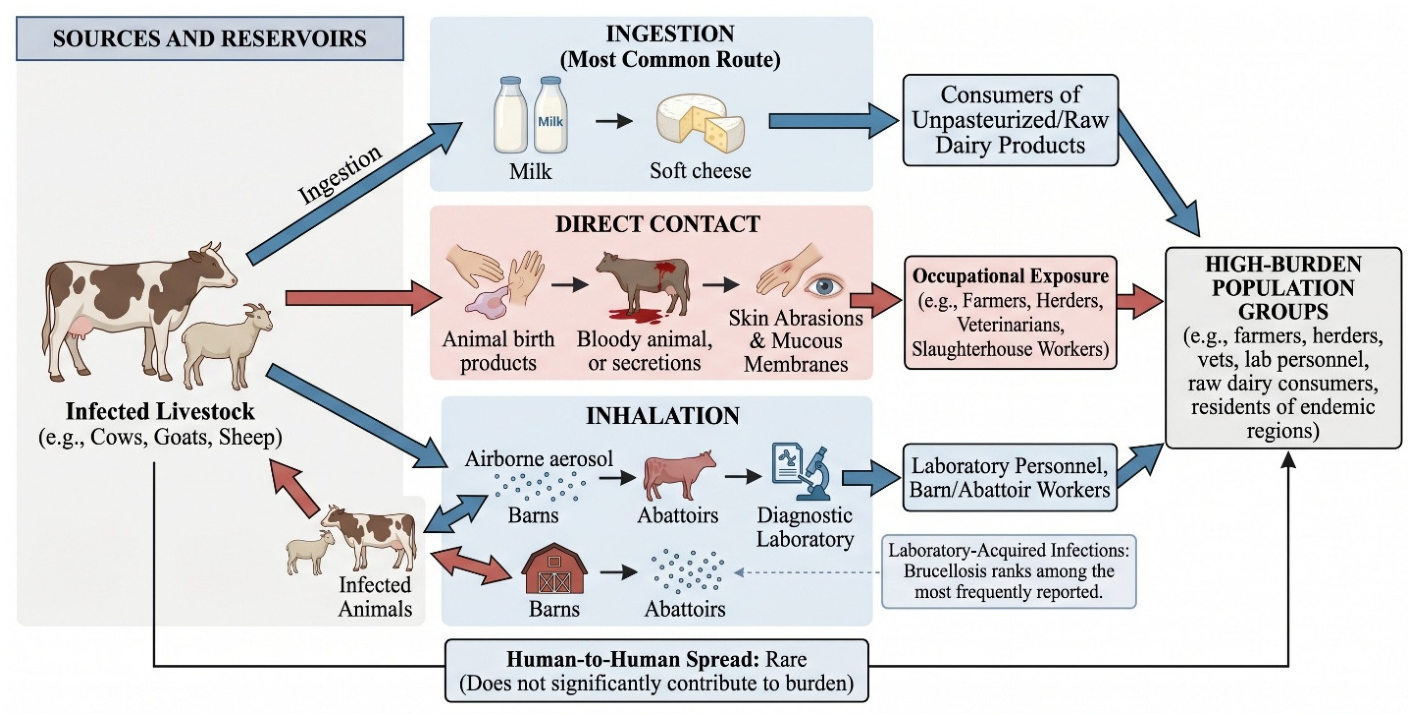

Disclaimer/Publisher’s Note: The statements, opinions and data contained in all publications are solely those of the individual author(s) and contributor(s) and not of MDPI and/or the editor(s). MDPI and/or the editor(s) disclaim responsibility for any injury to people or property resulting from any ideas, methods, instructions or products referred to in the content. |
© 2026 by the authors. Licensee MDPI, Basel, Switzerland. This article is an open access article distributed under the terms and conditions of the Creative Commons Attribution (CC BY) license.