


Simple Summary
Ear infections are common in dogs and can be difficult to treat when they involve Pseudomonas aeruginosa, a bacterium that can survive in inflamed tissues, form protective communities called biofilms, and tolerate antimicrobial treatment. In this study, we examined the genetic background of P. aeruginosa bacteria isolated from dogs with outer ear infections in Hungary. Our aim was to identify genes that may help these bacteria attach to tissues, move, form biofilms, acquire nutrients, damage host tissues, and persist during infection. We analyzed 70 bacterial genomes and found that most isolates carried a broad set of genes linked to survival and disease-causing potential. Several important genes were highly conserved, while others, especially genes related to toxin delivery, varied between isolates. The bacteria also represented a genetically diverse population, suggesting that difficult canine ear infections may be caused by multiple bacterial lineages rather than a single dominant type. These findings show that treatment difficulty is not only related to antimicrobial resistance, but also to bacterial traits that support persistence and tissue damage. Understanding these features may help improve veterinary diagnosis, infection monitoring, and future treatment strategies for companion animals.
Abstract
Background: Canine otitis externa is a clinically relevant niche where Pseudomonas aeruginosa may persist under inflammatory, antimicrobial, and biofilm-favoring conditions. This study characterized the virulome and population structure of canine otitis externa-derived P. aeruginosa isolates from Hungary. Methods: Of 110 isolates previously subjected to minimum inhibitory concentration testing, 70 phenotypically selected isolates underwent long-read whole-genome sequencing and were included in virulence-factor analysis. Virulence-associated genes were detected using the Virulence Factor Database with an 80% identity and 80% coverage threshold and were interpreted by functional systems, including motility, adhesion, biofilm formation, secretion systems, siderophores, quorum sensing, secreted enzymes, and type III secretion system effectors. Results: The isolates carried a broad and highly conserved virulence-associated backbone. Genes related to alginate production, type IV pili, flagellar motility, pyochelin, phenazine biosynthesis, Xcp secretion, type VI secretion, and proteolytic enzymes were widely distributed. Type III secretion effector genes were variable: exoT was detected in 68/70 isolates, exoY in 63/70, exoS in 50/70, and exoU in 15/70. MLST indicated a genetically diverse population, and virulome size showed no strong correlation with the modified multiple antimicrobial resistance index. Conclusions: These findings support integrated genomic surveillance of virulence and antimicrobial resistance in canine otitis-associated P. aeruginosa.
1. Introduction
Otitis externa is among the most frequent inflammatory disorders encountered in companion-animal practice and is clinically important not only because it causes pain, pruritus and reduced quality of life, but also because chronic and recurrent cases may progress to structural ear-canal changes, otitis media and, in severe cases, surgical intervention. The disease is rarely a simple primary bacterial process. Instead, it is usually shaped by primary, predisposing and perpetuating factors, including allergy, anatomical conformation, moisture, canal stenosis and secondary microbial overgrowth [1,2,3,4,5].
Pseudomonas aeruginosa is particularly relevant in chronic or treatment-refractory canine otitis externa. It is an opportunistic, environmentally resilient Gram-negative bacterium that can persist in moist niches, form biofilm on biotic and abiotic surfaces, and tolerate many antimicrobial or antiseptic pressures. These features make it difficult to eradicate from inflamed ear canals and veterinary clinical environments [1,6,7,8,9,10].
The clinical challenge posed by P. aeruginosa is often framed through antimicrobial resistance, and appropriately so: the species combines low outer-membrane permeability, inducible beta-lactamase activity, efflux systems, porin-related changes and acquired determinants that may restrict systemic and topical treatment options [11,12,13,14,15]. However, therapeutic failure in canine otitis is not explained by resistance alone. Persistent infection is also influenced by adhesion, motility, secretion systems, toxin delivery, extracellular enzymes, iron acquisition, quorum sensing and biofilm matrix production. These virulence-associated systems may promote colonization of a damaged ear canal, impair host clearance, exacerbate tissue injury and protect bacterial communities from treatment [1,9,15,16,17].
Several virulence systems are central to the biology of P. aeruginosa. Type IV pili and flagella contribute to adhesion, twitching motility and early surface colonization. Alginate and related mucoid biofilm pathways support persistence in protected bacterial communities. Siderophore systems, including pyoverdine and pyochelin, facilitate iron acquisition in host-restricted environments. The Las and Rhl quorum-sensing networks coordinate extracellular enzyme, phenazine and rhamnolipid production. The type III secretion system (T3SS) is especially relevant because its effector repertoire, including ExoS, ExoU, ExoT and ExoY, can influence cytotoxicity, epithelial injury and inflammatory outcomes [9,15,16].
Despite increasing availability of veterinary whole-genome sequencing data, virulence-focused analyses of canine otitis-associated P. aeruginosa remain limited compared with resistance-focused surveillance. Existing companion-animal studies indicate that ear-canal isolates may include genetically diverse lineages and clinically relevant resistance profiles, but the extent to which these isolates share a conserved virulence backbone or differ in accessory virulence determinants remains incompletely defined [7,18,19,20].
The objective of this study was therefore to characterize the virulence-associated genomic architecture of a phenotypically selected whole-genome sequenced subset of canine otitis externa-derived P. aeruginosa isolates from Hungary. Specifically, we aimed to determine the distribution of VFDB-detected virulence systems, identify variable and clinically relevant effector patterns, describe MLST-based population structure, and explore whether virulome burden was associated with phenotypic antimicrobial resistance burden measured by a modified multiple antimicrobial resistance (MAR) index.
2. Materials and Methods
2.1. Study Design and Isolate Collection
This retrospective laboratory study used canine otitis externa-associated P. aeruginosa isolates recovered from routine veterinary diagnostic submissions in Hungary. The broader phenotypic dataset comprised 110 isolates subjected to broth microdilution minimum inhibitory concentration (MIC) testing against 14 antimicrobial or antiseptic agents. For genomic analysis, 70 isolates were selected after completion of MIC testing to maximize phenotypic heterogeneity within the collection. Selection was based on the modified MAR index and the distribution of MIC-derived susceptibility patterns across clinically relevant antimicrobial groups, including fluoroquinolones, aminoglycosides, beta-lactams and other agents included in the phenotypic panel. The aim was to include isolates spanning the observed resistance-burden range and divergent MIC profiles rather than to create a random or prevalence-representative sample. No formal stratified random sampling with fixed numerical quotas was applied. Because genomic data were not available before sequencing, redundant clones were not excluded during selection; potential clonal relatedness was instead evaluated post hoc using MLST and core-genome phylogenetic analysis. All 70 sequenced isolates were included in the present virulome analysis.
2.2. Phenotypic Background and Resistance-Burden Metric
The full phenotypic dataset and the selected WGS subset were derived from the same canine otitis externa-associated Pseudomonas aeruginosa isolate collection as the companion MIC-focused study. MIC testing was performed by broth microdilution. MIC interpretation followed Clinical and Laboratory Standards Institute (CLSI) and European Committee on Antimicrobial Susceptibility Testing (EUCAST) criteria where available, supplemented by literature-based thresholds when official veterinary breakpoints were not available [21,22,23,24]. For this virulence-focused manuscript, MIC values were not reinterpreted as the primary outcome. Instead, they were used to calculate a modified MAR index for isolates in the WGS subset. The index was calculated as the number of antimicrobial agents exceeding predefined resistance or non-susceptibility thresholds divided by the number of agents with interpretable thresholds. This metric was used only as a descriptive resistance-burden covariate.
2.3. DNA Extraction, Sequencing and Assembly
Bacterial DNA was extracted from revived P. aeruginosa isolates using the Quick-DNA Fungal/Bacterial Miniprep Kit (Zymo Research Corp., Irvine, CA, USA), following the manufacturer instructions. DNA concentration was measured using a Qubit 4.0 Fluorometer (Thermo Fisher Scientific, Waltham, MA, USA). Sequencing libraries were prepared using the Native Barcoding Kit 24 V14 (Oxford Nanopore Technologies Ltd., Oxford, UK) and loaded onto R10.4.1 MinION flow cells. Sequencing was performed on a MinION Mk1B instrument (Oxford Nanopore Technologies Ltd., Oxford, UK). Basecalling and demultiplexing were performed in super-accuracy mode using Dorado integrated into MinKNOW.
Raw long reads were filtered and trimmed with NanoLyse v1.2.1 and NanoFilt v2.8.0. Reads with mean quality below 8 or length below 500 bp were removed, and 50 bp was trimmed from both read ends to reduce residual adapter sequences. Read quality was summarized with NanoPlot v1.43.0. De novo assembly was performed with Flye v2.9.5, followed by polishing with minimap2 v2.28, racon v1.5.0 and medaka v2.0.1. Assembly quality was evaluated using QUAST v5.0.2, BUSCO v5.8.2 and CheckM v1.2.2. Multilocus sequence typing profiles were generated using the mlst pipeline [25,26,27,28,29,30,31]. Hybrid short-read validation was not performed. Although hybrid assemblies combining long- and short-read sequencing can be advantageous in some applications, the long-read data generated in this study produced highly contiguous, high-quality assemblies that adequately addressed the genome-wide screening objectives of the work. Therefore, additional short-read sequencing was not considered necessary for the primary virulome analysis. Nevertheless, gene absence calls, particularly for variable loci, were interpreted cautiously.
2.4. Virulence-Factor Detection and Functional Annotation
Virulence-associated genes were identified from assembled genomes using ABRicate v1.0.1 against the Virulence Factor Database (VFDB; database accessed on 5 May 2026). Hits were retained when sequence identity and coverage were both at least 80%. These thresholds were selected as conservative screening criteria to reduce the inclusion of short, low-coverage or weakly similar matches while retaining homologous virulence-associated loci that may show sequence variation among clinical isolates. Similar identity- and coverage-based filtering approaches are commonly applied in bacterial WGS pipelines using ABRicate or related BLAST-based screening tools for resistance and virulence gene detection [32]. Detected loci were grouped into functional systems based on VFDB product annotation, including alginate and mucoid biofilm matrix, alginate regulation, type IV pili, flagellar motility, T3SS, T3SS effectors, type VI secretion system, Xcp type II secretion system, pyochelin and pyoverdine siderophore systems, phenazine/pyocyanin pathways, rhamnolipid biosurfactant systems, quorum-sensing genes, LPS/surface-antigen systems, secreted proteases and phospholipase C. Because VFDB reports individual loci from multi-gene systems, interpretation emphasized system-level presence rather than overinterpreting single-gene carriage as a direct measure of phenotype.
No additional single-gene PCR confirmation was performed, because the objective of the study was genome-wide virulome characterization based on long-read WGS data rather than diagnostic validation of selected loci. Targeted PCR, RT-qPCR or functional assays should be considered in future studies to validate selected genes and determine whether detected loci are expressed under otitis-relevant conditions.
2.5. Core-Genome Phylogenetic Analysis
All assemblies were annotated using Prokka v1.14.6 with lineage-specific settings (--genus Pseudomonas --usegenus). The core genome was identified with Panaroo v1.6.0 using strict cleaning mode (--clean-mode strict). Phylogenetic relationships among isolates were reconstructed with IQ-TREE v2.4.0 using the core-genome alignment as input and automatic model selection (-m MFP). The best-fit model selected according to the Bayesian information criterion was GTR+F+I+R10. The resulting phylogenetic tree was visualized with FigTree v1.4.4 and further edited in Inkscape v1.4.2 to improve readability.
2.6. Statistical Analysis
Analyses were performed in Python v. 3.11 using pandas, NumPy, SciPy, matplotlib and seaborn. Descriptive statistics were calculated for gene and category prevalence. The number of distinct virulence-associated genes and the number of functional virulence categories per isolate were used as descriptive virulome-burden metrics. MLST diversity was summarized by sequence-type counts. T3SS effector profiles were summarized using exoS, exoU, exoT and exoY carriage. Spearman correlation was used to test the association between total virulence-gene count and modified MAR index. The Mann–Whitney U test was used to compare modified MAR indices between exoU-positive and exoU-negative isolates. Statistical tests were considered exploratory, and p values were interpreted cautiously because the WGS subset was selected rather than randomly sampled.
3. Results
3.1. Composition and Quality of the Virulome Dataset
All 70 isolates selected for WGS were included in the final virulome analysis. Therefore, all denominator-based virulence prevalence calculations were performed using 70 isolates.
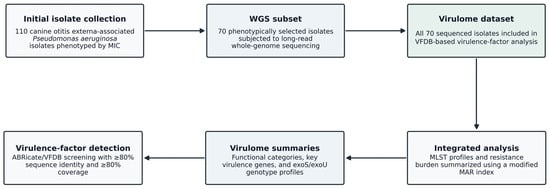
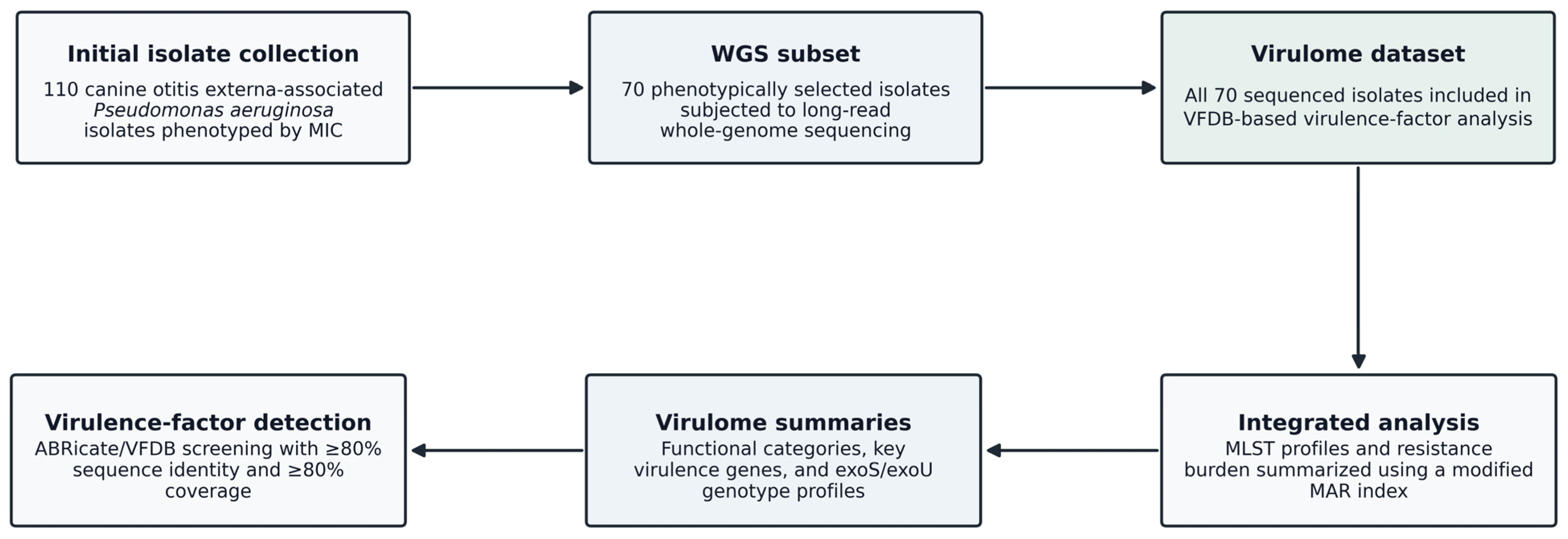
The sequenced assemblies had a median genome size of 6.57 Mbp and median GC content of 66.27%. Median CheckM completeness was 99.68% and median contamination was 0.14%. These values support the use of the currently analyzed genomes for broad virulome screening (Table 1). The overall study design and filtering workflow from the phenotypic isolate collection to the final virulome dataset are summarized in Figure 1.
Table 1.
Dataset and assembly-quality summary.
Figure 1.
Study design and virulome-analysis workflow. The phenotypic isolate collection included 110 canine otitis externa-associated Pseudomonas aeruginosa isolates subjected to minimum inhibitory concentration testing. A phenotypically selected subset of 70 isolates underwent long-read whole-genome sequencing, and all 70 sequenced isolates were included in VFDB-based virulence-factor analysis. MIC, minimum inhibitory concentration; WGS, whole-genome sequencing; VFDB, Virulence Factor Database; MLST, multilocus sequence typing; MAR, multiple antimicrobial resistance.
3.2. A Conserved Virulence Backbone Was Present Across the Sequenced Isolates
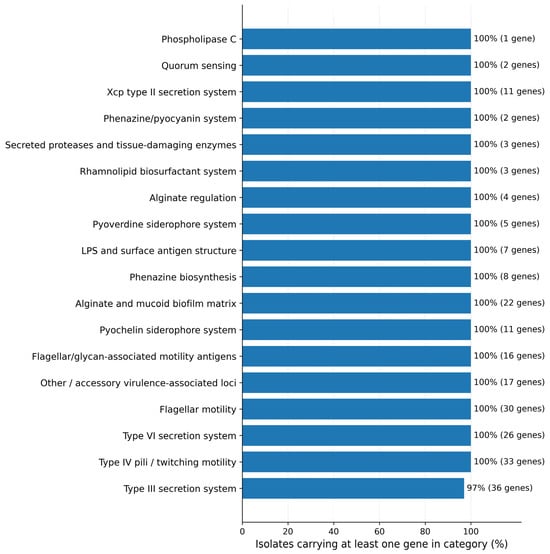
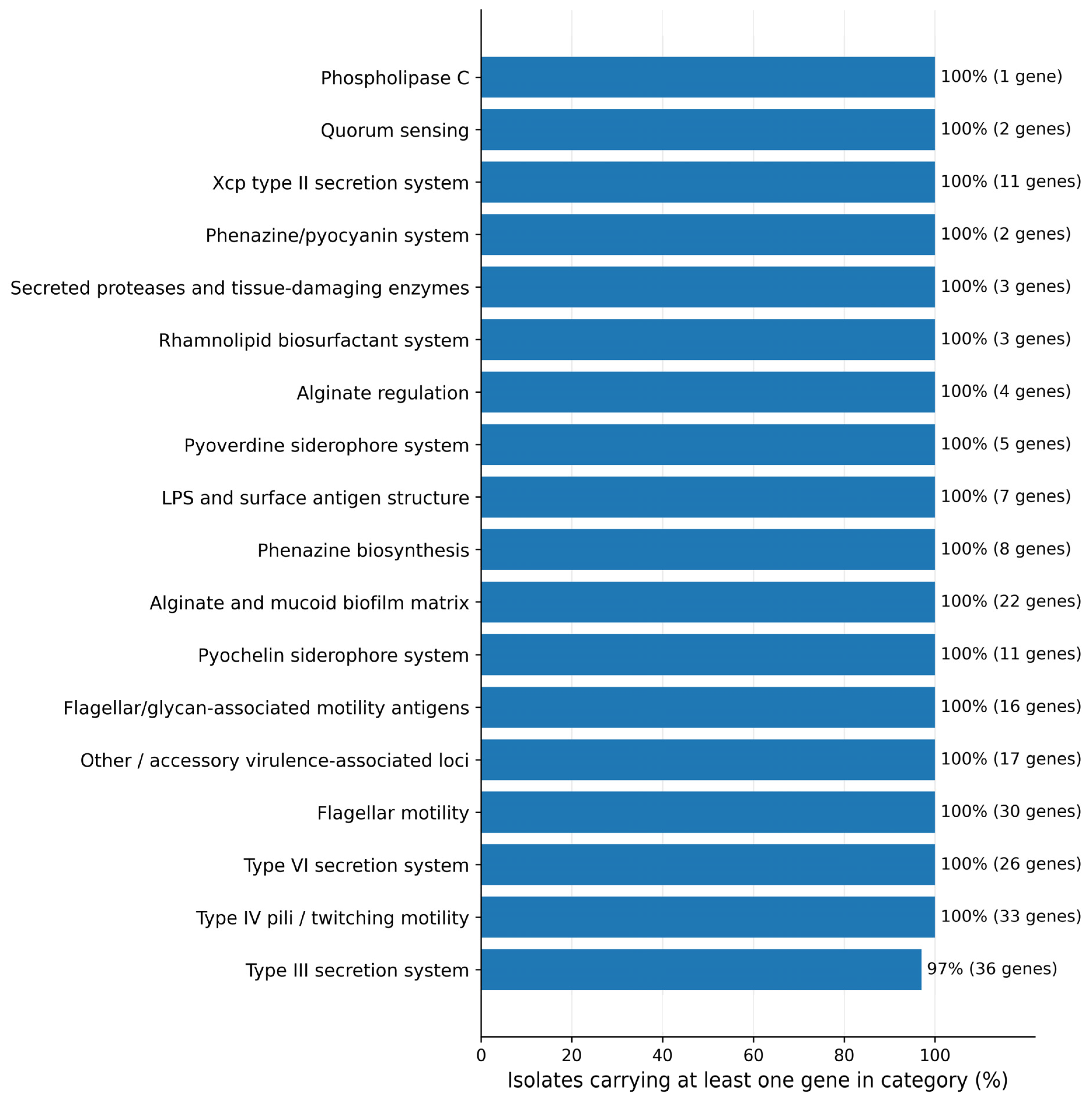
The VFDB screen identified a broad virulence-associated repertoire. The median number of distinct VFDB-detected genes per isolate was 230 (interquartile range 226–232). Most major systems were near-universal, including alginate-associated loci, type IV pili, flagellar motility genes, type VI secretion components, pyochelin biosynthesis genes, Xcp secretion genes, phenazine biosynthesis genes and secreted protease determinants (Table 2; Figure 2). This pattern indicates that canine otitis-associated isolates carry a conserved pathogenicity framework rather than isolated virulence features.
Table 2.
Virulence-associated functional systems detected in the whole-genome sequenced subset.
Figure 2.
Virulence-associated functional systems in the whole-genome sequenced subset. Bars indicate the percentage of canine otitis externa-derived Pseudomonas aeruginosa isolates carrying at least one VFDB-detected gene in each functional category. Values in parentheses denote the number of distinct genes assigned to each category. Most systems were detected in all isolates, whereas the type III secretion system showed slightly lower prevalence. VFDB, Virulence Factor Database.
3.3. Biofilm, Adhesion and Motility Systems Were Broadly Distributed
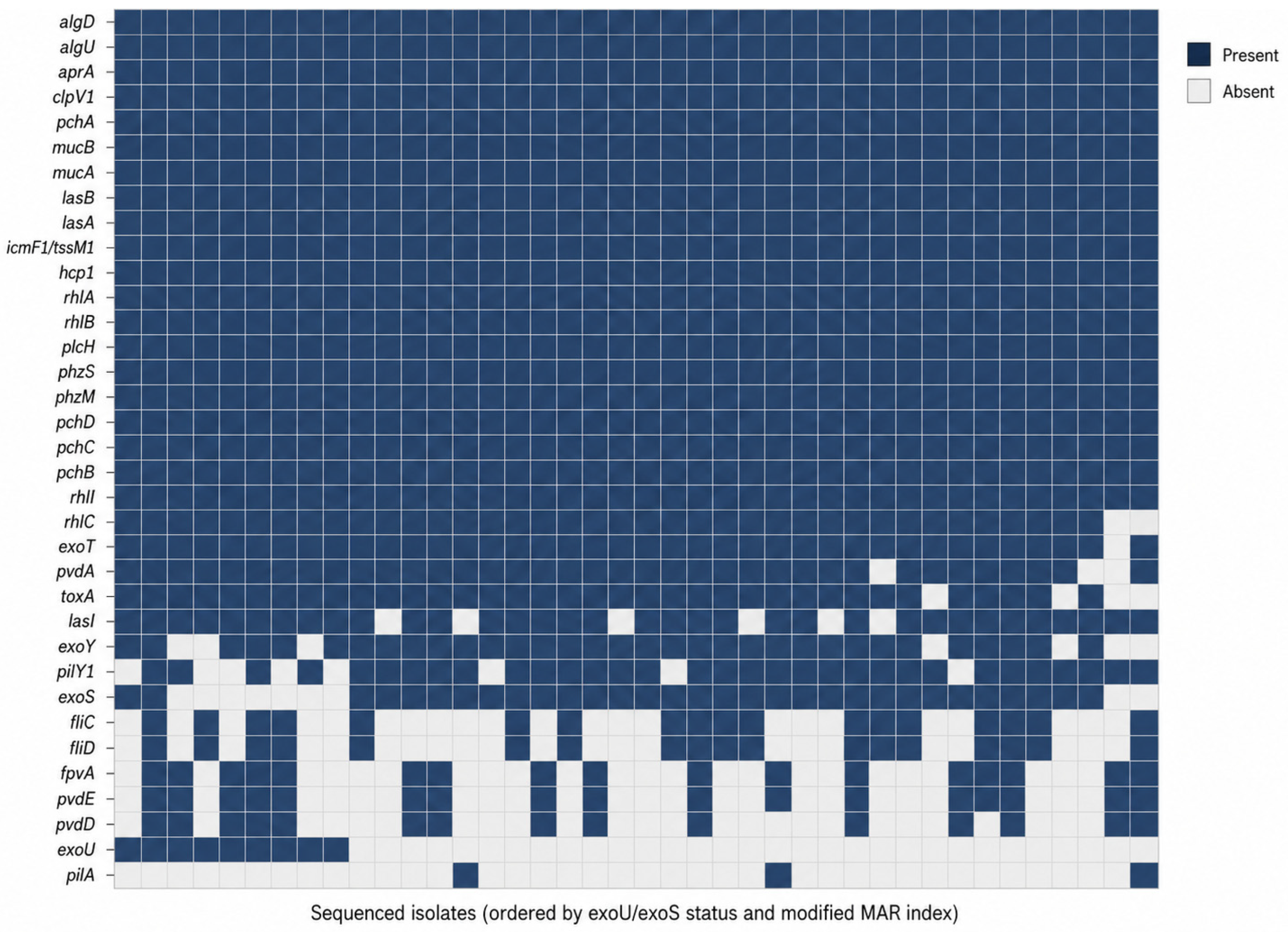
Genes linked to alginate biosynthesis and regulation were highly prevalent. This included alginate structural and regulatory loci such as algA, algC, algD, algG, algU, algR and muc-associated genes (Table 3; Figure 3). These findings are relevant because chronic otitis externa provides a biofilm-favoring environment where alginate and extracellular matrix production can increase persistence and reduce antimicrobial exposure. Adhesion and motility systems were also widespread: type IV pilus-associated genes and flagellar genes occurred in nearly all analyzed isolates, consistent with a genomic background capable of twitching motility, surface exploration, epithelial interaction and early biofilm establishment (Table 2; Figure 2).
Table 3.
Clinically relevant or variable virulence-associated genes.
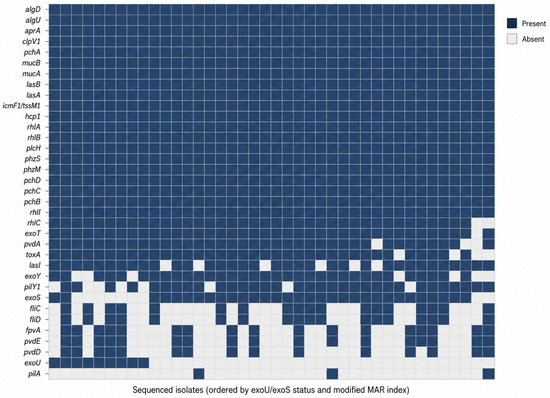
Figure 3.
Distribution of clinically relevant and variable virulence-associated genes in the whole-genome sequenced subset. Heatmap showing the presence and absence of selected clinically relevant and variable virulence-associated genes across canine otitis externa-derived Pseudomonas aeruginosa isolates. Each column represents one sequenced isolate and each row represents one gene. Dark-colored cells indicate gene presence, whereas light-colored cells indicate gene absence. Isolates are ordered according to exoU/exoS status and modified multiple antimicrobial resistance (MAR) index to facilitate comparison of major type III secretion system effector profiles and phenotypic resistance burden. The heatmap illustrates a broadly conserved virulence-associated genomic backbone together with variability in selected effector, siderophore-associated, motility-associated, and pili-associated loci. MAR, multiple antimicrobial resistance.
3.4. T3SS Effector Profiles Showed Clinically Relevant Heterogeneity
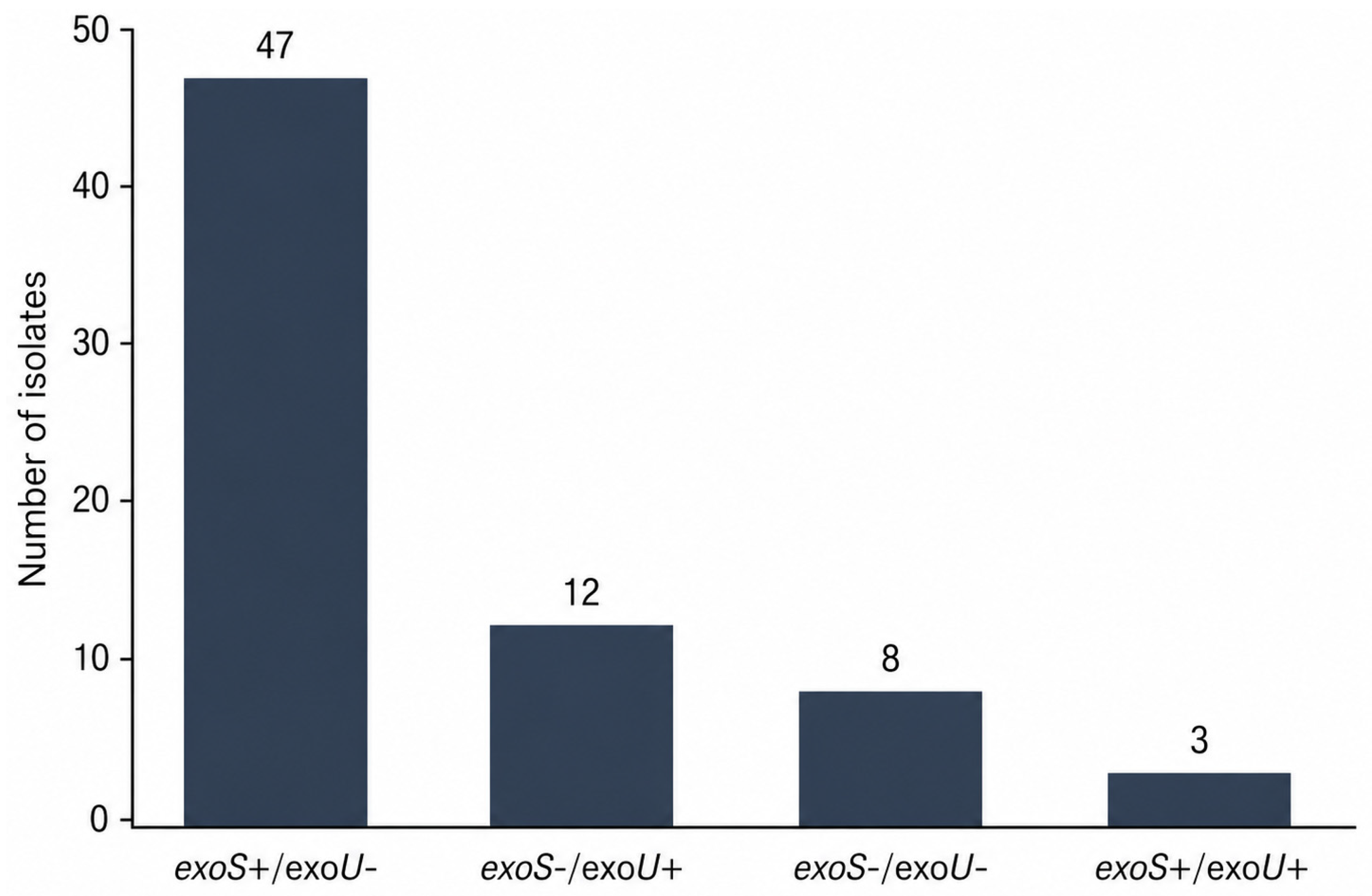
The type III secretion system core machinery was broadly conserved, but effector carriage differed among isolates. exoT was detected in 68/70 isolates, exoY in 63/70, exoS in 50/70 and exoU in 15/70 (Table 3; Figure 4). The dominant profile was exoS-positive/exoU-negative, while an exoU-positive subset was also present (Figure 4). Because ExoU is frequently interpreted as a marker of a more cytotoxic P. aeruginosa phenotype, its detection in a subset of canine otitis isolates is a potentially important finding. However, the presence of exoU should not be interpreted as direct evidence of active toxin expression, secretion or cytotoxic phenotype. Functional cytotoxicity assays, epithelial-cell infection models or transcriptomic analysis under ear-canal-like conditions would be required to confirm the biological consequences of these effector profiles.
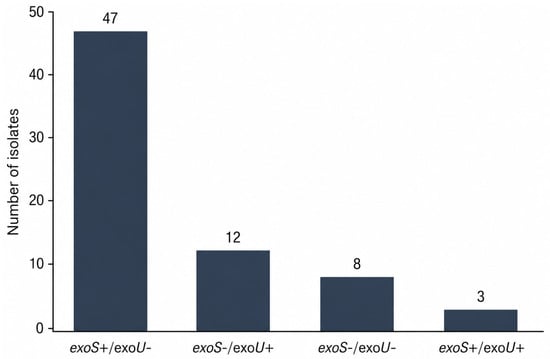
Figure 4.
T3SS effector genotype profiles in the whole-genome sequenced subset. Bar chart showing the distribution of major type III secretion system (T3SS) effector genotype profiles among canine otitis externa-derived Pseudomonas aeruginosa isolates. Bars represent the number of isolates carrying each exoS/exoU genotype combination, and values above the bars indicate isolate counts. The exoS+/exoU− profile was the most frequent, whereas exoS−/exoU+, exoS−/exoU−, and exoS+/exoU+ profiles were less common. This distribution indicates that exoS-positive/exoU-negative isolates predominated in the dataset, while exoU-positive genotypes were present in a smaller subset. T3SS, type III secretion system.
3.5. Iron Acquisition, Extracellular Enzymes and Quorum-Sensing-Associated Genes Were Common
Siderophore-associated genes were frequent, especially pyochelin-system genes. Pyoverdine-associated loci were also detected, although several pyoverdine biosynthesis/receptor genes showed more variable distribution (Table 2 and Table 3; Figure 3). Secreted tissue-damaging enzymes, including lasA, lasB and aprA, were widely detected. Quorum-sensing-associated loci, including rhlI/rhlR and lasI/lasR-related hits, were also present in much of the dataset (Table 3). Together, these systems support the biological plausibility that canine otitis isolates can coordinate extracellular enzyme production, iron acquisition, biofilm development and competitive persistence within the inflamed ear canal.
3.6. MLST Indicated a Diverse Population Rather than a Single Clonal Expansion
MLST analysis showed multiple sequence types among the whole-genome sequenced isolates (Table 4). A substantial fraction of isolates had novel or incomplete ST calls, which may reflect allelic novelty, assembly fragmentation affecting one or more loci, or database limitations. The diversity of STs argues against the dataset being driven by a single clonal expansion and supports interpretation as a heterogeneous clinical collection. The high number of novel or incomplete MLST profiles should be interpreted conservatively. Given the high overall assembly completeness and low contamination values, this pattern is unlikely to reflect a generalized assembly-quality problem across the dataset. However, incomplete recovery, local assembly uncertainty or sequence divergence affecting one or more MLST loci cannot be excluded for individual isolates. In addition, the available P. aeruginosa MLST database may not fully capture the allelic diversity of veterinary otitis-associated lineages. Therefore, MLST was interpreted as a descriptive typing layer rather than as the sole basis for population-structure inference, and isolate relatedness was further evaluated using core-genome phylogenetic analysis.
Table 4.
MLST-based population structure in the whole-genome sequencing (WGS) subset.
3.7. Core-Genome Phylogeny Confirmed a Genetically Heterogeneous Isolate Collection
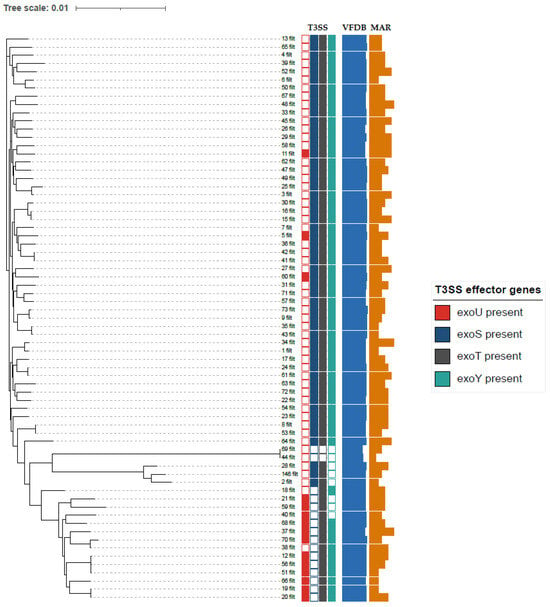
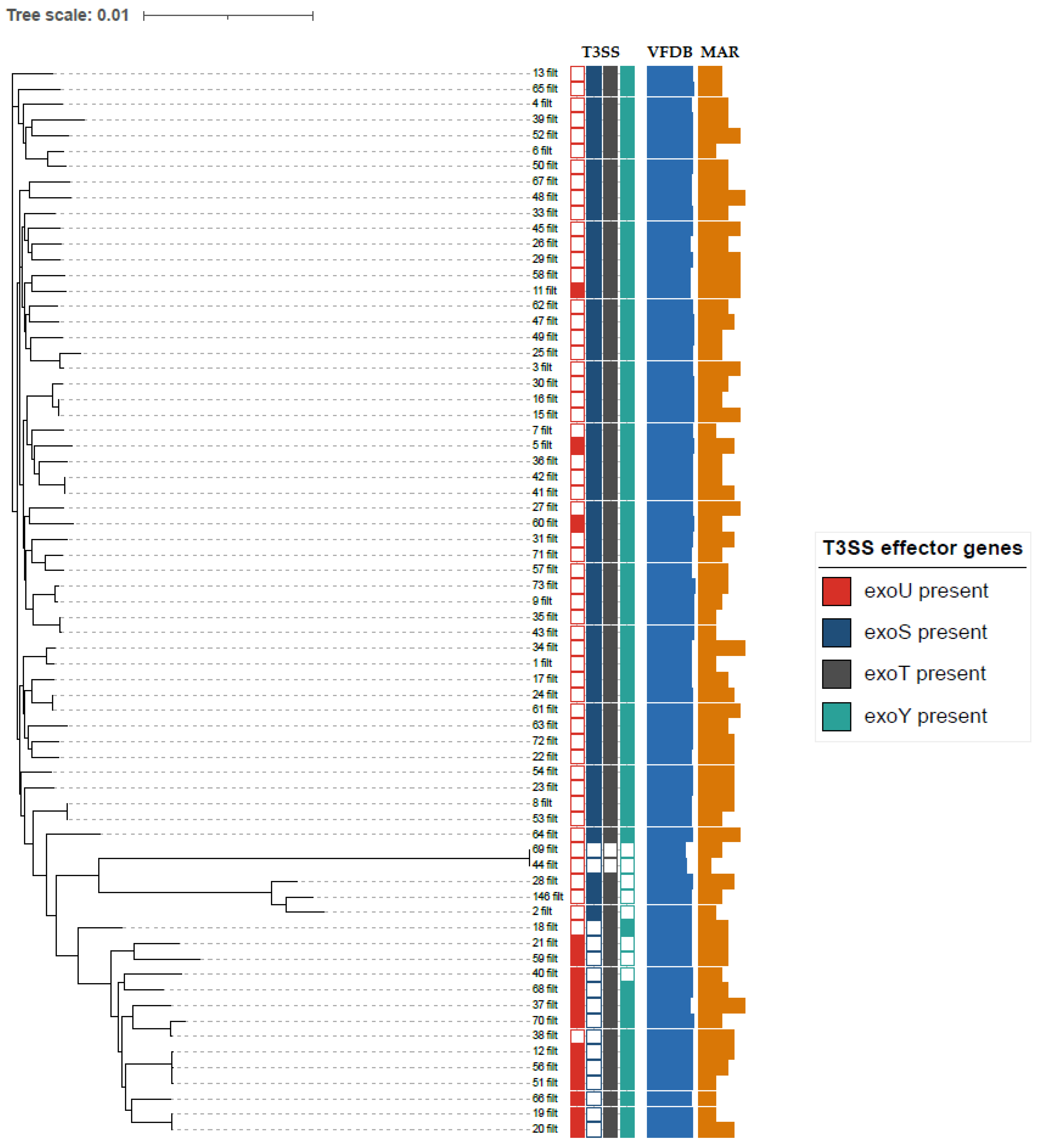
Core-genome phylogenetic analysis provided a higher-resolution overview of isolate relatedness than MLST alone (Figure 5). The tree showed that the sequenced isolates did not form a single outbreak-like cluster, but were distributed across multiple phylogenetic branches, supporting the interpretation of a genetically heterogeneous clinical collection. Isolates with novel or incomplete MLST profiles were not confined to one branch, suggesting that these calls did not reflect a single technical artifact or one narrowly defined lineage. The distribution of exoU-positive isolates across the tree further indicated that T3SS effector carriage was not limited to a single dominant clonal background. Together, these findings support the use of core-genome phylogeny as the primary population-structure framework, with MLST retained as a complementary descriptive typing layer.
Figure 5.
Core-genome phylogenetic relationships among canine otitis externa-derived Pseudomonas aeruginosa isolates. The tree was reconstructed from the core-genome alignment using IQ-TREE with automatic model selection. The best-fit model selected according to the Bayesian information criterion was GTR+F+I+R10. The adjacent annotation tracks indicate the presence of type III secretion system effector genes (exoU, exoS, exoT and exoY). Blue bars indicate VFDB-detected virulence-gene count, and orange bars indicate the modified multiple antimicrobial resistance (MAR) index. The phylogeny shows that the isolates were distributed across multiple branches rather than forming a single outbreak-like clonal cluster.
3.8. Virulome Burden Was Not Strongly Coupled to Phenotypic Resistance Burden
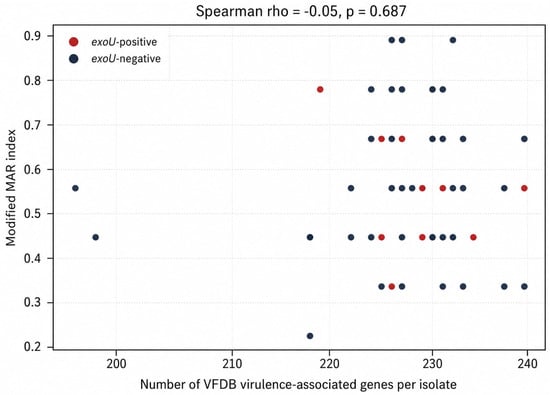
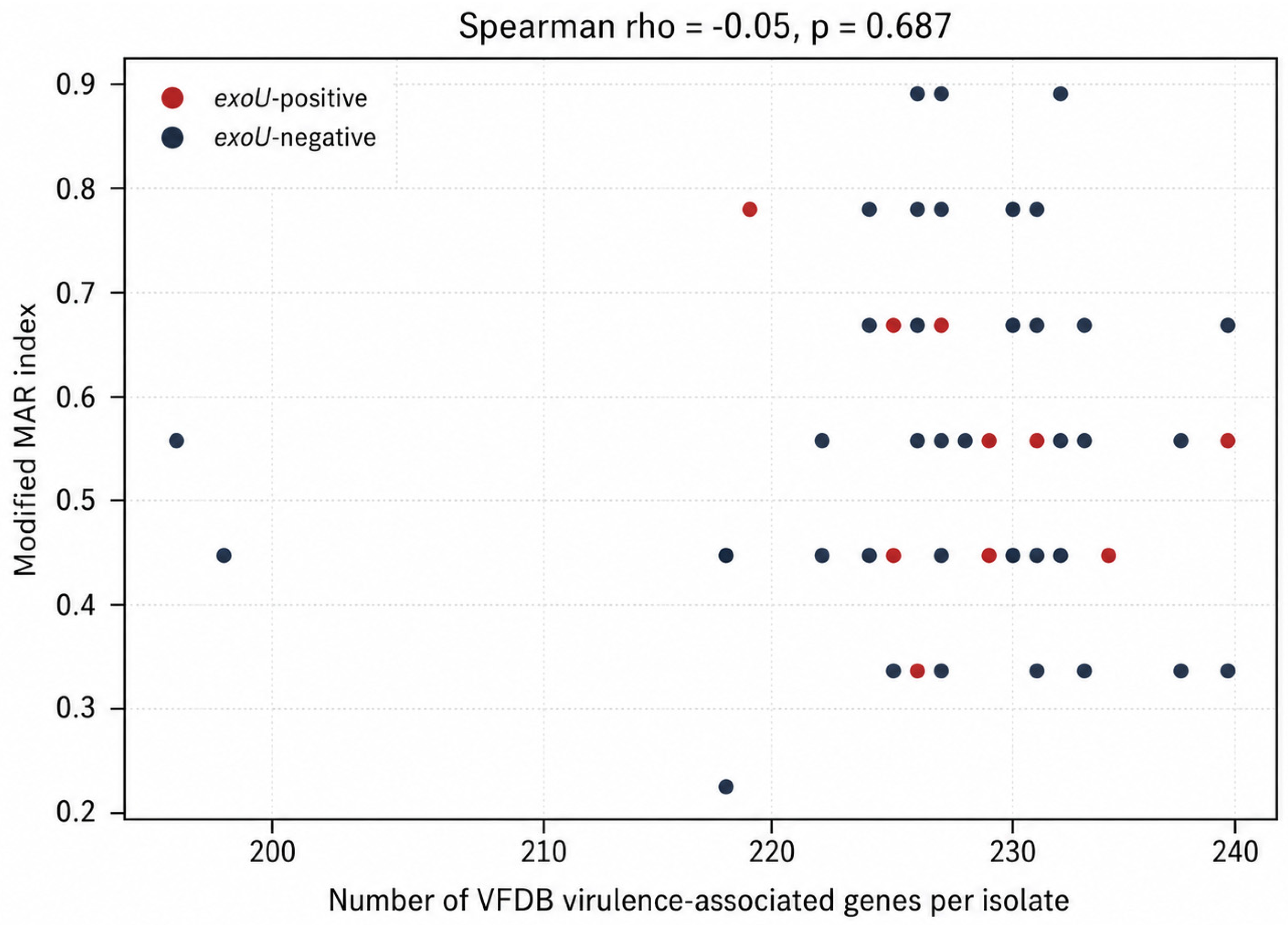
To explore whether broader virulence-gene carriage tracked with phenotypic resistance burden, total VFDB gene count was compared with the modified MAR index in the WGS subset. This analysis integrated isolate-level virulome burden, phenotypic resistance burden and exoU status to evaluate whether broader virulence-gene carriage coincided with resistance-associated phenotypic profiles. The association was weak (Spearman ρ = −0.05, p = 0.687; Table 5; Figure 6). exoU-positive isolates had a median modified MAR index of 0.56, compared with 0.56 among exoU-negative isolates (Mann–Whitney U test, p = 0.549; Table 5). These exploratory results suggest that resistance burden and virulence-gene carriage should be interpreted as complementary rather than interchangeable features.
Table 5.
Exploratory integration of virulence features with phenotypic resistance burden.
Figure 6.
Relationship between virulome size and phenotypic resistance burden in the whole-genome sequenced subset. Scatter plot showing the relationship between the total number of VFDB-detected virulence-associated genes per isolate and the modified multiple antimicrobial resistance (MAR) index in canine otitis externa-derived Pseudomonas aeruginosa isolates. Each point represents one isolate. Red points indicate exoU-positive isolates and blue points indicate exoU-negative isolates. The weak and non-significant Spearman correlation (ρ = −0.05, p = 0.687) indicates that virulome size was not strongly associated with phenotypic resistance burden in this dataset. MAR, multiple antimicrobial resistance; VFDB, Virulence Factor Database.
4. Discussion
This study provides a virulence-focused genomic analysis of canine otitis externa-associated P. aeruginosa isolates from Hungary and extends the companion phenotypic antimicrobial susceptibility dataset by adding a second, clinically relevant dimension of pathogenic potential. The main finding was that the analyzed isolates carried a broad and largely conserved virulence-associated genomic backbone, including genes involved in alginate and biofilm matrix formation, type IV pili, flagellar motility, secretion systems, siderophore-mediated iron acquisition, quorum sensing, phenazine biosynthesis, and extracellular proteolysis. At the same time, heterogeneity was observed in selected accessory or clinically relevant loci, most notably type III secretion system effector genes and selected pyoverdine-, pilus- and motility-associated genes. This pattern is consistent with the biology of P. aeruginosa as a highly adaptable opportunistic pathogen rather than a pathogen defined by a single virulence determinant [1,9,15,16].
The clinical relevance of these findings should be interpreted in the specific context of canine otitis externa. Otitis externa is a multifactorial disease in which primary, predisposing and perpetuating factors alter the ear-canal microenvironment and create conditions that favor secondary microbial overgrowth [1,2,3,4,10]. Previous reviews and clinical studies have emphasized that P. aeruginosa is particularly important in chronic, suppurative and treatment-refractory otitis externa, where it may persist in inflamed, moist and exudative niches and frequently forms biofilm [1,5,10]. Secker et al. similarly highlighted Pseudomonas spp. as major contributors to difficult canine otitis cases, especially because biofilm formation, intrinsic resistance and treatment-associated selection can interact in the ear canal [1]. Our genomic results support this clinical view: the near-universal presence of adhesion, motility, matrix-associated and secretion-system genes suggests that these isolates possess the genomic machinery required for colonization and persistence once the local ear environment becomes permissive.
The widespread detection of alginate-associated genes is particularly relevant. Alginate and related exopolysaccharide pathways are central to mucoid and biofilm-associated phenotypes, especially in chronic P. aeruginosa infections [9,17]. In our dataset, alginate structural and regulatory loci were broadly distributed, which is consistent with the concept that canine otitis-associated isolates retain the capacity to establish protected bacterial communities. This agrees with previous descriptions of P. aeruginosa biofilm biology, where biofilm growth reduces antimicrobial penetration, supports slow-growing and persister-like subpopulations, and increases tolerance to host defense mechanisms [6,9,17]. This interpretation is consistent with previous reviews emphasizing that biofilm-mediated adaptive resistance is a key survival strategy under antimicrobial exposure, because the extracellular matrix reduces diffusion, modifies the internal microenvironment and promotes persistence of metabolically less active cells [9,17]. Therefore, the conserved alginate and biofilm-associated repertoire observed in the present study should not be interpreted as a purely descriptive genomic finding, but as a plausible biological explanation for the chronicity and therapeutic difficulty of canine P. aeruginosa-associated otitis.
The broader phenotypic dataset from which the WGS subset was selected showed reduced susceptibility to several clinically relevant agents, including fluoroquinolones and aminoglycosides, thereby providing the resistance-related background for the present virulome-focused analysis. Previous studies from Croatia, Romania and the Midwestern United States provide useful regional and international context for interpreting these findings [19,33]. Mekić et al. examined canine otitis externa-derived P. aeruginosa isolates in Croatia and reported substantially more favorable ceftazidime and gentamicin susceptibility patterns than those observed in the Hungarian phenotypic dataset [19]. More recently, Popa et al. investigated antimicrobial susceptibility and fluoroquinolone resistance patterns of canine otitis externa-derived P. aeruginosa isolates in Romania, highlighting that treatment-relevant resistance phenotypes, particularly those affecting fluoroquinolone use, are also an important regional concern in Central and Eastern Europe [34]. KuKanich et al. reported higher susceptibility rates for amikacin, gentamicin, ceftazidime, piperacillin–tazobactam and imipenem in canine otitis-associated isolates from the Midwestern United States than those observed in the present Hungarian collection [33]. These phenotypic differences are not directly explained by the virulome, but they provide an important clinical background: the isolates analyzed here originate from a population in which resistance burden is already substantial. The present study therefore adds that these isolates are not only difficult because of antimicrobial susceptibility profiles, but also because they carry conserved genomic systems linked to persistence, tissue interaction and biofilm-associated survival.
The high prevalence of type IV pili and flagellar motility genes is consistent with previous work on P. aeruginosa pathogenesis. Type IV pili contribute to twitching motility, surface attachment and early biofilm development, while flagella support swimming motility, epithelial interaction and host immune stimulation [9,15,16]. In canine otitis externa, these systems are biologically plausible contributors to colonization of an inflamed epithelial surface covered by cerumen, exudate and microbial communities. Similar clinical reasoning has been used in discussions of otitis externa management, where physical cleaning of the ear canal is considered essential because debris and biofilm reduce the effectiveness of topical treatment [1,10]. The variability of selected pilus and flagellar loci in our dataset may reflect lineage-level diversity, annotation differences or accessory genomic variation. However, it also identifies candidate genes for future studies linking virulome patterns with clinical severity, recurrence, otitis media involvement or treatment outcome.
The type III secretion system effector results represent one of the most important comparative findings of this study. The T3SS core machinery was broadly conserved, but effector carriage was heterogeneous: exoT and exoY were frequent, exoS was detected in most isolates, and exoU was present in a smaller but clinically relevant subset. This is consistent with the broader P. aeruginosa literature, where exoS and exoU are commonly interpreted as markers of different pathogenic strategies. exoS-positive strains are often associated with invasive and persistent phenotypes, whereas exoU-positive strains are frequently linked to acute cytotoxicity and more severe tissue damage in human-pathogen studies [16]. In the present canine otitis collection, the predominance of exoS over exoU is compatible with a higher frequency of genomic backgrounds commonly associated with invasive or persistent phenotypes than of backgrounds carrying the cytotoxicity-associated exoU determinant. Nevertheless, the detection of exoU in 15/70 isolates identifies a subset that may warrant further functional investigation, but it should not be interpreted as evidence of demonstrated cytotoxicity. This interpretation is hypothesis-generating rather than confirmatory, because the present study assessed gene presence only and did not evaluate T3SS expression, effector secretion or host-cell injury. Functional cytotoxicity assays, epithelial-cell models or transcriptomic analysis under ear-canal-like conditions would be required to determine whether these exoU-positive isolates display increased tissue-damaging behavior.
The broad distribution of siderophore-associated genes also fits well with the current understanding of P. aeruginosa infection biology. Iron is restricted in host tissues, and P. aeruginosa relies on high-affinity siderophore systems such as pyoverdine and pyochelin to acquire iron during infection [9,15]. In our dataset, pyochelin-associated genes were highly conserved, while selected pyoverdine-related loci showed greater variability. This differs from a simple “all-or-nothing” view of siderophore carriage and suggests that canine otitis-associated isolates may share a core iron-acquisition background while differing in accessory or receptor-level siderophore components. This is relevant because iron acquisition is linked not only to growth in host-restricted environments, but also to oxidative stress tolerance, interbacterial competition, biofilm formation and virulence regulation. The presence of these systems therefore supports the interpretation that canine otitis isolates are equipped to persist in inflammatory niches where free iron availability is limited.
The population-structure analyses indicated a genetically diverse isolate collection rather than a single clonal expansion. MLST identified multiple known sequence types but also a high number of novel or incomplete profiles, which required cautious interpretation. For this reason, population-structure inference was strengthened by core-genome phylogenetic analysis. The core-genome tree confirmed that the isolates were distributed across multiple phylogenetic branches rather than forming a single outbreak-like cluster. This supports the interpretation that the conserved virulence-associated genomic backbone observed in the study is not merely the result of one locally expanded lineage but is present across diverse canine otitis-associated P. aeruginosa backgrounds. The distribution of exoU-positive isolates across the phylogeny further suggests that this effector profile was not restricted to a single dominant clonal background. Nevertheless, the high proportion of novel or incomplete MLST profiles remains a limitation of sequence-type-based interpretation and may reflect allelic novelty, database underrepresentation or locus-level assembly uncertainty [7,18]. Elfadadny et al. reported genetically diverse P. aeruginosa isolates from canine ear canals in Japan and emphasized the value of genotyping for understanding potential transmission and risk patterns in companion animals [18]. Haenni et al. similarly described a diverse population structure among animal infection-derived P. aeruginosa isolates in France [7]. Our results are compatible with these observations: although the virulence backbone was highly conserved, the MLST profile was heterogeneous and included multiple sequence types as well as many novel or incomplete calls. This combination is important. It suggests that the conserved virulence architecture is not merely the result of one locally expanded lineage but may be broadly distributed across diverse canine otitis-associated P. aeruginosa backgrounds. At the same time, the high proportion of novel or incomplete MLST calls should be interpreted cautiously, because these profiles may reflect genuine allelic novelty, assembly fragmentation, missing loci or database limitations.
The weak relationship between virulome size and modified MAR index is another important result. Total VFDB gene count was not strongly correlated with phenotypic resistance burden, and exoU-positive isolates did not show a higher modified MAR index than exoU-negative isolates. This agrees with the broader conceptual distinction between antimicrobial resistance and virulence: both contribute to clinical risk, but they are not interchangeable biological dimensions. A highly resistant isolate is not necessarily the most virulence-gene-rich isolate, and an isolate carrying a potentially cytotoxic effector gene is not necessarily the most resistant by MIC criteria. This distinction is especially relevant for companion-animal infections, where treatment failure may reflect the combined effects of resistance, biofilm tolerance, local inflammation, canal anatomy, exudate, owner compliance and primary dermatological disease. Recent Hungarian and regional veterinary AMR studies further support the value of integrated surveillance frameworks that combine phenotypic and genomic information rather than relying on single isolate-level resistance classifications alone [35,36,37,38,39].
The present results should also be interpreted alongside the resistance-related genomic and phenotypic background of canine otitis-associated P. aeruginosa. Although this study focused on virulence-associated determinants rather than antimicrobial resistance genes, the same clinical problem is shaped by both dimensions. In P. aeruginosa, intrinsic and acquired resistance mechanisms, including low outer-membrane permeability, efflux systems, β-lactamases, aminoglycoside-modifying enzymes, lipid A modification and fluoroquinolone-associated mechanisms, may restrict therapeutic options and contribute to treatment failure [15,30]. At the same time, the present virulome analysis shows that canine otitis-associated isolates also carry conserved systems related to adhesion, motility, biofilm formation, secretion, iron acquisition and extracellular tissue damage. Therefore, resistance and virulence should not be evaluated as separate or competing explanations of clinical difficulty, but as complementary components of pathogenic potential. This strengthens the argument that future veterinary surveillance should jointly evaluate phenotypic susceptibility, resistance determinants, virulence systems and, where relevant, mobile genetic elements. Such integration is especially important in a One Health context, because companion animals live in close contact with humans and may share household, clinical and environmental microbial reservoirs [18,36,40].
From a therapeutic perspective, the present virulome findings provide a biological rationale for why susceptibility testing alone may not fully predict treatment outcome in canine otitis externa. Topical preparations can reach concentrations that exceed planktonic MIC values, but biofilm matrix, exudate, cerumen, local pH, tissue inflammation and poor penetration may still reduce efficacy [6,10,17]. This is particularly relevant for P. aeruginosa, where biofilm formation and adaptive resistance can reduce antimicrobial susceptibility without requiring stable acquisition of new resistance genes [9,17]. The detection of alginate, quorum-sensing, motility, siderophore and secreted enzyme systems in the present isolates supports this interpretation. Therefore, in clinical practice, antimicrobial selection should be accompanied by ear cleaning, management of the primary dermatological disease, evaluation of otitis media, and consideration of adjunctive anti-biofilm strategies where appropriate [1,10,20].
These findings may also inform future hypothesis-driven studies of adjunctive treatment and topical product-development strategies. However, the present genomic dataset does not directly test treatment efficacy, biofilm disruption, antimicrobial penetration or clinical outcome; therefore, these translational implications should be interpreted cautiously. For canine P. aeruginosa otitis, approaches targeting planktonic susceptibility alone may be insufficient if biofilm formation, outer-membrane protection, quorum-sensing-regulated behavior and limited antimicrobial penetration contribute to persistence [41,42,43]. Several adjunctive strategies are relevant for future testing in this context. Tris-EDTA can damage the bacterial outer membrane and enhance the activity of selected antimicrobials, particularly aminoglycosides and fluoroquinolones [1,42]. Geraniol and other essential-oil components have been investigated for antibacterial, efflux-modulating or anti-biofilm activity, although ototoxicity and achievable local concentrations must be considered carefully [43,44,45]. Sebők et al. also reviewed antimicrobial peptides as emerging anti-infective tools with direct antimicrobial and immunomodulatory properties [44]. The main translational value of the present virulome data is that they may help select genetically representative challenge isolates for future functional or formulation studies: rather than relying on a single reference strain, downstream experiments should include isolates with different exoS/exoU profiles, siderophore patterns, virulence-gene counts, phylogenetic backgrounds and resistance-burden levels.
Several limitations should be acknowledged. First, the WGS subset was deliberately selected from the phenotypic collection to capture antimicrobial susceptibility and resistance-burden diversity and should not be interpreted as a random or prevalence-representative sample of all canine otitis-associated P. aeruginosa isolates in Hungary. This selection strategy may have influenced the observed prevalence of selected virulence-associated determinants, particularly if resistance-burden profiles and lineage backgrounds are not evenly distributed in the broader isolate population. Therefore, prevalence estimates should be interpreted as descriptive for the sequenced subset rather than as national prevalence estimates. Second, virulence-gene detection does not prove gene expression, secretion, biofilm biomass, cytotoxicity or clinical severity. In addition, selected loci were not independently confirmed by PCR in this study. Although the long-read WGS approach provides genome-wide sequence-based evidence, targeted PCR, RT-qPCR, transcriptomics, proteomics, biofilm assays, cytotoxicity assays or ear-canal-mimicking in vitro systems would be useful to validate selected loci and determine their functional relevance under otitis-relevant conditions. Third, detailed clinical metadata, including chronicity, previous antimicrobial exposure, otoscopic findings, otitis media status, cleaning protocol, treatment choice and clinical outcome, were not available for integrated analysis. Finally, the high proportion of novel or incomplete MLST calls remains a limitation of sequence-type-based interpretation, because these profiles may reflect genuine allelic novelty, assembly fragmentation, missing loci or database limitations.
Despite these limitations, this study adds a clinically meaningful layer to the companion MIC-focused analysis. Previous canine otitis studies have mainly emphasized antimicrobial susceptibility, resistance patterns or population structure [7,18,19,33]. The present analysis shows that canine otitis-associated P. aeruginosa isolates should also be evaluated through their virulence-associated genomic architecture. The isolates carried a conserved set of systems that plausibly contribute to adhesion, motility, biofilm formation, iron acquisition, extracellular tissue damage and persistence, while accessory variation in T3SS effectors and selected surface or siderophore genes may influence isolate-level pathogenic behavior. Future veterinary surveillance should therefore integrate MIC profiles, resistance genes, virulence architecture, mobile genetic elements and clinical metadata. Such an integrated approach would better identify isolate profiles associated with recurrent, severe or treatment-refractory disease and may support rational development of topical and adjunctive therapeutic strategies for canine P. aeruginosa-associated otitis.
5. Conclusions
Canine otitis externa-derived Pseudomonas aeruginosa isolates from this Hungarian collection carried a conserved and diverse predicted virulence-associated genomic repertoire, including systems involved in adhesion, motility, biofilm matrix formation, secretion, iron acquisition, extracellular enzyme activity and T3SS-mediated effector delivery. Core-genome phylogenetic analysis confirmed that the sequenced isolates represented a genetically heterogeneous clinical collection rather than a single clonal expansion. The presence of an exoU-positive subset and the weak relationship between virulome size and resistance burden suggest that predicted virulence-associated genomic potential and antimicrobial resistance should be evaluated as complementary dimensions. However, gene detection alone does not demonstrate expression, functional virulence or clinical severity. This dataset supports integrated genomic surveillance frameworks for companion-animal infections, while future targeted and functional validation will be needed to confirm the biological activity and clinical relevance of selected loci.
Author Contributions
Conceptualization, M.A.V., Á.J. and Á.K.; methodology, M.A.V., E.K. and Á.K.; software, Á.K. and E.K.; validation, M.A.V., E.K., E.F. and Á.K.; formal analysis, Z.A.T., E.I. and Á.K.; investigation, M.A.V., Z.A.T. and E.I.; resources, Á.J. and Á.K.; data curation, Z.A.T., E.I., E.K., P.M. and Á.K.; writing—original draft preparation, M.A.V., Z.A.T., E.I. and Á.K.; writing—review and editing, E.K., E.F., Á.J., P.M. and Á.K.; visualization, Á.K.; supervision, M.A.V., Á.J. and Á.K.; project administration, M.A.V. and Á.K.; funding acquisition, Á.J. and Á.K. All authors have read and agreed to the published version of the manuscript.
Funding
This research was funded by Project no. RRF-2.3.1-21-2022-00001, implemented with the support provided by the Recovery and Resilience Facility (RRF), financed under the National Recovery Fund budget estimate, RRF-2.3.1-21 funding scheme. The funders had no role in the design of the study; in the collection, analyses or interpretation of data; in the writing of the manuscript; or in the decision to publish the results.
Institutional Review Board Statement
Ethical review and approval were waived for this study because it used archived bacterial isolates obtained from routine veterinary diagnostic submissions and did not involve live animals, experimental procedures on animals, or human participants.
Informed Consent Statement
Not applicable.
Data Availability Statement
The whole-genome sequencing data generated in this study have been deposited in the NCBI database under BioProject accession number PRJNA1475700. The phenotypic dataset supporting the findings of this study is available from the corresponding author upon reasonable request.
Acknowledgments
The authors thank Katalin Balogh and Imréné Pénzes for their technical assistance during the laboratory work. The authors acknowledge the use of ChatGPT, based on GPT-5.5 Thinking (OpenAI) for language editing, grammar checking, stylistic polishing, clarity and formatting support during manuscript preparation and revision. This tool was not used for data generation, data analysis, figure preparation, study design or drawing scientific conclusions. The authors reviewed and edited the text and take full responsibility for the content of this publication.
Conflicts of Interest
The authors declare no conflicts of interest.
References
- Secker, B.; Shaw, S.; Atterbury, R.J. Pseudomonas spp. in Canine Otitis Externa. Microorganisms 2023, 11, 2650. [Google Scholar] [CrossRef] [Scilit] [PubMed]
- Bajwa, J. Canine Otitis Externa—Treatment and Complications. Can. Vet. J. 2019, 60, 97–99. [Google Scholar] [PubMed]
- O’Neill, D.G.; Volk, A.V.; Soares, T.; Church, D.B.; Brodbelt, D.C.; Pegram, C. Frequency and Predisposing Factors for Canine Otitis Externa in the UK—A Primary Veterinary Care Epidemiological View. Canine Med. Genet. 2021, 8, 7. [Google Scholar] [CrossRef] [Scilit] [PubMed]
- Paterson, S. Discovering the Causes of Otitis Externa. Practice 2016, 38, 7–11. [Google Scholar] [CrossRef] [Scilit]
- Pye, C. Pseudomonas Otitis Externa in Dogs. Can. Vet. J. 2018, 59, 1231–1234. [Google Scholar] [PubMed]
- Moradali, M.F.; Ghods, S.; Rehm, B.H.A. Pseudomonas aeruginosa Lifestyle: A Paradigm for Adaptation, Survival, and Persistence. Front. Cell. Infect. Microbiol. 2017, 7, 39. [Google Scholar] [CrossRef] [Scilit] [PubMed]
- Haenni, M.; Hocquet, D.; Ponsin, C.; Cholley, P.; Guyeux, C.; Madec, J.-Y.; Bertrand, X. Population Structure and Antimicrobial Susceptibility of Pseudomonas aeruginosa from Animal Infections in France. BMC Vet. Res. 2015, 11, 9. [Google Scholar] [CrossRef] [Scilit] [PubMed]
- Crone, S.; Vives-Flórez, M.; Kvich, L.; Saunders, A.M.; Malone, M.; Nicolaisen, M.H.; Martínez-García, E.; Rojas-Acosta, C.; Catalina Gomez-Puerto, M.; Calum, H.; et al. The Environmental Occurrence of Pseudomonas aeruginosa. APMIS 2020, 128, 220–231. [Google Scholar] [CrossRef] [Scilit] [PubMed]
- Thi, M.T.T.; Wibowo, D.; Rehm, B.H.A. Pseudomonas aeruginosa Biofilms. Int. J. Mol. Sci. 2020, 21, 8671. [Google Scholar] [CrossRef] [Scilit] [PubMed]
- Nuttall, T. Successful Management of Otitis Externa. Practice 2016, 38, 17–21. [Google Scholar] [CrossRef] [Scilit]
- Munita, J.M.; Arias, C.A. Mechanisms of Antibiotic Resistance. Microbiol. Spectr. 2016, 4, VMBF-0016-2015. [Google Scholar] [CrossRef] [Scilit] [PubMed]
- Sindeldecker, D.; Stoodley, P. The Many Antibiotic Resistance and Tolerance Strategies of Pseudomonas aeruginosa. Biofilm 2021, 3, 100056. [Google Scholar] [CrossRef] [Scilit] [PubMed]
- Blair, J.M.A.; Webber, M.A.; Baylay, A.J.; Ogbolu, D.O.; Piddock, L.J.V. Molecular Mechanisms of Antibiotic Resistance. Nat. Rev. Microbiol. 2015, 13, 42–51. [Google Scholar] [CrossRef] [Scilit] [PubMed]
- Fernández, L.; Hancock, R.E.W. Adaptive and Mutational Resistance: Role of Porins and Efflux Pumps in Drug Resistance. Clin. Microbiol. Rev. 2012, 25, 661–681. [Google Scholar] [CrossRef] [Scilit] [PubMed]
- Pang, Z.; Raudonis, R.; Glick, B.R.; Lin, T.-J.; Cheng, Z. Antibiotic Resistance in Pseudomonas aeruginosa: Mechanisms and Alternative Therapeutic Strategies. Biotechnol. Adv. 2019, 37, 177–192. [Google Scholar] [CrossRef] [Scilit] [PubMed]
- Kipnis, E.; Sawa, T.; Wiener-Kronish, J. Targeting Mechanisms of Pseudomonas aeruginosa Pathogenesis. Med. Mal. Infect. 2006, 36, 78–91. [Google Scholar] [CrossRef] [Scilit] [PubMed]
- Stewart, P.S. Mechanisms of Antibiotic Resistance in Bacterial Biofilms. Int. J. Med. Microbiol. 2002, 292, 107–113. [Google Scholar] [CrossRef] [Scilit] [PubMed]
- Elfadadny, A.; Uchiyama, J.; Goto, K.; Imanishi, I.; Ragab, R.F.; Nageeb, W.M.; Iyori, K.; Toyoda, Y.; Tsukui, T.; Ide, K.; et al. Antimicrobial Resistance and Genotyping of Pseudomonas aeruginosa Isolated from the Ear Canals of Dogs in Japan. Front. Vet. Sci. 2023, 10, 1074127. [Google Scholar] [CrossRef] [Scilit] [PubMed]
- Mekić, S.; Matanović, K.; Šeol, B. Antimicrobial Susceptibility of Pseudomonas aeruginosa Isolates from Dogs with Otitis Externa. Vet. Rec. 2011, 169, 125. [Google Scholar] [CrossRef] [Scilit] [PubMed]
- Hyun, J.-E.; Chung, T.-H.; Hwang, C.-Y. Identification of VIM-2 Metallo-β-Lactamase-Producing Pseudomonas aeruginosa Isolated from Dogs with Pyoderma and Otitis in Korea. Vet. Dermatol. 2018, 29, 186-e68. [Google Scholar] [CrossRef] [Scilit] [PubMed]
- Sykes, J.; Rankin, S. Isolation and Identification of Aerobic and Anaerobic Bacteria. Elsevier Saunders: St. Louis, MO, USA, 2013; pp. 17–28. [Google Scholar] [CrossRef] [Scilit]
- Mueller, M.; de la Peña, A.; Derendorf, H. Issues in Pharmacokinetics and Pharmacodynamics of Anti-Infective Agents: Kill Curves versus MIC. Antimicrob. Agents Chemother. 2004, 48, 369–377. [Google Scholar] [CrossRef] [Scilit] [PubMed]
- Mouton, J.W.; Muller, A.E.; Canton, R.; Giske, C.G.; Kahlmeter, G.; Turnidge, J. MIC-Based Dose Adjustment: Facts and Fables. J. Antimicrob. Chemother. 2018, 73, 564–568. [Google Scholar] [CrossRef] [Scilit] [PubMed]
- Clinical and Laboratory Standards Institute. Methods for Dilution Antimicrobial Susceptibility Tests for Bacteria that Grow Aerobically, 12th ed.; CLSI standard M07; Clinical and Laboratory Standards Institute: Wayne, PA, USA, 2024. [Google Scholar]
- De Coster, W.; D’Hert, S.; Schultz, D.T.; Cruts, M.; Van Broeckhoven, C. NanoPack: Visualizing and Processing Long-Read Sequencing Data. Bioinformatics 2018, 34, 2666–2669. [Google Scholar] [CrossRef] [Scilit] [PubMed]
- Kolmogorov, M.; Yuan, J.; Lin, Y.; Pevzner, P.A. Assembly of Long, Error-Prone Reads Using Repeat Graphs. Nat. Biotechnol. 2019, 37, 540–546. [Google Scholar] [CrossRef] [Scilit] [PubMed]
- Li, H. Minimap2: Pairwise Alignment for Nucleotide Sequences. Bioinformatics 2018, 34, 3094–3100. [Google Scholar] [CrossRef] [Scilit] [PubMed]
- Vaser, R.; Sović, I.; Nagarajan, N.; Šikić, M. Fast and Accurate de Novo Genome Assembly from Long Uncorrected Reads. Genome Res. 2017, 27, 737–746. [Google Scholar] [CrossRef] [Scilit] [PubMed]
- Gurevich, A.; Saveliev, V.; Vyahhi, N.; Tesler, G. QUAST: Quality Assessment Tool for Genome Assemblies. Bioinformatics 2013, 29, 1072–1075. [Google Scholar] [CrossRef] [Scilit] [PubMed]
- Kaszab, E.; Laczkó, L.; Kardos, G.; Bányai, K. Antimicrobial Resistance Genes and Associated Mobile Genetic Elements in Lactobacillales from Various Sources. Front. Microbiol. 2023, 14, 1281473. [Google Scholar] [CrossRef] [Scilit] [PubMed]
- Seemann, T. ABRicate. Available online: https://github.com/tseemann/abricate (accessed on 5 May 2026).
- Vieira, A.d.A.; Piccoli, B.C.; y Castro, T.R.; Casarin, B.C.; Tessele, L.F.; Martins, R.C.R.; Schwarzbold, A.V.; Trindade, P.d.A. Pipeline Validation for the Identification of Antimicrobial-Resistant Genes in Carbapenem-Resistant Klebsiella pneumoniae. Sci. Rep. 2023, 13, 15189. [Google Scholar] [CrossRef] [Scilit] [PubMed]
- KuKanich, K.S.; Bagladi-Swanson, M.; KuKanich, B. Pseudomonas aeruginosa Susceptibility, Antibiogram and Clinical Interpretation, and Antimicrobial Prescribing Behaviors for Dogs with Otitis in the Midwestern United States. J. Vet. Pharmacol. Ther. 2022, 45, 440–449. [Google Scholar] [CrossRef] [Scilit] [PubMed]
- Popa, I.; Iancu, I.; Iorgoni, V.; Gligor, A.; Imre, K.; Tîrziu, E.; Bochiș, T.; Pop, C.; Degi, J.; Ivan, A.; et al. Antimicrobial Susceptibility and Fluoroquinolone Resistance Patterns of Pseudomonas aeruginosa Isolated from Canine Otitis Externa in Romania. Antibiotics 2026, 15, 144. [Google Scholar] [CrossRef] [Scilit] [PubMed]
- Barnácz, F.; Kerek, Á.; Csirmaz, B.; Román, I.L.; Gál, C.; Horváth, Á.; Hajduk, E.; Szabó, Á.; Jerzsele, Á.; Kovács, L. The Status of Antimicrobial Resistance in Domestic Poultry with Different Breeding Purposes in Hungary between 2022–2023. Magy. Állatorvosok Lapja 2024, 146, 339–356. [Google Scholar] [CrossRef] [Scilit]
- Benmazouz, I.; Kövér, L.; Kardos, G. The Rise of Antimicrobial Resistance in Wild Birds: Potential AMR Sources and Wild Birds as AMR Reservoirs and Disseminators: Literature Review. Magy. Állatorvosok Lapja 2024, 146, 91–105. [Google Scholar] [CrossRef] [Scilit]
- Kerek, Á.; Szabó, Á.; Bányai, K.; Kaszab, E.; Bali, K.; Papp, M.; Kovács, L.; Jerzsele, Á. Resistome Analysis of Escherichia coli Isolates from Layers in Hungary. Acta Vet. Hung. 2024, 72, 1–10. [Google Scholar] [CrossRef] [Scilit] [PubMed]
- Pintér, K.; Pollák, B.D.; Gantelet, H.; Magyar, T. Antimicrobial Susceptibility of Pasteurella multocida Strains Isolated from Different Host Species. Acta Vet. Hung. 2024, 72, 71–79. [Google Scholar] [CrossRef] [Scilit] [PubMed]
- Mihailovskaya, V.S.; Starčič Erjavec, M.; Kuznetsova, M.V. Escherichia coli from Healthy Farm Animals: Antimicrobial Resistance, Resistance Genes and Mobile Genetic Elements. Acta Vet. Hung. 2024, 72, 225–234. [Google Scholar] [CrossRef] [Scilit] [PubMed]
- Aslam, B.; Khurshid, M.; Arshad, M.I.; Muzammil, S.; Rasool, M.; Yasmeen, N.; Shah, T.; Chaudhry, T.H.; Rasool, M.H.; Shahid, A.; et al. Antibiotic Resistance: One Health One World Outlook. Front. Cell Infect. Microbiol. 2021, 11, 771510. [Google Scholar] [CrossRef] [Scilit] [PubMed]
- Jerzsele, Á.; Pásztiné-Gere, E. Evaluating Synergy between Marbofloxacin and Gentamicin in Pseudomonas aeruginosa Strains Isolated from Dogs with Otitis Externa. Acta Microbiol. Immunol. Hung. 2015, 62, 45–55. [Google Scholar] [CrossRef] [Scilit] [PubMed]
- Goldschmidt, M.C.; Wyss, O. The Role of Tris in EDTA Toxicity and Lysozyme Lysis. Microbiology 1967, 47, 421–431. [Google Scholar] [CrossRef] [Scilit] [PubMed]
- Caballero Gómez, N.; Manetsberger, J.; Benomar, N.; Castillo Gutiérrez, S.; Abriouel, H. Antibacterial and Antibiofilm Effects of Essential Oil Components, EDTA and HLE Disinfectant Solution on Enterococcus, Pseudomonas and Staphylococcus sp. Multiresistant Strains Isolated along the Meat Production Chain. Front. Microbiol. 2022, 13, 1014169. [Google Scholar] [CrossRef] [Scilit] [PubMed]
- Sebők, C.; Márton, R.A.; Mackei, M.; Neogrády, Z.; Mátis, G. Antimicrobial Peptides as New Tools to Combat Infectious Diseases. Magy. Állatorvosok Lapja 2024, 146, 181–191. [Google Scholar] [CrossRef] [Scilit]
- Lorenzi, V.; Muselli, A.; Bernardini, A.F.; Berti, L.; Pagès, J.-M.; Amaral, L.; Bolla, J.-M. Geraniol Restores Antibiotic Activities against Multidrug-Resistant Isolates from Gram-Negative Species. Antimicrob. Agents Chemother. 2009, 53, 2209–2211. [Google Scholar] [CrossRef] [Scilit] [PubMed]

Disclaimer/Publisher’s Note: The statements, opinions and data contained in all publications are solely those of the individual author(s) and contributor(s) and not of MDPI and/or the editor(s). MDPI and/or the editor(s) disclaim responsibility for any injury to people or property resulting from any ideas, methods, instructions or products referred to in the content. |
© 2026 by the authors. Licensee MDPI, Basel, Switzerland. This article is an open access article distributed under the terms and conditions of the Creative Commons Attribution (CC BY) license.