


Simple Summary
Piglet diarrhoea causes substantial losses in pig production, and routine antibiotic use adds to antimicrobial resistance. We pooled 31 trials described as randomised comparing Chinese herbal medicines, given alone or alongside conventional drugs, with antibiotic-based regimens for porcine epidemic diarrhoea, transmissible gastroenteritis and neonatal piglet colibacillosis. Herbal regimens were associated with higher response rates in the two viral diseases, where the comparator antibiotic has no activity against the causative virus, whereas herbal monotherapy did not significantly improve cure rates in colibacillosis. The trials were small and unblinded, lacked a placebo or supportive-care-only group, and measured clinical outcomes only, so the results cannot show equivalence or justify replacing antibiotics. Standardised, blinded trials are needed before herbal preparations can be considered for antibiotic-sparing strategies.
Abstract
Antibiotic resistance driven by the long-term use of antimicrobials in livestock production has made the identification of effective alternatives a priority for pig production. This study evaluated the efficacy of Chinese herbal medicine and integrated traditional Chinese and Western medicine (ITWM), relative to antibiotic-based regimens, for the treatment of the common diarrhoeal diseases of swine, namely porcine epidemic diarrhoea, transmissible gastroenteritis, and neonatal piglet colibacillosis. A systematic search of the CNKI, Wanfang, PubMed, and Web of Science databases covering January 2016 to January 2026 identified 31 trials described as randomised. Pooled odds ratios with 95% confidence intervals were calculated for the overall response rate and cure rate using random-effects models, with fixed-effect models as a sensitivity analysis, and subgroup analysis was performed according to piglet age for porcine epidemic diarrhoea. Relative to antibiotic-based regimens, Chinese herbal medicine increased the overall response rate for porcine epidemic diarrhoea (OR = 3.86, 95% CI: 2.52–5.90) and transmissible gastroenteritis (OR = 3.19, 95% CI: 2.10–4.84) but was not associated with a significant improvement in the cure rate for neonatal piglet colibacillosis, whereas integrated medicine improved the corresponding outcome in transmissible gastroenteritis and in neonatal piglet colibacillosis. Both age strata showed a benefit in the porcine epidemic diarrhoea comparison. No formal test of differences between subgroups was performed, so the numerically larger estimate in older piglets should not be read as a differential effect. Within the limits of the available evidence, predominantly small trials at high risk of performance bias with no supportive-care-only comparator and no formal certainty grading, these findings are hypothesis-generating. They indicate where standardised, blinded trials with defined herbal preparations are needed, rather than supporting a clinical recommendation to replace antibiotics.
1. Introduction
Diarrhoeal diseases in swine caused by pathogenic infections are highly prevalent and result in substantial economic losses. The major types include porcine epidemic diarrhoea (PED), transmissible gastroenteritis (TGE) and neonatal piglet colibacillosis (yellow-white diarrhoea). For the treatment of PED and TGE, antibiotics remain the mainstay of clinical therapy. However, these drugs are effective only against secondary bacterial infections and have no direct therapeutic effect on primary viral infections. Antibiotic-based regimens nevertheless remain the therapeutic routine in the field, which is why they constitute the comparator in the trials reviewed here. The pooled estimates should accordingly be read as a comparison against current routine practice rather than as a test of antibiotic antiviral activity. Their long-term use has been associated with increased bacterial resistance in pig production, and therefore runs counter to current antibiotic-reduction policies [1]. The genetic characterisation of multidrug-resistant Escherichia coli from human bloodstream infections illustrates the wider One Health dimension of this problem, but it is not evidence about drug residues in meat or about resistance in swine [2]. In intensive farming, the prolonged addition of antibiotics such as enrofloxacin to feed has caused Escherichia coli to develop resistance [3,4], and the efficacy of antibiotics against neonatal piglet colibacillosis (yellow-white diarrhoea) has declined markedly in affected herds [1,5].
The use of Chinese herbal medicine as an alternative to antibiotics for treating swine diarrhoeal diseases has attracted increasing research attention, and experimental studies have documented the activity of individual plant-derived compounds against the principal enteric pathogens of swine [6]. However, owing to variations in herbal species, dosage, piglet growth stage and experimental design, the findings remain fragmented and consistent scientific conclusions are difficult to draw. Although many Chinese herbal formulas have been reported to be more effective than antibiotics in individual trials, a quantitative evaluation of their efficacy across the three major swine diarrhoeal diseases is still lacking. Two prior meta-analyses have examined related questions. Chen and colleagues [7] pooled 13 trials of Chinese veterinary medicine versus antibacterial drugs for piglet diarrhoea and reported a pooled cure-rate OR of 3.34 (95% CI: 2.13–5.23), and Shen and colleagues [8] examined the effect of Chinese herbal medicine on growth performance in weaned piglets. The present study differs from these earlier works in three respects. It is restricted to direct head-to-head comparisons with antibiotic therapy rather than to growth performance outcomes, it stratifies efficacy by disease entity and piglet age, and it discusses mechanistic implications drawn from the wider literature, which are kept separate from the clinical estimates because the included trials did not measure phytochemical composition or mechanistic outcomes.
This review was conducted and reported in accordance with established methodological guidance for systematic reviews and meta-analyses [9,10,11,12,13]. Because the individual trials were small and reported inconsistent findings, we pooled their results to obtain a more precise estimate of the comparative effect. The aim was to evaluate systematically the efficacy of Chinese herbal medicine and integrated traditional Chinese and Western medicine against antibiotic-based regimens for common swine diarrhoeal diseases, and to discuss the mechanistic implications of the findings. The mechanistic discussion is based on studies outside the pooled trials and is therefore presented as hypothesis-generating rather than as a phytochemical basis demonstrated by this review.
2. Materials and Methods
2.1. Literature Search
We searched the China National Knowledge Infrastructure (CNKI), the Wanfang Data Knowledge Service Platform, PubMed and Web of Science for studies published from January 2016 to January 2026. Journal articles and theses were eligible. Eligible studies directly compared Chinese herbal medicine or integrated traditional Chinese and Western medicine with antibiotic therapy for porcine epidemic diarrhoea, transmissible gastroenteritis or neonatal piglet colibacillosis, and reported overall response rate or cure rate. Search strings combined terms for the three diseases, the herbal or integrated interventions, the antibiotic comparator and the two outcomes, with synonyms joined by OR and concept groups joined by AND. Equivalent Chinese terms were used in the Chinese databases.
The complete, database-specific search strings (January 2016 to January 2026) were as follows:
CNKI (SU field): (SU = ‘Traditional Chinese herbal medicine’ OR SU = ‘integrated traditional Chinese and Western medicine’) AND (SU = ‘Piglet yellow and white diarrhea’ OR SU = ‘Porcine epidemic diarrhea’ OR SU = ‘transmissible gastroenteritis’) AND (SU = ‘Cure rate’ OR SU = ‘Total effective rate’);
Wanfang (Topic field): (“Traditional Chinese herbal medicine” OR “integrated traditional Chinese and Western medicine”) AND (“Piglet yellow and white diarrhea” OR “Porcine epidemic diarrhea” OR “transmissible gastroenteritis”) AND (“Cure rate” OR “Total effective rate”);
PubMed (All Fields): (“Traditional Chinese herbal medicine”[All Fields]) AND (“Piglet yellow and white diarrhea”[All Fields] OR “Porcine epidemic diarrhea”[All Fields]) AND (“Cure rate”[All Fields] OR “Total effective rate”[All Fields]);
Web of Science (TS field): TS = (“Traditional Chinese herbal medicine”) AND (TS = (“Piglet yellow and white diarrhea”) OR TS = (“Porcine epidemic diarrhea”)) AND (TS = (“Cure rate”) OR TS = (“Total effective rate”)).
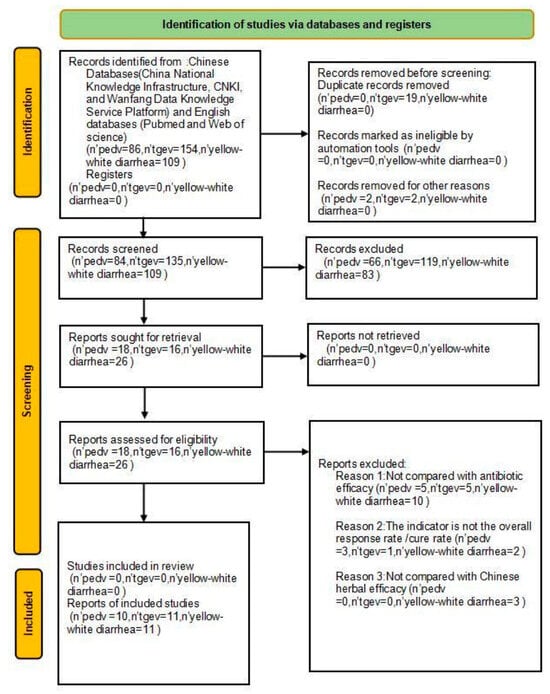
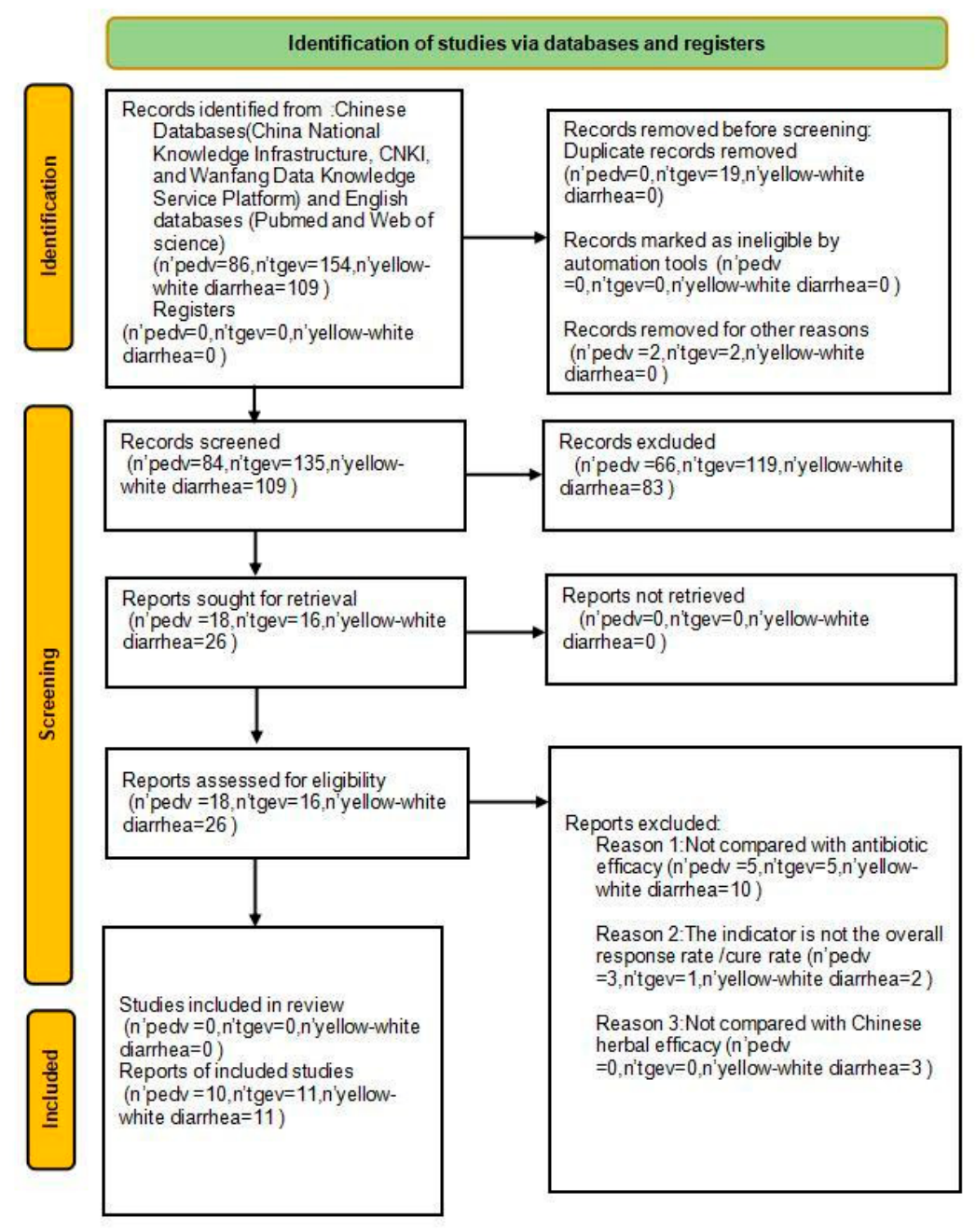
The study selection process is shown in the PRISMA flow diagram (Figure 1). The review follows the PRISMA 2020 statement for reporting (Supplementary Materials).
Figure 1.
PRISMA flow diagram of study selection for the three target swine diarrhoeal diseases (porcine epidemic diarrhoea, transmissible gastroenteritis and neonatal piglet colibacillosis).
2.2. Inclusion and Exclusion Criteria
Inclusion criteria: (1) the study subjects were pigs; (2) the study outcomes included cure rate or overall response rate; (3) the study was a randomised controlled trial (RCT) and reported complete data (number of treated pigs, number of effective/cured cases). In the included trials the comparator was the antibiotic-based regimen routinely used on the farm, administered to control secondary bacterial infection and to provide supportive management of diarrhoea. Throughout this review the comparison is therefore against antibiotic-based routine therapy as actually practised, and not against any presumed antiviral effect of the antibiotics themselves. Comparator regimens are described by their actual composition in the Results; some contained atropine or mequindox alongside antimicrobials, and atropine is an anticholinergic rather than an antimicrobial. Conclusions about antibiotic replacement are therefore restricted to trials whose comparator was genuinely antibiotic-based. The trials did not include a supportive-care-only or placebo arm, and rehydration, supportive care and treatment of co-infections were not consistently characterised, so the specific contribution of the herbal preparation cannot be separated from that of co-interventions.
Exclusion criteria: (1) review articles, theoretical studies, in vitro experiments and cell experiments; (2) studies with incomplete data, from which valid data could not be extracted or which contained contradictory data, and where the issues remained unresolved after contacting the authors; (3) duplicate publications or multiple reports of the same experimental data; (4) studies with unsound experimental designs (absence of a control group, sample size < 10 pigs per group, or unclear grouping); (5) studies in which Chinese herbal medicine was used in combination with other unknown growth-promoting substances, making it impossible to distinguish the effects of the Chinese herbal medicine alone.
Study selection and data extraction. One reviewer independently screened titles and abstracts, two reviewers independently assessed the full texts of potentially eligible reports, and three reviewers extracted data from the included studies. Disagreements at any stage were resolved by discussion or, if necessary, by consultation with a third reviewer. Where information was incomplete or ambiguous, the authors of the primary reports were contacted for clarification. Extracted items covered study design, animal characteristics, herbal formulation and comparator regimen, outcome definitions, assessment time points and event counts.
2.3. Quality Assessment
2.3.1. Quality Assessment Tool
This study employed the Cochrane risk of bias tool, which primarily evaluates the risk of bias across the following seven domains: (1) random sequence generation; (2) allocation concealment; (3) blinding of participants and personnel; (4) blinding of outcome assessment; (5) incomplete outcome data; (6) selective reporting; and (7) other bias. The risk of bias for each domain was classified as “low risk”, “high risk” or “unclear”.
2.3.2. Quality Assessment Results
Quality assessment was performed independently, and disagreements were resolved through discussion or by consulting a third researcher. On re-assessment, the included trials were described only as randomised. None reported the method used to generate the allocation sequence or to conceal it, and no prespecified protocol or registration was available for any trial. Accordingly, the included studies are referred to throughout this review as trials reported as randomised rather than as confirmed randomised controlled trials. Random sequence generation, allocation concealment and selective reporting have therefore been re-rated as unclear risk rather than low risk in every study (Table 1). Blinding of participants and personnel and blinding of outcome assessment remain at high risk in every included study, and this is the principal weakness of the evidence base. Incomplete outcome data and other bias were rated low risk because the interventions, outcome measures and event counts were reported in full. The data included in the meta-analysis were predominantly derived from Chinese-language publications. We also conducted a comprehensive search of English-language databases, but only one eligible study was retrieved. This reflects the fact that research on the use of Chinese herbal medicine to treat swine diarrhoea is concentrated primarily in China, owing to the high prevalence of these diseases in the country and the widespread application of traditional Chinese veterinary medicine.
Table 1.
Cochrane risk of bias assessment of the included studies.
2.4. Statistical Analysis
Dichotomous outcomes were pooled as odds ratios with 95% confidence intervals using the Mantel–Haenszel method. Between-study heterogeneity was assessed with Cochran’s Q test and quantified with I2. A random-effects model was used for the primary synthesis, because the trials differ in herbal composition, dose, treatment duration, piglet age, comparator regimen and possibly outcome definition. Clinical heterogeneity of this kind is present independently of the observed I2. Fixed-effect estimates are reported alongside as a sensitivity analysis. I2 = 0% in these comparisons should not be read as evidence that the studies were homogeneous. With four to ten studies per comparison, heterogeneity statistics have low power, and we make no claim that farm settings or outcome definitions were uniform across trials. The between-study variance τ2 was estimated using the DerSimonian–Laird estimator, and all analyses were performed in Review Manager 5.4.1 (RevMan; The Nordic Cochrane Centre, The Cochrane Collaboration, Copenhagen, Denmark). Where the estimated between-study variance was zero, the two models gave closely similar estimates and identical conclusions about direction and significance.
3. Results
3.1. Efficacy of Chinese Herbal Medicine and Integrated Medicine Versus Antibiotics for Specific Diseases
3.1.1. Neonatal Piglet Colibacillosis (Yellow-White Diarrhoea)—Cure Rate
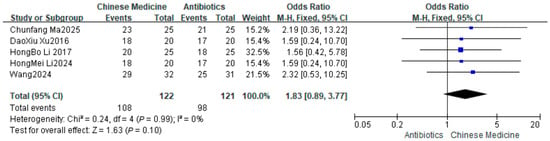
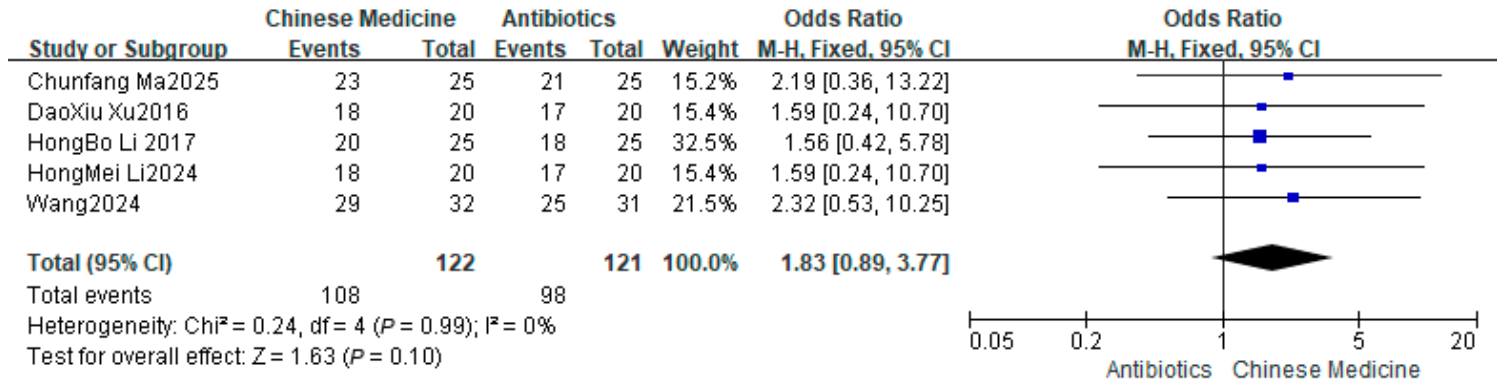
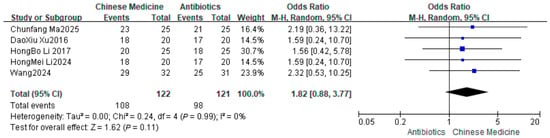
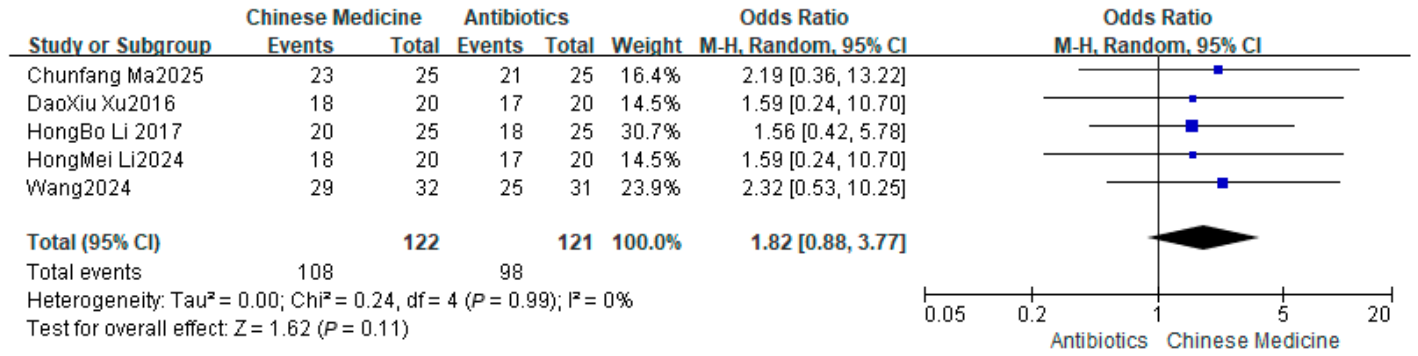
A total of five studies directly comparing the efficacy of Chinese herbal medicine and antibiotics against neonatal piglet colibacillosis and reporting cure-rate data were included. I2 was 0%, but the primary synthesis used a random-effects model because clinical heterogeneity across trials is present independently of the statistical heterogeneity estimate. Both models are shown for transparency. The fixed-effect sensitivity estimate was OR = 1.83 (95% CI: 0.89–3.77, p = 0.10; Figure 2), and the primary random-effects estimate was OR = 1.82 (95% CI: 0.88–3.77, p = 0.11, I2 = 0%; Figure 3), which is the estimate reported in the Abstract and Conclusions. Neither estimate reached statistical significance. The similarity of the two estimates follows from the zero estimated between-study variance and is not evidence that the trials were clinically homogeneous.
Figure 2.
Forest plot of the comparison of cure rates between Chinese herbal medicine and antibiotics for neonatal piglet colibacillosis (yellow-white diarrhoea) (Fixed-effect model). Squares represent the effect estimates of individual studies, with the size of each square proportional to its weight in the meta-analysis; the black rhombus represents the pooled effect estimate, and its horizontal width indicates the corresponding 95% confidence interval.
Figure 3.
Forest plot of the comparison of cure rates between Chinese herbal medicine and antibiotics for neonatal piglet colibacillosis (yellow-white diarrhoea) (Random-effects model). Squares represent the effect estimates of individual studies, with the size of each square proportional to its weight in the meta-analysis; the black rhombus represents the pooled effect estimate, and its horizontal width indicates the corresponding 95% confidence interval.
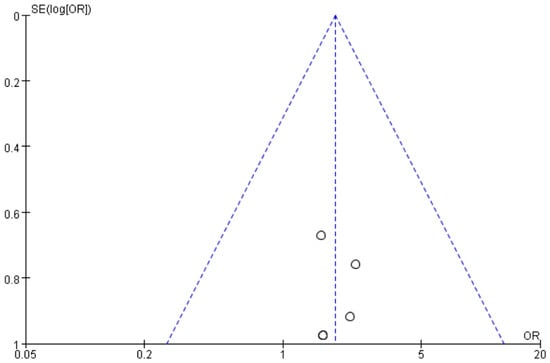
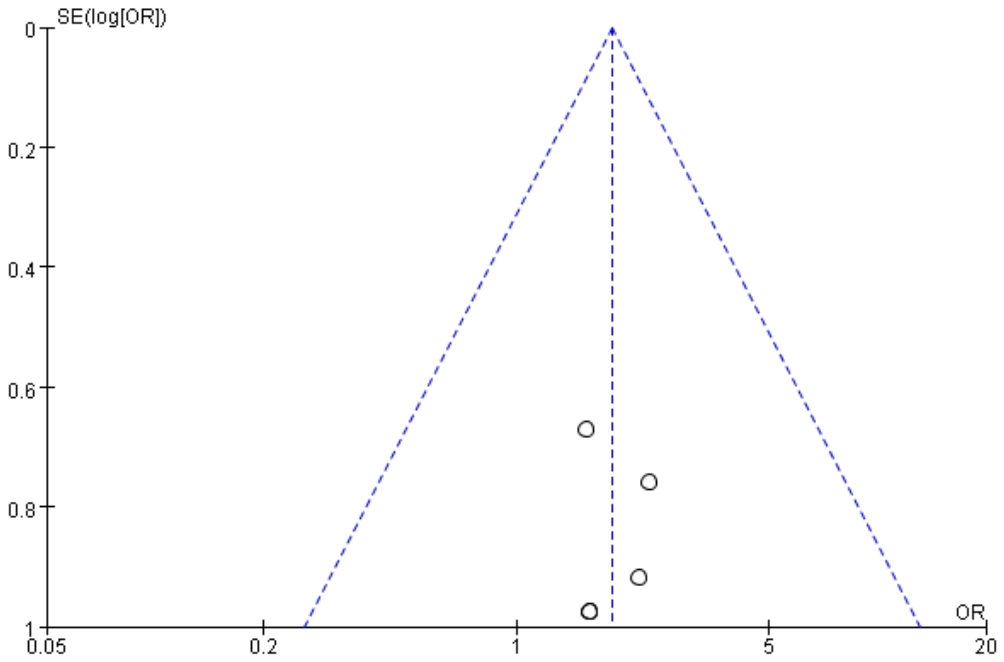
Funnel plot symmetry was inspected for this comparison (Figure 4). With fewer than ten studies, however, such plots have limited power to detect asymmetry, and publication bias cannot be excluded. Egger’s test was not performed for the same reason.
Figure 4.
Funnel plot of publication bias for the comparison of cure rates between Chinese herbal medicine and antibiotics for neonatal piglet colibacillosis (yellow-white diarrhoea). Each circle represents one trial, positioned by its OR (horizontal axis, log scale) and its standard error of log OR (vertical axis). The vertical dashed line indicates the pooled OR; the two diagonal dashed lines represent the pseudo-95% confidence limits around the pooled estimate.
3.1.2. Neonatal Piglet Colibacillosis (Yellow-White Diarrhoea)—Integrated Medicine vs. Antibiotics, Cure Rate
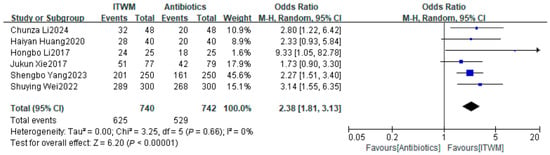
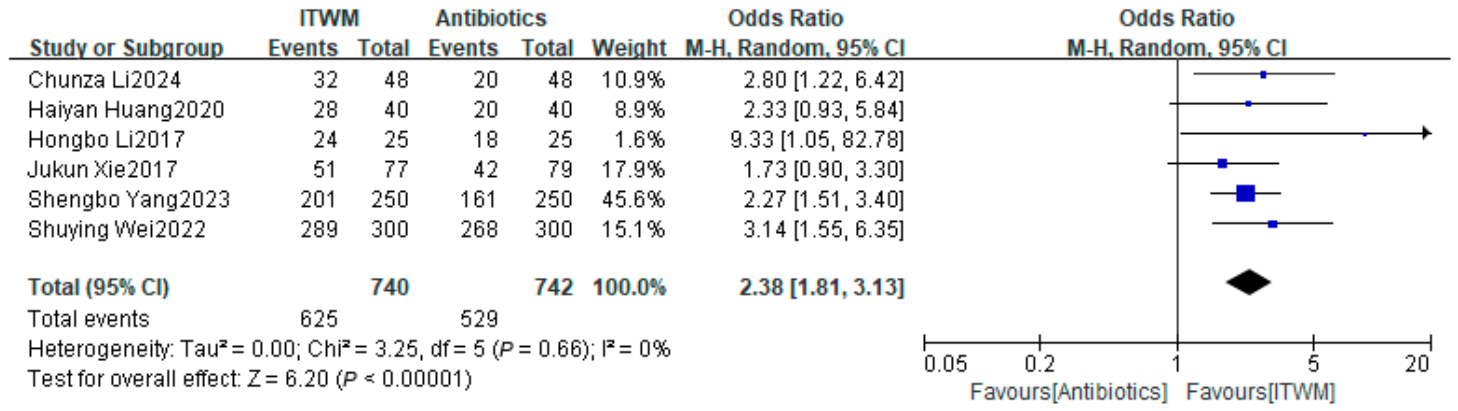
A total of six studies directly comparing the efficacy of ITWM and antibiotics against neonatal piglet colibacillosis and reporting cure-rate data were included. I2 was 0%. The fixed-effect sensitivity estimate was OR = 2.41 (95% CI: 1.84–3.17, p < 0.001; Figure 5), and the primary random-effects estimate was OR = 2.38 (95% CI: 1.81–3.13, p < 0.001, I2 = 0%; Figure 6). The two estimates agree in direction and significance.
Figure 5.
Forest plot of the comparison of cure rates between ITWM and antibiotics for neonatal piglet colibacillosis (yellow-white diarrhoea) (Fixed-effect model). Squares represent the effect estimates of individual studies, with the size of each square proportional to its weight in the meta-analysis; the black rhombus represents the pooled effect estimate, and its horizontal width indicates the corresponding 95% confidence interval.
Figure 6.
Forest plot of the comparison of cure rates between ITWM and antibiotics for neonatal piglet colibacillosis (yellow-white diarrhoea) (Random-effects model). Squares represent the effect estimates of individual studies, with the size of each square proportional to its weight in the meta-analysis; the black rhombus represents the pooled effect estimate, and its horizontal width indicates the corresponding 95% confidence interval.
Funnel plot symmetry was inspected for this comparison (Figure 7). With fewer than ten studies, however, such plots have limited power to detect asymmetry, and publication bias cannot be excluded. Egger’s test was not performed for the same reason.
Figure 7.
Funnel plot of publication bias for the comparison of cure rates between ITWM and antibiotics for neonatal piglet colibacillosis (yellow-white diarrhoea). Each circle represents one trial, positioned by its OR (horizontal axis, log scale) and its standard error of log OR (vertical axis). The vertical dashed line indicates the pooled OR; the two diagonal dashed lines represent the pseudo-95% confidence limits around the pooled estimate.
3.1.3. Transmissible Gastroenteritis—Chinese Herbal Medicine vs. Antibiotics, Overall Response Rate
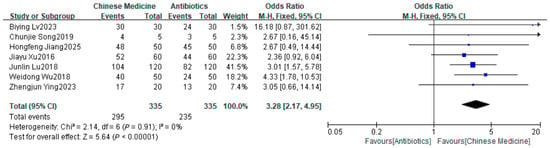
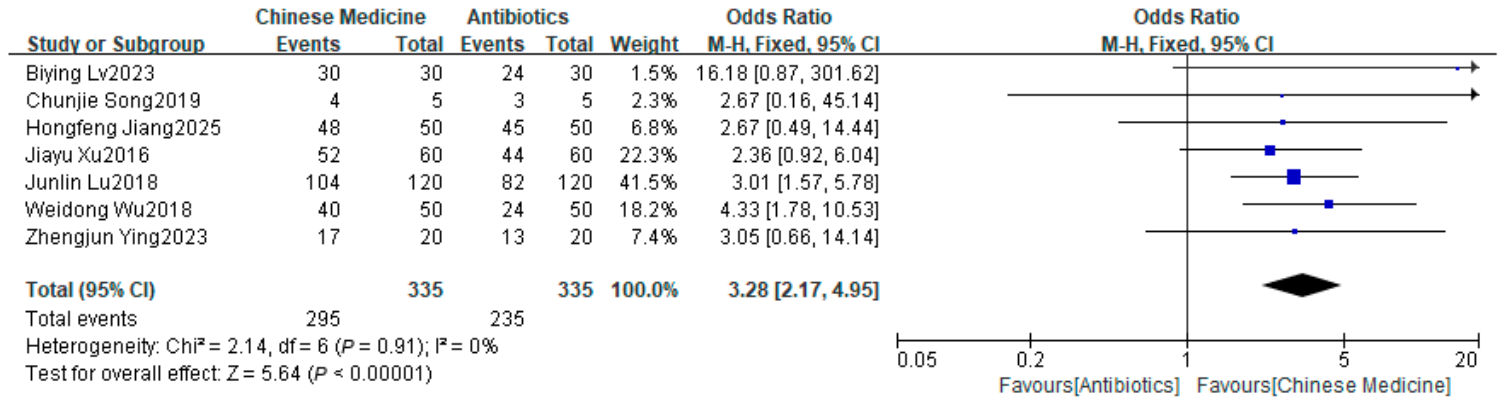
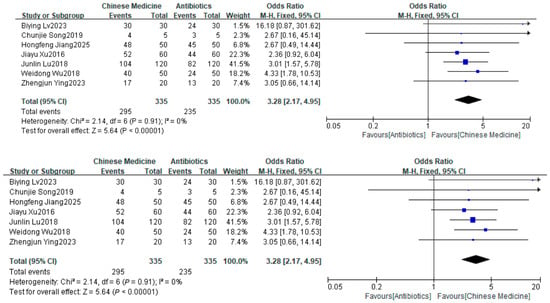
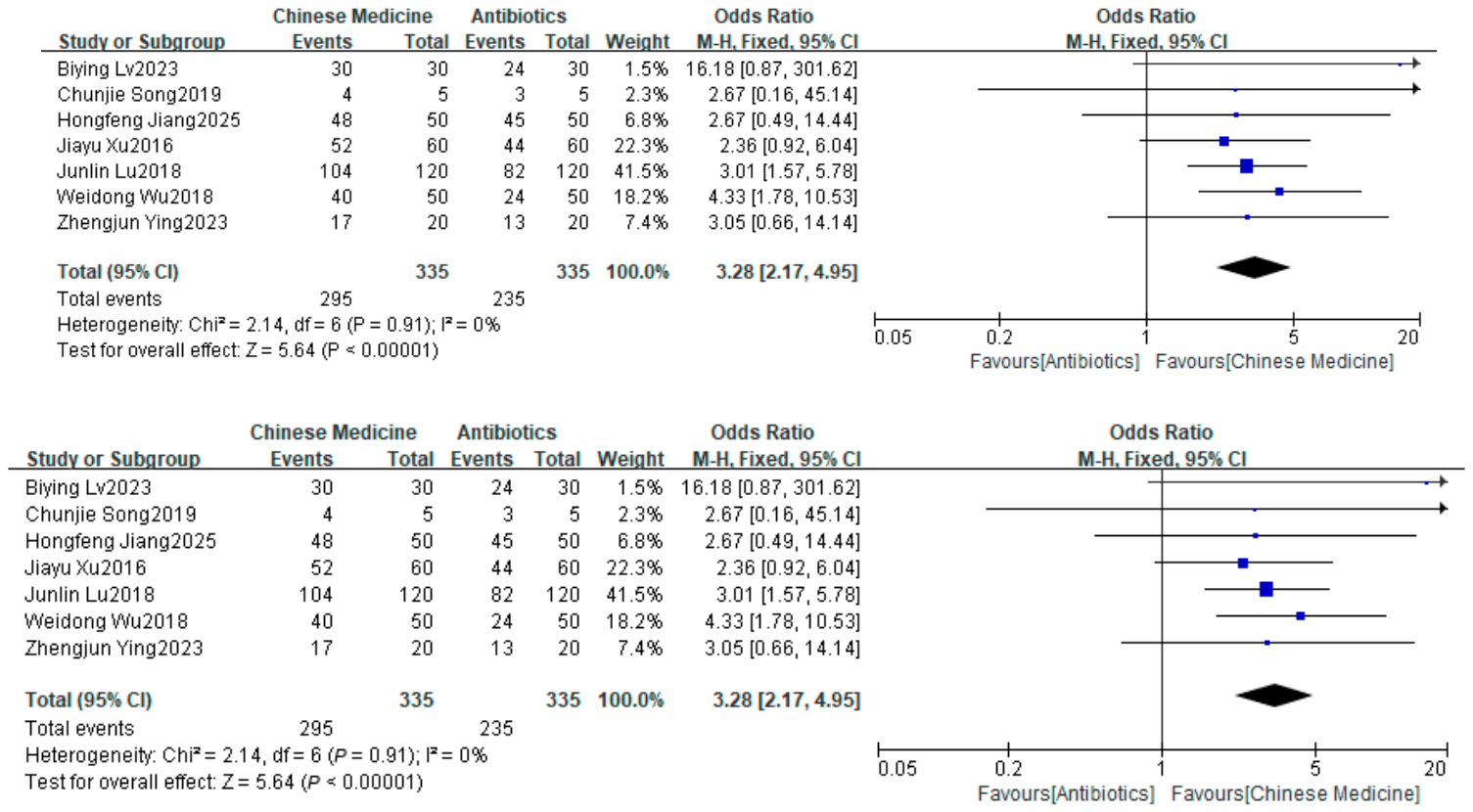
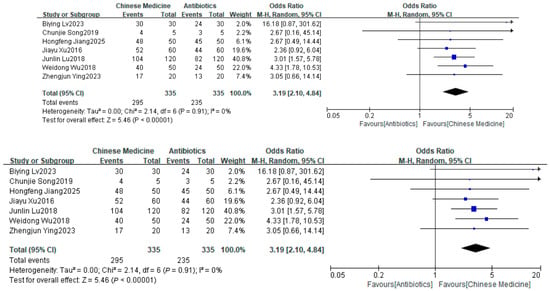
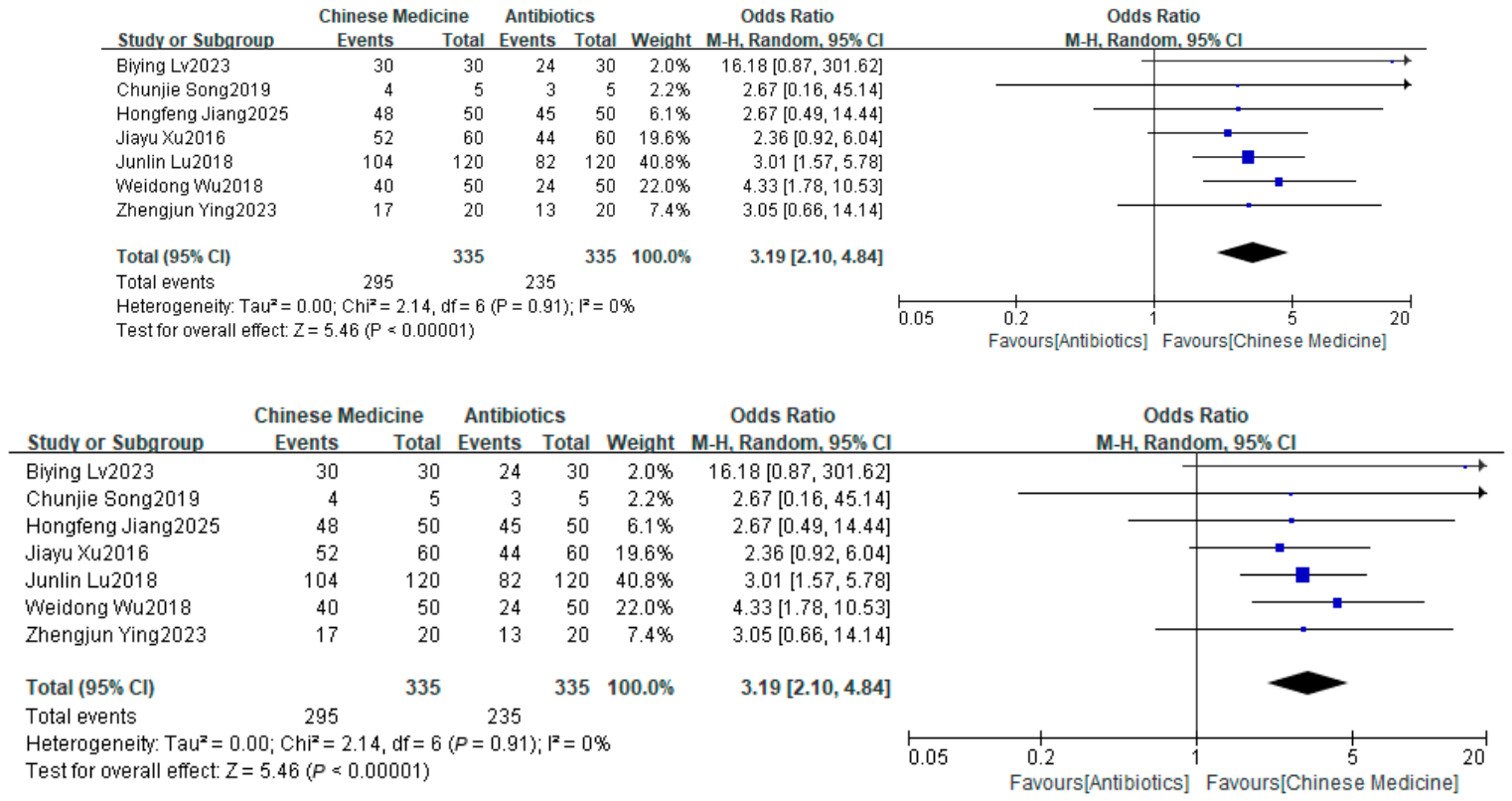
A total of seven studies directly comparing the efficacy of Chinese herbal medicine and antibiotic-based regimens (florfenicol, gentamicin sulphate) against TGE and reporting overall response rate were included. I2 was 0%. The fixed-effect sensitivity estimate was OR = 3.28 (95% CI: 2.17–4.95, p < 0.001; Figure 8), and the primary random-effects estimate was OR = 3.19 (95% CI: 2.10–4.84, p < 0.001, I2 = 0%; Figure 9). The two estimates agree in direction and significance.
Figure 8.
Forest plot of the comparison of overall response rate between Chinese herbal medicine and antibiotics for transmissible gastroenteritis (Fixed-effect model). Squares represent the effect estimates of individual studies, with the size of each square proportional to its weight in the meta-analysis; the black rhombus represents the pooled effect estimate, and its horizontal width indicates the corresponding 95% confidence interval.
Figure 9.
Forest plot of the comparison of overall response rate between Chinese herbal medicine and antibiotics for transmissible gastroenteritis (Random-effects model). Squares represent the effect estimates of individual studies, with the size of each square proportional to its weight in the meta-analysis; the black rhombus represents the pooled effect estimate, and its horizontal width indicates the corresponding 95% confidence interval.
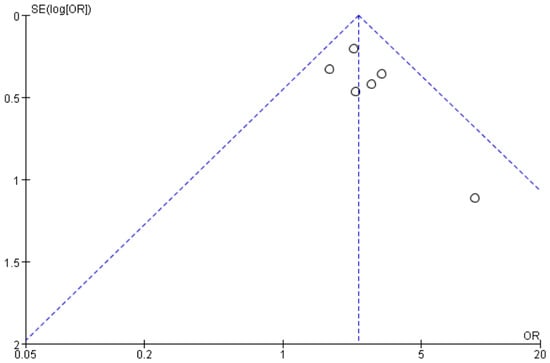
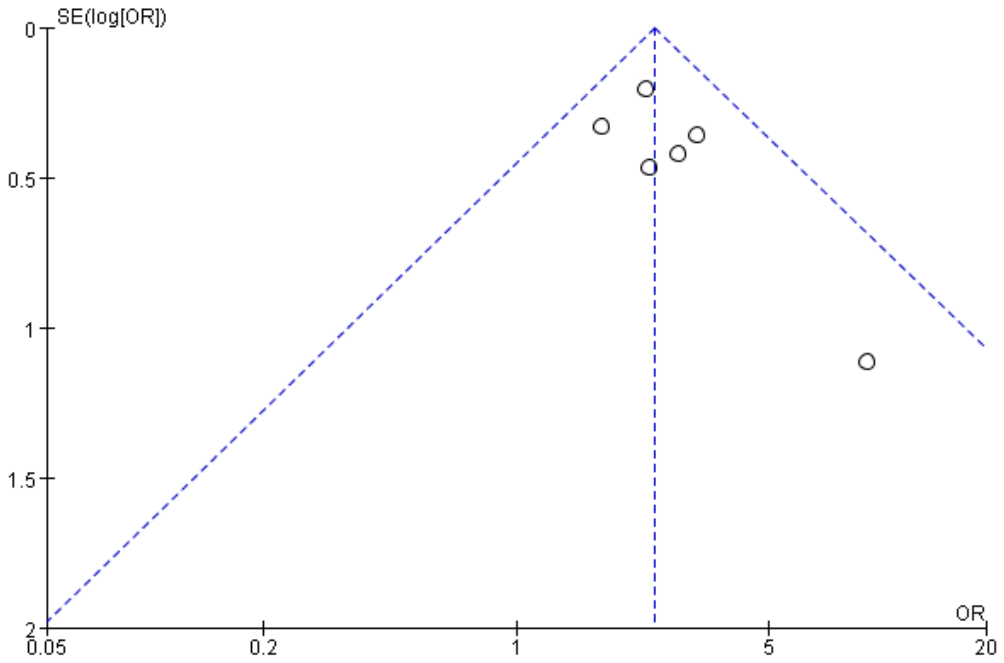
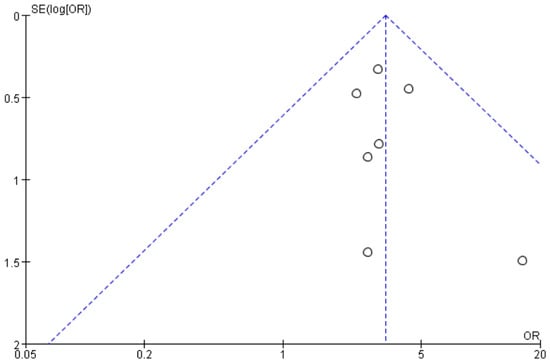
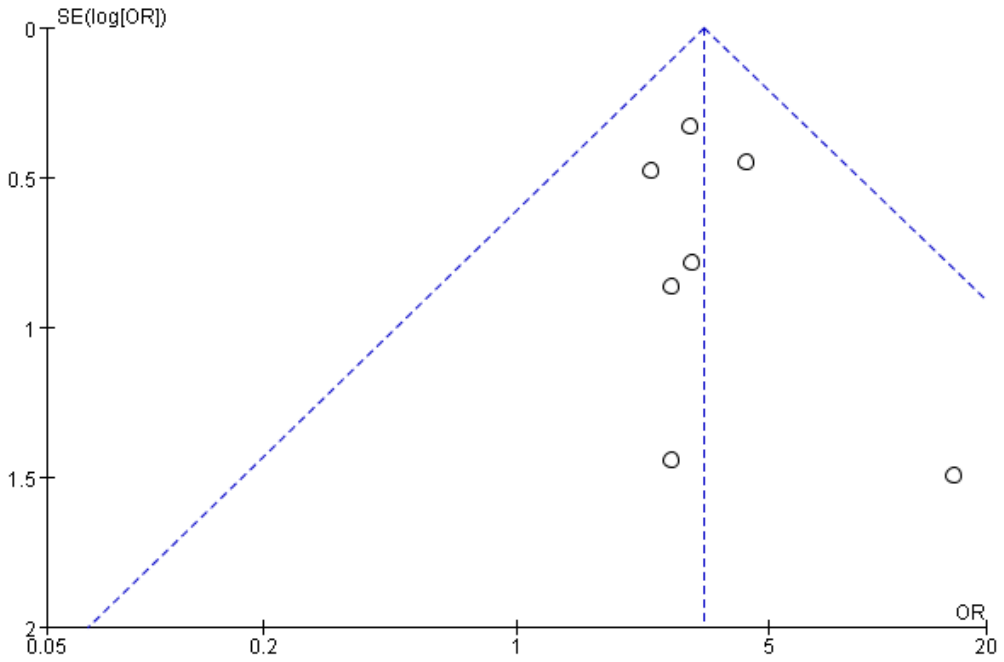
Funnel plot symmetry was inspected for this comparison (Figure 10). With fewer than ten studies, however, such plots have limited power to detect asymmetry, and publication bias cannot be excluded. Egger’s test was not performed for the same reason.
Figure 10.
Funnel plot of publication bias for the comparison of overall response rate between Chinese herbal medicine and antibiotics for transmissible gastroenteritis. Each circle represents one trial, positioned by its OR (horizontal axis, log scale) and its standard error of log OR (vertical axis). The vertical dashed line indicates the pooled OR; the two diagonal dashed lines represent the pseudo-95% confidence limits around the pooled estimate.
3.1.4. Transmissible Gastroenteritis—Integrated Medicine vs. Antibiotics, Overall Response Rate
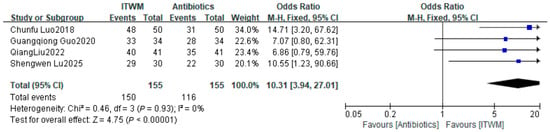
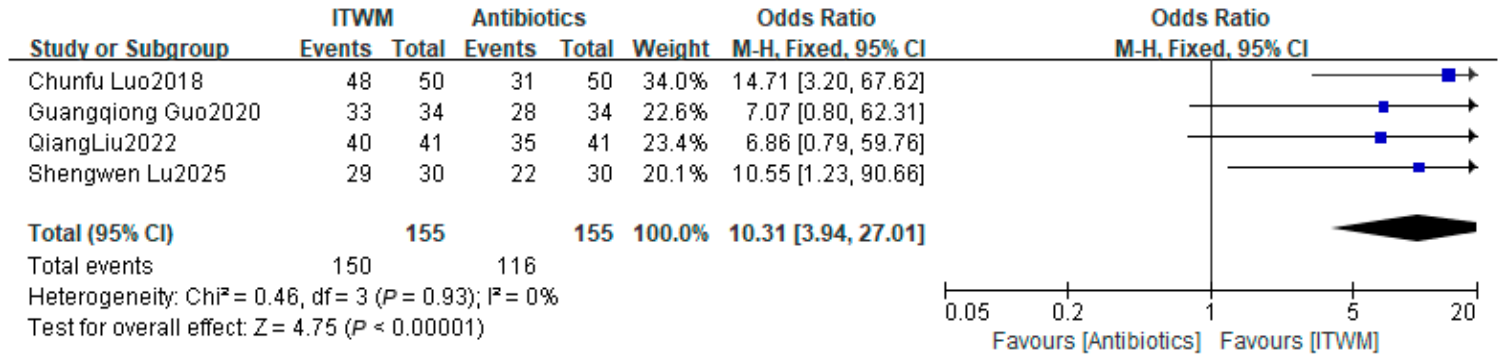
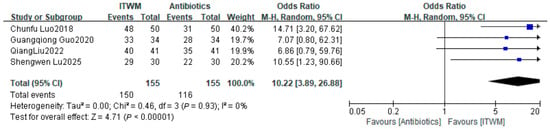
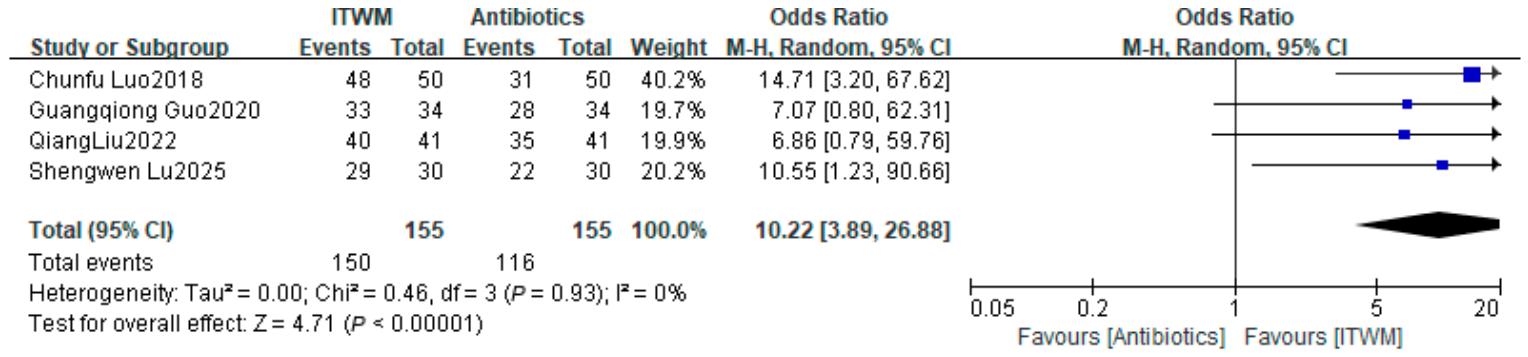
A total of four studies directly comparing the efficacy of ITWM and antibiotic-based regimens against TGE and reporting overall response rate were included. I2 was 0%. The fixed-effect sensitivity estimate was OR = 10.31 (95% CI: 3.94–27.01, p < 0.001; Figure 11), and the primary random-effects estimate was OR = 10.22 (95% CI: 3.89–26.88, p < 0.001, I2 = 0%; Figure 12). The two estimates agree in direction and significance.
Figure 11.
Forest plot of the comparison of overall response rate between ITWM and antibiotics for transmissible gastroenteritis (Fixed-effect model). Squares represent the effect estimates of individual studies, with the size of each square proportional to its weight in the meta-analysis; the black rhombus represents the pooled effect estimate, and its horizontal width indicates the corresponding 95% confidence interval.
Figure 12.
Forest plot of the comparison of overall response rate between ITWM and antibiotics for transmissible gastroenteritis (Random-effects model). Please check if the figure is cut. If so please provide a new figure. Same for all the figure below with the same format.
Funnel plot symmetry was inspected for this comparison (Figure 13). With fewer than ten studies, however, such plots have limited power to detect asymmetry, and publication bias cannot be excluded. Egger’s test was not performed for the same reason.
Figure 13.
Funnel plot of publication bias for the comparison of overall response rate between ITWM and antibiotics for transmissible gastroenteritis. Each circle represents one trial, positioned by its OR (horizontal axis, log scale) and its standard error of log OR (vertical axis). The vertical dashed line indicates the pooled OR; the two diagonal dashed lines represent the pseudo-95% confidence limits around the pooled estimate.
3.1.5. Porcine Epidemic Diarrhoea—Chinese Herbal Medicine vs. Antibiotics, Overall Response Rate
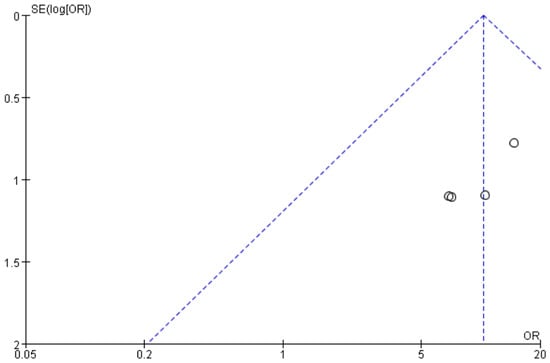
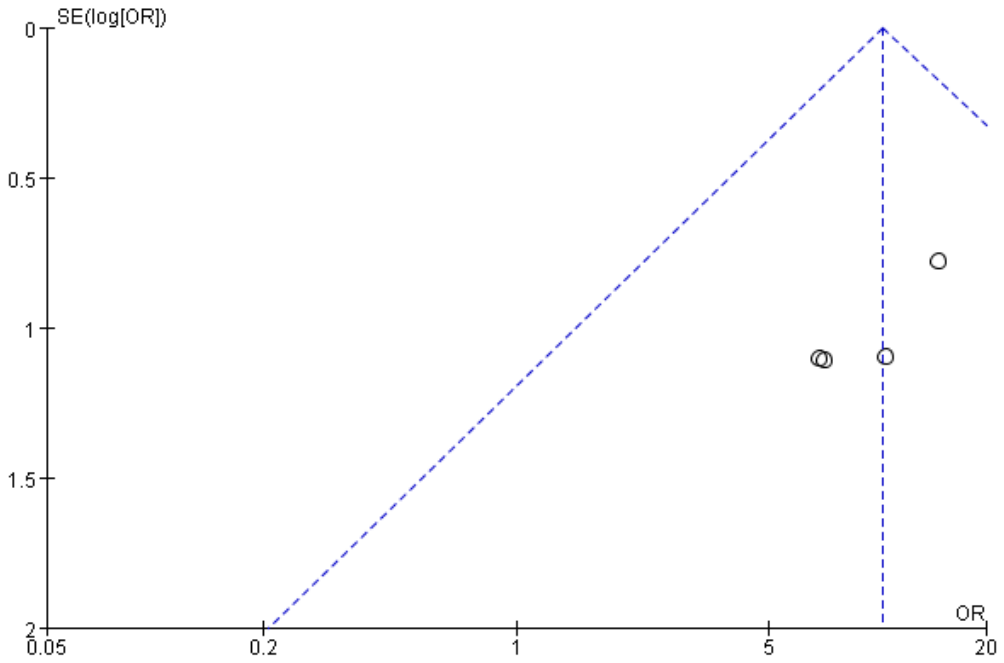
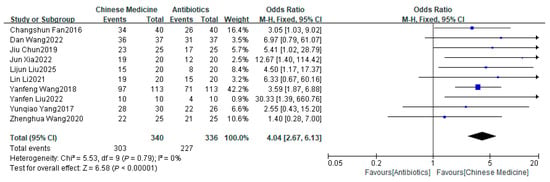
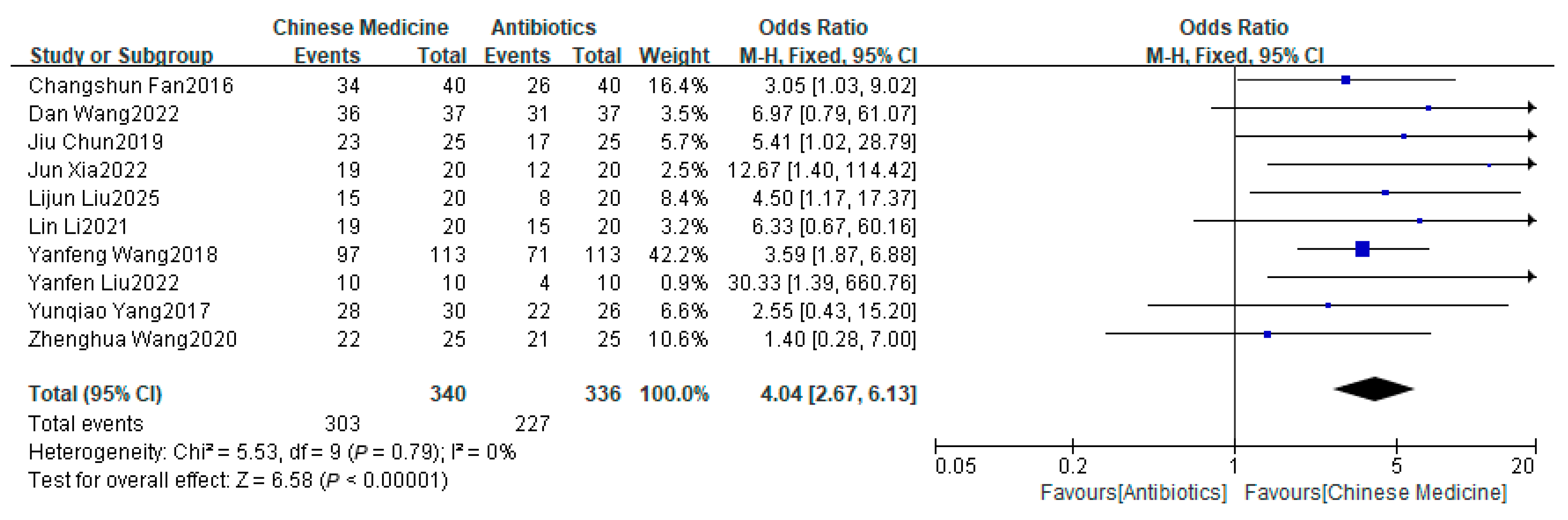
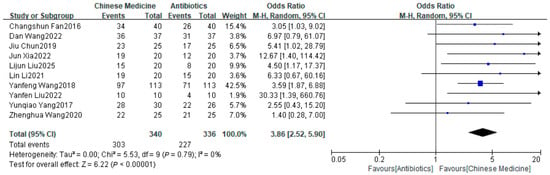
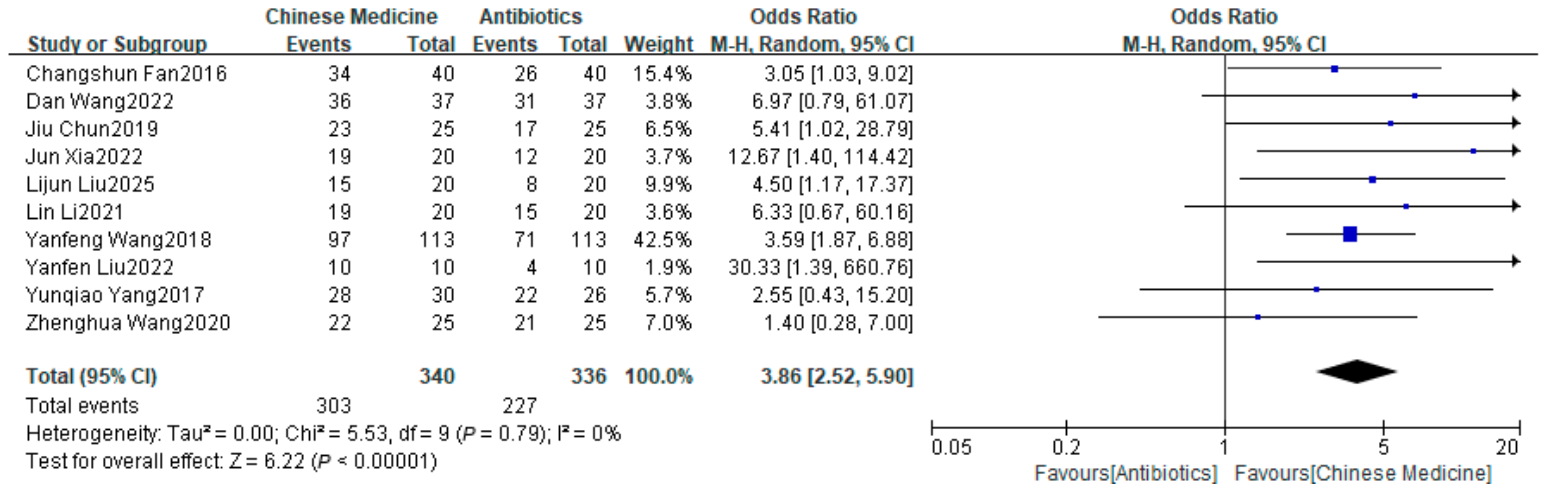
A total of ten studies directly comparing the efficacy of Chinese herbal medicine and comparator regimens containing mequindox 5%, gentamicin or atropine 0.5% against PED and reporting overall response rate were included. Atropine is an anticholinergic and not an antimicrobial. The comparator is therefore described by its actual composition rather than as a uniform antibiotic regimen. I2 was 0%. The fixed-effect sensitivity estimate was OR = 4.04 (95% CI: 2.67–6.13, p < 0.001; Figure 14), and the primary random-effects estimate was OR = 3.86 (95% CI: 2.52–5.90, p < 0.001, I2 = 0%; Figure 15). The two estimates agree in direction and significance.
Figure 14.
Forest plot of the comparison of overall response rate between Chinese herbal medicine and antibiotics for porcine epidemic diarrhoea (Fixed-effect model). Please check if the figure is cut. If so please provide a new figure. Same for all the figure below with the same format.
Figure 15.
Forest plot of the comparison of overall response rate between Chinese herbal medicine and antibiotics for porcine epidemic diarrhoea (Random-effects model). Please check if the figure is cut. If so please provide a new figure. Same for all the figure below with the same format.
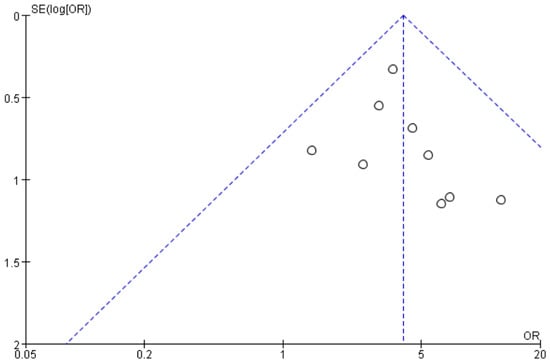
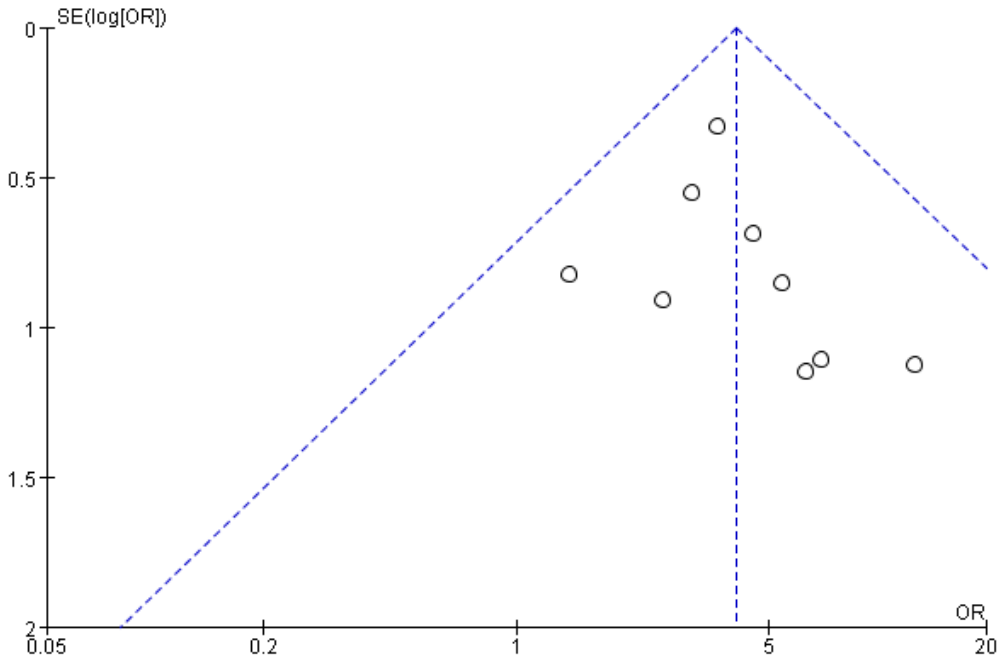
Funnel plot symmetry was inspected for this comparison (Figure 16). With only ten studies, however, such plots have limited power to detect asymmetry, and publication bias cannot be excluded. Egger’s test was not performed for the same reason.
Figure 16.
Funnel plot of publication bias for the comparison of overall response rate between Chinese herbal medicine and antibiotics for porcine epidemic diarrhoea. Each circle represents one trial, positioned by its OR (horizontal axis, log scale) and its standard error of log OR (vertical axis). The vertical dashed line indicates the pooled OR; the two diagonal dashed lines represent the pseudo-95% confidence limits around the pooled estimate.
3.2. Subgroup Analysis by Piglet Age (Porcine Epidemic Diarrhoea)
To explore whether piglet age modified the effect in the PED comparison, a subgroup analysis stratified at 21 days was performed (Table 2). Four studies reported overall response rate data for piglets younger than 21 days and three for piglets aged 21 days or older. I2 was 0% in both strata. Under the fixed-effect model the OR was 5.17 (95% CI: 2.22–12.02, p < 0.001) in the younger subgroup and 8.31 (95% CI: 2.33–29.61, p < 0.001) in the older subgroup. A beneficial effect was therefore observed in both age strata. No formal test for interaction or subgroup difference was performed, and the overlap of the two confidence intervals means that the numerically larger point estimate in older piglets does not demonstrate a differential effect; we no longer conclude that older piglets respond more favourably.
Table 2.
Subgroup analysis of the overall response rate of Chinese herbal medicine versus antibiotics for porcine epidemic diarrhoea, stratified by piglet age.
4. Discussion
This study systematically evaluated, via a meta-analysis, the efficacy of Chinese herbal medicine and ITWM compared with antibiotics in the treatment of PED, neonatal piglet colibacillosis (yellow-white diarrhoea), and TGE. The results indicated that Chinese herbal medicine was associated with higher overall response rates for PED and TGE, that integrated medicine was associated with a higher overall response rate for TGE, and that integrated medicine significantly improved the cure rate for neonatal piglet colibacillosis. In the PED comparison the point estimate was numerically larger in piglets aged ≥21 days, but no test for subgroup difference was performed and benefit was present in both strata. The results do not establish Chinese herbal medicine as a general alternative to antibiotic-based therapy.
Two earlier meta-analyses on related questions merit comparison. Chen et al. [7] pooled 13 trials of Chinese veterinary medicine versus antibacterial drugs for piglet diarrhoea and reported a pooled cure-rate OR of 3.34 (95% CI 2.13–5.23) without separating disease entities. Our estimate for the cure rate in neonatal colibacillosis is lower and not statistically significant (OR = 1.82, 95% CI 0.88–3.77), which we attribute to our restriction to trials with an explicit antibiotic comparator and to our separation of cure from overall response. Shen et al. [8] addressed growth performance rather than clinical cure and is therefore not directly comparable. Against this background the contribution of the present review is to separate the three disease entities, to distinguish overall response from cure, and to stratify the PED estimate by piglet age.
The better clinical outcomes observed with Chinese herbal medicine in this meta-analysis are consistent with the well-documented antimicrobial and antiviral activity of its constituent phytochemicals. In the included trials, the principal interventions targeted the three major enteric pathogens of swine—porcine epidemic diarrhoea virus (PEDV), transmissible gastroenteritis virus (TGEV) and enterotoxigenic Escherichia coli (ETEC)—and the phytochemicals present in these preparations have been shown to act on these pathogens through complementary mechanisms. Berberine from Coptis chinensis can interfere with the assembly of PEDV particles, thereby blocking viral replication and spread in the host [14], and it attenuates ETEC-induced disruption of the intestinal mucosal barrier and enhances gut microbiota homeostasis in weaned piglets [15,16,17]. The compound preparation mainly composed of Andrographis paniculata used by Liu and Qu [18] effectively alleviated liver injury caused by PEDV infection. The underlying mechanism may be related to the ability of Andrographis paniculata ultrafine powder to improve blood biochemical parameters and enhance antioxidant capacity in piglets. The Chinese herbal formula studied by Li [19] contained Astragalus membranaceus, and fermented Astragalus polysaccharide at a concentration of 400 µg/mL has been shown to reduce viral titre within 24–48 h and to inhibit PEDV replication in vitro [20]. Ma et al. [21] and Li [22] both used Pulsatilla chinensis as the principal drug, and the saponins of Pulsatilla chinensis possess anti-inflammatory, antioxidant and immune-enhancing properties [23,24,25,26]. Chinese herbal medicine can also exert antiviral effects through immunomodulation. Aesculin and aesculetin modulate T-cell responses in mouse models of skin inflammation [27,28]. Those experiments concern neither the porcine gut nor an enteric virus and are not evidence of antiviral immunomodulation in piglets, whereas work in LPS-challenged piglets provides a more direct, though still indirect, parallel [29]. Several trials used Wumei San to treat TGE and reported superior efficacy compared with antibiotics [30,31]. Network-pharmacology analyses indicate that the active constituents in Wumei San (quercetin, kaempferol, formononetin) can alleviate the inflammatory response by inhibiting the TNF, IL-17 and Th17 differentiation signalling pathways, and can downregulate the HIF-1 signalling pathway, thereby repairing the damaged intestinal barrier and ultimately restoring intestinal function [32]—a specific effect that antibiotics do not possess. Three independently published trials with the same title but different authors, journals and years [33,34,35] combined Huanglian Decoction with enrofloxacin to treat neonatal piglet colibacillosis and reported superior efficacy of the combination over antibiotics alone. They are cited separately here to avoid the appearance of a duplicated record.
The mechanistic evidence summarised below comes almost entirely from studies outside the pooled trials, and the two bodies of evidence should be kept distinct. With that separation in mind, the phytochemicals examined in this review have been reported to act at several stages of the PEDV, TGEV and ETEC life cycles. The viral life cycle involves three key steps—binding and entry of the virus into the host cell, viral replication, and viral assembly and release. In addition to berberine and Astragalus polysaccharide, many other phytochemicals have been confirmed to inhibit the PEDV life cycle. For example, fangchinoline has been demonstrated to act on the viral entry process [36,37], and Forsythia essential oil (FEO) can affect the replication process of PEDV during the attachment and internalisation stages [38,39]. Aqueous extract of aloe vera [40,41], ethanol extract of liquorice [42,43] and glycyrrhizin [44,45] have been reported to interfere with viral binding and membrane fusion. Chestnut and quebracho tannins [46,47,48] have been evaluated in calf diarrhoea, weaned piglets and an experimental ETEC F4 model. Those studies concern bacterial diarrhoea and are cited here as background on plant-derived feed additives, not as evidence of PEDV entry inhibition. Furthermore, quercetin [49,50], Buddlejasaponin IVb [51,52], magnolol [53,54], polysaccharide 3 from Alpiniae oxyphyllae fructus (Yizhi) [55,56,57], and triacetyl resveratrol [58,59] have been confirmed to inhibit PEDV and TGEV replication in vitro or in vivo. Phytochemicals can also act on cells infected by PEDV. Matrine has been reported to accelerate apoptosis of PEDV-infected cells and suppress PEDV infection [6]. Matrine has also been studied against PRRSV, a non-enteric porcine virus [60]. That work lies outside the evidence synthesised here and is not used to support any claim about enteric disease. These studies place the phytochemical actions at distinct stages of the viral life cycle, but most were conducted in cell culture or in rodent models, and none included an antibiotic comparator. We did not attempt a meta-regression of effect size on formulation or on marker-compound content, because the trials rarely reported the chemical composition of the preparations in sufficient detail, characterising the formulations is therefore a priority for future primary studies.
In addition, Chinese herbal medicines contribute to the restoration of the mucosal barrier. A decoction of Coptis chinensis powder was demonstrated to improve the growth performance of PEDV-infected and TGEV-infected piglets, reduce diarrhoeal symptoms, repair the intestinal villi damaged by PEDV and TGEV, and increase the levels of antioxidants in the intestine [61,62]. The polysaccharide component from Portulaca oleracea (POL-p) was found to alleviate intestinal injury caused by porcine rotavirus (PoRV) infection in suckling mice, while also reducing the viral load in the jejunum and ileum [63,64]. These studies, which assessed weight gain and diarrhoea scores, are highly practical and provide histopathological evidence consistent with improved intestinal health. At the molecular level, they involve antioxidants and viral load. A limitation, however, is that the POL-P experiment used a mouse model, and mice and pigs differ in their intestinal physiology.
Furthermore, phytochemicals contribute to immunomodulation and anti-inflammation. Phytochemicals can activate T and B lymphocytes, promote the proliferation and differentiation of immune cells, and enhance specific immune responses. They also possess anti-inflammatory and antioxidant activities. Existing research has demonstrated that Chinese herbal medicine can regulate the function of the host immune system by modulating the number and activity of immune cells and molecules, which strengthens the host’s antiviral capacity. For instance, curcumin has been investigated as an inhibitor of PDCoV replication in LLC-PK1 cells [65], a different porcine coronavirus and a cell-line model. In PEDV-infected piglets, curcumin has been reported to activate innate immune responses through JAK-STAT signalling [66]. Puerarin can modulate the IFN signalling pathway, so as to regulate immune status [67,68]. Whether multi-target activity confers clinical advantage over antibiotics cannot be settled by mechanistic studies alone. It requires precisely the head-to-head randomised evidence pooled here.
The aforementioned studies have provided detailed accounts of the mechanisms of action of phytochemicals. However, because they lacked direct comparisons with antibiotic therapy, they are insufficient to conclusively demonstrate that Chinese herbal medicine is superior to antibiotics. Although the studies included in the present meta-analysis compared the efficacy of Chinese herbal medicine with that of antibiotics, they did not systematically elucidate the mechanisms by which the active phytochemicals exert their therapeutic effects. The two bodies of evidence are complementary but not equivalent. The trials pooled here establish what is observed in the field. The mechanistic studies suggest why it might occur. They cannot be combined in the other direction. Mechanistic work conducted in cell culture or in rodent models, and without an antibiotic comparator, cannot by itself establish clinical superiority over antibiotics. Equally, none of the trials included here measured any mechanistic outcome, so the mechanistic sections above should be read as hypothesis-generating—as a coherent account of how the observed clinical benefit might arise—rather than as confirmation that the benefit is attributable to any specific constituent.
The subgroup finding deserves more weight than a passing mention but less than a recommendation, and reading it properly means holding a plausible mechanism and an honest account of the evidence in view at the same time. The numerically larger point estimate in piglets older than 21 days is compatible with what is known about the gut community in early life, whose diversity tends to fall over the first 20 days and to recover between days 20 and 30 [69,70]. If compound herbal preparations act partly by restoring that community and by priming mucosal defence, as the production studies indicate [71,72], the same intervention has more to work on once the ecosystem is rebuilding than while it is still being disrupted. The case for reducing antibiotic use does not depend on this mechanism. Antibiotic use in swine production leaves residues in manure and enlarges the environmental reservoir of resistance genes [73,74,75,76], and resistance among enterotoxigenic Escherichia coli isolates from piglets is now reported across production systems [77,78]. A mechanism that fits and a policy reason for change are still not the same as evidence that the substitution works in the field, and the limits of the present synthesis belong alongside the estimate rather than after it. The outcomes carrying most of the weight here—diarrhoea scores, faecal consistency grading and assessment of mental state—are graded by eye, and the smell and colour of herbal preparations make it hard to blind those who feed and score the animals. Non-blinded assessment of scale-based outcomes has been shown empirically to shift effect estimates in a direction that cannot be predicted in advance [79], so this body of work is downgraded for risk of bias before anything else is weighed. Underlying that problem is a more awkward one, because the intervention itself is not a fixed entity. The profile and content of active constituents, and the extraction method, vary with place of origin, harvest season, medicinal part, processing and storage, which makes the pooling of nominally identical preparations questionable in a way that no statistical adjustment can repair and is arguably the most fundamental limitation of meta-analyses in this field. The evidence base is narrow in a way that amplifies both problems, since all but one of the included trials came from Chinese-language databases and null results in this literature may be less likely to reach publication. Restricting a synthesis to one language is itself a recognised source of bias [80], and the funnel plots for the individual comparisons are too sparsely populated to rule it in or out. We did not perform a formal outcome-level certainty assessment, and we therefore do not assign a GRADE rating to any comparison. A risk-of-bias profile of this kind would lower certainty by at least two levels under the GRADE framework before any other domain is considered [81], which is why the evidence is described as low certainty in qualitative terms only. One further caution concerns how the numbers are read. Effects were pooled as odds ratios, and because these outcomes are common, those odds ratios exceed the corresponding risk ratios and should not be interpreted as relative risks. Where a risk ratio is wanted for decision-making, the pooled odds ratios should be converted into a range of plausible relative risks by established methods [82]. Taken together, these constraints leave a signal that is present in both age strata and a subgroup difference that has not been tested. It is a hypothesis worth examining in adequately blinded trials of standardised preparations, not a basis for rewriting treatment protocols.
What the pooled estimates can justify in practice is narrower than what they appear to show, because the question a producer faces is not whether herbal preparations are better than antibiotics in the abstract, but which indications can be switched, and on what evidence. The trials reviewed here help less than one would wish on the practicalities, even where they agree on direction. Preparations were given orally, as a decoction, powder or ultrafine powder mixed into feed or delivered by drench, usually for 3–7 days, and the doses were reported too inconsistently to reproduce. Against that background, the viral enteritides are the case where substitution has an argument behind it, since an antibiotic comparator has no activity against the causative virus. Replacing antibiotic-based routine therapy with a herbal regimen there was associated with a higher clinical response rate, but with no supportive-care-only or placebo arm these trials cannot show that efficacy was preserved, and no claim of equivalence or replacement without loss of efficacy is made. That matters because bacterial antimicrobial resistance has been estimated to be associated with several million deaths worldwide each year [83], and because the effectiveness of interventions directed at reducing antimicrobial use in animal production has been synthesised quantitatively [84]. Neonatal colibacillosis is the opposite case. Antibiotics have a specific indication, the pooled advantage of herbal monotherapy did not reach significance, and what benefit was observed was confined to integrated regimens, so nothing here supports withdrawing antibiotics in favour of herbs alone. What would have to change for any of this to be adopted at scale is not the size of the effect but the reproducibility of the product, since without defined marker compounds and batch control two batches sold under the same name cannot be assumed therapeutically equivalent, and plant-derived additives are known to vary with plant origin, harvest time, plant part and processing [85]. Until that gap is closed, the defensible claim is the modest one. Herbal preparations may help reduce antibiotic exposures that are doing no work against the pathogen in front of the veterinarian, as a hypothesis for antibiotic-sparing trials rather than a general substitute for antibiotics in piglet diarrhoea.
Several limitations affect how these estimates should be read. The included trials were small, none was blinded, and all were judged at high risk of performance and detection bias, while random sequence generation, allocation concealment and selective reporting were rated as unclear because the primary reports gave no methodological detail. Herbal preparations were not standardised, since botanical identification, extraction methods, marker-compound concentrations, dose and treatment duration were seldom reported, and no trial measured a mechanistic outcome that would link the compounds discussed above to the products actually given. Most mechanistic evidence in Section 4 comes from cell culture, rodent models, calves or other viruses and is therefore hypothesis-generating. Diagnosis was clinical, and we could not confirm PCR or culture testing or exclude co-infection. Definitions of cure and overall response, the day of assessment, and the handling of rehydration and supportive care differed across trials, so the comparability of these observer-assessed outcomes cannot be demonstrated. Mortality, adverse events, drug residues, recurrence, duration of diarrhoea, viral shedding, antimicrobial consumption and cost were not reported and could not be analysed, and no trial included a supportive-care-only or placebo arm. These data therefore cannot establish equivalence, non-inferiority or replacement without loss of efficacy, and superiority over an antibiotic-based comparator in the viral indications is not superiority over appropriate supportive care. I2 = 0% should not be read as homogeneity when each comparison contains only four to ten studies. We did not perform a formal GRADE assessment and assign no certainty rating, and because the outcomes are common, odds ratios exceed the corresponding risk ratios and should not be read as relative risks. Risk ratios and absolute risk differences are not reported. The PRISMA 2020 checklist was audited against the manuscript, and no outcome-level certainty assessment is reported for any comparison.
5. Conclusions
This systematic review and meta-analysis found that Chinese herbal medicine, given alone or alongside conventional therapy, was associated with higher overall response rates than antibiotic-based regimens for porcine epidemic diarrhoea and transmissible gastroenteritis, and that integrated traditional Chinese and Western medicine was also associated with higher cure rates in neonatal piglet colibacillosis. Benefit was present in both age strata of the porcine epidemic diarrhoea comparison, although no formal test for subgroup difference was performed. These comparisons do not establish equivalence or non-inferiority to antibiotics: no trial included a supportive-care-only arm, and in the viral indications the comparator antibiotic has no activity against the causative pathogen. The findings therefore identify indications in which standardised herbal preparations might contribute to antibiotic-sparing strategies, rather than supporting a clinical recommendation to replace antibiotics. Confirming these effects in adequately blinded trials with defined products, prespecified outcomes and supportive-care comparators is the necessary next step before application in pig herd health management can be considered.
Supplementary Materials
The following supporting information can be downloaded at: https://www.mdpi.com/article/10.3390/vetsci13121273/s1. This review was prospectively registered in PROSPERO under the registration number CRD420261535218.
Author Contributions
Conceptualization, Y.Q. and H.W.; methodology, Y.Q.; software, Y.Q.; validation, Y.Q., L.C. and Y.T.; formal analysis, Y.Q.; investigation, Y.Q., Y.L. and B.W.; data curation, Y.Q. and B.W.; writing—original draft preparation, Y.Q., Y.L. and B.W.; writing—review and editing, L.C., H.W. and Y.T.; visualization, Y.Q.; supervision, H.W. and Y.T.; project administration, H.W.; funding acquisition, Y.T. All authors have read and agreed to the published version of the manuscript.
Funding
This research was supported by the National Key Research and Development Program of China (2023YFD1800804-04).
Institutional Review Board Statement
Not applicable.
Informed Consent Statement
Not applicable.
Data Availability Statement
No new data were created or analyzed in this study. Data sharing is not applicable to this article.
Conflicts of Interest
The authors declare no conflicts of interest.
Abbreviations
The following abbreviations are used in this manuscript:
| Abbreviation | Definition |
| PED | Porcine epidemic diarrhoea |
| TGE | Transmissible gastroenteritis |
| OR | Odds ratio |
| CI | Confidence interval |
| CNKI | China National Knowledge Infrastructure |
| RCT | Randomised controlled trial |
| PEDV | Porcine epidemic diarrhoea virus |
| TGEV | Transmissible gastroenteritis virus |
| ETEC | Enterotoxigenic Escherichia coli |
| FEO | Forsythia essential oil |
| HMGB1 | High mobility group box-1 |
| MT | Matrine |
| POL-P | Portulaca oleracea polysaccharide |
| PoRV | Porcine rotavirus |
| IRF3 | Interferon regulatory factor 3 |
| NF-κB | Nuclear factor-κB |
| JAK-STAT | Janus kinase–signal transducer and activator of transcription |
| IFN | Interferon |
| ITWM | Integrated traditional Chinese and Western medicine |
References
- Toya, R.; Okuno, M.; Sasaki, Y.; Yoshihara, K.; Deguchi, Y.; Nagano, D.S.; Shimada, S.; Ogura, Y. Risk of multidrug resistance in Escherichia coli associated with routine antimicrobial prophylaxis on pig farms. npj Antimicrob. Resist. 2025, 3, 59. [Google Scholar] [CrossRef] [Scilit]
- Kirtikliene, T.; Mierauskaite, A.; Razmiene, I.; Kuisiene, N. Genetic Characterization of Multidrug-Resistant E. coli Isolates from Bloodstream Infections in Lithuania. Microorganisms 2022, 10, 449. [Google Scholar] [CrossRef] [Scilit]
- Kerek, A.; Roman, I.; Szabo, A.; Kovács, D.; Kardos, G.; Kovács, L.; Jerzsele, Á. Antibiotic resistance genes in Escherichia coli—Literature review. Crit. Rev. Microbiol. 2026, 52, 1–35. [Google Scholar] [CrossRef] [Scilit]
- Nasrollahian, S.; Graham, J.P.; Halaji, M. A review of the mechanisms that confer antibiotic resistance in pathotypes of E. coli. Front. Cell. Infect. Microbiol. 2024, 14, 1387497. [Google Scholar] [CrossRef] [Scilit]
- Tsekouras, N.; Athanasiou, L.V.; Gougoulis, D.; Christodoulopoulos, G.; Billinis, C.; Papatsiros, V. Current challenges in porcine medicine: Gut health, aspects of neonatal diarrhoea, and antibiotic resistance. J. Hell. Vet. Med. Soc. 2025, 76, 8967–8978. [Google Scholar] [CrossRef] [Scilit]
- Qiao, W.; Yao, X.; Lu, W.; Zhang, Y.-Q.; Malhi, K.K.; Li, H.-X.; Li, J.-L. Matrine exhibits antiviral activities against PEDV by directly targeting Spike protein of the virus and inducing apoptosis via the MAPK signaling pathway. Int. J. Biol. Macromol. 2024, 270, 132408. [Google Scholar] [CrossRef] [Scilit]
- Chen, Y.; Zhao, J.; Cheng, L. Meta-analysis of the efficacy of Chinese veterinary medicine and antibacterial drugs in the treatment of piglet diarrhoea. Chin. J. Vet. Med. 2022, 06, 009. [Google Scholar]
- Shen, Y.; Huang, X.; Gao, L.; Cao, L.; Lv, H.; Zheng, Y.; Wang, Z. A meta-analysis of the effects of Chinese herbal medicine on growth performance in weaned piglets. Acta Vet. Zootech. Sin. 2020, 51, 861–872. [Google Scholar]
- Siontis, G.C.M. Meta-analysis in brief. Eur. Heart J. 2023, 44, 2358–2360. [Google Scholar] [CrossRef] [Scilit]
- De Lima, D.A.; Helito, C.P.; de Lima, L.L.; Clazzer, R.; Gonçalves, R.K.; de Camargo, O.P. How to perform a meta-analysis: A practical step-by-step guide using R software and RStudio. Acta Ortop. Bras. 2022, 30, e2487753. [Google Scholar] [CrossRef] [Scilit]
- Shah, A.; Jones, M.P.; Holtmann, G.J. Basics of meta-analysis. Indian J. Gastroenterol. 2020, 39, 503–513. [Google Scholar] [CrossRef] [Scilit]
- Martinez, E.C.; Hasbun, P.E.G.; Vargas, V.P.S.; García-González, O.Y.; Madera, M.D.F.; Capistrán, D.E.R.; Carmona, T.C.; Cruz, C.S.; Hooper, C.T. A comprehensive guide to conduct a systematic review and meta-analysis in medical research. Medicine 2025, 104, e4186833. [Google Scholar] [CrossRef] [Scilit]
- Garcia-Alamino, J.M.; Lopez-Cano, M. Steps in conducting a systematic review with meta-analysis. Cir. Esp. 2024, 102, 558–560. [Google Scholar]
- Cai, M.; Wei, Z.; Wu, Z.; Zhang, Z.; Xu, W.; Zhang, G.; Zheng, Z.; Gong, L.; Li, M. Inhibitory effects of berberine hydrochloride on porcine epidemic diarrhoea virus in vitro and in vivo. Virology 2026, 613, 110711. [Google Scholar] [CrossRef] [Scilit]
- Du, M.; Liu, X.; Ji, X.; Wang, Y.; Liu, X.; Zhao, C.; Jin, E.; Gu, Y.; Wang, H.; Zhang, F.; et al. Berberine alleviates enterotoxigenic Escherichia coli-induced intestinal mucosal barrier function damage in a piglet model by modulation of the intestinal microbiome. Front. Nutr. 2025, 11, 1494348. [Google Scholar] [CrossRef] [Scilit]
- Sun, Y.; Liu, S.; Xu, Y.; Zhong, R.; Zhang, L.; Chen, L.; Zhang, H. Protective impacts of berberine in weaned piglets fed without zinc oxide: Insight of jejunal barrier function, water absorption, and gut microbiota and metabolism. Anim. Nutr. 2026, 24, 303–315. [Google Scholar] [CrossRef] [Scilit]
- Wang, Y.; Zhang, Z.; Du, M.; Ji, X.; Liu, X.; Zhao, C.; Pang, X.; Jin, E.; Wen, A.; Li, S.; et al. Berberine alleviates ETEC-induced intestinal inflammation and oxidative stress damage by optimizing intestinal microbial composition in a weaned piglet model. Front. Immunol. 2024, 15, 1460127. [Google Scholar] [CrossRef] [Scilit]
- Liu, Y.; Qu, J. Effect of a Chinese herbal compound containing Andrographis paniculata on porcine epidemic diarrhoea in piglets and its mechanism. Chin. J. Vet. Med. 2022, 58, 18–23. [Google Scholar]
- Li, L. Study on the therapeutic effect of a compound Chinese herbal preparation on porcine epidemic diarrhoea. Anim. Husb. Vet. Sci. Electron. Ed. 2021, 5, 19–20. [Google Scholar]
- Tang, J.; Wang, S.; Tang, J.; Li, J. Astragalus polysaccharide enhances maternal mucosal immunity against PEDV. mSphere 2024, 9, e0063724. [Google Scholar] [CrossRef] [Scilit]
- Ma, C.F.; Zhang, J.B.; Wu, C.Y.; Chen, H.; Yang, Q. Effect of Pulsatilla Powder on the clinical efficacy and production performance in piglets with red scour and yellow-white scour. J. Anim. Husb. Vet. Med. 2025, 44, 83–86. [Google Scholar]
- Li, H.M. Evaluation of the therapeutic effect of Modified Pulsatilla Decoction on yellow scour in piglets. Shandong J. Anim. Husb. Vet. Sci. 2024, 45, 21–24. [Google Scholar]
- Liu, Y.; Zhou, M.; Yang, M.; Jin, C.; Song, Y.; Chen, J.; Gao, M.; Ai, Z.; Su, D. Pulsatilla chinensis Saponins Ameliorate Inflammation and DSS-Induced Ulcerative Colitis in Rats by Regulating the Composition and Diversity of Intestinal Flora. Front. Cell. Infect. Microbiol. 2021, 11, 728929. [Google Scholar] [CrossRef] [Scilit]
- Xiang, Y.; Li, Z.; Liu, C.; Wei, Z.; Mo, X.; Zhong, Y.; He, R.; Liang, Z.; He, Y.; He, J. Pulsatilla chinensis extract alleviate Staphylococcus aureus induced mastitis in mice by regulating the inflammatory response and gut microbiota. Front. Vet. Sci. 2025, 12, 1603107. [Google Scholar] [CrossRef] [Scilit]
- Sun, L.; Wang, Z.; Qin, S.; Liang, C.; Zhao, A.; He, K. Preliminary multi-omics insights into green alternatives to antibiotics: Effects of Pulsatilla chinensis, Acer truncatum, and Clostridium butyricum on gut health and metabolic regulation in chickens. Animals 2025, 15, 1262. [Google Scholar] [CrossRef] [Scilit]
- Li, Z.; Song, Y.; Xu, W.; Chen, J.; Zhou, R.; Yang, M.; Zhu, G.; Luo, X.; Ai, Z.; Liu, Y.; et al. Pulsatilla chinensis saponins improve SCFAs regulating GPR43-NLRP3 signaling pathway in the treatment of ulcerative colitis. J. Ethnopharmacol. 2023, 308, 116215. [Google Scholar] [CrossRef] [Scilit]
- Chen, Y.; Zhang, Q.; Liu, H.; Lu, C.; Liang, C.-L.; Qiu, F.; Han, L.; Dai, Z. Esculetin ameliorates psoriasis-like skin disease in mice by inducing CD4+ Foxp3+ regulatory T cells. Front. Immunol. 2018, 9, 2092. [Google Scholar] [CrossRef] [Scilit]
- Jeong, N.; Yan, E.; Jin, M.; Lee, J.Y.; Choi, Y.-A.; Park, P.-H.; Lee, S.-R.; Kim, S.-U.; Shin, T.-Y.; Kwon, T.K.; et al. Esculetin from Fraxinus rhynchophylla attenuates atopic skin inflammation by inhibiting the expression of inflammatory cytokines. Int. Immunopharmacol. 2018, 59, 209–216. [Google Scholar] [CrossRef] [Scilit]
- Shan, Z.; Jia, J.; Wang, Q.; Cui, Y. Network pharmacology-based analysis on geniposide, a component of Gardenia jasminoides, beneficial effects to alleviate LPS-induced immune stress in piglets. Int. Immunopharmacol. 2023, 117, 109894. [Google Scholar] [CrossRef] [Scilit]
- Wu, W.D.; Chen, S.L. Therapeutic effect of modified Wumei Powder on porcine transmissible gastroenteritis. Anim. Husb. Vet. Sci. Technol. Inf. 2018, 12, 46–47. [Google Scholar]
- Xu, J.Y. Effect of modified Wumei Powder on porcine transmissible gastroenteritis. Anhui Agric. Sci. Bull. 2016, 22, 107–110. [Google Scholar]
- Yin, H.; Liu, W.; Ji, X.; Yan, G.; Zeng, X.; Zhao, W.; Wang, Y. Study on the mechanism of Wumei San in treating piglet diarrhoea using network pharmacology and molecular docking. Front. Vet. Sci. 2023, 10, 1138684. [Google Scholar] [CrossRef] [Scilit]
- Li, C.Z. Clinical effect of Huanglian Decoction combined with enrofloxacin on yellow scour in piglets. Swine Prod. 2024, 1, 37–39. [Google Scholar]
- Yang, S.B.; Mo, Y.B. Clinical effect of Huanglian Decoction combined with enrofloxacin on yellow scour in piglets. Swine Prod. 2023, 6, 99–102. [Google Scholar]
- Wei, S.Y. Clinical effect of Huanglian Decoction combined with enrofloxacin on yellow scour in piglets. Livest. Poult. Ind. 2022, 33, 15–17. [Google Scholar]
- Ji, C.; Li, S.; Hu, C.; Liu, T.; Huang, Q.; Yang, M.; Yang, M.; Wang, Q.; Li, A.; Guo, D.; et al. Traditional Chinese medicine as a promising choice for future control of PEDV. Virus Res. 2025, 356, 199572. [Google Scholar] [CrossRef] [Scilit]
- Zhao, Y.; Fan, B.; Wang, Y.; Sun, M.; Guo, R.; Tang, T.; Hu, M.; Li, B. Antiviral activity of Stephania japonica extract against porcine epidemic diarrhoea virus infection. Vet. Microbiol. 2025, 308, 110647. [Google Scholar] [CrossRef] [Scilit]
- Liang, R.; Guo, J.; Li, K.; Wang, X.; Ge, X.; Wang, J.; Sun, J.; Zhao, C.; Shi, H.; Qiao, R.; et al. The anti-PEDV effects and mechanisms of Forsythia essential oil based on network pharmacology and experimental validation. Comb. Chem. High Throughput Screen. 2026, 29, 1655–1670. [Google Scholar] [CrossRef] [Scilit]
- Yang, X.; Qin, B.; Li, H.; Miao, J.; Kang, S. Chemical composition and anti-inflammatory activity of flower essential oil from Forsythia koreana Nakai. Nat. Prod. Res. 2024, 38, 3207–3213. [Google Scholar]
- Xu, Z.; Liu, Y.; Peng, P.; Liu, Y.; Huang, M.; Ma, Y.; Xue, C.; Cao, Y. Aloe extract inhibits porcine epidemic diarrhoea virus in vitro and in vivo. Vet. Microbiol. 2020, 249, 108849. [Google Scholar] [CrossRef] [Scilit]
- Walia, R.; Chaudhuri, S.R.; Dey, P. Reciprocal interaction between gut microbiota and aloe-emodin results in altered microbiome composition and metabolism of aloe-emodin. Food Biosci. 2025, 70, 107061. [Google Scholar] [CrossRef] [Scilit]
- Bai, W.; Zhu, Q.; Wang, J.; Jiang, L.; Guo, D.; Li, C.; Xing, X.; Sun, D. Licorice extract inhibits porcine epidemic diarrhoea virus in vitro and in vivo. J. Gen. Virol. 2024, 105, 001964. [Google Scholar] [CrossRef] [Scilit]
- Richard, S.A. Exploring the pivotal immunomodulatory and anti-inflammatory potentials of glycyrrhizic and glycyrrhetinic acids. Mediat. Inflamm. 2021, 2021, 6699560. [Google Scholar] [CrossRef] [Scilit]
- Gao, R.; Zhang, Y.; Kang, Y.; Xu, W.; Jiang, L.; Guo, T.; Huan, C. Glycyrrhizin inhibits PEDV infection and proinflammatory cytokine secretion via the HMGB1/TLR4-MAPK p38 pathway. Int. J. Mol. Sci. 2020, 21, 2961. [Google Scholar] [CrossRef] [Scilit]
- Huan, C.; Wang, H.; Sheng, X.; Wang, R.; Wang, X.; Mao, X. Glycyrrhizin inhibits porcine epidemic diarrhoea virus infection and attenuates the proinflammatory responses by inhibition of high mobility group box-1 protein. Arch. Virol. 2017, 162, 1467–1476. [Google Scholar] [CrossRef] [Scilit]
- Bonelli, F.; Turini, L.; Sarri, G.; Serra, A.; Buccioni, A.; Mele, M. Oral administration of chestnut tannins to reduce the duration of neonatal calf diarrhoea. BMC Vet. Res. 2018, 14, 227. [Google Scholar] [CrossRef] [Scilit]
- Caprarulo, V.; Hejna, M.; Giromini, C.; Liu, Y.; Dell’anno, M.; Sotira, S.; Reggi, S.; Sgoifo-Rossi, C.A.; Callegari, M.L.; Rossi, L. Evaluation of dietary administration of chestnut and quebracho tannins on growth, serum metabolites and fecal parameters of weaned piglets. Animals 2020, 10, 1945. [Google Scholar] [CrossRef] [Scilit]
- Girard, M.; Thanner, S.; Pradervand, N.; Hu, D.; Ollagnier, C.; Bee, G. Hydrolysable chestnut tannins for reduction of postweaning diarrhoea: Efficacy on an experimental ETEC F4 model. PLoS ONE 2018, 13, e0197878. [Google Scholar] [CrossRef] [Scilit]
- Gong, T.; Wu, D.; Feng, Y.; Liu, X.; Gao, Q.; Zheng, X.; Song, Z.; Wang, H.; Zhang, G.; Gong, L. Inhibitory effects of quercetin on porcine epidemic diarrhoea virus in vitro and in vivo. Virology 2024, 589, 109923. [Google Scholar] [CrossRef] [Scilit]
- Feng, Y.; Yi, H.; Zheng, X.; Liu, X.; Gong, T.; Wu, D.; Song, Z.; Zheng, Z.; Peng, Q. Quercetin inhibition of porcine intestinal alpha coronavirus in vitro and in vivo. BMC Vet. Res. 2024, 20, 134, Correction in BMC Vet. Res. 2024, 20, 165. [Google Scholar] [CrossRef] [Scilit]
- Sun, P.; Wang, M.; Li, J.; Qiu, Y.; Li, H.; Lv, M.; Bo, Z.; Shen, H.; Li, L. Inhibitory effect of Buddlejasaponin IVb on porcine epidemic diarrhoea virus in vivo and in vitro. Vet. Microbiol. 2022, 272, 109516. [Google Scholar] [CrossRef] [Scilit]
- Wu, X.; Zhao, L.; Yu, Z.; Zhang, K. Buddlejasaponin IVb alleviates DSS-induced ulcerative colitis through the Nrf2/GPX4 pathway and gut microbiota modulation. J. Agric. Food Chem. 2024, 72, 23183–23195. [Google Scholar] [CrossRef] [Scilit]
- Wang, X.; Chen, B.; Yu, R.; Si, F.; Xie, C.; Li, Z.; Dong, S.; Zhang, D. Magnolol, a neolignan-like drug, inhibits porcine epidemic diarrhoea virus replication in cultured cells. Pathogens 2023, 12, 263. [Google Scholar] [CrossRef] [Scilit]
- Liang, Y.; Li, X.; Zhu, G.; Song, Y.; Chen, X.-N.; Wang, H.; Zhang, G.-H. Magnolol inhibits porcine epidemic diarrhoea virus infection by suppressing cathepsin L expression in vitro and in vivo. J. Virol. 2026, 100, e00137-26. [Google Scholar] [CrossRef] [Scilit]
- Luo, Q.; Zhang, C.; Chen, Y.; Chen, H.; Yang, Y. Alpiniae oxyphyllae fructus polysaccharide 3 inhibits porcine epidemic diarrhoea virus entry into IPEC-J2 cells. Res. Vet. Sci. 2022, 152, 434–441. [Google Scholar] [CrossRef] [Scilit]
- Wu, H.; Luo, Q.; Chen, Y.; Liao, S.; Chen, H.; Chen, Y.; Qin, Y. Inhibiting mechanism of Alpiniae oxyphyllae fructus polysaccharide 3 against the replication of porcine epidemic diarrhoea virus. Virology 2023, 587, 109848. [Google Scholar] [CrossRef] [Scilit]
- Chen, Y.; Zhang, Y.; Luo, Q.; Zhu, Y.; Du, H.; Liao, S.; Yang, Y.; Chen, H. Inhibition of porcine epidemic diarrhoea virus by Alpiniae oxyphyllae fructus polysaccharide 3. Res. Vet. Sci. 2021, 141, 146–156. [Google Scholar] [CrossRef] [Scilit]
- Wang, X.; Liu, Y.; Li, K.; Yang, M.; Wang, Q.; Hao, Z. Triacetyl resveratrol inhibits PEDV by inducing the early apoptosis in vitro. Int. J. Mol. Sci. 2022, 23, 14499. [Google Scholar] [CrossRef] [Scilit]
- Chen, X.; Song, X.; Zhao, X.; Zhang, Y.; Wang, Y.; Jia, R.; Zou, Y.; Li, L.; Yin, Z. Insights into the anti-inflammatory and antiviral mechanisms of resveratrol. Mediat. Inflamm. 2022, 2022, 7138756. [Google Scholar] [CrossRef] [Scilit]
- Zhao, Y.; Ling, X.; Zhang, H.; Sun, P.; Sun, Y.; Yin, W.; Fan, K.; Yang, H.; Zhong, J.; Zhang, Z.; et al. Network pharmacology and experimental validation to reveal the target of matrine against PRRSV. iScience 2023, 26, 106371. [Google Scholar] [CrossRef] [Scilit]
- Zhang, J.; Liu, Y.; Ren, S.; Wang, Z.; Li, Y.; Peng, L.; Fang, R. Natural products as potential resource library for control of major swine enteric viruses. Transbound. Emerg. Dis. 2026, 2026, 4368881. [Google Scholar] [CrossRef] [Scilit]
- Wang, L.; Bo, Z.; Sun, L. An overview of natural herbal extracts and compounds for combating porcine epidemic diarrhoea virus. Front. Vet. Sci. 2025, 12, 1557198. [Google Scholar] [CrossRef] [Scilit]
- Li, Y.; Zhou, X.; Qi, S.; Jia, G.; Cao, J.; Guan, Z.; Zhao, R. Effects of Portulaca oleracea L. polysaccharide on piglets infected with porcine rotavirus. Microb. Pathog. 2025, 200, 107355. [Google Scholar] [CrossRef] [Scilit]
- Zhou, X.; Li, Y.; Li, T.; Cao, J.; Guan, Z.; Xu, T.; Jia, G.; Ma, G.; Zhao, R. Portulaca oleracea L. polysaccharide inhibits porcine rotavirus in vitro. Animals 2023, 13, 2306. [Google Scholar] [CrossRef] [Scilit]
- Wang, X.; Wang, X.; Zhang, J.; Shan, Q.; Zhu, Y.; Xu, C.; Wang, J. Prediction and verification of curcumin as a potential drug for inhibition of PDCoV replication in LLC-PK1 cells. Int. J. Mol. Sci. 2023, 24, 5870. [Google Scholar] [CrossRef] [Scilit]
- Jiang, Q.; Liu, X.; Yuan, J.; Zhang, S.; Zhang, Y.; Kan, Z.; Niu, Z.; Zhang, L.; Hu, X.; Zhou, Y.; et al. Curcumin activates the JAK-STAT signaling pathway to enhance the innate immune response against porcine epidemic diarrhoea virus infection in vivo and in vitro. Vet. Microbiol. 2025, 305, 110535. [Google Scholar] [CrossRef] [Scilit]
- Wu, M.; Zhang, Q.; Yi, D.; Wu, T.; Chen, H.; Guo, S.; Li, S.; Ji, C.; Wang, L.; Zhao, D.; et al. Quantitative proteomic analysis reveals antiviral and anti-inflammatory effects of puerarin in piglets infected with porcine epidemic diarrhoea virus. Front. Immunol. 2020, 11, 169. [Google Scholar] [CrossRef] [Scilit]
- Wu, M.; Yi, D.; Zhang, Q.; Wu, T.; Yu, K.; Peng, M.; Wang, L.; Zhao, D.; Hou, Y.; Wu, G. Puerarin enhances intestinal function in piglets infected with porcine epidemic diarrhoea virus. Sci. Rep. 2021, 11, 6552. [Google Scholar] [CrossRef] [Scilit]
- Chen, W.; Ma, J.; Jiang, Y.; Deng, L.; Lv, N.; Gao, J.; Cheng, J.; Liang, J.B.; Wang, Y.; Lan, T.; et al. Selective maternal seeding and rearing environment from birth to weaning shape the developing piglet gut microbiome. Front. Microbiol. 2022, 13, 795101. [Google Scholar] [CrossRef] [Scilit]
- Wang, X.; Tsai, T.; Deng, F.; Wei, X.; Chai, J.; Knapp, J.; Apple, J.; Maxwell, C.V.; Lee, J.A.; Li, Y.; et al. Longitudinal investigation of the swine gut microbiome from birth to market reveals stage and growth performance associated bacteria. Microbiome 2019, 7, 109. [Google Scholar] [CrossRef] [Scilit]
- Xu, Q.; Cheng, M.; Jiang, R.; Zhao, X.; Zhu, J.; Liu, M.; Chao, X.; Zhang, C.; Zhou, B. Effects of dietary supplement with a Chinese herbal mixture on growth performance, antioxidant capacity, and gut microbiota in weaned pigs. Front. Vet. Sci. 2022, 9, 971647. [Google Scholar] [CrossRef] [Scilit]
- Sun, W.; Chen, Z.; Huang, Z.; Wan, A.; Zhou, M.; Gao, J. Effects of dietary traditional Chinese medicine residues on growth performance, intestinal health and gut microbiota compositions in weaned piglets. Front. Cell. Infect. Microbiol. 2023, 13, 1283789. [Google Scholar] [CrossRef] [Scilit]
- Kweon, J.; Lee, H.; Kim, S.; Song, G. Environmental antibiotic emissions and their residual impact on livestock farming. Mol. Cell. Toxicol. 2025, 21, 351–362. [Google Scholar] [CrossRef] [Scilit]
- Marutescu, L.G.; Jaga, M.; Postolache, C.; Barbuceanu, F.; Milita, N.M.; Romascu, L.M.; Schmitt, H.; de Roda Husman, A.M.; Sefeedpari, P.; Glaeser, S.; et al. Insights into the impact of manure on the environmental antibiotic residues and resistance pool. Front. Microbiol. 2022, 13, 965132. [Google Scholar] [CrossRef] [Scilit]
- Yang, X.; Zhong, Q.; Liang, S.; Li, Y.; Wang, Y.; Zhu, X.; Liu, Y. Global supply chain drivers of agricultural antibiotic emissions in China. Environ. Sci. Technol. 2022, 56, 5860–5873. [Google Scholar] [CrossRef] [Scilit]
- Li, Y.; Li, Q.; Ji, Z.; Andom, O.; Wang, X.; Guo, X.; Li, Z. Current status and spatiotemporal evolution of antibiotic residues in livestock and poultry manure in China. Agriculture 2023, 13, 1877. [Google Scholar] [CrossRef] [Scilit]
- Pabón-Rodríguez, O.V.; López-López, K.; Casas-Bedoya, G.A.; Mogollón-Galvis, J.D.; Serna-Cock, L. Adhesion factors and antimicrobial resistance of Escherichia coli strains associated with colibacillosis in piglets in Colombia. Vet. World 2023, 16, 1231–1237. [Google Scholar] [CrossRef] [Scilit]
- Lei, L.; Wang, S.; Gong, J.; Lu, S.; Zhai, R.; Han, Y.; Xu, J.; Wu, Q.; Xia, J.; Deng, S.; et al. Virulence characteristics and antibiotic resistance analysis of multi-drug resistant Enterotoxigenic Escherichia coli in healthy pigs from Zhejiang Province, China. BMC Vet. Res. 2025, 21, 584. [Google Scholar] [CrossRef] [Scilit]
- Hróbjartsson, A.; Thomsen, A.S.S.; Emanuelsson, F.; Tendal, B.; Hilden, J.; Boutron, I.; Ravaud, P.; Brorson, S. Observer bias in randomized clinical trials with measurement scale outcomes: A systematic review of trials with both blinded and nonblinded assessors. Can. Med. Assoc. J. 2013, 185, E201–E211. [Google Scholar] [CrossRef] [Scilit]
- Egger, M.; Zellweger-Zähner, T.; Schneider, M.; Junker, C.; Lengeler, C.; Antes, G. Language bias in randomised controlled trials published in English and German. Lancet 1997, 350, 326–329. [Google Scholar] [CrossRef] [Scilit]
- Guyatt, G.H.; Oxman, A.D.; Vist, G.E.; Kunz, R.; Falck-Ytter, Y.; Alonso-Coello, P.; Schünemann, H.J. GRADE: An emerging consensus on rating quality of evidence and strength of recommendations. BMJ 2008, 336, 924–926. [Google Scholar] [CrossRef] [Scilit]
- Grant, R.L. Converting an odds ratio to a range of plausible relative risks for better communication of research findings. BMJ 2014, 348, f7450, Correction in BMJ 2014, 348, g2124. [Google Scholar] [CrossRef] [Scilit]
- Murray, C.J.L.; Ikuta, K.S.; Sharara, F.; Swetschinski, L.; Aguilar, G.R.; Gray, A.; Han, C.; Bisignano, C.; Rao, P.; Wool, E.; et al. Global burden of bacterial antimicrobial resistance in 2019: A systematic analysis. Lancet 2022, 399, 629–655. [Google Scholar] [CrossRef] [Scilit]
- Costa, M.M.; Cardo, M.; Ruano, Z.; Alho, A.M.; Dinis-Teixeira, J.; Aguiar, P.; Leite, A. Effectiveness of antimicrobial interventions directed at tackling antimicrobial resistance in animal production: A systematic review and meta-analysis. Prev. Vet. Med. 2023, 218, 106002. [Google Scholar] [CrossRef] [Scilit]
- Windisch, W.; Schedle, K.; Plitzner, C.; Kroismayr, A. Use of phytogenic products as feed additives for swine and poultry. J. Anim. Sci. 2008, 86, E140–E148. [Google Scholar] [CrossRef] [Scilit]

Disclaimer/Publisher’s Note: The statements, opinions and data contained in all publications are solely those of the individual author(s) and contributor(s) and not of MDPI and/or the editor(s). MDPI and/or the editor(s) disclaim responsibility for any injury to people or property resulting from any ideas, methods, instructions or products referred to in the content. |
© 2026 by the authors. Licensee MDPI, Basel, Switzerland. This article is an open access article distributed under the terms and conditions of the Creative Commons Attribution (CC BY) license.