


Simple Summary
Some laying ducks produce eggs for months at a time. Many goose breeds lay in seasonal clutches and stop laying when they become broody. These patterns change what a feeding trial should measure. Would an ingredient help ducks sustain laying, or change the number of eggs a goose lays over a breeding season? Researchers have tested complex carbohydrates extracted from Astragalus roots in growing waterfowl. In Taihu geese they found changes in growth and the gut, but followed the birds only to 90 days of age. Whether breeding females given the same preparations produce more eggs or live hatchlings remains an open question.
Abstract
This narrative review examines whether dietary Astragalus polysaccharides (APS) influence ovarian function in breeder ducks and geese. We assess each study by preparation, species, life stage, comparator and endpoint. Three reports in growing Taihu geese describe growth or intestinal responses. Two used the same cohort, and none followed birds into lay. A laying-duck trial reported greater egg production with a crude extract containing both polysaccharides and saponins. In heat-stressed hens, adding APS to a matched low-protein diet lowered serum corticosterone without a significant difference in laying rate. Waterfowl follicle studies identify candidate mechanisms in steroid production and cell survival. Whether these processes respond to dietary APS in breeders remains unresolved. A proposed gut–liver–ovary pathway requires evidence linking intestinal changes to circulating metabolites, hepatic yolk-precursor supply and follicular uptake. Priorities are standardized preparations and controlled trials timed to reproductive stage. Laying persistency is informative in selected duck lines, whereas clutch production and time spent broody are relevant in seasonal geese. Assessing fertility and hatchability separately would establish whether any laying response translates into more viable offspring.
1. Introduction
A breeder flock supplies hatchlings through several distinct processes. After ovulation, the ovum must be fertilized before the egg is laid, and the embryo must survive incubation. A change in any one process can alter the number of hatchlings produced. A selected Shaoxing duck line averaged 269 eggs per bird by 66 weeks of age [1]. Many goose breeds show a seasonal laying window and pronounced broodiness [2]. Even within geese, breed and stage matter. In Magang geese, the transition from laying to incubation was accompanied by changes in follicle number and circulating reproductive hormones [3]. In Gaoyou ducks, ovarian gene expression differed among pre-laying, laying and nesting birds sampled at different ages [4]. Age and reproductive stage varied together in that comparison. A flock entering broodiness and a flock declining late in lay therefore pose different nutritional questions.
Existing reviews describe goose reproductive physiology [2], plant-derived polysaccharides in poultry [5] and the biological activities of Astragalus polysaccharides (APS) across experimental models [6]. The question at their intersection is narrower. When APS are fed to ducks or geese, how much of the proposed chain from feed intake to ovarian function and viable offspring has actually been observed? An intestinal measurement in a gosling and a follicular measurement in a hen each address only part of that question.
Table 1 compares studies in which the species, the dietary intervention or the reproductive endpoint matches the question. The importance of the comparator is apparent in heat-stressed laying hens [7]. Egg production was 78.79% with APS added to an amino acid-balanced low-protein diet, 76.22% on the same diet without APS and 73.27% on the basal diet under heat stress. The first two groups shared a statistical grouping. The larger difference from the heat-stressed basal group therefore includes a change in the background diet. Serum corticosterone, in contrast, was lower with APS than with the matched low-protein diet alone. A measurable stress response can coexist with an uncertain effect on laying.
Table 1.
Selected studies relevant to APS and breeder reproduction, with the inference supported by each comparison.
For this narrative synthesis we classified studies by the material administered, the species and life stage exposed, the tissue examined and the outcome measured. Targeted searches through 19 November 2026 used English and Chinese terms for Astragalus polysaccharides, ducks, geese and Taihu geese together with terms for laying, ovarian function, fertility or growth. We checked primary reports for the dietary contrast and for overlap between study populations. The selection is narrative and the studies differ in both treatment and outcome, so we present comparisons within studies. Section 3, Section 4 and Section 5 use ovarian physiology to identify which steps are measurable in the target birds. Section 6 relates those measurements to breeder-flock outcomes.
2. What Constitutes an APS Preparation?
APS are carbohydrate fractions obtained from Astragalus roots. Their composition depends on the botanical material, extraction and purification. Water extraction and alcohol precipitation can yield a mixture of polymers. Subsequent fractionation can separate neutral glucans from acidic or mixed-sugar fractions [13,14]. A comparison of two Astragalus preparations before and after honey processing found structural differences and different responses in an in vitro fermentation system [15]. In experimental colitis, a fraction below 10 kDa and one between 10 and 50 kDa also differed in their effects on the intestinal mucosa and short-chain fatty acids [16]. Several properties vary together during fractionation. Either comparison would be insufficient to identify a molecular-weight range for use in breeder diets.
A dose expressed as milligrams per kilogram of feed can refer to the mass of the commercial powder or to its estimated polysaccharide content. In a Taihu goose study, the authors used the supplier’s 70% content specification to calculate that 100 mg of nominal polysaccharide required approximately 143 mg of product [10]. For cross-trial comparisons, investigators should report both quantities, the batch-specific assay and its analytical basis. Botanical source and plant part, lot, extraction and purification procedures, molecular-weight distribution, monosaccharide composition and relevant residual constituents should accompany the dose. Fermented whole Astragalus introduces other plant constituents and fermentation products [17]. Attribution to APS in such a formulation requires an appropriate comparator. In follicular cell experiments, the concentration applied to the culture also needs justification from measured exposure after feeding.
3. Waterfowl Ovarian Physiology and the Choice of Reproductive Endpoints
3.1. Follicle Growth and Selection
The functional left ovary contains follicles at several stages. Early growth rates differ even between waterfowl reared over the same post-hatch interval. In a comparison of Nonghua Sheldrake ducks and Sichuan White geese, secondary follicles first appeared at weeks three and four, respectively [18]. In a laying bird, a small yellow follicle enters a size-ranked hierarchy and accumulates yolk rapidly. F1, the largest preovulatory follicle, is next to ovulate. These are distinct biological events. A change in early follicle growth in a juvenile bird would leave open the question of whether an adult sustains recruitment over successive laying cycles.
Follicle rank also changes how a measurement should be interpreted. Proteomic profiles of the granulosa and theca layers change as duck follicles approach ovulation [19]. In geese, selection is accompanied by changes in the granulosa cell transcripts involved in the extracellular matrix, cell junctions and metabolism [20]. The abundance of a protein in a whole ovary can therefore change simply because one group has more preovulatory follicles. Comparing the same follicle rank and cell layer across diets would make a biochemical response easier to distinguish from a change in the composition of the ovary.
Selection involves both growth and loss. Atretic goose follicles show disruption of the granulosa layer and reduced expression of cell-cycle genes [21]. In Muscovy ducks, experimental work also links growth differentiation factor 9 signaling to granulosa cell apoptosis during atresia [22]. Counts of healthy and atretic follicles within each size class help locate the stage at which follicle loss occurs. A single count still provides only a snapshot and gains meaning when interpreted alongside the laying record.
3.2. Endocrine Timing
Hypothalamic gonadotropin-releasing hormone stimulates the pituitary to release follicle-stimulating hormone (FSH) and luteinizing hormone (LH). Ovarian responses depend on receptor expression and the maturity of the follicle. In cultured duck granulosa cells, gonadotropin-inhibitory hormone reduced steroid secretion and the expression of gonadotropin receptors [23]. In goose follicles, estradiol and progesterone concentrations vary with hierarchical position [24]. These observations help explain why the same circulating gonadotropin concentration can occur alongside different states of ovarian activity.
Reproductive stage adds another source of variation. In Zhedong White geese, differences between laying and broodiness encompassed both hormone profiles and ovarian morphology [25]. In Wanxi White geese, broody females had higher prolactin and lower FSH than laying females [26]. If the proportion of broody birds changes during a feeding trial, the average hormone concentration can shift even within an otherwise comparable flock. Recording stage transitions for individual birds and timing blood collection relative to oviposition would help distinguish a change in stage distribution from an endocrine response within a stage.
3.3. Sustained Laying in Ducks and Seasonal Laying in Geese
In high-producing laying ducks, the practical question is how long recruitment keeps pace with ovulation after peak lay. Studies of duck follicles identify changes in chromatin accessibility across folliculogenesis [27], and Muscovy breeder ducks differ in circulating reproductive hormones and ovarian metabolites across laying stages [28]. A falling laying rate may therefore reflect stage even in a flock maintained under consistent lighting. A concurrent control flock of the same breed and stage is essential when evaluating laying persistency.
Many goose breeds lay seasonally, and broodiness can interrupt an active laying sequence. In Zhedong White geese, different photoperiods altered ovarian and small white follicle transcript profiles [29]. Wanxi White and Yangzhou geese also differed in egg output and reproductive hormone concentrations under the same natural photoperiod [30]. Days to first egg, duration of laying sequences, onset of broodiness and time to return to lay consequently describe different aspects of reproductive performance. The relevant observation window depends on which transition an intervention is intended to affect.
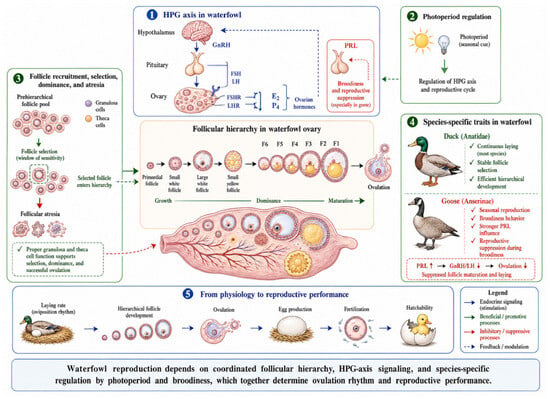
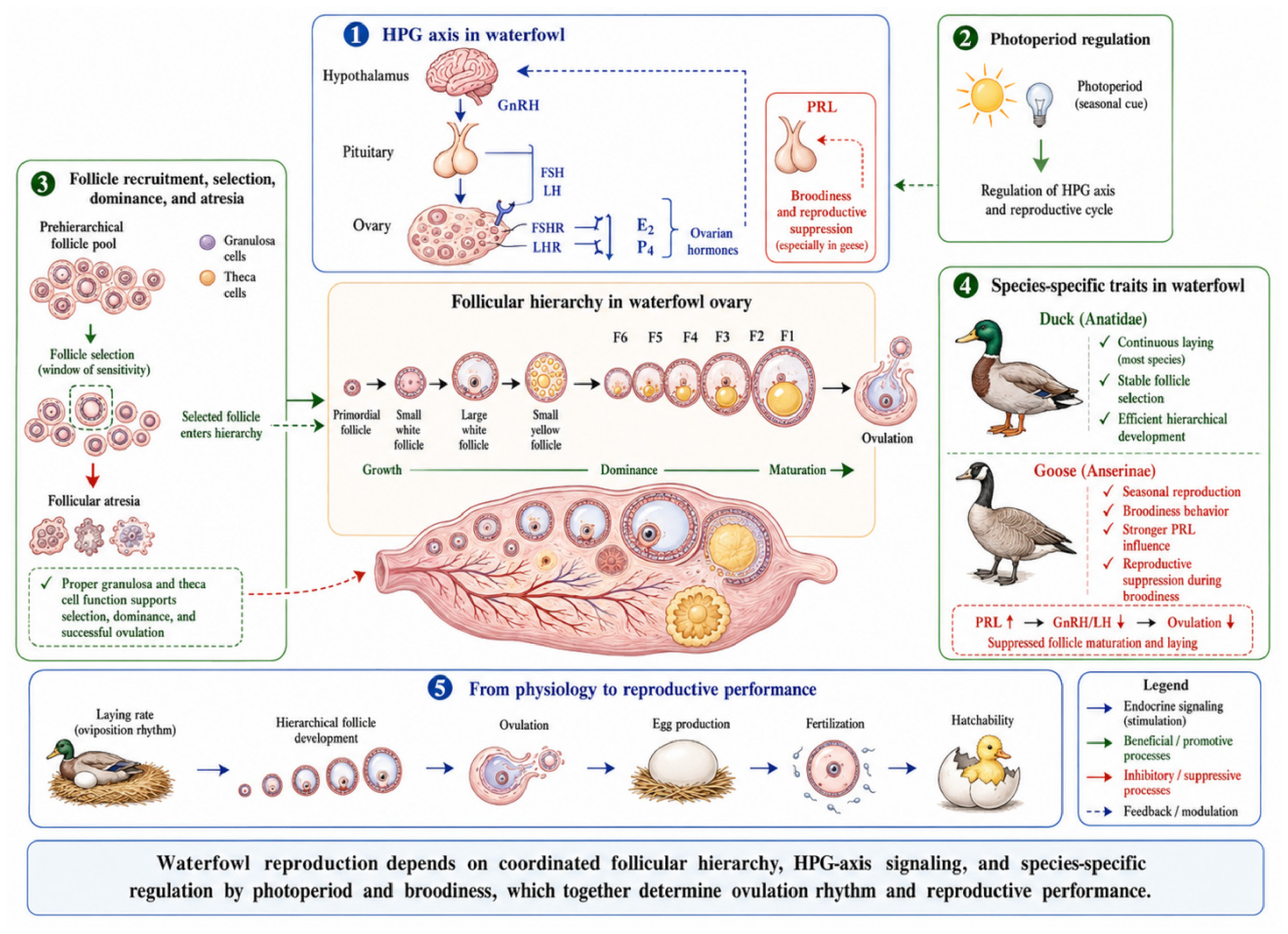
These patterns vary by breed and management. Broodiness can occur in Muscovy ducks [22], and geese within the same breed may enter a broody period at different times. Figure 1 places the physiological events in the context of these laying patterns.
Figure 1.
Physiological basis of follicular development and reproduction in waterfowl. Panels 1–4 show the hypothalamic–pituitary–gonadal (HPG) axis, photoperiod, follicle selection and atresia, and laying patterns. Prolonged laying applies to selected duck lines. Blue, green and red arrows indicate endocrine signaling, promotion and suppression, respectively. Dashed arrows indicate feedback or modulation. Panel 5 groups reproductive indicators for comparison rather than in chronological order. Fertilization occurs in the infundibulum after ovulation and before shell formation and laying. GnRH, gonadotropin-releasing hormone; FSH, follicle-stimulating hormone; LH, luteinizing hormone; PRL, prolactin; E2, estradiol; P4, progesterone. FSHR and LHR are gonadotropin receptors. F1 is the largest preovulatory follicle.
3.4. Dietary and Environmental Effects on Interpretation
Energy supply, temperature and feed intake offer competing explanations for a change in laying. In late-laying Yangzhou geese, a high-energy diet increased lipid deposition and impaired reproductive performance [31]. Heat exposure altered egg production and egg quality in Jinding ducks [32]. An APS trial should therefore match basal dietary energy and protein, record intake and ambient temperature, and balance groups on laying stage. Otherwise, a difference in egg output could reflect changes in nutrient intake, body condition or heat load. Recording these variables also allows a meaningful distinction between a general nutritional response and an effect localized to the ovary.
4. Which Ovarian Mechanisms Merit Testing?
4.1. Endocrine Responses and Steroid Production
An increase in eggs laid would leave the site of action unresolved. Pituitary hormone release, ovarian sensitivity to those hormones and hepatic support of yolk growth can each affect egg output. In Chongren hens, APS supplementation was associated with heavier yolks and thicker shells [33]. These traits concern the composition of each egg. The breeder question also requires an estimate of how many eggs are laid and how many hatch. Correlations among outcomes measured together at the end of feeding provide little information about which organ responded first.
Waterfowl experiments identify useful discriminating measurements. In preovulatory goose granulosa cells, the clock protein BMAL1 regulates steroidogenic acute regulatory protein (StAR), which supports cholesterol transport for progesterone synthesis [34]. Lipopolysaccharide exposure suppressed progesterone production in a goose model involving the steroidogenic enzyme CYP11A1 [35]. Heat exposure altered proliferation and steroid synthesis in duck granulosa cells [36]. A feeding study could measure circulating FSH and LH alongside stage-matched follicular StAR, CYP11A1 and steroid output. If only gonadotropins change, a pituitary or upstream response remains plausible. If follicular steroid output changes under a common hormonal stimulus ex vivo, a change in ovarian responsiveness becomes a stronger explanation.
4.2. Follicular Selection and Cell Signaling
The PI3K/AKT/mTOR pathway comprises phosphoinositide 3-kinase, protein kinase B and mechanistic target of rapamycin. It is a signaling pathway that couples nutrient and growth signals to cellular growth. Wnt/β-catenin regulates transcription involved in cell growth and differentiation. Muscovy duck ovarian transcript profiles identify components of these networks [37]. Duck profiles indicate where a pathway may operate. They cannot identify the dietary stimulus that engages it or show which step limits selection.
The evidence connecting APS to these pathways comes from different cells. In irradiated cardiac cells, APS altered PI3K/AKT/mTOR signaling [38]. In bovine mammary epithelial cells exposed to an inflammatory stimulus, an APS treatment affected Wnt/β-catenin signaling [39]. Both studies examined responses to injury. In a healthy laying duck or goose, evidence for the proposed link would require a reproducible follicular response to feeding, measured in the cells and follicle class entering selection. A subsequent test could ask whether selectively perturbing the implicated pathway changes that response. Pathway enrichment on its own would be insufficient.
4.3. Oxidative Stress, Mitochondrial Turnover and Atresia
In goose follicles, oxidative injury accompanies granulosa cell apoptosis and impaired clearance of damaged cell components [40]. Acute heat exposure damaged mitochondria in duck granulosa cells. Silencing dynamin-related protein 1 (DRP1) or PTEN-induced kinase 1 (PINK1) reduced the abundance of steroidogenic proteins. PINK1 silencing also increased apoptosis under heat stress [41]. In a dietary study in growing Taihu geese, 200 mg/kg APS increased serum superoxide dismutase activity at days 30 and 60 [9]. The goose result concerns circulating antioxidant activity. The duck experiment identifies an ovarian process responsive to heat. The missing observation is whether feeding APS modifies that process in a laying bird.
Mitochondrial reactive oxygen species (mtROS) should be measured as a separate outcome from total cellular ROS. The direction of any ovarian mtROS response to APS remains unknown. Measuring mtROS alongside ATP or membrane potential, steroid output and cell survival would reveal whether a redox change accompanies altered function. A reduction in a stress marker without a corresponding change in steroid output or follicular survival would weaken the proposed functional explanation.
Autophagic flux measures the rate at which cellular material is delivered to lysosomes and degraded. Increases in LC3-II or accumulation of p62 can occur when clearance slows, making a static measurement ambiguous. In the goose study, atretic follicles had higher oxidative stress and apoptosis, and the authors reported impaired flux [40]. A comparison of turnover with and without lysosomal inhibition in matched granulosa cells could test whether a dietary response involves clearance. The biological endpoint remains stage-specific atresia and the subsequent laying sequence, since ordinary follicular selection also entails cell loss.
4.4. Intestinal and Ovarian Inflammatory Responses
Two observations motivate an indirect inflammatory route. APS affected intestinal injury and local immune indices in goslings in a disease model [42]. In a different setting, inflammatory stimulation impaired progesterone synthesis in goose granulosa cells [35]. Each study resolves a different tissue response. The link between them would require evidence that dietary APS changes an identifiable circulating signal in adult breeders and that the ovary responds to that signal at the concentration achieved in vivo.
Sampling gut tissue, plasma and a defined class of follicle would allow several explanations to be compared. A local mucosal response without a circulating change supports an intestinal effect. A circulating and follicular change confined to an active inflammatory challenge might indicate relief of stress in that setting. Baseline and challenged birds would then answer different questions. Within follicles, cytokines should be interpreted against stage, cell viability and steroid output because tissue remodeling around ovulation is itself physiologically active.
4.5. Yolk Delivery and Follicular Vascular Function
The liver supplies vitellogenin (VTG) and yolk-targeted very-low-density lipoprotein (VLDLy) to rapidly growing oocytes. Chickens provide evidence on both hepatic synthesis and deposition into follicles at different ranks [43]. A separate APS study found altered hepatic glucose and lipid metabolism in newly hatched chicks exposed to transport stress [44]. Those chicks were growing and had no laying demand for yolk precursors. The study therefore leaves open the direction, magnitude and even the presence of a response in the liver of a laying bird.
Hepatic synthesis, transport in blood and follicular uptake can each limit yolk growth. Increased hepatic VTG expression with unchanged circulating VTG would give a different explanation from unchanged plasma VTG with reduced yolk deposition. Measurements across these compartments should be collected in the same laying interval. Body weight, feed intake and cycle stage are especially important because the normal rise in ovarian estrogen can itself alter hepatic lipid-related transcription, as shown in hens [45]. A hepatic change can thus be a consequence of ovarian activity.
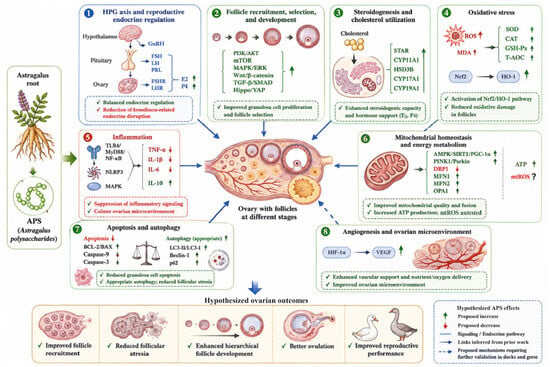
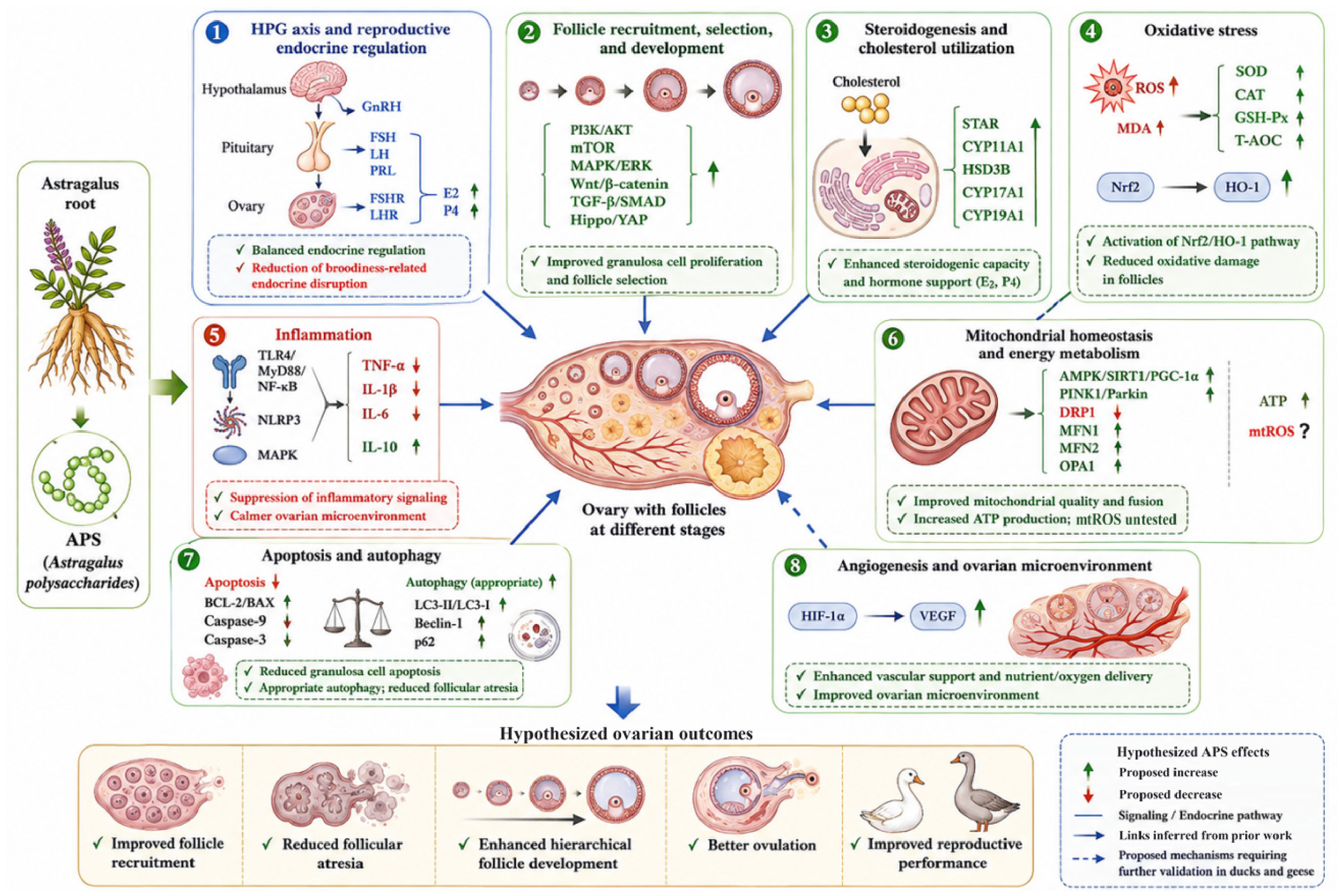
A further question is whether yolk precursors reach the growing follicle through an adequately perfused thecal layer. The ovarian vascular endothelial growth factor system is involved in follicle growth [46]. A stronger test would relate stage-matched thecal perfusion to uptake and yolk growth at comparable circulating precursor concentrations. On present evidence, this is a lower priority than establishing a reproductive response to feeding. Figure 2 summarizes the ovarian hypotheses and their measurable endpoints.
Figure 2.
Proposed links between Astragalus polysaccharides (APS) and ovarian function in waterfowl. The eight modules organize candidate endocrine, follicular, steroidogenic, redox, inflammatory, mitochondrial, cell-survival/autophagic, and vascular processes. These proposals integrate APS findings from different species and tissues with knowledge of avian ovarian biology. Arrows and directional annotations represent proposed relationships and should not be read as demonstrated activating or inhibitory effects of APS in duck or goose ovaries. The complete network, the direction of individual responses, and any reproductive benefit require direct validation. Static LC3, Beclin-1, or p62 abundance does not establish autophagic flux. In module 4, the upward arrows beside ROS and malondialdehyde (MDA) denote markers of oxidative stress. The question mark beside mitochondrial reactive oxygen species (mtROS) in module 6 indicates that the direction of an ovarian mtROS response to APS is unknown. Green upward and red downward arrows mark hypothesized increases and decreases. Solid blue arrows connect pathways discussed in prior work, and dashed blue arrows indicate proposed links requiring validation in breeder waterfowl. These pathways could influence follicle development and reproductive performance. The direction of any ovarian DRP1 response to dietary APS in breeders also remains unknown.
5. Testing the Proposed Gut–Liver–Ovary Pathway
The intestinal step has the closest evidence in waterfowl. In a cohort of 432 growing Taihu geese, one report described growth and carcass traits [8]. A companion report from the same birds found taller jejunal and ileal villi at 200 mg/kg and diet-related differences in selected intestinal organic acids at 90 days [9]. These reports provide complementary outcomes from one feeding experiment. A separate 150-bird study found that sampling age within the feeding program explained more cecal community variation than APS. No diet-adjusted association between the cecal microbiota and intestinal transcriptional pathways survived correction for multiple comparisons [10]. Thus, even within the gut, community composition alone gives a poor basis for specifying the mediator. In broilers, dietary APS altered intestinal barrier measures and concentrations of isobutyrate and bile acids [47]. Short-chain fatty acids can arise during microbial fermentation. Bile acids originate in the host and can subsequently be modified by gut microbes.
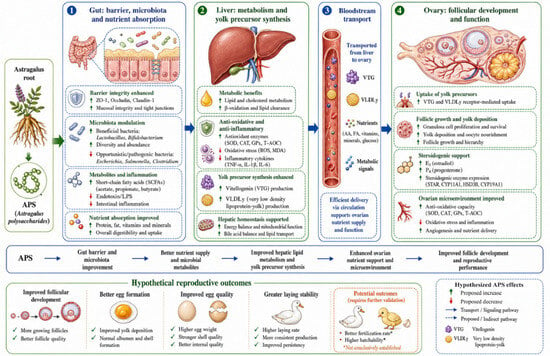
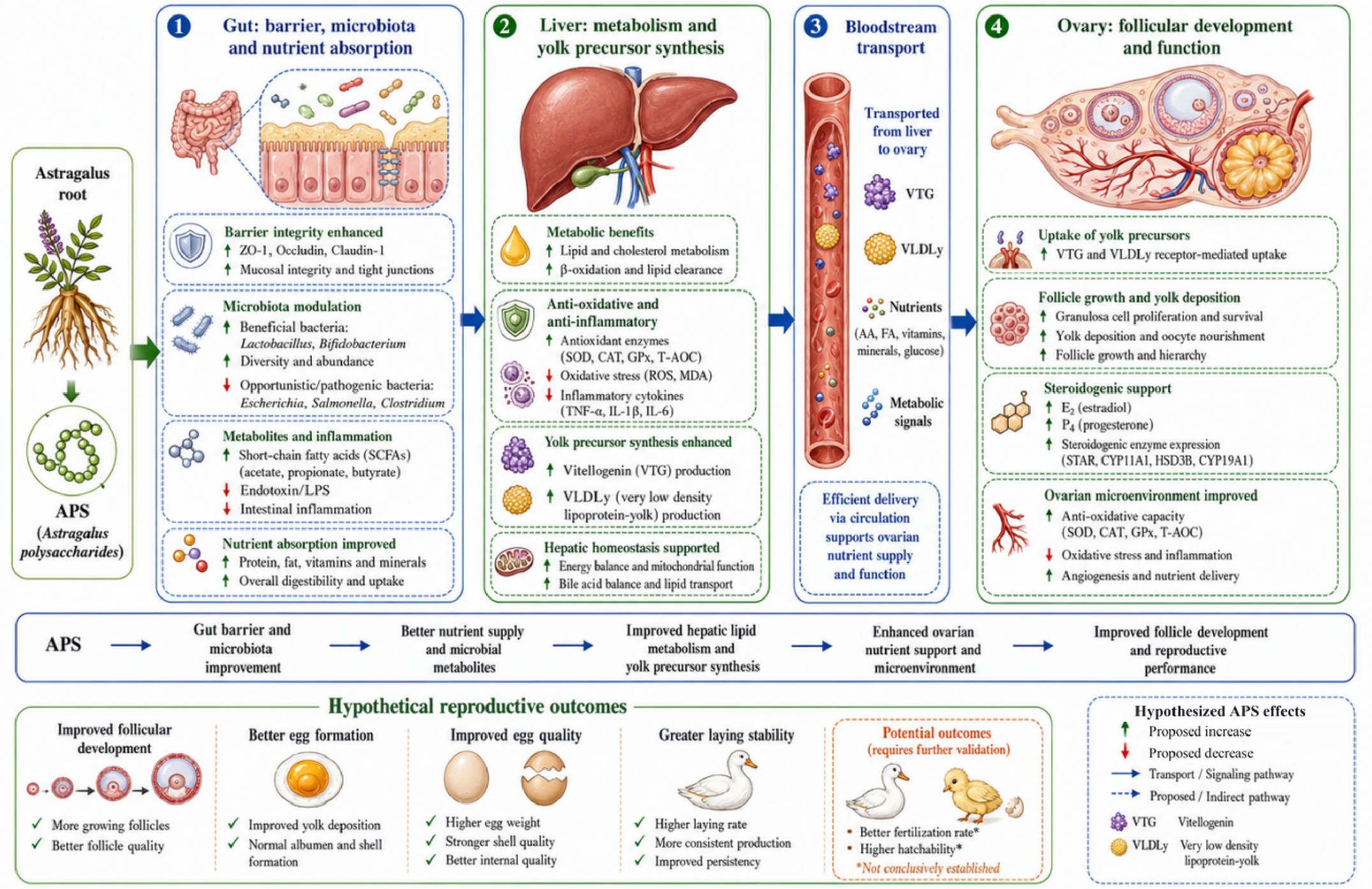
Three links still require testing in breeder waterfowl (Figure 3). First, does a candidate intestinal metabolite also change in portal or systemic blood after feeding? The luminal concentration reflects production, utilization and absorption together. Second, does that circulating change precede a change in hepatic yolk-precursor production and export? Paired measures of hepatic expression and circulating VTG and VLDLy would help distinguish synthesis from availability. Third, is altered delivery followed by different yolk deposition, follicle recruitment or laying in the same flock? Repeated sampling must account for feed intake, ovulatory stage and the reverse influence of ovarian steroids on the liver. If the sequence holds, an independent manipulation that reproduces or interrupts the candidate mediator at an exposure measured in birds would test its causal role. At present, the integrated pathway remains a hypothesis.
Figure 3.
Proposed gut–liver–ovary model linking Astragalus polysaccharides (APS) with waterfowl reproduction. Solid blue arrows trace transport or signaling from gut to liver, blood and ovary. Dashed arrows indicate proposed indirect links. Hepatic synthesis and ovarian uptake of vitellogenin (VTG) and yolk-targeted very-low-density lipoprotein (VLDLy) are established avian physiological processes; their modification by APS in breeder ducks and geese remains to be tested. Short-chain fatty acids (SCFAs) are potential microbial intermediates, whereas bile acids are host-derived molecules subject to microbial modification. The integrated APS-mediated sequence and the indicated improvements in laying, egg quality, fertility, and hatchability remain proposed effects rather than established waterfowl outcomes. Check marks identify candidate responses. Green upward and red downward arrows show their hypothesized directions.
6. Establishing Reproductive Relevance in Breeder Flocks
A trial in 300 laying ducks illustrates what the choice of comparator can resolve. After 56 days, diets containing 1.0% or 1.5% crude Astragalus extract produced higher laying rates than the basal diet, while mean egg weight was similar. The extract contained at least 35% polysaccharides and 8% saponins [12]. The intervention thus matches the target species and life stage, but assigning the effect to APS requires a comparison that separates the polysaccharide fraction from the other constituents.
A first efficacy trial should ask one defined question within a species and production stage. For late-laying ducks, a primary outcome could be the trajectory of eggs laid per female-day over a prespecified interval. For a seasonally breeding goose population, cumulative eggs per female over a specified breeding window could be paired with dates of first egg, broodiness and return to lay. Following only females that remain in lay would miss a dietary effect on the probability of entering broodiness. Trials should randomize independent pens to a characterized APS batch and matched basal diet, account for pen allocation in the analysis and report effect estimates with uncertainty. Repeated eggs or follicles from a pen provide within-pen information. The pens supply the independent replicates for the dietary comparison.
For breeder-flock outcomes, record eggs laid, eggs suitable for setting, eggs set, fertilized eggs and live hatchlings. Report fertility per egg set and hatchability both per egg set and per fertile egg, with embryonic deaths by stage where feasible. Male fertility, mating or insemination conditions, egg storage and incubation can each affect hatchling numbers even when ovarian performance is stable. A trial showing more hatchlings would therefore need these records before attributing the difference to the female reproductive tract. Pairing one flock-level endpoint with a prespecified follicular measure would offer a more interpretable first test than screening many signaling proteins after the outcome is known.
7. Conclusions
The clearest waterfowl evidence concerns growing birds. Dietary APS have affected growth and intestinal traits under specified feeding conditions, but the studies reviewed leave the effect on ovarian function and viable hatchling output in breeder ducks and geese unresolved. The first priority is an efficacy trial with a matched diet and a defined laying stage. Such a trial should pair a stage-matched follicle measure with egg production over time and distinguish the proportion of eggs fertilized from the proportion of fertile eggs that hatch.
Standardization of the test material is essential. Each trial should identify the botanical source and batch, describe extraction and purification, report polysaccharide content, molecular-weight distribution and monosaccharide composition, and state both product inclusion and the amount of polysaccharide supplied per kilogram of feed. Where possible, verify the concentration in the finished feed. A preparation that yields a reproducible breeder response would justify testing whether a specified circulating metabolite links an intestinal change to yolk delivery and follicle function.
Author Contributions
Conceptualization, X.D. and M.Z.; investigation (literature collection and organization), X.Z., G.S., X.L., L.Z. and Y.B.; writing—original draft preparation, X.D. and M.Z.; writing—review and editing, X.D., M.Z., X.Z., G.S., X.L., L.Z., Y.B. and G.C.; supervision, X.D. and G.C. All authors have read and agreed to the published version of the manuscript.
Funding
This work was supported by the Academy-level Scientific Research Project of Jiangsu Agri-animal Husbandry Vocational College (NSF2026ZR11), the Taizhou Seed Industry Research and Tackling Project (grant no. TZZY[2025]001) and the National Domestic Animal Germplasm Resource Bank (Collection, Preservation, and Sharing Services for Waterfowl Genetic Resources).
Institutional Review Board Statement
Not applicable. This review does not report new studies involving humans or animals.
Informed Consent Statement
Not applicable.
Data Availability Statement
No new data were created or analyzed in this study. Data sharing is not applicable to this review.
Acknowledgments
The authors used ChatGPT and Codex (OpenAI, version numbers not recorded) to assist with English editing, synthesis of the literature, reference checks and preparation of the revised schematic figures. The authors take responsibility for the content and interpretation.
Conflicts of Interest
The authors declare no conflicts of interest.
References
- Xu, W.; Wang, Z.; Qu, Y.; Li, Q.; Tian, Y.; Chen, L.; Tang, J.; Li, C.; Li, G.; Shen, J.; et al. Genome-wide association studies and haplotype-sharing analysis targeting the egg production traits in Shaoxing duck. Front. Genet. 2022, 13, 828884. [Google Scholar] [CrossRef] [Scilit] [PubMed]
- Yan, L.; Liu, J.; Chen, R.; Lei, M.; Guo, B.; Chen, Z.; Dai, Z.; Zhu, H. Reproductive characteristics and methods to improve reproductive performance in goose production: A systematic review. Poult. Sci. 2025, 104, 105099. [Google Scholar] [CrossRef] [Scilit] [PubMed]
- Wu, R.; Sun, J.; Pan, J.; Shen, X.; Jiang, D.; Ouyang, H.; Xu, D.; Tian, Y.; Huang, Y. Changes in ovarian activity and expressions of follicle development regulation factors during the laying-incubation cycle in Magang geese. Animals 2025, 15, 1390. [Google Scholar] [CrossRef] [Scilit] [PubMed]
- Zhang, L.; Xie, J.; Sun, G.; Ji, R.; Li, X.; Zhang, X.; Wang, J. Identification of differentially expressed genes and signaling pathways in Gaoyou duck ovary at different physiological stages. Front. Vet. Sci. 2023, 10, 1190998. [Google Scholar] [CrossRef] [Scilit] [PubMed]
- Guo, S.; Xing, Y.; Xu, Y.; Jin, X.; Yan, S.; Shi, B. Progress of studies on plant-derived polysaccharides affecting intestinal barrier function in poultry. Animals 2022, 12, 3205. [Google Scholar] [CrossRef] [Scilit] [PubMed]
- Liang, H.; Tao, S.; Wang, Y.; Zhao, J.; Yan, C.; Wu, Y.; Liu, N.; Qin, Y. Astragalus polysaccharide: Implication for intestinal barrier, anti-inflammation, and animal production. Front. Nutr. 2024, 11, 1364739. [Google Scholar] [CrossRef] [Scilit] [PubMed]
- Liu, W.; Wan, X.; Wang, Z.; Yang, H. Effects of low-protein amino acid-balanced diets and Astragalus polysaccharides on production performance, antioxidants, immunity, and lipid metabolism in heat-stressed laying hens. Animals 2025, 15, 2385. [Google Scholar] [CrossRef] [Scilit] [PubMed]
- Zhang, X.; Li, X.; Zhao, M.; Zhang, L.; Bian, Y. Effects of dietary astragalus polysaccharide supplementation on growth performance, carcass traits, and meat quality in Taihu geese. Poult. Sci. 2026, 105, 107113. [Google Scholar] [CrossRef] [Scilit] [PubMed]
- Li, X.; Li, W.; Zhao, M.; Zhang, L.; Sun, G.; Wang, J.; Bian, Y.; Duan, X.; Chen, G. Effects of dietary Astragalus polysaccharides on serum biochemical parameters, intestinal morphology, organic acid profiles, and cecal microbiota in Taihu geese. Biomolecules 2026, 16, 1545. [Google Scholar] [CrossRef] [Scilit]
- Li, X.; Zhao, M.; Zhang, L.; Sun, G.; Duan, X.; Chen, G. Sampling-age-associated cecal community and intestinal transcriptional responses to dietary Astragalus polysaccharides in Taihu geese. Microorganisms 2026, 14, 2149. [Google Scholar] [CrossRef] [Scilit] [PubMed]
- Zhao, H.; Jin, S. Effects of Astragalus polysaccharide on growth performance, blood biochemical indices and meat quality in meat ducks. China Feed 2024, 1, 65–68. (In Chinese) [Google Scholar] [CrossRef]
- Xia, Q.; Fu, S.; Jia, J.; Lei, Y. Effects of crude Astragalus extract on production performance, egg quality and antioxidant capacity in laying ducks. China Feed 2026, 1, 20–24. (In Chinese) [Google Scholar] [CrossRef]
- Tang, Z.; Huang, G. Extraction, structure, and activity of polysaccharide from Radix astragali. Biomed. Pharmacother. 2022, 150, 113015. [Google Scholar] [CrossRef] [Scilit] [PubMed]
- Wang, S.; Peng, Y.; Zhuang, Y.; Wang, N.; Jin, J.; Zhan, Z. Purification, structural analysis and cardio-protective activity of polysaccharides from Radix Astragali. Molecules 2023, 28, 4167. [Google Scholar] [CrossRef] [Scilit] [PubMed]
- Tian, Y.; Wu, J.; Zheng, Y.; Li, M.; Xu, X.; Chen, H.; Rui, W. Structural changes of polysaccharides from Astragulus after honey processing and their bioactivities on human gut microbiota. J. Sci. Food Agric. 2023, 103, 7241–7250. [Google Scholar] [CrossRef] [Scilit] [PubMed]
- Huo, Z.; Li, J.; Li, X.; Xiao, H.; Lin, Y.; Ma, Y.; Li, J.; Yang, H.; Zhang, C. Functional fractions of Astragalus polysaccharides as a potential prebiotic to alleviate ulcerative colitis. Int. J. Biol. Macromol. 2024, 271, 132580. [Google Scholar] [CrossRef] [Scilit] [PubMed]
- Dong, W.; Fan, Z.; Li, P.; Liu, J.; Sun, G.; Peng, N.; Liang, Y.; Zhao, S. Optimizing the scale-up production of fermented astragalus and its benefits to the performance and egg quality of laying hens. Front. Microbiol. 2023, 14, 1165644. [Google Scholar] [CrossRef] [Scilit] [PubMed]
- Hu, S.; Zhu, M.; Wang, J.; Li, L.; He, H.; Hu, B.; Hu, J.; Xia, L. Histomorphology and gene expression profiles during early ovarian folliculogenesis in duck and goose. Poult. Sci. 2021, 100, 1098–1108. [Google Scholar] [CrossRef] [Scilit] [PubMed]
- Xia, W.; Jin, C.; Wang, S.; Zhang, Y.; Li, K.; Huang, X.; Zheng, C.; Chen, W. Developmental proteome dynamics in granulosa and thecal layers from growing follicles to pre-ovulatory duck follicles. Biol. Reprod. 2025, 112, 675–691. [Google Scholar] [CrossRef] [Scilit] [PubMed]
- Liu, J.; Dai, S.; Dai, Z.; Feng, Y.; Lei, M.; Chen, R.; Zhu, H. Transcriptome profiling of goose ovarian follicle granulosa cells reveals key regulatory networks for follicle selection. Animals 2023, 13, 2132. [Google Scholar] [CrossRef] [Scilit] [PubMed]
- Yang, W.; Chen, X.; Liu, Z.; Zhao, Y.; Chen, Y.; Geng, Z. Integrated transcriptome and proteome revealed that the declined expression of cell cycle-related genes associated with follicular atresia in geese. BMC Genom. 2023, 24, 24. [Google Scholar] [CrossRef] [Scilit] [PubMed]
- Huang, C.; Du, Z.; Shi, Y.; Sun, N.; Zhu, Z.; Yu, X.; Li, A. Growth differentiation factor 9 activates the TGF-β pathway in follicle atresia of Muscovy ducks. Poult. Sci. 2024, 103, 104278. [Google Scholar] [CrossRef] [Scilit] [PubMed]
- Chen, S.; Liu, W.; Yang, C.; Li, X.; Shen, X.; Jiang, D.; Huang, Y.; Tian, Y. Gonadotropin inhibitory hormone downregulates steroid hormone secretion and genes expressions in duck granulosa cells. Anim. Reprod. 2021, 18, e20210036. [Google Scholar] [CrossRef] [Scilit] [PubMed]
- Jiang, D.; Ji, C.; Kang, L.; Ling, W.; Wang, Z.; Wang, X.; Niu, C.; Guo, Y.; Sun, Q.; An, X.; et al. Correlation analysis of polyamine metabolism and reproductive hormone levels in goose ovarian follicles. Theriogenology 2023, 210, 244–250. [Google Scholar] [CrossRef] [Scilit] [PubMed]
- Wang, Z.; Wang, L.; Zhang, Y.; Yao, Y.; Zhao, W.; Xu, Q.; Chen, G. Characterization of ovarian morphology and reproductive hormones in Zhedong white geese (Anser cygnoides domesticus) during the reproductive cycle. J. Anim. Physiol. Anim. Nutr. 2021, 105, 938–945. [Google Scholar] [CrossRef] [Scilit] [PubMed]
- Li, X.; Hou, M.; Wang, Y.; Wu, F.; Tong, X.; Xie, F.; Jiang, C.; Jin, M.; Ren, M.; Li, S. Differential expression of long non-coding RNA in the hypothalamus-pituitary-gonadal axis of Wanxi white geese during laying and broodiness periods. Anim. Biosci. 2026, 39, 250348. [Google Scholar] [CrossRef] [Scilit] [PubMed]
- Li, Z.; Sun, Y.; Sun, D.; Yang, N.; Yin, Z.; Hou, Z. Comprehensive multi-omics reveals dynamic chromatin changes and gene regulatory networks during duck folliculogenesis. J. Anim. Sci. Biotechnol. 2026, 17, 79. [Google Scholar] [CrossRef] [Scilit] [PubMed]
- Yang, W.; Lang, X.; Song, D.; Xu, H.; Zhang, C.; Guo, L.; Chen, X. Comparative analysis of reproductive hormones, serum biochemical indexes and ovarian metabolites in Muscovy breeder duck at different laying stages. Poult. Sci. 2024, 103, 104370. [Google Scholar] [CrossRef] [Scilit] [PubMed]
- Huang, T.; Fei, M.; Zhou, X.; He, K.; Yang, S.; Zhao, A. Effects of different photoperiods on the transcriptome of the ovary and small white follicles in Zhedong white geese. Animals 2024, 14, 2747. [Google Scholar] [CrossRef] [Scilit] [PubMed]
- Sun, L.; Chen, Z.; Du, Y.; Chen, X.; Geng, Z. Wanxi White goose and Yangzhou goose exhibited differences in the level of egg production, serum biochemical, hormones and related gene expression under the same natural photoperiod regulation. J. Appl. Anim. Res. 2022, 50, 342–349. [Google Scholar] [CrossRef] [Scilit]
- Chen, X.; Yu, T.; Dou, Y.; Ji, Q.; Guo, L.; Geng, Z. High dietary energy decreased reproductive performance through increasing lipid deposition in Yangzhou geese at late laying stage. Poult. Sci. 2023, 102, 102915. [Google Scholar] [CrossRef] [Scilit] [PubMed]
- Xin, Q.; Li, L.; Zhao, B.; Shi, W.; Hao, X.; Zhang, L.; Miao, Z.; Zhu, Z.; Huang, Q.; Zheng, N. The network regulation mechanism of the effects of heat stress on the production performance and egg quality of Jinding duck was analyzed by miRNA-mRNA. Poult. Sci. 2024, 103, 103255. [Google Scholar] [CrossRef] [Scilit] [PubMed]
- Lv, H.; Tang, Y.; Zhang, H.; Li, S.; Fan, Z. Astragalus polysaccharide supplementation improves production performance, egg quality, serum biochemical index and gut microbiota in Chongren hens. Anim. Sci. J. 2021, 92, e13550. [Google Scholar] [CrossRef] [Scilit] [PubMed]
- Chen, R.; Qin, Y.; Du, J.; Liu, J.; Dai, S.; Lei, M.; Zhu, H. Circadian clock gene BMAL1 regulates STAR expression in goose ovarian preovulatory granulosa cells. Poult. Sci. 2023, 102, 103159. [Google Scholar] [CrossRef] [Scilit] [PubMed]
- Guo, X.; An, H.; Guo, R.; Dai, Z.; Ying, S.; Wu, W. The role of miR-10a-5p in LPS-induced inhibition of progesterone synthesis in goose granulosa cells by down-regulating CYP11A1. Front. Vet. Sci. 2024, 11, 1398728. [Google Scholar] [CrossRef] [Scilit] [PubMed]
- Yang, C.; Huang, X.-B.; Chen, S.-J.; Li, X.-J.; Fu, X.-L.; Xu, D.-N.; Tian, Y.-B.; Liu, W.-J.; Huang, Y.-M. The effect of heat stress on proliferation, synthesis of steroids, and gene expression of duck granulosa cells. Anim. Sci. J. 2021, 92, e13617. [Google Scholar] [CrossRef] [Scilit] [PubMed]
- Lin, J.; Guan, L.; Ge, L.; Liu, G.; Bai, Y.; Liu, X. Nanopore-based full-length transcriptome sequencing of Muscovy duck (Cairina moschata) ovary. Poult. Sci. 2021, 100, 101246. [Google Scholar] [CrossRef] [Scilit] [PubMed]
- Jiang, B.; Wang, Y.; Zhi, X.; Liu, A.; Wang, L.; Wang, X.; Wang, Z.; Duan, Y.; Li, Y.; Zhang, Z. Elucidating the mechanism of action of astragalus polysaccharide on ionizing radiation-induced myocardial damage based on network pharmacology and experimental research. Int. Immunopharmacol. 2025, 145, 113758. [Google Scholar] [CrossRef] [Scilit] [PubMed]
- Fan, J.; Jia, F.; Liu, Y.; Zhou, X. Astragalus polysaccharides and astragaloside IV alleviate inflammation in bovine mammary epithelial cells by regulating Wnt/β-catenin signaling pathway. PLoS ONE 2022, 17, e0271598. [Google Scholar] [CrossRef] [Scilit] [PubMed]
- Zheng, Y.; Qiu, Y.; Wang, Q.; Gao, M.; Cao, Z.; Luan, X. ADPN regulates oxidative stress-induced follicular atresia in geese by modulating granulosa cell apoptosis and autophagy. Int. J. Mol. Sci. 2024, 25, 5400. [Google Scholar] [CrossRef] [Scilit] [PubMed]
- Yang, C.; Luo, P.; Yang, Y.-T.; Fu, X.-L.; Li, B.-X.; Shen, X.; Xu, D.-N.; Huang, Y.-M.; Tian, Y.-B.; Liu, W.-J. Drp1 regulated PINK1-dependent mitophagy protected duck follicular granulosa cells from acute heat stress injury. Poult. Sci. 2024, 103, 103247. [Google Scholar] [CrossRef] [Scilit] [PubMed]
- Luo, D.; Yang, N.; Liu, Z.; Li, T.; Wang, H.; Ge, M.; Zhang, R. Effects of Astragalus polysaccharide on intestinal inflammatory damage in goslings infected with gosling plague. Br. Poult. Sci. 2021, 62, 353–360. [Google Scholar] [CrossRef] [Scilit] [PubMed]
- Song, X.; Wang, D.; Zhou, Y.; Sun, Y.; Ao, X.; Hao, R.; Gao, M.; Xu, Y.; Li, P.; Jia, C.; et al. Yolk precursor synthesis and deposition in hierarchical follicles and effect on egg production performance of hens. Poult. Sci. 2023, 102, 102756. [Google Scholar] [CrossRef] [Scilit] [PubMed]
- Zhao, B.-C.; Tang, Y.-X.; Qiu, B.-H.; Xu, H.-L.; Wang, T.-H.; Elsherbeni, A.I.A.; Gharib, H.B.A.; Li, J.-L. Astragalus polysaccharide mitigates transport stress-induced hepatic metabolic stress via improving hepatic glucolipid metabolism in chicks. J. Anim. Sci. 2022, 100, skac244. [Google Scholar] [CrossRef] [Scilit] [PubMed]
- Ren, J.; Tian, W.; Jiang, K.; Wang, Z.; Wang, D.; Li, Z.; Yan, F.; Wang, Y.; Tian, Y.; Ou, K.; et al. Global investigation of estrogen-responsive genes regulating lipid metabolism in the liver of laying hens. BMC Genom. 2021, 22, 428. [Google Scholar] [CrossRef] [Scilit] [PubMed]
- Guzmán, A.; Hernández-Coronado, C.G.; Gutiérrez, C.G.; Rosales-Torres, A.M. The vascular endothelial growth factor (VEGF) system as a key regulator of ovarian follicle angiogenesis and growth. Mol. Reprod. Dev. 2023, 90, 201–217. [Google Scholar] [CrossRef] [Scilit] [PubMed]
- Yang, J.; Sun, Y.; Wang, Q.; Yu, S.; Li, Y.; Yao, B.; Yang, X. Astragalus polysaccharides-induced gut microbiota play a predominant role in enhancing of intestinal barrier function of broiler chickens. J. Anim. Sci. Biotechnol. 2024, 15, 106. [Google Scholar] [CrossRef] [Scilit] [PubMed]

Disclaimer/Publisher’s Note: The statements, opinions and data contained in all publications are solely those of the individual author(s) and contributor(s) and not of MDPI and/or the editor(s). MDPI and/or the editor(s) disclaim responsibility for any injury to people or property resulting from any ideas, methods, instructions or products referred to in the content. |
© 2026 by the authors. Licensee MDPI, Basel, Switzerland. This article is an open access article distributed under the terms and conditions of the Creative Commons Attribution (CC BY) license.