


Simple Summary
Pigs around the world are affected by a disease that causes sows to lose their litters and makes young animals grow poorly and become ill. The virus changes very quickly, so commercial vaccines do not always match the version present on a particular farm. One answer is to prepare a vaccine from the virus found on that same farm, usually to reinforce protection in animals already vaccinated or previously infected. These are known as autogenous vaccines. This article probes what is actually known about whether they work. A structured search found only three studies in pigs, from two research groups. They show that a vaccine matched to the farm’s own virus shortens the time animals carry it and reduces lung damage, but they do not show protection against different versions of the virus, and none measured whether sows produce more piglets. The rules governing these products in Europe, the United States and Mexico allow them to be used without ever proving that they work, and no field experience has been published anywhere in Latin America. Farm-specific vaccines remain a useful tool, but the evidence behind them is thinner than their widespread use suggests.
Abstract
Porcine reproductive and respiratory syndrome virus (PRRSV) remains one of the most economically significant pathogens of global swine production, and its genetic variability limits the field effectiveness of commercially licensed vaccines. Autogenous vaccines prepared from isolates recovered within a defined epidemiological unit are used at scale as a herd-specific alternative. This review distinguishes authorized autogenous products from experimental herd-specific preparations and from precision-vaccinology platforms that are neither authorized nor, given current development timelines, compatible with the autogenous use case. Following a structured search, the primary evidence base for efficacy is synthesized and found to comprise three studies from two research groups, including a single randomized controlled field trial. That evidence supports reductions in viraemia and lung pathology after homologous challenge, but not heterologous protection, and no study reports reproductive outcomes. The regulatory frameworks of the European Union, the United States and Mexico are compared, and are shown to authorize these products without requiring a demonstration of efficacy. Inactivation validation criteria, safety, breeding animals, interference with surveillance, isolate selection, where multiple variants co-circulate, and the absence of published economic evaluation are examined, together with the Latin American context, for which no field experience has been published.
1. Introduction
Porcine reproductive and respiratory syndrome (PRRS) is one of the most economically consequential infectious diseases affecting the global swine industry [1,2,3]. Since its emergence in the late 1980s [4,5], PRRS has caused persistent losses through reproductive failure in breeding herds, respiratory disease and growth retardation in pigs, and increased expenditure associated with health management and biosecurity [1,6,7]. Despite extensive research efforts and widespread vaccination, PRRS continues to be endemic in most major pork-producing regions [8,9], highlighting the inherent difficulty of controlling a rapidly evolving viral pathogen within intensive production systems [10,11].
PRRS is caused by porcine reproductive and respiratory syndrome virus (PRRSV), a positive-sense, single-stranded RNA virus of the family Arteriviridae, order Nidovirales [1,12]. According to the current taxonomy of the International Committee on Taxonomy of Viruses (ICTV), the viruses historically designated PRRSV-1 and PRRSV-2 correspond to the species Betaarterivirus suid 1 and Betaarterivirus suid 2, respectively; for consistency with the veterinary literature, the conventional designations PRRSV-1 and PRRSV-2 are retained throughout this review [12]. The virus exhibits marked tropism for cells of the monocyte–macrophage lineage, leading to immune dysregulation and heightened susceptibility to secondary infections [13,14]. Clinical outcomes range from reproductive failure in sows to respiratory disease and impaired growth in piglets and growing pigs [1,6], with disease severity shaped by complex interactions among viral genetics, host immunity and management factors [13,15].
The extraordinary genetic and antigenic diversity of PRRSV is central to its persistence in swine populations [8,16]. The virus has diverged into two major species, PRRSV-1 and PRRSV-2, with extensive intraspecies variability driven by high mutation rates, recombination and immune-mediated selection [9,17]. This evolutionary plasticity enables immune evasion and substantially limits the breadth and durability of vaccine-induced protection [18].
Vaccination remains a cornerstone of PRRS control [19]; however, its effectiveness varies significantly [20,21]. Modified live virus (MLV) vaccines generally induce stronger immune responses than inactivated formulations, but often fail to protect against heterologous strains and raise concerns related to safety, viral shedding and recombination [18,22]. Inactivated vaccines offer improved safety, but typically elicit weak and short-lived immunity under field conditions [23,24]. The inability of commercial vaccines to address farm-specific viral diversity adequately has emerged as a major constraint in sustainable PRRS management [8,18].
These limitations have renewed interest in autogenous vaccines as a complementary, herd-adapted approach to PRRS control [23,25]. Autogenous PRRSV vaccines are custom-produced from isolates derived from affected herds or epidemiologically linked populations in order to improve antigenic matching between vaccine strains and circulating viruses [26,27]. Both the European Union (EU) and the United States define these products by this epidemiological link rather than by the technology used to manufacture them: Regulation (EU) 2019/6 refers to inactivated immunological veterinary medicinal products manufactured from pathogens and antigens obtained from an animal or animals in an epidemiological unit and used in the same unit or in a unit with a confirmed epidemiological link, while Title 9 of the United States Code of Federal Regulations restricts autogenous biologics to microorganisms isolated from sick or dead animals in the herd of origin [27,28]. This strategy represents a conceptual shift from standardized population-level vaccination towards precision immunization tailored to local viral ecology [18,29]. Although autogenous vaccines have been widely applied in outbreak response, herd stabilization and elimination programs [25,30], their scientific development has lagged behind field implementation [26].
Recent advances in biotechnology have rapidly reshaped the landscape of autogenous PRRSV vaccine development and evaluation [31]. High-throughput sequencing and bioinformatics now enable rapid characterization of herd-specific viral populations [32,33], supporting rational antigen selection and real-time monitoring of viral evolution [9]. Concurrent progress in vaccine engineering has expanded autogenous platforms beyond conventional inactivated whole-virus formulations to include recombinant antigens, vectored systems and nucleic acid-based approaches with enhanced safety and design flexibility [34,35]. Innovations in adjuvant technology, delivery systems and immunological profiling have further enabled more effective stimulation and assessment of protective immune responses, including mucosal and cell-mediated immunity [36,37]. Nevertheless, significant challenges remain, particularly with respect to regulatory frameworks, manufacturing consistency, efficacy evaluation and integration into comprehensive PRRS control programs in the field [26,30].
Against this backdrop, this review examines recent biotechnological advances in the development and evaluation of autogenous PRRSV vaccines. By integrating perspectives from virology, immunology, vaccine engineering and veterinary practice, it evaluates how emerging technologies can enhance the precision, effectiveness and responsible deployment of autogenous vaccination strategies. The structure of the review follows the sequence in which these decisions are made in practice and is summarized in Figure 1. Section 2 reports the literature search strategy. Viral biology and diversity (Section 3) define the problem, and Section 4 establishes what does and does not constitute an autogenous product. Platform and antigen choices (Section 5) and formulation and delivery (Section 6) translate that definition into a candidate vaccine. Section 7 synthesizes the primary evidence on whether such vaccines work, and Section 8 sets out the safety, regulatory and manufacturing constraints that govern them. Section 9 addresses the Latin American context, for which the published record is particularly sparse, and Section 10 draws together the resulting limitations and research priorities. In this context, autogenous PRRSV vaccines are positioned within the broader transition towards precision veterinary medicine as a key component of next-generation PRRS control [29,31].
Figure 1.
The autogenous PRRSV vaccine cycle. Herd-specific vaccine development is an iterative loop rather than a linear process: clinical investigation and diagnostic sampling feed genomic surveillance and isolate selection (Section 3 and Section 5); the selected isolate is propagated, inactivated and formulated with an adjuvant under defined quality and biosafety controls (Section 5, Section 6 and Section 8); veterinary prescription and herd-level administration are followed by evaluation of immune, virological and production outcomes (Section 7). Regulatory oversight and biosecurity act across the whole loop.
2. Literature Search Strategy
This review is a narrative synthesis, but the underlying literature was retrieved through a structured search, reported here so that the evidence base and its boundaries can be assessed. Searches covered PubMed/Medline, Europe PMC, Web of Science, Google Scholar and SciELO, and were run in English, Spanish and Portuguese up to October 2026. The principal search combined porcine reproductive and respiratory syndrome, PRRS and PRRSV with autogenous, autovaccine, herd-specific, farm-specific, custom-made, own-herd and herd-adapted, and with terms for vaccination, efficacy, immunogenicity and challenge; subsidiary searches addressed antigen selection, adjuvants, inactivation and biosafety, viral evolution, correlates of protection, economics and regulation. No lower date limit was imposed, since the primary isolation literature and the foundational regulatory instruments predate any reasonable cut-off, but the synthesis emphasizes work published from 2015 onwards. Regulatory instruments were consulted in their official repositories.
For the evidence synthesis in Section 7, inclusion was restricted to studies in which pigs received a vaccine prepared from a PRRSV isolate obtained within the herd of use, and every candidate study was examined in full text to verify that criterion. Two studies frequently cited as autogenous evidence were excluded on inspection because the product was a licensed commercial vaccine, and are identified in Section 7. Grey literature was searched deliberately, including the proceedings of the American Association of Swine Veterinarians, the Allen D. Leman Swine Conference, the International Pig Veterinary Society Congress and the European Symposium of Porcine Health Management, together with manufacturers’ technical documentation. Such material is labeled as grey literature wherever used and is not combined with peer-reviewed evidence. Much operational experience with these products resides in proprietary datasets, and the consequences of that inaccessibility are addressed in Section 7.
3. PRRSV Biology, Genetic Diversity and Immune Evasion
PRRSV is a pathogen whose persistence is driven by the interplay of rapid genetic diversification and sophisticated immune evasion mechanisms [38]. Rather than relying on a single escape mechanism, PRRSV integrates error-prone replication, selective immune cell infection and active suppression of antiviral signaling to establish prolonged infection and undermine durable protective immunity [39]. These features collectively explain both the endemic nature of PRRS and the inconsistent performance of conventional vaccines under field conditions [18,40].
PRRSV is a small, enveloped, positive-sense RNA virus with a genome of approximately 15 kb encoding replication-associated non-structural proteins (nsps) and immunologically relevant structural proteins [1,12].
Viral replication occurs within endoplasmic reticulum-derived double-membrane vesicles that effectively shield viral RNA from host pattern recognition receptors (PRR), thereby delaying innate immune activation [41]. A defining feature of PRRSV pathogenesis is its pronounced tropism for porcine alveolar macrophages (PAM) and related monocyte-derived cells expressing receptors such as cluster of differentiation (CD) 163 and CD169 [14,15]. By preferentially targeting cells central to antigen presentation and cytokine signaling, PRRSV profoundly disrupts the initiation of effective antiviral immunity while maintaining a relatively low inflammatory response [38,42]. Single-cell transcriptomic analyses have begun to resolve the cellular heterogeneity of this response, and metabolic studies show that infection also compromises mitochondrial function in porcine macrophages [43,44].
Genetic diversity is a central driver of PRRSV persistence [9]. The lack of proofreading by the viral RNA-dependent RNA polymerase, coupled with frequent recombination and immune-driven selection, generates continuously evolving quasispecies populations [9,32]. Recombinant field strains carrying novel deletion patterns in the nsp2 gene continue to be reported, illustrating how rapidly the circulating population is reshaped [45]. This diversity is structured rather than random: surface-exposed structural proteins, particularly glycoprotein (GP) 5, GP4 and GP3, exhibit high variability under antibody pressure, whereas internal proteins and essential non-structural regions remain comparatively conserved [46,47]. The divergence into two major species, PRRSV-1 and PRRSV-2, together with extensive intra-lineage variability, further complicates immune recognition and vaccine matching [9,18]. At herd level, these evolutionary processes result in locally adapted viral populations that may differ substantially from the strains included in commercial vaccines [32,48].
PRRSV also employs antigenic misdirection to subvert adaptive immune responses [13]. Early antibody responses are dominated by non-neutralizing antibodies directed against immunodominant, but non-protective targets, such as the nucleocapsid protein [49,50]. In contrast, key neutralizing epitopes within the GP5–matrix (M) protein complex are shielded by extensive N-linked glycosylation and conformational masking, which limits antibody access [51]. Neutralizing antibodies typically arise late in infection and are often strain-specific, thereby reducing their capacity to control viral spread or prevent reinfection [15,18].
Innate immune suppression further reinforces viral persistence [31]. Several PRRSV non-structural proteins function as interferon (IFN) antagonists, disrupting IFN regulatory factor signaling, inhibiting the transcription of antiviral genes and degrading host RNA [13,39,52]. Beyond protein-level antagonism, PRRSV also remodels host RNA methylation and subverts autophagy and ubiquitination pathways, broadening the range of mechanisms available to it [53,54]. This suppression is partial rather than absolute, producing an immunological environment that permits viral replication while avoiding excessive inflammation [42]. Downstream effects include delayed and dysfunctional adaptive immune responses, characterized by impaired antigen presentation, weak T-cell activation, induction of regulatory pathways and incomplete immune memory [39,42,55]. Collectively, PRRSV does not merely evade host immunity, but actively reprograms it in a manner that favors persistence and reinfection [13,56].
These biological features have direct implications for vaccine design. Broadly protective vaccines are inherently difficult to achieve when antigenic targets are both highly variable and structurally shielded and when immune responses are delayed or misdirected [18,31]. Autogenous vaccines offer a pragmatic response by aligning vaccine antigens with the dominant viral variants circulating within the herd [23,25]. By capturing locally evolved antigenic profiles, autogenous strategies may mitigate antigenic mismatch and partially overcome immune evasion [18]. That presumption holds only where the selected isolate is representative of the viruses actually circulating on the holding, which cannot be assumed when several variants co-circulate (Section 8.8). This expectation is supported by direct experimental comparison: in a challenge study, binary ethylenimine-inactivated vaccines prepared from field isolates shortened viremia by approximately two to three weeks relative to unvaccinated controls after homologous challenge and induced isolate-specific neutralizing antibodies, whereas a commercial inactivated vaccine conferred no measurable protection and the heterologous experimental vaccine conferred little [23]. However, their success depends on the identification of viral components capable of eliciting protective immunity despite the immunomodulatory strategies of PRRSV [18,50]. Continued advances in molecular virology, epitope mapping and systems vaccinology are therefore critical for transforming autogenous PRRSV vaccines from empirically driven tools into rational, precision-based interventions [57,58]. The principal biological features that constrain vaccine design and the opportunities they create for herd-specific immunization are summarized in Table 1.
Table 1.
Biological determinants of PRRSV persistence and their implications for herd-specific vaccination.
4. What Is—And Is Not—An Autogenous PRRSV Vaccine
4.1. A Convergent Legal Definition
The term autogenous vaccine is applied in the PRRSV literature with considerably more latitude than the regulatory frameworks that define it allow [26,60,61], and the resulting ambiguity makes it difficult to establish what has actually been tested; two studies routinely cited as autogenous vaccine evidence are shown in Section 7.3 to have evaluated commercially licensed products. Across the three jurisdictions that define the product in law, the definition converges on four elements: the preparation is inactivated; it is derived from a microorganism isolated within the epidemiological unit in which it will be used; its use is confined to that unit, or to units with a demonstrated epidemiological link; and it is supplied under veterinary prescription rather than placed on the market [27,28,62].
In the European Union, Regulation (EU) 2019/6 excludes from the marketing authorization requirement those inactivated immunological veterinary medicinal products that are manufactured from pathogens and antigens obtained from an animal or animals in an epidemiological unit and used for treatment of that animal or those animals in the same epidemiological unit, or in a unit having a confirmed epidemiological link [28].
In the United States, 9 CFR 113.113 [27] requires that autogenous biologics be prepared from cultures of microorganisms that have been inactivated and are nontoxic. The seed must be isolated from sick or dead animals in the herd of origin and be believed to cause the disease then occurring; the product may be prepared only for use by or under the direction of a veterinarian within a veterinarian–client–patient relationship; microorganisms may not ordinarily be used beyond 15 months from isolation or 12 months from harvest of the first serial, whichever occurs first; and the expiration date may not exceed 18 months from harvest. Each serial is tested for purity and safety in final container samples [27].
In Mexico, NOM-012-SAG/ZOO-2020 [63], which entered into force on 4 May 2024 and abrogated NOM-012-ZOO-1993, defines an autogenous vaccine in Section 3.52 as an inactivated biological product intended to stimulate active immunization, prepared from a microorganism isolated from a focus of endemic disease in a production unit in Mexico, and applicable locally or regionally where an epidemiological relationship is maintained. Normative Appendix C confines use to the species, holding and region in which the isolate originated, requires administration by an authorized veterinarian, limits the microorganism to 12 months after registration for vaccine generation and the batch to 12 months of validity, and requires that the microorganism be notified to the national epidemiological surveillance system (SIVE) [63]. The registration dossier additionally requires a GMP certificate, deposit of a sample of the isolated antigen with the national animal health diagnostic laboratory, a restrictive label naming the production unit of exclusive use, and documentary evidence that commercial products have not been effective on the production unit concerned [64].
Two features of this convergence merit emphasis. First, all three systems confine the product to inactivated preparations. Second, none requires a demonstration of efficacy for routine authorization: both 9 CFR 113.113 and the Mexican registration pathway call for antigenicity, immunogenicity and potency testing only where a microorganism more than 24 months old from isolation is to be used. These frameworks were constructed around identity, purity and safety rather than around protection, a point with direct consequences for the evidence base examined in Section 7.
4.2. Why the Restriction to Inactivated Preparations Is Not Arbitrary
The confinement of autogenous products to inactivated preparations is sometimes read as regulatory conservatism awaiting technological catch-up. A more coherent reading is that it reflects the operational logic of the product. Autogenous vaccines are prescribed when licensed products are unavailable, antigenically mismatched, or have failed on the holding, and when a homologous antigen is required quickly [26,60,61]. Mexican registration makes the second condition explicit, requiring documentary evidence that commercial products have not been effective on the production unit concerned [64]. Their value is therefore largely a function of the interval between isolation of the circulating variant and administration of the finished product, and that interval is already substantial. For viral products, isolation alone requires three to four weeks and manufacture with batch release a further three to eight [61]. In poultry, where autogenous practice is best documented, federally licensed products take four to nine months to produce in the United States, and the shortest isolation-to-immunization intervals are achieved precisely where the regulatory pathway is lightest [65].
Any platform that lengthens that interval erodes the principal advantage the product possesses. The design, construction, expression, characterization and release testing of a vectored, chimeric, mosaic or nucleic acid construct directed at a specific herd isolate have no counterpart in the inactivation of a field isolate propagated in cell culture [66]. The constraint is therefore temporal before it is legal, and the independent arrival of three regulatory systems at the same restriction [27,28,62] suggests that it encodes a practical reality rather than a drafting accident. The platforms surveyed in Section 5 are not autogenous vaccines awaiting regulatory permission: on current development timelines, they are incompatible with the use case that justifies an autogenous product, and they are treated throughout this review as precision vaccinology directed at the same biological problem.
4.3. Three Categories That Must Be Distinguished
The remainder of this review distinguishes three categories of product, and the distinction is maintained in the text and in the evidence synthesis of Section 7. Authorized autogenous products in field use comprise inactivated whole-virus preparations manufactured under the frameworks described above and administered on the holding of origin or on epidemiologically linked holdings [27,28,62]. This is the only category to which the term autogenous applies with legal accuracy, and the only category in routine commercial use for PRRSV [25].
Experimental herd-specific inactivated preparations are vaccines produced from a farm isolate in a research setting. They correspond to the autogenous concept and are informative about it, but they are not manufactured or authorized as autogenous biologics, and their production conditions differ from those of licensed commercial manufacture [63,64]. The studies of Geldhof and colleagues fall into this category [23].
Precision vaccinology platforms include mosaic and chimeric antigens, viral vectored constructs, DNA and messenger RNA vaccines, and nanoparticle delivery systems [34]. None is authorized as an autogenous product in any jurisdiction reviewed here, none has been evaluated as an autogenous PRRSV vaccine in pigs, and for the reasons set out in Section 4.2 none is presently compatible with the autogenous use case. They are discussed as future directions rather than as current herd-specific options.
5. Vaccine Platforms and Antigen Selection
Autogenous vaccines represent a shift from standardized vaccination toward adaptive, herd-specific immunization strategies [66]. In PRRSV, where viral evolution frequently outpaces commercial vaccine updates, they function as flexible countermeasures directed at locally circulating variants [9,32,38]. The platforms currently available, together with their enabling technologies and constraints, are compared in Table 2. As established in Section 4, only inactivated preparations fall within the legal definition of an autogenous product. The remaining platforms are surveyed briefly here, and are discussed as prospective precision-vaccinology options rather than as herd-specific formats available today [27,28].
Table 2.
Autogenous vaccine platforms and biotechnological strategies for PRRSV control.
5.1. Inactivated Whole-Virus Platforms
Inactivated whole-virus vaccines are the only autogenous PRRSV platform in routine use, and biotechnological refinement has improved them [19,26,31]. Contemporary inactivation methods, including binary ethylenimine treatment and controlled irradiation, better preserve conformational epitopes while ensuring biosafety [23,75], and improved propagation and purification enhance batch consistency [26]. Because the seed virus is recovered from clinical material, the fidelity of that step deserves particular attention: cell-culture isolates do not always reproduce the consensus sequence of the clinical sample, and the resulting substitutions can affect precisely the surface proteins the vaccine is intended to match [48].
5.2. Platforms Beyond Inactivation
Recombinant subunit, viral-vectored and nucleic acid platforms decouple immunogenicity from viral replication and allow rapid translation of sequence data into a candidate antigen [34,68,75]. Subunit approaches focus on selected targets such as the GP5-M complex [35,51]; vectored systems promote endogenous antigen processing and MHC class I presentation [66,76]; and messenger RNA constructs encoding several PRRSV antigens have conferred protection against highly pathogenic PRRSV in piglets [69]. All remain preclinical or experimental for PRRSV, none has been evaluated as a herd-specific product, and for the reasons set out in Section 4.2 none is presently compatible with the autogenous use case [77].
5.3. Antigen Selection: From Genomic Surveillance to Functional Targets
Whole-genome sequencing provides the foundation for antigen selection in autogenous vaccine development [33]. High-throughput surveillance reveals dominant lineages, minority variants and recombination events at herd level [9,32], distinguishes stable transmission-driving variants from transient mutations [7,18], and identifies genomic regions under functional constraint that are less prone to immune escape [13,78]. Sequence conservation alone, however, does not predict protective potential [18]. Epitope prediction evaluates how viral peptides are processed and presented by swine leukocyte antigen molecules in genetically diverse populations [67], shifting attention from immunodominant, but non-protective regions toward subdominant epitopes associated with viral control [47]; structural models add a further layer by showing how conformational masking and glycosylation shield neutralizing epitopes within the GP5-M complex [51,57,78]. Immunopeptidomic analyses of infected cells have identified viral peptides bound to MHC molecules, including epitopes within non-structural proteins recognized by CD8+ T cells, and frequently contradict assumptions based on genomic abundance alone [59,79,80]. Host factors impose additional constraints, since PRRSV-induced modulation of antigen-processing pathways can limit antigens that depend on robust MHC class I presentation [55,81]. Integrating these layers, computational ranking prioritizes candidates by evolutionary stability, structural accessibility and immune presentation [16,47,74], offering a route beyond simple strain matching that enhances rather than replaces whole-virus platforms [31,77].
6. Adjuvants and Delivery Enhancers
In autogenous PRRSV vaccines, adjuvants and delivery systems are not auxiliary formulation components, but integral drivers of immunological outcome [36]. The capacity of PRRSV to suppress innate signaling, delay adaptive immunity and bias responses toward non-protective targets [18] necessitates adjuvant strategies that actively reshape host immune responses rather than merely amplifying them [13,39].
6.1. Immunomodulation as a Design Principle
Traditional adjuvants are designed to increase the magnitude of immune responses, primarily antibody titer [82]. In PRRSV infection this paradigm is insufficient, because ineffective immunity often reflects qualitative defects rather than quantitative insufficiency [15]. Modern adjuvant selection therefore prioritizes correction of innate immune dysfunction, enhancement of antigen presentation and promotion of antiviral T-cell responses [19,37]. In autogenous vaccines, adjuvants function as molecular signals that instruct antigen-presenting cells (APCs) to process and present herd-specific antigens in an immunologically relevant manner [36]. A PRRSV-specific immunoglobulin M used as an adjuvant for an inactivated PRRSV vaccine, for instance, improved protection and enhanced cell-mediated immunity against heterologous challenge, illustrating how adjuvant choice can partially compensate for the intrinsic limitations of inactivated antigen [83]. Nutritional immunomodulation has been explored along similar lines, with dietary algae extract reported to boost the humoral response induced by an attenuated PRRSV-1 vaccine [84].
6.2. Targeting Innate Immune Pathways
PRRSV interferes with PRR signaling and type I IFN induction, thereby blunting early antiviral defenses [41,52]. PRR-targeting adjuvants, particularly agonists of Toll-like receptor (TLR) 3, TLR7/8 and TLR9, are being evaluated in veterinary formulations with the aim of restoring these pathways, although results in pigs have been mixed and safety data remain limited [85,86]. By reactivating dendritic cell maturation and cytokine production, these adjuvants accelerate the transition from innate to adaptive immunity and improve T-cell priming [85]. Their dose and combination can be adjusted to match the immune status of the herd, balancing efficacy and tolerability [37].
6.3. Advanced Delivery Systems: Emulsions and Nanoparticles
Emulsion-based adjuvants remain central to veterinary vaccinology, but have evolved beyond simple depot formation [82]. Optimized emulsions influence antigen trafficking, immune cell recruitment and cytokine microenvironments, prolonging antigen exposure without causing excessive tissue reactivity [87]. Nanoparticle-based systems further enhance delivery precision by protecting antigens from degradation and directing them toward APCs [70,88]. Polymeric nanoparticles, liposomes and lipid nanoparticles enable co-delivery of antigens and immune stimulants, synchronizing antigen presentation with innate activation [70,87]. This coordination is particularly valuable in PRRSV infection, where antigen-processing pathways are frequently disrupted [55].
6.4. Mucosal Delivery and Route Optimization
As PRRSV enters the host primarily through the respiratory tract, mucosal immunity represents an underexploited protective layer [89]. Mucosal delivery enhancers such as chitosan-based nanoparticles and mucoadhesive polymers improve antigen retention and uptake on respiratory surfaces [71]. Intranasal autogenous vaccination can induce local immunoglobulin A responses and tissue-resident memory T cells [89], with potential benefits in reducing viral replication and shedding [72]. Heterologous prime–boost strategies combining parenteral and mucosal routes offer a practical means of integrating systemic and local immunity, enhancing both the depth and the breadth of protection [35,90].
6.5. Shaping Durable Immune Memory
Effective PRRSV control requires immune memory capable of responding to genetically diverse and evolving viral strains [18]. Adjuvants influence not only response initiation, but also memory differentiation, favoring the development of functional effector and central memory T cells [91,92]. Adjuvant-driven metabolic and epigenetic programming of innate immune cells has been proposed as a route to greater memory durability, although mechanistic evidence in pigs remains limited and the concept is largely extrapolated from murine and human work [36], offering new avenues to extend vaccine efficacy beyond short-term protection [93].
7. Evidence of Efficacy: What Has Actually Been Tested
7.1. The Primary Evidence Base
Applying the inclusion criterion set out in Section 2, that pigs must have received a vaccine prepared from a PRRSV isolate obtained within the herd of use, the primary evidence base comprises three peer-reviewed studies reported in two publications from two research groups. These are summarized in Table 3. Geldhof et al. evaluated binary ethylenimine-inactivated vaccines prepared from Belgian field isolates in two controlled challenge experiments [23] and subsequently in a boosting study in PRRSV-immune sows that included both an experimental arm and a randomized controlled field trial [62]. Kick et al. evaluated two commercially manufactured autogenous inactivated vaccines containing the same farm isolate with different proprietary adjuvants, administered to gilts, with challenge of their offspring [25].
Table 3.
Primary evidence base for the efficacy and immunogenicity of autogenous and herd-specific inactivated PRRSV vaccines, with studies frequently miscategorized as autogenous shown for comparison.
Only the study of Kick et al. [25] evaluated a product manufactured and supplied as an autogenous biological. The Belgian vaccines were produced in a university laboratory from farm isolates adapted to MARC-145 cells; they correspond to the autogenous concept, and are informative about it, but their production conditions differ from those of commercial autogenous manufacture. No study has evaluated either of the autogenous PRRSV products in widespread commercial use in North America.
7.2. What the Evidence Supports, and What It Does Not
Three findings are reasonably well supported. First, an inactivated vaccine prepared from the homologous farm isolate shortens viremia after homologous challenge: by approximately two weeks against one isolate and three weeks against another, relative to mock-vaccinated controls [23]. Second, such a vaccine boosts virus-neutralizing antibody against the homologous isolate in previously infected sows, and does so more consistently than the commercial attenuated and inactivated vaccines tested alongside it [62]. Third, maternal autogenous vaccination reduces lung pathology in challenged offspring: macroscopic lesions fell from 43.3% in piglets of gilts receiving modified live vaccine alone to 12.1% and 16.3% with the two autogenous products [25].
A further feature of the evidence base deserves emphasis, because it reflects how these products are actually used. In three of the four studies examined here, the inactivated preparation was administered not as a primary immunogen, but as a booster applied to animals that already carried immunity: Geldhof and colleagues vaccinated sows that were immune through natural field exposure [62], Kick and colleagues administered both autogenous products to gilts previously vaccinated with a modified live vaccine [25], and the two field studies discussed below boosted a modified live prime with a commercial inactivated product [24,94]. Only the challenge experiments of Geldhof and colleagues in naïve piglets evaluated an autogenous preparation as a stand-alone primary vaccine [23], and those are the studies with the most restricted set of endpoints. This matters for interpretation: the published evidence does not describe autogenous vaccines as replacements for commercial vaccination, but as reinforcements of immunity already established by other means, which is also how they are predominantly deployed in commercial practice.
Four limits are equally clear. Protection does not extend to heterologous virus: neither heterologous inactivated preparation reduced viremia significantly in either Geldhof experiment, and no study has tested an autogenous PRRSV vaccine against a heterologous challenge with a positive result. The two autogenous products in the study of Kick et al. [25] did not perform equivalently, since only one reduced viremia, indicating that formulation and adjuvant determine outcome even when the antigen is identical. Protection is not sterilizing: viremia was shortened rather than prevented in every study. And no study has reported reproductive performance, which is the outcome for which these products are most often prescribed.
The size of the evidence base constrains interpretation further. Group sizes were five to twelve animals. In the study of Kick et al., the twelve piglets per group derived from only three gilts per group, so observations are clustered within litter, and the gilts were selected for the highest antibody and T-cell responses within each treatment, a selection the authors state explicitly. The single randomized controlled field trial enrolled thirty sows on one farm and measured antibody and piglet viremia rather than production outcomes [62]. These are informative experiments; they are not a basis for general statements about field effectiveness.
7.3. Studies Commonly Miscategorized as Autogenous
Two field studies are frequently cited as evidence for autogenous PRRSV vaccination and do not evaluate an autogenous product. Both were examined in full text during this review and both use a commercially licensed inactivated vaccine. Martin-Valls et al. tested a commercial whole inactivated vaccine as a booster to a commercial modified live prime in sows on two Spanish farms [24]. The design is instructive, and the result is informative about inactivated PRRSV antigen in breeding females, but the vaccine was not prepared from a herd isolate. The finding itself merits attention: incidence in the offspring was lower between four and six weeks of age in the vaccinated group and higher between six and nine weeks, indicating that infection was delayed rather than prevented.
Martin-Valls and colleagues evaluated a commercial whole inactivated vaccine used to boost a commercial modified live prime in sows on two Spanish farms; the product was not prepared from a herd isolate [24]. The result is nonetheless instructive, since incidence in the offspring was lower between four and six weeks of age and higher between six and nine, indicating that infection was delayed rather than prevented.
Pertich et al. reported elimination of PRRSV from a Hungarian herd using an inactivated vaccine combined with a roll-over method [94]. The vaccine was again a commercial product. The report is a single-herd case description without a control arm, in which vaccination was applied together with segregated rearing, depopulation and disinfection of the source unit, and repopulation from a third site, so the contribution of vaccination cannot be separated from that of the other measures.
Distinguishing these studies from the autogenous evidence is not a technicality. Both are cited in support of autogenous vaccination, and both describe commercial products whose antigenic composition is fixed rather than matched to the herd, which is the entire basis of the autogenous rationale.
7.4. Why the Evidence Base Is Small: A Regulatory Explanation
The scarcity of efficacy data is not an accident of research funding. It follows directly from the regulatory frameworks described in Section 4, which authorize these products without requiring that efficacy be demonstrated [27,60,64].
Under 9 CFR 113.113, autogenous biologics are tested for purity and safety in final container samples of each serial, and the identity of the microorganisms must be established; antigenicity, immunogenicity and potency testing is required only where a microorganism more than 24 months old from isolation is to be used [27]. The Mexican registration pathway applies the same 24-month threshold to the same three tests [64]. The World Organisation for Animal Health notes that autogenous products are subject to fewer regulatory requirements than commercial vaccines, that safety and efficacy studies are generally not mandatory, and that enforcement of good manufacturing practice varies by country [60]. A recent review of autogenous vaccine practice records that efficacy testing is generally waived in favor of sterility, safety and batch certification, with response judged by serology two to three weeks after vaccination [61].
The consequence is stated most directly by a manufacturer. The product documentation for one of the two autogenous PRRSV vaccines in widespread commercial use in the United States states that the potency and efficacy of autogenous biologics have not been established [95]. This is not a criticism of the product; it is an accurate description of the regulatory category to which it belongs.
Grey literature was searched for field data that might fill the gap, and the result does not change the conclusion. The only field dataset located was a conference presentation describing a single herd, compared against historical outbreaks in the same production system, without concurrent controls or statistical analysis, and co-authored by the vaccine manufacturer; its methods describe a commercial strain-matched product rather than a herd isolate, although its heading refers to an autogenous vaccine [96]. The looseness of terminology documented in Section 4 is therefore present in the grey literature as well as the peer-reviewed record.
7.5. Sources of Bias in Field Evaluation
Where field evaluation of autogenous PRRSV vaccines is attempted, the conditions under which these products are used make unbiased estimation difficult. Autogenous vaccination is prescribed during an outbreak, on a holding where licensed products have not worked, and almost never as an isolated intervention.
A description of practice in 86 United States breeding herd outbreaks between 2019 and 2021 found a median time to stability of 38.0 weeks and median total losses of 3675 pigs per 1000 sows, and documented that herd closure, live virus inoculation, modified live vaccination and transmission-reduction measures were applied inconsistently and in combination across herds [97]. Any estimate of vaccine effect obtained under these conditions is confounded with the co-interventions applied alongside it, with the biosecurity standard of the holding, and with the natural course of an outbreak that would in most cases have resolved.
The two field studies discussed in Section 7.3 illustrate the problem rather than solving it. In one, allocation was by farrowing room rather than by individual animal, the study was not blinded, and one batch was excluded post hoc as an outlier [24]. In the other, the vaccine effect is inseparable from depopulation, disinfection and repopulation from a clean source [94].
These weaknesses are not peculiar to PRRSV. A methodological review of swine clinical trials found that random sequence generation was unreported in 79.8% of veterinary randomized trials, that caregiver or outcome assessor blinding was described in 16.0% of swine antibiotic trials, and that allocation concealment was not described in any of 31 swine vaccine trials examined [98]. Readers assessing field reports of autogenous vaccine performance should therefore expect confounding by indication, absence of blinding and co-intervention, and should weight evidence accordingly.
7.6. Correlates of Protection: What Is Demonstrated
Evaluation frameworks for autogenous vaccines commonly place immunological readouts at their foundation. The evidence does not support that placement, and the position taken here is deliberately conservative.
No validated immune correlate of protection exists for PRRSV vaccination. This is stated explicitly in the most recent dedicated assessment, which proposes four testable candidate correlates precisely because none has been quantified [99]. The single quantitative exception concerns passively transferred neutralizing antibody: pigs with a serum neutralizing titer of 1:8 or above developed no cell-free viremia after homologous challenge, and pigs at 1:4 developed viremia at significantly lower levels than controls, while non-neutralizing antibodies conferred no protection [100]. Even that protection is not sterilizing, since animals with titers of 1:16 to 1:32 still harbored virus in peripheral tissues and transmitted to sentinels.
Evidence against the use of immunological readouts as surrogates is stronger than evidence for it. A commercial killed PRRSV vaccine induced both interferon gamma responses and neutralizing antibodies, yet conferred no measurable protection on challenge, while only the modified live vaccine protected [101]. In a challenge study of 134 pigs, clearance of virus from the lung was attributable to a robust T-cell response and occurred in the absence of detectable neutralizing antibody, so neutralizing titer alone does not capture the mechanism by which protection is achieved [92]. Where a T-cell readout has tracked with protection, it did so for lung viral load rather than viremia in a vectored experimental vaccine [102].
Antibody avidity, which appears in some evaluation frameworks, has not been reported as a correlate of field or challenge outcome in PRRSV; it appears in the literature as a diagnostic tool for distinguishing recent from past infection. References to avidity as a measure of vaccine quality should therefore be understood as a hypothesis rather than as an established relationship.
The practical conclusion is that the evaluation of autogenous PRRSV vaccines rests on virological endpoints, principally duration and magnitude of viremia and viral load in tissue, and on production and clinical outcomes. Immunological assays remain valuable for characterizing the response a vaccine induces and for detecting non-response, but they should not at present be presented as measures of protection.
7.7. Economic Evidence
Economic benefit is frequently given as the ultimate justification for autogenous vaccination. No economic evaluation of autogenous PRRSV vaccines has been published. A structured search of bibliographic databases, journal archives and institutional repositories, described in Section 2, retrieved no cost per dose, no partial budget analysis, no cost–benefit analysis, no break-even calculation and no return on investment estimate for an autogenous PRRSV product. The only acknowledgement of cost in the primary literature is the observation by Geldhof et al. that autogenous production may appear too elaborate and costly, which is not quantified [23].
What is quantified is the burden of the disease and the economics of commercial vaccination. Productivity losses attributable to PRRSV in United States pork production between 2016 and 2020 have been estimated at approximately USD 1.2 billion annually, divided between the breeding and growing herds, an increase of about 80% over the estimate for the preceding period [2]. Herd-level modeling in Europe has priced sow vaccination at EUR 0.75 to 1.50 per dose including labor and reported benefit–cost ratios for vaccination strategies ranging from approximately 1.0 to 5.3 depending on scenario [103,104]. Partial budget analysis in the United States has identified the thresholds at which preventive sow vaccination becomes economically justified [105]. Outside Europe and North America, stochastic modeling in Costa Rica estimated losses of up to USD 892 per breeding sow under a high-impact scenario [106].
None of this literature evaluates an autogenous product. The economic case for autogenous PRRSV vaccination is therefore constructed by analogy: the disease is costly, commercial vaccination can be cost-effective where it works, and autogenous vaccines are prescribed where it has not worked. That reasoning is plausible, but it is untested, and the cost structure of autogenous manufacture differs from that of commercial product in ways that are not captured by commercial vaccine models. In the only comparable analysis located, concerning autogenous bacterins against Streptococcus suis, autogenous vaccine expenditure was itself identified as a major cost driver in two of three countries studied [107].
Quantifying the economics of autogenous PRRSV vaccination would require cost per dose, including isolation, characterization and manufacture, set against herd-level production outcomes. The data to do this exist within commercial practice and within the registration dossiers that several jurisdictions already require. They have not been published.
8. Safety, Regulation and Manufacturing of Autogenous PRRSV Vaccines
The effective deployment of autogenous PRRSV vaccines depends as much on safety governance and manufacturing rigor as on scientific innovation [26]. Unlike commercial vaccines, autogenous formulations are customized, rapidly produced and deployed in defined herd contexts [27]. This dual requirement for flexibility and control necessitates tailored biosafety, regulatory and manufacturing frameworks that ensure reliability without undermining the adaptability of the product [26,108].
8.1. Adaptive Regulatory Oversight
Regulatory frameworks for autogenous vaccines vary globally, but generally emphasize conditional use, traceability and veterinary oversight [26,27,28]. In the EU, these products may be used only where no authorized veterinary medicinal product is available, under the responsibility of a veterinarian; in the United States, they are prepared only under a veterinarian–client–patient relationship, and use in an adjacent herd requires specific authorization together with written notice to the state veterinarian [26,27,28]. This regulatory flexibility enables rapid response to herd-specific PRRSV outbreaks, but places increased responsibility on manufacturers and prescribing veterinarians [30]. Emerging regulatory models increasingly favor risk-based adaptive oversight that integrates real-world evidence and post-deployment monitoring [109]. Harmonized guidelines acknowledging the unique status of autogenous vaccines—neither experimental nor fully standardized—are essential for consistent governance [26].
8.2. Manufacturing Agility and Supply Chain Integrity
Rapid response capability is a defining strength of autogenous vaccines [110]. Advances in modular bioprocessing, single-use systems and streamlined purification have significantly reduced production timelines [111]. Decentralized or regional manufacturing models further enhance responsiveness while maintaining required biosafety [26]. Supply chain reliability remains critical, particularly for temperature-sensitive formulations. Innovations such as lyophilized formulations and stabilizing excipients are improving resilience and reducing cold-chain dependence in field settings [112,113].
8.3. Proportionate Safety Assurance: Batch Release Rather than Licensure-Grade Testing
Safety requirements for autogenous products are framed at batch level rather than at the level of a product dossier, and this reflects a deliberate judgment of proportionality rather than a gap in oversight. These vaccines exist to answer an outbreak that is already under way, so the interval between isolate characterization, manufacture and release is itself a determinant of effectiveness, and a licensure-grade safety package would consume the very window the product is intended to occupy. In the United States, 9 CFR 113.113 accordingly requires that bulk or final container samples of completed product from each serial be tested for purity in accordance with 9 CFR 113.26 and for safety in accordance with either 9 CFR 113.33(b), in which eight mice receive a 0.5 mL dose intraperitoneally or subcutaneously and are observed for seven days, or 9 CFR 113.38, in which two guinea pigs receive a 2 mL dose intramuscularly or subcutaneously over the same period; unfavorable reactions attributable to the product render the serial unsatisfactory. First serials may be released once third-day observations are satisfactory, subject to recall should contamination subsequently be detected [27,114,115,116]. These tests are deliberately narrow and rapid, designed to exclude the failures that are both plausible and immediately dangerous, namely residual infectivity, gross toxicity and extraneous contamination, without delaying deployment.
The model differs in kind from the target animal safety studies described in VICH GL44, which applies to vaccines intended to be marketed and prescribes overdose, repeat-dose, reproductive and field safety studies in the target species; because autogenous biologics are exempt from product licensure, they are not evaluated in that way [117,118]. Transposing that framework onto autogenous production would not be a straightforward improvement, since it would add months to a response measured in weeks and would dissolve much of the rationale for using these products at all. The appropriate counterweight lies not in more pre-release testing, but in structured observation after deployment, as discussed in Section 8.5.
8.4. Veterinary Oversight, Ethics and Post-Deployment Surveillance
Veterinary expertise is crucial for the ethical and effective use of autogenous vaccines [29,30]. Deployment decisions must be based on diagnostics, herd history and integration with broader PRRS control strategies [10]. Autogenous vaccines should complement, not replace, biosecurity, surveillance and management interventions [10,11]. Given limited pre-licensure testing, post-marketing surveillance is essential [109]. Batch-release testing yields no information on local reactogenicity or tolerance in pigs under commercial conditions, and autogenous PRRSV vaccines are frequently administered to gestating sows and replacement gilts; systematic recording of injection-site reactions, abortion rates and farrowing performance by the prescribing veterinarian supplies that information at negligible cost and without delaying access [25]. Developing simple, harmonized reporting instruments suited to emergency use, rather than extending licensure-grade requirements to products designed for speed, is therefore the more realistic priority for future work [117]. Monitoring of adverse events, vaccine performance and epidemiological trends provides feedback for iterative refinement and supports responsible use [119].
8.5. Inactivation Validation and Residual Infectivity
The safety of an inactivated vaccine rests on the completeness of inactivation. General principles of veterinary vaccine production require that inactivation be demonstrated rather than assumed [120], and for autogenous products this is the point at which the regulatory architecture is thinnest. In the United States, 9 CFR 113.200 requires for inactivated viral vaccines that suitable tests to assure complete inactivation be written into the filed Outline of Production, without specifying what those tests are, and that section does not cover autogenous biologics, which fall under a separate pathway with no equivalent codified inactivation-verification requirement [121].
The substantive criteria therefore have to be drawn from guidance. The United States Department of Agriculture specifies a target residual live agent of less than one infectious unit per million doses, treats inactivation as a two-stage process in which the second stage lies below the limit of detection, requires five consecutive negative tests at least one hour apart on duplicate samples of at least 100 mL, requires three production-scale trials, and advises explicitly against extrapolating the kinetic curve to the endpoint [122]. The European position is consistent: extrapolation of inactivation kinetics to higher pre-inactivation titers is not acceptable, the maximum titer that may be inactivated must be set from actual kinetic data, and the European Pharmacopoeia indicates that inactivation should normally be complete within two-thirds of the total duration of the inactivation process [123,124].
A distinction that matters in practice is that between nucleic acid detection and infectivity. Detection of a viral genome does not establish the presence of infectious particles, and absence of cytopathic effect in a single passage does not establish their absence. European guidance on suspected contamination of finished vaccine specifies confirmatory cell culture testing on the original sample, with neutralization of the vaccine’s active ingredients and at least three passages [125]. Applied to autogenous PRRSV vaccines, this means that reverse-transcription quantitative PCR is not an adequate release test for inactivation, and that extended passage with blind subculture is required.
For PRRSV specifically, the inactivant matters. A comparison of binary ethylenimine, formalin and beta-propiolactone at matched viral input found that none induced detectable neutralizing antibody before challenge, and that post-challenge responses differed by inactivant and by the quantity of virus inactivated [126]. The choice of inactivation chemistry therefore affects not only safety, but the antigenic integrity of the product.
Two honest qualifications are necessary. First, no peer-reviewed report of residual viable PRRSV recovered from an inactivated or autogenous PRRSV preparation was identified, and no PRRS outbreak has been attributed to inactivation failure. The documented inactivation-failure literature concerns other viruses, most clearly the widespread Venezuelan equine encephalitis epizootic of 1969 to 1972, which molecular analysis attributed to incompletely inactivated vaccine virus differing from the seed strain by only 34 nucleotides [127]. The risk argument for autogenous PRRSV vaccines therefore rests on regulatory expectation and cross-species precedent rather than on a documented PRRSV incident, and should be presented as such. Second, adventitious contamination is a separate and documented hazard: live Getah virus has been recovered from commercial modified live PRRSV vaccines in two independent reports, in one case associated with increased abortion in vaccinated pregnant sows [128].
8.6. Evolutionary Consequences of Herd-Specific Vaccination
Whether autogenous vaccination shapes the evolution of the virus it targets is a question the field has not answered. Within-herd selection under vaccination is documented, but the evidence concerns modified live vaccines.
Longitudinal whole-genome sequencing of an endemically infected, modified-live-vaccinated breeding herd showed one viral variant rapidly replaced by a closely related variant carrying mutations concentrated in non-structural and envelope genes, reaching higher viral loads, spreading further, and being less efficiently neutralized by sera raised against its predecessor [129]. At population scale, analysis of nearly two thousand field sequences over two decades found diversifying selection in the lineage related to a widely used modified live vaccine and predominantly purifying selection in the dominant field lineage [130]. Recombination between vaccine strains is also established, and the resulting viruses are not necessarily attenuated: a field recombinant of two modified live vaccines reached peak viremia roughly two logs higher than either parent and transmitted some five times faster [131,132].
None of this evidence bears directly on inactivated autogenous products. Recombination requires replicating virus, so it is relevant to autogenous vaccines only in the event of incomplete inactivation, which is the link between this subsection and the preceding one. Immune-driven selection is theoretically possible under any immunizing pressure, but no study has examined PRRSV quasispecies composition or escape-variant selection following autogenous or inactivated vaccination. This is a genuine gap, and given that the product is by design matched to the dominant variant on a holding, it is a gap worth closing.
8.7. Safety in Breeding Animals and Consequences for Surveillance
Autogenous PRRSV vaccines are administered predominantly to breeding females, and the practical safety questions in that population are distinct from those addressed by batch release testing.
Field data on the production impact of mass vaccination in sow herds are reassuring, but concern modified live vaccines. Analysis of 65 herd vaccination events across eight PRRS-stable herds, using 780 weekly production records, found that the only statistically significant effect was an increase of 0.26% in pre-weaning mortality in the second week after vaccination, with no significant change in abortions, neonatal losses, pigs weaned per sow or the wean-to-service interval [133]. Local and systemic reactogenicity has been quantified in blinded field studies of commercial products in breeding females, with injection-site swelling in a small minority of animals and pyrexia events resolving without treatment within two days [134].
No comparable data exist for inactivated, adjuvanted PRRSV vaccines in sows and gilts, which is precisely what autogenous products are. The practical safety case for autogenous PRRSV vaccination in breeding females therefore rests on extrapolation from modified live vaccine field experience and from inactivated non-PRRSV components administered concurrently, not on direct evidence. This should be stated when such products are recommended.
Two operational consequences are better documented. The first is interference with the immunization of offspring: among piglets born to vaccinated sows, two thirds of those carrying maternally derived antibody failed to mount a detectable antibody response to vaccination, against under one fifth of those without, and the non-responders were measurably less protected on challenge [135]. The second is interference with surveillance. Serology cannot distinguish vaccinated from infected animals for PRRSV, and the problem is not only conceptual: in a survey of 1400 sows from 70 vaccinating herds, 43.3% of animals that were seronegative by ELISA were positive by virus neutralization, and a third of seronegative animals were discordant between two commercial kits [136]. North American herd classification has responded by basing status on reverse-transcription PCR of serum rather than on antibody, with an explicit two-week window after modified live vaccination during which positives are counted as vaccine virus, and with sequencing required beyond that window to distinguish vaccine-like from wild-type virus [137].
8.8. Selecting an Isolate When Multiple Variants Circulate
The rationale for an autogenous vaccine presumes that a representative isolate can be identified. In herds where more than one PRRSV variant circulates, that presumption requires examination, and the diagnostic methods ordinarily used to satisfy it are not reliable for the purpose.
Co-circulation is common rather than exceptional. Serial next-generation sequencing of twenty United States breeding herds detected two or more wild-type strains in 90% of them and evidence of recombination in 59%, and herds carrying no more than two strains reached stability approximately twelve weeks sooner than those carrying more [138]. Monthly sampling of five farms identified multiple lineages on three, including three distinct lineages recovered from processing fluid at a single sampling event [139].
Consensus sequencing of ORF5, which is the routine diagnostic approach, returns the dominant virus and conceals the others. In controlled mixtures of a wild-type and a vaccine strain, only 22 of 54 possible sequences were recovered, and vaccine-like sequences were obtained from 14 of 15 samples in which the vaccine strain was present at or above the concentration of the wild-type virus; ambiguous base calls altered the restriction fragment classification in two of the mixture groups [140]. In a vaccinating herd, therefore, a routine ORF5 result may report the vaccine strain while the field variant that the autogenous product is intended to match remains undetected.
ORF5 is also a poor proxy for the genome. Comparison of whole-genome and single-ORF classification of 124 field samples found substantially better agreement with whole-genome clustering for ORF1a than for ORF5, identified recombination in more than half of all sequences, and detected twelve vaccine-derived recombinants of which only five were identifiable from ORF5-based cluster codes; three samples could not be sequenced at all because they contained multiple closely related strains [141]. The authors recommend against typing on a single open reading frame and, where whole-genome sequencing is not feasible, the use of at least two non-adjacent variable regions.
No peer-reviewed study defines dominance criteria or optimal sampling timing for the specific purpose of selecting a field isolate for autogenous vaccine production. The available guidance is inferential: sequence more than one region or the whole genome, sample from more than one production stage and more than one time point, use methods capable of resolving mixtures where a modified live vaccine is in use, and recognize that selecting the isolate with the lowest cycle threshold selects for abundance at one moment rather than for epidemiological dominance. Developing and validating such a protocol is among the more tractable research priorities identified in this review.
9. The Latin American Context
9.1. Distribution and Genetic Diversity of PRRSV in Mexico and Latin America
The literature on autogenous PRRSV vaccination is dominated by European and North American experience, and the regional picture elsewhere is poorly represented internationally. Latin America is a substantial pork-producing region in which PRRSV is endemic, in which the structure of the industry is heterogeneous, and in which access to strain-matched commercial products is uneven. The regulatory treatment of autogenous biologicals in the region is also more developed than the international literature suggests.
In Mexico, the most comprehensive national survey examined 8126 serum samples from 275 technified and semi-technified farms in 30 of the 32 states, covering the eight recognized production regions [142]. Overall seroprevalence was 42.09%, with marked regional heterogeneity, ranging from 49.1% in the north-west and 47.8% in the west to 1.8% in the south central region. Viral RNA was detected in 4.6% of 1630 serum pools, corresponding to an estimated farm-level frequency of 13.09%. Sequencing of ORF5 and ORF7 from 20 positive samples placed all Mexican strains within lineages 1, 5 and 8 of PRRSV-2, with nucleotide identity between study strains ranging from 78.2% to 99.8% and identity to the VR-2332 reference strain from 80.9% to 98.3%. Every strain recovered was distinct, and sequences from Veracruz carried a two-triplet insertion absent from the reference strain.
Two features of that survey bear directly on the rationale for herd-specific vaccination. The first is the magnitude of ORF5 divergence among strains circulating within a single country, which exceeds the divergence typically separating a commercial vaccine strain from the viruses it is expected to control. The second is that seroreactivity to the field virus substantially exceeded seroreactivity to the vaccine strain across most regions, which is the serological signature of circulating viruses that are antigenically distinguishable from the vaccines in use.
The picture elsewhere in the region is consistent with heterogeneity rather than with a single circulating lineage. A phylogenetic analysis of 76 ORF5 sequences from South America found lineage 5 predominating in the early 2000s and lineage 1 since at least 2013, with sub-lineage 1C in Uruguay, 1G in Chile and 1A in Peru [143]. In Costa Rica, sequencing of isolates from nine breeding farms resolved three separate introductions, one most closely related to Mexican strains [144]. Chile, which declared freedom in 2012, experienced a new introduction in 2013 that spread to 45 commercial and 17 backyard farms and was more than 14% divergent from the previously circulating lineage [145]. Brazil has maintained PRRSV-free status, documented by surveillance covering 2008 to 2020 [146]. Industry structure compounds this heterogeneity: in Mexico, technified units hold some 40 to 50 percent of the national inventory, but account for around 75 percent of production, and roughly a quarter of the more than 93,000 registered holdings lie in municipalities with no recorded connection to the national movement network [147]. Access to strain-matched product, to diagnostic sequencing and to the veterinary infrastructure that herd-specific vaccination presupposes is therefore distributed very unevenly.
9.2. Regulation of Autogenous Biologicals in the Region
Mexico regulates autogenous veterinary vaccines explicitly and in detail. The enabling statute is the Ley Federal de Sanidad Animal, which empowers the competent authority to set zoosanitary requirements for the manufacture, storage, distribution and application of products for animal use [148]. NOM-012-SAG/ZOO-2020, which entered into force on 4 May 2024 and abrogated the 1993 norm that preceded it, defines an autogenous vaccine as an inactivated biological product prepared from a microorganism isolated from a focus of endemic disease in a production unit in Mexico, for local or regional application where an epidemiological relationship is maintained [63]. Normative Appendix C confines use to the species, holding and region of the isolate, requires administration by an authorized veterinarian, specifies purity, safety, identity and immunogenicity testing, limits both the microorganism and the batch to 12 months, and requires notification of the microorganism to the national epidemiological surveillance system. The registration pathway additionally requires a certificate of good manufacturing practice, deposit of a sample of the isolated antigen with the national diagnostic laboratory, a label naming the production unit of exclusive use, and documentary evidence that commercially available products have not been effective on the holding concerned [64].
That last requirement distinguishes the Mexican framework. Neither the European nor the United States provisions require documented failure of licensed products as a precondition of authorization, and its inclusion makes explicit the position that an autogenous vaccine occupies: a prescription response to a problem that licensed products have not solved on a particular holding.
Elsewhere in the region the frameworks differ in instructive ways. Colombia regulates autogenous biologicals under a 2012 resolution of the Instituto Colombiano Agropecuario, which defines them as products made from one or more inactivated microorganisms isolated from a single infected animal or from a group of no more than ten sharing a physical area, restricts their use to situations in which registered products are not effective, grants authorization valid for 90 calendar days, and provides that the authority does not release or potency-test these products except following an adverse event [149]. Brazil permits inactivated autogenous vaccines under a 2003 normative instruction, with a master seed valid for 15 months and use restricted to the farm of origin together with defined adjacent or integrated holdings [150]; because Brazil is free of PRRSV, autogenous swine products there address bacterial pathogens and influenza A rather than PRRSV [151].
In Chile, the question does not arise in the same terms, because the national control program launched in 2014 prohibited PRRSV vaccination altogether [145]. The regulatory map of the region therefore comprises countries with a formal autogenous pathway, countries in which the question is moot because vaccination is not permitted, and a country that remains free of the virus.
9.3. An Absence of Published Field Experience
Against this regulatory background, the absence of published evidence is conspicuous. The structured search described in Section 2, run in Spanish and Portuguese as well as English and extended to regional indexed repositories, retrieved no peer-reviewed report of the use of an autogenous PRRSV vaccine in Mexico or anywhere in Latin America. No controlled trial, no observational cohort and no case series was identified. The Brazilian technical literature on autogenous swine vaccines does not address PRRSV at all [150,151], consistent with that country’s free status [146].
This is a documented gap rather than an inference from silence, and it has a specific shape. A country with endemic PRRSV, with three circulating PRRSV-2 lineages, with ORF5 divergence among its own strains approaching the divergence from the vaccine strains in use [142], and with a detailed legal pathway for registering herd-specific inactivated products [63,64], has produced no published evaluation of whether those products work. Whether autogenous PRRSV vaccines are used in Mexican swine production, on what scale, and with what outcome cannot be established from the peer-reviewed record. The efficacy evidence synthesized in Section 7 derives entirely from PRRSV-1 in Belgium [23] and PRRSV-2 in the United States [25], and its transferability to the lineages, production systems and veterinary infrastructures of Latin America is assumed rather than demonstrated. Documenting regional practice, even observationally, would address a gap that is at present complete.
10. Challenges, Limitations and Future Directions
The deployment of autogenous vaccines against PRRSV is shaped by biological constraints, operational realities and governance considerations [18,26]. These do not negate the value of autogenous vaccination, but define the boundaries within which it can function, and they set the research agenda [17,108,119].
10.1. Biological and Operational Limits
Rapid evolutionary dynamics impose intrinsic limits on durability: continuous mutation, recombination and within-herd diversification can erode antigenic relevance during or shortly after deployment [9,18,32]. Because PRRSV circulates as a heterogeneous population rather than a discrete strain, a vaccine derived from a limited number of isolates may not represent the antigenic landscape of a large or interconnected system [9]. Protection is by design homologous, which enhances herd specificity, but constrains breadth and limits resilience to new introductions [18,23]. Autogenous vaccines are therefore adaptive components of integrated control programs rather than standalone solutions, and depend on complementary biosecurity, surveillance and management [10,11,152]. Operationally, diagnostics, isolate characterization, authorization and production impose a time-to-deployment penalty that reduces impact during acute outbreaks [20,26,48], and statutory limits on the validity of an isolate mean that a seed authorized today may no longer be usable when the next production cycle is required [27].
10.2. Regulatory, Economic and Ethical Considerations
Regulatory flexibility enables rapid access, but introduces variability in oversight and accountability [26,28]. Diagnostic and production costs may limit adoption in smaller or resource-constrained operations [30]. Ethically, deploying a product whose efficacy is context-dependent and, as Section 7 shows, largely undemonstrated requires transparent communication with producers, with expectations framed around risk reduction rather than guaranteed protection [29]. The evolutionary consequences of localized selective pressure warrant continued monitoring [9,32].
10.3. Research Priorities
Four priorities follow from the gaps documented in this review. First, controlled evaluation of autogenous products against production and reproductive endpoints, which no published study has reported. Second, a validated protocol for selecting a field isolate where several variants co-circulate, since consensus sequencing of a single open reading frame is demonstrably unreliable for that purpose. Third, economic evaluation, absent from the literature altogether. Fourth, documentation of regional practice, particularly in Latin America. Alongside these, predictive vaccination guided by routine genomic surveillance and epidemiological modeling could shorten response times and improve antigenic relevance [9,18,32]; modular or mosaic immunogens and improved mucosal and nanoparticle-based delivery may partially mitigate narrow specificity [67,71,72,77]; and flexible, risk-based oversight together with standardized reporting would strengthen evidence generation across herds [26,109,111,119].
11. Conclusions
PRRSV remains a persistent threat to global swine production, driven by rapid genetic diversification, immune evasion and sustained transmission within and between herds. Where commercial vaccines are antigenically mismatched or have failed on a particular holding, autogenous vaccines offer a herd-specific alternative, and they are used at scale on that basis.
The central finding of this review is that the evidence supporting that use is far thinner than the practice would suggest. Applying an explicit inclusion criterion, the primary evidence base comprises three studies from two research groups, including a single randomized controlled field trial of thirty sows. That evidence supports reduction of viremia and of lung pathology after homologous challenge; it does not demonstrate heterologous protection, and no study has reported reproductive or production outcomes. In three of the four studies examined, the product was administered as a booster to animals already carrying immunity rather than as a primary vaccine, which is also how these products are predominantly used in the field.
This scarcity is not accidental. The regulatory frameworks of the European Union, the United States and Mexico authorize autogenous products on the basis of identity, purity and safety, and require antigenicity, immunogenicity and potency testing only in narrowly defined circumstances. Efficacy is not a condition of authorization, and the manufacturer of one of the two autogenous PRRSV products in widespread commercial use states as much in its own product documentation. Several further gaps are documented here: no validated correlate of protection, no published economic evaluation, no study of viral evolution under inactivated or autogenous vaccination, no safety data for inactivated adjuvanted PRRSV vaccines in breeding females, and no published field experience anywhere in Latin America, despite a detailed Mexican regulatory pathway for these products.
None of this argues against autogenous vaccination. It argues for describing it accurately: as a prescription response, deployed under veterinary direction where licensed products have not worked, whose value rests on speed and antigenic match rather than on demonstrated efficacy, and whose evidence base is small enough to be summarized in a single table. The research priorities that follow are correspondingly concrete, and most of the data required to address them are already generated in commercial practice and at the point of registration. Publishing them would do more for the field than any further technological proposal.
Author Contributions
Conceptualization, A.G.-M. and C.A.G.-M.; investigation, C.A.G.-M., O.G.-M., L.F.C.-G., M.O.B., F.C.-M. and A.M.G.-M.; data curation, M.O.B. and M.L.F.-L.; writing—original draft preparation, C.A.G.-M., C.R.-L. and A.G.-M.; writing—review and editing, M.L.F.-L., M.A.P.-E., E.O.-S., R.R.R.-d.l.T., M.R.R.-L., F.C.-M. and A.M.G.-M.; visualization, M.O.B. and C.A.G.-M.; supervision, A.G.-M. and R.R.R.-d.l.T.; project administration, A.G.-M. All authors have read and agreed to the published version of the manuscript.
Funding
This research received no external funding.
Institutional Review Board Statement
Not applicable.
Informed Consent Statement
Not applicable.
Data Availability Statement
No new data were created or analyzed in this study. Data sharing is not applicable to this article.
Acknowledgments
During the preparation of this manuscript, the authors used Claude (Anthropic, version Opus 5, accessed October 2026) for the purposes of language editing and formatting the reference list. The authors have reviewed and edited the output and take full responsibility for the content of this publication.
Conflicts of Interest
The authors declare no conflicts of interest.
Abbreviations
The following abbreviations are used in this manuscript.
| APC | antigen-presenting cell |
| BEI | binary ethylenimine |
| CD | cluster of differentiation |
| CTL | cytotoxic T lymphocyte |
| DNA | deoxyribonucleic acid |
| ELISA | enzyme-linked immunosorbent assay |
| EU | European Union |
| Fc | fragment crystallizable |
| GP | glycoprotein |
| ICTV | International Committee on Taxonomy of Viruses |
| IFN | interferon |
| IgA | immunoglobulin A |
| M | matrix protein |
| MHC | major histocompatibility complex |
| MLV | modified live virus |
| mRNA | messenger ribonucleic acid |
| nsp | non-structural protein |
| PAM | porcine alveolar macrophage |
| PRR | pattern recognition receptor |
| PRRS | porcine reproductive and respiratory syndrome |
| PRRSV | porcine reproductive and respiratory syndrome virus |
| RdRp | RNA-dependent RNA polymerase |
| RNA | ribonucleic acid |
| SLA | swine leukocyte antigen |
| Th1 | T helper type 1 |
| TLR | Toll-like receptor |
| VICH | International Cooperation on Harmonisation of Technical Requirements for Registration of Veterinary Medicinal Products |
| WOAH | World Organisation for Animal Health |
References
- Harding, J.C.S.; Detmer, S.E.; Holtkamp, D.J.; Ladinig, A.; Lunney, J.K.; Pasternak, J.A.; Stadejek, T.; Yang, H.; Zhang, J. Porcine Reproductive and Respiratory Syndrome Virus (Porcine Arteriviruses). In Diseases of Swine; Wiley: Hoboken, NJ, USA, 2025; pp. 769–796. [Google Scholar] [CrossRef] [Scilit]
- Osemeke, O.; Silva, G.S.; Corzo, C.A.; Kikuti, M.; Vadnais, S.; Yue, X.; Linhares, D.; Holtkamp, D. Economic impact of productivity losses attributable to porcine reproductive and respiratory syndrome virus in United States pork production, 2016–2020. Prev. Vet. Med. 2025, 244, 106627. [Google Scholar] [CrossRef] [Scilit]
- Zhao, H.; Zhou, J.; Zhang, M.; Yang, X.; Xi, Z.; Gao, Q.; Fang, R.; Zhao, P.; Zhao, J. Epidemiological surveillance and economic impact analysis of different porcine reproductive and respiratory syndrome virus infection statuses in 23 breeding pig farms in Hubei, China. Anim. Dis. 2024, 4, 47. [Google Scholar] [CrossRef] [Scilit]
- Wensvoort, G.; Terpstra, C.; Pol, J.M.A.; ter Laak, E.A.; Bloemraad, M.; de Kluyver, E.P.; Kragten, C.; van Buiten, L.; den Besten, A.; Wagenaar, F.; et al. Mystery swine disease in The Netherlands: The isolation of Lelystad virus. Vet. Q. 1991, 13, 121–130. [Google Scholar] [CrossRef] [Scilit]
- Collins, J.E.; Benfield, D.A.; Christianson, W.T.; Harris, L.; Hennings, J.C.; Shaw, D.P.; Goyal, S.M.; McCullough, S.; Morrison, R.B.; Joo, H.S.; et al. Isolation of swine infertility and respiratory syndrome virus (isolate ATCC VR-2332) in North America and experimental reproduction of the disease in gnotobiotic pigs. J. Vet. Diagn. Investig. 1992, 4, 117–126. [Google Scholar] [CrossRef] [Scilit]
- Wang, Y.; Jin, Y.; Wang, Y.; Li, Y.; Wang, X.; Li, Z.; Zhou, J. Sow reproductive disorders: A key issue affecting the pig industry. Front. Vet. Sci. 2025, 12, 1535719. [Google Scholar] [CrossRef] [Scilit]
- Torrents, D.; Miranda, J.; Gauger, P.; Ramirez, A.; Linhares, D. Effect of PRRSV stability on productive parameters in breeding herds of a swine large integrated group in Spain. Porc. Health Manag. 2021, 7, 21. [Google Scholar] [CrossRef] [Scilit]
- Taira, O.; Kato, A.; Tsutsumi, N.; Sugiura, K. Epidemiological Review of Porcine Reproductive and Respiratory Syndrome Virus (PRRSV) in Japan: From Discovery and Spread to Economic Losses and Future Prospects. Vet. Sci. 2025, 12, 554. [Google Scholar] [CrossRef] [Scilit]
- Weng, C.; Huang, X.; Chen, Z.; He, M.; Zhang, B.; Li, H.; Xie, J.; Chen, M.; Qiu, L.; Li, X.; et al. Genetic evolution, epidemic trends, and recombination dynamics of PRRSV-1 in China. Front. Vet. Sci. 2025, 12, 1632917. [Google Scholar] [CrossRef] [Scilit]
- Otake, S.; Yoshida, M.; Dee, S. A Review of Swine Breeding Herd Biosecurity in the United States to Prevent Virus Entry Using Porcine Reproductive and Respiratory Syndrome Virus as a Model Pathogen. Animals 2024, 14, 2694. [Google Scholar] [CrossRef] [Scilit]
- Dee, S.; Brands, L.; Edler, R.; Schelkopf, A.; Nerem, J.; Spronk, G.; Kikuti, M.; Corzo, C.A. Further Evidence That Science-Based Biosecurity Provides Sustainable Prevention of Porcine Reproductive and Respiratory Syndrome Virus Infection and Improved Productivity in Swine Breeding Herds. Animals 2024, 14, 2530. [Google Scholar] [CrossRef] [Scilit]
- Brinton, M.A.; Gulyaeva, A.A.; Balasuriya, U.B.R.; Dunowska, M.; Faaberg, K.S.; Goldberg, T.; Leung, F.C.C.; Nauwynck, H.J.; Snijder, E.J.; Stadejek, T.; et al. ICTV Virus Taxonomy Profile: Arteriviridae 2021. J. Gen. Virol. 2021, 102, 001632. [Google Scholar] [CrossRef] [Scilit]
- He, Z.; Yan, J.; Liu, M.; Liao, J.; Li, F.; Guo, C. Host innate immune antagonism and immune evasion strategies of porcine reproductive and respiratory syndrome virus. Int. J. Biol. Macromol. 2025, 322, 146756. [Google Scholar] [CrossRef] [Scilit]
- Pöpperl, P.; Stoff, M.; Beineke, A. Alveolar Macrophages in Viral Respiratory Infections: Sentinels and Saboteurs of Lung Defense. Int. J. Mol. Sci. 2025, 26, 407. [Google Scholar] [CrossRef] [Scilit]
- Fiers, J.; Cay, A.B.; Maes, D.; Tignon, M. A Comprehensive Review on Porcine Reproductive and Respiratory Syndrome Virus with Emphasis on Immunity. Vaccines 2024, 12, 942. [Google Scholar] [CrossRef] [Scilit]
- VanderWaal, K.; Pamornchainavakul, N.; Kikuti, M.; Linhares, D.C.L.; Trevisan, G.; Zhang, J.; Anderson, T.K.; Zeller, M.; Rossow, S.; Holtkamp, D.J.; et al. Phylogenetic-based methods for fine-scale classification of PRRSV-2 ORF5 sequences: A comparison of their robustness and reproducibility. Front. Virol. 2024, 4, 1433931. [Google Scholar] [CrossRef] [Scilit]
- Lakshmanappa, Y.S.; Shang, P.; Renu, S.; Dhakal, S.; Hogshead, B.; Xiao, Y.; Wang, T.; Fang, Y.; Renukaradhya, G.J. Concurrent but consecutive vaccination of modified live PRRSV-1 and PRRSV-2 provides better protection in nursery pigs. Vet. Microbiol. 2025, 302, 110391. [Google Scholar] [CrossRef] [Scilit]
- Raev, S.A.; Cai, L.; Muro, N.; Madera, R.; Wang, L.; Shi, J. Cross-Protection in PRRSV: Mechanisms, Limitations, and Implications for Vaccine Design. Pathogens 2026, 15, 345. [Google Scholar] [CrossRef] [Scilit]
- Li, J.; Miller, L.C.; Sang, Y. Current Status of Vaccines for Porcine Reproductive and Respiratory Syndrome: Interferon Response, Immunological Overview, and Future Prospects. Vaccines 2024, 12, 606. [Google Scholar] [CrossRef] [Scilit]
- Jayaraman, S.; Bauman, T.; Maschhoff, A.; Shull, C.; Li, P.; Magalhaes, E.; Trevisan, G.; Linhares, D.C.L.; Li, C.; Silva, G.S. Causal inference study of PRRSV-MLV vaccine dosing effects on wean-to-finish performance during outbreaks. Front. Vet. Sci. 2025, 12, 1575029. [Google Scholar] [CrossRef] [Scilit]
- Mebumroong, S.; Lin, H.; Jermsutjarit, P.; Tantituvanont, A.; Nilubol, D. Field Investigation Evaluating the Efficacy of Porcine Reproductive and Respiratory Syndrome Virus Type 2 (PRRSV-2) Modified Live Vaccines in Nursery Pigs Exposed to Multiple Heterologous PRRSV Strains. Animals 2025, 15, 428. [Google Scholar] [CrossRef] [Scilit]
- Li, L.; Chen, J.; Cao, Z.; Guo, Z.; Liu, J.; Zhou, Y.; Tong, G.; Gao, F. Engineering a live-attenuated porcine reproductive and respiratory syndrome virus vaccine to prevent RNA recombination by rewiring transcriptional regulatory sequences. mBio 2025, 16, e02350-24. [Google Scholar] [CrossRef] [Scilit]
- Geldhof, M.F.; Vanhee, M.; Van Breedam, W.; Van Doorsselaere, J.; Karniychuk, U.U.; Nauwynck, H.J. Comparison of the efficacy of autogenous inactivated Porcine Reproductive and Respiratory Syndrome Virus (PRRSV) vaccines with that of commercial vaccines against homologous and heterologous challenges. BMC Vet. Res. 2012, 8, 182. [Google Scholar] [CrossRef] [Scilit]
- Martín-Valls, G.E.; Mortensen, P.; Clilvert, H.; Li, Y.; Cortey, M.; Sno, M.; Barna, T.; Terré, M.; Guerra, N.; Mateu, E. The use of a whole inactivated PRRS virus vaccine administered in sows and impact on maternally derived immunity and timing of PRRS virus infection in piglets. Vet. Rec. Open 2022, 9, e34. [Google Scholar] [CrossRef] [Scilit]
- Kick, A.R.; Wolfe, Z.C.; Amaral, A.F.; Cortes, L.M.; Almond, G.W.; Crisci, E.; Gauger, P.C.; Pittman, J.; Käser, T. Maternal autogenous inactivated virus vaccination boosts immunity to PRRSV in piglets. Vaccines 2021, 9, 106. [Google Scholar] [CrossRef] [Scilit]
- Grein, K.; Jungbäck, C.; Kubiak, V. Autogenous vaccines: Quality of production and movement in a common market. Biologicals 2022, 76, 36–41. [Google Scholar] [CrossRef] [Scilit]
- United States Department of Agriculture, Animal and Plant Health Inspection Service. Autogenous Biologics. Code of Federal Regulations, Title 9, Section 113.113. Available online: https://www.ecfr.gov/current/title-9/chapter-I/subchapter-E/part-113/section-113.113 (accessed on 27 October 2026).
- European Parliament and Council of the European Union. Regulation (EU) 2019/6 of the European Parliament and of the Council of 11 December 2018 on Veterinary Medicinal Products and Repealing Directive 2001/82/EC. Off. J. Eur. Union 2019, L 4, 43–167. Available online: https://eur-lex.europa.eu/eli/reg/2019/6/oj (accessed on 27 October 2026).
- Li, D.; Zhang, X.; Apley, M.D.; Gebhardt, J.T.; Karriker, L.; Connor, J.F.; Bromfield, C.; Lubbers, B.; Kittana, H.; Pendell, D.; et al. Viral Vaccines as an Alternative to Antimicrobials: A Perspective from Swine Veterinarians on Challenges, Opportunities, and Future Directions. Pathogens 2025, 14, 1259. [Google Scholar] [CrossRef] [Scilit]
- Teixeira Costa, C.; Lebret, A.; Bougeard, S.; Rose, N. PRRS management by European swine veterinarians: A descriptive insight into practices and profiles. Porc. Health Manag. 2025, 11, 55. [Google Scholar] [CrossRef] [Scilit]
- He, Z.; Li, F.; Liu, M.; Liao, J.; Guo, C. Porcine Reproductive and Respiratory Syndrome Virus: Challenges and Advances in Vaccine Development. Vaccines 2025, 13, 260. [Google Scholar] [CrossRef] [Scilit]
- Chandra, S.; Cezar, G.; Rupasinghe, K.; Magalhães, E.; Silva, G.S.; Almeida, M.; Crim, B.; Burrough, E.; Gauger, P.; Madson, D.; et al. Harnessing sequencing data for porcine reproductive and respiratory syndrome virus (PRRSV): Tracking genetic evolution dynamics and emerging sequences in US swine industry. Front. Vet. Sci. 2025, 12, 1571020. [Google Scholar] [CrossRef] [Scilit]
- Kim, S.-C.; Moon, S.-H.; Jeong, C.-G.; Park, G.-S.; Park, J.-Y.; Jeoung, H.-Y.; Shin, G.-E.; Ko, M.-K.; Kim, S.-H.; Lee, K.-K.; et al. Whole-genome sequencing and genetic characteristics of representative porcine reproductive and respiratory syndrome virus (PRRSV) isolates in Korea. Virol. J. 2022, 19, 66. [Google Scholar] [CrossRef] [Scilit]
- Khan, M.; Taira, O.; Shi, X.; Wang, H.; Cai, X. mRNA vaccines for porcine reproductive and respiratory syndrome: A new paradigm in swine health. Biochem. Biophys. Res. Commun. 2025, 791, 152950. [Google Scholar] [CrossRef] [Scilit]
- Li, H.; Zhang, W.; Wang, W.; Qiao, Y.; Xu, M.; Liu, Z.; Gu, X.; Wu, A.; Ma, Z.; Chen, C.; et al. PRRSV GP4 subunit vaccine combined with adenovirus heterologous prime-boost immunization strategy induced a significant immune response in mice. BMC Vet. Res. 2025, 21, 379. [Google Scholar] [CrossRef] [Scilit]
- Zhao, T.; Cai, Y.; Jiang, Y.; He, X.; Wei, Y.; Yu, Y.; Tian, X. Vaccine adjuvants: Mechanisms and platforms. Signal Transduct. Target. Ther. 2023, 8, 283. [Google Scholar] [CrossRef] [Scilit]
- Yan, S.; Chen, H.; Liu, Q.; Zhang, X.; Wei, Q.; Hu, C.; Chu, D.; Diao, H.; Liu, S.; Chen, J.-L. Harnessing cytokines: Innovative adjuvants for improved veterinary vaccine efficacy. Front. Immunol. 2025, 16, 1643855. [Google Scholar] [CrossRef] [Scilit]
- Cao, S.; Zhou, M.; Wu, Z.; Zhu, S. Pathogenicity and virulence of PRRSV: From regulated cell death reprogramming landscape and immune subversion to precision vaccinology. Virulence 2026, 17, 2718552. [Google Scholar] [CrossRef] [Scilit]
- Gao, F.; Wen, G. Strategies and scheming: The war between PRRSV and host cells. Virol. J. 2025, 22, 191. [Google Scholar] [CrossRef] [Scilit]
- Vargas-Bermudez, D.S.; Mogollon, J.D.; Jaime, J. Effects of Primary Viruses (PCV2, PPV1, and PRRSV) Involved in Porcine Reproductive Failure as Mono- and Coinfections with Each Other and with Emerging Viruses (PCV3 and nPPVs). Viruses 2025, 17, 1137. [Google Scholar] [CrossRef] [Scilit]
- Liu, S.; Qi, J.; Wang, Y.; Liu, M.; Su, M.; Wang, L.; Li, M.; Zhao, Z.; Chen, J. Pattern recognition receptors and their roles in antiviral innate immunity in livestock. Front. Immunol. 2026, 16, 1746193. [Google Scholar] [CrossRef] [Scilit]
- Hu, W.; Tang, D.; Zeng, Z.; Wang, B.; Zhou, M.; Mao, Y.; Zhou, P.; He, S. Research progress on the molecular mechanism of immune escape of porcine reproductive and respiratory syndrome virus. Virology 2025, 602, 110298. [Google Scholar] [CrossRef] [Scilit]
- Li, J.; Liang, Y.; Zhang, Y.; Xu, Y.; Liu, F.; Ding, L.; Wang, Y.; Zhang, Z.; Chen, Z.; Sun, W.; et al. Deciphering immune features and cellular heterogeneity in PRRSV infection via single-cell RNA sequencing. J. Virol. 2026, 100, e01828-25. [Google Scholar] [CrossRef] [Scilit]
- Vu Manh, T.-P.; Frias-De-Diego, A.; Williams, A.; Byrne, J.; Sirisereewan, C.; Hicks, J.; Liu, H.-C.; Crisci, E. Mitochondrial dysfunction in PRRSV-2-infected macrophages. Front. Immunol. 2025, 16, 1670488. [Google Scholar] [CrossRef] [Scilit]
- Ye, Z.; Zhang, M.; Yuan, L.; Wang, W.; Zhu, Z.; Wen, W.; Tian, K.; Li, X. Molecular Characterization of a Recombinant NADC30-like PRRSV Strain with a Novel Gene Deletion Pattern in Nsp2 Gene. Vet. Sci. 2025, 12, 983. [Google Scholar] [CrossRef] [Scilit]
- Lv, C.; Yang, Z.; Lan, X.; Liang, F.; Kong, W.; Wang, R.; Zhao, M. Research Progress on the GP3 Protein of Porcine Reproductive and Respiratory Syndrome Virus. Animals 2025, 15, 430. [Google Scholar] [CrossRef] [Scilit]
- Liu, D.; Chen, Y. Epitope screening and vaccine molecule design of PRRSV GP3 and GP5 protein based on immunoinformatics. J. Cell. Mol. Med. 2024, 28, e18103. [Google Scholar] [CrossRef] [Scilit]
- Yim-im, W.; Huang, H.; Zheng, Y.; Li, G.; Rawal, G.; Gauger, P.; Krueger, K.; Main, R.; Zhang, J. Characterization of PRRSV in clinical samples and the corresponding cell culture isolates. Transbound. Emerg. Dis. 2022, 69. [Google Scholar] [CrossRef] [Scilit]
- Zheng, Y.; Li, G.; Luo, Q.; Sha, H.; Zhang, H.; Wang, R.; Kong, W.; Liao, J.; Zhao, M. Research progress on the N protein of porcine reproductive and respiratory syndrome virus. Front. Microbiol. 2024, 15, 1391697. [Google Scholar] [CrossRef] [Scilit]
- Lu, H.; Liu, Y.; Song, Y.; Chen, L.; Zhang, L.; Li, R.; Nie, X.; Zhu, G.; Ding, X.; Wang, L. Neutralizing Antibodies vs. Viruses: Interacting Mechanisms and Escape Tactics. Microorganisms 2025, 13, 2199. [Google Scholar] [CrossRef] [Scilit]
- Veit, M.; Gadalla, M.R.; Zhang, M. Using Alphafold2 to Predict the Structure of the Gp5/M Dimer of Porcine Respiratory and Reproductive Syndrome Virus. Int. J. Mol. Sci. 2022, 23, 13209. [Google Scholar] [CrossRef] [Scilit]
- Wang, T.-Y.; Sun, M.-X.; Zhang, H.-L.; Wang, G.; Zhan, G.; Tian, Z.-J.; Cai, X.-H.; Su, C.; Tang, Y.-D. Evasion of Antiviral Innate Immunity by Porcine Reproductive and Respiratory Syndrome Virus. Front. Microbiol. 2021, 12, 693799. [Google Scholar] [CrossRef] [Scilit]
- Zhang, M.; Wen, W.; Wang, W.; Zhu, Z.; Li, X. N6-methyladenosine epitranscriptomic remodeling: Dynamic landscape and functional analysis of host RNA methylation induced by PRRSV infection. Vet. Microbiol. 2026, 312, 110819. [Google Scholar] [CrossRef] [Scilit]
- He, Z.; Liu, M.; Xie, Q.; Lu, H.; Guo, C. Autophagy and ubiquitination in important swine viral infections: Host defense and viral antagonism. Virulence 2026, 17, 2605370. [Google Scholar] [CrossRef] [Scilit]
- Li, H.; Lv, C.; Wang, R.; Zhao, X.; Huang, L.; Zhao, M. Advances in the immunosuppression of porcine reproductive and respiratory syndrome virus. Front. Vet. Sci. 2026, 13, 1775261. [Google Scholar] [CrossRef] [Scilit]
- Duan, D.; Cao, C.; Qiu, L.; Li, X.; Chen, H. Paradigm shift: PRRSV-mediated active remodeling of the host immune system—From epigenetic domestication to functional hijacking. Front. Microbiol. 2025, 16, 1738504. [Google Scholar] [CrossRef] [Scilit]
- Koff, W.C.; Rappuoli, R.; Plotkin, S.A. Historical Advances in Structural and Molecular Biology and How They Impacted Vaccine Development. J. Mol. Biol. 2023, 435, 168113. [Google Scholar] [CrossRef] [Scilit]
- Thevendran, R.; Maheswaran, S. Molecular Genetics as the Leading-Edge Approach in Driving the Development of Live Attenuated Vaccines. Biotechnol. J. 2026, 21, e70185. [Google Scholar] [CrossRef] [Scilit]
- Lagumdzic, E.; Pernold, C.P.S.; Ertl, R.; Palmieri, N.; Stadler, M.; Sawyer, S.; Stas, M.R.; Kreutzmann, H.; Rümenapf, T.; Ladinig, A.; et al. Gene expression of peripheral blood mononuclear cells and CD8+ T cells from gilts after PRRSV infection. Front. Immunol. 2023, 14, 1159970. [Google Scholar] [CrossRef] [Scilit]
- Bastos, A.P.; Haach, V.; Caron, L. Technical requirements for autogenous vaccines in animal production. Sci. Tech. Rev. 2026, 45, 3762. [Google Scholar] [CrossRef] [Scilit]
- Haach, V.; Silveira, K.R.D.; Bastos, A.P.A. Autogenous vaccines: An alternative approach to disease control in poultry. npj Vaccines 2026, 11, 99. [Google Scholar] [CrossRef] [Scilit]
- Geldhof, M.F.; Van Breedam, W.; De Jong, E.; Lopez Rodriguez, A.; Karniychuk, U.U.; Vanhee, M.; Van Doorsselaere, J.; Maes, D.; Nauwynck, H.J. Antibody response and maternal immunity upon boosting PRRSV-immune sows with experimental farm-specific and commercial PRRSV vaccines. Vet. Microbiol. 2013, 167, 260–271. [Google Scholar] [CrossRef] [Scilit]
- Secretaria de Agricultura y Desarrollo Rural. Norma Oficial Mexicana NOM-012-SAG/ZOO-2020, Especificaciones para la Regulacion de Productos para uso o Consumo Animal. Diario Oficial de la Federacion, 6 November 2023. Available online: https://www.dof.gob.mx/nota_detalle.php?codigo=5707676&fecha=06/11/2023 (accessed on 27 October 2026).
- Servicio Nacional de Sanidad, Inocuidad y Calidad Agroalimentaria (SENASICA). Guia para la Integracion de los Documentos para el Registro de Vacunas Autogenas para uso en Animales; Direccion General de Salud Animal: Mexico City, Mexico, 2025. Available online: https://www.gob.mx/senasica (accessed on 27 October 2026).
- Palomino-Tapia, V. Autogenous vaccines in the poultry industry: A field perspective. In Poultry Farming: New Perspectives and Applications; Tellez-Isaias, G., Ed.; IntechOpen: London, UK, 2023. [Google Scholar] [CrossRef] [Scilit]
- Kumar, A.; Pandita, P.; Modi, H.; Alom, S.; Chavda, V.P. Viral Vectors in Veterinary Vaccine Development. In Viral Vectors for Vaccine Delivery; Wiley: Hoboken, NJ, USA, 2025; pp. 257–315. [Google Scholar] [CrossRef] [Scilit]
- Ullah, S.; Ullah, H.; Fatima, K.; Lei, T. In Silico Designed Multi-Epitope Vaccine Based on the Conserved Fragments in Viral Proteins for Broad-Spectrum Protection Against Porcine Reproductive and Respiratory Syndrome Virus. Vet. Sci. 2025, 12, 577. [Google Scholar] [CrossRef] [Scilit]
- Wang, S.; Liang, B.; Wang, W.; Li, L.; Feng, N.; Zhao, Y.; Wang, T.; Yan, F.; Yang, S.; Xia, X. Viral vectored vaccines: Design, development, preventive and therapeutic applications in human diseases. Signal Transduct. Target. Ther. 2023, 8, 149. [Google Scholar] [CrossRef] [Scilit]
- Liu, H.; Ma, Y.; Hou, F.; Teng, Z.; Jiang, L.; Qiao, L.; Mehdi, M.M.; Yin, S.; Guo, H.; Sun, S. Combination immunization with mRNAs encoding PRRSV antigens enhances immune responses and confers protective immunity against highly pathogenic PRRSV in piglets. Virology 2026, 617, 110810. [Google Scholar] [CrossRef] [Scilit]
- Cao, M.; Li, Y.; Song, X.; Lu, Z.; Zhai, H.; Qiu, H.-J.; Sun, Y. Broad-spectrum vaccines against various and evolving viruses: From antigen design to nanoparticle delivery. J. Virol. 2025, 99, e00997-25. [Google Scholar] [CrossRef] [Scilit]
- Zhang, Z.; Yang, Y.; Huang, L.; Yuan, L.; Huang, S.; Zeng, Z.; Cao, Y.; Wei, X.; Wang, X.; Shi, M.; et al. Nanotechnology-driven advances in intranasal vaccine delivery systems against infectious diseases. Front. Immunol. 2025, 16, 1573037. [Google Scholar] [CrossRef] [Scilit]
- Pan, Q.; Sun, Y.; Bai, H.; Wang, W.; Liu, B.; Li, M.; Gao, A.; Zheng, D.; Jiang, W.; Hu, H.; et al. Design of Mucosal Vaccines Against Swine Enteric Coronaviruses: From Antigen Delivery to Immune Activation. Transbound. Emerg. Dis. 2025, 2025, 3230453. [Google Scholar] [CrossRef] [Scilit]
- Lim, B.; Kim, D.-Y.; Seo, Y.-J.; Lee, J.-Y.; Kim, J.-M. Systems Biology and Integration of Multi-Omics Data. In Bioinformatics in Veterinary Science; Springer Nature: Singapore, 2025; pp. 163–183. [Google Scholar] [CrossRef] [Scilit]
- Yousaf, W.; Haseeb, A.; Shen, Y.; Li, H.; Fan, K.; Sun, N.; Sun, P.; Sun, Y.; Yang, H.; Yin, W.; et al. Data-driven discovery of antiviral peptides against PRRSV using multiple machine learning models. Front. Vet. Sci. 2025, 12, 1681083. [Google Scholar] [CrossRef] [Scilit]
- Wang, H.; Feng, W. Current Status of Porcine Reproductive and Respiratory Syndrome Vaccines. Vaccines 2024, 12, 1387. [Google Scholar] [CrossRef] [Scilit]
- Joshi, L.R.; Diel, D.G. Poxvirus Vectors. In Viral Vectors in Veterinary Vaccine Development; Springer International Publishing: Cham, Switzerland, 2021; pp. 71–94. [Google Scholar] [CrossRef] [Scilit]
- Chen, X.; Li, Y.; Wang, X. Multi-epitope vaccines: A promising strategy against viral diseases in swine. Front. Cell. Infect. Microbiol. 2024, 14, 1497580. [Google Scholar] [CrossRef] [Scilit]
- Bai, Y.-Z.; Wang, S.; Sun, Y.; Liu, Y.-G.; Zhang, H.-L.; Wang, Q.; Huang, R.; Rao, C.-H.; Xu, S.-J.; Tian, Z.-J.; et al. The full-length nsp2 replicase contributes to viral assembly in highly pathogenic PRRSV-2. J. Virol. 2025, 99, e01821-24. [Google Scholar] [CrossRef] [Scilit]
- Mötz, M.; Stas, M.; Hammer, S.; Duckova, T.; Fontaine, F.; Kiesler, A.; Seitz, K.; Ladinig, A.; Müller, A.; Riedel, C.; et al. Identification of MHC-I-Presented Porcine Respiratory and Reproductive Syndrome Virus (PRRSV) Peptides Reveals Immunogenic Epitopes within Several Non-Structural Proteins Recognized by CD8+ T Cells. Viruses 2022, 14, 1891. [Google Scholar] [CrossRef] [Scilit]
- Wei, Y.; Zou, C.; Zeng, S.; Peng, O.; Hu, G.; Huang, Y.; Xu, Q.; Hu, F.; Cao, Y.; Zhang, H. In vivo quantitative proteomic analysis of porcine alveolar macrophages in PRRSV-infected pigs. Virol. Sin. 2025, 40, 206–216. [Google Scholar] [CrossRef] [Scilit]
- Rahe, M.; Käser, T. Immune System. In Diseases of Swine; Wiley: Hoboken, NJ, USA, 2025; pp. 303–328. [Google Scholar] [CrossRef] [Scilit]
- Nooraei, S.; Sarkar Lotfabadi, A.; Akbarzadehmoallemkolaei, M.; Rezaei, N. Immunogenicity of Different Types of Adjuvants and Nano-Adjuvants in Veterinary Vaccines: A Comprehensive Review. Vaccines 2023, 11, 453. [Google Scholar] [CrossRef] [Scilit]
- Chen, R.; Liu, B.; Zhang, X.; Qin, M.; Dong, J.; Gu, G.; Wu, C.; Wang, J.; Nan, Y. A porcine reproductive and respiratory syndrome virus (PRRSV)-specific IgM as a novel adjuvant for an inactivated PRRSV vaccine improves protection efficiency and enhances cell-mediated immunity against heterologous PRRSV challenge. Vet. Res. 2022, 53, 65. [Google Scholar] [CrossRef] [Scilit]
- Hervet, C.; Bussy, F.; Morvan, A.; da Rocha Pinto, F.; Belloc, C.; Bourry, O.; Maisonnasse, P.; Nyvall, P.; Bertho, N. Algae extract supplementation boosts humoral immunity induced by attenuated PRRSV-1 vaccination. BMC Vet. Res. 2025, 21, 653. [Google Scholar] [CrossRef] [Scilit]
- Dowling, D.J. Recent Advances in the Discovery and Delivery of TLR7/8 Agonists as Vaccine Adjuvants. ImmunoHorizons 2018, 2, 185–197. [Google Scholar] [CrossRef] [Scilit]
- Oboge, H.; Riitho, V.; Nyamai, M.; Omondi, G.P.; Lacasta, A.; Githaka, N.; Nene, V.; Aboge, G.; Thumbi, S.M. Safety and efficacy of toll-like receptor agonists as therapeutic agents and vaccine adjuvants for infectious diseases in animals: A systematic review. Front. Vet. Sci. 2024, 11, 1428713. [Google Scholar] [CrossRef] [Scilit]
- Zhang, M.; Wang, C.; Meng, C.; Xu, X.; Zhan, J.; Li, Y.; Wang, Q.; Pan, J.; Cui, H.; Zhao, X. Multi-Architecture Nanovaccines Against Pseudorabies Virus and Particle Size-Governed Immune Activation Mechanisms. Adv. Healthc. Mater. 2026, 15, e03382. [Google Scholar] [CrossRef] [Scilit]
- Pothuganti, J.; Anam, G.B. Nanoparticles for Improving Animal Immune Response. In Nanobiomaterials in Animal Husbandry; Singh, K.S., Akhtar, N., Ahemad, N., Aggarwal, D., Anand, S., Eds.; Springer Nature: Singapore, 2026; pp. 393–417. [Google Scholar]
- Kawasaki, T.; Ikegawa, M.; Kawai, T. Antigen-presenting cells and lung CD8+ resident memory T cells coordinate local immune protection and shape responses to respiratory virus infection. Int. Immunol. 2025, 37, 663–672. [Google Scholar] [CrossRef] [Scilit]
- Có-Rives, I.; Chen, A.Y.-A.; Moore, A.C. Skin-Based Vaccination: A Systematic Mapping Review of the Types of Vaccines and Methods Used and Immunity and Protection Elicited in Pigs. Vaccines 2023, 11, 450. [Google Scholar] [CrossRef] [Scilit]
- Ahmadivand, S.; Fux, R.; Palić, D. Role of T Follicular Helper Cells in Viral Infections and Vaccine Design. Cells 2025, 14, 508. [Google Scholar] [CrossRef] [Scilit]
- Noel, A.; Zhang, J.; Nedumpun, T.; Sitthicharoenchai, P.; Guo, B.; Phillips, R.; Kunze, M.; Gomez-Duran, O.; Groeltz-Thrush, J.; Rahe, E.; et al. T cell-mediated clearance of porcine reproductive and respiratory syndrome virus (PRRSV) from the lung characterized by machine learning analysis in vaccinated and unvaccinated pigs. Vaccine 2025, 65, 127793. [Google Scholar] [CrossRef] [Scilit]
- Byrne, K.A.; Loving, C.L.; McGill, J.L. Innate immunomodulation in food animals: Evidence for trained immunity? Front. Immunol. 2020, 11, 1099. [Google Scholar] [CrossRef] [Scilit]
- Pertich, A.; Barna, Z.; Makai, O.; Farkas, J.; Molnár, T.; Bálint, Á.; Szabó, I.; Albert, M. Elimination of porcine reproductive and respiratory syndrome virus infection using an inactivated vaccine in combination with a roll-over method in a Hungarian large-scale pig herd. Acta Vet. Scand. 2022, 64, 12. [Google Scholar] [CrossRef] [Scilit]
- Phibro Animal Health Corporation. MJPRRS Autogenous Vaccines: Product Information. Available online: https://www.pahc.com/products/mjprrs-autogenous-vaccines/ (accessed on 27 October 2026).
- Betlach, A.; Yeske, P.; Stine, D.; Hause, B.; Collin, E. Improved Time to Stability in a PRRSV-Positive Breeding Herd [Conference Handout]; Grey literature; venue and year not stated on the document; Cambridge Technologies: Worthington, MN, USA.
- Paiva, R.; Rademacher, C.; Peterson, T.; Silva, A.P.S.P.; Silva, G.S.; Linhares, D.C.L.; Trevisan, G. Description of practices adopted in response to porcine reproductive and respiratory syndrome outbreaks among breeding herds in the United States from 2019–2021. J. Swine Health Prod. 2024, 32, 202–212. [Google Scholar] [CrossRef] [Scilit]
- Sargeant, J.M.; O’Connor, A.M.; O’Sullivan, T.L.; Ramirez, A. Maximizing value and minimizing waste in clinical trial research in swine: Design features to minimize bias. J. Swine Health Prod. 2023, 31, 82–86. [Google Scholar] [CrossRef] [Scilit]
- Kick, A.R.; Grete, A.F.; Crisci, E.; Almond, G.W.; Käser, T. Testable candidate immune correlates of protection for porcine reproductive and respiratory syndrome virus vaccination. Vaccines 2023, 11, 594. [Google Scholar] [CrossRef] [Scilit]
- Lopez, O.J.; Oliveira, M.F.; Garcia, E.A.; Kwon, B.J.; Doster, A.; Osorio, F.A. Protection against porcine reproductive and respiratory syndrome virus by passive transfer of virus-neutralizing antibodies. Clin. Vaccine Immunol. 2007, 14, 269–275. [Google Scholar] [CrossRef] [Scilit]
- Zuckermann, F.A.; Garcia, E.A.; Luque, I.D.; Christopher-Hennings, J.; Doster, A.; Brito, M.; Osorio, F. Assessment of the efficacy of commercial porcine reproductive and respiratory syndrome virus (PRRSV) vaccines based on measurement of serologic response, frequency of gamma-IFN-producing cells and virological parameters of protection upon challenge. Vet. Microbiol. 2007, 123, 69–85. [Google Scholar] [CrossRef] [Scilit]
- Welner, S.; Ruggli, N.; Liniger, M.; Summerfield, A.; Larsen, L.E.; Jungersen, G. Reduced virus load in lungs of pigs challenged with porcine reproductive and respiratory syndrome virus after vaccination with virus replicon particles encoding conserved PRRSV cytotoxic T-cell epitopes. Vaccines 2021, 9, 208. [Google Scholar] [CrossRef] [Scilit]
- Nathues, H.; Alarcon, P.; Rushton, J.; Jolie, R.; Fiebig, K.; Jimenez, M.; Geurts, V.; Nathues, C. Modelling the economic efficiency of using different strategies to control porcine reproductive and respiratory syndrome at herd level. Prev. Vet. Med. 2018, 152, 89–102. [Google Scholar] [CrossRef] [Scilit]
- Thomann, B.; Rushton, J.; Schuepbach-Regula, G.; Nathues, H. Modeling economic effects of vaccination against porcine reproductive and respiratory syndrome: Impact of vaccination effectiveness, vaccine price, and vaccination coverage. Front. Vet. Sci. 2020, 7, 500. [Google Scholar] [CrossRef] [Scilit]
- Linhares, D.C.L.; Johnson, C.; Morrison, R.B. Economic analysis of vaccination strategies for PRRS control. PLoS ONE 2015, 10, e0144265. [Google Scholar] [CrossRef] [Scilit]
- Meléndez-Arce, R.; Vargas-Leitón, B.; Steeneveld, W.; van Nes, A.; Stegeman, J.A.; Romero-Zuñiga, J.J. Stochastic model to assess bioeconomic impact of PRRS on pig farms in Costa Rica. Prev. Vet. Med. 2023, 220, 106032. [Google Scholar] [CrossRef] [Scilit]
- Neila-Ibáñez, C.; Casal, J.; Hennig-Pauka, I.; Stockhofe-Zurwieden, N.; Gottschalk, M.; Migura-García, L.; Pailler-García, L.; Napp, S. Stochastic assessment of the economic impact of Streptococcus suis-associated disease in German, Dutch and Spanish swine farms. Front. Vet. Sci. 2021, 8, 676002. [Google Scholar] [CrossRef] [Scilit]
- Yao, Y.; Zhang, Z.; Yang, Z. The combination of vaccines and adjuvants to prevent the occurrence of high incidence of infectious diseases in bovine. Front. Vet. Sci. 2023, 10, 1243835. [Google Scholar] [CrossRef] [Scilit]
- Lopalco, P.L.; DeStefano, F. The complementary roles of Phase 3 trials and post-licensure surveillance in the evaluation of new vaccines. Vaccine 2015, 33, 1541–1548. [Google Scholar] [CrossRef] [Scilit]
- Nan, Y.; Wu, C.; Gu, G.; Sun, W.; Zhang, Y.-J.; Zhou, E.-M. Improved Vaccine against PRRSV: Current Progress and Future Perspective. Front. Microbiol. 2017, 8, 1635. [Google Scholar] [CrossRef] [Scilit]
- European Commission. Commission Implementing Regulation (EU) 2025/2091 of 17 October 2025 Laying Down Good Manufacturing Practice for Veterinary Medicinal Products in Accordance with Regulation (EU) 2019/6. Available online: https://eur-lex.europa.eu/eli/reg_impl/2025/2091/oj (accessed on 27 October 2026).
- Das, S.; Chatterjee, A.; Manna, J.; Das Mandal, S.K.; Maiti, T.K.; Bhattacharyya, T.K. Systems-Integrated Thermostable Vaccine Delivery: Converging Cold-Chain-Free Design, AI-Augmented Formulation, and Climate-Resilient Infrastructure. Mol. Pharm. 2025, 22, 7285–7312. [Google Scholar] [CrossRef] [Scilit]
- Fanelli, A.; Mantegazza, L.; Hendrickx, S.; Capua, I. Thermostable vaccines in veterinary medicine: State of the art and opportunities to be seized. Vaccines 2022, 10, 245. [Google Scholar] [CrossRef] [Scilit]
- United States Department of Agriculture, Animal and Plant Health Inspection Service. Detection of Extraneous Viable Bacteria and Fungi in Liquid Biological Products. Code of Federal Regulations, Title 9, Section 113.26. Available online: https://www.ecfr.gov/current/title-9/section-113.26 (accessed on 27 October 2026).
- United States Department of Agriculture, Animal and Plant Health Inspection Service. Mouse Safety Tests. Code of Federal Regulations, Title 9, Section 113.33. Available online: https://www.ecfr.gov/current/title-9/section-113.33 (accessed on 27 October 2026).
- United States Department of Agriculture, Animal and Plant Health Inspection Service. Guinea Pig Safety Test. Code of Federal Regulations, Title 9, Section 113.38. Available online: https://www.ecfr.gov/current/title-9/section-113.38 (accessed on 27 October 2026).
- VICH. Target Animal Safety for Veterinary Live and Inactivated Vaccines (VICH GL44); EMEA/CVMP/VICH/359665/2005; European Medicines Agency: London, UK, 2009. Available online: https://www.ema.europa.eu/en/vich-gl44-target-animal-safety-veterinary-live-inactivated-vaccines-scientific-guideline (accessed on 27 October 2026).
- United States Department of Agriculture, Animal and Plant Health Inspection Service, Center for Veterinary Biologics. Guidelines for Autogenous Biologics; Veterinary Services Memorandum No. 800.69. Available online: https://www.aphis.usda.gov/sites/default/files/memo_800_69.pdf (accessed on 27 October 2026).
- Chen, H.; Weng, C.; Huang, X.; Li, X.; Duan, D. Integrated PRRSV prevention and control strategy based on the One Health concept: Across the boundaries of virology, ecology and public health. Front. Microbiol. 2025, 16, 1718572. [Google Scholar] [CrossRef] [Scilit]
- World Organisation for Animal Health (WOAH). Chapter 1.1.8. Principles of Veterinary Vaccine Production. In Manual of Diagnostic Tests and Vaccines for Terrestrial Animals; WOAH: Paris, France, 2022; Available online: https://www.woah.org/fileadmin/Home/eng/Health_standards/tahm/1.01.08_VACCINE_PRODUCTION.pdf (accessed on 27 October 2026).
- United States Department of Agriculture, Animal and Plant Health Inspection Service. General Requirements for Inactivated (Killed) Virus Vaccines. Code of Federal Regulations, Title 9, Section 113.200. Available online: https://www.ecfr.gov/current/title-9/section-113.200 (accessed on 27 October 2026).
- United States Department of Agriculture, Animal and Plant Health Inspection Service, Center for Veterinary Biologics. Guidance for Inactivation Studies; Veterinary Services Memorandum No. 800.117; USDA APHIS: Riverdale, MD, USA, 2013. Available online: https://www.aphis.usda.gov/sites/default/files/memo_800_117.pdf (accessed on 27 October 2026).
- European Medicines Agency, Committee for Medicinal Products for Veterinary Use. Question and Answer Document on the Possibility to Extrapolate Pre-Inactivation Titres as Part of Validation of an Inactivation Process; EMEA/CVMP/340494/2009; European Medicines Agency: London, UK, 2009.
- European Directorate for the Quality of Medicines & HealthCare (EDQM). Vaccines for Veterinary Use, Monograph 0062. In European Pharmacopoeia, online ed.; Council of Europe: Strasbourg, France, 2026; Available online: https://pheur.edqm.eu (accessed on 27 October 2026).
- European Medicines Agency, Committee for Medicinal Products for Veterinary Use. Guideline on the Procedure to be Followed When a Batch of a Vaccine Finished Product Is Suspected to Be Contaminated with Bovine Viral Diarrhoea Virus, Revision 2; EMA/CVMP/IWP/205351/2006-Rev.2; European Medicines Agency: Amsterdam, The Netherlands, 2025.
- Kim, H.; Kim, H.K.; Jung, J.H.; Choi, Y.J.; Kim, J.; Um, C.G.; Hyun, S.B.; Shin, S.; Lee, B.; Jang, G.; et al. The assessment of efficacy of porcine reproductive respiratory syndrome virus inactivated vaccine based on the viral quantity and inactivation methods. Virol. J. 2011, 8, 323. [Google Scholar] [CrossRef] [Scilit]
- Kinney, R.M.; Tsuchiya, K.R.; Sneider, J.M.; Trent, D.W. Molecular evidence for the origin of the widespread Venezuelan equine encephalitis epizootic of 1969 to 1972. J. Gen. Virol. 1992, 73, 3301–3305. [Google Scholar] [CrossRef] [Scilit]
- Chu, P.-P.; Chen, S.-N.; Zhou, X.; Wei, Z.-Z.; Zhai, S.-L. Getah virus: A new contaminant in veterinary vaccines. Vet. Sci. 2025, 12, 82. [Google Scholar] [CrossRef] [Scilit]
- Clilverd, H.; Li, Y.; Martín-Valls, G.; Aguirre, L.; Martín, M.; Cortey, M.; Mateu, E. Selection of viral variants with enhanced transmission and reduced neutralization susceptibility alongside lateral introductions may explain the persistence of porcine reproductive and respiratory syndrome virus in vaccinated breeding pig herds. Virus Evol. 2024, 10, veae041. [Google Scholar] [CrossRef] [Scilit]
- Rupasinghe, R.; Lee, K.; Liu, X.; Gauger, P.C.; Zhang, J.; Martínez-López, B. Molecular evolution of porcine reproductive and respiratory syndrome virus field strains from two swine production systems in the midwestern United States from 2001 to 2020. Microbiol. Spectr. 2022, 10, e02634-21. [Google Scholar] [CrossRef] [Scilit]
- Eclercy, J.; Renson, P.; Lebret, A.; Hirchaud, E.; Normand, V.; Andraud, M.; Paboeuf, F.; Blanchard, Y.; Rose, N.; Bourry, O. A field recombinant strain derived from two type 1 porcine reproductive and respiratory syndrome virus (PRRSV-1) modified live vaccines shows increased viremia and transmission in SPF pigs. Viruses 2019, 11, 296. [Google Scholar] [CrossRef] [Scilit]
- Trevisan, G.; Magstadt, D.; Woods, A.; Sparks, J.; Zeller, M.; Li, G.; Krueger, K.M.; Saxena, A.; Zhang, J.; Gauger, P.C. A recombinant porcine reproductive and respiratory syndrome virus type 2 field strain derived from two PRRSV-2-modified live virus vaccines. Front. Vet. Sci. 2023, 10, 1149293. [Google Scholar] [CrossRef] [Scilit]
- Moura, C.A.A.; Johnson, C.; Baker, S.R.; Holtkamp, D.J.; Wang, C.; Linhares, D.C.L. Assessment of immediate production impact following attenuated PRRS type 2 virus vaccination in swine breeding herds. Porc. Health Manag. 2019, 5, 13. [Google Scholar] [CrossRef] [Scilit]
- Garcia-Morante, B.; Noguera, M.; Kraft, C.; Bridger, P. Field evaluation of the safety and compatibility of a combined vaccine against porcine parvovirus 1 and porcine reproductive and respiratory syndrome virus in breeding animals. Porc. Health Manag. 2019, 5, 28. [Google Scholar] [CrossRef] [Scilit]
- Fiers, J.; Maes, D.; Cay, A.B.; Vandenbussche, F.; Mostin, L.; Parys, A.; Tignon, M. PRRSV-vaccinated, seronegative sows and maternally derived antibodies (II): Impact on PRRSV-1 vaccine effectiveness and challenge outcomes in piglets. Vaccines 2024, 12, 257. [Google Scholar] [CrossRef] [Scilit]
- Fiers, J.; Tignon, M.; Cay, A.B.; Simons, X.; Maes, D. Porcine reproductive and respiratory syndrome virus (PRRSv): A cross-sectional study on ELISA seronegative, multivaccinated sows. Viruses 2022, 14, 1944. [Google Scholar] [CrossRef] [Scilit]
- Holtkamp, D.J.; Torremorell, M.; Corzo, C.A.; Linhares, D.C.L.; Almeida, M.N.; Yeske, P.; Polson, D.D.; Becton, L.; Snelson, H.; Donovan, T.; et al. Proposed modifications to porcine reproductive and respiratory syndrome virus herd classification. J. Swine Health Prod. 2021, 29, 261–270. [Google Scholar] [CrossRef] [Scilit]
- Trevisan, G.; Zeller, M.; Li, G.; Zhang, J.; Gauger, P.; Linhares, D.C.L. Implementing a user-friendly format to analyze PRRSV next-generation sequencing results and associating breeding herd production performance with number of PRRSV strains and recombination events. Transbound. Emerg. Dis. 2022, 69, e2214–e2229. [Google Scholar] [CrossRef] [Scilit]
- Cheng, T.-Y.; Campler, M.R.; Schroeder, D.C.; Yang, M.; Mor, S.K.; Ferreira, J.B.; Arruda, A.G. Detection of multiple lineages of PRRSV in breeding and growing swine farms. Front. Vet. Sci. 2022, 9, 884733. [Google Scholar] [CrossRef] [Scilit]
- Alvarez-Norambuena, J.; Rovira, A.; Corzo, C.A.; Kikuti, M. In vitro evaluation of porcine reproductive and respiratory syndrome virus (PRRSV) ORF5 sequences in samples containing PRRSV modified-live vaccine and wild-type strains. J. Vet. Diagn. Investig. 2025, 37, 716–721. [Google Scholar] [CrossRef] [Scilit]
- Vandenbussche, F.; Mathijs, E.; Tignon, M.; Vandersmissen, T.; Cay, A.B. WGS- versus ORF5-based typing of PRRSV: A Belgian case study. Viruses 2021, 13, 2419. [Google Scholar] [CrossRef] [Scilit]
- Martínez-Bautista, N.R.; Sciutto-Conde, E.; Cervantes-Torres, J.; Segura-Velázquez, R.; Mercado García, M.C.; Ramírez-Mendoza, H.; Trujillo Ortega, M.E.; Delgadillo Alvarez, J.; Castillo-Juárez, H.; Sanchez-Betancourt, J.I. Phylogenetic analysis of ORF5 and ORF7 of porcine reproductive and respiratory syndrome (PRRS) virus and the frequency of wild-type PRRS virus in Mexico. Transbound. Emerg. Dis. 2018, 65, 993–1008. [Google Scholar] [CrossRef] [Scilit]
- Ramos, N.; Betancour, G.; Puig, J.; Arbiza, J. An update on genetic analysis of porcine reproductive and respiratory syndrome virus type 2 (PRRSV-2) in South America: Identification of ORF5 sequences of lineage 1A, 1C and 1G. Arch. Microbiol. 2022, 204, 367. [Google Scholar] [CrossRef] [Scilit]
- Guzmán, M.; Meléndez, R.; Jiménez, C.; Piche, M.; Jiménez, E.; León, B.; Cordero, J.M.; Ramirez-Carvajal, L.; Uribe, A.; Van Nes, A.; et al. Analysis of ORF5 sequences of porcine reproductive and respiratory syndrome virus (PRRSV) circulating within swine farms in Costa Rica. BMC Vet. Res. 2021, 17, 217. [Google Scholar] [CrossRef] [Scilit]
- Neira, V.; Brito, B.; Mena, J.; Culhane, M.; Apel, M.I.; Max, V.; Perez, P.; Moreno, V.; Mathieu, C.; Johow, M.; et al. Epidemiological investigations of the introduction of porcine reproductive and respiratory syndrome virus in Chile, 2013–2015. PLoS ONE 2017, 12, e0181569. [Google Scholar] [CrossRef] [Scilit]
- Gava, D.; Caron, L.; Schaefer, R.; Silva, V.S.; Weiblen, R.; Flores, E.F.; de Lima, M.; Takeda, G.Z.; Ciacci-Zanella, J.R. A retrospective study of porcine reproductive and respiratory syndrome virus infection in Brazilian pigs from 2008 to 2020. Transbound. Emerg. Dis. 2022, 69, 903–907. [Google Scholar] [CrossRef] [Scilit]
- Zaldivar-Gomez, A.; Gomez-Vazquez, J.P.; Martínez-López, B.; Suzán, G.; Rico-Chávez, O. Analysis of the swine movement network in Mexico: A perspective for disease prevention and control. PLoS ONE 2024, 19, e0309369. [Google Scholar] [CrossRef] [Scilit]
- Cámara de Diputados del H. Congreso de la Unión. Ley Federal de Sanidad Animal. Diario Oficial de la Federación, 25 July 2007 (Last Reform as Published). Available online: https://www.diputados.gob.mx/LeyesBiblio/pdf/LFSA.pdf (accessed on 27 October 2026).
- Instituto Colombiano Agropecuario. Resolucion 386 de 2012: Reglamento Tecnico para la Produccion y Uso de Productos Biologicos Autogenos (Autovacunas). Diario Oficial No. 48.351, 22 February 2012; Instituto Colombiano Agropecuario: Bogotá, Colombia, 2012.
- Ministerio da Agricultura, Pecuaria e Abastecimento, Secretaria de Defesa Agropecuaria. Instrucao Normativa SDA no 31, de 20 de maio de 2003: Regulamento Tecnico para Producao, Controle e Emprego de Vacinas Autogenas. Diário Of. Uniao 2003, 96, 7–8. [Google Scholar]
- Bastos, A.P.; Haach, V.; Caron, L. Vacinas Autogenas na Suinocultura, 1st ed.; Embrapa Suinos e Aves: Concordia, Brazil, 2024; 18p. [Google Scholar]
- Amadori, M.; Listorti, V.; Razzuoli, E. Reappraisal of PRRS Immune Control Strategies: The Way Forward. Pathogens 2021, 10, 1073. [Google Scholar] [CrossRef] [Scilit]
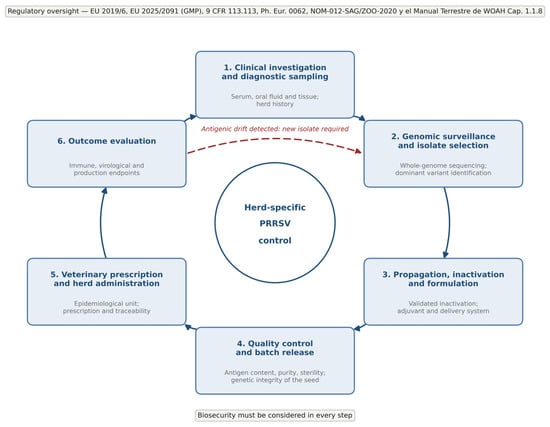
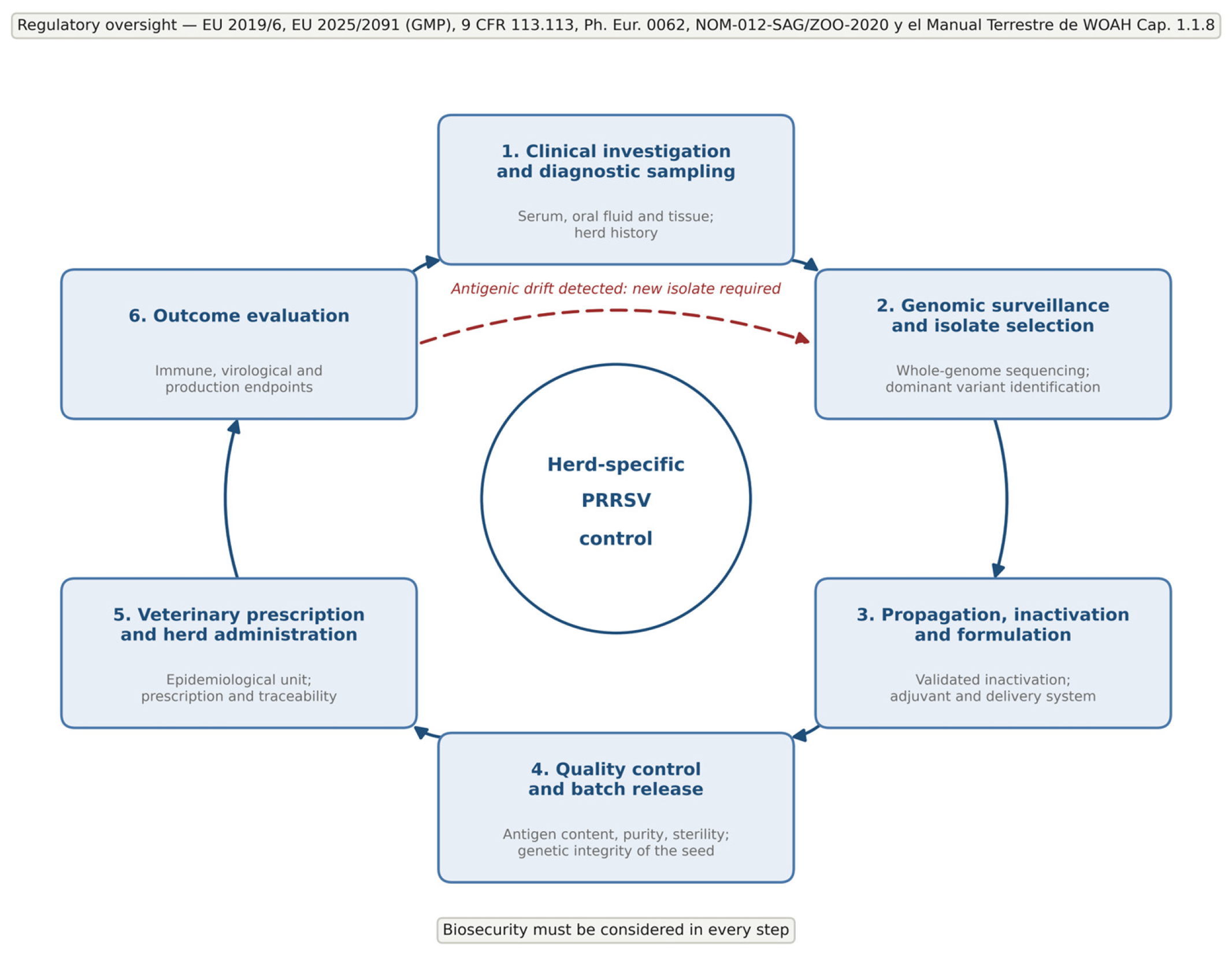

Disclaimer/Publisher’s Note: The statements, opinions and data contained in all publications are solely those of the individual author(s) and contributor(s) and not of MDPI and/or the editor(s). MDPI and/or the editor(s) disclaim responsibility for any injury to people or property resulting from any ideas, methods, instructions or products referred to in the content. |
© 2026 by the authors. Licensee MDPI, Basel, Switzerland. This article is an open access article distributed under the terms and conditions of the Creative Commons Attribution (CC BY) license.