Article

Techno-Economic Assessment of Integrated Wastewater Technologies for Sustainable Treatment of Highly Loaded Landfill Leachate Using GPS-XTM

by
Abdulmohsen Abdulkarim Mohammed Alkunaydiri
1,
Nuhu Dalhat Mu’azu
1,* and
Ahmad Hussaini Jagaba
2
1
Department of Environmental Engineering, College of Engineering, Imam Abdulrahman Bin Faisal University, Dammam 31451, Saudi Arabia
2
Department of Civil Engineering, Faculty of Engineering, University of Tabuk, P.O. Box 741, Tabuk 71491, Saudi Arabia
*
Author to whom correspondence should be addressed.
Bioengineering 2026, 13(3), 359; https://doi.org/10.3390/bioengineering13030359

Submission received: 15 February 2026 / Revised: 5 March 2026 / Accepted: 10 March 2026 / Published: 19 March 2026
(This article belongs to the Special Issue Biological Wastewater Treatment and Resource Recovery, 2nd Edition)

Abstract

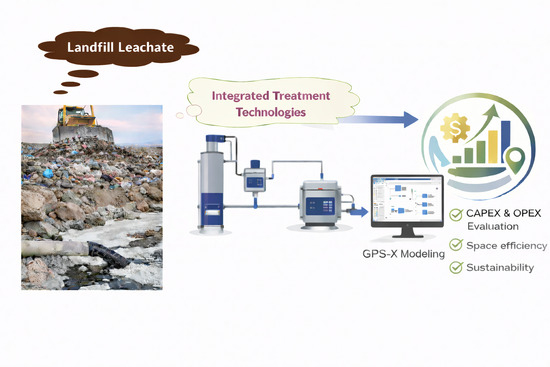
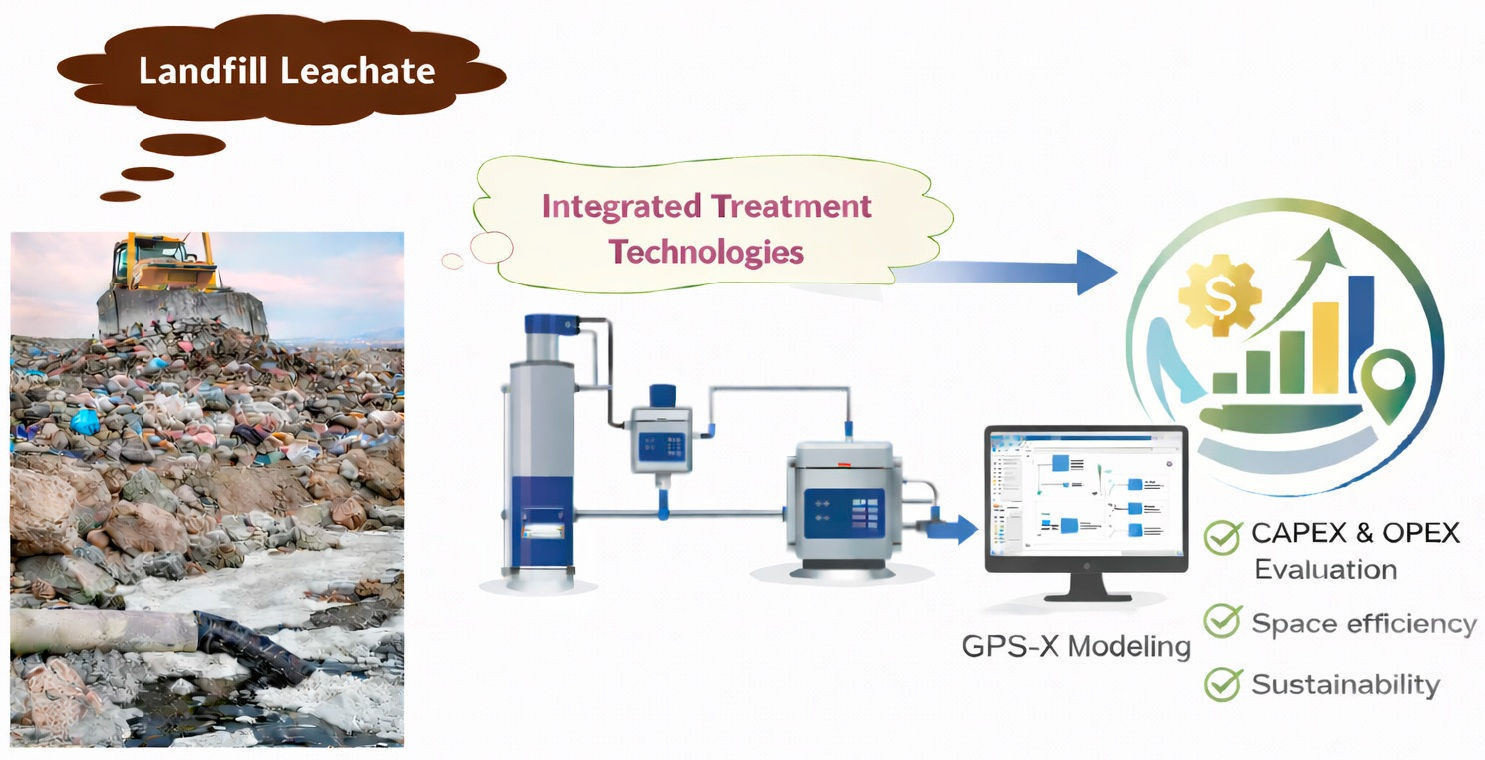
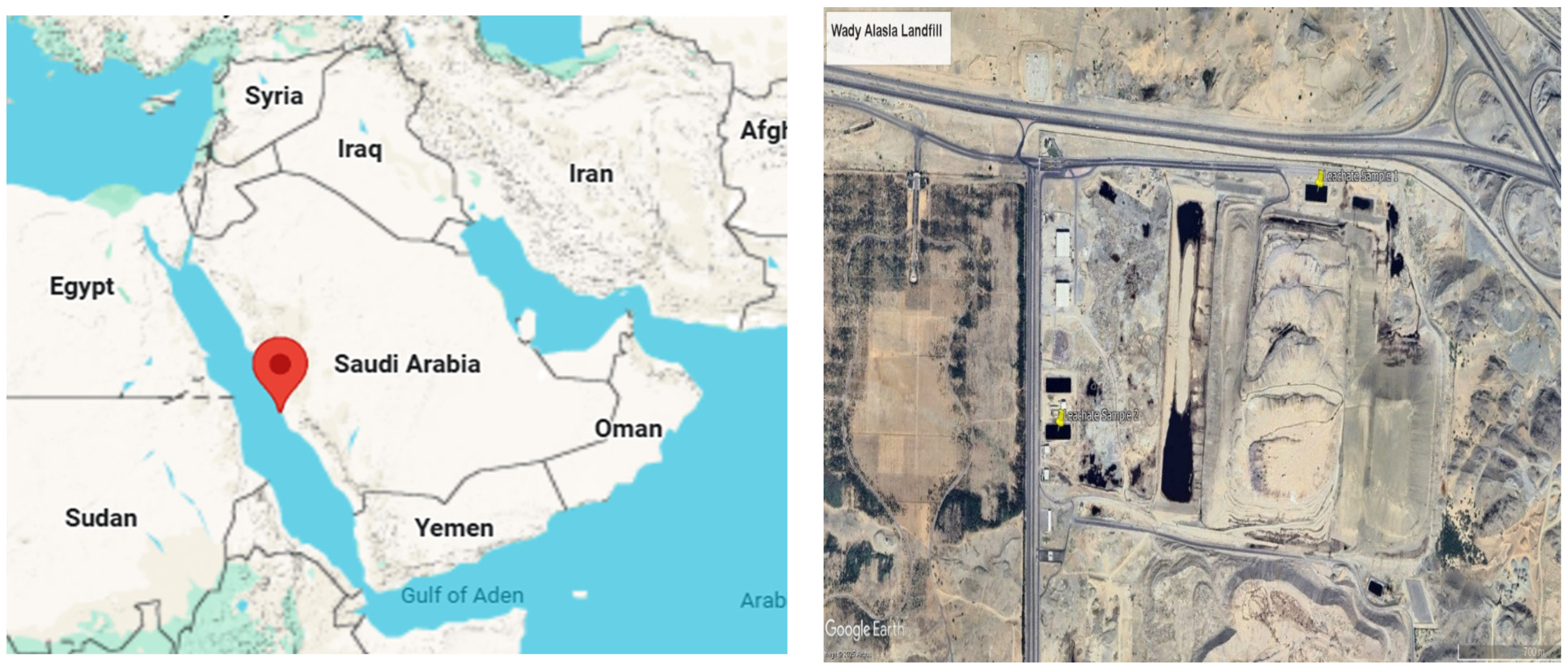
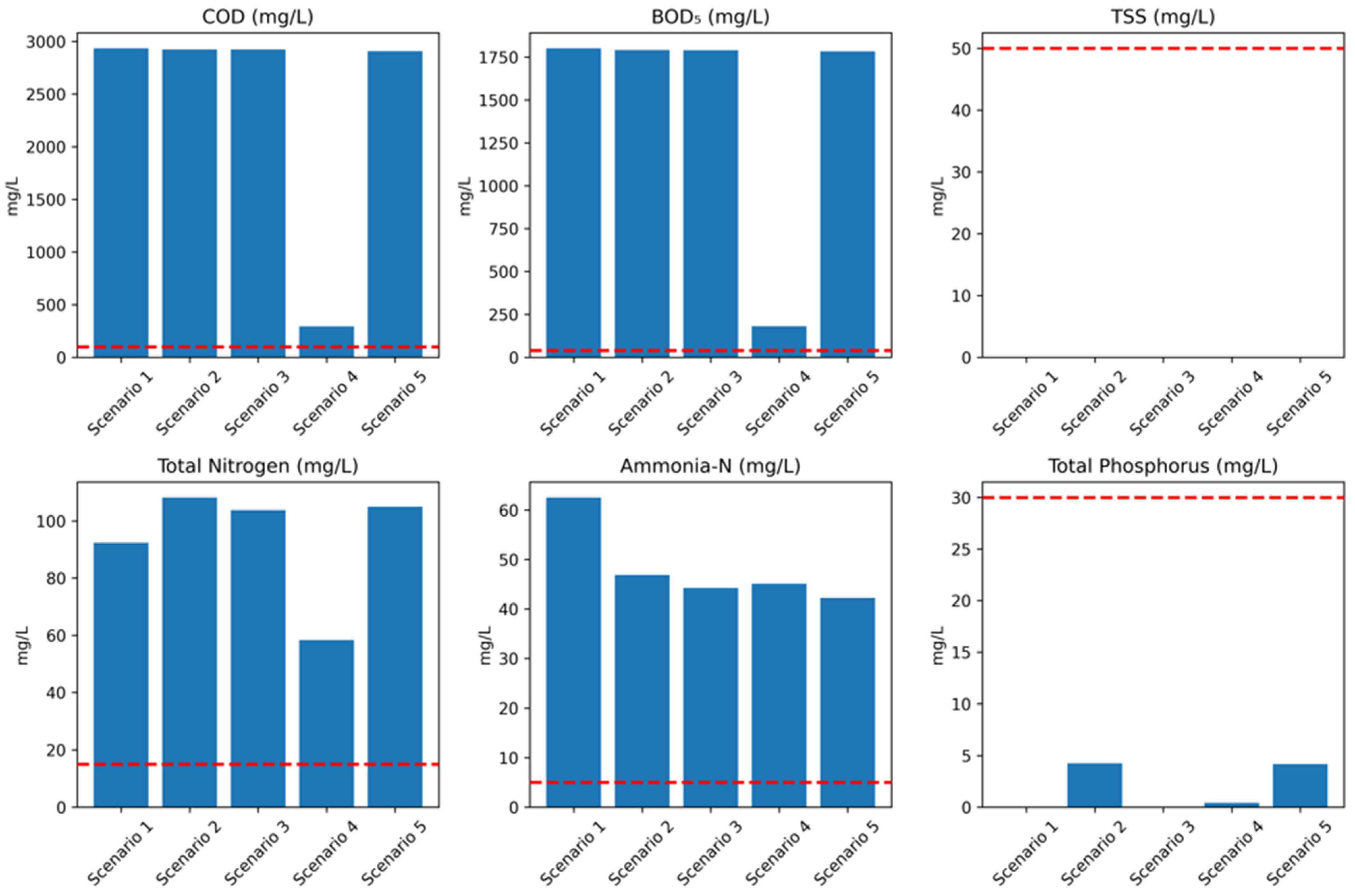
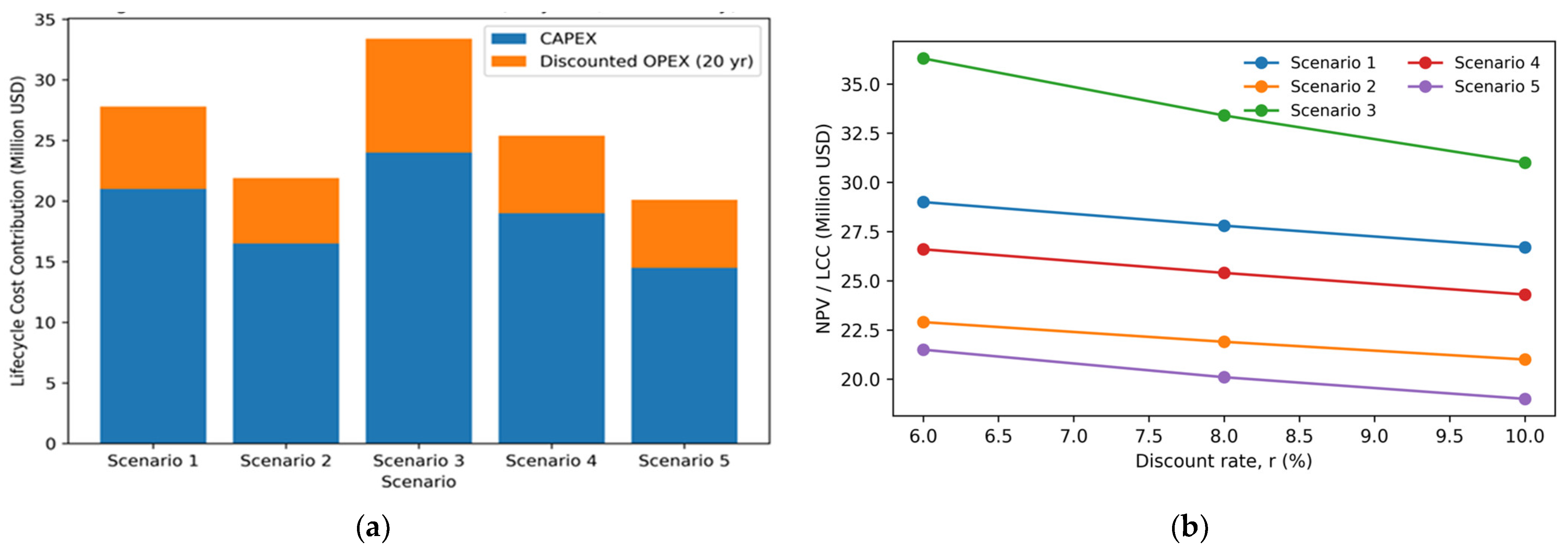
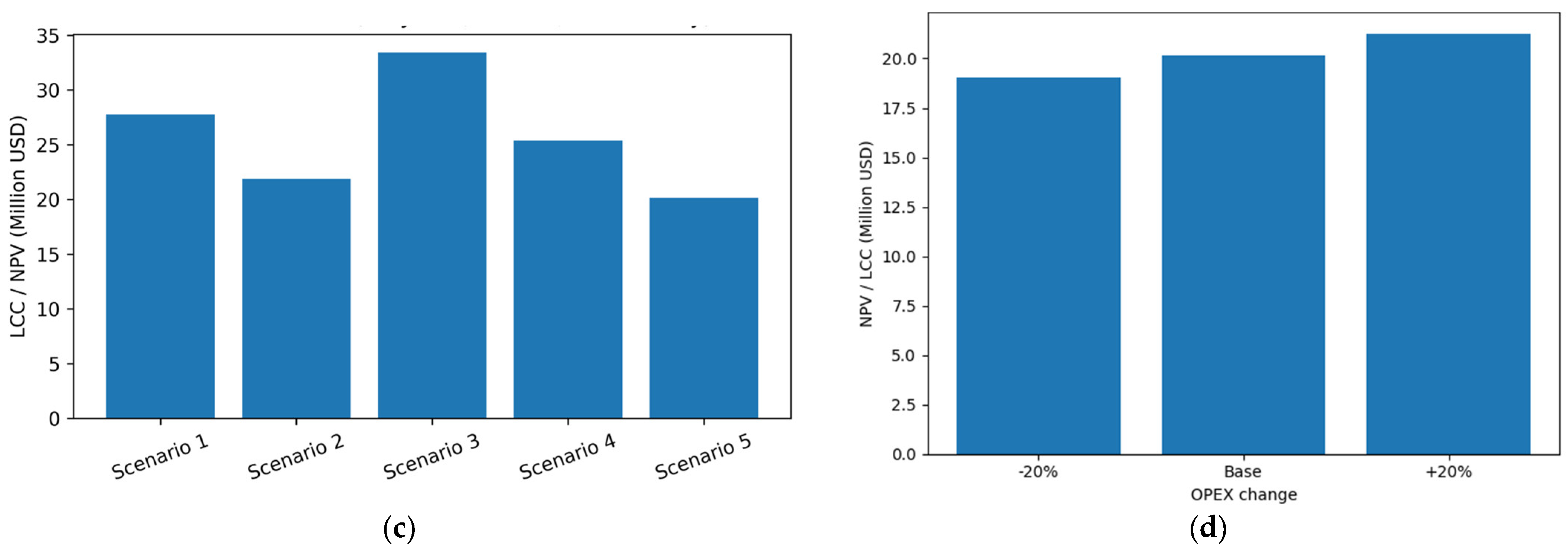
Landfill leachate is considered one of the most recalcitrant wastewaters due to its high organic strength, elevated ammonia concentrations, and complex chemical composition. This study evaluates integrated technologies for treating highly loaded landfill leachate from the Wadi Al-Asla landfill, Jeddah Saudi Arabia, using GPS-XTM modeling combined with regulatory compliance and techno-economic assessment (TEA). The characterized mature leachate exhibited extremely high average concentrations of COD (17,050 mg L−1), BOD5 (10,058 mg L−1), ammonia-N (989 mg L−1), and total nitrogen (1223 mg L−1), indicating severe pollution levels requiring integrated treatment technologies. Five (5) different scenarios involving integrated biological, physicochemical, and membrane-based processes were modelled, simulated and evaluated against local discharge standards complaince. Conventional and municipality-proposed upgrade configurations achieved ~80–83% COD removal, producing effluent COD > 2900 mg L−1 and 1790–1801 mg L−1 BOD5, indicating persistent non-compliance for organic pollutants. Nitrogen removal improved substantially (93.7–95.7% ammonia-N and 91–93% total nitrogen removal), yet residual ammonia-N (44–63 mg L−1) and total nitrogen (92–108 mg L−1) remained above regulatory limits. Advanced hybrid systems achieved complete TSS removal and strong phosphorus control (TP ≤ 0.42 mg L−1), while three(3) compartmental aerobic–anoxic membrane bioreactor coupled with reverse osmosis (MBR + RO) achieved near-complete nitrogen removal and reduced 90% COD removal. The lifecyle economic assessment indicated OPEX ranging from USD 1.1 to 5.6 m−3 of treated leachate with the aerobic–anoxic MBR + RO configuration yieding footprint advantage, lower CAPEX and moderate OPEX By combining process modeling, regulatory compliance evaluation, and economic assessment, this study provides a practical screening framework for selecting sustainable treatment strategies for high-strength landfill leachate and wastewater matices.
Keywords: landfill leachate treatment; biological treatment processes; wastewater treatment simulation; water treatment modeling; membrane bioreactor (MBR); municipal solid waste landfill; advanced wastewater treatment technologies; water treatment OPEX and CAPEX; net present value (NPV) and life cycle cost (LCC) landfill leachate treatment; biological treatment processes; wastewater treatment simulation; water treatment modeling; membrane bioreactor (MBR); municipal solid waste landfill; advanced wastewater treatment technologies; water treatment OPEX and CAPEX; net present value (NPV) and life cycle cost (LCC)
Graphical Abstract