Article

Development of the Boundary Water Level Method: A New Approach for Continuous Flow Monitoring in Open Channels

1
Energy Institute Inc., 10000 Zagreb, Croatia
2
MP Solutions, 10000 Zagreb, Croatia
3
Faculty of Geotechnical Engineering, University of Zagreb, 42000 Varaždin, Croatia
*
Author to whom correspondence should be addressed.
Hydrology 2026, 13(4), 116; https://doi.org/10.3390/hydrology13040116

Submission received: 18 March 2026 / Revised: 15 April 2026 / Accepted: 16 April 2026 / Published: 18 April 2026
(This article belongs to the Section Hydrological Measurements and Instrumentation)

Abstract

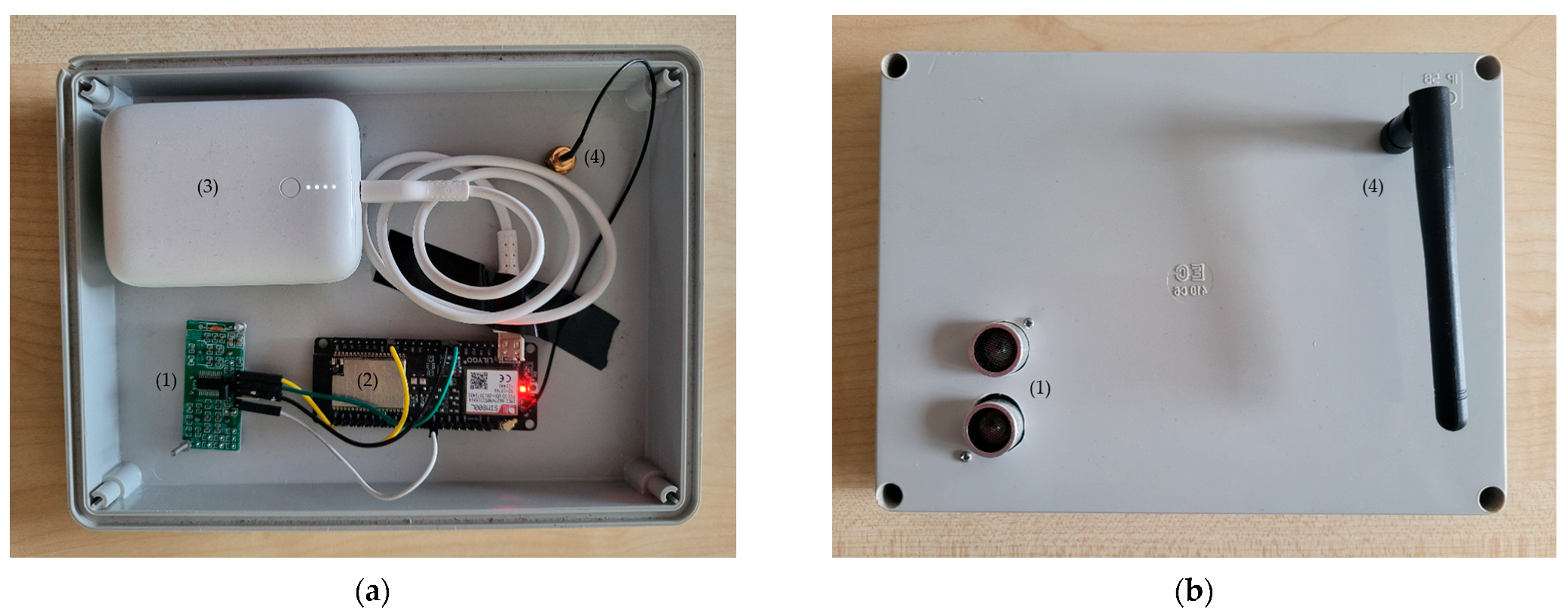
This research develops a new low-cost method for continuous flow monitoring in open channels. Flow is calculated using a standard 1D hydraulic model that integrates surveyed cross-sections and water level measurements at the boundaries of a studied reach, from which the name Boundary Water Level Method (BWLM) is derived. By implementing low-cost ultrasonic sensors for water level measurement, the method gains advantage for application on smaller channels, which are often not included in national hydrological monitoring networks due to limited budgets. New and innovative monitoring methods in hydrology are a necessary alternative to increasing the monitoring budgets, especially for continuous, real-time flow monitoring. Like any novel method, it requires validation under the intended environmental conditions, especially when designed primarily for ungauged channels. Validation was conducted on two test-sites by comparing the BWLM discharge and the discharge from official hydrological stations, with an error of up to 15%. BWLM provides reliable discharges using estimated hydraulic roughness values based on the literature and experience. Sensitivity analysis of the estimated hydraulic roughness coefficient demonstrated a substantial influence on the resulting discharge values. This has to be considered when implementing the method in unstudied basins.
Keywords: boundary water level method; low-cost measurements; continuous flow monitoring; open channels; hydraulic roughness; method validation; sensitivity analysis boundary water level method; low-cost measurements; continuous flow monitoring; open channels; hydraulic roughness; method validation; sensitivity analysis