1. Introduction
Floods are among the most consequential natural hazards in arid and semi-arid regions, where high-intensity, short-duration rainfall events can generate rapid runoff, severe channel responses, and extensive damage despite relatively low annual precipitation totals [
1,
2]. In such environments, the combination of sparse vegetation, limited infiltration capacity, and highly erodible soils causes stormwater to concentrate rapidly in ephemeral channels, leading to flash-flood events that threaten communities and critical infrastructure [
3]. These hazards are amplified in industrial landscapes, such as oil and gas fields, where wells, pipelines, processing facilities, and access corridors are often located within or adjacent to natural drainage systems that can convey significant volumes of water during extreme rainfall events [
4]. For regions undergoing rapid hydrological or geomorphological change, accurate, spatially resolved flood susceptibility mapping is essential for informed planning, hazard mitigation, and operational hazard management.
Digital elevation models (DEMs) are essential for flood susceptibility assessments because terrain topology directly influences flow routing, drainage connectivity, and surface-water accumulation. However, standard DEM-based methods typically assume static topography, which may not apply in areas affected by anthropogenic or natural ground deformation [
5]. Land subsidence from hydrocarbon extraction, groundwater withdrawal, geothermal production, or mining can change surface gradients, create depressions, modify watershed boundaries, and affect flow convergence patterns [
6]. Even small vertical displacements, such as tens of centimeters, can alter hydrological pathways and increase localized flooding in low-relief desert environments, where minor elevation changes have significant impacts [
7,
8].
Recent advances in remote sensing and geospatial hydrology enable more accurate assessments of flood susceptibility as terrain conditions change. Topographic indices derived from DEMs, including Height Above Nearest Drainage (HAND) [
9], Geomorphic Flood Index (GFI) [
10,
11] floodplain depth metrics [
12], and terrain curvature, offer valuable insights into the geomorphic factors influencing flood accumulation. Hydrological indicators such as the Soil Conservation Service Curve Number (CN) [
13] measure the potential for land-surface runoff. Precipitation layers based on multi-year climatological records better capture rainfall extremes that can trigger flash floods in arid regions [
14]. Integrating this terrain and hydrometeorological datasets has dramatically improved the physical realism of flood-susceptibility assessments.
Despite these methodological advances, very few studies have examined how subsidence-induced terrain deformation modifies DEM-derived hydrological indicators. For instance, subsidence lowers local elevations relative to the drainage network, thereby reducing HAND values and potentially shifting hazard zones to deeper inundation states [
15]. Similarly, terrain compaction can expand geomorphic depressions captured by GFI or modify flow direction grids used to delineate catchments and wadi networks [
11]. The absence of dual-epoch analysis comparing pre-subsidence and post-subsidence hydrological conditions represents a significant research gap, especially in engineered landscapes where small but cumulative deformation may have substantial operational consequences. Existing work in the Sultanate of Oman and similar arid basins has either focused on hydrological models that do not account for terrain change or characterized subsidence using PS-InSAR (Persistent Scatterer-Interferometric Synthetic Aperture Radar) and GNSS (Global Navigation Satellite System) without evaluating its hydrological impacts [
16]. The lack of integrated approaches leaves open fundamental questions about how subsidence reshapes flood-susceptibility patterns and to what extent these changes should be incorporated into infrastructure planning and hazard mitigation.
The Sultanate of Oman represents a relevant case study for developing such an integrated approach. Flash floods are recurrent hazards across the country, periodically damaging infrastructure and affecting communities. The Yibal field, one of Oman’s most mature and productive petroleum fields, has experienced sustained hydrocarbon production for decades, resulting in measurable ground subsidence [
17]. At the same time, the field is intersected by wadis that serve as conduits for floodwaters during heavy rainfall. This convergence of anthropogenic subsidence [
18] and natural flood susceptibility [
19] provides a unique opportunity to evaluate how subsidence-adjusted DEM influences hydrological hazard assessments [
20] in petroleum basins. Additionally, the intersection of a deforming landscape, complex drainage geometry, and significant industrial exposure makes Yibal a compelling case study for analyzing how terrain evolution influences flood-prone areas.
This study develops a deformation-adjusted flood hazard assessment framework to address this gap by integrating a 2013 high-resolution photogrammetric DEM representing pre-subsidence terrain with a 2023 DEM corrected for cumulative vertical displacement using multi-temporal PS-InSAR observations from RADARSAT-2 and TerraSAR-X. These dual terrain models allow hydrological and geomorphic indicators—including HAND, floodplain depth, slope, drainage networks, Curve Number values, and extreme precipitation metrics—to be recalculated for each epoch, ensuring that both pre- and post-subsidence conditions are accurately represented [
21]. Flood susceptibility is evaluated using an Analytic Hierarchy Process (AHP) multi-criteria framework [
22], structured around five hydrologically motivated scenarios that capture different mechanisms of runoff generation and accumulation [
23]. In addition, the Geomorphic Flood Index (GFI) is used as an independent diagnostic layer to assess geomorphic changes and validate the influence of terrain deformation in flood-prone areas [
24].
Comparison of results across both epochs enables quantification of the extent to which subsidence alters flood-susceptibility patterns within a mature oil field undergoing continuous terrain evolution. Although the Yibal field serves as a detailed case study, the primary scientific contribution of this research is the development of a transferable methodological framework rather than site-specific parameterization. This framework integrates deformation-adjusted digital elevation models (DEMs) with DEM-derived hydrological indicators, recalculated consistently over time, and employs a scenario-based multi-criteria structure to assess flood susceptibility under varying hydrological dominance assumptions. With appropriate substitution of local elevation, deformation, land cover, soil, and precipitation datasets, the approach applies to other environments experiencing surface deformation due to hydrocarbon extraction, groundwater withdrawal, mining, geothermal production, or natural compaction. By explicitly incorporating terrain change into hydrological analysis, this research underscores the importance of dynamic landscape representation in flood hazard assessments. It contributes to a broader understanding of geohydrological interactions in arid and industrial regions.
2. Materials and Methods
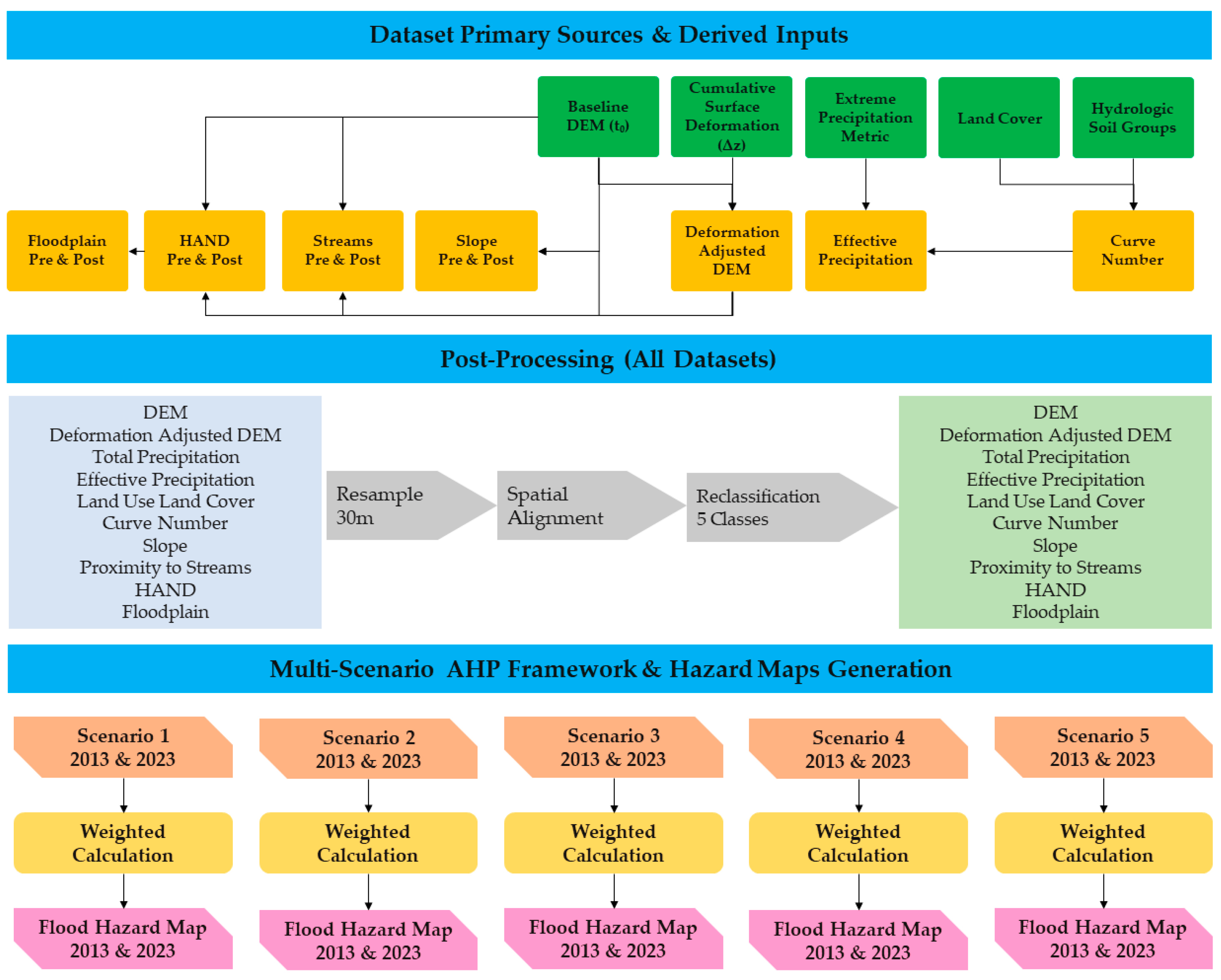
This study follows a structured geospatial workflow designed to quantify flood hazard under subsidence-altered terrain conditions in the Yibal field, Sultanate of Oman. The methodology integrates the characterization of the study area’s geomorphological, hydrological, and industrial setting with the acquisition and preprocessing of multiple datasets, including the 2013 baseline photogrammetric DEM, multi-temporal PS-InSAR deformation data spanning 2013–2023, land use and land cover information, extreme rainfall metrics, and hydrological derivatives such as slope, HAND, Curve Number (CN), floodplain depth, and drainage networks. All datasets were standardized to a uniform 30 m spatial resolution to ensure analytical consistency and avoid artifacts associated with mixed spatial scales. Using these harmonized inputs, a deformation-adjusted DEM representing 2023 topographic conditions was constructed and subsequently used to generate multi-scenario flood hazard maps through an Analytic Hierarchy Process (AHP)–based weighting framework (
Figure 1).
The following subsections describe each component of the workflow in detail to ensure clarity, reproducibility, and applicability to other subsidence-affected petroleum field environments.
2.1. Study Area
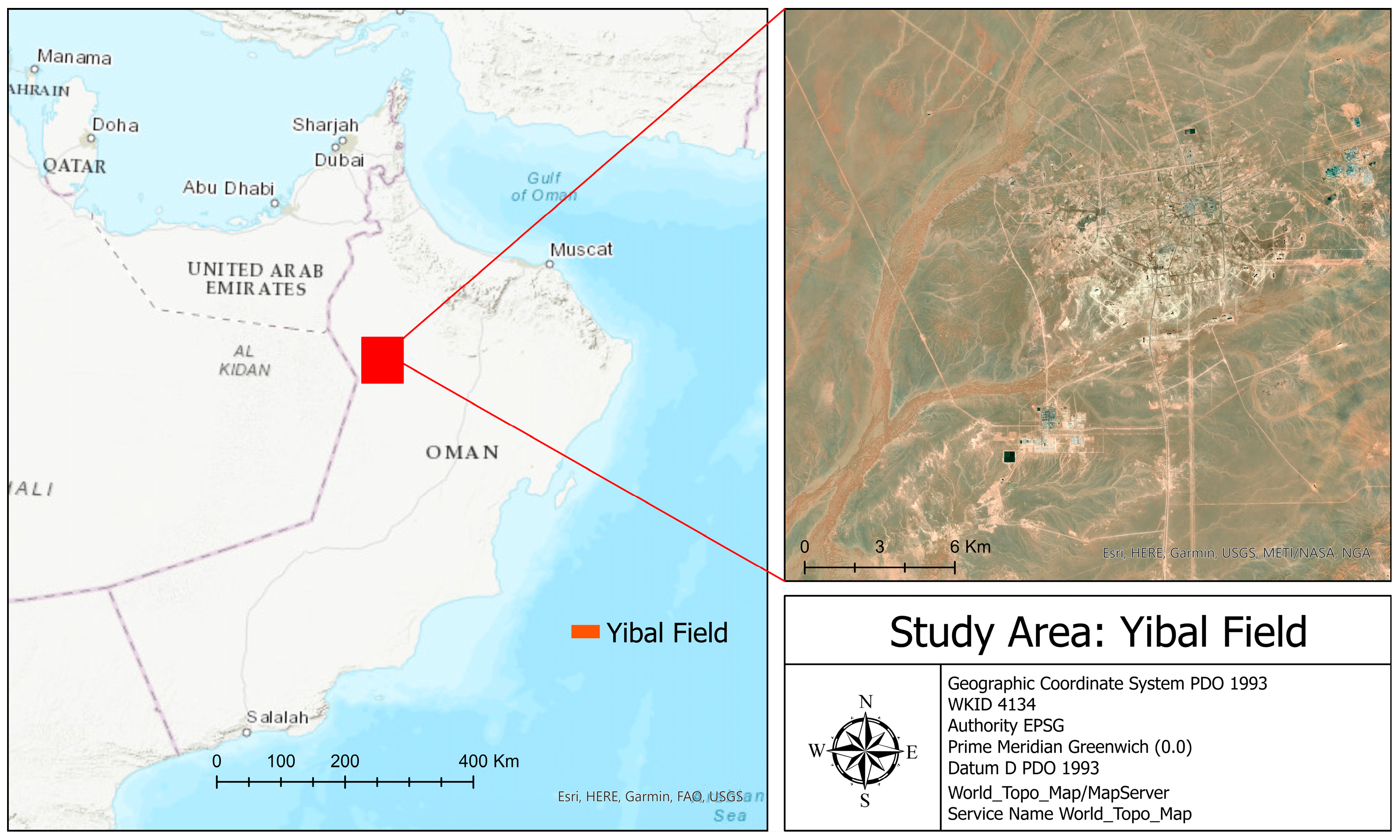
The Yibal field is located in the northern part of the Sultanate of Oman’s Al Dhahirah Governorate, about 350 km west of Muscat. It sits between the Hajar Mountains and the Rub al Khali Desert, an area known for its dry climate and sensitive desert environment. Yibal has been a key petroleum field in Oman since the 1960s, with production continuing for many years. The field’s main reservoirs are the Natih and Shuaiba carbonate formations [
25], developed using both conventional and enhanced oil recovery methods. Continued reservoir compaction and fluid extraction have led to subsidence, with vertical displacements exceeding one meter recorded in some areas from 2013 to 2023 [
26]. This deformation has altered surface gradients and drainage patterns, potentially affecting the distribution of flood hazards.
The region is hyper-arid, receiving less than 30 mm of rain annually, mainly from short, intense storms. These storms cause flash floods that move quickly through ephemeral wadis, several of which cross the Yibal field and drain into closed desert basins. During storms, these wadis channel floodwater, creating areas of high hydrological hazard. Field infrastructure, such as pipelines, flowlines, roads, and well pads, is often located near these wadis, increasing exposure to flood hazards. The combination of subsidence and flood-prone terrain makes Yibal an intense case study for flood vulnerability in areas experiencing subsidence [
26]. This study uses high-resolution terrain and deformation data to assess the impact of topographic changes on hydrological hazard in oil and gas fields [
15] (
Figure 2).
2.2. Data Description
The flood hazard assessment in this study integrates a set of geospatial datasets that collectively characterize topography, subsidence-induced terrain modification, land-surface properties, soil conditions, and rainfall extremes influencing runoff behavior in the Yibal field. To ensure methodological consistency and spatial compatibility among all inputs, all datasets were standardized to a 30 m spatial resolution before hydrological and geomorphic processing. This resolution was selected because key DEM-derived indicators—such as slope, flow accumulation, Height Above Nearest Drainage (HAND), floodplain depth, and drainage networks—are highly sensitive to fine-scale topographic variability, particularly in low-relief arid environments where small elevation changes can significantly influence surface-water routing. The integrated datasets include the 2013 baseline photogrammetric DEM, multi-temporal PS-InSAR deformation measurements spanning 2013–2023, national land use and land cover data, gridded precipitation records used to derive extreme rainfall metrics, and soil information obtained from the global Hydrologic Soil Group dataset, which supports runoff modeling and Curve Number (CN) estimation. Following preprocessing and harmonization, these datasets served as inputs for deriving key hydrological and geomorphic indicators—including slope, HAND, floodplain depth, CN values, effective precipitation, and drainage networks—that underpin the multi-scenario deformation-adjusted flood hazard model. The following subsections describe the source, characteristics, and preparation of each dataset in detail. The five primary datasets—elevation, cumulative surface deformation, land cover, soil, and precipitation—form the basis for developing the subsidence-adjusted DEM and generating flood hazard maps.
Some ancillary datasets used in this study, such as precipitation (ERA5-Land, ~11 km) and soil information (HYSOGs250m, 250 m), are coarser than the DEM-derived hydrological indicators, which are standardized at 30 m resolution. These datasets are not intended to capture fine-scale hydrological processes at the pixel level. Instead, they provide spatially averaged climatic and infiltration controls to contextualize terrain-driven flood susceptibility. Resampling to 30 m was performed only to ensure spatial alignment and computational consistency within the multi-criteria framework, not to increase spatial precision. Therefore, precipitation and soil indicators are interpreted as relative modifiers of flood potential, while subsidence-adjusted topography and drainage geometry remain the primary controls on flood-hazard redistribution (
Table 1).
2.2.1. Elevation Data (2013 Baseline DEM)
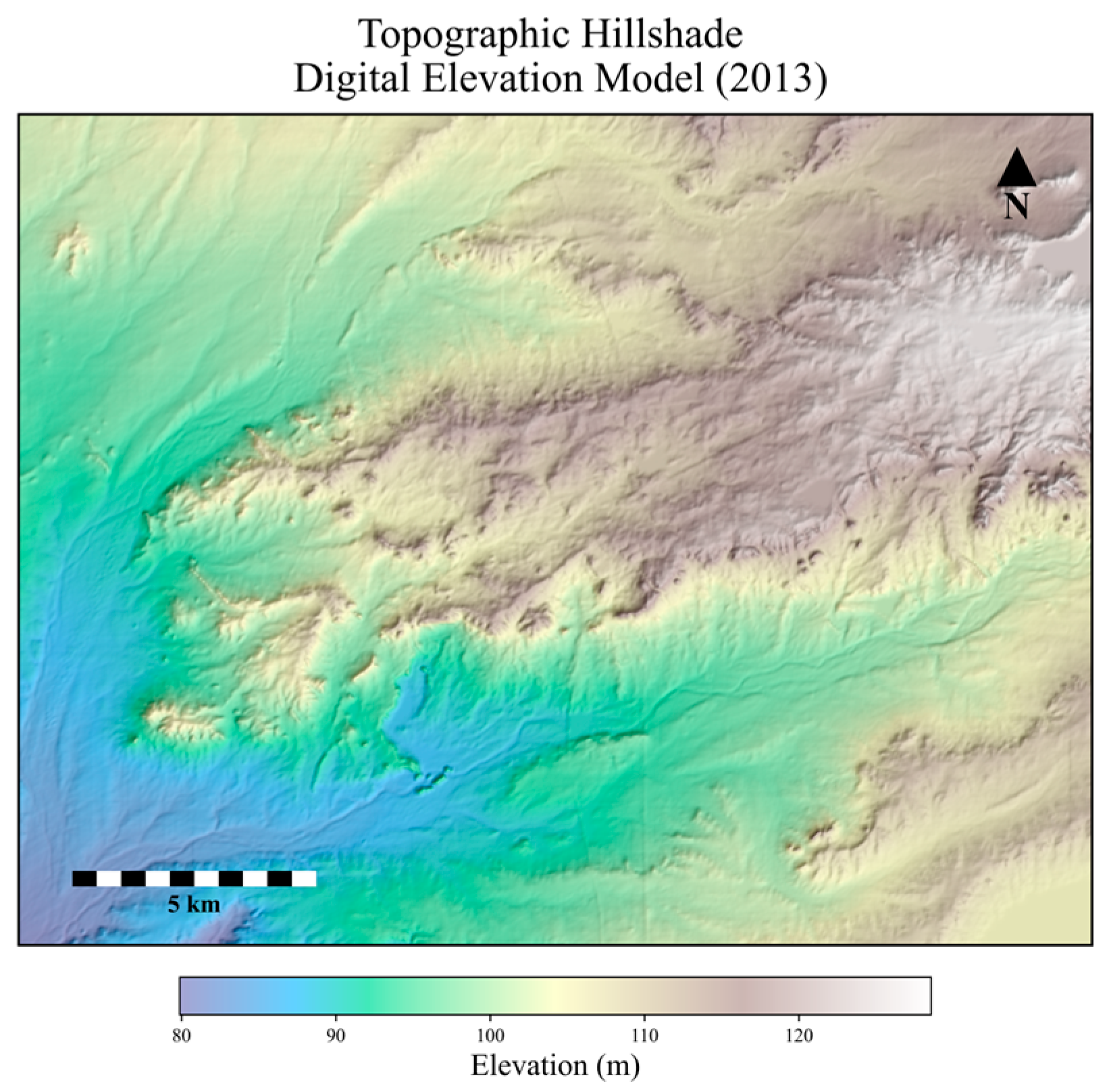
The baseline elevation dataset consists of a high-resolution photogrammetric Digital Elevation Model (DEM) acquired in 2013 by the National Survey and Geospatial Information Authority (NSGIA) of the Sultanate of Oman. The original product has a 5 m spatial resolution and was selected for its superior vertical accuracy compared to global DEM products such as SRTM, ASTER, and ALOS PALSAR—an essential requirement in the Yibal field, where small elevation changes strongly influence hydrological pathways in the low-relief desert terrain. Quality assessment against ground control points indicated an average vertical accuracy of approximately ± 1 m, ensuring reliability for fine-scale geomorphic and hydrological analyses. These preprocessing steps support the accurate derivation of indicators such as slope, flow direction, flow accumulation, HAND, and floodplain depth. The 2013 DEM additionally serves as the reference surface to which cumulative PS-InSAR vertical displacement (2013–2023) was applied to generate the deformation-adjusted 2023 DEM used in subsequent analyses (
Figure 3).
2.2.2. PS-InSAR Surface Deformation and Subsidence-Adjusted DEM (2023)
Surface deformation associated with long-term hydrocarbon extraction in the Yibal field was characterized using a merged multi-temporal PS-InSAR dataset derived from RADARSAT-2 (2013–2020) and TerraSAR-X (2020–2023) acquisitions [
27,
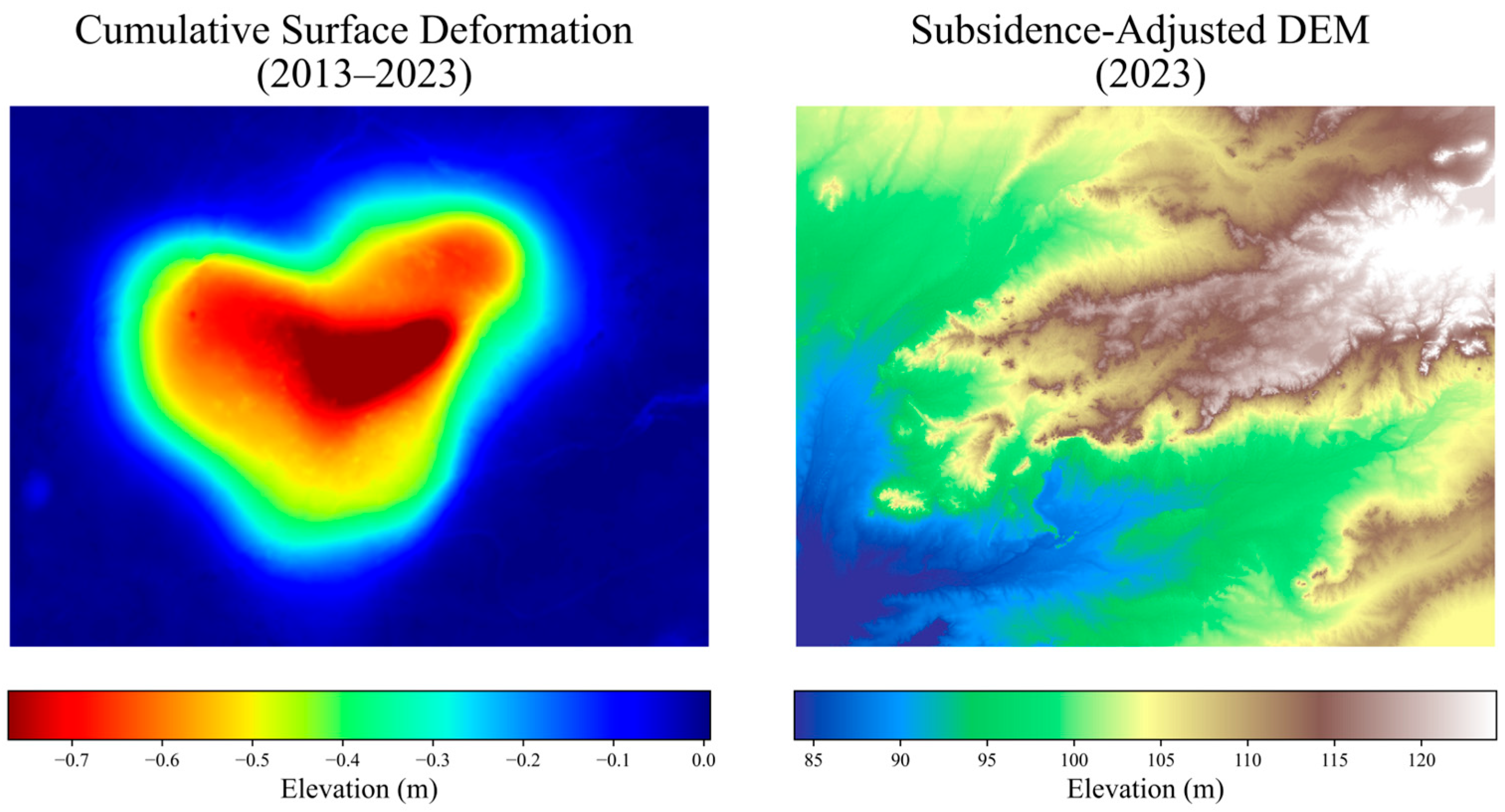
28]. The combined product provides a continuous map of cumulative vertical displacement over the 2013–2023 period and highlights localized subsidence exceeding 0.9 m in parts of the field. The deformation datasets were harmonized and resampled to the standardized 30 m analysis grid to ensure consistency with the DEM and other spatial datasets.
RADARSAT-2 and TerraSAR-X datasets were processed independently using a Persistent Scatterer InSAR (PS-InSAR) approach. For each sensor, interferometric stacks were generated, and phase unwrapping was performed with a network-based strategy on coherent persistent scatterer points. Atmospheric phase delays were reduced by applying combined spatial and temporal filtering to the deformation time series. All deformation measurements were geocoded and projected to a standard spatial reference system to maintain consistency between datasets. Line-of-sight (LOS) deformation time series were converted to vertical displacement, assuming predominantly vertical motion, a suitable assumption for the low-relief, tectonically stable Yibal field. Vertical deformation was calculated by dividing LOS displacement by the cosine of the sensor-specific incidence angle. A unified deformation lookup table was created for all persistent scatterer points based on the temporal overlap between RADARSAT-2 and TerraSAR-X acquisitions, ensuring continuity between the two time series. The combined vertical deformation time series was interpolated using inverse distance weighting (IDW) [
29] to produce raster deformation surfaces.
A subsidence-adjusted DEM for 2023 was generated by applying the cumulative PS-InSAR vertical displacement values to the 2013 baseline photogrammetric DEM. This was performed by pixel-wise elevation correction, in which observed subsidence was subtracted from the original elevation surface, producing an updated terrain model that reflects contemporary topographic conditions after a decade of deformation. Both the 2013 baseline DEM and the deformation-adjusted 2023 DEM were subsequently used to derive hydrological and geomorphic indicators for dual-epoch flood hazard assessment.
The dual-epoch DEM configuration provides a direct means of isolating the influence of terrain deformation on hydrological analysis. By deriving all hydrological and geomorphic indicators independently from the 2013 baseline DEM and the 2023 subsidence-adjusted DEM, while holding land cover, soil properties, and precipitation forcing constant, differences in flood hazard outputs can be attributed primarily to subsidence-induced elevation changes. This approach functions as an implicit ablation analysis of DEM correction effects within the constraints of available data (
Figure 4).
2.2.3. Land Use/Land Cover (LULC) (2023)
Land use and land cover (LULC) data for the study area were derived from Sentinel-2 multispectral imagery acquired in 2023. With a native spatial resolution of 10 m, Sentinel-2 provides adequate spectral detail to distinguish key land-cover classes across the Yibal field, including vegetation, bare soil, rocky surfaces, and built-up or infrastructure-dominated areas. The imagery was processed and classified into thematic categories, then reclassified into hydrologically relevant groups to support runoff estimation, particularly by assigning Curve Number (CN) values.
2.2.4. Precipitation Data
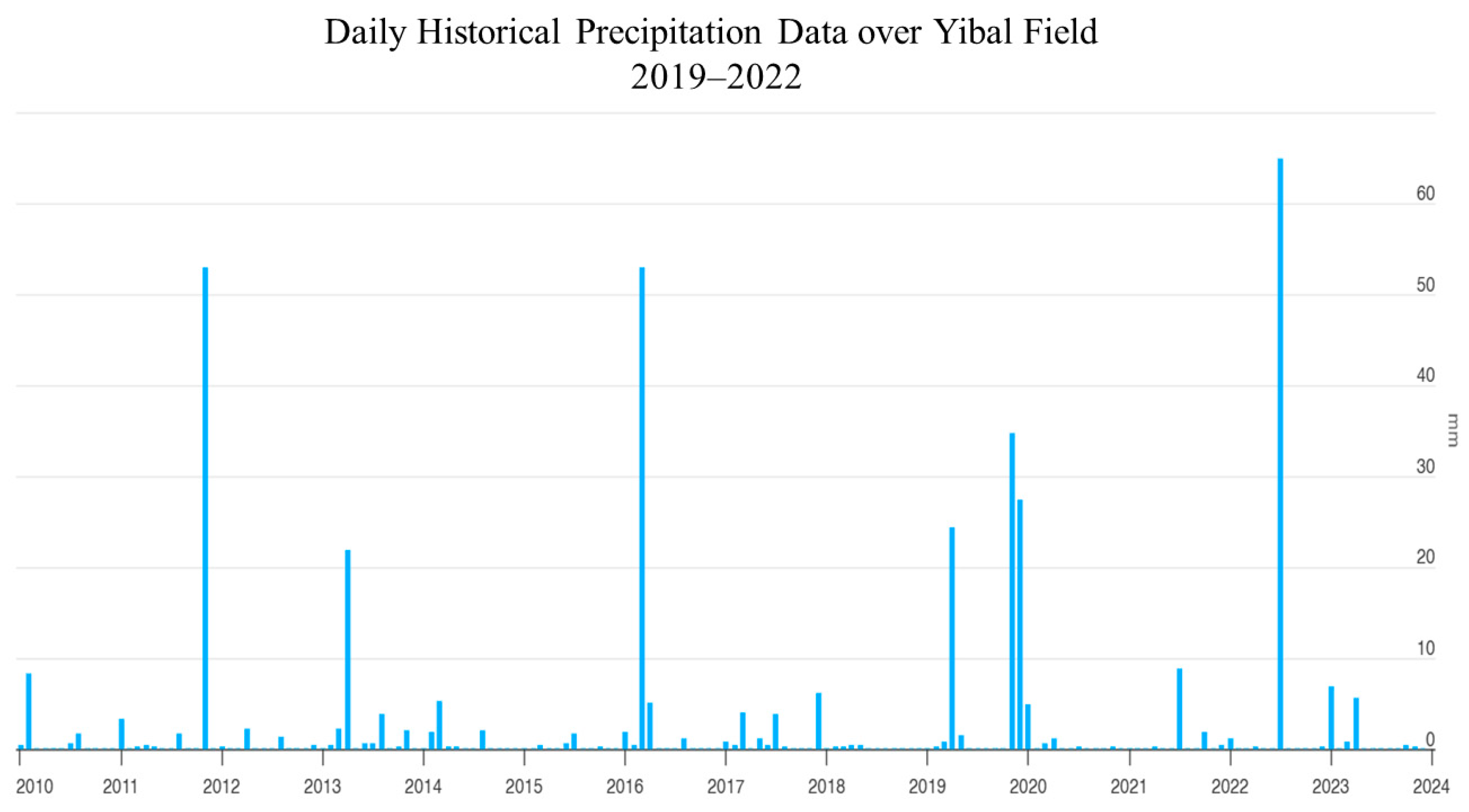
Historical precipitation data were obtained from the ERA5-Land reanalysis product for the period 2010–2023, which has a native spatial resolution of 0.1° (approximately 11 km). This dataset was used instead of the coarser ERA5 atmospheric product (0.25°, ~25 km). ERA5-Land provides daily precipitation estimates at high temporal resolution, which were aggregated to derive monthly total precipitation for each year [
30]. From these records, the maximum monthly rainfall occurring during the regional rainy season (May–October) was extracted to represent extreme precipitation conditions capable of generating flash-flood events in arid environments (
Figure 5).
To account for the fraction of rainfall contributing directly to surface runoff, an additional effective precipitation layer was generated using a Curve Number–based runoff formulation following the Soil Conservation Service (SCS-CN) concept. For each grid cell, effective precipitation represents rainfall excess after initial abstraction and infiltration losses controlled by land-surface characteristics and soil hydrologic properties. This formulation establishes a conceptual link between precipitation forcing and the Curve Number indicator used later in the analysis, while avoiding double-counting of runoff processes. ERA5-Land precipitation data were not physically downscaled to the 30 m analysis grid. Instead, precipitation values were spatially resampled to the standardized 30 m resolution solely to ensure raster alignment and compatibility within the multi-criteria framework. This procedure assumes spatially uniform rainfall within each ERA5-Land grid cell and does not attempt to infer sub-grid precipitation variability. Consequently, both the total and effective precipitation layers are interpreted as relative indicators of climatic forcing, rather than high-resolution rainfall estimates. These layers were incorporated into the multi-scenario flood hazard model to evaluate rainfall-driven susceptibility under the 2013 and 2023 terrain conditions.
2.2.5. Hydrologic Soil Groups (Soil Data)
Soil information for the study area was obtained from the HYSOGs250m global Hydrologic Soil Group dataset [
31], which classifies soils by infiltration capacity and runoff potential. The dataset identifies four hydrologic soil groups (A–D), ranging from high-infiltration sandy soils to low-infiltration clay-rich soils. For this study, the HYSOGs250m layer was clipped to the Yibal field boundary and reclassified into hydrologically meaningful categories to support Curve Number (CN) [
32] assignment and runoff estimation within the multi-criteria flood hazard framework. Soil group information was applied consistently to both the 2013 and 2023 scenarios, as no significant changes in soil type occurred over the decadal period.
2.3. Derived Hydrological and Geomorphic Indicators
A set of hydrological and geomorphic indicators was derived from both the 2013 baseline DEM and the subsidence-adjusted 2023 DEM, as well as from soil groups and land use and land cover, to support multi-criteria flood hazard modeling. These indicators were selected based on their established relevance to flood susceptibility in arid and semi-arid environments, where subtle variations in terrain and surface conditions can strongly influence runoff pathways. Key derived layers included slope, flow direction, flow accumulation, Height Above Nearest Drainage (HAND), floodplain depth, stream proximity, Curve Number (CN), and effective precipitation. Slope and flow-routing variables were produced using standard hydrological terrain-processing tools. HAND and floodplain depth were derived to quantify vertical and geomorphic relationships between the terrain surface and drainage channels, representing the likelihood of inundation under high-flow conditions. CN values were calculated by integrating LULC and hydrologic soil group information to estimate runoff potential across the study area. All indicators were generated separately for the 2013 and 2023 DEMs, allowing for direct comparison of how subsidence-induced terrain changes influence hydrological behavior and flood susceptibility. These dual-epoch indicators served as input layers for the scenario-based Analytic Hierarchy Process (AHP) used to develop the flood hazard maps [
33].
2.3.1. Slope
Slope was derived from both the 2013 baseline DEM and the subsidence-adjusted 2023 DEM to quantify terrain steepness and its influence on runoff behavior. Slope controls the velocity and direction of overland flow, making it an essential variable in flood susceptibility assessment, particularly in low-relief desert environments where subtle gradients can significantly alter flow routing [
34]. Using standard terrain analysis functions, slope was calculated in degrees and subsequently reclassified into five categories representing very low to very high slope conditions.
2.3.2. Flow Direction and Flow Accumulation
Flow direction and flow accumulation grids were generated from both the 2013 baseline DEM and the subsidence-adjusted 2023 DEM to characterize surface-water routing across the Yibal field. Flow direction was calculated using the D8 algorithm, which assigns runoff pathways to the steepest downslope neighbor for each cell. Flow accumulation was derived to estimate the number of upstream cells contributing runoff to each location, providing a spatial representation of drainage pathways and areas of concentrated flow [
35]. The dual-epoch datasets supported the derivation of HAND, floodplain depth, and proximity-to-stream layers, and enabled assessment of how deformation-induced topographic changes affected runoff routing between 2013 and 2023.
2.3.3. Height Above Nearest Drainage (HAND)
HAND was calculated for both the 2013 baseline DEM and the subsidence-adjusted 2023 DEM to measure the vertical distance between each terrain cell and the nearest hydrologically connected drainage channel. HAND is widely used to assess flood susceptibility, as lower values indicate areas more prone to inundation during high-flow events [
36]. HAND was computed using previously derived flow-direction and flow-accumulation grids to maintain consistent drainage networks. The resulting HAND surfaces were reclassified into five elevation-based categories to represent different levels of flood exposure. By generating HAND for both years, the analysis shows how subsidence-induced topographic changes alter terrain elevation relative to drainage features, providing a direct assessment of changing flood vulnerability [
37].
2.3.4. Floodplain
Floodplain depth [
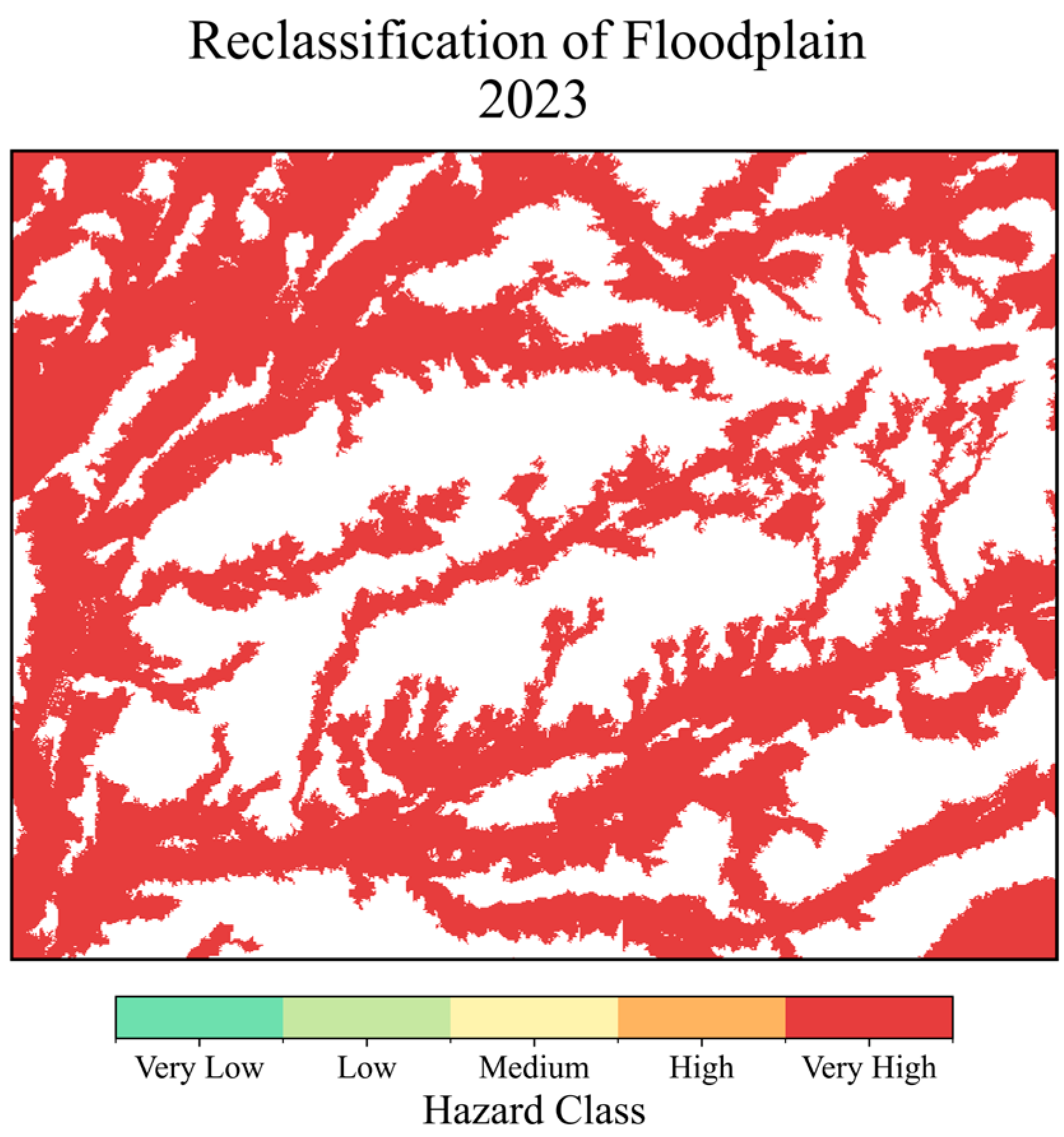
38] was calculated from HAND surfaces generated for both the 2013 baseline DEM and the subsidence-adjusted 2023 DEM. Areas with HAND values below 2 m were classified as floodplain zones, indicating terrain with minimal vertical separation from drainage channels and high susceptibility to flooding during high-flow events [
39]. By isolating and reclassifying these low-HAND cells, the analysis identified shallow depressions and drainage-adjacent areas most likely to flood. Comparing floodplain layers from both years reveals how subsidence alters the extent and depth of inundation-prone areas in the Yibal field.
2.3.5. Curve Number (CN)
Curve Number (CN) values were calculated by combining Hydrologic Soil Groups (HSGs) with the reclassified land use and land cover (LULC) dataset to estimate runoff potential across the study area. The CN method represents infiltration characteristics and surface response to rainfall and serves as a key input for flood susceptibility assessment. LULC classes were assigned CN values appropriate for arid environments and paired with corresponding soil group classifications (A–D) from the HYSOGs250m dataset [
31]. This approach ensures that differences in flood susceptibility between the two periods reflect terrain deformation rather than changes in surface properties [
40].
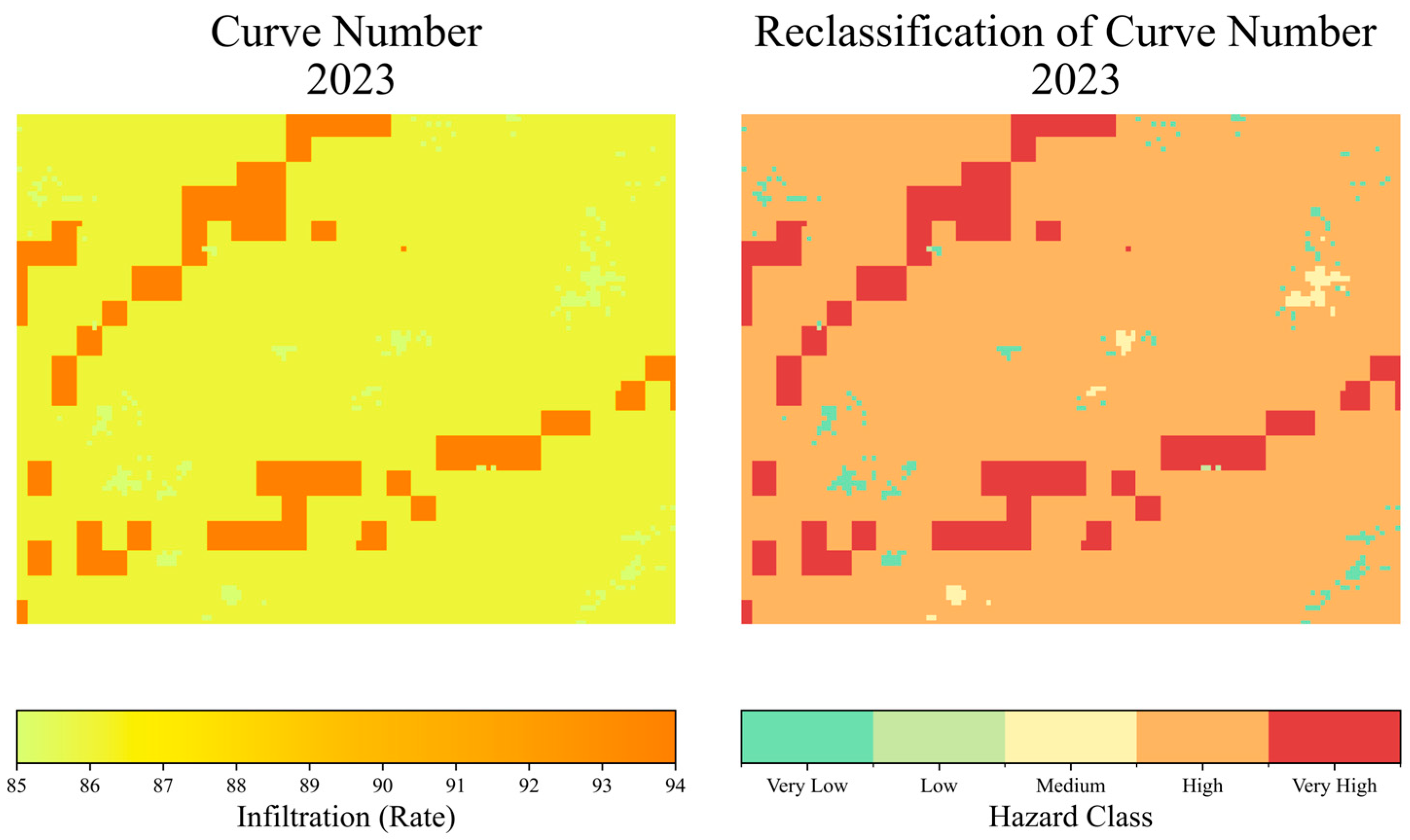
Because CN values are derived from standard land use–soil group lookup tables, they are inherently discrete rather than continuous, reflecting categorical land–soil combinations rather than gradual physical transitions. For integration into the multi-criteria framework, CN values were grouped into five ordinal flood-susceptibility classes using the Natural Breaks (Jenks) method applied to the discrete CN distribution within the study area. As a result, some susceptibility classes correspond to single CN values rather than continuous ranges. These classes do not represent hydrological thresholds; instead, they provide a relative ranking of runoff potential suitable for comparative assessment of flood susceptibility. Abrupt transitions between classes, therefore, reflect the categorical nature of land cover and soil properties rather than assumed nonlinear changes in hydrological response.
2.3.6. Proximity to Streams (Hydrologically Based Distance/Flow-Path-Based Distance)
Stream proximity was calculated using drainage networks extracted from the 2013 baseline DEM and the subsidence-adjusted 2023 DEM. Instead of Euclidean distance, which ignores terrain and hydrological connectivity, a flow-path-based distance metric was used. This approach measures the shortest downslope or across-slope travel distance from each grid cell to the nearest drainage channel, ensuring proximity reflects true hydrological relationships.
Drainage channels were identified from flow accumulation grids generated with the D8 flow-direction algorithm, which assigns flow from each cell to its steepest downslope neighbor and is commonly used in arid and semi-arid hydrological studies. A cost-distance algorithm, constrained by terrain gradients and flow routing, was then applied to create a hydrologically corrected proximity surface. This method more accurately represents how surface water converges toward stream channels and provides a more reliable indicator of flood exposure than Euclidean distance.
Proximity values were reclassified into five ordinal categories reflecting decreasing hydrological connectivity and flood susceptibility. Calculating this indicator for both the 2013 and 2023 terrain models enabled assessment of how subsidence-induced topographic changes affect drainage alignment and the extent of areas hydraulically connected to stream channels.
2.4. Multi-Criteria Flood Hazard Modeling
A multi-criteria flood hazard modeling framework [
41] was developed to assess flood susceptibility for both the 2013 baseline terrain and the 2023 subsidence-adjusted DEM. The approach integrates hydrological and geomorphic indicators, derived independently for each year, with a structured weighting system to reflect their combined influence on flood potential. Given the complexity of hydrological processes in arid environments [
16,
42] and the strong interactions among terrain, runoff, soil properties, and drainage geometry, a scenario-based Analytic Hierarchy Process (AHP) [
33] was adopted to identify the dominant mechanisms that generate floods in the Yibal field.
Rather than relying on a single fixed weighting configuration, five hydrological scenarios were defined to represent alternative hypotheses regarding flood generation, including rainfall dominance, geomorphic control, proximity to drainage, shallow topography, and low infiltration capacity. For each scenario, indicator weights were determined using the AHP pairwise comparison method, and internal consistency was verified using the consistency ratio. This scenario-based design provides an implicit robustness assessment by evaluating whether deformation-driven flood hazard patterns persist across different weighting configurations. Alternative weighting approaches (e.g., entropy- or variance-based methods) were not applied, as they emphasize statistical variability rather than hydrological process interpretation and typically require dense, independent datasets that are not available in data-scarce arid environments. All indicators were subsequently standardized into five ordinal classes and combined using a weighted overlay to generate flood hazard maps for 2013 and 2023. This multi-scenario framework enables systematic comparison of subsidence-induced changes in flood susceptibility under different hydrological dominance assumptions. The resulting hazard maps support subsequent change detection, scenario comparison, and geomorphic diagnostic analyses discussed in later sections [
21]. Although no formal numerical sensitivity test was performed, model robustness was assessed through a scenario-based sensitivity framework. Five hydrologically distinct AHP scenarios (S1–S5) were intentionally constructed with contrasting indicator dominance, including rainfall-driven, geomorphology-driven, drainage-controlled, and floodplain-dominated configurations. By evaluating whether subsidence-induced flood hazard patterns persist across these alternative weighting schemes, the framework provides an implicit sensitivity analysis of the AHP weighting structure. Consistent spatial trends observed across scenarios indicate that the main findings are not dependent on a single subjective weighting configuration.
2.4.1. Analytic Hierarchy Process (AHP)
The Analytic Hierarchy Process (AHP) [
33] was used to derive scenario-specific weights for the hydrological and geomorphic indicators contributing to flood susceptibility. AHP provides a structured decision-making framework that uses pairwise comparisons to assess the relative importance of each factor, producing a normalized weight vector that reflects expert judgment and hydrological reasoning. This method is widely applied in flood-hazard mapping because it enables transparent, reproducible weighting across multiple interacting variables. For each of the five scenarios defined in this study, a pairwise comparison matrix was constructed by evaluating the relative influence of indicators, including slope, HAND, floodplain depth, stream proximity, Curve Number, and precipitation. The comparison values were assigned using Saaty’s 1–9 scale [
43], where larger values represent a stronger preference for one factor over another. The principal eigenvector of each matrix was used to derive the final indicator weights. To ensure the reliability of the pairwise judgments, the Consistency Ratio (CR) was calculated for each scenario. All matrices produced a CR value below the conventional threshold of 0.1, indicating acceptable internal consistency and validating the weighting structures. These weights were subsequently applied within the weighted overlay procedure to generate scenario-specific flood hazard maps for both 2013 and 2023. The use of AHP supports a flexible and robust modeling framework, enabling each scenario to emphasize different mechanisms that generate floods while maintaining methodological transparency and consistency (
Table 2).
To illustrate the weighting procedure, Scenario 3 is presented as an example. Five indicators—Total Precipitation, Streams, HAND, Slope, and Curve Number—were compared pairwise using Saaty’s 1–9 scale [
23]. The matrix was column-normalized, and the priority weights were derived by averaging each row of the normalized matrix. The resulting weights for Scenario 3 are: Total Precipitation (0.35), Streams (0.25), HAND (0.15), Slope (0.15), and Curve Number (0.10). Consistency analysis yielded λ_max = 5.00, CI = 0.00, and CR = 0.00, indicating perfect internal consistency and reliability of the judgments. Although Saaty’s scale is often presented using integer values, the underlying framework is based on ratio judgments rather than discrete categories. In this study, fractional importance ratios were therefore used to preserve proportional relationships between closely ranked hydrological factors. Minor perturbations in these ratios (e.g., using 1.7 instead of 1.67 or 2.5 instead of 2.33) have a negligible effect on the resulting normalized eigenvector weights when consistency ratios remain below the accepted threshold, indicating that the derived weights are stable with respect to small numerical variations in expert judgment. This approach allows finer discrimination between criteria while maintaining methodological rigor and consistency across scenarios (
Table 3,
Table 4 and
Table 5).
2.4.2. Flood Hazard Scenarios (S1–S5)
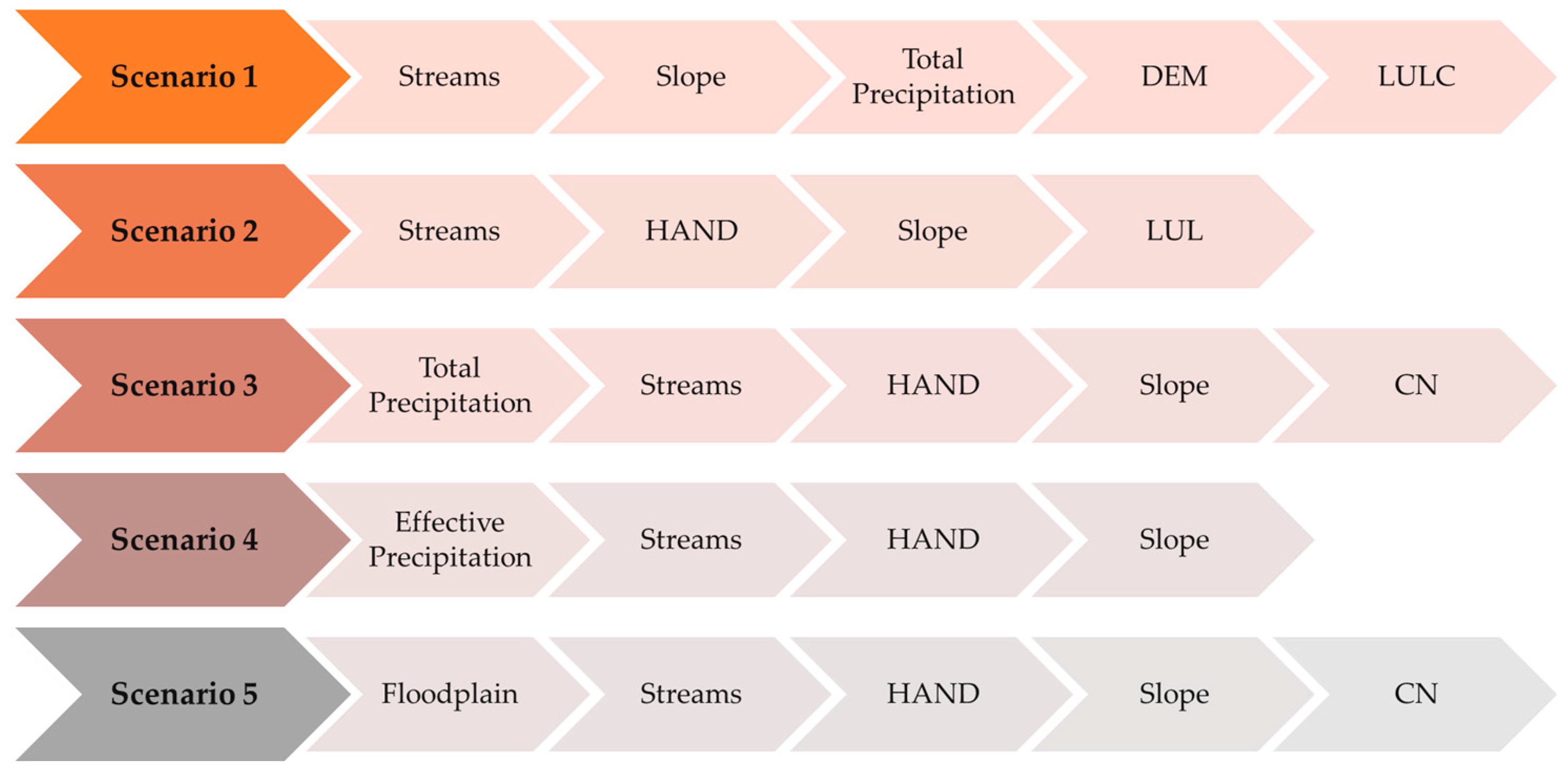
Five flood hazard scenarios were constructed to represent different hydrological mechanisms that may dominate flood generation in the Yibal field. Each scenario uses a unique weighting structure derived from the AHP framework, allowing the model to explore how varying combinations of terrain, hydrological, and land-surface variables influence flood susceptibility. These scenarios also enable assessment of how subsidence-driven terrain changes affect flood hazard under multiple plausible conditions.
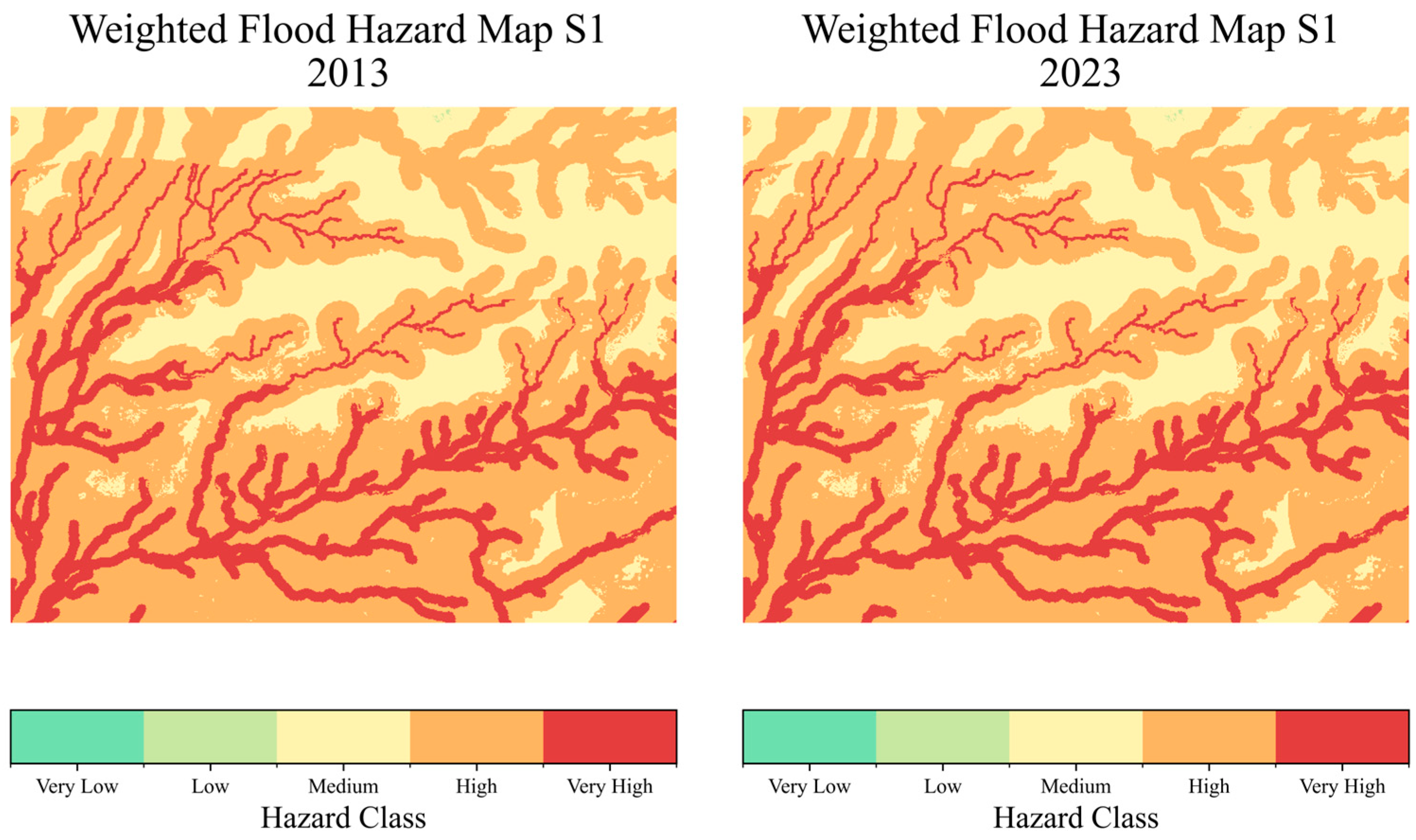
Scenario 1 (S1) emphasizes proximity to drainage and terrain slope as the dominant controls on flood behavior. This scenario assigns the highest weights to Streams (35%) and Slope (25%), followed by Total Precipitation (20%), with DEM (10%) and LULC (10%) contributing secondary influences. S1 represents conditions where runoff concentration along wadis is the primary driver of flood susceptibility.
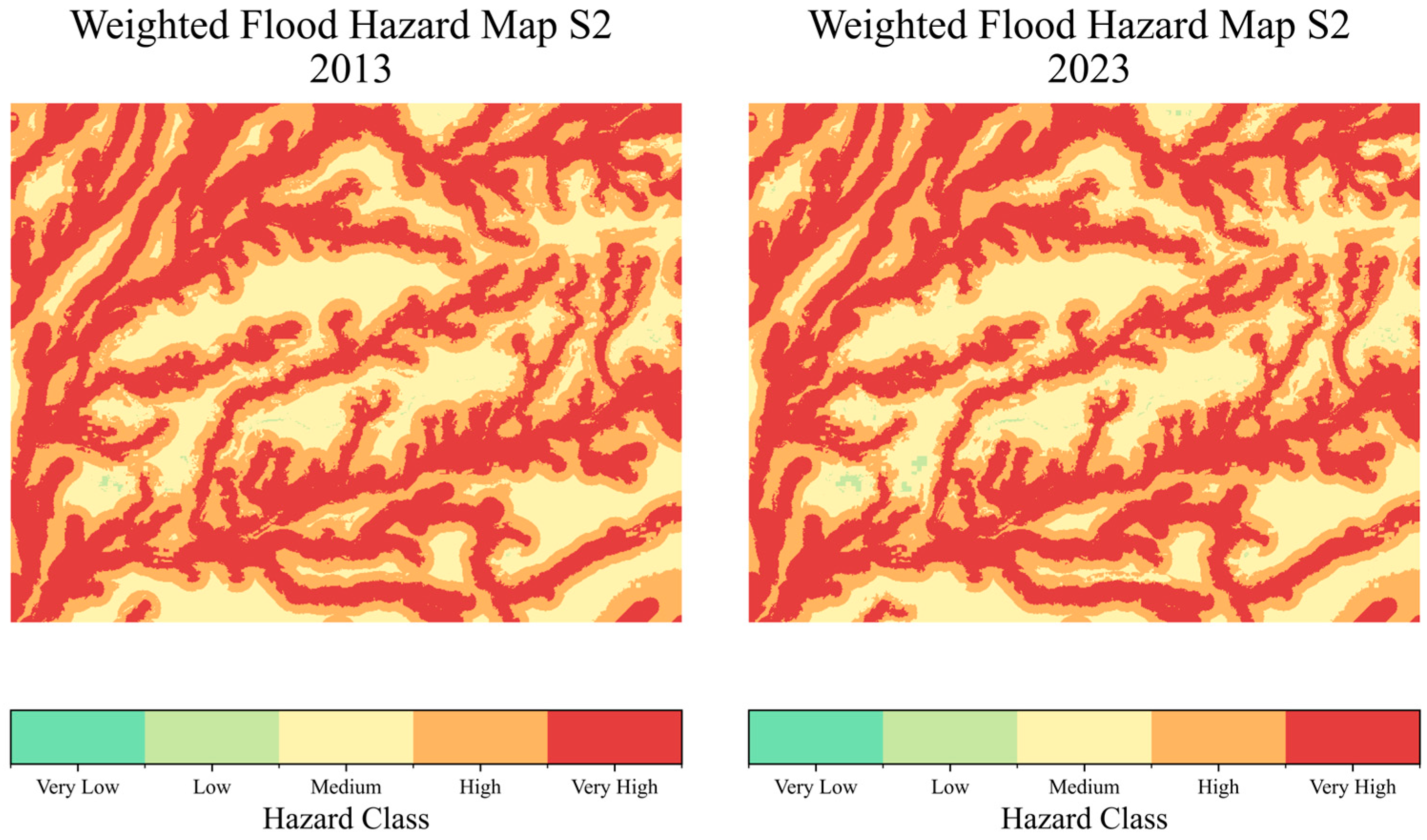
Scenario 2 (S2) prioritizes geomorphic connectivity, assigning high weights to Streams (40%) and HAND (25%), with supporting contributions from Slope (20%) and Curve Number (15%). This configuration reflects flood conditions governed by terrain-controlled flow convergence and varying infiltration potential.
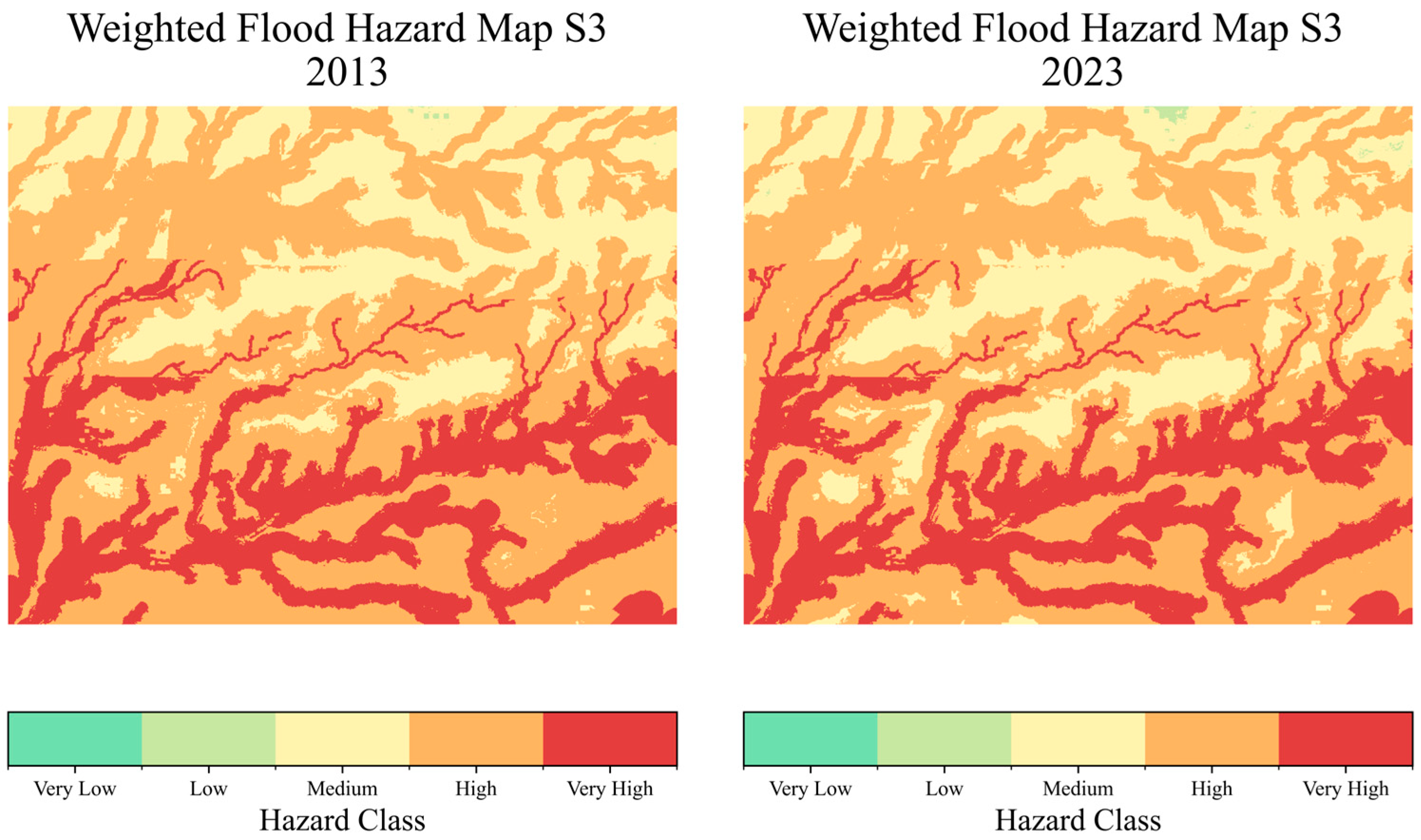
Scenario 3 (S3) highlights extreme rainfall as the dominant flood trigger, assigning the most significant weight to Total Precipitation (35%), followed by Streams (25%), HAND (15%), Slope (15%), and CN (10%). This scenario models episodic flash-flood events driven by intense storm bursts common to arid climates.
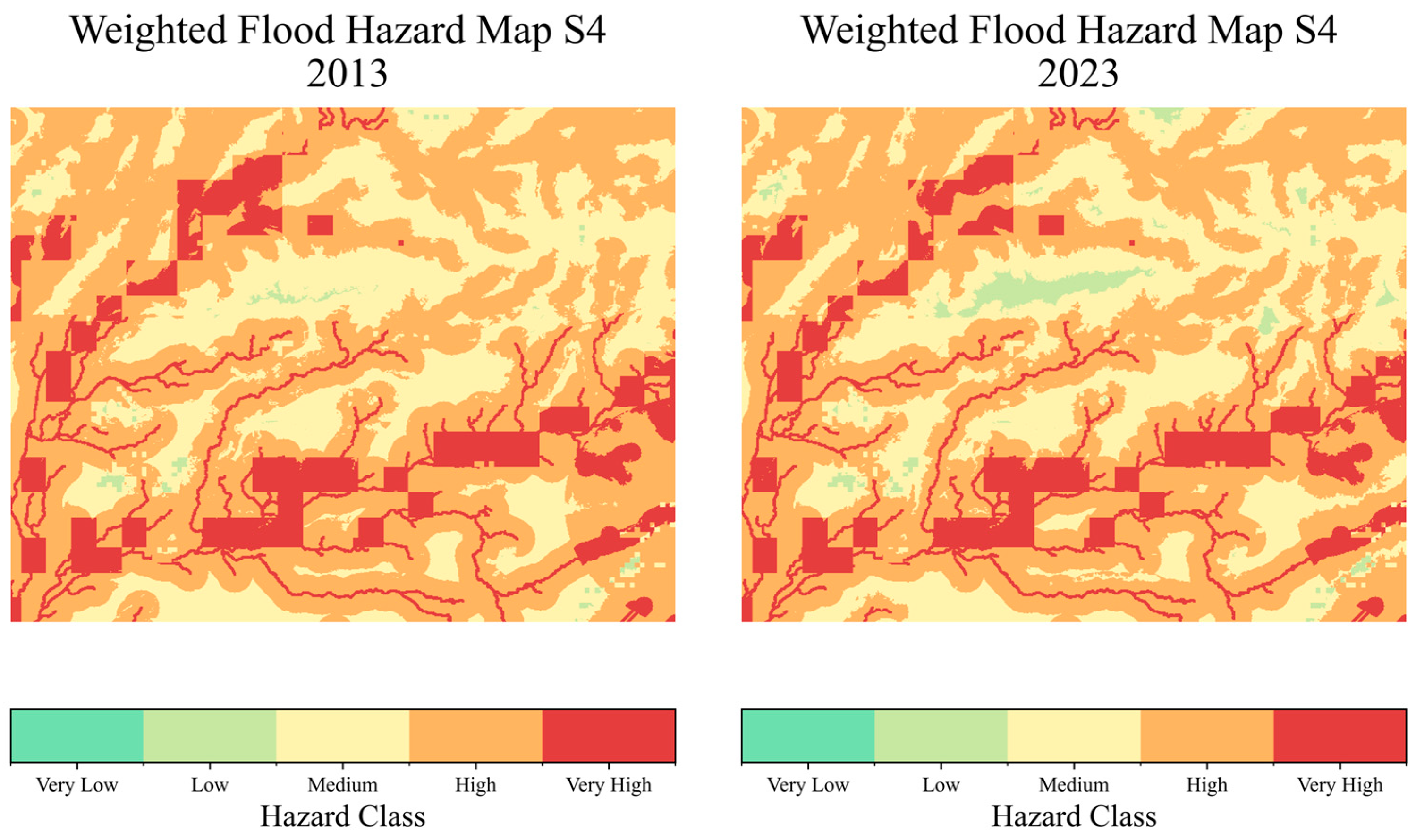
Scenario 4 (S4) emphasizes effective precipitation, representing the proportion of rainfall that contributes directly to runoff after accounting for initial abstractions. Effective P receives the highest weight (40%), followed by Streams (25%), HAND (20%), and Slope (15%). S4 evaluates flood susceptibility under conditions of limited infiltration or wetter antecedent moisture.
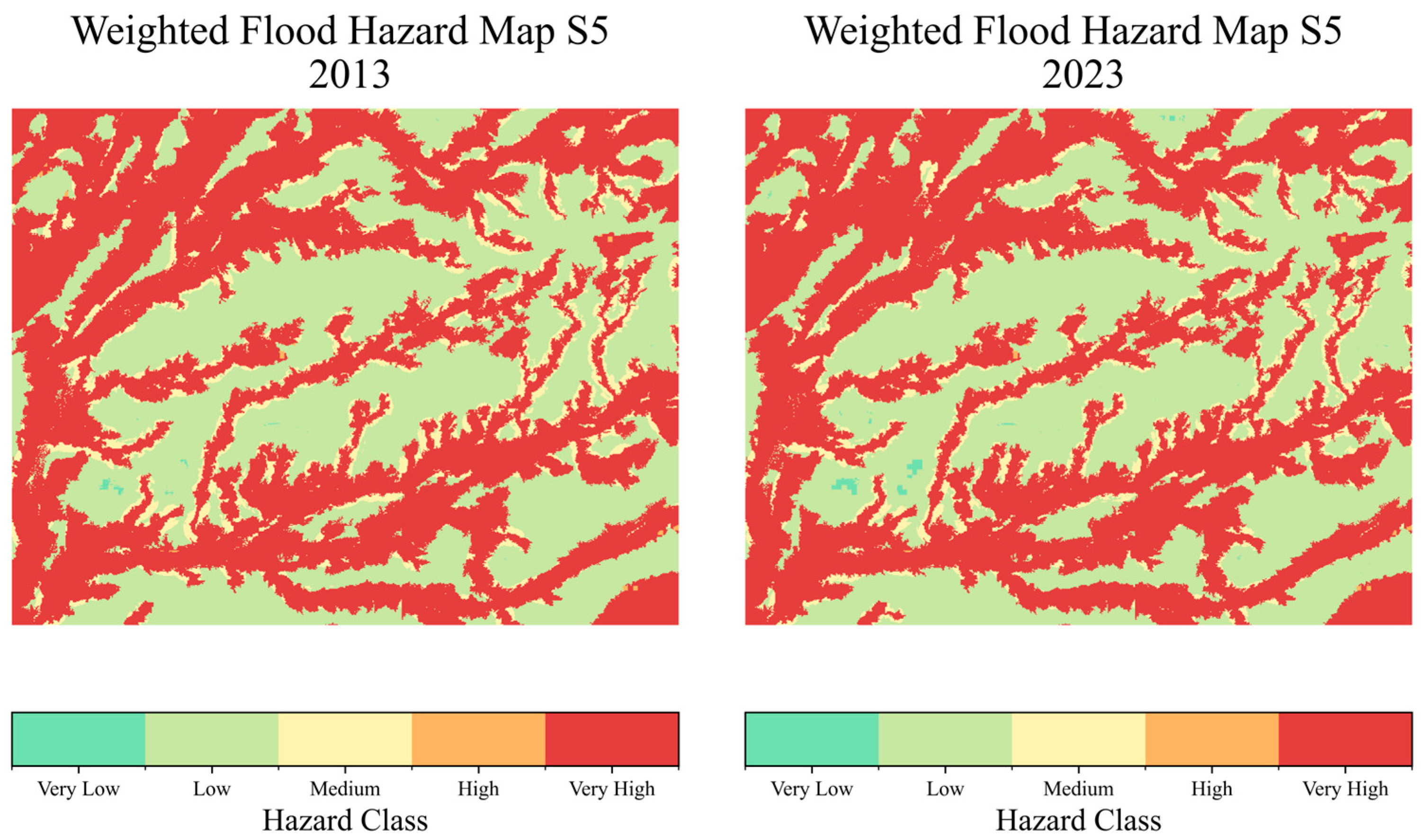
Scenario 5 (S5) focuses on floodplain morphology, assigning the most significant influence to Floodplain extent (45%), followed by Streams (20%), HAND (15%), Slope (10%), and CN (10%). This scenario reflects flood behavior in shallow, low-lying areas where inundation depth and terrain confinement dominate hydrological response.
Together, these five scenarios capture a broad spectrum of flood-generating mechanisms and provide a robust basis for comparing flood susceptibility patterns between the 2013 baseline terrain and the 2023 subsidence-adjusted landscape (
Figure 6).
2.4.3. Weighted Overlay and Flood Hazard Map Generation
The weighted overlay procedure integrates all reclassified hydrological and geomorphic indicators to generate composite flood hazard maps for both 2013 (baseline terrain) and 2023 (subsidence-adjusted terrain). All datasets—slope, HAND, floodplain depth, streams proximity, Curve Number, total precipitation, effective precipitation, land cover, and elevation—were first resampled to a common 30 m spatial resolution and standardized into five hazard classes (Very Low to Very High). Each raster was then transformed into an ordinal scale ranging from 1 (Very Low hazard) to 5 (Very High hazard) to ensure compatibility across indicators.
For each scenario (S1–S5), the scenario-specific AHP-derived weights were applied to the corresponding indicators. The weighted overlay followed a linear combination approach [
44]:
where
denotes the weight assigned to the indicator
.
Represents the corresponding standardized reclassified score (1–5). The resulting continuous Flood Hazard Index (FHI) was subsequently reclassified into five hazard categories to generate the final flood hazard maps for each scenario and epoch (
Table 6).
2.5. Reclassification of Indicators
The hydrological and geomorphic indicators were reclassified onto a standard ordinal scale to enable comparison across variables with different units and meanings. Each raster layer, including slope, HAND, floodplain depth, stream proximity, Curve Number (CN), total and effective precipitation, land cover, and elevation, was standardized into five hazard classes from Very Low (1) to Very High (5). Thresholds were set based on each indicator’s hydrological behavior. Continuous variables were classified using natural breaks and geomorphological thresholds related to runoff accumulation. Precipitation variables were grouped by increasing rainfall intensity. Stream proximity was categorized by distance to reflect higher susceptibility near wadi channels. CN values were assigned to runoff-potential classes, and land cover was reclassified by infiltration capacity. All reclassification rules were applied independently to the 2013 and 2023 datasets to ensure that hazard differences reflect actual landscape changes. The standardized layers were then used as inputs for the AHP-based weighted overlay analysis. To illustrate the reclassification procedure, representative examples based on the 2023 datasets are provided below.
- ▪
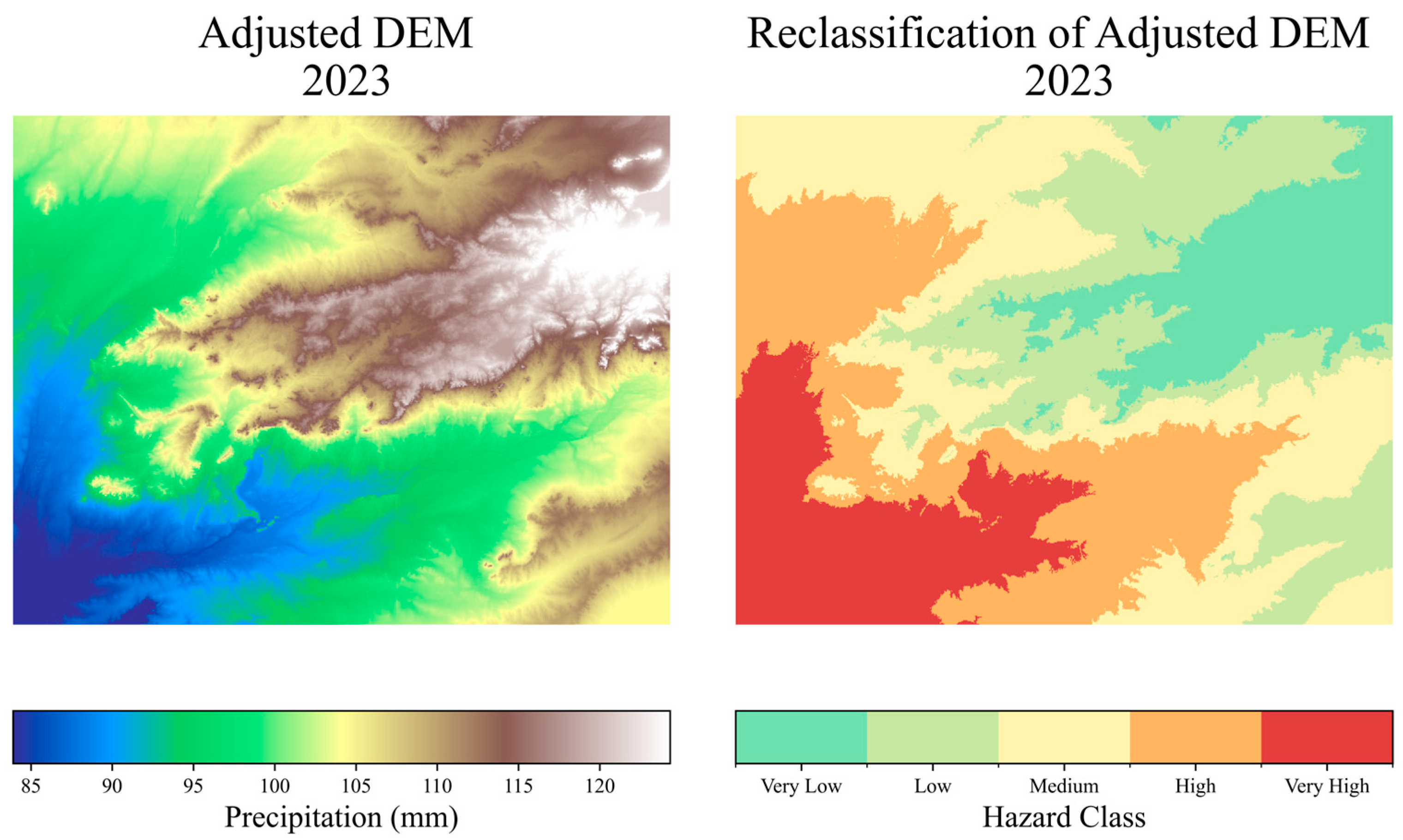
Elevation was classified into five susceptibility classes using the Natural Breaks (Jenks) method, where lower elevations correspond to higher flood susceptibility due to enhanced water accumulation, and higher elevations indicate lower susceptibility because of improved natural drainage (
Table 7 and
Figure 7).
Table 7.
Classification of Adjusted Elevation into Susceptibility Classes (2023).
Table 7.
Classification of Adjusted Elevation into Susceptibility Classes (2023).
| Class Number | Min (m) | Max (m) | Hazard Class |
|---|
| 1 | 115 | 128 | Very Low |
| 2 | 105 | 115 | Low |
| 3 | 100 | 105 | Medium |
| 4 | 90 | 100 | High |
| 5 | 80 | 90 | Very High |
Figure 7.
Adjusted DEM (2023) and its reclassification into hazard susceptibility classes.
Figure 7.
Adjusted DEM (2023) and its reclassification into hazard susceptibility classes.
- ▪
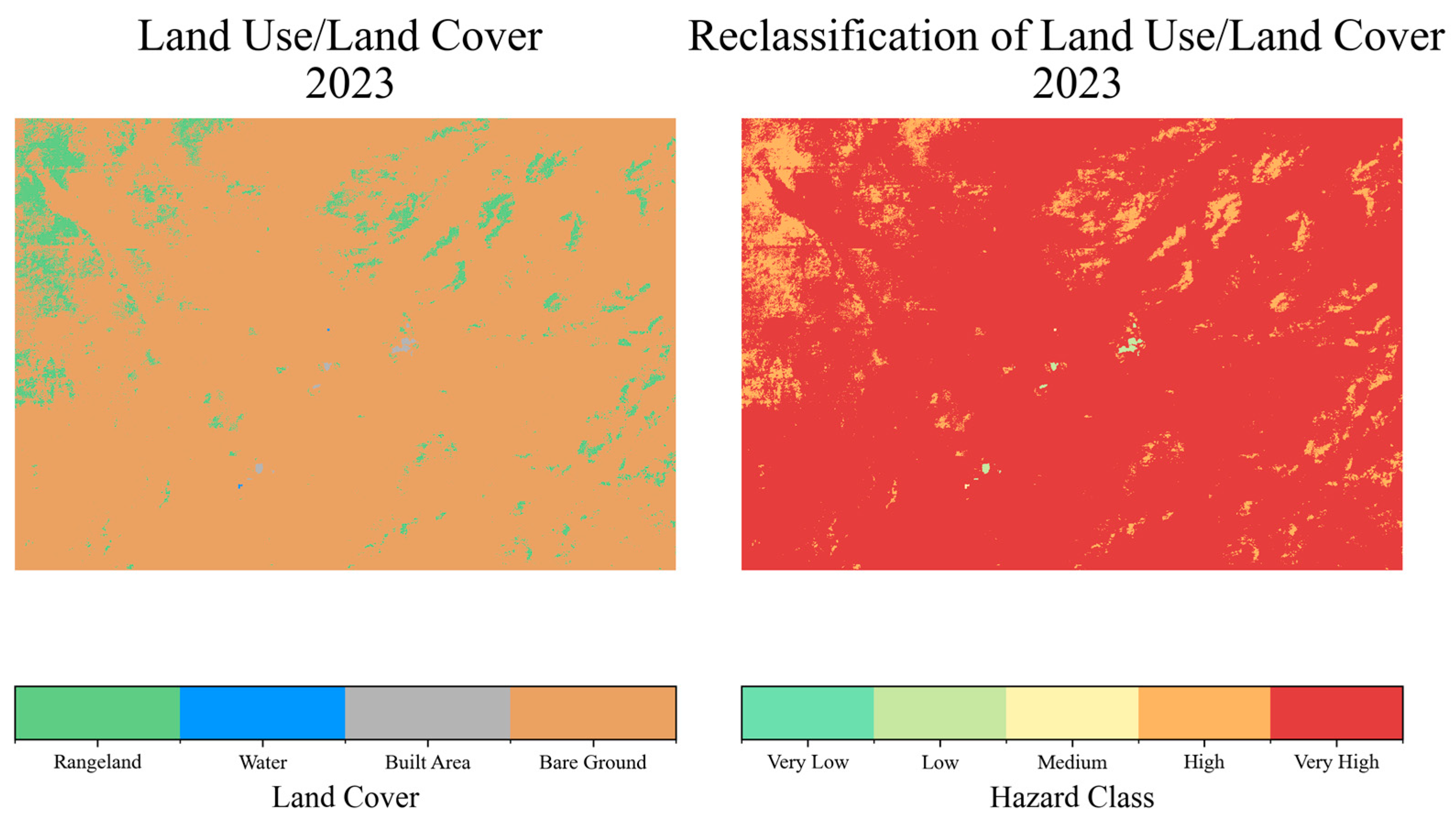
Land use/land cover classes were reclassified into flood susceptibility levels based on their runoff and infiltration characteristics, with impervious and saturated surfaces assigned higher susceptibility and vegetated or engineered areas assigned lower susceptibility (
Table 8 and
Figure 8).
Table 8.
Classification of Land Use Land Cover into Susceptibility Classes (2023).
Table 8.
Classification of Land Use Land Cover into Susceptibility Classes (2023).
| Class Number | Class Name | Hazard Class |
|---|
| 2 | Built Area | Low |
| 3 | Grassland/Vegetation | Medium |
| 4 | Bare Soil | High |
| 5 | Open Water | Very High |
Figure 8.
Land use/land cover (2023) and its reclassification into hazard susceptibility classes.
Figure 8.
Land use/land cover (2023) and its reclassification into hazard susceptibility classes.
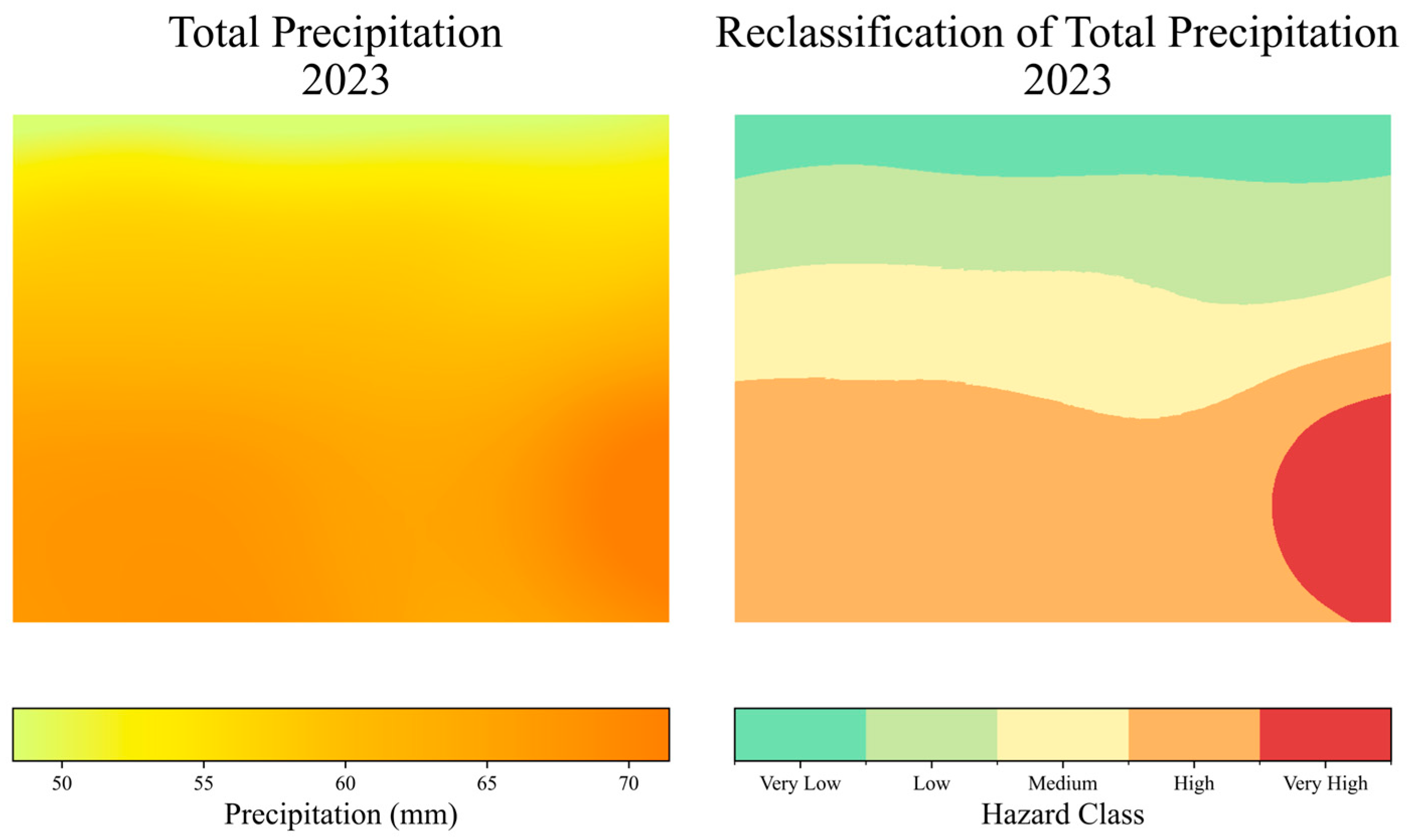
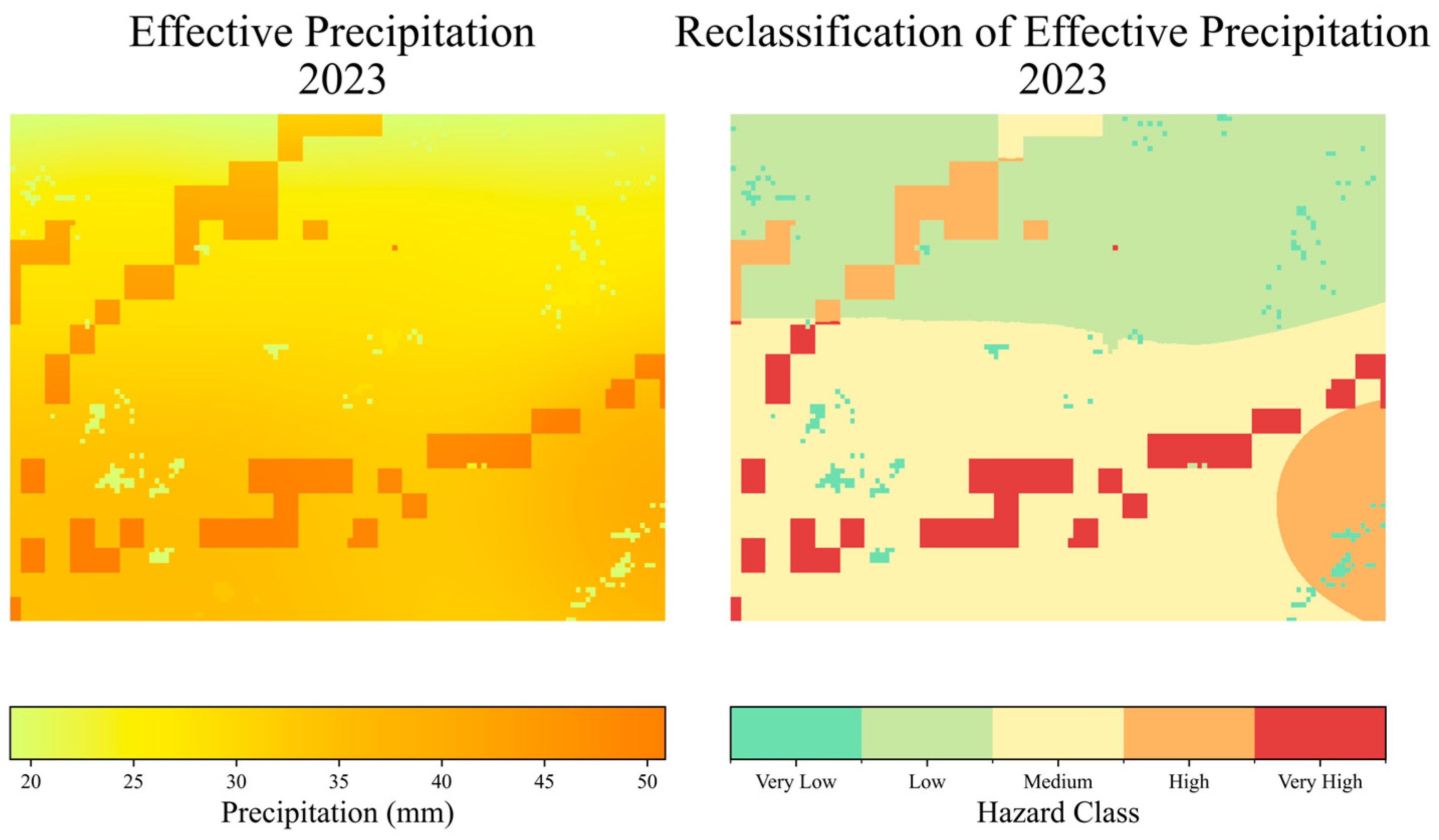
- ▪
Total and effective precipitation layers were classified into five susceptibility classes using the Natural Breaks (Jenks) method, where higher precipitation values correspond to increased runoff potential and flood susceptibility (
Table 9 and
Table 10,
Figure 9 and
Figure 10).
Table 9.
Classification of Total Precipitation into Susceptibility Classes (2023).
Table 9.
Classification of Total Precipitation into Susceptibility Classes (2023).
| Class Number | Min (mm) | Max (mm) | Hazard Class |
|---|
| 1 | 46 | 53 | Very Low |
| 2 | 53 | 56 | Low |
| 3 | 56 | 58 | Medium |
| 4 | 58 | 63 | High |
| 5 | 68 | 73 | Very High |
Table 10.
Classification of Effective Precipitation into Susceptibility Classes (2023).
Table 10.
Classification of Effective Precipitation into Susceptibility Classes (2023).
| Class Number | Min (mm) | Max (mm) | Hazard Class |
|---|
| 1 | 1 | 18 | Very Low |
| 2 | 18 | 28 | Low |
| 3 | 28 | 36 | Medium |
| 4 | 36 | 44 | High |
| 5 | 44 | 49 | Very High |
Figure 9.
Total precipitation reclassified into hazard susceptibility classes.
Figure 9.
Total precipitation reclassified into hazard susceptibility classes.
Figure 10.
Effective precipitation reclassified into hazard susceptibility classes.
Figure 10.
Effective precipitation reclassified into hazard susceptibility classes.
- ▪
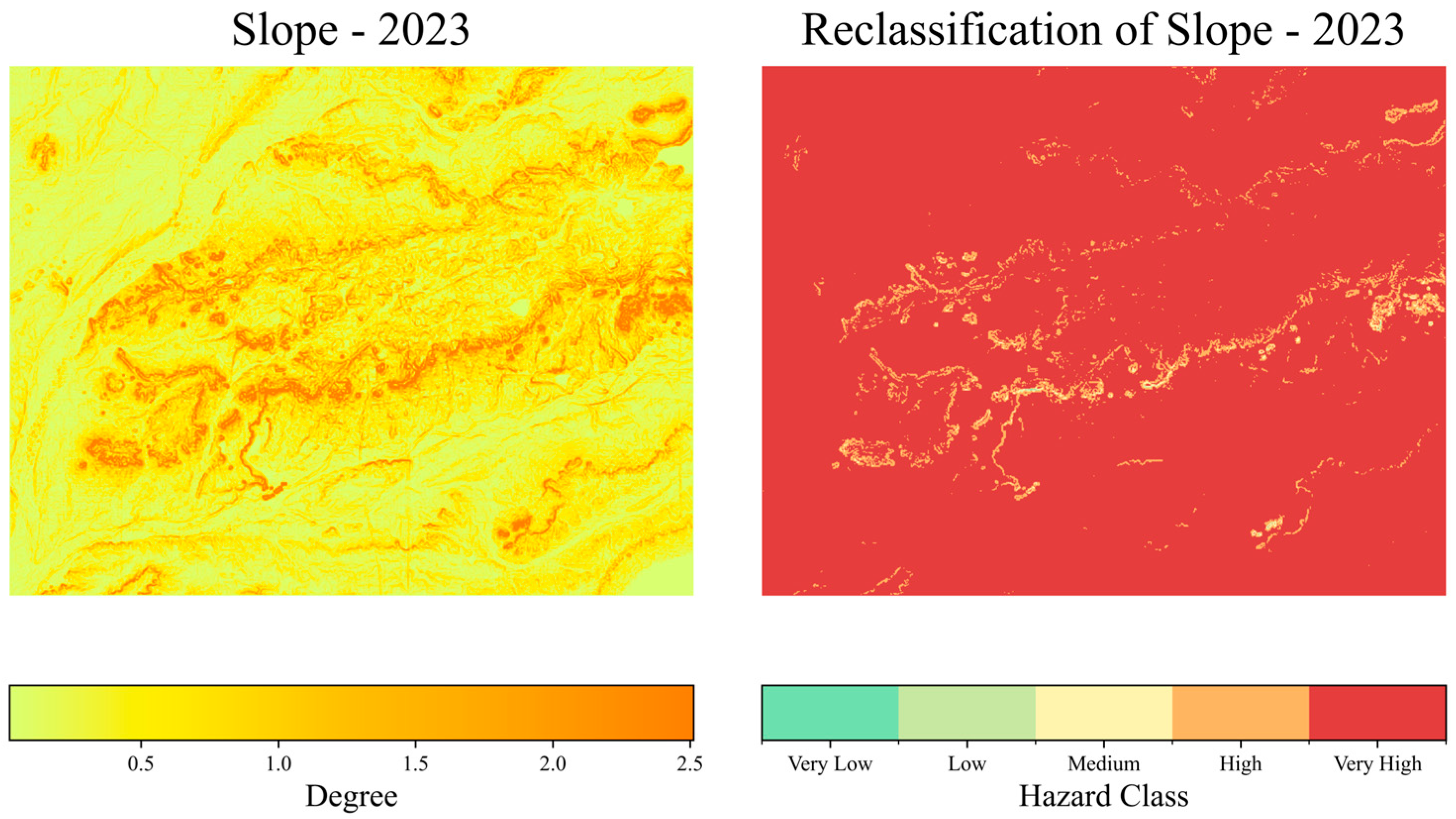
Slope was classified using manual geomorphological thresholds, where flatter terrain was assigned higher flood susceptibility due to increased water retention, and steeper slopes were assigned lower susceptibility because of enhanced drainage efficiency (
Table 11 and
Figure 11).
Table 11.
Classification of Slope into Susceptibility Classes (2023).
Table 11.
Classification of Slope into Susceptibility Classes (2023).
| Class Number | Min (Degree) | Max (Degree) | Hazard Class |
|---|
| 1 | 12 | 13 | Very Low |
| 2 | 8 | 12 | Low |
| 3 | 5 | 8 | Medium |
| 4 | 2 | 5 | High |
| 5 | 0 | 2 | Very High |
Figure 11.
Slope reclassified into hazard susceptibility classes.
Figure 11.
Slope reclassified into hazard susceptibility classes.
- ▪
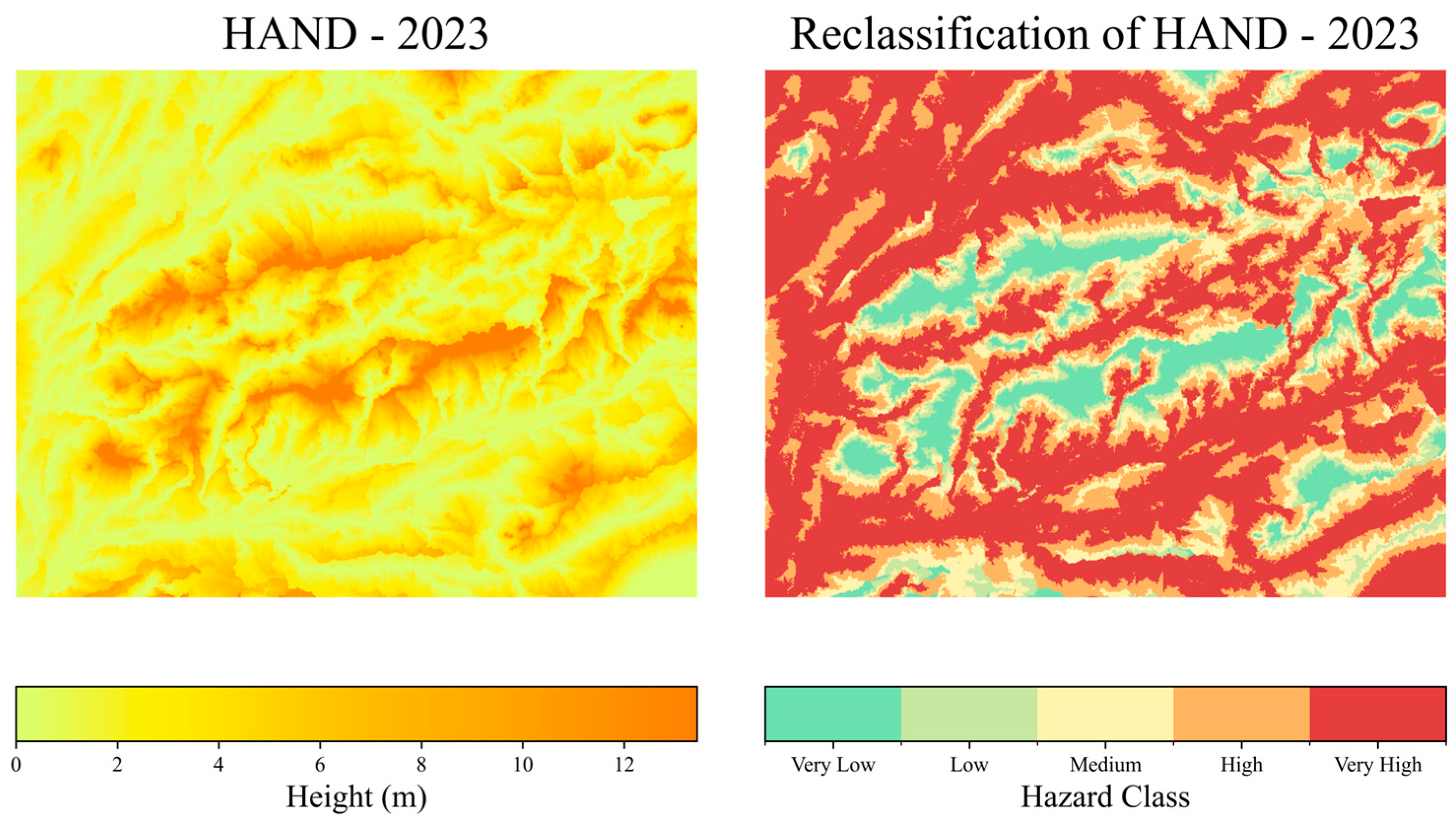
HAND values were classified using literature-based geomorphological thresholds, with lower HAND values indicating higher flood susceptibility due to proximity to drainage channels [
21] (
Table 12 and
Figure 12).
Table 12.
Classification of HAND into Susceptibility Classes (2023).
Table 12.
Classification of HAND into Susceptibility Classes (2023).
| Class Number | Min (m) | Max (m) | Hazard Class |
|---|
| 1 | 8 | 27 | Very Low |
| 2 | 6 | 8 | Low |
| 3 | 4 | 6 | Medium |
| 4 | 2 | 4 | High |
| 5 | 0 | 2 | Very High |
Figure 12.
Height Above Nearest Drainage reclassified into hazard susceptibility classes.
Figure 12.
Height Above Nearest Drainage reclassified into hazard susceptibility classes.
- ▪
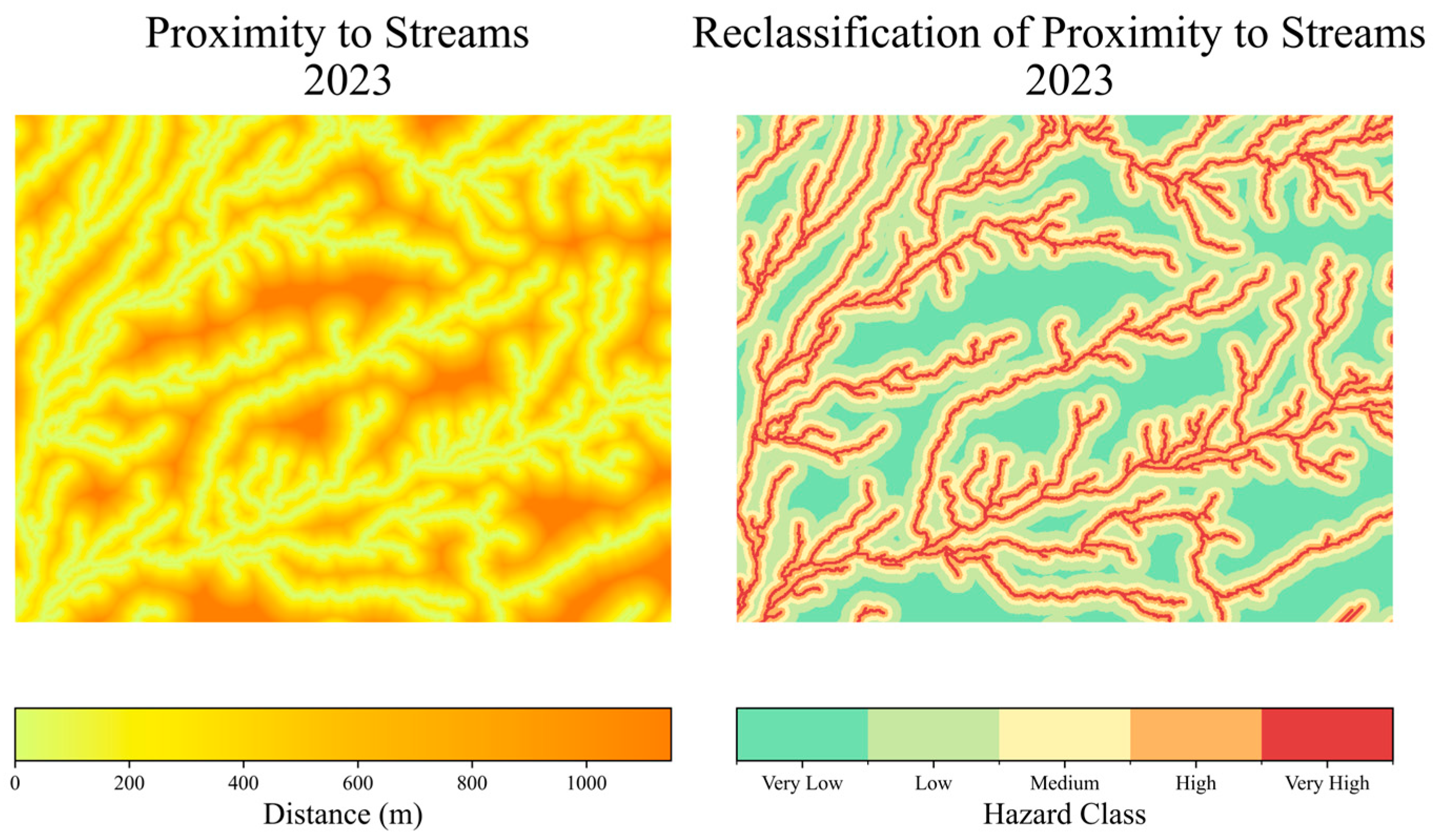
Hydrologically based proximity to streams was classified using expert-defined distance thresholds (manual interval), where areas closer to drainage networks were assigned higher flood susceptibility (
Table 13 and
Figure 13).
Table 13.
Classification of Proximity to Streams into Susceptibility Classes (2023).
Table 13.
Classification of Proximity to Streams into Susceptibility Classes (2023).
| Class Number | Min (m) | Max (m) | Hazard Class |
|---|
| 1 | 600 | 1700 | Very Low |
| 2 | 300 | 600 | Low |
| 3 | 150 | 300 | Medium |
| 4 | 42 | 150 | High |
| 5 | 0 | 42 | Very High |
Figure 13.
Proximity to Streams reclassified into hazard susceptibility classes.
Figure 13.
Proximity to Streams reclassified into hazard susceptibility classes.
Curve Number values were grouped into five ordinal flood susceptibility classes using the Natural Breaks (Jenks) method applied to the discrete CN distribution, where higher CN values indicate lower infiltration capacity and increased runoff potential (
Table 14 and
Figure 14).
- ▪
Floodplain extent was derived as a binary indicator using a HAND threshold of <2 m, representing areas directly connected to drainage channels and classified as Very High flood susceptibility (
Table 15 and
Figure 15).
2.6. Geomorphic Flood Index (GFI) as a Geomorphic Diagnostic Analysis
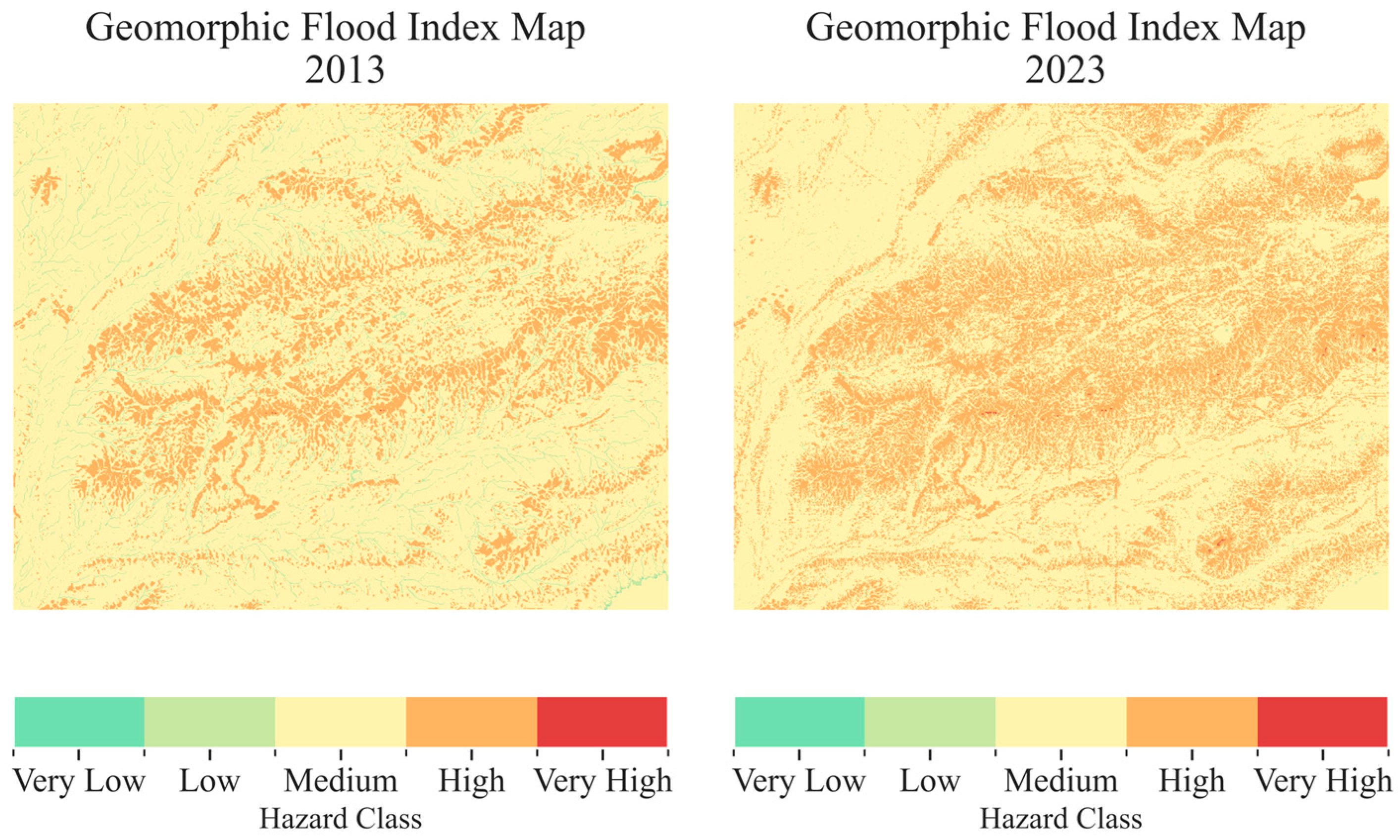
The Geomorphic Flood Index (GFI) was used as a geomorphic diagnostic tool to support the interpretation of flood-susceptibility patterns derived from the AHP-based weighted overlay. GFI is a DEM-based index that estimates relative flood susceptibility based on the vertical relationship between the terrain surface and the drainage network and has been widely applied to delineate flood-prone areas in data-scarce environments [
24].
where
h is the vertical distance between each terrain cell and the nearest drainage channel, and
is a reference elevation derived from drainage-network geometry and flow-accumulation characteristics.
GFI was calculated separately for the 2013 baseline DEM and the 2023 subsidence-adjusted DEM using identical flow-routing, drainage extraction, and terrain-processing parameters to ensure consistency between epochs. No calibration against observed flood extents or hydraulic model outputs was performed because reliable historical inundation data for the study area were unavailable. Consequently, GFI was not used as a predictive or calibrated flood hazard model.
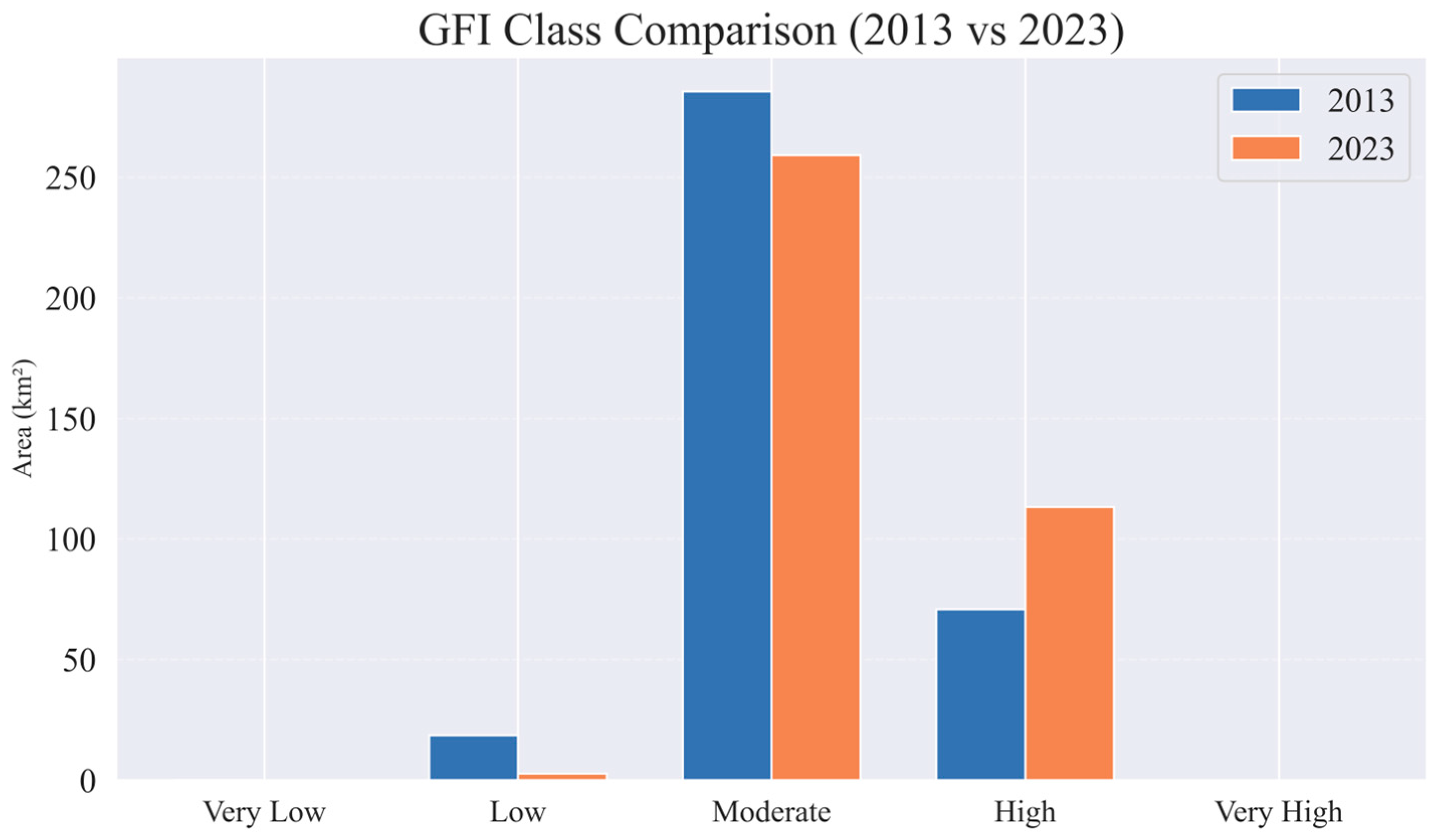
For comparison with the Flood Hazard Index (FHI), GFI outputs were reclassified into five ordinal susceptibility classes ranging from Very Low to Very High. Rather than serving as independent validation, the GFI analysis functions as a geomorphic consistency check, assessing whether subsidence-induced terrain changes produce physically plausible modifications in drainage structure and flood-prone corridors. Spatial correspondence between high-GFI and high-FHI zones was evaluated qualitatively to support the interpretation of deformation-driven changes in flood susceptibility between the 2013 and 2023 epochs.
2.7. Flood Hazard Change Detection Analysis (2013 and 2023)
To quantify how subsidence altered flood susceptibility over time, a systematic change-detection analysis was applied to the Flood Hazard Index (FHI) [
44] outputs generated for both 2013 and 2023 across all five scenarios (S1–S5). For each scenario, pixel-wise differencing was performed between the two classified FHI maps according to:
Positive values indicate an increase in hazard severity, and negative values indicate a reduction. The resulting ΔFHI raster was categorized into five directional change classes representing meaningful shifts in flood susceptibility: decrease, slight decrease, no change, slight increase, and increase.
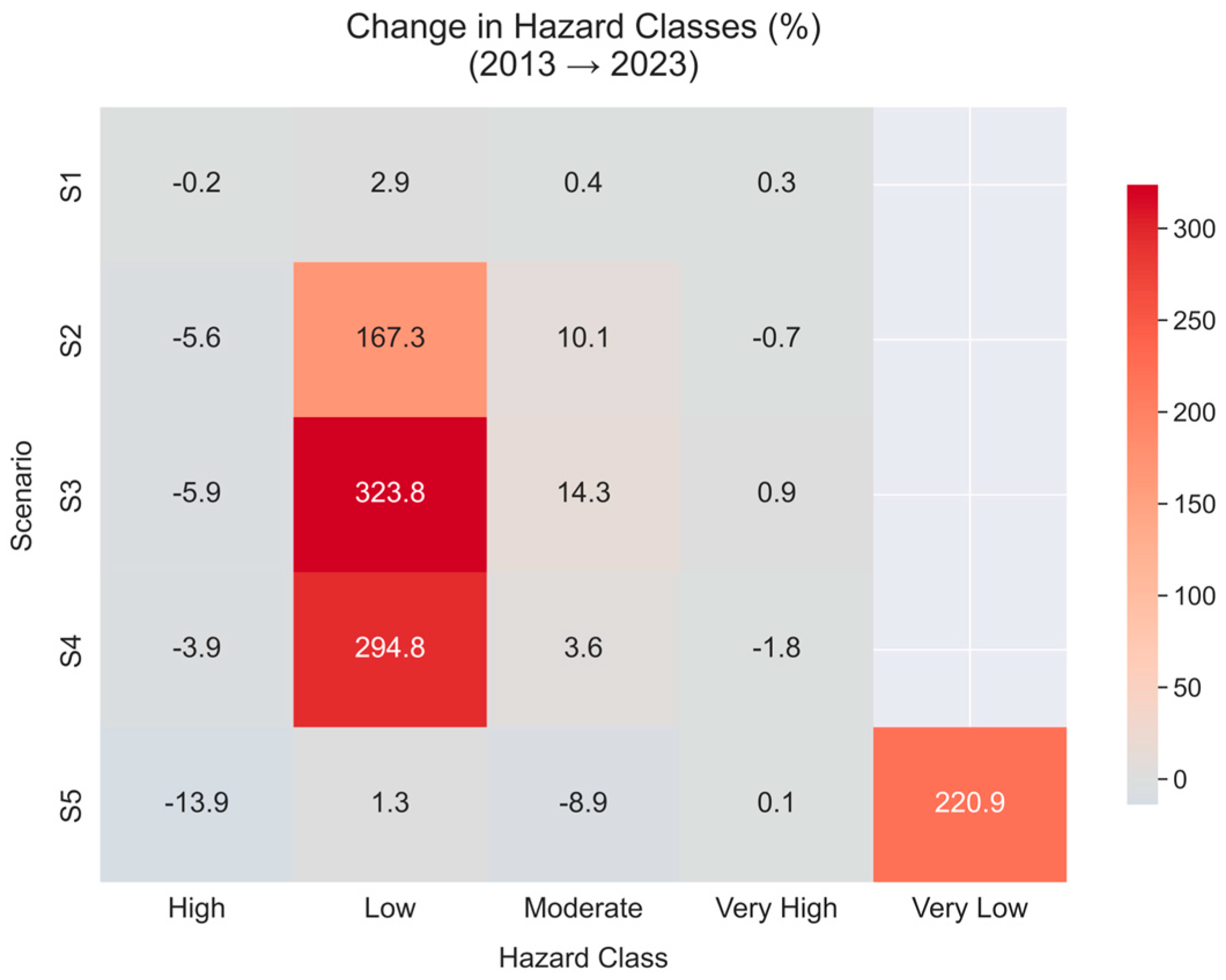
To evaluate the magnitude of these transitions, area statistics were computed for each change class and summarized across scenarios. Class-to-class transitions (e.g., Moderate to High, High to Very High) were tabulated using transition matrices, and scenario-level summaries were generated to identify consistent patterns of hazard escalation or reduction. The analysis also quantified the percentage change in the areal extent of each hazard class between 2013 and 2023, allowing cross-scenario comparisons of sensitivity to subsidence-driven terrain modification. This workflow provided a consistent basis for assessing the influence of terrain evolution on flood susceptibility. It enabled the identification of spatial patterns and the magnitude of change that were later visualized and interpreted in
Section 3.
2.8. Data Availability and Reproducibility
The primary datasets for this study, including the cumulative surface deformation time series from RADARSAT-2 and TerraSAR-X (2013–2023) and the 2013 aerial photogrammetric DEM, were obtained from Petroleum Development Oman (PDO) under restricted data-sharing agreements. These datasets cannot be publicly released due to confidentiality obligations. However, derived products such as reclassified indicator layers, hazard maps, and scenario-based summary tables may be available upon reasonable request to the corresponding author, subject to approval by PDO and the National Survey and Geospatial Information Authority (NSGIA).
Publicly accessible datasets incorporated into the analysis include:
Sentinel-2 land cover imagery from the European Space Agency,
ERA5-Land historical precipitation (2010–2023) from the Copernicus Climate Data Store, and
Hydrologic Soil Groups (HYSOGs250m) from the U.S. Geological Survey.
All spatial preprocessing including DEM correction, hydrological derivations, reprojection, resampling, and reclassification—was conducted using ArcGIS Pro 3.5 (Esri) and Python 3.10.19 libraries such as NumPy 2.2.6, Rasterio 1.4.3, Pandas 2.3.3, and Matplotlib 3.10.8. The analytical workflow, including AHP weighting, hazard modeling, and change-detection routines, was implemented using reproducible Python scripts developed by the authors. Generative AI tools were used solely for language refinement and proofreading; all scientific design, analytical decisions, geoprocessing, and interpretation of results were performed exclusively by the authors.
This combination of publicly available datasets, documented procedures, and reproducible computational steps ensures that the methodology can be independently replicated in other regions with similar data availability.
4. Discussion
Both natural hydrological processes and human-induced terrain changes shape flood hazard in arid environments. In the Yibal field, long-term hydrocarbon extraction has caused measurable subsidence, altering local gradients, drainage connectivity, and flow accumulation zones. Updating the 2023 DEM with deformation estimates provides a more accurate representation of current terrain conditions than the 2013 baseline. While the two sets of hazard maps appear similar at a broad scale, quantitative analysis reveals that even minor terrain lowering can reorganize surface-water pathways and significantly affect flood susceptibility.
Across all five AHP scenarios, a consistent behavior emerges: higher-hazard zones tend to migrate toward subsidence-affected depressions, while moderate-hazard zones expand outward from these centers. This reflects enhanced flow convergence and localized flattening as ground levels shift. High- and very-high-hazard classes do not always increase dramatically in total area, but they redistribute spatially toward the newly deepened depressions, which now serve as preferential accumulation points. These shifts demonstrate that in low-relief desert basins, where centimeters to decimeters of elevation change can strongly influence hydrological routing, subsidence plays a measurable role in redefining hazard patterns. Differences among scenarios highlight how flood susceptibility responds to different hydrological drivers. Scenarios prioritizing slope, HAND, or stream proximity exhibit greater sensitivity to terrain modification. In contrast, scenarios emphasizing rainfall or floodplain depth yield nonlinear responses because they depend on runoff potential or near-channel depressions. Scenario 5, which heavily weights floodplain depth derived from HAND < 2 m, shows the most pronounced changes because subsidence enhances both the depth and lateral continuity of near-channel low-lying zones. The multi-scenario framework thus provides a balanced representation of hydrological processes and shows that subsidence impacts are mechanism-dependent rather than uniform.
Geomorphic analysis using the Geomorphic Flood Index (GFI) supports these conclusions. From 2013 to 2023, GFI results show a clear expansion of high-susceptibility geomorphic corridors and a reduction in low-susceptibility classes, indicating the development of deeper and more connected flow pathways. These geomorphic patterns are consistent with the deformation-adjusted flood hazard maps, increasing confidence that the observed redistributions reflect physically meaningful landscape evolution rather than methodological artifacts.
Despite these strengths, several limitations must be acknowledged. The most significant relate to the spatial resolution and accuracy of ancillary input datasets and their interaction with DEM-derived indicators. ERA5-Land precipitation data (~11 km spatial resolution) cannot capture small-scale rainfall variability or localized convective storm cells that strongly influence flash-flood behavior in arid environments. Similarly, the HYSOGs250m soil dataset, while globally consistent, provides a coarser representation of infiltration dynamics than would be possible using site-specific soil surveys, potentially smoothing fine-scale contrasts in runoff potential and Curve Number classification. Although these datasets were resampled to a uniform 30 m grid for analytical consistency, their intrinsic resolution limits should be considered when interpreting local-scale variations in hazard. Accordingly, fine-scale spatial patterns in the flood hazard maps should be attributed primarily to deformation-adjusted topography and DEM-derived indicators, rather than to downscaled precipitation or soil variability.
An additional source of uncertainty arises from the vertical accuracy of DEMs. The baseline photogrammetric DEM has an estimated vertical accuracy of approximately ±1 m, which is comparable to some HAND- and floodplain-based threshold values used to delineate flood-prone areas in low-relief terrain. While this may influence hazard classification at the pixel scale, the analysis focuses on spatial redistribution patterns and relative changes between the 2013 and 2023 epochs rather than absolute inundation depths. Because all hydrological indicators were recalculated consistently for both DEMs, systematic vertical uncertainty is preserved across epochs, allowing meaningful assessment of subsidence-driven trends. Finally, although AHP-based weighting inherently involves expert judgment, the convergence of deformation-driven hazard redistribution patterns across multiple hydrologically distinct scenarios indicates that the results are not strongly dependent on any single weighting configuration, thereby enhancing the robustness and interpretability of the findings.
Overall, these findings show that subsidence-adjusted terrain modeling offers a more accurate basis for flood hazard assessment in petroleum fields. Even moderate subsidence can reshape drainage pathways and increase susceptibility, highlighting the need to routinely incorporate deformation data into hydrological planning and hazard management in subsiding arid environments. Future work would benefit from comparison with observed flood extents, where such data becomes available.
5. Conclusions
This study demonstrates that integrating deformation-adjusted DEMs with hydrological and geomorphic indicators provides a more accurate and dynamic assessment of flood susceptibility in subsidence-affected oil fields. Comparison between the 2013 baseline terrain and the 2023 subsidence-corrected DEM shows that even moderate ground lowering can alter drainage connectivity, deepen flow pathways, and shift flood-prone areas toward newly formed depressions. The multi-scenario AHP framework highlights how different hydrological drivers respond to terrain deformation, while geomorphic analysis using the Geomorphic Flood Index (GFI) supports interpretation of landscape reorganization under subsidence-adjusted conditions.
The findings emphasize the importance of routinely updating terrain models in regions affected by anthropogenic subsidence and demonstrate the value of incorporating geodetic deformation data into flood hazard assessments for improved infrastructure planning and risk management in arid petroleum environments. At the same time, the results should be interpreted in light of several limitations, including the coarse spatial resolution of precipitation and soil datasets, DEM vertical uncertainty in low-relief terrain, and the lack of observed flood extent data for direct event-based validation.
Beyond the Yibal field, the proposed deformation-aware flood hazard framework can be applied to other subsidence-affected settings, including groundwater-depleted basins, mining and geothermal regions, and urban areas with gradual terrain deformation, provided appropriate elevation and deformation datasets are available.




 ,
,