


Abstract
Aqueous organic flow batteries are a promising technology for large-scale energy storage, owing to their safety, low cost, and tunable molecular properties. Battery performance is critically governed by the redox potential, solubility, and stability of organic active species, making molecular design a central research priority. Yet, many current systems still rely on inorganic metal-based materials, which face challenges such as high cost and sluggish kinetics. This review outlines a systematic molecular-engineering framework for designing novel redox species, offering strategies to tailor solubility, redox potential, and molecular size in both organic compounds. Recent advances in mechanistic insight, functionalization, and structure-dependent electrochemical performance are summarized. Computational chemistry and machine learning are highlighted for accelerating high-throughput screening and property prediction, speeding up molecular optimization. Small molecules (1–4 rings), including quinones (C=O), alloxazines, phenazines, and indigo derivatives, which undergo reversible redox reactions involving nitrogen and/or carbonyl groups, have been explored as anolytes and/or catholytes in aqueous redox flow batteries. Key challenges remain, including limited electrochemical stability windows, insufficient solubility, and poor molecular stability, leading to low energy density and cycling degradation. Improving anolyte performance by simultaneously lowering redox potential and enhancing solubility and stability is therefore crucial for advancing both organic and broader redox-active battery systems. Computational and machine learning approaches for identifying and refining electrolyte molecules are also addressed, enabling efficient screening and molecular modification toward high-performance flow batteries.
1. Introduction
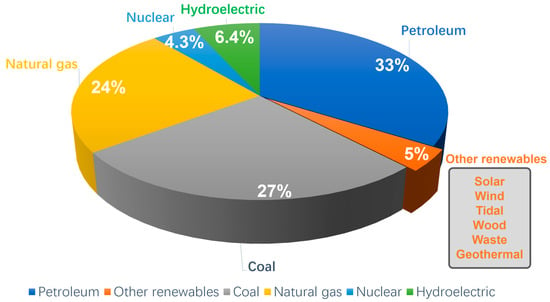
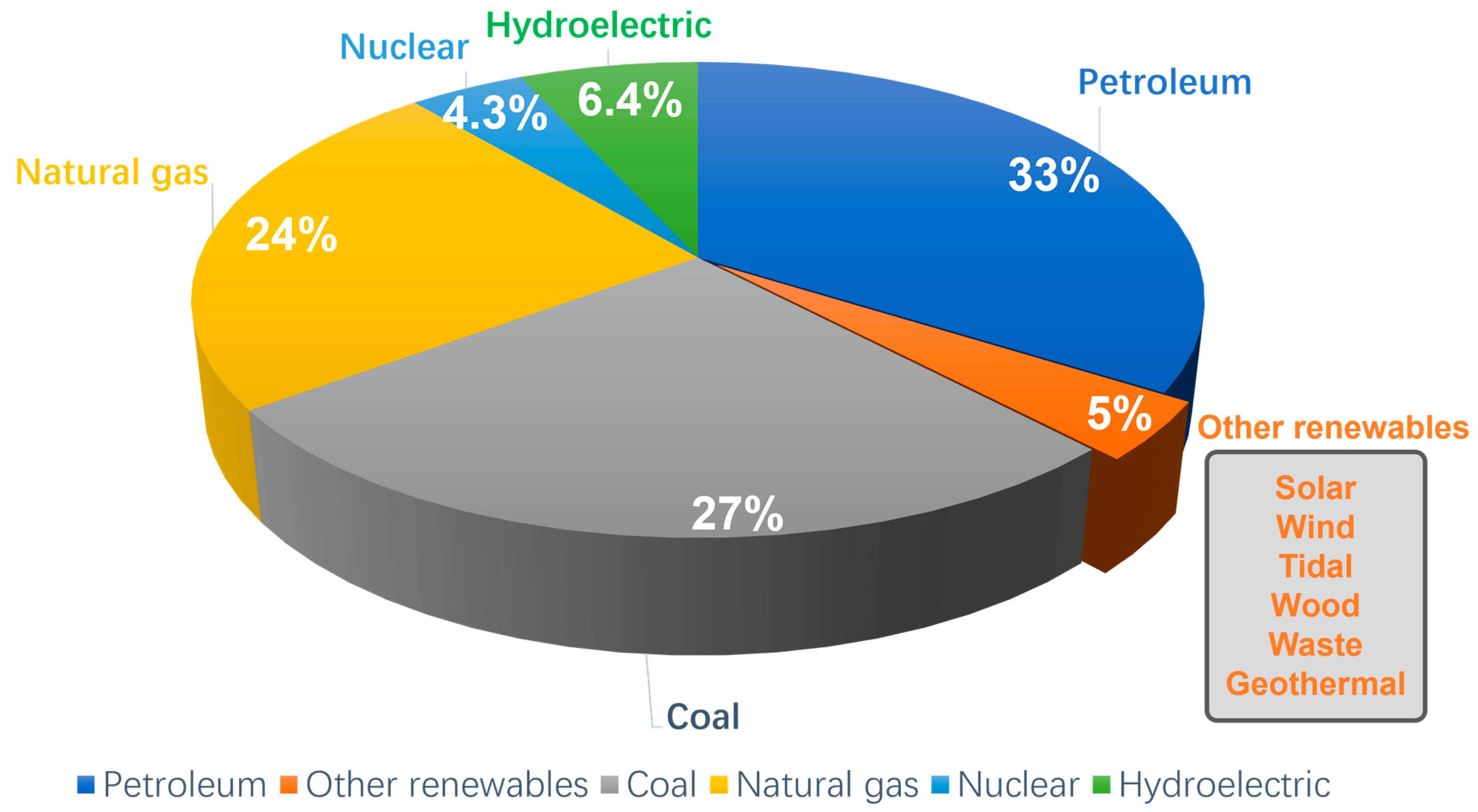
The transformation of our work and life over the last few centuries has been nothing short of profound, and it has been driven by the increasing availability of energy. No sign of abating is shown by this trend, because global energy consumption rises in lockstep with three powerful engines: population growth, urbanization, and industrialization. Based on BP’s statistical review of world energy 2019, 84% of the current global primary energy consumption in the world is accounted for by fossil fuels, including petroleum (33%), coal (27%), and natural gas (24%) (Figure 1). Non-fossil sources are included as well: hydroelectric (6.4%), nuclear (4.3%), and other renewable sources (5.0%), which consist of geothermal, solar, tidal, wind, wood, and waste (Figure 1) [1]. Although primary energy consumption growth was slowed to 1.3% in 2019, less than half the growth rate in 2018 (2.8%) [1], the energy market is still dominated by fossil fuels. Meanwhile, environmental issues have been severely worsened by the increasing growth in carbon dioxide (CO2) emissions, due to the heavy utilization of fossil fuels.
Figure 1.
Electricity generation by sources. The figure is obtained from Reference [1].
The Paris Agreement was adopted in 2016 under the United Nations Framework Convention on Climate Change and was signed by 196 parties, with the main aim of reducing CO2 and other greenhouse gas emissions. The rise in global average temperature is meant to be kept within 2 °C above pre-industrial levels, while efforts are also made to limit the increase to 1.5 °C, a level that is critical for easing the severe risks linked to climate change. The broad agreement reached among nations both shows the urgent need for climate action and reflects a shared view that real progress depends on stronger international cooperation. In this context, former UN Secretary-General Ban Ki-moon called on governments and civil society to fully uphold the Paris Agreement and urged immediate measures for emission reductions, stronger adaptive capacity, and the mitigation of global warming.
A fundamental shift toward sustainable energy systems is required to curb greenhouse gas emissions while meeting escalating energy demand. Within this context, renewable energy sources, including solar, wind, tidal, and wave power, are increasingly recognized as viable alternatives to conventional fossil fuels [2,3,4]. Nevertheless, electricity power operation is challenged by the inherent intermittency and fluctuation of these renewable energy sources. For example, solar power generation can be strongly influenced by many factors, such as weather, season, light intensity, and temperature. On a winter’s day in the North of China, solar power generation is mainly concentrated between 10 a.m. and 3 p.m., yet electricity consumption is not confined to this interval, and energy demand can surpass supply. For the reasons mentioned above, photovoltaic power generation remains limited and cannot match electricity consumption 24 h per day. A parallel phenomenon can be observed in the context of wind power generation. Because of its fluctuating nature, wind power is not well controlled, and its integration into the grid remains challenging. As a result, for these renewable energy sources, peak times of electricity generation and electricity demand are often mismatched, while this mismatch still indicates a path forward in which energy storage and grid solutions can better align renewable power with real demand and enable more effective use.
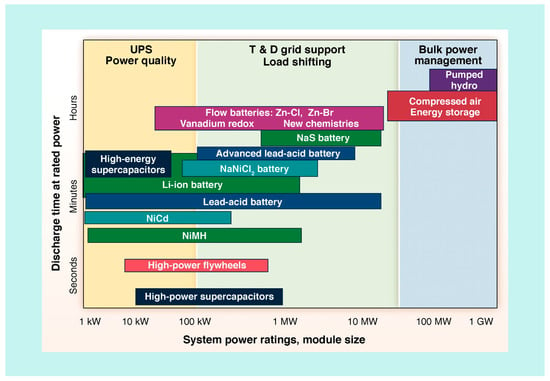
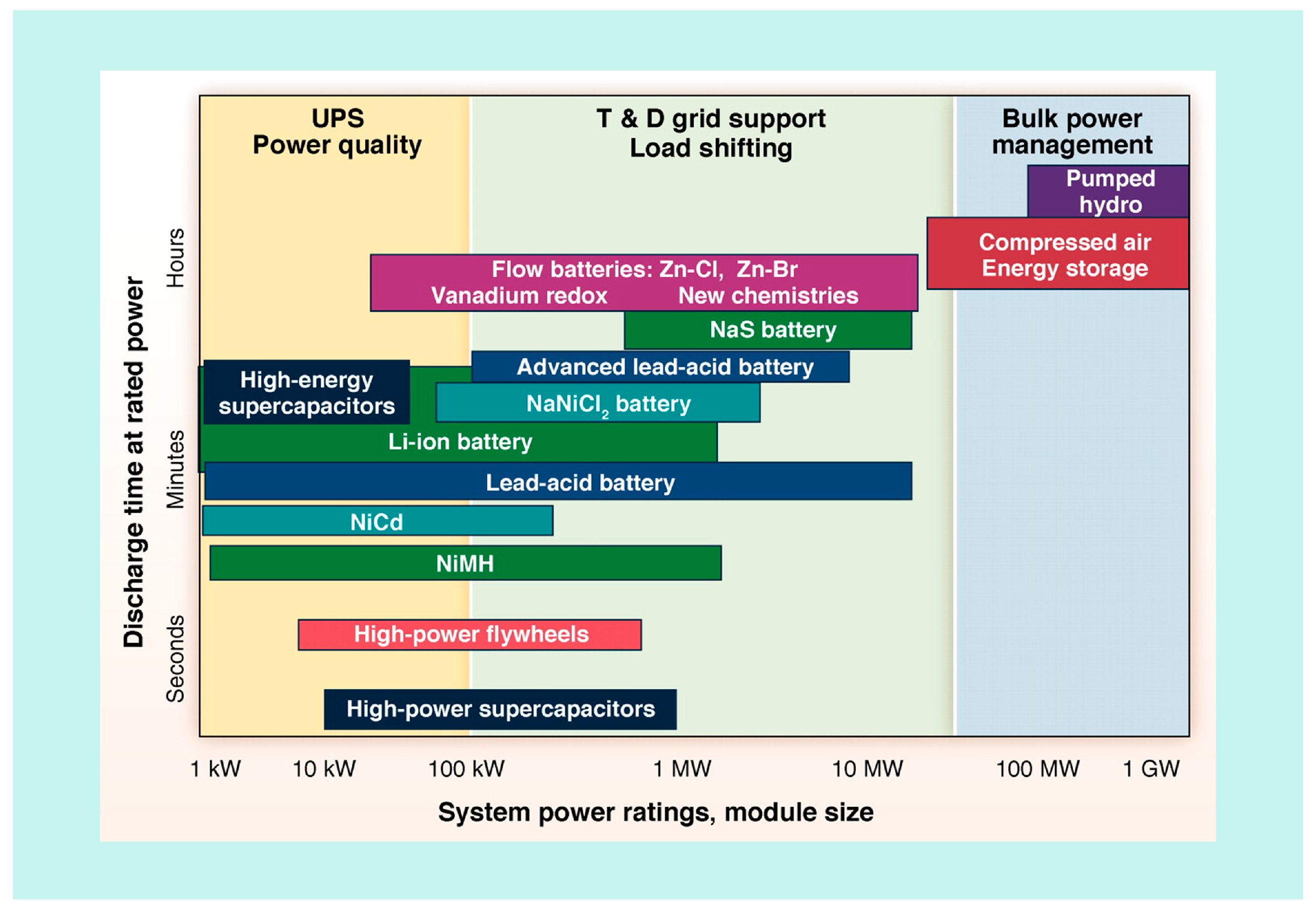
To address this challenge, the storage of excess renewable energy requires highly effective and large-scale electrical energy storage (EES) systems. As illustrated in Figure 2, EES devices can be classified into three types according to the timescale and power output of the stored electrical energy: uninterruptible power supply (UPS), transmission and distribution (T&D) grid support and load shifting, and bulk power management [5]. Among existing technologies, pumped hydroelectric energy storage is regarded as the most mature approach, and it can store large amounts of electricity because it offers high power together with long discharge time. However, extreme geographic constraints and the high cost of infrastructure make it unsuitable as dispatchable balancing power [5,6]. Conventional compressed-air energy storage systems use fossil fuels, such as natural gas, as the heat source. Although fuel combustion is avoided in new adiabatic compressed-air energy storage systems, these systems remain at an early stage of development [6]. To support the rapid growth of renewables, EES technologies that are more flexible, affordable, environmentally friendly, and less geologically constrained are therefore needed. At present, electrochemical energy storage based on batteries is among the most widely used EES technologies, where electricity produced from renewable energy is stored as chemical energy during charging and then delivered back during discharging [7]. In comparison with pumped hydroelectric energy storage, a battery technology that is large-scale, scalable, and durable can help balance the mismatch between energy supply and demand. Nevertheless, large-scale deployment is still limited because many battery technologies face high unit costs, potential safety hazards, and difficult battery-to-battery management. By contrast, redox flow batteries have become prime candidates for large-scale and low-cost energy storage [2,8,9,10,11], while offering practical ways to address the issues discussed above. In particular, they are intended for large-scale and long-duration EES applications by responding to the cost-effectiveness and inflexibility challenges associated with common solid-state batteries.
Figure 2.
Electrical energy storage (EES) technologies. A general categorization of EES technologies based on their system power ratings and discharge time at rated power. Figure reproduced with permission from ref. [3], Copyright 2011, American Association for the Advancement of Science.
Unlike previous reviews that primarily offer categorized summaries of reported molecules, a paradigm that spans the entire molecular engineering pipeline is proposed in this review, from high-throughput virtual screening and property prediction to a mechanistic understanding of substituent effects, experimental validation, and battery performance evaluation. We compiled a large number of organic molecular structures, some of which were drawn from Qi’s doctoral dissertation [2]. With confidence, we highlight how multi-objective optimization is enabled by this framework, so that solubility, redox potential, and stability can be addressed simultaneously rather than as challenges treated in isolation. Framing this co-design strategy as a paradigm shift—transitioning from conventional trial-and-error methods to precision on-demand molecular design—enables targeted enhancements in battery capacity.
2. Working Principles of Aqueous Organic Redox Flow Batteries
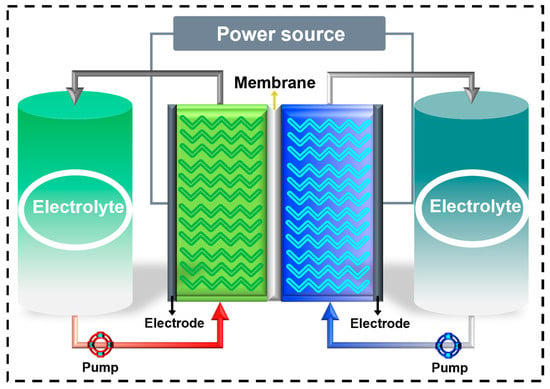
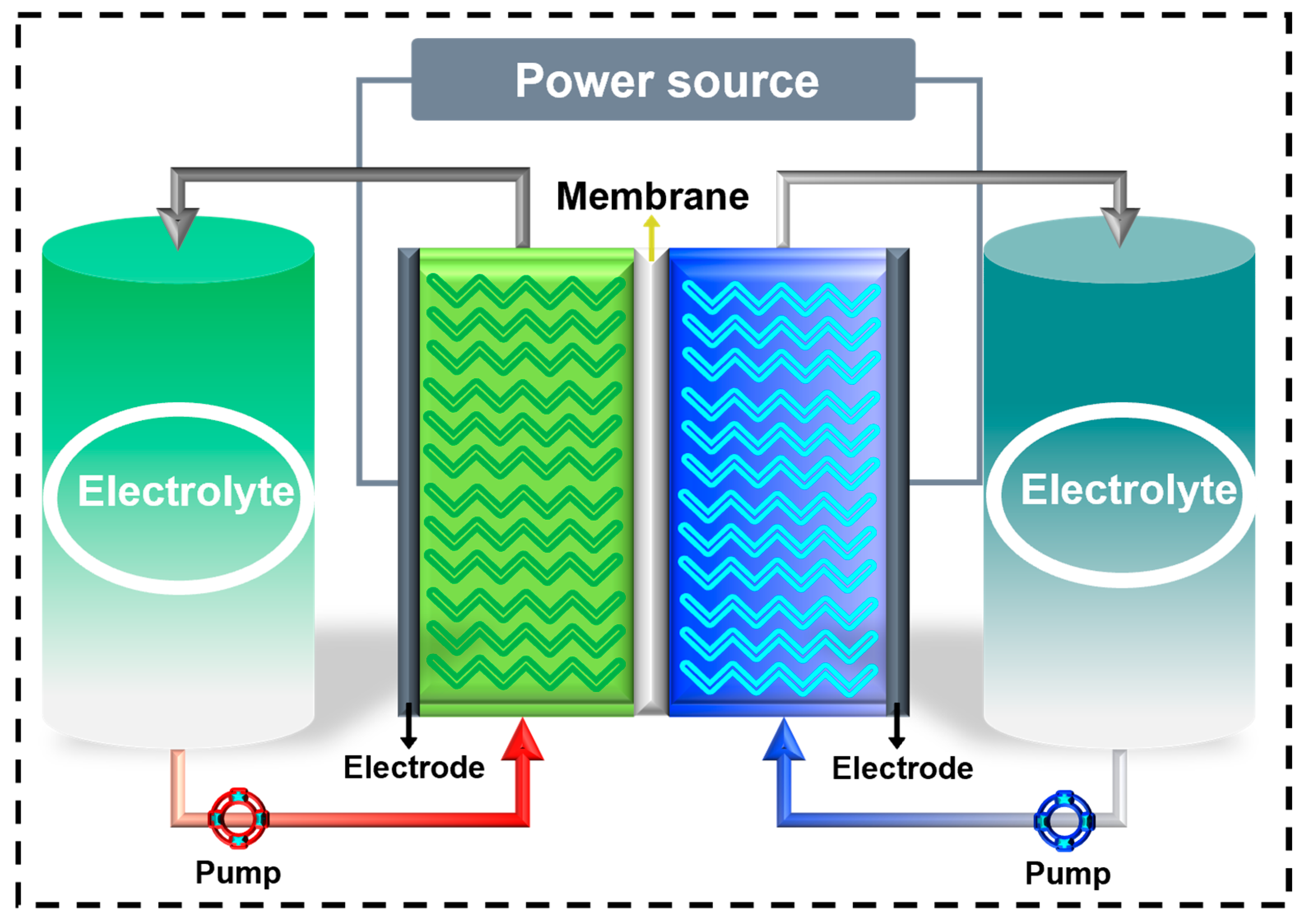
In a redox flow battery (RFB), a rechargeable system is formed by combining an electrochemical cell with two external tanks, each holding a liquid electrolyte that contains one or more redox-active compounds. Inside the cell, two electrodes are arranged with an ion exchange membrane positioned between them (Figure 3) [4,11]. The membrane is designed to limit capacity fade by being permeable to the supporting electrolyte (a conducting salt) while remaining impermeable to the redox-active materials. Rather than staying in the cell, the dissolved redox-active compounds circulate: the anolyte and catholyte are pumped from the outer tanks and directed past the electrodes on opposite sides of the membrane. During the charging process, energy storage is achieved as the anolyte undergoes reduction and the catholyte undergoes oxidation. During the discharging process, energy release occurs through oxidation of the anolyte together with reduction of the catholyte. In this description, the catholyte may be called the posolyte (or positive solution), and the anolyte may be called the negolyte (or negative solution). Continuous circulation of electroactive materials makes the RFB comparable to a fuel cell because the chemical reaction can be sustained, whereas the reversibility of the redox reaction at the electrodes allows the device to function as a battery through repeated charging and discharging (Figure 3).
Figure 3.
Schematic representation of a redox flow battery. The battery consists of an electrochemical cell with two compartments and a membrane separator in between. The electrolytes are circulated between the cell and the storage tanks by pumps.
Offering a paradigm shift from traditional EESs, this design boasts outstanding scalability, operational flexibility, longevity, high efficiency, and enhanced safety. The core innovation lies in the decoupling of power and energy, enabling the independent sizing of storage and generation capacity for diverse applications [2,8,9,10]. Despite not exhibiting the high energy density characteristic of small-scale energy storage systems, the RFB is considered an optimal choice for large-scale applications [8]. This is attributed to its inherently decoupled power and energy configuration, which allows for capacity scaling in a manner that is markedly more cost-effective than in other battery chemistries
3. Metal-Based Redox Flow Batteries
In 1884, the French inventor Charles Renard developed a zinc chlorine-based battery to supply continuous electrical power for his airship “La France” [12]. This work is widely seen as the first clear step toward the ARFB concept and is often taken as the start of flow battery technology. Cyclic energy storage and release in an ARFB are achieved through the reversible redox reaction of an aqueous electrolyte. In the early 1970s, interest in this technology returned when Thaller et al. at the National Aeronautics and Space Administration (NASA) in the United States built the first practical RFB for solar photovoltaic energy storage, using Fe3+/Fe2+ and Cr3+/Cr2+ dissolved in an acid medium as the catholyte and anolyte, respectively [13]. This system followed a typical RFB design, since both catholyte and anolyte were dissolved in water and were separated by an ion exchange membrane. Thaller and coworkers also put forward several key suggestions for battery system design, and many of them are still used today: (a) For efficient operation and high energy density, both catholyte and anolyte should be soluble in the aqueous phase; (b) for safety, the electrolyte solvent should be inert; (c) to maintain charge neutrality, the separator should block crossover of redox species while allowing free diffusion of either positive or negative ions as charge carriers. In recent years, because energy crisis pressure and environmental concerns have grown, practical use of renewable energy has become more urgent, and strong external factors have driven broad development of RFBs. Of all flow battery technologies, the all-vanadium redox flow battery (VRFB) has achieved the highest level of development and has been the subject of intense research [14,15,16]. It was first put forward by Skyllas-Kazacos and Robins in the 1980s [13,17]. In a VRFB, electrical energy is stored and released through reversible conversion between different valence states of vanadium ions, giving strong electrochemical activity and a higher open-circuit voltage [13]. Currently, several major advances have recently been achieved in the commercialization of all-vanadium redox flow battery (VRFB) technology. A case in point is the 200 MW/800 MWh VRFB system that has been commissioned in Dalian, China [10]. Over the past decade, Japan has also established multiple MW/MWh-scale VRFB installations, primarily to support the integration of renewable energy sources including solar and wind power [18]. The VRFB is scalable and promising for large-scale energy storage due to their long cycle life, safety, and flexibility. However, challenges remain in cost, maintenance, and precise system monitoring. Accurate state-of-charge (SOC) estimation is critical for safe and durable operation. Sun and coworkers [4] contributed to SOC estimation and modeling methods for VRFBs. They cover VRFB working principles and influencing factors, summarizing empirical and equivalent circuit models (ECMs) used for SOC estimation. ECMs offer a practical balance between usability and electrochemical accuracy, capturing key operational dynamics such as pump losses, flow rate, and temperature effects.
At the beginning of the 21st century, metal-based RFBs other than VRFBs were also developed and investigated, including systems based on iron, zinc, lead, and chromium [19,20]. However, challenges are still faced by all of these systems, including ion crossover through membranes, sluggish reaction kinetics, and high cost. For example, to speed up the sluggish reaction kinetics of the Cr3+/Cr2+ redox species, an additional catalyst is required, which raises the cost of the battery system [21]. Low-cost all-iron chemistries show promising potential for RFBs, but lower capacity utilization is often caused by heterogeneous plating of elemental iron in the anolyte [22,23]. Although contamination from crossover of redox species can be reduced in all-VRFBs by using the same element on both sides, widespread implementation of large-scale VRFBs has been limited by expensive vanadium and difficult maintenance. In recent years, zinc-based RFBs have been studied intensively because of their low cost and have attracted major commercialization efforts, yet capacity decay can result from parasitic reactions such as hydrogen evolution [24,25]. In addition, several risks are often associated with transition metal-based battery systems, including environmental concerns, metal toxicity, and complicated system design for large-scale batteries [11]. These limitations have therefore contributed to ongoing efforts to search for new promising candidates as alternatives for RFB systems.
4. Organic Molecule-Based Redox Flow Batteries
Aqueous organic redox flow batteries (AORFBs) are a novel large-scale energy storage technology that utilizes redox-active organic molecules dissolved in aqueous electrolytes to store and release electrical energy through reversible redox reactions of organic redox couples. Their advantages include high safety due to the use of water as the solvent, low cost of redox-active molecules, tunable battery performance, and environmental friendliness. The properties of redox-active materials, such as redox potential, molecular solubility, and stability, are directly related to battery performance (capacity, voltage, and cycle life) [2,4]. Traditional aqueous organic flow batteries are still largely based on inorganic redox materials, particularly metal-based active materials. Although significant progress has been made, the high cost, poor redox reaction kinetics, and potential environmental concerns associated with these materials have limited the large-scale commercialization and widespread application of metal-based organic flow batteries [2]. To address these challenges, non-metallic organic redox flow battery systems, which rely on more abundant resources, have attracted increasing attention. As shown in Table 1, the high-efficiency RFBs are developed based on organic, metal-free redox-active molecules such as quinones [5], viologens [6,7,8,9], polycyclic azine derivatives [10], alloxazines [11], phenazines [12,13,14,15], and indigo derivatives [16,17]. These organic molecules provide a promising alternative to metal-based electrolytes, as they can be derived from low-cost and widely available elements [18]. More significantly, the critical electrochemical characteristics of organic molecules—including solubility, redox potential, and structural stability—can be optimized through structural modification. This review explores strategies for tuning the redox potentials, solubility, and stability of quinone and aza-aromatic compounds through the introduction of electron-donating and electron-withdrawing groups.
Table 1.
An overview of representative quinone compounds that have been experimentally reported as electrolytes for aqueous organic flow batteries. The experimental redox potentials and solubilities of compounds are shown (T = 298.15 K).
4.1. Quinone Molecule-Based Redox Flow Batteries
Among the various organic redox couples developed for redox flow batteries (RFBs), quinone-based compounds are widely distributed in natural systems [19]. They also feature rapid electrochemical reaction rates [20,21,22], and their physicochemical properties can be flexibly adjusted based on diverse molecular structures [18,23]. As the most basic quinone derivative, benzoquinone (BQ) is often selected as an electrolyte material on account of its high theoretical specific capacity. In a comprehensive investigation, Ding et al. [24] examined the electrochemical behavior of the BQ/hydroquinone (H2BQ) redox couple in aqueous solutions across a range of pH conditions. When combined with a graphite anode, this quinone-integrated hybrid RFB achieved a specific capacity of 400 mAh g−1. However, despite its favorable electrochemical characteristics, the solubility of BQ is unable to meet the practical application standards of aqueous RFBs (ARFBs). To overcome this limitation, 1,2-benzoquinone-3,5-disulfonic acid (BQDS) [25] was subsequently developed as a promising catholyte material for ARFBs. According to the research [25] the attachment of sulfonic acid groups (–SO3H) to the benzoquinone framework effectively increases both solubility and redox potential—two key factors that are essential for improving the energy density of the battery system.
Beyond benzoquinone and its derivatives, anthraquinone (AQ) possesses two aromatic rings that facilitate the delocalization of negative charge, resulting in markedly greater stability compared to BQ. Like BQ, however, the practical application of AQ as a catholyte material is hindered by its low solubility, which limits the achievement of high energy density in aqueous RFB systems. Aziz and colleagues [26] introduced 9,10-anthraquinone-2,7-disulfonic acid (AQDS) as a highly promising anolyte for aqueous RFBs. In this system, the quinone/hydroquinone moiety undergoes a reversible two-electron, two-proton redox reaction (Figure 4). When paired with a bromine-based catholyte, the AQDS anolyte delivered excellent capacity retention (over 99% per cycle) and a high galvanic peak power density of 0.6 W cm−2 at 1.3 A cm−2. The introduction of two sulfonic acid groups (–SO3H) enhanced the hydrophilicity of the molecule, thereby significantly improving its aqueous solubility up to 1.0 M.
Figure 4.
The coupled two-electron two-proton redox reaction of AQDS.
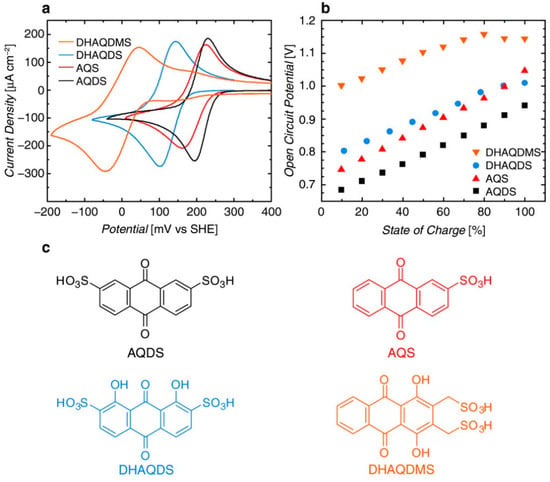
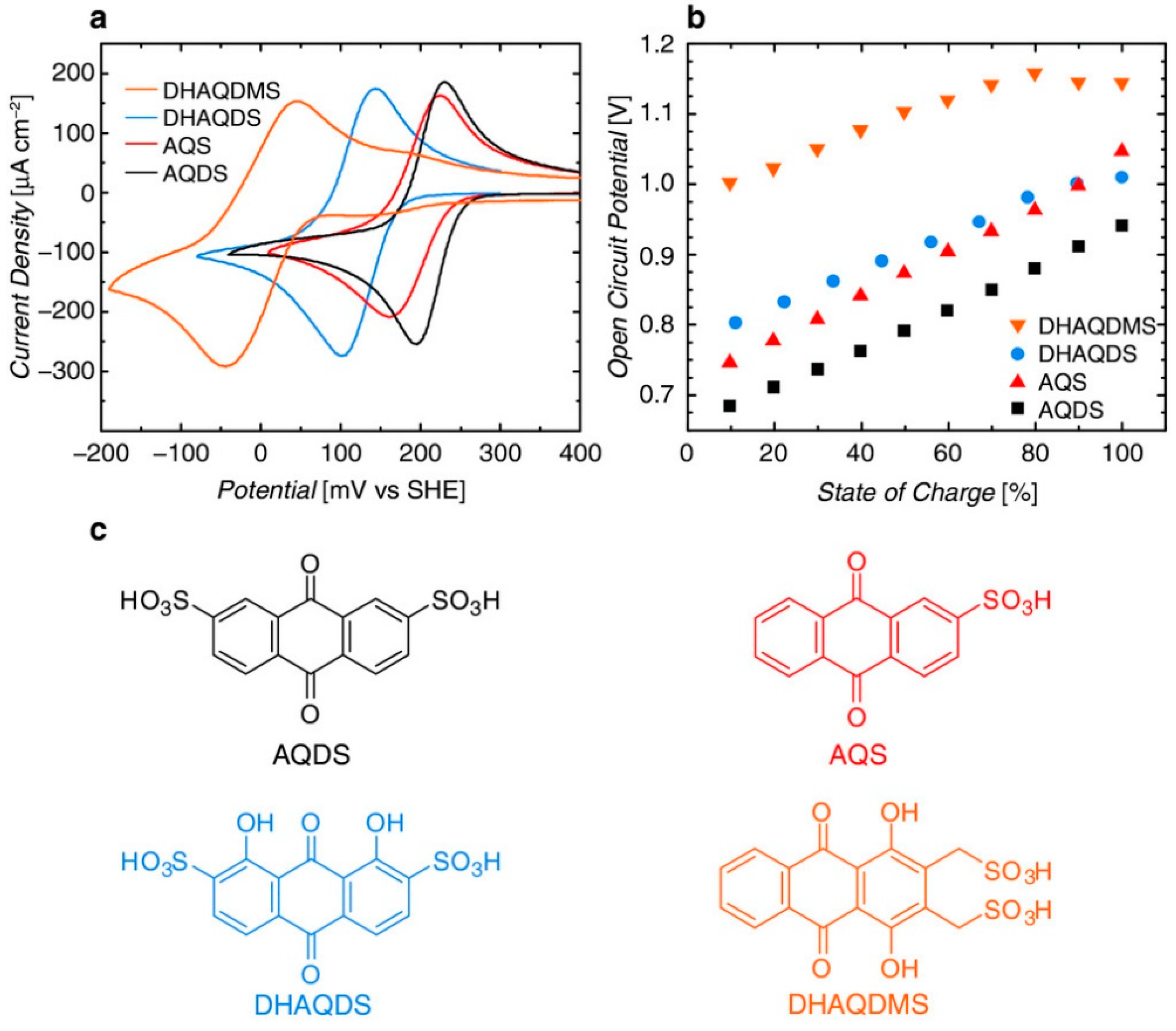
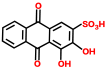
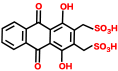
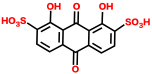
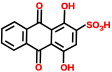
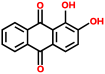
Afterward, four representative anthraquinone derivatives—including anthraquinone-2-sulfonic acid (AQS), alizarin red S (ARS), 1,8-dihydroxy-9,10-anthraquinone-2,7-disulfonic acid (DHAQDS), and 1,4-dihydroxyanthraquinone-2,3-dimethylsulfonic acid (DHAQDMS)—were investigated as anolytes in combination with a bromide-based catholyte for electrochemical testing [20,26]. The research showed that the redox potential and stability of these AQ derivatives can be effectively regulated by adjusting the type, position, and number of functional groups, as well as their hydrophilicity. As shown in Figure 5a, AQS shows a redox potential approximately 20 mV lower than AQDS, which is attributed to the lack of an additional electron-withdrawing –SO3H group. In contrast, the introduction of two electron-donating hydroxyl (–OH) groups in DHAQDS lowers its redox potential by around 90 mV relative to AQS. Furthermore, the conjugation between the redox center and the –SO3H groups in DHAQDMS is interrupted by a methylene spacer, leading to a further reduction of about 100 mV in its redox potential compared to DHAQDS. However, the reduced form of DHAQDMS undergoes rapid decomposition, resulting in severe capacity decay during constant-voltage cycling. Beyond modulating redox potential, the incorporation of hydrophilic groups such as –SO3H and –OH also improves water solubility of the AQ derivatives. When paired with bromide, the AQS-based system exhibits greater stability, a higher open-circuit voltage near 1.0 V at high states of charge (Figure 5b), and a higher peak power density of 0.7 W cm−2 than the conventional AQDS/bromide system. Functional groups play a critical role in modulating the redox potential, solubility, and stability of molecular structures.
Figure 5.
(a) Cyclic voltammograms of AQDS (black), AQS (red), DHAQDS (blue), and DHAQDMS (orange), showing the decrease in reduction potential through chemical modification. (b) Open-circuit voltage as a function of state of charge for each quinone in a flow cell paired with the bromine–hydrobromic acid anolyte. (c) Structures of AQDS, AQS, DHAQDS, and DHAQDMS. (a–c) reproduced with permission from ref. [20], Copyright 2017, Wiley-VCH Verlag.
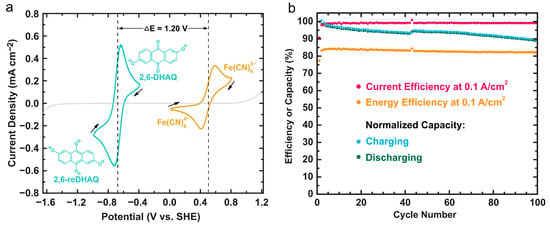
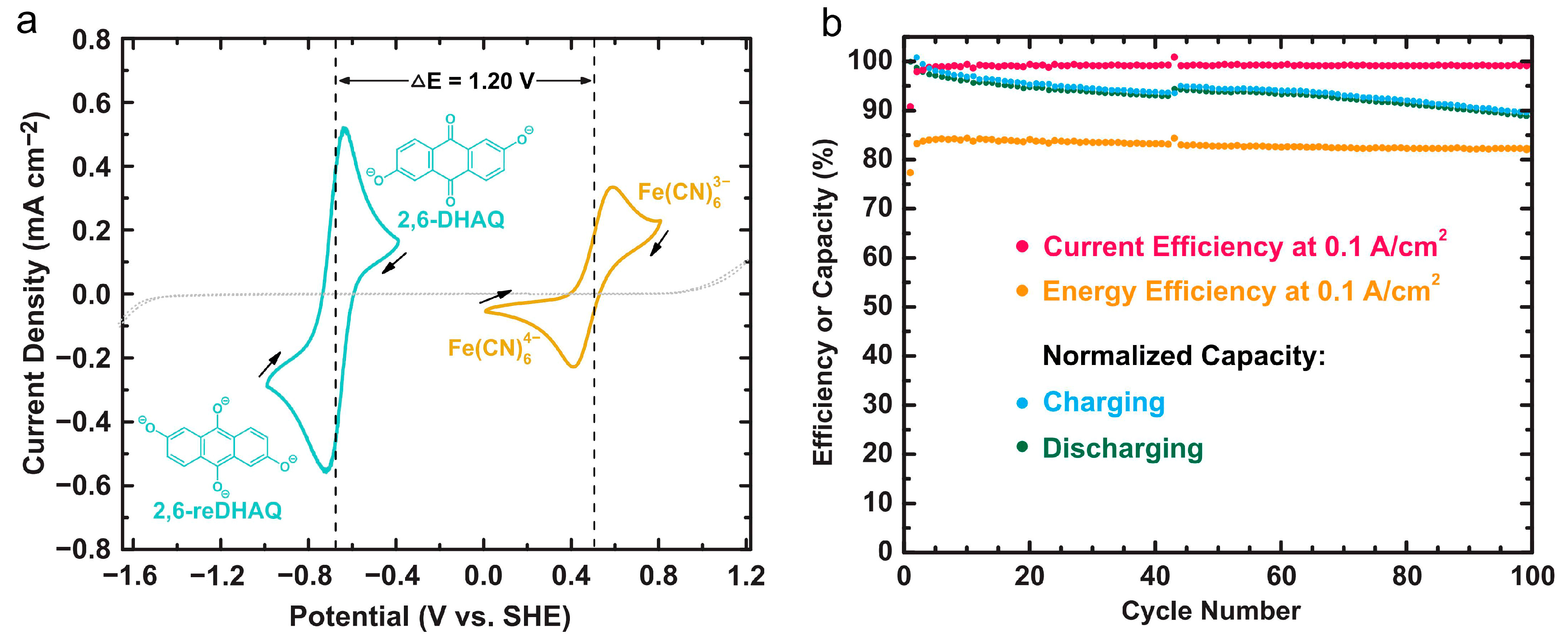
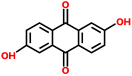
Experimental results indicate that the application of AQ and BQ derivatives in acidic aqueous RFBs delivers favorable electrochemical performance and brings about a substantial reduction in system costs. Nevertheless, the use of bromide as the positive electrolyte is restricted in certain reaction stages due to its inherent toxicity. As a viable solution, adopting a mild alkaline electrolyte instead of traditional sulfuric acid offers a promising way to avoid such safety and toxicity issues. Following this strategy, an alkaline RFB system (Figure 6) was developed using 2,6-dihydroxyanthraquinone (2,6-DHAQ), which contains two electron-donating –OH groups, as the anolyte paired with a ferro/ferricyanide catholyte. This configuration achieved high capacity retention of over 99% and exhibited a higher open-circuit voltage of 1.20 V compared to the AQDS-based system in acidic conditions [27]. Stability tests further confirmed that this anolyte demonstrates excellent chemical and electrochemical stability in alkaline environments but not in acidic media. Similarly, 2,5-dihydroxy-1,4-benzoquinone (DHBQ) in weakly alkaline solutions exhibits high solubility (exceeding 8 M electrons in 1 M KOH) and a relatively low redox potential of −0.72 V vs. SHE [28], which is mainly attributed to the presence of two hydroxyl groups. When coupled with the ferricyanide/ferrocyanide catholyte, the battery achieved a high open-circuit voltage of 1.21 V with a coulombic efficiency above 99%. Despite these advantages, the small molecular size of DHBQ leads to severe crossover through the membrane, resulting in capacity loss. In addition, chemical decomposition of the aromatic ring during long-term cycling can also negatively affect the overall stability of the system. Li and colleagues [29] introduced naphthalene derivatives as organic redox-active materials with remarkable solubility (~1.5 M) and a robust redox structure. These compounds demonstrated no substantial capacity fade over 40 days (50 Ah L−1) when operated in air, making them promising for sustainable aqueous flow batteries. Through spectral characterization and theoretical modeling, it was determined that the dimethylamine groups play a dual role: they enhance aqueous solubility while protecting the redox-active center, thereby maintaining molecular integrity throughout cycling. The pursuit of sustainable energy storage necessitates alternatives to corrosive acidic and alkaline electrolytes. Neutral aqueous organic redox flow batteries (AORFBs) offer significant promise. Herein, Chen and coworkers reported an AORFB utilizing 9,10-anthraquinone-2,7-disulfonate (2,7-AQDS) as the negolyte and potassium 1,4-dihydroxyphenylsulfonate (HQS) as the posolyte. Their investigation reveals that the choice of anion in the neutral supporting electrolyte plays a critical role; by modulating hydrogen-bonding networks, it substantially influences both the solubility and kinetic behavior of the redox-active materials. Among the electrolytes examined, Na2SO4 was identified as providing the optimal overall performance [30]. In DFT study, Er and coworkers [31] found that electron-donating substituents (–NH2 and –OH) decrease the redox potential, whereas electron-withdrawing groups (–F, –COOH, and –SO3H) increase it. Regarding solubility, the introduction of –OH, –COOH, and –SO3H groups was shown to improve it for increasing the battery capacity.
Figure 6.
(a) Cyclic voltammogram of 2 mM 2,6-DHAQ (dark cyan curve) and ferrocyanide (gold curve) scanned at 100 mV s−1 on glassy carbon electrode; arrows indicate scan direction. Dotted line represents CV of 1 M KOH background scanned at 100 mV s−1 on graphite foil electrode. (b) Capacity retention, current efficiency, and energy efficiency values of 100 cycles. Normalized capacity is evaluated based on the capacity of the first charge and discharge cycle. Figure reproduced with permission from ref. [27], Copyright 2015, American Association for the Advancement of Science.
4.2. Aza-Aromatic Molecule-Based Redox Flow Batteries
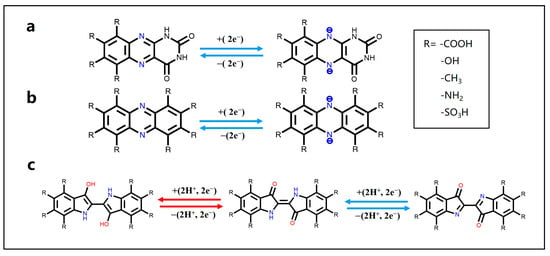
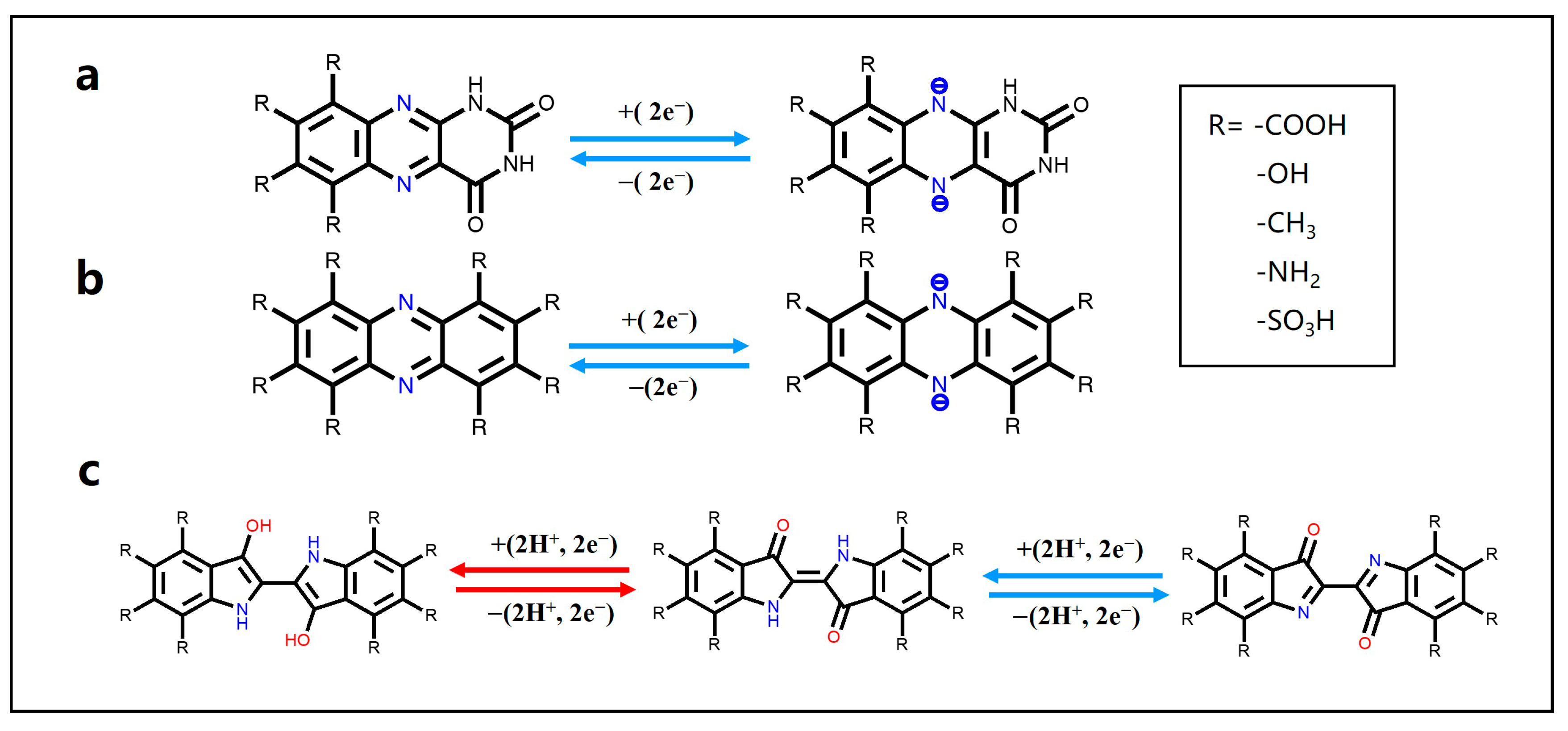
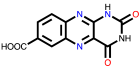
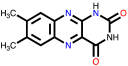
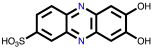
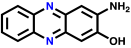
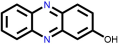
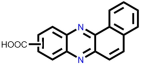
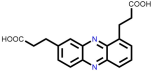
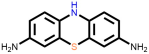
In addition to quinone and their derivatives, functional group and heteroatom modification techniques serve as a new strategy for the design of aza-aromatic molecular structure, effectively addressing battery energy density and cycling stability issues, and significantly enhancing the electrochemical performance of batteries. In 2016, Aziz et al. modulated the microstructure and electrochemical properties of aza-aromatic alloxazine compounds using the electron-donating (−OH and −CH3) or electron-withdrawing (−COOH) functional groups, enabling the design of high-energy-density and high-cycling-stability organic redox flow batteries (Table 2 and Figure 7a) [11]. This study employed theoretical computational methods to elucidate the impact of variations in the substitution sites and numbers of the electron-donating hydroxyl (−OH) group on the reduction potential of the phenazine anodic active material. Subsequently, Wang and coworkers proposed a molecular design strategy based on the phenazine framework (Table 2 and Figure 7b) [12]. Researchers successfully synthesized anodic phenazine derivative materials with low redox potential, high solubility, and excellent chemical stability through the synergistic modulation of different electron-donating and electron-withdrawing functional groups (−COOH, −OH, and −SO3H). This strategy achieves a reversible capacity for aqueous organic flow batteries that reached an unprecedented 90% of the theoretical capacity. Moreover, substitution of phenazine with different functional groups, where the synergistic effects of an electron-donating group (−OH) and hydrophilic groups (−COOH and −SO3H), reduced the redox potential of the anodic phenazine derivatives and enhanced their solubility in aqueous solutions. Zhong’s research group proposed the use of new electron-donating functional groups (−NH2 and phenyl) in synergy with the original −COOH, −OH, and −SO3H functional groups to modify the phenazine structure (Table 2 and Figure 7b) [13], leading to the design of high-voltage and high-energy-density flow batteries. Additionally, intramolecular hydrogen bonds induced by functional group substitution, along with the molecule’s inherent large conjugated structure, contributed significantly to enhancing the battery’s redox reversibility and preventing the cross-membrane permeation of molecular materials. Therefore, it is essential to further deepen the understanding of the electrochemical performance modulation mechanisms at the atomic and molecular scales. In recent years, Wang and Ji groups reported a novel design strategy for highly stable aqueous organic active molecules [15]. By leveraging the hydrophilicity and electron-donating characteristics of propionic acid functional groups, they synthesized a series of water-soluble phenazine derivatives with different substitution positions and functional groups (Table 2), successfully achieving stable long-term charge-discharge cycling of aqueous organic flow batteries under high-temperature conditions. This demonstrates their significant potential for practical applications in high-temperature regions abundant in solar energy.
Table 2.
An overview of representative aza-aromatic compounds that have been experimentally reported as electrolytes for aqueous organic flow batteries. The experimental redox potentials and solubilities of compounds are shown (T = 298.15 K).
Figure 7.
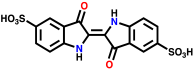
The reversible redox reactions are shown for three representative aza-aromatic molecules in (a) alloxazine and its derivatives that undergo a two-electron process in alkaline medium; (b) phenazine and its derivatives that undergo a two-electron process in alkaline medium; (c) indigo and its derivatives that undergo two sets of two-electron two-proton redox reactions in acidic and neutral conditions, respectively, wherein only the reaction indicated by blue arrows is considered in the current study.
To date, most existing aqueous RFB systems still depend on toxic bromine-based species or expensive metal-based redox couples as the positive half of the cell when paired with quinone-based electrolytes. To overcome these limitations, Yang et al. [32] developed an all-organic aqueous RFB by employing two distinct quinone derivatives: BQDS as the catholyte and AQDS as the anolyte. This configuration achieved an open-circuit voltage of 1.05 V. Another promising class of redox-active materials for aqueous RFBs is indigo—a naturally occurring pigment extracted from specific plant leaves. Building on this natural platform, Carretero-González et al. designed soluble indigo derivatives featuring both electron–proton-donating groups (–OH or –NH–) and electron-accepting carbonyl moieties within a single conjugated framework. As shown in Figure 7c, these molecules exhibit three distinct redox states [17]. By introducing electron-withdrawing sulfonic acid groups, the battery voltage (approximately 1.0 V) and solubility (1.6 mol L−1) were significantly improved. The authors further demonstrated that these electroactive species can function as both the anolyte and catholyte in a symmetric ARFB system operating at neutral pH, effectively addressing issues related to cell corrosion and membrane compatibility. This observation was further confirmed by the Zhu group in their subsequent studies [16]. In a similar effort, Aziz and colleagues reported a symmetric all-quinone aqueous flow battery that uses low-cost alizarin derivatives as the sole redox-active material on both electrodes [33]. The incorporation of electron-withdrawing –SO3H substituents on the molecular backbone enabled the system to deliver an open-circuit voltage of 1.04 V and a high capacity retention of 163 mAh g−1, consistent with the trends observed in previous studies [17]. Interestingly, Jin group introduced DAPQ, an anthraquinone–phenazine fused molecule with a π-conjugated architecture enabling four-electron storage [34]. The rigid fused-ring structure integrates four redox-active sites, enhancing aromaticity to resist degradation while achieving reversible multielectron transfer and superior volumetric capacity. The research group of Professor Li utilized an electron-donating group (−NH2) to modify thiophenazine molecules, effectively reducing the anodic redox potential and increasing the solubility of the molecules in aqueous solutions [35]. This approach successfully enabled long-term charge-discharge cycling in aqueous organic redox flow batteries. Therefore, a major challenge for organic ARFBs is to tune the properties of the electroactive compounds to meet the practical requirements. Functionalization is an important approach in molecular modification and design, which does not only improve the redox and solubility of the original backbone molecules, but is also an effective way to discover and design new chemistries that could be useful for ARFBs. In industry, a significant technological milestone was reported by Quino Energy in June 2024, with the announcement of its operational 10 kW/100 kWh prototype system. This scale is notable, as its storage capacity is sufficient to meet the average energy demand of a household for more than three days. To validate its technology across different scales, the company has also deployed smaller pilot systems, including a 6 kW/24 kWh unit and two 1.5 kW/6 kW units. The company’s technology is based on aqueous organic flow batteries that utilize quinone molecules as the electroactive material, a design intrinsically geared toward scalability and cost-effectiveness for applications like renewable integration and grid support.
5. Advanced Theoretical Tools for Screening Promising Molecules in RFBs
The development of next-generation redox flow batteries (RFBs) critically depends on the discovery of high-performance, low-cost, and sustainable redox-active molecules. Traditional experimental approaches to molecule discovery are often slow, resource-intensive, and constrained by chemical intuition. To overcome this bottleneck, advanced theoretical and computational screening tools have emerged as indispensable assets, enabling a paradigm shift toward rational, data-driven design.
This computational paradigm leverages a multi-scale toolkit to predict the key performance metrics of candidate molecules in silico, prior to any synthesis. At the foundation lie first-principles quantum chemical methods, primarily Density Functional Theory (DFT). DFT calculations are routinely employed to predict fundamental electrochemical properties, most importantly the standard reduction potential, which dictates the cell voltage. Beyond potential, DFT provides critical insights into molecular stability by probing possible decomposition pathways and assessing the resilience of molecules in their charged states. Furthermore, calculations of frontier molecular orbital energies (HOMO and LUMO) offer a preliminary gauge of reactivity and electrochemical stability, serving as valuable descriptors for high-throughput screening.
5.1. Early High-Throughput Virtual Screening
Computer-aided drug design is a powerful methodology that is widely applied in the early stages of drug discovery. When combined with chemical biology screening methods, it enables the efficient identification and development of promising drug-like molecules [36]. With the rapid development of high-performance computing platforms and the exponential growth of computational power, virtual screening methods have been increasingly applied in multidisciplinary fields, ranging from medicinal chemistry to materials science. These computational approaches not only effectively reduce the time and economic costs required for the identification of promising candidates but also overcome the limitations of traditional trial-and-error experimental strategies, which are often time-consuming, labor-intensive, and limited in scope. Despite these advantages, high-performance materials and bioactive molecules are often distributed sparsely within vast chemical spaces, making their discovery challenging. First-principles calculations, although highly accurate and reliable, suffer from low efficiency and high computational demands when applied to large-scale virtual screening, thereby restricting their application in high-throughput material discovery.
Given the enormous molecular conformational space and the inherent inefficiency of conventional computational methods, high-throughput virtual screening (HTVS) has emerged as a powerful and efficient strategy to accelerate the discovery and development of new materials. HTVS enables the construction of large-scale virtual libraries containing diverse structural and chemical candidates, followed by rapid and accurate prediction of their key physicochemical and functional properties. This systematic in silico approach ultimately allows researchers to prioritize the most promising molecules for subsequent experimental validation, characterization, and in-depth mechanistic studies [37,38,39,40,41,42]. In the screening process, HTVS workflows rely on well-constructed virtual libraries to mine chemical space systematically and identify high-value targets from massive datasets. Therefore, the establishment of high-quality, diverse, and representative virtual libraries is critical for efficiently exploring the chemical space of small molecules and laying a solid foundation for targeted down-selection and reliable experimental verification.
5.2. HTVS for Identifying the Promising Molecules in RFBs
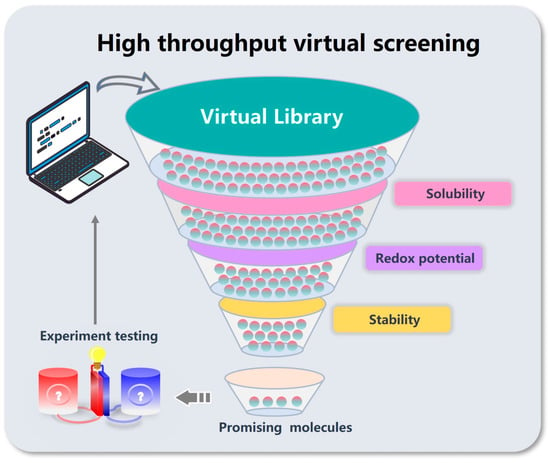
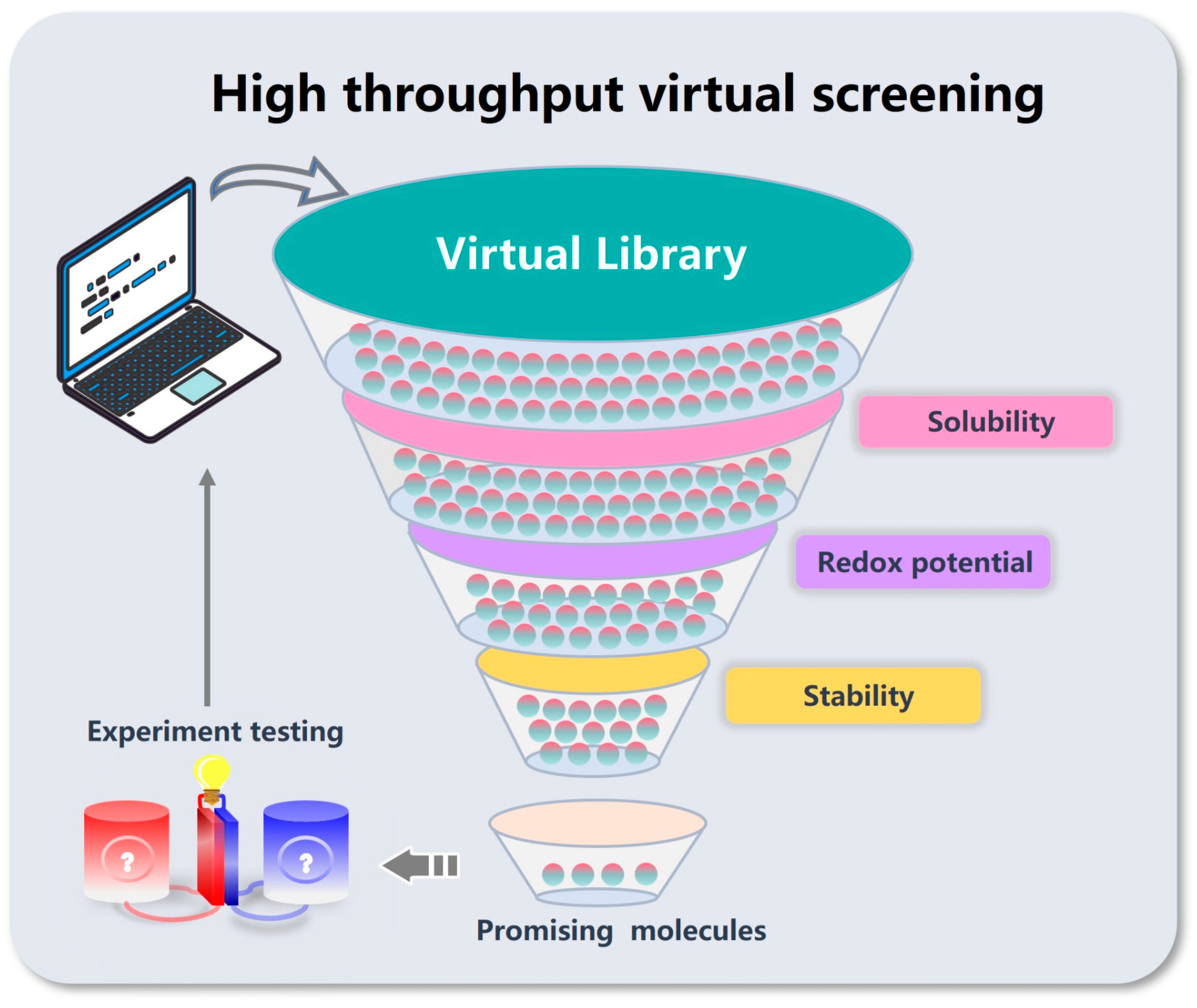
As displayed in Figure 8, the creation of virtual libraries containing diverse candidate electroactive compounds represents an effective HTVS approach for predicting key molecular properties—including solubility, redox potential, and stability—and subsequently identifying the most promising candidates for further study. These battery-relevant properties constitute the essential performance metrics for achieving high energy density in redox flow batteries (RFBs). To meet the demands of commercial applications, significant improvements in electrolyte properties—particularly redox potential, solubility, and stability—are required to enhance energy density.
Figure 8.
Schematic showing the chain of high-throughput virtual screening for identifying promising candidates for ARFBs.
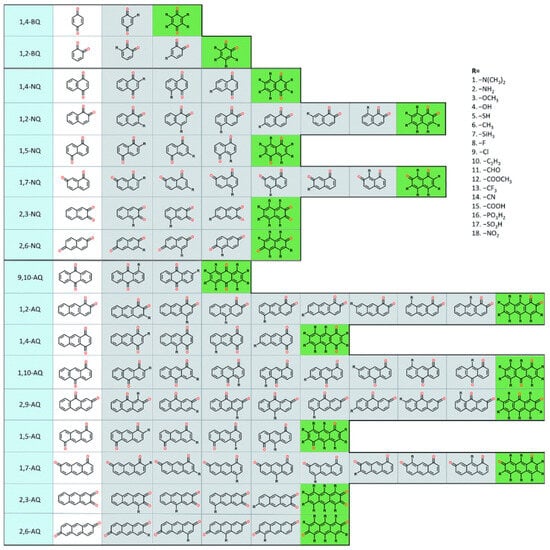
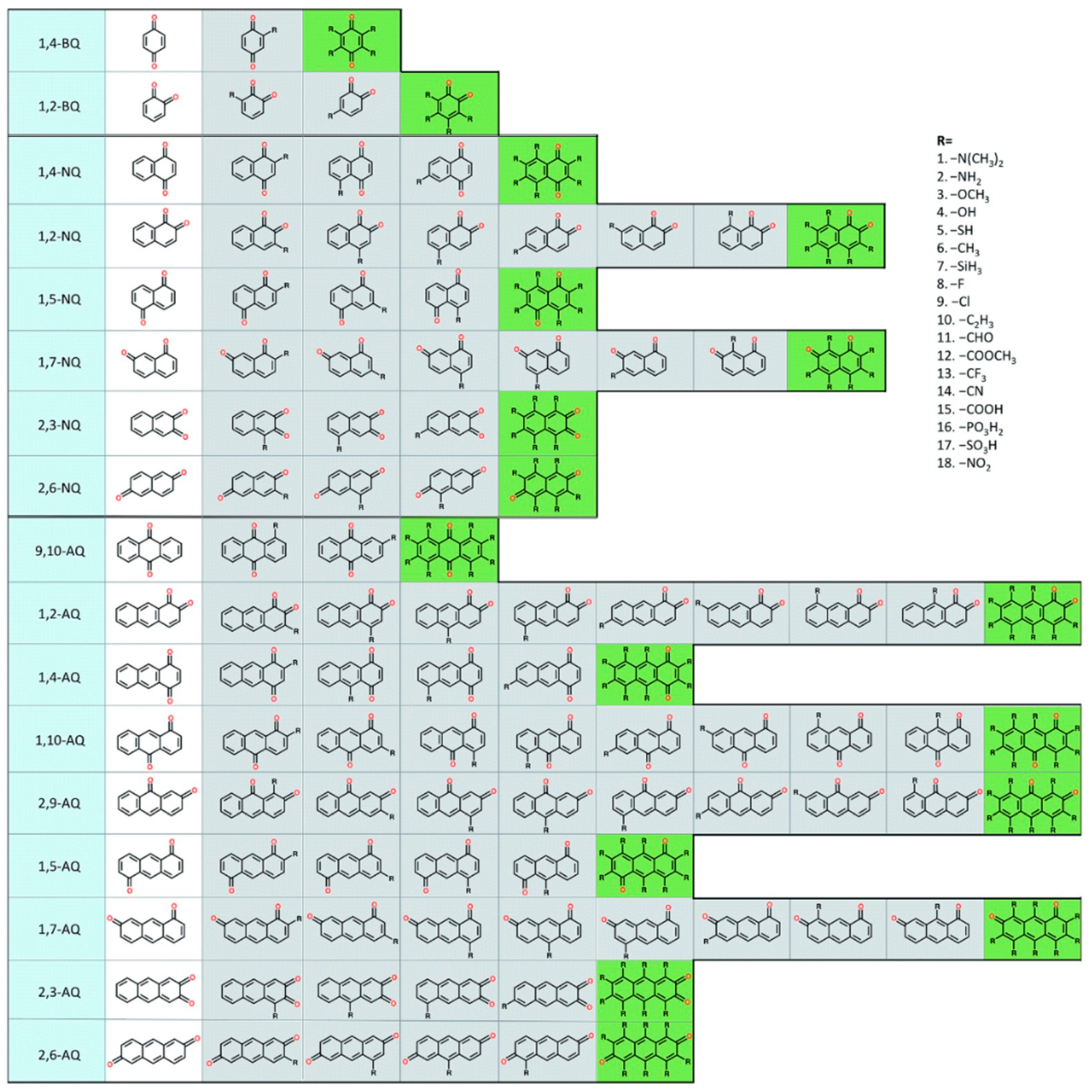
Energy density in RFBs is proportional to the concentration of electroactive species, making solubility a paramount performance metric. This presents a significant challenge for organic active materials, as many promising molecular scaffolds—particularly those with large, rigid, or highly conjugated structures—exhibit inherently low aqueous solubility. A common strategy to overcome this limitation, particularly in HTVS workflows, involves the construction of virtual libraries wherein organic core structures are systematically decorated with functional and solubilizing groups (e.g., –SO3H, –OH, –COOH, –NH2), as indicated in Figure 9. This approach enables rapid exploration of chemical space to identify derivatives that combine high solubility with target redox potentials and stability. To screen for soluble molecular candidates for aqueous redox flow batteries (ARFBs), a range of computational prediction methods can be employed to evaluate the solubility of newly designed molecules. These approaches include multiple kernel [43], solvation energy [37], artificial neural networks [44], consensus machine learning models [45], and so on. By computationally screening solubility in virtual libraries, promising candidates with favorable solubility can be identified and prioritized for further virtual screening and experimental validation.
Figure 9.
A schematic representation of the molecular screening library of quinone isomers. Figure reproduced with permission from ref. [37], Copyright 2015, Royal Society of Chemistry.
Similarly, energy density is also fundamentally and directly determined by the cell voltage, which is defined as the potential difference between the catholyte and anolyte within the stable electrochemical window of the electrolyte system. Therefore, accurately identifying redox-active species with a large potential gap between anodic and cathodic materials is of critical importance for the development and practical application of aqueous redox flow batteries (ARFBs). To achieve this goal, an enumerated virtual molecular library can be established to screen a large number of candidate compounds, and the redox potentials of these newly generated molecules can be efficiently calculated through first-principles simulations or accurately predicted by using reliable computational descriptors and machine learning models. According to their redox potentials, molecules with relatively low reduction potentials are typically selected as anolytes, also known as negolytes, while those with higher redox potentials are suitable for use as catholytes, or posolytes. In addition to redox potential, other key properties such as aqueous solubility, chemical stability, and electrochemical reversibility must also meet the basic application requirements. After screening out compounds that satisfy the initial criteria of high solubility and appropriate redox potential, the shortlisted promising candidates will undergo further multi-dimensional evaluation and screening based on additional critical performance indicators, including long-term chemical stability, electrochemical reversibility, reaction kinetics, and synthetic accessibility. This hierarchical and stepwise virtual screening strategy can effectively narrow down the candidate range and identify the optimal molecules with the greatest potential for practical application in high-performance ARFB systems.
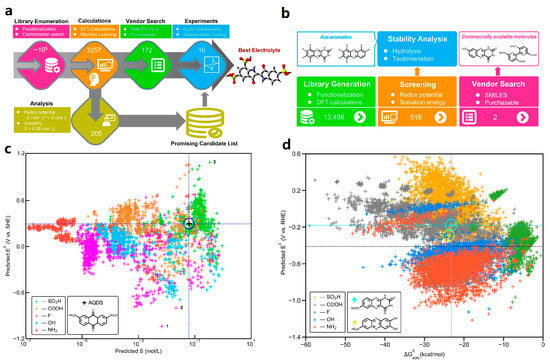
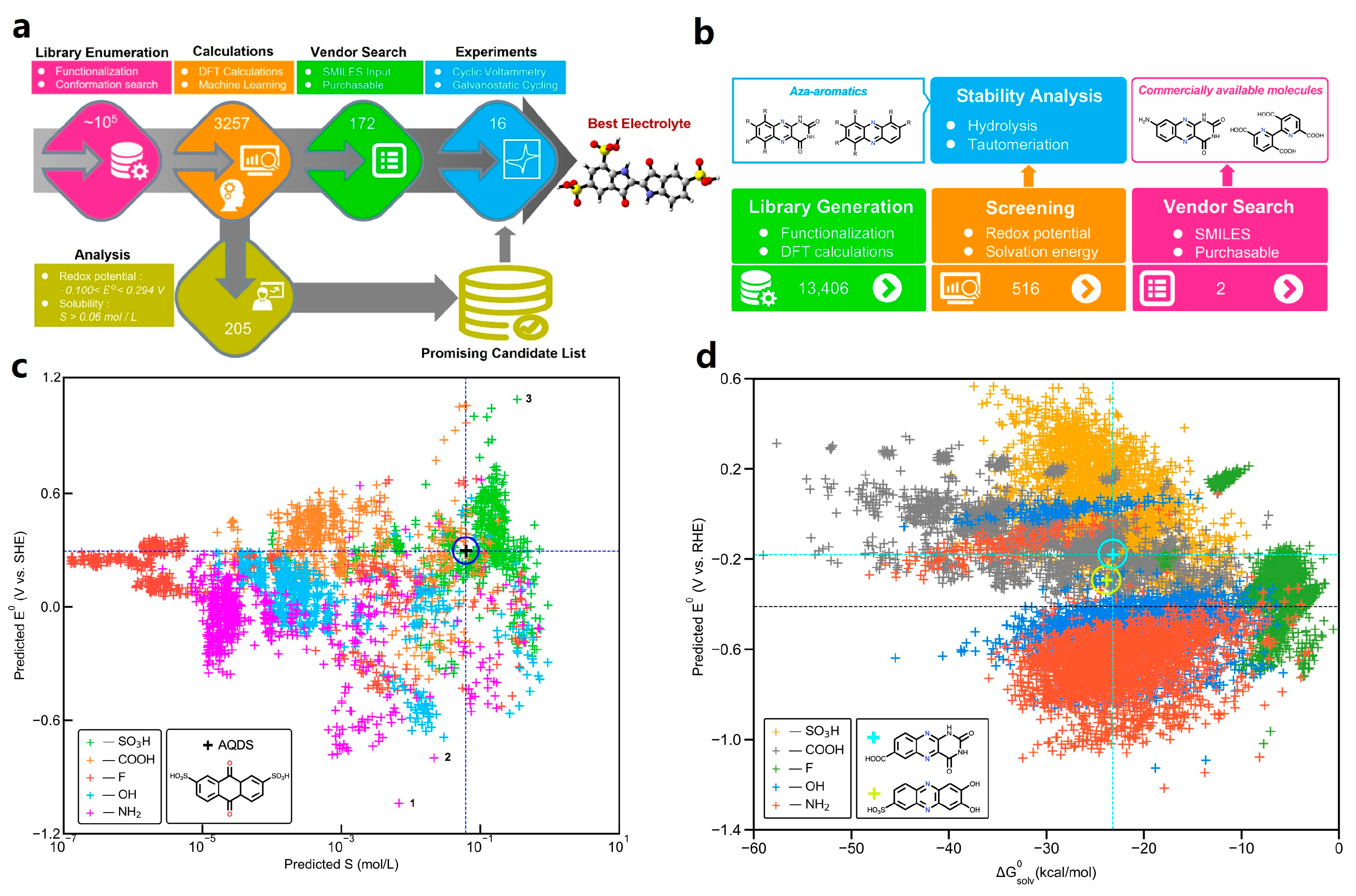
Currently, numerous computational studies have adopted high-throughput virtual screening (HTVS) to explore the chemical space of quinones. These works construct virtual libraries and predict molecular properties to screen for promising candidate molecules. For example, Aspuru-Guzik et al. [37] developed an HTVS workflow to generate a virtual library of approximately 10,000 quinone derivatives by decorating core structures with diverse functional groups. Using density functional theory (DFT), they calculated the redox potentials and solvent-free energies of around 1700 quinone-based molecules and systematically investigated the influence of functional group types and positional isomerism on redox performance. A clear structure–property relationship between redox behavior and molecular geometry was established, providing guidance for subsequent experimental design. This work also clarified key performance requirements for ARFBs: a redox potential above 0.9 V for the catholyte, below 0.2 V for the anolyte, and a solubility exceeding 1.0 M for both electrolytes. In the same year, Curtiss et al. [38] displayed that combining HTVS with tightly integrated experimental testing offers an efficient and rapid strategy for screening quinone and quinoxaline materials. Following virtual screening, the top candidate molecules can be commercially obtained or synthesized for electrochemical characterization. Battery performance, including cycling stability and capacity retention during charge–discharge cycles, is then evaluated to validate the predicted properties of anolytes and catholytes. In addition, various experimental techniques are applied to characterize the electrochemical properties of candidates, enabling further validation and selection of high-potential molecules for RFB applications. As shown in Figure 10a,c, Suleyman Er group identified 205 promising quinone candidates from 3257 redox pairs, which are predicted to have higher solubility and a lower redox potential than the standard anolyte, anthraquinone-2,7-disulfonic acid(AQDS) [31]. Subsequent electrochemical studies on commercially available compounds from this group pinpointed several that perform well in a practical ARFB setup. In this study, ML was used to construct the prediction model to estimate the solubilities of molecules. As shown in Figure 10b,d, the same group also identified 516 promising aza-aromatic molecules for experimental testing in ARFBs [46]. These candidates exhibit a lower redox potential and higher solubility compared to the benchmark, alloxazine 7-carboxylic acid (ACA). An automated search of chemical suppliers revealed that two of the most promising molecules are commercially available for immediate purchase. In this study, this analysis into the decomposition of alloxazine-based molecules via hydrolysis demonstrates that their chemical stability is determined by the type and number of functional groups. Specifically, introducing electron-withdrawing groups (–OH and –NH2) proved beneficial by simultaneously lowering the redox potential and solvation energy while improving the stability of the backbone structures. An analogous investigation into the phenazine family, which decomposes via tautomerization, showed a similar dependence on functional groups. In a key distinction, however, the chemical stability of phenazines was found to be positively correlated with their redox potential. Collectively, these findings suggest that a strategic combination of functional groups is a rational approach to navigating the trade-offs between redox potential, solvation energy, and chemical stability. This work provides a foundation for the meticulous molecular engineering required to enhance energy storage in ARFBs.
Figure 10.
(a) An overview of the data-driven material discovery workflow that has been employed for the identification of quinone-electroactive molecules for ARFBs. (b) The distribution of redox potentials and solubility of reactant molecules found in the virtual chemical library. (c) An overview of the HTVS workflow, as well as the 2D structural representations of the HTVS-identified promising and purchasable anolyte molecules for ARFBs. (d) The DFT-calculated E and data of all molecules of the virtual chemical library. The (a,c) reproduced with permission from ref. [31] Copyright 2022, Elsevier. The (b,d) reproduced with permission from ref. [46], Copyright 2022, Royal Society of Chemistry.
Beyond solubility and redox characteristics, the practical application of redox-active compounds depends heavily on their operational stability, which is essential for achieving reversible charge–discharge cycles and extending battery lifespan. Ideal molecular structures require a delicate balance: compact enough to deliver a high energy density per unit mass, yet bulky enough to restrict unwanted membrane permeation. The tendency of C=O conjugated hydrogen atoms to undergo water-induced Michael addition reactions [40] is a major factor contributing to molecular degradation, but this weakness can be effectively overcome by introducing appropriate functional groups. In a prior computational investigation, a virtual screening of roughly 140,000 modified quinone pairs was conducted using semi-empirical computational methods. This work quantitatively assessed the hydrolytic instability of quinones and clarified the correlations between molecular structure, redox potential, and decomposition pathways. The findings indicated that stable molecules with low redox potentials are widely available, whereas those combining high redox potential with strong stability remain extremely limited [40].
5.3. Integrating Physics, Data, and Chemical Knowledge in ML for Electrolytes and Redox Materials
Electrolyte and redox active material discovery is increasingly being organized around tightly coupled workflows in which physics, machine learning, and explicit chemical knowledge play distinct but complementary roles. Instead of positioning data-driven and physics-driven approaches as competing paradigms, recent studies show that the most effective strategies combine them: physics provides rigorous thermodynamic or transport formalisms and high-fidelity labels; machine learning supplies scalable surrogates that make long sampling, screening, and iteration feasible; and chemical knowledge, whether encoded as rules or extracted as interpretable structure property trends, constrains hypotheses, reduces spurious correlations, and keeps model recommendations aligned with realistic operating requirements [47,48,49,50].
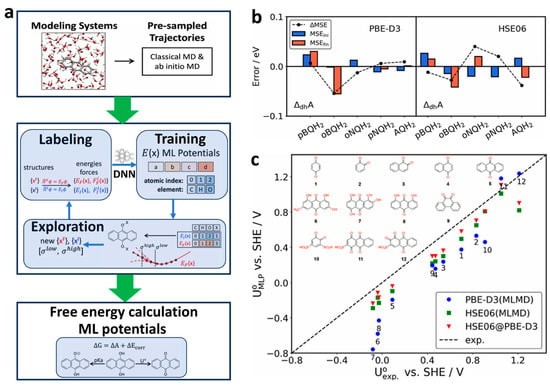
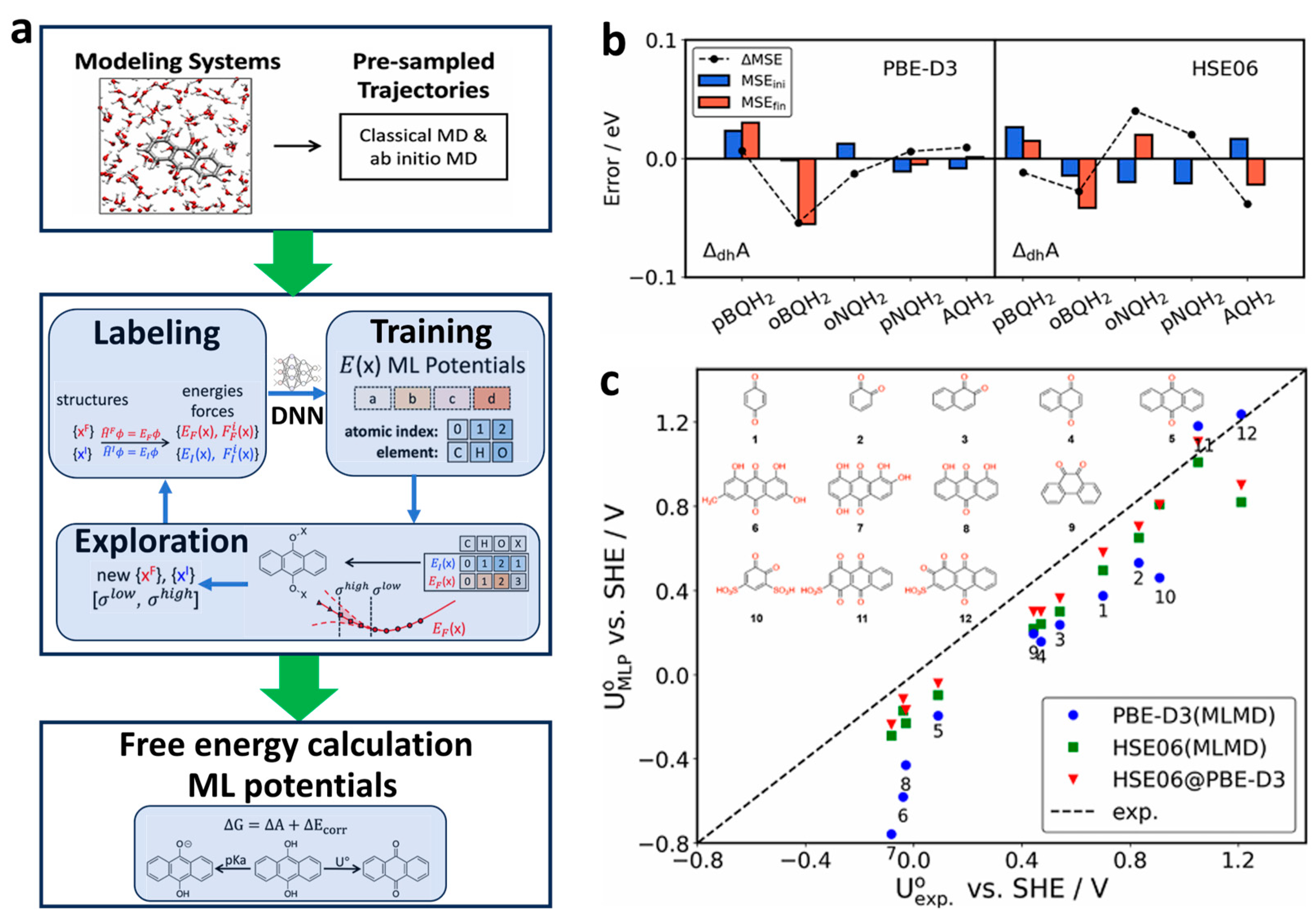
At the molecular thermodynamics level, Wang and coworkers [47] exemplify how machine learning can accelerate, rather than replace, established physics-based formalisms for aqueous organic redox flow battery electrolytes. The central advance captured in Figure 11a is the concurrent learning strategy that constructs a single, universal MLP for both reactant and product states, trained through an uncertainty triggered cycle of labeling, training, and exploration. This pathway aware data acquisition is critical because it drives the training set to cover the configurations that actually control the free energy difference, rather than only the endpoints. The workflow retains free energy perturbation and thermodynamic integration as the governing framework, but evaluates them on long, inexpensive MLMD trajectories, thereby making explicit solvent redox thermodynamics practical while still anchoring accuracy through hybrid functional referencing. The performance panels (Figure 11b,c) connect this design choice to outcomes: error statistics on energetic terms relevant to free energies, and improved correlation between predicted and experimental standard potentials, support the claim that the universal MLP approach can deliver ab initio-level fidelity at substantially reduced computational cost.
Figure 11.
Concurrent learning of a universal machine learning potential for aqueous organic redox couples. (a) Classical MD and short AIMD pre sampling, followed by an iterative label train explore loop that builds a single potential shared by oxidized and reduced states. (b) Errors in representative reaction free energies, reported together with mean signed errors for PBE-, D3-, and HSE06-based protocols. (c) Computed versus experimental standard redox potentials (vs. SHE), highlighting improved agreement when MLMD-based free energy calculations are combined with hybrid-level corrections. Figure reproduced with permission from ref. [47], Copyright 2024, American Chemical Society.
Er and coworkers [51] identified and compiled nine open-source datasets to build their AqSolPred machine learning model for predicting molecular solubility. In this study, a standardized integration protocol was implemented: chemical identifiers—including CAS numbers and SLN notations—were first converted to SMILES strings, then validated and uniformly reformatted. Experimental solubility measurements were likewise converted to a consistent LogS scale. Following this preprocessing, all datasets were consolidated into one unified collection, which was subsequently annotated based on reliability classifications and occurrence frequency.
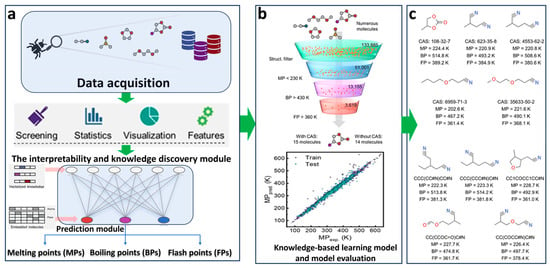
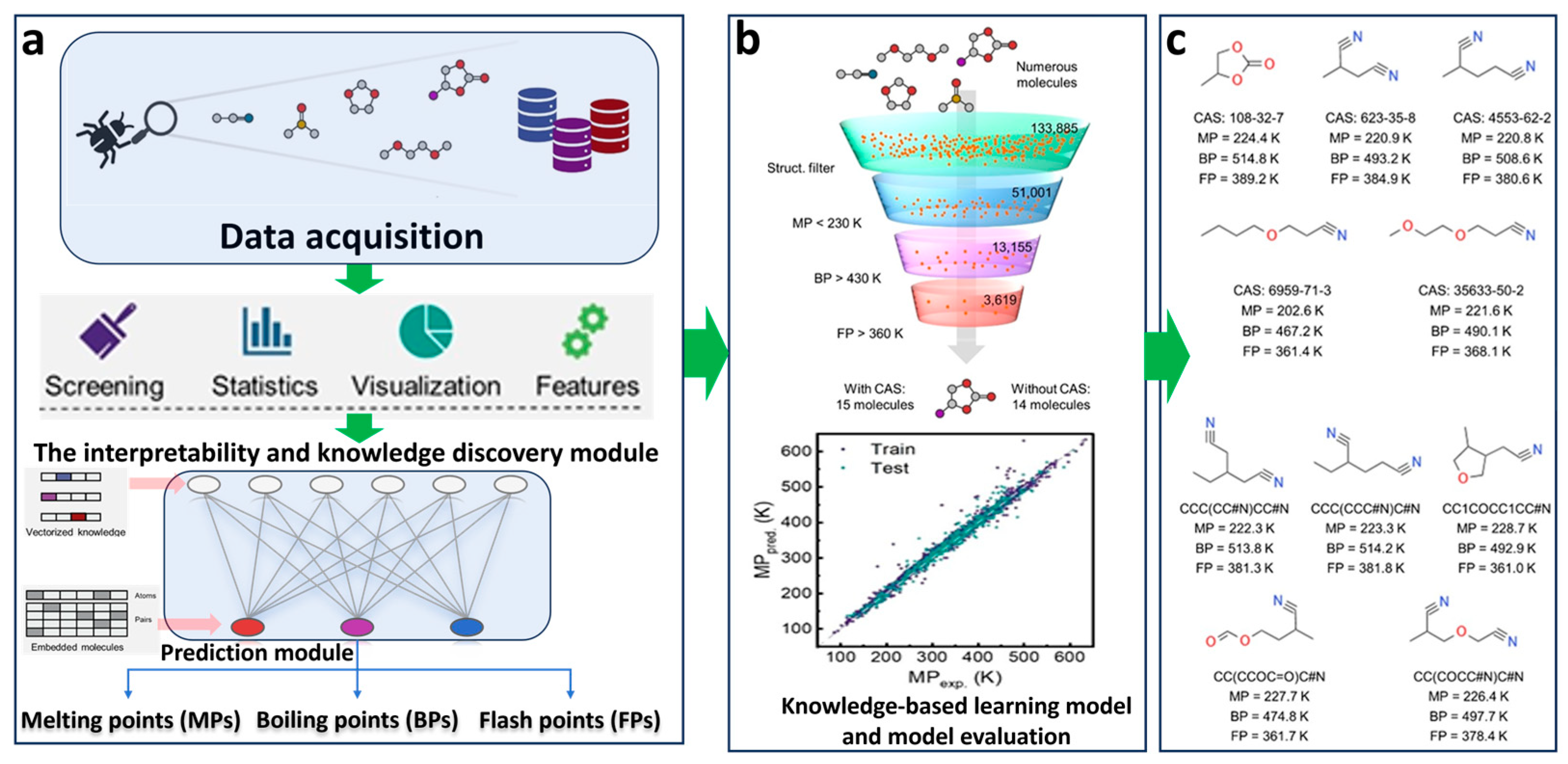
Gao et al. [48] contribute at a different, but complementary, layer of the discovery stack by formalizing electrolyte property prediction as an end-to-end framework (KPI) that couples data handling, interpretable analysis, and knowledge enhanced prediction, as shown in Figure 12, KPI is explicitly modular, with data organization and statistical analysis feeding into knowledge discovery, which then informs the final predictor. A key point for review discussions is that interpretability is used as a mechanism for knowledge extraction rather than as a post hoc explanation: The authors apply SHAP analysis to identify influential descriptors for MP, BP, and FP, and then embed the resulting “vectorized knowledge” into a deep learning predictor (based on Uni Mol) using explicit controls over knowledge purity and knowledge flow. Reported gains are not limited to accuracy metrics (low MAEs for MP, BP, and FP) but extend to a screening oriented outcome in which the model supports multi objective filtering and candidate prioritization, including proposed molecules with and without CAS identifiers under wide temperature range and safety criteria.
Figure 12.
Data-driven workflow for molecular property prediction and screening in electrolyte discovery. Left (a) illustrates the pipeline from data acquisition to data organization and feature generation, followed by model training. Middle (b) shows dataset structuring and validation, including clustering or embedding and train test parity evaluation. Right (c) highlights downstream deployment, where the trained model supports high-throughput screening and reports predicted thermophysical properties (melting point, boiling point, flash point) for prioritized candidates. Figure reproduced with permission from ref. [48], Copyright 2024, Wiley-VCH GmbH.
Where Gao’s KPI focuses on improving property prediction and screening at the molecular level, the physics-guided continual learning (PGCL) study targets a deployment bottleneck that emerges once screening models must be updated repeatedly as new candidates appear. The key distinction is the objective: PGCL is not primarily about a single best model trained on a fixed dataset but about maintaining reliable performance under sequential updates without catastrophic forgetting. The paper demonstrates that naive sequential training can severely degrade predictions for earlier materials after learning later batches, motivating a continual learning formulation. Its main contribution is to use physics-based sensitivity information from a battery model to decide when new data constitute a genuinely new regime that warrants a new task, versus when they can be assimilated without proliferating tasks. This physics-guided task management provides two practical advantages for scalable screening: it improves long-term robustness by mitigating forgetting, and it reduces update overhead by limiting unnecessary task growth, while maintaining comparable predictive quality for the target performance metric.
A closely related data knowledge dual-driven strategy is presented by Yang et al. [49] for fast charging Li ion battery electrolytes, which explicitly closes the loop from computational generation to experimental validation. In that workflow, large chemical spaces are generated then narrowed via high-throughput computation (DFT and MD) and ML-assisted property prediction, followed by multi-criterion screening that encodes practical constraints such as stability, temperature range, transport-related behavior, and cost. Importantly for a review narrative, the contribution is not only methodological integration but also end-to-end validation: The framework identifies a small set of prioritized candidates, selects ethyl trimethylacetate (ETMA) as a leading option, and substantiates its promise through pouch cell testing and safety-related measurements. Together with KPI and PGCL, the study reinforces a broader trend: Modern electrolyte discovery increasingly depends on workflows that unite physics, scalable ML surrogates, and explicit chemical knowledge, and that remain usable from data curation through screening to decision making [50].
In summary, the goal of HTVS is to establish a database of properties of electrolytes for future searches and to identify the most promising molecular electrolyte candidates at an early stage for further experimental synthesis and testing. Moreover, HTVS may combine quantum chemical calculations, cheminformatics, and ML to predict the key battery-related properties and thereby identify molecules, which effectively overcomes the weaknesses of single quantum chemistry calculations and accelerates the development of new materials in future studies. Guided by computational predictions beforehand, experimental efforts can focus on the most promising candidates. In addition, the robust structure–property relationships between the new molecules and their chemical properties, such as significant effects of various functional groups and heteroatoms on redox potentials and solubilities of quinone-based compounds, are established for future developments in battery modification and push forward the practical applications of high-energy-density batteries. While the identification approach described here has only been applied to the small-molecule-based battery, it should be emphasized that similar formalisms can be utilized in other systems beyond RFBs.
6. Conclusions
This review has summarized progress in identifying and designing small electroactive molecules for aqueous redox flow batteries, focusing on how molecular structure controls redox potential, water solubility, stability, and crossover. Across the main metal-free families, including quinones, viologens, alloxazines, phenazines, indigo derivatives, and nitroxide radicals, one point is clear: These properties are tightly linked, so improving one often affects the others. Redox potential sets the cell voltage but must fit within the aqueous stability window and remain compatible with the counter electrolyte. Solubility limits the achievable energy density, yet common solubilization strategies can also change speciation, viscosity, transport, and kinetics. In practice, the largest barrier is still durability at relevant concentrations, together with capacity loss driven by crossover. Many candidates that look attractive in short, dilute, or half-cell tests fail under realistic conditions because degradation pathways depend strongly on pH, salt composition, temperature, oxygen, impurities, electrode surfaces, and membrane interactions. Beyond intrinsic molecular stability, crossover can trigger irreversible chemical reactions after mixing of posolyte and negolyte species, further accelerating fade. These observations highlight the need to connect structure to performance through structure–property–failure relationships established under realistic operating boundaries.
Computational tools are increasingly important for making this problem tractable. DFT-based calculations help interpret trends in redox thermodynamics and solvation and can flag stability risks through reaction energetics. High-throughput virtual screening makes it possible to explore functional group and substitution patterns far beyond what is practical experimentally. Machine learning adds speed by predicting properties from molecular descriptors, but its usefulness depends on reliable training data and careful validation. The most effective workflow is therefore iterative: Computation and screening narrow the space, experiments test candidates under realistic conditions, and mechanistic insights feed back into the next design cycle.
Progress toward practically viable aqueous organic redox flow batteries will depend on advancing from single-parameter optimization to stability-centered, multi-objective design frameworks in which molecular structure, membrane compatibility, and electrolyte formulation are treated as a coupled system. Embedding stability and transport constraints explicitly into computational and machine learning screening, together with standardized experimental benchmarks, will be critical for translating molecular-level design into long-lived, scalable battery technologies.
To more effectively guide the design and performance prediction of organic active molecules, in addition to experimental screening and computational chemistry (such as DFT and ML mentioned in the text), it is crucial to develop universal electrochemical transport reaction models applicable to organic flow battery systems. These models can quantitatively describe the coupling relationship between active material concentration distribution, electrolyte flow, charge transfer, and electrode reaction kinetics, thereby more accurately predicting the voltage efficiency, capacity decay, and optimization direction of the battery under specific operating conditions (such as different current densities and flow rates). Related modeling methods have been successfully constructed and applied in metal-based systems (such as vanadium batteries), providing a theoretical basis for system performance analysis and optimization [52]. Extending or adapting such models to organic flow battery systems will be a powerful tool for connecting molecular characteristics with macroscopic battery performance and guiding molecular design and system optimization. We explicitly also address the challenge of transitioning from “virtual molecules” to physical materials, noting that the uncertainty in developing synthetic routes represents a major bottleneck in terms of both time and cost. To contextualize this issue, we briefly introduce computational tools for assessing synthetic difficulty, such as the Synthetic Accessibility Score (SAScore). We further emphasize that “synthesizability” should be considered a molecular design criterion on par with solubility and redox potential. Finally, we propose closer integration between theoretical and experimental research groups from the earliest stages of material discovery.
Author Contributions
Conceptualization, Q.Z., L.Z. and Y.J.; methodology, Q.Z., L.Z. and Y.J.; writing original draft, Q.Z. and L.Z.; writing review and editing, Q.Z., L.Z., X.Z., K.X., Z.C. and Y.J.; supervision, Y.J.; funding acquisition, Q.Z., K.X. and L.Z. All authors have read and agreed to the published version of the manuscript.
Funding
This work was financially supported by Guangdong Basic and Applied Basic Research Foundation (2023A1515010052 and 2024A1515011308); Science Research Innovation Team Foundation of Guangdong Province (2025KCXTD090); National Natural Science Foundation of China (52203343); Scientific Research Foundation of Zhuhai City Polytechnic (134-ESKY2025004, 134-ESKY2025007 and KY2024Y02Z).
Data Availability Statement
No new data were created or analyzed in this study. Data sharing is not applicable to this article.
Acknowledgments
We acknowledge support by the Open Access Publication Fund of TU Berlin.
Conflicts of Interest
Authors Linlin Zhang and Zili Chen were employed by the company Zhuhai Qisitech Co., Ltd. The remaining authors declare that the research was conducted in the absence of any commercial or financial relationships that could be construed as a potential conflict of interest.
References
- Primary Energy: Consumption by Fuel; BP Statistical Review of World Energy: London, UK, 2019.
- Zhang, Q. A Computational Approach for High-Throughput Virtual Screening of Organic Electroactive Compounds for Aqueous Redox Flow Batteries; Eindhoven University of Technology: Eindhoven, The Netherlands, 2021. [Google Scholar]
- Dunn, B.; Kamath, H.; Tarascon, J.M. Electrical energy storage for the grid: A battery of choices. Science 2011, 334, 928–935. [Google Scholar] [CrossRef] [Scilit]
- Feng, R.; Guo, Z.; Meng, X.; Sun, C. Modeling and State of Charge Estimation of Vanadium Redox Flow Batteries: A Review. Energies 2025, 18, 4666. [Google Scholar] [CrossRef] [Scilit]
- Zhang, C.; Zhang, L.; Ding, Y.; Peng, S.; Guo, X.; Zhao, Y.; He, G.; Yu, G. Progress and prospects of next-generation redox flow batteries. Energy Storage Mater. 2018, 15, 324–350. [Google Scholar] [CrossRef] [Scilit]
- Liu, T.; Wei, X.; Nie, Z.; Sprenkle, V.; Wang, W. A Total Organic Aqueous Redox Flow Battery Employing a Low Cost and Sustainable Methyl Viologen Anolyte and 4-HO-TEMPO Catholyte. Adv. Energy Mater. 2015, 6, 1501449. [Google Scholar] [CrossRef] [Scilit]
- Jiang, Z.; Di, Y.; Dong, Z.; Ravivarma, M.; Duan, Y.; Hu, F.; Liu, K.; Fan, H.; Song, J. Uncovering the Electrochemical Origin of Alkalization in Viologen-Based Aqueous Flow Batteries. Angew. Chem. Int. Ed. 2025, 64, e202514131. [Google Scholar] [CrossRef] [Scilit] [PubMed]
- Tang, G.; Peng, K.; Liu, Y.; Fang, J.; Wu, W.; Yang, Z.; Xu, T. Propylene-Bridged Associative Bis (bipyridinium) Electrolytes for Long-Lifetime Aqueous Organic Redox Flow Batteries. Angew. Chem. Int. Ed 2025, 64, e202501458. [Google Scholar] [CrossRef] [Scilit]
- Kumar, A.; Tripathi, B.P. A high-capacity viologen-based anolyte for high energy density neutral pH aqueous redox-flow batteries. J. Energy Chem. 2023, 78, 222–231. [Google Scholar] [CrossRef] [Scilit]
- Zhang, M.; Li, T.; Liu, X.; Zhang, C.; Li, X. Molecular Revealing the High-stable Polycyclic Azine Derivatives for Long-Lifetime Aqueous Organic Flow Batteries. Adv. Funct. Mater. 2024, 34, 2312608. [Google Scholar] [CrossRef] [Scilit]
- Lin, K.; Gómez-Bombarelli, R.; Beh, E.S.; Tong, L.; Chen, Q.; Valle, A.; Aspuru-Guzik, A.; Aziz, M.J.; Gordon, R.G. A redox-flow battery with an alloxazine-based organic electrolyte. Nat. Energy 2016, 1, 16102. [Google Scholar] [CrossRef] [Scilit]
- Hollas, A.; Wei, X.; Murugesan, V.; Nie, Z.; Li, B.; Reed, D.; Liu, J.; Sprenkle, V.; Wang, W. A biomimetic high-capacity phenazine-based anolyte for aqueous organic redox flow batteries. Nat. Energy 2018, 3, 508–514. [Google Scholar] [CrossRef] [Scilit]
- Wang, C.; Li, X.; Yu, B.; Wang, Y.; Yang, Z.; Wang, H.; Lin, H.; Ma, J.; Li, G.; Jin, Z. Molecular Design of Fused-Ring Phenazine Derivatives for Long-Cycling Alkaline Redox Flow Batteries. ACS Energy Lett. 2020, 5, 411–417. [Google Scholar] [CrossRef] [Scilit]
- Pang, S.; Wang, X.; Wang, P.; Ji, Y. Biomimetic Amino Acid Functionalized Phenazine Flow Batteries with Long Lifetime at Near-Neutral pH. Angew. Chem. 2021, 133, 5349–5358. [Google Scholar] [CrossRef] [Scilit]
- Xu, J.; Pang, S.; Wang, X.; Wang, P.; Ji, Y. Ultrastable aqueous phenazine flow batteries with high capacity operated at elevated temperatures. Joule 2021, 5, 2437–2449. [Google Scholar] [CrossRef] [Scilit]
- Mukhopadhyay, A.; Zhao, H.; Li, B.; Hamel, J.; Yang, Y.; Cao, D.; Natan, A.; Zhu, H. Abundant Organic Dye as an Anolyte for Aqueous Flow Battery with Multielectron Transfer. ACS Appl. Energy Mater. 2019, 2, 7425–7437. [Google Scholar] [CrossRef] [Scilit]
- Carretero-González, J.; Castillo-Martínez, E.; Armand, M. Highly water-soluble three-redox state organic dyes as bifunctional analytes. Energy Environ. Sci. 2016, 9, 3521–3530. [Google Scholar] [CrossRef] [Scilit]
- Ding, Y.; Zhang, C.; Zhang, L.; Zhou, Y.; Yu, G. Molecular engineering of organic electroactive materials for redox flow batteries. Chem. Soc. Rev. 2018, 47, 69–103. [Google Scholar] [CrossRef] [Scilit] [PubMed]
- Zhao, Q.; Huang, W.; Luo, Z.; Liu, L.; Lu, Y.; Li, Y.; Li, L.; Hu, J.; Ma, H.; Chen, J. High-capacity aqueous zinc batteries using sustainable quinone electrodes. Sci. Adv. 2018, 4, eaao1761. [Google Scholar] [CrossRef] [Scilit]
- Gerhardt, M.R.; Tong, L.; Gómez-Bombarelli, R.; Chen, Q.; Marshak, M.P.; Galvin, C.J.; Aspuru-Guzik, A.; Gordon, R.G.; Aziz, M.J. Anthraquinone Derivatives in Aqueous Flow Batteries. Adv. Energy Mater. 2017, 7, 1601488. [Google Scholar] [CrossRef] [Scilit]
- Wang, C.; Yang, Z.; Wang, Y.; Zhao, P.; Yan, W.; Zhu, G.; Ma, L.; Yu, B.; Wang, L.; Li, G.; et al. High-Performance Alkaline Organic Redox Flow Batteries Based on 2-Hydroxy-3-carboxy-1,4-naphthoquinone. ACS Energy Lett. 2018, 3, 2404–2409. [Google Scholar] [CrossRef] [Scilit]
- Amini, K.; Kerr, E.F.; George, T.Y.; Alfaraidi, A.M.; Jing, Y.; Tsukamoto, T.; Gordon, R.G.; Aziz, M.J. An Extremely Stable, Highly Soluble Monosubstituted Anthraquinone for Aqueous Redox Flow Batteries. Adv. Funct. Mater. 2023, 33, 2211338. [Google Scholar] [CrossRef] [Scilit]
- Lee, B.; Ko, Y.; Kwon, G.; Lee, S.; Ku, K.; Kim, J.; Kang, K. Exploiting Biological Systems: Toward Eco-Friendly and High-Efficiency Rechargeable Batteries. Joule 2018, 2, 61–75. [Google Scholar] [CrossRef] [Scilit]
- Ding, Y.; Yu, G. A Bio-Inspired, Heavy-Metal-Free, Dual-Electrolyte Liquid Battery towards Sustainable Energy Storage. Angew. Chem. Int. Ed. 2016, 55, 4772–4776. [Google Scholar] [CrossRef] [Scilit]
- Xu, Y.; Wen, Y.; Cheng, J.; Yanga, Y.; Xie, Z.; Cao, G. Novel organic redox flow batteries using soluble quinonoid compounds as positive materials. In Proceedings of the 2009 World Non-Grid-Connected Wind Power and Energy Conference, Nanjing, China, 24–26 September 2009. [Google Scholar] [CrossRef] [Scilit]
- Huskinson, B.; Marshak, M.P.; Suh, C.; Er, S.; Gerhardt, M.R.; Galvin, C.J.; Chen, X.; Aspuru-Guzik, A.; Gordon, R.G.; Aziz, M.J. A metal-free organic-inorganic aqueous flow battery. Nature 2014, 505, 195–198. [Google Scholar] [CrossRef] [Scilit]
- Lin, K.; Chen, Q.; Gerhardt, M.R.; Tong, L.; Kim, S.B.; Eisenach, L.; Valle, A.W.; Hardee, D.; Gordon, R.G.; Aziz, M.J.; et al. Alkaline quinone flow battery. Science 2015, 349, 1529–1532. [Google Scholar] [CrossRef] [Scilit] [PubMed]
- Yang, Z.; Tong, L.; Tabor, D.P.; Beh, E.S.; Goulet, M.; De Porcellinis, D.; Aspuru-Guzik, A.; Gordon, R.G.; Aziz, M.J. Alkaline Benzoquinone Aqueous Flow Battery for Large-Scale Storage of Electrical Energy. Adv. Energy Mater. 2017, 8, 1702056. [Google Scholar] [CrossRef] [Scilit]
- Zhao, Z.; Li, T.; Zhang, C.; Zhang, M.; Li, S.; Li, X. Air-stable naphthalene derivative-based electrolytes for sustainable aqueous flow batteries. Nat. Sustain. 2024, 7, 1273–1282. [Google Scholar] [CrossRef] [Scilit]
- Yang, G.; Zhu, Y.; Hao, Z.; Zhang, Q.; Lu, Y.; Yan, Z.; Chen, J. An Aqueous All-Quinone-Based Redox Flow Battery Employing Neutral Electrolyte. Adv. Energy Mater. 2024, 14, 2400022. [Google Scholar] [CrossRef] [Scilit]
- Zhang, Q.; Khetan, A.; Sorkun, E.; Niu, F.; Loss, A.; Pucher, I.; Er, S. Data-driven discovery of small electroactive molecules for energy storage in aqueous redox flow batteries. Energy Storage Mater. 2022, 47, 167–177. [Google Scholar] [CrossRef] [Scilit]
- Yang, B.; Narayanan, S.R.; Hoober-Burkhardt, L.; Wang, F.; Surya Prakash, G.K. An Inexpensive Aqueous Flow Battery for Large-Scale Electrical Energy Storage Based on Water-Soluble Organic Redox Couples. J. Electrochem. Soc. 2014, 161, A1371–A1380. [Google Scholar] [CrossRef] [Scilit]
- Tong, L.; Jing, Y.; Gordon, R.G.; Aziz, M.J. Symmetric All-Quinone Aqueous Battery. ACS Appl. Energy Mater. 2019, 2, 4016–4021. [Google Scholar] [CrossRef] [Scilit]
- Zhang, P.; Chen, Y.; Liu, Y.; Wei, J.; Wu, Z.; Yang, B.; Ding, G.; Wen, S.; Dai, T.; You, Z.; et al. Unlocking Multielectron Transfer in a Quinone−Pyrazine Conjoined Redox Core for Capacity-Doubled and Ultrastable Aqueous Organic Redox Flow Batteries. J. Am. Chem. Soc. 2025, 147, 46582–46593. [Google Scholar] [CrossRef] [Scilit]
- Zhao, Z.; Zhang, C.; Li, X. Opportunities and challenges of organic flow battery for electrochemical energy storage technology. J. Energy Chem. 2022, 67, 621–639. [Google Scholar] [CrossRef] [Scilit]
- Macalino, S.J.Y.; Gosu, V.; Hong, S.; Choi, S. Role of computer-aided drug design in modern drug discovery. Arch. Pharm. Res. 2015, 38, 1686–1701. [Google Scholar] [CrossRef] [Scilit]
- Er, S.; Suh, C.; Marshak, M.P.; Aspuru-Guzik, A. Computational design of molecules for an all-quinone redox flow battery. Chem. Sci. 2015, 6, 885–893. [Google Scholar] [CrossRef] [Scilit]
- Cheng, L.; Assary, R.S.; Qu, X.; Jain, A.; Ong, S.P.; Rajput, N.N.; Persson, K.; Curtiss, L.A. Accelerating Electrolyte Discovery for Energy Storage with High-Throughput Screening. J. Phys. Chem. Lett. 2015, 6, 283–291. [Google Scholar] [CrossRef] [Scilit]
- Jinich, A.; Sanchez-Lengeling, B.; Ren, H.; Harman, R.; Aspuru-Guzik, A. A Mixed Quantum Chemistry/Machine Learning Approach for the Fast and Accurate Prediction of Biochemical Redox Potentials and Its Large-Scale Application to 315,000 Redox Reactions. ACS Cent. Sci. 2019, 5, 1199–1210. [Google Scholar] [CrossRef] [Scilit]
- Tabor, D.P.; Gómez-Bombarelli, R.; Tong, L.; Gordon, R.G.; Aziz, M.J.; Aspuru-Guzik, A. Mapping the frontiers of quinone stability in aqueous media: Implications for organic aqueous redox flow batteries. J. Mater. Chem. A 2019, 7, 12833–12841. [Google Scholar] [CrossRef] [Scilit]
- Pelzer, K.M.; Cheng, L.; Curtiss, L.A. Effects of functional groups in redox-active organic molecules: A high-throughput screening approach. J. Phys. Chem. C 2017, 121, 237–245. [Google Scholar] [CrossRef] [Scilit]
- Huynh, M.T.; Anson, C.W.; Cavell, A.C.; Stahl, S.S.; Hammes-Schiffer, S. Quinone 1 e− and 2 e−/2 H+ Reduction Potentials: Identification and Analysis of Deviations from Systematic Scaling Relationships. J. Am. Chem. Soc. 2016, 138, 15903–15910. [Google Scholar] [CrossRef] [Scilit] [PubMed]
- Kim, S.; Jinich, A.; Aspuru-Guzik, A. MultiDK: A Multiple Descriptor Multiple Kernel Approach for Molecular Discovery and Its Application to Organic Flow Battery Electrolytes. J. Chem. Inf. Model. 2017, 57, 657–668. [Google Scholar] [CrossRef] [Scilit]
- Huuskonen, J. Estimation of Aqueous Solubility for a Diverse Set of Organic Compounds Based on Molecular Topology. J. Chem. Inf. Comput. Sci. 2000, 40, 773–777. [Google Scholar] [CrossRef] [Scilit] [PubMed]
- Sorkun, M.C.; Koelman, J.M.V.A.; Er, S. Pushing the limits of solubility prediction via quality-oriented data selection. iScience 2021, 24, 101961. [Google Scholar] [CrossRef] [Scilit]
- Zhang, Q.; Khetan, A.; Sorkun, E.; Er, S. Discovery of aza-aromatic anolytes for aqueous redox flow batteries via high-throughput screening. J. Mater. Chem. A 2022, 10, 22214–22227. [Google Scholar] [CrossRef] [Scilit]
- Wang, F.; Cheng, J. Accelerating Computation of Acidity Constants and Redox Potentials for Aqueous Organic Redox Flow Batteries by Machine Learning Potential-Based Molecular Dynamics. J. Am. Chem. Soc. 2024, 146, 14566–14575. [Google Scholar] [CrossRef] [Scilit]
- Gao, Y.-C.; Yuan, Y.-H.; Huang, S.; Yao, N.; Yu, L.; Chen, Y.-P.; Zhang, Q.; Chen, X.A. Knowledge—Data Dual-Driven Framework for Predicting the Angewandte. Angew. Chem. Int. Ed 2025, 64, e202416506. [Google Scholar] [CrossRef] [Scilit]
- Yang, Y.; Yao, N.; Gao, Y.; Chen, X.; Huang, Y.; Zhang, S.; Zhu, H.; Xu, L.; Yao, Y.; Yang, S.; et al. Data—Knowledge-Dual-Driven Electrolyte Design for Fast-Charging Lithium Ion Batteries. Angew. Chem. Int. Ed 2025, 64, e202505212. [Google Scholar] [CrossRef] [Scilit]
- Fu, Y.; Howard, A.; Zeng, C.; Chen, Y.; Gao, P.; Stinis, P. Physics-Guided Continual Learning for Predicting Emerging Aqueous Organic Redox Flow Battery Material Performance. ACS Energy Lett. 2024, 9, 2767–2774. [Google Scholar] [CrossRef] [Scilit]
- Sorkun, M.C.; Khetan, A.; Er, S. AqSolDB, a curated reference set of aqueous solubility and 2D descriptors for a diverse set of compounds. Sci. Data 2019, 6, 143. [Google Scholar] [CrossRef] [Scilit]
- Di Noto, V.; Vezzù, K.; Crivellaro, G.; Pagot, G.; Sun, C.; Meda, L.; Rutkowska, I.A.; Kulesza, P.J.; Zawodzinski, T.A. Electrochimica Acta A general electrochemical formalism for vanadium redox flow batteries. Electrochim. Acta 2022, 408, 139937. [Google Scholar] [CrossRef] [Scilit]





Disclaimer/Publisher’s Note: The statements, opinions and data contained in all publications are solely those of the individual author(s) and contributor(s) and not of MDPI and/or the editor(s). MDPI and/or the editor(s) disclaim responsibility for any injury to people or property resulting from any ideas, methods, instructions or products referred to in the content. |
© 2026 by the authors. Licensee MDPI, Basel, Switzerland. This article is an open access article distributed under the terms and conditions of the Creative Commons Attribution (CC BY) license.