


Abstract
Textile industry wastewater poses a significant environmental challenge due to the presence of persistent dyes. Cationic dyes are characterized by resistance to the conventional coagulation method. The appropriate properties and combination of chemicals guarantee an effective removal process. This study explains the effect of modification of methylene blue solution by the addition of a natural biopolymer—hydrolyzed tannic acid (TA). The study assumed that a combination of tannic acid, methylene blue and polyaluminum chloride would provide a synergistic effect and significantly improve the coagulation and sediment filtration process. Coagulation tests were carried out for a range of methylene blue concentrations. The optimal arrangement of solution components and coagulant doses was selected and tested. Over 95% dye removal efficiency was achieved. The maximum dye removal efficiency was determined to be 5 mg/mg Al at pH = 5.0. Based on the analysis of UV-VIS spectroscopy, FTIR and electrokinetic potential, changes in the solutions of tannin-modified dyes and their effect on the precipitation of flocs and the nature of sorption were determined. The main phenomena affecting the removal mechanism are discussed. The results indicate that tannic acid can serve as a sustainable coagulant aid, supporting the development of technologies for treating cationic-dye-laden wastewater.
1. Introduction
The problem of textile wastewater is significant due to its complex composition and severe environmental impact. These effluents contain synthetic dyes that do not bind effectively to fabrics, leading to their substantial release into aquatic ecosystems [1,2]. With an annual production of approximately 800,000 tons, these non-biodegradable substances accumulate in water bodies, posing long-term risks to biodiversity [3,4]. Methylene blue (MB), a common cationic dye used in the textile and paper industries, is particularly hazardous. It increases water turbidity and blocks sunlight penetration, which reduces photosynthetic efficiency and disrupts the ecological balance [4,5,6]. Furthermore, MB is known to be toxic, carcinogenic, and mutagenic, affecting the health of aquatic fauna and potentially leading to fatal outcomes in humans at high concentrations [7,8].
Effective treatment of textile wastewater involves biological, chemical, and physical methods. Biological treatments using bacteria or fungi are cost-effective and sustainable, yet they often require long hydraulic retention times [9,10]. Chemical oxidation methods, such as ozonation or the Fenton process, achieve high removal efficiencies but are frequently limited by high costs and the production of toxic secondary by-products [2,11,12]. While adsorption is a preferred technique due to its ease of operation, its performance is highly dependent on specific conditions, such as pH and the surface characteristics of the adsorbents [13,14,15,16].
Consequently, traditional coagulation–flocculation remains the most widely used method due to its economic viability [17]. Polyaluminum chloride (PAC) demonstrated the highest ability of removing dyes from the mixture-dye wastewater among various coagulants [18]. Among various coagulants, polyaluminum chloride (PAC) was selected compared to traditional salts such as aluminum sulfate or iron salts, due to the higher charge density of the polymeric species, better performance at lower dosages and the formation of larger, faster settling flocs. Specifically, PAC is a group of coagulants with different basicity (OH/Al ratio) and properties. Unlike highly basic PACs, which are dominated by pre-hydrolyzed polymeric species, lower basicity PACs provide a higher concentration of monomeric aluminum species. Cost is a significant factor when choosing a coagulant type. However, the use of high-coagulation-ability PACs fails to remove cationic dyes due to electrostatic repulsion between the dye molecules and the Al-based coagulants [19,20,21]. To address this limitation, hybrid systems combining coagulation, flocculation, and adsorption have been explored. Recent studies have utilized natural coagulants, such as bentonite or bio-based flocculants (e.g., Chelidonium majus and Dactylis glomerata seeds), achieving up to 91% efficiency in MB removal [22,23,24]. However, many current bio-based applications, including tannin- and starch-derived materials, still rely on complex and costly chemical modifications, such as cationization, to enhance their performance [25,26]. The synthesis of iron–TA nanocomplexes using TA and iron(III) nitrate for MB removal was also presented [27].
Despite these advancements in research on natural coagulants, a significant knowledge gap remains regarding the application of hydrolyzed tannic acid (TA) specifically as a coagulant aid for cationic dye removal. While the existing literature predominantly explores tannin derivatives as primary coagulants for anionic dyes, the synergistic interaction between TA and PAC in a hybrid configuration for MB removal remains largely unexplored. This study aims to fill this gap by developing a novel hybrid system using hydrolyzed TA as a natural bioorganic primary coagulant for increased-effectivity MB removal with PAC. Crucially, this research is based on the assumption that TA-PAC interaction overcomes the fundamental limitation of electrostatic repulsion in conventional PAC systems. The investigation specifically focuses on the pH range of 5.0–6.0 as the optimal condition for coagulation, which corresponds to the cationic form of aluminum hydroxides and protonation of TA molecule functional groups [28,29]. The research aims to determine the optimal dye-to-TA and coagulant-to-TA ratios, as well as the system’s pH, to achieve maximum efficiency. Additionally, the practical applicability of this hybrid system was evaluated through rapid filtration and sedimentation analysis.
2. Materials and Methods
2.1. Dye Solution
The tests were carried out on the solutions of methylene blue cationic dye, Sigma-Aldrich No. 66720 (Sigma-Aldrich Inc., St. Louis, MO, USA), after drying at 105 °C. To calculate the molar mass M, the empirical formula C16H18ClN3S · 3H2O was adopted. The structural formula is given in Figure S1 (Supplementary Materials). Dye solutions with different concentrations from 2 to 50 mg/L were tested.
2.2. TA Solution
Sigma-Aldrich alkaline tannic acid solution No. 403040 ACS reactant (Sigma-Aldrich Inc., St. Louis, MO, USA) with empirical formula C76H52O4 and M = 1701.20 was used as a pre-coagulating agent. The structural formula is available in Figure S2 (Supplementary Materials). Before preparation of the TA solution, the specimen was dried at a temperature of 105° C, and then the weight was dissolved in water to a clear solution. The hydrolysis reactions of dissolved tannins were carried out at room temperature. Sodium hydroxide was added to a 0.1 M tannin solution at a concentration equivalent to 1 M. The solution was stirred continuously until a constant consistency and color of the hydrolyzed TA solution were obtained. The 0.1 M hydrolyzed TA solution was stable over time for at least one month. The pH of the modified TA solution was = 10.30 ± 0.02.
2.3. Coagulant
For coagulation tests, the PAC–aluminum coagulant produced by Kemipol sp. z o.o. (Police, Poland) was used. The doses of the coagulant were calculated after converting the percentage of Al3+ ions in the agent of a specific density to the concentration in mg/mL and then expressed in ppm of Al3+. Characteristics of the coagulant used—Table S1 (Supplementary Materials).
2.4. Research Procedure
2.4.1. Dosing System Used for Studies
The effect of the tannic acid/methylene blue and tannic acid/PAC dose systems on the dye solutions (MB) was investigated. Hydrolyzed tannic acid was introduced at a specific molar ratio TA/MB given in Table 1. The coagulant was added in doses expressed as Al ions. This dosing range corresponded to the Al/TA molar ratios established for each TA/MB system (Table 1).
Table 1.
Tested tannic acid-modified methylene blue solutions and coagulant doses in the Al/TA molar ratio.
2.4.2. Optimization Test Procedure
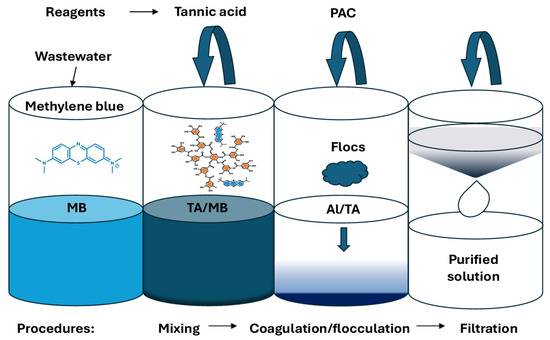
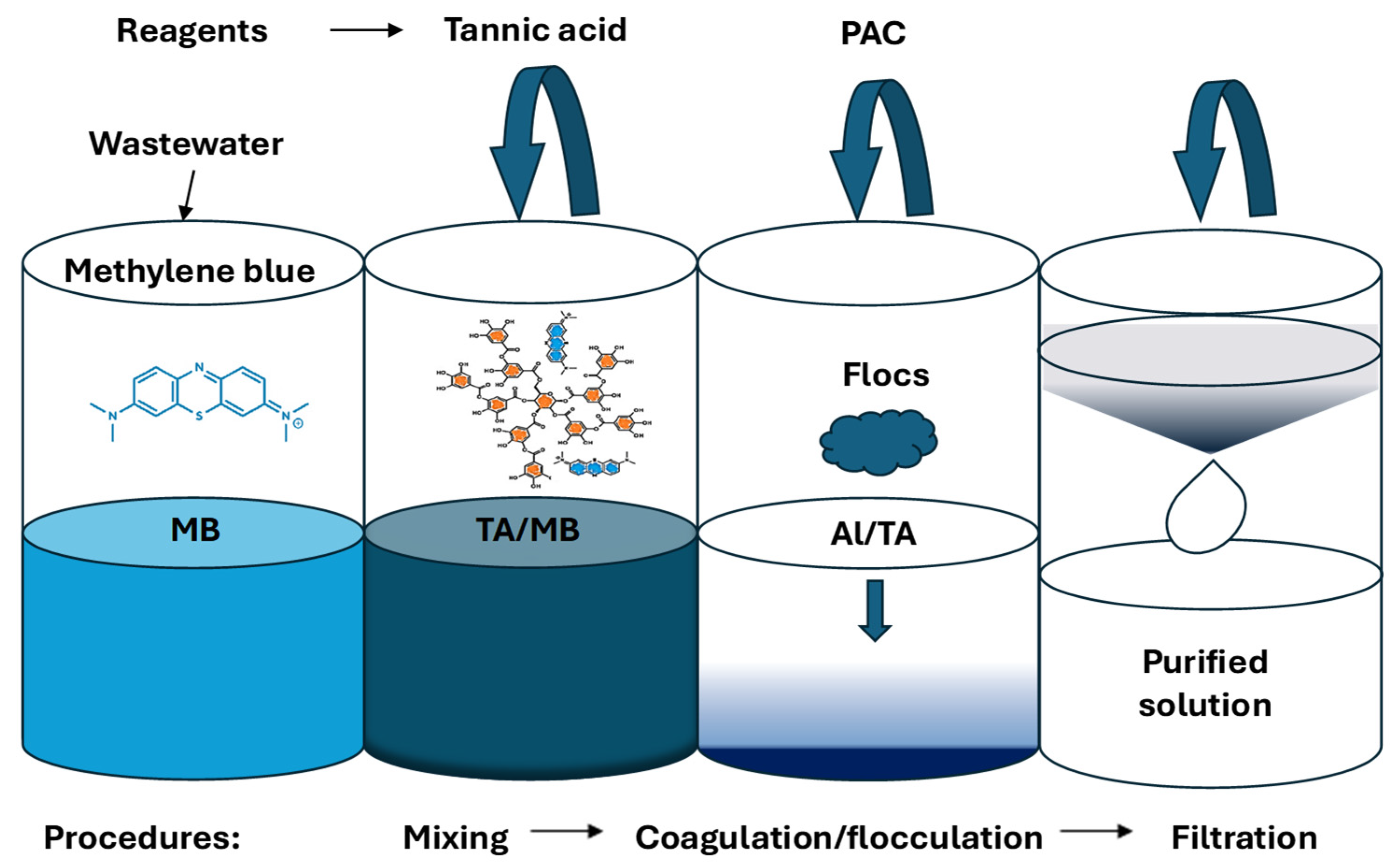
Studies were carried out to optimize both the dose of PAC and TA and pH value. The coagulation effectiveness tests were carried out using the “Jar Test” method in 600 mL beakers containing 250 mL of solution each. The coagulation test used was: 1 min of fast mixing at 250 rpm and 10 min of slow mixing at 25 rpm. Sludge separation after coagulation was carried out in two ways through sedimentation and direct filtration. The sedimentation of the sludge lasted a minimum of 0.5 h; after this time, the decanted solutions were analyzed. In the case of filtration, the samples with the precipitate were filtered through quantitative soft paper filters (Eurochem, Tarnów, Poland) with a pore size of ≤30 mm (fast filtration). Decanted and filtered solutions were subjected to physicochemical analyses. Figure 1 shows the diagram of the experiment stages: preparation of the solution with the appropriate TA/MB molar ratio; proper purification after adding the coagulant in the appropriate Al/TA dose; and sedimentation or filtration.
Figure 1.
The experimental scheme of the purification stages.
The pH values selected for the tests were 5.0, 5.5 and 6.0—from the optimal range of action of pre-polymerized aluminum coagulants on the dissolved organic substances in water [28,30,31]. To correct the pH, the initial pH was changed (alkalized), and then a coagulant was introduced to obtain the assumed pH value of the solution. For this, 1 M NaOH and 1 M HCl were used.
2.4.3. Measurements
In the solution samples, pH and conductivity measurements were performed, using Elmetron meters (ELMETRON, Zabrze, Poland). The zeta potential was determined by electrophoretic light scattering (ELS) using the Litesizer 500 analyzer (Anton Paar GmbH, Ostfildern, Germany). Turbidity was measured nephelometrically with a TIR200 (VWR) meter (VWR International, Gdańsk, Poland). Spectrophotometric measurements—both UV-VIS spectral analysis and absorbance values [cm−1] at lmax 290 and 610 nm—were performed using a UV-VIS 1600P spectrophotometer (VWR) (VWR International, Poland) with M.Wave Professional spectral recording software (version 1.0.23).
The efficiency of dye removal was determined based on spectrophotometric measurements for absorbance values [cm−1] at lmax 290 and 610 nm.
A0—absorbance value in the MB baseline sample;
At—absorbance value in the test sample after coagulation.
The FTIR apparatus Vertex 70 V (Bruker Optics) (Bruker Corporation, Poznań, Poland) for quality spectroscopy analysis was used. Samples of precipitated deposits were filtered and dried to a constant mass at room temperature and then analyzed.
3. Results and Discussion
3.1. Characterization of TA/MB Solutions Used for Testing
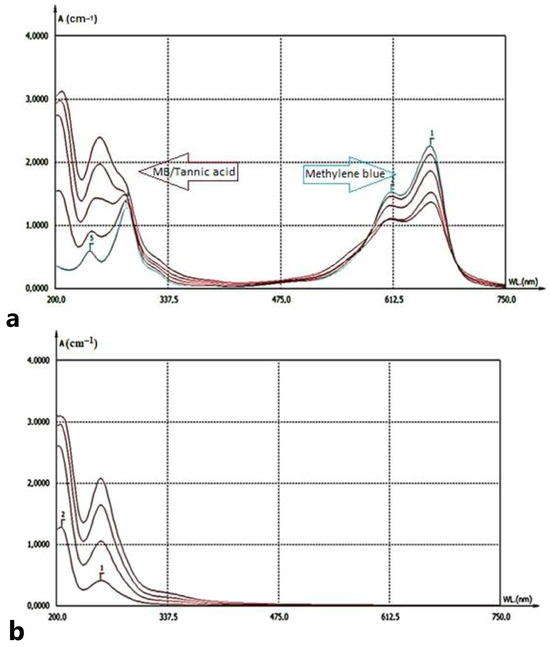
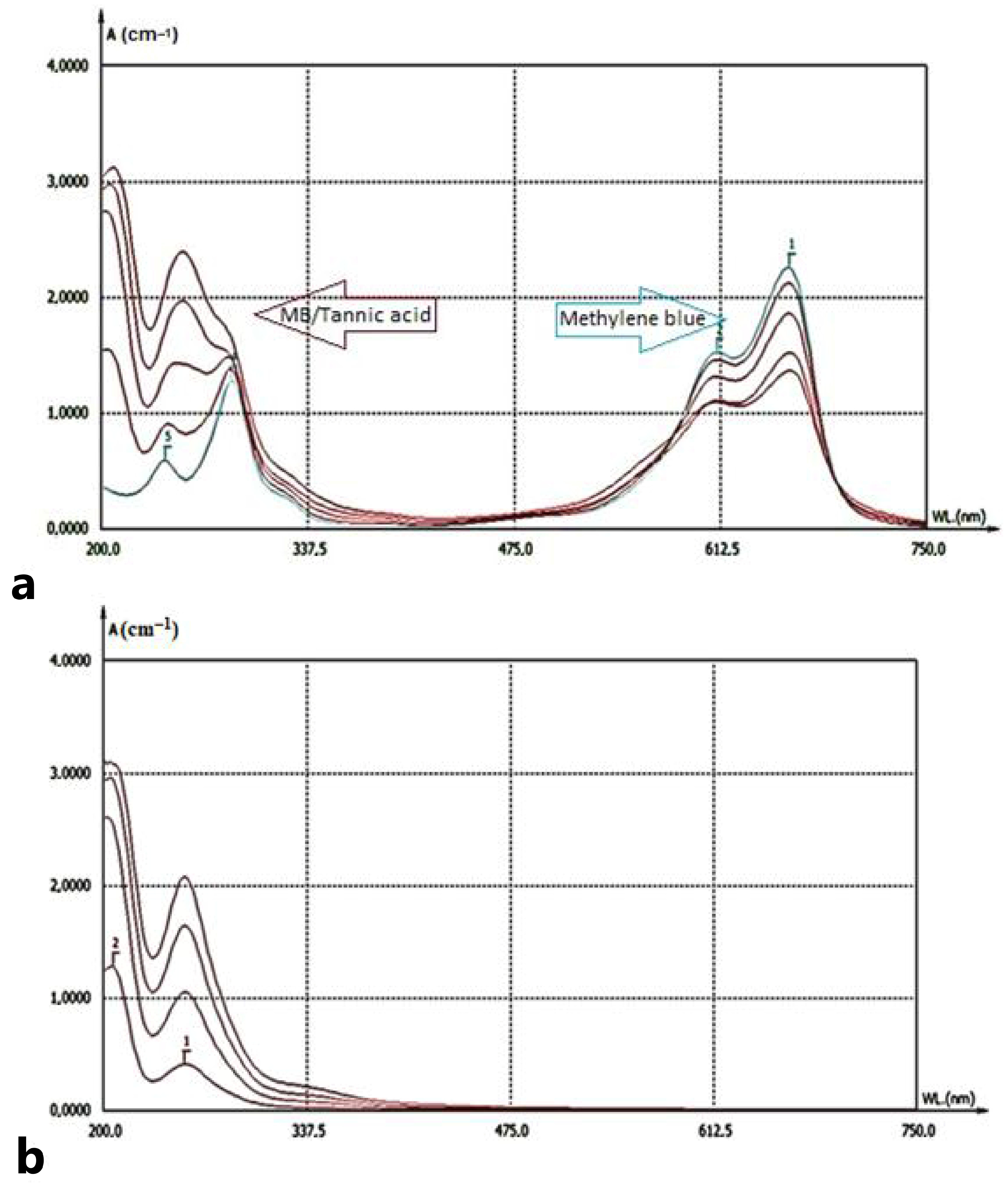
The obtained absorbance spectra of the TA/MB mixture (Figure 2a) have characteristic bands at lmax 290 nm, 610 nm and 660 nm. On the other hand, the comparative spectra for tannic acid show absorbance maxima at λ = 254 nm (Figure 2b).
Figure 2.
UV-VIS spectra: (a) methylene blue solutions (blue line) and the mixture of dye with tannic acid in the molar ratio TA/MB = 0.2; 0.5; 0.8; 1.0; (b) tannic acid in the corresponding concentrations used for the MB modification.
Comparing Figure 2a,b, it was observed that after adding a certain amount of TA to the dye solution, the band in the UV spectrum shifted and broadened to longer values in the λmax range of 240–290 nm. The significant increase in absorbance at λ = 254 nm resulted from the increasing share of TA in the solution starting from TA/MB = 0.5. The demonstrated changes in the chromophore system of molecules suggest possible interactions between the dye and tannins [32]. At the appropriate pH, the ionization level of reactive groups increases and interactions occur through electrostatic attraction [33]. As a result of masking specific chromophore structures in the molecules, the bathochromic shift (n⟶p* transitions) is visible in the spectrum [34].
Electrostatic interactions between the anionic dye sulfonate groups and the cationic head groups of cationic surfactant take place in the processes of micelle formation and changes in the absorption spectrum with a “blue shift” were observed as a function of surfactant concentration [32,35]. In the results at very low surfactant concentrations, below the CMC (critical micelle concentration), dye–surfactant ion pairs or complexes are formed. Similarly, MB and TA interactions cause a “red shift” in the MB absorbance spectrum, which is the result of electrostatic forces between the polar part of the dye and the tannin.
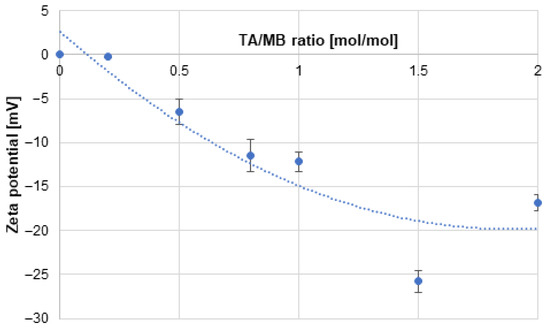
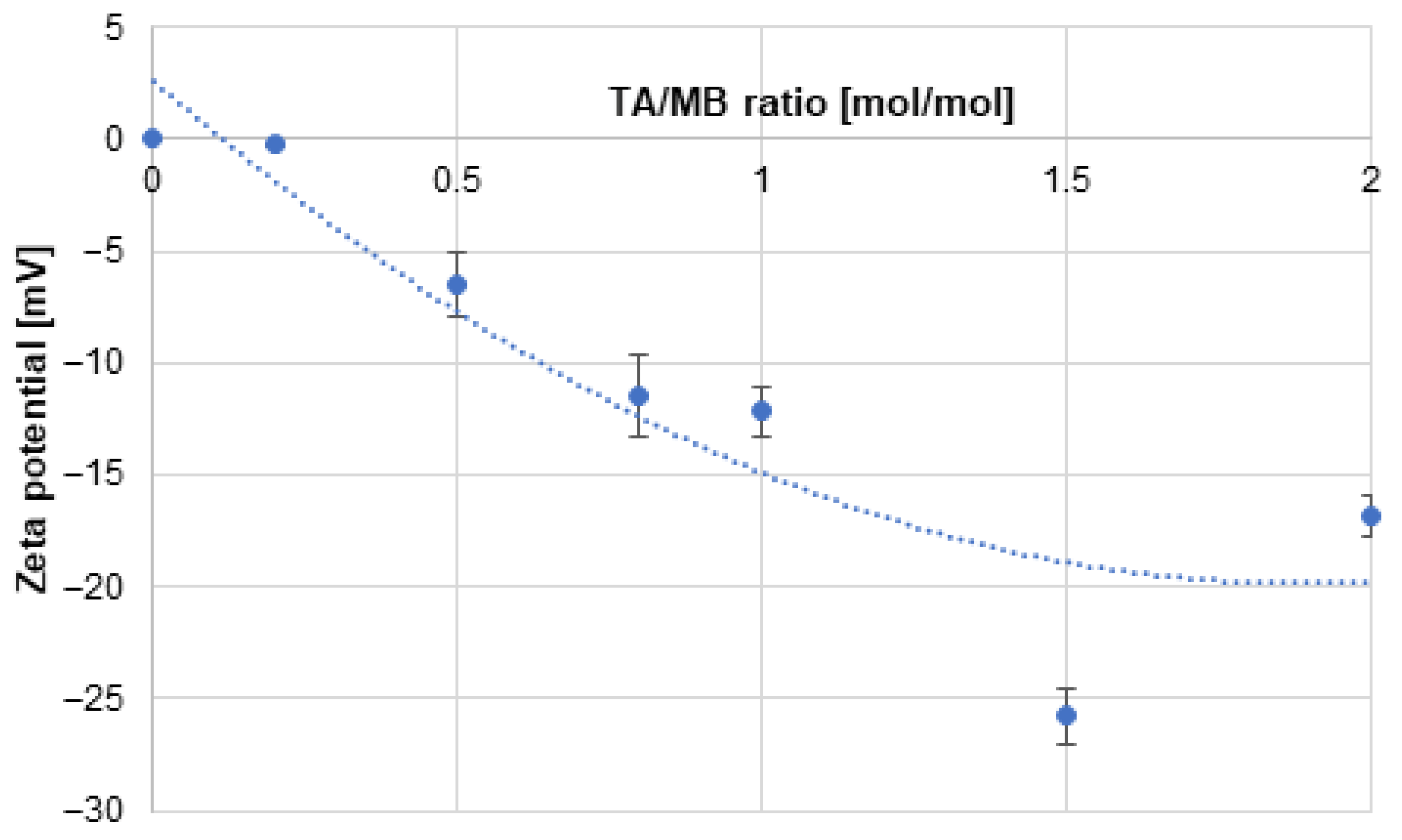
The introduction of TA into the MB solution significantly reduces the electrokinetic potential of the particles (Figure 3).
Figure 3.
Average values of the electrokinetic zeta potential in samples of the dye solutions with tannic acid.
With a molar ratio of TA/MB = 0.5, the molecules are characterized by a negative charge, which implies the type of interaction between TA and MB. A small value of the zeta potential of about −6.5 mV does not cause strong repulsive interactions between molecules, but allows the formation of associations, e.g., through hydrogen bridges between TA and MB [36]. A further increase in the TA/MB ratio caused a decrease in the zeta potential in a non-linear manner, to a limit about of approx. −20 mV. At the same time, after reaching the lowest value of −26 mV at TA/MB = 1.5, the zeta potential increased. This may be due to electrostatic interactions and the formation of new colloidal equilibria in the solution [37,38,39]. Negative tannin colloids particles attract counterions (MB)+ with the formation of a double electrical layer of stable micelles. At a certain concentration of TA, supersaturation and strong electrostatic repulsion (TA)− occurs causing the particles to disperse with the formation of a new electrical equilibrium in the solution.
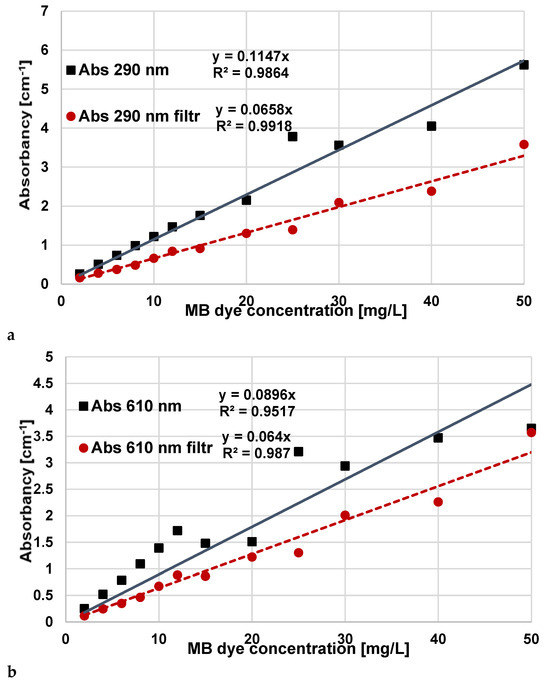
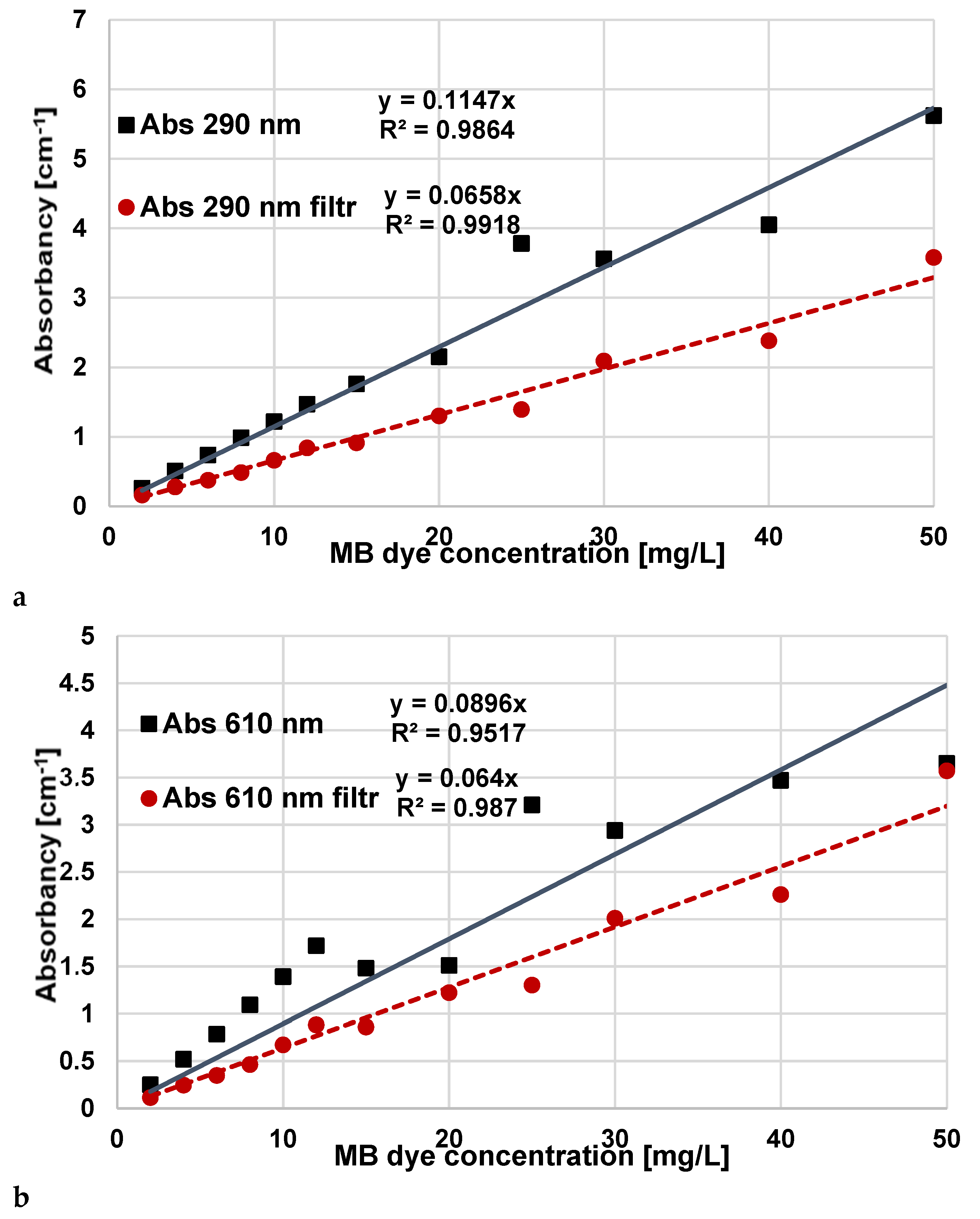
The graphs in Figure 4a,b show the absorbance curves of dye solutions modified in the molar ratio TA/MB = 0.5 for a wide range of dye concentrations of 2–50 mg/L.
Figure 4.
Dye concentration vs. absorbance curves of modified dye solutions TA/MB = 0.5 at pH = 5.0. The samples after sedimentation and filtration: (a)—for λ = 290 nm, (b)—for λ = 610 nm.
Filtration significantly reduced the values of the tested parameters of the solution. This is probably due to the fact that the modification of dye solutions with tannic acids initiates the process of destabilization and combining particles into larger aggregates, which remain in suspension. The mechanism of this process looks like micellization of dye molecules initializing by surfactants with opposite charge [34]. Electrostatic interactions also take place during adsorption, e.g., MB on the anionic surfaces of the hematite-humic acid composite structure [40], as well as being the cause of the interaction of dye molecules with opposite reactive groups in their structure [41].
3.2. Effect of PAC on TA/MB Solution
The initial coagulation tests of MB solution without TA using PAC were performed over a wide pH range of 4–12 and showed no flocculation. Difficulties in coagulating cationic dyes using a number of inorganic coagulants is confirmed by literature data [20,21,42]. Tests on alkaline MB samples showed an increase in turbidity, which may suggest an increase in particles as a result of MB interactions with PAC hydrolysis products with negative charges. The introduction of TA into the MB solution enabled coagulation with PAC even at pH < 7.0. Further studies were conducted at an optimal pH of 5.0. Optimization tests of the coagulation process with PAC coagulant were carried out on methyl blue solutions with a concentration of 10 mg/dm3. The data shown in Figures S3–S5 (Supplementary Materials) come from optimization tests and take into account the tested parameters. For further study, the optimal system TA/MB = 0.5, Al/TA = 8 and pH = 5.0 was selected.
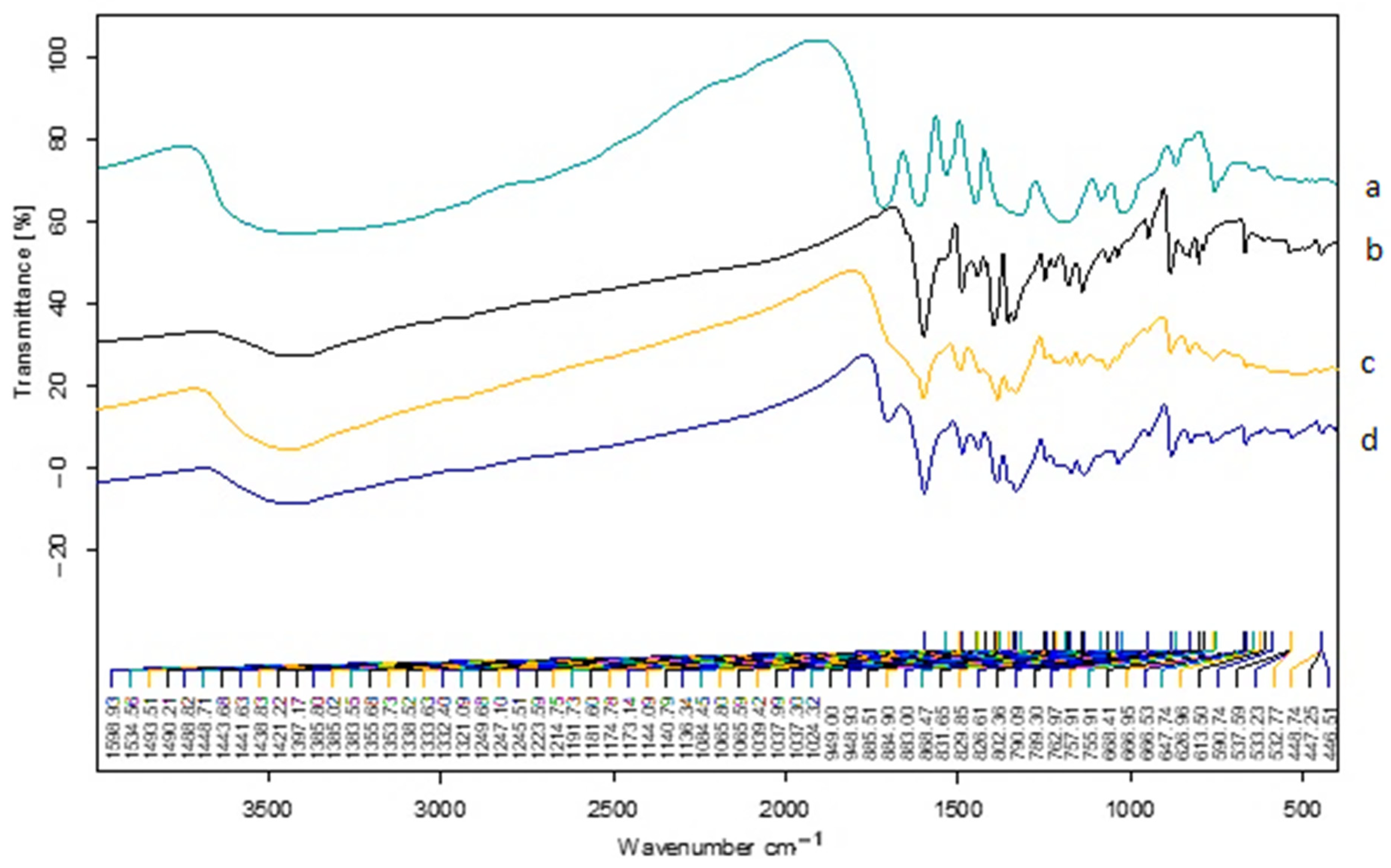
The introduction of a small dose of Al cations in the form of PAC allows further destabilization of colloids until they precipitate in the form of sediment flocs. The resulting pre-destabilized aggregates can be easily precipitated, because of neutralization and adsorption on positively charged hydroxide particles formed by Al salt hydrolysis at pH 5.0 [36,43]. This process runs as a mechanism well described in the literature, “sweep” flocculation following charge neutralization [37]. Higher removal of dissolved organic substances was observed under acidic conditions, e.g., pH 4.5 versus pH 7.0, which suggests that charge neutralization decides coagulation effectivity to a greater extent than sweep flocculation [44]. The charge of hydrolyzed PAC molecules (assuming isoelectric point at pH 5.5) and the protonation organic molecules (TA) at lower pH make the range of pH = 5–6 superior for charge neutralizing and organic colloidal destabilizing [30,31]. Analysis of the precipitates using FTIR provides additional information on possible interactions between molecules TA-MB and TA-MB-Alm(OH)n (Figure 5).
Figure 5.
FT-IR spectra in order from the top of the graph: (a) tannic acid; (b) methylene blue; (c) precipitate after coagulation at TA/MB = 0.5 and AL/TA = 8; (d) precipitate after mixing at TA/MB = 0.5.
The spectra shown in the graph in Figure 5 are different from each other and from the spectrum of pure tannic acid, which suggests that interactions are indeed present, and in addition, AlCl3 affects their intensity and nature. In the O–H region (~3200–3600 cm−1), the tannic acid spectrum has a wide O–H band typical of phenols/polyhydroxylic acids [45]. However, in the spectra of precipitates, this band shifts and changes shape under the influence of OH groups that enter into hydrogen bonds, causing the peaks to broaden and shift towards lower wavenumbers [46]. Differences between the spectra are observed as band shifts and broadening, indicating stronger hydrogen bonding in the TA–MB system. In contrast, after coagulation with AlCl3 (PAC), this effect is less pronounced. This behavior can be attributed to the complexation of phenolic groups of tannic acid by Al3+ ions, which reduces the availability of –OH groups for hydrogen bonding with methylene blue. In the presence of AlCl3, the diminished interaction likely results from competition of Al3+ ions for donor sites, leading to the formation of coordination bonds [46,47]. In the region below 1500 cm−1, noticeable changes in band shape and intensity are observed, particularly for C–O and aromatic vibrations. These modifications indicate alterations in the electronic environment of phenolic groups, which may arise from hydrogen bonding or complexation with Al3+ ions. No new bands characteristic of covalent bond formation are observed, suggesting that the interactions are predominantly non-covalent [48,49].
The mechanism of the methylene blue removal process using polyaluminum chloride can be represented using Equations (2) and (3) and schematically (Figure 6):
MB+ + TA− → (MBTA)n− dye-tannic complex
(MBTA)n− + ((Alx(OH)y(x−y)+)m+ + Cl− → [(MBTA)n((Alx(OH)y(x−y)+)m](m−n)+ + Cl−
Aggregates of dye-tannic complexes and aluminum hydroxides.
Figure 6.
The processes occurring in the solution during MB coagulation with TA.
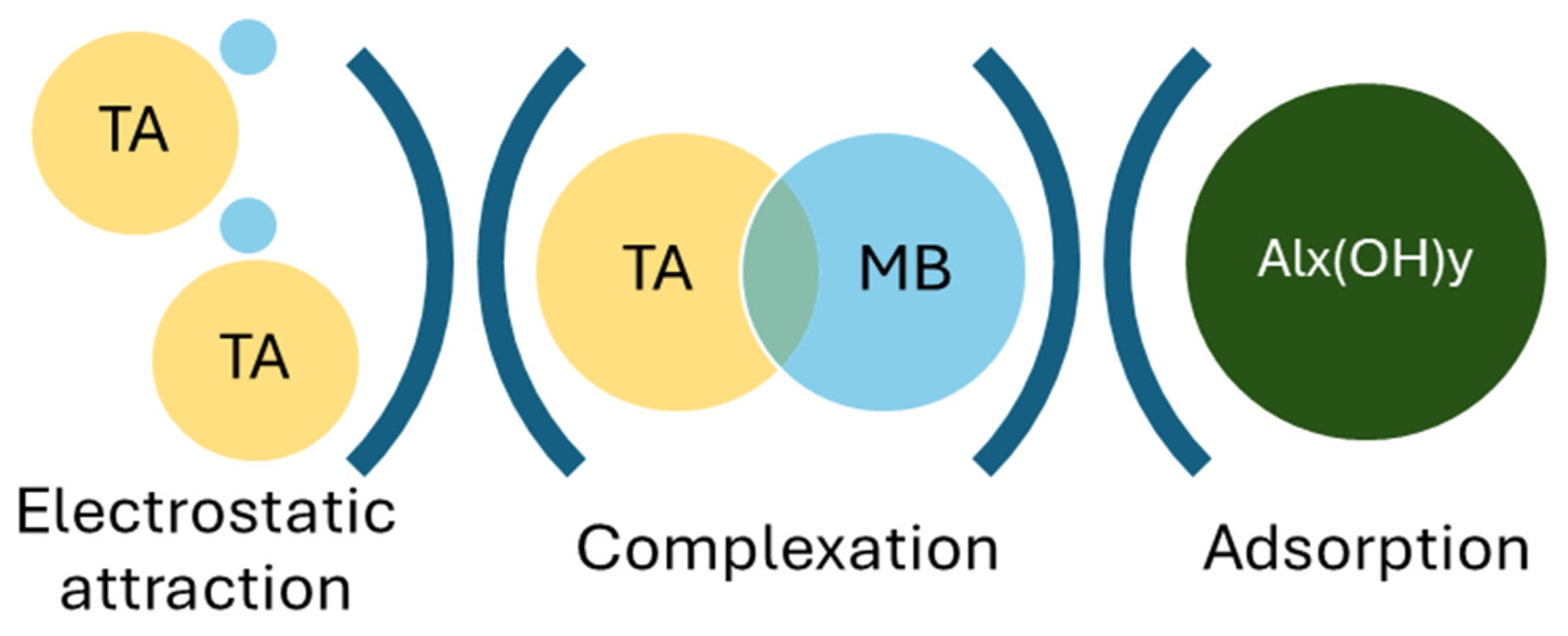
In this synergistic process (Figure 6), tannin molecules interact electrostatically with the positive charge of dye particles acting as bridges. The formed methylene blue/tannin complexes (micelles) are then probably adsorbed on the surface of colloidal coagulant hydroxides. These interactions occur between the MB dye imine groups and the negatively charged [COO−] groups of the polymers used at pH > 4 [47]. This is similar to the removal of cationic dyes, which are bonded to the modified surface of the activated carbon by carboxyl groups [48] or adsorption of methylene blue on silicate sorbents [49].
3.3. Effectiveness of the Coagulation Process
The degree of purification–decolorization and removal of the dye from the solution after the coagulation process was determined on the basis of the analyzed indicators of MB solutions. Figures S3a–S5a show the results of measurements in solutions after sedimentation, and Figures S3b–S5b after filtration. The maximum absorbance reduction was achieved in the dose range of 2.54–3.38 ppm Al (Al/TA = 6–8). Further increases in the dose of coagulant did not improve the effectiveness of coagulation; on the contrary, this reduced its effectiveness. It is worth noting that turbidity measured nephelometrically varied depending on the TA/MB system, reaching a maximum for TA/MB = 0.5 and Al/TA = 8. Filtration had a positive effect on reducing turbidity and therefore improved effectivity. Clear differences between sedimentation and filtration indicate the presence of sedimentation particles of non-sedimentation sizes. The turbidity may be an indicator of the size of the flocs that grow during aggregation [50,51,52]. As a result of the introduction of a coagulant in the so-called “threshold” dose, the turbidity reaches its maximum values corresponding to critical coagulant concentration (CCC), which destabilizes the colloid system.
Unfiltered samples show worse treatment efficiency. The applied microfiltration with filters with relatively large pores with a diameter of >30 μm enables a significant improvement in the treatment efficiency and the removal of turbidity. As a result, the tested parameters were reduced absorbance at 290 nm and decolorization at 610 nm. Flocculation has a fundamental influence on the effect of contaminant separation. The stability of particle aggregates formed by interactions with different polyelectrolytes can vary; some of them remain stable in the form of suspensions and the appropriate filter sequence is able to remove them [53].
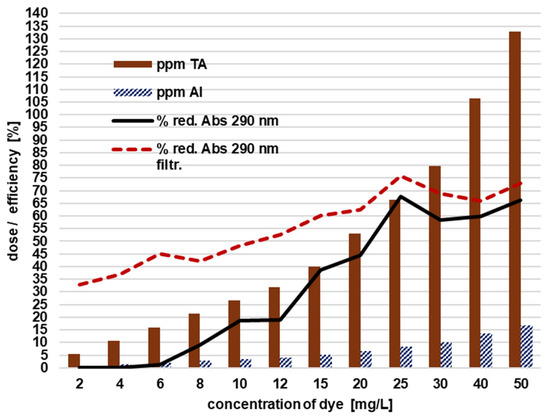
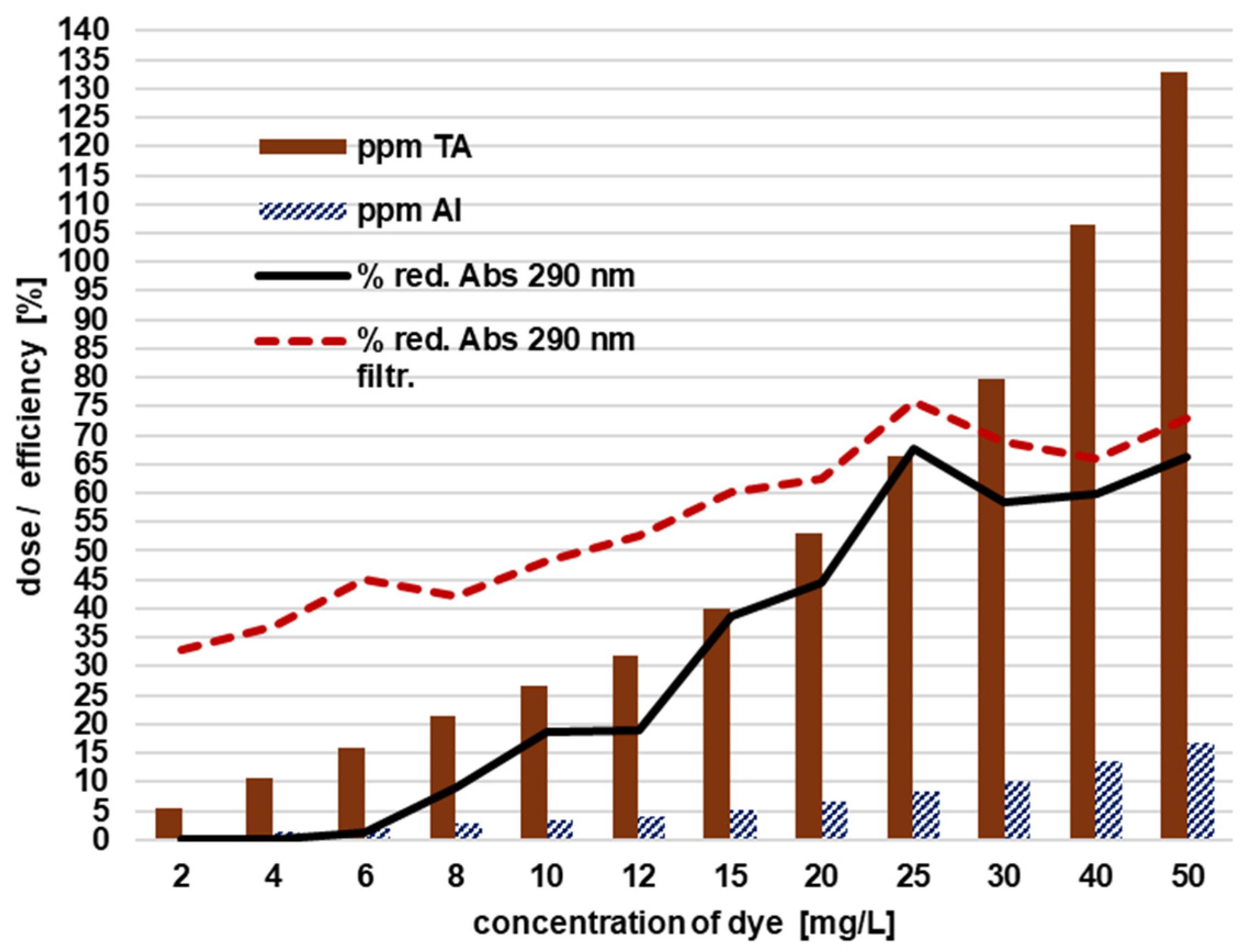
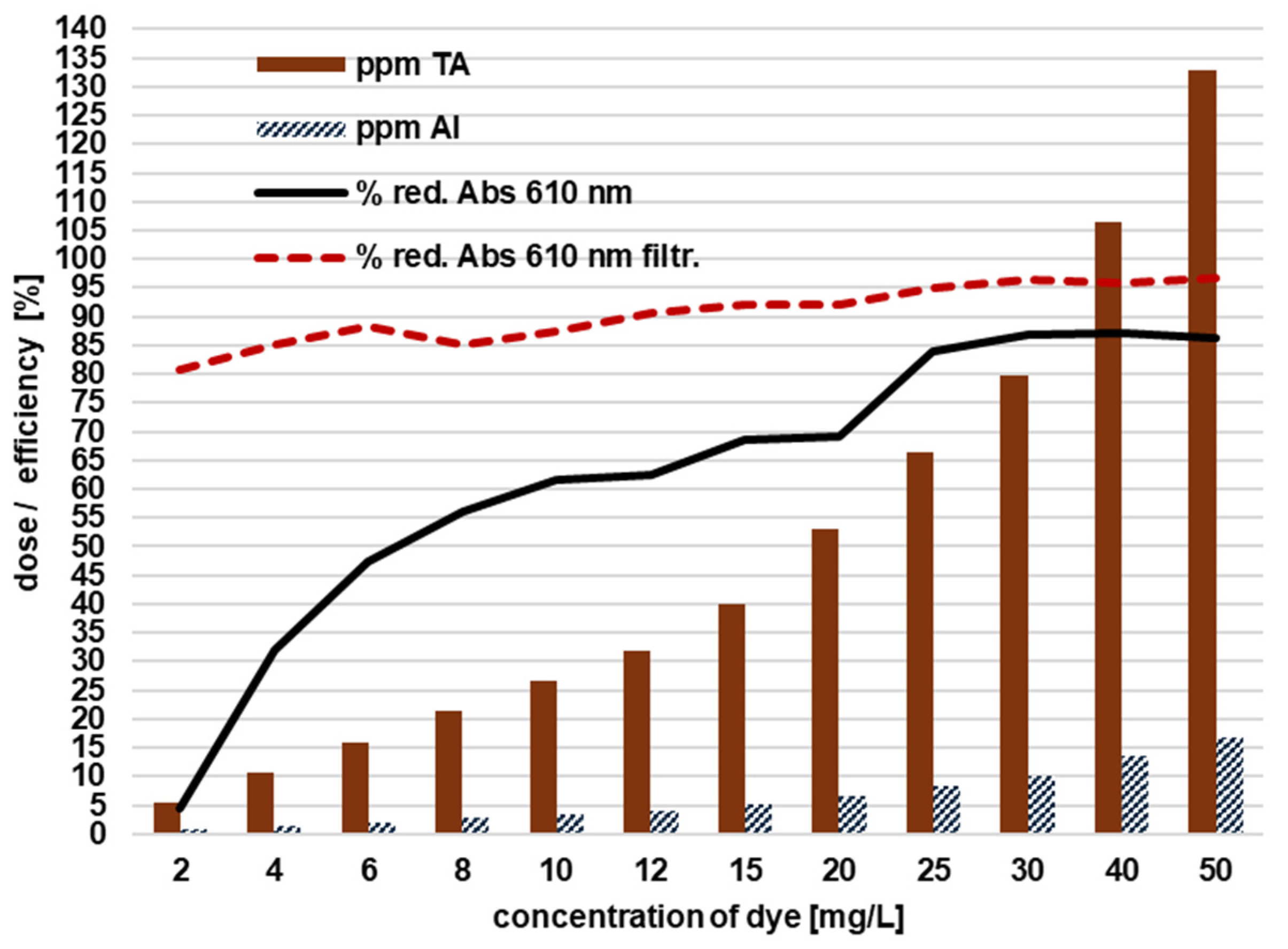
The previously determined optimal dose arrangement of reagents was tested at Al/TA = 8 for a wide range of concentrations of the dye solution from 2 to 50 mg/L. The results obtained are presented in Figure 7 and Figure 8.
Figure 7.
Reduction in absorption at λ = 290 nm in optimized systems at pH 5.0 and molar ratio TA/BM = 0.5 and Al/TA = 8, depending on the concentration of MB dye.
Figure 8.
Reduction in light absorption at λ = 610 nm in optimized systems at pH 5.0 and molar ratio TA/MB = 0.5 and Al/TA = 8, depending on the concentration of BM dye.
At lower dye concentrations (up to 6 mg/L), the efficiency is negligible in sedimentation samples and clearly better in post-filtration samples (33–45%). Starting from the concentration of 8 mg/L, there is a stepwise increase in the reduction in absorbance at 290 nm, achieving the best effect of 67% and 75% of the reduction for the concentration of 25 mg MB/L in the sedimentation and filtration tests, respectively. A significant reduction in absorbance at 610 nm was achieved in post-filtration tests. Decolorization for the entire range of dye concentrations had an increasing trend and ranged from 80% to 96.8%, reaching 95% for the concentration of 25 mg MB/L. However, when using sedimentation, this reduction ranged from approx. 4% to 87% above the concentration of 30 mg MB/L.
According to research, the applied coagulant dose system provides the best decolorization results for solutions containing higher concentrations of methylene blue dye. This is due to the higher density of particles in the solution and a proportionally higher statistical probability of collision, which counteract the forces of repulsion and support the forces of electrostatic attraction. The differences obtained using spectrophotometric indicators in the UV-VIS spectrum range result from the uneven removal of solution components. The tannins present in the system are compounds with an aromatic structure and absorb radiation in the UV range λ < 300 nm (Figure 2a,b). During the interaction of TA molecules with MB, complexes with tannins are formed. Some of them may remain in the solution after coagulation or desorb from the surface of aluminum hydroxides. The situation is different in the case of the dye, which is removed by interacting more strongly with the surface of the precipitated aggregates, which explains the decolorization at λ = 610 nm in over 95%.
Such a high decolorization efficiency of cationic dye solution can be achieved by coagulation assisted by other methods, e.g., sorption with the use of bentonite [19] or ozonation [54]. However, it is sufficient to modify the purified solution or coagulant with an anionic component, e.g., polysilicic acid, which allows it to interact with the dye molecules [20,21]. The removal of synthetic dyes by polyvalent cations can also be attributed to adsorption of micelles formed by the other organic ions, e.g., surfactants, which promote flocculation [36,55]. The polymeric nature of tannic acid with a large number of functional groups may affect the effective aggregation of precipitated molecules and more efficient removal. The presented hybrid coagulation method using tannic acid can be a cheap and ecological alternative to wastewater treatment from cationic dyes, characterized by the efficiency of post-coagulation sludge separation by the rapid filtration method.
3.4. The Sorption Process in MB Removal
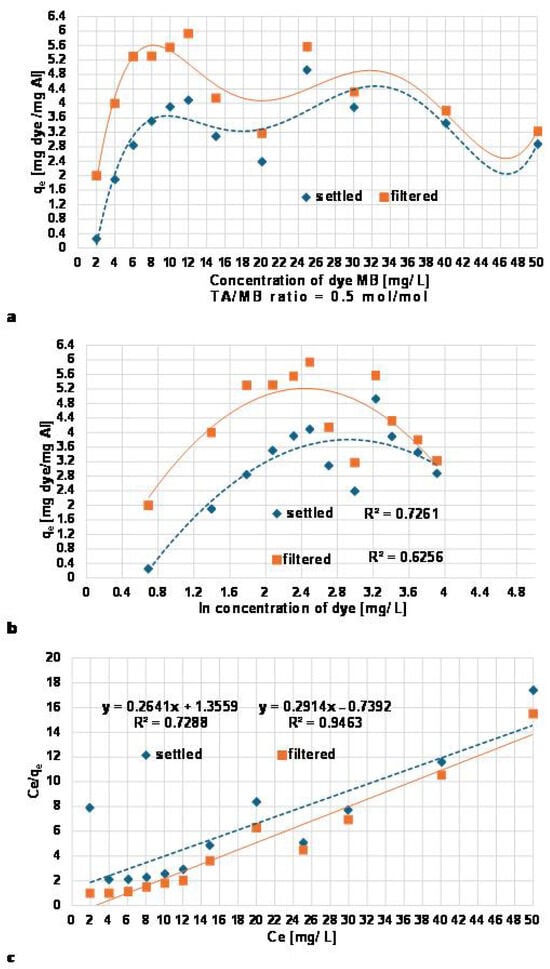
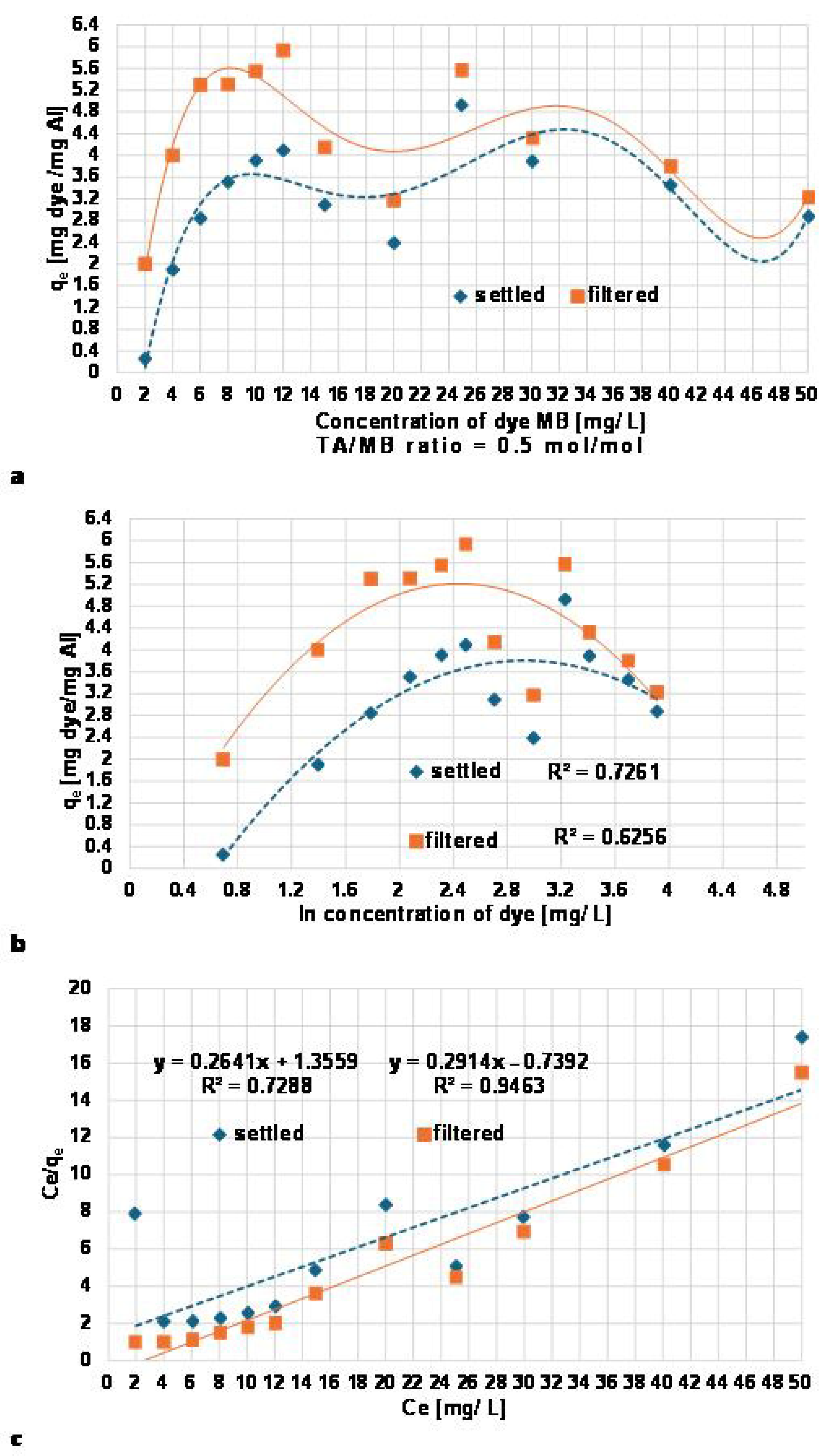
Some studies describe coagulation/flocculation as the process of adsorption of pollutants onto sludge flocs [56,57]. The Langmuir model indicates the favorability and feasibility of cationic dye adsorption as a chemisorption on adsorbate surfaces [58]. Figure 9a,b shows the dye removal efficiency per unit dose of the coagulant mg dye/mg Al. By analyzing these data, it is possible to estimate the maximum yield of the MB/TA = 0.5 and Al/TA = 8 system for above 5 mg dye/mg Al for ln concentrations = 1.8–3.2, which corresponds to the dye concentration range of 6–25 mg/L. The Langmuir adsorption model used (Figure 9c) indicates a high probability (R2 = 0.729 and 0.946) of chemisorption in the binding of color complexes on coagulant hydrolysis products of Al. The Langmuir isotherm model was used to describe monolayer adsorption on the alum post-coagulation sludge with the highest degree of matches to experimental data for MB dye R2 = 0.988 [59].
Figure 9.
Methylene blue removal efficiency at TA/MB ratio = 0.5 measured spectrophotometrically at λ = 610 nm: (a) for subsequent concentrations of methylene blue, (b) for subsequent ln values of methylene blue concentrations, (c) for equilibrium concentrations of methylene blue (Langmuir adsorption isotherm).
The Langmuir equation is written as
where b—Langmuir constant referred to equilibrium adsorption constant; qe—dye concentration at equilibrium onto sorbent (mg/g); Ce—concentration of MB dye at equilibrium in solution (mg/L), qmax—the maximum adsorption capacity of the MB adsorbed per unit mass of the sorbent covered with monolayer (mg/g).
The results obtained can be compared with other coagulation studies by adding kaolinite as a coagulant aid. The amount of the removed anionic blue dye per unit mass of coagulant reached a maximum value of 2.1 mg dye/mg PAC [60]. On the other hand, the sorption process on solid adsorbents described in other works differs more. In the case of biochar adsorbent obtained from natural substrates, the efficiency was 71–99% under optimal conditions at various times ranging from 84 to 96 h, and the process efficiency was 17.5–19.2 mg/g [61]. The maximum adsorption capacity of 123.75 mg/g/L for MB was obtained using modified activated carbon within 15 min contact time [48]. Fito et al. (2020) [62] achieved 94% removal using 100 min. contact time and 2 g of adsorbate in 100 mL. In the case of ionic flocculation using surfactant and CaCl2 solution to precipitate surfactant micelles, the maximum adsorption capacity of MB was 101.38 mg/g surfactant [55]. The literature data cited above show that the process of removing methylene blue in the sorption process depends on the sorbent used, pH temperature and contact time. The cited works confirm that process is characterized by a linear course of the Langmuir isotherm and indicates the nature of sorption as a chemisorption in a single layer on the surface of the adsorbent. The presented data show that the described method of methylene blue removal is very efficient, and the process itself is much faster compared to adsorption on solid fillings and demonstrates similarly high efficiency. The use of a natural activator—tannic acid—and low doses of coagulant make this method of purification low-cost.
4. Conclusions
The paper shows the method of removal of methylene blue as a result of pre-coagulation with hydrolyzed tannic acid. Tannic acid modified the MB solution, which caused changes in the UV-VIS spectrum consisting of a bathochromic effect in the MB absorption spectrum. Under the influence of tannic acid, a marked decrease in the zeta potential of the MB solution was found. Interactions between the polar part of the dye and the tannin could take place. FTIR spectra clearly indicate the presence of non-covalent interactions (including hydrogen bonds and/or strong electrostatic interactions) between tannic acid and methylene blue. Associations were probably formed, e.g., via hydrogen bridges, between TA and MB.
The optimal system of TA/MB = 0.5, Al/TA = 8 and pH = 5.0 was selected. The best effects of reduction in the UV index at λ = 290 nm of 67% and 75% were obtained for a concentration of 25 mg MB/L in the sedimentation and filtration tests respectively. Decolorization at λ = 610 nm after hybrid coagulation/filtration for the entire range of dye concentrations ranged from 80% to 96.8%, reaching 95% for the concentrations above 25 mg MB/L. The applied microfiltration with filters with relatively large pores with a diameter of >30 μm enabled a significant improvement in the treatment efficiency and the removal of turbidity.
The modification of dye solutions with hydrolyzed tannic acids initiates the process of destabilization and combining particles into larger aggregates, which remain in suspension. The formed methylene blue/tannin complexes are then probably adsorbed on the surface of colloidal coagulant hydroxides. This process runs as a “sweep” flocculation mechanism following charge neutralization. The chemisorption process follows the binding of color complexes on coagulant hydrolysis products of Al. The maximum yield of above 5 mg dye/mg Al using the optimal system of MB/TA = 0.5 and TA/Al = 8 was estimated.
This tannic acid-modified solution is susceptible to coagulation at optimal pH values (pH = 5–6) for pre-polymerized aluminum coagulant, which is difficult to achieve with coagulants without these modifications. The proposed hybrid system based on tannic acid-assisted coagulation and fast filtration can be used in real wastewater treatment conditions as an example of sustainable and low-cost technologies that help solve environmental problems related to the discharge of textile wastewater. Further research is needed to verify this method for other cationic dyes and other impurities existing in effluents. The possibility of incorporating this system into closed-process water circuits for reuse or purification purposes may also be considered.
Supplementary Materials
The following supporting information can be downloaded at https://www.mdpi.com/article/10.3390/chemengineering10040051/s1. Supplementary information for materials used (docx): Structural formula of methylene blue—Figure S1, Structural formula of tannic acids—Figure S2, Characteristics of PAC, the coagulant used—Table S1. Supplementary information for results and discussion: Optimization of PAC dosage for MB/TA coagulation process—Figures S3a–S5a with sedimentation, Figures S3b–S5b with filtration.
Author Contributions
Conceptualization, B.L.; Data curation, B.L. and Z.A.; Formal analysis, B.L.; Investigation, B.L., M.K. and Z.A.; Methodology B.L., R.W. and M. K; Supervision, B.L. and R.W.; Visualization, B.L.; Writing—original draft, B.L., R.W. and Z.A.; Writing—review and editing, B.L. and R.W. All authors have read and agreed to the published version of the manuscript.
Funding
The results presented in this paper were obtained as part of a comprehensive study financed by the Faculty of Agriculture and Forestry, Department of Chemistry, University of Warmia and Mazury in Olsztyn (grant No. 30.610.001-110).
Data Availability Statement
The original contributions presented in this study are included in the article/Supplementary Material. Further inquiries can be directed to the corresponding author.
Conflicts of Interest
We would like to confirm that there are no known conflicts of interest related to this publication and that there was no significant financial support for this work that could have influenced its results, other than those listed under Funding.
References
- Al-Tohamy, R.; Ali, S.S.; Li, F.; Okasha, K.M.; Mahmoud, Y.A.-G.; Elsamahy, T.; Jiao, H.; Fu, Y.; Sun, J. A Critical Review on the Treatment of Dye-Containing Wastewater: Ecotoxicological and Health Concerns of Textile Dyes and Possible Remediation Approaches for Environmental Safety. Ecotoxicol. Environ. Saf. 2022, 231, 113160. [Google Scholar] [CrossRef] [Scilit] [PubMed]
- Holkar, C.R.; Jadhav, A.J.; Pinjari, D.V.; Mahamuni, N.M.; Pandit, A.B. A Critical Review on Textile Wastewater Treatments: Possible Approaches. J. Environ. Manag. 2016, 182, 351–366. [Google Scholar] [CrossRef] [Scilit]
- Slama, H.B.; Chenari Bouket, A.; Pourhassan, Z.; Alenezi, F.N.; Silini, A.; Cherif-Silini, H.; Oszako, T.; Luptakova, L.; Golińska, P.; Belbahri, L. Diversity of Synthetic Dyes from Textile Industries, Discharge Impacts and Treatment Methods. Appl. Sci. 2021, 11, 6255. [Google Scholar] [CrossRef] [Scilit]
- Wang, X.; Jiang, J.; Gao, W. Reviewing Textile Wastewater Produced by Industries: Characteristics, Environmental Impacts, and Treatment Strategies. Water Sci. Technol. 2022, 85, 2076–2096. [Google Scholar] [CrossRef] [Scilit]
- Rafatullah, M.; Sulaiman, O.; Hashim, R.; Ahmad, A. Adsorption of Methylene Blue on Low-Cost Adsorbents: A Review. J. Hazard. Mater. 2010, 177, 70–80. [Google Scholar] [CrossRef] [Scilit] [PubMed]
- Khandelwal, D.; Rana, I.; Mishra, V.; Ranjan, K.R.; Singh, P. Unveiling the Impact of Dyes on Aquatic Ecosystems through Zebrafish—A Comprehensive Review. Environ. Res. 2024, 261, 119684. [Google Scholar] [CrossRef] [Scilit] [PubMed]
- Oladoye, P.O.; Ajiboye, T.O.; Omotola, E.O.; Oyewola, O.J. Methylene Blue Dye: Toxicity and Potential Elimination Technology from Wastewater. Results Eng. 2022, 16, 100678. [Google Scholar] [CrossRef] [Scilit]
- Sharma, J.; Sharma, S.; Soni, V. Classification and Impact of Synthetic Textile Dyes on Aquatic Flora: A Review. Reg. Stud. Mar. Sci. 2021, 45, 101802. [Google Scholar] [CrossRef] [Scilit]
- Ong, S.; Toorisaka, E.; Hirata, M.; Hano, T. Biodegradation of Redox Dye Methylene Blue by Up-Flow Anaerobic Sludge Blanket Reactor. J. Hazard. Mater. 2005, 124, 88–94. [Google Scholar] [CrossRef] [Scilit] [PubMed]
- Khan, M.D.; Singh, A.; Khan, M.Z.; Tabraiz, S.; Sheikh, J. Current Perspectives, Recent Advancements, and Efficiencies of Various Dye-Containing Wastewater Treatment Technologies. J. Water Process Eng. 2023, 53, 103579. [Google Scholar] [CrossRef] [Scilit]
- Miralles-Cuevas, S.; Oller, I.; Agüera, A.; Llorca, M.; Sánchez Pérez, J.A.; Malato, S. Combination of Nanofiltration and Ozonation for the Remediation of Real Municipal Wastewater Effluents: Acute and Chronic Toxicity Assessment. J. Hazard. Mater. 2017, 323, 442–451. [Google Scholar] [CrossRef] [Scilit]
- Tehrani-Bagha, A.R.; Mahmoodi, N.M.; Menger, F.M. Degradation of a Persistent Organic Dye from Colored Textile Wastewater by Ozonation. Desalination 2010, 260, 34–38. [Google Scholar] [CrossRef] [Scilit]
- Gulati, S.; Baul, A.; Kumar, S.; Wadhwa, R.; Trivedi, M.; Varma, R.S.; Amar, A. Recent Progress, Synthesis, and Application of Chitosan-Decorated Magnetic Nanocomposites in Remediation of Dye-Laden Wastewaters. New J. Chem. 2022, 46, 17114–17139. [Google Scholar] [CrossRef] [Scilit]
- Lima, H.d.P.; Asencios, Y.J.O. Eichhornia Crassipes (Mart.) Solms (Natural or Carbonized) as Biosorbent to Remove Pollutants in Water. SN Appl. Sci. 2021, 3, 750. [Google Scholar] [CrossRef] [Scilit] [PubMed]
- Salleh, M.A.M.; Mahmoud, D.K.; Karim, W.A.W.A.; Idris, A. Cationic and Anionic Dye Adsorption by Agricultural Solid Wastes: A Comprehensive Review. Desalination 2011, 280, 1–13. [Google Scholar] [CrossRef] [Scilit]
- Bilal, M.; Ihsanullah, I.; Hassan Shah, M.U.; Bhaskar Reddy, A.V.; Aminabhavi, T.M. Recent Advances in the Removal of Dyes from Wastewater Using Low-Cost Adsorbents. J. Environ. Manag. 2022, 321, 115981. [Google Scholar] [CrossRef] [Scilit]
- Golob, V.; Vinder, A.; Simonic, M. Efficiency of the Coagulation/Flocculation Method for the Treatment of Dyebath Effluents. Dye. Pigment. 2005, 67, 93–97. [Google Scholar] [CrossRef] [Scilit]
- Liang, C.-Z.; Sun, S.-P.; Li, F.-Y.; Ong, Y.-K.; Chung, T.-S. Treatment of Highly Concentrated Wastewater Containing Multiple Synthetic Dyes by a Combined Process of Coagulation/Flocculation and Nanofiltration. J. Membr. Sci. 2014, 469, 306–315. [Google Scholar] [CrossRef] [Scilit]
- Fosso-Kankeu, E.; Webster, A.; Ntwampe, I.O.; Waanders, F.B. Coagulation/Flocculation Potential of Polyaluminium Chloride and Bentonite Clay Tested in the Removal of Methyl Red and Crystal Violet. Arab. J. Sci. Eng. 2017, 42, 1389–1397. [Google Scholar] [CrossRef] [Scilit]
- Kalli, E.; Maroulas, K.N.; Thysiadou, A.A.; Kyzas, G.Z.; Tolkou, A.K. Performance Evaluation of Hybrid and Conventional Coagulants for the Removal of Sunset Yellow and Methylene Violet Dyes from Wastewater. Processes 2025, 13, 3430. [Google Scholar] [CrossRef] [Scilit]
- Min, J.; Zhou, H.; Yang, C.; Wang, L.; Nie, J.; Wang, Q.; Wang, L.; Zhao, Y. Synergistic Effects of Poly-Silicon Aluminum Sulfate and Auxiliary Agents in Dye Wastewater Decolorization. RSC Adv. 2026, 16, 5206–5219. [Google Scholar] [CrossRef] [Scilit]
- Ihaddaden, S.; Aberkane, D.; Boukerroui, A.; Robert, D. Removal of Methylene Blue (Basic Dye) by Coagulation-Flocculation with Biomaterials (Bentonite and Opuntia Ficus Indica). J. Water Process. Eng. 2022, 49, 102952. [Google Scholar] [CrossRef] [Scilit]
- Grenda, K.; Arnold, J.; Gamelas, J.A.F.; Rasteiro, M.G. Environmentally Friendly Cellulose-Based Polyelectrolytes in Wastewater Treatment. Water Sci. Technol. 2017, 76, 1490–1499. [Google Scholar] [CrossRef] [Scilit]
- Jorge, N.; Teixeira, A.R.; Marchão, L.; Tavares, P.B.; Lucas, M.S.; Peres, J.A. Removal of Methylene Blue from Aqueous Solution by Application of Plant-Based Coagulants. Eng. Proc. 2022, 19, 38. [Google Scholar]
- Tomasi, I.T.; Boaventura, R.A.R.; Botelho, C.M.S. Comparative Study of Natural and Chemical Coagulants for Continuous-Flow Treatment of Textile Wastewater. Chem. Eng. Sci. 2026, 320, 122476. [Google Scholar] [CrossRef] [Scilit]
- Frumento, D.; Ţălu, Ş. Recent Advances in the Application of Natural Coagulants for Sustainable Water Purification. Eng 2026, 7, 38. [Google Scholar] [CrossRef] [Scilit]
- Li, Y.M.; Miao, X.; Wei, Z.G.; Cui, J.; Li, S.Y.; Han, R.M.; Zhang, Y.; Wei, W. Iron-Tannic Acid Nanocomplexes: Facile Synthesis and Application for Removal of Methylene Blue from Aqueous Solution. Dig. J. Nanomater. Biostructures 2016, 11, 1045–1061. [Google Scholar]
- Yang, Z.; Gao, B.; Wang, Y.; Wang, Q.; Yue, Q. Aluminum Fractions in Surface Water from Reservoirs by Coagulation Treatment with Polyaluminum Chloride (PAC): Influence of Initial pH and OH−/Al3+ Ratio. Chem. Eng. J. 2011, 170, 107–113. [Google Scholar] [CrossRef] [Scilit]
- Mcyotto, F.; Wei, Q.; Macharia, D.K.; Huang, M.; Shen, C.; Chow, C.W.K. Effect of Dye Structure on Color Removal Efficiency by Coagulation. Chem. Eng. J. 2021, 405, 126674. [Google Scholar] [CrossRef] [Scilit]
- Qin, J.-J.; Oo, M.H.; Kekre, K.A.; Knops, F.; Miller, P. Impact of Coagulation pH on Enhanced Removal of Natural Organic Matter in Treatment of Reservoir Water. Sep. Purif. Technol. 2006, 49, 295–298. [Google Scholar] [CrossRef] [Scilit]
- Ghernaout, D. The Hydrophilic/Hydrophobic Ratio vs. Dissolved Organics Removal by Coagulation—A Review. J. King Saud. Univ.-Sci. 2014, 26, 169–180. [Google Scholar] [CrossRef] [Scilit]
- Rashidi-Alavijeh, M.; Javadian, S.; Gharibi, H.; Moradi, M.; Tehrani-Bagha, A.R.; Shahir, A.A. Intermolecular Interactions between a Dye and Cationic Surfactants: Effects of Alkyl Chain, Head Group, and Counterion. Colloids Surf. A Physicochem. Eng. Asp. 2011, 380, 119–127. [Google Scholar] [CrossRef] [Scilit]
- Chang, Y.; Dou, N.; Liu, M.; Jiang, M.; Men, J.; Cui, Y.; Li, R.; Zhu, Y. Efficient Removal of Anionic Dyes from Aqueous Solution Using CTAB and β-Cyclodextrin-Induced Dye Aggregation. J. Mol. Liq. 2020, 309, 113021. [Google Scholar] [CrossRef] [Scilit]
- Noor, S.; Taj, M.B. Mixed-Micellar Approach for Enhanced Dye Entrapment: A Spectroscopic Study. J. Mol. Liq. 2021, 338, 116701. [Google Scholar] [CrossRef] [Scilit]
- Muhammad, M.T.; Nasiruddin Khan, M. Oppositely Charged Dye Surfactant Interactions: Extent and Selectivity of Ion Pair Formation. J. Mol. Liq. 2018, 266, 591–596. [Google Scholar] [CrossRef] [Scilit]
- Sultana, H.; Usman, M.; Farooqi, Z.H. Micellar Flocculation for the Treatment of Synthetic Dyestuff Effluent: Kinetic, Thermodynamic and Mechanistic Insights. J. Mol. Liq. 2021, 344, 117964. [Google Scholar] [CrossRef] [Scilit]
- Ghernaout, D.; Ghernaout, B. Sweep Flocculation as a Second Form of Charge Neutralisation—A Review. Desalination Water Treat. 2012, 44, 15–28. [Google Scholar] [CrossRef] [Scilit]
- Kinfu, H.H.; Rahman, M.M.; Schneider, E.S.; Cevallos-Cueva, N.; Abetz, V. Using the Assembly Time as a Tool to Control the Surface Morphology and Separation Performance of Membranes with a Tannic Acid–Fe3+ Selective Layer. Membranes 2024, 14, 133. [Google Scholar] [CrossRef] [Scilit] [PubMed]
- Cai, D.; Zhang, Y.; Li, J.; Hu, D.; Wang, M.; Zhang, G.; Yuan, J. Intermolecular Interactions in Mixed Dye Systems and the Effects on Dye Wastewater Treatment Processes. RSC Adv. 2024, 14, 373–381. [Google Scholar] [CrossRef] [Scilit] [PubMed]
- El Gaayda, J.; Ezzahra Titchou, F.; Oukhrib, R.; Karmal, I.; Abou Oualid, H.; Berisha, A.; Zazou, H.; Swanson, C.; Hamdani, M.; Ait Akbour, R. Removal of Cationic Dye from Coloured Water by Adsorption onto Hematite-Humic Acid Composite: Experimental and Theoretical Studies. Sep. Purif. Technol. 2022, 288, 120607. [Google Scholar] [CrossRef] [Scilit]
- Libecki, B.; Wardzyńska, R.; Kalinowski, S.; Kuźbik, K. Purification of a Reactive Dyes Mixture Solution by Means of Pre-Hydrolysed Coagulants in the Standard Tests and Coagulating Flow System. Chem. Eng. Sci. 2025, 301, 120784. [Google Scholar] [CrossRef] [Scilit]
- Benalia, A.; Derbal, K.; Baatache, O.; Lehchili, C.; Khalfaoui, A.; Pizzi, A. Removal of Dyes from Water Using Aluminum-Based Water Treatment Sludge as a Low-Cost Coagulant: Use of Response Surface Methodology. Water 2024, 16, 1400. [Google Scholar] [CrossRef] [Scilit]
- Lin, J.-L.; Huang, C.; Dempsey, B.; Hu, J.-Y. Fate of Hydrolyzed Al Species in Humic Acid Coagulation. Water Res. 2014, 56, 314–324. [Google Scholar] [CrossRef] [Scilit] [PubMed]
- Wang, Q.; Gao, B.; Wang, Y.; Yang, Z.; Xu, W.; Yue, Q. Effect of pH on Humic Acid Removal Performance in Coagulation–Ultrafiltration Process and the Subsequent Effects on Chlorine Decay. Sep. Purif. Technol. 2011, 80, 549–555. [Google Scholar] [CrossRef] [Scilit]
- Pantoja-Castro, M.A.; González-Rodríguez, H. Study by Infrared Spectroscopy and Thermogravimetric Analysis of Tannins and Tannic Acid. Rev. Latinoamer. Quím. 2011, 39, 107–112. [Google Scholar]
- Hosseini, M.; Moghaddam, L.; Barner, L.; Cometta, S.; Hutmacher, D.W.; Medeiros Savi, F. The Multifaceted Role of Tannic Acid: From Its Extraction and Structure to Antibacterial Properties and Applications. Prog. Polym. Sci. 2025, 160, 101908. [Google Scholar] [CrossRef] [Scilit]
- Paulino, A.T.; Guilherme, M.R.; Reis, A.V.; Campese, G.M.; Muniz, E.C.; Nozaki, J. Removal of Methylene Blue Dye from an Aqueous Media Using Superabsorbent Hydrogel Supported on Modified Polysaccharide. J. Colloid. Interface Sci. 2006, 301, 55–62. [Google Scholar] [CrossRef] [Scilit]
- Gohr, M.S.; Abd-Elhamid, A.I.; El-Shanshory, A.A.; Soliman, H.M.A. Adsorption of Cationic Dyes onto Chemically Modified Activated Carbon: Kinetics and Thermodynamic Study. J. Mol. Liq. 2022, 346, 118227. [Google Scholar] [CrossRef] [Scilit]
- Ali, N.S.; Albayati, T.M.; Salih, I.K. Studying the Kinetics and Removal Mechanism of the Methylene Blue Dye in a Continuous Adsorption Process Using Prepared Mesoporous Materials. Water Pract. Technol. 2024, 19, 2799–2815. [Google Scholar] [CrossRef] [Scilit]
- Cheng, W.P.; Chen, P.H.; Yu, R.F.; Hsieh, Y.J.; Huang, Y.W. Comparing Floc Strength Using a Turbidimeter. Int. J. Miner. Process. 2011, 100, 142–148. [Google Scholar] [CrossRef] [Scilit]
- Libecki, B.; Kalinowski, S.; Wardzyńska, R.; Bęś, A. Using an Angular Detection Photometer (ADP) in Analyzing the Humic Acids Coagulation Process. J. Water Process Eng. 2020, 37, 101507. [Google Scholar] [CrossRef] [Scilit]
- Trevathan, J.; Read, W.; Sattar, A. Implementation and Calibration of an IoT Light Attenuation Turbidity Sensor. Internet Things 2022, 19, 100576. [Google Scholar] [CrossRef] [Scilit]
- Kvinnesland, T.; Ødegaard, H. The Effects of Polymer Characteristics on Nano Particle Separation in Humic Substances Removal by Cationic Polymer Coagulation. Water Sci. Technol. 2004, 50, 185–191. [Google Scholar] [CrossRef] [Scilit]
- Ikhlaq, A.; Parveen, S.; Raashid, M.; Masood, Z.; Rizvi, O.S.; Al Johani, T.A.; Ahsan, M.; Amjad, H.; Qi, F. Methylene Blue (MB) Removal from Aqueous Solution by Alum; Catalytic Ozonation Process. Discov. Chem. Eng. 2024, 4, 8. [Google Scholar] [CrossRef] [Scilit]
- Teixeira, Y.N.; De Paula Filho, F.J.; Bacurau, V.P.; Menezes, J.M.C.; Zhong Fan, A.; Melo, R.P.F. Removal of Methylene Blue from a Synthetic Effluent by Ionic Flocculation. Heliyon 2022, 8, e10868. [Google Scholar] [CrossRef] [Scilit] [PubMed]
- Smoczyński, L.; Ratnaweera, H.; Kosobucka, M.; Smoczyński, M. Image Analysis of Sludge Aggregates. Sep. Purif. Technol. 2014, 122, 412–420. [Google Scholar] [CrossRef] [Scilit]
- El-taweel, R.M.; Mohamed, N.; Alrefaey, K.A.; Husien, S.; Abdel-Aziz, A.B.; Salim, A.I.; Mostafa, N.G.; Said, L.A.; Fahim, I.S.; Radwan, A.G. A Review of Coagulation Explaining Its Definition, Mechanism, Coagulant Types, and Optimization Models; RSM, and ANN. Curr. Res. Green Sustain. Chem. 2023, 6, 100358. [Google Scholar] [CrossRef] [Scilit]
- Lebkiri, I.; Abbou, B.; Hsissou, R.; Safi, Z.; Sadiku, M.; Berisha, A.; El Amri, A.; Essaadaoui, Y.; Kadiri, L.; Lebkiri, A.; et al. Investigation of the Anionic Polyacrylamide as a Potential Adsorbent of Crystal Violet Dye from Aqueous Solution: Equilibrium, Kinetic, Thermodynamic, DFT, MC and MD Approaches. J. Mol. Liq. 2023, 372, 121220. [Google Scholar] [CrossRef] [Scilit]
- Pieczykolan, B.; Solecka, B. Kinetics and Adsorption Isotherm Studies of Methylene Blue and Direct Red 81 onto Post-Coagulation Sludge. Desalination Water Treat. 2023, 305, 201–216. [Google Scholar] [CrossRef] [Scilit]
- Zonoozi, M.H.; Moghaddam, M.R.A.; Arami, M. Coagulation/Flocculation of Dye-Containing Solutions Using Polyaluminium Chloride and Alum. Water Sci. Technol. 2009, 59, 1343–1351. [Google Scholar] [CrossRef] [Scilit]
- Ahmad, A.; Khan, N.; Giri, B.S.; Chowdhary, P.; Chaturvedi, P. Removal of Methylene Blue Dye Using Rice Husk, Cow Dung and Sludge Biochar: Characterization, Application, and Kinetic Studies. Bioresour. Technol. 2020, 306, 123202. [Google Scholar] [CrossRef] [Scilit] [PubMed]
- Fito, J.; Abrham, S.; Angassa, K. Adsorption of Methylene Blue from Textile Industrial Wastewater onto Activated Carbon of Parthenium Hysterophorus. Int. J. Env. Res. 2020, 14, 501–511. [Google Scholar] [CrossRef] [Scilit]

Disclaimer/Publisher’s Note: The statements, opinions and data contained in all publications are solely those of the individual author(s) and contributor(s) and not of MDPI and/or the editor(s). MDPI and/or the editor(s) disclaim responsibility for any injury to people or property resulting from any ideas, methods, instructions or products referred to in the content. |
© 2026 by the authors. Licensee MDPI, Basel, Switzerland. This article is an open access article distributed under the terms and conditions of the Creative Commons Attribution (CC BY) license.