


Abstract
To fill a research gap on firefighter exposures and breast cancer risk, and guide exposure reduction, we aimed to identify firefighter occupational exposures linked to breast cancer. We conducted a systematic search and review to identify firefighter chemical exposures and then identified the subset that was associated with breast cancer. To do this, we compared the firefighter exposures with chemicals that have been shown to increase breast cancer risk in epidemiological studies or increase mammary gland tumors in experimental toxicology studies. For each exposure, we assigned a strength of evidence for the association with firefighter occupation and for the association with breast cancer risk. We identified twelve chemicals or chemical groups that were both linked to breast cancer and were firefighter occupational exposures, including polycyclic aromatic hydrocarbons, volatile aromatics, per- and polyfluoroalkyl substances, persistent organohalogens, and halogenated organophosphate flame retardants. Many of these were found at elevated levels in firefighting environments and were statistically significantly higher in firefighters after firefighting or when compared to the general population. Common exposure sources included combustion byproducts, diesel fuel and exhaust, firefighting foams, and flame retardants. Our findings highlight breast-cancer-related chemical exposures in the firefighting profession to guide equitable worker’s compensation policies and exposure reduction.
1. Introduction
Compared to the general population, firefighters have an increased cancer incidence [1,2,3,4,5,6,7,8] and mortality [1,9,10,11]. The increased risk has been associated with cumulative firefighting chemical exposures [12] and increased length of employment as a firefighter [6]. The International Agency for Research on Cancer (IARC) has classified occupational exposure as a firefighter as carcinogenic to humans (Group 1) [13] due to sufficient evidence of mesothelioma and bladder cancer. However, there is limited information on occupational cancer risks to firefighters that primarily affect females—such as breast cancer—because firefighting has historically been a profession held predominantly by males. Indeed, some studies on firefighter cancers have excluded females because of small numbers [6,14] or advised caution and suggested that additional analyses are needed to confirm study results [1,3,9,11,15]. Addressing the data gap on health risks to female firefighters has become more urgent as the number of female firefighters increases [16,17].
The few studies investigating breast cancer risk among firefighters suggest an increased risk. For example, a US study using data from 1950 to 2009 found that female firefighters had a 39% increased risk of dying from breast cancer compared to women in the general US population and a 26% increased risk of being diagnosed with breast cancer compared to women in the US population [1]. In a follow-up study adding 16 years of observation, mortality from breast cancer among female firefighters remained elevated when compared to the general population, showing a 41% increased risk [10]. However, neither of these findings reached statistical significance, which the authors suggested was because the cohort included less than 4% women [1,10]. Despite the rarity of breast cancer in males, male firefighters may also have higher levels of breast cancer. A study of Florida firefighters from 1972 to 1999 found that male firefighters had 7.4 times the risk of dying from breast cancer compared to males in Florida’s general population [9]. A study of male Australian firefighters reported statistically significantly increased breast cancer incidence among full-time firefighters on the job for 20 years or more [4]. While both findings are based on a small number of breast cancer cases among men, these results are striking because of the rarity of male breast cancer [18,19]. It is important to note that bias associated with the healthy worker effect means that these studies could underestimate the true excess risk [20].
Overall, firefighters are exposed to vast numbers of toxic chemicals through their work [21,22], and many of these exposures are anticipated to contribute to breast cancer risk. For example, chemicals that firefighters are exposed to, such as polycyclic aromatic hydrocarbons (PAHs), fossil fuel components, and flame retardants, have been linked to breast cancer risk in epidemiological studies or shown to increase mammary tumors in experimental toxicology studies [23,24,25,26]. Over the past 50 years, furnishings have been increasingly made of oil-based plastics and other synthetic materials (which burn faster, hotter, and produce more toxic smoke [27]), include more flame retardants, and produce more toxic byproducts when burned [21].
Because breast cancer is so prevalent among females [28], identifying exposures that increase risk is a public health priority. To better understand firefighter exposures to potential breast carcinogens, we conducted a systematic search and review [29] to identify firefighter chemical exposures and then cross-referenced the resulting list with evidence about whether those chemicals influence breast cancer. With an estimated 89,600 (9%) female firefighters in the United States in 2020 [30], it is urgent to identify chemical exposures that may increase breast cancer risk to guide exposure reduction. Firefighters are also eligible for worker’s compensation benefits when they contract work-related illnesses, so identifying exposures that increase breast cancer risk can guide fair compensation policies.
2. Materials and Methods
In the present study, we systematically searched two different topic areas and compiled evidence at their intersection. Specifically, we used existing reviews to identify chemical exposures associated with breast cancer in humans or mammary tumors in experimental studies, and we also systematically searched to identify chemical exposures associated with the firefighting occupation. We then brought these together, identifying firefighter exposures that were also breast-cancer-relevant chemicals. We assigned a strength of evidence classification to each dimension—in other words, we classified evidence of elevated firefighter exposures as strong or inadequate, and likelihood of breast cancer following adult chemical exposure as probable, moderate, and limited. Based on the review categories described by Grant and Booth (2009), we describe our approach to identifying firefighter exposures to breast cancer related chemicals as a systematic search and review [29]. We used the Population, Exposure, Comparison, and Outcome (PECO) framework to generate the following research question and guide our review: Do firefighters (P) have exposures to environmental chemicals (E) that are noted to be either elevated or measured/detected in firefighters or at the fire scene (C) and that are identified in other studies as being breast-cancer-relevant (O).
2.1. Breast-Cancer-Relevant Exposures
To identify firefighter chemical exposures that were breast-cancer-relevant, we compiled a list of 301 breast-cancer-relevant chemical exposures (Supplementary Table S1). We derived this list from two sources. The first was a study identifying 278 chemicals that caused mammary gland tumors in rodents [26] based on information compiled from sources such as IARC and the US National Toxicology Program (NTP). The second source was a review of epidemiological evidence of breast cancer risk that included 158 peer-reviewed articles published between 2006 and 2016 in PubMed [23]. From this review, we identified 30 chemicals or chemical groups that were linked to breast cancer in epidemiological studies, with 9 of these chemicals also included in the list of chemicals that induced mammary gland tumors in rodents. To capture epidemiological evidence since the Rodgers et al. 2018 review, we conducted a search for studies published from June 2016 to June 2022 that included chemical exposures that we defined (below) as having adequate evidence of exposure through the firefighting occupation. We reviewed these newer studies to assess whether the evidence of breast cancer associations had changed since the 2018 review. The search terms, number of studies identified, and articles reviewed are provided in Supplemental Tables S2 and S3.
For those breast-cancer-relevant chemicals with elevated exposure in firefighters (defined below), we classified the likelihood of breast cancer following adult exposure (most relevant to firefighters) as probable, moderate, or limited based on the following criteria: probable = either strong evidence of breast cancer in humans or suggestive evidence in humans and consistent evidence of mammary tumors in rodents; moderate = either consistent evidence of mammary tumors in rodents or suggestive evidence of breast cancer in humans but limited evidence of mammary tumors in rodents; limited = inconsistent evidence of breast cancer and inconsistent evidence of mammary tumors in rodents. Because of the chemical diversity of flame-retardant chemicals, we separated them into three classes: polybrominated diphenyl ethers (PBDEs), other brominated flame retardants (BFRs), and organophosphate flame retardants (OPFRs).
2.2. Firefighter Exposures
We identified articles documenting firefighter chemical exposures by conducting a literature search using the PubMed database (Figure 1). We searched for articles with the keywords “firefighter(s)” and “exposures(s)” in the title or abstract that were published between January 2005 and May 2022 (when we conducted the search) (Supplemental Table S4). The article PubMed Identifiers were uploaded to abstrackr [31], an open-source and web-based tool that allowed us to manually screen the article abstract for relevance while machine learning tools ran in the background to semi-automate the screening process. During this screening phase focusing on the title and abstract, we applied the following inclusion/exclusion criteria: (1) primary article and not a review or meta-analysis; (2) chemical exposures were measured (we did not include other relevant firefighter exposures such as stress or shiftwork); and (3) focus on firefighter populations in general, rather than on case studies or catastrophic events that might not be generalizable to other firefighters; for example, we excluded studies on the World Trade Center or Notre Dame Cathedral fire. We included studies of training scenarios because they were relevant to firefighter exposures. The authors BC and KR screened articles until abstrackr predicted that none of the remaining articles were relevant (N = 310), after which we downloaded the PDF files of the articles that passed our screening criteria for further review (Supplemental Table S5).
Figure 1.
Flow chart of article selection for identifying firefighter exposures.
In addition to the articles identified through the PubMed database, we included articles identified in the IARC Monograph 98 [21] as reporting potential firefighter exposure to any of the breast-cancer-relevant chemicals (Figure 1, Supplementary Table S4). IARC Monograph 98 (whose working group convened in 2007) was a source for findings published prior to 2005, while our PubMed literature search only included articles after 2005.
Having identified articles that documented firefighter chemical exposures (Supplementary Table S5) we further narrowed the review to those articles that included any of the 301 breast-cancer-relevant chemicals, or their synonyms as identified through a CompTox Dashboard batch search (see Supplementary Table S1 for a full list of chemicals used and their synonyms). We used text mining tools on the full text in R version 4.1.0 to link each of the firefighter exposure articles with the breast-cancer-relevant chemical they included (Supplemental Table S6). We noted the number of articles that included each of the breast-cancer-relevant chemicals (Table 1).
Table 1.
List of breast-cancer-relevant chemical or chemical groups included in firefighter exposure studies along with the number of firefighter exposure studies that included chemical in the study and assessment classifications for the evidence of elevated exposure in firefighting and likelihood of breast cancer following adult exposures.
For each of the breast-cancer-relevant chemicals included in an article on firefighter exposures, we noted whether the original study authors reported elevated chemical exposure levels in firefighters. We subsequently labeled the evidence of elevated exposure in firefighters as “strong”, “some”, or “inadequate”. Chemicals labeled as having strong evidence of exposure in firefighters were those noted by at least one of the original studies as being statistically significantly elevated in firefighters (comparing firefighters to non-firefighters or firefighters before and after a firefighting exposure, for example through biomonitoring, wipe sampling, or personal air sampling) or in the firefighter environment (study authors reported concentrations above an occupational guideline). Chemicals labeled as having some evidence of elevated firefighter exposure were those that were consistently detected or measured in firefighters or the firefighter environment but did not meet the criteria for elevated exposure. Finally, chemicals labeled as having inadequate evidence of elevated exposure in firefighting were those that were only identified as elevated in a single study or had inconsistent detections, meaning that they were detected in some instances, often at low levels, but not in others.
3. Results
3.1. Articles Selected
Through PubMed, we identified 682 articles that contained the keywords “firefighter(s)” and “exposure(s)” in the abstract or title, in publications between January 2005 and May 2022 (Figure 1; Supplemental Table S4). Using abstrackr, we screened titles and abstracts based on the exclusion/inclusion criteria previously described and identified 108 potentially relevant articles (Supplemental Table S5). We supplemented these articles with 21 studies reviewed in the IARC Monograph 98 (Supplemental Table S5). This yielded a total of 129 articles relevant to firefighter exposures (Figure 1). Finally, we screened these 129 articles for any mention of the 301 breast-cancer-relevant chemicals or chemical groups that induced mammary tumors in rodent studies or were linked to breast cancer in epidemiological studies, yielding 109 articles that identified firefighter exposures linked to breast cancer (Figure 1).
3.2. Firefighter Chemical Exposures Identified as Breast-Cancer-Relevant
There were 28 breast-cancer-relevant chemicals or chemical groups in the firefighter exposure studies. We combined OPFRs and BFRs into one category since these are both replacement flame retardants for PBDEs. Table 1 summarizes our assessment of the evidence for each of these exposures associated with firefighters and with breast cancer. Table 2 includes brief summaries of the studies that we evaluated to make these assessments. Nine of these twenty-eight chemicals, including benzene, dioxin-like compounds, PBDEs, and PAHs, were considered to have strong evidence of elevated exposure in firefighting (Table 1) because chemical levels were noted by at least one study author as exceeding an occupational guideline or were elevated in firefighters when compared to the general population or when comparing pre- and post-exposure levels (Table 2). Three chemicals had some evidence of elevated exposure in firefighting because they were detected in the firefighting environment or in firefighters but did not meet the criteria for elevated exposure. Sixteen of the twenty-eight chemicals identified in firefighter exposure studies were considered to have inadequate evidence of exposure in firefighters because they were only included in a single study (N = 9) or were inconsistently detected and had low concentrations when detected (N = 7).
Of the nine chemicals or chemical groups with strong evidence of firefighter exposure, we considered two to have a probable likelihood of increasing breast cancer risk following exposure in adults (Table 1). These chemicals, benzene and PAHs, both had suggestive evidence of elevated breast cancer risk based on epidemiological studies and strong evidence of inducing mammary gland tumors in experimental rodents following different methods of administration (Table 2). Three other chemicals with strong evidence of firefighter exposure—acetaldehyde, styrene, and replacement flame retardants—were considered to have a moderate likelihood of increasing breast cancer following adult exposures (Table 1). While both acetaldehyde and styrene increased the incidence of mammary gland tumors in rats, epidemiological evidence for increased breast cancer risk was limited for styrene and unavailable for acetaldehyde. Flame retardants as a class remain relatively understudied, although we have assigned the replacement flame retardants OPFRs and BFRs as having “presumed moderate” evidence for increasing breast cancer risk based on mammary tumors in rodent studies of structurally relevant chemicals: a brominated flame retardant (2,2-bis(bromomethyl)-1,3-propanediol) and direct and indirect metabolites of organophosphorus flame retardants (2,3-dibromo-1-propanol and 3-monochloropropane-1,2-diol, respectively) [32,33]. Finally, four of the nine chemicals were considered to have limited data of increasing breast cancer risk following adult exposure—including dioxins and dioxin-like compounds, PBDEs, PFASs, and PCBs. This is due to inconsistent results, of either the direction of association or statistical significance, from epidemiological and experimental studies.
All three of the chemicals identified to have some evidence of elevated exposure in firefighting, acrylonitrile, 1,3-butadiene, and isoprene, were considered to have a moderate likelihood of increasing breast cancer following adult exposure (Table 1). All three increased the incidence of mammary gland tumors in rodent studies. Epidemiological data were unavailable for acrylonitrile and isoprene and were limited to one study for 1,3-butadiene (note that butadiene is an air pollutant and there are quite a few studies of air pollution and breast cancer and other cancers). We did not assign a classification for the likelihood of breast cancer for the 16 breast-cancer-relevant chemicals with inadequate evidence of firefighter exposure.
Notably, IARC classified 8 of the 12 breast-cancer-relevant chemicals as potentially carcinogenic firefighter exposures (Table 2) [34]. IARC classified benzene, benzo[a]pyrene, 1,3-butadiene, PCBs, and 2,3,7,8-tetrachloro dibenzo-para-dioxin (TCDD) as carcinogenic to humans (Group 1), styrene as probably carcinogenic (Group 2A), and acetaldehyde and isoprene as possibly carcinogenic (Group 2B). IARC also lists several PAHs as possibly or probably carcinogenic, including dibenz[a,h]anthracene, benz[a]anthracene, benzo[b]fluoranthene, benzo[k]fluoranthene, and indeno-1,2,3-[cd]pyrene.
Table 2.
List of breast-cancer-relevant chemicals associated with evidence of elevated exposure in the firefighters or the firefighter environment, along with brief summaries for the evidence of breast cancer and elevated firefighter exposure relevance based on the reviewed literature. A list of potential exposure sources and events for each chemical is included [35,36,37,38,39,40,41,42,43,44,45,46,47,48,49,50,51,52,53,54,55,56,57,58,59,60,61,62,63,64,65,66,67,68,69,70,71,72,73,74,75,76,77,78,79,80,81,82,83,84,85,86,87,88,89,90,91,92,93,94,95,96,97,98,99,100,101,102,103,104,105,106,107,108,109,110,111,112,113,114,115,116,117,118,119,120,121,122,123,124,125,126,127,128,129,130,131,132,133,134,135,136,137,138,139,140,141,142,143,144,145,146,147,148,149,150,151,152,153,154,155,156,157,158,159,160,161,162,163,164,165,166,167,168,169,170,171,172,173,174,175,176,177,178,179,180,181,182,183,184,185,186].
4. Discussion
The current study identified twelve chemical exposures that were elevated among firefighters and also associated with increased breast cancer risk in epidemiological studies or increased incidence of mammary gland tumors in rodents (Table 1 and Table 2). We found strong evidence of elevated firefighter exposure for nine of these chemicals or chemical groups: benzene, PAHs, acetaldehyde, styrene, dioxin-like compounds, PBDEs, replacement flame retardants, PFASs, and PCBs. Six of these exposures were higher in firefighters compared to the general population (dioxins, PBDEs, replacement flame retardants, PFASs, PAHs, PCBs); a different set of six were higher after firefighting activity compared to before firefighting activity (benzene, dioxins, replacement flame retardants, PFASs, PAHs, styrene), and five were present at elevated concentrations in firefighting-related environments compared to non-firefighter work environments or exceeded occupational exposure limits (acetaldehyde, benzene, PBDEs, replacement flame retardants, PFASs, PAHs). Two of these firefighter exposures—benzene and PAHs—had strong evidence of increased breast cancer risk, while six had moderate evidence, and four had limited evidence of increased risk.
To the best of our knowledge, this is the first study to integrate exposure, toxicology, and epidemiological evidence to assess the potential increased risk of breast cancer among firefighters. Evidence of increased risk in firefighters due to specific chemical exposures is difficult to obtain, so our study integrated data about firefighter exposures and the potential for these exposures to increase breast cancer risk based on epidemiological studies in other populations, rodent cancer studies, or both. This approach is consistent with that of IARC and other authorities that rely on evidence from rodent studies or on epidemiology in a specific population, such as workers, to predict that an exposure is likely to cause cancer in humans more generally. These findings provide a basis for recognizing these risks and taking action to reduce exposures.
Exposure to breast-cancer-relevant chemicals was reported to occur through various events and from various sources, including structural fires, live fire training scenarios, biomass burnings and wildland fires, vehicle fires, off-gassing from PPE, and fire station dust and air. Most of these events and sources are linked to multiple co-occurring breast-cancer-relevant chemicals. For example, many of these chemicals are present in petroleum or diesel fuel and exhaust which firefighters are exposed to, including benzene, butadiene, and PAHs. Emissions from firefighter trucks may be an important source of these exposure that could be mitigated, for example, by modifications to truck bay zones where fuel exhaust contaminants are elevated compared to other fire station areas [158,170,174].
In addition to chemicals linked to fuel exhaust, various other chemicals have been found in fire station dust or air, including PBDEs, replacement flame retardants, and PCBs. In some cases, measured ambient concentrations were statistically significantly higher than levels found in homes and other workplaces, suggesting that that the fire station is a potential source of exposure that can be modified (Table 2). Chemicals found in fire station dust and air may be due not only to the fuel and combustion emissions previously mentioned, but also to the off-gassing of chemicals from equipment or soiled PPE [67].
Unsurprisingly, many of these chemicals, most notably benzene and PAHs, are found in combustion products that firefighters commonly encounter in live fire scenes. Although firefighters often wear PPE to minimize their exposure to the high levels found at fire scenes, exposure was reported to occur regardless of wear in some instances. A study on firefighters performing suppression and overhaul of controlled structure fires reported statistically significantly elevated concentrations of PAHs on the neck, and changes in urinary PAH metabolite levels were statistically significantly correlated with personal air PAH concentrations [64]. The study authors hypothesized that even when full protective equipment was worn, PAHs may have been dermally absorbed through the neck due to a lower level of dermal protection afforded by the particulate-blocking hoods [64]. Dermal exposure has been proposed as a probable exposure pathway by the investigators of studies showing elevated exposure levels in firefighters even when a self-contained breathing apparatus (SCBA) is worn [64,70].
Furthermore, while an SCBA is often worn to reduce respiratory exposure, it is not worn in all instances when exposure may occur. For example, firefighters may opt not to wear an SCBA when conducting overhaul and outside vent assignments because it is poorly suited to the work tasks [174], when wildland firefighting where it may be impractical [176], or during vehicular fire suppression [54]. These activities are potential sources of elevated exposure in firefighters (Table 2). As previously noted, firefighters may also be exposed in the fire stations or when doffing PPE that may off-gas [67], both cases when firefighters are not expected to be wearing protective equipment.
Another important potential source of exposure is from carcinogenic flame retardants used in firefighter gear. Trowbridge et al. (2021) found urine levels of several OPFR metabolites in firefighters that were detected more frequently and at higher levels than in a comparison group of office workers, with median levels of BDCPP—the OPFR detected at the highest levels—being 5 times higher in firefighters than in office workers [120]. Several OPFRs or their degradation products and impurities have been shown to be carcinogenic in rodent studies at multiple sites including the mammary gland [25]. While firefighters need gear that will protect them from fire, these elevated exposures and associated risks suggest a need to develop alternative approaches to shift away from using these carcinogenic flame retardants.
Previous studies have shown that firefighters’ exposures are reduced by field decontamination of PPE, routine laundering of PPE, and the use of skin cleansing wipes, handwashing, or showering post-exposure. Unfortunately, these activities often do not lead to complete decontamination, and effectiveness may vary depending on the method used. For example, field decontamination using a wet-soap method on turnout jackets led to a median reduction in PAH levels of 85%, while using a dry-brush method resulted in a median reduction of 23% [187]. Routine laundering of firefighter hoods has been shown to reduce residual levels of OPFRs, non-PBDE flame retardants (NPBFRs), and PAHs [117]. However, this same study showed that cross contamination of flame retardants can occur during laundering as PBDE levels were on average 43% higher after laundering, and washing previously unexposed hoods with heavily exposed hoods also led to higher levels of PBDEs, NPBFRs, and OPFRs in the unexposed hoods [117]. This suggests that laundering effectiveness depends on the type of chemical in the material and the level of contamination present in the laundering load [117]. Using skin cleaning wipes has also been shown to reduce contamination levels, reducing PAH contamination on the neck by a median of 54% [187]. Preliminary results suggest that dermal absorption of volatile compounds may be reduced by unzipping and airing out turnout gear after fire exposure [188].
Broader systemic change is also necessary to supplement individual action. Manufacturers can avoid using carcinogenic and toxic chemicals as flame retardants or as fabric treatment in firefighting gear. Federal and state governments can also be proactive. Several state governments have passed laws restricting or banning PFAS-based firefighting foams [189] and requiring reporting of the presence of PFASs in firefighting gear [190]. The US Congress has also made the decision to phase out the use of PFASs in military firefighting foams by 2024 [191].
Due to the nature of the firefighting occupation, some exposures may not be able to be eliminated. For this reason, local, state, and federal governments can include breast cancer in their firefighter cancer presumption laws (which presume that certain cancers are work-related) or entitle workers to compensation benefits. While current presumption laws in many US states consider firefighters’ claims of their cancer as an occupational disease, some states may not cover breast cancer or are more likely to challenge a firefighter’s breast cancer claim, making it harder to receive benefits [192]. To ease firefighters’ compensation claims, or to support claims, it is encouraged that firefighters document their exposures and be aware of the breast-cancer-related exposures on the job, such as those identified in this manuscript. Mobile applications that are designed to help firefighters track their exposures may facilitate this process [193].
4.1. Limitations
There are limitations associated with our study. Because chemical effects on breast carcinogenicity remain largely understudied, the list of potential mammary gland carcinogens we used to identify firefighter exposures is likely to represent only a subset of the exposures that may increase breast cancer risk. Relevant data from epidemiologic studies of these exposures and breast cancer are not available or are sparse, which has the effect of limiting the number of chemicals with stronger evidence of breast cancer associations. For example, we classified some firefighter exposures such as 1,3-butadiene as having moderate evidence for an association with breast cancer, but that may understate the potential association with breast cancer. Butadiene is also present in air pollution, and associations between air pollution and cancer risk are well established [194], with mounting evidence for associations with breast cancer, including in women with high inherited breast cancer risk [195].
We also did not evaluate chemicals that may increase susceptibility to breast cancer by altering mammary gland development or disrupting hormonal processes [196]. Additionally, chemicals may act additively or synergistically with other chemicals to increase the risk of breast cancer beyond their individual risks [197,198]; however, current data on this are limited. While our study highlighted chemicals for which firefighters had elevated exposures at a single point in time, we did not assess the relationship with duration of exposure, low chronic exposures, and acute peak exposures that may all be important in the development of breast cancer.
Finally, we may have missed some important firefighter exposures because some of the occupational safety levels that we used as criteria for elevated exposure in articles we reviewed may be out of date or unprotective. In either case, exposures below these occupational safety levels may still increase risk. On the other hand, elevated levels measured at the fire scene may be mitigated by PPE, although as previously mentioned, PPE is not always effective, and firefighters may not wear PPE in all situations.
4.2. Conclusions and Recommendations
Our study clarifies the evidence that at least a dozen firefighter chemical exposures may be increasing the risk of breast cancer in the firefighting occupation. Since females have been a small proportion of firefighters in the past, breast cancer has rarely been noted as an occupational hazard; this pattern has changed with many more females entering the fire services. Thus, the information compiled here is vital for informing efforts to further reduce exposures to the twelve chemicals or chemical groups identified as high priorities based on our study.
We present several recommendations based on our findings. First, because of the burden of chemical exposures on firefighters due to the nature of their occupation, we encourage limiting toxic chemicals in the manufacture of firefighting equipment, for example, firefighting foams and turnout gear. Second, although decontamination procedures may not eliminate exposure to all toxic chemicals, they are still effective in reducing exposures. Third, laws designed to compensate firefighters for work-related diseases should recognize that breast cancer is a likely occupational disease for firefighters. There are also areas where additional research may help better understand risks. For example, research aiming to uncover potential breast carcinogenic exposures among female firefighters, including non-targeted analyses, may identify additional risks that could be mitigated. Additional studies of the association between the twelve high-priority exposures presented in this paper and the risk of breast cancer in firefighters may clarify associations and risks. In addition, we recommend additional studies on the association between the firefighting occupation and health outcomes more common in women, such as breast and ovarian cancer, infertility, endometriosis, and uterine fibroids. Finally, firefighters who are pregnant or breastfeeding seek guidance on exposure reduction that will protect their offspring, and additional research and guidance in this area are needed.
Supplementary Materials
The following supporting information can be downloaded at: https://www.mdpi.com/article/10.3390/toxics12100707/s1, Table S1: List of 294 a priori breast cancer relevant chemicals compiled from Kay et al. (2024) and Rodgers et al. (2018). Column C indicates whether chemical induced mammary gland tumors in rodents or is linked to breast cancer in epidemiological studies; Table S2: Search terms and number of studies identified for select breast carcinogens published between June 2016 and June 2022; Table S3: Articles on select chemicals reviewed for epidemiological evidence of breast cancer along with summary of findings; Table S4: List of 682 articles identified through PubMed in initial search using the keywords “exposure” and “firefighter” and published between January 2005 and May 2022. List includes the article PMID, abstract, title, author, and journal. These PMIDs were uploaded to AbstrackR and inclusion/exclusion critera were applied to abstract and title; Table S5: List of 129 articles relevant to firefighter exposures and reviewed for mention of breast cancer relevant chemicals. Column A indicates whether article was included because it was identified through PMID and met the inclusion exclusion/critera [PubMed] or whether it was identified through IARC Monograph 98 [IARC]; Table S6: Articles on firefighter exposures that mentioned breast cancer relevant chemicals. 110 unique articles listed. Column A is the article [starting with the PMID article or author name (if no PMID is available) and ending with year article was published].
Author Contributions
Conceptualization, K.M.R., H.B. and R.A.R.; Methodology, B.C., K.M.R. and R.A.R.; Software, B.C.; Formal Analysis, B.C., J.T. and R.A.R.; Investigation, B.C., K.M.R., J.T., H.B. and R.A.R.; Data Curation, B.C., J.T. and R.A.R.; Writing—Original Draft Preparation, B.C.; Writing—Review and Editing, B.C., K.M.R., J.T., H.B. and R.A.R.; Visualization, B.C.; Supervision, R.A.R.; Funding Acquisition, R.A.R. All authors have read and agreed to the published version of the manuscript.
Funding
Funding for this work came from the California Breast Cancer Research Program Grants #19UB-2900 and #23BB-1700 and Silent Spring Institute’s Safer Chemicals Program, which is funded by charitable gifts. Heather Buren, a San Francisco Fire Department (SFFD) Captain and Executive Officer of the United Fire Service Women (UFSW), was supported by her entire community. Financial support for HB’s travel to conferences was provided by the UFSW, an employee affinity group, and the San Francisco Firefighter Cancer Prevention Foundation.
Data Availability Statement
The original contributions presented in the study are included in the article/Supplementary Material; further inquiries can be directed to the corresponding author.
Conflicts of Interest
The authors declare no conflicts of interest.
References
- Daniels, R.D.; Kubale, T.L.; Yiin, J.H.; Dahm, M.M.; Hales, T.R.; Baris, D.; Zahm, S.H.; Beaumont, J.J.; Waters, K.M.; Pinkerton, L.E. Mortality and cancer incidence in a pooled cohort of US firefighters from San Francisco, Chicago and Philadelphia (1950–2009). Occup. Environ. Med. 2014, 71, 388–397. [Google Scholar] [CrossRef] [Scilit] [PubMed]
- LeMasters, G.K.; Genaidy, A.M.; Succop, P.; Deddens, J.; Sobeih, T.; Barriera-Viruet, H.; Dunning, K.; Lockey, J. Cancer risk among firefighters: A review and meta-analysis of 32 studies. J. Occup. Environ. Med. 2006, 48, 1189–1202. [Google Scholar] [CrossRef] [Scilit] [PubMed]
- Ma, F.; Fleming, L.E.; Lee, D.J.; Trapido, E.; Gerace, T.A. Cancer incidence in Florida professional firefighters, 1981 to 1999. J. Occup. Environ. Med. 2006, 48, 883–888. [Google Scholar] [CrossRef] [Scilit] [PubMed]
- Glass, D.C.; Pircher, S.; Del Monaco, A.; Hoorn, S.V.; Sim, M.R. Mortality and cancer incidence in a cohort of male paid Australian firefighters. Occup. Environ. Med. 2016, 73, 761. [Google Scholar] [CrossRef] [Scilit] [PubMed]
- Tsai, R.J.; Luckhaupt, S.E.; Schumacher, P.; Cress, R.D.; Deapen, D.M.; Calvert, G.M. Risk of cancer among firefighters in California, 1988–2007. Am. J. Ind. Med. 2015, 58, 715–729. [Google Scholar] [CrossRef] [Scilit] [PubMed]
- Marjerrison, N.; Jakobsen, J.; Grimsrud, T.K.; Hansen, J.; Martinsen, J.I.; Nordby, K.C.; Veierød, M.B.; Kjaerheim, K. Cancer incidence in sites potentially related to occupational exposures: 58 years of follow-up of firefighters in the Norwegian Fire Departments Cohort. Scand. J. Work Environ. Health 2022, 48, 210–219. [Google Scholar] [CrossRef] [Scilit]
- Sritharan, J.; Kirkham, T.L.; MacLeod, J.; Marjerrison, N.; Lau, A.; Dakouo, M.; Logar-Henderson, C.; Norzin, T.; DeBono, N.L.; Demers, P.A. Cancer risk among firefighters and police in the Ontario workforce. Occup. Environ. Med. 2022, 79, 533–539. [Google Scholar] [CrossRef] [Scilit]
- Soteriades, E.S.; Kim, J.; Christophi, C.A.; Kales, S.N. Cancer Incidence and Mortality in Firefighters: A State-of-the-Art Review and Meta-Analysis. Asian Pac. J. Cancer Prev. 2019, 20, 3221–3231. [Google Scholar] [CrossRef] [Scilit]
- Ma, F.; Fleming, L.E.; Lee, D.J.; Trapido, E.; Gerace, T.A.; Lai, H.; Lai, S. Mortality in Florida professional firefighters, 1972 to 1999. Am. J. Ind. Med. 2005, 47, 509–517. [Google Scholar] [CrossRef] [Scilit]
- Pinkerton, L.; Bertke, S.J.; Yiin, J.; Dahm, M.; Kubale, T.; Hales, T.; Purdue, M.; Beaumont, J.J.; Daniels, R. Mortality in a cohort of US firefighters from San Francisco, Chicago and Philadelphia: An update. Occup. Environ. Med. 2020, 77, 84–93. [Google Scholar] [CrossRef] [Scilit]
- Muegge, C.M.; Zollinger, T.W.; Song, Y.; Wessel, J.; Monahan, P.O.; Moffatt, S.M. Excess mortality among Indiana firefighters, 1985–2013. Am. J. Ind. Med. 2018, 61, 961–967. [Google Scholar] [CrossRef] [Scilit] [PubMed]
- Daniels, R.D.; Bertke, S.; Dahm, M.M.; Yiin, J.H.; Kubale, T.L.; Hales, T.R.; Baris, D.; Zahm, S.H.; Beaumont, J.J.; Waters, K.M.; et al. Exposure-response relationships for select cancer and non-cancer health outcomes in a cohort of U.S. firefighters from San Francisco, Chicago and Philadelphia (1950–2009). Occup. Environ. Med. 2015, 72, 699–706. [Google Scholar] [CrossRef] [Scilit] [PubMed]
- Demers, P.A.; DeMarini, D.M.; Fent, K.W.; Glass, D.C.; Hansen, J.; Adetona, O.; Andersen, M.H.; Freeman, L.E.B.; Caban-Martinez, A.J.; Daniels, R.D.; et al. Carcinogenicity of occupational exposure as a firefighter. Lancet Oncol. 2022, 23, 985–986. [Google Scholar] [CrossRef] [Scilit] [PubMed]
- Pukkala, E.; Martinsen, J.I.; Weiderpass, E.; Kjaerheim, K.; Lynge, E.; Tryggvadottir, L.; Sparén, P.; Demers, P.A. Cancer incidence among firefighters: 45 years of follow-up in five Nordic countries. Occup. Environ. Med. 2014, 71, 398–404. [Google Scholar] [CrossRef] [Scilit] [PubMed]
- Glass, D.C.; Del Monaco, A.; Pircher, S.; Vander Hoorn, S.; Sim, M.R. Mortality and cancer incidence among female Australian firefighters. Occup. Environ. Med. 2019, 76, 215. [Google Scholar] [CrossRef] [Scilit]
- Hulett, D.M.; Bendick, M.; Thomas, S.Y.; Moccio, F. A National Report Card on Women in Firefighting; International Association of Women in Fire & Emergency Services: Madison, WI, USA, 2008. [Google Scholar]
- Jahnke, S.A.; Haddock, C.K.; Jitnarin, N.; Kaipust, C.M.; Hollerbach, B.S.; Poston, W.S.C. The Prevalence and Health Impacts of Frequent Work Discrimination and Harassment among Women Firefighters in the US Fire Service. BioMed Res. Int. 2019, 2019, 6740207. [Google Scholar] [CrossRef] [Scilit]
- Ly, D.; Forman, D.; Ferlay, J.; Brinton, L.A.; Cook, M.B. An international comparison of male and female breast cancer incidence rates. Int. J. Cancer 2013, 132, 1918–1926. [Google Scholar] [CrossRef] [Scilit]
- CDC. Male Breast Cancer Incidence and Mortality, United States—2013–2017; Centers for Disease Control and Prevention, US Department of Health and Human Services, USCS Data Brief: Atlanta, GA, USA, 2020.
- Chowdhury, R.; Shah, D.; Payal, A.R. Healthy Worker Effect Phenomenon: Revisited with Emphasis on Statistical Methods—A Review. Indian J. Occup. Environ. Med. 2017, 21, 2–8. [Google Scholar] [CrossRef] [Scilit]
- IARC. Monographs on the Evaluation of Carcinogenic Risks to Humans, Volume 98: Painting, Firefighting and Shiftwork; International Agency for Research on Cancer: Lyon, France, 2010.
- IARC. IARC Monographs: Occupational Exposure as a Firefighter; IARC: Lyon, France, 2023.
- Rodgers, K.M.; Udesky, J.O.; Rudel, R.A.; Brody, J.G. Environmental chemicals and breast cancer: An updated review of epidemiological literature informed by biological mechanisms. Environ. Res. 2018, 160, 152–182. [Google Scholar] [CrossRef] [Scilit]
- Rudel, R.A.; Fenton, S.E.; Ackerman, J.M.; Euling, S.Y.; Makris, S.L. Environmental exposures and mammary gland development: State of the science, public health implications, and research recommendations. Environ. Health Perspect. 2011, 119, 1053–1061. [Google Scholar] [CrossRef] [Scilit]
- Rudel, R.A.; Ackerman, J.M.; Attfield, K.R.; Brody, J.G. New Exposure Biomarkers as Tools For Breast Cancer Epidemiology, Biomonitoring, and Prevention: A Systematic Approach Based on Animal Evidence. Environ. Health Perspect. 2014, 122, 881–895. [Google Scholar] [CrossRef] [Scilit] [PubMed]
- Kay, J.E.; Brody, J.G.; Schwarzman, M.; Rudel, R.A. Application of the Key Characteristics Framework to Identify Potential Breast Carcinogens Using Publicly Available in Vivo, in Vitro, and in Silico Data. Environ. Health Perspect. 2024, 132, 17002. [Google Scholar] [CrossRef] [Scilit] [PubMed]
- Kerber, S. Analysis of Changing Residential Fire Dynamics and Its Implications on Firefighter Operational Timeframes. Fire Technol. 2012, 48, 865–891. [Google Scholar] [CrossRef] [Scilit]
- Ward, E.M.; Sherman, R.L.; Henley, S.J.; Jemal, A.; Siegel, D.A.; Feuer, E.J.; Firth, A.U.; Kohler, B.A.; Scott, S.; Ma, J.; et al. Annual Report to the Nation on the Status of Cancer, Featuring Cancer in Men and Women Age 20–49 Years. J. Natl. Cancer Inst. 2019, 111, 1279–1297. [Google Scholar] [CrossRef] [Scilit]
- Grant, M.J.; Booth, A. A typology of reviews: An analysis of 14 review types and associated methodologies. Health Inf. Libr. J. 2009, 26, 91–108. [Google Scholar] [CrossRef] [Scilit]
- Fahy, R.; Evarts, B.; Stein, G.P. US Fire Department Profile 2020; National Fire Protection Association: Quincy, MA, USA, 2022. [Google Scholar]
- Wallace, B.C.; Small, K.; Brodley, C.E.; Lau, J.; Trikalinos, T.A. Deploying an interactive machine learning system in an evidence-based practice center: Abstrackr. In Proceedings of the 2nd ACM SIGHIT International Health Informatics Symposium, Miami, FL, USA, 28–30 January 2012; Association for Computing Machinery: New York, NY, USA, 2012; pp. 819–824. [Google Scholar]
- NTP. 2,3-Dibromo-1-Propanol; U.S. Department of Health and Human Services: Washington, DC, USA, 2021.
- OEHHA. Evidence on the Carcinogenicity of Tris(1,3-Dichloro-2-Propyl) Phoshate; Faust, J.B., August, L.M., Eds.; Reproductive and Cancer Hazard Assessment Branch: Oakland, CA, USA, 2011.
- IARC. Agents Classified by the IARC Monographs; IARC: Lyon, France, 2023; Volumes 1–134.
- NTP. Acetaldehyde; U.S. Department of Health and Human Service: Washington, DC, USA, 2021.
- IARC. Monographs on the Evaluation of Carcinogenic Risks to Humans, Volume 96: Alcohol Consumption and Ethyl Carbamate; International Agency for Research on Cancer, Cancer IAfRo: Lyon, France, 2010; Contract No.: Jul 22, 2014.
- Soffritti, M.; Belpoggi, F.; Lambertin, L.; Lauriola, M.; Padovani, M.; Maltoni, C. Results of long-term experimental studies on the carcinogenicity of formaldehyde and acetaldehyde in rats. Ann. N. Y. Acad. Sci. 2002, 982, 87–105. [Google Scholar] [CrossRef] [Scilit]
- Fent, K.W.; Mayer, A.; Bertke, S.; Kerber, S.; Smith, D.; Horn, G.P. Understanding airborne contaminants produced by different fuel packages during training fires. J. Occup. Environ. Hyg. 2019, 16, 532–543. [Google Scholar] [CrossRef] [Scilit]
- Bolstad-Johnson, D.M.; Burgess, J.L.; Crutchfield, C.D.; Storment, S.; Gerkin, R.; Wilson, J.R. Characterization of firefighter exposures during fire overhaul. Aihaj 2000, 61, 636–641. [Google Scholar] [CrossRef] [Scilit]
- Reisen, F.; Brown, S.K. Australian firefighters’ exposure to air toxics during bushfire burns of autumn 2005 and 2006. Environ. Int. 2009, 35, 342–352. [Google Scholar] [CrossRef] [Scilit]
- Kelly, J. Health Hazard Evaluation Report No. HETA 91–312–2185: Firefighter’s Exposure to Smoke during Fire Supppression Activities at Wildland Fires; US Department of the Interior, National Park Service: Gallatin National Forest, MT, USA, 1991.
- NIOSH. Health Hazard Evaluation Report No. HETA 90–0365–2415; US Department of the Interior National Park Service, Ed.; National Institute for Occupational Safety and Health: Yosemite National Park, CA, USA, 1992.
- Andreae, M.O.; Merlet, P. Emission of trace gases and aerosols from biomass burning. Glob. Biogeochem. Cycles 2001, 15, 955–966. [Google Scholar] [CrossRef] [Scilit]
- Andreae, M.O. Emission of trace gases and aerosols from biomass burning–an updated assessment. Atmos. Chem. Phys. 2019, 19, 8523–8546. [Google Scholar] [CrossRef] [Scilit]
- Jankovic, J.; Jones, W.; Burkhart, J.; Noonan, G. Environmental study of firefighters. Ann. Occup. Hyg. 1991, 35, 581–602. [Google Scholar] [PubMed]
- Kinnes, G.M.; Hine, G.A. Respiratory Hazards Associated with Fire Investigations (Bureau of Alcohol, Tobacco, and Firearms); National Institute for Occupational Safety and Health: Cincinnati, OH, USA, 1998; Contract No.: No. 96–0171–2692.
- Lowry, W.T.; Juarez, L.; Petty, C.S.; Roberts, B. Studies of toxic gas production during actual structural fires in the Dallas area. J. Forensic. Sci. 1985, 30, 59–72. [Google Scholar] [CrossRef] [Scilit] [PubMed]
- Burgess, J.L.; Nanson, C.J.; Bolstad-Johnson, D.M.; Gerkin, R.; Hysong, T.A.; Lantz, R.C.; Sherrill, D.L.; Crutchfield, C.D.; Quan, S.F.; Bernard, A.M.; et al. Adverse respiratory effects following overhaul in firefighters. J. Occup. Environ. Med. 2001, 43, 467–473. [Google Scholar] [CrossRef] [Scilit]
- Allonneau, A.; Mercier, S.; Rieunier, F.; Menguy-Fleuriot, A.; Louyot, C.; Duvollet, M.; Burlaton, G.; Nicolas, A.; Jouffroy, R.; Prunet, B. Exposure to fire smoke in fire training structures: A prospective observational study. Arch. Environ. Occup. Health 2022, 77, 586–597. [Google Scholar] [CrossRef] [Scilit]
- IARC. IARC Monographs on the Evaluation of Carcinogenic Risks to Humans Volume 71: Re-Evaluation of Some Organic Chemicals, Hydrazine and Hydrogen Peroxide; International Agency for Research on Cancer, Cancer IAfRo: Lyon, France, 1999.
- Quast, J.F. Two-year toxicity and oncogenicity study with acrylonitrile incorporated in the drinking water of rats. Toxicol. Lett. 2002, 132, 153–196. [Google Scholar] [CrossRef] [Scilit]
- Maltoni, C.; Ciliberti, A.; Cotti, G.; Perino, G. Long-term carcinogenicity bioassays on acrylonitrile administered by inhalation and by ingestion to Sprague-Dawley rats. Ann. N. Y. Acad. Sci. 1988, 534, 179–202. [Google Scholar] [CrossRef] [Scilit]
- NTP. Acrylonitrile; U.S. Department of Health and Human Services: Washington, DC, USA, 2021.
- Fent, K.W.; Evans, D.E. Assessing the risk to firefighters from chemical vapors and gases during vehicle fire suppression. J Environ Monit 2011, 13, 536–543. [Google Scholar] [CrossRef] [Scilit]
- Garcia, E.; Hurley, S.; Nelson, D.O.; Hertz, A.; Reynolds, P. Hazardous air pollutants and breast cancer risk in California teachers: A cohort study. Environ. Health 2015, 14, 14. [Google Scholar] [CrossRef] [Scilit]
- Glass, D.C.; Heyworth, J.; Thomson, A.K.; Peters, S.; Saunders, C.; Fritschi, L. Occupational exposure to solvents and risk of breast cancer. Am. J. Ind. Med. 2015, 58, 915–922. [Google Scholar] [CrossRef] [Scilit]
- IOM. Breast Cancer and the Environment: A Life Course Approach; Institute of Medicine: Washington, DC, USA, 2012. [Google Scholar]
- Laouali, N.; Pilorget, C.; Cyr, D.; Neri, M.; Kaerlev, L.; Sabroe, S.; Gorini, G.; Richiardi, L.; Morales-Suárez-Varela, M.; Llopis-Gonzalez, A.; et al. Occupational exposure to organic solvents and risk of male breast cancer: A European multicenter case-control study. Scand. J. Work Environ. Health 2018, 44, 310–322. [Google Scholar] [CrossRef] [Scilit] [PubMed]
- NTP. Benzene; U.S. Department of Health and Human Services: Washington, DC, USA, 2021.
- IARC. Monographs on the Evaluation of Carcinogenic Risks to Humans, Volume 120: Benzene; International Agency for Research on Cancer: Lyon, France, 2018.
- Maltoni, C.; Conti, B.; Perino, G.; Di Maio, V. Further evidence of benzene carcinogenicity. Results on Wistar rats and Swiss mice treated by ingestion. Ann. N. Y. Acad. Sci. 1988, 534, 412–426. [Google Scholar] [CrossRef] [Scilit] [PubMed]
- Maltoni, C.; Conti, B.; Cotti, G.; Belpoggi, F. Experimental studies on benzene carcinogenicity at the Bologna Institute of Oncology: Current results and ongoing research. Am. J. Ind. Med. 1985, 7, 415–446. [Google Scholar] [CrossRef] [Scilit] [PubMed]
- Fent, K.W.; Toennis, C.; Sammons, D.; Robertson, S.; Bertke, S.; Calafat, A.M.; Pleil, J.D.; Wallace, M.A.G.; Kerber, S.; Smith, D.L.; et al. Firefighters’ and instructors’ absorption of PAHs and benzene during training exercises. Int. J. Hyg. Environ. Health 2019, 222, 991–1000. [Google Scholar] [CrossRef] [Scilit] [PubMed]
- Fent, K.W.; Eisenberg, J.; Snawder, J.; Sammons, D.; Pleil, J.D.; Stiegel, M.A.; Mueller, C.; Horn, G.P.; Dalton, J. Systemic Exposure to PAHs and Benzene in Firefighters Suppressing Controlled Structure Fires. Ann. Occup. Hyg. 2014, 58, 830–845. [Google Scholar] [CrossRef] [Scilit]
- Wallace, M.A.G.; Pleil, J.D.; Oliver, K.D.; Whitaker, D.A.; Mentese, S.; Fent, K.W.; Horn, G.P. Targeted GC-MS analysis of firefighters’ exhaled breath: Exploring biomarker response at the individual level. J. Occup. Environ. Hyg. 2019, 16, 355–366. [Google Scholar] [CrossRef] [Scilit]
- Fent, K.W.; Toennis, C.; Sammons, D.; Robertson, S.; Bertke, S.; Calafat, A.M.; Pleil, J.D.; Wallace, M.A.G.; Kerber, S.; Smith, D.; et al. Firefighters’ absorption of PAHs and VOCs during controlled residential fires by job assignment and fire attack tactic. J. Expo. Sci. Environ. Epidemiol. 2020, 30, 338–349. [Google Scholar] [CrossRef] [Scilit]
- Fent, K.W.; Evans, D.E.; Booher, D.; Pleil, J.D.; Stiegel, M.A.; Horn, G.P.; Dalton, J. Volatile Organic Compounds Off-gassing from Firefighters’ Personal Protective Equipment Ensembles after Use. J Occup Environ Hyg 2015, 12, 404–414. [Google Scholar] [CrossRef] [Scilit]
- Rosting, C.; Olsen, R. Biomonitoring of the benzene metabolite s-phenylmercapturic acid and the toluene metabolite s-benzylmercapturic acid in urine from firefighters. Toxicol. Lett. 2020, 329, 20–25. [Google Scholar] [CrossRef] [Scilit]
- Laitinen, J.; Mäkelä, M.; Mikkola, J.; Huttu, I. Fire fighting trainers’ exposure to carcinogenic agents in smoke diving simulators. Toxicol. Lett. 2010, 192, 61–65. [Google Scholar] [CrossRef] [Scilit]
- Fent, K.W.; Mayer, A.C.; Toennis, C.; Sammons, D.; Robertson, S.; Chen, I.C.; Bhandari, D.; Blount, B.C.; Kerber, S.; Smith, D.L.; et al. Firefighters’ urinary concentrations of VOC metabolites after controlled-residential and training fire responses. Int. J. Hyg. Environ. Health 2022, 242, 113969. [Google Scholar] [CrossRef] [Scilit] [PubMed]
- Fent, K.W.; Evans, D.E.; Babik, K.; Striley, C.; Bertke, S.; Kerber, S.; Smith, D.; Horn, G.P. Airborne contaminants during controlled residential fires. J. Occup. Environ. Hyg. 2018, 15, 399–412. [Google Scholar] [CrossRef] [Scilit] [PubMed]
- Brandt-Rauf, P.W.; Fallon, L.F.; Tarantini, T.; Idema, C.; Andrews, L. Health hazards of fire fighters: Exposure assessment. Br. J. Ind. Med. 1988, 45, 606–612. [Google Scholar] [CrossRef] [Scilit] [PubMed]
- Kirk, K.M.; Splawinski, Z.; Bott, R.C.; Logan, M.B. Combustion products generated in simulated industrial fires. J. Occup. Environ. Hyg. 2021, 18, 510–521. [Google Scholar] [CrossRef] [Scilit] [PubMed]
- Kirk, K.M.; Logan, M.B. Structural Fire Fighting Ensembles: Accumulation and Off-gassing of Combustion Products. J. Occup. Environ. Hyg. 2015, 12, 376–383. [Google Scholar] [CrossRef] [Scilit]
- Pleil, J.D.; Stiegel, M.A.; Fent, K.W. Exploratory breath analyses for assessing toxic dermal exposures of firefighters during suppression of structural burns. J. Breath Res. 2014, 8, 037107. [Google Scholar] [CrossRef] [Scilit]
- Austin, C.C.; Wang, D.; Ecobichon, D.J.; Dussault, G. Characterization of volatile organic compounds in smoke at municipal structural fires. J. Toxicol. Environ. Health Part A 2001, 63, 437–458. [Google Scholar] [CrossRef] [Scilit]
- Austin, C.C.; Wang, D.; Ecobichon, D.J.; Dussault, G. Characterization of volatile organic compounds in smoke at experimental fires. J. Toxicol. Environ. Health Part A 2001, 63, 191–206. [Google Scholar] [CrossRef] [Scilit]
- Treitman, R.D.; Burgess, W.A.; Gold, A. Air contaminants encountered by firefighters. Am. Ind. Hyg. Assoc. J. 1980, 41, 796–802. [Google Scholar] [CrossRef] [Scilit]
- Alharbi, B.H.; Pasha, M.J.; Al-Shamsi, M.A.S. Firefighter exposures to organic and inorganic gas emissions in emergency residential and industrial fires. Sci. Total Environ. 2021, 770, 145332. [Google Scholar] [CrossRef] [Scilit]
- Kirk, K.M.; Logan, M.B. Exposures to air contaminants in compartment fire behavior training (CFBT) using particleboard fuel. J. Occup. Environ. Hyg. 2019, 16, 432–439. [Google Scholar] [CrossRef] [Scilit] [PubMed]
- Hill, T.A.; Siedle, A.R.; Perry, R. Chemical hazards of a fire-fighting training environment. Am. Ind. Hyg. Assoc. J. 1972, 33, 423–430. [Google Scholar] [CrossRef] [Scilit] [PubMed]
- Reinhardt, T.; Ottmar, R. Smoke Exposure at Western Wildfires; United States Department of Agriculture, Pacific Northwest Research Station: Portland, OR, USA, 2000.
- Reinhardt, T.; Ottmar, R.; Hanneman, A. Smoke Exposure among Firefighters at Prescribed Burns in the Pacific Northwest; United States Department of Agriculture, Pacific Northwest Research Station: Portland, OR, USA, 2000.
- Navarro, K.M.; West, M.R.; O’dell, K.; Sen, P.; Chen, I.-C.; Fischer, E.V.; Hornbrook, R.S.; Apel, E.C.; Hills, A.J.; Jarnot, A.; et al. Exposure to Particulate Matter and Estimation of Volatile Organic Compounds across Wildland Firefighter Job Tasks. Environ. Sci. Technol. 2021, 55, 11795–11804. [Google Scholar] [CrossRef] [Scilit] [PubMed]
- Sathiakumar, N.; Delzell, E. A follow-up study of mortality among women in the North American synthetic rubber industry. J. Occup. Environ. Med. 2009, 51, 1314–1325. [Google Scholar] [CrossRef] [Scilit] [PubMed]
- IARC. Monographs on the Evaluation of Carcinogenic Risks to Humans, Volume 97: 1,3-Butadiene, Ethylene Oxide and Vinyl Halides (Vinyl Fluoride, Vinyl Chloride and Vinyl Bromide); International Agency for Research on Cancer: Lyon, France, 2008.
- NTP. 1,3-Butadiene; U.S. Department of Health and Human Services: Washington, DC, USA, 2021.
- Sjöström, M.; Julander, A.; Strandberg, B.; Lewné, M.; Bigert, C. Airborne and Dermal Exposure to Polycyclic Aromatic Hydrocarbons, Volatile Organic Compounds, and Particles among Firefighters and Police Investigators. Ann. Work Expo. Health 2019, 63, 533–545. [Google Scholar] [CrossRef] [Scilit] [PubMed]
- Warner, M.; Mocarelli, P.; Samuels, S.; Needham, L.; Brambilla, P.; Eskenazi, B. Dioxin exposure and cancer risk in the Seveso Women’s Health Study. Environ. Health Perspect. 2011, 119, 1700–1705. [Google Scholar] [CrossRef] [Scilit]
- Koual, M.; Cano-Sancho, G.; Bats, A.-S.; Tomkiewicz, C.; Kaddouch-Amar, Y.; Douay-Hauser, N.; Ngo, C.; Bonsang, H.; Deloménie, M.; Lecuru, F.; et al. Associations between persistent organic pollutants and risk of breast cancer metastasis. Environ. Int. 2019, 132, 105028. [Google Scholar] [CrossRef] [Scilit]
- VoPham, T.; Bertrand, K.A.; Jones, R.R.; Deziel, N.C.; DuPré, N.C.; James, P.; Liu, Y.; Vieira, V.M.; Tamimi, R.M.; Hart, J.E.; et al. Dioxin exposure and breast cancer risk in a prospective cohort study. Environ. Res. 2020, 186, 109516. [Google Scholar] [CrossRef] [Scilit]
- Danjou, A.M.N.; Coudon, T.; Praud, D.; Lévêque, E.; Faure, E.; Salizzoni, P.; Le Romancer, M.; Severi, G.; Mancini, F.R.; Leffondré, K.; et al. Long-term airborne dioxin exposure and breast cancer risk in a case-control study nested within the French E3N prospective cohort. Environ. Int. 2019, 124, 236–248. [Google Scholar] [CrossRef] [Scilit]
- IARC. Monographs on the Evaluation of Carcinogenic Risks to Humans, Volume 100F: 2,3,7,8-Tetrachlorodibenzopara-Dioxin, 2,3,4,7,8-Pentachlorodibenzofuran, and 3,3′,4,4′,5-Pentachlorobiphenyl; International Agency for Research on Cancer, Cancer IAfRo: Lyon, France, 2012.
- NTP. TR 525: Toxicology and Carcinogenesis Studies of 1,3,4,7,8-Pentachlorodibenzofuran in Female Sprague-Dawley Rats; National Toxicology Program: Research Triangle Park, NC, USA, 2006.
- Mayer, A.C.; Fent, K.W.; Chen, I.-C.; Sammons, D.; Toennis, C.; Robertson, S.; Kerber, S.; Horn, G.P.; Smith, D.L.; Calafat, A.M.; et al. Characterizing exposures to flame retardants, dioxins, and furans among firefighters responding to controlled residential fires. Int. J. Hyg. Environ. Health 2021, 236, 113782. [Google Scholar] [CrossRef] [Scilit]
- Hsu, J.F.; Guo, H.R.; Wang, H.W.; Liao, C.K.; Liao, P.C. An occupational exposure assessment of polychlorinated dibenzo-p-dioxin and dibenzofurans in firefighters. Chemosphere 2011, 83, 1353–1359. [Google Scholar] [CrossRef] [Scilit] [PubMed]
- Shaw, S.D.; Berger, M.L.; Harris, J.H.; Yun, S.H.; Wu, Q.; Liao, C.; Blum, A.; Stefani, A.; Kannan, K. Persistent organic pollutants including polychlorinated and polybrominated dibenzo-p-dioxins and dibenzofurans in firefighters from Northern California. Chemosphere 2013, 91, 1386–1394. [Google Scholar] [CrossRef] [Scilit] [PubMed]
- Chernyak, Y.I.; Shelepchikov, A.A.; Brodsky, E.S.; Grassman, J.A. PCDD, PCDF, and PCB exposure in current and former firefighters from Eastern Siberia. Toxicol. Lett. 2012, 213, 9–14. [Google Scholar] [CrossRef] [Scilit] [PubMed]
- Organtini, K.L.; Myers, A.L.; Jobst, K.J.; Reiner, E.J.; Ross, B.; Ladak, A.; Mullin, L.; Stevens, D.; Dorman, F.L. Quantitative Analysis of Mixed Halogen Dioxins and Furans in Fire Debris Utilizing Atmospheric Pressure Ionization Gas Chromatography-Triple Quadrupole Mass Spectrometry. Anal. Chem. 2015, 87, 10368–10377. [Google Scholar] [CrossRef] [Scilit] [PubMed]
- Ruokojärvi, P.; Aatamila, M.; Ruuskanen, J. Toxic chlorinated and polyaromatic hydrocarbons in simulated house fires. Chemosphere 2000, 41, 825–828. [Google Scholar] [CrossRef] [Scilit]
- Holmes, A.K.; Koller, K.R.; Kieszak, S.M.; Sjodin, A.; Calafat, A.M.; Sacco, F.D.; Varner, D.W.; Lanier, A.P.; Rubin, C.H. Case-control study of breast cancer and exposure to synthetic environmental chemicals among Alaska Native women. Int. J. Circumpolar Health 2014, 73, 25760. [Google Scholar] [CrossRef] [Scilit]
- He, Y.; Peng, L.; Zhang, W.; Liu, C.; Yang, Q.; Zheng, S.; Bao, M.; Huang, Y.; Wu, K. Adipose tissue levels of polybrominated diphenyl ethers and breast cancer risk in Chinese women: A case-control study. Environ. Res. 2018, 167, 160–168. [Google Scholar] [CrossRef] [Scilit]
- Hurley, S.; Reynolds, P.; Goldberg, D.; Nelson, D.O.; Jeffrey, S.S.; Petreas, M. Adipose levels of polybrominated diphenyl ethers and risk of breast cancer. Breast Cancer Res. Treat. 2011, 129, 505–511. [Google Scholar] [CrossRef] [Scilit]
- Tonxnet. Chemical Carcinogenesis Research Information System: United States National Library of Medicine; 2016. Available online: https://www.ncbi.nlm.nih.gov/pcsubstance?term=%22Chemical%20Carcinogenesis%20Research%20Information%20System%20(CCRIS)%22%5BSourceName%5D%20AND%20hasnohold%5Bfilt%5D (accessed on 23 December 2016).
- Li, Z.-H.; Liu, X.-Y.; Wang, N.; Chen, J.-S.; Chen, Y.-H.; Huang, J.-T.; Su, C.-H.; Xie, F.; Yu, B.; Chen, D.-J. Effects of decabrominated diphenyl ether (PBDE-209) in regulation of growth and apoptosis of breast, ovarian, and cervical cancer cells. Environ. Health Perspect. 2012, 120, 541–546. [Google Scholar] [CrossRef] [Scilit]
- Mercado-Feliciano, M.; Bigsby, R.M. The polybrominated diphenyl ether mixture DE-71 is mildly estrogenic. Environ. Health Perspect. 2008, 116, 605–611. [Google Scholar] [CrossRef] [Scilit]
- Kodavanti, P.R.S.; Coburn, C.G.; Moser, V.C.; MacPhail, R.C.; Fenton, S.E.; Stoker, T.E.; Rayner, J.L.; Kannan, K.; Birnbaum, L.S. Developmental exposure to a commercial PBDE mixture, DE-71: Neurobehavioral, hormonal, and reproductive effects. Toxicol. Sci. 2010, 116, 297–312. [Google Scholar] [CrossRef] [Scilit]
- Park, J.-S.; Voss, R.W.; McNeel, S.; Wu, N.; Guo, T.; Wang, Y.; Israel, L.; Das, R.; Petreas, M. High Exposure of California Firefighters to Polybrominated Diphenyl Ethers. Environ. Sci. Technol. 2015, 49, 2948–2958. [Google Scholar] [CrossRef] [Scilit] [PubMed]
- Ekpe, O.D.; Sim, W.; Choi, S.; Choo, G.; Oh, J.-E. Assessment of Exposure of Korean Firefighters to Polybrominated Diphenyl Ethers and Polycyclic Aromatic Hydrocarbons via Their Measurement in Serum and Polycyclic Aromatic Hydrocarbon Metabolites in Urine. Environ. Sci. Technol. 2021, 55, 14015–14025. [Google Scholar] [CrossRef] [Scilit] [PubMed]
- Shen, B.; Whitehead, T.P.; McNeel, S.; Brown, F.R.; Dhaliwal, J.; Das, R.; Israel, L.; Park, J.-S.; Petreas, M. High levels of polybrominated diphenyl ethers in vacuum cleaner dust from California fire stations. Environ. Sci. Technol. 2015, 49, 4988–4994. [Google Scholar] [CrossRef] [Scilit] [PubMed]
- Banks, A.P.W.; Engelsman, M.; He, C.; Wang, X.; Mueller, J.F. The occurrence of PAHs and flame-retardants in air and dust from Australian fire stations. J. Occup. Environ. Hyg. 2020, 17, 73–84. [Google Scholar] [CrossRef] [Scilit] [PubMed]
- Levasseur, J.L.; Hoffman, K.; Herkert, N.J.; Cooper, E.; Hay, D.; Stapleton, H.M. Characterizing firefighter’s exposure to over 130 SVOCs using silicone wristbands: A pilot study comparing on-duty and off-duty exposures. Sci. Total Environ. 2022, 834, 155237. [Google Scholar] [CrossRef] [Scilit]
- Easter, E.; Lander, D.; Huston, T. Risk assessment of soils identified on firefighter turnout gear. J. Occup. Environ. Hyg. 2016, 13, 647–657. [Google Scholar] [CrossRef] [Scilit]
- Alexander, B.M.; Baxter, C.S. Flame-retardant contamination of firefighter personal protective clothing—A potential health risk for firefighters. J. Occup. Environ. Hyg. 2016, 13, D148–D155. [Google Scholar] [CrossRef] [Scilit]
- Banks, A.P.W.; Wang, X.; Engelsman, M.; He, C.; Osorio, A.F.; Mueller, J.F. Assessing decontamination and laundering processes for the removal of polycyclic aromatic hydrocarbons and flame retardants from firefighting uniforms. Environ. Res. 2021, 194, 110616. [Google Scholar] [CrossRef] [Scilit]
- Banks, A.P.W.; Wang, X.; He, C.; Gallen, M.; Thomas, K.V.; Mueller, J.F. Off-Gassing of Semi-Volatile Organic Compounds from Fire-Fighters’ Uniforms in Private Vehicles-A Pilot Study. Int. J. Environ. Res. Public Health 2021, 18, 3030. [Google Scholar] [CrossRef] [Scilit]
- Mayer, A.C.; Fent, K.W.; Bertke, S.; Horn, G.P.; Smith, D.L.; Kerber, S.; La Guardia, M.J. Firefighter hood contamination: Efficiency of laundering to remove PAHs and FRs. J. Occup. Environ. Hyg. 2019, 16, 129–140. [Google Scholar] [CrossRef] [Scilit] [PubMed]
- NTP. TR-452: Toxicology and Carcinogenesis Studies of 2,2-Bis(bromomethyl)-l,3-Propanediol in F344/N Rats and B6C3F1 Mice (Feed Studies); National Toxicology Program: Research Triangle Park, NC, USA, 1996; Contract No.: 96-3368.
- Brown, F.R.; Whitehead, T.P.; Park, J.-S.; Metayer, C.; Petreas, M.X. Levels of non-polybrominated diphenyl ether brominated flame retardants in residential house dust samples and fire station dust samples in California. Environ. Res. 2014, 135, 9–14. [Google Scholar] [CrossRef] [Scilit] [PubMed]
- Trowbridge, J.; Gerona, R.; McMaster, M.; Ona, K.; Clarity, C.; Bessonneau, V.; Rudel, R.; Buren, H.; Morello-Frosch, R. Organophosphate and Organohalogen Flame-Retardant Exposure and Thyroid Hormone Disruption in a Cross-Sectional Study of Female Firefighters and Office Workers from San Francisco. Environ. Sci. Technol. 2021, 56, 440–450. [Google Scholar] [CrossRef] [Scilit] [PubMed]
- Jayatilaka, N.K.; Restrepo, P.; Davis, Z.; Vidal, M.; Calafat, A.M.; Ospina, M. Quantification of 16 urinary biomarkers of exposure to flame retardants, plasticizers, and organophosphate insecticides for biomonitoring studies. Chemosphere 2019, 235, 481–491. [Google Scholar] [CrossRef] [Scilit] [PubMed]
- NTP. Isoprene; U.S. Department of Health and Human Services: Washington, DC, USA, 2021.
- NTP. TR-486: Toxicology and Carcinogenesis Studies of Isoprene in F344/N Rats (Inhalation Studies); National Toxicology Program: Research Triangle Park, NC, USA, 1999; Contract No.: 99-3976.
- Fent, K.W.; LaGuardia, M.; Luellen, D.; McCormick, S.; Mayer, A.; Chen, I.C.; Kerber, S.; Smith, D.; Horn, G.P. Flame retardants, dioxins, and furans in air and on firefighters’ protective ensembles during controlled residential firefighting. Environ. Int. 2020, 140, 105756. [Google Scholar] [CrossRef] [Scilit]
- Bonefeld-Jorgensen, E.C.; Long, M.; Fredslund, S.O.; Bossi, R.; Olsen, J. Breast cancer risk after exposure to perfluorinated compounds in Danish women: A case-control study nested in the Danish National Birth Cohort. Cancer Causes Control. 2014, 25, 1439–1448. [Google Scholar] [CrossRef] [Scilit]
- Mancini, F.R.; Cano-Sancho, G.; Gambaretti, J.; Marchand, P.; Boutron-Ruault, M.; Severi, G.; Arveux, P.; Antignac, J.; Kvaskoff, M. Perfluorinated alkylated substances serum concentration and breast cancer risk: Evidence from a nested case-control study in the French E3N cohort. Int. J. Cancer. 2020, 146, 917–928. [Google Scholar] [CrossRef] [Scilit]
- Bonefeld-Jorgensen, E.C.; Long, M.; Bossi, R.; Ayotte, P.; Asmund, G.; Krüger, T.; Ghisari, M.; Mulvad, G.; Kern, P.; Nzulumiki, P.; et al. Perfluorinated compounds are related to breast cancer risk in Greenlandic Inuit: A case control study. Environ. Health 2011, 10, 88. [Google Scholar] [CrossRef] [Scilit]
- National Academies of Sciences Engineering and Medicine. Guidance on PFAS Exposure, Testing, and Clinical Follow-Up; The National Academies Press: Washington, DC, USA, 2022; p. 298. [Google Scholar]
- White, S.S.; Calafat, A.M.; Kuklenyik, Z.; Villanueva, L.; Zehr, R.D.; Helfant, L.; Strynar, M.J.; Lindstrom, A.B.; Thibodeaux, J.R.; Wood, C.; et al. Gestational PFOA exposure of mice is associated with altered mammary gland development in dams and female offspring. Toxicol. Sci. 2007, 96, 133–144. [Google Scholar] [CrossRef] [Scilit]
- Yang, C.; Tan, Y.S.; Harkema, J.R.; Haslam, S.Z. Differential effects of peripubertal exposure to perfluorooctanoic acid on mammary gland development in C57Bl/6 and Balb/c mouse strains. Reprod. Toxicol. 2009, 27, 299–306. [Google Scholar] [CrossRef] [Scilit]
- New Jersey DWQI Health Effects Subcommittee. Public Review Draft of Health-Based Maximum Contaminant Level Support Document: Perfluoroooctanoic Acid (PFOA); New Jersey Drinking Water Quality Institute Health Effects Subcommittee: Trenton, NJ, USA, 2016.
- U.S. EPA. Drinking Water Health Advisory for Perfluorooctanoic Acid (PFOA); Office of Water (4304T), Health and Ecological Criteria Division: Washington, DC, USA, 2016.
- Sibinski, L. Two Year Oral (Diet) Toxicity/Carcinogenicity Study of Fluorochemical FC-143 in Rats; 3M Company/Riker: St. Paul, MN, USA, 1987; Report No.: 3M Company/Riker Exp. No. 0281CR0012. [Google Scholar]
- European Food Safety Authority. Opinion of the Scientific Panel on Contaminants in the Food chain on Perfluorooctane sulfonate (PFOS), perfluorooctanoic acid (PFOA) and their salts. EFSA J. 2008, 653, 1–131. [Google Scholar]
- Laitinen, J.A.; Koponen, J.; Koikkalainen, J.; Kiviranta, H. Firefighters’ exposure to perfluoroalkyl acids and 2-butoxyethanol present in firefighting foams. Toxicol. Lett. 2014, 231, 227–232. [Google Scholar] [CrossRef] [Scilit] [PubMed]
- Trowbridge, J.; Gerona, R.R.; Lin, T.; Rudel, R.A.; Bessonneau, V.; Buren, H.; Morello-Frosch, R. Exposure to Perfluoroalkyl Substances in a Cohort of Women Firefighters and Office Workers in San Francisco. Environ. Sci. Technol. 2020, 54, 3363–3374. [Google Scholar] [CrossRef] [Scilit] [PubMed]
- Graber, J.M.; Black, T.M.; Shah, N.N.; Caban-Martinez, A.J.; Lu, S.-E.; Brancard, T.; Yu, C.H.; Turyk, M.E.; Black, K.; Steinberg, M.B.; et al. Prevalence and Predictors of Per- and Polyfluoroalkyl Substances (PFAS) Serum Levels among Members of a Suburban US Volunteer Fire Department. Int. J. Environ. Res. Public Health 2021, 18, 3730. [Google Scholar] [CrossRef] [Scilit] [PubMed]
- Dobraca, D.; Israel, L.; McNeel, S.; Voss, R.; Wang, M.; Gajek, R.; Park, J.S.; Harwani, S.; Barley, F.; She, J.; et al. Biomonitoring in California firefighters: Metals and perfluorinated chemicals. J. Occup. Environ. Med. 2015, 57, 88–97. [Google Scholar] [CrossRef] [Scilit] [PubMed]
- Barton, K.E.; Starling, A.P.; Higgins, C.P.; McDonough, C.A.; Calafat, A.M.; Adgate, J.L. Sociodemographic and behavioral determinants of serum concentrations of per- and polyfluoroalkyl substances in a community highly exposed to aqueous film-forming foam contaminants in drinking water. Int. J. Hyg. Environ. Health 2020, 223, 256–266. [Google Scholar] [CrossRef] [Scilit]
- Jin, C.; Sun, Y.; Islam, A.; Qian, Y.; Ducatman, A. Perfluoroalkyl acids including perfluorooctane sulfonate and perfluorohexane sulfonate in firefighters. J. Occup. Environ. Med. 2011, 53, 324–328. [Google Scholar] [CrossRef] [Scilit]
- Rotander, A.; Toms, L.M.; Aylward, L.; Kay, M.; Mueller, J.F. Elevated levels of PFOS and PFHxS in firefighters exposed to aqueous film forming foam (AFFF). Environ. Int. 2015, 82, 28–34. [Google Scholar] [CrossRef] [Scilit]
- Young, A.S.; Sparer-Fine, E.H.; Pickard, H.M.; Sunderland, E.M.; Peaslee, G.F.; Allen, J.G. Per- and polyfluoroalkyl substances (PFAS) and total fluorine in fire station dust. J. Expo. Sci. Environ. Epidemiol. 2021, 31, 930–942. [Google Scholar] [CrossRef] [Scilit]
- Muensterman, D.J.; Titaley, I.A.; Peaslee, G.F.; Minc, L.D.; Cahuas, L.; Rodowa, A.E.; Horiuchi, Y.; Yamane, S.; Fouquet, T.N.; Kissel, J.C.; et al. Disposition of Fluorine on New Firefighter Turnout Gear. Environ. Sci. Technol. 2022, 56, 974–983. [Google Scholar] [CrossRef] [Scilit]
- Labrèche, F.; Goldberg, M.S.; Valois, M.F.; Nadon, L. Postmenopausal breast cancer and occupational exposures. Occup. Environ. Med. 2010, 67, 263–269. [Google Scholar] [CrossRef] [Scilit] [PubMed]
- Crew, K.D.; Gammon, M.D.; Terry, M.B.; Zhang, F.F.; Zablotska, L.B.; Agrawal, M.; Shen, J.; Long, C.-M.; Eng, S.M.; Sagiv, S.K.; et al. Polymorphisms in nucleotide excision repair genes, polycyclic aromatic hydrocarbon-DNA adducts, and breast cancer risk. Cancer Epidemiol. Biomark. Prev. 2007, 16, 2033–2041. [Google Scholar] [CrossRef] [Scilit] [PubMed]
- McCarty, K.M.; Santella, R.M.; Steck, S.E.; Cleveland, R.J.; Ahn, J.; Ambrosone, C.B.; North, K.; Sagiv, S.K.; Eng, S.M.; Teitelbaum, S.L.; et al. PAH-DNA adducts, cigarette smoking, GST polymorphisms, and breast cancer risk. Environ. Health Perspect. 2009, 117, 552–558. [Google Scholar] [CrossRef] [Scilit] [PubMed]
- Mordukhovich, I.; Rossner, P., Jr.; Terry, M.B.; Santella, R.; Zhang, Y.J.; Hibshoosh, H.; Memeo, L.; Mansukhani, M.; Long, C.-M.; Garbowski, G.; et al. Associations between polycyclic aromatic hydrocarbon-related exposures and p53 mutations in breast tumors. Environ. Health Perspect. 2010, 118, 511–518. [Google Scholar] [CrossRef] [Scilit]
- Shen, J.; Terry, M.B.; Gammon, M.D.; Gaudet, M.M.; Teitelbaum, S.L.; Eng, S.M.; Sagiv, S.K.; Neugut, A.I.; Santella, R.M. IGHMBP2 Thr671Ala polymorphism might be a modifier for the effects of cigarette smoking and PAH-DNA adducts to breast cancer risk. Breast Cancer Res. Treat. 2006, 99, 1–7. [Google Scholar] [CrossRef] [Scilit]
- White, A.J.; Chen, J.; McCullough, L.E.; Xu, X.; Cho, Y.H.; Teitelbaum, S.L.; Neugut, A.I.; Terry, M.B.; Hibshoosh, H.; Santella, R.M.; et al. Polycyclic aromatic hydrocarbon (PAH)-DNA adducts and breast cancer: Modification by gene promoter methylation in a population-based study. Cancer Causes Control 2015, 26, 1791–1802. [Google Scholar] [CrossRef] [Scilit]
- Shen, J.; Liao, Y.; Hopper, J.L.; Goldberg, M.; Santella, R.M.; Terry, M.B. Dependence of cancer risk from environmental exposures on underlying genetic susceptibility: An illustration with polycyclic aromatic hydrocarbons and breast cancer. Br. J. Cancer 2017, 116, 1229–1233. [Google Scholar] [CrossRef] [Scilit]
- Hoppe-Jones, C.; Griffin, S.C.; Gulotta, J.J.; Wallentine, D.D.; Moore, P.K.; Beitel, S.C.; Flahr, L.M.; Zhai, J.; Zhou, J.J.; Littau, S.R.; et al. Evaluation of fireground exposures using urinary PAH metabolites. J. Expo. Sci. Environ. Epidemiol. 2021, 31, 913–922. [Google Scholar] [CrossRef] [Scilit]
- Adetona, O.; Simpson, C.D.; Li, Z.; Sjodin, A.; Calafat, A.M.; Naeher, L.P. Hydroxylated polycyclic aromatic hydrocarbons as biomarkers of exposure to wood smoke in wildland firefighters. J. Expo. Sci. Environ. Epidemiol. 2017, 27, 78–83. [Google Scholar] [CrossRef] [Scilit]
- Oliveira, M.; Slezakova, K.; Alves, M.J.; Fernandes, A.; Teixeira, J.P.; Delerue-Matos, C.; Pereira, M.D.C.; Morais, S. Firefighters’ exposure biomonitoring: Impact of firefighting activities on levels of urinary monohydroxyl metabolites. Int. J. Hyg. Environ. Health 2016, 219, 857–866. [Google Scholar] [CrossRef] [Scilit]
- Keir, J.L.A.; Akhtar, U.S.; Matschke, D.M.J.; Kirkham, T.L.; Chan, H.M.; Ayotte, P.; White, P.A.; Blais, J.M. Elevated Exposures to Polycyclic Aromatic Hydrocarbons and Other Organic Mutagens in Ottawa Firefighters Participating in Emergency, On-Shift Fire Suppression. Environ. Sci. Technol. 2017, 51, 12745–12755. [Google Scholar] [CrossRef] [Scilit] [PubMed]
- Fernando, S.; Shaw, L.; Shaw, D.; Gallea, M.; VandenEnden, L.; House, R.; Verma, D.K.; Britz-McKibbin, P.; McCarry, B.E. Evaluation of Firefighter Exposure to Wood Smoke during Training Exercises at Burn Houses. Environ. Sci. Technol. 2016, 50, 1536–1543. [Google Scholar] [CrossRef] [Scilit] [PubMed]
- Rossbach, B.; Wollschläger, D.; Letzel, S.; Gottschalk, W.; Muttray, A. Internal exposure of firefighting instructors to polycyclic aromatic hydrocarbons (PAH) during live fire training. Toxicol. Lett. 2020, 331, 102–111. [Google Scholar] [CrossRef] [Scilit] [PubMed]
- Banks, A.P.W.; Thai, P.; Engelsman, M.; Wang, X.; Osorio, A.F.; Mueller, J.F. Characterising the exposure of Australian firefighters to polycyclic aromatic hydrocarbons generated in simulated compartment fires. Int. J. Hyg. Environ. Health 2021, 231, 113637. [Google Scholar] [CrossRef] [Scilit]
- Keir, J.L.A.; Akhtar, U.S.; Matschke, D.M.J.; White, P.A.; Kirkham, T.L.; Chan, H.M.; Blais, J.M. Polycyclic aromatic hydrocarbon (PAH) and metal contamination of air and surfaces exposed to combustion emissions during emergency fire suppression: Implications for firefighters’ exposures. Sci Total Environ 2020, 698, 134211. [Google Scholar] [CrossRef] [Scilit]
- Wingfors, H.; Nyholm, J.R.; Magnusson, R.; Wijkmark, C.H. Impact of Fire Suit Ensembles on Firefighter PAH Exposures as Assessed by Skin Deposition and Urinary Biomarkers. Ann. Work Expo. Health 2018, 62, 221–231. [Google Scholar] [CrossRef] [Scilit]
- Stec, A.A.; Dickens, K.E.; Salden, M.; Hewitt, F.E.; Watts, D.P.; Houldsworth, P.E.; Martin, F.L. Occupational Exposure to Polycyclic Aromatic Hydrocarbons and Elevated Cancer Incidence in Firefighters. Sci. Rep. 2018, 8, 2476. [Google Scholar] [CrossRef] [Scilit]
- Oliveira, M.; Costa, S.; Vaz, J.; Fernandes, A.; Slezakova, K.; Delerue-Matos, C.; Teixeira, J.P.; Pereira, M.C.; Morais, S. Firefighters exposure to fire emissions: Impact on levels of biomarkers of exposure to polycyclic aromatic hydrocarbons and genotoxic/oxidative-effects. J. Hazard Mater. 2020, 383, 121179. [Google Scholar] [CrossRef] [Scilit]
- Baum, J.L.; Bakali, U.; Killawala, C.; Santiago, K.M.; Dikici, E.; Kobetz, E.N.; Solle, N.S.; Deo, S.; Bachas, L.; Daunert, S. Evaluation of silicone-based wristbands as passive sampling systems using PAHs as an exposure proxy for carcinogen monitoring in firefighters: Evidence from the firefighter cancer initiative. Ecotoxicol. Environ. Saf. 2020, 205, 111100. [Google Scholar] [CrossRef] [Scilit]
- Caban-Martinez, A.J.D.; Louzado-Feliciano, P.; Santiago, K.M.; Baum, J.B.; Solle, N.S.; Rivera, G.; Miric, M.M.; Perez-Then, E.M.; Kobetz-Kerman, E.N.; Daunert, S. Objective Measurement of Carcinogens Among Dominican Republic Firefighters Using Silicone-Based Wristbands. J. Occup. Environ. Med. 2020, 62, e611–e615. [Google Scholar] [CrossRef] [Scilit]
- Poutasse, C.M.; Haddock, C.K.; Poston, W.S.; Jahnke, S.A.; Tidwell, L.G.; Bonner, E.M.; Hoffman, P.D.; Anderson, K.A. Firefighter exposures to potential endocrine disrupting chemicals measured by military-style silicone dog tags. Environ. Int. 2022, 158, 106914. [Google Scholar] [CrossRef] [Scilit] [PubMed]
- Strandberg, B.; Julander, A.; Sjöström, M.; Lewné, M.; Koca Akdeva, H.; Bigert, C. Evaluation of polyurethane foam passive air sampler (PUF) as a tool for occupational PAH measurements. Chemosphere 2018, 190, 35–42. [Google Scholar] [CrossRef] [Scilit] [PubMed]
- Atlas, E.L.; Donnelly, K.C.; Giam, C.S.; McFarland, A.R. Chemical and biological characterization of emissions from a fireperson training facility. Am. Ind. Hyg. Assoc. J. 1985, 46, 532–540. [Google Scholar] [CrossRef] [PubMed]
- Bakali, U.; Baum, J.L.; Killawala, C.; Kobetz, E.N.; Solle, N.S.; Deo, S.K.; Caban-Martinez, A.J.; Bachas, L.G.; Daunert, S. Mapping carcinogen exposure across urban fire incident response arenas using passive silicone-based samplers. Ecotoxicol. Environ. Saf. 2021, 228, 112929. [Google Scholar] [CrossRef] [Scilit] [PubMed]
- Abrard, S.; Bertrand, M.; De Valence, T.; Schaupp, T. French firefighters exposure to Benzo[a]pyrene after simulated structure fires. Int. J. Hyg. Environ. Health 2019, 222, 84–88. [Google Scholar] [CrossRef] [Scilit]
- Feunekes, F.D.; Jongeneelen, F.J.; vd Laan, H.; Schoonhof, F.H. Uptake of polycyclic aromatic hydrocarbons among trainers in a fire-fighting training facility. Am. Ind. Hyg. Assoc. J. 1997, 58, 23–28. [Google Scholar] [CrossRef] [Scilit]
- Sparer, E.H.; Prendergast, D.P.; Apell, J.N.; Bartzak, M.R.; Wagner, G.R.; Adamkiewicz, G.; Hart, J.E.; Sorensen, G. Assessment of Ambient Exposures Firefighters Encounter While at the Fire Station: An Exploratory Study. J. Occup. Environ. Med. 2017, 59, 1017–1023. [Google Scholar] [CrossRef] [Scilit]
- Bott, R.C.; Kirk, K.M.; Logan, M.B.; Reid, D.A. Diesel particulate matter and polycyclic aromatic hydrocarbons in fire stations. Environ. Sci. Process Impacts 2017, 19, 1320–1326. [Google Scholar] [CrossRef] [Scilit]
- Alexander, B.M.; Baxter, C.S. Plasticizer Contamination of Firefighter Personal Protective Clothing—A Potential Factor in Increased Health Risks in Firefighters. J. Occup. Environ. Hyg. 2014, 11, D43–D48. [Google Scholar] [CrossRef] [Scilit]
- Navarro, K.M.; Cisneros, R.; Schweizer, D.; Chowdhary, P.; Noth, E.M.; Balmes, J.R.; Hammond, S.K. Incident command post exposure to polycyclic aromatic hydrocarbons and particulate matter during a wildfire. J. Occup. Environ. Hyg. 2019, 16, 735–744. [Google Scholar] [CrossRef] [Scilit]
- Baxter, C.S.; Hoffman, J.D.; Knipp, M.J.; Reponen, T.; Haynes, E.N. Exposure of firefighters to particulates and polycyclic aromatic hydrocarbons. J. Occup. Environ. Hyg. 2014, 11, D85–D91. [Google Scholar] [CrossRef] [Scilit] [PubMed]
- Robinson, M.S.; Anthony, T.R.; Littau, S.R.; Herckes, P.; Nelson, X.; Poplin, G.S.; Burgess, J.L. Occupational PAH exposures during prescribed pile burns. Ann. Occup. Hyg. 2008, 52, 497–508. [Google Scholar] [PubMed]
- Navarro, K.M.; Cisneros, R.; Noth, E.M.; Balmes, J.R.; Hammond, S.K. Occupational Exposure to Polycyclic Aromatic Hydrocarbon of Wildland Firefighters at Prescribed and Wildland Fires. Environ. Sci. Technol. 2017, 51, 6461–6469. [Google Scholar] [CrossRef] [Scilit] [PubMed]
- Lauby-Secretan, B.; Loomis, D.; Grosse, Y.; El Ghissassi, F.; Bouvard, V.; Benbrahim-Tallaa, L.; Guha, N.; Baan, R.; Mattock, H.; Straif, K. Carcinogenicity of polychlorinated biphenyls and polybrominated biphenyls. Lancet Oncol. 2013, 14, 287–288. [Google Scholar] [CrossRef] [Scilit]
- IARC. Monographs on the Evaluation of Carcinogenic Risks to Humans, Volume 107: Polychlorinated Biphenyls and Polybrominated Biphenyls; International Agency for Research on Cancer, Cancer IAfRo: Lyon, France, 2016.
- Huang, W.; He, Y.; Xiao, J.; Huang, Y.; Li, A.; He, M.; Wu, K. Risk of breast cancer and adipose tissue concentrations of polychlorinated biphenyls and organochlorine pesticides: A hospital-based case-control study in Chinese women. Environ. Sci. Pollut. Res. Int. 2019, 26, 32128–32136. [Google Scholar] [CrossRef] [Scilit]
- Mayes, B.A.; Mc Connell, E.E.; Neal, B.H.; Brunner, M.J.; Hamilton, S.B.; Peters, A.C.; Ryan, M.J.; Toft, J.D.; Singer, A.W.; Brown, J.F.; et al. Comparative carcinogenicity in Sprague-Dawley rats of the polychlorinated biphenyl mixtures Aroclors 1016, 1242, 1254, and 1260. Toxicol. Sci. 1998, 41, 62–76. [Google Scholar]
- Martinez, J.M.; Stephens, L.C.; Jones, L.A. Long-Term Effects of Neonatal Exposure to Hydroxylated Polychlorinated Biphenyls in the BALB/cCrgl Mouse. Environ. Health Perspect. 2005, 113, 1022–1026. [Google Scholar] [CrossRef] [Scilit]
- Niehoff, N.M.; Gammon, M.D.; Keil, A.P.; Nichols, H.B.; Engel, L.S.; Sandler, D.P.; White, A.J. Airborne mammary carcinogens and breast cancer risk in the Sister Study. Environ. Int. 2019, 130, 104897. [Google Scholar] [CrossRef] [Scilit]
- NTP. Styrene; U.S. Department of Health and Human Services: Washington, DC, USA, 2021.
- IARC. Monographs on the Evaluation of Carcinogenic Risks to Humans, Volume 121: Styrene, Styrene-7,8-Oxide, and Quinoline; International Agency for Research on Cancer, Cancer IAfRo: Lyon, France, 2019.
- Brody, J.G.; Moysich, K.B.; Humblet, O.; Attfield, K.R.; Beehler, G.P.; Rudel, R.A. Environmental pollutants and breast cancer: Epidemiologic studies. Cancer 2007, 109, 2667–2711. [Google Scholar] [CrossRef] [Scilit]
- Rudel, R.A.; Attfield, K.R.; Schifano, J.N.; Brody, J.G. Chemicals causing mammary gland tumors in animals signal new directions for epidemiology, chemicals testing, and risk assessment for breast cancer prevention. Cancer 2007, 109, 2635–2666. [Google Scholar] [CrossRef] [Scilit]
- Fent, K.W.; Alexander, B.; Roberts, J.; Robertson, S.; Toennis, C.; Sammons, D.; Bertke, S.; Kerber, S.; Smith, D.; Horn, G. Contamination of firefighter personal protective equipment and skin and the effectiveness of decontamination procedures. J. Occup. Environ. Hyg. 2017, 14, 801–814. [Google Scholar] [CrossRef] [Scilit] [PubMed]
- Mayer, A.C.; Horn, G.P.; Fent, K.W.; Bertke, S.J.; Kerber, S.; Kesler, R.M.; Newman, H.; Smith, D.L. Impact of select PPE design elements and repeated laundering in firefighter protection from smoke exposure. J. Occup. Environ. Hyg. 2020, 17, 505–514. [Google Scholar] [CrossRef] [Scilit] [PubMed]
- NCSL. Per- and Polyfluoroalkyl Substances (PFAS) | State Legislation and Federal Action; NCSL: Denver, CO, USA, 2023. [Google Scholar]
- Safer States. Bill Tracker for Chemical Prioritization/Disclosure/Phase-Out. Available online: http://www.saferstates.org/bill-tracker/?states=Minnesota&status=adopted (accessed on 19 November 2023).
- 116th United States Congress. National Defense Authorization Act for Fiscal Year 2020. Public Law 116–92, 2019.
- International Association of Fire Fighters. Presumptive Health Initiative: International Association of Fire Fighters. Available online: https://www.iaff.org/presumptive-health/ (accessed on 25 August 2023).
- IPSDI. Fire Fighter Exposure Tracking App; IPSDI: Chantilly, VA, USA, 2019. [Google Scholar]
- IARC. Monographs on the Evaluation of Carcinogenic Risks to Humans, Volume 109: Outdoor Air Pollution; International Agency for Research on Cancer, Cancer IAfRo: Lyon, France, 2016.
- Zeinomar, N.; Oskar, S.; Kehm, R.D.; Sahebzeda, S.; Terry, M.B. Environmental exposures and breast cancer risk in the context of underlying susceptibility: A systematic review of the epidemiological literature. Environ. Res. 2020, 187, 109346. [Google Scholar] [CrossRef] [Scilit] [PubMed]
- Kay, J.E.; Cardona, B.; Rudel, R.A.; Vandenberg, L.N.; Soto, A.M.; Christiansen, S.; Birnbaum, L.S.; Fenton, S.E. Chemical Effects on Breast Development, Function, and Cancer Risk: Existing Knowledge and New Opportunities. Curr. Environ. Health Rep. 2022, 9, 535–562. [Google Scholar] [CrossRef] [Scilit] [PubMed]
- Howdeshell, K.L.; Hotchkiss, A.K.; Gray, L.E., Jr. Cumulative effects of antiandrogenic chemical mixtures and their relevance to human health risk assessment. Int. J. Hyg. Environ. Health 2017, 220, 179–188. [Google Scholar] [CrossRef] [Scilit]
- Kortenkamp, A. Low dose mixture effects of endocrine disrupters: Implications for risk assessment and epidemiology. Int. J. Androl. 2008, 31, 233–240. [Google Scholar] [CrossRef] [Scilit]
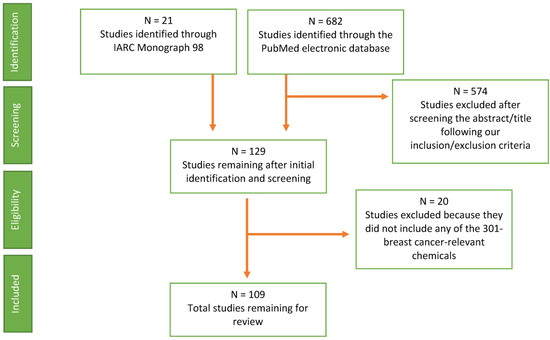
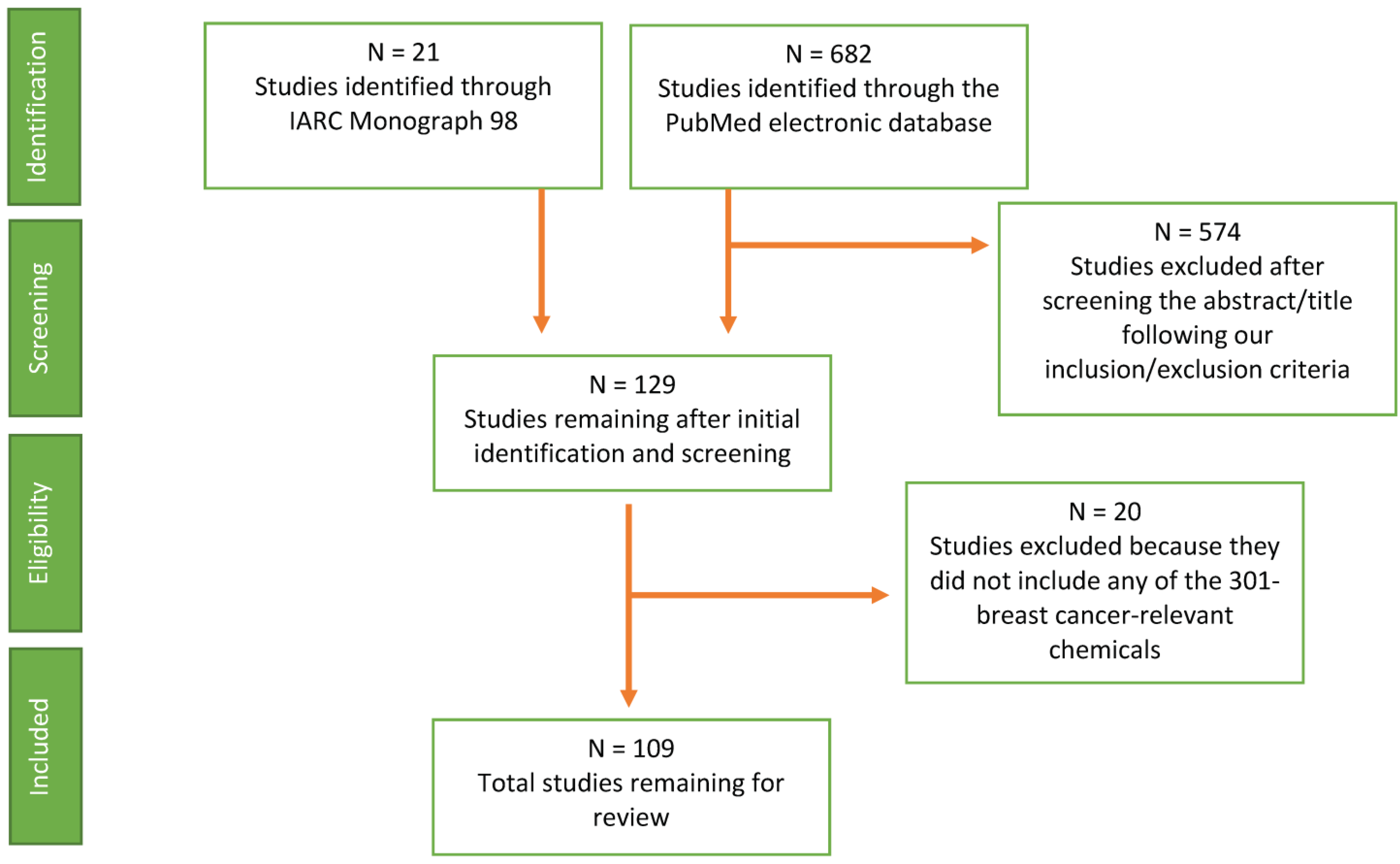

Disclaimer/Publisher’s Note: The statements, opinions and data contained in all publications are solely those of the individual author(s) and contributor(s) and not of MDPI and/or the editor(s). MDPI and/or the editor(s) disclaim responsibility for any injury to people or property resulting from any ideas, methods, instructions or products referred to in the content. |
© 2024 by the authors. Licensee MDPI, Basel, Switzerland. This article is an open access article distributed under the terms and conditions of the Creative Commons Attribution (CC BY) license (https://creativecommons.org/licenses/by/4.0/).