


Abstract
Background: Railways worldwide are increasingly adopting digital technologies to improve operational performance and reliability. However, digital transformation in rail freight remains challenging, particularly in developing countries where organizational, technological, and institutional barriers persist. This study aims to identify key barriers to rail freight digital transformation and propose strategies to address these challenges in Thailand’s rail freight sector. Methods: An integrated analytical approach combining Decision-Making Trial and Evaluation Laboratory (DEMATEL) and Importance–Performance Analysis (IPA) was applied. DEMATEL was used to analyze causal relationships among seven factors influencing digital transformation barriers, while IPA evaluated their importance and performance based on a case study of the State Railway of Thailand. Results: The findings show that management has the highest causal prominence, while quality and efficiency emerge as the primary effect factor. IPA results indicate that people, collaboration, and infrastructure require priority improvement. Conclusions: The study proposes four strategic directions to support rail freight digital transformation and provides a structured framework for identifying and prioritizing digital transformation barriers in rail freight systems. The study contributes by providing a structured framework for identifying, prioritizing, and addressing digital transformation barriers in rail freight systems.
1. Introduction
Railway systems worldwide are increasingly adopting digital technologies to improve operational efficiency and service reliability. The integration of railway data with information from other transport modes has become an important component of modern digital transport systems [1]. Technologies such as the Internet of Things (IoT), big data analytics, automation, cloud computing, and robotics support this transformation by enabling improved monitoring and operational control [2,3]. Despite these advancements, implementing digital technologies in railway supply chains remains challenging, particularly when managing large infrastructure assets while maintaining safety and operational performance [4]. Moreover, the level of digital adoption differs significantly across regions due to variations in infrastructure development and institutional readiness, resulting in a noticeable gap between advanced railway systems and emerging rail markets.
Thailand provides a relevant context for examining these challenges. As a developing country and a growing logistics hub in Southeast Asia, Thailand has increased investment in transport infrastructure to support expanding domestic and cross-border logistics activities. However, rail freight still faces several limitations, including strong competition from road transport and the need for the modernization of infrastructure, operations, and digital systems. Although digitalization can enhance efficiency, reduce transport costs and transit time, and improve environmental performance [5], previous studies often focus on technological innovations [6] rather than examining broader barriers that may hinder rail freight digital transformation in specific national contexts such as Thailand.
Currently, rail freight in Thailand is under the supervision of the State Railway of Thailand (SRT), which has implemented digital technologies for train tracking and container reservation. However, the early stages of digital transformation in rail freight are critical, as they establish the foundation for successful transformation initiatives and require the adaptation of traditional operations to effectively leverage digital technologies for improved efficiency, safety, and customer satisfaction. Previous studies have examined various aspects of digitalization in the railway and transport sectors. For instance, social and organizational drivers of digitalization in railway business models have been highlighted in prior research [7], while other studies have explored the role of digital technologies in mitigating barriers in intermodal transport systems [8]. In addition, research has discussed digital innovation in railway modernization through case-based insights [9] and applied multi-criteria decision-making approaches to evaluate supply chain parameters in railway systems under Industry 4.0 transformation [10]. Although an integrated framework combining multi-criteria decision-making and performance management perspectives has been proposed conceptually [11], existing studies remain fragmented and primarily focus on specific aspects of digitalization rather than systematically identifying the barriers that hinder digital transformation in railway freight operations. Therefore, the existing literature reveals a notable gap in the systematic analysis of digital transformation barriers, particularly with respect to assessing current digital capabilities, benchmarking them against envisioned future-state objectives, and identifying the constraints that impede transformation progress. Accordingly, this study systematically investigates the barriers to rail freight digitalization with the objective of improving operational efficiency and enabling sustainable future development, using Thailand’s rail freight sector as an empirical case study.
To address these research gaps, this study does not seek to predict digital transformation outcomes, but rather to structure expert judgments to (i) identify how barriers influence each other and (ii) prioritize those that present greater gaps between perceived importance and current performance in the context of rail freight transport in Thailand. Accordingly, the objectives of this study are: (1) to identify the barriers to rail freight digital transformation and analyze their causal relationships using the DEMATEL method, and (2) to prioritize strategic actions to address these barriers using an integrated DEMATEL–Importance–Performance Analysis (IPA) approach.
This study contributes to the literature on rail freight digital transformation in several ways. First, it provides a systematic identification of barriers affecting digital transformation in rail freight within the context of a developing country. Second, the study analyzes the causal interrelationships among these barriers, offering insights into how technological, organizational, and institutional challenges interact within the digital transformation process. Third, by integrating the DEMATEL and IPA approaches, this study proposes a structured framework for prioritizing strategic actions to overcome digital transformation barriers, providing practical decision-support guidance for policymakers and industry practitioners seeking to accelerate digital transformation in rail freight systems.
2. Literature Review
2.1. Digital Transformation
Digital transformation describes the integration of digital technologies into organizational activities to fundamentally reshape how firms operate and create value for customers. It involves the use of technologies such as artificial intelligence, cloud computing, automation, and big data analytics to improve operational efficiency, support data-driven decision making, and stimulate innovation [12,13,14,15,16]. However, digital transformation extends beyond the simple adoption of technology. It also requires significant organizational adjustments, including the development of new business models, enhancement of digital capabilities, and cultural change that enables organizations to adapt to dynamic market conditions.
Previous studies have identified various drivers and barriers influencing digital transformation across different sectors. These factors include technological readiness, organizational capabilities, strategic alignment, and regulatory environments. While technological capabilities enable digital innovation, organizational readiness and supportive institutional environments are equally critical for successful implementation. However, digital transformation initiatives frequently encounter barriers such as limited financial resources, technological complexity, regulatory constraints, and resistance to organizational change.
To better understand the drivers and barriers of digital transformation, previous research has identified several key success factors including technology, organization, people, strategy, and management [7,10,11,12,13,14,15,16,17,18,19,20,21]. At the same time, studies have highlighted several barriers that may hinder digital transformation initiatives, such as technological limitations, financial constraints, and regulatory challenges [22,23,24,25,26,27,28,29,30,31,32]. Table 1 summarizes the major success and barrier factors of digital transformation identified in previous studies.
Table 1.
Success and barrier factors of digital transformation.
Table 1 therefore provides a comprehensive overview of the factors that influence digital transformation across different industries and serves as the foundation for identifying the factors relevant to rail freight digital transformation examined in this study.
2.2. Digital Transformation in Rail
Digital transformation has emerged as an important source of innovation in logistics and supply chain management, particularly within the framework of Industry 4.0, where digital technologies enhance connectivity, automation, and data-driven decision making across supply chain activities [44]. In the railway sector, digital transformation involves the application of digital technologies to improve infrastructure management, operational performance, safety, and service quality. Contemporary railway systems increasingly employ technologies such as artificial intelligence, big data analytics, the Internet of Things (IoT), and digital communication platforms to support operational monitoring, predictive maintenance, and real-time decision making [4,45].
The development of digital railway systems is also supported by ongoing investments in modern infrastructure, rolling stock modernization, and intelligent transportation systems. These developments aim to improve the efficiency, reliability, and competitiveness of railway transport in the broader logistics network. In addition to physical infrastructure improvements, digital services such as real-time cargo tracking, digital freight management platforms, and intelligent dispatch systems are increasingly becoming essential components of railway operations.
From an academic perspective, studies examining digital transformation in the railway industry typically focus on technological development, operational performance improvement, and the broader socioeconomic impacts of railway modernization. Previous research has identified several factors influencing the success of rail digital transformation, including technology adoption, financial investment, operational performance, human resources, infrastructure development, and collaboration among stakeholders [18,46,47,48,49,50,51,52,53].
Studying digital transformation in the railway industry from an academic perspective, researchers typically focus on a variety of core aspects, including technological advances, operational improvements, and socioeconomic impacts. Key factors that influence the success of rail digital transformation include technology [7,10,11], finance and cost [10,11,21], quality, efficiency, and performance [7,10,45], reliability [7,10,21], people [7,11,21], infrastructure [49,50,51], and collaboration [7,31]. However, although these studies provide valuable insights into railway digitalization, many of them focus primarily on technological developments or operational improvements rather than systematically examining the barriers that hinder digital transformation in rail freight systems. Furthermore, the relationships among technological, organizational, and institutional factors are often discussed separately without an integrated analytical perspective. This limitation highlights the need for a more structured framework to understand how different factors interact and influence rail freight digital transformation.
2.3. Factors Influencing Rail Freight Digital Transformation in This Study
To address these limitations, this study identifies key factors influencing rail freight digital transformation through a comprehensive literature review combined with expert validation. Relevant literature was identified using keywords related to digital transformation, rail freight, and railway digitalization. The identified factors were subsequently reviewed and validated through discussions with experts from both academic and industry backgrounds to ensure their relevance to the rail freight context.
Based on this process, seven key factors were selected as barriers to rail freight digital transformation in this study: technology, infrastructure, people, management, rules and regulations, quality and efficiency, and collaboration. The seven factors are conceptualized as an interdependent system that integrates organizational capacities (management, people, technology, and collaboration), structural conditions (infrastructure and regulations) and operational results (quality and efficiency), which allows interpreting digital transformation as a systemic process rather than as the isolated adoption of technologies. Table 2 summarizes the factors influencing rail freight digital transformation identified in this study along with examples of sub-factors and supporting references.
Table 2.
Factors influencing rail freight digital transformation in this paper.
Organizational capacities represent the internal capabilities of organizations that enable digital transformation. These capacities include management capability, human resources, and collaboration among stakeholders. Effective management plays a critical role in developing digital strategies, allocating resources, and guiding organizational change. Previous studies have highlighted the importance of leadership commitment and digital strategy in enabling successful digital transformation initiatives [10,23,40]. Human resources are also essential because digital transformation requires employees with appropriate digital skills and competencies. A lack of skilled personnel and workforce readiness may significantly hinder the adoption of digital technologies [18,20,36]. In addition, collaboration among stakeholders is necessary in rail freight systems where multiple actors include railway operators, logistics providers, infrastructure managers, and government agencies. Strengthening collaboration and information sharing among these actors can improve coordination and facilitate the implementation of digital transformation initiatives [27,58,59].
Structural conditions refer to external environments that influence the implementation of digital transformation. These include infrastructure availability and regulatory frameworks. Infrastructure is a fundamental prerequisite for digital transformation in railway systems because digital technologies rely on reliable physical and digital infrastructure. Previous studies have identified the lack of rail freight infrastructure and outdated technologies as major barriers to railway modernization [51,52,53,55]. Regulatory frameworks also play an important role in shaping digital transformation initiatives. Appropriate ICT regulations and supportive governmental policies are necessary to ensure the secure use of digital technologies and facilitate digital innovation within transport systems [8,56,57].
Operational results represent the performance outcomes expected from digital transformation initiatives. In rail freight systems, digital transformation aims to improve operational efficiency, service quality, and overall system reliability. Improvements in service quality may include increased traffic volumes, reduced delays, improved shipment reliability, and enhanced safety in railway operations [50]. Similarly, improved operational efficiency can lead to better resource utilization, energy efficiency, and higher service quality for freight transport systems [54].
Although previous studies have examined various aspects of digital transformation in logistics and railway systems, limited research has systematically analyzed the barriers affecting rail freight digital transformation and the interrelationships among these barriers. Multi-criteria decision-making (MCDM) methods have been widely applied in logistics and transportation studies to analyze complex relationships among factors. For example, Gultekin et al. (2022) applied the DEMATEL method to analyze the cause–effect relationships among uncertainties affecting logistics service providers [60]. To address this gap, this study applies the Decision-Making Trial and Evaluation Laboratory (DEMATEL) method to analyze the causal relationships among the identified factors. Furthermore, Importance–Performance Analysis (IPA) is employed to prioritize these barriers based on their perceived importance and current performance. By integrating these analytical approaches, the study provides a structured framework for identifying and prioritizing the key barriers to rail freight digital transformation in Thailand.
3. Methodology
This research used a hybrid method integrating DEMATEL and IPA according to the research framework (Figure 1). Initially, potential factors influencing rail freight digital transformation were identified through a literature review, resulting in 17 preliminary factors. To ensure contextual relevance, an expert validation process was conducted with 15 experts selected through purposive sampling. All experts had more than 15 years of professional experience in rail freight operations, logistics, and digital transformation. The experts reviewed the preliminary factors and evaluated their relevance to the rail freight context. Based on their feedback, overlapping or less relevant factors were consolidated, resulting in seven key factors: technology, infrastructure, people, management, rules and regulations, quality and efficiency, and collaboration. These factors were subsequently used in the DEMATEL analysis.
Figure 1.
Research framework.
After the identification of barrier factors, for the next step of establishing a causal relationship diagraph, data were collected by distributing questionnaires to experts who specialize in rail freight, digital transformation, logistics, and supply chain management. The experts were selected using purposive sampling based on their professional experience and involvement in railway operations, logistics management, or digital transformation projects. To ensure the relevance and reliability of expert judgments, the selection criteria required respondents to have at least five years of professional experience in rail freight operations, logistics management, or digital technology implementation. The selected experts included railway practitioners and logistics professionals who possess knowledge related to digital transformation in transportation systems. Then, the data will be evaluated in a causal relationship diagraph by DEMATEL. Afterwards, the case study of rail freight in Thailand was applied by collecting questionnaires from experts who are service providers and users. Lastly, Importance and Performance Analysis (IPA) was applied to evaluate the importance and performance of factors in the case study of rail freight in Thailand for developing mitigation strategies based on the results after discussion and validation by experts. According to the research objectives, this study addresses the following research question: which barriers significantly influence digital transformation in Thailand’s rail freight sector, and how can these barriers be prioritized to develop effective mitigation strategies?
3.1. Application of Decision-Making Trial and Evaluation Laboratory (DEMATEL) for Developing Causal Relationship Diagraph
The Decision-Making Trial and Evaluation Laboratory (DEMATEL) method was originally developed by Fontela and Gabus at the Battelle Memorial Institute between 1972 and 1976 to analyze complex decision-making problems by identifying cause–effect relationships among system factors [59]. The method evaluates the degree of influence between interrelated factors using pairwise comparison data, allowing researchers to examine how variables affect one another within a system [61]. DEMATEL has been widely applied to explore and visualize complex causal structures in studies of digital transformation barriers and related management problems [23,32,42]. Compared with other multi-criteria decision-making (MCDM) techniques, such as the Analytic Hierarchy Process (AHP) and the Technique for Order Preference by Similarity to Ideal Solution (TOPSIS), DEMATEL is particularly suitable because it reveals causal relationships rather than simply ranking factors. This capability allows researchers to distinguish between cause-and-effect factors, which is important for understanding the interactions among barriers to rail freight digital transformation. Therefore, DEMATEL is considered an appropriate analytical method for this study.
According to the literature, DEMATEL is commonly found in various studies about barriers to digital transformation. Govindan and Arampatzis (2023) adapt DEMATEL to identify the influential barriers of Industry 4.0 [32]. Similarly, Abdullah Alshahrani et al. (2024) combined DEMATEL with Interpretive Structural Modeling (ISM) to analyze cause–effect relationships and develop hierarchical structures among relevant factors [23]. In another study, Shashank Bajpai and Ravi Misra (2021) applied Fuzzy DEMATEL together with ISM to examine the relationships among identified alternatives [43].
Prior to the main data collection, the questionnaire was reviewed and validated by several domain experts to ensure the clarity and relevance of the measurement items. Minor revisions were made based on expert feedback. In addition, a pilot test was conducted with a small group of experts to confirm the comprehensibility of the questionnaire and the appropriateness of the evaluation scale.
The typical DEMATEL technique is formulated in four different steps as follows [61].
- Step 1: Generate the group direct-influence matrix Z.
A questionnaire-based study was carried out; respondents were asked to rank the measurements with 0–4 points and a total of 15 valid questionnaires were obtained. Experts were selected using purposive sampling to ensure relevant domain expertise. These experts consisted of railway industry practitioners, logistics service providers, and supply chain professionals specializing in transportation and digital transformation. Their diverse backgrounds ensured that the influence relationships among factors were evaluated from multiple professional perspectives. Each expert completed the full pairwise influence matrix for all seven factors, evaluating the degree of influence between each pair of factors using the predefined DEMATEL scale. The questionnaire design ensured that all factor relationships were assessed. All 15 questionnaires were fully completed and no missing values were identified in the dataset.
In this step, the barriers identified from the literature were validated by experts, and pairwise comparisons were conducted based on questionnaire responses. The assigned scores represent the degree to which one factor influences another. To evaluate the relationships among nnn factors F = {F1, F2, …, Fn}, a group of single experts E = {E1,E2, …, El} assessed the direct influence of factor Fi on factor Fj, using a five-point scale ranging from “no influence (0)” to “very high influence (4)”. Based on these assessments, the individual direct-influence matrix was constructed for each expert k, where the diagonal elements are zero and represents the influence of factor Fi on factor Fj as evaluated by expert Ek. The overall group direct-influence matrix was then obtained by aggregating the evaluations of all single experts using the following equation.
The individual expert assessments were aggregated using the arithmetic mean to construct the group direct-influence matrix.
- Step 2: Establish the normalized direct-influence matrix X.
Once the group direct-influence matrix Z is obtained, the normalized direct-influence matrix can be calculated as follows.
Each element in matrix X satisfies , with at least one i meeting this condition.
- Step 3: Construct the total-influence matrix T.
Using the normalized direct-influence matrix X, the total-influence matrix is calculated by combining both direct and indirect effects as follows.
in which I is represented as an identity matrix.
- Step 4: Produce the influential relation map.
At this stage, the vectors R and C, representing the row sums and column sums of the total-influence matrix T, are determined using the following equations.
Here, ri represents the sum of the ith row in matrix T, indicating the total direct and indirect influences that factor Fi exerts on other factors. Similarly, cj denotes the sum of jth column sum in matrix T, reflecting the total direct and indirect influences received by factor Fj from the remaining factors.
Let i = j and i, j ∈ {1,2, …, n}; the horizontal axis (R + C), referred to as prominence, represents the overall level of influence associated with a factor, including both the influences it exerts on others and those it receives. Thus, (R + C) reflects the relative importance of a factor within the system. The vertical axis (R − C), known as relation, indicates the net influence of a factor. When (rj − cj) is positive, then the factor Fj has a net influence on the other factors and can be grouped into cause group. Conversely, when (rj − cj) is negative, factor Fj is mainly influenced by other factors and belongs to the effect group. Based on these values, an influence–relation map can be constructed by plotting (R + C, R − C), which helps visualize the interactions among factors and supports decision-making.
To construct the influential relation map, a threshold value was applied to filter out insignificant relationships and highlight the most meaningful interactions among factors. The threshold value was determined based on the average value of the total influence matrix, following common practices in DEMATEL studies. Only relationships with influence values greater than the threshold were included in the final causal diagram.
3.2. Application of Importance–Performance Analysis (IPA) for Developing Mitigation Strategies
Importance–Performance Analysis (IPA) is a research technique initially developed as a marketing tool to evaluate attributes and support managerial decision-making [62]. Although it originated in marketing studies, IPA has been widely applied in many areas, including tourism, food services, education, healthcare, public administration, e-business, and information technology [63]. The main purpose of IPA is to assess the importance and performance of specific attributes, enabling researchers to identify strengths, weaknesses, and areas that require improvement [64]. The method considers both the level of importance assigned to service attributes and the perceived performance of those attributes. These values are then plotted on a two-dimensional importance–performance grid, which is typically divided into four quadrants to facilitate interpretation and managerial recommendations [65,66].
IPA maps the importance and performance of selected service attributes, as evaluated by customers, into four quadrants [67]:
- Quadrant 1: High Importance—High Performance (Keep Up the Good Work):
Attributes in this quadrant represent key strengths, as they achieve high performance while being considered highly important by customers. These attributes meet user expectations and should therefore be maintained or further supported through continued or increased resource allocation.
- Quadrant 2: High Performance—Low Importance (Possible Overkill):
Attributes in this quadrant perform well but are considered relatively unimportant by customers. Although their performance is satisfactory, they contribute little to overall customer value. Therefore, excessive resources allocated to these attributes may be unnecessary, and it may be more effective to redirect resources to attributes in other quadrants, particularly those requiring improvement.
- Quadrant 3: Low Importance—Low Performance (Low Priority):
Attributes in this quadrant show relatively low performance and are considered less important by customers. As a result, they have limited impact on overall service evaluation and generally require minimal managerial attention. Resource allocation for these attributes is typically low, and significant improvement efforts are not considered necessary.
- Quadrant 4: High Importance—Low Performance (Concentrate Here):
Attributes in this quadrant represent critical weaknesses, as they are considered highly important but demonstrate low performance. If not addressed, these shortcomings may negatively affect an organization’s competitiveness and ability to satisfy customers. Therefore, greater managerial attention, resources, and improvement efforts should be directed toward these attributes.
The second objective of this study is to develop strategies to address barriers to rail freight digital transformation in Thailand. To achieve this objective, the results of the DEMATEL analysis were used to identify key influencing factors and their causal relationships, which provide a basis for developing mitigation strategies. Subsequently, Importance–Performance Analysis (IPA) was applied to evaluate the importance and performance of the seven identified factors. A case study of Thailand’s rail freight sector was conducted, in which performance data were collected through questionnaires distributed to rail freight service providers and users. In Thailand, rail freight services are operated under the supervision of the State Railway of Thailand (SRT), covering bulk and general freight, industrial freight, and container freight. After identifying the key factors and their importance through DEMATEL, IPA was employed to assess the performance of each factor based on stakeholder perceptions. The questionnaire in this stage was designed to capture how both SRT personnel and customers evaluate the performance of the factors identified in the DEMATEL analysis.
The IPA survey included 20 respondents, consisting of both internal management personnel from the State Railway of Thailand and external customers involved in rail freight services. Due to the relatively small subgroup sizes, separate analysis by stakeholder group was not conducted, which is acknowledged as a limitation of this study. A total of 20 respondents, including railway service providers and rail freight users, participated in the IPA survey. These respondents represent key stakeholders involved in Thailand’s rail freight system and therefore provide practical insights into the performance of digital transformation factors. However, the importance values were derived from the DEMATEL prominence results (R + C) in the previous stage. For the performance assessment, a Likert’s scale will be applied for this questionnaire. A score of 1 represents the lowest performance and 5 represents the highest performance. The reliability of the questionnaire responses was assessed using Cronbach’s alpha coefficient to ensure internal consistency of the measurement items. However, it should be noted that the IPA quadrant classification should be interpreted as a relative prioritization guideline rather than a strict statistical classification, as the results depend on respondents’ perceptions of importance and performance.
Strategies to address barriers and enhance the efficiency of rail freight digital transformation in Thailand were developed by integrating the results of DEMATEL and IPA. Factors identified as key barriers in the DEMATEL analysis and located in the “Concentrate Here” and “Keep Up the Good Work” quadrants of the IPA matrix were considered priority areas for improvement. Previous studies have also applied the combined DEMATEL–IPA approach to support strategic decision-making. For example, Hu et al. (2011) used DEMATEL and IPA to identify core operational problems and improve quality control within a company [68]. Similarly, Chen (2020) integrated DEMATEL with IPA to obtain comprehensive evaluations of importance and performance, supporting the development of more effective strategies [69]. In the railway context, Shu and Ran (2023) applied a revised IPA approach to propose improvement strategies related to waiting halls, train experience, and service scope in high-speed rail passenger services [70]. In this study, the proposed strategies were further discussed and validated by experts to ensure their relevance and reliability.
4. Results
This section presents the empirical results obtained from the DEMATEL and Importance–Performance Analysis (IPA) methods. First, the DEMATEL technique is used to analyze the causal relationships among the seven barriers to rail freight digital transformation. Then, the IPA method is applied to evaluate the importance and performance of these factors in the context of Thailand’s rail freight sector and to identify priority areas for improvement.
4.1. DEMATEL Results
The DEMATEL method was applied to analyze the complex interrelationships among the seven factors representing barriers to rail freight digital transformation. Following approval from the Human Research Ethics Committee, data were collected through questionnaire surveys administered to 15 experts selected using purposive sampling. The experts specialized in rail freight operations, digital transformation, and logistics and supply chain management, each possessing more than 15 years of professional experience.
- Step 1: Generate the group direct-influence matrix.
The online questionnaire-based study was carried out, respondents were asked to rank the measurements with 0–4 points, and a total of 15 complete questionnaires were obtained. The questionnaires focus on the assessment of the cause-and-effect relationship with the DEMATEL intensity of influence/dependence structure. This study applied seven factors to analyze as a barrier to digital transformation in rail freight after the discussion and validation by experts. Therefore, the establishment dimension of this indicator is based on seven factors proposed, namely technology, infrastructure, people, management, rules and regulations, quality and efficiency, and collaboration. Then, 21 criteria were obtained by extending seven factors: Technology (B1), Infrastructure (B2), People (B3), Management (B4), Rules and Regulations (B5), Quality and Efficiency (B6), and Collaboration (B7). Experts evaluate the importance level by scoring. The direct influence matrix is obtained as shown in Table 3.
Table 3.
The direct influence matrix for factors.
- Step 2: Establish the normalized direct-influence matrix.
From the direct influence matrix in Table 3 in step 1, normalize all members in Table 3; the resulting normalized matrix is shown in Table 4.
Table 4.
The normalized matrix.
- Step 3: Construct the total-influence matrix.
Using the normalized direct-influence matrix, the total-influence matrix was calculated by combining both direct and indirect effects, as presented in Table 5.
Table 5.
The total-influence matrix.
- Step 4: Produce the influential relation map.
At this step, the vectors R and C represent the sum of the rows and the sum of the columns from the total-influence matrix. Then calculate the sum of all cells in row (ri) and column (cj) directions. The result is shown in Table 6.
Table 6.
The total-influence matrix and the sum of all cells in row (ri) and column (cj).
Based on the sums of each row (ri) and column (cj) in the matrix, the values ri + cj and ri − cj are calculated. The results, presented in Table 7, are used to evaluate the importance of the factors and determine their causal relationships within the system. If (ri − cj) is positive, the factor has a net influence on other factors and is classified in the cause group. Conversely, if (ri + cj) is negative, then the factor Fj is mainly influenced by others and is categorized in the effect group.
Table 7.
The results of R + C and R − C of factors influencing barriers to rail freight digital transformation.
The results presented in Table 7 indicate that Management (B4) has the highest R value (1.6482) and the highest R − C value (1.1083), suggesting that it is the most influential causal factor affecting other barriers to rail freight digital transformation. This result highlights the critical role of leadership capability, strategic planning, and organizational governance in guiding digital transformation initiatives. Previous studies on digital transformation in logistics and transportation systems have emphasized that strong managerial commitment and clear digital strategies are essential to coordinate technological investments, organizational change, and cross-functional collaboration [58,71].
Similarly, People (B3) and Infrastructure (B2) also exhibit positive R−C values, indicating that they belong to the causal group and play important roles in driving other barriers. The importance of human resources and infrastructure readiness has been widely discussed in the digital transformation literature, where skilled personnel and adequate physical and digital infrastructure are considered fundamental enablers for implementing advanced technologies such as real-time tracking systems, data analytics platforms, and intelligent transport systems.
In contrast, Technology (B1), Quality and Efficiency (B6), and Collaboration (B7) present negative R−C values, indicating that they belong to the effect group and are mainly influenced by other factors. Among them, Collaboration (B7) has the highest C value (1.9170), suggesting that collaborative outcomes strongly depend on improvements in management capability, infrastructure development, and human resource readiness. In the context of Thailand’s rail freight sector, collaboration among stakeholders such as the State Railway of Thailand (SRT), logistics service providers, and industrial customers often depends on the availability of integrated digital systems, effective coordination mechanisms, and supportive institutional frameworks. Therefore, strengthening managerial capability, infrastructure investment, and workforce development can significantly enhance collaborative digital initiatives in rail freight operations.
Next, calculate the threshold (α) to determine the direction of the relationship and eliminate some minor effect members in the matrix.
Threshold (α) = 7.4385/49
=0.1580
Create a cause-and-effect relationship diagram, where the (ri + cj) value can show the importance of the factors, with the factor with the highest (ri + cj) value being the most important factor, and so on. The (ri − cj) value is used to divide the factors into cause-and-effect groups, with the factors being classified into cause groups when the (ri − cj) axis is positive and classified into effect groups when the (ri − cj) axis is negative.
From the analysis of the cause-and-effect relationship of factors with the threshold value (α) at 0.1580, the effect of each factor on other factors can be shown as in Table 8 and Table 9.
Table 8.
The total-influence matrix with threshold (α) = 0.1580 to determine the direction of the relationship.
Table 9.
Results of the cause-and-effect relationship of factors that affect each other for factors influencing barriers to rail freight digital transformation.
From Table 9 it was found that the factor that most influenced and had the most impact on other factors was Management (B4), which is a causal factor that affected all five other secondary factors, namely: Technology (B1), Infrastructure (B2), Rules and Regulations (B5), Quality and Efficiency (B6), and Collaboration (B7).
The causal diagraph in Figure 2 was constructed using the threshold value (α = 0.1580), calculated as the average value of the total relation matrix. Only relationships with influence values greater than the threshold are shown so as to highlight significant causal interactions among the factors. The diagraph (Figure 2) shows the level of prominence and influence of the relationship between factors; the factors with the highest to lowest causal prominence values are: Management (B4), People (B3), Infrastructure (B2), and Rules and Regulations (B5) respectively. However, the prominent factors in terms of effect are Quality and Efficiency (B6), Technology (B1), and Collaboration (B7) respectively. When considering the direction of the relationship of the arrows, it was found that Management (B4) was the main causal factor that had the greatest impact on the other secondary factors, followed by People (B3) and Infrastructure (B2).
Figure 2.
Diagraph of causal relationship and effect of factors influencing barriers to rail freight digital transformation.
Overall, the DEMATEL analysis indicates that management, people, and infrastructure act as the main causal drivers influencing other barriers in rail freight digital transformation. In contrast, technology, quality and efficiency, and collaboration are mainly outcome factors that are affected by these underlying organizational conditions. These findings provide the basis for the subsequent Importance–Performance Analysis (IPA). The importance scores derived from the DEMATEL results are used as the importance dimension in the IPA framework, while the performance scores are obtained from stakeholder evaluations. This integrated approach enables the identification of priority areas for improving rail freight digital transformation.
4.2. IPA Results
A case study of Thailand’s rail freight sector under the supervision of the State Railway of Thailand (SRT) was conducted using the Importance–Performance Analysis (IPA) method. The study sample consisted of SRT stakeholders, including management personnel from the rail freight division and customers from logistics and supply chain firms as well as industrial goods companies. A total of 20 respondents evaluated the performance of the seven main factors identified through the DEMATEL analysis, along with their associated sub-factors. The results of the questionnaire-based analysis for all seven factors are presented in the following table.
The qualitative performance levels are classified based on the mean scores of the five-point Likert scale used in the IPA survey (1 = very low, 5 = very high). The classification criteria are as follows: 1.00–1.80 = Very Low, 1.81–2.60 = Low, 2.61–3.40 = Average, 3.41–4.20 = High, and 4.21–5.00 = Very High. It should be noted that DEMATEL uses a 0–4 influence scale, while the IPA performance values are derived from the Likert-scale questionnaire. From Table 10, the factor with the highest average value of performance, the technology aspect, had an average value of 3.45, the management aspect had an average value of 3.37, and the quality and efficiency aspect had an average value of 3.10 respectively. However, the rules and regulations and collaboration aspects had the lowest performance at same average value of 2.75.
Table 10.
Overall performance assessment of the SRT based on the seven main factors.
In this stage, IPA has been approached as a strategy development tool for the mitigation strategy to overcome the barriers in rail freight digital transformation. After both importance and performance were figured out, importance values were transferred from the results of DEMATEL in the previous stage. Then, the factors are plotted on an IPA matrix; X-axis: performance of the factors from the results of questionnaire and Y-axis: importance of the factors from the DEMATEL.
Given the level of dispersion observed, membership in the IPA quadrants should be interpreted as a relative prioritization guide rather than as a statistically rigid distinction between critical and non-critical factors. The quadrant classification in the IPA matrix is determined using the mean values of importance and performance as the crosshair to divide the four quadrants. The intersection point of the importance (y-axis) and performance (x-axis) was determined using the mean scores of the seven factors (Table 11). Based on these average values, the IPA matrix was divided into four quadrants. The results (Figure 3) indicate that people, collaboration, and infrastructure are located in the “Concentrate Here” quadrant, suggesting high importance but relatively low performance. Although these factors were identified as important in the DEMATEL analysis, their current performance does not fully meet stakeholder expectations. Therefore, improvement efforts in rail freight digital transformation should prioritize these three factors. In contrast, management falls within the “Keep Up the Good Work” quadrant, indicating both high importance and strong performance.
Table 11.
Importance and performance of factors for mitigation strategy to overcome the barriers in rail freight digital transformation.
Figure 3.
IPA results for the case study of rail freight in Thailand.
From the IPA results, the strategies to overcome the barriers in rail freight digital transformation can be developed in four aspects (Table 12). Based on the position of the factors in the IPA matrix, mitigation strategies are proposed to address the most critical barriers. Factors located in the “Concentrate Here” quadrant are considered the highest priority for improvement, while factors in the “Keep Up the Good Work” quadrant represent existing strengths that should be maintained. Thus, the “Concentrate Here” and “Keep Up the Good Work” quadrants of the IPA matrix should be the top priority for improvement.
Table 12.
Strategic recommendations to overcome barriers in Thailand’s rail freight digital transformation.
For rail freight digital transformation, “infrastructure” barriers typically mean the physical infrastructure and digital backbone are not yet ready to support advanced technologies. However, Thailand can adopt more strategies to strengthen physical rail infrastructure by upgrading double-track and high-speed freight corridors along key economic corridors, electrifying main freight routes to reduce fuel costs, and modernizing signaling and switching systems with ETCS/CBTC to enable faster, safer, and more efficient operations. For enhancing digital connectivity, SRT can install fiber optic cables and 5G base stations along economic corridor rail lines for continuous real-time data flow, use satellite communication backup for remote or mountainous areas and integrate IoT sensors on tracks, bridges, and rolling stock for predictive maintenance and performance monitoring. These digital infrastructure developments support the implementation of intelligent transport systems, predictive maintenance technologies, and real-time freight tracking platforms, which are essential components of rail freight digital transformation.
The “people” factor focuses on the human resource, multiskilled workforce, technology-skilled workforce and service-minded workforce needed to make technology upgrades successful. The key people-related barriers can be limited expertise in digital rail technologies, resistance to change, insufficient training, and low digital awareness. The SRT can create service culture transformation by defining a “Service Promise” that links the SRT’s operational reliability with customer satisfaction. For training and capability building, they should train staff on using freight tracking dashboards, CRM systems, and automated yard management tools to answer customer queries instantly. For multiskill development, the company can train cross-train freight staff in passenger service skills to improve communication and problem-solving skills. Moreover, the SRT can improve customer feedback integration by creating instant feedback tools for customers to rate the service, ensuring every complaint or suggestion receives a follow-up within a set time frame and a monthly service improvement by sharing lessons learned from feedback with all staff.
In terms of collaboration, the SRT works with many stakeholders including government agencies, private logistics companies, technology providers, and customers to improve efficiency and service. The main collaboration barriers could be rail, port, and road operators often working independently with limited data sharing, different IT platforms and data formats causing integration delays, limited joint investment and planning between the SRT and private partners and cross-border complexity in regulations and rail standards across neighboring countries. The performance assessment found the lowest performance in “Building the information and communication system between partners and Integration of systems between partners”. Furthermore, some rail freight users found problems of system integration between their site and the SRT. Thailand should develop a national rail freight platform to: manage cargo bookings, tracking, and customs clearance, allow data-sharing between operators, ports, and logistics providers and implement electronic consignment notes (e-CIM) and paperless transactions.
The results of the IPA indicate that “management” was positioned in the “Keep Up the Good Work” quadrant, reflecting high importance and high performance. These factors represent the key strengths of digital transformation implementation in rail freight operations of the SRT. Their strong performance suggests that current managerial practices, technological investments, and operational strategies are well aligned with stakeholder expectations. Therefore, developing strategic management should focus on maintaining existing resource allocation and performance standards in these areas, while ensuring continuous monitoring to prevent performance deterioration. Strong leadership and managerial commitment play a crucial role in guiding digital transformation initiatives, while a clear digital strategy and well-defined information technology roadmap ensure alignment between technological investments and organizational objectives. In addition, continuous process improvement supports the effective utilization of digital technologies and enhances operational efficiency. Consequently, these factors represent key organizational strengths, and management should focus on maintaining existing strategies, sustaining resource allocation, and applying continuous monitoring to preserve performance and support long-term digital transformation success.
Overall, the IPA results indicate that people, infrastructure, and collaboration represent the most critical areas requiring improvement for rail freight digital transformation in Thailand, while management represents an existing strength that should be maintained.
5. Discussion
The first objective of this study is to identify the barriers to digital transformation in rail freight and evaluate their relative importance. To achieve this objective, a systematic literature review was conducted focusing on digital transformation success factors, barriers to digital transformation, rail freight operations, and digital transformation in railway systems. From the literature review, 17 potential factors influencing rail freight digital transformation were initially identified. These factors were subsequently validated through expert discussions to ensure their relevance and reliability. As a result, seven key factors were selected as barriers to digital transformation in rail freight: technology, infrastructure, people, management, rules and regulations, quality and efficiency, and collaboration.
To determine the importance levels of factors influencing rail freight digital transformation, the DEMATEL method was applied as the primary analytical tool. DEMATEL has been widely used in previous studies to analyze barriers to digital transformation because it effectively captures complex causal relationships and interdependencies among factors [23,32,42]. The results indicate that management is the most influential factor affecting barriers to rail freight digital transformation. This finding highlights the importance of leadership, governance, and strategic direction in guiding digital transformation initiatives. Similarly, Saihi et al. identified top management commitment and leadership capability as key drivers of successful digital transformation, emphasizing the need for clear vision and organizational support [17].
The causal relationship analysis further shows that management, people, infrastructure, and rules and regulations act as causal factors, while quality and efficiency, technology, and collaboration function mainly as effect factors. Among these, management exerts the strongest influence on other factors, followed by people and infrastructure. These results are consistent with previous research. For instance, Chen et al. (2022) highlighted that digital strategy and information technology play critical roles in digital transformation processes, particularly in the development of digital roadmaps, adoption of emerging technologies, and improvement of information systems [35].
From a broader perspective, the findings can be interpreted through the lens of capability building under constraints, which is particularly relevant for developing economies where digital transformation often faces limitations in infrastructure, institutional support, and human resources. Within this perspective, infrastructure and governance represent essential elements that provide the structural foundation for digital transformation. Collaboration and organizational learning function as operational practices that enable coordination among stakeholders, while workforce capabilities serve as critical success factors determining whether digital initiatives can be successfully implemented and sustained [72].
Accordingly, the DEMATEL–IPA synthesis can be interpreted as an early-stage roadmap for rail freight digital transformation. In this roadmap, management provides governance and strategic sequencing, infrastructure supports reliable data connectivity, and collaboration facilitates interoperable routines among stakeholders. Importantly, people should not be viewed merely as a resource constraint but as the mechanism through which digital practices are implemented, scaled, and institutionalized within organizations.
The second objective of this study is to develop strategies to overcome the identified barriers by applying Importance–Performance Analysis (IPA). In the IPA framework, the importance values are derived from the DEMATEL results, while the performance values are obtained from survey data collected in the State Railway of Thailand (SRT) case study. By plotting these values on the IPA matrix, the X-axis represents the performance level of each factor, while the Y-axis represents its importance level. The integration of DEMATEL and IPA provides a more comprehensive analytical framework by combining causal analysis with performance evaluation. Previous studies have also applied the combined DEMATEL–IPA approach to support strategic decision-making. For example, Hu et al. applied IPA and DEMATEL to identify the core problems within the analyzed company and improve quality control [68]. Moreover, Chen (2020) combined DEMATEL and IPA to obtain more representative values of importance and performance in order to develop more effective strategic recommendations [35].
The IPA results indicate that people, collaboration, and infrastructure are positioned in the “Concentrate Here” quadrant. Although these factors are perceived as highly important, their current performance levels remain below expectations in the SRT context, indicating critical capability gaps. In contrast, management is located in the “Keep Up the Good Work” quadrant, indicating both high importance and strong performance. This factor therefore represents a key strength supporting the digital transformation of the SRT’s rail freight operations.
Based on these findings, several strategic directions are proposed to overcome barriers to rail freight digital transformation, including strengthening rail freight infrastructure, developing digital human resource capabilities, enhancing collaboration among stakeholders, and reinforcing strategic management practices. These recommendations also carry important managerial and economic implications, as improved infrastructure and coordination can enhance operational efficiency, reduce logistics costs, and improve the competitiveness of rail freight services.
When compared with previous studies, the findings show both similarities and differences. Consistent with prior research on digital transformation in logistics and transportation, infrastructure limitations and organizational readiness remain key challenges. However, this study highlights governance and management as the primary causal drivers, reflecting the institutional characteristics of railway systems that require strong coordination and long-term strategic planning. Similar approaches have been applied in other railway studies. For example, Shu and Ran used a revised IPA approach to identify service improvement priorities in high-speed rail passenger systems [70], while Ebrahimi et al. employed an integrated IPA–DEMATEL–ISM–MICMAC framework to prioritize customer needs and improve railway service quality [7].
From a theoretical perspective, this study contributes to the digital transformation literature by demonstrating how interdependent organizational capabilities influence transformation outcomes in complex infrastructure systems such as rail freight. The results suggest that digital transformation success depends not only on technological investment but also on the alignment of governance structures, organizational practices, and workforce capabilities.
Despite these contributions, this study has several limitations. First, the analysis focuses on seven factors within a single case study in Thailand. Future research could include additional technical, organizational, and environmental factors to provide a more comprehensive understanding of rail freight digital transformation. Second, comparative studies across different countries or railway systems could provide broader insights into how institutional and infrastructure conditions influence digital transformation processes. Future research may consider a larger sample size to enable comparative analysis between internal stakeholders and external customers to further examine the robustness of the IPA results. However, this study also relies on judgment-based methods such as DEMATEL and IPA, which depend on expert evaluations and stakeholder perceptions. Therefore, the causal relationships identified in the DEMATEL analysis may be influenced by expert judgments and the selected threshold value, while the IPA results may be affected by the composition of respondents in the survey. Finally, future research may apply additional analytical methods alongside DEMATEL and IPA to further validate and extend the findings.
6. Conclusions
This study applied the DEMATEL method to construct a causal diagram illustrating the relationships among factors influencing barriers to rail freight digital transformation. The results indicate that management has the highest causal prominence, identifying it as the primary driving factor, while quality and efficiency emerge as the main effect factor. These findings help executives of the State Railway of Thailand (SRT) and the Ministry of Rail Transport to better understand the key barriers and their interdependencies in the digital transformation process.
Furthermore, this study integrates DEMATEL and Importance–Performance Analysis (IPA) to support strategy development for overcoming digital transformation barriers in Thailand’s rail freight sector. Using the SRT case study, performance values were obtained through a questionnaire survey, while importance values were derived from the DEMATEL analysis. The IPA results identify people, collaboration, infrastructure, and management as key factors requiring strategic attention.
The findings provide important managerial and policy implications. In particular, strengthening rail freight infrastructure, enhancing human resource capabilities, and fostering collaboration among stakeholders can support the implementation of digital transformation initiatives and improve operational efficiency in the rail freight system. From a theoretical perspective, this study also demonstrates the usefulness of the integrated DEMATEL–IPA approach in prioritizing transformation barriers and translating analytical results into actionable strategic directions.
However, these findings should be interpreted as a structured prioritization of perceived barriers within the specific context of the State Railway of Thailand, rather than as generalizable estimates for the entire railway sector. The study is also limited by its focus on a single case and a specific set of factors. Future research could expand the analysis by incorporating additional technological, organizational, and environmental variables or by conducting comparative studies across different railway systems to enhance the generalizability of the findings.
Author Contributions
Conceptualization, P.S. and D.K.; Methodology, P.S. and D.K.; Formal analysis, P.S. and D.K.; Investigation, P.S. and D.K.; Data curation, P.S. and D.K.; Writing—original draft, P.S.; Writing—review & editing, P.S. and D.K.; Visualization, P.S.; Supervision, D.K. All authors have read and agreed to the published version of the manuscript.
Funding
This research received no external funding.
Institutional Review Board Statement
The study was conducted in accordance with the Declaration of Helsinki, and approved by the Mahidol University Central Institutional Review Board (protocol code MU-CIRB 2025/139.1403 and date of 4 June 2025).
Informed Consent Statement
Informed consent was obtained from all subjects involved in the study.
Data Availability Statement
The original contributions presented in this study are included in the article. Further inquiries can be directed to the corresponding author.
Conflicts of Interest
The authors declare no conflict of interest.
References
- Naser, F. The potential use of blockchain technology in railway applications: An introduction of a mobility and speech recognition prototype. In Proceedings of the 2018 IEEE International Conference on Big Data (Big Data), Seattle, WA, USA, 10–13 December 2018; pp. 4516–4524. [Google Scholar]
- Pieriegud, J. Digital Transformation of Railways; Siemens Sp. Z 0.0.: Warszawa, Poland, 2018. [Google Scholar]
- Losada, M.; Adin, I.; Perez, A.; Ramírez, R.C.; Mendizabal, J. Connected heterogenous multi-processing architecture for digitalization of freight railway transport applications. Electronics 2022, 11, 943. [Google Scholar] [CrossRef] [Scilit]
- Jayakrishnan, M.; Mohamad, A.K.; Yusof, M.M. Digitalization railway supply chain 4.0: Enterprise architecture perspective. Int. J. 2020, 9, 9056–9063. [Google Scholar]
- Kersten, W.; Jahn, C.; Blecker, T.; Ringle, C.M. Changing Tides: The New Role of Resilience and Sustainability in Logistics and Supply Chain Management–Innovative Approaches for the Shift to a New Era. In Proceedings of the Hamburg International Conference of Logistics (HICL), Berlin, Germany, 21–23 September 2022. [Google Scholar]
- Poliński, J.; Ochociński, K. Digitization in rail transport. Probl. Kolejnictwa 2020, 137–148. [Google Scholar] [CrossRef] [Scilit]
- Jabłoński, M.; Jabłoński, A. Social factors as a basic driver of the digitalization of the business models of railway companies. Sustainability 2019, 11, 3367. [Google Scholar] [CrossRef] [Scilit]
- Vural, C.A.; Roso, V.; Halldórsson, Á.; Ståhle, G.; Yaruta, M. Can digitalization mitigate barriers to intermodal transport? An exploratory study. Res. Transp. Bus. Manag. 2020, 37, 100525. [Google Scholar] [CrossRef] [Scilit]
- Murthy, K.K.K.; Pandian, P.K.G.; Goel, P.P. The Role of Digital Innovation in Modernizing Railway Networks: Case Studies and Lessons Learned. Int. J. Res. Publ. Semin. 2024, 15, 272–285. Available online: https://jrps.shodhsagar.com/index.php/j/article/view/1473/1484 (accessed on 14 March 2025). [CrossRef] [Scilit]
- Kumar, M.; Vipin; Agarwal, A. Evaluation of indian railway’s supply chain parameters for improved sustainability under industry 4.0 transformation: An application of AHP and TOPSIS. Eng. Manag. J. 2025, 37, 452–464. [Google Scholar] [CrossRef] [Scilit]
- Zanon, G.N.; Szejka, A.L.; Loures, E.d.F.R. Towards an integrated MCDM and BSC method to support the digital transformation strategy in railway companies. In Transdisciplinary Engineering for Resilience: Responding to System Disruptions; IOS Press: Amsterdam. The Netherlands, 2021; pp. 302–311. [Google Scholar]
- BENTAHER, C. The assessment of the key success factors for digital transformation based on MCDM method: The case study of an automotive company. Int. J. Econ. Stud. Manag. 2023, 3, 13–27. [Google Scholar]
- Çoruh, M.; Cebeci, H.İ. Evaluating the digital transformation of cities with multi-criteria decision-making techniques. Acta Infologica 2021, 5, 387–404. [Google Scholar] [CrossRef] [Scilit]
- Naveed, Q.N.; Islam, S.; Qureshi, M.R.N.M.; Aseere, A.M.; Rasheed, M.A.A.; Fatima, S. Evaluating and ranking of critical success factors of cloud enterprise resource planning adoption using MCDM approach. IEEE Access 2021, 9, 156880–156893. [Google Scholar] [CrossRef] [Scilit]
- Amiri, M.; Hashemi-Tabatabaei, M.; Keshavarz-Ghorabaee, M.; Antucheviciene, J.; Šaparauskas, J.; Keramatpanah, M. Evaluation of digital banking implementation indicators and models in the context of industry 4.0: A fuzzy group MCDM approach. Axioms 2023, 12, 516. [Google Scholar] [CrossRef] [Scilit]
- Deepu, T.; Ravi, V. Supply chain digitalization: An integrated MCDM approach for inter-organizational information systems selection in an electronic supply chain. Int. J. Inf. Manag. Data Insights 2021, 1, 100038. [Google Scholar] [CrossRef] [Scilit]
- Saihi, A.; Ben-Daya, M.; As’ad, R. Underpinning success factors of maintenance digital transformation: A hybrid reactive Delphi approach. Int. J. Prod. Econ. 2023, 255, 108701. [Google Scholar] [CrossRef] [Scilit]
- Görçün, Ö.F.; Mishra, A.R.; Aytekin, A.; Simic, V.; Korucuk, S. Evaluation of Industry 4.0 strategies for digital transformation in the automotive manufacturing industry using an integrated fuzzy decision-making model. J. Manuf. Syst. 2024, 74, 922–948. [Google Scholar] [CrossRef] [Scilit]
- Otay, I.; Onar, S.C.; Öztayşi, B.; Kahraman, C. A novel interval valued circular intuitionistic fuzzy AHP methodology: Application in digital transformation project selection. Inf. Sci. 2023, 647, 119407. [Google Scholar] [CrossRef] [Scilit]
- Li, P.; Xue, R.; Shao, S.; Zhu, Y.; Liu, Y. Current state and predicted technological trends in global railway intelligent digital transformation. Railw. Sci. 2023, 2, 397–412. [Google Scholar] [CrossRef] [Scilit]
- de Loizaga, G.C.R.; de la Rua, O.; Amorrortu, O.; Nihoul, B.; Matskanis, N. Analysis on the Technological Needs and Requirements of SMEs in Rail. In New Research on Railway Engineering and Transportation; IntechOpen: London, UK, 2023. [Google Scholar]
- Kamali Saraji, M.; Streimikiene, D.; Kyriakopoulos, G.L. Fermatean fuzzy CRITIC-COPRAS method for evaluating the challenges to industry 4.0 adoption for a sustainable digital transformation. Sustainability 2021, 13, 9577. [Google Scholar] [CrossRef] [Scilit]
- Alshahrani, R.; Yenugula, M.; Algethami, H.; Alharbi, F.; Goswami, S.S.; Naveed, Q.N.; Lasisi, A.; Islam, S.; Khan, N.A.; Zahmatkesh, S. Establishing the fuzzy integrated hybrid MCDM framework to identify the key barriers to implementing artificial intelligence-enabled sustainable cloud system in an IT industry. Expert Syst. Appl. 2024, 238, 121732. [Google Scholar] [CrossRef] [Scilit]
- Seker, S.; Aydin, N. Analyzing barriers and strategies in digital transformation for resilient SC in healthcare using AHP and MABAC under uncertain environment. J. Enterp. Inf. Manag. 2024, 38, 1157–1186. [Google Scholar] [CrossRef] [Scilit]
- Wang, W.; Chen, Y.; Wang, Y.; Deveci, M.; Moslem, S.; Coffman, D.M. Unveiling the implementation barriers to the digital transformation in the energy sector using the Fermatean cubic fuzzy method. Appl. Energy 2024, 360, 122756. [Google Scholar] [CrossRef] [Scilit]
- Dixit, V.; Malviya, R.; Kumar, V.; Shankar, R. An analysis of the strategies for overcoming digital supply chain implementation barriers. Decis. Anal. J. 2024, 10, 100389. [Google Scholar] [CrossRef] [Scilit]
- Sumrit, D. Prioritization of policy initiatives to overcome Industry 4.0 transformation barriers based on a Pythagorean fuzzy multi-criteria decision making approach. Cogent Eng. 2021, 8, 1979712. [Google Scholar] [CrossRef] [Scilit]
- Carpitella, S. Overcoming barriers to digital transformation towards greener supply chains in automotive paint shop operations. Sustainability 2024, 16, 1948. [Google Scholar] [CrossRef] [Scilit]
- dos Santos Silva, J.; Matos de Oliveira, A.; Veríssimo de Oliveira, J.; Bouzon, M. Barriers to digital transformation in fruit and vegetable supply chains: A multicriteria analysis using ISM and MICMAC. OPSEARCH 2025, 62, 460–482. [Google Scholar] [CrossRef] [Scilit]
- Ok, Ş.; Altın, S.; Celik, S. A fuzzy AHP analysis of the barriers to digital transformation in Turkish SMEs. Eurasia Proc. Sci. Technol. Eng. Math. 2024, 27, 63–80. [Google Scholar] [CrossRef] [Scilit]
- Borana, N.; Gaur, T.S.; Yadav, V. Modeling of barriers to digital transformations in Indian manufacturing small and medium-sized enterprises. J. Sci. Technol. Policy Manag. 2024, 17, 100–117. [Google Scholar] [CrossRef] [Scilit]
- Govindan, K.; Arampatzis, G. A framework to measure readiness and barriers for the implementation of Industry 4.0: A case approach. Electron. Commer. Res. Appl. 2023, 59, 101249. [Google Scholar] [CrossRef] [Scilit]
- Alkan, N.; Kahraman, C. Prioritization of supply chain digital transformation strategies using multi-expert Fermatean fuzzy analytic hierarchy process. Informatica 2023, 34, 1–33. [Google Scholar] [CrossRef] [Scilit]
- Chang, S.-C.; Chang, H.-H.; Lu, M.-T. Evaluating industry 4.0 technology application in SMES: Using a Hybrid MCDM Approach. Mathematics 2021, 9, 414. [Google Scholar] [CrossRef] [Scilit]
- Chen, Q.; Zhang, W.; Jin, N.; Wang, X.; Dai, P. Digital transformation evaluation for small-and medium-sized manufacturing enterprises using the fuzzy synthetic method DEMATEL-ANP. Sustainability 2022, 14, 13038. [Google Scholar] [CrossRef] [Scilit]
- Büyüközkan, G.; Havle, C.A.; Feyzioğlu, O. An integrated SWOT based fuzzy AHP and fuzzy MARCOS methodology for digital transformation strategy analysis in airline industry. J. Air Transp. Manag. 2021, 97, 102142. [Google Scholar] [CrossRef] [Scilit]
- Ta, V.A.; Lin, C.-Y. Exploring the determinants of digital transformation adoption for SMEs in an emerging economy. Sustainability 2023, 15, 7093. [Google Scholar] [CrossRef] [Scilit]
- Abdallah, Y.O.; Shehab, E.; Al-Ashaab, A. Developing a digital transformation process in the manufacturing sector: Egyptian case study. Inf. Syst. E-Bus. Manag. 2022, 20, 613–630. [Google Scholar] [CrossRef] [Scilit]
- Bajpai, A.; Misra, S.C. Evaluation of success factors to implement digitalization in the construction industry. Constr. Innov. 2024, 24, 865–891. [Google Scholar] [CrossRef] [Scilit]
- Nebati, E.E.; Ayvaz, B.; Kusakci, A.O. Digital transformation in the defense industry: A maturity model combining SF-AHP and SF-TODIM approaches. Appl. Soft Comput. 2023, 132, 109896. [Google Scholar] [CrossRef] [Scilit]
- Kumar, V.; Vrat, P.; Shankar, R. Prioritization of strategies to overcome the barriers in Industry 4.0: A hybrid MCDM approach. Opsearch 2021, 58, 711–750. [Google Scholar] [CrossRef] [Scilit]
- Aygün, D.; Satı, Z.E. Evaluation of Industry 4.0 transformation barriers for SMEs in Turkey. Eskişehir Osman. Üniversitesi İktisadi Ve İdari Bilim. Derg. 2022, 17, 239–255. [Google Scholar] [CrossRef] [Scilit]
- Bajpai, A.; Misra, S.C. Barriers to implementing digitalization in the Indian construction industry. Int. J. Qual. Reliab. Manag. 2022, 39, 2438–2464. [Google Scholar] [CrossRef] [Scilit]
- Demir, S.; Paksoy, T.; Kochan, C.G. Logistics 4.0: SCM in Industry 4.0 Era:(Changing Patterns of Logistics in Industry 4.0 and role of digital transformation in SCM). In Logistics 4.0; CRC Press: Boca Raton, FL, USA, 2020; pp. 15–26. [Google Scholar]
- Chechenova, L.; Batalova, N. Digitalization of freight rail transportation as a factor in improving their efficiency. In Proceedings of the E3S Web of Conferences, Petersburg, Russia, 11 December 2023; p. 06042. [Google Scholar]
- Verina, N.; Titko, J. Digital Transformation: Conceptual Framework; Scientific Reasearch: Atlanta, GA, USA, 2019. [Google Scholar]
- Martin, J.-F. Unlocking Success in Digital Transformations; McKinsey & Company: New York, NY, USA, 2018. [Google Scholar]
- Fitzgerald, M.; Kruschwitz, N.; Bonnet, D.; Welch, M. Embracing digital technology: A new strategic imperative. MIT Sloan Manag. Rev. 2014, 55, 1. [Google Scholar]
- Kumar, A.; Anbanandam, R. Evaluating the interrelationships among inhibitors to intermodal railroad freight transport in emerging economies: A multi-stakeholder perspective. Transp. Res. Part A Policy Pract. 2020, 132, 559–581. [Google Scholar] [CrossRef] [Scilit]
- Stoilova, S.; Munier, N.; Kendra, M.; Skrúcaný, T. Multi-criteria evaluation of railway network performance in countries of the TEN-T orient–east med corridor. Sustainability 2020, 12, 1482. [Google Scholar] [CrossRef] [Scilit]
- Bouraima, M.B.; Saha, A.; Stević, Ž.; Antucheviciene, J.; Qiu, Y.; Marton, P. Assessment actions for improving railway sector performance using intuitionistic fuzzy-rough multi-criteria decision-making model. Appl. Soft Comput. 2023, 148, 110900. [Google Scholar] [CrossRef] [Scilit]
- Janić, M. Multicriteria evaluation of intermodal (rail/road) freight transport corridors. Logist. Supply Chain Sustain. Glob. Chall. 2020, 11, 11–32. [Google Scholar] [CrossRef] [Scilit]
- Ahmed, R.K.; Muhammed, K.H.; Qadir, A.O.; Arif, S.I.; Lips, S.; Nyman-Metcalf, K.; Pappel, I.; Draheim, D. A Legal Framework for Digital Transformation: A Proposal Based on a Comparative Case Study. In Electronic Government and the Information Systems Perspective (EGOVIS 2021); Krallmann, H., Kozielecki, J., Eds.; Springer: Cham, Switzerland, 2021; Volume 12926, pp. 115–128. [Google Scholar] [CrossRef] [Scilit]
- Lee, K.; Song, Y.; Park, M.; Yoon, B. Development of digital transformation maturity assessment model for collaborative factory involving multiple companies. Sustainability 2024, 16, 8087. [Google Scholar] [CrossRef] [Scilit]
- Zhu, J.; Baker, J.S.; Song, Z.; Yue, X.-G.; Li, W. Government regulatory policies for digital transformation in small and medium-sized manufacturing enterprises: An evolutionary game analysis. Humanit. Soc. Sci. Commun. 2023, 10, 751. [Google Scholar] [CrossRef] [Scilit]
- Esposito, G.; Cicatiello, L.; Ercolano, S. Reforming railways in the EU: An empirical assessment of liberalisation policies in the European rail freight market. Transp. Res. Part A Policy Pract. 2020, 132, 606–613. [Google Scholar] [CrossRef] [Scilit]
- Blagojević, A.; Vesković, S.; Kasalica, S.; Gojić, A.; Allamani, A. The application of the fuzzy AHP and DEA for measuring the efficiency of freight transport railway undertakings. Oper. Res. Eng. Sci. Theory Appl. 2020, 3, 1–23. [Google Scholar] [CrossRef] [Scilit]
- Vial, G. Understanding digital transformation: A review and a research agenda. Manag. Digit. Transform. 2021, 13–66. [Google Scholar] [CrossRef] [Scilit]
- Gabus, A.; Fontela, E. World problems, an invitation to further thought within the framework of DEMATEL. Battelle Geneva Res. Cent. 1972, 1, 12–14. [Google Scholar]
- Gultekin, B.; Demir, S.; Gunduz, M.A.; Cura, F.; Ozer, L. The logistics service providers during the COVID-19 pandemic: The prominence and the cause-effect structure of uncertainties and risks. Comput. Ind. Eng. 2022, 165, 107950. [Google Scholar] [CrossRef] [Scilit]
- Si, S.-L.; You, X.-Y.; Liu, H.-C.; Zhang, P. DEMATEL technique: A systematic review of the state-of-the-art literature on methodologies and applications. Math. Probl. Eng. 2018, 2018, 3696457. [Google Scholar] [CrossRef] [Scilit]
- Martilla, J.A.; James, J.C. Importance-performance analysis. J. Mark. 1977, 41, 77–79. [Google Scholar] [CrossRef] [Scilit]
- Sever, I. Importance-performance analysis: A valid management tool? Tour. Manag. 2015, 48, 43–53. [Google Scholar] [CrossRef] [Scilit]
- Dwyer, L.; Cvelbar, L.K.; Edwards, D.; Mihalic, T. Fashioning a destination tourism future: The case of Slovenia. Tour. Manag. 2012, 33, 305–316. [Google Scholar] [CrossRef] [Scilit]
- Rial, A.; Rial, J.; Varela, J.; Real, E. An application of importance-performance analysis (IPA) to the management of sport centres. Manag. Leis. 2008, 13, 179–188. [Google Scholar] [CrossRef] [Scilit]
- Feng, M.; Mangan, J.; Wong, C.; Xu, M.; Lalwani, C. Investigating the different approaches to importance–performance analysis. Serv. Ind. J. 2014, 34, 1021–1041. [Google Scholar] [CrossRef] [Scilit]
- Esmailpour, J.; Aghabayk, K.; Vajari, M.A.; De Gruyter, C. Importance–Performance Analysis (IPA) of bus service attributes: A case study in a developing country. Transp. Res. Part A Policy Pract. 2020, 142, 129–150. [Google Scholar] [CrossRef] [Scilit]
- Hu, H.-Y.; Chiu, S.-I.; Cheng, C.-C.; Yen, T.-M. Applying the IPA and DEMATEL models to improve the order-winner criteria: A case study of Taiwan’s network communication equipment manufacturing industry. Expert Syst. Appl. 2011, 38, 9674–9683. [Google Scholar] [CrossRef] [Scilit]
- Chen, J.-K. A Revised IPA Method-Combined with Composite Importance and DEMATEL. In Proceedings of the 2020 International Conference on Social and Human Sciences (ICSHS2020), Guangdong, China, 7–8 March 2020. [Google Scholar]
- Shu, X.; Ran, B. Research on Quality Analysis and Improvement Strategy of High-Speed Railway Passenger Transport Service Based on Revised IPA Method. In Proceedings of the CICTP, Beijing, China, 14–17 July 2023; pp. 2858–2868. [Google Scholar]
- Hofmann, E.; Rüsch, M. Industry 4.0 and the current status as well as future prospects on logistics. Comput. Ind. 2017, 89, 23–34. [Google Scholar] [CrossRef] [Scilit]
- Chirinos, A.A.N. Artificial intelligence in higher education: Strategic foundations, practices, and success factors from a bibliometric perspective. Ceniiac 2025, 1, e0009. [Google Scholar] [CrossRef] [Scilit]
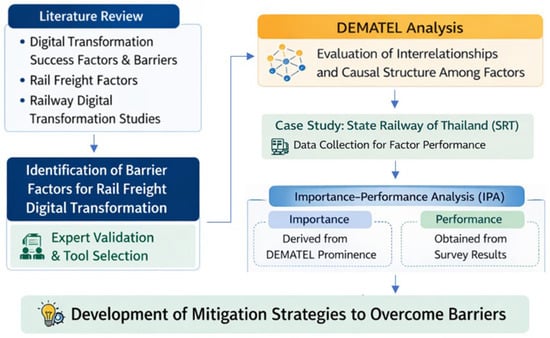
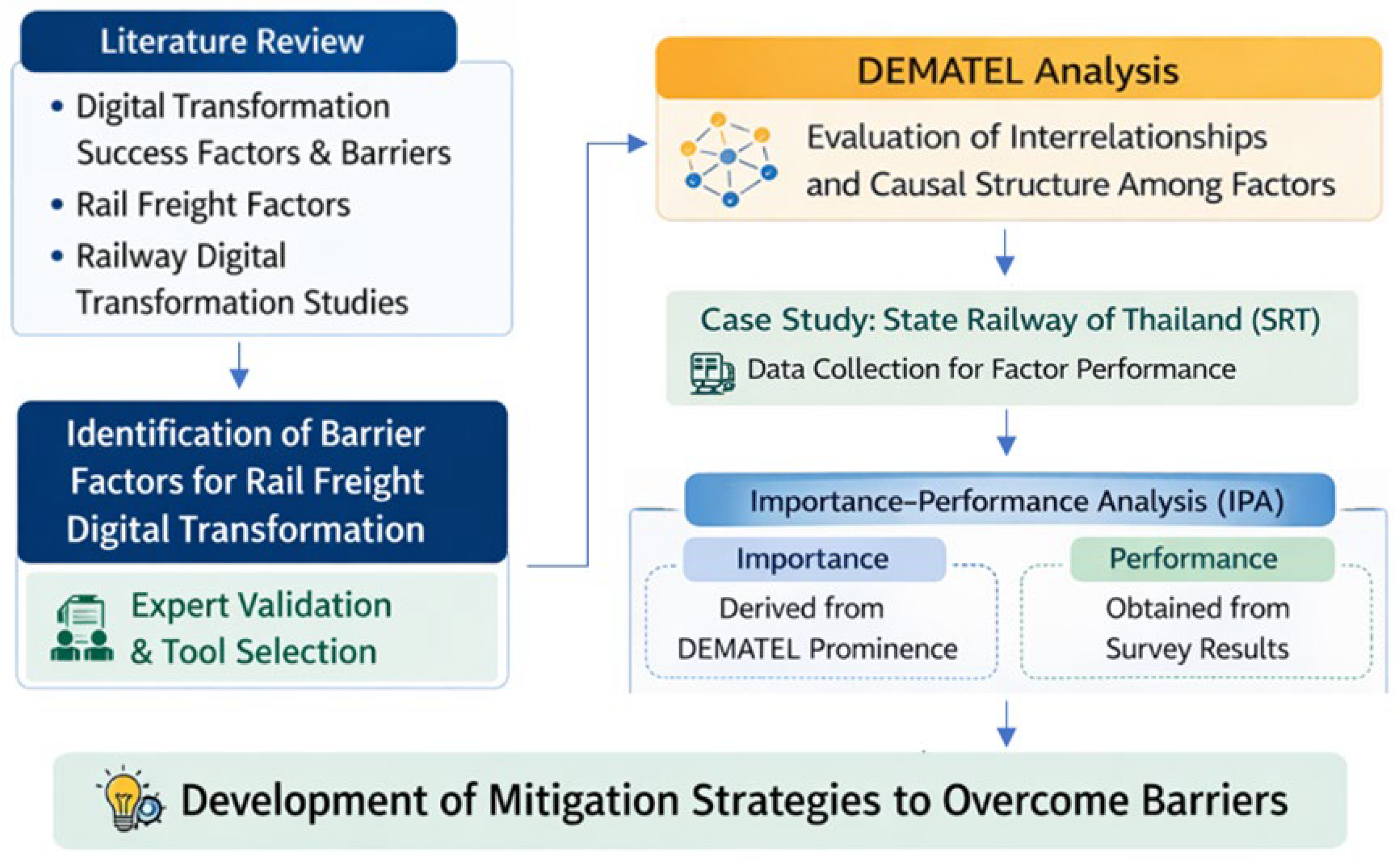
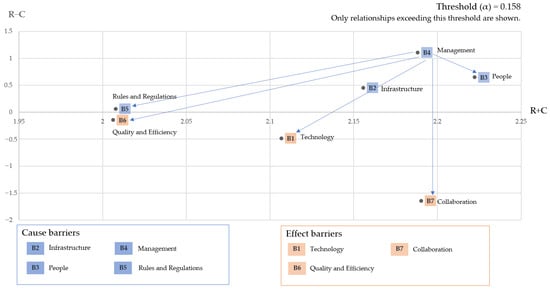
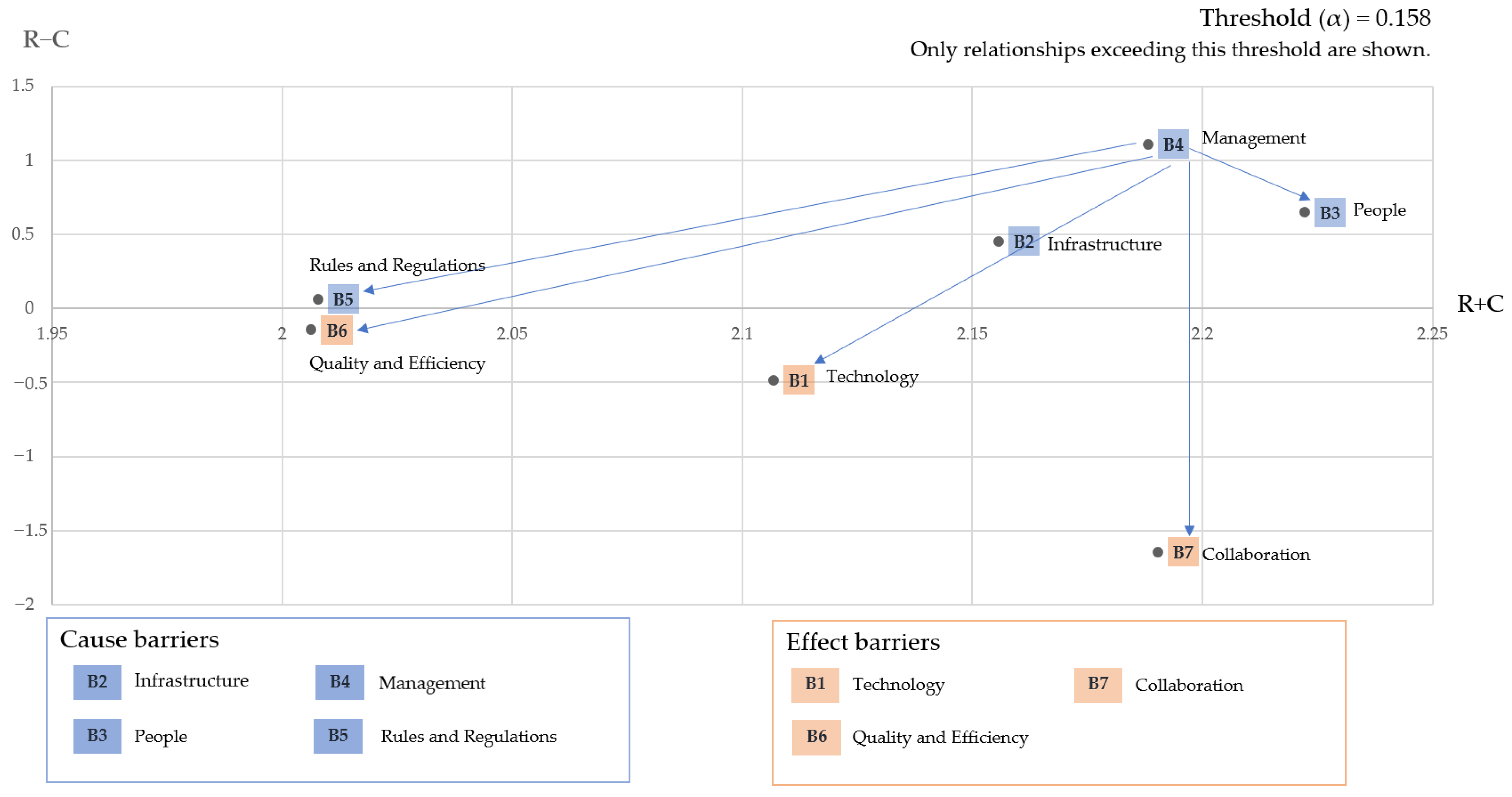
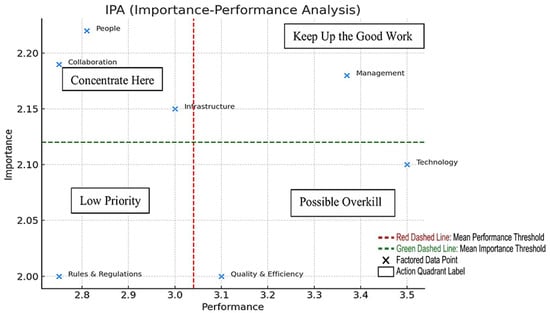

Disclaimer/Publisher’s Note: The statements, opinions and data contained in all publications are solely those of the individual author(s) and contributor(s) and not of MDPI and/or the editor(s). MDPI and/or the editor(s) disclaim responsibility for any injury to people or property resulting from any ideas, methods, instructions or products referred to in the content. |
© 2026 by the authors. Licensee MDPI, Basel, Switzerland. This article is an open access article distributed under the terms and conditions of the Creative Commons Attribution (CC BY) license.