


Abstract
The flavor and scent of Chinese Baijiu are closely linked to the quantity of fatty acid ethyl esters, and their generation is closely associated with Baijiu brewing yeast, most notably ethyl acetate (EA) and ethyl hexanoate (EH). At present, however, the specific mechanism of EA and EH produced by Wickerhamomyces anomalus under ethanol stress during the brewing of Baijiu remains unclear. Our study findings revealed that ethanol stress inhibited the generation of precursor substances (pyruvate and acetyl-CoA) in the fatty acid ethyl ester biosynthesis pathway of W. anomalus NCU003. The high level of EA produced in the fatty acid ethyl ester biosynthesis pathway was associated with the enhanced expressions of ATF1 and EAT1 and the increased activity of C2 esterase under 3% and 6% ethanol stress. The lower EA content was related to the high expression of IAH1 and low activity of C2 esterase under 9% ethanol stress. We also found that the expression of ACC, FAS1, FAS2, EHT1, and EEB1 was up-regulated, which may promote the synthesis of EH under ethanol stress, whereas the activity of C6 esterase may have no effect on the synthesis of EH. Our study results indicated that the above genes and C2 esterase can be modulated in W. anomalus NCU003 under ethanol stress, thus promoting the synthesis of fatty acid ethyl esters during the brewing of Baijiu.
1. Introduction
As one of the six internationally renowned distilled spirits (alongside brandy, gin, rum, vodka, and whisky), Chinese Baijiu is popular among Chinese people [1]. Fatty acid ethyl esters are the main aroma component that determines the flavor of Chinese Baijiu, and ethyl acetate (EA) and ethyl hexanoate (EH) are considered to be two important fatty acid ethyl esters, providing a pleasant fruity aroma (apple and banana) that affects the organoleptic quality and flavor profile of Baijiu [2,3]. The effective production of EA and ethyl caproate during the process of Baijiu brewing is therefore an important prerequisite to ensure the regular operation of the Chinese Baijiu industry. Research has shown that fatty acid ethyl esters are primarily produced by Baijiu brewing yeast. In particular, the Baijiu brewing yeast Wickerhamomyces anomalus contributes significantly to the synthesis of EA and EH during the brewing process of Baijiu [4,5].
Fermentation strains, raw materials, and processes are all important factors that influence the composition of fatty acid ethyl esters during the Baijiu brewing process, and many studies have focused on modulating these factors to ensure the production of EA, EH, and other fatty acid ethyl esters [6,7]. Change in the Baijiu brewing environment is also an important factor that affects the production of fatty acid ethyl esters by Baijiu brewing yeast [8]. In addition, ethanol is the primary metabolite produced by yeast during the fermentation process. As it is continuously produced at increasing levels as fermentation progresses, high ethanol levels can exert stress on the yeast, thereby affecting its ability to produce aroma compounds [9]. The results of one study demonstrated that appropriate use of ethanol could promote the synthesis of EA and EH by Saccharomyces cerevisiae, thereby improving the overall flavor profile of wine [10]. In another study, ethanol stress also caused growth inhibition of Kluyveromyces marxianus but increased the content of fatty acid ethyl esters [11]. In addition, the results indicated that ethanol stress may significantly affect yeast-induced fatty acid ethyl ester biosynthesis during Baijiu brewing.
Pyruvate is an important substrate for the synthesis of fatty acid ethyl esters, primarily used for the synthesis of acetyl-CoA and hexanoyl-CoA [12]. In one study, researchers found a negative correlation between the changes in the content of pyruvic acid and EA, potentially due to the conversion of pyruvate into a greater number of precursor substances for the generation of EA in S. cerevisiae [13]. It is well established that fatty acid ethyl esters are primarily produced by the alcohol acetyltransferase (AATase) encoded by ATF1/2, EEB1, and EHT1, which can synthesize fatty acid ethyl esters by utilizing acetyl-CoA, hexanoyl-CoA, and ethanol. The ATF1/2 genes mainly regulate the synthesis of EA; in comparison, EEB1 and EHT1 are the regulatory genes involved in the synthesis of EH. Research has indicated that increased expression levels of ATF1, ATF2, EHT1, and EEB1 can promote the generation of EA and EH in yeast [14]. Yeast can also produce fatty acid ethyl esters from ethanol and fatty acids through the role of esterase in the esterification process [13]. Thus, EA and EH content is primarily determined by the expression of genes related to fatty acid ethyl ester production and the activity of enzymes. Of note, in most current studies, researchers have focused exclusively on the impact of environmental stress on changes in aroma compound production by brewing yeast, without exploring the specific mechanisms by which environmental stress affects particular aroma compounds.
In our previous studies, the concentration of ethanol reached up to 9% (v/v) while brewing special-flavor Baijiu. Moreover, ethanol at different concentrations was found to inhibit the growth of special-flavor Baijiu brewing yeast (W. anomalus NCU003) [15,16]. Thus, the aim of this study was to investigate the effect of ethanol stress on the production of EA and EH by W. anomalus and to systematically elucidate the specific mechanisms by which ethanol stress affects the generation of EA and EH from the perspectives of genes, enzyme activities, and metabolites. It is hoped that these results can provide a theoretical basis for the directional regulation of fatty acid ethyl ester production by Baijiu brewing yeast in the future.
2. Materials and Methods
2.1. Construction of Ethanol Stress Fermentation Model
The W. anomalus NCU003 used in this study was sourced from Zhangshugong Wine and Spirits Co., Ltd. (Zhangshu, China) and exhibited high ester production capacity [17]. Pre-treatment of W. anomalus NCU003 was implemented based on the method employed in our previous work [18]. We continued to cultivate activated W. anomalus NCU003 (1% vaccination rate) by using malt extract medium (0.13 kg malt extract and 100 mg chloramphenicol were dissolved in 1000 mL distilled water) for 8 h. Thereafter, additional anhydrous ethanol was added to the culture medium of W. anomalus NCU003 to achieve ethanol concentrations of 3% (v/v), 6% (v/v), and 9% (v/v). No treatment was administered to the control group. Lastly, cultivation was continued in the shaker (28 °C and 160 rpm) for 14 h, W. anomalus NCU003 cells were removed, and the indexes were measured. During this period, samples were taken for the determination of various indicators.
2.2. Determination of Residual Sugar and Ethanol Contents
The residual sugar content was determined based on the method of Piao et al. [19], and ethanol content was determined based on the method of He et al. [20]. The content of residual sugar and ethanol was expressed as g/L and %, respectively.
2.3. Analysis of EA and EH Contents via GC-FID
The analysis of EA and EH contents was performed using a gas chromatograph (Agilent Technologies, Santa Clara, CA, USA) equipped with an HP-5 column (30 m × 0.25 mm × 0.25 µm). The fermentation broth of W. anomalus NCU003 (1 mL) was centrifuged (4 °C, 12,000× g, 10 min), and the supernatant was collected and filtered through a 0.22 µm microporous membrane prior to analysis.
The analysis procedure involved the following parameters: detector, FID; carrier gas, nitrogen; carrier gas flow rate, 1 mL/min; injector temperature, 230 °C; detector temperature, 250 °C; injection volume, 1 µL; split ratio, 15:1. The initial temperature was set at 35 °C and held for 5 min, then increased to 96 °C at a rate of 8 °C/min and maintained for 3 min, followed by an increase to 110 °C at 2 °C/min with no hold, and finally increased to 240 °C at 15 °C/min and held for 3 min. The contents of EA and EH were determined with reference to standard substances (Aladdin Biochemical Technology Co., Ltd., Shanghai, China) and were expressed as mg/L.
2.4. Analysis of Acetic Acid and Caproic Acid Contents
First, 100 mg of the W. anomalus NCU003 cells was extracted with 100 μL ultrapure water, and 5 mol/L HCl was used to adjust the pH to 2.5. Thereafter, the mixtures were centrifuged (4 °C, 12,000× g, 15 min), with only the supernatant retained for use in the analysis of acetic acid and caproic acid content.
The supernatant was filtered through a 0.22 μm microporous membrane. The analysis procedure for acetic acid and caproic acid involved the use of a gas chromatograph (Agilent Technologies, USA) equipped with a DB-FAT WAXUI column (30 m × 0.25 mm × 0.25 µm), with the procedure involving the following: detector, FID; carrier gas, nitrogen; carrier gas flow rate, 3 mL/min; injector temperature, 220 °C; detector temperature, 250 °C; injection volume, 1 µL; split ratio, 10:1. The initial temperature was set at 60 °C and held for 5 min, then increased to 160 °C at a rate of 10 °C/min and maintained for 2 min, followed by an increase to 220 °C at 20 °C/min and held for 3 min. The contents of acetic acid and caproic acid were determined with reference to standard substances (Aladdin Biochemical Technology Co., Ltd., China) and were expressed as μg/g.
2.5. Analysis of Pyruvate and Acetyl-CoA Contents
The determination of acetyl-CoA content was performed based on the instructions of the acetyl-CoA content assay kit (Beijing Solarbio Science and Technology Co., Ltd., Beijing, China). First, 100 mg of the W. anomalus NCU003 cells was added to 0.3 mL of phosphate-buffered solution (pH 7.2) and ultrasonically crushed on ice for 150 s. The supernatant was obtained via centrifugation (4 °C, 12,000× g, 10 min) and used for the determination of pyruvate content, with reference to the method of Metrani et al. [21]. The contents of acetyl-CoA and pyruvate were expressed as μmol/g and μg/g, respectively.
2.6. Determination of Related Enzyme Activities
The determination of pyruvate decarboxylase (PDC) activity was performed based on the instructions of the PDC activity assay kit (Beijing Solarbio Science and Technology Co., Ltd., China), and the determination of acetyl-CoA synthetase (ACS) activity was performed based on the method of Zheng et al. [22]. The reaction mixture for ACS contained 100 mmol/L Tris-HCl buffer (pH 8.0), 0.005 mol/L NAD+, 0.2 mmol/L CoA, 0.01 mol/L malic acid, 0.01 mol/L ATP, 100 U/mL malate dehydrogenase, 3 U/mL citrate synthase, and 2 mL crude enzymes, and absorbance was measured at 340 nm. The activities of PDC and ACS were expressed as U/g. The determination of C2 esterase and C6 esterase activities was performed based on the method of Matthews et al. [23]. The reaction mixture for C2 and C6 contained 25 mmol/L p-Nitrophenyl acetate (for the determination of C2 activity), 25 mmol/L p-Nitrophenyl hexanoate (for the determination of C6 activity), citric acid–phosphate buffer (pH 5.0), and 0.5 mol/L NaOH. The activities of C2 and C6 were expressed as U/g.
2.7. Quantitative PCR Analysis
The extraction of total RNA from W. anomalus NCU003 cells, the synthesis of cDNA, and qPCR analysis were performed based on the method of Chen et al. [18]. The primer sequences of key genes involved in the biosynthesis pathway of fatty acid ethyl esters are presented in Table S1. The ACT1 gene was used as a control gene, and the 2−ΔΔCT method was used to calculate the relative expression levels of each gene.
2.8. Data Analysis
All experiments in this study were subjected to three biological replicates. The software Origin 2021 and SPSS 21.0 were used to produce figures and conduct statistical analyses. Significant difference analysis (p < 0.05) was conducted using single-factor analysis and Duncan’s test.
3. Results
3.1. The Changes in Residual Sugar and Ethanol Contents in the Fermentation Broth of W. anomalus NCU003
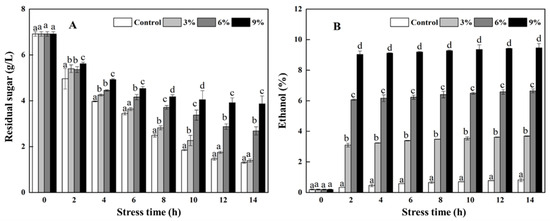
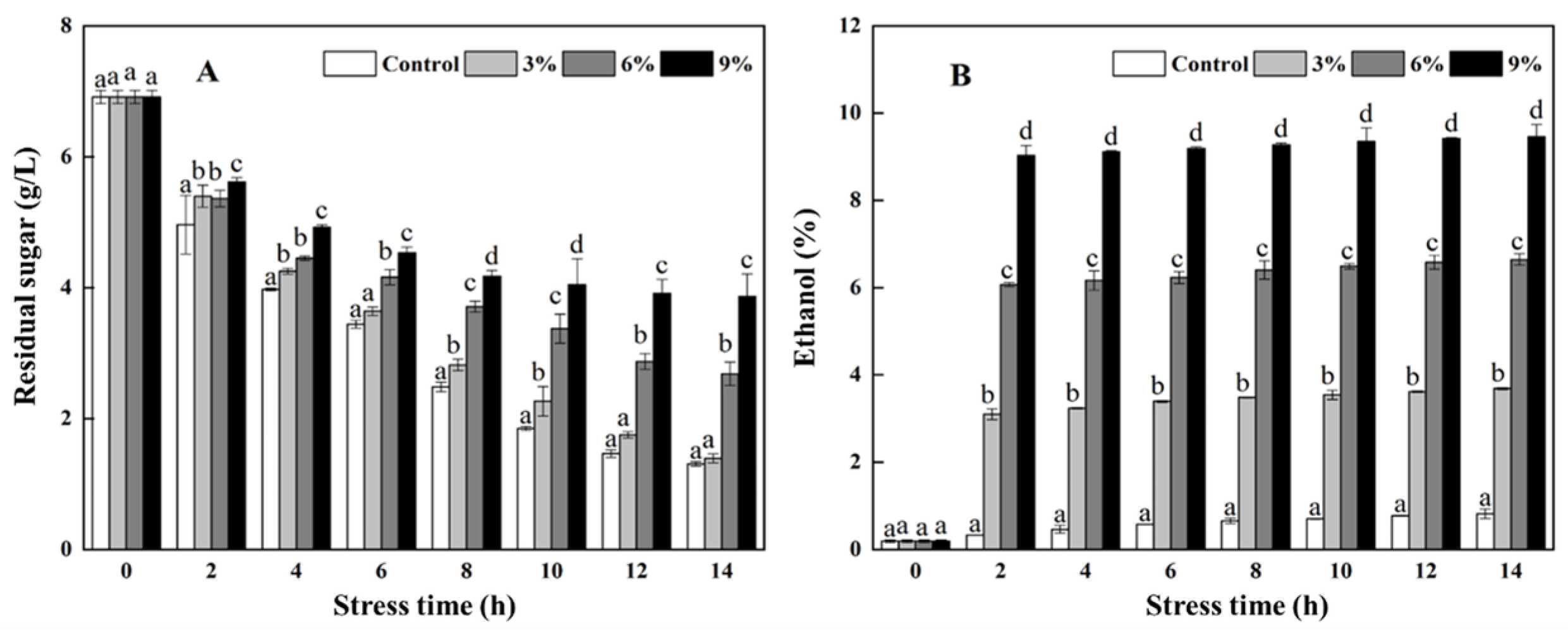
As shown in Figure 1A, the content of residual sugar in the fermentation broth decreased as the stress time increased. Moreover, the rate of decrease in the content of residual sugars slowed with the increase in ethanol concentration. The residual sugar content remained significantly (p < 0.05) higher in the 9% ethanol stress group than in the other groups. The ethanol content in all groups increased (p > 0.05) slightly with the increase in stress time, and newly generated ethanol content decreased with the increase in ethanol stress concentrations (Figure 1B). The ethanol content in the control, 3% ethanol stress, 6% ethanol stress, and 9% ethanol stress groups was 0.82%, 3.69%, 6.65%, and 9.46% at 14 h after ethanol stress, respectively.
Figure 1.
Effects of ethanol stress on the residual sugar (A) and ethanol (B) contents in the fermentation broth. Note: different letters represent a significant difference (p < 0.05) in the content at the same stress time.
3.2. The Changes in EA and EH Contents of W. anomalus NCU003
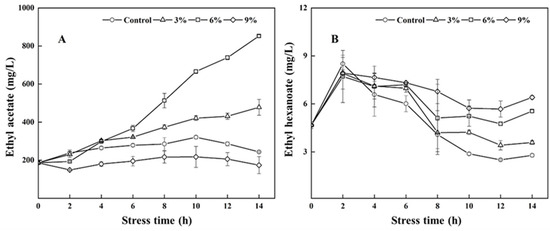
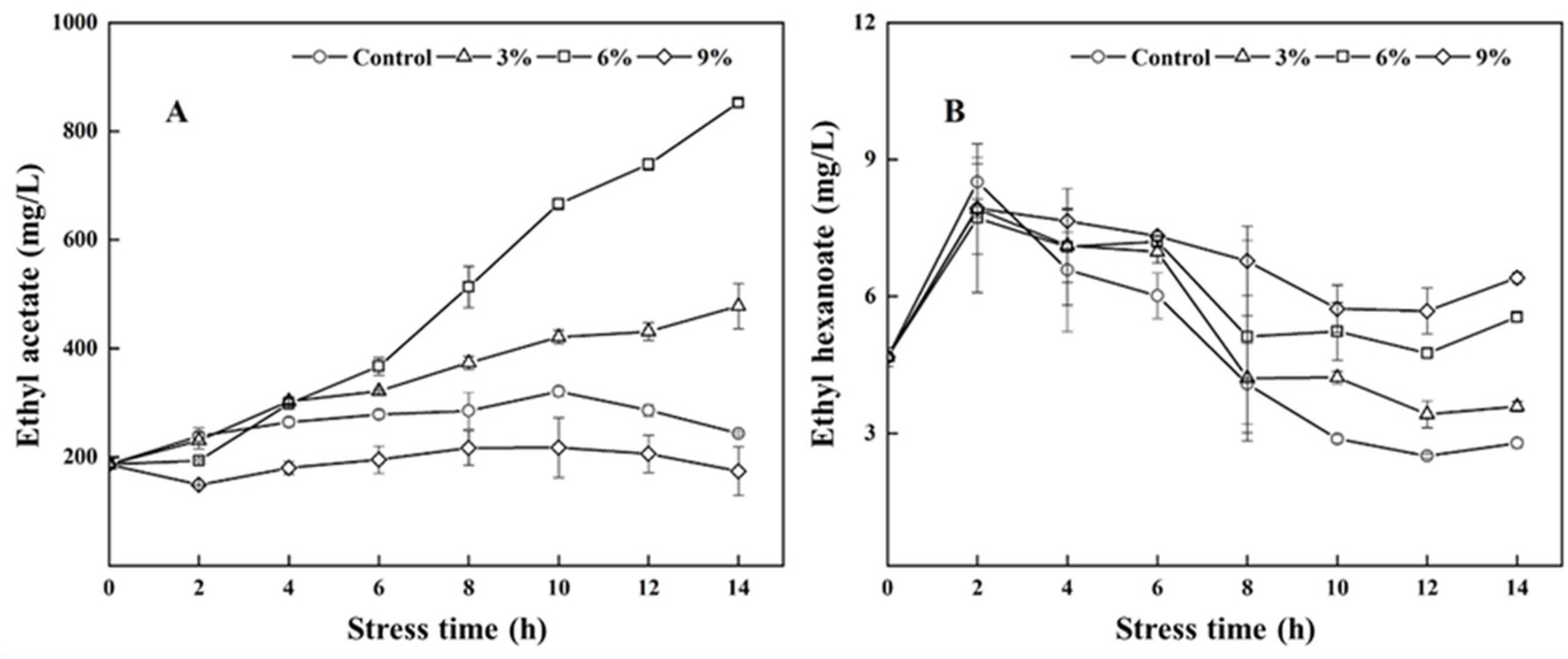
The content of EA in the 3% ethanol stress and 6% ethanol stress groups was higher than that of the group without ethanol supplementation, and the highest EA content was recorded in the 6% ethanol stress group at 14 h, a 3.50-fold increase compared to that of the control. Of note, the content of EA in the 9% ethanol stress group was lower than that of the group without ethanol addition during the entire fermentation period (Figure 2A). Moreover, ethanol supplementation promoted the production of EH by W. anomalus NCU003 in a concentration-dependent manner (Figure 2B).
Figure 2.
Effects of ethanol stress on the ethyl acetate (A) and ethyl hexanoate (B) contents of W. anomalus NCU003.
3.3. The Changes in Gene Expression in the EA Biosynthesis Pathway of W. anomalus NCU003
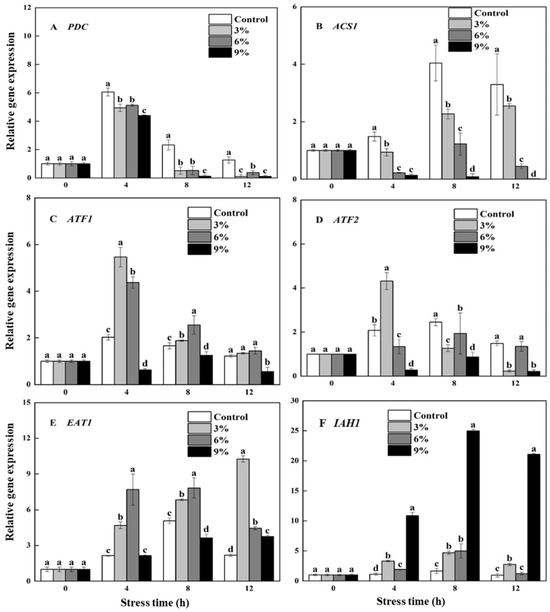
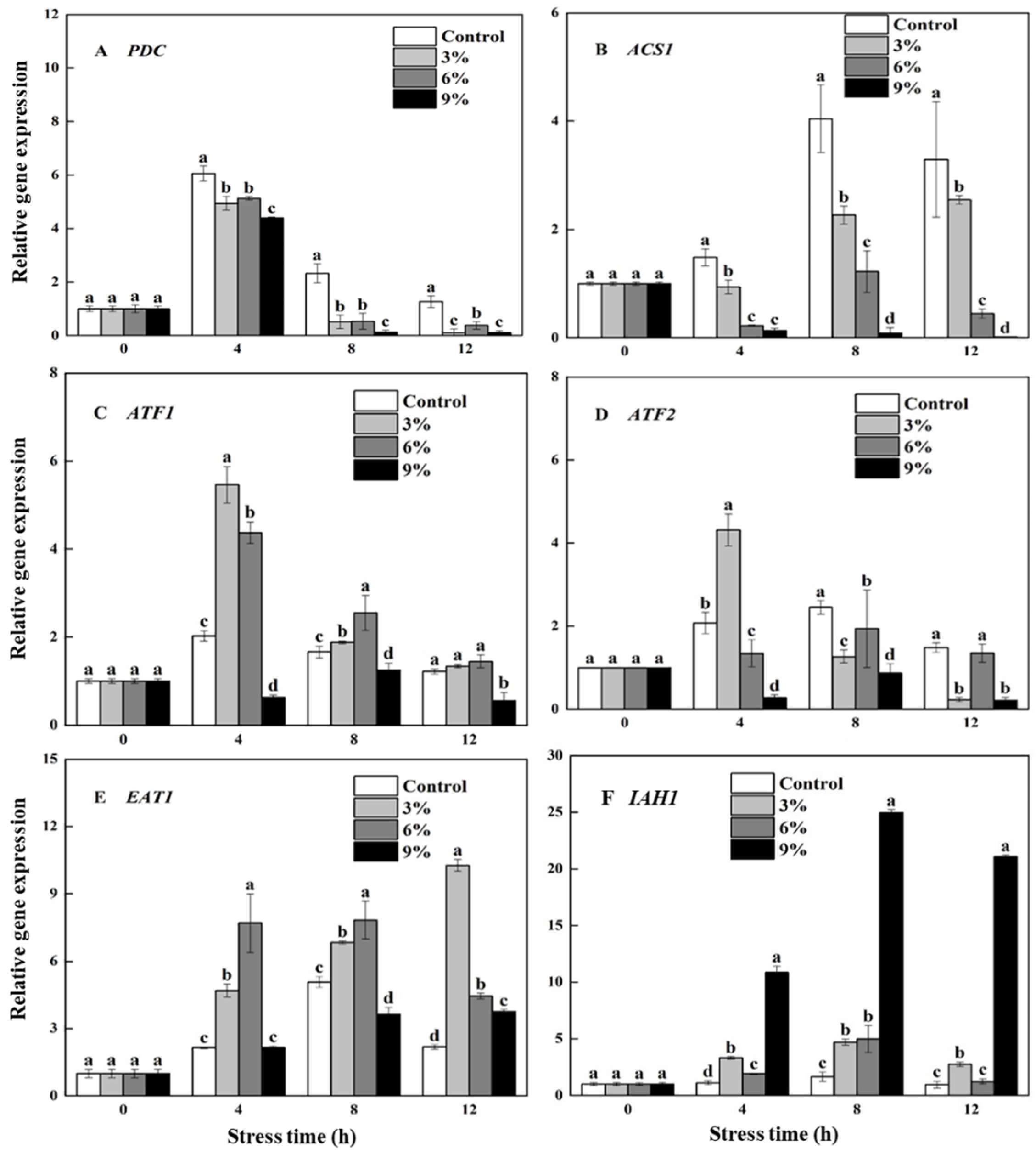
As shown in Figure 3A,B, ethanol supplementation significantly (p < 0.05) inhibited the expression level of PDC and ACS1. The expression levels of the PDC and ACS1 genes in the 9% ethanol stress group amounted to only 5.5% and 2.1% of those in the control group at 8 h. The expression of ATF1 and EAT1 increased during the fermentation process under 3% and 6% ethanol stress (Figure 3C,E), and the expression of ATF2 was only up-regulated in the early stage of fermentation under 3% ethanol stress (Figure 3D). However, the expression of ATF1 and ATF2 was significantly (p < 0.05) down-regulated during the entire fermentation process under 9% ethanol stress. The expression of IAH1 was up-regulated after ethanol stress, and its expression was significantly (p < 0.05) up-regulated under 9% ethanol stress, a 21.84-fold increase compared to that of the control at 12 h (Figure 3F).
Figure 3.
Effects of ethanol stress on the expression of PDC (A), ACS1 (B), ATF1 (C), ATF2 (D), EAT1 (E), and IHA1 (F) in W. anomalus NCU003. Note: Different letters represent a significant difference (p < 0.05) within the same time period.
3.4. The Changes in the PDC and ACS Activities of W. anomalus NCU003
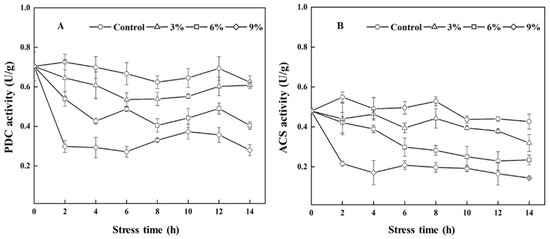
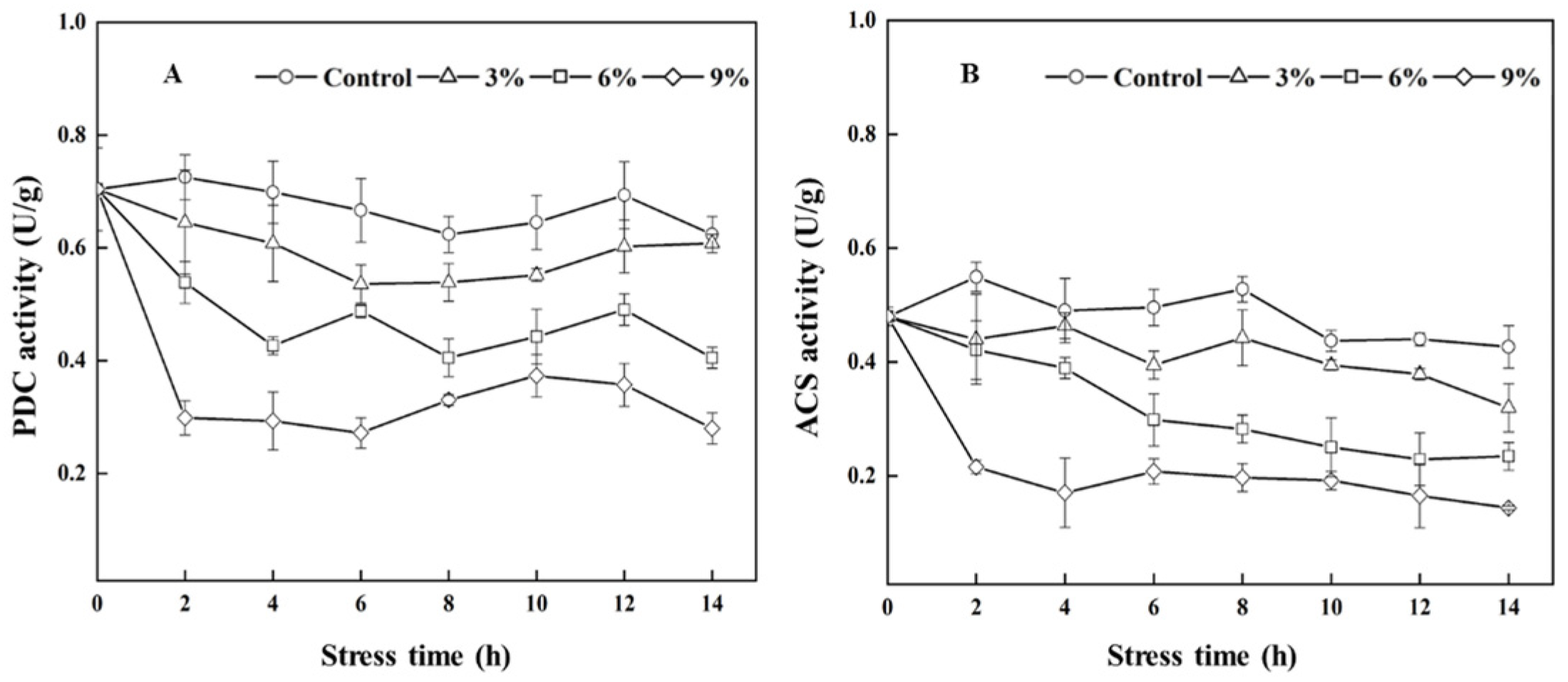
As shown in Figure 4, the changes in PDC and ACS activities ultimately remained consistent with the changes in PDC and ACS1 gene expression levels (Figure 3A,B). The presence of ethanol reduced the activities of PDC and ACS in a concentration-dependent manner.
Figure 4.
Effects of ethanol stress on the PDC (A) and ACS (B) activities of W. anomalus NCU003.
3.5. The Changes in Gene Expression in the EH Biosynthesis Pathway of W. anomalus NCU003
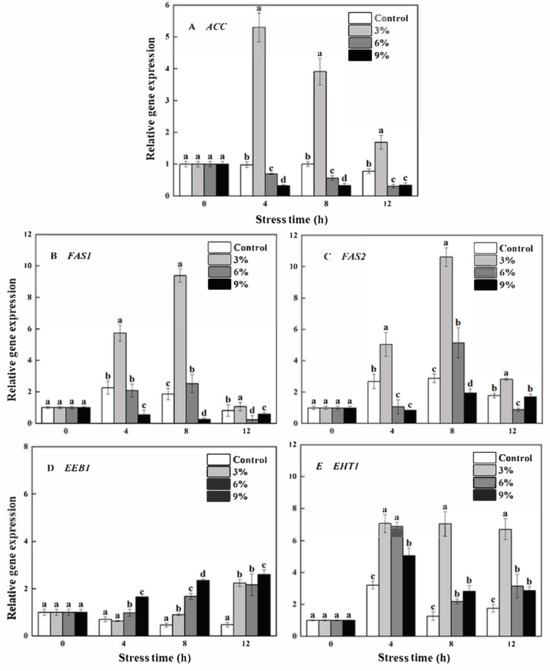
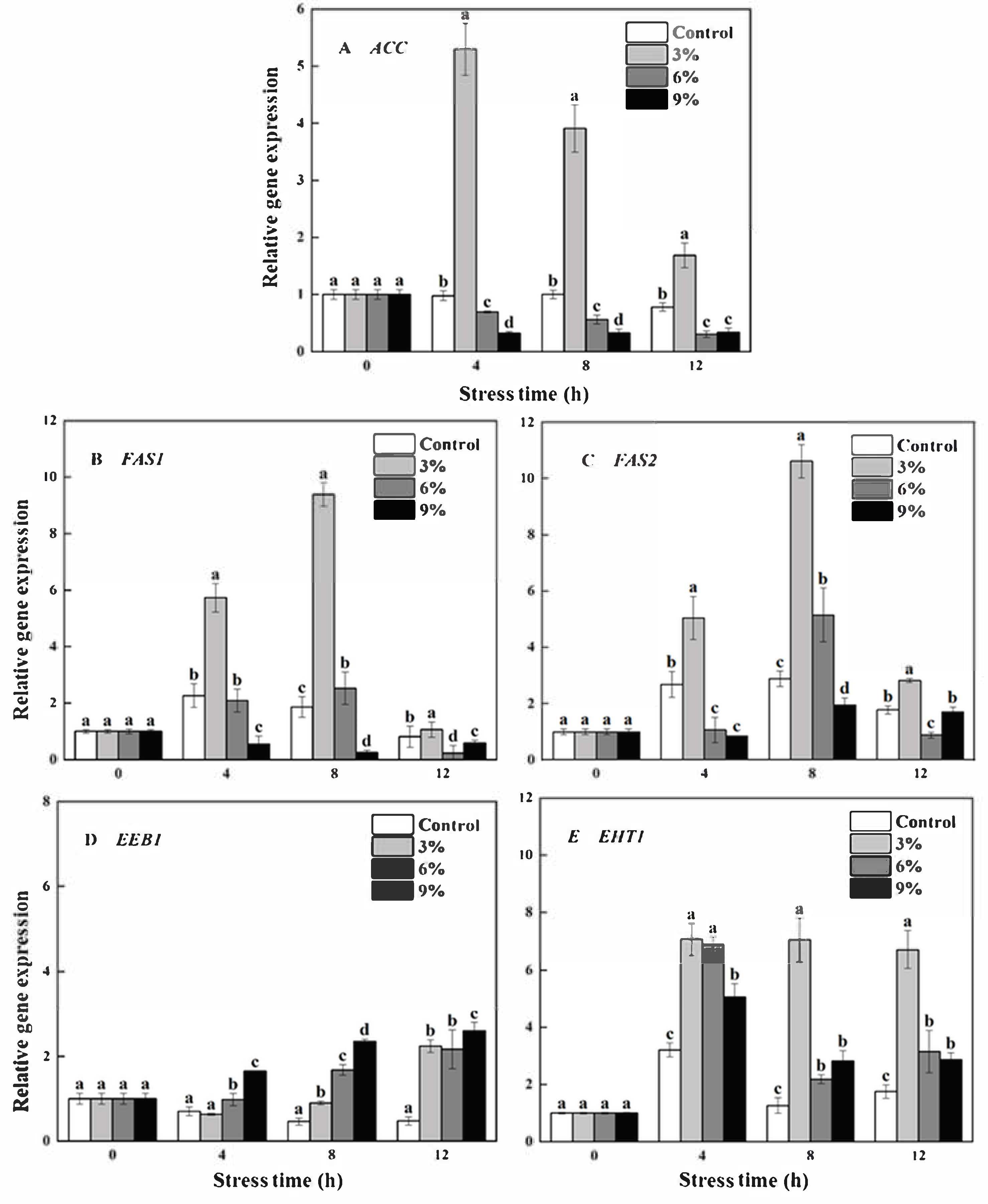
The expression of ACC (Figure 5A), FAS1 (Figure 5B), and FAS2 (Figure 5C) was significantly (p < 0.05) up-regulated and down-regulated under 3% and 9% ethanol stress, respectively. As shown in Figure 5D,E, the expressions of EEB1 and EHT1 were significantly (p < 0.05) up-regulated by ethanol stress during the entire fermentation process. The expression of EEB1 was concentration-dependent, with the greatest expression of EEB1 recorded under 9% ethanol stress at 12 h, a 5.51-fold increase compared to that of the control. However, the greatest expression of EHT1 was recorded under 3% ethanol stress at 8 h, a 5.57-fold increase compared to that of the control.
Figure 5.
Effects of ethanol stress on the expression of ACC (A), FAS1 (B), FAS2 (C), EEB1 (D), and EHT1 (E) genes in W. anomalus NCU003. Note: Different letters represent a significant difference (p < 0.05) within the same time period.
3.6. The Changes in the C2 Esterase and C6 Esterase Activities of W. anomalus NCU003
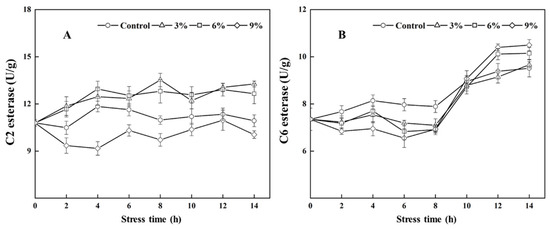
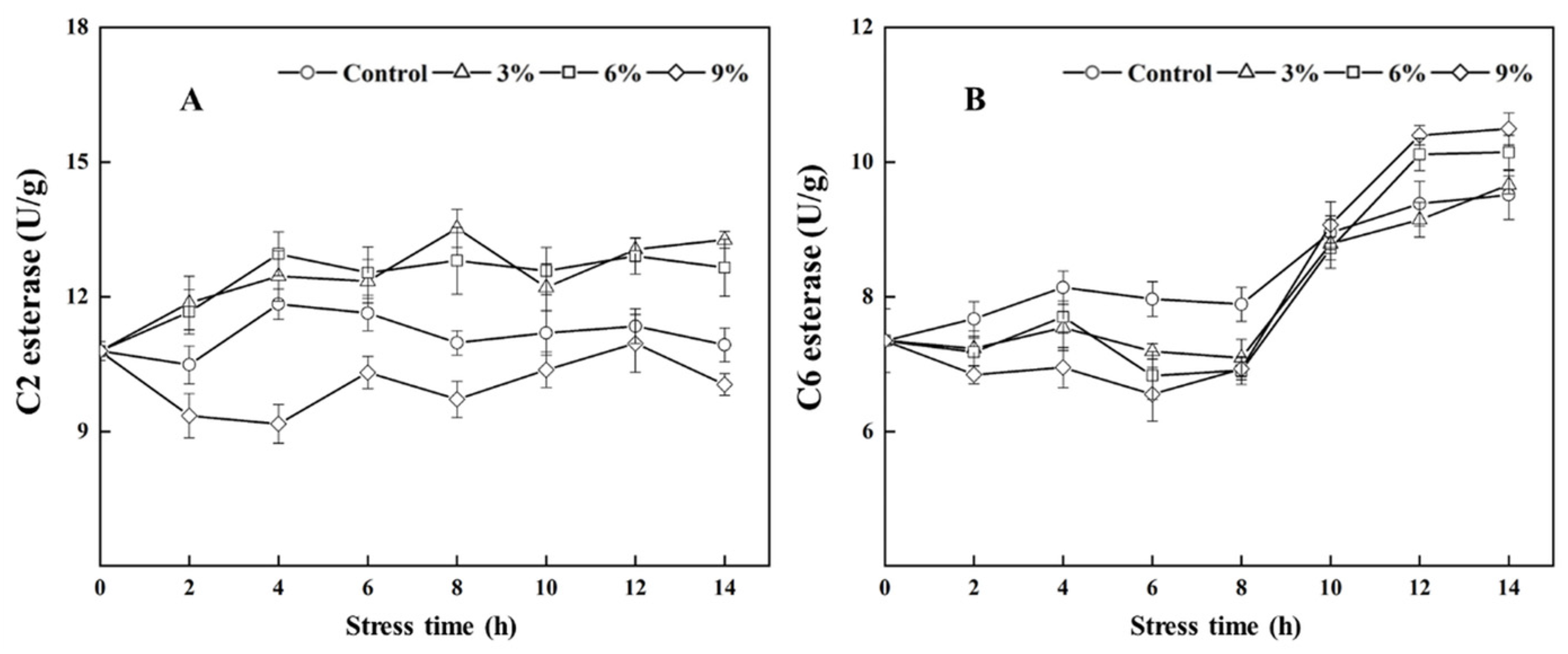
As shown in Figure 6A, compared with the group with no ethanol supplementation, the activity of C2 esterase decreased under 9% ethanol stress; in comparison, the activity of C2 esterase increased under 3% and 6% ethanol stress. Among the groups, the activity of C2 esterase in the 3% ethanol stress group was 1.23 times higher than that of the control group at 8 h post-treatment. Ethanol stress inhibited the activity of C6 esterase during the first 0–8 h. The activity of C6 esterase in all of the groups exhibited an upward trend during the remaining stress period; of note, the fastest increase in C6 esterase activity was observed under 9% ethanol stress, and the activity of C6 esterase in the 9% ethanol stress group was 1.10 times greater than that of the control group at 14 h after ethanol stress (Figure 6B).
Figure 6.
Effects of ethanol stress on the C2 esterase (A) and C6 esterase (B) activities of W. anomalus NCU003.
3.7. The Changes in the Main Metabolite Content of W. anomalus NCU003
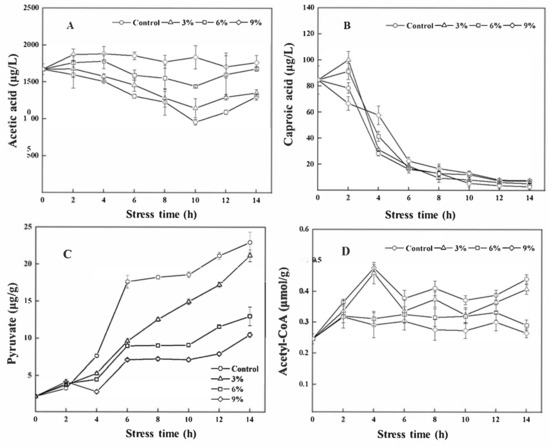
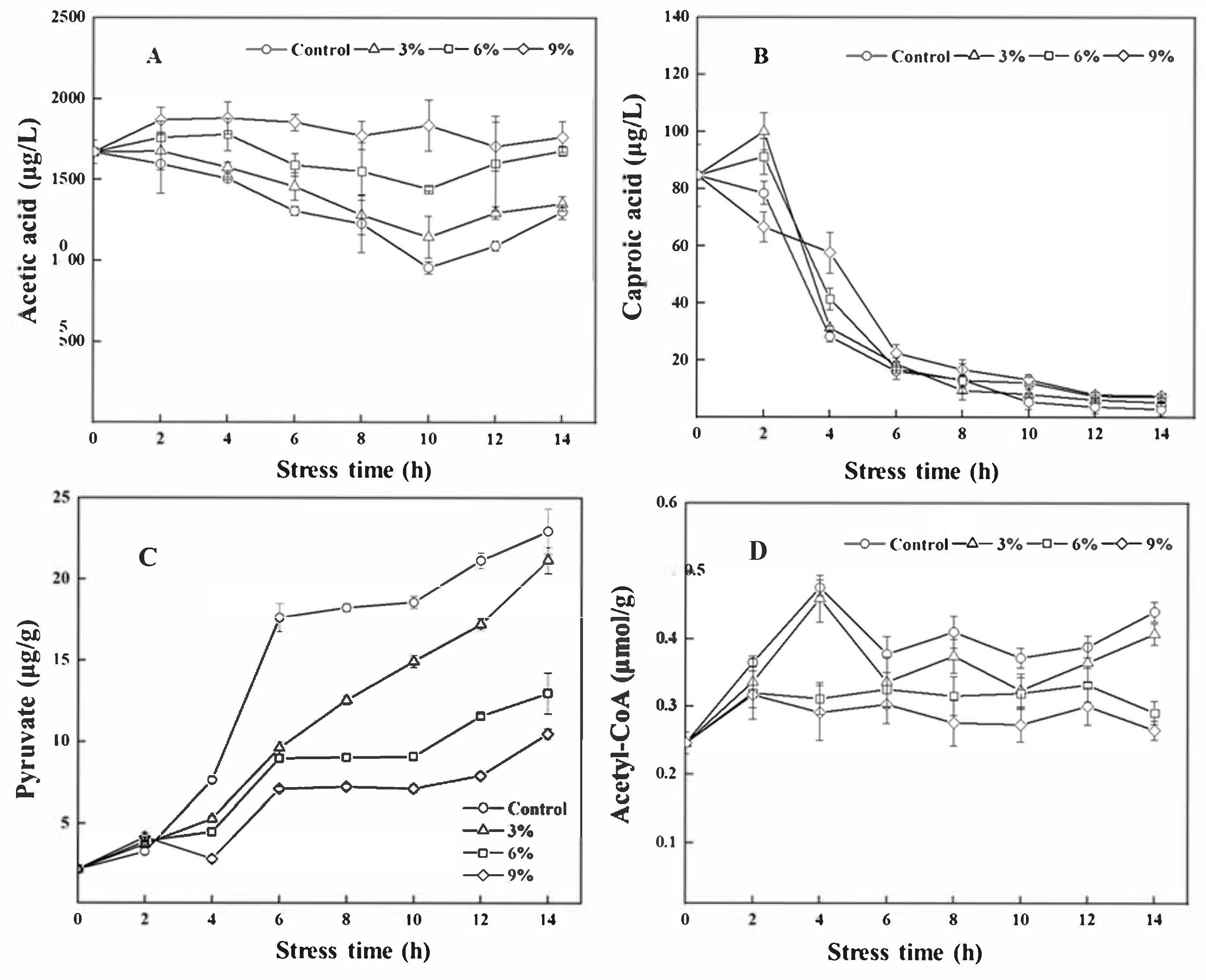
As shown in Figure 7A, ethanol supplementation was found to promote the generation of acetic acid during the entire fermentation process, with the effect being concentration-dependent. Among the stress groups, the content of acetic acid in the 9% ethanol stress group was 1.92 times higher than that of the control group at 10 h after ethanol stress. The content of caproic acid exhibited a downward trend after 2 h; the content of caproic acid remained consistently high during the remaining fermentation process under 9% ethanol stress, and the content of caproic acid in the 9% ethanol stress group was 2.04 times higher than that of the control group at 4 h after ethanol stress. (Figure 7B). Moreover, ethanol stress inhibited the generation of pyruvate and acetyl-CoA content in W. anomalus NCU003 and was concentration-dependent (Figure 7C,D). Among the groups, the content of pyruvate in the control group was 2.19 times higher than that of the 9% ethanol stress group at 14 h after ethanol stress.
Figure 7.
Effects of ethanol stress on the content of acetic acid (A), caproic acid (B), pyruvate (C), and acetyl-CoA (D) of W. anomalus NCU003.
4. Discussion
EA and EH are produced through microbial metabolism (primarily by ester-producing yeast) during the Baijiu brewing process, and they play a dominant role in influencing its sensory quality. Notably, W. anomalus serves as the main ester-producing yeast [24]. The results of a number of studies have also demonstrated that different environmental stress factors can enhance the ability of yeast to produce EA and EH [10,11]. For example, the growth of Pichia kudriavzevii was inhibited under organic acid stress but ultimately increased the EA content during the brewing process of sea buckthorn wine [25]. From these results, it can therefore be concluded that ethanol stress may result in the generation of a greater number of aroma components during the brewing process of Baijiu. An in-depth study of EA and EH production mechanisms under ethanol stress would be advantageous in advancing W. anomalus NCU003’s potential application in the Baijiu brewing process.
Yeast can use glucose to produce pyruvate and acetic acid via the glycolytic pathway during the brewing process, which are key precursors for acetyl-CoA synthesis [26]. Our results indicated that the utilization rate of residual sugar in fermentation broth gradually decreased, and the production of pyruvate was gradually inhibited with the increase in ethanol concentration. This phenomenon indicated that ethanol stress may reduce the glucose uptake of W. anomalus NCU003, decrease the carbon metabolism of the glycolysis pathway, and inhibit the synthesis of pyruvate.
The pyruvate decarboxylase (encoded by PDC) is responsible for converting pyruvate into acetic acid; then, acetic acid is converted into acetyl-CoA under the action of acetyl-CoA synthetase (encoded by ACS1) [27]. Both PDC and ACS1 genes are key genes for synthesizing EA. The ACS1 gene plays a particularly important role, with the results of one study indicating that the expression of ACS1 was positively correlated with EA content. For example, the expression of ACS1 in S. cerevisiae was inhibited under hypertonic stress, resulting in a reduction in EA synthesis [28]. Our results indicate that the expression of PDC and ACS1 genes and the activity of PDC and ACS were significantly inhibited following ethanol supplementation, resulting in a reduction in acetyl-CoA content. Of note, we found that the acetic acid content of W. anomalus NCU003 increased in all ethanol stress groups, which may be related to ethanol stress inhibiting ACS activity, thereby preventing acetic acid from being fully utilized to synthesize acetyl-CoA and thus resulting in the accumulation of acetic acid under ethanol stress.
Nevertheless, our results indicated that the content of EA was higher than that of the group without ethanol supplementation under 3% and 6% ethanol stress, which may be the result of an increase in ATF1/2 gene expression. AATase (ATF1/2 encoding) can catalyze the combination of ethanol and acetyl-CoA, thus completing the most critical step in the production of EA [29]. Our results showed that overexpression of ATF1 and ATF2 could enhance the environmental tolerance of Saccharomyces pastorianus and promote the synthesis of EA [14] and also showed that the effect of ATF2 may be less pronounced than that of ATF1 [30]. The expression of ATF2 was higher only in the early stage of 3% ethanol stress. Our results indicated that ATF1 showed stronger induction than ATF2 in the production of EA under 3% and 6% ethanol stress. Similarly, the EAT1 gene is a recently discovered coding gene of AATase in yeast. In one study, the authors found that Kluyveromyces marcianus’s ability to produce EA significantly decreased after the deletion of the EAT1 gene, thus confirming that the EAT1 gene is also a key gene for synthesizing EA [31]. The expression of the EAT1 gene was found to be up-regulated under 3% and 6% ethanol stress. Overall, our results showed that W. anomalus NCU003 could promote the production of EA by up-regulating the expression of ATF1 and EAT1 under 3% and 6% ethanol stress.
In addition, the isoamyl acetate-hydrolyzing esterase (IAH1 encoding) can degrade EA and reduce the EA content in yeast [32]. In one study, the authors found that the ability to produce EA was significantly reduced after overexpression of the IAH1 gene in S. cerevisiae, which confirmed the role of this gene in reducing the EA content [33]. Our results showed that the expression of IAH1 also exhibited an upward trend with increased ethanol content. From these results, it can therefore be concluded that W. anomalus NCU003 could promote the production of EA by up-regulating EAT1 expression under 9% ethanol stress; however, the IAH1 gene may play a more important role in the degradation of EA, resulting in the lowest EA content in the 9% ethanol stress group.
Of note, the authors of some studies have found a close relationship between esterase activity and the synthesis and accumulation of EA and EH in yeast [34,35]. Sumby et al. [36] investigated the activity of C2~C10 esterases in Oenococcus oeni and found that they exhibited specificity for the reaction of fatty acid substrates with different carbon chain lengths, which determined the composition of fatty acid ethyl esters, and their content was inversely proportional to the length of the carbon chain. Among them, C2 and C6 esterases can directly esterify fatty acids and ethanol to produce EA and EH, respectively [36]. In one study, it was found that the enhancement of C2 and C6 esterase activity after ARTP mutation aided S. cerevisiae in producing greater amounts of EA and EH and improved the flavor profile of jackfruit wine [37]. In this study, our results indicated that 3% and 6% ethanol stress increased C2 esterase activity in W. anomalus NCU003; however, 9% ethanol inhibited C2 esterase activity. These results were consistent with the change rule of EA. Moreover, acetic acid serves as a key substrate for the production of EA catalyzed by C2 esterase. The result also showed that the acetic acid content was relatively high compared with other groups under 9% ethanol stress, suggesting that the decrease in C2 esterase activity could prevent W. anomalus NCU003 from fully utilizing acetic acid to synthesize EA.
Hexanoyl-CoA and ethanol are also important substrates in the synthesis of EH. Acetyl-CoA carboxylase (ACC encoding) and fatty acid synthase (FAS1 and FAS2 encoding) play key roles in the synthesis of hexanoyl-CoA. ACC can convert acetyl-CoA to malonyl-CoA, and FAS can continue to convert acetyl-CoA and malonyl-CoA to hexanoyl-CoA, thus providing precursors for the production of EH [38]. The authors of one study found that the production of EH in Nong-flavor Baijiu could be significantly increased by overexpressing ACC, FAS1, and FAS2 genes in S. cerevisiae, respectively [39]. Their findings also indicated that the expression of these genes was significantly up-regulated under 3% ethanol stress, with this factor potentially explaining the high content of EH.
EHT1 and EEB1 genes can also encode ATT in yeast, which is the key enzyme in the production of medium-chain fatty acid ethyl esters. The results of one study indicate that EH content was significantly decreased in wine after either the EHT1 or EEB1 gene in S. cerevisiae was knocked out [40]. In addition, the results of another study also showed that EHT1 and EEB1 genes had positive effects on the synthesis of EH following the construction of recombinant strains by overexpressing EHT1 and EEB1 genes in Pichia pastoris [41]. The results showed that ethanol could increase the expression of EHT1 and EEB1, with 3% ethanol mainly up-regulating the expression of EHT1 and 6% and 9% ethanol mainly up-regulating the expression of EEB1. These findings suggest that the activity of AATase in W. anomalus NCU003 may be regulated by different genes under ethanol stress at different concentrations, with the regulatory capacity of the EEB1 gene being greater than that of the EHT1 gene. Therefore, the content of EH was relatively high under 6% ethanol stress and 9% ethanol.
Caproic acid is also a key substrate for the production of EH. We found that the contents of caproic acid and EH showed an overall decreasing trend, and the results also showed that the activity of C6 esterase increased under 9% ethanol stress at the middle and late stages of fermentation; however, the utilization of caproic acid was lower than that of other groups. Our results suggested that there was no obvious regularity in the changes in caproic acid, C6 esterase, and EH under ethanol stress. Other research groups have found that microorganisms mainly affect the synthesis of ester compounds by acting on esterase with short carbon chains during the brewing process. Moreover, the difference in metabolic ability among different strains will also impact the activity of esterase and the specificity of substrates, thus affecting the content of EA and EH [34,37]. Such findings therefore indicate that the contribution of C6 esterase to the production of EH may be far less significant than that of EEB1 and EHT1 genes in W. anomalus NCU003 and may not generate EH through the esterification reaction between caproic acid and ethanol under ethanol stress.
5. Conclusions
Our study revealed the specific biosynthesis mechanism of EA and EH produced by Baijiu brewing yeast under ethanol stress. Our results suggest that ethanol at different concentrations inhibited the expression of PDC and ACS1, with the activity of PDC and ACS related to the synthesis of acetyl-CoA; however, it increased the content of EA under 3% and 6% ethanol stress by enhancing the expression of ATF1 and EAT1 and the activity of C2 esterase. In addition, high expression of IAH1 related to the catabolism of EA resulted in lower EA content under 9% ethanol stress. Our results also suggest that the production of EH was associated with the high expression of ACC, FAS1, FAS2, and EHT1 under 3% ethanol stress. Moreover, the production of EH was associated with the high expression of EEB1 under 6% and 9% ethanol stress. To conclude, moderate ethanol concentrations (3% and 6%, v/v) could promote the generation of EA and EH in W. anomalus. Therefore, modulating ethanol concentration during controlled Baijiu fermentation could represent an effective strategy for optimizing its flavor profile.
Supplementary Materials
The following supporting information can be downloaded at https://www.mdpi.com/article/10.3390/foods15071129/s1, Table S1: List of primers used in real-time PCR analysis.
Author Contributions
Conceptualization, Y.C. and G.F.; methodology, Y.C.; software, W.C. and M.L.; validation, Y.C. and G.F.; formal analysis, W.C. and M.L.; investigation, W.C.; resources, G.F. and Y.W.; data curation, W.C. and M.L.; writing—original draft preparation, Y.C.; writing—review and editing, W.C. and M.L.; visualization, Y.C.; supervision, G.F.; project administration, G.F.; funding acquisition, Y.W. and G.F. All authors have read and agreed to the published version of the manuscript.
Funding
This research was funded by the open project program of the State Key Laboratory of Food Science and Resources, Nanchang University (No. SKLF-KF-202402), the Fund of the National Natural Science Foundation of China (No.32560549), and Shandong Province Higher Education Youth Innovation Team Program Project (No. 2025KJH114).
Institutional Review Board Statement
Not applicable.
Informed Consent Statement
Not applicable.
Data Availability Statement
The original contributions presented in this study are included in the article/Supplementary Materials. Further inquiries can be directed to the corresponding author.
Conflicts of Interest
Partial instrumentation for this study was provided by “International Institute of Food Innovation Co., Ltd., Nanchang University”. Notably, both “International Institute of Food Innovation Co., Ltd., Nanchang University” and “State Key Laboratory of Food Science and Resources, Nanchang University” are affiliated with Nanchang University, and all authors are permitted to conduct study at both institutions. The authors declare that these arrangements did not influence the study design, data analysis, or interpretation of results, and no other competing financial or personal interests exist.
Abbreviations
The following abbreviations are used in this manuscript:
| EA | Ethyl Acetate |
| EH | Ethyl Hexanoate |
| ARTP | Atmospheric and Room Temperature Plasma |
| GC-FID | Gas Chromatograph–Flame Ionization Detector |
References
- Pang, Z.M.; Hao, J.; Li, W.W.; Du, B.H.; Guo, C.H.; Li, X.T.; Sun, B.G. Investigation into spatial profile of microbial community dynamics and flavor metabolites during the bioaugmented solid-state fermentation of Baijiu. Food Biosci. 2023, 56, 103292. [Google Scholar] [CrossRef] [Scilit]
- Tong, Y.Q.; Jiang, M.H.; Li, X.; Deng, B.; Zhang, S.Y.; Wang, S.T.; Liu, M.; Yu, J.; Song, P. Age-dependent microbial succession and functional differentiation in pit mud and Zaopei of strong-flavor Baijiu. LWT Food Sci. Technol. 2025, 237, 118748. [Google Scholar] [CrossRef] [Scilit]
- Ma, Y.; Wei, Z.Y.; Xiao, X.J.; Yu, K.J.; Huang, H.L.; Tan, J.X.; Wang, Y.; Du, Y.; Li, Y.J. Investigating the impact of various sorghum types on the key aroma compounds of Sichuan Xiaoqu Baijiu through application of the sensomics approach. Food Chem. X 2024, 22, 101367. [Google Scholar] [CrossRef] [Scilit]
- Cai, W.Q.; Wan, Y.; Chen, Y.R.; Fan, H.W.; Li, M.X.; Wu, S.W.; Lin, P.; Zeng, T.T.; Luo, H.B.; Huang, D.; et al. Transcriptomics to evaluate the influence mechanisms of ethanol on the ester production of Wickerhamomyces anomalus with the induction of lactic acid. Food Microbiol. 2024, 122, 104556. [Google Scholar] [CrossRef] [Scilit] [PubMed]
- Li, Q.X.; Du, B.H.; Chen, X.; Zhao, X.N.; Zhu, L.N.; Ma, H.F.; Sun, B.G.; Han, J.X.; Li, X.T. Microbial community dynamics and spatial distribution of flavor compound metabolism during solid-state fermentation of Baijiu enhanced by Wickerhamomyces anomalus. Food Biosci. 2024, 59, 103909. [Google Scholar] [CrossRef] [Scilit]
- Yuan, P.Y.; Gong, L.J.; Zhaxi, N.; Qiao, K.Q.; Deng, X. Research on the origin of the “grain aroma” in Nongxiangxing baijiu based on the flavor profile of steamed brewing grains. Food Chem. X 2025, 30, 102881. [Google Scholar] [CrossRef] [Scilit]
- Wang, J.B.; Liu, Z.W.; Wang, X.; Zhu, J.H.; Xu, J.; Zhang, R.J.; Cai, F.J.; Zhu, Z.J.; Cao, J.H.; Yu, Q. Optimizing Baijiu fermentation with high-yield ethyl caproate-producing Candida parapsilosis strain. LWT Food Sci. Technol. 2024, 203, 116347. [Google Scholar] [CrossRef] [Scilit]
- Jin, X.F.; Yang, H.R.; Coldea, T.E.; Xu, Y.C.; Zhao, H.F. Metabonomic analysis reveals enhanced growth and ethanol production of brewer’s yeast by wheat gluten hydrolysates and potassium supplementation. LWT Food Sci. Technol. 2021, 145, 111387. [Google Scholar] [CrossRef] [Scilit]
- Chen, Y.R.; Yang, Y.L.; Cai, W.Q.; Zeng, J.L.; Liu, N.; Wan, Y.; Fu, G.M. Research progress of anti-environmental factor stress mechanism and anti-stress tolerance way of Saccharomyces cerevisiae during the brewing process. Crit. Rev. Food Sci. 2022, 63, 12308–12323. [Google Scholar] [CrossRef] [Scilit]
- Novo, M.; Gonzalez, R.; Bertran, E.; Martinez, M.; Yuste, M.; Morales, P. Improved fermentation kinetics by wine yeast strains evolved under ethanol stress. LWT Food Sci. Technol. 2014, 58, 166–172. [Google Scholar] [CrossRef] [Scilit]
- Arellano-Plaza, M.; Noriega-Cisneros, R.; Clemente-Guerrero, M.; González-Hernández, J.C.; Robles-Herrera, P.D.; Manzo-Ávalos, S.; Saavedra-Molina, A.; Gschaedler-Mathis, A. Fermentative capacity of Kluyveromyces marxianus and Saccharomyces cerevisiae after oxidative stress. J. Inst. Brew. 2017, 123, 519–526. [Google Scholar] [CrossRef] [Scilit]
- Yang, Y.J.; Li, H.F.; Xia, Y.J.; Li, S.; Wang, G.Q.; Ni, L.; Ai, L.Z. Unraveling physicochemical characteristics, microbial community structure and functional enzymes governing fatty acid ethyl esters formation during Chinese rice wine brewing. LWT Food Sci. Technol. 2024, 198, 116035. [Google Scholar] [CrossRef] [Scilit]
- Shi, W.Q.; Li, J.; Chen, Y.F.; Liu, X.H.; Chen, Y.F.; Guo, X.W.; Xiao, D.G. Metabolic engineering of Saccharomyces cerevisiae for ethyl acetate biosynthesis. ACS Synth. Biol. 2021, 10, 495–504. [Google Scholar] [CrossRef] [Scilit]
- Fischer, S.; Buchner, K.R.; Becker, T. Induced expression of the alcohol acetyltransferase gene ATF1 in industrial yeast Saccharomyces pastorianus TUM 34/70. Yeast 2018, 35, 531–541. [Google Scholar] [CrossRef] [Scilit]
- Li, K.M.; Chen, Y.R.; Liu, T.; Deng, M.F.; Xu, Z.W.; Fu, G.M.; Wan, Y.; Chen, F.; Zheng, F.P. Analysis of spatial distribution of bacterial community associated with accumulation of flavor compounds in Jiupei during the brewing of Special-flavor liquor. LWT Food Sci. Technol. 2020, 130, 109620. [Google Scholar] [CrossRef] [Scilit]
- Chen, Y.R.; Wan, Y.; Cai, W.Q.; Liu, N.; Zeng, J.L.; Liu, C.M.; Peng, H.; Fu, G.M. Effects on cell membrane integrity of Pichia anomala by the accumulating excessive reactive oxygen species under ethanol stress. Foods 2022, 11, 3744. [Google Scholar] [CrossRef] [Scilit]
- Chen, Y.R.; Li, K.M.; Liu, T.; Li, R.Y.; Fu, G.M.; Wan, Y.; Zheng, F.P. Analysis of difference in microbial community and physicochemical indices between surface and central parts of Chinese special-flavor Baijiu Daqu. Front. Microbiol. 2021, 11, 592421. [Google Scholar] [CrossRef] [Scilit] [PubMed]
- Chen, Y.R.; Wan, Y.; Cai, W.Q.; Che, X.M.; Sun, X.H.; Peng, H.; Luo, H.B.; Huang, D.; Fu, G.M. Transcriptomic and metabonomic to evaluate the effect mechanisms of the growth and aroma-producing of Pichia anomala under ethanol stress. Food Biosci. 2023, 56, 103176. [Google Scholar] [CrossRef] [Scilit]
- Piao, M.Y.; Lee, H.J.; Yong, H.I.; Beak, S.H.; Kim, H.J.; Jo, C.; Wiryawan, K.G.; Baik, M. Comparison of reducing sugar content, sensory traits, and fatty acids and volatile com pound profiles of the longissimus thoracis among Korean cattle, Hol steins, and Angus steers. Asian-Australas J. Anim. Sci. 2019, 32, 126–136. [Google Scholar] [CrossRef] [Scilit]
- He, C.; Zhang, D.Z.; Zhang, J.; Yang, X.; Su, Y.; Zhou, P.P.; Yu, L.J. Potassium dichromate-DNS colorimetric determination of the content of ethanol in the fermentation broth. Life Sci. Res. 2013, 17, 1–4+10, (In Chinese with English Abstract). [Google Scholar] [CrossRef]
- Metrani, R.; Jayaprakasha, G.K.; Patil, B.S. Optimized method for the quantification of pyruvic acid in onions by microplate reader and confirmation by high resolution mass spectra. Food Chem. 2018, 242, 451–458. [Google Scholar] [CrossRef] [Scilit]
- Zheng, N.; Guo, Q.H.; He, Y.H.; Qian, H.; Zhao, D.; Chen, Y.F.; Guo, X.W.; Xiao, D.G. Effect of acetyl-CoA content on ethyl acetate synthesis in Saccharomyces cerevisiae. China Brew. 2018, 37, 150–156, (In Chinese with English Abstract). [Google Scholar] [CrossRef]
- Matthews, A.; Grbin, P.R.; Jiranek, V. Biochemical characterisation of the esterase activities of wine lactic acid bacteria. Appl. Microbiol. Biot. 2007, 77, 329–337. [Google Scholar] [CrossRef] [Scilit]
- Sun, N.; Gao, Z.Y.; Li, S.Q.; Chen, X.W.; Guo, J. Assessment of chemical constitution and aroma properties of kiwiwines obtained from pure and mixed fermentation with Wickerhamomyces anomalus and Saccharomyces cerevisiae. J. Sci. Food Agr. 2022, 102, 175–184. [Google Scholar] [CrossRef] [Scilit]
- Mu, Y.W.; Wang, Y.N.; Zeng, C.Z. Stress tolerance and contribution to aroma profile of Pichia kudriavzevii GAAS-JG-1 isolated from apricot fermentation in co-fermentation of sea buckthorn wine. Microorganisms 2025, 13, 1491. [Google Scholar] [CrossRef] [Scilit]
- Worland, A.M.; Han, Z.L.; Maruwan, J.; Wang, Y.; Du, Z.Y.; Tang, Y.J.; Su, W.W.; Roell, G.W. Elucidation of triacylglycerol catabolism in Yarrowia lipolytica: How cells balance acetyl-CoA and excess reducing equivalents. Metab Eng. 2024, 85, 1–13. [Google Scholar] [CrossRef] [Scilit]
- Lin, X.Q.; Tang, X.H.; Han, X.M.; He, X.; Han, N.; Ding, Y.; Sun, Y.X. Effect of Metschnikowia pulcherrima on Saccharomyces cerevisiae PDH by-pass in mixed fermentation with varied sugar concentrations of synthetic grape juice and inoculation ratios. Fermentation 2022, 8, 480. [Google Scholar] [CrossRef] [Scilit]
- Heit, C.; Martin, S.J.; Yang, F.; Inglis, D.L. Osmoadaptation of wine yeast (Saccharomyces cerevisiae) during Icewine fermentation leads to high levels of acetic acid. J. Appl. Microbiol. 2018, 124, 1506–1520. [Google Scholar] [CrossRef] [Scilit]
- Yoshimoto, H.; Bogaki, T. Mechanisms of production and control of acetate esters in yeasts. J. Biosci. Bioeng. 2023, 136, 261–269. [Google Scholar] [CrossRef] [Scilit]
- Iniguez-Munoz, L.E.; Arellano-Plaza, M.; de Oca, E.P.-M.; Kirchmayr, M.R.; Segura-Garcia, L.E.; Amaya-Delgado, L.; Mathis, A.G. The production of esters and gene expression by Saccharomyces cerevisiae during fermentation on Agave Tequilana juice in continuous. Rev. Mex. Ing. Química 2019, 18, 451–462. [Google Scholar] [CrossRef] [Scilit]
- Lobs, A.K.; Schwartz, C.; Thorwall, S.; Wheeldon, I. Highly multiplexed CRISPRi repression of respiratory functions enhances mitochondrial localized ethyl acetate biosynthesis in Kluyveromyces marxianus. ACS Synth. Biol. 2018, 7, 2647–2655. [Google Scholar] [CrossRef] [Scilit] [PubMed]
- Munoz-Miranda, L.A.; Zepeda-Peña, A.C.; Casas-Godoy, L.; Pereira-Santana, A.; Mendez-Zamora, A.; Barrera-Martínez, I.; Rodríguez-Zapata, L.; Gschaedler-Mathis, A.C.; Figueroa-Yáñez, L.J. CRISPRi-induced transcriptional regulation of IAH1 gene and its influence on volatile compounds profile in Kluyveromyces marxianus DU3. World J. Microb. Biot. 2024, 40, 121. [Google Scholar] [CrossRef] [Scilit]
- Lilly, M.; Bauer, F.F.; Lambrechts, M.G.; Swiegers, J.H.; Cozzolino, D.; Pretorius, I.S. The effect of increased yeast alcohol acetyltransferase and esterase activity on the flavour profiles of wine and distillates. Yeast 2006, 23, 641–659. [Google Scholar] [CrossRef] [Scilit]
- Sumby, K.M.; Grbin, P.R.; Jiranek, V. Microbial modulation of aromatic esters in wine: Current knowledge and future prospects. Food Chem. 2010, 121, 1–16. [Google Scholar] [CrossRef] [Scilit]
- Yang, H.; Qu, T.; Liu, J.J.; Zhang, C.Y.; Chen, M. Aroma-producing Saccharomyces cerevisiae improved the quality of Dangshan pear (Pyrus spp.) wine through the biosynthesis of key esters. Food Biosci. 2025, 69, 106799. [Google Scholar] [CrossRef] [Scilit]
- Sumby, K.M.; Bartle, L.; Grbin, P.R.; Jiranek, V. Measures to improve wine malolactic fermentation. Appl. Microbiol. Biot. 2019, 103, 2033–2051. [Google Scholar] [CrossRef] [Scilit] [PubMed]
- Zhang, X.; Wu, Y.; Chen, X.G.; Yang, H.; Lu, J.; Wu, D.H. Screening of a Saccharomyces cerevisiae strain with high esterase production for jackfruit wine brewing by ARTP mutagenesis. Food Ferment. Ind. 2022, 48, 110–118, (In Chinese with English Abstract). [Google Scholar] [CrossRef]
- Fang, S.C.; Xia, Y.X.; Chen, M.S.; Zhong, F. The availability of ethanol: A decisive factor in the biosynthesis of ethyl esters in enzyme-modified cheese flavor. Food Chem. 2025, 483, 144245. [Google Scholar] [CrossRef] [Scilit]
- Chen, Y.F.; Luo, W.W.; Gong, R.; Xue, X.X.; Guan, X.Y.; Song, L.L.; Guo, X.W.; Xiao, D.G. Improved ethyl hexanoate production of Chinese liquor yeast by overexpressing fatty acid synthesis genes with OPI1 deletion. J. Ind. Microbiol. Biot. 2016, 43, 1261–1270. [Google Scholar] [CrossRef] [Scilit] [PubMed]
- Yang, X.; Zhang, X.N.; He, X.; Liu, C.Z.; Zhao, X.J.; Han, N. Downregulation of EHT1 and EEB1 in Saccharomyces cerevisiae alters the ester profile of wine during fermentation. J. Microbiol. Biotechn. 2022, 32, 761–767. [Google Scholar] [CrossRef] [Scilit]
- Zhuang, S.; Fu, J.; Powell, C.; Huang, J.H.; Xia, Y.H.; Yan, R.X. Production of medium-chain volatile flavour esters in Pichia pastoris whole-cell biocatalysts with extracellular expression of Saccharomyces cerevisiae acyl-CoA: Ethanol O-acyltransferase Eht1 or Eeb1. SpringerPlus 2015, 4, 467. [Google Scholar] [CrossRef] [Scilit] [PubMed]
Disclaimer/Publisher’s Note: The statements, opinions and data contained in all publications are solely those of the individual author(s) and contributor(s) and not of MDPI and/or the editor(s). MDPI and/or the editor(s) disclaim responsibility for any injury to people or property resulting from any ideas, methods, instructions or products referred to in the content. |
© 2026 by the authors. Licensee MDPI, Basel, Switzerland. This article is an open access article distributed under the terms and conditions of the Creative Commons Attribution (CC BY) license.