


Abstract
With rising global food demand, the high resource use of traditional agriculture, and increasing greenhouse gas emissions, alternative proteins are essential for future food security and sustainability. Microalgal protein, with its high protein content, balanced amino acids, efficient carbon fixation, and ability to grow without arable land or freshwater, is a promising sustainable protein source. This paper reviews advances in microalgal protein, including its nutrition and health benefits, large-scale cultivation, harvesting and extraction, and food applications. It also summarizes safety and regulatory issues such as contaminants, toxins, allergenicity, and global regulations, and evaluates environmental benefits in terms of carbon reduction, wastewater use, and resource efficiency. To address current challenges—such as difficult cell disruption, high processing costs, poor flavor and color acceptance, and complex approval processes—strategies like genetic engineering, secretory expression, efficient purification, and flavor improvement are proposed, along with future research and industrialization directions. Compared with previous reviews focusing on individual aspects of microalgal proteins, this review integrates the entire value chain from biomass production to food applications, safety assessment, and sustainability evaluation.
1. Introduction
The global food system is facing multiple challenges, including population growth, climate change, and increasing resource constraints. Consequently, the sustainable transition of protein supply has emerged as a strategic priority for ensuring global food security and developing healthy and sustainable dietary systems [1]. According to the Food and Agriculture Organization of the United Nations (FAO), the global population is expected to exceed 9 billion by 2050, global food demand will increase by 60%, and global food production will need to increase by 70% [2]. Traditional livestock production occupies 70% of global agricultural land (equivalent to 30% of the Earth’s land surface) and contributes 14.5% of total global greenhouse gas emissions, making it difficult to meet the continuously growing food demand [3,4]. Issues such as excessive water consumption, land degradation, and non-point source pollution are becoming increasingly severe, highlighting the unsustainability of conventional protein production systems. In this context, the development of efficient, low-carbon, and environmentally sustainable alternative proteins has become a major research focus in food science, agricultural engineering, and biotechnology.
Microalgae are microscopic aquatic microorganisms capable of photosynthesis, typically ranging in size from a few micrometers to several hundred micrometers [5]. In this review, the terms “microalgae” and “microalgal proteins” encompass both eukaryotic algae (e.g., green and brown algae) and prokaryotic cyanobacteria (Spirulina sp.), as well as the proteins derived from these organisms. Compared with terrestrial crops, microalgae offer significant resource and environmental advantages: rapid growth rates, with some species capable of doubling their biomass within hours [6]; no requirement for arable land, as they can be cultivated on marginal lands using seawater, brackish water, or even wastewater [7]; and high photosynthetic efficiency with excellent carbon fixation capacity, contributing to carbon neutrality goals [8]. Nutritionally, protein content and quality are species- and processing-dependent, ranging from approximately 7% to 70%. Amino acid profiles and digestibility also vary accordingly. Commonly used species, such as Spirulina platensis and Chlorella spp., generally exhibit relatively balanced essential amino acid profiles and high digestibility. They are also rich in polyunsaturated fatty acids, vitamins, minerals, and various natural antioxidant compounds [9]. Overall, microalgae represent a promising alternative or complementary source of protein, with certain species (such as Chlorella vulgaris) combining high nutritional value with environmental sustainability.
In recent years, advances driven by the integration of synthetic biology, food processing technologies, and materials science have led to significant breakthroughs in large-scale cultivation, efficient harvesting, green extraction, functional modification, and food applications of microalgal protein, accelerating their industrialization. Microalgal protein can be used as high-quality ingredients in plant-based meat analogs, dairy alternatives, baked goods, and functional beverages. They also hold great potential in alleviating global protein shortages, improving dietary nutrition, and promoting the low-carbon transformation of food systems. Nevertheless, many of these technologies remain at the laboratory or pilot scale, and their economic feasibility and industrial scalability require further validation through techno-economic assessment and life-cycle evaluation.
This review provides a comprehensive overview of recent advances in microalgal protein, including its nutritional characteristics, health benefits, large-scale cultivation, harvesting and extraction, and food applications of microalgal protein. It further analyzes the safety risks, regulatory challenges, and environmental sustainability issues faced by the industry, and provides perspectives on future technological directions and application prospects. Several recent reviews have addressed individual aspects of microalgal proteins, such as nutritional composition, protein extraction, bioactive peptides, or food applications. However, few studies have integrated the complete value chain from biomass production to food applications while simultaneously considering food safety, regulatory frameworks, environmental sustainability, and commercialization challenges. Therefore, this review aims to bridge these aspects by providing an integrated perspective and identifying future research priorities to accelerate the development of microalgal proteins as sustainable food ingredients.
2. Literature Search Strategy and Selection Criteria
This review is a comprehensive narrative review supported by a structured literature search. The literature search was performed in the following electronic databases: PubMed, CNKI, Google Scholar and ScienceDirect et.al. The search covered the literature from the inception of each database to September 2026, studies published after this date were not included, and no restrictions were imposed on publication language. The final search was conducted on 11 November 2026.
Search terms were combined using the Boolean operators AND and OR and were grouped into keyword sets covering the entire microalgal protein value chain: (i) “microalgae” OR “microalgal protein” OR “Spirulina” OR “Chlorella” OR “Scenedesmus” OR “Nannochloropsis”; (ii) “functional properties” OR “solubility” OR “emulsifying” OR “foaming” OR “gelation” OR “water-holding capacity” OR “oil-holding capacity”; (iii) “food application” OR “meat analogue” OR “dairy alternative” OR “baked goods” OR “beverage”; and (iv) “cultivation” OR “harvesting” OR “cell disruption” OR “protein extraction” OR “purification”, together with “safety” OR “regulation” and “sustainability” OR “life-cycle assessment”. This strategy was deliberately designed to cover each stage of the microalgal protein value chain—from cultivation and downstream processing to food applications, safety and regulatory aspects, and environmental sustainability—consistent with the integrative scope of this review.
Articles were included if they (i) were peer-reviewed original research articles or review articles; (ii) focused on microalgal species or on proteins derived from microalgae; and (iii) reported information on cultivation, harvesting, protein extraction or processing, functional or nutritional properties, food applications, safety or regulation, or environmental sustainability. Editorials, conference abstracts, book chapters, and studies not directly related to microalgal proteins or lacking full-text availability were excluded. The screening and data-extraction processes were performed by three people, and disagreements were resolved through discussion.
3. Nutritional Composition and Health Benefits of Microalgal Protein
The proximate composition of microalgal biomass provides a fundamental basis for evaluating its potential applications in the food industry, particularly in terms of its nutritional value and techno-functional properties. Table 1 summarizes the proximate composition of biomass from commonly used microalgal species. The contents of protein, lipid, carbohydrate, dietary fibre, and ash are reported on both wet-weight and dry-weight bases.
Table 1.
Proximate composition of selected microalgal biomass expressed on a wet-weight (WW) basis and a dry-weight (DW) basis.
The data presented in Table 1 indicate that the proximate composition of microalgal biomass varies among species and cultivation conditions. Although protein is a major nutritional component of many microalgal biomasses, its content differs considerably, with some species exhibiting relatively higher proportions of lipids or carbohydrates. For example, Spirulina platensis has a relatively high protein content (69.4% DW), whereas Tetraselmis suecica cultivated under nutrient-starved conditions has a lower protein content (19.5% DW) but a higher carbohydrate content (39.2% DW). Therefore, a comprehensive evaluation of the nutritional value of microalgae should also consider the nutritional composition and biological activities of microalgal proteins.
Certain microalgae-derived proteins are recognized as high-quality protein sources due to their favorable amino acid composition and relatively high digestibility. The Protein Digestibility-Corrected Amino Acid Scores (PDCAAS) of Spirulina sp. and Chlorella spp. reach 0.86 and 0.75, respectively, comparable to casein (1.00) and soy protein (0.91), and significantly higher than most plant proteins [11]. They are particularly rich in lysine, which complements the deficiency of cereal proteins, while the relatively lower levels of sulfur-containing amino acids (methionine and cysteine) limit their overall score [12]. Consequently, it cannot be generalized that all microalgal proteins exhibit identical nutritional advantages. Proteins from different microalgal species differ considerably in their content and physicochemical properties, which largely influence their suitability for use as food ingredients. Table 2 summarizes the protein content, physical and chemical properties, and functional properties of several microalgal species.
Table 2.
Protein content and physicochemical properties across different microalgal species.
In addition to protein, microalgae are excellent sources of ω-3 fatty acids (such as EPA and DHA), especially in marine species [35]. Furthermore, microalgae are rich in carotenoids such as β-carotene, lutein, and astaxanthin, as well as B vitamins (particularly vitamin B12, which is often deficient in vegetarian diets), and essential minerals including iron, calcium, and zinc [36].
Figure 1 provides an overview of the major bioactive components present in microalgae and their corresponding potential biological activities. It should be emphasized that the health-related findings discussed in this section are derived from different types of experimental materials. Findings based on isolated microalgal proteins and protein-derived peptides (e.g., phycocyanin and bioactive peptides) are discussed as evidence of protein-specific bioactivities. In contrast, findings involving other biomass components, such as sulfated polysaccharides and ω-3 fatty acids, or whole microalgal biomass are included solely for completeness and contextual purposes. These latter findings should not be interpreted as direct evidence of the biological activities of microalgal proteins.
Figure 1.
Bioactive components and potential biological activities of microalgae.
Phycocyanin (PC) is a blue, water-soluble phycobiliprotein that functions as an accessory photosynthetic pigment in cyanobacteria and certain eukaryotic algae, where it participates in light harvesting and energy transfer within phycobilisomes. It is generally classified into C-phycocyanin (C-PC), which is predominantly found in cyanobacteria, and R-phycocyanin (R-PC), which occurs mainly in red algae. Structurally, phycocyanin consists of α- and β-polypeptide (each with a molecular mass of approximately 17–20 kDa) subunits covalently linked to phycocyanobilin (PCB), an open-chain tetrapyrrole chromophore responsible for its characteristic blue color and light-absorbing properties. The αβ monomers can further assemble into trimeric and hexameric oligomers, and the aggregation state may influence their spectral and stability properties. Phycocyanin exhibits a characteristic absorption maximum at approximately 620 nm, and its water solubility makes it suitable for use in aqueous food formulations [37,38].
Despite its attractive color and potential functional properties, phycocyanin is sensitive to environmental conditions, which may cause conformational changes, aggregation, precipitation, and chromophore degradation. Its stability is strongly affected by pH and temperature, with relatively good stability generally observed under mildly acidic to neutral conditions (approximately pH 5.5–6.5) and at temperatures below 45–50 °C, although the precise stability limits depend on the source, purity, and treatment conditions. Strongly acidic conditions may induce protein aggregation or precipitation and alter the chromophore conformation, resulting in color loss. Exposure to light, particularly ultraviolet radiation, can also accelerate pigment degradation. Ionic strength further affects protein solubility and intermolecular interactions; excessive salt concentrations may promote aggregation under certain conditions, whereas appropriate concentrations of NaCl have been reported to improve stability in specific formulations. These findings indicate that pH adjustment, temperature control, light protection, and suitable formulation strategies are important for maintaining phycocyanin stability during food processing and storage [38,39].
The phycocyanin content varies considerably among species and cultivation conditions. Spirulina platensis, one of the major commercial sources of C-phycocyanin, has been reported to contain approximately 8.8% DW phycocyanin in one study [40]. Other cyanobacteria, such as Nostoc sp., can also accumulate substantial amounts of phycocyanin; for example, a C-phycocyanin content of approximately 6.16% DW has been reported for a Nostoc sp. strain [41]. Red algae, such as Porphyridium cruentum, provide another source of phycobiliproteins, although phycoerythrin is generally the predominant pigment and R-phycocyanin represents a smaller fraction. These differences highlight the species-dependent composition of phycobiliproteins and the importance of distinguishing C-phycocyanin- and R-phycocyanin-rich sources.
Owing to its intense blue color, water solubility, and potential biological activities, phycocyanin has attracted considerable interest as a natural colorant and functional food ingredient. It has been explored for coloring beverages, confectionery, dairy products, and other food formulations as an alternative to synthetic blue colorants. In addition to its coloring function, its reported antioxidant and other biological activities may provide additional value in functional food development. However, its relatively limited stability under acidic, high-temperature, and light-exposure conditions remains a major challenge for food applications. Strategies such as encapsulation, complex formation, and the use of suitable stabilizing agents have therefore been investigated to improve its stability and retention of color during processing and storage [37,42,43].
In vitro experiments have shown that phycocyanin extracted from Spirulina platensis exhibits strong free-radical scavenging activity (ABTS assay, IC50 = 82.86 mg/L) and protein denaturation inhibitory activity (IC50 = 73.92 mg/L) [44]. The antioxidant activity of phycocyanin is closely associated with its molecular structure, particularly the covalently bound phycocyanobilin (PCB) chromophore. PCB is an open-chain tetrapyrrole containing an extended conjugated double-bond system, which facilitates electron or hydrogen atom transfer and contributes to the scavenging of reactive radicals. The phycobilin chromophore has been identified as an important contributor to the antioxidant activity of phycocyanin, particularly its hydroxyl radical-scavenging capacity, although the apoprotein portion may also contribute to its overall antioxidant effects [45]. In addition, phycocyanin has been reported to inhibit protein denaturation in vitro. This effect may be associated with interactions between phycocyanin and the test protein, potentially involving hydrogen bonding, electrostatic interactions, and hydrophobic interactions [46]. Such interactions may influence protein conformational stability and aggregation behavior. However, the specific molecular interactions responsible for the observed inhibition have not yet been experimentally established. Therefore, this activity should be interpreted as an in vitro observation, and its underlying molecular mechanism requires further investigation.
In an LPS-induced human THP-1 monocyte model, a phycocyanin–protein complex (crude native supramolecular phycocyanin oligomeric assembly) significantly inhibited the secretion of IL-6 and IL-8 at concentrations of 0.02–0.04% (v/v), whereas no anti-inflammatory effect was observed at the lowest tested concentration (0.01%, v/v), suggesting the existence of a minimum effective concentration threshold [47]. In animal studies, dietary supplementation with Spirulina platensis-derived phycocyanin significantly increased serum total antioxidant capacity and the activities of catalase (CAT) and superoxide dismutase (SOD) in broiler chickens, while reducing the levels of malondialdehyde (MDA), a marker of oxidative stress, and interleukin-1β (IL-1β), a pro-inflammatory cytokine [48]. However, sufficient randomized controlled human clinical trials are currently lacking to directly validate the antioxidant and anti-inflammatory effects of microalgal proteins. Most available clinical evidence is limited to small-scale intervention studies, with considerable heterogeneity in the reported [49].
Microalgae-derived bioactive peptides exhibit angiotensin-converting enzyme (ACE) inhibitory activity. In vitro studies have shown that the peptide IW from Chlorella sorokiniana has an ACE inhibitory IC50 of 0.5 μM, whereas the peptide VEP from Spirulina platensis has an IC50 of 27.36 μM. The antihypertensive effects of these peptides have also been validated in rats [50]. Regarding human clinical evidence, systematic reviews and meta-analyses of multiple randomized controlled trials (RCTs) have indicated that Spirulina sp. supplementation significantly reduces diastolic blood pressure (−0.42, 95% CI: −0.81 to −0.02, p = 0.04). However, the magnitude of this effect is small, and its clinical significance remains uncertain [51]. With respect to blood lipids, an early human study reported that daily supplementation with 2 g of Spirulina sp. for 2 months significantly reduced plasma-triglyceride concentrations and the total cholesterol-to-HDL-C ratio in patients with type 2 diabetes [52]. However, more recent meta-analyses have found no significant effects of Spirulina sp. or Chlorella spp. supplementation on lipid profiles [51]. These discrepancies may be attributable to differences in supplementation doses, participant characteristics, and intervention durations across studies, highlighting the need for further large-scale, standardized RCTs to verify these findings.
Phycocyanin, a phycobiliprotein extracted from Spirulina platensis, has shown potential anti-tumor activity. In an S180 sarcoma mouse model, oral administration of phycocyanin significantly inhibited tumor growth in the medium-, high-, and highest-dose groups, with tumor inhibition rates of 56.9%, 68.4%, and 61.9%, respectively. The high-dose group also exhibited increased serum superoxide dismutase (SOD) activity and decreased malondialdehyde (MDA) levels [53]. Mice with live tumour cells have been demonstrated to have higher survival rates when given C-phycocyanin orally. Furthermore, previous studies have shown that C-phycocyanin can inhibit the proliferation and survival of human leukemia K562 cells through multiple mechanisms [54,55]. However, these findings are derived exclusively from mouse tumor models, and human clinical trial data are currently lacking. Therefore, the antitumor activity of phycocyanin cannot yet be extrapolated to clinical applications.
Microalgae and microalgae-derived antimicrobial peptides (AMPs) exhibit antibacterial activity against a range of pathogens. An antimicrobial peptide derived from Tetraselmis suecica has been reported to exert bactericidal effects against both Gram-positive and Gram-negative human pathogens, representing the first naturally occurring antimicrobial peptide identified in this microalgal species [56]. Spirulina platensis has also demonstrated antibacterial activity against fish pathogens, with minimum inhibitory concentrations (MICs) as low as 2–15 μg/mL and an inhibition zone of up to 50 mm against Staphylococcus aureus [57]. The antibacterial activity of microalgae has been attributed to a diverse range of compounds, including cyclic peptides, alkaloids, lipopolysaccharides, fatty acids, and polysaccharides. Nevertheless, current research on the antibacterial activity of microalgae is predominantly based on in vitro inhibition and bactericidal assays. Evidence from in vivo infection models and human studies remains limited, and the potential for clinical translation requires further validation.
Sulfated polysaccharides are important immunomodulatory components of microalgae. A study of the green microalgae Tetraselmis suecica showed that its F2 sulfated polysaccharide fraction significantly stimulated the production of nitric oxide (NO), interleukin-6 (IL-6), and interleukin-10 (IL-10) in RAW264.7 macrophages, with this activity mediated primarily through complement receptor 3 (CR3). Notably, the sulfate content of F2 (13.7%) was substantially higher than that of F1 (3.1%), suggesting that the degree of sulfation is a key structural parameter influencing immunomodulatory activity [58]. However, these findings are derived primarily from in vitro cellular models, and animal and human studies are still lacking to confirm the immunomodulatory effects of these polysaccharides in vivo.
Microalgae are an important source of docosahexaenoic acid (DHA) and eicosapentaenoic acid (EPA). The fatty acid composition of microalgal lipids varies considerably among species. Palmitic acid (C16:0) is commonly reported as a major saturated fatty acid, whereas palmitoleic acid (C16:1) and oleic acid (C18:1) are representative monounsaturated fatty acids. Among polyunsaturated fatty acids, linoleic acid (LA, C18:2) and α-linolenic acid (ALA, C18:3) are frequently found in green microalgae. For example, Chlorella vulgaris contains approximately 7.44% LA and 22.17% ALA, while Scenedesmus obliquus contains approximately 12.03% LA and 50.91% ALA, expressed as percentages of total fatty acids [59,60]. In contrast, marine microalgae are particularly important sources of long-chain omega-3 fatty acids. EPA accounts for approximately 30.4% of total fatty acids in Nannochloropsis oceanica and can reach 13.08% in Porphyridium cruentum, whereas DHA is particularly abundant (13.1% of TFAs) in species such as Isochrysis galbana [61,62,63]. These profiles demonstrate that the nutritional value of microalgal lipids is strongly species-dependent and can also be influenced by cultivation conditions. A rat study showed that a diet enriched with n-3 long-chain polyunsaturated fatty acids (EPA + DHA) improved the mRNA expression levels of serotonin receptors (HT1A and HT2A) and cAMP response element-binding protein (CREB), a transcription factor associated with learning and memory, in the hippocampus. The diet also elicited favorable behavioral effects in the forced swimming test, providing preclinical evidence supporting the potential neuroprotective effects of EPA and DHA [64]. Furthermore, a meta-analysis of randomized controlled trials involving 22 studies and 1789 participants found that omega-3 polyunsaturated fatty acid (ω-3 PUFA) supplementation may improve the core symptoms of attention-deficit/hyperactivity disorder (ADHD) [65]. A meta-analysis of randomized controlled trials involving 90 studies suggested that omega-3 polyunsaturated fatty acid (ω-3 PUFA) supplementation was generally well tolerated, with no clear evidence of serious adverse events reported [66].
4. Large-Scale Cultivation Technologies for Microalgal Protein
The primary prerequisite for the commercial application of microalgal protein is the development of low-cost, high-efficiency, and sustainable large-scale cultivation systems. These systems are generally classified into two main categories: open systems and closed systems.
4.1. Open Cultivation Systems
Open ponds (e.g., raceway ponds) represent the most cost-effective approach for large-scale cultivation and are suitable for algal species that are less sensitive to contamination and have relatively flexible growth requirements (such as Spirulina platensis and Dunaliella salina) [67]. However, they have several drawbacks, including strong dependence on climatic conditions, significant water evaporation, and susceptibility to contamination by unwanted algae and protozoa, which can lead to instability in yield and product quality [68].
Open raceway ponds typically achieve volumetric biomass productivities of only 0.010–0.12 g/L/day [69]. A meta-analysis of field trials conducted over at least 12 consecutive months reported annual average daily areal productivities of 4.0–22.5 g/m2/day in open ponds, with substantial fluctuations attributable to seasonal variations and biological contamination [70]. Recent efforts to improve the efficiency of open systems have explored several strategies. Geothermal water has been investigated as an alternative nutrient medium for Spirulina sp. production in semi-open raceway systems, with partial replacement of standard medium (75% geothermal water) yielding the highest protein content and phycocyanin purity among the tested conditions [71]. The recycling of culture medium in raceway systems has also proven feasible—Spirulina sp. could be cultivated with medium recirculation for at least 36 days without productivity loss, significantly reducing water and nutrient costs [72]. Modified designs such as shallow inclined photobioreactors and algal biofilm-based systems have been developed to address the inherent limitations of conventional open ponds.
Despite their economic advantages, open cultivation systems remain highly vulnerable to environmental fluctuations, contamination, and inconsistent biomass quality. The vulnerability of open systems to grazer invasion and competing organisms is particularly critical for food-grade protein production, as contaminant organisms can compromise both nutritional quality and safety [73]. Consequently, although these systems are attractive for low-value biomass production, maintaining stable protein yield and composition for food-grade applications remains challenging. Future optimization should therefore focus not only on increasing biomass productivity but also on improving process stability and product consistency.
4.2. Closed Cultivation Systems
Closed photobioreactors (PBRs) allow precise control over temperature, light intensity, pH, nutrients, and gas exchange, enabling high-density monoculture cultivation. Common types of PBRs include tubular, flat-plate, and column reactors [74]. Recent technological innovations have focused on improving light utilization efficiency while reducing construction and operational costs. For example, the use of transparent materials [75], optimization of reactor geometry (such as finned tubular PBRs) to enhance internal light distribution [76], and the development of PBRs with integrated internal light sources to address uneven external illumination [77]. In addition, integrating microalgal cultivation with wastewater treatment and CO2 sequestration to establish a “microalgal biorefinery” model is a promising approach to achieve both environmental and economic benefits. Practical studies (e.g., municipal wastewater combined with 15% CO2 aeration systems) have demonstrated the feasibility of this approach. It has been shown that appropriate combinations of wastewater (e.g., 50%) and CO2 aeration can significantly enhance lipid production in microalgae (with lipid content reaching up to 60%), while simultaneously achieving efficient nitrogen and phosphorus removal [78].
PBRs generally achieve higher biomass productivities than open cultivation systems, with areal productivities typically reaching 25–35 g/m2/day [79]. In terms of volumetric productivity, PBRs achieve biomass productivities of approximately 0.25–4.30 g/L/day [80]. Protein content in microalgae cultivated in closed PBRs is jointly influenced by species, nutrient availability, and cultivation strategies, resulting in considerable interspecific variation. Under optimal cultivation conditions, protein content can range from 7% to 70% of dry biomass [81]. Spirulina sp. exhibits favorable protein content stability during PBR cultivation. For example, the SP 29 strain maintains a consistently high protein content within a narrow range of 60–64% throughout cultivation in a photobioreactor, making it suitable for continuous cultivation systems. Other strains may achieve higher protein contents but exhibit greater temporal fluctuations [82]. In a closed bubble-column PBR using brewery wastewater as the culture medium, Scenedesmus obliquus achieves a maximum protein content of 50.09% [83]. These findings indicate that the controlled environment of closed PBRs can help maintain high and stable protein content.
Protein productivity is determined by the product of biomass productivity and protein content. Therefore, closed PBRs can achieve high protein productivity by combining high biomass productivity with favorable protein accumulation. A study of the indigenous microalga Chlorella vulgaris FSP-E demonstrated that an innovative photobioreactor incorporating a cold-cathode fluorescent lamp as an internal light source achieved a maximum biomass productivity of 699 mg/L/day and a maximum protein productivity of 365 mg/L/day under optimal urea (12.4 mM) and iron (90 μM) concentrations [84].
Closed photobioreactors generally provide superior environmental control, higher biomass productivity, and reduced contamination risk compared with open systems. However, these advantages are accompanied by substantially higher capital investment, energy consumption, and maintenance costs. Therefore, selecting an appropriate cultivation system requires balancing productivity, product quality, economic feasibility, and scalability according to the intended application.
4.3. Influence of Species, Cultivation Modes, Nutrient Availability, and Environmental Conditions on Protein Yield
Species is the primary determinant of microalgal protein content and quality. Protein accumulation exhibits pronounced species-specific characteristics. Protein content varies considerably among microalgae; for example, Chlorella vulgaris can contain up to 67% protein on a dry-weight basis, whereas Spirulina platensis contains approximately 50–70% [85]. Species-dependent differences are also evident in protein quality. In terms of the essential amino acid index (EAAI), Nannochloropsis sp. can reach 102.0, exceeding the reference value of 100.0 for egg protein, whereas Chlorella spp. and Spirulina sp. exhibit lower values of 85.0 and 64.0, respectively [86]. Amino acid profiles also differ among species: Chlorella vulgaris has a relatively balanced essential amino acid profile but may be limited in lysine, whereas Spirulina platensis is rich in leucine and valine but deficient in sulfur-containing amino acids [85]. Amino acid scores further highlight substantial differences in nutritional quality, ranging from 91–98 in Euglena gracilis to only 51 in Spirulina maxima [87]. Protein digestibility also varies, with reported crude protein digestibility values of approximately 82% for Nostoc sphaeroides, 81% for Spirulina platensis, and 76% for Chlorella vulgaris [86]. Notably, even commercial Chlorella spp. and Spirulina sp. products exhibit EAAI and digestible essential amino acid index values below the ideal benchmark of 1.0, indicating that their amino acid profiles do not fully meet human nutritional requirements.
Cultivation mode also substantially influences protein accumulation. Closed photobioreactors can outperform open ponds under certain cultivation conditions. For example, Botryococcus braunii consistently exhibits higher protein content in photobioreactors than in open ponds, reaching approximately 210 mg/g on day20, whereas protein content in open ponds generally remains below 100 mg/g after day8 [88]. Cultivation scale can also affect protein content and its variability. The reported coefficient of variation in protein content is higher in laboratory-scale cultures (54.1%) than in large-scale outdoor cultures (27.4%). This difference has been attributed primarily to seasonal variations in light availability and temperature, particularly the lower irradiance and temperatures encountered during autumn and winter in outdoor cultivation systems [89].
Nutrient availability is a key regulator of microalgal protein metabolism. Nitrogen is essential for protein biosynthesis, and its concentration in the culture medium is a major determinant of cellular protein content [90]. Under photoautotrophic conditions, nitrogen depletion is a major factor limiting microalgal growth. Nitrogen limitation also redirects cellular metabolism toward lipid accumulation, often at the expense of protein production [91]. This metabolic trade-off—protein accumulation under nitrogen-sufficient conditions versus lipid accumulation under nitrogen-limited conditions—is a central mechanism governing the regulation of microalgal protein production.
The effects of environmental conditions on protein accumulation are species-dependent. Light provides the energy required for the growth of photoautotrophic microalgae, but its effects on protein content vary among species. For example, increasing light intensity is negatively correlated with protein content in Botryococcus braunii, whereas the opposite trend has been reported in species such as Nannochloropsis sp. [92]. In general, because proteins are integral components of cellular structures and metabolic processes, their accumulation may be less sensitive to changes in light intensity and temperature than lipid accumulation [90]. In addition, CO2, pH and seasonal variations can influence protein content, with the relative importance of these factors varying considerably among species [92].
4.4. Optimization of Cultivation Strategies
Optimizing cultivation strategies is crucial for improving protein content and productivity. Studies have shown that under conditions of sufficient nitrogen supply with moderate limitation of other nutrients (such as phosphorus or sulfur), microalgae can be induced to channel more photosynthetic products toward protein synthesis rather than lipids or carbohydrates [93]. In addition, environmental parameters, including light intensity, light quality, photoperiod, and temperature, also influence protein accumulation in microalgae. For example, in Chlamydomonas reinhardtii, blue-light cultivation at an intensity of 105 μmol photons m−2 s−1 and a temperature of 24–28 °C resulted in greater protein accumulation than cultivation under white-yellow light at 32 °C, with the protein mass fraction and protein concentration increasing by 32% and 52%, respectively [94]. Similarly, in Scenedesmus obliquus, continuous illumination (24:0 h light:dark) resulted in a protein content of 47.3%, which was higher than that obtained under a 12:12 h (light:dark) [95]. Two-stage cultivation strategies have also proven effective. For example, based on the compensatory effect in heterotrophic microalgae (nitrogen starvation in the first stage followed by nitrogen-rich conditions in the second stage), researchers have proposed a concentration-shift method to promote protein synthesis in Chlorella vulgaris [96]. Furthermore, genetic engineering and metabolic engineering provide powerful tools for targeted improvement of algal strains, such as enhancing growth rates, increasing stress tolerance, and optimizing nutritional composition. However, their application in the food sector must comply with strict regulatory requirements and consider public acceptance.
Genetic and metabolic engineering have significantly expanded opportunities for improving protein productivity and nutritional quality. Nevertheless, the commercialization of genetically modified microalgae for food applications remains constrained by regulatory approval, consumer acceptance, and biosafety considerations. Future research should therefore integrate technological innovation with regulatory compliance and public engagement to facilitate practical implementation.
Overall, advances in cultivation technologies have substantially improved the productivity and sustainability of microalgal protein production. However, no single cultivation strategy is universally optimal. Open systems offer economic advantages but suffer from instability and contamination risks, whereas closed systems provide superior process control at considerably higher costs. Future development should prioritize integrated cultivation strategies that simultaneously optimize biomass productivity, protein quality, environmental sustainability, and economic feasibility through techno-economic analysis and life-cycle assessment.
5. Harvesting, Extraction, and Processing Technologies for Microalgal Protein
Microalgal cells ranging in size from a few micrometers to several hundred micrometers, present at low concentrations, and many eukaryotic microalgal cell walls often contain algaenan and sporopollenin, which are notoriously difficult to lyse, which pose significant challenges for downstream processing.
Figure 2 summarizes the overall technological workflow for microalgal protein processing, including harvesting, cell disruption, extraction, purification, and functional modification.
Figure 2.
Flowchart of microalgal protein extraction technologies. Created with BioGDP.com.
5.1. Harvesting Technologies
Harvesting costs can account for 20–30% of the total microalgal production cost. Traditional methods include centrifugation (high efficiency but extremely energy-intensive), filtration (prone to clogging), and chemical flocculation (which may contaminate the final product) [97].
In recent years, low-energy harvesting technologies have been developed, such as auto-flocculation based on the intrinsic properties of microalgae [98], bio-flocculation (e.g., co-cultivation with bacteria or fungal flocculants), electro-flocculation [99], magnetic separation using functionalized magnetic particles and flotation techniques [100,101]. The development of efficient, low-cost, and environmentally friendly integrated harvesting processes is a key direction for future research.
Although numerous harvesting technologies have been developed, no single method can simultaneously achieve high recovery efficiency, low energy consumption, low cost, and food-grade purity. For example, centrifugation provides excellent biomass recovery but remains energy-intensive, whereas chemical flocculation is economically attractive but may introduce residual chemicals that require further removal. Consequently, industrial harvesting strategies increasingly combine multiple technologies to balance recovery efficiency, product quality, and economic feasibility.
From a techno-economic perspective, no harvesting technology currently offers a simultaneously optimal combination of high recovery, low energy demand, low cost and food-grade purity, and process selection therefore represents a multi-objective trade-off rather than a single best choice. Centrifugation and microfiltration consistently achieve the highest biomass recovery (typically >90%), but because microalgal broths are highly dilute (usually <0.1% w/w), they account for the largest share of downstream energy consumption. Chemical flocculation is the least expensive route and is widely used at industrial scale, yet residual aluminium or iron salts must be removed to meet food-grade specifications, and the co-flocculated contaminants increase the refining burden of downstream protein extraction. In contrast, bio-flocculation, auto-flocculation and dissolved-air flotation operate at substantially lower energy inputs and avoid chemical additives, but their recovery efficiencies are strongly species-dependent, less reproducible between batches, and difficult to couple to continuous operation. Magnetic harvesting is exceptionally fast and effective, but the cost and recycling of functionalized particles, together with concerns over particle carry-over into food-grade biomass, currently limit its deployment. Accordingly, modern industrial harvesting trains increasingly adopt a two-stage configuration—a low-energy primary step (flocculation, flotation or bio-flocculation) that thickens the broth to 2–5% w/w, followed by a polishing centrifugation or microfiltration step that reaches 15–20% w/w—which balances recovery, energy cost and product quality more favourably than any single unit operation.
5.2. Cell Disruption and Protein Extraction
The cyanobacterium Spirulina platensis has a cell wall primarily composed of peptidoglycan, making its cell wall relatively easy to disrupt. In contrast, many eukaryotic microalgal cell walls often contain algaenan and are notoriously difficult to lyse, often being resistant to chemicals and weak acids/bases. Haematococcus pluvialis contain thick sporopollenin cell-wall which even resists acetolysis [102]. Therefore, breaking the robust cell wall is a critical step for releasing intracellular proteins.
Physical disruption methods include ultrasonication, high-pressure homogenization, and bead milling, with protein extraction efficiencies of up to 19.95%, 15.68%, and 14.11%, respectively. Although effective, these methods are costly and may cause protein denaturation [103]. Chemical methods (e.g., acid or alkaline lysis) are efficient but may also lead to protein denaturation.
Natural deep eutectic solvents (NADES) have emerged as novel cell disruption agents capable of simultaneously breaking cells and extracting bioactive compounds. Due to their natural origin and low toxicity, they are widely used in the cosmetics field [104]. Enzymatic methods (using cellulase, pectinase, etc.) are relatively mild and effective for microalgae such as Chlorella sp., whose cell walls are rich in cellulose; however, they are costly and time-consuming [105].
Studies indicate that combined strategies (e.g., physical–chemical or physical–enzymatic methods) can achieve synergistic effects, improving protein extraction efficiency while reducing energy consumption. For example, ultrasound-assisted enzymatic extraction has been shown to significantly enhance protein yield: ultrasonication alone increases extraction efficiency by 11.4%, while the combined approach can improve it by more than 35% compared to single methods [106].
The effectiveness of cell disruption is highly species-dependent because microalgal cell walls differ considerably in composition and mechanical strength. Consequently, extraction efficiencies reported in different studies are often not directly comparable. Moreover, aggressive disruption methods may increase protein recovery but simultaneously accelerate protein denaturation or oxidation, thereby reducing functional properties. Future process development should therefore emphasize selective disruption strategies capable of maximizing protein recovery while preserving protein functionality.
Beyond simply reporting extraction efficiency, the choice of cell-disruption method must be evaluated jointly against protein recovery, energy demand, and preservation of protein structure, nutritional value and techno-functional performance. Physical methods (bead milling, high-pressure homogenization and ultrasonication) achieve high and comparatively species-independent protein release, but at the cost of substantial energy input and localized heating that promotes protein denaturation, aggregation and oxidation. Although ultrasonication alone raises protein extraction by approximately 11.4%, the exposed hydrophobic surfaces and loss of native solubility that follow can in turn weaken subsequent emulsifying and foaming properties. Alkaline or acid lysis delivers the highest protein yields (typically 70–90% of total cellular protein) at low energy cost, but the extreme pH irreversibly unfolds the protein, racemizes amino acids and degrades lysine, cystine and tryptophan, thereby lowering the in vitro protein digestibility-corrected amino acid score (PDCAAS). Enzymatic lysis with cellulases, pectinases or carbohydrases is by far the mildest route and best preserves native structure and functionality, yet enzyme cost, long residence times and species-specific wall composition make it economically unattractive for commodity food-grade protein. Coupled strategies—most notably ultrasound- or homogenization-assisted enzymatic treatment—currently offer the most favourable balance, improving extraction yield by more than 35% over single methods while reducing both energy input and enzyme dosage. Process developers should therefore treat “higher extraction yield” as an incomplete metric: the relevant figure of merit is the amount of protein recovered in a structurally intact and functionally usable form, rather than the total protein simply solubilized.
5.3. Protein Separation, Purification, and Functional Modification
After cell disruption, microalgal protein can be separated from cell debris, pigments, and polysaccharides using methods such as supercritical extraction and solvent extraction [107]. However, the nature of the recovered fraction depends on the extraction method. Supercritical CO2 (SC-CO2) extraction exploits the high solvating capacity of supercritical CO2 for non-polar compounds, selectively extracting lipophilic constituents, primarily lipids and carotenoid pigments. Because proteins are virtually insoluble in supercritical CO2, they remain in the solid phase. Thus, SC-CO2 extraction primarily serves as a defatting and depigmentation step, producing a protein-enriched residue rather than directly recovering proteins. In contrast, aqueous-based methods, such as aqueous two-phase extraction, alkaline extraction, and aqueous–alcoholic extraction, aim to solubilize and recover proteins in the liquid phase. Despite their different mechanisms, both approaches can contribute to protein enrichment and the removal of non-protein impurities, although their effectiveness depends on the extraction conditions and the properties of the microalgal biomass.
To obtain high-purity protein products, further purification is required. Membrane separation technologies, such as ultrafiltration and diafiltration, separate components based on molecular size, allowing protein concentration while removing small molecules like salts and pigments [108]. For applications requiring highly purified protein fractions, chromatographic techniques such as ion-exchange chromatography, affinity chromatography, and size-exclusion chromatography can be employed [109].
High-purity protein isolation remains technically feasible but economically challenging for large-scale food production. While chromatographic techniques can achieve excellent purification performance, their high operational costs and limited throughput restrict industrial applications. In contrast, membrane-based separation technologies offer a better balance between purification efficiency, scalability, and cost, making them more attractive for commercial food processing. Future research should therefore prioritize scalable purification technologies rather than maximizing purity alone.
Proteins from Chlorella vulgaris generally exhibit low solubility near their isoelectric region (approximately pH 4–5), where reduced electrostatic repulsion promotes protein aggregation and precipitation. Consequently, they may show poor dispersibility in acidic food matrices, such as fruit juices and yogurt, potentially resulting in turbidity, sedimentation, and reduced physical stability of the system. C-phycocyanin from Spirulina platensis is highly water-soluble; however, its native oligomeric structure and relatively high conformational sensitivity may limit its ability to form sufficiently compact and stable interfacial films under certain processing conditions. Furthermore, its sensitivity to acidic conditions and high temperatures may compromise protein structural integrity and pigment stability during food processing and storage. These characteristics may restrict its application as a multifunctional emulsifying or foaming agent in processed beverages, aerated foods, and other food systems involving heat treatment or acidic processing conditions. Protein preparations from Auxenochlorella protothecoides exhibit high water solubility (84–100% over the pH range of 2–12) and good emulsifying properties, but their ability to form dense heat-induced gel networks may be limited. This may restrict their application in foods requiring strong structural integrity, such as plant-based meat products and dairy gel products. These examples indicate that a high protein content or excellent performance in one functional property does not necessarily ensure balanced techno-functional properties across different food systems. Therefore, functional modification is often required to regulate the structural and physicochemical properties of microalgal proteins to meet the specific requirements of different food applications. These include physical modifications (heat treatment, high-pressure processing, ultrasonication), chemical modifications (acylation, phosphorylation), and enzymatic modifications (limited hydrolysis, cross-linking). Among these, enzymatic hydrolysis is one of the most promising approaches. Controlled treatment with proteases such as alcalase or trypsin cleaves specific peptide bonds, reducing molecular weight and exposing functional groups. These modifications enhance digestibility and often generate bioactive peptides with antioxidant or antihypertensive properties [21].
In addition to hydrolysis, pH-shifting (exposing proteins to extreme acidic or alkaline conditions) can be used to unfold and refold protein structures, thereby improving emulsifying and foaming properties [110]. Furthermore, strict control of thermal processing parameters is essential to prevent irreversible protein aggregation, ensuring structural tunability and avoiding reduced solubility or functional loss [111]. Although various modification strategies have been shown to improve protein functionality under laboratory conditions, their effectiveness may differ substantially among microalgal species and food matrices. Furthermore, processing conditions that enhance one functional property (e.g., emulsification) may simultaneously compromise another property (e.g., gelation or nutritional quality). Therefore, future studies should adopt application-oriented optimization strategies according to specific food products rather than pursuing universal modification methods.
Finally, downstream decisions should be driven by the target product rather than by maximum purity. Food ingredients used in meat analogues, dairy alternatives and baked goods generally require protein contents of 60–80%, for which isoelectric precipitation combined with ultrafiltration/diafiltration already provides a cost-effective, scalable and food-grade solution; chromatographic polishing, despite delivering purities above 90%, remains economically unjustified at commodity volumes and is reserved for high-value pigments such as phycocyanin or for isolated bioactive peptides. Protein modification, in turn, exposes a three-way trade-off among nutritional value, techno-functional performance and process cost. Controlled enzymatic hydrolysis reliably improves solubility and digestibility and liberates ACE-inhibitory or antioxidant peptides, but cleavage of the polypeptide chain simultaneously weakens emulsifying activity and gel strength. Physical treatments (high-pressure processing, controlled ultrasound) and pH-shifting unfold and partially refold the protein with fewer chemical residues, yet their effectiveness is highly species- and matrix-dependent, and over-treatment causes irreversible aggregation. Chemical modifications, such as acylation and phosphorylation, provide an alternative approach to modulating protein functional properties through the introduction or modification of specific functional groups. However, chemical modification may lead to the derivatization of essential amino acid residues, particularly lysine, potentially resulting in the formation of toxic compounds. Furthermore, it may promote Maillard browning and oxidative degradation, thereby compromising the amino acid integrity and digestibility of microalgal proteins. An application-driven, stage-wise optimization—rather than pursuit of the highest purity or the strongest modification—is therefore required, and the integration of harvesting, disruption, extraction and modification into a continuous biorefinery train, with intermediate streams routed to different product grades, is the most credible route to lowering downstream cost while preserving protein quality.
Overall, downstream processing remains one of the major economic bottlenecks limiting the commercialization of microalgal proteins. Future technological innovation should not only focus on improving extraction efficiency but also consider energy consumption, environmental impact, product quality, and economic feasibility. Integrating harvesting, cell disruption, extraction, and purification into continuous biorefinery processes may provide an effective strategy for reducing production costs while improving product consistency and sustainability.
6. Applications and Product Development of Microalgal Protein in Food Systems
Microalgal protein and its derivatives are being innovatively incorporated into a wide range of food products to enhance nutritional value and sustainability.
6.1. Meat Alternatives
Protein is an essential nutrient for maintaining normal metabolism and growth in the human body, and meat is its primary dietary source. However, due to factors such as continuous global population growth, misuse of antibiotics in livestock production, and concerns over animal welfare during slaughter, the global supply of meat products is increasingly unable to meet market demand [112]. Therefore, the development of plant-based meat alternatives is of great importance.
Microalgae exhibit faster growth rates than other crops used as plant protein sources. The estimated annual dry biomass yield of microalgae can reach 15–30 tonnes/Ha per year, compared with only 1.5–3.0 tonnes/Ha per year for soybean. The annual protein yields of microalgae and macroalgae are estimated at 4–15 tonnes/Ha per year and 2.5–7.5 tonnes/Ha per year, respectively, exceeding those of soybean (0.6–1.2 tonnes/Ha per year) and wheat (1.1 tonnes/Ha per year) [113]. Depending on the species and cultivation conditions, protein can account for up to 70% of microalgal dry biomass, whereas soybean typically contains 30–40% protein [114].
Protein quality is more important than protein content alone. Spirulina sp. and Chlorella spp., two of the most widely used microalgae, have reported essential amino acid indices (EAAI) of 102.6 and 107.5, respectively, both exceeding the reference value of 100. These values are comparable to that of bovine milk casein and higher than that of soybean meal [115]. Some microalgae possess balanced essential amino acid profiles. For example, Chlorella spp. contains seven essential amino acids at levels comparable to those in beef, although its cysteine and methionine contents are slightly lower. However, most algae have limiting amino acids, with lysine and tryptophan being limiting amino acids in many microalgae [116].
Microalgal proteins exhibit favorable functional properties, including high solubility, emulsifying capacity, gel-forming ability, and foaming capacity. The protein fraction of Chlorella protothecoides exhibits a solubility of approximately 84.3% over the pH range of 2–12. In comparison, soybean protein solubility is below 20% at pH 4.5–6.0 [117]. These quantitative data indicate that, although the overall functional performance of microalgal proteins is highly species- and processing-dependent, for specific parameters certain microalgal proteins approach or even exceed conventional proteins. For example, the foaming capacity of a Scenedesmus obliquus protein isolate (20%) was lower than that of egg white (40%) but higher than that of soy protein (1%), whereas its oil-holding capacity (124%) approached that of soy protein (143%) and exceeded that of egg white (113%), and its emulsifying capacity (100 g oil/100 g sample) outperformed that of chickpea [118,119]. Likewise, the water-holding capacities of Spirulina platensis and Haematococcus pluvialis proteins (428.8 g/100 g and 4.06 g/g protein, respectively) were comparable to or higher than those of several legume proteins [8]. A study of crude extracts from Tetraselmis suecica reported relatively high gel strength at a protein content of 10%, with storage moduli (G’) of 862.5 ± 133.6 Pa at the end of the heating phase and 2985.0 ± 473.8 Pa after cooling. The G’ value at the end of the heating phase was higher than those reported for 10% soy protein isolate and 21.5% lupin protein isolate. After cooling, the G’ value was higher than that reported for 10% soy protein isolate and comparable to that of 17.5% pea protein isolate [120]. Accordingly, the potential of microalgal proteins to replace conventional food ingredients should be assessed on a property-by-property and product-by-product basis rather than as a general statement.
The nutritional quality of microalgal proteins varies considerably among species, and high protein content and a favorable amino acid profile do not necessarily translate into high protein digestibility or overall protein quality. For example, the crude protein contents of Chlorella vulgaris, Chlorella sorokiniana, and Acutodesmus obliquus have been reported to account for 53.5%, 50.2%, and 40.3% of dry biomass, respectively. Their amino acid scores (AAS) were 1.10, 1.27, and 0.86, while their true protein digestibility values were 64.7%, 59.3%, and 37.9%, resulting in protein digestibility-corrected amino acid scores (PDCAAS) of 0.63, 0.64, and 0.29, respectively. Following mechanical cell-wall disruption, the PDCAAS values of these three microalgal species increased to 0.77, 0.81, and 0.46, respectively, highlighting the importance of processing methods in determining protein quality [121]. These findings demonstrate that microalgae can provide relatively high protein content and valuable indispensable amino acids, supporting their potential as alternative or complementary protein ingredients in the development of meat analogues.
Despite their clear nutritional and environmental advantages, microalgal protein faces challenges in consumer acceptance due to its characteristic “earthy” flavor and green/dark color, requiring further optimization of sensory properties [122].
6.2. Dairy Alternatives
Microalgal protein possesses exceptionally high nutritional value, in some species (Spirulina platensis and Chlorella vulgaris), protein content reaches 50–70% of dry weight, a complete amino acid profile, and excellent digestibility and bioavailability [109]. They also exhibit desirable functional properties such as emulsification, water-holding capacity, and gelation, and maintain good solubility even at low temperatures. These characteristics enable them to replicate the creamy texture of milk and the gel structure of yogurt without the use of dairy ingredients [123].
For example, proteins derived from Spirulina maxima and Chlorella vulgaris have been shown to stabilize plant-based milk emulsions, improve mouthfeel, and provide valuable micronutrients such as vitamin B12 and iron [124]. Microalgal protein has been widely applied in dairy product development, demonstrating high flexibility and market potential. Studies indicate that adding Spirulina platensis to yogurt not only significantly improves probiotic survival but also enhances gel strength and texture stability [125]. In cheese products, microalgal protein can significantly increase antioxidant activity as well as iron and total phenolic content [126]. Their application in frozen desserts has also shown promising results. For instance, the addition of Spirulina platensis to ice cream increased protein content by 35–53%, with consumer acceptance reaching up to 70% [127].
While microalgal proteins exhibit promising emulsifying and gel-forming properties, their performance in dairy alternative products is strongly influenced by processing conditions, protein extraction methods, and interactions with other ingredients. In addition, consumer acceptance may vary depending on the final product type and the intensity of algal color and flavor. Consequently, the commercial potential of microalgal-based dairy alternatives should be evaluated not only by nutritional enhancement but also by sensory quality, product stability, and manufacturing feasibility.
6.3. Baked Goods and Pasta
The baking industry is another area where microalgal protein is actively explored. For example, Chlorella vulgaris has been used in baked goods to replace 100% of animal-derived fats and proteins without negatively affecting texture or flavor, and in some cases even improving them [128]. Studies show that incorporating microalgae into bread formulations can enhance nutritional value; adding 1–3% Spirulina sp. biomass can increase protein content from 8.18% (control) to 9.90%.
However, high levels of microalgae addition (typically >5%) may increase dough viscosity, hinder processing, and alter the final texture (e.g., making it overly soft or excessively firm), thereby affecting consumer acceptance [129]. Comparative studies have shown that adding species such as Spirulina platensis (F&M-C256), Chlorella vulgaris (Allma), and Phaeodactylum tricornutum (F&M-M40) to wheat biscuits can improve both protein content and antioxidant activity [130].
In pasta products, microalgal protein incorporation not only increases protein content but also improves cooking stability. Fortified pasta containing Spirulina sp. or Chlorella sp. shows higher levels of micronutrients such as iron and vitamin B12, while maintaining desirable texture after cooking [131].
Currently, baked products tend to have lower consumer acceptance due to more noticeable sensory changes and higher costs, whereas pasta products are generally better accepted due to their diverse forms and tolerance for color variation. Overall, improving sensory quality, reducing costs, and strengthening nutrition and health communication are key strategies for expanding market acceptance.
6.4. Functional Beverages and Snacks
With increasing consumer demand for natural and nutrient-rich products, microalgae-based functional beverages—such as juices and sports drinks—are gaining growing attention. The high solubility and complete amino acid profile of certain microalgal protein makes them ideal for post-exercise recovery drinks, nutritional supplements for the elderly, and high-performance health beverages.
Blending microalgal protein with plant-based milk significantly enhances protein content while also providing antioxidant capacity and micronutrient delivery functions [132]. Their excellent solubility also contributes to improved beverage stability [133]. Phycocyanin, a bioactive compound from Spirulina platensis, exhibits antioxidant and antiinflammatory properties and is widely used as a natural colorant in beverages and yogurt, imparting a natural blue color and increasing consumer appeal [134].
Bioactive peptides generated through the enzymatic hydrolysis of microalgal proteins have demonstrated potential antihypertensive, anti-inflammatory, and cholesterol-regulating activities in in vitro and animal studies [135,136]. Therefore, incorporating these peptides into functional foods represents a promising strategy. However, their actual efficacy in preventing or managing cardiovascular diseases remains to be established through well-designed human clinical trials.
Extruded snack products can also benefit from the structural and water-holding properties of microalgal protein. The incorporation of microalgal proteins into cereals, crackers, and potato chips can enhance product crispness and protein density, while also improving their antioxidant activity [137].
Functional beverages and snacks represent promising application areas for microalgal proteins because they can facilitate nutritional fortification and ingredient diversification. However, many reported health-related effects of microalgal peptides and bioactive compounds are primarily based on in vitro studies or preliminary experimental evidence. Therefore, these products should currently be considered promising functional food candidates rather than products with established clinical efficacy. In addition, regulatory requirements for health claims may vary among regions and should be carefully considered during product development.
Overall, current evidence indicates that microalgal proteins possess considerable potential for improving the nutritional quality and sustainability of various food products (Table 3). However, the successful commercialization of microalgae-enriched foods depends on balancing nutritional enhancement with sensory acceptance, production cost, formulation complexity, regulatory compliance, and consumer perception. Reported outcomes vary substantially among studies because of differences in microalgal species, processing methods, inclusion levels, and food matrices. Consequently, future research should prioritize application-oriented product optimization, standardized sensory evaluation, and large-scale consumer studies rather than relying solely on laboratory-scale demonstrations of nutritional or functional improvements.
Table 3.
Summarizes selected applications of microalgal protein in food products, along with its associated health benefits and sensory effects.
7. Safety and Regulatory Considerations
Ensuring the safety of microalgal foods is a prerequisite for market access. The application of microalgae in food systems requires strict quality control and comprehensive safety assessments.
7.1. Potential Safety Risks
Contaminants: Although microalgae are highly nutritious, they may also carry harmful substances such as heavy metals and toxins, particularly when exposed to external contamination. Rzymski et al. reported that some dietary supplements derived from Spirulina sp. and Chlorella sp. contained cadmium, mercury, and lead. Although these levels were below the provisional tolerable weekly intake, they were likely associated with insufficient quality control measures [145]. When wastewater is used as a cultivation medium, the risk of contamination increases significantly. Microalgae can absorb heavy metals from their environment through two main pathways: passive adsorption on the surface of living or dead cells, and active uptake driven by cellular metabolic processes [146,147].
Toxins: Certain microalgal species (e.g., some cyanobacteria) can produce harmful metabolites such as microcystins during growth. Studies have confirmed the presence of cyanotoxins (microcystins) in dietary supplements containing Aphanizomenon flosaquae [148]. In eight food products based on Spirulina sp. or Aphanizomenon flosaquae, not only microcystins but also anatoxin-a and β-methylamino-L-alanine (BMAA) were detected [149].
Allergic Reactions: The safety risk profile also varies depending on the species or strain, cultivation conditions, and processing methods. Microalgae are increasingly explored as sustainable protein sources for food and dietary supplements. However, their nutritional benefits do not necessarily imply low allergenicity. Although allergic reactions to microalgae-derived products have been reported, current evidence remains insufficient to determine the prevalence or population-level risk of microalgal protein allergy. Some studies have reported allergic responses following the consumption of Spirulina platensis products [150]. The β-subunit of C-phycocyanin has been identified as a major allergen in cyanobacteria. Additionally, other unidentified proteins in freshwater, marine, and terrestrial cyanobacteria may also act as potential allergens [151]. There are relatively few reports on allergens in non-cyanobacterial microalgae.
Microbial Contamination: Microalgal cultivation systems are highly susceptible to contamination by external microorganisms (bacteria, fungi, viruses), especially in open systems. One study using genomic analysis revealed the presence of several potentially pathogenic bacterial genera in Spirulina spp. products, including Pseudomonas, Flavobacterium, Clostridium, Bacillus, and Enterococcus [152]. Another study reported the detection of Clostridium endospores, including toxin-producing and β-hemolytic strains, in Spirulina platensis products [153]. Microbial contamination not only compromises product safety but can also lead to spoilage and reduced shelf life.
7.2. Regulatory Status
Major global markets regulate microalgae as food or food ingredients through “novel food” or “Generally Recognized As Safe” (GRAS) approval pathways.
European Union: Microalgae in the EU are regulated under the novel food framework. Regulation (EC) No 258/97, the first EU Novel Food Regulation [154], defined foods not consumed to a significant degree within the EU before 15 May 1997 as novel foods requiring safety assessment and authorization. It was repealed and replaced by Regulation (EU) 2015/2283 [154], which entered into application on 1 January 2018. The current framework is implemented through the Union list of authorized novel foods established by Commission Implementing Regulation (EU) 2017/2470 [155,156,157]. Under this regulatory framework, a distinction must be made between microalgal foods with a significant history of consumption in the EU and those requiring novel food authorization. The whole biomass of species consumed to a significant degree in the EU before 15 May 1997, such as Spirulina platensis and Chlorella spp., is generally not considered novel and may be marketed as conventional food, whereas many microalgal extracts and newly introduced species or strains may fall within the novel food category and require authorization before being placed on the EU market. The authorization process involves two main stages. First, the European Food Safety Authority (EFSA) conducts a scientific safety assessment in accordance with its guidance for novel food applications. This assessment considers factors such as taxonomic identification at the species level, Qualified Presumption of Safety (QPS) status where applicable, comprehensive chemical characterization, nutritional composition, the production process, and evidence relating to potential toxicity and allergenicity. Second, the European Commission adopts an implementing regulation authorizing the specific novel food and specifying the applicable conditions of use [158]. It is therefore essential to distinguish EFSA’s scientific safety assessment from the European Commission’s legally binding authorization decision, as well as to differentiate microalgae with a significant history of consumption in the EU from novel food ingredients that have received specific authorization.
United States: GRAS (Generally Recognized as Safe) refers to the determination, based on scientific evidence, that a substance is safe under its intended conditions of use. Companies may voluntarily submit a GRAS notice to the U.S. Food and Drug Administration (FDA), which may respond that it has “no questions” regarding the notifier’s conclusion. Importantly, GRAS status does not constitute formal premarket approval by the FDA. Certain microalgal ingredients, including dried biomass of Spirulina platensis, Chlorella sorokiniana, and Chlamydomonas reinhardtii, have been the subject of GRAS notices for use in foods or as food ingredients [159]. Newly developed algal species, strains, or extracts may be introduced to the U.S. market through the FDA’s GRAS notification process, where applicable. When intended for use as dietary supplement ingredients, such products may instead be subject to the New Dietary Ingredient (NDI) notification requirements under applicable regulations.
China: In China, the regulation of novel foods and food ingredients is governed by the “Administrative Measures for the Safety Review of New Food Raw Materials” (2013). In this framework, novel foods are referred to as “new food raw materials,” including substances derived from animals, plants, microorganisms, or their components, as well as structurally modified or newly developed food materials. Pre-market approval is managed by the National Health Commission (NHC) [160]. Meanwhile, the State Administration for Market Regulation (SAMR) has strengthened oversight of raw material safety and market order [133].
Despite ongoing improvements in regulatory systems, the industrialization of microalgae remains limited to a few well-characterized species with sufficient safety data. Many microalgal species face barriers to commercialization due to insufficient data and high approval costs. To promote broader utilization of microalgal resources, it is necessary to harmonize international regulatory standards, streamline approval processes, and strengthen collaboration among academia, industry, and regulatory authorities to achieve safe and sustainable market development [133].
The food-use authorization status of representative microalgal resources in the European Union, the United States, and China is summarized in Table 4, in which each entry specifies the approved product form and its regulatory basis, and the symbols are defined in the table notes. Table 4 reflect regional differences in regulatory criteria, in the history of consumption of each species, and in the product forms considered.
Table 4.
Food-use authorization status of representative microalgal species. in the EU, the United States, and China.
8. Environmental Sustainability Assessment
8.1. Environmental Benefits of Microalgal Protein Production
8.1.1. Carbon Fixation and Emission Reduction
Microalgae achieve highly efficient carbon fixation through photosynthesis, with CO2 uptake per unit of biomass significantly exceeding that of traditional crops. Studies indicate that the production of 1 kg of dry microalgal biomass can fix approximately 1.8 kg of CO2, contributing to the mitigation of greenhouse gas emissions [8].
Utilizing waste flue gas (with CO2 concentrations up to 15%) or industrial emissions as a carbon source for microalgal cultivation not only converts waste gases into valuable biomass but also enables “zero” or near-zero emissions. For example, conventional livestock production emits up to 60 kg CO2 equivalent per kilogram of beef protein, whereas microalgal protein produced using waste CO2 can achieve nearly negligible emissions [161].
8.1.2. Wastewater Treatment and Resource Recycling
Microalgae can be used in wastewater treatment to assimilate nitrogen and phosphorus, achieving total nitrogen (TN) and total phosphorus (TP) removal efficiencies of 80% and 95%, respectively [162]. In this environmental-treatment pathway, the resulting biomass is primarily destined for low-value uses (e.g., biofuels or feed), not for human food.
Municipal wastewater, agricultural effluents are not interchangeable substrates for producing human-food ingredients. Food production requires defined, traceable, and food-safe cultivation media; therefore, substrate traceability (source and composition documented through batch records), pretreatment (solids removal, disinfection, nutrient standardization), contaminant control (heavy metals, organic pollutants, pharmaceuticals, and cyanotoxins such as microcystins), and microbial-hazard management (pathogenic bacteria, viruses, protozoa, especially in open systems) are all essential before any food-related use.
Finally, the final ingredient must be verified against food-grade specifications through quality-control testing for contaminants, toxins, and microbial load, consistent with regulatory limits. Only when traceability, pretreatment, contaminant control, and final verification are all satisfied can such streams be adopted for food production; otherwise, the resulting biomass should be restricted to environmental-treatment or other non-food applications.
8.1.3. Land and Water Resource Efficiency
Unlike conventional crops, microalgae can be cultivated in controlled systems such as photobioreactors or open ponds, requiring minimal land and freshwater resources. Studies show that microalgae can produce up to 20 times more protein per hectare than soybeans, while reducing freshwater consumption by approximately 90% per kilogram of protein produced [91].
Another study reported that producing 1 kg of beef protein requires about 258 m2 of land, whereas microalgae require less than 2.5 m2 [163], making them particularly suitable for space-limited production scenarios. Additionally, microalgae can be cultivated on non-arable or marginal land using seawater or brackish water, significantly reducing reliance on freshwater and avoiding competition with food crops [7]. Their ability for year-round production further enhances their environmental and sustainability advantages.
8.1.4. Life-Cycle Assessment and Environmental Trade-Offs of Microalgal Protein Production
Although microalgae offer potential advantages in carbon fixation, land-use efficiency, and resource recycling, their environmental sustainability cannot be established solely on the basis of photosynthetic carbon uptake or biomass productivity. A review of 158 life-cycle assessment (LCA) studies of algae-based systems identified energy and nutrient inputs as major contributors to environmental impacts and highlighted the influence of system boundaries, carbon-uptake accounting, and co-product allocation on LCA results [164]. Therefore, carbon fixation during cultivation should not be interpreted as equivalent to net greenhouse gas mitigation across the entire production chain.
The energy demand associated with downstream processing is another important consideration for food-grade microalgal protein. Harvesting and dewatering, drying, cell disruption, protein extraction, concentration, and purification may require substantial energy and material inputs. A review focusing on high-protein algal biomass identified considerable variability in the environmental performance of protein-processing pathways and emphasized the need to evaluate energy consumption and greenhouse gas emissions across individual processing operations [165]. Consequently, high biomass productivity or substantial CO2 uptake during cultivation does not necessarily translate into a low life-cycle carbon footprint for the final protein ingredient. Improving harvesting efficiency, reducing drying requirements, adopting energy-efficient extraction technologies, and using renewable electricity may help reduce the environmental burdens of microalgal protein production [164,165].
Comparisons between microalgal protein and conventional protein sources must also account for differences in system boundaries and functional units. A cradle-to-gate assessment may include raw-material production, cultivation, harvesting, and protein processing up to the factory gate, whereas a broader assessment may additionally include transportation, food formulation, packaging, use, and end-of-life management. Results expressed per kilogram of dry biomass are not directly comparable with those expressed per kilogram of extracted protein. Even comparisons per kilogram of protein may be misleading if protein digestibility, amino acid quality, co-product allocation, electricity mix, or credits for wastewater treatment are treated differently. Braud et al. highlighted the methodological implications of these choices for interpreting LCA results across algae-based systems. Where nutritional equivalence is the objective, a functional unit based on digestible or quality-adjusted protein may provide a more meaningful comparison than protein mass alone, provided that the nutritional data are available and the same method is applied consistently.
Environmental superiority over soybean, dairy, or animal-derived proteins should therefore not be assumed without comparable evidence. Quiroz-Arita et al. reported substantial variability in the environmental metrics of high-protein algal bioproduct systems, reflecting differences in process configurations and model assumptions. Their review also noted that the available evidence remains limited for some protein-processing pathways. Thus, LCA results for algal biomass or feed ingredients should not be directly generalized to food-grade protein isolates or compared uncritically with dairy and meat proteins when the product specifications, functional units, or system boundaries differ.
Overall, microalgae should be considered a potentially sustainable alternative protein source rather than an inherently environmentally superior one. Their environmental performance depends on species, cultivation system, carbon and nutrient sources, electricity mix, biomass productivity, downstream processing, and co-product allocation [164,165]. Future studies should clearly report system boundaries, functional units, energy and water inventories, greenhouse gas emissions, and sensitivity analyses to identify the conditions under which microalgal protein can provide environmental advantages over conventional protein sources.
8.2. Potential Roles of Microalgal Protein in Sustainable Food Systems
Multifunctional Substitutes: Certain microalgal protein contains all 20 amino acids and can serve as alternatives to whey protein, legume proteins, and even certain animal proteins. They are widely applicable in functional beverages, baked goods, and meat substitutes [166].
Industrial Synergy: In microalgal biorefineries, protein is often generated as a co-product. By optimizing processing pathways (e.g., biorefinery approaches), it is possible not only to produce biofuels but also to maximize protein yields, enabling an integrated value chain from energy to food production [166].
Addressing Malnutrition: Protein is essential for human growth and tissue maintenance, yet dietary protein deficiency remains a global issue. According to the Global Burden of Disease Study 2019, approximately 147 million people worldwide suffer from protein-energy malnutrition, resulting in about 212,000 deaths annually. As an efficient and sustainable protein source, microalgae have significant potential to alleviate global protein shortages and improve nutritional security [167].
9. Future Perspectives and Challenges
The comparability of existing evidence remains limited by the lack of standardized and harmonized analytical frameworks. Protein content, amino acid composition, digestibility, and techno-functional properties, including solubility, emulsifying capacity, foaming capacity, and gelation behavior, are measured and reported under heterogeneous conditions and using inconsistent units, hindering direct comparisons across species, strains, cultivation systems, and processing routes. Future research should therefore prioritize (i) standardized protein-quality assessment protocols incorporating harmonized protein quantification, amino acid profiling, and digestibility metrics, such as the protein digestibility-corrected amino acid score (PDCAAS) and the digestible indispensable amino acid score (DIAAS); and (ii) harmonized characterization of techno-functional properties under clearly defined and reproducible experimental conditions.
Food-grade extraction and purification processes should be optimized and evaluated in terms of multiple, interdependent performance criteria rather than crude protein yield alone. Different extraction routes vary substantially in their ability to recover structurally intact, functionally usable, and food-safe proteins. Moreover, maximizing crude protein recovery may compromise protein stability or nutritional quality. A recent comparative analysis of phycocyanin extraction from Limnospira spp. illustrates the close interdependence of extraction yield, purity, stability, and processing cost, highlighting the need to balance these factors when selecting an extraction method [168]. Developing standardized, energy-efficient, food-grade extraction protocols that preserve protein quality, alongside transparent reporting of the associated trade-offs, should therefore be a research priority.
Because production costs remain a major barrier to commercialization, future research should move beyond isolated cost estimates toward comparative techno-economic analyses that benchmark microalgal proteins against conventional protein sources using consistent system boundaries, functional units, and co-product allocation methods. Such analyses should explicitly evaluate the potential of side-stream valorization, whereby suitable food-processing by-products and waste streams serve as low-cost cultivation substrates, as well as integrated biorefinery designs that recover multiple co-products, including lipids, pigments, and polysaccharides, alongside proteins. Recent studies on the production of high-value microalgal products from food-processing by-products and waste, including the use of decision-support tools for process optimization and economic assessment, illustrate the potential of these approaches to reduce costs and improve sustainability [169]. A key research objective is to quantify the conditions under which side-stream cultivation and integrated biorefineries can reduce production costs and environmental burdens while consistently meeting food-grade quality and safety requirements.
Evidence supporting sensory acceptability and health-related claims remains limited or indirect. Future studies should establish quantitative sensory thresholds and identify effective concentrations of masking or flavoring agents that improve consumer acceptance without compromising nutritional quality. In parallel, proposed health benefits of microalgal proteins and their derived peptides should be validated through well-designed clinical studies, particularly randomized controlled trials, rather than inferred primarily from in vitro or animal studies.
Finally, comprehensive life-cycle assessments (LCAs) using consistent methodological assumptions are needed to determine the conditions under which microalgal proteins offer genuine environmental advantages over conventional protein sources. Such assessments should transparently report system boundaries, functional units, energy and water inputs, and greenhouse gas emissions to enable meaningful comparisons across production systems.
Addressing these clearly defined research priorities will help move microalgal proteins beyond their promise as alternative protein sources toward evidence-based, commercially viable food ingredients.
10. Conclusions
Microalgal protein, owing to its potential nutritional value and environmental benefits, represents promising alternative or complementary protein source that may contribute to addressing future challenges in food security and sustainable development. However, its nutritional value and potential environmental benefits varying substantially depending on the species, cultivation conditions, processing technologies, and production systems employed. Although certain microalgal species (such as Spirulina platensis and Chlorella vulgaris) exhibit high protein contents and favorable amino acid profiles, the nutritional value of their proteins cannot be generalized across all species, as digestibility and amino acid availability may also be affected by cell-wall characteristics and downstream processing. Similarly, the environmental performance of microalgal protein production depends on factors such as cultivation system design, energy and water consumption, biomass harvesting, protein extraction, and the utilization of co-products. Under appropriate conditions, particularly when renewable energy, resource-efficient cultivation, and integrated biorefinery strategies are employed, microalgal protein production may offer environmental advantages over conventional protein sources. However, these benefits need to be assessed through comparable life-cycle analyses rather than assumed universally. Over the past decade, remarkable technological progress has been achieved in cultivation techniques, processing methods, and product applications.
However, to transition from a “promising alternative” to a “mainstream ingredient,” several challenges must still be overcome, including high production costs, scalability limitations, regulatory barriers, and consumer perception issues. Addressing these challenges requires coordinated efforts among governments, academia, industry, and investors. Through continuous technological innovation, optimized business models, and effective public communication, the microalgal protein industry can be further advanced. Such efforts will contribute to building a healthier, more equitable, and more sustainable global food system.
Author Contributions
Conceptualization, S.L. and Y.Z.; methodology, S.L. and Y.Z.; software, S.L.; validation, S.L. and X.W.; formal analysis, S.L.; investigation, X.W.; resources, S.L.; data curation, S.L.; writing—original draft preparation, S.L.; writing—review and editing, H.Z., B.L. and Y.Z.; visualization, X.W.; supervision, Y.Z.; project administration, Y.Z.; funding acquisition, B.L. and Y.Z. All authors have read and agreed to the published version of the manuscript.
Funding
This work was partially supported by the Natural Science Foundation of Shandong Province (ZR2023QC206), the National Natural Science Foundation of China (32402060), the Yantai Science and Technology Innovation Development Program (2023JCYJ088), and the Youth Taishan Scholarship Project (tsqnz20240812).
Institutional Review Board Statement
Not applicable.
Informed Consent Statement
Not applicable.
Data Availability Statement
No new data were created or analyzed in this study. Data sharing is not applicable to this article.
Acknowledgments
The English language correction was facilitated with the assistance of ChatGPT-3.5 Turbo. The authors have reviewed and edited the output and take full responsibility for the content of this publication.
Conflicts of Interest
The authors declare no conflicts of interest.
References
- Willett, W.; Rockström, J.; Loken, B.; Springmann, M.; Lang, T.; Vermeulen, S.; Garnett, T.; Tilman, D.; DeClerck, F.; Wood, A. Food in the Anthropocene: The EAT–Lancet Commission on healthy diets from sustainable food systems. Lancet 2019, 393, 447–492. [Google Scholar] [CrossRef] [Scilit]
- FAO. An Introduction to the Basic Concepts of Food Security. Available online: https://openknowledge.fao.org/server/api/core/bitstreams/479ba332-4529-4c32-89ec-3912cd8b14ee/content (accessed on 11 March 2026).
- Poore, J.; Nemecek, T. Reducing food’s environmental impacts through producers and consumers. Science 2018, 360, 987–992. [Google Scholar] [CrossRef] [Scilit]
- Yang, J.; Zhang, T.; Sheng, P.; Shackman, J.D. Carbon dioxide emissions and interregional economic convergence in China. Econ. Model. 2016, 52, 672–680. [Google Scholar] [CrossRef] [Scilit]
- Guixiao, G.; Weiming, S.; Yao, Y.; Yanqun, L.; Xueqiong, H. Volatile Flavor Compositions and the Odorant Feature Analysis of Four Microalgae. Sci. Technol. Food Ind. 2022, 43, 291–300. [Google Scholar] [CrossRef]
- Griffiths, G.; Hossain, A.K.; Sharma, V.; Duraisamy, G. Key Targets for Improving Algal Biofuel Production. Clean Technol. 2021, 3, 711–742. [Google Scholar] [CrossRef] [Scilit]
- Cheirsilp, B.; Maneechote, W.; Srinuanpan, S.; Angelidaki, I. Microalgae as tools for bio-circular-green economy: Zero-waste approaches for sustainable production and biorefineries of microalgal biomass. Bioresour. Technol. 2023, 387, 129620. [Google Scholar] [CrossRef] [Scilit]
- García-Encinas, J.P.; Ruiz-Cruz, S.; Juárez, J.; Ornelas-Paz, J.D.J.; Del Toro-Sánchez, C.L.; Márquez-Ríos, E. Proteins from Microalgae: Nutritional, Functional and Bioactive Properties. Foods 2025, 14, 921. [Google Scholar] [CrossRef] [Scilit]
- Ahmad, A.; Hassan, S.W.; Banat, F. An overview of microalgae biomass as a sustainable aquaculture feed ingredient: Food security and circular economy. Bioengineered 2022, 13, 9521–9547. [Google Scholar] [CrossRef] [Scilit]
- Niccolai, A.; Zittelli, G.C.; Rodolfi, L.; Biondi, N.; Tredici, M.R. Microalgae of interest as food source: Biochemical composition and digestibility. Algal Res. 2019, 42, 101617. [Google Scholar] [CrossRef] [Scilit]
- Caporgno, M.P.; Mathys, A. Trends in Microalgae Incorporation Into Innovative Food Products with Potential Health Benefits. Front. Nutr. 2018, 5, 58. [Google Scholar] [CrossRef] [Scilit]
- Li, Y.; Lammi, C.; Boschin, G.; Arnoldi, A.; Aiello, G. Recent Advances in Microalgae Peptides: Cardiovascular Health Benefits and Analysis. J. Agric. Food Chem. 2019, 67, 11825–11838. [Google Scholar] [CrossRef] [Scilit]
- Canelli, G.; Tarnutzer, C.; Carpine, R.; Neutsch, L.; Bolten, C.J.; Dionisi, F.; Mathys, A. Biochemical and nutritional evaluation of Chlorella and Auxenochlorella biomasses relevant for food application. Front. Nutr. 2020, 7, 565996. [Google Scholar] [CrossRef] [Scilit]
- Perez, B.; Zermatten, C.; Haberkorn, I.; Mathys, A. Enhancing protein extraction from heterotrophic Auxenochlorella protothecoides microalgae through emerging cell disruption technologies combined with incubation. Bioresour. Technol. 2024, 407, 131099. [Google Scholar] [CrossRef] [Scilit]
- Sägesser, C.; Kallfelz, J.M.; Boulos, S.; Dumpler, J.; Böcker, L.; Mair, T.; Nyström, L.; Mathys, A. Structurability of microalgae, soy and pea protein for extruded high-moisture meat analogues. Food Hydrocoll. 2024, 156, 110290. [Google Scholar] [CrossRef] [Scilit]
- Spínola, M.P.; Mendes, A.R.; Prates, J.A. Chemical composition, bioactivities, and applications of Spirulina (Limnospira platensis) in food, feed, and medicine. Foods 2024, 13, 3656. [Google Scholar] [CrossRef] [Scilit]
- Böcker, L.; Hostettler, T.; Diener, M.; Eder, S.; Demuth, T.; Adamcik, J.; Reineke, K.; Leeb, E.; Nyström, L.; Mathys, A. Time-temperature-resolved functional and structural changes of phycocyanin extracted from Arthrospira platensis/Spirulina. Food Chem. 2020, 316, 126374. [Google Scholar] [CrossRef] [Scilit]
- Qazi, W.M.; Ballance, S.; Kousoulaki, K.; Uhlen, A.K.; Kleinegris, D.M.; Skjånes, K.; Rieder, A. Protein enrichment of wheat bread with microalgae: Microchloropsis gaditana, Tetraselmis chui and Chlorella vulgaris. Foods 2021, 10, 3078. [Google Scholar] [CrossRef] [Scilit]
- Moon, S.-H.; Cho, S.-J. Evaluation of the antioxidant activity of Tetraselmis chuii after in vitro gastrointestinal digestion and investigation of its antioxidant peptides. Algal Res. 2023, 76, 103328. [Google Scholar] [CrossRef] [Scilit]
- Prandi, B.; Boukid, F.; Van De Walle, S.; Cutroneo, S.; Comaposada, J.; Van Royen, G.; Sforza, S.; Tedeschi, T.; Castellari, M. Protein quality and protein digestibility of vegetable creams reformulated with microalgae inclusion. Foods 2023, 12, 2395. [Google Scholar] [CrossRef] [Scilit]
- Amiri, M.; Hosseini, S.E.; Asadi, G.; Khayambashi, B. Optimization of the alcalase and trypsin hydrolysis conditions of an isolated protein from Scenedesmus obliquus microalgae and characterization of its functional properties. Lwt 2024, 210, 116819. [Google Scholar] [CrossRef] [Scilit]
- da Silva, M.E.T.; Leal, M.A.; de Oliveira Resende, M.; Martins, M.A.; dos Reis Coimbra, J.S. Scenedesmus obliquus protein concentrate: A sustainable alternative emulsifier for the food industry. Algal Res. 2021, 59, 102468. [Google Scholar] [CrossRef] [Scilit]
- Vendruscolo, R.G.; Deprá, M.C.; Pinheiro, P.N.; Furlan, V.J.M.; Barin, J.S.; Cichoski, A.J.; de Menezes, C.R.; Zepka, L.Q.; Jacob-Lopes, E.; Wagner, R. Food potential of Scenedesmus obliquus biomasses obtained from photosynthetic cultivations associated with carbon dioxide mitigation. Food Res. Int. 2022, 160, 111590. [Google Scholar] [CrossRef] [Scilit]
- Martínez, R.; García-Beltrán, A.; Kapravelou, G.; Mesas, C.; Cabeza, L.; Perazzoli, G.; Guarnizo, P.; Rodríguez-López, A.; Andrés Vallejo, R.; Galisteo, M. In vivo nutritional assessment of the microalga Nannochloropsis gaditana and evaluation of the antioxidant and antiproliferative capacity of its functional extracts. Mar. Drugs 2022, 20, 318. [Google Scholar] [CrossRef] [Scilit]
- Paterson, S.; Alonso-Pintre, L.; Morato-López, E.; González de la Fuente, S.; Gómez-Cortés, P.; Hernández-Ledesma, B. Microalga Nannochloropsis gaditana as a sustainable source of bioactive peptides: A proteomic and in silico approach. Foods 2025, 14, 252. [Google Scholar] [CrossRef] [Scilit]
- Verspreet, J.; Soetemans, L.; Gargan, C.; Hayes, M.; Bastiaens, L. Nutritional profiling and preliminary bioactivity screening of five micro-algae strains cultivated in Northwest Europe. Foods 2021, 10, 1516. [Google Scholar] [CrossRef] [Scilit]
- Cunha, S.A.; Coscueta, E.R.; Nova, P.; Silva, J.L.; Pintado, M.M. Bioactive hydrolysates from Chlorella vulgaris: Optimal process and bioactive properties. Molecules 2022, 27, 2505. [Google Scholar] [CrossRef] [Scilit]
- Ng, J.; Teh, T.; Tan, C.; Bi, X.; Low, Z.; Talukder, M. Alkaline solubilization of microalgal protein and its impact on the functional properties of protein extract. Future Foods 2024, 9, 100368. [Google Scholar] [CrossRef] [Scilit]
- Zhang, L.; Li, Y.; Gao, J. Selectively extraction of astaxanthin from Haematococcus pluvialis by aqueous biphasic systems composed of ionic liquids and deep eutectic solutions. Food Chem. 2024, 434, 137399. [Google Scholar] [CrossRef] [Scilit]
- Castillo, A.; Finimundy, T.C.; Heleno, S.A.; Rodrigues, P.; Fernandes, F.A.; Pereira, S.; Lores, M.; Barros, L.; Garcia-Jares, C. The generally recognized as safe (GRAS) microalgae Haematococcus pluvialis (wet) as a multifunctional additive for coloring and improving the organoleptic and functional properties of foods. Food Funct. 2023, 14, 6023–6035. [Google Scholar] [CrossRef] [Scilit]
- Yap, S.M.; Lan, J.C.-W.; Kee, P.E.; Ng, H.S.; Yim, H.S. Enhancement of protein production using synthetic brewery wastewater by Haematococcus pluvialis. J. Biotechnol. 2022, 350, 1–10. [Google Scholar] [CrossRef] [Scilit]
- Darwish, R.; Gedi, M.A.; Akepach, P.; Assaye, H.; Zaky, A.S.; Gray, D.A. Chlamydomonas reinhardtii is a potential food supplement with the capacity to outperform Chlorella and Spirulina. Appl. Sci. 2020, 10, 6736. [Google Scholar] [CrossRef] [Scilit]
- Hammel, A.; Zimmer, D.; Sommer, F.; Mühlhaus, T.; Schroda, M. Absolute quantification of major photosynthetic protein complexes in Chlamydomonas reinhardtii using quantification concatamers (QconCATs). Front. Plant Sci. 2018, 9, 1265. [Google Scholar] [CrossRef] [Scilit]
- Wietrzynski, W. Rubisco Biogenesis and Assembly in Chlamydomonas reinhardtii. Ph.D. Thesis, Université Pierre et Marie Curie, Paris, France, 2017. [Google Scholar]
- Eladl, S.N.; Elnabawy, A.M.; Eltanahy, E.G. Recent biotechnological applications of value-added bioactive compounds from microalgae and seaweeds. Bot. Stud. 2024, 65, 28. [Google Scholar] [CrossRef] [Scilit]
- Ampofo, J.; Abbey, L. Microalgae: Bioactive Composition, Health Benefits, Safety and Prospects as Potential High-Value Ingredients for the Functional Food Industry. Foods 2022, 11, 1744. [Google Scholar] [CrossRef] [Scilit]
- Jaeschke, D.P.; Teixeira, I.R.; Marczak, L.D.F.; Mercali, G.D. Phycocyanin from Spirulina: A review of extraction methods and stability. Food Res. Int. 2021, 143, 110314. [Google Scholar] [CrossRef] [Scilit]
- Adjali, A.; Clarot, I.; Chen, Z.; Marchioni, E.; Boudier, A. Physicochemical degradation of phycocyanin and means to improve its stability: A short review. J. Pharm. Anal. 2022, 12, 406–414. [Google Scholar] [CrossRef] [Scilit]
- Ren, S.; Wang, F.; Cao, Y.; Li, L.; Pan, T. Study on the stability of phycocyanin. J. Henan Univ. Technol. (Nat. Sci. Ed.) 2020, 41, 1–7. [Google Scholar] [CrossRef] [Scilit]
- Sánchez-Laso, J.; Espada, J.J.; Rodríguez, R.; Vicente, G.; Bautista, L.F. Novel biorefinery approach for phycocyanin extraction and purification and biocrude production from Arthrospira platensis. Ind. Eng. Chem. Res. 2023, 62, 5190. [Google Scholar] [CrossRef] [Scilit]
- Palmer, J.S.; Lawton, L.A.; Kindt, R.; Edwards, C. Rapid analytical methods for the microalgal and cyanobacterial biorefinery: Application on strains of industrial importance. MicrobiologyOpen 2021, 10, e1156. [Google Scholar] [CrossRef] [Scilit]
- Mao, M.; Han, G.; Zhao, Y.; Xu, X.; Zhao, Y. A review of phycocyanin: Production, extraction, stability and food applications. Int. J. Biol. Macromol. 2024, 280, 135860. [Google Scholar] [CrossRef] [Scilit]
- Li, Y.; Li, X.; Liang, Z.-P.; Chang, X.-Y.; Li, F.-T.; Wang, X.-Q.; Lian, X.-J. Progress of microencapsulated phycocyanin in food and pharma industries: A review. Molecules 2022, 27, 5854. [Google Scholar] [CrossRef] [Scilit]
- Rahma, D.H.; Armaini, A.; Syafrizayanti, S. Ability Antioxidant and Anti-inflammatory Phycocyanin from Extract Spirulina platensis. Fuller. J. Chem. 2025, 10, 34–39. [Google Scholar] [CrossRef] [Scilit]
- Zhou, Z.P.; Liu, L.N.; Chen, X.L.; Wang, J.X.; Chen, M.; Zhang, Y.Z.; Zhou, B.C. Factors that effect antioxidant activity of C-phycocyanins from Spirulina platensis. J. Food Biochem. 2005, 29, 313–322. [Google Scholar] [CrossRef] [Scilit]
- Luo, Y.-C.; Jing, P. Molecular Interaction of protein-pigment C-Phycocyanin with bovine serum albumin in a Gomphosis structure inhibiting amyloid formation. Int. J. Mol. Sci. 2020, 21, 8207. [Google Scholar] [CrossRef] [Scilit]
- Delgado, F.; Blanco-Vieites, M.; Alvarez-Gil, M.; Casado-Banares, V.; Rodriguez, E. Anti-Inflammatory Activity of a Phycocyanin-Protein Complex in THP-1 Cells: Implications for Dermocosmetic Applications. BioTech 2026, 15, 45. [Google Scholar] [CrossRef] [Scilit]
- Omar, A.E.; Al-Khalaifah, H.S.; Osman, A.; Gouda, A.; Shalaby, S.I.; Roushdy, E.M.; Abdo, S.A.; Ali, S.A.; Hassan, A.M.; Amer, S.A. Modulating the Growth, Antioxidant Activity, and Immunoexpression of Proinflammatory Cytokines and Apoptotic Proteins in Broiler Chickens by Adding Dietary Spirulina platensis Phycocyanin. Antioxidants 2022, 11, 991. [Google Scholar] [CrossRef] [Scilit]
- Wang, Z.; Scherbinek, M.; Skurk, T. Algae and Algal Protein in Human Nutrition: A Narrative Review of Health Outcomes from Clinical Studies. Nutrients 2026, 18, 277. [Google Scholar] [CrossRef] [Scilit]
- Jiang, Q.; Chen, Q.; Zhang, T.; Liu, M.; Duan, S.; Sun, X. The Antihypertensive Effects and Potential Molecular Mechanism of Microalgal Angiotensin I-Converting Enzyme Inhibitor-Like Peptides: A Mini Review. Int. J. Mol. Sci. 2021, 22, 4068. [Google Scholar] [CrossRef] [Scilit]
- Pinto-Leite, M.; Martins, D.; Ferreira, A.C.; Silva, C.; Trindade, F.; Saraiva, F.; Vitorino, R.; Barros, R.; Lima, P.A.; Leite-Moreira, A.; et al. The Role of Chlorella and Spirulina as Adjuvants of Cardiovascular Risk Factor Control: A Systematic Review and Meta-Analysis of Randomised Controlled Trials. Nutrients 2025, 17, 943. [Google Scholar] [CrossRef] [Scilit]
- Soni, A.; Dubey, M.; Verma, M.; Dhankhar, R.; Kaushal, V.; Atri, R.; Sabharwal, R. Revisiting The Role of Phycocyanin in Current Clinical Practice. Int. J. Pharm. Sci. Res. 2015, 6, 4588–4600. [Google Scholar]
- Sun, G.; Liang, H.; Xu, Q. Study on antitumor activity of phycocyanin and its antioxidant function. Prog. Mod. Biomed. 2010, 10, 243–245. [Google Scholar]
- Saindane, M.K.A.; Rode, M.A.R.; Jadhav, M.A.S. The Health Benefits of Spirulina; with an Emphasis on Its Pharmacological Properties—A Review. Int. J. Creat. Res. Thoughts 2024, 12, h338–h355. [Google Scholar] [CrossRef] [Scilit]
- Liu, Y.; Xu, L.; Cheng, N.; Lin, L.; Zhang, C. Inhibitory effect of phycocyanin from Spirulina platensis on the growth of human leukemia K562 cells. J. Appl. Phycol. 2000, 12, 125–130. [Google Scholar] [CrossRef] [Scilit]
- Guzman, F.; Wong, G.; Roman, T.; Cardenas, C.; Alvarez, C.; Schmitt, P.; Albericio, F.; Rojas, V. Identification of Antimicrobial Peptides from the Microalgae Tetraselmis suecica (Kylin) Butcher and Bactericidal Activity Improvement. Mar. Drugs 2019, 17, 453. [Google Scholar] [CrossRef] [Scilit]
- Ilieva, Y.; Zaharieva, M.M.; Najdenski, H.; Kroumov, A.D. Antimicrobial Activity of Arthrospira (Former Spirulina) and Dunaliella Related to Recognized Antimicrobial Bioactive Compounds. Int. J. Mol. Sci. 2024, 25, 5548. [Google Scholar] [CrossRef] [Scilit]
- Li, C.; Rajasekar, P.; Lee, J.H.; Kim, J.C.; Palanisamy, S.; You, S.; Lee, D.J. Structural characterization and immunomodulatory activity of sulfated polysaccharides from the green microalgae Tetraselmis suecica. Fitoterapia 2026, 193, 107411. [Google Scholar] [CrossRef] [Scilit]
- Eroldoğan, O.T.; Glencross, B.; Novoveska, L.; Gaudêncio, S.P.; Rinkevich, B.; Varese, G.C.; de Fátima Carvalho, M.; Tasdemir, D.; Safarik, I.; Nielsen, S.L. From the sea to aquafeed: A perspective overview. Rev. Aquac. 2023, 15, 1028–1057. [Google Scholar] [CrossRef] [Scilit]
- Hlaing, S.A.A.; Sadiq, M.B.; Anal, A.K. Enhanced yield of Scenedesmus obliquus biomacromolecules through medium optimization and development of microalgae based functional chocolate. J. Food Sci. Technol. 2020, 57, 1090–1099. [Google Scholar] [CrossRef] [Scilit]
- Kiani, H.; Ma, Q.; Xiao, M.; Li, Y.; Brooke, F.J.; Mulcahy, S.; Miros, S.; Halim, R. Growth and fatty acid profile of Nannochloropsis oceanica cultivated on nano-filtered whey permeate. J. Appl. Phycol. 2024, 36, 2503–2516. [Google Scholar] [CrossRef] [Scilit]
- Asgharpour, M.; Rodgers, B.; Hestekin, J.A. Eicosapentaenoic acid from Porphyridium cruentum: Increasing growth and productivity of microalgae for pharmaceutical products. Energies 2015, 8, 10487–10503. [Google Scholar] [CrossRef] [Scilit]
- Mariam, I.; Bettiga, M.; Rova, U.; Christakopoulos, P.; Matsakas, L.; Patel, A. Ameliorating microalgal OMEGA production using omics platforms. Trends Plant Sci. 2024, 29, 799–813. [Google Scholar] [CrossRef] [Scilit]
- Lopes, P.A.; Bandarra, N.M.; Martins, S.V.; Martinho, J.; Alfaia, C.M.; Madeira, M.S.; Cardoso, C.; Afonso, C.; Paulo, M.C.; Pinto, R.M.A.; et al. Markers of neuroprotection of combined EPA and DHA provided by fish oil are higher than those of EPA (Nannochloropsis) and DHA (Schizochytrium) from microalgae oils in Wistar rats. Nutr. Metab. 2017, 14, 62. [Google Scholar] [CrossRef] [Scilit]
- Liu, T.-H.; Wu, J.-Y.; Huang, P.-Y.; Lai, C.-C.; Chang, J.P.-C.; Lin, C.-H.; Su, K.-P. Omega-3 Polyunsaturated Fatty Acids for Core Symptoms of Attention-Deficit/Hyperactivity Disorder: A Meta-Analysis of Randomized Controlled Trials. J. Clin. Psychiatry 2023, 85, 22r14772. [Google Scholar]
- Chang, J.P.-C.; Tseng, P.-T.; Zeng, B.-S.; Chang, C.-H.; Su, H.; Chou, P.-H.; Su, K.-P. Safety of Supplementation of Omega-3 Polyunsaturated Fatty Acids: A Systematic Review and Meta-Analysis of Randomized Controlled Trials. Adv. Nutr. 2023, 14, 1326–1336. [Google Scholar] [CrossRef] [Scilit]
- Cheng, J.; Xu, J.; Ye, Q.; Lai, X.; Zhang, X.; Zhou, J. Strengthening mass transfer of carbon dioxide microbubbles dissolver in a horizontal tubular photo-bioreactor for improving microalgae growth. Bioresour. Technol. 2019, 277, 11–17. [Google Scholar] [CrossRef] [Scilit]
- Musa, M.N.; Jirgi, G.M.; Zango, Z.U.; Isah, M.N.; Abdurrazak, M.; Adamu, A.A.; Wadi, I.A.; Adeleke, A.A.; Garba, Z.N.; Bello, U.; et al. A review on techno-economic assessment of Spirulina for sustainable nutraceutical, medicinal, environmental, and bioenergy applications. Bioresour. Bioprocess. 2025, 12, 51. [Google Scholar] [CrossRef] [Scilit]
- Novoveska, L.; Nielsen, S.L.; Eroldogan, O.T.; Haznedaroglu, B.Z.; Rinkevich, B.; Fazi, S.; Robbens, J.; Vasquez, M.; Einarsson, H. Overview and Challenges of Large-Scale Cultivation of Photosynthetic Microalgae and Cyanobacteria. Mar. Drugs 2023, 21, 445. [Google Scholar] [CrossRef] [Scilit]
- Latham, R.; Chaudry, S.; Kaksonen, A.H.; Lee Chang, K.J. Annual areal productivity of microalgae in open ponds: A comprehensive review and meta-analysis. Algal Res. 2026, 98, 104810. [Google Scholar] [CrossRef] [Scilit]
- Güroy, B.; Güroy, D.; Mantoğlu, S.; Karadal, O.; Oğuzkan, S.B. Geothermal water as a nutrient medium source on the biomass productivity and biochemical composition of Spirulina (Arthrospira platensis) under the greenhouse conditions. Int. J. Limnol. 2023, 59, 2. [Google Scholar] [CrossRef] [Scilit]
- Veiga, N.F.M. Recycling of the Culture Media for Pilot Scale Production of Arthrospira platensis (Spirulina). Master’s Thesis, Universidade de Lisboa, Lisbon, Portugal, 2016. [Google Scholar]
- Kim, C.-J.; Jung, Y.-H.; Ko, S.-R.; Kim, H.-I.; Park, Y.-H.; Oh, H.-M. Raceway cultivation of Spirulina platensis using underground water. J. Microbiol. Biotechnol. 2007, 17, 853–857. [Google Scholar]
- Sun, W.; Zhang, Y. Review of Advances in Microalgae Cultivation Technology. J. Innov. Dev. 2023, 3, 51–53. [Google Scholar] [CrossRef] [Scilit]
- Khaligh, S.F.; Asoodeh, A. Recent advances in the bio-application of microalgae-derived biochemical metabolites and development trends of photobioreactor-based culture systems. 3 Biotech 2022, 12, 260. [Google Scholar] [CrossRef] [Scilit]
- Kunopagarnwong, V.; Srinophakun, T.R. The Development of Tubular Photobioreactor for Microalgae Cultivation. ASEAN J. Chem. Eng. 2022, 22, 196. [Google Scholar] [CrossRef] [Scilit]
- da Ponte, D.; Werneck, M.M.; Aranda, D.A. Advances for opaque PBR internally illuminated for fiber optic for microalgae production. Nat. Sci. 2016, 8, 341–358. [Google Scholar]
- Frongia, F.; Cramarossa, M.R.; Arru, L.; Ti, L. Integrated wastewater treatment and CO2 capture by microalgae-based system. J. Biotech Res. 2023, 14, 227–233. [Google Scholar]
- Moberg, A.K. Process Engineering Fundamentals of Microalgae Production. Master’s Thesis, University of Newcastle, Callaghan, Australia, 2012. [Google Scholar]
- Debska, D.J. Cultivation of Microalgae Chlorella Vulgaris in Photobioreactor for Biodiesel Production. Master’s Thesis, University of Ottawa, Ottawa, ON, Canada, 2009. [Google Scholar]
- Moheimani, N.R.; McHenry, M.P. Developments of five selected microalgae companies developing’closed’bioreactor biofuel production systems. Int. J. Innov. Sustain. Dev. 2013, 7, 367–386. [Google Scholar] [CrossRef] [Scilit]
- Binkanat, T.B. Screening Spirulina Stranins for Protein Productivity Based on Cultivation Under Photobioreactor Conditionsy. Master’s Thesis, Izmir Institute of Technology, Izmir, Turkey, 2022. [Google Scholar]
- Marchão, L. Brewery Wastewater Treatment by Microalgae Using Closed Bubble-Column Photobioreactors. Master’s Thesis, Lisbon University, Lisbon, Portugal, 2016. [Google Scholar]
- Chen, C.Y.; Lee, P.J.; Tan, C.H.; Lo, Y.C.; Huang, C.C.; Show, P.L.; Lin, C.H.; Chang, J.S. Improving protein production of indigenous microalga Chlorella vulgaris FSP-E by photobioreactor design and cultivation strategies. Biotechnol. J. 2015, 10, 905–914. [Google Scholar] [CrossRef] [Scilit]
- Anal, A.K.; Khadka, A.; Rice, D.L.; Shrestha, N.K.; Valerozo, J.A.; Zaw, K.N.C.; Nagase, R. Aquatic Plants for Blue Protein Innovation: Bridging Nutrition, Sustainability, and Food Security. Resources 2025, 14, 192. [Google Scholar] [CrossRef] [Scilit]
- Aksoy, B. Protein Potential of a Portuguese Spirulina Strain. Master’s Thesis, Universidade de Coimbra, Coimbra, Portugal, 2024. [Google Scholar]
- Tabuchi, T.; Ueoka, Y.; Nakano, Y.; Kitaoka, S.; Shigeoka, S.; Ohnishi, T.; Murakami, T.; Iizuka, Y. Utilization of molasses on production of Euglena protein. J. Jpn. Soc. Nutr. Food Sci. 1984, 37, 525–534. [Google Scholar] [CrossRef] [Scilit]
- Ruangsomboon, S. Hydrocarbon production and biodiesel properties of a green microalga Botryococcus braunii KMITL 2 cultivated outdoor in open pond and closed photobioreactor. Chiang Mai J. Sci. 2018, 45, 668–679. [Google Scholar]
- Safafar, H. Micro-Algae Biomass as an Alternative Resource for Fishmeal and Fish Oil in The Production of Fish Feed; National Food Institute: Bangkok, Thailand, 2017. [Google Scholar]
- Metsoviti, M.N.; Papapolymerou, G.; Karapanagiotidis, I.T.; Katsoulas, N. Comparison of growth rate and nutrient content of five microalgae species cultivated in greenhouses. Plants 2019, 8, 279. [Google Scholar] [CrossRef] [Scilit]
- Guil-Guerrero, J.L.; Prates, J.A. Microalgae bioactives for functional food innovation and health promotion. Foods 2025, 14, 2122. [Google Scholar] [CrossRef] [Scilit]
- Wang, Y.; Tibbetts, S.M.; McGinn, P.J. Microalgae as sources of high-quality protein for human food and protein supplements. Foods 2021, 10, 3002. [Google Scholar] [CrossRef] [Scilit]
- Phalanisong, P.; Plangklang, P.; Reungsang, A. Photoautotrophic and Mixotrophic Cultivation of Polyhydroxyalkanoate-Accumulating Microalgae Consortia Selected under Nitrogen and Phosphate Limitation. Molecules 2021, 26, 7613. [Google Scholar] [CrossRef] [Scilit]
- Li, X.; Manuel, J.; Slavens, S.; Crunkleton, D.W.; Johannes, T.W. Interactive effects of light quality and culturing temperature on algal cell size, biomass doubling time, protein content, and carbohydrate content. Appl. Microbiol. Biotechnol. 2021, 105, 587–597. [Google Scholar] [CrossRef] [Scilit]
- Vendruscolo, R.G.; Fagundes, M.B.; Maroneze, M.M.; do Nascimento, T.C.; de Menezes, C.R.; Barin, J.S.; Zepka, L.Q.; Jacob-Lopes, E.; Wagner, R. Scenedesmus obliquus metabolomics: Effect of photoperiods and cell growth phases. Bioprocess. Biosyst. Eng. 2019, 42, 727–739. [Google Scholar] [CrossRef] [Scilit]
- Xie, T.; Xia, Y.; Zeng, Y.; Li, X.; Zhang, Y. Nitrate concentration-shift cultivation to enhance protein content of heterotrophic microalga Chlorella vulgaris: Over-compensation strategy. Bioresour. Technol. 2017, 233, 247–255. [Google Scholar] [CrossRef] [Scilit]
- Deepa, P.; Sowndhararajan, K.; Kim, S. A Review of the Harvesting Techniques of Microalgae. Water 2023, 13, 3074. [Google Scholar] [CrossRef] [Scilit]
- Li, T.; Hu, J.; Zhu, L. Self-Flocculation as an Efficient Method to Harvest Microalgae: A Mini-Review. Water 2021, 13, 2585. [Google Scholar] [CrossRef] [Scilit]
- Matter, I.A.; Bui, V.K.H.; Jung, M.; Seo, J.Y.; Kim, Y.-E.; Lee, Y.-C.; Oh, Y.-K. Flocculation Harvesting Techniques for Microalgae: A Review. Appl. Sci. 2019, 9, 3069. [Google Scholar] [CrossRef] [Scilit]
- Al Hammadi, M.; Güngörmüşler, M. New insights into Chlorella vulgaris applications. Biotechnol. Bioeng. 2024, 121, 1486–1502. [Google Scholar] [CrossRef] [Scilit]
- Corey, A.; Laamanena, G.R.J.S. Flotation harvesting of microalgae. Renew. Sustain. Energy Rev. 2016, 58, 75–86. [Google Scholar] [CrossRef] [Scilit]
- Kapoore, R.; Butler, T.; Pandhal, J.; Vaidyanathan, S. Microwave-Assisted Extraction for Microalgae: From Biofuels to Biorefinery. Biology 2018, 7, 18. [Google Scholar] [CrossRef] [Scilit]
- Da Silva, C.A.S.; Sibaja, K.V.M.; de Ramos Cizilio, S.; Miranda Júnior, J.R.; de Castro Santana, R.; Martins, M.A.; de Oliveira Leite, M.; de Oliveira, E.B.; Coimbra, J.S.D.R. Evaluation of Cell Rupture Techniques for the Extraction of Proteins from the Microalgae Tetradesmus obliquus. Phycology 2024, 4, 87–103. [Google Scholar] [CrossRef] [Scilit]
- Wils, L.; Yagmur, M.; Bellin, N.; Phelippe, M.; Chevalley, A.; Bodet, C.; Boudesocque-Delaye, L. Innovative Alkanediol-Based Eutectic Solvents for Extracting/Pre-Formulating Dermatologically Valuable Free Fatty Acids from Spirulina and Porphyridium Cakes. Mar. Drugs 2024, 22, 281. [Google Scholar] [CrossRef] [Scilit]
- Martins, P.L.; Duarte, L.C.; Pereira, H.; Reis, A.; Carvalheiro, F. Evaluation of different fractionation methods for the simultaneous protein and carbohydrate extraction from microalgae. Biomass Convers. Biorefinery 2025, 15, 999–1011. [Google Scholar] [CrossRef] [Scilit]
- Temnov, M.; Ustinskaya, Y.; Meronyuk, K.; Dvoretsky, D. A Study of Complex Cell Disruption Methods of Intracellular Water-Soluble Protein Extraction from Chlorella sorokiniana. Ind. Biotechnol. 2023, 19, 145–150. [Google Scholar] [CrossRef] [Scilit]
- Zhang, L.; Yang, Y.; Ai, Y.; Liu, X.; Li, J. Extraction and Purification of Microalgae Proteins and Their Current Status and Challenges in Food Applications. Sci. Technol. Food Ind. 2025, 46, 447–456. [Google Scholar]
- Soto-Sierra, L.; Stoykova, P.; Nikolov, Z.L. Extraction and fractionation of microalgae-based protein products. Algal Res. 2018, 36, 175–192. [Google Scholar] [CrossRef] [Scilit]
- Prates, J.A.M. Unlocking the Functional and Nutritional Potential of Microalgae Proteins in Food Systems: A Narrative Review. Foods 2025, 14, 1524. [Google Scholar] [CrossRef] [Scilit]
- Long, R.; Huang, Y.; Dabbour, M.; Mintah, B.K.; Pan, J.; Wu, M.; Zhang, S.; Qin, Z.; He, R.; Ma, H. Physical Processing-Assisted pH Shifting for Food Protein Modification: A Comprehensive Review. Foods 2025, 14, 2360. [Google Scholar] [CrossRef] [Scilit]
- Ho, T.M.; Zhu, J.; Bansal, N.; Boyce, M.C.; Le, T.T. Effect of pH and heat treatment on physicochemical and functional properties of spray-dried whey protein concentrate powder. Int. Dairy J. 2021, 119, 105063. [Google Scholar] [CrossRef] [Scilit]
- Coleman, B.; Van Poucke, C.; Dewitte, B.; Ruttens, A.; Moerdijk-Poortvliet, T.; Latsos, C.; De Reu, K.; Blommaert, L.; Duquenne, B.; Timmermans, K.; et al. Potential of microalgae as flavoring agents for plant-based seafood alternatives. Future Foods 2022, 5, 100139. [Google Scholar] [CrossRef] [Scilit]
- Kurek, M.A.; Onopiuk, A.; Pogorzelska-Nowicka, E.; Szpicer, A.; Zalewska, M.; Poltorak, A. Novel Protein Sources for Applications in Meat-Alternative Products-Insight and Challenges. Foods 2022, 11, 957. [Google Scholar] [CrossRef] [Scilit]
- Speroni, F.; Milesi, V.; Añón, M.C. Interactions between isoflavones and soybean proteins: Applications in soybean-protein–isolate production. LWT-Food Sci. Technol. 2010, 43, 1265–1270. [Google Scholar] [CrossRef] [Scilit]
- Kent, M.; Welladsen, H.M.; Mangott, A.; Li, Y. Nutritional evaluation of Australian microalgae as potential human health supplements. PLoS ONE 2015, 10, e0118985. [Google Scholar] [CrossRef] [Scilit]
- Dawczynski, C.; Schubert, R.; Jahreis, G. Amino acids, fatty acids, and dietary fibre in edible seaweed products. Food Chem. 2007, 103, 891–899. [Google Scholar] [CrossRef] [Scilit]
- Grossmann, L.; Hinrichs, J.; Weiss, J. Cultivation and downstream processing of microalgae and cyanobacteria to generate protein-based technofunctional food ingredients. Crit. Rev. Food Sci. Nutr. 2020, 60, 2961–2989. [Google Scholar] [CrossRef] [Scilit]
- Amiri, M.; Hosseini, S.E.; Asadi, G.; Khayambashi, B.; Abedinia, A. Optimization of microalgae protein extraction from Scenedesmus obliquus and investigating its functional properties. Lwt 2024, 198, 116028. [Google Scholar] [CrossRef] [Scilit]
- Zhu, Y.; Zhao, X.; Zhang, X.; Liu, H. Extraction, structural and functional properties of Haematococcus pluvialis protein after pigment removal. Int. J. Biol. Macromol. 2019, 140, 1073–1083. [Google Scholar] [CrossRef] [Scilit]
- Garcia, E.S.; Van Leeuwen, J.; Safi, C.; Sijtsma, L.; van den Broek, L.A.; Eppink, M.H.; Wijffels, R.H.; van den Berg, C. Techno-functional properties of crude extracts from the green microalga Tetraselmis suecica. J. Agric. Food Chem. 2018, 66, 7831. [Google Scholar] [CrossRef] [Scilit]
- Wang, Y.; Tibbetts, S.M.; Berrue, F.; McGinn, P.J.; MacQuarrie, S.P.; Puttaswamy, A.; Patelakis, S.; Schmidt, D.; Melanson, R.; MacKenzie, S.E. A rat study to evaluate the protein quality of three green microalgal species and the impact of mechanical cell wall disruption. Foods 2020, 9, 1531. [Google Scholar] [CrossRef] [Scilit]
- Wells, M.L.; Potin, P.; Craigie, J.S.; Raven, J.A.; Merchant, S.S.; Helliwell, K.E.; Smith, A.G.; Camire, M.E.; Brawley, S.H. Algae as nutritional and functional food sources: Revisiting our understanding. J. Appl. Phycol. 2017, 29, 949–982. [Google Scholar] [CrossRef] [Scilit]
- Samarathunga, J.; Le, T.P.L.; Gabard, M.; Strazdins, K.; Rens, J.; Adhikari, B. Microalgal proteins as ingredients for creating dairy mimetic products: Prospects for substituting bovine milk proteins. Future Foods 2025, 11, 100556. [Google Scholar] [CrossRef] [Scilit]
- Batista, A.P.; Gouveia, L.; Bandarra, N.M.; Franco, J.M.; Raymundo, A. Comparison of microalgal biomass profiles as novel functional ingredient for food products. Algal Res. 2013, 2, 164–173. [Google Scholar] [CrossRef] [Scilit]
- Guldas, M. Influence of Spirulina platensis powder on the microflora of yoghurt and acidophilus milk. Mljekarstvo 2010, 60, 237–243. [Google Scholar]
- Jalili, S.; Aryan, S.; Mousavinezhad, S.A.; Moeini, H.; Dehnad, D. Optimizing Spirulina platensis, Chlorella vulgaris microalgae and curcumin application in functional cheese production and investigating its physicochemical properties and sensory evaluation by RSM. J. Food Meas. Charact. 2024, 18, 1144–1157. [Google Scholar] [CrossRef] [Scilit]
- Tiepo, C.B.V.; Gottardo, F.M.; Mortari, L.M.; Bertol, C.D.; Reinehr, C.O.; Colla, L.M. Addition of Spirulina platensis in handmade ice cream: Phisicochemical and sensory effects/Adição de Spirulina platensis em sorvete caseiro: Efeitos físico-químicos e sensoriais. Braz. J. Dev. 2021, 7, 88106–88123. [Google Scholar] [CrossRef] [Scilit]
- Kafyra, M.-S.-G.; Papadaki, S.; Chronis, M.; Krokida, M. Microalgae based innovative animal fat and proteins replacers for application in functional baked products. Open Agric. 2018, 3, 427–436. [Google Scholar] [CrossRef] [Scilit]
- Lafarga, T. Effect of microalgal biomass incorporation into foods: Nutritional and sensorial attributes of the end products. Algal Res. 2019, 41, 101566. [Google Scholar] [CrossRef] [Scilit]
- Batista, A.P.; Niccolai, A.; Bursic, I.; Sousa, I.; Raymundo, A.; Rodolfi, L.; Biondi, N.; Tredici, M.R. Microalgae as Functional Ingredients in Savory Food Products: Application to Wheat Crackers. Foods 2019, 8, 611. [Google Scholar] [CrossRef] [Scilit]
- Guo, X.; Wang, Q.; Wu, Y.; Liu, X.; Gong, Z. Comprehensive insights into microalgae proteins: Nutritional profiles and innovative applications as sustainable alternative proteins in health and food sciences. Food Hydrocoll. 2024, 154, 110112. [Google Scholar] [CrossRef] [Scilit]
- Kaur, M.; Bhatia, S.; Bagchi, D.; Tak, Y.; Kaur, G.; Kaur, C.; Kaur, A.; Sharma, N. Enhancing microalgal proteins for nutraceutical and functional food applications. Future Foods 2025, 11, 100564. [Google Scholar] [CrossRef] [Scilit]
- Eldiehy, K.S.H.; Haraz, Y.G.; Alkhazi, I.S.; Alrashidi, M.; Alghamdi, M.; Elbanhawy, N.M.; Atta, O.M. Microalgal Biofactories: Sustainable Solutions for Nutrition and Cosmetics. Phycology 2026, 6, 17. [Google Scholar] [CrossRef] [Scilit]
- Sun, H.; Wang, Y.; He, Y.; Liu, B.; Mou, H.; Chen, F.; Yang, S. Microalgae-Derived Pigments for the Food Industry. Mar. Drugs 2023, 21, 82. [Google Scholar] [CrossRef] [Scilit]
- Ejike, C.E.C.C.; Ezeorba, T.P.C.; Ajah, O.; Udenigwe, C.C. Big Things, Small Packages: An Update on Microalgae as Sustainable Sources of Nutraceutical Peptides for Promoting Cardiovascular Health. Glob. Chall. 2023, 7, 2200162. [Google Scholar] [CrossRef] [Scilit]
- Kumar, R.; Hegde, A.S.; Sharma, K.; Parmar, P.; Srivatsan, V. Microalgae as a sustainable source of edible proteins and bioactive peptides—Current trends and future prospects. Food Res. Int. 2022, 157, 111338. [Google Scholar] [CrossRef] [Scilit]
- Rather, J.A.; Akhter, N.; Punoo, H.A.; Haddad, M.; Ghnamat, S.A.A.; Manzoor, N.; Goksen, G.; Dar, B.N. Sustainable algal proteins, novel extraction techniques and applications in the bakery, dairy and pharmaceutical industries: A comprehensive review. Food Chem. 2025, 465, 141828. [Google Scholar] [CrossRef] [Scilit]
- Şahin, O.I. Functional and sensorial properties of cookies enriched with SPIRULINA and DUNALIELLA biomass. J. Food Sci. Technol. 2020, 57, 3639–3646. [Google Scholar] [CrossRef] [Scilit]
- El-Baz, F.K.; Abdo, S.M.; Hussein, A.M.J.I.J.P.S.R.R. Microalgae Dunaliella salina for use as food supplement to improve pasta quality. Int. J. Pharm. Sci. Rev. Res. 2017, 46, 45–51. [Google Scholar]
- Fradique, M.; Batista, A.P.; Nunes, M.C.; Gouveia, L.; Bandarra, N.M.; Raymundo, A. Incorporation of Chlorella vulgaris and Spirulina maxima biomass in pasta products. Part 1: Preparation and evaluation. J. Sci. Food Agric. 2010, 90, 1656–1664. [Google Scholar] [CrossRef] [Scilit]
- Lucas, B.F.; de Morais, M.G.; Santos, T.D.; Costa, J.A.V. Spirulina for snack enrichment: Nutritional, physical and sensory evaluations. Lwt 2018, 90, 270–276. [Google Scholar] [CrossRef] [Scilit]
- Lafarga, T.; Mayre, E.; Echeverria, G.; Viñas, I.; Villaró, S.; Acién-Fernández, F.G.; Castellari, M.; Aguiló-Aguayo, I. Potential of the microalgae Nannochloropsis and Tetraselmis for being used as innovative ingredients in baked goods. Lwt 2019, 115, 108439. [Google Scholar] [CrossRef] [Scilit]
- Bassani, J.C.; da Cunha, S.; de Assis Leite, D.C.; Endres, C.M.; Pelisser, C.; Meneghetti, K.L.; Bombo, G.; Morais, A.; Morais, R.; Backes, G.T.; et al. Exploring the Potential of Haematococcus pluvialis as a Source of Bioactives for Food Applications: A Review. Microorganisms 2025, 13, 2606. [Google Scholar] [CrossRef] [Scilit]
- Bazarnova, J.; Nilova, L.; Trukhina, E.; Bernavskaya, M.; Smyatskaya, Y.; Aktar, T. Use of Microalgae Biomass for Fortification of Food Products from Grain. Foods 2021, 10, 3018. [Google Scholar] [CrossRef] [Scilit]
- Rzymski, P.; Niedzielski, P.; Kaczmarek, N.; Jurczak, T.; Klimaszyk, P. The multidisciplinary approach to safety and toxicity assessment of microalgae-based food supplements following clinical cases of poisoning. Harmful Algae 2015, 46, 34–42. [Google Scholar] [CrossRef] [Scilit]
- Markou, G.; Wang, L.; Ye, J.; Unc, A. Using agro-industrial wastes for the cultivation of microalgae and duckweeds: Contamination risks and biomass safety concerns. Biotechnol. Adv. 2018, 36, 1238–1254. [Google Scholar] [CrossRef] [Scilit]
- Suresh Kumar, K.; Dahms, H.-U.; Won, E.-J.; Lee, J.-S.; Shin, K.-H. Microalgae—A promising tool for heavy metal remediation. Ecotoxicol. Environ. Saf. 2015, 113, 329–352. [Google Scholar] [CrossRef] [Scilit]
- Vichi, S.; Lavorini, P.; Funari, E.; Scardala, S.; Testai, E. Contamination by Microcystis and microcystins of blue-green algae food supplements (BGAS) on the Italian market and possible risk for the exposed population. Food Chem. Toxicol. 2012, 50, 4493–4499. [Google Scholar] [CrossRef] [Scilit]
- Roy-Lachapelle, A.; Solliec, M.; Bouchard, M.F.; Sauvé, S. Detection of Cyanotoxins in Algae Dietary Supplements. Toxins 2017, 9, 76. [Google Scholar] [CrossRef] [Scilit]
- Petrus, M.; Culerrier, R.; Campistron, M.; Barre, A.; Rougé, P. First case report of anaphylaxis to spirulin: Identification of phycocyanin as responsible allergen. Allergy 2010, 65, 924–925. [Google Scholar] [CrossRef] [Scilit]
- Lang-Yona, N.; Kunert, A.T.; Vogel, L.; Kampf, C.J.; Bellinghausen, I.; Saloga, J.; Schink, A.; Ziegler, K.; Lucas, K.; Schuppan, D.; et al. Fresh water, marine and terrestrial cyanobacteria display distinct allergen characteristics. Sci. Total Environ. 2018, 612, 767–774. [Google Scholar] [CrossRef] [Scilit]
- Vardaka, E.; Kormas, K.A.; Katsiapi, M.; Genitsaris, S.; Moustaka-Gouni, M. Molecular diversity of bacteria in commercially available “Spirulina” food supplements. PeerJ 2016, 4, e1610. [Google Scholar] [CrossRef] [Scilit]
- Hoekstra, D.T.; Volschenk, H.; Collins, M.; McMaster, L.D. An investigation of Clostridium species present in nutraceutical preparations of Arthrospira platensis (Spirulina) for human consumption. J. Appl. Phycol. 2011, 23, 777–787. [Google Scholar] [CrossRef] [Scilit]
- EFSA Panel on Nutrition, N.F.; Allergens, F.; Turck, D.; Castenmiller, J.; De Henauw, S.; Hirsch-Ernst, K.I.; Kearney, J.; Maciuk, A.; Mangelsdorf, I.; McArdle, H.J.; et al. Safety of Schizochytrium sp. oil as a novel food pursuant to Regulation (EU) 2015/2283 (a). EFSA J. 2020, 18, e06242. [Google Scholar] [CrossRef] [Scilit]
- Commission Implementing Regulation (EU) 2025/2245 of 7 November 2025 Amending Implementing Regulation (EU) 2017/2470 as Regards the Conditions of Use of the Novel Food Schizochytrium sp. (ATCC PTA-9695) Oil. Available online: http://data.europa.eu/eli/reg_impl/2025/2245/oj (accessed on 12 September 2026).
- Commission Implementing Regulation (EU) 2020/1820 of 2 December 2020 Authorising the Placing on the Market of Dried Euglena Gracilis as a Novel Food Under Regulation (EU) 2015/2283 of the European Parliament and of the Council and Amending Commission Implementing Regulation (EU) 2017/2470 (Text with EEA Relevance). Available online: http://data.europa.eu/eli/reg_impl/2020/1820/oj (accessed on 12 September 2026).
- Commission Implementing Regulation (EU) 2024/1026 of 8 April 2024 Amending Implementing Regulation (EU) 2017/2470 as Regards the Specifications of the Novel Food Astaxanthin-Rich Oleoresin from Haematococcus pluvialis Algae. Available online: http://data.europa.eu/eli/reg_impl/2024/1026/oj (accessed on 12 September 2026).
- Precup, G.; Ververis, E.; Azzollini, D.; Rivero-Pino, F.; Zakidou, P.; Germini, A. The safety assessment of insects and products thereof as novel foods in the European Union. In Novel Foods and Edible Insects in the European Union; Springer: Cham, Switzerland, 2022; pp. 123–146. [Google Scholar] [CrossRef] [Scilit]
- Tang, D.Y.Y.; Ooi, C.; Show, P.L. Blue bioeconomy and biotechnology: Towards a sustainably growing microalgae industry. Blue Biotechnol. 2025, 2, 13. [Google Scholar] [CrossRef] [Scilit]
- Mendes, M.C.; Navalho, S.; Ferreira, A.; Paulino, C.; Figueiredo, D.; Silva, D.; Gao, F.; Gama, F.; Bombo, G.; Jacinto, R.; et al. Algae as Food in Europe: An Overview of Species Diversity and Their Application. Foods 2022, 11, 1871. [Google Scholar] [CrossRef] [Scilit]
- Charith Akalanka Dodangodage, J.C.K.I. Integrated Microalgal–Aquaponic Systems for Enhanced Water Treatment and Food Security: A Critical Review of Recent Advances in Process Integration and Resource Recovery. Phycology 2026, 6, 14. [Google Scholar] [CrossRef] [Scilit]
- Lu, Q.; Yang, L.; Zhang, X. Valorization of Food Processing Wastewater for Astaxanthin Production by the Mixotrophic Fermentation of Microalgae: A Review. Fermentation 2025, 11, 580. [Google Scholar] [CrossRef] [Scilit]
- Bununu, Y.A.; Bello, A.; Ahmed, A. Land cover, land use, climate change and food security. Sustain. Earth 2023, 6, 16. [Google Scholar] [CrossRef] [Scilit]
- Braud, L.; McDonnell, K.; Murphy, F. Environmental life cycle assessment of algae systems: Critical review of modelling approaches. Renew. Sustain. Energy Rev. 2023, 179, 113218. [Google Scholar] [CrossRef] [Scilit]
- Quiroz-Arita, C.; Shinde, S.; Kim, S.; Monroe, E.; George, A.; Quinn, J.; Nagle, N.J.; Knoshaug, E.P.; Kruger, J.S.; Dong, T. Bioproducts from high-protein algal biomass: An economic and environmental sustainability review and risk analysis. Sustain. Energy Fuels 2022, 6, 2398–2422. [Google Scholar] [CrossRef] [Scilit]
- Zhang, J.; Zhu, Y.; Hawkins, T.R.; Klein, B.C.; Coleman, A.M.; Singh, U.; Davis, R.; Ou, L.; Xu, Y.; Kar, S. Saline microalgae cultivation for the coproduction of biofuel and protein in the United States: An integrated assessment of costs, carbon, water, and land impacts. Sustain. Energy Fuels 2025, 9, 1859–1870. [Google Scholar] [CrossRef] [Scilit]
- Panchal, S.K.; Heimann, K.; Brown, L. Improving undernutrition with microalgae. Nutrients 2024, 16, 3223. [Google Scholar] [CrossRef] [Scilit]
- D’Ascoli, M.; Langellotti, A.L.; Russo, G.L.; Sorrentino, A.; Di Pierro, P. Phycocyanin extraction from Limnospira spp.: Sustainable source of natural blue color for the food industry. Curr. Res. Food Sci. 2025, 11, 101141. [Google Scholar] [CrossRef] [Scilit]
- Russo, G.L.; Langellotti, A.L. New biotechnological routes to upcycle food by-products and waste into high-value lipids through microalgae. Crit. Rev. Biotechnol. 2026, 46, 742–759. [Google Scholar] [CrossRef] [Scilit]
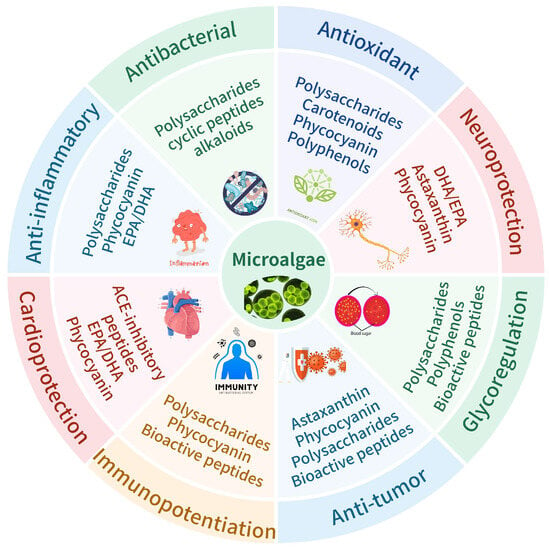
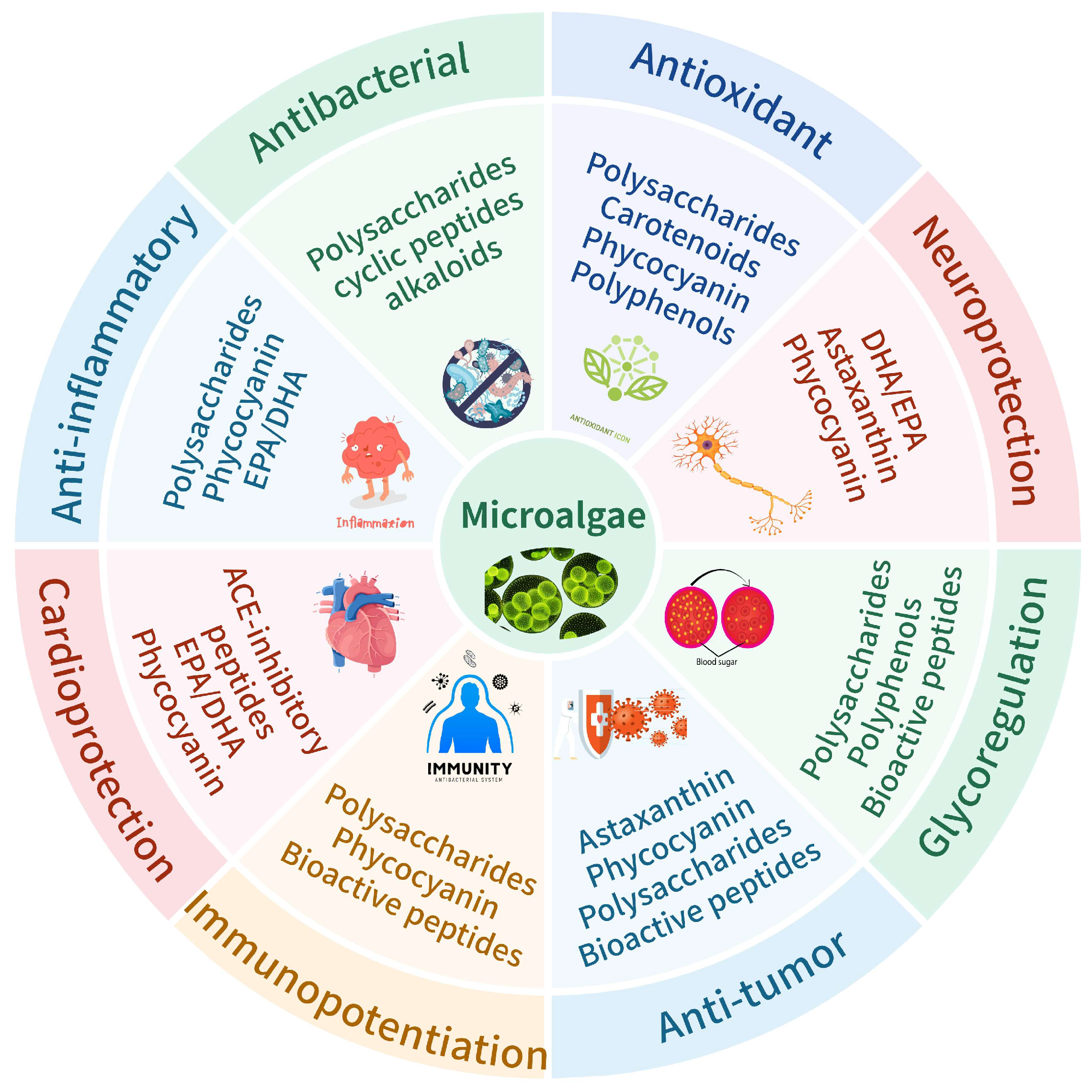
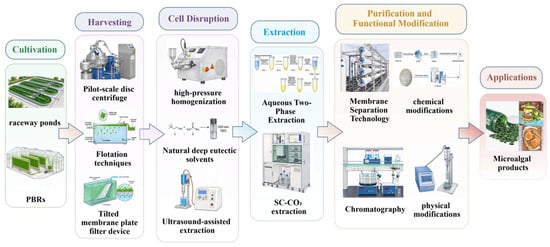
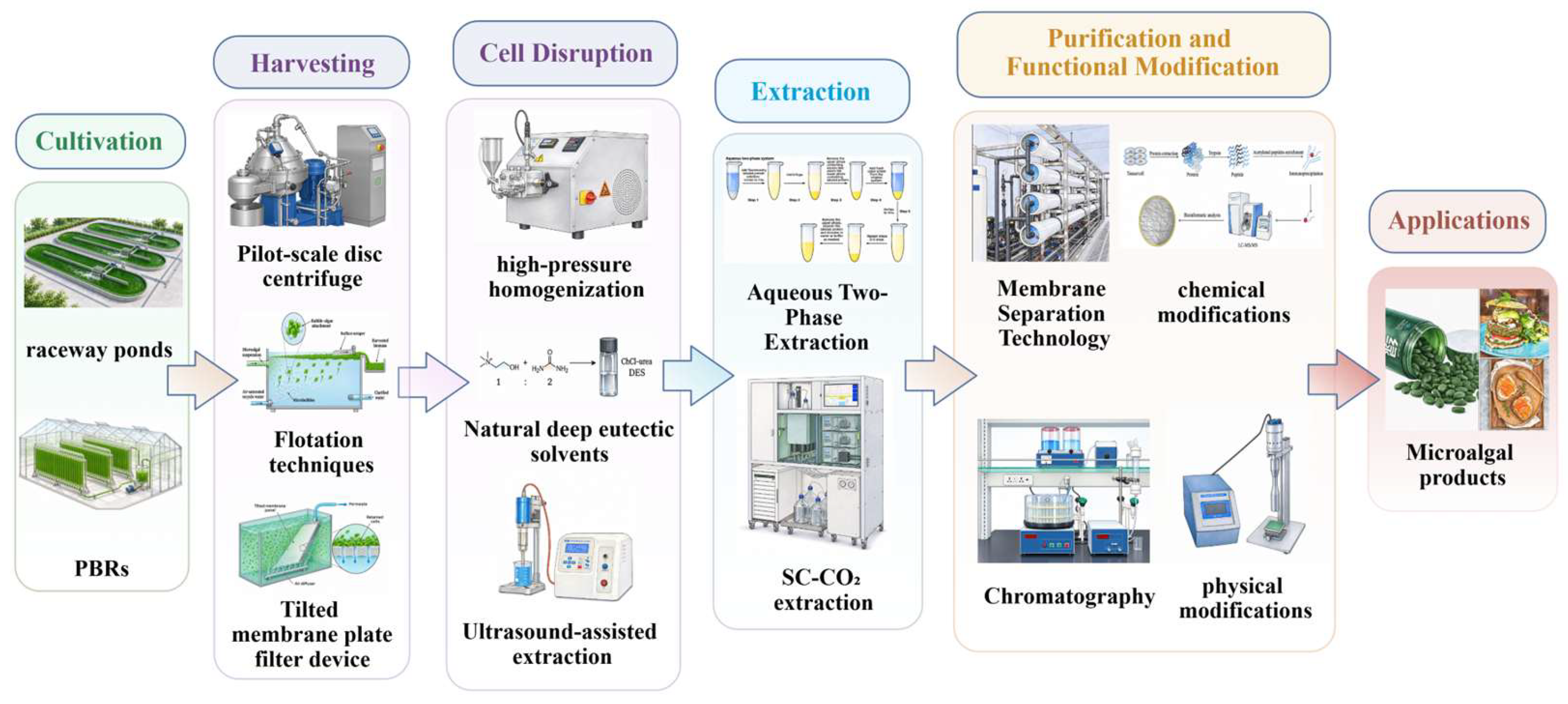

Disclaimer/Publisher’s Note: The statements, opinions and data contained in all publications are solely those of the individual author(s) and contributor(s) and not of MDPI and/or the editor(s). MDPI and/or the editor(s) disclaim responsibility for any injury to people or property resulting from any ideas, methods, instructions or products referred to in the content. |
© 2026 by the authors. Licensee MDPI, Basel, Switzerland. This article is an open access article distributed under the terms and conditions of the Creative Commons Attribution (CC BY) license.