


Abstract
Fish processing generates protein-rich side streams representing 30–70% of whole-fish mass, creating potential for production of fish protein hydrolysates (FPHs). However, their translation into food or nutraceutical ingredients is limited by variable feedstocks, incomplete process reporting and an evidence base dominated by in vitro assays. This review examines how feedstock origin and pre-analytical quality, controlled enzymatic hydrolysis and downstream processing determine peptide composition and techno-functional, sensory and biological performance. It also evaluates peptidomic workflows and grades evidence from chemical assays through randomized human interventions. Across the reviewed literature, FPHs emerge as heterogeneous, lot-defined products rather than a uniform ingredient class. Maximum degree of hydrolysis is not a universally optimal endpoint: extensive proteolysis may improve solubility and assay responses while reducing protein recovery, interfacial functionality and sensory acceptability. Peptide numbers and candidate sequences depend on liquid chromatography–tandem mass spectrometry (LC–MS/MS) acquisition, database selection, search strategy and false-discovery control. In silico predictions therefore require confirmation with synthetic standards, targeted quantification in the hydrolysate and evaluation of gastrointestinal stability and intestinal transport. Human findings remain limited and inconsistent, precluding class-wide health claims. Translation is further constrained by matrix-dependent acceptable doses and product-specific risks related to contaminants, biogenic amines, microbial and oxidative stability, residual protease activity and allergens. This review proposes minimum reporting requirements and an application-driven translational readiness framework linking feedstock qualification, reproducible processing, molecular identity, biological exposure, matrix compatibility, safety, pilot-scale manufacture and human validation. This approach is required to develop standardized FPHs that deliver prespecified benefits at safe, consumer-acceptable doses while remaining economically and environmentally feasible.
1. Introduction
Global fisheries and aquaculture generate large protein-rich side streams, including heads, frames, skin, scales, bones, viscera and trimmings, which may account for 30–70% of whole-fish mass. In 2024, total fisheries and aquaculture production reached 235 million tonnes, including 195 million tonnes of aquatic animals [1,2]. Valorizing these side streams can reduce losses while recovering proteins, lipids, minerals, collagen and enzymes for food and nutraceutical use [3].
Beyond processing side streams, unwanted catches represent an additional potential source of biomass for fish protein hydrolysate (FPH) production. These include non-target fish caught incidentally as by-catch, species of low commercial value and undersized individuals. A proportion of these catches is discarded at sea, with substantial variation among fisheries and fishing gears. For 2010–2014, global marine fisheries discards were estimated at approximately 9.1 million tonnes annually, equivalent to 10.8% of total catch; trawl fisheries were identified as a major contributor [4]. Recovery of suitable unwanted catches could complement the valorization of processing side streams by providing protein ingredients and reducing losses of aquatic biological resources. This opportunity is consistent with the broader contribution of green processing technologies to sustainable food systems discussed by [5], particularly in relation to Sustainable Development Goal (SDG) 2 (Zero Hunger) and S5DG 12 (Responsible Consumption and Production). Its practical contribution depends on lawful retention and use, species identification, rapid stabilization, food safety, affordability and consumer acceptance. Valorization should therefore complement efforts to prevent unwanted catches and improve fishing selectivity [5].
FPHs are heterogeneous mixtures of peptides, free amino acids and residual protein fractions produced by partial or extensive cleavage of fish proteins. Their composition depends on species, anatomical fraction, raw-material freshness, protease specificity, hydrolysis conditions, fractionation and drying [6]. FPHs should therefore be distinguished from fish meal, fish silage, gelatin and purified bioactive peptides, which differ in production route, composition and degree of molecular definition. Enzymatic hydrolysis is generally preferred for food applications because it operates under relatively mild conditions and allows greater control over peptide-bond cleavage and product composition than severe chemical treatments [7]. Industrial relevance, however, depends not only on hydrolysis efficiency but also on enzyme cost, protein recovery, water and energy demand, inactivation, separation, concentration and drying [8].
Degree of hydrolysis (DH) is not a stand-alone measure of product quality. Greater proteolysis can increase low-molecular-weight peptides and solubility while reducing emulsifying or foaming performance and increasing bitterness; enzyme specificity and peptide-size distribution are therefore equally important [9]. Reported antioxidant, antihypertensive, antidiabetic, antimicrobial and anti-inflammatory effects are still dominated by chemical or cell-free assays. Differences in assay conditions, concentrations, controls and molecular fractions limit cross-study comparison, so such results should be treated as screening evidence rather than proof of physiological efficacy [10]. Peptidomics, bioinformatic prediction and molecular docking can prioritize candidate sequences but do not establish activity or exposure. Stronger evidence requires synthetic-peptide confirmation, targeted quantification, gastrointestinal-stability testing and assessment of intestinal transport. Integrated workflows combining hydrolysis, liquid chromatography–mass spectrometry (LC–MS) peptidomics, simulated digestion and Caco-2 (human colorectal adenocarcinoma cell line) monolayer transport have begun to address this gap [11], but human evidence remains limited.
Translation into foods is further constrained by sensory and matrix effects. A systematic review of FPH-fortified foods found that moderate inclusion levels, often around 5–10%, generally gave a better balance between nutritional enrichment and acceptability than higher doses, although the optimum was matrix- and hydrolysate-specific [12]. Bitterness, fishy aroma, colour, texture and lipid stability can therefore limit the deliverable dose. Safety and scale-up must be evaluated together with bioactivity. Relevant controls include feedstock traceability, microbial quality, biogenic amines, heavy metals, lipid oxidation, residual protease activity, allergenicity, storage stability and batch reproducibility. Hydrolysis cannot be assumed to eliminate fish allergens [13], and environmental or economic conclusions depend strongly on processing scale, energy source, drying and co-product allocation [14,15].
This review integrates feedstock quality, controlled bioprocessing, peptidomic identification, gastrointestinal fate, biological validation, sensory performance, safety and industrial feasibility into an application-driven framework. It also proposes minimum reporting requirements and a Fish Protein Hydrolysate Translational Readiness Matrix to distinguish descriptive in vitro activity from evidence supporting reproducible, safe and consumer-acceptable ingredients. The overall production-to-application chain is summarized in Figure 1.
Figure 1.
Integrated production-to-application chain shaping fish protein hydrolysate performance. LC–MS/MS, liquid chromatography–tandem mass spectrometry; FDR, false-discovery rate.
2. Feedstock Origin and Pre-Analytical Quality
The broad designation “fish by-products” may refer to materials ranging from muscle-rich trimmings to heterogeneous mixtures of heads, skin, bones, blood, viscera, and intestinal contents. These fractions differ in protein type, collagen, lipid and mineral contents, endogenous enzyme activity, microbial stability, and susceptibility to oxidation. Feedstock should therefore be treated as a lot-defined experimental variable: even when the same enzyme and hydrolysis conditions are used, differences in species, anatomy, storage history, and initial quality can substantially alter peptide composition and the functional and sensory properties of the resulting FPH.
2.1. Species, Production System, and Anatomical Fraction
Species-related variation includes differences in muscle structure, collagen content, endogenous proteases, lipid composition, blood retention, and concentrations of pro-oxidant metals. Under standardized hydrolysis conditions, Atlantic salmon, mackerel, and herring heads and backbones produced hydrolysates with distinct sensory profiles. Herring FPHs were generally the most intense and bitter, whereas salmon FPHs were more acceptable. The freeze-dried backbones contained 46.4–51.1% protein, compared with 34.6–38.5% in heads; herring-head ash reached 16.9%, compared with 6.9% in the corresponding backbone. Species had a stronger influence on sensory properties than either anatomical fraction or enzyme. However, fresh salmon and previously frozen pelagic materials were compared, meaning that species and storage effects could not be completely separated [16].
Wild and farmed origin is also relevant but is rarely incorporated into FPH study design. During winter, farmed Brazilian sardine muscle contained 14.52% lipid, compared with 2.37% in wild fish. Wild sardines had a higher relative proportion of long-chain n-3 polyunsaturated fatty acids, whereas farmed fish contained more n-6 fatty acids. Although hydrolysates were not examined, such a sixfold difference in initial lipid content would affect phase separation, oxidative susceptibility, concentration of lipid-derived volatiles, and apparent protein recovery [17]. Anatomical fractions should be defined precisely. Heads combine muscle, connective tissue, bone, eyes, gills, and residual blood; frames contain variable amounts of muscle depending on filleting efficiency; skin is collagen-rich but may retain considerable subcutaneous lipid. Muscle and fillet trimmings consist mainly of myofibrillar and sarcoplasmic proteins and generally produce low-ash, highly soluble hydrolysates. Atlantic salmon muscle hydrolysates, for example, showed protein solubility above 90% under most conditions tested [18]. When species and anatomical fraction vary simultaneously, their effects cannot be separated. Salmon-head hydrolysates contained more glycine and proline, consistent with a greater connective-tissue contribution, whereas Cape hake trimming hydrolysates contained comparatively more glutamic acid, leucine, threonine, and phenylalanine and frequently showed greater activity in chemical bioassays. Because both species and tissue type differed, the source of these differences remained unresolved [19].
Viscera require separate treatment because they contain endogenous digestive enzymes, bile, free amino acids, intestinal microorganisms, and rapidly degradable tissues. Under identical FoodPro PNL hydrolysis conditions, salmon and mackerel viscera yielded more bitter and taste-intense products than heads and backbones. Compounds below 200 Da accounted for approximately 65–75% of visceral hydrolysates, while free amino acids represented about 40 g/100 g of visceral protein. Trimethylamine (TMA), cadaverine, and putrescine were also more abundant, indicating that part of the low-molecular-weight fraction may originate from pre-existing autolysis rather than from the added enzyme alone [20]. Scales are also distinct from skin and frames. Dried red tilapia scales contained 83.9% protein, 15.1% ash, and only 0.9% lipid, representing a collagen- and mineral-rich substrate that requires adequate size reduction, hydration, and enzyme accessibility [21]. In industrially mixed side streams, the proportions of species and anatomical fractions are often unknown. A recent study processed sea bream and sea bass residues containing skin, heads, bones, viscera, and damaged whole fish. The starting material contained 53.2% oil, 41.9% protein, and 7.4% ash, but the proportions of the individual components were not reported, limiting attribution of peptide composition and bioactivity to a particular tissue or species [22].
2.2. Time–Temperature History Before Hydrolysis
The interval between fish processing and feedstock stabilization affects endogenous proteolysis, microbial metabolism, lipid oxidation, and protein modification. Whole tilapia waste stored at 4 ± 2 °C for 0, 24, or 48 h and subsequently hydrolysed with the same pepsin treatment produced hydrolysates with different peptide-size distributions and functional properties. Material processed without storage showed greater 2,2-diphenyl-1-picrylhydrazyl (DPPH) radical-scavenging activity, reducing power, and inhibition of linoleic acid oxidation, whereas 48 h storage improved emulsion and foam stability [23]. By contrast, cod, cusk, haddock, and saithe heads stored at −18 °C for up to six months showed only limited changes in hydrolysate yield and proximate composition. However, stable protein, lipid, and ash values do not confirm the stability of peptide sequences, oxidation products, or volatile compounds unless these parameters are measured separately [24]. Recent work with Atlantic herring described mincing through a 4.5 mm plate, preparation of 1 kg batches, immediate freezing at −80 °C, and thawing for 24 h at 4 ± 1 °C. Nevertheless, the catch-to-processing interval, frozen-storage duration, and proportions of heads, backbones, bones, and fillet cuts were not specified [11]. A complete time–temperature record should include the intervals from catch or slaughter to filleting, chilling, freezing, thawing, and hydrolysis, together with material temperature, storage duration, packaging conditions, and the number of freeze–thaw cycles.
2.3. Proximate Composition, Oxidation, and Defatting
Moisture, crude protein, total lipid, and ash should be determined in each feedstock lot before hydrolysis and reported on both wet- and dry-matter bases. The protein method and nitrogen-to-protein conversion factor should also be specified. Analysis of only the final dried FPH is insufficient because centrifugation, lipid separation, removal of insoluble material, and drying can conceal differences in the original substrate. Initial lipid content should be considered together with oxidative status. At least one primary oxidation marker, such as peroxide value (PV) or conjugated dienes, should be combined with a secondary marker, such as thiobarbituric acid reactive substances (TBARS), p-anisidine value, or volatile aldehydes. Protein carbonyls are additionally informative for lipid-rich or extensively stored materials. In rainbow-trout heads subjected to induced oxidation before hydrolysis, soluble protein decreased from approximately 83.5% in control FPH to 62.6% in oxidized FPH, which also contained 5.14 nmol carbonyls/mg protein. These results demonstrate that pre-existing oxidation can reduce enzyme accessibility and soluble-protein recovery [25].
Preliminary defatting can reduce the lipid load, oxidation risk, and fishy odour, but its effect depends on the procedure. Mild thermal separation at 40 °C removed up to 85% of the oil from salmon backbones and produced oil with a peroxide value of 0.2 meq/kg and 0.16% free fatty acids [26]. In fatty sockeye-salmon skin, repeated disc-stack centrifugation followed by two isopropanol extraction cycles reduced fat below the detection limit and lowered peroxide value, TBARS, and fishy odour [27]. Defatting does not necessarily improve every FPH property. In Protamex hydrolysates from salmon backbones, thermal oil separation had little effect on molecular-weight distribution, while the non-defatted hydrolysate showed comparatively high DPPH-scavenging activity [28]. Defatting studies should report treatment temperature, centrifugation conditions, solvent-to-material ratio, extraction cycles, antioxidant use, residual solvent, residual lipid, and oxidation indices.
2.4. Seasonal Variation and Lot Traceability
Seasonal changes in feeding and reproductive status can alter the composition of raw material. In Baltic sprat, protein content remained relatively stable across autumn, winter, and spring, whereas lipid decreased from 19.2 g/100 g in autumn to 12.9 and 12.1 g/100 g in winter and spring, respectively [29]. Seasonal effects are not uniform across species and tissues. In gurnard by-products hydrolysed with Alcalase under standardized conditions, season had little influence on most FPH properties, whereas anatomical fraction produced clearer differences: the degree of hydrolysis was 24.0–26.5% for heads and 19.0–23.6% for skin–bone mixtures [30]. Because feedstock origin, anatomical composition, cold-chain history and baseline quality are rarely reported consistently, the minimum information that should accompany each FPH study is summarized in Table 1.
Table 1.
Minimum feedstock and pre-analytical information for FPH studies.
Independent feedstock lots should be distinguished from technical replicates. Repeated analyses or hydrolyses of aliquots from one homogenized batch characterize analytical or processing repeatability but do not account for biological, seasonal, or supply-chain variation.
3. Controlled Hydrolysis
Controlled hydrolysis should be optimized for a defined application rather than for maximum DH. DH quantifies the average extent of peptide-bond cleavage but does not specify peptide sequence, protein recovery, bitterness or techno-functional performance; the practical endpoint is therefore the peptide profile that meets the intended function at acceptable yield, sensory quality and cost.
3.1. Protease Selection and Activity-Equivalent Dosing
Commercial proteases differ in cleavage specificity and formulation. Alcalase commonly drives rapid endoproteolysis; Neutrase and Protamex generate different cleavage patterns; Flavourzyme combines endo- and exopeptidase activities; and papain, bromelain, pepsin and trypsin provide alternative specificities (Figure 2B). Because commercial and crude enzyme preparations differ in activity units and side activities, dosage should be expressed both as preparation mass and catalytic activity per gram of substrate protein under a defined assay. Accessibility of cleavage sites also depends on substrate structure and pretreatment (Figure 2A), and proteases that produce a similar DH may generate different peptide profiles (Figure 2C).
Figure 2.
Substrate accessibility and protease specificity shape the peptide composition of fish protein hydrolysates. (A) Increased accessibility of cleavage sites following pretreatment; (B) peptide formation through endoproteolysis and exoproteolysis; (C) different peptide profiles obtained at similar degrees of hydrolysis (DH).
The importance of activity-equivalent comparison was demonstrated for Atlantic salmon by-products using Alcalase 2.4L (Novozymes, Bagsværd, Denmark), Corolase 7089 (AB Enzymes, Darmstadt, Germany), Neutrase 0.8L (Novozymes, Bagsværd, Denmark), Promod 671L (Biocatalysts, Cardiff, UK) and Protex 7L (DuPont, Wilmington, DE, USA) at 5.5–88 U g−1 protein. At low activity-to-substrate ratios, the enzymes showed broadly comparable cost efficiency, whereas at higher dosages Alcalase, Protex and Promod produced greater DH than Corolase and Neutrase. Nevertheless, additional peptide-bond cleavage did not result in a proportional increase in protein solubilisation, indicating that high enzyme dosages increasingly hydrolysed peptides already present in the soluble phase. In a separate sensory study, Alcalase-derived hydrolysates were more bitter than those produced with Promod or Protex, particularly at a DH above approximately 25% and with an increased proportion of peptides below 2 kDa [31].
Endogenous proteases provide a circular alternative to purchased enzymes, although activity normalization is especially important for crude extracts. Alkaline proteases extracted from fish viscera remained active principally at pH 8–9 and 40–50 °C. Hydrolysis with the crude visceral extract required an enzyme/substrate (E/S) ratio of 10% and 6 h, compared with 3% and 2 h for Alcalase. The resulting hydrolysates showed similar antioxidant performance in some chemical assays but differed in angiotensin-converting enzyme (ACE)-inhibitory activity. Thus, nominal percentages of crude extract and purified commercial enzymes are not directly comparable without measurements of catalytic activity, extract protein concentration and protease composition [32].
3.2. Enzyme/Substrate Ratio and Reaction Environment
The E/S ratio is reported on incompatible bases across studies, including wet material, dry matter, commercial-enzyme mass and catalytic activity. Comparisons are meaningful only when substrate protein mass and activity-based dosing are specified. Increasing E/S generally accelerates early hydrolysis but gives diminishing returns as accessible cleavage sites are depleted. In sardine by-products, a condition using 4.682% enzyme and approximately 26–31% solids produced 25.7% DH, 69.1% dry-solids yield and 83.0% protein recovery, illustrating that the DH and recovery must be optimized jointly [33].
pH, temperature, solids concentration and mixing jointly affect enzyme activity, protein solubility, heat transfer, phase separation and oxidation. Scale-up should therefore report temperature- and pH-time histories rather than set points alone because gradients increase with reactor volume. pH-stat control improves control of enzyme activity but adds alkali or acid, increasing salt, ash and processing cost. Uncontrolled pH drift can also be reproducible if the initial and final pH and the reaction profile are documented; the choice should therefore be justified by process objectives rather than treated as a universal requirement.
Salmon frames hydrolysed with Alcalase at 55 °C were compared at 50, 75 and 100% raw-material contents under three pH regimes: pH-stat control at pH 8, initial adjustment to pH 8 without subsequent control, and hydrolysis at the native pH of approximately 6.4. Decreasing the amount of added water increased the concentration of released α-amino groups, but nitrogen recovery decreased from approximately 50% at 50% raw material to 24% in the undiluted system. The water-to-raw-material ratio exerted a greater effect than the selected pH regime and shifted the estimated average peptide-chain length from approximately 5–7 to 7–9 residues [34]. Low-solids slurries generally facilitate mixing, heat transfer and phase separation, whereas high-solids operation reduces reactor volume, water use and subsequent evaporation requirements. These advantages cannot be evaluated from DH alone. In sardine hydrolysis, protein losses into emulsion and sludge phases varied markedly with solids concentration, enzyme dose and mixing. Under a selected condition, approximately 5.8% of the protein was retained in the emulsion and 11.2% in the sediment, while emulsion-associated losses across the experimental design ranged from approximately 1.5 to 15.5% [35].
Controlled endpoint design can also be based on a required molecular-weight range rather than a fixed hydrolysis time or maximum DH. Hydrolysis of tuna-canning residues and discarded blue whiting was modelled and validated at 5 L scale to produce peptide populations centred within 1–2, 2–5 and 5–10 kDa ranges, predominantly without continuous pH regulation. This approach linked operating conditions to a predefined molecular target and distinguished hydrolysates that would otherwise be described only by a global DH value [36].
3.3. Hydrolysis Endpoint, Enzyme Inactivation and DH Measurement
Protein extraction, peptide-bond cleavage and formation of a specific bioactive fraction are related but non-equivalent process responses. During cod-backbone hydrolysis, Alcalase produced a protein-extraction yield of 63.5% after 3 h, compared with 51.9–56.5% for Protamex and 30.4–34.7% for Neutrase. No consistent relationship was observed between DH and protein-extraction yield. Protamex hydrolysis for 6 h generated the strongest DPPH response, whereas the non-enzymatic heated control showed comparable or stronger iron-chelating activity. None of the hydrolysates exhibited the proposed antimicrobial activity [37]. A longer reaction or greater DH may therefore improve one measured function while leaving another unchanged or reducing it.
Enzyme inactivation defines the effective hydrolysis endpoint. Reported treatments range from 85 to 100 °C for 10–15 min, but heating rate, core holding time, cooling and residual activity determine whether proteolysis truly stops [16,38,39]. Alternative termination methods should likewise be verified by residual-activity testing.
DH is commonly calculated as:
where h is the number of hydrolysed peptide bonds and htot is the total number of peptide bonds in the substrate. The result depends on the analytical method and on the htot value selected for the particular protein source.
The o-phthaldialdehyde (OPA) assay estimates newly formed primary amino groups and is relatively rapid but requires appropriate calibration, blanks and a justified substrate-specific htot value [40]. The 2,4,6-trinitrobenzenesulfonic acid (TNBS) assay also measures amino groups, whereas pH-stat estimates cleavage from base consumption and the average dissociation state of released groups. Formol titration provides another operational estimate. By contrast, the proportion of nitrogen soluble in trichloroacetic acid describes soluble low-molecular-weight nitrogen and should not be reported as an interchangeable measure of true peptide-bond cleavage [41]. Direct comparison of DH values obtained by different methods can be misleading. In a controlled comparison of whey protein hydrolysates, OPA produced DH values approximately 15% lower than pH-stat for Alcalase hydrolysis, while agreement deteriorated further for enzyme preparations containing substantial exopeptidase activity [42]. Each FPH study should therefore identify the assay method, standard, sample dilution and preparation, blank correction, equation and htot. Size-exclusion chromatography, free-amino-acid analysis and sequence-resolved peptidomics provide complementary information that DH alone cannot supply.
A comparison of representative studies demonstrates that DH is not determined by a single standardized analytical procedure. Aspevik et al. [43] used both pH-stat and o-phthaldialdehyde (OPA) measurements for Atlantic salmon by-products, reporting DH values of 11.6–14.6% after 120 min at the highest enzyme activity-to-substrate ratios. However, increased cleavage did not translate into a proportional increase in recovered soluble protein. By contrast, Borges et al. [32] applied the 2,4,6-trinitrobenzenesulfonic acid (TNBS) assay and reported approximately 40% DH after 6 h with crude fish-viscera proteases and approximately 50% after 2 h with Alcalase. These values cannot be used to rank enzyme efficiency directly because the enzyme preparations, doses, reaction times and DH measurement procedures differed.
Chiodza and Goosen [33] monitored DH by pH-stat titration in sardine by-products and obtained 25.7% DH together with 69.1% dry-solids yield and 83.0% protein recovery under their selected conditions; nevertheless, the significant lack of fit of the DH regression model limits the generalizability of its predictive relationships. Valencia et al. [34] used an OPA-based estimate of released soluble α-amino groups to calculate an approximate DH (DH′) in salmon frames. Their pH-stat regime was a process-control treatment, not the analytical basis of the reported DH′. Nitrogen recovery declined from approximately 50% to 24% when the fish-frame fraction increased from 50% to 100%, illustrating that greater process concentration may compromise recovery. In cod-backbone hydrolysates, Marinou et al. [37] used OPA and found no consistent relationship between DH and protein-extraction yield. These differences support the interpretation of DH alongside mass recovery and product properties rather than as a stand-alone processing endpoint.
Table 2 compares the DH determination methods and principal outcomes of these studies. Although pH-stat estimates bond cleavage from base consumption and OPA or TNBS quantify amino-group release, each approach depends on assumptions regarding the substrate and reaction environment. Approximate soluble-phase DH estimates introduce additional uncertainty. Consequently, numerical DH values should be compared across publications only when the analytical method, calibration, baseline correction, total peptide-bond content (htot), protein substrate, and processing conditions are reported adequately. Greater DH does not necessarily imply improved protein recovery, peptide functionality or sensory acceptability.
Table 2.
Comparison of methods used to determine degree of hydrolysis and interpretation of selected FPH studies.
3.4. Yield, Phase Separation and Membrane Fractionation
Dry-matter yield (YDM) and protein recovery (PR) should be reported separately:
Dry-matter yield, soluble-protein yield and total protein recovery are not interchangeable and should be reported for the same defined process stage. Carrier addition before drying can inflate apparent powder yield; carrier-free FPH recovery and protein recovery should therefore be stated separately.
Centrifugation and membrane processing redistribute protein among aqueous, lipid/emulsion and sediment fractions. Laboratory clarification can produce highly purified products, but pilot-scale separation may give lower recovery and different sensory outcomes. For example, pilot microfiltration and nanofiltration produced >90% protein/peptide retentates but reduced total protein yield to approximately 19–24%, while bitterness increased as small bitter peptides were retained [44].
Nominal membrane molecular-weight cut-off (MWCO) is not an exact peptide-size boundary because transmission also depends on membrane material, peptide charge and conformation, pressure, ionic strength and fouling. Low-molecular-weight fractions often show strong activity in some assays, but the optimum fraction is endpoint-specific: <3 kDa tuna-viscera permeate gave the strongest responses in several antioxidant and antibacterial assays, whereas >10 kDa tuna-cooking-juice fractions performed best in the 2,2′-azino-bis(3-ethylbenzothiazoline-6-sulfonic acid) (ABTS) and ferric-reducing assays [45,46].
Sequential Alcalase–Flavourzyme hydrolysis of tuna-head by-products to a final DH of approximately 18.5%, followed by ceramic filtration through 8, 3 and 1 kDa membranes, illustrates the integration of protease selection and membrane cut-offs to obtain application-oriented peptide ingredients [39]. Membrane studies should report membrane material and configuration, nominal MWCO, active area, transmembrane pressure, cross-flow velocity, temperature, volume-concentration factor, diafiltration volume, water flux, process flux, cleaning protocol and protein mass balance in every retentate and permeate.
3.5. Drying and Encapsulation
Freeze-drying is common at the laboratory scale, whereas spray drying is faster and more scalable. Their effects are condition-dependent rather than simply ‘mild’ versus ‘severe’. In bighead-carp skin hydrolysates, freeze- and spray-dried powders had similar protein contents (92.75 and 93.12%), while spray drying lowered moisture and increased some antioxidant responses without altering ABTS or ACE inhibition [47]. The minimum information required to reproduce each stage of controlled FPH production, from protease selection to encapsulation, is summarized in Table 3.
Table 3.
Minimum information required for reporting controlled FPH production.
Encapsulation is a formulation, not purification, step. Wall materials such as maltodextrin, alginate and gum arabic can reduce hygroscopicity, oxidation, bitterness and fishy odour but dilute the peptide payload. Pink-perch FPH encapsulated with maltodextrin, sodium alginate and gum arabic achieved about 76% encapsulation efficiency and improved sensory properties; in a soup formulation, overall acceptability reached 7.6/9 [38,48,49]. Dose and bioactivity should therefore be expressed on both composite-powder and carrier-free FPH bases.
Figure 3 shows that the preferred hydrolysis endpoint is application-specific: improvements in solubility or measured bioactivity can be accompanied by losses in interfacial performance, sensory quality, or protein recovery.
Figure 3.
Application-dependent trade-offs in fish protein hydrolysate production. (A) Effects of increasing degree of hydrolysis (DH) on functional properties and bioactivity; (B) application-specific optimisation targets and selection of the hydrolysis endpoint.
4. Peptidomics and Structure–Function Relationships
Peptidomics links controlled hydrolysis to peptide identity, but a liquid chromatography–tandem mass spectrometry (LC–MS/MS) list represents only the portion of the mixture recovered, chromatographically retained, ionized, selected and accepted by the search workflow. Analytical identification, computational prediction and experimental demonstration of function must therefore remain distinct.
4.1. LC–MS/MS Acquisition and Analytical Coverage
Peptidomic reporting should specify the mass spectrometer, liquid chromatography (LC) conditions, acquisition mode, fragmentation, mass ranges and resolution, quality-control strategy and injected amount. Data-dependent acquisition (DDA) preferentially fragments abundant precursors and is stochastic, whereas data-independent acquisition (DIA), including the MSE mode that alternates low- and elevated-collision-energy scans, samples broader precursor populations but requires more complex deconvolution. Consequently, peptide counts are method-dependent. This dependence is evident across recent studies. A Q Exactive top-12 DDA workflow with a 120 min gradient identified 260 sequences in a <3 kDa Atlantic salmon fraction [50], whereas an MSE/DIA quadrupole time-of-flight (QTOF) workflow reported 1150 and 985 peptides in Baltic-herring hydrolysates [51]. These numbers cannot be attributed to biology alone because acquisition, sample preparation, databases and search software differed. The progression from peptide identification to candidate prioritization and experimental validation in representative FPH studies is summarized in Figure 4.
Figure 4.
From peptide identification to experimental validation in representative FPH studies. DPP-4, dipeptidyl peptidase-4. Bjerknes et al. [50] reported fraction-level bioactivity without individual peptide validation; Shao et al. [52] performed sequence-level testing of selected synthetic peptides; Wang et al. [51] confirmed DPP-4 inhibitory activity in two of four tested peptides.
Accordingly, peptide counts should be compared across studies only when sample fraction, LC gradient, acquisition mode, database, search engine, peptide-length limits, modifications and false-discovery rate (FDR) control are comparable. A larger peptide list does not by itself indicate more extensive or more selective hydrolysis.
4.2. Database Searching, De Novo Sequencing and False-Discovery Control
FPHs contain predominantly non-tryptic peptides with heterogeneous termini, so searches require nonspecific or permissive enzyme settings. This enlarges the search space and increases false-match risk; precursor and fragment tolerances, peptide length, charge states, modifications, database version and species coverage must therefore be reported. In Baltic herring, a nonspecific search against 37,476 Clupea harengus sequences used 10/20 ppm tolerances and 1% FDR, but the database still represented Atlantic rather than a dedicated Baltic-herring proteome [51].
De novo sequencing is useful when species proteomes are incomplete or unexpected cleavage products are present, but sequence confidence can be limited by incomplete fragmentation, spectral noise and unresolved Leu/Ile isomers. It should therefore be distinguished from database-supported identification, and confidence should be reported at residue and complete-sequence levels [53]. Database choice also requires scrutiny. In one eel-collagen study, spectra from Anguilla japonica were reportedly searched against a Pisum sativum database, making the parent-protein assignments difficult to interpret even though the synthesized peptides can be evaluated as separate chemical entities [54]. The FDR should be controlled at peptide–spectrum match and unique-peptide levels and, where proteins are inferred, at protein level. A 1% FDR is an expected error rate for the accepted set, not a 99% probability that every individual sequence is correct [55].
4.3. Parent Proteins, Unique Peptides and Peptidoforms
Parent-protein assignment can connect peptide profiles to feedstock anatomy, but abundant proteins and ionization bias also shape the observed spectrum. Assignments should therefore include accession, species, database version, peptide position and mapping uniqueness; shared collagen or myosin sequences should not be treated as exclusive markers of one parent protein. The term ‘unique peptide’ should be defined explicitly as a non-redundant sequence, a parent-protein-unique sequence, a peptide represented by one or more spectra, or a distinct modified peptidoform. Modification-aware reporting is especially important for collagen-derived FPHs because hydroxylation of proline changes mass, retention and potentially activity. A complete peptide table should therefore distinguish sequence and modified sequence and include mass, charge, retention time, mass error, identification confidence, spectral support, abundance, parent accession and mapping uniqueness.
4.4. Molecular Mass, Charge, Hydrophobicity and Sequence Arrangement
Peptide function cannot be inferred from molecular mass alone. Smaller peptides may access enzyme pockets more readily, but activity is not monotonic with size: in eel bone collagen, the 1–3 kDa fraction showed 79.33% ACE inhibition compared with 61.33% for the <1 kDa fraction [54]. Charge, hydrophobicity, residue order and terminal positions are target-dependent determinants of activity and sensory behaviour. Hydrophobic/aromatic residues not only may strengthen enzyme interactions but can also increase bitterness, reduce solubility and bias octadecyl (C18) reversed-phase chromatography and electrospray ionization (ESI) detection, while acidic or basic residues influence metal binding, taste and electrostatic interactions. Sequence order can be decisive even when composition and mass are identical. In sardine hydrolysate, synthetic KFL (Lys-Phe-Leu) and KLF (Lys-Leu-Phe) showed different activities despite containing the same residues, and dipeptidyl peptidase-4 (DPP-4) inhibition by salmon-gelatin peptides GPAE (Gly-Pro-Ala-Glu) and GPGA (Gly-Pro-Gly-Ala) illustrates the importance of N-terminal arrangement [52,56].
4.5. Predicted Activity Versus Experimental Validation
Bioinformatic classifiers, docking and molecular dynamics are candidate-screening tools, not evidence of sequence-level activity. In Atlantic salmon, ten of 260 identified peptides were prioritized computationally but not synthesized (Figure 4); the <3 kDa fraction inhibited DPP-4 and increased glucose uptake, validating the fraction rather than the predicted sequences [50]. In Baltic herring, only two of four synthesized candidates inhibited DPP-4, showing that prediction requires direct testing [51]. Sequence-level validation should answer two separate questions: whether the synthetic standard confirms the endogenous peptide identity by accurate mass, retention time and MS/MS fragmentation and whether the isolated peptide is active in a concentration–response assay [57]. Even then, activity does not prove that the peptide occurs in the original FPH at an effective concentration. Targeted quantification with isotopically labelled standards, followed by simulated digestion and LC–MS/MS confirmation of peptide persistence or daughter-peptide formation, provides the stronger translational link [58].
5. Evidence Ladder: From Assay Response to Human Efficacy
Biological evidence for FPHs should be interpreted as a progression from chemical reactivity to isolated-enzyme inhibition, cellular response, gastrointestinal stability, epithelial transport, animal physiology and randomized human trials. Each tier addresses a different question; higher tiers increase translational relevance but do not compensate for weak controls, inadequate exposure characterization or biassed outcome analysis.
5.1. Chemical Antioxidant Assays
DPPH, ABTS, ferric reducing antioxidant power (FRAP) and oxygen radical absorbance capacity (ORAC) assays probe different chemical mechanisms and should not be collapsed into a single ‘antioxidant activity’. Their results depend on solvent, pH, reaction time, peptide solubility, colour and turbidity [59]. Assay dependence is illustrated by tuna-cooking-juice fractions: <5 kDa material performed best in DPPH, >10 kDa material in ABTS and ferric reduction, and <5/5–10 kDa fractions in ferrous chelation [46]. Chemical assays therefore support only the specific reaction measured under the stated conditions, not antioxidant efficacy in cells, foods or humans [60].
5.2. Inhibition of Isolated Enzymes
ACE, DPP-4, α-glucosidase and α-amylase assays are more target-specific than radical tests but remain simplified biochemical systems. Percentage inhibition at one dose is weak evidence; concentration–response curves and half-maximal inhibitory concentration (IC50) values are preferable, and comparisons require matched enzyme source, substrate, buffer and normalization. Reported DPP-4 IC50 values, for example, range from about 0.08 mg/mL for salmon-gelatin hydrolysate to 2.12–2.90 mg protein/mL for industrial blue-whiting hydrolysates [61,62]. Synthetic-peptide testing provides stronger causal evidence than fraction-level activity but still does not establish in vivo exposure. In Baltic herring, two predicted peptides showed weak DPP-4 inhibition while two others were inactive, although the whole hydrolysate produced metabolic effects in mice [51].
5.3. Cellular Models and Mechanisms of Action
Cell models add uptake, membrane interaction and intracellular signalling to cell-free assays, but their relevance depends on cell type, exposure concentration, cytotoxicity, replication and mechanistic controls [63]. In murine STC-1 enteroendocrine cells, blue-whiting hydrolysates increased active glucagon-like peptide-1 (GLP-1) secretion and proglucagon production, with increased intracellular Ca2+ but not cyclic adenosine monophosphate (cAMP) [64]. This supports a calcium-associated response in that model, not a human endocrine effect. Likewise, salmon-hydrolysate receptor and pancreatic-cell responses were exploratory and did not consistently separate whole-mixture effects from concentration effects [65]. Mechanistic claims should therefore be supported by dose–response data, independent biological replicates, cytotoxicity testing and, where appropriate, receptor antagonists, pathway inhibitors or target-engagement experiments [66].
5.4. Simulated Gastrointestinal Digestion
Simulated gastrointestinal digestion tests whether an FPH is transformed during sequential gastric and intestinal exposure. The harmonized protocol developed by the INFOGEST international network on food digestion improves comparability by standardizing enzymes, electrolytes, bile, pH and phase duration [67]. Digestion effects are product-specific: salmon-gelatin hydrolysate retained ACE, DPP-4 and ORAC activities, whereas DPP-4 inhibition decreased in several industrial blue-whiting hydrolysates [62]. Low initial molecular weight therefore does not guarantee post-digestion stability. Unchanged post-digestion bioactivity does not prove that the original peptide survived because degradation products may replace its function. Digestion studies should therefore pair pre/post-peptidomics with activity normalized to recovered protein or peptide and include enzyme-only blanks. Digestion demonstrates transformation and bioaccessibility, not absorption.
5.5. Intestinal Transport and Caco-2 Models
Caco-2 transport models address a distinct question: whether peptides or metabolites can reach the basolateral compartment. Pacific hake hydrolysate retained antioxidant and ACE-inhibitory activity after simulated digestion and Caco-2 permeation, but the responsible transported species were not resolved [68]. Apparent permeability is calculated as Papp = (dQ/dt)/(A × C0), where Q is the amount of compound transported into the receiver compartment, t is time, A is the monolayer surface area and C0 is the initial donor concentration. Transport studies should report monolayer differentiation and integrity, donor concentration, sampling time, cytotoxicity and mass recovery and use LC–MS/MS to identify apical, cellular and basolateral sequences. Because Caco-2 models lack normal mucus, microbiota, motility, immune interactions and blood flow, basolateral recovery supports epithelial permeability but not human plasma exposure.
5.6. Animal Studies
Animal models integrate digestion, absorption and systemic physiology but add species-, disease- and dose-related confounding. Salmon-gelatin hydrolysate and a purified tuna-frame ACE-inhibitory peptide both reduced blood pressure in hypertensive rats, providing stronger in vivo support than isolated-enzyme assays, although plasma exposure and target engagement were not fully resolved [61,69]. Comparisons with intact protein are particularly informative. In obese Zucker rats, intact blue-whiting meal and Alcalase- or Protamex-derived hydrolysates similarly attenuated blood-pressure increases, so the effect could not be attributed specifically to hydrolysis [70]. Likewise, metabolic effects of whole Baltic-herring hydrolysate in mice cannot be assigned to the separately screened DPP-4 peptides [51]. Animal studies should therefore use matched protein/energy controls, justified doses, randomization and blinded outcome assessment and, where possible, quantify peptide exposure in intestinal contents, portal blood, plasma or target tissues [71].
5.7. Randomized Human Intervention Studies
Randomized controlled trials provide the most direct human evidence only when interpretation is based on the randomized comparison. Within-group improvement does not demonstrate efficacy unless the between-group difference in change is significant; crossover trials likewise require the within-participant contrast between interventions. Human findings remain product- and endpoint-specific. In a 90-day trial, 1.4 and 2.8 g/day of blue-whiting FPH produced greater changes in some body-composition measures and cholecystokinin (CCK)/GLP-1 than placebo, but all groups underwent caloric restriction and no clear dose–response was observed [72]. Acute cod-hydrolysate studies found lower postprandial insulin but no effect on glucose, GLP-1, ghrelin, satiety or fullness [73,74]. Chronic cod-hydrolysate supplementation (4 g/day for eight weeks) in adults with metabolic syndrome did not differ from placebo for glycemic markers, lipids, body composition or most satiety and inflammatory outcomes [75,76]. These two publications analyzed the same participants and should not be counted as independent replications. A four-week crossover sleep study showed within-phase improvements during fish-hydrolysate supplementation, but the primary intra-individual comparison with placebo was not significant [77]. Open-label and small pilot studies can generate hypotheses but require independent product-specific replication before efficacy claims are made. Human trials should prespecify a primary endpoint, justify sample size, report the randomized treatment estimate with confidence intervals, control multiplicity, document adherence and adverse events, and characterize the administered FPH batch, including feedstock, process, peptide-size distribution, dose, contaminants and oxidation status.
6. Technological and Sensory Properties
Technological performance depends on peptide size, charge, hydrophobicity and DH rather than protein content alone. Hydrolysis usually increases solubility but can weaken interfacial properties. Across marine FPHs, solubility reached 74.05–98.99%, while emulsifying capacity and stability varied widely [78]. In salmon-head and threadfin-bream hydrolysates, lower DH better preserved emulsifying and foaming properties even when higher DH increased selected in vitro activities [9,78,79]. Extensive hydrolysis also weakens gelation because short peptides cannot form the continuous networks produced by intact proteins. FPH therefore functions more often as a soluble co-ingredient than as the principal gelling agent. In texture-modified salmon products, FPH-containing formulations were softer than casein/whey formulations after heating and refrigerated storage [80,81].
Sensory quality reflects both peptide composition and residual non-protein components. Under comparable processing conditions, herring hydrolysates were more bitter and flavour-intense than salmon products and contained more peptides below 1 kDa, while fishy odour and colour deterioration were more closely linked to residual lipids, haem proteins and oxidation [16,31,82]. The acceptable dose is therefore matrix-specific. In pasta, 5% blue-whiting FPH gave the highest sensory scores, whereas 15% performed worst; in bread, only 1.5% met consumer preferences, while FPH in protein bars markedly reduced hardness but impaired sensory quality [83,84,85]. Debittering and flavour correction involve trade-offs. Membrane filtration can reduce ash, metabolites and fishy notes but may increase bitterness and decrease protein recovery, while adsorbents or β-cyclodextrin can remove hydrophobic compounds at the cost of selectivity and peptide loss [44,86,87]. Food-application studies should therefore report FPH dose on product and protein bases, matrix composition, processing and storage conditions, oxidation/colour markers, instrumental functionality and blinded sensory outcomes.
7. Safety
Safety cannot be inferred from edible raw material or from hydrolysis itself. Processing may remove, redistribute or concentrate hazards, so contaminants, biogenic amines, microorganisms, oxidation products, residual protease activity and allergens must be assessed in the finished FPH at the intended dose and through shelf life. Heavy-metal profiles vary with species, tissue and harvesting area. Some salmon, mackerel and hake hydrolysates contained low Hg, Cd and Pb, but Cd in mackerel products was a notable exception, showing that hydrolysis is not a decontamination step [19,88]. Representative final lots should be tested for Hg, Cd, Pb and As; when total arsenic is appreciable, inorganic-arsenic speciation is preferable [89]. Histamine and other biogenic amines mainly reflect microbial activity before or during processing and are not reliably destroyed by hydrolysis, heating, freezing or drying. This is particularly relevant to histidine-rich species such as tuna and mackerel; histamine should therefore be measured together with cadaverine, putrescine, tyramine and other relevant amines in raw material and final FPH [20,90].
FPHs should not be assumed to be sterile or intrinsically antimicrobial. Although one heat-treated salmon product remained microbiologically acceptable for 29 days at 4 °C, anchovy FPH supported Salmonella enterica survival during refrigerated storage [80,91]. Microbiological validation should include process lethality, post-process contamination control and end-of-shelf-life testing for relevant indicator and pathogenic organisms.
Oxidative stability is closely linked to raw-material freshness and residual lipids/haem pigments. Tilapia hydrolysates prepared from ice-stored fish showed higher peroxide value, TBARS, volatile compounds and fishy odour than products from fresh material, and hemoglobin accelerated oxidation without changing DH [82,92]. Both primary and secondary oxidation markers are therefore required. An inactivation temperature alone does not prove the absence of residual proteolysis. Residual activity should be measured after cooling, concentration and drying and, for liquid products, during storage because continued cleavage can alter peptide distribution, bitterness, functionality and allergen profiles [93,94,95]. Moisture, water activity, oxygen exposure and packaging barrier properties should also be specified. Parvalbumin is a major fish allergen, but tropomyosin and other proteins may also remain immunoreactive. Protease treatment can reduce detectable parvalbumin, but loss of a sodium dodecyl sulfate–polyacrylamide gel electrophoresis (SDS-PAGE) band or reduced signal in a generic enzyme-linked immunosorbent assay (ELISA) does not demonstrate loss of immunoglobulin E (IgE)-reactive epitopes [96,97]. Claims of reduced allergenicity require IgE-based assays and, where justified, effector-cell or clinical confirmation [24].
Batch reproducibility should be demonstrated with independently produced lots rather than analytical triplicates from one hydrolysis. Lot-release specifications should combine composition, DH by a consistent method, peptide-size or LC–MS fingerprints, contaminants, biogenic amines, oxidation, residual protease activity, microbiology, allergen measurements and sensory attributes within predefined application-specific limits.
8. Conclusions
FPHs are lot-defined ingredients whose composition and performance are determined by the entire production chain, from feedstock quality and preservation to hydrolysis, separation and formulation. Reproducible development therefore requires traceable raw materials, standardized characterization and confirmation across independent production batches.
Hydrolysis should be optimized for the intended application rather than for maximum DH. The appropriate endpoint is a defined peptide profile that balances recovery, techno-functional performance, sensory acceptability and cost.
Current biological evidence remains dominated by in vitro studies, while human findings are limited and product-specific. Peptidomic identification and computational prediction generate candidates; causal interpretation requires synthetic-peptide validation, quantitative confirmation in the hydrolysate, gastrointestinal and transport studies, and adequately powered randomized trials using characterized products and prespecified outcomes.
Translation into food or nutraceutical ingredients ultimately requires molecular reproducibility, matrix compatibility, consumer-acceptable dosing, safety and manufacturing feasibility. Fractionation or encapsulation should be judged against peptide retention and recovery, and safety must be established for the final formulation throughout storage. The decisive criterion is whether a reproducible FPH delivers its intended benefit at a safe, acceptable and economically feasible dose.
Author Contributions
Conceptualization, K.M. and N.G.; methodology, A.G. and A.S.; validation, A.Z., A.I.; formal analysis, S.Z. and Z.A.; data curation, K.M.; writing—original draft preparation, N.G. and K.M.; writing—review and editing, K.M.; visualization, N.G.; supervision, K.M.; project administration, K.M.; funding acquisition, A.I. All authors have read and agreed to the published version of the manuscript.
Funding
This research was funded by the Science Committee of the Ministry of Science and Higher Education of the Republic of Kazakhstan, grant number AP32321169.
Institutional Review Board Statement
Not applicable.
Informed Consent Statement
Not applicable.
Data Availability Statement
The original contributions presented in the study are included in the article; further inquiries can be directed to the corresponding authors.
Conflicts of Interest
The authors declare no conflicts of interest.
Abbreviations
The following abbreviations are used in this manuscript:
| ABTS | 2,2′-azino-bis(3-ethylbenzothiazoline-6-sulfonic acid) |
| ACE | angiotensin-converting enzyme |
| C18 | octadecyl (reversed-phase chromatography) |
| Caco-2 | human colorectal adenocarcinoma cell line |
| cAMP | cyclic adenosine monophosphate |
| CCK | cholecystokinin |
| DDA | data-dependent acquisition |
| DH | degree of hydrolysis |
| DIA | data-independent acquisition |
| DPP-4 | dipeptidyl peptidase-4 |
| DPPH | 2,2-diphenyl-1-picrylhydrazyl |
| E/S | enzyme/substrate |
| EC | Enzyme Commission |
| ELISA | enzyme-linked immunosorbent assay |
| ESI | electrospray ionization |
| FDR | false-discovery rate |
| FPH(s) | fish protein hydrolysate(s) |
| FRAP | ferric reducing antioxidant power |
| GLP-1 | glucagon-like peptide-1 |
| IC50 | half-maximal inhibitory concentration |
| IgE | immunoglobulin E |
| LC | liquid chromatography |
| LC–MS | liquid chromatography–mass spectrometry |
| LC–MS/MS | liquid chromatography–tandem mass spectrometry |
| MS/MS | tandem mass spectrometry |
| MSE | data-independent acquisition mode alternating low- and elevated-collision-energy scans |
| MWCO | molecular-weight cut-off |
| OPA | o-phthaldialdehyde |
| ORAC | oxygen radical absorbance capacity |
| PR | protein recovery |
| PV | peroxide value |
| QTOF | quadrupole time-of-flight |
| SDG | Sustainable Development Goal |
| SDS-PAGE | sodium dodecyl sulfate–polyacrylamide gel electrophoresis |
| TBARS | thiobarbituric acid reactive substances |
| TMA | trimethylamine |
| TNBS | 2,4,6-trinitrobenzenesulfonic acid |
| YDM | dry-matter yield |
References
- FAO. The State of World Fisheries and Aquaculture 2026: Blue Transformation—Turning Vision into Impact; FAO: Rome, Italy, 2026. [Google Scholar] [CrossRef] [Scilit]
- FAO. The State of World Fisheries and Aquaculture 2024: Blue Transformation in Action; FAO: Rome, Italy, 2024. [Google Scholar] [CrossRef] [Scilit]
- Nikoo, M.; Regenstein, J.M.; Yasemi, M. Protein Hydrolysates from Fishery Processing By-Products: Production, Characteristics, Food Applications, and Challenges. Foods 2023, 12, 4470. [Google Scholar] [CrossRef] [Scilit] [PubMed]
- Gilman, E.; Perez Roda, A.; Huntington, T.; Kennelly, S.J.; Suuronen, P.; Chaloupka, M.; Medley, P.A.H. Benchmarking global fisheries discards. Sci. Rep. 2020, 10, 14017. [Google Scholar] [CrossRef] [Scilit] [PubMed]
- Hassoun, A.; Prieto, M.A.; Carpena, M.; Bouzembrak, Y.; Marvin, H.J.; Pallarés, N.; Barba, F.J.; Bangar, S.P.; Chaudhary, V.; Ibrahim, S.; et al. Exploring the role of green and Industry 4.0 technologies in achieving sustainable development goals in food sectors. Food Res. Int. 2022, 162, 112068. [Google Scholar] [CrossRef] [Scilit] [PubMed]
- Kristinsson, H.G.; Rasco, B.A. Fish Protein Hydrolysates: Production, Biochemical, and Functional Properties. Crit. Rev. Food Sci. Nutr. 2000, 40, 43–81. [Google Scholar] [CrossRef] [Scilit] [PubMed]
- Nemati, M.; Shahosseini, S.R.; Ariaii, P. Review of fish protein hydrolysates: Production methods, antioxidant and antimicrobial activity and nanoencapsulation. Food Sci. Biotechnol. 2024, 33, 1789–1803. [Google Scholar] [CrossRef] [Scilit] [PubMed]
- Hopkins, D.T.; Berrué, F.; Khiari, Z.; Hawboldt, K.A. Valorization of fisheries by-products via enzymatic protein hydrolysis: A review of operating conditions, process design, and future trends. Process Biochem. 2025, 149, 306–320. [Google Scholar] [CrossRef] [Scilit]
- Behere, G.S.S.; Surasani, V.K.R.; Shamasundar, B.A.; Rathod, N.B.; Pandey, P.K. Influence of Enzyme Source and Degree of Hydrolysis on Bioactivity and Functional Properties of Protein Hydrolysates from Threadfin Bream Frame Waste. Front. Mar. Sci. 2026, 13, 1776400. [Google Scholar] [CrossRef] [Scilit]
- Cassol, G.Z.; Almeida, F.L.C.; de Castro, R.J.S.; Sato, H.H. Unlocking the potential of fish protein hydrolysates: Bioactive and technofunctional properties, applications, challenges, and future perspectives. Food Res. Int. 2025, 213, 116609. [Google Scholar] [CrossRef] [Scilit] [PubMed]
- Makangali, K.; Taeva, A.; Lisitsyn, A.; Uzakov, Y.; Konysbaeva, D.; Victoria, G. Study of the National Cooked Smoked Meat Products While Tests with Laboratory Animals at the Pathology Models with the Purpose to Confirm the set of Biocorrective Features. Curr. Res. Nutr. Food Sci. J. 2018, 6, 536–551. [Google Scholar] [CrossRef] [Scilit]
- Makangali, K.; Konysbaeva, D.; Zhakupova, G.; Gorbulya, V.; Suyundikova, Z. Study of Sea Buckthorn Seed Powder Effect on the Production of Cooked-Smoked Meat Products from Camel Meat and Beef. Periód. Tchê Quím. 2019, 16, 130–139. [Google Scholar] [CrossRef] [Scilit]
- Kaushik, N.; Falch, E.; Slizyte, R.; Kumari, A.; Khushboo; Hjellnes, V.; Sharma, A.; Rajauria, G. Valorization of fish processing by-products for protein hydrolysate recovery: Opportunities, challenges and regulatory issues. Food Chem. 2024, 459, 140244. [Google Scholar] [CrossRef] [Scilit] [PubMed]
- Bashiri, B.; Cropotova, J.; Kvangarsnes, K.; Gavrilova, O.; Vilu, R. Environmental and Economic Life Cycle Assessment of Enzymatic Hydrolysis-Based Fish Protein and Oil Extraction. Resources 2024, 13, 61. [Google Scholar] [CrossRef] [Scilit]
- Almeida, C.; Pires, C.; Sapatinha, M.; Nunes, M.L.; Marques, A. Environmental assessment of enzymatic protein hydrolysates from farmed gilthead seabream side streams. Clean. Food Syst. 2026, 3, 100019. [Google Scholar] [CrossRef] [Scilit]
- Aspevik, T.; Steinsholm, S.; Vang, B.; Carlehög, M.; Arnesen, J.A.; Kousoulaki, K. Nutritional and Sensory Properties of Protein Hydrolysates Based on Salmon (Salmo salar), Mackerel (Scomber scombrus), and Herring (Clupea harengus) Heads and Backbones. Front. Nutr. 2021, 8, 695151. [Google Scholar] [CrossRef] [Scilit] [PubMed]
- Scheuer, F.; Sterzelecki, F.C.; Wagner, R.; Xavier, A.C.; de Souza, M.P.; Brasil, E.M.; Fracalossi, D.M.; Cerqueira, V.R. Proximate and fatty acids composition in the muscle of wild and farmed sardine (Sardinella brasiliensis). Food Chem. Adv. 2024, 4, 100637. [Google Scholar] [CrossRef] [Scilit]
- Kristinsson, H.G.; Rasco, B.A. Biochemical and functional properties of Atlantic salmon (Salmo salar) muscle proteins hydrolyzed with various alkaline proteases. J. Agric. Food Chem. 2000, 48, 657–666. [Google Scholar] [CrossRef] [Scilit] [PubMed]
- Pires, C.; Leitão, M.; Sapatinha, M.; Gonçalves, A.; Oliveira, H.; Nunes, M.L.; Teixeira, B.; Mendes, R.; Camacho, C.; Machado, M.; et al. Protein Hydrolysates from Salmon Heads and Cape Hake By-Products: Comparing Enzymatic Method with Subcritical Water Extraction on Bioactivity Properties. Foods 2024, 13, 2418. [Google Scholar] [CrossRef] [Scilit] [PubMed]
- Aspevik, T.; Thoresen, L.; Steinsholm, S.; Carlehög, M.; Kousoulaki, K. Sensory and Chemical Properties of Protein Hydrolysates Based on Mackerel (Scomber scombrus) and Salmon (Salmo salar) Side Stream Materials. J. Aquat. Food Product. Technol. 2021, 30, 176–187. [Google Scholar] [CrossRef] [Scilit]
- Sierra-Lopera, L.M.; Zapata-Montoya, J.E. Optimization of enzymatic hydrolysis of red tilapia scales (Oreochromis sp.) to obtain bioactive peptides. Biotechnol. Rep. 2021, 30, e00611. [Google Scholar] [CrossRef] [Scilit] [PubMed]
- Jenssen, M.; Sone, I.; Grasso, F.; Turrini, F.; Tardanico, F.; Atanasio, G.; Paz, D.; Sobrado, R.; Martínez, M.; Boggia, R.; et al. Valorization of aquaculture side streams from sea bream and sea bass by enzymatic hydrolysis and fractionation: Chemical and biological insights. Front. Nutr. 2025, 12, 1663294. [Google Scholar] [CrossRef] [Scilit] [PubMed]
- Tejpal, C.S.; Vijayagopal, P.; Elavarasan, K.; Prabu, D.L.; Letkshmi, R.G.K.; Alsha, K.K.; Anandan, R.; Chatterjee, N.S.; Mathew, S. Antioxidant, functional properties and amino acid composition of pepsin-derived protein hydrolysates from whole tilapia waste as influenced by pre-processing ice storage. J. Food Sci. Technol. 2017, 54, 4257–4267. [Google Scholar] [CrossRef] [Scilit] [PubMed]
- Remme, J.F.; Korsnes, S.; Steen, S.; Durand, R.; Kvangarsnes, K.; Stangeland, J.K. The Effects of Enzymes, Species, and Storage of Raw Material on Physicochemical Properties of Protein Hydrolysates from Whitefish Heads. Mar. Drugs 2023, 21, 587. [Google Scholar] [CrossRef] [Scilit] [PubMed]
- Tokysheva, G.; Makangali, K. Study of physical and chemical parameters of goat meat for use in the production of children’s food. BIO Web Conf. 2023, 58, 01008. [Google Scholar] [CrossRef] [Scilit]
- Šližytė, R.; Mozuraitytė, R.; Remman, T.; Rustad, T. Two-stage processing of salmon backbones to obtain high-quality oil and proteins. Int. J. Food Sci. Technol. 2018, 53, 2378–2385. [Google Scholar] [CrossRef] [Scilit]
- Nilsuwan, K.; Chantakun, K.; Chotphruethipong, L.; Benjakul, S. Development of Hydrolysis and Defatting Processes for Production of Lowered Fishy Odor Hydrolyzed Collagen from Fatty Skin of Sockeye Salmon (Oncorhynchus nerka). Foods 2021, 10, 2257. [Google Scholar] [CrossRef] [Scilit] [PubMed]
- Šližytė, R.; Rommi, K.; Mozuraitytė, R.; Eck, P.; Five, K.; Rustad, T. Bioactivities of fish protein hydrolysates from defatted salmon backbones. Biotechnol. Rep. 2016, 11, 99–109. [Google Scholar] [CrossRef] [Scilit] [PubMed]
- Puke, S.; Galoburda, R. Seasonal Variations in Baltic Sprat (Sprattus sprattus balticus): Chemical Composition, Texture, and Color Characteristics. Pol. J. Food Nutr. Sci. 2024, 74, 399–407. [Google Scholar] [CrossRef] [Scilit]
- Vázquez, J.A.; Valcarcel, J.; Sapatinha, M.; Bandarra, N.M.; Mendes, R.; Pires, C. Effect of the season on the production and chemical properties of fish protein hydrolysates and high-quality oils obtained from gurnard (Trigla spp.) by-products. LWT 2023, 177, 114576. [Google Scholar] [CrossRef] [Scilit]
- Aspevik, T.; Totland, C.; Lea, P.; Oterhals, Å. Sensory and Surface-Active Properties of Protein Hydrolysates Based on Atlantic Salmon By-Products. Process Biochem. 2016, 51, 1006–1014. [Google Scholar] [CrossRef] [Scilit]
- Borges, S.; Odila, J.; Voss, G.; Martins, R.; Rosa, A.; Couto, J.A.; Almeida, A.; Pintado, M. Fish by-products: A source of enzymes to generate circular bioactive hydrolysates. Molecules 2023, 28, 1155. [Google Scholar] [CrossRef] [Scilit] [PubMed]
- Chiodza, K.; Goosen, N.J. Influence of mixing speed, solids concentration and enzyme dosage on dry solids yield and protein recovery during enzymatic hydrolysis of sardine (Sardina pilchardus) processing by-products using Alcalase 2.4 L: A multivariable optimisation approach. Biomass Convers. Biorefin. 2024, 14, 29045–29067. [Google Scholar] [CrossRef] [Scilit]
- Valencia, P.; Valdivia, S.; Nuñez, S.; Ovissipour, R.; Pinto, M.; Ramirez, C.; Perez, A.; Ruz, M.; Garcia, P.; Jimenez, P.; et al. Assessing the enzymatic hydrolysis of salmon frame proteins through different by-product/water ratios and pH regimes. Foods 2021, 10, 3045. [Google Scholar] [CrossRef] [Scilit] [PubMed]
- Chiodza, K.; Goosen, N.J. Emulsion formation during enzymatic protein hydrolysis and its effect on protein recovery and molecular weight distribution of protein hydrolysates from sardine (Sardina pilchardus) by-products. Biomass Convers. Biorefin. 2024, 14, 24069–24080. [Google Scholar] [CrossRef] [Scilit]
- Vázquez, J.A.; Comesaña, S.; Soengas, J.L.; Pérez, M.; Bermúdez, R.; Rotllant, J.; Valcarcel, J. Optimal and sustainable production of tailored fish protein hydrolysates from tuna canning wastes and discarded blue whiting: Effect of protein molecular weight on chemical and bioactive properties. Sci. Total Environ. 2024, 939, 173461. [Google Scholar] [CrossRef] [Scilit] [PubMed]
- Marinou, D.; Jacobsen, C.; Odelli, D.; Sarigiannidou, K.; Sørensen, A.D.M. Production of protein hydrolysates from cod backbone using selected enzymes: Evaluation of antioxidative and antimicrobial activities of hydrolysates. Mar. Drugs 2025, 23, 125. [Google Scholar] [CrossRef] [Scilit] [PubMed]
- Hanifah, A.; Kosasih, W.; Ratnaningrum, D.; Andriani, D.; Putra, H.E.; Yelliantty, Y.; Priatni, S. Optimization of the Encapsulation of Lemuru Fish Protein Hydrolysate by Spray-Drying Using Response Surface Methodology. Food Technol. Biotechnol. 2025, 63, 83–93. [Google Scholar] [CrossRef] [Scilit] [PubMed]
- Pérez-Gálvez, R.; Espejo-Carpio, F.J.; García-Moreno, P.J.; Guadix, A.; Guadix, E.M. Processing of Tuna Head By-Products into Antioxidant Peptide Ingredients for Aquaculture Feeds. Antioxidants 2025, 14, 770. [Google Scholar] [CrossRef] [Scilit] [PubMed]
- Nielsen, P.M.; Petersen, D.; Dambmann, C. Improved method for determining food protein degree of hydrolysis. J. Food Sci. 2001, 66, 642–646. [Google Scholar] [CrossRef] [Scilit]
- Rutherfurd, S.M. Methodology for determining degree of hydrolysis of proteins in hydrolysates: A review. J. AOAC Int. 2010, 93, 1515–1522. [Google Scholar] [CrossRef] [Scilit]
- Spellman, D.; McEvoy, E.; O’Cuinn, G.; FitzGerald, R.J. Proteinase and exopeptidase hydrolysis of whey protein: Comparison of the TNBS, OPA and pH-stat methods for quantification of degree of hydrolysis. Int. Dairy J. 2003, 13, 447–453. [Google Scholar] [CrossRef] [Scilit]
- Aspevik, T.; Egede-Nissen, H.; Oterhals, Å. A systematic approach to the comparison of cost efficiency of endopeptidases for the hydrolysis of Atlantic salmon (Salmo salar) by-products. Food Technol. Biotechnol. 2016, 54, 421–431. [Google Scholar] [CrossRef] [Scilit] [PubMed]
- Steinsholm, S.; Oterhals, Å.; Thoresen, L.; Underhaug, J.; Kousoulaki, K.; Aspevik, T. Reduction in flavor-intense components in fish protein hydrolysates by membrane filtration. J. Food Sci. 2021, 86, 3855–3867. [Google Scholar] [CrossRef] [Scilit] [PubMed]
- Pezeshk, S.; Ojagh, S.M.; Rezaei, M.; Shabanpour, B. Fractionation of Protein Hydrolysates of Fish Waste Using Membrane Ultrafiltration: Investigation of Antibacterial and Antioxidant Activities. Probiotics Antimicrob. Proteins 2019, 11, 1015–1022. [Google Scholar] [CrossRef] [Scilit] [PubMed]
- Kiettiolarn, M.; Kitsanayanyong, L.; Maneerote, J.; Unajak, S.; Tepwong, P. Optimization and production of protein hydrolysate containing antioxidant activity from tuna cooking juice concentrate by response surface methodology. Fish. Aquat. Sci. 2022, 25, 335–349. [Google Scholar] [CrossRef] [Scilit]
- Dong, Y.; Yan, W.; Zhang, Y.-Q. Effects of Spray Drying and Freeze Drying on Physicochemical Properties, Antioxidant and ACE Inhibitory Activities of Bighead Carp (Aristichthys nobilis) Skin Hydrolysates. Foods 2022, 11, 2083. [Google Scholar] [CrossRef] [Scilit] [PubMed]
- Kumari, A.; Kaushik, N.; Slizyte, R.; Khushboo. Production and Microencapsulation of Protein Hydrolysate of Pink Perch (Nemipterus japonicus) By-Products Obtained from Surimi Industry for Its Sustainable Utilization. Waste Biomass Valoriz. 2023, 14, 209–226. [Google Scholar] [CrossRef] [Scilit]
- Kumari, A.; Kaushik, N.; Slizyte, R. Formulation of a Ready-to-Cook Soup Mix Using Microencapsulated Protein Hydrolysate Obtained from Pink Perch By-Product. Pol. J. Food Nutr. Sci. 2023, 73, 253–264. [Google Scholar] [CrossRef] [Scilit]
- Bjerknes, C.; Wubshet, S.G.; Rønning, S.B.; Afseth, N.K.; Currie, C.; Framroze, B.; Hermansen, E. Glucoregulatory Properties of a Protein Hydrolysate from Atlantic Salmon (Salmo salar): Preliminary Characterization and Evaluation of DPP-IV Inhibition and Direct Glucose Uptalke In Vitro. Mar. Drugs 2024, 22, 151. [Google Scholar] [CrossRef] [Scilit] [PubMed]
- Wang, D.; Huang, X.; Marnila, P.; Hiidenhovi, J.; Välimaa, A.-L.; Granato, D.; Mäkinen, S. Baltic herring hydrolysates: Identification of peptides, in silico DPP-4 prediction, and their effects on an in vivo mice model of obesity. Food Res. Int. 2024, 191, 114696. [Google Scholar] [CrossRef] [Scilit] [PubMed]
- Shao, M.; Wu, H.; Wang, B.; Zhang, X.; Gao, X.; Jiang, M.; Su, R.; Shen, X. Identification and Characterization of Novel ACE Inhibitory and Antioxidant Peptides from Sardina pilchardus Hydrolysate. Foods 2023, 12, 2216. [Google Scholar] [CrossRef] [Scilit] [PubMed]
- Muth, T.; Renard, B.Y. Evaluating de novo sequencing in proteomics: Already an accurate alternative to database-driven peptide identification? Brief. Bioinform. 2018, 19, 954–970. [Google Scholar] [CrossRef] [Scilit] [PubMed]
- Xiang, H.; Huang, H.; Shao, Y.; Hao, S.; Li, L.; Wei, Y.; Chen, S.; Zhao, Y. Angiotensin-I-converting enzyme inhibitory peptides from eel (Anguilla japonica) bone collagen: Preparation, identification, molecular docking, alnd protective function on HUVECs. Front. Nutr. 2024, 11, 1462656. [Google Scholar] [CrossRef] [Scilit] [PubMed]
- Elias, J.E.; Gygi, S.P. Target-decoy search strategy for increased confidence in large-scale protein identifications by mass spectrometry. Nat. Methods 2007, 4, 207–214. [Google Scholar] [CrossRef] [Scilit] [PubMed]
- Li-Chan, E.C.Y.; Hunag, S.-L.; Jao, C.-L.; Ho, K.-P.; Hsu, K.-C. Peptides Derived from Atlantic Salmon Skin Gelatin as Dipeptidyl-peptidase IV Inhibitors. J. Agric. Food Chem. 2012, 60, 973–978. [Google Scholar] [CrossRef] [Scilit] [PubMed]
- Ren, H.; Zhou, J.; Fu, H.; Feng, Q.; Wang, J.; Li, C.; Xia, G.; Shang, W.; He, Y. Identification and virtual screening of novel salty peptides from hydrolysate of tilapia by-product by batch molecular docking. Front. Nutr. 2024, 10, 1343209. [Google Scholar] [CrossRef] [Scilit] [PubMed]
- Yang, Z.; Wang, C.; Huang, B.; Chen, Y.; Liu, Z.; Chen, H.; Chen, J. Biodirected Screening and Preparation of Larimichthys crocea Angiotensin-I-Converting Enzyme-Inhibitory Peptides by a Combined In Vitro and In Silico Approach. Molecules 2024, 29, 1134. [Google Scholar] [CrossRef] [Scilit] [PubMed]
- Huang, D.; Ou, B.; Prior, R.L.J. The Chemistry behind Antioxidant Capacity Assays. Agric. Food Chem. 2005, 53, 1841–1856. [Google Scholar] [CrossRef] [Scilit] [PubMed]
- Farvin, K.S.; Andersen, L.L.; Nielsen, H.H.; Jacobsen, C.; Jakobsen, G.; Johansson, I.; Jessen, F. Antioxidant activity of Cod (Gadus morhua) protein hydrolysates: In vitro assays and evaluation in 5% fish oil-in-water emulsion. Food Chem. 2014, 149, 326–334. [Google Scholar] [CrossRef] [Scilit] [PubMed]
- Neves, A.C.; Harnedy, P.A.; O’Keeffe, M.B.; Alashi, M.A.; Aluko, R.E.; FitzGerald, R.J. Peptide identification in a salmon gelatin hydrolysate with antihypertensive, dipeptidyl peptidase IV inhibitory and antioxidant activities. Food Res. Int. 2017, 100, 112–120. [Google Scholar] [CrossRef] [Scilit] [PubMed]
- Harnedy-Rothwell, P.A.; Khatib, N.; Sharkey, S.; Lafferty, R.A.; Gite, S.; Whooley, J.; O’harte, F.P.; FitzGerald, R.J. Physicochemical, Nutritional and In Vitro Antidiabetic Characterisation of Blue Whiting (Micromesistiuspoutassou) Protein Hydrolysates. Mar. Drugs 2021, 19, 383. [Google Scholar] [CrossRef] [Scilit] [PubMed]
- Heffernan, S.; Harnedy-Rothwell, P.A.; Gite, S.; Whooley, J.; Giblin, L.; Fitzgerald, R.J.; O’Brien, N.M. Blue Whiting Protein Hydrolysates Exhibit Antioxidant and Immunomodulatory Activities in Stimulated Murine RAW264.7 Cells. Appl. Sci. 2021, 11, 9762. [Google Scholar] [CrossRef] [Scilit]
- Heffernan, S.; Nunn, L.; Harnedy-Rothwell, P.A.; Gite, S.; Whooley, J.; Giblin, L.; FitzGerald, R.J.; O’brien, N.M. Blue Whiting (Micromesistius poutassou) Protein Hydrolysates Increase GLP-1 Secretion and Proglucagon Production in STC-1 Cells Whilst Maintaining Caco-2/HT29-MTX Co-Culture Integrity. Mar. Drugs 2022, 20, 112. [Google Scholar] [CrossRef] [Scilit] [PubMed]
- Currie, C.; Bjerknes, C.; Framroze, B. Initial Exploration of the In Vitro Activation of GLP-1 and GIP Receptors and Pancreatic Islet Cell Protection by Salmon-Derived Bioactive Peptides. Mar. Drugs 2024, 22, 490. [Google Scholar] [CrossRef] [Scilit] [PubMed]
- Shekoohi, N.; Harnedy-Rothwell, P.; Sharkey, S.; Lafferty, R.; Khatib, N.; O’Harte, F.; FitzGerald, R.J. Purification and characterization of multifunctional peptides with in situ insulinotropic and antioxidative activity from a blue whiting (Micromesistius poutassou) protein hydrolysate. J. Funct. Foods 2024, 116, 106173. [Google Scholar] [CrossRef] [Scilit]
- Brodkorb, A.; Egger, L.; Alminger, M.; Alvito, P.; Assunção, R.; Ballance, S.; Bohn, T.; Bourlieu-Lacanal, C.; Boutrou, R.; Carrière, F.; et al. INFOGEST static in vitro simulation of gastrointestinal food digestion. Nat. Protoc. 2019, 14, 991–1014. [Google Scholar] [CrossRef] [Scilit] [PubMed]
- Samaranayaka, A.G.P.; Kitts, D.D.; Li-Chan, E.C.Y. Antioxidative and Angiotensin-I-Converting Enzyme Inhibitory Potential of a Pacific Hake (Merluccius productus) Fish Protein Hydrolysate Subjected to Simulated Gastrointestinal Digestion and Caco-2 Cell Permeation. J. Agric. Food Chem. 2010, 58, 1535–1542. [Google Scholar] [CrossRef] [Scilit] [PubMed]
- Lee, S.H.; Qian, Z.-J.; Kim, S.-K. A novel angiotensin I converting enzyme inhibitory peptide from tuna frame protein hydrolysate and its antihypertensive effect in spontaneously hypertensive rats. Food Chem. 2010, 118, 96–102. [Google Scholar] [CrossRef] [Scilit]
- Drotningsvik, A.; Oterhals, Å.; Mjøs, S.A.; Vikøren, L.A.; Flesland, O.; Gudbrandsen, O.A. Effects of intact and hydrolysed blue whiting proteins on blood pressure and markers of kidney function in obese Zucker fa/fa rats. Eur. J. Nutr. 2021, 60, 529–544. [Google Scholar] [CrossRef] [Scilit] [PubMed]
- Wergedahl, H.; Liaset, B.; Gudbrandsen, O.A.; Lied, E.; Espe, M.; Muna, Z.; Berge, R.K.; Liaset, B.; Lied, E.; Mørk, S. Fish protein hydrolysate reduces plasma total cholesterol, increases the proportion of HDL cholesterol, and lowers acyl-CoA: Cholesterol acyltransferase activity in liver of Zucker rats. J. Nutr. 2004, 134, 1320–1327. [Google Scholar] [CrossRef] [Scilit] [PubMed]
- Nobile, V.; Duclous, E.; Michelotti, A.; Bizzaro, G.; Negro, M.; Soisson, F. Supplementation with a fish protein hydrolysate (Micromesistius poutassou): Effects on body weight, body composition, and CCK/GLP-1 secretion. Food Nutr. Res. 2016, 60, 29857. [Google Scholar] [CrossRef] [Scilit] [PubMed]
- Dale, H.F.; Jensen, C.; Hausken, T.; Lied, E.; Hatlebakk, J.G.; Brønstad, I.; Hoff, D.A.L.; Lied, G.A. Effect of a cod protein hydrolysate on postprandial glucose metabolism in healthy subjects: A double-blind cross-over trial. J. Nutr. Sci. 2018, 7, e33. [Google Scholar] [CrossRef] [Scilit] [PubMed]
- Dale, H.F.; Jensen, C.; Hausken, T.; Lied, E.; Hatlebakk, J.G.; Brønstad, I.; Hoff, D.A.L.; Lied, G.A. Acute effect of a cod protein hydrolysate on postprandial acylated ghrelin concentration and sensations associated with appetite in healthy subjects: A double-blind crossover trial. Food Nutr. Res. 2019, 63, 3507. [Google Scholar] [CrossRef] [Scilit] [PubMed]
- Jensen, C.; Dale, H.F.; Hausken, T.; Hatlebakk, J.G.; Brønstad, I.; Lied, G.A.; Hoff, D.A.L. Supplementation with Low Doses of a Cod Protein Hydrolysate on Glucose Regulation and Lipid Metabolism in Adults with Metabolic Syndrome: A Randomized, Double-Blind Study. Nutrients 2020, 12, 1991. [Google Scholar] [CrossRef] [Scilit] [PubMed]
- Jensen, C.; Dale, H.F.; Hausken, T.; Hatlebakk, J.G.; Brønstad, I.; Lied, G.A.; Hoff, D.A.L. The Effect of Supplementation with Low Doses of a Cod Protein Hydrolysate on Satiety Hormones and Inflammatory Biomarkers in Adults with Metabolic Syndrome: A Randomized, Double-Blind Study. Nutrients 2020, 12, 3421. [Google Scholar] [CrossRef] [Scilit] [PubMed]
- Eckert, F.; Meyer, N.; Monzel, E.; Bouvret, E.; Chataigner, M.; Hellhammer, J. Efficacy of a fish hydrolysate supplement on sleep quality: A randomized, double-blind, placebo-controlled, crossover clinical trial. Clin. Nutr. ESPEN 2024, 60, 48–58. [Google Scholar] [CrossRef] [Scilit] [PubMed]
- Sharma, D.; Gite, S.; Tuohy, M.G. Exploring the Physicochemical Characteristics of Marine Protein Hydrolysates and the Impact of In Vitro Gastrointestinal Digestion on Their Bioactivity. Mar. Drugs 2024, 22, 452. [Google Scholar] [CrossRef] [Scilit] [PubMed]
- Gbogouri, G.A.; Linder, M.; Fanni, J.; Parmentier, M. Influence of Hydrolysis Degree on the Functional Properties of Salmon Byproducts Hydrolysates. J. Food Sci. 2004, 69, C615–C622. [Google Scholar] [CrossRef] [Scilit]
- Prabhu, L.; Skuland, A.V.; Varela, P.; Rosnes, J.T. Fish Protein Hydrolysate as Protein Enrichment in Texture-Modified Salmon Products. Foods 2025, 14, 162. [Google Scholar] [CrossRef] [Scilit] [PubMed]
- Alahmad, K.; Xia, W.; Jiang, Q.; Xu, Y. Effect of the Degree of Hydrolysis on Nutritional, Functional, and Morphological Characteristics of Protein Hydrolysate Produced from Bighead Carp (Hypophthalmichthys nobilis) Using Ficin Enzyme. Foods 2022, 11, 1320. [Google Scholar] [CrossRef] [Scilit] [PubMed]
- Yarnpakdee, S.; Benjakul, S.; Nalinanon, S.; Kristinsson, H.G. Lipid Oxidation and Fishy Odour Development in Protein Hydrolysate from Nile Tilapia Muscle as Affected by Freshness and Antioxidants. Food Chem. 2012, 132, 1781–1788. [Google Scholar] [CrossRef] [Scilit]
- Khodaei, D.; Forde, A.; Noci, F.; Ryan, L. Physicochemical and Sensory Characteristics of Pasta Enriched with Blue Whiting Fish Protein Hydrolysate. Int. J. Food Sci. Technol. 2023, 58, 2782–2789. [Google Scholar] [CrossRef] [Scilit]
- Oprea, O.B.; Sannan, S.; Tolstorebrov, I.; Claussen, I.C.; Gaceu, L. Effects of Fish Protein Hydrolysate on the Nutritional, Rheological, Sensorial, and Textural Characteristics of Bread. Foods 2024, 13, 698. [Google Scholar] [CrossRef] [Scilit] [PubMed]
- Khodaei, D.; Noci, F.; Ryan, L. Optimizing Protein Bars with Whey Protein Isolate, Pea Protein Isolate, and Blue Whiting Fish Protein Hydrolysate. Food Sci. Nutr. 2025, 13, e4701. [Google Scholar] [CrossRef] [Scilit] [PubMed]
- Idowu, A.T.; Benjakul, S. Bitterness of Fish Protein Hydrolysate and Its Debittering Prospects. J. Food Biochem. 2019, 43, e12978. [Google Scholar] [CrossRef] [Scilit] [PubMed]
- Singh, A.; Idowu, A.T.; Benjakul, S.; Kishimura, H.; Aluko, R.E.; Kumagai, Y. Debittering of Salmon Frame Protein Hydrolysate Using 2-Butanol in Combination with β-Cyclodextrin. Food Chem. 2020, 321, 126686. [Google Scholar] [CrossRef] [Scilit] [PubMed]
- de la Fuente, B.; Aspevik, T.; Barba, F.J.; Kousoulaki, K.; Berrada, H. Mineral Bioaccessibility and Antioxidant Capacity of Protein Hydrolysates from Salmon (Salmo salar) and Mackerel (Scomber scombrus) Backbones and Heads. Mar. Drugs 2023, 21, 294. [Google Scholar] [CrossRef] [Scilit] [PubMed]
- Lin, H.-T.; Chen, S.-W.; Shen, C.-J.; Chu, C. Arsenic Speciation in Fish on the Market. J. Food Drug Anal. 2008, 16, 70–75. [Google Scholar] [CrossRef] [Scilit]
- Visciano, P.; Schirone, M.; Tofalo, R.; Suzzi, G. Histamine Poisoning and Control Measures in Fish and Fishery Products. Front. Microbiol. 2014, 5, 500. [Google Scholar] [CrossRef] [Scilit] [PubMed]
- Singh, K.A.; Nair, S.S.; Rai, R.; Panda, S.K.; Elavarasan, K. Statistical Optimization of Salmonella Survival in Different Protein Hydrolysates. J. Pure Appl. Microbiol. 2024, 18, 1183–1195. [Google Scholar] [CrossRef] [Scilit]
- Yarnpakdee, S.; Benjakul, S.; Kristinsson, H.G. Lipid Oxidation and Fishy Odour in Protein Hydrolysate Derived from Nile Tilapia Protein Isolate as Influenced by Haemoglobin. J. Sci. Food Agric. 2014, 94, 219–226. [Google Scholar] [CrossRef] [Scilit] [PubMed]
- Aspmo, S.I.; Horn, S.J.; Eijsink, V.G.H. Enzymatic Hydrolysis of Atlantic Cod (Gadus morhua L.) Viscera. Process Biochem. 2005, 40, 1957–1966. [Google Scholar] [CrossRef] [Scilit]
- Conesa, C.; FitzGerald, R.J. Total Solids Content and Degree of Hydrolysis Influence Proteolytic Inactivation Kinetics Following Whey Protein Hydrolysate Manufacture. J. Agric. Food Chem. 2013, 61, 10135–10144. [Google Scholar] [CrossRef] [Scilit] [PubMed]
- Chiodza, K.; Goosen, N.J. Evaluation of Handling and Storage Stability of Spray-Dried Protein Hydrolysates from Sardine Processing By-Products. Food Bioprod. Process. 2023, 141, 1–22. [Google Scholar] [CrossRef] [Scilit]
- Tsai, C.-L.; Perng, K.; Hou, Y.-C.; Shen, C.J.; Chen, I.-N.; Chen, Y.-T. Effect of Species, Muscle Location, Food Processing and Refrigerated Storage on the Fish Allergens, Tropomyosin and Parvalbumin. Food Chem. 2023, 402, 134479. [Google Scholar] [CrossRef] [Scilit] [PubMed]
- Zhou, J.; Bai, Y.; Gao, Y.; Tian, H.; Wang, M.; Kang, X.; Zhang, L.; Lv, M.; Wang, S. Efficient Hydrolysis of Fish Parvalbumin by Marine Bacterial Protease VSP2V-280: Allergen Removal. Food Sci. Nutr. 2025, 13, e4729. [Google Scholar] [CrossRef] [Scilit] [PubMed]
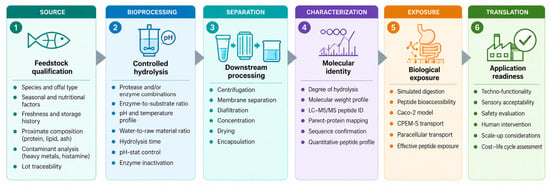
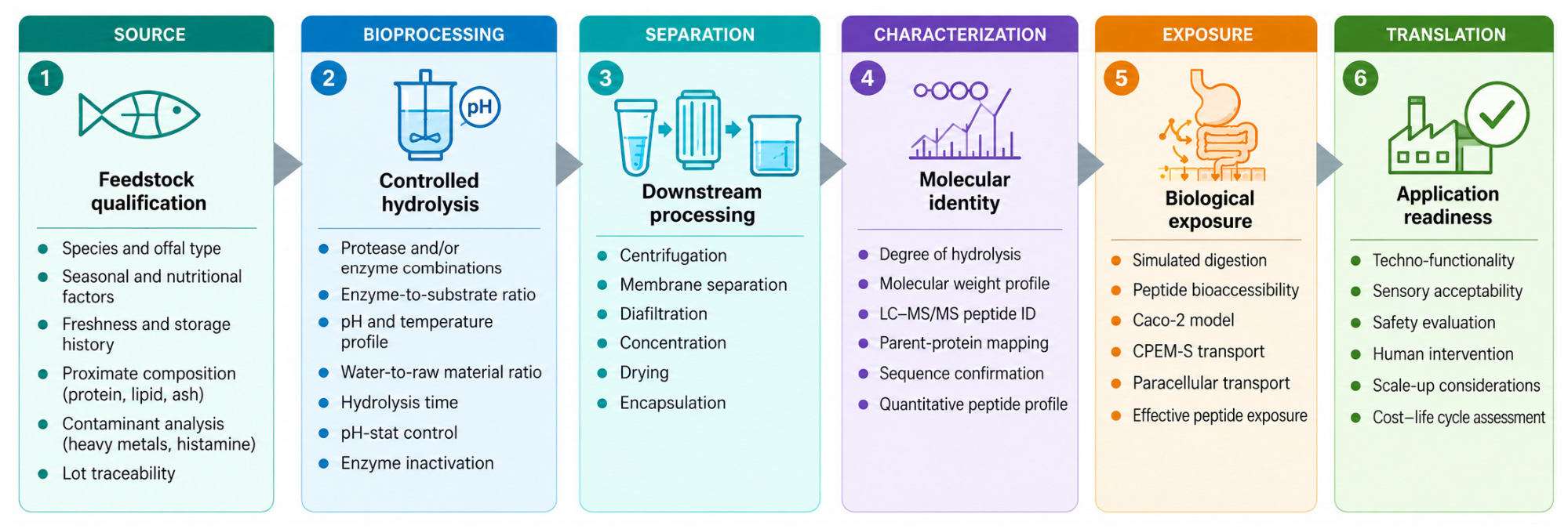
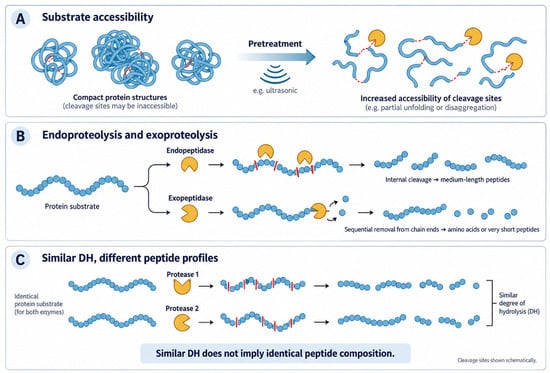
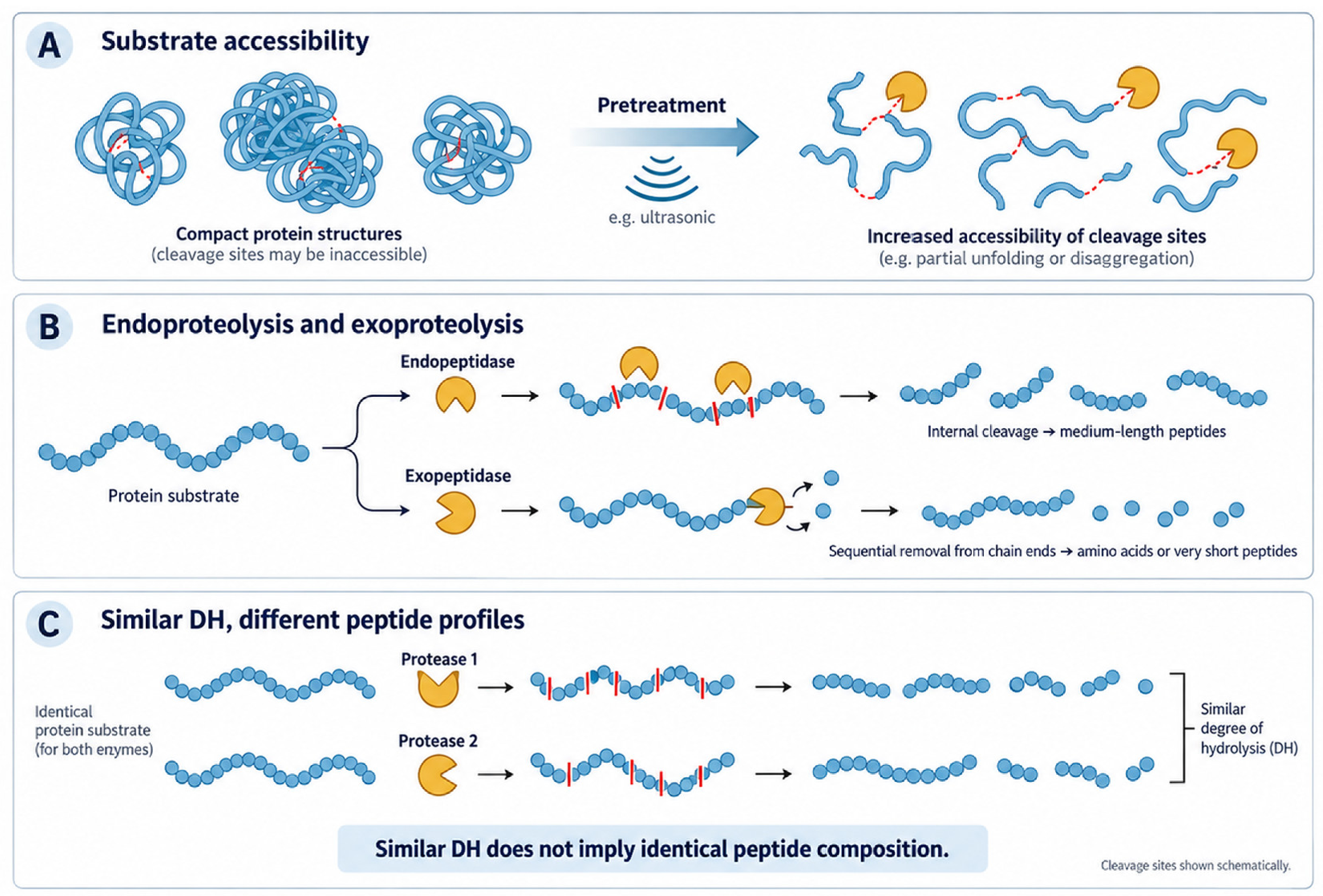
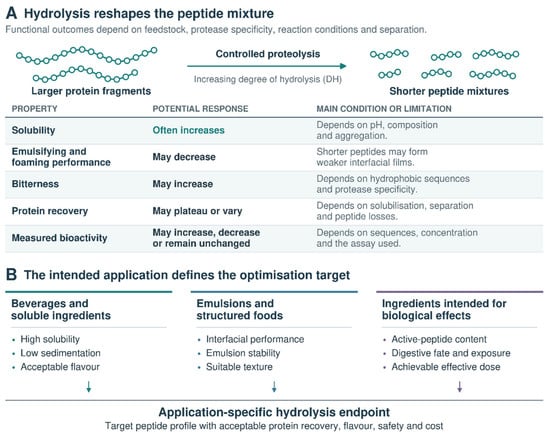
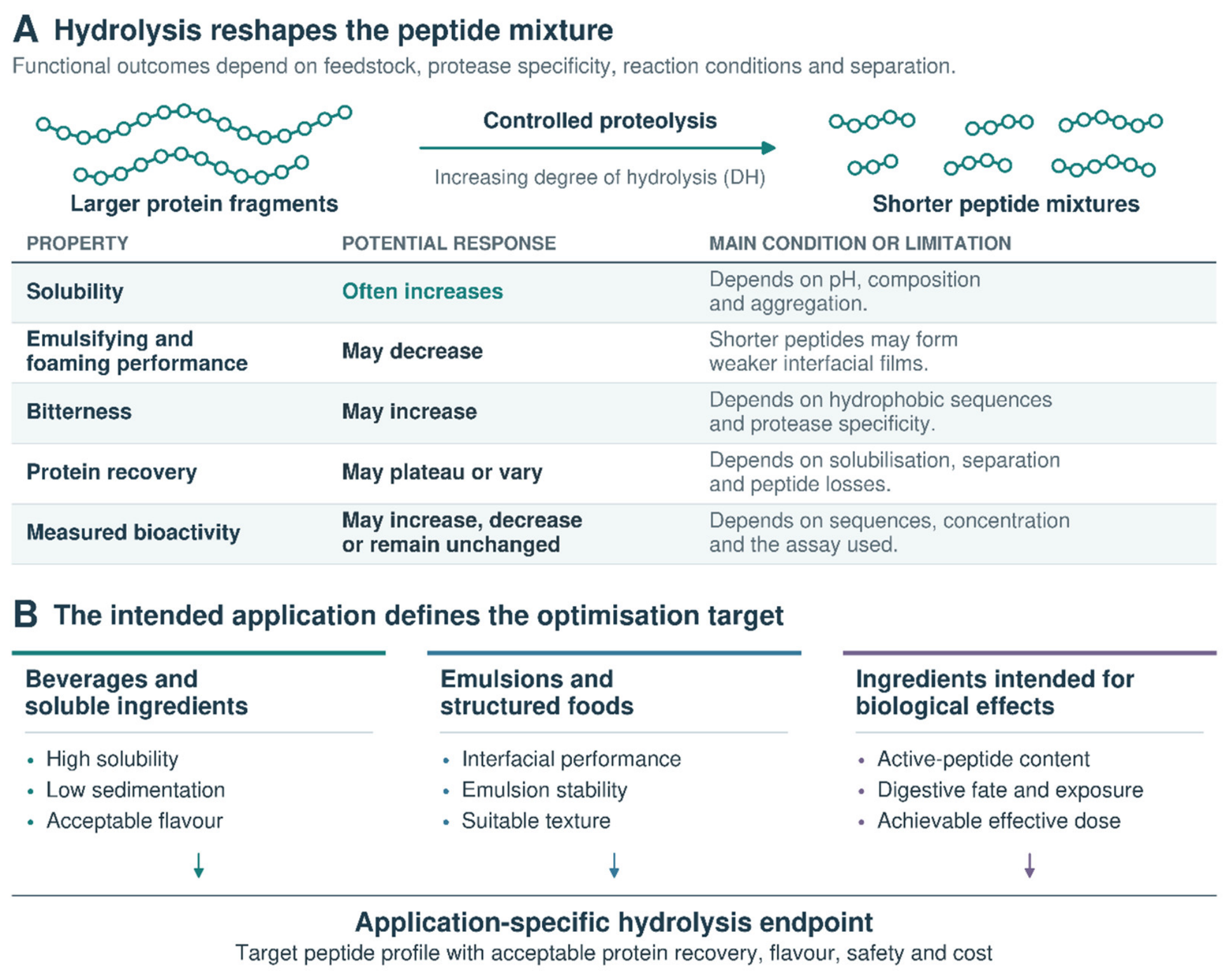
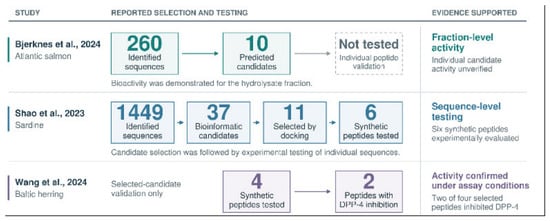
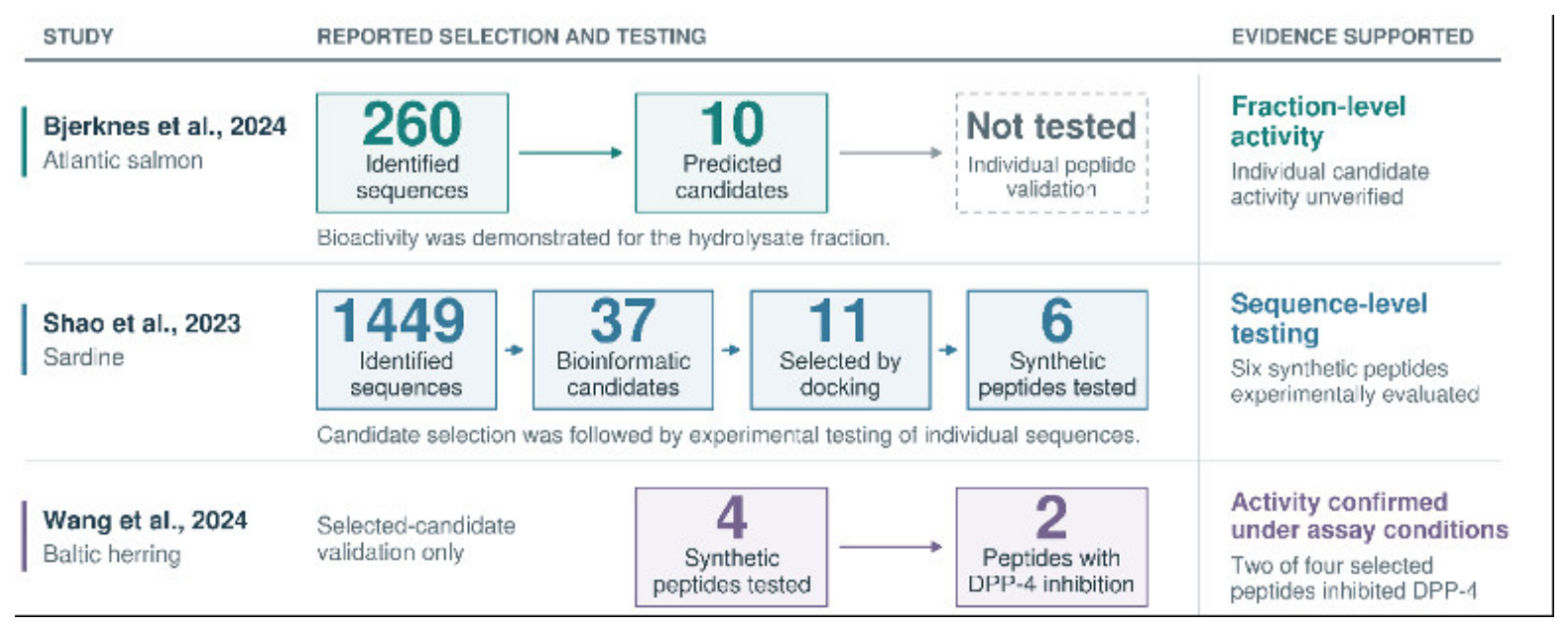

Disclaimer/Publisher’s Note: The statements, opinions and data contained in all publications are solely those of the individual author(s) and contributor(s) and not of MDPI and/or the editor(s). MDPI and/or the editor(s) disclaim responsibility for any injury to people or property resulting from any ideas, methods, instructions or products referred to in the content. |
© 2026 by the authors. Licensee MDPI, Basel, Switzerland. This article is an open access article distributed under the terms and conditions of the Creative Commons Attribution (CC BY) license.