


Abstract
Pink salmon (Oncorhynchus gorbuscha) processing by-products represent an underutilized resource with considerable potential for value-added applications. To evaluate the nutritional profile and investigate the effects of different starches (native and modified) on the gel properties of the pink salmon by-products, the proximate composition, amino acid profile, and fatty acid profiles of the by-products were analysed, followed by assessments of the gel texture, water-holding capacity, cooking loss, color, microstructure, and in vitro digestibility. The results demonstrated that the by-product meat possessed a high protein content and was rich in polyunsaturated fatty acids (PUFAs), with an essential amino acid-to-total amino acid (EAA/TAA) ratio of 45.82% and an n-3/n-6 ratio of 1.34, indicating favourable nutritional quality for human consumption. Although the by-product meat alone formed a relatively soft gel, the incorporation of starch markedly improved its gel properties. Among the evaluated starches, tapioca hydroxypropyl distarch phosphate (HDP) produced the greatest improvements in texture profiles and water-holding capacity while reducing cooking loss and promoting the formation of a denser and more uniform gel microstructure. Furthermore, HDP significantly enhanced the dry matter digestibility of the starch-modified gels prepared from pink salmon by-product meat. These findings demonstrate that pink salmon by-product meat can serve as a promising material for producing nutritional functional food and that HDP is an effective additive for improving both gel quality and digestibility, thereby supporting the sustainable valorization of fishery processing byproducts.
1. Introduction
The continued growth of the global population has led to an increasing demand for fish and fishery products worldwide. Pink salmon (Oncorhynchus gorbuscha) is the dominant species in commercial offshore salmon fisheries in the North Pacific Ocean [1]. Owing to its high nutritional value, particularly its abundance of high-quality protein and polyunsaturated fatty acids, it is recognized as an important commercial fish species worldwide [2,3]. Most harvested fish are processed into fillets; however, conventional filleting generates substantial quantities of by-products, accounting for approximately one-quarter of the total raw material. These by-products include heads, tails, bones, skin, frames and red meat, with the residual flesh comprising up to 50% of the total by-product stream [4]. Despite their considerable nutritional value, these materials remain underutilized and are typically directed toward low-value applications [5]. This represents a significant inefficiency in resource utilisation and a missed opportunity for the development of sustainable value-added products.
With the growing demand for seafood production, increasing attention has been directed towards the valorization of fishery processing byproducts [6,7]. Converting these materials into surimi-based products, such as fish cakes, offers an effective strategy for extending shelf life, reducing waste, and increasing the economic value of fishery products [8]. Raw materials rich in myofibrillar proteins are generally preferred for surimi manufacture because these proteins readily form cross-links that generate stable three-dimensional gel networks. However, pink salmon by-product meat contains considerable quantities of non-myofibrillar protein components, including water-soluble proteins, pigments, and lipids, all of which impair gel formation. Although several studies have demonstrated the proteins isolated from salmon by-products exhibit excellent gel-forming ability and considerable potential for the production of surimi and other gel-based foods, their industrial application remains limited because protein extraction is labour-intensive, time-consuming, and economically costly [9,10]. Consequently, there is a need to identify simple, environmentally friendly, and sustainable approaches for improving the gel-forming properties of by-product meat.
The functional properties of reconstituted surimi can be enhanced through the incorporation of various food additives. Among these, starch is widely used because of its low-cost and multifunctional properties, playing a key role in modifying gel texture [11]. During heating, starch granules absorb water and swell, exerting pressure on the surrounding protein network and thereby enhancing gel properties [12]. However, the efficacy of these improvements depends on both the botanical origin of the starch and the type of chemical modification applied [13,14]. In addition, interactions between starch and protein can influence the nutritional quality of surimi products as starch incorporation alters gel microstructure and enzyme accessibility, thereby affecting in vitro digestibility [15,16]. Although the effects of starch on the textural properties and digestibility of fish- and meat-based proteins have been extensively reported [17,18,19], comprehensive studies investigating the influence of different modified starches on pink salmon processing byproducts remain limited.
Therefore, the objective of this study was to characterize the nutritional composition, protein quality, and lipid profile of pink salmon by-product meat and to assess its suitability as a raw material for the production of pink salmon by-product meat gel. Furthermore, the effects of eight different native and modified starches on gel texture, water-holding capacity, cooking loss, color, microstructure, and in vitro digestibility were systematically investigated. The findings provide a scientific base for the efficient utilisation of by-products from pink salmon processing and support the development of sustainable, nutritious, and value-added surimi-based foods.
2. Materials and Methods
2.1. Materials
Pink salmon (Oncorhynchus gorbuscha) processing by-products were obtained from Dalian Ruichi Food Co., Ltd. (Dalian, China). The fish were imported in headed and eviscerated form; therefore, heads and viscera were not present in the raw material. The by-products consisted primarily of fish bone and skin with adherent residual flesh remaining after fillet removal. The residual meat was mechanically separated from the skeletal and integumentary tissues using a flesh recovery system, followed by washing, dewatering, vacuum packaging, and frozen storage at −20 °C. Bone and skin without adhering flesh were not included in this study, as their valorization requires separate processing strategies beyond the scope of the present work.
Commercially food-grade starches, including potato starch, wheat starch, tapioca starch, maize starch, phosphorylated tapioca starch, hydroxypropyl tapioca starch, tapioca hydroxypropyl distarch phosphate (HDP), and maize acetylated distarch phosphate (MMS), were purchased from Henan Feishi Biotechnology Co., Ltd. (Zhengzhou, China).
2.2. Proximate Chemical Composition
The proximate composition analysis of the pink salmon by-product meat was determined according to standard AOAC methods [20]. For protein determination, nitrogen was assayed by the Kjeldahl method, with crude protein derived by applying the conventional 6.25 conversion factor. The lipids were extracted using a Soxhlet apparatus (BUCHI Labortechnik GmbH, Essen, Germany) with diethyl ether as the extraction solvent. Ash content was obtained gravimetrically after a 16 h muffle furnace treatment at 550 °C. In parallel, the phenol-sulfuric acid reaction was employed for the spectrophotometric quantification of total carbohydrates [21].
2.3. Amino Acids Analysis
Following acid hydrolysis, amino acid analysis was carried out. Pink salmon by-product meat samples were hydrolysed with 6 mol/L HCl at 110 °C for 24 h in a forced-air drying oven. After the hydrolysis step, the samples were diluted to volume with ultrapure water. Rotary evaporation under vacuum (40–50 °C) was subsequently employed for concentration. The residue was reconstituted in sodium citrate buffer (pH 2.2), and the solution was clarified via a 0.2 µm pore-size membrane. Finally, the clarified filtrates were cryopreserved at −80 °C prior to chromatographic injection. Amino acids were separated by L-8800 automatic amino acid analyser (Hitachi, Tokyo, Japan). Identification and quantification were achieved by comparison with certified reference standards (Sigma-Aldrich, St. Louis, MO, USA) based on retention times and peak area integration. Tryptophan was determined separately following alkaline hydrolysis using the colorimetric method described by Basha and Roberts [22].
2.4. Fatty Acid Analysis
The fatty acid composition of pink salmon by-product meat was determined according to a previously reported method [23]. Briefly, 1 g of homogenised sample was subjected to alkaline hydrolysis by adding 0.7 mL of 10 mol/L KOH and 5.3 mL of anhydrous methanol, followed by incubation at 55 °C for 1.5 h. Fatty acid methyl esters (FAMEs) were subsequently prepared by acid-catalysed methylation using 0.58 mL H2SO4, with further incubation at 55 °C for 1.5 h.
After cooling to room temperature, 3 mL of n-hexane was added to extract the FAMEs. The resulting organic layer was then passed through a suitable membrane filter (organic type) before injection. Chromatographic separation was carried out on a Shimadzu GC-2010 Plus instrument (Shimadzu Corp., Kyoto, Japan), which was fitted with a fused-silica capillary column (60 m × 0.25 mm i.d., 0.25 µm film thickness) and a flame-ionisation detector (FID). Nitrogen was used as the carrier gas. The oven temperature was programmed from 130 °C to 230 °C. Fatty acids were identified by comparison with authenticated FAME standards (Sigma-Aldrich), and their relative contents were calculated from the corresponding peak area percentages.
Cardiovascular health indices were calculated from the fatty acid composition [24]. The atherogenic index (AI) and thrombogenic index (TI) were calculated as follows: AI = (C12:0 + 4 × C14:0 + C16:0)/(ΣPUFA n-6 + ΣPUFA n-3 + ΣMUFA); TI = (C14:0 + C16:0 + C18:0)/(0.5 × ΣMUFA + 0.5 × ΣPUFA n-6 + 3 × ΣPUFA n-3 +ΣPUFA n-3/ΣPUFA n-6).
2.5. Preparation of Pink Salmon By-Product Meat Gel
Pink salmon by-product meat gel were prepared according to conventional fish cake manufacturing procedures with slight modifications [25]. Frozen pink salmon processing by-product meat was thawed in a refrigerator at 4 °C for approximately 10 h. A 200 g portion of thawed mince was transferred to the food processor (Kitchen-Aid Trading Co., Ltd., Shanghai, China) and pre-chopped for 30 s.
Sodium chloride (2.0 g, 1%, w/w), vegetable oil (12.0 g, 6%, w/w), and seasoning (2.0 g, 1%, w/w) were added sequentially, and mixed for 5 min at 4 °C. For the treatment groups, 16.0 g (8%, w/w) of the respective starch types (potato starch, wheat starch, tapioca starch, maize starch, phosphorylated tapioca starch, hydroxypropyl tapioca starch, tapioca hydroxypropyl distarch phosphate or maize acetylated distarch phosphate) was incorporated during chopping. No starch was added to the control group.
Ice water was added intermittently to adjust the final moisture content to approximately 70%. The prepared meat paste was transferred into moulds, and steamed at 100 °C for 20 min. The gels were immediately cooled in ice water and stored at 4 °C prior to analysis.
2.6. Texture Profile Analysis
Texture profile analysis (TPA) was performed according to the method of Chang et al. [26]. Gel samples were cut into cubes measuring 20 mm × 20 mm × 20 mm and then tested on a TMS-PRO texture analyser (Food Technology Co., Sterling, VA, USA) using a cylindrical probe (12.7 mm diameter, 35 mm length). The test parameters were set as follows: 30% compression, 60 mm/min crosshead speed, and 5.0 g trigger force. The parameters recorded included hardness, springiness, chewiness, and resilience. Each treatment was analysed using at least six replicates.
2.7. Water-Holding Capacity
WHC was determined according to Chang et al. [26]. Approximately 3 g of each gel sample was accurately weighed (W1) and wrapped in three layers of filter paper before being placed in a centrifuge tube. Samples were centrifuged at 3000× g for 10 min at 4 °C (Hunan Xiangyi Laboratory Instrument Development Co., Changsha, China). Following centrifugation, the samples were reweighed (W2). WHC was calculated as follows: WHC (%) = W2/W1 × 100.
2.8. Cooking Loss
Cooking loss was determined according to Li et al. [27], with modifications, to simulate the freeze–reheat cycle experienced by commercial surimi products. Briefly, approximately 20 g of gel samples were frozen at −20 °C for 24 h and their initial mass was recorded as C1. The frozen samples were then heated by steaming until the internal temperature attained 70 °C. After cooling to room temperature, the samples were weighed (C2). Cooking loss was calculated using the following equation: CL (%) = (C1 − C2)/C1 × 100.
2.9. Color Properties
Color properties of all gel samples were measured with a CR-400 colorimeter (Konica Minolta, Osaka, Japan). The color parameters L* (lightness), a* (redness-greenness), and b* (yellowness-blueness) were recorded. The total color difference (ΔE) between each starch-treated sample and the control was calculated as follows:
Color differences were subsequently converted to National Bureau of Standards (NBS) units by multiplying ΔE by 0.92 and classified as follows: trace (0–0.5), slight (0.5–1.5), noticeable (1.5–3.0), appreciable (3.0–6.0), much (6.0–12.0), and very much (>12.0) [28].
2.10. Scanning Electron Microscopy
The samples were processed following the method described by Chang et al. [26]. The gel specimens were sectioned into thin slices (5 mm × 5 mm × 1 mm) and immediately fixed in 2.5% (v/v) glutaraldehyde solution at 4 °C for 24 h. Dehydration was achieved through a graded ethanol series (50%, 70%, 90%, and three times with 100%), with each dehydration step lasting 15 min. The slices were freeze-dried (SCIENTZ-12N; Ningbo Scientz Biotechnology Co., Ltd., Ningbo, China), mounted on aluminium stubs, sputter-coated with gold, and observed using a Supra 55 scanning electron microscope (Carl Zeiss, Oberkochen, Germany) operated at an accelerating voltage of 15 kV.
2.11. In Vitro Digestibility
The in vitro digestion procedure simulated the oral phase, gastric phase (stomach) and intestinal phase according to Minekus et al. [29]. Simulated salivary fluid, simulated gastric fluid, and simulated intestinal fluid were prepared using the recommended electrolyte stock solutions.
Pink salmon by-product meat or gel samples (15.0 g) were mixed with 10.5 mL simulated salivary fluid, 75 μL 0.3 mol/L CaCl2, 1.5 mL α-amylase solution (1500 U/mL), and 2.925 mL distilled water. The pH was adjusted to 7.0 with 1 mol/L HCl or NaOH. The mixture was incubated in a shaking water bath at 37 °C for 2 min. Following the oral phase, 22.5 mL simulated gastric fluid was added to the oral digesta, together with 4.8 mL pepsin solution (3500 U/mL), 15 μL 0.3 mol/L CaCl2, and 2.085 mL distilled water. The mixture was homogenized, the pH was rapidly adjusted to 3.0 with 1 mol/L HCl, and the flasks were sealed with Parafilm. Incubation was performed on an orbital shaker at 37 °C and 100 rpm for 2 h. After gastric digestion, the samples were cooled to 25 °C. Then, 33.0 mL simulated intestinal fluid was added to the gastric digesta (60.0 mL), together with 15.0 mL pancreatin solution containing 100 U/mL trypsin and 10 mmol/L bile salt, 120 μL 0.3 mol/L CaCl2, and 11.43 mL distilled water. The pH was adjusted to 7.0 with 1 mol/L HCl or NaOH. The mixture was incubated on an orbital shaker at 37 °C and 100 rpm for 2 h. At the end of each phase, reaction mixtures were immediately transferred to an ice-water bath to terminate enzymatic activity.
Following enzymatic hydrolysis, the gastric and intestinal digesta were transferred to centrifuge tubes and centrifuged at 10,000× g for 20 min at 4 °C. The resulting pellets were rinsed twice with deionized water and then oven-dried at 105 °C until a constant mass was achieved. The percentage of dry matter digestibility was subsequently derived from the equation given in [30], digestibility (%) = [(M1 − M2)/M1] × 100, where M1 is the dry matter weight of the initial sample mass (g) and M2 is the weight of the undigested fraction (g).
2.12. Statistical Analysis
The experiment was repeated at least three times. Final values are presented as means values ± standard deviation (SD). SPSS software (version 25.0, IBM Corporation, Armonk, NY, USA) was used for statistical analysis of the results. One-way analysis of variance (ANOVA) was performed to evaluate the significance of differences among treatment groups, followed by Tukey’s post hoc test for multiple comparisons at a significance level of p < 0.05. The data were reproduced via Origin 2022 software (OriginLab Corporation, Northampton, MA, USA).
3. Results and Discussion
3.1. Proximate Chemical Composition of Pink Salmon By-Product Meat
The proximate chemical composition of pink salmon processing by-product meat is presented in Table 1. The moisture content was 83.77 ± 1.26%, which was significantly higher than that reported for pink salmon, Atlantic salmon and sockeye salmon fillets [2,31]. This elevated moisture content is primarily attributed to the mechanical separation process [32]. Regarding protein content, the sample exhibited 9.99 ± 0.46% crude protein on a wet weight basis, a value substantially lower than salmon fillets. However, on a dry-weight basis, the protein content reached 61.58%, indicating that the by-product retains a concentrated protein fraction and therefore has considerable potential as a functional food ingredient.
Table 1.
Proximate composition of pink salmon processing by-product meat.
The crude lipid content was 3.73 ± 0.06%, approximately four times higher than that of pink salmon fillets but substantially lower than that of Atlantic and sockeye salmon fillets as shown in Table 1. The ash content was 0.95 ± 0.04%, which was lower than that typically reported for pink salmon and other farmed salmonids. This reduced ash content suggests efficient removal of bone fragments and inorganic material during mechanical separation, thereby improving the texture and palatability of the recovered meat. As expected for marine fish, the carbohydrate content was negligible, which is consistent with previous reports [33].
3.2. Amino Acid Profile of Pink Salmon By-Product Meat
The amino acid profile of pink salmon by-product meat is shown in Table 2. A total of 17 amino acids were identified, including 8 essential amino acids (EAAs). The total amino acid (TAA) content was 61.70 ± 0.19 g/100 g on a dry-weight basis. Glutamic acid was the predominant amino acid, exceeding the concentration reported for Atlantic salmon by Fomena Temgoua et al. [34]. Aspartic acid and lysine were the next most abundant amino acids and were also present at higher concentrations than those reported for Atlantic salmon [34]. The predominance of these acidic amino acids contributes to the characteristic umami flavour and enhances protein solubility during food processing.
Table 2.
Amino acid composition (g/100 g, dry weight basis) of pink salmon processing by-product meat.
Among the EAAs, leucine was present at the highest concentration (5.01 ± 0.01 g/100 g), comparable to that reported for Atlantic salmon (4.89 g/100 g) [34]. This was followed by valine and isoleucine. Branched-chain amino acids accounted for 11.27 g/100 g, representing 18.3% of the total amino acid content. These amino acids play a critical role in regulating muscle protein synthesis and influencing glucose homeostasis in humans [35]. The lysine content (5.81 g/100 g) exceeded the FAO/WHO reference pattern [36]. As cereal proteins are deficient in lysine [37], pink salmon protein could effectively complement plant-derived protein sources. Furthermore, the EAA/TAA ratio reached 45.82 ± 0.08%, substantially exceeding the FAO/WHO recommended value of 35%, demonstrating the excellent nutritional quality of the protein.
3.3. Fatty Acid Profile of Pink Salmon By-Product Meat
The fatty acid composition of pink salmon by-product meat is presented in Table 3. A total of twenty fatty acids were identified, comprising seven saturated fatty acids (SFAs), six monounsaturated fatty acids (MUFAs), and seven PUFAs. The total SFA content was 5.56 ± 0.02 g/100 g, with palmitic acid (C16:0) being the predominant saturated fatty acid, followed by myristic acid (C14:0) and stearic acid (C18:0). This relatively moderate SFA content suggests a lower cardiovascular risk than that associated with many terrestrial animal fats [24]. The total MUFA content was 5.05 ± 0.78 g/100 g, consisting mainly of oleic acid (C18:1n9c, 1.84 ± 0.05 g/100 g), erucic acid (C20:1, 1.58 ± 0.67 g/100 g), and palmitoleic acid (C16:1, 1.03 ± 0.04 g/100 g). This fatty acid profile may contribute positively to membrane fluidity and metabolic health. The PUFA content reached 10.72 ± 0.13 g/100 g, exceeding that reported for Atlantic salmon (8.95 g/100 g) and many freshwater fish species [38,39]. Among the PUFAs, eicosapentaenoic acid (EPA) and docosahexaenoic acid (DHA) were the predominant components, supporting previous reports that pink salmon is an excellent source of health-promoting unsaturated fatty acids [40].
Table 3.
Fatty acid profile (g/100 g, dry weight basis) of pink salmon processing by-product meat.
The n-3/n-6 ratio was 1.34 ± 0.06, which falls within the recommended range (1.0–4.0) for cardiovascular health [41]. Such a ratio has been associated with anti-inflammatory effects and a reduced risk of chronic disease [3]. The calculated AI and TI were 0.44 ± 0.01 and 0.18 ± 0.01, respectively, both substantially lower than those reported for beef, pork, and milk [38]. These findings indicate excellent cardiovascular safety. The fatty acid composition of pink salmon by-product meat supported health claims for functional food development [42].
3.4. Textural Property Analysis of Pink Salmon By-Product Meat Gels
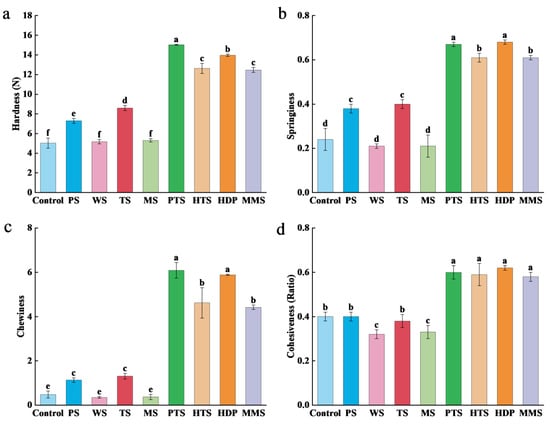
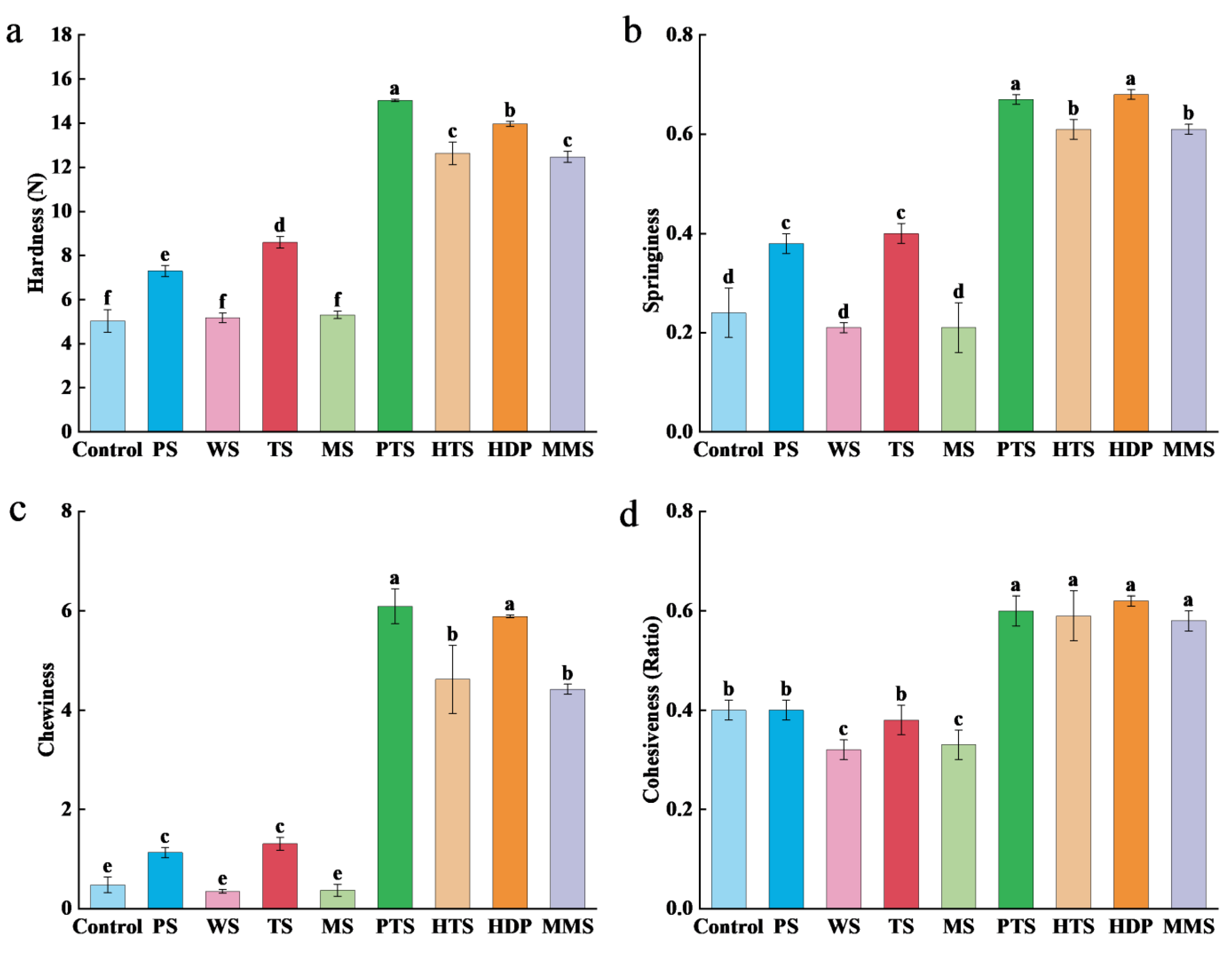
TPA is widely employed to evaluate food texture because it characterizes the mechanical response of food materials during large-scale deformation [43]. The TPA results for pink salmon by-product meat gels prepared with different starches are shown in Figure 1.
Figure 1.
Influence of different starches on the (a) hardness; (b) springiness; (c) chewiness; (d) cohesiveness of gel from pink salmon processing by-product meat. Notes: Bars indicate standard deviation from six determinations; different letters denote statistically significant differences (p < 0.05). Control, without starch added; PS, potato starch; WS, wheat starch; TS, tapioca starch; MS, maize starch; PTS, phosphorylated tapioca starch; HTS, hydroxypropyl tapioca starch; HDP, tapioca hydroxypropyl distarch phosphate; MMS, maize acetylated distarch phosphate.
The control gel, prepared without starch, exhibited a hardness of 5.03 ± 0.51 N and a springiness of 0.24 ± 0.05, indicating a relatively soft gel. This is likely attributable to the presence of water-soluble proteins and lipids in the pink salmon processing by-product meat, which interfere with the protein gelation process and hinder the formation of a stable three-dimensional network. The incorporation of starch significantly influenced the textural properties of the starch-modified gels prepared from pink salmon by-product meat, although the magnitude of improvement depended on both the starch source and modification method. Phosphorylated tapioca starch produced the highest values for most textural parameters (p < 0.05), followed by hydroxypropyl tapioca starch and hydroxypropyl distarch phosphate. The phosphate and hydroxypropyl substitutes enhanced starch granule swelling and hydration, thereby promoting more effective filling of voids within the protein matrix and the formation of a denser gel structure [18].
Nevertheless, the textural properties of these gels remained inferior to those of conventional surimi products. For example, Nemipterus virgatus surimi supplemented with modified starch exhibited hardness, springiness, cohesiveness, and chewiness values of approximately 32 N, 0.93, 0.81, and 25 N, respectively [44], all substantially higher than those obtained in the present study. This difference most likely reflects the inherent compositional limitations of pink salmon by-product meat.
Among the native starches, tapioca starch produced the greatest improvement in the texture of reconstituted gels, probably owing to its high amylopectin content, relatively large granule size, and superior swelling capacity [45]. Potato starch also improved gel texture because its large granules and high swelling degree capacity contributed to filling the protein network [46]. In contrast, wheat and maize starch produced only modest improvements. Both starches yielded springiness values of 0.21, while chewiness values (0.35 ± 0.04 mJ and 0.37 ± 0.12 mJ, respectively) were significantly lower than those of the control (p < 0.05). Their poorer performance is likely due to their relatively high amylose content, which forms rigid and brittle gel structures upon gelatinization, together with their limited swelling capacity [47].
3.5. Water-Holding Capacity and Cooking Loss
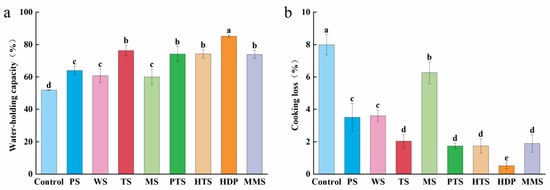
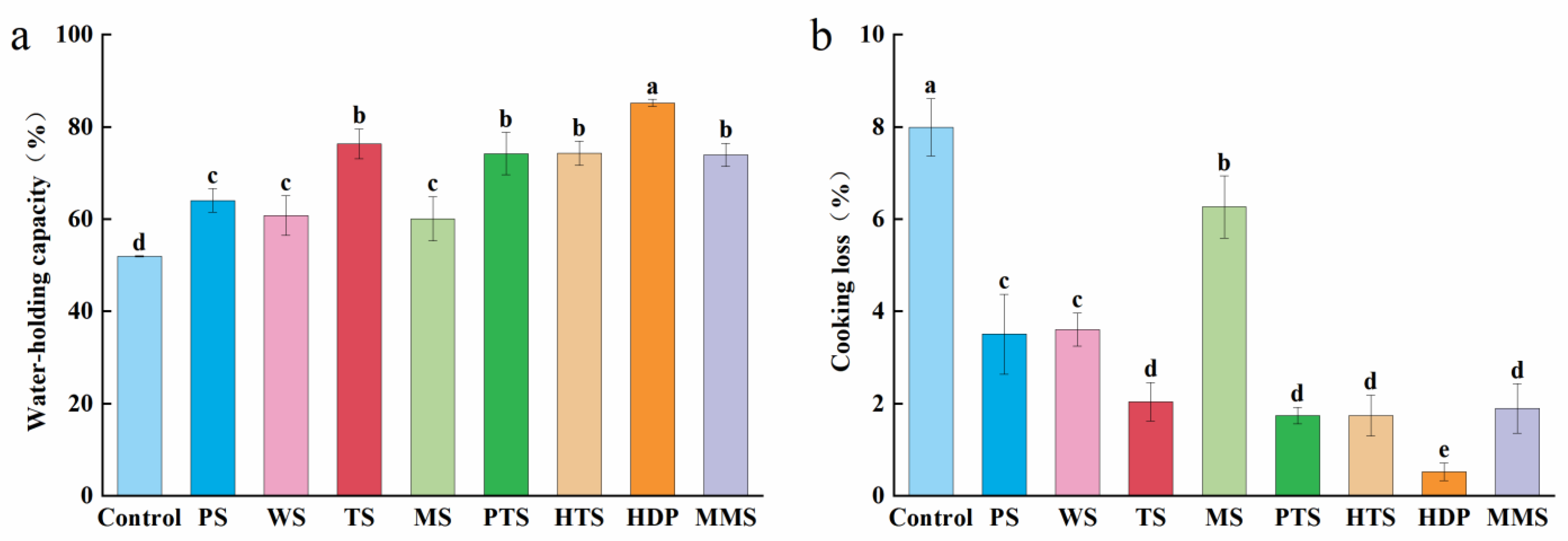
WHC reflects the ability of the protein network to retain water and is closely related to the structural integrity of surimi gels [48]. The WHC values of the pink salmon by-product meat gels prepared with different starches are presented in Figure 2a.
Figure 2.
Influence of different starches on the (a) water-holding capacity and (b) cooking loss of gel from pink salmon processing by-product meat. Notes: Bars indicate standard deviation from triplicate determinations; different letters denote statistically significant differences (p < 0.05). Control, without starch added; PS, potato starch; WS, wheat starch; TS, tapioca starch; MS, maize starch; PTS, phosphorylated tapioca starch; HTS, hydroxypropyl tapioca starch; HDP, tapioca hydroxypropyl distarch phosphate; MMS, maize acetylated distarch phosphate.
The modified starches HDP and MMS exhibited higher WHC values than their native counterparts, probably because the hydrophilic substitutes introduced during starch modification enhanced moisture retention within the gel matrix [18]. Previous studies have shown that amylopectin swells more rapidly than amylose at temperatures above 65 °C [49]. Consequently, tapioca starch, which contains a relatively high proportion of amylopectin, displayed superior water retention among the native starches.
As shown in Figure 2b, all starch-containing treatments exhibited significantly lower cooking losses than the control group (p < 0.05). These findings indicate that pink salmon by-product meat gels prepared without starch lose substantial amounts of moisture during heating, whereas starch addition effectively immobilises water through granule swelling during protein gelation. Among the starches examined, maize starch resulted in the highest cooking loss, whereas HDP produced the lowest. These differences are most likely attributable to variations in starch swelling behavior and granule rupture during heating [19].
3.6. Color of Pink Salmon By-Product Meat Gels
The color characteristics of the pink salmon by-product meat gels are summarized in Table 4. The color parameters were significantly influenced by the varieties of starches. Compared with the control, the L* values decreased for the starch treatments except tapioca starch. Our results were inconsistent with the report of Zhang et al., who reported that starch could improve surimi lightness and reduce a* and b* values [19]. Compared with those of the control group, the a* and b* values of most starch-modified gels prepared from pink salmon by-product meat were significantly increased (p < 0.05).
Table 4.
Effect of different starches on the color of gel from pink salmon processing by-product meat.
Visual appearance of the gels is presented in Supplementary Figure S1. The control gel exhibited a relatively light color. After starch incorporation, most gels became darker and more yellowish, although the extent of color change depended on the starch type. These visual observations were consistent with the instrumental color measurements (Table 4). Based on the National Bureau of Standards (NBS) classification, gels containing phosphorylated tapioca starch exhibited NBS values over 6.0, categorizing color changes as “much” to the eyes of consumers, according to Pinton et al. [28]. The NBS values ranged between 3.0 and 5.0 for the other modified starch treatments, classifying the changes as “appreciable”. These color changes are likely associated with differences in starch gelatinization and swelling behavior [45]. Moreover, the incorporation of starches significantly improved the water-holding capacity and reduced cooking loss of pink salmon by-product meat gel (Figure 2), which subsequently led to more water retained in the sample. The higher moisture content may have modified light refraction at the gel surface during color measurement, thereby influencing the measured L*, a*, and b* values [50].
3.7. Microstructure of Pink Salmon By-Product Meat Gels
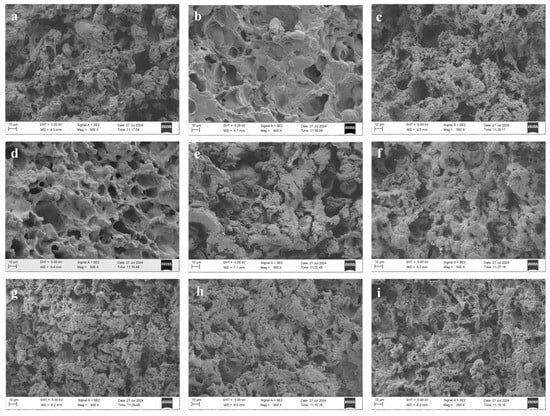
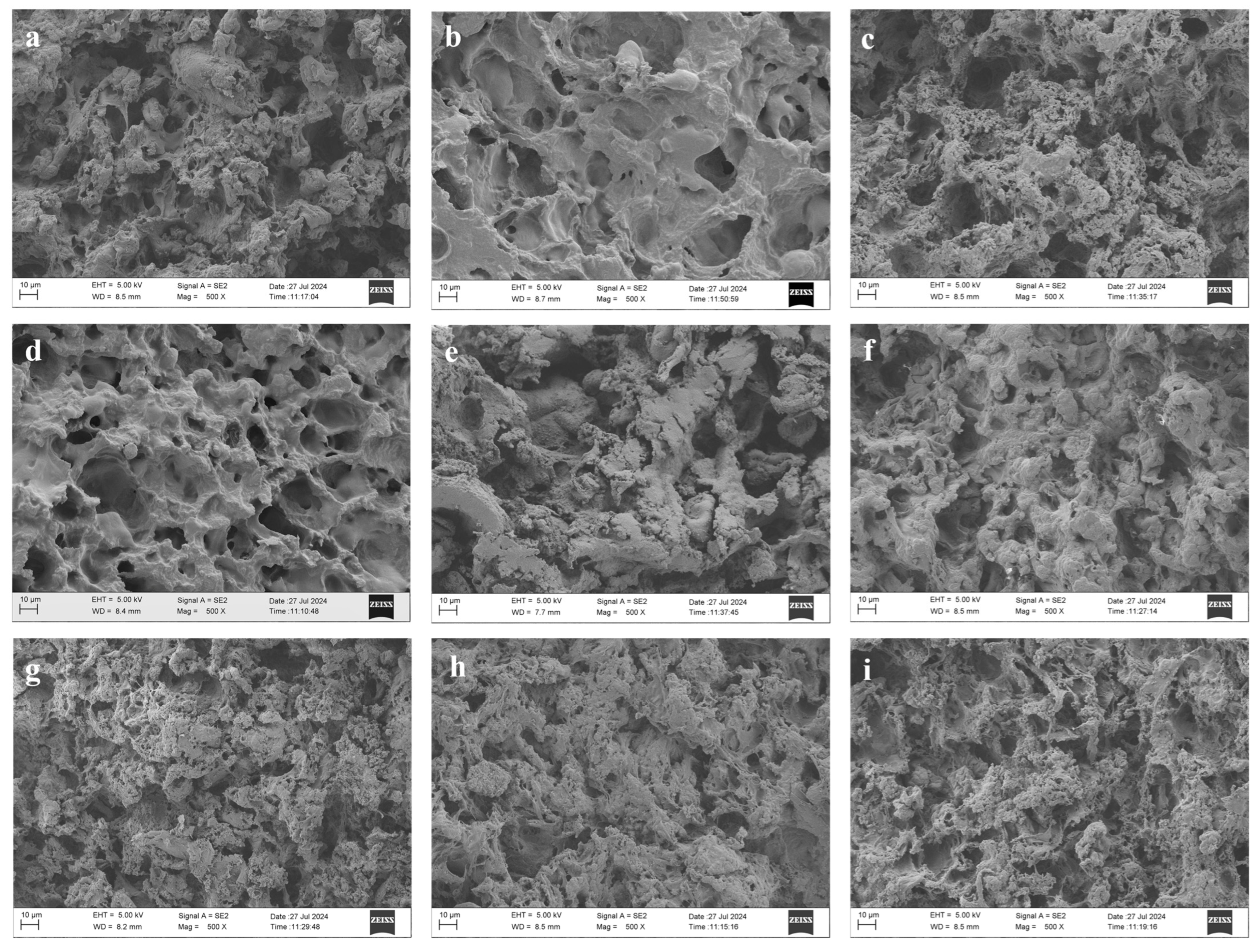
The microstructures of the pink salmon by-product meat gels prepared with different starches are shown in Figure 3. The control group exhibited a fragmented matrix characterized by large cavities and a discontinuous surface morphology. This poorly developed structure suggests insufficient unfolding of myofibrillar proteins and limited cross-linking during thermal processing.
Figure 3.
Changes in the microstructure of gels from pink salmon processing by-product meat without or with different starches. Notes: (a) Control, without starch added; (b) PS, potato starch; (c) WS, wheat starch; (d) TS, tapioca starch; (e) MS, maize starch; (f) PTS, phosphorylated tapioca starch; (g) HTS, hydroxypropyl tapioca starch; (h) HDP, tapioca hydroxypropyl distarch phosphate; (i) MMS, maize acetylated distarch phosphate.
The incorporation of native starches markedly altered the microstructure of pink salmon by-product meat gel. Compared with the control, gels containing tapioca starch exhibited a smoother and more cohesive surface; however, the protein network remained less compact than those with the modified starches [17]. Potato starch also produced a denser gel network than the control group, although larger voids were still evident compared with the tapioca starch treatment. In contrast, wheat and maize starch produced only marginal structural enhancement, with their gels retaining relatively loose and brittle network structures.
Among all treatments, the modified starches produced the most pronounced improvements in gel microstructure. In particular, tapioca HDP generated a highly uniform and compact network with substantially reduced pore size. The overall degree of network compactness closely corresponded with the observed gel strength and hardness, indicating that the formation of a denser protein matrix contributed directly to improved enhanced mechanical properties.
The microstructural observations were also consistent with the WHC and cooking loss measurements. Samples with compact and homogeneous gel networks, particularly those containing modified starches, displayed superior water retention and lower cooking losses, as the densely packed gel matrix more effectively entrapped water molecules and restricted their release during heating [51]. Conversely, the loose and porous structures observed in the control, wheat starch, and maize starch treatments were associated with greater cooking losses and reduced water retention, reflecting their limited ability to immobilize moisture within the gel matrix. These concordant trends across microstructure, texture, and water-related properties underscore the interdependence of network architecture and overall gel quality in starch-supplemented pink salmon by-product meat systems.
3.8. In Vitro Digestibility of Pink Salmon By-Product Meat and Pink Salmon By-Product Meat Gels
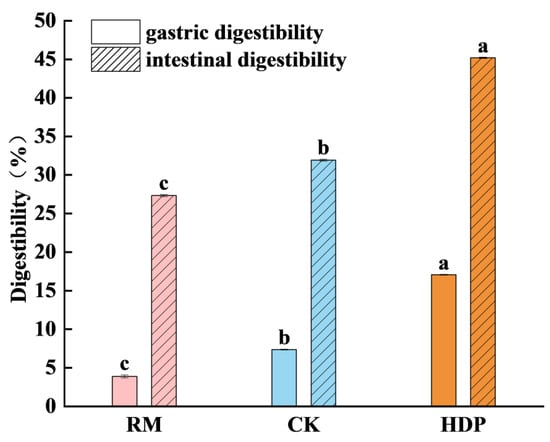
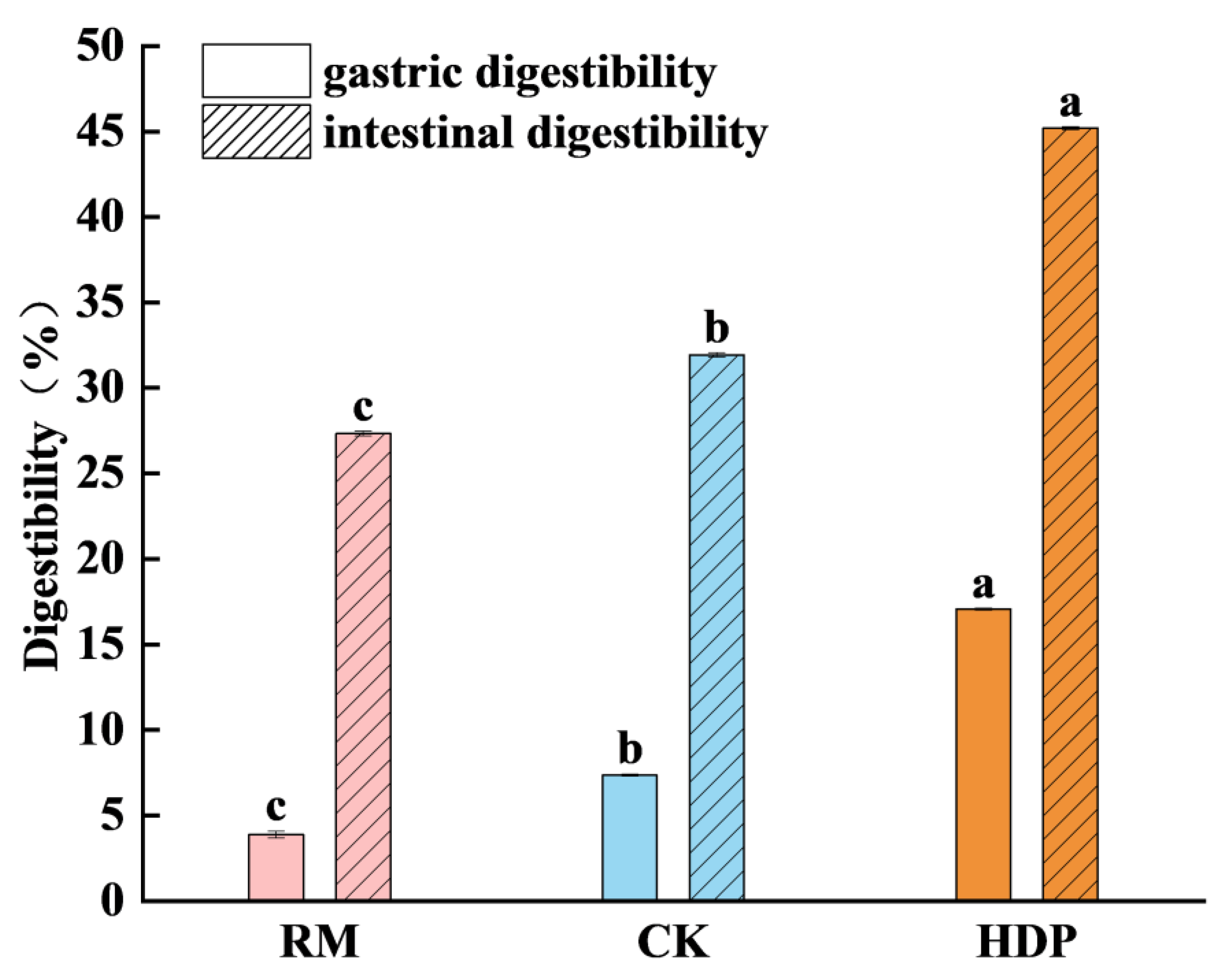
According to the results presented in Section 3.4, Section 3.5, Section 3.6 and Section 3.7, the improvement in the gel properties of pink salmon by-product meat gels following HDP treatment was more pronounced than that observed in the other starch group. This study therefore focused on evaluating the digestive properties of starch-modified gels treated with HDP. The dry matter digestibility of raw pink salmon by-product meat, gel without starch and gel with HDP during the gastric and intestinal digestion phases is presented in Figure 4. Raw material showed the lowest dry matter digestibility (3.89%) in the gastric phase, compared with the intestinal phase, and was significantly less digestible in both phases than the other evaluated groups (p < 0.05). These findings indicate that gel formation enhances the digestibility and, consequently, the potential bioavailability of pink salmon byproduct proteins, which is consistent with previous observations reported by Tan et al. [52]. The improved digestibility is likely attributable to the chopping and thermal processing steps, which partially disrupt the native protein structure and increase enzyme accessibility during digestion.
Figure 4.
In vitro digestibility of pink salmon by-product meat and gel. Notes: Bars indicate standard deviation from triplicate determinations; different letters denote statistically significant differences between different samples under the same digestion conditions (p < 0.05). RM, raw pink salmon by-product meat; CK, pink salmon by-product meat gel without starch added; HDP, pink salmon by-product meat gel with tapioca hydroxypropyl distarch phosphate.
Generally, highly cross-linked and structurally dense protein gels are expected to exhibit lower digestibility [53], which contrasts with the findings of the present study. As shown in Figure 3, HDP produced a denser gel network than that of the control; however, the dry matter digestibility was significantly higher (Figure 4). This is likely attributable to the fact that the starch primarily served as a filler rather than forming tight cross-links with proteins similar to those induced by TGase. Previous studies have similarly demonstrated that modified starches enhance the digestibility of gels, suggesting that modified starch may positively affect the activity of gastrointestinal digestive enzymes [54,55].
4. Conclusions
From a nutritional perspective, pink salmon processing by-product meat is an ideal food material and has the impressive profile of high-value nutrients such as good-quality protein and a high amount of PUFA. Starch, especially the modified starch of HDP, improved textural properties of gel from pink salmon by-product meat. Tapioca hydroxypropyl distarch phosphate also increased water-holding capacity, reduced cooking loss rate, and facilitated the formation of a uniform and dense microstructure of the pink salmon by-product meat gels. Additionally, HDP positively impacted the dry matter digestibility of pink salmon by-product meat gels. Despite these improvements, the starch-enhanced gels prepared from pink salmon by-product meat remained dark yellow in color and exhibited a softer texture than conventional commercial surimi products. Therefore, further optimisation is required to improve consumer acceptability. Future studies should investigate the incorporation of suitable food-grade additives or processing technologies to further enhance gel strength, texture, and overall product quality.
Supplementary Materials
The following supporting information can be downloaded at https://www.mdpi.com/article/10.3390/foods15183259/s1, Figure S1: Appearance of pink salmon by-product meat gels prepared with different starches. Control, without starch; PS, potato starch; WS, wheat starch; TS, tapioca starch; MS, maize starch; PTS, phosphorylated tapioca starch; HTS, hydroxypropyl tapioca starch; HDP, tapioca hydroxypropyl distarch phosphate; MMS, maize acetylated distarch phosphate.
Author Contributions
M.L.: Writing—original draft, Data curation, Project administration. J.W.: Data curation. W.G.: Data curation. B.L.: Writing—review and editing, Funding acquisition. X.X.: Writing—review and editing. Q.Z.: Writing—review and editing. X.F.: Writing—review and editing, Funding acquisition, Project administration. All authors have read and agreed to the published version of the manuscript.
Funding
This work was supported by the Key Research and Development Program of Dalian (Dalian Science and Technology Bureau), grant number 2024YF17PT035.
Institutional Review Board Statement
Not applicable.
Informed Consent Statement
Not applicable.
Data Availability Statement
The original contributions presented in the study are included in the article and Supplementary Materials, further inquiries can be directed to the corresponding author.
Conflicts of Interest
The authors Bo Liu and Xinda Xu were employed by the company Dalian Ruichi Food Co., Ltd. Their contribution to the manuscript is: writing—review and editing and funding acquisition. The company’s role in this research is providing raw materials and funding support. The company was not involved in the study design, collection, analysis, interpretation of data, the writing of this article or the decision to submit it for publication. The remaining authors declare that the research was conducted in the absence of any commercial or financial relationships that could be construed as a potential conflict of interest.
References
- NPAFC. North Pacific Anadromous Fish Commission Annual Report 2020. Available online: https://npafc.org/wp-content/uploads/Public-Documents/2020/AR2020.pdf (accessed on 1 August 2026).
- Colombo, S.M.; Mazal, X. Investigation of the Nutritional Composition of Different Types of Salmon Available to Canadian Consumers. J. Agric. Food Res. 2020, 2, 100056. [Google Scholar] [CrossRef] [Scilit]
- Calder, P.C. Omega-3 Fatty Acids and Inflammatory Processes: From Molecules to Man. Biochem. Soc. Trans. 2017, 45, 1105–1115. [Google Scholar] [CrossRef] [Scilit] [PubMed]
- FAO. Globefish: Quarterly Salmon Analysis—December 2024; FAO: Rome, Italy, 2024. [Google Scholar]
- Roberts, S.; Jacquet, J.; Majluf, P.; Hayek, M.N. Feeding Global Aquaculture. Sci. Adv. 2024, 10, eadn9698. [Google Scholar] [CrossRef] [Scilit] [PubMed]
- Showkat, B.; Moosavi-Nasab, M.; Khoshnoudi-Nia, S.; Naseri, M.; Mesbahi, G.-R.; Ramaswamy, H. Valorizing Fishery By-Products into Sustainable Low-Salt Fish Sauces and Powders: Nutritional, Microbial, and Safety Properties. Appl. Food Res. 2026, 6, 101752. [Google Scholar] [CrossRef] [Scilit]
- Shen, J.; Fu, L.; Zhong, B.; Xia, W.; Xu, Y. Structure and Functional Characteristics of Gelatin Extracted from Grass Carp (Ctenopharyngodon idella) By-Products. Foods 2025, 14, 4086. [Google Scholar] [CrossRef] [Scilit] [PubMed]
- Naseem, S.; Imam, A.; Rayadurga, A.S.; Ray, A.; Suman, S.K. Trends in Fisheries Waste Utilization: A Valuable Resource of Nutrients and Valorized Products for the Food Industry. Crit. Rev. Food Sci. Nutr. 2024, 64, 9240–9260. [Google Scholar] [CrossRef] [Scilit] [PubMed]
- Zhang, Y.; Chang, S.K.C. Color and Texture of Surimi-Like Gels Made of Protein Isolate Extracted from Catfish Byproducts Are Improved by Washing and Adding Soy Whey. J. Food Sci. 2022, 87, 3057–3070. [Google Scholar] [CrossRef] [Scilit] [PubMed]
- Zhou, F.; Wu, F.; Ren, X.; Guo, J.; Wang, X. Effect of Large Yellow Croaker By-Products on Physical Properties and Thermal Gelling Properties Changes in Reconstituted Surimi Gel. Foods 2025, 14, 1949. [Google Scholar] [CrossRef] [Scilit] [PubMed]
- Mi, H.; Liang, S.; Chen, J.; Li, X.; Li, J. Effect of Starch-Based Emulsion with Different Amylose Content on the Gel Properties of Nemipterus virgatus Surimi. Int. J. Biol. Macromol. 2024, 259, 129183. [Google Scholar] [CrossRef] [Scilit] [PubMed]
- Mi, J.; Zhao, X.; Huang, P.; Hong, J.; Jia, R.; Deng, S.; Yu, X.; Wei, H.; Yang, W. Effect of Hydroxypropyl Distarch Phosphate on the Physicochemical Characteristics and Structure of Shrimp Myofibrillar Protein. Food Hydrocoll. 2022, 125, 107417. [Google Scholar] [CrossRef] [Scilit]
- Liu, X.; Chen, Z.; Ye, Y.; Qian, M.; Ou, B.; Wen, J.; Bai, W.; Jiang, H. Effects of Exogenous Substances on the Characteristics of Low-Salt Tilapia Surimi Gel. Food Chem. 2025, 484, 144453. [Google Scholar] [CrossRef] [Scilit] [PubMed]
- Zhao, X.; Wang, X.; Zeng, L.; Huang, Q.; Zhang, J.; Wen, X.; Xiong, S.; Yin, T.; Zhang, B. Effects of Oil-Modified Crosslinked/Acetylated Starches on Silver Carp Surimi Gel: Texture Properties, Water Mobility, Microstructure, and Related Mechanisms. Food Res. Int. 2022, 158, 111521. [Google Scholar] [CrossRef] [Scilit] [PubMed]
- Carvajal-Mena, N.; Tabilo-Munizaga, G.; Pérez-Won, M.; Herrera-Lavados, C.; Moreno-Osorio, L. Influence of Starch-Protein Interactions on the Digestibility and Chemical Properties of a 3D-Printed Food Matrix Based on Salmon By-Product Proteins. Food Res. Int. 2024, 179, 114035. [Google Scholar] [CrossRef] [Scilit] [PubMed]
- Zhang, S.; Yang, C.; Zhu, S.; Zhong, F.; Huang, D.; Li, Y. Understanding the Mechanisms of Whey Protein Isolate Mitigating the Digestibility of Corn Starch by In Vitro Simulated Digestion. Food Hydrocoll. 2022, 124, 107211. [Google Scholar] [CrossRef] [Scilit]
- Huang, X.; Liu, Q.; Wang, P.; Song, C.; Ma, H.; Hong, P.; Zhou, C. Tapioca Starch Improves the Quality of Virgatus nemipterus Surimi Gel by Enhancing Molecular Interaction in the Gel System. Foods 2024, 13, 169. [Google Scholar] [CrossRef] [Scilit] [PubMed]
- Wang, R.; Li, Y.; Lin, S.; Fu, B.; Li, R.; Shao, X.; Zhang, S. Effects of Different Types of Modified Starch on Gel Properties of Spanish Mackerel Surimi. Shipin Gongye Keji 2023, 44, 85–92. [Google Scholar]
- Zhang, F.; Fang, L.; Wang, C.; Shi, L.; Chang, T.; Yang, H.; Cui, M. Effects of Starches on the Textural, Rheological, and Color Properties of Surimi-Beef Gels with Microbial Transglutaminase. Meat Sci. 2013, 93, 533–537. [Google Scholar] [CrossRef] [Scilit] [PubMed]
- AOAC International. Official Methods of Analysis of AOAC International, 18th ed.; Latimer, G.W., Jr., Horwitz, W., Eds.; AOAC International: Gaithersburg, MD, USA, 2005. [Google Scholar]
- DuBois, M.; Gilles, K.A.; Hamilton, J.K.; Rebers, P.A.; Smith, F. Colorimetric Method for Determination of Sugars and Related Substances. Anal. Chem. 1956, 28, 350–356. [Google Scholar] [CrossRef] [Scilit]
- Basha, S.M.; Roberts, R.M. A Simple Colorimetric Method for the Determination of Tryptophan. Anal. Biochem. 1977, 77, 378–386. [Google Scholar] [CrossRef] [Scilit] [PubMed]
- Wang, X.; Qi, Y.; Cui, C.; Chen, S.; Luo, Z.; Zhang, M.; Dai, Y.; Zhu, Y.; Hu, J.; Shi, B.; et al. Comparative Analysis of Fatty Acids, Amino Acids, and Flavor Compounds among Different Skeletal Muscles of the Tianzhu White Yak. Anim. Biosci. 2026, 39, 250878. [Google Scholar] [CrossRef] [Scilit] [PubMed]
- Ulbricht, T.L.; Southgate, D.A. Coronary Heart Disease: Seven Dietary Factors. Lancet 1991, 338, 985–992. [Google Scholar] [CrossRef] [Scilit] [PubMed]
- Wang, H.; Li, J.; Liu, T.; Han, Y.; Hou, W.; Yi, Y. Effects of Daylily Extract Microcapsule on the Quality and Gel Properties of Steamed Fish Cake—A Surimi-Based Product. Curr. Res. Food Sci. 2024, 9, 100837. [Google Scholar] [CrossRef] [Scilit] [PubMed]
- Chang, K.; Lin, Y.; Huang, S.; Fan, X.; Ma, Y.; Li, M.; Zhao, Q. Optimizing Bay Scallop (Argopecten irradians) Product Quality: Moderate Freezing as an Effective Strategy for Improving Adductor Muscle Gel Properties. Foods 2025, 14, 1371. [Google Scholar] [CrossRef] [Scilit] [PubMed]
- Yuan, L.; Sun, L.; Xiong, Z.; Zhang, Q.; Jin, W.; Gao, R. Preparation and Mechanistic Exploration of Fermented Shrimp Surimi Gel Utilizing Enterococcus lactis S-15. Food Chem. X 2024, 22, 101314. [Google Scholar] [CrossRef] [Scilit] [PubMed]
- Pinton, M.B.; Lorenzo, J.M.; Dos Santos, B.A.; Correa, L.P.; Padilha, M.; Trindade, P.C.O.; Cichoski, A.J.; Bermúdez, R.; Purriños, L.; Campagnol, P.C.B. Evaluation of Nutritional, Technological, Oxidative, and Sensory Properties of Low-Sodium and Phosphate-Free Mortadellas Produced with Bamboo Fiber, Pea Protein, and Mushroom Powder. Meat Sci. 2024, 216, 109588. [Google Scholar] [CrossRef] [Scilit] [PubMed]
- Minekus, M.; Alminger, M.; Alvito, P.; Ballance, S.; Bohn, T.; Bourlieu, C.; Carrière, F.; Boutrou, R.; Corredig, M.; Dupont, D.; et al. A Standardised Static In Vitro Digestion Method Suitable for Food—An International Consensus. Food Funct. 2014, 5, 1113–1124. [Google Scholar] [PubMed]
- Costa, T.M.; Timm, T.G.; Longhi, A.L.; Helm, C.V.; dos Santos, L.D.; da Silva, M.K. Lentinula edodes- and Black Soldier Fly-Based Meals as Alternative Ingredients for Dog Food: Characterization and In Vitro Digestibility. Waste Biomass Valor 2026. [Google Scholar] [CrossRef] [Scilit]
- Gillies, C.R.; Jung, E.; Colombo, S.M. A Comparative Analysis of the Nutritional Quality of Salmon Species in Canada among Different Production Methods and Regions. Aquacult. Res. 2023, 2023, 5542117. [Google Scholar] [CrossRef] [Scilit]
- Rustad, T.; Storrø, I.; Slizyte, R. Possibilities for the Utilisation of Marine By-Products. Int. J. Food Sci. Technol. 2011, 46, 2001–2014. [Google Scholar] [CrossRef] [Scilit]
- Payne, S.A.; Johnson, B.A.; Otto, R.S. Proximate Composition of Some North-Eastern Pacific Forage Fish Species. Fish. Oceanogr. 1999, 8, 159–177. [Google Scholar] [CrossRef] [Scilit]
- Fomena Temgoua, N.S.; Sun, Z.; Okoye, C.O.; Pan, H. Fatty Acid Profile, Physicochemical Composition, and Sensory Properties of Atlantic Salmon Fish (Salmo salar) during Different Culinary Treatments. J. Food Qual. 2022, 2022, 1–16. [Google Scholar] [CrossRef] [Scilit]
- Layman, D.K. The Role of Leucine in Weight Loss Diets and Glucose Homeostasis. J. Nutr. 2003, 133, 261S–267S. [Google Scholar] [CrossRef] [Scilit] [PubMed]
- FAO; WHO. Protein and Amino Acid Requirements in Human Nutrition; WHO Technical Report Series 935; WHO: Geneva, Switzerland, 2007. [Google Scholar]
- Sartagoda, K.J.D.; Tiozon, R.J.N.; Sreenivasulu, N. Cereal-Based Proteins: Bridging Health, Sustainability, and Future Innovations for Food Industries. J. Food Compos. Anal. 2024, 136, 106720. [Google Scholar] [CrossRef] [Scilit]
- Jensen, I.; Eilertsen, K.; Otnæs, C.H.A.; Mæhre, H.K.; Elvevoll, E.O. An Update on the Content of Fatty Acids, Dioxins, PCBs and Heavy Metals in Farmed, Escaped and Wild Atlantic Salmon (Salmo salar L.) in Norway. Foods 2020, 9, 1901. [Google Scholar] [CrossRef] [Scilit] [PubMed]
- Strobel, C.; Jahreis, G.; Kuhnt, K. Survey of n-3 and n-6 Polyunsaturated Fatty Acids in Fish and Fish Products. Lipids Health Dis. 2012, 11, 144. [Google Scholar] [CrossRef] [Scilit] [PubMed]
- Lapis, T.J.; Oliveira, A.C.M.; Crapo, C.A.; Himelbloom, B.; Bechtel, P.J.; Long, K.A. Supplementing Long-Chain n-3 Polyunsaturated Fatty Acids in Canned Wild Pacific Pink Salmon with Alaska Salmon Oil. Food Sci. Nutr. 2013, 1, 15–26. [Google Scholar] [CrossRef] [Scilit] [PubMed]
- Simopoulos, A.P. The Importance of the Ratio of Omega-6/Omega-3 Essential Fatty Acids. Biomed. Pharmacother. 2002, 56, 365–379. [Google Scholar] [CrossRef] [Scilit] [PubMed]
- Ruxton, C.; Reed, S.C.; Simpson, M.; Millington, K.J. The Health Benefits of Omega-3 Polyunsaturated Fatty Acids: A Review of the Evidence. J. Hum. Nutr. Diet. 2004, 17, 449–459. [Google Scholar] [CrossRef] [Scilit] [PubMed]
- Ren, J.; Huang, H.; Sun, Y.; Bi, S.; Xia, S.; Jiang, X. Molecular Mechanism of Rice Protein Amyloid Fibrils in Modulating Gel Properties of Northern Pike (Esox lucius) Muscle Protein. Foods 2026, 15, 2209. [Google Scholar] [CrossRef] [Scilit] [PubMed]
- Mi, H.; Wang, C.; Su, Q.; Li, X.; Yi, S.; Li, J. The Effect of Modified Starches on the Gel Properties and Protein Conformation of Nemipterus virgatus Surimi. J. Texture Stud. 2019, 50, 571–581. [Google Scholar] [CrossRef] [Scilit] [PubMed]
- Yang, H.; Park, J.W. Effects of Starch Properties and Thermal-Processing Conditions on Surimi–Starch Gels. LWT-Food Sci. Technol. 1998, 31, 344–353. [Google Scholar] [CrossRef] [Scilit]
- Jiang, X.; Chen, Q.; Xiao, N.; Du, Y.; Feng, Q.; Shi, W. Changes in Gel Structure and Chemical Interactions of Hypophthalmichthys molitrix Surimi Gels: Effect of Setting Process and Different Starch Addition. Foods 2021, 11, 9. [Google Scholar] [CrossRef] [Scilit] [PubMed]
- Liu, H.; Nie, Y.; Chen, H. Effect of Different Starches on Colors and Textural Properties of Surimi-Starch Gels. Int. J. Food Prop. 2014, 17, 1439–1448. [Google Scholar] [CrossRef] [Scilit]
- Mi, H.; Su, Q.; Chen, J.; Yi, S.; Li, X.; Li, J. Starch-Fatty Acid Complexes Improve the Gel Properties and Enhance the Fatty Acid Content of Nemipterus virgatus Surimi under High-Temperature Treatment. Food Chem. 2021, 362, 130253. [Google Scholar] [CrossRef] [Scilit] [PubMed]
- Vamadevan, V.; Bertoft, E. Observations on the Impact of Amylopectin and Amylose Structure on the Swelling of Starch Granules. Food Hydrocoll. 2020, 103, 105663. [Google Scholar] [CrossRef] [Scilit]
- Frangopoulos, T. Incorporation of Trigonella foenum-graecum Seed Powder in Meat Emulsion Systems with Olive Oil: Effects on Physicochemical, Texture, and Color Characteristics. J. Food Sci. Technol. 2022, 59, 2060–2070. [Google Scholar] [CrossRef] [Scilit] [PubMed]
- Mi, J.; Jin, M.; Li, G.; Xu, D.; Jia, R.; Wei, H.; Zhang, X.; Mei, G.; Yang, W. Mechanisms and Physicochemical Characteristics of Modified Starches in Shrimp (Penaeus vannamei) Myofibrillar Protein Gels. Food Chem. X 2026, 33, 103496. [Google Scholar] [CrossRef] [Scilit] [PubMed]
- Tan, Z.; Yang, X.; Zhao, W.; Ma, J.; Fan, X.; Liu, Z.; Dong, X. Modifying Yellowfin Tuna Myofibrillar Proteins under Ultra-High Pressure Auxiliary Heat Treatment: Impact on the Conformation, Gel Properties and Digestive Characteristics. Food Chem. 2025, 475, 143365. [Google Scholar] [CrossRef] [Scilit] [PubMed]
- Yang, Q.; Zhou, W.; Hu, D.; Li, C.; Zhang, L.; Zhao, Y.; Zou, S.; Liu, R.; Liu, Y.; Rong, J.; et al. Effects of EGCG/TGase on the Physicochemical Properties and In Vitro Dynamic Digestion Characteristics of Water-Saving Rinsed Surimi Gels. Food Chem. 2025, 493, 145668. [Google Scholar] [CrossRef] [Scilit] [PubMed]
- Wang, Z.; Mhaske, P.; Farahnaky, A.; Kasapis, S.; Majzoobi, M. Cassava Starch: Chemical Modification and Its Impact on Functional Properties and Digestibility, A Review. Food Hydrocoll. 2022, 129, 107542. [Google Scholar] [CrossRef] [Scilit]
- Wei, S.; Liang, X.; Kong, B.; Cao, C.; Zhang, H.; Liu, Q.; Wang, H. Investigation of the Effects and Mechanism of Incorporation of Cross-Linked/Acetylated Tapioca Starches on the Gel Properties and In Vitro Digestibility of Kung-Wan. Meat Sci. 2023, 204, 109265. [Google Scholar] [CrossRef] [Scilit] [PubMed]

Disclaimer/Publisher’s Note: The statements, opinions and data contained in all publications are solely those of the individual author(s) and contributor(s) and not of MDPI and/or the editor(s). MDPI and/or the editor(s) disclaim responsibility for any injury to people or property resulting from any ideas, methods, instructions or products referred to in the content. |
© 2026 by the authors. Licensee MDPI, Basel, Switzerland. This article is an open access article distributed under the terms and conditions of the Creative Commons Attribution (CC BY) license.